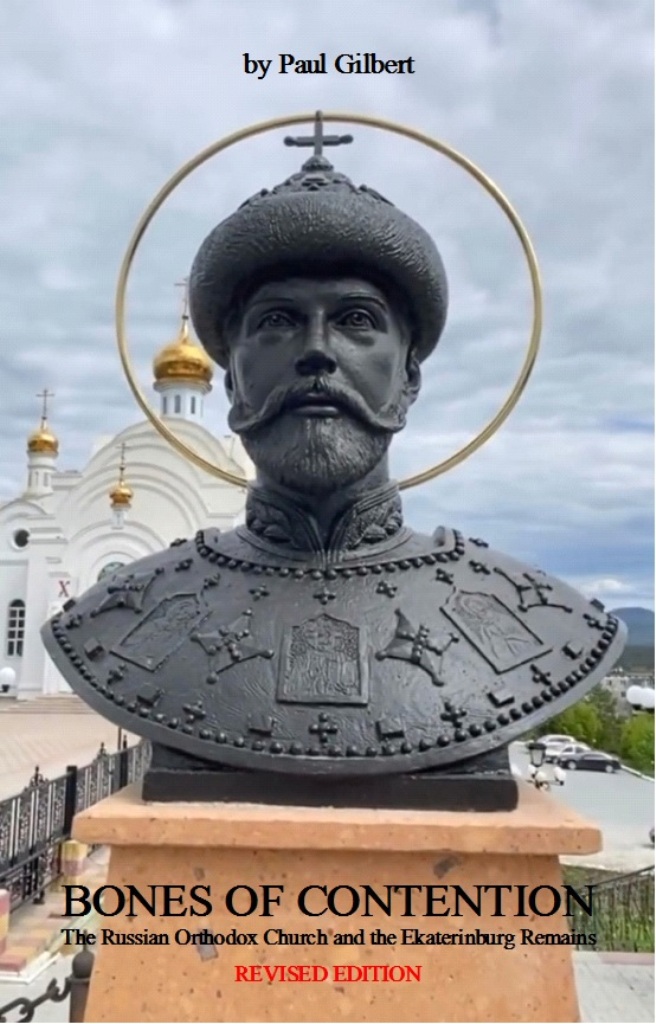
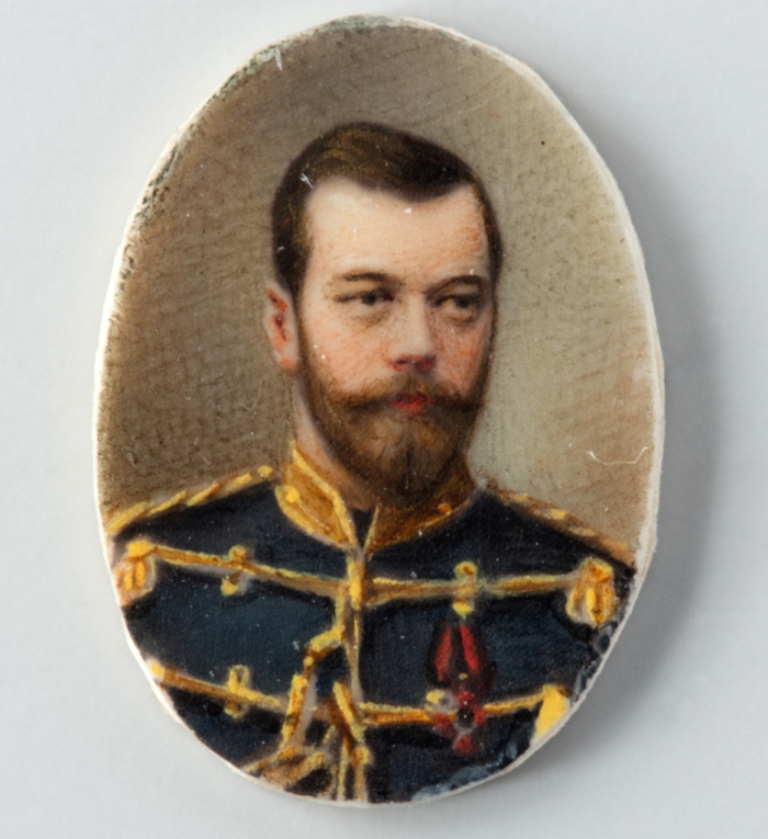
Bust of Nicholas II planned for Achinsk
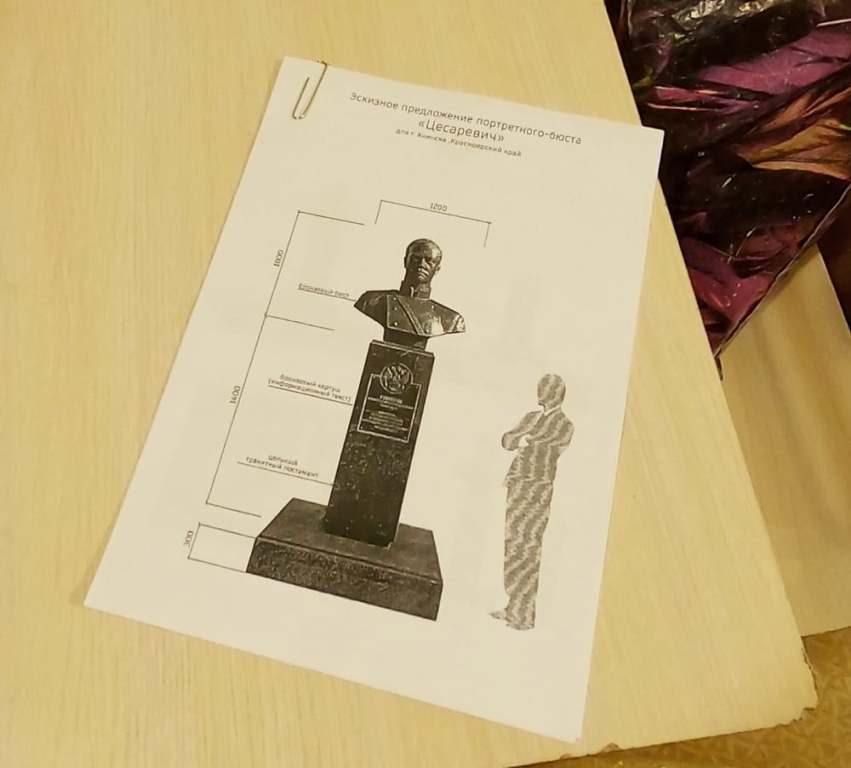
On 15-16 [O.S. 2-3] July 1891, Tsesarevich Nicholas Alexandrovich [the future Emperor Nicholas II], visited Achinsk on his journey across Siberia to St. Petersburg.

Achinsk is a city in Krasnoyarsk Krai, located on the right bank of the Chulym River near its intersection with the Trans-Siberian Railway, 184 kilometers (114 mi) west of Krasnoyarsk.

On 10th December, a planning committee met to discuss plans to install a bust-memorial of Nicholas Alexandrovich to mark his historic visit to the city 130 years ago.

“Nicholas II was not only a political leader, under which our country became one of the three most advanced countries in industrial production, but also became one of the spiritual centers of the world,” says Viktor Barykin, an Achinsk ethnographer, one of the members of the initiative group. “The bust should become a symbol of our spiritual unity and the reconciliation of all forces in the name of the future of Russia,” he added.

Having considered various options, the participants in the initiative group agreed that the bust must be made of bronze, and the pedestal must be granite. As Achinsk lacks the technical ability to fulfill such an order, specialists from Moscow will be consulted.

According to preliminary calculations, together with the pedestal, the work will cost about 900 thousand rubles [$12,300 USD]. It is unlikely that the city’s budget will be able to allocate that kind of money, therefore bringing the project to fruition will depend on the financial support of patrons and private donations. If every resident of Achinsk contributes at least 10 rubles, this will be enough. In the near future, a special account will be registered to which a person can make a donation for this good cause. The option of participation in the city program, which provides for the financing of initiative projects, is also being considered, but the application cannot be submitted until March of next year.
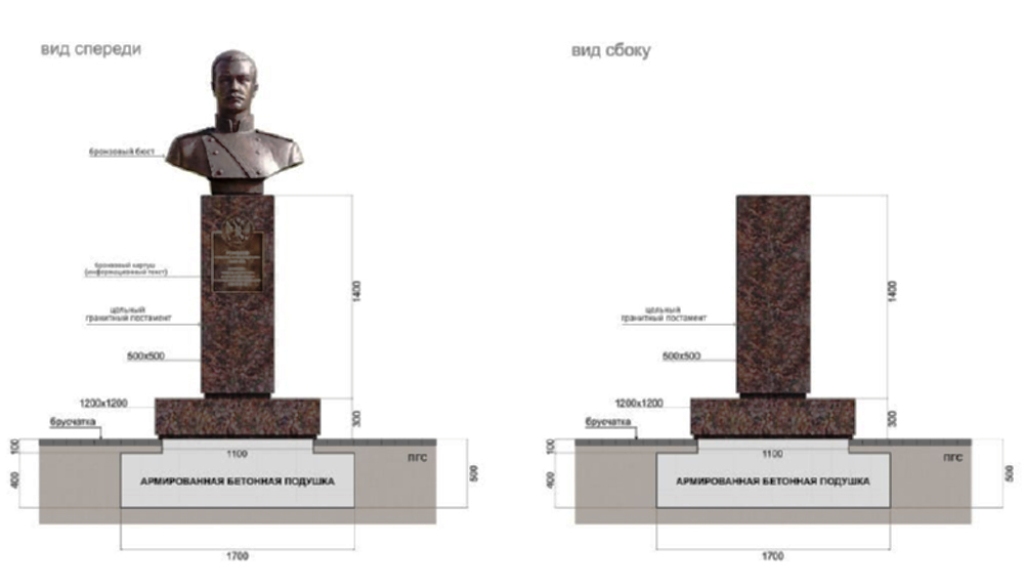
If all goes according to plan, the bust can be opened for the 340th anniversary of Achinsk, which will be celebrated in 2023. The bust is planned to be installed in Trinity Park, next to the Poklonny Cross on the site of the Holy Trinity Cathedral, where the future Emperor went to pray, and later destroyed by the the Communists in the 1930s.

A preliminary sketch of the proposed bust-monument has already been made: Nicholas II is depicted as a young man – that year when he visited Achinsk, he was only 23 years old.

“It should not be a monument for the sake of a monument,” – said the artist and Honorary Citizen of Achinsk Pavel Batanov, who was unanimously elected as the chairman of the initiative group. “First of all, the bust-monument should combine royalty, humanity, and holiness. The main thing is that it should be created at a high professional level.”

© Paul Gilbert. 13 December 2021
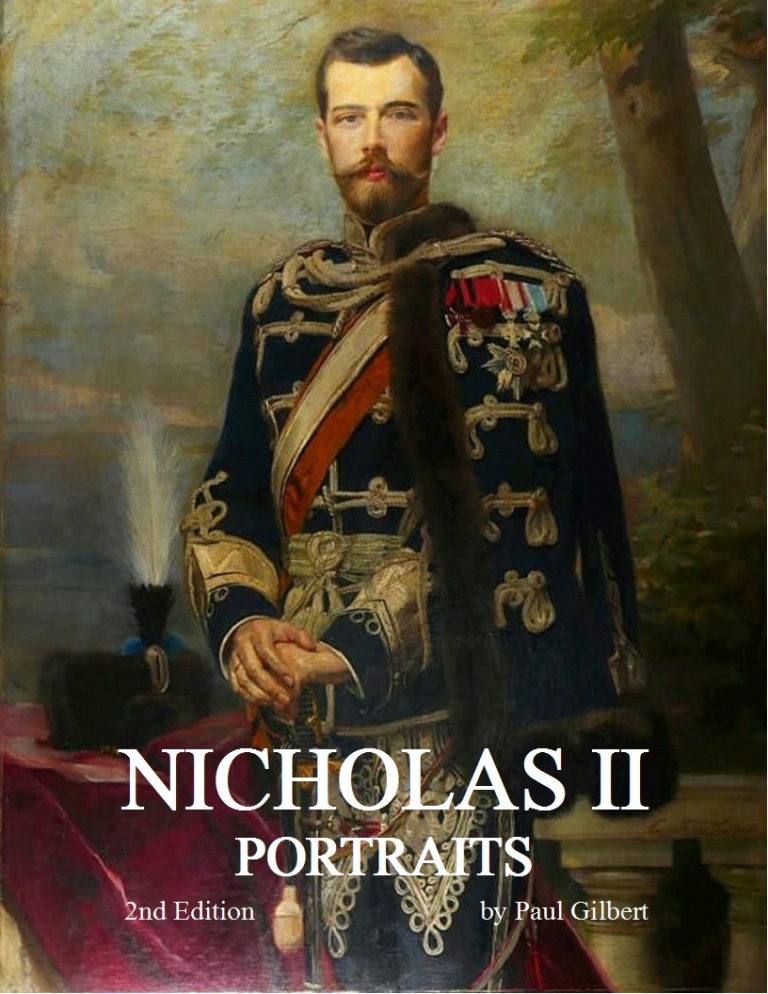
‘Nicholas II. Portraits’ in FULL COLOUR!

CLICK ON THE LINK BELOW TO ORDER FROM AMAZON

*HARD COVER EDITION @ $50 USD

PAPERBACK EDITION @ $40 USD

BOOK DESCRIPTION

Large format 8-1/2″ x 11″ hard cover and paperback editions, with 178 pages + 200 Colour and black & white photographs

SECOND EDITION, FEATURING 185 FULL COLOUR PHOTOS!

I am pleased to announce the publication of my latest book Nicholas II. Portraits, in both hard cover and paperback editions. This is my first hard cover book and my first book featuring full colour photographs.

Originally published in 2019, with 140 pages with 175 black and white photos, this new expanded edition features more pages and more photographs: 180 pages + more than 200 photos, including 185 FULL COLOUR and 30 black & white!

Nicholas II. Portraits explores a century of portraits of Russia’s last emperor and tsar, through the eyes of pre-revolutionary and contemporary Russian, and foreign artists.

This unique title – the first book of its kind ever published on the subject – features an introduction, as well as a series of short articles, and richly illustrated, including many full-page, with detailed and informative captions.

The cover features a portrait of Tsesarevich and Grand Duke Nicholas Alexandrovich (1889), the future Emperor Nicholas II, by the artist Baron Ernst Friedrich von *Lipgart (1847-1932).

* Lipgart painted a whole gallery of portraits of Nicholas II, my book features 10 of them – all in COLOUR!

The Emperor is depicted in the uniform of the Prussian 8th Hussar Regiment, of which he was appointed an Honourary Chief in 1889, his cape is decorated with the Royal Prussian Order of the Black Eagle.

The painting hung from 1890 to 1995 in the former dining room of Neuhaus Castle, directly opposite the portrait of Elector Clemens August of Bavaria. The officers of the 8th Hussar Regiment established a club for their meetings here and in the adjacent premises. The Prussian regiment was stationed at Neuhaus and Paderborn castle from 1851 to 1919. Following the end of World War I, the regiment was disbanded.

From the Collection of the Museum of the House of Bavarian History in Regensburg, Bavaria.

The articles include: Serov’s Unfinished 1900 Portrait of Nicholas II; A Nun’s Gift to Russia’s New Tsar. The Fate of a Portrait; Galkin’s Ceremonial Portrait of Nicholas II Discovered; among others!

Famous portraits and their respective artists are all represented, including Serov, Repin, Lipgart, Tuxen, Bakmanson, Becker, Bogdanov-Belsky, Kustodiev, and many others.

The last section of the book is dedicated to the works of contemporary Russian artists, who have painted outstanding portraits of Nicholas II since the fall of the Soviet Union in 1991.

AVAILABLE EXCLUSIVELY FROM AMAZON WORLDWIDE!

© Paul Gilbert. 10 December 2021

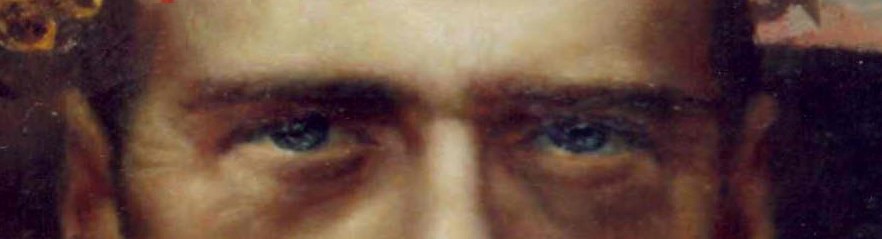
What was the colour of Nicholas II’s eyes?

046

Many people who met Nicholas II, whether friend or foe, testify to his overwhelming charm.

“With his usual simplicity and friendliness,” wrote his Prime Minister, Vladimir Kokovtsov. “A rare kindness of heart,” commented Foreign Minister Sergei Sazonov. “A charm that attracted all that came near him,” wrote British Ambassador Sir George Buachanan. “Charming in the kindly simplicity of his ways,’ said his niece’s husband Prince Felix Yusupov. His cousin Grand Duke Konstantin Konstantinovich wrote of “that clear, deep, expressive look that cannot fail but charm and enchant.”

The colour of Nicholas II’s eyes, however is the subject of dispute, by both those who met him in person and among contemoorary historians and biographers today.

His early biographer Sergei Oldenburg refers to his “large radiant grey eyes,” which “peered directly into one’s soul and lent power to his words”; Hélène Vacaresco who met Nicholas when he was Tsesarevich, also wrote of his “large grey eyes.” One of his most intimate cousins Grand Duke Alexander Mikhailovich, on the other hand, refers to the “beauty of his frank blue eyes.”

One of the most vivid descriptions of Nicholas II’s features was recorded by his tutor Nikolai Nikolayevich Obruchevm who wrote: “. . .  The features of his beautiful elongated face, which often shone with a charming smile, were his blue eyes. All who had the honour of ever seeing the Emperor up close, were struck by the bottomless depth of these wonderful eyes, in which, as in a mirror, his beautiful soul was reflected. …”

More strangely Count Vladimir Nikolayevich Kokovtsov, who served as as the Prime Minister of Russia from 1911 to 1914, had the chance to stare into those eyes many times, writes that they were “usually of a velvety dark brown.” Perhaps he was colour blind?

The true colour of Nicholas II’s eyes is captured in Serov’s famous portrait, painted in 1900, the eyes are a grey-blue, matching the colour of his uniform. 

Archpriest Lev Lebedev (1935-1998) writes: “The direct gaze of his deep grey-blue eyes, which often flashed with welcoming humour, penetrated into the very soul of his interlocutors, completely captivating people . . .”.

Russian historian Konstantin Gennadievich Kapkov writes in his book Духовный мир Императора Николая II и его семьи [The Spiritual World of Nicholas II and His Family]: “The main thing that he inspired was awe, not fear. I think his eyes were the reason. Yes I’m sure it was his eyes, so beautiful were they. The most delicate blue shade, they looked straight in the face. With the kindest, tender and loving expression. How could you feel fear? His eyes were so clear that he seemed to open his whole soul to your sight.”

Charles Sydney Gibbes (1876-1963) – tutor to the Imperial Children – also reflects on Emperor Nicholas II’s eyes: ” . . . The main thing that he inspired was awe, not fear. I think his eyes were the reason. Yes, I’m sure it was his eyes, they were so beautiful. His eyes were so clear that it seemed that he opened his whole soul to your gaze. A simple and pure soul, which was not at all afraid of your probing gaze. No one else could look at you like that.”

© Paul Gilbert. 28 November 2021

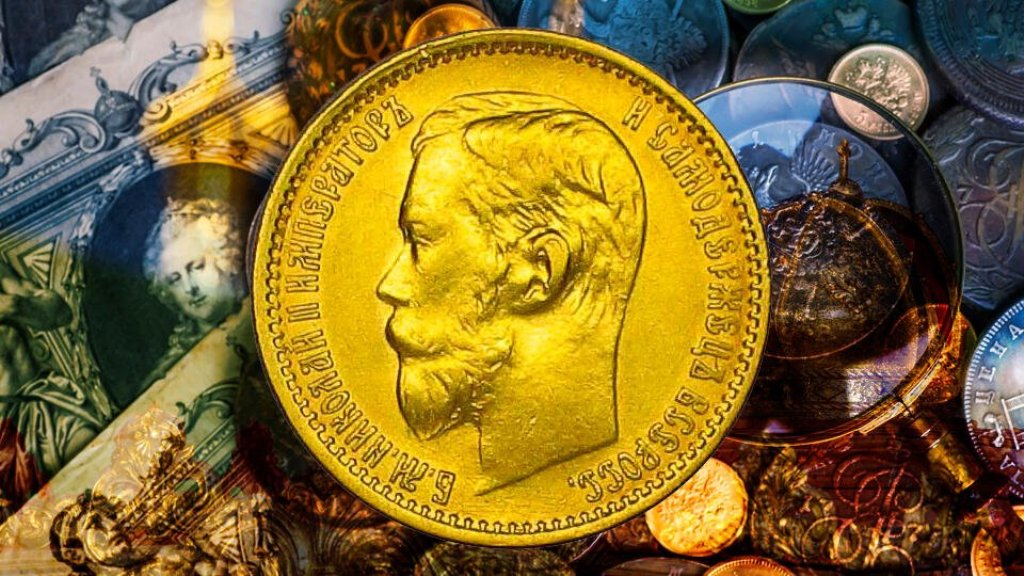
How Nicholas II Created The World’s Largest Bank

In any country in the world, its national currency is one of the main guarantors of its independence. Moreover, its issuance is carried out by a central bank owned by the state. Only the United States is different. A private financial company, the US Federal Reserve, is responsible for issuing the dollar, one of the world’s primary reserve currencies. Many believe that its shareholders run the global economy. It is a little known fact that during the early 20th century, Emperor Nicholas II helped finance the authorized capital of the US Federal Reserve System [FRS].

The Russian Empire as the world arbiter

Despite the popular opinion that pre-revolutionary Russia was the gendarme of Europe, in reality it was a world power that sought not only to end wars, but also to create an international body regulating relations between countries. While on the throne, Emperor Alexander II in 1868 initiated the signing in St. Petersburg of the convention on the “rules of war”. This document, in particular, provided for a ban on the use of a number of inhumane types of weapons. Nicholas II followed the example of his grandfather by organizing the First World Peace Conference in 1899. With the active participation of the last Russian emperor, a proposal was made to create the League of Nations, the prototype of the UN. It sounds incredible, but even then, at the end of the 19th century, Nicholas II spoke from a high rostrum about the need to end the arms race.

Money is the engine of politics

Simultaneously with the discussion of the creation of the League of Nations at the beginning of the 20th century, proposals were raised for the establishment of an international financial body. Its functions were to include the regulation of financial disputes between different countries. It was then that the proposal to create the US Federal Reserve appeared. From the earliest days of its existence, this financial institution was essentially an international private bank, which was required to have its own authorized capital, denominated in gold. Today, the US dollar is not backed by either gold or the mass of commodities in the United States. But in 1913 everything was different. At the time when the FRS was created, the dollar, like the ruble, was obliged, if necessary, to be exchanged for an equivalent in gold. Not surprisingly, the US Federal Reserve had large reserves of gold as its charter capital.

Where did it come from?

Under US law, however, American banks involved in the creation of the FRS, could not utilize their gold as authorized capital. It was assumed that it would be provided by those countries, for the settlement of financial disputes between which the FRS was created. The major world powers showed little interest in the proposal to finance the authorized capital of the FRS with their own gold and foreign exchange reserves. This was done only by Emperor Nicholas II from Russia’s vast gold reserves. The contribution of the Russian Empire to the US Federal Reserve amounted to 88.8% of its authorized capital in gold! At the same time, Russia was supposed to receive 4% of the invested funds annually, as dividends. However, soon after the establishment of the FRS, the 1917 Russian Revolution broke out, and then the Imperial Family were murdered by order of the new Bolshevik regime.

The USSR, refused to recognize the debts of Tsarist Russia, and, accordingly, did not have any rights to its income from foreign assets. There was no one to pay interest to the FRS. Had the history of Russia taken a different course, perhaps today it would be the owner of the printing press of the world reserve currency.

© Paul Gilbert. 25 November 2021

Bones of Contention: The Russian Orthodox Church and the Ekaterinburg Remains

CLICK HERE TO ORDER FROM AMAZON

Full-colour covers, 206 pages + 90 black & white photographs

Originally published in 2020, this NEW REVISED & EXPANDED 2021 EDITION features an additional 40+pages, new chapters and 90 black and white photos. It is the most up-to-date source on the highly contentious issue of the Russian Orthodox Church and their position on the Ekaterinburg Remains.

In May 2022, the Bishops’ Council of the Russian Orthodox Church, will meet in Moscow during which they will review the findings of the Investigative Commission and deliver their verdict on the authenticity of the Ekaterinburg Remains.

The reopening of the investigation into the death of Nicholas II and his family in 2015, caused a wave of indignation against the Russian Orthodox Church. This book presents the position of both the Moscow Patriarchate and the Investigation Committee.

This is the first English language title to explore the position of the Orthodox Church in Russia with regard to the Ekaterinburg remains. The author’s research for this book is based exclusively on documents from Russian media and archival sources.

This unique title features an expanded introduction by the author, and eight chapters, on such topics as the grounds for the canonization of Nicholas II and his family by the Moscow Patriarchate in 2000; comparative details of the Sokolov investigation in 1919, and the investigations carried out in the 1990s to the present; reluctance of the Moscow Patriarchate to officially recognize the remains as authentic; interesting findings of Russian journalist, producer and screenwriter Elena Chavchavadze in her documentary Regicide. A Century of Investigation; and the author’s own attempt to provide some answers to this ongoing and long drawn-out investigation for example: “Will Alexei and Maria be buried with the rest of their family?” and “Will the Imperial Family remains be reinterred in a new cathedral in Ekaterinburg?”.

This new revised and expanded edition also includes two NEW chapters!

Interviews with Vladimir Soloviev, Chief Major Crimes Investigator for the Central Investigate Department of the Public Prosecution Office of the Russian Federation and Archpriest Oleg Mitrov, a member of the Synodal Commission for the Canonization of Saints – BOTH key players in the Ekaterinburg remains case, reveal the political undertones of this to this ongoing and long drawn-out investigation.

ABOUT THE AUTHOR

Independent researcher Paul Gilbert has spent more than 25+ years researching and writing about the Russian Imperial Family. His primary research is focused on the life, reign and era of Nicholas II. On 17th July 1998, he attended the tsar’s interment ceremony at the SS Peter and Paul Cathedral in St. Petersburg. Twenty years later, he attended the Patriarchal Liturgy on the night of 16/17 July 2018, held at the Church on the Blood in Ekaterinburg. Since his first visit to the Urals in 2012, he has brought prayers and flowers to both Ganina Yama and Porosenkov Log on numerous occasions.

© Paul Gilbert. 23 November 2021

Icon made on the occasion of Nicholas II and Alexandra Feodorovna’s wedding sold at auction

On 11th November, the icon “St. Nicholas the Wonderworker and the Martyr Tsarina Alexandra”, sold at an auction held at Literary Fund Auction House in Moscow for 4.3 million rubles [$60 thousand USD].

The icon was made by the Moscow jewellery company I.P. Khlebnikov, Sons and Co. The firm was founded in 1871 and in 1879 was awarded the title of Supplier to the Court of His Imperial Majesty Emperor Alexander II.

The icon was made on the occasion of the wedding of Emperor Nicholas II and Empress Alexandra Feodorovna, held on 27th November [O.S. 14th November] 1894 at the Grand Church – the home church of the Imperial Family – in the Winter Palace, St. Petersburg.

The wood icon made by A.A. Artsibashev, is 30.6 x 25.6 x 2.1 cm. Setting: silver, enamel, filigree, filigree enamel, chasing, gilding, mount; 30.7 x 25 x 3 cm. Good condition. The icon has a museum, artistic, historical and cultural significance.

© Paul Gilbert. 12 November 2021

Rare portrait of Nicholas II on display at Bavaria exhibit

Portrait of Tsarevich and Grand Duke Nicholas Alexandrovich (1889), the future Emperor Nicholas II, by the artist Baron Ernst Friedrich von Liphart (1847-1932), Russified as Ernst Karlovich Lipgart. Lipgart painted at least six portraits of Russia’s last monarch, including several ceremonial portraits.

This magnificent portrait is currently on display in the Twilight of the Gods II – Last Monarchs in the House of History of Bavaria exhibition, at the Museum of the House of Bavarian History in Regensburg, Bavaria until 16th January 2022.

The Emperor is depicted in the uniform of the Prussian 8th Hussar Regiment, of which he was appointed an Honourary Chief in 1889, his cape is decorated with the Royal Prussian Order of the Black Eagle.

The painting hung from 1890 to 1995 in the former dining room of Neuhaus Castle, directly opposite the portrait of Elector Clemens August of Bavaria. The officers of the 8th Hussar Regiment established a club for their meetings here and in the adjacent premises. The Prussian regiment was stationed at Neuhaus and Paderborn castle from 1851 to 1919. Following the end of World War I, the regiment was disbanded.

After the exhibition ends in January of next year, the portrait will be returned to the Residenz Museum in Neuhaus Castle.

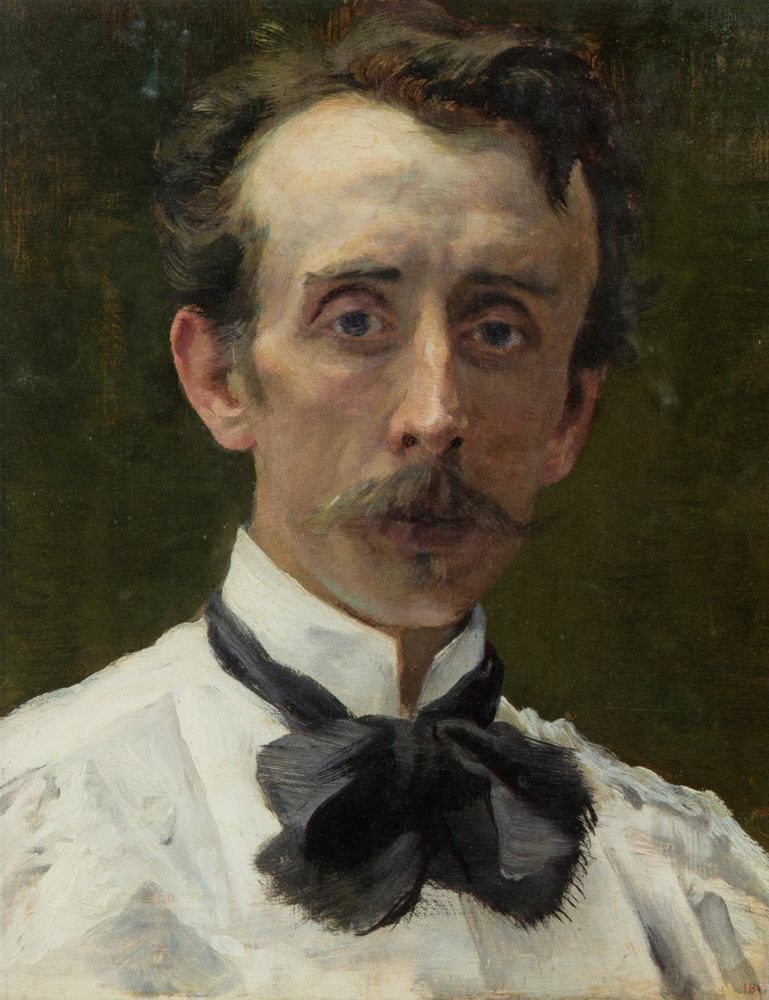
PHOTO: Ernst Karlovich Lipgart (1847-1932). Self-portrait, 1881.
From the Collection of the State Russian Museum, St. Petersburg

Ernst Karlovich Lipgart (1847-1932) was a Russian portraitist and decorator. He was born in Tartu, and after living for a time in Florence, where he studied at the Academy of Arts, he moved to France and then to Russia.

He arrived in St. Petersburg in 1886, where he painted portraits of members of the Imperial family, including a whole gallery of portraits of Nicholas II. He also decorated palaces and theatres in the capital, including the curtain in the Hermitage Theatre.

Lipgart also took on more unusual requests, including the menu for the Tsar’s coronation in 1896 and then painting 100 figures on a piano, telling the story of Orpheus. The piano was a present from the Tsar to Empress Alexandra Feodorovna.

Between 1906-1929 he served as the Main Curator of the Hermitage Art Gallery. His role in the acquisition of the Madonna with a Flower by Leonardo da Vinci, which belonged to the Benois family, became a sensation in 1914.

In 1921 he was evicted from his house and his daughter was executed for harbouring a White Army officer.

© Paul Gilbert. 24 October 2021

***

COLOUR Hard cover edition of ‘Nicholas II. Portraits’ now available!

This image has an empty alt attribute; its file name is 519-1.jpg

CLICK ON THE LINK BELOW TO ORDER FROM AMAZON

*HARD COVER EDITION @ $50 USD

PAPERBACK EDITION @ $40 USD

BOOK DESCRIPTION

Large format 8-1/2″ x 11″ hard cover and paperback editions, with 178 pages + 200 Colour and black & white photographs

SECOND EDITION, FEATURING 185 FULL COLOUR PHOTOS!

I am pleased to announce the publication of my latest book Nicholas II. Portraits, in both hard cover and paperback editions. This is my first hard cover book and my first book featuring full colour photographs.

Originally published in 2019, with 140 pages with 175 black and white photos, this new expanded edition features more pages and more photographs: 180 pages + more than 200 photos, including 185 FULL COLOUR and 30 black & white!

Nicholas II. Portraits explores a century of portraits of Russia’s last emperor and tsar, through the eyes of pre-revolutionary and contemporary Russian, and foreign artists.

This unique title – the first book of its kind ever published on the subject – features an introduction, as well as a series of short articles, and richly illustrated, including many full-page, with detailed and informative captions.

The cover features a portrait of Tsesarevich and Grand Duke Nicholas Alexandrovich (1889), the future Emperor Nicholas II, by the artist Baron Ernst Friedrich von *Lipgart (1847-1932).

* Lipgart painted a whole gallery of portraits of Nicholas II, my book features 10 of them – all in COLOUR!

The Emperor is depicted in the uniform of the Prussian 8th Hussar Regiment, of which he was appointed an Honourary Chief in 1889, his cape is decorated with the Royal Prussian Order of the Black Eagle.

The painting hung from 1890 to 1995 in the former dining room of Neuhaus Castle, directly opposite the portrait of Elector Clemens August of Bavaria. The officers of the 8th Hussar Regiment established a club for their meetings here and in the adjacent premises. The Prussian regiment was stationed at Neuhaus and Paderborn castle from 1851 to 1919. Following the end of World War I, the regiment was disbanded.

From the Collection of the Museum of the House of Bavarian History in Regensburg, Bavaria.

The articles include: Serov’s Unfinished 1900 Portrait of Nicholas II; A Nun’s Gift to Russia’s New Tsar. The Fate of a Portrait; Galkin’s Ceremonial Portrait of Nicholas II Discovered; among others!

Famous portraits and their respective artists are all represented, including Serov, Repin, Lipgart, Tuxen, Bakmanson, Becker, Bogdanov-Belsky, Kustodiev, and many others.

The last section of the book is dedicated to the works of contemporary Russian artists, who have painted outstanding portraits of Nicholas II since the fall of the Soviet Union in 1991.

AVAILABLE EXCLUSIVELY FROM AMAZON WORLDWIDE!

© Paul Gilbert. 10 December 2021

Third volume of the ‘Crime of the Century. Investigation Materials’, published in Russia

Click HERE to read the third volume [in Russian only]

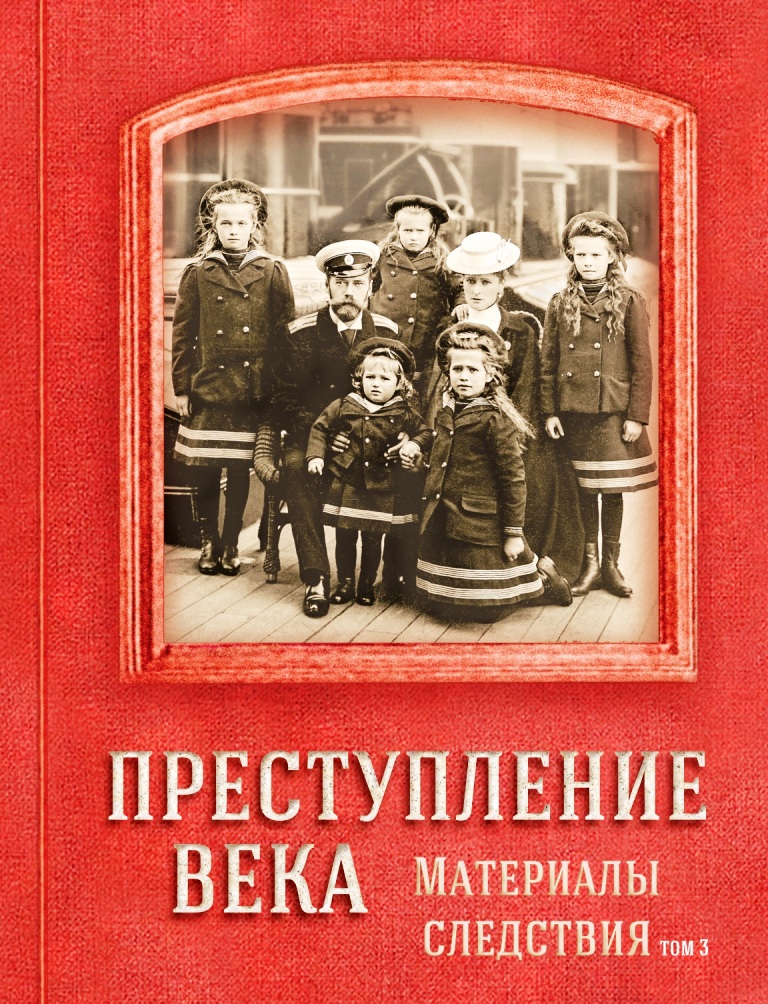
On 18th October, the third volume of the book Преступление века. Материалы следствия [Crime of the Century. Investigation Materials], about the investigation into the murder of Emperor Nicholas II and his family was published [in Russian] on the website of the Investigative Committee of the Russian Federation.

The first volume was published in September of this year, the second volume was published earlier this month.

The third and final volume of the three-volume edition is a complete collection of materials from the investigation and historical documents related to the death of Emperor Nicholas II, his family and their four faithful retainers.

The book is based on documentary evidence, photographs, diaries, memoirs, audio recordings and reliable archival sources, including new, previously unpublished documents. The second and third volumes are devoted to investigative work almost a century ago (1918-1924), the beginning of the 1990s, when this fact was re-examined, as well as investigation at the present stage.

The book is the joint work of investigators, forensic scientists, archivists, historians, representatives of civil society, among others. It is the most accurate and complete source of information that has been published to date, based on the ROC investigation, which began in the autumn of 2015.

This book will be of great help to all those interested in establishing the truth on what many people consider the “crime of the century” and one of the darkest pages in 20th century Russian history. As with the previous two volumes, copies of the third volume will be sent to various government agencies and representatives of the Russian Orthodox Church.

It is important to note, that it is the contents of the this three-volume edition, which the Bishops’ Council of the Russian Orthodox Church, will review when they meet in Moscow from 26th to 29th May 2022 [postponed from 15th to 18th November 2021], during which they will review the findings of the Investigative Commission and deliver their verdict on the authenticity of the Ekaterinburg Remains.

© Paul Gilbert. 18 October 2021

Second volume of the ‘Crime of the Century. Investigation Materials’, published in Russia

Click HERE to read the second volume [in Russian only]

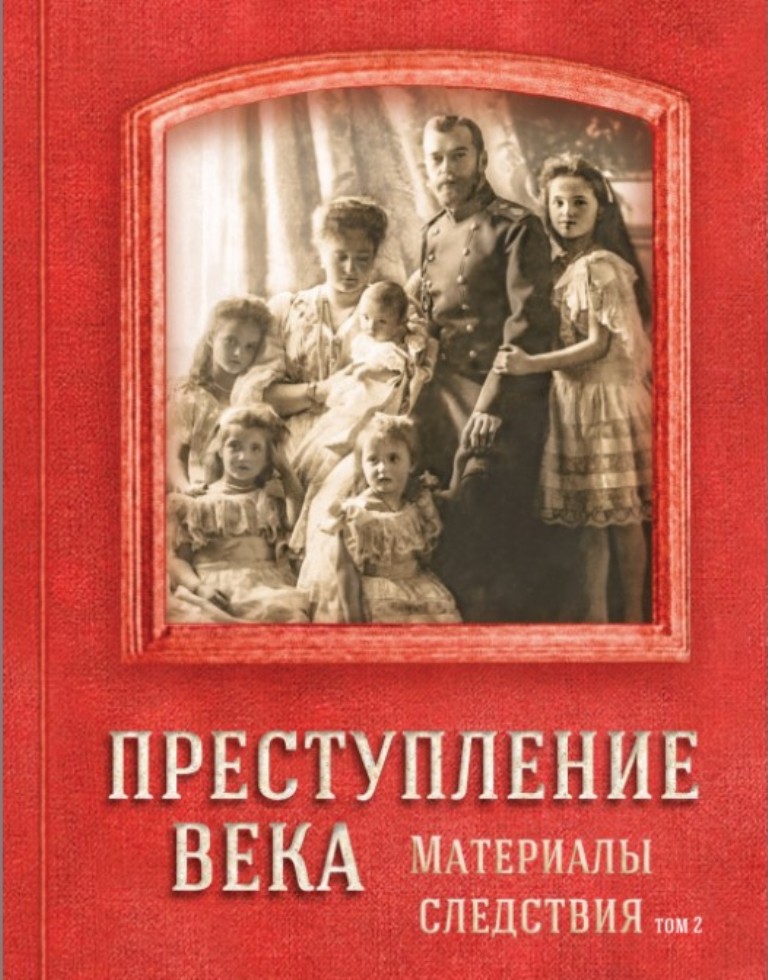
On 12th October, the second volume of the book Преступление века. Материалы следствия [Crime of the Century. Investigation Materials], about the investigation into the murder of Emperor Nicholas II and his family was published [in Russian] on the website of the Investigative Committee of the Russian Federation.

The second volume describes the various stages of the investigation into the murder of the Imperial Family, which is based on scientific facts, historical and archival documents, reflecting on modern research, including recreated 3D models of the Ipatiev House.

The book consists of three volumes and is based on photographs, diaries, memoirs, audio recordings and archival sources, including previously unpublished material.

The first volume was published in September this year. The book discusses the decision to liquidate Emperor Nicholas II and his family, as well as the preparation of the murder.

Thanks to the painstaking work carried out using modern technologies, the Investigative Committee added that results of the investigation leave no doubts about the version of the death and the identity of the Ekaterinburg Remains. “The results of the investigation of this crime are recognized at the international level,” a spokesperson added.

This publishing project is the result of a joint effort of investigators of the Investigative Committee of the Russian Federation, which includes scientists, researchers, and other experts. It remains the most complete and up-to-date study into the investigation of a century-old crime, which remains one of the darkest pages in the history of 20th century Russia.

This book will be of great help to all those interested in establishing the truth in this matter. Copies of the second volume will be sent to various government agencies and representatives of the Russian Orthodox Church.

It is important to note, that it is the contents of the this book, which the Bishops’ Council of the Russian Orthodox Church (ROC), will review when they meet in Moscow from 15th to 18th November 2021, during which they will review the findings of the Investigative Commission and deliver their verdict on the authenticity of the Ekaterinburg Remains.

© Paul Gilbert. 13 October 2021

Miniatures of Nicholas II returned to Russia

PHOTO: Miniatures of Emperor Nicholas II 
Artist: Alexander Wegner

NOTE: this article was originally published on 19th August 2019, it has been updated with additional detail and photos – PG

In August 2019, the Tsarskoye Selo State Museum Reserve acquired a collection of five miniatures that once adorned the brooches and pendants of the Empress Maria Feodorovna, wife of Emperor Alexander III, and mother of Emperor Nicholas II.

These unique items, had been kept in a private London collection shortly after the 1917 Revolution. The acquisition of these items was made possible thanks to financial support from the TransSoyuz Charitable Foundation.

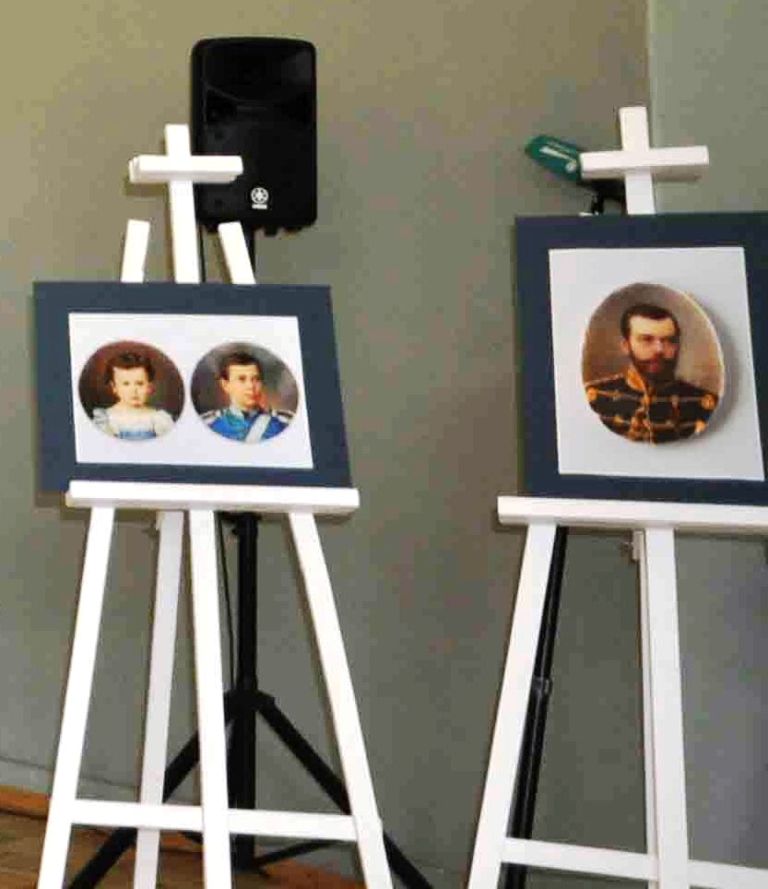
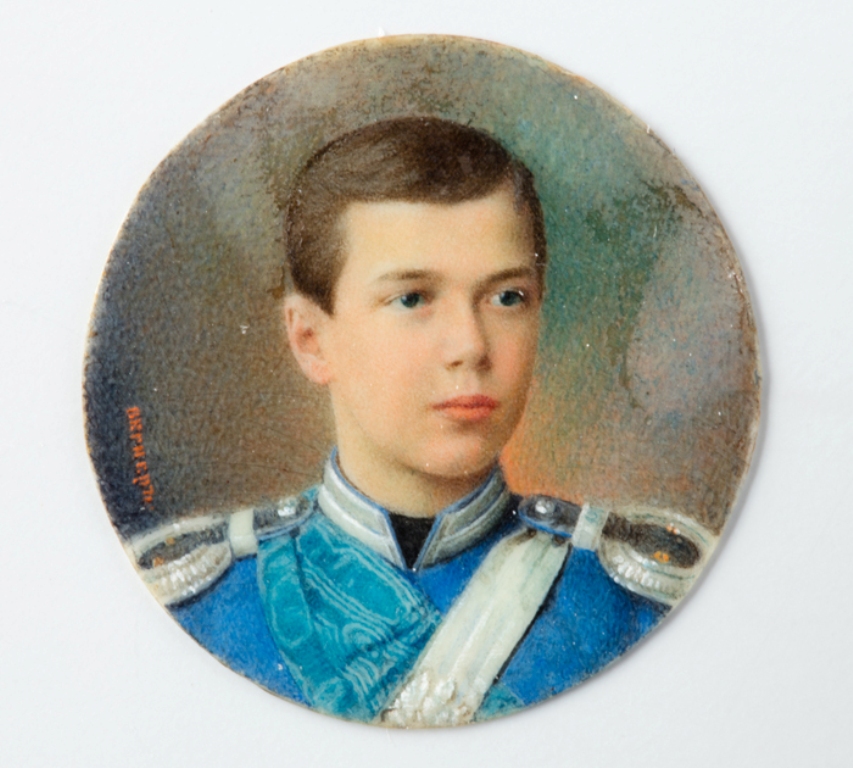
In addition to miniatures depicting Emperor Alexander III [Nicholas II’s father] and Empress Alexandra Feodorovna [Nicholas II’s wife], are three miniatures of Emperor Nicholas II (in childhood, adolescence and adulthood), seen below:

PHOTO: Miniature of Tsesarevich Alexandrovich in childhood
Artist: Alexander Wegner

PHOTO: Miniature of Tsesarevich Alexandrovich in adolescence
Artist: Alexander Wegner

PHOTO: Miniature of Emperor Nicholas II in adulthood
Artist: Alexander Wegner

After the revolution, in 1919, Maria Feodorovna managed to take some of her jewellery, including these miniatures, with her when she left Russia and went into exile.

Following the death of the Dowager Empress in 1928, her daughter, Grand Duchess Xenia Alexandrovna, inherited her mother’s jewellery. She sold part of them to the English company RG Hennel & Sons, as evidenced by an inventory dated 29th May 1929.

The miniatures were made by the Academician of the Imperial Academy of Arts Alexander Wegner. The smallest of them has a size of only 8 × 6 mm.

The miniatures are part of the Romanov family archive, most of which (over 200 items) the Museum purchased with sponsored funds in 2017. The miniatures are currently on display in the Alexander Palace, and are now part of the Collection of the Tsarskoye Selo State Museum.

© Paul Gilbert. 9 October 2021