How the Orthodox Church supported the overthrow of the monarchy

237

Early 20th century propaganda caricature depicting Emperor Nicholas II
between a member of the Holy Synod and a revolutionary

In 1917, Emperor Nicholas II abdicated the throne, and the country was proclaimed a republic. How did the hierarchs of the Orthodox Church react to this event? In response, I am pleased to present the First English translation of an interview by the Russian media outlet “MK” in St. Petersburg with Doctor of historical sciences, Professor Mikhail Babkin of the Russian State University for the Humanities (Moscow), and author of the monograph “Clergy of the Russian Orthodox Church and the overthrow of the monarchy” who discusses the topic.

– Mikhail Anatolyevich, what place did the Orthodox Church in general and the Holy Synod in particular occupy during the Russian Empire?

– The Russian Empire and the Russian Orthodox Church were a single church-state body, headed by the emperor. The supreme body of church administration in Russia was the Most Holy Governing Synod established by Peter the Great in 1721.

From 1723, the Synod had been titled as “His Holiness” and “Governing”. The first of these denominations pointed to the equality of the Synod with the Eastern patriarchs, and the second to the independence of the Synod from the Governing Senate, to which all colleges were subordinate (from 1802 they became known as ministries). That is, by its status, the Synod was not equated to the college, but to the Senate. If the Senate acted in the civil administration field, the Synod in that of the spiritual. Moreover, the buildings of the Senate and the Synod, located on Senate Square in St. Petersburg, were a single whole, connected by a triumphal arch, and surmounted by the imperial crown.

The activity of the Synod was controlled by a secular person appointed by the emperor – chief prosecutor of the Holy Synod, who was the official representative of the authority of His Majesty. The chief prosecutor was responsible for protecting state interests in the field of church administration, as well as overseeing the governing bodies of the Orthodox Church in the center and in the localities: the Synod and the spiritual consistories, respectively.

237b

The buildings of the Senate (former) and the Holy Synod, in St. Petersburg as they look today

– What was the political position of the hierarchs during the February Revolution?

– In the last days of February 1917 (I quote the dates according to the Julian calendar), in the conditions of a crisis of state power in the capital of the Russian Empire, there was an increase in the number of strikes and street demonstrations, which resulted in the treasonous defection of military units of the Petrograd garrison to the side of the Revolution. During those days, the Synod was urged to take any measures in support of the monarchy by both representatives of the public and government officials: for example, the Chief Procurator of the Holy Synod, Nikolai Pavlovich Raev (1855-1919) and his deputy (more precisely, in the terminology of those years – comrade) Prince Nikolai Davidovich Zhevakhov (1874-1946). However, the members of the Synod did not meet those motions.

On March 2, 1917, in the chambers of the Moscow Metropolitan (they were located on the courtyard of the Trinity-Sergius Lavra, at 44, Fontanka River Embankment, in the building where the Mayor’s Central City Public Library is now located), a private meeting of the Synod members was held. Six of the eleven members of the supreme body of church administration took part in it. It was decided to immediately establish contact with the Provisional Government, formed that day by the Executive Committee of the State Duma. This fact allows us to argue that the members of the Synod recognized the new government even before (!) The abdication of Emperor Nicholas II from the throne, which took place on the night of March 2–3.

– During the February Revolution, the reigning dynasty was overthrown. How did the clergy of the Orthodox Church react to this event?

– Let’s do a little historical excursion. As you know, on March 2, 1917, in Pskov, Emperor Nicholas II renounced for himself and for his son in favor of his younger brother – Grand Duke Mikhail Alexandrovich. The following day, March 3, in Petrograd, in house No. 12 on Millionnaya Street, Mikhail Alexandrovich signed a document whose official name is the “Act on the refusal of Grand Duke Mikhail Alexandrovich from the acceptance of the supreme power and his recognition of the full power for the Provisional Government  on the initiative of the State Duma ”(source: Collection of Legalizations and Decrees of the Government. Pg., 1917. No. 54. March 6. Sep. 1. Art. 345. S. 534.). However, in early March 1917 that document which was printed in the press, controlled by the Petrograd Soviet of Workers ‘and Soldiers’ Deputies, was published under the title “Abdication of Mikhail Alexandrovich.” It was from that point, that the myth spread about the abdication of the Grand Duke. At the same time, both the Petrograd Soviet, but also the Holy Synod were involved in the creation of this myth.

Let us turn to the text of the Act of March 3, 1917, in which Grand Duke Mikhail Alexandrovich said: “I made a firm decision only in that case to accept the Supreme (tsarist. – Approx. Ed.) Power, if that would be the will of our great people, which should […] establish a government in the Constituent Assembly and new basic laws of the Russian State. Therefore, […] I ask all citizens of the Russian Power to submit to the Provisional Government, […] henceforth before the […] Constituent Assembly, by its decision on the form of government, expresses the will of the people.” There are no words about any abdication in the Act. Moreover, it speaks of Mikhail Alexandrovich’s readiness to take the throne if the Constituent Assembly elects a monarchical form of government for Russia.

Thus, on March 3, 1917, Russia was at a historic crossroads: to be a monarchy or a republic, in one form or another.

We come back to your question. How did the Holy Synod behave in this situation? In short, from March 4, it had taken a whole range of measures to remove the issue of the monarchy from the agenda in the socio-political consciousness of the 100 million Orthodox flock. For example, on March 7, the supreme body of church administration issued a definition in which it was prescribed to all Russian clergy: “in all cases, instead of commemoration of the reigning house, to offer prayers “for the God-Preserving Russian and Noble Interim Government”. That is, on March 7, in the absence of the abdication of Grand Duke Mikhail Alexandrovich and before the decision of the Constituent Assembly on the form of government, the reigning House of Romanov began to be commemorated in the past tense. Thus, the members of the Synod intervened in the state system of Russia, and in this context, we can say that the members of the Synod overthrew royal power as an institution.

Thus, the thesis of the Petrosoviet about the alleged “abdication of Mikhail Alexandrovich” and, as a consequence, that the “House of Romanov abdicated” was supported by the authority of the Holy Synod, after which it was introduced into the public consciousness of the Orthodox flock, turning over time into an enduring myth. It is replicated to this day in contemporary scientific works and educational literature.

237e

Grand Duke Mikhail Alexandrovich and Emperor Nicholas II

– How did the local clergy react to the February Revolution?

– The political line for the entire clergy was determined by the Synod. Its corresponding orders in the order of church administration from Petrograd were distributed to all dioceses, monasteries, and parishes. And the clergy, in turn, brought information to their parishioners. For example, after the changes made by the supreme body of church administration in liturgical ranks, prayers of the following plan began to sound in all the churches of the Russian Orthodox Church: With such “doctrinal” texts, the Synod actually proclaimed the thesis of the divine origin of the authority of the Provisional Government.

– If, in your opinion, the members of the Synod took the side of the Revolution, what did they hope to gain from it?

– After the reform of church administration carried out by Tsar Peter I, there was no Russian patriarchate for more than two centuries. And the clergy over time (especially after 1905) began to cultivate views, but in fact – the myth that, they say, the patriarchate is the “canonical system of church administration”, and that the Russian Church, deprived of the patriarch, is “decapitated” and in a state of “enslavement”.

The actions taken by the Holy Synod in the spring of 1917 were due to motives arising from the centuries-old historical and theological problem of the “priesthood-tsardom,” the main question of which is the relationship between the tsarist and sacred hierarchical authorities, or whose authority is higher: the tsar or patriarch? 

Taking advantage of the socio-political situation prevailing during the February Revolution, members of the Holy Synod decided to “settle accounts” with tsardom. Indeed, if there is tsarist power in the state in any form, then there is the participation of the emperor, as the anointed of God, in the affairs of church administration, there is a problem of correlation of priesthood and tsardom. If in the state there is no tsar, but there is a secular republic, devoid of sacred meaning in any form, then automatically it turns out that “the priesthood is higher than tsardom.”

In other words, in the early days of March 1917, members of the Holy Synod overthrew imperial power as their “charismatic competitor.” They wanted the church in the state to exist as if under the tsar, but without the tsar: in which the clergy, as before, would enjoy special rights and privileges, that it would receive subsidies from the treasury, but that there would be no “state interference in affairs church”, so that the clergy does not have any outside supervision, control and accountability.

237f

Patriarch Tikhon of Moscow (1865-1925)

– It seems paradoxical that the restoration of the patriarchate took place in 1917 – during such a milestone in the history of Russia …

– The patriarchate was restored for the sake of the patriarchal power itself: first of all, so that it would be. Thus, the Local Council, under pressure from the “bishops’ party,” adopted the decision to restore the patriarchate on November 4, 1917, and the next day elected Metropolitan Tikhon of Moscow (Bellavin) [1] to the patriarchate. But at the same time, the powers of the first bishop and his place in the system of church administration were not delineated. Only on December 8, the Council adopted the definition “On the rights and obligations of His Holiness Patriarch of Moscow and All Russia.” Further, the power of the patriarch only increased, right up to his absolutization in the 2000-2010s.

In general, speaking in the context of the problem of the “priesthood of the tsardom”, the year 1917 was reduced to the following: in March there was no royal authority, and in November the patriarchate appeared. That is, the tsar was gone, but the patriarch appeared. Who benefits from this? The question is rhetorical.

***

[1] When Patriarch Tikhon learned of the vengeful execution of the Imperial Family in 1918, he commanded that Panikhidas (requiems) be served for Nicholas II as the slain Tsar—regardless of the fact that he abdicated the throne; regardless of the fact that under the Bolshevik terror this was dangerous for the Patriarch himself; regardless, finally, of the fact that ironically, it was the Tsarist government that had for two hundred years prevented the restoration of the Patriarchy in general, and would have prevented his becoming Patriarch in particular.

Tikhon was glorified (canonized) a saint by the Synod of Bishops of the Russian Orthodox Church Outside Russia (ROCOR) on 1 November [O.S. 19 October] 1981. He was later glorified by the Moscow Patriarchate during the Bishop’s Council of 9–11 October 1989.

© Professor Mikhail Babkin / Paul Gilbert. 8 March 2020

Nicholas II monument proposed for Tsarskoye Selo

237a

© Philipp Moskvitin

The above sketch is for a proposed monument of Tsar-Martyr Nicholas II by Russian artist Philipp Moskvitin. Note the crown of thorns that the tsar is holding in his right hand.

The artist’s idea has been presented to Tsarskoye Selo. It would be nice to see such a monument erected in the garden of the Alexander Palace, a perfect welcome to the Museum of the Russian Imperial Family, which is scheduled to officially open on 18th August 2020.

237b

© Philipp Moskvitin

237c

© Philipp Moskvitin

Click HERE to visit Philpp Moskvitin’s web site

© Philipp Moskvitin / Paul Gilbert. 28 February 2020
“No one is more hated than he who speaks the truth”

2020
Independent researcher Paul Gilbert

Re-examine all you have been told. Dismiss what insults your soul
– Walt Whitman

I have devoted more than 25 years to researching and writing about the Romanov dynasty and Imperial Russia. During that period, I published dozens of books and journals.

In the 1990s, I organized special Romanov Tours to Russia, which included visits to St. Petersburg, Tsarskoye Selo, Moscow, Crimea, Livadia and Ekaterinburg. In 1997, I led the first tour group from the West on a tour of the Alexander Palace in Tsarskoye Selo, and in 2000, the first tour group from the West on a tour of the Grand Kremlin Palace in Moscow.

I also organized and hosted the 1st International Nicholas II Conference, held on 27th October 2018, in Colchester, England. The 2nd International Nicholas II Conference will be held next year, on Saturday, 19th May 2021, at the Holy Trinity Monastery in Jordanville, NY.

In my closing words at the 2018 Conference, I announced that I would be dedicating my efforts and resources to clearing the name of His Imperial Majesty Sovereign Emperor Nicholas II (1868-1918). I am now a full-time independent researcher on the life, reign and era of Russia’s last emperor and tsar.

My personal crusade to clear the name of Russia’s much slandered tsar, is to challenge the popular-held negative assessment of Nicholas II, which exists in the West to this day.

Part of that mission will revisit – and criticize, if necessary – books, newspaper articles, documentaries, etc., which present his life and reign based on these very negative myths and lies. While I have no personal interest in fighting with scholars, historians and authors, I am, however, prepared to challenge their research, based on new information and facts. 

Through the publication of new articles and book titles, researched primarily from Russian sources, my efforts to take a fresh look at the life, reign and era of Russia’s last monarch have been met with both praise and indignation.

The praise comes from monarchists, members of the Orthodox community, and adherents to Nicholas II, all of whom do not share the widely accepted negative assessment of Nicholas II.

The indignation comes from Nicholas II’s many detractors, among them are Russophobes, Communists, Leninites, anti-monarchists, historians and authors. They accuse me of “hagiography”, “romanticizing” or “whitewashing the truth”, or viewing Nicholas II through “rose tinted glasses”. So be it!

It is these same detractors, who are content to rehash the same negative assessment planted more than a century ago, and allowed to germinate over the past century. Much of it based on parlour room gossip among the aristocracy, and even worse, Bolshevik and revolutionary propaganda which poisoned the minds and hearts of so many of the tsar’s subjects.

What is especially frustrating is that it is these “historians” and “experts,” who refuse to examine new documents and research discovered in Russia’s archives by a new generation of Russian historians since the fall of the Soviet Union in 1991. These include new documents that have been declassified, diaries, letters, testimonials, among others.

Russian historian Pyotr Multatuli hit the nail on the head when he wrote:

“We combine indifference to our own history with our maximalism and categorical judgments. Thus we lose the ability to hear others. Everybody is content with his own biases without thinking that in the case of the holy passion-bearer his opinion is borrowed and that he was too lazy to form his own opinion. More than twenty-five years have passed since the collapse of the USSR, and truthful books on the Imperial Family were published since as early as perestroika. But most people don’t read them and retain the outdated stereotypical views.”

bizfb

A few months back, I created a shorter version of this post on my personal Facebook page. I was overwhelmed with the show of support which followed: 831 ‘LIKES’, 81 ‘COMMENTS’ and 43 ‘SHARES’.

Below, are just some of the encouraging words of support from people all over the world, who support me in my personal mission to help clear the name of Russia’s much slandered Tsar:

Paul, never mind what the detractors say. A fresh look at something never hurts and Nickie would be the first one to take that very approach if there was something he wanted to study or evaluate fairly and accurately. If you find positive accomplishments of his reign that amount to unassailable FACTS, able to stand on their own, then you have done scholarship in general a tremendous service. It’s only a “hagiography” if it is devoid of the foibles of human nature and willfully excludes the mistakes, the flaws, or the prejudices that we humans all have, Nicholas and Alex included, but you are out to bare the truth. What is and was, as opposed to what a preconceived ideology seeks to hide or distort. The man had character yet at least one oft-quoted Russian historian said he “lacked insides”. The man was never afraid to act, especially when he thought he was right. That’s a sure sign of character. The most reliable window into his character can be seen in his response to the months of final captivity. He trusted in events, kept his head, never wavered in fear, always displayed a controlled, patient form of quiet but impregnable courage. That’s the man you will ultimately discover. Good luck to you.” – W. Gifford

Paul, you are to be applauded and admired for your marvellous historical work. I cannot tell you how much truth-seekers appreciate you. Much rubbish was published about Tsar Nicholas II and Empress Alexandra. The truth must be told. The Imperial Sovereign and his consort must be recorded accurately and not sensationalised for any political advancement of Bolshevism or republicanism. They were good people, loving, loyal and patriotic as well as devout.” – A. Adar

Congratulations for your involvement and your great efforts to “restore” the memory of Nicholas II, our last tsar, so defamed! May God willing give you long life! God bless you!” – M. Rovanova

Thank you, Paul Gilbert, for your dedication and goal. May you be guided and rewarded by the intercessions of the Holy Martyr Nicholas II.” – B. Bennette

I support you Paul! Thank you for your hard work.” – E. Davis

Paul, be not distracted by negativism. More honor to you!” – A. von Pinoci

What a wonderful life’s work and legacy.” – R. Zisman

Keep up the good work Paul. If you are copping flak then you are definitely on target.
The honour and name of his majesty Nicholas II must be cleared, he deserves more than what he got and still gets from conformist historians.” – D. Adams

You are an example for all of us who desire the truth about Tsar Nicholas II.” – L. Young

Paul, he who strives to speak the truth is often berated. Do not be discouraged. Many support you. And your supporters fair outnumber those who wish to silence you.” – R. LeJeune

© PAUL GILBERT. 27 February 2020
The woman who photographed the Imperial Family in Tobolsk

232a

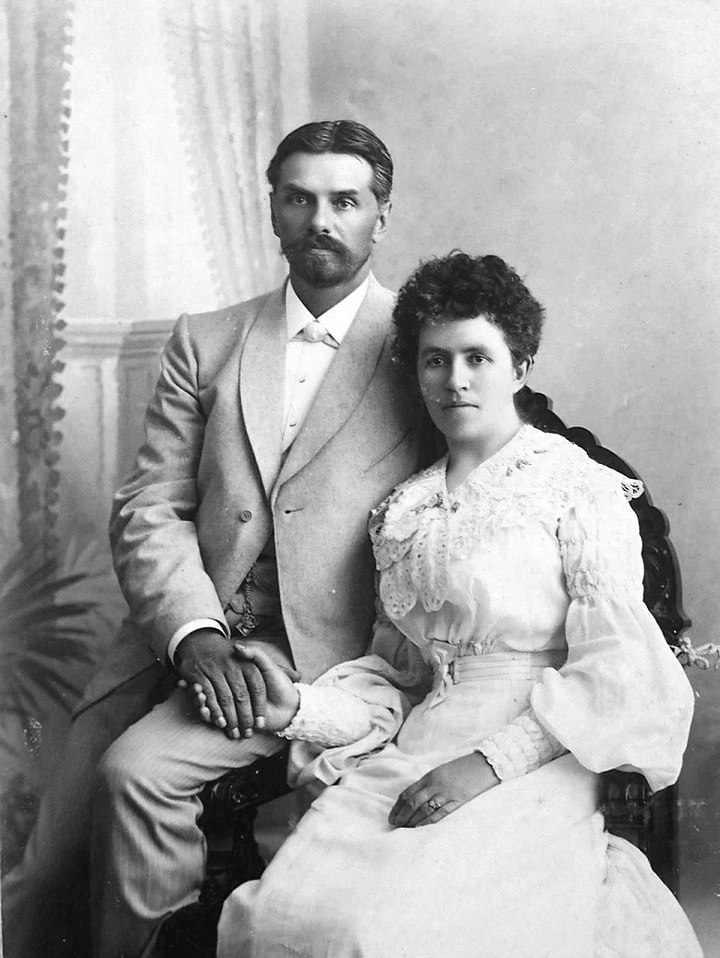
Maria Ussakovskaya, nee Petukhova with her husband Ivan Konstantinovich Ussakovsky

Few historians know about Maria Ussakovskaya the first woman photographer in Tobolsk. Through the lens of her camera, she photographed life in the provincial capital during one of the most dramatic periods of Russia’s history, leaving for posterity a noticeable mark in the biography of this Siberian city.

Incredible progress

Maria Mikhailovna Ussakovskaya, nee Petukhova, was born on 28th December 1871 (Old Style) in the family of a Tobolak native, state adviser M.M. Petukhov. She graduated from the Tobolsk girl’s school and, in 1893, married the official Ivan Konstantinovich Ussakovsky.

Ivan was also a great lover of photography – a hobby that was fashionable and modern in Russia at the time. On the basis of her husband’s home laboratory, as well as money received in a dowry from her father, Maria opened a photo salon, which quickly gained popularity among the townspeople. It should be noted that in 1897 in Tobolsk, with a population of 20 thousand people, there were no less than nine photo shops! 
Maria kept up with all the new developments in photography. She ordered expensive Bristol cardboard for passe-partout, used interchangeable backs with different scenes, offered costume shots, and even performed photo montages. This was incredible progress for Siberia at that time.

Photographs by Ussakovskaya were distinguished by their artistic taste and original composition. These were real photo portraits, which is especially significant, because photography at that time was essentially a step into eternity to become a memory for years to come.

Unlike other female owned photo salons, Ussakovskaya perfectly mastered the techniques of photography herself. Her photo salon also began to publish postcards, which were in great demand. It is known that the famous Russian chemist and inventor Dmitry Mendeleev (1834-1907), during his stay in Tobolsk in the summer of 1899, bought a collection of art postcards with views of his native city from Ussakovskaya’s salon.

Maria continued to work after the revolution, but the portraits of young ladies in silk dresses were replaced with photographing labor collectives, fur farms, bone carving masters and ordinary workers. At the same time, the house was formally confiscated by the local Soviet, leaving Maria to rent her own photo workshop from a local farm in Tobolsk. In 1929, Ussakovskaya was deprived of suffrage. The photo salon had to be closed. In 1938, the Ussakovskys left Tobolsk for Moscow for fear of reprisals. Maria Mikhailovna died in 1947 and is buried in the Don Cemetery.

232b

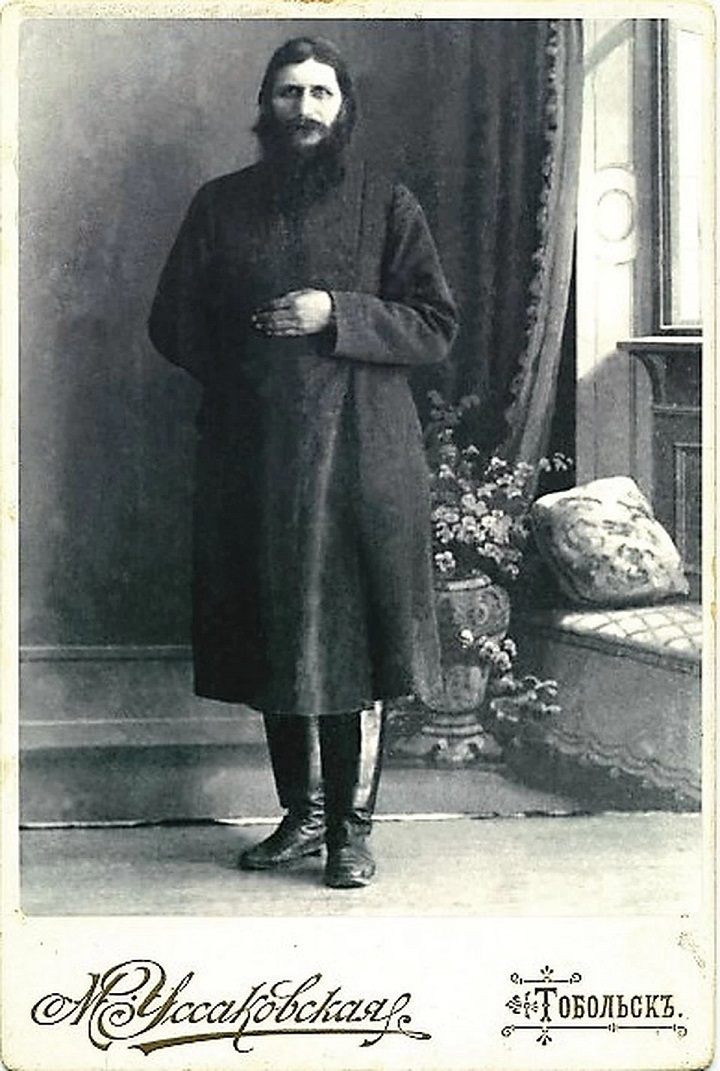
Photograph of Rasputin taken at Maria’s salon in Tobolsk

Witness of events

Maria was a witness to many historical events. Of particular interest in her biography are family traditions associated with the names of prominent people of that era and carefully preserved by subsequent generations of Ussakovsky. One of them is based on the visit by the famous strannik Grigori Rasputin.

The photograph of Grigory Rasputin made by Maria Ussakovskaya is today widely known. Moreover, the famous holy man, who was hunted by Russia’s finest photographers, presented himself at Maria’s salon. Maria’s great-grandson of Vadim Borisovich Khoziev, continues to tell the story of Rasputin’s visit to his great-grandmother’s salon in Tobolsk, as told to him by his grandmother Maria Ivanovna Ussakovskaya.

232e

One of Maria’s photos of the Governors House, where the Imperial Family lived under house arrest

Photographer of the Romanov family?

It is also of great interest,  that according to the Ussakovsky family, Maria repeatedly photographed the family of Tsar Nicholas II during their house arrest in the former Governor’s Mansion in Tobolsk. Sadly, however, in 1938, her daughter Nina, fearing arrest, destroyed all the photographic plates. One can only speculate, as to what these lost plates depicted? How close did Maria get to the Imperial Family? What were they doing when she photographed them? How many photographs did she take, and later destroyed? Sadly, we will never know.

Only photos of the faithful servants of the Imperial Family have been preserved to this day. The original of this photo is now in the collection of the Tsarskoye Selo State Museum in Pushkin, a copy of which can be seen in the Museum of the Family of Emperor Nicholas II (opened in June 2018) in Tobolsk. It is interesting to add that members of their suite who enjoyed freedom to go about Tobolsk, made purchases of  postcards with views of Tobolsk, on behalf of the Imperial Family from Maria’s salon.

The fact that the Imperial Family used the services of the Ussakovskaya Salon was documented. In the financial report of Colonel Kobylinsky, security chief of the Romanovs, in addition to a few mentions of invoices for purchasing postcards, information is also provided on the account “for correcting negatives”. So Maria’s photos of the Imperial Family did in fact exist!.

The Imperial Family described their stay in Tobolsk in great detail in both their respective diaries and letters, however, there is no mention of an invitation of Maria Ussakovskaya nor the photographer in general. A visit by a female photographer would hardly go unnoticed. It is also not clear why the Romanovs would need to invite a photographer: they, as well as the tutor to Tsesarevich Alexei Pierre Gilliard, had their own cameras. Many photographs of the Imperial Family have been preserved, taken in Tobolsk by the Romanovs themselves or by members of their retinue.

Pierre Gilliard notes in his diary on 17th September 1917 that the Imperial Family were forced to have “ID cards with numbers, equipped with photographs.” Empress Alexandra Feodorovna made a similar note in her diary on 30th September 1917. Their respective entries may explain the photographer from the Ussakovskaya Salon, who was most likely Maria’s husband Ivan Konstantinovich Ussakovsky, who was invited for this compulsory photography for certificates. An invoice was issued by the salon.

Several passes to the “Freedom House” with photographs have been preserved, for example, the passes with a photograph of Dr. E. S. Botkin and maid A. S. Demidova. Their copies are also on display in the Museum of the Family of Emperor Nicholas II in Tobolsk.

232c

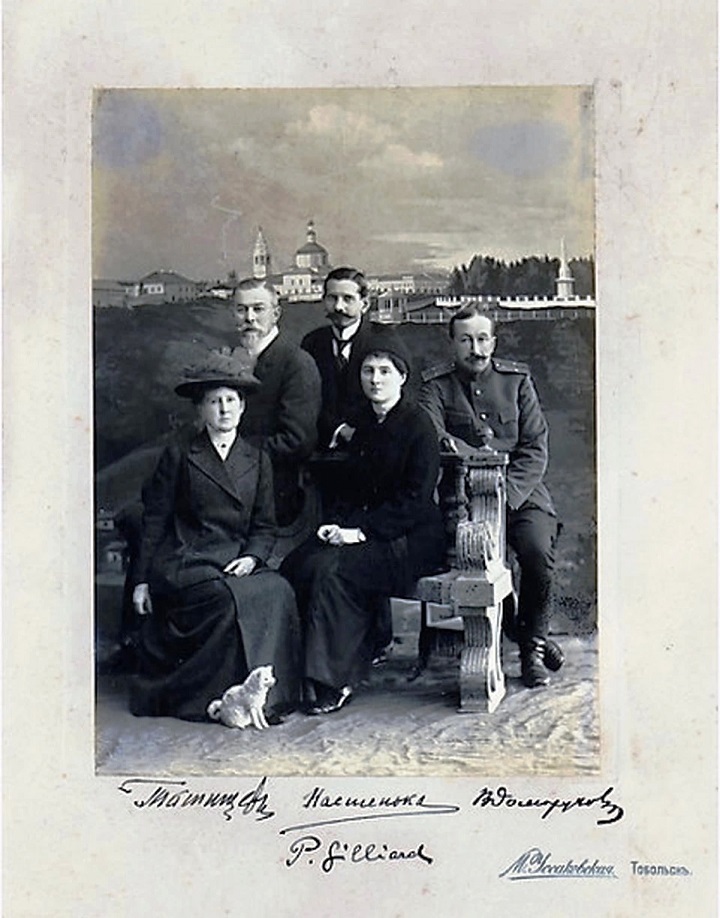
Photograph of the Imperial Family’s faithful servants taken at Maria’s salon in Tobolsk

“Faithful servants”

A wonderful photograph depicting *five faithful servants of the Imperial Family has been preserved to this day. The original of this photo is now in the collection of the Tsarskoye Selo State Museum in Pushkin, a copy of which can be seen in the Museum of the Family of Emperor Nicholas II (opened in June 2018) in Tobolsk.

The faithful servants of the Imperial Family, who had not lodged in the Governor’s House, but in the Kornilov House, located on the opposite side of the street and, obviously, enjoyed greater freedom of movement, could visit the Ussakovskaya Salon, which was located nearby. The famous photograph, called “Faithful Servants”, was clearly taken in the salon. Five members of the imperial retinue pose against a backdrop with a view of Tobolsk, printed or painted on canvas, This background can be seen in other photos from the Ussakovskaya Photo Salon.

*NOTE: the photo above depicts – the gentlemen: Count Ilya Tatishchev, Pierre Gilliard, Prince Vasily Dolgorukov; the ladies, Catherine Schneider, Anastasia Hendrikova. With the exception of Pierre Gilliard, the other four faithful retainers of the Imperial Family were murdered by the Bolsheviks in 1918.

232d

The home and salon of Maria Mikhailovna and Ivan Ussakovsky in Tobolsk

The home and salon of Maria Mikhailovna and Ivan Ussakovsky which was located at No. 19 Ulitsa Mira, was illegally demolished in 2006. Requests to local authorities by a group of local historians to restore the building has fallen on deaf ears in Tobolsk. 

© Paul Gilbert. 24 February 2020

Grand Duchess Maria Vladimirovna on Emperor Nicholas II

229

Grand Duchess Maria Vladimirovna poses near a portrait of Nicholas II

In 2016, the Head of the Russian Imperial House HIH Grand Duchess Maria Vladimirovna graciously consented to an interview with Paul Gilbert, Editor of the semi-annual journal Royal Russia, in which she speaks candidly on a wide range of topics on the past, present and future of the Russian Imperial House..

Of particular interest to adherents to Russia’s last emperor and tsar, are the following excerpts from the interview pertaining to Nicholas II.

For nearly a century, the last Emperor of Russia, Nicholas II, has been maligned and slandered by Western historians and biographers. In your opinion, how have these historians and authors been mistaken about Nicholas II?

No one can prevent historical figures from being criticized. But one must distinguish objective criticism from slander and defamation. Both positive and negative assessments must be supported by evidence that emerges from the careful study and analysis of historical sources.

We are all judged by the fruits of our actions. Russia in the reign of Emperor Nicholas II grew in population by 150% and its rate of economic growth was the highest in the entire world. Labour laws in Russia were among the most progressive anywhere, which was acknowledged even by President Taft of the United States. The great Russian academic Dmitrii Mendeleev, the French economist Edmond Teri, and other researchers have written about the strength and development of Russia in these years and have shown that Nicholas II actually achieved a lot for his country during his reign.

Some might say that because the reign of Nicholas II ended in revolution, any accomplishments he may have had lose their value and meaning. But that’s not the right way to look at it.

I think you would agree that, if a driver is unable to prevent a grenade from going off in his car, it doesn’t mean that he was a bad driver or that the car had some defect or had been poorly constructed or hadn’t been maintained in good working condition.

Absolutely—Emperor Nicholas II, like any human being or statesman, was not without sin and certainly did make mistakes.

But he was a man of deep faith, a great patriot, an honourable, genuine, and humane man, who with courage and integrity bore all the hardships that fate had delivered to him, both during his reign and afterward.

In canonizing him as a passion-bearer, the Holy Church affirmed that Emperor Nicholas II was one of the principal moral guides of our people. And I believe that this decision by the hierarchy of the Church resonates in the hearts of my countrymen.

Thus while I certainly do not deny the right of historians to debate the correctness or mistakes on this or that decision made by Emperor Nicholas II, I cannot condone those who try to blacken his memory or depict him as a dull and shallow-minded man who cared only about his family.

There is simply no substantiation in the historical sources for that view of him.

229b

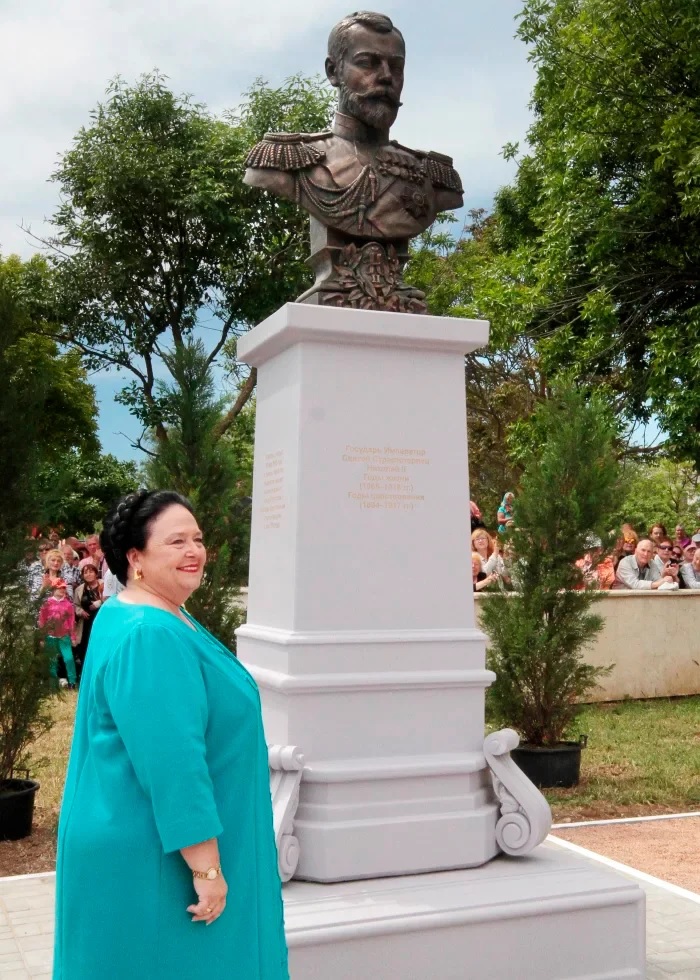
Grand Duchess Maria Vladimirovna at the monument to Nicholas II in Evtaporia, Crimea

In your view, why is the rehabilitation of the Tsar-Martyr Emperor Nicholas II by the Supreme Court of the Russian Federation so important for a proper understanding of Russian history?

Some misunderstand the meaning of the word “rehabilitation,” thinking that it connotes a kind of “amnesty.”

In point of fact, however, the rehabilitation of the victims of political repression is a recognition that such people were the targets of illegal action perpetrated in the name of the government and that these actions be deemed formally by the government today as illegal and the victims be recognized as having being entirely innocent and have their honour, integrity, and good name fully and legally restored to them.

For the Russian government today, the rehabilitation of the Holy Royal Passion-Bearer Emperor Nicholas II, his family, other murdered members of our House, and their faithful physician and attendants, has an enormous legal and moral significance.

The Russian Federation is the legal successor of the Russian Soviet Federated Socialist Republic—the RSFSR—and of the Union of Soviet Socialist Republics—the USSR.

A local governmental organ, which exercised full political authority at that time—the Ural Soviet of Workers’ and Soldiers’ Deputies—passed a death sentence on the Emperor, his family and their servants, and the supreme governmental organs of Soviet Russia—the All-Russian Central Executive Committee and the Soviet of People’s Commissars—recognized this decision as correct and approved it.

Until 2008, the Presidium of the Supreme Court of the Russian Federation had not ruled on my petition for the rehabilitation of the Royal Martyrs, and so from a legal point of view the executions continued to be considered lawful and justified.

Neither the canonization of the Royal Family by the Church nor the statements from various leaders of the country condemning the murders carried any legal weight. So we had a situation where the Church and the faithful considered Nicholas II and his family saints, many others of our countrymen considered them, if not saints, at least as innocent victims of terror, and the government? It saw them as criminals deserving of death.

Of course, that was an absurd and unsustainable situation—and a bloody burden from which the government needed to free itself.

Thank God, the highest court in the land concurred with the arguments I presented and finally made the correct and legal ruling on the matter.

I would especially like to acknowledge and thank the Chief Justice of the Supreme Court, Vyacheslav Lebedev, for his part in reaching this ruling. He delved deeply into the matter and put an end to this on-going violation of the law. Before the ruling came down on October 1, 2008, rehabilitating the murdered members of the Imperial Family, we did not know him at all or what he thought about our legal arguments or about us in general. But he researched the question on his own and agreed with my petition on its merits, issuing his ruling “On the Rehabilitation of the Victims of Political Repression” entirely on the basis of the historical facts alone.

This ruling on the rehabilitation of the Imperial Family, their relatives and faithful servants, all murdered by the atheistic and totalitarian Communist regime, is perhaps one of the best pieces of evidence that Russia has undergone a colossal positive change in its understanding of the country’s past and has made important strides forward in the defense of human rights today.

* * *

229c

CLICK ON THE IMAGE ABOVE TO ORDER 

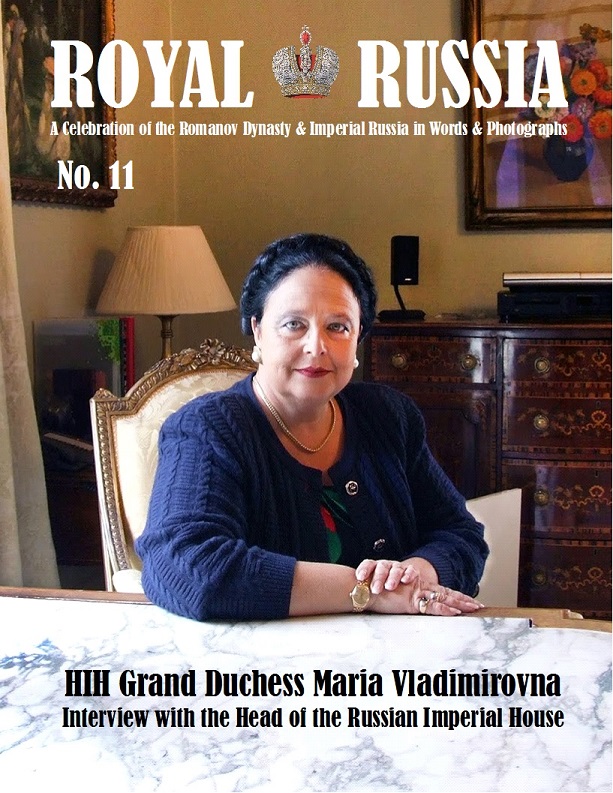
The interview was published in the No. 11 issue of Royal Russia in January 2017. The 19 page interview, features 15 black and white photographs, courtesy of the Russian Imperial House.

Grand Duchess Maria Vladimirovna speaks candidly on a wide range of topics on the past, present and future of the Russian Imperial House.

These include memories of her parents, Grand Duke Vladimir Kirillovich and Grand Duchess Leonida; the alleged treason by her grandfather Grand Duke Kirill Vladimirovich in the wake of the 1917 Revolution; the rehabilitation of Emperor Nicholas II in 2008; her relationship with the Russian Orthodox Church in post-Soviet Russia; the new investigation of the Ekaterinburg remains; the reunification of Crimea with the Russian Federation, the situation in Ukraine – and numerous other topics.

© Paul Gilbert. 21 February 2020

Monument to Nicholas and Alexandra to be established in Crimea

228

The above image is an artist drawing of a monument that will be established in the Crimean town of Alushta later this year, in honour of the meeting of Tsesarevich Nicholas Alexandrovich and his future wife Princess Alix of Hesse and by Rhine on 10th October 1894, the date that will be inscribed on the monument.

In April 1894, Nicholas’s engagement to Alix was announced. When it became clear that the health of the Tsesarevich’s father Emperor Alexander III was serious, Alix was invited to the Crimea. The couple met at the Dove Cottage, where Alix stopped on the way to Livadia. Princess Alix travelled with her sister Ella to Livadia to receive the blessing of the dying emperor. Nicholas was accompanied by his uncle Grand Duke Sergei Alexandrovich (Governor of Moscow). It is this historic moment – the meeting of four people – that will be depicted by sculptors.

According to the project manager, vice president of the St. Basil the Great Foundation, Mikhail Wilter, “the cost is estimated at about 18.5 million rubles. This includes four bronze sculptures, a granite pedestal, and an arch. The height of the monument is five meters, the length of the stone is about four meters, and the height of the figures themselves is more than two meters. We expect this project to be implemented in 2020. Part of the funds will come from the Saint Basil the Great Charitable Foundation, and we hope that Crimeans will also contribute to this important project,” said Wilter.

“The composition will consist of four figures – the couple themselves – Nicholas II and Alexandra Feodorovna, her sister Grand Duchess Elizabeth Feodorovna and her husband Grand Duke Sergei Alexandrovich, both of whom were present at the meeting of the future Imperial Couple. The arch unites two loving hearts – Nicholas and Alexandra, and is also crowned with an Orthodox cross. I would like the monument to be consecrated so that you can approach, even baptize, as they are saints. Newlyweds can come to the monument to have their wedding photos taken, ”said Irina Makarova, one of the sculptors participating in the project.

“The uniqueness of the sculpture is that all four people died tragically, three of them canonized by the Orthodox Church: Nicholas II, Alexandra Fedorovna and Elizaveta Fedorovna. This is a real human story,” said the author of the project Maxim Batayev, the other sculptor participating in the project.

The bronze and granite monument will be installed in the garden of the city library in October, while the territory surrounding it will be improved and planted with cypress trees.

Click HERE to read my article Love of Nicholas II and Alexandra Feodorovna to be immortalized in Crimea, published on 27th September 2019

© Paul Gilbert. 20 February 2020

Nicholas II’s Diaries 1894-1918

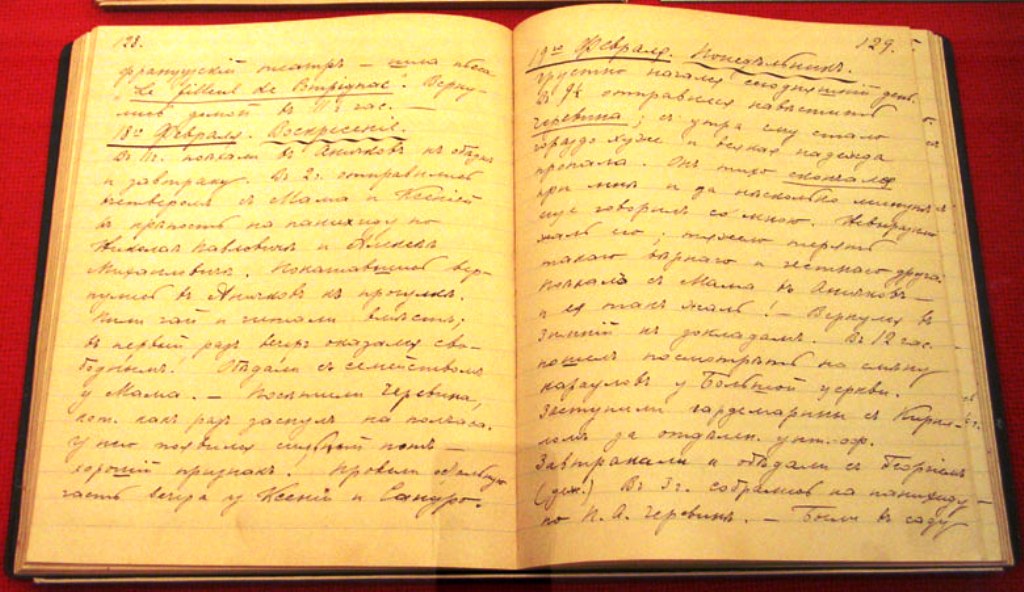
Emperor Nicholas II began keeping a diary in 1882, at the age of 14 when he was Tsesarevich and living at Gatchina. The last entry in his diary is dated 13 July (O.S. 30 June) 1918, just 4 days before his murder in Ekaterinburg:

“Alexei took his first bath since Tobolsk: his knee is getting better, but he still cannot straighten it completely. The weather is warm and pleasant. We have absolutely no news from the outside.”

It is interesting to note that the Bolsheviks began publishing excerpts from the Tsar’s diaries simultaneously in Pravda and Izvestia of the All-Russian Central Executive Committee, shortly after the murder of the Imperial Family, on 9 August 1918. The Berlin publishing house Slovo published the Diary of Emperor Nicholas II in 1923.

224c

PHOTO: pages from the 1912 diary of Emperor Nicholas II

All of the Tsar’s voluminous 51 diaries [written in Russian] have miraculously survived to this day, and are currently stored in Fund No. 601, of the Novo-Romanov Archive in the State Archive of the Russian Federation (GARF) in Moscow. They are among the most popular and widely researched materials by post-Soviet historians and scholars.

On 18th May 2017, the day marking the 149th anniversary of the birth of Emperor Nicholas II, the Boris Yeltsin Presidential Library in St. Petersburg published the diaries in electronic form, each diary is presented as a separate PDF-file with electronic bookmarks by year, month and date. Note: Nicholas II’s diaries were written in Russian, they have never been translated to English – PG

224d

PHOTO: pages from the 1896 diary of Emperor Nicholas II

“The history of the archives of Nicholas II and his family is one of the least explored areas of our archivistics. It was only in recent years that we have finally studied one of its pages — namely, the publication of the Romanovs’ papers and documents that had begun almost immediately after the Royal family’s murder. And still there isn’t enough attention drawn to the fate of the Romanovs archives. Various publications either copy information from archive guides or quote inconsistent and unverifiable sources. In this article we will attempt to use the available sources to shed light on the history of the creation of the so-called Novoromanov archive: the collection of Royal documents dating 1917-1919. By this name the archivist literature understands the entire body of Romanovs’ documents that had been amassed by the time of its 1929 transfer from the Central State Archive of the October Revolution to the newly created State Archive of the Feudal-Serfdom Era”

Source: The History of the Novoromanov Archive: The Document Collection of the Last Russian Emperor and His Family 1917-1919 by B.F. Dodonov, O.N. Kopylova, S.V. Mironenko. First English Translation published in Sovereign: The Life and Reign of Emperor Nicholas II, No. 1. 2015 pg. 125-138.

* * *

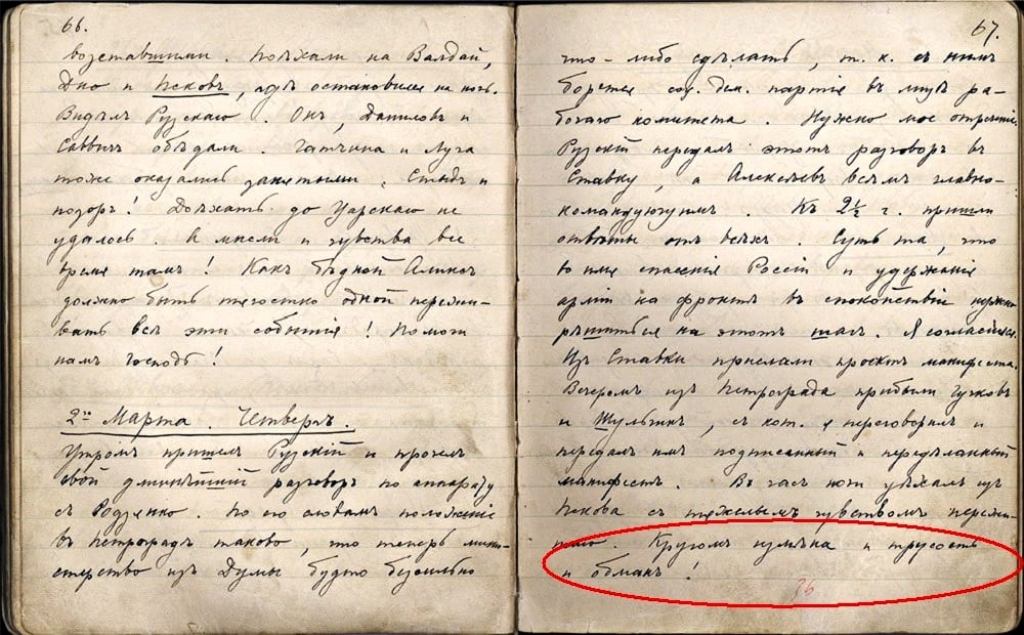
PHOTO: Nicholas II’s most famous diary entry, dated Thursday 2nd March 1917 . . .
Кругом измена и трусость и обман! / All around is betrayal and cowardice and deceit!

Contemporary historians and biographers often use Nicholas II’s diaries as a means to discredit him, often citing his mere scribbling of the days events as evidence of his alleged indecisiveness, and his inability to rule efficiently. This, however, is not only an unfair assessment, but also an example of a bad historian.

Russian historian Alexander Nikolaevich Bokhanov (1944-2019) summed up Nicholas II’s diaries, when he wrote the following:

“For more than 36 years, Nicholas Alexandrovich wrote a few sentences every evening in his diary. After the fall of the monarchy, both scholars and laymen began to study his diaries, interested to learn what kind of man and monarch he was. Sadly, the crushing majority of them stuck with a negative assessment of Nicholas II.

“Their conclusions, however, were based on his diaries, which in all fairness do not offer any broad historical conclusions. Nevertheless they have been made and continue to be made to the present day. In actuality, Nicholas II’s diaries are often nothing more than a daily list of meetings and events which allow one, fully and accurately, to establish only two biographical aspects about him: where he was and whom he dealt with.

“In his daily entries, he names more than a thousand people who lived both within the Russian Empire and abroad, including his family and relatives, persons from his inner circle, courtiers, statesmen, representatives of the world of culture and science, and even just casual acquaintances or ordinary people, who merely attracted the Emperor’s attention.

“His diaries are a completely personal and official document reflecting the daily events, nothing more. His diary entries rarely reflect any emotion, and with the passage of time they disappear almost completely. Any kind of political judgement or evaluation are extremely rare.

“In keeping a diary, Nicholas II was not thinking about leaving a historical testimony for his descendants. He never would have imagined that his daily, terse, personal remarks would be studied for political purposes. Only during the last months of his life, finding himself in the degrading position of a prisoner, did he record on paper his pain for the fate of his dearly beloved Russia.”

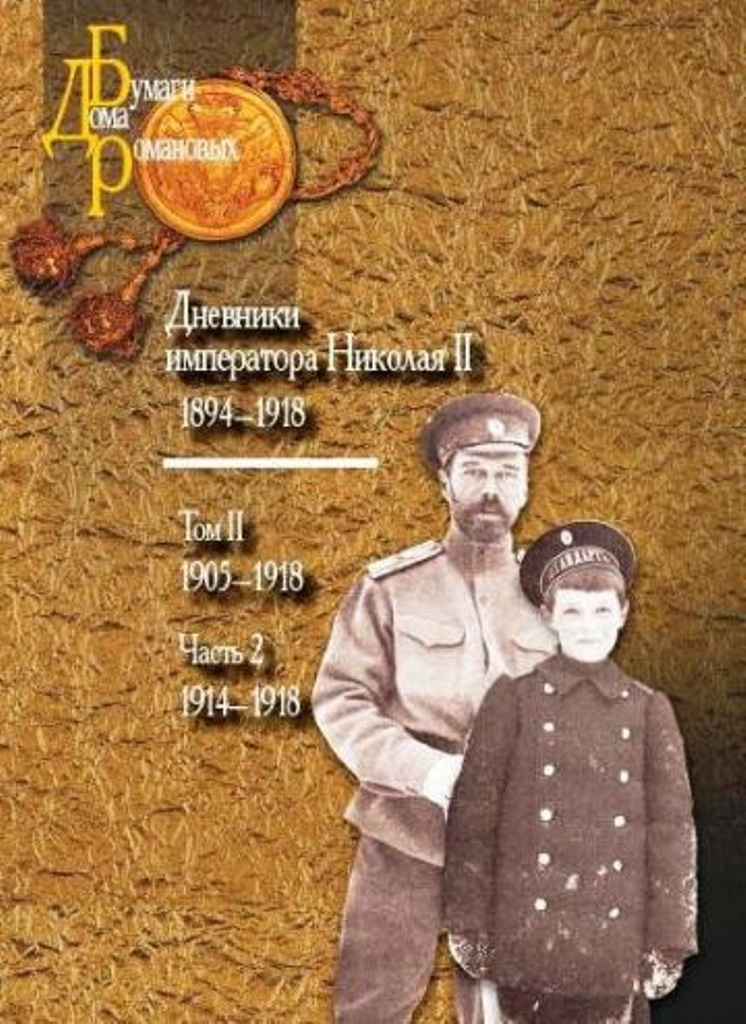
The Дневники императора Николая II. 1894-1918 / Diaries of Emperor Nicholas II. 1894-1918., were published in a handsome 2-volume set in 2011. Volume 1. 1894-1904 (1,101 pg); Volume 2. 1905-1918. Part 1. 1905-1913 (824 pg); and Part 2. 1914-1918 (784 pg). Edited by Sergei Vladimirovich Mironenko, Director of the State Archive of the Russian Federation (GARF). Available in Russian ONLY!

© Paul Gilbert. 23 January 2020

Traitors of Heroes? Officers of Nicholas II during the Great Patriotic War 1941-45

220a

Without the tsarist officers, the victory of the Reds in the Civil War would have been impossible
– Leon Trotsky

Despite the Civil War and the repression of the 1930s, a significant number of former officers of the Russian Imperial Army and the Russian Army of the Provisional Government survived both the 1917 Revolution and the Civil War to serve under the Soviet regime during the Great Patriotic War (1941-45).

They played an important role as “military specialists” who trained the new generation of the Soviet military, transferring the traditions and spirit of the old Russian Imperial Army to the Red Army. Up to 40% of the entire officer corps of pre-revolutionary Russia joined the Bolsheviks and forge their victory. The head of the Revolutionary Military Council, Leon Trotsky (1879-1940), believed that without the tsarist officers, the victory of the Reds in the Civil War would have been impossible.

Tsarist officers contributed to the victory of the Soviet Union in the Great Patriotic War, by contributing to the training of the armed forces and commanding the Red Army. Statistically – about 35% of all commanders of the Red Army divisions during the Great Patriotic War were officers of the old Imperial Army, 35% of the commanders at the fronts in 1941-1945, a third of the commanders and 13% of the comcors had become officers before 1917. Their presence in the infantry was especially great.

Many famous Soviet marshals and generals who impressed the world with their victories, were former officers of the Imperial Army. Among those were Georgy Konstantinovich Zhukov (1896-1974) who was awarded the St. George Cross twice for military merit, and promoted to the rank of non-commissioned officer for his bravery in battle. There were also men of higher rank, such as Apollon Yakovlevich Kruse (1892-1967), who served as Lieutenant General of the Red Army corps. The legendary Lieutenant General Dmitry Karbyshev (1880-1945), and Lieutenant General Alexander Bakhtin (1885-1963) had both sworn allegiance to Emperor Nicholas II.

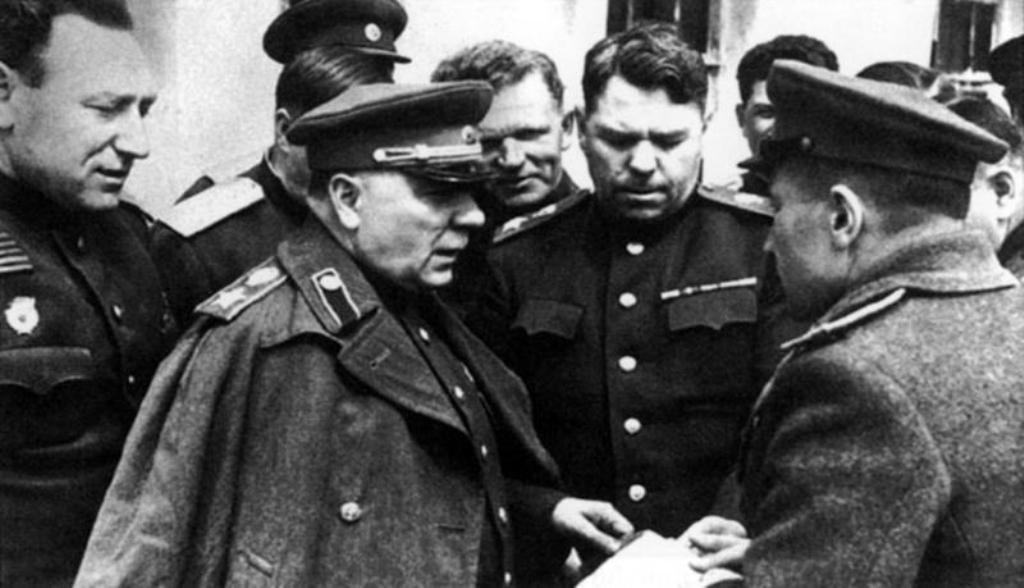
But the most illustrious commanders of the Red Army in the war against Germany, consisted of five marshals of the USSR.

220b

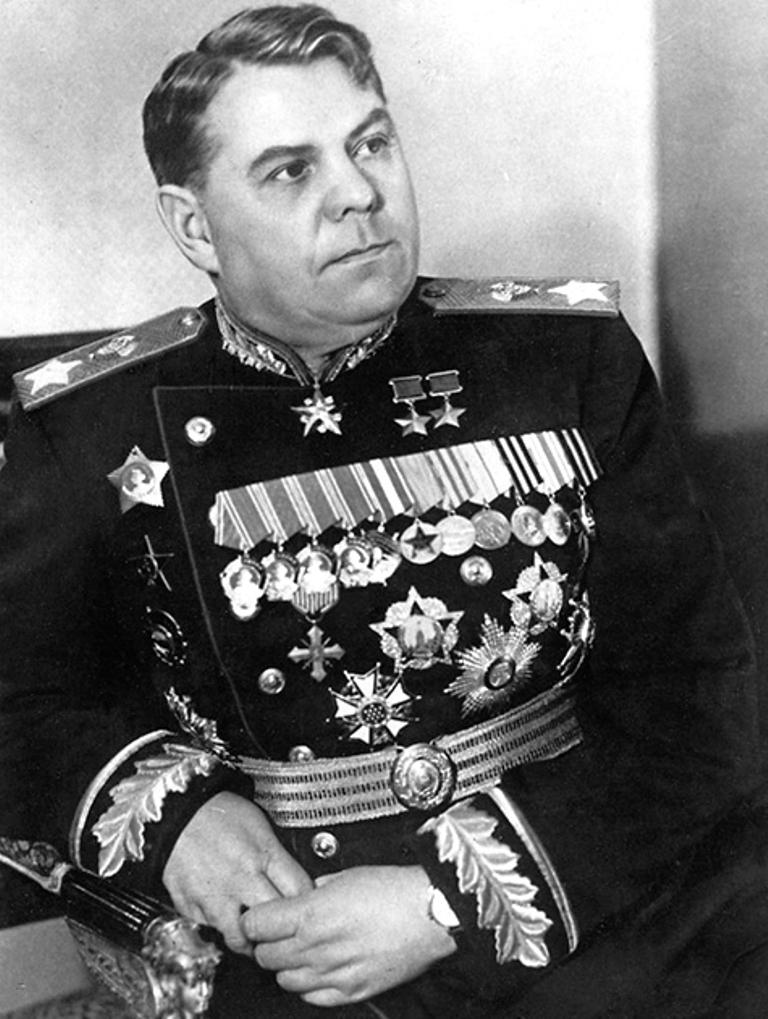
Alexander Mikhailovich Vasilevsky (1895-1977)

Alexander Mikhailovich Vasilevsky (1895-1977) had a strong Orthodox upbringing, his father was a priest, his mother was the daughter of a priest. He began his education in the local church school, and in 1909, he entered Kostroma seminary.

Vasilevsky began his military career during World War I, earning the rank of captain by 1917. Noted for his energy and personal courage, he took part in the famous Brusilov Offensive in 1916. After the October Revolution of 1917 and the start of the Civil War of 1917–1922 he was conscripted into the Red Army, taking part in the Polish-Soviet War of 1919–1921.

Vasilevsky served as a Russian career-officer in the Red Army, attained the rank of Marshal of the Soviet Union in 1943. He served as the Chief of the General Staff of the Soviet Armed Forces (1942-1945) and Deputy Minister of Defense during World War II, and as Minister of Defense from 1949 to 1953. As the Chief of the General Staff from 1942 to 1945, Vasilevsky became involved in planning and coordinating almost all the decisive Soviet offensives in World War II, from the Stalingrad counteroffensive of November 1942 to the assaults on East Prussia (January–April 1945), Königsberg (January–April 1945) and Manchuria (August 1945).

220c

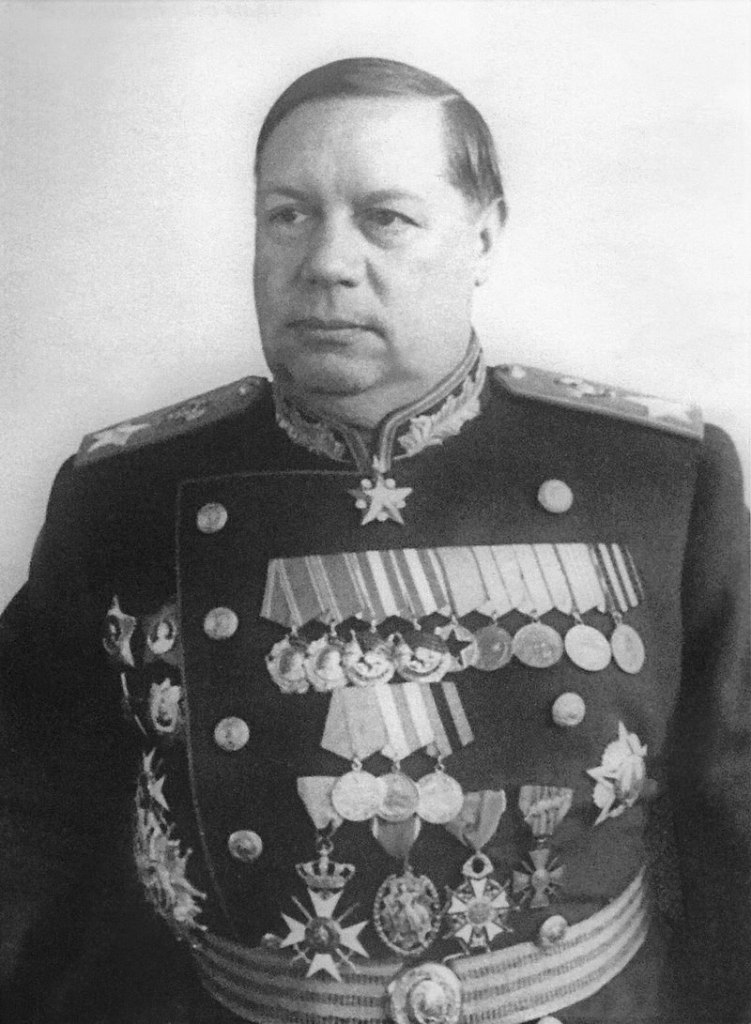
Fedor Ivanovich Tolbukhin (1894-1949)

Fedor Ivanovich Tolbukhin (1894-1949) volunteered for the Imperial Army in 1914 at the outbreak of World War I. He was steadily promoted, and appointed to captain by 1916 under Emperor Nicholas II. He was also decorated for bravery multiple times.

In August 1918 Tolbukhin joined the Red Army, where he served as the chief of staff of the 56th infantry division. After the Russian Civil War ended (1921), Tolbukhin was given a number of staff positions.

Tolbukhin took part in the opening phases of Operation Barbarossa until August 1941, when he was made the chief of staff of the Crimean Front, which he held until March 1942. From May to July 1942, he was the assistant commander of the Stalingrad Military District. After that, he was the commander of the 58th Army until March 1943, and was involved in the Battle of Stalingrad, where Tolbukhin’s superior, Colonel-General Andrei Yeremenko, praised his command organization and military prowess. On September 12, 1944, Tolbukhin was promoted to Marshal of the Soviet Union.

Tolbukhin is generally regarded as one of the finest Soviet generals of World War II. Meticulous, careful, and not overly ambitious like some Soviet commanders, Tolbukhin was well respected by fellow commanders and also his men, especially since he had a dedication to keeping casualty rates low. Tolbukhin was the recipient of numerous awards and medals including the highest Soviet medal and rank, the Victory Order and Hero of the Soviet Union, respectively.

220d

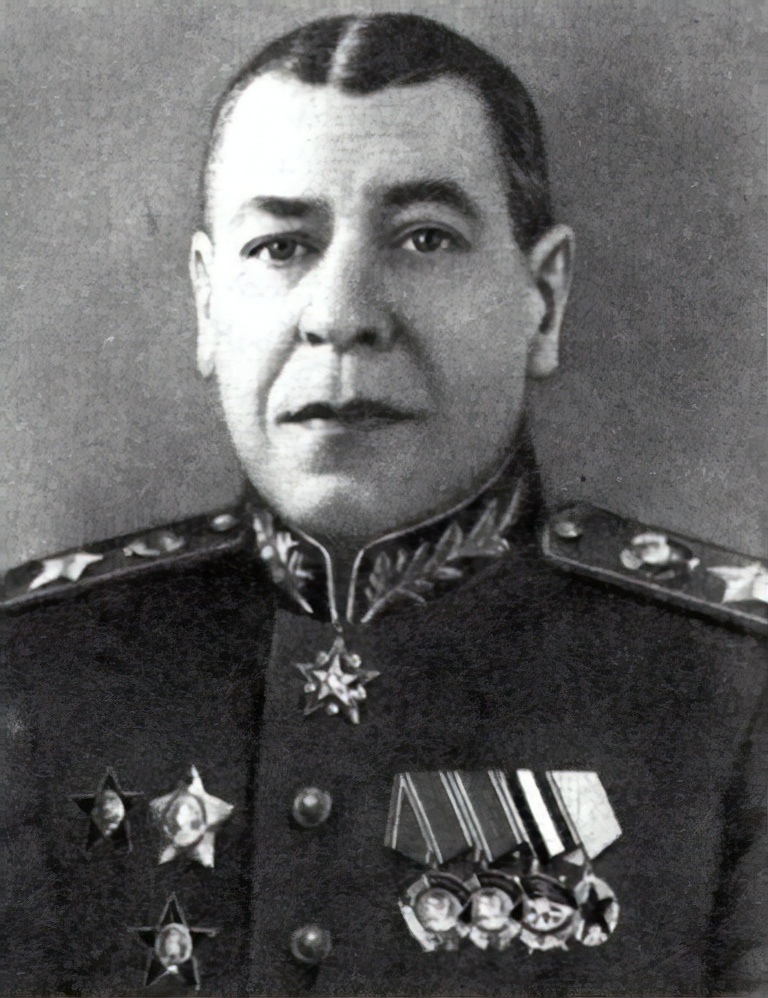
Colonel Boris Mikhailovich Shaposhnikov (1882-1945)

Colonel Boris Mikhailovich Shaposhnikov (1882-1945) joined the army of the Russian Empire in 1901 and graduated from the Nicholas General Staff Academy in 1910, reaching the rank of colonel in the Caucasus Grenadiers division in September 1917 during World War I. Also in 1917, he supported the Russian Revolution, an act unusual for an officer of his rank, and in May 1918 joined the Red Army.

Shaposhnikov was one of the few Red Army commanders with formal military training, and in 1921 he became 1st Deputy Chief of Staff of the Army’s General Staff, where he served until 1925. He was appointed commander of the Leningrad Military District in 1925 and then of the Moscow Military District in 1927. From 1928 to 1931 he served as Chief of the Staff of the Red Army.

In May 1940 he was appointed a Marshal of the Soviet Union. Despite his background as a Tsarist officer, Shaposhnikov won the respect and trust of Stalin. His status as a professional officer—he did not join the Communist Party until 1939—may have helped him avoid Stalin’s suspicions.

Fortunately for the Soviet Union, Shaposhnikov had a fine military mind and high administrative skills. He combined these talents with his position in Stalin’s confidence to rebuild the Red Army leadership after the purges. He obtained the release from the Gulag of 4,000 officers deemed necessary for this operation. In 1939 Stalin accepted Shaposhnikov’s plan for a rapid build-up of the Red Army’s strength. Although the plan was not completed before the German invasion of June 1941, it had advanced sufficiently to save the Soviet Union from complete disaster.

220e

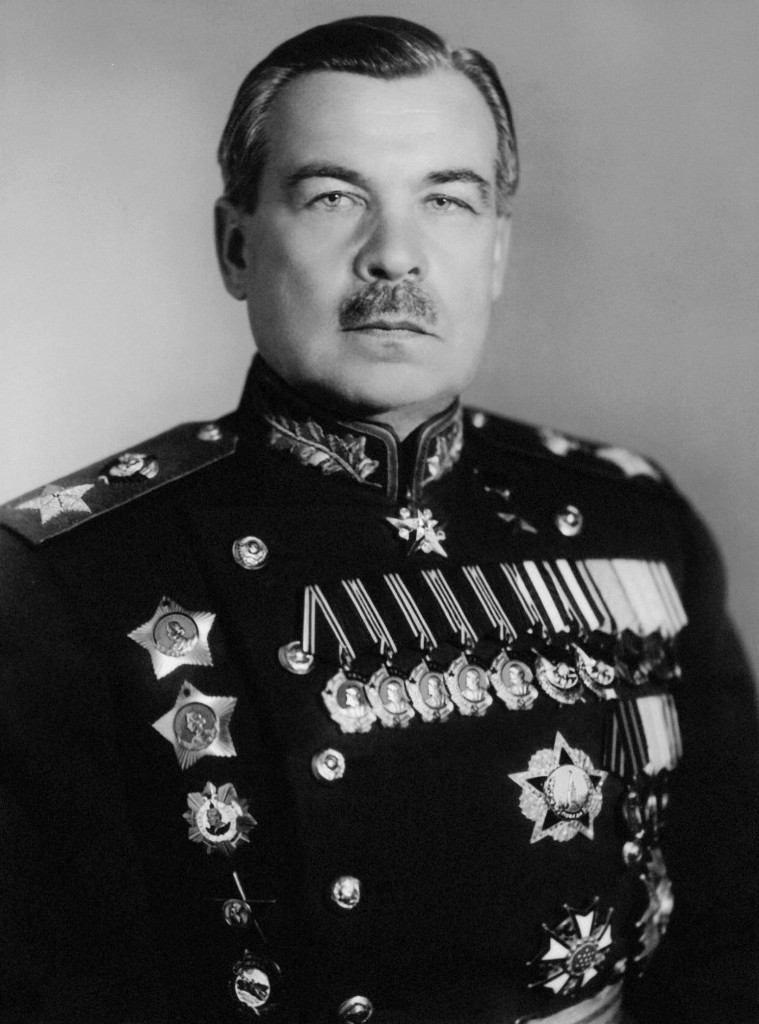
Leonid Aleksandrovich Govorov (1897-1955)

Leonid Aleksandrovich Govorov (1897-1955), was mobilized in December 1916, and sent to the Konstantinovskye Artillery School, from which he graduated in 1917. He became an artillery officer with the rank of podporuchik.

When the Russian Revolution broke out and the Russian Imperial Army disintegrated, Govorov returned home, but was conscripted into the White Guard army of Aleksandr Kolchak in October 1918, serving in an artillery battery in the Russian Civil War. Govorov fought in the Spring Offensive of the Russian Army, a general drive westwards by White forces in the east. He deserted in November 1919, fleeing to Tomsk, where he took part in an uprising against White authorities as part of a fighting squad. Govorov joined the Red Army in January 1920, serving in the 51st Rifle Division as an artillery battalion commander. With the division, he fought in the Siege of Perekop in November, during which Soviet forces drove Pyotr Wrangel’s White Army out of Crimea.

In World War II, Govorov rose to command an army in November 1941 during the Battle of Moscow. He commanded the Leningrad Front from April 1942 to the end of the war. He reached the rank of Marshal of the Soviet Union in 1944, was awarded the title of Hero of the Soviet Union and many other awards.

220f

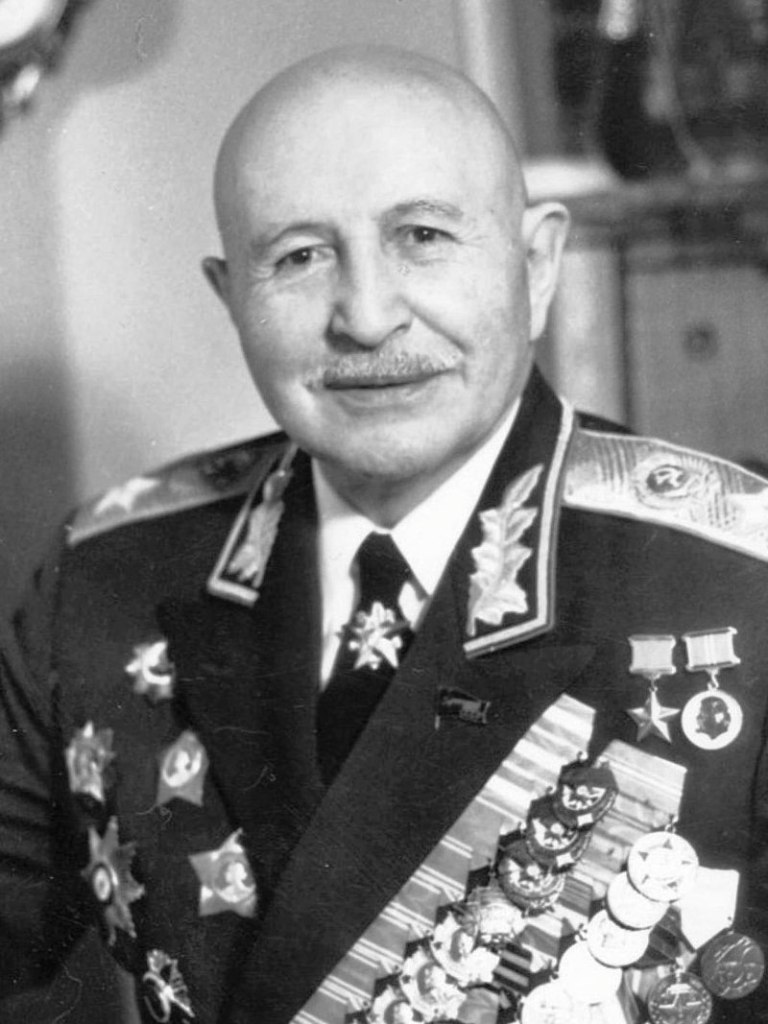
Ivan Khristoforovich Baghramyan (1897-1982)

Ivan Khristoforovich Baghramyan (1897-1982), joined the Russian Imperial Army as a volunteer on 16 September 1915. He was assigned as a private to the 116th Reserve Battalion and sent to Akhaltsikhe for basic training. With his training complete in December, he joined the 2nd Caucasus Frontier Regiment of the Russian Expeditionary Corps, which was sent to dislodge the Ottomans in Persia. Bagramyan participated in several battles in Asadabad, Hamedan and Kermanshah, the Russian victories here sending Ottoman forces reeling toward Anatolia.

Learning about the exploits of the men in the outfit, the chief of staff of the regiment, General Pavel Melik-Shahnazaryan, advised Bagramyan to return to Tiflis to enroll in the Praporshchik Military Academy. But in order to attend the school, Bagramyan needed to satisfy the academy’s requirement of having completed school at a gymnasium. This did not deter him and, after preparing for the courses in Armavir, he passed his exams and began attending the academy on February 13, 1917. He graduated in June 1917 and was assigned to the 3rd Armenian Infantry Regiment, stationed near Lake Urmia. But with the overthrow of the Russian Provisional Government in the midst of the October Revolution of 1917, his unit was demobilized.

Bagramyan’s experience in military planning as a chief of staff allowed him to distinguish himself as a capable commander in the early stages of the Soviet counter-offensives against Nazi Germany. He was given his first command of a unit in 1942, and in November 1943 received his most prestigious command as the commander of the 1st Baltic Front. As commander of the Baltic Front, he participated in the offensives which pushed German forces out of the Baltic republics.

Bagramyan was a Soviet military commander and Marshal of the Soviet Union of Armenian origin. During World War II, Bagramyan was the second non-Slavic military officer, after Latvian Max Reyter, to become a commander of a Front. He was among several Armenians in the Soviet Army who held the highest proportion of high-ranking officers in the Soviet military during the war.

* * *

It seems ironic that “Nicholas the Bloody” should play a much greater role in the history of 20th century Russia, than the Soviets would ever give him credit for. It is thanks to the excellent training during the reign of Russia’s last emperor, that former soldiers of the Russian Imperial Army should live through the 1917 Revolution and the Civil War to become marshals and generals, who fought heroic battles during the Great Patriotic War of 1941-45.

It is important to recognize that each of them committed treason by breaking their oath of allegiance to Emperor Nicholas II and the Russian Empire, but should they be condemned? Certainly not. These marshals and generals, demonstrated sincere patriotism and a willingness to sacrifice themselves for the Soviet Union, and saved the country from certain oblivion at the hands of the Nazi war machine. Their acts of bravery saved the lives of millions of Russians, had they not pushed the invaders back to Berlin, we may very well be living in a very different world today.

© Рaul Gilbert. 22 January 2020

Cossacks visit the Feodorovsky Sovereign Cathedral in Tsarskoye Selo

223a

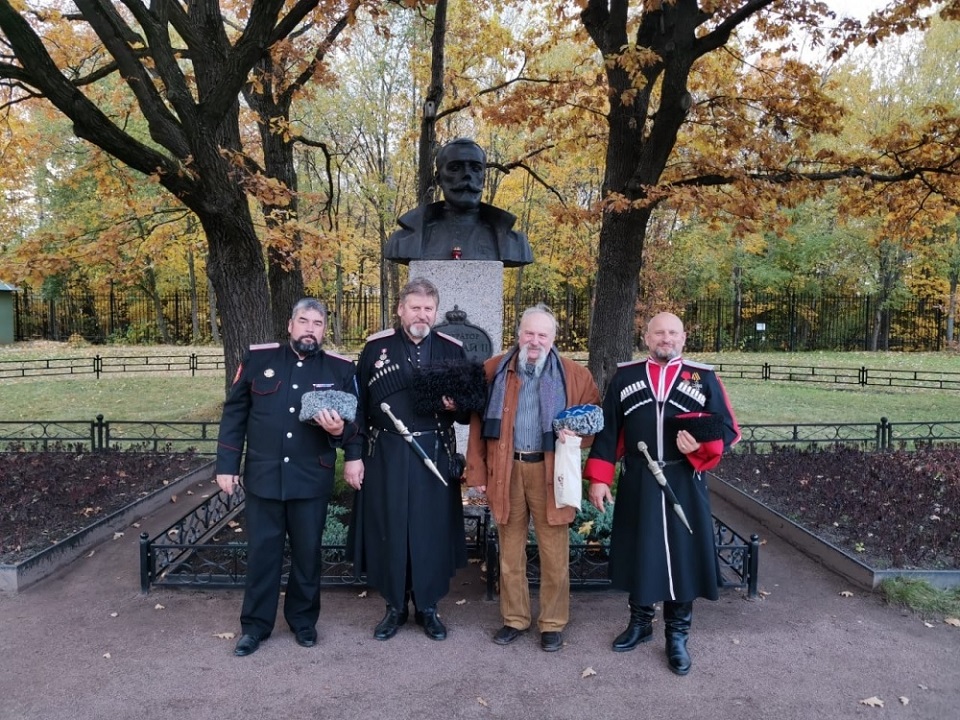
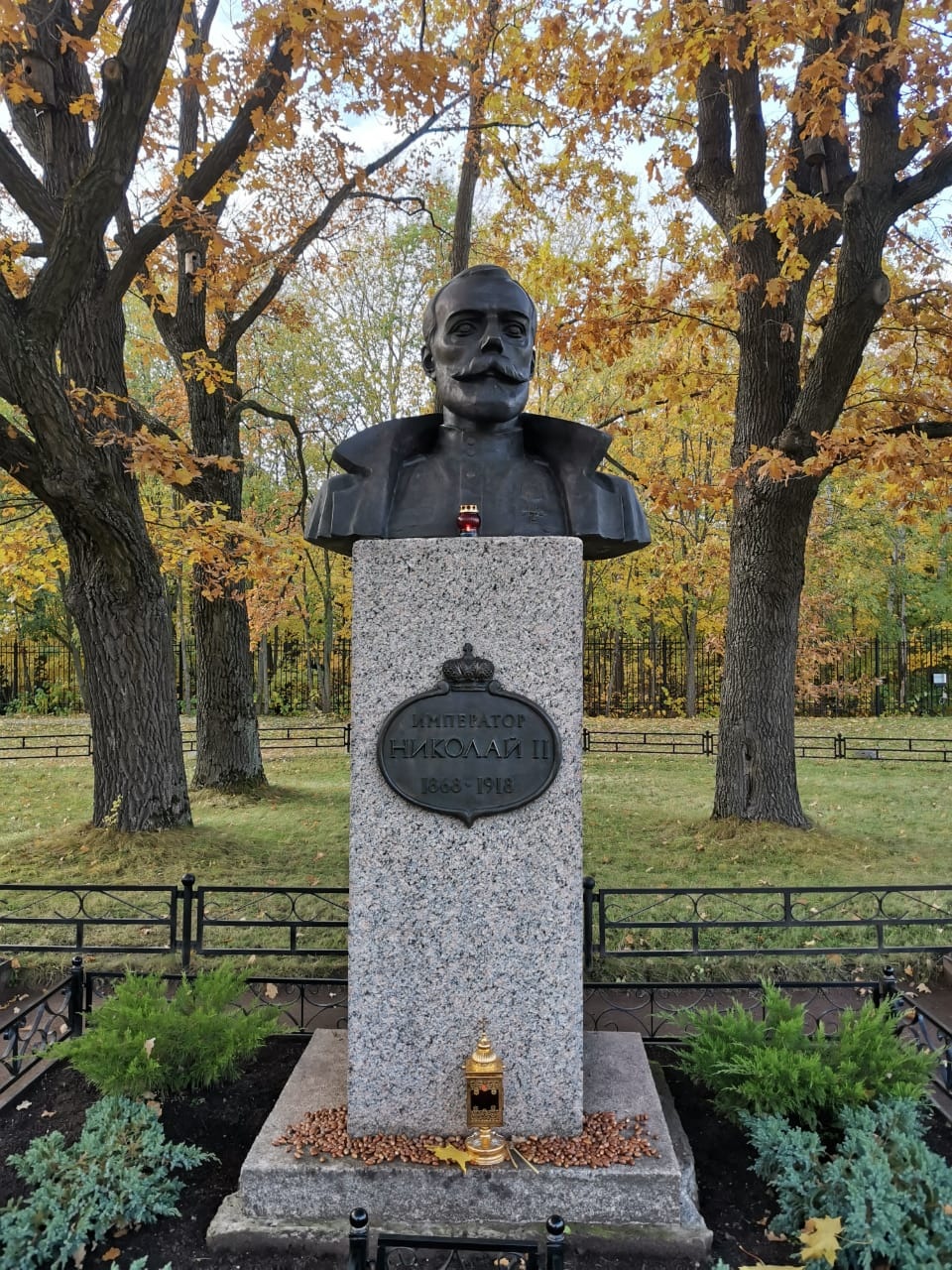
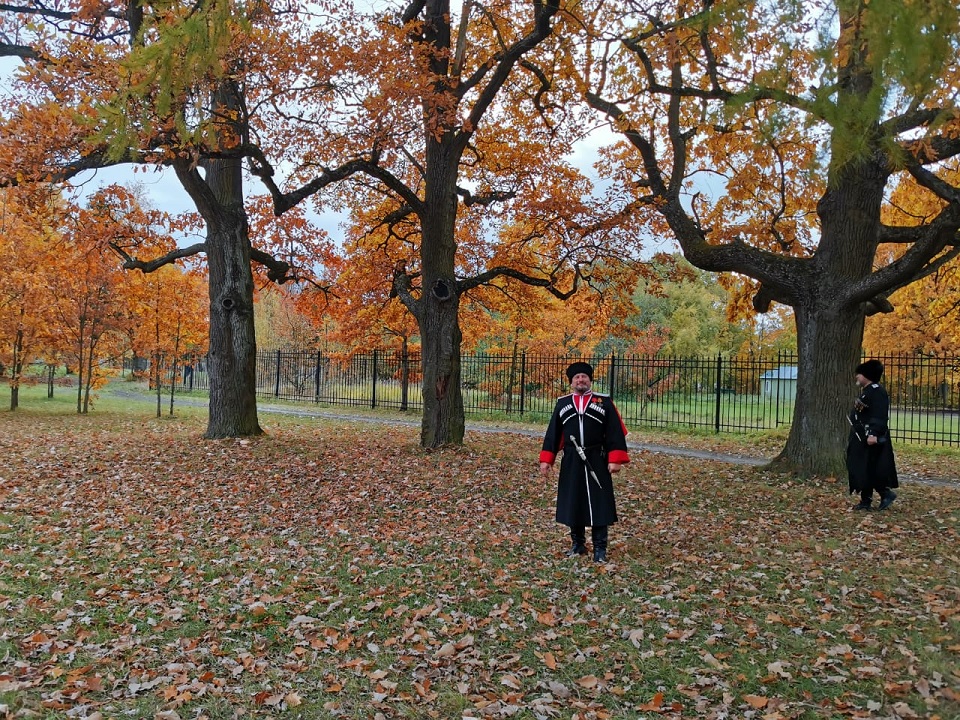
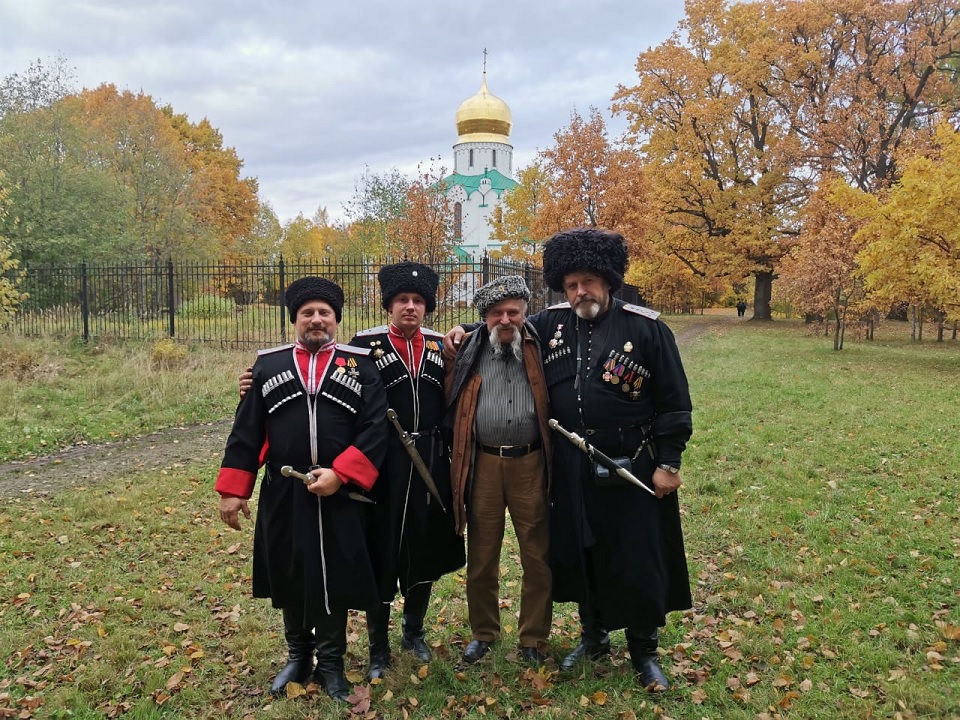
PHOTO: Members of the Cossack Convoy of the Holy Tsar Passion-bearer Nicholas II at the Monument to Nicholas II on the grounds of the Feodorovsky Sovereign Cathedral. © Духовно-просветительский центр 

On 8th October 2019, members of the Cossack Convoy of the Holy Tsar Passion-bearer Nicholas II organized a tour of St. Petersburg and Tsarskoye Selo.

Among the places visited by the Convoy was the Feodorovsky Sovereign Cathedral, which is situated near the Alexander Palace in Tsarskoye Selo. The cathedral was constructed between 1909 – 1912 by order of Emperor Nicholas II to serve as the regimental church of His Imperial Majesty’s Own Convoy.

223k

PHOTO: Russia’s first monument to Nicholas II by the sculptor V.V. Zaiko
© Духовно-просветительский центр 

The Cossacks also visited Russia’s first monument to Nicholas II, which was established on the grounds of the Cathedral on 19th May 1993, and consecrated on 16th July 1993. The bronze bust was created by the sculptor Victor Vladimirovich Zaiko (born 1944).

223b

PHOTO: rees planted by the Emperor and his family in 1909
© Духовно-просветительский центр 

The bust was installed near a group of trees, planted by the Emperor and his family in 1909. Of the seven trees planted, only four have survived to the present day.

223h

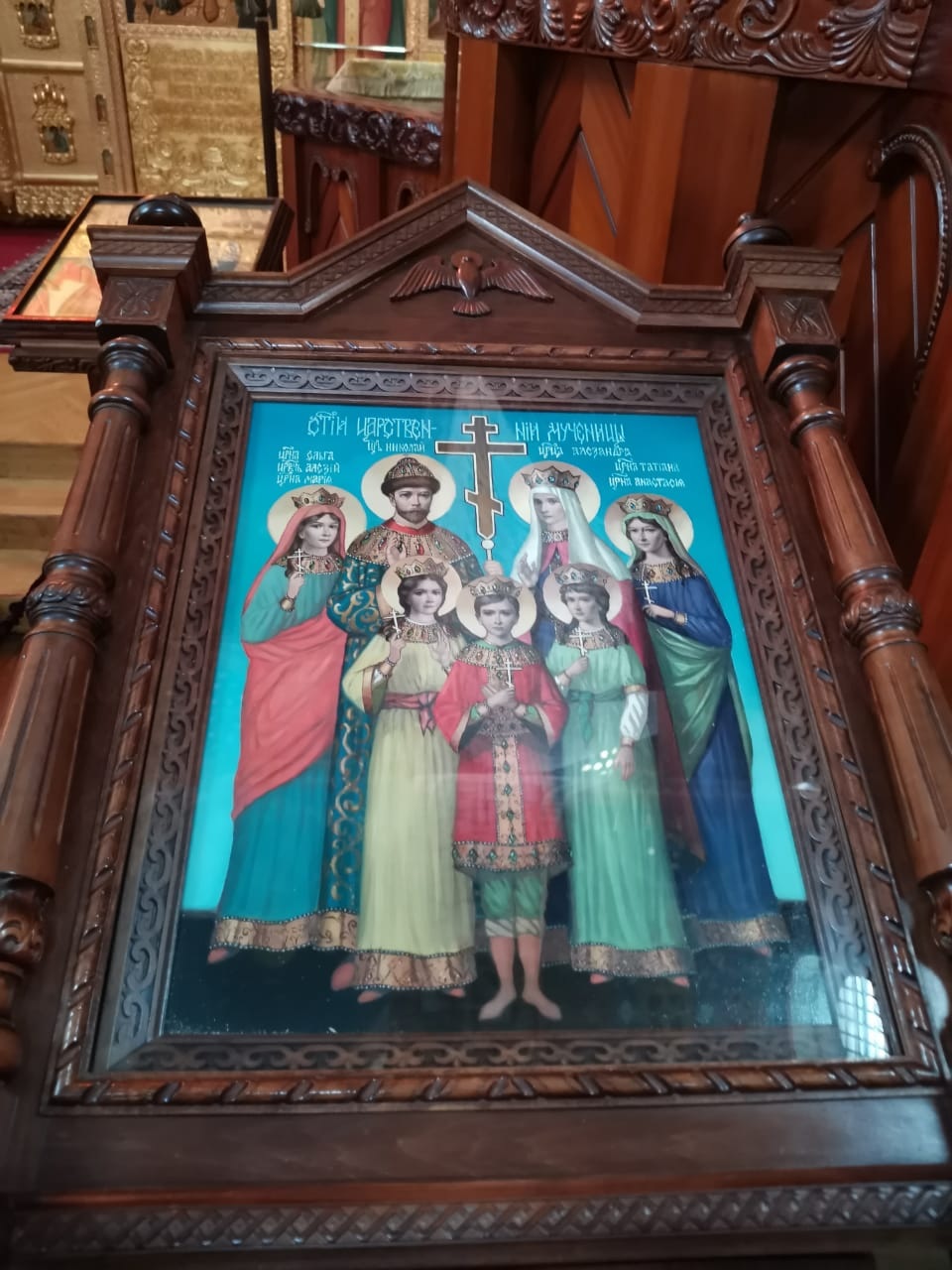
PHOTO: Icon of the Holy Royal Martyrs
© Духовно-просветительский центр 

The Feodorovsky Sovereign Cathedral was closed from 1933 to 1991. When the building was transferred to the Russian Orthodox Church in the spring of 1991, it was in a terrible state of neglect and disrepair. It took more than 20 years to restore the Cathedral to its historic original, including the magnificent iconostasis in the Upper Church, and the Lower Church, where the Empress Alexandra Feodorovna came to pray.

223j

PHOTO: Members of the Cossack Convoy of the Holy Tsar Passion-bearer Nicholas II
© Духовно-просветительский центр 

FURTHER READING:

The restoration of Nicholas II’s favourite church at Tsarskoye Selo +18 BEAUTIFUL PHOTOS!

© Paul Gilbert. 20 January 2020

Nicholas II celebrates the Blessing of the Waters, 1904

Note: the video above features a compilation of vintage photographs, set against the ‘Troparion on the Feast of the Epiphany’ sung by the Sretensky Monastery Choir

On 19 (O.S. 6) January 1904, Emperor Nicholas II took part in the annual celebrations marking the Feast of the Epiphany in St. Petersburg.

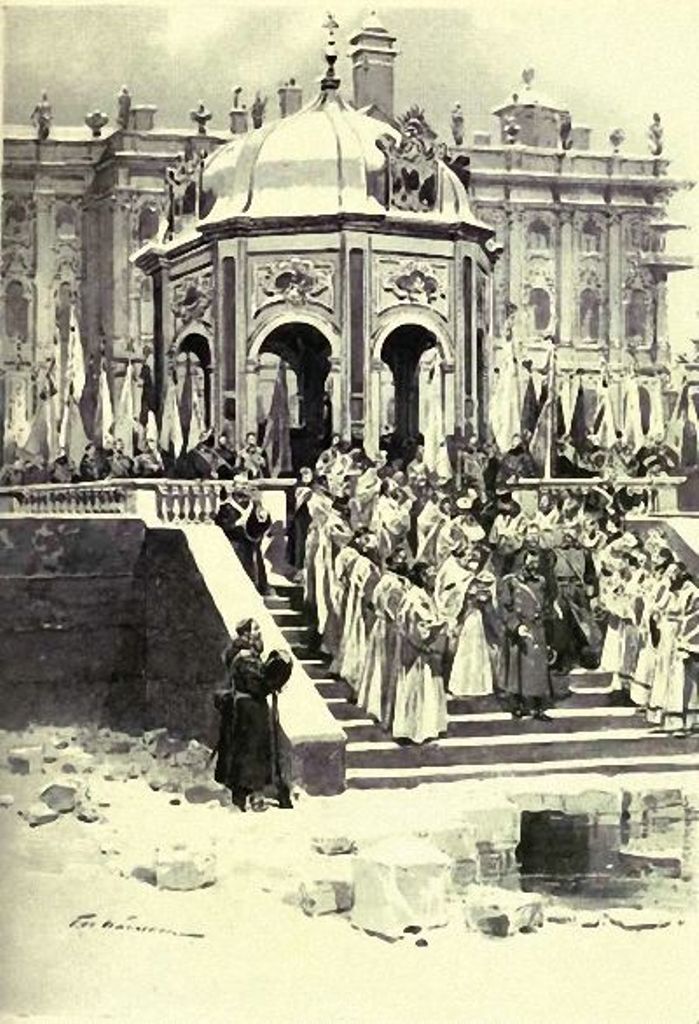
The Emperor along with members of the Imperial Court, and senior members of the Russian Orthodox Church proceeded down the Jordan Staircase from the first floor of the Winter Palace to the bank of the Neva River for the Blessing of the Waters at Epiphany in commemoration of Christ’s Baptism in the river Jordan.

221

Nicholas II descends the stairs leading down to the Neva for the Blessing of the Waters

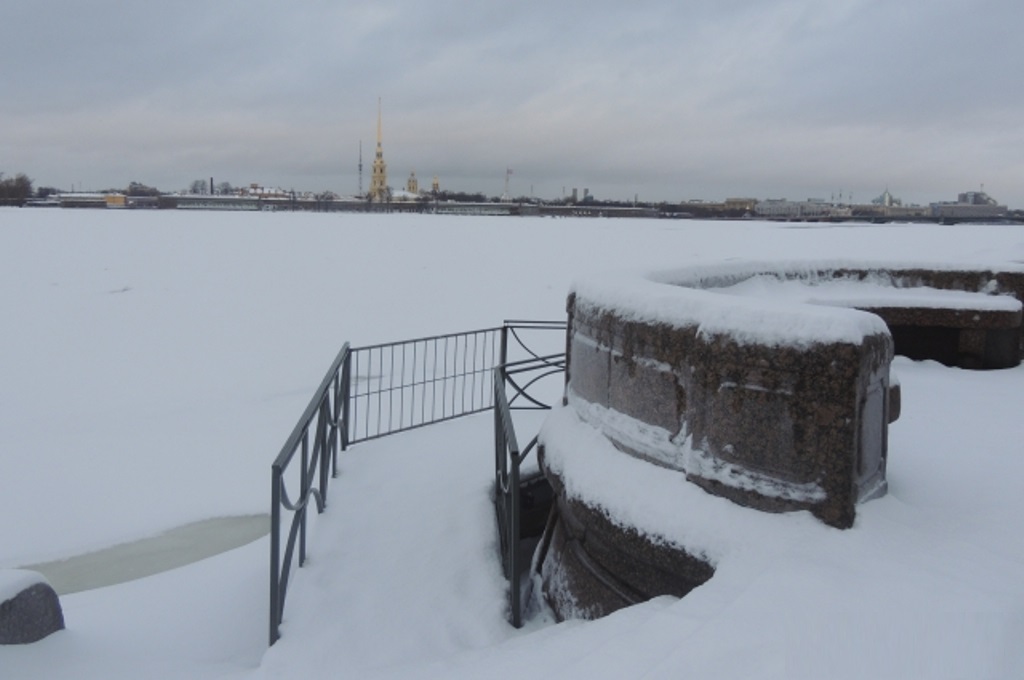
Situated near the northern entrance to the Winter Palace, a temporary wooden pavilion was constructed on the embankment in front of steps leading down to the Neva. The Metropolitan of St. Petersburg dipped a cross in a hole made in the ice. A small cup was then dipped into the water and presented to the Emperor, who took a sip and then handed the cup back to the Metropolitan. Prayers were said for the health of the Tsar and his family.

221b

The above photo shows the spot on the embankment of the Neva River, where the temporary wooden pavilion was constructed for the Blessing of the Waters in the early 20th century.

© Paul Gilbert. 19 January 2020