Icon of Nicholas II consecrated in the Spassky Cathedra in Penza
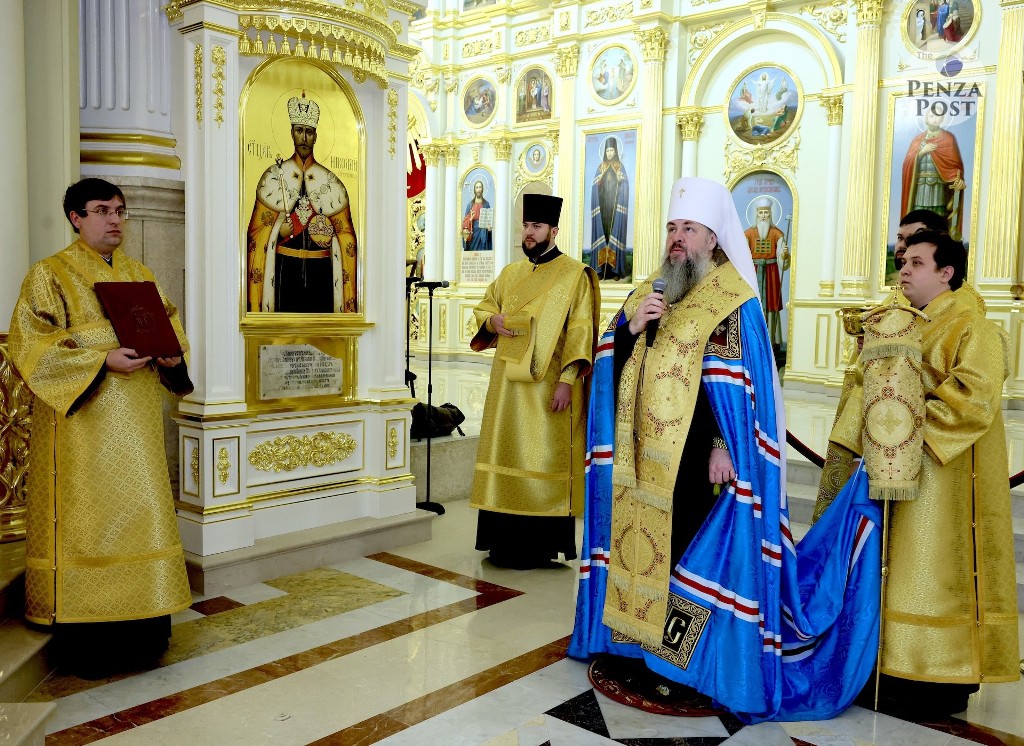
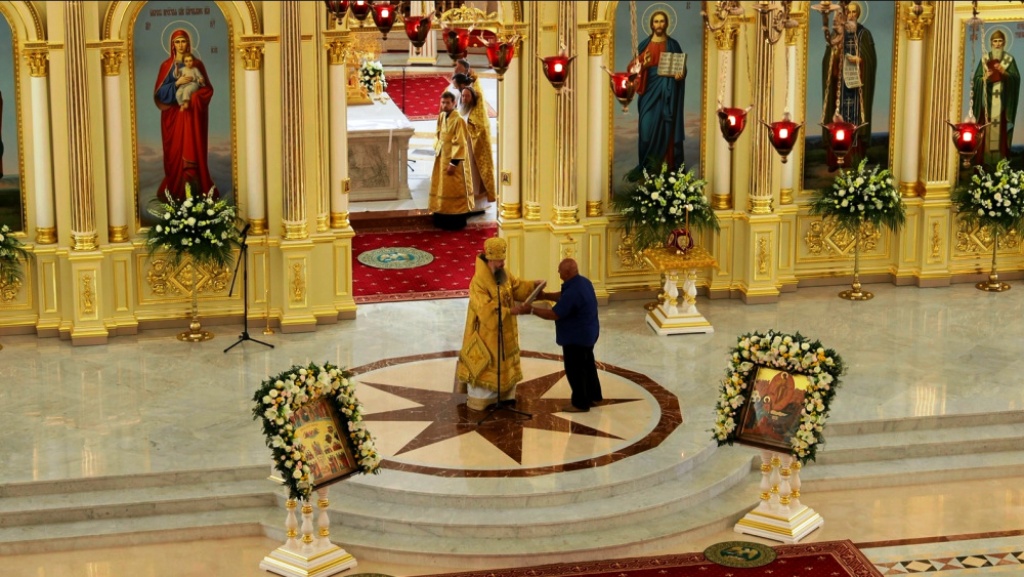
PHOTO: Metropolitan Seraphim of Penza and Nizhnelomovsk, the icon
of the Holy Royal Passion-Bearer Nicholas II, Spassky Cathedral, Penza
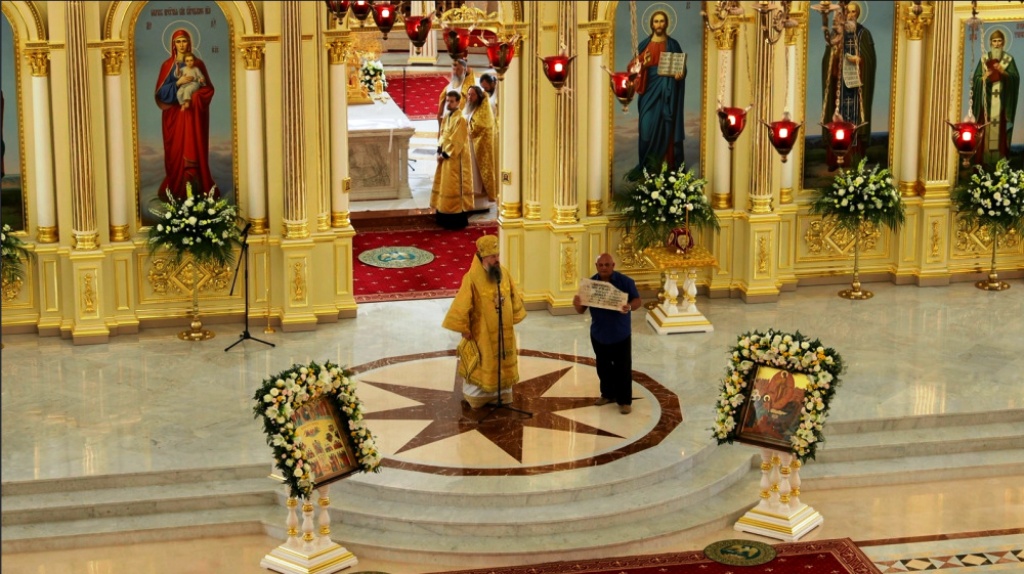
On the evening of 29th November 2025, Metropolitan Seraphim of Penza and Nizhnelomovsk, performed the rite of consecration of the icon of the Holy Royal Passion-Bearer Nicholas II, at the Spassky Cathedral, located in the city of Penza.
At the base of this icon is a memorial plaque, with a very interesting provenance from the early 20th century, and it’s connection to Emperor Nicholas II’s visit to the city in 1904.
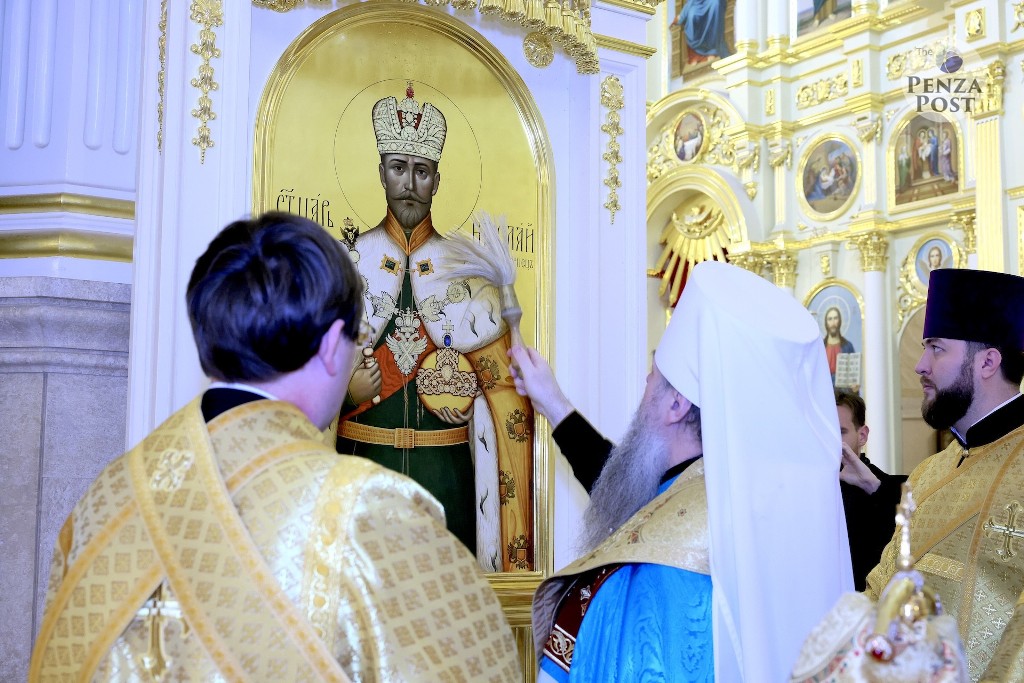
PHOTO: Metropolitan Seraphim of Penza and Nizhnelomovsk
performs the rite of consecration
After the consecration of the icon, Metropolitan Seraphim told the parishioners the story of how the memorial plaque ended up in its place:
“On 19th June 2022, a memorial plaque that was installed at the beginning of the twentieth century on one of the columns of the Spassky Cathedral in memory of Emperor Nicholas II’s visit to Penza in 1904, was donated to the Penza Diocese. During his visit, the Tsar reviewed the troops going to the Russo-Japanese War, and attended the Divine Liturgy in the Penza Spassky Cathedral.
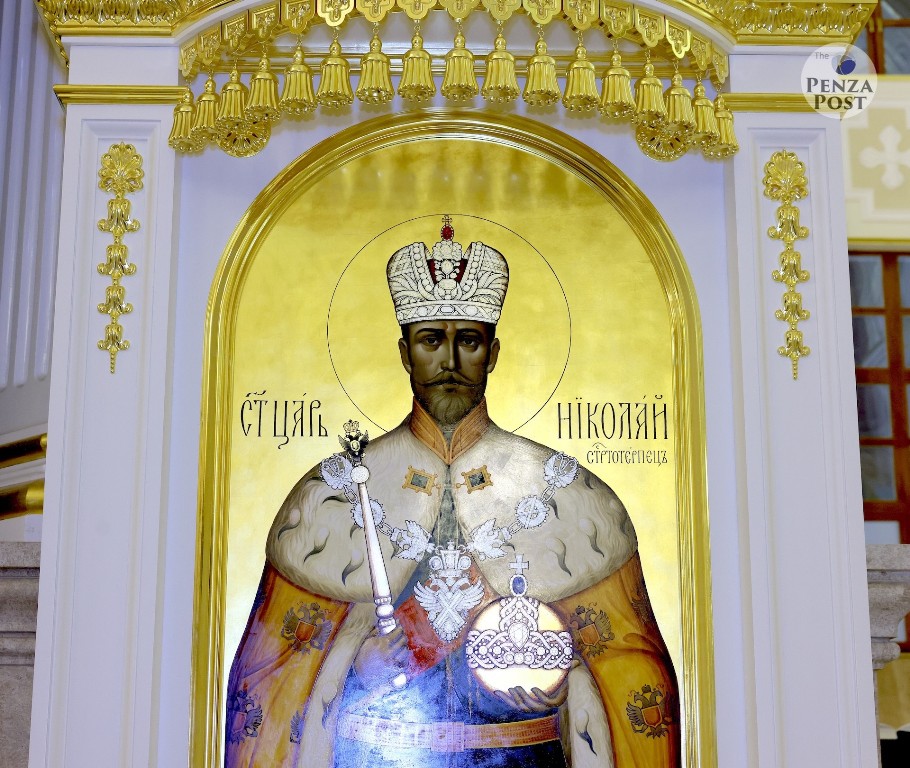
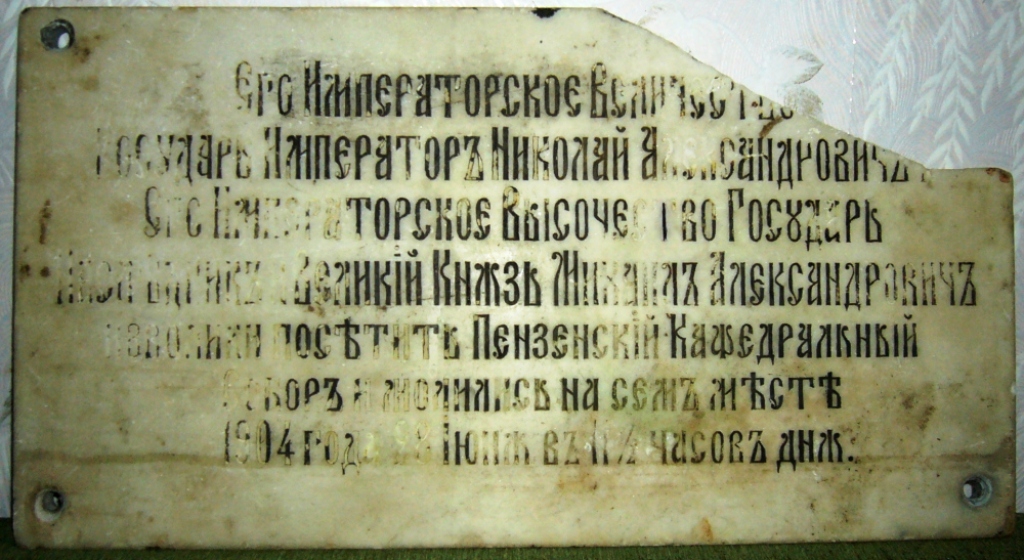
PHOTOS icon of the Holy Royal Passion-Bearer Nicholas II (above),
and the memorial plaque (below)
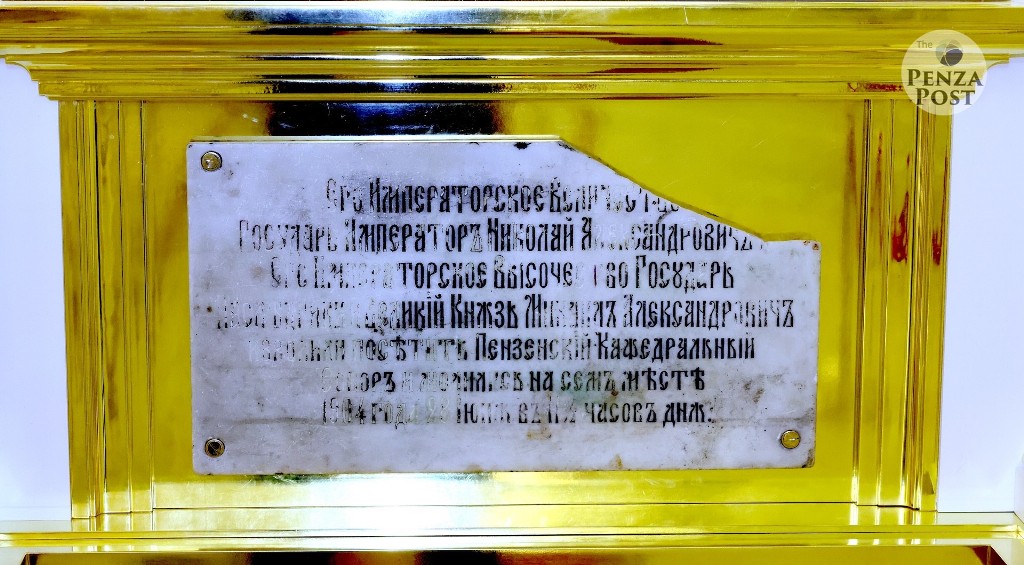
This memorial plaque, installed by the Penza City Duma, became the first memorial plaque in the Penza region. The inscription on it reads: “His Imperial Majesty Emperor Nicholas Alexandrovich and His Imperial Highness the Grand Duke Mikhail Alexandrovich deigned to visit the Penza Cathedral and prayed at this place in 1904, on June 28 at 11 o’clock in the afternoon.”
The text on the memorial plaque turned out to be prophetic: the Tsar prayed “in this place.” The cathedral, which the emperor visited, was destroyed by the Soviets in 1934, but the First church to be recreated in the city in 2011-16″.
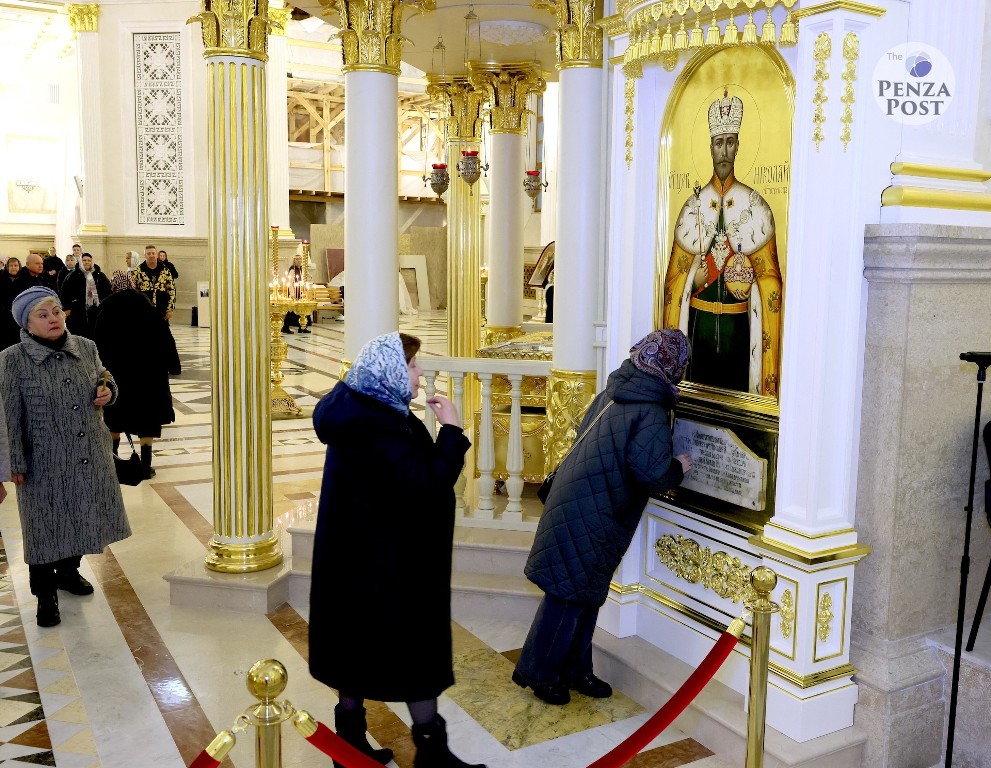
PHOTO: Orthodox Believers venerate the icon
of the Holy Royal Passion-Bearer Nicholas II
For a long time it was believed that the memorial plaque was lost. The residents of Penza remembered that in February 1918 armed men (Bolsheviks) who came to the cathedral smashed the plaque with their rifle butts. But, as it it turned out, the plaque miraculously survived, only a corner broke off. The parishioners hid it from the Bolsheviks, burying it in the ground near the church.
About twenty years ago, information began to circulate, that the memorial plaque was intact. Local historians conducted a lengthy search, as a result of which the relic ended up in the hands of the famous Penza collector Igor Sergeevich Shishkin, who returned it to the Spassky Cathedral.
The transfer of the memorial plaque took place before the great consecration of the Spassky Cathedral, which was performed on 19th June 2022, by Patriarch Kirill of Moscow and All Russia during his primatial visit to the Penza Metropolia.”
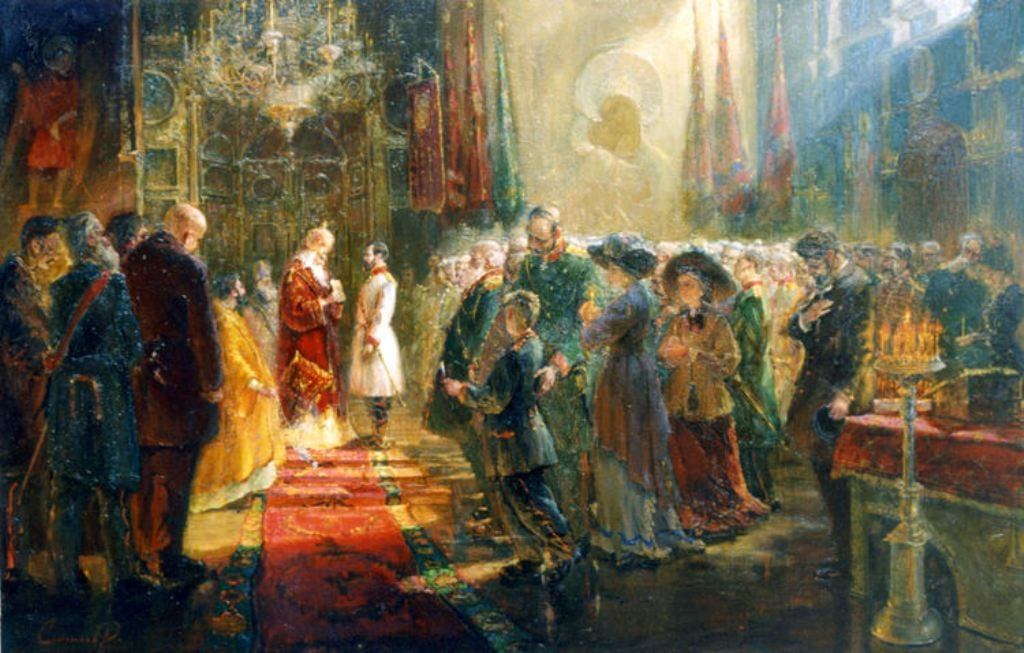
PHOTO: ‘Nicholas II in Penza 1904’
by the contemporary Russian artist Denis Santalov.
In his painting, Santalov has captured the arrival of the Russian emperor who visited Penza on 28th June 1904. He is depicted in the Spassky Cathedral (blown up in 1934), where he is blessed by the Bishop of Penza and Saransk Hieromartyr Tikhon (Nikanorov). On that memorable day, the sovereign visited conducted a review of his troops, who were on their way to the Russo-Japanese War. From the collection of the Penza Regional Art Gallery
 Nicholas II
You must be logged in to post a comment.