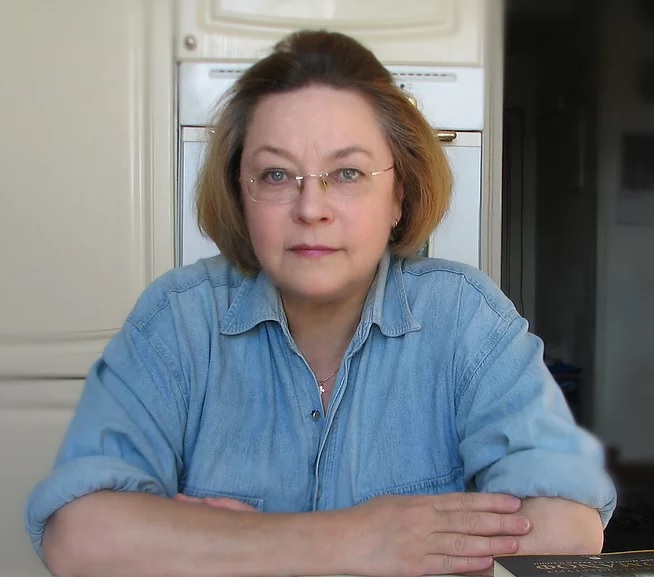
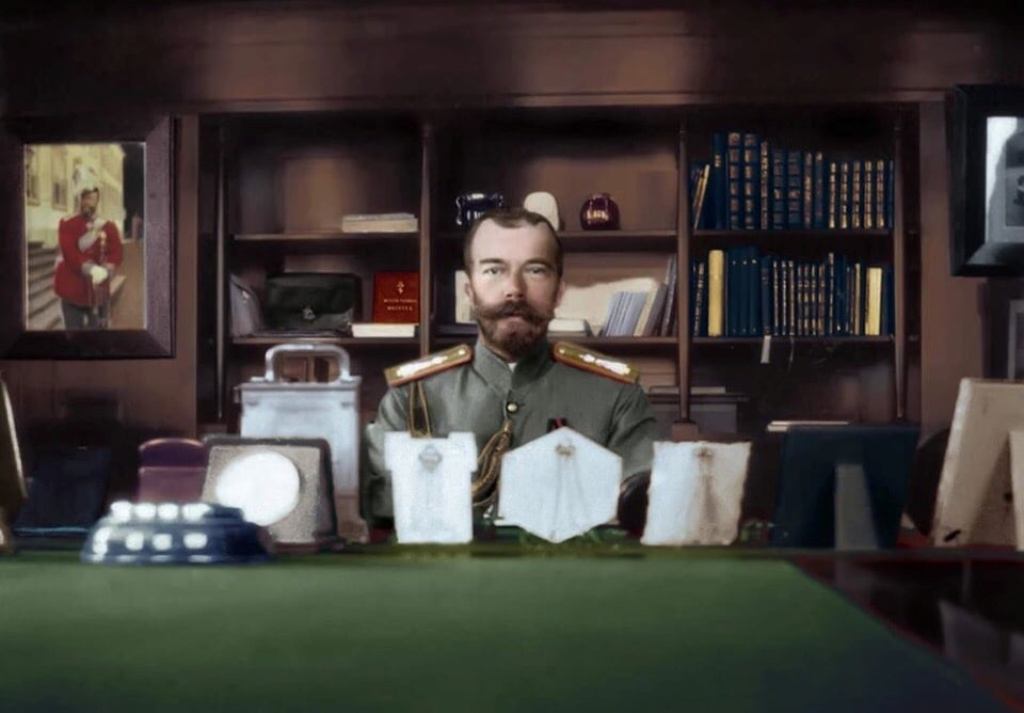
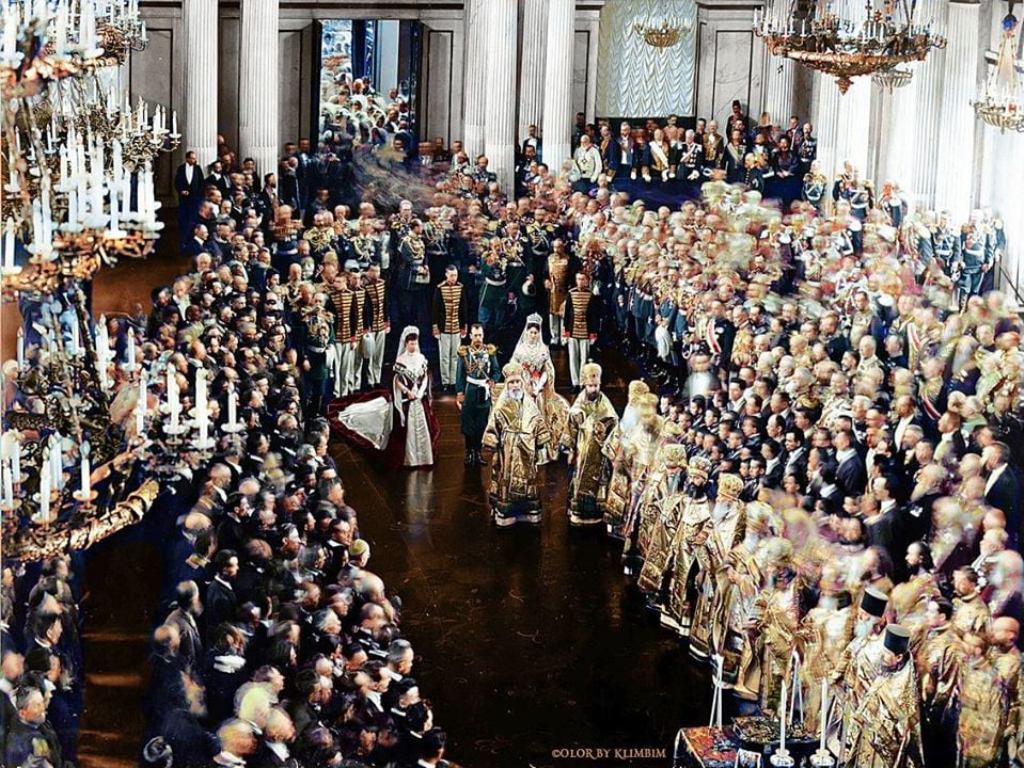
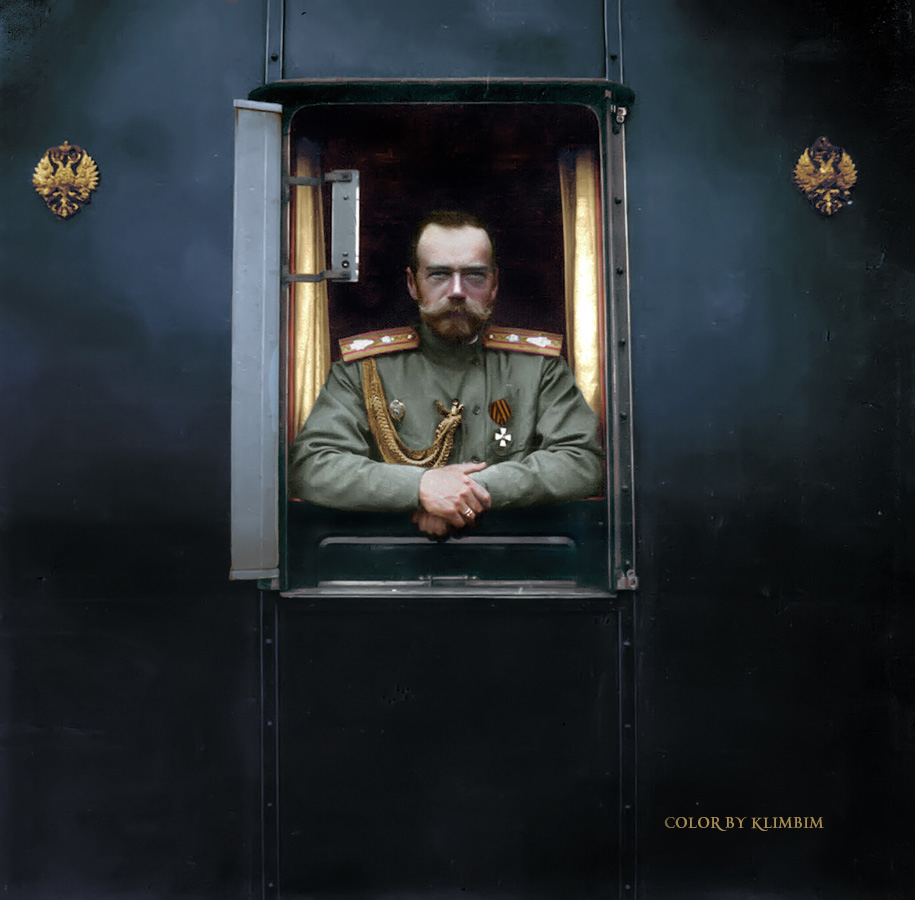
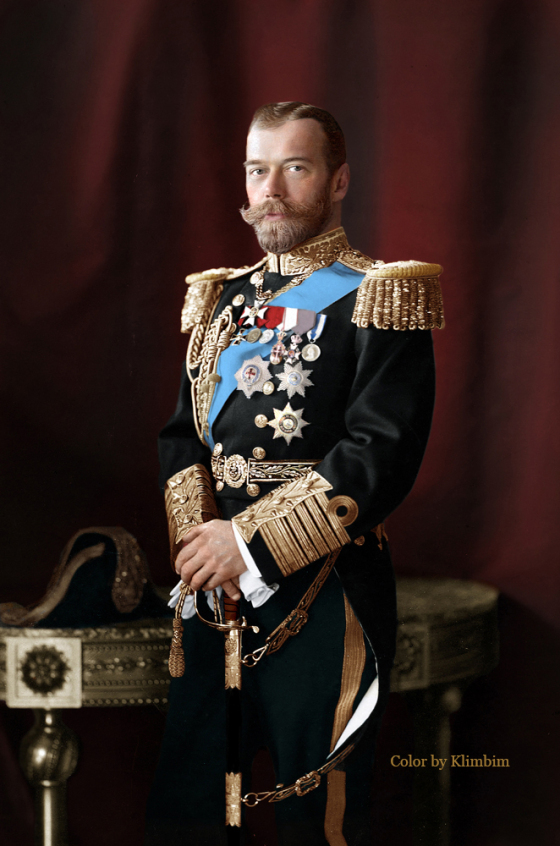
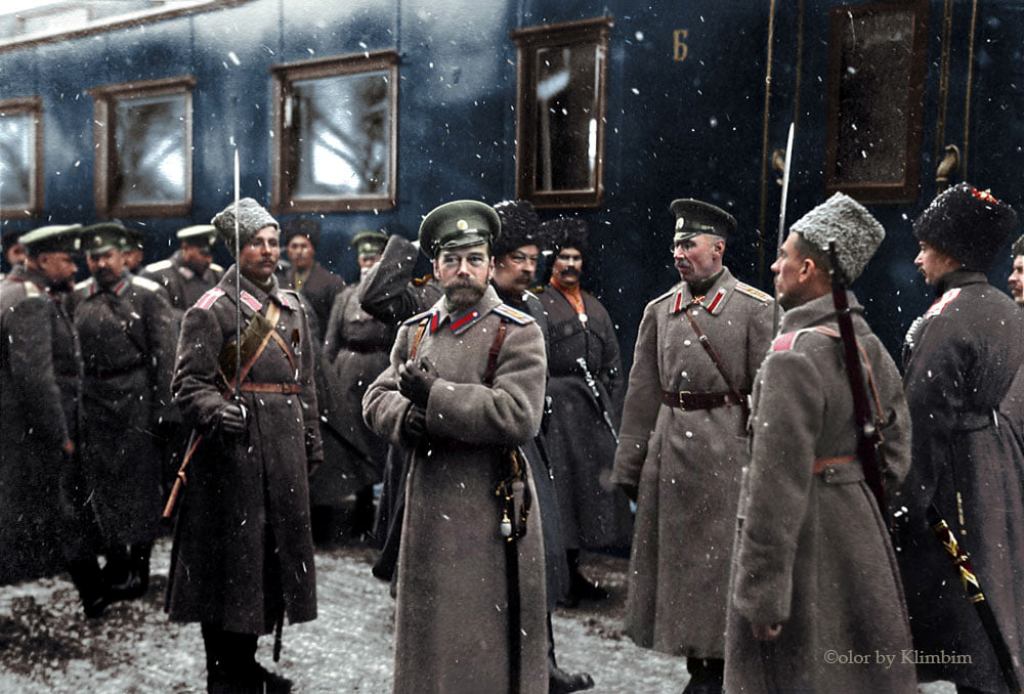
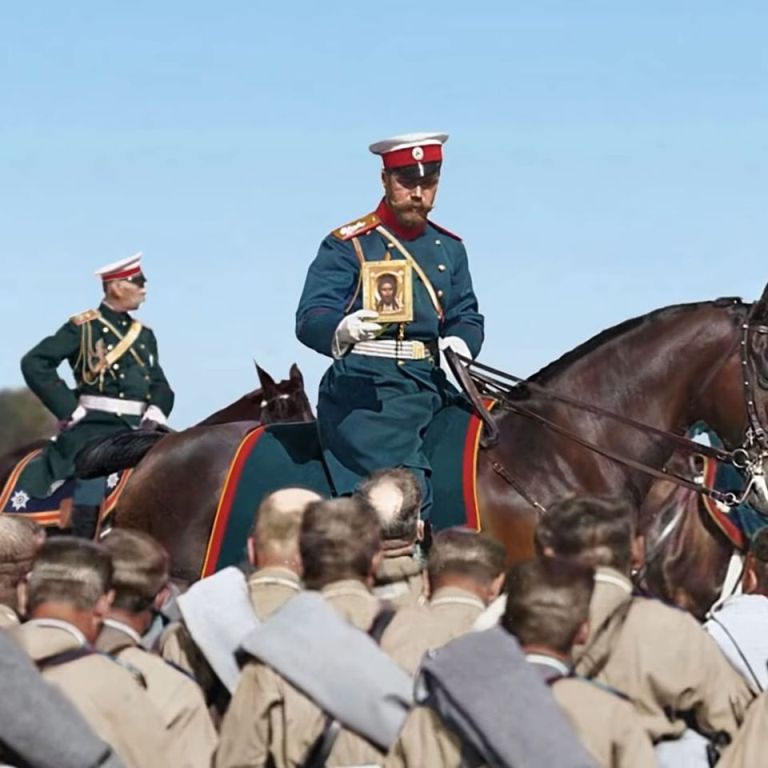
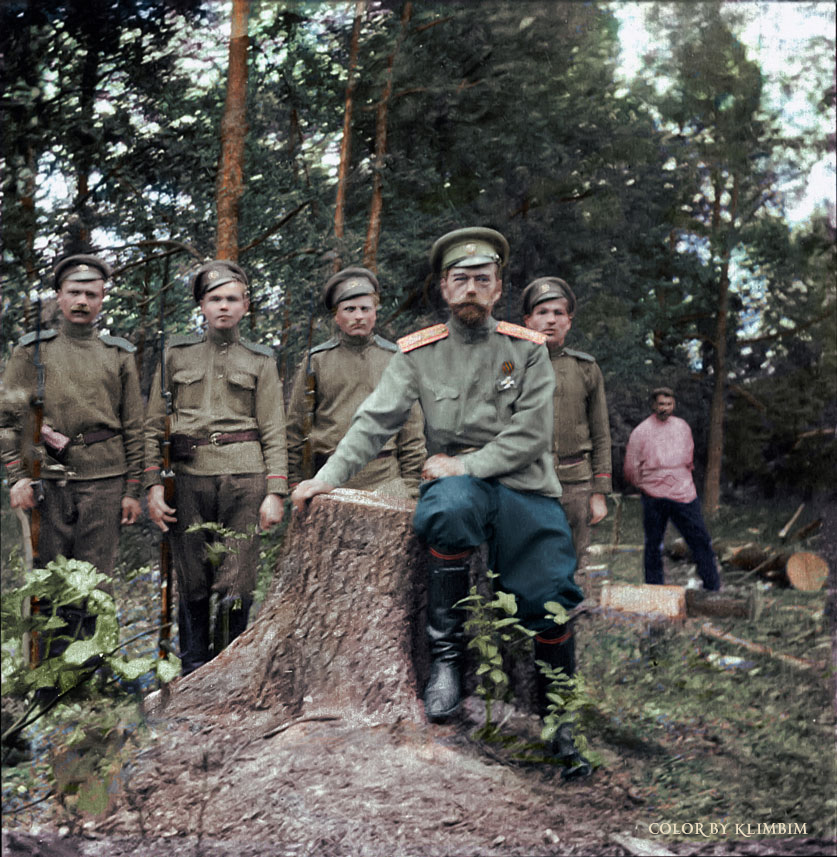
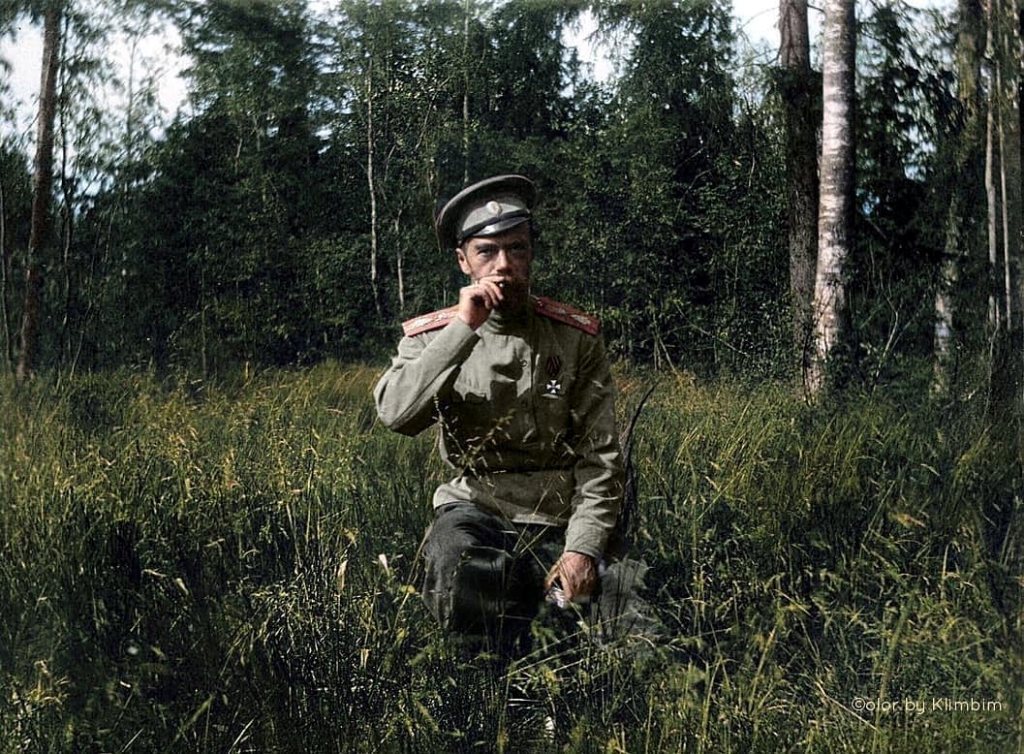
With an artist’s eye and a surgeon’s precision, Olga Shirnina — who works under the name Color By Klimbim — uses Photoshop to breathe new life into black-and-white photos from Russian history.
Olga Shirnina — who works under the name Color By Klimbim
Olga Shirnina was born in Schwerin (former DDR). She studied at Moscow State Pedagogic Institute of Foreign Languages, where she received a Ph.D. in Germanisctic. Following her studies, she has worked as a professor of German at Moscow State Pedagogic Institute of Foreign Languages and that of Alma-Ata.
Having a special love for arts, she started working as a picture colourist, producing her first work in 2011. Continuing, she published a website and a Facebook page with her colourings, which led her in receiving some significant commissions.
She colorizes photos purely “for pleasure.” The most thrilling part of the coloring process, says Shirnina, is “when suddenly the person looks back at you as if he’s alive.”
Shirnina says it takes her around one full day to colorize a photo, though she’ll usually wait another day before publishing in order to see things with “a fresh eye.”
Olga is fascinated by Russian history, which she finds full of dramatic, cataclysmic events, which not only had an impact on the history of the country, but also on the rest of the world. According to her, “Sometimes a picture can say more than many words are able to, and it gives me great pleasure to add to people’s knowledge and learning about Russia, through my work in colourings”. She also finds it interesting to work with colours, achieving different effects or copying the manner of great painters of the past.
Olga has contributed to the The Romanov Royal Martyrs Project by undertaking the colourization of all the pictures of the project. In addition to her artwork, she has been able to locate most of the Russian archival material used for the project and has undertaken the transcription work of many handwritten manuscripts.
Olga Shirnina’s colourized photos are also featured in my interview The Conspiracy Against Nicholas II, which aired on YouTube in August 2018. My seven-minute interview was one of a special six-part video series commemorating the Romanovs Martyrdom Centennial in 2018, prepared by the Monastery of St John the Forerunner Mesa Potamos in Cyprus.
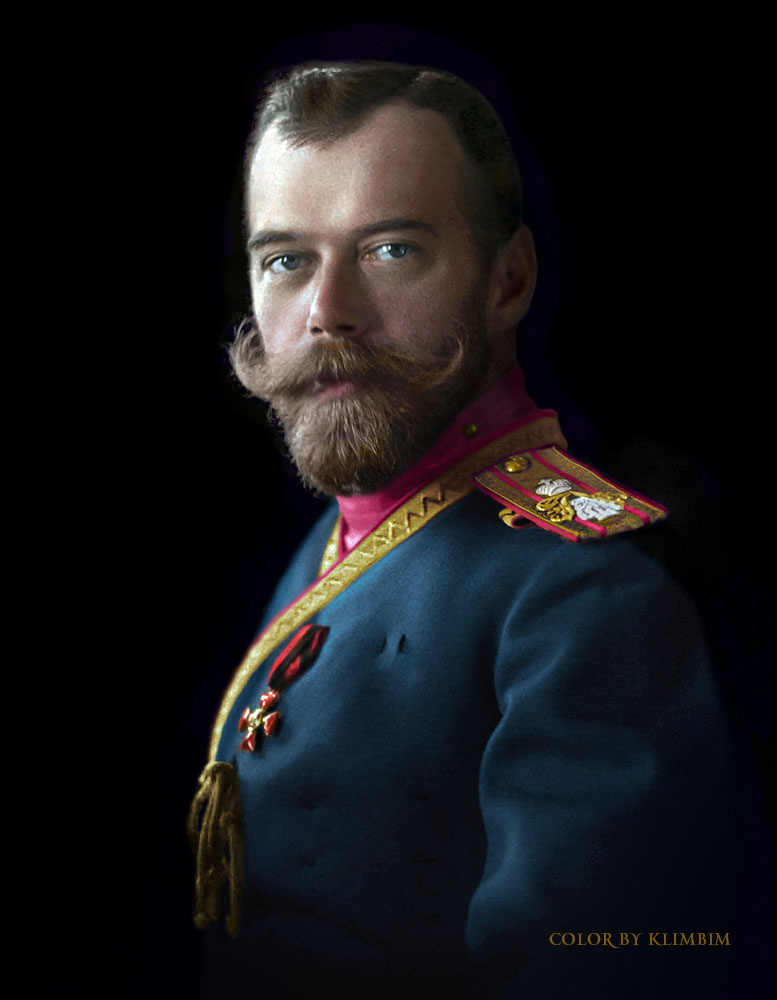
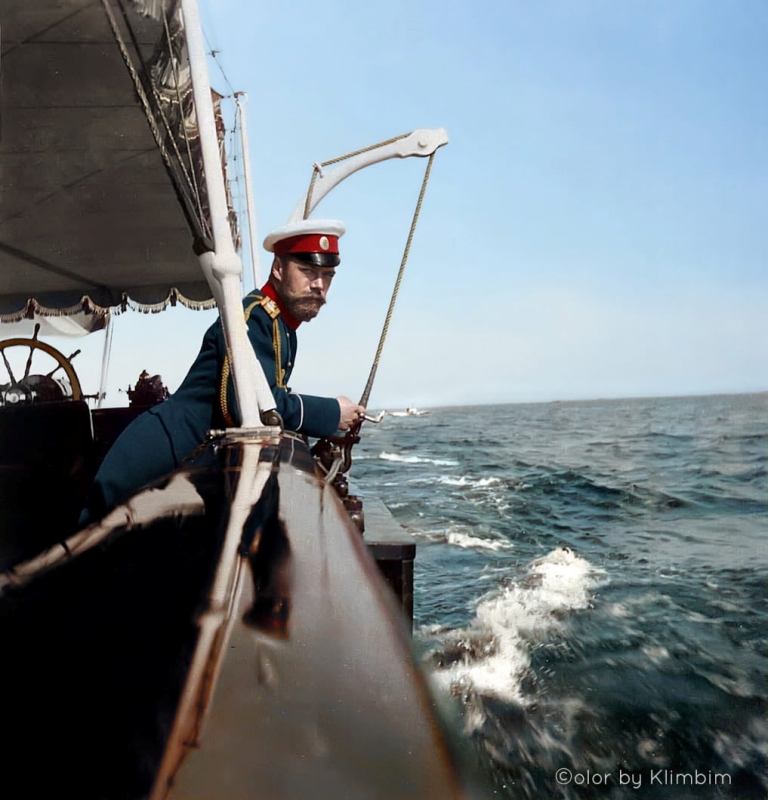
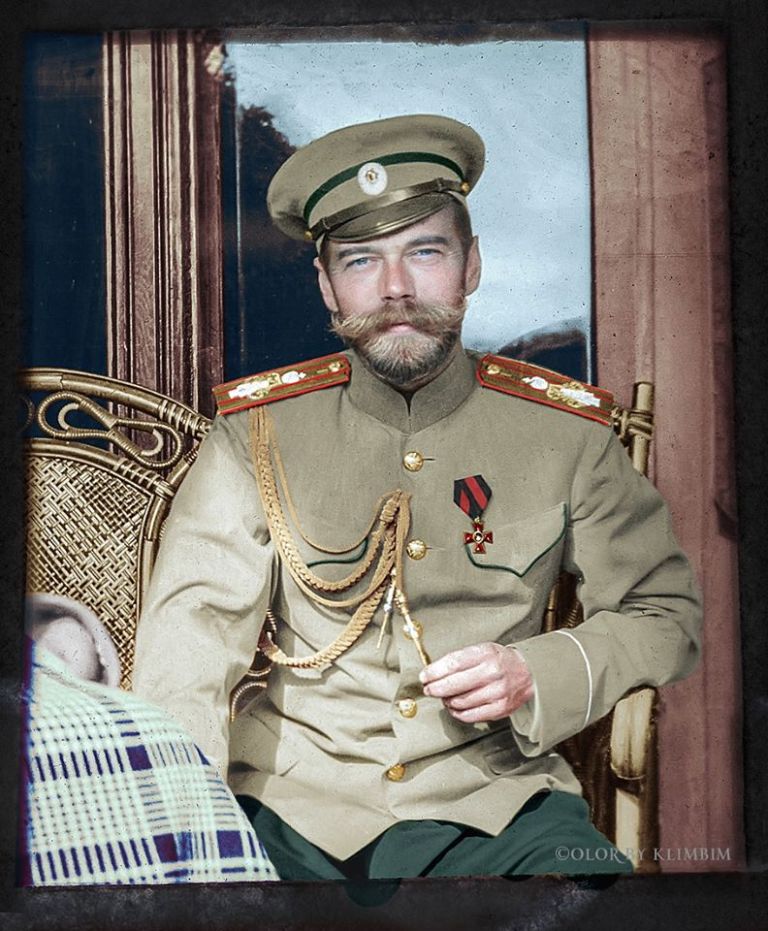
To date she has colourized dozens of black-and-white photos of members of the last Russian Imperial Family, all of which are exceptional in their own right. It is Shirnina’s collection of colourized photographs of Emperor Nicholas II, which are my personal favourites:
Shortly after his Coronation at Moscow in May 1896, Emperor Nicholas II acquired a new camera, for which he began photographing himself and his family. It was also at this time that he began placing his snapshots of family members in his diaries and compiled his first photo album.
Among the many albums of Romanov family photographs held in the Russian archives, at least two of them were Emperor Nicholas II’s personal photo albums, in which he personally selected and pasted the photos.
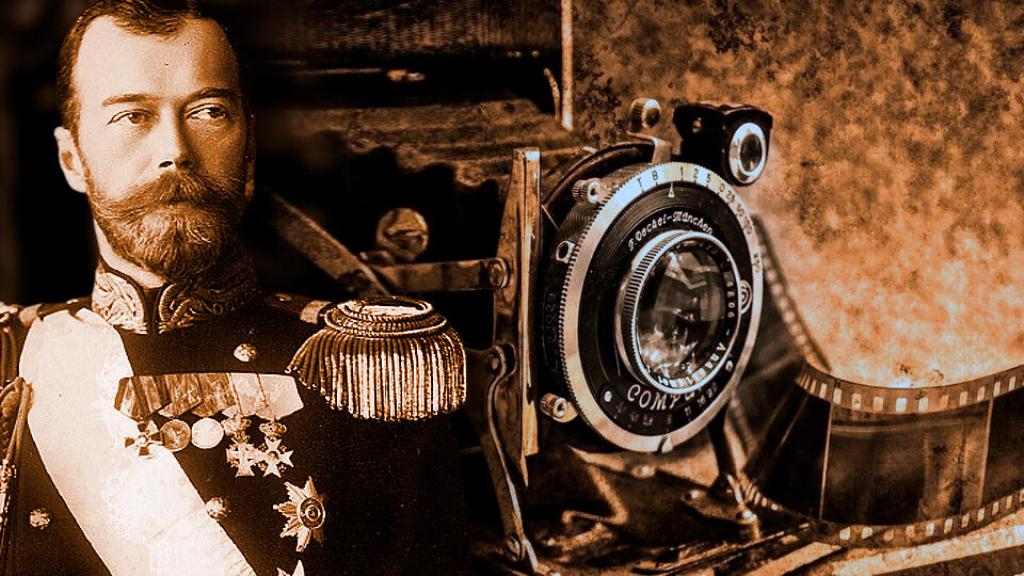
Nicholas II was a keen amateur photographer. It is widely known that his wife and children all shared his passion, but it is thanks to him that we can enjoy such a vast collection of photographs taken by the Emperor himself and by members of his family, in addition to those taken by official photographers. These photographs not only give us an official portrait of Russia’s last Emperor and Tsar, but also a pictorial record of his private life and reign.
Nicholas II took pictures throughout his life, leaving to posterity a collection of photographs astonishing in their breadth and variety. It is a collection which allows us to study him in all his guises: Emperor, husband and father. As GARF managing director and researcher Alia Iskhakovna Barkovets notes: “Everyone who looks at these photographs will see the last Tsar of Russia in their own way. One feeling, however, unites us: these photographs attract us because in them we see a human life. And regardless of the time and tragedy that separates us from that life, we can comprehend it and identify with it.”
In 1925, the enormous archive of documents and photographs of Nicholas II and his family were transferred to the New Romanov Archive, which formed the basis of the Archive of the October Revolution, and was renamed The Department of the Fall of the Old Regime. It was Joseph Stalin who ordered the Romanov archives closed and sealed. They were even off limits to historians, unless for propaganda purposes. Up until the fall of the Soviet Union in 1991, these private documents and photographs lay effectively untouched.
While it is known that Nicholas II started to take amateur photographs, it is not known where and when the Emperor acquired his first camera, but his personal accounts for November 1896 contain an entry about a payment to the firm ‘London Stereoscopic & Photographic Co,’ for photographic accessories amounting to £9 British pound sterling. In December of the same year an invoice from the owner of a warehouse for photographic and optical accessories in St. Petersburg was paid for 25 roubles to cover photographic work, two boxes of film and a camera cover.
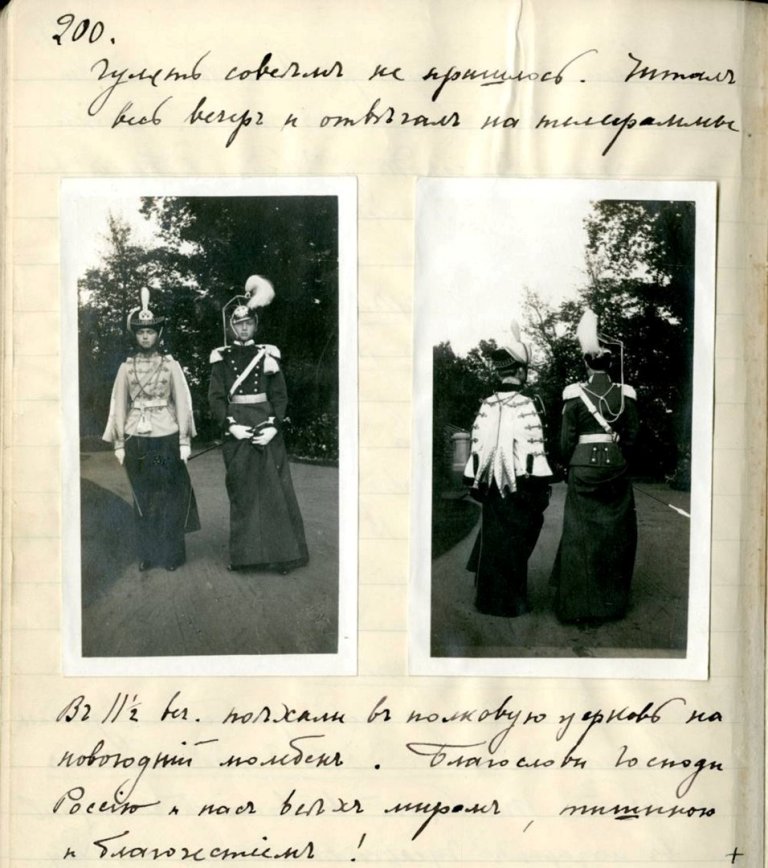
PHOTO: a page from the diary of Nicholas II, dated 31st December 1913, featuring two photos of his eldest daughters Olga and Tatiana, wearing their respective regimental uniforms.
That Nicholas himself glued photographs into albums is shown by a diary entry 29th October 1896: “Fussed with some photographs, singling them out for gluing into the big album”. It is apparent that he among the members of his family was mostly concerned with their presentation, also ensuring that each photograph was captioned with date and place, all handwritten by the Emperor himself.. This favourite pastime “calmed him and brought him into a state of mental equilibrium,” says Barkovets.
Beginning in 1896, small amateur photographs began to appear in the pages of his diary alongside the entries. In almost every diary after this year the Emperor illustrated various entries with his own photographs.
Nicholas II’s private album for 1900-1901 is particularly interesting as it highlights the growing confidence of his skills as a photographer. Nicholas had obtained a special camera which allowed panoramic pictures to be taken. The Emperor’s passion for taking panoramic photographs included those of ships, his beloved Standart, and above all, the Crimean countryside and the architecture of Livadia Palace. Although the artistic merit of these photographs is questionable, their historic significance is undeniable.
In August 1917, when the Imperial Family was exiled from Tsarskoye Selo to Tobolsk and later Ekaterinburg, they took with them a camera of the ‘panorama company Kodak from the Karpov shop . . . along with instructions, and two boxes containing 33 negatives’. These items were found after the murder of the Imperial Family in Ekaterinburg at the apartment of Mikhail Letemin, the guard for the Ipatiev House, during a search by the investigator Alexei Nametkin on 6th August 1918. As well as the items found at the Ipatiev House, three reels of Kodak film were recovered from the stoves and rubbish at the Popov house, where the guards of the Imperial Family were accommodated. So, what were these photos? Who took them? Why were they destroyed? Perhaps they contained the last photographic images of the final days of the Imperial Family, or were they destroyed to conceal evidence which the murderers did not want to fall into the hands of monarchists, the Whites or the Western press? Sadly, we will never know!
In conclusion, Alia Barkovets adds: “the photographs from the Tobolsk period of the family’s house arrest are missing from the State Archive, but a few pictures survive in private collections. There are no known photographs of the Imperial Family during their house arrest in Ekaterinburg. If we believe the evidence of of the guard Mikhail Letemin, Nicholas’s camera was stolen by him from the Ipatiev House after the murder of the Imperial Family. Whether or not it contained film we can only surmise.”
***
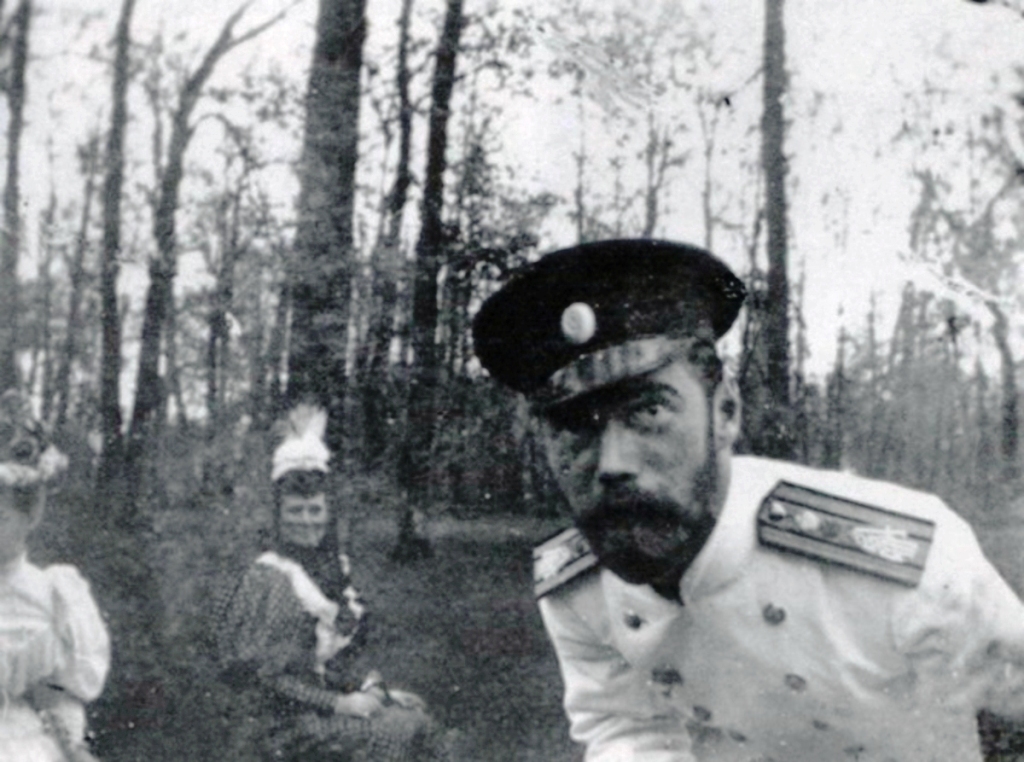
Nicholas II was among a handful of famous Russians, who took “selfies”.
The first ‘selfie’ in history was taken by American photographer Robert Cornelius – he took a photo of the reflection of himself in a storefront. That happened in 1839, but the process of taking photos then was very different from the modern one.
A polished silver plate, treated with iodine vapors, was put into a camera obscura and then developed over hot mercury and dipped into a solution of salts – not the easiest of processes.
The tides turned with the emergence of Kodak cameras, designed to be used by non-professionals. Photography didn’t require serious training anymore and gradually turned into a mass hobby. The amount of ‘selfies’ rose dramatically. Russians were also involved.
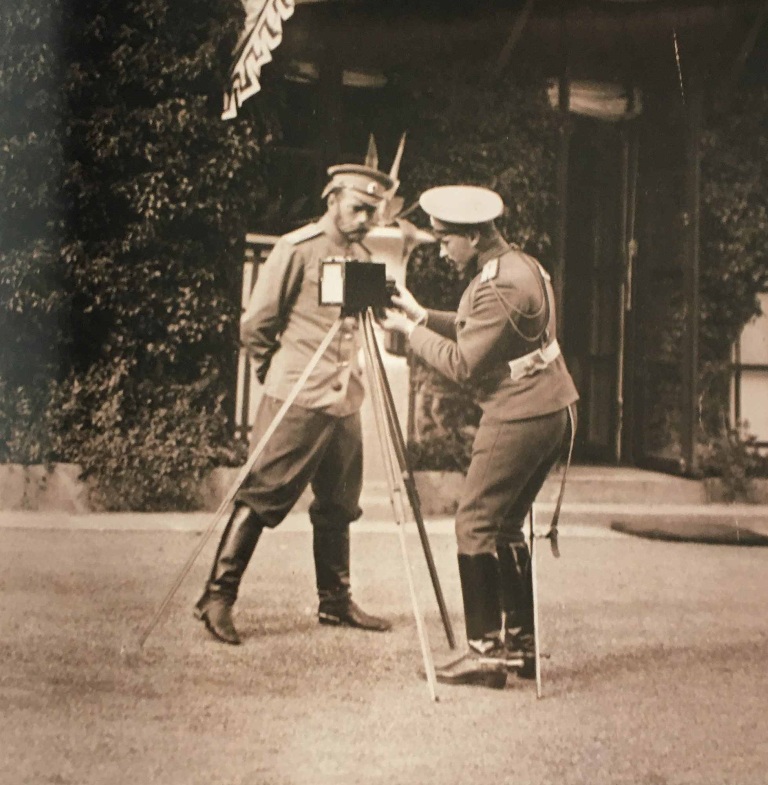
In this photo, we see the Tsar posing for a “selfie” with his Kodak camera, much to the amusement of his mother Dowager Empress Maria Feodorovna seen seated behind him in this [sadly] grainy image. Year and location unknown.
A photograph album belonging to the Grand Duchess Olga Nikolaevna (1895-1918) from the collection of the State Archives of the Russian Federation (Moscow) is currently on display at the Boris Yeltsin Presidential Library in St. Petersburg.
The photographs are dated 1907-1908. The cover of the album is decorated with the Imperial Crown, and in the upper right corner is Olga’s monogram O. N.
In total, the album contains 294 photographs, of the Romanov family during the early 20th century. The pictures depict the day to day life of the Imperial Family: Olga and her siblings playing games, picnics, snowball fights and walks in the Alexander Park at Tsarskoye Selo, sailing on the Imperial Yacht Shtandart, New Year’s celebrations, and the Romanov family at home.
It also depicts photos of the Imperial Family: Empress Alexandra Feodorovna at Tsarskoye Selo with her children, with maids of honour, Emperor Nicholas II with his family and entourage.
Olga was the eldest daughter of Emperor Nicholas II and Empress Alexandra Feodorovna. She was the favorite of her father, and was considered the most gifted of the August children. Olga had a philosophical mind, loved to read and wrote poetry. According to Anna Vyrubova, Olga was ‘extremely pretty, with brilliant blue eyes and a lovely complexion, and resembled her father in the fineness of her features, especially in her delicate, slightly tipped nose’.
All the photos in the album are cheerful and serene. During the First World War, Grand Duchesses Olga and her sister Tatiana, together with their mother, completed Red Cross training, passed an exam, and swapped their Imperial dress for nurses uniforms and began to help wounded soldiers in a special hospital set up not far from the Alexander Palace at Tsarskoye Selo.
Next year, will mark the 130th anniversary of the birth of the Grand Duchess, on 16th (O.S. 3rd) November 2025.
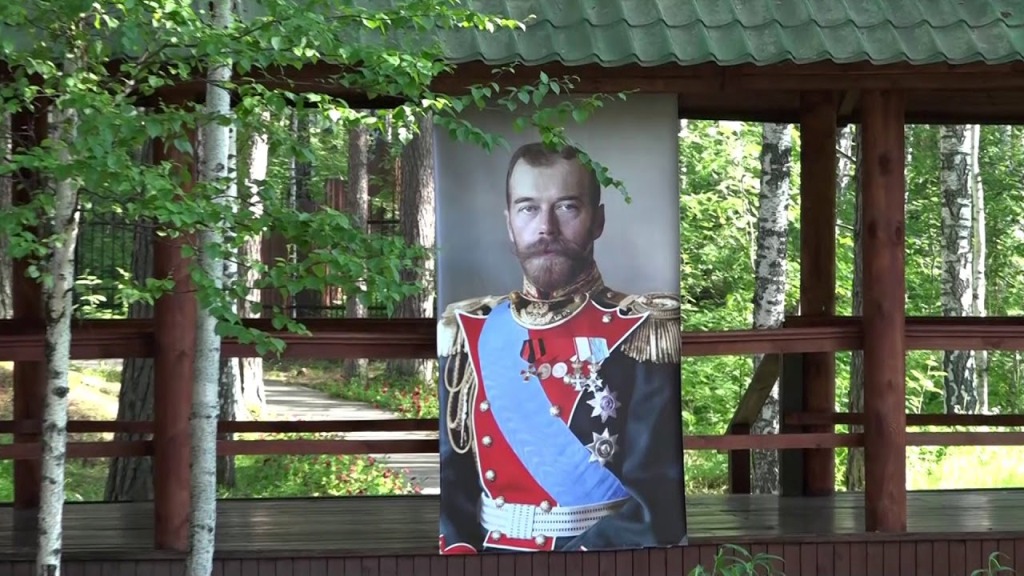
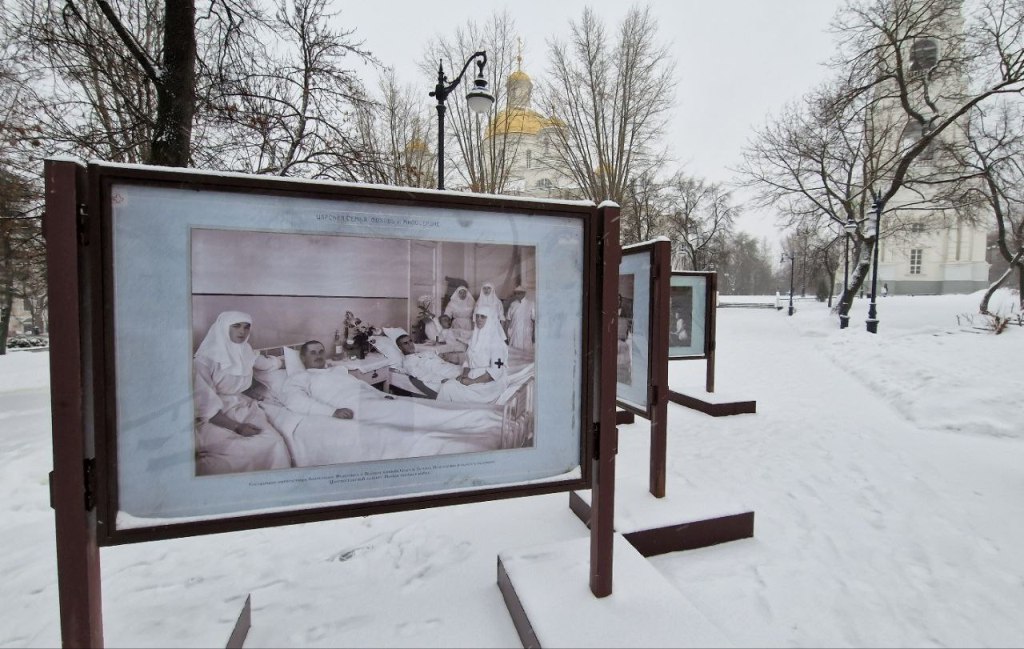
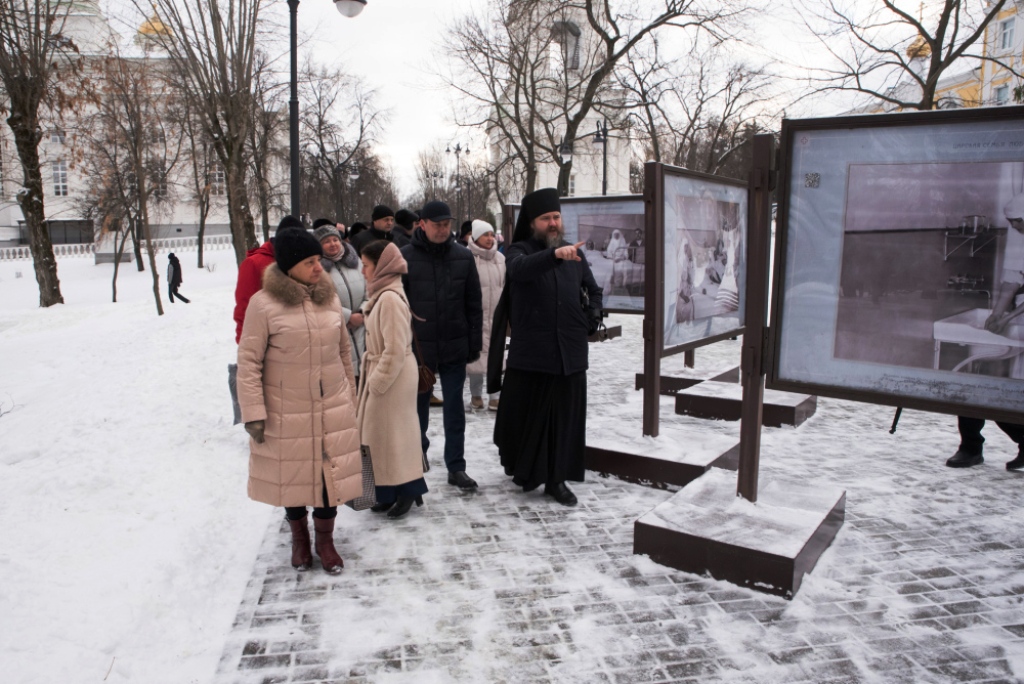
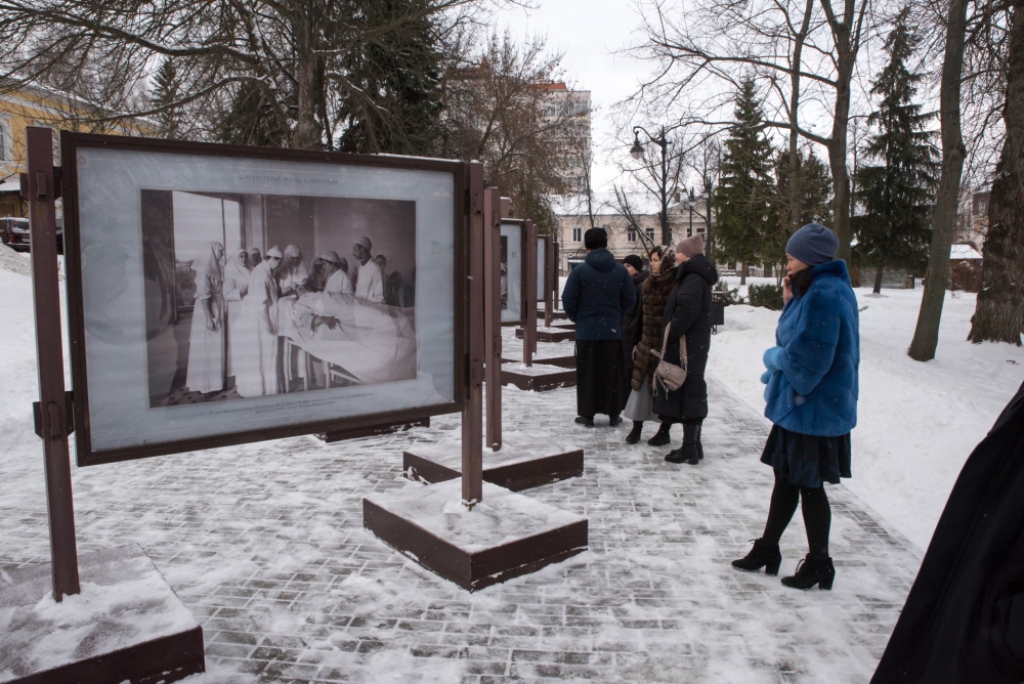
On 20th December 2023, an outdoor photo-exhibition dedicated to Emperor Nicholas II and his family opened near the Spassky Cathedral in Penza. Penza is the second Russian city after Moscow, where these unique photographs are presented to the general public in an outdoor setting.
The travelling exhibition The Tsar’s Family: Love and Mercy was previously held near the Sretensky Monastery in central Moscow from 16th October 2023 to 16th November 2023.
The Penza exhibit opened in a tree-lined alley located between the Spassky Cathedral and the Penza Diocesan Administration Building. Most of the photographs presented at the exhibition are dedicated to the participation of the Imperial Family II in matters of charity and service to others and the Fatherland.
Of particular note are selected photographs dedicated to the service of Empress Alexandra Feodorovna and the Grand Duchesses as nurses in infirmaries and hospitals during the First World War.
The Tsar’s Family: Love and Mercy photo project was created in 2016 by the Sretensky Monastery in Moscow. The creator of the project, a resident of the Sretensky Monastery, Hieromonk Ignaty (Shestakov), gave lectures on the Tsar and his family at two universities: Penza State University and the Penza Artillery Engineering Institute.
***
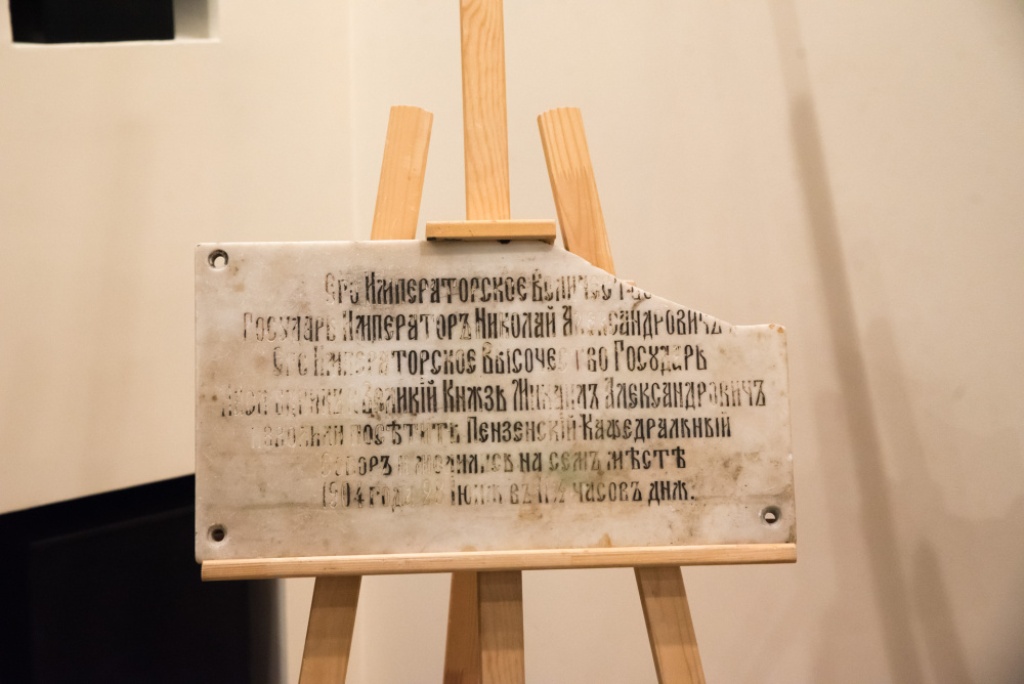
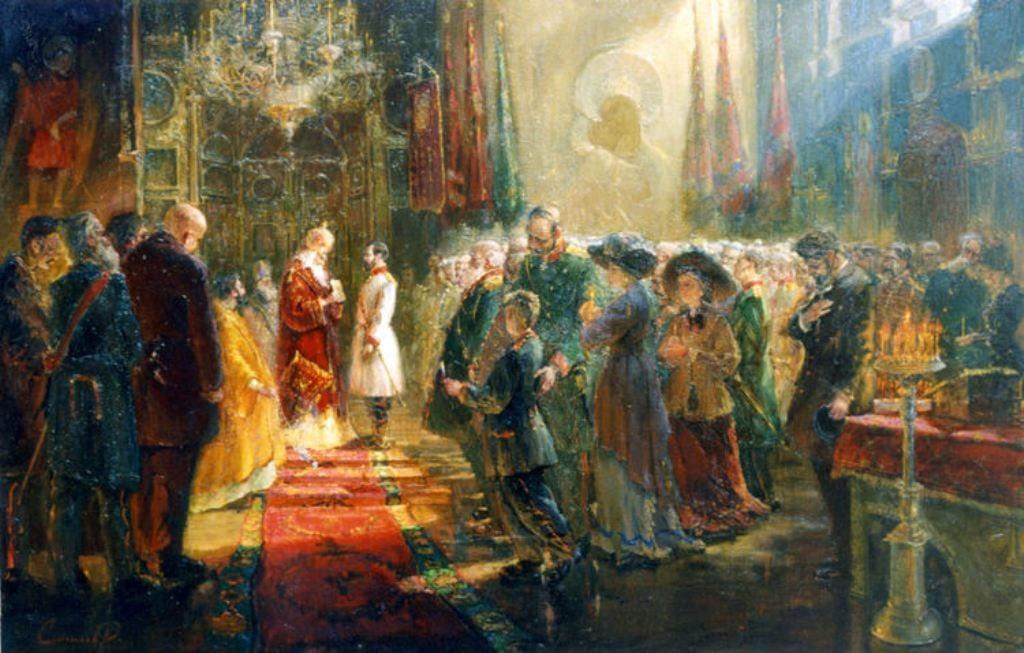
“The old buildings and streets of Penza remember the visit of Emperor Nicholas II to the city on 28th June 1904. During his visit, the Tsar attended a review of the troops going to the Russo-Japanese War, after which he attended a Divine Liturgy in the Spassky Cathedral.
In memory of Emperor Nicholas II’s visit to Penza, a memorial plaque was installed on one of the columns of the Spassky Cathedral, which was considered lost after the destruction of the cathedral by the Soviets in 1934.
In the late 1990s, this artifact was found by the famous Penza collector Igor Sergeevich Shishkin, who kept it all these years until June 2022, on the day of the consecration of the revived Spassky Cathedral by Patriarch Kirill. On this day, Igor Sergeevich handed over a memorial plaque to the Penza diocese.
There are plans to have the memorial plaque reinstalled to its original place in the Spassky Cathedral, next to the new icon of Nicholas II, for which a case is now being made.
A painting dedicated to this event was painted in the 1990s by Penza artist Denis Santalov. The painting depicts Nicholas II standing before the priest, who offers the Tsar an icon, which he in turn would kiss and make the sign of the cross.
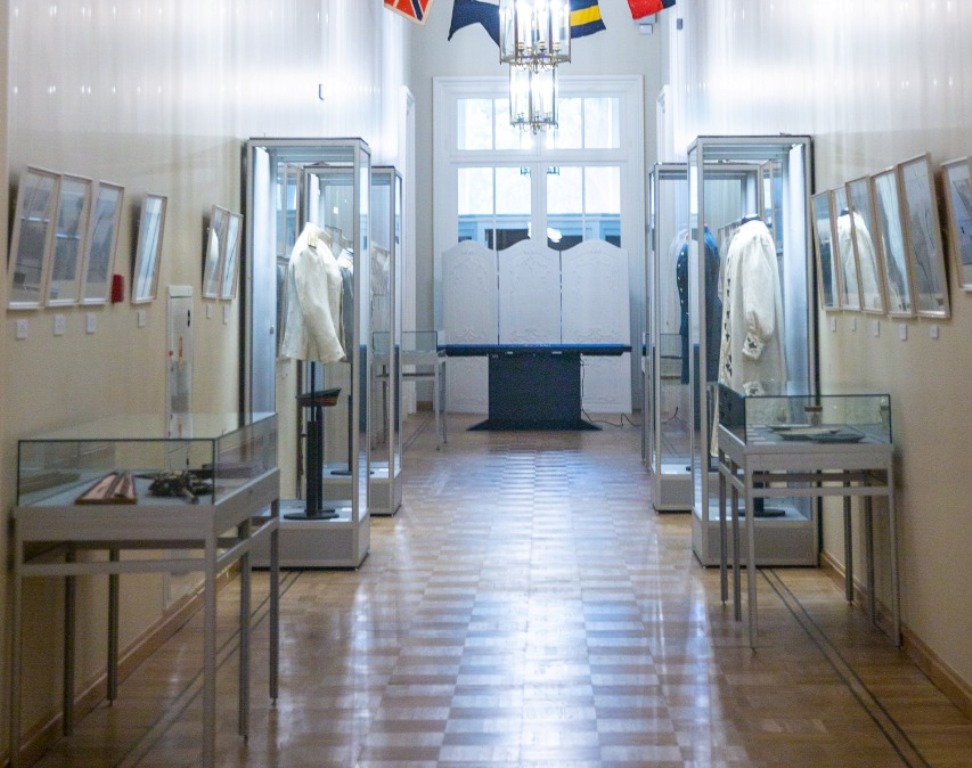
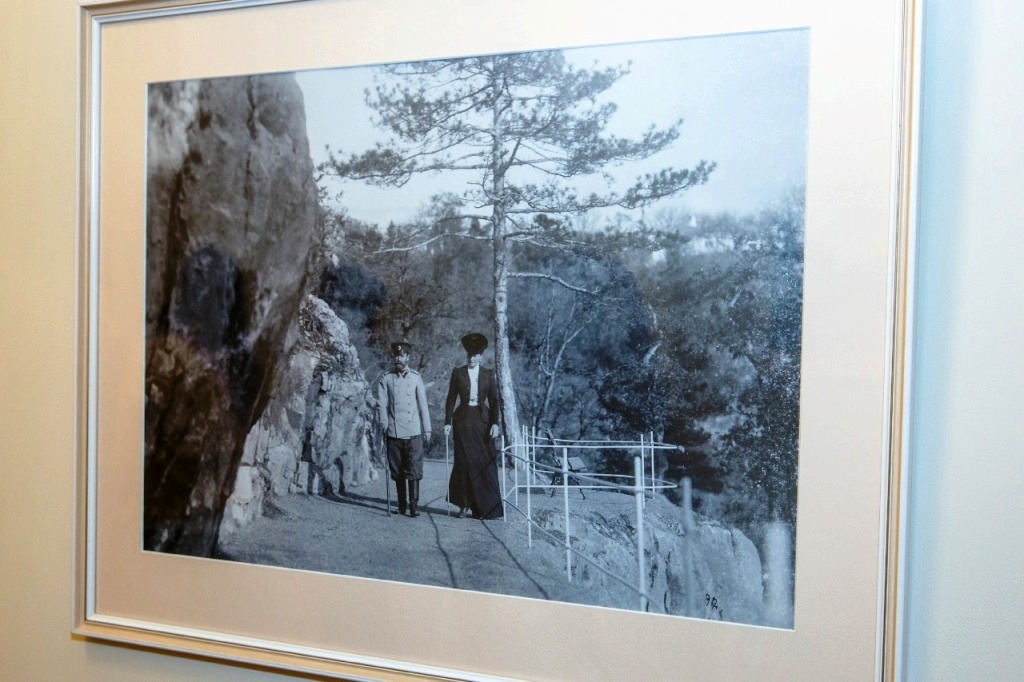
On 21st September 2023, a new exhibition ‘Imperial Visits to the Crimea: 1900, 1902, 1909‘ opened in the Alexander Palace at Tsarskoye Selo.
NOTE: during their visits to Crimea, Nicholas II and his family stayed in the Small (Maly) Palace, until 1911, when the iconic white stone palace was constructed on the site of the Large (Bolshoi) Palace, by the Russian architect Nikolai Krasnov (1864-1939).
The Small Palace survived until the Great Patriotic War (1941-45). While there is no exact information about the destruction of the palace, some say it was the work of the Nazis, while others cite evidence from local eyewitnesses that it was the Soviets who set fire to the historic wooden palace – PG
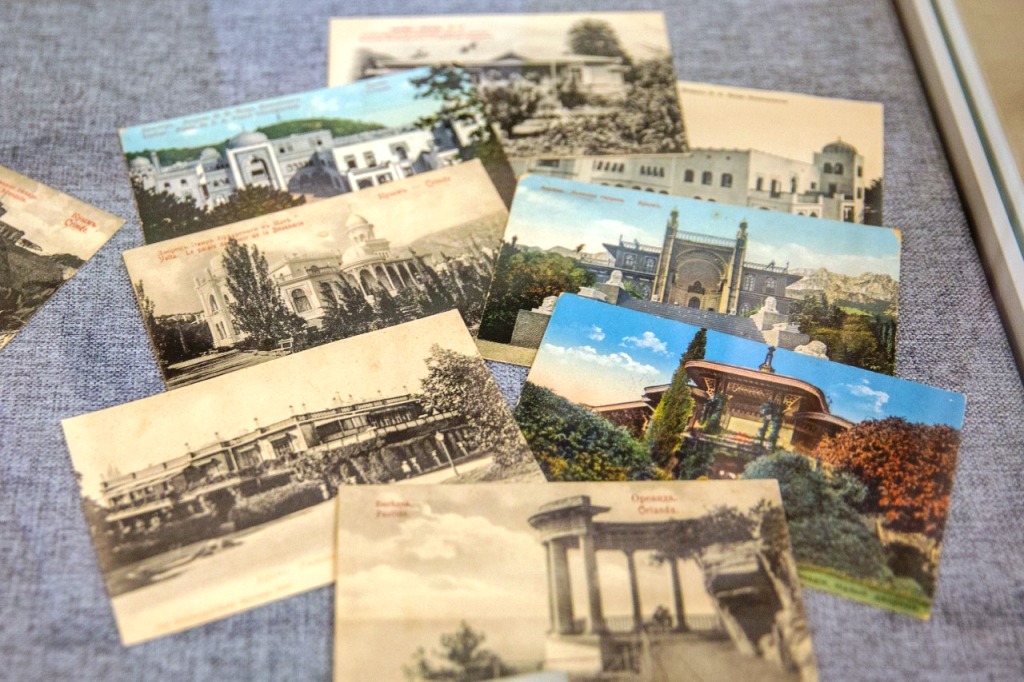
PHOTO: early 20th century postcards depicting palaces along the Black Sea coast, including the wooden palaces at Livadia – the Large (Bolshoi) and Small (Maly) Palaces are depicted above the photo of the Rotunda at Oreanda (bottom)
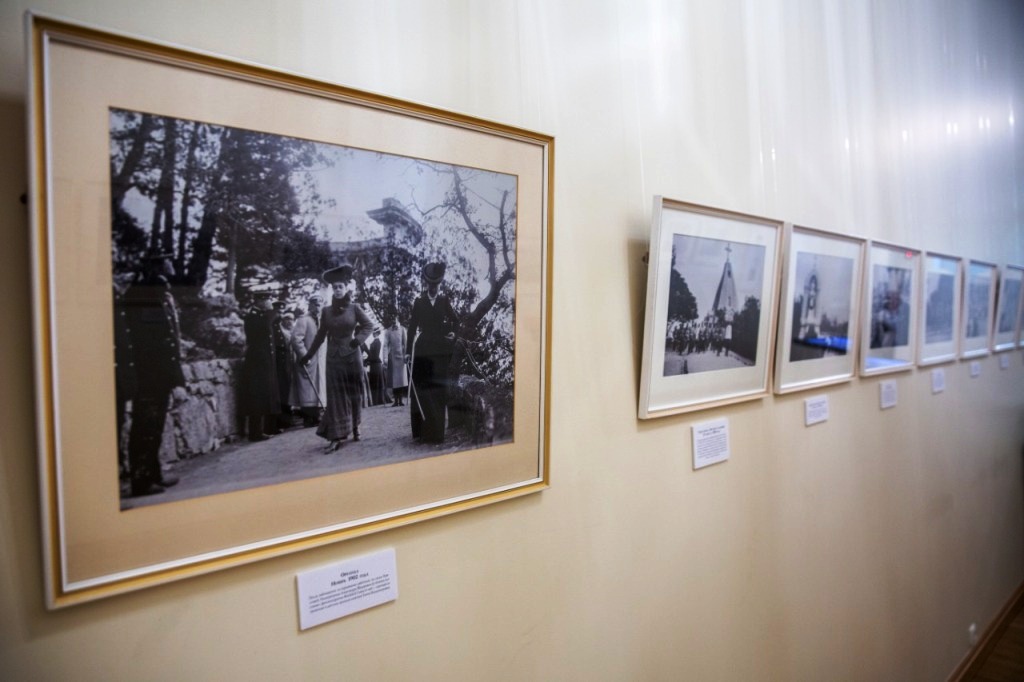
The exhibit is a joint project of the Tsarskoye Selo State Museum and the Alupka Palace Museum (Crimea), which showcases photographs from the private albums of Emperor Nicholas II and his family, as well as imperial memorabilia from the Tsarskoe Selo collection.
The albums with photographs capturing Emperor Nicholas II and his family during their visits to the Crimea in 1900-1909 were made for the Romanovs by K.E. von Gan & Co., a famous photography atelier in the town of Tsarskoye Selo, who were licensed to photograph the imperial family.
Their photographer and cinematographer Alexander Karlovich Yagelsky (1861-1916) used a then-innovative approach by printing still frames from film reels and thus getting more real, ‘live’ photos instead of stiff, staged shots.
The photographs on display show the Imperial Family in Livadia, Yalta, Oreanda and Sebastopol, visiting infirmaries, regimental celebrations, the ship Rostislav and cruiser Pamiat’ Merkuria (Memory of Mercury), meeting with veterans and sisters of mercy of the Crimean War, as well as walking around or playing ball and lawn tennis.
“This is not just a series of photographs from beautifully designed albums with impeccable artistic taste. Before us are documents of the era that allow us to look into the past and see the people and events of the early 20th century through the eyes of the last Tsar and his family,” said Iraida Bott, Deputy Director for Research at the Tsarskoye Selo State Museum-Reserve.
An interactive touch table at the exhibition gives access to other over 130 digitized photos from the imperial albums.
Among the items of imperial memorabilia on display are Tsesarevich Alexei’s hat of a lower-rank officer from the imperial yacht Standart, Emperor Nicholas II’s jacket of a Naval Captain 1st rank, Empress Alexandra Fiodorovna’s dress, worn during their visits to Crimea in the early 20th century.
The exhibition runs until 20th November 2023.
***
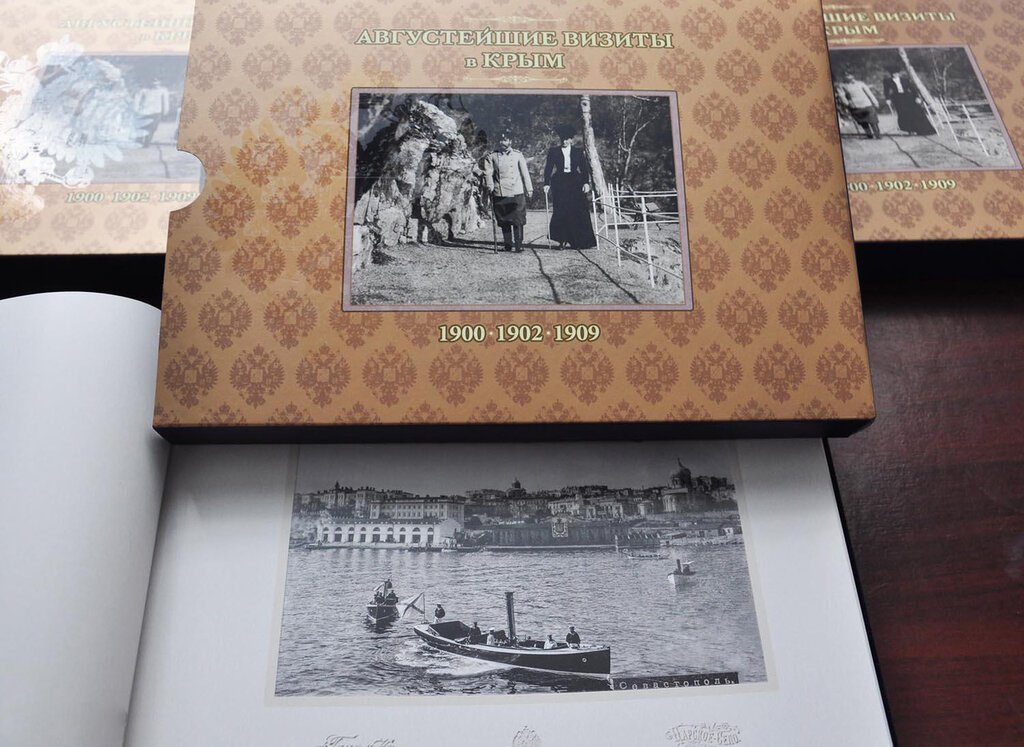
In 2013, the photographs from this exhibition were published in a large 240-page hardcover album – *Августейшие визиты в Крым. 1900, 1902, 1909 (Imperial Visits to Crimea.1900, 1902, 1909). Only 1000 copies were printed.
*I regret that I do not know how to obtain copies, or where copies can be obtained. Current financial sanctions imposed on Russia by the West, it is impossible to order from Russian booksellers in the Russian Federation – PG
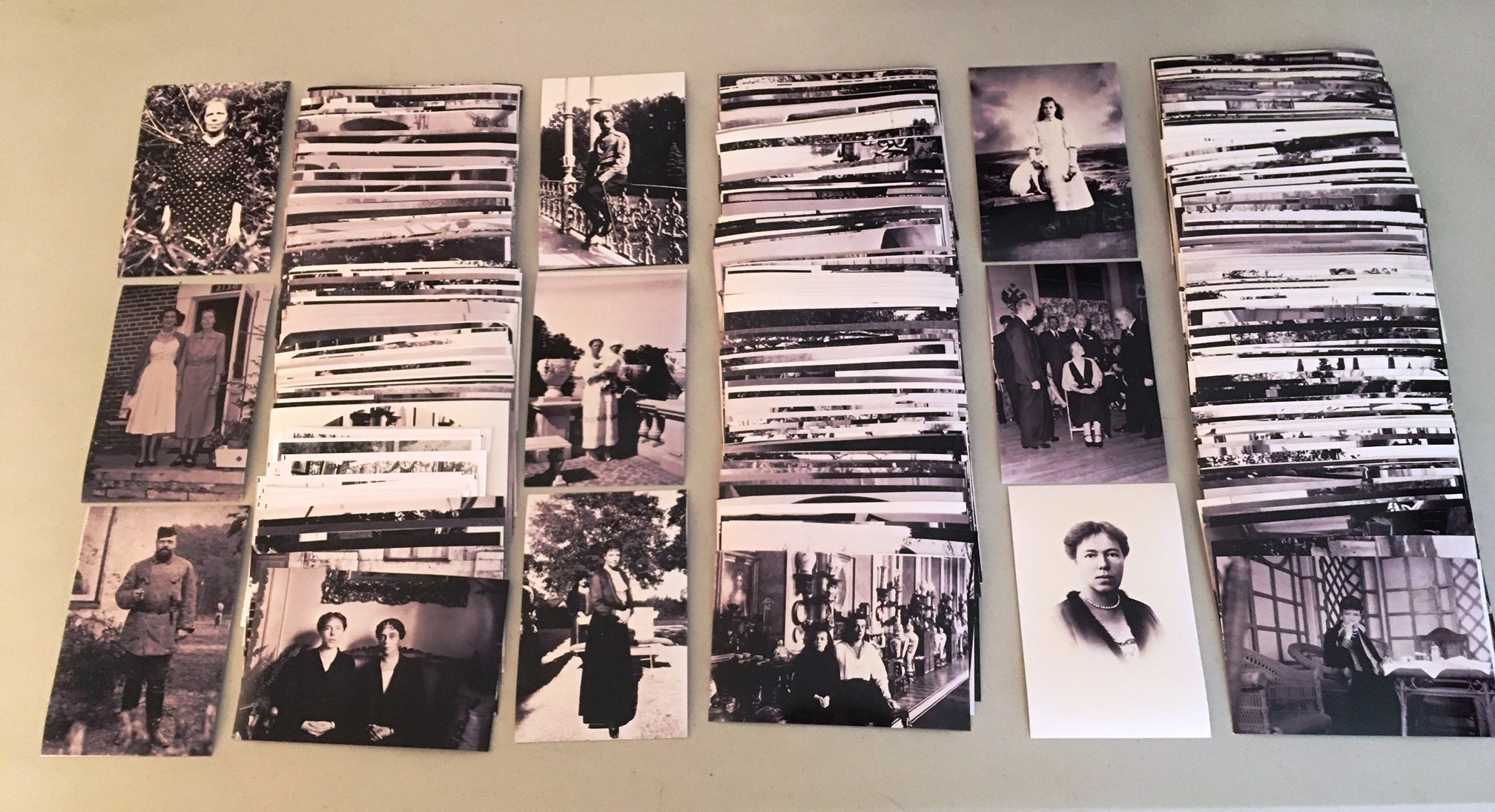
PHOTO: a collection of 332 black and white photographs from one of the private photo albums belonging to Grand Duchess Olga Alexandrovna are for sale from my collection. CLICK on the image to enlarge – PG
As many of you know, I will be moving back to England in the summer of 2025. As a result, I am forced to sell not only my furniture and other possessions, I have also made the very difficult decision to part with some of my Romanov treasures.
Back in 1998-99 I went to visit a man living in Rosedale, an historic and very affluent residential area in Toronto, Ontario. I had been invited by historian and author Patricia Phenix, who was researching for her book Olga Romanov: Russia’s Last Grand Duchess [Published in 1999 by Viking-Penguin]. The gentleman had a collection of photographs copied from one of the personal photograph albums belonging to Grand Duchess Olga Alexandrovna [1882-1960]. He was kind enough to show us the photographs, and even agreed to allow us to make copies.
Aside from the original album, ONLY three sets of these photographs exist. We had two sets made – a great expense at time – one for Pat, the other for myself. We returned the original set to the gentleman in Rosedale, who several years later “loaned” them to Olga Kulikovsky-Romanov, who used them for the exhibitions of Grand Duchess Olga’s paintings, which she was organizing in Russia. She never returned the photographs to the gentleman in Rosedale.
The photos depict Grand Duchess Olga and her family in Russia, Denmark and Canada, where she died on 24th November 1960. The photos from her Russian years include her mother Empress Maria Feodorovna, her brothers Tsar Nicholas II and Grand Duke Mikhail Alexandrovich, as well as her sister Grand Duchess Xenia Alexandrovna.
This lot consists of a total of 332 black and white photographs. The quality and clarity of each photo varies from one image to the next. The photographs are copies of those from Olga’s photo album. The fate of the photo album is unknown, but is believed to have been sold at auction.
PLEASE NOTE THAT THIS IS AN AUCTION SALE: I am offering this collection of 332 photos to the highest bidder. I have set the bidding price at $150 USD. I invite those of you who are interested to send me a private e-mail [royalrussia@yahoo.com], stating your highest bid. The winner will be notified by e-mail on Tuesday, 5th September 2023. Payment can be made by credit card or PayPal. All sales are final.
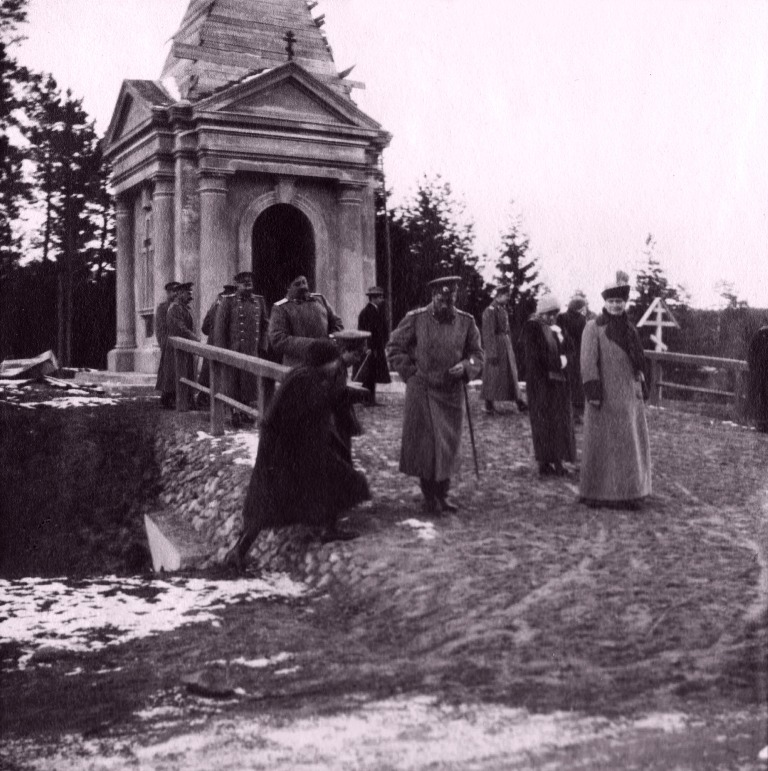
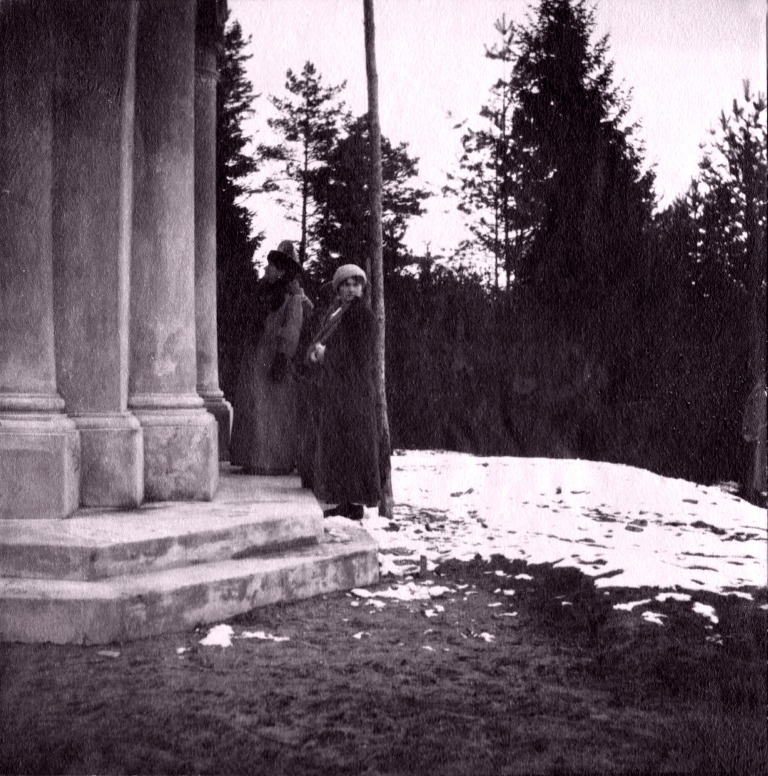
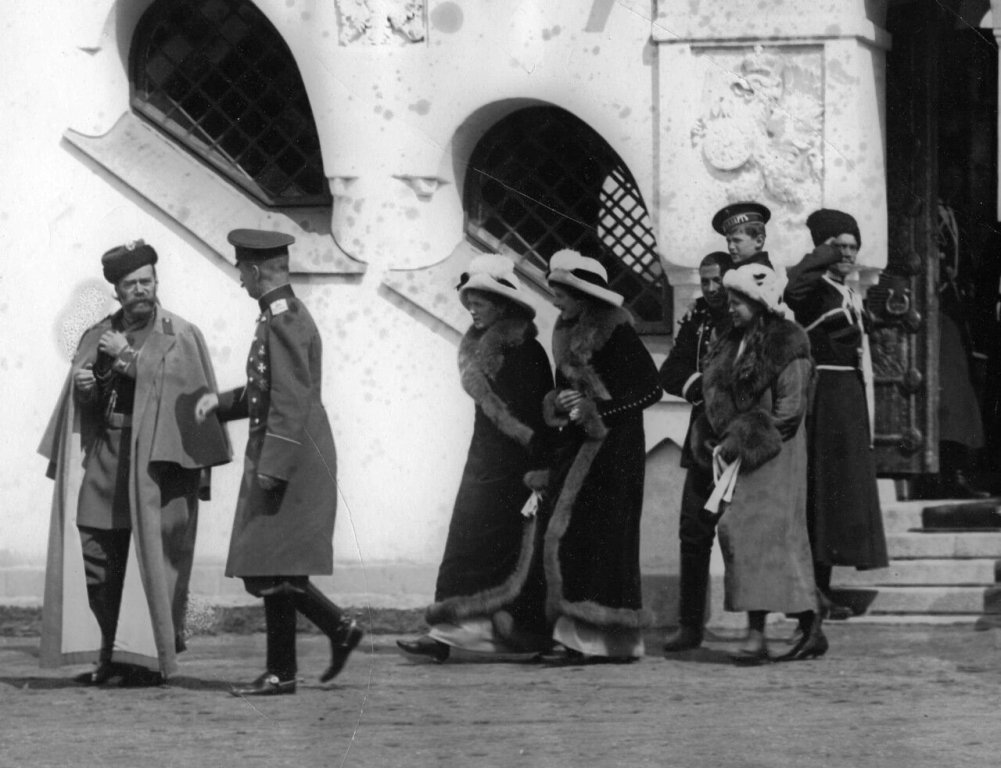
PHOTO: Emperor Nicholas II and his family visiting the Memorial Chapel, 1917. To the left of the Tsar is GeneralCount Alexander Grabbe (1864-1947), who served as Major-General of His Imperial Majesty’s Own Convoy from 1914 to 1917, and Pierre Gilliard (1879-1962), can be seen between the two
NOTE: The three vintage photographs presented in this post, depict Emperor Nicholas II and his family visiting the Memorial Chapel in the village of Saltanovka, on 1st January 1917, just weeks before the Tsar’s abdication on 16th (O.S. 3rd) March 1917.
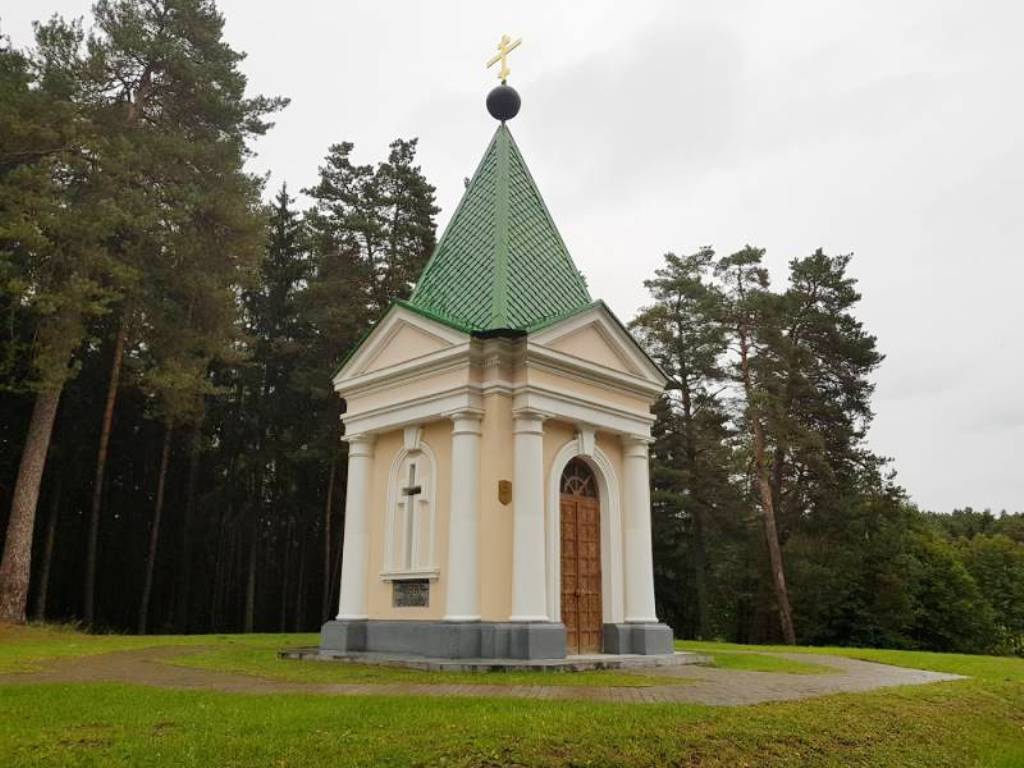
The Memorial Chapel was constructed in 1912, it is situated two kilometers north-west from the village of Saltanovka near Mogliev. It has survived to this day – see photo below.
The chapel was erected by the Tsarist government in 1912 to commemorate the 100th anniversary of the Battle of Saltanovka, during the Patriotic War of 1812. It was here, on 11th July 1812, that the battle took place between the Russian troops of Emperor Alexander I (1777-1825) the 7th corps under the command of Lieutenant General Nikolai Raevsky (1771-1829), and the French troops of Emperor Napoleon I (1769-1821) under the command of Marshal Luis-Nicolas Davout (1770-1823).
It was constructed in the Neoclassical style by the Russian architect Konstantin Alekseevich Mikhailov (1873-1927) and sculptor Pyotr Grigorievich Yatsyno, who carried out the artistic stucco decoration, memorial plaques and finishing works.
On the walls of the chapel are commemorative plaques listing the Russian regiments and divisions that took part in the battle. The ashes of Russian soldiers who died in the 1812 Battle of Saltanovka, lie within the walls of the chapel.
PHOTO: Empress Alexandra Feodorovna, Emperor Nicholas II, Grand Duchess Olga Nikolaevnaand an unidentified officer
PHOTO: Empress Alexandra Feodorovna and Grand Duchess Olga Nikolaevna
***
PHOTO: The Memorial Chapel near the village of Saltanovka as it looks today
Dear Reader: If you enjoy my articles, news stories and translations, then please help support my research by making a donation in US or Canadian dollars to my project The Truth About Nicholas II – please note that donations can be made by GoFundMe, PayPal, credit card, personal check or money order. Thank you for your consideration – PG
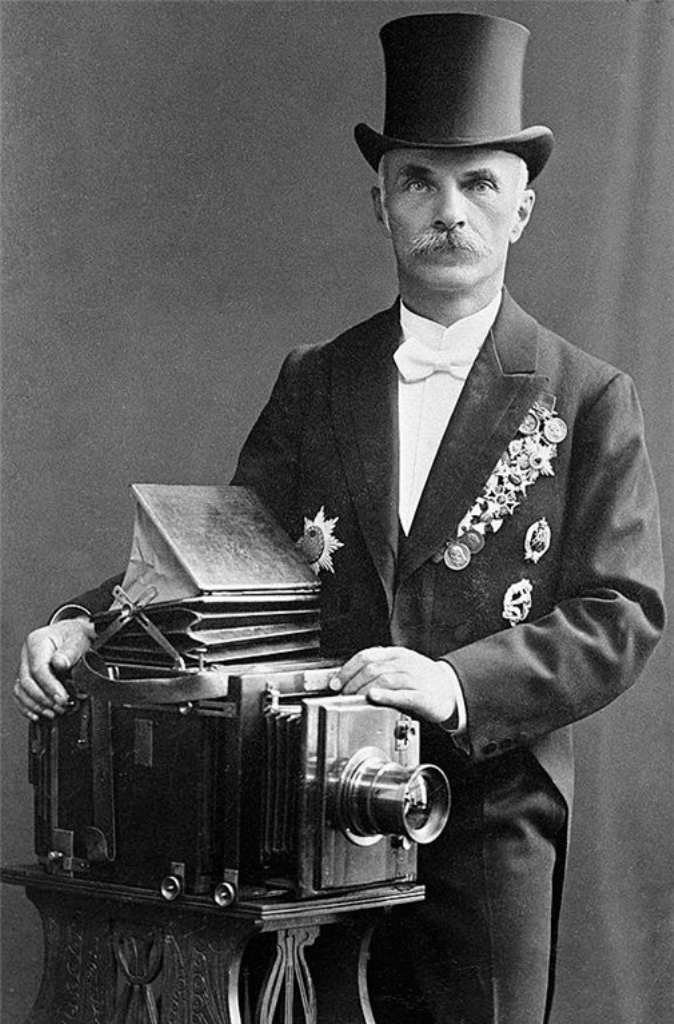
Karl Karlovich Bulla (1855-1929) was a German-Russian portrait photographer and master of documentary photography, often referred to as the “father of Russian photo-reporting”.
Born on 26th February 1855 in Leobschütz in Prussia (now Głubczyce, Poland), Bulla arrived in St. Petersburg in 1865, at the age of ten. In July 1876 he became a citizen of the Russian Empire. In 1875 Bulla opened his first photography studio in the building of the Passage on Nevsky at 61 Sadovaya Street and soon became a fashionable photographer in the Imperial capital. In 1908, he another studio at 54 Nevsky Prospekt.
Bulla’s photos made a great impression on Emperor Nicholas II, who granted Bulla permission to take photographs “in the presence of His Imperial Majesty”. He accompanied Nicholas II and his family on their travels, photographing them at ceremonial events, military reviews, etc. He was also appointed “Supplier of the Imperial Court” for photography services, which given the Imperial Family’s love of photography, must have been a profitable venture for his studio.
By the 1910s, Bulla’s career was at its peak, the annual revenue of his firm “Bulla and Sons” reached 250 thousand roubles. In 1916 Bulla passed the management of the firm “Bulla and Sons” to his sons Alexander and Viktor and moved to Ösel Island (currently Saaremaa, Estonia), where he lived a quiet life until his death in 1929.
The lives of Bulla’s sons ended tragically. In 1938, during the Great Purge, Viktor was arrested, accused of being a German spy and shot. In the early 1930s, Alexander was arrested and sent to a labour camp. He returned after five years and soon died.
In 1935, Viktor Bulla donated to the State Archive of Leningrad District 132,683 negatives of Bulla’s photographs. The archive grew and his photographic legacy now consists of more than 230 thousand negatives of photographs of Karl Bulla and his sons. All the photographs in the archive are today in the public domain and are a favourite source of illustrations of life in St Petersburg during the late 19th – early 20th centuries.
In 2003, a large exhibition of Bulla’s prints celebrating 300 years of Saint-Petersburg and the 150th birthday of Karl Bulla was held. A bronze sculpture of Karl Bulla was placed near his former studio on Malaya Sadovaya Street. The sculpture shows a photographer with an ancient camera and an umbrella photographing a bulldog.
The unusually crisp images Bulla created were the result of the backpack-sized cameras he used. Unlike the film and digital sensors of today that are measured in millimeters, Bulla’s images were shot on glass plates measuring several inches across.
Bulla is the holder of a number of medals, awards, honorary titles and a cavalier of six foreign orders. In addition, Bulla was often honoured by members of the Russian Imperial Family. For his achievements in photography, Nicholas II presented Bulla with a number of gifts and honours:
On 8th April 1904, Bulla was presented with a gold watch and chain depicting the national emblem for an album of Pskov manoeuvres – a gift from Nicholas II.
On 28th August 1904, Bulla was presented with a silver cigarette case with the national emblem for his album “Seeing Off the Troops to the Far East” – a gift from Nicholas II.
In January 1912, Nicholas II honoured Bulla for the group photo depicting the Tsar with the officers of the Caspian regiment.
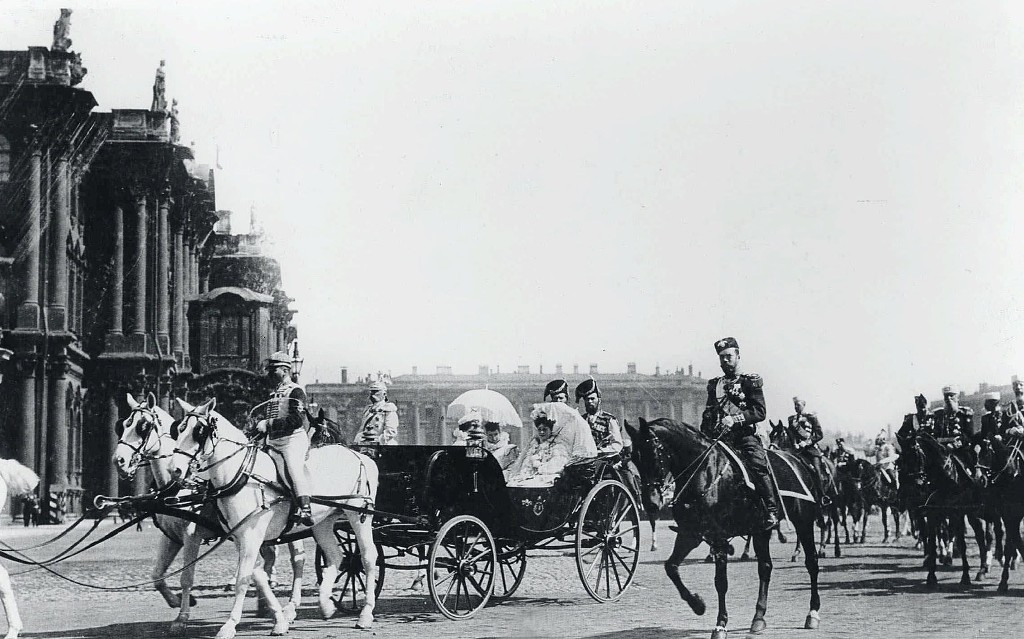
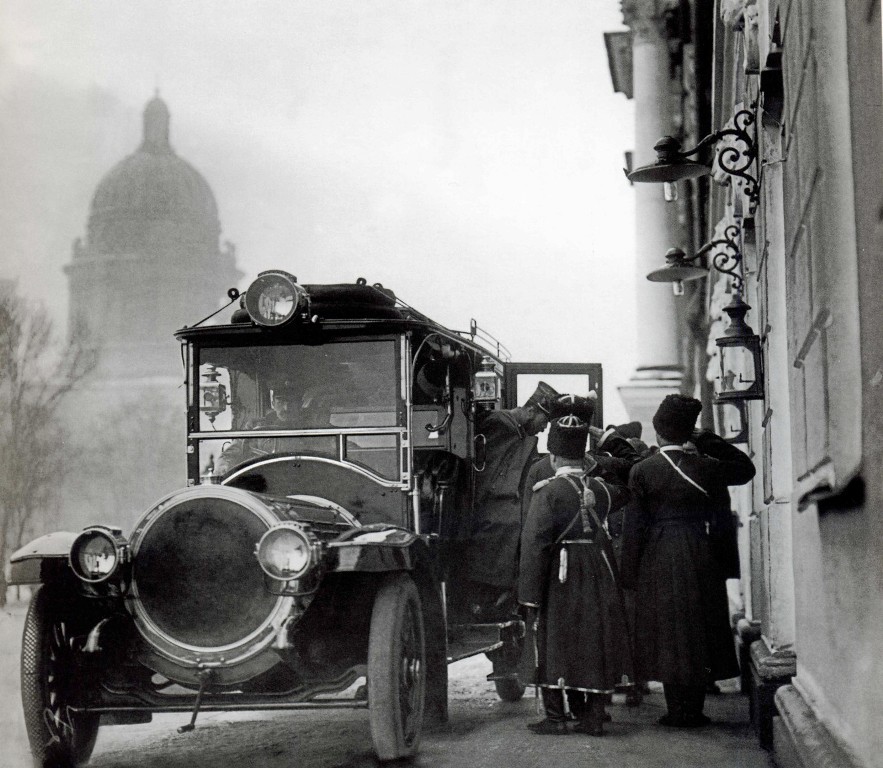
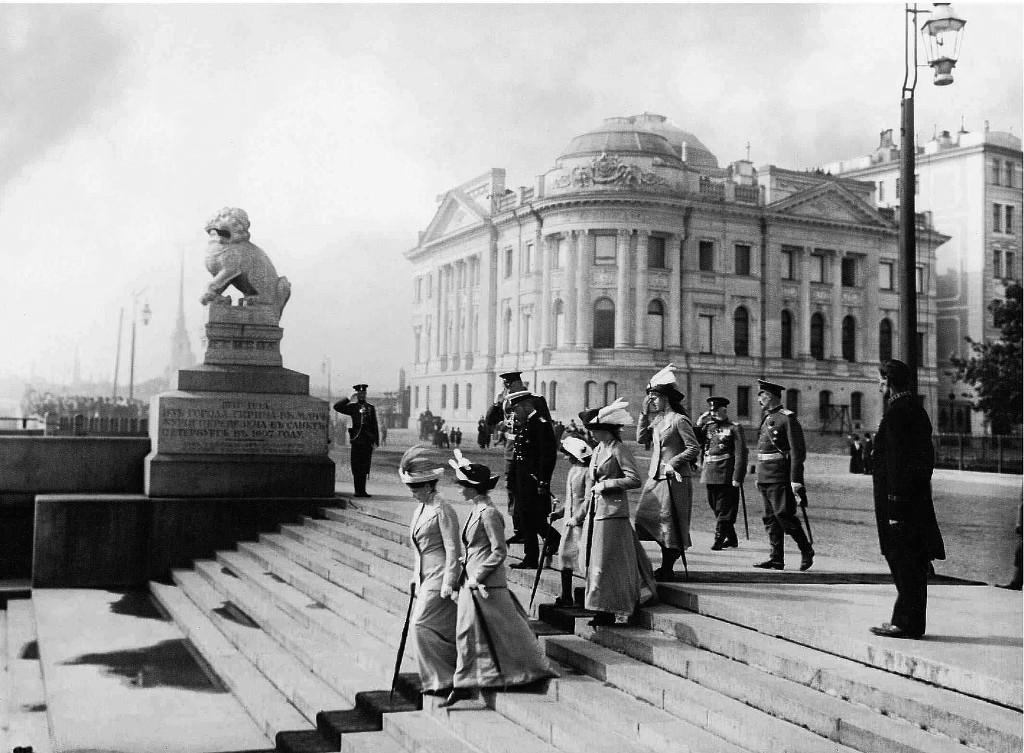
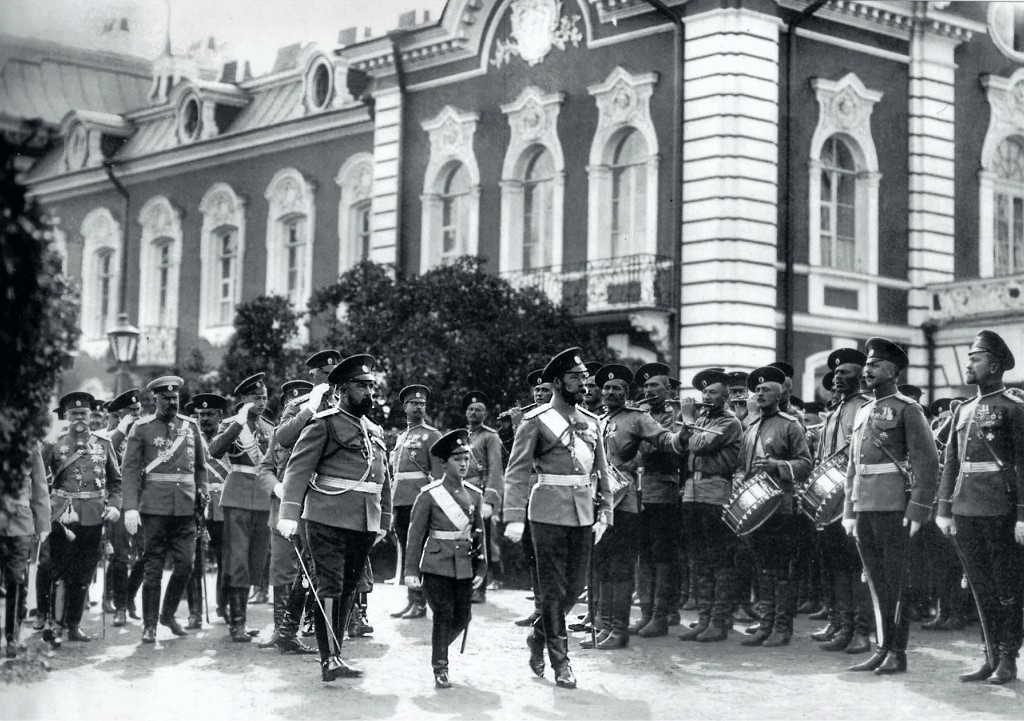
The following collection of photographs by Karl Bulla document some of the events during the reign of Emperor Nicholas II, who ruled from 1894 to 1917.
PHOTO: Emperor Nicholas II with Empress Dowager Maria Feodorovna and Empress Alexandra Feodorovna, crossing Palace Square past the Winter Palace, St. Petersburg. May 1901
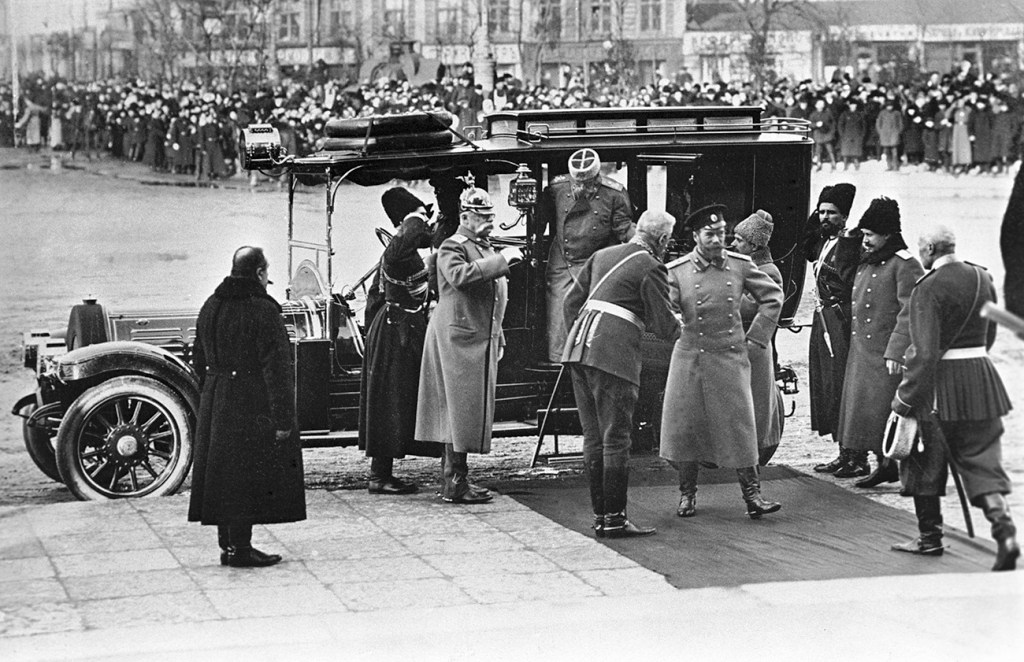
PHOTO: Arrival of Emperor Nicholas II at the meeting of the Governing Senate, St. Petersburg. 1911
PHOTO: Nicholas II and his family on Petrovskaya Embankment. The white palace in the background is the residence of Grand Duke Nicholas Nicholaevich. 1912
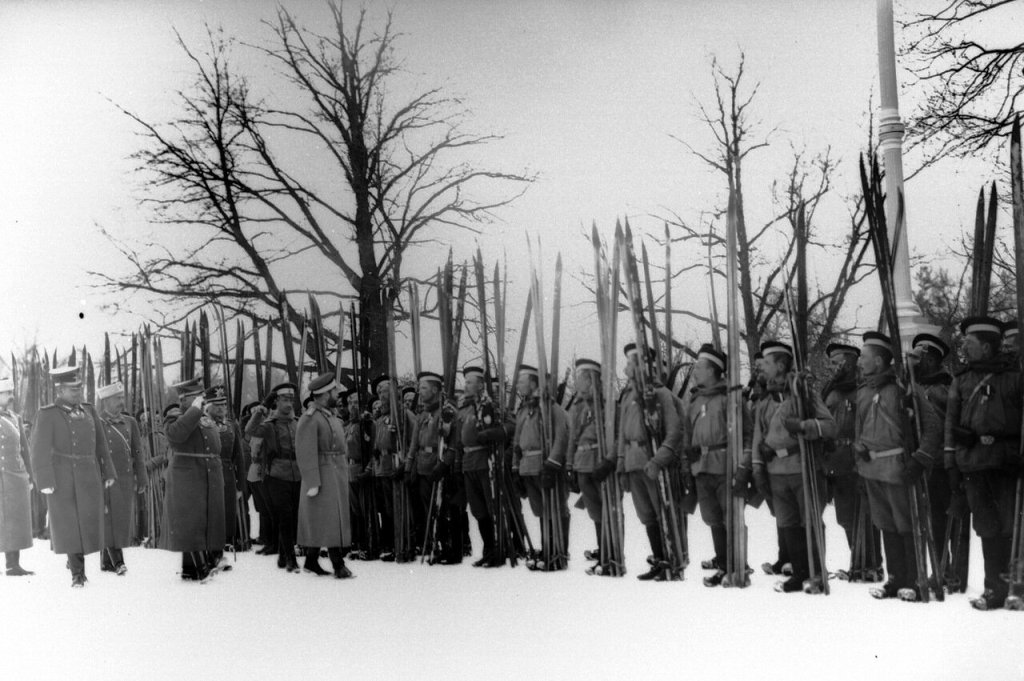
PHOTO: Emperor Nicholas II and Tsesarevich Alexei inspecting the troops of His Majesty Lifeguard Jaeger Regiment. Peterhof. 17th August 1912
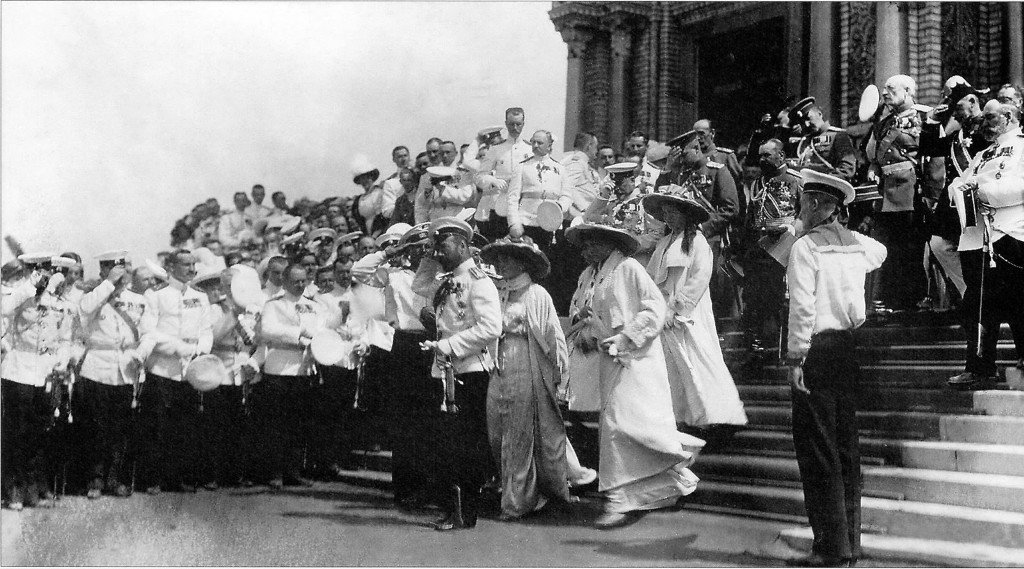
PHOTO: Emperor Nicholas II and his family after the consecration of the Feodorovsky Sovereign Cathedral, Tsarskoye Selo. 21 April 1913
PHOTO: Emperor Nicholas II and his family after the consecration ceremony of the St. Nicholas Naval Cathedral, Kronstadt. 10 June 1913
PHOTO: Emperor Nicholas II arriving for an event during the celebrations marking the 300th anniversary of the House of Romanov. St. Petersburg. 1913
PHOTO: Emperor Nicholas II conducts a review of military manoeuvres of the Izmailovsky Life-Guards Regiment. Tsarskoye Selo, 9th February 1914
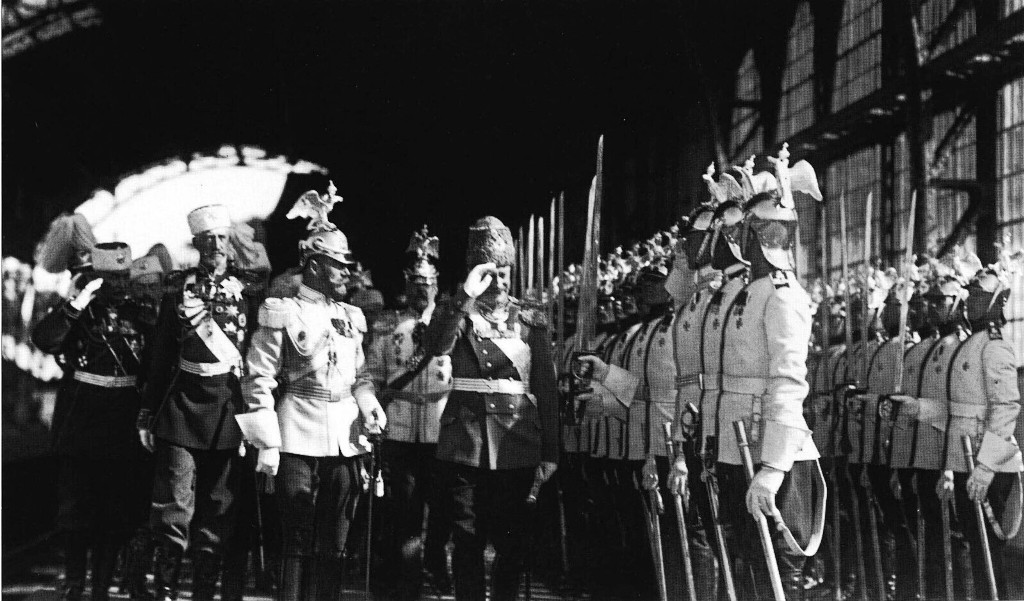
PHOTO: Emperor Nicholas II and King Frederick-August III of Saxony pass the guard of honour of the Life-Guards Cuirassier Regiment at the Imperial Railway Station, Tsarskoye Selo. 7th June 1914
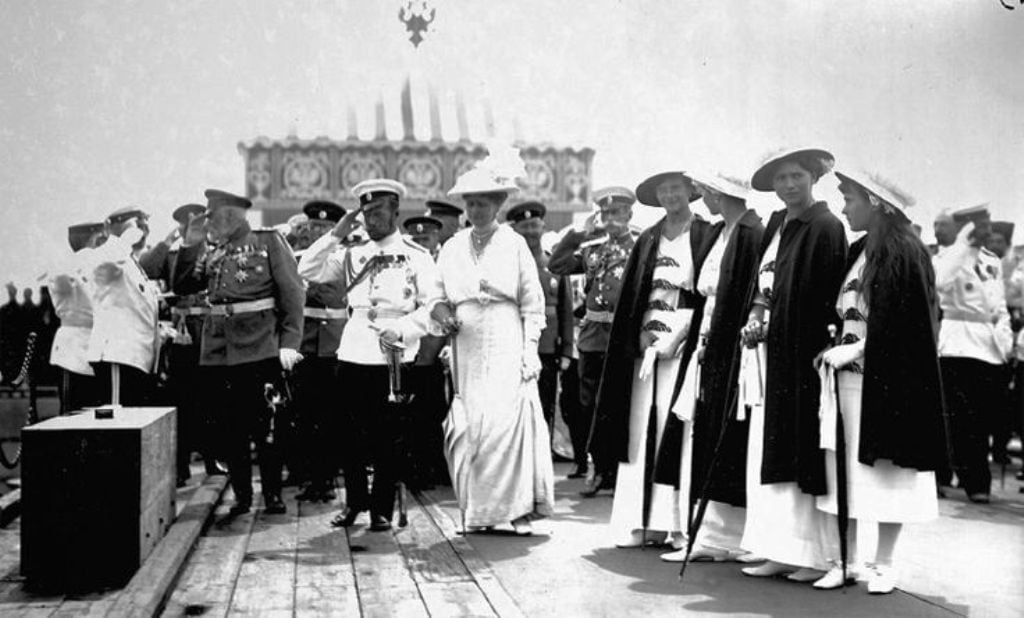
PHOTO: Emperor Nicholas II with Empress Alexandra Feodorovna and their four daughters attending the opening of the dock named in honour of Tsesarevich Alexei Nikolaevich in St. Petersburg. 1st July 1914
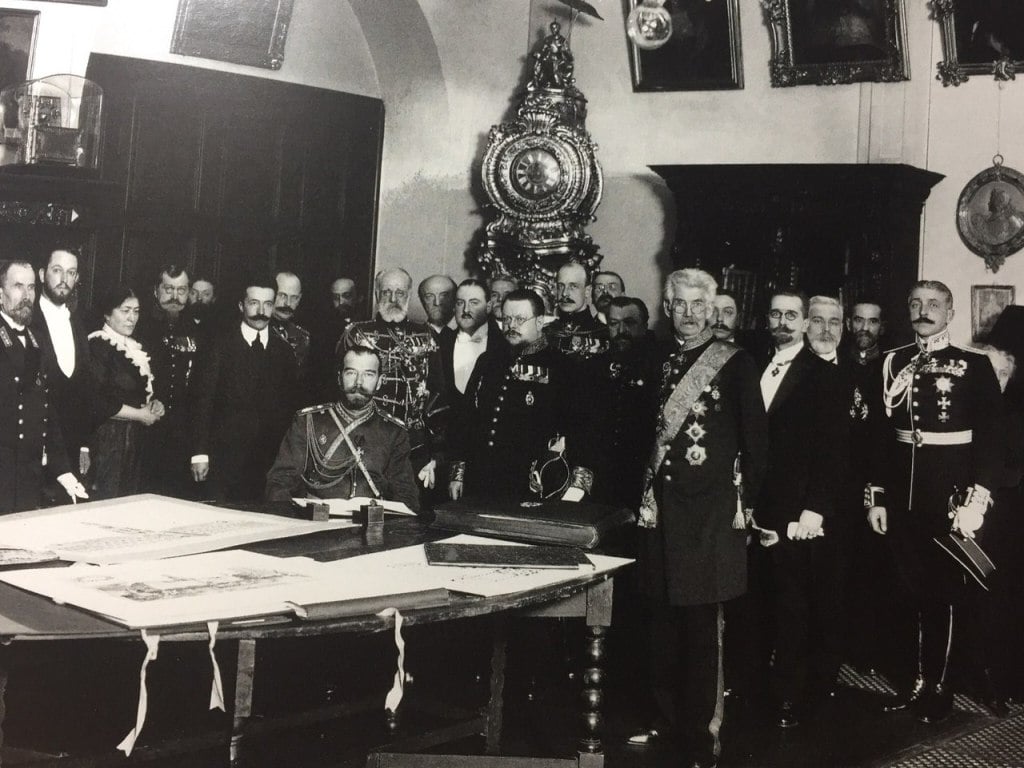
PHOTO: Emperor Nicholas II visiting the Kunstkamera Museum in St. Petersburg. 1914
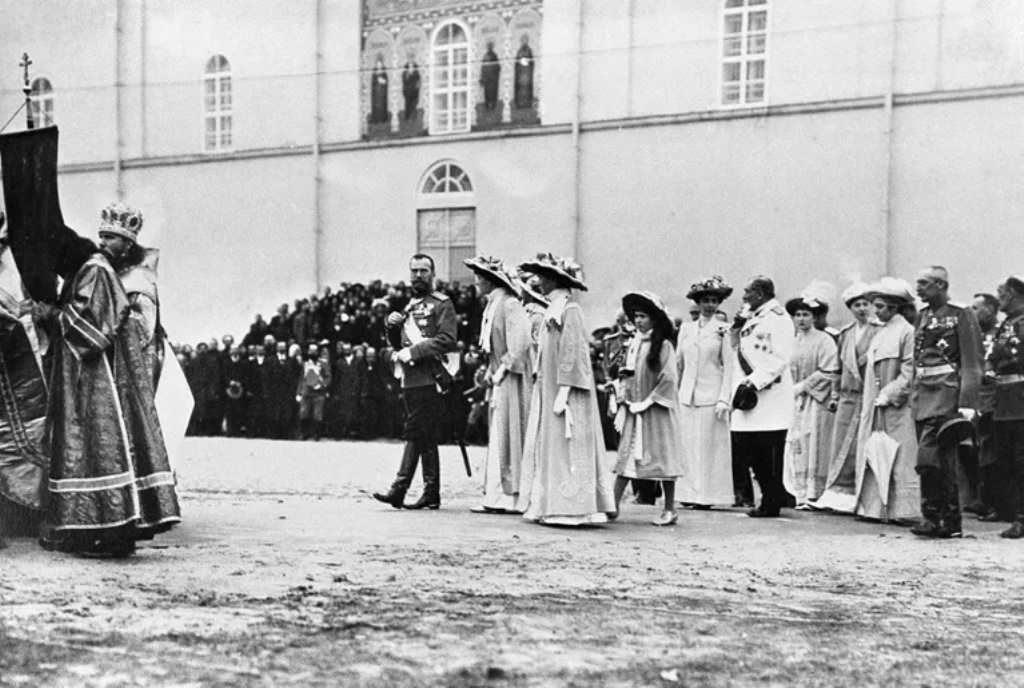
PHOTO: Emperor Nicholas II and his family follow a religious procession to the site of the unveiling and consecration of the monument to Minin and Pozharsky. Nizhny Novgorod, 1913 – the year marking the 300th anniversary of the Romanov Dynasty.
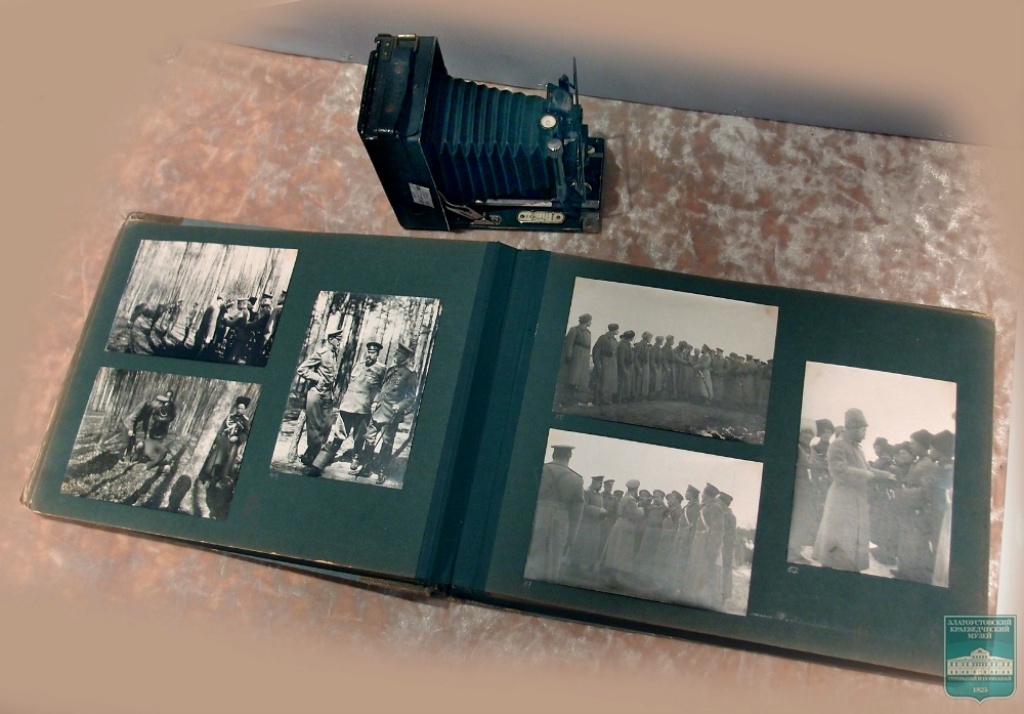
PHOTO: photo album belonging to Nicholas II in the Museum of Local Lore in Zlatoust
One of the most unique exhibits of the Museum of Local Lore in Zlatoust (270 kilometers (168 mi) south of Ekaterinburg) is a photo album containing photographs of Emperor Nicholas II and his family. How this album ended up in the museum remains a mystery. There are no embossed crowns, monograms or emblems on the album’s cover. There are also no inscriptions accompanying any of the photographs either. Only on the reverse of the photos of the tsar’s daughters was it possible to find inscriptions scribbled in pencil: “The Grand Duchess Olga (Tatiana, Maria, Anastasia).”
When the emperor and his family were sent into exile on 1st August 1917, to the Siberian city of Tobolsk, they took with them their entire personal photo archive. The archive included many albums, many of which are today stored in various Russian archives. Museum staff believe that it was there, in Tobolsk, that the last photographs were pasted into this particular album.
It is a well known fact that all the members of the Imperial family took an avid interest in photography, and each of them had their own camera and collections of photographs. According to museum staff, this album, judging by its content, belonged to the emperor himself. One of the photographs clearly shows his shadow with a camera in his hands. In the diaries of the emperor, he repeatedly noted that he personally organized his photo albums:
“On 4th September 1914, I got up early and took a longer walk. Between the reports I received a deputation of Czechs living in Russia. Walked with Alix and the children, and then went for a ride with Alexei to Gatchina. After tea I read. In the evening I pasted photographs of Crimea into an album”.
“On 27th March 1915, I took a walk in the morning. It started raining in the afternoon. I spent 2 hours chopping the ice with a crowbar using two hands, which is why my hand is trembling. I read before lunch, and in the evening with Olga’s help I pasted photos into an album.”
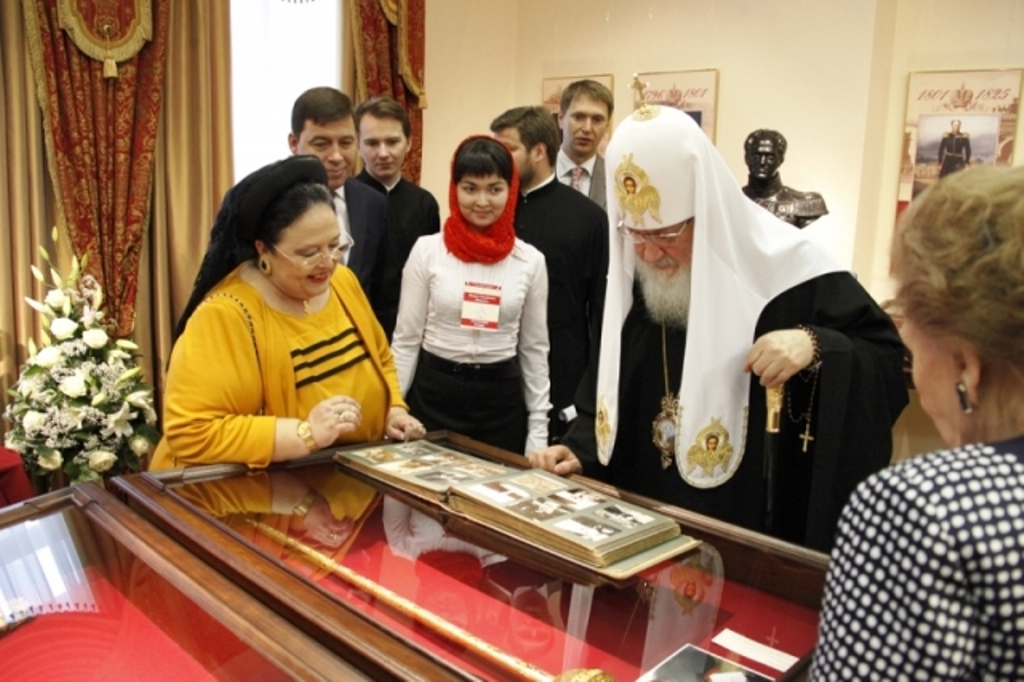
PHOTO: In 2013, the Zlatoust photo album was exhibited at the Museum of the Holy Royal Family, located in the Patriarchal Compound in Ekaterinburg.
“On 24th May, 1915 Alix came in the morning. Then we drove to mass. After breakfast, I received 18 professors of Russian history and Russian law with an address. I took a walk with my daughters and rode to Gatchina in the rain. I worked until 8 o’clock. Dined in my reception, like in the good old days. In the evening, with the help of Maria, I pasted photos of our last trip in the album.”
The Zlatoust photo album contains 210 photographs taken between 1914-1917. The photographs are not placed in any chronological order – on the first pages there are a series of photographs related to the beginning of the First World War in 1914, while pre-war photos are mixed with those taken in later years. On the last pages are photos from 1914, 1916, and 1917. Most of these photos were taken during the Emperor’s visit to the Supreme Command Headquarters in Mogilev and the review of the troops. Others are purely family-oriented, taken in Tsarskoye Selo, in Livadia, on the Imperial Yacht Standart and other places. It is interesting to note that there are very few photographs of Empress Alexandra Feodorovna in this album.
The fact that the photo album survived the revolution, civil war can itself be considered nothing short of a miracle. It is no less a miracle that the exhibit, registered under the number F-52, as the album “Nicholas II and His Family”, survived in the funds of the Zlatoust Museum of Local Lore during the Stalin era, when many documents and photographs which depicted the last tsar were seized and destroyed, as they were deemed as “ideologically harmful”.
“How the album ended up in Zlatoust is a mystery,” says Nadezhda Prikhodko, director of the Museum of Local Lore in Zlatoust. – “Everyone knows that the Imperial family spent their last days in Ekaterinburg. There are two theories with regard to this mystery: The first is that the album was brought from Ekaterinburg by the director of the Museum of the Revolution, Comrade Chevardin. The museum was located in the Ipatiev House. In 1933, Chevardin was transferred to Zlatoust, taking the album with him to save it from destruction. According to the second, the album was transported by the revolutionary Dmitry Mikhailovich Chudinov – one of the guards who escorted the Imperial family from Tobolsk to Ekaterinburg. He lived in Zlatoust, and after the murder of the Romanovs, he stole some of their personal belongings, including the photo album”.
In 1980, the album was found in the funds of the Zlatoust Museum of Local Lore. Russia was still under the yoke of communism, so the album remained hidden for another 9 years before the first announcement of the album’s existence was made public. In subsequent years, a small number of the photographs appeared in the pages of magazines, books and presented at museum exhibitions. The staff at the Zlatoust Museum carried out a lot of painstaking work to identify the more than 200 photographs. Research carried out with the help of the emperor’s diaries and other publications, made it possible to establish, in most cases, when and where the photographs were taken, as well as which members of the Imperial family appear in the photos.
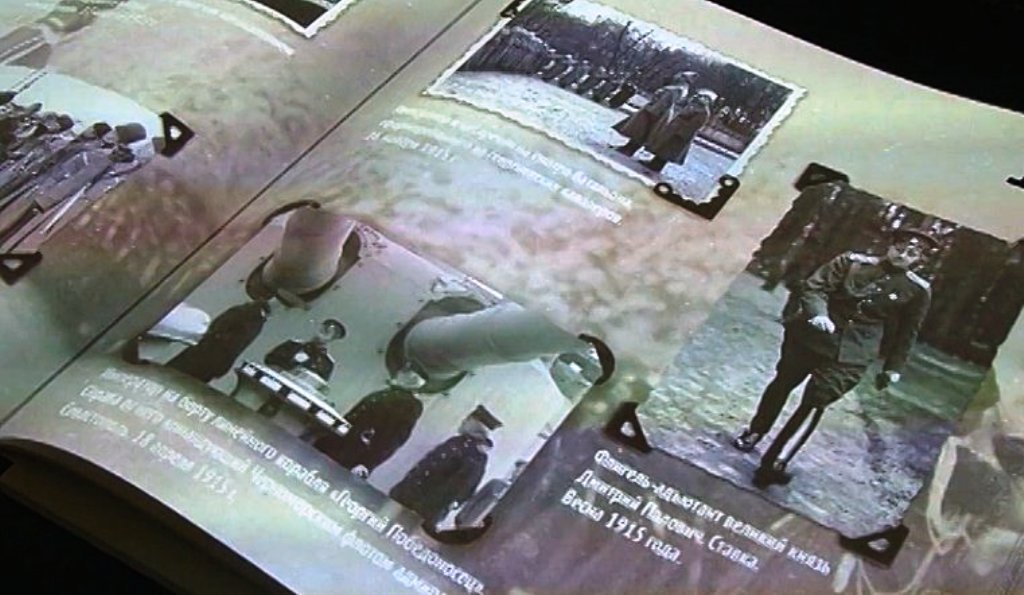
PHOTO: interactive copies of the album can now be seen in Zlatoust and Ganina Yama
In April 2013, the Russian online media outlet Komsomolskaya Pravda published a number of the photographs from the Zlatoust album, which generated tremendous interest in Russia and abroad. Sadly, a number of the captions were incorrect, mostly the misidentification of the grand duchesses, etc.
The following month, the Zlatoust photo album was exhibited at the Museum of the Holy Royal Family, located in the Patriarchal Compound in Ekaterinburg. Among those who had an opportunity to view the album were the Head of the Russian Imperial House HIH Grand Duchess Maria Vladimirovna, His Holiness Patriarch Kirill of Moscow and All Russia, and Mrs. Olga Kulikovsky (wife of Tikhon Kulikovsky, the eldest son of Grand Duchess Olga Alexandrovna) – see 2nd photo.
In recent year, the Zlatoust photo album was digitalized. “Natural light is harmful to the pages and black and white photographs – they turn yellow,” said Anastasia Malakhova, Deputy Director for Research at the Zlatoust Museum of Local Lore. – “They cannot be on permanent display, so we created an electronic copy. The expensive multimedia equipment for the interactive album was donated by the Museum and Exhibition Center in Ekaterinburg”.
In total, 88 photographs were digitized – mostly from the war period. There were no photo captions in this album. The interactive album in the Zlatoust Museum of Local Lore is available to visitors any day.
A copy of the interactive album was also presented to the Museum and Exhibition Center of the Monastery of the Holy Royal Martyrs in Ganina Yama, which I had an opportunity to see firsthand, during my visit to Ekaterinburg in 2018 – PG..
Today, August 19th marks World Photography Day – a perfect day to present the following article on the Romanov Family Albums stored in the collections of the Beinecke Rare Book Library at Yale University in New Haven, Connecticut
The first Kodak camera was gifted to the Tsesarevna Grand Duchess Maria Feodorovna (future Empress Maria Feodorovna) in the late 1860s, when she took a serious interest in photography.
Her passion later became one of the favourite pastimes of her son Emperor Nicholas II and his family, who were often seen carrying Kodak Brownie Box cameras. They snapped thousands of images, pasted them in albums, many of which have survived to this day.
The family’s passion for photography was also shared by close friends, the most popular being Anna Aleksandrovna Vyrubova (1884-1964), the best friend and confidante of Empress Alexandra Feodorovna,
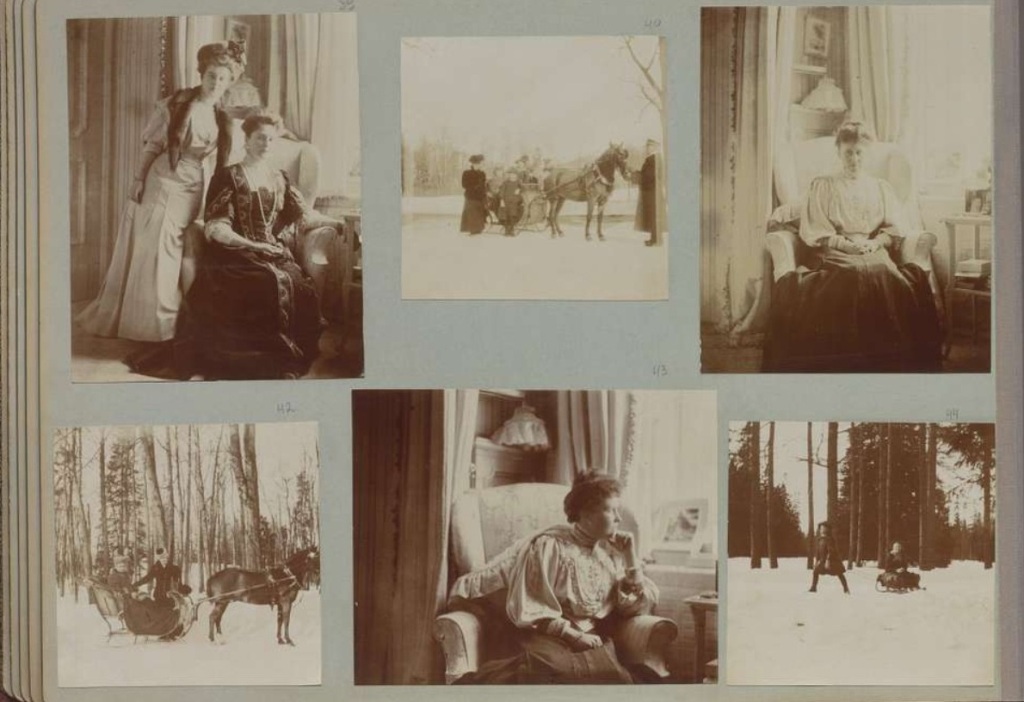
Anna was an avid photographer, one who captured the private day-to-day lives of Russian’s last tsar and his family on camera. During her years at the Russian Court, she diligently preserved her photograph collection into large handsome sturdy albums, bound in textured leather—green, blue, and brown.
In her memoirs, Vyrubova wrote that she and Alexandra pasted the photos onto the pages together. Often, the tsar himself—a notoriously fastidious man—stood over the two women, supervising them as they worked. “He could not endure the sight of the least drop of glue on the table,” wrote Vyrubova.
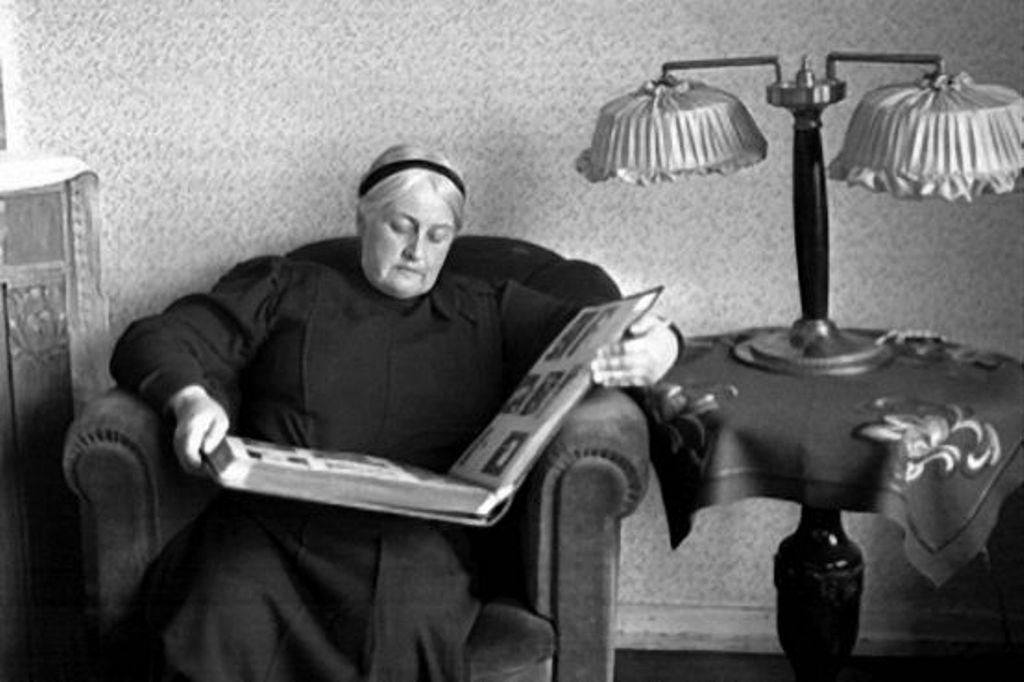
Anna in old age and in exile, reliving memories of the Imperial family before the Revolution
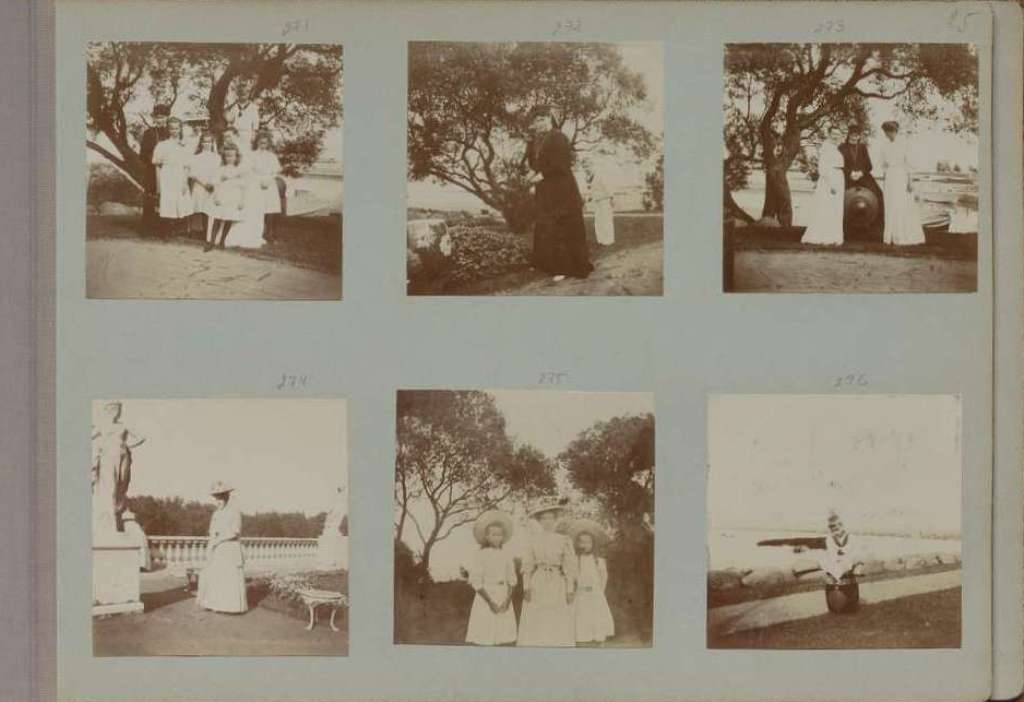
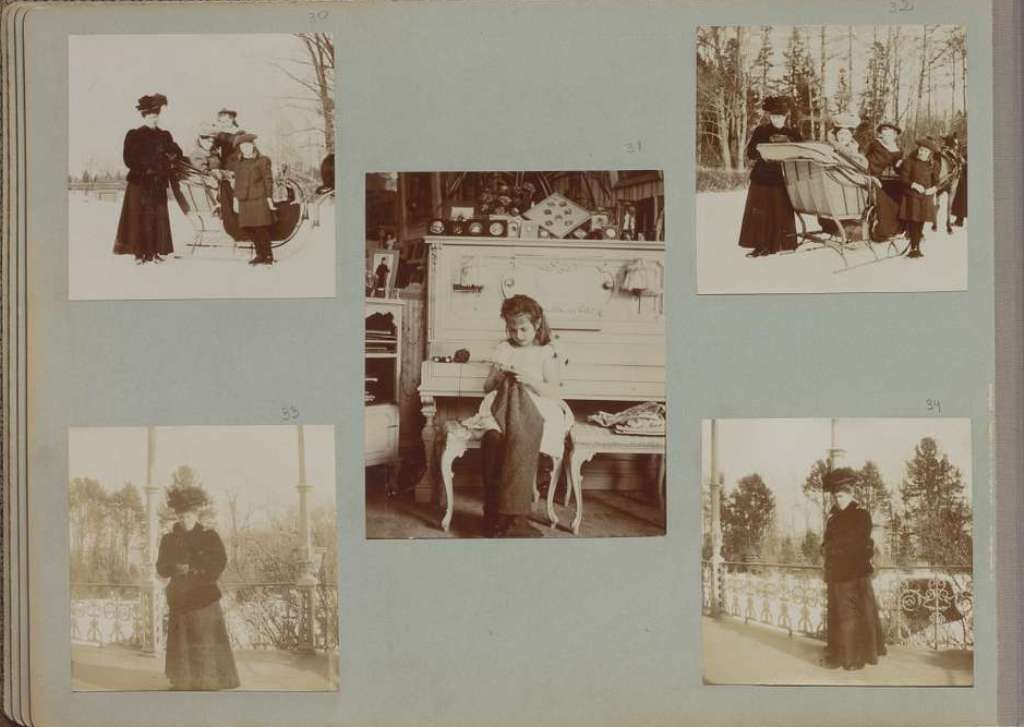
Six of the *seven personal photo albums of Anna Vyrubova are today kept at Yale University in New Haven, Connecticut. The albums contain about three thousand (!) photographs of the everyday life of Emperor Nicholas II and his family.
[*Anna presented Album No. 1 to Queen Louise, who bequeathed it to Prince Ludwig. This album is now stored in Darmstadt – PG]
When Anna fled Bolshevik Russia in 1920, the albums were one of the few things she took with her into exile to Finland. In 1937, Robert D. Brewster, then a student at Yale University, visited Anna to learn more about the family of the last Emperor. In his article The Golden Hours of the Romanovs, published in the Summer 2003 issue of the Yale Alumni Magazine, writer Tim Townsend explains Brewster’s interest in the subject began after seeing the 1932 film Rasputin and the Empress.
Life in exile was not good for Anna, her health was poor, she lived in very cramped conditions, she had no income, and she was even denied citizenship. As a result, Brewster persuaded Anna to sell him the albums, as well as 35 letters written by her from prisons of the Provisional and Bolshevik governments. In 1951, Brewster donated the albums and letters to his alma mater.
The albums were transferred to the Beinecke Rare Book and Manuscript Library, where they were catalogued and remained there until 1966, almost unknown to anyone. It was not until the autumn of 1966, when the Pulitzer laureate Robert K. Massie, was finishing his now classic bestseller Nicholas and Alexandra, that brought him to Yale and discover the now famous photograph collection.
Click HERE to view ALL 6 Romanov Family Albums stored in the collections of the Beinecke Rare Book and Manuscript Library at Yale University in New Haven, Connecticut. Note; click on each album to open and view the photographs.
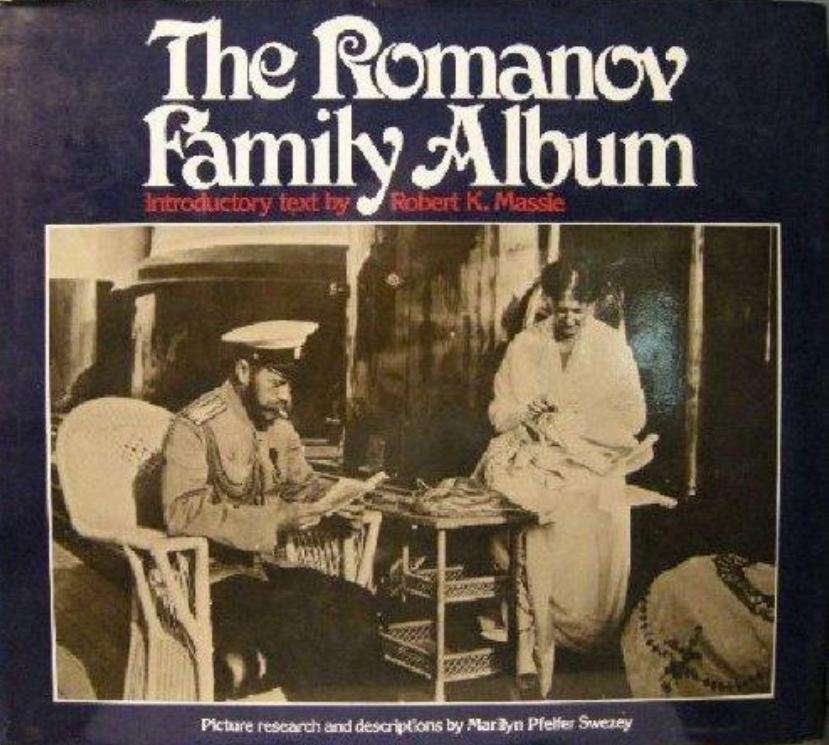
Robert K. Massie (1929-2019) wrote the introductory text for the book The Romanov Family Album (published by Vendome Press in 1982), explaining how he discovered the Romanov albums and of their immense historic value:
“I see wonderful things!” – exclaimed British archaeologist Howard Carter, when he first poked his head into Tutankhamun’s tomb and there, by the light of a flickering candle, glimpsed the glitter of golden objects that had slept for thirty centuries. Something of the same thing came over me the first time I saw the collection of Romanov photographs from which the present series has been selected.
My wife and I found them almost by accident. In the autum of 1966, I was nearing the end of three years work on Nicholas and Alexandra. Suzanne, long involved with the research and editing, had taken complete charge of the search for illustrations, scouring commercial film libraries and seeking individual pictures in private hands. At the time, she was also writing about ballet and had become a friend of Evgenia Lekhovich, the director of the School of American Ballet. Evgenia and her husband Dmitry both were interested in our attempt to recreate the life of the last Russian Imperial family, and Evgenia suggested that I might like to meet a Russian friend of their, Sergei Taneyev, who lived in New York. Taneyev was the brother of Anna Vyrubova, the intimate friend and confidante of the Empress Alexandra. Perhaps, Evgenia suggested, he could add something to the story his sister told in her book Memories of the Russian Court [published by Macmillan in 1923 – PG]. I was eager, but Mr. Taneyev, it developed, was not; he had apparently tired of being identified as “Anna Vyrubova’s brother”. But he did say to Evgenia Lekhovich: “Tell Mr. Massie that Yale University has some of my sister’s things.”
I reacted casually to these words. After telephoning New Haven, where a charming research librarian named Marjorie Wynne, confirmed that Yale did, have certain materials catalogued as “Romanov Memorabilia”. I arranged to go and take a quick look on Saturday morning before attending a football game. I had been writing myself into exhaustion; an afternoon in the fresh air seemed a healthy prescription.
And so, on an October morning in 1966, Suzanne and I walked into Yale’s Beinecke Rare Book and Manuscript Library. We met Miss Wynne and filled out the required forms. Soon, from behind closed doors, a small, rolling table was wheeled in, laden with six fat albums in cloth and leather, all peeling and cracking at the edges. We opened the first album. Here were photographs of an Edwardian family in the lighter moments of life. But, incredibly, they were not just any Edwardian family; they were the Russian Imperial family, which a few years later would be obliterated in the revolution, along with so much of the life and culture of Old Russia. Turning the pages, we found hundreds of pictures, collectively confirming the millions of words that I had read about the life of this couple and her children. It was an extraordinary collection: the most complete set of intimate photographs of the imperial family to survive the holocaust of the revolution. Not only had most images of this kind been lost, scattered or confiscated during the revolution itself, but afterwards there were stories of attempts by Soviet agents to locate, remove, and destroy from all public and commercial archives any photographs depicting the last tsar and his family as normal human beings, whose faces and activities might arouse a shred of interest or sympathy.
But here they were, like Tutankhamen’s treasure, miraculously surviving. We have them today because of an unusual set of circumstances. The years when these pictures were taken coincided with the first days of the age of popular photography. The capturing of images on a light-sensitive surface was half a century old by the turn of the 20th century, but it was during the pre-war years of the Edwardian era that amateurs began regularly to take informal pictures – we call them snapshots – of family and friends, on guard and off. Kings and Queens, no less than nobleman and middleclass folk, issued the command: “Look this way! Now hold very still!” pointing their Brownies at each other.
Nicholas II had an especially keen interest in photography. [see my article Nicholas II: The Amateur Photographer – PG] It was he who commissioned the extraordinary collection of color photographs of the Russian Empire by Sergei Prokudin-Gorskii, a collection that has recently been published. Traveling for six years across the expanse of Russia, Prokudin-Gorsii took pictures of rivers, lakes and forests, of simple wooden churches and thick-walled fortress monasteries, of muddy village streets and everyday peasant life, of canals, locks and bridges, and brought them back so that the Emperor could see his Empire. Naturally, like most monarchs of the day, Nicholas II also employed official court photographers who recorded the ceremonial scenes of pomp and flourish which went with the specialized work of royalty. In addition, however – and this is where we today are extremely fortunate – Nicholas kept some of these photographers on assignment even when he and his family were off-duty; now the cameraman’s task was to capture moments of intimate family life. And so the shutters clicked while the Emperor went rowing, finished a set of tennis, or strolled off into the woods in search of mushrooms. They recorded the Empress knitting on her yacht or wading barefoot along a rock-strewn beach. They caught the little Tsarevich Alexei playing soldier and teasing his kittens. Sometimes, the cameras were in fact, held by royal hands – several of the pictures in this book were taken by Empress Alexandra herself.
Once the films had been processed, duplicate prints were delivered to the Imperial apartments. There, after dinner, the family hugely enjoyed settling down to an evening of pasting pictures into green leather albums stamped in gold with the Imperial monograph. After 1907, the Empress’ closest friend Anna Vyrubova, joined this intimate circle. She too had copies of the prints, and she arranged and captioned them in her own albums.







 Nicholas II

You must be logged in to post a comment.