The Tsar’s Chapel in Pskov, in memory of the Tsar’s abdication

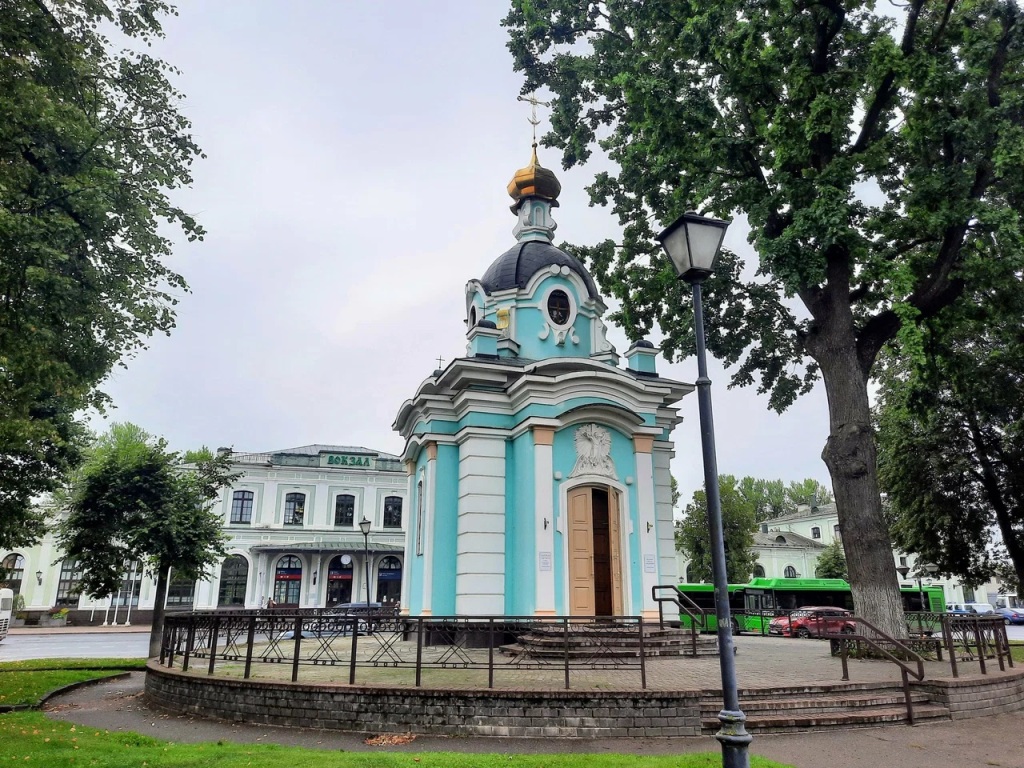
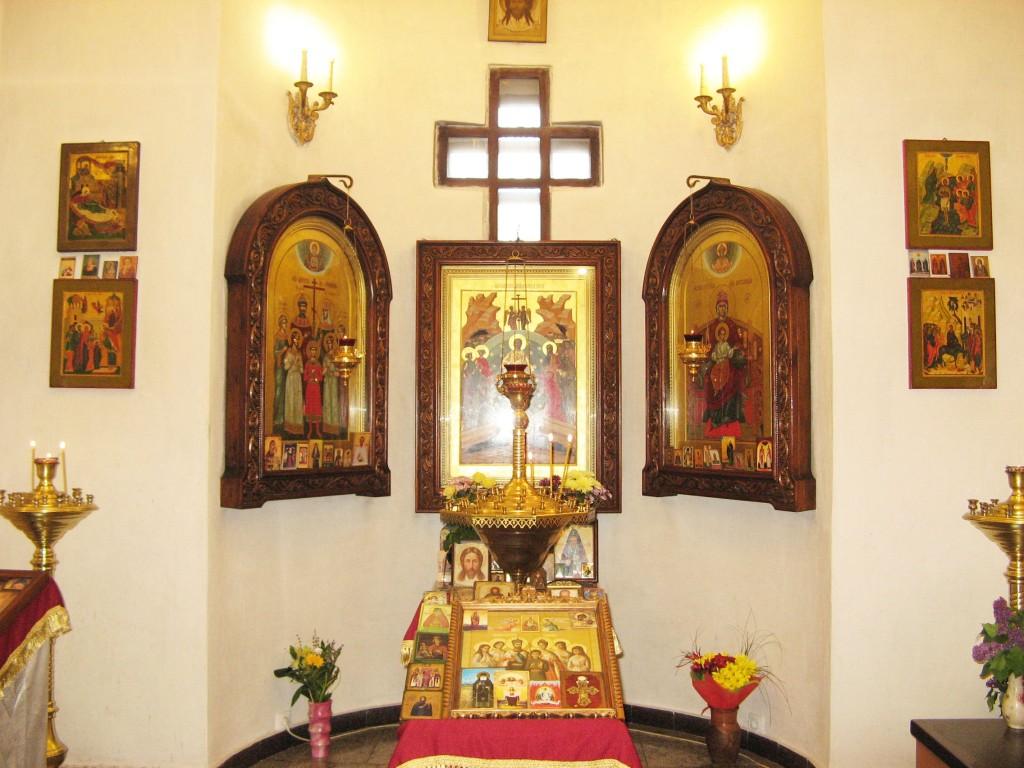
In 2003, a memorial chapel in memory of the abdication of Emperor Nicholas II was constructed on the square in front of the modern-day railway station in Pskov. The Chapel of the Resurrection of Christ was officially opened and consecrated on 17th July 2003.

Recall that on the night of 14/15 (O.S 2/3) March 1917, in a carriage of the Imperial Train, which was detained at the Varshavsky Railway Station in Pskov, the last Russian autocrat signed the act of abdication from the throne. The monarchy and the Russian Empire ceased to exist.

The Varshavsky Railway Station was built 140 years ago (on 9th September 1863) in connection with the opening of the St. Petersburg – Warsaw Railway. The two-storey station building, was restored anew for the 1100th anniversary of the city in 2003.

The chapel’s architect Sergei Nikolaevich Kondratiev, wanted to construct the chapel to correspond with the station building. He chose the architectural style of Imperial Russia, based on the famous examples of St. Petersburg, Oranienbaum and Peterhof.

The tiny chapel stands 17 meters [56 ft.] in height, it is crowned with a dome and a small cupola on which a gilded cross is installed. The dome is covered with sheet copper, the dome and the cross are made of a special alloy made at one of the defense plants in Chelyabinsk. The single colour scheme of the chapel’s facade is a combination of golden-brown, green and white.

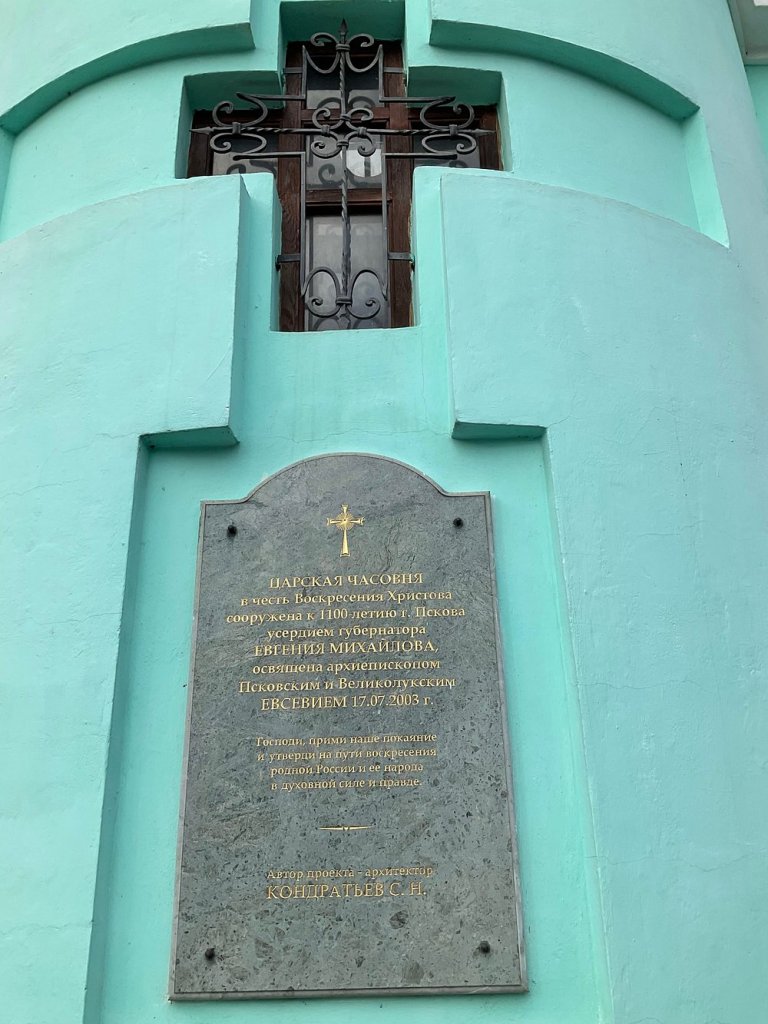
A marble plaque was installed on the side of the chapel, on which the inscription is engraved: “The Tsar’s Chapel was built in the year of the 1100th anniversary of Pskov as a repentance and deep sorrow of the people of Pskov over the tragic death of the last Russian Emperor Nikolai Alexandrovich Romanov.”

© Paul Gilbert. 23 January 2025

New museum dedicated to Nicholas II and his family opens in Pskov region

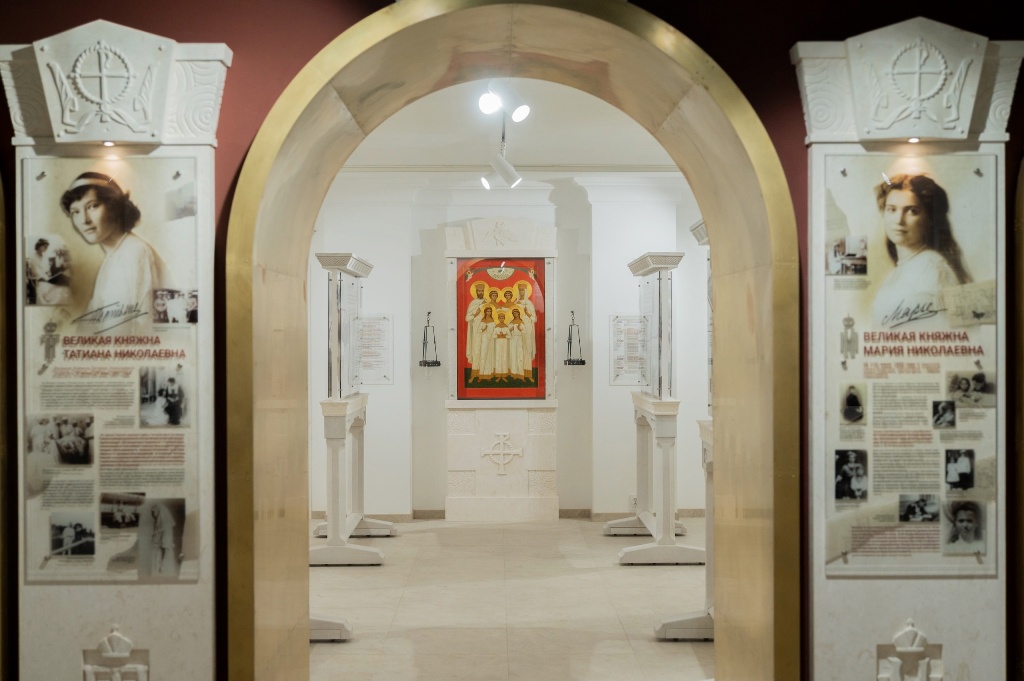
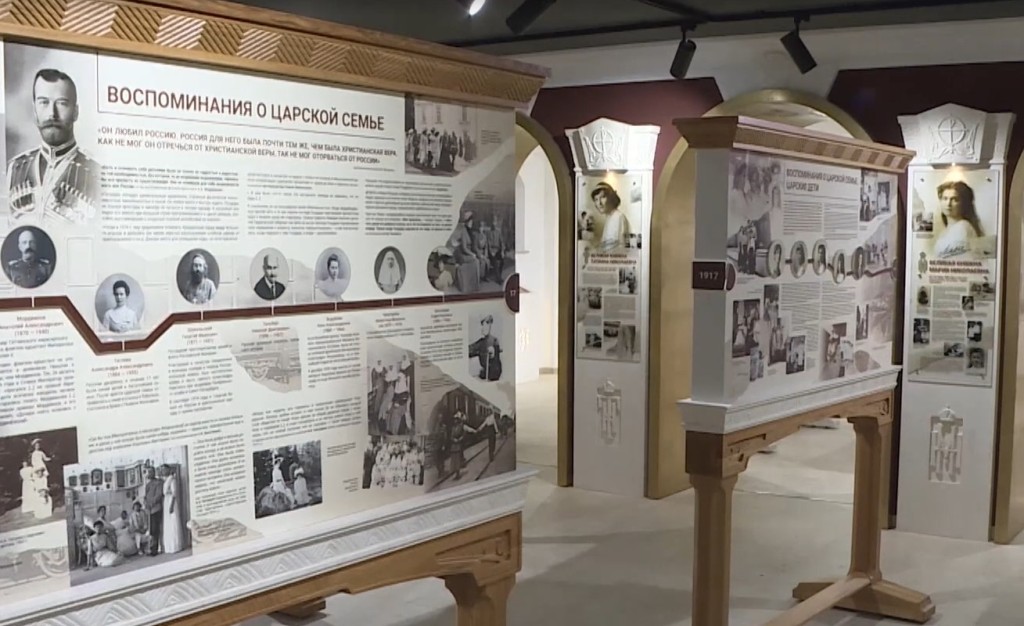
PHOTO: entrance to the exhibition which takes up the entire ground floor of the
recently constructed Church of the Holy Royal Passion-Bearers in Dno

On 26th December 2024, a new museum dedicated to Emperor Nicholas II and his family was officially opened and consecrated in the Church of the Holy Royal Passion-Bearers in the Russian city of Dno, situated 114 km from Pskov.

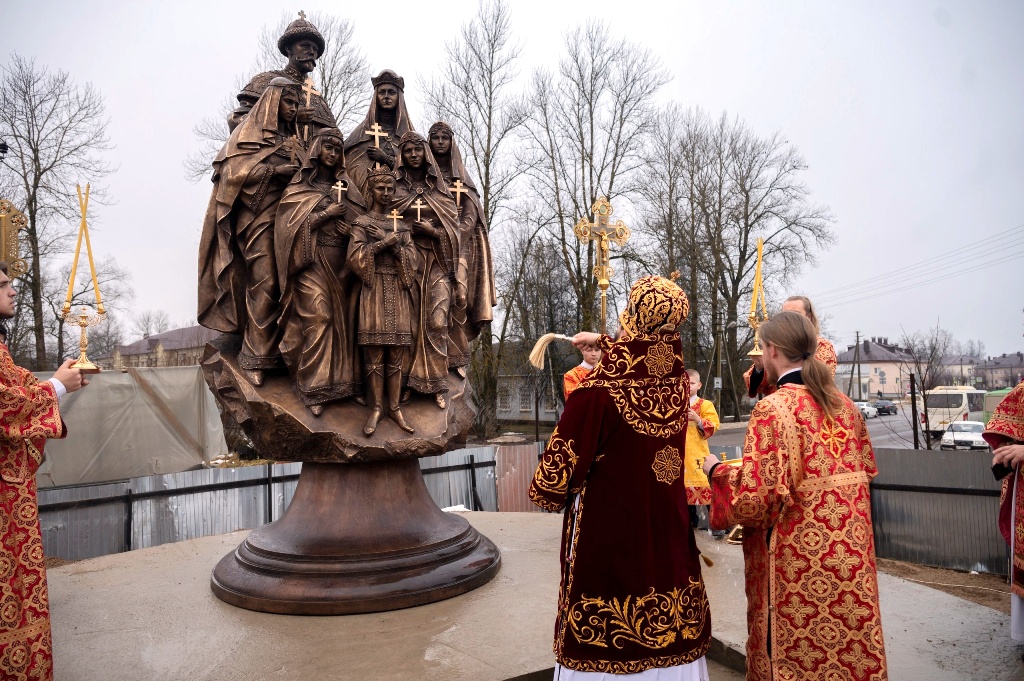
Recall that on the same day, a new monument to the Holy Royal Passion-Bearers was unveiled and consecrated on the grounds of the church.

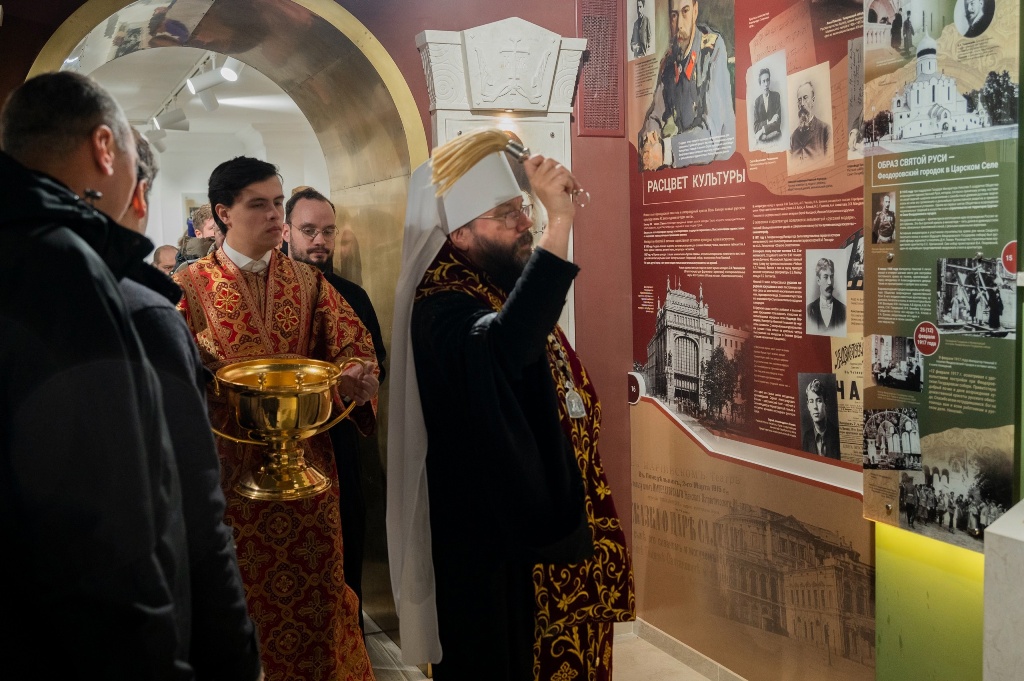
Metropolitan Matthew of Pskov and Porkhov performed the rite of consecration of the museum to the Royal Passion-Bearers. The museum takes up the entire ground floor of the church. Admission to the museum is FREE to all!

PHOTO: His Eminance performs the rite of consecration of the museum to the Royal Passion-Bearers

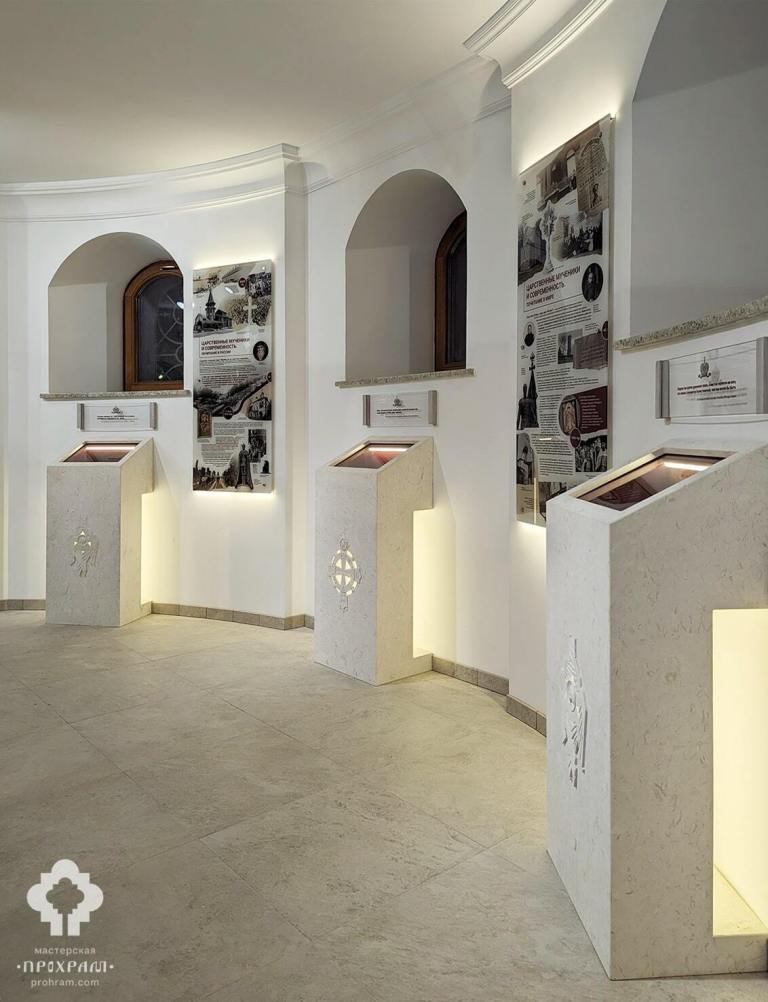
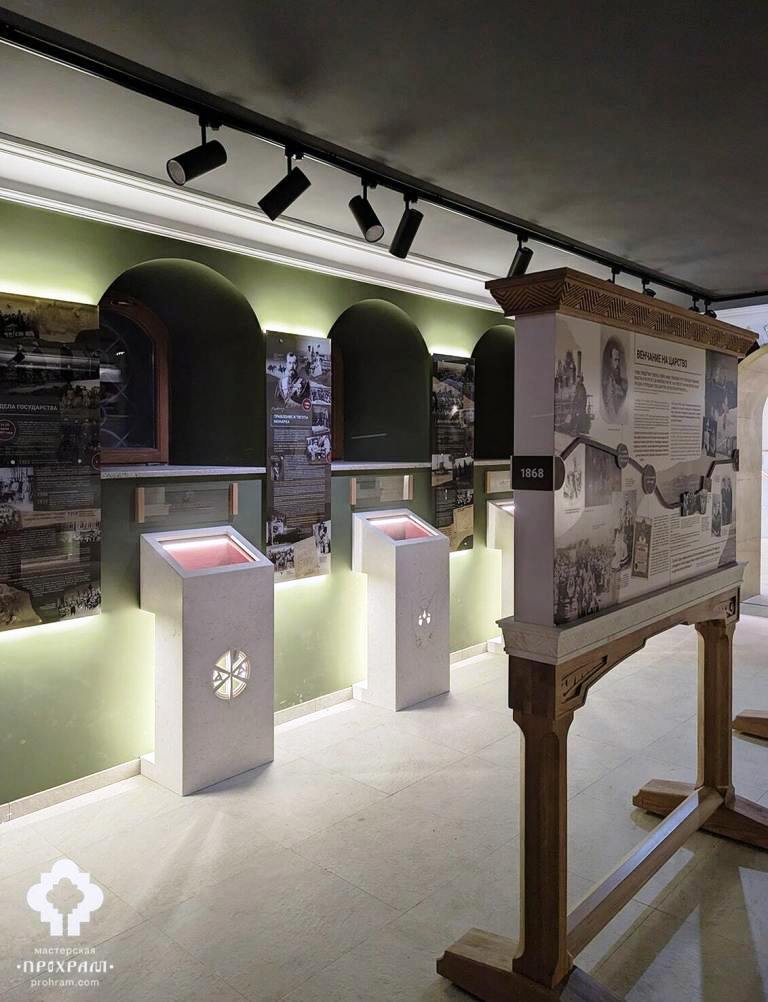
The interiors of the museum are a wonderful example of modern exhibition spaces, designed in the Neo-Russian Style [aka the Russian Revival Style], characteristic of the early twentieth century and beloved by Russia’s last Tsar.

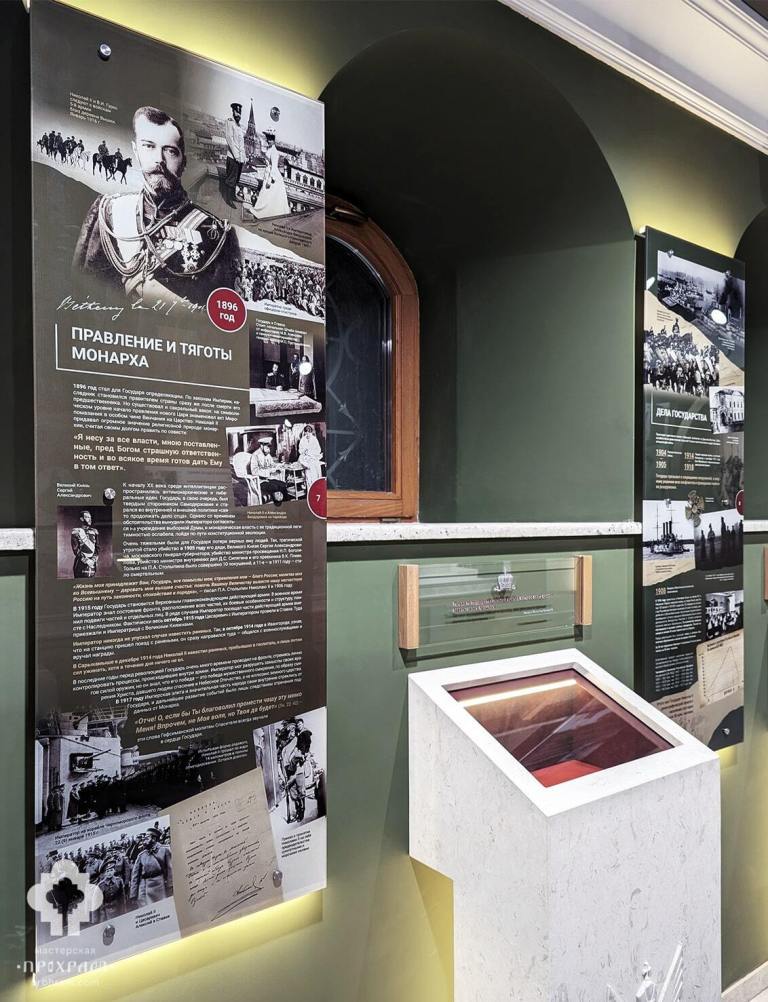
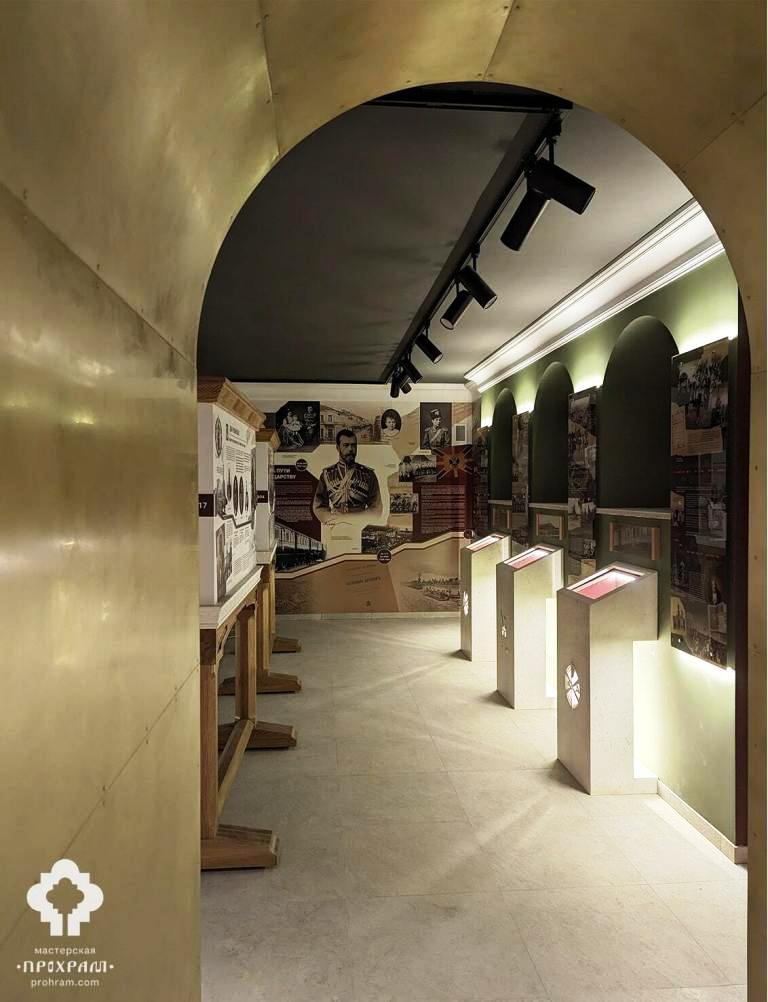
The museum is divided into two halls. The first hall, which is painted burgundy-green, combined with dim lighting. Burgundy is the colour of the Imperial Porphyry, green is the colour of the monk. In this hall, the exposition explores the life of the Imperial Family from Emperor Nicholas II’s and Empress Alexandra Feodorovna’s childhood to the tragic vents of 1917. Two stands describe the history of the House of Romanov – from the calling to the throne of Mikhail Feodorovich in 1613 and to the death and martyrdom of Nicholas II 305 years later.

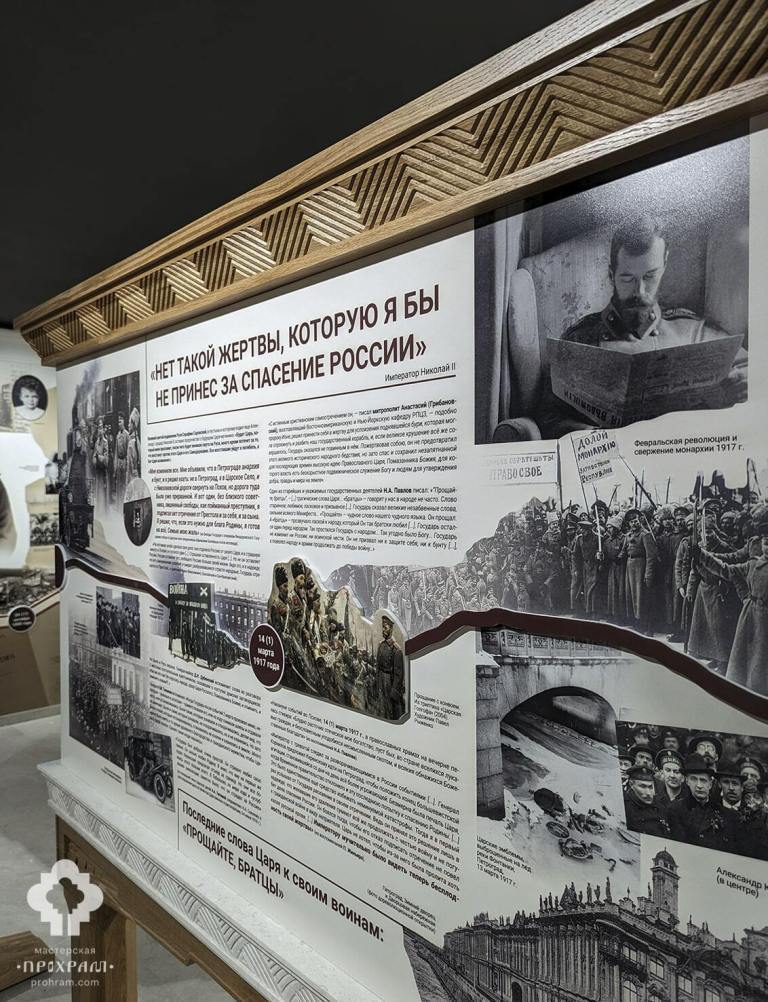
Archival photographs and documentary materials, diary entries, testimonies of contemporaries, statements by prominent public and church figures reveal in detail the life of the Imperial Family. They tell about their service to Russia, their close family relations, and the historical context of the events of the late 19th and early 20th centuries. In addition, the exposition explores the cultural, scientific, and political life of the Russian Empire during the era of Nicholas II.

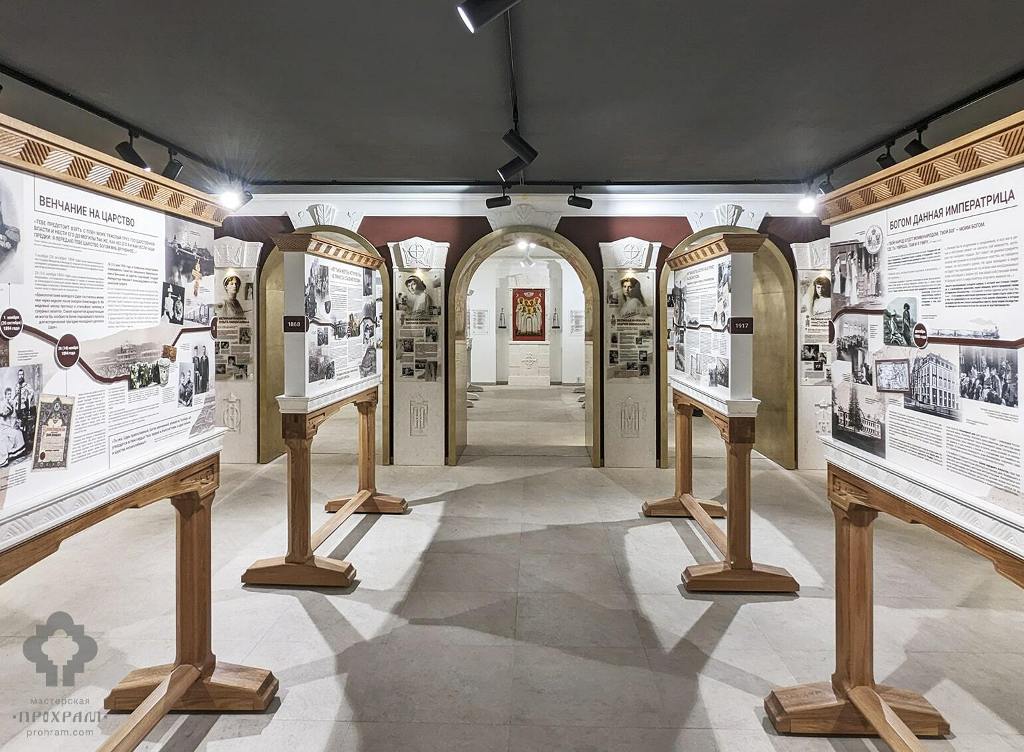
PHOTOS: four double-sided mobile stands display documents and
photos which explore the life of Emperor Nicholas II and his family

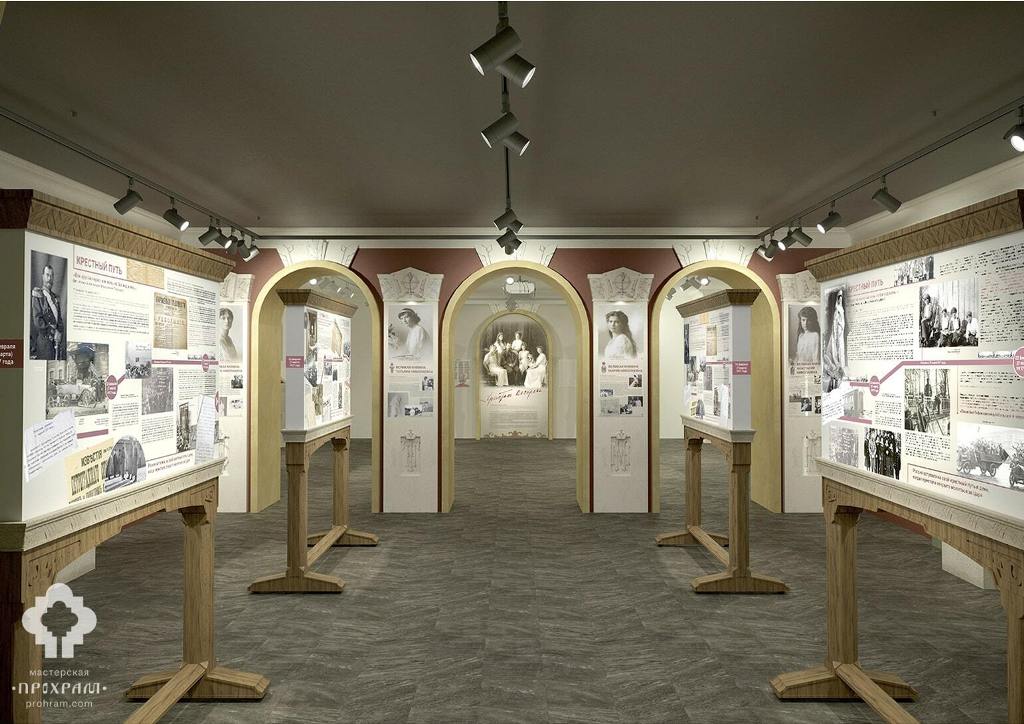
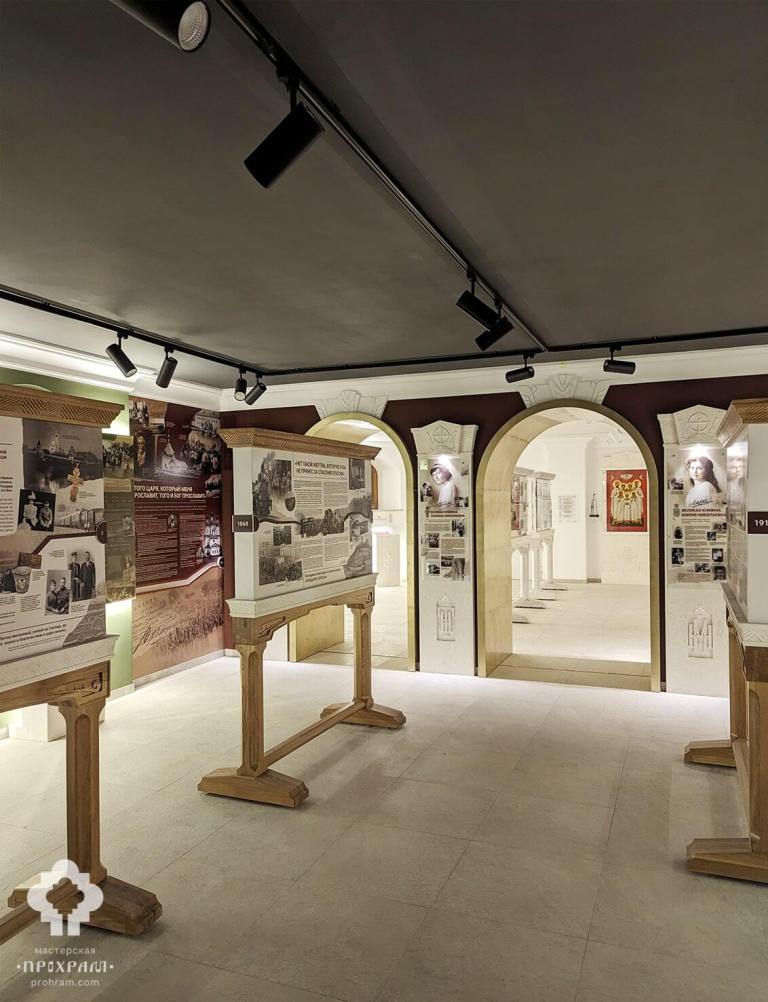
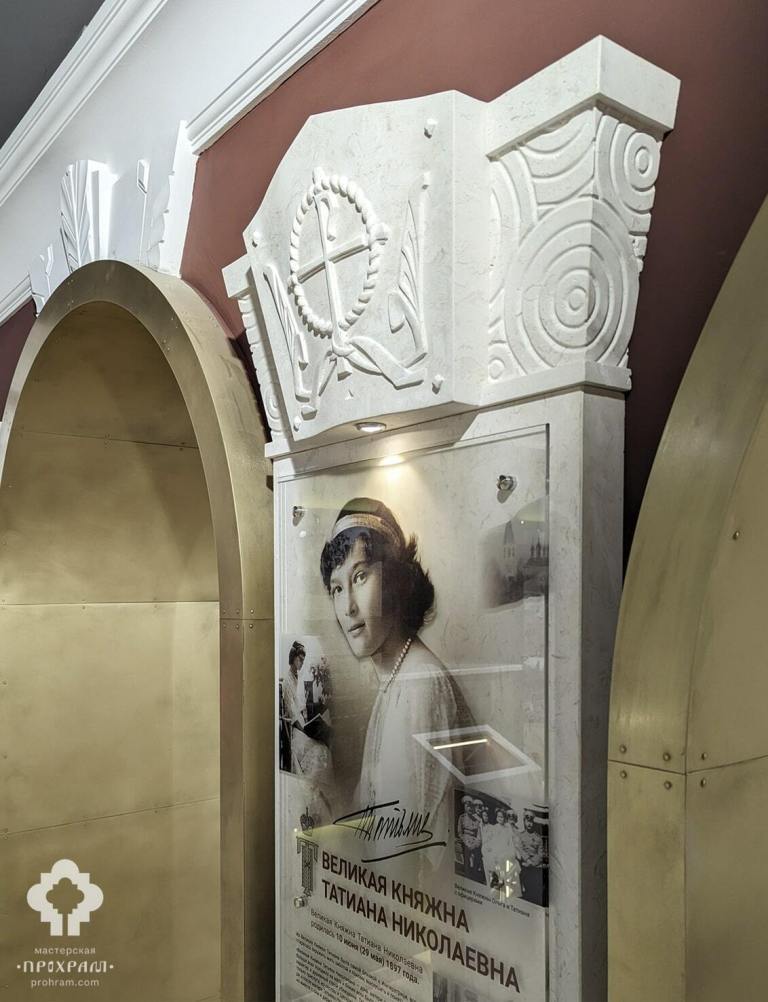
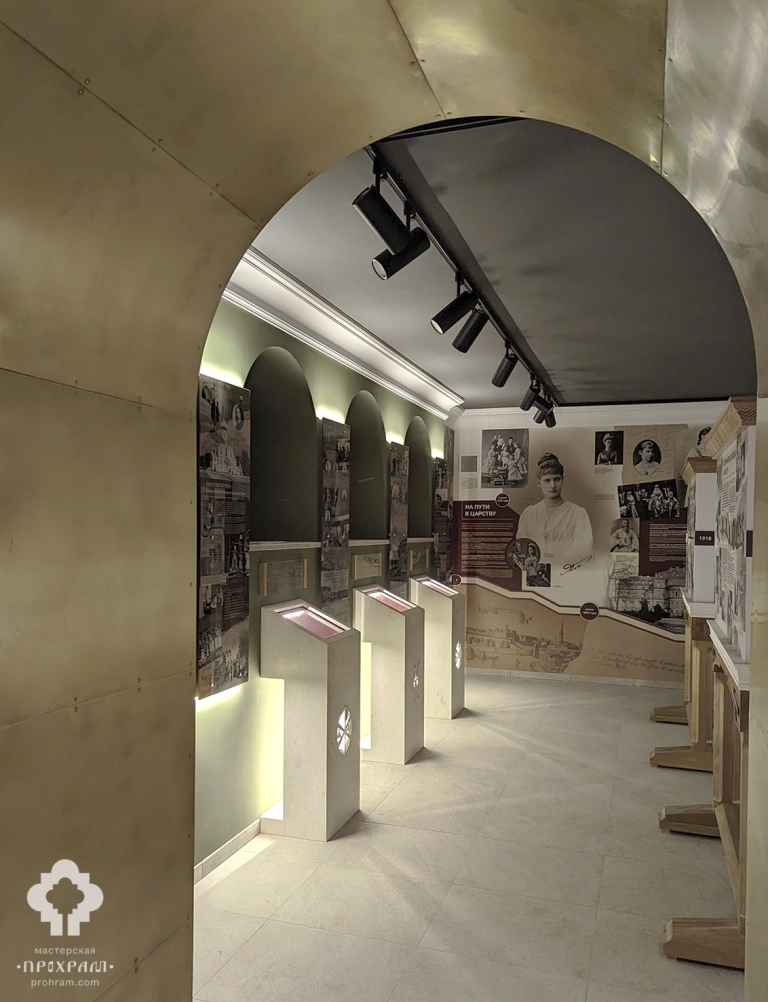
The photographs and documents are displayed on four double-sided mobile stands on small wheels with stoppers. At the northern and southern walls there are carved white-stone lecterns with carvings, under which relics of the era of Emperor Nicholas II are placed. In the eastern part of the hall there is a passage through three brass decorative arches which leads to the White Hall. Between the arches, there are four kiot stands made of white stone with carvings (initials), glass, lighting and a carved finial, dedicated to the Grand Duchesses Olga, Tatiana, Maria and Anastasia Nikolaevna. The ceiling is dark, with diffused and directional track lighting.

In the White Hall there is information about the Way of the Cross of the Imperial Family – the period from the events at the Dno station, the Tsar’s abdicated in March 1917, to the murder of Nicholas II and his entire family on 17th July 1918 in Ekaterinburg and the subsequent history of the veneration and glorification of the Imperial Family as saints. Extensive textual and illustrative material makes it possible to speculatively walk this path together with the Royal Passion-Bearers, to come into spiritual contact with the last year of their lives, to see the light of the Paschal victory in the darkness of the Ipatiev House.

CLICK on the photos below to enlarge and see in greater detail . . .

Also in the White Hall there are stands dedicated to the faithful retainers, who voluntarily followed the Imperial Family into exile and shared their sufferings, showing an example of loyalty to duty; stands dedicated to the Grand Duke Sergei Alexandrovich, the Venerable Martyr Grand Duchess Elizabeth Feodorovna, the Alapaevsk Martyrs, who were murdered by the Bolsheviks the day after the Imperial Family; two kiot stands dedicated to Tsesarevich Alexei Nikolaevich; and stands dedicated to the memory, glorification and modern veneration of the Holy Royal Martyrs.

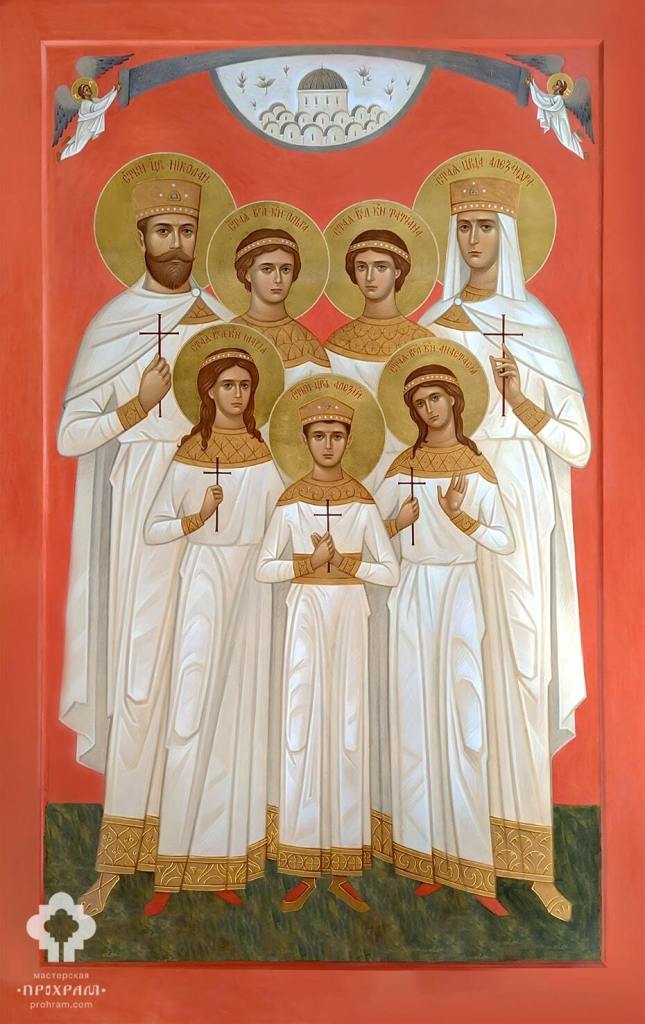
The hall is crowned by a large carved icon case with an icon of the Royal Martyrs, visible from the very entrance to the burgundy-green hall. The saints are depicted in white robes with a reference to the apocalyptic image of martyrs overcoming earthly sufferings and faithful to Christ (Revelations 6:9-12).

The White Hall is also used as a venue for small gatherings. The 4 white stands can be rrolled to the sides, thereby freeing up the central space of the hall. Attached to the ceiling in this room is a screen that can be opened in the eastern part of the hall, with a projector at the entrance to the burgundy-green hall. Folding chairs which are stored in the adjoining utility room, provide for guests attending lectures, films and other events.

CLICK on the photos below to enlarge and see in greater detail . . .

The museum is a project of love and deepest respect to the Holy Royal Martyrs and their feat on the Cross, which formed the basis of the feat of faith of all the New Martyrs and Confessors of the Russian Church and the preservation of the Holy Russian spirit in the 20th and early 21st centuries.

The opening of the new museum in Dno is the fourth such museum in Russia dedicated to Emperor Nicholas II and his family, the other three are the Museum of the Holy Royal Family in the Tsarsky Cultural and Educational Center, situated in the Patriarchal Compound of the Church on the Blood (Ekaterinburg); the Museum of the Family of Emperor Nicholas II (Tobolsk); and the Museum in Memory of Emperor Nicholas II and His Family (Kotelniki-Moscow).

PHOTO: icon of the Royal Martyrs in the White Hall

© Paul Gilbert. 9 January 2025

New monument and museum dedicated to the Imperial Family opened in Dno

Click HERE to watch a VIDEO of the unveiling and consecration of the monument, followed by a tour of the new museum dedicated to Nicholas II and his family, located in the Church of the Holy Royal Passion-Bearers in Dno. Duration: 2 minutes, 30 seconds

***

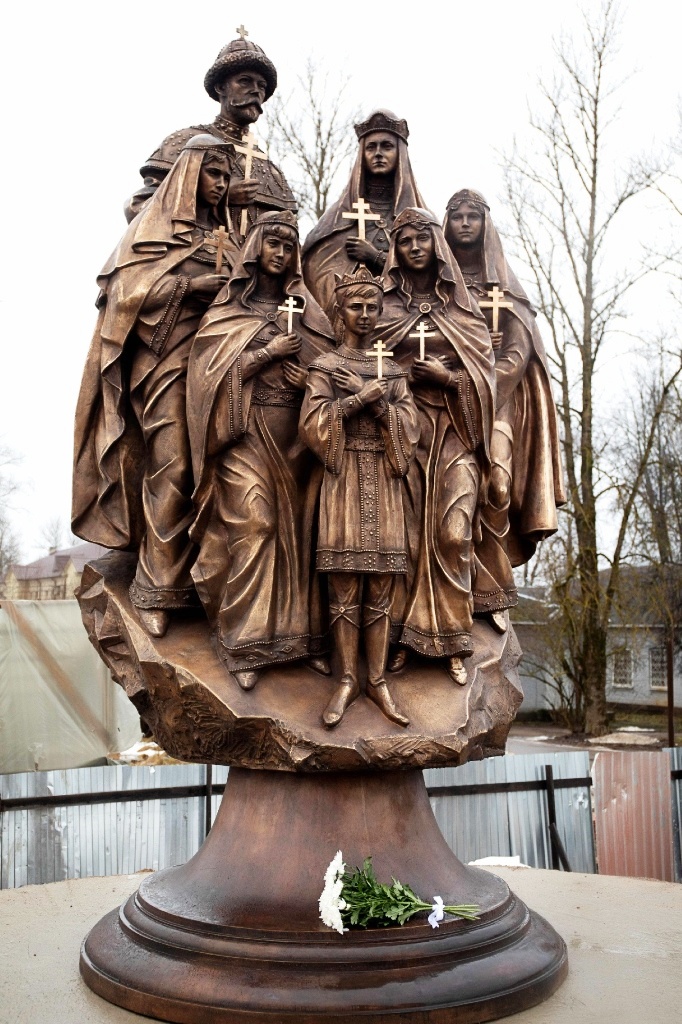
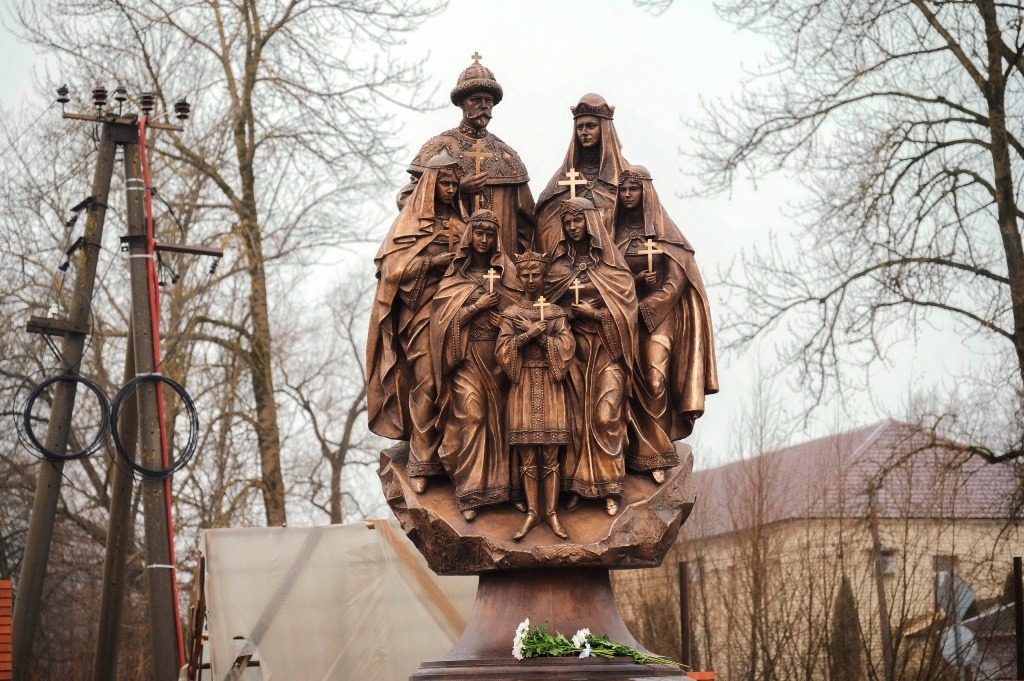
On 26th December 2024, a new monument to Emperor Nicholas II and his family was installed and consecrated on the grounds of the Church of the Holy Royal Passion-Bearers in the Russian city of Dno, situated 114 km from Pskov. In addition, a museum dedicated to the Imperial Family was officially opened and consecrated.

A Divine Liturgy was conducted in the new Church of the Holy Royal Passion-Bearers (constructed in 2023) by Metropolitan Matthew of Pskov and Porkhov.

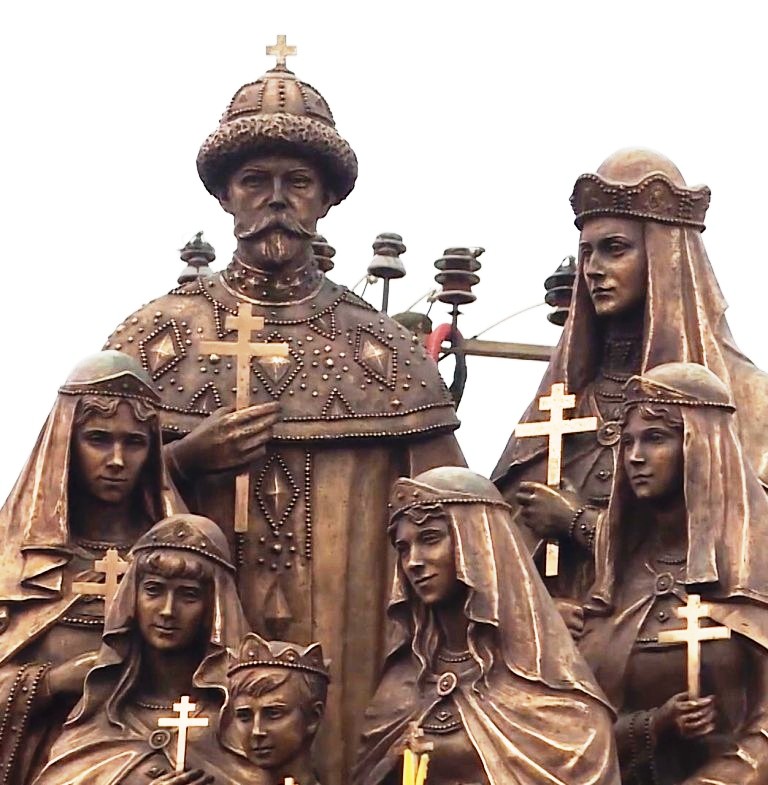
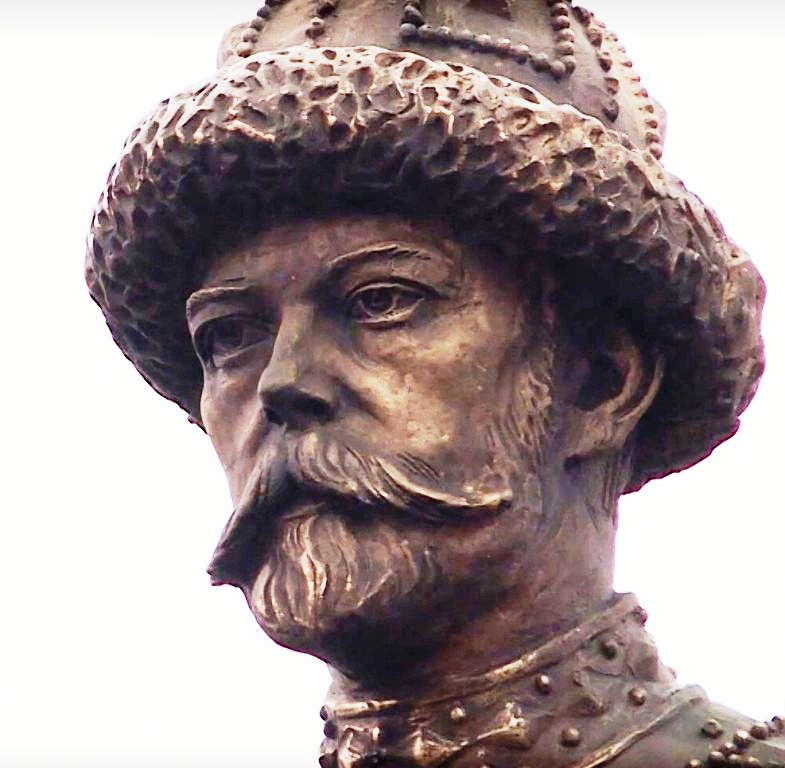
The sculptural composition was made by Moscow sculptor Vladimir Gennadievich Ivanov [b. 1983], and took one year to complete. According to him, the bronze monument weighs three and a half tons, and stands almost four and a half meters [almost 15 feet] in height. Each of the seven members of the Imperial Family is depicted holding a cross.

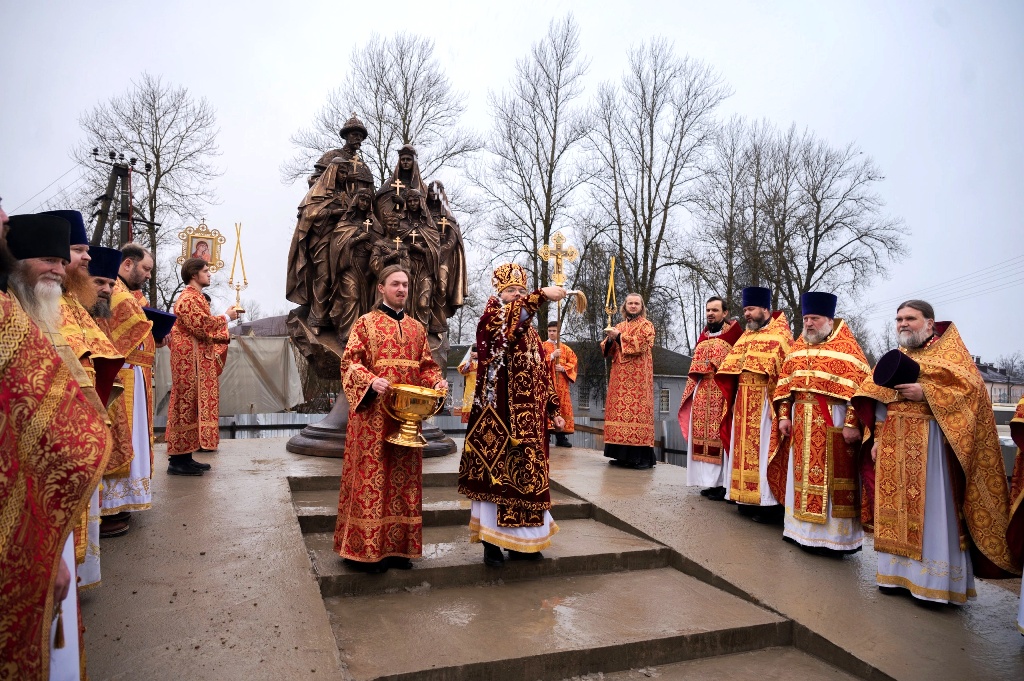
Following the liturgy, a new monument of Emperor Nicholas II and his family was unveiled and consecrated on the grounds of the church. In addition, a museum dedicated to the history of the life of the Imperial Family [see photo below] was officially opened and consecrated. The museum is located in the basement of the church – which can be seen in the video at the top of this post. Admission is FREE to all.

Recall that the Dno railway station became the penultimate point of the Imperial Train, which was transporting the Tsar to Petrograd on 14th (O.S. 1st) March 1917. From here, Nicholas II was forced to Pskov, where the following day, he signed his abdication from the throne. As Bishop Matthew noted during the opening of the museum in the basement of the church, “these events became a turning point in the history of the country”.

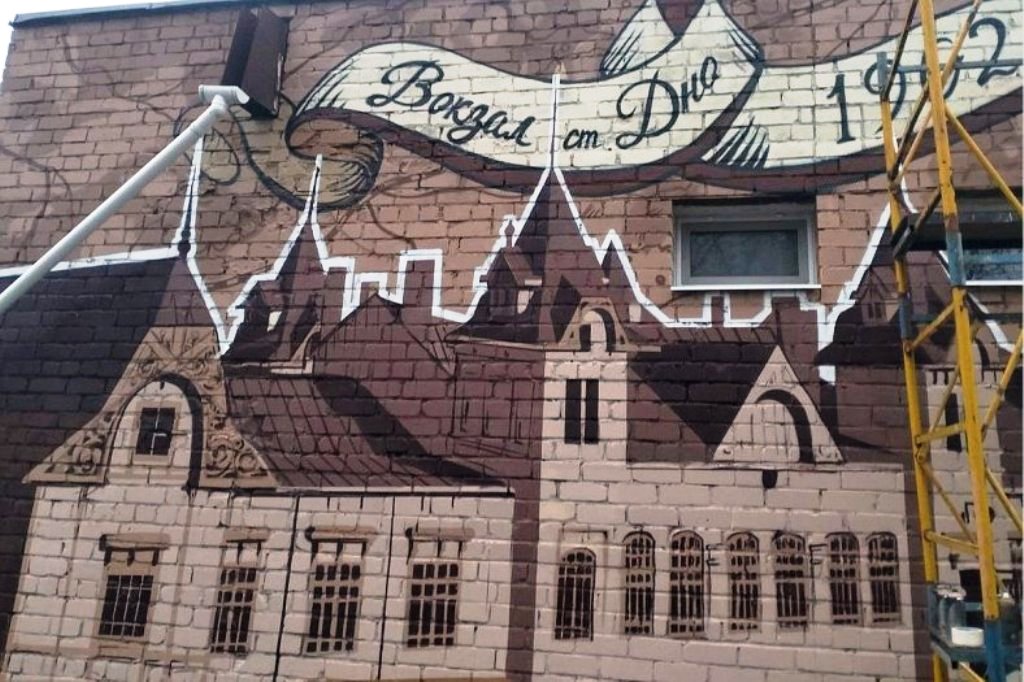
Recall that earlier this month a mural of the pre-war railway station at Dno was recreated on the building of the museum and exhibition center in Dno. The mural was created In memory of Emperor Nicholas II’s historic stop at Dno in March 1917, the day before he abdicated the throne.

© Paul Gilbert. 27 December 2024

***

Paul Gilbert’s Romanov Bookshop on AMAZON

I have published nearly 50 titles to date through AMAZON – featuring one of the largest selections of books on Nicholas II, the Romanov dynasty and the history of Imperial Russia.

Please CLICK on the BANNER or LINK above to review my current selection of titles in hardcover, paperback and ebook editions. Listings provide a full description for each title, pricing and a Look inside feature.

Nicholas II’s stop at Dno, one day before his abdication in 1917

PHOTO: modern-day murual depicting the train stain in Dno

On 14th (O.S. 1st) March 1917, at 15:00, Emperor Nicholas II arrived at Dno on the Imperial Train, where an urgent telegram from State Duma Chairman Mikhail Rodzianko[1] awaited him:

Dno station. To His Imperial Majesty. I am now leaving for Dno Station by emergency train to report to you, Sire, on the state of affairs and the necessary measures to save Russia. I earnestly ask you to wait for my arrival, for every minute counts.

Without waiting for Rodzianko, the Tsar ordered the Imperial Train[2] to proceed on to Pskov, where he would meet up with Rodzianko, however, the chairman never arrived. On the night of 1st/2nd March, during a conversation with General Ruzsky[3] Rodzianko explained his “non-arrival” by the impossibility of leaving Petrograd in a situation where the revolutionary events in the capital threatened to develop into anarchy.

Emperor Nicholas II abdicated the following day, on 15th March (O.S. 2nd) March 1917, bringing an end to more than 300 years of the Romanov dynasty and the monarchy in Russia.

The Sovereign abdicated in the heartfelt belief that his abdication would save the honour of the army, prevent civil war and keep Russia in the war against Germany.

Sadly, it did not. In his diary, Nicholas wrote: “I am surrounded by betrayal, cowardice, and deceit.”

In memory of Emperor Nicholas II’s historic stop at Dno in March 1917, a mural of the pre-war railway station has been recreated, on the building of the museum and exhibition center in Dno. The artists of the mural are Ivan and Nikita Trakhov, both of whom are residents of Pskov.

“The mural will remind everyone of our history, the station, which Nicholas II saw from the window of his train,” said Mikhail Shaurkin, who serves as the head of the Dnovsky district .

The idea for the mural was conceived by the head of the museum Sergey Egorov. He wanted to recreate the historic look of the station as it looked more than a century ago. According to him, “many tourists, as well as residents of the city, are surprised to learn that there was a railway station in Dno before the Great Patriotic War.”

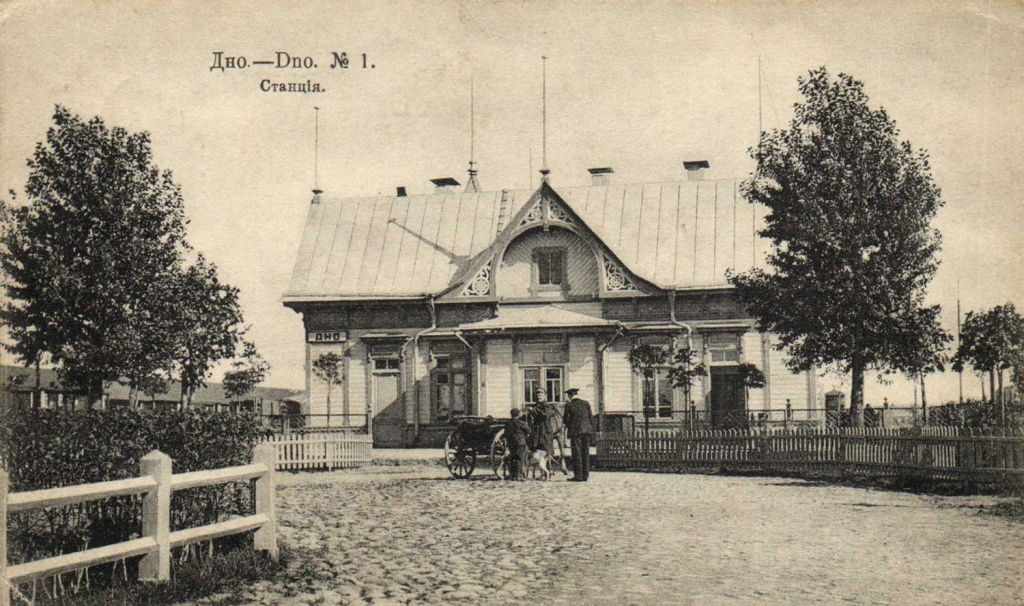
PHOTO: early 20th century postcard depicting the old wooden station at Dno

The original train station at Dno was constructed of wood in the Art Nouveau style. During the Great Patriotic War (1941-45) the building was destroyed by fire. After the war, a new station was built, which stands to this day.

NOTES:

[1] In an open act of treason against the Emperor, Grand Duke Kirill Vladimirovich wearing a red ribbon on his shoulders, under which the Marine of the Guard followed their commander, marched to Petrograd, where he presented himself at the State Duma, where he reported to Duma Chairman Mikhail Rodzianko. “I have the honour of appearing before Your Excellency,” said the Grand Duke . . . “I am at your disposal, as is the entire nation. I wish Russia only good.”

[2] With the outbreak of World War I, the Imperial Train became both a travelling residence for the Emperor, as well as a military field office, equipped with telephone and telegraph communications. A telephone network was installed for communication between all cars, each carriage having it’s own telephone.

[3] Nikolai Vladimirovich Ruzsky (1854-1918) was a Russian general, member of the state and military councils, best known for his role in World War I and the abdication of Tsar Nicholas II. He was shot by the Bolsheviks on 18th October 1918.

© Paul Gilbert. 10 December 2024

New museum dedicated to Imperial Family to open next year in Pskov region

In 2024, a memorial museum dedicated to the Russian Imperial Family will open in the Church of the Holy Royal Passion-Bearers, located in the city of Dno, in the Pskov region.

Pskov has a very close connection to Russia’s last Tsar. It was in Pskov, on 15th March 1917 (O.S. 2nd March) 1917, that Emperor Nicholas II was forced to sign his abdication during an illegal coup.

The Tsar noted in his diary that the Imperial Train was forced to stop at Dno, before proceeding to Pskov. It is near this station, that the Church of the Holy Royal Passion-Bearers is being constructed. The laying of the foundation stone of the Church took place in March 2017, on the day marking the 100th anniversary when the Tsar’s train was stopped here in March 1917.

The construction of the Church of the Holy Royal Passion-Bearers began six years ago. The Imperial Family memorial museum will will be on the ground floor of the building. Glass showcases are already being decorated with exhibits.

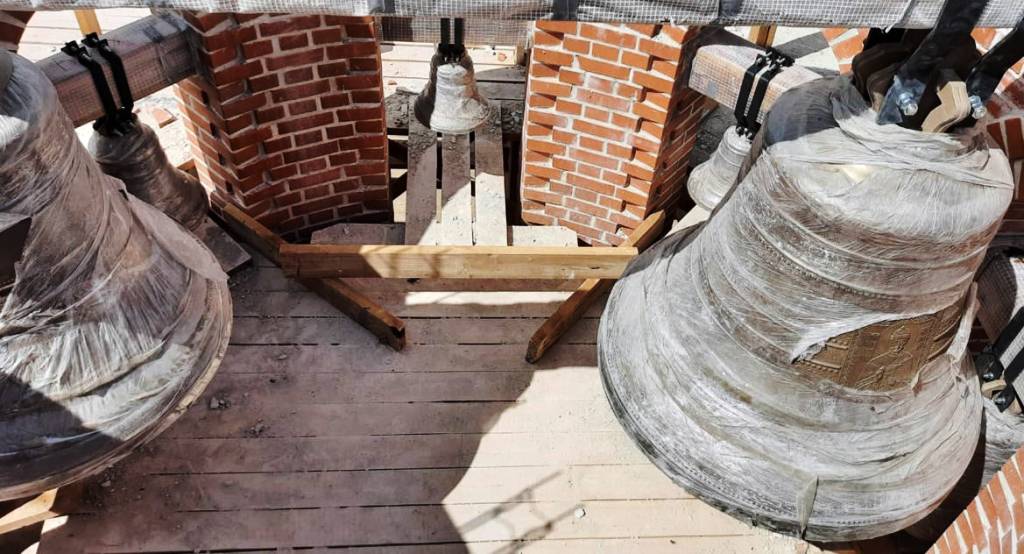
PHOTO: 10 bells were cast for the Church of the Holy Royal Passion-Bearers

On 14th July 2022, bells were raised to the bell tower of the church. They are dedicated to Emperor Nicholas II, his family and their four faithful retainers, all of whom were brutally murdered by the Ural Soviet (Bolsheviks) on the night of 16/17 July 1918.

A total of 10 bells for the Church were cast in the Urals. The largest of them weighs 1,140 kg and is dedicated to Tsar Nicholas II. On this bell there are iconographic images of the Sovereign and the Savior Almighty.

A second bell weighing 660 kg, is dedicated to Empress Alexandra Feodorovna. In addition to the image of the Empress herself, there is an image of the Reigning Icon of the Mother of God.

A third bell weighing 326 kg is dedicated to Tsesarevich Alexei Nikolaevich and his four sisters: Grand . Duchesses Olga, Tatiana, Maria and Anastasia Nikolaevna. This bell is decorated with icons depicting the Tsesarevich and the Imperial Family.

The fourth bell weighing 156 kg, dedicated to the four faithful retainers of Imperial Family: the valet Aloysius Trupp (1856-1918); the maid Anna Demidova (1878-1918); the cook Ivan Kharitonov (1872-1918); and Dr. Eugene Botkin (1865-1918).The bell includes an icon of the Righteous Passion-Bearer, Dr. Eugene Botkin.

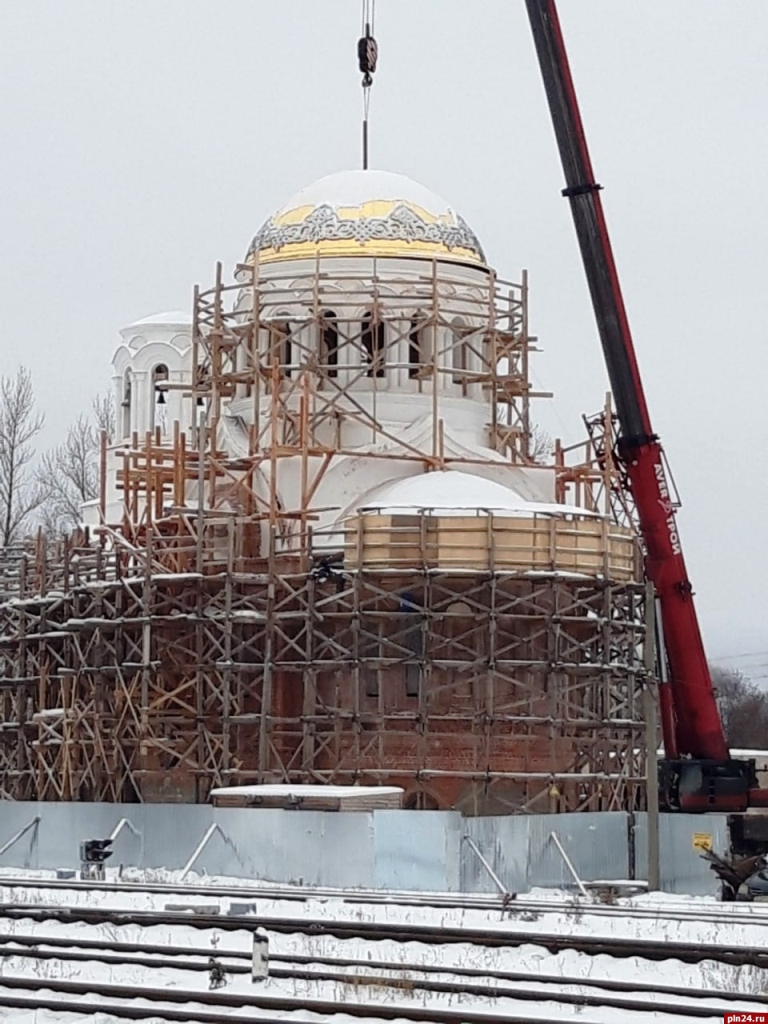
PHOTO: Work continues on the Church of the Holy Royal Passion-Bearers

On 23rd November 2022, the consecration and installation of domes and crosses took place. With the blessing of Metropolitan Tikhon of Porkhov and Pskov, the rite of consecration was performed by Archpriest Serge Andreev, rector of the Church of the Archangel Michael in Dno. Work on the interiors of the Church continue.

The construction of the white-stone church in the city of Dno began in 2017 with the blessing of the Pskov Metropolitanate. It was timed to coincide with the 100th anniversary of the death and martyrdom of the Imperial Family.

© Paul Gilbert. 17 November 2023

1917 Bible belonging to Nicholas II preserved in Pskov church museum

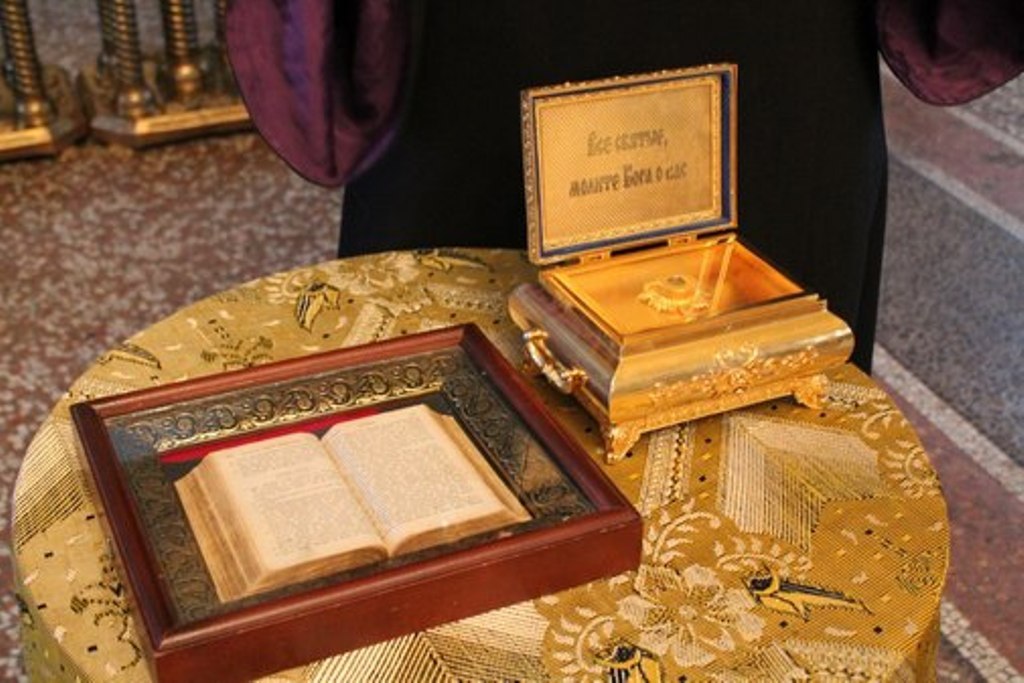
PHOTO: copy of the Old Testament with personal notes made by Emperor Nicholas II. On the right, is a small casket containing a milk tooth of Tsesarevich Alexei Nikolaevich

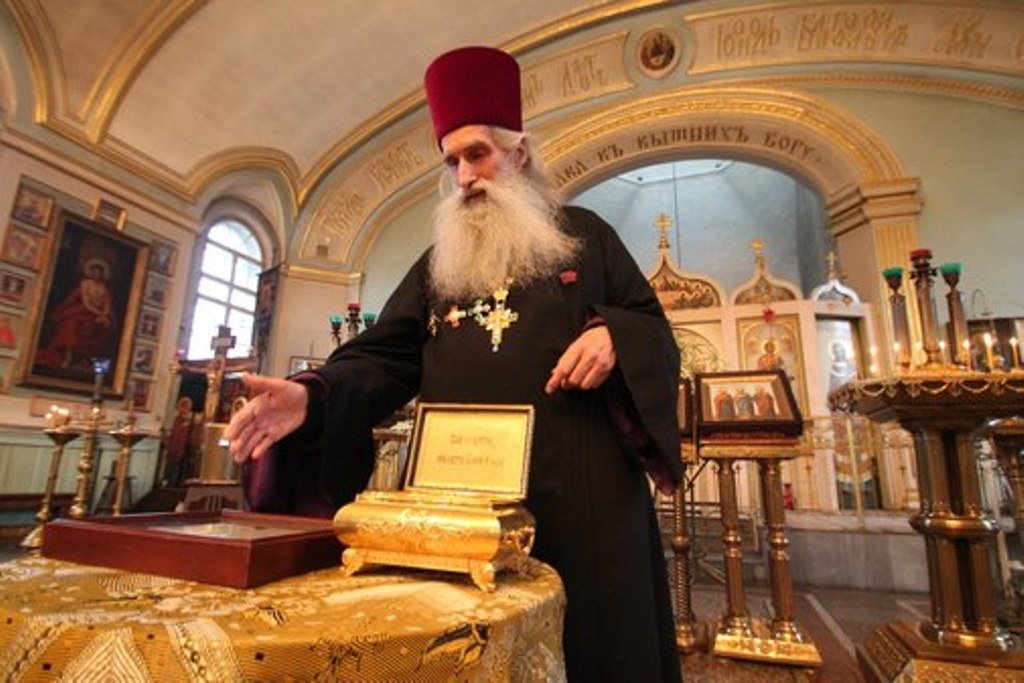
Tucked away in the Church of St. Alexander Nevsky in Zavelichye (Pskov), is a tiny little known museum. The museum was created by Archpriest Oleg Teor (born 1944), who over the years has collected and preserved numerous items and documents of historic value and significance of the diocese.

The museum’s most interesting item is a copy of the Old Testament belonging to Emperor Nicholas II, found on the Imperial Train in March 1917, which includes notes made in the margins, written in pencil. The sacred text lies in a special wooden box under glass. Sitting next to it, is a small casket containing a milk tooth of Tsesarevich Alexei Nikolaevich.

Recall that it was on on the night of 15th (O.S. 2nd March 1917, in a wagon of the Imperial train, stationed in the ancient Russian city of Pskov, Nicholas II, Emperor and Autocrat of All the Russias, in the forty eighth year of his life and the twenty third of his reign, surrendered the crown that his forebears had held since 1613.

PHOTO: Church of St. Alexander Nevsky in Zavelichye (Pskov)

How did the sacred text end up in Pskov?

The Church of St. Alexander Nevsky was built in 1907-1908, for the 96th Omsk Regiment. The church was closed by the Bolsheviks in 1918. In 1992, it was returned to the Russian Orthodox Church. Following an extensive restoration, the church was reconsecrated on 12th June 1995, new bells were consecrated on 2nd December 2008, marking the 100th anniversary of the church.

There are several theories among the parishioners, as to how the copy of the Old Testament ended up in Church of St. Alexander Nevsky. Some say that the Old Testament was donated to the church by an elderly woman from Pskov, while others claim that the donor was a man who wished to remain anonymous. Allegedly, he went into the church, placed the Bible on the table and, saying that it belonged to the Tsar, disappeared in an unknown direction. The most intriguing theory, however, the book was miraculously found in a looted imperial train car and passed to the woman for safekeeping from relatives.

According to Archpriest Oleg Teor, however, the Old Testament was given to him by the nephew of a veteran of the Great Patriotic War, who later took the clergy. “I know this man very well, and while still a boy, he came to visit his uncle and asked about the book. His uncle replied that it belonged to Tsar Nicholas II. Either the Emperor himself, who prior to his abdication was on the Imperial Train, or one of his aides handed the book to a relative of his uncle with the words “take it and safeguard it.” The uncle then gave the sacred text to his nephew, who some years later gave me the copy of the Old Testament repeating the words of his uncle “take it and safeguard it“. . .

The Old Testament contains two notes in the margins inscribed in a “sharp-edged graphite pencil” on pages 220 and 237. In addition, it contains many underlined passages. Perhaps the Tsar looked for answers to many of his questions in the Holy Scriptures? Perhaps the Old Testament, helped the Tsar put his thoughts and feelings in order and make the difficult decision to abdicate?

PHOTO: Archpriest Oleg Teor shows the sacred text, which lies in a special wooden box under glass

Forensic examination

In February 1997, Archpriest Oleg Teor met with Alexander Bogdanov, a forensic expert of the Internal Affairs Directorate of the Pskov Region, who was instructed to conduct an examination of the Old Testament, and establish whether the notes were indeed made by Nicholas II just before that fateful night in Pskov.

Bogdanov went to the State archives in Moscow, where he sorted through and examined Nicholas II’s documents, including the emperor’s notes, a notebook for playing dominoes and cards, as well as letters and diaries. Many of the documents contained brief alphabetic and digital notes made with a graphite pencil… the same type of pencil used in the margins of the Old Testament.

Bogdanov examined each document meticulously, then made copies with the use of a digital camera. He then took these documents back to the forensic center for further examination. But this was only the beginning of a great work that lasted several months. At the second stage, Valery Ivanov, a leading specialist in the field of handwriting, joined Bogdanov.

“Now the criminalists had to examine and compate the handwriting of the pencil notes found in the margins of the Bible with the handwriting of Emperor Nicholas II,” recalls Yuri Yashin, a colleague of Bogdanov and Ivanov, who oversaw the examination. To do this, it was necessary to identify a certain set of general and particular features of handwriting. As a result of the handwriting examination, a set of matching general and particular features was established.

Researchers of the Pskov State Historical and Architectural Museum-Reserve, who examined the book dated it to the 1870s 1890s. The sacred text shows signs of repairs of the book, probably made in the 20th century by an amateur bookbinder. Putting all the pieces of the puzzle into a single picture, Alexander Bogdanov and Valery Ivanov and their team of forensic experts came to a categorically positive conclusion. “The two handwritten texts found on pages 220 and 237, of the Old Testament were executed by the All-Russian Autocrat Emperor Nicholas II”.

PHOTO: the Old Testament which belonged to Emperor Nicholas II, is today preserved in a special wooden box under glass in the Church of St. Alexander Nevsky in Zavelichye (Pskov)

NOTE: There remains some speculation that it is highly unlikely that the Emperor himself, of his own free will, parted with his personal Bible. Based on the inventory of icons, shrines and spiritual books left after the regicide, it is clear that the Imperial Family treasured such books and carried them everywhere with them.

Known, for example, is a Bible belonging to Nicholas II, which was presented to him by his mother – Empress Maria Feodorovna, when he was Tsesarevich. It was this Bible that accompanied the Tsar, first to Tobolsk, and then to Ekaterinburg. Following the regicide, it was discovered by the Whites in the deserted Ipatiev House, and then, among with other personal items which belonged to the Imperial family, the Bible was given to the Emperor’s sister, Grand Duchess Xenia Alexandrovna, who later donated it to the Russian Orthodox Church of Saint Job in Uccle, Brussels.

The milk tooth of Tsesarevich Alexei Nikolaevich

The milk tooth of Tsesarevich Alexei Nikolaevich was first kept in the Winter Palace in St. Petersburg, where Nicholas II and his family lived until they moved to Tsarskoye Selo in 1905, then a small apartment in France and, finally, Orthodox Church of St. Nicholas in Saint-Louis, France [just one kilometer from the Swiss border].

The milk tooth of the innocently murdered Tsesarevich was carefully kept by his nurse-nanny Alexandra Alexandrovna Tegleva [wife of the Imperial children’s tutor Pierre Gilliard]. Both Tegleva and Gilliard accompanied the Imperial family into exile to Tobolsk in August 1917.

When the Empress was transferred to Ekaterinburg in April 1918, she passed her jewellery to the nanny and Alexei’s three milk teeth.

Having miraculously escaped execution, Alexandra Teglina fled Bolshevik Russia, eventually settling in Switzerland. Until her death on 21st March 1955, she carefully kept the precious box with the gifts of the Empress. After her death, her nephew gave the casket containing the Tsesarevich’s milk teeth to the Church of St. Nicholas in Saint-Louis.

The rector of the French parish of St. Nicholas ordered three icons of the Holy Royal Martyrs with three absolutely identical reliquaries for each tooth. A request was made by a member of the Russian clergy, who asked that one of these icons be sent to Russia, so that as many Orthodox as possible could see it.

One of these icons was given to the Church on the Blood in Ekaterinburg, built on the site of the Ipatiev House, where Nicholas II and his family met their death and martyrdom on 17th July 1918.

Another of these icons was given to Archpriest Oleg Teor by his friend the rector of the Orthodox church in Saint-Louis Vladimir Shibaev. According to Father Oleg, Father Vladimir requested that the milk tooth of the murdered Tsesarevich should be “returned home to Russia“.

To learn more about this sacred text and the Tsar’s alleged abdication, please refer to pages 62-83 of my book Nicholas II: Russia’s Last Orthodox Christian Monarch (2022), available from AMAZON in paperback and eBook editions.

© Paul Gilbert. 10 August 2022