Faithful to the End: Klimenty Nagorny and Ivan Sednev 

170a

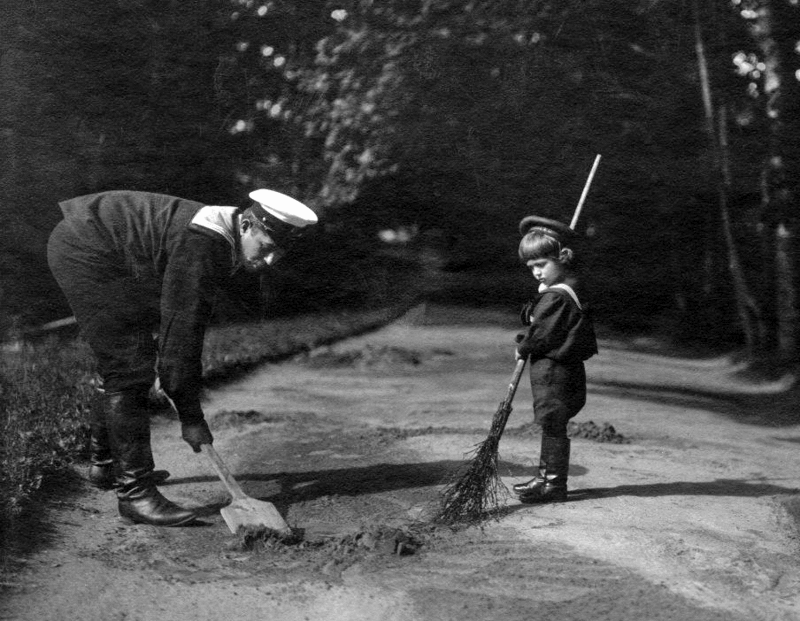
Klimenty Grigorievich Nagorny (left). and Ivan Dmitriyevich Sednev (right)

On this day – 28th June 1918 – two faithful servants to Emperor Nicholas II and his family – Klimenty Grigorievich Nagorny and Ivan Dmitriyevich Sednev – were murdered by the Bolsheviks in Ekaterinburg. 

Klimenty Nagorny and Ivan Sednev selflessly served the Tsar’s children. Nagorny in particular, lay the great responsibility of protecting the Tsesarevich, even the slightest injury could put the heir to the Russian throne in danger, due to his hemophilia. Alexei was very fond of Nagorny, who in turn showed complete devotion to the Tsesarevich, faithfully sharing with him all the joys and sorrows.

170b

Nagorny and Tsesarevich Alexei in Tsarskoe Selo, 1907

Klimenty Nagorny and Ivan Sednev voluntarily stayed with the Tsar’s family during their house arrest in Tsarskoe Selo, and then followed them to Tobolsk, where Nagorny shared a room with the Tsesarevich, serving him day and night. Together with the Imperial family, Nagorny also attended all the divine services, and the only member of the family’s retinue who was a member of the choir organized by the Empress: he sang and read for the Imperial family during services held in the house church.

In the spring of 1918 Nagorny and Sednev once again, voluntarily followed the Imperial family to Ekaterinburg. They spent only a few days in the Ipatiev House, and then were separated from the Imperial prisoners. They were arrested and imprisoned, their sole crime had been their inability to hide their indignation on seeing the Bolshevik commissaries seize the little gold chain from which the holy images hung over the sick bed of the Tsesarevich.

On 28th June 1918, they were shot in the back by the Bolsheviks, in a small wooded area behind the Yekaterinburg-2 railway station (modern name – Shartash). Nagorny and Sednev were “killed for betraying the cause of the revolution” – as indicated in the resolution on their execution. The murderers left their bodies unburied.

When Ekaterinburg was occupied by the Whites, the the half-decayed bodies of Nagorny and Sednev, were found and solemnly buried near the Church of All the Afflicted (demolished). Witnesses at the funeral recall that the graves of the former sailors of the Imperial Yacht Standart were strewn with white flowers. Their graves were not preserved – they were destroyed when the Soviet authorities built a city park on the site of the cemetery.

Both Nagorny and Sednev were canonized by the Russian Orthodox Church Outside Russia (ROCOR) on 14 November 1981, and both rehabilitated by the Prosecutor General’s Office of the Russian Federation on 16 October 2009. They have yet to be canonized by the Moscow Patriarchate. 

Memory Eternal! Вечная Память!

170c

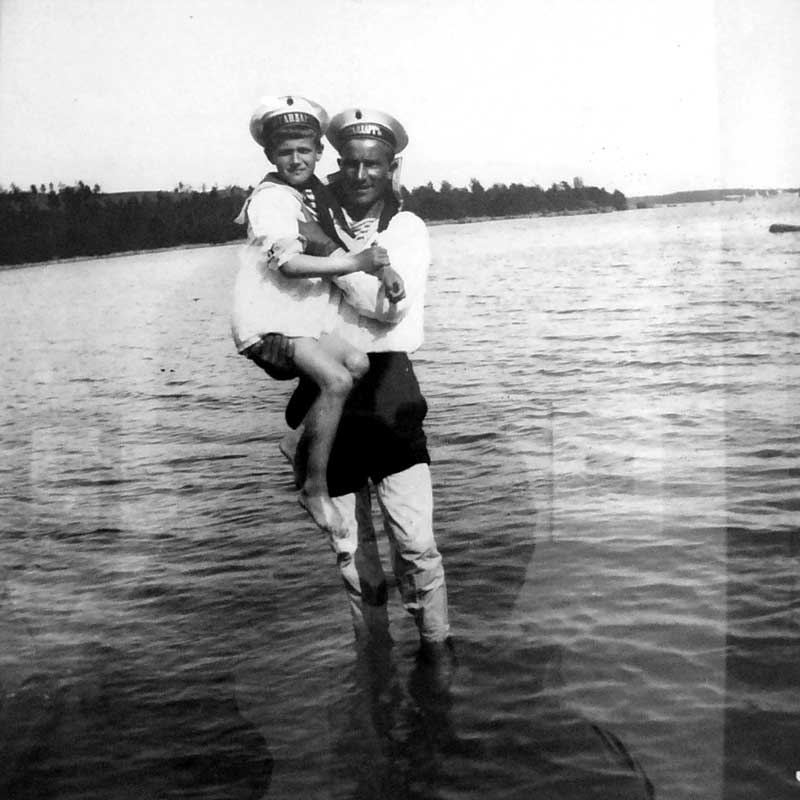
Sednev and Alexei Nikolaevich, in the Finnish skerries, 1914 

Nagorny, Klementy Grigorovich (1887—1918) – from 1909, he served on the Imperial yacht Standart and appointed as a footman to the imperial children. He received the Court title Garderobshik (wardrobe keeper) in 1909 and accompanied the Imperial family on every tour. In November 1913, he was appointed assistant dyadka to guard the Imperial children. He travelled with the Tsesarevich Alexei to Mogilev during 1914-16. After the Tsar’s abdication, he lived under detention with the Imperial family in Tsarskoe Selo, Tobolsk and Ekaterinburg.

Sednev, Ivan Dmitrievich (1881—1918) – was recruited into the Russian Imperial Navy in 1911, where he began as a machinist on the Imperial Yacht Polyarnaya Zvezda (Polar Star) then transferred onto the Imperial yacht Standart. By invitation he became a Lakei (liveried footman) to the Grand Duchesses, and subsequently to the Tsesarevich. Ivan lived under detention with the Imperial family in Tsarskoe Selo, Tobolsk and Ekaterinburg.

579-4

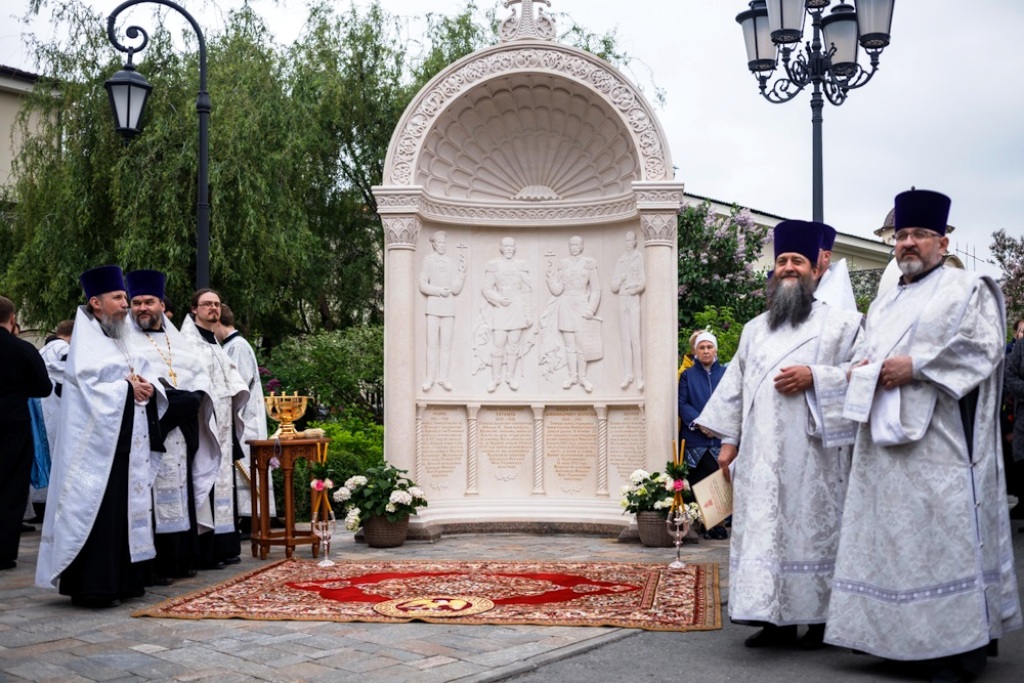
On 13th June 2022, a new monument (seen in above photo) to four faithful servants – including Nagorny and Sednev – of Emperor Nicholas II, was installed and consecrated on the grounds of Novo-Tikhvin Convent in Ekaterinburg.

© Paul Gilbert. 28 June 2023

Icon depicting St. Nicholas and Tsar Nicholas II unveiled in Australia

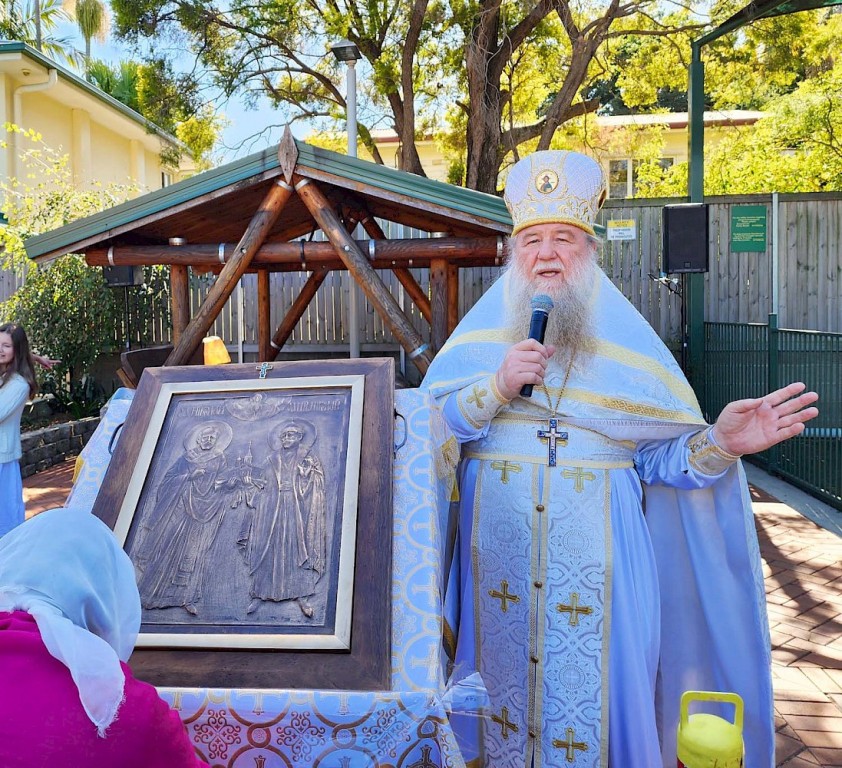
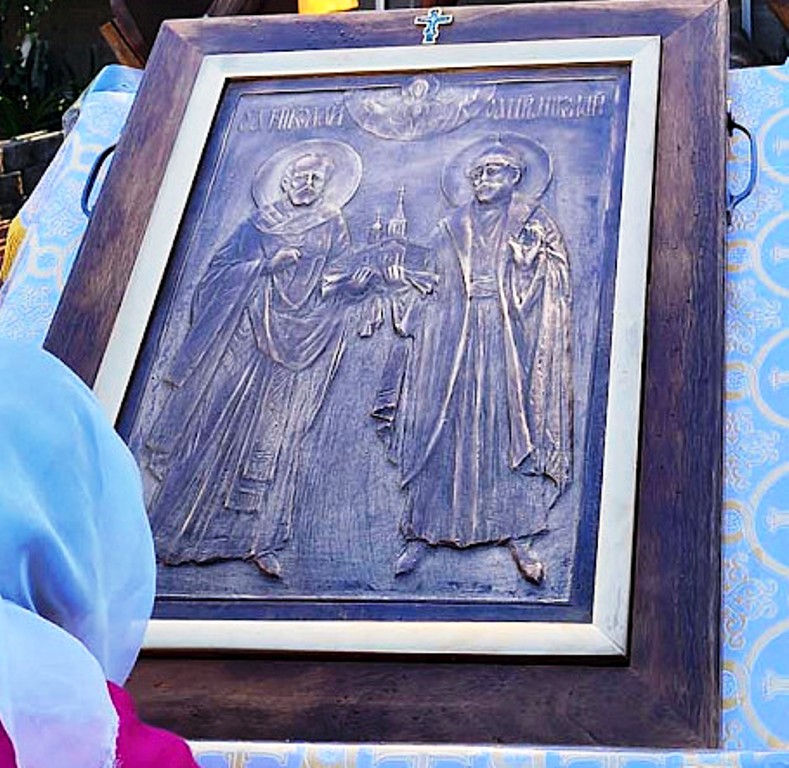
On Sunday, 28th May 2023, the first Russian Orthodox church in Australia celebrated its 100th anniversary with a Hierarchical Divine Liturgy and concert. Following the Divine Liturgy, a unique bas-relief icon depicting St. Nicholas the Wonderworker and Tsar-Martyr Nicholas II was installed and consecrated in the courtyard of St. Nicholas Cathedral in Brisbane.

The Russian Orthodox Cathedral of St. Nicholas the Wonderworker in Kangaroo Point – a suburb of Brisbane – Queensland was founded in 1923 by Protopresbyter Alexander Shabashev (1881-1956). It was here that he purchased a plot with a house, and with the support of local Anglican clergymen, established a parish dedicated to St Nicholas of Myra, making it he first Russian Orthodox church in Australia.

In 1933, parishioners began raising funds for the construction of a new, larger church building. In 1935, the construction of the cathedral began on the site of the former church, which was completed in 1936. The old building was moved and later housed a library and a school. Divine services in the cathedral are performed in Church Slavonic and English.

At the time of the founding of the church, the parishioners wanted to build a memorial church in the name of the murdered Tsar Nicholas II, but at that time he had not yet been canonized. The church was consecrated in the name of St. Nicholas the Wonderworker – the patron saint of the Tsar. When the last Russian Tsar was glorified as a saint by the Russian Orthodox Church Outside Russia (ROCOR) in 1981, the parish considered how to emphasize his connection with Australia’s Russian Orthodox community.

In 2016, St. Petersburg iconographers – at the request of parishioners – commissioned the Moscow medal artist Gennady Provotorov, to create a bronze bas-relief icon depicting St. Nicholas of Myra and Tsar-Martyr Nicholas II, holding the St. Nicholas Cathedral in their hands.

© Paul Gilbert. 7 June 2023

ROC preparing to build memorial church at Porosenkov Log

PHOTO: entrance to the Romanov Memorial at Porosenkov Log

According to Ilya Korovin, the director of the Ekaterinburg based Romanov Memorial Charitable Foundation the Russian Orthodox Church (ROC) is preparing the construction of an Orthodox church at Porosenkov Log, the site where the remains of Emperor Nicholas II and his family were discovered in two separate graves in 1991 and 2007 respectively.

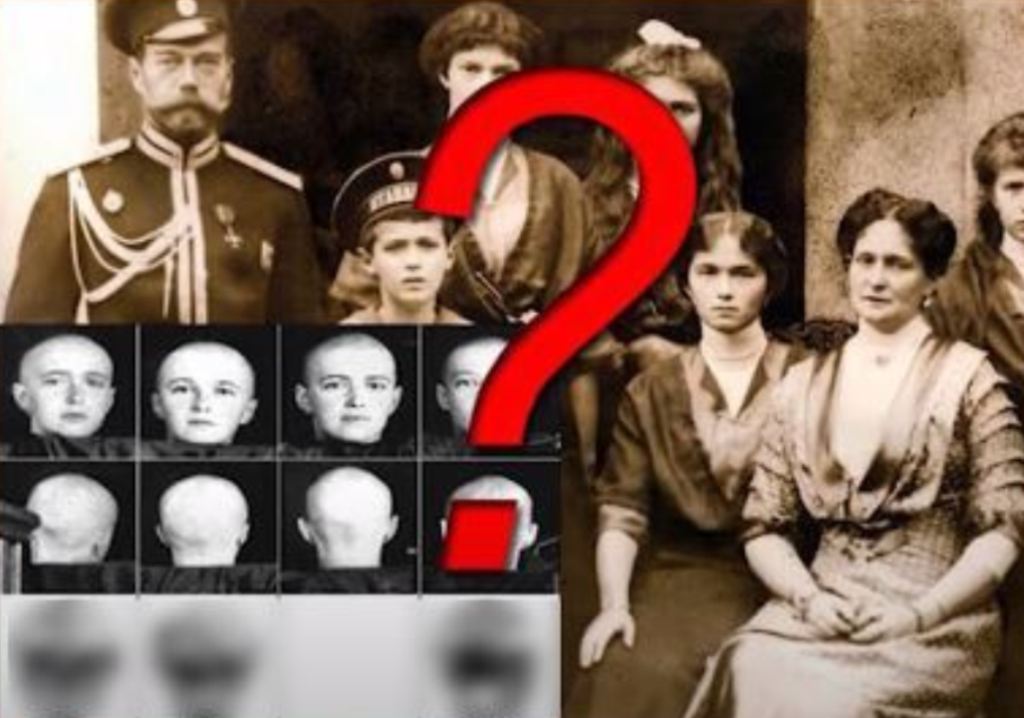
If there is any truth to this disclosure, then it proves that the ROC have already unofficially[1] recognized the Ekaterinburg Remains as those of the Russian Imperial Family and their four retainers, however, the final decision on the official recognition of the Ekaterinburg Remains by the ROC will be made by the Bishops Council Bishops Council meet this summer.

Korovin claims that plans for the construction of the church is evidenced by a document in which Vasily Boyko-Veliky, the president of the St. Basil the Great Russian Educational Foundation, concluded an agreement in 2021 with the director of Geoincart Alexander Sokovnin to drill 40 wells on the territory of the Romanov Memorial. The illegal drilling was carried out, despite the fact that Porosenkov Log was recognized as an object of cultural heritage in 2014. “The terms of reference for the production of engineering and geological surveys indicate “new construction of a memorial church” on the territory of the Romanov Memorial,” said Korovin, who was successful in halting any further drilling and development.

According to Korovin, the Department of State Protection of Cultural Heritage Sites (UGOOKN) of the Sverdlovsk Region is preparing changes which will provide additional protection to the cultural heritage site on the Old Koptyakov Road near Ekaterinburg.

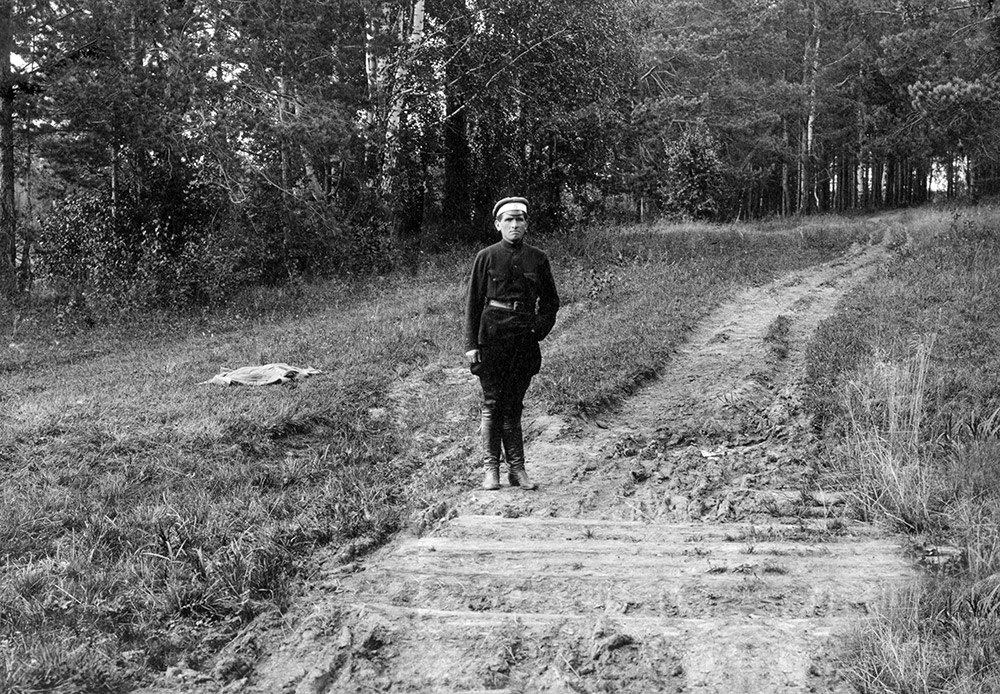
PHOTO: in the 1920s, the murderer Pyotr Zakharovich Yermakov returned to Porosenkov Log. On the reverse of this photo, he wrote: “I am standing on the grave of the Tsar”.

Alexey Shamratov, head of the department of legal and organizational work of the Regional State Educational Institution, however, claims that he was not aware of any preparation of changes to the subject of protection of the cultural heritage site. It is interesting to note that the press service of the Ekaterinburg Diocese declined comment on the matter.

A criminal case was initiated against Vasyl Boyko-Velikiy on suspicion of embezzlement of funds of the Credit Express Bank. In 2021, the Moscow City Court transferred him from jail to house arrest. In January 2023, Vasily Boyko-Velikiy declared bankruptcy.

Emperor Nicholas II and his family, together with four servants, were all shot by the Bolsheviks in the Ipatiev House Ekaterinburg on 17th July 1918. The regicides first tried to destroy the bodies at the Four Brothers Mine [Ganina Yama], then reburied them 3.8 km away at Porosenkov Log, where they were officially discovered in 1989. The remains of Tsesarevich Alexei and Grand Duchess Maria were found in 2007. The Romanov Memorial Foundation was established in 2021 with the aim of preserving the historic site.

The Moscow Patriarchate canonized Nicholas II and his family members in 2000. However, since the discovery of the remains, the ROC has not recognized their authenticity due to what they consider “a lack of evidence”. Despite this, in 2009, the Russian Orthodox Church received a land plot of 15 hectares in the area of Porosenkov Log from the Sverdlovsk regional government. There were plans to build a church complex – similar to the one at Ganina Yama – which included an Orthodox cemetery. However, in 2010, the charter court of the Sverdlovsk region ruled the decision on the allocation of the land illegal.

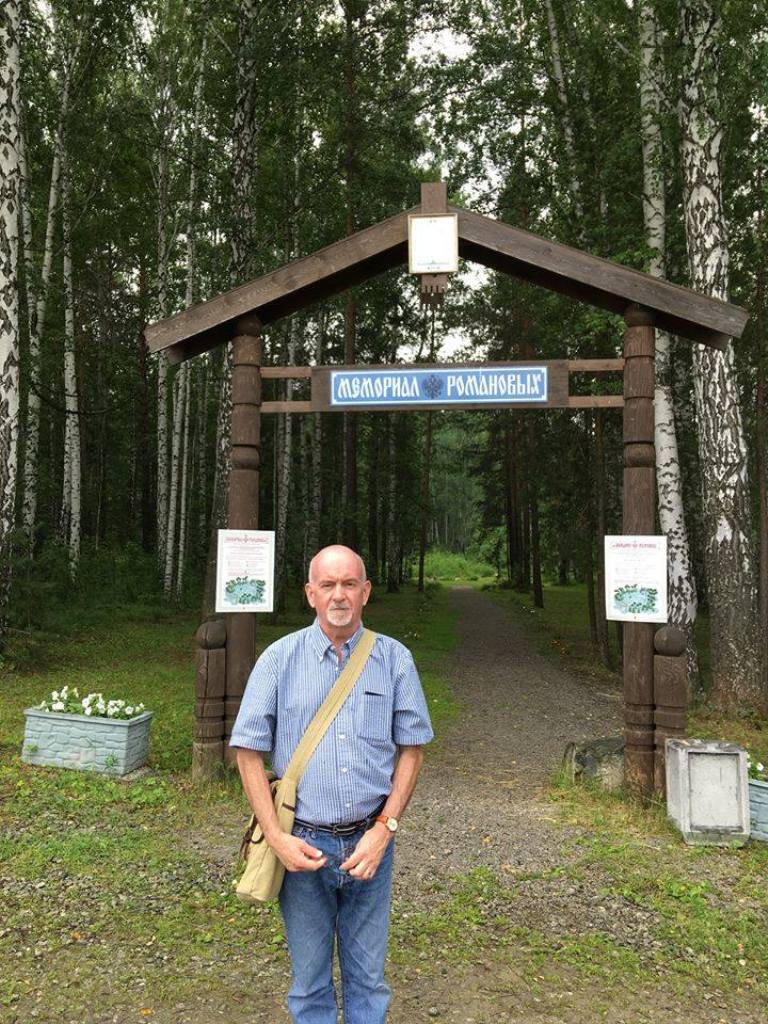
PHOTO: Paul Gilbert standing at the entrance to the Romanov Memorial in July 2018

NOTES:

[1] Ever since the discovery of the Ekaterinburg Remains, the Russian Orthodox Church refuses to accept DNA tests confirming their authenticity. The ROC maintains that the Bolsheviks put the burnt bodies of their 11 victims in a pit in a forest in the Urals region, where the ROC has built a large monastery complex: the Monastery of the Holy Royal Martyrs at Ganina Yama.

FURTHER READING:

104 years on, Orthodox Church still split over murdered tsar’s remains by Paul Gilbert 6th April 2021

The fate of Porosenkov Log and Ganina Yama by Paul Gilbert, 14th February 2022

Will the Bishops Council’s decision on the Ekaterinburg Remains cause a schism within the ROC? by Paul Gilbert, 20th September 2021

30th anniversary of the exhumation of the remains of Nicholas II and his family by Paul Gilbert, 7th July 2021

Bones of Contention: The Russian Orthodox Church and the Ekaterinburg Remains by Paul Gilbert, 23rd November 2021

© Paul Gilbert. 4 March 2023

ROC hierarchs to discuss Ekaterinburg Remains this summer

On 19th July 2023, a bishops’ conference of hierarchs – not to be confused with the Bishops Council – will be held at the Christ the Saviour Cathedral in Moscow on 19th July 2023. Among the topics for discussion will be the Ekaterinburg Remains.

According to the permanent member of the Holy Synod of the Russian Orthodox Church, and head of the Central Asian Metropolitan District, Metropolitan Vincent (Morari) of Tashkent and Uzbekistan, bishops from across Russia and other countries (who will be able to arrive in the Russian Federation) will meet to discuss further the authenticity of the Ekaterinburg Remains. Metropolitan Vincent emphasized, however, that the final decision on the official recognition of the Ekaterinburg Remains by the ROC will be made by the Bishops Council at a later date.

The Bishops’ Council was originally scheduled to meet in Moscow from 15th to 18th November 2021, however, this was delayed “due to the difficult COVID-19 situation.” The meeting was thus rescheduled for 26th to 29th May 2022, but this to was postponed due to Russia’s invasion of Ukraine. Finally, on 25th August 2022, the Holy Synod announced that the Bishops’ Council meeting had been postponed “indefinitely”, citing the “current situation in the world”.

Recall that the Chairman of the Investigative Committee of Russia Alexander Bastrykin reported that the Investigative Committee on the criminal case on the murder of the Imperial Family, which resumed in 2015 conducted 40 new examinations to eliminate any possible gaps and doubts about the remains found near Ekaterinburg. For the first time, the investigation studied materials located in archival funds which had been previously closed to investigators.

New DNA tests were conducted on a hair of Empress Alexandra Feodorovna and the maternal grandmother of Nicholas II, Queen of Denmark Louise of Hesse-Kassel, found by a collector abroad, the results of the examinations became known in January of last year.

In addition, a comparison by geneticists of the remains of Nicholas II and samples from the tomb of his father Emperor Alexander III in the Saints Peter and Paul Cathedral in St. Petersburg by 99.99% showed the probability of their family relationship as that of a son and father. As Bastrykin confirmed, DNA examinations and other studies established that the remains belonged to Emperor Nicholas II and his family.

In January 2022, the head of the Synodal Department for External Church Relations, Metropolitan Hilarion, stated that “Nothing prevents the ROC from recognizing the authenticity of the Ekaterinburg Remains”.

As previously noted, it is only after members of the Bishops’ Council have reviewed the findings of the Investigative Commission, that they will deliver their verdict on the authenticity of the Ekaterinburg Remains.

Sadly, whatever decision the Bishops’ Council makes, it is sure to cause a schism among Believers who are divided on the authenticity of the remains. Many still adhere to Nikolai Alekseevich Sokolov’s (1882-1924) theory that the bodies of the Imperial Family were completely destroyed with fire and acid at the Four Brothers Mine.

***

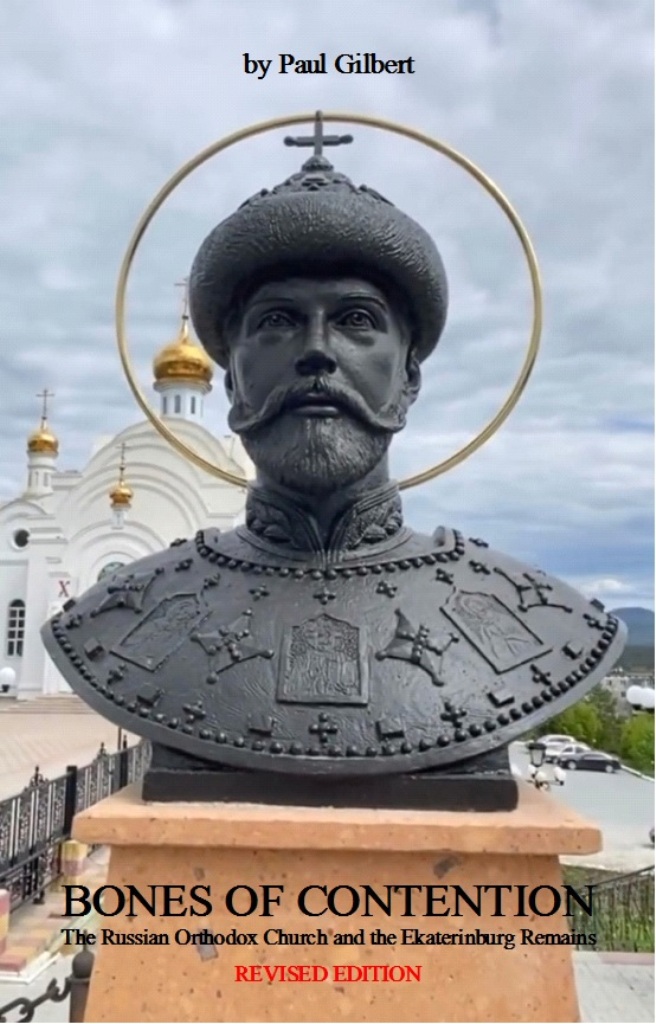
BONES OF CONTENTION (Revised Edition)
The Russian Orthodox Church and the Ekaterinburg Remains
by Paul Gilbert

CLICK HERE TO ORDER FROM AMAZON

Full-colour covers, 206 pages + 90 black & white photographs

Originally published in 2020, this NEW REVISED & EXPANDED 2021 EDITION features an additional 40+pages, new chapters and 90 black and white photos. It is the most up-to-date source on the highly contentious issue of the Russian Orthodox Church and their position on the Ekaterinburg Remains.

The world awaits a decision by the Bishops’ Council of the Russian Orthodox Church, who will meet in Moscow at some point, during which they will review the findings of the Investigative Commission and deliver their verdict on the authenticity of the Ekaterinburg Remains.

The reopening of the investigation into the death of Nicholas II and his family in 2015, caused a wave of indignation against the Russian Orthodox Church. This book presents the position of both the Moscow Patriarchate and the Investigation Committee.

This is the first English language title to explore the position of the Orthodox Church in Russia with regard to the Ekaterinburg remains. The author’s research for this book is based exclusively on documents from Russian media and archival sources.

This unique title features an expanded introduction by the author, and eight chapters, on such topics as the grounds for the canonization of Nicholas II and his family by the Moscow Patriarchate in 2000; comparative details of the Sokolov investigation in 1919, and the investigations carried out in the 1990s to the present; reluctance of the Moscow Patriarchate to officially recognize the remains as authentic; interesting findings of Russian journalist, producer and screenwriter Elena Chavchavadze in her documentary Regicide. A Century of Investigation; and the author’s own attempt to provide some answers to this ongoing and long drawn-out investigation for example: “Will Alexei and Maria be buried with the rest of their family?” and “Will the Imperial Family remains be reinterred in a new cathedral in Ekaterinburg?”.

This new revised and expanded edition also includes two NEW chapters!

Interviews with Vladimir Soloviev, Chief Major Crimes Investigator for the Central Investigate Department of the Public Prosecution Office of the Russian Federation and Archpriest Oleg Mitrov, a member of the Synodal Commission for the Canonization of Saints – BOTH key players in the Ekaterinburg remains case, reveal the political undertones of this to this ongoing and long drawn-out investigation.

ABOUT THE AUTHOR

Independent researcher Paul Gilbert has spent more than 25+ years researching and writing about the Russian Imperial Family. His primary research is focused on the life, reign and era of Nicholas II. On 17th July 1998, he attended the tsar’s interment ceremony at the SS Peter and Paul Cathedral in St. Petersburg. Twenty years later, he attended the Patriarchal Liturgy on the night of 16/17 July 2018, held at the Church on the Blood in Ekaterinburg. Since his first visit to the Urals in 2012, he has brought prayers and flowers to both Ganina Yama and Porosenkov Log on numerous occasions.

© Paul Gilbert. 5 February 2023

Lost Orthodox Churches of Imperial Russia

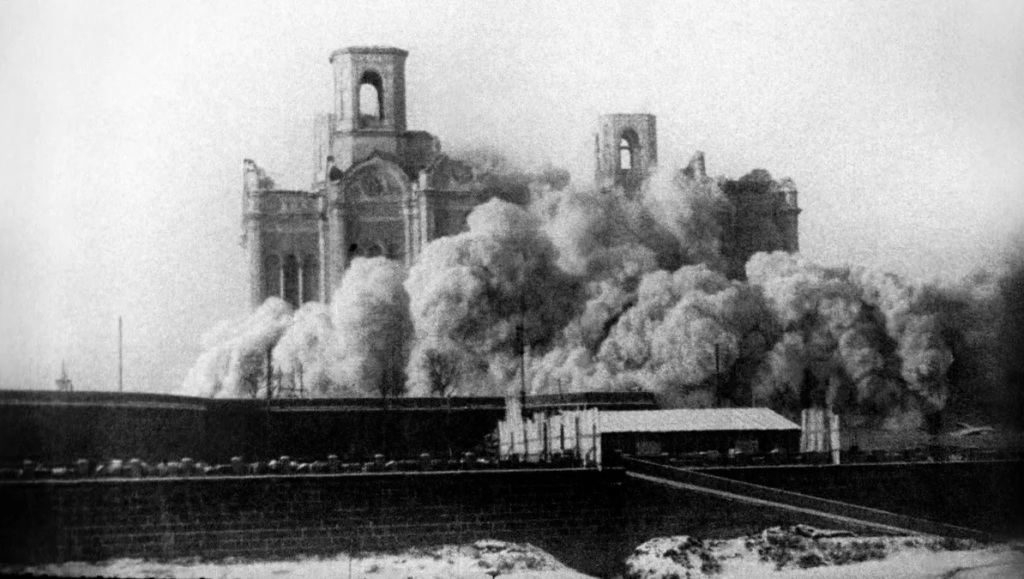
PHOTO: On 5 December 1931, the Cathedral of Christ the Saviour in Moscow was dynamited and reduced to rubble

Unlike many of his predecessors, Emperor Nicholas was devoted to the Russian Orthodox Church. It was upon his ascension to the throne in 1894, that his devotion to the Holy Orthodox Church showed his greatest strength. It was during the reign of Russia’s last Tsar – 1894 to 1917 – that the Russian Orthodox Church reached her fullest development and power.

In 1914, the Russian Orthodox Church consisted of 68 dioceses, 54,923 churches, 953 monasteries, 4 theological academies, 185 religious schools, 40,530 schools and 278 periodicals. The clergy consisted of 157 bishops, 68,928 priests, 48 ​​987 clerics, 21,330 monks in monasteries and 73,229 nuns in convents.

The construction of new churches had the full support of the Emperor, who approved funding for the construction of over 7576 new churches and chapels, and the opening of 211 new monasteries. By the end of Nicholas II’s reign there were 57,000 churches in the Russian Empire.

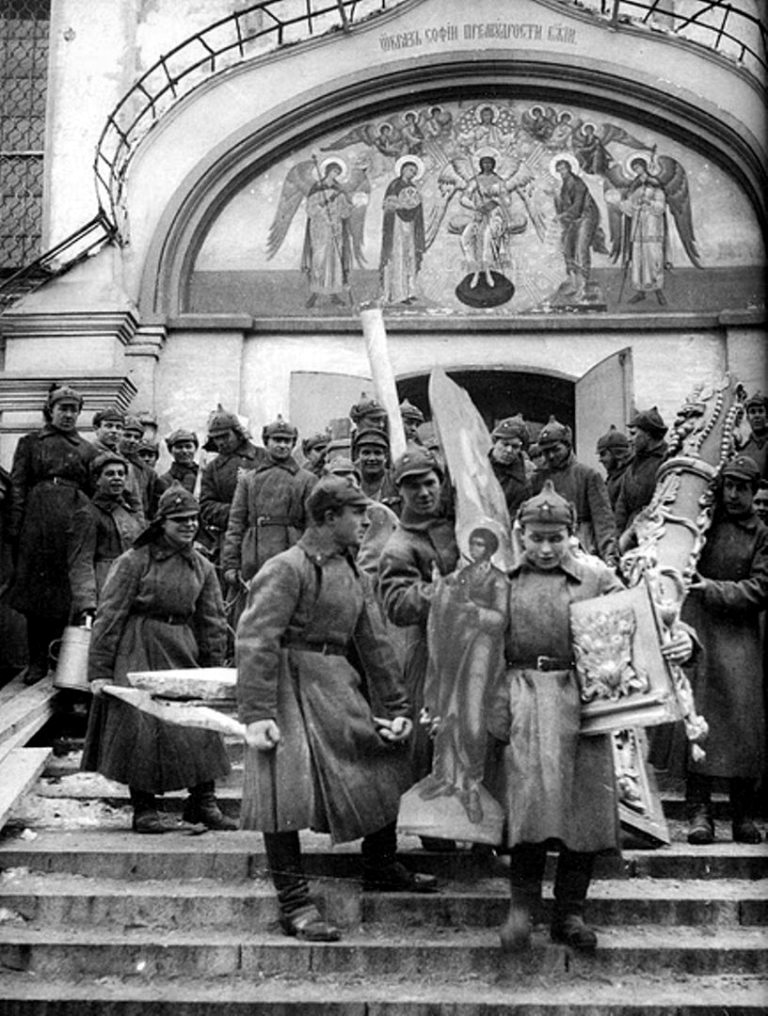
PHOTO: the desecration and looting of Russian Orthodox Churches by Bolshevik thugs and criminals after the 1917 Revolution

Lost Orthodox Churches of Imperial Russia

The Decree on the Separation of Church and State was proclaimed by the Bolsheviks in January 1918. It declared all Church property to be the property of the state. Sanctioned by this licence, Bolshevik squads went round the country desecrating and looting churches and monasteries, mocking religion and religious people unmercifully, even murdering priests, monks, nuns and believers by the thousands.

During the Soviet years, three Anti-religious campaigns were carried out by the Bolsheviks and later the Soviets: 1917–1921; 1921–1928 and 1928-1941, which resulted in the destruction of thousands of cathedrals and churches. Many others were converted to secular use, whereby church buildings were transformed into warehouses, state institutions, cinemas, ice rinks and prisons

Between 1927 and 1940, the number of Orthodox churches in the Russian Republic fell from 29,584 to fewer than 500. In 1987, only 6,893 Orthodox churches and 15 monasteries remained in the USSR.

In this post, I have researched the fate of five randomly picked cathedrals and churches which were destroyed during the Soviet years. It is part of an important large-scale historic project which I have planned for 2023-24 and one, which goes hand-in-hand with my own personal journey to Orthodoxy.

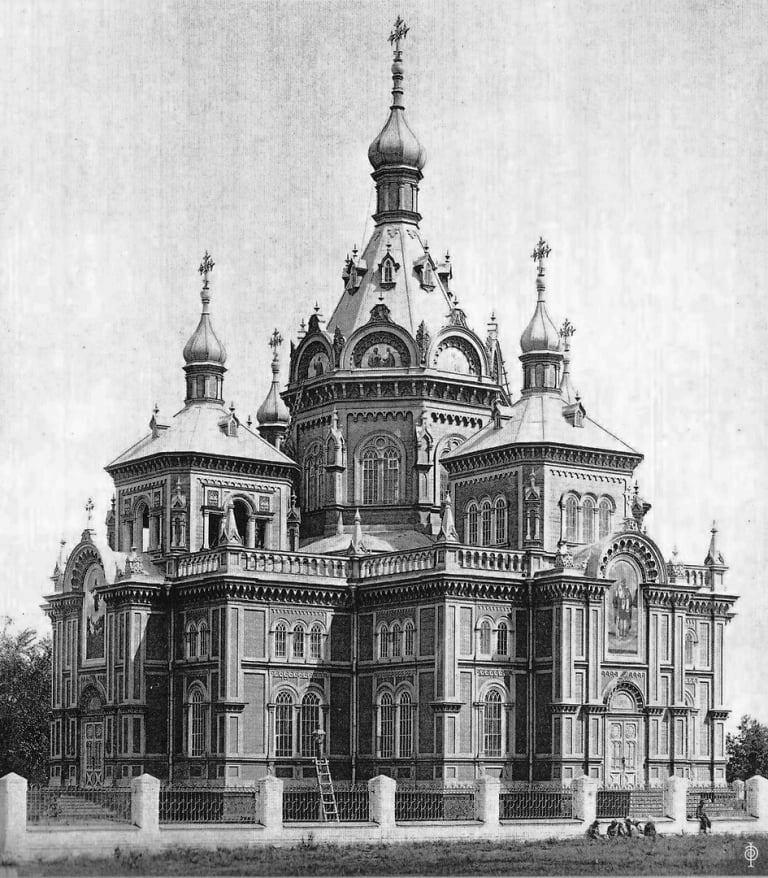
No. 1 – Church of the Transfiguration of the Lord (Bezhitsa)

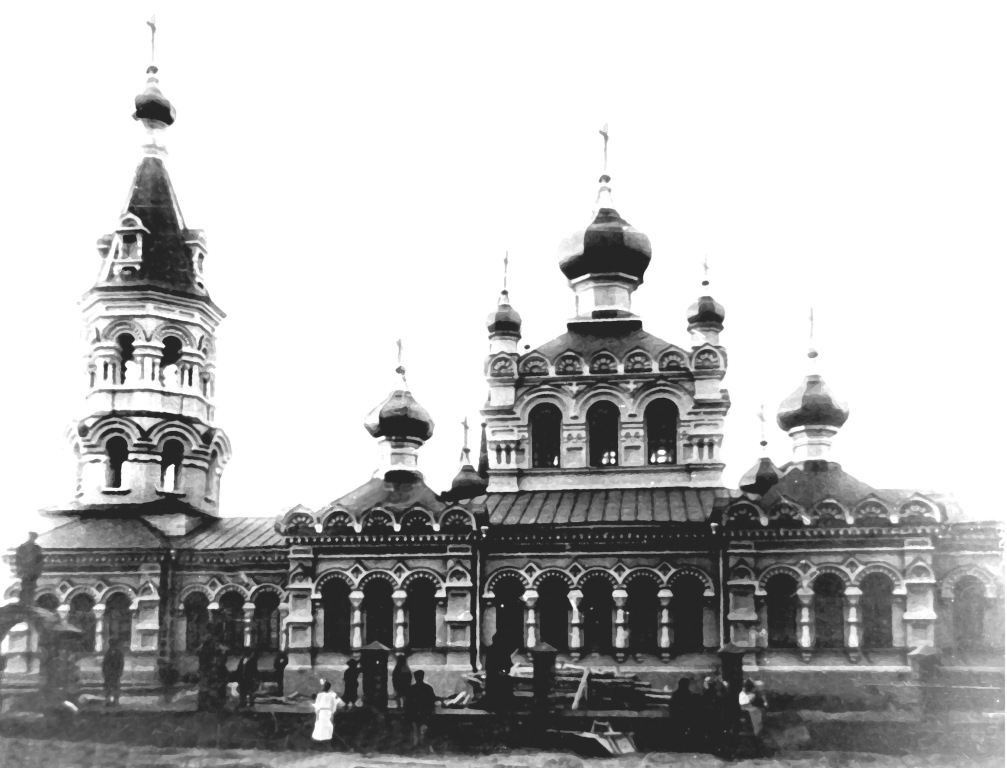
PHOTO: early 20th century view of the Church of the Transfiguration of the Lord

The Church of the Transfiguration of the Lord was built in 1880-1884 in Bezhitsa (now the region of Bryansk), according to the project of the Russian architect Alexander Groener. Construction was paid for by the workers of the Bryansk rail-rolling, iron-making and mechanical plant.

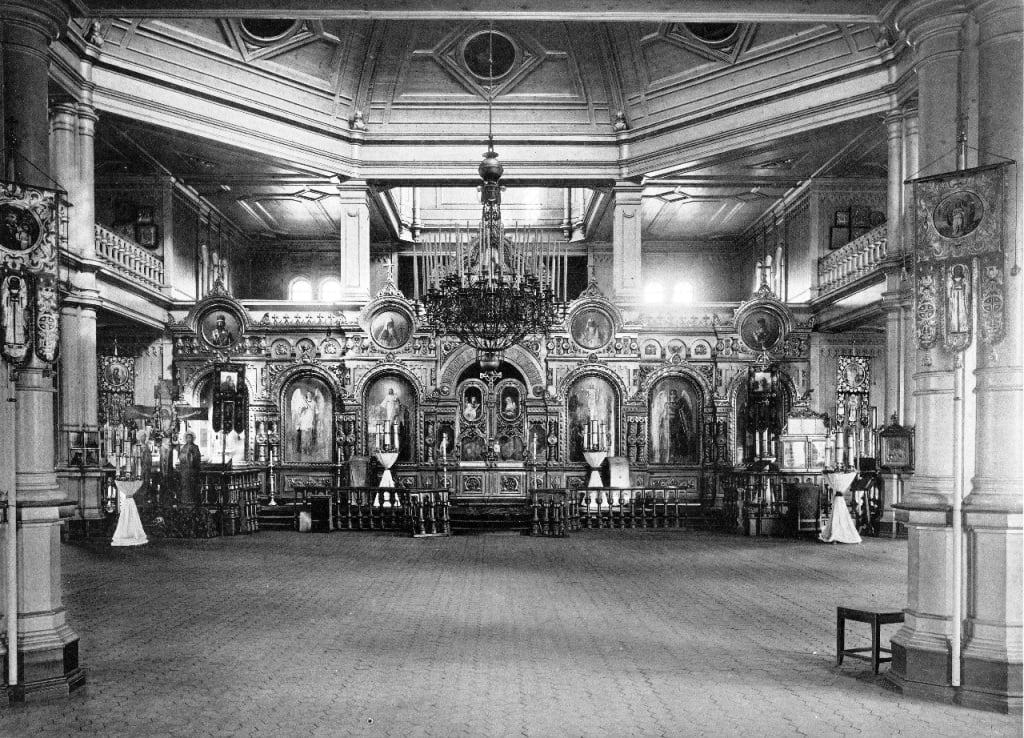
The church was five-domed and cruciform in plan. Its frame had been welded from iron rails and sheathed inside and outside with oak planks. The central part was crowned with a massive illuminated octagon under a tent with a dome. The interior decoration was distinguished by its magnificent splendour.

PHOTO: interior of the Church of the Transfiguration of the Lord in Bezhitsa, 1895.

In 1894, a parish school was built. In 1897 and 1909, two chapels were added.

On 20th April (old style) 1915, the church was visited by Emperor Nicholas II.

In 1929, the church was closed by the Bolsheviks and converted into a circus and later a cinema. In 1933-1935 it was destroyed.

In 1937, the former rector of the church, priest Athanasius Preobrazhensky and priest Simeon Krasovsky, were shot by the Bolsheviks. The former site of the Church of the Transfiguration of the Lord is now a wasteland. Only the building of the almshouse has been partially preserved to this day.

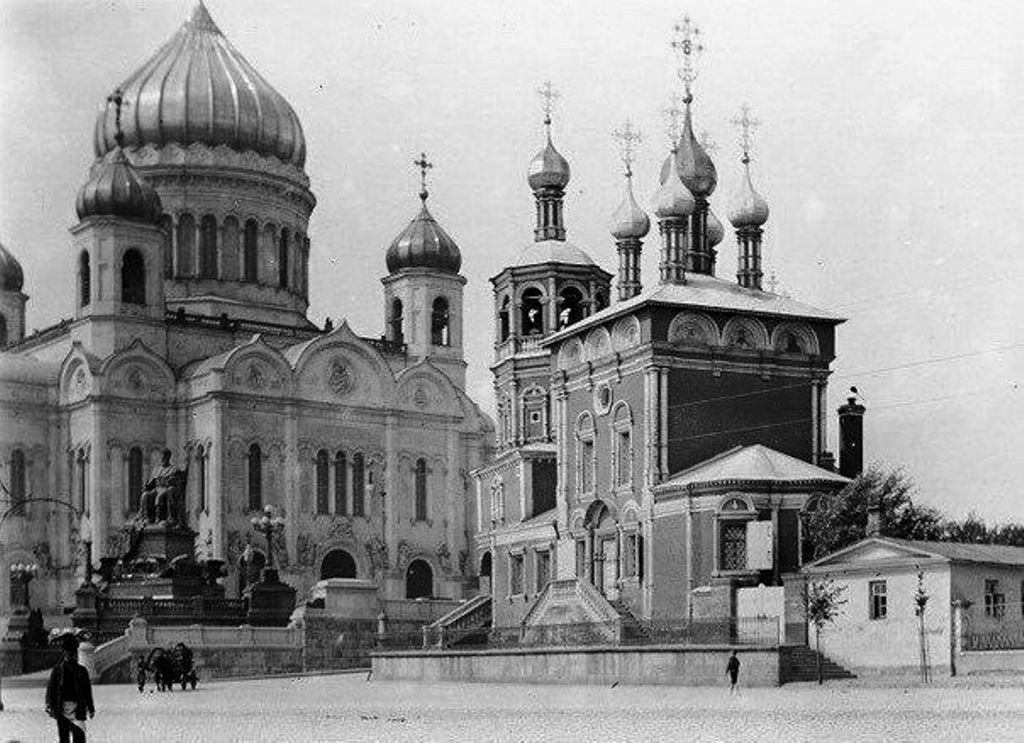
No. 2 – Church of Praise of the Most Holy Theotokos (Moscow)

PHOTO: the Cathedral of Christ the Saviour (left), the Church of Praise of the Most Holy Theotokos (right) and a monument to Emperor Alexander III (also left). Moscow, 1912.

The magnificent monument to Emperor Alexander III was created by the outstanding Russian sculptor Alexander Mikhailovich Opekushin (1838-1923) and opened in 1912 near the Cathedral of Christ the Saviour in Moscow.

Opekushin’s creation was to become one of the first victims of Bolshevik vandalism. The monument to the “Tsar-Peacemaker” was destroyed in 1918.

The fate of the Cathedral of Christ the Saviour in Moscow is well known. When Napoleon Bonaparte retreated from Moscow in 1812, Emperor Alexander I signed a manifesto declaring his intention to build a cathedral in honour of Christ the Saviour “to signify Our gratitude to Divine Providence for saving Russia from the doom that overshadowed Her” and as a memorial to the sacrifices of the Russian people. It was destroyed in 1931 on the order of Soviet leader Joseph Stalin.

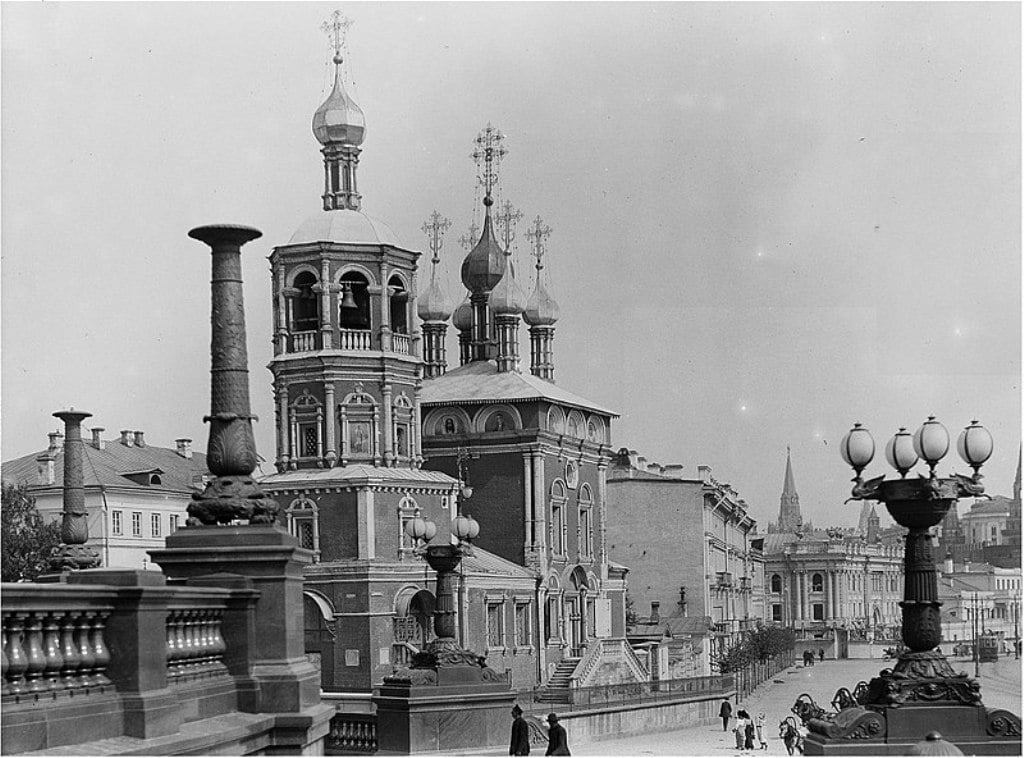
PHOTO: early 20th century view of the Church of Praise of the Most Holy Theotokos

The Church of Praise of the Most Holy Theotokos is lesser known. Originally constructed in the 15th century, it was rebuilt several times. In 1705, the Russian nobleman Dementiy Bashmakov rebuilt a stone church at his own expense. The church was rebuilt with the same external and internal appearance: high, five-domed cupolas, a baroque decor and a rare six-tier iconostasis. The church featured a miraculous icon of St. Nicholas the Wonderworker, to which many pilgrims came to venerate.

The Church of Praise of the Most Holy Theotokos existed until 1932, when it to was demolished.

The demolition of both houses of worship was supposed to make way for a colossal Palace of the Soviets to house the country’s legislature, the Supreme Soviet of the USSR. Construction started in 1937 but was halted in 1941 when Germany invaded the Soviet Union during World War II. Its steel frame was disassembled the following year, and the Palace was never built. In 1960, an enormous outdoor swimming pool was built at the foundation site, which existed until 1994.

Following the dissolution of the Soviet Union, the Cathedral of Christ the Saviour was rebuilt on the site between 1995 and 2000. There are no plans to reconstruct either the Church of Praise of the Most Holy Theotokos or the monument to Emperor Alexander III.

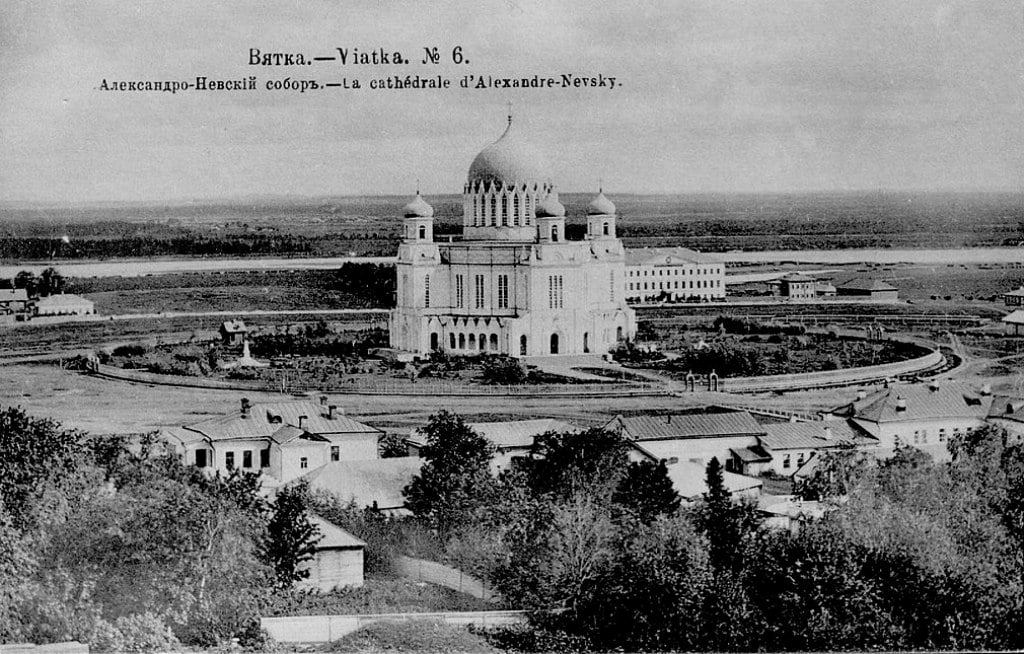
No. 3 – Alexander Nevsky Cathedral (Vyatka)

PHOTO: the Alexander Nevsky Cathedral in Vyatka

The Alexander Nevsky Cathedral in Vyatka [renamed Kirov in 1934], was founded on 30th August 1839 in memory of the visit to the city by Emperor Alexander I (1777-1825) in 1824.

The construction of the cathedral was funded by voluntary donations in the amount of 120 thousand rubles, collected over 40 years. Work was carried out by the Russian architect of Swedish origin Alexander Lavrentievich Vitberg (1787-1855).

Completed and consecrated on 8th October 1864, the cathedral combined features of different styles: Romanesque of the Middle Ages, elements of Gothic, and the interior in the Old Russian and late Empire styles.

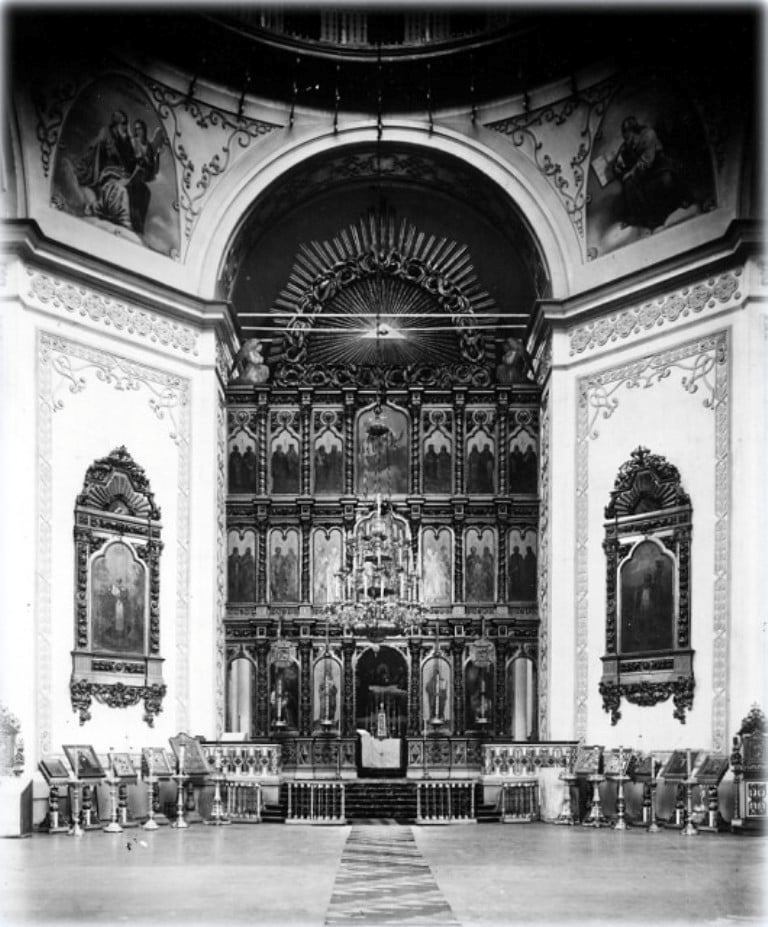
PHOTO: the main iconostasis of the Alexander Nevsky Cathedral in Vyatka

The construction of the main iconostasis was completed in 1858, the carving in 1859. The committee contracted Academician Gorbunov and artist Vasilyev from St. Petersburg to make the icons for the main iconostasis. The icons were brought to Vyatka in 1863, and the following year, in 1864, the main iconostasis was gilded.

In 1895, a large public garden was built around the cathedral, surrounded by a cast-iron lattice fence. Four gates to the cardinal points were named after four Russian emperors – Nicholas I, Alexander II, Alexander III and Nicholas II. In 1896, a bronze bust of Emperor Alexander III (1845-1894), cast in St. Petersburg, and mounted on a tall marble pedestal was installed in the northern part of the garden. In 1905, electric lighting was installed in the cathedral.

In June 1937, at the insistence of the Presidium of the City Council and the Regional Executive Committee, and permission of the All-Russian Central Executive Committee, the Alexander Nevsky Cathedral was removed from the list of architecture protected by the state and was blown up.

For thirty years the square of the cathedral sat empty, and it was only in the 1960s, that the Kirov Regional Philharmonic was constructed on the site of the once magnificent Alexander Nevsky Cathedral.

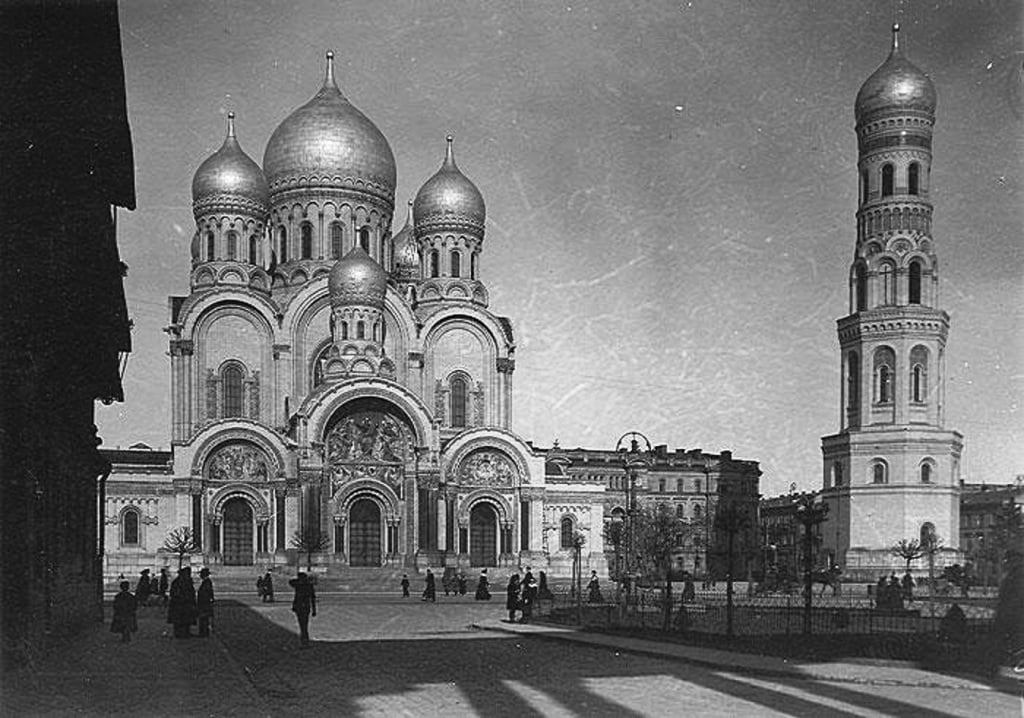
PHOTO: the Alexander Nevsky Cathedral in Warsaw

No. 4 – Alexander Nevsky Cathedral (Warsaw)

The Alexander Nevsky Cathedral in Warsaw was built on Saxon Square (later renamed Pilsudski Square) in the Kingdom of Poland (then part of the Russian Empire). The cathedral, designed by the distinguished Russian architect Leon Benois (1856-1928), was built between 1894 and 1912. Upon completion, the bell tower of the cathedral reached a height of 70 m [230 ft.], making it the tallest building in Warsaw at the time.

The idea of building a large Orthodox cathedral in Warsaw was expressed in a letter from the Governor General of Poland, Joseph Vladimirovich Gourko, to Emperor Alexander III (1845-1894). He indicated that the Orthodox churches in Warsaw at that time were able to accommodate less than one tenth of the city’s 42,000 Orthodox residents, who urgently needed a new place of worship.

Alexander III gave his approval to fund the cathedral, a significant part of the funds needed were raised by personal donations from almost every corner of the Russian Empire.

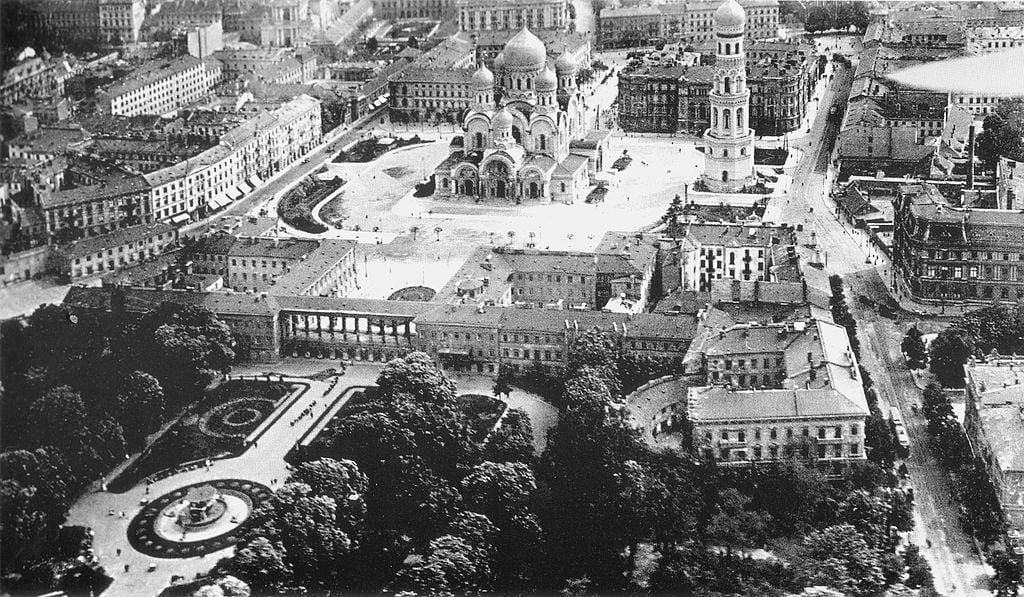
PHOTO: aerial view of Saxon Square in Warsaw and the Alexander Nevsky Cathedral

Work on the interior of the cathedral, designed by Nikolay Pokrovsky (1848-1917), continued for another 12 years. The frescoes were painted by Viktor Vasnetsov (1848-1926). The cathedral was decorated with 16 mosaic panels designed by Vasnetsov and Andrei Ryabushkin (1861-1904). The decorations of the cathedral used precious and semi-precious stones extensively, marble, and granite. The altar was decorated with jasper columns, donated by Emperor Nicholas II. The largest of the 14 bells was the fifth-largest in the Russian Empire.

The main chapel of the cathedral was solemnly consecrated on 20th May 1912, by the Metropolitan of Kiev and Galich Flavian (Gorodetsky) in the name of St. Prince Alexander Nevsky.

At the beginning of 1915, during the First World War, the Russian population was evacuated from the city along with the Orthodox clergy. The iconostasis and the most valuable details of the interior decoration were removed from the Alexander Nevsky Cathedral.

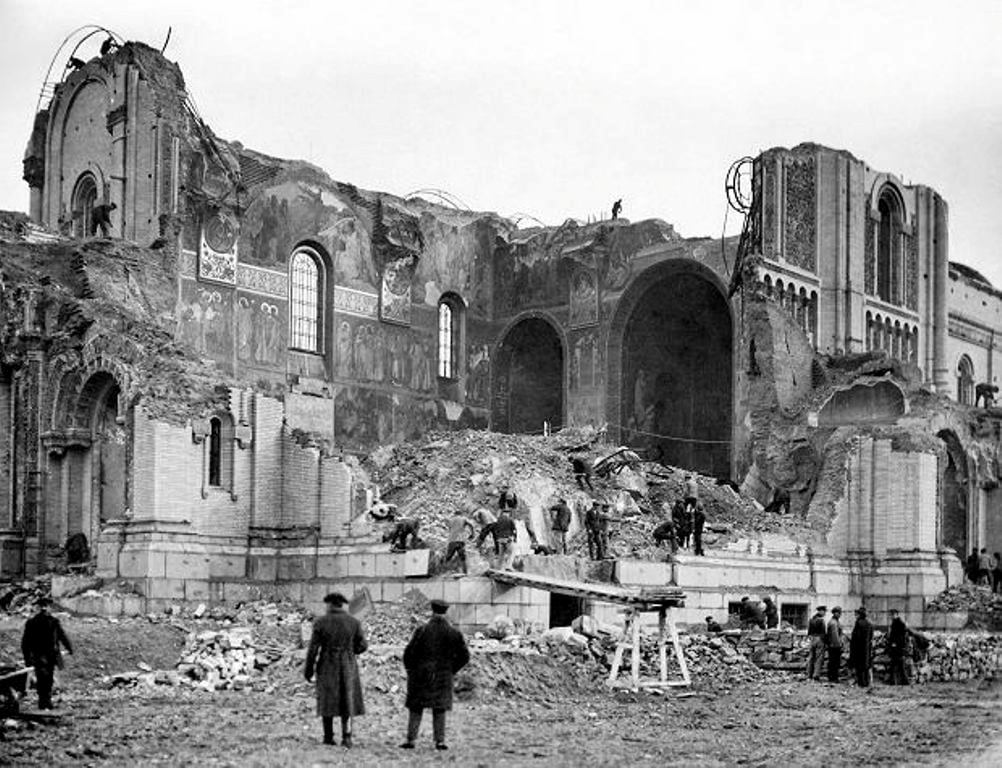
PHOTO: view of the Alexander Nevsky Cathedral after its demolition in the 1920s

The Alexander Nevsky Cathedral was demolished in 1924–1926 – along with all but two Orthodox churches in Warsaw – by the Polish authorities less than 15 years after its construction. The demolition itself was complex, and required almost 15,000 controlled explosions.

The negative connotations in Poland associated with Russian imperial policy towards Poland, was cited as the major motive for its demolition. The cathedral shared the fate of many Orthodox churches demolished after Poland regained its independence from Russia.

No. 5 – Alexander Nevsky Cathedral (Moscow)

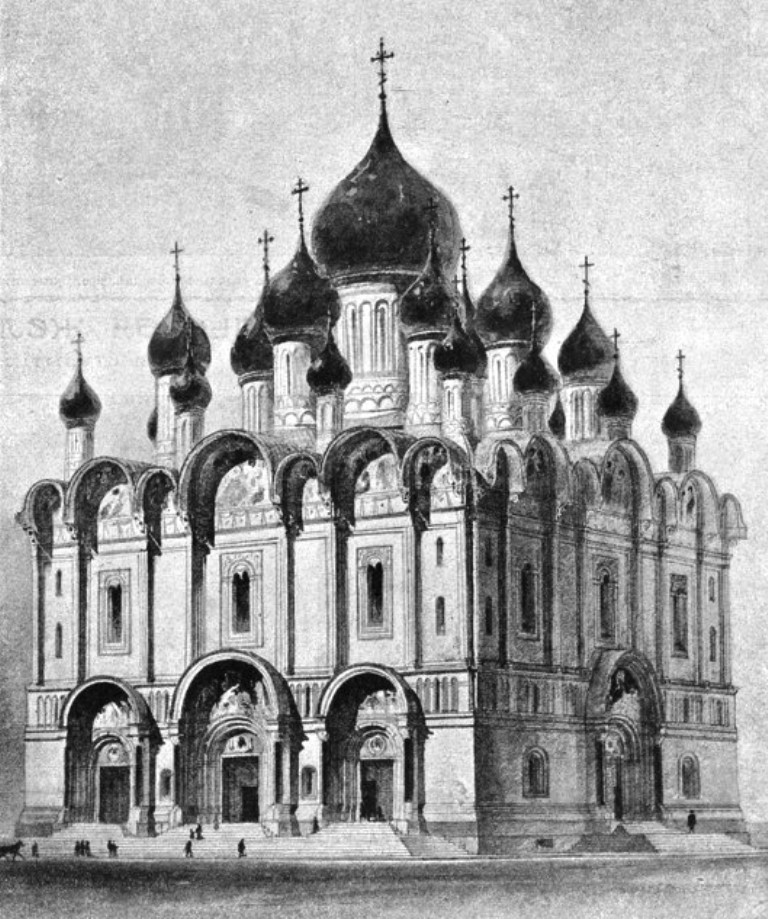
PHOTO: architect’s drawing of the Alexander Nevsky Cathedral, 1904

The Alexander Nevsky Cathedral in Moscow was the largest of a series of cathedrals erected in Imperial Russia in commemoration of Alexander Nevsky, the patron saint of Emperors Alexander II and Alexander III.

The creation of the project was entrusted to the architect Alexander Nikonorovich Pomerantsev (1849-1918), who executed it in the Old Russian style according to the sketches of the artist Viktor Mikhailovich Vasnetsov (1848-1926), as a 70-metre-tall memorial to Alexander II’s Emancipation reform [the liberation of peasants from serfdom] in 1861.

In 1894, Emperor Nicholas II approved a plan to place the Alexander Nevsky Cathedral on Miusskaya Square on a site donated to him by the city authorities. The foundation stone of the votive church was laid in 1911, on the 50th anniversary of the Emancipation Manifesto, in the presence of Grand Duchess Elizabeth Feodorovna. Construction did not start until 1913, and the First World War impeded further progress.

The first chapel was dedicated to St. Tikhon of Voronezh in 1915, Divine Liturgies were performed here until 1920.

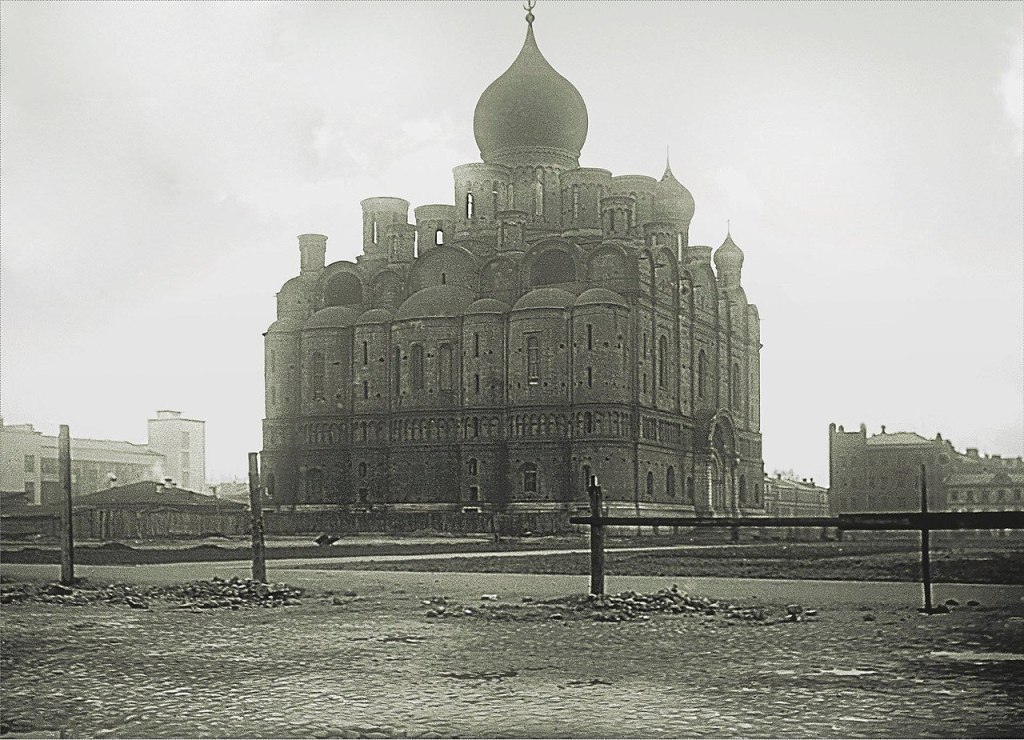
PHOTO: the abandoned Alexander Nevsky Cathedral as it looked in 1921

After the Russian Revolution, the huge 17-domed church [one unconfirmed source cites 21 domes] capable of accommodating more than 4,000 persons stood unfinished, while the Soviets debated whether to have it reconstructed into a crematorium or a radio centre. The building were used as a warehouse for storing the rolled up 115-meter canvas of the Borodino Panorama and parts of the dismantled Triumphal Arch.

The cathedral stood abandoned on Miusskaya Square for many years. The dilapidated concrete shell was eventually torn down in 1952. A Pioneers Palace was constructed – now the Palace of Creativity of Children and Youth – on the old foundation in 1960.

© Paul Gilbert. 26 January 2023
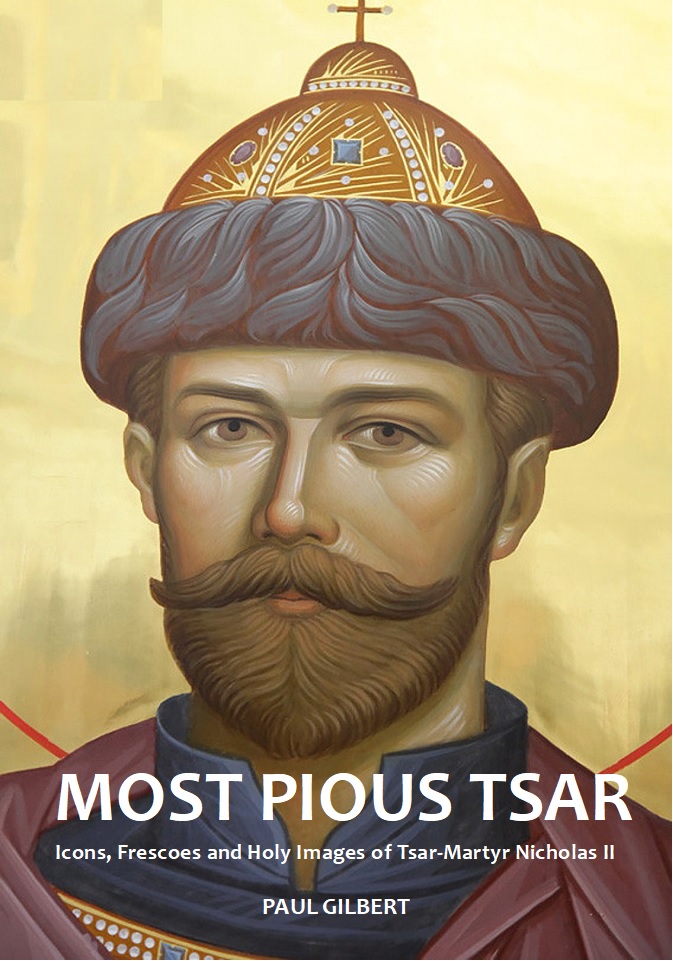
Why Nicholas II Is Glorified As a Saint

by Ruslan Ward @ Russian Faith

People often ask why Tsar Nicholas II and his family were canonized by the Russian Orthodox Church. The controversy reached a new high following the release of the controversial film ‘Matilda’ in Russia in 2017. Many people still question the sainthood of Tsar Nicholas II because of their criticism of his political and personal actions. The Russian television channel Tsargrad.TV released a video explaining the canonization. This article written by Ruslan Ward is based on a translation of the arguments in the video. It also complements the video material with other sources. 


Following the social upheaval caused by the Russian film “Matilda” in 2017, the timeworn question surfaced yet again: Why did the Russian Church canonize Tsar Nicholas II as a saint?

Some people are doubtful, saying: What kind of saint was he? He rejected the throne, destroyed the country, was a weak ruler, etc.

Though many of these accusations are actually inaccurate stereotypes, whether they’re true or not is irrelevant in this instance.

Let’s review, once again, how Christians understand “sainthood” and why the Church made the decision to name Nicholas II a saint. 

A saint is NOT a person who never sinnedA saint is definitely not someone who never made mistakes.

The Bible directly states that no man has ever lived, who has not sinned – Ecclesiastes 7:20: Surely there is no righteous man on earth who does good and never sins. Indeed, there is no one on earth who is righteous, no one who does what is right and never sins. Not a single person on earth is always good and never sins.

A saint is someone who always strains towards God, becomes near to God, and, by the strength of God’s Grace, defeats evil in himself and in the surrounding world.

The Russian Orthodox Church has different categories for saints, that offer explanation what particular aspect of that person’s life made them pleasing and similar to Christ.

Here are a few examples: 

  • The Holy Martyrs are people who were faced with the choice between keeping their own lives and being faithful to Christ. They chose faith to Christ and lost their lives.
  • The Confessors are people who openly preached the faith during persecutions.
  • The Holy Unmercenaries are saints who exhibited extraordinary charity and generosity in the name of the Christian faith

In the Russian Orthodox Church, Nicholas II and his family were canonized (made saints) as Passion-bearers[1]. A Passion bearer is someone who faced his death in a Christ-like manner.

Passion-bearers die and suffer not for the explicit reason that they are Christians. They are people who were killed innocently, with no fault, but yet maintained an attitude of Christian meekness and love towards their persecutors and murderers, thus fulfilling God’s commandment.

An example of this love, of this meek approach to ones’ torturers, was given to us by Christ Himself.

Having been completely innocent on the Cross of Golgotha, Christ pronounced the words that totally changed the course history of humanity, offering a radically different approach to one’s enemies. The soldiers that had just crucified Christ were standing around the cross. They didn’t understand at all what had just happened, they didn’t understand WHO was dying on the Cross. They sat around the scene of violence and suffering, and threw lots for would take which article of Christ’s clothing home.

Yet Christ said “Lord, forgive them. They know not what they do.”

Emperor Nicholas and his entire family meekly, patiently accepted their unfair persecution, the surrounding unjust criticism and hate, the harsh treatment they received, and their violent, brutal death.

It’s well known that the Emperor was offered the chance to leave the country, to escape a horrifying end and save his own life and the life of other members of the family. But he consciously decided not to. He consciously remained in the country; he believed it was his duty. 

Nicholas II and his family have been named saints, because they accepted their sufferings and trials in a Christian manner; because they met death at the hands of those, who were moved by hatred and anger, with Christlike love and patience.

On the eve of the terrifying murder in Ipatyev house, Nicholas II’s eldest daughter, the Grand Duchess Olga wrote.

“Father asks the following message to be given to all those who have remained faithful to him, and to those on whom they may still have influence, that they should not attempt to take revenge for him, since he has forgiven everyone and prays for everyone. He wants them to remember that the evil which is now in the world will be become still stronger, but that evil will never conquer evil , but only Love…”

It was precisely for the reason of their unconquerable meekness, patience, and love, that the Tsar’s family are saints. Not for their political actions, not how saintly or “right” their lives were, but for how they met their horrible end: with Christian love and faith.

More about how they treated their trials and the people who hated and purposely tortured them from an article on Pravmir:

In Ekaterinburg they spent three hellish months of psychological torture – and yet they all retained their inward calm and state of prayer, so that not a small number of their tormentors were softened by these valiant Christian strugglers.

As Pierre Gilliard, the French tutor to the Tsarevich Alexis recalled:

“The courage of the prisoners was sustained in a remarkable way by religion. They had kept that wonderful faith which in Tobolsk had been the admiration of their entourage and which had given them such strength, such serenity in suffering.

They were already almost entirely detached from this world. The Tsaritsa and Grand Duchesses could often be heard singing religious airs, which affected their guards in spite of themselves.

Gradually these guards were humanised by contact with their prisoners.

They were astonished at their simplicity, attracted by their gentleness, subdued by their serene dignity, and soon found themselves dominated by those whom they thought they held in their power.

The drunken Avdiev found himself disarmed by such greatness of soul; he grew conscious of his own infamy. The early ferocity of these men was succeeded by profound piety.”

When this would happen, the inhuman Bolsheviks would replace the guards who had been so touched with crueller and more animalistic ones.

Seldom being allowed to go to church, they nevertheless nourished their souls with home prayers and greatly rejoiced at every opportunity to receive the Divine sacraments.

Three days before their martyrdom, in the very house in which they were imprisoned, there took place the last church service of their suffering lives.

As the officiating priest, Fr. John Storozhev, related:

“‘It appeared to me that the Emperor, and all his daughters, too, were very tired. During such a service it is customary to read a prayer for the deceased. For some reason, the Deacon began to sing it (which is usually done in memorial services for the reposed), and I joined him…As soon as we started to sing, we heard the Imperial Family behind us drop to their knees’ (as is done during funeral services)…

Thus they prepared themselves, without suspecting it, for their own death – in accepting the funeral viaticum.

Contrary to their custom none of the family sang during the service, and upon leaving the house the clergymen expressed the opinion that they ‘appeared different’ – as if something had happened to them.”

Not only the Tsar, but the whole of his blessed family, met their fate with truly Christian patience. Thus on March 13,1917, the Tsarevich Alexis wrote to his sister Anastasia:

“I will pray fervently for you and Maria. With God everything will pass. Be patient and pray.”

Shortly after the abdication the Empress said: “Our sufferings are nothing. Look at the sufferings of the Saviour, how He suffered for us. If this is necessary for Russia, we are ready to sacrifice our lives and everything.”

And again: “I love my country, with all its faults. It grows dearer and dearer to me… I feel old, oh, so old, but I am still the mother of this country, and I suffer its pains as my own child’s pains, and I love it in spite of all its sins and horrors… Since [God] sent us such trials, evidently He thinks we are sufficiently prepared for it. It is a sort of examination… One can find in everything something good and useful – whatever sufferings we go through – let it be. He will give us strength and patience and will not leave us. He is merciful. It is only necessary to bow to His will without murmur and wait – there on the other side He is preparing for all who love Him indescribable joy.

NOTES:

[1] The Moscow Patriarchate canonized the family as passion bearers: people who face death with resignation, in a Christ-like manner, as distinguished from martyrs, the latter historically killed for their faith. Proponents cited the piety of the family and reports that the Tsarina and her eldest daughter Olga prayed and attempted to make the sign of the cross immediately before they died.

The term “passion-bearer” is used in relation to those Russian saints who, “imitating Christ, endured with patience physical, moral suffering and death at the hands of political opponents. In the history of the Russian Church, such passion-bearers were the holy noble princes Boris and Gleb (1015), Igor of Chernigov (+ 1147), Andrei Bogolyubsky (+ 1174), Mikhail of Tverskoy (+ 1318), Tsarevich Dimitri (+ 1591). All of them, by their feat of passion-bearers, showed a high example of Christian morality and patience.

Despite their official designation as “passion-bearers” by the August 2000 Council, Nicholas II and his family are referred to as “martyrs” in Church publications, icons, and in popular veneration by the people.

*On 1st November 1981, Emperor Nicholas II, his wife, their five children and four faithful retainers were canonized as new martyrs by the Russian Orthodox Church Outside Russia (ROCOR),

© Ruslan Ward @ Russian Faith. 11 December 2022

“Whoever loves the Tsar and Russia loves God” – Father Guryanov

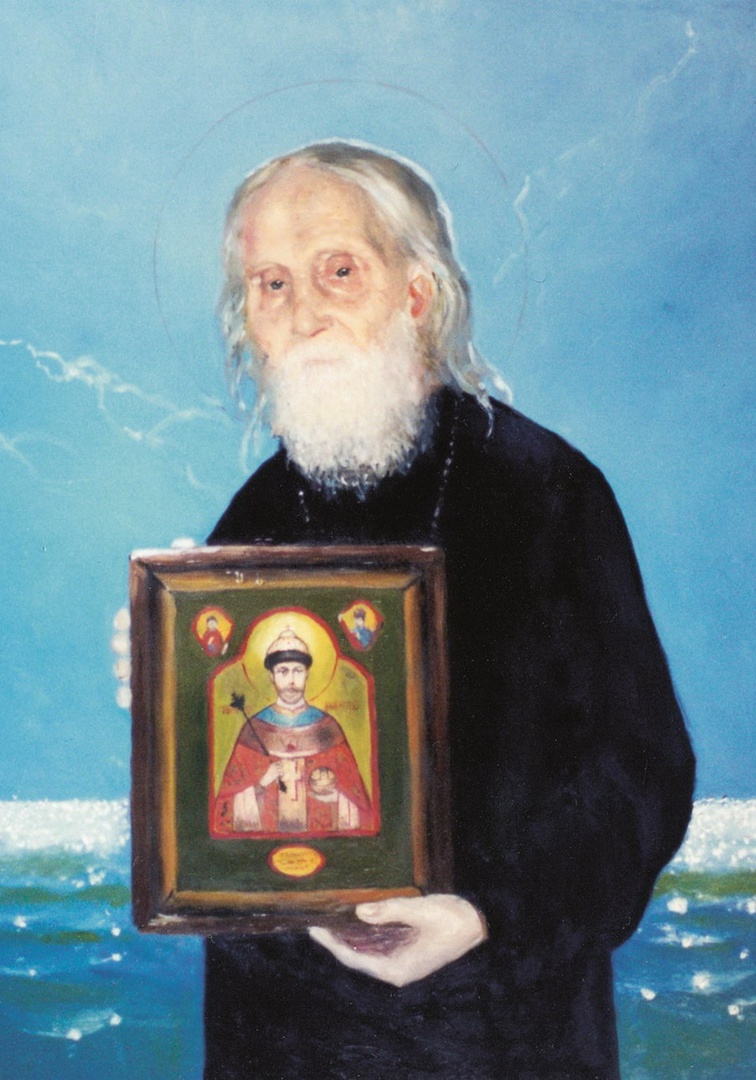
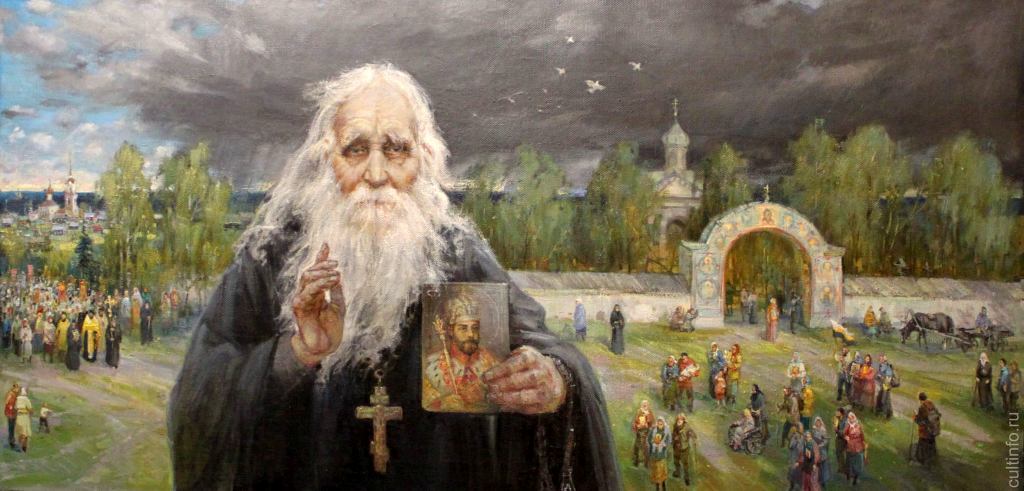
PHOTO: Father Nikolai (Guryanov), holding a portrait of Tsar Martyr Nicholas II,
painted in 2017 by the contemporary Russian artist Vladimir Latyntsev

“Whoever loves the Tsar and Russia loves God” – Father Guryanov

Nikolai Alekseevich Guryanov (1909-2002), is regarded as one of the most revered elders of the late 20th – early 21st centuries. He is greatly respected by Orthodox Christians and Russian Monarchists for keeping the memory of Emperor Nicholas II alive, during the Soviet years.

He was born on 24th May 1909, into a peasant family in Chudskiye Zakhody (now the village of Zakhody), a village situated in the Gdovsky District of the Pskov Oblast. Nikolai’s father, Alexei Ivanovich Guryanov, was the regent of the church choir, died in 1914. The elder brother, Mikhail Alekseevich Guryanov, taught at the St. Petersburg Conservatory; younger brothers, Peter and Anatoly, also had musical abilities. All three brothers died in the First World War (1914-18). Nikolai’s mother, Ekaterina Stepanovna Guryanova, helped her son in his labours for many years.

Nikolai’s father died in 1914. His mother lived a long life, she died on 23rd May 1969, and was buried in the cemetery on Zalit Island, situated on the Zalitsky Islands, located in the south-eastern part of Lake Pskov, 25 km northwest of Pskov.

From childhood, Nicholas served at the altar in the church of Michael the Archangel. As a child, Metropolitan Veniamin (Kazan) visited the parish . Father Nikolai recalled this event in the following way: “I was still a boy. Vladyka served, and I held his staff. Then he hugged me, kissed me and said: “How happy you are that you are with the Lord …“.

Teacher, prisoner, priest 

From 1958, Father Nikolai served as rector of St. Nicholas Church for 44 years, until his death in 2002. Orthodox Christians came from all over the country for spiritual support.

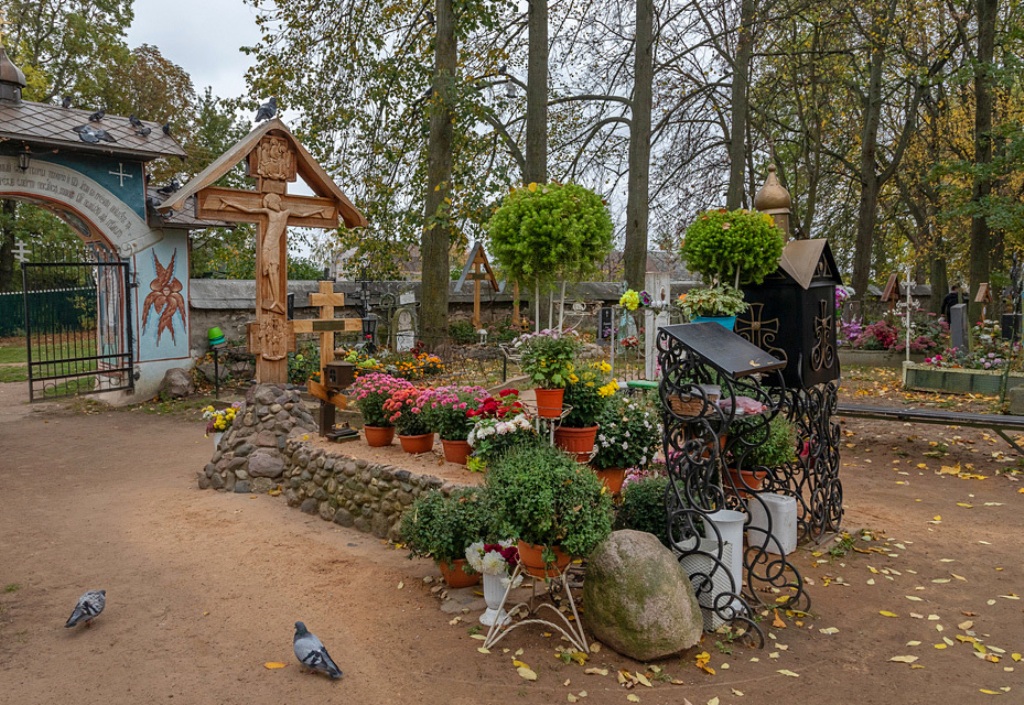
Next to the church stands a cross erected in memory of the service Nikolai Guryanov provided to the Russian Orthodox community.

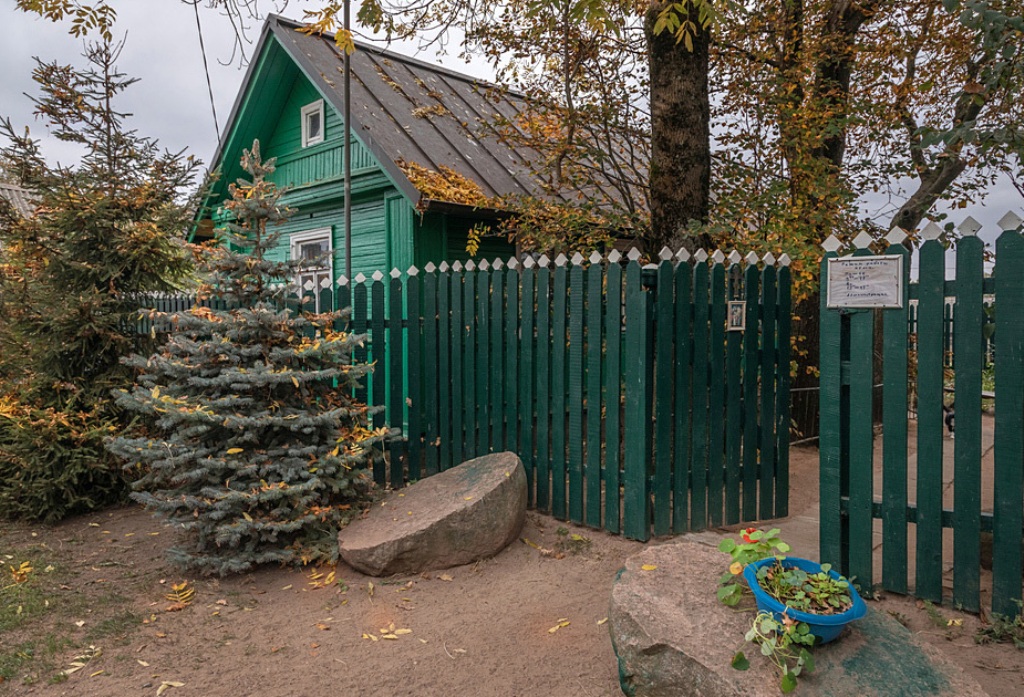
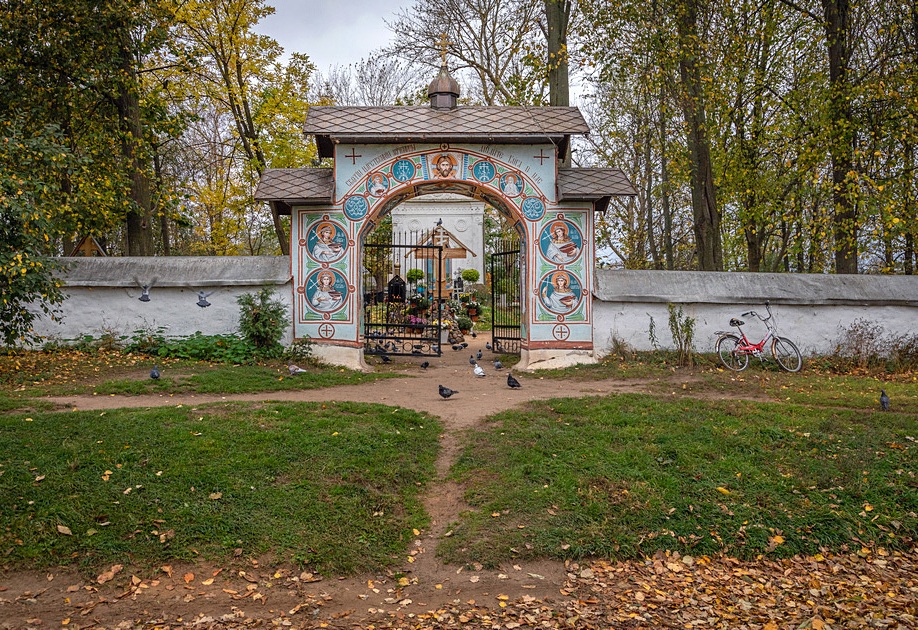
PHOTO: the home of Father Nikolai (Guryanov) in Ostrov-Zalit, on the island of Talabsk

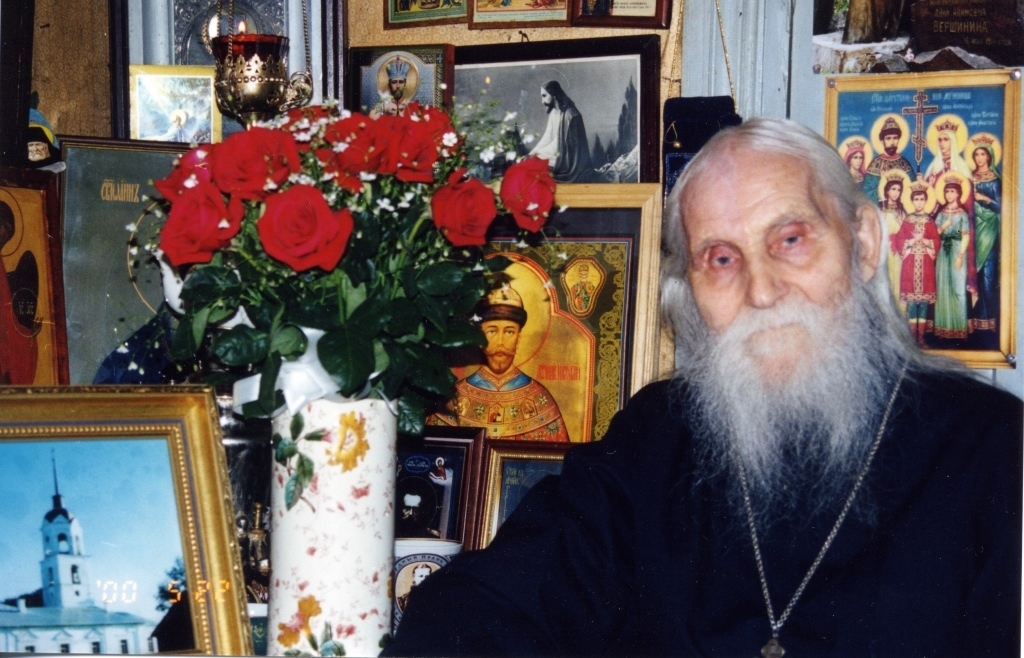
PHOTO: Father Nikolai (Guryanov) at his tiny home in Ostrov-Zalit

PHOTO: the cemetery in Ostrov-Zalit, on the island of Talabsk, where Father Nikolai (Guryanov) is buried

PHOTO: the grave of Father Nikolai (Guryanov), at the cemetery in Ostrov-Zalit, on the island of Talabsk

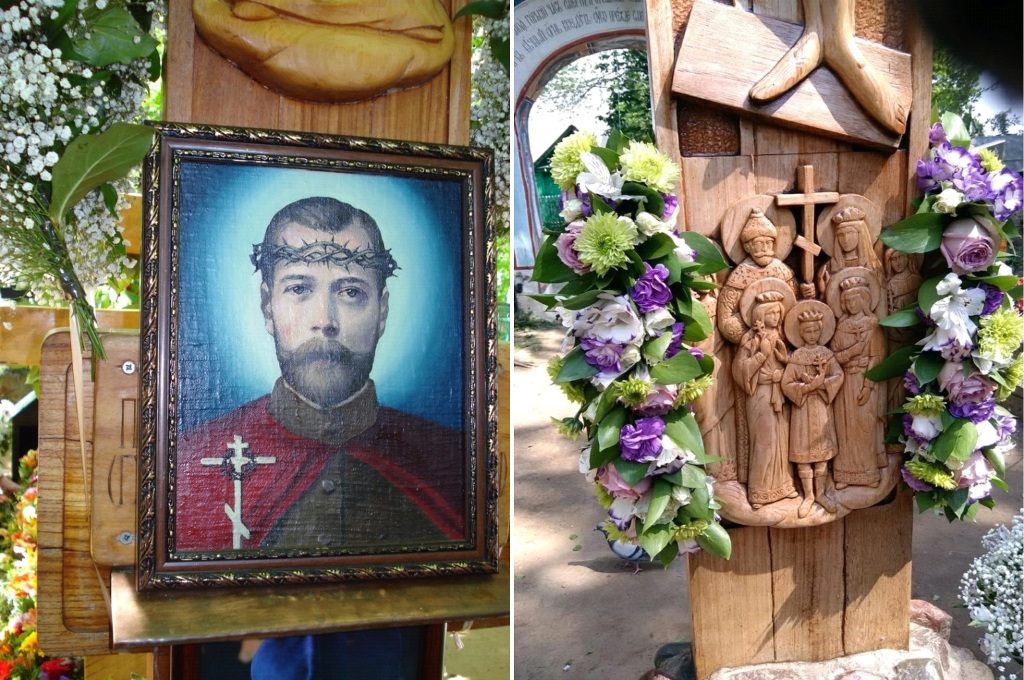
PHOTO: a framed portrait of Tsar-Martyr Nicholas II wearing a crown of thorns, and a wooden carving depicting the Holy Royal Martyrs, adorn the grave of Father Nikolai (Guryanov)

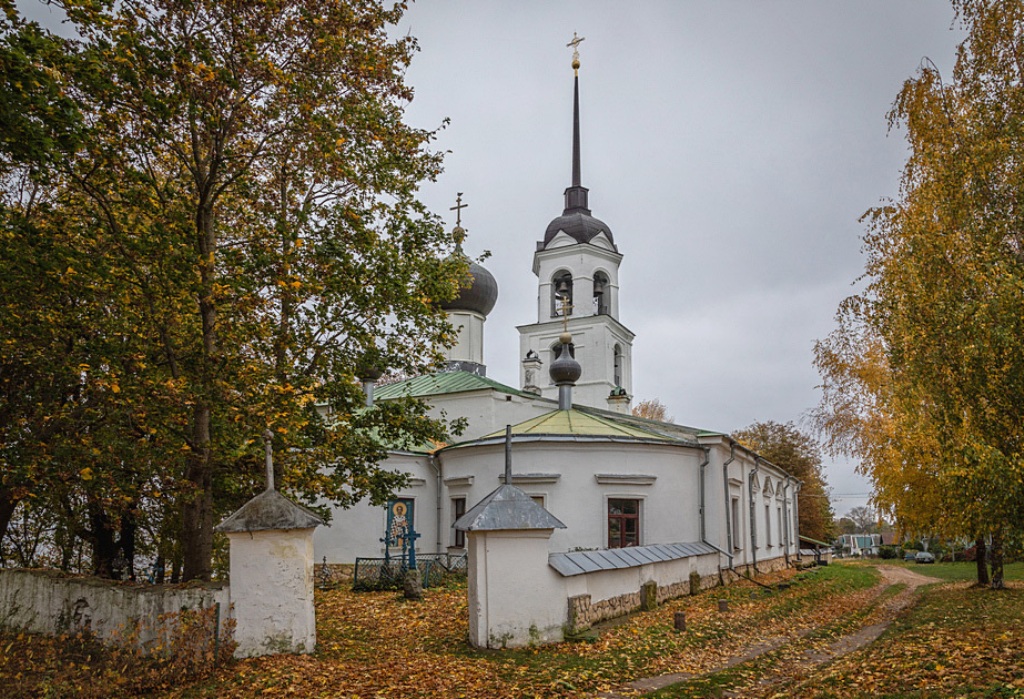
PHOTO: the 18th century Church of St. Nicholas the Wonderworker, in Ostrov-Zalit, on the island of Talabsk, where Father Nikolai (Guryanov) served as rector for 44 years

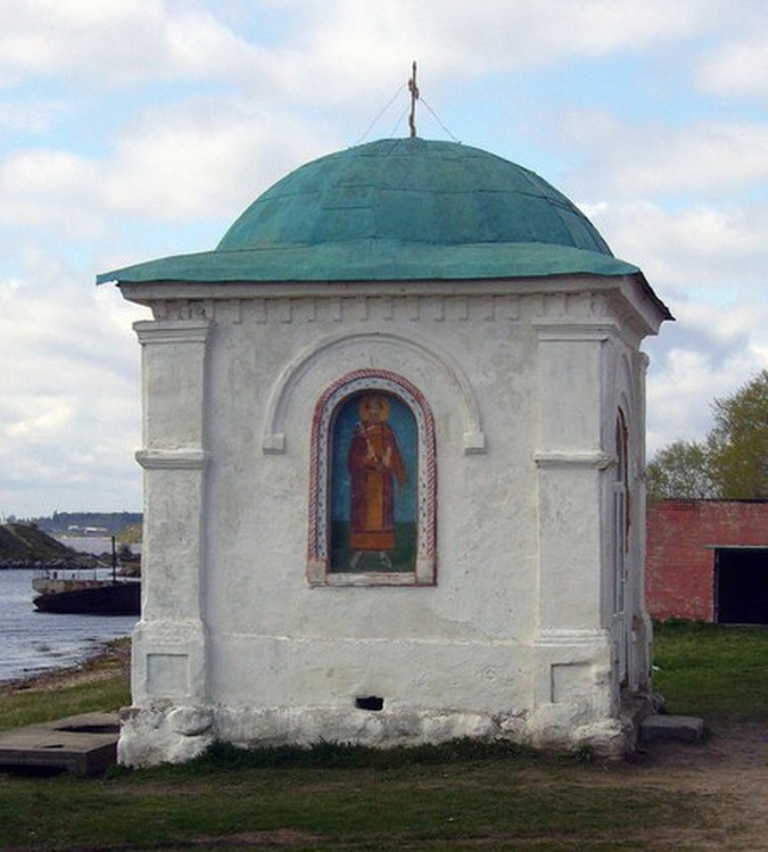
PHOTO: the Chapel of St. Nicholas depicting the fresco (below) Tsar-Martyr Nicholas II – Redeemer of Russia

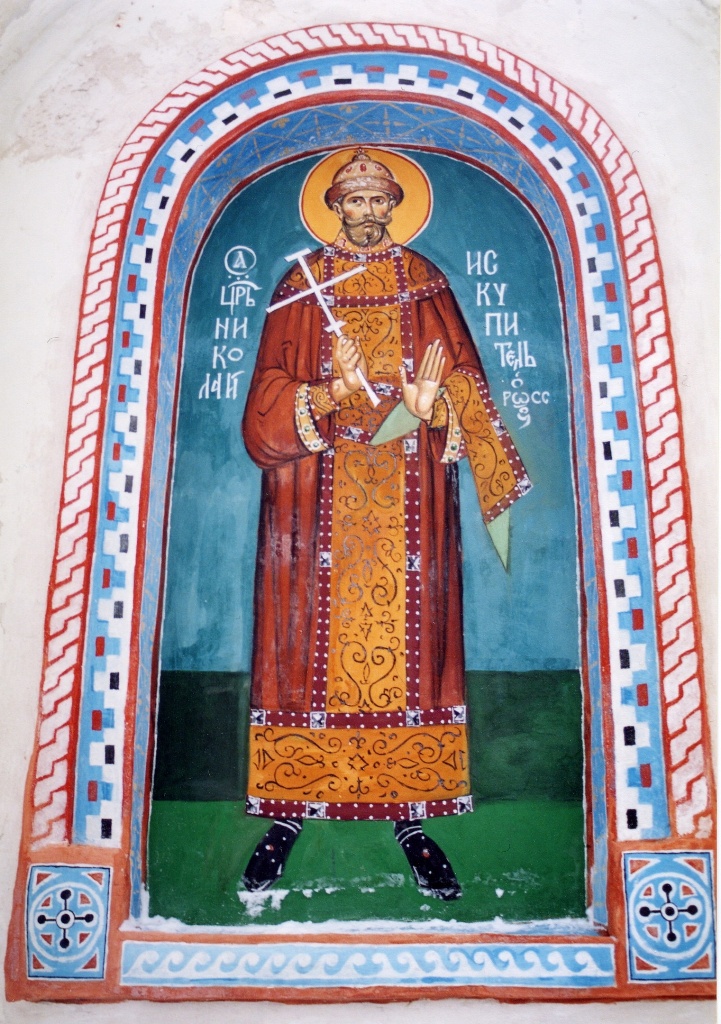
PHOTO: Fresco depicting Tsar-Martyr Nicholas II – Redeemer of Russia – located on the façade of the Chapel of St. Nicholas.

Veneration of the Holy Royal Martyrs

During his life, Father Guryanov’s room was filled with photos and images of Nicholas II and family. He kept albums, films, and documentaries about the last Russian Tsar. Guryanov also honoured Grigori Rasputin.

Father Nikolay had the gift of foresight: not only did he predicted the collapse of communism, he also predicted the canonization of Emperor Nicholas II and his family by the Russian Orthodox Church.

According to Father Guryanov, Nicholas II said The Jesus Prayer to himself daily: “Lord Jesus Christ, Son of God, have mercy on me, a sinner.”

“The sword of a terrible war constantly hangs over Russia, and only our prayers to the Holy Tsar-Martyr Nicholas will take away the wrath of God from us. We must ask the Tsar that there should be no war. He loves and pities Russia. If only you knew how He cries for us!” – Father Nikolai (Guryanov) – 1909-2002

© Paul Gilbert. 27 November 2022

Russia’s only church built in honour of Nicholas II’s Coronation

PHOTO: view of the Holy Trinity Church, built in the Neo-Russian style in the village of Bolshaya Martynovka

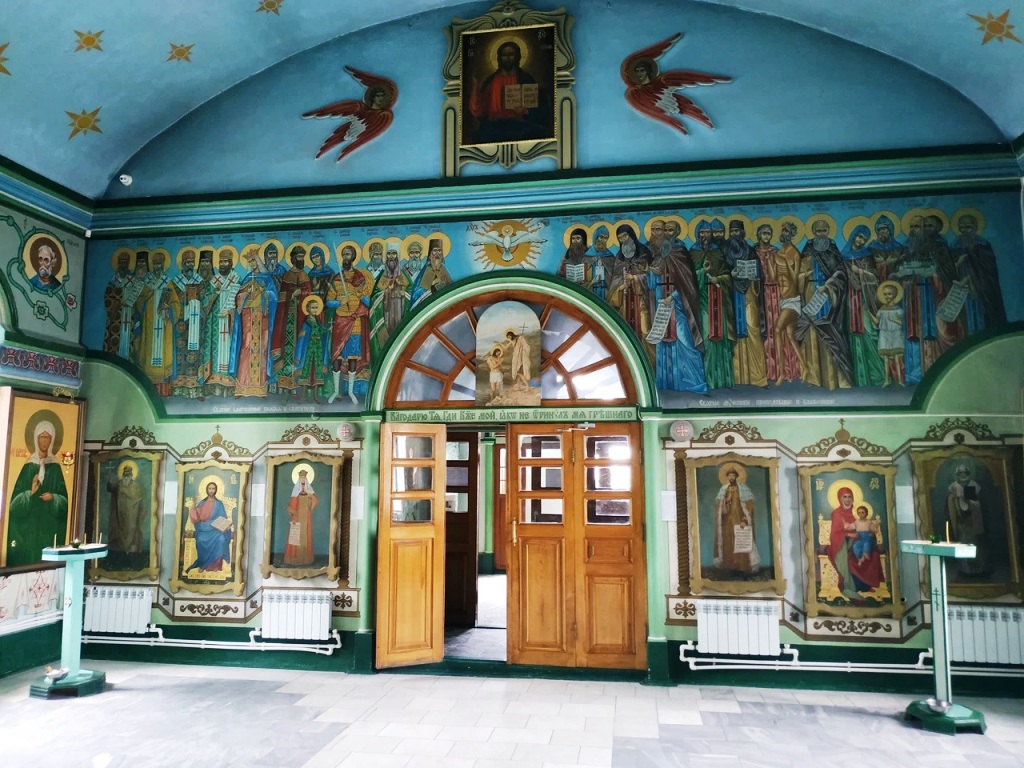
The beautiful Holy Trinity Church, in the village of Bolshaya Martynovka, Rostov Oblast, was built in the Neo-Russian style[1], it is the only church in Russia constructed in honour of the Coronation of Emperor Nicholas II, held in Moscow on 27th May (O.S. 14th) May 1896.

The Holy Trinity Church was built on the site of the original wooden church, built in 1799, which consisted of a parish school, a hostel for pilgrims, a priest’s house, as well as service and outbuildings. In May 1895, the inhabitants of Bolshaya Martynovka decided to demolish the old wooden church, and in its place build a new stone church.

The site of the new church was consecrated on 14th (O.S.) May 1896, on the day of the Coronation of Emperor Nicholas II. The first stone of the buildings foundation was laid the next day.

For the construction of the new church, the inhabitants made 300 thousand baked bricks, collected 3 thousand measures of grain and raised about 15 thousand rubles, which was then an impressive amount. Unfortunately, this money was not enough and in 1900, the residents were forced to turn to the diocesan authorities with a request to allow them to collect additional donations. Their request was granted and by 1902, the additional funds had been collected, which allowed construction to resume.
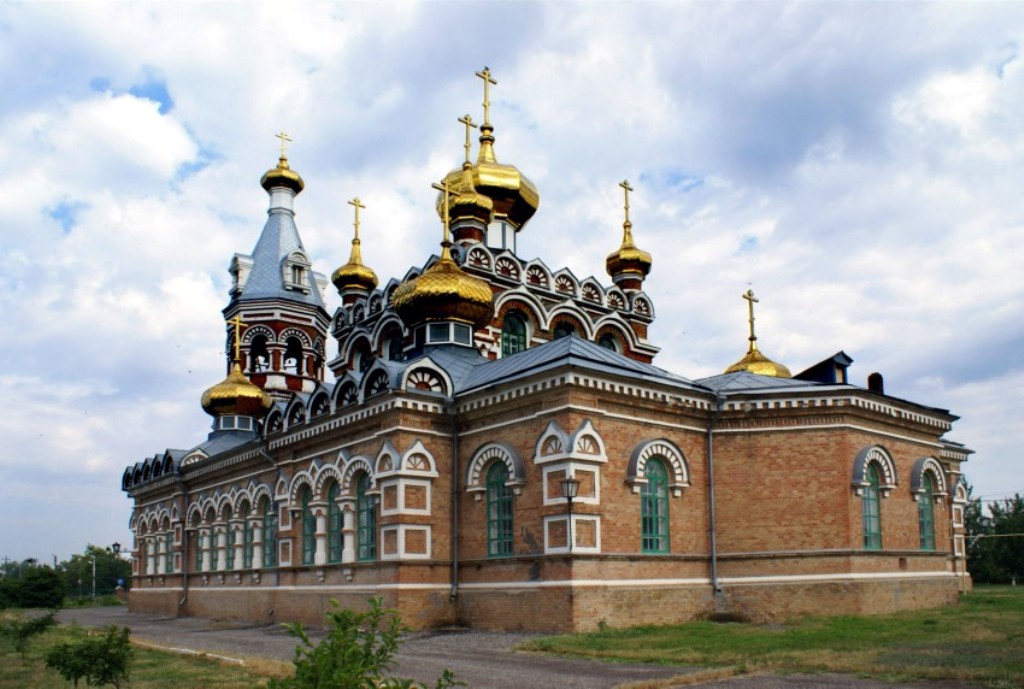
PHOTO: early 20th century view of the Holy Trinity Church in the village of Bolshaya Martynovka

The Holy Trinity Church was completed in 1904. It consisted of three chapels: the central one – in the name of the Holy Trinity, the right one – in the name of the Holy Tsarina Alexandra[2], the left – in the name of St. Nicholas the Wonderworker[3].

According to local residents, the renowned Russian opera singer Feodor Chaliapin (1873-1938) visited Bolshaya Martynovka on two separate occasions. The first time was in 1904, shortly after the consecration Holy Trinity Church. It was during this visit that Chaliapin sang along with the church choir. His second visit occurred during the Russian Civil War, when he came to visit the local landowner Suprunov. It was during this visit that Chaliapin was almost shot, having been mistaken for a bourgeois, due to his attire, which included a luxurious fur coat and hat. A singer of the church choir recognized the opera singer and saved him from execution.

In 1930 the Soviets ordered the Holy Trinity Church closed. Local residents recall how Bolshevik thugs broke the iconostasis, destroyed the domes, removed the bells and threw them in the river, and plastered over the unique frescoes made by the icon painter Elisey Grigoryevich Cherepakhin (1837-1922). In the years which followed, the former church housed a granary, a convoy and an MTS workshop, and from 1951, a utility warehouse.

When the building was returned to the Russian Orthodox Church in 1991, the artists who began the restoration discovered bullet holes made by drunken Bolsheviks some 60 years earlier.

In 1991, the Holy Trinity Church was returned to the Russian Orthodox Church and restoration began, which was completed in 2004. In 2013, the windows of the church were replaced and heating installed, while a beautiful garden was planted on the grounds surrounding the church. According to Father Vladimir, additional restoration work is ongoing.

Situated near the church is a small brick chapel commemorating the martyrdom of Emperor Alexander II[4].

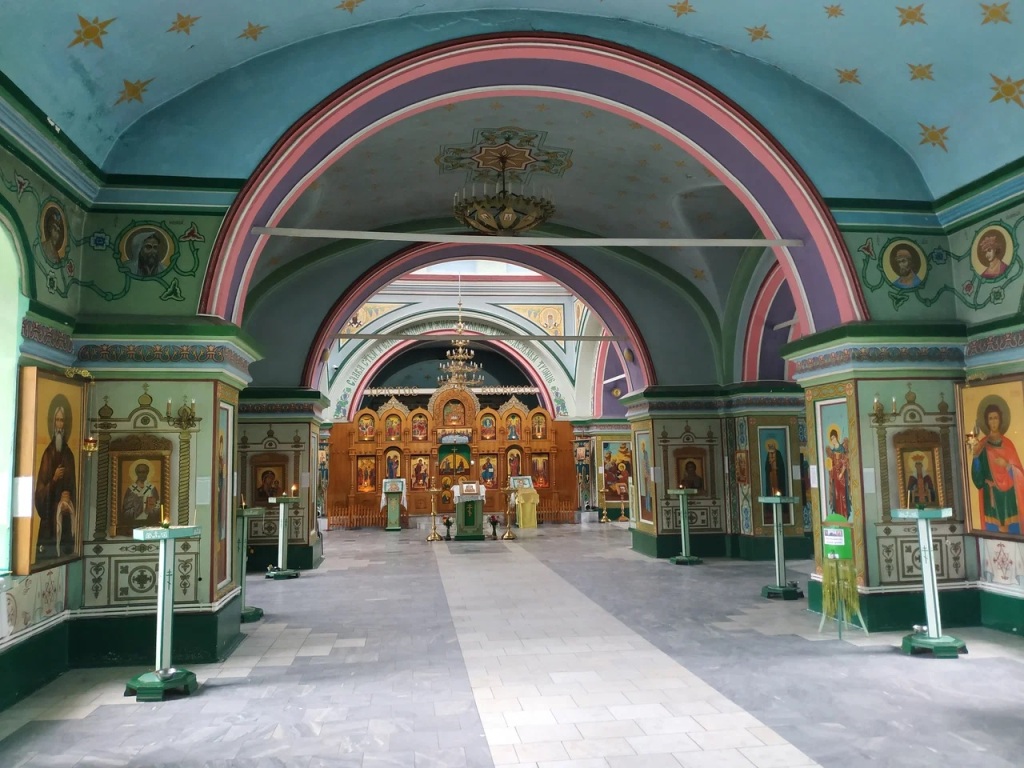
PHOTO: views of the interior of the Holy Trinity Church, showcasing it’s frescoes and icons (above) and view of the main iconostasis of main central chapel (below)

The Holy Trinity Church exists today only thanks to donations, which, unfortunately, are not enough and the abbot has to ask for financial assistance for the upkeep of the church from local business representatives. Today, the church is once again open to locals for prayer and worship, but there are few parishioners who attend. About 50 people attend the service on weekends. The relics of Paul of Taganrog, the Great Martyr Timothy and the Matrona of Moscow are even kept in the church.

Despite the fact that the Holy Trinity Church in Bolshaya Martynovka is recognized as a historical and cultural monument of the 19th century, the rector of the church Father Vladimir notes that church is virtually unknown to pilgrims and tourists visiting the region, as it is not even listed in any tourist guide. In addition, the village Bolshaya Martynovka [pop. 6,000] has no hotels or places where one could eat and rest.

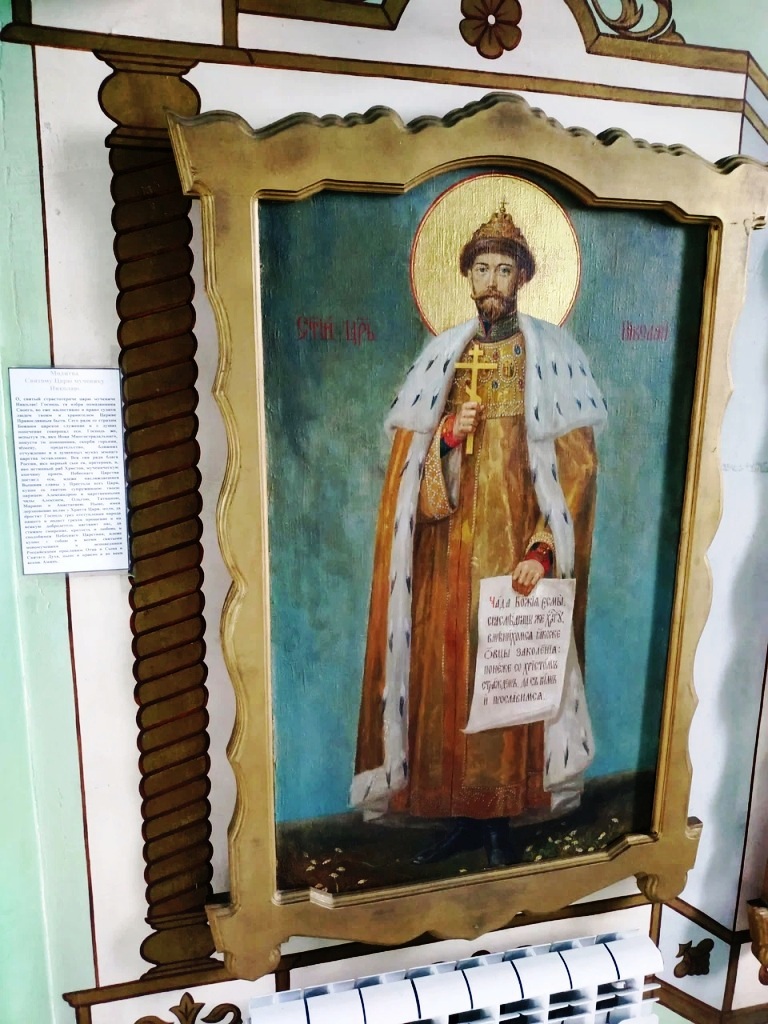
PHOTO: icon depicting the Holy Tsar-Martyr Nicholas II, located in the chapel of of St. Nicholas the Wonderworker, located in the Holy Trinity Church, in Bolshaya Martynovka

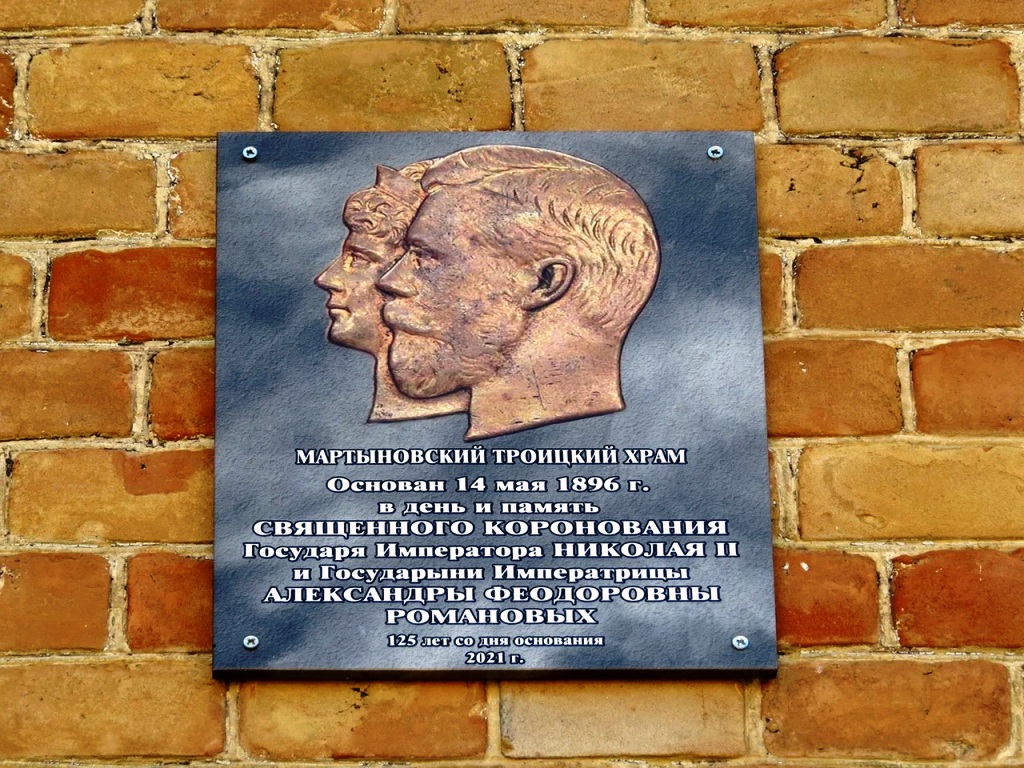
On 14th May 2021, a memorial plaque (above) was installed on the facade of the Holy Trinity Church, bearing the images of Emperor Nicholas II and Empress Alexandra Feodorovna. The plaque marks the 125th anniversary of the founding of the church and the historic Coronation in 1896. The inscription reads:

The Holy Trinity Church
was founded on 14 May 1896
on the day and memory of the
sacred coronation of
Sovereign Emperor Nicholas
and Sovereign Empress
Alexandra Feodorovna
Romanov
125 years from the date of foundation 2021

© 12 November 2022

NOTES:

[1] Neo-Russian style is also referred to as Russian Revival, Pseudo-Russian, or Russian Byzantine style: a number of different movements within Russian architecture that arose in the second quarter of the 19th century and was an eclectic melding of Byzantine elements and pre-Petrine (Old Russian) architecture.

[2] St. Alexandra, Empress, Martyr, Wife of Diocletian

[3] St. Nicholas the World Wonderworker is the patron saint of Emperor Nicholas II

[4] the chapel was built in memory of the assassination of Emperor Alexander II in St. Petersburg on 13 March (O.S. 1st) March, 1881

ROC delays decision on Ekaterinburg Remains “INDEFINITELY!”

PHOTO: His Holiness Patriarch Kirill of Moscow and All Russia presides over the meeting of Bishops’ Council of the Russian Orthodox Church in Moscow, 2017

On 25th August 2022, the Holy Synod of the Russian Orthodox Church announced that it has once again postponed the dates for the Bishops’ Council meeting – which was scheduled to meet in Moscow next month – and has now been postponed “indefinitely”, citing the “current situation in the world”.

“Since the international situation continues to make it difficult for many members of the Bishops’ Council to arrive in Moscow [from foreign countries], a decision has been made to postpone the meeting indefinitely . . . ” the Synod’s resolution states (Journal No. 66) dated 25th August 2022.

Bishops of the Russian Orthodox Church (Moscow Patrairchate) from more than 70 countries cannot travel to Moscow, due to Western sanctions, which have banned air travel to Russia from many countries around the world.

The Bishops’ Council was originally scheduled to meet in Moscow from 15th to 18th November 2021, however, this was delayed “due to the difficult COVID-19 situation.” The meeting was thus rescheduled for 26th to 29th May 2022. This meeting was also delayed due to the Russian-Ukranian conflict, and postponed until the end of 2022.

A key item on the agenda of the Bishops’ Council meeting is a definitive decision of the Church on the authenticity of the Ekaterinburg remains.

The Council of Bishops is the highest body of the hierarchical administration of the Russian Orthodox Church. The Council reviews and approves church dogmas, determines the position of the Russian Orthodox Church on important issues of public life. Thus, at the council of 2000, a decision was made to canonize more than a thousand new martyrs – which included Emperor Nicholas II and his family.

According to the charter of the Russian Orthodox Church, the Council of Bishops is convened at least once every four years. The previous council took place in Moscow, from 29th November to 2nd December 2017. Between councils, issues of church life are decided by the Holy Synod, which meets every four months.

PHOTO: on 29th November 2017, some 347 bishops from across Russia and around the world, took part in the Bishops’ Council of the Russian Orthodox Church in Moscow

As of 2019, the Russian Orthodox Church was present in 77 countries – including Russia; with 309 dioceses (of which 19 are in foreign countries); 382 bishops; 40,514 clerics (35,677 presbyters, 4,837 deacons); 38,649 churches or other places of worship where Divine Liturgy is served, not including 977 parishes abroad; 1012 monasteries (972 monasteries in the canonical territory (474 ​​male, 498 female) and 40 in other countries); 5,883 monks and 9,687 nuns (including cassocks) live in monasteries; 5 academies and 50 seminaries in which, at the beginning of the 2018-2019 academic year, approx. 14 thousand students; OK. 11,000 Sunday schools with over 175,000 pupils; 145 Orthodox educational organizations; almost 150 maternity protection centers; there are 70 rehabilitation centers, 18 resocialization centers, 67 counseling centers for drug addicts; over 90 shelters for the homeless; there are 10 mercy buses (mobile points for helping the homeless); over 450 charity canteens; more than 160 church humanitarian centers; more than 450 sisterhoods of mercy; over 500 volunteer charity groups; more than 250 charitable voluntary associations of various profiles.

According to the Press Service of the Patriarch of Moscow and All Russia, the Bishops, members of the Holy Synod of the Russian Orthodox Church will return to this issue, when they meet again in December.

Sadly, whatever decision the Bishops’ Council makes, it is sure to cause a schism among Believers who are divided on the authenticity of the remains. Many still adhere to Nikolai Alekseevich Sokolov’s (1882-1924) theory that the bodies of the Imperial Family were completely destroyed with fire and acid at the Four Brothers Mine.

***

BONES OF CONTENTION (Revised Edition)
The Russian Orthodox Church and the Ekaterinburg Remains
By Paul Gilbert

CLICK HERE TO ORDER FROM AMAZON

Full-colour covers, 206 pages + 90 black & white photographs

Originally published in 2020, this NEW REVISED & EXPANDED 2021 EDITION features an additional 40+pages, new chapters and 90 black and white photos. It is the most up-to-date source on the highly contentious issue of the Russian Orthodox Church and their position on the Ekaterinburg Remains.

The world awaits a decision by the Bishops’ Council of the Russian Orthodox Church, who will meet in Moscow at some point, during which they will review the findings of the Investigative Commission and deliver their verdict on the authenticity of the Ekaterinburg Remains.

The reopening of the investigation into the death of Nicholas II and his family in 2015, caused a wave of indignation against the Russian Orthodox Church. This book presents the position of both the Moscow Patriarchate and the Investigation Committee.

This is the first English language title to explore the position of the Orthodox Church in Russia with regard to the Ekaterinburg remains. The author’s research for this book is based exclusively on documents from Russian media and archival sources.

This unique title features an expanded introduction by the author, and eight chapters, on such topics as the grounds for the canonization of Nicholas II and his family by the Moscow Patriarchate in 2000; comparative details of the Sokolov investigation in 1919, and the investigations carried out in the 1990s to the present; reluctance of the Moscow Patriarchate to officially recognize the remains as authentic; interesting findings of Russian journalist, producer and screenwriter Elena Chavchavadze in her documentary Regicide. A Century of Investigation; and the author’s own attempt to provide some answers to this ongoing and long drawn-out investigation for example: “Will Alexei and Maria be buried with the rest of their family?” and “Will the Imperial Family remains be reinterred in a new cathedral in Ekaterinburg?”.

This new revised and expanded edition also includes two NEW chapters!

Interviews with Vladimir Soloviev, Chief Major Crimes Investigator for the Central Investigate Department of the Public Prosecution Office of the Russian Federation and Archpriest Oleg Mitrov, a member of the Synodal Commission for the Canonization of Saints – BOTH key players in the Ekaterinburg remains case, reveal the political undertones of this to this ongoing and long drawn-out investigation.

ABOUT THE AUTHOR

Independent researcher Paul Gilbert has spent more than 25+ years researching and writing about the Russian Imperial Family. His primary research is focused on the life, reign and era of Nicholas II. On 17th July 1998, he attended the tsar’s interment ceremony at the SS Peter and Paul Cathedral in St. Petersburg. Twenty years later, he attended the Patriarchal Liturgy on the night of 16/17 July 2018, held at the Church on the Blood in Ekaterinburg. Since his first visit to the Urals in 2012, he has brought prayers and flowers to both Ganina Yama and Porosenkov Log on numerous occasions.

© Paul Gilbert. 20 October 2022

22nd anniversary of the Canonization of Nicholas II and his family

0301

Bas-relief on the wall of the Chapel of the Royal Passion-Bearers in Kostroma

On this day – 20th August 2000 – after much debate, Emperor Nicholas II and his family were canonized as passion bearers by the Moscow Patriarchate

The Moscow Patriarchate canonized the family as passion bearers: people who face death with resignation, in a Christ-like manner, as distinguished from martyrs, the latter historically killed for their faith. Proponents cited the piety of the family and reports that the Tsarina and her eldest daughter Olga prayed and attempted to make the sign of the cross immediately before they died.

The term “passion-bearer” is used in relation to those Russian saints who, “imitating Christ, endured with patience physical, moral suffering and death at the hands of political opponents. In the history of the Russian Church, such passion-bearers were the holy noble princes Boris and Gleb (1015), Igor of Chernigov (+ 1147), Andrei Bogolyubsky (+ 1174), Mikhail of Tverskoy (+ 1318), Tsarevich Dimitri (+ 1591). All of them, by their feat of passion-bearers, showed a high example of Christian morality and patience.

Despite their official designation as “passion-bearers” by the August 2000 Council, Nicholas II and his family are referred to as “martyrs” in Church publications, icons, and in popular veneration by the people.

NOTE: The family was canonized on 1st November 1981 as new martyrs by the Russian Orthodox Church Outside Russia (ROCOR).

This bas-relief (above) also depicts their servants, who had been killed along with the Imperial family. They were also canonized as new martyrs by the ROCOR in 1981 The canonized servants were Yevgeny Botkin, court physician; Alexei Trupp, footman; Ivan Kharitonov, cook; and Anna Demidova, Alexandra’s maid. Also canonized were two servants killed in September 1918, lady in waiting Anastasia Hendrikova and tutor Catherine Adolphovna Schneider. All were canonized as victims of oppression by the Bolsheviks.

On 3 February 2016, the Bishop’s Council of the Russian Orthodox Church (Moscow Patriarchate) canonized Dr. Botkin as a righteous passion bearer. They did not canonize the servants, two of whom were not Russian Orthodox: Trupp was Roman Catholic, and Schneider was Lutheran.

© Paul Gilbert. 20 August 2022