Efforts to locate the remains of Nicholas II and his family during the Brezhnev era
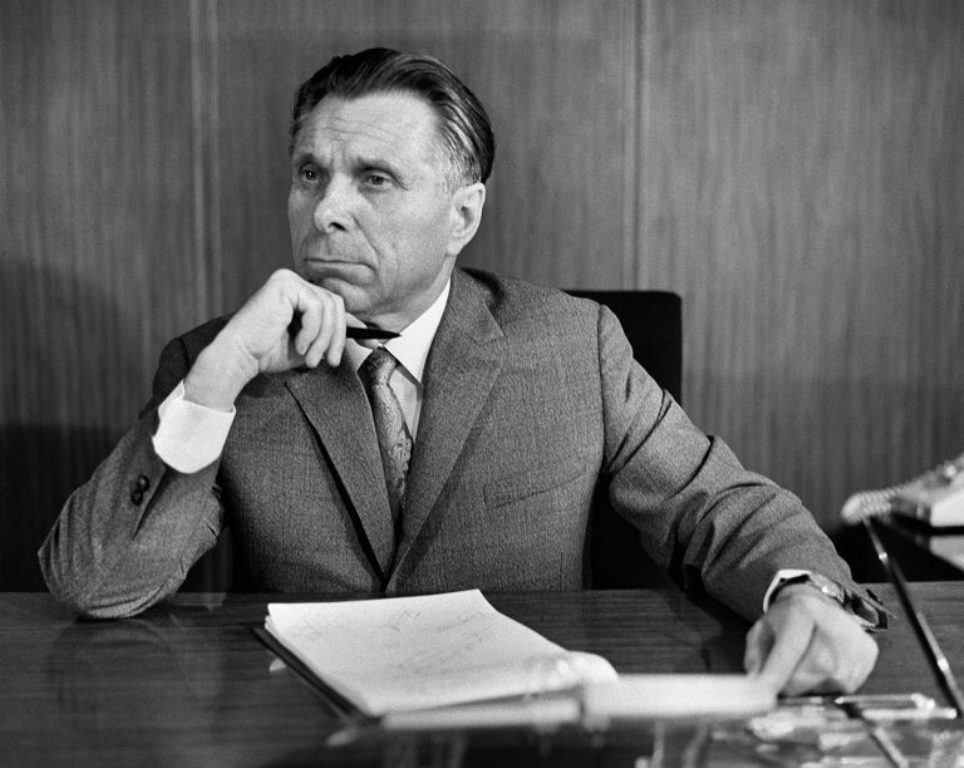
PHOTO: Nikolai Anisimovich Shchelokov (1910-1984)

Nikolai Anisimovich Shchelokov (1910-1984) was a Soviet statesman. From 1966 to 1982 he served as Minister of Internal Affairs of the USSR. He was a member of the Communist Party of the Soviet Union (CPSU) from 1931 to 1984, and member of the Central Committee of the CPSU from 1968 to 1983.

Shchelokov was the first person who began the search for the remains of Emperor Nicholas II and his family. When asked about the initiative, Shchelokov told the film director, screenwriter, acclaimed author Geliy Trofimovich Ryabov (1932-2015): “We, as Russian people, must fulfill our duty and find the remains of the Tsar”. Shchelokov ordered the head of the Sverdlovsk Internal Affairs Directorate for their full cooperation in the search.

What made the representative of the highest echelon of Soviet power, who had been building communism all his life, deviate so radically from the general line of the party and make every effort to resurrect one of the darkest pages of early 20th century Russian history?
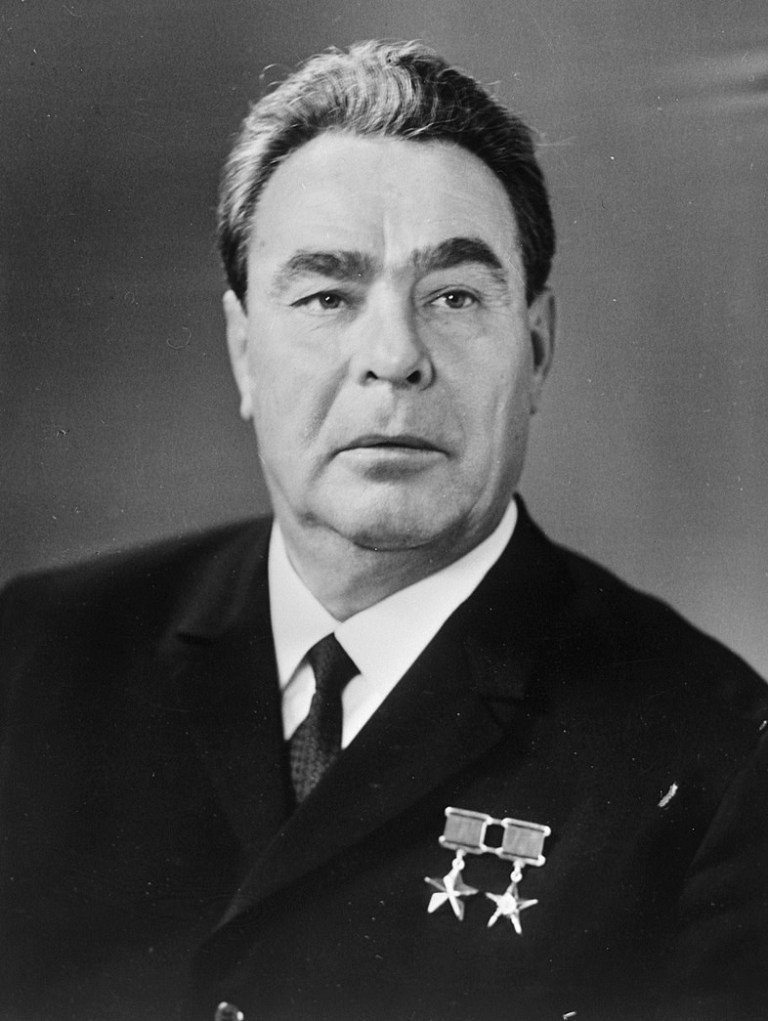
PHOTO: Leonid Ilyich Brezhnev (1906-1982)

Acquaintance with Leonid Brezhnev

Born on 13th November 1910 in the family of a metallurgist, Nikolay Shchelokov got his first job as a horseman in a mine at the age of 16, and at the same time received a higher education at the Dnepropetrovsk Metallurgical Institute.

After spending a year at the Dnepropetrovsk Metallurgical Plant, Nikolay Shchelokov was elected 1st Secretary of the Krasnogvardeysky District Committee of the Communist Party (Bolsheviks) of Ukraine in Dnepropetrovsk. It was during the years 1938-39 that he first met with Leonid Ilyich Brezhnev (1906-1982), who later took the post of General Secretary of the Central Committee of the CPSU, and persuaded his old acquaintance to move to Moscow and head the Ministry of Internal Affairs.

Nikolai Anisimovich received this offer in 1966, and before that he managed to become a participant in the Great Patriotic War (1941-45), after which he was appointed to the post of executive secretary of the party commission at the political department of the Carpathian Military District, where Leonid Brezhnev served as the head.

From August 1946, Shchelokov held a position in the Ministry of Industry of the Ukrainian ASSR, worked in the apparatus of the Communist Party of the same republic, and in 1951 he was sent to the Moldavian ASSR, where he rose to the post of second secretary of the Central Committee of the Communist Party.

In Moscow

Having lured the energetic leader to Moscow, Brezhnev set him the task of reviving the Ministry of Internal Affairs abolished in 1960 by Nikita Sergeyevich Khrushchev (1894-1971).

His mandate was to restore the fallen authority of the police in Soviet society To do this, among other things, he used the power of art. It was during this period that many detective stories appeared in bookshelves, where law enforcement officers where depicted to the reader in a positive light, and films about the daily exploits of ordinary employees of the Ministry of Internal Affairs were released on cinema screens.

Shchelokov coped with the duties assigned to him brilliantly, for which he was awarded the title of Hero of Socialist Labor of the USSR.
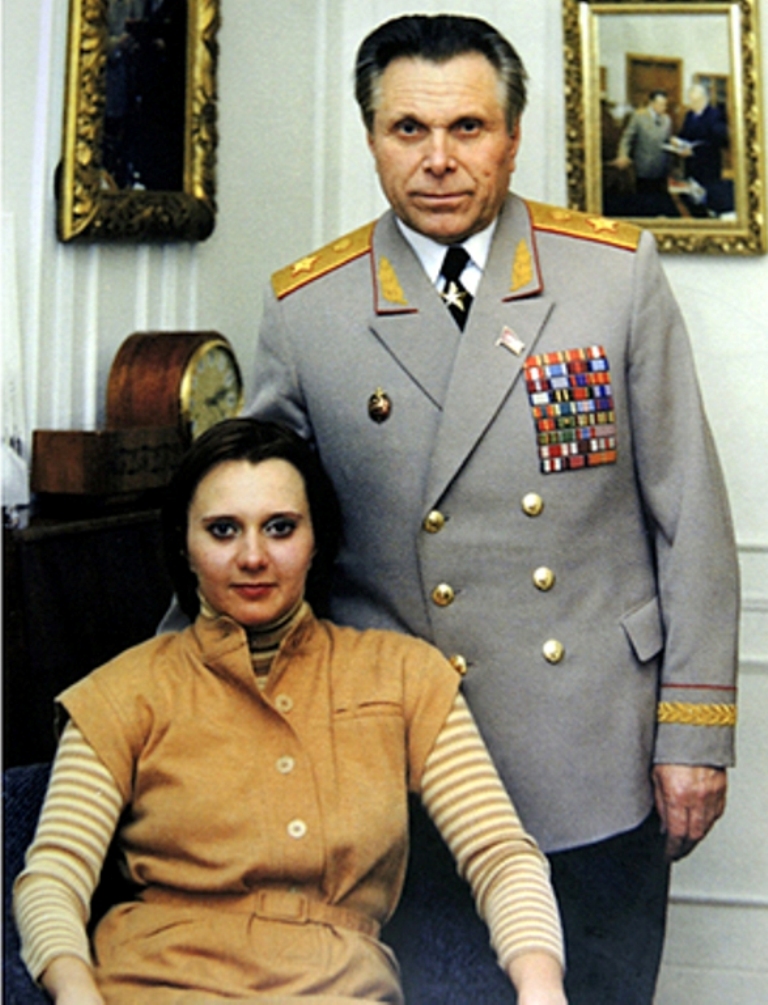
PHOTO: Nikolai Shchelokov with his daughter Irina Shchelokova

Friendship with dissidents

An interesting fact about Nikolai Anisimovich was his open friendship with dissidents who had liberal and monarchist views.

Among the disgraced personalities with whom he had warm relations were the musician Mstislav Rostropovich, the singer Galina Vishnevskaya, the writer Alexander Solzhenitsyn, the artist Ilya Glazunov, and Archbishop Pimen of Saratov and Volsk.

Perhaps it was after communicating with them that Shchelokov had the idea to find the remains of the murdered Imperial Family and bury them according to the Christian rite.

According to the memoirs of Irina Shchelokova (d. 2021), the daughter of the Minister of Internal Affairs, her father could not be convicted of dissent. She explained his interest in the last Tsar and his family by his high level of erudition, a keen sense of justice, as well as the fact that her father got hold of materials -which were classified at the time – regarding the investigation of the circumstances of the death of Nicholas II and his family.

At the same time, Boris Konstantinovich Golikov, an assistant to Shchelokov, believed that his boss became obsessed with the idea of finding the remains of the Romanovs after a meeting with a former NKVD officer, a certain “Snegov”. The latter was taken into custody in the 1930s and sat in the same cell with a prisoner who participated in the burial of the bodies of the Imperial Family in July 1918. Subsequently, this man was shot, but he managed to tell “Snegov” about the burial place of the remains, which the latter later told Shchelokov, and even handed him a hand-drawn map.
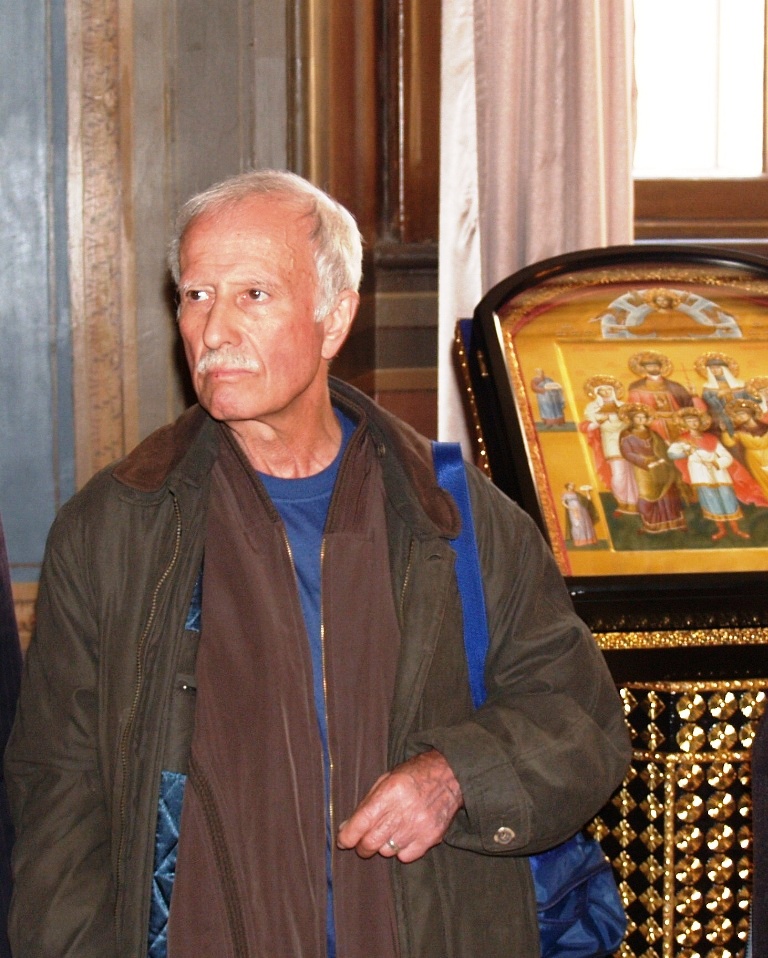
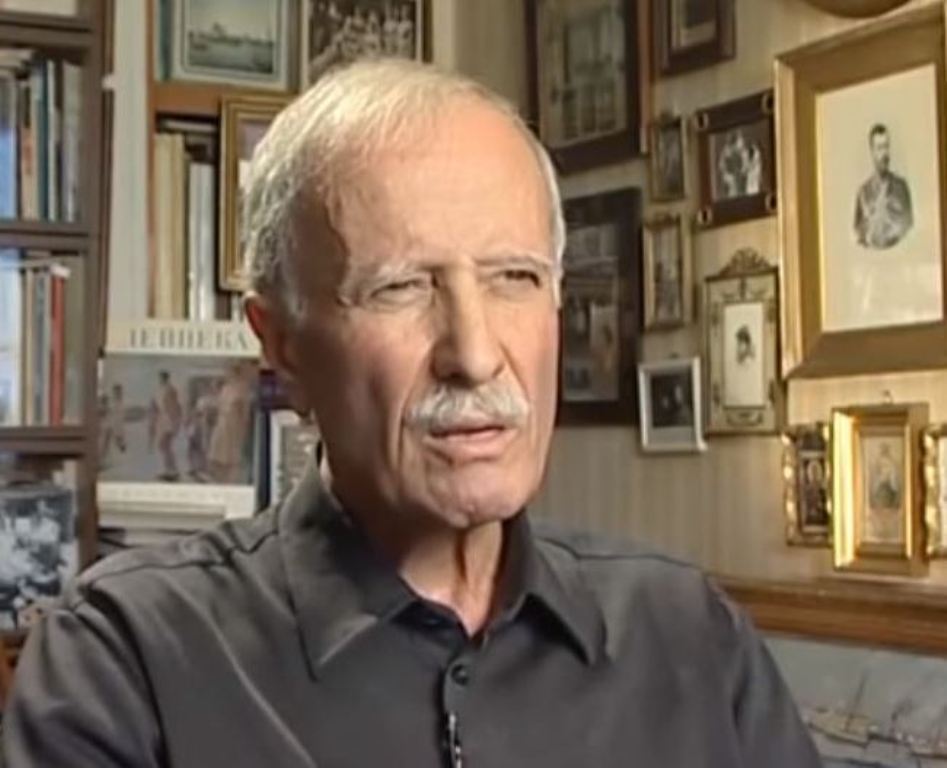
PHOTO: Geliy Trofimovich Ryabov (1932-2015)

Help for filmmakers

To implement his plan to find the remains of the Romanovs, Nikolai Anisimovich sought the help of Geliy Ryabov, co-author of the book “Born by the Revolution”.

According to Ryabov’s memoirs, who held the position of consultant of the Ministry of Internal Affairs on cultural issues, in 1976, he was supposed to visit Sverdlovsk (now Ekaterinburg) on a working trip. Before embarking on his journey, he was summoned by Shchelokov and casually told that not so long ago he had visited the Ipatiev House, where the Imperial Family had been murdered by the Ural Soviet (Bolsheviks) on 17th July 1918. He communicated this information to Ryabov in the hope of getting him interested in the case and was not mistaken.

The writer, having arrived in the capital of the Urals, also wanted to visit the site where the Tsar and his family had been murdered, and somehow without any problems received the appropriate permission. After making a tour of the house, Ryabov was inspired by the idea of finding the remains of Nicholas II and his family.

Returning to Moscow, Ryabov turned to Shchelokov with a request for assistance in this dangerous assignment. The delighted Minister of Internal Affairs contacted Leonid Brezhnev and asked him to provide Ryabov with access to the “Tsar’s Archive”.

A month later, the Secretary General gave his go-ahead, and Ryabov plunged headlong into the study of classified documents, trying to find at least some clue.

As a result, his efforts were crowned with success aftern he discovered the “Yurovsky Note” – written by the commandant of the Ipatiev House and chief executioner of the the Imperial Family, which contained the coordinates of the burial place of the bodies of the Tsar and his family.

Having provided Ryabov with accurate topographic maps of the area, and having organized his protection and unhindered work, Shchelokov began to wait for news of the investigation. On 1st June 1979, Geliy Trofimovich and geologist Alexander Avdonin, who helped him in the search, found the sought-after remains.

However, Shchelokov did not manage to organize a dignified reburial of the Imperial Family’s remains, he was forced to abandon his search by a discrediting campaign that began against him.

Alternate versions

At was at this time, that several more interpretations of why the Minister of Internal Affairs abandoned the search for the remains of the Imperial Family.

Some researchers argued that he did not act on his own, but carried out the order of higher authorities who wanted to find and destroy the bones of the murdered Imperial Family.

Other theories included an outrageous claim insisting that Shchelokov wanted a royal burial in order to find and remove any jewelry from the gravesite.

Even more ridiculous was from Igor Bunich’s work of fiction “The Tale of Lawlessness, or the Syndrome of Nicholas II” a hypothesis is put forward that Shchelokov launched a search for the remains of the Romanovs in order to secretly sell them to the West. The buyer was allegedly a certain monarchical structure associated with the British Royal Family. For the deal, the Home Secretary was allegedly offered £200,000, of which £30,000 was given to him as an advance and spent by him on the organization of the search operations.

It was not until 1991, that the remains of Emperor Nicholas II and his family were exhumed and later buried in the SS Peter and Paul Cathedral in St. Petersburg on 17th July 1998.

© Paul Gilbert. 9 July 2024
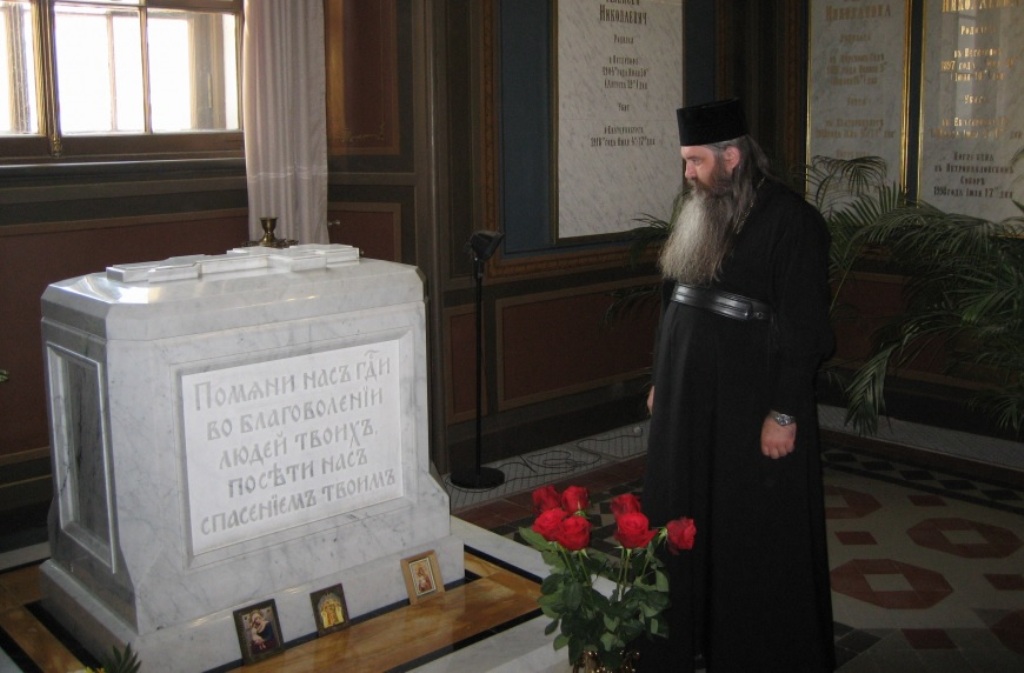
Archimandrite Tikhon (Zatekin) on the Ekaterinburg remains

PHOTO: Archimandrite Tikhon (Zatekin) at the tomb of Emperor Nicholas II and his family, located in St. Catherine’s Chapel – a side chapel in SS Peter and Paul Cathedral – St. Petersburg

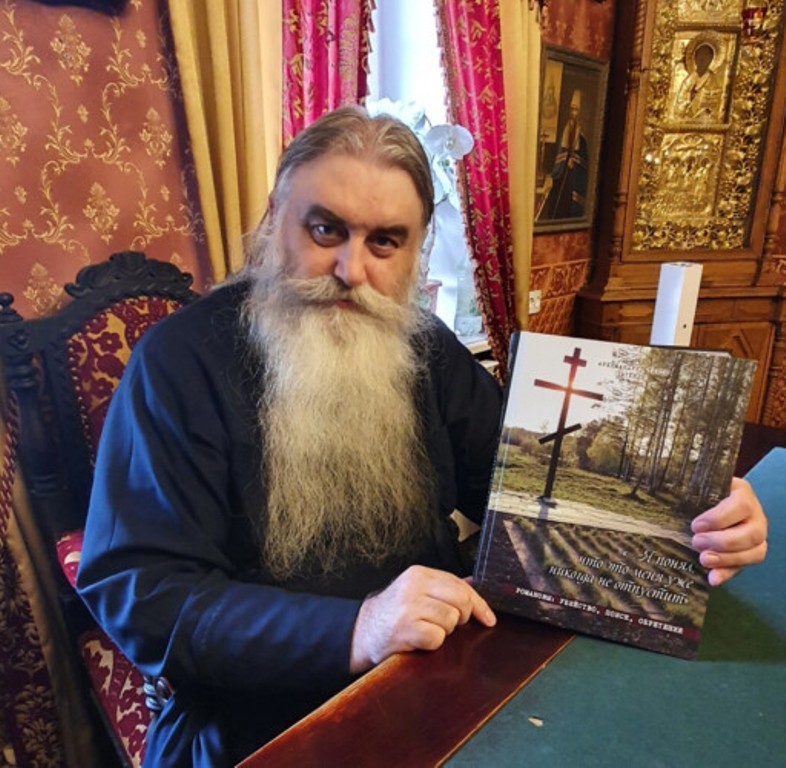
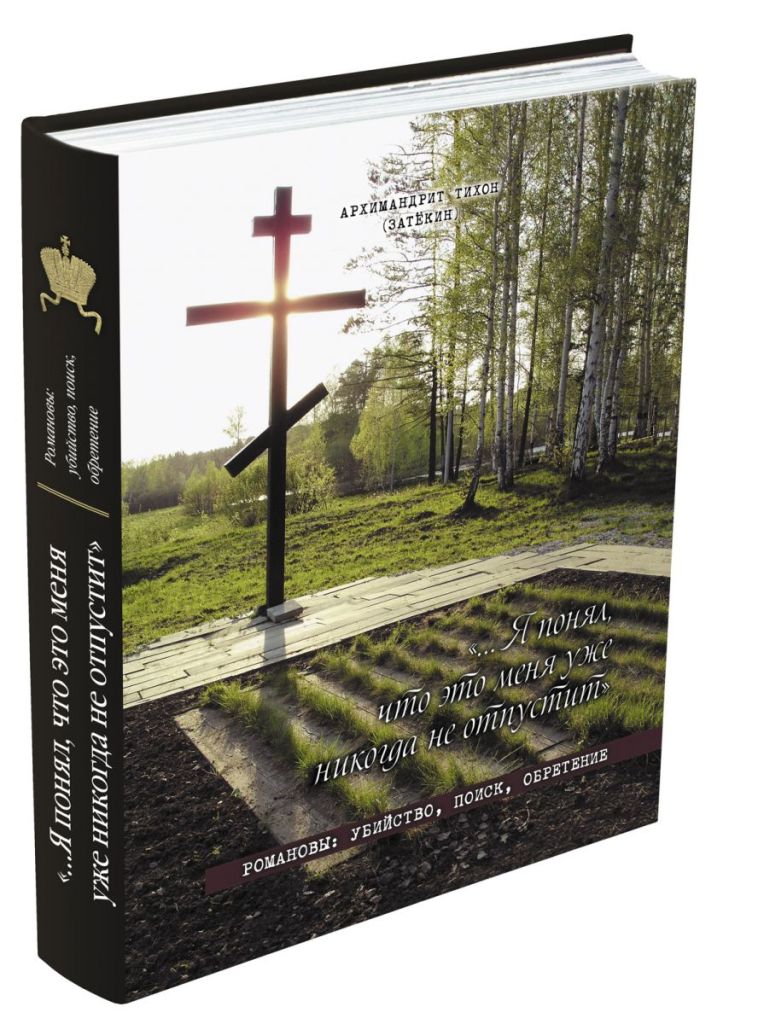
Archimandrite Tikhon (Zatekin) is the abbot of the Pechersky Ascension Monastery, and deputy head of the Nizhny Novgorod branch of the Imperial Orthodox Palestine Society (IOPS). He is the author of a new Russian language book on the Ekaterinburg remains ‘Романовы: убийство, поиск, обретение’ [Romanovs: Murder, Search, Acquisition].

Earlier this year, Georgy Kamensky spoke with Archimandrite Tikhon (Zatekin) about the Ekaterinburg remains, published in the Russian language Orthodox site Pravoslavie.ru.

Father Tikhon, what is your opinion on the remains found on the Koptyaki Road, near Ekaterinburg, in 1979 and 2007?

— I regard them as the remains of the last Russian Emperor Nicholas Alexandrovich, his August family and devoted servants.

You have finished writing your new book, dedicated to the search for the remains of the Imperial Family. What is it called?

— Indeed, I have finished the layout of my new book. Since 1985, I have been familiar with the researchers who discovered the remains of the Imperial Family – Geliy Trofimovich Ryabov (1932-2015) and Alexander Nikolaevich Avdonin (born 1932). The name of my book is Романовы: убийство, поиск, обретение’ [Romanovs: Murder, Search, Acquisition]. It will be a richly illustrated album, including documents, correspondence and photographs which have never been published anywhere before.

PHOTO: Archimandrite Tikhon (Zatekin) holding a copy of his new book ‘Романовы: убийство, поиск, обретение’ [Romanovs: murder, search, acquisition].

Is it true that Geliy Ryabov and Alexander Avdonin told you back in the 1980s that they had found the remains?

— Yes, for the first time these wonderful men confidentially revealed to me a secret which they swore not to disclose to anyone. In 1986, Geliy Ryabov and Alexander Avdonin took me to Ganina Yama, where they described in detail about the events that took place there in July 1918. In conversations with Geliy Ryabov, I saw how he grieved that no one could read or sing a Panikhida [memorial service for the dead] over the hidden remains of the Imperial Family.

But, it was generally assumed that that Ryabov was an unbeliever, is this true?

— Unfortunately, such assumptions have been made, but this is not true. I have known Geliy Trofimovich personally since the mid-1980s, he was a deeply religious person. Both he and Alexander Nikolaevich Avdonin are intellectuals of incredible erudition and decency. I remember how in 1985, I went with Geliy Trofimovich and his wife Olga Alexandrovna to pray at the Trinity-Sergius Lavra [near Moscow]. There were many pilgrims there that day. Having patiently stood in line, we venerated the holy relics of St. Sergius. It was very touching to see Geliy Trofimovich write a prayer note for “Nikolai, Alexandra, Olga, Tatiana, Maria, Anastasia and Alexei.” I placed the note in the hands of an old monk in the Assumption Church.

— In addition, have at my disposal the vast correspondence of Geliy Ryabov with various people, many of his letters reflect the deep, penetrating words of his faith.

There is a rumour that G. T. Ryabov and A. N. Avdonin “discovered” the remains on the instructions of the KGB, and they were planted once by employees of this very organization.

— This alleged report does not stand up to scrutiny. People who adhere to this “rumour”, apart from words, those who adhere to it have failed to produce a single shred of evidence to support such a claim. From the period of the history of “developed socialism” we know about the confrontation between the two giants of the Soviet era – the KGB and the Ministry of Internal Affairs. Ryabov was an adviser to the Minister of Internal Affairs N.A. Shchelokov, and not Yu.V. Andropov, who headed the State Security Committee.

— Moreover, the KGB, on the contrary, kept an eye on Ryabov and his activities, and Ryabov himself was well aware of this.

— The correspondence between Ryabov and Avdonin, during their search for the remains of the Imperial Family from 1976-1991, is published for the first time in my book. They had to encrypt their activities, just in case their letters were intercepted and read by the KGB. Therefore, the allegations that Geliy Ryabov and Alexander Avdonin were KGB officers have no basis.

PHOTO: Geliy Trofimovich Ryabov (1932-2015)

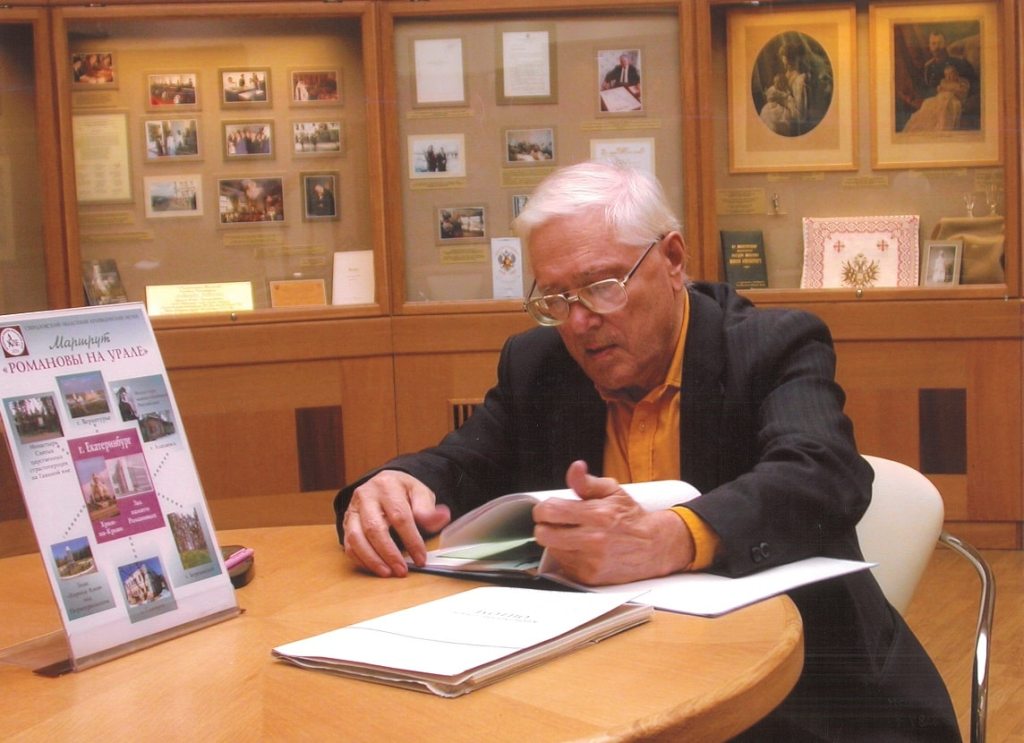
PHOTO: Alexander Nikolaevich Avdonin at the Romanov Memorial Hall, Museum of History and Archaeology of the Urals, Ekaterinburg

Can you recommend any books to those who want to learn the truth about the Ekaterinburg remains?

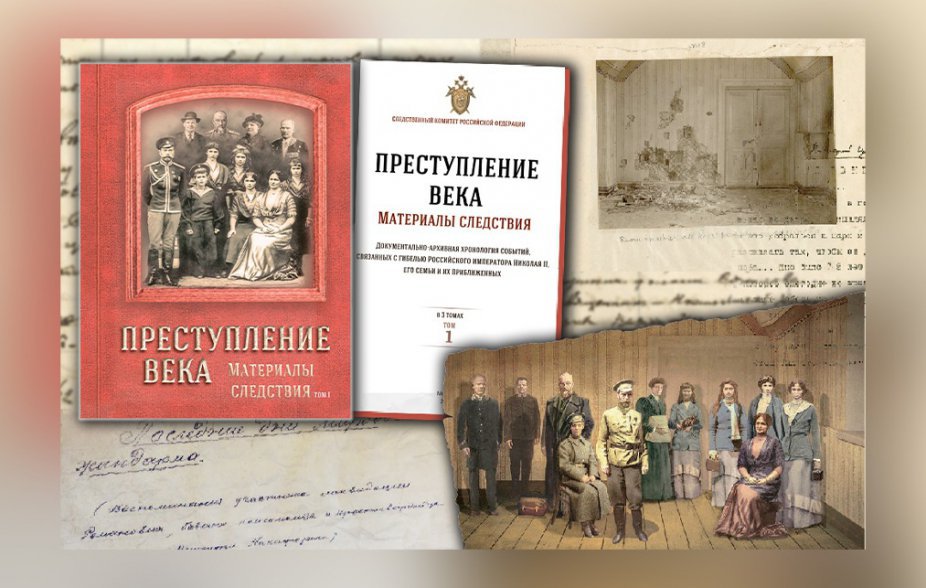
— The three-volume book “The Crime of the Century. Investigation Materials”, explores in detail the murder of the Imperial Family, and the investigation into their death, one which has lasted more than a century. I recommend that you take a look at this work. This is a serious long-term study of the first and second investigations. Experts were involved in this three-volume collection, each of whom performed their work at the highest professional level. These books contain undeniable evidence of the authenticity of the remains found in 1979 and 2007 at Porosenkov Log. In my opinion, the comparison of the documents of the investigation file of Nikolai Sokolov and his book “The Murder of the Royal Family” are of particular importance.

— Millions of people who read Sokolov’s book believe it to be the infallible evidence of the truth. However, one should not forget that a book is a book. Moreover, it was published after the books by Mikhail Diterikhs (1874-1937) and Robert Wilton (1868-1925), who, for some reason, without waiting for the end of the investigative process, hurried to release their books without Sokolov’s consent.

— Recently, a television documentary “The Romanov Case: Investigation has been Established” has also been released. Not everyone was able to read the book published on the website of the Investigative Committee of the Russian Federation, but the documentary, I am sure, was watched by millions of Russians. The documentary was able to convey the conclusion that the tasks set by His Holiness Patriarch Kirill of Moscow and All Rus’ before the new investigation in 2015 were completed, and the last Holy Synod in 2021 came to the conclusion that the investigation left no doubts about the authenticity of the remains of Emperor Nicholas II and his family found near Yekaterinburg. For me, the most important thing is that since 2015, the Church has admitted to the investigative process, which had the opportunity to exercise full control over all research,

PHOTO: the three-volume set of books Crime of the Century has only been published in Russian

The book Crime of the Century you mentioned says that it was you who showed Mine No. 7 to Anatoly Verkhovsky. And yet, there are many who consider him the discoverer of Ganina Yama. What can you tell us about this?

— In 1989, Geliy Ryabov published an article about the discovery of the secret burial place of the Romanovs in the Moskovskiye Novosti newspaper, At the time, Anatoly Verkhovsky was working for me at the parish in the city of Artemovsky, Sverdlovsk Region. After the publication of the article, I told everyone who was present that day in the parish refectory about this secret and my participation in it. Verkhovsky was intrigued by my announcement. I presented him with a copy of Pavel Bykov’s book “The Last Days of the Romanovs“, and also showed him my albums with photographs of the Imperial Family. I also had one special album with photographs from Nikolai Sokolov‘s book The Murder of the Tsar’s Family, which contained a map of the area…

— Verkhovsky was literally shocked by my story that Ryabov and Avdonin had allegedly discovered the Tsar’s remains. It was I who took him to Ganina Yama, where I told him in detail everything that Geliy Ryabov had told me in 1986, and showed him Mine Number 7. Therefore, Anatoly Verkhovsky cannot be recognized as the discoverer of Ganina Yama, because it was Ryabov and Avdonin who discovered the place in 1977-1979, whereupon they created a large-scale map of the area. It is interesting to add, that by the time I showed the mine to Verkhovsky, the Archbishop of Yekaterinburg and Verkhoturye Melkhizedek (Lebedev) had already been made aware of the location of the remains of the Imperial Family by me, and with his blessing, we were making plans to rebury them under the throne of our church in Artyomovsk.

Some people continue to doubt the authenticity of the remains of the Imperial Family, claiming that these remains have not produced any miracles. How do you respond to their claims?

— Archpriest Alexander Shargunov has written about the miracles performed through the prayerful intercession of the Holy Royal Martyrs. The publishing house of the Nizhny Novgorod Caves Monastery is currently preparing the book “Holy Royal Relics. History, Signs, Miracles”, which will tell in detail about the miracles from the relics of the Imperial Family.

— When I visit St. Petersburg, I go to the Russian State Historical Archive (RGIA), where I carry out research for my books. I always stop by the Saints Peter and Paul Cathedral, where I pray near the tomb holding the relics of the Holy Royal Martyrs. There is a candlestick and an icon next to the tomb, but there is no way to approach the tomb: a red velvet rope barrier hangs in the doors leading to the chapel. Several times I asked the museum workers who were on duty there to let me in to pray, light a candle, put flowers, and I always receive a categorical refusal. Not only do they refuse me, a clergyman in a cassock and klobuk, but Orthodox pilgrims and tourists as well.

Those who dispute the authenticity of the Ekaterinburg Remains predict a new church schism, if they are recognized as Holy Relics by the Council of Bishops of the Russian Orthodox Church. What are your thoughts on their claim?

— These people are also trying to find the truth, but the fact that some of them claim that they speak “on behalf of Orthodox people”, focusing on a “possible schism”, is truly terrible. By doing this, they have already separated themselves from the Holy Mother of the Church. Recently, some people have been holding their own conferences, at which they express their opinions and evidence “about the falsification of the Tsar’s remains”, and at the same time they report in the media that they are doing this allegedly “in pursuance of the decision of the Council of Bishops.” I doubt that they received an official blessing at these conferences from His Holiness Patriarch Kirill of Moscow and All Rus’.

— I can tell you, that during the last two thousand years, the Holy Church has experienced numerous schisms and disorders, but one thing is unshakable – these are the words of Christ the Saviour spoken to the Apostle Peter: “And I say also unto thee, That thou art Peter, and upon this rock I will build my church; and the gates of hell shall not prevail against it.” (Matt. 16:18). Saint Cyprian of Carthage said, accessible to the human mind and heart, very simple words: “He who does not have the church as his mother, does not have God as his father.”

— If the Council of Bishops recognizes the “Ekaterinburg remains” as those of the Holy Royal Martyrs, then the entire Plenitude of the Russian Orthodox Church should accept this holy news with reverence and joy. When the relics of the Holy Royal Martyrs are placed in shrines, and due honours are given to them, and numerous pilgrims and pilgrims come to them, then, by the inexpressible mercy of God, they will show us sinners their help, miracles and healings. And then Russia will shine in even greater glory.

‘Романовы: убийство, поиск, обретение’ [Romanovs: murder, search, acquisition]

A new historical work has recently been published Романовы: убийство, поиск, обретение, written by the by the abbot of the Pechersky Ascension Monastery, and deputy head of the Nizhny Novgorod branch of the Imperial Orthodox Palestine Society (IOPS), Archimandrite Tikhon (Zatekin).

The work of Archimandrite Tikhon is a colossal study of the murder of the Russian Imperial Family, and the century long investigation. It includes documents, letters and testimonies which have never been published anywhere before. The book is supplement with about 1,500 photographs, many of which are published for the first time.

The memories of all witnesses, as well as archival and photographic materials are placed in chronological order, which cover the entire history of searches and excavations at Porosenkov Log in 1979 and 2007. The author has used photographs, manuscripts, letters and documents from the archive of G. T. Ryabov, kept by his widow Olga Alexandrovna.

The unique correspondence between Ryabov and Avdonin in the 1970-1980s, which was previously completely inaccessible to historians and researchers, is interesting. The author presents evidence, which allows the reader to thoroughly understand how the search was carried out. This was not an easy task, it required courage, bold creative thinking, and analysis from Ryabov and Avdonin.

***

The number of new books published in Russia about Nicholas II and his family each year is simply staggering! Clearly there is a demand for such books, or publishers would not waste their resources on such projects. The fact that so many new titles are being published is a clear indication of public demand. It is encouraging that a new generation of Russian readers have taken an interest in learning about their country’s history, something denied to them during the Soviet years.

© Paul Gilbert. 28 November 2022