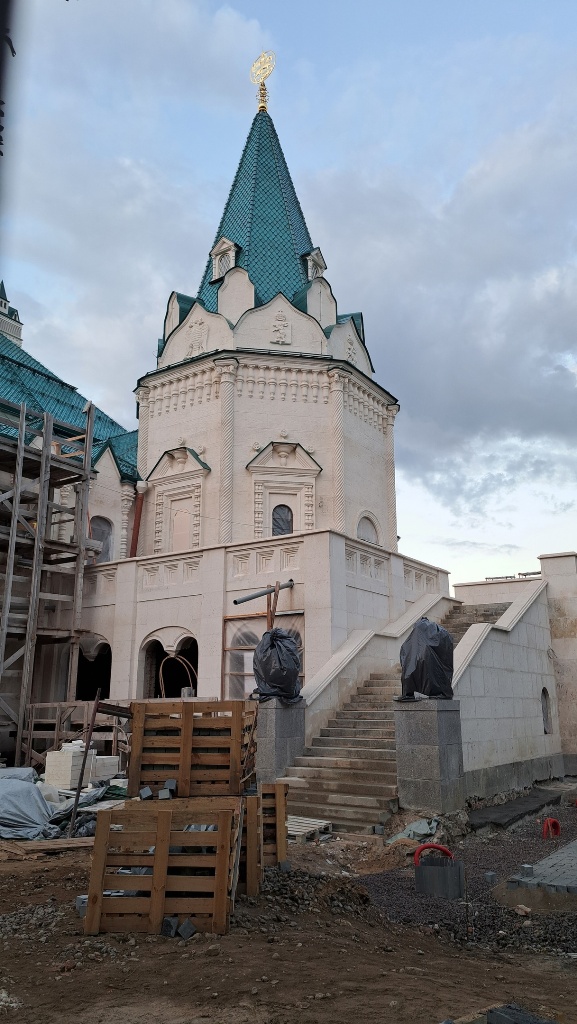
Imperial Railway Pavilion in Tsarskoye Selo is being restored
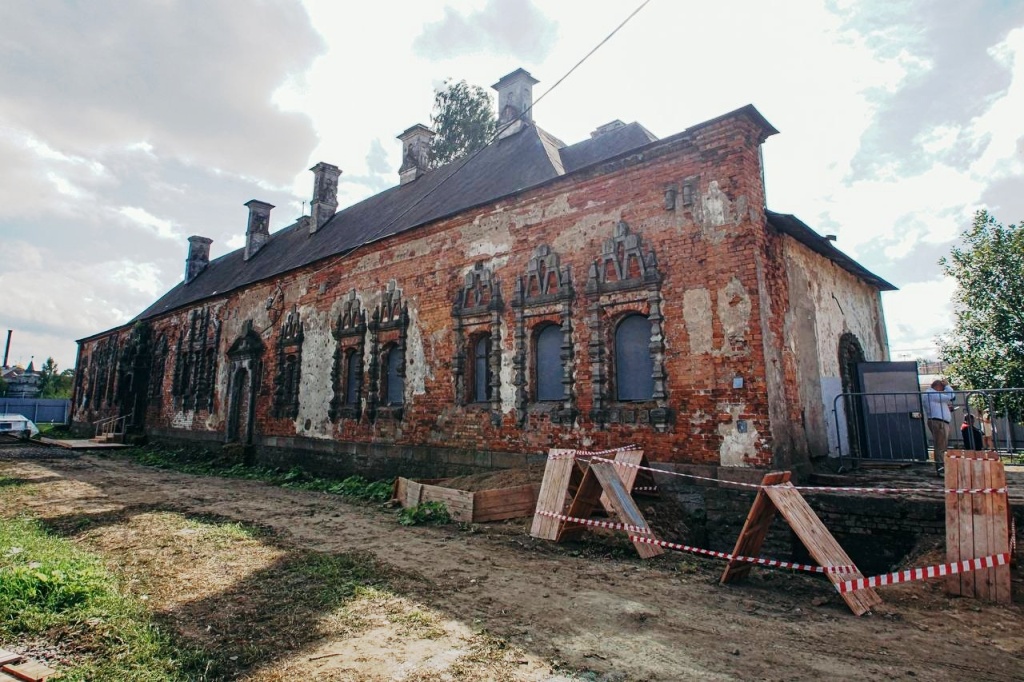
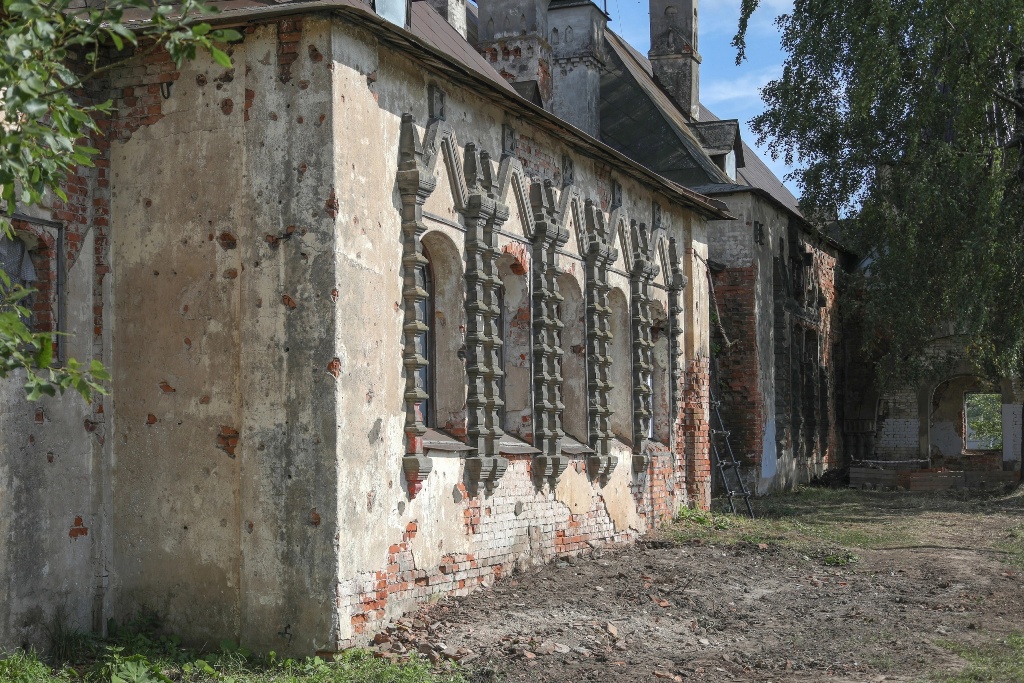
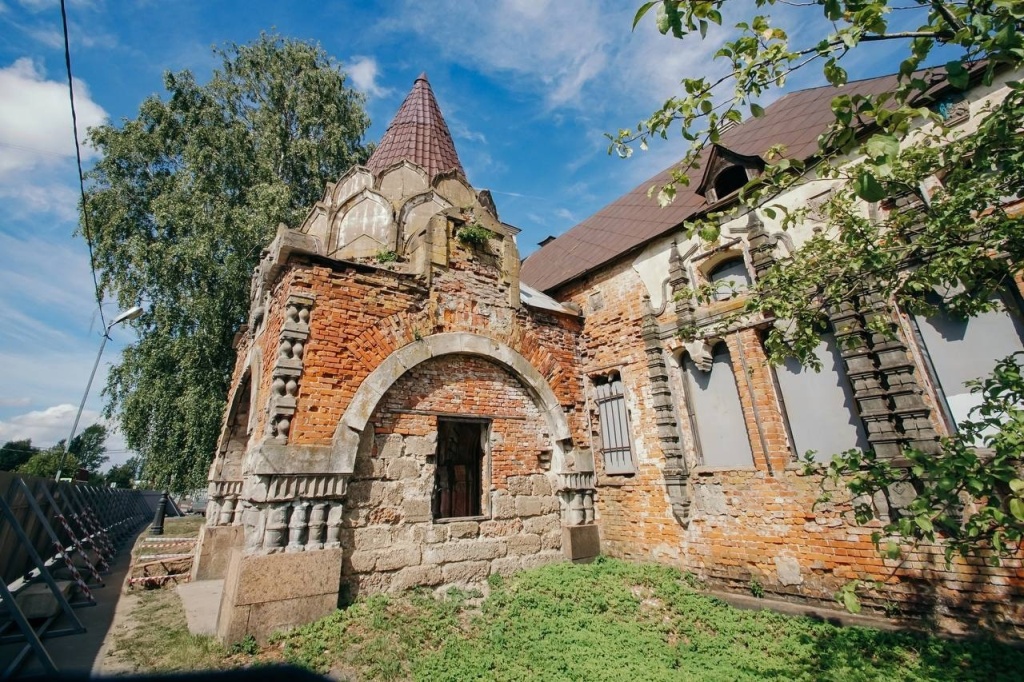
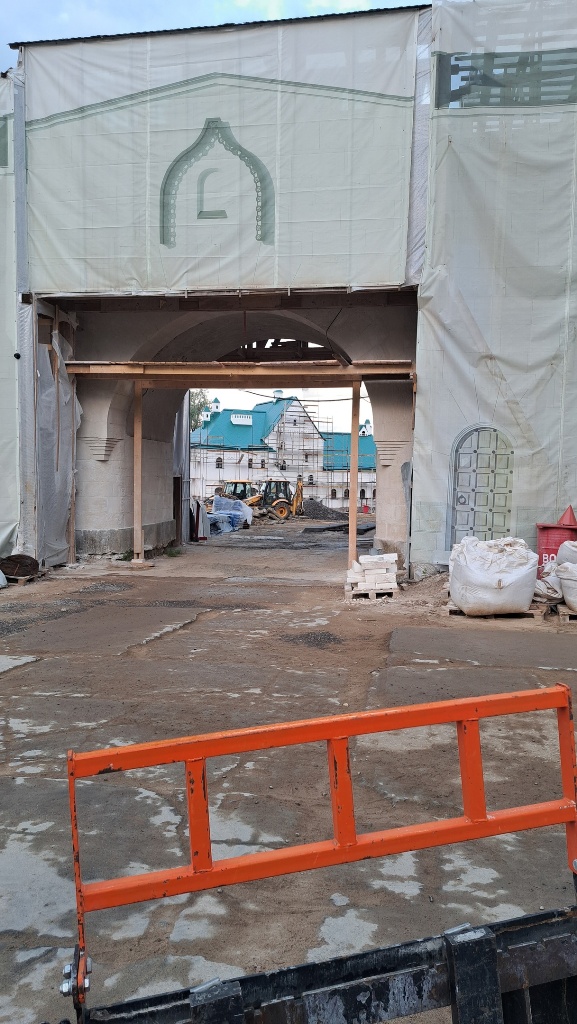
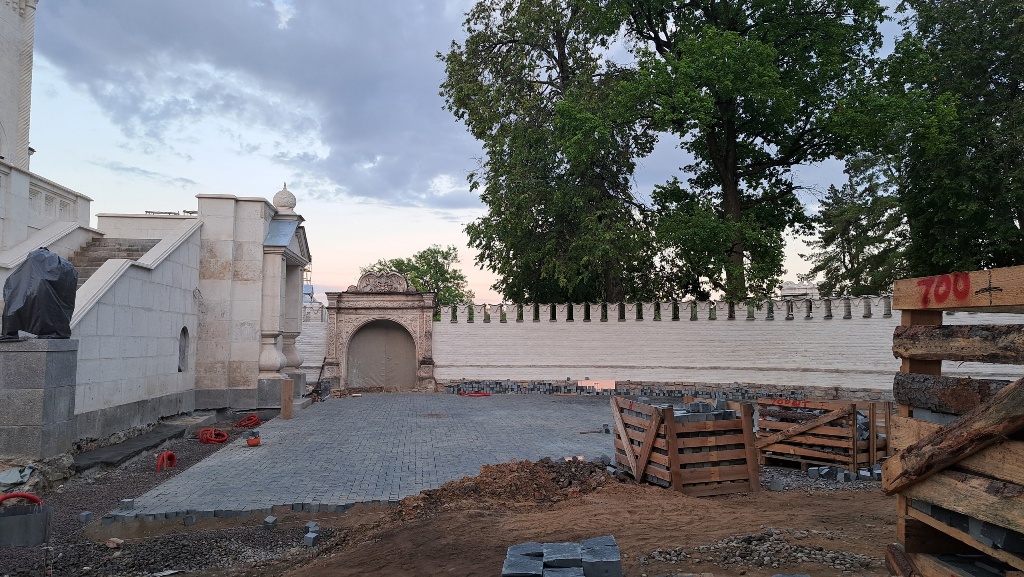
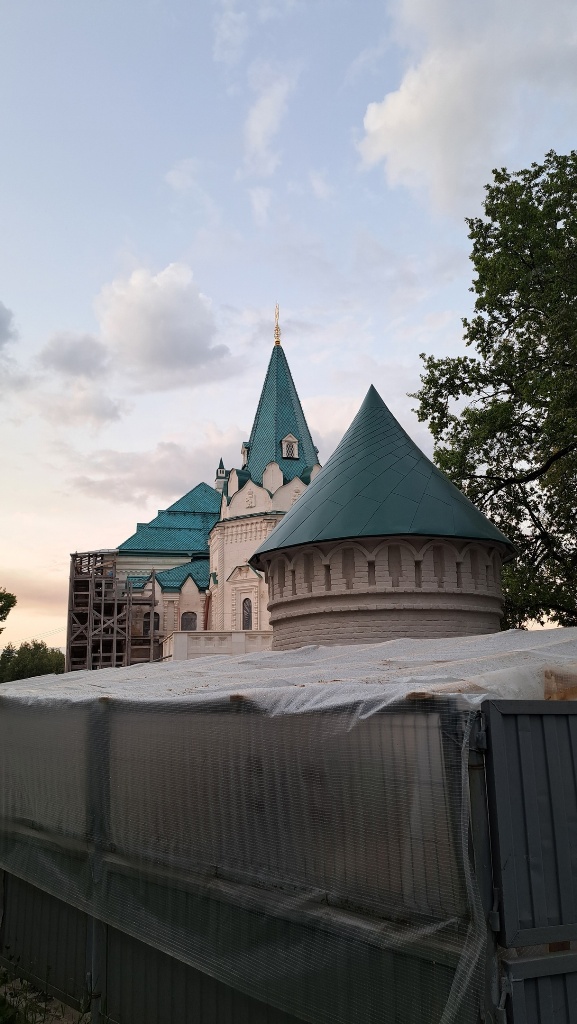
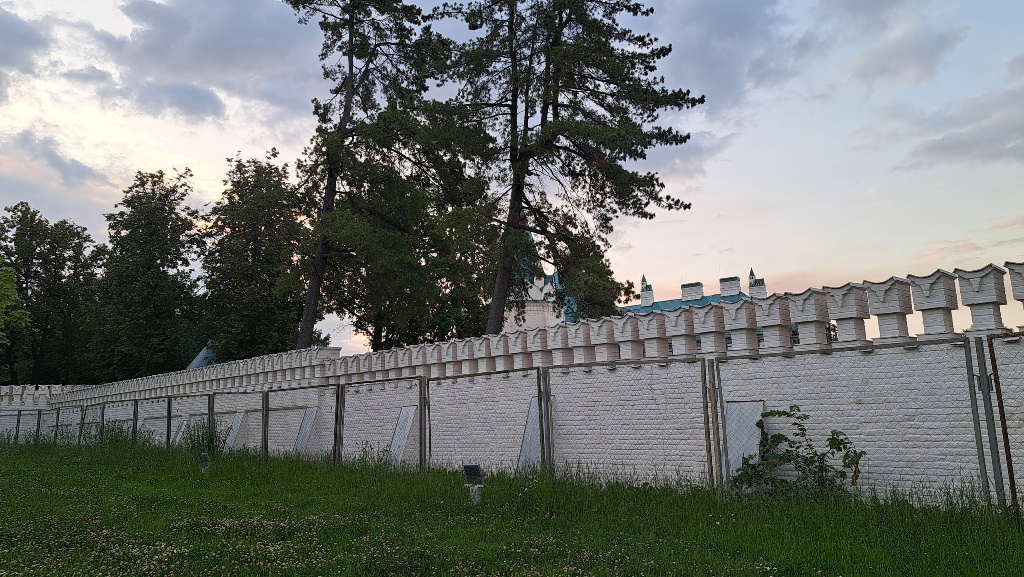
It’s official! After decades of delays and lack of funding, restoration of the Imperial Railway Pavilion to its original historic look in Pushkin (Tsarskoye Selo) is now underway. Having survived the revolution, war, vandalism and the elements, it is nothing short of a miracle that it has survived to the present day.

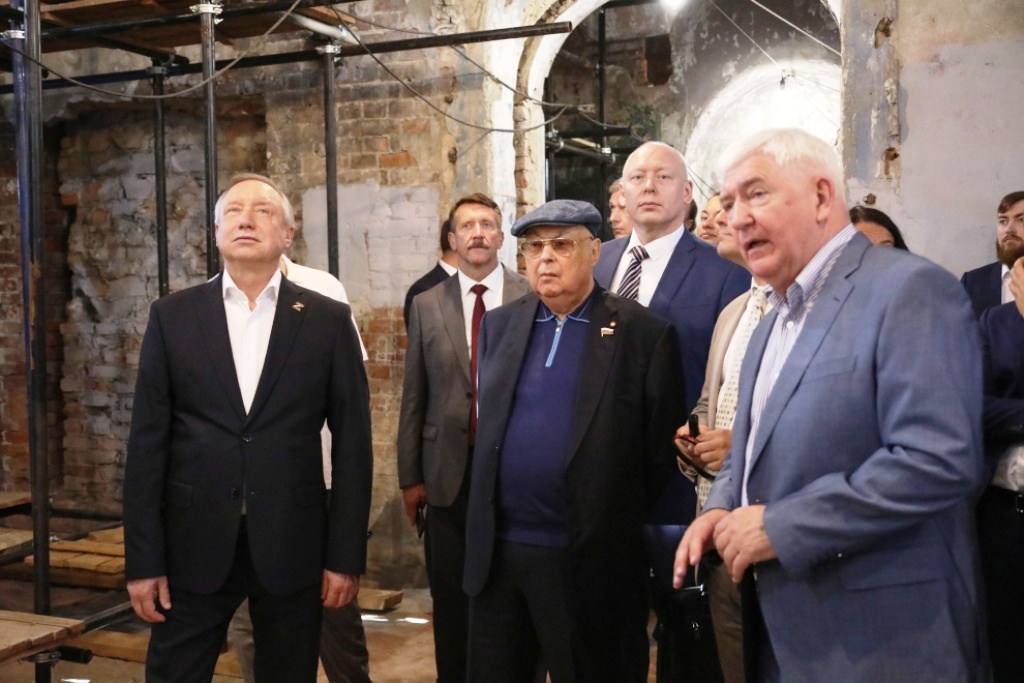
The project has some very high profile supporters, including the governor of St. Petersburg, Alexander Beglov and State Duma deputy Vladimir Resin. The official announcement was made during the first meeting of the Board of Trustees of the Tsarskoye Selo Station Foundation, which was held on 17th August in the Imperial Hall of the pavilion.

“We have created a special fund to restore the Imperial Railway Pavilion, the only imperial railway station in Russia. Ideas for the building’s use after the restoration has been completed are currently being developed. Funding will be provided at the expense of the city and federal budgets, as well as private and corporate donors,” Beglov said.
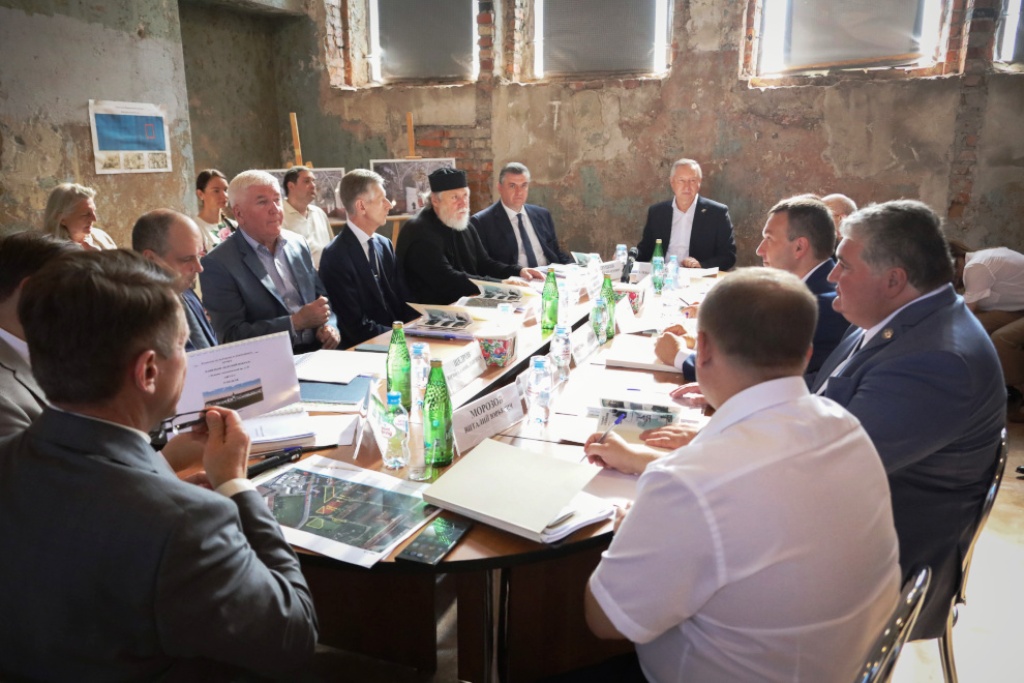
PHOTO: the first meeting of the Board of Trustees of the Tsarskoye Selo Station Foundation, was held on 17th August 2023, in the Imperial Hall of the pavilion

One of the finest examples of the Neo-Russian style

The construction of a special branch line from the Vitebsk Railway Station in St. Petersburg to the Alexander Palace in Tsarskoye Selo began in 1895. It was deemed a matter of security to provide safe transport links between the capital and the suburban residence for the Tsar and his family. The line was also convenient for government officials who arrived daily by train with their reports to the Tsar when he was in residence.

The original Imperial Pavilion was constructed of wood in 1895, however, it was destroyed by fire on 25th January 1911. A new stone pavilion designed by architect V.A. Pokrovsky, was constructed in the same Neo-Russian style as the buildings of the nearby Feodorovsky Gorodok [Town]. The Imperial Railway Pavilion served as a terminus for the Tsar’s Imperial Train. It was here that Emperor Nicholas II greeted many foreign dignitaries. A special road was laid from the station to the Alexander Palace.

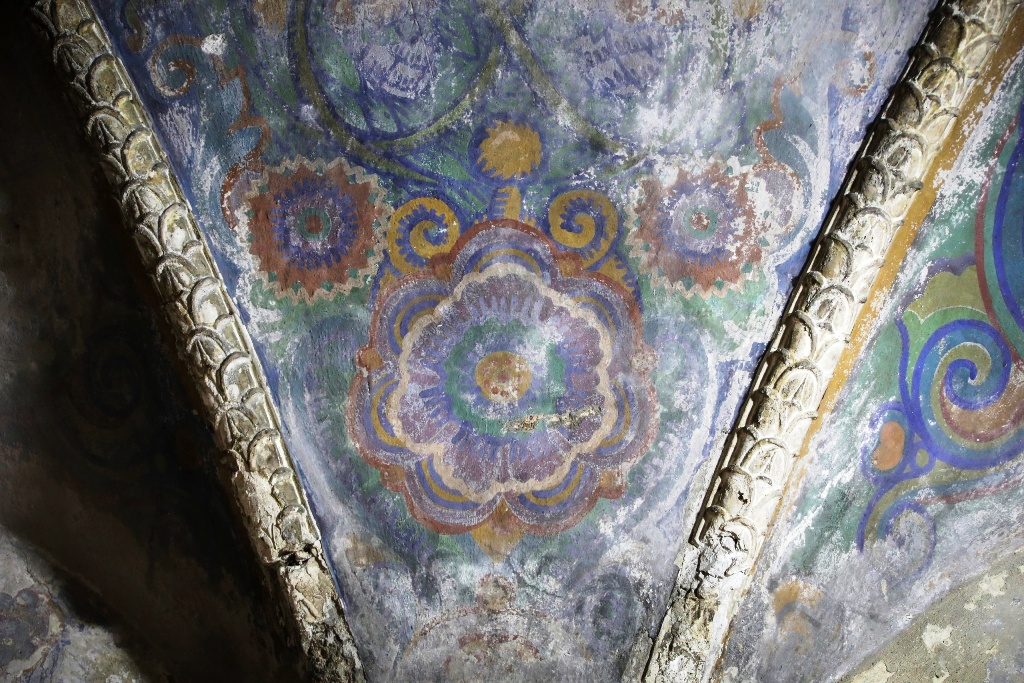
The richly decorated interiors were stylized as chambers with heavy stone vaults. The decoration of the facades and interiors corresponded to the grand presentation of the station, being an example of a synthesis of architecture, monumental painting and decorative art, which successfully combined the forms of ancient Russian architecture of the 17th century. with construction technologies and materials characteristic of the modern era. The imperial chambers of the station were painted by the artist M. I. Kurilko, reflecting the chambers of the beloved suburban palace of Tsar Alexei Mikhailovich.

The fate of the Imperial Railway Pavilion during the Soviet years

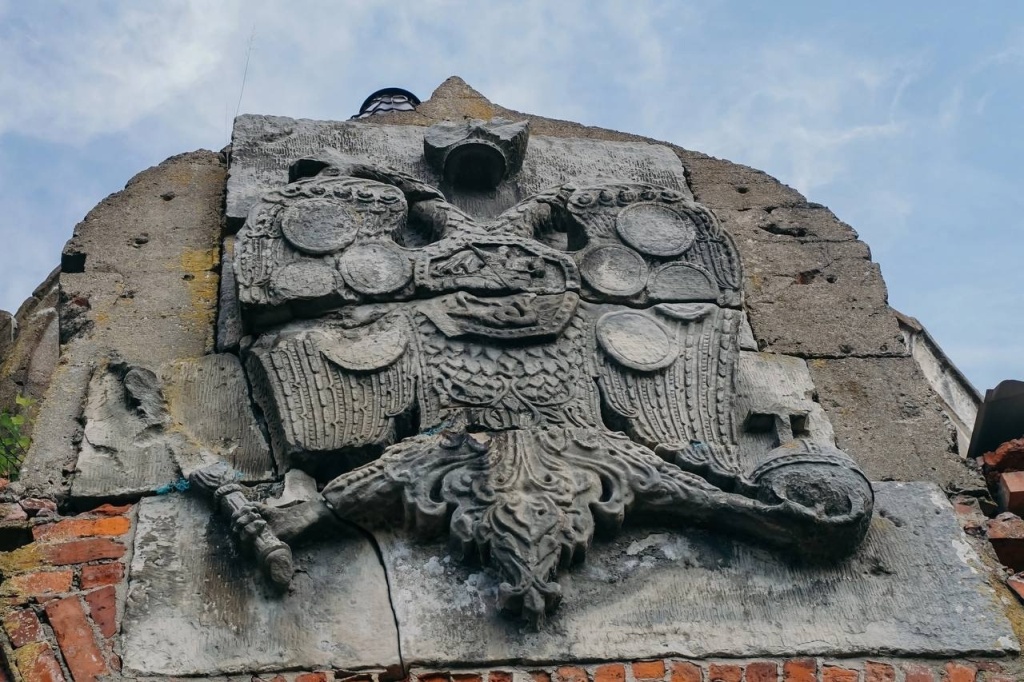
In 1918, the station was renamed the Uritsky[1] Pavilion and was used as a dormitory and canteen for workers of the Track Repair of the Mechanical Plant, created on the basis of the Imperial Railway Repair Depot. The Imperial emblems were removed and the building and adapted for housing. The rails and sleepers were dismantled and used for the construction of other railway lines. The 200-meter passenger platform was dismantled in the 1930s. The pavilion was badly damaged during the Great Patriotic War (1941-45).

The dormitory was moved in the 1970s, the former station closed and has not been used since. The former Imperial Railway Pavilion was declared an object of cultural heritage of Russia of federal significance, an act which saved the building from demolition.
The rebirth of the Imperial Railway Pavilion

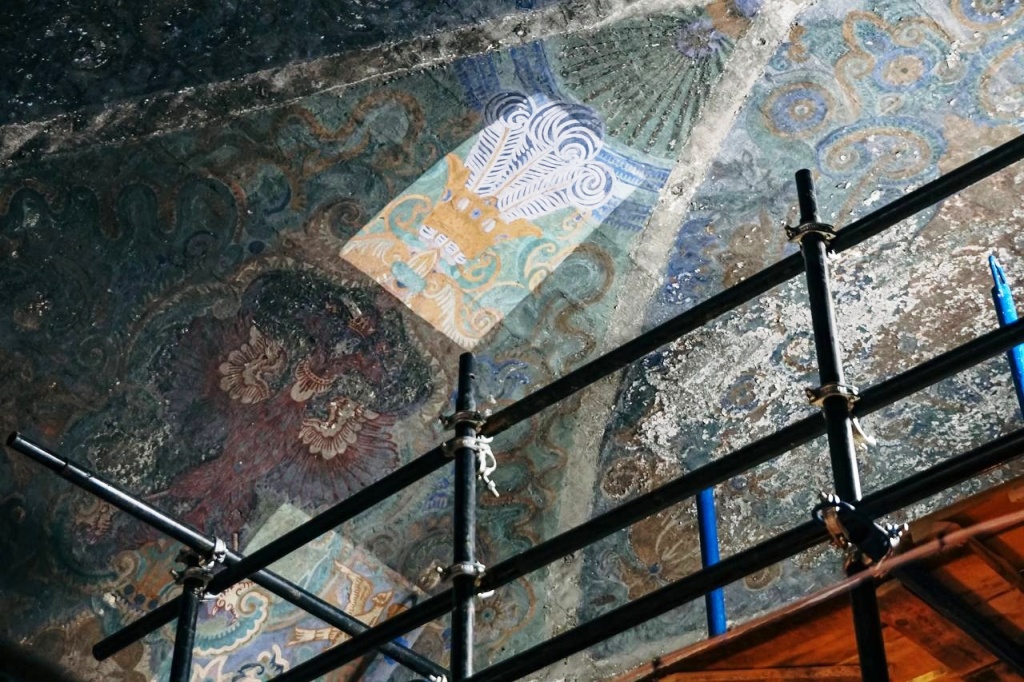
The Imperial Railway Pavilion in Tsarskoye Selo will be completely restored in its original form, including the terminal building, the platform and canopy, as well as the unique interior paintings, some of which have already been partially uncovered by restorers.

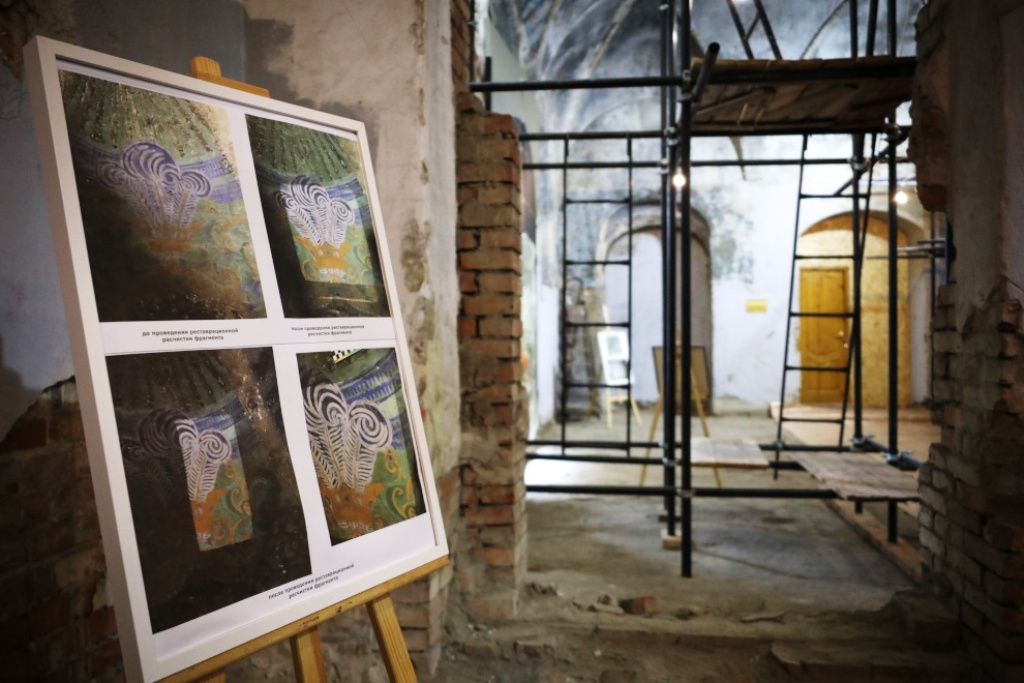
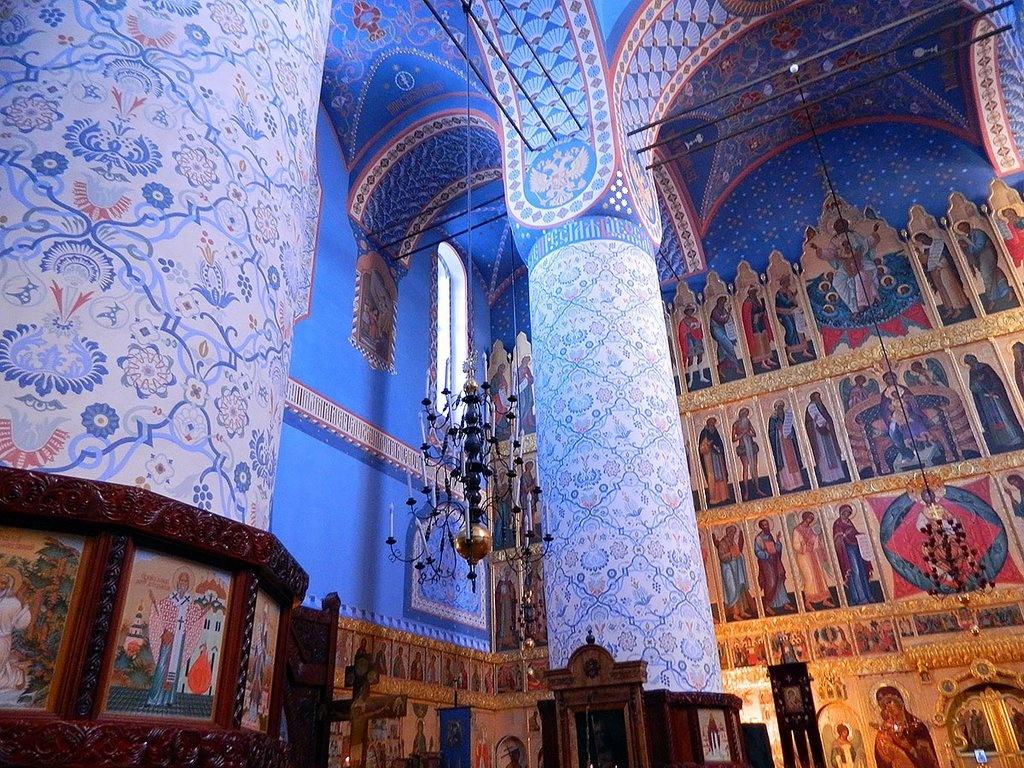
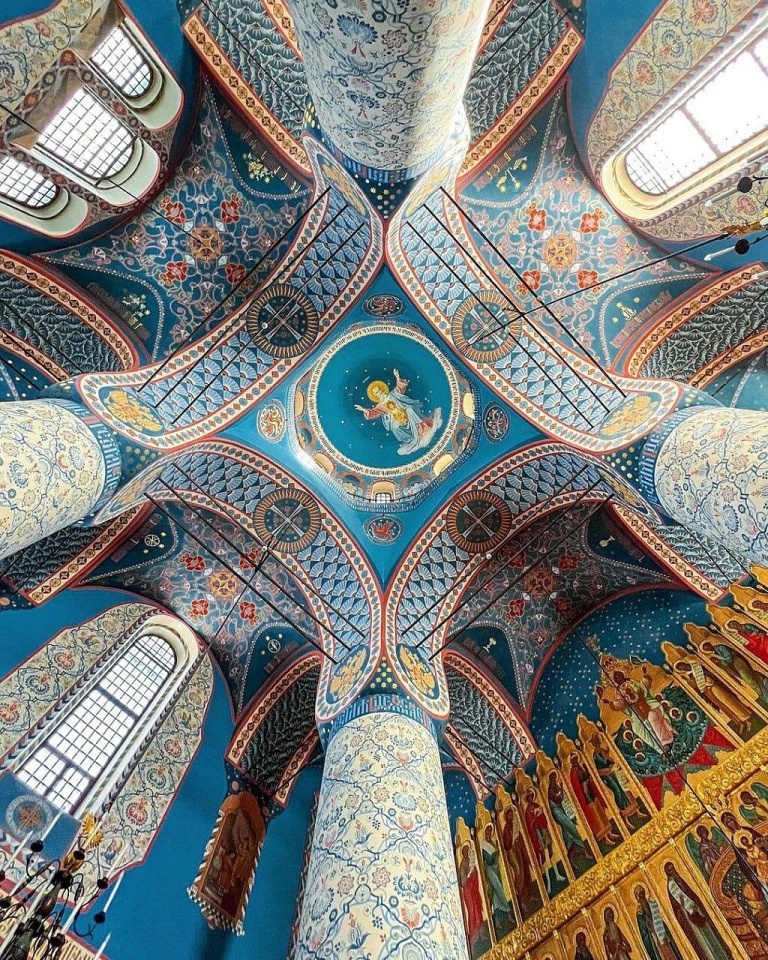
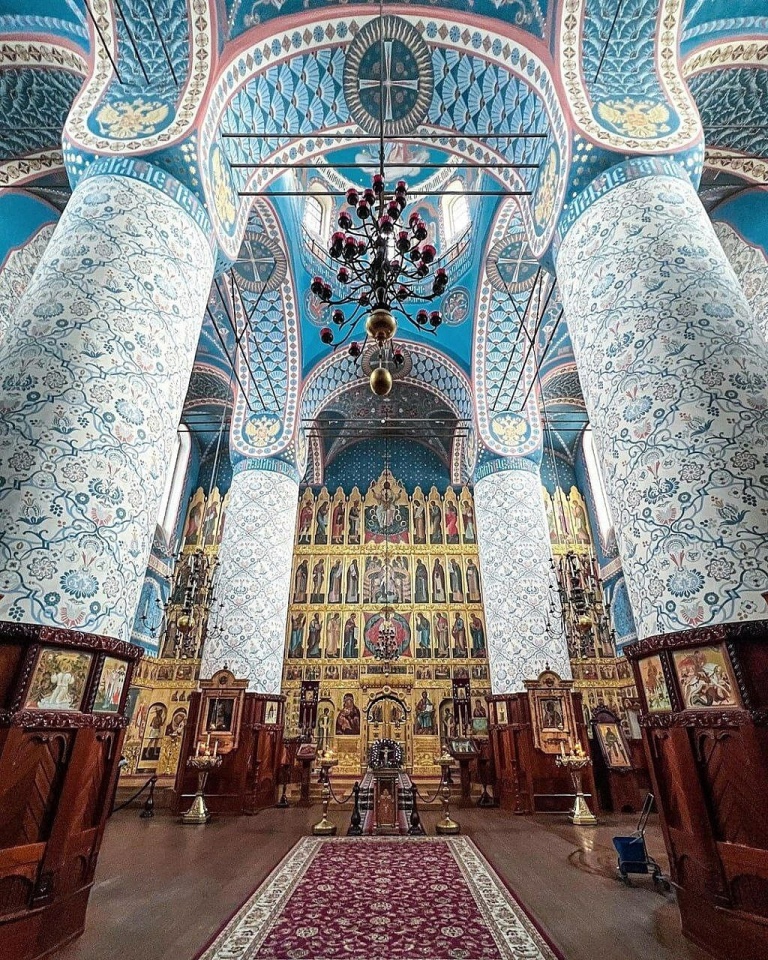
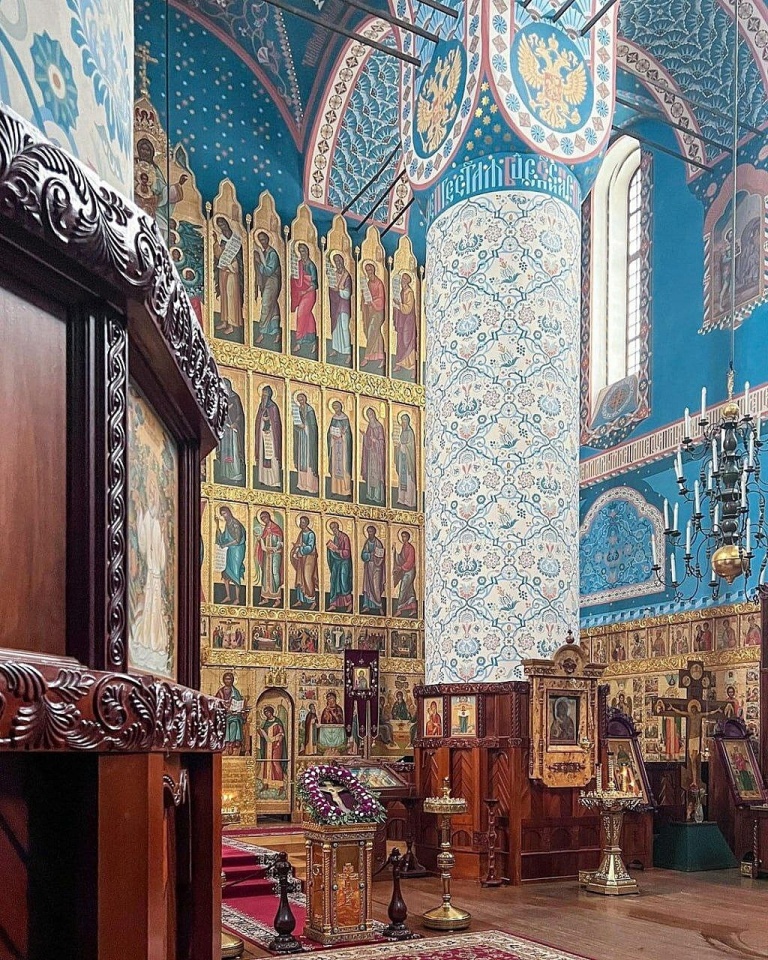
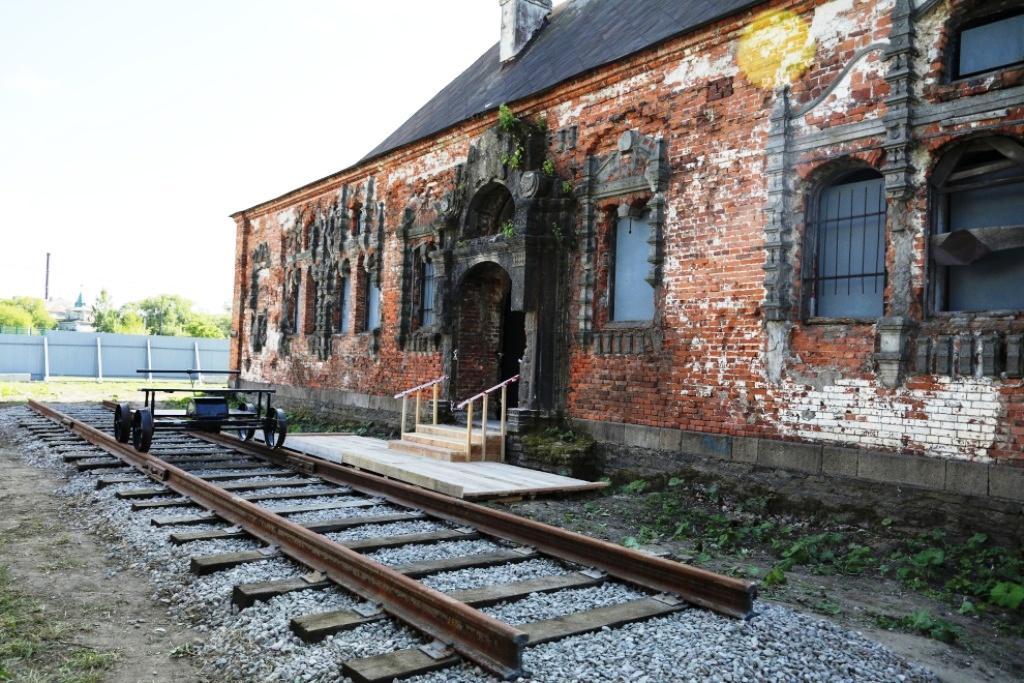
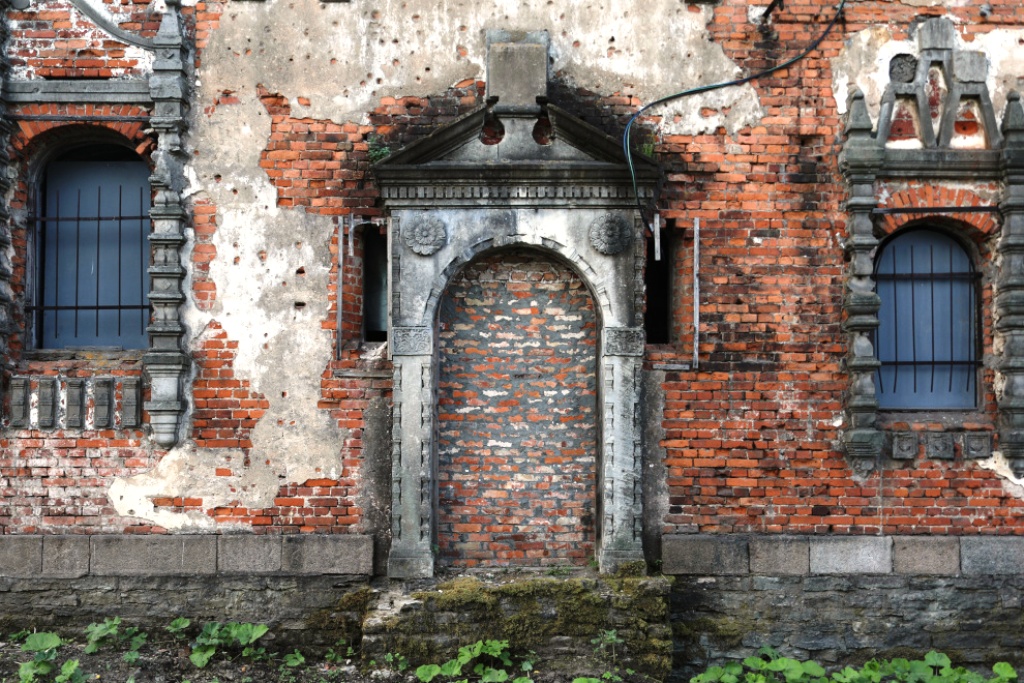
According to restorers, many of the building’s original details have surprisingly been well preserved. The historical painting of the dome of the main entrance to the Tsar’s Station has been miraculously preserved – see photos above, one of which shows an area which had been cleaned, revealing the colourful painting underneath. Early 20th century watercolours of the interiors – which have been preserved in archives – will be of great assistance to artists in their efforts to restore the once beautiful interior to its historic original.

The restoration of the Imperial Railway Pavilion will be one of the stages in the integrated development of the territory, which includes the Feodorovsky Gorodok (Town), Fermsky Park[2] and other facilities. This combined with the restoration of the Feodorovsky Sovereign Cathedral and the Alexander Palace will complete a revival of some of the most notable buildings associated with the life of Russia’s last Tsar, one which the Bolsheviks and Soviets failed to destroy.
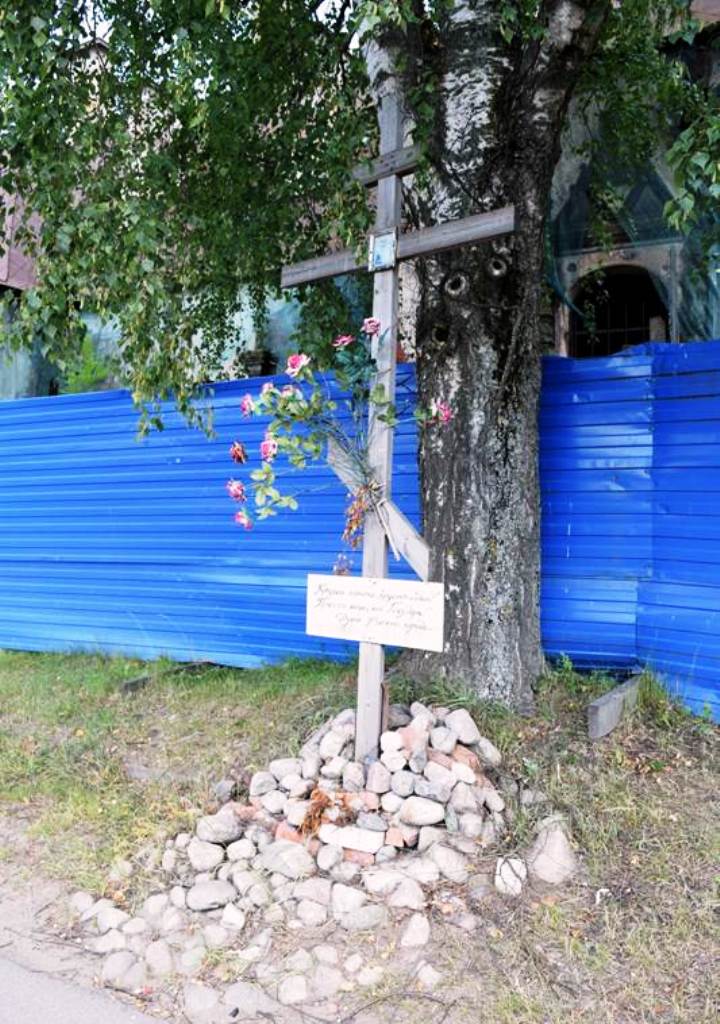
Several years ago, a wooden Orthodox cross – seen in above photo – was installed outside the Imperial Railway Pavilion at Tsarskoye Selo. The inscription on the plaque reads: “All around is betrayal and cowardice and deceit! Forgive us, sovereign” and signed: “The soul of the Russian people.”

NOTES:

[1] Moisei Solomonovich Uritsky (1873-1918) served as Chief of the Cheka of the Petrograd Soviet. After his assassination in 1918, Lenin initiated the first Red Terror on 20th September 1918.

[2] Fermsky Park is located near the Fedorovskiy Gorodok [Town] and Alexander Park. It was arranged by Adam Menelaws in 1818–1820 as a grazing area at the nearby imperial farm. A pond was dug in the park for watering.

FURTHER READING:

Update on the restoration of the Imperial Railway Pavilion at Tsarskoye Selo – published on 16th April 2024

Further to my August 2023 announcement that the Imperial Railway Pavilion at Tsarskoye Selo would be restored, I am pleased to provide the following update, which includes photos [taken in March 2024] of the progress being made on this important historic project, one which is closely connected to Emperor Nicholas II.

The sad state of the Imperial Railway Pavilion in Tsarskoye Selo includes 20 PHOTOS! – originally published on 29th December 2019

Imperial Railway Pavilions During the Reign of Nicholas II – originally published on 23rd October 2019

© Paul Gilbert. 18 August 2023

***
If you enjoyed this article, then please consider making a donation to my research, which helps me with the acquisition of documents from Russian sources and the cost of having them translated into English for the first time.

Not only do these documents give voice to the works of a new generation of Russian historian, they are of immense historic value in helping me with my efforts to clear the name of Russia’s much slandered Tsar.

Donations can be made in US dollars by credit card or PayPal.

CLICK HERE TO MAKE A DONATION

Thank you for your interest and support of my work.

PAUL GILBERT
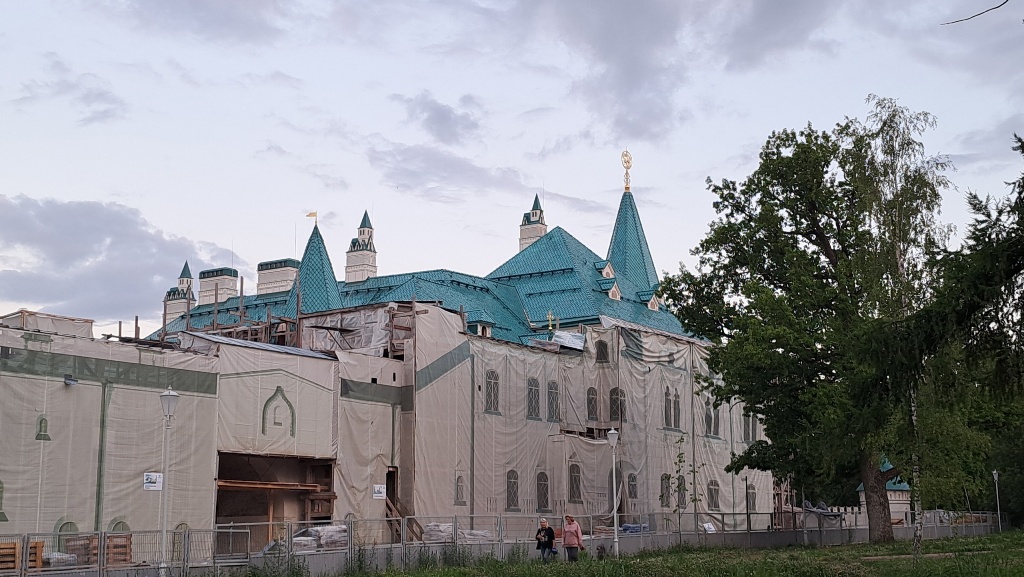
Restoration of the Feodorovsky Gorodok in Tsarskoye Selo

PHOTOS: view of the restoration work at the Feodorovsky Gorodok

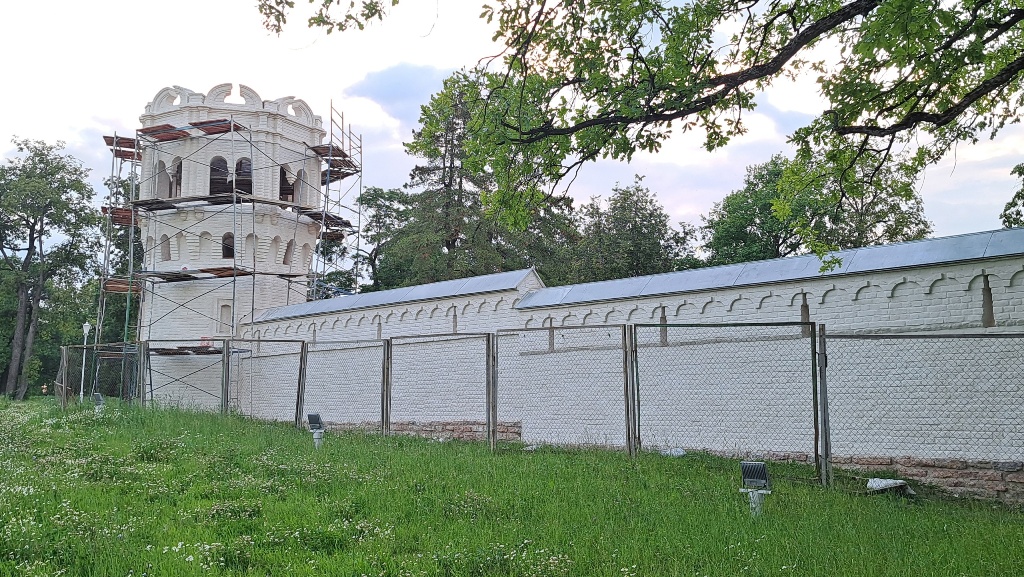
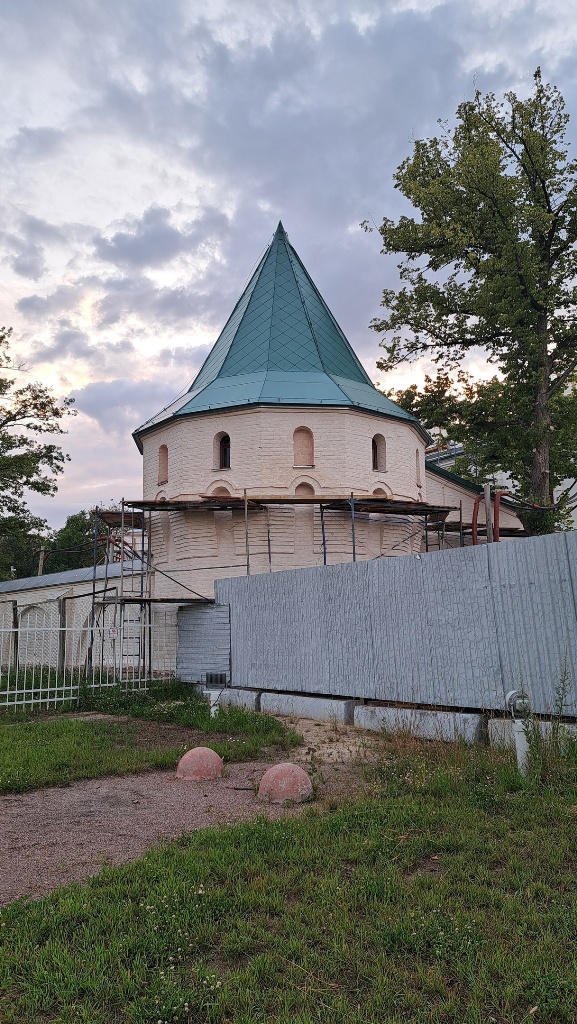
After decades of neglect during the Soviet years. the historic Feodorovsky Gorodok [Town], situated near the Feodorovsky Sovereign Cathedral and the Alexander Palace in Tsarskoye Selo, is being returned to its former glory. The restoration of the complex – which consists of 7 buildings – has been ongoing for some years, and we are only now beginning to see the progress being made in this collection of new photographs.

The history of the Feodorovsky Gorodok began in 1905, when the family of Emperor Nicholas II decided to move from the Winter Palace in St Petersburg to the Alexander Palace in Tsarskoye Selo. Nicholas II ordered the construction of an ensemble of buildings in the Neo-Russian style. The sketches drawn up by the architect Stepan Samoilovich Krichinsky (1874-1923) were approved by Nicholas II in the summer of 1913, and included a railway station of the imperial branch linking St Petersburg – Tsarskoye Selo – Pavlovsk.

Next came the barracks of His Imperial Majesty’s Own Convoy, constructed on the lime avenue which led to the Imperial residence. A little later the Feodorovsky Sovereign Cathedral was built near the palace pond. The Emperor personally laid the foundation stone, and later attended the consecration with his family in 1912.

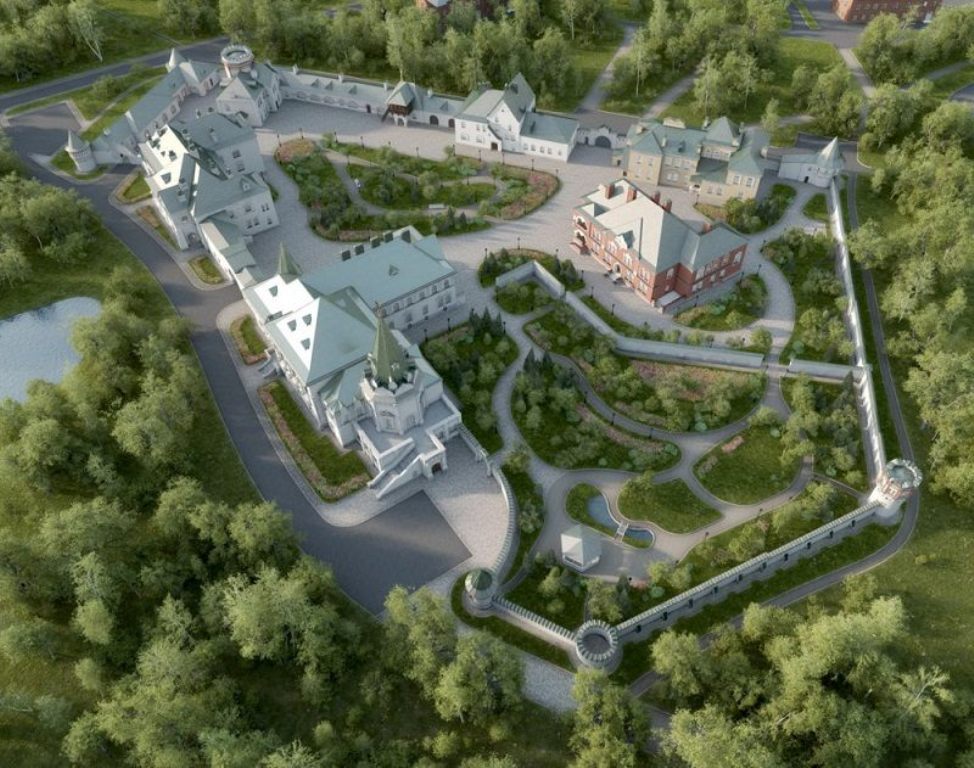
PHOTO: artist concept of the Feodorovsky Gorodok once the restoration has been completed

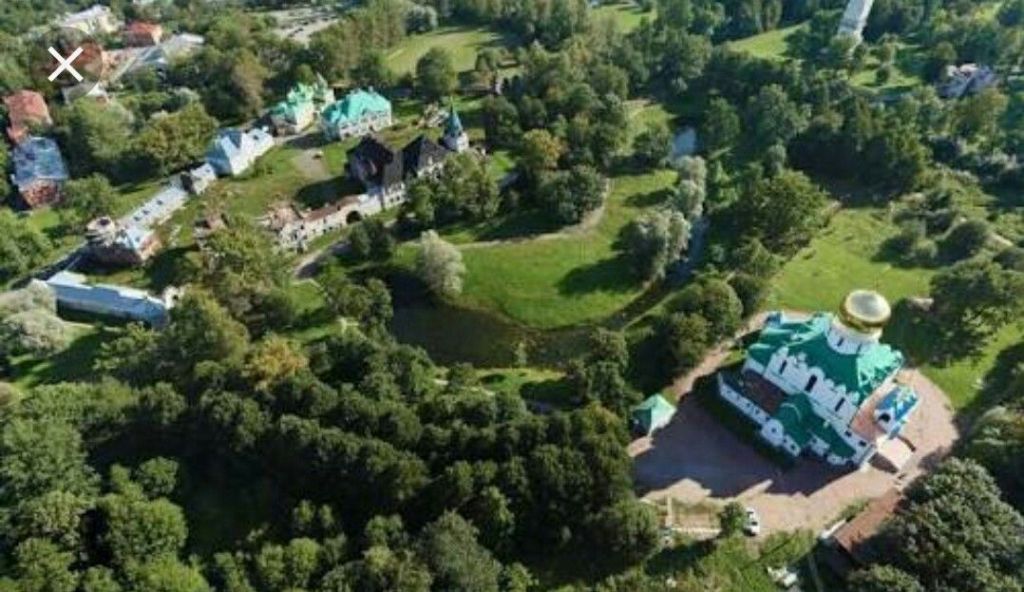
PHOTO: this aerial view of the Feodorovsky Gorodok (left) shows its proximity to the Feodorovsky Sovereign Cathedral (right) at Tsarskoye Selo

Opposite the cathedral, it was decided to build a town for the for the clergy of the Feodorovsky Sovereign’s Cathedral. Resembling a mini Kremlin, built in the Neo-Russian style, it was the last pre-revolutionary attempt to strengthen Russian statehood as a national idea. It became a masterpiece of atypical architecture for classical Petersburg.

During the First World War, an infirmary was located in the Gorodok. It was here that the Empress Alexandra Feodorovna, along with her daughters administered care for wounded Russian soldiers.

On 25th (O.S. 12th) February 1917, Emperor Nicholas II visited the Feodorovsky Gorodok and left a note in the visitor’s book: “On 12th February 1917, I inspected with pleasure the buildings at the Feodorovsky Gorodok and Cathedral. I welcome the good initiative in the revival of the artistic beauty of Russian everyday life. Thanks to everyone who worked hard. God help you all. Nicholas” 

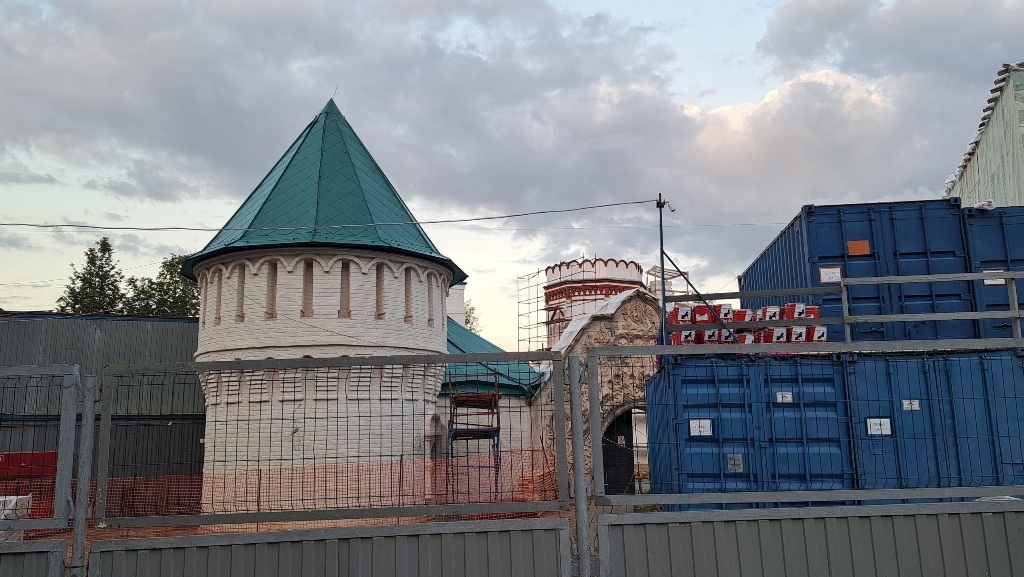
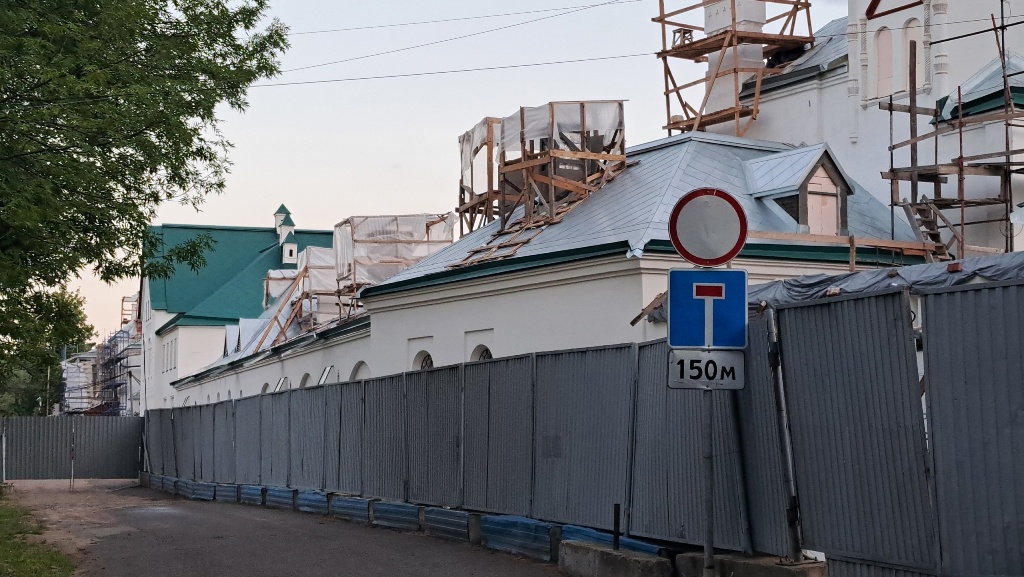
PHOTOS: 4 views of the restoration work at the Feodorovsky Gorodok

In 1994, the complex of the Feodorovsky Gorodok was transferred to the Russian Orthodox Church; in it, with the blessing of Patriarch Alexi II (1929-2008), a Patriarchal Metochion [an ecclesiastical embassy church within Eastern Orthodox tradition] was created, within the walls of which it was supposed to place: the residence of the patriarch; Museum of the History of the Russian Orthodox Church in the North-West Region of Russia; pilgrimage and training center; icon-painting workshops; and a hotel.

Due to lack of funding, restoration efforts were met with constant delays, which left the complex in a dilapidated state. In 2001, the architectural ensemble was registered as a monument of Russian cultural heritage, and protected by the Ministry of Culture of the Russian Federation. The restoration and reconstruction will not be financed by the Russian Orthodox Church, but by the management division of the Presidential Administration of the Russian Federation.

PHOTOS: 5 views of the restoration work at the Feodorovsky Gorodok

The management division of the Presidential Administration of the Russian Federation are now engaged in the restoration of the historic complex of buildings. The project’s plans were developed by the E. Yu. Merkuryeva Architectural Workshop LLC, a firm whose previous projects include the restoration of the Konstantin Palace (Strelna), and the Senate and Synod building (St Petersburg), which today house the Boris Yeltsin Presidential Library and the Constitutional Court.

The patriarch’s quarters will be housed in the Rose Chamber, while apartments for the nine permanent members of the Synod will be housed in the Belaya (White) Chamber. The project provides for the restoration of the historical appearance of the facades and interiors of all seven buildings, including the restoration of paintings and tiles, as well as landscaping and development of a park for guests.

The restoration of the Feodorovsky Gorodok was initially supposed to have been completed in 2019, however, lack of financing caused its delay. Project developers now speculate that it will be 2 or 3 years before the restoration of the complex is completed.

© Paul Gilbert. 14 August 2023

Alexander Palace marks it’s second anniversary

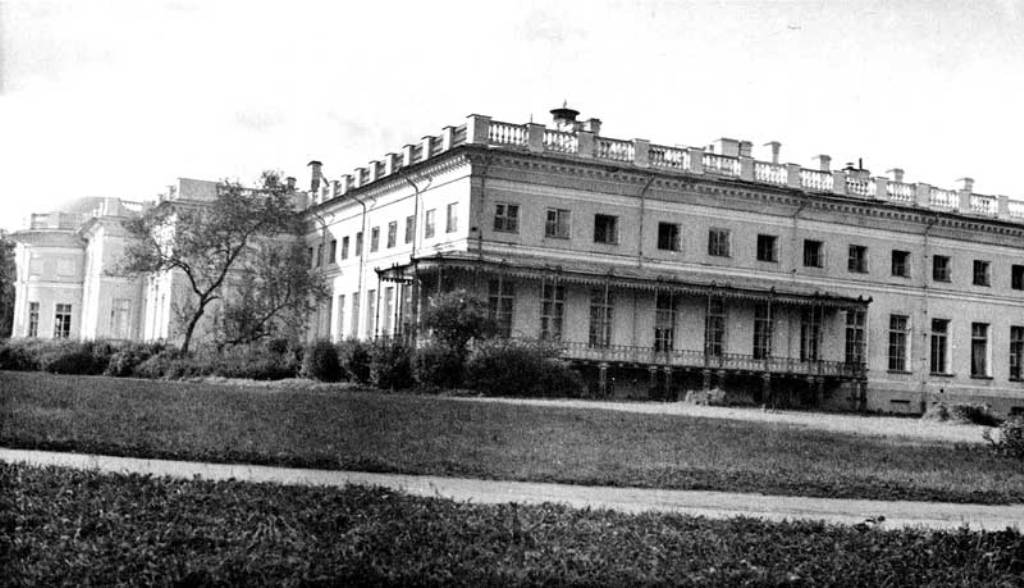
PHOTO: view of the eastern wing of the Alexander Palace

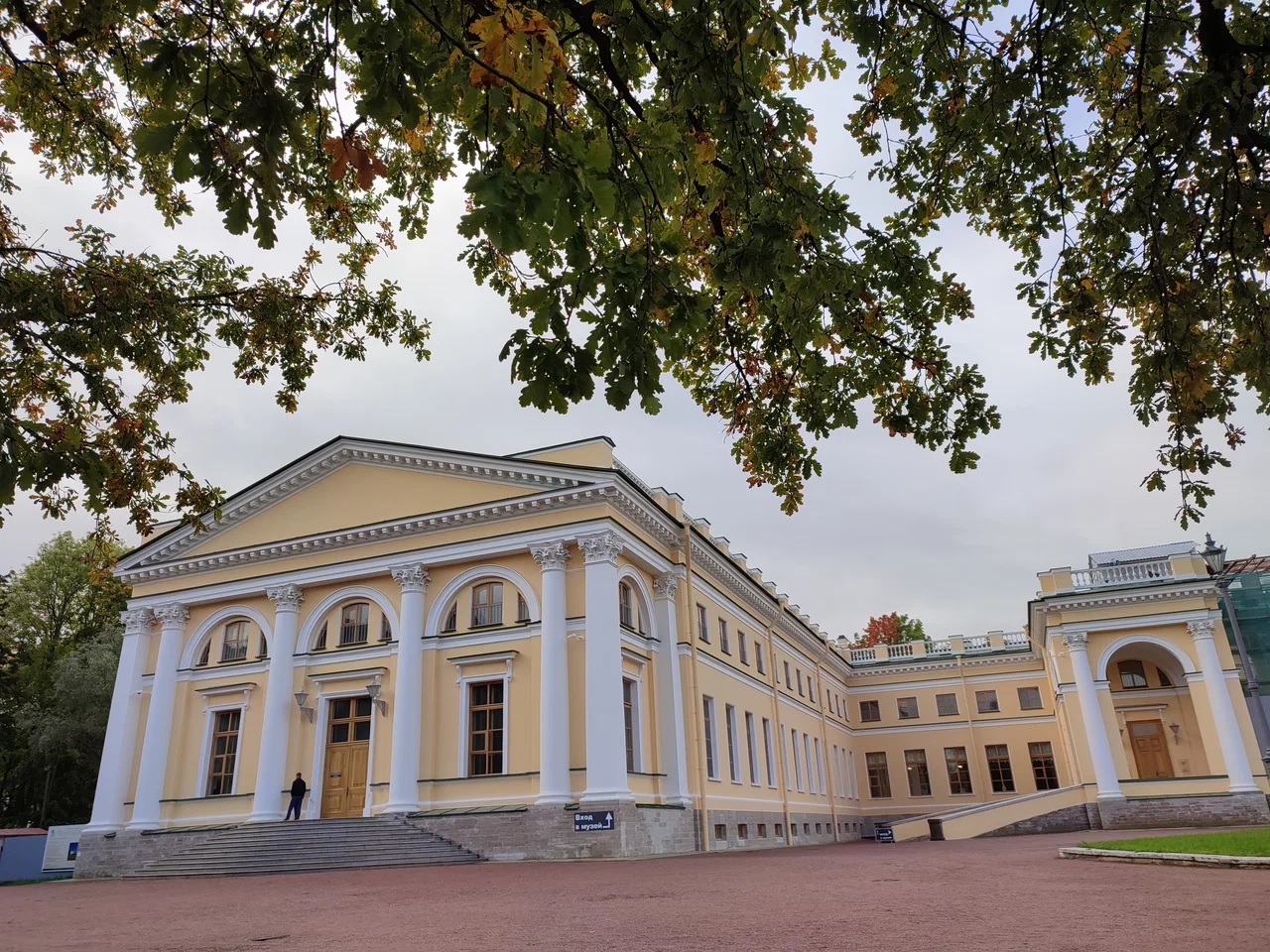
On this day – 13th August 2021 – the Alexander Palace at Tsarskoye Selo reopened, after an extensive restoration which began in the autumn of 2015. The Russian media were invited to tour the recreated apartments of Emperor Nicholas II and Empress |Alexandra Feodorovna, located in the eastern wing of the Alexander Palace. The palace welcomed its first visitors the following day on 14th August.

During the past 2 years, the Tsarskoye Selo State Museum restored one additional interior and recreated a number of items lost from the Alexander Palace during the Second World War . . .

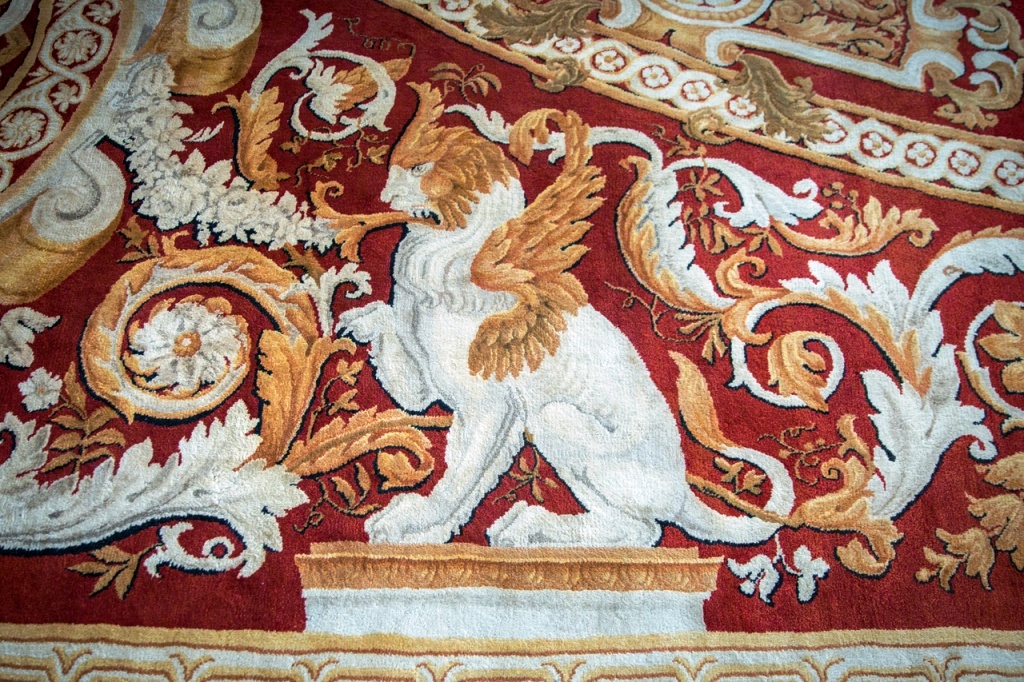
In September 2022 – a luxurious 100 square meter French-made Savonnerie carpet was recreated for Empress Alexandra’s Corner Reception Room.

In February 2023 – the Marble [Mountain] Hall – which is part of the ceremonial enfilade – officially opened it’s doors to visitors for the first time in 80 years. The restored interior also includes the recreated wooden slide, which was enjoyed by members of the Russian Imperial Family.

In May 2023 – a large stand for palm tree and other large plants was recreated for the Maple Drawing Room. In addition, an L-shaped desk and ottoman were recreated for the Working Study of Nicholas II.

In June 2023 – an ottoman was recreated for the Working Study of Emperor Nicholas II. The large Persian Farahan carpet has been recreated by modern Iranian craftsmen using traditional technologies.

The price tag for the first stage of the Alexander Palace restoration was $30 million USD. The project is the result of the colossal work of hundreds of people, including designers, architects, restorers, museum workers and dozens of organizations.

The Western wing is scheduled for completion no earlier than 2024. After the completion of the work, the Alexander Palace will become a multifunctional museum complex, which will include exhibition halls, halls for temporary exhibitions, halls for research work and conferences, as well as a library and a children’s center. The basement floor will house a ticket booth, a museum shop, a café, a cloakroom, a tour desk, as well as technical and ancillary facilities.

© Paul Gilbert. 13 August 2023

***

Dear Reader: I have written more than 100 articles and news updates on the history and restoration of the Alexander Palace at Tsarskoye Selo. If you have enjoyed all my updates, then please help supvport my research by making a donation in US dollars – donations can be made by PayPal or credit card. Click HERE to make a donation. Thank you for your consideration – PG

The restoration of Nicholas II’s favourite church at Tsarskoye Selo

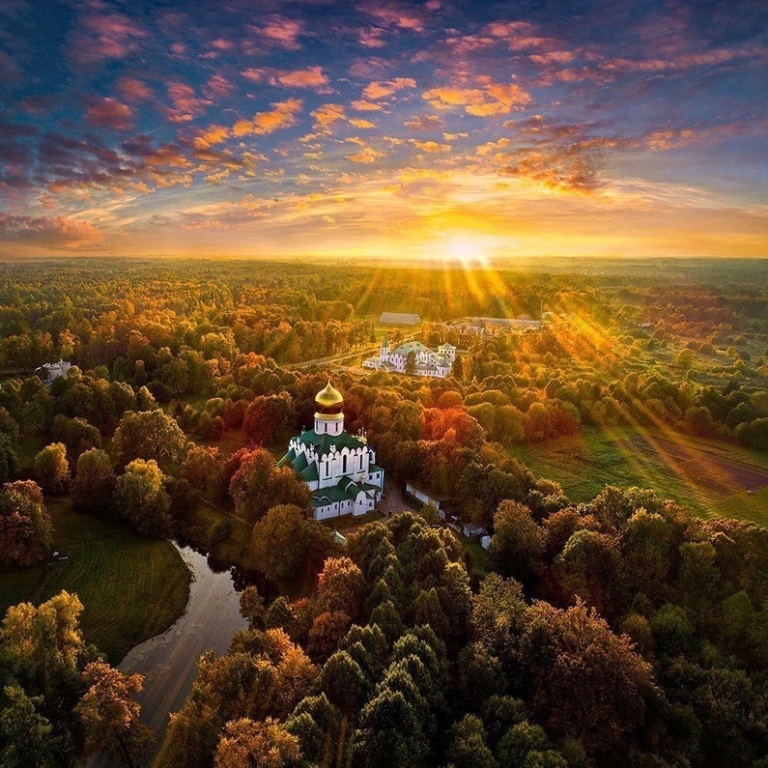
PHOTO: aerial view of the beautifully restored Feodorovsky Sovereign Cathedral at Tsarskoye Selo – the restoration took 20 years to complete. The buildings of the Feodorovsky Gorodok can be seen to the right of the cathedral’s cupola.

One of the greatest restoration projects carried out during the post-Soviet years has got to be that of the Feodorovsky Sovereign Cathedral at Tsarskoye Selo. The recreation of the Cathedral’s façade and interiors of both the Upper and Lower Churches, are nothing short of a miracle.

Situated a short walk from the Alexander Palace, I recall visiting the Feodorovsky Sovereign Cathedral for the first time in the early 1990s. I was shocked by the appalling state of neglect and disrepair this once beautiful house of worship had endured during the Soviet years. I returned to Tsarskoye Selo many times since, and have been witness to its slow, but magnificent restoration. Glory to God, for all things!

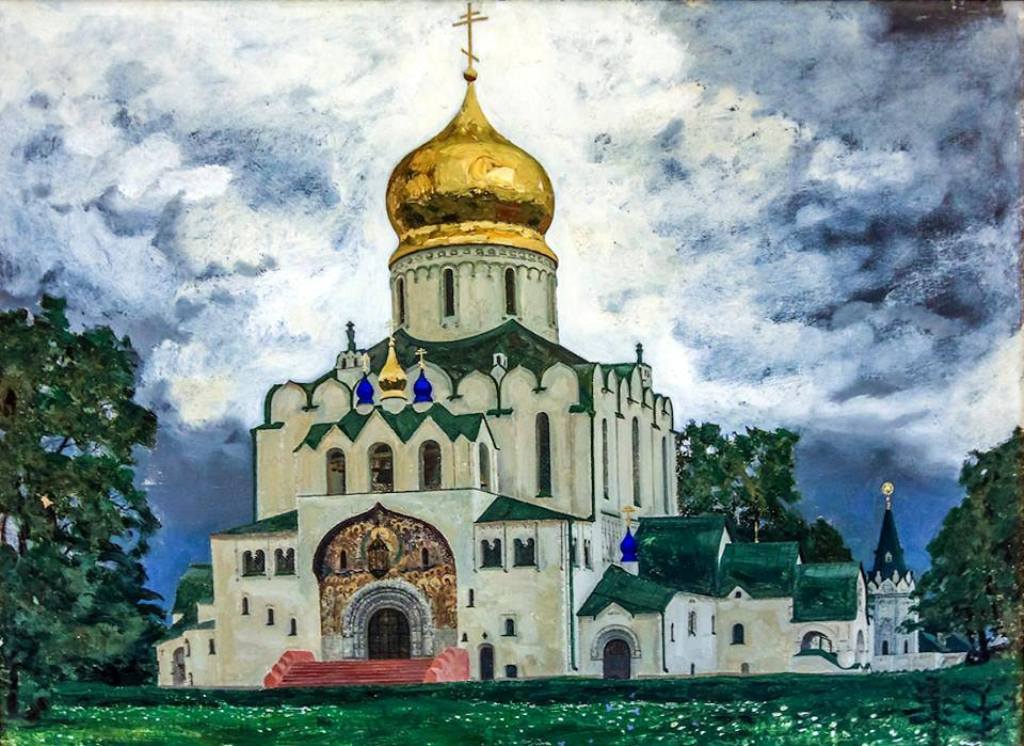
PHOTO: Watercolour of the Feodorovsky Sovereign Cathedral (1914). Artist: Gavriil Nikitich Gorelov (1880-1966)

Nicholas II’s favourite church

When Emperor Nicholas II and Empress Alexandra took up residence in the Alexander Palace in 1895[1], they were surprised that unlike other Imperial palaces, it did not contain a chapel. Therefore, in 1897, they had the Crimson Drawing Room converted into the home church of St. Alexander Nevsky. But this temporary church was clearly not enough, so the Emperor issued a decree for the construction of a new church in the vicinity of the palace.

Between 1908-1912, the Feodorovsky Sovereign Cathedral was built in the old Russian style – much favoured by the Tsar. It’s construction was financed by Nicholas II, who contributed 150,000 gold rubles from his own personal funds. The foundation of the Cathedral was laid on 2nd September (O.S. 20th August) 1909 in the presence of the Imperial family, each member beginning with the Tsar himself, placing a brick in the building’s foundation.

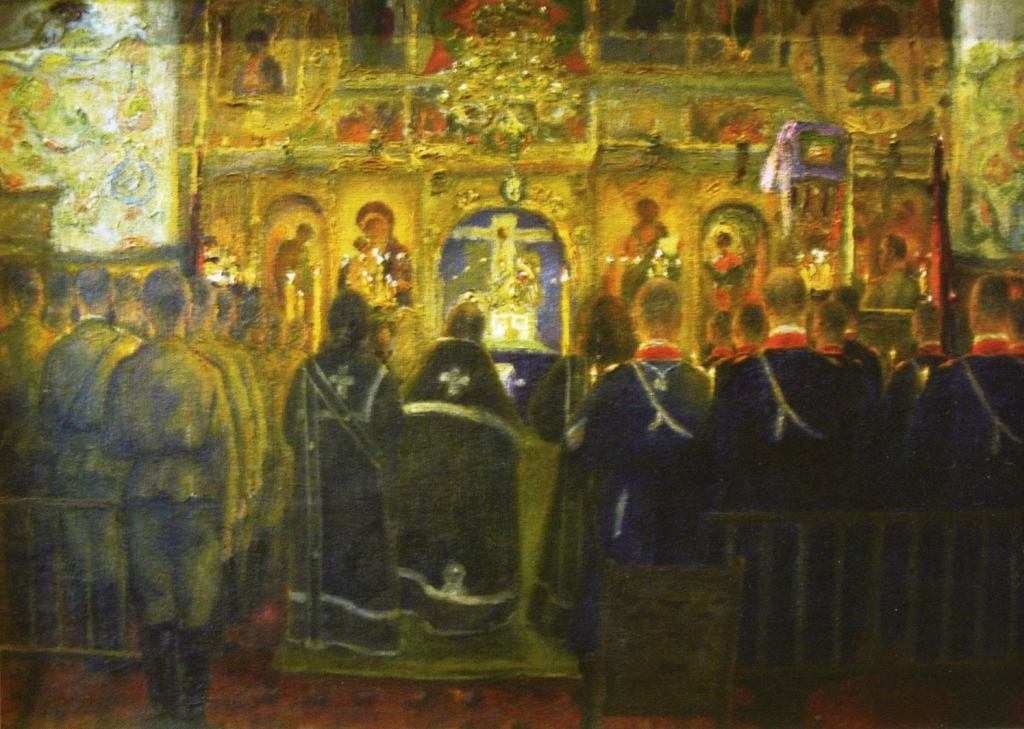
PHOTO: ‘A Liturgy in the Feodorovsky Sovereign Cathedral in the presence of Emperor Nicholas II’, by the Russian artist Michael Gerasimovich Kirsanov (1889–1958). In 1914, the artist worked on the creation of the ceremonial album ‘Feodorovsky Sovereign Cathedral in Tsarskoye Selo’.

The Feodorovsky Sovereign Cathedral served as the regimental church of both His Imperial Majesty’s Own Infantry Regiment and His Imperial Majesty’s Own Convoy. In addition, the cathedral served as the house church for the Imperial family, while they were in residence in the Alexander Palace.

Externally, the cathedral was simple, austere and majestic, with bright reflections of mosaics on the snow-white walls, crowned with a gilded cupola. The interior was striking in its height and magnificent decoration in the style of ancient Russian church architecture.

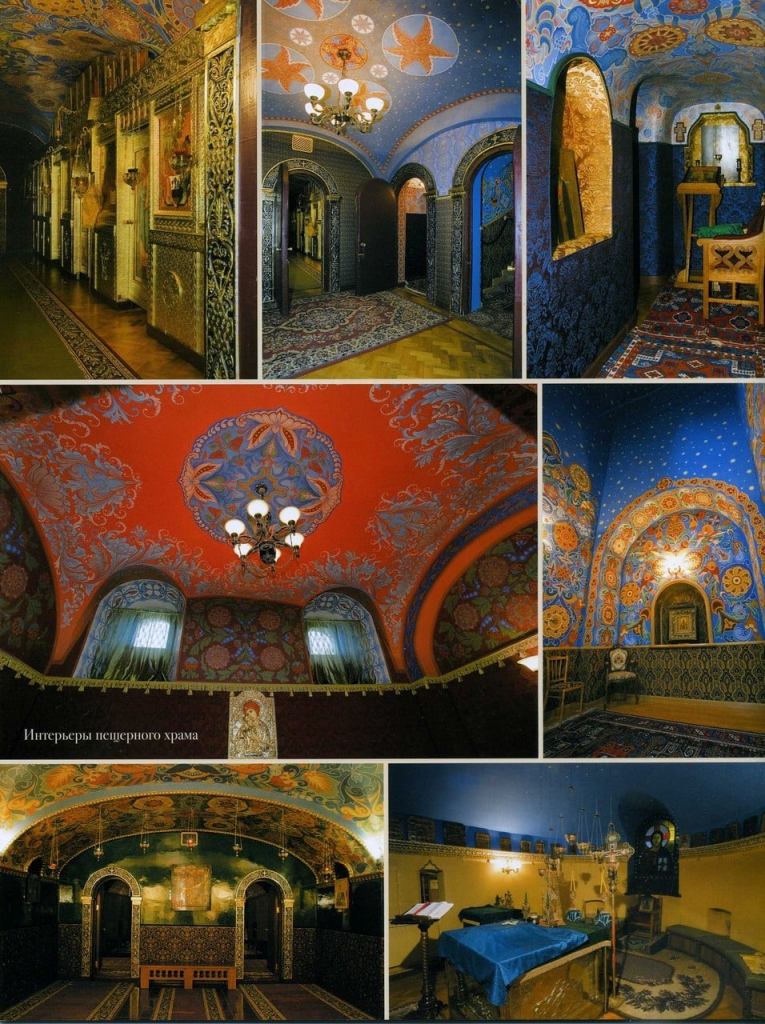
The Cathedral consisted of two churches – the Upper Church, with a capacity of up to 1000 people, with the main altar in the name of the Fedorovskaya Icon of the Mother of God, the patron icon of the Romanov family. The Upper Church included a side chapel in the name of St. Alexis, Metropolitan of Moscow (the completion and consecration of which by 1917 was never realized); and the Lower Church [aka the Cave Church] in the name of St. Seraphim of Sarov.

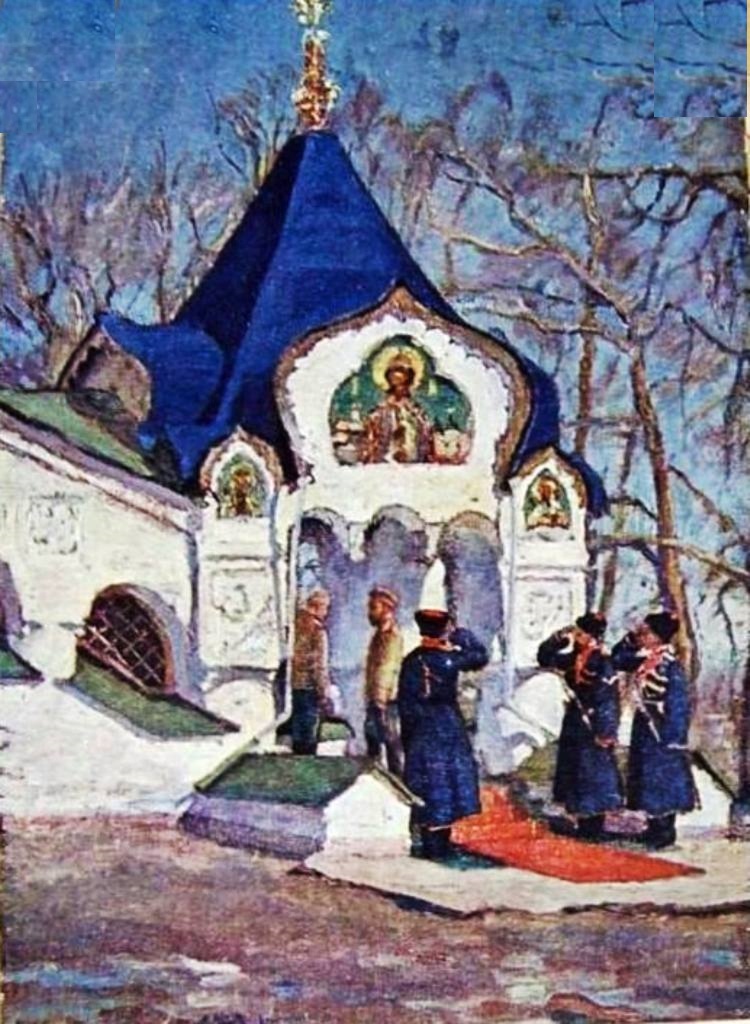
PHOTO: Early 20th century Russian postcard depicting Emperor Nicholas II entering the Feodorovsky Sovereign Cathedral via the Tsar’s Porch.

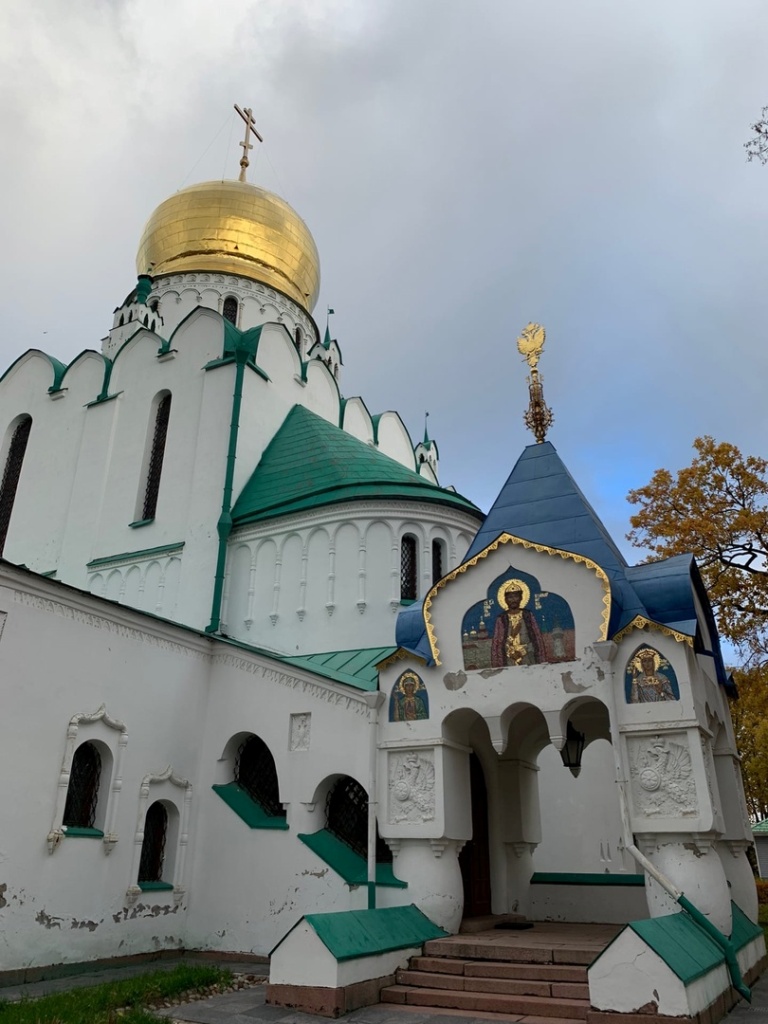
PHOTO: the restored Tsar’s Porch is located at the southeastern corner of the cathedral. It was through this entrance, that Emperor Nicholas II and his family, accessed the Cave Church, consecrated in memory of St. Seraphim of Sarov.

The solemn consecration of the Cathedral took place on 2nd September (O.S. 20th August) 1912 in the presence of the Imperial Family. The ceremony was performed by the protopresbyter of the military and naval clergy Georgy Shavelsky (1871-1951), who from 15th (O.S. 2nd) June 1913, served as honorary rector of the Cathedral.

A solemn Divine Liturgy was performed by His Grace Theophan, Bishop of Yamburg (1872-1940), attended by the Emperor and members of his family.

While the Imperial Family were in residence in the Alexander Palace, the Emperor and his family visited the Feodorovsky Sovereign Cathedral on holidays and Sundays. They entered the Cathedral via the Tsar’s Porch, which was located at the southeastern corner of the cathedral.

Empress Alexandra Feodorovna often came to pray in the Cave Church, of which she was particularly fond. A special room was arranged for her, which allowed her to retire in prayer privately. The chapel, a small room less than a meter wide, was installed to the right of the altar. It contained a mosaic icon of St. Seraphim of Sarov.

When in residence, Nicholas II did not miss a single Sunday and holiday service in the Feodorovsky Sovereign’s Cathedral. “The service was solemn and remarkably beautiful in our lovely church,” he wrote in his diary. Many laity wanted to pray with the sovereign, however, they were allowed only with tickets, which could be obtained from the palace commandant or the churchwarden.

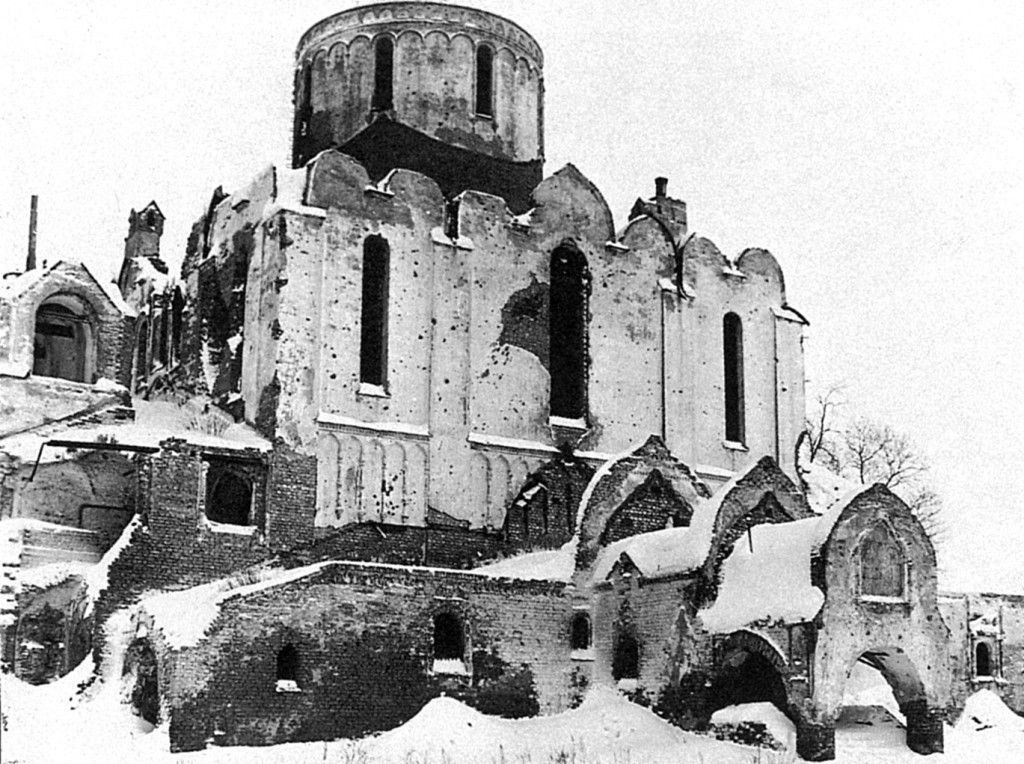
PHOTO: the Feodorovsky Sovereign Cathedral, as it looked in the 1970s

The Soviet years

Shortly after the Tsar’s abdication in March 1917, the Feodorovsky Sovereign Cathedral was turned into an ordinary parish church. After the Bolsheviks nationalized churches and monasteries, they wasted little time in looting and pillaging the Cathedral. Between 1911 to 1934, members of the Cathedral’s clergy – including six abbots – were arrested and sent to concentration camps, never to be seen again.

In December 1933, the Cathedral was closed by the local Soviet, who argued that the town had too many churches – a total of five. The Cathedral’s property – including the icons – were transferred to the Russian Museum Fund, and later distributed among several museums in Leningrad. To this day, they remain in the collections of the State Russian Museum, the Kazan Cathedral, in the Catherine Palace, Pavlovsk Palace and elsewhere. Much, however, was lost, sold abroad for foreign currency or intentionally destroyed by the Soviets.

If that wasnt’ enough, the Upper Church was adapted for a cinema hall, the screen was placed in the altar space. The Lower Cave Church was turned into a warehouse and an archive of film and photo documents for the “Lenfilm” studios.

During the Nazi occupation of Pushkin (1941-44), the Feodorovsky Sovereign Cathedral was badly damaged. Given that the Cathedral was the tallest point in the town, it became an easy target for Nazi bombers. The walls of the northern façade and the right wing of the western side were partly destroyed. The vaults were also damaged, and the main dome was shattered by a shell.

During the post-war years, the Cathedral was left in a terrible state of ruin, until the 1980s.

After the fall of the Soviet Union in 1991 the Feodorovsky Sovereign Cathedral was returned to the Russian Orthodox Church. Extensive reconstruction and restoration work carried out over a 20 year period has restored it to its historic original.

Post-Soviet restoration

In the spring of 1991, the Cathedral was transferred to the Russian Orthodox Church. In the same year, the Feodorovskaya Icon of the Mother of God was found buried in one of the parks at Tsarskoye Selo. It was returned to the Cathedral and has since become one of its most revered shrines. On 1st March 1992, the first Divine Liturgy was held in the Lower Church, and on 29th August 1996, in the Upper Church.

The restoration of both the façade and interiors of the Cathedral lasted 20 years. The dedication and painstaking efforts to restore Nicholas II’s favourite church by an army of artists, restorers and historians is much to be admired, as the photos below will attest:

PHOTO: partial view of the restored iconostasis in the Upper Church

PHOTO: view of the restored main dome of the Upper Church

PHOTO: view of the restored iconostasis in the Upper Church

PHOTO: partial view of the restored iconostasis in the Upper Church

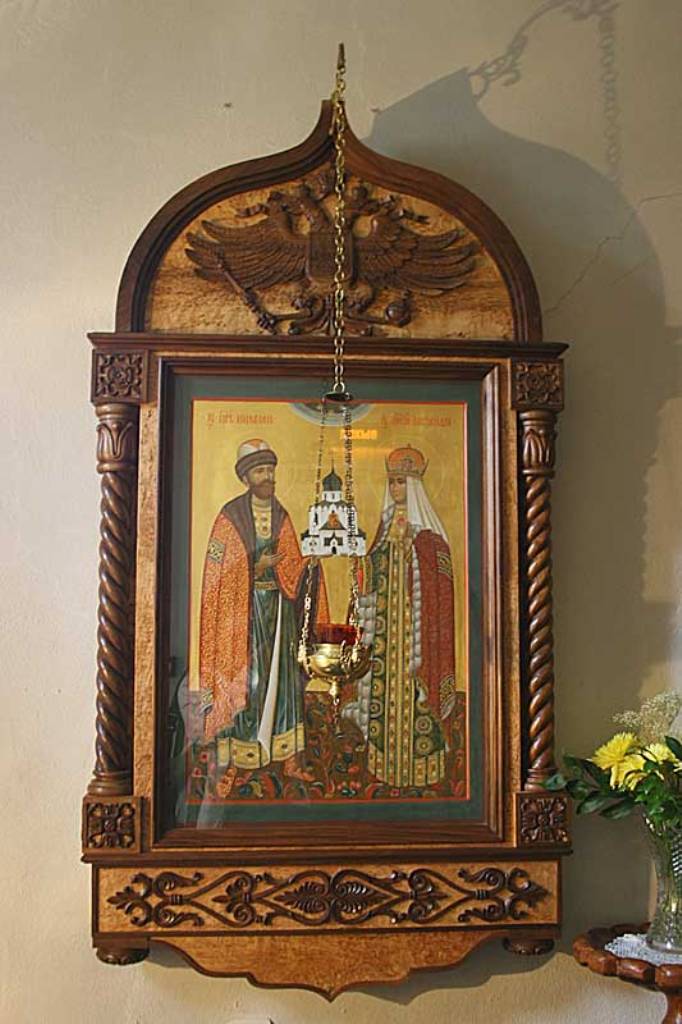
PHOTO: Icon of the Holy Royal Martyrs Nicholas II and Alexandra Feodorovna in the Upper Church

PHOTO: views of the restored Lower Church, where the Imperial Family came to pray

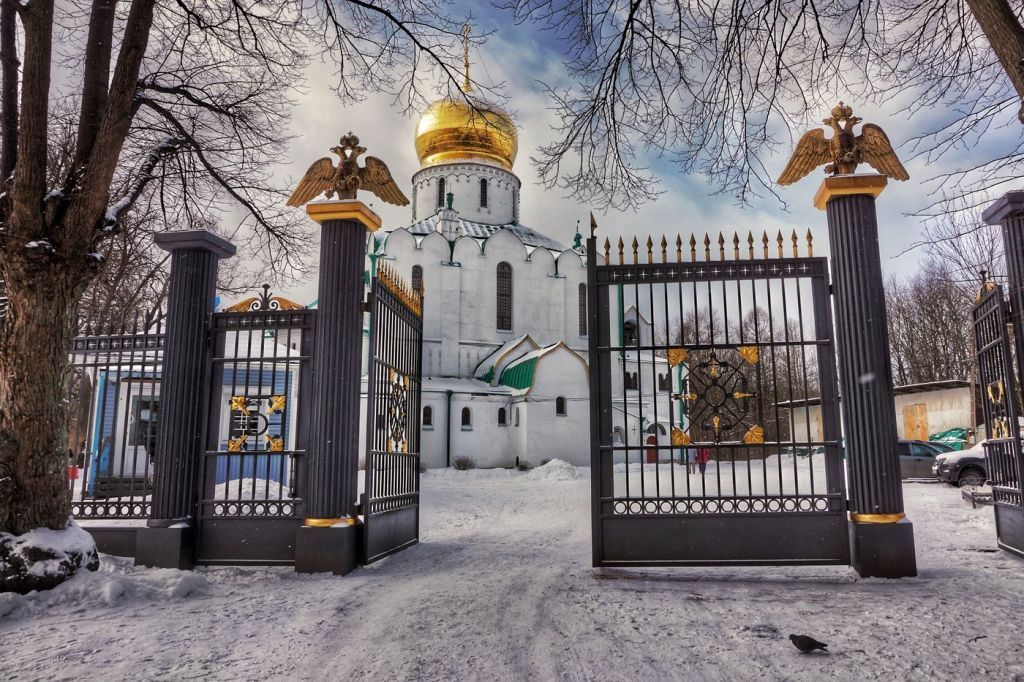
PHOTO: winter view of the Feodorovsky Sovereign Cathedral. Note the gilded double-headed eagles perched on the pillars of the main gate

On a final note . . .

There are some Orthodox Christians who have suggested that once the Russian Orthodox Church recognize the Ekaterinburg Remains as those of the Imperial Family, that the Feodorovsky Sovereign Cathedral at Tsarskoye Selo should be considered as the final resting place for the Imperial Family and their four faithful retainers that perished with them in Ekaterinburg. According to one source, such a decision would thus fulfil the wish of Nicholas II and Alexandra Feodorovna.

It seems only fitting that they should find eternal rest in a place which they held so near and dear to their hearts, one where they came to pray and find spiritual nourishment. Just a thought . . .

NOTES:

[1] Shortly after the events of Bloody Sunday in February 1905, Nicholas II made the Alexander Palace his permanent residence.

© Paul Gilbert. 14 July 2023

Photo album belonging to Tsesarevich Alexei Nikolaevich returned to Alexander Palace

Photo © Tsarskoye Selo State Museum

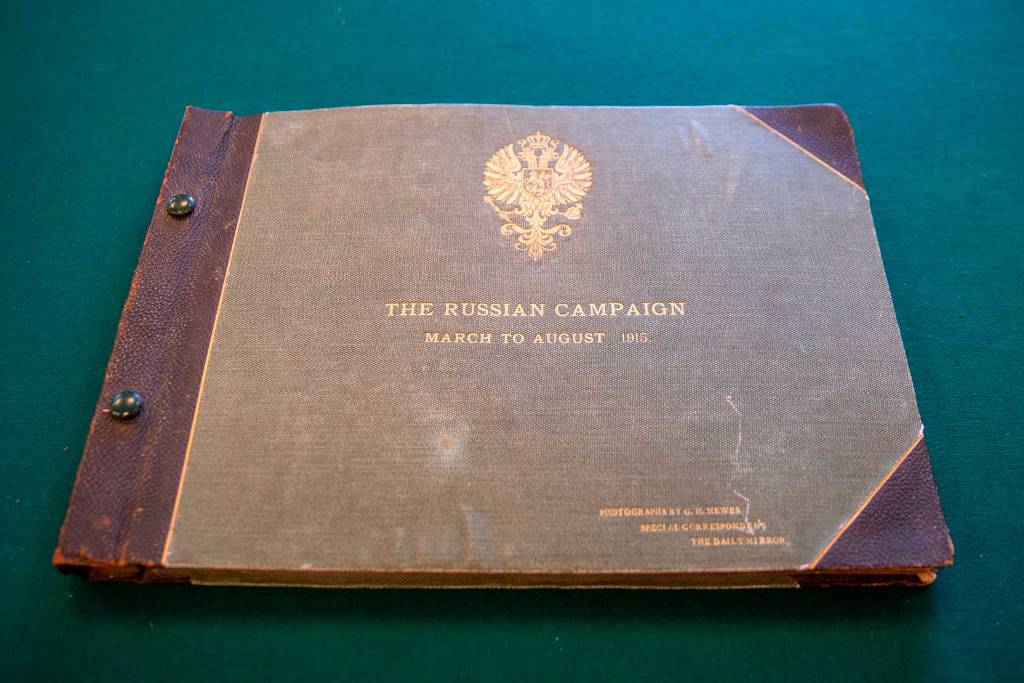
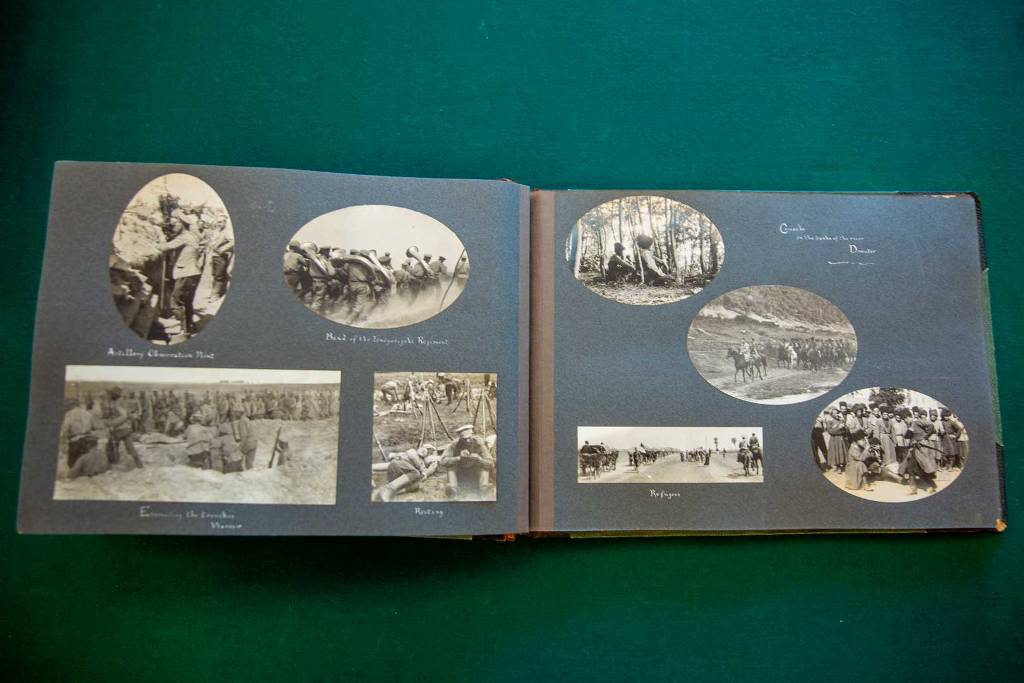
A rare photo album “The Russian Campaign. March to August 1915”, which belonged to Tsesarevich Alexei Nikolaevich and was kept in the Alexander Palace, has been returned to the Tsarskoye Selo State Museum.

The album was one of several rarities purchased at foreign auctions and donated to the museum by the philanthropist and long-term friend of the museum, Mikhail Karisalov. The other items include two paintings by Karl Friedrich Schultz, and a plate from the famous Raphael service, manufactured in 1903 at the Imperial Porcelain Factory. The paintings and plate were originally from the Catherine Palace.

In total, the museum’s collection now includes 226 items donated by Mikhail Karisalov or acquired with his financial support. It is thanks to the kindness and generosity of this man, that the museum has been able to recoup many of its treasures which were lost or stolen during the Nazi occupation of Pushkin [Tsarskoye Selo] in 1941-44. 

The photo album “The Russian Campaign. March to August 1915” consists of 168 photographs taken during the Russian campaign of the First World War – from March to August 1915. The photographs were taken by British photographer George H. Mewes, who was appointed official photographer to the Russian Imperial Army. Hewes took photographs for a number of prominent British newspapers and magazines, including The Daily Mirror, The Times History of the War, Field Notes from the Russian Front and The Russian Campaign.

Similar albums about the military campaigns of the Russian Imperial Army during the First World War were presented as gifts to Tsesarevich Alexei Nikolaevich, the son and heir of Emperor Nicholas II. Museum researchers believe that the albums were kept in the Tsesarevich’s Classroom, which was located on the second floor of the Eastern Wing of the Alexander Palace. “We can only assume that “The Russian Campaign. March to August 1915″ album, among many other items, was seized from the Alexander Palace during the 1930s or 1940s,” says Victoria Plaude, curator of the museum’s photograph fund.

On the flyleaf of the album is a museum label. The inscription in ink reads: “Alexander./palace/floor. nasl-ka/class/No. 683”. This clearly indicates that the photo album was in the Alexander Palace in Alexei’s Classroom. The label found on the album is identical to those on other items from the Alexander Palace, and now in the Collection of the Tsarskoye Selo State Museum.

Photo © Tsarskoye Selo State Museum

The photo album was made in London by Jonson & Sons. Photos of different sizes are pasted on sheets of gray cardboard. On the top cover of the album is an embossed gold inscription: “Photographs by G. H. Mewes, special correspondent of the Daily Mirror”.

The pictures are accompanied by captions in English. On the flyleaf of the album there is an inscription: “It has been the aim of the correspondent to illustrate for the British public the heroic part performed by their Russian Allies in the Great War”.

The photographs are only a small selection of about two thousand photographs taken by Mewes for the Russian Imperial Army, which were reproduced in illustrated magazines around the world.

British photographer George Mewes and American journalist Stanley Washburn were on the Russian front in 1914-1915. In addition to periodicals, these photographs were later featured in Washburn’s book “The Russian Campaign. April to August, 1915”.

© Paul Gilbert. 13 July 2023

Ottoman recreated for Working Study of Emperor Nicholas II in the Alexander Palace

PHOTO: view of the ottoman recreated for the Working Study of Emperor Nicholas II in the Alexander Palace. Photo © Tsarskoye Selo State Museum Reserve

The Tsarskoye Selo State Museum continue to recreate items lost from the Alexander Palace during the Second World War . . . the latest addition is the beautiful ottoman, recreated for the Working Study of Emperor Nicholas II.

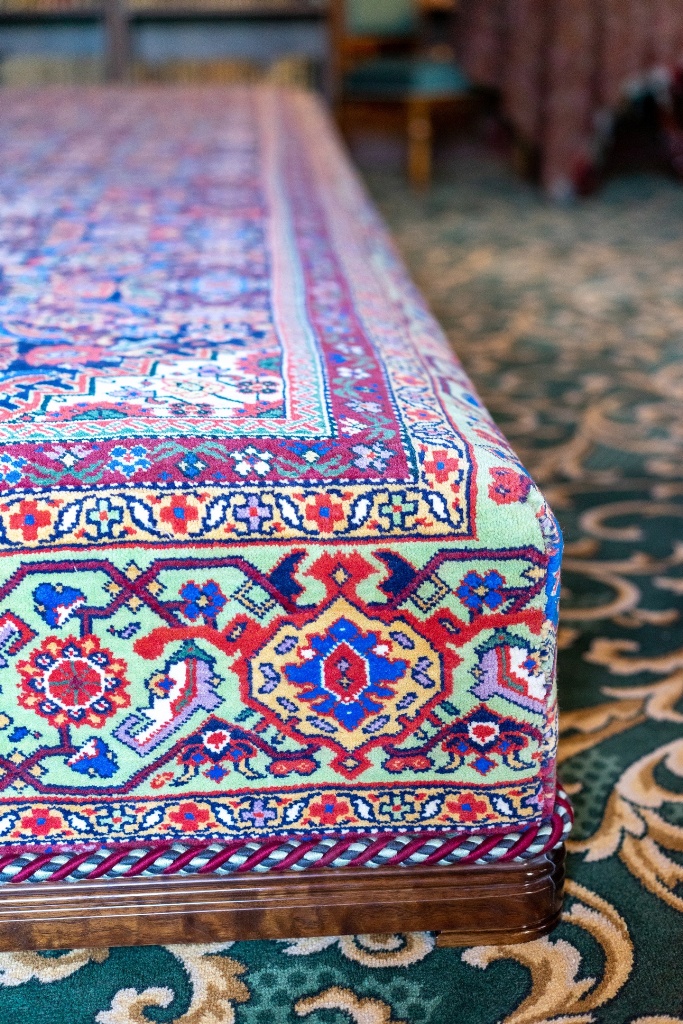
The large Persian Farahan carpet has been recreated by modern Iranian craftsmen using traditional technologies. The soft velvet upholstery features a variegated pattern of stylized plants on a dark blue background in the middle, and a border along the edge, with variegated figured medallions and stylized flowers on a light green background; edged along the plinth with a variegated cord. This description has been preserved in the museum’s inventory records.

PHOTO: detail of the ottoman recreated for the Working Study of Emperor Nicholas II in the Alexander Palace. Photo © Tsarskoye Selo State Museum Reserve

The recreation of the ottoman was made possible by archival photographs dating back to the 1930s, when the Alexander Palace was a museum. In the photographs, however, the details of the pattern of the central part of the carpet are not clearly visible, which made it difficult to recreate. Anna Tarkhanova, a senior researcher at the Tsarskoye Selo State Museum, conducted a study, the result of which it became obvious that a Farahan carpet made in the 1880s was used to upholster the ottoman of Nicholas II in 1896. Thus, a historical analogue for making a copy was of a carpet from the collection of Muranovo, the country estate of the famous Russian poet and diplomat Fyodor Ivanovich Tyutchev (1803-1873).

According to this museum model, a copy for the Alexander Palace was made in accordance with the traditional Persian technology of hand weaving. The order of the Farahan carpet made in Iran, was organized by Janusz Szymaniak, General Director of the Renaissance Restoration Workshops for the Reconstruction of Ancient Monuments, a long-time partner of the Tsarskoye Selo State Museum.

Persian carpets, which were usually presented as diplomatic gifts, traditionally decorated the interiors of the Alexander Palace. In addition, Russian Oriental style carpets based on Caucasian and Turkmen designs, also decorated the palace.

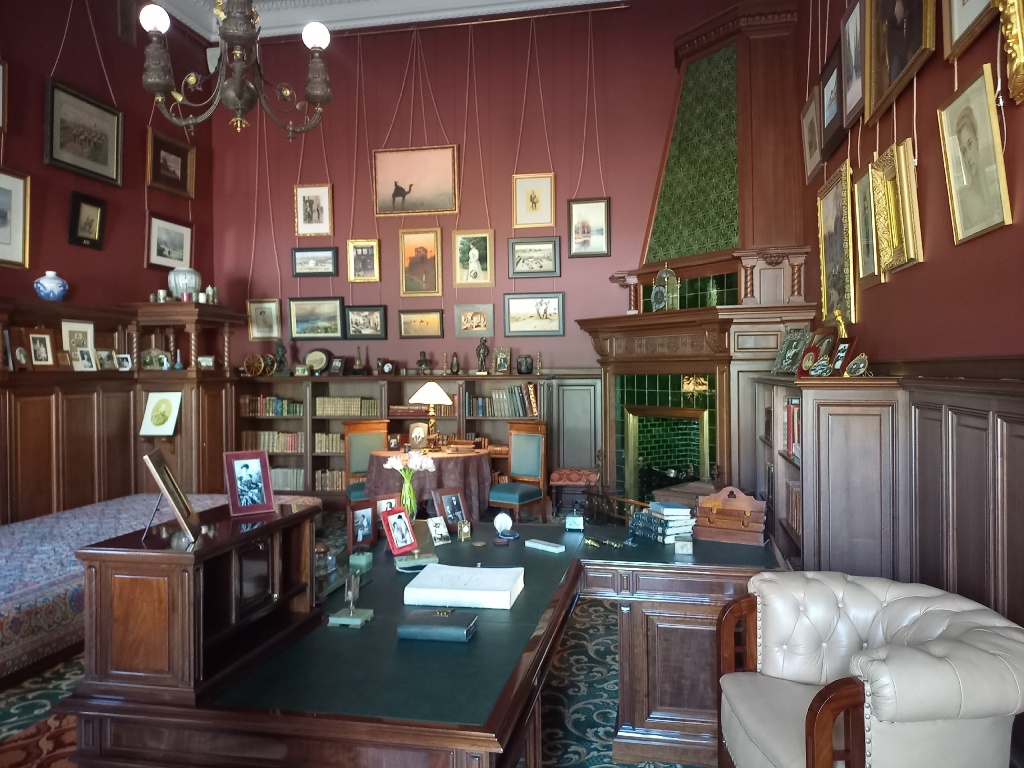
PHOTO: view of the Working Study of Emperor Nicholas II in the Alexander Palace as it looks today – the recreated ottoman can be seen on the left

The Farahan district of Persia, which has a long history of carpet weaving, is located in the central part of Iran, about 580 km south of Tehran. Active production of carpets was established in the region of Saruk, famous for its craftsmen. The export of Farahan carpets to Europe began in the 19th century. Similar Persian carpets are now represented in the largest Russian and foreign museum collections.

Until now, Farahan carpets are made by hand, by knotted weaving (160,000 knots per square meter) from woolen threads dyed with natural paints of mineral origin. This allows you to achieve identity when copying old samples.

When creating the carpet for the Alexander Palace, Iranian craftsmen used sheep wool with the addition of camel, from natural dyes – oak bark, fruit trees, lemon leaf, dates.

Among connoisseurs, such carpets are highly valued for their rich dark blue background and green shades of pattern elements resembling green copper. This colour is is represented in the carpet which has been recreated for the ottoman in the Working Study of Emperor Nicholas II.

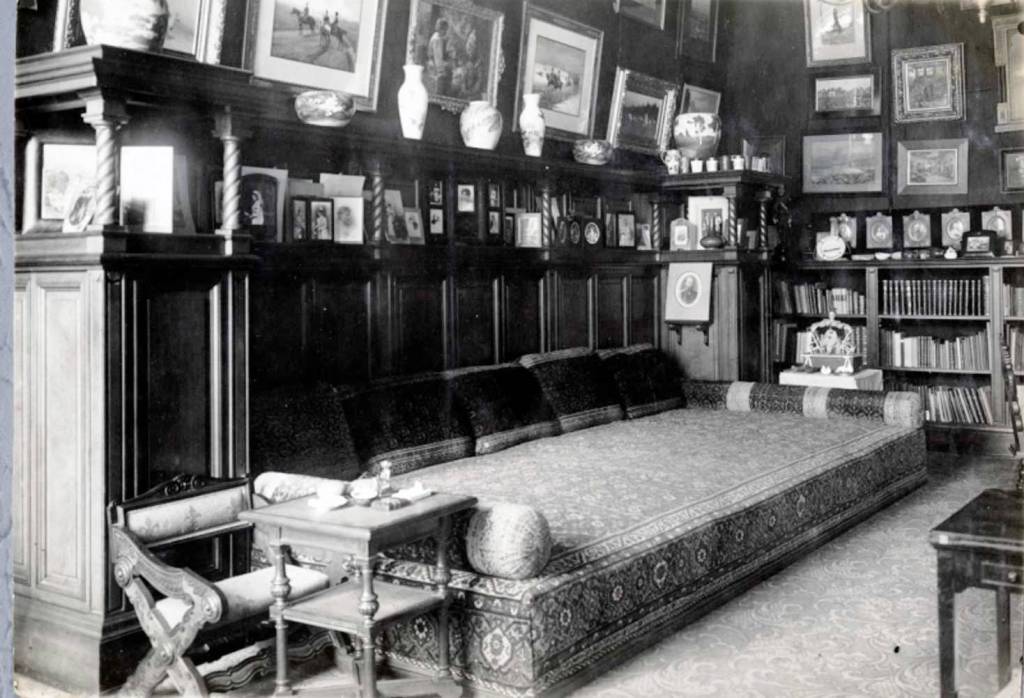
PHOTO: view of the original ottoman in the Working Study of Emperor Nicholas II in the Alexander Palace, c. 1930s

Nicholas II often used the ottoman to rest when his work dragged on until nightfall or when he returned to Tsarskoye Selo from St. Petersburg late and preferred not to disturb his family.

Click HERE to read my article The History and Restoration of the Working Study of Nicholas II in the Alexander Palace, published on 2nd December 2020

© Paul Gilbert. 28 June 2023

Vsevolod Yakovlev: first curator of the Alexander Palace

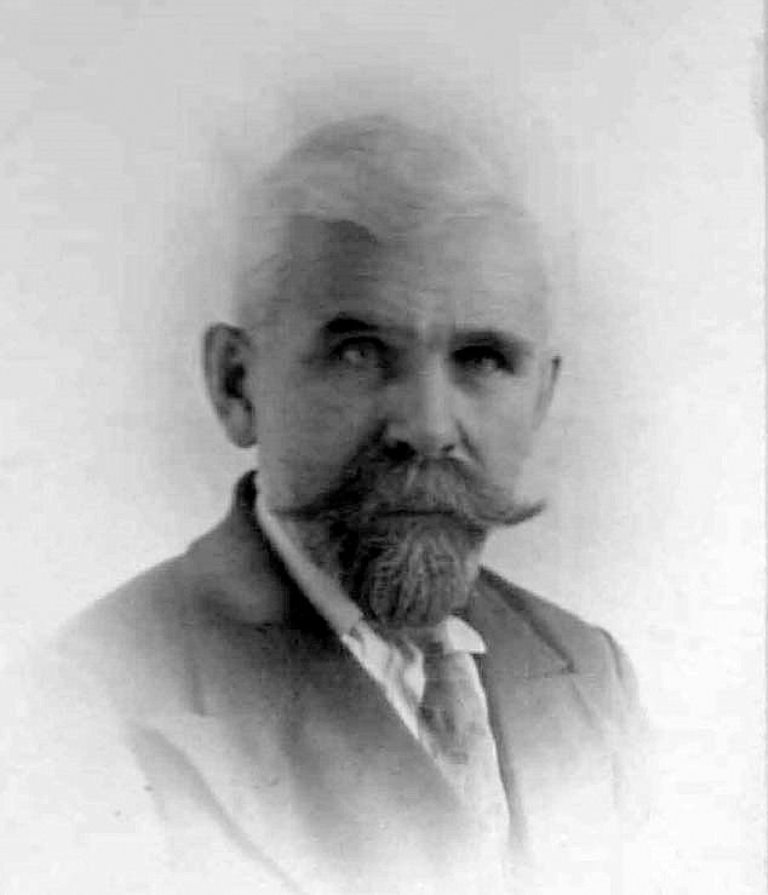
PHOTO: Vsevolod Alexandrovich Yakovlev (1884-1950)

Between April and July 1918, Emperor Nicholas II and his family were living under deplorable conditions in the Ipatiev House in Ekaterinburg. It was during the final days of the their house arrest in the Ural city, that their favourite residence, the Alexander Palace was opened to the public as a museum.

The palace was opened in two stages: the first on 23rd June 1918, when the State Halls were opened to visitors; the second, five years later, in 1923, when the private apartments of Emperor Nicholas II and Empress Alexandra Feodorovna became part of the museum.

The first curator of the Alexander Palace was Vsevolod Alexandrovich Yakovlev (1884-1950), a noted Russian and Soviet architect, artist, art critic, and museum worker.

Yakovlev was born in St. Petersburg on 21st January (O.S.) 1884. In 1901 he graduated from the drawing school of the Imperial Society for the Encouragement of Artists. In 1904 he entered the architectural department of the Higher Art School at the Imperial Academy of Arts in St. Petersburg. In 1912 he was awarded the title of artist-architect.

From 1914 he worked as an architect in St. Petersburg and Tsarskoye Selo. In 1918 he was appointed director of the Museum of Palaces and Parks of the Detskoye (Children’s) Selo (formerly Tsarskoye Selo), a position he held until 1931.

Yakovlev, a man of great enthusiasm and energy, carried out his duties during the most difficult of the post-revolutionary years. It was thanks to his efforts that the contents of the Alexander Palace were not destroyed by the Bolsheviks.

“We will fulfill our duty only when we make superhuman efforts to save these exceptional monuments in the name of progress, in the name of a beautiful and happy future not only for the citizens of great Russia, but also for the peoples of the world,” Vsevolod Alexandrovich wrote.

During his tenure as director, Yakovlov meticulously catalogued every item in the Alexander Palace. Not only did he save thousands of pieces of objects d’art, furniture, artwork, porcelain, books and documents from destruction, he also helped to lay the foundations for the future of the Tsarskoye Selo palace-museums.

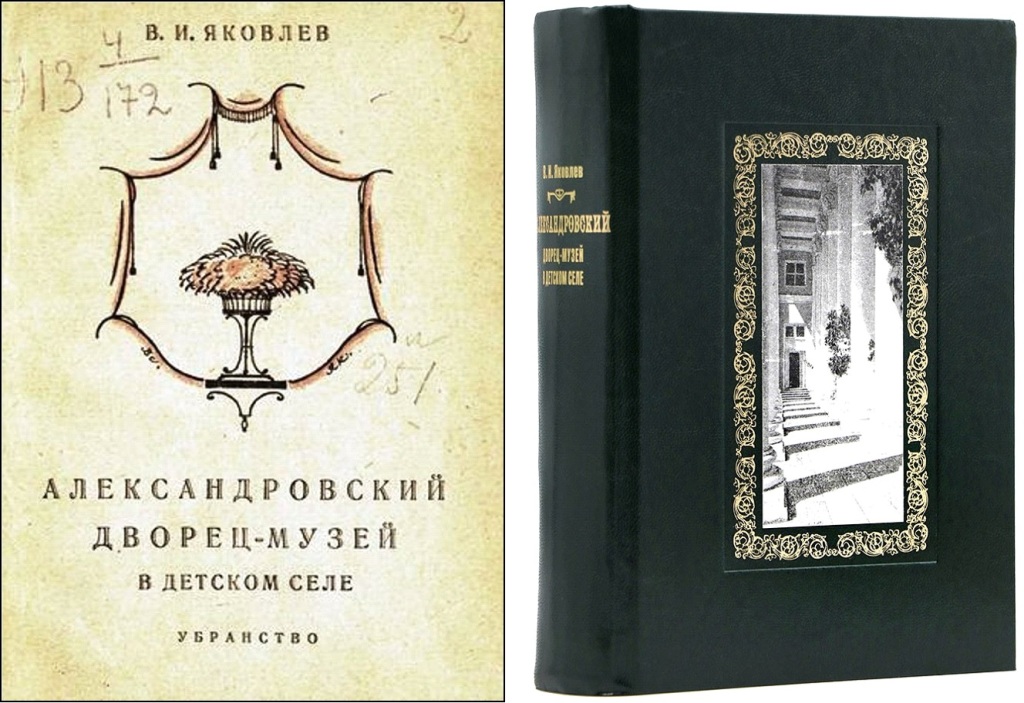
Yakovlev was the author of a number of Russian-language books, including Охрана царской резиденции (Protection of the Tsar’s Residences (1926) – 169 pg.

His most popular work, however, is лександровский дворец-музей в Детском селе (Alexander Palace-Museum in the Children’s Village (1927) – 211 pg. [above left]. The following year, he published a companion volume, dedicated to the palace interiors – 560 pg., which featured a comprehensive catalogue of the interiors and the thousands of items of each room of the Alexander Palace. In the 1990s, both titles were reissued in a handsome one-volume hard cover edition – 794 pg., with the original photographs and illustrations [above right].

In addition he wrote numerous articles for Soviet magazines and newspapers, on the history of architecture, providing detailed descriptions of the interiors, art collections and valuables stored in the palaces of Tsarskoye Selo, Pavlovsk and Peterhof. 

In 1931, he was arrested,  but thanks to the intercession of George Kreskentievich Lukomsky (1884-1952), chairman of the Commission for the Acceptance and Registration of Property of the Tsarskoye Selo Palace Administration, he was released a month later. He was not permitted to return to his old job, so from 1931 to 1933, he worked as an architect of GIPROGor in Leningrad. He then switched to pedagogical work in Leningrad. In 1947 he was awarded the degree of Doctor of Architecture.

In the autumn of 1949, Vsevolod Alexandrovich Yakovlev was diagnosed with terminal cancer. He died on 10th June 1950, aged 66, and was buried at the Volkovskoye cemetery in Leningrad (St. Petersburg).

***

Upon the outbreak of the Great Patriotic War in 1941, the Alexander Palace Museum was closed. Sadly, a number of the palace’s interiors were lost during the Nazi occupation of Pushkin (Tsarskoye Selo).

In the spring of 1946, the Leningrad Executive Committee issued an order for the transfer of the Alexander Palace to the Institute of Russian Literature of the USSR Academy of Sciences. This provided the palace with some degree of protection from being abandoned or demolished.

In 1947–1949 the Alexander Palace became a literary museum and a repository of the priceless manuscript collection of the Pushkin House. It was during this time that a number of changes were made to the interiors, including the removal of Empress Alexandra Feodorovna’s famous balcony. In addition the Maple Drawing Room was divided into two rooms.

In 1951, by a government decree, the Alexander Palace was transferred to the Ministry of Defense. The Naval Department used the building as a top-secret, submarine tracking research institute of the Baltic Fleet. As a result, the former palace would be strictly off-limits to visitors for the next 45 years.

It was not until October 2009, according to the order of the Federal Property Management Agency, that the Alexander Palace was placed under the administration of the Tsarskoye Selo State Museum Reserve.

In 1997, the first museum exposition “Memories in the Alexander Palace” was opened in the east wing of the Alexander Palace. Since almost all the historic interiors of Nicholas II and his family were lost, large floor to ceiling photos depicting the original look of each room, served as backdrops, against which items of furniture were displayed.

In 2009, the Alexander Palace was transferred to the administration of the Tsarskoye Selo State Museum-Reserve. In June 2010, the year marking the 300th anniversary of Tsarskoye Selo, the Portrait, Semi-Circular and Billiard Halls were opened to the public after an extensive restoration.

The Alexander Palace reopened to visitors on 14th (O.S. 1st) August 2021, marking the 104th anniversary since the Imperial Family left the palace for the last time. Visitors can now see thirteen reconstructed and restored interiors of the private apartments of Emperor Nicholas II and Empress Alexandra Feodorovna located in the eastern wing of the palace.

© Paul Gilbert. 27 June 2023

Dacha of Nicholas II’s court architect in Tsarskoye Selo to be auctioned

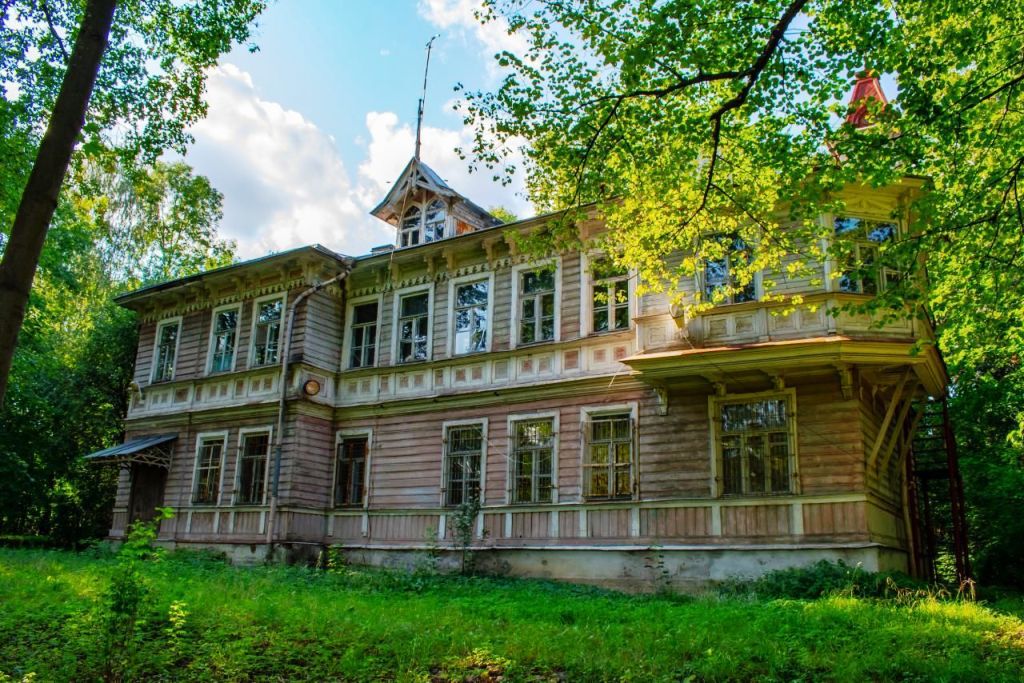
PHOTO: the former dacha of Court architect Silvio Danini in Tsarskoye Selo, as it looks today – in a “deplorable state of disrepair”.

The former dacha of Tsar Nicholas II’s Court architect Silvio Amvrosievich Danini (1867-1942), built at the turn of the 19th-20th centuries is to be auctioned in Tsarskoye Selo.

The dacha was part of a complex of buildings constructed by Danini himself between 1899-1902, which included two-story “Large” and “Small” dachas, a stone service wing and a barn. A richly landscaped garden was also laid out. The “Large” dacha featured turrets, bay windows, the timber facades embellished with decorative elements.

The opening bid for the 6500 square foot wooden dacha is set at 18.66 million rubles [$238,000 USD]. The auction will be held on 23rd June. Under the terms of the agreement of sale, the buyer must agree to restore and preserve the buildings historic look, and to be completed within seven years from the date of registration of the transfer of ownership.

PHOTO: early 20th century view of Silvio Danini’s estate at Tsarskoye Selo

Danini’s “Large” dacha is located on Pavlovskoye highway, 26A in Pushkin [Tsarskoye Selo], a short drive from the Alexander Palace. Having received the post of architect of the Tsarskoye Selo Palace Administration in 1896, Danini rented a small house for his family. By 1899, the architect decided to buy the property and build a larger house.

During the Soviet period the building was used as the Pushkin Palace Administration, and then as a dormitory of the Institute of Economics. After repairs in the 1970s, it was used as a branch of the Institute of Agricultural Cybernetics, then by the Agricultural Institute. In the 1990s, it served as a resident for scientists.

The property was abandoned more than a decade ago. Since that time several unsuccessful attempts have been made to sell and restore the historic dacha.

In August 2016, Danini’s dacha was listed as “an object of cultural heritage of regional significance” by the Committee for State Control, Use and Protection of Historical and Cultural Monuments (KGIOP).

In 2020 a plan to open an eight-room hotel was proposed, however, nothing ever came of the idea due to lack of funding by developers.

According to the daughter of the great-grandson of the architect Vera Kozlova, the wooden dacha is currently is in a “deplorable state of disrepair”.

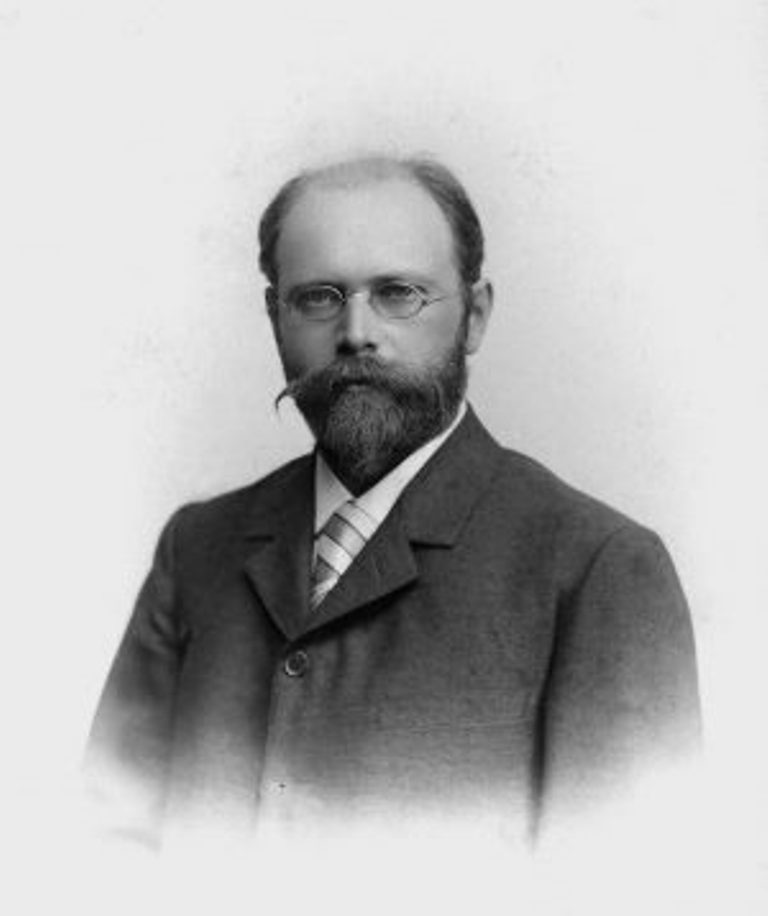
PHOTO: Silvio Amvrosievich Danini (1867-1942)

The Last Court Architect

Silvio (Valentin) Amvrosievich Danini was born in Kharkov on 1st July (O.S. 19th June) 1867.

He was born in the family of Italian opera singer Ambrogio Danini (1807-1872) and his wife Emilia. In 1893, Silvio married the Lutheran Vera Stuckenberg (1874-1944), the couple had four children, whose descendants today live in St. Petersburg.

In 1879, after the death of his father, Silvio and his mother Emilia moved to Poltava, and in 1886 to St. Petersburg, where in 1892 he graduated from the Academy of Arts with the title of “Class Artist of the 1st degree”.

He began his career under the guidance of the architect Alexander Fyodorovich Krasovsky (1848-98), abd participated in the restructurtion of the northwestern wing of the Winter Palace for the future emperor Nicholas II. As a result, in 1892 he was hired to repair, and then reconstruct with extensions, the Znamenskaya Church in Tsarskoye Selo. In 1894 he restored the Catherine Cathedral in Tsarskoye Selo. In 1896, the Nicholas II personally appointed Danini architect of the Tsarskoye Selo Palace Administration, and on 5th October 1911, he was awarded the title of Chief Architect of the Imperial Court.

Danini was responsible for the construction of more than 40 buildings in Tsarskoye Selo [renamed Pushkin in 1937] – many of which have survived to the present day.

He is probably more widely known for his development of the Alexander Palace – the last residence of Nicholas II and his family, from 1905 to 1917 – which included:

1896-1898 – reconstruction of the left [eastern] wing of the Alexander Palace for the personal apartments of Nicholas II and Alexandra Feodorovna, and the construction of an underground passage-gallery between the palace and the Palace Kitchen.

PHOTO: view of the famous Alexander Palace balcony (circa 1940s)

Danini was also responsible for the installation of the famous balcony in 1896 for Empress Alexandra Feodorovna. It was here that many iconic photos of the Imperial Family were taken. The balcony was dismantled between 1947-49.

1896-1898 – the wrought iron gate at the entrance to the park to the Alexander Palace, which has been preserved.

1906-1907 – the Imperial Garage, which housed Nicholas II’s motorcars, which has also been preserved.

After the revolution, in 1923, Danini moved to Petrograd, where he designed hydraulic structures on the Svir River. Silvio Danini died in Leningrad on 11th January 1942 during the siege (his wife and daughter Virginia were later evacuated). He was buried at the Volkovsky Lutheran Cemetery in the family grave of the Stuckenbergs.

© Paul Gilbert. 13 May 2023

New additions to the interiors of the Alexander Palace

Photo © Tsarskoye Selo Restoration Workshop

It has been almost two years since the Alexander Palace at Tsarskoye Selo opened its doors to visitors after an extensive restoration and reconstruction which began in the autumn of 2015. This extensive and costly project brought new life to the former private apartments of Emperor Nicholas II and Empress Alexandra Feodorovna, situated in the eastern wing of the palace.

Since that time, additional interiors – the Marble (Mountain) Hall – have opened while recreated furniture and other decorations continue to be added to the interiors.

In late March, new additions were added to the Maple Drawing Room and the Working Study of Nicholas II:

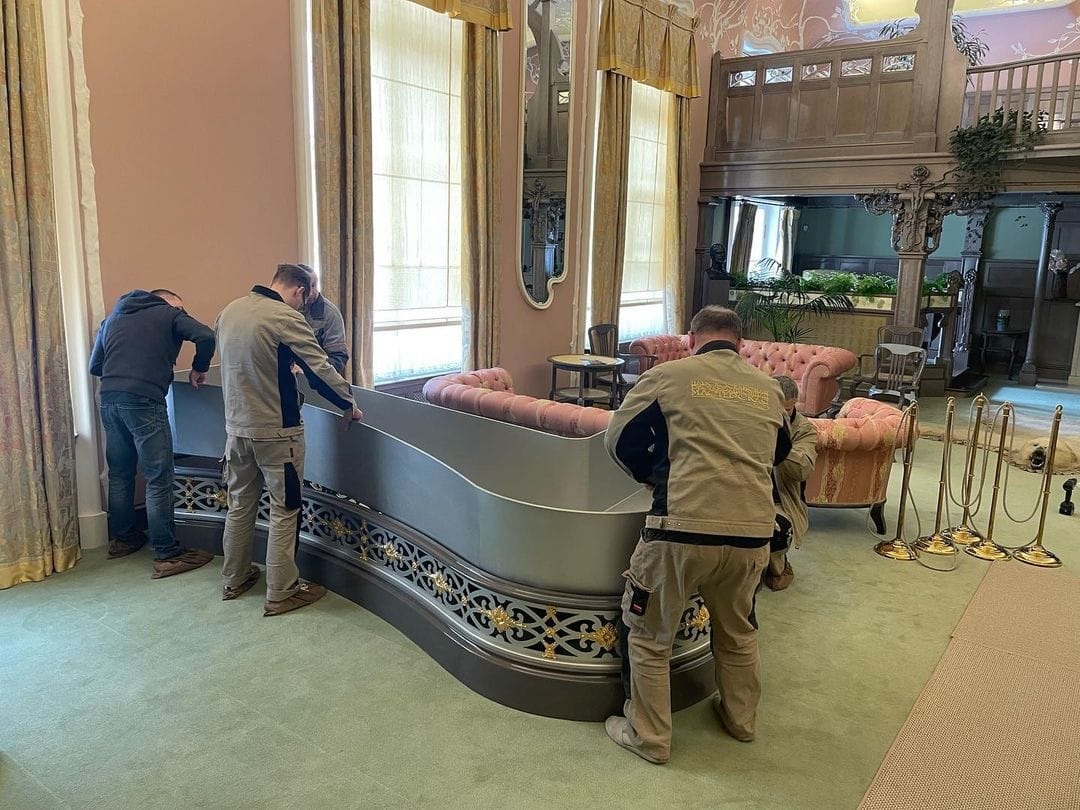
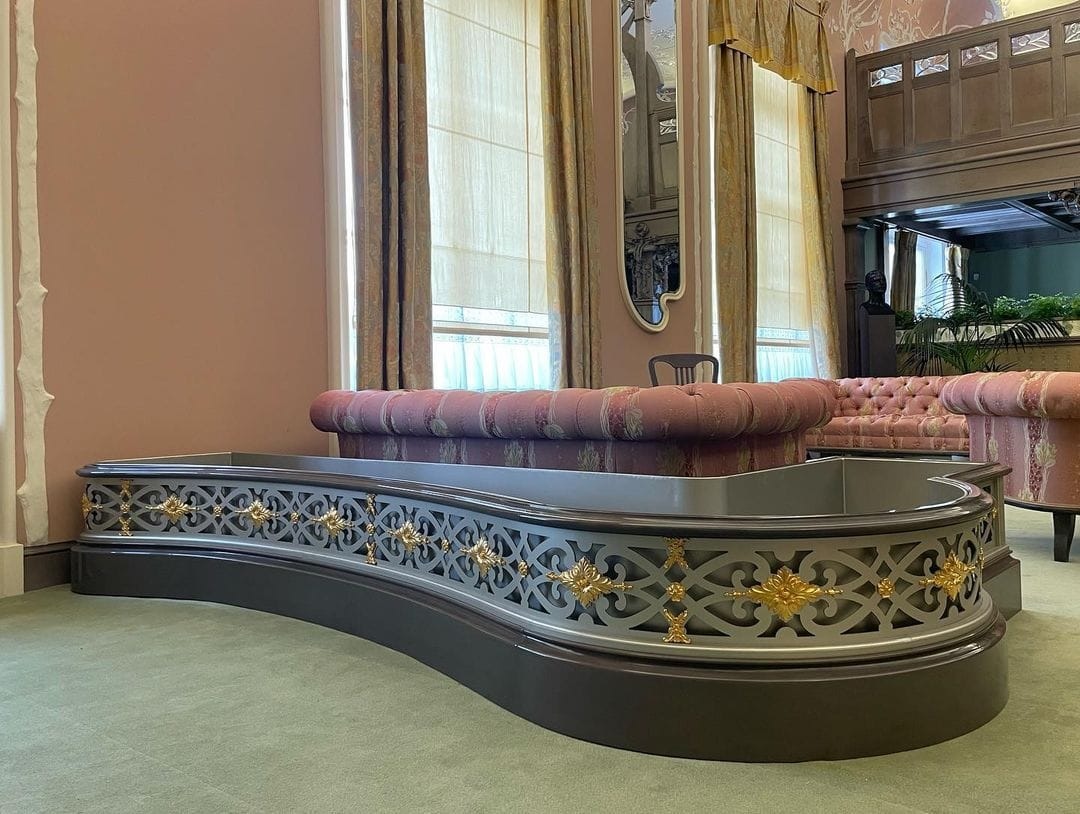
PHOTO: a large stand for palm tree and other large plants is the latest addition to the Maple Drawing Room

Photo © Tsarskoye Selo Restoration Workshop

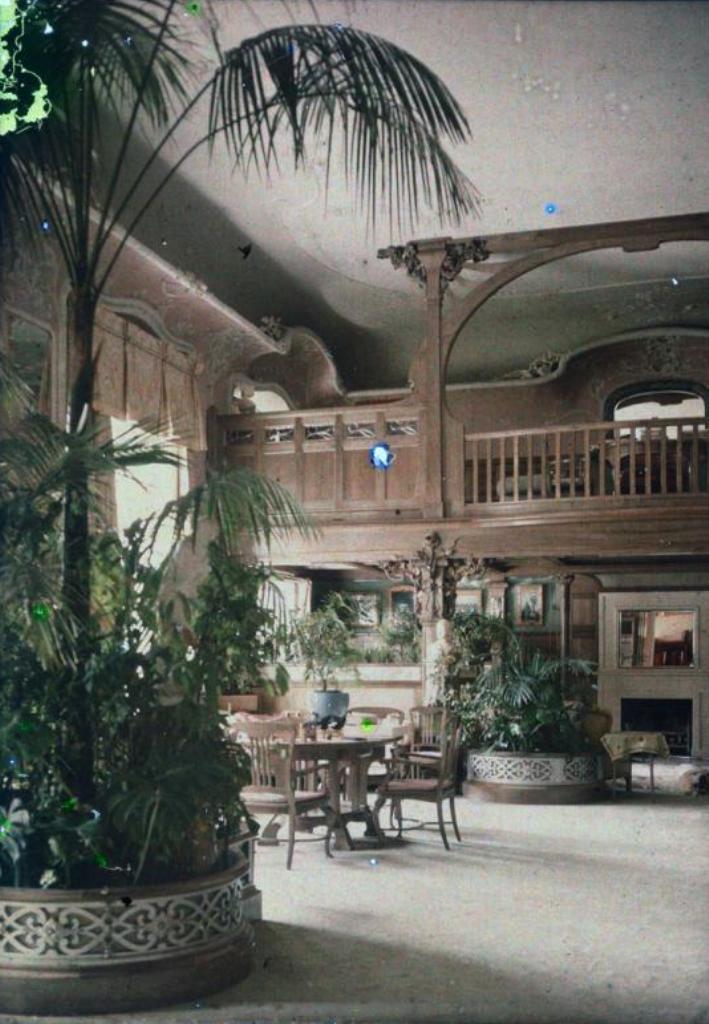
In the Maple Drawing Room, one of several large stands or tubs has been recreated. Empress Alexandra Feodorovna would have them filled year-round with palm trees and other large plants – as seen in the photo below taken shortly after the Imperial Family were sent into exile in August 1914. 

PHOTO: colour autochrome of the Maple Drawing Room. 1917

PHOTO: the Tsar’s desk and ottoman have been recreated for the Working Study of Nicholas II

Photo © Tsarskoye Selo Restoration Workshop

In the Working Study of Nicholas II, an L-shaped desk and ottoman have been recreated.

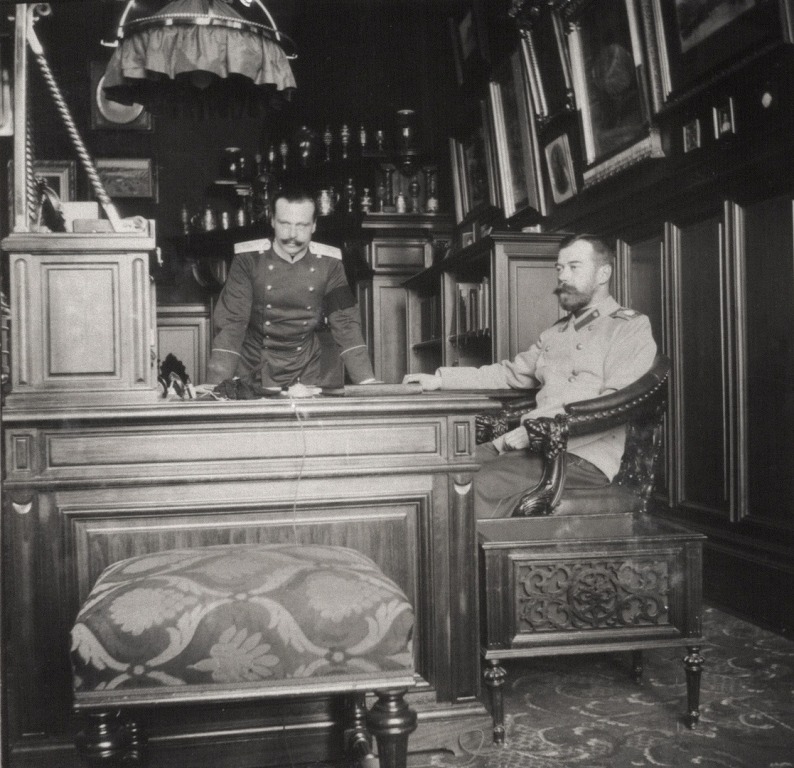
The Working Study of Emperor Nicholas II was decorated in 1896-1897 in the English Style by Roman Meltzer (1860-1943) and furniture master Karl Grinberg. It was in this room that the Emperor read papers, including numerous correspondence, received foreign ministers and dignitaries and listened to reports.

PHOTO: Emperor Nicholas II with his brother-in-law Ernest Louis, Grand Duke of Hesse, in the Tsar’s Working Study. 1901

© Paul Gilbert. 5 May 2023

Tsarskoye Selo publishes rare Romanov Family Archive

NOTE: the source of the this article is from the web site of the Tsarskoye Selo State Museum, it has been edited and updated with additional information by Paul Gilbert. ALL the photographs are © Tsarskoye Selo State Museum.

The Tsarskoye Selo State Museum has composed and published a new research catalogue based on an archive of materials of Romanov family members. This priceless archive was purchased for over ₽ 5,300,000 [$65,000 USD] from a private collector in London in 2017, thanks to financial support from Sberbank, also the sponsor of the catalogue’s publication.

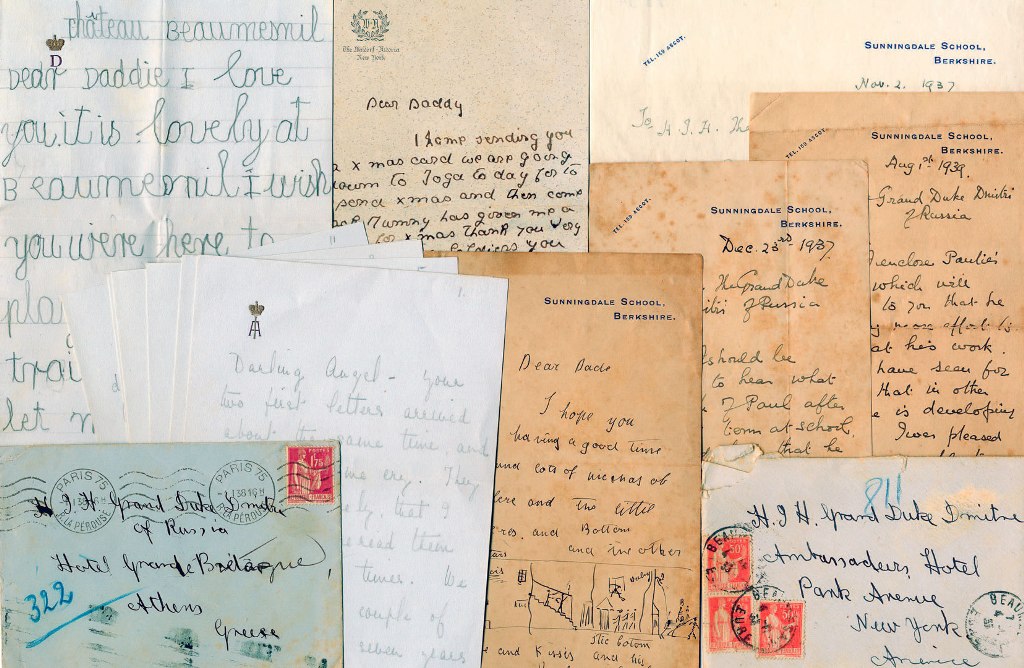
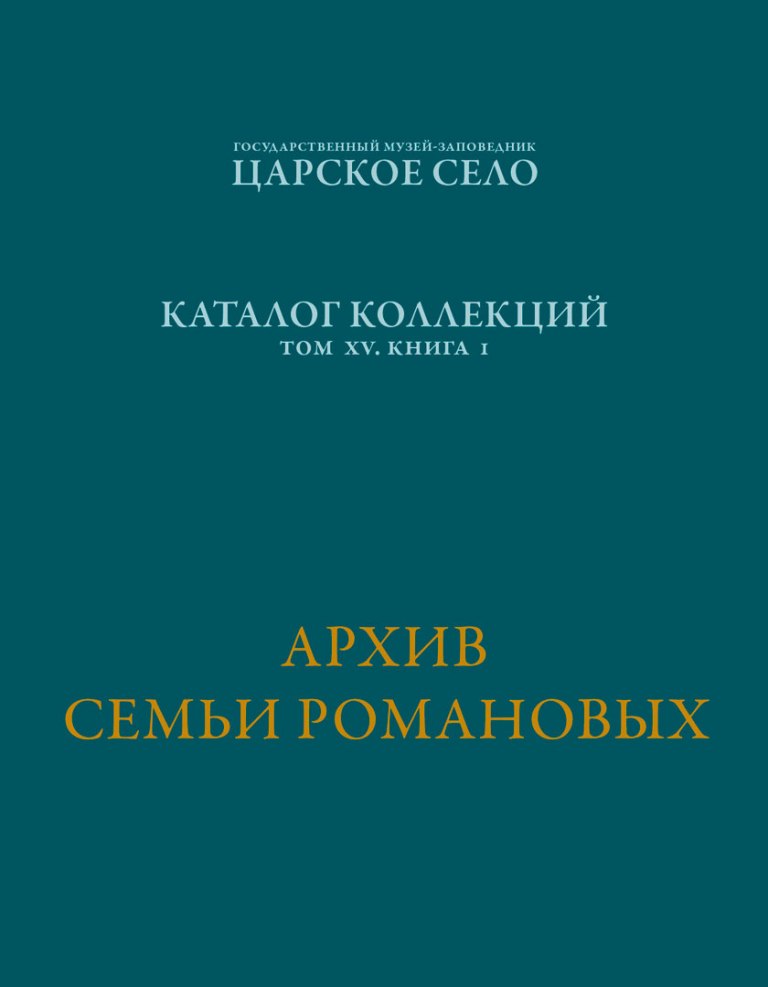
The new Russian language catalogue includes private correspondence, drawings and photographs of members of the Imperial Family. The catalogue is authored by researchers Irina Raspopova and Victoria Plaude of the Tsarskoye Selo State Museum.

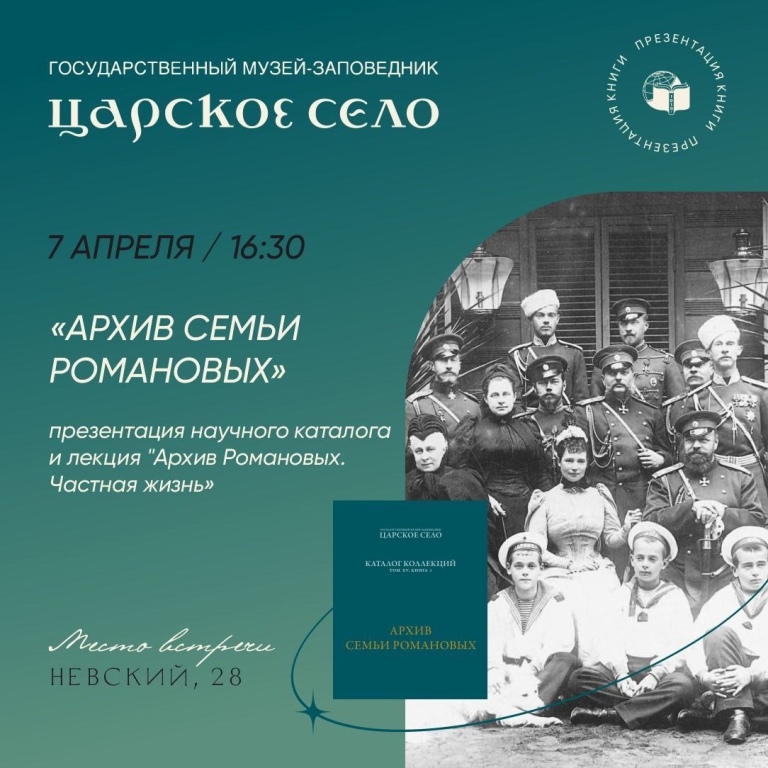
The presentation of the catalogue was held on 7th April 2023 [see poster above] by the Director of the Tsarskoye Selo Olga Taratynova and the Chairman of Sberbank’s North-Western Office Viktor Ventimilla Alonso. The museum’s deputy director for research and education Dr Iraida Bott, delivered a talk on the Alexander Palace after the Romanovs. 

The archive includes more than 200 previously unpublished private correspondence, drawings and photographs spans over half a century, of the second half of the 19th century and the early 20th century, from 1866 to 1922.

The catalogue contains full texts with detailed comments to all the letters, telegrams and notes, as well as detailed descriptions of the photographs. An annotated name index includes 215 names mentioned in the texts. 

Most of the documents relate to Grand Duchess Xenia Alexandrovna (1875-1960), Emperor Alexander III’s daughter and Emperor Nicholas II’s sister, and to Grand Duke Michael Alexandrovich (1878-1918), Nicholas II’s brother, as well as to George Vladimirovitch Shervashidze (1894-1978), titular Prince of Abkhazia, who was close to members of the Imperial Family.

Xenia’s letters to her brother Michael, whom she always affectionately addresses as “my darling Misha”, date from the early 1880s to 1914. She wrote them on her monogrammed paper and on the headed paper of the palaces and hotels where she stayed. Her letters include those penned by her children, decorated with vignettes and drawings.

In a letter dated 23rd November 1916. Michael writes to Xenia from Ai-Todor in the Crimea. All their family quarrels settled by then, he ends the letter saying, “Natalya Sergeevna [known as Countess Natalya Brasova, from May 1911] thanks you very much and also sends her greetings, and I hug you tightly. Loving you heartily, Your Misha.”

Of particularly great  interest are three letters of 1917-18 and a postcard dated 25th February 1918 to George Shervashidze from Grand Duke Nicholas Mikhailovich, a first cousin of Alexander III and an eminent historian. The author describes in detail the situation in Petrograd during the days of the October Revolution and mentions Trotsky, Kerensky, Lunacharsky and Lenin. The envelopes have no postage stamps because the grand duke’s  letters were delivered by trusted individuals. His postcard of 25th February 1918 ends with somewhat prophetic words: “Little by little, all our acquaintances move to where there is no sadness or joy.”

Of great value to the Museum is Nicholas II’s autograph in his laconic note of 1899 to his sister, Grand Duchess Xenia. Also valuable are Empress Alexandra Fiodorovna’s short English messages to her sister-in-law, funnily addressed “Darling Chicken” and signed “Your old Hen”.

Taken away from Russia by Romanov family members, the archive was partially kept by Xenia and later inherited by her descendants.

Besides the Romanovs’ correspondence, Sberbank helped the Museum purchase twenty-three photographs taken by General Alexander Nasvetevich (1837-1911), an aide-de-camp to Emperor Alexander II. The shots include the photographer’s self-portrait, Alexander III and his son Nicholas at a parade in Krasnoe Selo, Empress Maria Feodorovna at Gatchina, and other important events at the imperial court.

The materials in the catalogue will be of interest to historians, archive specialists, museum workers, and anyone interested in the history of the Romanov dynasty and their last representatives in particular. The catalogue is currently only available at the Tsarskoye Selo Museum Shop in the Catherine Palace and at Dom Knigi in St Petersburg.

© Tsarskoye Selo State Museum. 21 April 2023