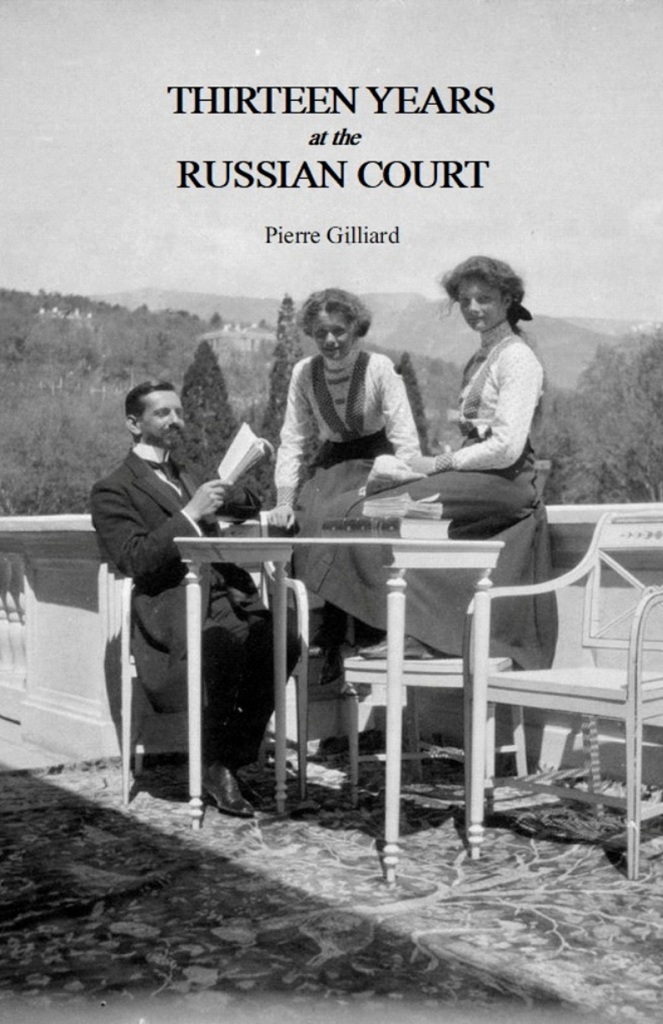
Available in Hard cover and Paperback edtions. 294 pages. With photographs and Notes
Originally published in 1921, this new edition of ‘Thirteen Years at the Russian Court’, features a new 32-page introduction by Romanov historian Paul Gilbert
A Personal Record of the Last Years and Death of the Emperor Nicholas II. and his Family
Thirteen Years at the Russian Court is a personal record by Pierre Gilliard, a Swiss author and academic who served as the French language tutor to Russian Emperor Nicholas II’s five children.
The book, first published in 1921, offers a unique perspective on the final years of the Romanov dynasty through Gilliard’s personal experiences as a tutor to the August children of Russia’s last Tsar.
The memoir blends historical narrative with personal eye-witness anecdotes, providing an intimate look into the opulence and decline of Imperial Russia. Gilliard’s recollections are not merely memoirs but vital historical documents that bridge the gap between the glamour of Court life and the impending doom of a centuries-old regime.
Gilliard’s memoir serves as an invaluable resource for anyone interested in Russia’s last Tsar, Russian history, monarchy, or the complexities of life at the Russian Imperial Court during the early 20th century.
PIERRE GILLIARD (1879-1962)
Pierre Gilliard was a Swiss academic and author, best known as the French language tutor to the five children of Emperor Nicholas II of Russia from 1905 to 1918. In 1920, he returned to his native Switzerland, where he wrote his memoirs, Thirteen Years at the Russian Court, about his time with the Russian Imperial Family.
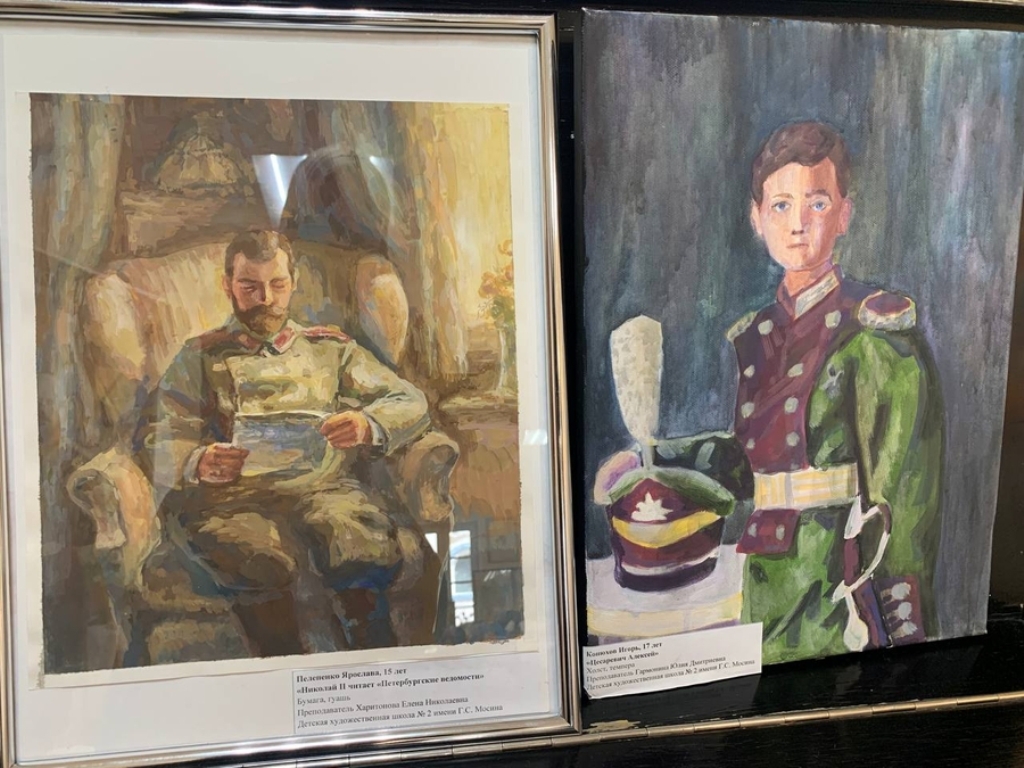
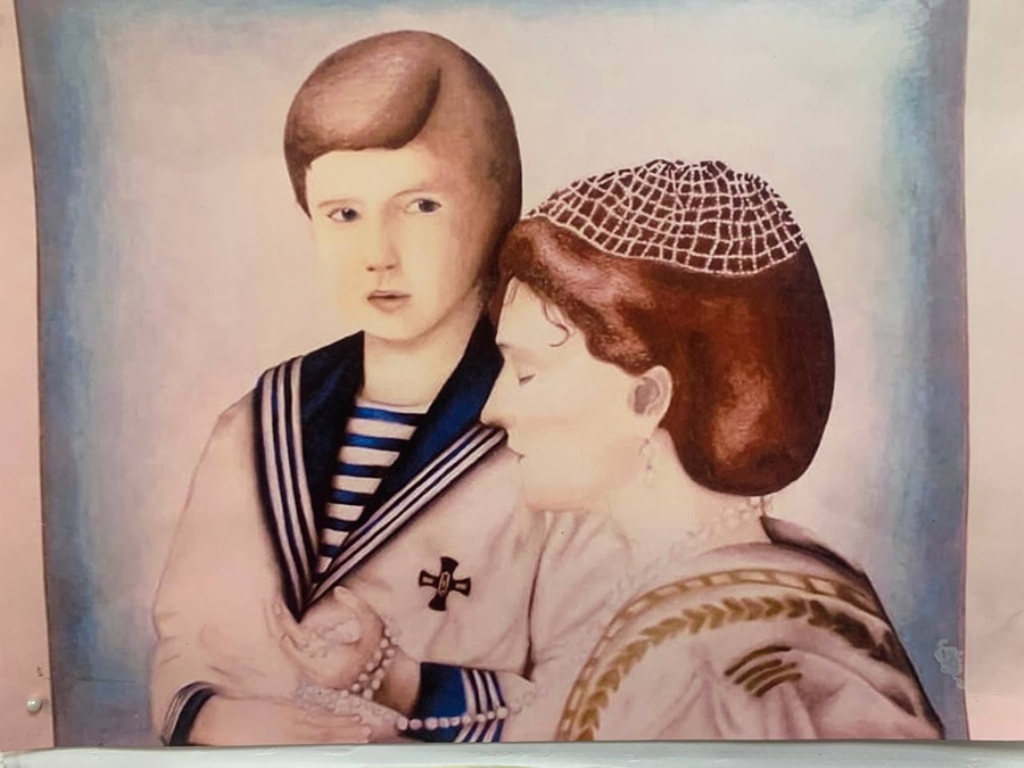
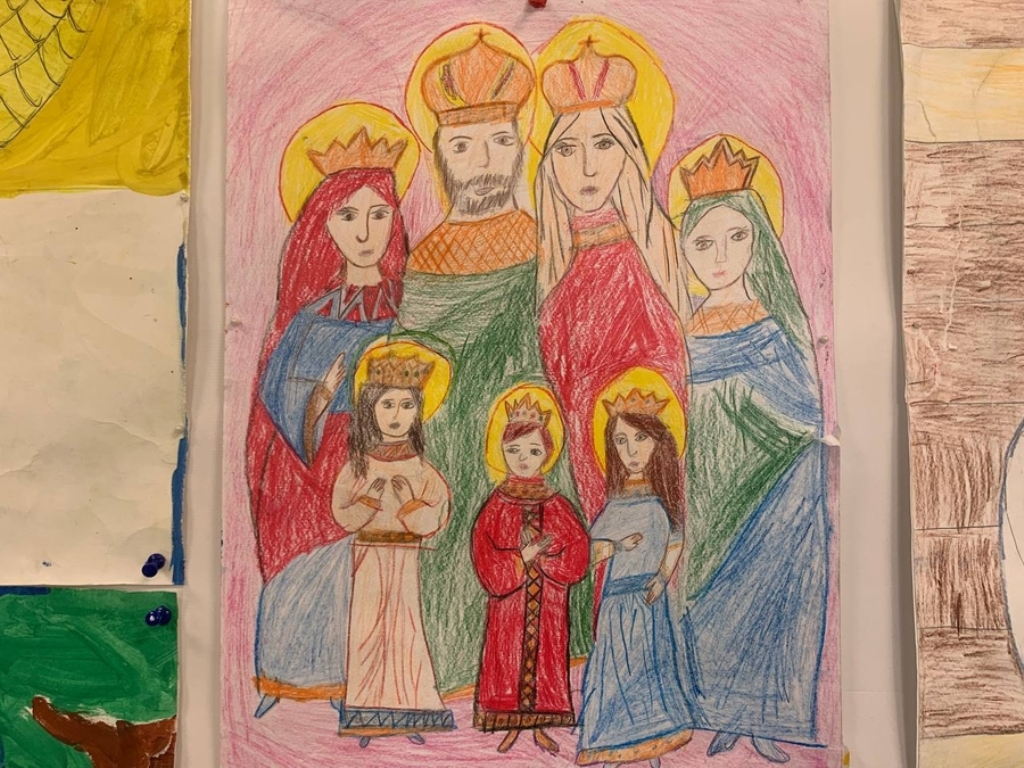
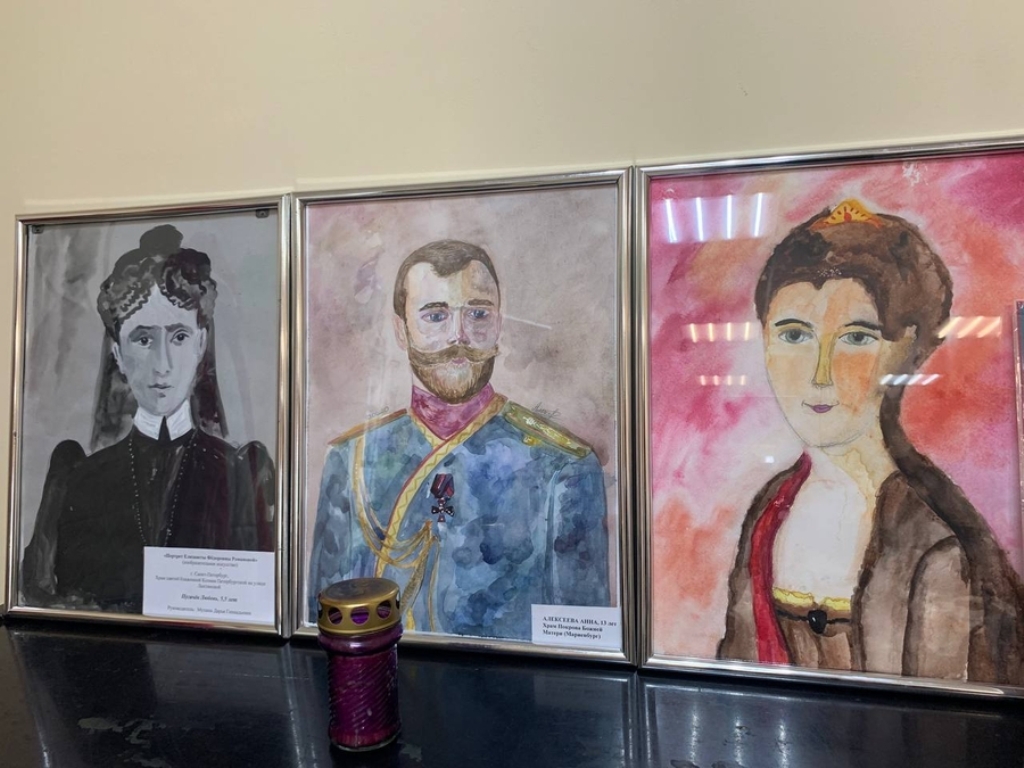
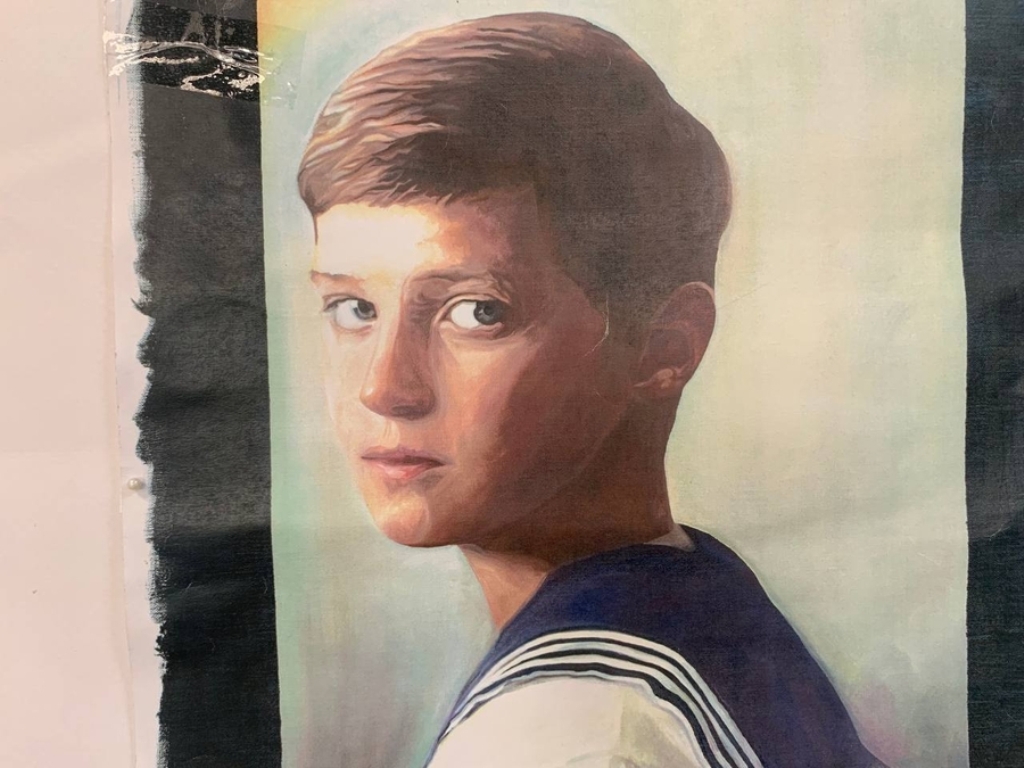
On 19th May 2025, with the blessing of Bishop Mitrofan of Gatchina and Luga, a traveling international exhibition of children’s drawings and watercolours opened at the Spiritual and Educational Center of the Cathedral of the Intercession in Gatchina, near St. Petersburg.
The exhibition showcases drawings and watercolours of Tsesarevich Alexei Nikolaevich and the Holy Tsar’s Family, as part of a program, launched 5 years ago by the Union of Russian Communities of St. Petersburg and the Leningrad Region.
Last year, on 12th August 2024, the day which marked the 120th anniversary of the birth of the last Heir to the Russian throne, only drawings by Italian children, were featured in the exhibition. They were presented to the parish by the Italian opera singer Elvis Fanton, who converted to Orthodoxy that same day, taking the name Alexei. The drawings and watercolours were exhibited in the Church of the Passion-Bearer Tsesarevich Alexei in Znamenka (Peterhof). Gradually, the exhibition has been supplemented with entries from St. Petersburg, Gatchina, Marienburg, Peterhof, Ryazan and Ekaterinburg.
PHOTO: Tsesarevich Alexei Nikolaevich and Archpriest Alexander Petrovich Vasiliev. Livadia, 1912
Alexander Petrovich Vasiliev (1868-1918), was an archpriest, tutor to the children of Tsar Nicholas II, confessor of the Imperial Family, and monarchist.
He was born into a peasant family in the village of Shepotovo, Smolensk Province. He was orphaned at an early age. He studied at the school of the famous pedagogue Sergei Aleksandrovich Rachinsky (1833-1902).
After graduating from school, Rachinsky facilitated Vasiliev’s admission to the Belsk Theological School, after which Alexander Petrovich entered the Bethany Theological Seminary, and then the St. Petersburg Theological Academy. In 1893, he graduated with the degree of Candidate of Theology.
While studying at the Academy, he married Olga Ivanovna. The couple had seven children.
On 19th July 1892, he was ordained to the priesthood and sent to St. Nicholas Church, where he served as rector, in the village of Yam-Izhora, Tsarskoye Selo District.
While studying at the Academy, and following the example of his first teacher S.A. Rachinsky, Vasiliev founded a temperance society. The first sermons on sobriety were delivered in the Church of the Righteous Prince Alexander Nevsky at the famous Vargunin paper mill in Maly Rybatskoye, a village located on the southeastern outskirts of St. Petersburg. Alexander Vasiliev’s sermons inspired the Vargunin workers to create a temperance society at the church. The first meeting was attended by 60 people, the second attracted 146 people.
PHOTO: Tsesarevich Alexei Nikolaevich with his tutors among others . . . from left to right: Assistant Chief of the Palace Police, Colonel N.P. Shepel; Alexei’s “sailor-nanny” A.E. Derevenko; French tutor Pierre Gilliard; Tsesarevich Alexei Nikolaevich; Russian language and literature tutor Pyotr Petrov and Archpriest Alexander Vasiliev. Spala 1912
In May 1894, he was transferred to the Church of the Presentation of the Lord in Polyustrovo, and from 7th September of the same year he combined his service in Sretensky Church with the rectorship of the Church of the Exaltation of the Holy Cross at the Holy Cross Community of Sisters of Mercy.
In 1910, Father Alexander was appointed spiritual father and tutor to the children of Emperor Nicholas II and Empress Alexandra Feodorovna.
According to eyewitnesses, members of the Imperial Family were very fond of the divine services performed by Father Alexander Vasiliev.
In his memoirs, Protopresbyter Georgy Ivanovich Shavelsky (1871-1951) reflected on Fr. Alexander Vasiliev: “Before his appointment to the Imperial Court, he enjoyed fame in St. Petersburg as an excellent public preacher, a practical teacher of law, and a beloved spiritual father. His excellent spiritual qualities, kindness, sympathy, simplicity, honesty, zeal for carrying out God’s work, and affability endeared him to both his disciples and his flock. …”
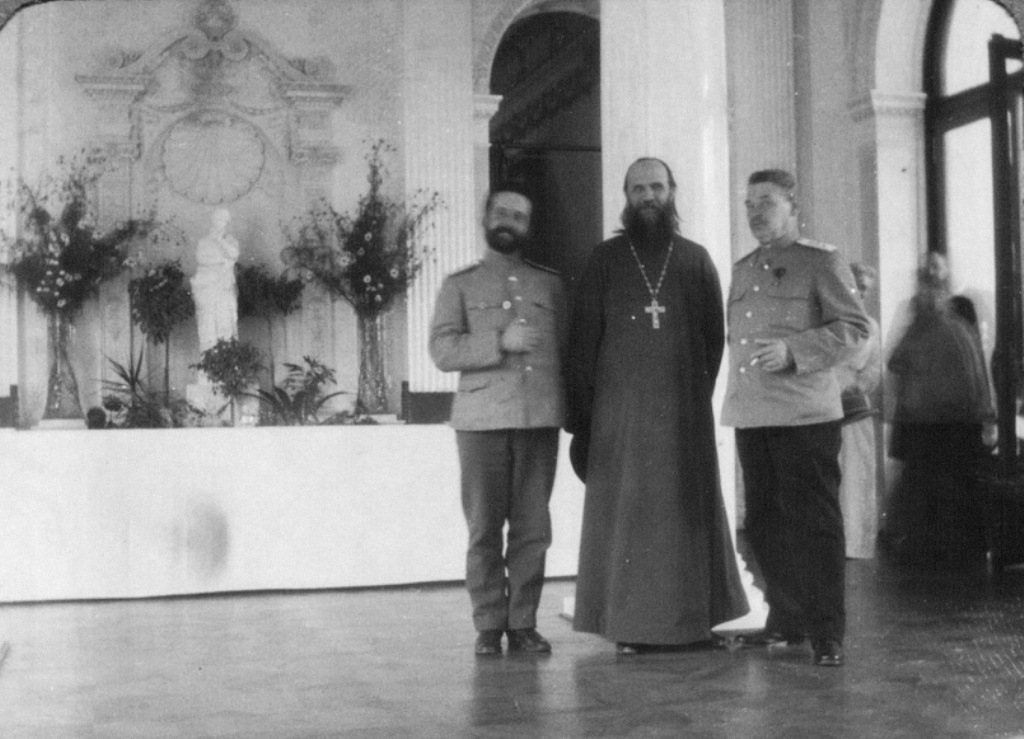
PHOTO: unidentified man (left), Archpriest Alexander Vasiliev (center) and Russian language and literature tutor Pyotr Petrov (right). Livadia Palace, Crimea. 1913
In 1913, he became an archpriest and first rector of the Feodorovsky Sovereign Cathedral in Tsarskoye Selo. In 1914, he was appointed as confessor to the Imperial Family.
He took an active part in the right-wing monarchist movement; in 1910 he was elected a member of the Russian People’s Union of the Archangel Michael (RNSMA). He attended the opening of the Conference of Monarchists, held in Petrograd on 21-23 November 1915.
In 1915, through the efforts of Father Alexander, a wooden church was built at the Tsarkoselskoye Brethren Cemetery, where soldiers of the Tsarskoye Selo garrison and soldiers who died in the hospitals of Tsarskoye Selo were buried.
On 7th September 1916, his son Sergei Alexandrovich, an officer of the Pavlovsk Regiment, died at the Front. Out of sympathy for her spiritual father’s grief, Empress Alexandra Feodorovna offered to transfer his other sons from combat units to the rear, but he refused, but his son’s death undermined his health.
PHOTO: Archpriest Alexander Vasiliev in Fedorovsky Gorodok in Tsarskoye Selo. 1916
Following the February 1917 Revolution and the abdication of Emperor Nicholas II, the head of the new Provisional Government Alexander Kerensky (1881-1970) decided to send the Imperial Family into exile to Siberia.
On the evening before their departure, Archpriest Alexander Vasiliev served a parting moleben before the Znamensky Icon of the Mother of God. With the departure of the Imperial Family to Tobolsk, the priest’s health began to deteriorate noticeably, and he began to experience severe pain in the heart.
In early 1918, he was appointed rector of the Church of St. Catherine the Great Martyr in Yekateringof. The monumental 5-domed church featured an altar and two side-chapels: the northern one dedicated to the Martyr Alexandra and the southern one to St. Nicholas the Wonderworker. The iconostasis was made by the Novgorod iconographer Chistyakov. The bell tower was built according to the project of the architect Vasily Dorogulin in 1871-1873. The church was destroyed by the Soviets in 1929.
On 29th August 1918, Father Alexander Vasiliev was arrested by the Cheka in Petrograd. On 5th September – the first day of the Red Terror – Archpriest Alexander Vasiliev was shot by a Bolshevik firing squad, along with the clergy of St. Catherine’s Church. Like so many victims of Lenin’s Red Terror, Vasiliev’s remains were most likely thrown into an unmarked mass grave and forgotten.
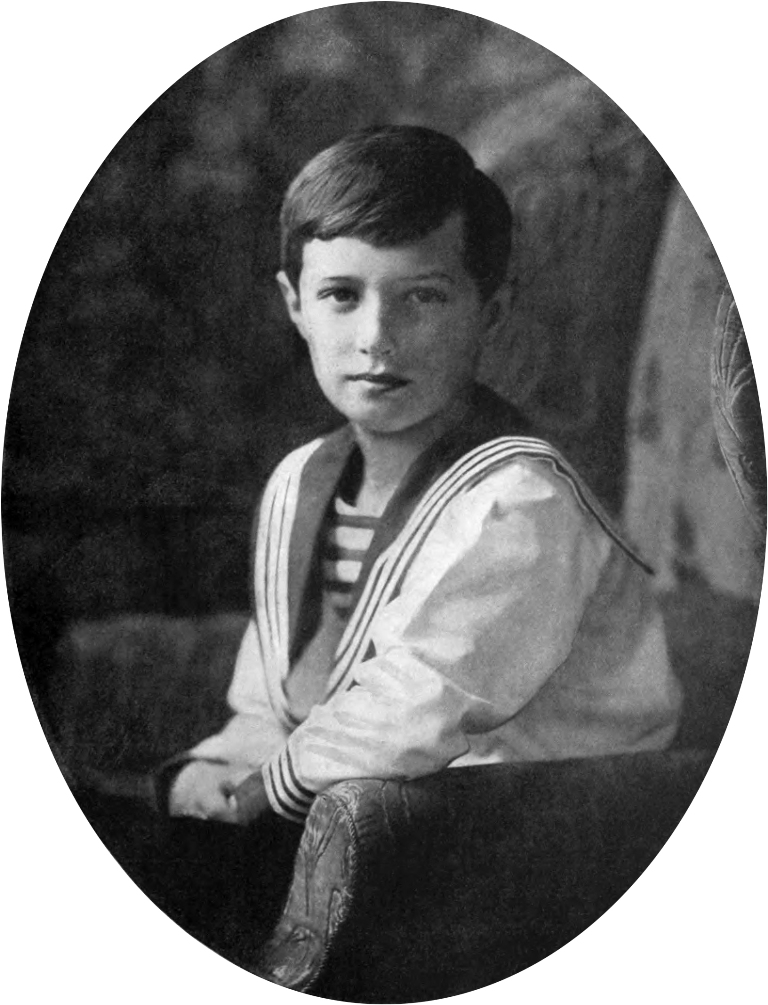
PHOTO: Tsesarevich and Grand Duke Alexei Nikolaevich (1904-1918)
On this day – 24th (O.S. 11th) August 1904, His Imperial Highness Naslednik Tsesarevich and Grand Duke Alexei Nikolayevich, was baptized in the Church of the Holy Apostles Peter and Paul, which is adjacent to the Grand Palace at Peterhof.
Nicholas II, on the day of the baptism of his son, wrote in his diary: “August 11. Wednesday. The significant day of the baptism of our dear son.”
Nicholas II and Alexandra Feodorovna decided that their first-born son ought to be named in honour of Saint Alexei of Moscow (1296–1378), who served as Metropolitan of Kiev and all Russia (from 1354). He was canonized by the Russian Orthodox Church in 1448 and is revered as one of the patron saints of Moscow. The claim that Alexei was named after the son of Russia’s first Tsar, Alexei Mikhailovich who reigned from 1645 until 1676) is incorrect.
In accordance to ancient Orthodox custom the parents of the infant were obliged to leave before the baptism ceremony could begin, and thus allowing the godparents to carry out their ceremonial function.
Alexei’s godparents included Dowager Empress Maria Feodorovna, Emperor Wilhelm II, King Edward VII, King Christian IX, Grand Duke of Hesse, Princess Victoria of Great Britain, Ernest Louis Grand Duke Alexei Alexandrovich, Grand Duchess Alexandra Iosifovna, and Grand Duke Mikhail Nikolaevich.
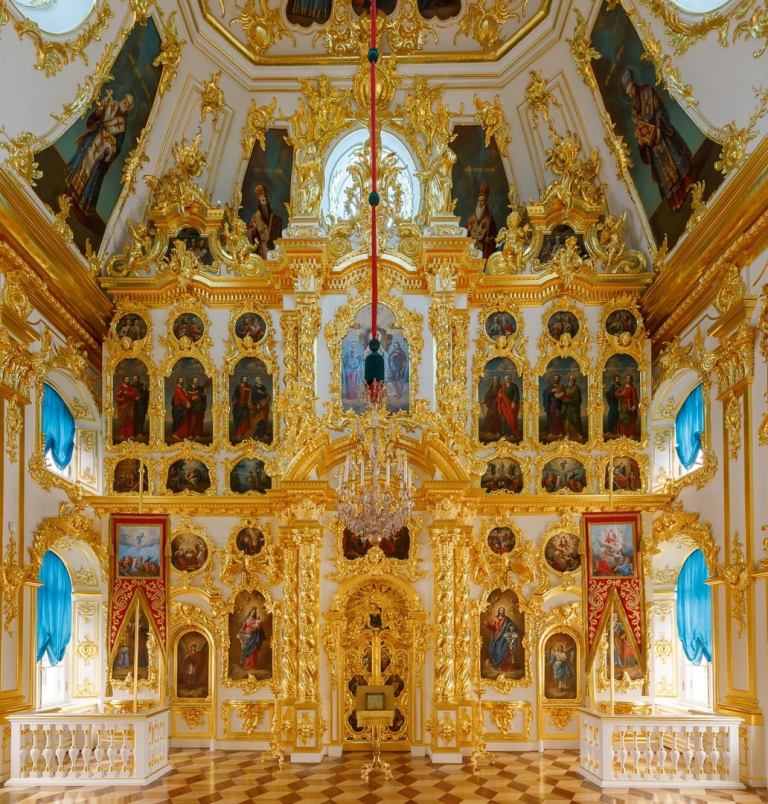
PHOTO: view of the iconostasis of the Church of the Holy Apostles Peter and Paul, adjacent to the Grand Palace, at Peterhof, as it looks today. It was here in this magnificent church, that Tsesarevich and Grand Duke Alexei Nikolaevich was baptized on 24th (O.S. 11th) August 1904
The baptism was performed by the confessor of the Imperial Family, Protopresbyter Ivan Yanishev (from 1883 until his death in 1910). The baby was carried to the font by the elderly Princess Maria Mikhailovna Golitzina (1834-1910), Mistress of the Robes. As a precaution, she had rubber soles put on her shoes to prevent her slipping and dropping him.
Countess Sophie Buxhoeveden (1883-1956) – lady in waiting to Empress Alexandra Feodorovna – recalled:
The baby lay on a pillow of cloth of gold, slung to the Princess’s shoulders by a broad gold band. He was covered with the heavy cloth-of-gold mantle, lined with ermine, worn by the heir to the crown. The mantle was supported on one side by Prince Alexander Sergeiovich Dolgorouky, the Grand Marshal of the Court, and on the other by Count [Paul] Benckendorff, as decreed by custom and wise precaution. The baby wept loudly, as might any ordinary baby when old Father Yanishev dipped him in the font. His four small sisters, in short Court dresses, gazed open-eyed at the ceremony, Olga Nicholaevna, then nine years old, being in the important position of one of the godmothers. According to Russian custom, the Emperor and Empress were not present at the baptism, but directly after the ceremony, the Emperor went to the church. Both he and the Empress always confessed to feeling very nervous on these occasions, for fear that the Princess might slip, or that Father Yanishev, who was very old, might drop the baby in the font.
In accordance with the statute of the Imperial Family, during the baptism ceremony, the newborn Grand Duke was conferred with five of the Russian Orders: St. Andrew the First-Called, St. Alexander Nevsky, St. Anna 1st Class, White Eagle, and St. Stanislaus 1st Class The august name of the Tsesarevich was entered in the lists of guards regiments and military units under the patronage of Emperor Nicholas II, Dowager Empress Maria Feodorovna and Empress Alexandra Feodorovna.
Please note that there were no photographs taken of the actual baptims ceremony, as photography was forbidden in Orthodox churches during baptisms, weddings, funerals, etc.
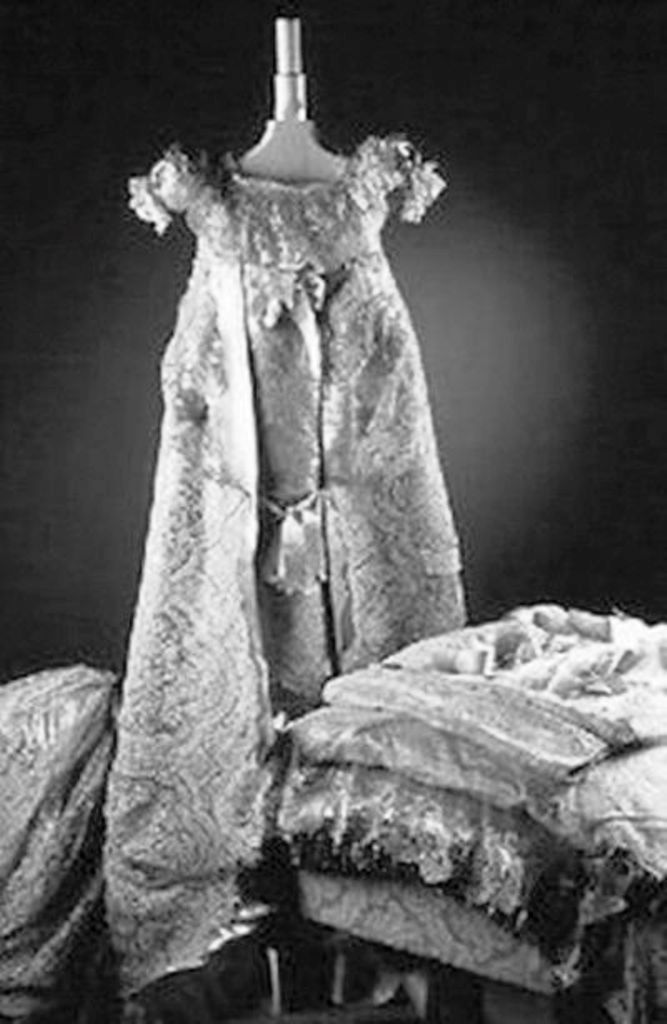
PHOTO: Tsesarevich Alexei Nikolaevich’s baptism shirt has surived to the present day, and is now on permanent display in the Church of the Holy Apostles Peter and Paul, which is adjacent to the Grand Palace at Peterhof
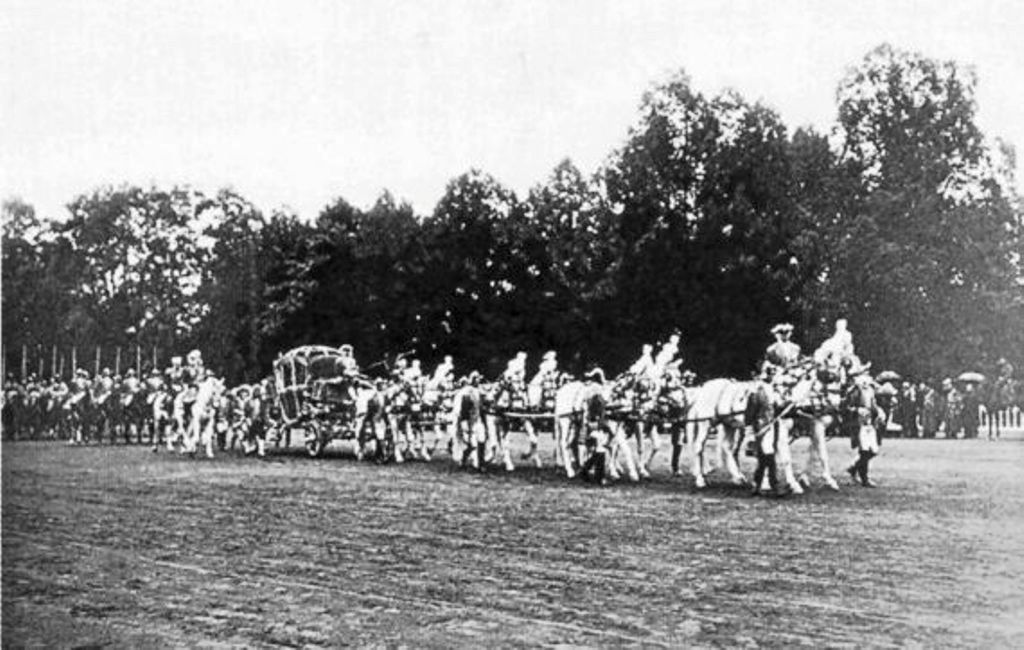
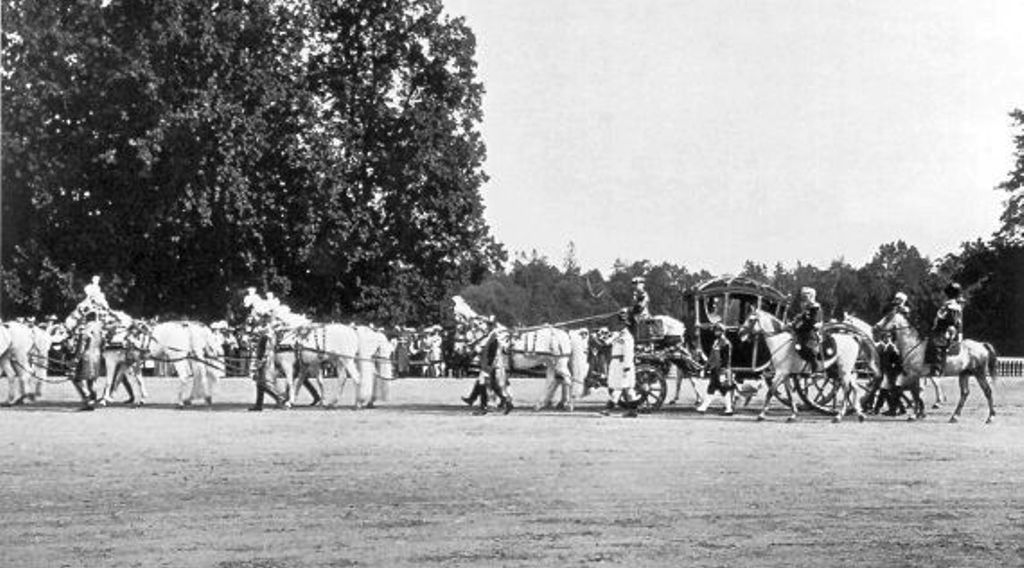
PHOTOS above and below: Gala procession on the day of the baptism of Tsesarevich Alexei Nikolaevich, who was transported in a gilded carriage pulled by 8 elegantly dressed white horses, from the Lower Dacha to the Grand Peterhof Palace, on 28th (O.S. 11th) August 1904
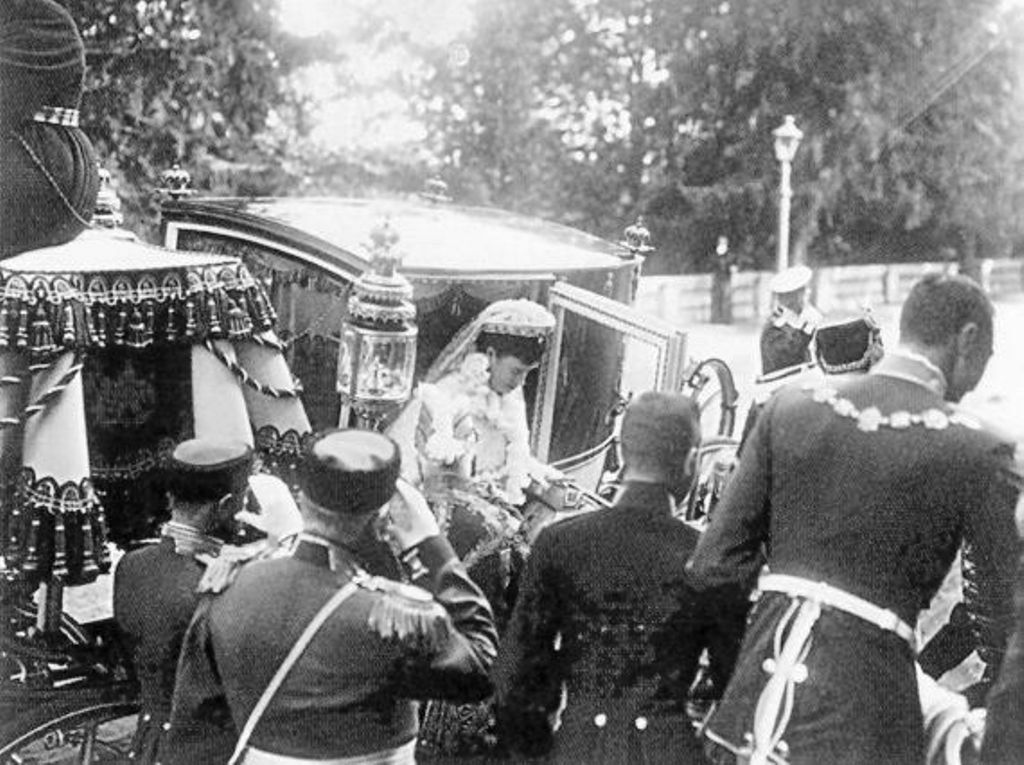
PHOTO: Dowager Empress Maria Feodorovna arrives at the Grand Peterhof Palace, for the baptism of her grandson Alexei, on 28th (O.S. 11th) August 1904
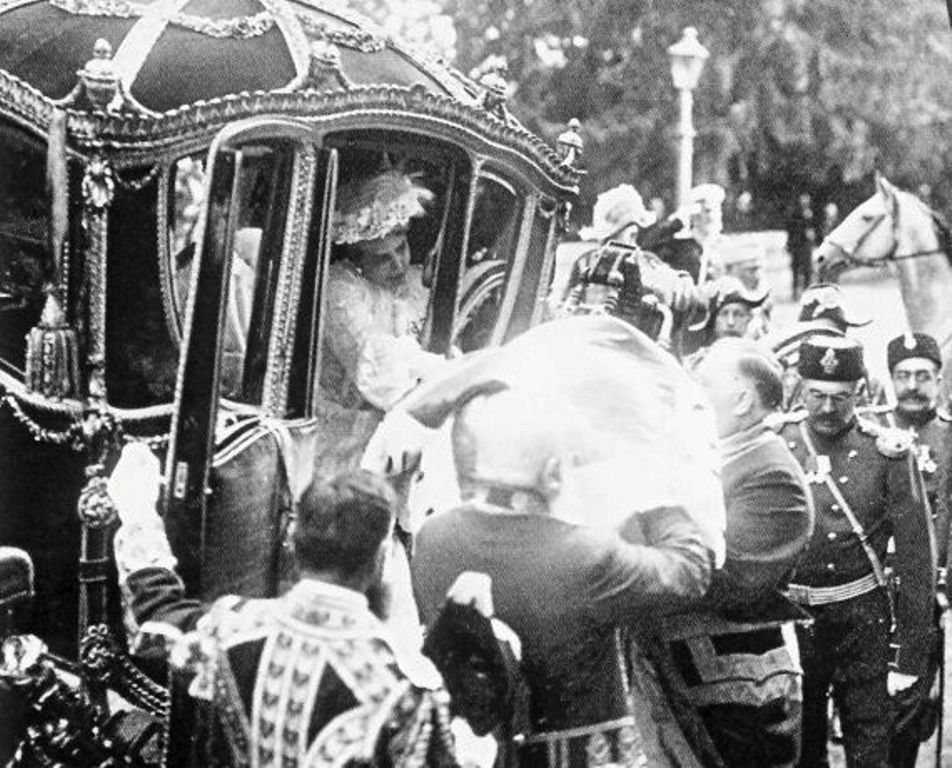
PHOTO: Empress Alexandra Feodorovna arrives at the Peterhof Palace, where Alexei is carefully taken in hand by officials, 28th (O.S. 11th) August 1904
Sadly, this joyous occasion was overshadowed by the fact that the proud parents were already aware that their son was afflicted with haemophilia. New evidence now proves that Alexei’s bleeding was noted the day following his birth.
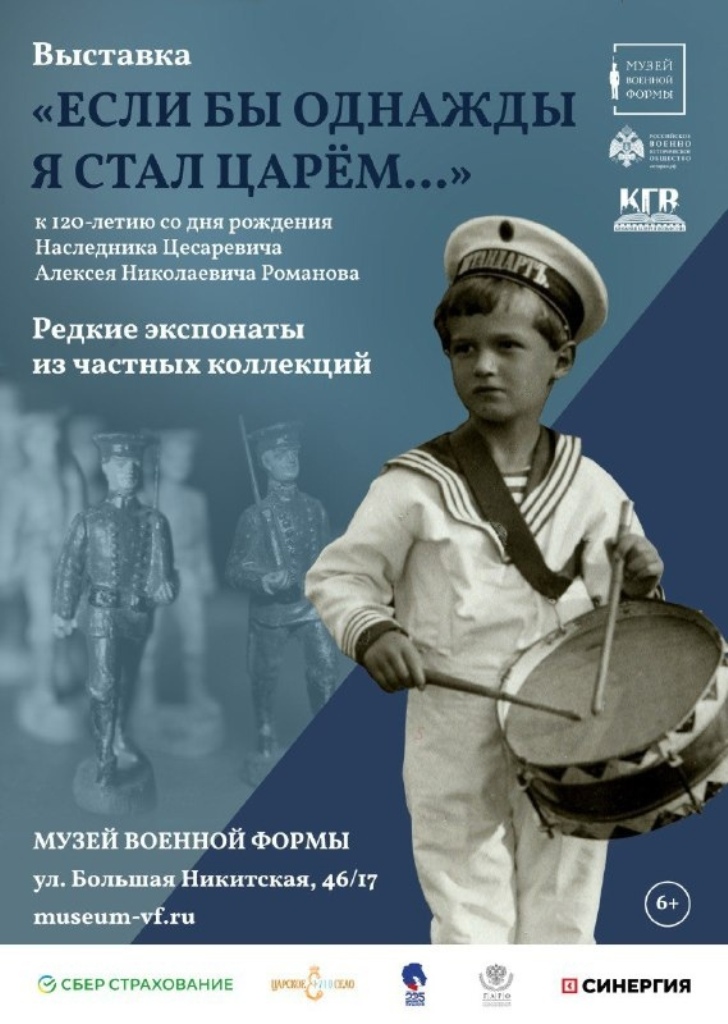
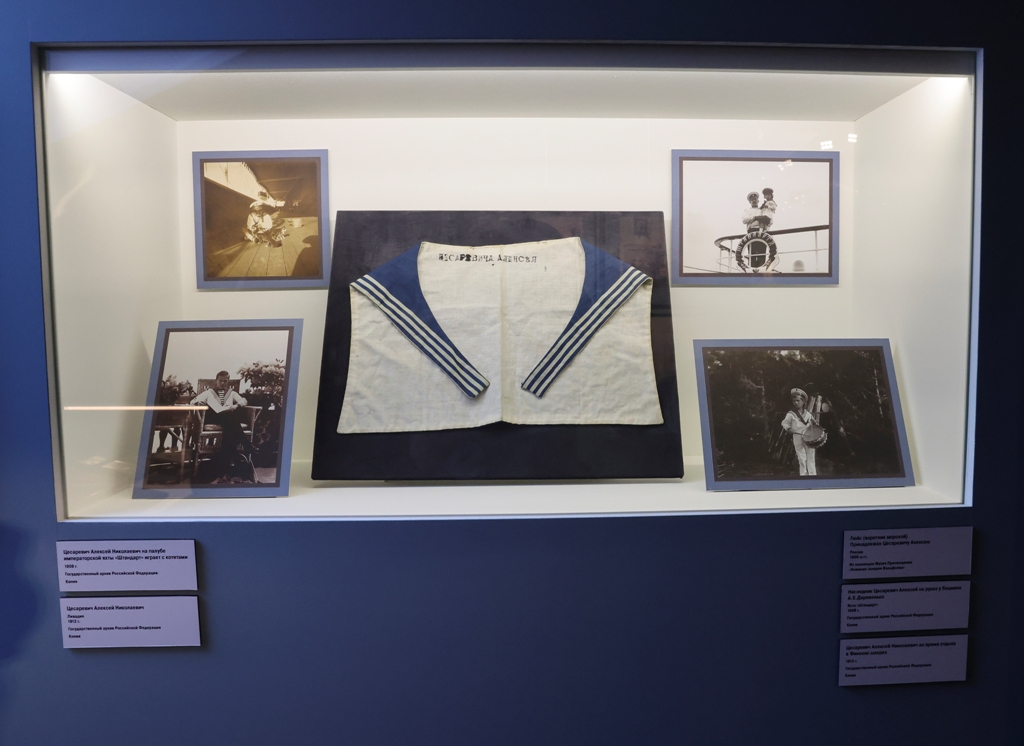
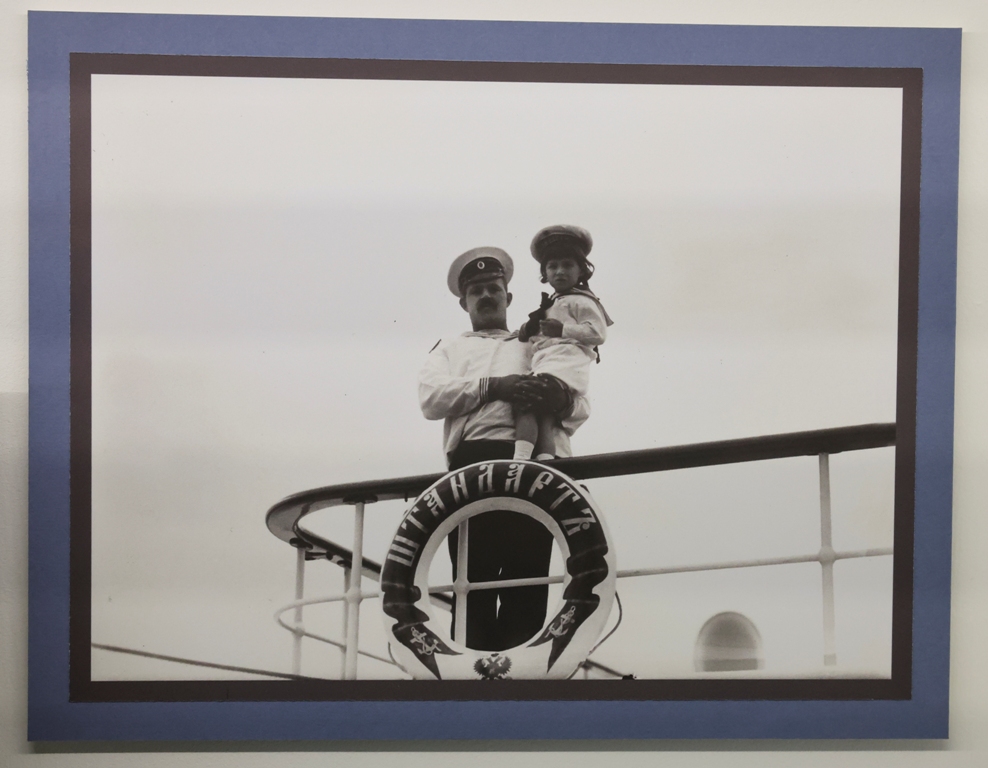
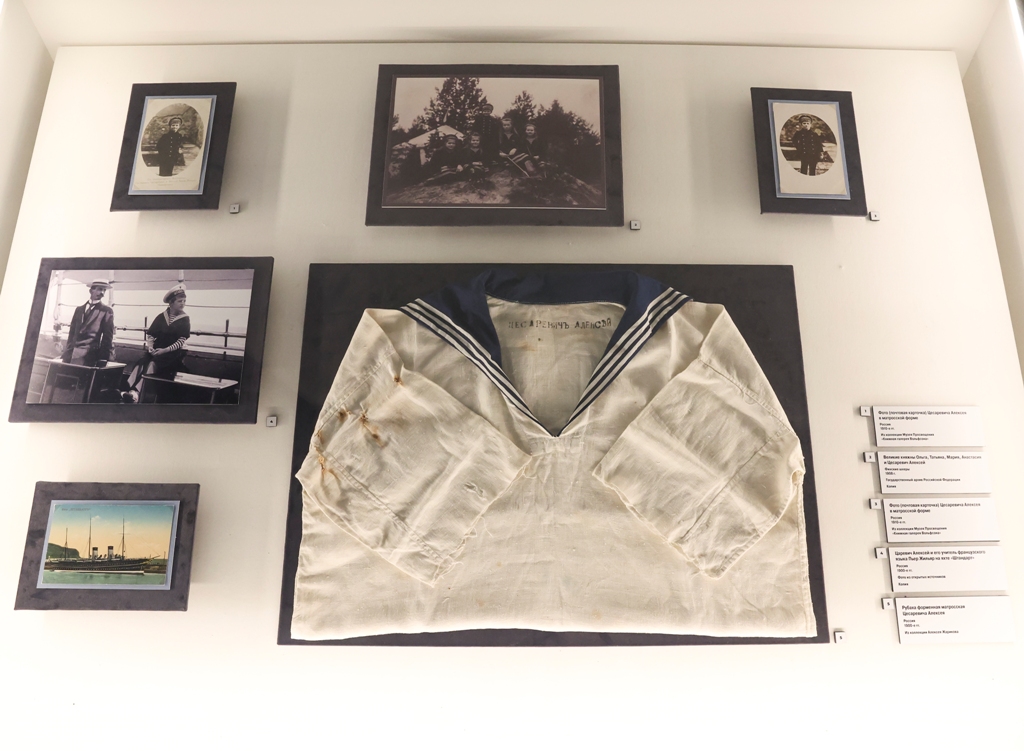
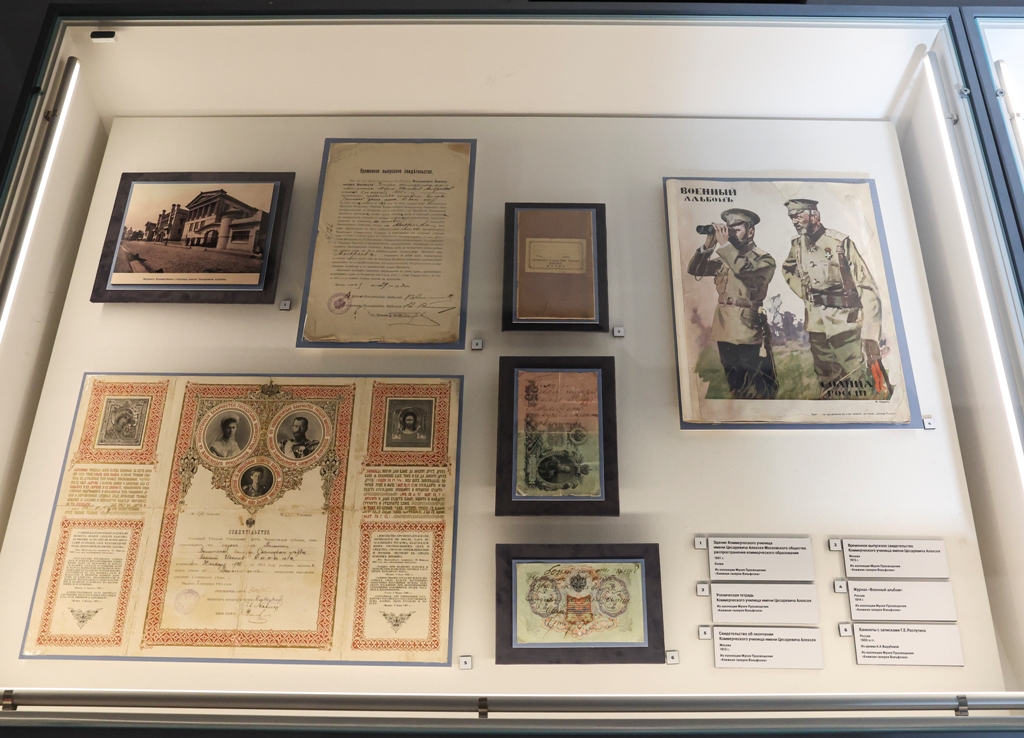
On 12th August 2024, a new exhibition dedicated to Tsesarevich Alexei Nikolaevich opened at the Museum of Military Uniforms in Moscow. The exhibition is timed to the 120th anniversary of his birth on 12th August (O.S. 30th July) 1904.
The exhibition “If one day I became Tsar…” was organized by the Russian Military Historical Society, the The Museum of Education (Moscow) and the State Archive of the Russian Federation (GARF), as well as from private collections..
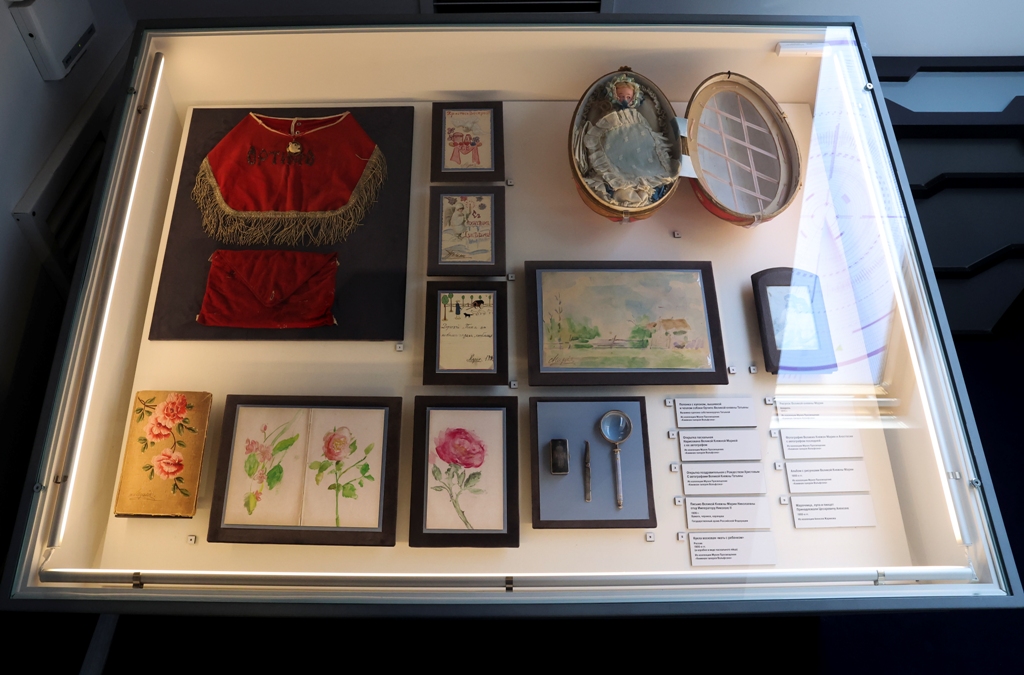
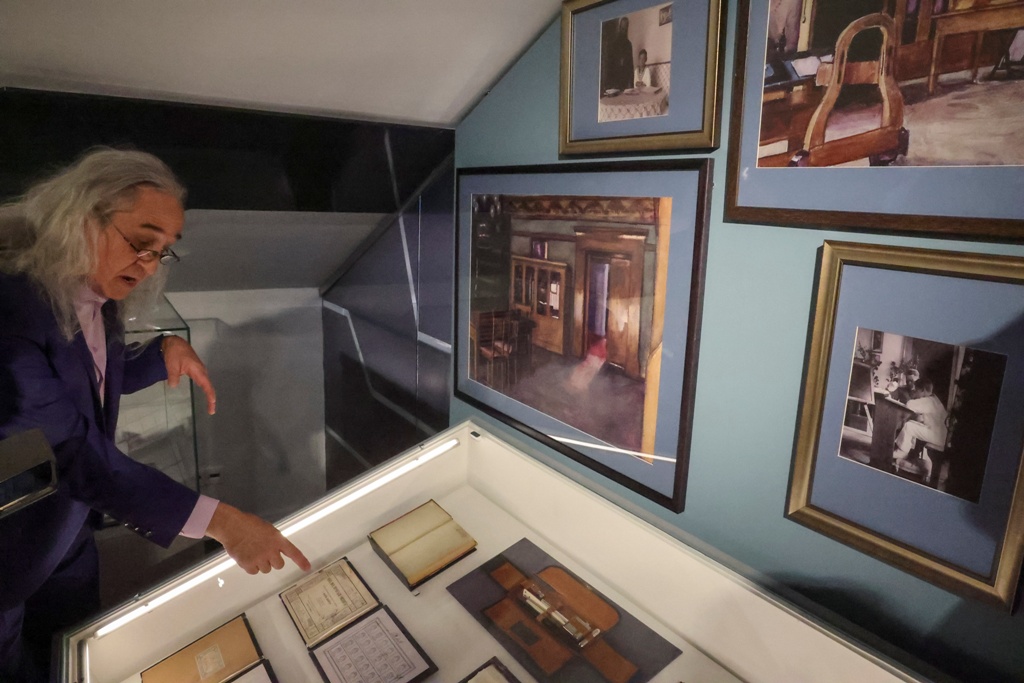
Visitors to the exhibition will have an opportunity to see authentic items which belonged to Alexei Nikolaevich, including toys, drawings, and his personal belongings. In addition are photographs and documents. Of particular note are a series of watercolours depicting Alexei’s rooms in the Alexander Palace at Tsarskoye Selo.
The opening ceremony was attended by Andrei Kokhan, Deputy Executive Director of the History of the Fatherland Foundation:
“120 years ago, an heir was born in the Imperial Family. His birth marked a new era, which was to be happy for the Russian people. However, his death, which coincided with one of the darkest and most terrible events of our Fatherland, unfortunately extinguished these hopes and dreams,” said Kokhan.
“For many decades, the history of the Imperial Family was not considered in Russian historiography. It was, by and large, forgotten. Shortly after the fall of the Soviet Union in 1991, however, Russians took a keen interest in their past, the life and reign of Russia’s last Tsar and his family in particular. The Romanov archives, which were sealed during the Soviet years, revealed documents and photographs which helped reshape Russia’s history. The canonization of the Tsar and his family by the Moscow Patriarchate of the Russian Orthodox Church in 2000, helped present the lives of the Imperial Family in a whole new light. Today, Nicholas II and his family are the subjects of countless books, in addition to exhibitions, documentaries, films and conferences, among other events. I am sure that the exhibition opening today will make a great contribution to the study and rethinking of the events of late 19th to early 20th century Russian history,” he added.
The exhibition explores the short but important life about the boy whom everyone adored. Alexei combined unique qualities, none of which any of the Romanov grand dukes could boast of. “When I am Tsar, there will be no more poor and unfortunate! I want everyone to be happy,” he often repeated. Those who knew him personally were sure that with the Tsesarevich Alexei’s ascension to the throne, that the golden age of the Russian Empire would begin. Sadly, it was not to be.
The exhibition “If one day I became Tsar…” opens to the public on 13th August 2024 and runs until 16th February 2025, at the Museum of Military Uniforms in Moscow.
In this article, I would like to address two popular held myths about the Tsesarevich Alexei Nikolaevich (1904-1918).
First, it was Robert K. Massie (among others), who have led us to believe that the only son of Emperor Nicholas II and Empress Alexandra Feodorovna, was named after Tsar Alexei Mikhailovich (1629-1676) . . . this is incorrect.
The long-awaited son and heir to the Russian throne was named Alexei, in honour of St. Alexei of Moscow.
Saint Alexius (1296–1378) was Metropolitan of Kiev and all Russia (from 1354). He was canonized by the Russian Orthodox Church in 1448 and is revered as one of the patron saints of Moscow.
Source: ‘Alexei. Russia’s Last Imperial Heir: A Chronicle of Tragedy’ by Margarita Nelipa. Published in 2015
Second, it has generally been accepted that Alexei began bleeding from his navel at the age of six weeks . . . this is also incorrect.
Two noted Romanov historians Margarita Nelipa and Helen Rappaport both tell us otherwise, that Alexei’s bleeding was noted the day following his birth. Their claim is based on two separate, yet reliable sources.
“One day after Alexei’s birth, Grand Duke Peter Nikolaevich (1854-1931) came to congratulate the Sovereign and stayed for lunch. Upon his departure, the Sovereign mentioned the presence of “blood on the diapers”. Returning to his Znamenka estate (in Alexandria), he repeated this detail to his wife [Grand Duchess Militza Nikolaevna (1866-1951)]who telephoned Nikolai II (before visiting Alix later that evening). During their conversation, he said that the doctors had confirmed that the atypical bleeding was indeed due to haemophilia.”
Source: ‘Alexei. Russia’s Last Imperial Heir: A Chronicle of Tragedy’ by Margarita Nelipa. Published in 2015
Grand Duke Peter Nikolaevich and his wife Grand Duchess Militza Nikolaevna (1866-1951) had driven over to the Lower Dacha the day Alexei was born . . . as their son Prince Roman Petrovich (1896-1978) later recalled in his memoirs [published in Danish].
“When they returned in the evening to Znamenka, my father remembered that . . . the Tsar had told him . . . That the doctors were concerned about the frequent splatters of blood in his swaddling clothes. . . .”
Grand Duke Peter telephoned the palace, “When the Tsar answered that they had hoped that the bleeding would soon stop, my mother took the receiver and asked if the doctors could explain the cause of the bleeding. When the Tsar could not give her a clear answer, she asked him with the calmest of voices she could manage: ‘I beg you, ask them if there is any sign of haemophilia’ . . . The Tsar fell silent on the phone for a long time and then started to question my mother and ended by quietly repeating the word that had staggered him: haemophilia.”
Source: ‘Four Sisters. The Lost Lives of the Romanov Grand Duchesses’ by Helen Rappaport. Published in 2014.
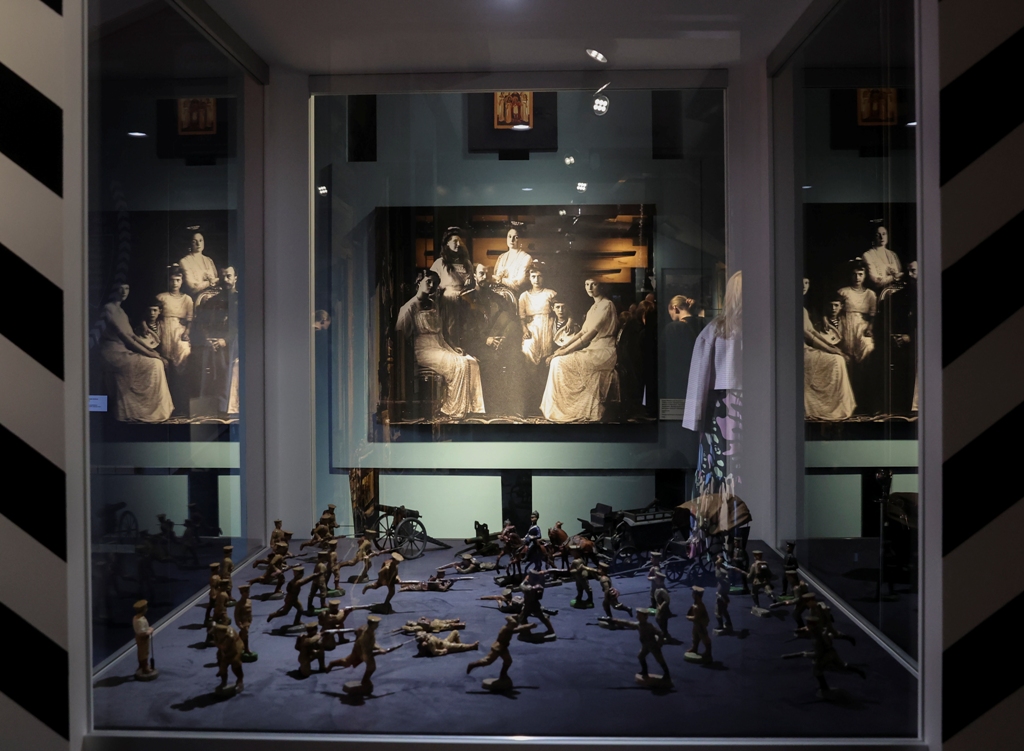
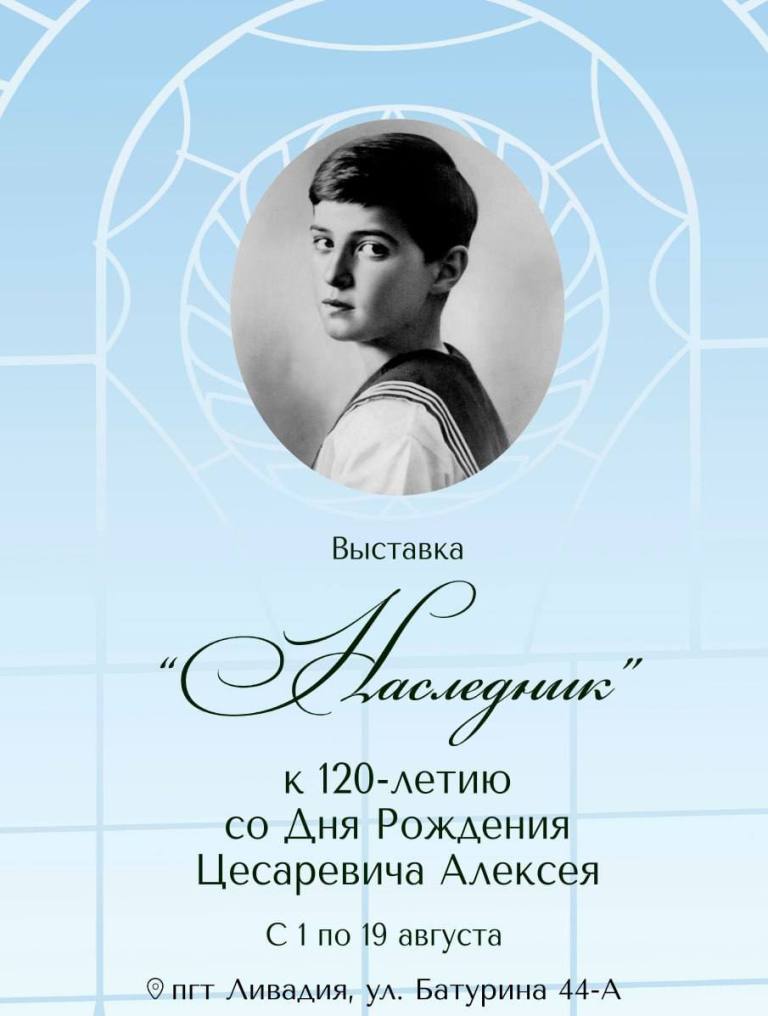
On 1st August 2024, a new exhibition dedicated to Tsesarevich Alexei Nikolaevich (1904-1918) opened at Livadia Palace in Crimea. The exhibition simply titled “Наследник / Heir” is timed to the 120th anniversary of the birth of Tsesarevich Alexei Nikolaevich, who was born on 12th (O.S. 30th July) August 1904.
The grand opening of the exhibition on 1st August was attended by those who received invitions and to members of the press. The exhibit opened to visitors the following day, in the Music Room, located on the second floor of the palace.
Visitors to the exhbition will see authentic items from Tsesarevich Alexei’s rooms, and which are now in the collection of the Livadia State Palace-Museum. Among these items are religious paintings and sketches, including a sketch entitled “Bayan” by the famous Russian artist Viktor Mikhaylovich Vasnetsov (one of Nicholas II’s favourite artists), and “The Tsar’s Family in Livadia” a watercolour by Elena Samokish-Sudkovskaya, as well as pieces of furniture, photographs, etc.
The exhibition explores Alexei’s short life [he was murdered just weeks before his 14th birthday], the long-awaited heir to the Russian throne, and beloved son of Emperor Nicholas II and Empress Alexandra Feodorovna. The exhibition looks at his hobbies, the close ties he shared with his parents, sisters and tutors, the piety of the family, and the happy times Alexei spent in Livadia. In addition, the exhibit looks at the First World War and Alexei’s visits and stays with the Tsar at Mogilev. In the last part of the exhibition, visitors will see rare artifacts associated with the tragic death of the Imperial Family in Ekaterinburg in July 1918.
The exhibition will be complemented by authentic items from the collection of the Yalta Historical and Literary Museum, the archive of the Livadia Church of the Exaltation of the Holy Cross as well as from private collections.
The exhibition “Наследник / Heir” is open to visitors in the Music Room of the Livadia Palace, from 2nd August to 19th August 2024.
CLICK on the IMAGE above to watch the VIDEO. Duration: 2 mins., 47 secs.
NOTE: the video is in Russian only, however, you can watch an English language version by clicking on the Closed Captioning [CC] button and adjusting Google Translate to English. ENJOY!
Visitors to the museum will see authentic items from the museum’s funds, once located in the rooms of the Tsarevich and other living rooms of the palace. Among them are engravings on religious subjects, the engraving “Bayan” from the painting by Viktor Vasnetsov, Elena Samokish-Sudkovskaya’s watercolor “The Royal Family in Livadia”, pieces of furniture, etc.
The exhibition will show the short life of the heir to the Russian throne, the most long-awaited child in the family of the last emperor – his hobbies, close ties with loved ones, the spiritual world of the family, happy times spent in Livadia. One of the topics will be the difficult period of the First World War and staying with the Tsar at headquarters. Also, visitors to the museum will see the rarest artifacts associated with the tragic death of the royal family in Yekaterinburg in 1918.
The exhibition will be complemented by authentic items from the collection of the Yalta Historical and Literary Museum, the archive of the Livadia Church of the Exaltation of the Holy Cross and private collections.
The opening of the exhibition “The Heir” will take place on August 1 at 12:00 in the Music Salon of the Livadia Palace. Admission by invitation.
The exhibition will be available to visitors from August 2 to August 19, 2024.
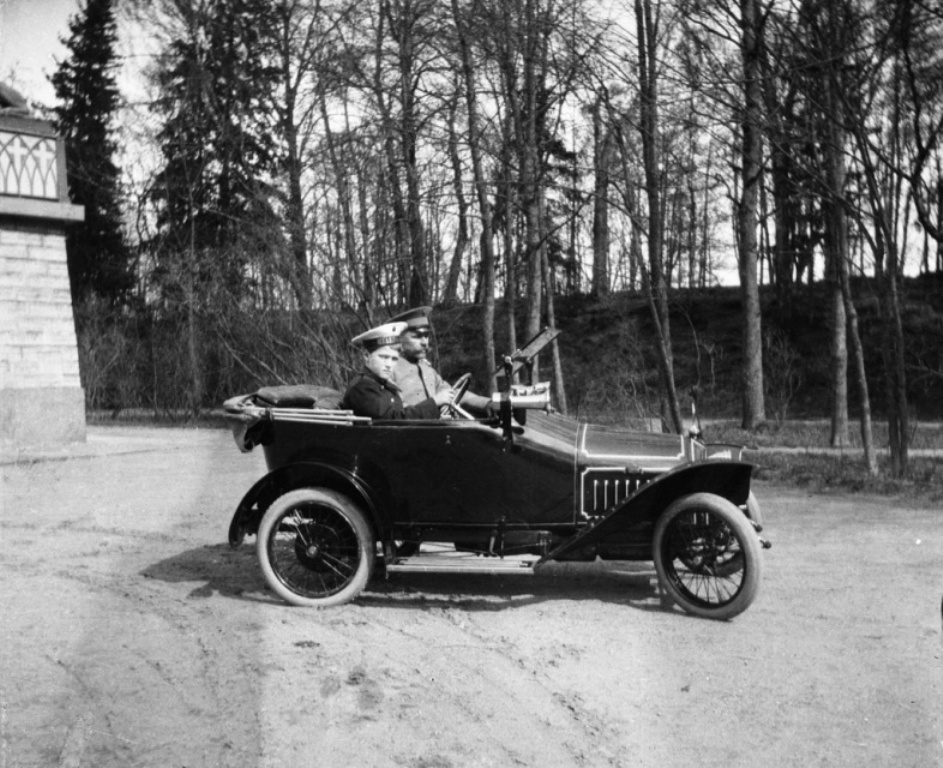
PHOTO: 10-year-old Tsesarevich Alexei Nikolaevich, driving his motorcar, a Peugeot BP1 Bebe, accompanied by driver Adolfe Kegresse in front of the White Tower, situated in the Alexander Park, near the Alexander Palace at Tsarskoye Selo in 1914
In 1912, the famous French automaker Peugeot released the Peugeot Bebe, designed by Ettore Bugatti, complete with a four-cylinder engine with a displacement of 855 cm3 and power of 10 hp. The model was first presented to the public at the Paris Motor Show in 1912.
The Peugeot Bébé came to Russia in May 1913 at the IV International Automobile Exhibition in St. Petersburg, an event that was attended by the Tsar. Its price was 4000 francs (with bodywork). In 1913 one franc was worth 0.37 kopecks, thus the pricetag for this motorcar worked out to 1900 rubles including taxes.
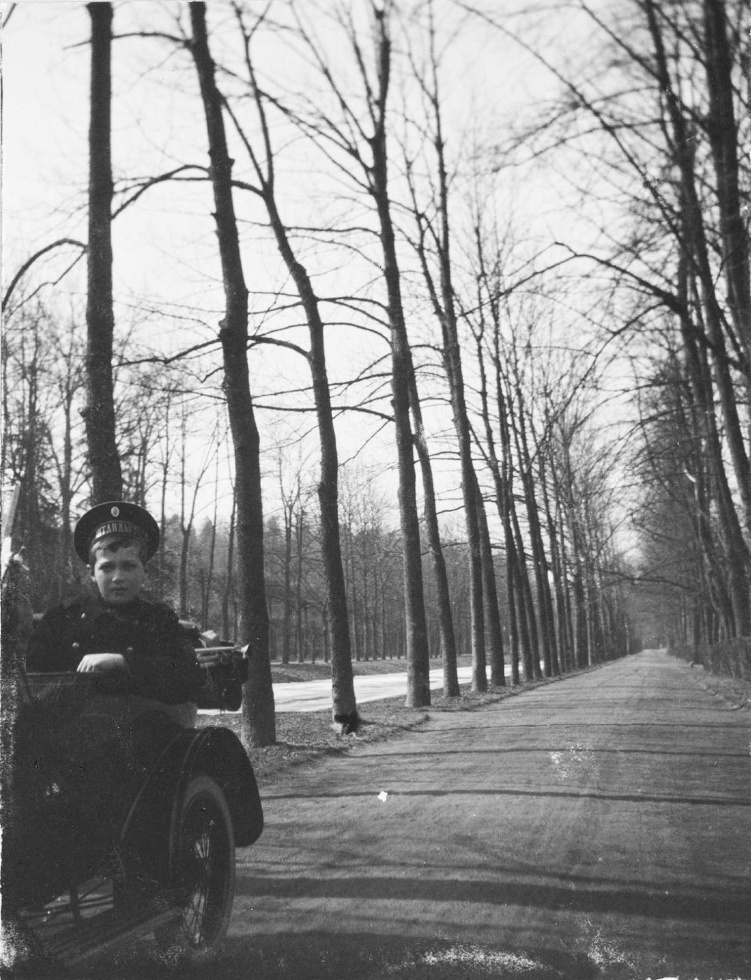
PHOTO: Tsesarevich Alexei riding along the pathways of the Alexander Park in the back seat of his Peugeot Bebe, 1914
Alexei’s paternal grandmother Dowager Empress Maria Feodorovna, bought a Peugeot BP1 Bebe motorcar for Tsesarevich Alexei on his nameday[1] – 18th October.
Alexei received the car on Sunday, 18th (O.S. 5th) October, 1914, and on Thursday, 22nd (O.S. 9th) October, Emperor Nicholas II wrote in his diary: “I took a brisk walk with Maria and Anastasia todat. We saw Alexei in the park, riding in a small motorcar presented to him on 5th October”.
PHOTO: 10-year-old Tsesarevich Alexei Nikolaevich, accompanied by driver Adolphe Kegresse in his Peugeot BP1 Bebe, near the White Tower in the Alexander Park. In the back seat is Grand Duchess Anastasia. Standing next to the motorcar is the French tutor Pierre Gilliard. 1914.
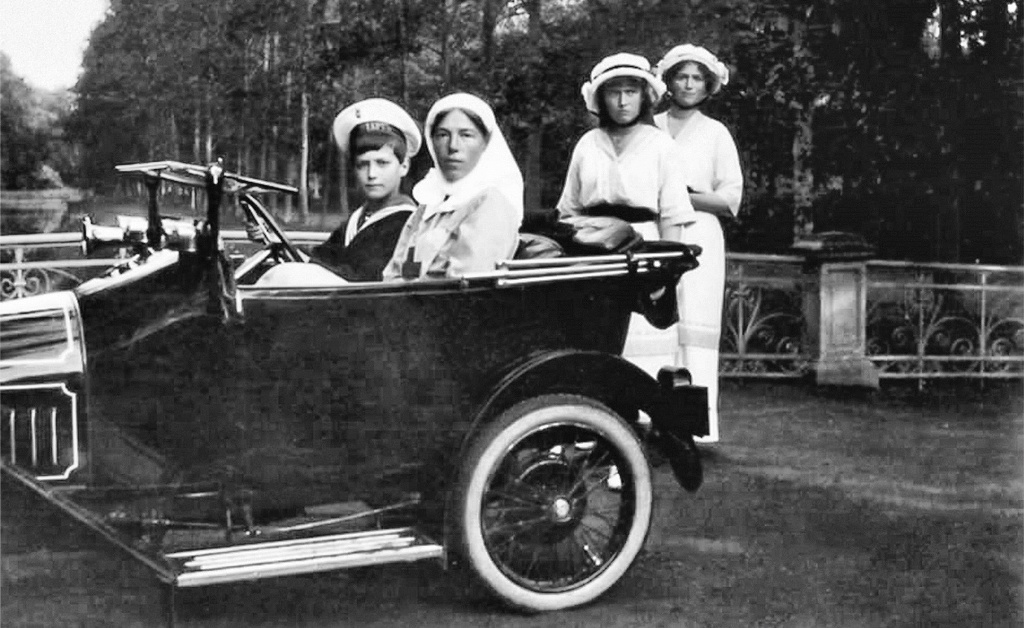
PHOTO: Tsesarevich Alexei taking his aunt Grand Duchess Olga Alexandrovna for a spin around the Alexander Park in his Peugeot BP1 Bebe. Standing in the background are Alexei’s sisters Grand Duchesses Anastasia and Maria Nikolaevna. 1914.
Since all members of the Imperial Family were avid amateur photographers, each of them had their own camera. Thousands of their personal photographs have survived to the present day, including several photographs in which Tsesarevich Alexei is photographed behind the wheel of his Peugeot Bebe.
Despite the fact that the motorcar was very light (350 kg) and had a length of about two and a half meters, the 10 hp engine allowed it to reach speeds of up to 60 km per hour.
Of course, Alexei did not “drive” his motorcar very often. His parents could not risk the safety of their hemophiliac son, since any injury received in an accident could be fatal for him. Therefore, they assigned the Tsar’s personal chauffeur Adolfe Kegresse (1879-1943) to accompany Alexei while he was out driving. His drives were restricted to the tree-lined alleys of the Alexander Park at Tsarskoye Selo, and he was only permitted to drive in first gear. According to witnesses, Alexei drove “quite confidently”. He often took his sisters and tutors on short drives.
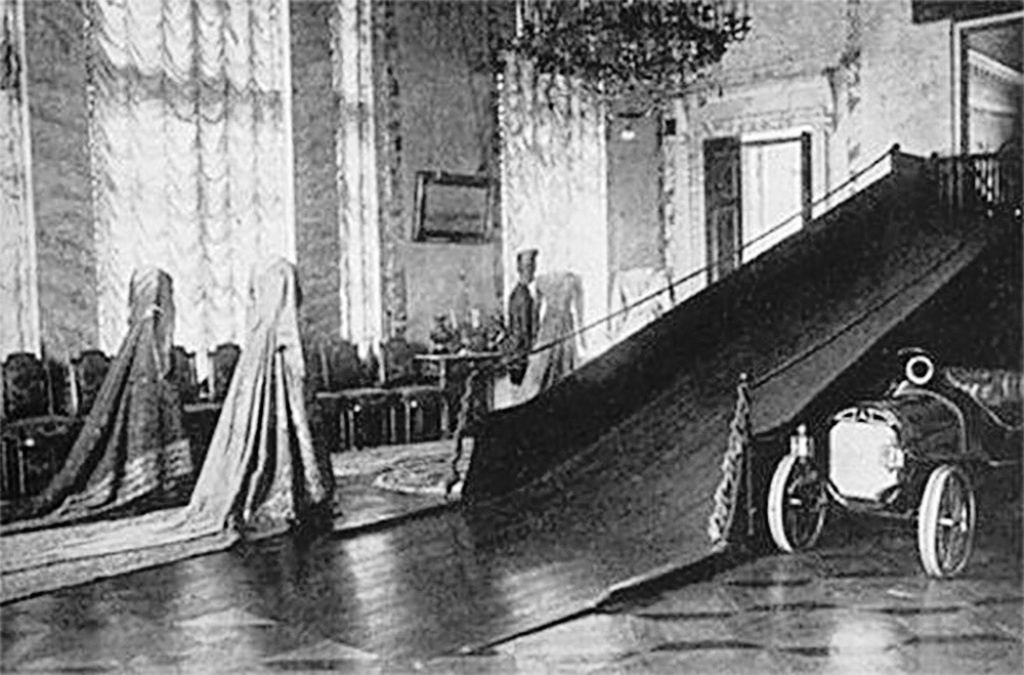
PHOTO: after the 1917 Revolution, the Alexander Palace became a museum. Tsesarevich Alexei’s Peugeot BP1 Bebe was put on display, bext the wooden slide in the Marble Hall [aka the Mountain Hall]
Following the February 1917 Revolution, Tsesarevich Alexei’s Peugeot Bébé stood ownerless for a very long time. After Emperor Nicholas II’s collection of more than 50 motorcars housed in the Imperial Garage’s at Tsarskoye Selo, St. Petersburg, Moscow, Livadia and Mogilev were “confiscated” by the Provisional Government, the Peugeot Bebe remained at Tsarskoye Selo, where it was placed on display in the Marble Hall [aka the Mountain Hall] of the Alexander Palace, and removed from the lists of the Provisional Government Motor Depot.
In photographs taken in the 1920s of the Marble Hall in the Alexander Palace, Alexei’s motorcar is clearly visible, sitting next to the wooden slide, constructed in 1833, at the behest of Emperor Nicholas I and his wife Empress Alexandra Feodorovna.
PHOTOS: after the 1917 Revolution, the Alexander Palace became a museum. Tsesarevich Alexei’s Peugeot BP1 Bebe was put on display, bext the wooden slide in the Marble Hall [aka the Mountain Hall]
There is no doubt that the Bolsheviks considered Tsesarevich Alexei’s Peugeot Bébé as nothing more than an extravagant “toy” and of no historical value. The motorcar stood in the Alexander Palace until 1929.
In 1930, Alexei’s Peugeot BP1 Bebe was transferred to the collection of the Leningrad Palace of Pioneers, also housed in the Alexander Palace. During the 1930s, pioneers who were members of the motoring club learned to drive in the Tsesarevich’s motorcar. In 1942 – during the Great Patriotic War – a bomb hit the Anichkov Palace [where the Peugeot Bébé jad been moved], and Tsesarevich Alexei’s motorcar was irretrievably lost.
NOTES:
[1] Russians celebrate name days separately from birthdays. Celebrations range from the gifting of cards and flowers to full-blown celebrations similar to birthday parties. Such a celebration begins with attendance at the divine services marking that day (in the Russian tradition, the All-Night Vigil and Divine Liturgy), and usually with a festive party thereafter. The Russian Imperial family followed a tradition of giving name-day gifts.
Before the October Revolution of 1917, Russians regarded name days as important as, or more important than, the celebration of birthdays, based on the rationale that one’s baptism is the event by which people become “born anew” in Christ.
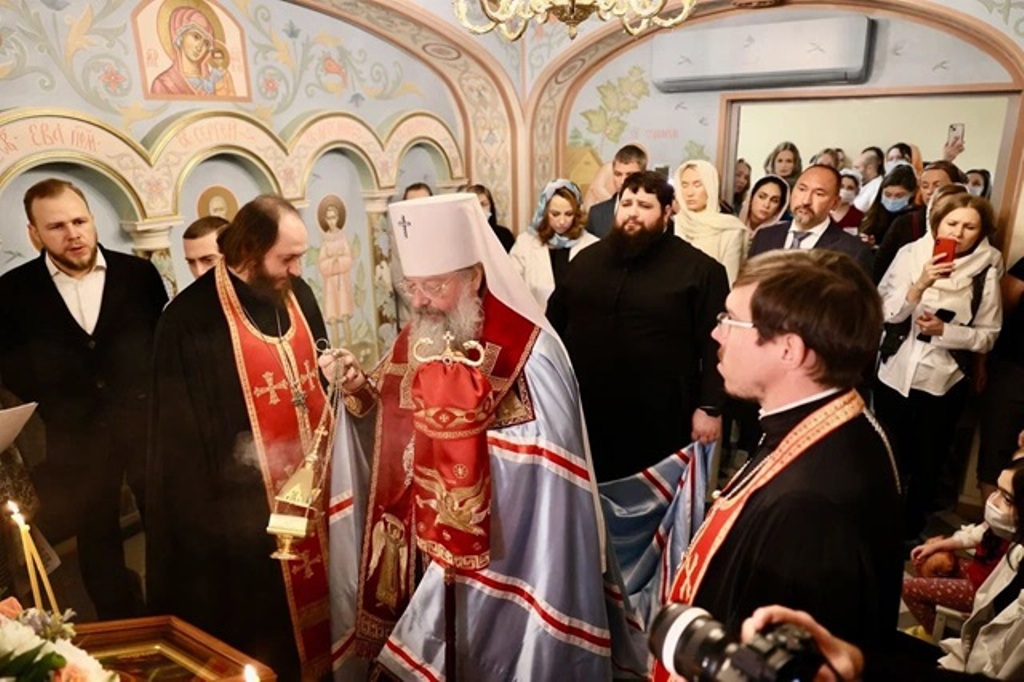
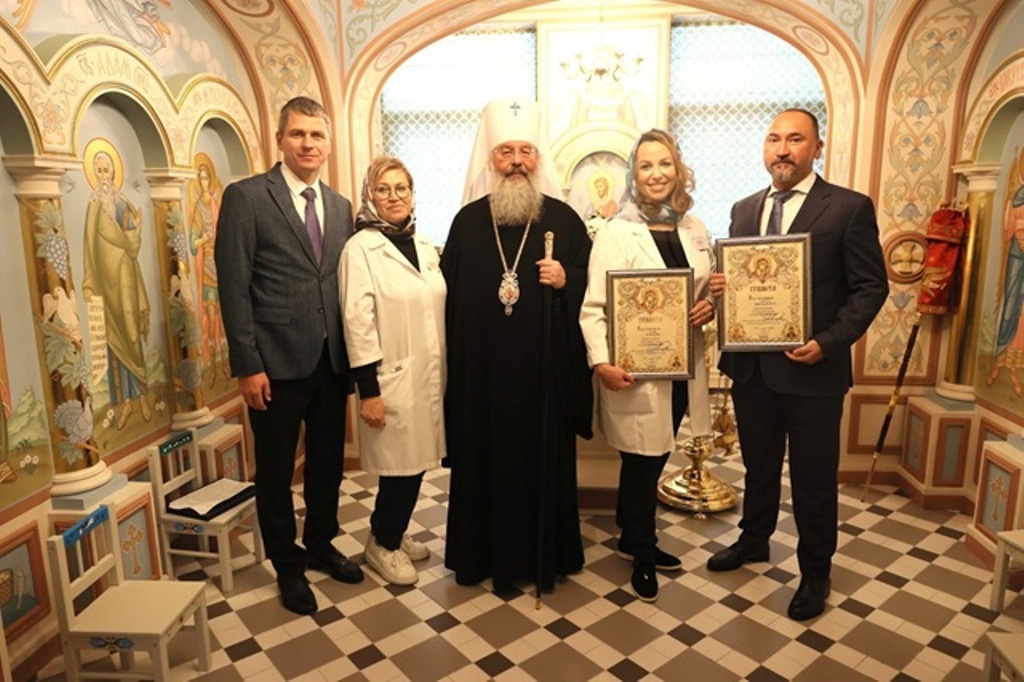
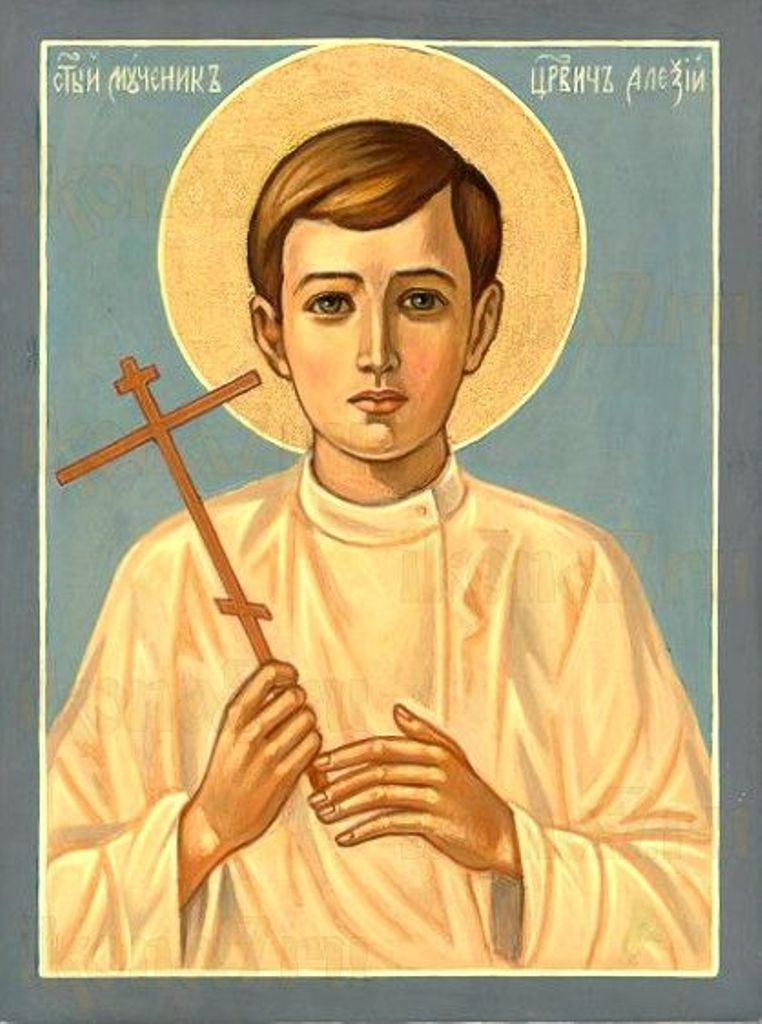
On 22nd November 2023, an Orthodox prayer room in honour of the Holy Royal Martyr Tsesarevich Alexei Nikolaevich, was opened at the At the Center for Pediatric Oncology, Hematology and Surgery of the Children’s Republican Clinical Hospital (DRKB) in Kazan.
In honor of the opening, Metropolitan Kirill of Kazan and Tatarstan performed a Divine Liturgy service and consecrated the room, which is located in a quiet place on the fifth floor of the Center.
Medical staff, parents whose children are undergoing long-term treatment, and their relatives will be able to request assistance and prayers from the Holy Royal Martyrs at any time.
The Metropolitan addressed all those present with wishes and prayers for a speedy recovery, and the doctors with fortitude for the healing of their young patients.
“There is no such thing as too much happiness, just as there is no such thing as too much health and success. There is always a need to turn for help to each other, to our loved ones, to our elders, for help to our Creator and the Saints to whom we can pray,” Metropolitan Kirill said.
“Here, in this prayer room, children, their parents and staff can find such comfort. You can come here and pray to God for health, for salvation, for help for all of us, and for those sorrows that weigh heavily on our hearts. Most of all, we would all like our children to be healed, their health restored, and to bring joy to their parents,” the head of the Tatarstan Metropolia added.
Holy Royal Martyr Alexei Nikolaevich . please pray to God for us!
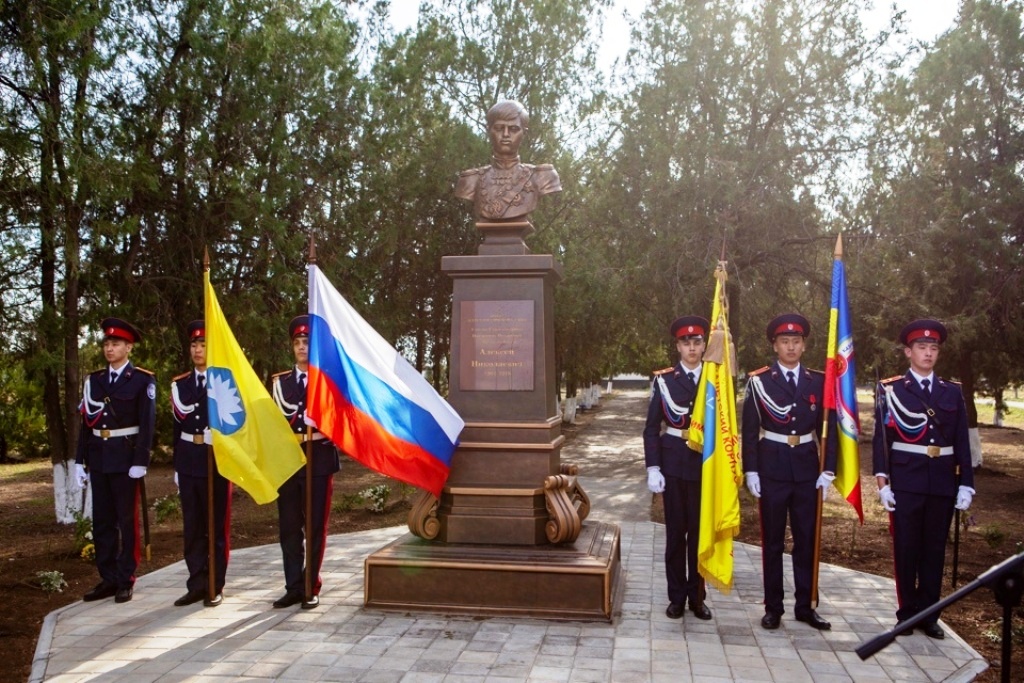
PHOTO: Cossack youth stand at attention beside the bust-monument to Tsesarevich Alexei Nikolaevich
On 18th October 2023, a new bust-monument to Tsesarevich Alexei Nikolaevich was unveiled on the grounds of the O.I. Gorodovikov Cossack Cadet Corps Institution, situated in the city of Gorodovikovsk in Kalmykia – located in the North Caucasus region of Southern Russia. .
The installation and consecration of the bust-monument was timed to coincide with the name day[1] of the only son and heir of Emperor Nicholas II. The last official heir to the Russian throne is considered the patron saint of the Union of Cossack Youth of Russia. From the day of his birth – 12th (O.S. 30th July) August 1904 – Alexei became the August ataman of all the Cossack troops.
The unveiling of the monument was attended by Archbishop Justinian of Elista and Kalmyk, Ataman of the Kalmyk Cossack District of the Great Don Army Chimid Dzhangaev, Rector of the Gorodovikovsky Khurul Gelyung Gem Yamphi, Deputy Chairman of the Krasnodar Branch of the Imperial Orthodox Palestine Society, Secretary of the Krasnodar Branch of the World Russian People’s Council in the Krasnodar Territory, Rector of the Church of the Holy Martyrs John Kovsharov and Yuri Novitsky in Krasnodar Priest Vyacheslav Klimenko, Director of the O.I. Gorodovikov Cossack Cadet Corps Valery Abushinov.
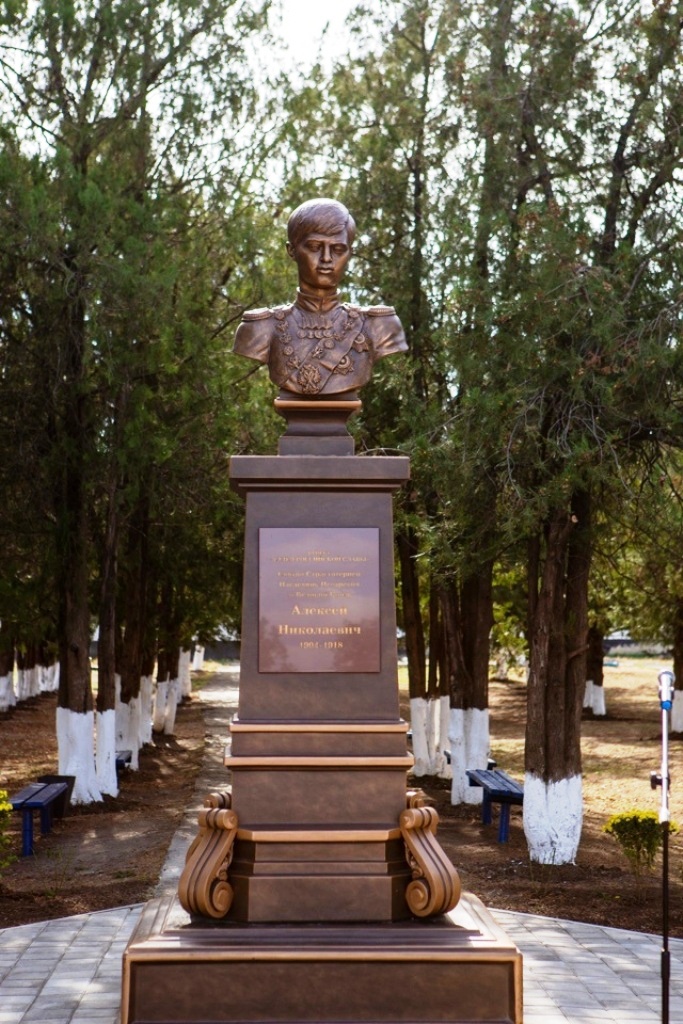
PHOTO: detail of the bronze bust to Tsesarevich Alexei Nikolaevich
The ceremony was attended by cadets and teachers of the Cossack Corps, representatives of the parent community, clergymen of the Elista and Kalmyk diocese and Cossacks of the Kalmyk Cossack District of the Great Don Army.
Greeting the participants of the ceremony, Archbishop Justinian of Elista and Kalmyk stressed the importance of honoring the memory of the Holy Passion-Bearer Alexei, who during his earthly life was the chief of all the Cossack troops of the Russian Empire, and today is revered as the heavenly patron of Cossack youth.
He further noted: “A Cossack is not so much a blood belonging as a special disposition of mind and soul. A Cossack is free-willed, brave, preserves the faith and traditions of his ancestors, loves his Motherland, tries to protect the weak and defenseless. And God grant that the youth of the pupils of the Cossack Cadet Corps may pass under the patronage of the Holy Tsesarevich Alexei, so that they may prayerfully turn to him with their worries and sorrows, because he will understand their youth and help them!”
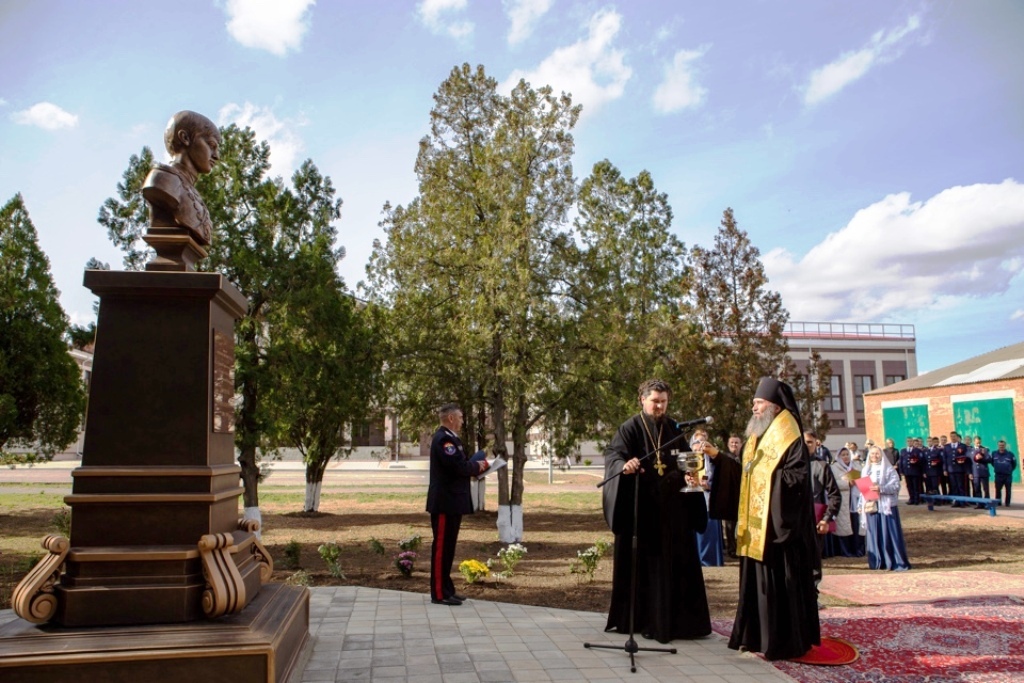
PHOTO: Archbishop Justinian of Elista and Kalmyk (right) performs the consecration ceremony
His Eminence expressed his gratitude to the abbot of the Nizhny Novgorod Ascension Monastery of the Caves, Archimandrite Tikhon (Zatyokin), for donating to Kalmykia a monument to Tsesarevich Alexei, created at the expense of the monastery.
His Eminence Justinian read a prayer and sprinkled the monument with holy water. Then the anthem of the Russian Federation, the anthem of the Republic of Kalmykia and “Glory” from the opera “Ivan Susanin” by M.I. Glinka were played.
This was followed by a concert and lecture in the assembly hall of the Cossack Corps. Local historians talked about the historical basis of the veneration of St. Tsesarevich Alexei Nikolaevich in Kalmykia.
PHOTO: full view of the bronze bust and pedestal to Tsesarevich Alexei Nikolaevich
People’s Artist of the Republic of Kalmykia, and Director of the Children’s Art School No. 2 in Elista, Arslan Shavgurov, recalled St. Tsesarevich Alexei’s passion for playing the balalaika and performed several works on this folk instrument in his memory.
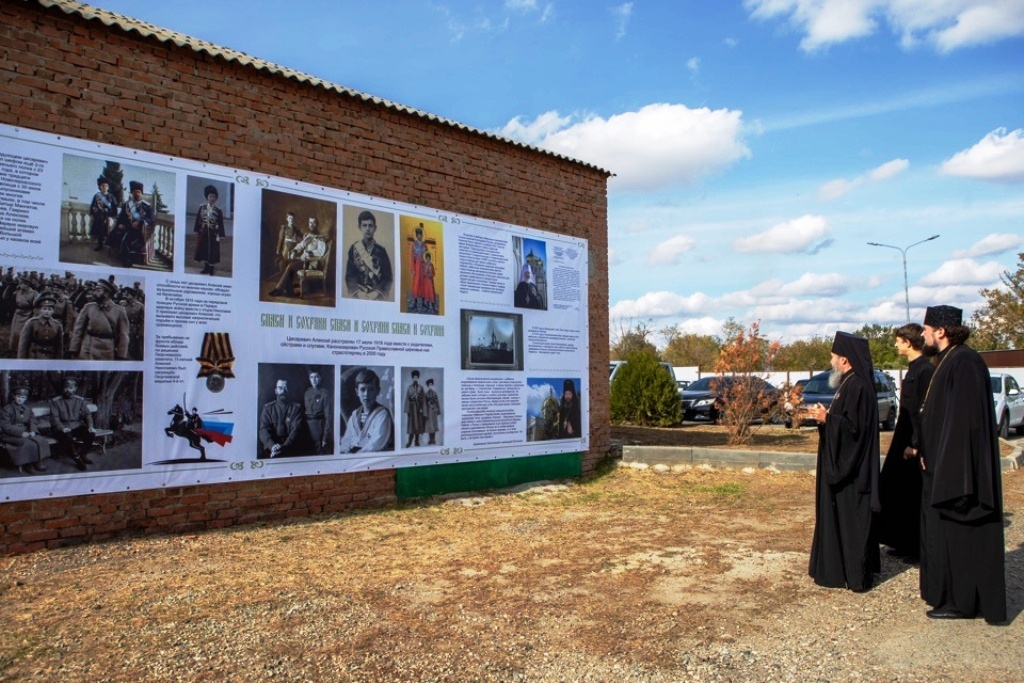
Tsesarevich Alexei Nikolayevich was the August Chief of the Life Guards Ataman Regiment, in which more than 20 Kalmyks served at the beginning of the twentieth century. Subsequently, the heir was appointed chief of the 2nd Don Cossack Regiment, in which more than 30 Kalmyks served, and the Novocherkassk Cossack School from 1915, whose graduates were many Kalmyk officers.
PHOTO: a permanent outdoor display tells about the life of the Tsesarevich and his position as chief of all the Cossack troops of the Russian Empire
In 1907, a khurul[2] was opened in the Kalmyk steppe in honor of Tsesarevich Alexei. In 1914, a church was consecrated in Gorodovikovsk in honour of the heavenly patron Heir of St. Alexis of Moscow.
At present, St. Alexis Church has been restored and consecrated in honor of the Holy Passion-Bearer Tsesarevich Alexis and St. Alexius, Metropolitan of Kiev, Moscow and All Russia[3].
NOTES:
[1] Russians celebrate name days separately from birthdays. Celebrations range from the gifting of cards and flowers to full-blown celebrations similar to birthday parties. Such a celebration begins with attendance at the divine services marking that day (in the Russian tradition, the All-Night Vigil and Divine Liturgy), and usually with a festive party thereafter. The Russian Imperial family followed a tradition of giving name-day gifts.
Before the October Revolution of 1917, Russians regarded name days as important as, or more important than, the celebration of birthdays, based on the rationale that one’s baptism is the event by which people become “born anew” in Christ.
[2] A khurul is a Buddhist monastery.
[3] It was Robert K. Massie (among others), who have led us to believe that the only son of Emperor Nicholas II and Empress Alexandra Feodorovna, was named after Tsar Alexei Mikhailovich (1629-1676) . . . this is incorrect. This is incorrect. The long-awaited son and heir to the Russian throne was named Alexei, in honour of St. Alexius of Moscow.
Saint Alexius (1296–1378) was Metropolitan of Kiev and all Russia (from 1354). He was canonized by the Russian Orthodox Church in 1448 and is revered as one of the patron saints of Moscow.








 Nicholas II
You must be logged in to post a comment.