18th October marks name day of Tsesarevich Alexei Nikolaevich

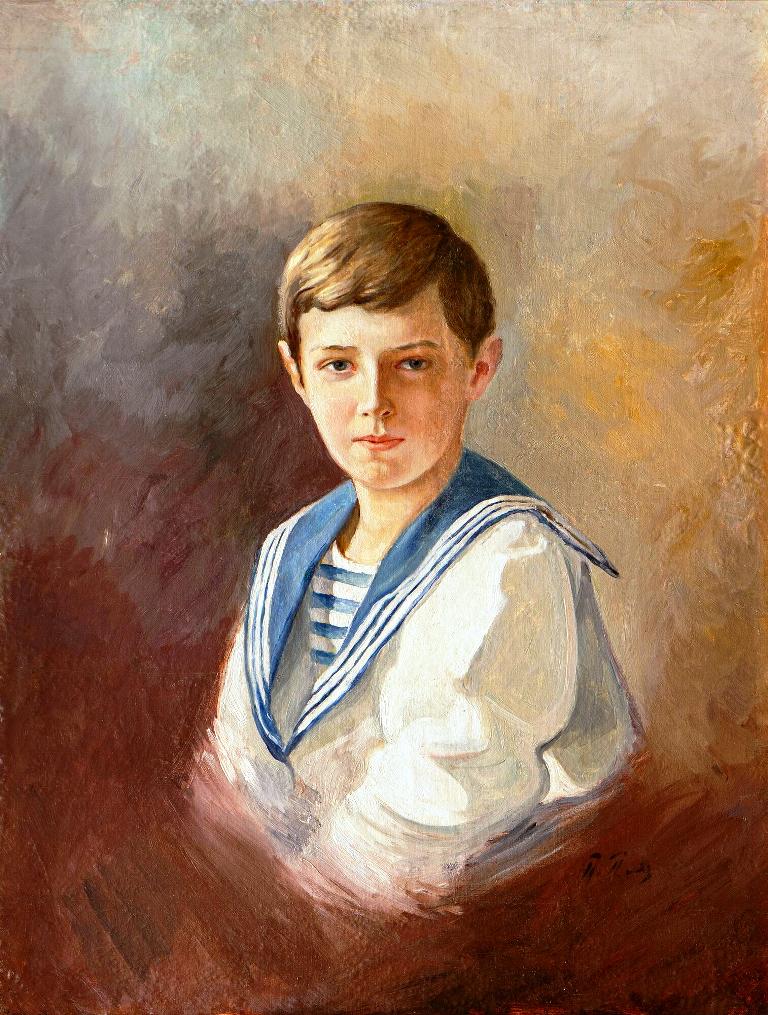
PHOTO: portrait of Tsesarevich Alexei Nikolaevich
Artist: Pyotr Petrovich Pershin (1877-1956)
From the Collection of the Tsarskoye Selo State Museum

Today – 18th October – marks the Name Day[1] of Tsesarevich Alexei Nikolaevich (1904-1918). The heir to the throne was born in the Lower Dacha at Peterhof on 12th August (O.S. 30th July) 1904. He was named in honour of St. Alexius of Moscow[2] (1296–1378).

On a historical note, the Name Day of the Tsesarevich was celebrated on this day at Livadia, Crimea, in 1909, 1911 and 1913 respectively.

In 1913, Nicholas II wrote in his diary: “In the morning, Alexei received gifts in our bedroom . . . At 11 o’clock, the Yalta garrison held a parade in front of the house. After the solemn event, the guests were invited for breakfast in the Main Dining Room, where about 160 people were present. In the evening, the Black Sea squadron held beautiful illuminations.”

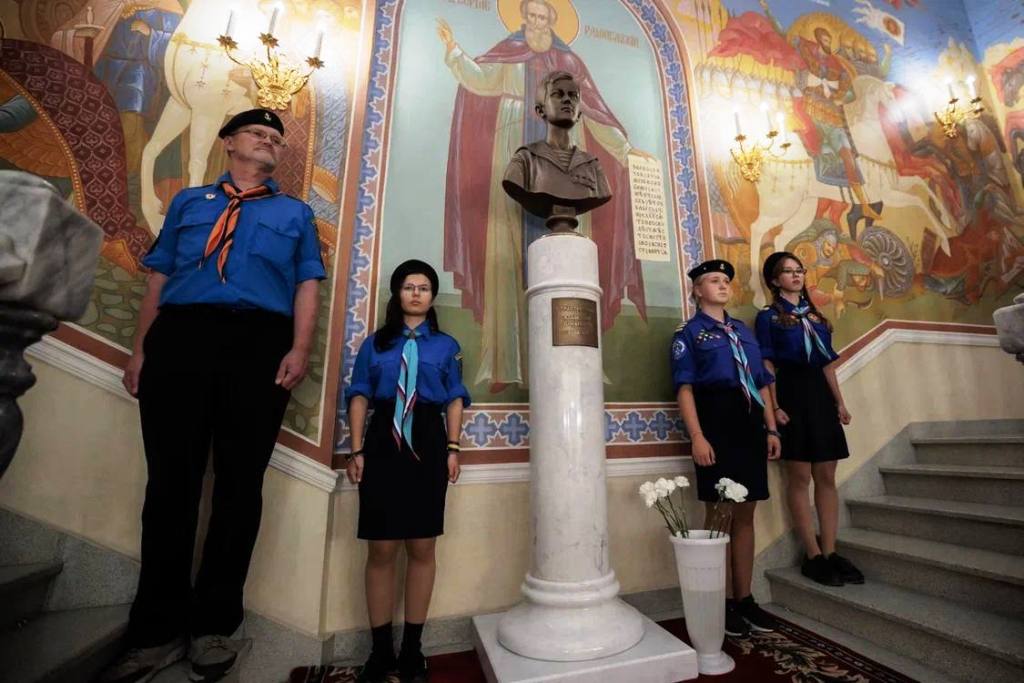
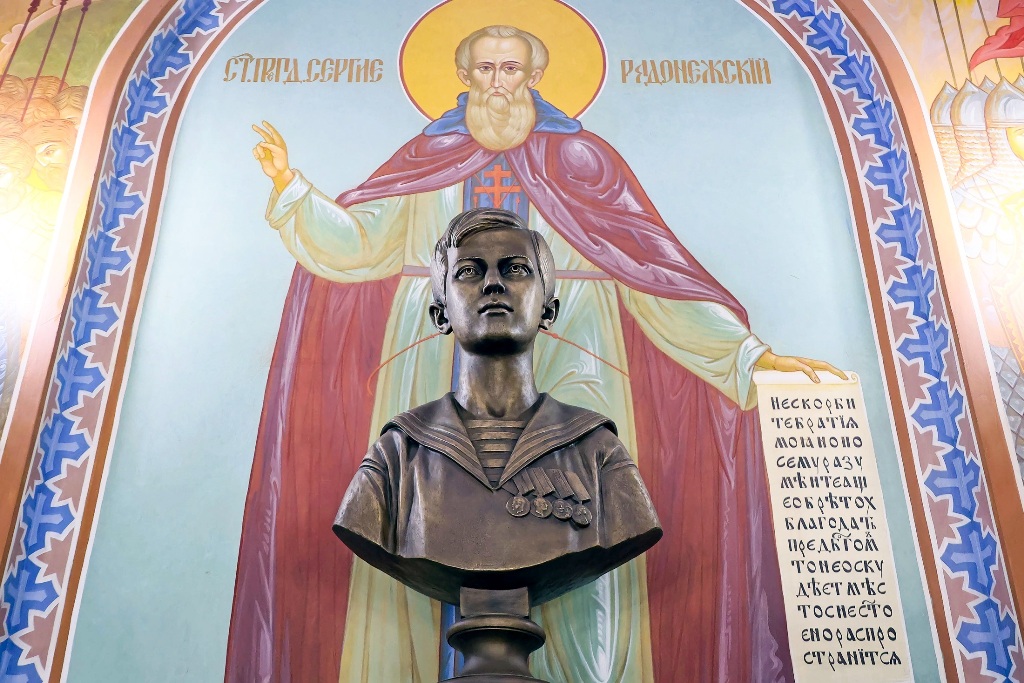
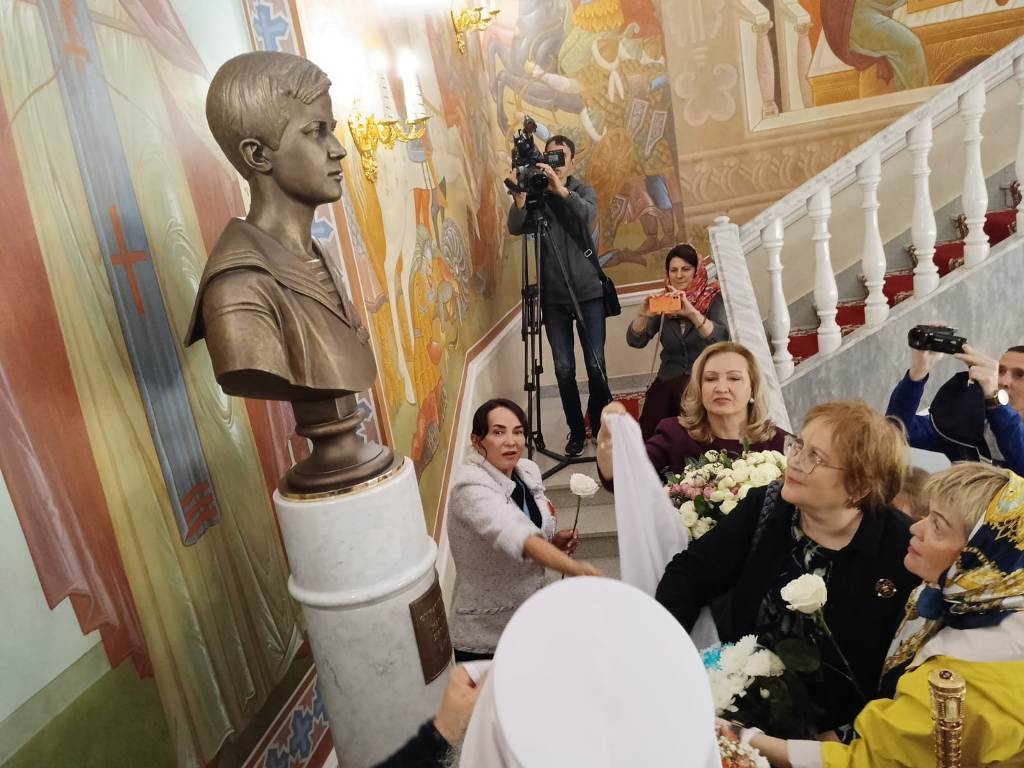
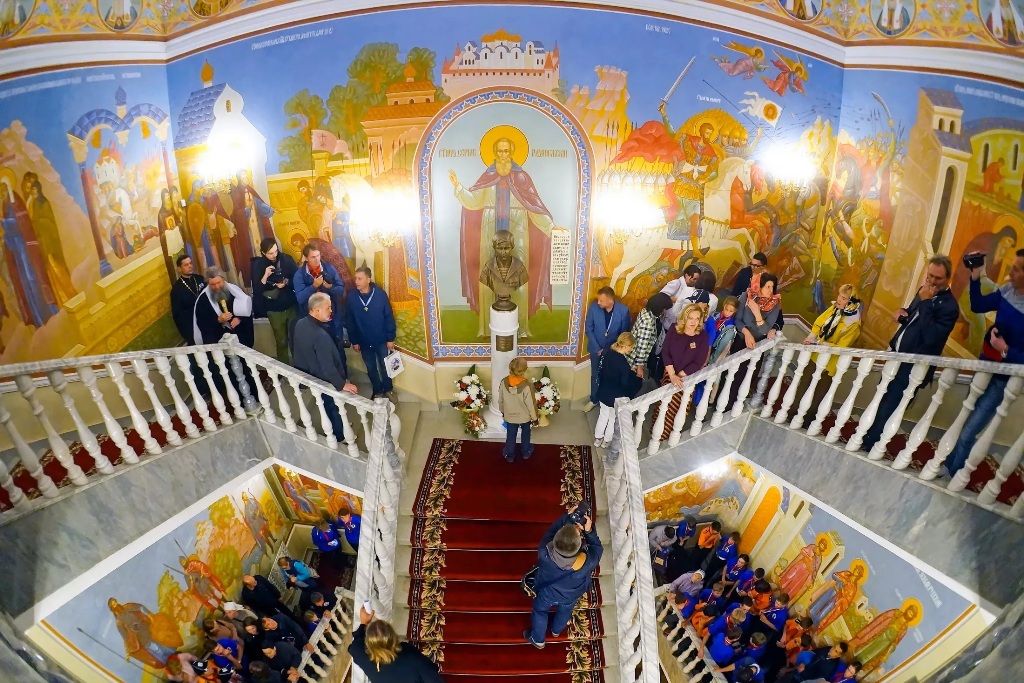
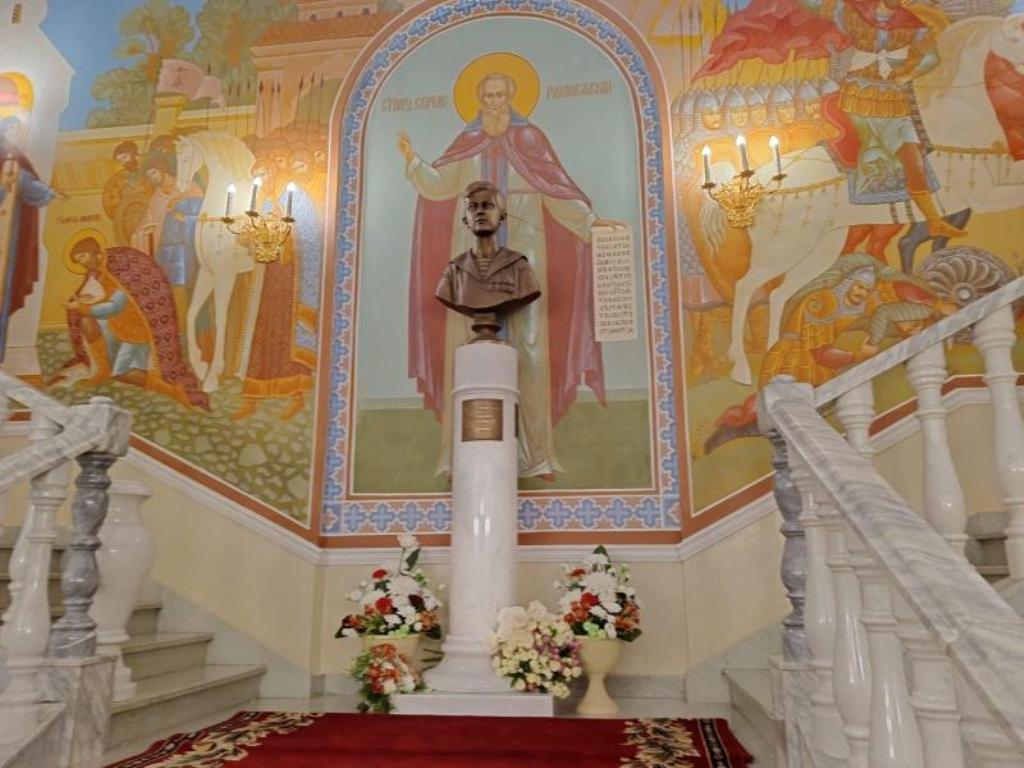
Divine services will be held in churches across Russia today, in honour of Tsesarevich Alexei Nikolaevich’s Name Day. White flowers were placed at the pedestal holding a bust of Tsesarevich Alexei Nikolaevich (above), which was installed and consecrated in the Tsarsky Center, located in the Patriarchal Compound, across from the Church on the Blood in Ekaterinburg, in July.

NOTES:

[1] Russians celebrate name days separately from birthdays. Celebrations range from the gifting of cards and flowers to full-blown celebrations similar to birthday parties. Such a celebration begins with attendance at the divine services marking that day (in the Russian tradition, the All-Night Vigil and Divine Liturgy), and usually with a festive party thereafter. The Russian Imperial family followed a tradition of giving name-day gifts.

Before the October Revolution of 1917, Russians regarded name days as important as, or more important than, the celebration of birthdays, based on the rationale that one’s baptism is the event by which people become “born anew” in Christ.

[2] It was Robert K. Massie (among others), who have led us to believe that the only son of Emperor Nicholas II and Empress Alexandra Feodorovna, was named after Tsar Alexei Mikhailovich (1629-1676) . . . this is incorrect. This is incorrect.

The long-awaited son and heir to the Russian throne was named Alexei, in honour of St. Alexius of Moscow.

Saint Alexius (1296–1378) was Metropolitan of Kiev and all Russia (from 1354). He was canonized by the Russian Orthodox Church in 1448 and is revered as one of the patron saints of Moscow.

© Paul Gilbert. 18 October 2023

Letters from Tsesarevich Alexei to his grandmother presented in Tula

PHOTOS © Телеканал «Первый Тульский»

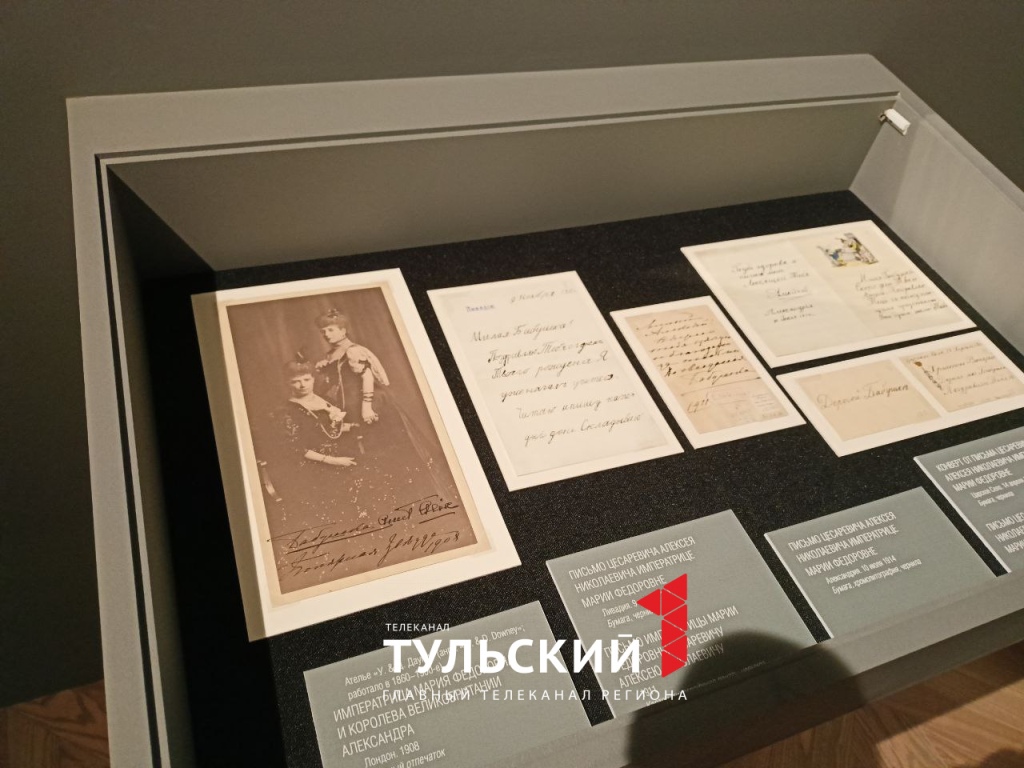
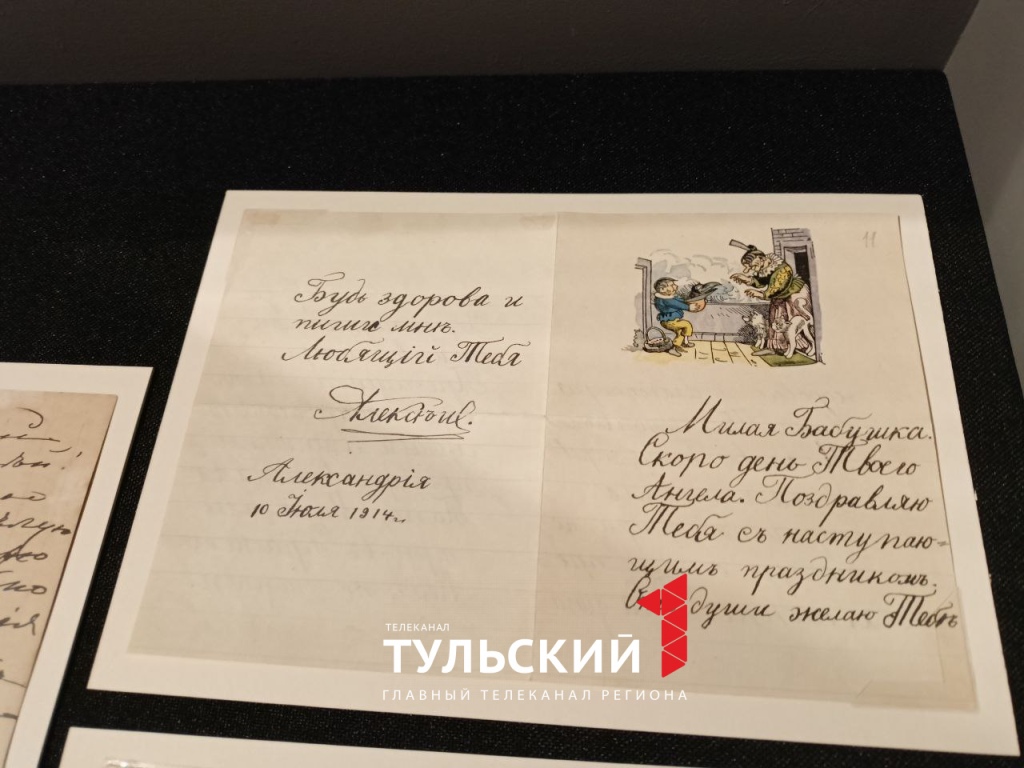
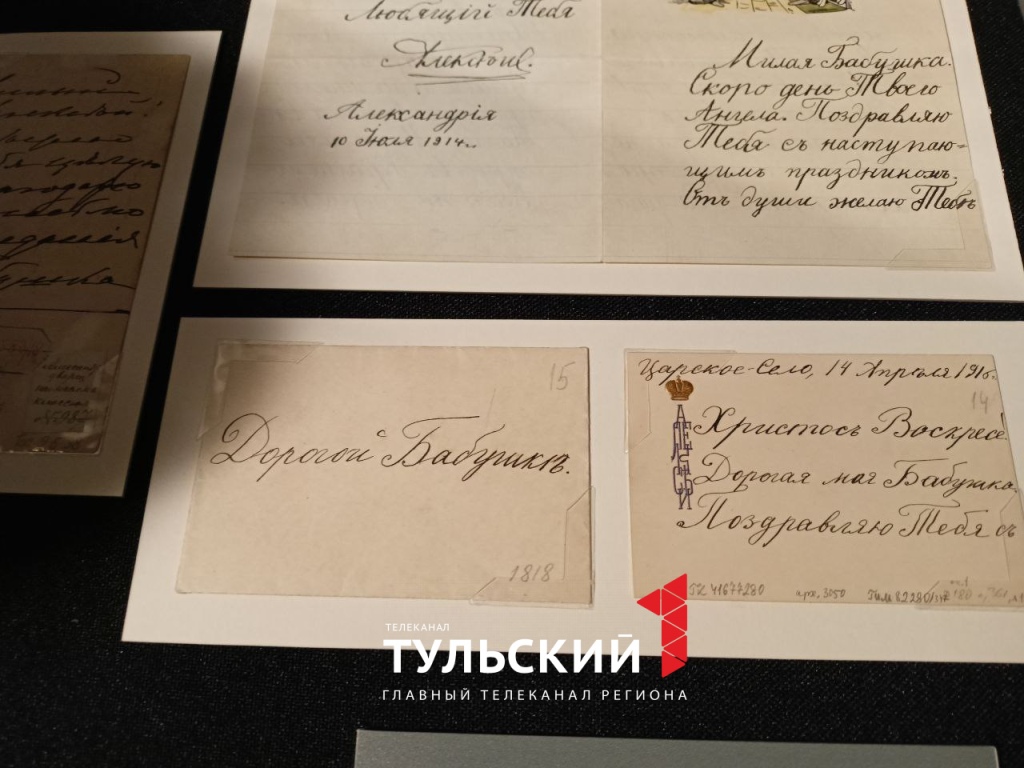
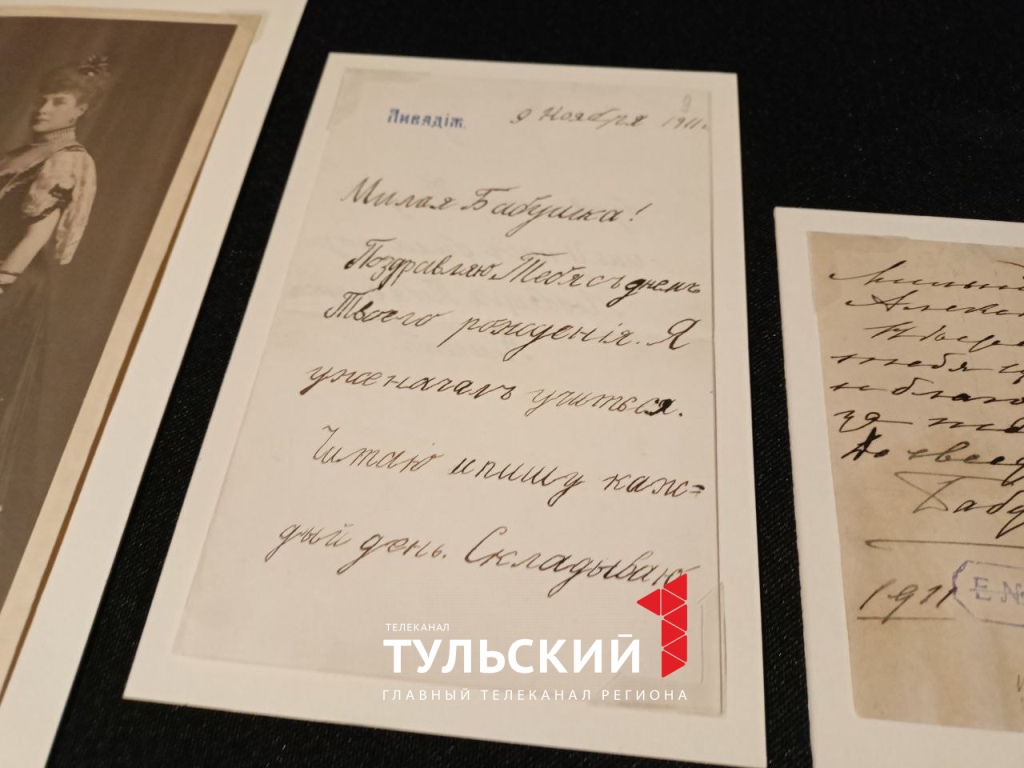
On 26th July 2023, three letters written by Tsesarevich Alexei Nikolaevich to his grandmother Dowager Empress Maria Feodorovna were presented at the Nicholas II. Family and Throne exhibition, which opened on 21st April 2023 at the Tula branch of the State Historical Museum. The letters will be on display until 15th August 2023.

Empress Maria Feodorovna, wife of Emperor Alexander III, mother of Emperor Nicholas II, had 15 grandchildren – many of whom grew up before her eyes. Many of her grandchildren’s letters to her have been preserved, including three letters dated 1911, 1914 and 1916 respectively from Tsesarevich Alexei Nikolaevich (1904-1918).

In these charming letters, the heir to the throne congratulates his grandmother on Easter and Birthday, while briefly updating her on his health and plans. Each letter is written a few weeks before the holiday. Dowager Empress Maria Feodorovna often visited her family in Denmark and her sister Queen Alexandra in England, so the letters often took weeks to reach her. Her grandson’s letters are quite short and affectingly signed “loving you Alexei”.

On 9th November 1911, 7-year-old Tsesarevich Alexei wrote to Maria Feodorovna from Livadia (above): “Dear Grandmother! I congratulate you on your birthday. I’ve already started learning. I read and write every day . . . “.

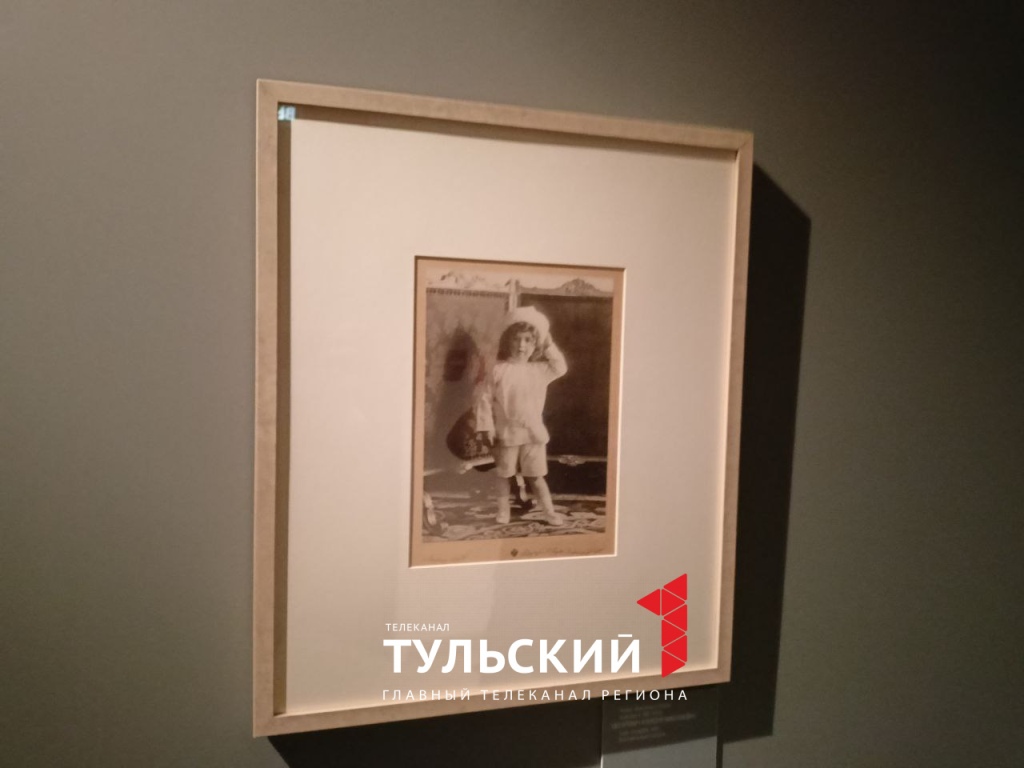
Also on display is a photograph of Alexei (above), taken in the Boassonnas and Eggler Studio in St. Petersburg in 1907, and a photograph of Empress Maria Feodorovna and her sister, Queen Alexandra of Great Britain, taken in 1908.

© Paul Gilbert. 29 July 2023

Bust of Tsesarevich Alexei installed in Ekaterinburg

On 15th July 2023 a bust of Tsesarevich Alexei Nikolaevich was installed and consecrated in the Tsarsky Center, located in the Patriarchal Compound, across from the Church on the Blood in Ekaterinburg.

The bust was installed on a pedestal at the top of the main staircase in the Patriarchal Compound. It is one of numerous events being held in the Ural city this week, marking the 105th anniversary of the death and martyrdom of the Imperial Family on 17th July.

The unveiling ceremony was attended by Metropolitan Evgeny of Yekaterinburg and Verkhoturye and Chairman of the Elisabeth-Sergius Educational Society Foundation (ESPO) Anna Vitalievna Gromova.

For many years, this spot was occupied by a bust of Emperor Nicholas II, which has now been moved to the the Museum of the Holy Royal Family, located on the second floor of the Patriarchal Compound.

© Paul Gilbert. 15 July 2023

Photo album belonging to Tsesarevich Alexei Nikolaevich returned to Alexander Palace

Photo © Tsarskoye Selo State Museum

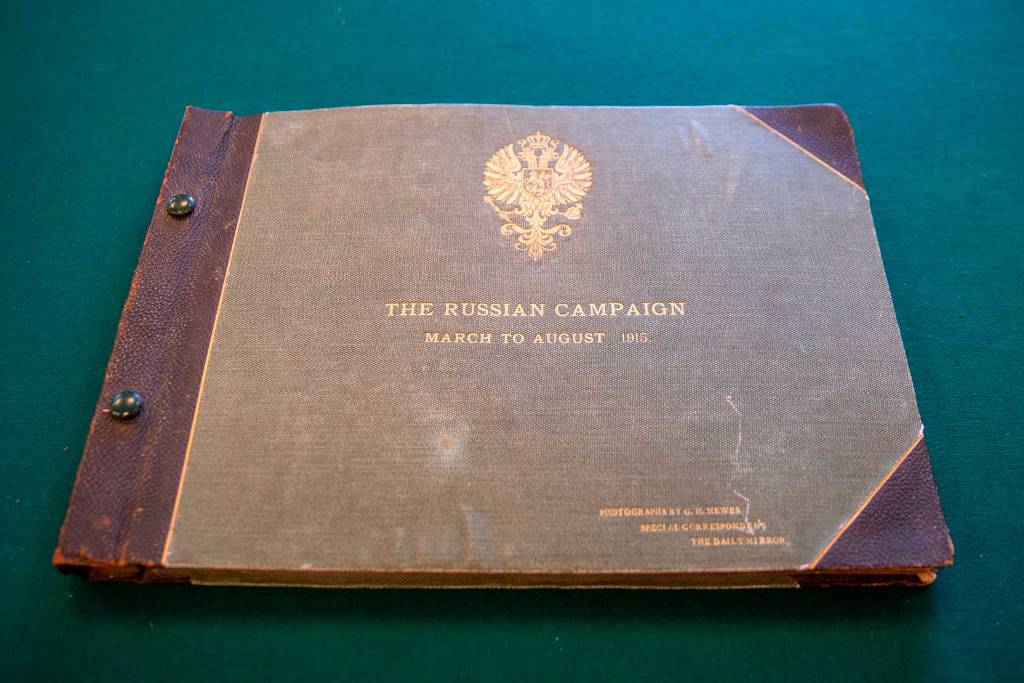
A rare photo album “The Russian Campaign. March to August 1915”, which belonged to Tsesarevich Alexei Nikolaevich and was kept in the Alexander Palace, has been returned to the Tsarskoye Selo State Museum.

The album was one of several rarities purchased at foreign auctions and donated to the museum by the philanthropist and long-term friend of the museum, Mikhail Karisalov. The other items include two paintings by Karl Friedrich Schultz, and a plate from the famous Raphael service, manufactured in 1903 at the Imperial Porcelain Factory. The paintings and plate were originally from the Catherine Palace.

In total, the museum’s collection now includes 226 items donated by Mikhail Karisalov or acquired with his financial support. It is thanks to the kindness and generosity of this man, that the museum has been able to recoup many of its treasures which were lost or stolen during the Nazi occupation of Pushkin [Tsarskoye Selo] in 1941-44. 

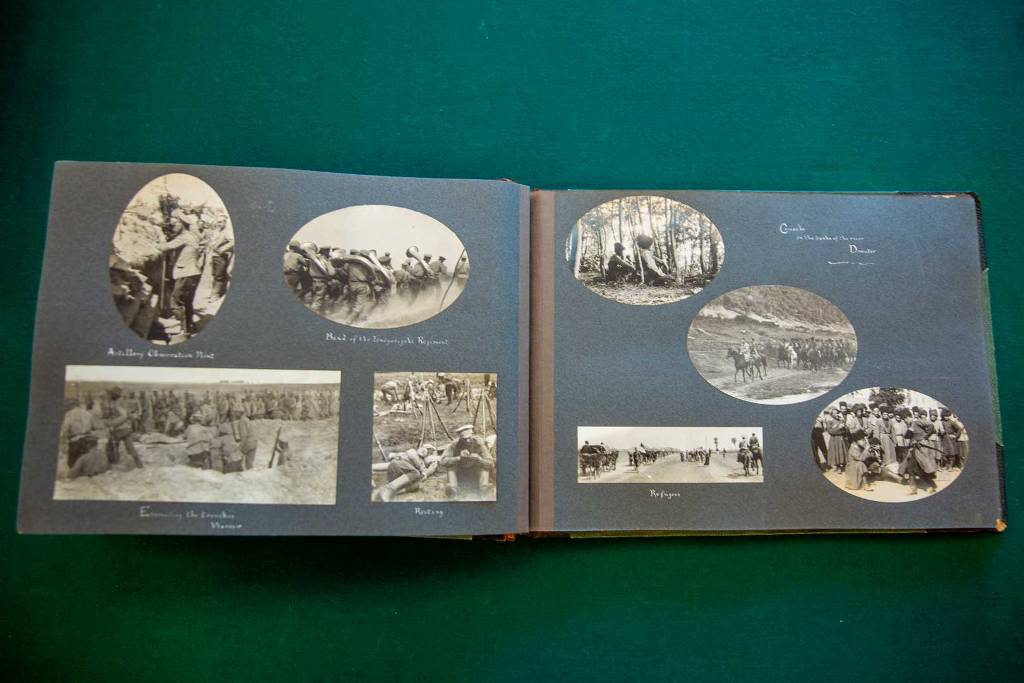
The photo album “The Russian Campaign. March to August 1915” consists of 168 photographs taken during the Russian campaign of the First World War – from March to August 1915. The photographs were taken by British photographer George H. Mewes, who was appointed official photographer to the Russian Imperial Army. Hewes took photographs for a number of prominent British newspapers and magazines, including The Daily Mirror, The Times History of the War, Field Notes from the Russian Front and The Russian Campaign.

Similar albums about the military campaigns of the Russian Imperial Army during the First World War were presented as gifts to Tsesarevich Alexei Nikolaevich, the son and heir of Emperor Nicholas II. Museum researchers believe that the albums were kept in the Tsesarevich’s Classroom, which was located on the second floor of the Eastern Wing of the Alexander Palace. “We can only assume that “The Russian Campaign. March to August 1915″ album, among many other items, was seized from the Alexander Palace during the 1930s or 1940s,” says Victoria Plaude, curator of the museum’s photograph fund.

On the flyleaf of the album is a museum label. The inscription in ink reads: “Alexander./palace/floor. nasl-ka/class/No. 683”. This clearly indicates that the photo album was in the Alexander Palace in Alexei’s Classroom. The label found on the album is identical to those on other items from the Alexander Palace, and now in the Collection of the Tsarskoye Selo State Museum.

Photo © Tsarskoye Selo State Museum

The photo album was made in London by Jonson & Sons. Photos of different sizes are pasted on sheets of gray cardboard. On the top cover of the album is an embossed gold inscription: “Photographs by G. H. Mewes, special correspondent of the Daily Mirror”.

The pictures are accompanied by captions in English. On the flyleaf of the album there is an inscription: “It has been the aim of the correspondent to illustrate for the British public the heroic part performed by their Russian Allies in the Great War”.

The photographs are only a small selection of about two thousand photographs taken by Mewes for the Russian Imperial Army, which were reproduced in illustrated magazines around the world.

British photographer George Mewes and American journalist Stanley Washburn were on the Russian front in 1914-1915. In addition to periodicals, these photographs were later featured in Washburn’s book “The Russian Campaign. April to August, 1915”.

© Paul Gilbert. 13 July 2023

Faithful to the End: Klimenty Nagorny and Ivan Sednev 

170a

Klimenty Grigorievich Nagorny (left). and Ivan Dmitriyevich Sednev (right)

On this day – 28th June 1918 – two faithful servants to Emperor Nicholas II and his family – Klimenty Grigorievich Nagorny and Ivan Dmitriyevich Sednev – were murdered by the Bolsheviks in Ekaterinburg. 

Klimenty Nagorny and Ivan Sednev selflessly served the Tsar’s children. Nagorny in particular, lay the great responsibility of protecting the Tsesarevich, even the slightest injury could put the heir to the Russian throne in danger, due to his hemophilia. Alexei was very fond of Nagorny, who in turn showed complete devotion to the Tsesarevich, faithfully sharing with him all the joys and sorrows.

170b

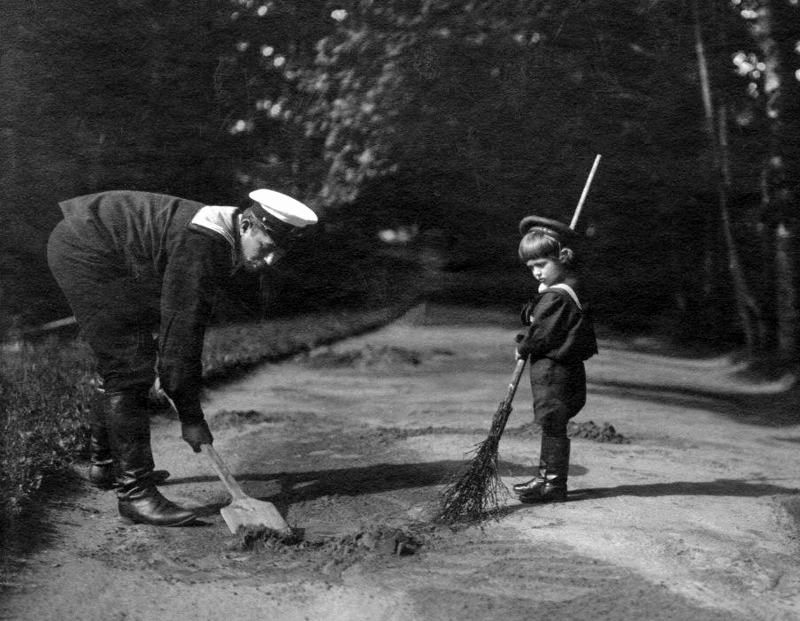
Nagorny and Tsesarevich Alexei in Tsarskoe Selo, 1907

Klimenty Nagorny and Ivan Sednev voluntarily stayed with the Tsar’s family during their house arrest in Tsarskoe Selo, and then followed them to Tobolsk, where Nagorny shared a room with the Tsesarevich, serving him day and night. Together with the Imperial family, Nagorny also attended all the divine services, and the only member of the family’s retinue who was a member of the choir organized by the Empress: he sang and read for the Imperial family during services held in the house church.

In the spring of 1918 Nagorny and Sednev once again, voluntarily followed the Imperial family to Ekaterinburg. They spent only a few days in the Ipatiev House, and then were separated from the Imperial prisoners. They were arrested and imprisoned, their sole crime had been their inability to hide their indignation on seeing the Bolshevik commissaries seize the little gold chain from which the holy images hung over the sick bed of the Tsesarevich.

On 28th June 1918, they were shot in the back by the Bolsheviks, in a small wooded area behind the Yekaterinburg-2 railway station (modern name – Shartash). Nagorny and Sednev were “killed for betraying the cause of the revolution” – as indicated in the resolution on their execution. The murderers left their bodies unburied.

When Ekaterinburg was occupied by the Whites, the the half-decayed bodies of Nagorny and Sednev, were found and solemnly buried near the Church of All the Afflicted (demolished). Witnesses at the funeral recall that the graves of the former sailors of the Imperial Yacht Standart were strewn with white flowers. Their graves were not preserved – they were destroyed when the Soviet authorities built a city park on the site of the cemetery.

Both Nagorny and Sednev were canonized by the Russian Orthodox Church Outside Russia (ROCOR) on 14 November 1981, and both rehabilitated by the Prosecutor General’s Office of the Russian Federation on 16 October 2009. They have yet to be canonized by the Moscow Patriarchate. 

Memory Eternal! Вечная Память!

170c

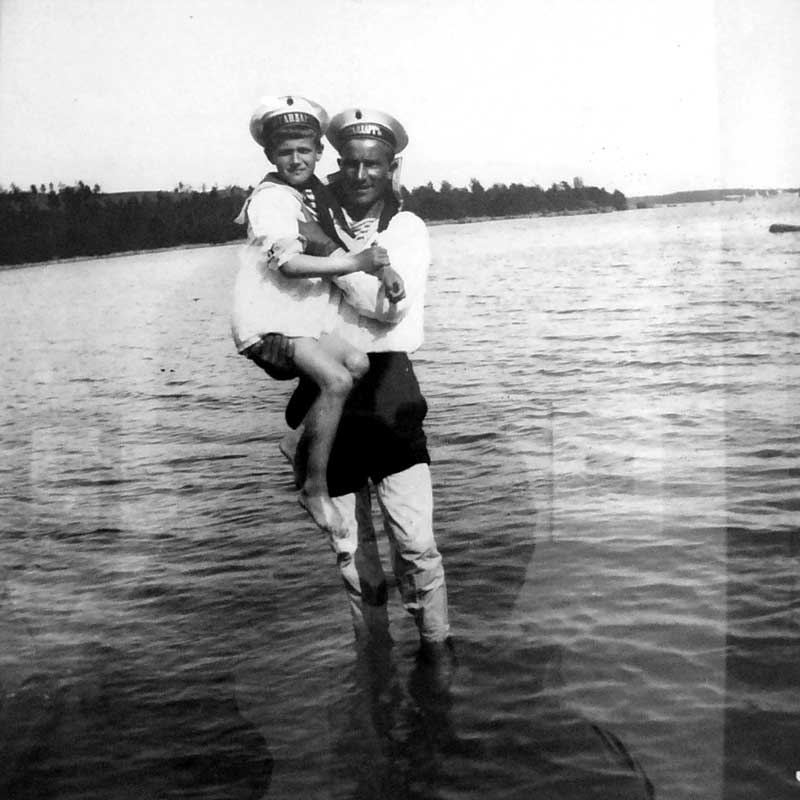
Sednev and Alexei Nikolaevich, in the Finnish skerries, 1914 

Nagorny, Klementy Grigorovich (1887—1918) – from 1909, he served on the Imperial yacht Standart and appointed as a footman to the imperial children. He received the Court title Garderobshik (wardrobe keeper) in 1909 and accompanied the Imperial family on every tour. In November 1913, he was appointed assistant dyadka to guard the Imperial children. He travelled with the Tsesarevich Alexei to Mogilev during 1914-16. After the Tsar’s abdication, he lived under detention with the Imperial family in Tsarskoe Selo, Tobolsk and Ekaterinburg.

Sednev, Ivan Dmitrievich (1881—1918) – was recruited into the Russian Imperial Navy in 1911, where he began as a machinist on the Imperial Yacht Polyarnaya Zvezda (Polar Star) then transferred onto the Imperial yacht Standart. By invitation he became a Lakei (liveried footman) to the Grand Duchesses, and subsequently to the Tsesarevich. Ivan lived under detention with the Imperial family in Tsarskoe Selo, Tobolsk and Ekaterinburg.

579-4

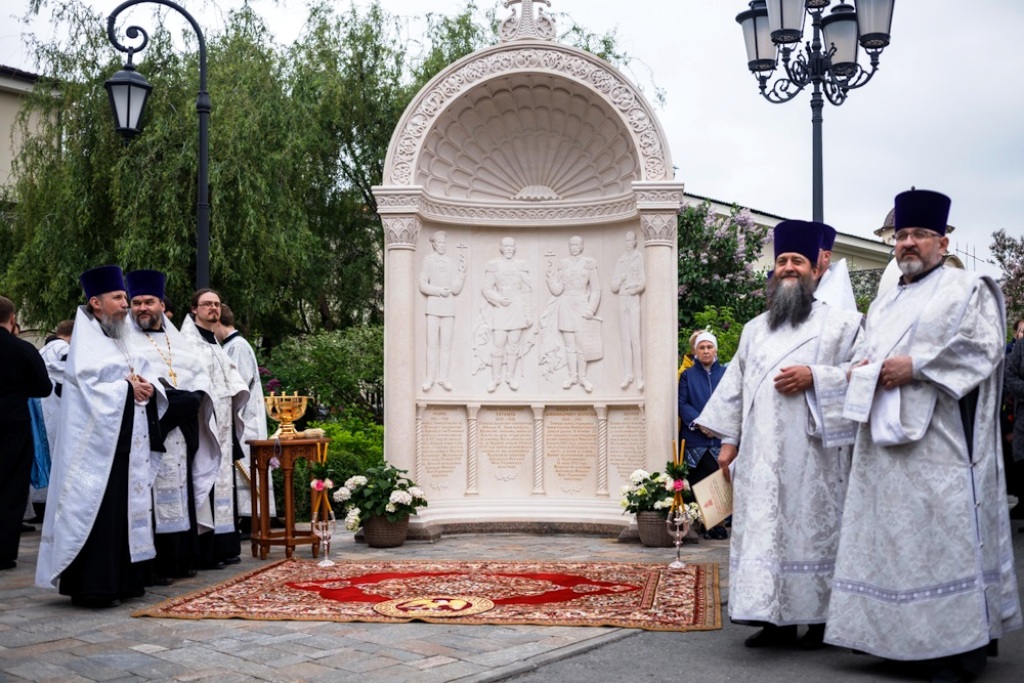
On 13th June 2022, a new monument (seen in above photo) to four faithful servants – including Nagorny and Sednev – of Emperor Nicholas II, was installed and consecrated on the grounds of Novo-Tikhvin Convent in Ekaterinburg.

© Paul Gilbert. 28 June 2023

Haemophilia gene confirms authenticity of Tsesarevich Alexei’s remains

PHOTO: Empress Alexandra Feodorovna, at the bedside of her son Alexei in 1912

In a new documentary aired on Russian television in January 2022, a member of the Russian Academy of Sciences, stated that the haemophilia gene was found in the remains of Emperor Nicholas II’s only son, discovered at Porosenkov Log in 2007.

“The haemophilia gene made it possible to confirm the authenticity of the remains of the son of Nicholas II, Tsesarevich Alexei Nikolaevich,” said the director of the Scientific Center for Genetics and Life Sciences of Sirius University, and Member of the Russian Academy of Sciences, Doctor of Biological Sciences Evgeny Rogaev in the documentary The Romanov Case. The Investigation Established.

DNA examinations were carried out along three lines – female, male and asexual. “We have now determined who was the carrier of the mutation, and who was not. The tests showed that Alexandra Feodorovna carried both a healthy variant and the diseased variant, as expected, because she has two X chromosomes. Sadly, Alexei carried the diseased variant of the X-chromosome.

Tests were also concluded the status of the Empress’s four daughters. “The older sisters Olga and Tatiana were not carriers of haemophilia, however, in one of the younger sisters we found that she was a carrier of the diseased variant. Based on anthropological studies, we have concluded that it was Anastasia who also carried the diseased variant”, said the expert.

In the burial site, in addition to bone fragments, a piece of burnt striped fabric was discovered, which we believe belonged to Tsesarevich Alexei, who was wearing a vest on the day of the murders in the Ipatiev House.

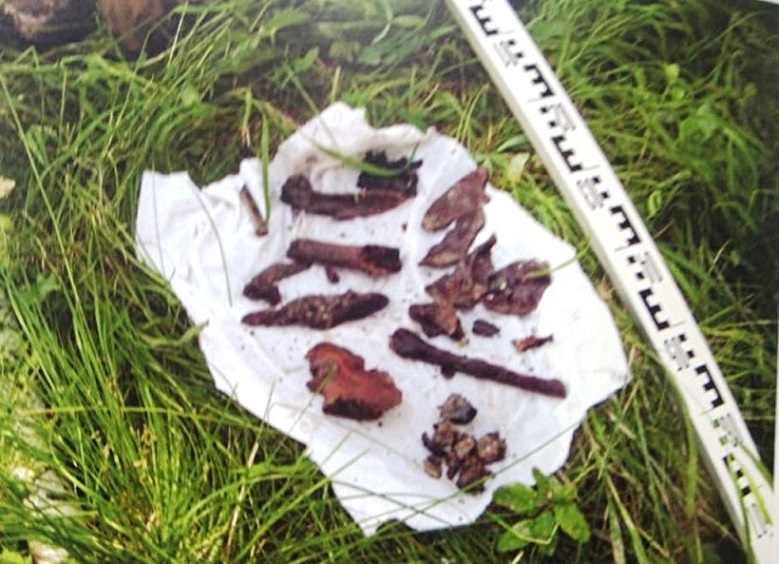
PHOTO: Only 44 pieces of Alexei and Maria’s bones [1] have been found at Porosenkov Log, near Ekaterinburg

On 30 April 2008, Russian forensic scientists announced that DNA testing had proven that the remains belong to the Tsesarevich Alexei and his sister Grand Duchess Maria. DNA information, made public in July 2008, that was obtained from the Ekaterinburg site and repeated independent testing by laboratories such as the University of Massachusetts Medical School revealed that the final two missing Romanov remains were indeed authentic. In March 2009, results of the DNA testing were published, confirming that the two bodies discovered in 2007 were those of Alexei and Maria.

For many years, it has generally been accepted that Alexei began bleeding from his navel at the age of six weeks . . . this has since been proven incorrect. This was based on an entry in Nicholas II’s diary, six weeks after the birth of Alexis . . . Alix and I were very concerned about the bleeding of little Alexei from his umbilical cord . . .”.

Two noted Romanov historians Margarita Nelipa and Helen Rappaport both tell us otherwise, that Alexei’s bleeding was noted the day following his birth. Their claim is based on two separate, yet reliable sources:

[1] “One day after Alexei’s birth, Grand Duke Peter Nikolaevich (1854-1931) came to congratulate the sovereign and stayed for lunch. Upon his departure, the sovereign mentioned the presence of “blood on the diapers”. Returning to his Znamenka estate (in Alexandria), he repeated this detail to his wife who telephoned Nikolai II (before visiting Alix later that evening). During their conversation, he said that the doctors had confirmed that the atypical bleeding was indeed due to haemophilia.”

Source: ‘Alexei. Russia’s Last Imperial Heir: A Chronicle of Tragedy’ by Margarita Nelipa. Published by Gilbert’s Books in 2015

[2] Grand Duke Peter Nikolaevich and his wife Grand Duchess Militza Nikolaevna (1866-1951) had driven over to the Lower Dacha the day Alexei was born . . . as their son Prince Roman Petrovich (1896-1978) later recalled in his memoirs [published in Danish].

‘When they returned in the evening to Znamenka, my father remembered that . . . the Tsar had told him . . . That the doctors were concerned about the frequent splatters of blood in his swaddling clothes. . . .”

Grand Duke Peter telephoned the palace, “When the Tsar answered that they had hoped that the bleeding would soon stop, my mother took the receiver and asked if the doctors could explain the cause of the bleeding. When the Tsar could not give her a clear answer, she asked him with the calmest of voices she could manage: ‘I beg you, ask them if there is any sign of haemophilia’ . . . The Tsar fell silent on the phone for a long time and then started to question my mother and ended by quietly repeating the word that had staggered him: haemophilia.”

Source: ‘Four Sisters. The Lost Lives of the Romanov Grand Duchesses’ by Helen Rappaport. Published in 2014

In addition, is a letter dated 1st August 1904 – 2 days after Alexei’s birth, in which the Emperor mentions the “unusual bleeding” to Grand Duchess Militza Nikolaevna:

Dear Militza,

I am writing Alix’s words to you: Thank God, the day passed calmly. After having a dressing at 12 o’clock and up to 9:30 in the evening, there was not a drop of blood. The doctors hope this will continue. Korovin stays overnight. Fedorov leaves for the city and will return tomorrow. We both like him immensely! The little “treasure” is surprisingly calm when a bandage is applied, or he sleeps or lies and laughs. The parents now have a little relief in their hearts. Fedorov says that the loss of blood over two days is roughly ⅛ – 1/9 of the total amount of blood.

Nicholas

Source: Alexei: Russia’s Last TsesarevichLetters, diaries and writings by George Hawkins. Independently published in 2022

NOTES:

[1] For years, the boxes containing 44 bone fragments remained on dusty shelves in the Russian State Archives. In December 2015, their remains were transferred to the Novospassky Monastery in Moscow, where they remain to this day.

© Paul Gilbert. 25 February 2022
Monument to Rasputin proposed for St. Petersburg

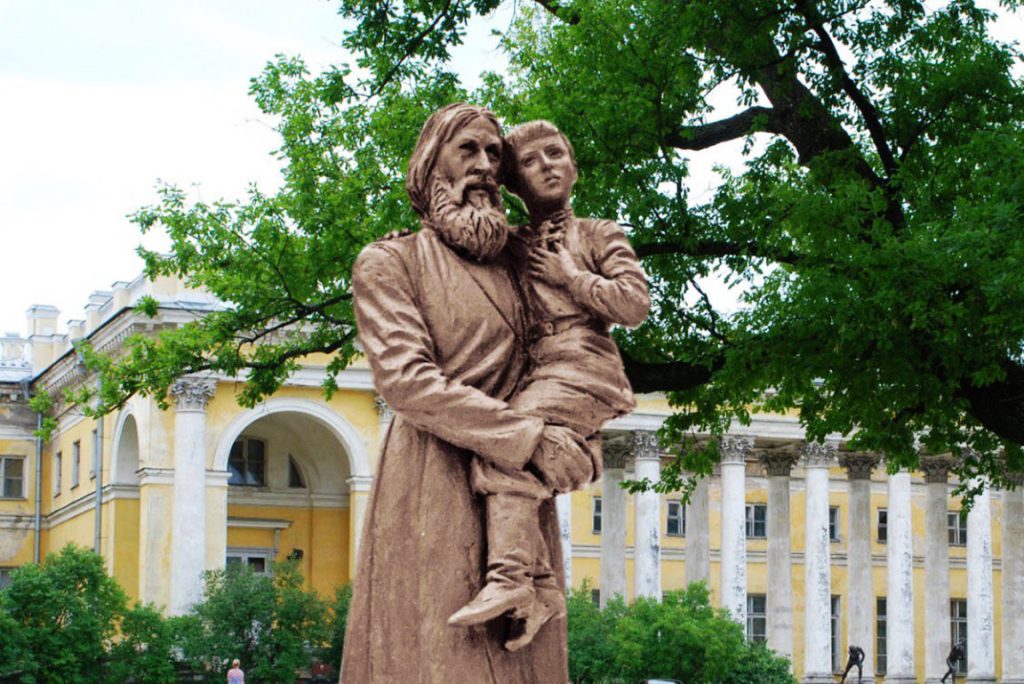
PHOTO: artist concept of the monument to Rasputin near the Alexander Palace

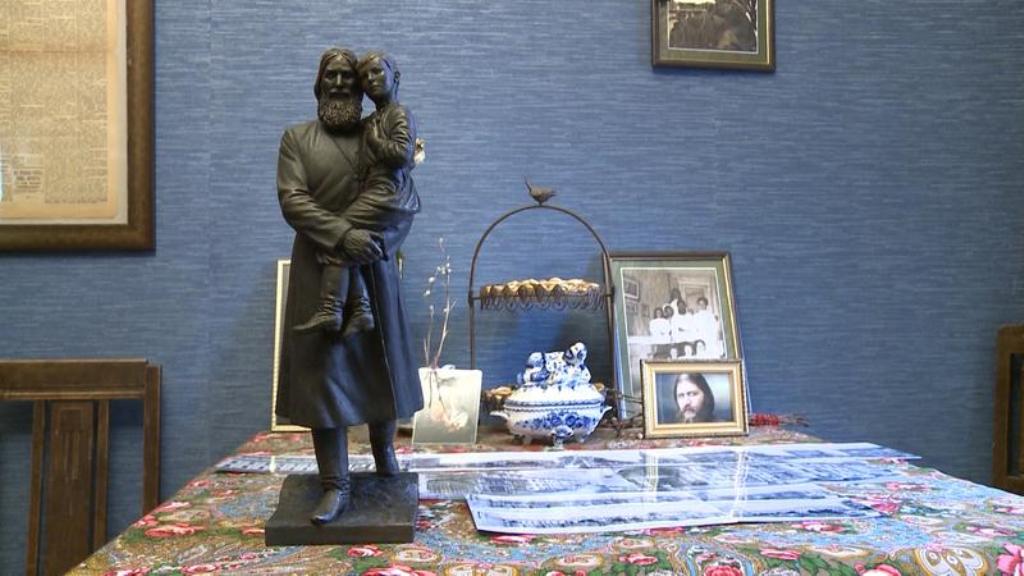
Earlier this week, a model of a proposed monument to Grigori Rasputin was shown to journalists, during a press conference held in St. Petersburg. The model – the fruit of five years of creative work by the artist – was displayed in Rasputin’s apartment on Gorokhovaya Street.

The monument is a project by the Artproekt sculptural workshop in Moscow, famous for its Orthodox patriotic sculptures. The studio’s most notable works include, Dmitry Donskoy, Alexander Nevsky, John of Kronstadt, Sergius of Radonezh, and Nicholas the Wonderworker.

Grigori Yefimovich Rasputin (1869-1916) remains one of the most controversial figures during the reign of Emperor Nicholas II. The head of the Artproekt workshop, Yevgeny Korolev, believes it is important to rethink the image of Rasputin: “All the claims against Rasputin are not confirmed by real documents, so what are the accusations against this man based on? One of the historians I spoke with wrote eight volumes in which he debunks these myths.”

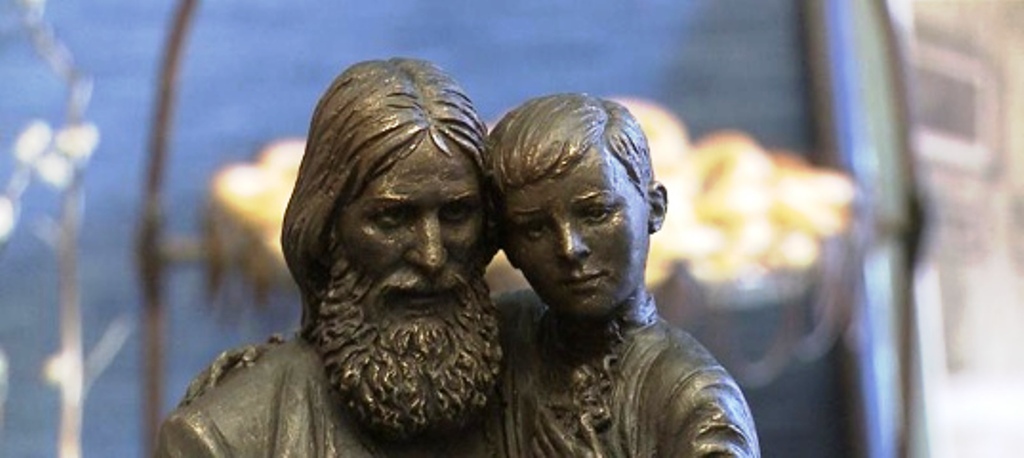
The project is surrounded by a veil of secrecy, even the sculptor remains unknown at this time. The 2.5 m [8.2 ft.] monument depicts Rasputin [who stood 1.93 m / 6.3 ft.] carrying the Tsesarevich Alexei Nikolaevich (1904-1918) in his arms.

PHOTO: model of the proposed monument on display in Rasputin’s apartment

The monument is almost ready – it only has to be cast in bronze, and the place for it’s installation has yet to be determined. The sculptor and his supporters believe that it should be installed in one of three places in or near St. Petersburg. For example, at Tsarskoye Selo, where Rasputin was originally buried in the Alexander Park; or next to the Petrovsky bridge, where his body was discovered in the Malaya Nevka; or in the garden of the Yusupov Palace, where he was murdered.

According to the the head of the restoration department Viktor Voronin, “It will be next to impossible to erect a monument in the garden of the palace. The Yusupov Palace is a cultural heritage site, where the installation, in principle, of new sculptural objects is prohibited by law.”

In late 1906, Rasputin began acting as a healer for Nicholas II’s only son and heir, Alexei, who suffered from haemophilia. He was a divisive figure at court, seen by some Russians as a mystic, visionary, and prophet, and by others as a religious charlatan. In the early morning of 30th December [O.S. 17th December] 1916, Rasputin was murdered by a group of conservative noblemen who opposed his alleged influence over Empress Alexandra Feodorovna and Emperor Nicholas II.

PHOTO: detail of the proposed monument depicting Rasputin carrying Alexei

Historians often suggest that Rasputin’s scandalous and sinister reputation helped discredit the tsarist government and thus helped precipitate the overthrow of the Romanov dynasty a few weeks after he was murdered. Accounts of his life and influence were often based on hearsay and rumour.

In recent years, the Russian Orthodox Church has expressed some concern over the growing movement by some Orthodox Christians, who are calling for the canonization of the controversial and enigmatic figure of Grigori Efimovich Rasputin. Meanwhile, many other Orthodox Christians consider such a move as blasphemy.

This will be the second monument to Rasputin installed in Russia, the first was installed in Tyumen in 2014.

© Paul Gilbert. 8 March 2021

VIDEO: ‘The Lost Life of Alexei Romanov’ with Jonathan Jackson

The Lost Life of Alexei Romanov’ is the latest in a series of videos produced by the Mesa Potamos Publications, publishers of ‘The Romanov Royal Martyrs: What Silence Could Not Conceal’ – my personal choice for Romanov Book of the Year in 2019.

Of particular note in this 38 minute English language video are the following images and newsreels:

Compare the image of Alexandra holding her newborn son at 1:39 with that of the haunting image at 4:46—what a shocking difference. Poor Alexandra looks tired, worn out both physically and emotionally from watching over and caring for her sick son. Click HERE to read my article “Judge Not Lest Ye Be Judged” – In Defence of Empress Alexandra Feodorovna, published on 20th July 2020.

The newsreel footage of the 5 children laughing and playing on the deck of the Imperial Yacht ‘Standart’ from 5:37 to 6:43 made me laugh and smile. Both, however, faded into sadness, knowing the horrific fate which awaits them.

At 11:00 we see the children marching around the well, situated in the Italian Courtyard at Livadia Palace in Crimea, carrying their flowered banners for the White Flower Day festivities, and each wearing a Kodak camera around their necks.

At 20:21 we see a mischievous Alexei throwing a snowball at his tutor Pierre Gilliard, only to turn around and realize that his prank has been caught on camera, forcing him to laugh and run off.

At 23:16 Jonathan Jackson reads a letter written by Alexei to his friend Nikolai Vladimirovich Derevenko nicknamed “Kolya” (1906-2003), which was discovered after the murders in the Ipatiev House. Alexei concludes the letter with the prophetic words “The END”. This is followed by a very moving interview many years later with Kolya.

The most poignant moment in the video, however, has to be at 25:58. We see Alexei seated in a motorcar with Minister of the Imperial Court Count Vladimir Frederiks (1838-1927). At 26:11, Alexei turns around smiles and nods at the camera. It is a most fitting ending.

Narrator Jonathan Jackson offers a heartfelt chat at the end. A devout Orthodox Christian, Jackson shares with viewers his love for the Holy Royal Martyrs. His words will reflect those of many viewers, regardless of their respective faith or beliefs.

Personally, I was profoundly moved by this video about Tsesarevich Alexei. The exceptional newsreel footage brings the heir to the throne to life. This combined with the black and white archival photographs, the astounding colourizations by Olga Shirnina, and narration by Jonathan Jackson make this one of the finest videos produced by the Mesa Potamos Publications to date.

Holy Royal Martyrs, pray to God for us!

This video is produced as part of the project for the book The Romanov Royal Martyrs, which is an impressive 512-page book, featuring nearly 200 black & white photographs, and a 56-page photo insert of more than 80 high-quality images, colorized by the acclaimed Russian artist Olga Shirnina (Klimbim) and appearing here in print for the first time. EXPLORE the book / ORDER the book.

© Paul Gilbert. 16 December 2020