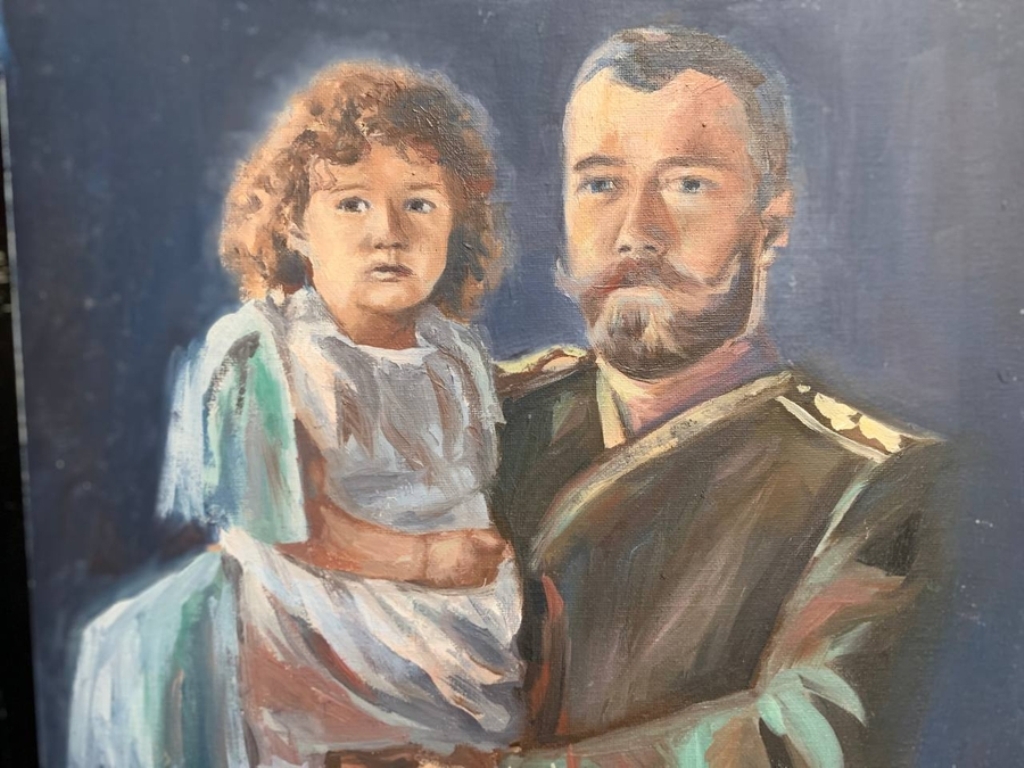
Recommended reading: books on the life and reign of Nicholas II

One of the questions I am asked most is “can you recommend a good book on Nicholas II?”

Putting aside the numerous beautiful pictorials which have been published over the years, I have compiled the following *list of 6 books, which for the most part, present an honest assessment on the life and reign of Russia’s last Emperor and Tsar.

In addition, are the following honourable mentions: Nicholas and Alexandra by Robert K. Massie (1967); Last Years of the Court at Tsarskoe Selo Volume I (2010) and Volume II (2017) by General Alexandre Spiridovitch; Thirteen Years at the Russian Court (1921) by Pierre Gilliard; At the Court of the Last Tsar (1935) by A.A. Mossolov; and The Coronation of Tsar Nicholas II (2012)

*NOTE: all of the books listed here are in English and listed in order of the year they were published. With the exception of Oldenburg’s 4-volume study, all the remaining titles are available from your favourite bookseller. Second hand copies can also be found on eBay, aLibris, Biblio, etc.

The True Story of the Romanov Family
Published in 2024 by the Diaconești Monastery (Moldavia)
68 pages, richly illustrated

A new graphic novel, featuring exceptional illustrations and content that evoke the true story of the last Russian Imperial Family. This books is a labour of love by the nuns of the Diaconești Monastery in Moldavia, motivated by their deep reverence for the Holy Tsar Nicholas II and his family.

Drawing from numerous historical sources—studies, memoirs, and diaries—the nuns have meticulously reconstructed key moments in the life of the Imperial Family and presented them in a visually captivating format suitable for readers of all ages.

From the love story between Nicholas and Alix to the children’s education in the Alexander Palace at Tsarskoye Selo, from the tragedy of the Otsu Incident to the prophetic meeting with the Blessed Pasha Ivanovna of Diveevo, all are captured in exceptional illustrations, crowned with artistic refinement by the eleven Fabergé Imperial Easter Eggs—famous jewels from the Romanov collection—depicted on the book’s title page.

This graphic novel aims not only to captivate Romanov history enthusiasts but also to offer a model of family, faith, and dignity in a world where these values are increasingly under threat. This book is a must read for all dedicated ‘Romanovphiles’.

***

The Last of the Tsars: Nicholas II and the Russian Revolution
Author: Robert Service
Published in 2017 by Pan Macmillan (UK)
382 pages, illustrated

The Last of the Tsars was published just before the 150th anniversary of the birth of Emperor Nicholas II in 1868, and the 100th anniversary of his murder in 1918. I have to say that I was reluctant at first to read this book, however, once I got into it, I couldn’t put it down!

This book was researched and written by the well known British historian and Sovietologist Robert Service. Wile the author is clearly not one of Nicholas II’s adherents – he rehashes the negative Bolshevik assessment of the Tsar – this book is still worth a read.

Service’s meticulous research offers some very interesting new details about the last eighteen months of Nicholas II’s life. What sets Service’s book a cut above those previously written, is that he avoids the details of the murder and burial of the Tsar and his family, and instead, explains in intricate detail the events between the Tsar’s abdication in February 1917 and his death in July 1918.

Drawing on Nicholas II’s own diaries and other hitherto unexamined contemporary documents, The Last of the Tsars reveals a compelling account of the social, economic and political foment in Russia in the aftermath of Alexander Kerensky’s February Revolution, the Bolshevik seizure of power in October 1917 and the beginnings of Lenin’s Soviet republic.

***

The Romanov Royal Martyrs: What Silence Could Not Conceal
Published in 2019 by Mesa Potamos Publications (Cyprus)
508 pages, illustrated

The Romanov Royal Martyrs: What Silence Could Not Conceal draws on letters, testimonies, diaries, memoirs, and other texts never before published in English to present a unique biography of Tsar Nicholas II and his family. A lively portrait of the Imperial Family emerges from their own personal writings and in the writings of those who lived very close to them. Based strictly on primary sources, the book also brings to light a multitude of unknown and unrevealed facts, which evince that many truths in regard to the life and martyrdom of the Royal Martyrs remain silenced or distorted to this day. The result is a psychographic biography that explores the essential character of the royal family in a deeper and inspiring way.

This voluminous book includes nearly 200 black and white photographs, and also features a 56-page photo insert, of more than 80 high-quality images of the tsar and his family, all of which have been colourised by the acclaimed Russian artist Olga Shirnina (aka Klimbim), and appear here in print for the first time.

The Romanov Royal Martyrs: What Silence Could Not Conceal was my personal choice for Romanov Book of the Year in 2019. Click HERE to read my review, published on 18th November 2019.

***

The Court of the Last Tsar: Pomp, Power and Pageantry in the Reign of Nicholas II
Author: Greg King
Published in 2006 by John Wiley & Sons, Inc. (US)
559 pages, illustrated

While a massive body of work has been devoted to the last of the Romanovs, The Court of the Last Tsar is the first book to examine the people, mysteries, traditions, scandals, rivalries, and riches that were part of everyday life during 22+ year reign of Nicholas II.

This richly illustrated volume includes 24-pages of colour photographs; more than 80 black-and-white photos; floor plans of the Winter Palace (St. Petersburg), the Alexander Palace (Tsarskoye Selo), the Grand Kremlin Palace (Moscow), among others.

King’s study draws on hundreds of previously unpublished primary sources, including memoirs, personal letters, diary entries, and official documents. His research invites you to experience dozens of extravagant ceremonies and entertainments attended by members of the Imperial Court, which numbered more than fifteen thousand individuals.

Chief among these, of course, was Nicholas II, Emperor and Tsar who ruled an empire that stretched over one-sixth of the earth’s land surface. His marriage to Princess Alix of Hesse in 1894 and their Coronation in 1896 are two of the most spectacular ceremonies described in this lavish volume.

The Court of the Last Tsar brings the people, places, and events of this doomed but unforgettable wonderland to vivid and sparkling life.

***

A Lifelong Passion: Nicholas and Alexandra, Their Own Story
Authors: Sergei Mironenko and Andrei Maylenas
Published in 1997 by Doubleday (US); Weidenfeld & Nicolson Ltd (UK)
559 pages, illustrated.

These letters, most of which are published here for the first time, offer an intimate look at some of the most momentous events of the early 1900s, including Russia’s participation in World War I and the fall of the Romanov dynasty in the October 1917 Bolshevik Revolution. Among the correspondents are Alexandra’s beloved but domineering grandmother, Queen Victoria of Great Britain, and Nicholas’ cousin, Kaiser Wilhelm II of Germany. Most poignant, though, are the letters and diaries of the last Tsar and Tsarina, which stand as eloquent expressions of one of the great love affairs of the late 19th and early 20th centuries.

A Lifelong Passion begins in 1884 with the couple’s first childhood meeting and chronicles their intense courtship and first joyful years of marriage. Their happiness, however, was not to last, as they were quickly overtaken by the forces of war and revolution. The discovery that their only son and heir Alexei was stricken with hemophilia opened the family to the formidable and perhaps malign influence of the monk Rasputin, whose gory death is here recounted by one of the murderers. Though unshaken in their love for one another, Nicholas and Alexandra could not hold their country together, and their story ends with a chilling account of their murder by the Bolshevik revolutionaries.

***

Nicholas II: Twilight of the Empire
Author: Dominic Lieven
Published in 1993 by St. Martin’s Press (US); Pimlico (UK)
292 pages, illustrated

What is there new to say about Russia’s last monarch? Almost everything. Previous biographies have told of the shy family man, the father of the hemophiliac heir, the victim of the infamous murder at Ekaterinburg in 1918. This book provides new insights into those parts of the story, but it looks above all at Nicholas as political leader and emperor, as it portrays the Old Regime’s collapse and the origins of Bolshevik Russia in a way that will surprise readers.

Nicholas II was not stupid. Nor was he weak as is commonly thought. The dilemmas of ruling Russia were vast and contradictory, and it was an illusion to think that simply by agreeing to become a constitutional monarch Nicholas could have preserved his dynasty and empire. Drawing many eerie parallels to events unfolding in Russia today, Lieven shows that social and technological change had far outstripped the existing political and executive structures. Lieven argues that the inability of the Tsar and his government to recognize these growing anachronisms and to devise new systems constructively helped lead to the devastating chaos out of which the new order arose.

Drawing on his fifteen-year study of Imperial Russia and using archival material and other sources all over the world, Cambridge Research Professor Dominic Lieven shows that the downfall of both the Imperial and Soviet Regimes fit into a pattern of ongoing Russian history, one that bears close scrutiny if we are to understand the turmoil of the post-Cold War period. 

***

OUT OF PRINT, BUT A HIGHLY RECOMMENDED READ! 

Last Tsar: Nicholas II, His Reign and His Russia – 4 Volumes
Author: Sergei S. Oldenburg
Published in 1975 by Academic International Press (US)
228 pages (Vol. I), 315 pages (Vol. 2), 224 pages (Vol. 3), 356 pages (Vol. 4)

The 4-volume Last Tsar. Nicholas II, His Reign & His Russia by the noted Russian historian and journalist Sergei Sergeiivich Oldenburg (1888-1940), remains the most comprehensive English language study of Nicholas II to date. Originally published in 1939 in Russian, the first English edition was not published until 1975. 

It is a major document in modern Russian historiography. The final contribution of a Russian nationalist historian, it provides uniquely sensitive insights into the character, personality, and policies of Russia’s last tsar. It has no rival as a political biography of Nicholas II and is without peer as a comprehensive history of his reign.

Click HERE to read my article about this highly sought after set and its’ author Sergei Sergeiivich Oldenburg

© Paul Gilbert. 16 February 2025
The hidden wealth of the Bolshevik devil Yakov Sverdlov

Note: the book titles mentioned in this article are translated from Russian – PG

Since the death of Yakov “Yankel” Sverdlov on 16th March 1919, the Russian revolutionary and Soviet politician has remained one of the most popular topics for debate among Russian historians. Yakov Mikhailovich Sverdlov (1885-1919) was a Bolshevik party administrator and chairman of the All-Russian Central Executive Committee.

Sverdlov, nicknamed “the Black Devil”, played a major role in the murders of Tsar Nicholas II and his family on 17th July 1918. According to Yuri Slezkine in his book The Jewish Century: “Early in the Civil War, in June 1918, Lenin ordered the killing of Nicholas II and his family. Among the men entrusted with carrying out the orders were Sverdlov, Filipp Goloshchyokin and Yakov Yurovsky“.

Sixteen years after Sverdlov’s death [he died on 16thth March 1919, age 33 of the Spanish flu, and was buried in the Kremlin Wall Necropolis], Kremlin employees discovered a fireproof safe that once stood in Sverdlov’s office. Genrikh Grigoryevich Yagoda (1891-1938), a Soviet secret police official who served as director of the NKVD, the Soviet Union’s security and intelligence agency, reported its contents to Stalin in an internal memo.

The Sverdlovs’ legacy

Klavdia [Claudia] Novgorodtseva (1876-1960), a Bolshevik activist and the second wife of Yakov Sverdlov, claimed that after the murder of one of the founders of the Communist Party of Germany, Karl Liebknecht, her son Andrei Yakovlevich Sverdlov (1911-1969) asked his father: “how will the bourgeoisie deal with me?” However, Sverdlov assured his son that such an outcome should not be feared. “When I die, I will leave you an inheritance greater than anything in the world. I will leave you the untarnished honour and name of a revolutionary,” Yakov said to Andrei. At least, this is the story described by Valery Shambarov in his book “Sverdlov“. As it turned out, the Sverdlov’s possessed a large amount of wealth.

According to Boris Bazhanov, the author of the book “I Was Stalin’s Secretary“, in 1919, when Soviet power was hanging by a thread, the so-called “Politburo diamond fund” wasconfiscated. This fund was supposed to ensure the continued financial support of the revolutionaries in the event of the collapse of the Soviet Union. Claudia Novgorodtseva was appointed the keeper of the “diamond fund”. Even after the death of Yakov Sverdlov, his wife continued to keep precious stones at home in a desk drawer. Andrei Sverdlov once told Bazhanov about this. But Sverdlov Jr., then still a teenager, was sure that the diamonds he saw were fake.

PHOTO: Yakov Sverdlov’s wife Claudia Novgorodtseva, and images
of some of the jewelry found in the “diamond fund of the Politburo”

Forgotten safe

As it turned out later, Andrei Sverdlov was wrong. Despite the fact that the “diamond fund of the Politburo” has remained one of the many mysteries of 20th century Russian history. Many historians do not doubt that it really existed, and that Yakov and Claudia Sverdlov were directly involved. One of the proofs of this statement is the contents of the fireproof safe, which was once in the office of Yakov Mikhailovich. According to Yevgeny Guslyarov, the author of the publication “Lenin in Life“, in 1919, when Sverdlov died, the safe could not be opened: the key was somehow lost. For 16 long years, the safe was gathering dust in one of the Kremlin warehouses.

In 1935, during the next inventory, the mysterious cabinet aroused keen interest among the Kremlin employees. This time, specialists were called in to open the safe. The wealth of Yakov Sverdlov is known today thanks to the surviving note of the People’s Commissar of Internal Affairs Genrikh Yagoda addressed to Joseph Stalin dated 27th July 1935. The text of it was published in a book by Nikolai Zenkovich “Leaders and Associates“. According to the note, “gold coins of tsarist mintage in the amount of 108,525 rubles, 705 pieces of jewelry, credit notes for 750 thousand rubles, as well as blank forms of tsarist-era passports and several passports under various names (including the name of Sverdlov himself)” were found in Sverdlov’s safe.

The Origin of Wealth

In the event of a collapse of the Bolshevik state, it is clear that Yakov Sverdlov and his relatives might need passports to escape. As mentioned above, in 1919 the position of the Soviet government was not yet stable. There is also no need to guess about the purpose of coins and jewelry, but their origin still raises more questions than answers. According to one version, the jewelry and other valuables belonged to members of the Russian nobility, as well as the Imperial Family, who were murdered on 17th July 1918, by the Bolsheviks in Ekaterinburg. Some of these jewels were appropriated by Yakov Sverdlov. In the “Collection of Documents Relating to the Murder of Emperor Nicholas II and His Family” there is information that the regicides Yakov Yurovsky and Grigory Petrovich Nikulin came to Moscow with a report on the liquidation of the Romanovs to Lenin and Sverdlov. They brought with them not only documents and letters, but the Imperial Family jewels, which included a bag of diamonds.

Author Alexander Sever writes in his book “How to Defeat Corruption“, that the jewelry could have been confiscated by Yakov Sverdlov from the relatives of those who ended up in the dungeons of the Cheka. In addition, there is information which claims that the jewels were bribes made to Sverdlov by members of the Cheka. According to Sever, further adds, that it is also possible that Yakov Mikhailovich received the valuables legally, but he did not return them to the State. Be that as it may, he never had a chance to use all this wealth.

FURTHER READING:

The Bolshevik sale of the Romanov jewels + PHOTOS

The fate of the regicides who murdered Nicholas II and his family + PHOTOS

95 years ago, Ekaterinburg was renamed Sverdlovsk

New revelations on Lenin’s order to murder the Tsar

Russian sculptor proposes removal of monuments to Bolsheviks in Ekaterinburg

© Paul Gilbert. 12 February 2025

NEW BOOK: Memories of the Russian Court

*You can order this title from most AMAZON outlets worldwide,
Including the United States, Canada, United Kingdom and Australia.
*Note: prices are quoted in local currencies

CLICK HERE TO ORDER THE HARD COVER EDITION @ $25.00 USD

CLICK HERE TO ORDER THE PAPERBACK EDITION @ $20.00 USD

CLICK HERE TO ORDER THE eBOOK/KINDLE EDITION @ $15.00 USD

Language: English. 312 pagess

The return of an old favourite . . . the first English language edition of this book was published in 1923. This new edition is available in hard cover, paperback and eBook/Kindle editions. This popular classic is available in hard cover for the first time in more than 30 years!

Due to her privileged position at the Court of the last Russian Tsar, and her close association to the Imperial Family, Anna Vyrubova’s memoirs are a must read for those who share a special interest in Emperor Nicholas II and his family.

From the summer of 1905 on, Anna Vyrubova centered her life on the Empress Alexandra and became a part of the Tsar’s family. In order to be closer to the family, Anna moved into a summer home at Tsarskoye Selo, a short walk from the Alexander Palace, her telephone was connected directly to the palace switchboard.

Her memories provide a rare look into the private world of the Imperial Family, sharing many intimate details and personal impressions of the Russian Imperial Court. Anna shared their holidays, and sailed with them on the Imperial Yacht ‘Standart‘ to the Finnish islands and Livadia in Crimea.

PHOTO: in happier times . . . Anna enjoying a cup of tea/coffee with
the Imperial Family, outside the Tennis House at Livadia, Crimea. 1914

Anna also tells about her relationship with Grigorii Rasputin, her arrest and imprisonment in the notorious Trubetskoy Bastion Prison, situated in the Peter and Paul Fortress in Petrograd, her interrogation and subsequent escape from certain death by the Bolsheviks.

In 1920 Anna fled to Finland with her mother and lived quietly in Vyborg. There she wrote these remarkable memoirs which offer a unique eyewitness testimony of the life and character of Empress Alexandra, Emperor Nicholas II and their five children. Vyrubova describes a diverse array of incidents in the life of the Imperial family which collectively attest to the sincere and loving nature of the often misunderstood Empress.

Anna took vows as a Russian Orthodox nun but was permitted to live in a private home because of her physical disabilities. She died in 1964 at the age of 80, in Helsinki, where her grave is located in the Orthodox section of Hietaniemi cemetery.

© Paul Gilbert. 11 February 2025

First General Census of the Population of the Russian Empire (1897)

On this day – 10th February (O.S. 28th January) 1897 – the First General Census of the Population of the Russian Empire took place.

Emperor Nicholas II took part in the First General Census of the Population of the Russian Empire (1897). He personally filled in the form, under name he wrote “Nicholas II Alexandrovich Romanov”. In the column “Occupation, position or trade” he wrote “Master of the Russian land.”

This important historical document [seen in the photo above], has been preserved to this day in a velvet cover. It is now in the funds of the State Archive of the Russian Federation (GARF) in Moscow.

Enumerators and organizers of the first general population census of the Russian Empire in 1897, who volunteered their time were awarded this bronze medal (29 mm). It was established on 3rd December (O.S. 21st November) 1896 by decree of Emperor Nicholas II.

The obverse of the medal [above] depicts the monogram of Nicholas II crowned with the Russian Imperial Crown in the center. Around the monogram there is a laurel wreath of two branches. Between the laurel wreath and the border, from the edge of the medal is an inscription along the circumference: “FIRST GENERAL CENSUS OF THE POPULATION”.

On the reverse side [seen above] there is a horizontal inscription in five lines:

ЗА ТРУДЫ
ПО ПЕРВОЙ ВСЕОБЩЕЙ
ПЕРЕПИСИ
НАСЕЛЕНІЯ
1897

FOR WORK
ACCORDING TO THE FIRST GENERAL
CENSUS
POPULATION
1897

The medal had to be worn on the chest. The ribbon of the medal is white-blue-red, in the colours of the flag of the Russian Empire.

The Minister of Internal Affairs, Ivan Logginovich Goremykin (1839-1917), was given the authority to determine the right of individuals to wear the medal. The awardees were issued a certificate for the right to wear the medal.

© Paul Gilbert. 10 February 2025

Film Review: Nicholas and Alexandra

The year 2021 marked the 50th anniversary of the release of the film adaptation of Robert K. Massie’s (1929-2019) classic book Nicholas and Alexandra. Published in 1967, it remained on the New York Times Bestseller List for 46 weeks, and has never gone out of print! Selling more than 4.5 million copies, it is regarded as one of the most popular historical studies ever published. Praised in The New York Times as a “long-needed and balanced account” of the last tsar and his family. In Massie’s study, Nicholas comes across not as the “stupid, weak or bloodthirsty” monarch, as he is often been portrayed by his Western counterparts.

The film version was released on 13th December 1971, and nominated for numerous awards. At the 44th Academy Awards (1972), Nicholas and Alexandra won two awards of six nominations; at the 25th British Academy Film Awards (1972), Nicholas and Alexandra received three nominations; at the 29th Golden Globe Awards (1972), Nicholas and Alexandra received three nominations; and at the 15th Annual Grammy Awards (1973), Richard Rodney Bennett was nominated for Best Original Score Written for a Motion Picture or a Television Special.

PHOTO: Michael Jayston as Nicholas II and Janet Suzman as Alexandra Feodorovna

The film featured a star-studded cast of notable British actors and actresses: Michael Jayston (1935-2024) as Nicholas II; Janet Suzman [b. 1939] as Alexandra Feodorovna; Irene Worth [1916-2022] as the Dowager Empress Maria Feodorovna; Tom Baker [b. 1934] as Grigori Rasputin; Jack Hawkins [1910-1973] as Count Vladimir Frederiks, the Minister of the Imperial Court; Timothy West [1934-2024] as Dr. Botkin, the court physician; Jean-Claude Drouot [b. 1938] as Pierre Gilliard, the children’s Swiss tutor; Laurence Olivier [1907-1989] as Count Witte, the Prime Minister; Michael Redgrave [1908-1985] as Sazonov, the Foreign Minister; Eric Porter [1928-1995] as Pyotr Stolypin, the Prime Minister after Witte; John McEnery [1943-2019] as Kerensky, leader of the Russian Provisional Government; Michael Bryant [1928-2002] as Lenin; Martin Potter [b. 1944] as Prince Felix Yusupov; Richard Warwick [1945-1997] as Grand Duke Dmitri Pavlovich; among many others.

Personally, I greatly disliked this film for a number of reasons. It is due to the popularity and cult-like status of this film which compelled me to address some of the many factual errors of this film, and that it will serve as a resource for those who have viewed it for the first time. 

 Aside from some terrible acting, such as Janet Suzman’s appalling portrayal of Empress Alexandra Feodorovnam the film is rife with historical inaccuracies. For instance, not a single scene was filmed in Russia. This of course is due to the fact that in 1971 Russia was still the Soviet Union, and the discussion or promotion of the last Tsar was still taboo. Instead, the film was shot entirely in Spain and Yugoslavia.

While I personally acknowledge that both Massie’s book and film inspired many people to learn more about Russia’s last Tsar, sadly, there are those who will actually base their own assessment of Nicholas II on this film, and that in itself sets a very damaging scenario.

While I acknowledge that while this is merely a film and not a documentary, I cannot overlook the fact that the producers have blurred the lines between historical accuracy and crude sensationalism. 

Below, are just four of the more notable historical inaccuracies, which I spotted in the film – I documented many others in my notes while watching the film:

na

PHOTO: Michael Jayston as Nicholas II and Harry Andrews as Grand Duke Nikolai Nikolaevich

[1] In an early scene, Nicholas II addresses Grand Duke Nikolai “Nikolasha” Nikolaevich – played by Harry Andrews [1911-1989] – as “uncle”, however, this is incorrect. Grand Duke Nikolai was a first cousin once removed of Emperor Nicholas II..

PHOTO: Tom Baker as Grigori Rasputin

[2] When Rasputin returns from Siberia, he enters a room where the Empress is waiting. He approaches her, she looks into his eyes adoringly, lifts the cross hanging around his neck and proceeds to kiss it.

Later in the film, upon being transferred from Tobolsk to Ekaterinburg, the entire family are seen leaving the  “House of Freedom” together. This scene is certainly not based on fact. It is well known that Nicholas, Alexandra and Maria left Tobolsk on 26th (O.S. 13th) April 1918, while Olga, Tatiana, Anastasia and Alexei left Tobolsk the following month.

Upon arrival at the Ipatiev House in Ekaterinburg, the Imperial Family are greeted at the door by Yakov Yurovsky, played by English actor Alan Webb [1906-1982]. This scene is historically inaccurate, as Yurovsky was not appointed to the Ipatiev House until 4th July 1918 – 13 days before the Imperial Family were murdered. I would like to add, that in July 1918, Yurovsky was only 40, whereas in the film, he is depicted as an elderly man. At the time of the making of the film, Webb was already 65. 

PHOTO: scene whereby the grand duchess allegedly exposes herself to a guard

[3] During their house arrest in Ekaterinburg, a guard enters the room of the grand duchesses where they are getting dressed for bed. One of the daughters (Tatiana) asks what he wants, and then opens her dressing gown to expose her naked body. The grand duchess cries that she is only 21 and desires to be wanted. 

What nonsense! The daughters of Nicholas II and Alexandra Feodorovna were all raised as decent Orthodox Christians. None of these pious and respectful young women would never have exposed themselves to such vulgar thugs! This would not be the first time that such a claim would be made . . . 

In their book The Fate of the Romanovs, American co-authors Greg King and Penny Wilson alleged that Grand Duchess Maria Nikolaevna had a “private moment” with Ivan Skorokhodov, one of the guards at the Ipatiev House. They continued in their claim that Maria slipped away with Skorokhodov for a private moment and they were discovered together in a compromising position. They further allege that both the Empress and her older sister Olga appeared angry with Maria in the days following the incident and that Olga avoided her company.

Sadly, British author Helen Rappaport also entertained this nonsense between Maria and Skorokhodov on page 30 of her book ‘Ekaterinburg. The Last Days of the Romanovs‘. King and Wilson’s claim has been widely dismissed as a myth based on “absolutely no first-hand evidence.”

PHOTO: the final scene in the murder room is missing three people

[4] On the night of 16/17 July 1918, the family enter the murder room where two chairs are depicted against the wall. This is incorrect, the room was empty, and it was the Empress who requested the chairs: one for herself, the other for Alexei. The most blatant error in this scene, however, is that only nine persons are in the room: the Imperial Family and Dr. Botkin. There were in fact eleven persons in the room on that fateful night! Missing are Alexei Trupp, footman; Ivan Kharitonov, cook; and Anna Demidova, Alexandra’s maid. In fact, the latter three are not to be seen in the entire film!

As new generations of film buffs discover Nicholas and Alexandra, I can only hope that they will watch it with both an open mind and heart. That in this day and age of masses of information at their fingertips, that the film will inspire them to embark on their own personal quest for the truth.

I hope that they will read Massie’s book, but also other books, articles and documentaries. It must be noted that when Massie was researching for his bestselling book in the 1960s, his resources were very limited, his “facts” based on the information available to him at the time. Massie did not have access to the invaluable Romanov Archives in Moscow. Recall that it was Stalin who had these archives sealed, they were even forbidden to Soviet historians, with the exception of course, for propaganda purposes. The archives were only unsealed in the 1990s, at which time Massie completed his sequel The Romanovs: The Final Chapter, published in 1996. 

The remaking of classic films seems to be all the rage these days, so perhaps a new film adaptation, one which will be worthy of Massie’s classic work. If so, the writers must refrain from adding fictitious nonsense to the script, relying on Massie’s research. And for authenticity, it must be filmed on location in Russia: in St. Petersburg, Tsarskoye Selo, Livadia, Tobolsk and Ekaterinburg.

© Paul Gilbert. 7 February 2025

Virtual exhibition of watercolours by Grand Duchess Olga Alexandrovna

Last autumn, a one-day exhibition of watercolours by Grand Duchess Olga Alexandrovna (1882-1960) and personal items that belonged to the family of Emperor Alexander III, was held at the Beloselsky-Belozersky Palace[1] in St. Petersburg. A virtual tour of the exhibition is now available – see link below.

The exhibition includes 45 works of art and 16 memorial items from the collection, which was donated to the State Russian Museum by the St. Catherine’s Foundation with the assistance of the ESPO Foundation in 2023.

The exhibition is a joint project of the Ministry of Culture of the Russian Federation, the State Russian Museum, and the Elisabeth-Sergius Educational Society Foundation (ESPO).

In April 2023, the Russian Museum received 180 watercolours painted by the Grand Duchess in different years, and 44 memorial items from the family of Emperor Alexander III, which included Fabergé and other interesting items. The collection was formerly in the possession of Olga Nikolaevna Kulikovsky-Romanov (1926-2020), the third wife of Grand Duchess Olga’s eldest son, Tikhon Nicholaevich Kulikovsky (1917-1993)

All the children of the imperial family knew how to draw, but among the children of Emperor Alexander III and Empress Maria Feodorovna, their youngest daughter Olga stood out. From a very early age, Olga proved herself as an artist. The Grand Duchess recalled: “Even during geography and arithmetic lessons, I was allowed to sit with a pencil in my hand, because I listened better when I drew corn or wild flowers.”

Grand Duchess Olga Alexandrovna was the patroness of many charitable societies and artistic associations of the Russian Empire, the chief of the 12th Hussar Akhtyrka Regiment. During the First World War she worked as a nurse, equipping a hospital in Kiev at her own expense.

The 3D tour is complemented by audio accompaniment dedicated to the life and work of the Grand Duchess, who during her lifetime painted more than 2,000 watercolours.

CLICK HERE TO VIEW THE VIRTUAL EXHIBITION

NOTES:

[1] Before the 1917 Revolution the palace was named the Sergei Palace, a Neo-Baroque palace at the intersection of the Fontanka River and Nevsky Prospekt in the capital. The palace served as the residence of Grand Duke Sergei Alexandrovich and Grand Duchess Elizabeth Feodorovna. Following Sergei’s assassination in February 1905, the palace then became the property of his widow who became a nun in 1909. She went to live at the Marfo-Mariinsky Convent in Moscow and willed the palace to her ward Grand Duke Dmitri Pavlovich.

© Paul Gilbert. 31 January 2025

Final scenes for ‘The Romanovs. Devotion and Betrayal ‘ shot in the Alexander Palace

PHOTO: a scene from the film, with actors portraying the Imperial Children playing on the slide in the Marble [aka Mountain] Hall in the Alexander Palace

On 24th January 2025, the final scenes for the upcoming Russian-language film Романовы: Преданность и предательство / The Romanovs. Devotion and Betrayal were filmed in the Alexander Palace and Park at Tsarskoye Selo. The film is based on the book of the same name by the Tyumen writer Sergey Kozlov.

The filming of the 12-part series began in Tobolsk in March 2024, and has since been filmed in places associated with Nicholas II and his family, including St. Petersburg, Perm and Tsarskoye Selo. Copies of Rasputin’s house and the Ipatiev House in Ekaterinburg were recreated for the film.

Crews began a 5-day shooting of the final scenes for the film in the Alexander Palace and Park on 24th January. Scenes were filmed in various rooms and halls of the palace.

According to the film’s director Vasily Chiginsky, editing and post-production are already underway, with the film expected to be complete by the end of the year.

PHOTO: early 20th century motorcars parked outside the Alexander Palace that were used during the filming of ‘The Romanovs. Devotion and Betrayal

NOTE: I have been following the progress of this large-scale historical project since it began filming in March of last year. I will continue to share any new developments, including more videos, as they become available – PG

© Paul Gilbert. 29 January 2025

Handwritten note by Nicholas II to be auctioned in Moscow

A handwritten note of Emperor Nicholas II, addressed to the Governor-General of St. Petersburg Dmitry Fedorovich Trepov in 1906 will go under the hammer next month at a Moscow auction. The auction will be held at the Litfond Auction House on 6th February, the list price is 75,000 Rubles [$760.00 USD].

Description: In a personalized envelope with a written signature “Nikolai”, the addressee is written in pencil on the envelope: “To D.F. Trepov”. The note is written on a sheet of 18×11.1 cm. writing paper with the stamp “Ца́рское Село́ / Tsarskoye Selo” in the upper lefthand corner.

A rough translation of the Tsar’s note to Trepov reads:

“I ask you, Dmitry Fyodorovich, to familiarize yourself with the enclosed files of the Council of Ministers and come to see me tonight at 10 1/2 o’clock, to discuss what you have managed to read of the report. Jan. 10. 06 g. N”.

PHOTO: Dmitry Fedorovich Trepov (1855-1906)

Major-General Dmitry Fedorovich Trepov (1855-1906) enjoyed a short, but impressive career – he was only 50 when he died. He served as Head of the Moscow police (from 1896). Then, taking advantage of the favour of Emperor Nicholas II: was a Major General (1900), Major General of the Retinue (1903), Governor-General of St. Petersburg (from 1905), as well as Deputy Minister of Internal Affairs. By the personal order of the Emperor he was settled on the first floor of the Winter Palace in St. Petersburg. He strongly believed that autocracy was the only way for Russia.

© Paul Gilbert. 24 January 2025

Churchill on Nicholas II

0288

 Today – 24th January 2025 – marks the 60th anniversary of the death of Sir Winston Churchill (1874-1965). In 1929, Winston Churchill wrote his assessment of Emperor Nicholas II, which, though not uncritical, is a much fairer one than that customarily given by Western historiography. They are among the most succinct and powerful English words in defense of Nicholas’ character — in part because Churchill does not depend upon the “well he was a good husband and father” strategy. He also addresses some of the questions that still exist in Russia today (democratize or hold firm). Many voices remain critical of Nicholas II’s refusal to democratize (although he did create the Duma, and think how long ago Magna Carta was written), herewith is Winston Churchill’s verdict:

“It is the shallow fashion of these times to dismiss the Tsarist regime as a purblind, corrupt, incompetent tyranny. But a survey of its thirty months’ war with Germany and Austria should correct these loose impressions and expose the dominant facts. We may measure the strength of the Russian Empire by the battering it had endured, by the disasters it had survived, by the inexhaustible forces it had developed, and by the recovery it had made. In the governments of states, when great events are afoot, the leader of the nation, whoever he be, is held accountable for failure and vindicated by success. No matter who wrought the toil, who planned the struggle, to the supreme responsible authority belongs the blame or credit.

“Why should this stern test be denied to Nicholas II? He had made many mistakes, what ruler has not? He was neither a great captain nor a great prince. He was only a true, simple man of average ability, of merciful disposition, upheld in all his daily life by his faith in God. But the brunt of supreme decisions centred upon him. At the summit where all problems are reduced to Yea or Nay, where events transcend the faculties of man and where all is inscrutable, he had to give the answers. His was the function of the compass needle. War or no war? Advance or retreat? Right or left? Democratize or hold firm? Quit or persevere? These were the battlefields of Nicholas II. Why should he reap no honour from them? The devoted onset of the Russian armies which saved Paris in 1914; the mastered agony of the munitionless retreat; the slowly regathered forces; the victories of Brusilov; the Russian entry upon the campaign of 1917, unconquered, stronger than ever; has he no share in these? In spite of errors vast and terrible, the regime he personified, over which he presided, to which his personal character gave the vital spark, had at this moment won the war for Russia.

“He is about to be struck down. A dark hand, gloved at first in folly, now intervenes. Exit Tsar. Deliver him and all he loved to wounds and death. Belittle his efforts, asperse his conduct, insult his memory; but pause then to tell us who else was found capable. Who or what could guide the Russian State? Men gifted and daring; men ambitious and fierce, spirits audacious and commanding – of these there were no lack. But none could answer the few plain questions on which the life and fame of Russia turned’.”

Source: Churchill Winston S., The World Crisis, 1916-1918, p. 695-7, London, 1929.

247a

On 16 December 2014, Russia’s Defense Minister Sergei Shoigu opened a sculptural composition dedicated to the heroes of World Wars I and II on the grounds of the Ministry of Defense on the Frunze Embankment in Moscow. The WWI monument features Nicholas II on horseback (above), recognizing and honouring his efforts during the Great War.

© Paul Gilbert. 18 July 2020

***

Paul Gilbert’s Romanov Bookshop on AMAZON

I have published nearly 50 titles to date through AMAZON – featuring one of the largest selections of books on Nicholas II, the Romanov dynasty and the history of Imperial Russia.

Please CLICK on the BANNER or LINK above to review my current selection of titles in hardcover, paperback and ebook editions. Listings provide a full description for each title, pricing and a Look inside feature.

Alexander Palace filled with the scent of lilacs

Lilacs in the Maple Drawing Room of the Alexander Palace
Photo © Tsarskoye Selo State Museum

In the middle of winter, the Alexander Palace at Tsarskoye Selo is again decorated with blooming lilacs. Their fragrant aroma fill the former interiors of Empress Alexandra Feodorovna, a beautiful reminder of the Imperial Family and their favourite Imperial Residence.

On 23rd January 2025, of the 16 lilac bushes in the greenhouses near the Alexander Palace, six were moved to the palace halls, the rest will be moved from the greenhouses in stages, as they bloom. The tradition of placing lilacs in the former rooms of the last Russian Empress began in 2022, the first time the aroma of her favourite flowers filled the interiors of the palace in more than 100 years.

Lilacs of the historical varieties, such as “Memories of Ludwig Späth” and “Sensation” are exhibited in the Mauve Boudoir and Corner Drawing Rooms. Five bushes form a luxurious “lilac cloud” with delicate pink and purple flowers. Lilacs were exposed at the peak of flowering, this year so their distinctive aroma is especially noticeable. Visitors can admire lilacs in the interiors of the Alexander Palace until April.

Lilacs in the Maple Drawing Room of the Alexander Palace
Photo © Tsarskoye Selo State Museum

“Documents have been preserved indicating that the Tsarskoye Selo greenhouses diligently carried out the task of creating a spring atmosphere during the gloomy winter months. In 1898, by order of the gardener Zort, lilacs, double-cherries, hydrangeas and lilies of the valley arrived in Tsarskoye Selo for the winter decoration of the palace. So flowers in the Alexander Palace are an integral part of the interior, and we are talking not only about the rich floral decoration of the walls – roses, orchids, dandelions, but also about the blooming flowers as well,” said Olga Filippova, the chief curator of the parks of the Tsarskoye Selo State Museum-Reserve.

Lilacs in the Mauve Boudoir of the Alexander Palace
Photo © Tsarskoye Selo State Museum

The process of preparing lilacs for “premature” flowering begins in the fall. In accordance with the methods from gardening books of the 19th century, the employees of the greenhouse complex plant bushes in special boxes, and in December they set the plants up for awakening. The care process is extremely painstaking: every forty minutes during the working day, staff need to perform the necessary manipulation. One of the main conditions is strict compliance with the temperature and humidity.

Lilacs in the Maple Drawing Room of the Alexander Palace
Photo © Tsarskoye Selo State Museum

Empress Alexandra Feodorovna loved flowers – the rooms in her private half were decorated with fresh flowers all year round. Floral themes were also present in the upholstery of the walls, furniture, as well as the stucco reliefs on the walls and ceilings. The Empress was especially fond of lilacs. It is no coincidence that in her Mauve Boudoir [aka Lilac Study] the furniture and walls were decorated with silk of lilac shades, Alexandra Feodorovna also preferred lilac tones in her clothes, and perfume with the aroma of lilac.

Recall that the first 13 interiors of the Alexander Palace – the private rooms of Nicholas II and Alexandra Feodorovna – opened to the public after restoration in August 2021, in February 2023 the restoration of the Marble Hall with a slide was completed. The interiors of the palace-museum are complemented all year round with decorative indoor plants and cut flowers.

© Paul Gilbert. 23 January 2025