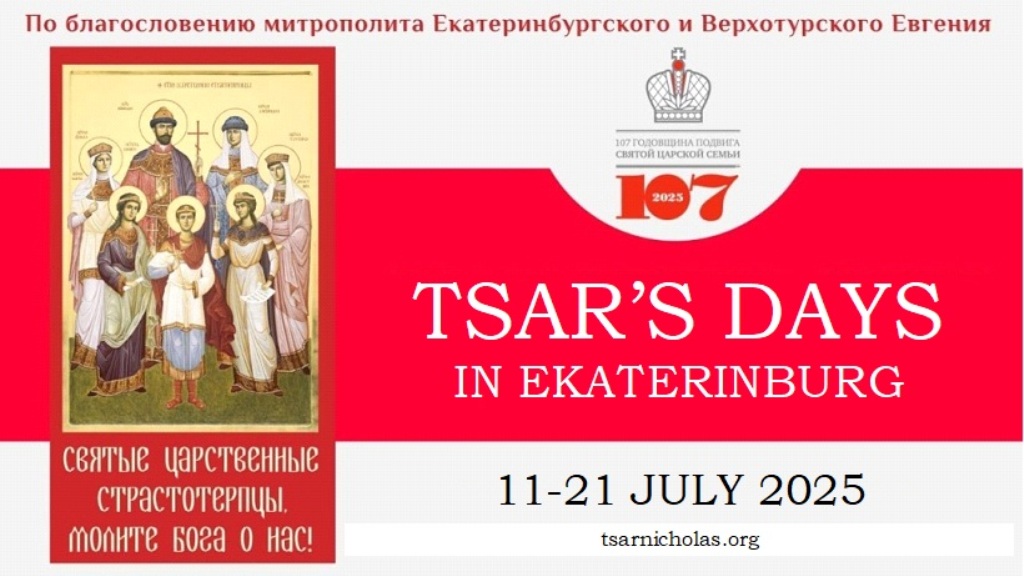
The Ekaterinburg Metropolis are currently preparing for Tsar’s Days – 2025, which will be held in the Ural capital and in Alapaevsk from 11th to 21st July. This year marks the 107th anniversary of the death and martyrdom of Emperor Nicholas II, his family and their four faithful retainers on 17th July 1918. It also marks the 107th anniversary of the death and martyrdom of Grand Duchess Eliabeth Feodorovna and other Romanov family members in Alapaevsk on 18th July 1918.
Metropolitan Evgeny of Yekaterinburg and Verkhoturye noted the importance of the upcoming memorial events, which traditionally bring together tens of thousands of faithful from across Russia and abroad.
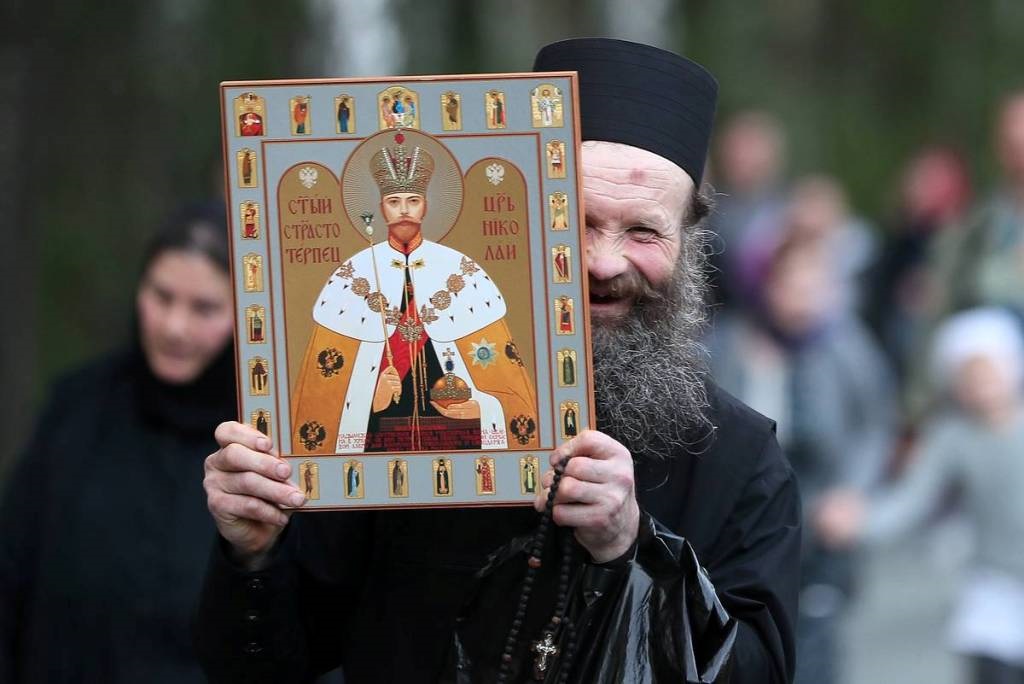
The central event of Tsar’s Days is the Divine Liturgy held on the night of 16/17 July, followed by a 21-km [13 miles] Cross Procession, from the Church on the Blood in central Ekaterinburg to the Monastery of the Holy Royal Passion-Bearers at Ganina Yama. for which “the whole of Russia gathers” in the Ural capital.
This years’ Tsar’s Days is part of the 24th International Festival of Orthodox Culture, which will be held over a 10-day period from 11-21 July. Aside from divine services and religious processions, the festival will feature many events in honour of the Holy Royal Martyrs, including bell ringing, concerts and musical evenings, as well as exhibitions and conferences hosted by well-known historians, theologians and authors.
Preparations for the Tsar’s Days are being carried out by the Ekaterinburg Metropolia with the support of the regional and city authorities.
Once again, Porosenkov Log will not included in this year’s Cross Procession. Porosenkov Log is where the remains of the Imperial Family were exhumed in two separate graves in 1991 and 2007 respectively. Due to the fact that the Moscow Patriachate does not yet recognize the Ekaterinburg Remains as those of the Imperial Family. Their official recognition rests with the Bishops’ Council of the Russian Orthodox Church.
The veneration of Nicholas II
The veneration of Nicholas II and his family actually began just days after their murder in July 1918. During the Soviet years, such activity would most certainly have been suppressed, forcing the faithful to honour the Holy Royal Passion-Beaers in secret.
After the fall of the Soviet Union in 1991, everything changed, when in 2000, some 300 faithful gathered at the sight of the Ipatiev House in Sverdlovsk [Ekaterinburg]. In 2002, the first Cross Procession in memory of the Holy Royal Martyrs was held in the Ural capitlal, attracting 3,000 faithful. The procession has been held every year since, the most important being in 2018, the year marking the 100th anniversary of the death and martyrdom of the Imperial Family.
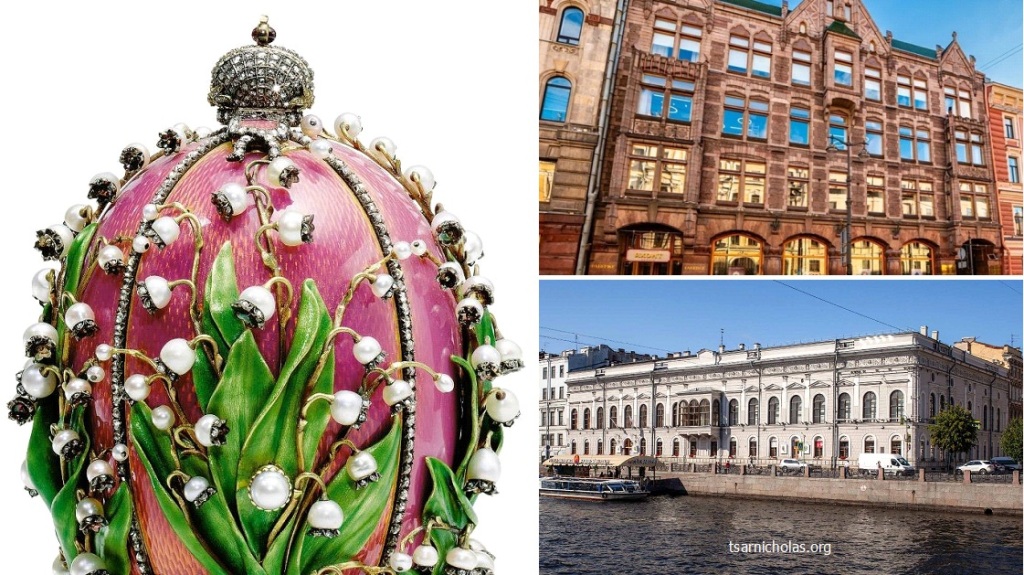
The Fabergé Museum in St. Petersburg and a local tour operator Невские Сезоны / Nevsky Seasons have launched a new audio tour, which explores the heyday of Russian jewellery art and the outstanding masters of the “Fabergé era”.
The audio tour dubbed Бриллиантовая улица / Diamond Street: Stories of St. Petersburg Jewellery Houses in the Late 19th and Early 20th Centuries explores key historical sites in the heart of the city, allowing visitors to immerse themselves in the splendour of pre-revolutionary St. Petersburg.
The tour begins on Ulitsa Bolshaya Morskaya (Street) – aka the “street of jewellers”. It was here that the most prestigious jewellery shops (more than 20 enterprises) were located, including the House of Carl Fabergé. Many of these jewellers were awarded the title of Supplier to the Court of His Imperial Majesty and created jewellery for members of the Imperial Family.
On Bolshaya Morskaya, visitors will learn about the history of the former premises of these shops, among other sites, including the Ovchinnikov Company at No. 35, which specialized in silver products; as well as the Imperial Society for the Encouragement of Artists at No. 42, where the great Russian landscape artist Ivan Shishkin (1832-1898) taught; the building of the Sazikov Company at No. 29, one of the oldest jewellery enterprises in Russia; the shop of the jeweller Friedrich-Daniel Butz; and, of course, the building where the House of Carl Fabergé, at No. 24, is located. The Fabergé building has survived to the present day, however. some visitors will be disappointed to learn, that it is no longer a Fabergé shop.
The tour culminates with a visit to the Fabergé Museum, located in the former Shuvalov Palace on the Fontanka River Embankment. Today, it is one of the most famous cultural sites in St. Petersburg, and one of the TOP-10 most visited museums in Russia. It showcases the world’s largest collection of Fabergé masterpieces in the world – more than 4,000 works (including the former collection of Malcolm Forbes ) of decorative applied and fine arts, including gold and silver items, paintings, porcelain and bronze. The highlight of the museum’s collection are the nine Imperial Easter Eggs created by Fabergé for the last two Russian Tsars Alexander III and Nicholas II. Fabergé’s Imperial Easter Eggs, are considered a symbol of the lost Russian Empire.
The audio tour was developed by the staff at the Fabergé Museum. Tours run twice a week: on Thursdays and Saturdays at 17:00. The starting point of the tour is the Astoria Hotel – the historic five-star luxury hotel, opened in 1912..
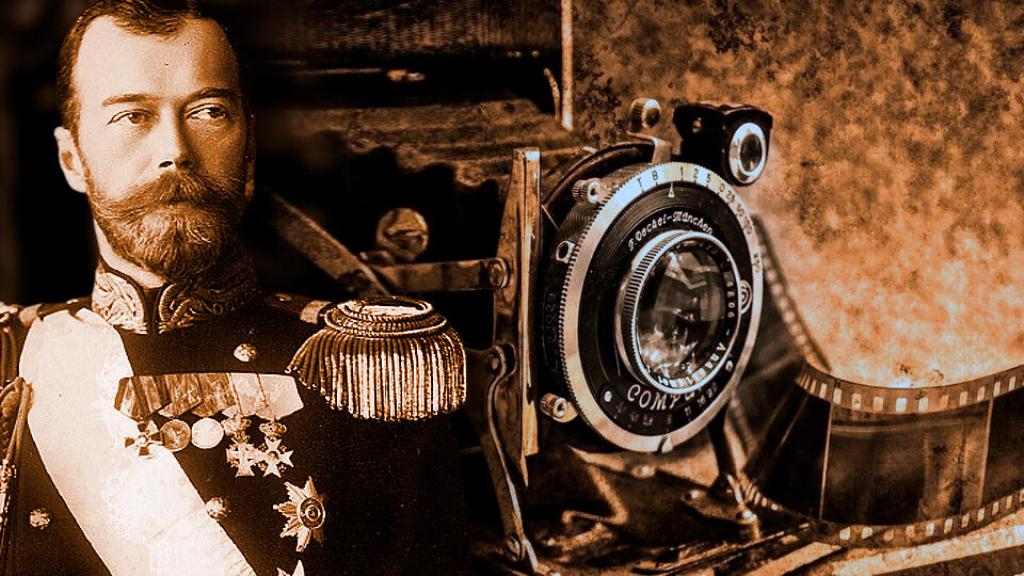
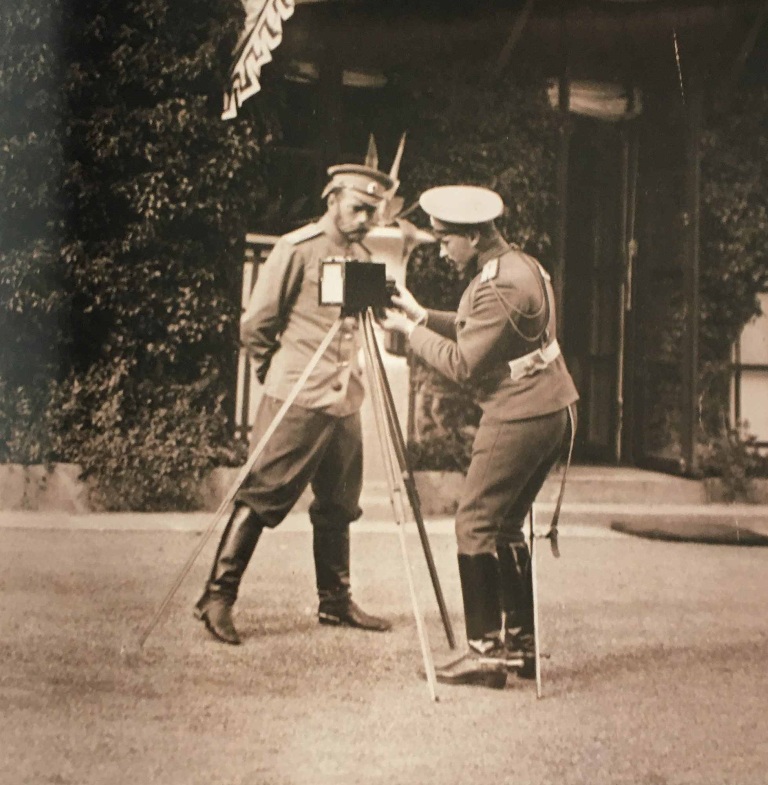
Shortly after his Coronation at Moscow in May 1896, Emperor Nicholas II acquired a new camera, for which he began photographing himself and his family. It was also at this time that he began placing his snapshots of family members in his diaries and compiled his first photo album.
Among the many albums of Romanov family photographs held in the Russian archives, at least two of them were Emperor Nicholas II’s personal photo albums, in which he personally selected and pasted the photos.
Nicholas II was a keen amateur photographer. It is widely known that his wife and children all shared his passion, but it is thanks to him that we can enjoy such a vast collection of photographs taken by the Emperor himself and by members of his family, in addition to those taken by official photographers. These photographs not only give us an official portrait of Russia’s last Emperor and Tsar, but also a pictorial record of his private life and reign.
Nicholas II took pictures throughout his life, leaving to posterity a collection of photographs astonishing in their breadth and variety. It is a collection which allows us to study him in all his guises: Emperor, husband and father. As GARF managing director and researcher Alia Iskhakovna Barkovets notes: “Everyone who looks at these photographs will see the last Tsar of Russia in their own way. One feeling, however, unites us: these photographs attract us because in them we see a human life. And regardless of the time and tragedy that separates us from that life, we can comprehend it and identify with it.”
In 1925, the enormous archive of documents and photographs of Nicholas II and his family were transferred to the New Romanov Archive, which formed the basis of the Archive of the October Revolution, and was renamed The Department of the Fall of the Old Regime. It was Joseph Stalin who ordered the Romanov archives closed and sealed. They were even off limits to historians, unless for propaganda purposes. Up until the fall of the Soviet Union in 1991, these private documents and photographs lay effectively untouched.
While it is known that Nicholas II started to take amateur photographs, it is not known where and when the Emperor acquired his first camera, but his personal accounts for November 1896 contain an entry about a payment to the firm ‘London Stereoscopic & Photographic Co,’ for photographic accessories amounting to £9 British pound sterling. In December of the same year an invoice from the owner of a warehouse for photographic and optical accessories in St. Petersburg was paid for 25 roubles to cover photographic work, two boxes of film and a camera cover.
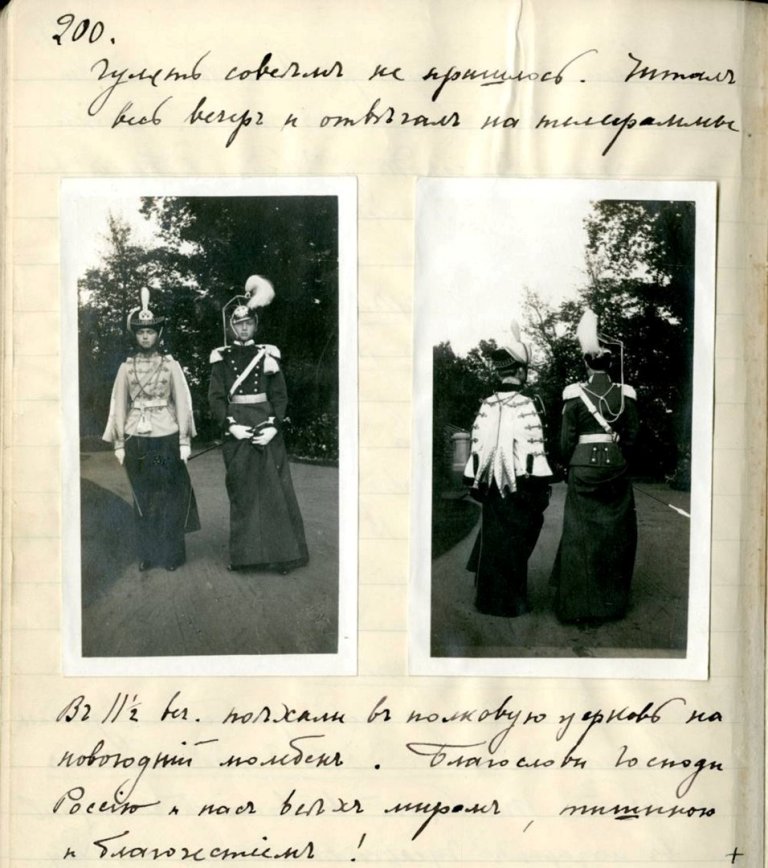
PHOTO: a page from the diary of Nicholas II, dated 31st December 1913, featuring two photos of his eldest daughters Olga and Tatiana, wearing their respective regimental uniforms.
That Nicholas himself glued photographs into albums is shown by a diary entry 29th October 1896: “Fussed with some photographs, singling them out for gluing into the big album”. It is apparent that he among the members of his family was mostly concerned with their presentation, also ensuring that each photograph was captioned with date and place, all handwritten by the Emperor himself.. This favourite pastime “calmed him and brought him into a state of mental equilibrium,” says Barkovets.
Beginning in 1896, small amateur photographs began to appear in the pages of his diary alongside the entries. In almost every diary after this year the Emperor illustrated various entries with his own photographs.
Nicholas II’s private album for 1900-1901 is particularly interesting as it highlights the growing confidence of his skills as a photographer. Nicholas had obtained a special camera which allowed panoramic pictures to be taken. The Emperor’s passion for taking panoramic photographs included those of ships, his beloved Standart, and above all, the Crimean countryside and the architecture of Livadia Palace. Although the artistic merit of these photographs is questionable, their historic significance is undeniable.
In August 1917, when the Imperial Family was exiled from Tsarskoye Selo to Tobolsk and later Ekaterinburg, they took with them a camera of the ‘panorama company Kodak from the Karpov shop . . . along with instructions, and two boxes containing 33 negatives’. These items were found after the murder of the Imperial Family in Ekaterinburg at the apartment of Mikhail Letemin, the guard for the Ipatiev House, during a search by the investigator Alexei Nametkin on 6th August 1918. As well as the items found at the Ipatiev House, three reels of Kodak film were recovered from the stoves and rubbish at the Popov house, where the guards of the Imperial Family were accommodated. So, what were these photos? Who took them? Why were they destroyed? Perhaps they contained the last photographic images of the final days of the Imperial Family, or were they destroyed to conceal evidence which the murderers did not want to fall into the hands of monarchists, the Whites or the Western press? Sadly, we will never know!
In conclusion, Alia Barkovets adds: “the photographs from the Tobolsk period of the family’s house arrest are missing from the State Archive, but a few pictures survive in private collections. There are no known photographs of the Imperial Family during their house arrest in Ekaterinburg. If we believe the evidence of of the guard Mikhail Letemin, Nicholas’s camera was stolen by him from the Ipatiev House after the murder of the Imperial Family. Whether or not it contained film we can only surmise.”
***
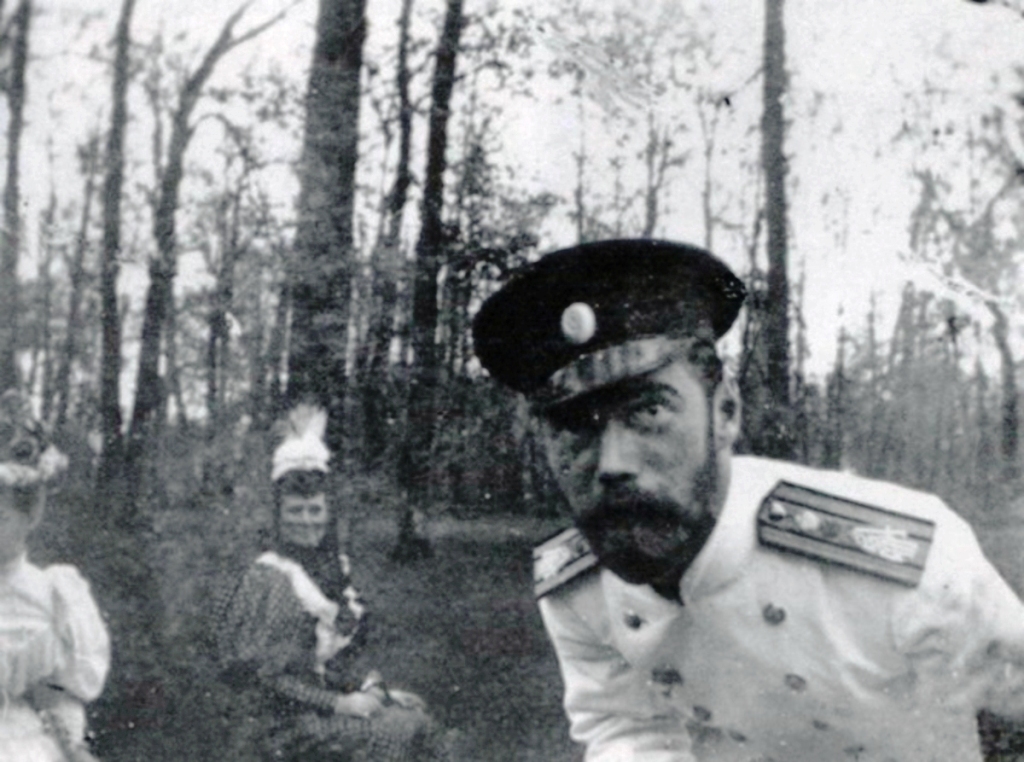
Nicholas II was among a handful of famous Russians, who took “selfies”.
The first ‘selfie’ in history was taken by American photographer Robert Cornelius – he took a photo of the reflection of himself in a storefront. That happened in 1839, but the process of taking photos then was very different from the modern one.
A polished silver plate, treated with iodine vapors, was put into a camera obscura and then developed over hot mercury and dipped into a solution of salts – not the easiest of processes.
The tides turned with the emergence of Kodak cameras, designed to be used by non-professionals. Photography didn’t require serious training anymore and gradually turned into a mass hobby. The amount of ‘selfies’ rose dramatically. Russians were also involved.
In this photo, we see the Tsar posing for a “selfie” with his Kodak camera, much to the amusement of his mother Dowager Empress Maria Feodorovna seen seated behind him in this [sadly] grainy image. Year and location unknown.
Prince Vasily Alexandrovich Dolgorukov (1868-1918)
Prince Vasily Alexandrovich Dolgorukov was born on 13th August 1868, in Karlsruhe, Baden-Württemberg. He was one of three children born to Prince Alexander Vasilyevich Dolgorukov (1839-1876) and Princess Maria Sergeevna, née von Benckendorff (1846-1936). Vasily had a sister Olga (1865-1961) and a brother Alexander (1866-1919). His mother outlived both of her sons.
Vasily’s mother served as a maid of honour at the Imperial Court. His father was known as “a bitter man and violent drunkard”, who was killed in a duel in 1876. On 29th September 1897, Maria entered into a second marriage to Count Paul Leopold Johann Stephan Graf von Benckendorff [later, the famous Pavel [Paul] Konstantinovich Benckendorff (1853-1921), who served as Chief Marshal of the Imperial Court, and member of the inner circle of Emperor Nicholas II. The couple had no children.
In 1880 Vasily graduated from the Corps de Pages. He then served as a cornet in the Life Guards Cavalry Regiment, and in March 1904, he was promoted to colonel and commanded a squadron.
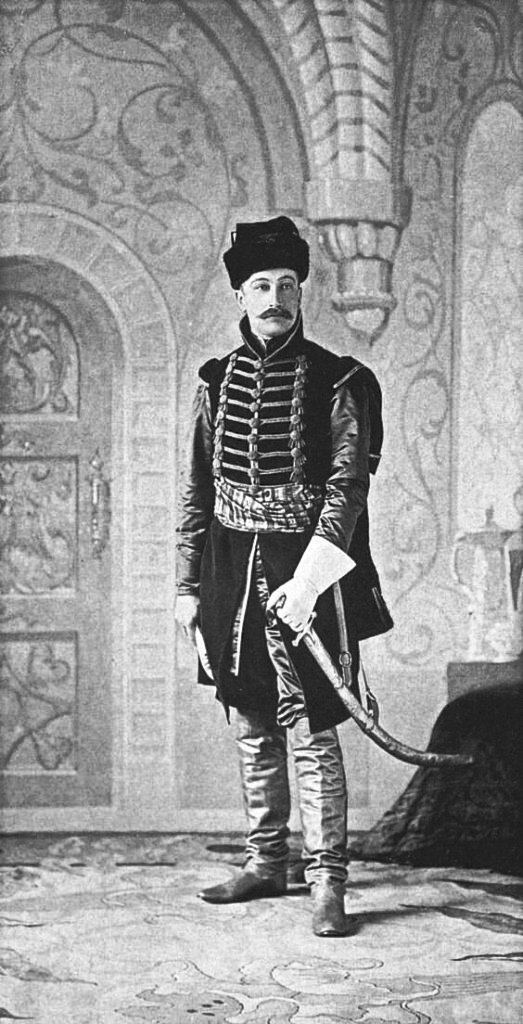
PHOTO: Dolgorukov dressed in 17th-century costume, for the famous Costume Ball, held in the Winter Palace in February 1903
In 1896, he was appointed aide-de-camp to His Imperial Majesty Emperor Nicholas II.
From 16th March 1910 to 3rd March 1912, Vasily served as commander of the 3rd Novorossiysk Dragoon Regiment. In March 1912, he was promoted to the rank of Major General and enlisted in the retinue of His Imperial Majesty. He served as commander of the Life Guards Horse Grenadier Regiment from 3rd March, 1912 to 4th February 1914. From 3rd March 1912 to 4th February 1914). February 4, 1914 – July 23, 1914 – commander of the 1st Brigade of the 1st Guards Cavalry Division.
From 23rd July 1914 he was appointed Knight Marshal of the Court of His Imperial Majesty Emperor Nicholas II. During the First World War, Vasily was at the Headquarters of the Supreme Commander-in-Chief, first at Baranovichi, and from 8th August 1915 – in Mogilev.
During his lifetime, Vasily Dolgorukov was the recipient of 7 orders of the Russian Empire, and 17 orders from the various courts of Europe.
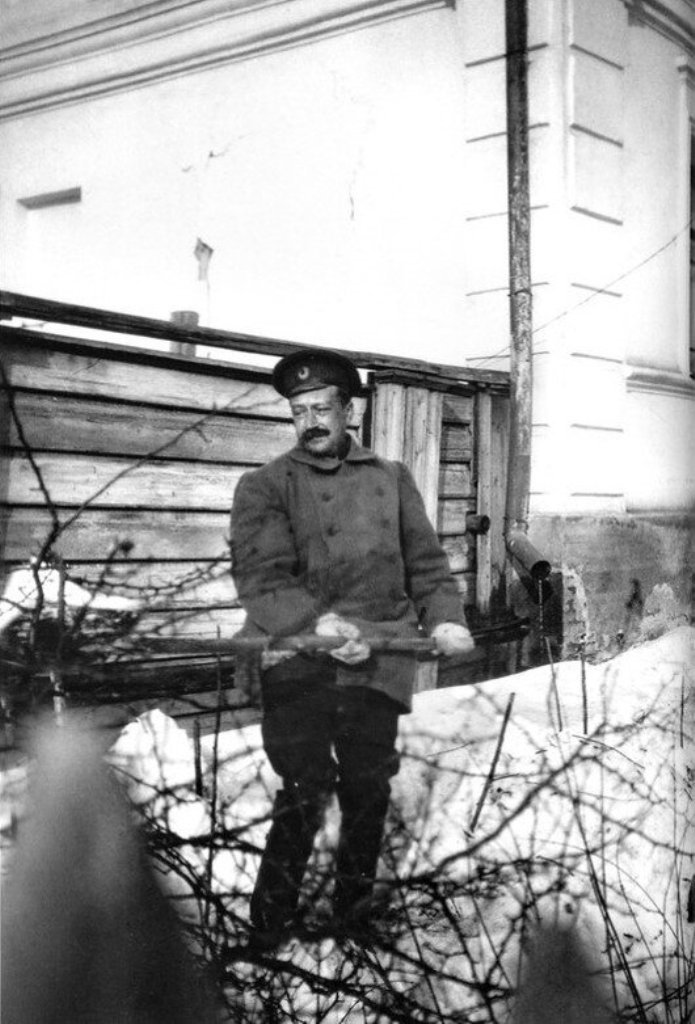
PHOTO: Dolgorukov shovelling snow in the garden of the Governor’s House, where the Imperial Family were being held under house arrest, in the winter of 1917-18
The Emperor and Empress were both very fond of Vasily, and nicknamed him Valya. Vasily Alexandrovich Dolgorukov selflessly served Emperor Nicholas II and remained faithful to his Tsar until his martyrdom.
Following the Tsar’s abdication on 15th March (O.S. 2nd March), he returned to Tsarskoye Selo. Upon his arrival at the station, he was met by Colonel Eugene Stepanovich Kobylinsky (1875-1927), who recalls: “The Tsar was accompanied by many members of his retinue. When the train arrived at the station, the members of the Tsar’s retinue spilled onto the platform and began to quickly scatter in different directions, like rats, looking around, apparently imbued with a sense of fear that they would be recognized. It was a very ugly scene to witness!”
The Tsar got out of the carriage, and quickly moved along the platform, without looking at anyone, and got into the motorcar waiting for him. Of all those who accompanied the Tsar on the train, only one faithful member of his retinue followed him: Prince Vasily Dolgorukov. With dignity, he took a seat in the motorcar next to the Emperor.
The Tsar and his family were placed under house arrest, the Alexander Palace had now become a prison. Dolgorukov often accompanied the Tsar during his walks in the Alexander Park. It was during these walks, that Vasily Alexandrovich tried to come between the Tsar and the guards, protecting the Tsar as much as possible from the rudeness of the unbridled soldiers. In the midst of general fear and betrayal, Vasily Alexandrovich retained courage and fortitude.
Alexander Aleksandrovich Bublikovm (1875-1941), a State Duma deputy and staunch anti-monarchist noted “from the Emperor’s retinue, only the Knight Marshal of the Imperial Court, Prince Dolgorukov, behaved with true dignity!”
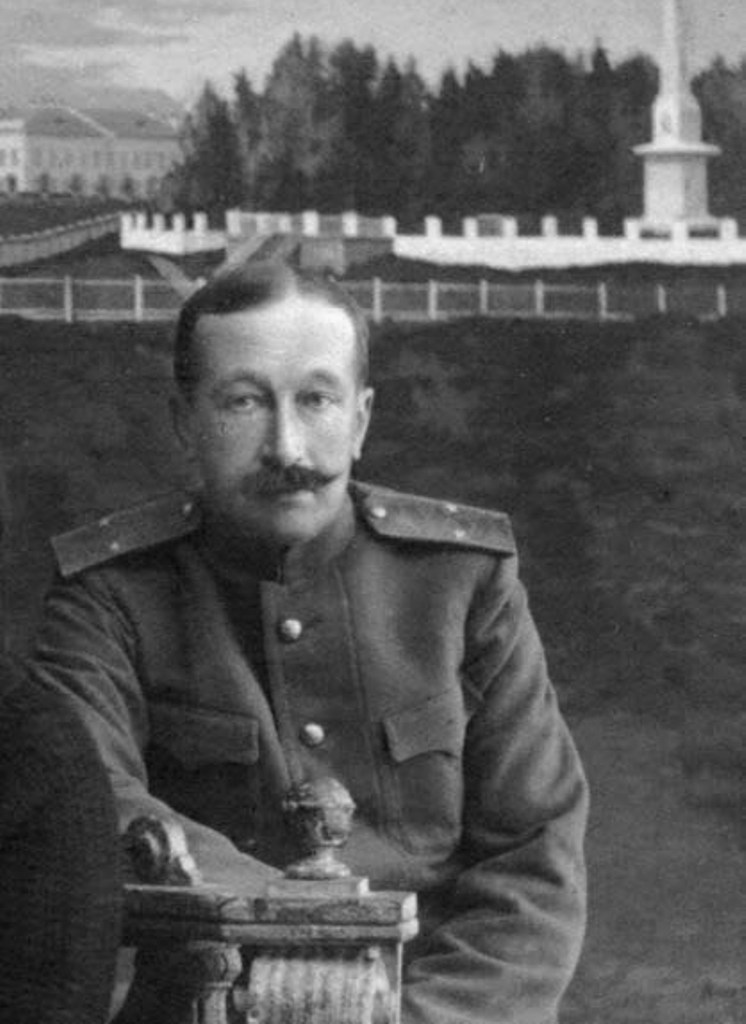
PHOTO: Prince Vasily Alexandrovich Dolgorukov. 1917.
On 14th (O.S. 1st) August 1917, he voluntarily followed the Emperor and his family into exile to Siberia, where they were held under house arrest in Tobolsk until April 1918. During imprisonment, Vasily worked alongside Nicholas in the large garden, sawing wood, clearing the snow, digging in the garden, etc.
The Tsar and Dolgorukov were separated only in Ekaterinburg, the latter, who upon his arrival in the Ural city was arrested on false charges “in order to protect public safety.” He was placed in the political block of the Ekaterinburg prison. The Chekists tried to accuse him of planning the escape of the Imperial Family, although historians call these accusations groundless.
In November 1981, Dolgorukov was canonized by the Russian Orthodox Church Outside of Russia (ROCOR). In October 2009, he was rehabilitated among 52 close associates of the Imperial Family, after a ruling made by the Prosecutor General of the Russian Federation.
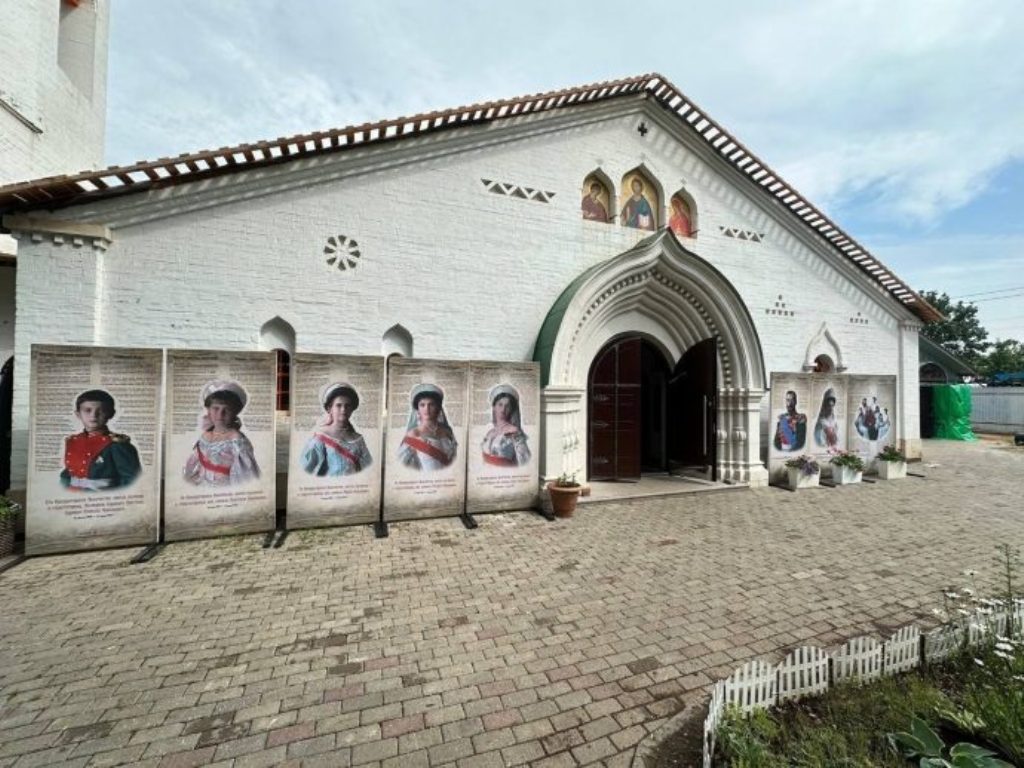
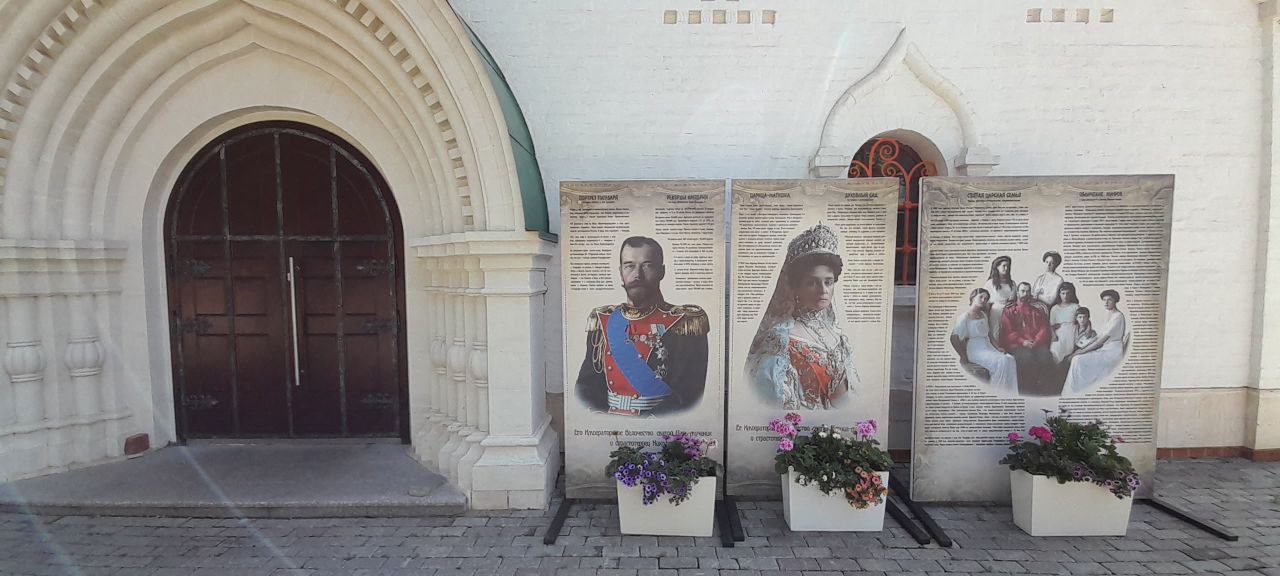
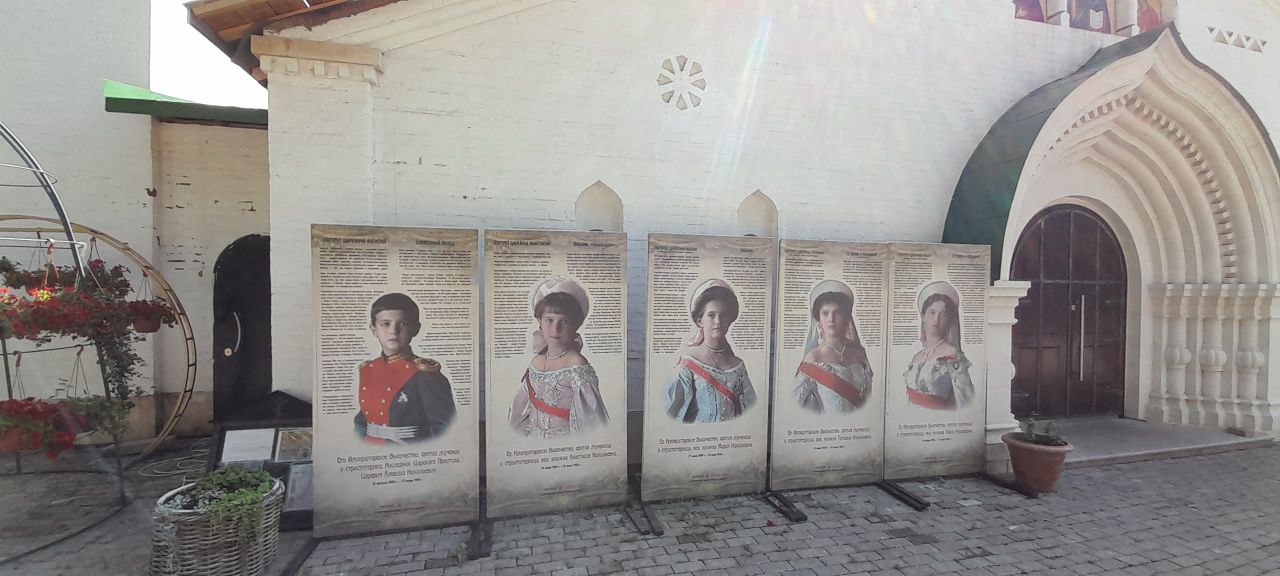
Earlier this month, a unique outdoor exhibit dedicated to Emperor Nicholas II and his family opened on the grounds of the Mironositsky Church [the Church of the Holy Myrrh-Bearing Women] in the Russian city of Istra [Moscow oblast].
The Tsar’s Crown, featured 8 posters, which provide visitors with a deeper understanding of the life of the Imperial Family during the late 19th and early 20th centuries, and their death and martyrdom.
The exhibition ran until June 15, and has now moved to the St. George Church in the city of Dedovsk.
***
*As I have noted in previous posts, I support any initiative – big or small – to help keep the memory of Nicholas II and his family alive in 21st century Russia – PG
Recall that in 2014, the Department of State Protection of Cultural Heritage Sites of the Sverdlovsk Region (UGOOKN) included the Romanov Memorial at Porosenkov Log on the list of protected monuments. However, 10 years later, in September 2024, the state security department removed the memorial’s protective status.
After the decree was issued, workers came to the memorial in Porosenkov Log and removed the information steles. In addition, workers began to remove part of the soil layer around the main grave, without even carrying out any digs to ensure that there were no remaining fragments of the bodies of members of the Imperial Family that have not yet been found. At the same time, no one coordinated the work with the Romanov Memorial Charitable Foundation and it’s founder Ilya Korovin, who has preserved the memorial since July 1999.
To avoid any further destruction of the Romanov Memorial, Korovin was forced to file a lawsuit in the Regional Court. In the lawsuit, Korovin noted that the removal of the protected status jeopardizes the damage or destruction of religious objects. He requested that the Court cancel the order.
The judge of the Sverdlovsk Regional Court, Maxim Rudakov, sided with the charitable foundation and declared the disputed order invalid. The department has a month to appeal. Despite the Court’s ruling, however, Ilya Korovin believes that it is too early to celebrate, since the department can appeal the court’s decision.
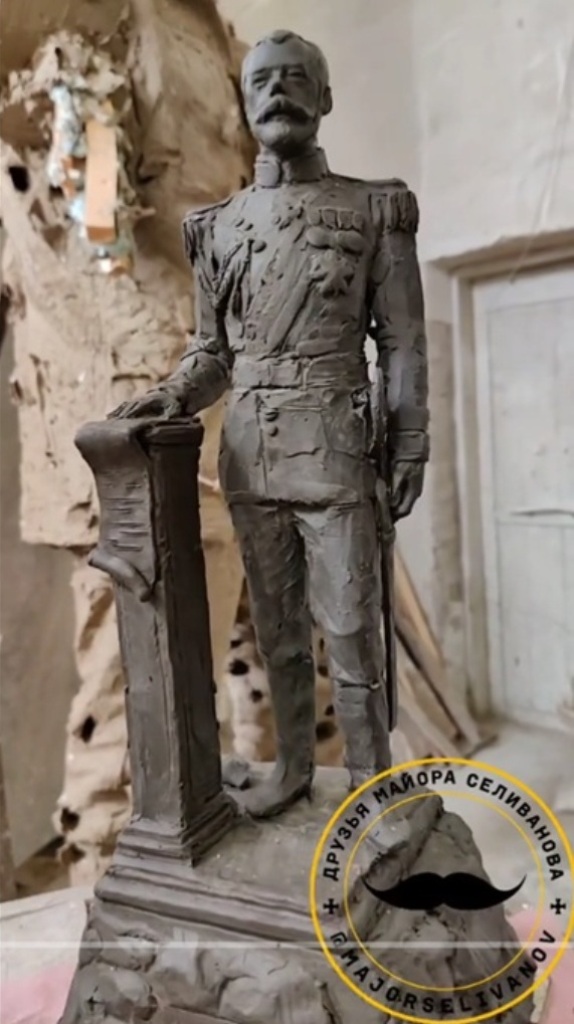
A new monument to Emperor Nicholas II, will be installed in Lugansk, a city with a population of nearly 400,000 people, situated in the Donbass region.
A local Lugansk sculptor, the author of many works, is currently preparing a model of the life-sized sculpture in his studio. The completed monument will stand more than 2 meters [more than 6 ft., including the base] in height.
The monument to the Holy Passion-Bearer Nicholas II is the sole initiative of Lugansk believers. Of the required 2 million rubles [$25,000 USD], they have already collected 330 thousand [more than $4,000 USD].
According to Russian social media, a meeting was recently held with the sculptor, to discuss the correct recreation of the uniform and awards. A decision on the exact location of the monument is expected to be announced shortly, although it is believed that it will be installed on the grounds of a local Orthodox Church in Lugansk.
The Lugansk monument will now make a total of three new monuments to Nicholas II – which are known to this author – that will be installed in various Russian cities within the next year, the others include, one in the Ural city of Verkhneuralsk, the other in St. Petersburg.
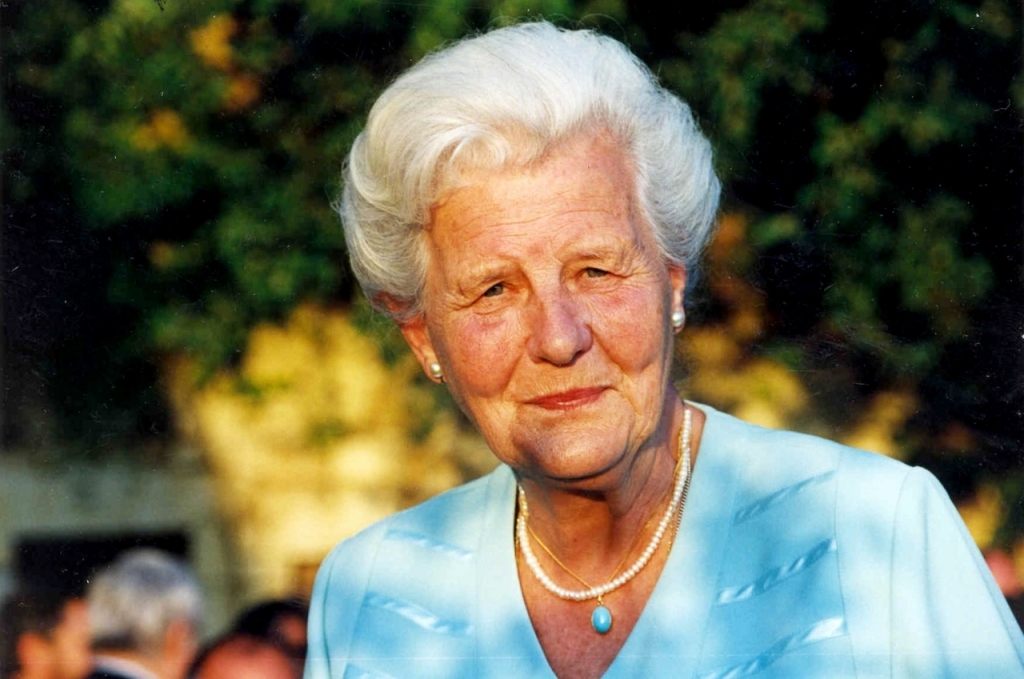
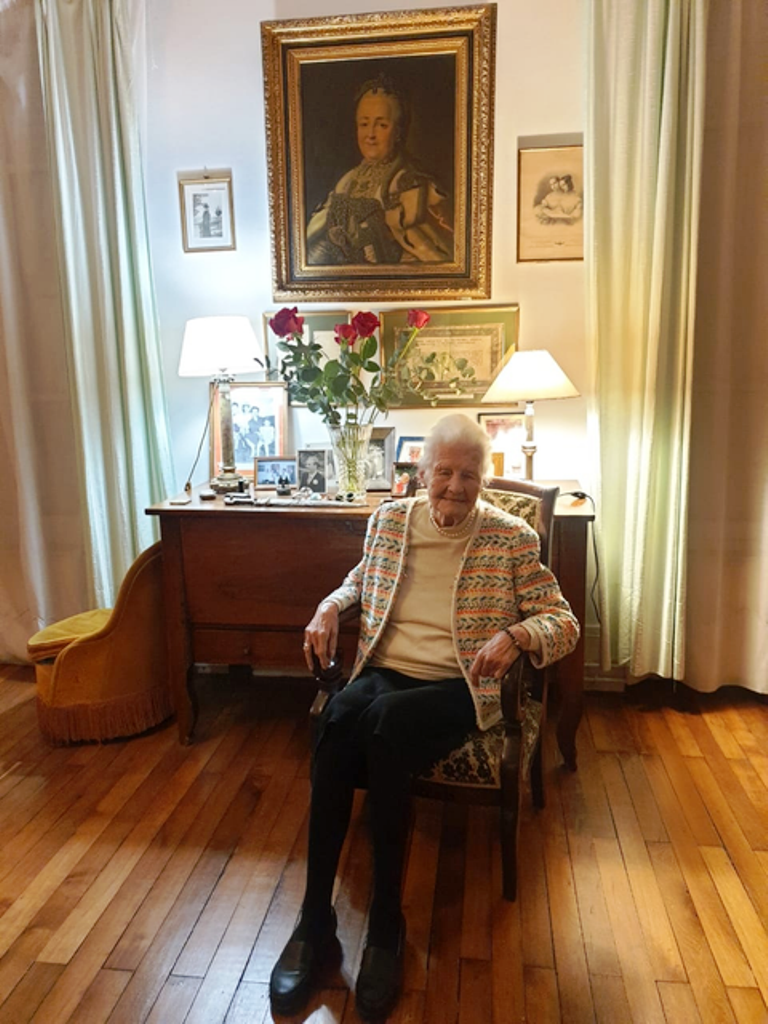
On 27th May 2025, Maria Dmitrievna Ivanova [born Countess Tatishcheva], died in Paris, at the age of 96.
Born in Nice on 26th February 1930, Maria is a direct descendant of the founder of Ekaterinburg, the sixth generation great-granddaughter of Vasily Nikitich Tatishchev (1686-1750), and niece of Adjutant General Vasily Nikitich Tatishchev (1859-1918), a devoted and loyal subject of Emperor Nicholas II.
Maria recalled in her memories: “My father, Count Dmitry Sergeevich Tatishchev (1898-1972), graduated from the Corps of Pages, whereupon he was promoted as an ensign in the Preobrazhensky Life Guards Regiment, in which almost all the Tatishchevs served. He was 18 years old, and after a month of training in St. Petersburg, he was sent to the Front, where he was awarded the Order of St. Anna’s 4th Class for Bravery. But after 4 months the commander of the Preobrazhensky, General Kutepov, disbanded the regiment. . . . Following the Tsar’s abdication and the October Revolution, he joined the North-Western Army of General Yudenich, which fought against the Bolsheviks.”
In 1920, Maria’s father fled Bolshevik Russia. From 1921 he lived in Marseille, then in Nice, before finally setting in Paris. In exile, he dedicated his life to perpetuating the memory of the last Russian emperor. Dmitry Tatishchev served as vice-chairman of the Union of Adherents for the Memory of Emperor Nicholas II [ Союз ревнителей памяти Императора Николая II] an independent, voluntary educational and charitable association of White Russian emigrants and their descendants, who venerated the memory of Emperor Nicholas II and his Family. Dmitry also worked on a Russian-language documentary about Nicholas II.
In 1929, Tatishchev married Countess Emilia Alekseevna Kapnist (1908-1996), the couple had one child, Maria Dmitrievna Tatishcheva.
PHOTO: Maria Dmitrievna Ivanova [Born Countess Tatishcheva], at her home in Paris
Maria Dmitrievna Tatishcheva lived in Paris, where she devoted her entire life helping Russians who fled Bolshevik Russia after the Revolution, and emigrated to France. In 1948, she began working at the Help Center for Russian Emigrants. The center helped émigrés to find employment, housing, obtain documents and organized children’s shelters.
In 1949, Maria married Yuri Alexandrovich Ivanov (1923-1987). The couple had one son Sergei Yuryevich.
From 1964, Maria headed the Russian parish school at the Cathedral of St. Alexander Nevsky Church in Paris, for children, grandchildren and great-grandchildren of Russian emigrants living in France.
From 1987 to 2000, she was in charge of the Tolstoy Foundation, which helped Russian refugees who emigrated from the USSR.
Maria first went to Russia in 2003, visiting Ekaterinburg, when the city celebrated its 280th anniversary, as a descendant of the founder of the city. It was during this visit to the Ural capital that the head of the Yekaterinburg Metropolia informed Maria that the diocesan Commission for the Canonization of Saints was currently preparing documents for the canonization of her uncle Vasily Nikitich Tatishchev (1859-1918).
Maria Dmitrievna Ivanova-Tatishcheva died in Paris on 27th May 2025. A memorial service was held on Friday, 30th May in the Cathedral of Saint Alexander Nevsky in Paris. She was buried in the Sainte-Genevieve-des-Bois Russian Cemetery, situated 25 km south from Paris.
Memory Eternal! Вечная Память!
***
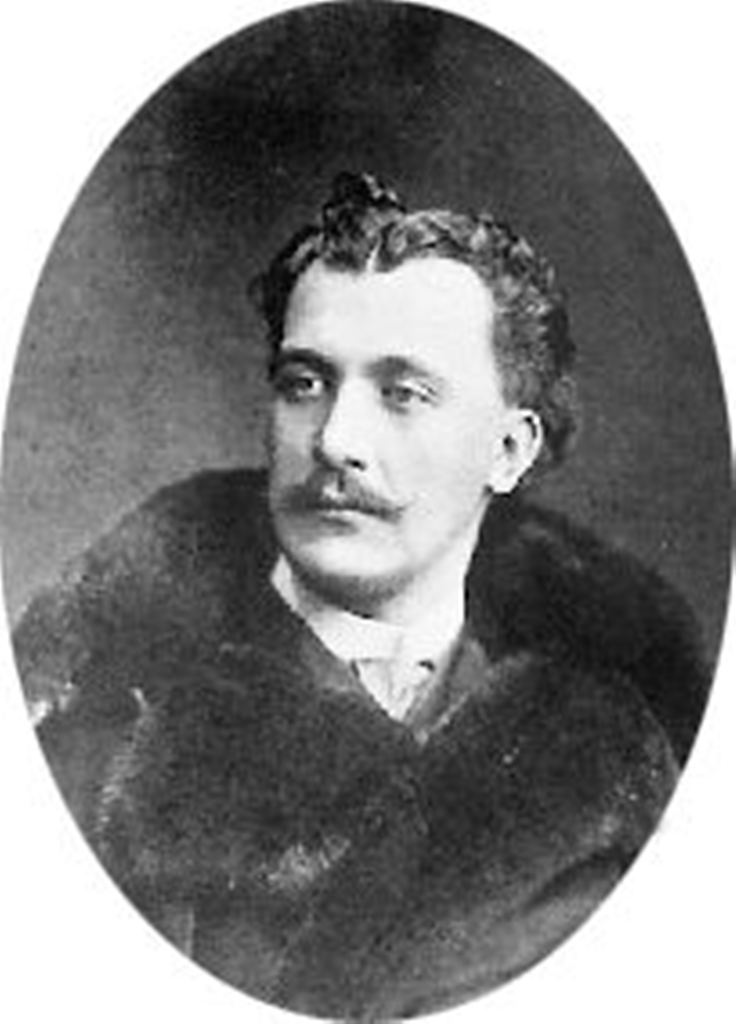
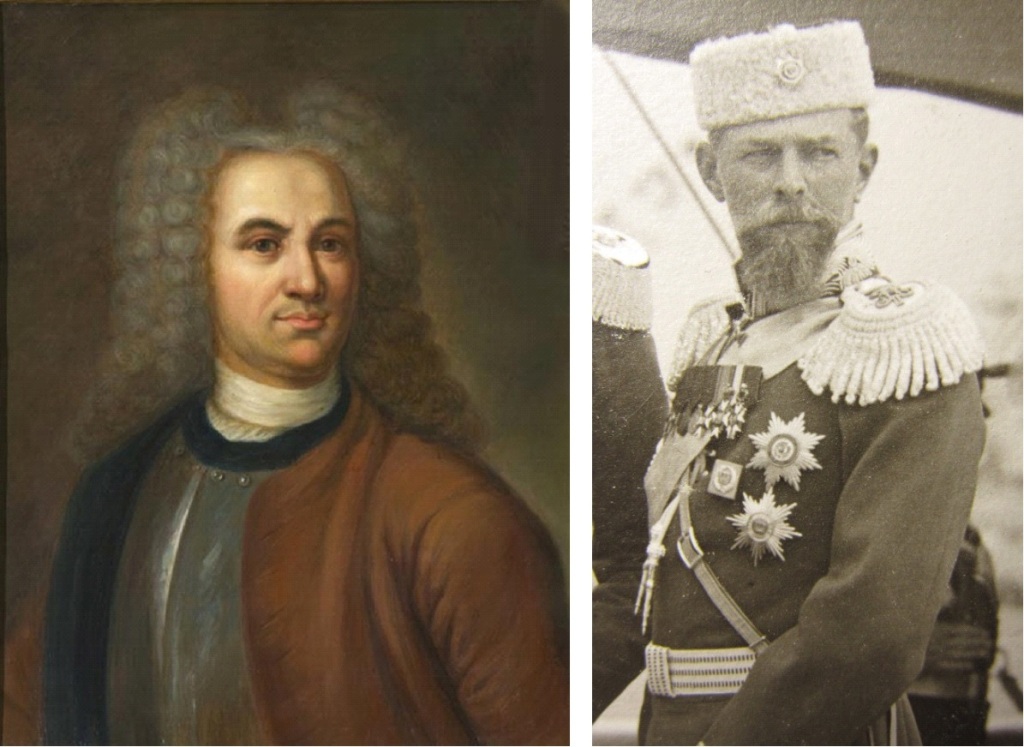
PHOTO: Vasily Nikitich Tatishchev (left) and Ilya Leonidovich Tatishchev (right)
At the invitation of Nicholas II, the devoted Adjutant General Vasily Nikitich Tatishchev followed the Tsar’s family into exile to Tobolsk, where, he played an important role, caring for the august family and offering spiritual support. When Nicholas II and the Empress Alexandra Feodorovna and her daughter Maria left Tobolsk for Ekaterinburg, Tatishchev remained with the Tsar’s children. On 23rd May 1918, upon arrival in Ekaterinburg with Tsesarevich Alexi and the Grand Duchesses Olga, Tatyana, Anastasia, the Adjutant General was separated from the Tsar’s family and imprisoned in Ekaterinburg.
On 10th June 1918 Ilya Leonidovich Tatishchev was shot by the Bolsheviks. According to church historians, he was buried in the cemetery of the Novo-Tikhvin Convent. [Note: Tatishchev’s grace was lost during the Soviet years – PG]
The head of the Ekaterinburg Metropolis informed Maria Dmitrievna that the diocesan commission for the canonization of saints is currently preparing documents for the canonization of her uncle. [Note: Ilya Leonidovich Tatishchev was canonized by the Russian Orthodox Church Outside Russia (ROCOR) in 1981 – PG]
“It is known that not only did he know the gospel by heart, but lived the life a devout Orthodox Christian.
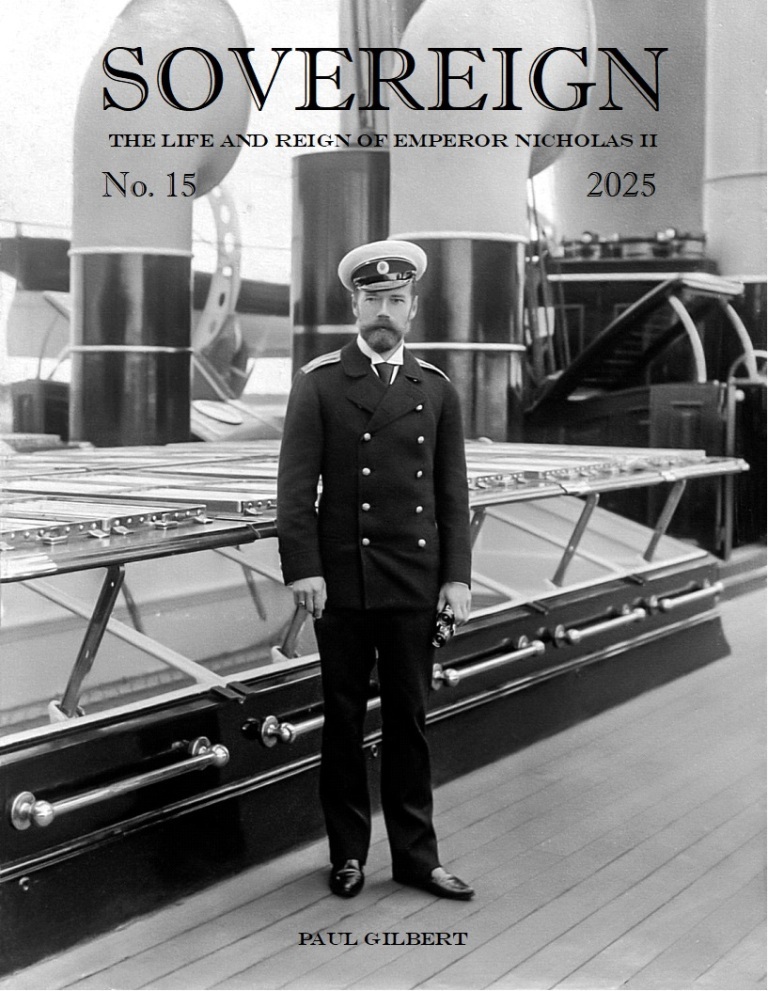
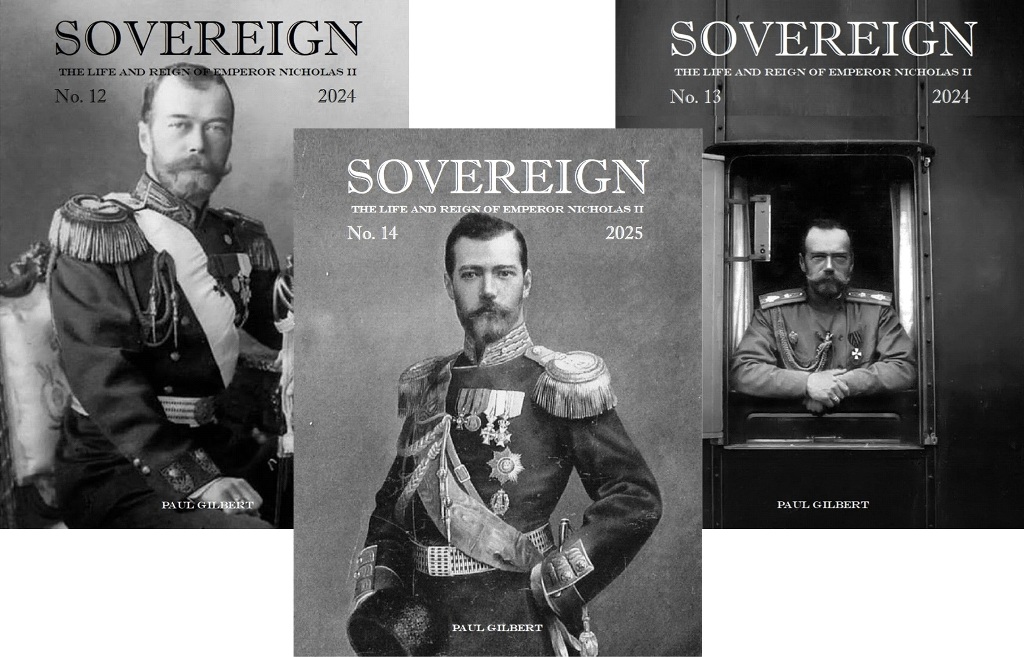
*You can order this title from most AMAZON outlets, including the United States, United Kingdom, Canada, Australia, France, Germany, Spain, Italy, Netherlands, Poland, Sweden and Japan *Note: prices are quoted in local currencies
English. Large format 8-1/2″ x 11-1/2″. 130 pages. 131 Black & White photos
The No. 15 Summer 2025 issue of SOVEREIGN features more than 20 articles about Russia’s last Tsar, his family, the Romanov dynasty and the history of Imperial Russia. These articles have been researched and written by independent historian and author Paul Gilbert. His works are based on new research from Russian archival and media sources.
In an effort to preserve his 30+ years of research, the author has reproduced a selection of the nearly 900 articles he has written for his blog. They are made available in a printed format for the first time. The author has updated many of the articles in this issue with additional information and photos. In addition, this issue features one new First English translation.
The No. 15 issue features the following 23 articles:
[1] Film Review: Nicholas and Alexandra
[2] Smoking: the Tsar’s bad habit
[3] St. Catherine’s Chapel. The Final Resting Place of Nicholas II
[4] What were Lenin’s plans on Nicholas II’s fate?
[5] The “Imperial Palace” of Emperor Nicholas II in Paris – October 1896
[6] The hidden wealth of the Bolshevik devil Yakov Sverdlov
[7] In 1897 Nicholas II approved the Winter Palace to be painted red
[8] Romanov archives of Charles Sydney Gibbes
[9] The Tsar’s Railway Pavilion in Nizhny Novgorod
[10] Ministers of Foreign Affairs During the Reign of Nicholas II
[11] Nicholas II’s little known third brother: Alexander (1869-1870)
[12] Nicholas II’s Diaries 1894-1918
[13] God, Save the Tsar! Боже, Царя храни!
[14] Emperor Nicholas II Foundation Marks 4th Anniversary
[15] Serov Portrait of Nicholas II to be exhibited in London
[16] Faithful to the Tsar and His Family: Pierre Gilliard (1879-1962)
[17] Portrait of Nicholas II returned to Russia from America
[18] What is Nicholas II’s correct date of birth?
[19] New museum dedicated to Nicholas II and his family opens in Pskov region
[20] Reconstruction of the Imperial Train Pavilion at Tsarskoye Selo
[21] The human side of the Tsar
[22] Father Vasiliev: Confessor to the Imperial Family
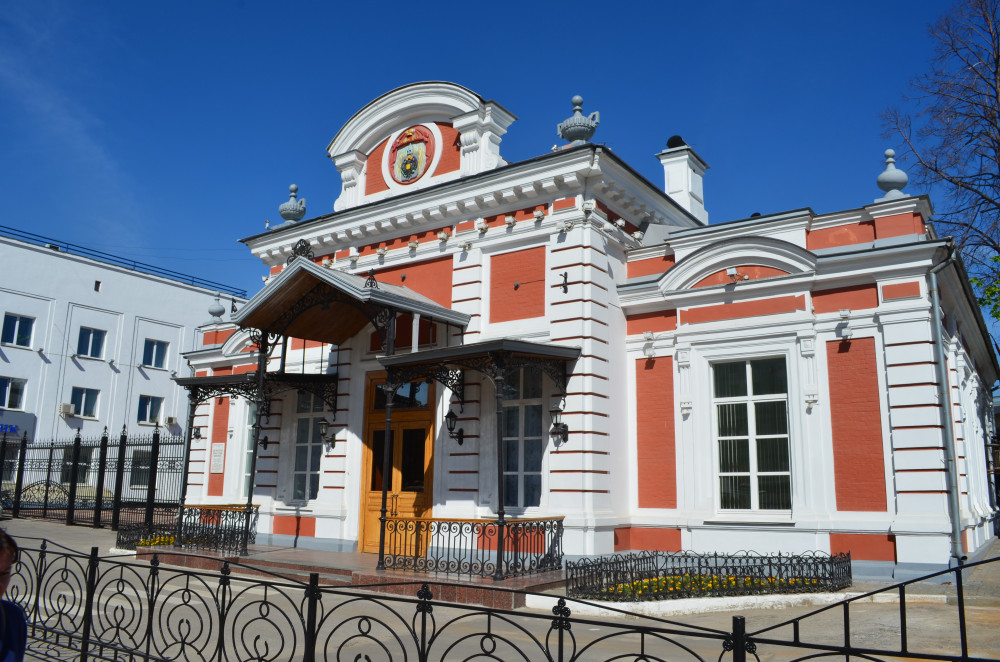
On 17th May 2025, the Tsar’s Railway Pavilion in Nizhni Novgorod opened it’s doors to visitors for a rare glimpse inside to view the building’s historic interiors. The pavilion, which dates back to Tsarist times, has survived to the present day, with many of it’s original elements preserved.
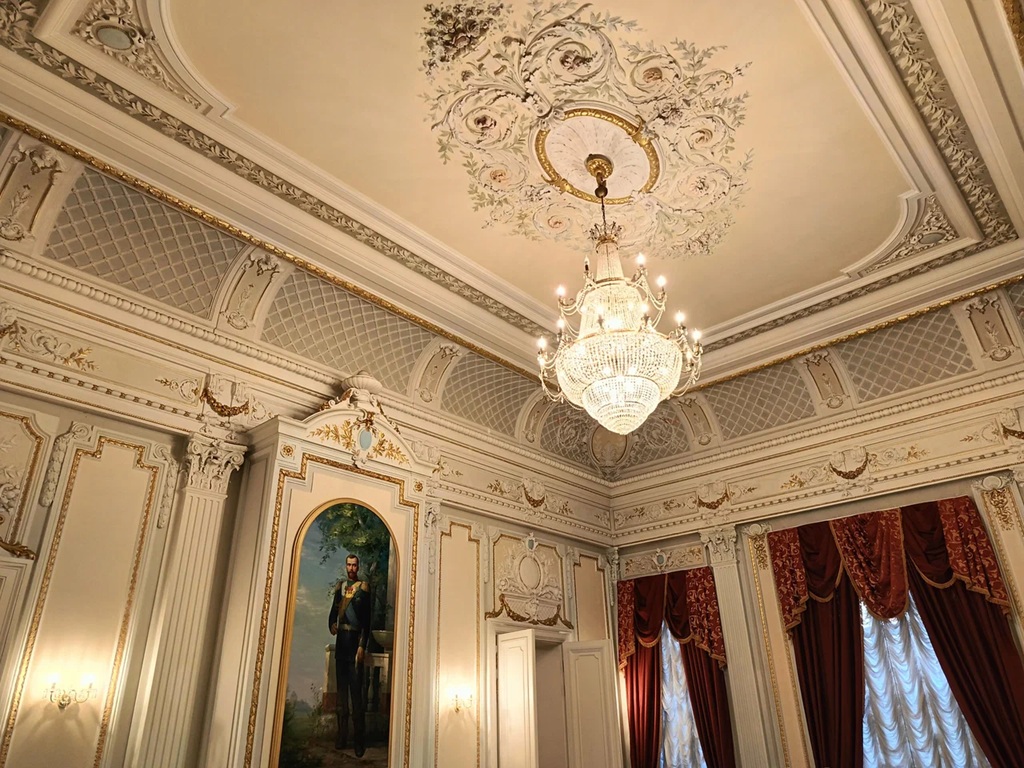
The Pavilion is rarely open to visitors, however, the Gorky Railway opted to take part in this years’ Night of Museums[1]. The Pavilion was only open for four hours, from 19:00 to 23:00. Admission was free. Visitors were admitted in groups of 15 persons at a time. As they entered, they were warmly greeted by harpsichord and harp music, performed by local musicians in the main hall of the building.
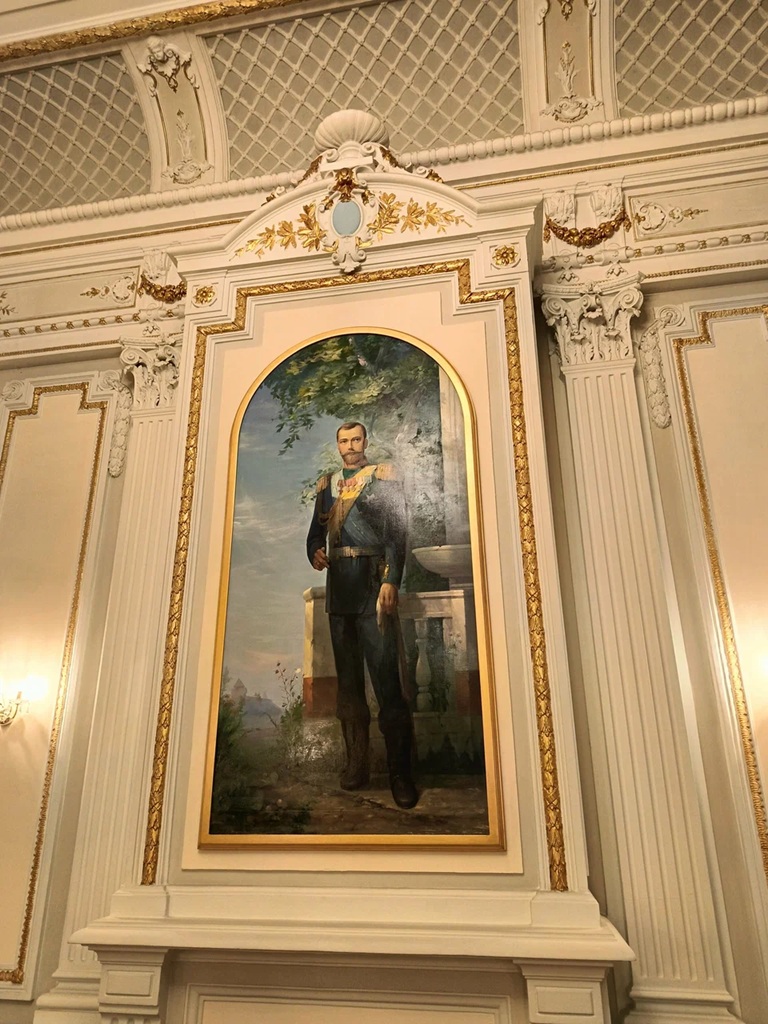
PHOTO: the Main Hall of Tsar’s Railway Pavilion in Nizhni Novgorod is dominated by a portrait of Emperor Nicholas II (artist unknown)
The elegant one-story building is located on Vokzalnaya Square [renamed Revolution Square in 1967] next to the Nizhny Novgorod railway station. It was constructed between 1891-94, by the Russian architect Dmitry Chichagov (1835-1894) on the initiative of merchants of the All-Russia Industrial and Art Exhibition, an event which showcased the achievements of the industrial development in Russia.
The pavilion offered a place to rest for members of the Imperial Family and the reception of honoured guests, who arrived in Nizhny Novgorod by rail to attend the famous fair. The All-Russia Industrial and Art Exhibition was held from 9th June (O.S. 28th May) to 13th (O.S. 1st) October 1896. The 1896 exhibition was the largest pre-revolution exhibition held in the Russian Empire and was organized with money allotted by Emperor Nicholas II.
During his 22+ year reign, the Tsar’s Railway Pavilion in Nizhny Novgorod welcomed Emperor Nicholas II on two occasions: on 17th July 1896, during the All-Russia Exhibition, he was met by Governor Nikolai Mikhailovich Baranov and Mayor Dmitry Nikolaevich Delvig. His second visit was on 17th May 1913, to mark the events associated with the 300th anniversary of the Romanov dynasty.
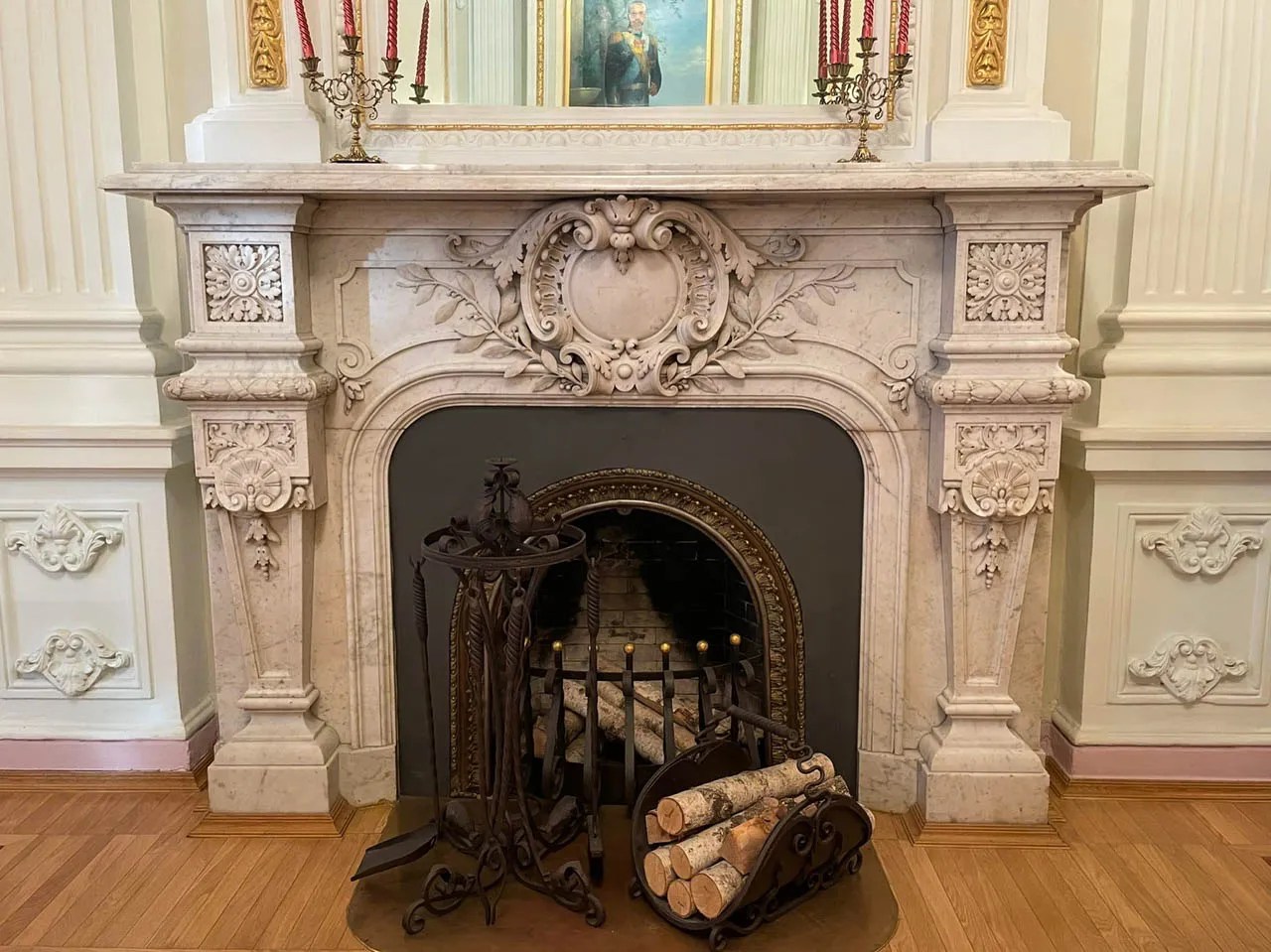
PHOTO: the original carved fireplace made of white Italian marble in the Main Hall
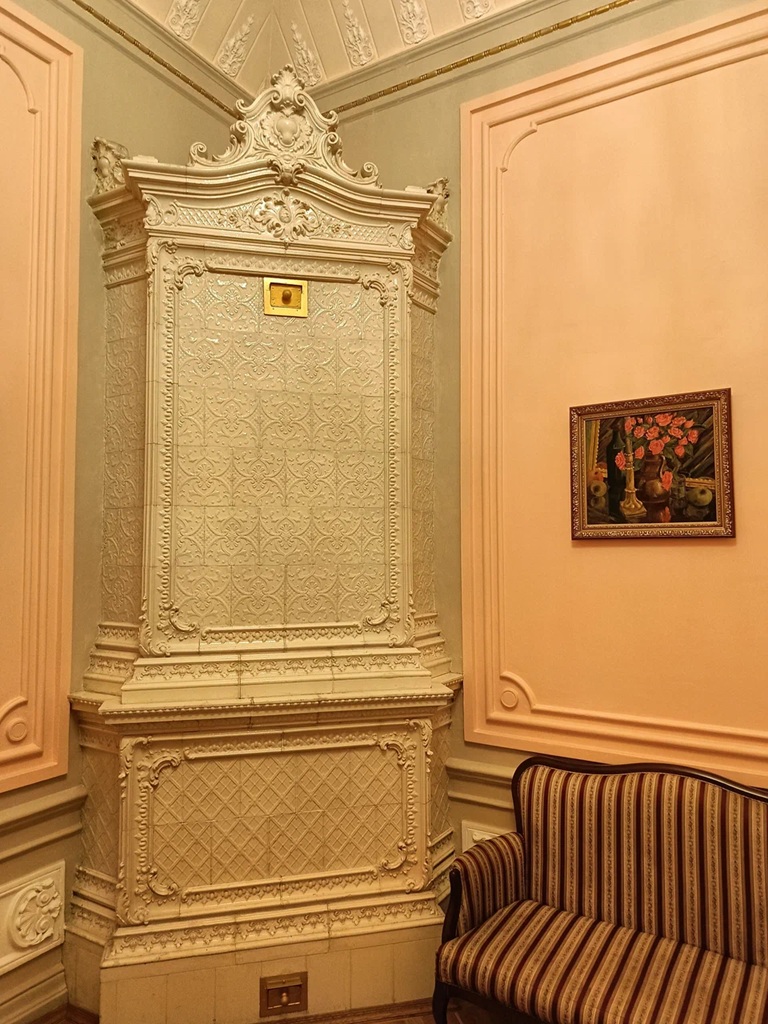
PHOTO: late 19th century tiled stoves heated the interiors of the Pavilion
The pavilion was divided into eight rooms: a heated vestibule and a spacious central hall, which was decorated with a carved fireplace made of white Italian marble, a mirror in a plaster frame and a large portrait of Nicholas II (artist unknown).
Separate studies for the Emperor and Empress were decorated with Renaissance and the Louis XV style furniture, made by the Moscow workshop of Mikhail Kutyrin. The walls of the Emperor’s Study were upholstered with silk fabric, which was chosen by the architect D.N. Chichagov. Unfortunately, this element of the interior has not been preserved. In the center of Study was a large table, whereby the Emperor listened to the reports of Nizhny Novgorod officials on the state of affairs in the province. A telephone was installed in this room.
The ceilings and walls of the eight interiors were decorated with stucco Renaissance style elements, the rooms were heated by stoves lined with majolica tiles. In addition, were rooms for the suite and separate water closets were designed for His and Her Imperial Majesties, decorated in mahogany.
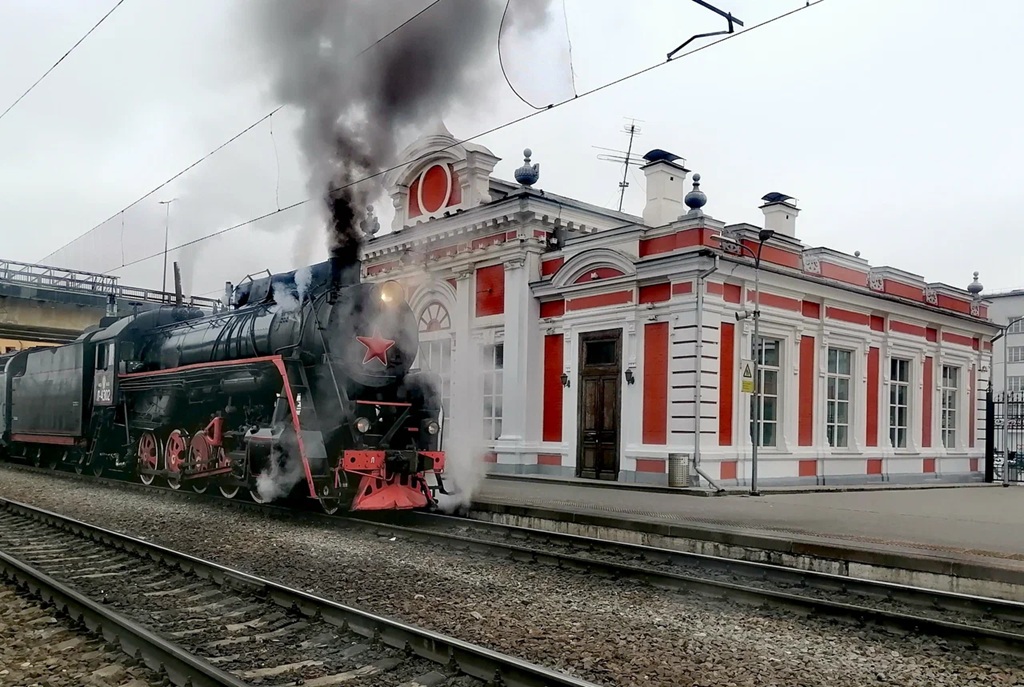
PHOTO: an old Soviet-era steam engine at the Tsar’s Railway Pavilion, this is the track where the Imperial Train would have stopped when bringing Nicholas II to Nizhny Novgorod in 1896 and 1913
Despite its century-old history, the building itself has never been rebuilt and has retained almost all of its historic appearance to this day. What happened to the original interiors is not known for sure, however, some local historians believe that they suffered during the December 1905 armed uprising, when workers seized and held the station building.
In 2005, on the initiative of the Gorky Railway, restoration work was carried out in some rooms of the Tsar’s Pavilion. These include the vestibule, central hall with a fireplace, the Emperor and Empress’s Study’s, and a water closet have been restore to their historical original.
NOTES:
[1] The Night of Museums is an annual event that takes place on the night of 17/18 May, coinciding with the International Museum Day. This event is organized by the Ministry of Culture of Russia and the portal Culture.RF and aims to make art more accessible and popular among the public. Russia’s museums offer guided tours, lectures, workshops and other events. Visitors can enjoy free entry to museums, art galleries, art spaces, and libraries, making it a great opportunity to explore and learn about various cultural and historical aspects of Russia
 Nicholas II
You must be logged in to post a comment.