New museum dedicated to Nicholas II and his family opens in Pskov region

PHOTO: entrance to the exhibition which takes up the entire ground floor of the
recently constructed Church of the Holy Royal Passion-Bearers in Dno

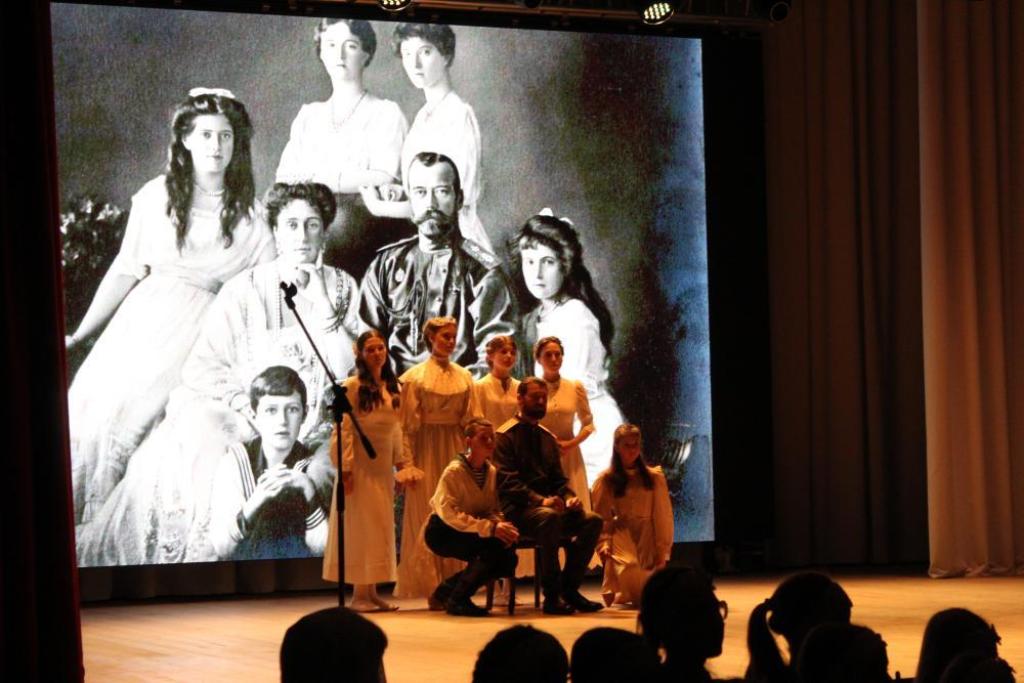
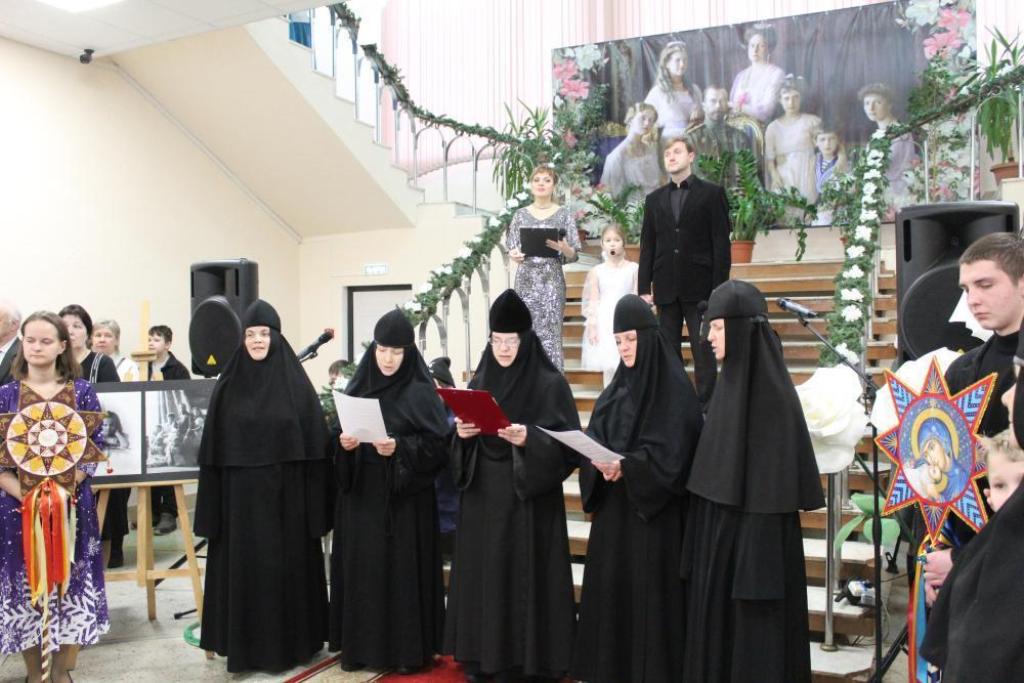
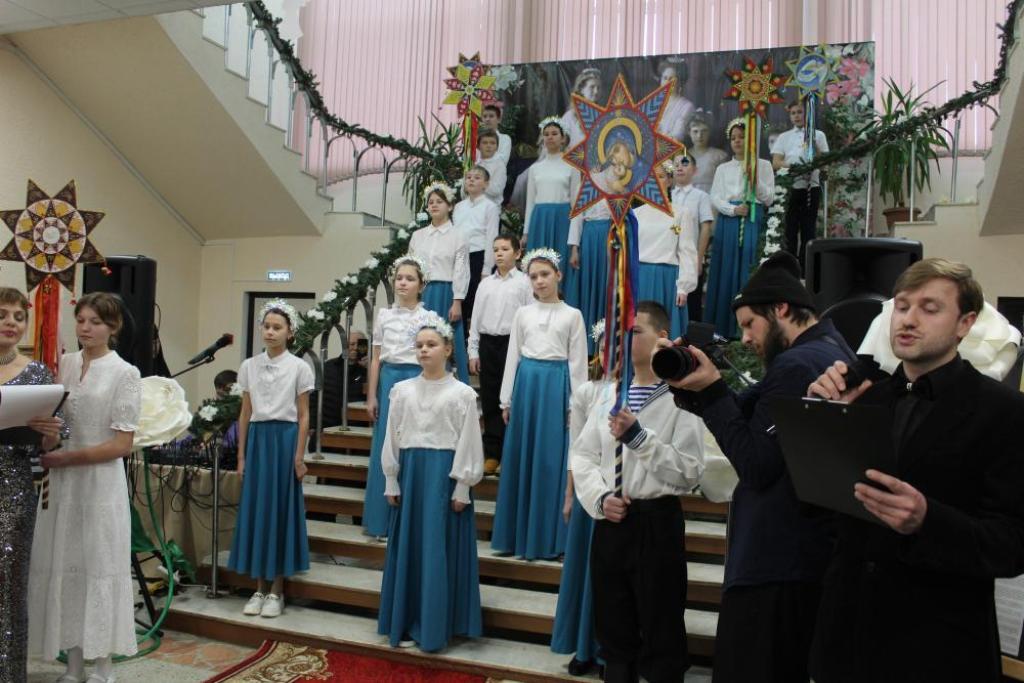
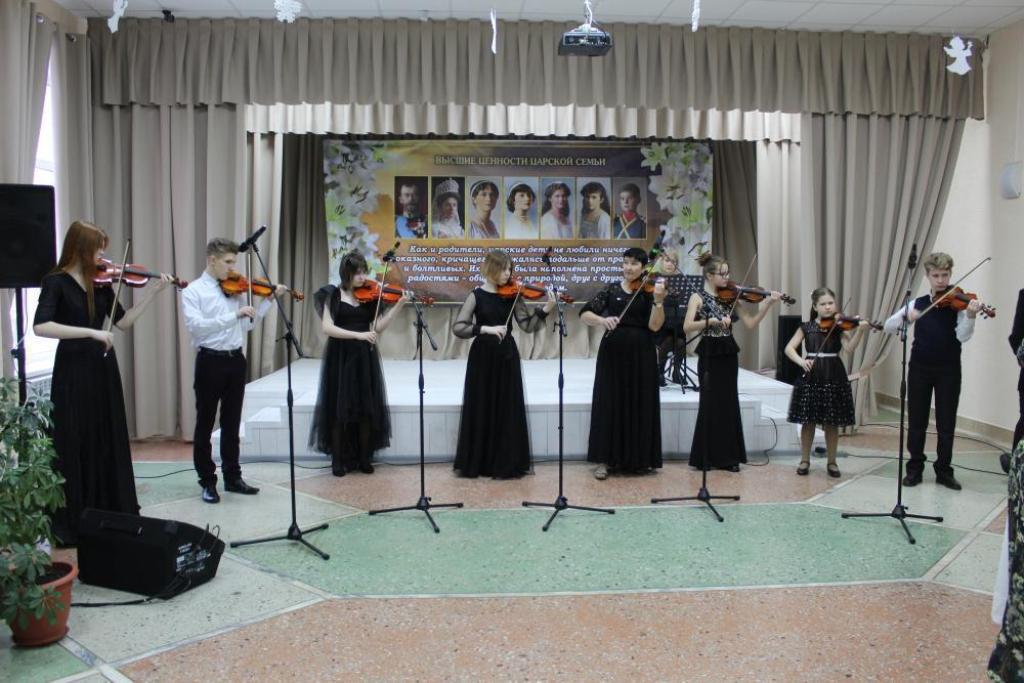
On 26th December 2024, a new museum dedicated to Emperor Nicholas II and his family was officially opened and consecrated in the Church of the Holy Royal Passion-Bearers in the Russian city of Dno, situated 114 km from Pskov.

Recall that on the same day, a new monument to the Holy Royal Passion-Bearers was unveiled and consecrated on the grounds of the church.

Metropolitan Matthew of Pskov and Porkhov performed the rite of consecration of the museum to the Royal Passion-Bearers. The museum takes up the entire ground floor of the church. Admission to the museum is FREE to all!

PHOTO: His Eminance performs the rite of consecration of the museum to the Royal Passion-Bearers

The interiors of the museum are a wonderful example of modern exhibition spaces, designed in the Neo-Russian Style [aka the Russian Revival Style], characteristic of the early twentieth century and beloved by Russia’s last Tsar.

The museum is divided into two halls. The first hall, which is painted burgundy-green, combined with dim lighting. Burgundy is the colour of the Imperial Porphyry, green is the colour of the monk. In this hall, the exposition explores the life of the Imperial Family from Emperor Nicholas II’s and Empress Alexandra Feodorovna’s childhood to the tragic vents of 1917. Two stands describe the history of the House of Romanov – from the calling to the throne of Mikhail Feodorovich in 1613 and to the death and martyrdom of Nicholas II 305 years later.

Archival photographs and documentary materials, diary entries, testimonies of contemporaries, statements by prominent public and church figures reveal in detail the life of the Imperial Family. They tell about their service to Russia, their close family relations, and the historical context of the events of the late 19th and early 20th centuries. In addition, the exposition explores the cultural, scientific, and political life of the Russian Empire during the era of Nicholas II.

PHOTOS: four double-sided mobile stands display documents and
photos which explore the life of Emperor Nicholas II and his family

The photographs and documents are displayed on four double-sided mobile stands on small wheels with stoppers. At the northern and southern walls there are carved white-stone lecterns with carvings, under which relics of the era of Emperor Nicholas II are placed. In the eastern part of the hall there is a passage through three brass decorative arches which leads to the White Hall. Between the arches, there are four kiot stands made of white stone with carvings (initials), glass, lighting and a carved finial, dedicated to the Grand Duchesses Olga, Tatiana, Maria and Anastasia Nikolaevna. The ceiling is dark, with diffused and directional track lighting.

In the White Hall there is information about the Way of the Cross of the Imperial Family – the period from the events at the Dno station, the Tsar’s abdicated in March 1917, to the murder of Nicholas II and his entire family on 17th July 1918 in Ekaterinburg and the subsequent history of the veneration and glorification of the Imperial Family as saints. Extensive textual and illustrative material makes it possible to speculatively walk this path together with the Royal Passion-Bearers, to come into spiritual contact with the last year of their lives, to see the light of the Paschal victory in the darkness of the Ipatiev House.

CLICK on the photos below to enlarge and see in greater detail . . .

Also in the White Hall there are stands dedicated to the faithful retainers, who voluntarily followed the Imperial Family into exile and shared their sufferings, showing an example of loyalty to duty; stands dedicated to the Grand Duke Sergei Alexandrovich, the Venerable Martyr Grand Duchess Elizabeth Feodorovna, the Alapaevsk Martyrs, who were murdered by the Bolsheviks the day after the Imperial Family; two kiot stands dedicated to Tsesarevich Alexei Nikolaevich; and stands dedicated to the memory, glorification and modern veneration of the Holy Royal Martyrs.

The hall is crowned by a large carved icon case with an icon of the Royal Martyrs, visible from the very entrance to the burgundy-green hall. The saints are depicted in white robes with a reference to the apocalyptic image of martyrs overcoming earthly sufferings and faithful to Christ (Revelations 6:9-12).

The White Hall is also used as a venue for small gatherings. The 4 white stands can be rrolled to the sides, thereby freeing up the central space of the hall. Attached to the ceiling in this room is a screen that can be opened in the eastern part of the hall, with a projector at the entrance to the burgundy-green hall. Folding chairs which are stored in the adjoining utility room, provide for guests attending lectures, films and other events.

CLICK on the photos below to enlarge and see in greater detail . . .

The museum is a project of love and deepest respect to the Holy Royal Martyrs and their feat on the Cross, which formed the basis of the feat of faith of all the New Martyrs and Confessors of the Russian Church and the preservation of the Holy Russian spirit in the 20th and early 21st centuries.

The opening of the new museum in Dno is the fourth such museum in Russia dedicated to Emperor Nicholas II and his family, the other three are the Museum of the Holy Royal Family in the Tsarsky Cultural and Educational Center, situated in the Patriarchal Compound of the Church on the Blood (Ekaterinburg); the Museum of the Family of Emperor Nicholas II (Tobolsk); and the Museum in Memory of Emperor Nicholas II and His Family (Kotelniki-Moscow).

PHOTO: icon of the Royal Martyrs in the White Hall

© Paul Gilbert. 9 January 2025

NEW BOOK – Sovereign No. 14 (Winter 2025)

*You can order this title from most AMAZON outlets, including
the United States, United Kingdom, Canada, Australia,
France, Germany, Spain, Italy, Netherlands, Poland, Sweden and Japan
*Note: prices are quoted in local currencies

CLICK HERE TO ORDER THE PAPERBACK EDITION @ $20.00 USD

English. Large format 8-1/2″ x 11-1/2″. 130 pages. 124 Black & White photos

The No. 14 Winter 2025 issue of SOVEREIGN features articles about Russia’s last Tsar, his family, the Romanov dynasty and the history of Imperial Russia. These articles have been researched and written by independent historian and author Paul Gilbert. His works are based on new research from Russian archival and media sources.

In an effort to preserve his 30+ years of research, the author has reproduced a selection of the more than 800 articles he has written for his blog in a printed format for the first time. The author has updated many of these articles with additional facts and photos. In addition, this issue features 2 new works translated from Russian, and published in English for the first time.

In less than 24 hours of its release on AMAZON ON 8th January 2025, the No. 14 issue of my semi-annual publication SOVEREIGN is the ‘#1 NEW RELEASE in the RUSSIAN HISTORY’ category!

The No. 14 issue features the following 18 articles:

[1] 120th anniversary of Tsesarevich Alexei Nikolaevich’s baptism

[2] 130th anniversary Nicholas II ascension to the throne

[3] 130th anniversary of the wedding of Nicholas II and Alexandra Feodorovna

[4] Protecting the Tsar

[5] Nicholas II attends consecration of monument to his father in Moscow, 1912

[6] Monuments of Nicholas II and his family in and around Ekaterinburg

[7] Redevelopment of the Russian Imperial Navy During the Reign of Nicholas II

[8] The myth of hunger during the reign of Nicholas II

[9] The fate of Nicholas II favourite motorcar

[10] Emperor Nicholas II and King Edward VII Meet at Reval,1908

[11] Queen Elizabeth II receives Grand Duchess Olga Alexandrovna, 1959

[12] Telephones in the Alexander Palace during the reign of Nicholas II

[13] How British Intelligence tried to get Nicholas II out of Russia

[14] “The daughters were wearing diamond shields” – Yakov Yurovsky

[15] Nicholas II and his canine companions

[16] Those who served the Tsar: Vladimir Voeikov (1868-1947)

[17] A typical work day for Nicholas II

[18] Tsar Nicholas II Men’s Choir

***

Back issues of SOVEREIGN

No. 13 Summer 2024

No. 12 Winter 2024

NOTE: back issues of Nos. 1 to 12 are now out of print.
Second-hand copies are available on AMAZAON eBay
.

© Paul Gilbert. 8 January 2025

Obituary: Elena Yakovlevna Kalnitskaya (1952-2025)

How very sad that my first article of the new year should be an obituary. I regret to announce the death of Elena Yakovlevna Kalnitskaya, who served as the highly respected Director General of the Peterhof State Museum for the past 13 years. She died on 2nd January 2025 after a long illness. She was 72 years old.

Elena Kalnitskaya was born in Leningrad (St. Petersburg) on 6th September 1952. A noted Eussian art historian, Elena Kalnitskaya served as the Director General of the Peterhof State Museum-Reserve since 2009. During her tenure as director, she organized large-scale restoration work in the palaces and parks of Peterhof and Oranienbaum. Among these projects were the restoration of the Farm Palace in the Alexandria Park and the recreation of the Lower Dacha, the latter of which remains on hold. She contributed to the implementation of a large-scale program for the development of the museum: holding major Russian and international exhibitions, organizing scientific conferences, and publishing the catalogues of the museum’s vast collection. She also authored over 200 scientific and popular publications dedicated to the history of the culture of the Russian Empire.

On 6th September 2022, Elena Yakovlevna celebrated her 70th birthday. In her honour, a noon volley was fired from the cannon of the Peter and Paul Fortress in St. Petersburg.

At the end of March 2023, Kalnitskaya was forced to step down as Director General of the Peterhof State Museum due to health problems.

Memory Eternal! Вечная Память! 

In October 2023, a new English-language book ‘Peterhof State Museum Reserve: Director’s Choice‘ by Elena Kalnitskaya, was published and made available on AMAZON. In this short 96-page book, Kalnitskaya presents a selection of her favorite palaces, monuments, and objects and their stories.

A description of her book reads as follows:

“The Peterhof State Museum-Reserve is one of the most visited and attractive museums in Russia, the “fountain capital” of a huge country. Uniting today more than 30 expositions located on the territory of Peterhof, Alexandria, Strelna and Oranienbaum, the museum acquaints its guests with the great past of Russia.

“The history of each Peterhof monument is deeply individual, but, being formed into single architectural ensembles, are an organic synthesis of history, art, architecture, human destinies. The planning structure of Peterhof skillfully combines regular and landscape parks, palaces of different architectural styles, small forms and fountains. The famous water supply system, which has no analogues in the world, keeps the memory of its creator – emperor Peter the Great.

“The Peterhof collections, collected by the crowned owners of the residence to decorate it, consist of a variety of museum items. “There is a soul in every museum object,” says Director Elena Kalnitskaya, and this is clear in each work of art presented in this book. Each object tells its own story, but also invites the reader to better understand the history of Russia.”

© Paul Gilbert. 2nd January 2025

Nicholas II in the news – Autumn 2024

PHOTO: portrait of Emperor Nicholas II by an unknown contemporary Russian artist

Russia’s last Emperor and Tsar Nicholas II, his family, the Romanov dynasty and the history of Imperial Russia, continue to be the subject of books, magazines and journals, exhibitions and documentaries. In addition, the continue to generate headlines in the media.

The following 5 articles were published by American and British media services, in October, November and December 2024. Click on the title [highlighted in red] below and follow the link to read each respective article:

Historian Tsuyoshi Hasegawa writes definitive account of the abdication of Tsar Nicholas II

Keith Hamm reviews a new study about Russia’s last Tsar by UC Santa Barbara emeritus professor of history Tsuyoshi Hasegawa on the abdication of Russia’s last tsar Nicholas II and the fall of the Romanov dynasty. *Note: this review is for information purposes only – PG

Source: The Current. 5 December 2024

“I felt at like a real human among the peasants”

Maria Toblova writes about the amazing life of the Nicholas II’s youngest sister Grand Duchess Olga Alexandrovna (1882–1960), who escaped Bolshevik Russia, and lived in exile in both Denmark and Canada, where she died in November 1960.

Source: Orthodox Christianity. 22 November 2024

6 most BEAUTIFUL palaces of Crimea + PHOTOS

All the nobility of the Russian Empire, including the Tsar’s family, liked to spend their holidays on the southern coast of the Crimean peninsula. Many prominent families built summer residences there. The link above explores the most luxurious ones that have survived to this day.

Source: Gateway to Russia (formerly Russia Beyond)

What Russia’s Last Emperor Lived By

Tsar Nicholas II, Russia’s last Emperor, is considered one of the most widely discussed and controversial people of the twentieth century. But what trustworthy and accurately describes his character are the diaries he carefully kept since he was fourteen. What kind of person was the Tsar? What inspired and comforted him? This article explores the personal details that are usually omitted in most history books.

Source: Orthodox Christianity. 5 March 2019

The Russian Ruling Elite Under Nicholas II

Cambridge Research Professor and author Dominic Lieven writes about the route taken to high governmental office by members of the Russian ruling elite under Nicholas II. Specifically, it looks at the career patterns of the 215 men appointed to the State Council of the Russian Empire in the first twenty years of Nicholas II’s reign.

Source: Cahiers du Monde Russe. Vol. 25, No. 4, Oct. – Dec., 1984

© Paul Gilbert. 31st December 2024

***

Paul Gilbert’s Romanov Bookshop on AMAZON

I have published nearly 40 titles to date through AMAZON – featuring one of the largest selections of books on Nicholas II, the Romanov dynasty and the history of Imperial Russia.

Please CLICK on the BANNER or LINK above to review my current selection of titles in hardcover, paperback and ebook editions. Listings provide a full description for each title, pricing and a Look inside feature.

Nicholas II’s study in Livadia Palace to be recreated

PHOTO: the Emperor’s Study in Livadia Palace, as it looks today

According to Natella Sheremeteva, one of the founders of the Foundation for the Preservation of Historical Cultural Heritage, the Study of Emperor Nicholas II in the Livadia Palace, Crimea will be recreated in 2025.

“The Foundation’s projects will provide close cooperation with Crimean museums. The expositions of the Crimean palace-museums should be improved and replenished with antiques from private collections. Assistance in this will be provided by the Foundation . . . One of the immediate priorities is to assist the Livadia Palace in recreating the Study of Emperor Nicholas II”, she said during a cultural event held in Yalta over the weekend.

Sheremeteva, who is also curator of the Antique Art Gallery, added: “We have been operating for more than 20 years. We are quite well known and respected in St. Petersburg. This year, a decision was made to relocate to Yalta, our services are needed here more.”

“In 2025 we will begin to recreate the historic interior of the Study of Emperor Nicholas II in the Livadia Palace,” said Sheremeteva.

In turn, Alexander Balinchenko, Director of the Alupka Palace and Park Museum, who was present at the event, thanked the Foundation for the Preservation of Historical Cultural Heritage, for its philanthropic activities and wished fruitful cooperation: “This is a very important event for all of us!”

It is not clear if the furniture will be recreated for the Emperor’s Study, as was done with the New Study and Working Study of Nicholas II in the Alexander Palace at Tsarskoye Selo. It is important to note that the desk which is currently on display in this interior is not the original, it is merely a replacement. The cost to recreate furniture for this interior would be costly, and only possible with the financial assistance of a large Russian corporation of wealthy oligarch.

PHOTO: the Emperor’s Study in Livadia Palace, as it looks today

In 1913, the unique carpet – seen on above photo – was gifted by Ahmad Shah Qajar Shah of Persia to the family of Emperor Nicholas II on the occasion of the celebration of the 300th anniversary of the Romanov dynasty. After the Revolution, the carpet among other items came into the possession of *Baron Eduard von Falz-Fein.

After the fall of the Soviet Union in 1991, von Falz-Fein dedicated a significant part of his life to the return of historical and cultural monuments to Russia, including the priceless carpet, which he gifted to Livadia Palace, where it remains on display to this day. It is one of the few original items from the Study of Emperor Nicholas II to have survived to the present day.

*Baron Eduard Oleg Alexandrowitsch von Falz-Fein (14 September 1912 – 17 November 2018) was born in Imperial Russia, and fled with his parent to Germany in 1918. He lived for most of his life in Liechtenstein, where he became a successful athlete, businessman and philanthropist. It is interesting to note that Falz-Fein funded much of the research on the identification of the Romanov family remains. He died in Vaduz on 17 November 2018, at the age of 106!

History of the Studay of Emperor Nicholas II in Livadia Palace

One of the most beautiful interiors of the Livadia Palace was the Emperor’s Study, which was located on the second floor. In 1911, Nicholas II wrote in his diary: “I am delighted with my upper study.”

Despite his abscence from the northern capital, the Emperor faithfully carried out his duties during his stays in Crimea. Couriers arrived by train from St. Petersburg, with “piles of papers and documents”, which were delivered to the imperial residence at Livadia. Nicholas II diligently read the documents, often writing notes and signed them in his Study daily. He regularly met with officials (ambassadors, political and state figures), whom Nicholas II received, always in uniform.

PHOTOS: the Study of Emperor Nicholas II in Livadia Palace as it looked in 1912-1914

The furniture and the wall panels with shelves in the Emperor’s Study were made by the craftsmen of the F.F. Tarasov Furniture Factory in St. Petersburg and the K.V. Zibrecht Factory in Moscow.

The furniture was made from ash wood with baitsovka in a dark greenish-brown tone. They were complemented with green Moroccan leather chairs and armchairs, embossed with the image of the iris flower in the Art Nouveau style.

The furniture was composed in such a way that the natural light, which flooded the spacious interior, gave the impression that the Emperor’s Study was divided into two parts – a working part, a business one, facing the windows of the bay window, and a corner part, in which Nicholas would relax while smoking a cigarette in front of a massive fireplace made of gray-green diorite.

While the original wall panels and fireplace have survived, none of the furniture – including the Emperor’s desk – has not survived to the present day. On 30th April, 1918, German troops entered Livadia and immediately began to plunder the palace. Any remaining items of furniture and decoration were transferred to other museums. Livadia Palace then became a sanitorium. In 1993 the Livadia Palace received the status of a museum.

© Paul Gilbert. 29 December 2024

Exhibition dedicated to the charitable activities of the Imperial Family opens in Kaluga

On 23 December 2024, a new exhibition dedicated to the merciful service of members of the Russian Imperial Family during the Great War (1914-1918), opened at the Kazan Monastery in Kaluga. 

The mobile exhibition features 24 poster-stands which present unique photographs and interesting facts which acquaint visitors with the story of the great love, compassion and self-sacrifice of the family and relatives of Emperor Nicholas II, for the Russian people during the First World War.

During the First World War, Empress Alexandra Feodorovna, her daughters, the Emperor’s sister Grand Duchess Olga Alexandrovna, Grand Duchess Elizabeth Feodorovna and many others became ordinary nurses. Some went to hospitals at the front line, while others attended to wounded Russian soldiers at Tsarskoye Selo and Petrograd, together they worked on an equal basis with other nurses.

Visitors to the exhibition can learn about the work of the Russian Red Cross, the Imperial Orthodox Palestine Society (IOPS), and the “Olginsky”[1] and Tatianinsky”[1] Committees. The central part of the exhibition is dedicated to Grand Duchess Elizabeth Feodorovna, whose 160th birthday was celebrated in 2024.

The exhibition was organized by the Elizabeth-Sergius Educational Society Foundation (ESPO) in Moscow. Preserving historical memory of the Russian Imperial Family is the most important task of the Foundation and especially with the younger generation. Schoolchildren and students of the Kaluga region will be invited to the exhibition, “because it is important to teach them from childhood and adolescence about the history of Russia and the life of the last Tsar, his family and relatives”.

The travelling exhibition was created in 2022, the year marking the 150th anniversary of the birth of Empress Alexandra Feodorovna. For the past two years, the exhibition has been presented in cities and towns across Russia.

*As I have noted in previous posts, I support any initiative – big or small – to help keep the memory of Nicholas II and his family alive in 21st century Russia – PG

NOTES:

[1] To help the civilian population affected during the First World War, Emperor Nicholas II established the Supreme Council chaired by Empress Alexandra Feodorovna. The Empress created committees to help refugees and families whose breadwinners are called to war. She assigned responsibility for the work in these committees to her two eldest daughters: Grand Duchesses Olga and Tatiana Nikolaevna. The “Tatianinsky” and “Olginsky” committees had branches in many cities throughout the Russian Empire and were very popular.

© Paul Gilbert. 28 December 2024

New monument and museum dedicated to the Imperial Family opened in Dno

Click HERE to watch a VIDEO of the unveiling and consecration of the monument, followed by a tour of the new museum dedicated to Nicholas II and his family, located in the Church of the Holy Royal Passion-Bearers in Dno. Duration: 2 minutes, 30 seconds

***

On 26th December 2024, a new monument to Emperor Nicholas II and his family was installed and consecrated on the grounds of the Church of the Holy Royal Passion-Bearers in the Russian city of Dno, situated 114 km from Pskov. In addition, a museum dedicated to the Imperial Family was officially opened and consecrated.

A Divine Liturgy was conducted in the new Church of the Holy Royal Passion-Bearers (constructed in 2023) by Metropolitan Matthew of Pskov and Porkhov.

The sculptural composition was made by Moscow sculptor Vladimir Gennadievich Ivanov [b. 1983], and took one year to complete. According to him, the bronze monument weighs three and a half tons, and stands almost four and a half meters [almost 15 feet] in height. Each of the seven members of the Imperial Family is depicted holding a cross.

Following the liturgy, a new monument of Emperor Nicholas II and his family was unveiled and consecrated on the grounds of the church. In addition, a museum dedicated to the history of the life of the Imperial Family [see photo below] was officially opened and consecrated. The museum is located in the basement of the church – which can be seen in the video at the top of this post. Admission is FREE to all.

Recall that the Dno railway station became the penultimate point of the Imperial Train, which was transporting the Tsar to Petrograd on 14th (O.S. 1st) March 1917. From here, Nicholas II was forced to Pskov, where the following day, he signed his abdication from the throne. As Bishop Matthew noted during the opening of the museum in the basement of the church, “these events became a turning point in the history of the country”.

Recall that earlier this month a mural of the pre-war railway station at Dno was recreated on the building of the museum and exhibition center in Dno. The mural was created In memory of Emperor Nicholas II’s historic stop at Dno in March 1917, the day before he abdicated the throne.

© Paul Gilbert. 27 December 2024

***

Paul Gilbert’s Romanov Bookshop on AMAZON

I have published nearly 50 titles to date through AMAZON – featuring one of the largest selections of books on Nicholas II, the Romanov dynasty and the history of Imperial Russia.

Please CLICK on the BANNER or LINK above to review my current selection of titles in hardcover, paperback and ebook editions. Listings provide a full description for each title, pricing and a Look inside feature.

Grand Duchess Olga Nikolaevna’s photo album on display in St. Petersburg

CLICK HERE TO BROWSE THE 1907-1908 PHOTO ALBUM
OF GRAND DUCHESS OLGA NIKOLAEVNA

A photograph album belonging to the Grand Duchess Olga Nikolaevna (1895-1918) from the collection of the State Archives of the Russian Federation (Moscow) is currently on display at the Boris Yeltsin Presidential Library in St. Petersburg.

The photographs are dated 1907-1908. The cover of the album is decorated with the Imperial Crown, and in the upper right corner is Olga’s monogram O. N.

In total, the album contains 294 photographs, of the Romanov family during the early 20th century. The pictures depict the day to day life of the Imperial Family: Olga and her siblings playing games, picnics, snowball fights and walks in the Alexander Park at Tsarskoye Selo, sailing on the Imperial Yacht Shtandart, New Year’s celebrations, and the Romanov family at home.

It also depicts photos of the Imperial Family: Empress Alexandra Feodorovna at Tsarskoye Selo with her children, with maids of honour, Emperor Nicholas II with his family and entourage.

Olga was the eldest daughter of Emperor Nicholas II and Empress Alexandra Feodorovna. She was the favorite of her father, and was considered the most gifted of the August children. Olga had a philosophical mind, loved to read and wrote poetry. According to Anna Vyrubova, Olga was ‘extremely pretty, with brilliant blue eyes and a lovely complexion, and resembled her father in the fineness of her features, especially in her delicate, slightly tipped nose’.

All the photos in the album are cheerful and serene. During the First World War, Grand Duchesses Olga and her sister Tatiana, together with their mother, completed Red Cross training, passed an exam, and swapped their Imperial dress for nurses uniforms and began to help wounded soldiers in a special hospital set up not far from the Alexander Palace at Tsarskoye Selo.

Next year, will mark the 130th anniversary of the birth of the Grand Duchess, on 16th (O.S. 3rd) November 2025.

© Paul Gilbert. 26 December 2024

Two new pieces of furniture recreated for the Alexander Palace

Photo © Tsarskoye Selo Restoration Workshop

The Tsarskoye Selo State Museum continue to recreate items lost from the Alexander Palace during the Second World War . . . the latest additions are a table and chair, recreated for the Working Study of Emperor Nicholas II.

The two pieces of furniture were recreated from a vintage 1917 photograph by the Tsarskoye Selo Restoration Workshop. The items can be seen at the end of the Ottoman sofa in the Tsar’s Working Study – see photo at the bottom of this post.

Photo © Tsarskoye Selo Restoration Workshop

Recall that the Alexander Palace closed in the Autumn of 2015 for an extensive restoration, which saw the reconstruction of the Private Apartments of Emperor Nicholas II and Empress Alexandra Feodorovna, situated in the Eastern Wing of the palace. Work on the project took 6 years to complete. The Alexander Palace reopened it’s doors to visitors in August 2021.

Since that time, a number of pieces of furniture have been recreated for the interiors of the Imperial Apartments. For instance, in May 2023 a large stand for palm trees and other large plants were recreated for the Maple Drawing Room; as well as an L-shaped desk and ottoman (stool) for the Working Study of Emperor Nicholas II.

In June 2023, a beautiful large Persian Farahan carpet was recreated to upholster the Large Ottoman sofa, which stretched the length of one wall in the Working Study of Emperor Nicholas II.

PHOTO: The Working Study of Emperor Nicholas II in the Alexander Palace

The Working Study of Emperor Nicholas II was decorated in 1896-1897 in the English Style by Roman Meltzer (1860-1943) and furniture master Karl Grinberg. It was in this room that the Emperor read papers, including numerous correspondence, received foreign ministers and dignitaries and listened to reports from his ministers, who travelled from St. Petersburg.

© Paul Gilbert. 24 December 2024

19th December marks the name day of Nicholas II

PHOTO: contemporary icon depicting the Holy Tsar-Martyr Nicholas II and Saint Nicholas of Myra – aka Nicholas the Wonderworker (born 270- died 343 A.D.)

Today – 19th (O.S. 6th) December – the Russian Orthodox Church celebrates the name day of Emperor Nicholas II. The Tsar’s patron saint is Saint Nicholas of Myra – aka Nicholas the Wonderworker (born 270- died 343 A.D.).

Upon his birth on 19th (O.S. 6th) May 1896, the future Emperor and Tsar of Russia received the traditional Romanov name – “Nikolai” (Nicholas). His name can be attributed to “naming a male after an uncle” (a custom which dates from the Rurik dynasty), in which Nicholas was named in memory of his father’s elder brother and mother’s fiancé, Tsesarevich Nikolai Alexandrovich (1843-1865), who died at the age of 21. The names, patronymics, and namesake saints of the Tsesareviches themselves (Nicholas of Myra) and their fathers (Alexander Nevsky) coincided. The Holy Tsar-martyr Nicholas II’s name day is marked on 6th December according to the Old Style Julian calendar, the day on which St. Nicholas the Wonderworker died.

Nicholas the Wonderworker was a Christian saint, Archbishop of Myra in Lycia (Byzantium). He is revered as a miracle worker, considered the patron saint of sailors, merchants and children. 

A patron saint is a person who has special meaning, and is often represented in pictures, icons, or statues. Most Orthodox Christians have a patron saint, and they usually receive this saint on the day of their baptism.

Russians celebrate name days separately from birthdays. Celebrations range from the gifting of cards and flowers to full-blown celebrations similar to birthday parties. Such a celebration begins with attendance at the divine services marking that day (in the Russian tradition, the All-Night Vigil and Divine Liturgy), and usually with a festive party thereafter. The Russian Imperial Family followed the tradition of giving name day gifts.

Before the October Revolution of 1917, Russians regarded name days as important as, or more important than, the celebration of birthdays, based on the rationale that one’s baptism is the event by which people become “born anew” in Christ. ☦️

Nicholas II took particular joy in celebrating his name day, and recorded his memories in his diary . . .

From the diary of Emperor Nicholas II of 19th (O.S. 6th) December 1915:

“Sunday. It was strange and pleasant to spend my name day at home! We attended mass. The whole family arrived for breakfast; We sat in the small library at three tables. Then we went to Alexei and sat with him…”

From the diary of Emperor Nicholas II of 19th (O.S. 6th) December 1916:

“We got up early and in the morning the congratulations began. Walking back from the church, I greeted the units that celebrate their holidays today. The report, under Shuvaev, was short. A lot of people were eating breakfast. I received gifts from Alix and the children…”

From the diary of Emperor Nicholas II of 19th (O.S. 6th) December 1917:

“My name day was spent calmly and not following the example of previous years. A moleben [prayer service] was served at 12 o’clock. The soldiers of the 4th regiment in the garden, who were on guard, all congratulated me, and I congratulated them on their regimental holiday. I received three pies and sent one of them to the guard.” [The Imperial Family were living under house arrest in Tobolsk at the time, it would be Nicholas’s last name day – Ed.]

In 1885, the future Emperor Nicholas II], was presented with an unusual icon of his heavenly patron St. Nicholas the Wonderworker. The icon was painted by Grigory Zhuravlev, who had no arms or legs, but used his teeth to paint the image.

For decades the icon sat hidden away in the vast funds of the State Hermitage Museum in St. Petersburg. In recent years, the provenance of the icon was discovered in 2023, thanks to the help of a local historian, Alexander Malinovskiy.

© Paul Gilbert. 19 December 2024