Tutor to Nicholas II reflects on his August student

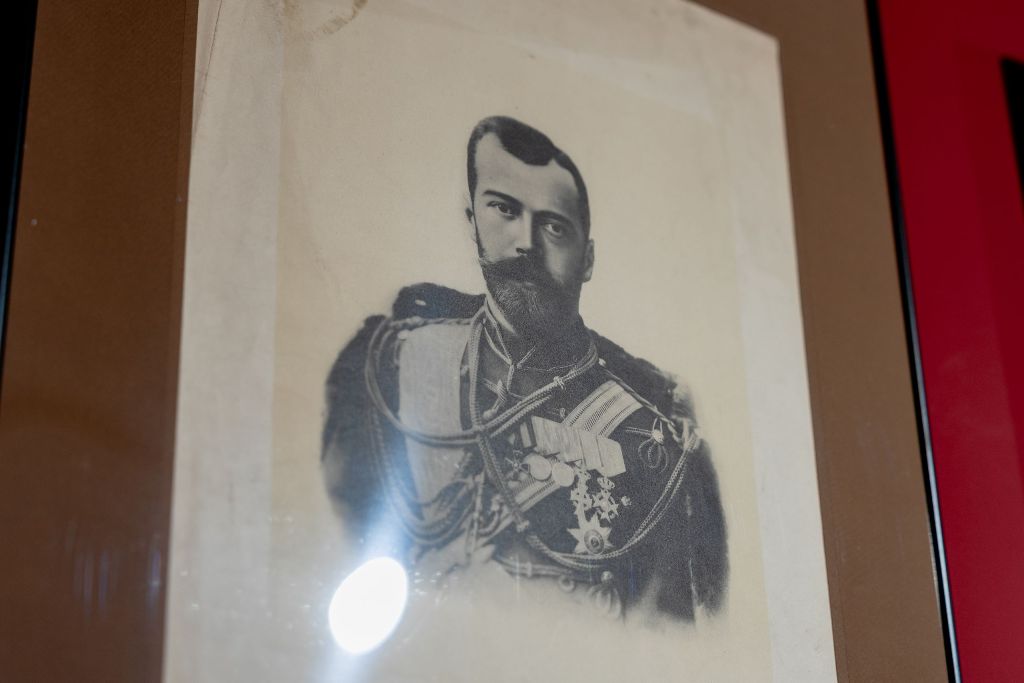
Portrait of Adjutant General Nikolai Nikolayevich Obruchev (1830–1904)
Artist: Nikolai Alexandrovich Yaroshenko (1846-1898)

Adjutant General Nikolai Nikolayevich Obruchev (1830–1904), tutor to Tsesarevich Nikolai Alexandrovich, reflects on the future Emperor Nicholas II

“Tsar Nicholas II was of average height – 5 feet and 7 inches (about 170 cm). His slender figure was impeccable in proportion to his build, shone with the exceptional elegance of his innate grace, which, combined with a military bearing, athletic perfection, and the gentle smoothness of the Sovereign’s movements, was the outward appearance of his Imperial majesty and Royal simplicity …

“The Tsar’s hair was golden-reddish in colour; somewhat darker than his always carefully trimmed, well-groomed beard. The features of his beautiful elongated face, which often shone with a charming smile, were his blue eyes. All who had the honour of ever seeing the Emperor up close, were struck by the bottomless depth of these wonderful eyes, in which, as in a mirror, his beautiful soul was reflected. His physical appearance was a worthy frame for his bright soul …

“I was always impressed with the mind and the wonderful spiritual qualities of my student and the ability of the Heir Tsesarevich to quickly grasp the essence of the subject being presented and his phenomenal memory. His English tutor said about his student: “He was very curious and diligent, causing even good-natured ridicule from others, and was overly keen on reading, spending most of his free time reading a book.” At the end of his education, the Heir Tsesarevich retained an interest in books throughout his life and continued to improve his knowledge by reading and talking with competent and outstanding people of his time and amazed them with his extensive knowledge on various subjects …”

The portrait of General N. N. Obruchev was painted in 1897 by the Russian artist of Ukrainian origin Nikolai Alexandrovich Yaroshenko (1846-1898)

After the revolution, the portrait of General Obruchev ended up in the collection of the Pavlovsk Palace Museum. In 1966, it was transferred to the N. A. Yaroshenko Memorial Museum-Estate in Kislovodsk.

© Paul Gilbert. 7 May 2024

***

CLICK HERE TO REVIEW THE CATALOGUE

Cross procession in memory of the Holy Royal Martyrs held in Ekaterinburg

PHOTO: “Transfer of the Romanov family to the Ural Soviet”. 1927. Artist Vladimir Nikolaevich Pchelin (1869-1941). From the Collection of the Sverdlovsk Regional Museum of Local Lore in Ekaterinburg.

On 30th April 2024, a Cross Procession along the “Path of Sorrows” honouring the memory of Emperor Nicholas II, Empress Alexandra Feodorovna, and their daughter Grand Duchess Maria Nikolaevna was held in Ekaterinburg. The day marked the 106th anniversary of their arrival in the Ural capital from Tobolsk.

Accompanying them were a number of servants: Dr. Evgeny (Eugene) Sergeyevich Botkin, Prince Vasily Alexandrovich Dolgorukov, maid Anna Stepanovna Demidova, valet Terentiy Ivanovich Chemodurov and boatswain Ivan Dmitrievich Sednev.

Every year on this day, the Ekaterinburg Diocese prayerfully celebrate the memory of the Holy Royal Martyrs. In churches, prayers are made to the Holy Imperial Family, and people also honour them by taking part in the Cross Procession along the “Ekaterinburg’s Path of Sorrow”, to the places associated with them on the day of their arrival in the Ural capital.

The clergy of the Ekaterinburg Diocese lead the Cross Procession along the “Ekaterinburg Cross Procession”, they are joined by Orthodox Christians, monarchists and other adherent’s to the last Tsar and his family. Together they prayfully walk the Path of Sorrows, walking in the footsteps of the Tsar, his family and their faithful servants, expressing their love and reverence for them.

The “Ekaterinburg Path of Sorrows” begin at the place where Emperor Nicholas II, Empress Alexandra Feodorovna and Grand Duchess Maria Nikolaevna disembarked from the train on 30th April 1918. Here, near the Shartash Railway Station (in 1918 – Yekaterinburg-II Station), a Memorial Cross and foundation stone were installed. A church in honour of the Valaam Icon of the Mother of God, one of the three miraculous icons that appeared during the reign of Nicholas II, will be constructed on this site.

The Cross Procession then proceeds along Vostochnaya Street, where the Church of the Icon of the Mother of God “Port Arthur” was erected at the intersection with Shevchenko Street. Here, according to the historical version, on 23rd May 1918, Tsesarevich Alexei Nikolaevich, Grand Duchesses Olga, Tatiana and Anastasia Nikolaevna arrived by train, placed under arrest, and then taken to the Ipatiev’s House.

In 2008, a memorial stone was laid at the site, and in 2017, the construction of the Church of the Icon of the Mother of God “Port Arthur” was completed, the consecration of the church was performed by Metropolitan Kirill of Yekaterinburg and Verkhoturye.

Not far from the railway station, in Nevyansky Lane, stands the Church in Honour of the Reigning Icon of the Mother of God. It was consecrated in 2011 by Metropolitan Kirill of Yekaterinburg and Verkhoturye. In 1918, the Yekaterinburg-I Station was located here, and it was here on 30th April 1918, that the train carrying the Tsar, his family and their servants stood for several hours. An angry mob had gathered at the station, forcing the train to travel to the Yekaterinburg-II Station.

PHOTO: view if the mosaic panel depicting the Holy Royal Martyrs, situated in the Imperial Room, a side-chapel located in the Lower Church of the Church on the Blood

The Cross Procession along the Path of Sorrows ends at the Church on the Blood on Tsarskaya Street. The Memorial Church was constructed on the site of the Ipatiev House, demolished in 1977. It was here, in the early morning hours of 17tj July 1918, that the Imperial Family and four faithful servants met their violent deaths at the hands of a firing squad and their martyrdom. Situted in the Lower Church there is the “Tsar’s Room” aka as “The Imperial Room” – the altar of the side-chapel in honour of the Holy Royal Martyrs, which was erected on the site of the murder room, with the blessing of Metropolitan Kirill of Yekaterinburg and Verkhoturye for the Tsar’s Days 2018.

© Paul Gilbert. 6 May 2024

My efforts to clear the name of Russia’s much slandered Tsar – Paul Gilbert

During the month of May, we celebrate the anniversaries of the birth of Emperor Nicholas II in the Alexander Palace on 19th May (O.S. 6th May) 1868, and the Holy Coronation of Nicholas II in Moscow on 27 May (O.S. 14 May) 1896.

In recognition of these historic events, I am reaching out to friends and followers for donations to help support me with my research on the life and reign of Nicholas II, and my personal mission to clear the name of Russia’s much slandered Tsar.

There are many web sites, blogs and social media pages dedicated to the Romanovs. However, Despite the fact that I am now retired, I continue to work very hard searching Russian archival and media sources to bring something new to the table every day. This includes First English translations of articles researched by a new generation of Russian historians; news on the Romanovs, their palaces, exhibitions, etc; + photos, videos and more.

Your donation helps support my research, the cost of translations, maintenance of my news blog Nicholas II. Emperor. Tsar. Saint, and the organization and promotion of Romanov themed events, such as the 1st International Nicholas II Conference.

If you enjoy all the articles, news, photos, and videos which I personally research, write and share, please help support my work in the coming year ahead by making a donation.

Click HERE to make a donation in US Dollars by CREDIT CARD or PAYPAL

Donations as little as $5 are much appreciated, and there is NO obligation!

Thank you for your consideration.

Another way that you can support my work, is by purchasing my semi-annual periodical SOVEREIGN, which features articles on the life and reign of Nicholas II, his family and the history of Imperial Russia. The articles featured in each issue are based on new research from Russian media and archival sources. The No. 12 Winter 2024 issue includes 17 articles, 130 pages. 114 Black & White photos. Price: $20 USD.

Click on the link below to review a list of the 17 articles featured in this issue, and to order your copy from AMAZON:

CLICK HERE for more details and to order SOVEREIGN No. 12 Winter 2024 issue

*Please note that the No. 13 Summer 2024 issue will be available in July 2024

© Paul Gilbert. 1 May 2025

Video tour of the Museum of Nicholas II and his Family in Tobolsk

A new video of the Museum of the Family of Emperor Nicholas II in Tobolsk was released last week, which gives those of us who cannot travel to Russia at the present time, a wonderful opportunity to see the interiors and exhibits featured in the former Governor’s House, where the Imperial Family were held under house arrest from August 1917 to April 1918.

The commentary is in Russian, however, this should not stop those who do not understand the language from viewing this interesting tour.

Below, I have provided notes on some of the more interesting exhibits and interior details featured in this video tour. The times noted below indicate the location of the detail in the video:

The video opens with host Andrei Smirnov walking through the historic area of Tobolsk – the former capital of Siberia.

At 0:31 – Andrei Smirnov turns and points to the Kremlin.

At 0:45 – Andrei enters through the entrance to the former Governor’s House. The wooden fence has recently been recreated around the property, which provides visitors with a more accurate historic recreation of what the Imperial Family saw when they were permitted outside for walks and exercise.

At 1:15 – Andrei enters the Governor’s House, which is today known as the Museum of the Family of Emperor Nicholas II. Inside he meets Andrei Ivanov, who serves as a guide for groups visiting the museum.

At 1:45 – a full view of a scale model of the Governor’s House and grounds.

At 2:05 – tiny figures of Nicholas II and his children, sitting outside the Governor’s House, while being photographed. At 2:30, you can also see the tiny figures of some of the Imperial Family’s retainers crossing over a wooden walkway leading from the Kornilov House to the Governor;s House.

At 2:07 – a view of the main entrance to the Governor’s House (right), the greenhouse (left) and a partial view of the garden that the Imperial Family used to walk and exercise. The garden was surrounded by a wooden fence.

PHOTO: Emperor Nicholas II and Empress Alexandra Feodorovna seated on the balcony located above the entrance to the Governor’s House.

At 2:09 – the camera zooms in to the entrance and the balcony, situated on the upper floor. It was here that the Imperial Family would sit and watch the town’s residents pass by on a daily basis. Many of them would stop and make the sign of the cross and bowing towards the Imperial Family. It was on this balcony in what is believed to the last photograph (above) of Nicholas II and Alexandra Feodorovna was taken in early 1918.

At 2:11 – a scale model of the Kornilov House, situated across the street from the Governor’s House. It was here, that most of the Imperial Families servants and retirnue were housed.

At 2:27 – the garden appears much larger in the scale model than it does in vintage black and white photographs. The Emperor enjoyed all forms of physical exercise and activity. He spent much time in this garden, sawing and chopping wood, he even dug a small duck pond.

At 2:42 – the Dining Room, where the Imperial Family along with several of their faithful retainers dined together. A photograph shows where each of them sat during meals. The photographs on the table show who sat where.

At 3:00 – vintage photographs of the Imperial Family dining together in Tobolsk during their house arrest, as well as during happier times at Tsarskoye Selo, Livadia, even the Imperial Yacht ‘Standart‘. While at home, they did not dine surrounded by opulence and splendour, as did their ancestors, nor did they eat gourmet meals. Instead they enjoying more simple Russian and English fare. For instance, in happier times, afternoon tea usually consisted of nothing more than fresh bread with butter and a few biscuits.

At 3:43 – a beautiful tablecloth protected under glass, bearing the monogram of ‘Nikolai Alexandrovich’, made by the monks of a local monastery.

At 4:04 – account books and invoices which kept a record of the expenses for food and other essential items used by the Imperial Family. On display are receipts for “milk, cream, bread and Porcini mushrooms . . .”

At 4:25 – in recent years, a memorial plaque dedicated to the Imperial Family has been installed on the façade of of the Museum of the Family of Emperor Nicholas II in Tobolsk.

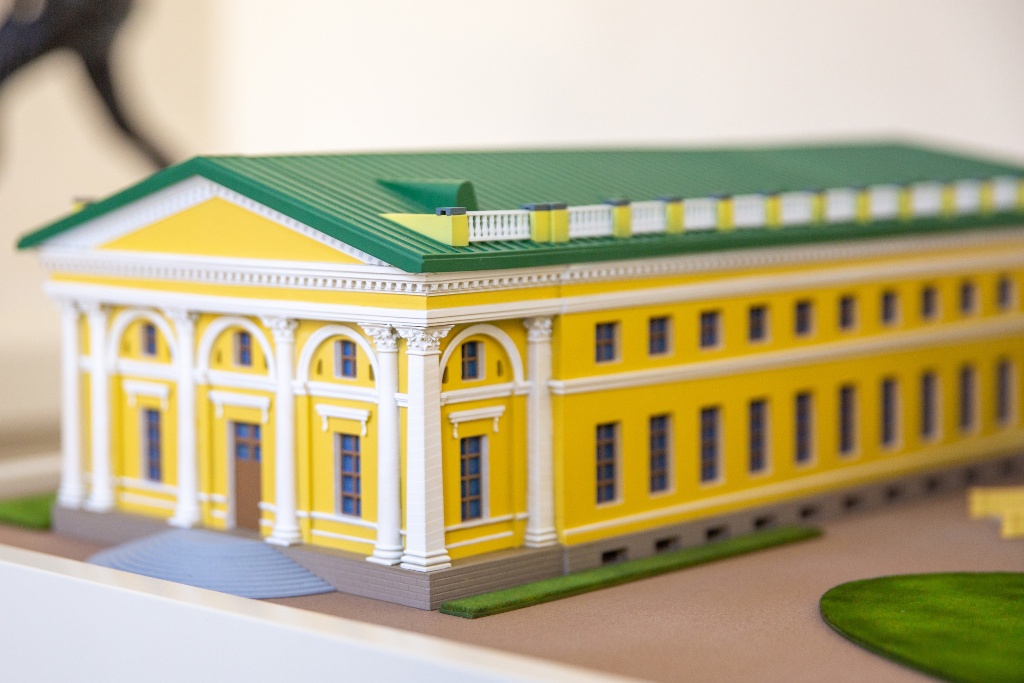
PHOTO: scale model of the Kornilov House, as seen in the video

At 4:27 – Andrei and the museum guide ascending the original staircase to the upper floor, where the Imperial Family slept.

At 4:50 – the staircase leads directly into the former Study of Emperor Nicholas II, who spent a lot of time here writing and reading.

At 5:09 – a piano which Empress Alexandra Feodorovna and the grand duchesses enjoyed playing in the evenings.

At 6:03 – Empress Alexandra Feodorovna’s room, where she spent much of her time doing embroidery and needlework, reading her books on religion, and resting. The original stucco ceiling has been preserved, it was cleaned and painted, however, one corner of the historic look can still be seen.

At 6:17 – this white natural silk shawl belonged to Empress Alexandra Feodorovna. The Empress’s wardrobe included several Manila shawls, one of which has been preserved to the present day and now in the collection of the museum.

At 6:39 – iconic photographs which depict Nicholas II and Alexei sawing and chopping wood in the garden, which supplied the Imperial Family with firewood during the cold Siberian winter of 1917/1918.

At 7:06 – the grand duchesses bedroom, which is filled with photographs of how they lived at both Tsarskoye Selo and Tobolsk.

At 7:28 – vintage photos of how the grand duchesses room looked during their stay decorate the wall. A folding army cot similar to what the grand duchesses slept stands against the wall.

At 8:11 – the bell tower of a nearby church is seen from a window of the upper floor, however, this is not the Church of the Annunciation of the Blessed Virgin, where the Imperial Family were temporarily allowed to walk to and worship in. This church was demolished by the Soviets in 1956.

At 8:44 – contemporary view of the facade of the former Governor’s House, now the Museum of Nicholas II and His Family, and a partial view of the recently reconstructed wooden fence which surrounded the house and grounds, where the Imperial Family were held under house arrest fromAugust 1917 to April 1918.

© Paul Gilbert. 30 April 2024

FURTHER READING:

*You can order this title from most AMAZON outlets, including
the United States, United Kingdom, Canada, Australia,
France, Germany, Spain, Italy, Netherlands, Poland, Sweden and Japan
*Note: prices are quoted in local currencies

CLICK HERE TO ORDER THE PAPERBACK EDITION @ $17.99 USD

English. Paperback. 246 pages with more than 80 Black & White photos

In August 1917, Russia’s last Tsar, his family and their retinue of faithful servants and retainers were exiled to Tobolsk in Siberia, where they were held under house arrest until April 1918.

The seven chapters in this book explore the eight months that the Imperial Family spent in captivity in the former mansion of the regional governor.

This book features the first Enlgish translations of Eugene Kobylinsky’s interrogation and Vasily Pankratov’s recollections, which provide twp very different eye witness accounts of the Tsar and his family.

In addition are chapters on the woman who photographed the Imperial Family in Tobolsk, the fate of the church where they worshipped, and the fate of both the Kornilov and Governor’s Houses.

This is the first book dedicated entirely to the Imperial Family’s stay in Tobolsk to be published in English. 

The fate of Tsesarevich Alexei’s Peugeot Bebe

PHOTO: 10-year-old Tsesarevich Alexei Nikolaevich, driving his motorcar, a Peugeot BP1 Bebe, accompanied by driver Adolfe Kegresse in front of the White Tower, situated in the Alexander Park, near the Alexander Palace at Tsarskoye Selo in 1914

Among the fleet of more than 50 motorcars that were used only by Emperor Nicholas II and members of his family was a fully functional, gasoline-powered Peugeot BP1 Bebe. The Peugeot Bébé was a line of the smallest cars that Peugeot produced between 1901 and 1919.

In 1912, the famous French automaker Peugeot released the Peugeot Bebe, designed by Ettore Bugatti, complete with a four-cylinder engine with a displacement of 855 cm3 and power of 10 hp. The model was first presented to the public at the Paris Motor Show in 1912.

The Peugeot Bébé came to Russia in May 1913 at the IV International Automobile Exhibition in St. Petersburg, an event that was attended by the Tsar. Its price was 4000 francs (with bodywork). In 1913 one franc was worth 0.37 kopecks, thus the pricetag for this motorcar worked out to 1900 rubles including taxes.

PHOTO: Tsesarevich Alexei riding along the pathways of the Alexander Park in the back seat of his Peugeot Bebe, 1914

Alexei’s paternal grandmother Dowager Empress Maria Feodorovna, bought a Peugeot BP1 Bebe motorcar for Tsesarevich Alexei on his nameday[1] – 18th October.

Alexei received the car on Sunday, 18th (O.S. 5th) October, 1914, and on Thursday, 22nd (O.S. 9th) October, Emperor Nicholas II wrote in his diary: “I took a brisk walk with Maria and Anastasia todat. We saw Alexei in the park, riding in a small motorcar presented to him on 5th October”.

PHOTO: 10-year-old Tsesarevich Alexei Nikolaevich, accompanied by driver Adolphe Kegresse in his Peugeot BP1 Bebe, near the White Tower in the Alexander Park. In the back seat is Grand Duchess Anastasia. Standing next to the motorcar is the French tutor Pierre Gilliard. 1914.

PHOTO: Tsesarevich Alexei taking his aunt Grand Duchess Olga Alexandrovna for a spin around the Alexander Park in his Peugeot BP1 Bebe. Standing in the background are Alexei’s sisters Grand Duchesses Anastasia and Maria Nikolaevna. 1914.

Since all members of the Imperial Family were avid amateur photographers, each of them had their own camera. Thousands of their personal photographs have survived to the present day, including several photographs in which Tsesarevich Alexei is photographed behind the wheel of his Peugeot Bebe.

Despite the fact that the motorcar was very light (350 kg) and had a length of about two and a half meters, the 10 hp engine allowed it to reach speeds of up to 60 km per hour.

Of course, Alexei did not “drive” his motorcar very often. His parents could not risk the safety of their hemophiliac son, since any injury received in an accident could be fatal for him. Therefore, they assigned the Tsar’s personal chauffeur Adolfe Kegresse (1879-1943) to accompany Alexei while he was out driving. His drives were restricted to the tree-lined alleys of the Alexander Park at Tsarskoye Selo, and he was only permitted to drive in first gear. According to witnesses, Alexei drove “quite confidently”. He often took his sisters and tutors on short drives.

PHOTO: after the 1917 Revolution, the Alexander Palace became a museum. Tsesarevich Alexei’s Peugeot BP1 Bebe was put on display, bext the wooden slide in the Marble Hall [aka the Mountain Hall]

Following the February 1917 Revolution, Tsesarevich Alexei’s Peugeot Bébé stood ownerless for a very long time. After Emperor Nicholas II’s collection of more than 50 motorcars housed in the Imperial Garage’s at Tsarskoye Selo, St. Petersburg, Moscow, Livadia and Mogilev were “confiscated” by the Provisional Government, the Peugeot Bebe remained at Tsarskoye Selo, where it was placed on display in the Marble Hall [aka the Mountain Hall] of the Alexander Palace, and removed from the lists of the Provisional Government Motor Depot.

In photographs taken in the 1920s of the Marble Hall in the Alexander Palace, Alexei’s motorcar is clearly visible, sitting next to the wooden slide, constructed in 1833, at the behest of Emperor Nicholas I and his wife Empress Alexandra Feodorovna.

PHOTOS: after the 1917 Revolution, the Alexander Palace became a museum. Tsesarevich Alexei’s Peugeot BP1 Bebe was put on display, bext the wooden slide in the Marble Hall [aka the Mountain Hall]

There is no doubt that the Bolsheviks considered Tsesarevich Alexei’s Peugeot Bébé as nothing more than an extravagant “toy” and of no historical value. The motorcar stood in the Alexander Palace until 1929.

In 1930, Alexei’s Peugeot BP1 Bebe was transferred to the collection of the Leningrad Palace of Pioneers, also housed in the Alexander Palace. During the 1930s, pioneers who were members of the motoring club learned to drive in the Tsesarevich’s motorcar. In 1942 – during the Great Patriotic War – a bomb hit the Anichkov Palace [where the Peugeot Bébé jad been moved], and Tsesarevich Alexei’s motorcar was irretrievably lost.

NOTES:

[1] Russians celebrate name days separately from birthdays. Celebrations range from the gifting of cards and flowers to full-blown celebrations similar to birthday parties. Such a celebration begins with attendance at the divine services marking that day (in the Russian tradition, the All-Night Vigil and Divine Liturgy), and usually with a festive party thereafter. The Russian Imperial family followed a tradition of giving name-day gifts.

Before the October Revolution of 1917, Russians regarded name days as important as, or more important than, the celebration of birthdays, based on the rationale that one’s baptism is the event by which people become “born anew” in Christ.

© Paul Gilbert. 27 April 2024

Update on the restoration of the Imperial Railway Pavilion at Tsarskoye Selo

PHOTO: the Imperial Railway Pavilion [aka as the The Tsar’s Train Station] at Tsarskoye Selo and it’s architect Vladimir Aleksandrovich Pokrovsky (1871-1931)

NOTE: links to other interesting articles are highligted in red below – PG

Further to my August 2023 announcement that the Imperial Railway Pavilion at Tsarskoye Selo would be restored, I am pleased to provide the following update, which includes photos [taken in March 2024] of the progress being made on this important historic project, one which is closely connected to Emperor Nicholas II.

The building is currently hidden under scaffolding and outdoor construction hoarding, as experts carry out the restoration of the facade, it’s historic elements and install a new roof. This work can be seen in the photos published in this article, all of which were taken a few weeks ago.

The Imperial Railway Pavilion [aka as the Tsar’s Train Station] is a registered cultural heritage site of federal significance, an act which saved the building from destruction. Despite the fact that the building has not been used since the 1930s, it has been preserved in fairly good condition. The unique building will be restored to its original. In addition to the building itself, the 200-meter passenger platform and canopy will be reconstructed and the unique paintings which once decorated the walls and ceilings of the interior, and which have been partially revealed by restorers, will be revived.

The next stage, after a detailed study, will be the design, and then the restoration. The concept of using the building as a museum after the completion of the work will also be worked out.

The restoration work on the Imperial Railway Pavilion is part of a comprehensive development proect which includes the nearby Feodorovsky Gorodok, and other buildings to their original pre-revolutionary look.

The original wooden Imperial Railway Pavilion and the covered platform were constructed in 1895. They were intended to receive Imperial Trains arriving at Tsarskoye Selo through the Aleksandrovskaya Station, which is situated north of the pavilion on the St. Petersburg-Warsaw railway line.

On 25th January 1911, the wooden station was destroyed by fire. It was decided to erect a new stone building on the same site by the architect Vladimir Aleksandrovich Pokrovsky (1871-1931) with the participation of a graduate of the Academy of Arts Mikhail Ivanovich Kurilko (1880-1969).

The new pavilion was designed in the Neo-Russian Style beloved by Nicholas II. The Fepdorovsky Gorodok, the Feodorovsky Sovereign Cathedral, the Sovereign’s Martial Chamber, and the barracks of His Majesty’s Own Convoy were all built in the same style. Together, they form an architectural ensemble in which motifs of ancient Russian architecture were used. In addition, the planning and design of the Imperial Railwat Pavilion was influenced by the Imperial Railway Station, which has survived to this day at the Vitebsky Railway Station in St. Petersburg.

The front part of the building consists of three halls. In the center there is a square lobby with a front porch, large enough to accomodate automobiles and carriages. The halls on the sides of the vestibule were intended for the Emperor and his retinue: on the south side was the Tsar’s Hall, on the north side – the Retinue Hall. A metal canopy was built above the platform and tracks, adjacent to the eastern façade of the station.

Paintings became an unusual decoration of the walls and ceilings of the building’s interior. They were made using a tempera-glue technique on plaster. A unique painting has been partially preserved [see photo below] to this day, which will allow experts to restore it in full to its original.

During the First World War of 1914-1917, the Imperial Railway Pavilion was used to receive wounded Russian soldiers, who were transferred to the hospital established by the Empress Alexandra Feodorovna in the Feodorovsky Gorodok. And after the Revolution of 1917, it was renamed the Uritsky Pavilion and was used as a dormitory for workers of the Track Repair of the Mechanical Plant.

The Tsarist emblems were removed from the building’s facade, and the ceremonial halls were divided by walls. The building began to lose its former grandeur and ceremonial appearance: the porch was adapted for the kitchen, furniture, lamps, objects of decorative and applied art were lost.

Now in the 21st century, a new life awaits the former Imperial Railway Pavilion. Following completion of the reconstruction of the building and restoration of the interiors, the Board of Trustees of the Tsarskoye Selo Station Foundation, will discuss proposals for the future use of the building.

© Paul Gilbert. 16 April 2024

Watercolours by Grand Duchess Olga Alexandrovna sell for 60 million rubles

On 14th April 2024, a collection of 43 watercolors, painted by Grand Duchess Olga Alexandrovna, sold at a Moscow auction for 60 million rubles [$640.000 USD] – which is double their estimated value.

For the first time, a collection on this scale of the grand duchess’s works went under the hammer at the Moscow Auction House. The total value of the collection was estimated at 30 million rubles [$325,000 USD]. The authenticity of each work was confirmed by art historians and experts of the Tretyakov National Research Institute in Moscow.

It was hoped that the entire collection would be purchased by one of Russia’s wealthy oligarchs or a corporation and donated to a museum, however, most of the watercolours were snapped up by private collectors.

During the auction, several records were set for Olga Alexandrovna’s works. One of her watercolor’s “From the Service” of the 1920s and 1930s” sold for 7 million rubles [$74,500 USD], while a second watercolour “Landscape of a Provincial Town” sold for 3.1 million rubles [$33,000 USD].

Prices such as this will most certainly increase demand for Olga’s paintings, as well as increase their price, when they are offered to the art market, both in Russia and the West.

Grand Duchess Olga Alexandrovna (1882-1960) painted more than 2,000 watercolours during her lifetime. She was 78-years-old, when she died in in Toronto, Canada, she was the last Grand Duchess of Russia.

© Paul Gilbert. 15 April 2024

‘The Tsar’s Family: Love and Mercy’ exhibit opens at Faculty of Humanities, Moscow

s

On 11th April 2024, the exhibition ‘The Tsar’s Family: Love and Mercy’ opened at the Higher School of Economics, Faculty of Humanities in Moscow.

The participants of the opening of the exhibit enjoyed a performance by the choir of the Sretensky Theological Academy, followed by a guided tour of the exhibition, by one of the curators of the project, Mikhail Googe.

The exhibition presents more than 200 historical photographs depicting the life and service of Emperor Nicholas II and his family. The exhibition is divided into three themes:

• Love and family: the love shared by Emperor Nicholas II and Empress Alexandra Feodorovna, which was extended to their five children.

• State service of Nicholas II: the patriotic duties of the last Russian emperor, his economic reforms and the welfare of his subjects.

• Works of mercy: charitable and patronage activities of the Imperial Family.

***

The photo project The Tsar’s Family: Love and Mercy was created in 2016 by the Sretensky Monastery in Moscow. The travelling exhibition has already been presented in Serbia, Germany, Italy, Canada, Argentina, New Zealand, South Africa, Romania, Croatia, Montenegro, Bosnia and Herzegovina, Macedonia, and the Czech Republic. The exhibition has also been presented in many cities of Russia: Moscow, Voronezh, Kursk, Ryazan, Penza, Krasnodar, Belgorod, Velikiye Luki, etc.

*As I have noted in similiar posts, I support any initiative – big or small – to help keep the memory of Nicholas II and his family alive in post-Soviet Russia – PG

© Paul Gilbert. 12 April 2024

State Russian Musuem receives collection of 180 watercolours by Grand Duchess Olga Alexandrovna

PHOTO: Grand Duchess Olga Alexandrovna, self portrait. 1920
from the Collection of the State Russian Museum, St. Petersburg

On 2nd April 2024, the State Russian Museum[1] in St. Petersburg, added 180 watercolours, painted by Grand Duchess Olga Alexandrovna (1882-1960) to their funds. The collection was handed over to the museum, by the Ministry of Culture of the Russian Federation, during a press conference, held at the Mikhailovsky Palace[1].

The paintings were donated to the museum in November of last year. The generous donation included an additional 46 items from the family of Emperor Alexander III, including drawings, icons, photographs, personal items and jewelry, all of which will be carefully studied by professional art historians of the State Russian Museum.

The collection was in the possession of Olga Nikolaevna Kulikovsky-Romanov (1926-2020), the third wife of Grand Duchess Olga’s eldest son, Tikhon Nicholaevich Kulikovsky (1917-1993). The donation to the museum was made possible thanks to the St. Catherine’s Charitable Foundation and the Ministry of Culture of the Russian Federation.

The priceless collection by the youngest daughter of Emperor Alexander III and Empress Maria Feodorovna, and the younger sister of Emperor Nicholas II, included watercolours created in different years of the Grand Duchess’s life: Russian landscapes, family sketches, everyday scenes, bright still lifes and views of the places in which Olga Alexandrovna lived. Her works are represented on both canvas, as well as watercolour sketches in albums.

During her years in Russia, the Grand Duchess patronized the Imperial Society of Russian Watercolorists. Her watercolours were represented in exhibitions organized by the Kuindzhi Society of Artists, who helped to organize exhibitions of the works of young Russian artists.

During the First World War, Olga Alexandrovna opened the First Evgenievsky Hospital at her own expense, which was under the auspices of the Russian Red Cross. It was here, where she worked as a nurse, bandaging wounds, and cared for the wounded soldiers. Even at the front, the Grand Duchess devoted her free time to painting – her watercolors depict scenes in the hospital and portraits of officers. Selected sketches from this period are also included in the collection.

The art collection also includes photo albums of the Romanov family, personal objects and icons. Two of the icons were painted by the Grand Duchess for her son Tikhon, who later created the Foundation of Her Imperial Highness Grand Duchess Olga Alexandrovna, which provided humanitarian aid to Russia. His portrait by the Grand Duchess is also included in the collection.

For the first time in the history of the museum, the collection will be kept entirely in the custody of one specialist, rather than divided into specialized departments. The indivisibility of the collection is necessary for the study of the objects and their connection to in the Russian Imperial Family.

The State Russian Museum are already making plans to host an exhibition showcasing the collection of 180 watercolour by Grand Duchess Olga Alexandrovna, plus the additional 46 items from the family of Emperor Alexander III. A date for the exhibition has yet to be announced.

NOTES”

[1] The State Russian Museum was officially opened on 19th [O.S. 7th] March 1898, as the Russian Museum of His Imperial Majesty Alexander III, who was a connoisseur of Russian art. The museum was established in the Mikhailovsky Palace, a splendid Neoclassical residence of Grand Duke Michael Pavlovich (1798-1849).

The museum was established on 13th April 1895, by order of Emperor Nicholas II to commemorate his father, Alexander III. Its original collection was composed of artworks taken from the Hermitage Museum, the Alexander Palace, and the Imperial Academy of Arts.

After the Russian Revolution of 1917, the museum and its collection were nationalized and renamed the State Russian Museum. Today, the museum is the world’s largest depository of Russian art with more than 400,000 items.

© Paul Gilbert. 9 April 2024

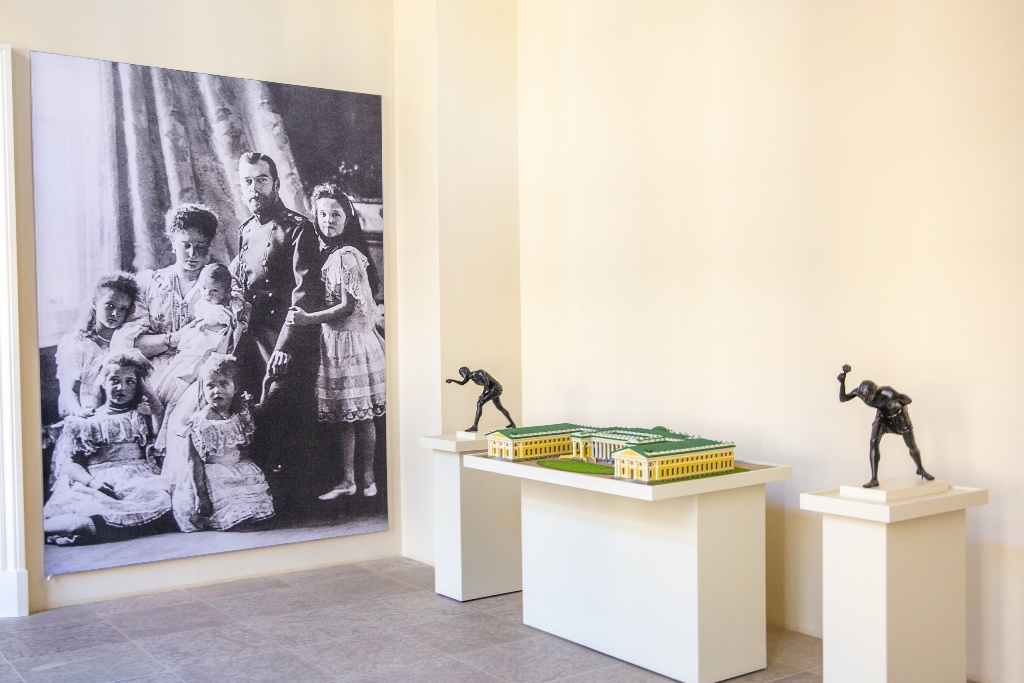
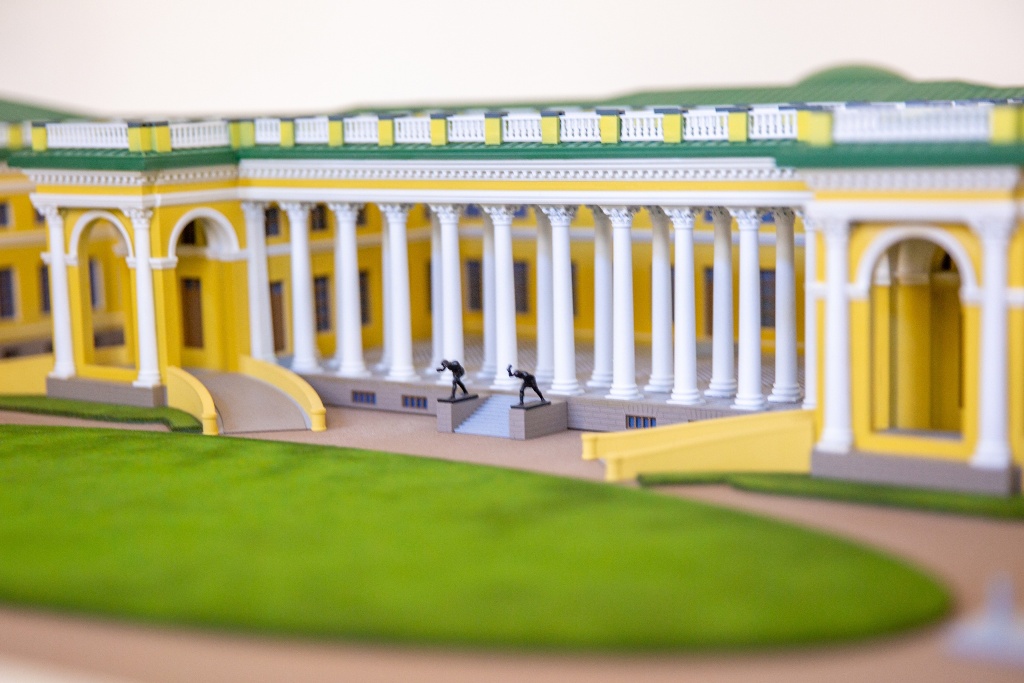
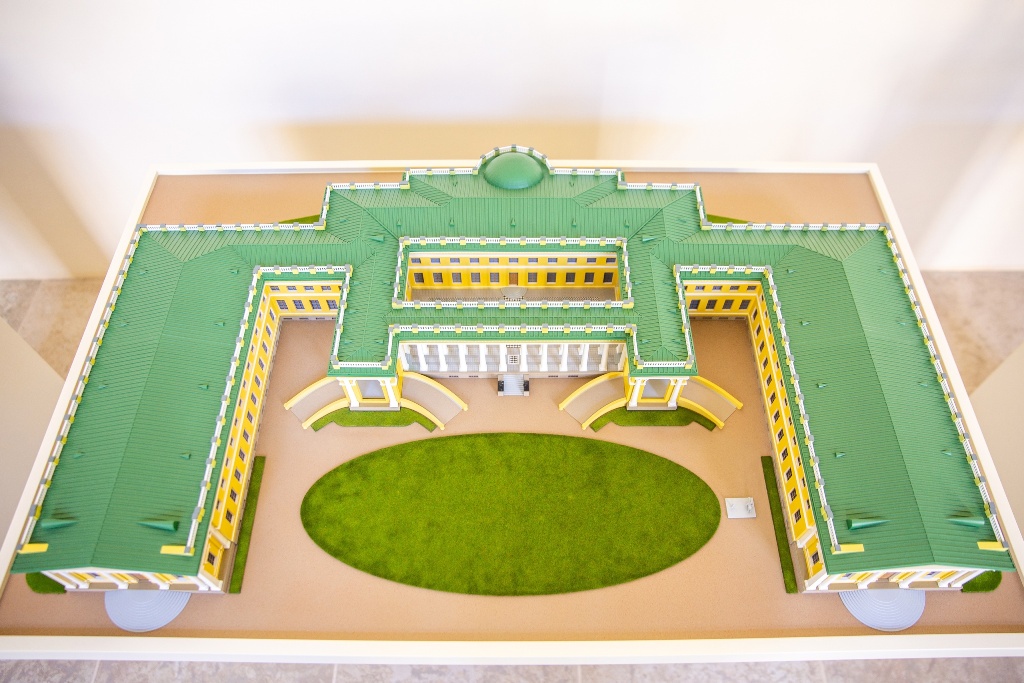
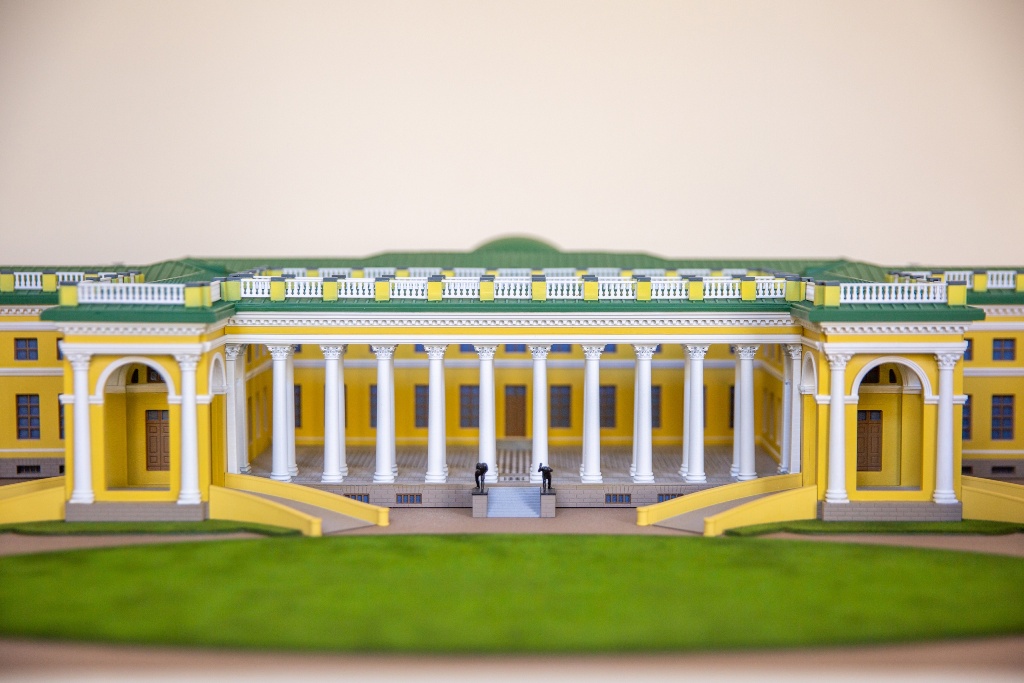
Western Wing of the Alexander Palace to open next year

PHOTO: view of the Western Wing of the Alexander Palace, Tsarskoye Selo

According to the TASS News Agency, the Western Wing of the Alexander Palace at Tsarskoye Selo is now scheduled to open to the public in 2025.

Recall that the Eastern Wing of the palace, which houses the private apartments of Emperor Nicholas II and Empress Alexandra Feodorona, reopened to the public in 2021, after an extensive restoration which began in the autumn of 2015.

The Soviet navy in the Western Wing

In 1951, by a government decree, the Alexander Palace was transferred to the Ministry of Defense of the USSR. The Naval Department used the building as a top-secret, submarine tracking research institute of the Baltic Fleet. As a result, the former palace would be strictly off-limits to visitors for the next 45 years.

When it appeared that the Soviet Navy intended to vacate the complex, the Alexander Palace was included in the 1996 World Monuments Watch by the World Monuments Fund (WMF).

In the summer of 1997, a permanent exhibition dedicated to the Nicholas II and his family was opened in the Eastern Wing of the palace. It was at this time that my annual Romanov Tour became the first group from the West to visit the interiors of the Alexander Palace.

The rest of the palace, including remained under the administration of the Naval Department, who continued to occupy the Western Wing. It is due to their occupancy of this section of the palace, that very few of the original interiors and their elements survived.

It was not until October 2009, according to the order of the Federal Property Management Agency, that the Alexander Palace was placed under the administration of the Tsarskoye Selo State Museum Reserve.

Current restoration of the Western Wing

During her recent press conference, the Director of the Tsarskoye Selo Museum-Reserve Olga Taratynova told the Russian news agency, that “restoration work continues in the Alexander Palace. A huge effort is now being made to complete work on the interiors of the Western Wing of the palace.” She further noted, that “the largest part of the work will be completed by the end of this year, and that the opening of the entire Alexander Palace will not take place until next year (2025).

Upon completion, the Alexander Palace will become a multifunctional museum complex. The Western Wing will include exhibition halls, halls for temporary exhibitions, halls for research work and conferences, as well as a library and a children’s center.

This latest development will be welcome news to those who have been following the progress of the restoration of the Alexander Palace, and anxiously awaiting it’s completion. It is my understanding, that future restoration projects include a restoration of the the Children’s House and Island, and the restoration of the Children’s Rooms, situated on the second floor of the Eastern Wing of the palace. No time frame has been given for these projects, therefore, we could be waiting years before their completion.

© Paul Gilbert. 8 April 2024