On this day – 17th July 1998 – Nicholas II was buried in St Petersburg
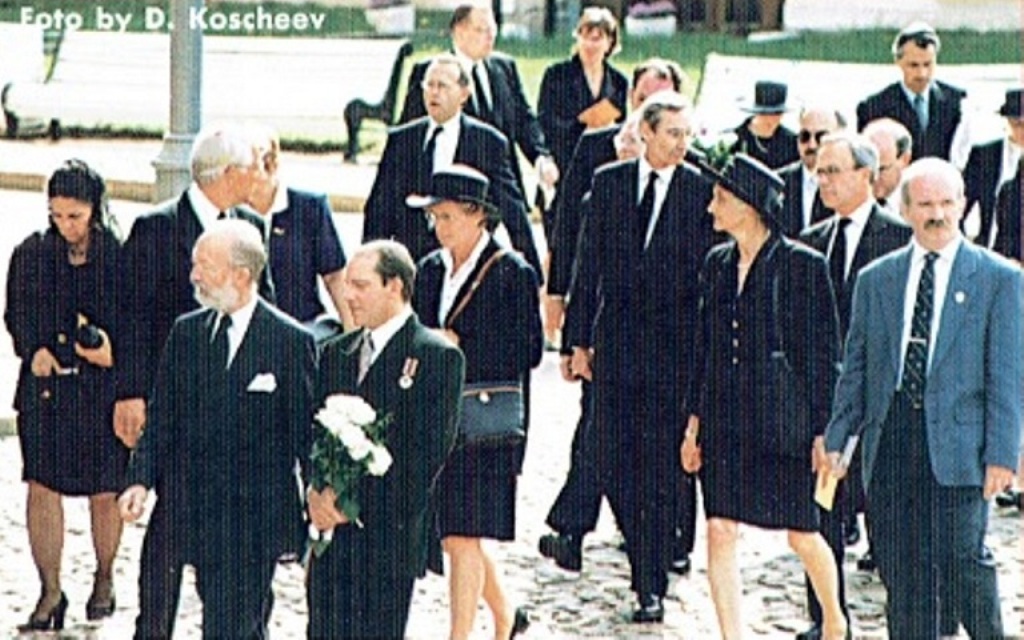
PHOTO: Paul Gilbert (far right) joins 50 Romanov descendants, at the funeral of Nicholas II, in St. Petersburg on 17th July 1998. Photo by D. Koscheev, from the book The Last Bow (1999)

It was 25 years ago today – 17th July 1998 – that the earthly remains of Emperor Nicholas II, his wife, three of their five children and their four faithful retainers were buried in St. Catherine’s Chapel – a side chapel of the SS Peter and Paul Cathedral in St. Petersburg.

I was honoured to attend this historic event, thanks to the kindness of a descendant of Grand Duke Konstantin Konstantinovich, who was living in New York at the time. It was through her efforts that she arranged for me to attend the funeral in St. Petersburg, through the Director of the Romanov Family Association in Russia Ivan Artsishevsky (1950-2021), who served as head of the working group on the reburial of Emperor Nicholas II, his family and servants.

It is interesting to note that the only Romanov descendants who did not attend the burial were Princess Maria Vladimirovna, her son Prince George Mikhailovich-Hohenzollern, and her mother Princess Leonida Georgievna (1914-2010). To this day, Maria and her son do not recognize the Ekaterinburg Remains as those of Emperor Nicholas II and members of his family.

Just prior to the funeral on the 17th, I was invited to join more than 50 Romanov descendants in the lobby of the Astoria Hotel. It was here that I met Princes Nicholas (1922-2014) and Dimitri (1926-2016) Romanovich Romanov. From here, I travelled on a special coach with the Romanov’s to the Peter and Paul Fortress. I recall the coach driving along the Embankment which was lined on both sides by thousands of people who had gathered to watch the drive past. Many of them held icons of the Holy Royal Martyrs, others kneeled on the street, making the sign of the cross as the coach passed.

By the time the coach arrived at the Fortress, hundreds of people had assembled on the square in front of SS Peter and Paul Cathedral. The Romanov family descendants walked in silence along the path into the Cathedral. Bells tolled from the SS Peter and Paul Cathedral and soldiers gave a 19-gun salute.

Yeltsin attends, calls for repentance
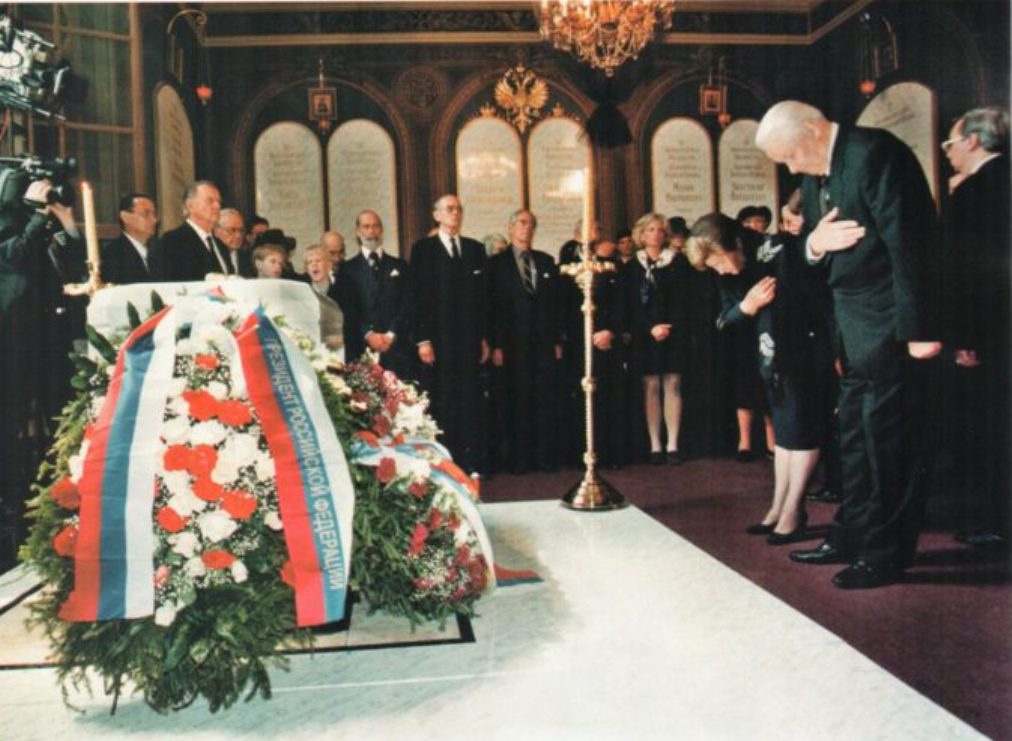
PHOTO: Russian president Boris Yeltsin (1931-2007) and his wife Anastasia Iosifovna Yeltsina bow their heads at the crypt of the last Russian Emperor and his family

The Romanov family members were joined by Russian president Boris Yeltsin, Prince Michael of Kent of Great Britain, family members of the Oldenburg dynasty from Germany and diplomats from more than 50 countries.

Addressing the funeral ceremony, Yeltsin described the murder of the Russian Imperial family as one of the most shameful pages in Russian history, and urged Russians to close a “bloody century” with repentance. “Today is a historic day for Russia. For many years, we kept quiet about this monstrous crime, but the truth has to be spoken,” he added.

Yeltsin said he had no choice but to attend this funeral in consideration of the fact that the funeral presented a historical chance for the Russian people to exculpate themselves from the sins of their fathers, and the sins of the murder of their Romanov family

St. Catherine’s Chapel
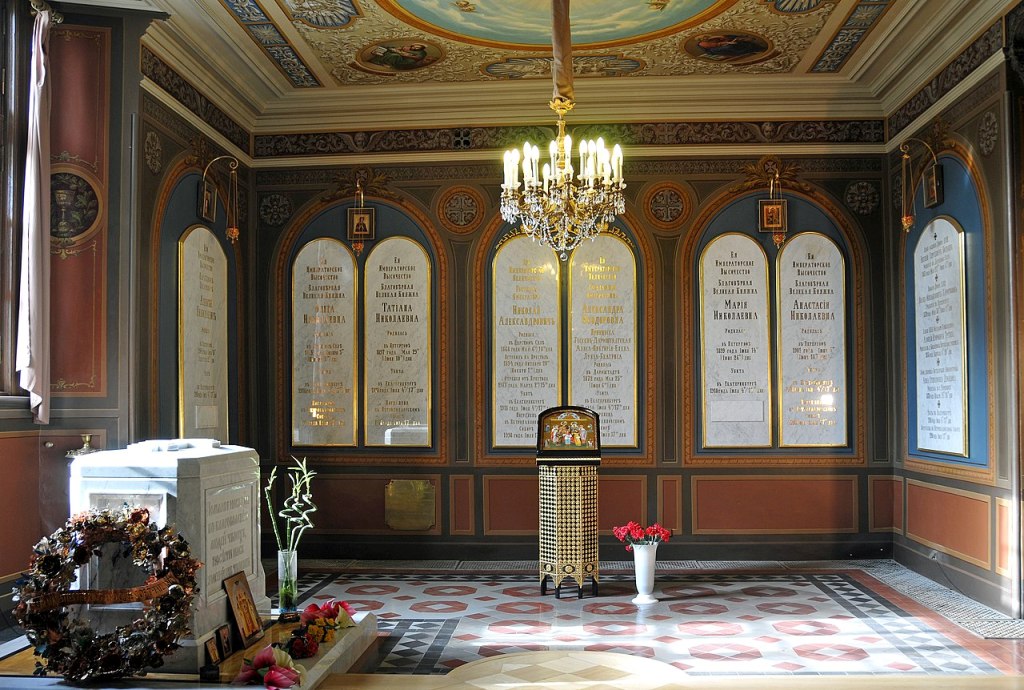
PHOTO: view of St. Catherine’s Chapel, the current resting place for Emperor Nicholas II and his family

In the weeks leading up to the burial, a complete reconstruction of St. Catherine’s Chapel was carried out. In 1997, specialists from the Restorer and Olko firms carried out the work, which included painting the walls and plafond of the chapel. A two-tiered crypt (depth 1 m 66 cm, length 2 m 70 cm, width 1 m 70 cm) was built near the only window in the southern part of the chapel. The seal-tight crypt was waterproofed, thus providing ideal conditions for the preservation of the remains.

On the lower tier are the coffins of the family’s four faithful retainers, and on the upper tier are the coffins of the Emperor, Empress and their three daughters Grand Duchesses Olga, Tatiana and Anastasia. An openwork lattice divides the crypt into two parts. The coffins were made of Caucasian oak, their surface is covered with a wax-turpentine mixture. Inside, the coffins are upholstered with copper sheet, and on top – a cover of white velour on silk white cords. On the lid of the coffin of Emperor Nicholas II there is a cypress cross (grown in the garden of the Livadia Palace in Crimea) and a model of a sword based on a 1909 model. The rest of the coffins of members of the Imperial Family have lids decorated with bronze, gilded, crosses. The coffins of the servants are decorated with silver-plated eight-point Orthodox crosses. As the valet Aloysius Trupp was a Catholic, a four-point cross decorates his coffin. The side decoration of the coffins consisted of: a brass board engraved (on which the names, title, place of birth and place of death (according to the Julian calendar) and the date of burial are embossed), as well as double-headed eagles for the seven coffins of members of the Imperial Family. Each coffin was secured with brass (non-oxidizing) screws. Lead plates were laid in the lid and in the coffin itself along the perimeter at the place of their connection, making them airtight after closing the coffin.

The coffins were made in strict accordance with the historical traditions of the burial rites of Russian monarchs. After the burial, the crypt was covered with reinforced concrete slabs, through the rings of which a steel chain closed on the lock was threaded. A temporary wooden tombstone was erected over the grave, and later replaced by a marble one. Memorial plaques with epitaphs were placed on the walls of the chapel. Later, the historical coating of the aisle, Mettlach tiles – was also restored.
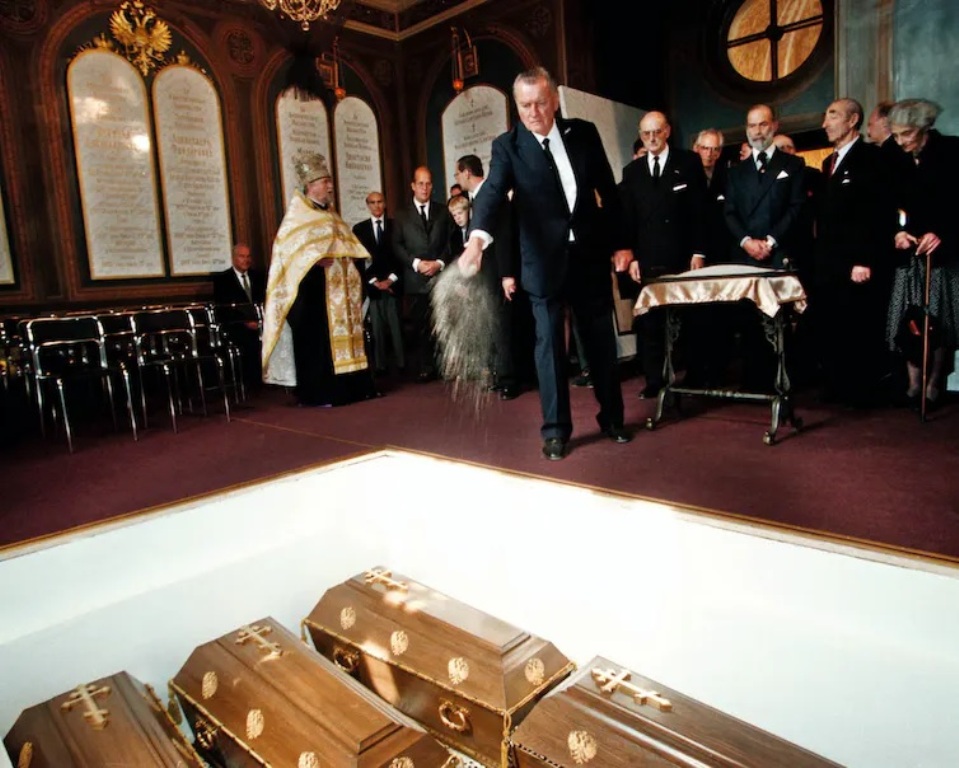
PHOTO: the Head of the Russian Imperial House Prince Nicholas Romanovich (1922-2014) throws a handful of earth into the grave

At the present time, the crypt in the Catherine Chapel holds a total of 9 coffins:

  1. Emperor Nicholas II Alexandrovich (burial of remains on 17th July 1998)
  2. Empress Alexandra Feodorovna (burial of the remains on 17th July 1998)
  3. Grand Duchess Olga Nikolaevna (burial of the remains on 17th July 1998)
  4. Grand Duchess Tatiana Nikolaevna (burial of the remains on 17th July 1998)
  5. Grand Duchess Anastasia Nikolaevna (burial of the remains on 17th July 1998)
  6. family-physician Dr. Eugene Botkin (burial of remains on 17th July 1998)
  7. maid Anna Demidova (burial of remains on 17th July 1998)
  8. valet Aloysius Trupp (burial of remains on 17th July 1998)
  9. cook Ivan Kharitonov (burial of remains on 17th July 1998)

It was not until 2007, that the remains of Tsesarevich Alexei Nikolaevich and Grand Duchess Maria Nikolaevna, which consisted of 44 bone fragments, were discovered in a second grave at Porosenkov Log, near Ekaterinburg. In December 2015, their remains were transferred from the State Archives of the Russian Federation to the Lower Church of the Transfiguration Cathedral of the Novospassky Monastery in Moscow, where they remain to this day.

The fate of the Ekaterinburg Remains currently rests with the Bishops’ Council of the Russian Orthodox Church. Once the members of the Council have confirmed the authenticity of the Ekaterinburg Remains as those of the Imperial Family, it is then that the entire family’s remains will be buried together.

The question of whether or not the Imperial Family’s remains are buried together in St. Catherine’s Chapel remain a mystery. The chapel is part of SS Peter and Paul Cathedral, which is a museum, whereby an admission must be paid to enter. No person should ever have to buy a ticket to enter a House of God! So, will the Imperial Family be reburied with great pomp and ceremony in another location? There has been numerous suggestions of reburying their remains in a newly built cathedral in Ekaterinburg or the Feodorovsky Sovereign Cathedral – Nicholas II’s favourite church at Tsarskoye Selo. Please click HERE to read my article The Fate of the Ekaterinburg Remains, in which I discuss this further.

The Burial of the Romanovs | 17 July 1998 VIDEO – duration: 26 minutes

© Paul Gilbert. 17 July 2023
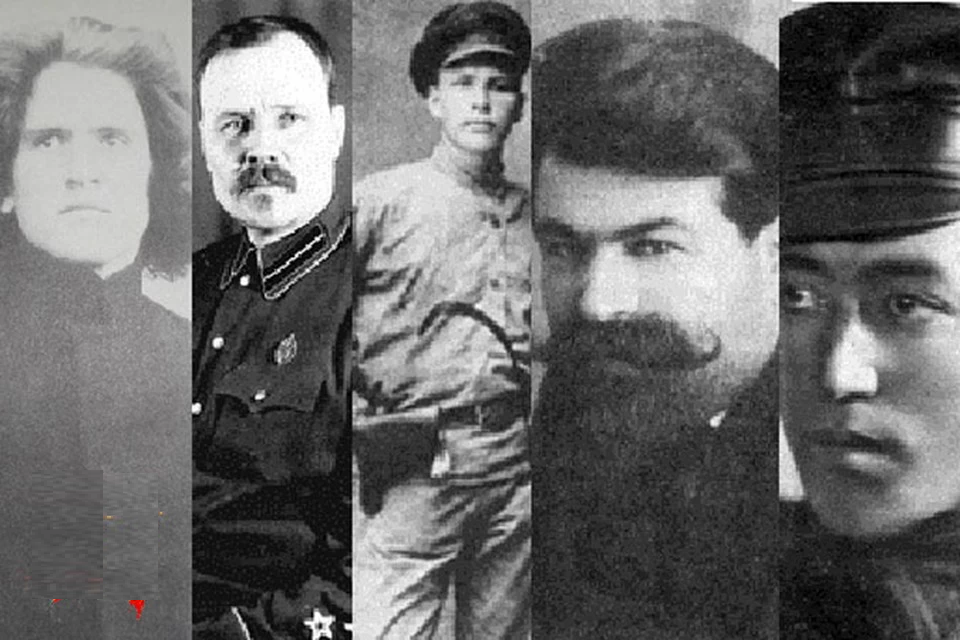
The fate of the regicides who murdered Nicholas II and his family

PHOTO: Pyotr Ermakov, Mikhail Medvedev-Kudrin,
Pavel Medvedev, Yakov Yurovsky and Grigory Nikulin

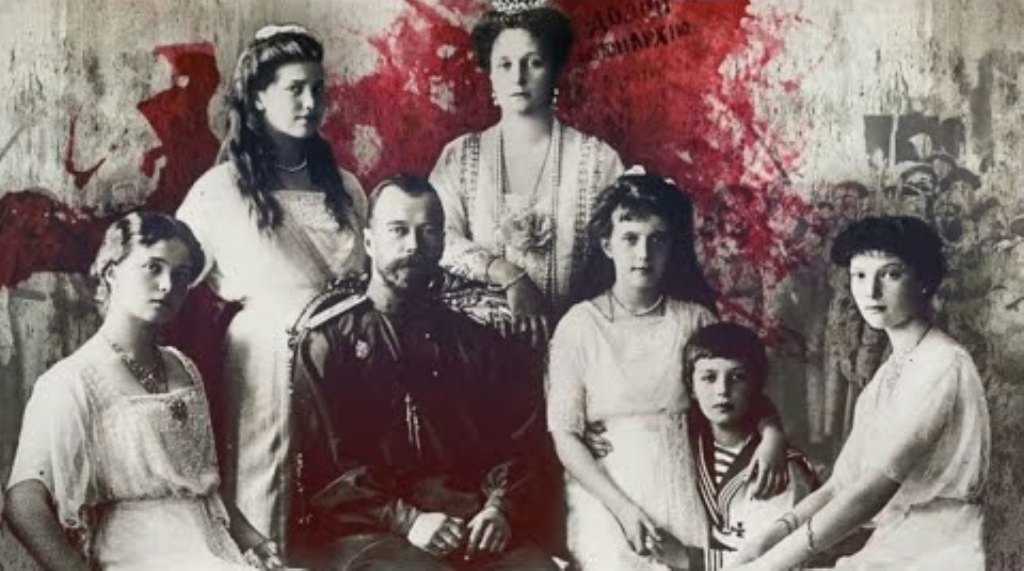
The murders of Emperor Nicholas II, his family and four faithful retainers in Ekaterinburg on 17th July 1918, remains one of the darkest pages in 20th century Russian history. To this day, historians and investigators are not entirely sure of all those who participated in the regicide, only the names of some of them are known – those who admitted that they were a participant in the regicide, or those of whom were identified by witnesses. The fate of many of these regicides also ended tragically, their lives being overtaken by disease or an equally violent death.

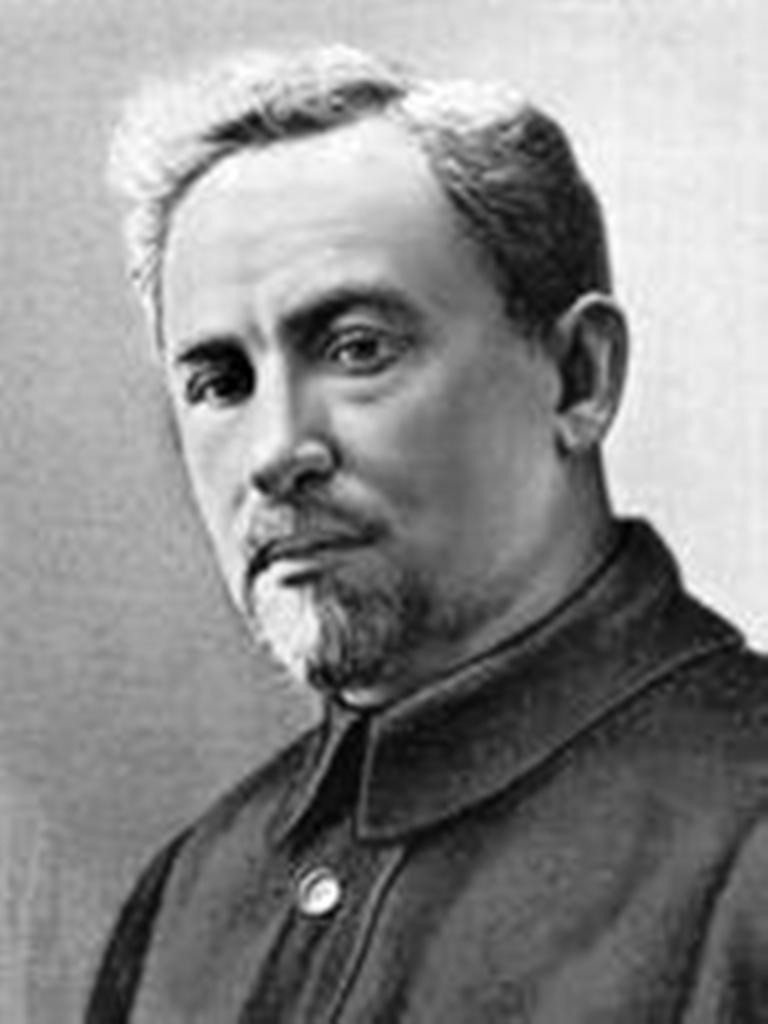
It is known that the direct leader of the liquidation of the Imperial family was Yankel Khaimovich, better known as Yakov Yurovsky. He lived until 1938 and died of a duodenal ulcer. In Soviet times, they said that his son was not responsible for his father’s crime, but the apple didn’t fall far from the tree in the Yurovsky family. The eldest son Alexander, ended up in the Butyrka prison in 1952, but was released a year later. The daughter Rimma was also arrested in March 1938. She served a sentence in the Karaganda forced labour camp until 1946. Yurovsky’s grandchildren were not spared either, dying under mysterious circumstances. Two died after falling from a roof, while the other two were burned to death in a fire. It is worth recalling that the blood of Tsar Nicholas II was spilled by Yurovsky. He himself recalled: “I fired the first shot and killed Nikolai on the spot.”

The leading Russian playwright and historian Edvard Radzinsky was most intrigued by the idea that there was photographic evidence of the murdered remains of the Imperial family.

PHOTO: Yakov Yurovsky

“Yurovsky was a professional photographer,” he says. “He confiscated a camera from the Tsarina. It was impossible for him to take pictures immediately after the execution — he was a little bit crazy, they continued to be alive, they continued to kill them. But afterwards, he had three days. He had an opportunity to take a camera to the grave. It is impossible for a man who likes pictures not to take such pictures.”

Could there be any truth to his idea, or did Radzinsky give birth to yet another Romanov conspiracy theory? Radzinsky is a playwright, and perhaps his creative imagination got the better of him, but who knows? Yurovsky had already proven what he was capable of, so anything was possible! There is also the possibility that Yurovsky took such photos to take with him when he left for Moscow after the murders, as evidence to Lenin and Sverdlov that the regicide had been carried out?

“IF” such photographs ever existed, we can surely assume that they would have been destroyed. Lenin was both crafty and careful not to leave a paper trail that would implicate him in dubious affairs – murder being one of them.

Click HERE to read my article Yakov Yurovskys’ ashes remain hidden from vandals in Moscow, published on 23rd November 2019

The personality of Pyotr Ermakov was no less significant in the murders of the Imperial family. According to his own recollections, it was he who killed the Empress Alexandra Feodorovna, the cook Ivan Kharitonov and the doctor Evgeny Botkin. He often boasted of his crime, without feeling any sense of remorse: “I shot the Tsarina who was seated only six feet away, I could not miss. My bullet hit her right in the mouth, two seconds later she was dead. Then I shot Dr. Botkin. He threw up his hands and half turned away. The bullet hit him in the neck. He fell backwards. Yurovsky’s shot knocked the Tsesarevich to the floor, where he lay and groaned. The cook Kharitonov was huddled over in the corner. I shot him first in the torso and then in the head. The footman Troupe also fell, I don’t know who shot him … ” Ermakov died of cancer on 22nd May 1952.

Since the 1990s, Ermakov’s grave in the Ivanovo Cemetery in Ekaterinburg. has been repeatedly vandalized by local monarchists, who regularly douse his gravestone with red paint.

The red paint symbolizes the blood which this evil man spilled, and his involvement in the brutal murder of Nicholas II and his family on 17th July 1918.

In 1951, at a reception, which gathered all the local Party elite in Sverdlovsk, Peter Ermakov approached Soviet Red Army General Georgy Zhukov and held out his hand. Frowning in disgust Zhukov looked Ermakov in the eye, and muttered, “I do not shake the hands of murderers.”

Every year on 17th July – the day marking the anniversary of the murder of Emperor Nicholas II and his family – the grave of the Bolshevik revolutionary Peter Ermakov, has been vandalized by local monarchists, who douse his gravestone with red paint.

Click HERE to read my article ‘You reap what you sow’ – Monarchists take revenge on the regicide Peter Ermakov, published on 17th January 2023.

He left a testimony regarding another regicide: “Stepan Vaganov dealt with the grand duchesses: they lay dying in a heap on the floor and groaned … Vaganov continued to shoot at Olga and Tatiana … I don’t think any of us shot the maid Demidova. She sank to the floor, shielding herself with pillows. Vaganov, later pierced her throat with his bayonet … ” Death found Vaganov in the same ill-fated year of 1918. When Kolchak’s army took Ekaterinburg, Vaganov did not escape, instead he hid in a basement, where he was found by relatives of those killed during the raids. They did not stand on ceremony for long – they killed him on the spot. Perhaps in vain, because he could have given interesting testimony, having fallen into the hands of the investigators who were engaged in clarifying the fate of the Imperial family. But the fact remains: Vaganov did not die of natural causes.

Pavel Medvedev turned out to be not just a murderer, but also a thief. He recalled: “Walking around the rooms, I found six 10-ruble credit tickets under the book Закон Божий (God’s Law), in one of them, and appropriated this money for myself. I also took some silver rings and some other knickknacks.” Medvedev, unlike Ermakov, fell into the hands of Kolchak’s troops. He fled from Ekaterinburg, but, was captured, and he was charged with “murder by prior conspiracy with other persons and the seizure of the property of the former Emperor Nicholas II, his wife Alexandra Feodorovna, the heir to Alexei Nikolaevich and Grand Duchesses Olga, Maria , Tatyana, Anastasia, as well as the physician Dr. Botkin, the maid Anna Demidova, the cook Kharitonov and the footman Troupe. “In 1919, Medvedev died in prison from typhus, however, his widow claimed that he was killed by White Guards.

PHOTO: Philip Goloshchekin

It was no coincidence that Sergei Broido ended up in the Ipatiev House, but he also took part in the murder of the Imperial family by order. Mikhail Medvedev-Kudrin, who also took part in the murders, recalled: “It is known that Broido, along with Ermakov and Goloschekin, arrived in a car at the Ipatiev House on the eve of the murder. It is believed that due to a lack of men to carry out the execution, he was recruited at the last minute by order of Yurovsky.” On 8th March 1937, Broido was first convicted under Article 58 of the RSFSR Criminal Code, for being a Trotskyist, and subsequently shot.

The youngest regicide was Viktor Netrebin. At the time of the crime, he was only 17 years old. Netrebin disappeared in 1935. The Latvian Jan Cemles also disappeared.

But there were also those who organized the murders of the Imperial family and their retainers. Among them was Shaya Itsikovich, known as Philip Goloshchekin, who is known to be one of the organizers. It was he who came up with the idea of ​​execution, even travelling to Moscow to discuss his plans with Lenin and Sverdlov. Goloshchekin was not present himself during the murders, but he took part in the removal and destruction of the remains. On 15th October 1939, Goloshchekin was arrested for sympathizing with the Trotskyists. Another fact from his biography is particularly noteworthy. After his arrest, and during interrogation the People’s Commissar of Internal Affairs Nikolai Yezhov, claimed that he had a homosexual relationship with Goloshchekin. On 28th October 1941, Goloshchekin was shot near Samara. A colleague and another organizer of the execution of the Imperial family, Yakov Sverdlov, described Goloshchekin as follows: “I stayed with Goloshchekin for several days, things are bad with him. He has become neurasthenic and becomes a misanthrope.” An interesting fact is that Sverdlov did not die of natural causes. According to the official version, he died of the Spanish flu, which raged after the First World War, but there is a second version, according to which the workers beat Sverdlov in Oryol and he died from the injuries he sustained.

Pyotr Voikov was also an organizer and participant in the murder of Nicholas II and his family. Diplomat-defector Grigory Besedovsky, who knew Voikov personally, recalled: “As commandant of the Ipatiev House, the execution of the decree was entrusted to Yurovsky. During the execution, Voikov was supposed to be present, as a delegate to the regional party committee. He, as a scientist and chemist, was instructed to develop a plan for the complete destruction of the bodies. Voikov was also instructed to read the decree on the execution to the Imperial family, with a motivation that consisted of several lines, and learned this decree by heart in order to read it out as solemnly as possible, believing that thereby he would go down in history as one of the main participants in this tragedy”. Voikov was killed in Warsaw in June 1927 by the Russian émigré Boris Koverda. During interrogation, Koverda stated about the motives of his act: “I avenged Russia, for millions of people.” Boris Koverda spent 10 years in Polish prisons and was granted amnesty. After his release in 1937, he lived another 50 years and died in Washington at the age of 79.

Not only did these men committed regicide, they also helped to drown Russia in blood. Today, streets, squares and even metro stations of Russia’s cities are named after some of them. Is this right? No! These men will forever, have their names inscribed in the history of Russia, not as scientists or engineers, but as murderers.

Holy Royal Martyrs, pray to God for us!
Святы Царственные мученики, молите Бога о нас!

***

The following NEW title was compiled and edited by independent researchers and Romanov historian Paul Gilbert was published in August 2024. 

This fascinating new study features 14 chapters on this tragic event, which include the memoirs of a British intelligence officer and journalist, and two First-English translations. In addition, 11 chapters were written by Paul Gilbert, based on new documents sourced from Russian archival and media sources over the past decade.

Please refer to the link provided for further details about the content of this new title . . .

CLICK HERE TO READ MORE ABOUT THIS TITLE

© Paul Gilbert. Originally published on 28 October 2020, updated on 18 July 2023
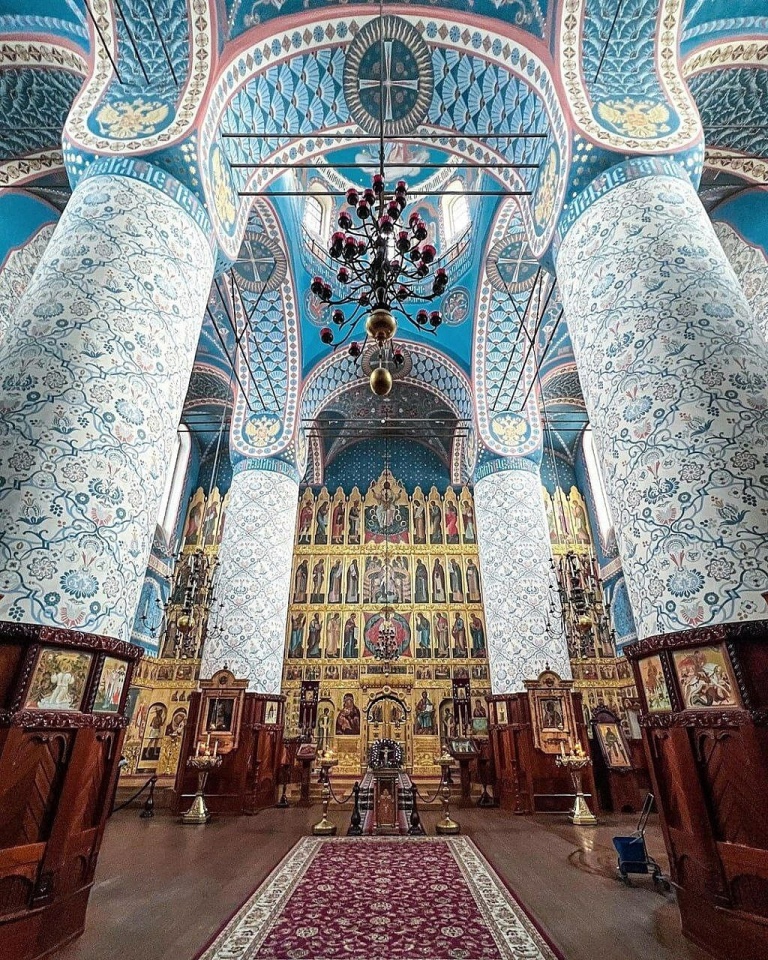
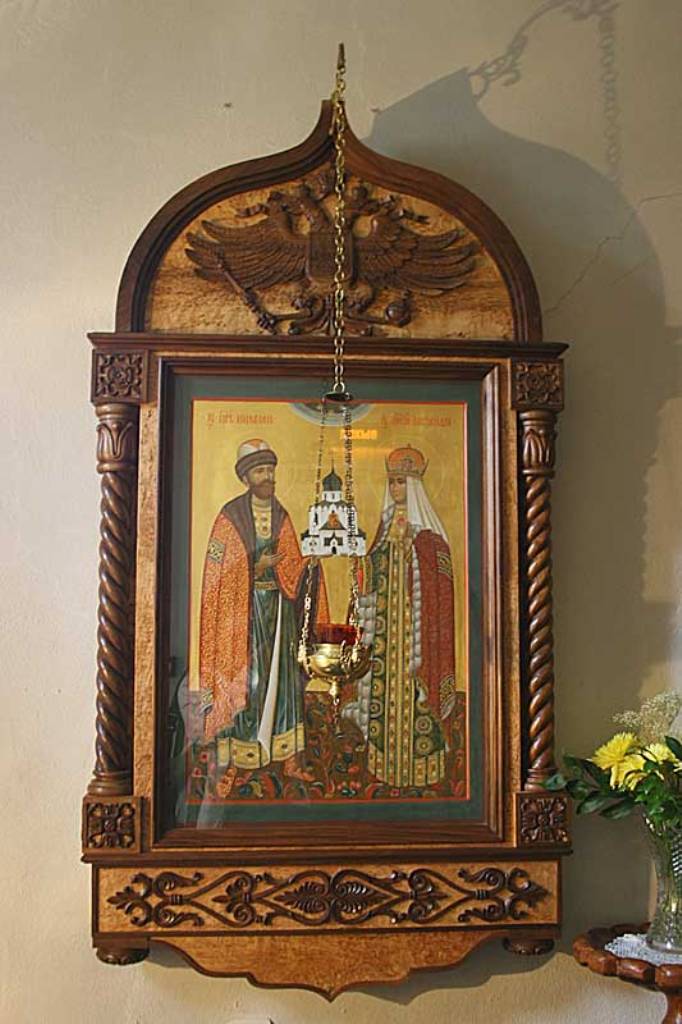
Prayer to the Holy Martyred Tsar Nicholas II

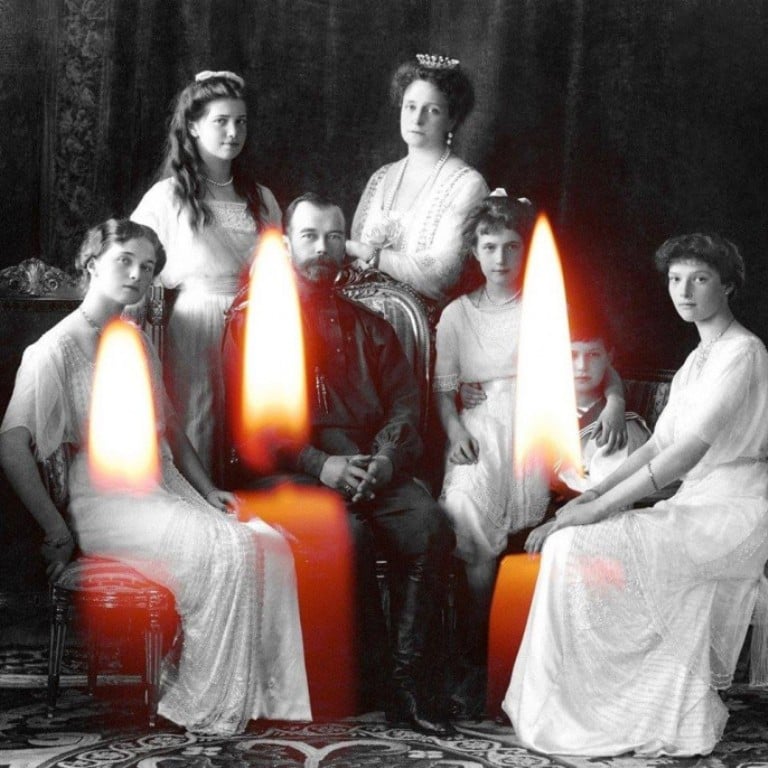
The night of 16/17 July 1918, marks the eve of the anniversary of the death and martyrdom of Emperor Nicholas II, Empress Alexandra Feodorovna, Grand Duchesses Olga, Tatiana, Maria, Anastasia Nikolaevna and Tsesarevich Alexei Nikolaevich.

Please remember to light a candle this evening in honour of their memory . . .

Prayer to the Holy Martyred Tsar Nicholas II

O holy martyred Tsar and passion-bearer Nicholas, the Lord chose thee as His anointed to be the preserver of the Orthodox realm and to judge thy people with mercy and justice.

And with the fear of God thou didst accomplish royal ministry and show care for souls.

And testing thee, like gold in a crucible, the Lord permitted bitter tribulations to assail thee, like Job the much-suffering, and afterwards He sent upon thee the deprivation of thy royal throne and a martyr’s death.

And all these didst thou meekly endure, as a true servant of Christ, and thou dost now delight in the glory which is on high at the throne of the King of all, together with the holy martyrs: the holy Tsaritsa Alexandra, the holy youth the Tsarevich Alexis, the holy Tsarevnas Olga, Tatiana, Maria and Anastasia, and thy faithful servants, as well as the holy martyred Princess Elizabeth and all the royal martyrs and the holy martyr Barbara.

But as thou hast great boldness before Christ the King, for Whose sake ye all suffered, pray with them, that the Lord forgive the sins of the people which did not hinder the murder of thee, the Tsar and anointed of God, that the Lord deliver the suffering land of Russia from the cruel godless ones who have been permitted to torment us for our sins and falling away from God, and that He restore the throne of Orthodox kings and grant us remission of sins, and instruct us in all the virtues, that we may acquire meekness, humility and love, which these holy martyrs showed forth, that we may be accounted worthy of the heavenly Kingdom, where with thee and all the holy new martyrs and confessors of Russia, we may glorify the Father, the Son and the Holy Spirit, now and ever, and unto the ages of ages.

Amen.

Holy Royal Martyrs
Tsar Nicholas II and Family
Pray Unto God For Us!
Glory Be To God For All Things!

3© Paul Gilbert. 16 July 2023
The Romanovs in the Urals exhibit opens in Ekaterinburg

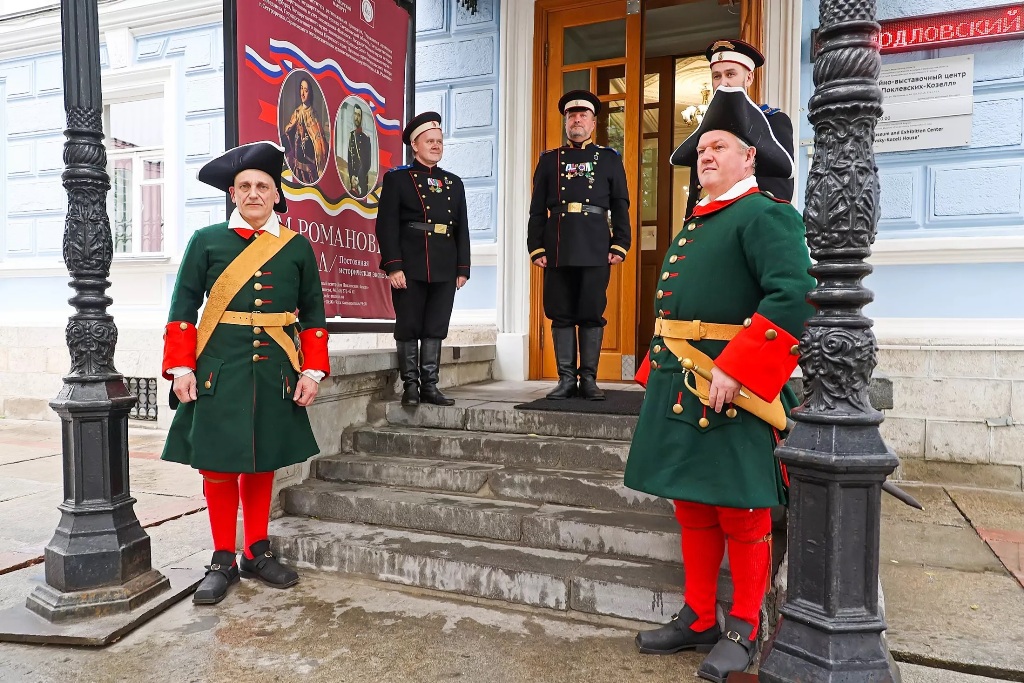
PHOTO: museum staff dressed in period costume were on hand to greet visitors to the grand opening of ‘The Romanovs in the Urals’ at the Poklevsky-Kozell House Museum

On 14th July 2023 a new permanent exhibition The Romanovs in the Urals opened at the Poklevsky-Kozell House Museum of the Sverdlovsk Regional Museum of Local Lore in Ekaterinburg.
The exhibition is timed to the 105th anniversary of the death and martyrdom of Emperor Nicholas II and his family in the Ural city on 17th July 1918, and the events marking the 300th anniversary of the founding of Ekaterinburg in 1723.

The exhibit was recently transferred from the Romanov Memorial Hall of the Museum of History and Archaeology of the Urals, and now occupies five newly renovated halls of the Poklevsky-Kozell House Museum, which is situated at Ulitsa Malysheva, 46. The museum previously hosted the exhibition The Tragedy of the Family … The Tragedy of the Motherland, which ran from 5th June to 23rd September 2018.

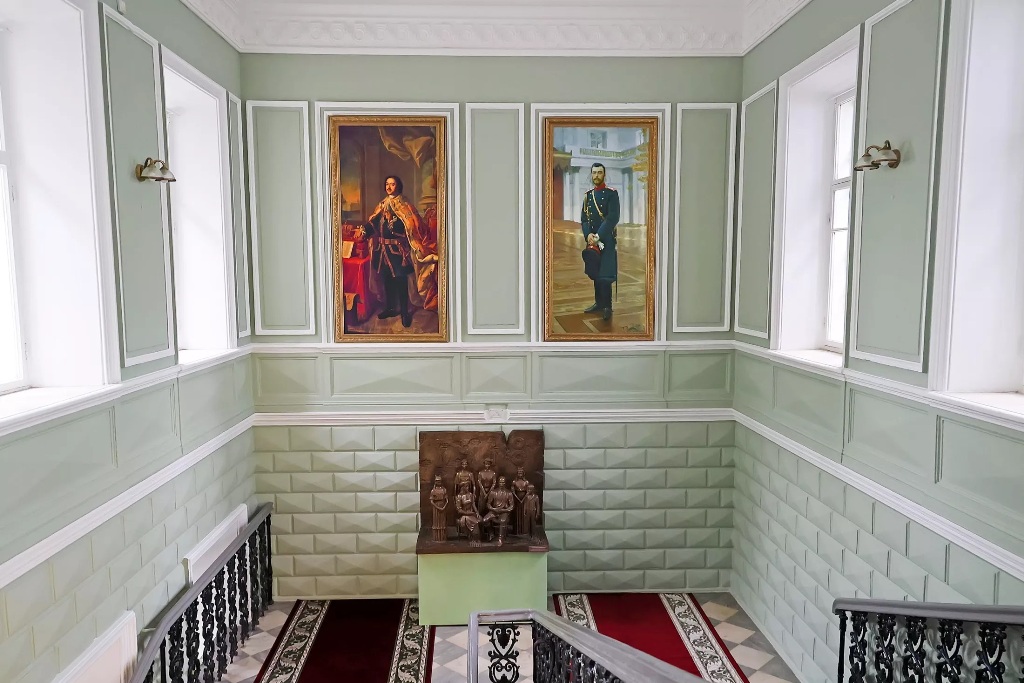
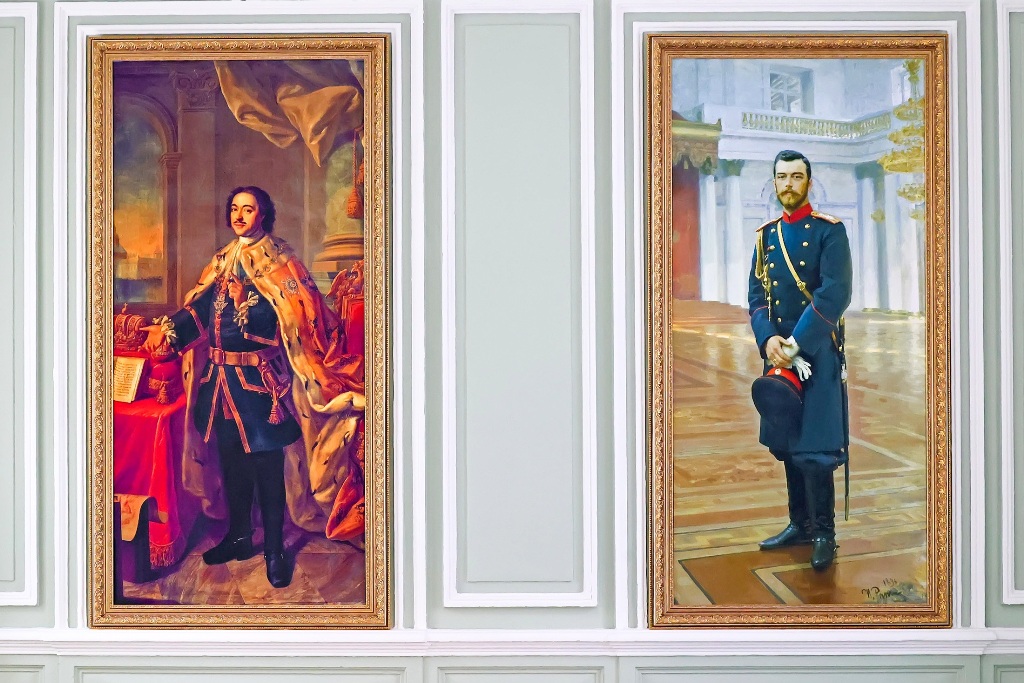
PHOTO: portraits of Peter the Great and Nicholas II are the centerpiece of the staircase leading to the exhibition

Finishing touches on the new exhibition space were carried out right up until the day before the grand opening. The newly renovated halls smelled of fresh paint, specialists fine tuned the multimedia equipment, caretakers brought shine to the display cases and windows, while researchers installed the last of the exhibits. Their activity aroused the curiosity of both museum workers and visitors, who peeked through the partially open door with the hope of get a glimpse of the Ural city’s latest exhibit.

Scientists, researchers, museum workers from across Russia, including Moscow, St. Petersburg, Perm, Tyumen, Tobolsk, Vologda, Voronezh, Ekaterinburg, and Alapaevsk gathered to discuss and help set up the exhibit which features hundreds of items.

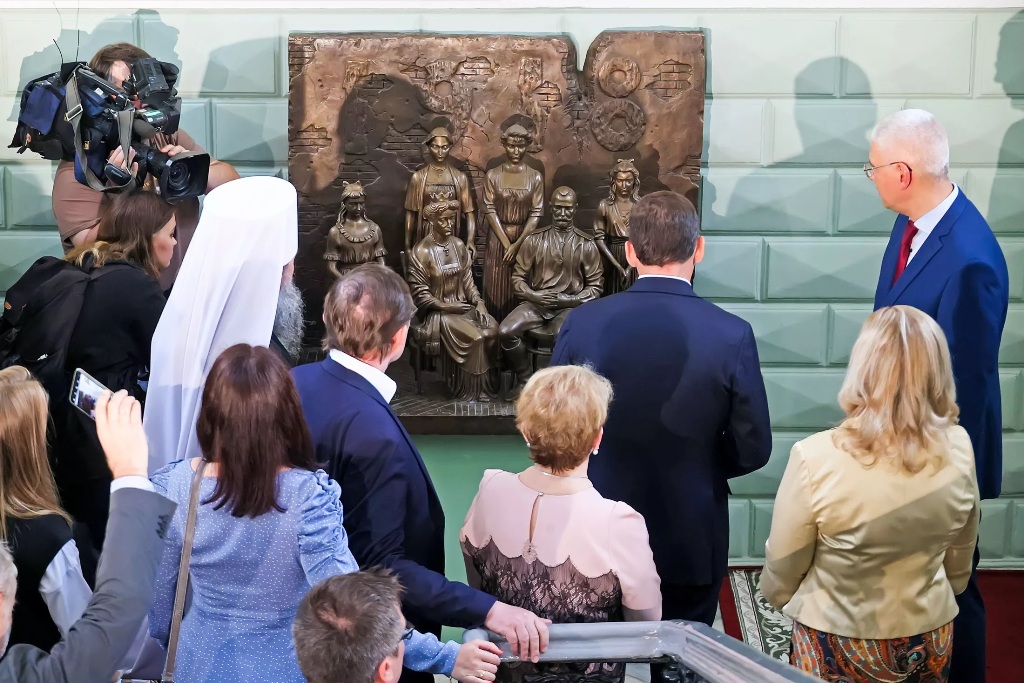
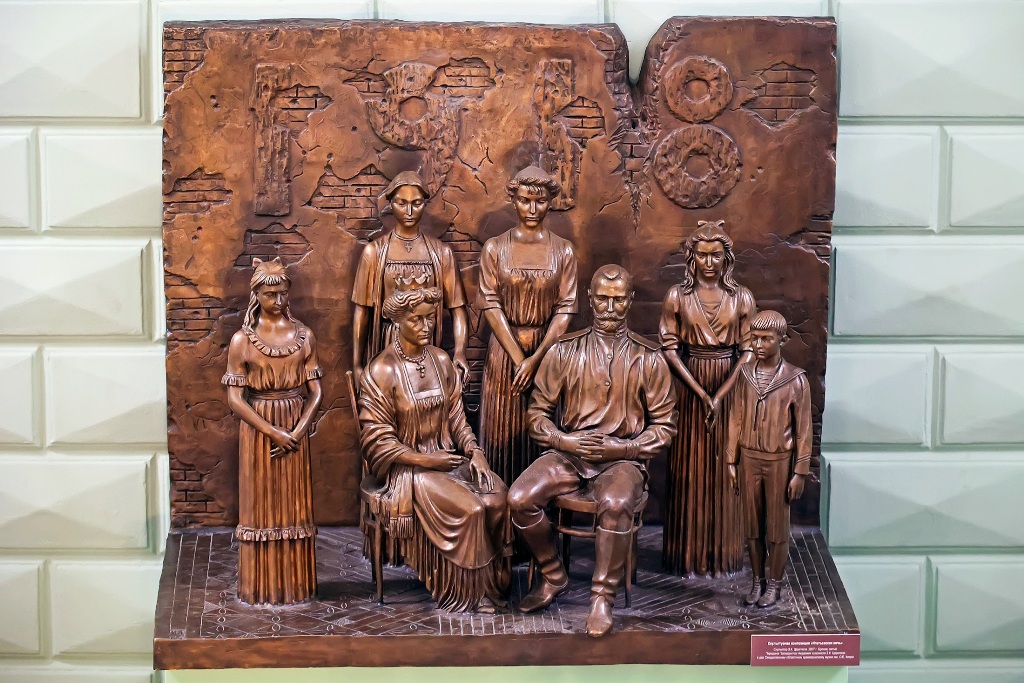
PHOTO: VIP guests stop to admire a miniature copy of Zurab Tsereteli’s sculpture, “Night at the Ipatiev House”, located in the staircase leading to the exhibit

The idea to move the Romanov Memorial Hall was proposed by the Chairman of the Elisabeth-Sergius Educational Society Foundation (ESPO) Anna Vitalievna Gromova, who is a Candidate of Historical Sciences, and Senior Researcher at the Institute of World History of the Russian Academy of Sciences.

Anna Gromova is recognized as one of the Russia’s most prominent adherents to keeping the memories of Emperor Nicholas II, his family, Grand Duchess Elizabeth Feodorovna, and other members of the Russian Imperial Family who were murdered by the Bolsheviks in 1918 and 1919. She is responsible for the founding and development of museums, exhibitions and conferences and is the mastermind behind the The Imperial Route.

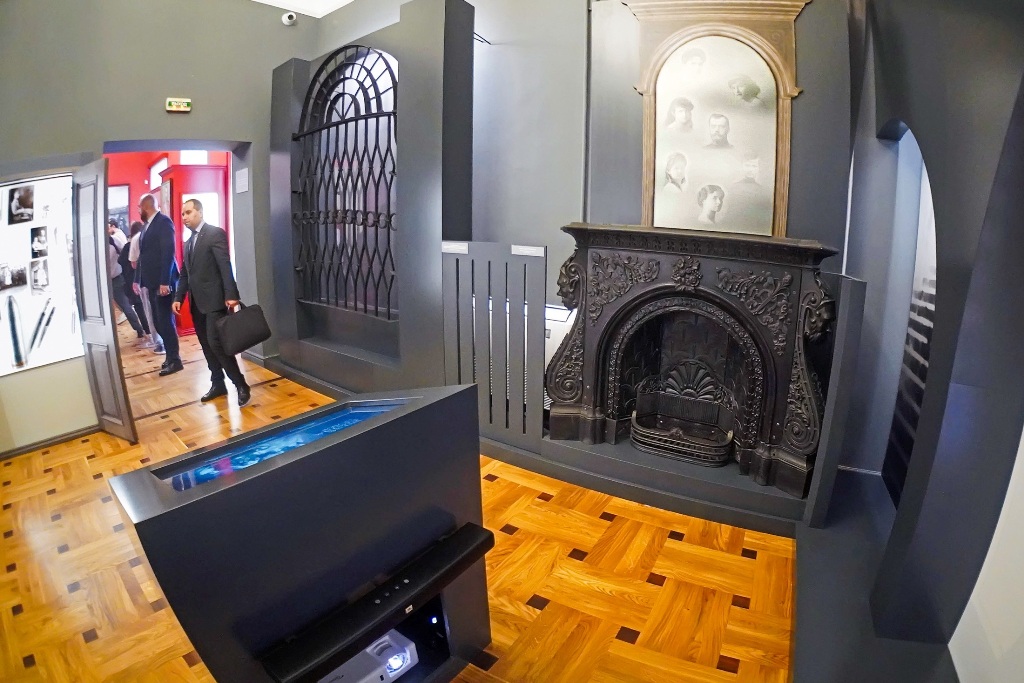
PHOTO: the original cast iron fireplace, salvaged from the dining room of the Ipatiev House before its demolition in September 1977

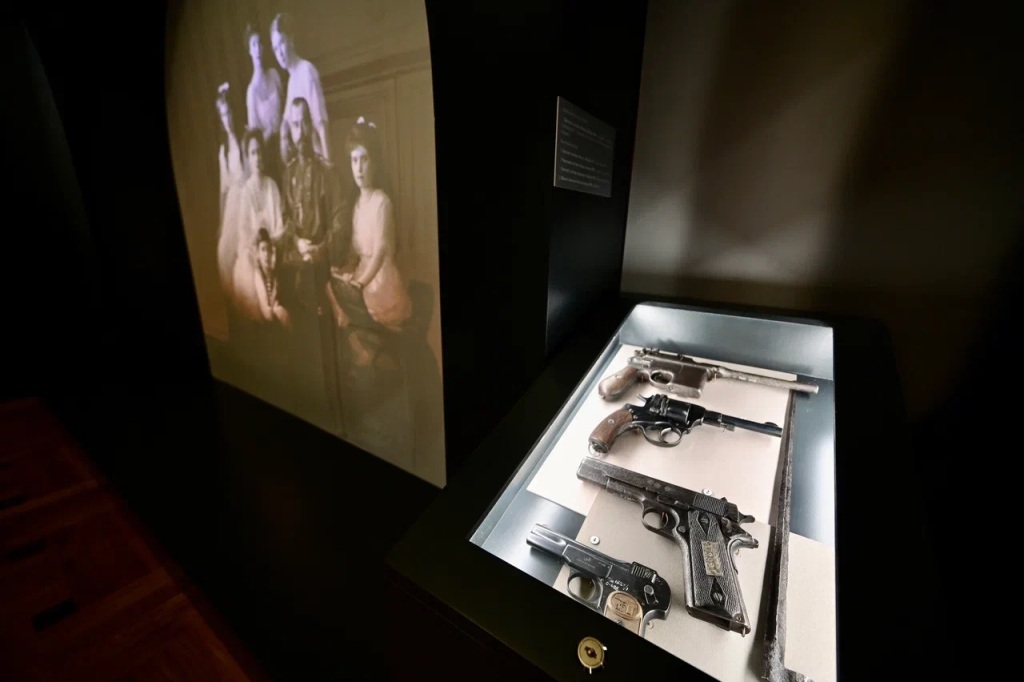
PHOTO: revolvers used by the regicides – including Peter Ermakov’s – to murder the Imperial Family in the Ipatiev House on 17th July 1918

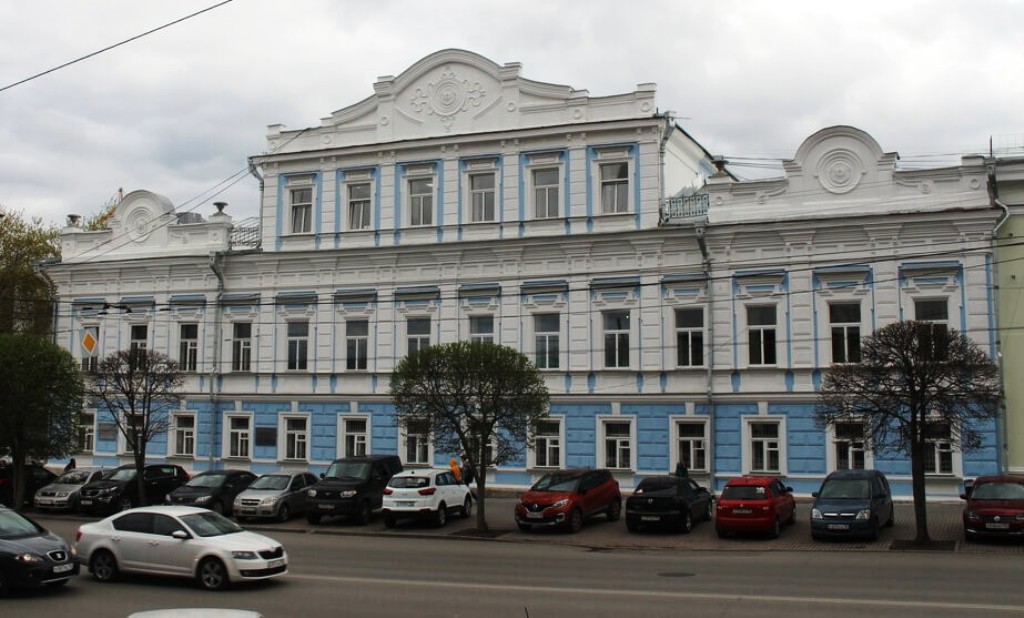
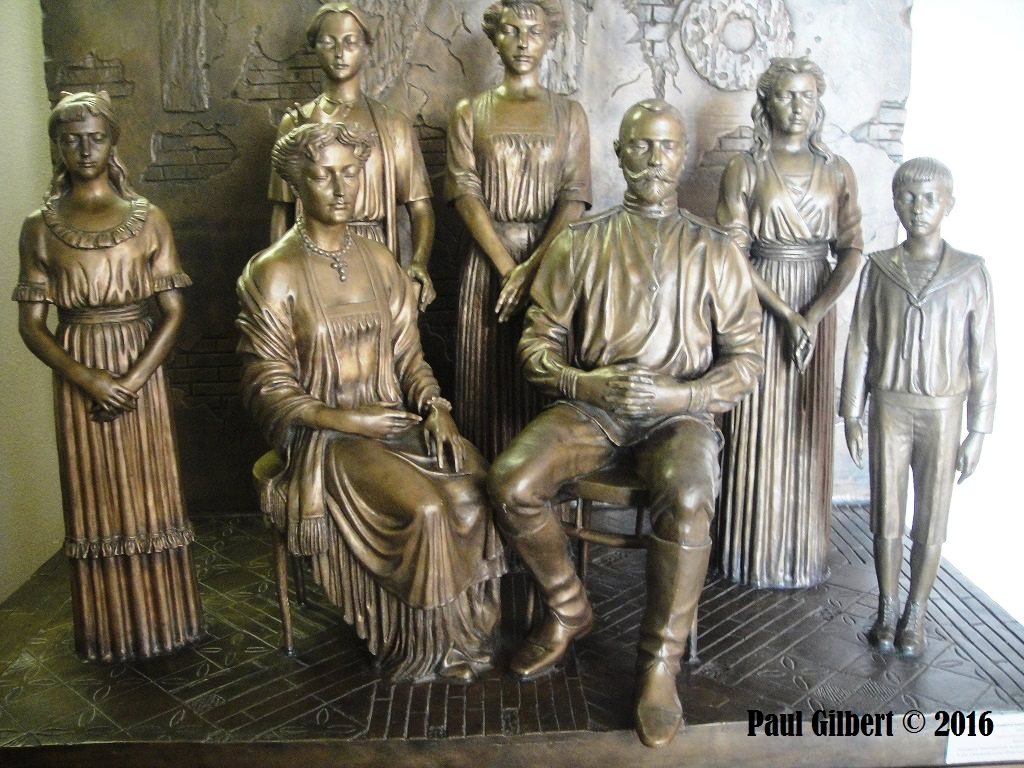
Upon entering the Poklevsky-Kozell House Museum, visitors ascend a newly renovated grand staircase, where they are greeted at the top by portraits of Peter the Great and Emperor Nicholas II. Recall that Ekaterinburg was founded on 18th November 1723 and named after Peter the Great’s wife, who after his death became Empress Catherine I, Yekaterina being the Russian form of her name. Underneath the portraits is a miniature copy of Zurab Tsereteli’s sculpture, “Night at the Ipatiev House” – the original is on display at the Zurab Tsereteli Museum in Moscow.

The five halls are decorated in the colours of the flag of the Imperial House of Romanov – black, gold, white. Each hall is decorated with unique exhibits and multimedia technologies, which together help to tell the story of the history of the dynasty in the Urals.

In the Golden Hall, are portraits from the era of the chairman of the State Council of the Russian Empire Grand Duke Mikhail Nikolaevich (1832-1909). The highly respected grand duke also served as the Honourary President of the Siberian-Ural Scientific and Industrial Exhibition in 1887, organized on the initiative of the Ural Society of Natural History Lovers (UOLE). When the members of the UOLE created a museum (from which the regional local history traces its history), his son Grand Duke Nikolai Mikhailovich (1859-1909), a famous Russian historian, became its patron. At the turn of the 20th century, six additional members of Russian Imperial House were made honourary members of the UOLE.

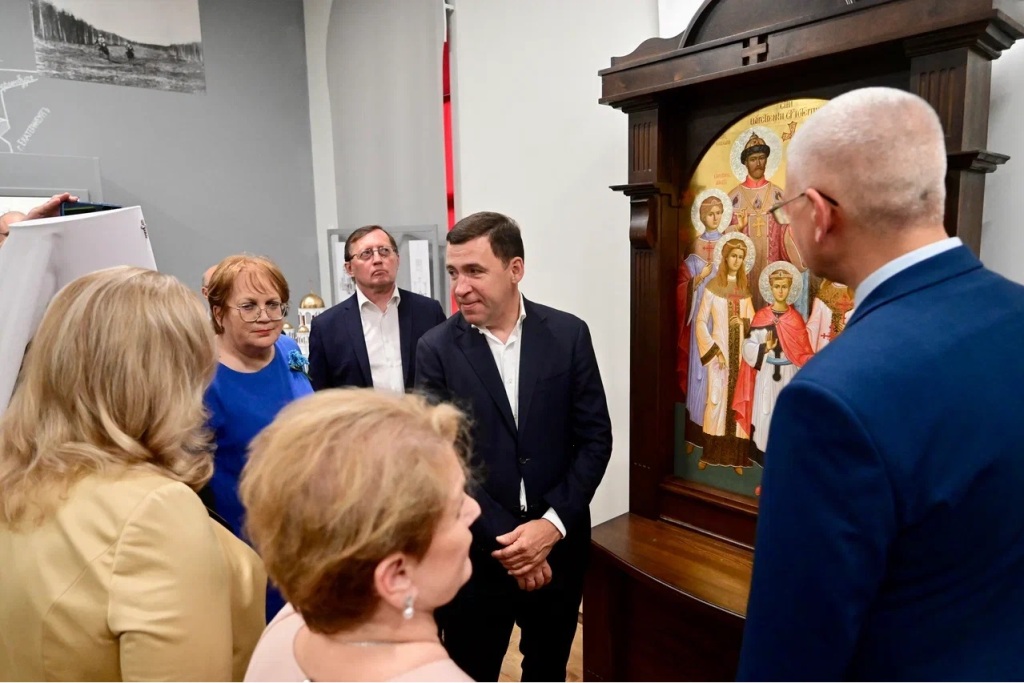
PHOTO: VIP guests stop to admire an icon of the Holy Royal Martyrs, painted by the nuns of the Novo-Tikhvin Convent in Ekaterinburg

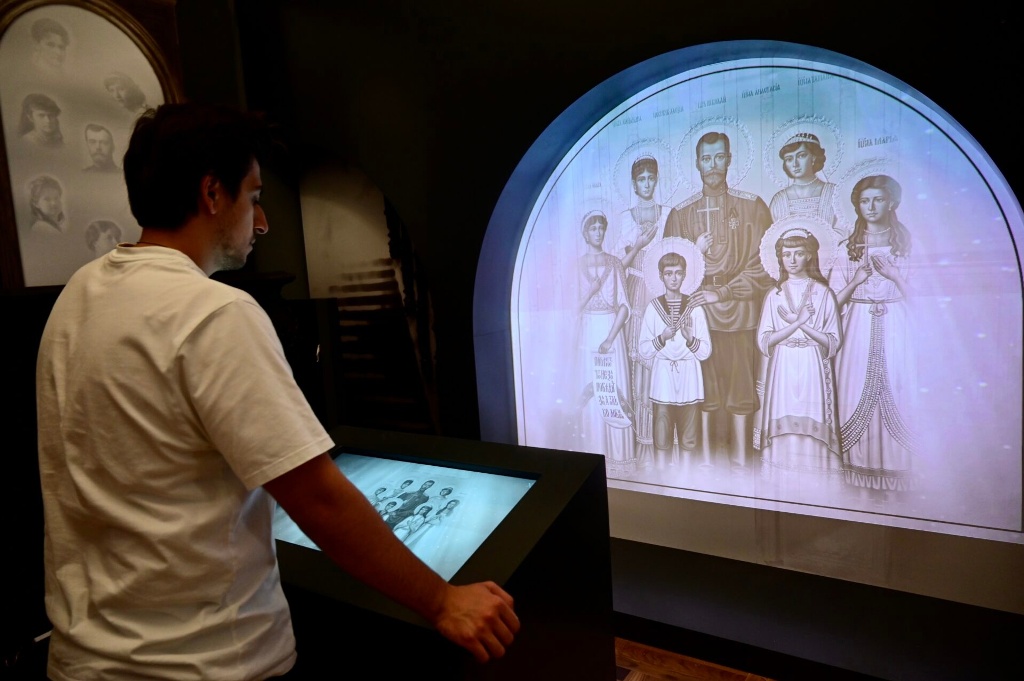
PHOTO: multimedia display which depicts the Holy Royal Martyrs, in whch they are depicted as saints, Nicholas II is holding a cross

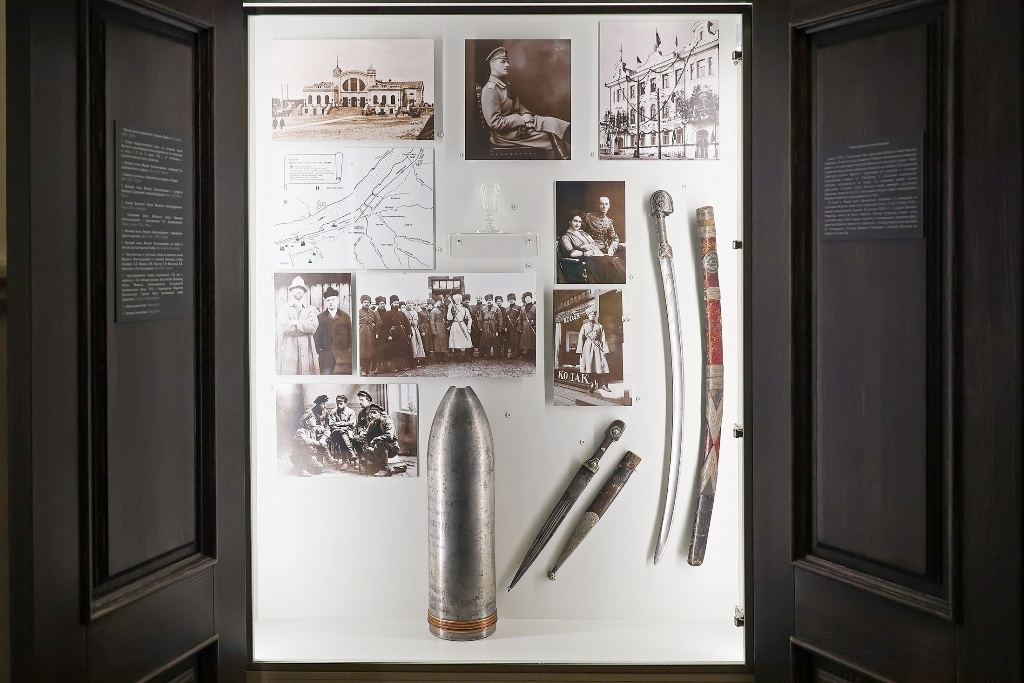
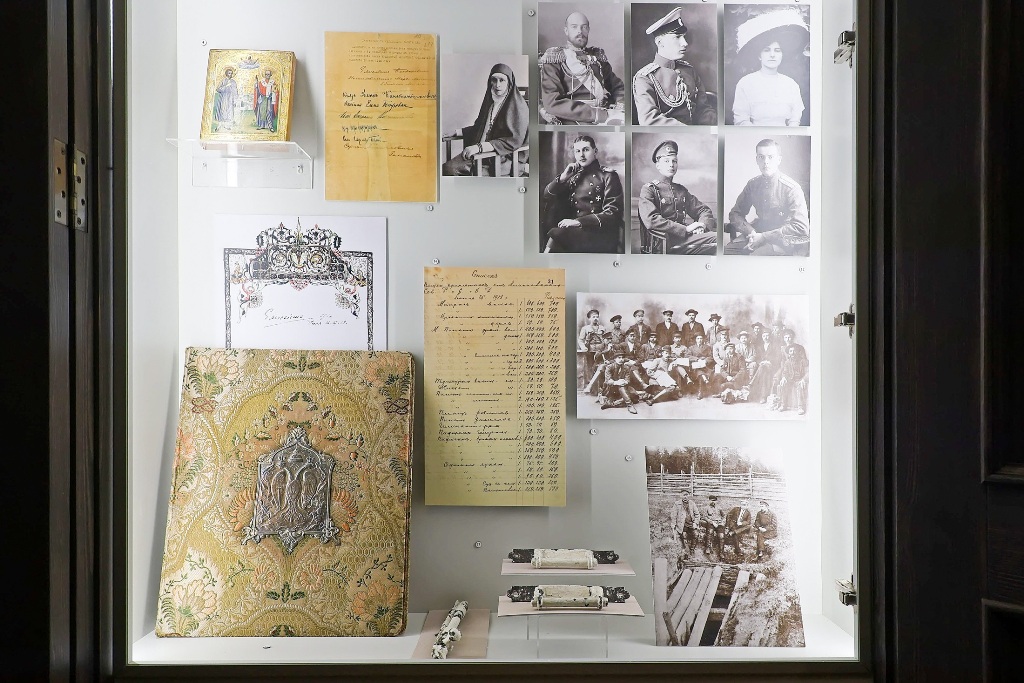
The “black” halls of the exhibit take on a more sombre ambiance, with displays telling visitors about the house arrest and subsequent murders of Grand Duke Mikhail Alexandrovich and Nicholas Johnson at Perm on 13th June 1918; Emperor Nicholas II, his family and four faithful retainers at Ekaterinburg on 17th July 1918; and Grand Duchess Elizabeth Feodorovna along with and other members of the Russian Imperial Family and their faithful retainers at Alapaevsk on 18th July 1918.

Some of the more interesting items on display include the ribbon of the Order of St. Andrew the First-Called, which belonged to Tsesarevich Alexei Nikolaevich and left behind in the Governor’s Mansion in Tobolsk, when the four children joined their parents and sister in Ekaterinburg in May 1918.

A number of pistols and revolvers are also on display, including the Mauser of the regicide Pyotr [Peter] Ermakov, who, according to him, shot and killed Nicholas II.

The sombre ambiance of this hall is offset by the bright and soothing icon of the Holy Royal Martyrs, painted by the nuns of the Novo-Tikhvin Convent in Ekaterinburg.

PHOTO: display about the murders of Grand Duke Mikhail Alexandrovich and Nicholas Johnson at Perm on 13th June 1918

PHOTO: display about the members of the Imperial Family – including Grand Duchess Elizabeth Feodorovna – at Alapaevsk on 18th July 1918

The Romanovs in the Urals also contains many elements of décor, decoration and fittings salvaged from the Ipatiev House before its demolition in September 1977, notably the cast iron fireplace from the dining room, and the iron grille from the window of the murder room.

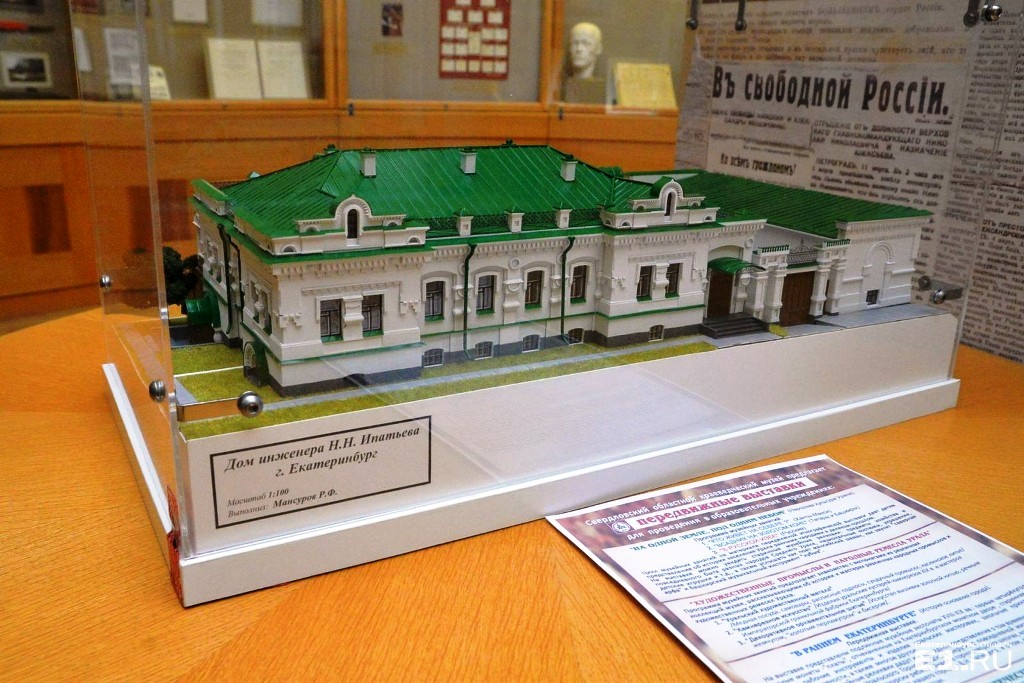
Aside from the items from the Ipatiev House, are many additional exhibits of interest, including a scale model of the Ipatiev House; the reconstructed model of Nicholas II’s head by Russian forensic expert Dr. Sergei Nikitin.

The exposition further explores the history of the investigation of the murder case of the last of the Romanovs in the Urals, which lasted more than 100 years.

© Paul Gilbert. 16 July 2023
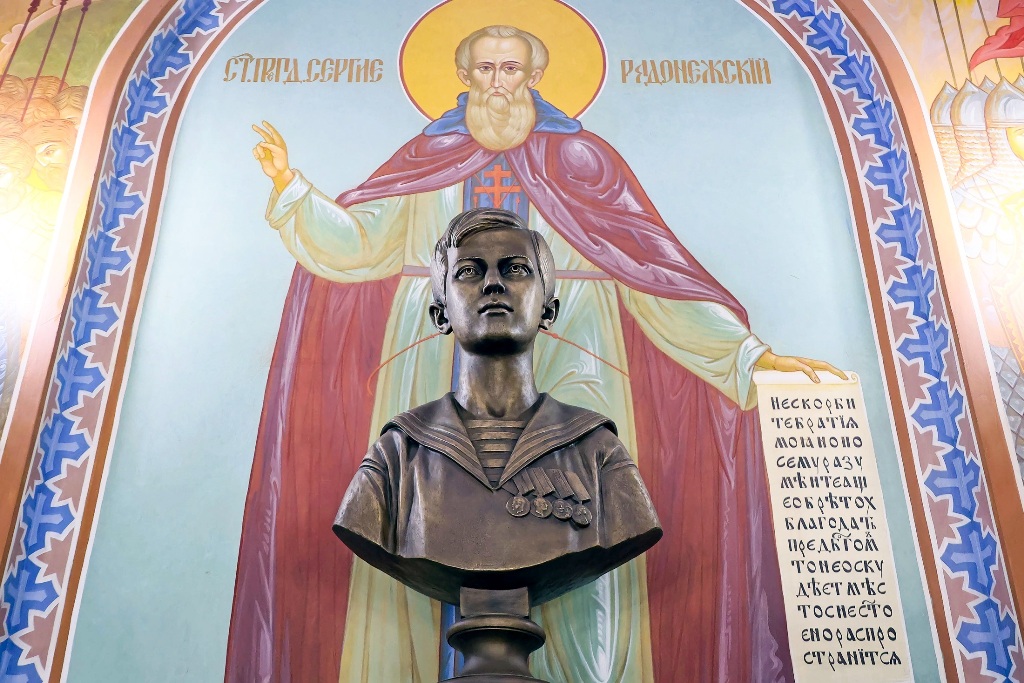
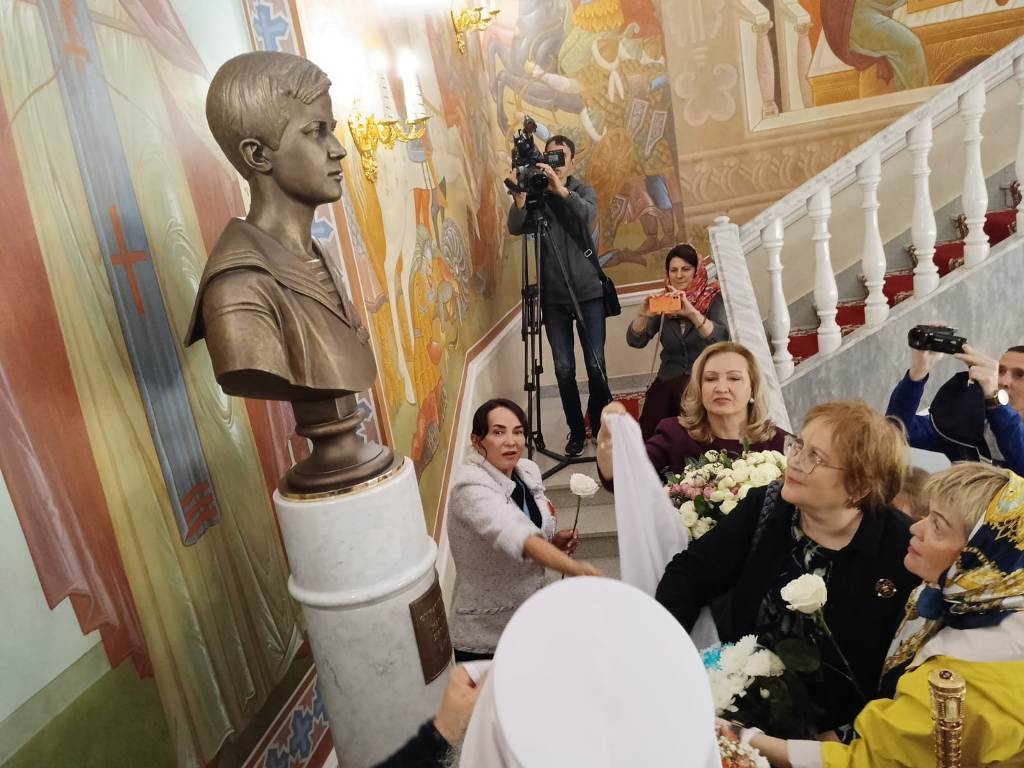
Bust of Tsesarevich Alexei installed in Ekaterinburg

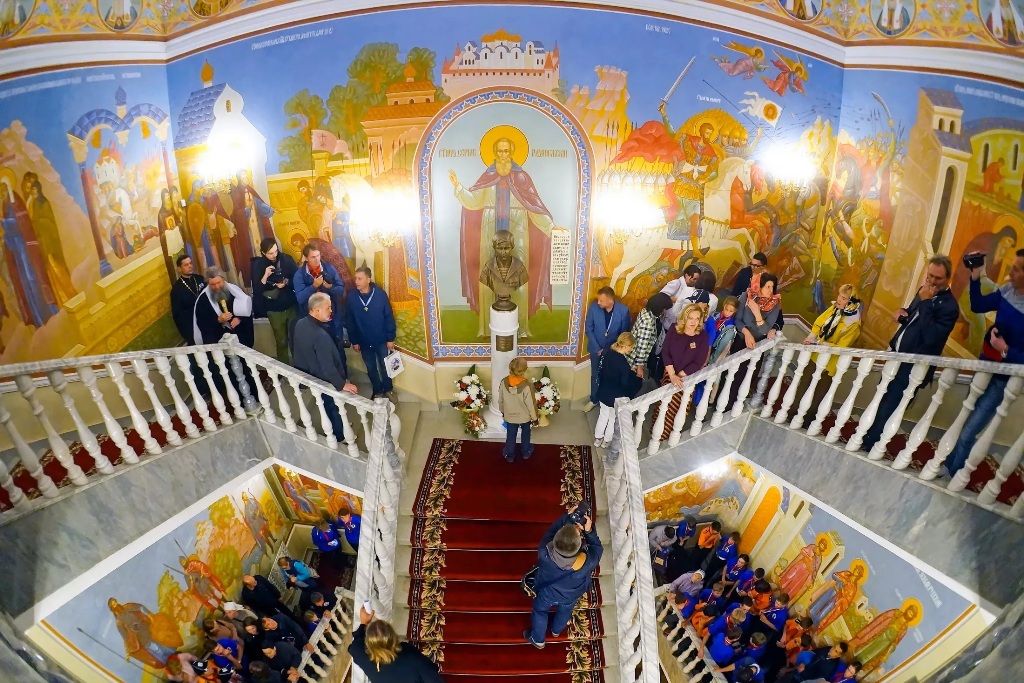
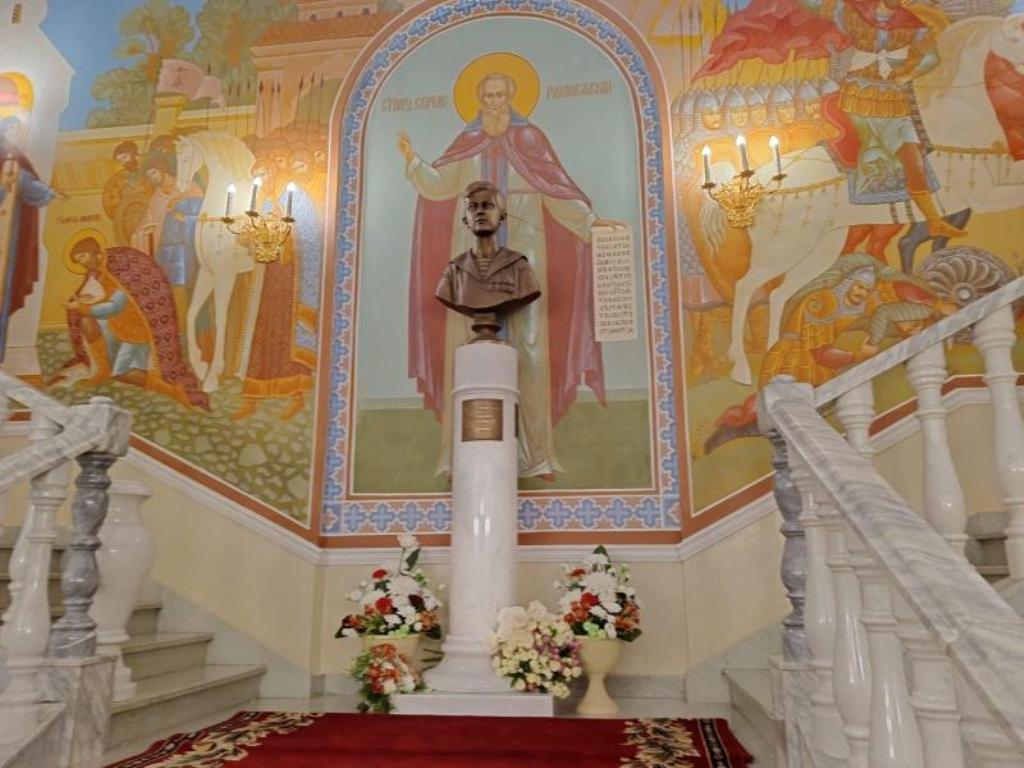
On 15th July 2023 a bust of Tsesarevich Alexei Nikolaevich was installed and consecrated in the Tsarsky Center, located in the Patriarchal Compound, across from the Church on the Blood in Ekaterinburg.
The bust was installed on a pedestal at the top of the main staircase in the Patriarchal Compound. It is one of numerous events being held in the Ural city this week, marking the 105th anniversary of the death and martyrdom of the Imperial Family on 17th July.

The unveiling ceremony was attended by Metropolitan Evgeny of Yekaterinburg and Verkhoturye and Chairman of the Elisabeth-Sergius Educational Society Foundation (ESPO) Anna Vitalievna Gromova.

For many years, this spot was occupied by a bust of Emperor Nicholas II, which has now been moved to the the Museum of the Holy Royal Family, located on the second floor of the Patriarchal Compound.

© Paul Gilbert. 15 July 2023
The restoration of Nicholas II’s favourite church at Tsarskoye Selo

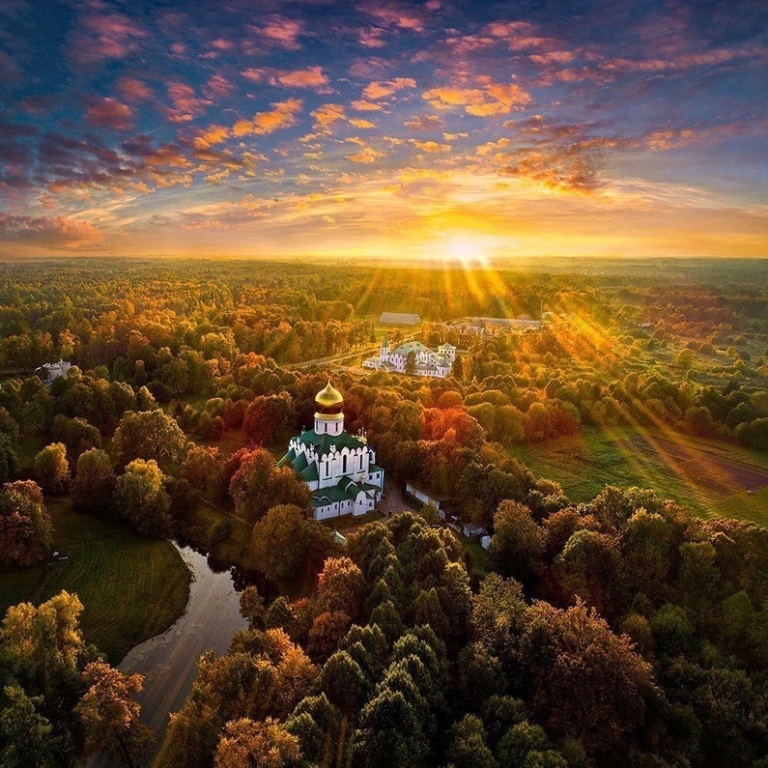
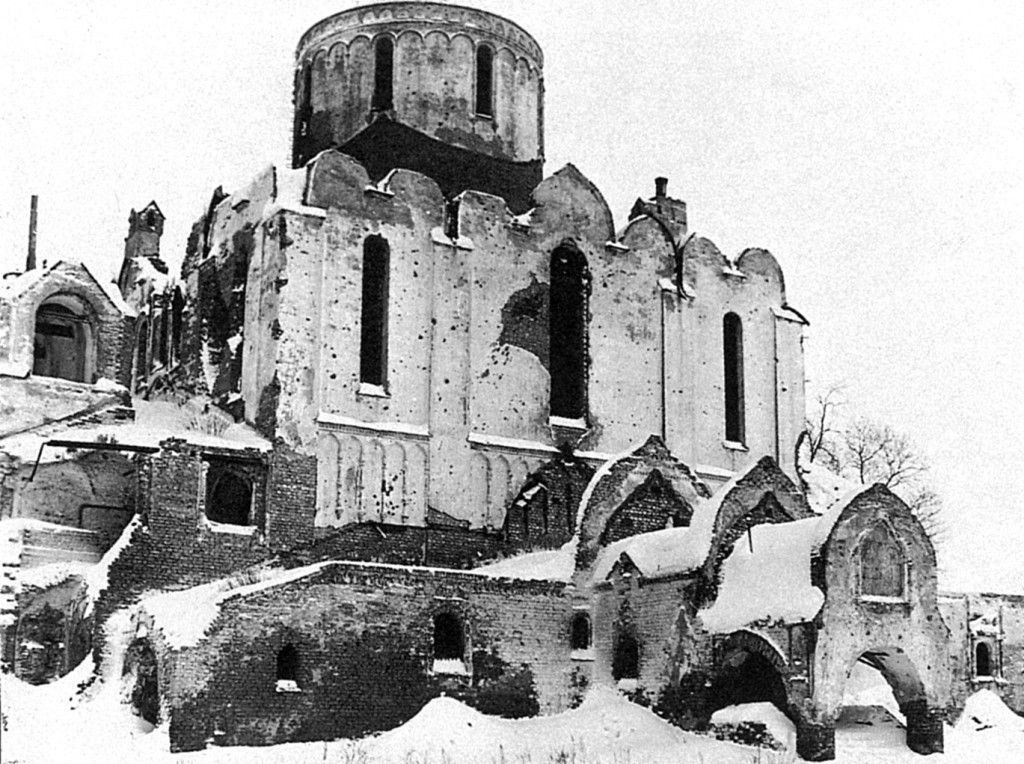
PHOTO: aerial view of the beautifully restored Feodorovsky Sovereign Cathedral at Tsarskoye Selo – the restoration took 20 years to complete. The buildings of the Feodorovsky Gorodok can be seen to the right of the cathedral’s cupola.

One of the greatest restoration projects carried out during the post-Soviet years has got to be that of the Feodorovsky Sovereign Cathedral at Tsarskoye Selo. The recreation of the Cathedral’s façade and interiors of both the Upper and Lower Churches, are nothing short of a miracle.

Situated a short walk from the Alexander Palace, I recall visiting the Feodorovsky Sovereign Cathedral for the first time in the early 1990s. I was shocked by the appalling state of neglect and disrepair this once beautiful house of worship had endured during the Soviet years. I returned to Tsarskoye Selo many times since, and have been witness to its slow, but magnificent restoration. Glory to God, for all things!

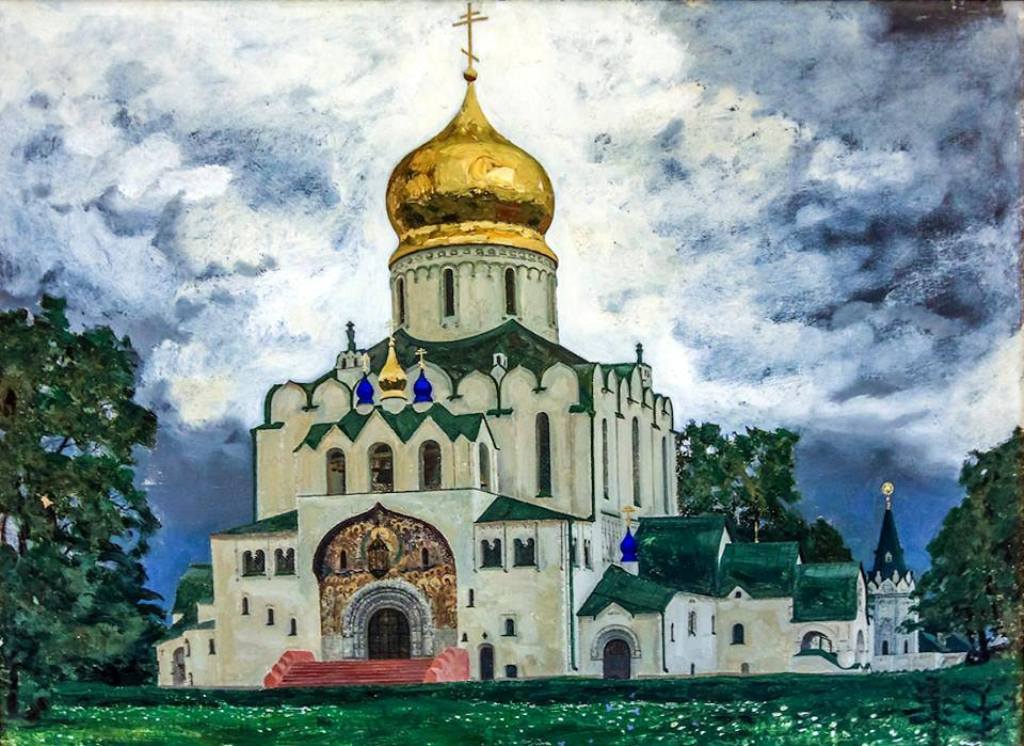
PHOTO: Watercolour of the Feodorovsky Sovereign Cathedral (1914). Artist: Gavriil Nikitich Gorelov (1880-1966)

Nicholas II’s favourite church

When Emperor Nicholas II and Empress Alexandra took up residence in the Alexander Palace in 1895[1], they were surprised that unlike other Imperial palaces, it did not contain a chapel. Therefore, in 1897, they had the Crimson Drawing Room converted into the home church of St. Alexander Nevsky. But this temporary church was clearly not enough, so the Emperor issued a decree for the construction of a new church in the vicinity of the palace.

Between 1908-1912, the Feodorovsky Sovereign Cathedral was built in the old Russian style – much favoured by the Tsar. It’s construction was financed by Nicholas II, who contributed 150,000 gold rubles from his own personal funds. The foundation of the Cathedral was laid on 2nd September (O.S. 20th August) 1909 in the presence of the Imperial family, each member beginning with the Tsar himself, placing a brick in the building’s foundation.

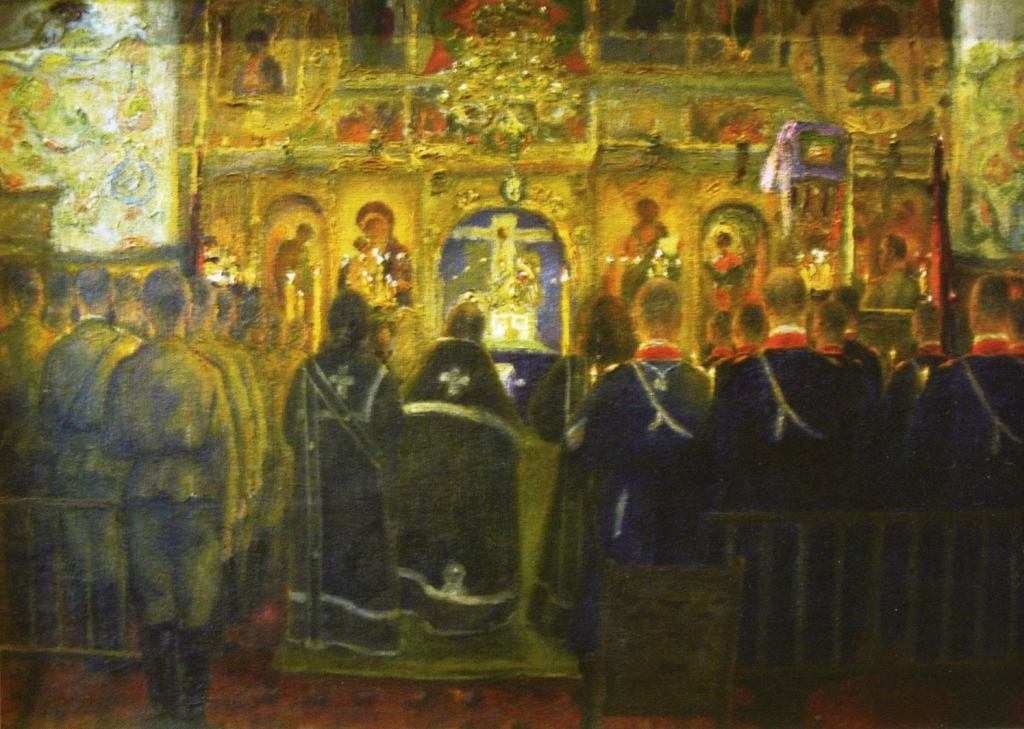
PHOTO: ‘A Liturgy in the Feodorovsky Sovereign Cathedral in the presence of Emperor Nicholas II’, by the Russian artist Michael Gerasimovich Kirsanov (1889–1958). In 1914, the artist worked on the creation of the ceremonial album ‘Feodorovsky Sovereign Cathedral in Tsarskoye Selo’.

The Feodorovsky Sovereign Cathedral served as the regimental church of both His Imperial Majesty’s Own Infantry Regiment and His Imperial Majesty’s Own Convoy. In addition, the cathedral served as the house church for the Imperial family, while they were in residence in the Alexander Palace.

Externally, the cathedral was simple, austere and majestic, with bright reflections of mosaics on the snow-white walls, crowned with a gilded cupola. The interior was striking in its height and magnificent decoration in the style of ancient Russian church architecture.

The Cathedral consisted of two churches – the Upper Church, with a capacity of up to 1000 people, with the main altar in the name of the Fedorovskaya Icon of the Mother of God, the patron icon of the Romanov family. The Upper Church included a side chapel in the name of St. Alexis, Metropolitan of Moscow (the completion and consecration of which by 1917 was never realized); and the Lower Church [aka the Cave Church] in the name of St. Seraphim of Sarov.

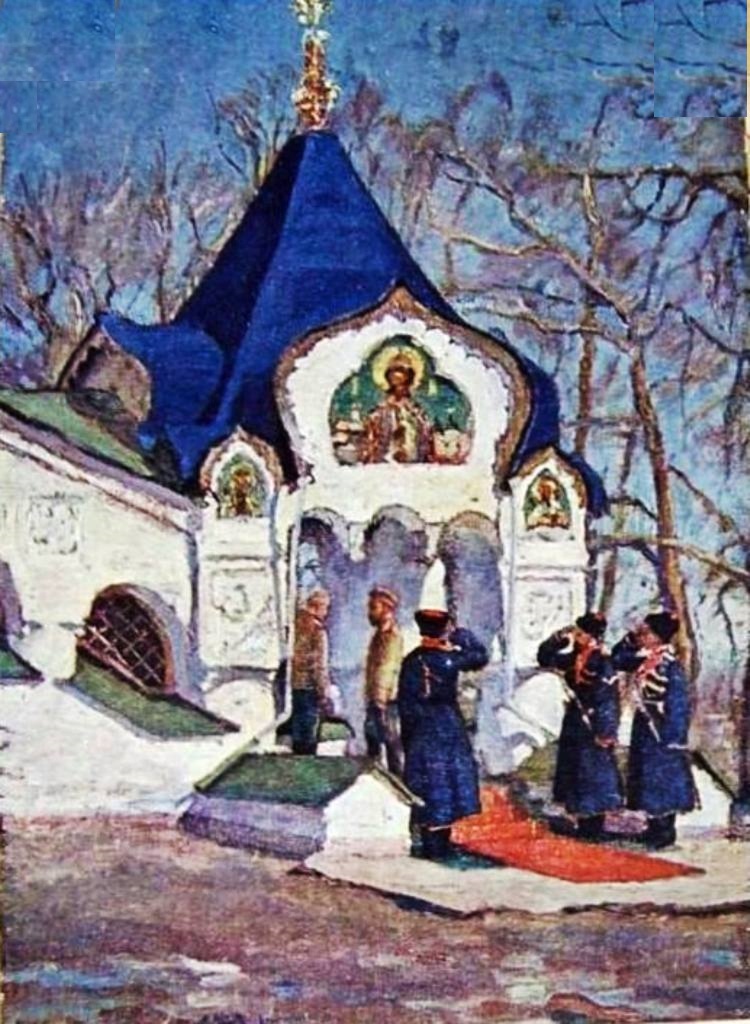
PHOTO: Early 20th century Russian postcard depicting Emperor Nicholas II entering the Feodorovsky Sovereign Cathedral via the Tsar’s Porch.

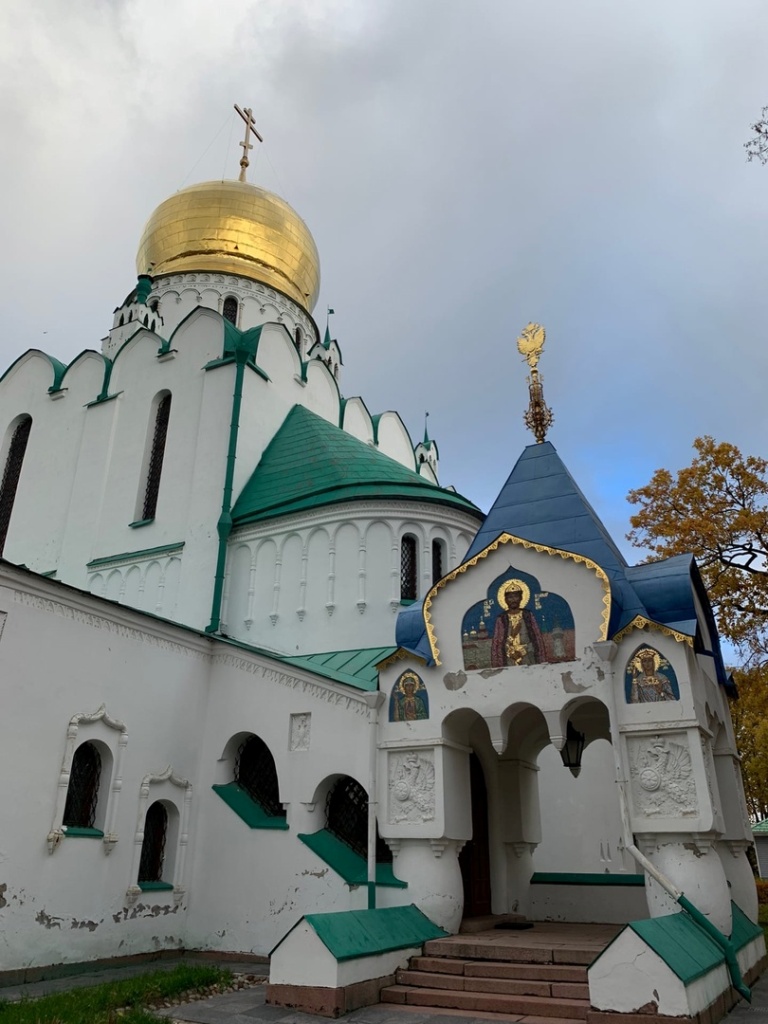
PHOTO: the restored Tsar’s Porch is located at the southeastern corner of the cathedral. It was through this entrance, that Emperor Nicholas II and his family, accessed the Cave Church, consecrated in memory of St. Seraphim of Sarov.

The solemn consecration of the Cathedral took place on 2nd September (O.S. 20th August) 1912 in the presence of the Imperial Family. The ceremony was performed by the protopresbyter of the military and naval clergy Georgy Shavelsky (1871-1951), who from 15th (O.S. 2nd) June 1913, served as honorary rector of the Cathedral.

A solemn Divine Liturgy was performed by His Grace Theophan, Bishop of Yamburg (1872-1940), attended by the Emperor and members of his family.

While the Imperial Family were in residence in the Alexander Palace, the Emperor and his family visited the Feodorovsky Sovereign Cathedral on holidays and Sundays. They entered the Cathedral via the Tsar’s Porch, which was located at the southeastern corner of the cathedral.

Empress Alexandra Feodorovna often came to pray in the Cave Church, of which she was particularly fond. A special room was arranged for her, which allowed her to retire in prayer privately. The chapel, a small room less than a meter wide, was installed to the right of the altar. It contained a mosaic icon of St. Seraphim of Sarov.

When in residence, Nicholas II did not miss a single Sunday and holiday service in the Feodorovsky Sovereign’s Cathedral. “The service was solemn and remarkably beautiful in our lovely church,” he wrote in his diary. Many laity wanted to pray with the sovereign, however, they were allowed only with tickets, which could be obtained from the palace commandant or the churchwarden.

PHOTO: the Feodorovsky Sovereign Cathedral, as it looked in the 1970s

The Soviet years

Shortly after the Tsar’s abdication in March 1917, the Feodorovsky Sovereign Cathedral was turned into an ordinary parish church. After the Bolsheviks nationalized churches and monasteries, they wasted little time in looting and pillaging the Cathedral. Between 1911 to 1934, members of the Cathedral’s clergy – including six abbots – were arrested and sent to concentration camps, never to be seen again.

In December 1933, the Cathedral was closed by the local Soviet, who argued that the town had too many churches – a total of five. The Cathedral’s property – including the icons – were transferred to the Russian Museum Fund, and later distributed among several museums in Leningrad. To this day, they remain in the collections of the State Russian Museum, the Kazan Cathedral, in the Catherine Palace, Pavlovsk Palace and elsewhere. Much, however, was lost, sold abroad for foreign currency or intentionally destroyed by the Soviets.

If that wasnt’ enough, the Upper Church was adapted for a cinema hall, the screen was placed in the altar space. The Lower Cave Church was turned into a warehouse and an archive of film and photo documents for the “Lenfilm” studios.

During the Nazi occupation of Pushkin (1941-44), the Feodorovsky Sovereign Cathedral was badly damaged. Given that the Cathedral was the tallest point in the town, it became an easy target for Nazi bombers. The walls of the northern façade and the right wing of the western side were partly destroyed. The vaults were also damaged, and the main dome was shattered by a shell.

During the post-war years, the Cathedral was left in a terrible state of ruin, until the 1980s.

After the fall of the Soviet Union in 1991 the Feodorovsky Sovereign Cathedral was returned to the Russian Orthodox Church. Extensive reconstruction and restoration work carried out over a 20 year period has restored it to its historic original.

Post-Soviet restoration

In the spring of 1991, the Cathedral was transferred to the Russian Orthodox Church. In the same year, the Feodorovskaya Icon of the Mother of God was found buried in one of the parks at Tsarskoye Selo. It was returned to the Cathedral and has since become one of its most revered shrines. On 1st March 1992, the first Divine Liturgy was held in the Lower Church, and on 29th August 1996, in the Upper Church.

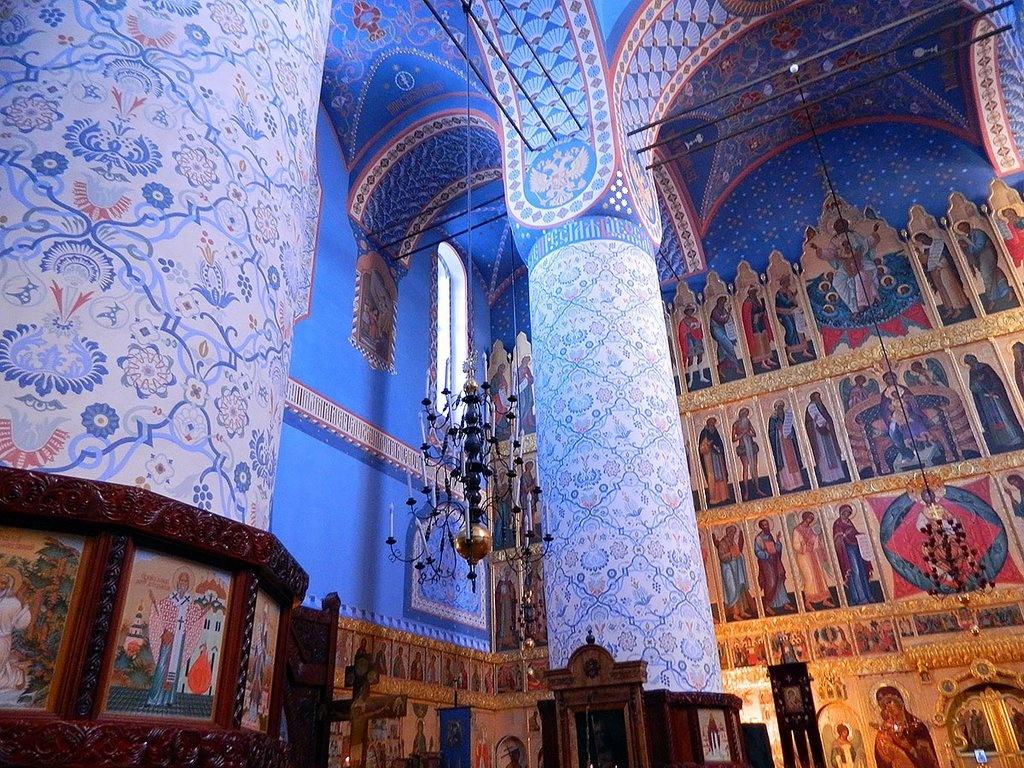
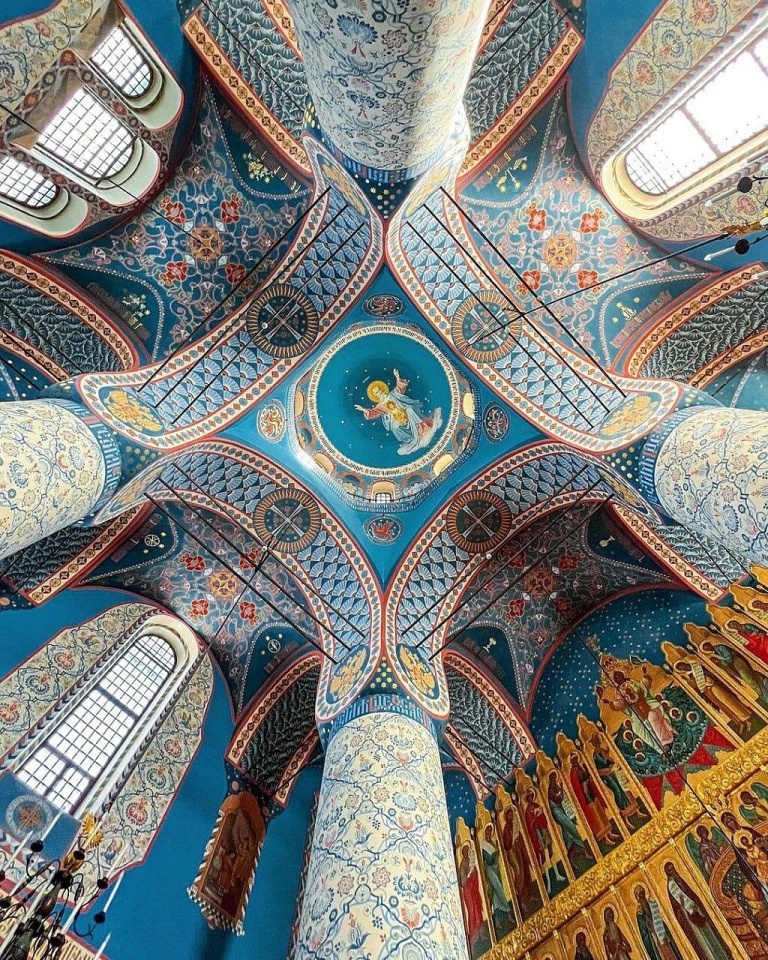
The restoration of both the façade and interiors of the Cathedral lasted 20 years. The dedication and painstaking efforts to restore Nicholas II’s favourite church by an army of artists, restorers and historians is much to be admired, as the photos below will attest:

PHOTO: partial view of the restored iconostasis in the Upper Church

PHOTO: view of the restored main dome of the Upper Church

PHOTO: view of the restored iconostasis in the Upper Church

PHOTO: partial view of the restored iconostasis in the Upper Church

PHOTO: Icon of the Holy Royal Martyrs Nicholas II and Alexandra Feodorovna in the Upper Church

PHOTO: views of the restored Lower Church, where the Imperial Family came to pray

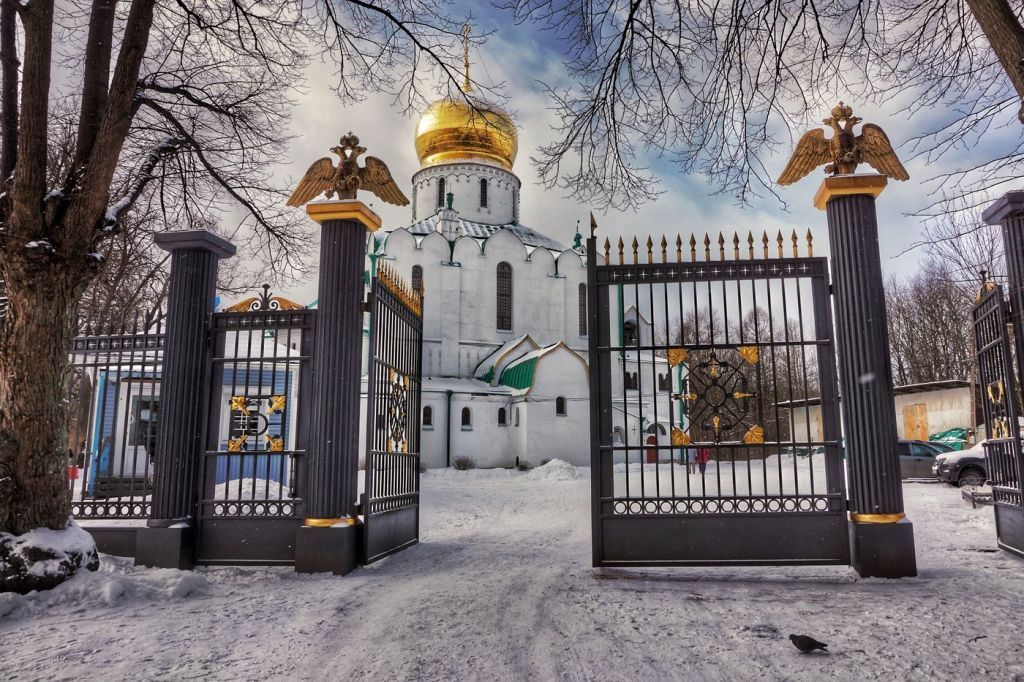
PHOTO: winter view of the Feodorovsky Sovereign Cathedral. Note the gilded double-headed eagles perched on the pillars of the main gate

On a final note . . .

There are some Orthodox Christians who have suggested that once the Russian Orthodox Church recognize the Ekaterinburg Remains as those of the Imperial Family, that the Feodorovsky Sovereign Cathedral at Tsarskoye Selo should be considered as the final resting place for the Imperial Family and their four faithful retainers that perished with them in Ekaterinburg. According to one source, such a decision would thus fulfil the wish of Nicholas II and Alexandra Feodorovna.

It seems only fitting that they should find eternal rest in a place which they held so near and dear to their hearts, one where they came to pray and find spiritual nourishment. Just a thought . . .

NOTES:

[1] Shortly after the events of Bloody Sunday in February 1905, Nicholas II made the Alexander Palace his permanent residence.

© Paul Gilbert. 14 July 2023
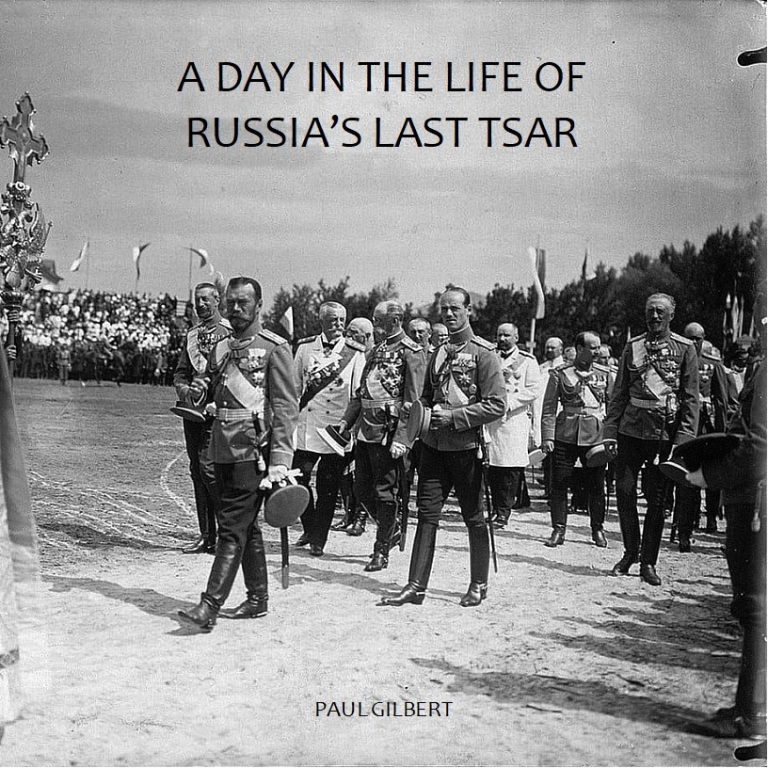
NEW BOOK: A Day in the Life of Russia’s Last Tsar

*This title is available from AMAZON in the USA, UK, Canada, Australia,
France, Germany, Spain, Italy, Netherlands, Poland, Sweden and Japan
*Note: prices are quoted in local currencies

CLICK HERE TO ORDER THE PAPERBACK EDITION @ $25.00 USD

English. 242 pages with 225 black & white photos

Aside from his many duties as God’s anointed Emperor and Tsar of All the Russia’s, Nicholas II took on many other roles from one day to the next: a dutiful husband and loving father, a devoted son and brother, a friend, a sportsman, a diplomat, an ambassador, a dedicated military leader, a devout Orthodox Christian, among others.

This richly illustrated pictorial explores the day-to-day duties of Russia’s last monarch. It is divided into six sections: the Tsar and His Family; Sports, Leisure and Holidays; the Tsar and the Church; the Tsar and Russia; the War Years; and the Tsar Under House Arrest. Each section features full-size historic images which reflect his day to day duties and activities. In total, this unique album includes more than 200 photographs from the author’s private collection.

The publication of this album is timed to coincide with the 155th anniversary of the birth of Emperor Nicholas II on 19th May [O.S. 6th May] 1868 and the 105th anniversary of the death and martyrdom [17th July 1918].

About the author

Paul Gilbert is a British born researcher and writer, specializing in the study of the life and reign of Emperor Nicholas II.

He has travelled extensively in Russia since 1986, visiting archives and historic sites associated with Russia’s last Tsar.

In 1998, he attended the Tsar’s funeral in St. Petersburg, and in 2018, he took part in the events marking the 100th anniversary of his death and martyrdom in Ekaterinburg.

©  Paul Gilbert. 14 July 2023
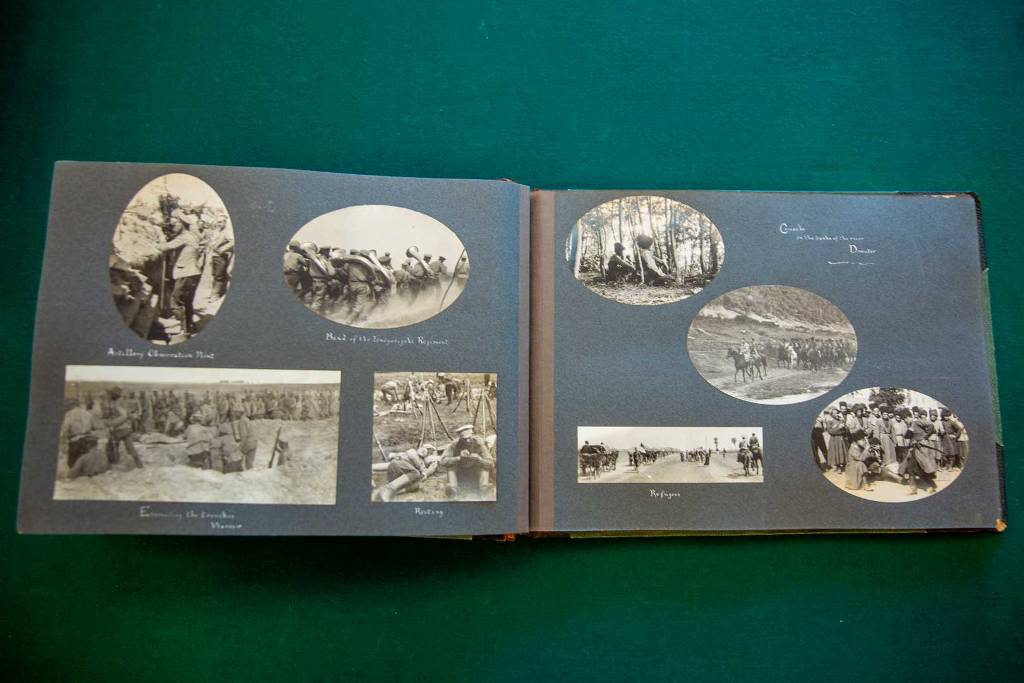
Photo album belonging to Tsesarevich Alexei Nikolaevich returned to Alexander Palace

Photo © Tsarskoye Selo State Museum

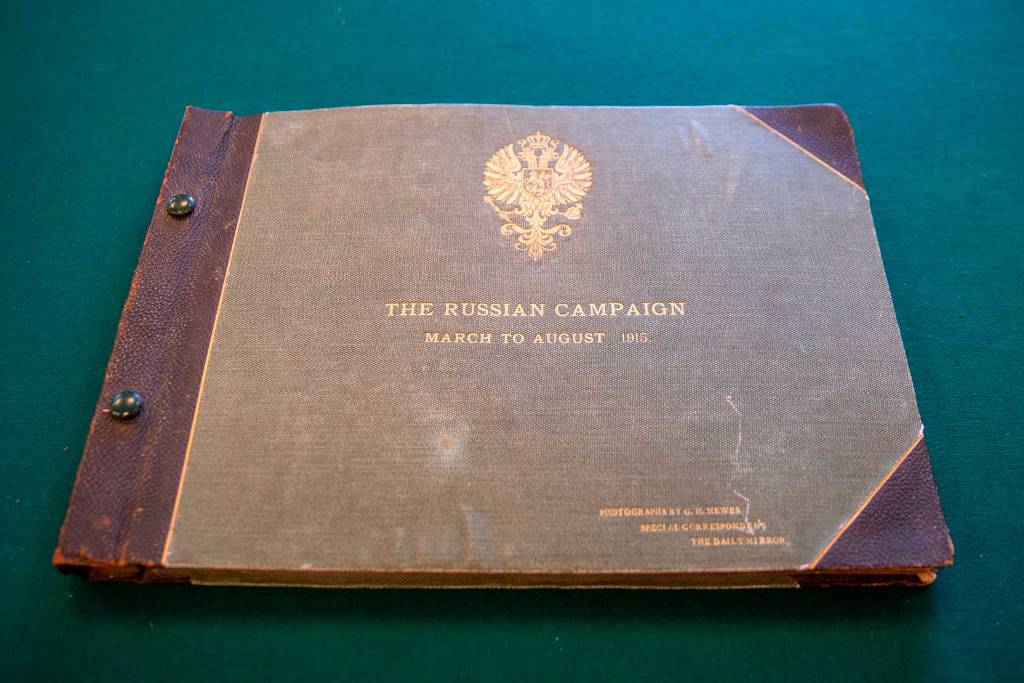
A rare photo album “The Russian Campaign. March to August 1915”, which belonged to Tsesarevich Alexei Nikolaevich and was kept in the Alexander Palace, has been returned to the Tsarskoye Selo State Museum.

The album was one of several rarities purchased at foreign auctions and donated to the museum by the philanthropist and long-term friend of the museum, Mikhail Karisalov. The other items include two paintings by Karl Friedrich Schultz, and a plate from the famous Raphael service, manufactured in 1903 at the Imperial Porcelain Factory. The paintings and plate were originally from the Catherine Palace.

In total, the museum’s collection now includes 226 items donated by Mikhail Karisalov or acquired with his financial support. It is thanks to the kindness and generosity of this man, that the museum has been able to recoup many of its treasures which were lost or stolen during the Nazi occupation of Pushkin [Tsarskoye Selo] in 1941-44. 

The photo album “The Russian Campaign. March to August 1915” consists of 168 photographs taken during the Russian campaign of the First World War – from March to August 1915. The photographs were taken by British photographer George H. Mewes, who was appointed official photographer to the Russian Imperial Army. Hewes took photographs for a number of prominent British newspapers and magazines, including The Daily Mirror, The Times History of the War, Field Notes from the Russian Front and The Russian Campaign.

Similar albums about the military campaigns of the Russian Imperial Army during the First World War were presented as gifts to Tsesarevich Alexei Nikolaevich, the son and heir of Emperor Nicholas II. Museum researchers believe that the albums were kept in the Tsesarevich’s Classroom, which was located on the second floor of the Eastern Wing of the Alexander Palace. “We can only assume that “The Russian Campaign. March to August 1915″ album, among many other items, was seized from the Alexander Palace during the 1930s or 1940s,” says Victoria Plaude, curator of the museum’s photograph fund.

On the flyleaf of the album is a museum label. The inscription in ink reads: “Alexander./palace/floor. nasl-ka/class/No. 683”. This clearly indicates that the photo album was in the Alexander Palace in Alexei’s Classroom. The label found on the album is identical to those on other items from the Alexander Palace, and now in the Collection of the Tsarskoye Selo State Museum.

Photo © Tsarskoye Selo State Museum

The photo album was made in London by Jonson & Sons. Photos of different sizes are pasted on sheets of gray cardboard. On the top cover of the album is an embossed gold inscription: “Photographs by G. H. Mewes, special correspondent of the Daily Mirror”.

The pictures are accompanied by captions in English. On the flyleaf of the album there is an inscription: “It has been the aim of the correspondent to illustrate for the British public the heroic part performed by their Russian Allies in the Great War”.

The photographs are only a small selection of about two thousand photographs taken by Mewes for the Russian Imperial Army, which were reproduced in illustrated magazines around the world.

British photographer George Mewes and American journalist Stanley Washburn were on the Russian front in 1914-1915. In addition to periodicals, these photographs were later featured in Washburn’s book “The Russian Campaign. April to August, 1915”.

© Paul Gilbert. 13 July 2023

Nicholas II’s love of bicycles and cycling

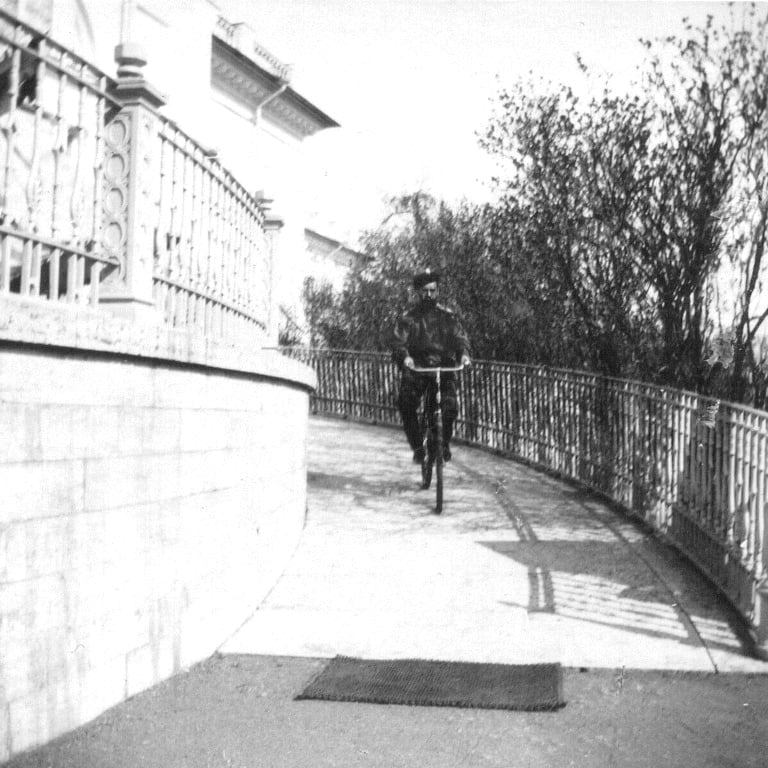
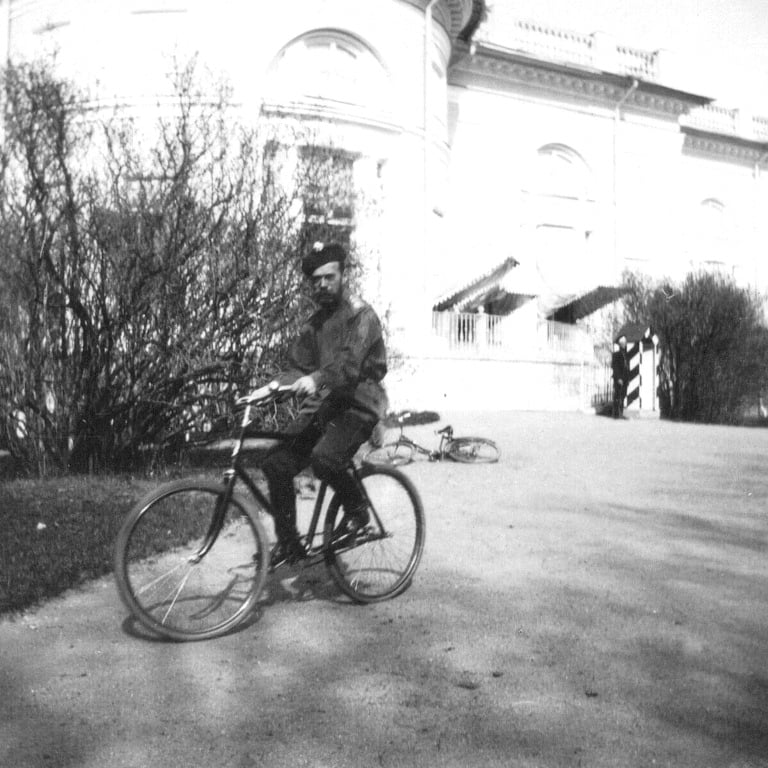
PHOTO: Nicholas II riding his American-made bicycle, purchased in July 1895, from the Pobeda Trading Company in St. Petersburg

One of the many physical pastimes of Russia’s last Tsar was cycling, an exercise which he enjoyed with all of his children. Even his son Alexei partook in this activity, on a specially made three wheel bicycle.

In the late 19th century members of the Russian Imperial Family showed great interest in two-wheeled vehicles and bicycles, including Russia’s last Tsar, who began to ride a bicycle while still a teenager. Vintage photographs show Nicholas II riding bicycles with his Danish and Greek relatives, and later on the grounds of the Alexander Palace at Tsarskoye Selo.

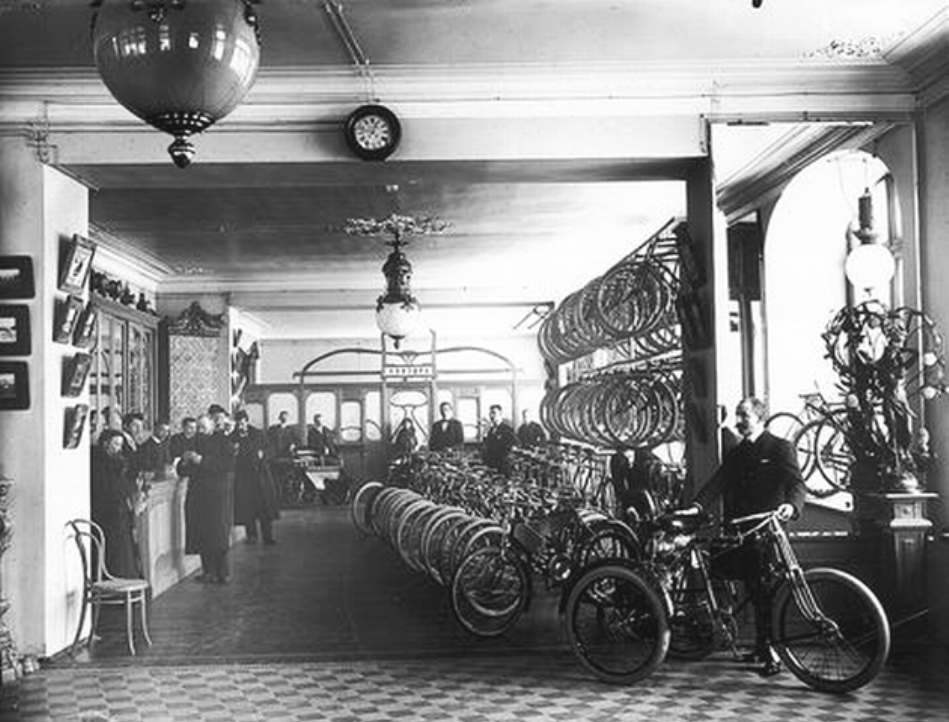
The first shop to offer bicycles in the Russian capital was the Pobeda Trading House, which was situated at 81 Morskaya Ulitsa (Street). In 1895, it received the status of a Supplier to the Imperial Court. It was here, in July 1895 that Nicholas II purchased for his own use a high-quality bicycle made by the American company Dayfon, at a cost of 253 rubles, a considerable sum at that time. The bicycle was equipped with a special seat, a lamp, a bell, and an air tube.

Surviving records of the Pobeda Trading House include invoices signed and paid by Nicholas II, which include delivery, cleaning and adjustment of his bicycle, as well as it’s upkeep and maintenance, in order to keep it in perfect order.

One invoice for 24 rubles, included: cleaning the bicycle, adjustments and delivery (10 rubles), a bicycle cover (8 rubles), a bicycle stand (5 rubles) and engine oil (1 rub.).

The following month, in August 1895, another invoice records that the Tsar paid for a new shift for changing gears for 10 rubles, a bicycle chain for 12 rubles and additional maintenance work for 5 rubles.

The shops accounts also indicate that the Tsar paid for a special weather-proof cover and storage for his bicycle stored during the winter months were also paid.

PHOTOS: view of the Pobeda Trading House at Morskaya Ulitsa (Street), 81 in St. Petersburg

PHOTOS: view of the Pobeda Trading House – Supplier to the Imperial Court

On 31st December of that year, the Tsar decided to have his bicycle fully enamelled for 15 rubles, and the “full nickel plating of the bike” for an additional 30 rubles. Additional maintenance on the bicycle including “turning the hulls, checking the wheels, cleaning and assembly” for 8 rubles, the purchase of spare “pneumatic tires” for 45 rubles, another bicycle cover for 8 rubles. and a bicycle pump for 2 rubles. 50 kopecks.

Thus, by the end of 1895, Nicholas II had spent 381 rubles on his bicycle and spare parts. All these purchases, as well as after-sales service, were carried out in the Pobeda Trading House. The storage conditions for the Tsar’s expensive toy is also noteworthy – at the “end of the season”, the Tsar’s bicycle was packed by specialists in special covers and moved to the shop for repair and storage until the new season began in the spring.

In later years, Nicholas II ordered other models of bicycles for his wife and children, complete with special enameling and nickel plating. Among them was a two-seater, which he shared with his wife – this bicycle has survived to the present day, and is now in the Collection of the Peterhof State Museum.

The last bicycle bill was signed by “Citizen Romanov” – during his house arrest at the Alexander Palace – on 10th May 1917, when he bought rubber glue and “bicycle valves” for a modest 4 rubles 80 kopecks.

PHOTO: Nicholas II riding his bicycle on the grounds of the Alexander Palace, 1914

PHOTO: Nicholas II riding his bicycle on the grounds of the Alexander Palace, 1914

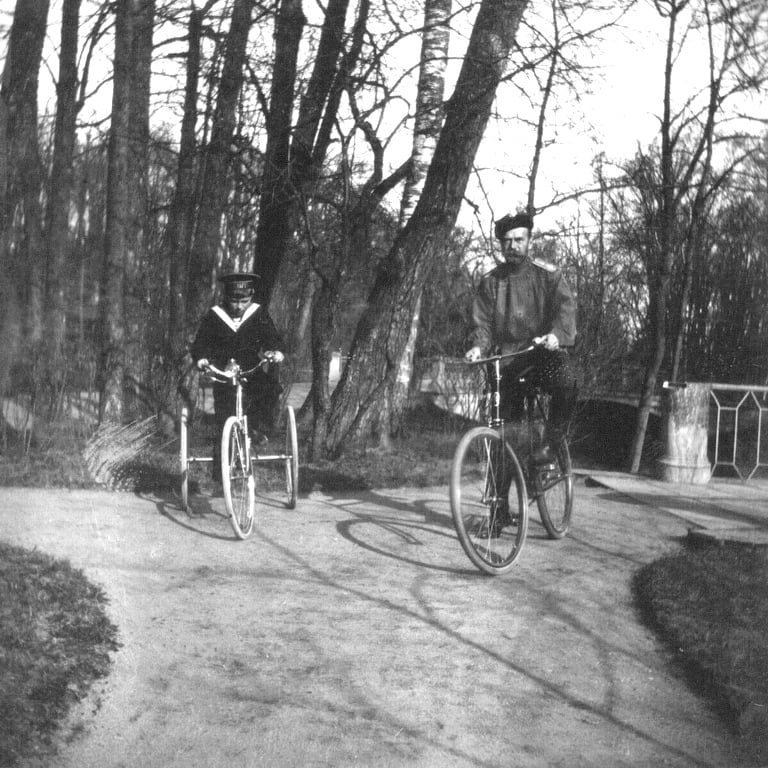
PHOTO: Nicholas II and his son Alexei riding their bicycles in the Alexander Park, 1914

The Tsar’s passion for bicycles and cycling was shared by his children. Each of them had their own bicycle, all of which were serviced by specialists of the Pobeda Trading House. The grand duchesses had girls bicycles of the same model, only different sizes, based according to their age and height. The grand duchesses bicycles had a special protector on the chain, which prevented the hems of their skirts from getting caught in the bike’s chain as they peddled.

Due to his illness [haemophila], Alexei had a special three-wheel bicycle made, which afforded him protection from falling and hurting himself, as any injury could prove fatal. His doctors also maintained the cycling would be a good exercise for his sore leg.

In 2004, the Peterhof Museum-Reserve opened an Imperial Bicycle Museum, which presents 12 rare bicycles, including those which belonged to the last three emperors: Alexander II, Alexander III and Nicholas II.

In 2013 Nicholas II’s bicycle was presented at an exhibition marking the 2014 Olympic Games in Sochi.

© Paul Gilbert. 12 July 2023

Romanov Memorial Hall to be moved to new location in Ekaterinburg

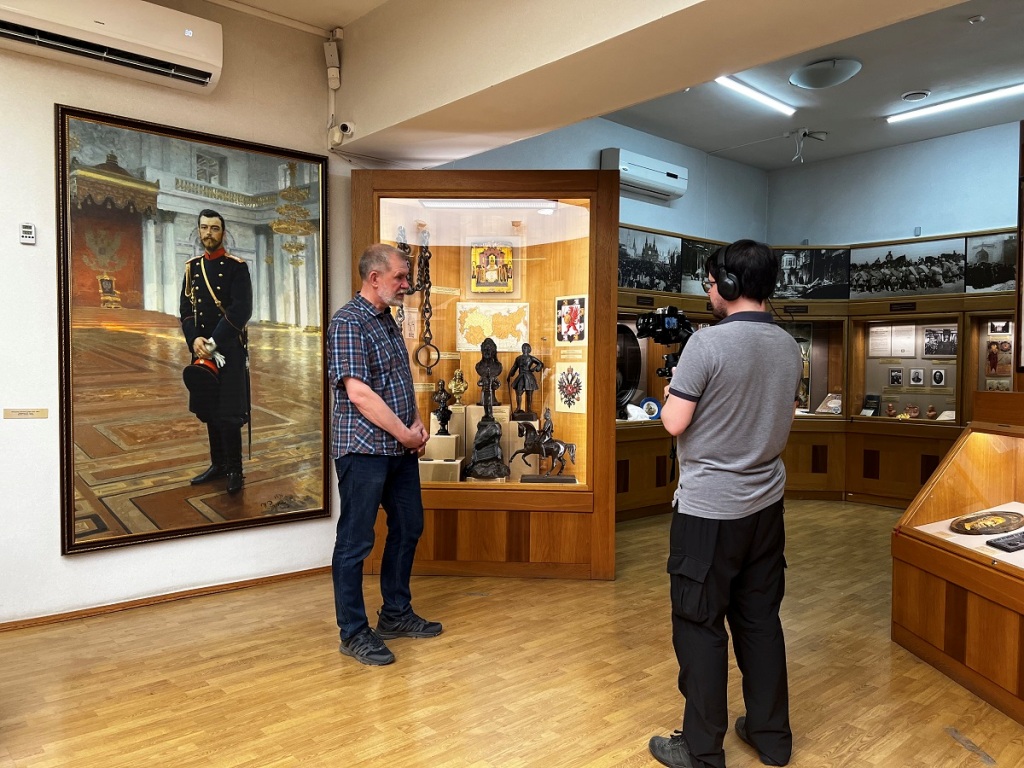
PHOTO: view of the Romanov Memorial Hall in the Museum of History and Archaeology of the Urals, a branch of the Sverdlovsk Regional Museum of Local Lore in Ekaterinburg

In the days leading up to this years Tsar’s Days events the Romanov Memorial Hall – which is currently located in the Museum of History and Archaeology of the Urals – will be moved to the Sverdlovsk Regional Museum of Local Lore in Ekaterinburg.

On 14th July 2023, the museum will present a new permanent exhibition “The Romanovs in the Urals” dedicated to the stay of Emperor Nicholas II and his family during their house arrest in the Ural city from April to July 1918.

According to the head of the public relations department of the museum Tatyana Mosunova, items from the museum’s funds, one way or another connected with the Imperial Family, will be exhibited. Among them is a unique sculpture of Alexander III by Kasli Foundries, the last time this figure was exhibited was more than a hundred years ago.

PHOTO: the former Poklevsky-Kozell mansion will be the new venue for the Romanov Memorial Hall in Ekaterinburg

According to Mosunova, the exhibition will be transferred to the 19th century Poklevsky-Kozell mansion on Malyshev Street. Local historians will help in creating an exhibition space, an agreement with the Ural State University based on the consultations of experts from the Museum of History and Archaeology of the Urals.

The General Director of the museum Alexander Emelyanov explained that the new exhibition will be extensive and will occupy five halls. The museum believes that the organization of the permanent exhibition will help both locals and visitors to the city to have a better understanding of the final days of Russia’s last Imperial Family in the Ural capital.

***

My Visit to the Romanov Memorial Hall in June 2016

PHOTO: a miniature copy of Zurab Tsereteli’s sculpture, “Night at the Ipatiev House” greets visitors to the Romanov Memorial Hall

Situated at Ulitsa Lenina 69/10 is the Museum of History and Archaeology of the Urals, a branch of the Sverdlovsk Regional Museum. From the street, the museum resembles one of the hideous buildings from the Soviet era – but if you blink, you may miss it! Admission is 200 rubles, an additional fee is charged if you want to take photographs. One must climb a steep circular staircase to reach the Romanov Memorial Hall on the 4th floor. The ascent is definitely worth it!

A miniature copy of Zurab Tsereteli’s sculpture, “Night at the Ipatiev House” greets visitors at the entrance to the hall.

The Romanov Memorial Hall was opened in 2006. The exposition tells of the Romanov dynasty during the reign of Emperor Nicholas II (1894-1917), the tragic events of 17 July 1918 and secret burial of the remains of the royal family.

This is a very interesting museum, as it contains personal items of Nicholas II, his family and their retainers, discovered in the Ipatiev House by the White Army. It also contains many elements of decor, decoration and fittings salvaged from the Ipatiev House before its demolition in September 1977, notably the cast iron fireplace from the dining room, and the iron grille from the window of the murder room.

PHOTO: scale model of the Ipatiev House -renamed House of Special Purpose by the Bolsheviks – on permanent display in the ‘Romanov Memorial Hall’

Aside from the items from the Ipatiev House, are many additional exhibits of interest, including a scale model of the Ipatiev House; the reconstructed model of Nicholas II’s head by Russian forensic expert Dr. Sergei Nikitin; the Mauser pistol which belonged to the murderer Pyotr Ermakov; a portrait of Princess Louise of Hesse-Kassel (the future Queen of Denmark), maternal grandmother of Nicholas II, which formerly hung in the study of Emperor Alexander III in the Anichkov Palace in St. Petersburg.

The exposition further explores the history of the investigation of the murder case of the last of the Romanovs in the Urals, which lasted more than 100 years.

It is interesting to note that the hundreds of exhibits on display in the glass display cases in the Romanov Memorial Hall include descriptions in both Russian and English – a rarity in Russian museums.

A small adjacent room contains a photo exhibit dedicated to Grand Duke Mikhail Alexandrovich and his secretary Brian Johnston. Efforts to locate their remains near Perm are ongoing by the S.E.A.R.C.H. Foundation.

© Paul Gilbert. 11 July 2023