Olga: Nicholas II’s younger sister
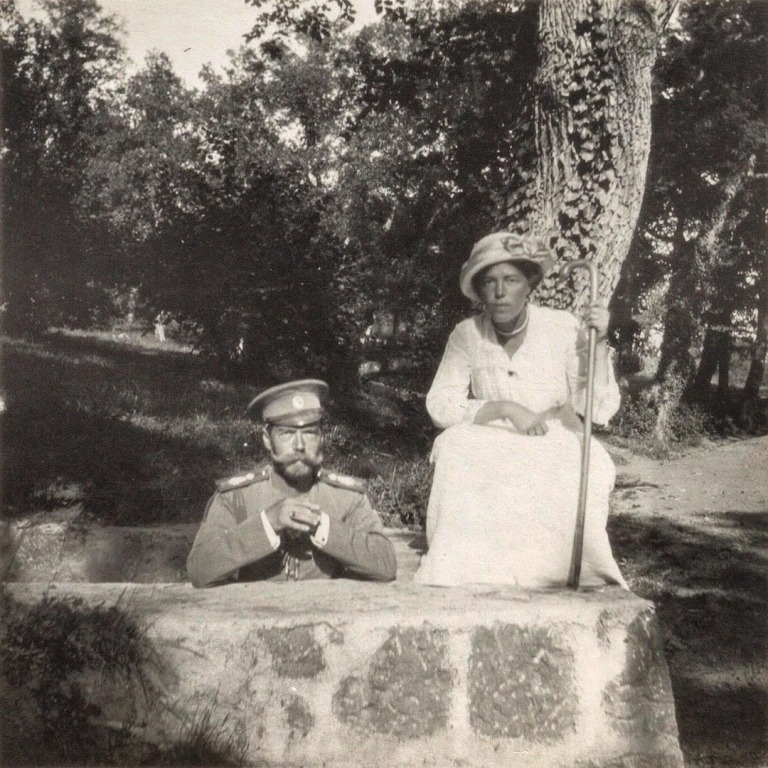
PHOTO: Emperor Nicholas II with his younger sister Grand Duchess Olga Alexandrovna in the lower Massandra Park, Crimea in the Autumn of 1913

On this day – 13 June (O.S. 1 June) 1882, Grand Duchess Olga Alexandrovna was born in the Cottage Palace, situated in the Alexandria Park at Peterhof. Olga was the youngest of six children born to Emperor Alexander III and the Empress Marie Feodorovna. Growing up, she spent much of her childhood in the family’s 900 room palace at Gatchina, 40 miles (63 km) outside of St. Petersburg. Her father had been in power a little over a year when she was born, having succeeded his father Alexander II, who had been assassinated while travelling along the Catherine Canal on 13 March (1 March OS), 1881. His assassins were brought to trial and hung for their vicious crime.

Olga and her siblings, Nicholas (the future Emperor Nicholas II), born 1868; George, born 1871; Xenia, born 1875; and Michael “Misha,” born 1878, did not attend school, but were taught Russian and other languages [they were fluent in English, French and Danish], literature, mathematics, history, and art by various tutors within the confines of the palace. One other brother, Alexander, born in 1869, died in infancy. They had an English governess, Elizabeth “Nana” Franklin, whom Olga adored.

THE RUSSIAN YEARS
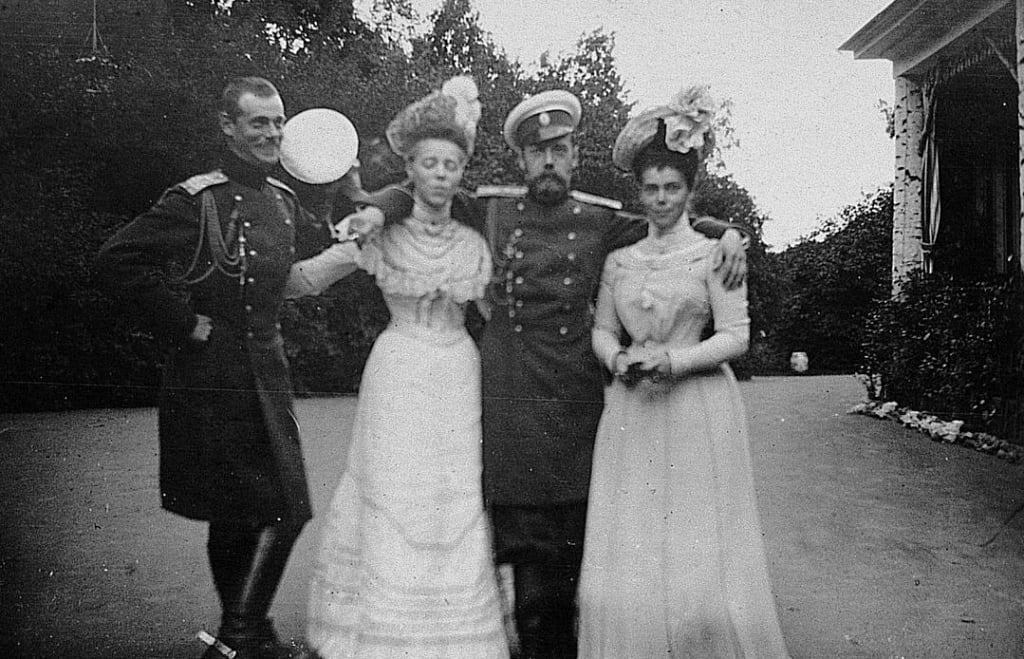
PHOTO: Olga with her siblings: from left to right: Grand Duke Mikhail Alexandrovich, Grand Duchess Olga Alexandrovna, Emperor Nicholas II and Grand Duchess Xenia Alexandrovna. Year unknown

Olga considered her childhood years growing up at Gatchina as the happiest time of her life. She took a great interest in playing the violin and painting. Unlike many royal children, Olga and her siblings lived a modest, spartan life in which the strictest of discipline was required by their tutors, governesses, and parents. They slept on firm beds with hard, flat pillows and very narrow mattresses. A modest rug covered the floor. Straight-backed wicker chairs, the most ordinary of tables and bookshelves, needlework and toys, made up the only furnishings. A single precious object sat in one corner of their rooms: a silver-framed icon of the Blessed Mother of God, studded with pearls and other precious stones. Of all her siblings, she was closest to Michael or “Misha” as she preferred to call him. They spent hours running and playing from room to room and through the vast halls of the palace lined with priceless vases.

It is generally believed that Olga had a strained and distant relationship with her mother for most of her life. On the other hand, she was very close to her father. They enjoyed their time together, taking walks and playing games in the vast Gatchina park, and sharing secrets. Olga was only 12 years old, when her father died suddenly in 1894. His death left the young grand duchess grief stricken, but she kept his memory alive by not forgetting what he had taught her: the simple way in which he preferred to life, care and respect for others, and appreciation for the natural beauty around her. Olga has been described as being indifferent to both dazzling jewellery and the strict etiquette that were symbolic of the Russian Court.

In August of 1901, she married Duke Peter Alexandrovich of Oldenburg. Two years later, she attended a review of her brother Michael’s regiment at nearby Pavlovsk. It was there that she first set eyes on “God Apollo” as his fellow junior officers called him. Colonel Nikolai Kulikovsky, age 22, was a close friend of Michael’s and she persuaded her brother to seat her next to Nikolai during lunch, which he did. Before the meal was over Olga was in love. Soon after, Olga wanted to divorce Peter and marry Nikolai, but neither her husband, Peter, or her brother, Nicholas II would permit it. However, the marriage remained unconsummated, both Olga and Peter were unhappy, their marriage was finally officially annulled by the Emperor in 1916.

On 14 November 1916, she married Nikolai Kulikovsky in the Church of St. Nicholas in Kiev. As a result of marrying a commoner, Grand Duchess Olga’s descendants from her marriage to Nikolai were excluded from succession to the Russian throne.

The following year, the political atmosphere went from bad to worse in Russia and her brother abdicated on 2 March 1917. On 12 August 1917, Olga and Nikolai’s first child, a son, Tikhon, was born.

Less than a year later, on 17 July 1918, her brother, Nicholas and his family were brutally murdered by the Bolsheviks in the Ipatiev House at Ekaterinburg and the Romanov dynasty came to an end. The new regime headed by Vladimir Lenin placed a bounty on the heads of any surviving members of the Romanov family. Olga and Nikolai had to flee Russia shortly after their second son, Guri, was born on 23 April 1919.

IN EXILE
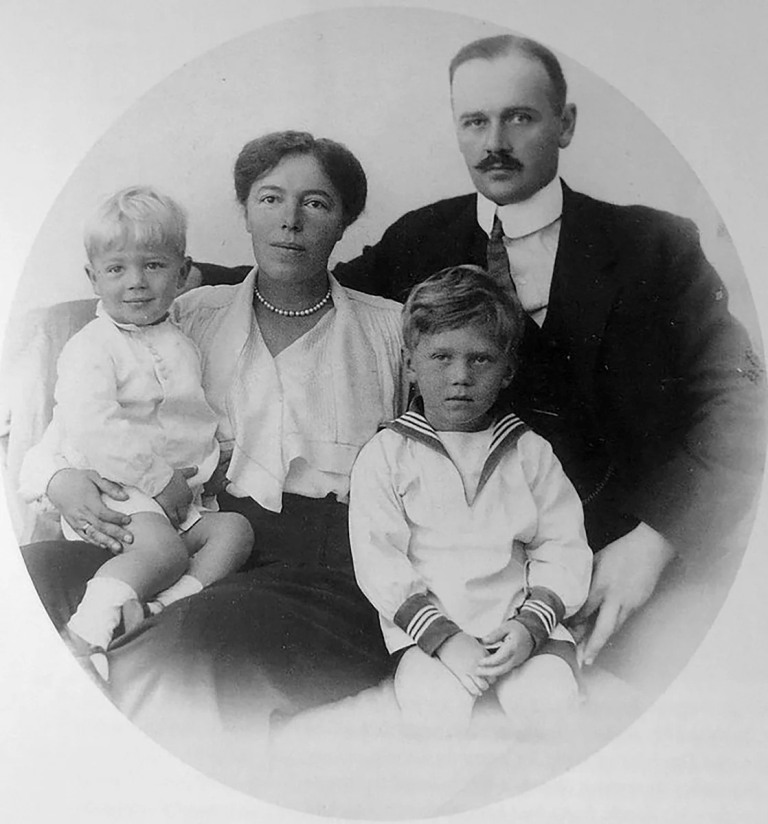
PHOTO: Grand Duchess Olga, her husband, Nikolai Kulikovsky, and their two sons, Guri (left) and Tikhon (right)

In 1920 they travelled by train to Novorossiysk and took shelter in the Danish Consulate. A month later, they went by ship to Dardanelles, a barge to the Island of Prinkipo, then on to Constantinople and Belgrade, where they met Regent Alexander Karageorgevich [later King Alexander I of Yugoslavia]. Her mother and sister, Xenia, went on a British ship to Malta and then on to England, where cousin King George V provided them with assistance. He was very supportive to Olga and her family during their exile in Denmark. In 1919, Dowager Empress Maria Feodorovna took up residence at her summer villa, Hvidore, in Denmark. Olga was reunited with her mother on Good Friday, in the Amalienburg Palace in Copenhagen. Olga, Nikolai, and their two sons then went to live at Hvidore. Her mother, the last living Empress of all the Russias, passed away on 13 October 1928. After the death of her mother, the royal estate of Hvidore was sold and the Grand Duchess and her family were able to purchase with her portion of the inheritance Knudsminde Farm, situated several miles outside of Copenhagen, Denmark.
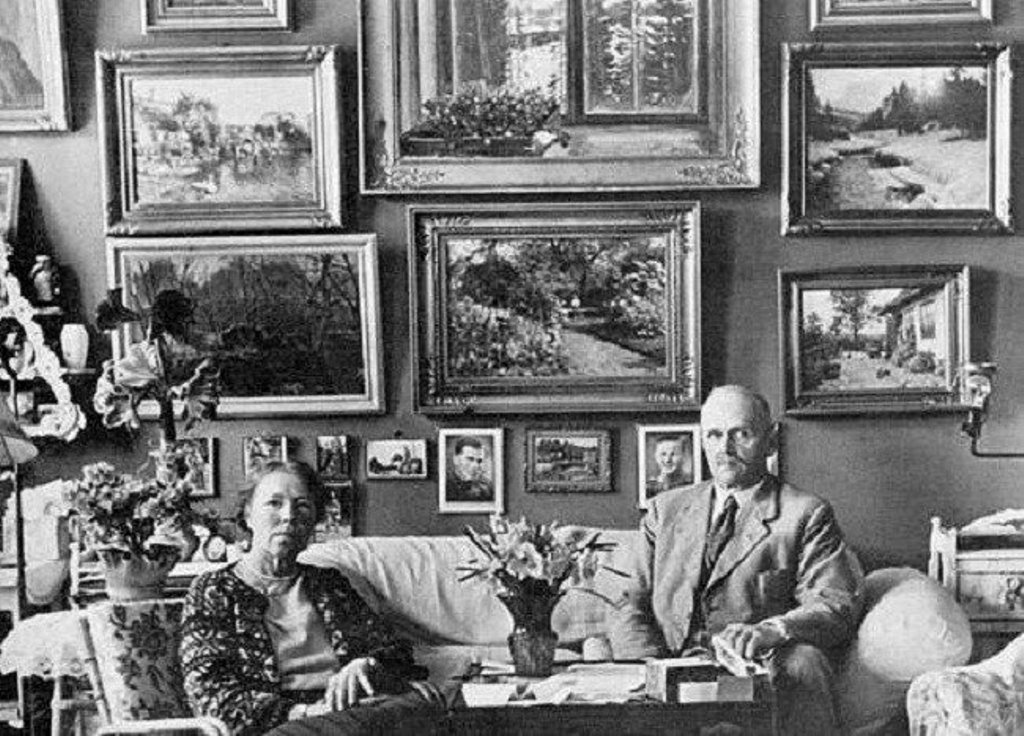
PHOTO: Olga and Nikolai at their home in Knudsminde, Denmark in the 1930s. The wall behind them is covered with some of the grand duchess’s watercolours

Europe once again became a battlefield during World War II (1939-1945). Son Guri was married in May, 1940, and Tikhon in April 1942. When Denmark was liberated on 5 May 1945, Olga and her family could not return to their homeland as they would most certainly be arrested and executed. Following World War II, Stalin’s propaganda machine declared that Grand Duchess Olga had conspired with Germany against Russia during the war. In 1948, King Frederik IX could no longer guarantee their safety and Olga faced exile for the second time in her 66 years.

Her second cousin King George VI enquired about their finding asylum in Canada. Arrangements were made through A.H. Creighton, president of the Canadian Pacific Railway and District Superintendant of the Department of Immigration and Agriculture Development, for relocation to Canada. The Agent General for Ontario, Canada, J.S. Armstrong, stationed in England, handled the arrangements for the departure of the Russian Grand Duchess and her family to depart for the safety of rural Canada. In May 1948, the Kulikovskys travelled to London by Danish troopship. They were housed in a “grace and favour” apartment at Hampton Court Palace while arrangements were made for their journey to Canada as agricultural immigrants. On 2 June 1948, Olga, Nikolai, Tikhon and his Danish-born wife Agnete, Guri and his Danish-born wife Ruth, Guri and Ruth’s two children, Xenia and Leonid, and Olga’s devoted companion and former maid Emilia Tenso (“Mimka”) departed Liverpool for Canada on board the Empress of Canada. of eight to sail on the Empress of Canada, for their new adopted homeland.

THE CANADIAN YEARS
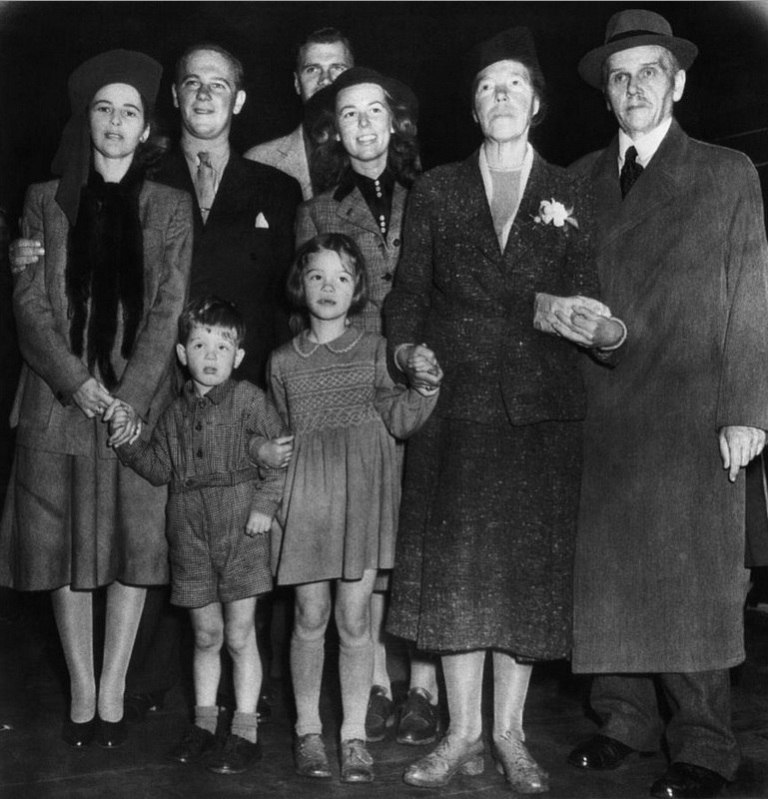
PHOTO: the Kulikovskys’ in England, just prior to sailing to Canada in 1948

They arrived in Montreal on 10 June, and took a train to Union Station in Toronto. Their first night in Toronto was spent in a massive suite in the Royal York Hotel, but after two days Olga felt uncomfortable in such opulent accommodations and accepted an offer to stay with a local Russian family in their home. The Evening Telegram headline read: “Sister of Last of the Czars Arrives in Ontario to Farm.” Creighton found them a 100 acre (40 ha) farm in Campbellville with a 10 room, two and a half storey red brick house for $14,000. They settled in with their sons, daughters-in-law, Agnete and Ruth, grandchildren, Leonid and Xenia, and 81 year old companion Mimka. With them were trunks filled with furniture, clothes, paintings, Faberge pieces and picture frames, her mother’s traveling case and many other family mementos, not to mention Olga’s jewels that Mimka had managed to smuggle out of their house in Kiev and kept secure all those years.

After they were settled, Olga and her family became active members of the Toronto parish of the Russian Orthodox Church. They attended services at the Christ the Saviour Cathedral, which was then located at 4 Glen Morris Street [the cathedral moved to its present location at 823 Manning Avenue in the summer of 1966]. Together, Olga and Nikolai took a great interest in the well-being of both the church and its parish.

Olga’s portrait hangs in the Cathedral, today, and her works as an artist embellish the beautiful interior iconostasis. She had created icons for the second level of iconostasis as well as the image of the Mother of God for the ancient (16th century) Greek “passage”, which was donated to the church by the management of Royal Ontario Museum. It was installed in the church on the right side from the altar (near the holy water tank). The main quality of Olga Alexandrovna was her attitude towards the people around her. Her unselfish kindness for everyone she met, her openness and welcoming heart were to leave a deep imprint in the memory of the parishioners of Christ the Saviour Cathedral. After her death in 1960, the parish school was named in her honour.
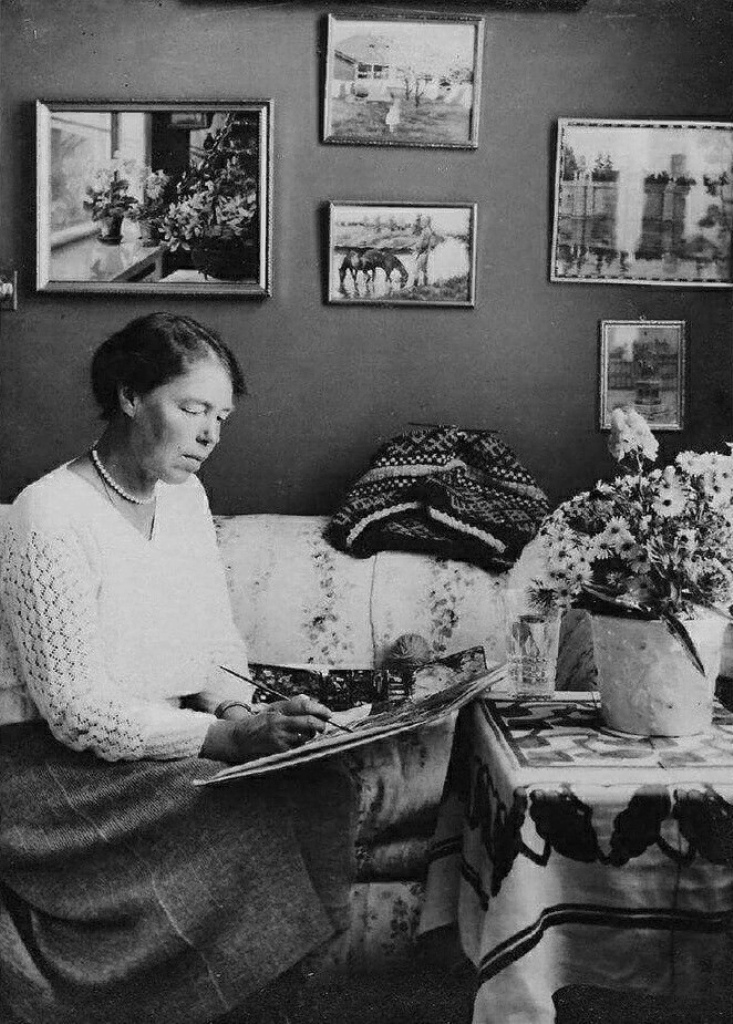
PHOTO: Grand Duchess Olga produced over 2,000 paintings during her lifetime

Olga, who had painted since residing in Denmark in the 1930s, began to paint still life and landscapes in watercolours. In October 1951, she had a showing at the Eaton’s Art Gallery, in Toronto, where her son, Tikhon was employed. She produced over 2,000 paintings in her lifetime. The sale of her paintings provided a source of income for her and her family. Works by Grand Duchess Olga are today in the private collections of HM Queen Elizabeth II, HRH the Duke of Edinburgh, HM King Harald of Norway, the Ballerup Museum, Denmark, and private collections in the United States, Canada, and Europe. Her paintings are highly sought after by collectors, each one fetching a hefty sum at auction.

By the end of 1951, Nikolai’s health was failing and he could no longer manage the work the farm entailed. So they sold the farm to Wolfgang von Richthofen, a relative of the WWI German flying ace, the Red Baron. They moved to 2130 Camilla Road in Cooksville, a suburb of Toronto [now amalgamated into the city of Mississauga] in 1952. Neighbours and visitors to the region took interest in the rumours of the last surviving Romanov grand duchess living in Canada, and visited her often.
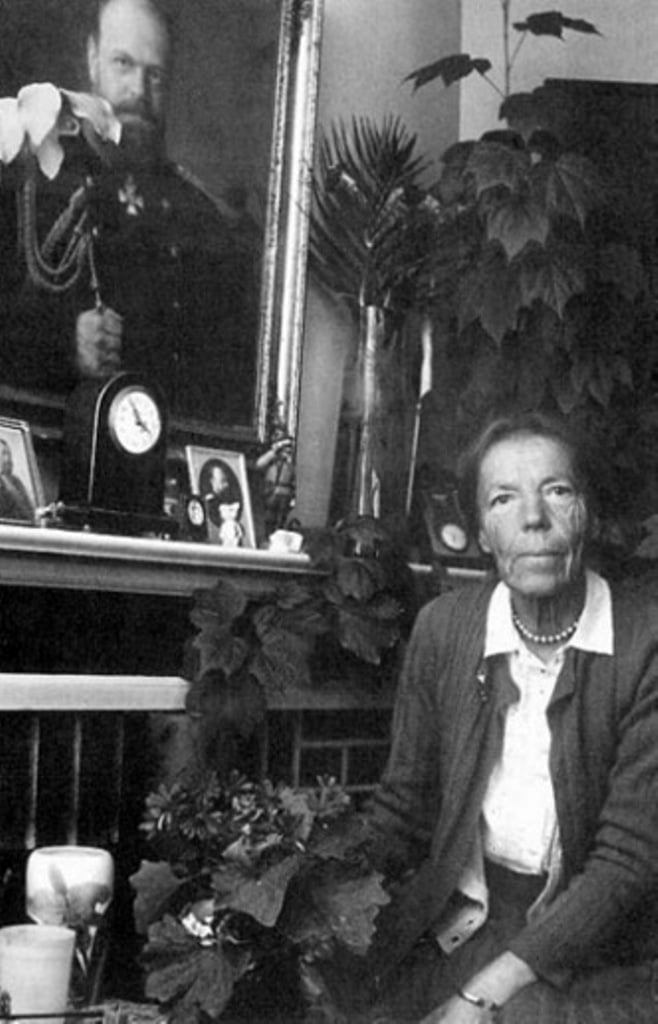
PHOTO: Grand Duchess Olga Alexandrovna poses in front of a portrait of her father Emperor Alexander III, which hung in her modest home on Camilla Road in Cooksville, Ontario, Canada

Their home was situated a half a mile (0.8 km) north of the thoroughfare named for King George’s wife, Elizabeth, the Queen Elizabeth Way (QEW). The Grand Duchess became good friends with Colonel Thomas Kennedy and it has been said that he took good care of her during her later years. In 1954, when Olga’s cousin Princess Marina of Kent [the daughter of Grand Duchess Elena Vladimirovna of Russia] came to visit, Camilla, a gravel road at the time, was paved from the QEW to Olga’s driveway for the royal visitor’s black limousine, which caused quite a stir in the neighbourhood. No doubt a lovely gesture from the Colonel.

Princess Marina of Kent was not the only royal who visited Grand Duchess Olga at her Cooksville home. Other royal guests included Princess Tatiana Konstantinovna of Russia, His Highness Prince Vassily Alexandrovich, Louis Mountbatten, 1st Earl Mountbatten of Burma, and his wife, Edwina Mountbatten, and Countess Mountbatten of Burma.

Grand Duchess Olga kept in touch with the Russian émigrés to the end of her life. Members of her old Akhtyrsky Hussar Regiment [she had been appointed honourary Commander-in-Chief of the 12th Akhtyrsky Hussar Regiment in 1901]. were now scattered all over the world, but she had not forgotten them. She had a remarkable memory and remembered many of the officers and men not only by their name and surname. In 1951, former officers and members of the famed Akhtyrsky Regiment gathered at her home to celebrate the 300th anniversary of the founding of the Royal Regiment. Thereafter, she became the patroness of the Association of Russian Cadets of Toronto.
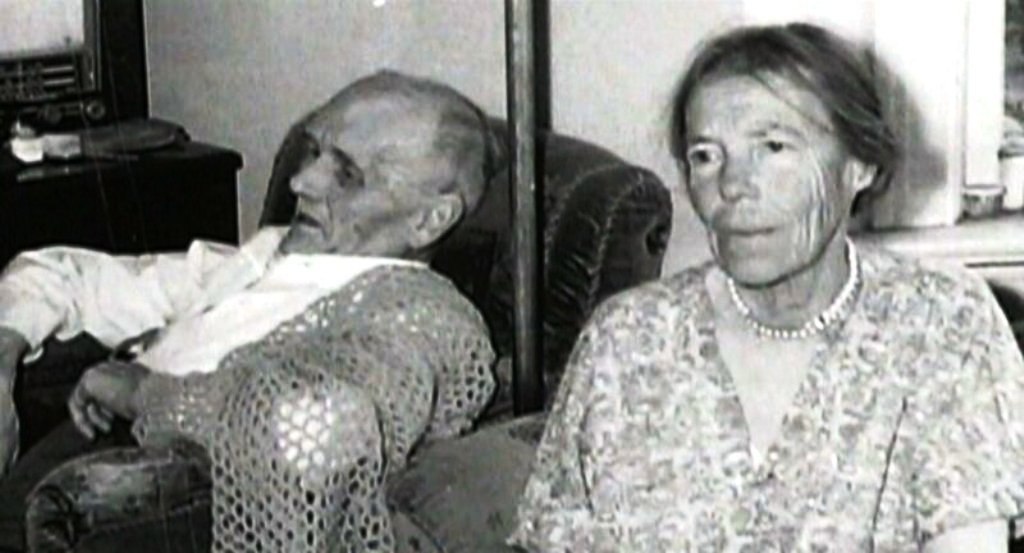
PHOTO: the last known photograph of Olga and Nikolai before his death in 1958. Olga outlived her husband by a little more than two years

By 1958, Nikolai was virtually paralysed, and on the morning of August 11, 1958, Olga woke to find that he had died in his sleep.

Prince Alexis Troubetzkoy spent the summer of 1959 in Hamilton, Ontario, where he had been commissioned as an officer with the Royal Canadian Navy (Reserve). He telephoned the Grand Duchess who graciously invited him to tea one Saturday afternoon. For days, he was nervous about meeting the youngest daughter of Emperor Alexander III. When he arrived at her home, he walked up the driveway to her modest bungalow, grasping a bouquet of roses with perspiring hands. Nervously, he knocked on the door and was greeted by “a little old lady dressed in a scruffy, unpretentious dress”, whom he assumed was the maid.

“Is the Grand Duchess at home?” he asked in Russian.
“And what do you want with the Grand Duchess?” came the woman’s reply.
“Well, I have an appointment with her” he said, now somewhat irritated.
“Well”, said the woman gravely, looking at him with feigned suspicion, “I don’t know. . .”. She paused, flashed a warm smile, and threw her arms around him, exclaiming with delight, “I am she!”
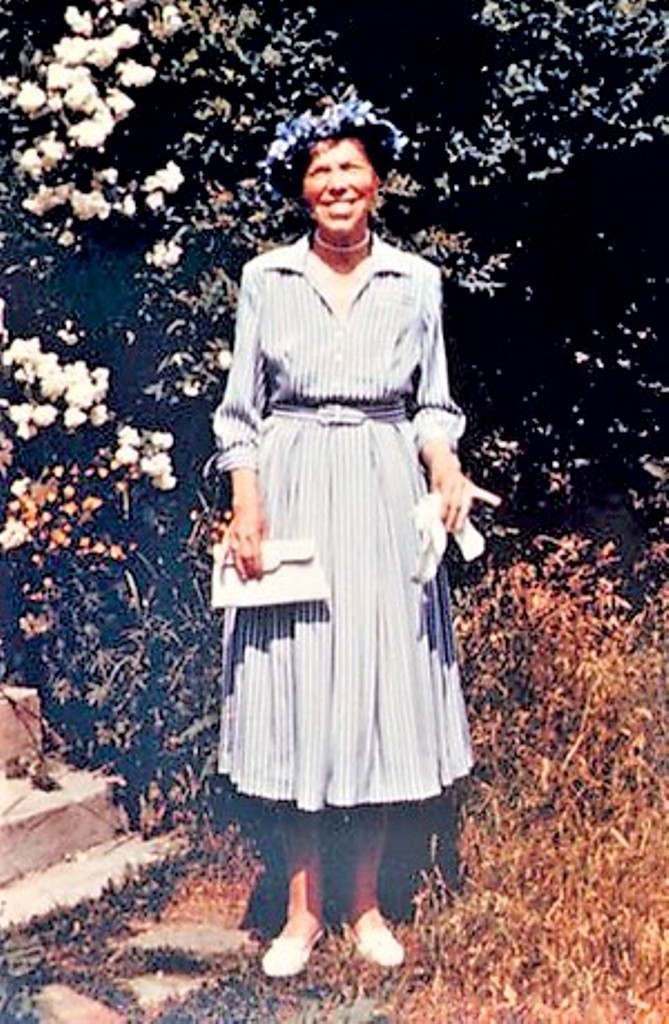
PHOTO: Grand Duchess Olga Alexandrovna, wearing the plain blue and white cotton dress and little blue straw hat, which she picked out specially for Queen Elizabeth II’s luncheon on the Royal Yacht Britannia, in June 1959

Prince Troubetzkoy visited the Grand Duchess several times that summer. It was during this time that the St. Lawrence Seaway was officially opened. The Royal Yacht Britannia brought Queen Elizabeth II and Prince Phillip to Canada. Olga, along with Tikhon were invited to a private luncheon on board the Britannia, which was docked in the Toronto Harbour. Olga was King George V’s first cousin, and thus a cousin to both Elizabeth, and her sister, Margaret. She knew both sisters well when they were small children.

The following day, Prince Troubetzkoy called on the Grand Duchess to find out how things went and what her impressions of the royal luncheon were.

“Ah”, she said, “it was a cozy evening, and it was great fun to have seen Elizabeth once again, after these many, many years”. Eyes glistening and bubbling with excitement, the Grand Duchess went on to tell the details of the evening and to give impressions of the now grown-up Elizabeth. She spoke of the two sisters as small girls and she carried vivid memories of them, one of whom she found “considerably less serious and playful” and the other “pensive and perhaps a bit less warm”. The Grand Duchess commented on a table which stood in one of the salons; it was taken from the Russian Imperial Yacht Standart and presented to King George V for the Royal Yacht. She remembered it.

What impressed Prince Troubetzkoy most of all was that Grand Duchess Olga had not been forgotten by the Queen. At the time of the Revolution, Olga together with her mother, the Dowager Empress, and sister, Xenia, found themselves safe in Denmark. The Empress died there in 1928 and Xenia settled in England at Hampton Court, living under the protection of King George V in a “grace and favour” residence. Olga’s life, however, evolved considerably less comfortably. She was married to a commoner and the couple made their way to Canada to begin life afresh as farmers. At the time of Prince Troubetzkoy’s visits, Olga was already a widow. In the years that lapsed between her visits with the child Elizabeth, no substantive contact had been maintained between the Court and the exiled Grand Duchess. But, despite the many years which had lapsed, it was family once more.

Grace Fraser Hancock also remembers Grand Duchess Olga. In 2004, she recalls, “I met Grand Duchess Olga shortly after she moved across the street from us in Cooksville. She was a very proud lady. I remember that she hated hats, and the year she was going to visit Queen Elizabeth and Prince Philip, she had to buy a hat. So I took her to Dixie Plaza and we bought a pale blue hat. When she got home, she told me that as she was leaving the royal yacht, she tossed her hat into the lake. She always wore pearls. She said that you had to wear them all the time because the pearls absorbed the oil from your skin and gave them a lustre. She took in stray dogs and always took them for walks and she wore rubber boots without socks and her feet used to get blue, so I bought her a pair of workmen’s socks to wear.”

DEATH & LEGACY
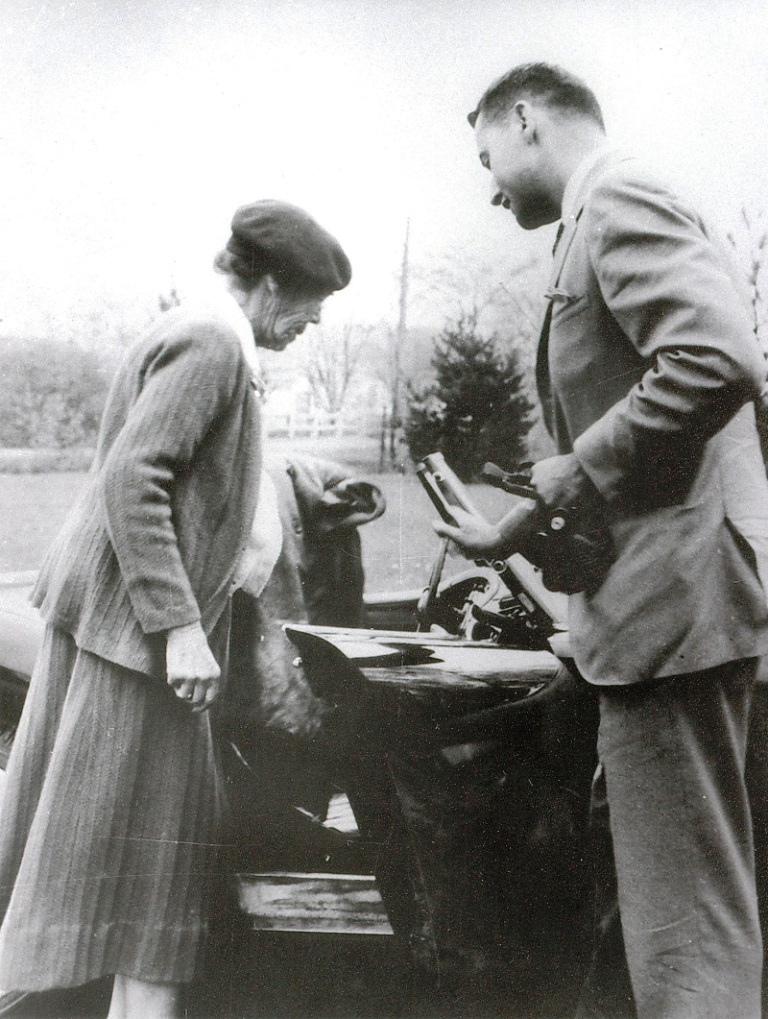
PHOTO: one of the last photographs of Grand Duchess Olga, with her biographer Ian Vorres (1924-2015) – The Last Grand Duchess: Her Imperial Highness Grand Duchess Olga Alexandrovna (1964)

Grand Duchess Olga became ill in 1960 and was diagnosed with cancer. After a brief stay in the Toronto General Hospital, she was taken in by her friends, Colonel Konstantin and Galina Martemianoff, who lived at 716 Gerrard Street in Toronto’s east end. Grace Fraser Hancock recalls, “I had heard that she was ill, so my friend Erma Large and I drove into Toronto to see her. She was living over a hairdressing salon. The lady she was staying with took us upstairs and she was lying on a small cot and she was very frail. We sat and talked to her for awhile and left.” Grand Duchess Olga died on 24 November 1960, in the tiny room of the Martemianoffs’ second floor flat with a picture of her husband by her side. This scenario gave rise to the rumour that Olga died penniless, but such was not the case.

VIDEO: click on the image above to watch a newsreel of Grand Duchess Olga Alexandrovna’s funeral in Toronto – duration: 45 seconds

On 30 November Grand Duchess Olga lay in state in Christ the Saviour Cathedral in Toronto. The Union Jack and Russian imperial standard hung from each corner of the platform where the coffin sat. Her funeral was attended by more than 500 mourners. Wreaths were sent by King Frederik IX and Queen Ingrid of Denmark, King Olav V of Norway and Queen Elizabeth II of Great Britain; imperial guardsmen from the 12th Hussars Ahtyrsky Regiment were the pallbearers. She was buried next to her husband Nikolai, in the Russian Section of York Cemetery. The Grand Duchess’ friend, Bishop John of San Francisco, sprinkled Russian earth on her grave. The Grand Duchess was the soul and the heart of the Toronto parish, and her death in 1960 created a void within the Russian community, leaving none of the parishioners untouched and felt by many as a personal tragedy.
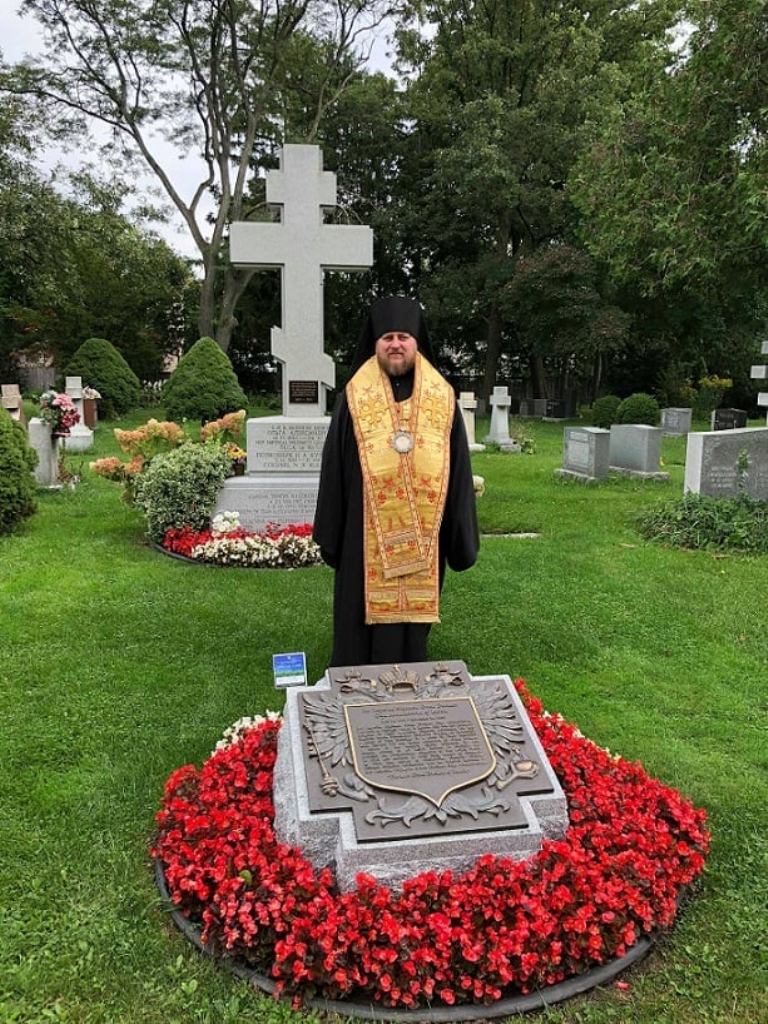
PHOTO: The final resting place of Grand Duchess Olga Alexandrovna in York Cemetery, Toronto, Canada

After her death, her sons closed down her house on Camilla Road and sold it and all her possessions that she treasured from her days in Russia. Her estate was estimated to be worth around $200,000. The combined worth of the items that Olga managed to smuggle out of Russia in today’s dollars would have been estimated at more than $1.2 million. Guri died in 1984 and Tikhon in 1993.

A bronze plaque was unveiled on August 25, 1996, at her grave site in York Cemetery, in Toronto, in dedication of her memory, while more than 200 family members, friends and newsmen looked on. It is interesting to note, that Mimka, Olga’s devoted companion and former maid is buried in a simple grave nearby.
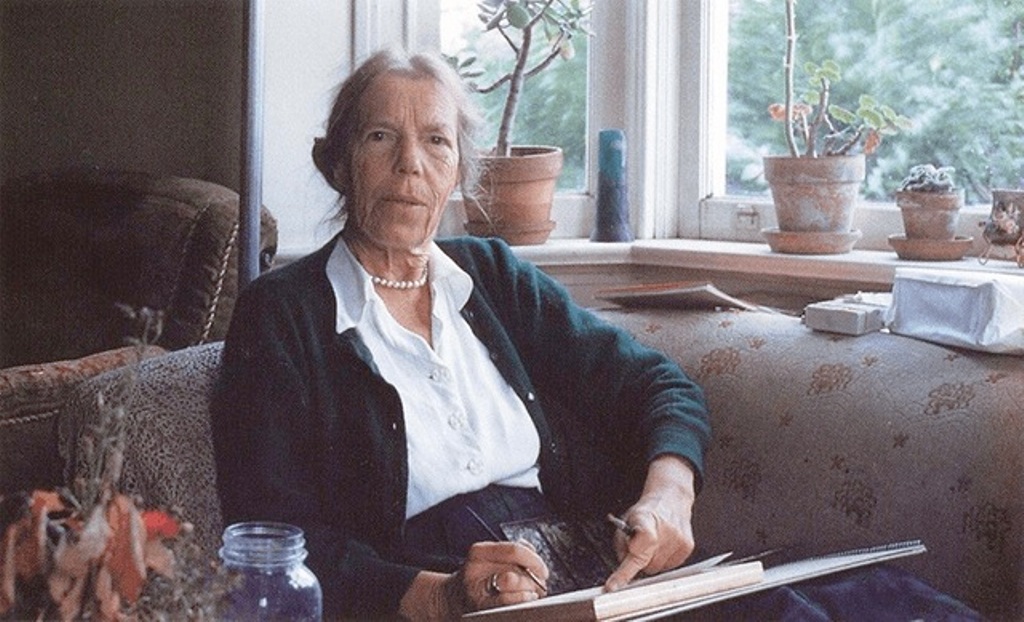
PHOTO: Olga Alexandrovna – the last Gand Duchess of Russia

During her life in exile, Grand Duchess Olga never lived with any delusions of grandeur or dreams of a Romanov return to power. She lived a remarkable life, enduring more than her share of personal heartaches. She experienced an attempted assassination of her brother Nicholas in 1891, the death of her dear father in 1894, the death of her brother George in 1899, a war between Russia and Japan between 1904-1905, adultery in 1906, a nervous breakdown in 1913, the death of her governess also in 1913, separation and divorce in 1916, serving as a nurse in an Army hospital in Kiev during World War I (1914-1918), an attempted assassination on her own life, a Revolution that brought an end not only to her brothers reign as Emperor, but also an end to the monarchy in her beloved homeland, exile from both Russia and Denmark, the murders of both her brother Michael and Nicholas and his entire family in 1918, the death of her mother in 1928, the death of her beloved husband, Nikolai in 1958 and the death of her sister Xenia in April 1960. Her final tragedy was the cancer that took her life eight months later in November 1960. Despite a lifetime of relentless tragedy that followed her during her 78 years, she endured each with noble fortitude. She was once and always, a Grand Duchess of Russia.

***

COMING SOON!
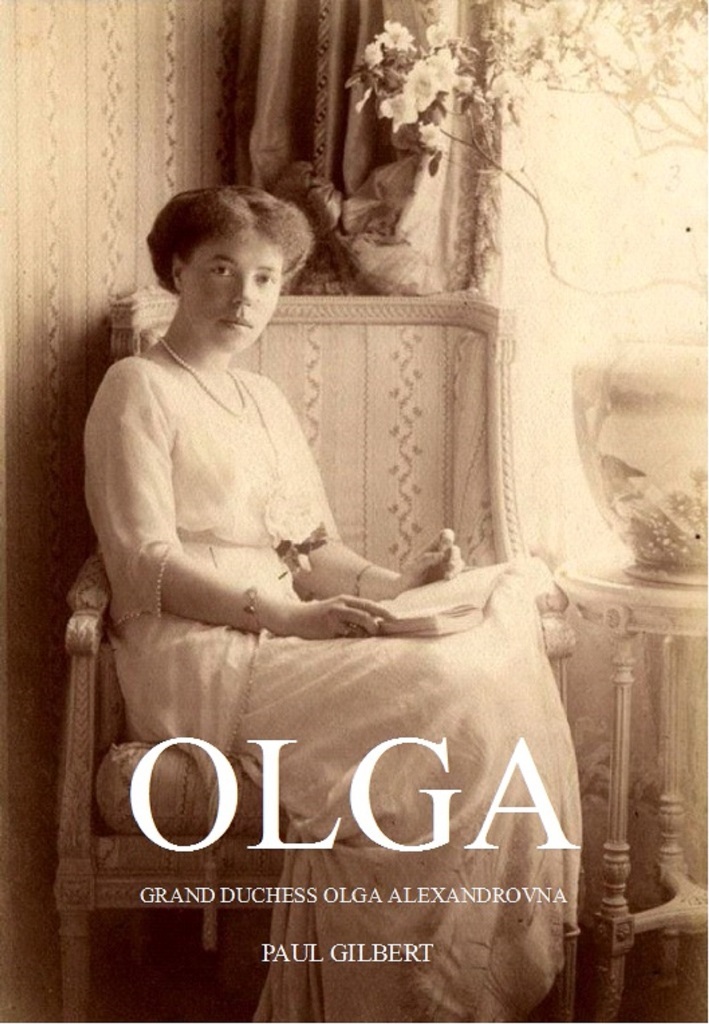
OLGA: GRAND DUCHESS OLGA ALEXANDROVNA

Paperback. 148 pages. Richly illustrated with more than 100 black and white photos

This book is a tribute to one of the most beloved and respected members of the Russian Imperial Family: Grand Duchess Olga Alexandrovna (1882-1960).

The first part explores her Russian, Danish and Canadian years respectively; the second part explores her love of painting – Olga painted more than 2,000 in her life; the third is about her work and dedication as a nurse during WWI; the fourth is an interview with her daughter-in-law Olga Kulikovsky-Romanoff (1926-2020), who shares her husband Tikhon’s anecdotes and details about his mother: the Grand Duchess of Russia.

NOTE: This title will be made available on AMAZON in 2023, publication date yet to be announced.

© Paul Gilbert. 13th June 2023
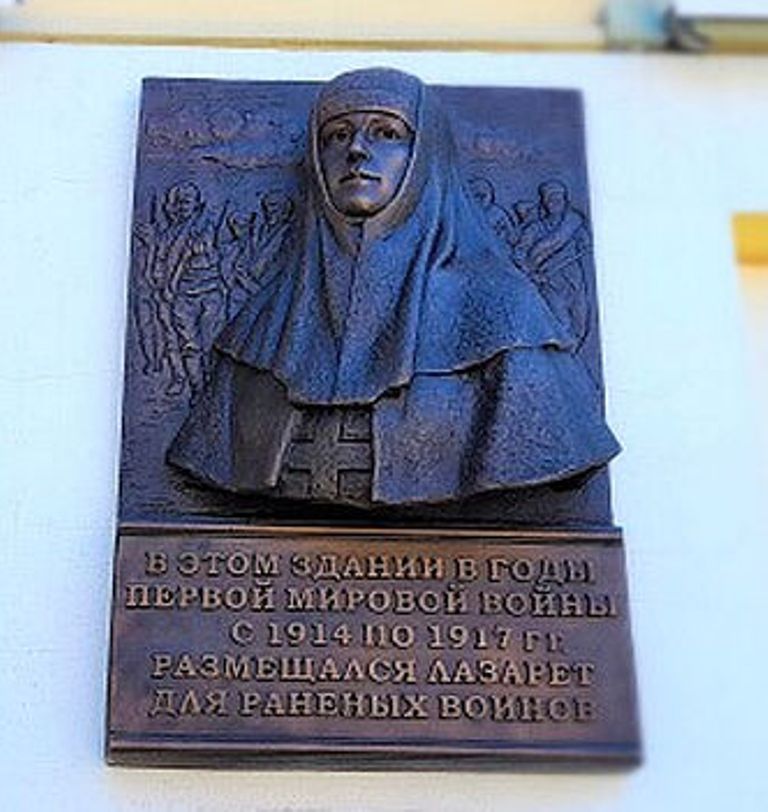
Memorial plaque to Empress Alexandra Feodorovna installed in Istra

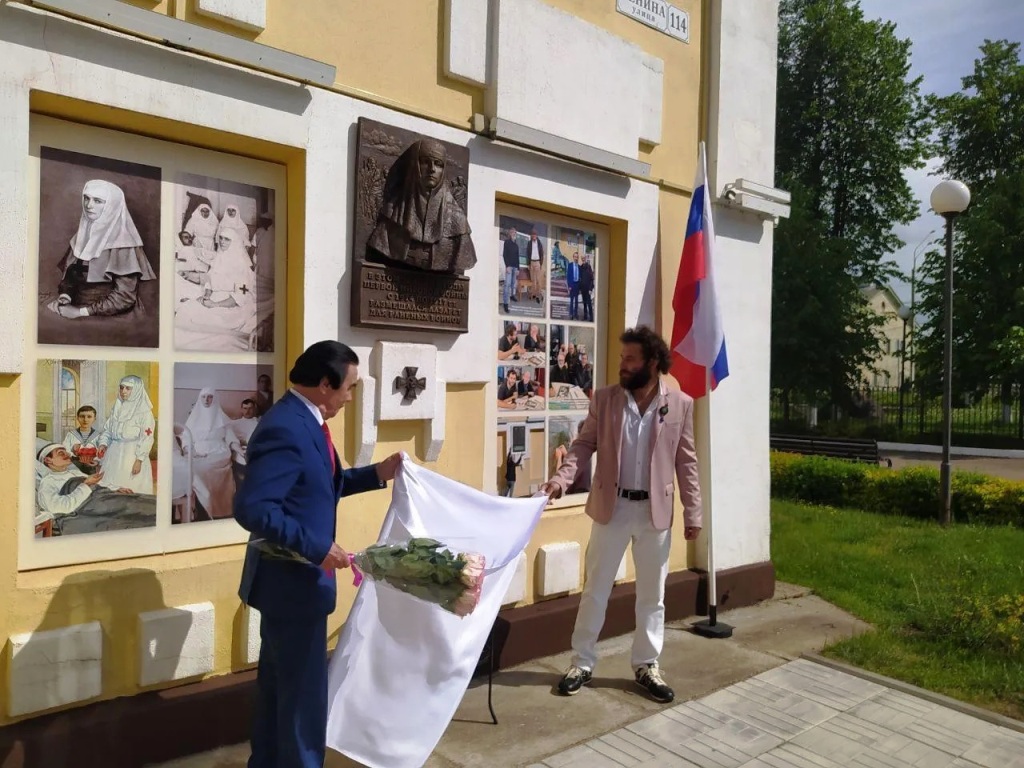
PHOTO: view of the bronze memorial bas-relief of Empress Alexandra Feodorovna

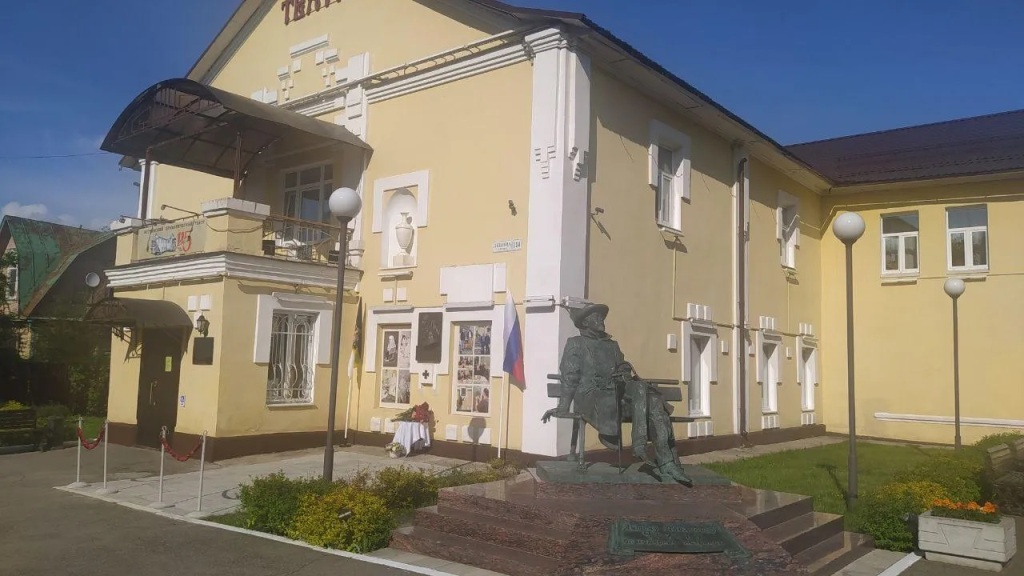
On 25th May 2023, a bas-relief plaque depicting Empress Alexandra Feodorovna was installed on the façade of the Drama Theatre, in Istra, situated 40 km northwest of Moscow.

During the First World War, the building served as an infirmary for wounded Russian soldiers, from September 1914 to the end of 1917.

The bronze bas-relief was made by Moscow sculptor Philip Trushin, and financed by the academician and philanthropist Vladimir Yatsuk.

PHOTO: Moscow sculptor Philip Trushin (right) unveils his bas-relief of Empress Alexandra Feodorovna

The rite of consecration of the memorial plaque was performed by the clergyman of the Resurrection New Jerusalem Stavropegic Monastery, Father Paisius.

The memorial plaque, depicts Empress Alexandra Feodorovna, dressed in the uniform of a sister of mercy, set against the background of soldiers of the Russian Imperial Army.

During the First World War, Alexandra Feodorovna organized a whole network of infirmaries, which included 85 institutions for wounded soldiers in Tsarskoye Selo, Pavlovsk, Peterhof, Sablin and other places. Many of the infirmaries were built at the Empress’s own expense.

PHOTO: view of the former infirmary for wounded Russian soldiers in Istra

© Paul Gilbert. 12 June 2023

Loyal to the Tsar: General Tatishchev and Prince Dolgorukov

PHOTO: From left to right: Catherine Schneider, Ilya Tatishchev, Pierre Gilliard, Anastasia Hendrikova and Vasily Dolgorukov

On this day – 10th June 1918 – two faithful servants to Emperor Nicholas II – General Ilya Leonidovich Tatishchev and Prince Vasili Alexandrovich Dolgorukov – were murdered by the Bolsheviks.

General Tatishchev and Prince Dolgorukov, faithfully and selflessly served Emperor Nicholas II, for many years. With Christian courage and nobility, they remained faithful to the sovereign, voluntarily followed the Emperor and his family to Tobolsk, and then to Ekaterinburg.

It was on 10th June 1918, that they together took a martyr’s death at the hands of the Bolsheviks and were buried in the cemetery of the Novo-Tikhvin Convent.

Memory Eternal! Вечная Память!

PHOTO: General Ilya Leonidovich Tatishchev and Prince Vasili Alexandrovich Dolgorukov

Ilya Leonidovich Tatishchev (1859 – 1918) – Adjutant-General of Emperor Nicholas II. The son of General Leonid Aleksandrovich Tatishchev (1827-1881) and Catherine Ilinishna (1835-1915), Ilya Tatishchev is one of the descendants of the founder of Ekaterinburg. He graduated from the Corps des Pages in St Petersburg, and later entered the service of the His Majesty’s Life Guard Hussar Regiment. He later served as adjutant to the Grand Duke Vladimir Alexandrovich (1847-1909). On 6th December 1895, he was promoted to colonel. From 1905 he served as Major-General of the Retinue of His Imperial Majesty. In 1910 he was promoted to Adjutant General. He was a member of the Holy Prince Vladimir Brotherhood. He faithfully followed Emperor Nicholas II and his family into exile. He was murdered by the Bolsheviks on 10th June1918. Ilya Tatishchev is buried in the cemetery (*lost during the Soviet years) of the Novo Tikhvinsky Convent in Ekaterinburg.

Prince Vasily Alexandrovich Dolgorukov ( 1868 – 1918) – Major-General, marshal of the Ministry of the Imperial Court and lands. The son of Prince Alexander Vasilyevich Dolgorukov (1839-1876) and Princess Mary Sergeyevna (1846-1936). He graduated from the Corps des Pages in St Petersburg, and then entered the service of the Life-Guards Horse-Grenadier Regiment. In 1907, he was promoted adjutant to His Imperial Majesty Emperor Nicholas II. From 1912-1914, he served as Regimental Commander of the Life-Guards Horse-Grenadier Regiment. During the First World War, he served at General Headquaters in Mogilev. Dolgorukov faithfully and selflessly served Emperor Nicholas II for 22 years. In March 1917, he voluntarily stayed with the Emperor during his house arrest in the Alexander Palace at Tsarskoye Selo. In August 1917, he then followed the Emperor and his family into exile to Tobolsk.

After his arrival in Ekaterinburg on 30th April 1918, Prince Dolgorukov was arrested “in order to protect public safety.” He was placed in the political department of the Ekaterinburg prison. The Chekists tried to accuse him of planning the escape of the Imperial family. Historians call these accusations groundless. On 10th June 1918, he was shot in a wooded area near the city’s Ivanovskoe Cemetery,. His body was later discovered by a unit of the White Army, and buried in the autumn of 1918 in the cemetery (*lost during the Soviet years) of the Novo-Tikhvinsky Convent in Ekaterinburg.

Tatishchev and Dolgorukov were canonized by the Russian Orthodox Church Outside Russia (ROCOR) in October 1981.

© Paul Gilbert. 10 June 2022

Icon depicting St. Nicholas and Tsar Nicholas II unveiled in Australia

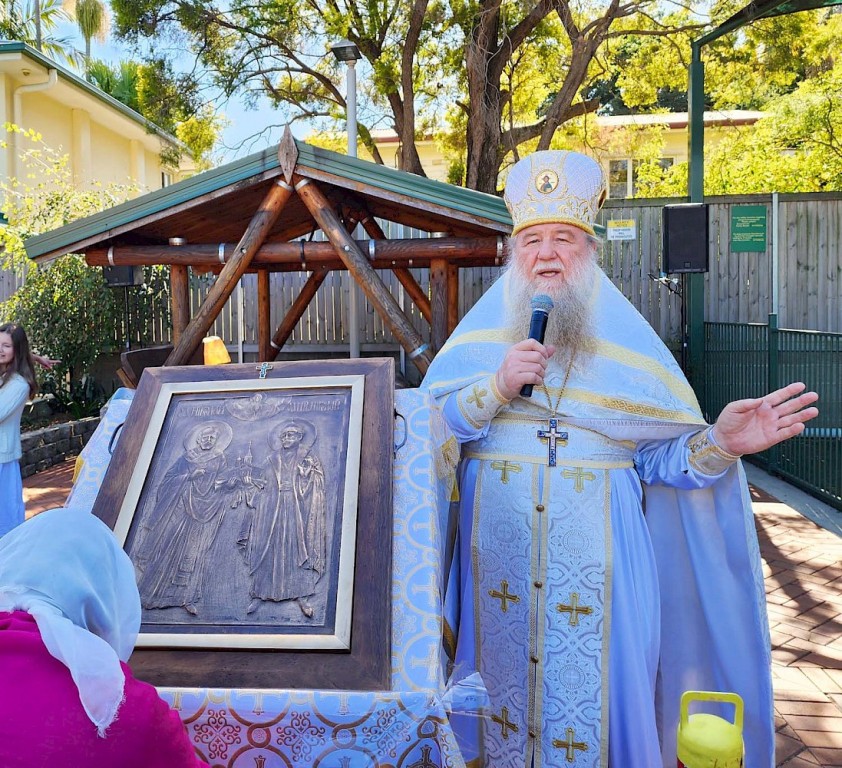
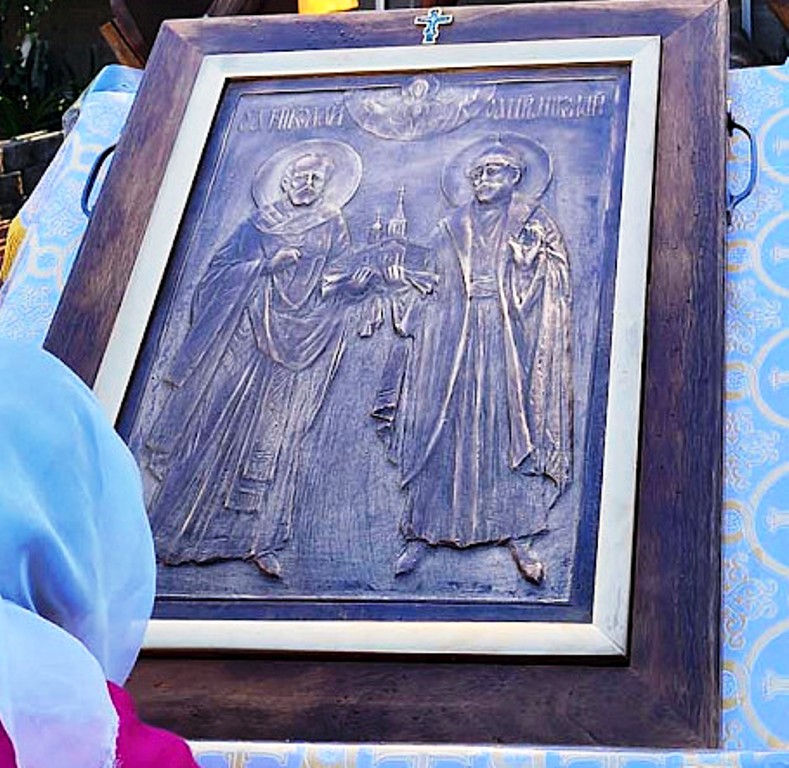
On Sunday, 28th May 2023, the first Russian Orthodox church in Australia celebrated its 100th anniversary with a Hierarchical Divine Liturgy and concert. Following the Divine Liturgy, a unique bas-relief icon depicting St. Nicholas the Wonderworker and Tsar-Martyr Nicholas II was installed and consecrated in the courtyard of St. Nicholas Cathedral in Brisbane.

The Russian Orthodox Cathedral of St. Nicholas the Wonderworker in Kangaroo Point – a suburb of Brisbane – Queensland was founded in 1923 by Protopresbyter Alexander Shabashev (1881-1956). It was here that he purchased a plot with a house, and with the support of local Anglican clergymen, established a parish dedicated to St Nicholas of Myra, making it he first Russian Orthodox church in Australia.

In 1933, parishioners began raising funds for the construction of a new, larger church building. In 1935, the construction of the cathedral began on the site of the former church, which was completed in 1936. The old building was moved and later housed a library and a school. Divine services in the cathedral are performed in Church Slavonic and English.

At the time of the founding of the church, the parishioners wanted to build a memorial church in the name of the murdered Tsar Nicholas II, but at that time he had not yet been canonized. The church was consecrated in the name of St. Nicholas the Wonderworker – the patron saint of the Tsar. When the last Russian Tsar was glorified as a saint by the Russian Orthodox Church Outside Russia (ROCOR) in 1981, the parish considered how to emphasize his connection with Australia’s Russian Orthodox community.

In 2016, St. Petersburg iconographers – at the request of parishioners – commissioned the Moscow medal artist Gennady Provotorov, to create a bronze bas-relief icon depicting St. Nicholas of Myra and Tsar-Martyr Nicholas II, holding the St. Nicholas Cathedral in their hands.

© Paul Gilbert. 7 June 2023
More than 2000 flowers planted at Ganina Yama in memory of the Imperial Family

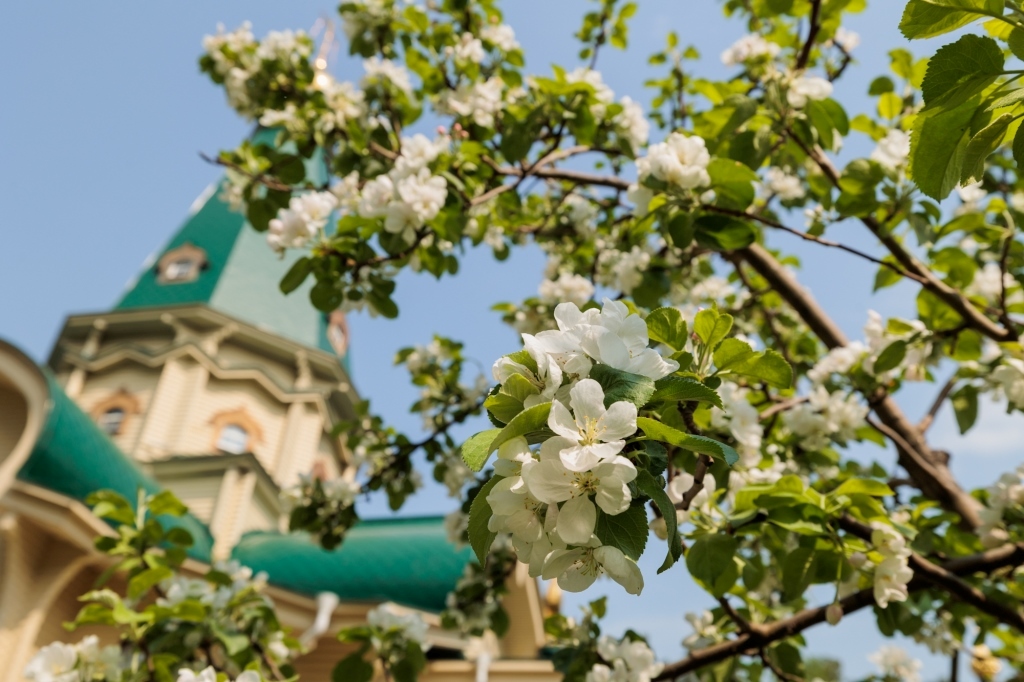
During the month of May, thousands of flowers, apple blossoms and the lilac alley named after Empress Alexandra Feodorovna[1], began to bloom on the grounds of the Monastery of the Holy Royal Martyrs at Ganina Yama [situated 15 km/10 miles northeast of Ekaterinburg].

On 7th June 2022, the laying of an The Lilac Valley named in honour of Empress Alexandra Feodorovna took place at the monastery. Following a Divine Liturgy, 30 lilac bushes were planted next to the church in Honour of the Icon of the Mother of God. The event was one of many held across Russia marking the 150th anniversary of her birth on 6th June 1872 at the New Palace in Darmstadt.

Today, the following varieties beloved by the Empress and her family are presented here – “Madame Lemoine” (1890), “Memories of Ludwig Späth (1883), Alfos Laval (1887) and Charles Joly (1898).” The monastery noted that all the bushes survived the winter safely, took root and are now gaining colour.

Visitors to the monastery will be delighted by the variety of blooms, including numerous varieties of daffodils, tulips, fragrant peonies, lilies, and more than 50 varieties of roses. In addition, are the apple trees that were planted next to the refectory, bursting with the abundance of snow-white inflorescences, and delicate aromas.

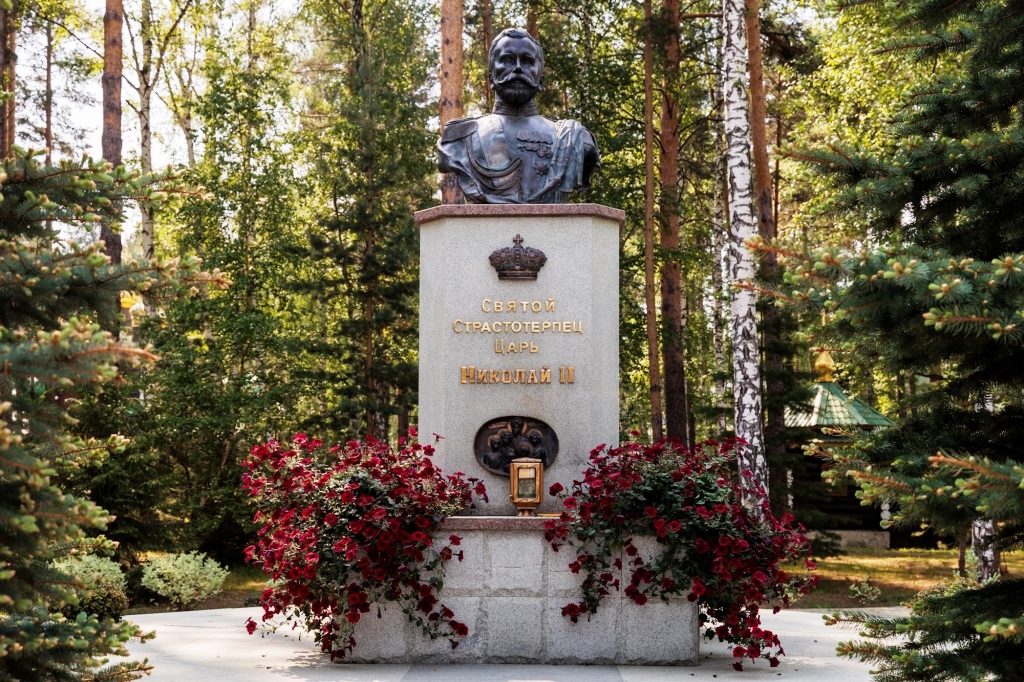
PHOTO: The monument to Emperor Nicholas II was installed on 19th May 2008, the day marking the Sovereign’s birthday.

The floral development and landscaping of the grounds of the monastery at Ganina Yama, which preserves the memory of the Holy Royal Martyrs, is being improved from year to year.

This year, the number of flowers has increased significantly. Moreover, they are selected in such a way as to delight pilgrims and visitors with their variable flowering and delicate aromas throughout the summer months.

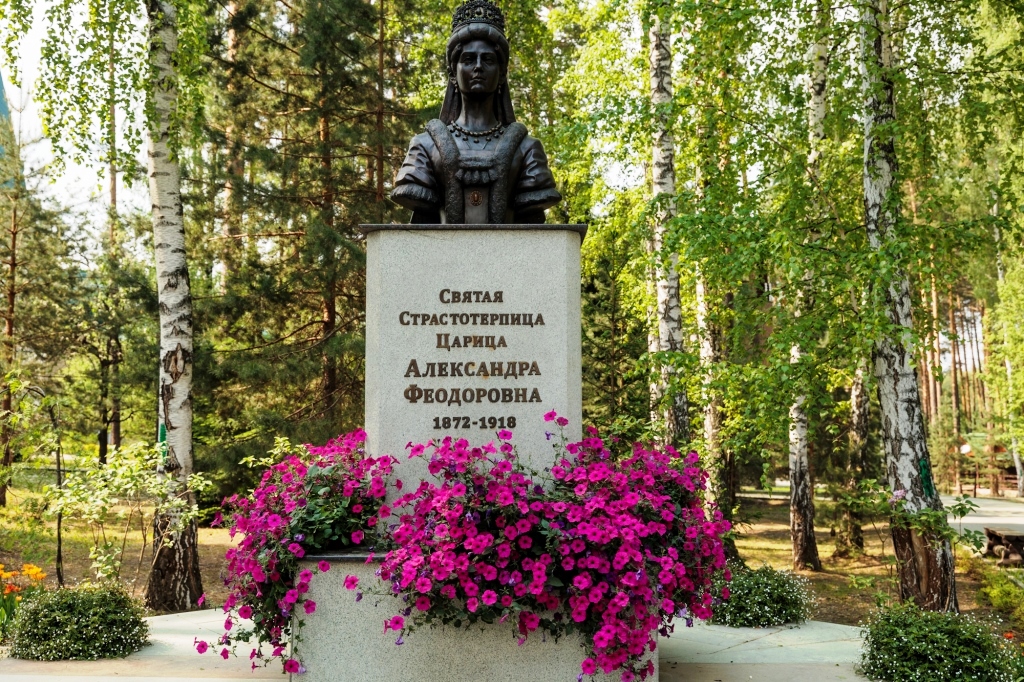
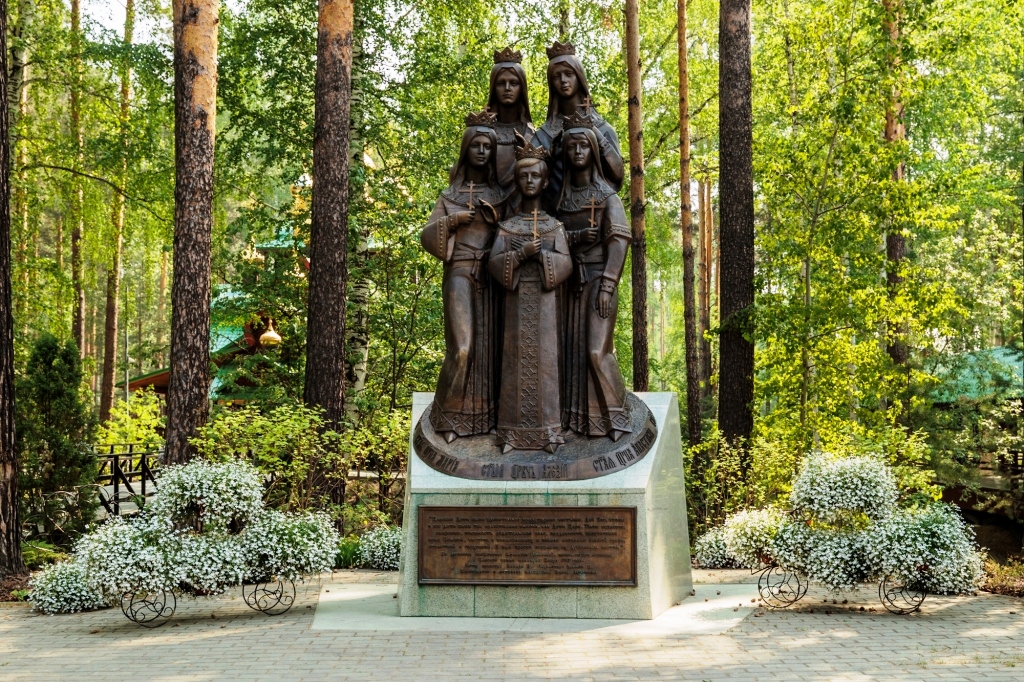
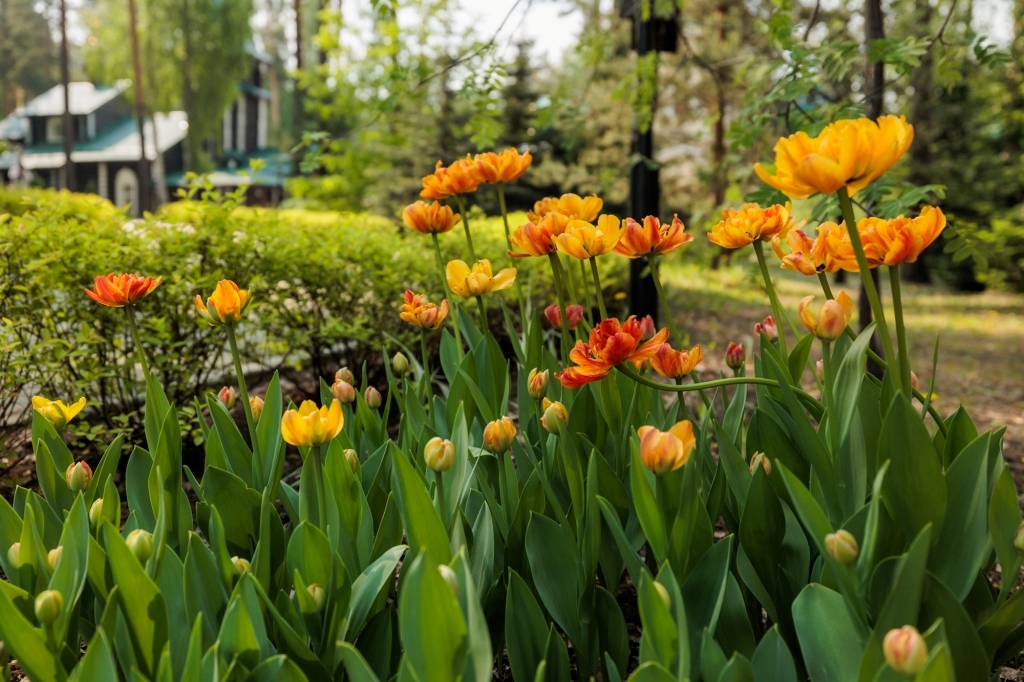
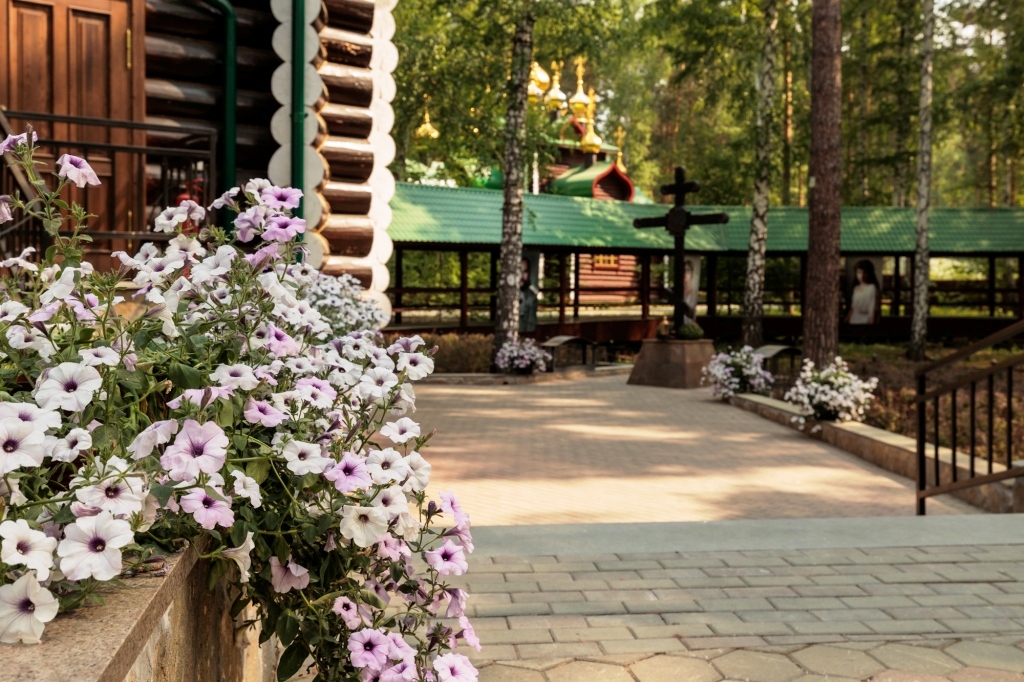
At the beginning of May, several hundred tulips bloomed. After the tulips, daffodils bloomed, followed by fragrant peonies. In addition, pilgrims and tourists will be able to admire the colourful irises, petunias and other floral arrangements that adorn the grounds of the monastery in abundance, including the pedestals of each of each of the three monuments dedicated to members of the Holy Royal Martyrs [see below].

PHOTO: The monument to Empress Alexandra Feodorovna was installed in 2011.

“There are noticeably more flowers in the monastery this year,” said one pilgrim – “it’s as if you have found yourself in a kind of Garden of Eden. For me, this is Tchaikovsky’s “Waltz of the Flowers” come to life! I like to come on a weekday when it’s not so crowded. You can walk for hours along these paths, enjoy the beauty of God’s creation in peace and solitude, and pray to the Holy Royal Martyrs, praise the Lord” – she added.

By the time that this year’s Tsar’s Days begins, in mid-July, the buds of more than a thousand snow-white lilies – 300 varieties from all over the world – will be in full bloom.

The dean of the monastery, Hieromonk John (Nevryuev), noted that every year on 17th July – the day of remembrance of the Holy Royal Martyrs, Mine No. 7 is decorated with hundreds of flowers. This is the place where the regicides tried to hide all traces of their crime – the murder of the Tsar, his wife, their five children and four faithful retainers. It is this place, in which the blood of the Holy Royal Martyrs was spilled, that is the heart of the monastery.

PHOTO: Monument to Grand Duchesses Olga, Tatiana, Maria, Anastasia and Tsesarevich Alexei was also installed in 2011.

NOTES:

[1] Empress Alexandra Feodorovna was very fond of lilacs, decorating the rooms of the Alexander Palace at Tsarskoye Selo with blooms of various colours: white, mauve, purple and pink, from the gardens and greenhouses at Tsarskoye Selo – even during the cold winter months.

“The lilac is coming out and its fragrance in the evening is marvelous” – letter from Emperor Nicholas II to his mother the Dowager Empress Maria Feodorovna, written at Tsarskoye Selo, 10th May 1895

In January 2022, the Tsarskoye Selo State Museum revived the tradition of placing lilacs in the Mauve (Lilac) Boudoir and the Maple Drawing Room of the Alexander Palace. The white lilacs bloomed over the past winter.

For the first time in more than a hundred years, the fragrant scent of lilacs once again fill the interiors of the Alexander Palace during the cold winter months.

© Paul Gilbert. 30 May 2023
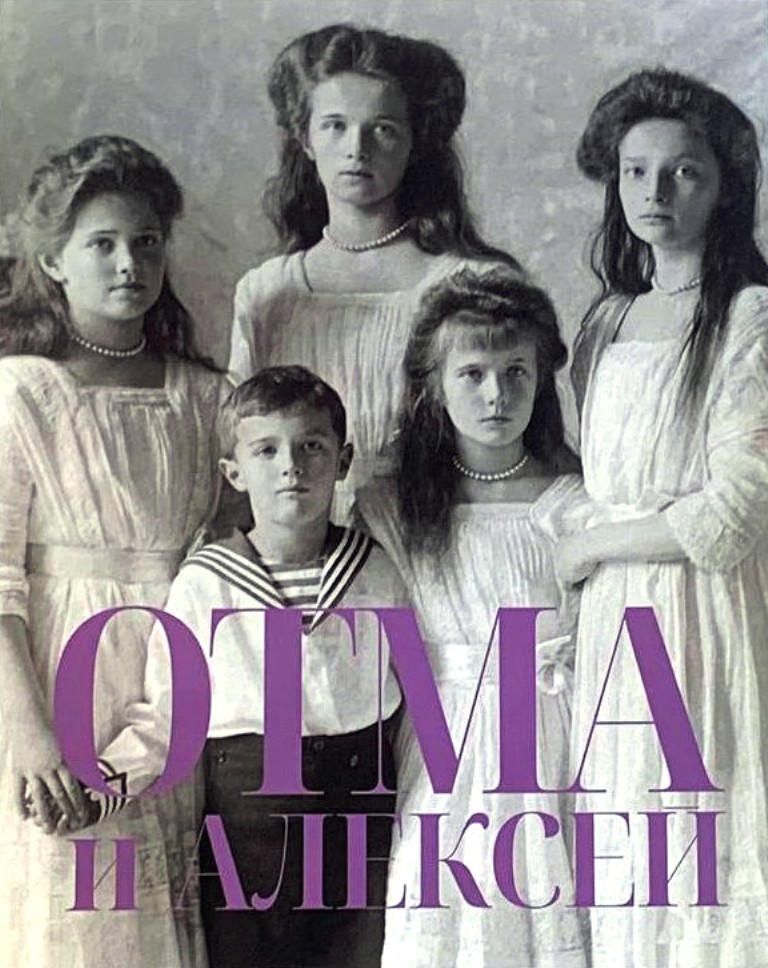
OTMA and Alexei exhibition opens in St. Petersburg

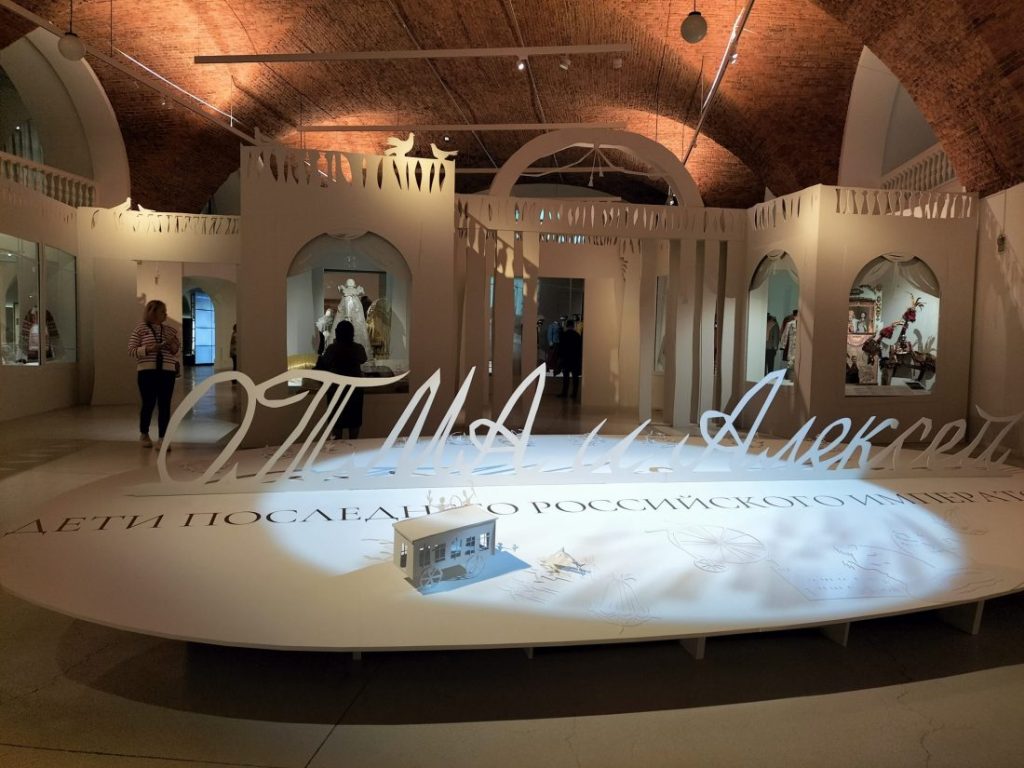
On 19th May 2023, a new exhibition “OTMA and Alexei. The Children of the Last Russian Emperor” opened in the Manege of the Small Hermitage, in the State Hermitage Museum in St. Petersburg.

The exhibition was originally planned to be held in the Hermitage Amsterdam, however, it was cancelled due to EU sanctions against Russia.

The exhibition spans the period from 1895 to 1914 – that is to say, exploring their days of untroubled childhood and youth, unaffected as yet by the First World War and the revolution that followed.

The Emperor’s daughters, Grand Duchesses Olga, Tatiana, Maria and Anastasia, born at two-year intervals, were very friendly with each other and signed their letters to their parents with the initial letter of each of their names. Hence the abbreviation OTMA. The youngest child and only boy – Alexei, Tsesarevich and heir to the throne – was the favourite of the entire family.

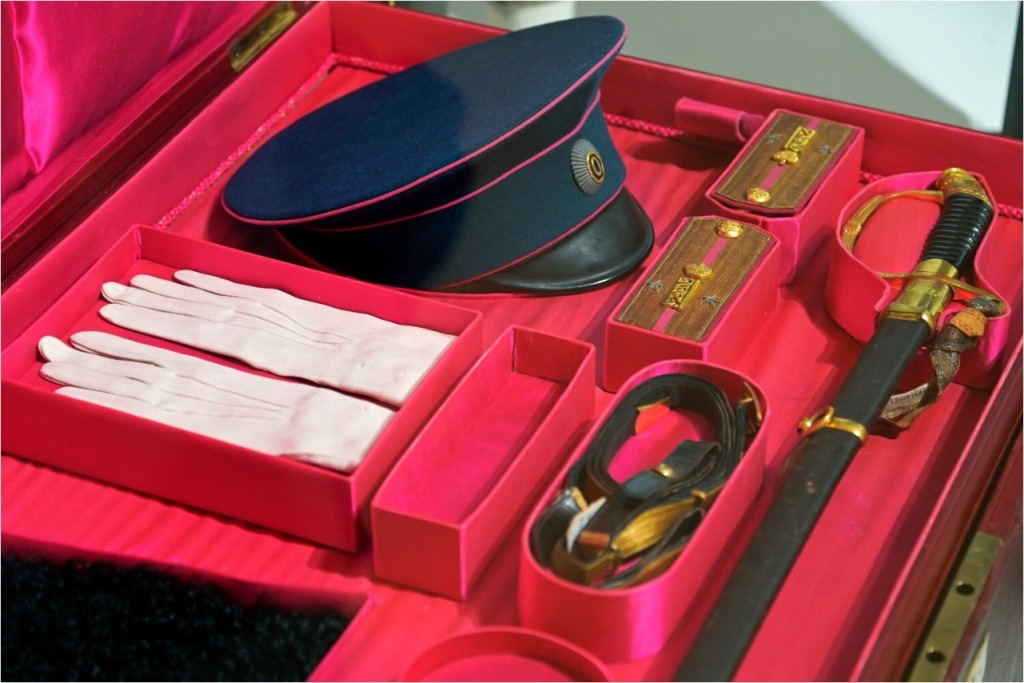
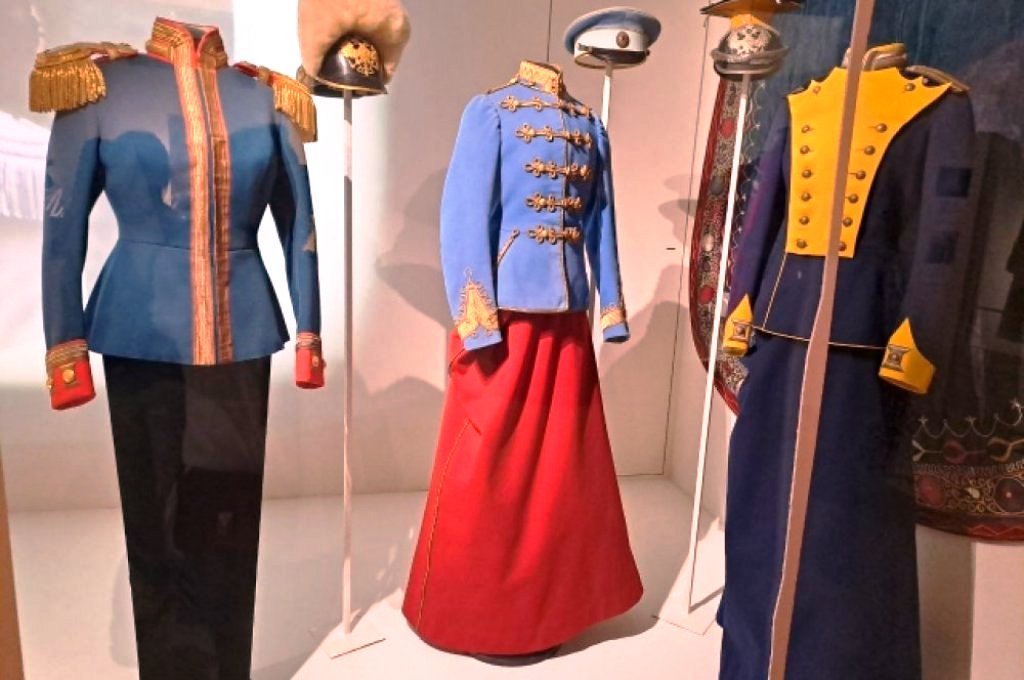
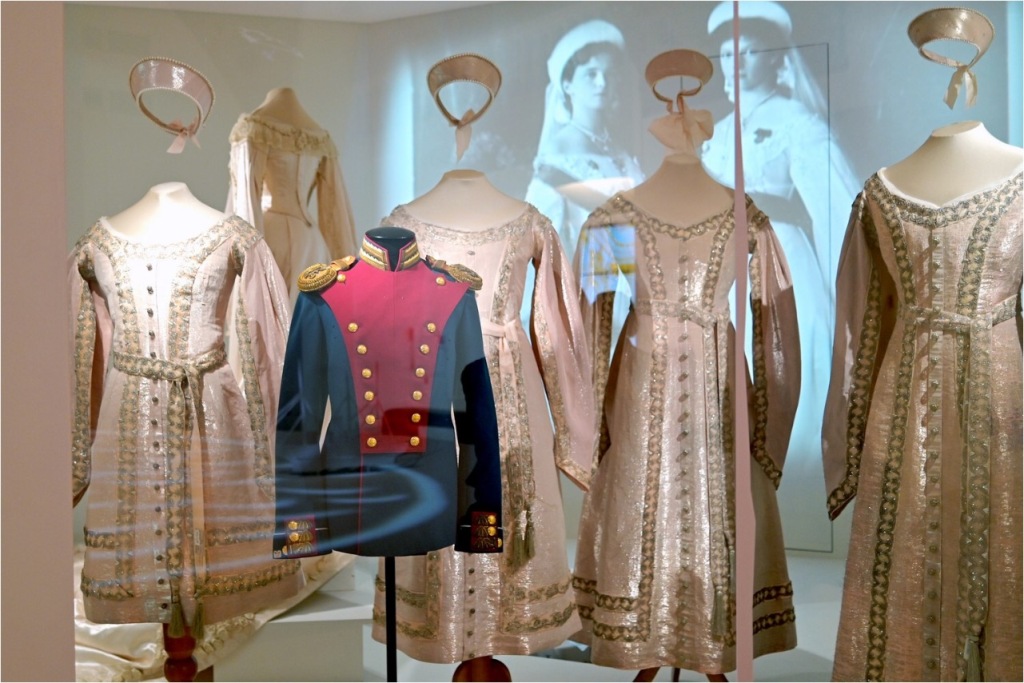
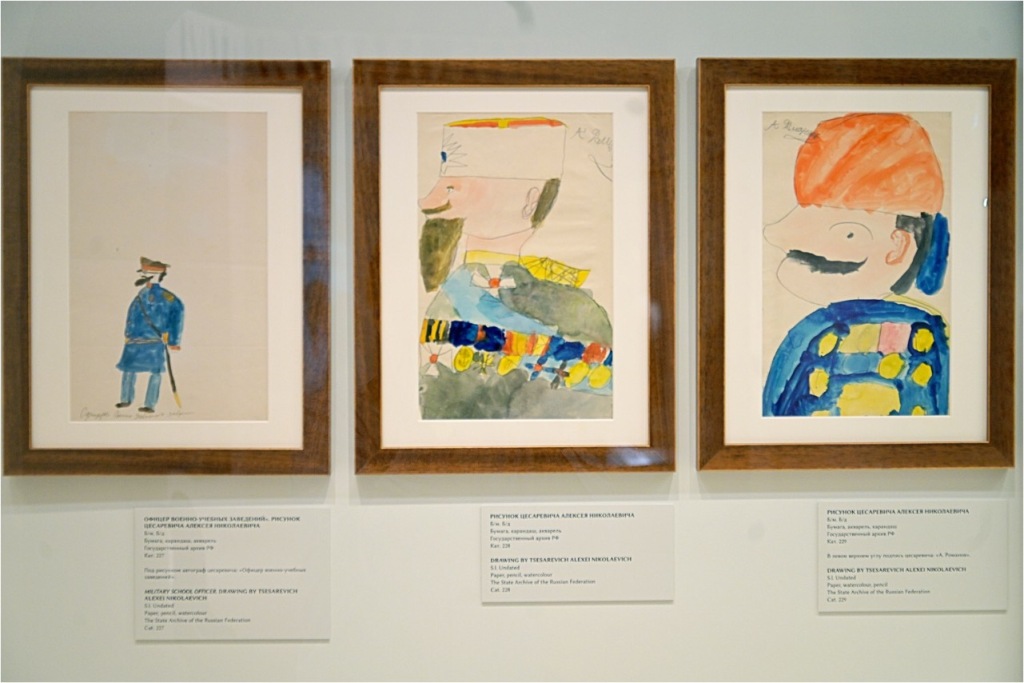
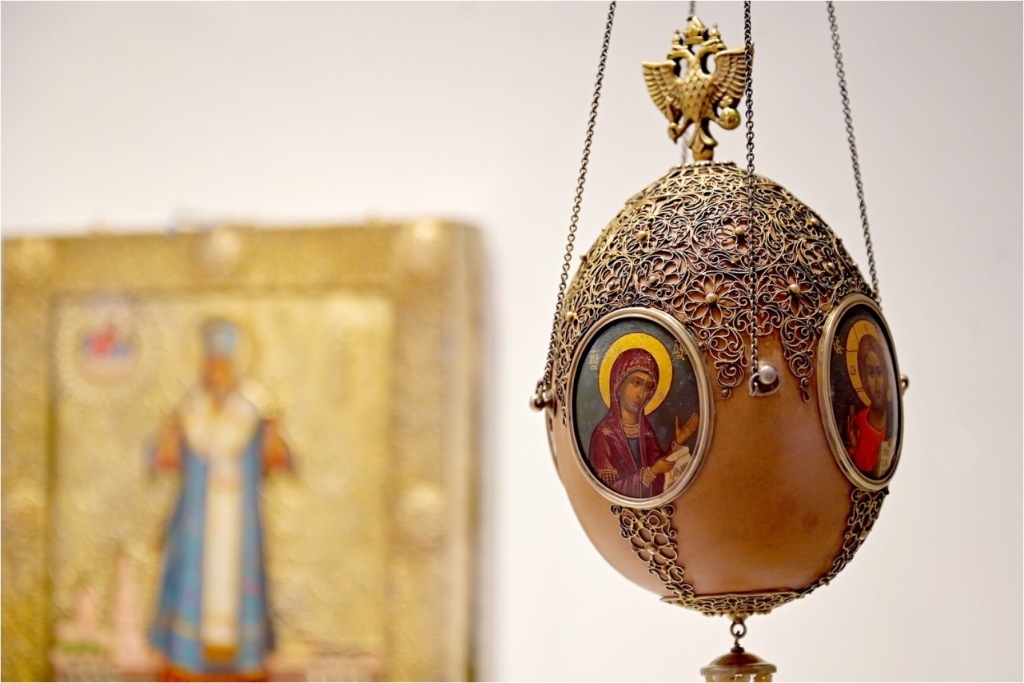
The exhibition showcases more than 270 items, including a unique group of personal belongings and costumes from the stocks of the Hermitage: from baby jackets to formal court dresses, as well as toys and items that the imperial family used in their everyday life. Of particular interest is the clothing of Tsesarevich Alexei Nikolayevich, who from an early age wore uniforms of the regiments of which he was the ceremonial patron. Many items on display at this exhibition are being shown for the first time after the completion of lengthy restoration that has brought these historically significant pieces back to life.

As Mikhail Borisovich Piotrovsky, General Director of the State Hermitage, stated: “The tragic end of this happy family, which everyone knows, makes each everyday object emotionally charged and the whole exhibition a dreadful omen.”

Much attention is devoted in the exhibition to telling about the children’s family upbringing and education. Artistic and documentary artefacts – personal possessions, toys, books, favourite games that shaped the individual nature of each sibling – present details of the children’s daily life. It would, however, be difficult to reveal their characters using just the “world of objects”. Archive documents and photographs serve as accompanying illustrations and include many of the items on display.

Besides exhibits from the stocks of the State Hermitage, the display also includes items on loan from the Tsarskoye Selo State Museum-Preserve and the State Archive of the Russian Federation (GARF) in Moscow.

The exhibition curators are Yulia Valeryevna Plotnikova, leading researcher in the State Hermitage’s Department of the History of Russian Culture, and Yulia Vadimovna Sharovskaya, head of the Fine Art Sector in that department.

The exhibition “OTMA and Alexei. The Children of the Last Russian Emperor” is included in the price of all tickets to the State Hermitage Museum. The exhibition runs until 10th September 2023.

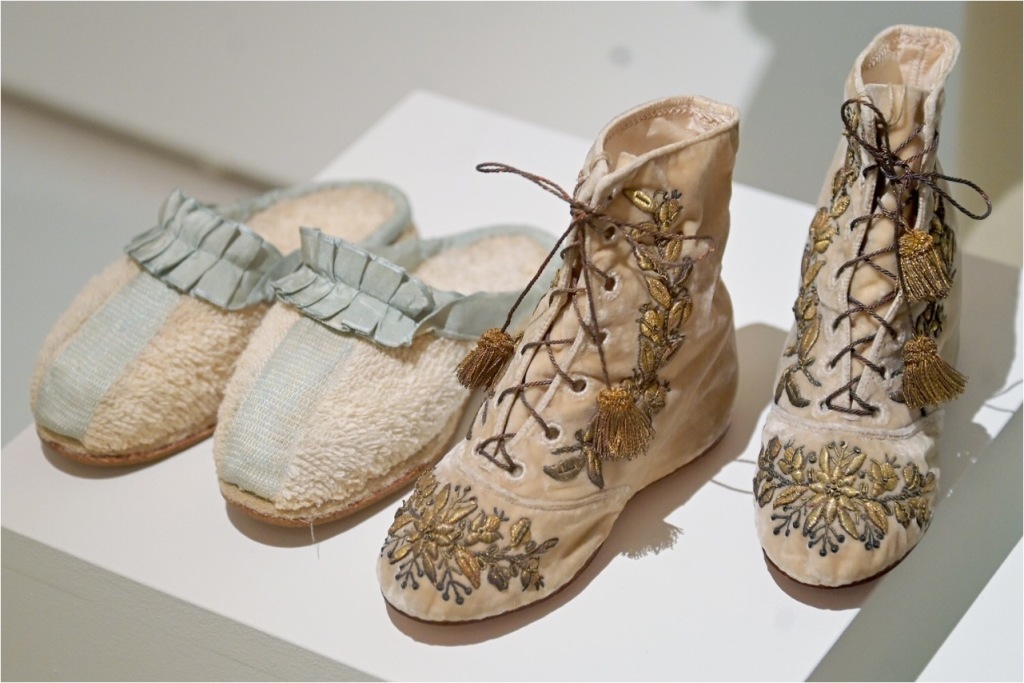
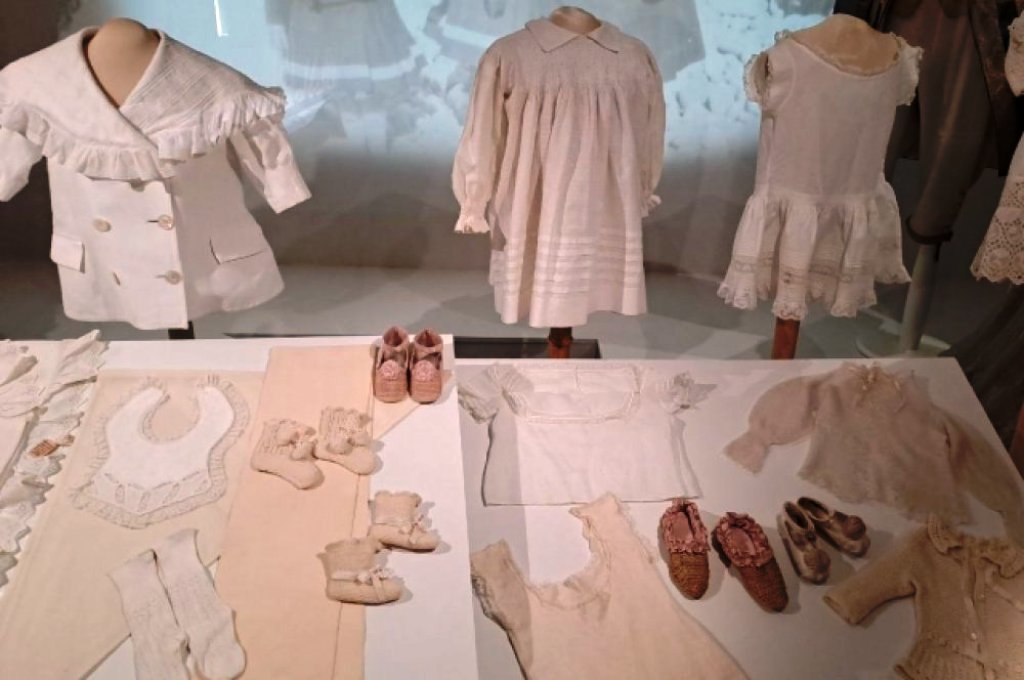
The exhibition is arranged along chronological and thematic lines. The first part shows the early childhood of the Grand Duchesses, including items of infants’ and children’s clothing – baby jackets, blouses, chemises, and some pieces of knitwear made by Empress Alexandra Feodorovna herself among them. Here visitors will find little lace-trimmed cambric frocks with coloured silk underskirts that the girls wore in early childhood; white piqué overcoats with wide turn-down collars and broad-brimmed hats made of unstiffened cambric. The display also contains accessories – footwear, fans and umbrellas. The rarer articles from the wardrobe of the grown-up Grand Duchesses have marks making it possible to tell who exactly wore them, since the Empress liked to dress her daughters identically not only as young children, but at a more advanced age as well.

Items in the exhibition that seem to have come off the pages of the fashion magazines of the day give an idea of how girls were clothed in the late 19th and early 20th centuries. There were, however, certain articles that set the children of the imperial family apart from others of the same age belonging to even well-to-do families. These include the Grand Duchesses’ formal court dresses: from the childish ones sewn in 1904 for the baptism of the heir to the throne, to those for the teenage girls and young ladies made in Olga Bulbenkova’s famous atelier, and also Tsesarevich Alexei’s uniforms. Immediately after his birth, the heir to the throne was “enrolled in the military” and appointed ceremonial patron of several Guards regiments, having the corresponding uniforms made for him. As he grew older, Alexei took part in parades and reviews along with his father. All the Grand Duchesses were also patrons of regiments. Olga, Tatiana and Maria even had special unforms sewn for them.

Photographs and watercolours show the imperial family’s favourite places: their primary residence – the Alexander Palace at Tsarskoye Selo; the palace at Livadia in the Crimea for the spring and autumn seasons, and also their “second home” – the imperial yacht Shtandart. Voyages on that ship were a treat to which the children eagerly looked forward, bringing some variety to their heavily regulated lives. The girls were dressed in sailor costumes and the Tsesarevich in naval unform, from which only two sailor’s caps have survived. The family spent the summer months at the Lower Dacha in Peterhof, which no longer exists. The exhibition includes two pieces of furniture made at Friedrich Melzer’s factory in Saint Petersburg – one for the drawing-room of the Lower Dacha, the other for the Grand Duchesses’ schoolroom at the Alexander Palace.

Separate attention is paid in the display to Tsesarevich Alexei. The long-awaited heir to the throne was dearly loved by his parents and sisters. The children spent much time playing and doing other activities together. Despite his serious illness – haemophilia, in his rare moments of good health, the Tsesarevich strove to live a normal life, which included both schoolwork and amusements. In order to recreate the everyday world of the heir to the throne more precisely, the State Hermitage and the State Archive have provided from their collections a boy’s military uniform, toys, letters, drawings, exercise books and a timetable of lessons.

The characters of all five children can be grasped from a unique set of materials – personal diaries, family letters, schoolwork and exercise books. The two eldest siblings, Olga and Tatiana, studied well, were diligent and neat, reading extensively. Grand Duchess Maria was very fond of drawing but fell short of her elder sisters when it came to learning. The youngest, Anastasia, had the nickname Shvybzik (perhaps “little imp”) and was the most playful and lively. She disliked learning but was very good in comic roles in the family’s amateur dramatics and took a leading part in games. Tsesarevich Alexei was a very bright youngster, but his lessons were often interrupted due to the illness that affected him throughout his life.

The sisters shared their parents’ love of photography. Each of them had her own Kodak camera that was enthusiastically used to take many pictures of themselves, their family and friends, hundreds of them then being pasted into albums. Two of those albums, embellished with the Grand Duchesses’ own drawings, feature in the display.

***

EXHIBITION CATALOGUE

A richly illustrated Russian language catalogue has been prepared for the exhibition (State Hermitage Publishing House, 2023), which includes an introduction by Mikhail Piotrovsky, General Director of the State Hermitage Museum. The authors of the articles are Y.V. Plotnikova, A.V. Sabenina (State Archives of the Russian Federation), M.P. Filiptseva (Tsarskoye Selo State Museum).

NOTE: this post is for information purposes only. I regret that I do not know how to obtain copies, or if any of these titles will ever be translated to English – PG

PHOTO: cover of the Russian language exhibition catalogue

© State Hermitage Museum. 20 May 2023
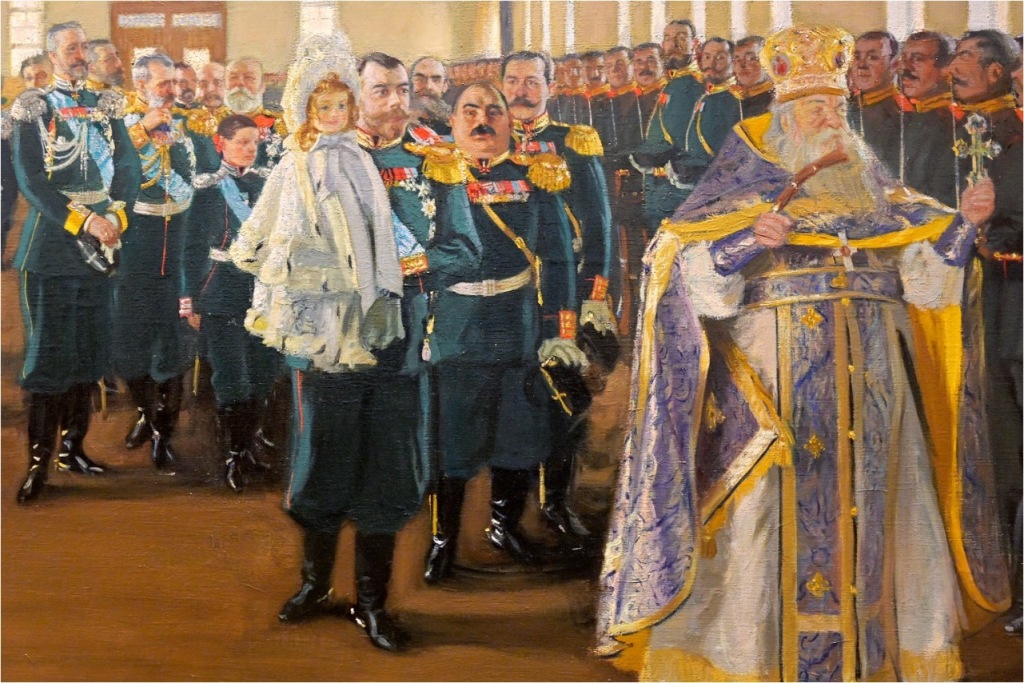
Ekaterinburg Diocese celebrates the 155th anniversary of the birth of Emperor Nicholas II

The anniversary of the birth of Russia’s last Tsar has been celebrated in the Ural capital of Ekaterinburg for many years.

On 19th May 2023, with the blessing of Metropolitan Evgeny of Yekaterinburg and Verkhoturye, a series of events will be held dedicated to the memory of the last Russian emperor, the Holy Tsar-Martyr Nicholas II.

On the morning of 19th May, a Divine Liturgy will be celebrated at 8:00 a.m., in the Church on the Blood, built on the site of the Ipatiev House, where the Imperial Family and their four faithful retainers met their deaths and martyrdom.

A liturgy will also be celebrated at the Monastery of the Holy Royal Martyrs in Ganina Yama, followed by a Cross Procession  celebrating the patronal feast day in the name of the Righteous Job the Long-Suffering [on whose feast day Nicholas was born].

In addition, Divine services in memory of the last Russian emperor will be held in many churches of the Ekaterinburg diocese, including the Cathedral of St. Alexander Nevsky at the Novo-Tikhvin Convent, whose history is closely connected with the last Tsar and his family.

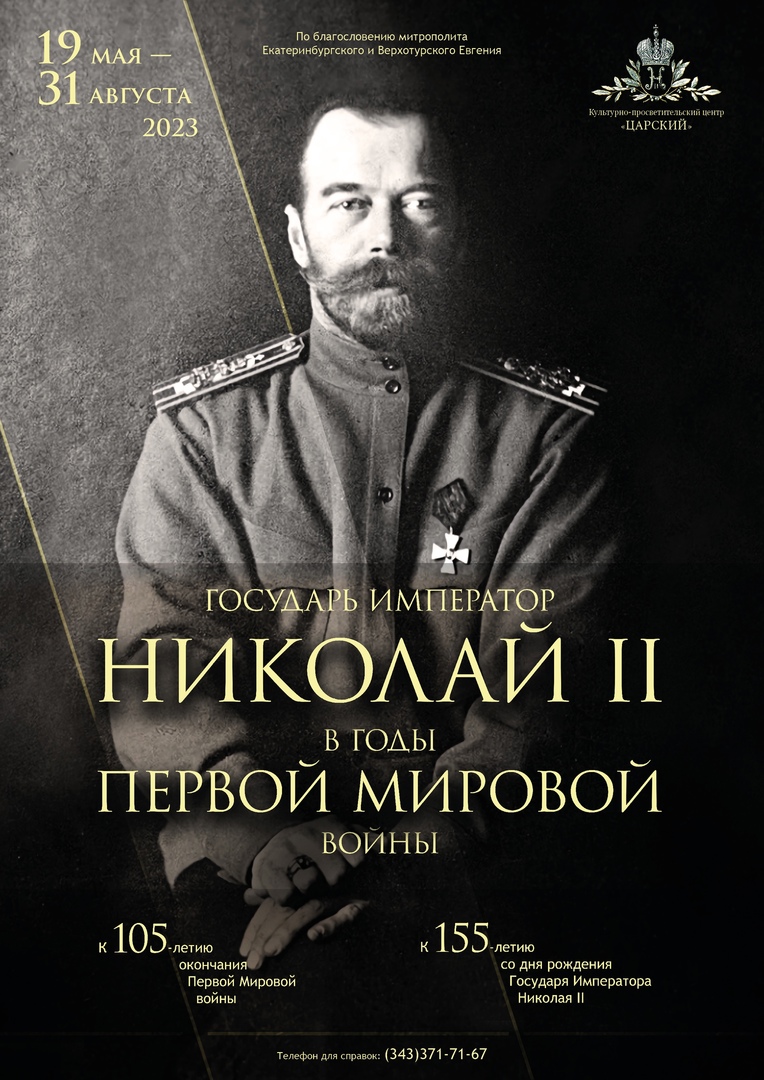
At 12:00 p.m., the Tsarsky Cultural and Educational Center [situated across the square from the Church on the Blood] will host the opening of Emperor Nicholas II During the First World War, an exhibition timed to coincide with the 155th anniversary of the birth of Nicholas II and the 105th anniversary of the end of the First World War. The exhibition runs until 31st August 2023.

At 1:30 p.m., a Liturgy will be performed in the Church of St. Nicholas the Wonderworker at the Ural State Mining University of Emperor Nicholas II, followed by a festive concert at 14:00 in the Tsar’s Hall of the USMU.

In addition, the Blue Line of Ekaterinburg will be launched. The route connects a dozen sights of the city, each of them, in one way or another are associated with the final days Nicholas II and his family during their house arrest in the Ural city, from April to July 1918.

© Paul Gilbert. 19 May 2023
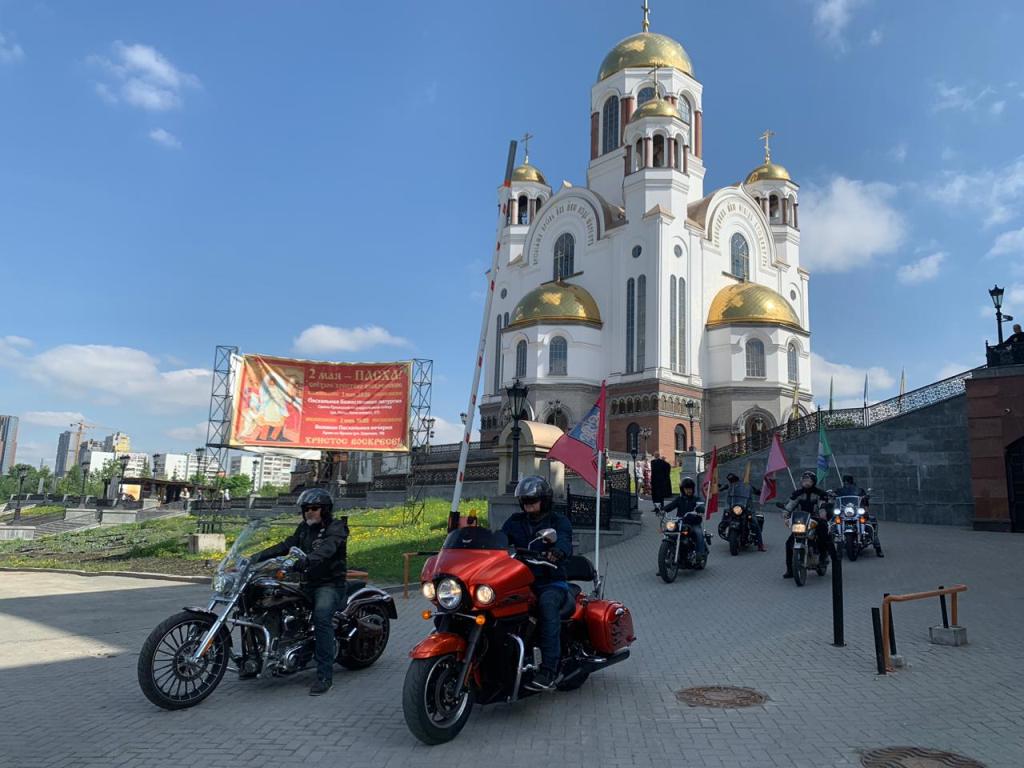
Bikers hold rally in memory of Nicholas II

On 17th May, members of the Tyumen Motorcycle Club began a 6-day a motorcycle rally – “The Way of the Cross of the Tsar’s Family” – dedicated to Emperor Nicholas II. 

The small group of Harley Davidson enthusiasts began their rally on 17th May at the Abalak Znamenski Monastery (located 20 km east of Tobolsk) and finish at the Monastery of the Holy Royal Martyrs at Ganina Yama (near Ekaterinburg).

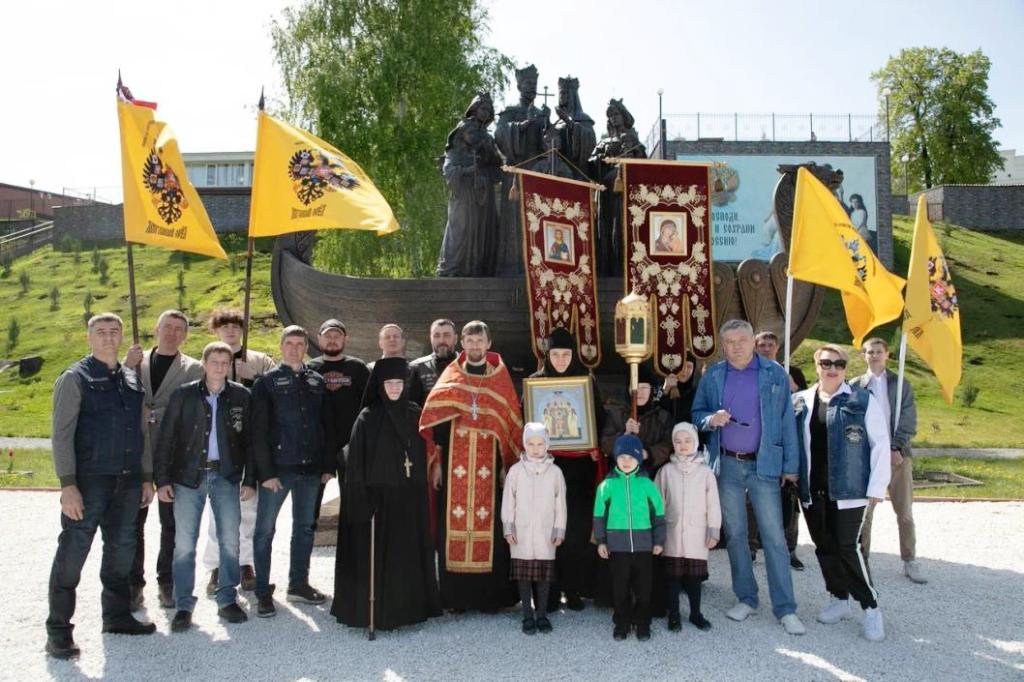
PHOTO: bikers at the monument to the Imperial Family in Tyumen

The route will pass along the route taken by the Emperor, his wife Alexandra and their daughter Grand Duchess Maria, when they were transferred from Tobolsk to Ekaterinburg in April 1918. The route was recreated by local historians from the diaries of Nicholas II and Alexandra Feodorovna, as well as archival documents.

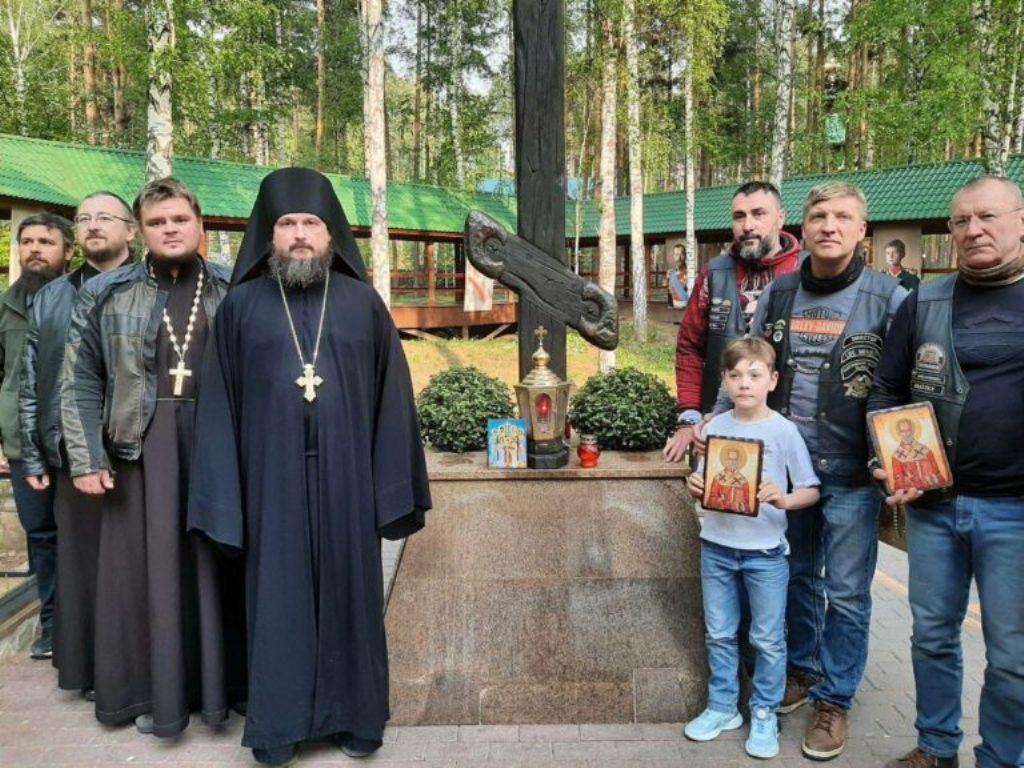
Along the entire route, motorcyclists will ride with the flags of the club, the flag depicting the image of Nicholas II and the flag of Russia. The participants will also bring icons consecrated at the Abalak Znamenski Monastery with the face of St. Nicholas the Wonderworker and the Holy Royal Martyrs. The latter will be presented to the Monastery of the Holy Royal Martyrs in Ganina Yama.

PHOTO: bikers at the Monastery of the Holy Royal Martyrs at Ganina Yama

The entire 6-day route will cover some 2610 km, passing0 through Tobolsk, Tyumen, Omsk and Ekaterinburg. Bikers arrived in Tyumen on 18th May, where they made a stop at the city’s monument to the Imperial Family created by the Russian sculptor Irina Makarova, installed in June 2020.

The rally is timed to coincide with the 155th anniversary of the birth of Emperor Nicholas II on 19th May [O.S. 6th May] 1918, as well as the 105th anniversary of the death and martyrdom of the Imperial Family and their four faithful retainers on 18th July 1918.

© Paul Gilbert. 19 May 2023
Boris Yeltsin Had Plans to Demolish Lenin’sMausoleum and Restore Monarchy

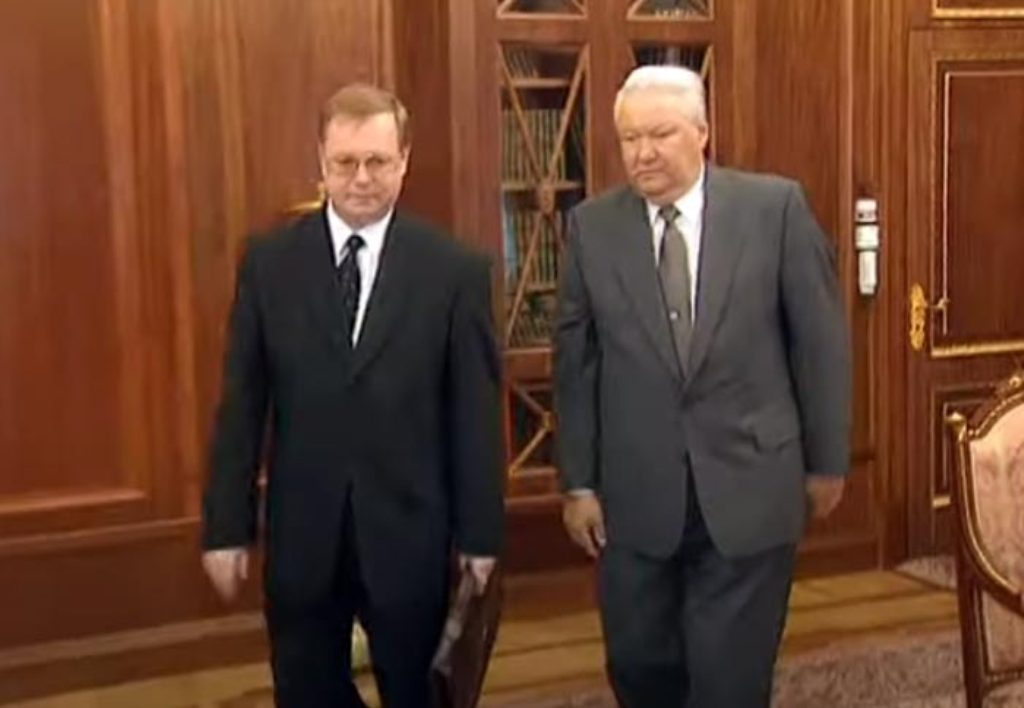
PHOTO: Sergei Stepashin (left) and Boris Yeltsin (right)

During an interview with Istorik magazine in April 2017, former Russian prime minister Sergei Vadimovich Stepashin, claims that in 1998 acting Russian president Boris Yeltsin gave him an order to demolish Lenin’s mausoleum in Moscow’s Red Square.

Stepashin chaired the Ministry of Interior from March 1998 to May 1999, and it was during his term in office that he made an official visit to England.

“When I came back, I went to his office and Yeltsin said:

“Sergei Vadimovich, I made a decision to demolish the mausoleum.” I told him: “Well, but how does it relate to the Ministry of Interior?” “The Ministry of Interior should secure order,” he answers.

“Well,” I said, “I am a minister and should fulfill orders of the Chief Commander, the only thing I can’t secure, Boris Nikolayevich, is that will you still be the president and will I still be a minister after such a decision?” – Stepashin recalled.

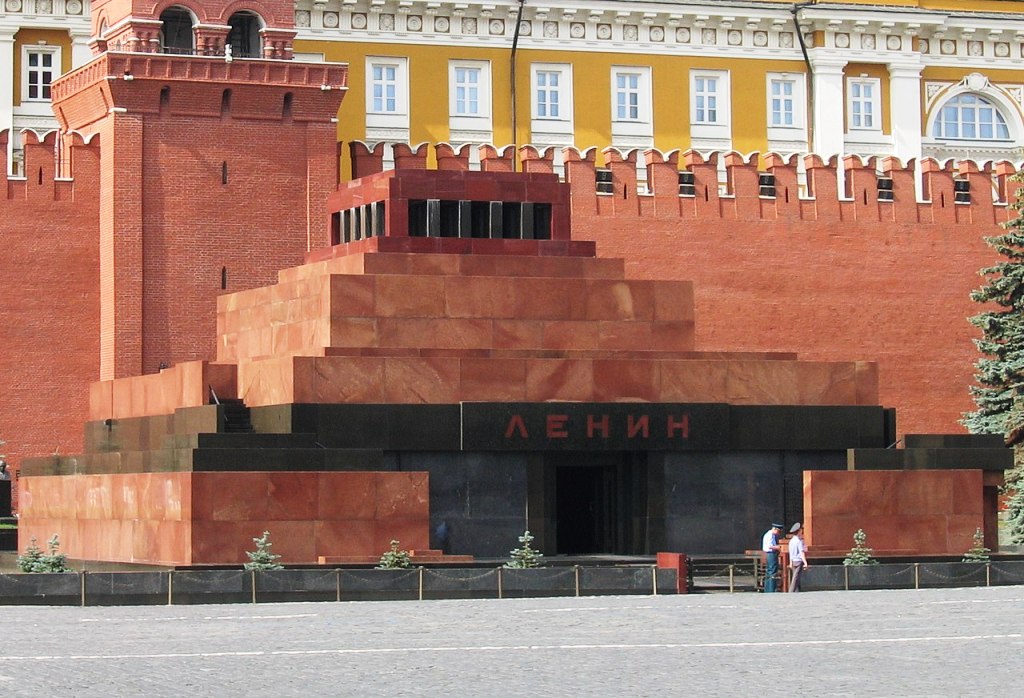
PHOTO: Lenin’s mausoleum on Red Square, Moscow

According to him, he started persuading Yeltsin not to demolish the mausoleum.

“If you trust me, then please listen to me, I tell you honestly, it is not the right time. From the Christian point of view, Lenin’s body should not be put on view. It is a sin. But it is not the right time to demolish the mausoleum. Don’t do it! Doesn’t it incommode you?”

Yeltsin grumbled, but listened to my arguments,” Stepashin said.

Since 2007 Stepashin is the head of the revived Imperial Orthodox Palestine Society (IOPS).

Yeltsin’s sympathetic interest in a restoration of the monarchy

In 1994, unconfirmed reports in the media suggested that Yeltsin also had plans to restore the monarchy in Russia. According to economist and strategist Vladimir Lvovich Kvint events would have taken the following turn: Parliament would vote for the restoration of the monarchy, or Yeltsin would organize a referendum, and the people, tired of the fighting among political leaders would agree. Yeltsin was not in favour of an absolute monarch, but a constitutional monarchy with more power than that of those in Britain and Europe. Once again, Yeltsin was persuaded not to pursue the idea any further.

© Paul Gilbert. 17 May 2023

Dacha of Nicholas II’s court architect in Tsarskoye Selo to be auctioned

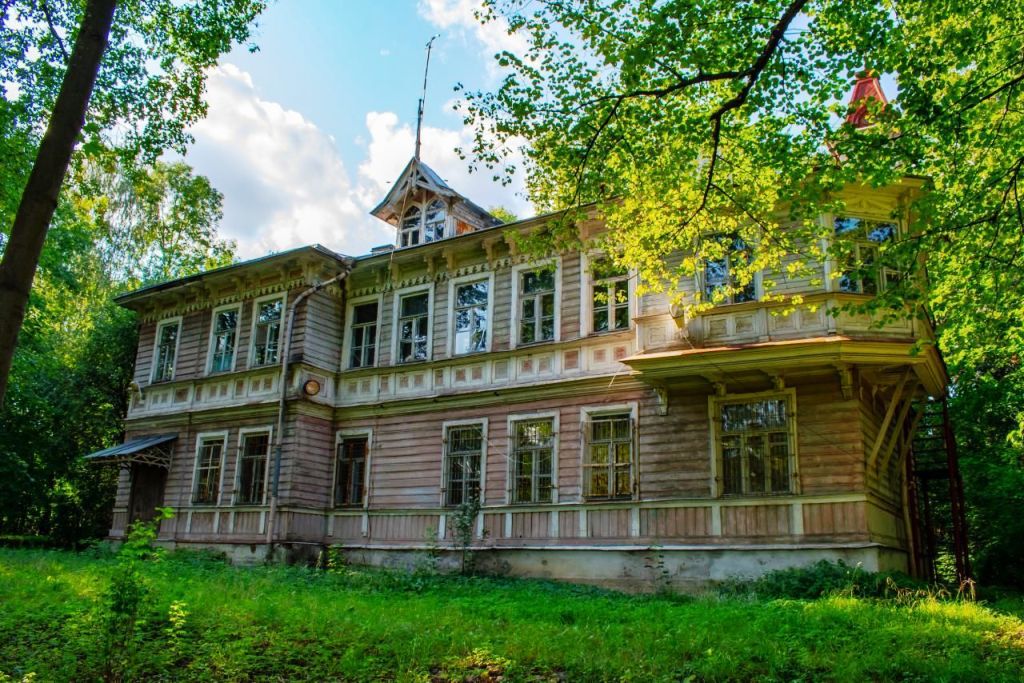
PHOTO: the former dacha of Court architect Silvio Danini in Tsarskoye Selo, as it looks today – in a “deplorable state of disrepair”.

The former dacha of Tsar Nicholas II’s Court architect Silvio Amvrosievich Danini (1867-1942), built at the turn of the 19th-20th centuries is to be auctioned in Tsarskoye Selo.

The dacha was part of a complex of buildings constructed by Danini himself between 1899-1902, which included two-story “Large” and “Small” dachas, a stone service wing and a barn. A richly landscaped garden was also laid out. The “Large” dacha featured turrets, bay windows, the timber facades embellished with decorative elements.

The opening bid for the 6500 square foot wooden dacha is set at 18.66 million rubles [$238,000 USD]. The auction will be held on 23rd June. Under the terms of the agreement of sale, the buyer must agree to restore and preserve the buildings historic look, and to be completed within seven years from the date of registration of the transfer of ownership.

PHOTO: early 20th century view of Silvio Danini’s estate at Tsarskoye Selo

Danini’s “Large” dacha is located on Pavlovskoye highway, 26A in Pushkin [Tsarskoye Selo], a short drive from the Alexander Palace. Having received the post of architect of the Tsarskoye Selo Palace Administration in 1896, Danini rented a small house for his family. By 1899, the architect decided to buy the property and build a larger house.

During the Soviet period the building was used as the Pushkin Palace Administration, and then as a dormitory of the Institute of Economics. After repairs in the 1970s, it was used as a branch of the Institute of Agricultural Cybernetics, then by the Agricultural Institute. In the 1990s, it served as a resident for scientists.

The property was abandoned more than a decade ago. Since that time several unsuccessful attempts have been made to sell and restore the historic dacha.

In August 2016, Danini’s dacha was listed as “an object of cultural heritage of regional significance” by the Committee for State Control, Use and Protection of Historical and Cultural Monuments (KGIOP).

In 2020 a plan to open an eight-room hotel was proposed, however, nothing ever came of the idea due to lack of funding by developers.

According to the daughter of the great-grandson of the architect Vera Kozlova, the wooden dacha is currently is in a “deplorable state of disrepair”.

PHOTO: Silvio Amvrosievich Danini (1867-1942)

The Last Court Architect

Silvio (Valentin) Amvrosievich Danini was born in Kharkov on 1st July (O.S. 19th June) 1867.

He was born in the family of Italian opera singer Ambrogio Danini (1807-1872) and his wife Emilia. In 1893, Silvio married the Lutheran Vera Stuckenberg (1874-1944), the couple had four children, whose descendants today live in St. Petersburg.

In 1879, after the death of his father, Silvio and his mother Emilia moved to Poltava, and in 1886 to St. Petersburg, where in 1892 he graduated from the Academy of Arts with the title of “Class Artist of the 1st degree”.

He began his career under the guidance of the architect Alexander Fyodorovich Krasovsky (1848-98), abd participated in the restructurtion of the northwestern wing of the Winter Palace for the future emperor Nicholas II. As a result, in 1892 he was hired to repair, and then reconstruct with extensions, the Znamenskaya Church in Tsarskoye Selo. In 1894 he restored the Catherine Cathedral in Tsarskoye Selo. In 1896, the Nicholas II personally appointed Danini architect of the Tsarskoye Selo Palace Administration, and on 5th October 1911, he was awarded the title of Chief Architect of the Imperial Court.

Danini was responsible for the construction of more than 40 buildings in Tsarskoye Selo [renamed Pushkin in 1937] – many of which have survived to the present day.

He is probably more widely known for his development of the Alexander Palace – the last residence of Nicholas II and his family, from 1905 to 1917 – which included:

1896-1898 – reconstruction of the left [eastern] wing of the Alexander Palace for the personal apartments of Nicholas II and Alexandra Feodorovna, and the construction of an underground passage-gallery between the palace and the Palace Kitchen.

PHOTO: view of the famous Alexander Palace balcony (circa 1940s)

Danini was also responsible for the installation of the famous balcony in 1896 for Empress Alexandra Feodorovna. It was here that many iconic photos of the Imperial Family were taken. The balcony was dismantled between 1947-49.

1896-1898 – the wrought iron gate at the entrance to the park to the Alexander Palace, which has been preserved.

1906-1907 – the Imperial Garage, which housed Nicholas II’s motorcars, which has also been preserved.

After the revolution, in 1923, Danini moved to Petrograd, where he designed hydraulic structures on the Svir River. Silvio Danini died in Leningrad on 11th January 1942 during the siege (his wife and daughter Virginia were later evacuated). He was buried at the Volkovsky Lutheran Cemetery in the family grave of the Stuckenbergs.

© Paul Gilbert. 13 May 2023