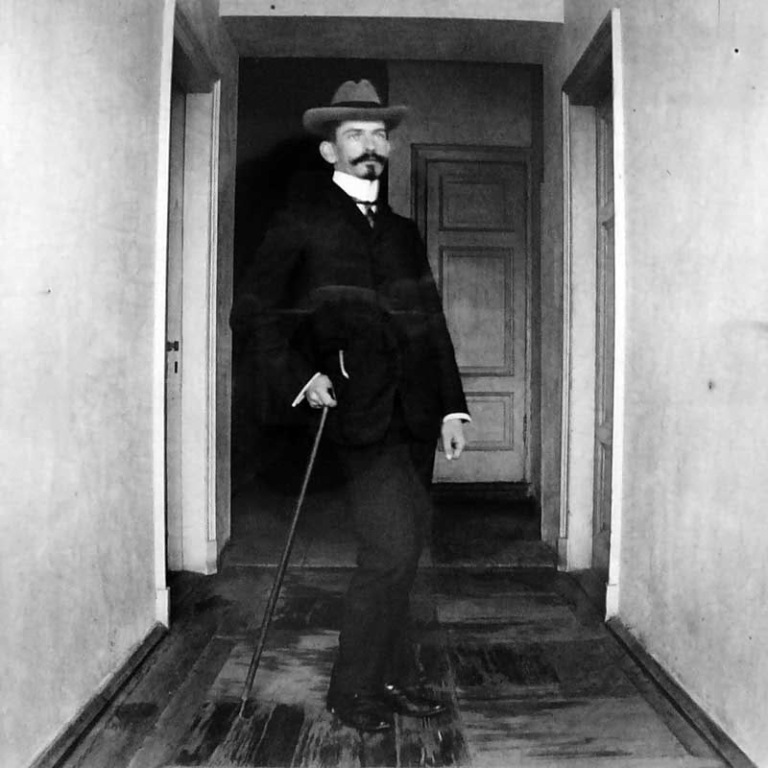
PHOTO: Pierre Gilliard (1879-1962)
Pierre Gilliard was born near Lausanne, Switzerland on 16th May 1879. He was one eight children born to the landowner-winemaker Edmond André David Gilliard and Marie Gilliard-Malherbe (1848-1911). In total, there were six sons and two daughters, but it was Pierre who is most famous for entering the inner circle of the Russian Imperial Family, and sharing many happy years as tutor to the August children of Emperor Nicholas II and Empress Alexandra Feodorovna.
After graduating from the University of Lausanne in 1904, he was invited to Russia to teach French to the children of Prince Sergei Georgievich Romanowsky, 8th Duke of Leuchtenberg (1890-1974). The young teacher had established himself, not only as an excellent tutor, but also as a modest, decent and noble person.
In September 1905, he was invited to teach French to Grand Duchesses Olga and Tatiana Nikolaevna – the eldest daughters of the Russian tsar. The two elder sisters were later joined by the two younger daughters: Maria and Anastasia, and Tsesarevich Alexei. This is how Pierre Gilliard, who was affectionately called “Zhilik” in the family, described his students:
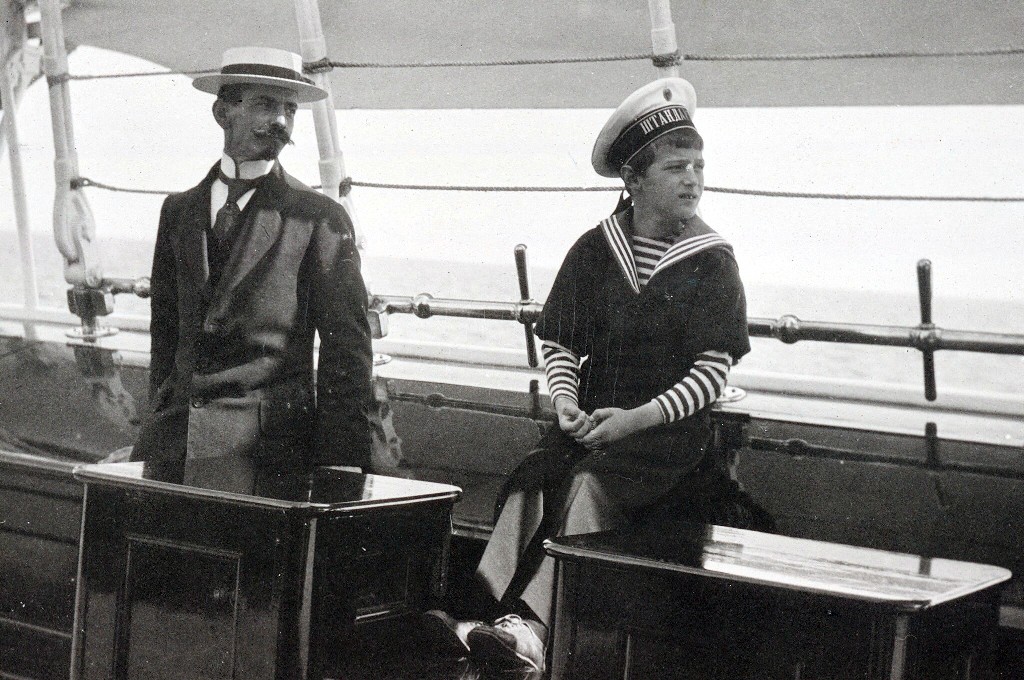
PHOTO: Pierre Gilliard with Tsesarevich Alexei Nikolaevich, on the deck of the Imperial Yacht ‘Standart‘. 1914
“Alexei Nikolayevich was the centre of this united family, the focus of all its hopes and affections. His sisters worshipped him and he was his parents’ pride and joy. When he was well the palace was, as it were, transformed. Everyone and everything seemed bathed in sunshine. Endowed with a naturally happy disposition, he would have developed quite regularly and successfully had he not been kept back by his infirmity.. <… >
” He was rather tall for his age. He had a long, finely chiselled face, delicate features, auburn hair with a coppery glint in it, and large blue-grey eyes like his mother’s. He thoroughly enjoyed life – when it let him – and was a happy, romping boy. Very simple in his tastes, he extracted no false satisfaction from the fact that he was the Heir – there was nothing he thought about less <… >
“The Grand-Duchesses were charming – the picture of freshness and health. It would have been difficult to find four sisters with characters more dissimilar and yet so perfectly blended in an affection which did not exclude personal independence, and, in spite of contrasting temperaments, kept them a most united family. With the initials of their Christian names they had formed a composite Christian name, Otma, and under this common signature they frequently gave their presents or sent letters written by one of them on behalf of all.
“In short, the whole charm, difficult though it was to define, of these four sisters was their extreme simplicity, candour, freshness, and instinctive kindness of heart.”
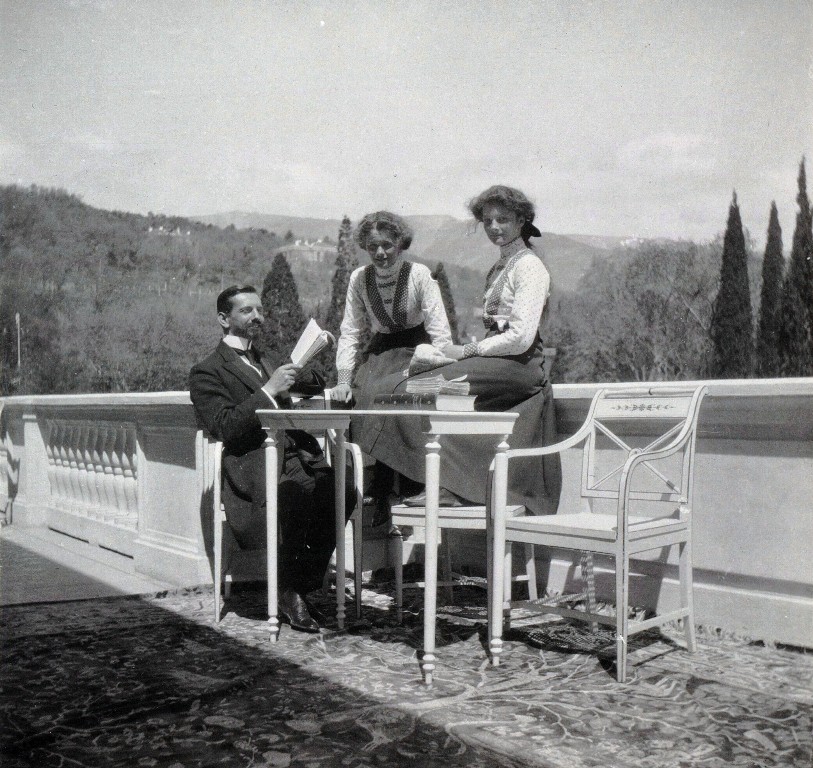
PHOTO: (above) Pierre Gilliard with Grand Duchesses Olga (left) and Tatiana (right) Nikolaevna, on the balcony of the Livadia Palace, Crimea. 1911; (below) Gilliard with Grand Duchesses Anastasia (left) and Maria (right) Nikolaevna, on the balcony of the Livadia Palace, Crimea. 1912.
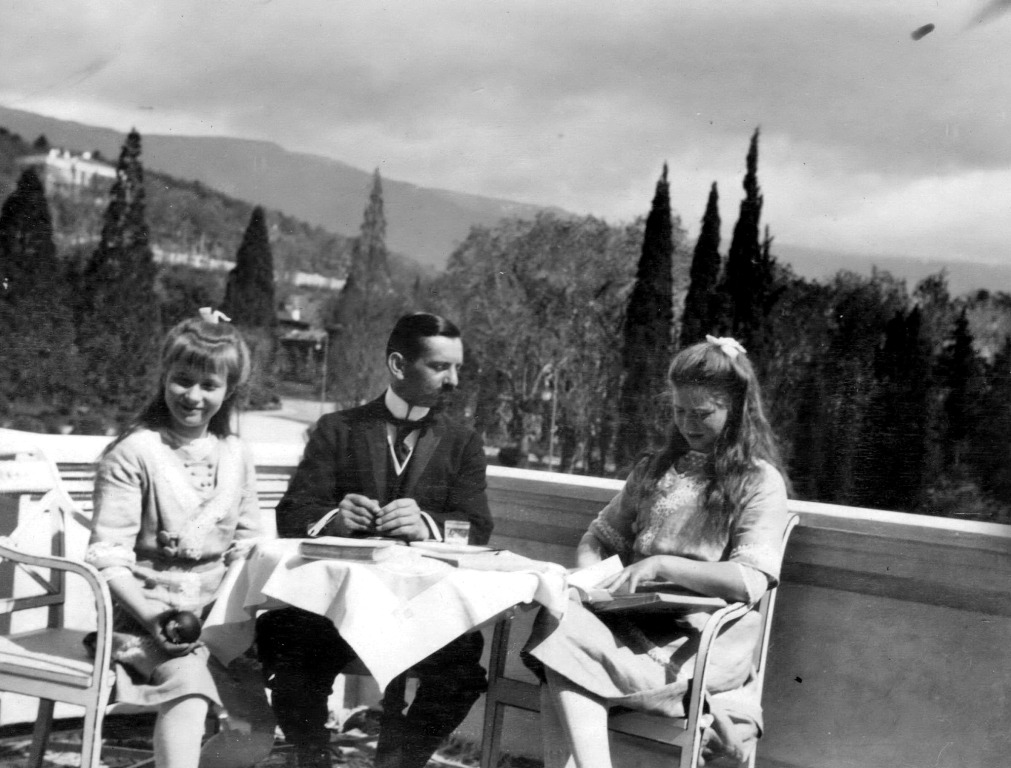
From 1905 to 1918, Pierre Gilliard served not just as a tutor for the August Children, but also as a friend and mentor. He became a part of the Imperial Family’s inner circle, and was invited to join them on their journeys onboard the Imperial Yacht ‘Standart‘ to Crimea, where they stayed at their white limestone palace of Livadia. Gilliard shares his impressions of Crimea:
“In the spring of 1914 the Imperial Family went to the Crimea, as in preceding years. We arrived at Livadia on April 13th, a bright, sunny day. In fact, we were almost dazzled by the sunshine, which bathed the high, steep cliffs, the little Tartar villages half buried in the bare sides of the mountains, and the staring white mosques which stood out sharply against the old cypresses in the cemeteries. The contrast with the landscapes we had just left was so striking that, although this new country was familiar, it seemed quite fairylike and unreal in its wondrous beauty under this halo of sunshine.
“These spring days in the Crimea were a delicious relief after the interminable St. Petersburg winter, and we looked forward to them months before they came.”
In the autumn of 1914, the First World War broke out, which resulted in the death of millions of people, revolutions and the overthrow of monarchies in Germany, Austria-Hungary and Russia. After the February Revolution of 1917, Emperor Nicholas II was forced to abdicate.
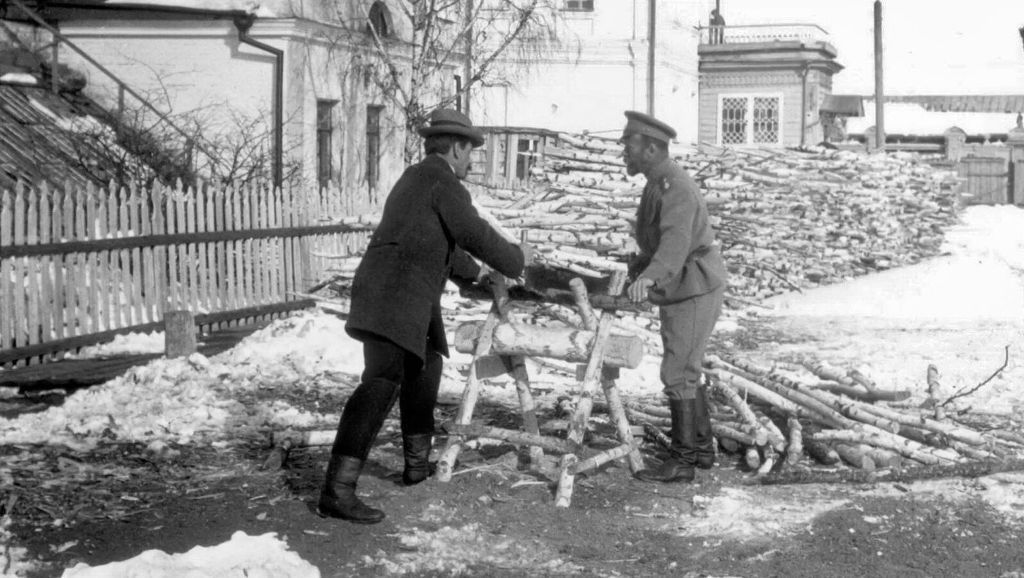
PHOTO: Pierre Gilliard and Nicholas II saw wood during their house arrest in Tobolsk. Winter 1917-18
During the fiery whirlwind of historical events which unfolded, Pierre Gilliard did not abandon the Imperial Family. To the best of his ability, trying to preserve the same daily routine, he continued to teach French to the August Children. In August 1917, he voluntarily went into exile with the Imperial Family to Tobolsk, where they were held under house arrest from August 1917 to April 1918. Gilliard endured the same hardships as those of the Tsar and his family, he supported the prisoners, still continuing with his lessons.
Gilliard was prevented from living in the Ipatiev House and was forbidden to visit the Imperial Family. He left Ekaterinburg some time later for Tyumen, where he was arrested on his arrival, but was released shortly afterwards.
It was only his foreign citizenship which saved him from sharing the same horrible death in the basement of the Ipatiev House in Ekaterinburg on the morning of 17th July 1918.
On 20th July 1918, the Czechs captured Tyumen. Gilliard then came out of hiding and discovered an official communiqué plastered on the walls around the city: “The death sentence against the ex-Emperor Nicholas Romanov was carried out on the night of 16/17 July, the Empress and the children were evacuated and transferred to a safe place.” Gilliard hurried to Ekaterinburg to find the Imperial Children whom everyone at the time believed to still be alive. His efforts were in vain.
On his arrival in Ekaterinburg in August 1918 – where he offered his assistance to the investigator Nikolai Sokolov – Gilliard visited the Ipatiev House, and recalls his impressions:
“I entered the room in which perhaps–I was still in doubt–they had met their death. Its appearance was sinister beyond expression. The only light filtered through a barred window at the height of a man’s head. The walls and floor showed numerous traces of bullets and bayonet scars. The first glance showed that an odious crime had been perpetrated there and that several people had been done to death. But who? How?
“I became convinced that the Tsar had perished and, granting that, I could not believe that the Tsarina had survived him. At Tobolsk, when Commissary Yakovlev had come to take away the Tsar, I had seen her throw herself in where the danger seemed to her greatest. I had seen her, broken-hearted after hours of mental torture, torn desperately between her feelings as a wife and a mother, abandon her sick boy to follow the husband whose life seemed in danger. Yes, it was possible they might have died together, the victims of these brutes. But the children? They too massacred? I could not believe it. My whole being revolted at the idea.” <… >
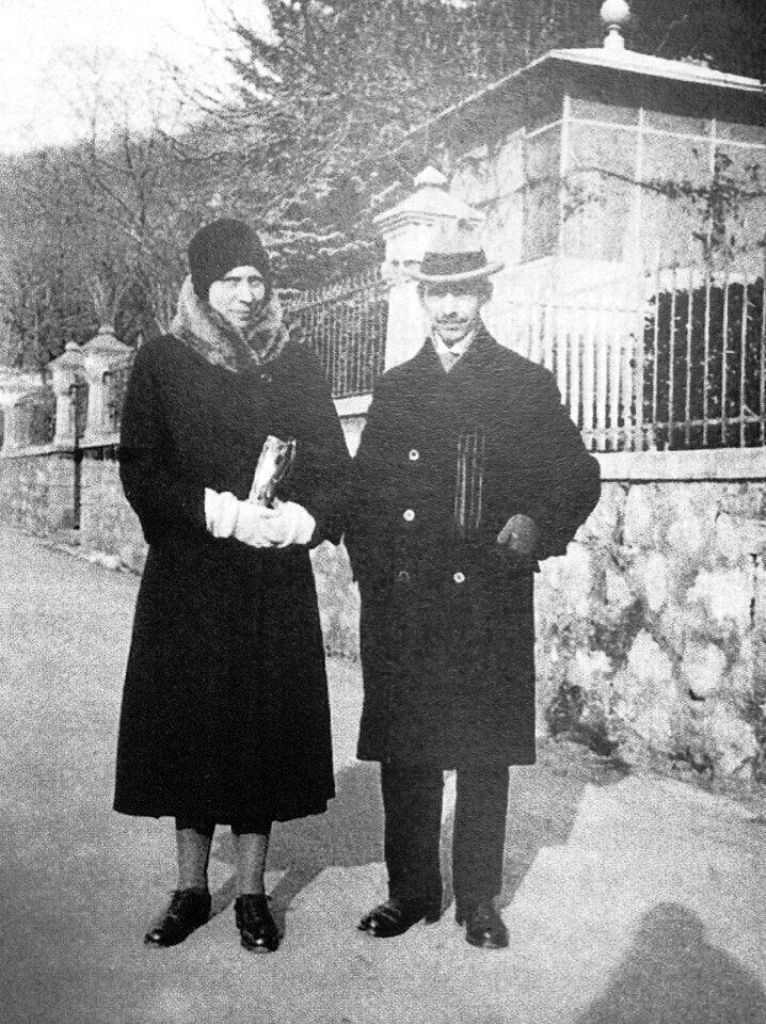
PHOTO: Pierre Gilliard and Alexandra Tegleva. Switzerland, 1922
In 1919, Gilliard married Alexandra Tegleva and in November of the same year, along with thousands of other people, including ministers and government officials of the old regime, they fled Siberia and headed east on the Trans-Siberian Railway. In April 1920, after a six-month journey, they arrived in Vladivostok. They then sailed on an American ship to San Francisco, and from there traveled by boat along the Pacific coast, through the Panama Canal, across the Atlantic Ocean and the Mediterranean Sea to Trieste. In August 1920, they returned to his parents’ home in Switzerland, which he had left some sixteen years earlier
Upon his return to his native Switzerland, Pierre Gilliard resumed his studies, which he had interrupted in 1904. In 1925, he obtained a degree in literature in Lausanne and from 1926, he taught French at the School of Modern French of the Faculty of Arts of the University of Lausanne, which he then became it’s director until 1949, and finally honourary professor in 1950.
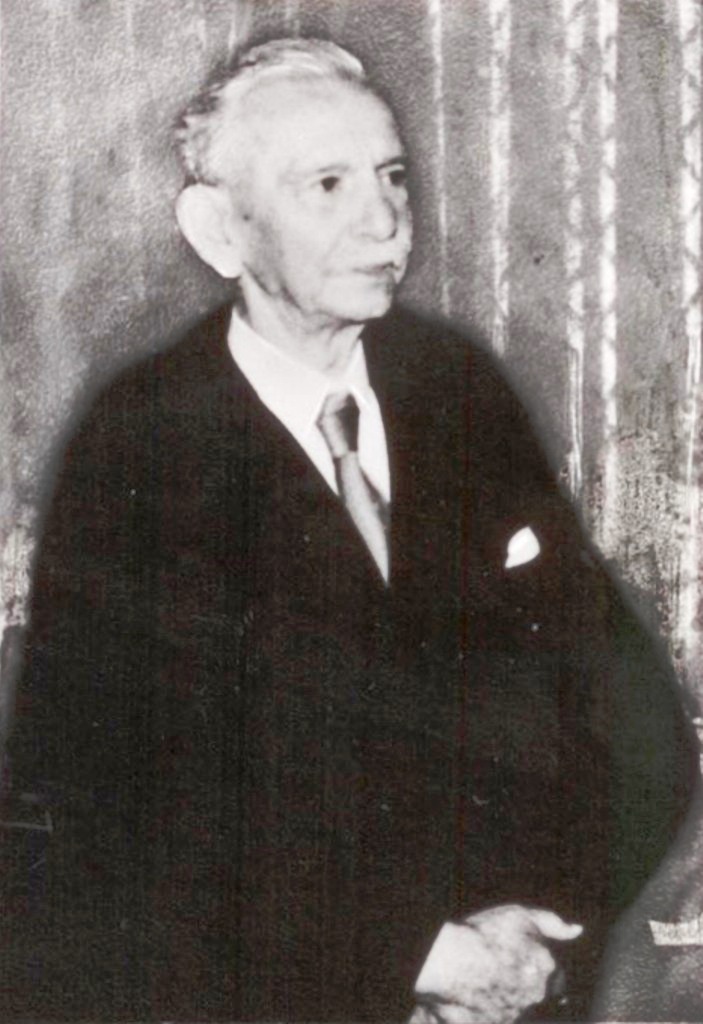
PHOTO: Pierre Gilliard. taken shortly before his death in 1962
In 1921, Gilliard published in Paris, Le tragique destin de Nicolas II et de sa famille, and in 1929 his second work, La Fausse Anastasie, histoire d’une alleged Grand-Duchesse de Russie. He was made a Knight of the Legion of Honour and winner of the Marcelin-Guérin Prize for his book on Nicholas II.
His book Thirteen Years at the Russian Court: A Personal Record of the Last Years and Death of the Czar Nicholas II and his Family was first published in English i 1921. It was initially published by Hutchinson & Co in London. The book was translated by F.A. Holt.
Alexandra Alexandrovna Tegleva died in Switzerland on 21st March 1955. In 1958, Pierre Gilliard was severely injured in a car accident in Lausanne. He never fully recovered and died four years later on 30th May 1962, at the age of 83. His remains were cremated in the privacy of his family at the Bois-de-Vaux Cemetery in Lausanne. According to the burial service of the city of Lausanne there is no grave or burial in his name. His ashes were probably scattered elsewhere.
Gilliard was a keen photographer and he took hundreds of images while in Russia, including many informal photographs of the Imperial Family. These are now held by the Musée de l’Élysée, a photography museum in Lausanne. In 2005 Daniel Girardin, an art historian who worked at the Musee de l’Elysee as a curator until 2017, published a pictorial biography of Gilliard’s time in Russia based on his works in the museum’s collection. It is titled Précepteur des Romanov – Le destin russe de Pierre Gilliard [Tutor of the Romanovs: The Russian Destiny of Pierre Gilliard].
He lived a long life, was eyewitness to events which changed Russia dramatically and violently, and his name will forever remain inscribed in the pages of history next to the names of the Imperial Family, for whose sake he put his life in danger and whom he loved so much.
FURTHER READING:
St. Petersburg hosts one-day exhibit of Pierre Gilliard’s photographs of the Tsar’s family
Documentary: the Return of Pierre Gilliard
© Paul Gilbert. 16 May 2025
 Nicholas II
You must be logged in to post a comment.