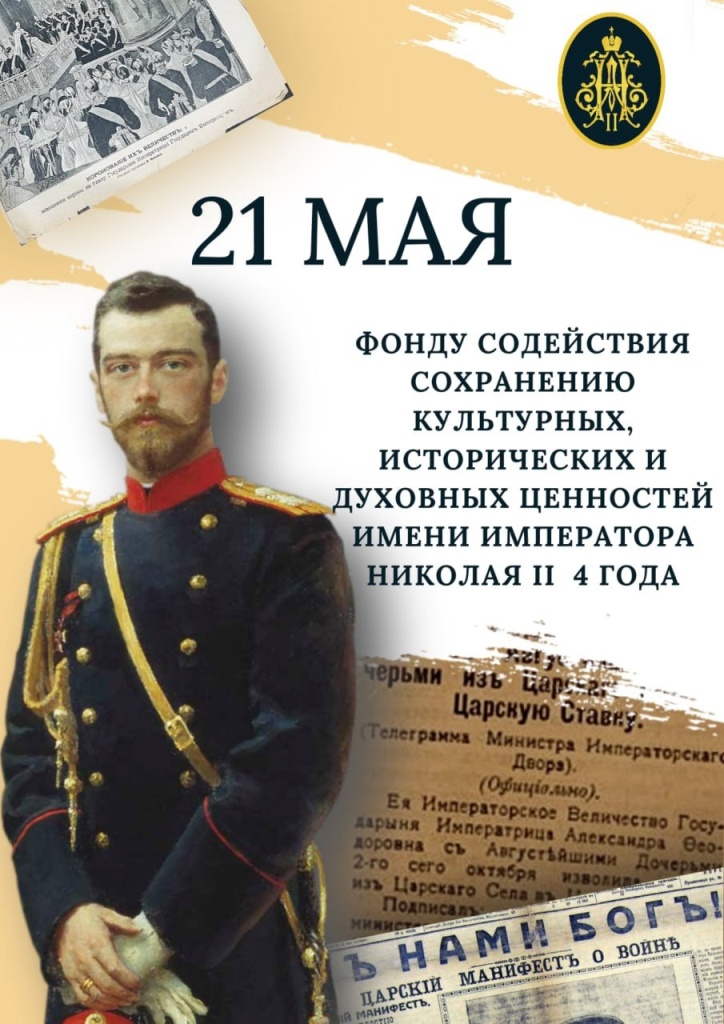
On 21st May 2025, the Emperor Nicholas II Foundation celebrated it’s 4th anniversary. The Foundation was created in 2021, to support the Museum of Emperor Nicholas II (Moscow), as well as other initiatives to help restore and disseminate the historical truth about Emperor Nicholas II and his era.
The Foundation is dedicated to the historical education of the Holy Sovereign Emperor Nicholas II and his family, and to the creation and prosperity of the Museum of Emperor Nicholas II Museum. During the last 4 years, the Foundation have hosted dozens of events, offered hundreds of museum tours, while expanding their collection with new acquisitions.
In addition, the Foundation has been involved in several Russian language publishing projects, such as Последний духовник Императора Николая II и его Семьи: тобольский протоиерей Владимир Хлынов / The last confessor of Emperor Nicholas II and his Family: Tobolsk Archpriest Vladimir Khlynov (2018).
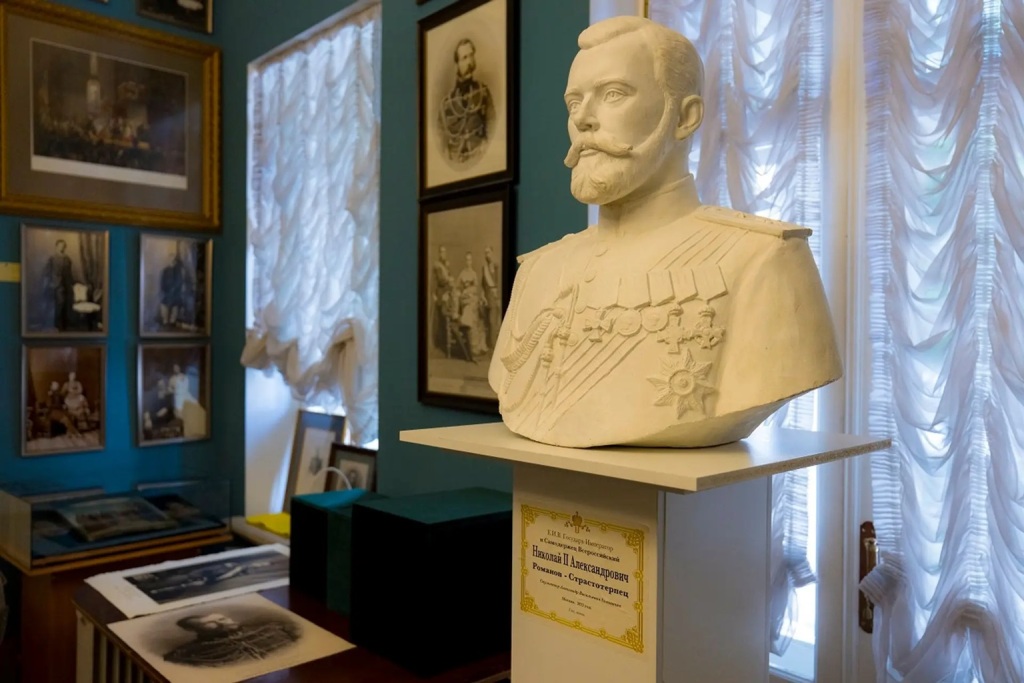
PHOTO: bust of Emperor Nicholas II on display in the Museum of Nicholas II
The Museum of Emperor Nicholas II is based on the unique collection of the famous Russian art historian Alexander Vasilyevich Renzhin, which was formed over the course of 35 years and contains more than three thousand authentic objects dating from 1868 to 1918, including personal items which belonged to the last Russian Emperor and his family: icons, church utensils, rare books, ceremonial portraits of Emperors Alexander II, Alexander III, Nicholas II, more than 500 original photographs, autographs, state documents, porcelain, glass and bronze, a unique collection of gifts from the 1896 Coronation, memorial items of the Romanov dynasty, a full set of state awards established by Nicholas II, postcards, chromolithography, engravings and much more.
***
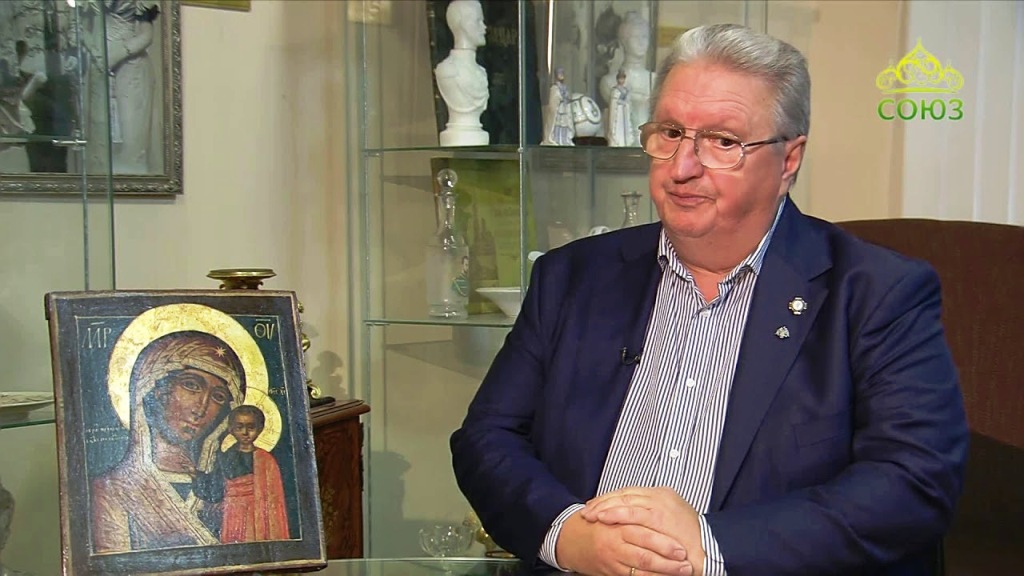
PHOTO: Alexander Vasilyevich Renzhin,
director of the Museum of Emperor Nicholas II in Moscow
The following is from an interview on 14th May 2024:
Russian art historian Alexander Vasilyevich Renzhin, and director of the Museum of Emperor Nicholas II, for many decades has been amassing a collection of personal items belonging to the last Russian Tsar and his family. Renzhin himself, could not have imagined that his collection of rare and unique items would form an exposition which reflect an important page in late 19th to early 20th century Russian history, one which would fill an entire museum.
— Alexander Vasilyevich, why did you start the museum.
“I had been living with the dream of opening a museum for many years. It so happened that I learned about the history of pre-revolutionary Russia, as they say, first-hand. Both of my grandfathers were simple peasants from the Vyatka province, they lived through the Great War, the 1917 Revolution, the Civil War, the Great Patriotic War and still, both lived to be 90 years old. And despite all the events which they experienced, they still retained the people’s love for the Sovereign, always referring to him in their memoirs as “Tsar-Father”. This absolutely respectful attitude towards the Tsar was deeply observed by the Russian people.
“Once a photograph of Emperor Nicholas II fell into my hands, which I remembered for the rest of my life. In it, the Emperor is depicted visiting a factory and talking to the workers. He does not look “official” or “superior”, but as if the workers are old acquaintances. So a completely new page in history began to open for me, which began with the memories that my two grandfathers shared with me. It was at this point in my life, that I started to collect books and objects related to the history of the Imperial Family.”
— Did you have like-minded people who helped open the museum?
“Yes, this would be Anna Vitalievna Gromova, a well-known public figure, historian and Chairman of the Elisabeth-Sergius Educational Society Foundation (ESPO). Thanks to her, we were able to acquire a building for our museum.”
— Are all the exhibits presented in the museum from your personal collection?
“Some things were given to us by people who kept them, often hidden away from even their closest friends and relatives. Our museum is direct evidence that not everything related to Nicholas II was destroyed, and that the Russian people did not forget the Tsar. During the 1920s and 30s, it was forbidden to be in possession of photographs or portraits depicting the Tsar. People who did so, risked losing everything, and even the risk of being shot. Nevertheless, people preserved these items to this day.
“They kept these items hidden in their chests and closets, hiding them from every one. One old woman who brought me a mug from the Tsar’s Coronation told me that her grandmother, when she invited them to visit her, opened a drawer, and showed this mug and said: “Look, this mug was held in the hands of the Tsar-Father.”
“She received it on the Khodynka Field from the hands of the Tsar himself (!). And now this rarity can be seen in our museum. Things related to the Tsar in one way or another were kept by these dear souls, who loved Russia, who loved their Tsar, as the most important treasure in life.
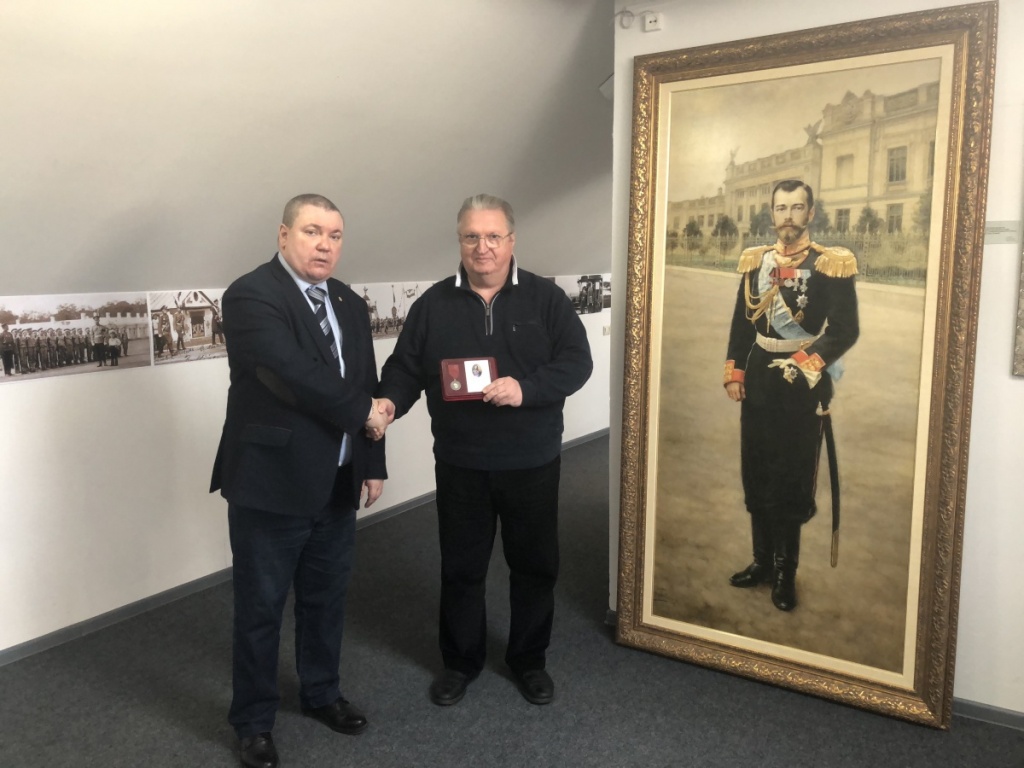
PHOTO: On 24th April 2018, the head of the Military Orthodox Mission Igor Evgenievich Smykov (left) visited the Museum of Emperor Nicholas II in Moscow. With the blessing of the First Hierarch of the Russian Orthodox Church Outside of Russia (ROCOR), Metropolitan Hilarion (1948-2022), he presented Alexander Renzhin (right) with a commemorative medal “In Memory of the Reign of St. Emperor Nicholas II Alexandrovich.”
– What kind of person, in your opinion, was Nicholas II?
“He was a creator. We see this in the fruits of his labours. He was very firm in his decision-making, that’s obvious. Each time he thought them over carefully, always trying to find an inner balance. Thanks to Nicholas II, 46,000 kilometers of railways were built during his twenty-two year reign.
“The plan for the electrification of the country was created in 1903 on his personal initiative, although the Bolsheviks later took credit for it. Some 118,000 educational institutions were opened. In 1894, only 24 percent of the population was literate, and in 1917 it was 67 percent. It was the Tsar who issued a decree on parochial schools. Even if a priest did not have the means to hire a teacher, he was obliged to teach himself. Primary education was offered at every church throughout the Russian Empire.
“Nicholas II was a man of very strong character, and no one ever saw him angry, always trying to remain calm, even during the many trials and tribulations of his reign. When in the company of officers, he could drink as much as the rest, but no one saw him drunk. His worst outburst of anger, as one of his retinue recalled, came during a conversation with an officer who had abandoned his soldiers on the front lines. The Tsar fell silent, turned his back to the officer, went to the windowsill and began to tap it with his fingers.
“Nicholas II was an exemplary father to his children and a father to his subjects. Suffice it to say that in the First General Census of the Population of the Russian Empire (1897), in the column “Occupation, position or trade” he wrote: “Master of the Russian land.”. That is, he felt like a master – an owner, responsible for everything and everyone.”
— What do you think visitors will learn during their visit to your museum?
“Judging by the reviews our visitors leave, for the majority, regardless of education or age, our museum is a discovery. Many people do not realize, that once Tsarist Russia was ruled by a just, honest man who loved our Fatherland with all his heart and gave not only his life for it, but also the lifves of his family, who, went with him to their death and martyrdom.
“Young people who come to our museum are very interested in history, their eyes shine while looking at the exhibits. This new generation is like a blank slate, and it is necessary to write on it, it is necessary to give them knowledge, genuine, real historical knowledge, on the basis of documents that have been preserved. When they see the fragments of the Russian Empire, they will understand what they should be striving for. They will understand what our ancestors cherished for a thousand years.”
© Paul Gilbert. 22 May 2025
 Nicholas II
You must be logged in to post a comment.