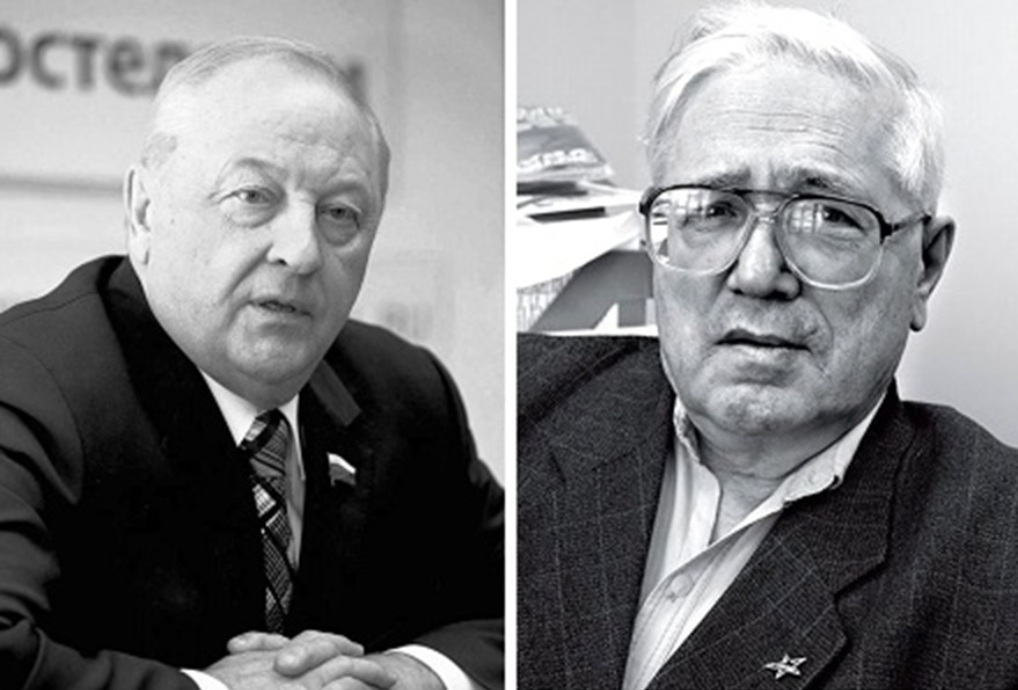
PHOTO: the first governor of the Sverdlovsk region, Eduard Rossel
and Ural geologist Alexander Avdonin
*** Please note that this is my 1,000th article, researched from
Russian archival and media sources, and translated into English – PG
In 1991, Valery Nikolaevich Shevelin found himself in the center of historical events by accident. A friend and neighbor, Alexander Avdonin (1932-2026), who was searching for the remains of Russia’s last Tsar and family, asked him to guard the excavations on the old Koptyaki Road near Sverdlovsk [Ekaterinburg].
Avdonin was sure that he would find the remains of the Imperial Family, so he asked his friend Eduard Rossel, who served as the Head of Sverdlovsk Oblast [Region] Administration, to help organize the expedition. Soon the soldiers arrived. They built a tall palisade, pitched tents, brought beds and deployed field kitchens.
On Sunday, 22nd February, Alexander Avdonin (1932-2026) was laid to rest in the village cemetery in Kurganovo, Sverdlovsk region, where the famous Ural geologist recently lived.
Recall that Alexander Avdonin died in Ekaterinburg on 20th February 2026. – NOTE: click on the link, to see little known photos of Avdonin with Prince Michael of Kent, during the latter’s visit to the Urals in 2012.
During the funeral service, the first governor [from 1995 to 2009] of the Sverdlovsk region, Eduard Rossel, said goodbye to his friend Alexander Nikolaevich Avdonin, the man who, together with his colleagues, discovered the remains of Emperor Nicholas II and his family.
Below is the full text of the eulogy that Rossel gave at Avdonin’s funeral, this past Sunday:
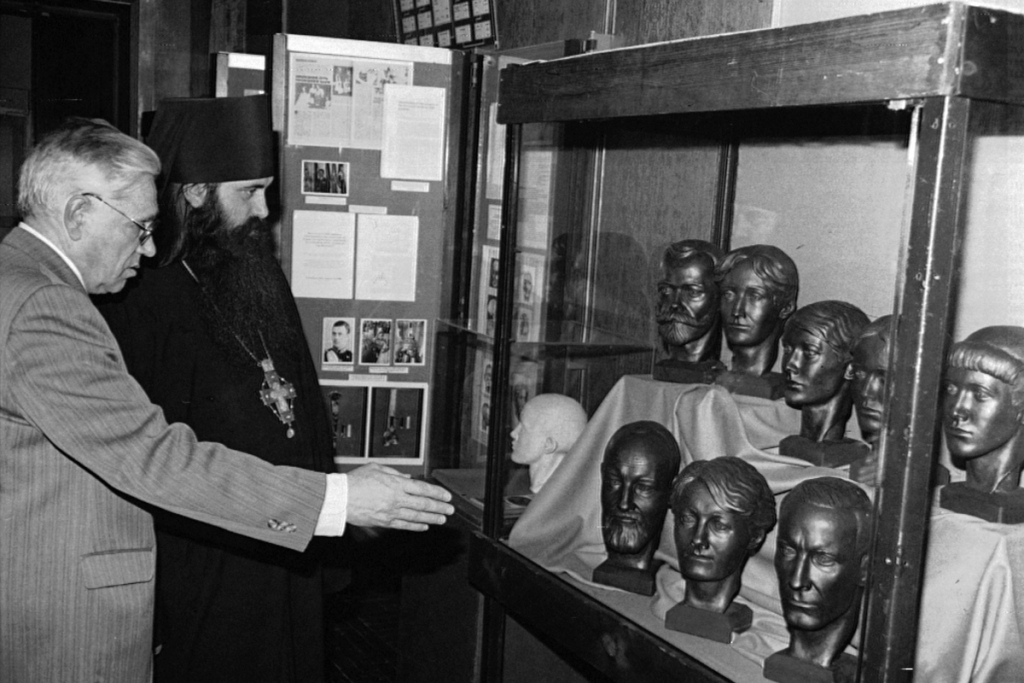
PHOTO: Avdonin, and the abbot of the Verkhoturye Monastery, Hegumen Tikhon, view sculptural portraits of members of the Imperial Family at the exhibition ‘The Romanovs: Return to History‘. 17 April 1997.
“I was acquainted with Alexander Nikolaevich for many years. Together, we honoured the memory of the the last emperor and his family. We took many risks, persevered and, finally, brought the true fate of the Imperial family out of darkness and oblivion,
“If it were not for Alexander Nikolaevich and his associates: Geliy Ryabov, Kochurov and Vasiliev, the incredible story of finding the Tsar’s remains would not have happened. There would have been no Church on the Blood, no Ganina Yama, no annual Tsar’s Days, no museum exhibitions, no books, and no educational events – which reflect one of one of the most tragic events in Russian history.
“In recent years, Alexander Nikolaevich was very ill, so we we were not able to communicate as much, but I will always remember our first meeting in the Regional Executive Committee, which saw the beginning of our working together on the extraction and identification of the Tsar’s remains, but also an enduring friendship.
“I will forever remember him as a man who opened my eyes to true patriotism – a positive attitude to one’s history, and that without paying tribute to it’s memory, it is impossible to move forward!
“And indeed, the development of the Tsarist project began here in the Sverdlovsk region, which I headed, emerging from the most severe socio-economic and spiritual crisis caused by the collapse of the USSR and the formation of a new Russia.”
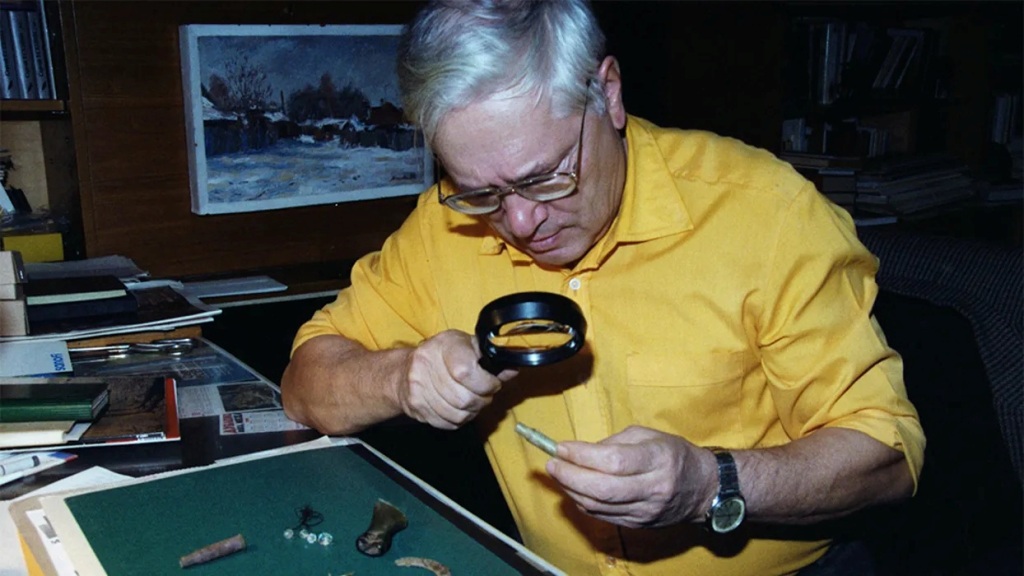
PHOTO: Alexander Avdonin examining items found during excavations in and around the site where the remains of Nicholas II and his family were exhumed in 1991
During the eulogy, Eduard Rossel expressed his sincere disappointment in the Moscow Patriarchate of f the Russian Orthodox Church, who have still not recognized the Ekaterinburg Remains as those of Emperor Nicholas II and his family.
“My soul aches from the fact that the remains of the Imperial Family are not as yet, recognized as *Holy Relics. Alexander Nikolaevich and I, had even selected the particles [from the bones] of which, wanted to place in the reliquaries in the Lower Church of the Church on the Blood, near the place [today, the Imperial Room] where the the Holy Royal Passion-Bearers met their deaths.
- For more information on the remains of the Imperial Family being reconised as Holy Relics, please refer to my article – The Fate of the Ekaterinburg Remains
“Everything was done for this: the best genetic research in the world was financed and carroed out, the reliability of the results was provided to the investigation committee and proven with one hundred percent result, but, apparently, the time has not yet come,” said Rossel
Recall that the Russian Orthodox Church have yet to offficially recognize the remains discovered in two graves on the Old Koptyaki Road as those of Russia’s last Tsar and his family. In the summer of 1998, when, by decision of the government of the Russian Federation, to bury the remains took place in the Saints Peter and Paul Cathedral in St. Petersburg.
Patriarch Alexei II (1929-2008) and other bishops did not attend the commemorative event. The final decision on this issue was to be made by the Bishops’ Council of the Russian Orthodox Church, but its meeting has not yet taken place.
“Today, thousands of people venerate the memory of the Nicholas II and his family, through events marking the annual Tsar’s Days, bishops pray, the Church on the Blood receives believers, but the end of this sorrowful matter has not yet been made.
“Deepest condolences to Alexander Nikolaevich’s wife Galina Pavlovna, to his family, relatives and friends. Eternal memory to the man who opened the way to true repentance for all of us by deeds, not words!” concluded Eduard Rossel.
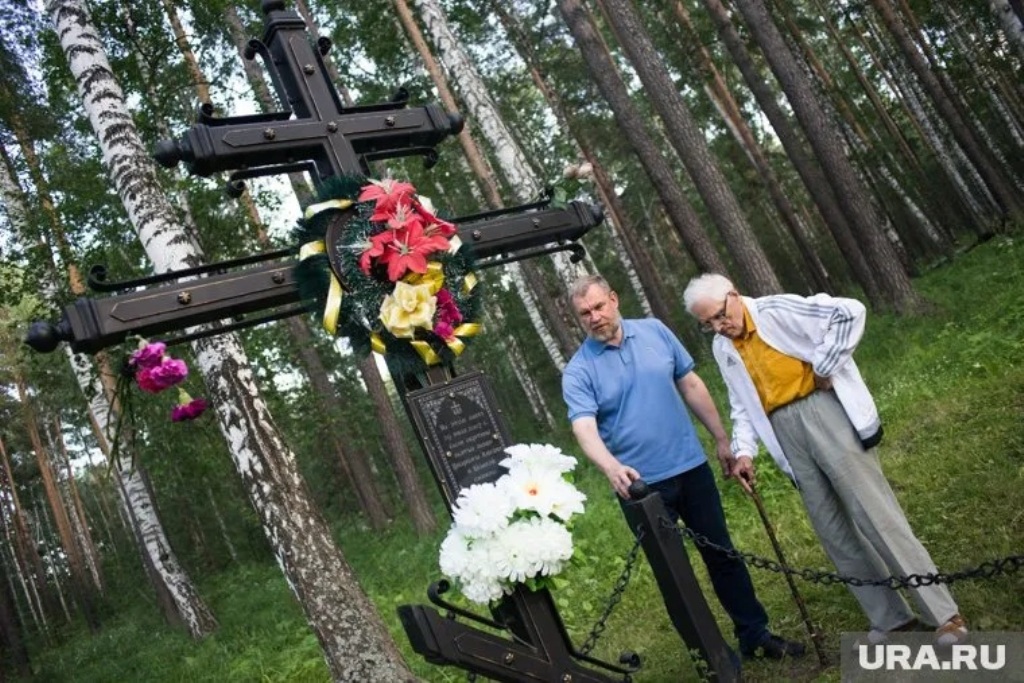
PHOTO: Alexander Avdonin (right) with histirian Nikolai Neuymin (left) Sverdlovsk Museum of Local Lore, at the cross at the Romanov Memorial, at Porosenkov Log, near Ekaterinburg.
© Paul Gilbert. 25 February 2026
 Nicholas II
You must be logged in to post a comment.