Grand Duchess Xenia Alexandrovna’s Archive Donated to GARF

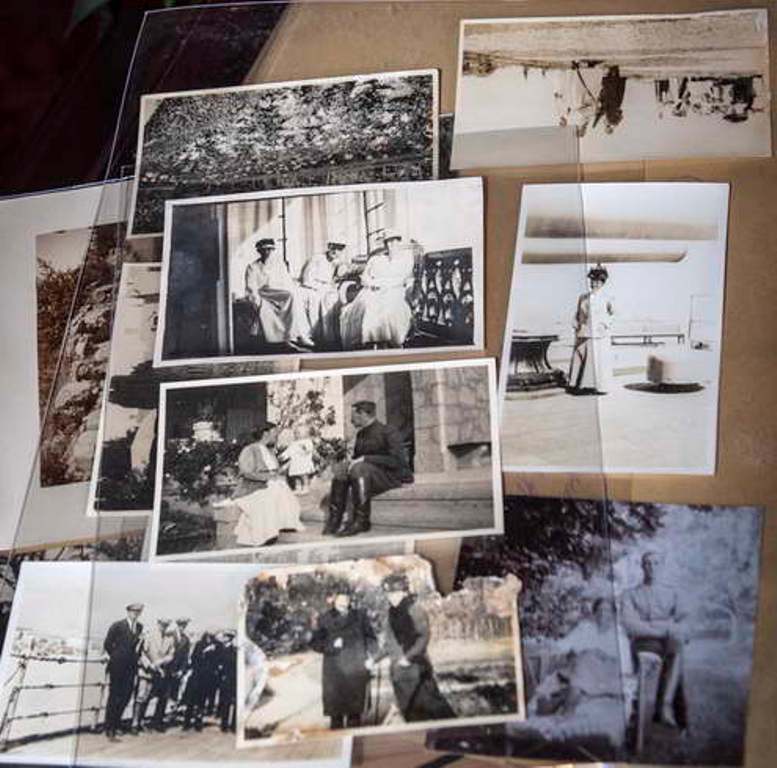
PHOTO: photos of Grand Duchess Xenia and her family
are among the archive donated to GARF

NOTE: the following article was originally published in Royal Russia No. 13, Winter 2017, and updated with additional information and photos on 3rd March 2026. While this article is dated, I believe that it is still relevant and will be of interest to my readership – PG

On 6th December 2017, a portion of the archives of Grand Duchess Xenia Alexandrovna (1875-1960), the eldest daughter of Emperor Alexander III and Empress Maria Feodorovna, was presented to the State Archive of the Russian Federation (GARF) in Moscow. The gift was presented to GARF by the Chairman of the St Basil the Great Charitable Foundation Konstantin Malofeev, who is also Chairman of the Board of Directors of the media group Tsargrad.

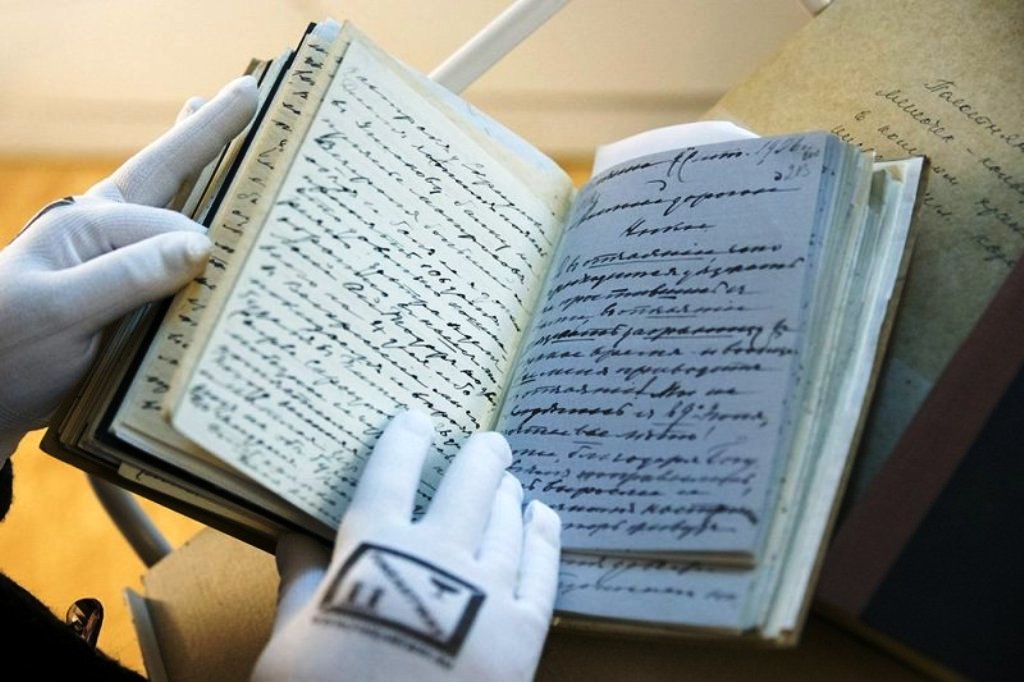
The archives of Grand Duchess Xenia Alexandrovna was purchased five years ago at an auction in London. It consists of 95 documents, which include five diaries, family photos unknown to Russian archivists, and in a separate canvas bag decorated with a satin ribbon, 25 letters from Xenia’s brother Grand Duke George Alexandrovich to their mother Empress Maria Feodorovna.

Especially valuable, are her diary entries of 1914-1919, in which she details the events of the First World War, the collapse of the monarchy and the Russian Revolution. “These documents allow us to see a crucial and very complicated period in the history of our country through the eyes of a representative of the imperial family,”- said the head of the Federal Archival Agency Andrey Artizov, who took part in the ceremony. “I want to emphasize that the archives of the Grand Duchess have not been studied and are almost unknown to both historians and the general public, so its future publication will be of particular interest” – he added.

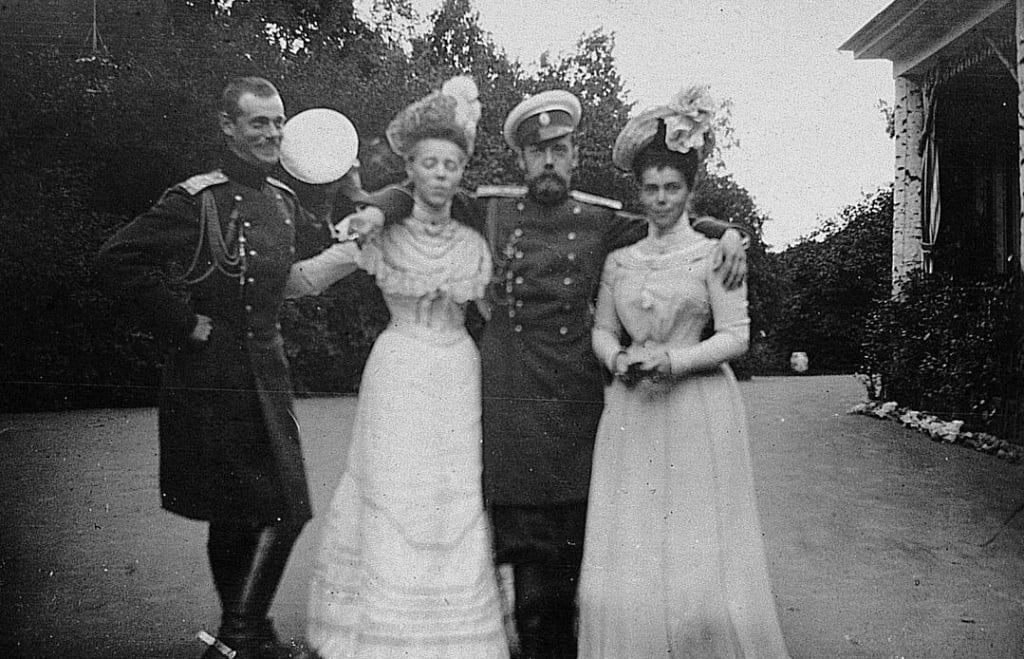
PHOTO: In happier times, Emperor Nicholas II and his siblings from left to right: Grand Duke Mikhail Alexandrovich, Grand Duchess Olga Alexandrovna, Emperor Nicholas II and Grand Duchess Xenia Alexandrovna. Year and location unknown

After the revolution, in 1919, the Grand Duchess along with her mother – the widowed Empress Maria Feodorovna, her family and relatives, left Russia forever. In exile Xenia Alexandrovna lived first in Denmark, and then moved to the UK, where she died on 20th April 1960, at Wilderness House, situated on the grounds of Hampton Court Palace, in the London Borough of Richmond upon Thames England.

The State Archive of the Russian Federation currently have in their collection 44 notebooks with Xenia’s diary entries dating from 1884 to June 1914. The five additional diaries, which refer to 1914-1919 now complete the collection, and are of immense historical importance. The last entry was made on the day which Xenia departed Crimea with her mother Maria Feodorovna and family. Her last tragic record of 1919 reads: “We are leaving Russia!”.

Konstantin Malofeev, the entrepreneur and founder of the St Basil the Great Charitable Foundation, said: “The main task of our organization is historical enlightenment, the cleansing of Russian history from slander and distortion. This can not be achieved without painstaking work with historical sources. Hence our close attention to various archival documents and the desire that they be accessible to the broad scientific community. After all, thorough study of sources and their publication is a necessary step towards establishing historical truth.”

PHOTO: one of five diaries of Grand Duchess Xenia donated to GARF

The acquisition of the archives was made in 2012, in London. “After we contacted the owners,” Konstantin Malofeev said, “and they found out that we are from Russia and are going to return this archive home, they removed the archive from the auction and we agreed to buy it separately.”

The Grand Duchess Xenia Alexandrovna’s archive is part of a large project carried out by the Society St Basil the Great Charitable Foundation, to return to the people the knowledge of life in Russia before 1917.

FURTHER READING

The jewel albums of Grand Duchess Xenia Alexandrovna + PHOTOS

© Paul Gilbert. 9 March 2026

Anniversary of the reign of the House of Romanov, 1913

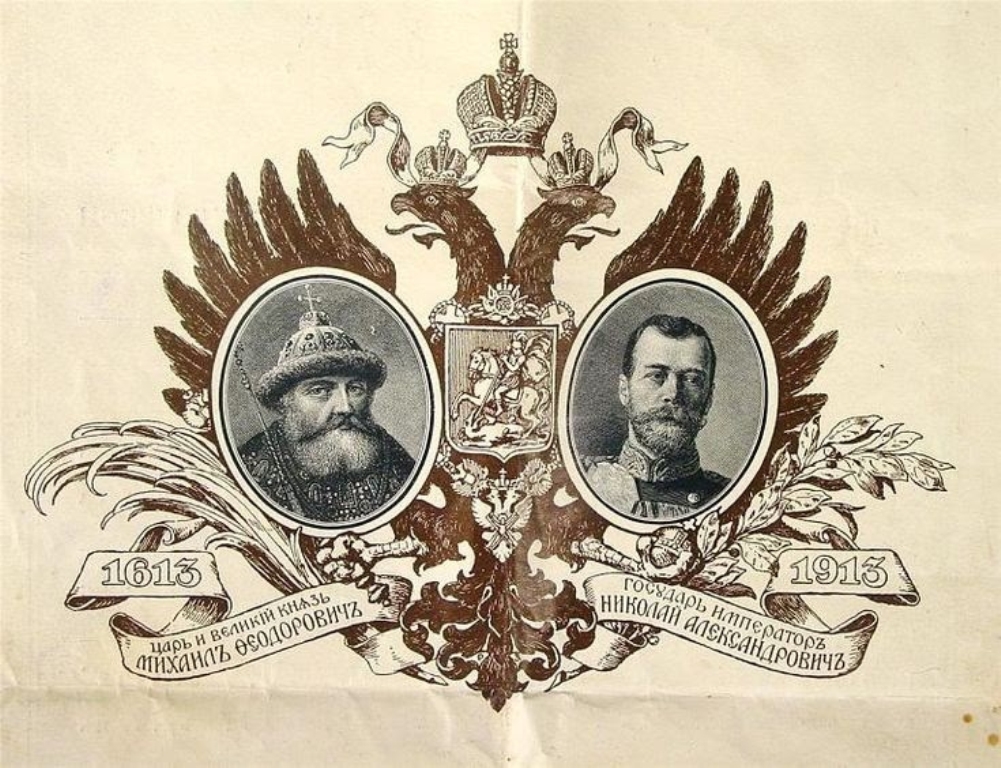
PHOTO: Postcard in honoir of the 300th anniversary of the House of Romanov

NOTE: the date of 6th March 1913 is the day of the celebrations marking the 300th anniversary according to the New Style Gregorian calendar, which is now 13 days ahead of the Old Style Julian calendar, used in Russia during the reign of Russia’s last Tsar. Therefore, the date of 21st February (O.S.) is in fact 6th March (New Style – PG

On 6th March (O.S. 21st February) 1913, the grandiose celebrations marking the 300th anniversary of the House of Romanov began in St. Petersburg. It was on this day in 1613, that a Zemsky Sobor; elected Mikhail Feodorovich Romanov (1596-1645) as Tsar, establishing the House of Romanov.

The day of the “solemn celebration marking the 300th anniversary of the House of Romanov” approved by the “Ceremonial” was 21st February) 1913, [according to the Old Style Julian calendar]. The “Ceremonial” provided that “solemn liturgies will be celebrated in all cathedrals and churches of the Russian Empire, followed by thanksgiving prayers with the intonation of “Many Years to Emperor Nicholas Alexandrovich <… >and to the entire reigning house”. The document also described the procedure for the celebration of solemn services and the arrival of the Emperor and his family in Our Lady of Kazan Cathedral in St. Petersburg, as well as the offering of congratulations to Their Imperial Majesties and other events in St. Petersburg.

In addition, the Emperor ordered a pannikhida [memorial service for the dead] be served in the Peter and Paul Cathedral in St. Petersburg on the eve of the day of celebration, on Wednesday, 20th February.

By a resolution of 4th February 1913, the Holy Synod of the Russian Orthodox Church decreed that Divine Liturgies be performed on 21st February, in all the cathedrals and churches of the empire.

On 13th February 1913, Emperor Nicholas II approved the resolution of the Council of Ministers “on declaring 21st February, 1913 [according to the Old Style Julian calendar] a holiday for all citizens of the Russian Empire. February 21st 1913 fell on the on the eve of Great Lent.

A special role in the upcoming celebrations was assigned to Moscow and Kostroma, from which Mikhail Romanov was called to the throne in 1613. In general, the celebrations took place throughout the Russian Empire. Three years before the upcoming celebrations, the “Committee for the Celebration of the Tercentenary of the Reigning House of Romanov was formed, and Aleksandr Grigoryevich Bulygin (1851-1919) was appointed its chairman.

As part of the preparations for the 300th anniversary, a number of charitable events throughout the Russian Empire were initiated by Nicholas II. Financial resources were allocated for the care of children, and assistance to advanced farmers.

PHOTO: Procession headed by Emperor Nicholas II and his family arrive in front of the Cathedral of Our Lady of Kazan on the day of the beginning of the celebrations marking the 300th anniversary of the House of Romanov, on 6th March (O.S. 21st February), 1913

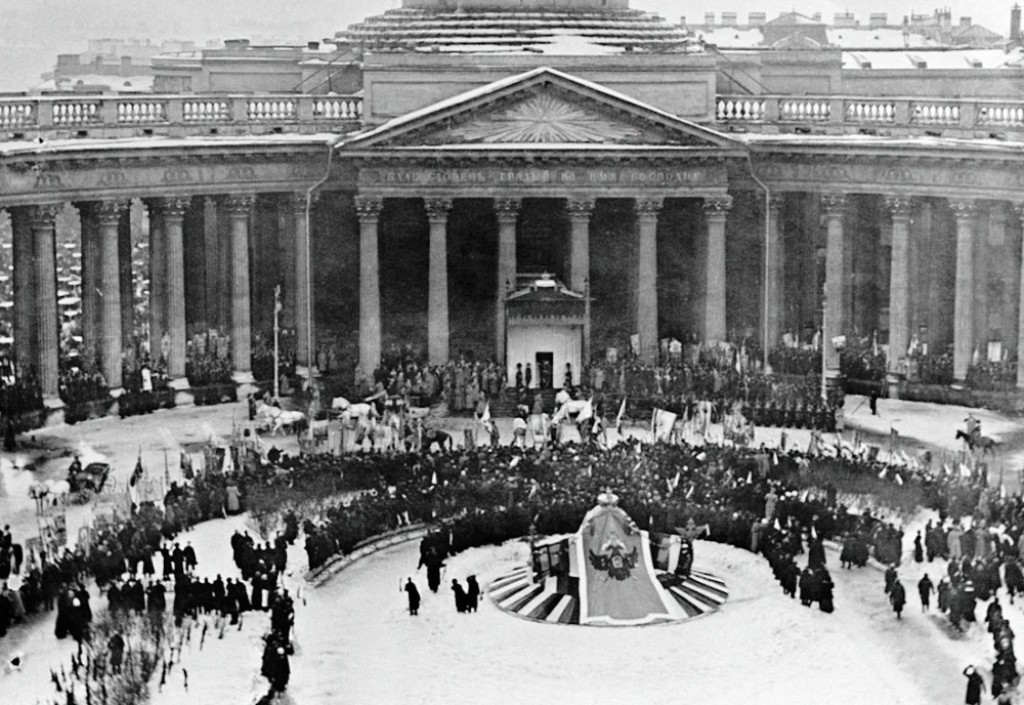
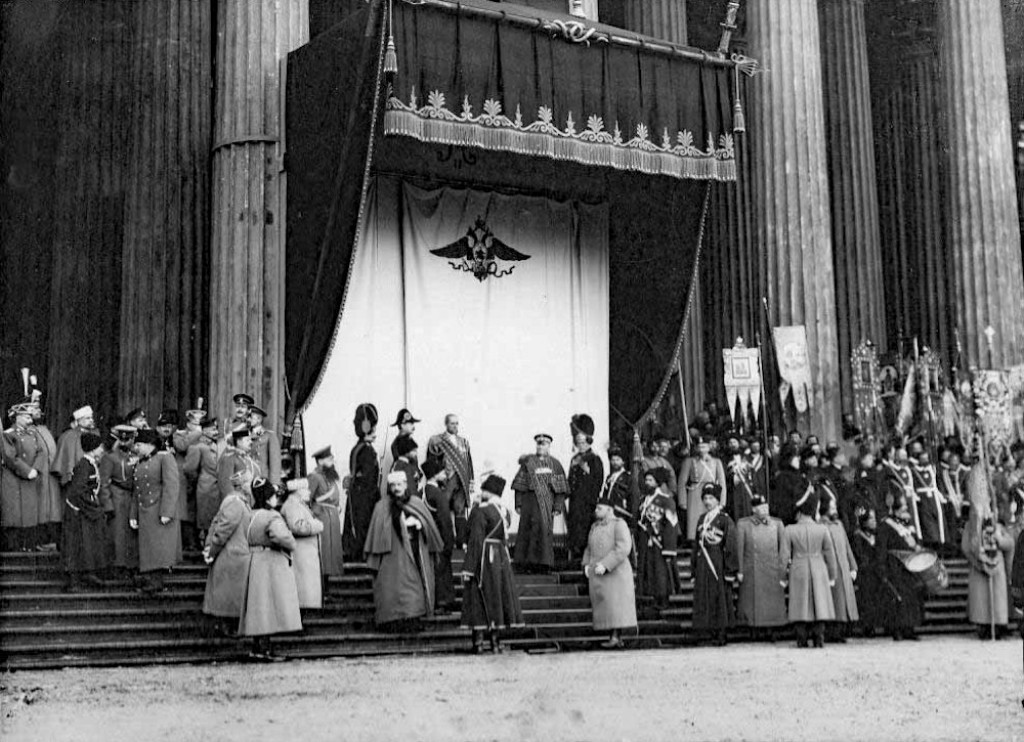
PHOTO: Preparations for a ‘Te Deum’ in honour of the celebrations marking the 300th anniversary of the House of Romanov at the Cathedral of Our Lady of Kazan, St. Petersburg on 6th March (O.S. 21st February) 1913.

Preparations for the 300th anniversary

Preparations for the celebration began three years before the celebration. The “Committee for the Celebration of the Tercentenary of the Reigning House of Romanov” was formed, the chairman of which was appointed Aleksandr Grigoryevich Bulygin, a member of the State Council and Hofmeister of the Imperial Court. The newly formed committee proposed to Nicholas II to promulgate the “Imperial Manifesto” on the occasion of the anniversary, which, among other things, read:

“<… > Through the combined efforts of our crowned predecessors on the Russian throne and all the faithful sons of Russia, the Russian state was created and strengthened <… > In unfailing unity with our beloved people, we hope to continue to lead the state along the path of peaceful organization of the life of the people’s <… > The nobility of Russia sealed with their blood their devotion to the Motherland <… > In the radiance of glory and greatness, the image of a Russian warrior, defender of the faith, throne and fatherland… >May the reverent memory of the feats of the departed serve as a testament for generations to come, and may it unite around our throne all faithful subjects for new labours and feats for the glory and prosperity of Russia <… >». The “Highest Manifesto”, according to the “Ceremonial”, was read in all Russian churches after the Divine Liturgy, and before the solemn prayer service, on 21st February 1913.

On 5th August 1911, in the presence of Grand Duke Mikhail Alexandrovich (the august patron of the building committee), a church was laid in St. Petersburg in honour of the Feodorovskaya Icon, in memory of the 300th anniversary of the reigning house; the main side chapel of the upper church was consecrated on 15th January 1914 by Metropolitan Vladimir (Bogoyavlensky) in the presence of Emperor Nicholas II and members of his family.

In St. Petersburg, sculptors and architects worked on a monument to the anniversary. Not far from the Alexander Nevsky Lavra, a church in honour of the Romanov dynasty was being built (the Cathedral of the Theodore Icon of the Mother of God), and a rotunda was being erected on St. Isaac’s Square. For the celebration, jubilee medals were issued – gold, silver, dark bronze and light bronze – these medals were produced by the Mint in St. Petersburg. In addition, commemorative coins, stamps, postcards, Fabergé eggs, and even household items such as glasses, tablecloths, headscarves and brooches were issued. Thousands of workers were involved in the construction of stalls and kiosks, as well as the installation of masts for standards, banners, and the decoration of buildings.

On the eve of the day of celebration, 20th February 1913, at three o’clock in the afternoon, Patriarch Gregory IV of Antioch (who was invited to Russia for the celebrations), along with Metropolitan Dimitrije of Belgrade and other hierarchs, performed a pannikhida in the Cathedral of SS Peter and Paul in the presence of Their Majesties.

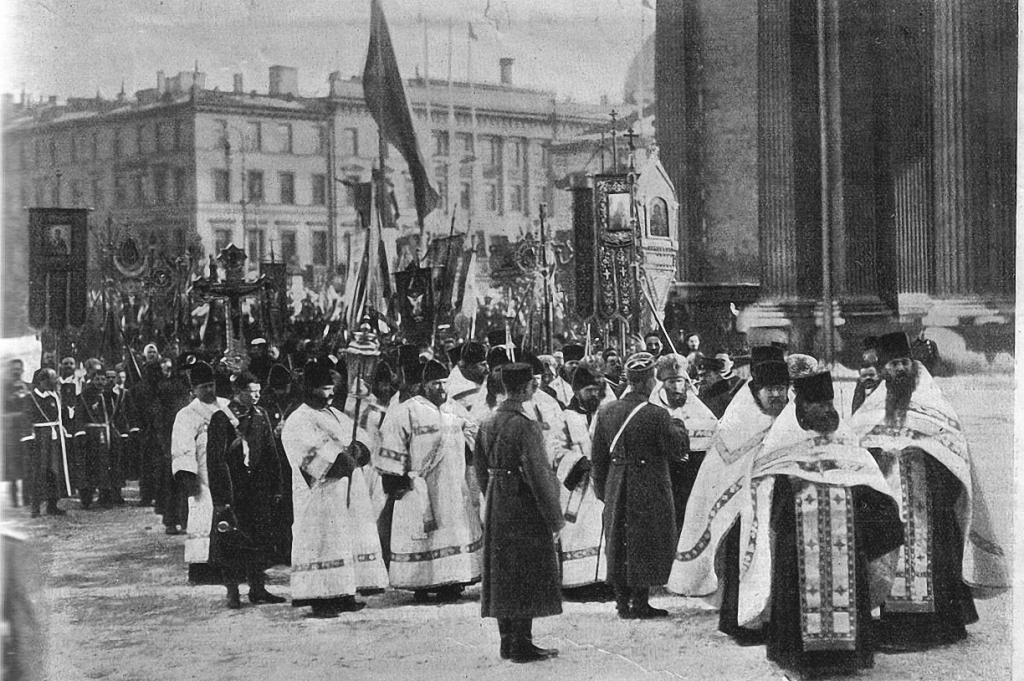
PHOTO: a host of Russian and foreign hierarchs took part in the the solemn liturgy in Our Lady of Kazan Cathedral, situated on Nevsky Prospekt in St. Petersburg

PHOTO: Kazan Cathedral House, situated on Nevsky Prospect, 25. The two-storey building served as the residence of the clergy of Our Lady of Kazan Cathedral Photo by Karl Bulla. 1913.

Events in St. Petersburg, on 21st February 1913

On 21st February 1913, at 8 a.m., twenty-one cannon shots from the Peter and Paul Fortress in St. Petersburg, signaled the beginning of the celebration of the 300th anniversary of the Romanov dynasty began in the Russian Empire.

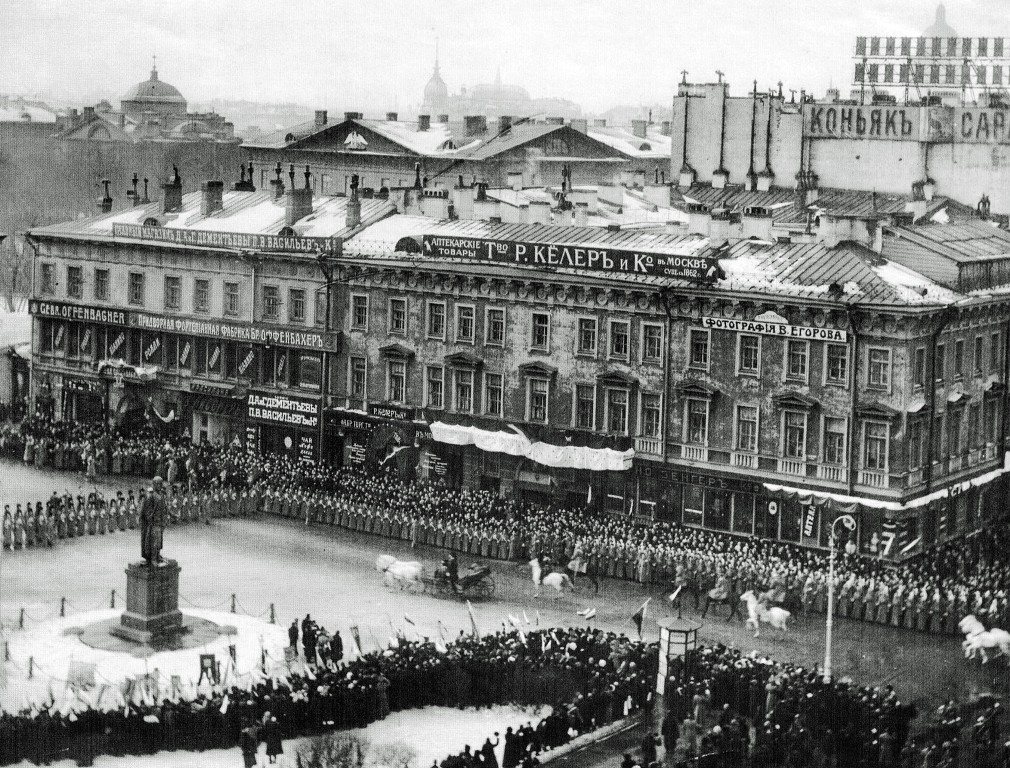
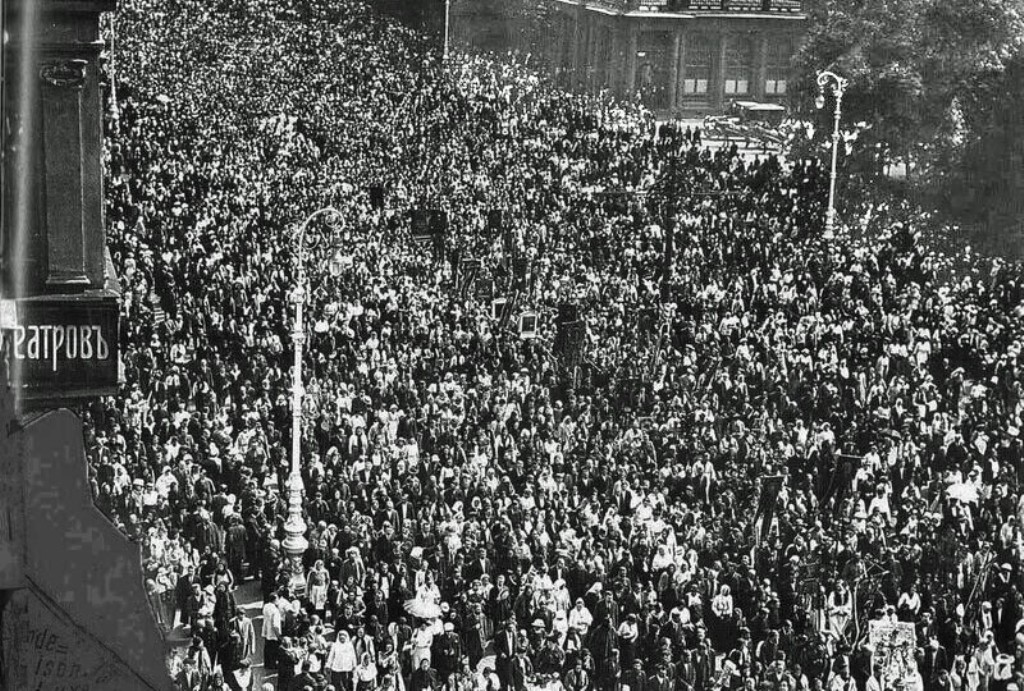
The Imperial Family travelled from the Winter Palace in a grand procession of carriages and horses to Our Lady of Kazan Cathedral on Nevsky Prospekt, to take part in a prayer service. The route to the Kazan Cathedral was lined with regimental troops and cadets of military educational institutions. Tens of thousands of people crammed the route, all hoping to get a glimpse of the Tsar and his family.

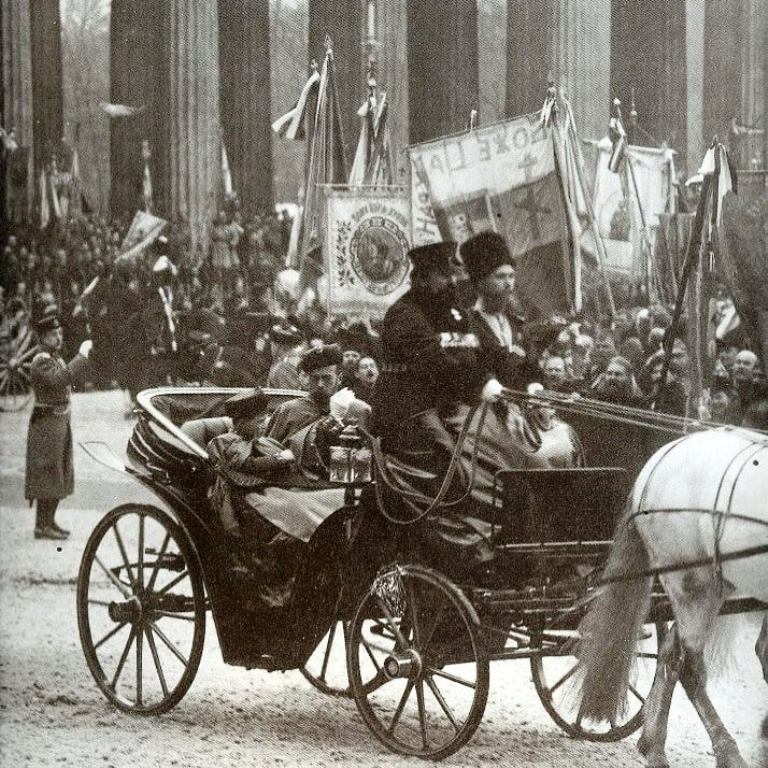
Emperor Nicholas II and his son, the heir to the throne Tsesarevich Alexei Nikolaevich travelled in an open carriage together. They were followed by the four-horse ceremonial carriage of the Dowager Empress Maria Feodorovna and Empress Alexandra Feodorovna, followed by a four-seater carriage with the the Tsar’s daughters: Grand Duchesses Olga, Tatiana, Maria and Anastasia Nikolaevna. The “Imperial convoy” consisted of 100 members of the Imperial Family, which included grand dukes, grand duchesses and princes and princesses of the Imperial Blood.

At the entrance to the cathedral, the Emperor and his family were met by Patriarch Gregory and Metropolitan Vladimir (Bogoyavlensky) of St. Petersburg and Ladoga. 

At 11 a.m., the solemn liturgy in Our Lady of Kazan Cathedral was led by Patriarch Gregory IV of Antioch, co-served by a host of Russian and foreign hierarchs.

Inside the cathedral, the protodeacon read the manifesto of the jubilee before the moleben [a liturgical service of supplication or thanksgiving]; the service of the prayer service was led by the Antiochian Patriarch Gregory IV, who read the Gospel in Arabic. The protodeacon then proclaimed “Many Years to Their Imperial Majesties” and to the entire reigning house. The troops outside the cathedral saluted; began the solemn trezvon [bell ringing] of all the churches of St. Petersburg. Cross Processions from many city churches arrived at the cathedral), followed bya salute from the cannons of the St. Petersburg fortress.

Recall that Our Lady of Kazan Cathedral in St. Petersburg served as the court church for the House of Romanov and was dedicated to the Icon of Our Lady of Kazan. which was the most important icon in the Russian Orthodox Church, for it protected Russia and consequently the Romanov dynasty. When the Kazan Cathedral was built, it inherited both the icon and the role of the court church. Imperial family weddings and thanksgiving prayers were all held in the cathedral.

When in St. Petersburg, Empress Alexandra Feodorovna went to the Kazan Cathedral to pray, kneeling in the shadow of a pillar, unrecognized by anyone and attended by a single lady-in-waiting.

PHOTO: Tsesarevich Alexei Nikolaevich and his father Tsar Nicholas II, passing the Cathedral of Our Lady of Kazan in St. Petersburg, during the celebrations marking the 300th anniversary of the Romanov dynasty in 1913.

PHOTO: tens of thousands of people lined Nevsky Prospekt on the day marking the 300th anniversary, with the hope of catching a glimpse of their Emperor and his family, on their way to Our Lady of Kazan Cathedral

Tercentenary Tour

Three months later, in May, the Imperial Family went on a pilgrimage, following the route of Mikhail I after his election as the first Romanov Tsar in 1613. Nicholas II and his family set off to visit the ancient towns of Muscovy associated with the founding of the Romanov dynasty. The tour started off in Kostroma, where they arrived in a ‘flotilla of steamboats’ on the Volga, greeted by a large crowd of townspeople. Here Nicholas visited the Ipatiev Monastery, where Mikhail had sought refuge from the invading Poles and the Muscovite civil wars. From there, the tour went to Vladimir, Nizhny Novgorod and Yaroslavl, by rail on the Imperial Train. During their visit to the monastery town of Suzdal, the Imperial Family had to travel in thirty open-top Renaults, as there were no railways.

The pilgrimage ‘climaxed’ when the imperial family triumphantly arrived in the historical capital Moscow, site of the crowning of the first Romanov ruler. The Tsar and his family were greeted at the Alexandrovsky train station, by a large number of dignitaries.

The Tsar mounted a white horse and rode alone, sixty feet ahead of the rest of the party and his Cossack guard escort, towards the Kremlin. All along the route, he was greeted by large cheering crowds. The decorations along Tverskaya Street, included velvet banners donning Romanov symbols spanning the boulevard, buildings covered in pennants, flags, and lights. Even more inventive than those in the capital, garlanded statues of the tsar and a showering of confetti from the people, were ‘even more magnificent than in St. Petersburg.

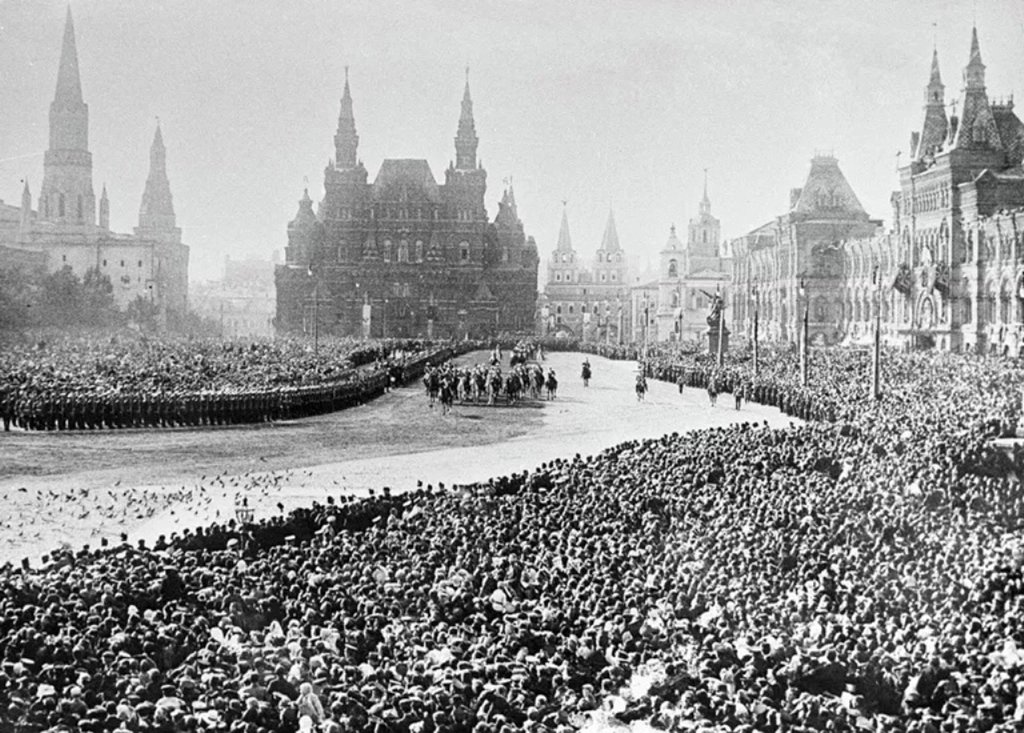
PHOTO: Emperor Nicholas II is greeted by thousands of his subjects on Red Square during the celebrations marking the 300th anniversary of the House of Romanov in Moscow. Many Western historians claim that Nicholas II was not popular during his reign, however, I think that this photo says otherwise.

The Tsar dismounted in Red Square, the convergence point of the religious processions throughout the city. Rows of priests echoing chants and prayers entered the Dormition [aka Assumption] Cathedral. The young Tsesarevich Alexei was, along the rest of the family, was supposed to walk the last hundred yards, however, due to haemophilia, had to be carried by a Cossack guard to the “exclamations of sorrow” from the crowds.

This was all followed by, in the words of historian Orlando Figes, “another round of pageantry and gastronomy. The ball in the Assembly of the Moscow Nobility was particularly lavish.”

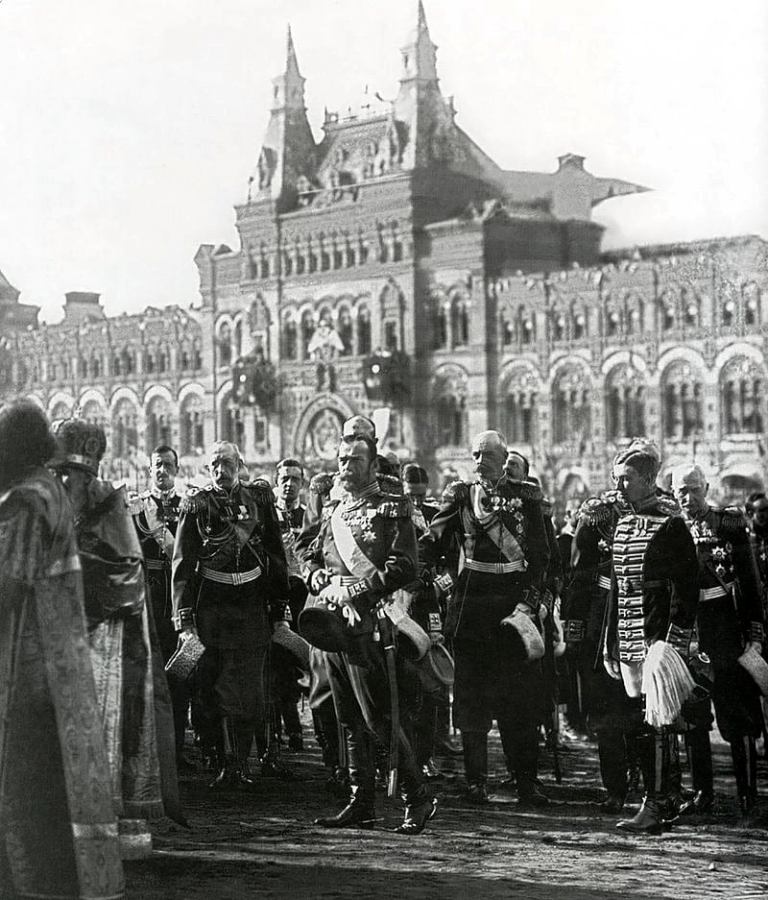
PHOTO: Emperor Nicholas II takes part in a solemn prayer service on Red Square in Moscow, during the celebrations marking the 300th anniversary of the Romanov dynasty, 1913.

© Paul Gilbert. 6 March 2026
Letters of Grand Duchess Olga Alexandrovna donated to St. Petersburg Museum

NOTE: the following article was originally published in Royal Russia No. 14, Summer 2018, and updated with additional information and photos on 3rd March 2026. While this article is dated, I believe that it is still relevant and will be of interest to my readership – PG

On 17th April 2018, the collection of letters written by Grand Duchess Olga Alexandrovna (1882-1960) from the family archive of Princess Nadezhda Vladimirovna Volkonskaya were presented as a gift to the All-Russian Museum of Alexander Pushkin. The solemn ceremony took place in the Concert Hall, situated on the embankment on the Moika River in St. Petersburg.

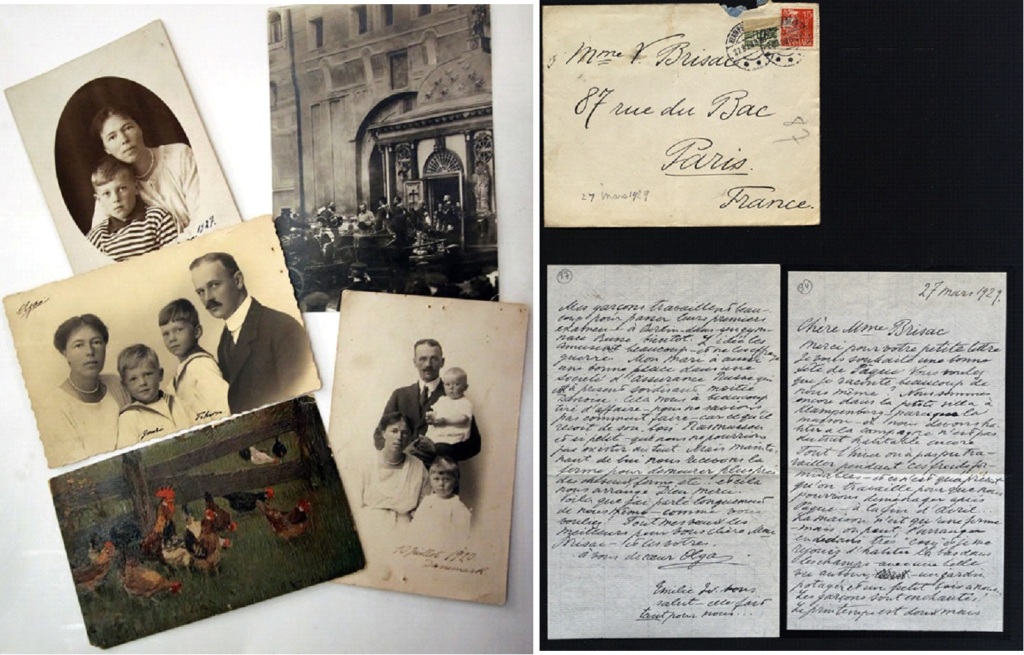
“This archive is unique – it is not known to anyone, the letters have never been published any where, nor have they ever been translated into Russian. A total of 65 letters (in French) written by Grand Duchess Olga Aleksandrovna and addressed to Madame René Brizak, from the 1920s to the 1930s, during years in exile in Denmark”, noted a museum spokesperson.

René Brizak was a prominent couturier in St. Petersburg, during the 19th to early 20th centuries. Madame Brizak’s fashion house was situated at Malaya Konyushennaya, 8, which employed 60 dressmakers. She designed dresses and gowns for members of the Imperial Family and aristocracy. Among her most prominent clients were Empress Alexandra Feodorovna and her four daughters, as well as the Dowager Empress Maria Feodorovna. Many of these gowns are today in the Collection of the State Hermitage Museum in St. Petersburg.

The owner of the archive is Princess Nadezhda Vladimirovna Volkonskaya, the maternal great-granddaughter of Madame Brizak. Her great-grandmother was friends with Empress Alexandra Feodorovna, because they both spoke excellent English. “I am very happy that I am giving these letters to the All-Russian Museum of Alexander Pushkin. I planned to return them to my homeland, to Russia, for several years already. And now my soul is at peace,” said the princess.

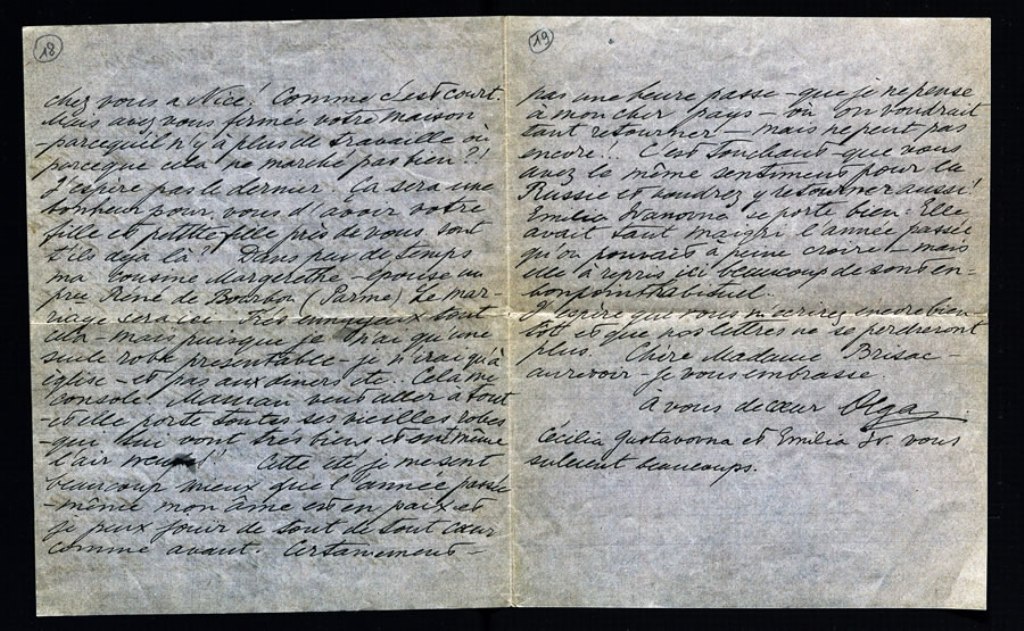
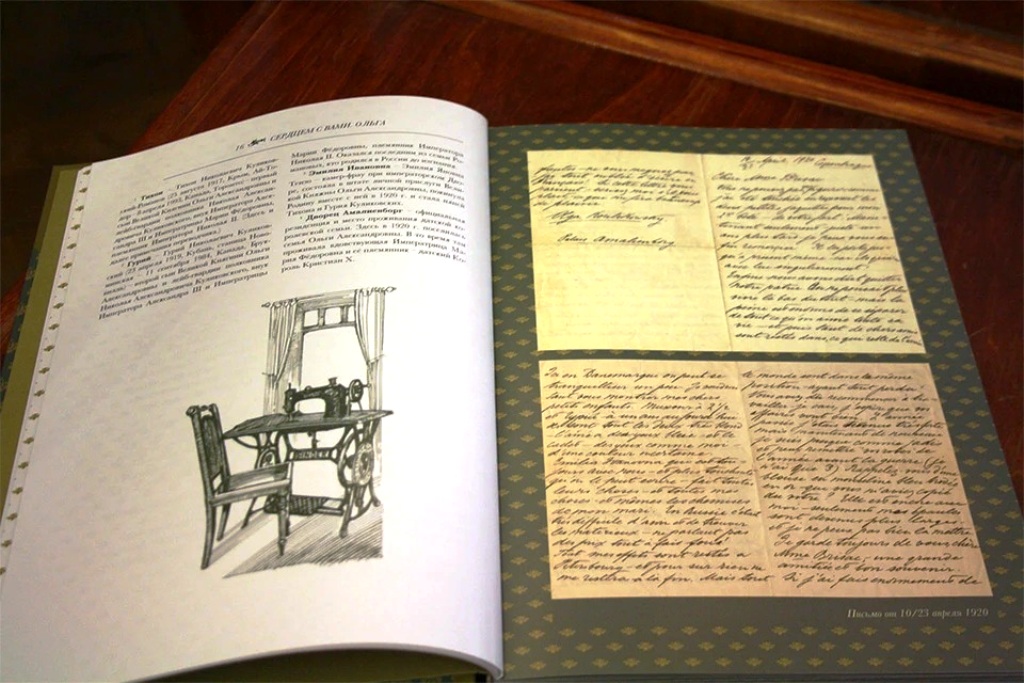
PHOTO: one of the letters written (in French) by Grand
Duchess Olga Alexandrovna to Madame René Brizak

The correspondence of Grand Duchess Olga Alexandrovna and Madame Brizak was of a systemic nature and came to an end due to the demise of the latter. At first glance, the letters are personal: Olga Alexandrovna describes everyday life, writes with special tenderness about her children Tikhon and Guri, her beloved husband Nikolai, shares family joys and sorrows, and worries about her friends in Russia.

However, the persons and events mentioned in them go beyond private, because they are connected with history, culture, public and political life – with the life of Russians in emigration. Among the characters of the letters are numerous relatives – members of the Russian Imperial family, Princess Margaret of Denmark, Countess Maria Vorontsova-Dashkova, King George V of Great Britain, as well as artists, musicians, literary publishers and theater figures.

From the letter of the Grand Duchess of April 1920: “In the end, we had to leave our homeland. We absolutely could not live there anymore. But it was very painful to break away from what I had loved all my life, so many friends remained. Here in Denmark you can calm down a bit’ …. Olga Kulikovskaya. The Palace of Marienburg.

Olga Aleksandrovna Kulikovskaya-Romanova was born on 14th June [O.S. 1st June] 1882, she was the youngest child of the Emperor Alexander III and the Empress Maria Feodorovna, as well as the younger sister of Emperor Nicholas II.

She became one of the few representatives of the Imperial family who managed to escape Bolshevik Russia after the 1917 revolution. She emigrated to Denmark, and later – to Canada, where she died on 24 November 1960. During the First World War, she worked in the hospital as a sister of mercy, and also engaged in charity.

Madame René Brizac (née Valentine Emans De Ricles), was born in London on 17th February 1865. At the age of twenty, she went to Russia, right after her marriage with the son of the founder of the St. Petersburg couturier A. Brizak, the main designer and Supplier to the Imperial Court. The couple had four children. Madam Brizak was a talented fashion designer, she created such styles that later gave the memoirists a reason to mention that the female half of the family of Nicholas II “dressed simply, but with taste.” The first House of Haute Couture in Russia lasted about 50 years and was closed by the decree of Lenin in 1918.

***

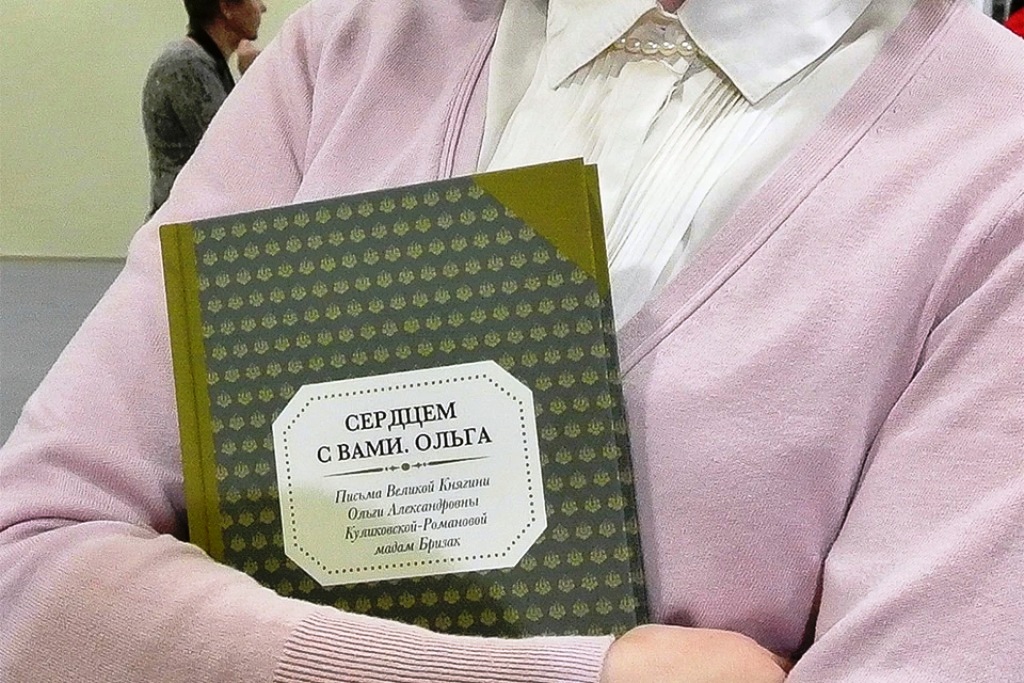
In 2019, Princess Nadezhda Volkonskaya published Сердцем с Вами, Ольга / My heart is with you, Olga which includes 65 letters written by Grand Duchess Olga Alexandrovna to the famous couturier Madame René Brizac, when both women were living in exile from Russia. Their correspondence lasted ten years (from 1920 to 1930), until the death of the latter.

Below, are some of excerpts from her letters to Madame Brizac:

“Dear Madame Brizac! I am happy, every time I receive a letter with your handwriting on the envelope,” Olga Alexandrovna writes, she then goes on to tell how she had to stop sending parcels to friends in Russia because of new restrictions. “It’s terrible to think how they will be without them now. They are starving.”

Olga also writes about the impostor who pretended to be her niece Grand Duchess Anastasia – Anna Anderson.

“You understand the absurdity of the story as well as we do! More and more I am convinced that this story was conceived for the sake of blackmail and money. Let us say that I am mistaken, but how can it be then, that her governess, Madame Gilliard, who knew Anastasia when she was six weeks old, and that Monsieur Gillard, who was also with the dear family until they parted in June, 1918, could also be mistaken?”

Olga rejoiced at every guest from Russia. She was impressed by the Don Cossacks, and she sincerely regrets their fate.

“Our people are so poor, they are exploited, they come from Bulgaria, where they worked in the mines, in various terrible places. Dear, poor Russians, what a difficult life they now have!”

Olga writes bitterly about the Russian general kidnapped by the NKVD [Soviet secret police] in Paris in January 1930:

“How horrible it is to have what happened in Paris!” Poor General Kutepov! Who would have thought that such a thing could happen today, in the civilized world, in broad daylight!”

It should be noted that Сердцем с Вами, Ольга / My heart is with you, Olga was only published in the Russian language, in a limited edition of only 700 copies. The design was designed by Vyatka artists Olga Kolchanova and Alexander Selezenev.

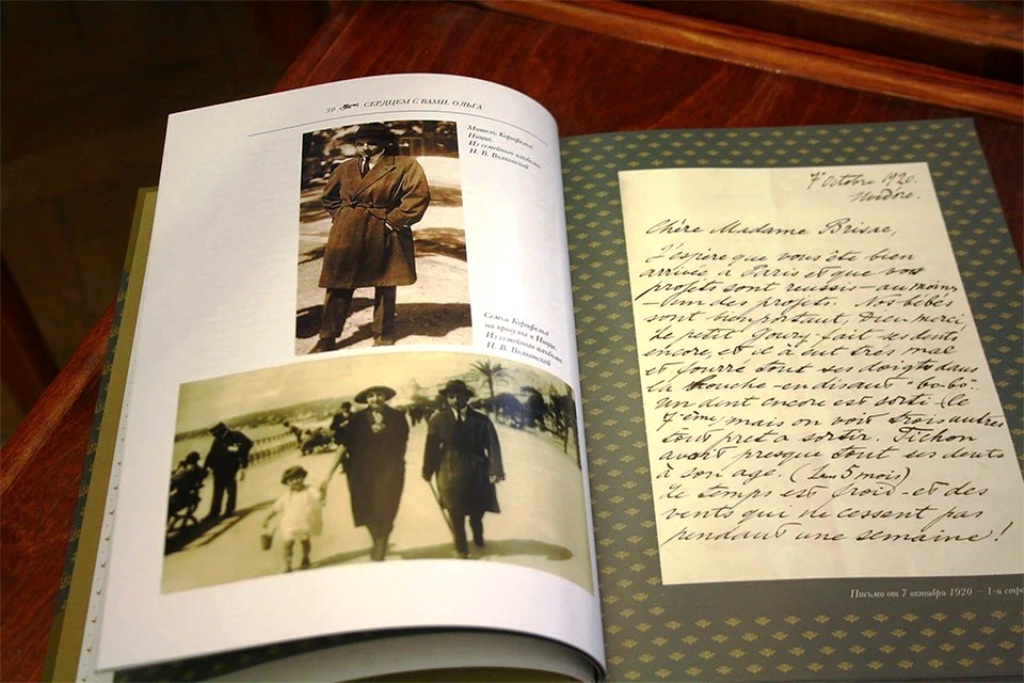
In addition to translation [from French to Russian], the book also contains digitized originals of the original letters, which is the best way for the reader to personally get in touch with the story of Grand Duchess Olga Romanova-Kulikovskaya.

© Paul Gilbert. 6 March 2026
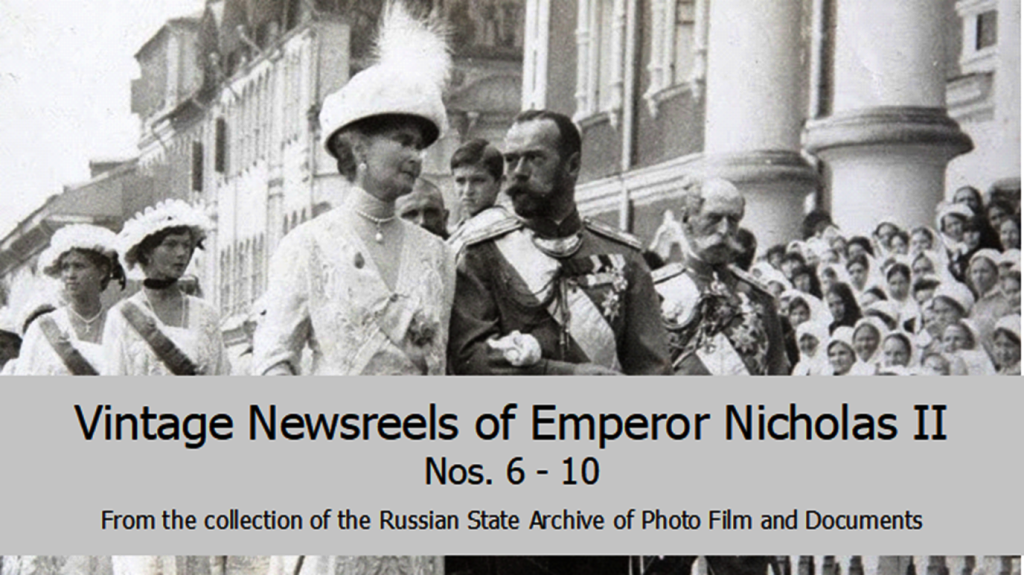
Nicholas II Vintage Newsreels No. 6 – 10

This is the second installment of a new monthly feature to my Nicholas II. Emperor. Tsar. Saint. blog, which showcases the vast collection of vintage newsreels which are now available to watch on YouTube and other online media sources. I have taken the liberty of selecting 5 interesting newsreels which depict Emperor Nicholas II and his family attending events in various cities throughout the Russian Empire.

Many of these newsreels include background music, with tunes of the Russian Empire or Orthodox music. Others are narrated in Russian, however, that should not deter the viewer from watching. You can turn on the English (or other language) subtitles by clicking on Google translate and then turn on the closed captioning [CC] button, found at the bottom of the newsreel. ENJOY!

No. 6 – Nicholas II attends the opening of the Alexander III Museum of Fine Art 1912

Emperor Nicholas II attends the opening of the Alexander III Museum of Fine Arts, later renamed the State Pushkin Museum of Fine Arts, in Moscow. He is accompanied by his mother Dowager Empress Maria Feodorovna, and his four daughters Grand Duchesses Olga, Tatiana, Maria and Anastasia. 13th June [O.S. 31st May] 1912.

Duration: 1 minute, 19 seconds with musical background

***

No. 7 – Emperor Nicholas II in Crimea (Livadia, 1909)

Digitally remastered by the Russian State Film and Photo Archive (RGAKFD). This video features wonderful vintage footage of the old woodern palaces at Livadia. English captions.

Duration: 10 minutes, 348 seconds

***

No. 8 – Nicholas II at the exhibition of Crimean Tatar handicrafts. Yalta

This colourized video depicts Emperor Nicholas II and his family at the exhibition of Crimean Tatar handicrafts, which was held in Yalta, Crimea on 30th September 1913. He is accompanied by his four daughters and retinue.

Duration: 1 minute, 5 seconds with musical background

***

No. 9 – The Imperial Family in Nizhni Novgorod 1913

On 17th May 1913, Emperor Nicholas II and his family visited Nizhny Novgorod. It was just one of many visits to cities and towns across the Russian Empire marking the 300th anniversary of the Romanov Dynasty. This video has been colourized.

Duration: 1 minute, 25 seconds with musical background

***

No. 10 – Emperor Nicholas II’s visit with Emperor Wilhelm II. 1913

In 1913, Nicholas II visited Germany and is greeted by the Kaiser. The two Emperors are shown riding in a horse drawn carriage, flanked by regiments on horseback, crowds cheer along the parade route. An outstanding chronicle of history.

Duration: 1 minute, 51 seconds with musical background

***

Previous Post Featuring MORE Vintage Newsreels of Nicholas II

Nos. 1 – 5

© Paul Gilbert. 1 March 2026