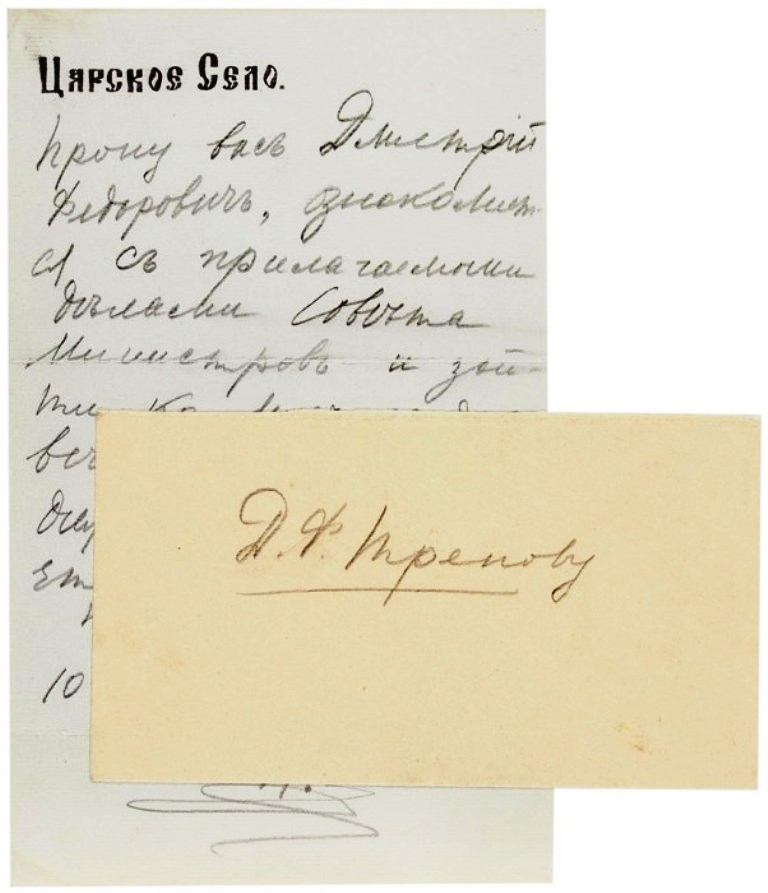
A handwritten note of Emperor Nicholas II, addressed to the Governor-General of St. Petersburg Dmitry Fedorovich Trepov in 1906 will go under the hammer next month at a Moscow auction. The auction will be held at the Litfond Auction House on 6th February, the list price is 75,000 Rubles [$760.00 USD].
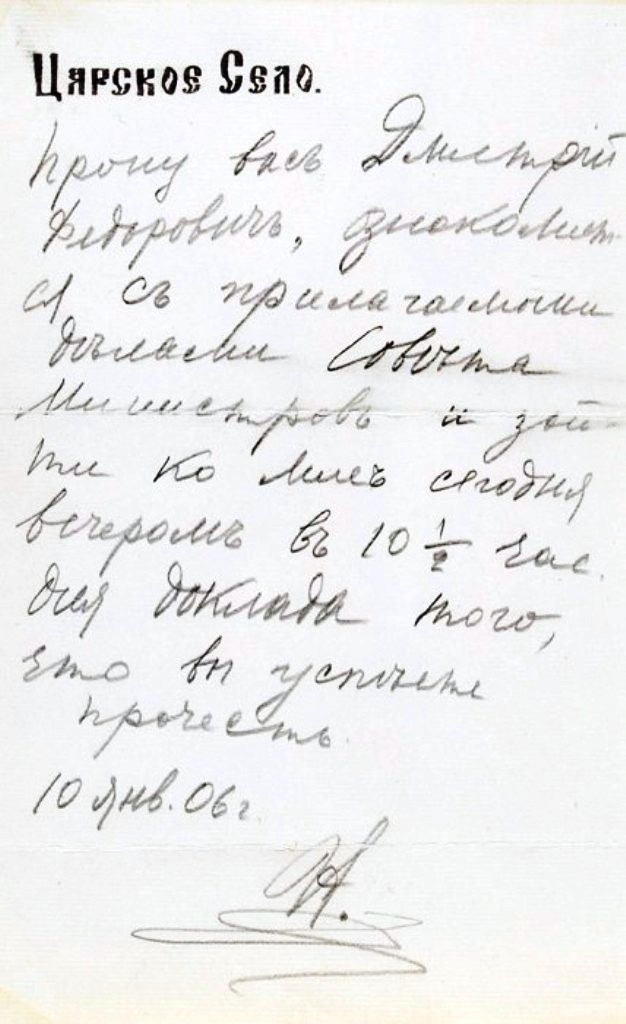
Description: In a personalized envelope with a written signature “Nikolai”, the addressee is written in pencil on the envelope: “To D.F. Trepov”. The note is written on a sheet of 18×11.1 cm. writing paper with the stamp “Ца́рское Село́ / Tsarskoye Selo” in the upper lefthand corner.
A rough translation of the Tsar’s note to Trepov reads:
“I ask you, Dmitry Fyodorovich, to familiarize yourself with the enclosed files of the Council of Ministers and come to see me tonight at 10 1/2 o’clock, to discuss what you have managed to read of the report. Jan. 10. 06 g. N”.
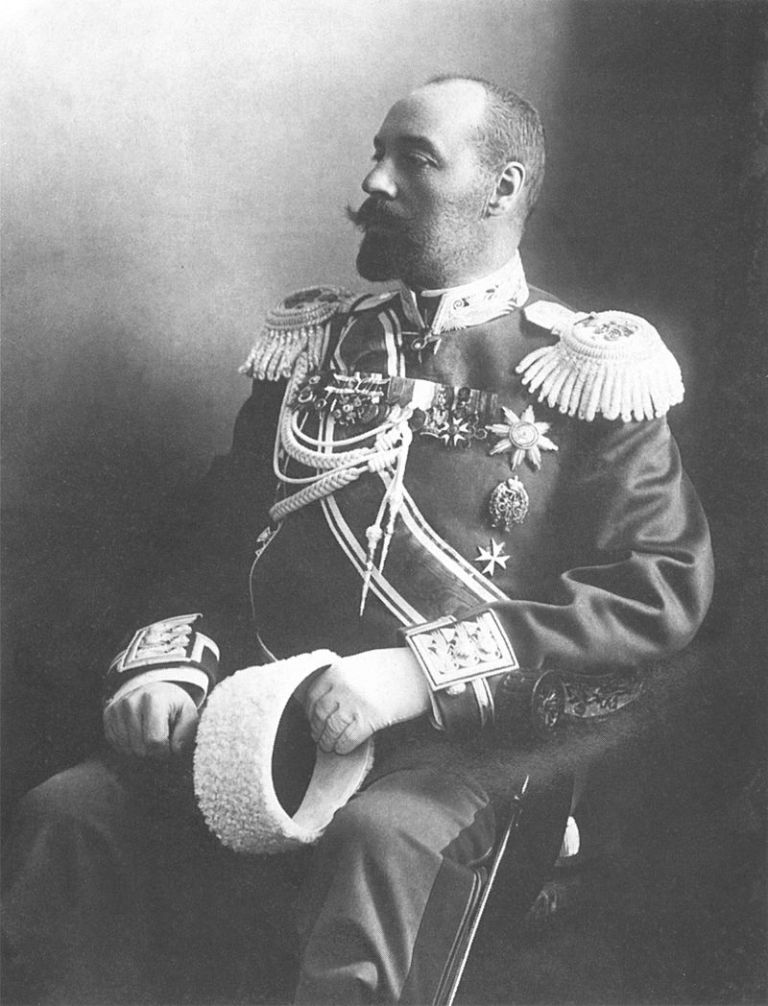
PHOTO: Dmitry Fedorovich Trepov (1855-1906)
Major-General Dmitry Fedorovich Trepov (1855-1906) enjoyed a short, but impressive career – he was only 50 when he died. He served as Head of the Moscow police (from 1896). Then, taking advantage of the favour of Emperor Nicholas II: was a Major General (1900), Major General of the Retinue (1903), Governor-General of St. Petersburg (from 1905), as well as Deputy Minister of Internal Affairs. By the personal order of the Emperor he was settled on the first floor of the Winter Palace in St. Petersburg. He strongly believed that autocracy was the only way for Russia.
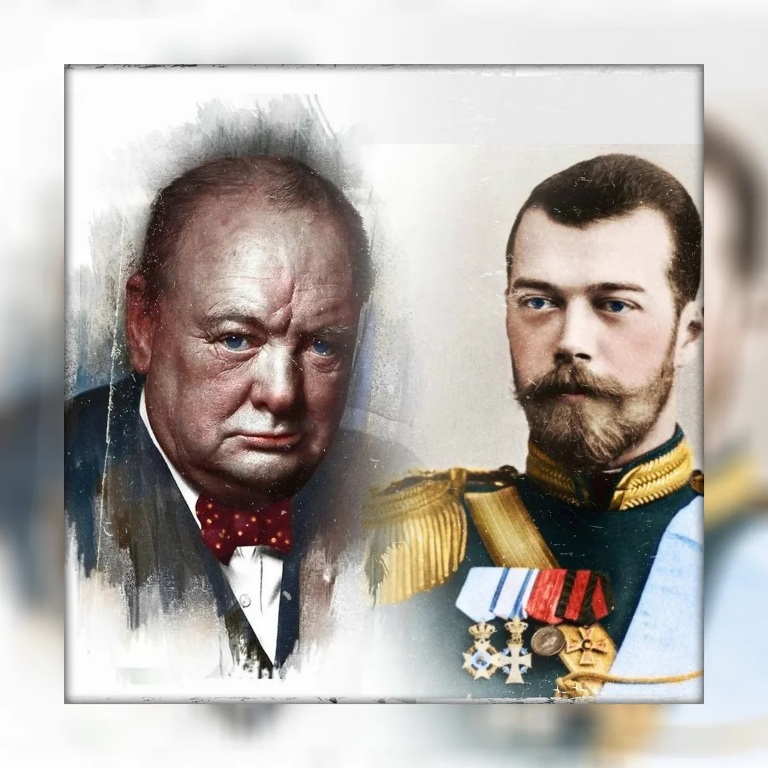
Today – 24th January 2025 – marks the 60th anniversary of the death of Sir Winston Churchill (1874-1965). In 1929, Winston Churchill wrote his assessment of Emperor Nicholas II, which, though not uncritical, is a much fairer one than that customarily given by Western historiography. They are among the most succinct and powerful English words in defense of Nicholas’ character — in part because Churchill does not depend upon the “well he was a good husband and father” strategy. He also addresses some of the questions that still exist in Russia today (democratize or hold firm). Many voices remain critical of Nicholas II’s refusal to democratize (although he did create the Duma, and think how long ago Magna Carta was written), herewith is Winston Churchill’s verdict:
“It is the shallow fashion of these times to dismiss the Tsarist regime as a purblind, corrupt, incompetent tyranny. But a survey of its thirty months’ war with Germany and Austria should correct these loose impressions and expose the dominant facts. We may measure the strength of the Russian Empire by the battering it had endured, by the disasters it had survived, by the inexhaustible forces it had developed, and by the recovery it had made. In the governments of states, when great events are afoot, the leader of the nation, whoever he be, is held accountable for failure and vindicated by success. No matter who wrought the toil, who planned the struggle, to the supreme responsible authority belongs the blame or credit.
“Why should this stern test be denied to Nicholas II? He had made many mistakes, what ruler has not? He was neither a great captain nor a great prince. He was only a true, simple man of average ability, of merciful disposition, upheld in all his daily life by his faith in God. But the brunt of supreme decisions centred upon him. At the summit where all problems are reduced to Yea or Nay, where events transcend the faculties of man and where all is inscrutable, he had to give the answers. His was the function of the compass needle. War or no war? Advance or retreat? Right or left? Democratize or hold firm? Quit or persevere? These were the battlefields of Nicholas II. Why should he reap no honour from them? The devoted onset of the Russian armies which saved Paris in 1914; the mastered agony of the munitionless retreat; the slowly regathered forces; the victories of Brusilov; the Russian entry upon the campaign of 1917, unconquered, stronger than ever; has he no share in these? In spite of errors vast and terrible, the regime he personified, over which he presided, to which his personal character gave the vital spark, had at this moment won the war for Russia.
“He is about to be struck down. A dark hand, gloved at first in folly, now intervenes. Exit Tsar. Deliver him and all he loved to wounds and death. Belittle his efforts, asperse his conduct, insult his memory; but pause then to tell us who else was found capable. Who or what could guide the Russian State? Men gifted and daring; men ambitious and fierce, spirits audacious and commanding – of these there were no lack. But none could answer the few plain questions on which the life and fame of Russia turned’.”
Source: Churchill Winston S., The World Crisis, 1916-1918, p. 695-7, London, 1929.
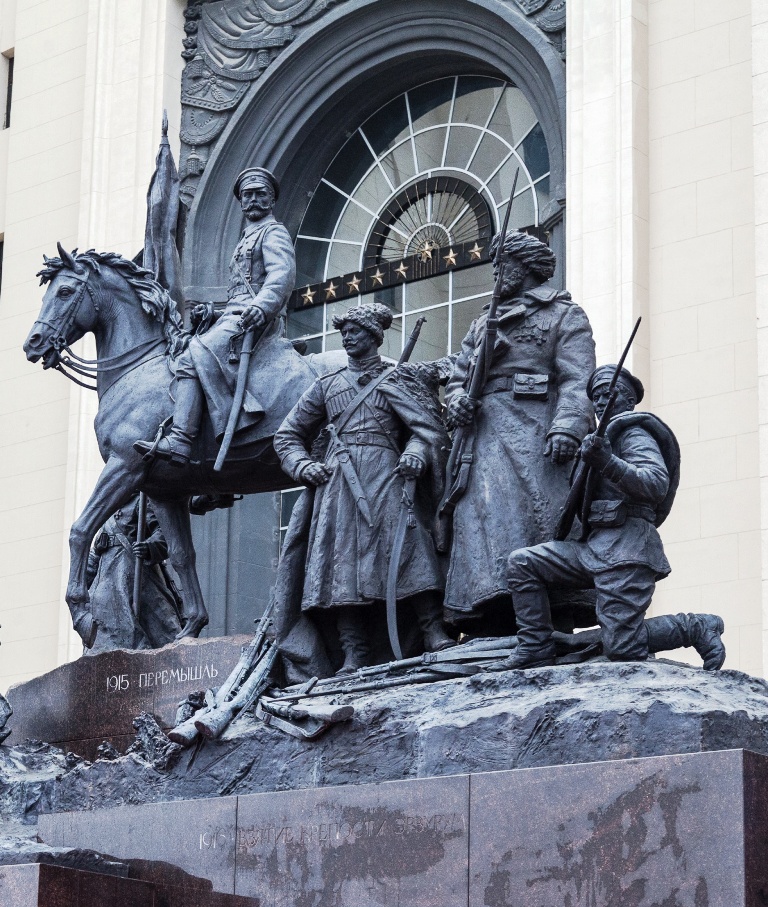
On 16 December 2014, Russia’s Defense Minister Sergei Shoigu opened a sculptural composition dedicated to the heroes of World Wars I and II on the grounds of the Ministry of Defense on the Frunze Embankment in Moscow. The WWI monument features Nicholas II on horseback (above), recognizing and honouring his efforts during the Great War.
I have published nearly 50 titles to date through AMAZON – featuring one of the largest selections of books on Nicholas II, the Romanov dynasty and the history of Imperial Russia.
Please CLICK on the BANNER or LINK above to review my current selection of titles in hardcover, paperback and ebook editions. Listings provide a full description for each title, pricing and a Look inside feature.
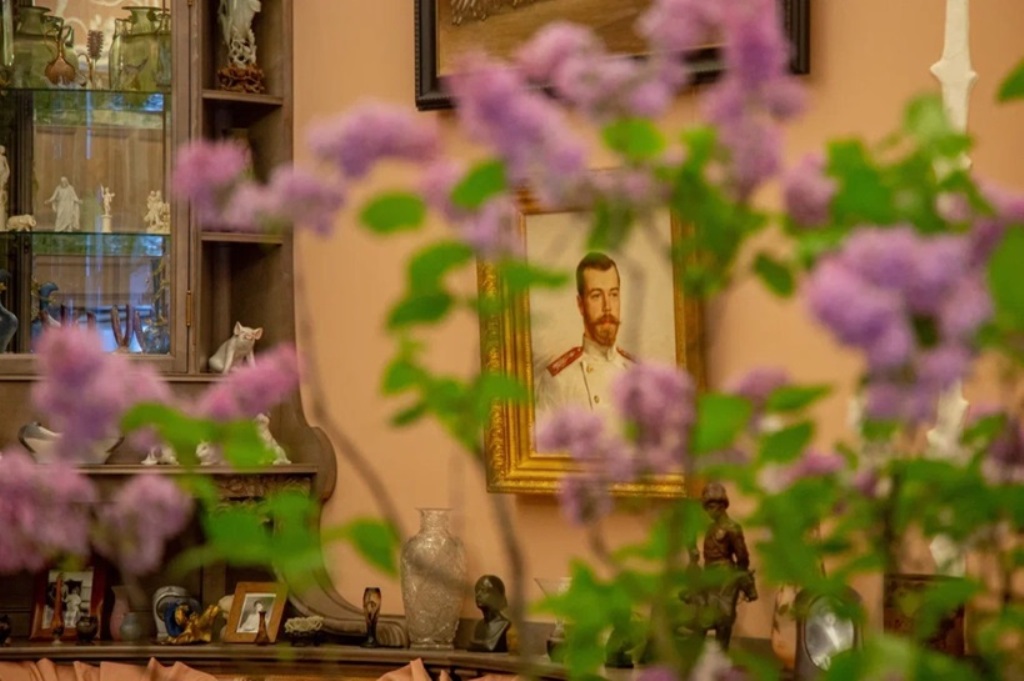
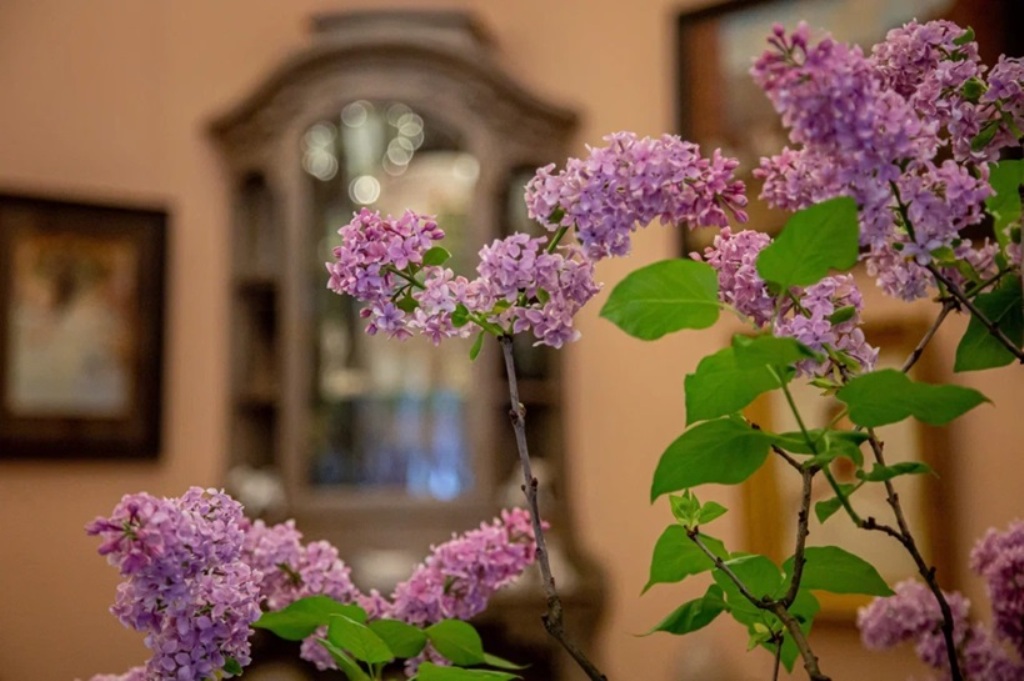
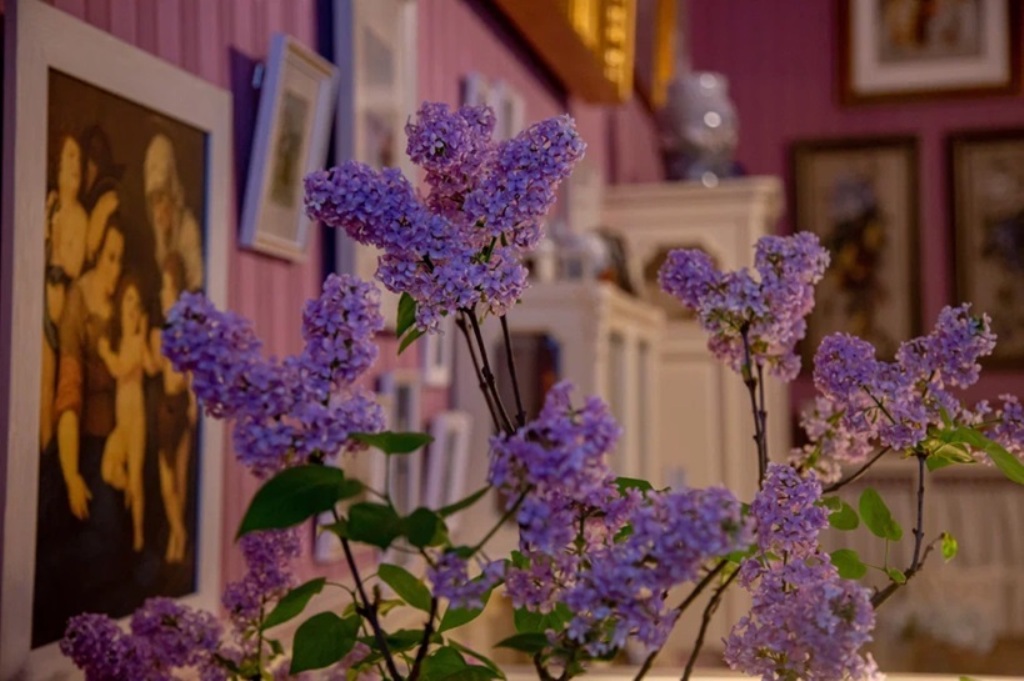
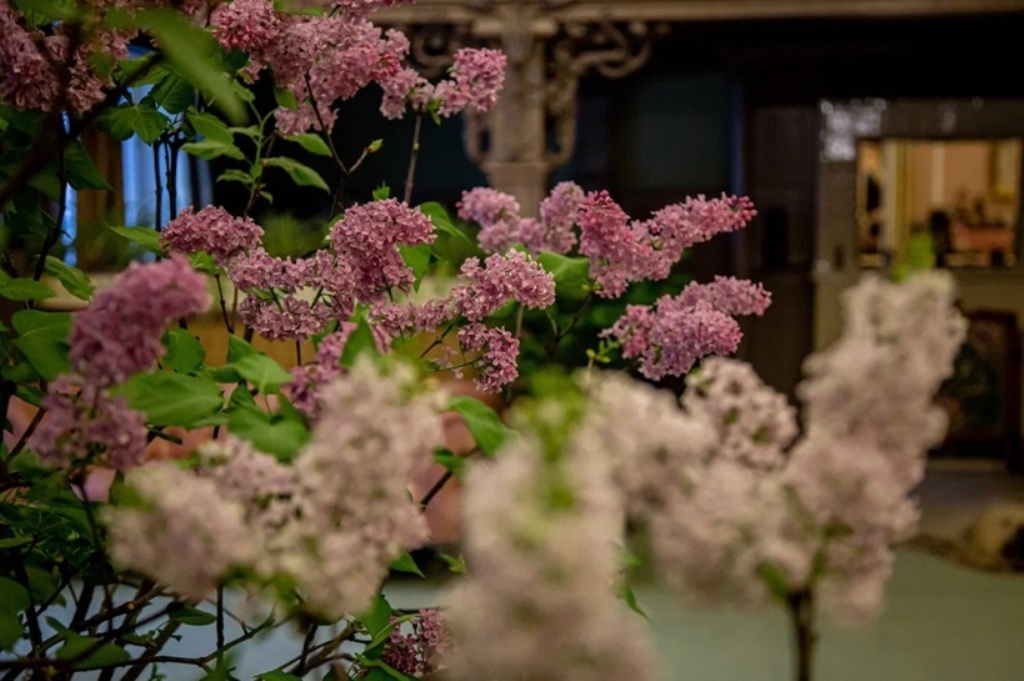
In the middle of winter, the Alexander Palace at Tsarskoye Selo is again decorated with blooming lilacs. Their fragrant aroma fill the former interiors of Empress Alexandra Feodorovna, a beautiful reminder of the Imperial Family and their favourite Imperial Residence.
On 23rd January 2025, of the 16 lilac bushes in the greenhouses near the Alexander Palace, six were moved to the palace halls, the rest will be moved from the greenhouses in stages, as they bloom. The tradition of placing lilacs in the former rooms of the last Russian Empress began in 2022, the first time the aroma of her favourite flowers filled the interiors of the palace in more than 100 years.
Lilacs of the historical varieties, such as “Memories of Ludwig Späth” and “Sensation” are exhibited in the Mauve Boudoir and Corner Drawing Rooms. Five bushes form a luxurious “lilac cloud” with delicate pink and purple flowers. Lilacs were exposed at the peak of flowering, this year so their distinctive aroma is especially noticeable. Visitors can admire lilacs in the interiors of the Alexander Palace until April.
“Documents have been preserved indicating that the Tsarskoye Selo greenhouses diligently carried out the task of creating a spring atmosphere during the gloomy winter months. In 1898, by order of the gardener Zort, lilacs, double-cherries, hydrangeas and lilies of the valley arrived in Tsarskoye Selo for the winter decoration of the palace. So flowers in the Alexander Palace are an integral part of the interior, and we are talking not only about the rich floral decoration of the walls – roses, orchids, dandelions, but also about the blooming flowers as well,” said Olga Filippova, the chief curator of the parks of the Tsarskoye Selo State Museum-Reserve.
The process of preparing lilacs for “premature” flowering begins in the fall. In accordance with the methods from gardening books of the 19th century, the employees of the greenhouse complex plant bushes in special boxes, and in December they set the plants up for awakening. The care process is extremely painstaking: every forty minutes during the working day, staff need to perform the necessary manipulation. One of the main conditions is strict compliance with the temperature and humidity.
Empress Alexandra Feodorovna loved flowers – the rooms in her private half were decorated with fresh flowers all year round. Floral themes were also present in the upholstery of the walls, furniture, as well as the stucco reliefs on the walls and ceilings. The Empress was especially fond of lilacs. It is no coincidence that in her Mauve Boudoir [aka Lilac Study] the furniture and walls were decorated with silk of lilac shades, Alexandra Feodorovna also preferred lilac tones in her clothes, and perfume with the aroma of lilac.
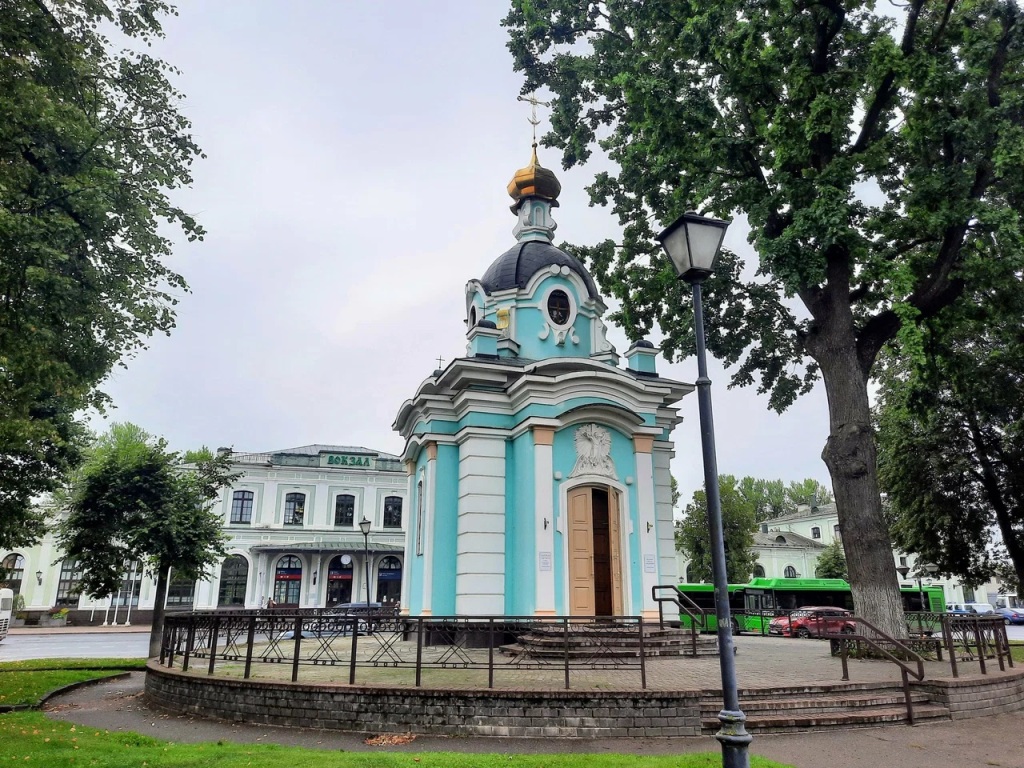
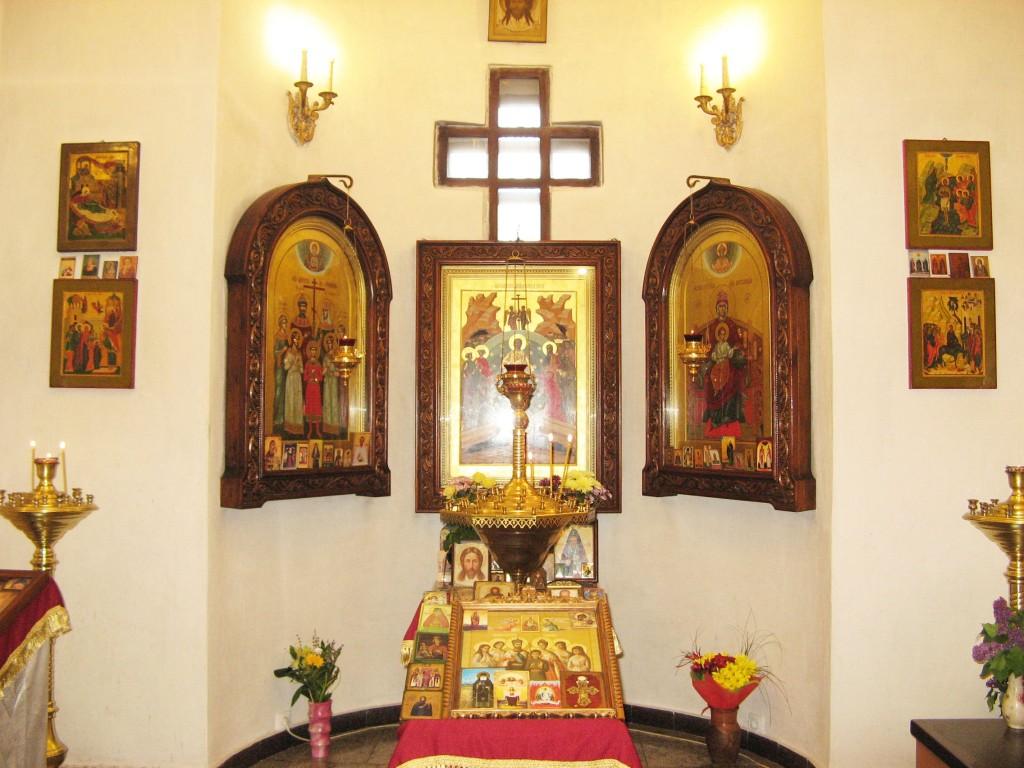
In 2003, a memorial chapel in memory of the abdication of Emperor Nicholas II was constructed on the square in front of the modern-day railway station in Pskov. The Chapel of the Resurrection of Christ was officially opened and consecrated on 17th July 2003.
Recall that on the night of 14/15 (O.S 2/3) March 1917, in a carriage of the Imperial Train, which was detained at the Varshavsky Railway Station in Pskov, the last Russian autocrat signed the act of abdication from the throne. The monarchy and the Russian Empire ceased to exist.
The Varshavsky Railway Station was built 140 years ago (on 9th September 1863) in connection with the opening of the St. Petersburg – Warsaw Railway. The two-storey station building, was restored anew for the 1100th anniversary of the city in 2003.
The chapel’s architect Sergei Nikolaevich Kondratiev, wanted to construct the chapel to correspond with the station building. He chose the architectural style of Imperial Russia, based on the famous examples of St. Petersburg, Oranienbaum and Peterhof.
The tiny chapel stands 17 meters [56 ft.] in height, it is crowned with a dome and a small cupola on which a gilded cross is installed. The dome is covered with sheet copper, the dome and the cross are made of a special alloy made at one of the defense plants in Chelyabinsk. The single colour scheme of the chapel’s facade is a combination of golden-brown, green and white.
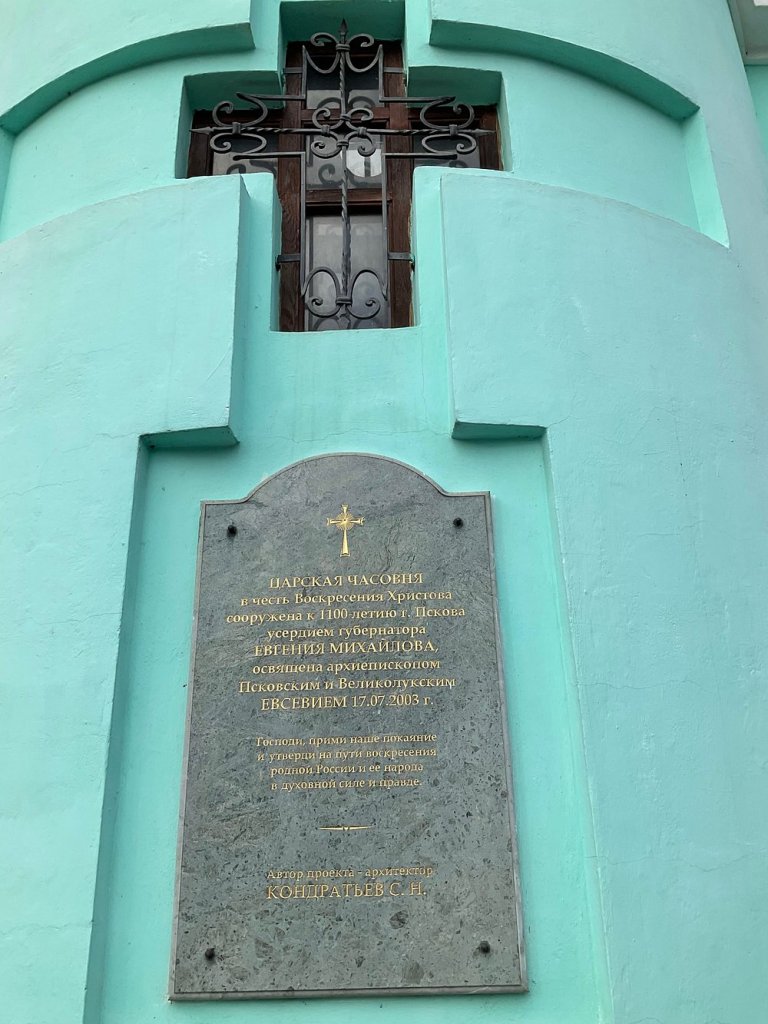
A marble plaque was installed on the side of the chapel, on which the inscription is engraved: “The Tsar’s Chapel was built in the year of the 1100th anniversary of Pskov as a repentance and deep sorrow of the people of Pskov over the tragic death of the last Russian Emperor Nikolai Alexandrovich Romanov.”
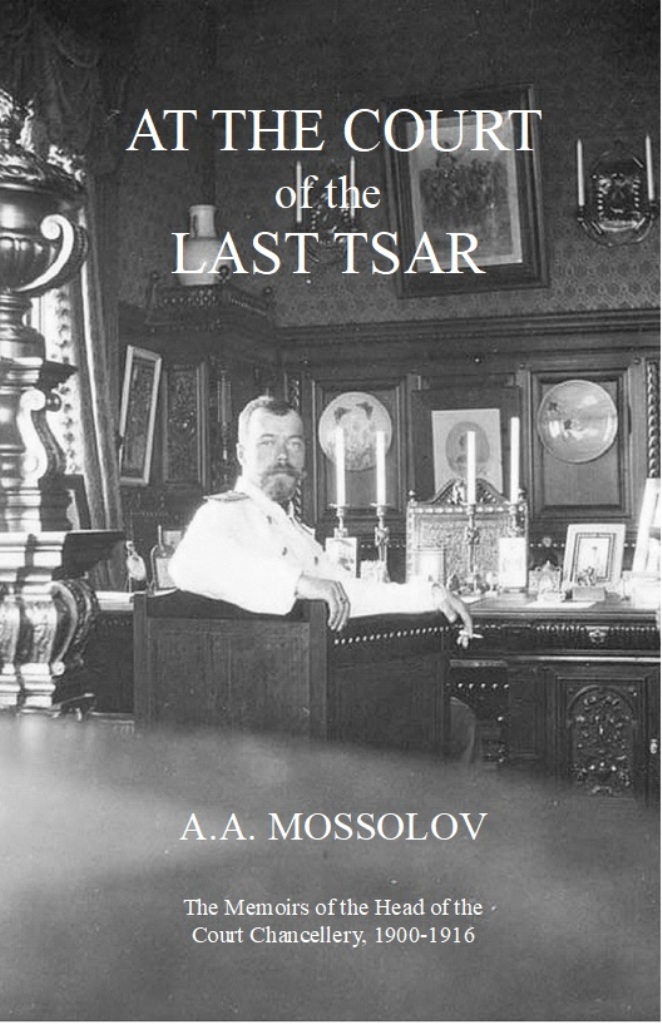
Following the October 1917 Revolution, many of those who served at the Imperial Court were able to flee Bolshevik Russia to a new life abroad. Amonth them was General Alexander Mossolov, whose memoirs have been out of print for years, are once again available in a new paperback editions.
General Alexander Mossolov, was head of the Court Chancellery from 1900 to 1916. His memoirs, published in 1935, are an important historical record on Russia’s last tsar Nicholas II, his wife Alexandra Feodorovna, their children, their relatives and their Court during those sixteen years.
Mossolov was impressed by the Tsar’s positive qualities as a faithful, loving husband and father; timid, courteous, even-tempered, thoughtful and affable towards all around him, with ‘an ingrained dislike of argument’, and with a touching concern for the fate of Russian soldiers wounded in wartime.
The Tsarina was very shy, devoid of social skills and with no appetite for ‘society talk’, yet an efficient organizer, particularly with regard to the installation of hospital trains, convalescent homes, and hospitals, and her ability to gather round her persons of ability and energy.
His pen portraits of Count Freedericksz, Minister of the Court, the Tsar’s aunt Maria Pavlovna, Grand Duchess Vladimir, and foreign royalty such as the German Emperor William II, and King Edward VII of England, are equally perceptive.
Mossolov’s memoirs are a kindly testimonial to the sovereign whose reign and life ended in tragedy, but remained to the end a conscientious and well-intentioned man.
***
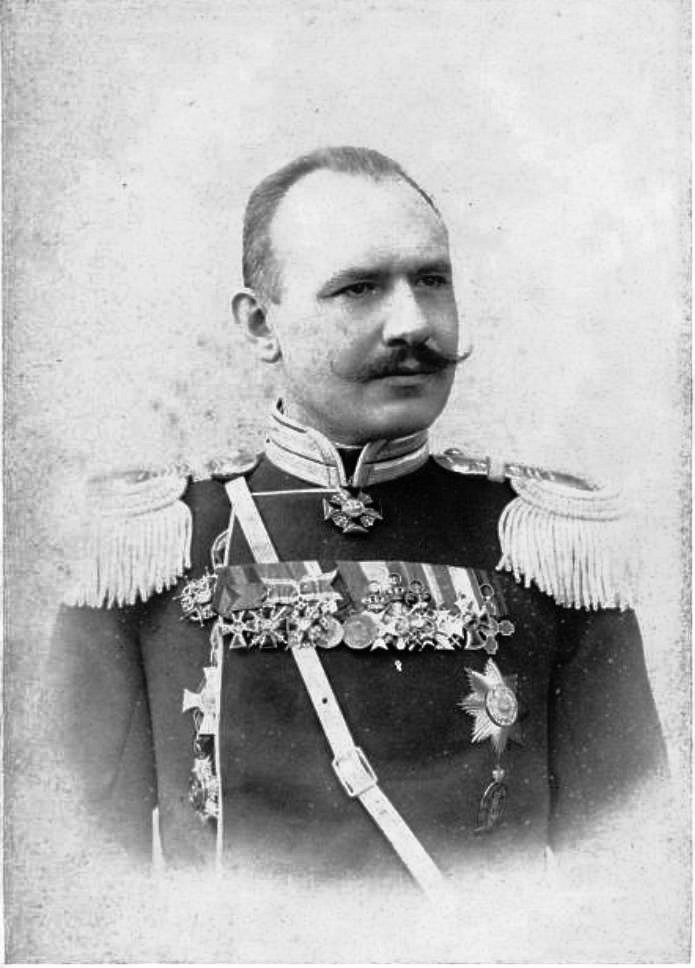
Alexander Alexandrovich Mosolov (1854-1939), was Born in Ryazan, Russia. From 1901 he served as an aide-de-camp. From 1902 he was appointed to the Retinue of His Imperial Majesty. In 1900-1916 he held the position as head of the chancellery of the Ministry of the Imperial Court, and was in the close circle of Emperor Nicholas II. He fought against the Bolsheviks in the South of Russia; in emigration he lived in France and later in Bulgaria.
This second video features another tune, which was apparently a favourite of Emperor Nicholas II and his Family. Click on the image above to listen to Я ехала домой /I was on my way home, a romanice, which tells us a short story through the eyes of Empress Alexandra Feodorovna’s heart. [Duration: 3 minutes, 11 seconds]
The romance “I Was on my way home”, composed by Marie Poiret in 1901 or 1905, is about the love and tenderness of a woman’s heart. The romance became very famous and was part of the repertoire of many performers of the time, including Alexander Vertinsky, Keto Dzhaparidze, Rada Volshaninova, Alla Bayanova among others.
Maria Yakovlevna Poiret (1864-1933) was a Russian dramatic actress, journalist, poet, writer and composer. Her fame has reached our time as the author of several romances, including “I was on my way home”. She also wrote the lyrics to such tunes as “Swan Song”, “I Don’t Want to Die”, as well as to the music of other composers.
NOTE: the translation is not perfect, but it will give you the gist of the lyrics – ENJOY!
I was going home, my soul was full
Unclear for myself, some kind of new happiness.
It seemed to me that everyone with such a fate,
They looked at me with such affection.
I was on my way home… Two-horned moon
I looked out of the windows of the boring car.
The distant annunciation of the morning bells
He sang in the air like a gentle string…
I was driving home, I was thinking about you,
My thought was anxiously both confused and torn.
A sweet slumber touched my eyes.
Oh, if only I had never woken up again…
Set against the background of this romance are a number of images depicting Empress Alexandra Feodorovna riding on the Imperial Train [these images have been photoshopped]. In addition are vintage photos of Nicholas and Alexandra. The vocals of this haunting romance is performed by the popular contemporary Russian singer Irina Krutova. The video was created by Irina Koroteeva (Moscow).
NOTE: Stay tuned for additional videos, featuring more favourite tunes of Nicholas II and his family.
More favourite tunes of Nicholas II and his family:
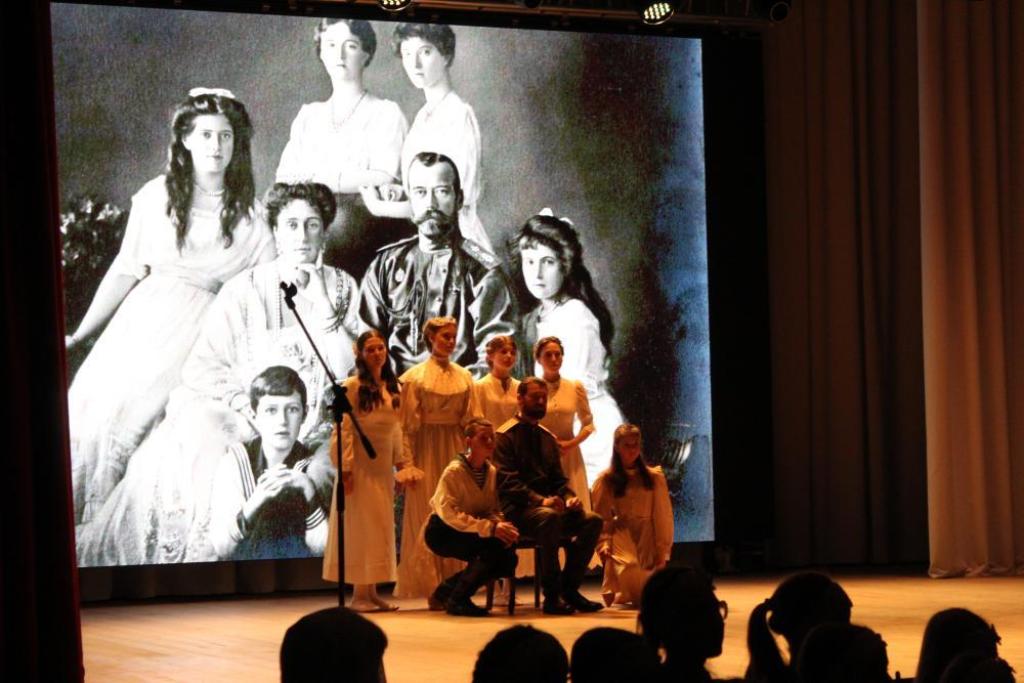
PHOTO: local actors perform the roles of the Imperial Family
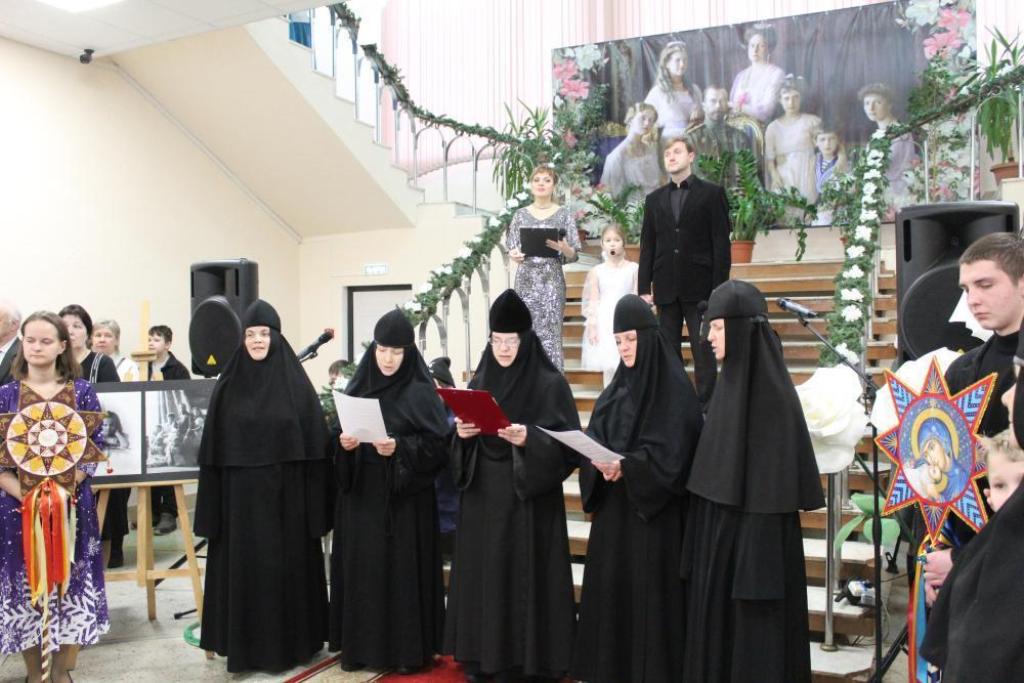
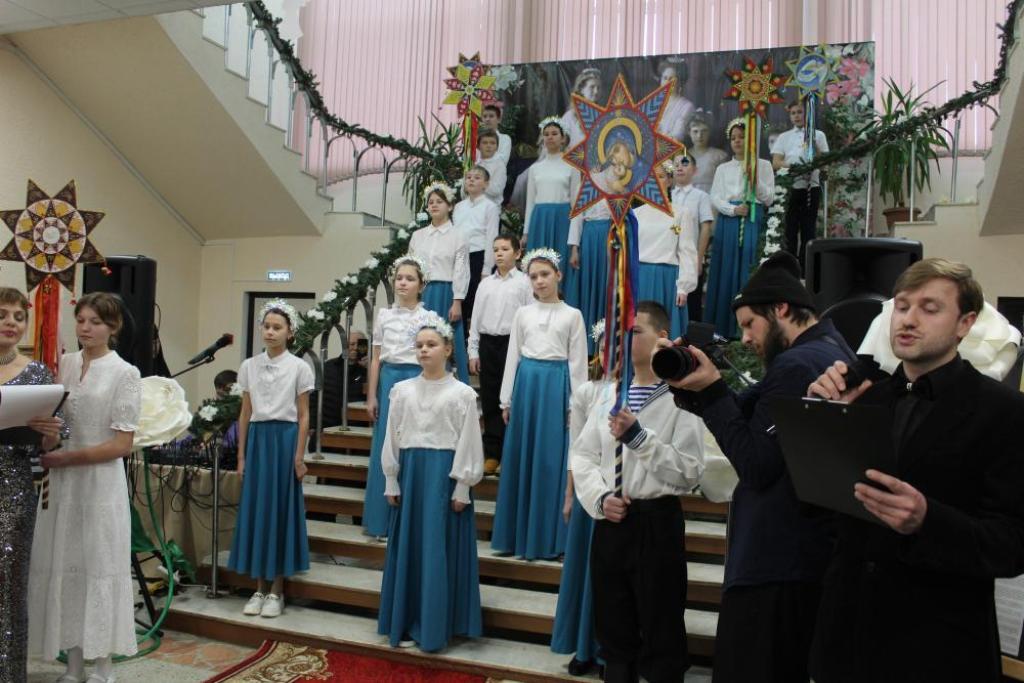
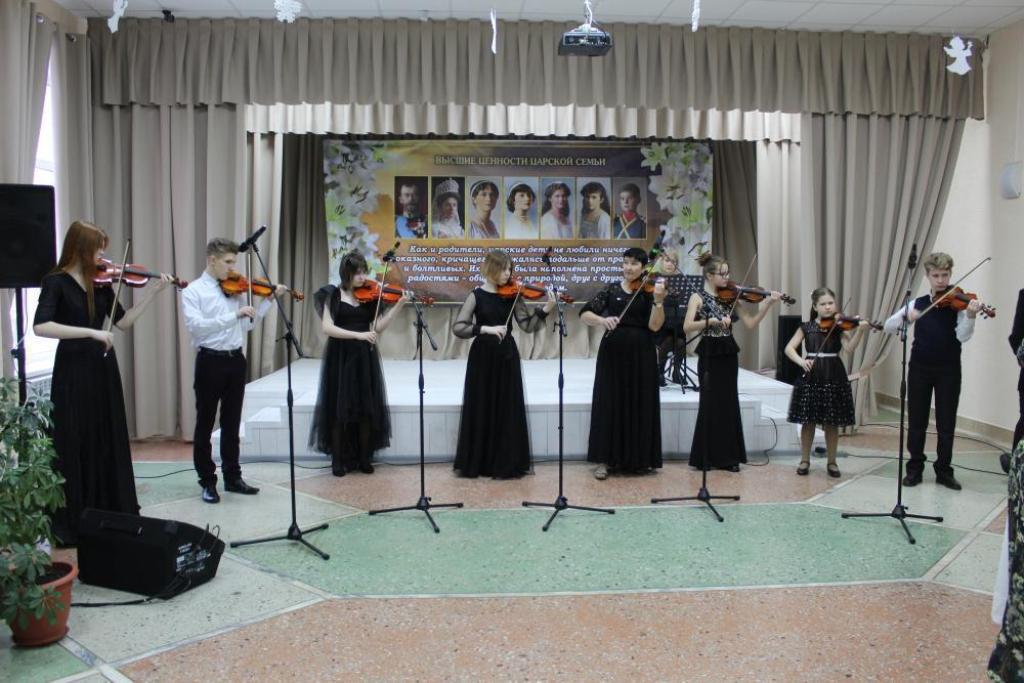
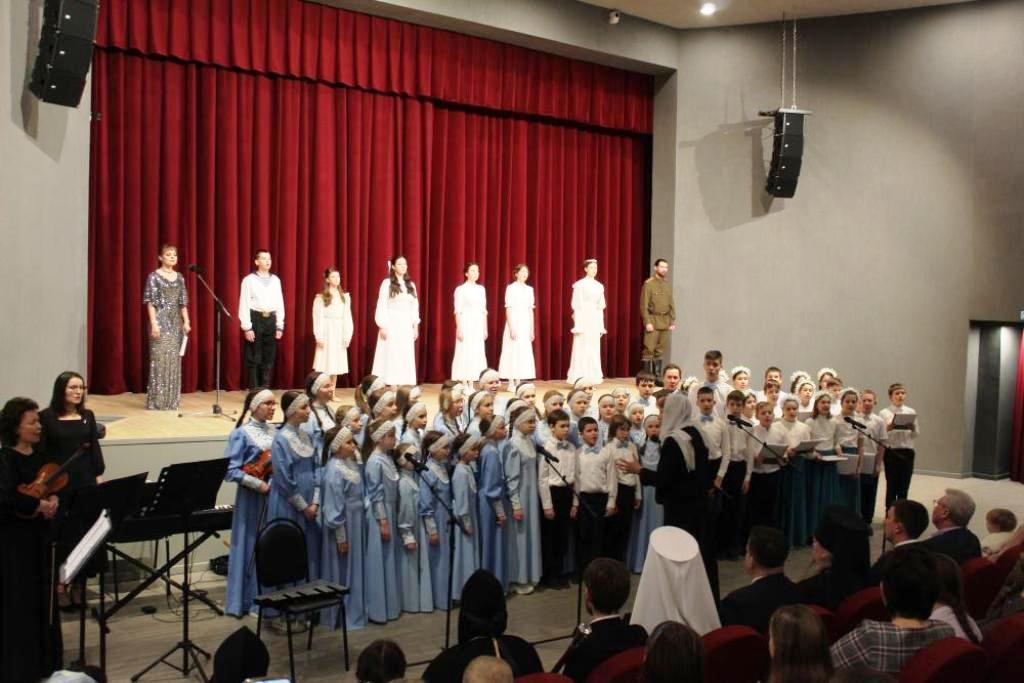
On 11th January 2025, a *Christmas event dedicated to Emperor Nicholas II and his family was held in the House of Culture in the village of Narovchat, Penza Region. Christmas in the Circle of the Tsar’s Family marked the traditions of celebrating the Nativity of Christ in the circle of the family of the Holy Royal Passion-Bearers and Imperial Russia.
* Recall that Orthodox Christians celebrate Christmas on 14th January, according to the Old Style Julian Calendar
The event was organized by the nuns of the Trinity-Scanov Monastery, the pupils of the monastery Sunday School, the pupils of the Bishop’s Children’s Choir of the Penza Diocese and the staff of the Penza Museum of Local Lore.
The guests of honour included Metropolitan Seraphim of Penza and Nizhnelomovsk, Bishop Mitrofan of Serdobsk and Spassky, Minister of Culture and Tourism of the Penza Region Sergey Vyacheslavovich Bychkov, and acting head of the Narovchat district Sergey Viktorovich Skudin.
Guests were greeted in the lobby by the pupils of the Sunday school and the nuns of the Trinity-Skanov Monastery, who sang carols and praises to the newborn Christ child.
On stage the private world of the Imperial Family was revealed. Local actors read aloud the personal letters of Tsar Nicholas and Tsarina Alexandra to each other, which revealed to the audience the tender and loving image of the Imperial Family.
An Imperial Ball was held, which focused on the splendour of the Russian Imperial Court in the early 20th century. Elegantly dressed ladies and gentlemen performed waltzes and polkas to live music of the era – all of which created an inspiring atmosphere of the holiday.
At the end of the solemn event, all participants received gifts from the abbess of the Trinity-Scanov Monastery, Abbess Innocent.
Also during the event, an exhibition of photographs courtesy of the Sretensky Monastery “The Royal Family: Love and Mercy” was opened. The exhibition features photographs reflecting the life and work of the Imperial Family.
In addition, the White Flower Festival was celebrated, which offered guests many skillful crafts made by the nuns, delicious pastries and much more. The tradition of the White Flower Festival was initiated by Empress Alexandra Feodorovna and her children at the beginning of the 20th century.
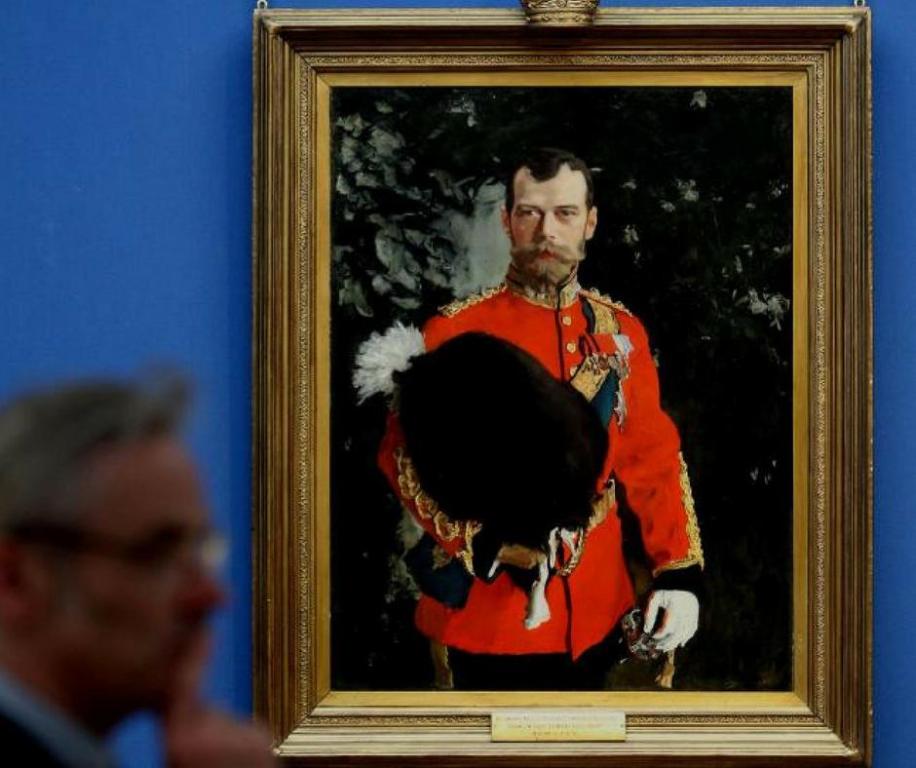
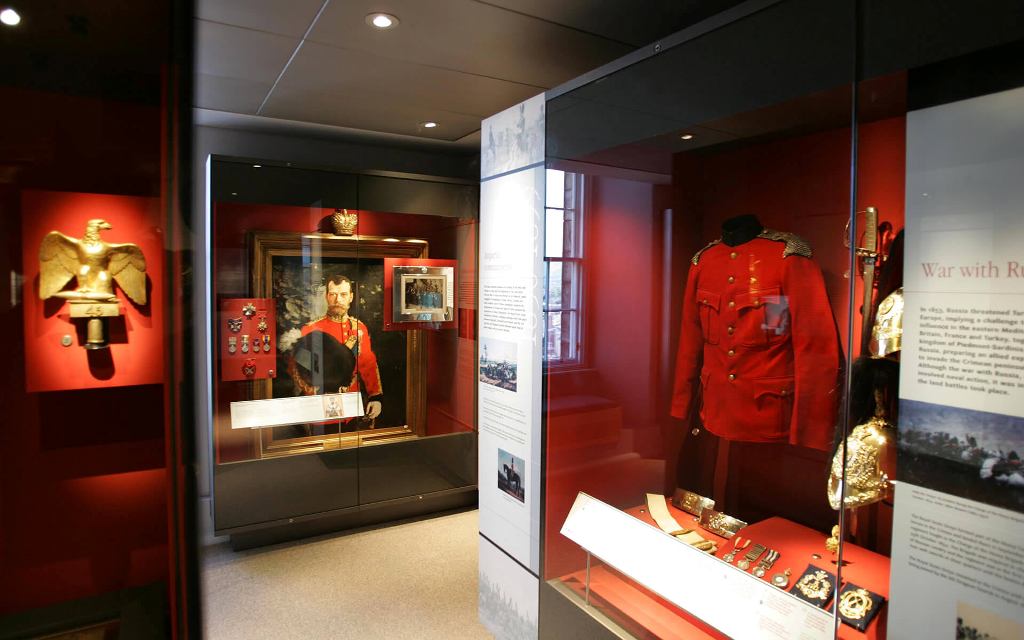
PHOTO: Portrait of Emperor Nicholas II in the uniform of Colonel-in-Chief of the Royal Scots Greys (1902). Artist: Valentin Alexandrovich Serov (1865-1911)
In 2025, a portrait of Emperor Nicholas II, painted in 1902 by the Russian artist Valentin Alexandrovich Serov (1865-1911) will be shown at the National Army Museum in London at an exhibition dedicated to the art of battle during the era of Queen Victoria (1837-1901).
The National Army Museum in London will host a major exhibition Myth and Reality: Military Art in the Age of Queen Victoria, which runs from 1st July to 1st November 2026.
The exhibition will showcase over 140 works of art from the museum’s collection, including works on loan from other museums and private collections. Among these is Serov’s portrait of Nicholas II, on loan from the Royal Scots Dragoon Guards Museum in Edinburgh.
In Serov’s portrait, painted in 1902 in a lively impressionist manner, Russia’s most famous portrait artist, was able to convey the remarkable resemblance of the two Royal cousins: Nicholas II (1868-1918) and his elder cousin, the British King George V (1865-1936).
In Serov’s portrait, the young Russian Emperor is dressed in the uniform of Colonel-in-Chief of the Royal Scots Greys. This title was granted to him in 1894 by Queen Victoria on the occasion of the wedding of her granddaughter Princess Alix of Hesse and by Rhine to the future Emperor of Russia.
In 1902, the Emperor commissioned a portrait from Valentin Serov and, upon completion, presented the work to his Scottish Regiment. The portrait was taken to Edinburgh, to the castle where the headquarters of the Royal Scots Greys were located.
In 1971, the Royal Scots Greys was reformed and changed its name to the Royal Scots Dragoon Guards. But the portrait of the honorary commander of the regiment remained in its place in the living room of the regimental castle.
In the 2010s, the Board of Trustees of the regimental fund of the Royal Scots Dragoon Guards Regiment summoned an expert in Russian painting to Edinburgh. The insurance valuation of Serov’s work was valued at £15 million ($18 million USD).
Serov’s portrait of Emperor Nicholas II (1902) is on permanent display in the Royal Scots Dragoon Guards Museum, located in the New Barracks at Edinburgh, Scotland.
The Myth and Reality: Military Art in the Age of Queen Victoria exhibition, runs from 1st July 2025 to 1st November 2026 at the National Army Museum in London.
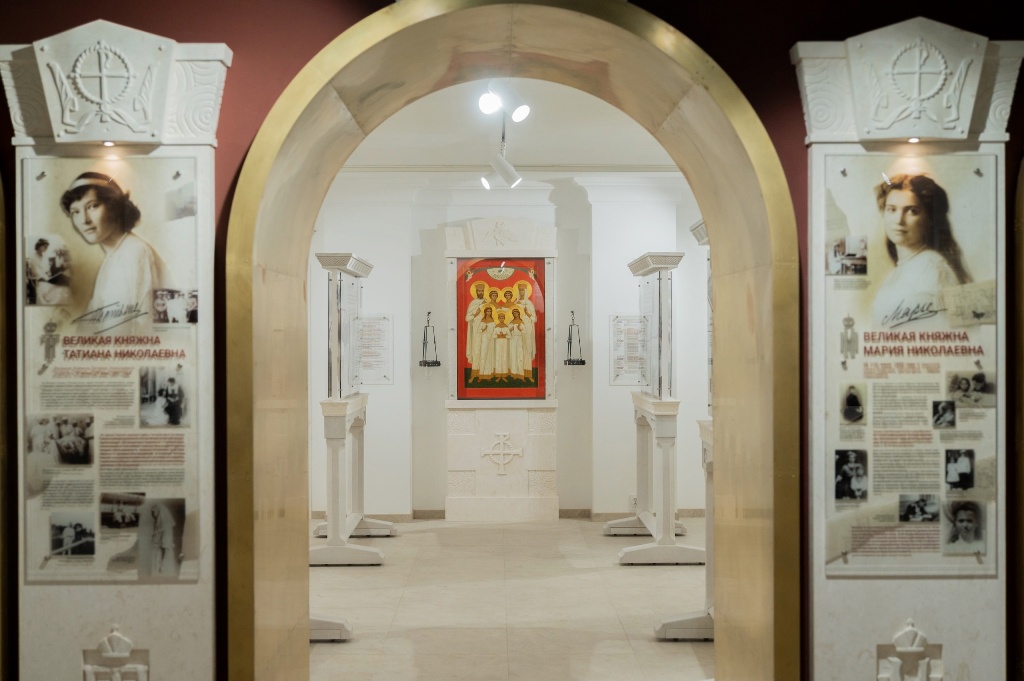
PHOTO: entrance to the exhibition which takes up the entire ground floor of the recently constructed Church of the Holy Royal Passion-Bearers in Dno
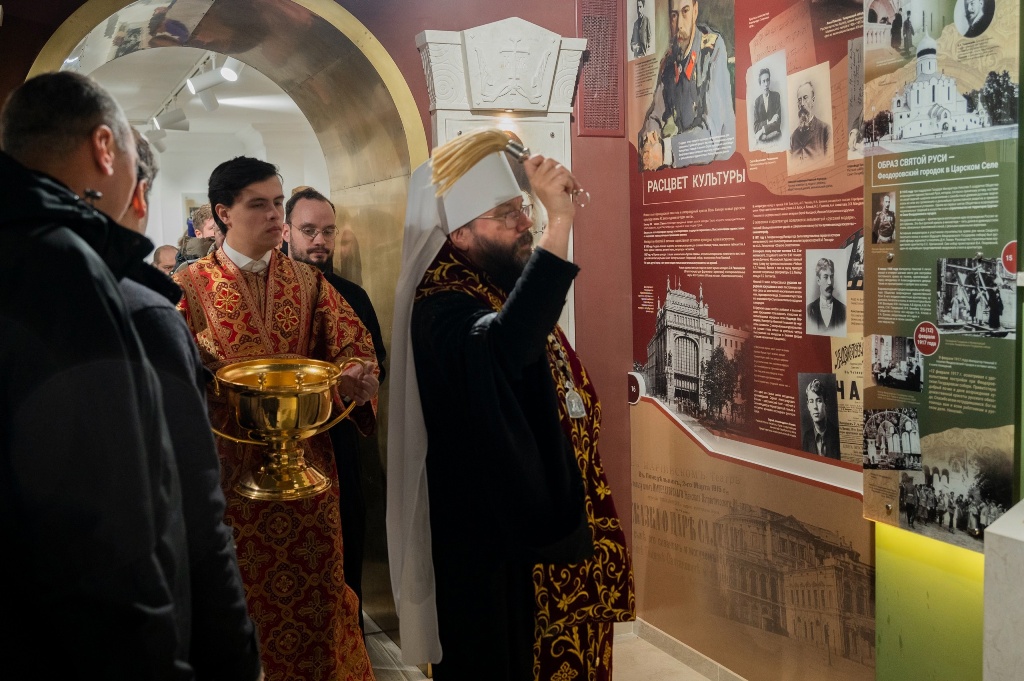
On 26th December 2024, a new museum dedicated to Emperor Nicholas II and his family was officially opened and consecrated in the Church of the Holy Royal Passion-Bearers in the Russian city of Dno, situated 114 km from Pskov.
Metropolitan Matthew of Pskov and Porkhov performed the rite of consecration of the museum to the Royal Passion-Bearers. The museum takes up the entire ground floor of the church. Admission to the museum is FREE to all!
PHOTO: His Eminance performs the rite of consecration of the museum to the Royal Passion-Bearers
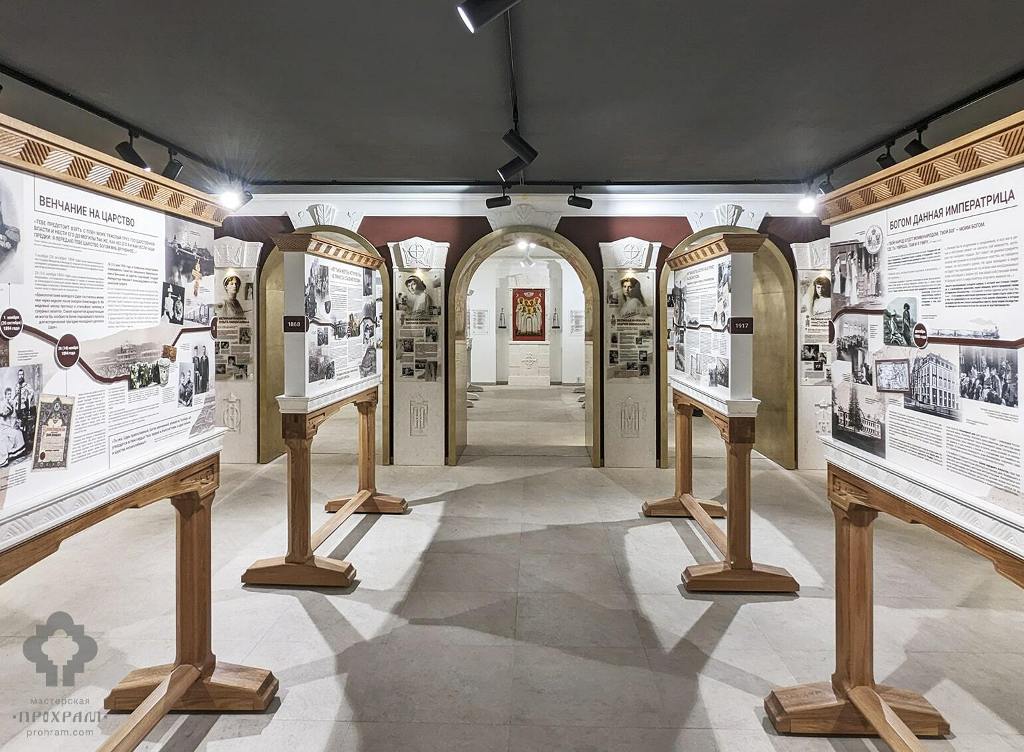
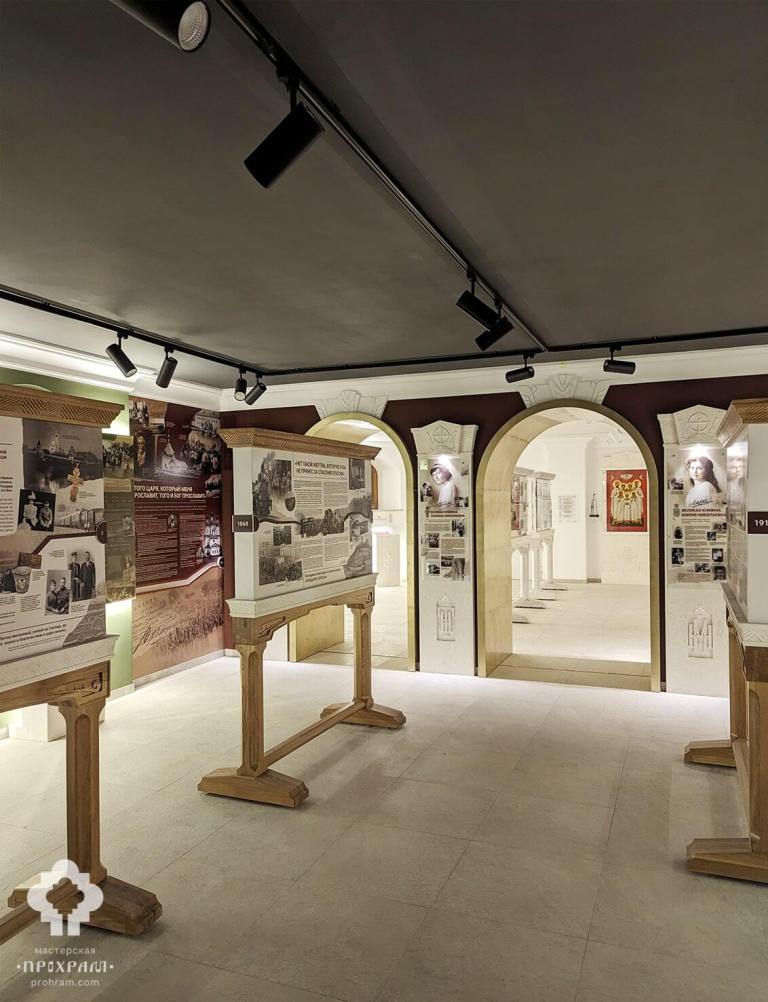
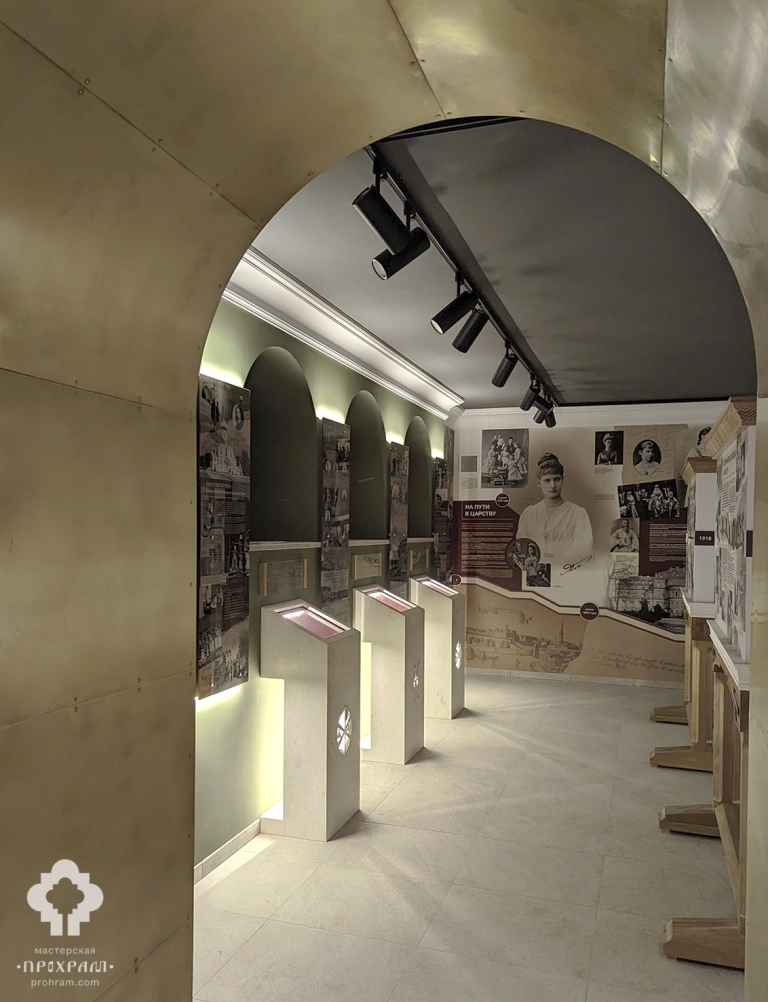
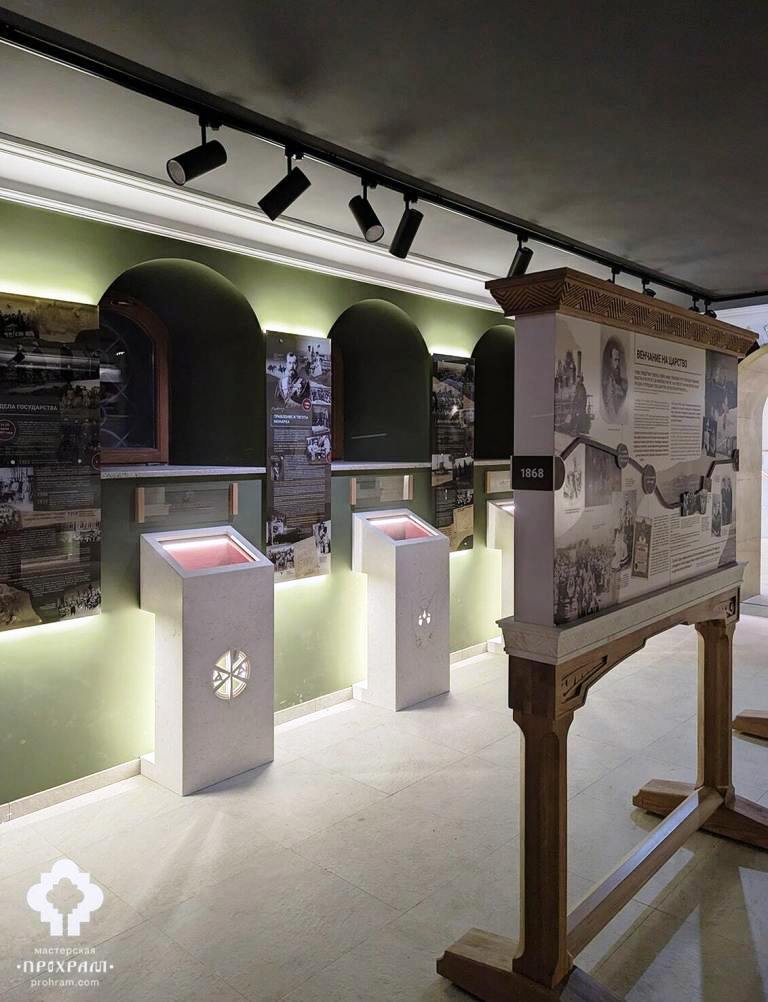
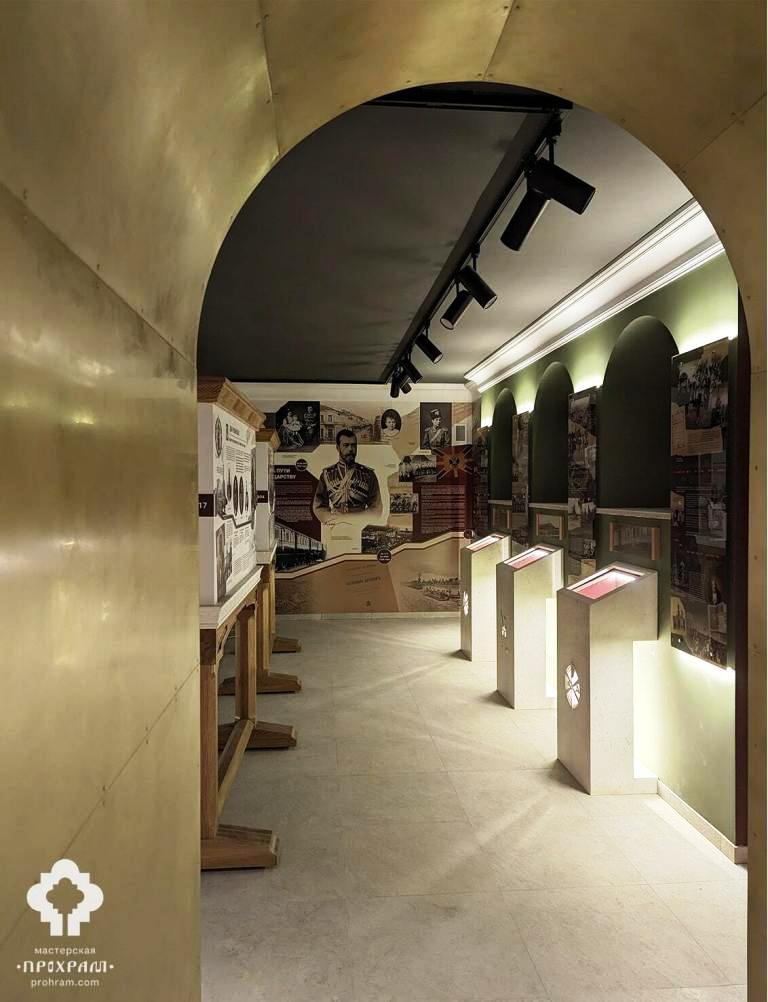
The interiors of the museum are a wonderful example of modern exhibition spaces, designed in the Neo-Russian Style [aka the Russian Revival Style], characteristic of the early twentieth century and beloved by Russia’s last Tsar.
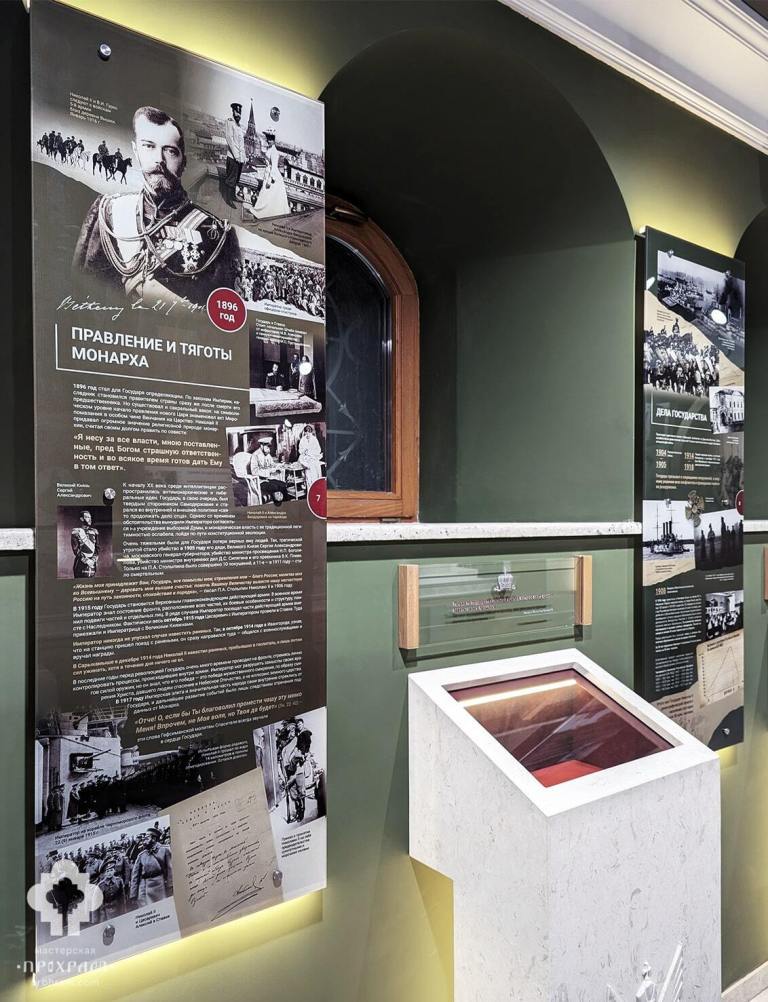
The museum is divided into two halls. The first hall, which is painted burgundy-green, combined with dim lighting. Burgundy is the colour of the Imperial Porphyry, green is the colour of the monk. In this hall, the exposition explores the life of the Imperial Family from Emperor Nicholas II’s and Empress Alexandra Feodorovna’s childhood to the tragic vents of 1917. Two stands describe the history of the House of Romanov – from the calling to the throne of Mikhail Feodorovich in 1613 and to the death and martyrdom of Nicholas II 305 years later.
Archival photographs and documentary materials, diary entries, testimonies of contemporaries, statements by prominent public and church figures reveal in detail the life of the Imperial Family. They tell about their service to Russia, their close family relations, and the historical context of the events of the late 19th and early 20th centuries. In addition, the exposition explores the cultural, scientific, and political life of the Russian Empire during the era of Nicholas II.
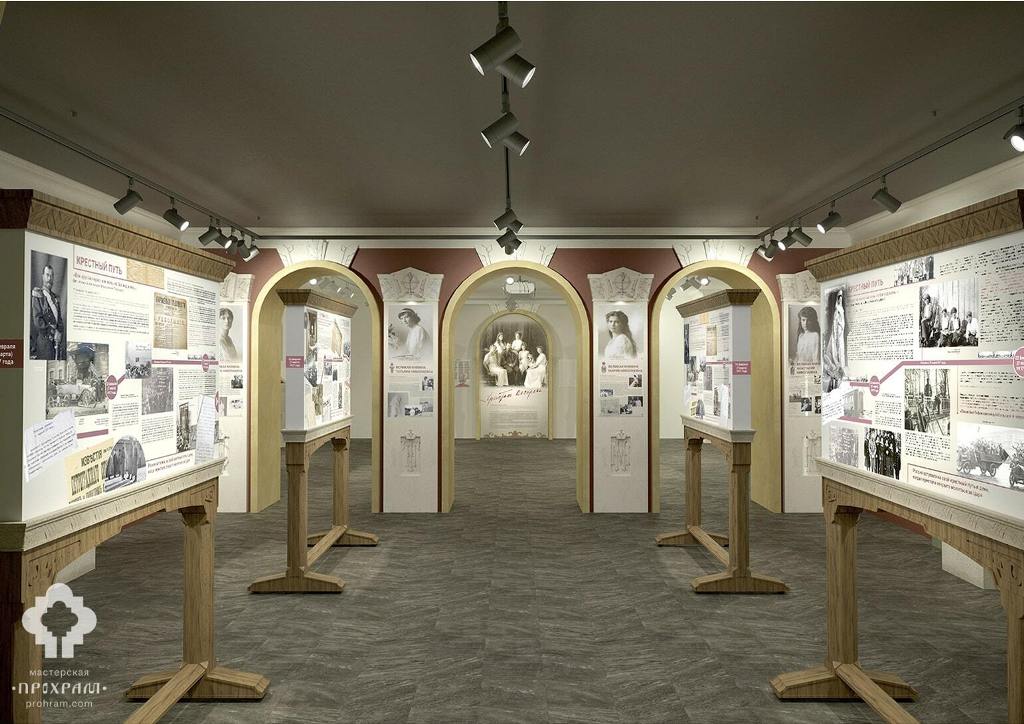
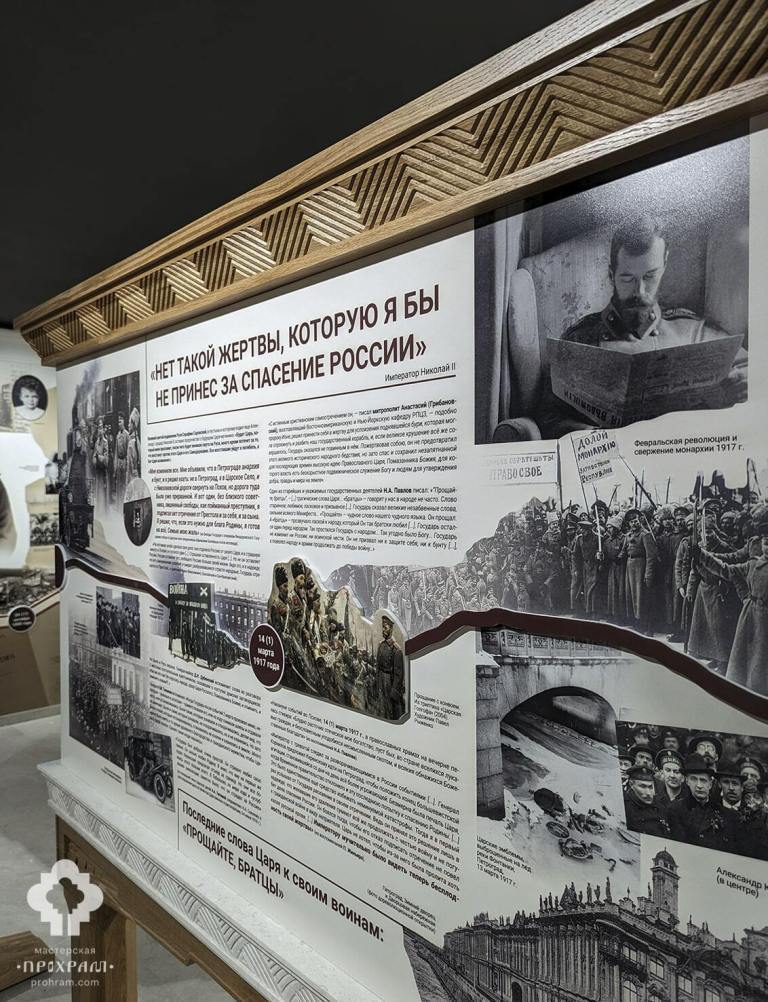
PHOTOS: four double-sided mobile stands display documents and photos which explore the life of Emperor Nicholas II and his family
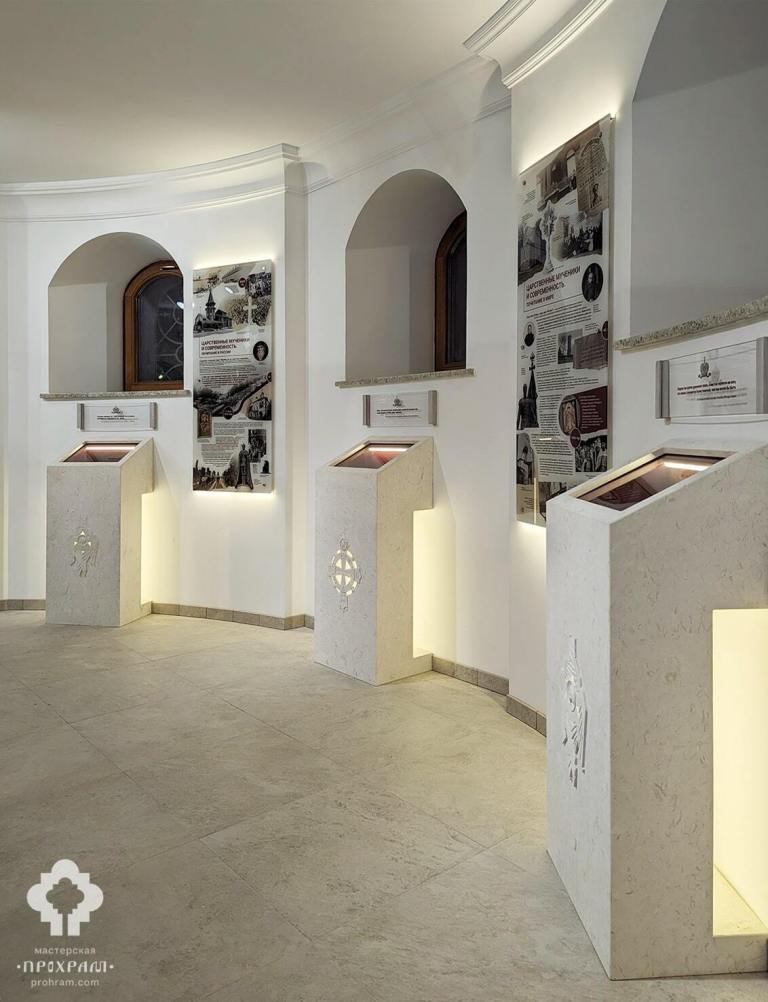
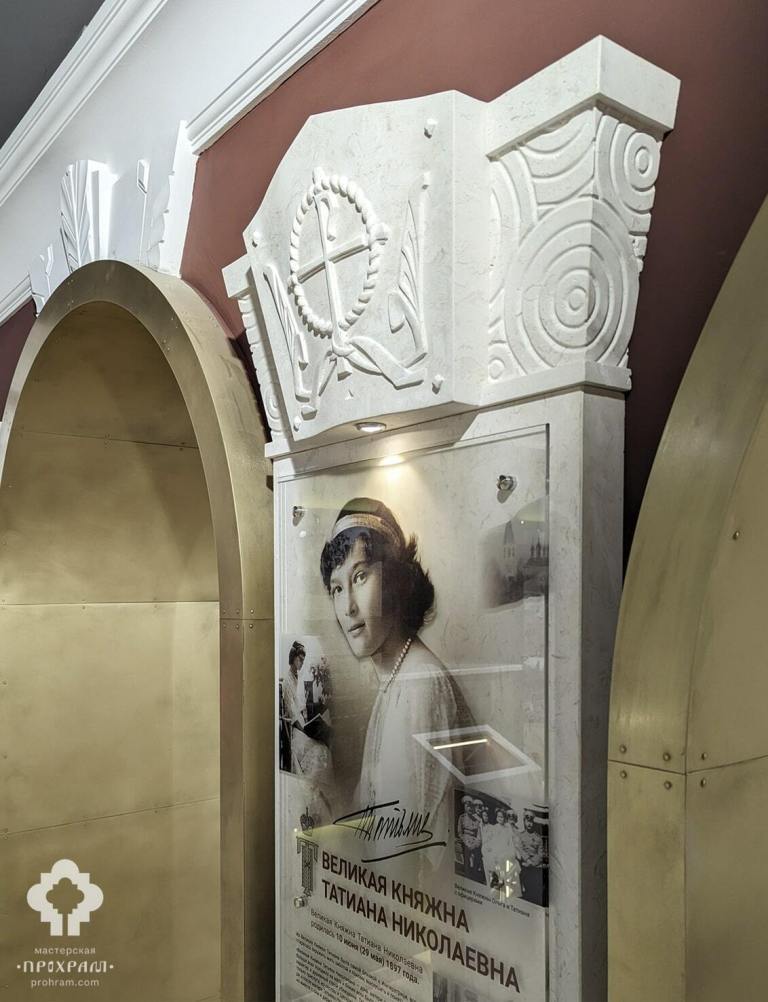
The photographs and documents are displayed on four double-sided mobile stands on small wheels with stoppers. At the northern and southern walls there are carved white-stone lecterns with carvings, under which relics of the era of Emperor Nicholas II are placed. In the eastern part of the hall there is a passage through three brass decorative arches which leads to the White Hall. Between the arches, there are four kiot stands made of white stone with carvings (initials), glass, lighting and a carved finial, dedicated to the Grand Duchesses Olga, Tatiana, Maria and Anastasia Nikolaevna. The ceiling is dark, with diffused and directional track lighting.
In the White Hall there is information about the Way of the Cross of the Imperial Family – the period from the events at the Dno station, the Tsar’s abdicated in March 1917, to the murder of Nicholas II and his entire family on 17th July 1918 in Ekaterinburg and the subsequent history of the veneration and glorification of the Imperial Family as saints. Extensive textual and illustrative material makes it possible to speculatively walk this path together with the Royal Passion-Bearers, to come into spiritual contact with the last year of their lives, to see the light of the Paschal victory in the darkness of the Ipatiev House.
CLICK on the photos below to enlarge and see in greater detail . . .
Also in the White Hall there are stands dedicated to the faithful retainers, who voluntarily followed the Imperial Family into exile and shared their sufferings, showing an example of loyalty to duty; stands dedicated to the Grand Duke Sergei Alexandrovich, the Venerable Martyr Grand Duchess Elizabeth Feodorovna, the Alapaevsk Martyrs, who were murdered by the Bolsheviks the day after the Imperial Family; two kiot stands dedicated to Tsesarevich Alexei Nikolaevich; and stands dedicated to the memory, glorification and modern veneration of the Holy Royal Martyrs.
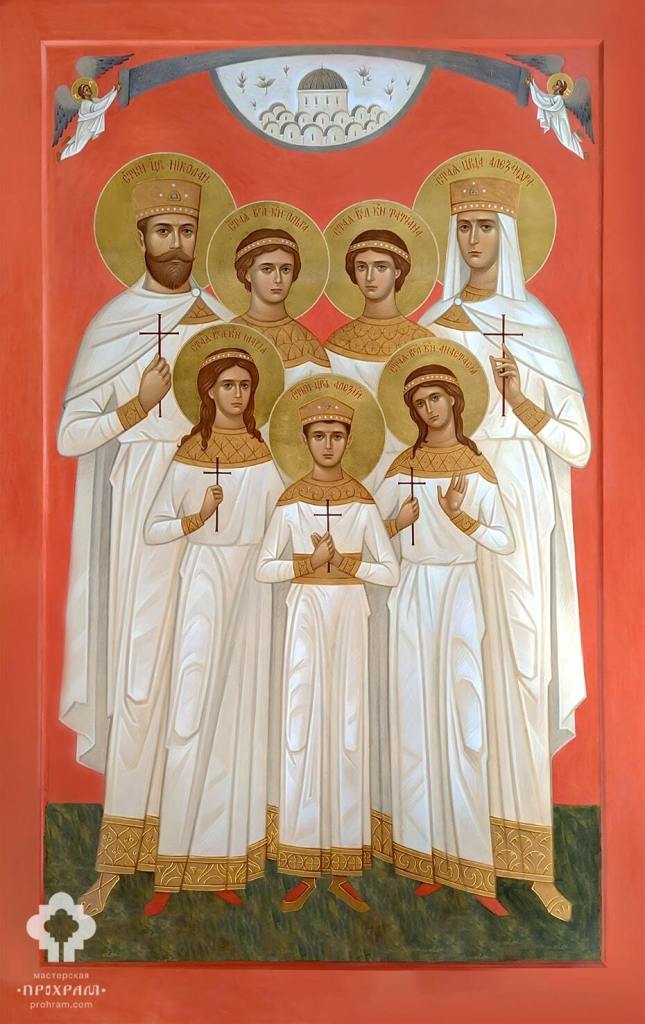
The hall is crowned by a large carved icon case with an icon of the Royal Martyrs, visible from the very entrance to the burgundy-green hall. The saints are depicted in white robes with a reference to the apocalyptic image of martyrs overcoming earthly sufferings and faithful to Christ (Revelations 6:9-12).
The White Hall is also used as a venue for small gatherings. The 4 white stands can be rrolled to the sides, thereby freeing up the central space of the hall. Attached to the ceiling in this room is a screen that can be opened in the eastern part of the hall, with a projector at the entrance to the burgundy-green hall. Folding chairs which are stored in the adjoining utility room, provide for guests attending lectures, films and other events.
CLICK on the photos below to enlarge and see in greater detail . . .
The museum is a project of love and deepest respect to the Holy Royal Martyrs and their feat on the Cross, which formed the basis of the feat of faith of all the New Martyrs and Confessors of the Russian Church and the preservation of the Holy Russian spirit in the 20th and early 21st centuries.
The opening of the new museum in Dno is the fourth such museum in Russia dedicated to Emperor Nicholas II and his family, the other three are the Museum of the Holy Royal Family in the Tsarsky Cultural and Educational Center, situated in the Patriarchal Compound of the Church on the Blood (Ekaterinburg); the Museum of the Family of Emperor Nicholas II (Tobolsk); and the Museum in Memory of Emperor Nicholas II and His Family (Kotelniki-Moscow).
PHOTO: icon of the Royal Martyrs in the White Hall
*You can order this title from most AMAZON outlets, including the United States, United Kingdom, Canada, Australia, France, Germany, Spain, Italy, Netherlands, Poland, Sweden and Japan *Note: prices are quoted in local currencies
English. Large format 8-1/2″ x 11-1/2″. 130 pages. 124 Black & White photos
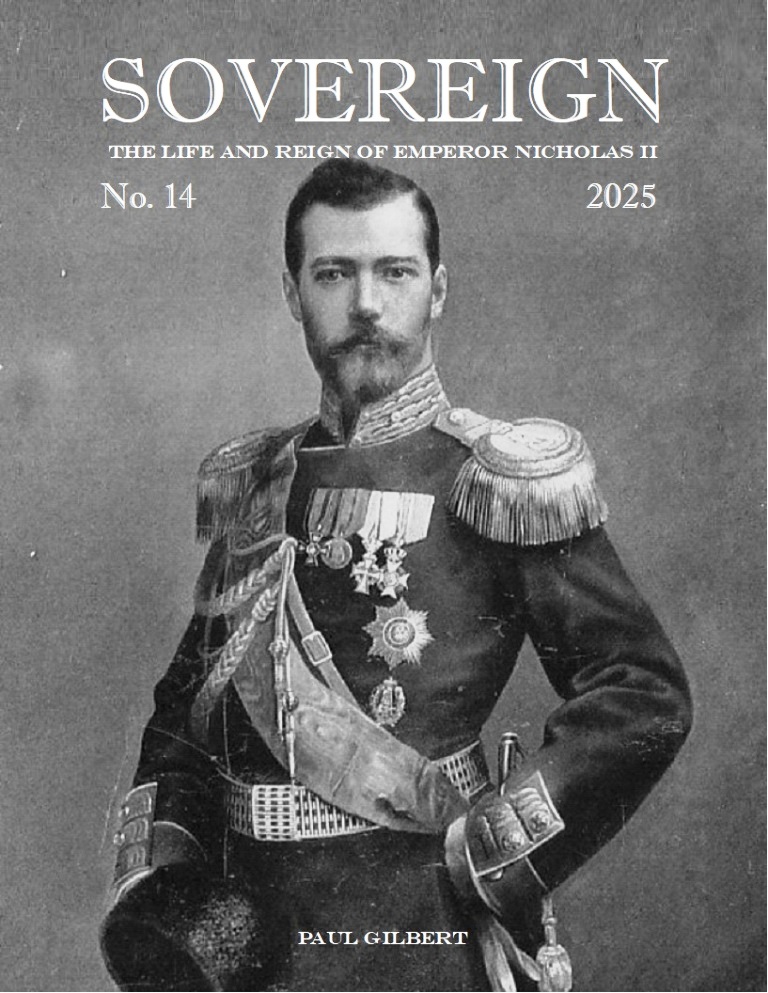
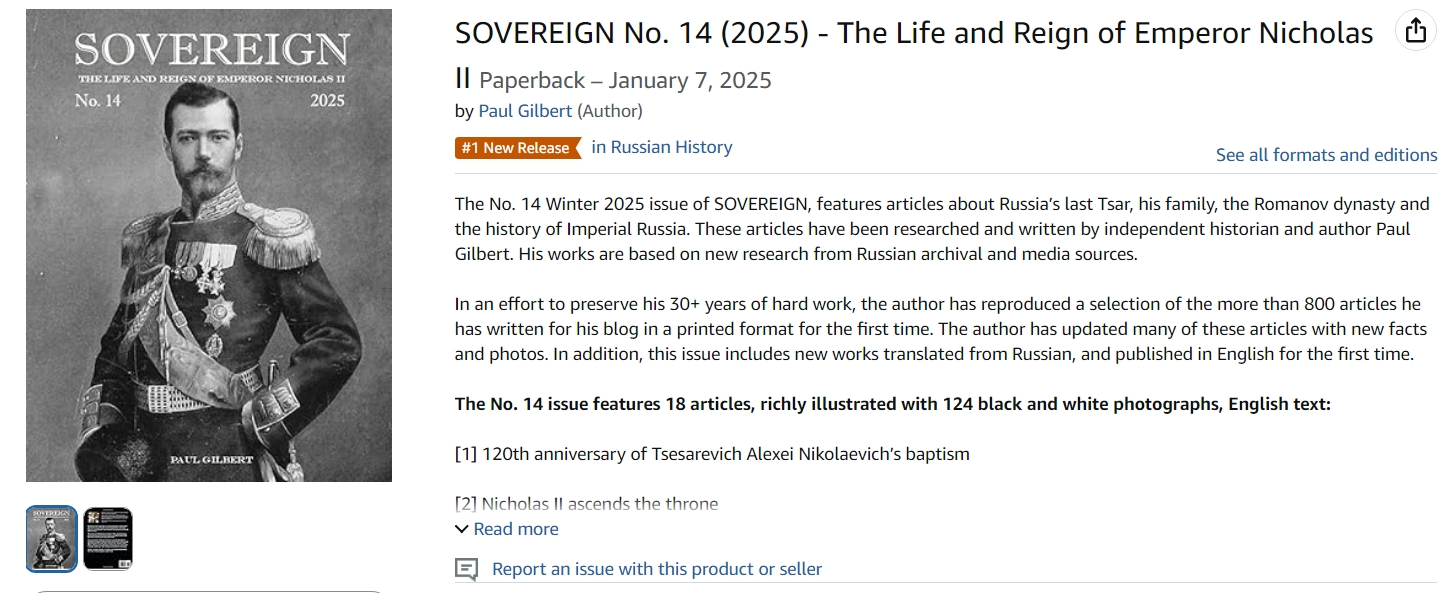
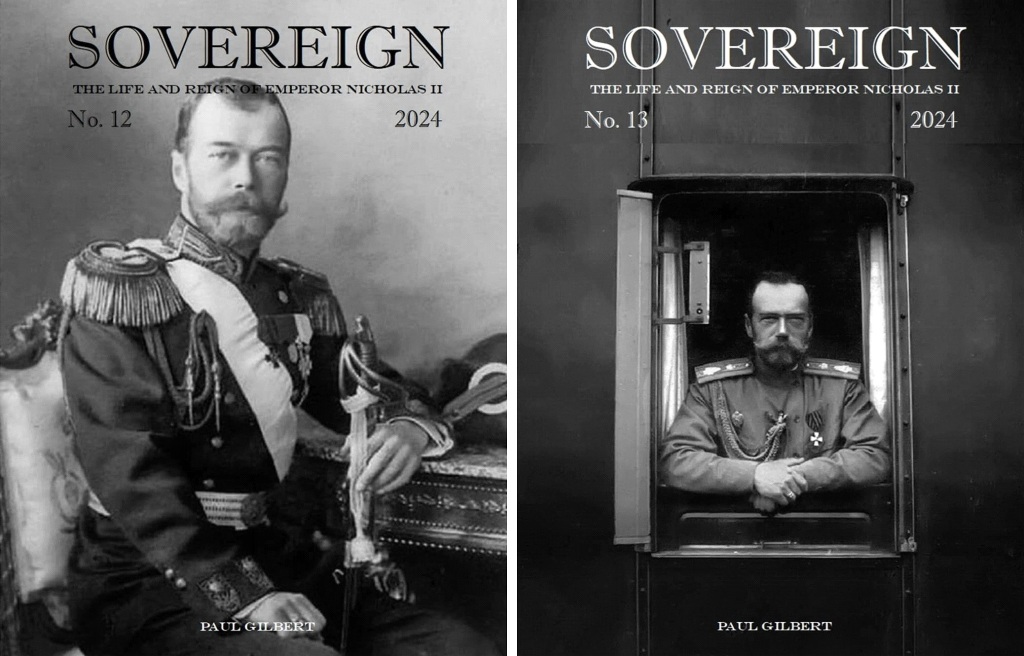
The No. 14 Winter 2025 issue of SOVEREIGN features articles about Russia’s last Tsar, his family, the Romanov dynasty and the history of Imperial Russia. These articles have been researched and written by independent historian and author Paul Gilbert. His works are based on new research from Russian archival and media sources.
In an effort to preserve his 30+ years of research, the author has reproduced a selection of the more than 800 articles he has written for his blog in a printed format for the first time. The author has updated many of these articles with additional facts and photos. In addition, this issue features 2 new works translated from Russian, and published in English for the first time.
In less than 24 hours of its release on AMAZON ON 8th January 2025, the No. 14 issue of my semi-annual publication SOVEREIGN is the ‘#1 NEW RELEASE in the RUSSIAN HISTORY’ category!
The No. 14 issue features the following 18 articles:
[1] 120th anniversary of Tsesarevich Alexei Nikolaevich’s baptism
[2] 130th anniversary Nicholas II ascension to the throne
[3] 130th anniversary of the wedding of Nicholas II and Alexandra Feodorovna
[4] Protecting the Tsar
[5] Nicholas II attends consecration of monument to his father in Moscow, 1912
[6] Monuments of Nicholas II and his family in and around Ekaterinburg
[7] Redevelopment of the Russian Imperial Navy During the Reign of Nicholas II
[8] The myth of hunger during the reign of Nicholas II
[9] The fate of Nicholas II favourite motorcar
[10] Emperor Nicholas II and King Edward VII Meet at Reval,1908
[11] Queen Elizabeth II receives Grand Duchess Olga Alexandrovna, 1959
[12] Telephones in the Alexander Palace during the reign of Nicholas II
[13] How British Intelligence tried to get Nicholas II out of Russia
[14] “The daughters were wearing diamond shields” – Yakov Yurovsky
[15] Nicholas II and his canine companions
[16] Those who served the Tsar: Vladimir Voeikov (1868-1947)

 Nicholas II
You must be logged in to post a comment.