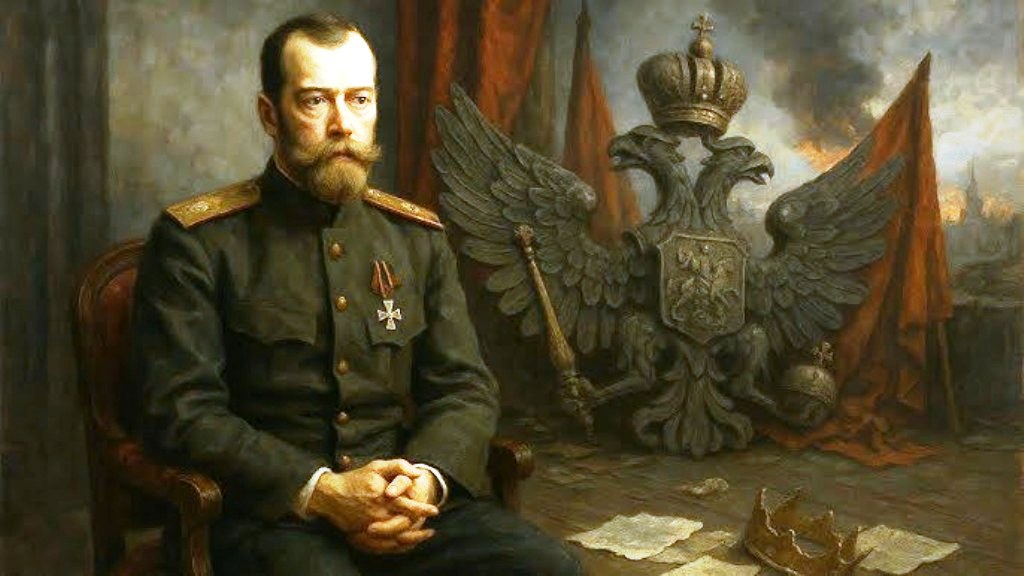
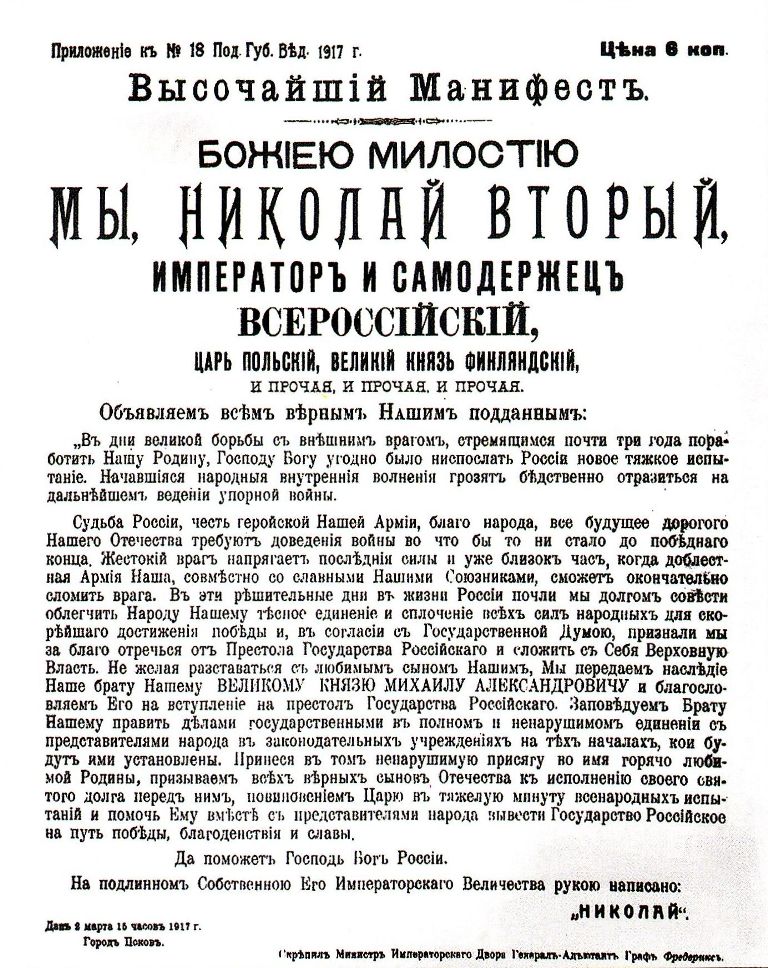
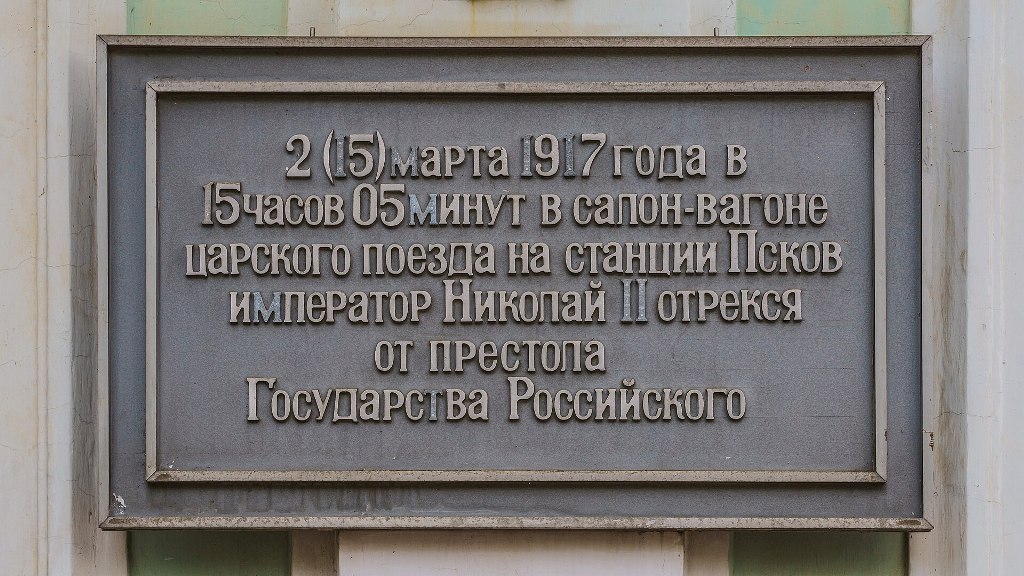
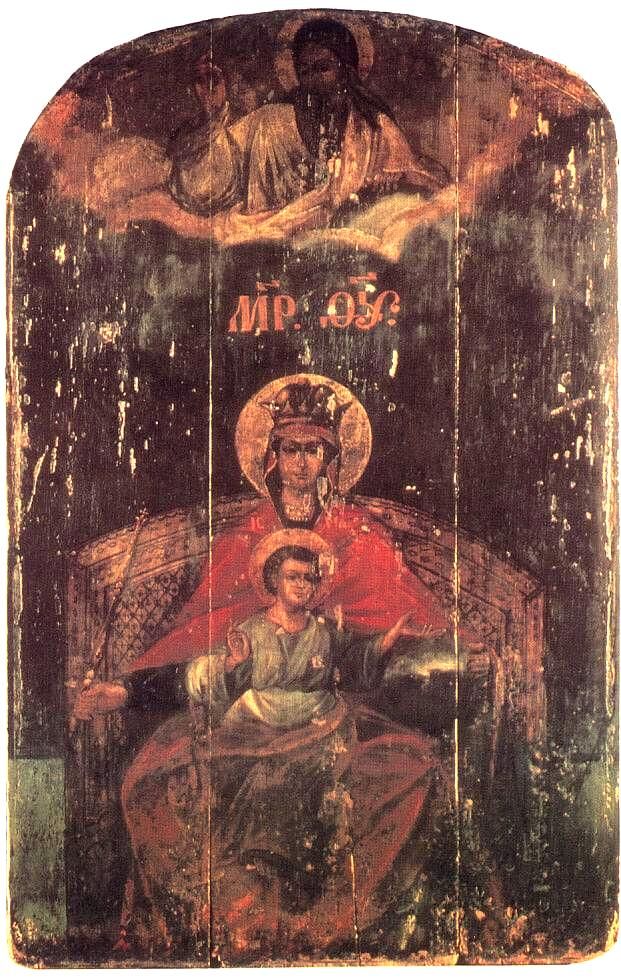
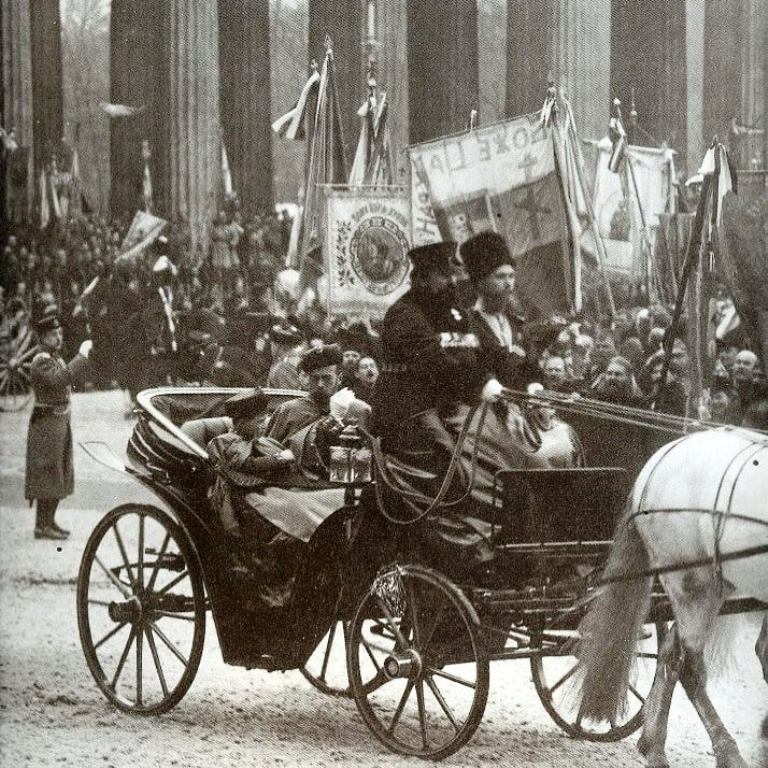
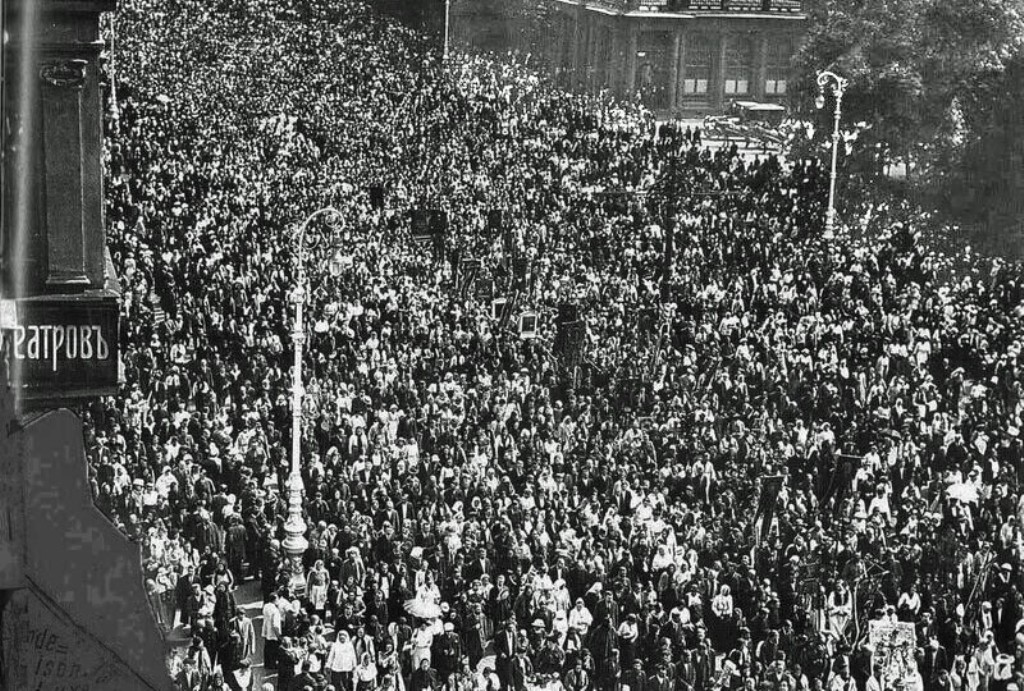
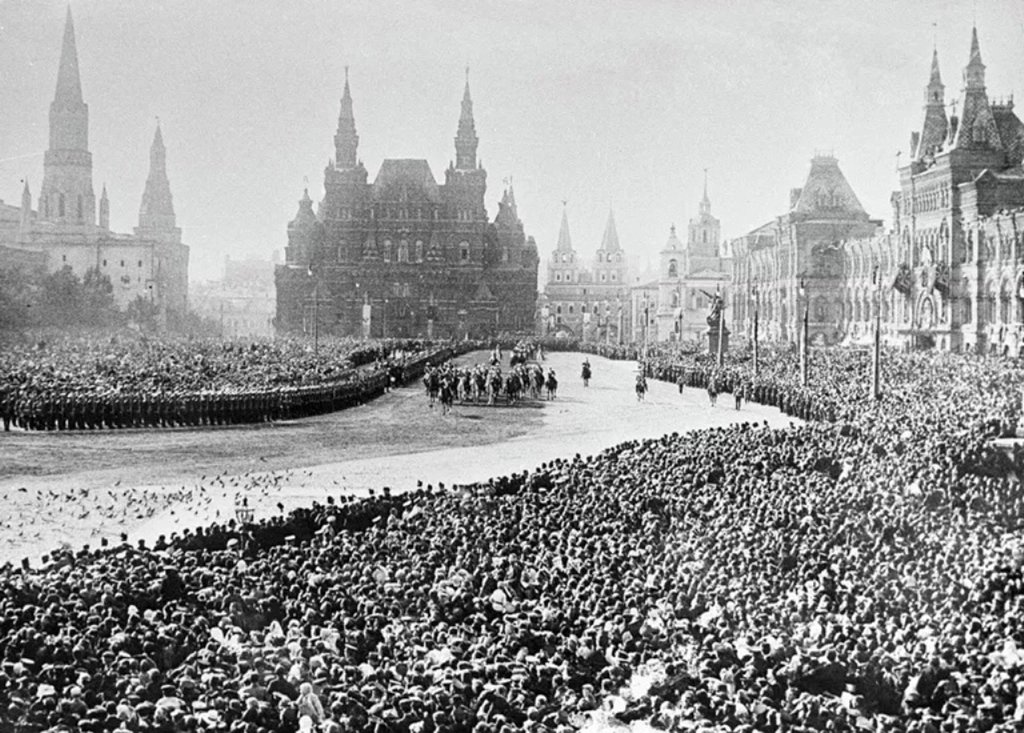
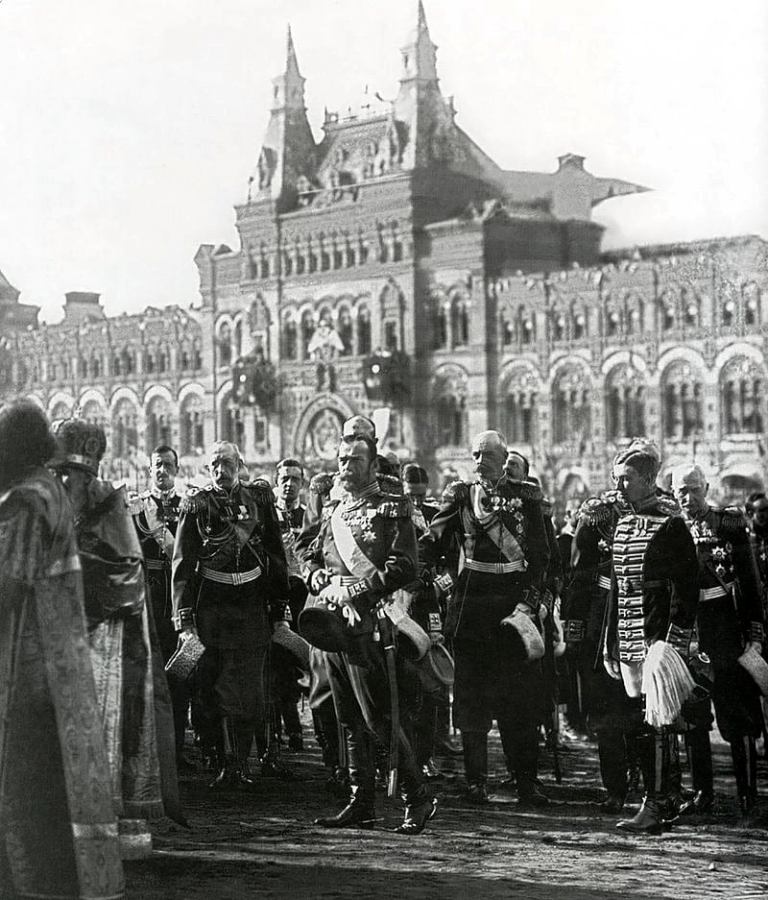
Photo-exhibition dedicated to the Imperial Family open’s in the Volokolamsk Kremlin

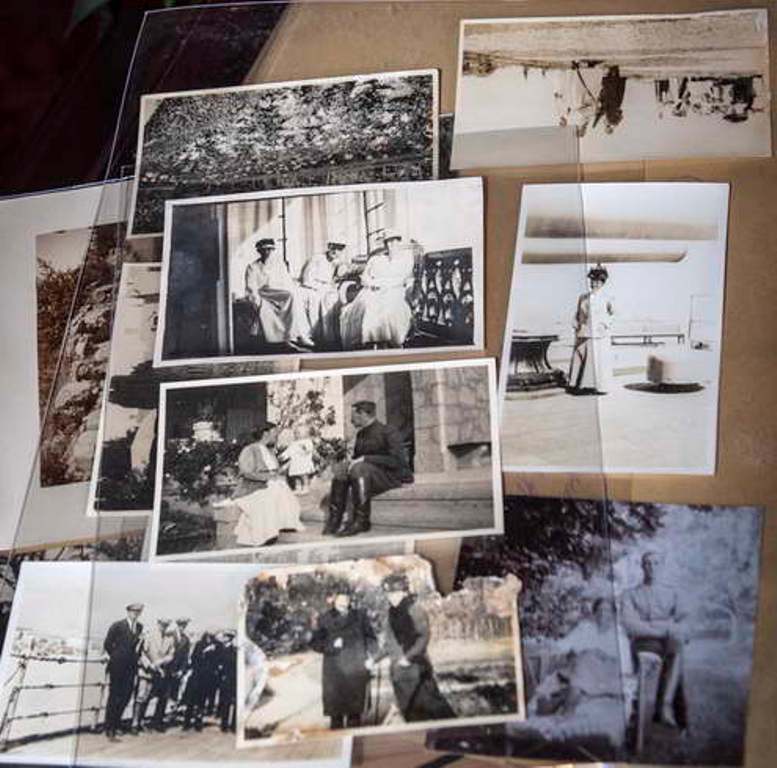
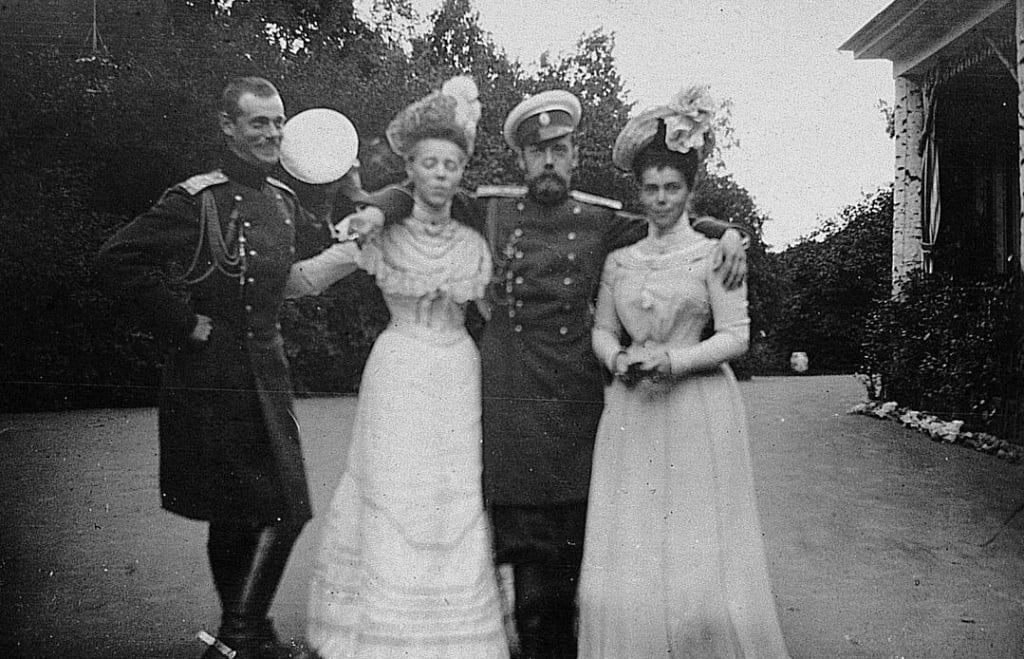
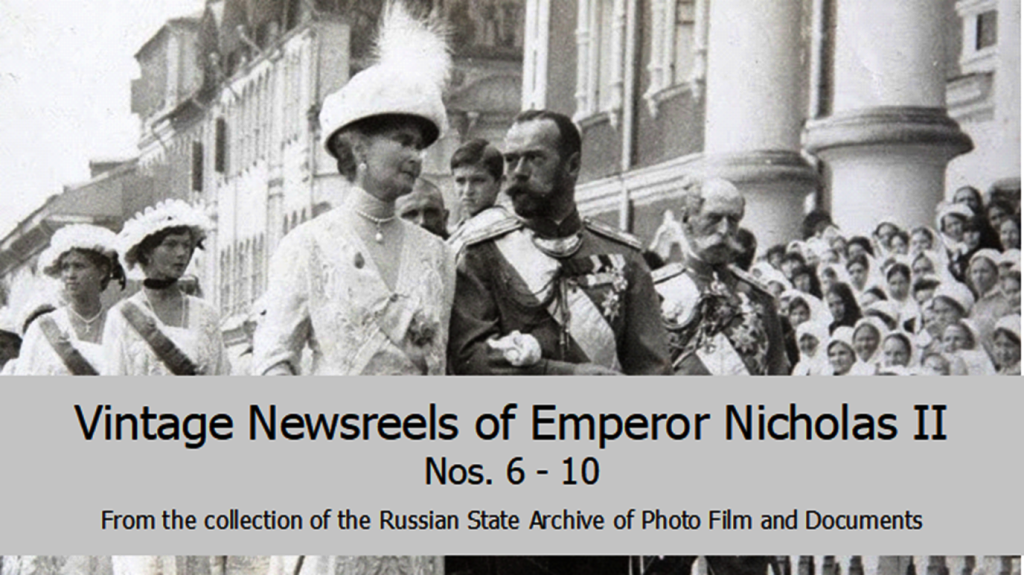
On 26th November 2025, a photo-exhibition dedicated to Russia’s last Tsar and his family opened in the building of the Clergy House, located in the heart of the Volokolamsk Kremlin, situated 129 kilometers (80 mi) northwest of Moscow. The exhibition presents more than 100 photographs from the private albums of the Imperial Family.

The photo-exhibition Under the Shadow of the Tsar’s Crown is a joint project of the Volokolamsk Kremlin, the Moscow Sretensky Monastery and the Volokolamsk Deanery of the Odintsovo Diocese.

The exhibition is divided into three thematic parts:  family life, service to the Fatherland and mercy. The family of Nicholas II, is an example of a true Christian family, which is very important today, when the whole world is experiencing a crisis of family values.

The first part of the exhibit is dedicated to family relationships. Here are photographs depicting private home life, the attention of Nicholas and Alexandra towards their children and the close relationships shared with each other.

The second part reflects service to the Fatherland. The photos show Nicholas II’s participation in military reviews and his visits to Russian troops at the Front, during the First World War.

The third, the largest part of the exposition, is dedicated to the mercy and charity of the Imperial Family. A special place is dedicated to photographs in which the Empress and her daughters are depicted working in hospitals, assisting doctors during operations and providing care to soldiers, who were recovering at the hospital in Tsarskoye Selo, where the Empress and her daughters worked as Red Cross nurses.

The curator of the exhibition, Hieromonk Ignaty (Shestakov), noted the importance of the photographs presented:

“Among all the photographs, I would single out the picture where the Emperor visits wounded soldiers in a hospital during the First World War. We obtained this original image from our archive when preparing the exhibition . It turned out that this photo had not been published anywhere before. We were one of the first to present it publicly.”

The photo-exhibition Under the Shadow of the Tsar’s Crown runs until the end of February 2026, in the building of the Clergy House, located in the heart of the Volokolamsk Kremlin. The exhibit is open to visitors every Saturday and Sunday from 12:00 to 18:00 and on public holidays. Admission is FREE!

The exhibition Under the Shadow of the Tsar’s Crown has been held (although under different names) in various formats and in many Russian cities: Moscow, Voronezh, Kursk, Ryazan, Penza, Krasnodar, Belgorod, Velikiye Luki, Yalta, Livadia, Sevastopol, Novosibirsk, Lesosibirsk, Perm, Sayansk, Severomorsk, Pskov, Pavlovsk, Livadia, etc.

The photo project Under the Shadow of the Tsar’s Crown was created in 2016 by the Sretensky Monastery in Moscow. The travelling exhibition has already been presented in Serbia, Germany, Italy, Canada, Argentina, New Zealand, South Africa, Romania, Croatia, Montenegro, Bosnia and Herzegovina, Macedonia, and the Czech Republic.

***

*As I have noted in previous posts, I support any initiative – big or small – to help keep the memory of Nicholas II and his family alive in 21st century Russia – PG

© Paul Gilbert. 27 November 2025

The day Serbia’s ambassador spat in Lenin’s face

PHOTO: Serbian ambassador Miroslav Spalajković
and Bolshevik leader Vladimir Lenin

“He approached Lenin (1870-1924) and spat in his face,” said Prince Mikhail Grigorievich Trubetskoy (1873-1930) – regarding the incident of the Serbian ambassador Miroslav Ivanović Spalajković (1869-1951) with Lenin at a reception held in July 1918.

“Here I want to cite one fact, very interesting,,” said Trubetskoyt, “it was following the October 1917 Revolution, all the foreign diplomats remained in Petrograd [St. Petersburg]. Spalajković, who served as Serbia’s ambassador to Russia (1913-1919), also remained in Petrograd.

It was towards the end of July 1918, rumours began to circulate in Russia about the execution of the Imperial Family in Ekaterinburg.

Lenin periodically hosted receptions to which the foreign diplomats were invited. At the end of July, he arranged a small banquet. It was during this reception, that Lenin, said “despite the fact that Soviet power was now being pressed on all sides [by the Whites] from the north – by Yudenich, from the east by Kolchak, from the south by Denikin, that life was improving.”

He added that “at last, the capital was beginning to be swept and cleaned, new street lanterns were being installed, electric lighting was being improved, and a new shop had been opened for you, diplomats, where, I hope, you could buy absolutely anything.”

Lenin then stated: “Well, let’s go to the next room, where dinner has been prepared for you.” “Oh, yes,” Lenin suddenly recalled, “I had to tell you, but, in general, you all know this yourselves, that in view of the fact that Ekaterinburg was under attack by Kolchak’s army, we had to liquidate the the Tsar and his family. But you know very well about this, because rumours are circulating all over Petrograd and Moscow.”

Spalajković could not contain himself. He approached Lenin and spat in his face.… And silently with his secretaries, he left the hall, and the next day he left the Soviet Union, and returned to Belgrade.

“Discussion on this incident was immediately silenced,” said Trubetskoy. “The authorities concluded that Spalajković was mentally ill, an unrestrained and undoubtedly ill-mannered person. Despite this characterization, Spalajković was later a representative of the already large South Slavic state in Paris[1], where my father met him and asked if the incident with Lenin was true. Spalajković replied that he could not resist because he considered Lenin the greatest criminal of the century.”

To better understand the reasons behind Spalajković reaction towards Lenin. it is important to understand that for Serbians, Emperor Nicholas II is revered both as a saint and as a statesman, for his efforts in coming to Serbia’s aid during the First World War.

NOTES:

[1] In January 1919, a delegation from the Kingdom of Serbs, Croats, and Slovenes, better known as the Kingdom of SHS, arrived in Paris to seek recognition of its state at the international peace conference.

FURTHER READING:

Nicholas II through Serbian eyes + PHOTOS

“For us, Serbs, Nicholas II will be the greatest and most revered of all saints

Serbs honour Royal Martyrs with liturgy and procssion in Belgrade + VIDEO

© Paul Gilbert. 26 November 2025
65th anniversary of the death of Grand Duchess Olga Alexandrovna

PHOTO: Paul Gilbert, author of this post and administrator of this blog, at the grave of Grand Duchess Olga Alexandrovna in York Cemetery, on 24th November 2025, the day marking the 65th anniversary of her death. Paul Gilbert © 2025

Today, 24th November 2025, marks the 65th anniversary of the death of Grand Dycgess Olga Alexandrovna, the youngest child of Emperor Alexander III and Empress Maria Feodorovna, and youngest sister of Emperor Nicholas II.

Today, I travelled into Toronto, where I visited York Cemetery located in the North York area of of the city. It was a beautiful morning, the sun was shining, a slight breeze, but overall, a perfect autumn day.

I laid a bouquet of a dozen white roses on the grave of Russia’s last grand duchess, and offered prayers. I was both surprised and somewhat saddened that no one else was at the grave, nor was there much in the way of fresh flowers left at her gravesite.

I attached a small photo (see below) the outside of the bouquet, depicting Olga in happier times, with her brother Emperor Nicholas II, taken in the lower Massandra Park, Crimea in the Autumn of 1913.

Paul Gilbert © 2025

Paul Gilbert © 2025

Grand Duchess Olga is interred in the Russian Orthodox section of the cemetery, Section 15. Her grave is marked by a large white marble cross with Cyrillic script and is a site of historical interest, with memorial services occasionally held there by Russian Orthodox clergy, attended by members of Toronto’s Russian Orthodox community and Russian diplomats

There are four persons buried in the grave: Grand Duchess Olga Alexandrovna, her husband Captain Nikolai Kulikovsky, their eldest son Tikhon Kulikovsky and his wife Olga Kulikovsky.

Paul Gilbert © 2025

I was 4 years old when Olga died. I was just a young child, so I had no idea of who she was, but ironically, the apartment in which she died on Gerard Street in Toronto, was just blocks away from where I grew up as a child at Gerard and Parliament Streets.

Little did I realize then, that the family and extended family of Russia’s last Tsar, would play such an important part in my life. For more than 35 years, I have dedicated my life to the study and writing of the Romanov’s, in particular, clearing the name of Russia’s much slandered Tsar. My many years of research have resulted in books, magazines, a conference, lectures and 29 journeys to Russia, visiting palaces, museums and archives associated with Nicholas II and his family.

All this combined, is my reason for laying flowers at Olga’s grave today. Memory eternal.

***

The death of Grand Duchess Olga Alexandrovna

PHOTO: The house (left) at 716 Gerrard Street, where Grand Duchess Olga Alexandrovna died in Toronto, Canada on 24th November 1960. The property, which is now dilapidated and in need of repair, has served as a beauty salon, a travel agency and a religious building, as well as an “imperial” residence.

Following her husband Nikolai Kulikovskys’ death in 1958, Olga became increasingly infirm. In April 1960, she was hospitalized at Toronto General Hospital, located on University Avenue in downtown Toronto. It was here, that Olga was diagnosed with cancer.

Olga was not informed (or she was not aware) that her elder sister, Grand Duchess Xenia Alexandrovna [b. 1875], had died in London during that month [20th April 1960] at the age of 85.

Unable to care for herself, Olga went to stay with Russian émigré friends, Konstantin and Zinaida Martemianoff, in their second-floor apartment above a beauty salon at 716 Gerrard Street East, Toronto. The main reason that she chose Konstantin and his wife was that Konstantin had been a member of the Akhtyrsky Hussar Regiment, of which Olga served as the honorary Commander-in-Chief in Russia.

On 21st November, 1960, Olga slipped into a coma, and died on 24th November at the age of 78.

It is interesting to note, that although she lived simply, bought cheap clothes, and did her own shopping and gardening, her estate was valued at more than 200,000 Canadian dollars (about $1.5 million as of 2013) and was mostly held as stock and bonds.

On 13th November 2020, a memorial plaque in honour of Grand Duchess Olga Alexandrovna, was unveiled outside 716 Gerrard Street, where she died in Toronto, Canada on 24th November 1960.

The plaque is a joint project of Heritage Toronto and the Riverdale Historical Society.

***

The funeral of Grand Duchess Olga Alexandrovna

VIDEO: VIDEO (click on image above to play – duration: 42 seconds)

On 30th November 1960 – the funeral for Grand Duchess Olga Alexandrovna was held in Toronto, Canada. Grand Duchess Olga’s body lay in state in Christ the Saviour Cathedral in Toronto. The Union Jack and Russian imperial standard hung from each corner of the platform where the coffin sat. Officers of the Akhtyrsky Hussars and the Blue Cuirassiers stood guard in the church.

The service was performed by the Mitred Archpriest John Diachina (1904-1976). Parishoners filled Christ the Saviour Cathedral to capacity – more than 500 mourners attended. In fact, the church could not contain all those who attended the services.

Wreaths were sent by King Frederik IX and Queen Ingrid of Denmark, King Olav V of Norway and Queen Elizabeth II of Great Britain; imperial guardsmen from the 12th Hussars Ahtyrsky Regiment were the pallbearers.

Olga was buried next to her husband Nikolai Alexandrovich Kulikovsky (1881-1958) , in the Russian Section of York Cemetery. The Grand Duchess’ friend, Bishop John of San Francisco, sprinkled Russian earth on her grave.

Grand Duchess Olga Alexandrovna was the soul and the heart of the Toronto parish, and her death in 1960 created a void within the Russian community, leaving none of the parishioners untouched, many regarding her passing as a personal tragedy.

Legacy

Born on 13th June [O.S. 1st June] 1882, Olga endured much loss during her life, outliving her entire family, including her beloved father Emperor Alexander III (1894); her brother George (1899); her brother Michael (1918); her brother Emperor Nicholas II and his entire family (1918); her mother Dowager Empress Maria Feodorovna (1928); her sister Xenia (April 1960); and was forced to flee Russia with her husband and two sons in 1919. She lived in Denmark until 1948, when she emigrated to Canada.

In addition, following the 1917 Revolution, Olga and her family were forced to flee the Bolsheviks, and then in 1948, feeling threatened by Stalin, she and her family were forced to flee Denmark for Canada.

Of course, the main characteristic of Olga Alexandrovna was her attitude towards the people around her. Her non-exclusive kindness towards everyone, her openness and her welcoming heart left a deep imprint in the memory of those who knew her.

To this day, Grand Duchess Olga Alexandrovna remains one of the most beloved members of the Russian Imperial family. Her memoirs ‘The Last Grand Duchess’ were written by Ian Vorres in 1964.

PHOTO: Grand Duchess Olga Alexandrovna’s grave in York Cemetery, North York.
Paul Gilbert © 2025

Memory Eternal! Вечная Память! ☦️

***

Grand Duchess Olga’s devoted companion and former maid Emilia Tenso (“Mimka”) is buried near the grand duchess’s grave in York Cemetery, Toronto.

Ian Vorres notes in his book ‘The Last Grand Duchess’ that she died in 1954, however, the date on her gravestone shows 24th January 1955.

FURTHER READING:

Olga: Nicholas II’s younger sister + PHOTOS

Russia’s Ambassador to Canada attends memorial service for Grand Duchess Olga Alexandrovna + PHOTOS

Queen Elizabeth II receives Grand Duchess Olga Alexandrovna in 1959 + PHOTOS

© Paul Gilbert. 24 November 2025

Is the myrrh-streaming icon of Nicholas II predicting a terrible omen for Russia?

Whether you are a believer or not, the following is just one of many miracles reported since the regicide in Ekaterinburg in July 1918 . . .

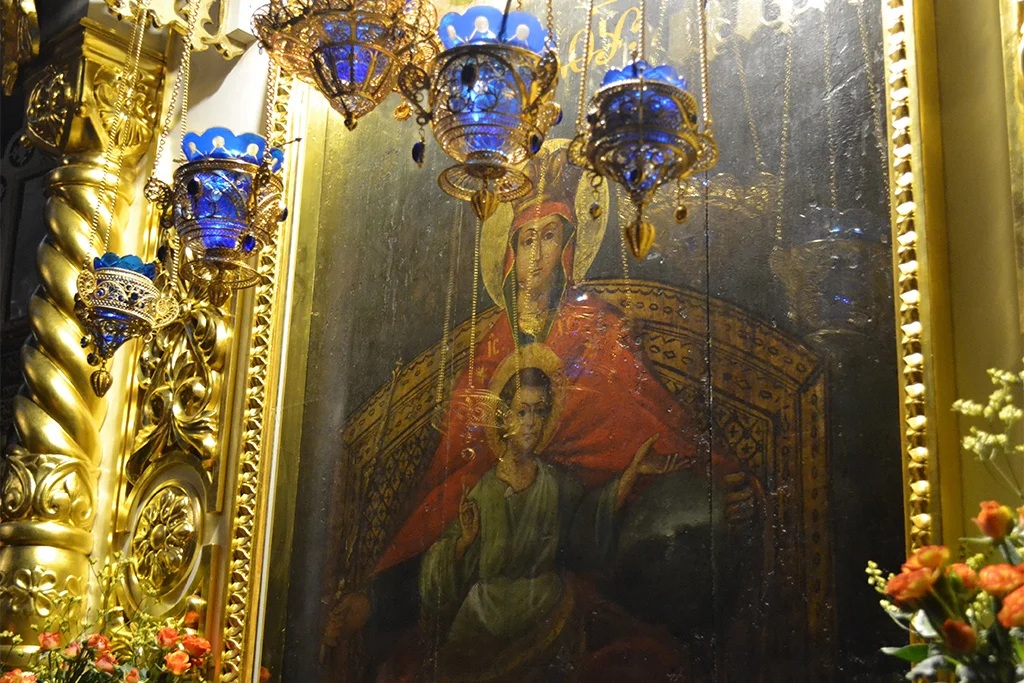
Last week, a case of myrrh streaming[1] from the icon of the Tsar-Passion-Bearer Nicholas II was recorded in the Church of the Nine Martyrs of Kizichesky in Moscow. The Orthodox community is now discussing the event which many believers and clergy interpret as an alarming omen.

Archpriest Anthony Serov commented on the event, “fragrant oil, myrrh, appeared on the surface of the icon, which is in a special, hermetically sealed case.” According to him, the design of the kiot[2] completely excludes any possibility of external influence or forgery. The myrrh-streaming of the icon has been confirmed by Life.ru[3].

“The icon is placed in a protected case, which excludes any outside interference,” Archpriest Anthony Serov emphasized. “Nevertheless, we have witnessed myrrh streaming from the icon. This, in my opinion, is of great spiritual importance.”

In the Orthodox tradition, the streaming of myrrh from icons is considered a miracle and a special sign of grace. However, myrhh streaming from the face of the saint [Nicholas II] which is enclosed in a protective case, is another matter.

Archpriest Serov regards the incident as a warning addressed not only to Orthodox believers, but to Russian society as a whole. He drew parallels with historical events when such phenomena preceded significant changes and upheavals, such as the 1917 Revolution and the First World War.

“The history of our country [Russia] has experienced examples of the streaming of myrrh from icons became a harbinger of revolutionary events, military conflicts and other difficult trials and tribulations,” the rector of the church explained. “It is necessary to comprehend what happened and learn from them.”

Over the centuries, such cases have been repeatedly recorded in Orthodox monasteries and churches in Russia. As a rule, believers see this as a call to repentance and prayer, especially when the images of the Royal Passion-Bearers “weep”.

Earlier, journalists turned to religious scholar Konstantin Mikhailov for comment of the recent myrrh-streaming incident near Moscow. The confessor said that such events are not uncommon and in most cases have a natural explanation. According to the expert, scientists have always found logical reasons for the appearance of moisture on icons.

In the meantime, parishioners and believers from all over Moscow are coming to the Church of the Nine Martyrs of Kizichesky to personally see the myrrh-streaming icon and pray.

NOTES:

[1] In the Orthodox tradition, myrrh-streaming is one of the most mysterious and controversial phenomena. On the one hand, the Church recognizes the fact of the outflow of fragrant myrrh from icons, relics and crosses as one of the manifestations of God’s grace. On the other hand, each such case is carefully checked by church commissions in order to exclude any possibility of forgery or natural causes.

[2] A kiot is a decorated case or frame used in Orthodox Christianity to protect and display religious icons. It serves to safeguard the icon from environmental factors such as temperature fluctuations, dust, and humidity, ensuring the icon’s preservation over time.

[3] A prominent Russian information portal and news agency.

FURTHER READING:

Myrrh-streaming icon of Tsar Nicholas II brought to Ekaterinburg for Tsar’s Days’ + PHOTOS and VIDEO

My [Paul Gilbert’s] cancer journey and prayers for the intercession of Tsar-Martyr Nicholas II

© Paul Gilbert. 23 November 2025

Chapel dedicated to Nicholas II to be opened at Murmansk airport

NOTE: the above photo will be replaced, when the chapel opens in two weeks – PG

On 20th November 2025, the new domestic terminal at Murmansk Airport welcomed its first flight. The walls of the terminal building are decorated with paintings of landscapes of the Kola Arctic.

In addition, work is being carried on the decoration of the interior of a chapel dedicated to Emperor Nicholas II. The small chapel will be located in the second hall of the terminal, immediately after the check-in counters.

According to Archpriest Vladimir Semenov of the Murmansk Diocese: “The chapel is expected to be completed in two weeks. The date of the it’s consecration has yet to be announced.”

Recall that on 31st May 2019, Russian President Vladimir Putin issued a decree naming Murmansk Airport after the founder of the city, Nicholas II.

Murmansk was the last city founded in the Russian Empire. Russia’s first ice free port was founded here in 1916 by Nicholas II and named Romanov-on-Murman. It was officially named Murmansk during the Soviet years.

Prior to that, residents of the Russian Arctic city had voted in favour of naming the airport in honour of Russia’s last Tsar, who received 68,260 votes (48%).

More than 5.5 million people took part in the ‘Great Names of Russia’, a national competition in which the Russian people could cast votes to rename 42 of the country’s major airports.

***

Since 2019, great efforts have been made to draw attention to Murmansk residents and visitors of Nicholas II’s connection to the Arctic city . . .

Exhibition dedicated to Nicholas II opens at Murmansk Airport

In November 2020, a permanent photo exhibition dedicated to Emperor Nicholas II opened in the main terminal building of Murmansk Airport – [the link above features 12 photos]

There have been proposals for the square in front of the airport terminal, however, whether these plans come to fruition remains to be seen . . .

New monument of the Imperial Family to be installed at Murmansk Airport

On 26th January 2023, a St Petersburg architecture and landscaping firm, published an artist’s concept of the new square in front of the Nicholas II-Murmansk Airport, the highlight of which will be a major sculptural composition depicting the last Russian Imperial Family.

© Paul Gilbert. 21 November 2025

Interactive exhibition dedicated to the Romanov Dynasty opens in Tver

A new interactive exhibition dedicated to the Romanov dynasty has opened in the multimedia historical venue Russia – My History, in the Russian city of Tver.

The exhibition tells about the reign of the first tsars of the Romanov dynasty: Mikhail Fyodorovich (1613–1645), Alexei Mikhailovich (1645–1676), Fyodor Alekseevich (1676–1682), and Peter I the Great (1689–1725).

The exhibition also includes sections dedicated to the era of Empress Catherine II the Great (1762–1796), Emperors Alexander I the Blessed (1801–1825), Nicholas II (1894–1917), and the revolutionary events of 1917 that ended the Romanov dynasty.

The exhibition is presented in 15 halls with multimedia screens, touch tables, lightboxes and tablets. The updated exhibition has become more interactive, thanks to which visitors can test their knowledge in educational quizzes, watch chronological tapes, get acquainted with information using CGI graphics and modern technology.

Visitors also have the option of a guided tour of the exhibition, with experienced guides who discuss the pages of the history of the Romanov Dynasty and the great transformations of the country.

The exhibition Russia – My History is open on a permanent basis.

The multimedia historical Russia – My History sites now stretches across Russia and includes 26 cities: Vladivostok, Pyatigorsk, Volgograd, Yekaterinburg, Kazan, Krasnodar, Makhachkala, Moscow, Nizhny Novgorod, Novosibirsk, Omsk, Perm, Rostov-on-Don, Samara, St. Petersburg, Saratov, Stavropol, Tyumen, Ufa, Yuzhno-Sakhalinsk, Yakutsk, Chelyabinsk, Surgut, Tver, Lugansk, Melitopol.

***

Also in Tver . . . . On 20th Mary 2020, after an extensive restoration, the historic Imperial Chambers in the Tver railway station opened its doors to visitors.

It is now possible to see the former Imperial Chambers, where Emperors Nicholas I, Alexander III and Nicholas II stopped during their respective train journeys between the two capitals.

The interiors which reflects the early 1900s, are based on archival documents, sketches, drawings and surviving photographs. They are as close as possible to the lost original, right down to the green wallpaper with gilded pattern on the walls and figured oak flooring.

Note the portraits of Emperor Nicholas I (left) and Emperor Nicholas II (right).

Recall that in 1851, traffic began on the Nikolayevskaya railway, which connected Tver with St. Petersburg and Moscow. It became a popular stop for the Imperial Train, where members of the Imperial Family would rest in the Imperial Chambers before continuing their respective journeys. See less

© Paul Gilbert. 13 November 2025

Ukraine “abolishes” the Romanov Dynasty

The Ukrainian authorities have officially recognized the Romanov dynasty as a symbol of “Russian imperialism.” According to the current legislation, the authorities are obliged to carry out the so-called “decommunization” of all cultural heritage sites and geographical names associated with the Romanov dynasty.

During the 300+ year reign of the Romanov dynasty, there was a gradual inclusion of what are today, Ukrainian territories into the Russian state, and then the Russian Empire. The key event was the decision of the Pereyaslav Council in 1654, which consolidated the alliance of the Zaporozhye Army with the Russian Tsardom, after which Hetman Bohdan Khmelnytsky swore an oath of allegiance to Tsar Alexei Mikhailovich (1629-1676). Later, during the military conflicts with the Polish-Lithuanian Commonwealth and the Ottoman Empire, almost all the lands of modern day Ukraine gradually became part of the Russian Empire.

The decision of the Ukrainian authorities to “abolish” the Romanovs is perceived by many Ukrainians as an attempt to distort the historical past associated with the Russian Empire. The historical and cultural heritage of Ukraine was formed largely thanks to the Romanovs.

In addition to Tsars and Emperors, the Ukrainian Institute of National Memory[1] recognized a number of well-known statesmen and military figures of the Russian Empire, including writers, poets, composers and artists, as “symbols of Russian imperialism”.

The list include Field Marshall Mikhail Kutuzov (1745-1813), writer Ivan Bunin (1870-1953), author and poet Alexander Pushkin (1799-1837), playwright Alexander Griboyedov (1795-1829), literary critic and publicist Vissarion Belinsky (1811-1884), composer Mikhail Glinka (1804-1857), writer Nikolai Karamzin (1766-1826) among others. Together they to have been declated symbols of “Russian imperialism.” The document also indicates the need to eliminate all objects associated with these historical figures.

The purge actually began in the summer of 2022, when monuments to the Romanovs were removed by local authorities or vandalized by Ukrainian nationalists. Below, are just three of the casualties:

In July 2022, vandals destroyed a bust-monument to Emperor Alexander III in the village of Pershotravneve, located in the Kharkiv region of Ukraine. The bust of the “Tsar-Peacemaker” was knocked from its pedestal to the ground, while the plaque, which included Putin’s name was also removed from the front of the pedestal. The bust-monument was erected in 2013 on the occasion of the 400th anniversary of the Romanov dynasty and the 125th anniversary of the Borki Train Disaster in October 1888. On 29th October 1888, the Imperial Train carrying Tsar Alexander III and his family from Crimea to St Petersburg derailed at high speed at Borki.

The original monument to Empress Catherine II (1729-1796) was built in 1900. The monument was toppled by the Bolsheviks in 1920, but was restored in 2007, with the private funds of Ruslan Tarpan, an Odesa businessman and member of the Odesa City Council

In July 2022, the monument to the Empress Catherine II, became the object of vandalism, it was repeatedly doused with red paint, an executioner’s cap was put over the empress’s head, and a hangman’s noose was attached to the hand of the empress’s sculpture. The monument became surrounded by a seven-meter-high fence.

As part of “derussification” in Ukraine, the monument was dismantled on 28th December 2022.

On 3rd April 2023, Ukrainian nationalists hung a large black banner denouncing the Moscow Patriarchate, across the facade of the Chapel in Honour of the Miraculous Image of the Lord Jesus Christ in Odessa. In addition, the Odessa city council, ordered the removal of an icon depicting the Holy Tsar-Martyr Nicholas II (far right in photo above).

On 22nd August 2023, a life-sized brass image of Tsar-Martyr Nicholas II was removed from the doors of St. Nicholas Cathedral, situated at the *Pokrovsky [Holy Intercession] Convent in Kiev, Ukraine.

And where does this Russophobic attitude adopted by the Ukranian authorities end? Will they exhume the remains of Russian prime minister Pyotr Stolypin, who was assassinated in Kiev in 1911, and is now buried at the Kiev-Pechersk Lavra. This seems feasible, especially given that Ukrane has already banned the Russian Orthodox Church[2].

Sadly, Ukraine’s actions mirror] that of the Bolsheviks in 1918, when Lenin ordered the removal of all symbols of Tsarist Russia, including the removal of all Tsarist symbols, such as double-headed eagles, the destruction of monuments, memorial plaques, the renaming of cities, towns, squares, buildings and street names.

Ukrainian school children will now learn the Soviet version of Romanov history, who poisoned the minds of both children and adults on the Romanovs for much of the 20th century. To this day, the myths and lies created and distributed by the Bolsheviks and later the Soviets continue to distort the legacy of Russia’s last tsar, who reigned from 1894 to 1917.

And can you imagine what would happen to Livadia, if Ukraine regains control of Crimea? For years, the second floor of the palace has been a museum dedicated to Nicholas II and his family, this would most certainly be closed. In addition, all the monuments to the Romanovs which have been installed throughout Crimea, would be destroyed. These include monuments of Emperors Nicholas II and Alexander III, Empress Alexandra Feodorovna, Grand Duchess Elizabeth Feodorovna and Grand Duke Sergei Alexandrovich.

Lord have mercy!

NOTES:

[1] The Ukrainian Institute of National Memory is a central executive body operating under the Cabinet of Ministers of Ukraine. It was established on 31st May 2006 to restore and preserve the national memory of the Ukrainian people.

[2] Kiev is considered the birthplace of the Russian Orthodox Church, as it was the site of the Christianization of Kievan Rus’ in 988, during the reign of Vladimir the Great (958-1015). This event marked the introduction of Byzantine Christianity to the Eastern Slavic lands, leading to the establishment of the Russian Orthodox Church.

© Paul Gilbert. 11 November 2025

The fate of the kokoshniks presented to OTMA in Kostroma (1913)

PHOTO: each kokoshnik is crowned with an embroidered double-headed eagle (top); the kokoshniks of Grand Duchesses Tatiana, Olga and Anastasia Nikolaevna (bottom)

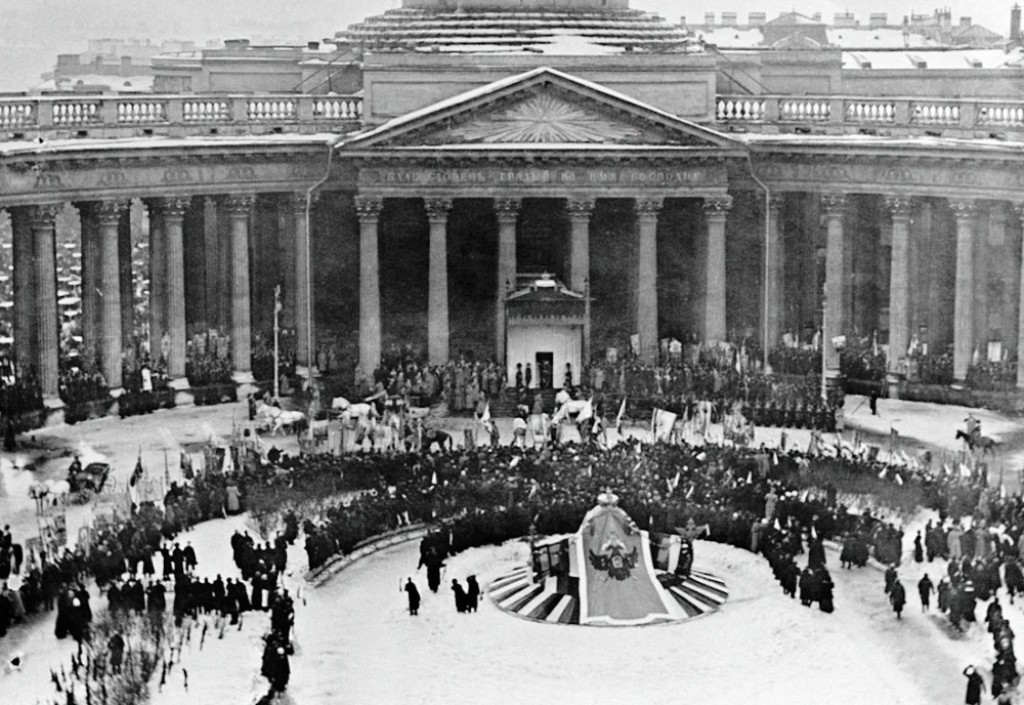
In 1913, the Romanov Dynasty celebrated it’s 300th anniversary. In February of that year, Emperor Nicholas II presided over the celebrations marking the Romanov Dynasty tercentenary. On 6th March (O.S. 21st February), a ‘Te Deum’[1] was performed in the Cathedral of Our Lady of Kazan in St. Petersburg, followed by a state reception at the Winter Palace.

Between 15th to 28th May 1913, the Emperor and his family made a pilgrimage across the Russian Empire, retracing the route down the Volga River that was made by the teenage Michael Romanov from the Ipatiev Monastery in Kostroma to Moscow in 1613 when he finally agreed to become Tsar.

The Imperial Family travelled on the Mezhen from Nizhny Novgorod to Kostroma to take part in the events marking the 300th anniversary of the Romanov dynasty that year.

The Governor of Kostroma Gennady Nikolaevich Botnikov greeted Emperor Nicholas II at the pier, with the traditional bread and salt[2] during the Imperial Family’s visit to the historic Russian town.

On the occasion of the celebrations marking the Tercentenary of the Romanov dynasty, Emperor Nicholas II ordered four kokoshniks, one for each of his four daughters. It was during their visit to Kostroma, that the grand duchesses were presented with the kokoshniks, made by the nuns of the Nikolaevsky Starotorzhsky Monastery[3].

The kokoshniks were made of velvet in a colour scheme typical of the Art Nouveau era: the kokoshnik of Grand Duchess Olga was a peach colour, Grand Duchess Tatiana’s is lilac, Grand Duchess Anastasia is in shades of rose. The colour of Maria’s kokoshnik is not known.

The kokoshniks were embroidered with gold threads and mother-of-pearl beads with stylized images of a double-headed eagle, mythical birds and floral ornaments. The kokoshniks looked elegant and delicate, emphasizing the youth of the grand duchesses. Each kokoshnik came in a case with a metal plaque on which dedicatory inscriptions were engraved. They were kept in the children’s rooms, located on the second floor of the Eastern Wing of the Alexander Palace at Tsarskoye Selo.

What happened to the kokoshniks after the 1917 Revolition? The Kokoshniks of Grand Duchesses Olga and Maria, were sold abroad in the 1930s. The kokoshniks of Grand Duchesses Tatiana and Anastasia, were evacuated during the Great Patriotic War (1941-45). All four kokoshniks have miraculously survived to the present day.

The kokoshniks of Grand Duchesses Tatiana and Anastasia are today in the collection of the Pavlovsk State Museum; the kokoshnik of Grand Duchess Olga Nikolaevna is in the collection of the Tsarskoye Selo State Museum; and the kokosnkik of Grand Duchess Maria Nikolaevna is today in a private collection in the United States. Many years back, the author of this article saw a photo of Maria’s kokoshnik, but it has since been lost.

PHOTO: the kokoshniks of Grand Duchesses Tatiana and Anastasia Nikolaevna

The first time the author of this article saw the kokoshniks of Grand Duchesses Tatiana and Anastasia was in the Costume Museum, which is located in one of the wings of Pavlovsk Palace. The museum showcases elegant evening gowns, dresses, fans, shoes and other personal items of members of the Russian Imperial Family, from the 18th to early 20th centuries.

It was here, that the kokoshniks were displayed, surrounded by glass display cases containing a number of elegant gowns and dresses from the wardrobes of the Dowager Empress Maria Feodorovna and Empress Alexandra Feodorovna. I thought it odd that they were among the collection of Pavlovsk Museum, especially given that neither the Dowager Empress, nor her son Nicholas II and his family, ever lived at Pavlovsk. As it turns out, they are all part of the collection of the Alexander Palace at Tsarskoye Selo.

PHOTO: the kokoshnik of Grand Duchess Olga Nikolaevna

In 2014, the kokoshnik belonging to Grand Duchess Olga Nikolaevna came up for auction in New York. It was purchased by the Tsarskoye Selo State Museum for $15,000 USD. The Sotheby’s auction house acted as an intermediary in this deal between the private collector and the museum.

Like the others, the headdress is made in a traditional Russian style in the shape of a crown, covered with peach-coloured velvet, embroidered with silk and silver threads and decorated with precious stones: rubies, emeralds, moonstone and mother-of-pearl. In the center of the crown there is an embroidered double-headed eagle. On the inside, the kokoshnik is covered with peach-coloured silk fabric, with long satin ribbons along the edges.

The packaging of the headdress with the Cyrillic inscription has also been preserved: “To the Grand Duchess Olga Nikolaevna, Nikolaevsky Starotorzhsky Convent, the city of Galich, Kostroma province. 1913».

“The acquisition of this relic is of particular importance for our museum, since the collection of memorial items of members of the last Tsar and his family is a priority for us. This kokoshnik will be displayed in the exposition of the Alexander Palace,” says Ekaterina Potselueva, curator of the women’s costume collection of the Tsarskoye Selo State Museum.

It is hoped that the kokoshnik of Grand Duchess Maria Nikolaevna will one day be returned to Russia, and that the two kokoshniks in the collection of Pavlovsk Palace will also be returned to the Alexander Palace at Tsarskoye Selo, from where they were all originally kept before the Revolution and the Great Patriotic War.

NOTES:

[1] The Te Deum is an early Christian hymn of praise. The title is taken from its opening Latin words, Te Deum laudamus, rendered as “Thee, O God, we praise”. In the Orthodox Church, it is sung as part of the moleben of thanksgiving.

[2] When important, respected, or admired guests arrive, they are presented with a loaf of bread (usually a korovai) placed on a rushnyk (embroidered ritual cloth). A salt holder or a salt cellar is placed on top of the bread loaf or secured in a hole on the top of the loaf.

[3] The Nikolaevsky Starotorzhsky Monastery has not survived to the present day. In 1936, the monastery was closed by the Soviet authorities. In the 1950s, the monastery buildings were transferred to the Galich Pedagogical School. In 1994 work began on the restoration of the monastery’s Trinity Cathedral, based on archival drawing, documents and photographs. Sadly, work was suspended due to lack of funding.

© Paul Gilbert. 10 November 2025

***

While my research is dedicated to clearing the name of Russia’s much slandered Tsar, I am also actively looking for articles and news stories on the Romanovs, from Russian archival and media sources, which may be of interest to my readers.

In exchange for this 18-page booklet, please consider making a small $5 or $10 donation in aid of my research. These donations are of great assistance in helping me offset the cost of obtaining and translating documents from Russian archival sources, which are often paid for out of my own pocket. It is these documents which help present new facts and information on the life and reign of Nicholas II. In addition, my research continues to debunking many of the myths and lies which exist more than a century after his death and martyrdom.

Please note, that there is NO obligation, thank you for your consideration!

CLICK HERE TO MAKE A DONATION

The church where Nicholas II and his family worshiped in Tobolsk

PHOTO: Church of the Annunciation of the Blessed Virgin, Tobolsk. 1910

During their eight month stay in Tobolsk [August 1917-April 1918], Nicholas II and his family were held under house arrest in the former Governor’s Mansion [renamed the “House of Freedom” by the Bolsheviks]. Their movements were restricted, as they had been at Tsarskoye Selo from March 1917 to the end of July 1917. Several weeks after their arrival in Tobolsk, they were permitted to worship in the nearby Church of the Annunciation of the Blessed Virgin up until January 1918, after which services were restricted to the confines of the “House of Freedom”.

The brick church was built between 1735-1758. A two-story quadrangle, completed with an octagon, on which five decorative domes were placed, with a two-aisled refectory and a three-tiered bell tower. The refectory included the chapels of Procopius and Ioann of Ustyug and the Great Martyr Catherine.

For more than three centuries, the Church of the Annunciation of the Blessed Virgin served as a spiritual center of life for hundreds of parishioners. The church featured a library, an almshouse, and a parochial school.

Pierre Gilliard recalls: “Finally, on September 21st, the festival of the Nativity of the Virgin, the prisoners were allowed for the first time to go to the church. This pleased them greatly, but the consolation was only to be repeated very rarely. On these occasions we rose very early and, when everyone had collected in the yard, went out through a little gate leading on to the public garden; which we crossed between two lines of soldiers. We always attended the first Mass of the morning, and were almost alone in the church, which was dimly lighted by a few candles; the public was rigorously excluded. While going and returning I have often seen people cross themselves or fall on their knees as Their Majesties passed. On the whole, the inhabitants of Tobolsk were still very attached to the Imperial family, and our guards had repeatedly to intervene to prevent them standing under the windows or removing their hats and crossing themselves as they passed the house.”

Empress Alexandra Feodorovna wrote in her diary: “During the services, officers, the commandant and the commissar stand beside us so that we do not dare to speak”.

PHOTO: drawings of the Church of the Annunciation of the Blessed Virgin, Tobolsk

On 8th September 1917, the Empress wrote in her diary: “We went to the service in the Cathedral of the Annunciation on foot, I was in my [wheel]chair, through the city garden, the soldiers were stationed all the way, the crowd stood where we had to cross the street. It is very unpleasant, but, nevertheless, I am grateful for being in a real church for [for the first time] in 6 months ”.

Commissar Vasily Pankratov described this event as follows: “Nicholas Alexandrovich was informed that tomorrow a Liturgy would be performed in the church, and that it was necessary to be ready by 8 o’clock in the morning. The prisoners were so pleased with this news that they got up very early and were ready by 7 o’clock. When I arrived at 7:30, they were already waiting. About 20 minutes later, the duty officer informed me that everything was ready. It turned out that Alexandra Feodorovna decided not to walk, but to ride in a chair, as her legs hurt. Her personal valet quickly wheeled the chair out to the porch. The whole family went out, accompanied by their retinue and servants, and we proceeded to the church. Nicholas II and his children, walking in the garden, looked around in all directions and talked in French about the weather, about the garden, as if they had never seen it. In fact, this garden was located just opposite their balcony, from where they could observe it every day. But it is one thing to see an object from a distance and, as it were, from behind a lattice, and another to walk through it freely. Every tree, every twig, bush, bench acquires charm … From the expressions on their faces, from their movements, one could assume that they were experiencing some special euphoria. As she was walking through the garden and not watching where she was going, Anastasia even fell. Her sisters laughed, even Nicholas himself was amused with this awkwardness of his daughter. Alexandra Feodorovna’s face remained motionless. She sat majestically in her chair and was silent. On leaving the garden, she got up from the chair, from where we crossed the street to enter the church. Outside stood a double line of soldiers, [a chain of riflemen was also placed in the garden along the entire route] and behind them stood curious onlookers. Upon entering the church, Nicholas and his family took their place on the right, their retinue closer to the middle. Alexandra Feodorovna knelt down, Nicholas and the four grand duchesses followed her example. After the service, the whole family received a prosphora [a small loaf of leavened bread used in Orthodox liturgies], which for some reason they always passed to their servants”.

The prisoners were allowed to visit the church again – on 14th September, the feast of the Exaltation of the Cross. On 18th September, Grand Duchess Tatiana Nikolaevna wrote to her aunt Grand Duchess Xenia Alexandrovna: “We were twice in church. You can imagine what a joy it was for us after 6 months, because do you remember how uncomfortable our camp church in Tsarskoye Selo was? The church here is good. One large summer room in the middle, where they serve for the parish, and two winter ones on the sides [referring to the side-chapels]. The right side-chapel is reserved for us”.

PHOTO: View of Tobolsk and the Church of the Annunciation of the Blessed Virgin

The family managed to visit the church for a third time on 1st October – on the feast of the Protection of the Most Holy Theotokos. Then again on 22nd October, the day marking the anniversary of the accession of Nicholas II to the throne and the feast of the Kazan Icon of the Mother of God. The entire family received communion on this day of the Holy Mysteries of Christ. “What a spiritual consolation in the time we are going through!” – the Emperor wrote in his diary that day. In addition, the Imperial family were allowed to attend church on 26th November, 3rd and 10th December, and 19th January.

Pierre Gilliard again writes: “The next day, Christmas Day, we went to church. By the orders of the priest the deacon [Fr Vasiliev] intoned the Mnogoletie [the prayer for the long life of the Imperial family] This was an imprudence which was bound to bring reprisals. The soldiers, with threats of death, demanded that the prayer should be revoked. This incident marred the pleasant memories which this day should have left in our minds. It also brought us fresh annoyances and the supervision became still stricter.”

Following the incident involving Fr Vasiliev, the Imperial family were no longer permitted to attend church. Instead, an improvised chapel was set up in the ballroom of the mansion, which consisted of a folding iconostasis and an altar, decorated with the Empress’s bed-spread, which served as an altar cloth. The local priest was invited to perform services for the Imperial family and their retinue up until April 1918, when they were transferred to the Ipatiev House [renamed the “House of Special Purpose”] in  Ekaterinburg, where they were subsequently murdered by members of the Ural Soviet on 17th July.

The Church of the Annunciation of the Blessed Virgin was closed by the Soviets in 1930, the building demolished in 1956 – the same year that the author of this article was born.

On 8th November [Siberia Day] 2025, a 1.4 m [4 ft. 6 in.] bronze 3D model of the Church of the Annunciation of the Blessed Virgin, was installed in its historical place – at the intersection of Ulitsas Mira and Ershov.

More information about the history of the church can be found on the audio guide using the QR code found on the information plate of the model.

The outdoor 3D model is part of the ‘Lost Churches of Tobolsk’ project, designed to remind residents and visitors to Tobolsk of the city’s rich spiritual history. It is a shame, that the church was not reconstructed.

NOTES:

[1] Siberia Day was established by Emperor Alexander III, on 8th November 1881, marking the 300th anniversary of the annexation of Siberia to the Russian State. Siberia Day honours the history and cultural significance. The holiday was abolished during the Soviet period, and revived in the 1990s.

© Paul Gilbert. 8 January 2021 – UPDATED on 9 November 2025

Russia’s ambassador to Britain laid flowers at the monument to Nicholas II on the Isle of Wight

PHOTO: Russia’s Ambassador to the UK Andrei Kelin
at the monument to Nicholas II on the Isle of Wight

On 4th November 2025 – on the occasion of National Unity Day – Russia’s Ambassador to the UK Andrei Kelin laid flowers at the monument to Nicholas II and his family on the Isle of Wight.

The granite monument with bronze relief portraits of the Imperial Family, was unveiled on 7th July 2018, by the Grand Duchess Elizabeth Romanov Society. The monumetn stands in Jubilee Green in East Cowes, close to Queen Victoria’s residence, Osborne House on the Isle of Wight, which is situated just off the southern coast of England.

The monument marking the 100th anniversary of the death and martyrdom of Emperor Nicholas II and his family was created by the renowned Moscow sculptor Elena Bezborodova. At its base there is a capsule with soil from the site, where the Imperial Family’s remains were found near Ekaterinburg.

“The Isle of Wight has a special connection with Russian history: Empress Alexandra Feodorovna and her sister Elizabeth Feodorovna spent time here as children with their grandmother, Queen Victoria. Nicholas II first visited the island in 1884 and visited it again in 1909, staying at the Barton estate,” said the Russian ambassador.

National Unity Day has been celebrated in Russia annually, on 4th November since 2005. The holiday commemorates the popular uprising which ended the Polish-Lithuanian occupation of Moscow in November 1612, and more generally the end of the Time of Troubles and turning point of the Polish intervention in Russia.

FURTHER READING:

Britain’s first memorial to the Russian Imperial Family + PHOTOS

© Paul Gilbert. 5 November 2025