NEW BOOK – Sovereign No. 13 (Summer 2024)

*You can order this title from most AMAZON outlets, including
the United States, United Kingdom, Canada, Australia,
France, Germany, Spain, Italy, Netherlands, Poland, Sweden and Japan
*Note: prices are quoted in local currencies

CLICK HERE TO ORDER THE PAPERBACK EDITION @ $20.00 USD

English. Large format 8-1/2″ x 11-1/2″. 130 pages. 132 Black & White photos

The No. 13 Summer 2024 issue of SOVEREIGNfeatures 20 articles about Russia’s last Tsar, his family, the Romanov dynasty and the history of Imperial Russia. These articles have been researched and written by independent historian and author Paul Gilbert. His works are based on new research from Russian archival and media sources.

In an effort to preserve his 30+ years of hard work, the author has reproduced a selection of the nearly 800 articles he has written for his blog in a printed format for the first time. The author has updated many of these articles with new facts and photos. In addition, this issue includes new works translated from Russian, and published in English for the first time.

The No. 13 issue, features 20 articles, richly illustrated with more than 130 photographs, English text. Many of the following articles have been reproduced from the author’s blog, and presented in a printed format for the very first time:

[1] Imperial Yacht Standart: Nicholas II’s palace on the sea

[2] The Soviet Navy’s use of the Imperial Yacht Standart during the Great Patriotic War

[3] Nicholas II, Wilhelm II and the 1905 Treaty of Bjorkö

[4] Traitors or Heroes? Nicholas II’s officers During the Great Patriotic War 1941-45

[5] Lost architectural monuments of the Moscow Kremlin

[6] Nicholas II attends opening of a sanatorium in Alupka, 1913

[7] Nicholas II and the Boy Scout Movement in Russia

[8] Update on the restoration of the Imperial Railway Pavilion at Tsarskoye Selo

[9] Healthcare reform under Nicholas II

[10] “Judge not, lest ye be judged” —In defence of the last Russian Empress

[11] The Veneration of Tsar-Martyr Nicholas II

[12] Nicholas II’s personal battle with typhoid in 1900

[13] Nicholas II records his memories of Pascha (Easter)

[14] On this day – 26th (O.S. 13th) April 1918 Nicholas II makes his final journey

[15] Nicholas II’s grave was an “open secret” in 1920s Soviet Russia

[16] Two new bust-monuments of Nicholas II Installed in Russia

[17] The Imperial Route: In the Footsteps of Nicholas II

[18] The myth that Nicholas II’s death was met with indifference by the Russian people

[19] The Romanovs in the Urals Ekaterinburg

[20] Putin’s negative assessment of Nicholas II

SOVEREIGN No. 12 (Winter 2024) – published January 2024

NOTE: The No. 14 issue of Sovereign is scheduled for publication in December 2024

***

#1 NEW RELEASE in AMAZON’S RUSSIAN HISTORY

On 14th June, less than 24 hours of its release on AMAZON, the No. 13 issue of SOVEREIGN was the ‘#1 NEW RELEASE in the RUSSIAN HISTORY‘ category!

THANK YOU to every one for supporting this important publishing project. 🙏

© Paul Gilbert. 13 June 202

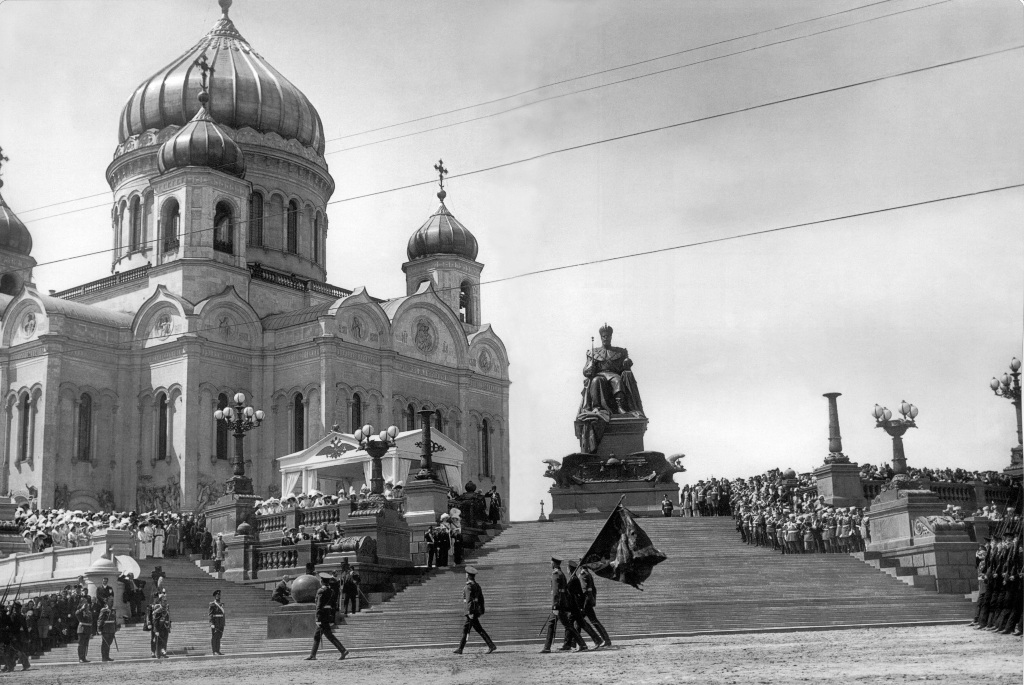
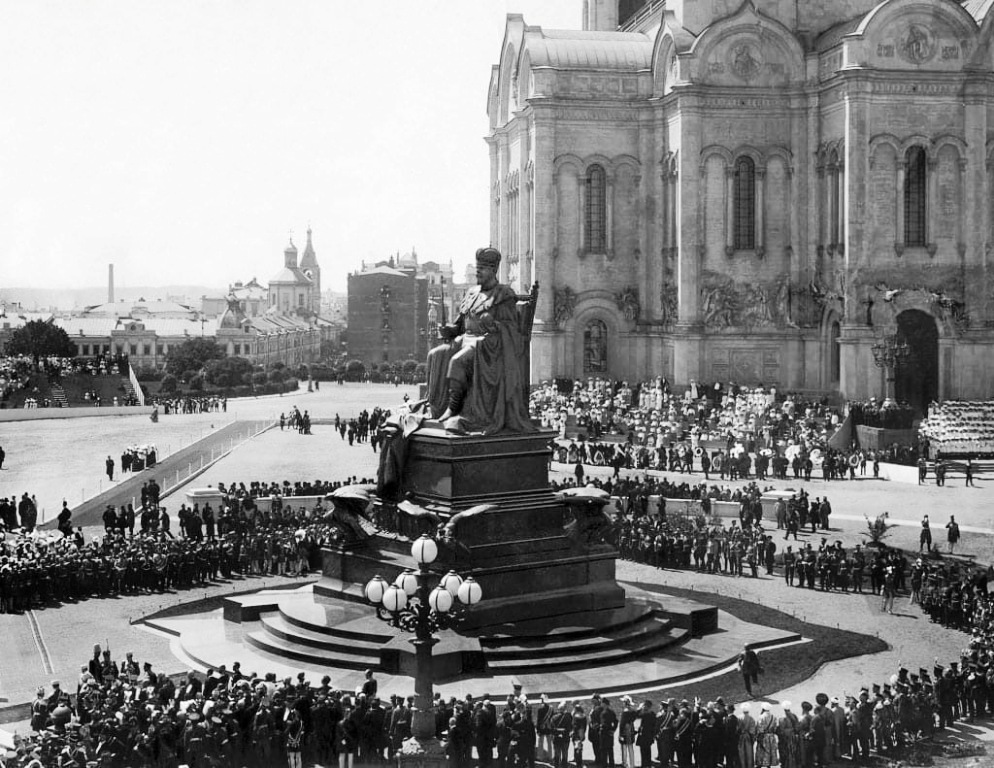
Nicholas II attends consecration of monument to his father in Moscow, 1912

PHOTOS: ceremonies marking the unveiling of a monument to Emperor Alexander III, in Moscow (1912)

On 12th June (O.S. 30 May) 1912, Emperor Nicholas II atteded the unveiling and consecration of a magnificent monument of his father Emperor Alexander III (1845-1894), in Moscow.

The monument made by the architect Alexander Pomerantsev and sculptors Alexander Opekushin and Artemy Ober, was installed on the Prechistenskaya Embankment at the southeast corner of the Cathedral of Christ the Saviour.

In December 1894, Emperor Nicholas II appointed his uncle Grand Duke Sergei Alexandrovich to head a committee to oversee the planning and construction of the monument. More than 2.5 million rubles were donated for the monument’s construction, which lasted from 1900 to 1912.

Made in the style of monumental realism, the bronze statue stood on a stepped red granite pedestal facing the Moscow River. Alexander III is depicted sitting on a throne in a mantle with an imperial crown on his head. In the hands of the emperor were a scepter and orb. The inscription the pedestal read: “To the most pious autocratic Great Sovereign, our emperor Alexander Alexandrovich of All Russia. 1881-1894.” At its corners stood bronze double-headed eagles with outstretched wings. The monument featured a low granite balustrade, and a staircase which descended to the river.

The grand opening of the monument took place on 12th June (O.S. 30th May) 1912, in the presence of Emperor Nicholas II and members of the Imperial Family. At 8 o’clock in the morning, five cannon shots sounded from the Taynitskaya Tower. At 10 o’clock at the entrance to the Cathedral of Christ the Saviour, a procession began, led by Moscow Metropolitan Vladimir, Emperor Nicholas II, his mother the Dowager Empress Maria Feodorovna and Empress Alexandra Feodorovna.

After 360 rounds were fired and the Preobrazhensky Regiment march, the veil was removed from the sculpture, Metropolitan Vladimir sprinkled the monument with holy water. Some 86 wreaths were placed at the monument, and an inspection of the monument by the Emperor and members of the Imperial family. In the evening, the city and the sculpture were illuminated. A 24-hour guard of honour comprised of war veterans stood guard at the monument.

PHOTO (above): Emperor Nicholas II and his mother the Dowager Empress Maria Feodorovna can be seen in the foreground, Empress Alexandra Feodorovna and members of the Russian Imperial Family are following behind.

Sadly, the monument did not survive for long – a little more than 6 years! Following the October 1917 Revolution, a decree was issued for the demolition of all monuments of the Tsarist era. The decree dated 12th April 1918 ordered that monuments of members of the Roamov dynasty be replaced by those honouring revolutionaries. The monument of Emperor Alexander III was one of the first monuments destroyed during this campaign.

The dismantling of the monument began on 17th July 1918 – the very same day in which Nicholas II and his family were murdered in Ekaterinburg. A plan to establish a monument to Liberated Labour was never realised. The pedestal was demolished along with the Cathedral of Christ the Saviour in 1931.

© Paul Gilbert. 12 June 2024

Faithful to the End: Eugene Sergeevich Botkin (1865-1918)

PHOTO: Eugene Sergeevich Botkin (1865-1918)

On this day – 9th June (O.S. 27th May) 1865 – Eugene Sergeevich Botkin, the chief physician of Emperor Nicholas II and his family, was born at Tsarskoye Selo.

Eugene was the fourth child born into the family of the famous Russian physician-therapist (who had served as the personal physician to Emperors Alexander II and Alexander III), professor of the Medical-Surgical Academy Sergei Petrovich Botkin (1832-1889) and Anastasia Alexandrovna Krylova (1835-1875).

As a child, he was known for his generosity, modesty and aversion to violence. His brother Pyotr (Peter) Sergeevich recalled: “He was infinitely kind. One could say that he came into this world for the sake of helping people.”

In 1878, on the basis of the education he received at home, he was admitted to the 5th grade of the 2nd Petersburg classical gymnasium (school). After graduating from high school in 1882, he entered the Physics and Mathematics Faculty of St. Petersburg University, however, having passed the exams for the first year of the university, he left for the junior department of the opened preparatory course of the Military Medical Academy. In 1889, Botkin graduated from the academy being awarded the title of doctor with honours.

In 1891, Eurgene married Olga Vladimirovna Manuilova (1872-1946), whom he divorced in 1910. The couple had 5 children: Sergei (who died at the age of 6 months); Dmitri (1894-1914); Yuri (1896-1941): Tatiana (1899-1986) and Gleb (1900-1969) – the defender of Anna Anderson, who claimed that she was the Grand Duchess Anastasia Nikolaevna.

PHOTO: Dr. Eugene Sergeevich Botkin (left) with Eperor Nicholas II (right)

In 1904, the Russian-Japanese war began, and Eugene volunteered for the Far East, where he was by decree of the Main Directorate of the Russian Red Cross Society, appointed assistant to the Chief Commissioner for the acting armies for the medical division. Occupying this rather high administrative position, Dr. Botkin was often at the forefront. During the war, Eugene not only showed himself to be an excellent doctor, but also showed great personal courage.

He wrote many letters from the front, of which a whole book was composed – “The Light and Shadows of the Russian-Japanese War of 1904-1905“. This book was soon published, and many, after reading it, discovered new sides of the St. Petersburg doctor: “his Christian, loving, infinitely compassionate heart and unshakable faith in God”.

Empress Alexandra Feodorovna, having read Botkin’s book, wished that Eugene become the personal doctor of the Imperial Family. On 13th April 1908 – Easter Sunday – Emperor Nicholas II signed a decree appointing Doctor Eugene Sergeevich Botkin as a physician of the Imperial Court.

Dr. Botkin was among the few confidants who voluntarily followed the Tsar and his family into exile to Tobolsk in Siberia. His letters from Tobolsk are striking in their truly Christian spirit: not a word of condemnation, discontent or resentment, but complacency and even joy.

In August 1917, Dr. Botkin voluntarily followed the Imperial Family into exile to Tobolsk in Siberia, where they lived under house arrest for 8 months. In April 1918, he again volunteered to accompany the Imperial couple to Ekaterinburg. On the night of 16/17 July 1918, the Imperial Family, their four faithful retainers, which included Dr. Botkin, were shot by members of the Ural Soviet in the basement of the Ipatiev House.

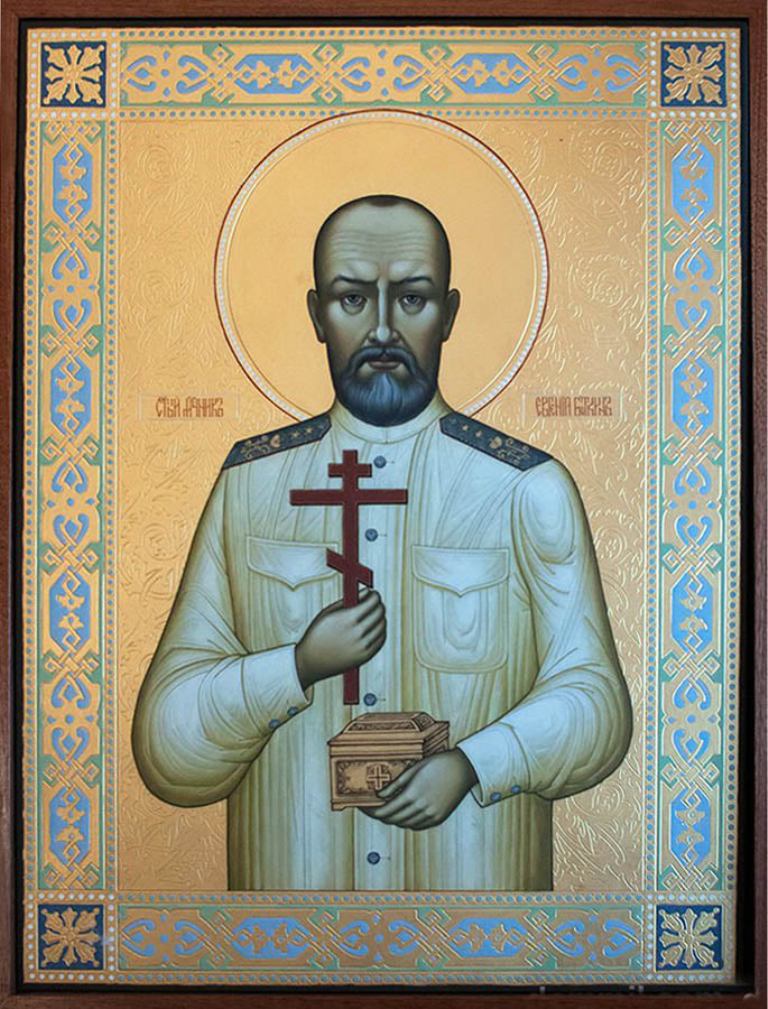
PHOTO: icon depicting the Righteous Passion-Bearer Yevgeny the Physician

In 1981, Botkin along with the Imperial Family, was canonized as a New Martyr by the Russian Orthodox Church Outside of Russia.

On 16th October 2009, the General Prosecutor’s Office of the Russian Federation decided to rehabilitate 52 persons of the Imperial family and their retainers who had been subjected to repression, including Dr. Botkin.

On 3rd February 2016, the Bishop’s Council of the Russian Orthodox Church canonized Botkin as Righteous Passion-Bearer Yevgeny the Physician.

© Paul Gilbert. 9 June 2024

June 1st marks 45th anniversary of discovery of the “Ekaterinburg remains”

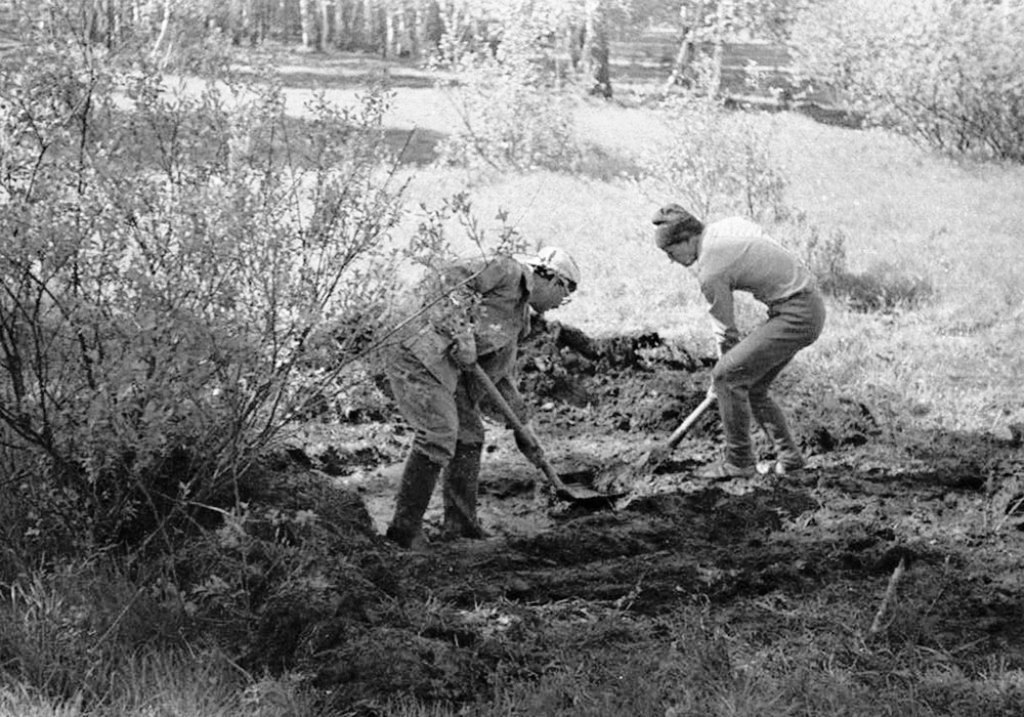
PHOTO: Geliy Ryabov (left) and Gennady Vasiliev (right) remove the wooden sleepers from the unmarked grave. 1st June 1979

NOTE: I have provided links (below) to other interesting articles + photos – PG

June 1st marked the 45th anniversary of the discovery of what would come to be known as the “Ekaterinburg remains”. It was on this day, that Geliy Trofimovich Ryabov (1932-2015) and Alexander Nikolaevich Avdonin (born 1932), discovered a shallow grave marked with railway ties on the Old Koptaki Road, situated about 22 km [13.7 m.] northeast of Sverdlovsk [Ekaterinburg], and 3.8 km from Ganina Yama.

Avdonin and Ryabov who were accompanied by their wives and colleagues V.A. Pesotsky and G.P. Vasiliev, found the second burial site containing the remains of Emperor Nicholas II, members of his family and their four faithful servants, all of whom were all murdered in the basement of the Ipatiev House in the Ural capitl in the early morning hours of 17th July 1918. This was preceded by many years of work in various archives and libraries, as well as the study of the area of Ganina Yama and Porosyonkov Log.

Further reading: Nicholas II’s grave was an “open secret” in Soviet Russia during the 1920s

Due to the political climate of the time, they were forced to close the grave until after the fall of the Soviet Union. It was not until July 1991, that Avdonin and a team of experts returned to the Old Koptyaki Road, where they exumed the remains of nine bodies. The remains were sent for forensic tests which identified the remains as those of Emperor Nicholas II, his wife Empress Alexandra Feodorovna, three of their daughters Grand Duchesses Olga, Tatiana, Anastasia Nikolaevna, as well as those of their four retainers. It was not until 2007, that the remains of Tsesarevich Alexei Nikolaevich and Grand Duchess Maria Nikolaevna were discovered in a separate grave, situated just meters from the main grave.

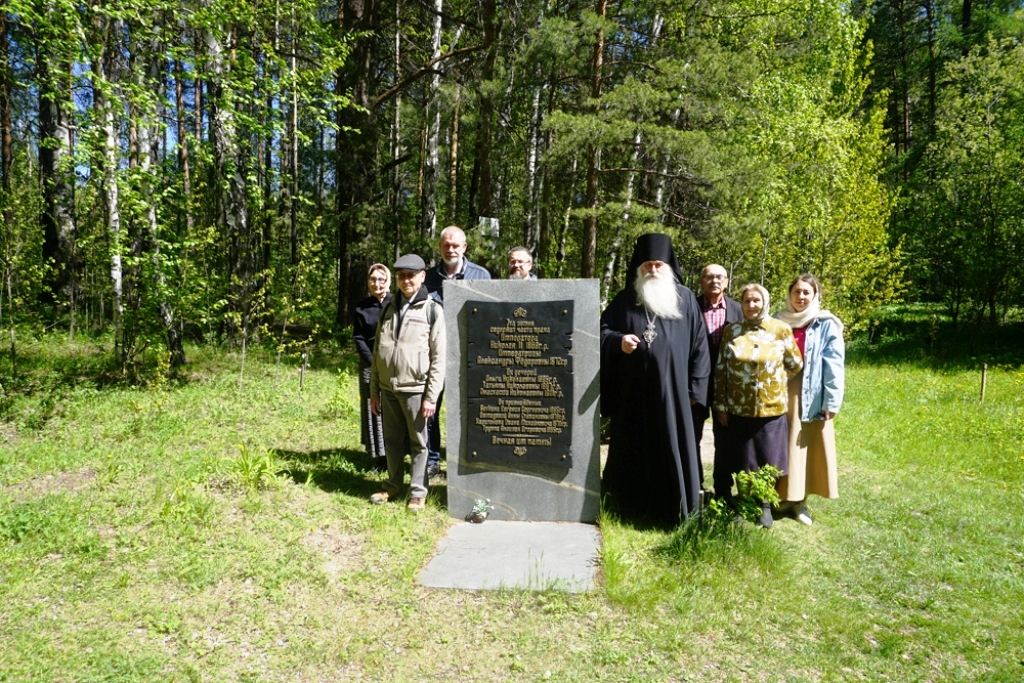
On 16th July 1999, the Romanov Memorial was opened on the site of the graves. The main grave is modestly decorated with wooden railway ties – a large metal Orthodox cross was erected above it. There is also a memorial stone (see last photo on this post) on which is written: “Here the remains of the Tsar’s Family and persons loyal to Them, murdered on 17th July 1918 in Ekaterinburg, were hidden.” A metal Orthodox cross was also erected at the second grave, where the remains of Alexei and Maria were found The Romanov Memorial is maintained at the expense of the Romanov Memorial in Porosenkov Log Charitable Foundation.

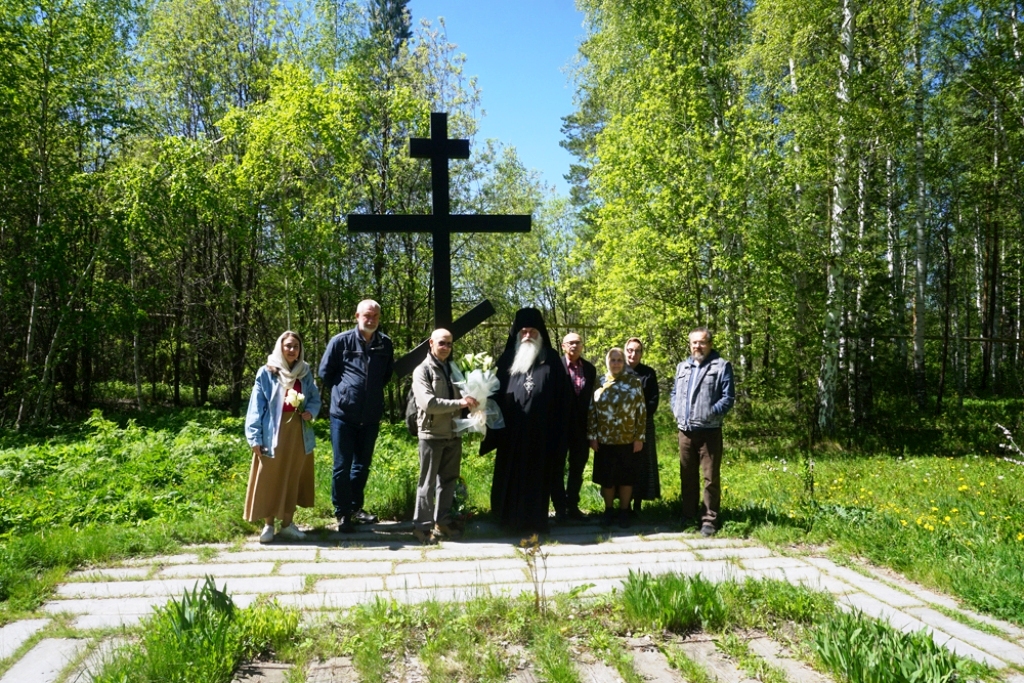
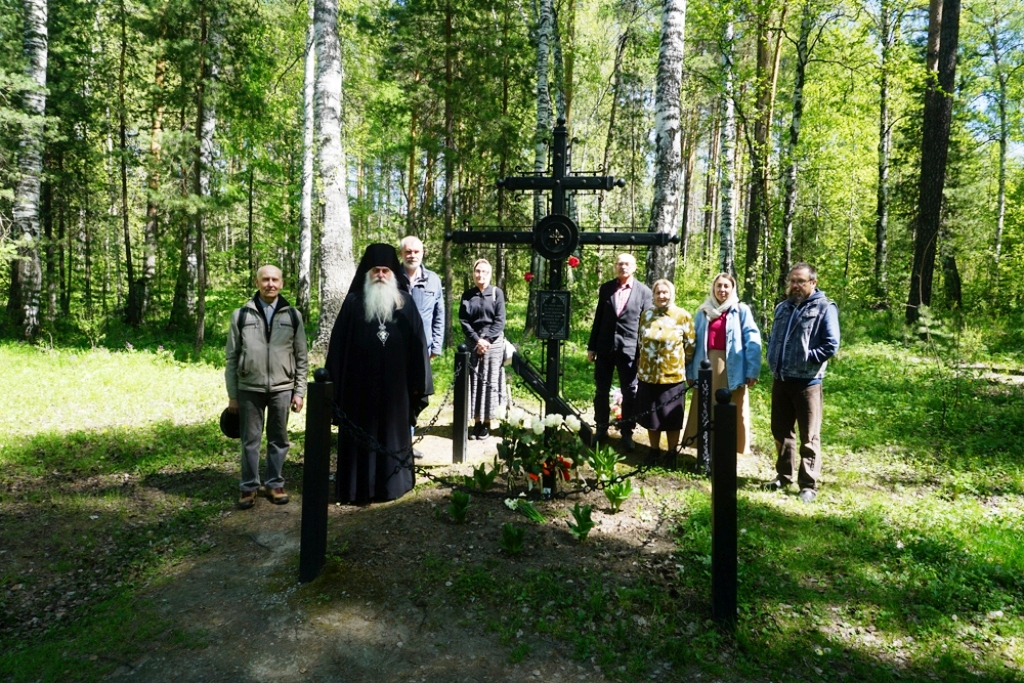
PHOTO: Archimandrite Tikhon (Zatekin) and participants standing at the main grave at Porosenkov Log:

On 1st June 2024, a small group of Orthodox Christians and adherents to the memory of the Holy Royal Martyrs, gathered on the Old Koptyaki Road, where the Romanov Memorial is now located, at Porosenkov Log. Among those present, were participants who took part in the search for the remains of the Imperial Family and their servants – geophysicist G.P. Vasiliev, as well as participants in the search in 2007 for the remains of Tsesarevich Alexei and Grand Duchess Maria: L.G. Vokhmyakov, S.M. Vokhmyakova, N.B. Neuymin, A. Bobrov among others.

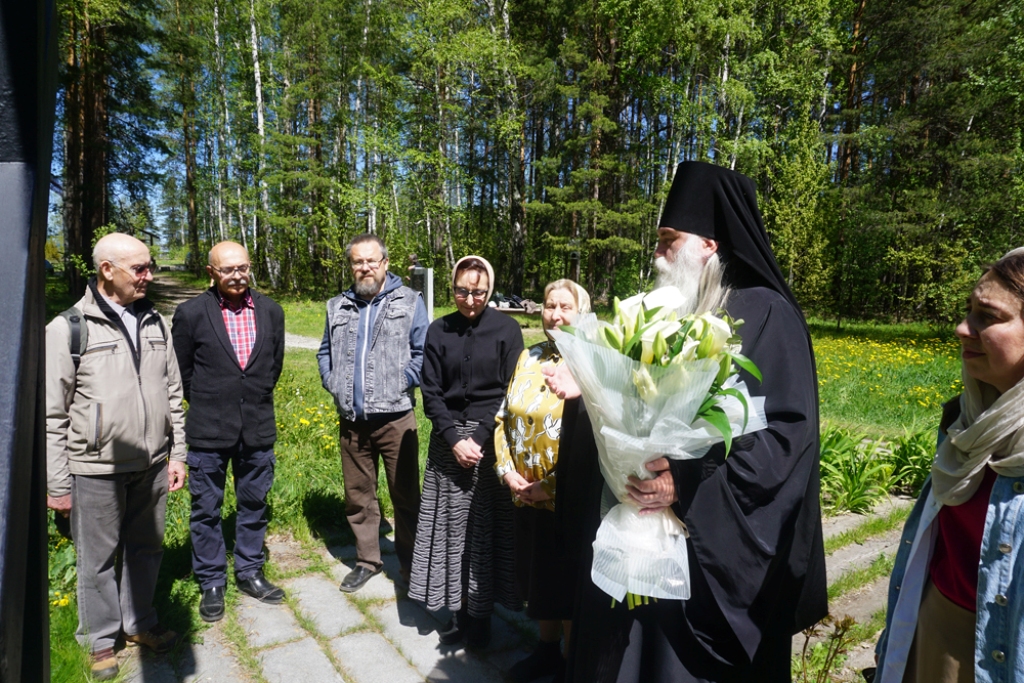
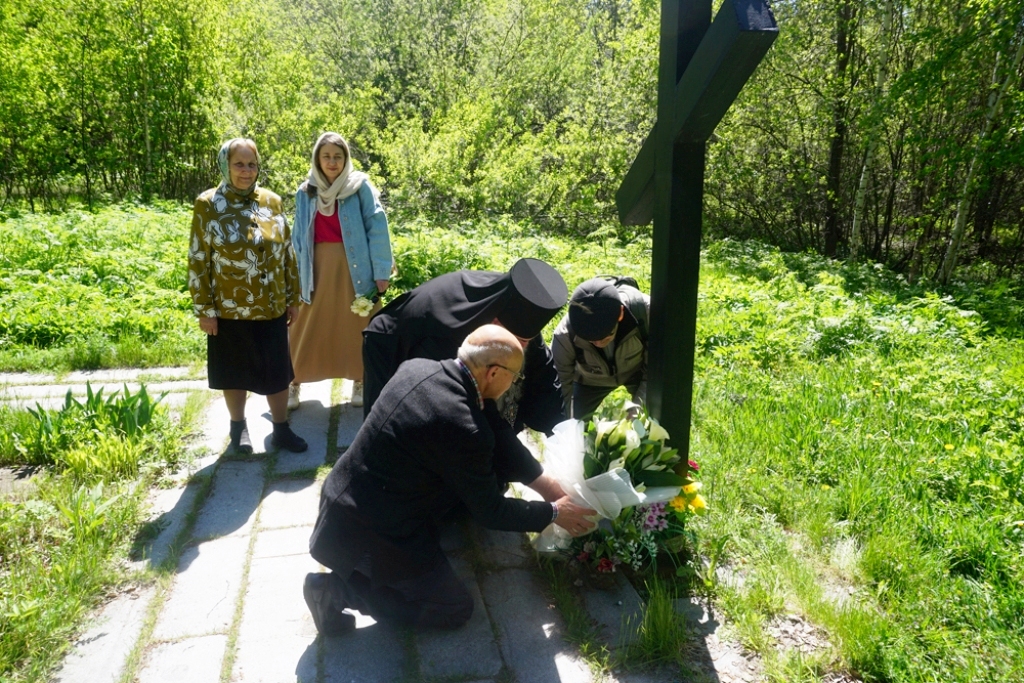
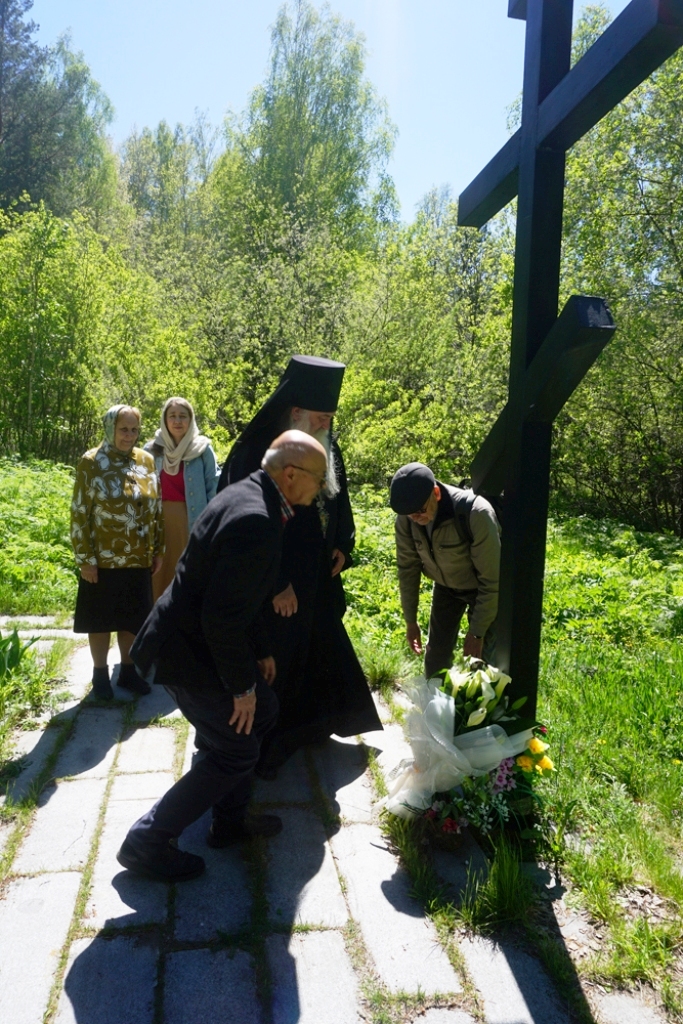
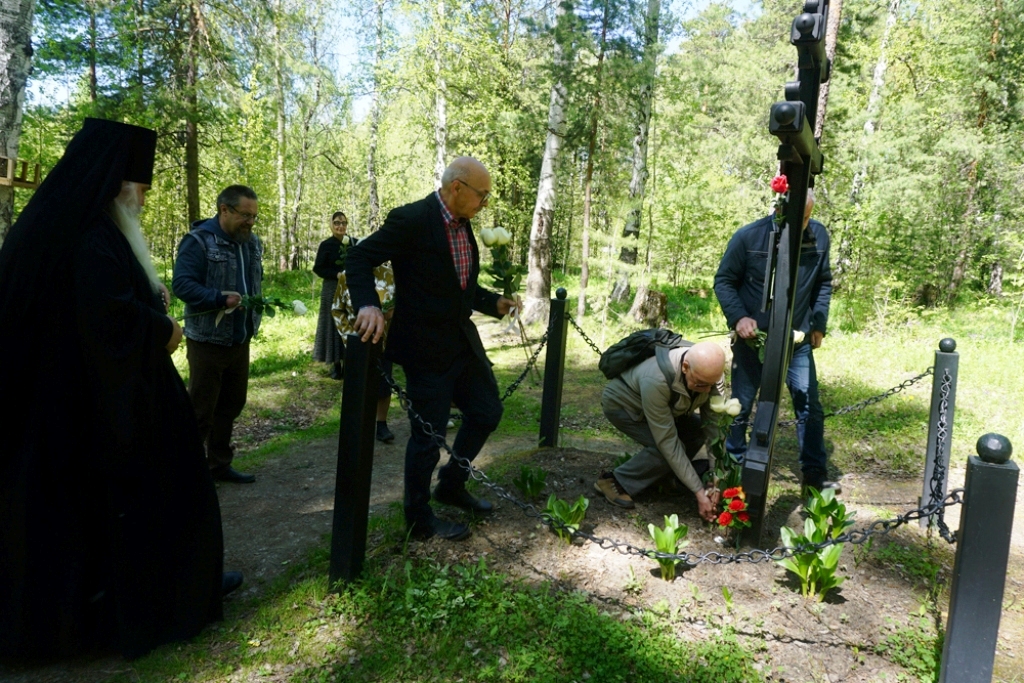
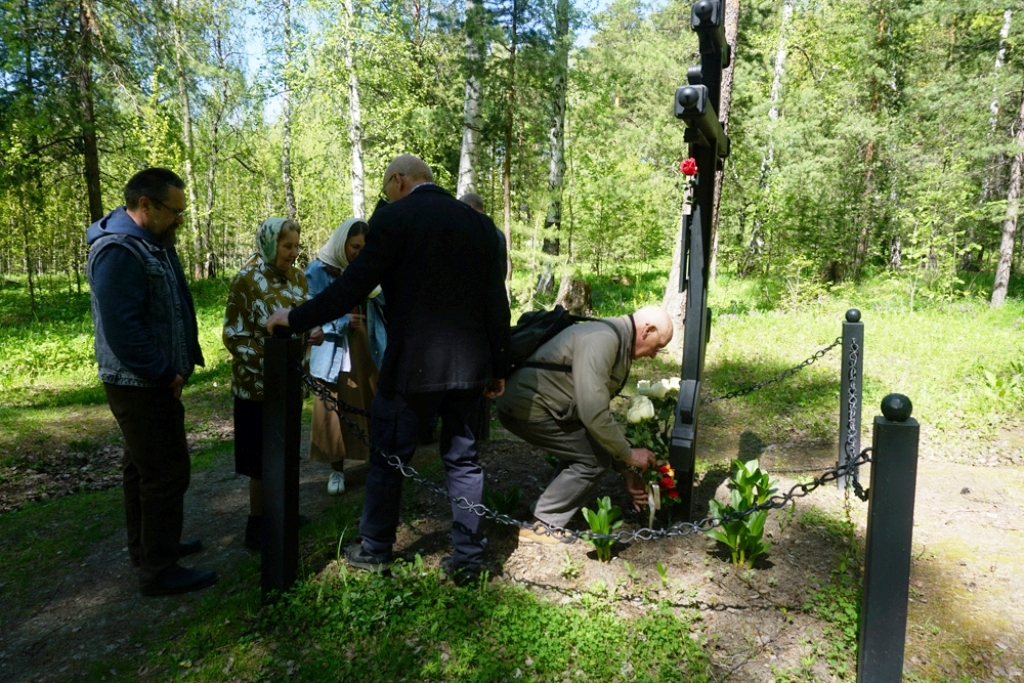
Archimandrite Tikhon (Zatekin), G.P. Vasiliev and L.G. Vokhmyakov laid a bouquet of white lilies[1] at the cross erected at the site where the Tsar’s remains were discovered in 1979, after which roses were laid at the cross, where the remains of Tsarevich Alexei and Grand Duchess Maria were found in 2007.

NOTE: The Moscow Patriachate of the Russian Orthodox Church believes that the Ekaterinburg remains found at Porosenkov Log are false relics, and that the bodies of the Imperial Family were completely destroyed at Ganina Yama by the regicides in 1918. The Church has not yet made a final decision on the question of whether these Ekaterinburg remains are genuine or not. The final decision rests with the Council of Bishops of the Russian Orthodox Church, who have been forced to postpone their convening to discuss the matter “indefinitely”, citing the current situation with Ukraine.

The members of the Romanov Family Association (which includes most of the living descendants) have all recognized the Ekaterinburg remains as those of Emperor Nicholas II, his family and their four retainers. The ONLY descendants who do NOT recognize the authenticiy of the Ekaterinburg are Princess Maria Vladimirovna and her son George.

PHOTOS (below) depict Archimandrite Tikhon (Zatekin) laying a bouquet of white lilies at the main grave at Porosenkov Log:

PHOTOS (below) depict L.G. Vokhmyakov laying a bouquet of roses at the second grave at Porosenkov Log:

PHOTOS (below) depict Archimandrite Tikhon (Zatekin) at the memorial stone at Porosenkov Log:

NOTES:

[1] The white lilies symbolize the unfading flower of virginity and purity of the Mother of God, to whom the Church sings: “You are the root of virginity and the Unfading Flower of purity.”

© Paul Gilbert. 6 June 2024

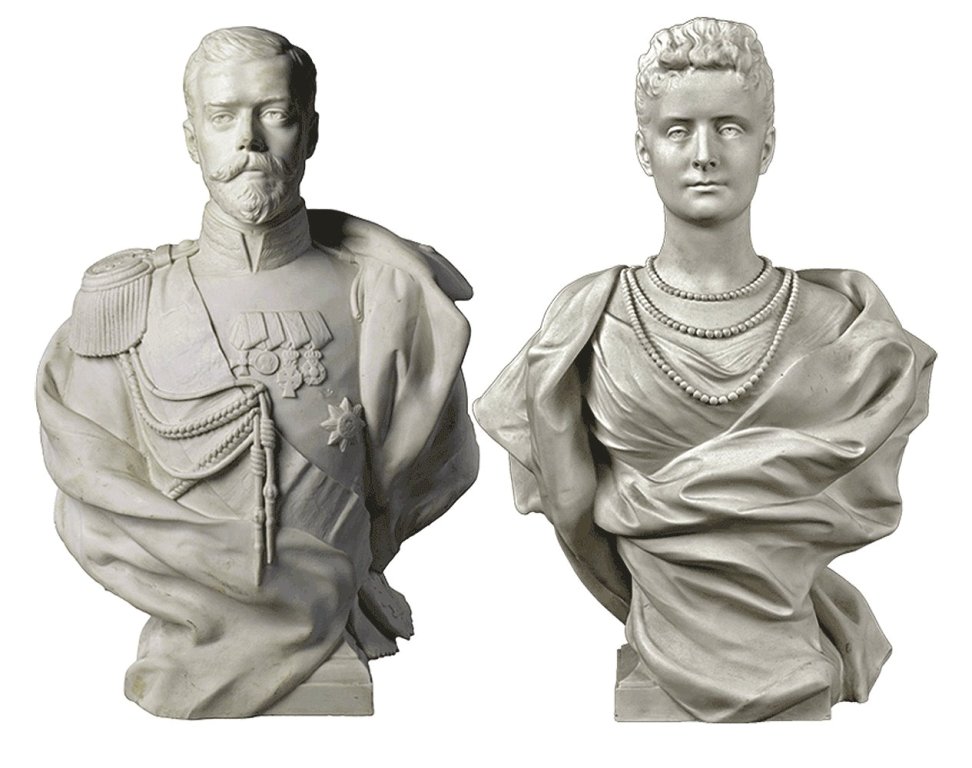
Léopold Bernstam’s busts of Nicholas and Alexandra (1895)

PHOTO: Biscuit Porcelain Busts of Emperor Nicholas II and Empress Alexandra Feodorovna. by the famous Russian sculptor Leopold Adolfovich Bernstam (1859-1939). From the Collection of the State Russian Museum in St. Petesburg.

Leopold Adolfovich Bernstam was born to a Jewish family in Riga, on 20th April 1859. At the age of 13, he studied under the famous Danish-Russian sculptor David Ivanovich Jensen (1816-1902). The following year, at the age of 14, Bernstam entered the Imperial Academy of Fine Arts in St. Petersburg, where he earned several awards.

From 1885 he lived in Paris where he worked as a sculptor at the Grévin Museum. He is credited with being the author of some 300 sculptures in his lifetime, including at least 5 monuments to Emperor Peter I of Russia.

In the early 1880s he temporarily moved to Russia, where he made about 30 busts of celebrated Russians, including authors, playwright and composers. In 1885 he settled in Paris, often returning to St. Petersburg. 

PHOTO: Leopold Adolfovich Bernstam (1859-1939)

In 1895 Léopold Bernstam received a commission to create portrait busts of members of the Imperial Family. Among them was the new Tsar and Tsarina, who were crowned in Moscow in May 1896.

In his diary, dated 20th September and 21st, 1895, Nicholas II wrote: “… after breakfast spent more than an hour sitting for Bernstam…” and on 21st September: “sat for the sculptor again”.

At the beginning of 1896, Bernstrom was invited to Tsarskoye Selo, where he completed busts of several members of the Tsar’s family in less than three weeks. Among them were a pair of marble busts depicting the August Couple, which served as excellent models for mass-produced copies, which were installed in the lobbies or foyers of all government buildings, as well as educational charitable institutes, hospitals, etc.

Bernstam’s last work in St Petersburg was a bust of Emperor Alexander III, which was installed in 1914, in the garden of the Russian Museum of His Imperial Majesty Alexander III [renamed State Russian Museum]. It was removed in 1918. 

Leopold Adolfovich Bernstam died at the age of 79, on 22nd January 1939, in Menton (France), a town located on the Mediterranean Sea at the Franco-Italian border.

© Paul Gilbert. 5 June 2024

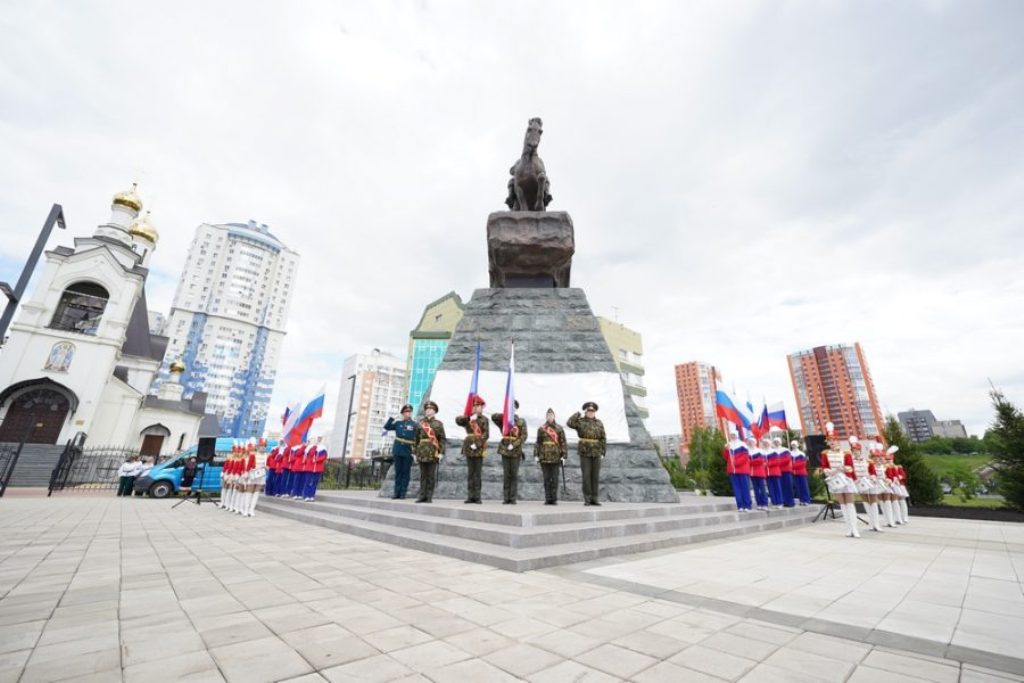
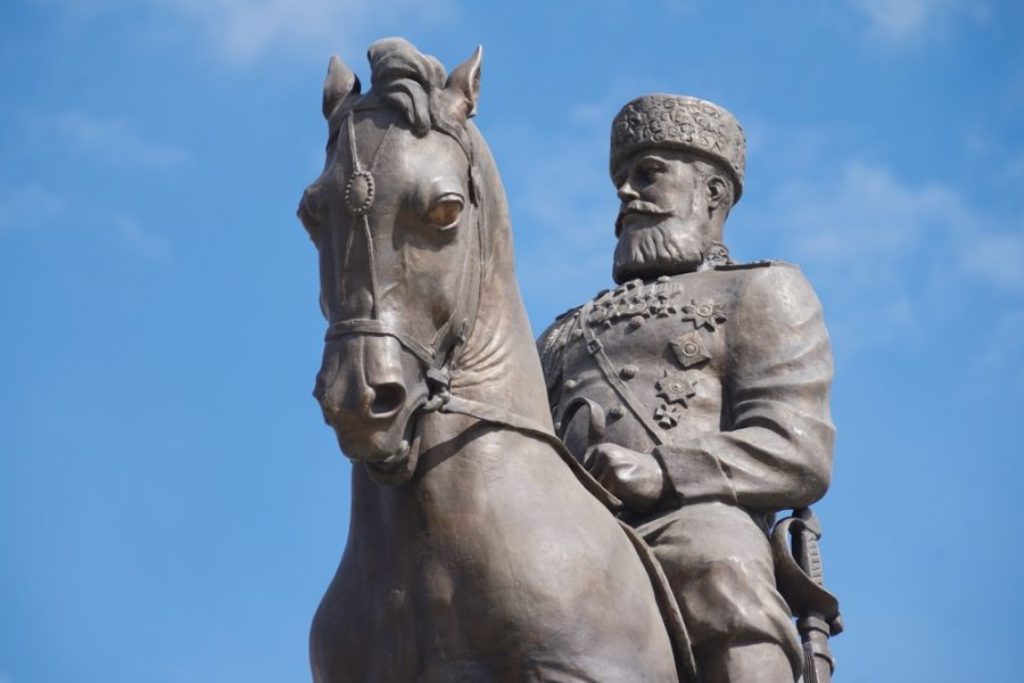
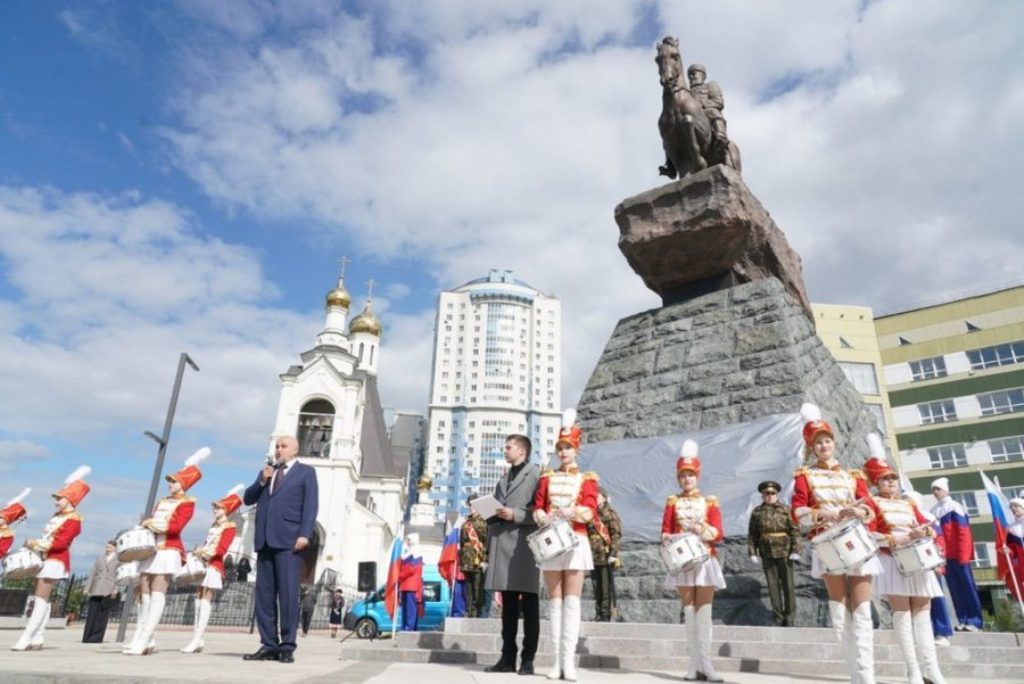
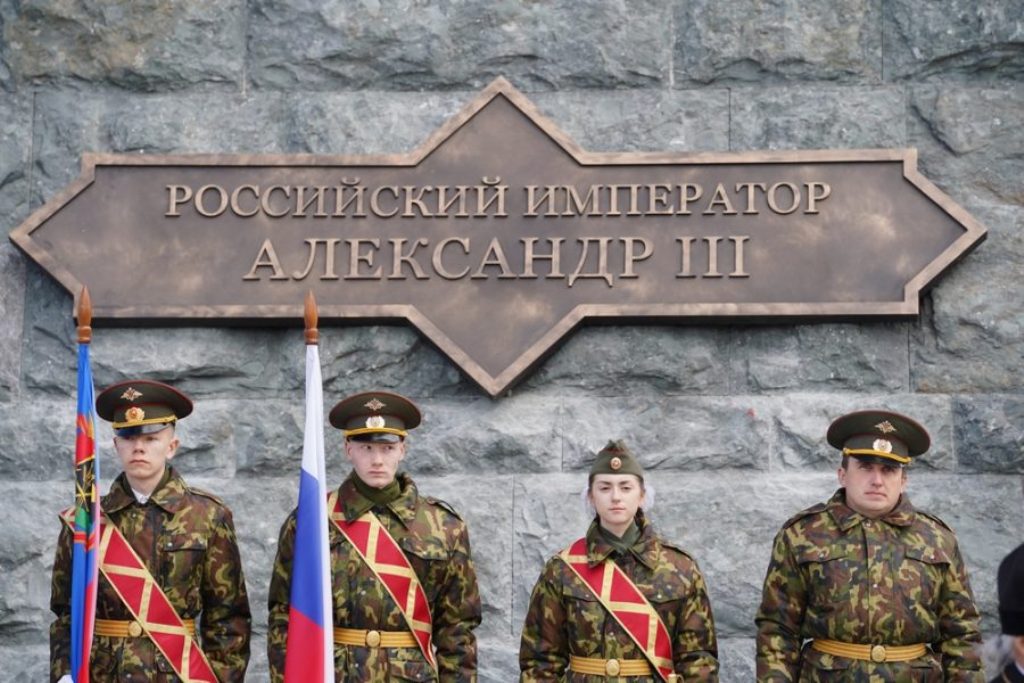
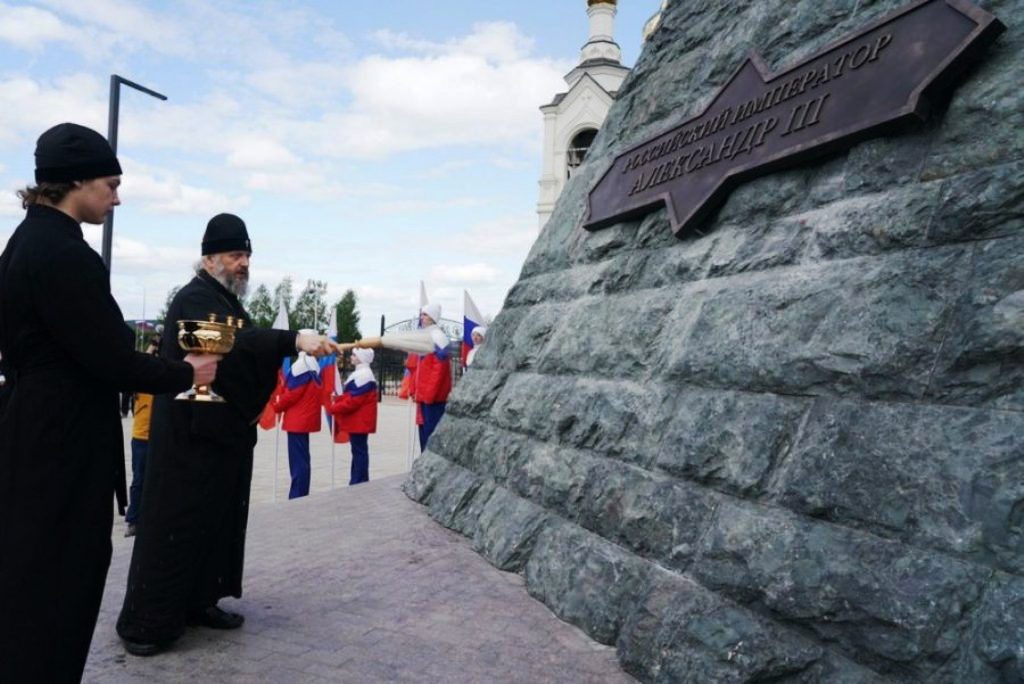
Monument to Emperor Alexander III unveiled in Siberia

CLICK on the above image to watch a short VIDEO of the unveiling ceremony. The photos posted below are all impressive, however, to get a real appreciation for the sheer size and magnificence of this monument, film footage is the next best thing to taking part in the event. Duration: 1 minute. Language: Russian.

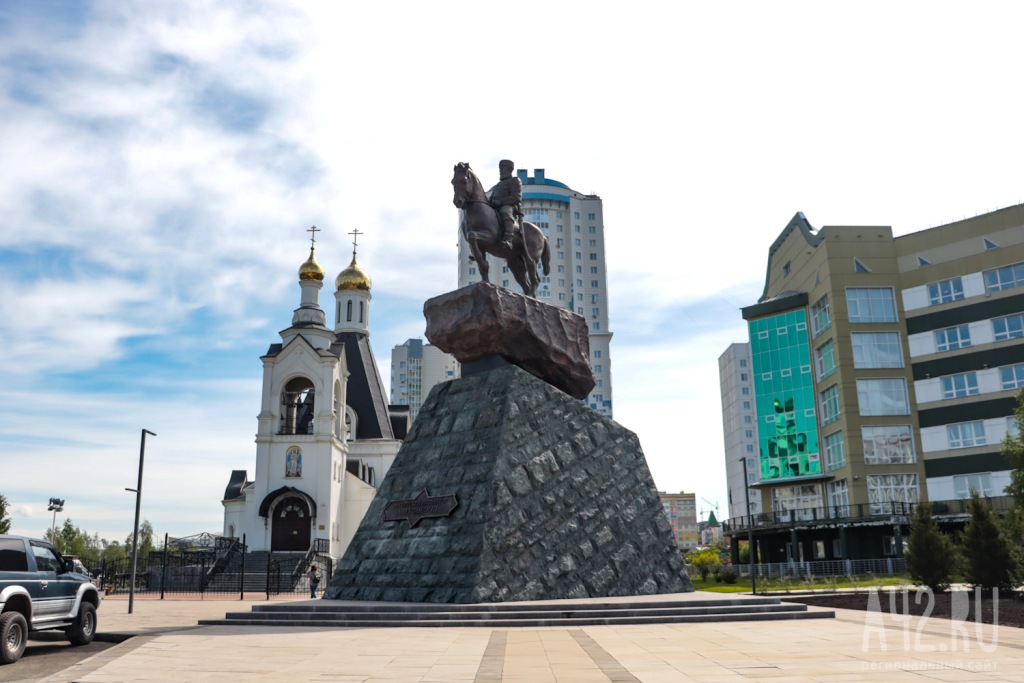
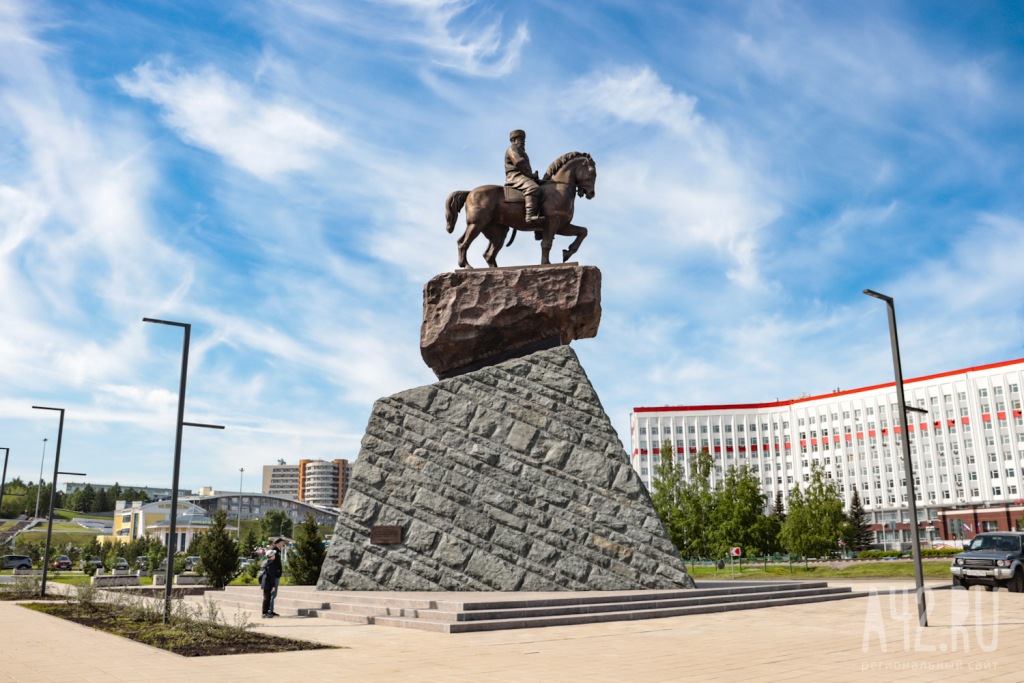
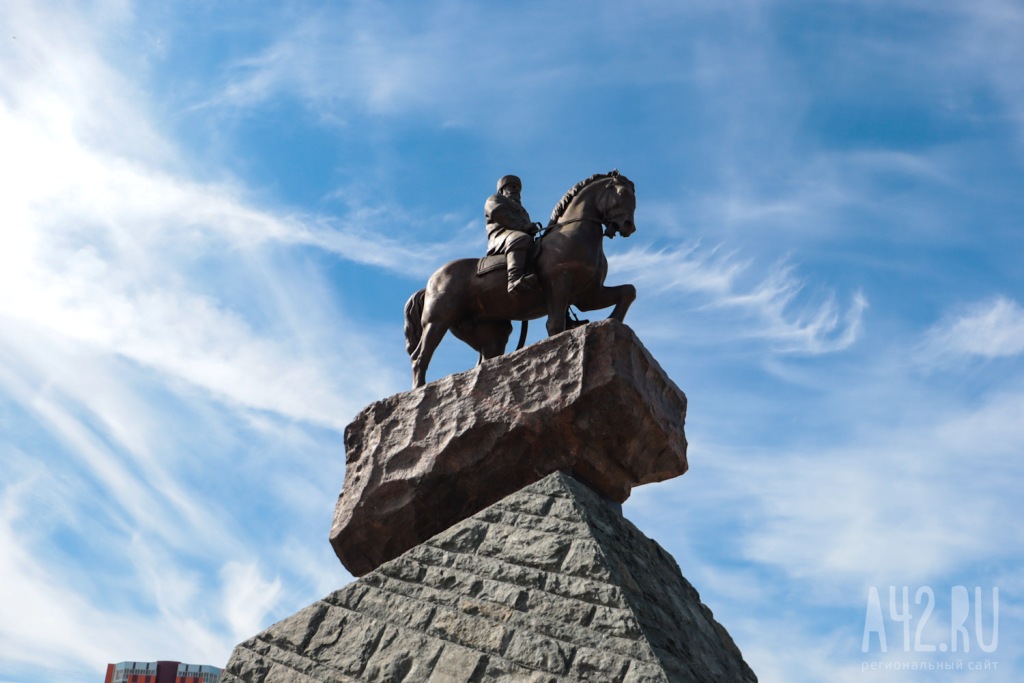
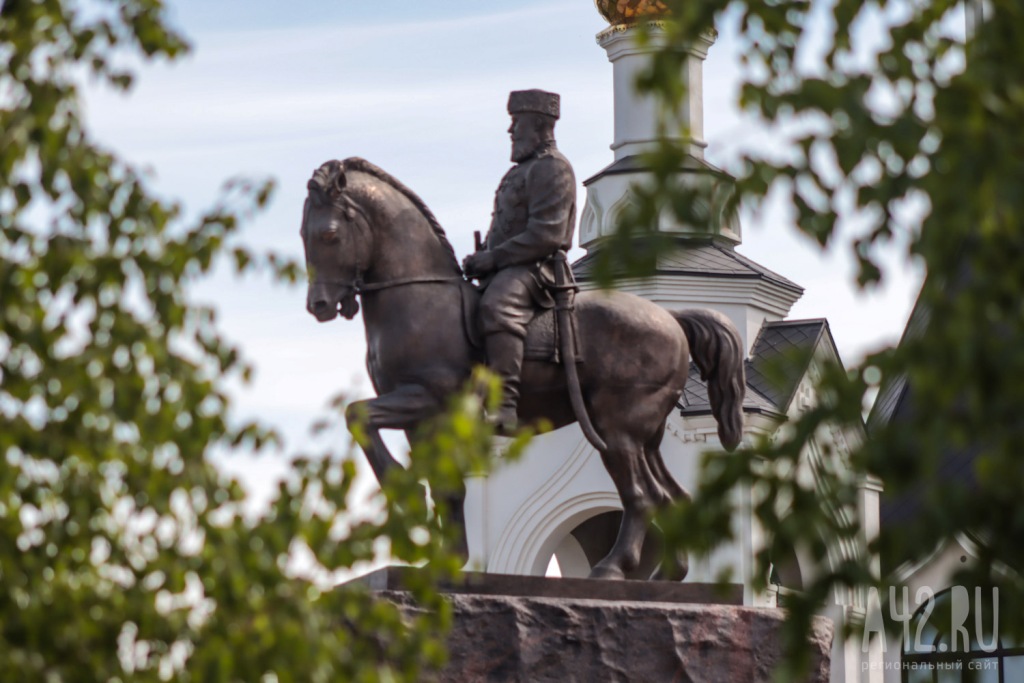
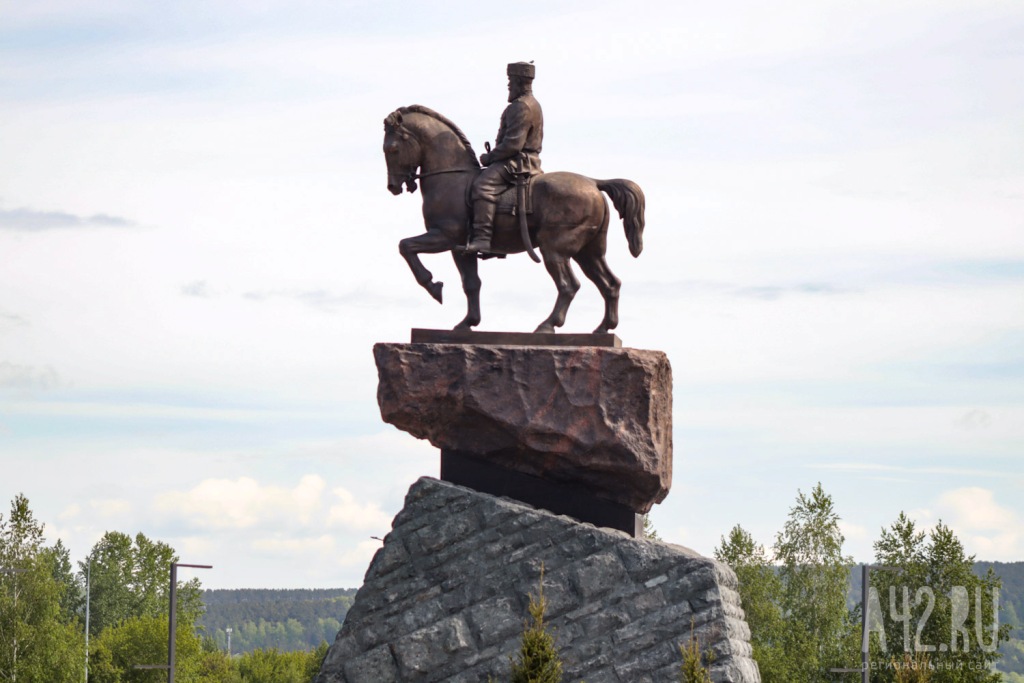
On 31st May 2024, a magnificent equestrian monument to Emperor Alexander III was unveiled and consecrated in the city of Kemerovo, the capital of Kuzbass, situated in Western Siberia.

The height of the equestrian statue is 5 meters 35 centimeters, almost the height of a five-story building. The weight of the statue is 12 tons. It stands on a granite monolith weighing 79 tons, which was mined in the Karelia region. The totak height of the statue and pedestal is 14 meters, The author of the composition is the famous Zurab Tsereteli, who, turned 90 in January.

the equestrian monument was installed in front of the Kuzbass Territorial Administration of the West Siberian Railway.

While the “Tsar-Peacemaker” has no direct relation to Kemerovo or Kuzbass, he is nevertheless considered the initiator of the industrial development of Siberia and and, most importantly, the construction of the Trans-Siberian Railway.

The opening ceremony was attended by the Minister of Energy Sergey Tsivilev, and acting Governor of the region Ilya Seredyuk, as well as many townspeople.

“Today is a significant moment in the history of all of Siberia. With great enthusiasm, we embodied the idea of perpetuating the memory of the great emperor who loved Russia,” Tsivilev said during the opening ceremony.

He explained the decision to erect a monument by the fact that thanks to a decision by Alexander III to build the Trans-Siberian Railway, brought mass development to Siberia, the Far East and specifically Kuzbass.

“The railway connected the whole of the Russian Empire together. We are still using the results of his wise decision,” Tsivilev added.

© Paul Gilbert. 1 June 2024

Remains of 2 faithdul retainers to the Imperial Family discovered near Perm

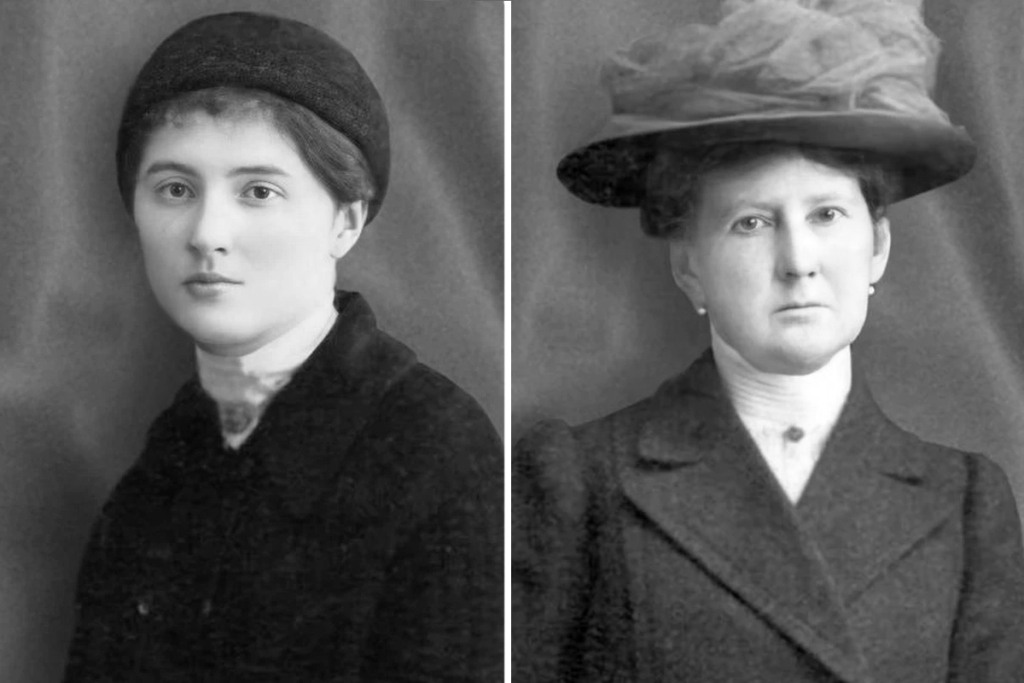
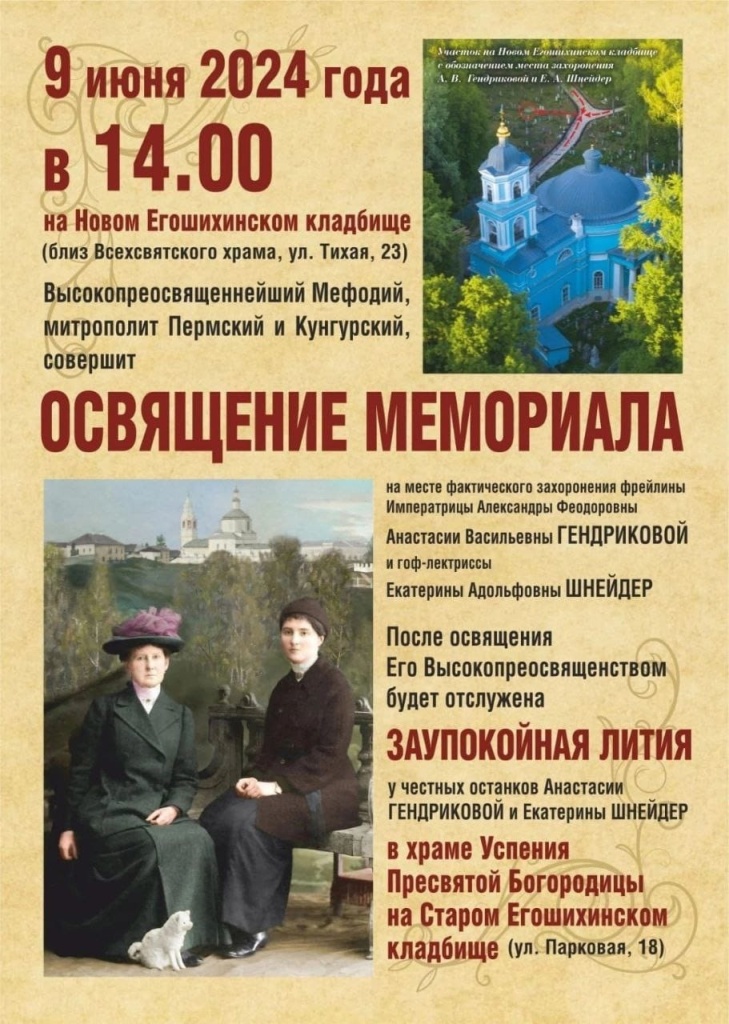
PHOTO: Anastasia Hendrikova (left) and Ekaterina Schneider (right)

On 30th May 2024, the head of the Publishing Department of the Perm Diocese Olga Troitskaya, announced that the remains of Anastasia Hendrikova and Ekaterina Schneider, had been found and identified in Perm, where they were shot by the Bolsheviks in September 1918.

In August 1917, the maid of honour to Empress Alexandra Feodorovna, Countess Anastasia Vasilievna Hendrikova (1888-1918), and a teacher and later confidant to the Empress, Ekaterina Adolfovna Schneider (1856-1918), voluntarily followed the Imperial family into exile to Tobolsk and later Ekaterinburg.

On 9th June 2024, a memorial litany will be performed by Bishop Methodius in the Church of the Dormition of the Most Holy Theotokos, situated at the Old Yegoshikha Cemetery.

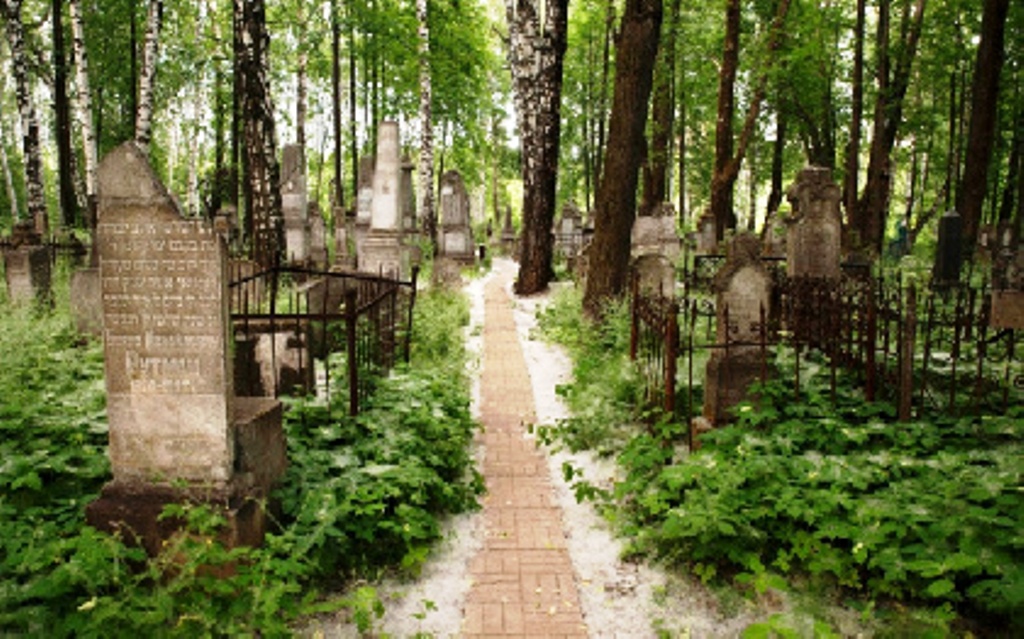
Following the litany, Metropolitan Methodius of Perm and Kungur will consecrate a memorial at the site of the actual burial of Anastasia Hendrikova and Ekaterina Schneider, in the New Yegoshikha Cemetery in Perm,

According to the Perm journalist and researcher Vyacheslav Degtyarnikov, forensic medical examinations were carried out last month and confirmed the identity of the remains of Hendrikova and Schneider.

PHOTO: poster advising parishioners of the memorial litany to be held on 9th June 2024, at the Church of the Dormition of the Most Holy Theotokos, situated at the Old Yegoshikha Cemetery in Perm

***

Recall that In May 1918 Anastasia Hendrikova and Ekaterina Schneider arrived in Ekaterinburg from Tobolsk, however, they were not admitted to the Ipatiev House, but were instead transferred to a Perm prison. They, prayed fervently and tried to remain cheerful, although both were exhausted by the illnesses and burdens of imprisonment.

On the night of 3rd/4th September 1918, Hendrikova and Schneider were awakened and taken with a group of other prisoners outside the city to the irrigation fields situated on the 5th verst of the Siberian Highway, where they were all shot. According to the Whites investigation at the time, they were both shot at point blank range followed by a strong blow to the back of the head.

On 19th May 1919, the bodies of Hendrikova and Schneider were recovered by the Whites, who buried their remains in the Yegoshikha Cemetery in Perm. However, their graves were later destroyed when the Bolsheviks regained control of the city.

PHOTO: view of the New Yegoshikha Cemetery in Perm

The graves were believed lost, however, they were discovered in the 2010s, the identity of the remains, however, were unknown until the recent forensic tests confirmed they belonged to Hendrikova and Schneider.

On 1st November 1981, both Hendrikova and Schneider were canonized by the Russian Orthodox Church Outside of Russia (ROCOR) as New Martyrs and Confessors of Russia. Schneider was canonized in spite of the fact she was a Lutheran, however, she has not been canonized by the Moscow Patriarchate due to her faith.

On 16th October 2009, the General Prosecutor’s Office of the Russian Federation decided to rehabilitate 52 persons of the Imperial family and their retainers who had been subjected to repression, including Hendrikova and Scheider.

© Paul Gilbert. 30 May 2024

‘The Romanov Family Album’ exhibition opens in the Moscow District

On 19th May 2024 – the day marking the 156th anniversary of the birth of Emperor Nicholas II – a new exhibition The Romanov Family Album, opened in the House of Scientists in Pushchino, a town in the Moscow region.

The highlight of the exhibition is a group of seven portraits of the Imperial Family, by the contemporary Russian artist and Honorary Academician of the Russian Academy of Arts Evgeny Schaeffer [b. 1954], who now lives in Germany.

According to Schaefer, “The Romanovs. Family Album exhibition, is not just a collection of paintings and photographs, it is an attempt to comprehend the tragic story of the murder of the the Tsar and his family in Ekaterinburg in 1918. The exhibition, is also an opportunity to rethink history through the prism of modern research and aesthetics”.

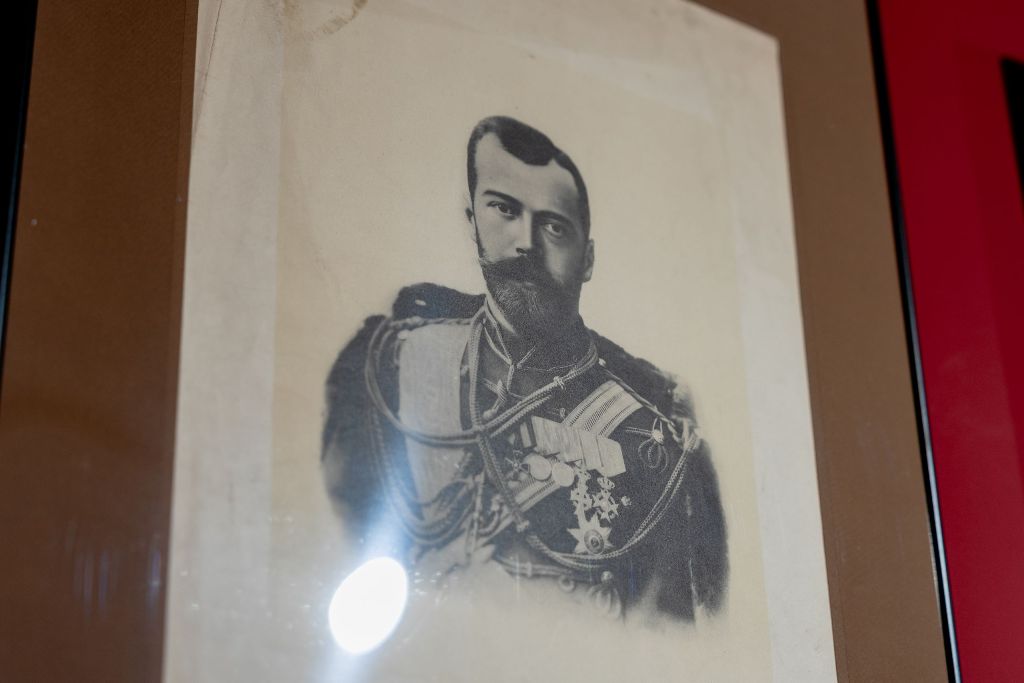
PHOTOS: Evgeny Schaeffer’s portraits of the Imperial Family are on display in the exhibition (above); detail of his portrait of Emperor Nicholas II (below)

Evgeny Schaeffer recreates history, transfers it to a modern context, inviting those attending the exhibition to think about the eternal questions of justice, power and fate.

Of particulate importance, is that the artist not only depicts the tragic events, but also immerses the viewer in deep reflection on the role of history in our lives, on how the past affects the present and the future.

The opening of the exhibition was attended by the director of the Department of Culture of the Russian Nobility Assembly Alexander Schaeffer, members of the clergy, parishioners of the Pushchino Church, among others. A cleric of the Church of St. Michael the Archangel in Pushchino, Sergiy Girilovich, served a moleben [supplication prayer service] to the Holy Royal Passion-Bearers.

The Romanov Family Album exhibition runs until 31st May 2024, at the House of Scientists in Pushchino. Admission is FREE.

***

*As I have noted in similiar posts, I support any initiative – big or small – to help keep the memory of Nicholas II and his family alive in post-Soviet Russia – PG

© Paul Gilbert. 28 May 2024

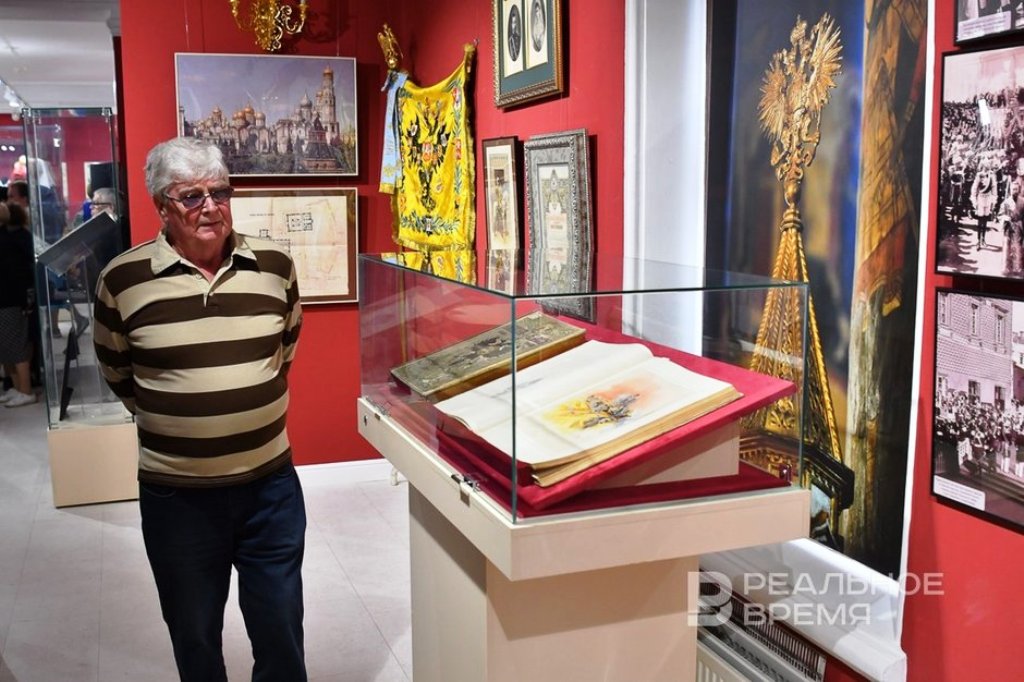
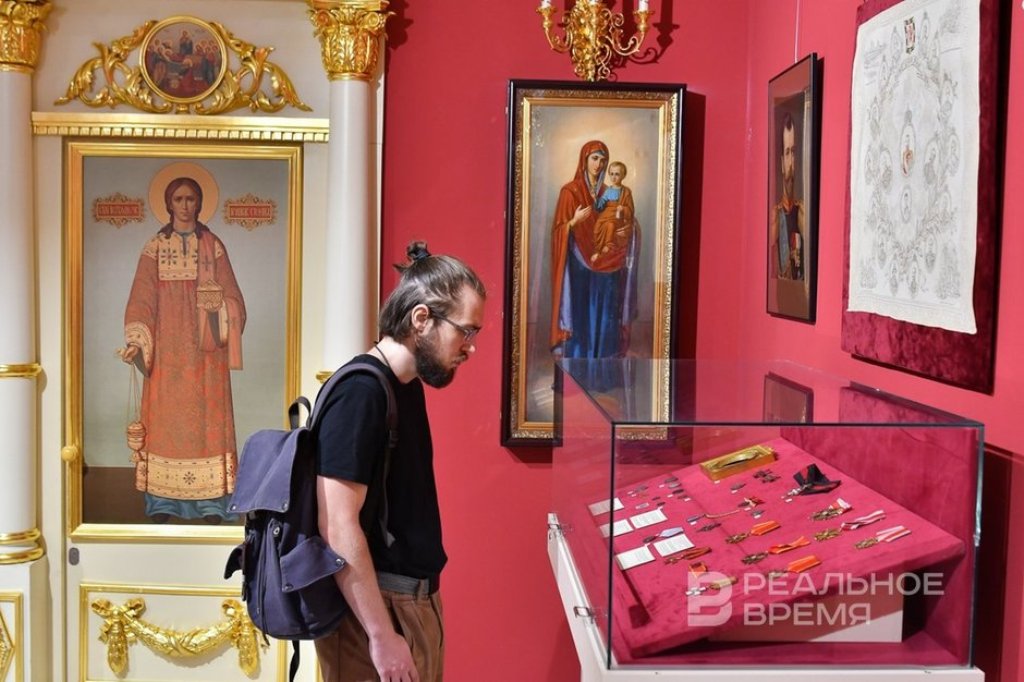
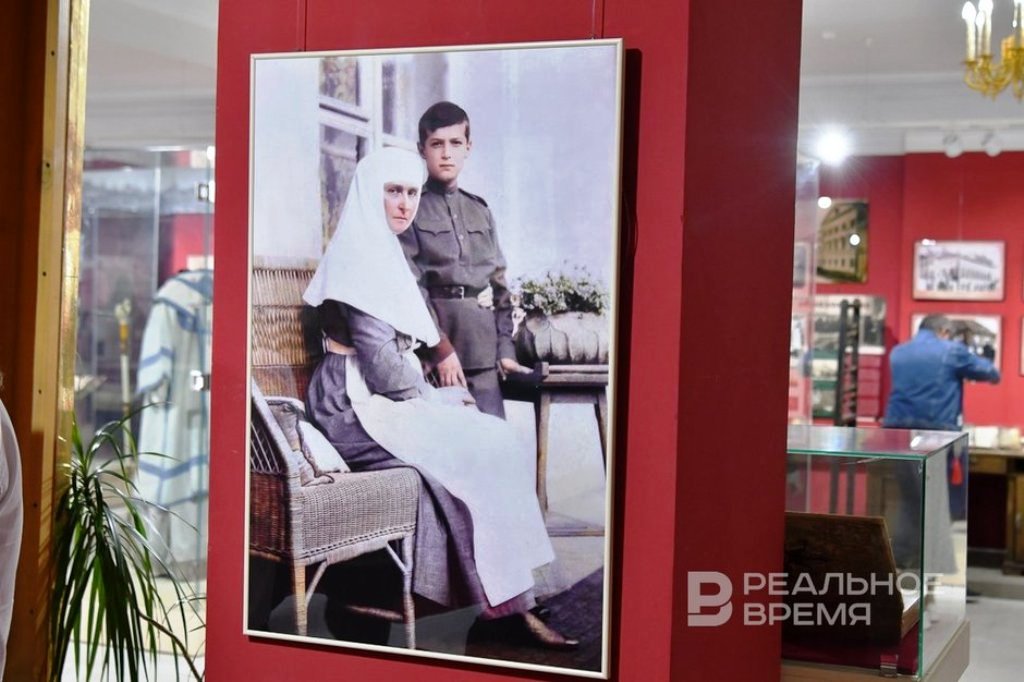
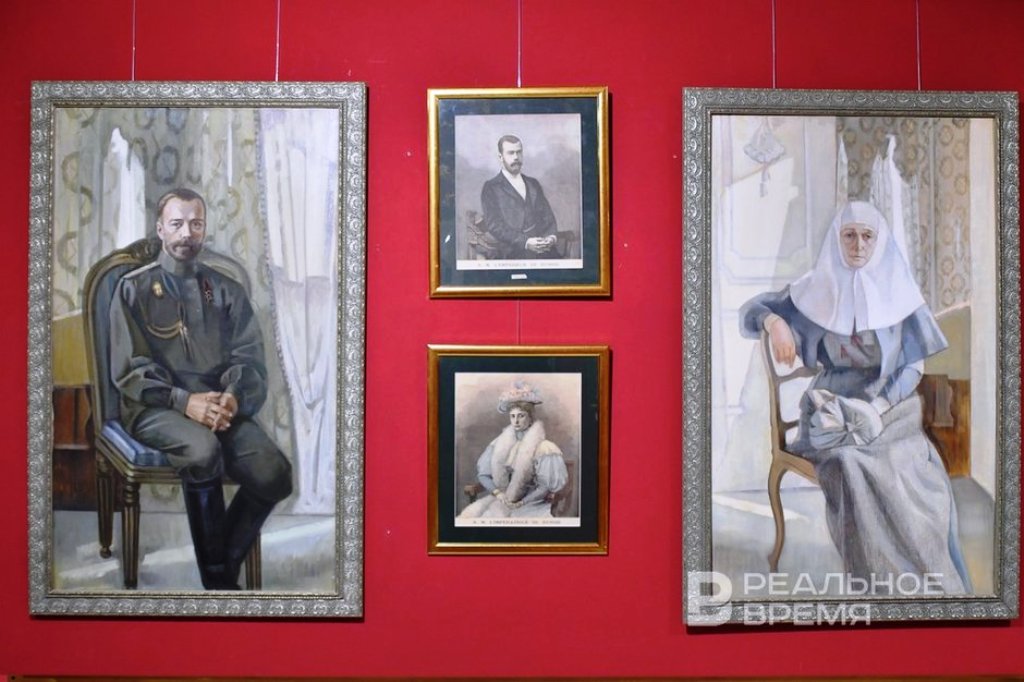
Nicholas II exhibition opens in Kazan

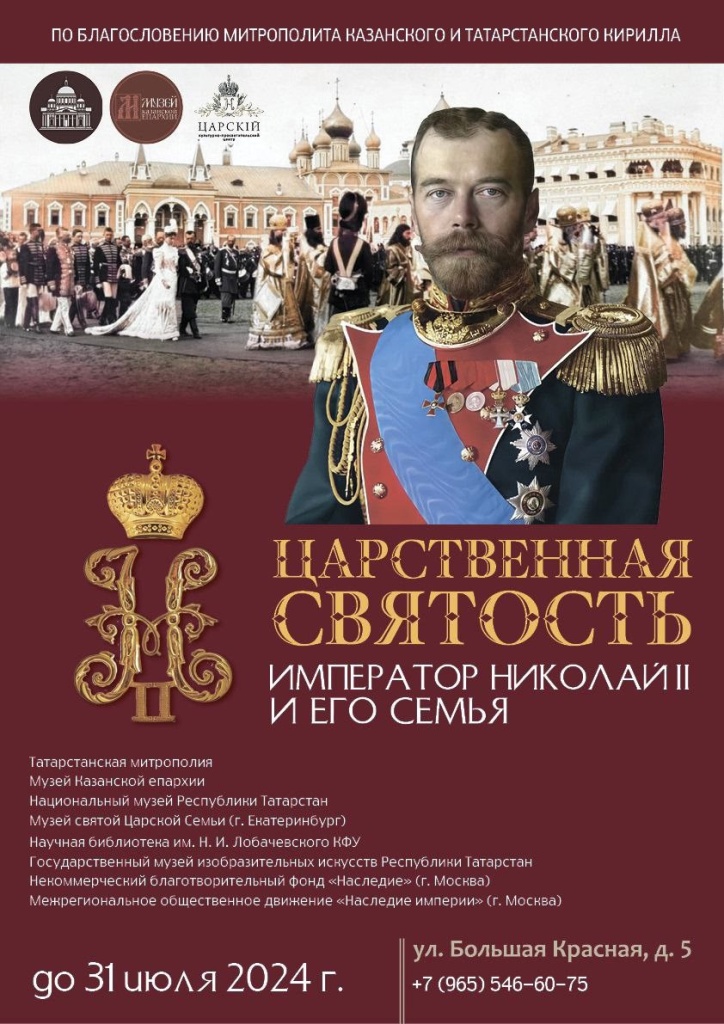
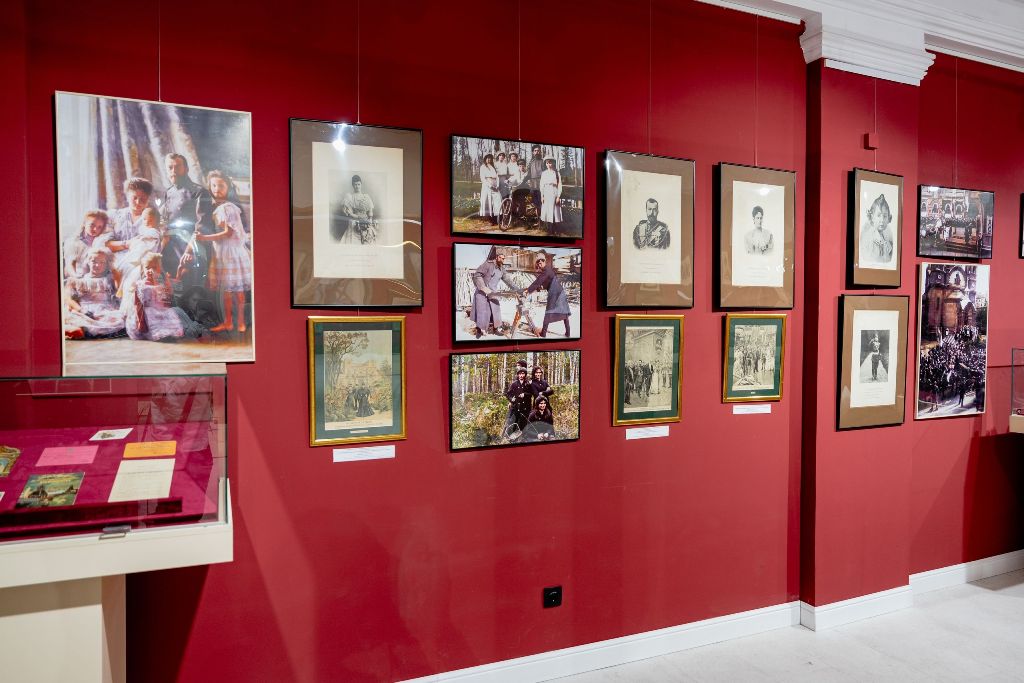
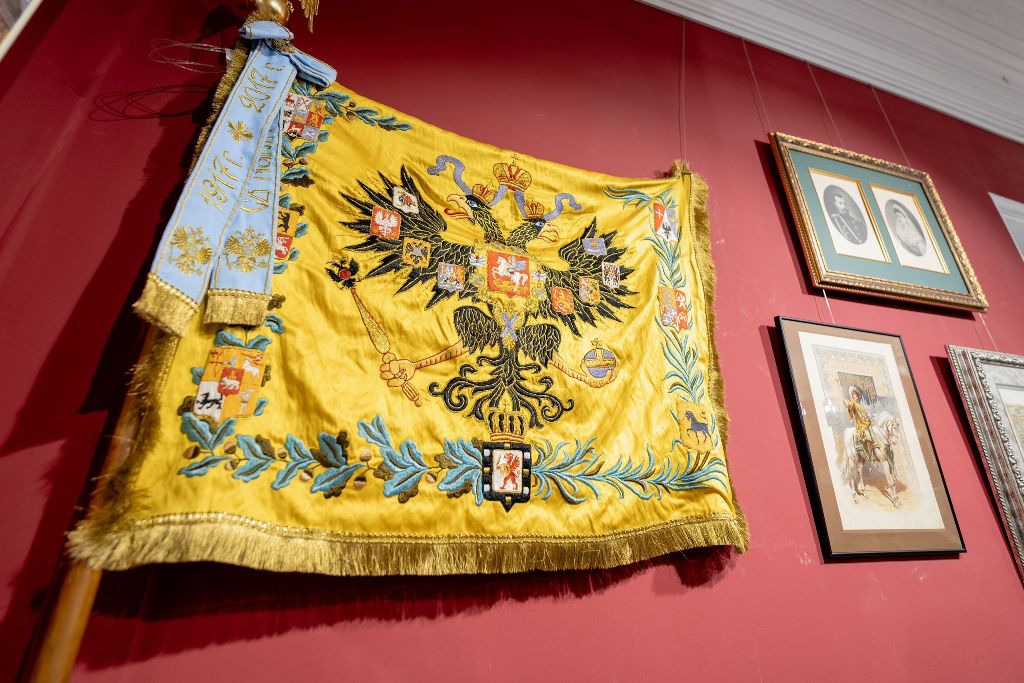
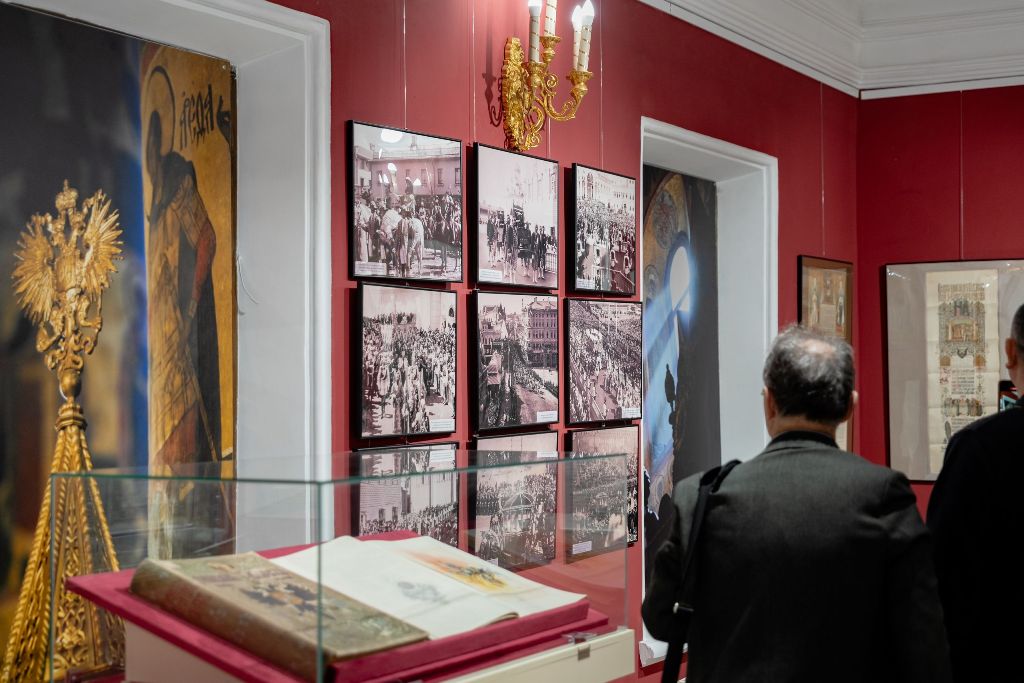
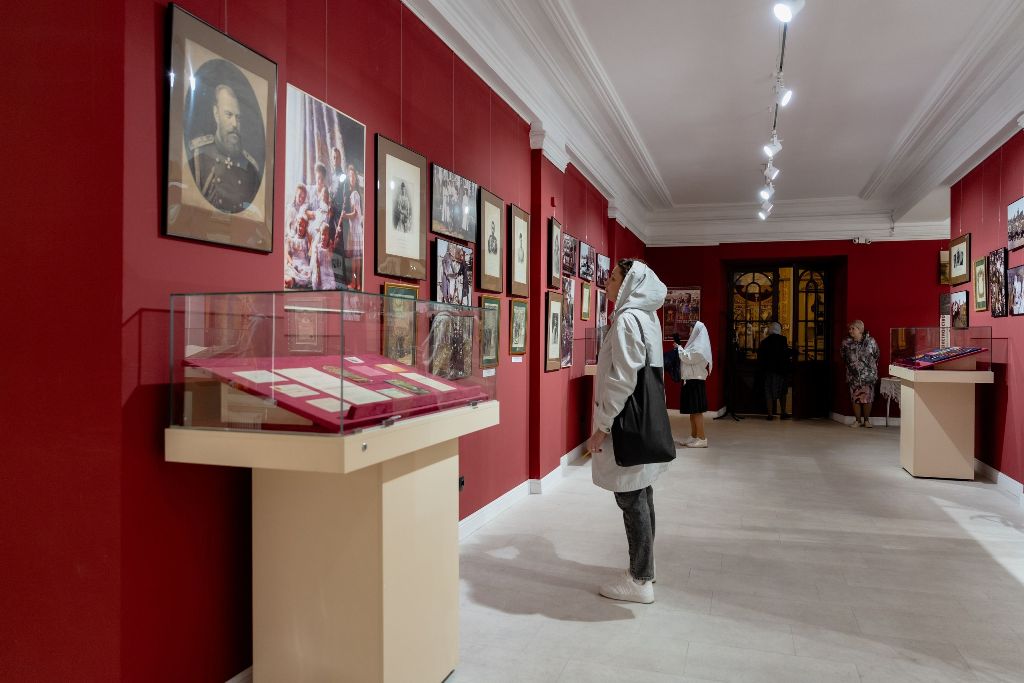
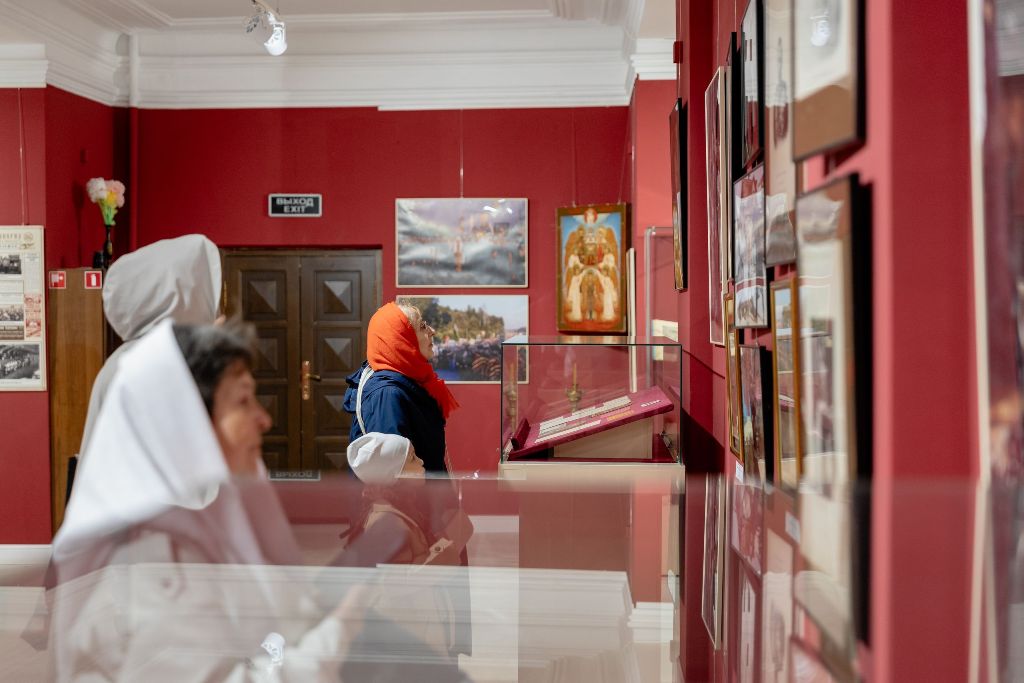
On 22nd May 2024 – the Feast Day of the transfer of the relics of St. Nicholas the Wonderworker [Nicholas II’s patron saint] from Myra to Bari, the Royal Holiness: Russian Emperor Nicholas II and His Family exhibition, opened at the Museum of the Kazan Diocese in the city of Kazan. Tatarstan.

The exhibition was organized by the Museum of the Kazan Diocese with the participation of the Museum of the Holy Royal Family in Ekaterinburg, the Museum of Emperor Nicholas II in Moscow, the Scientific Library of the Lobachevsky Kazan Federal University, the National Museum of the Republic of Tatarstan, the State Museum of Fine Arts of the Republic of Tatarstan, and the Heritage of the Empire Foundation in Moscow.

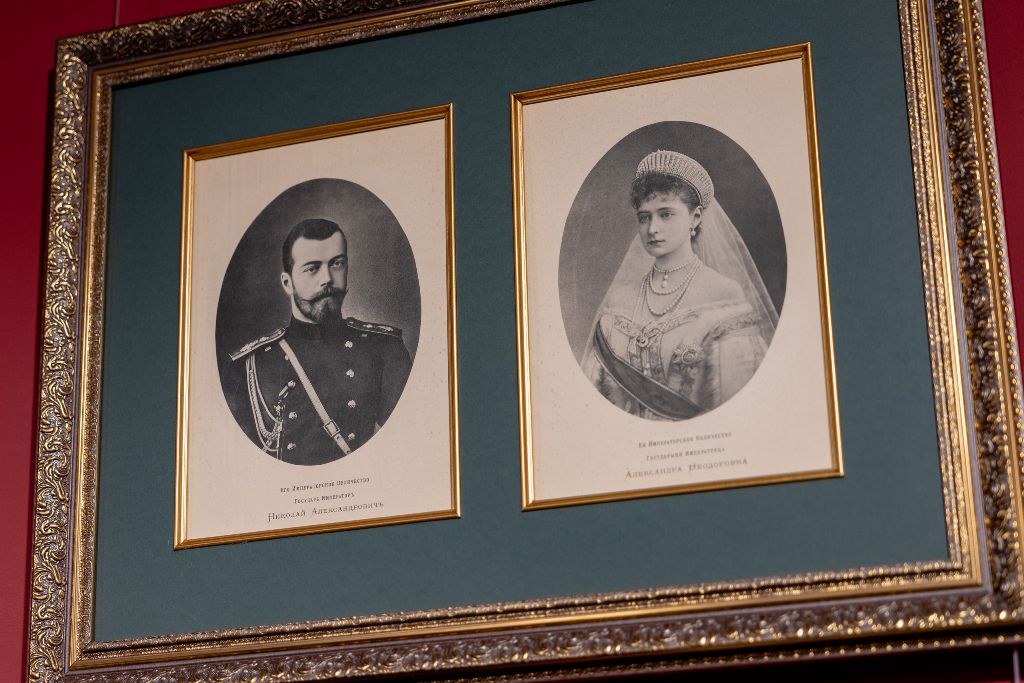
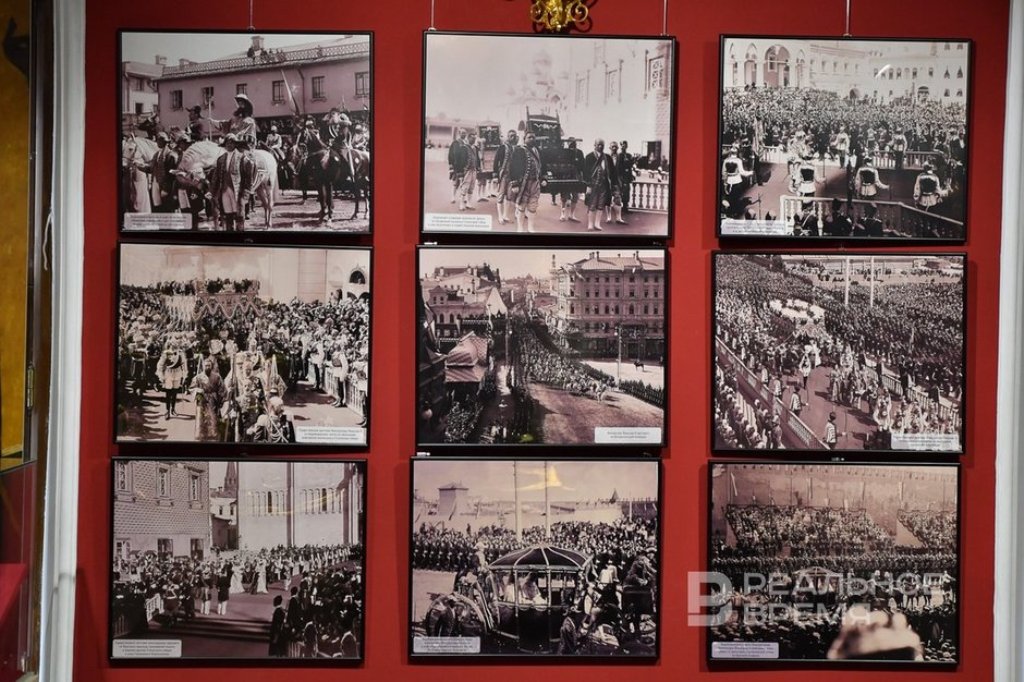
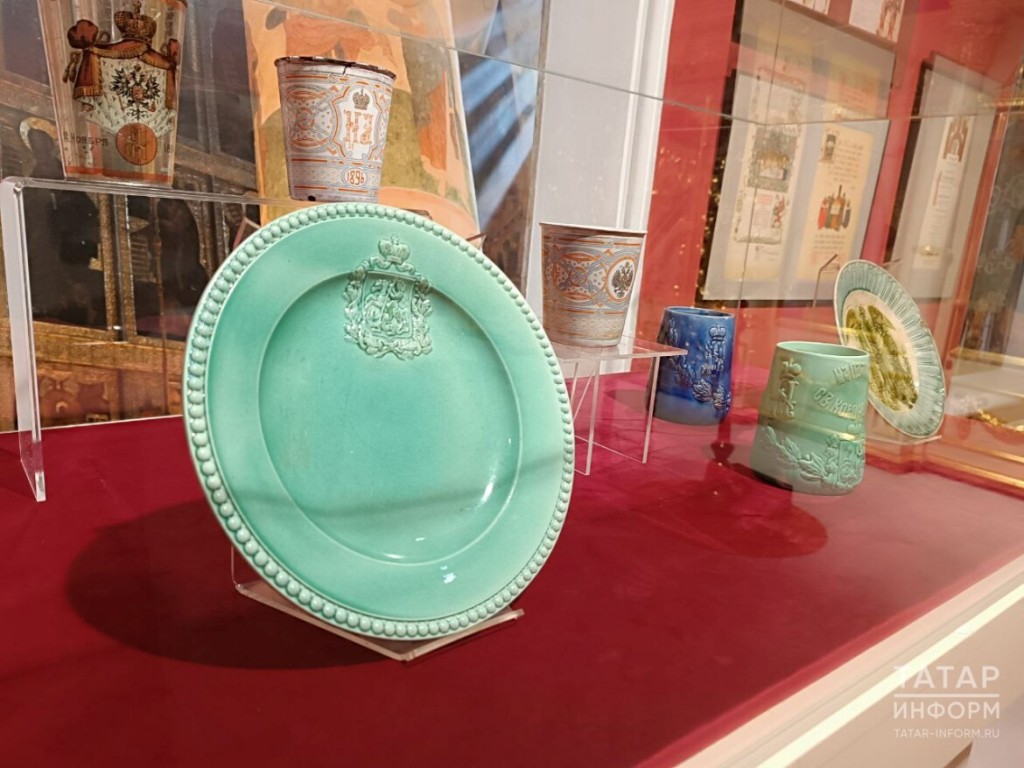
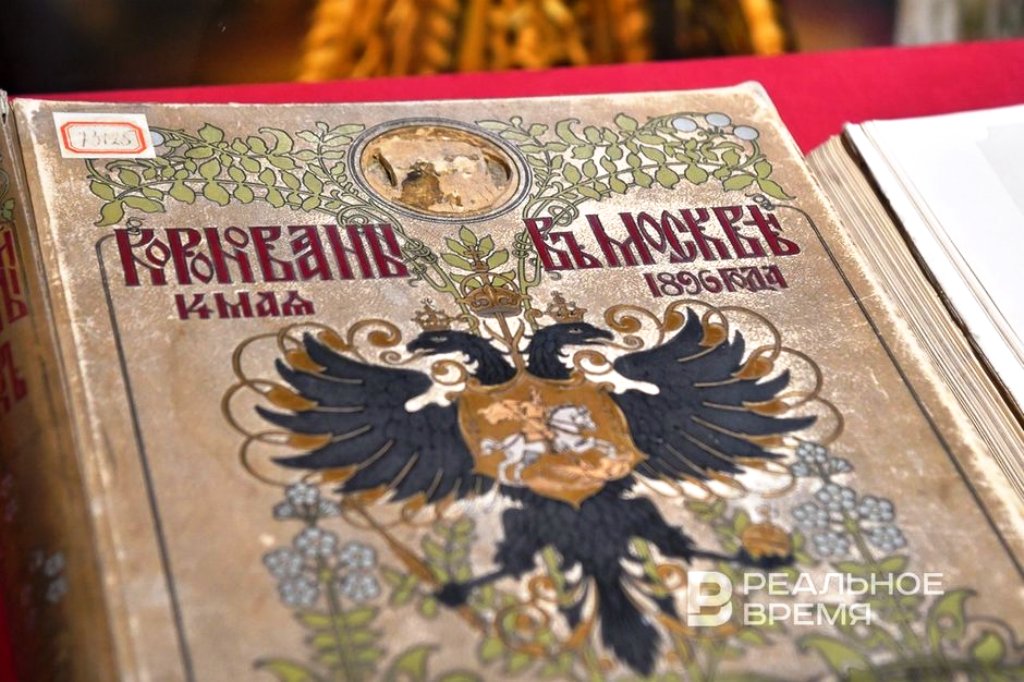
The exhibition features many photographs depicting the private and public life of Russia’s last Tsar and his family, video materials, unique historical documents, including a copy of the Coronation Albums, as well as invitations to the ceremonies, menus, souvenirs and posters of the Coronation celebrations, held in Moscow in May 1896.

The exhibition also covers the topics of the unity of the Imperial Family, the Christian upbringing of the August children, Nicholas and Alexandra’s devotion to one other and to their children, as well as the influence of faith on the Tsar’s political decision-making.

The exhibition was opened by Metropolitan Kirill of Kazan and Tatarstan. Honoured guests included Chairman of the Heritage of the Empire Foundation Lieutenant General L.P. Reshetnikov, politicians and cultural figures from Moscow, Kazan and Ekaterinburg, and members of the clergy of the Kazan Diocese.

After the opening ceremony, a concert of choirs of the Kazan Diocese took place – a male choir under the direction of the Honored Artist of the Republic of Tatarstan Denis Rogov, a mixed choir under the direction of Marina Litvinenko, and the choir of the Kazan Theological Seminary.

The Royal Holiness: Russian Emperor Nicholas II and His Family exhibition will run from 23rd May to 31st July 2024, at the Museum of the Kazan Diocese, which is located at the Kazan Monastery of the Mother of God of the Kazan Diocese of the Russian Orthodox Church.

***

*As I have noted in similiar posts, I support any initiative – big or small – to help keep the memory of Nicholas II and his family alive in post-Soviet Russia – PG

© Paul Gilbert. 23 May 2024

Tsarskoye Selo Museum creates scale model of the Alexander Palace

Photo © Tsarskoye Selo State Museum

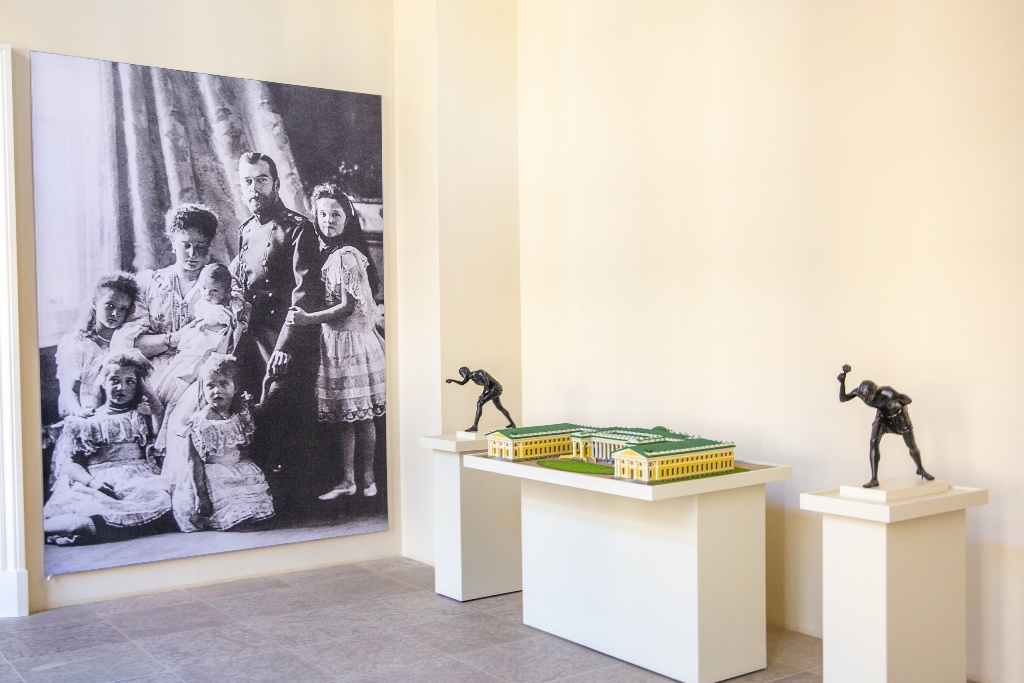
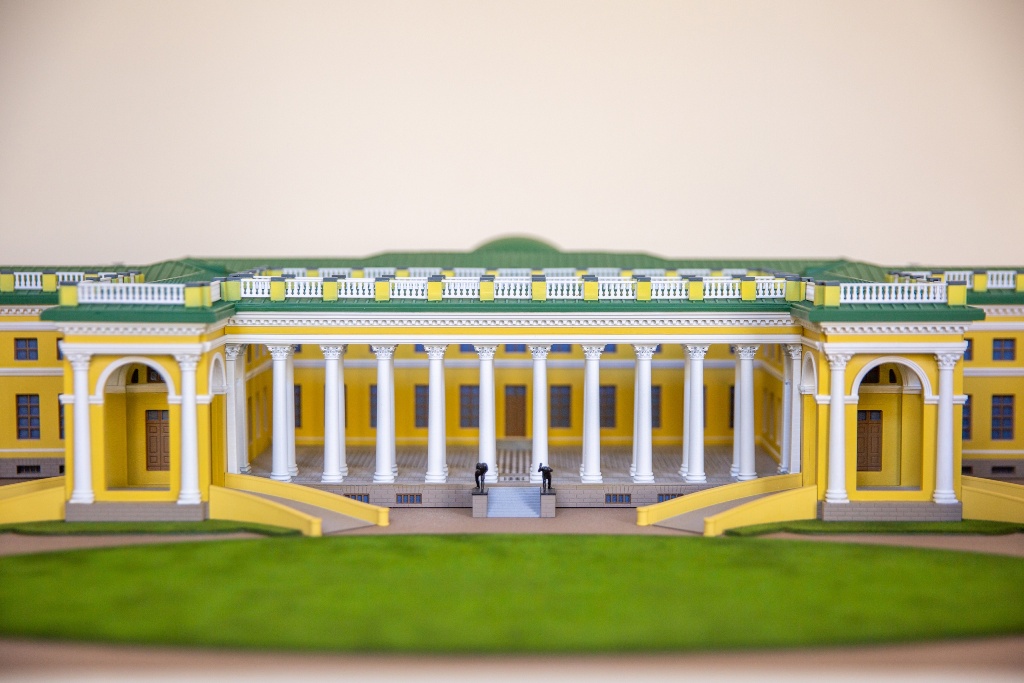
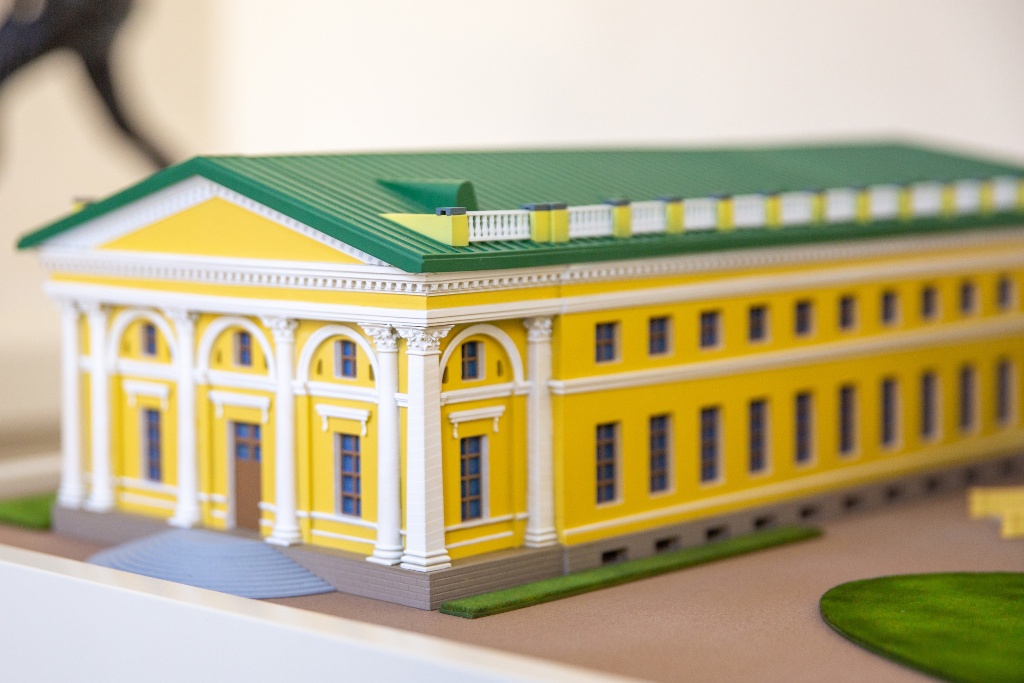
The Tsarskoye Selo State Museum has created a large 3-dimensional scale model of the Alexander Palace. Visitors can see the model, which is on display in the palace’s vestibule.

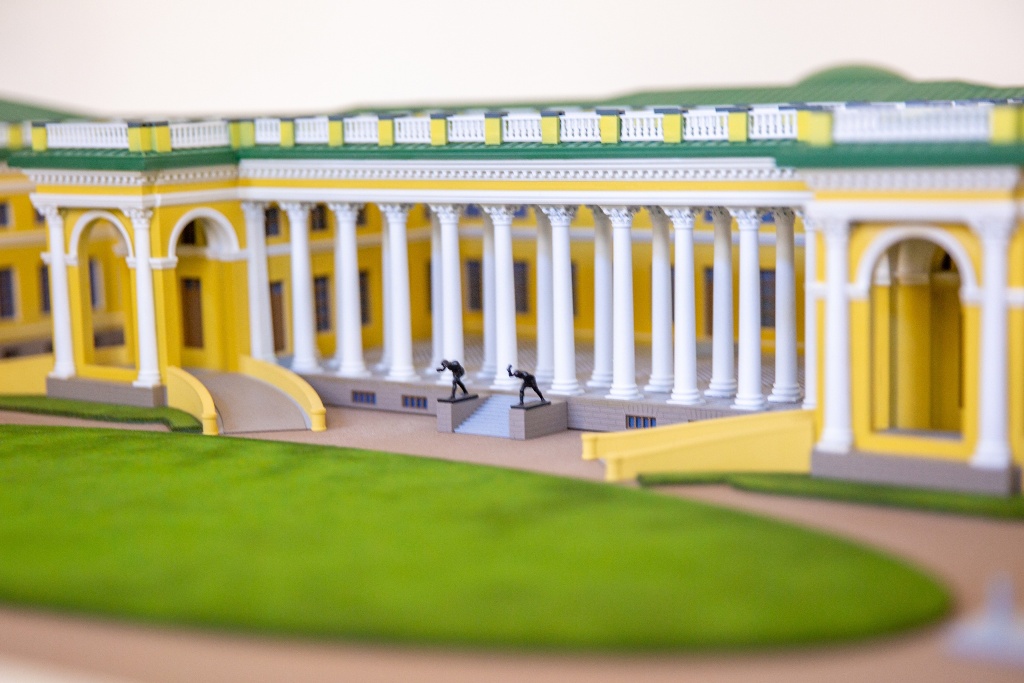
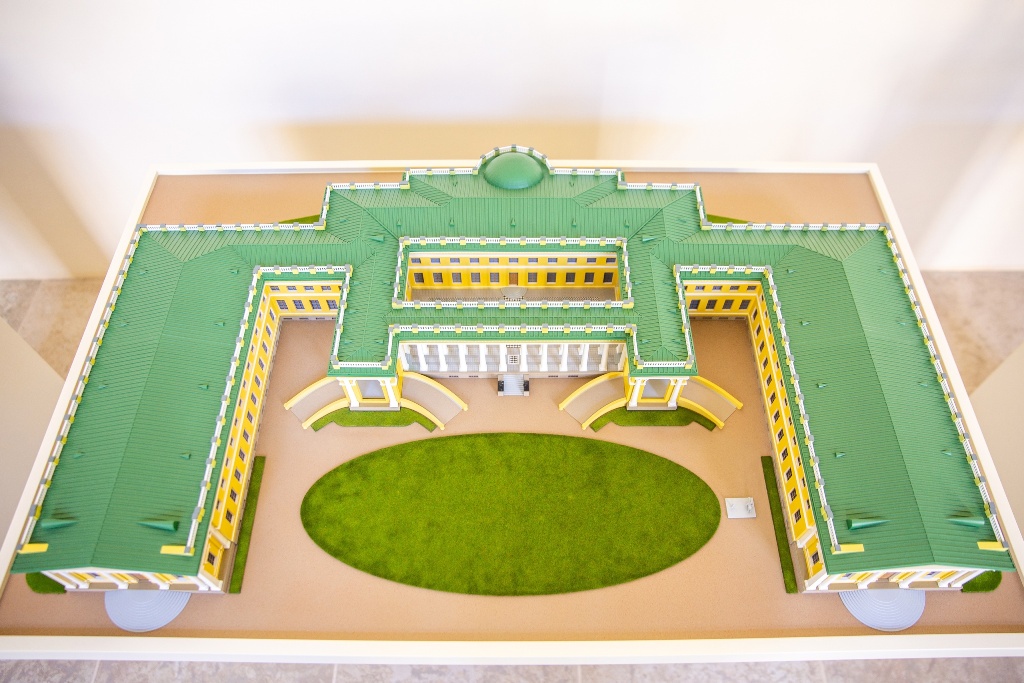
The 1:140 model of Giacomo Quarenghi’s 18th-century architectural masterpiece was painstakingly created by specialists of the Studio 22 Model Workshop in St. Petersburg. Each exterior detail has been recreated in miniature.

The model is reflects the favourite residence of Emperor Nicholas II and his family, with it’s elegant Neo-Classical Style yellow edifice and green roof. The majestic central colonnade, the protruding wings, the elegant sculpting of the columns. The model is flanked by copies of two sculptures flanking the palace colonnade, A Youth Playing Svaika by Alexander Loganovsky and A Youth Playing Knucklebones by Nikolay Pimenov. Everything is copied in detail and carefully conveyed in miniature.

Photo © Tsarskoye Selo State Museum

Photo © Tsarskoye Selo State Museum

Photo © Tsarskoye Selo State Museum

Photo © Tsarskoye Selo State Museum

The above photo depicts the Eastern wing of the Alexander Palace, where the private apartments of the Imperial Family are located. The rooms of Emperor Nicholas II and Empress Alexandra Feodorovna are located on the main or first floor, while the rooms of their five children were located on the second floor.

© Tsarskoye Selo State Museum / Paul Gilbert. 24 May 2024