Furniture from the Imperial Yacht ‘Polar Star’ gifted to State Hermitage Museum
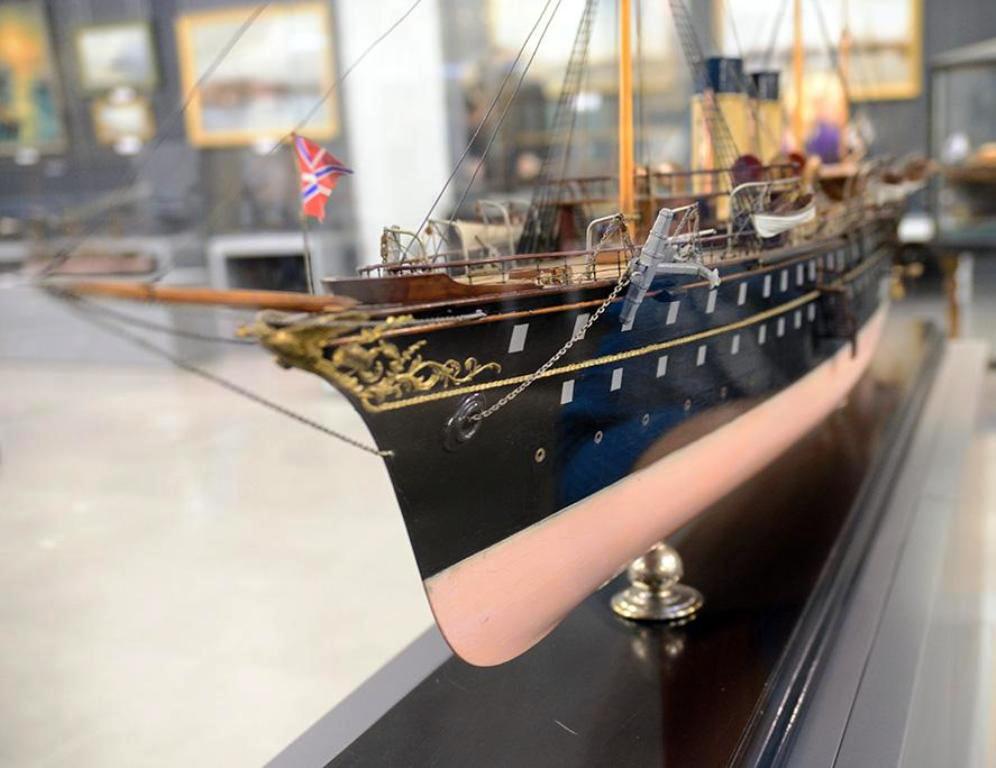
PHOTO: Model of the Imperial Yachts Polar Star «Полярная звезда»
From the Collection of the Central Naval Museum, St. Petersburg

On 29th June 2024, an exhibition of furniture from Emperor Alexander III’s yacht Polar Star «Полярная звезда» opened in the Gothic Library of Emperor Nicholas II situated in the Winter Palace (State Hermitage Museum) in St. Petersburg. The pieces have been donated to the Hermitage by Mikhail Yuryevich Karisalov, a Russian industrialist, art patron and hereditary collector.

The set is made up of ten items: two tables, an armchair, two low cupboards, a dressing mirror, a cartonniere (filing cabinet), two doors and a mirror from a cupboard. They were all made at Nikolai Feodorovich Svirsky’s (1851-after 1915) factory to designs by the architect Nikolai Vasilyevich Nabokov (1838-after 1907) -who also designed the furniture for the Gothic Library.

Svirsky’s factory specialized in producing pieces decorated with marquetry using “our own method”. The distinctive feature of the craftsmen’s signature was extremely intricate, literally jeweller-like, detail work in the inlaid designs, making it possible to convey the subtlest nuances of colour.

In 1889 Svirsky put his creations on show at the 1889 Paris Exposition, where he was awarded the Grand Prix and a gold medal. In 1894 the Svirsky Factory was granted the honorary title of Supplier to the Imperial Court, and two years later his products were awarded a gold medal at the All-Russian exhibition in Nizhny Novgorod.

The manufacture of the furnishings for all the cabins aboard the Imperial Yacht Polar Star that was built for the Imperial amily’s long-distant voyages would be one of Svirsky’s most significant commissions. The correspondent of the Pravitelstvenny Vestnik (Government Messenger] newspaper wrote: “Regarding the interior finishing of the yacht, it must be said that this is something wholly exceptional and perfect in its elegance; there is not gaudy, eye-catching splendour here, but there is artistic splendour… On the right, from the Imperial Dining-Room, a door leads into Her Majesty the Empress’s [Maria Feodorovna] boudoir; there the walls and furniture are upholstered with English waxed cretonne; the cupboard, toilet table, writing desk and doors are covered with superb inlay work…”
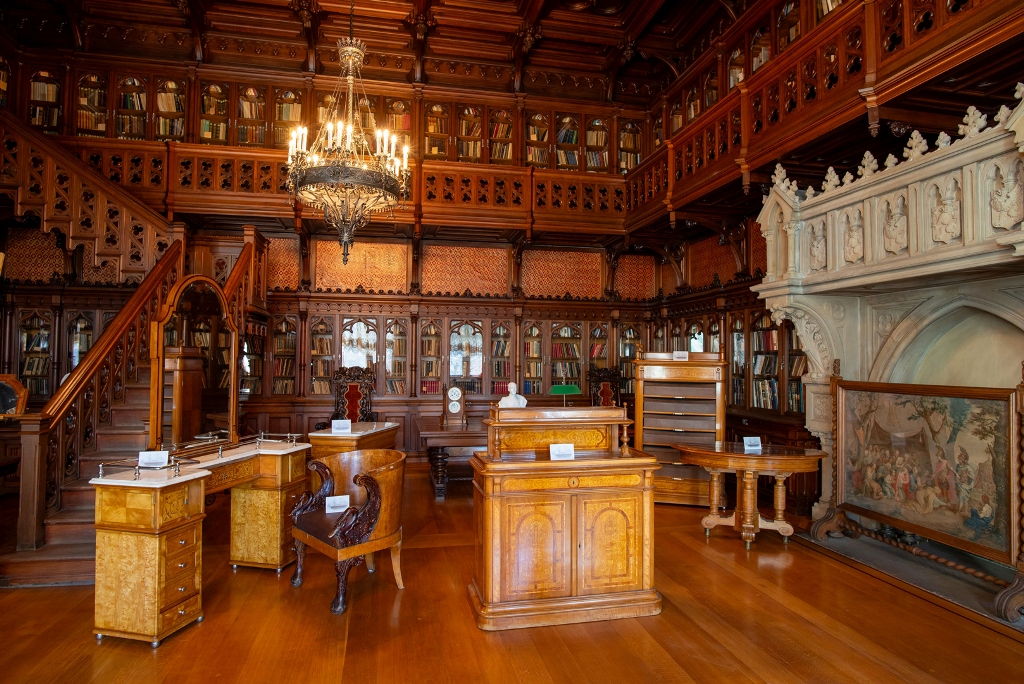
PHOTO: 10 pieces of furniture from the Imperial Yacht Polar Star, on display in the Gothic Library of Emperor Nicholas II in the State Hermitage Museum, St. Petersburg

The exhibition includes two items that the journalist mentioned – the Empress’s “toilet table” and a low cupboard inlaid with Maria Feodorovna’s monogram МФ (MF).

Emperor Alexander III and Empress Maria Feodorovna are known to have sailed all around Europe on the Polar Star. On arrival in different countries, they would happily show off the exquisite interiors of their floating home. Following the death of A;exander III in 1894, the Polar Star became the personal yacht of the Dowager Empress, which she used for her visits to Denmark and Great Britain.

After the October Revolution, the yacht became the headquarters of the Bolsheviks’ Central Committee of the Baltic Fleet (Tsentrobalt), then in the 1930s it was refitted to serve as a floating base for submarines. Later, a cable was run from the yacht, which was moored on the Neva River in front of the Hermitage, to provide electricity to the museum halls. Click HERE to learn about the fate of the Imperial Yacht Polar Star.

For the Hermitage, the items of furniture from the Polar Star are of especial value – from artistic, historical and memorial points of view. After the temporary exhibition in the Gothic Library, the set will find a place within the display devoted to the Art Nouveau era in the General Staff Building, where a separate room showcasing Svirsky’s works will be go on permanent display.

The exhibition curator is Natalia Yuryevna Guseva, Candidate of Art Studies, Deputy Head of the State Hermitage’s Department of the History of Russian Culture, keeper of the Russian furniture collection.

© State Hermitage Museum / Paul Gilbert. 15 July 2024
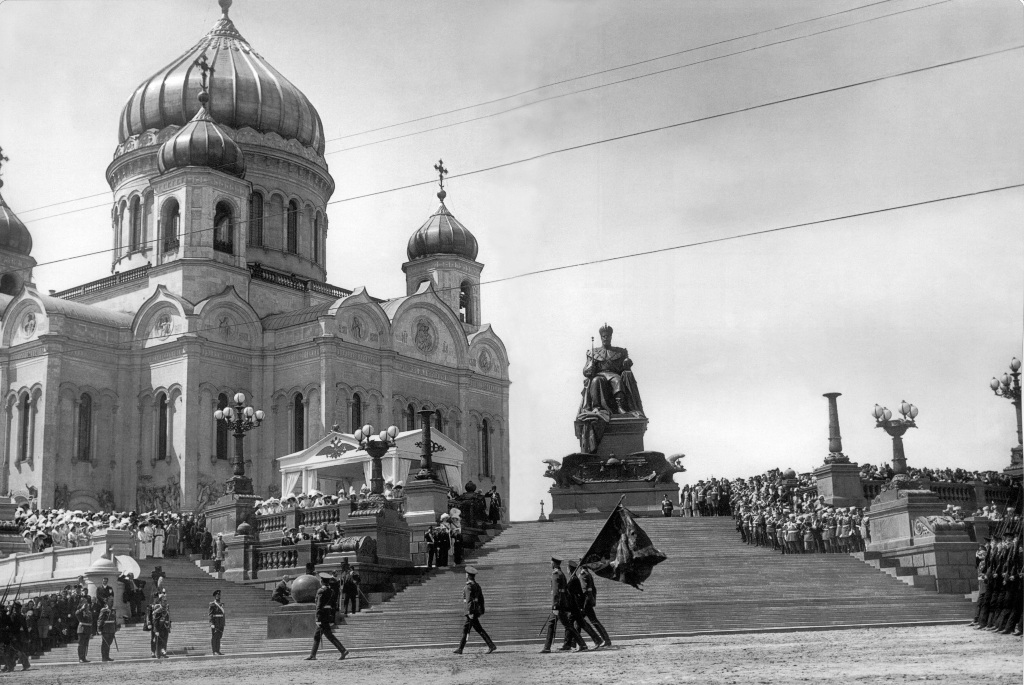
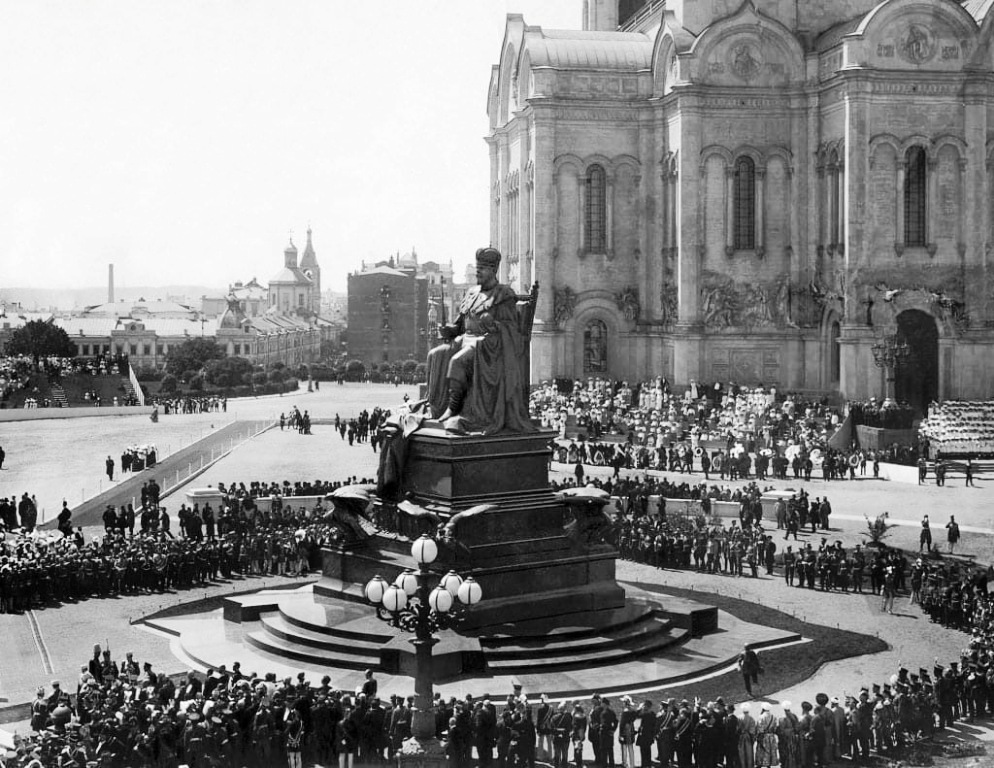
Nicholas II attends consecration of monument to his father in Moscow, 1912

PHOTOS: ceremonies marking the unveiling of a monument to Emperor Alexander III, in Moscow (1912)

On 12th June (O.S. 30 May) 1912, Emperor Nicholas II atteded the unveiling and consecration of a magnificent monument of his father Emperor Alexander III (1845-1894), in Moscow.

The monument made by the architect Alexander Pomerantsev and sculptors Alexander Opekushin and Artemy Ober, was installed on the Prechistenskaya Embankment at the southeast corner of the Cathedral of Christ the Saviour.

In December 1894, Emperor Nicholas II appointed his uncle Grand Duke Sergei Alexandrovich to head a committee to oversee the planning and construction of the monument. More than 2.5 million rubles were donated for the monument’s construction, which lasted from 1900 to 1912.

Made in the style of monumental realism, the bronze statue stood on a stepped red granite pedestal facing the Moscow River. Alexander III is depicted sitting on a throne in a mantle with an imperial crown on his head. In the hands of the emperor were a scepter and orb. The inscription the pedestal read: “To the most pious autocratic Great Sovereign, our emperor Alexander Alexandrovich of All Russia. 1881-1894.” At its corners stood bronze double-headed eagles with outstretched wings. The monument featured a low granite balustrade, and a staircase which descended to the river.

The grand opening of the monument took place on 12th June (O.S. 30th May) 1912, in the presence of Emperor Nicholas II and members of the Imperial Family. At 8 o’clock in the morning, five cannon shots sounded from the Taynitskaya Tower. At 10 o’clock at the entrance to the Cathedral of Christ the Saviour, a procession began, led by Moscow Metropolitan Vladimir, Emperor Nicholas II, his mother the Dowager Empress Maria Feodorovna and Empress Alexandra Feodorovna.

After 360 rounds were fired and the Preobrazhensky Regiment march, the veil was removed from the sculpture, Metropolitan Vladimir sprinkled the monument with holy water. Some 86 wreaths were placed at the monument, and an inspection of the monument by the Emperor and members of the Imperial family. In the evening, the city and the sculpture were illuminated. A 24-hour guard of honour comprised of war veterans stood guard at the monument.

PHOTO (above): Emperor Nicholas II and his mother the Dowager Empress Maria Feodorovna can be seen in the foreground, Empress Alexandra Feodorovna and members of the Russian Imperial Family are following behind.

Sadly, the monument did not survive for long – a little more than 6 years! Following the October 1917 Revolution, a decree was issued for the demolition of all monuments of the Tsarist era. The decree dated 12th April 1918 ordered that monuments of members of the Roamov dynasty be replaced by those honouring revolutionaries. The monument of Emperor Alexander III was one of the first monuments destroyed during this campaign.

The dismantling of the monument began on 17th July 1918 – the very same day in which Nicholas II and his family were murdered in Ekaterinburg. A plan to establish a monument to Liberated Labour was never realised. The pedestal was demolished along with the Cathedral of Christ the Saviour in 1931.

© Paul Gilbert. 12 June 2024

Monument to Emperor Alexander III unveiled in Siberia

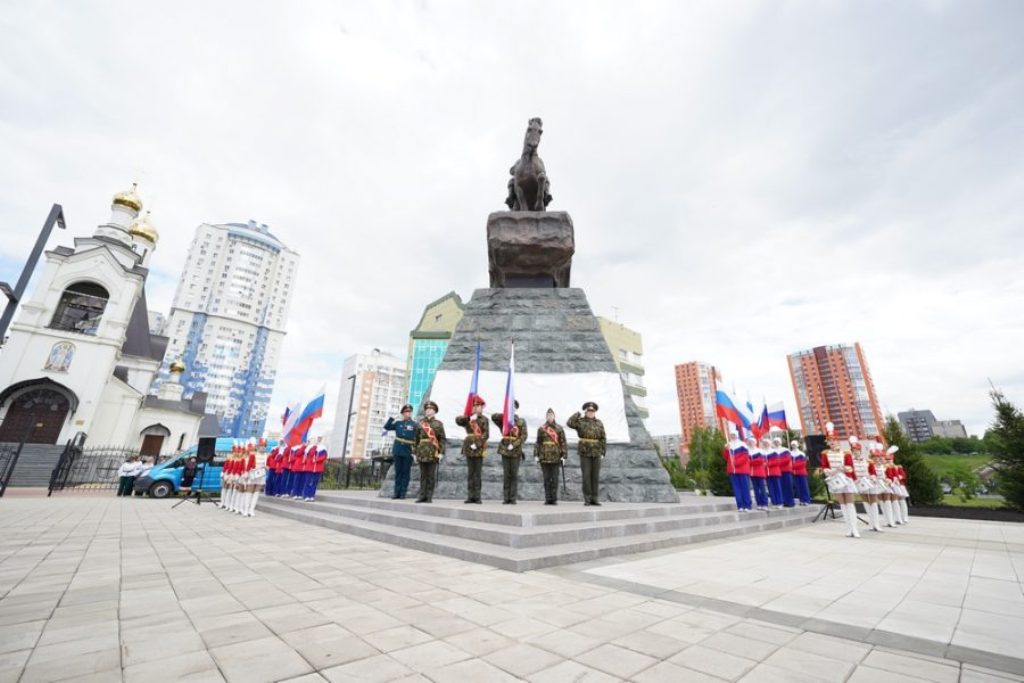
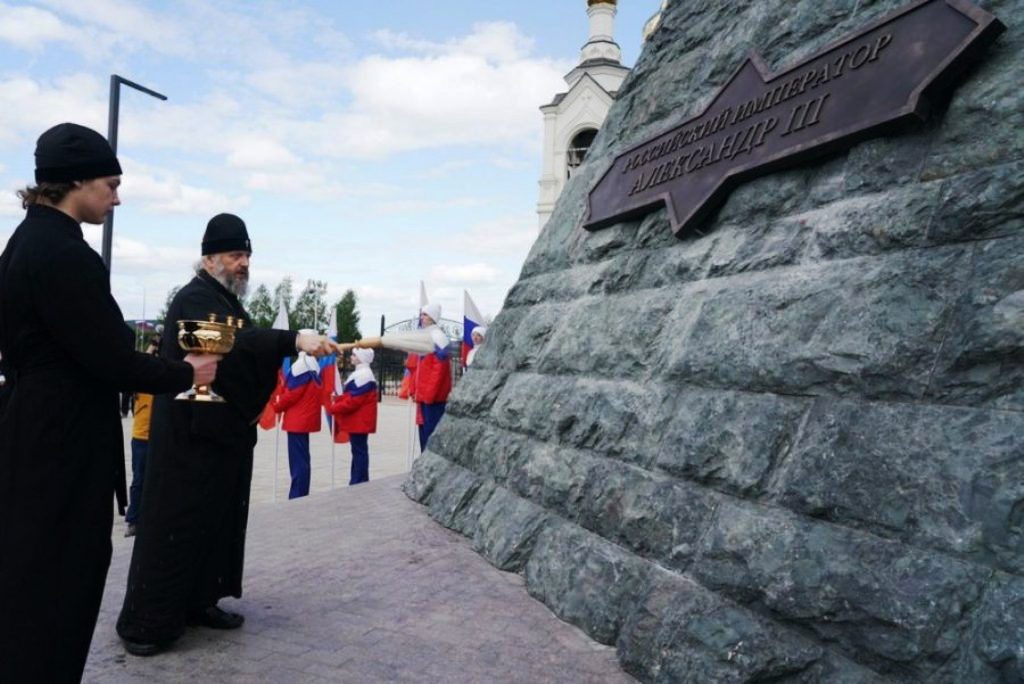
CLICK on the above image to watch a short VIDEO of the unveiling ceremony. The photos posted below are all impressive, however, to get a real appreciation for the sheer size and magnificence of this monument, film footage is the next best thing to taking part in the event. Duration: 1 minute. Language: Russian.

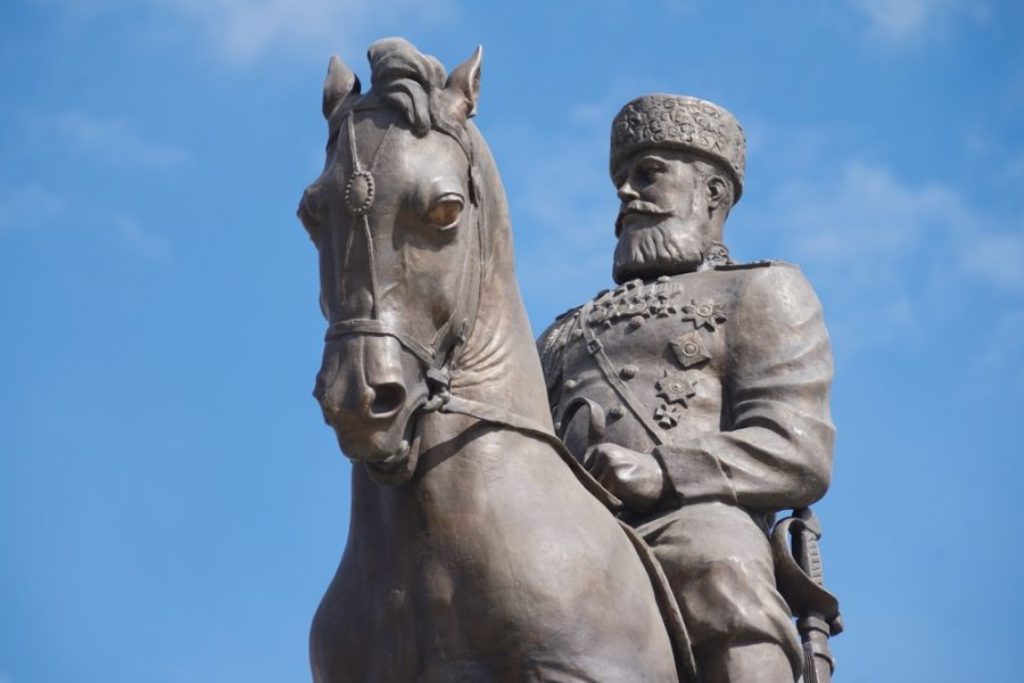
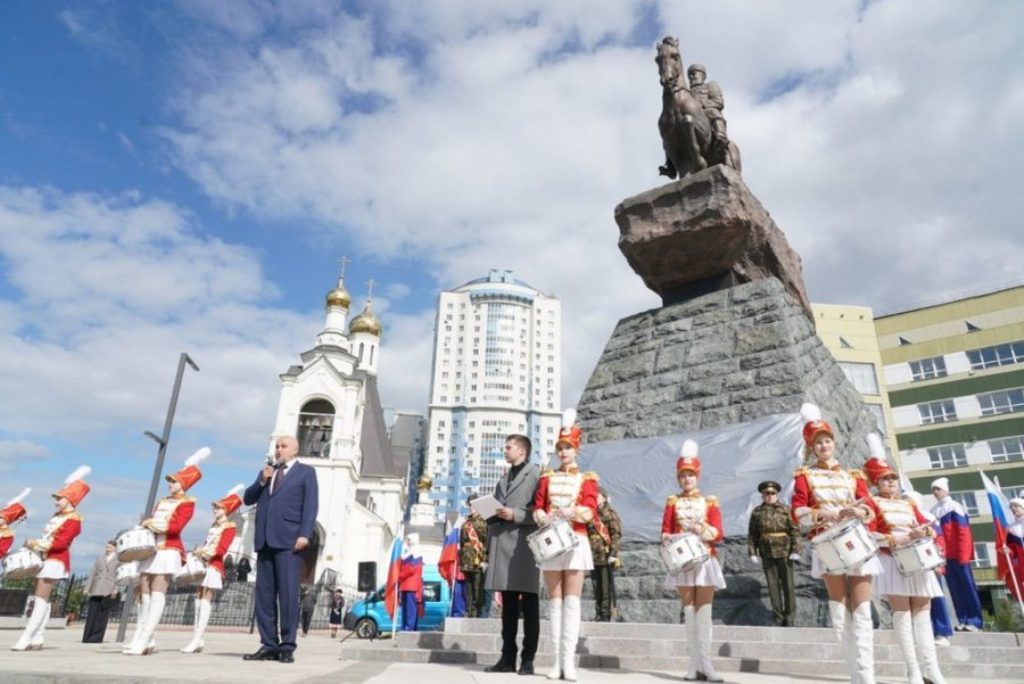
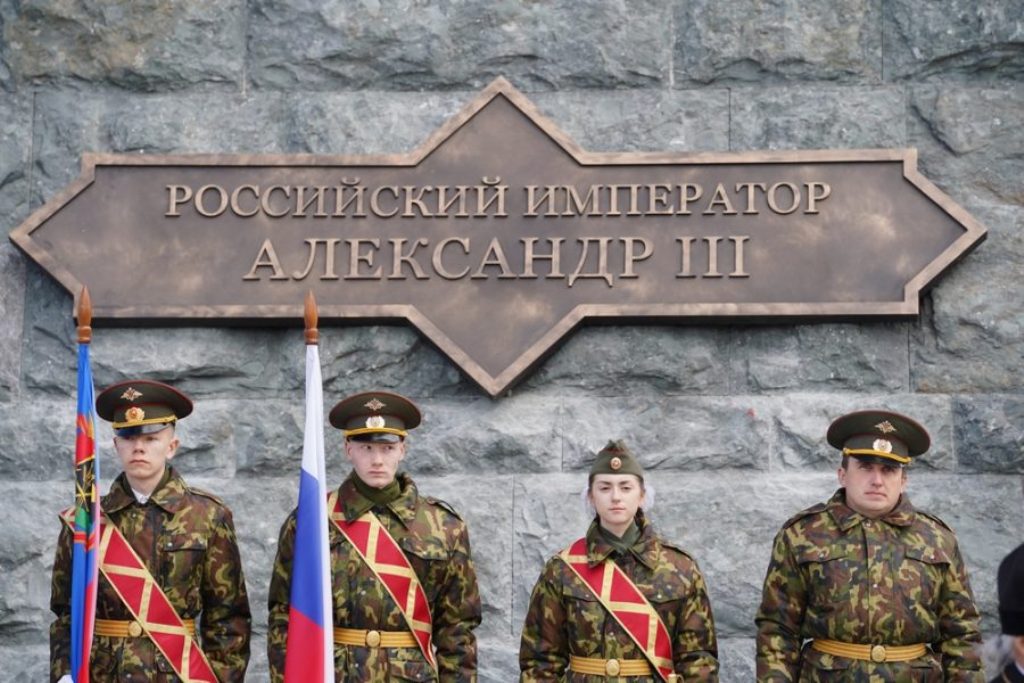
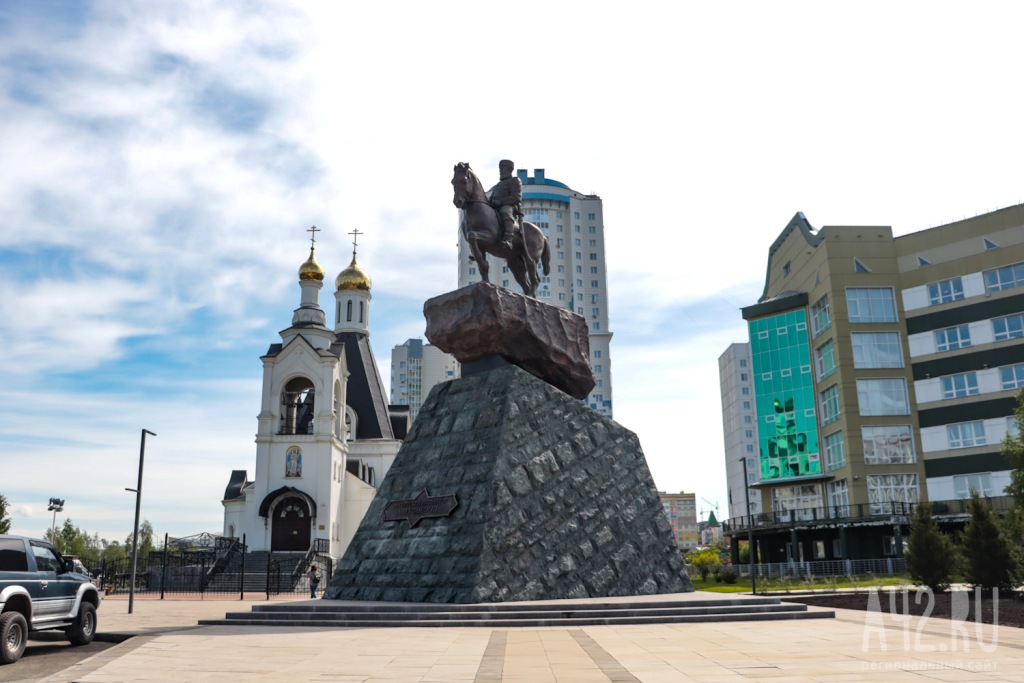
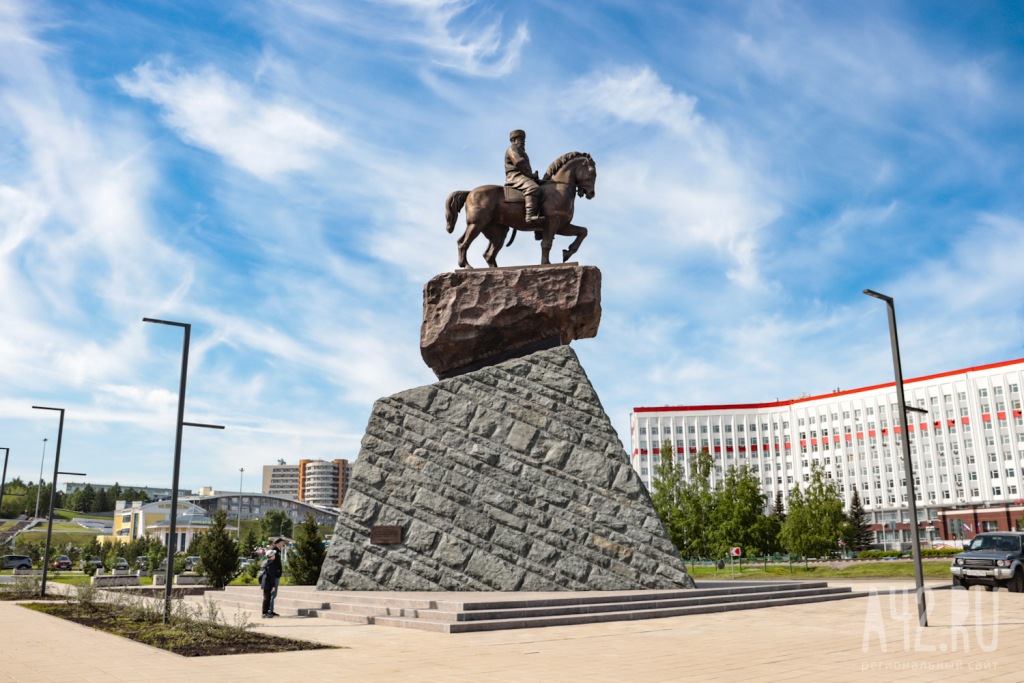
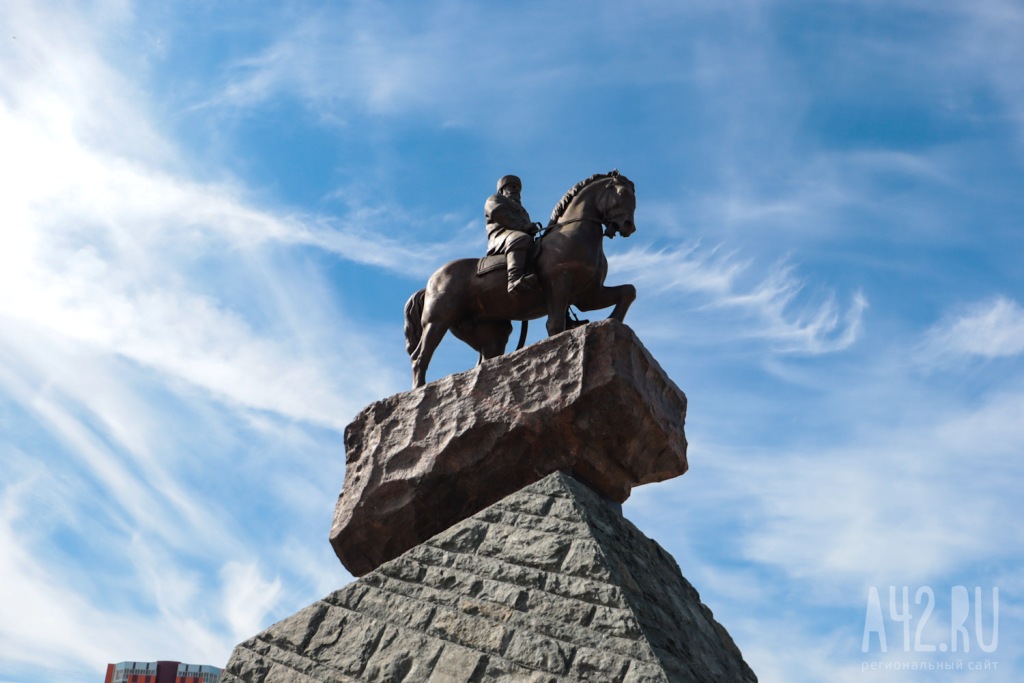
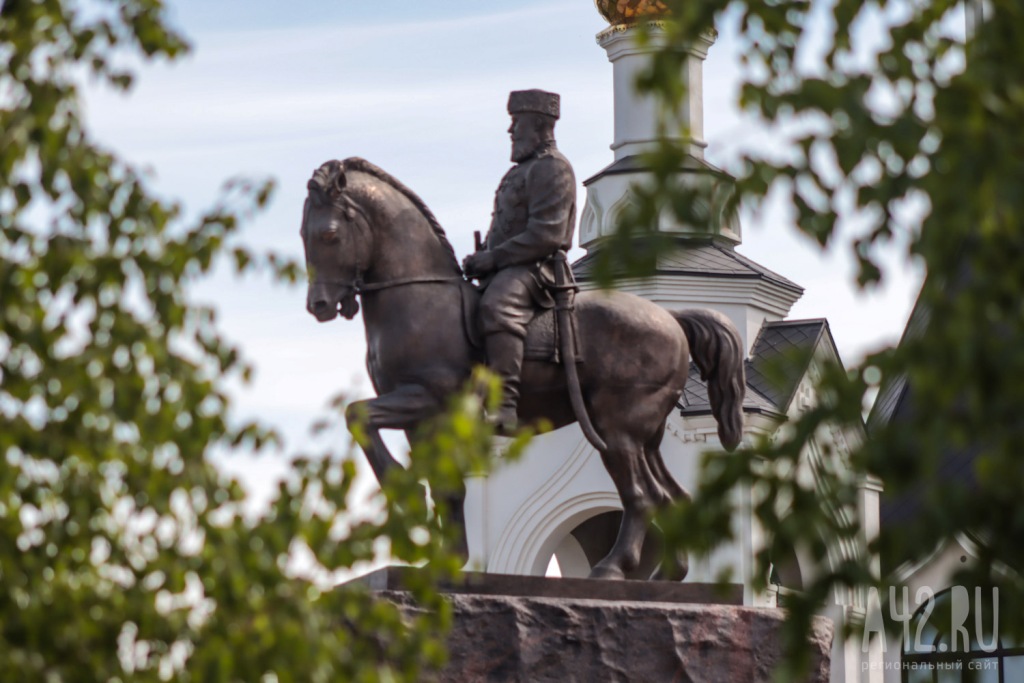
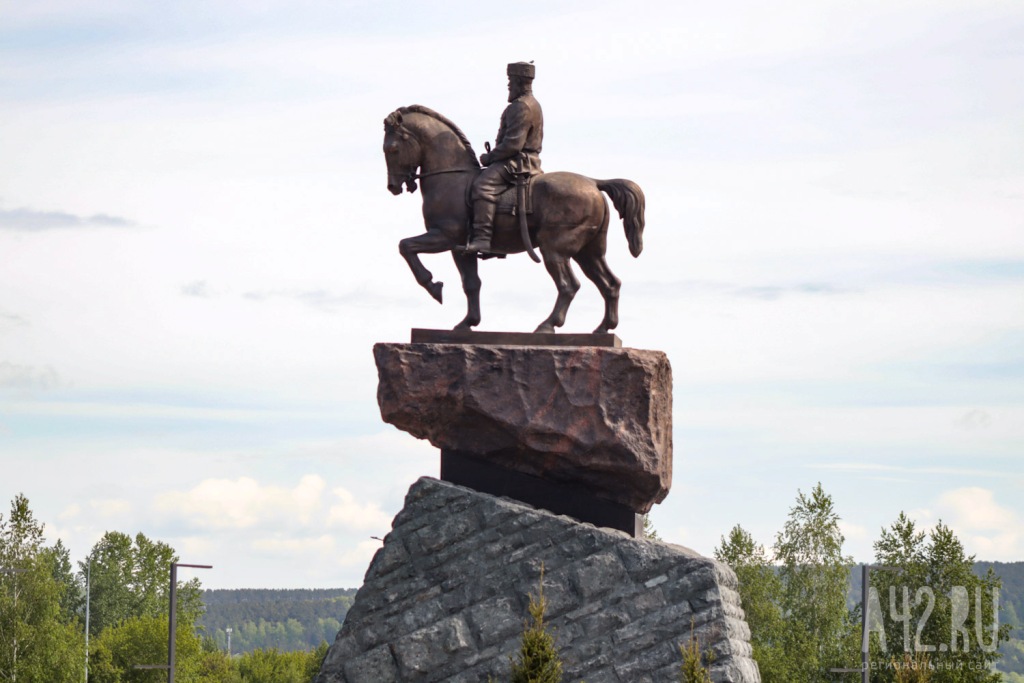
On 31st May 2024, a magnificent equestrian monument to Emperor Alexander III was unveiled and consecrated in the city of Kemerovo, the capital of Kuzbass, situated in Western Siberia.

The height of the equestrian statue is 5 meters 35 centimeters, almost the height of a five-story building. The weight of the statue is 12 tons. It stands on a granite monolith weighing 79 tons, which was mined in the Karelia region. The totak height of the statue and pedestal is 14 meters, The author of the composition is the famous Zurab Tsereteli, who, turned 90 in January.

the equestrian monument was installed in front of the Kuzbass Territorial Administration of the West Siberian Railway.

While the “Tsar-Peacemaker” has no direct relation to Kemerovo or Kuzbass, he is nevertheless considered the initiator of the industrial development of Siberia and and, most importantly, the construction of the Trans-Siberian Railway.

The opening ceremony was attended by the Minister of Energy Sergey Tsivilev, and acting Governor of the region Ilya Seredyuk, as well as many townspeople.

“Today is a significant moment in the history of all of Siberia. With great enthusiasm, we embodied the idea of perpetuating the memory of the great emperor who loved Russia,” Tsivilev said during the opening ceremony.

He explained the decision to erect a monument by the fact that thanks to a decision by Alexander III to build the Trans-Siberian Railway, brought mass development to Siberia, the Far East and specifically Kuzbass.

“The railway connected the whole of the Russian Empire together. We are still using the results of his wise decision,” Tsivilev added.

© Paul Gilbert. 1 June 2024

Nicholas II’s little known third brother: Alexander (1869-1870)

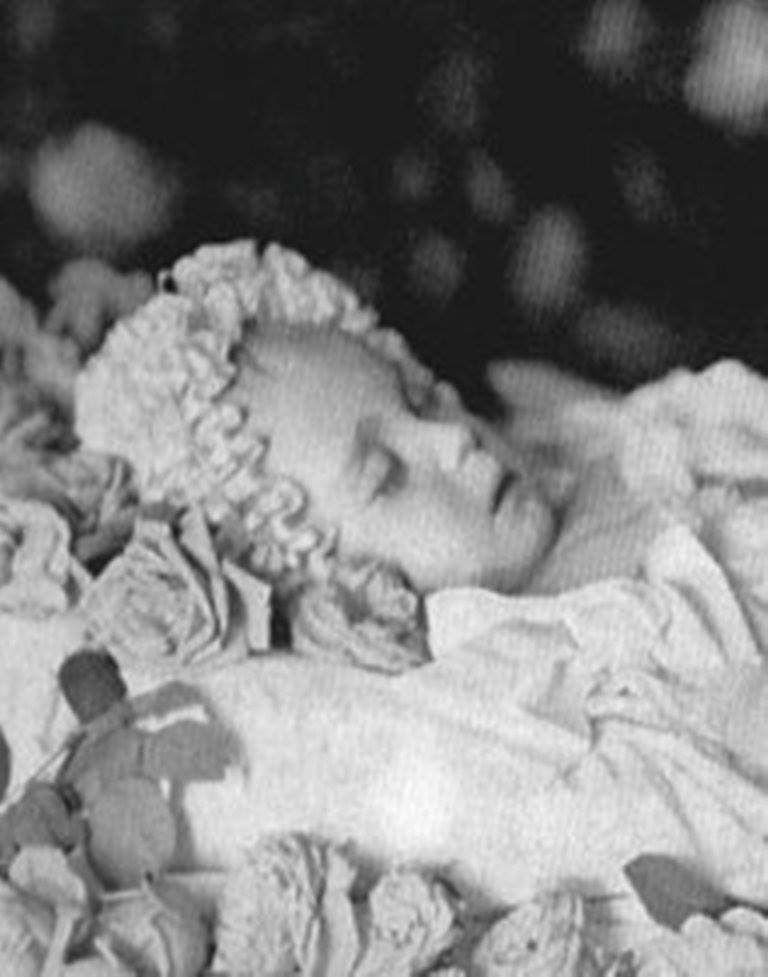
PHOTO: The only photograph of the “Angel Alexander”, was taken by his parents posthumously

Up until the early 20th century infant mortality in Imperial Russia was among the highest in the world[1]. Many a family lost at least one child either during childbirth or disease. Infant mortality was something that did not discriminate, regardless of one’s position in life, including members of the Russian Imperial Family.

Grand Duke Alexander Alexandrovich was born on 7th June (O.S. 26th May) 1869. He was the second child, of the then Tsesarevich Alexander Alexandrovich (future Emperor Alexander III) and Tsesarevna Maria Feodorovna (future Empress Maria Feodorovna, née Princess Dagmar of Denmark).

Alexander was the younger brother of the future Emperor Nicholas II, and third in line to the Russian throne at the time of his birth.

Sadly, the “Angel Alexander” did not live a full year, he died of bacterial meningitis, one month before his first birthday, on 2nd May (O.S. 20th April) 1870, age 10 months and 26 days.

The doctors who observed the infant – obstetrician Jacob Schmidt, pediatrician Karl Rauchfus and surgeon Gustav Hirsch recorded the course of the disease in detail. They noted that on the night of 15/16 April, after the secondary flu which infected the child’s right lung, signs of acute damage to the meninges appeared. On 17th April, there was a “slight improvement in the patient’s condition”, on 18th April – “a feverish state of moderation”, on 19th April – “for the most part he was conscious”, but the next day there was a deterioration and sudden death.

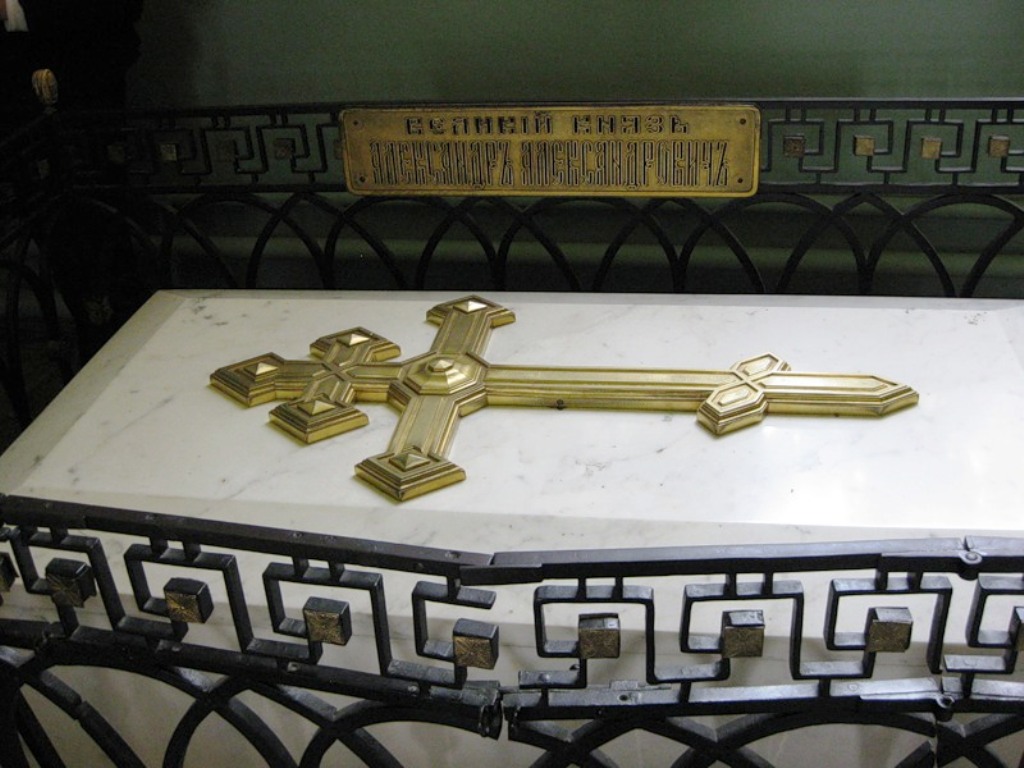
PHOTO: the tiny white marble sarcophagus bearing the remains of Grand Duke Alexander Alexandrovich in the SS Peter and Paul Cathedral, St. Petersburg

Tsesarevich Alexander wrote in his diary: “God, what a day You sent us and what is this test that we shall never forget to the end of our lives? Be it Your Will Lord and we shall conciliate before You and Your Will.”

“The doctors maintain he did not suffer, but we suffered terribly to see and hear him,” Maria Feodorovna wrote to her mother, Queen Louise of Denmark.

Grand Duke Alexander was sketched on his deathbed by the famous Russian portrait artist Ivan Nikolaevich Kramskoi (1837-1887). The only photograph of the “Angel Alexander”, was taken by his parents posthumously.

Sergei D. Sheremetev, the adjutant to Tsesarevich Alexander, accompanied the infant’s body on horseback to the Peter and Paul Fortress in St. Petersburg, where he was buried in the SS Peter and Paul Cathedral. The infant Grand Duke Alexander Alexandrovich was laid to rest in the northern nave of the Peter and Paul Cathedral in a tiny white marble sarcophagus. On the upper edge of the sarcophagus there is a gilded cross made of bronze, on the side there is a bronze plaque with an epitaph inscribed on it

Alexander’s death was the first of many personal losses which the Empress Maria Feodorovna would endure before her own death in 1928. She outlived her beloved husband “Sasha”, her parents, her sister Alexandra, all four of her sons, and five grandchildren.

Memory Eternal! Вечная Память!

NOTES:

[1] At the beginning of the twentieth century, Russia had the highest infant mortality in Europe – 250 out of 1000 newborns died before they reached one year of age.

Infant mortality under Nicholas II steadily declined. The downward trend in mortality (both children and adults) began before the revolution. According to statistics, the death rate during the reign of Nicholas II per 1000 people had been steadily decreasing.

In 1913, the All-Russian Guardianship for the Protection of Motherhood and Infancy was established by a personalized Imperial Decree, with the goal of reducing infant mortality in Russia, setting up shelters for mothers and children, Russia’s first dairy kitchens, children’s hospitals, maternity hospitals, etc.

© Paul Gilbert. 6 May 2023

On this day in 1894: Nicholas II ascended the throne

PHOTO: Tsesarevich and Grand Duke Nicholas Alexandrovich. 1894

On this day – 2nd November[1] [O.S. 20th October] 1894, Tsesarevich and Grand Duke Nicholas Alexandrovich ascended the throne as Russia’s last emperor and tsar.

It was on this historic day, that Nicholas Alexandrovich inherited the throne from his father Alexander III (1845-1894), who ruled Russia for only 13 years. Government officials, courtiers and troops of the Imperial Russian Army, among others, all took an oath of allegiance to their new emperor.

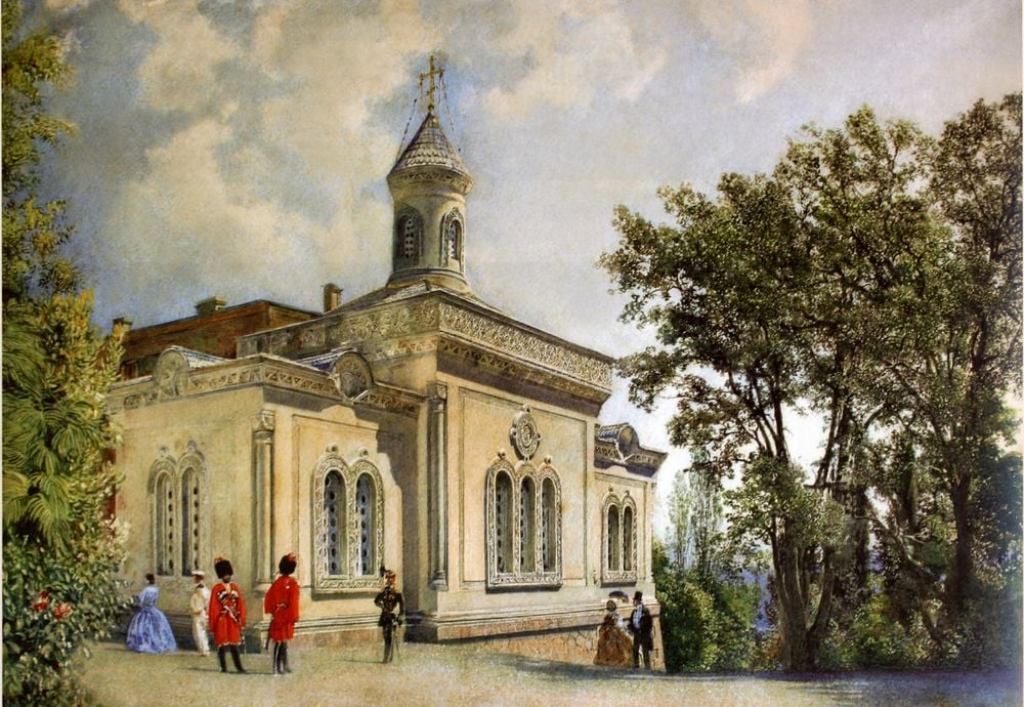
In the Church of the Exaltation of the Cross [adjacent to Livadia Palace], Nicholas pledged his oath of allegiance to Russia solemnly promising to protect the autocracy firmly and unswervingly, like his late father.

It was also in the Church of the Exaltation of the Cross, that the holy righteous John of Kronstadt anointed Princess Alix of Hesse, who became the Orthodox faithful Grand Duchess and future Empress Alexandra Feodorovna.

NOTE: The Church of the Exaltation of the Cross has survived to this day – PG

***

Though Nicholas Alexandrovich was heir-apparent to the throne, his father failed to prepare him for his future role as Tsar. He attended meetings of the State Council; however, as his father was only in his forties, it was expected that it would be many years before Nicholas succeeded to the throne. Alexander’s assumptions that he would live a long life and had years to prepare Nicholas for becoming Tsar proved wrong, as by 1894, Alexander’s health was failing.

Russia’s finance minister, Count Sergei Yulyevich Witte (1849-1915), suggested to the Tsar that Nicholas be appointed to the Siberian Railway Committee. According to Witte, Alexander argued that Nicholas was not mature enough to take on serious responsibilities. Witte stated that if Nicholas was not introduced to state affairs, he would never be ready to understand them.

Nicholas was only 26 years old when his father died suddenly after a long and serious illness, at the age of 49.

PHOTO: the Church of the Exaltation of the Cross [adjacent to Livadia Palace]

On 27th (O.S. 14th) November 1894, Nicholas Alexandrovich married Grand Duchess Alexandra Feodorovna (future Empress Alexandra Fedorovna). Their nuptials fell on the birthday of the Dowager Empress Maria Feodorovna, and court mourning could be slightly relaxed. The ceremony was held in the Grand Church (the home church of the Imperial Family) of the Winter Palace in St. Petersburg.

A respectable period of mourning was the reason his coronation was postponed for a year and a half. The Holy Coronation of Emperor Nicholas II and Empress Alexandra Feodorovna, took place on 27th (O.S. 14th) May 1896 in the Assumption Cathedral of the Moscow Kremlin. It would be the last coronation of a Romanov Tsar.

During the reign of Nicholas II, Russia made considerable progress in all areas of life, while experiencing tremendous growth in its economy. Under his reforms, the Russian Empire reached an unprecedented level of economic development. However, this time was also marked by the growth of revolutionary sentiments.

Click HERE to read 70 facts about Emperor Nicholas II and his reign, originally published on 13th July 2021.

His Imperial Majesty Sovereign Emperor Nicholas II reigned over the Russian Empire for more than 22 years. He abdicated on 15th March 1917 (O.S. 2nd March) 1917.

Some historians argue that the act of abdication was invalid for two reasons: one, because it was signed in pencil, violating all the necessary legal and procedural methods and format, and thus had no legal force; and two, because the instrument of abdication was never officially published by the Imperial Senate.

Regardless, as God’s Anointed, Nicholas II could not be displaced during his lifetime. Since the will of God was nowhere manifest, neither in the naming of his brother Grand Duke Mikhail Alexandrovich to the throne, nor in the Tsar’s signing of the instrument of abdication, his status as Tsar remained inviolate and unassailable. He remained Emperor until the day of his death and martyrdom on 17th July 1918. Ot was on this day, that the Russian Imperial House ceased to exist.

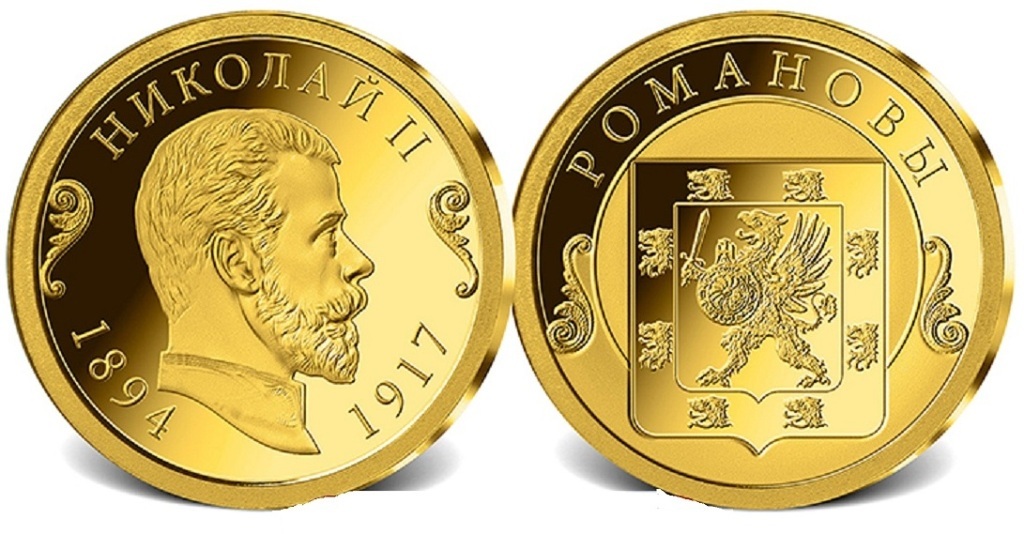
In 2018, a commemorative medal was issued, marking the 124th anniversary of Nicholas II’s ascension to the throne in 1894. The medal was the first of The Romanovs. Golden Collection to be minted by the Imperial Mint in Moscow.

NOTES:

[1] In recent years there has been much confusion by non-Orthodox Christians and Westerners with regard to the correct dates of important events (births, deaths, marriages, etc.) among members of the Russian Imperial Family, according to the New Style calendar.

As an example, is the date marking the death of Alexander III and the accession to the throne of Nicholas II. This happened on the day of Saint Artemius the Great Martyr and the righteous youth Artemiy, on 20th October (2nd November). And if this day is celebrated on 1st November or 3, then we are not commemorating the memory of these saints. Do not rely on any dates on Wikipedia which often provide the incorrect dates of the Gregorian calendar for the late 19th and early 20th centuries.

With the passage of every leap day that is on the Julian (Old Style) Calendar but not on the Gregorian Calendar, the difference between the two calendars grows another day. Currently, the Gregorian Calendar is thirteen days ahead of the Julian Calendar. Beginning on 14th March 2100 (29th February 2100 Julian), the difference will be fourteen days.

© Paul Gilbert. 2 November 2022

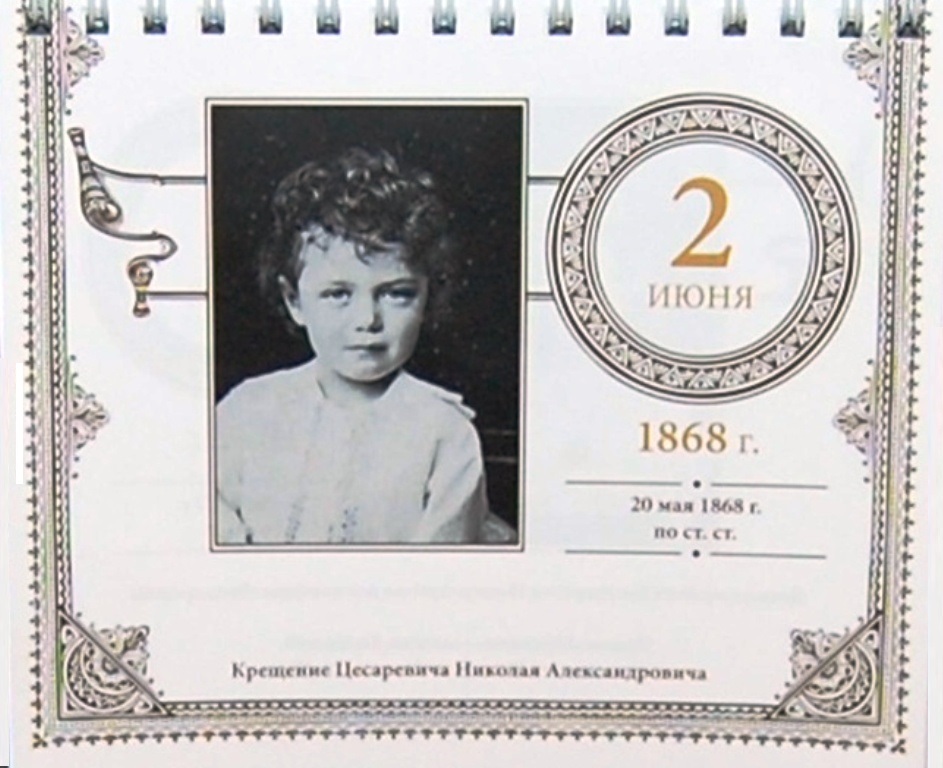
On this day – 2nd June 1868 – the future Emperor Nicholas II was baptised

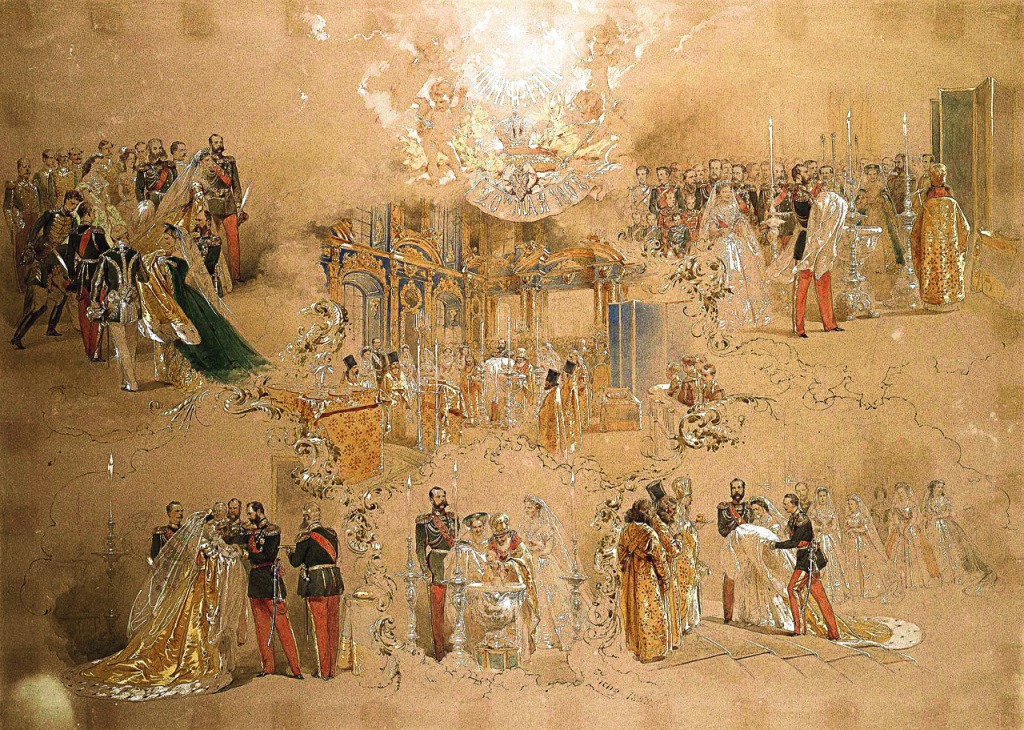
PHOTO: the baptism of Grand Duke Nicholas Alexandrovich [future Tsesarevich and Emperor] on 2nd June (O.S. 20th May) 1868, by Mihály Zichy (1827-1906). The watercolour depicts four baptismal scenes, and two of them show Alexander II holding his grandson in his arms.

Two weeks after his birth, on 19th (O.S. 6th) May 1868, His Imperial Highness Grand Duke Nicholas Alexandrovich was baptised in the Church of the Resurrection of Christ in the Catherine Palace at Tsarskoye Selo. The baptism was performed by the Imperial family’s confessor Protopresbyter Vasily Bazhanov (1800-1883).

The infant’s grandfather Emperor Alexander II, took a very active role in this historic ceremony. He clearly understood that not only was this his first grandson, but also that a future Emperor was being baptised. It is noteworthy that during the baptism, both Alexander II and his son, Grand Duke Alexander Alexandrovich [future Alexander III], acted as assistants to the lady of state. The fact that the father, breaking tradition, took an active part in the baptism[1], apparently, was due to its historic significance. Two emperors, current and future, held their successor in their arms, strengthening the foundation of the infant’s legitimacy.[2]

As for the mother [future Empress Maria Feodorovna], she did not have the right to be present at the baptism of her baby at all [in accordance with a tradition that originates in the Old Testament]. However, even if Maria Fedorovna wanted to break the custom, she could not do so, due to the fact that her doctors advised her not to walk following the birth of her son, and instructed her to rest on that eventful the day. [3]

It was Alexander II and Grand Duchess Elena Pavlovna, who carried the baby to the font for baptism. In addition, Nicholas Alexandrovich’s godparents, his Danish grandmother and uncle, Queen Louise and Crown Prince Friedrich took part.

Grand Duke Alexander Alexandrovich described the day’s events as follows: “The entrance was magnificent, and there were a lot of people in the palace and also in the garden. The little one was transported in a golden carriage with much pomp and ceremony, accompanied by an escort on horseback. During the ceremonial procession through the halls of the Grand Palace at Tsarskoye Selo, the newborn was carried to the palace church by the lady of state Princess [Alexandra Aleekseevna] Kurakina (1840-1919), supported on the one side by the State Chancellor Prince [Alexander Mikhailovich] Gorchakov (1798-1883), and on the other by Field Marshal Prince Alexander [Ivanovich] Baryatinsky (1815-1879) – both old and lame, but they endured excellently and helped as much as they could. The field marshal walks very decently, although with a cane. Tsarskoye Selo was unrecognizable that day; the streets were full of people and carriages, the whole city is celebrating. At 5 o’clock, a large banquet was held in the Great Hall, which was lit splendidly by the sun. It’s been a very tiring day, and poor Mama [Empress Maria Alexandrovna] is very tired. After the baptism, the entire family gathered at my place [the Alexander Palace] to congratulate Minnie [Grand Duchess Maria Feodorovna], and all little ones were there too. An excellent breakfast was served, and then everyone went home.”

Nearly 13 years later, in March 1881, Grand Duke Nicholas Alexandrovich became the Heir Tsesarevich, and in October 1894, he became Russia’s last Emperor and Tsar.

NOTES:

[1] According to Orthodox tradition at that time, the father was required to leave the church at the time of the baptism of his child, giving way to the godfather. Emperor Nicholas II was not in the church when his son Alexei was baptised in August 1904.

[2] Zimin, Igor Viktorovich. Children’s world of imperial residences. Life of monarchs and their environment. Baptism of children. 2010

[3] Ibid.

© Paul Gilbert. 2 June 2022

State Russian Museum Establishes Monument to Founding Emperors

196a

NOTE: All of the articles pertaining to Nicholas II and his family which were originally published in my Royal Russia News blog, have been moved to this Nicholas II blog. This article was originally posted on 17 March 2018 in my Royal Russia News blog – PG

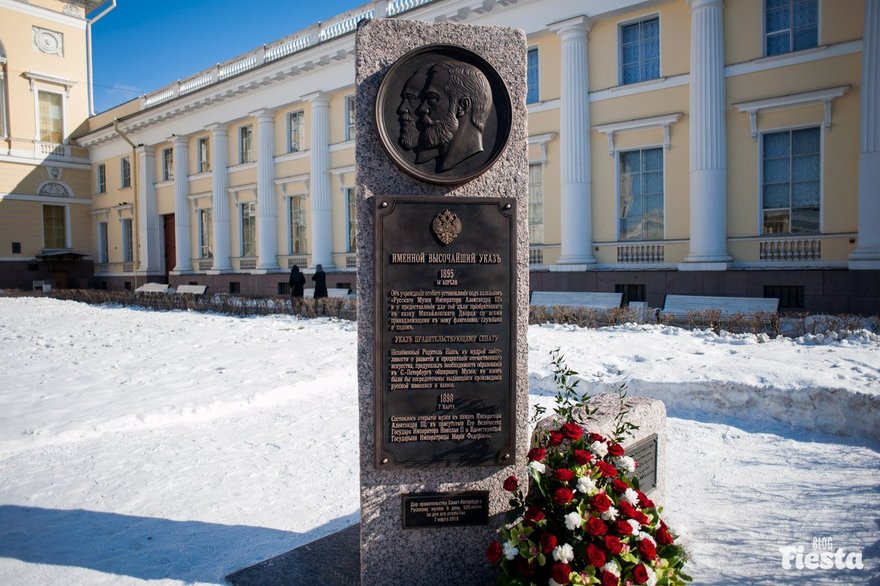
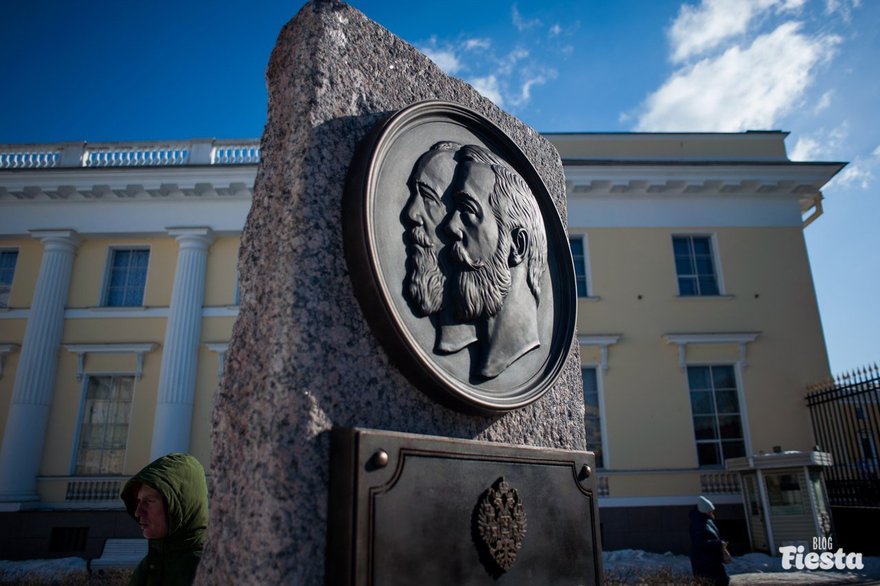
On 15th March 2018, the State Russian Museum in St Petersburg, established a monument to its two founding emperors Alexander III and Nicholas II.

The monument, which was established in the courtyard of the museum, was designed by the Russian sculptor Ilya Dyukov. It features a granite base with bronze portraits of the two emperors, and the text of the decree on the establishment of the museum, published in April 1895.

The monument was established on the eve of the 120th anniversary of the birth of the State Russian Museum. The main building of the museum is the former Mikhailovsky Palace, a splendid Neoclassical residence of Grand Duke Mikhail Pavlovich (1798-1849), constructed between 1819-1825. Upon the death of the Grand Duke the residence was named after his wife as the Palace of the Grand Duchess Elena Pavlovna, and became famous for its many theatrical presentations and balls.

196b

The museum was established on 25 (O.S. 13) April 1895, by Emperor Nicholas II and renamed the Russian Museum of Emperor Alexander III, in honour of his father, who was a great patron of Russian art. The museum was officially opened on 19 (O.S. 7) March 1898. The following day, the museum received its first visitors, and over time would acquire a rich collection of art and sculpture. After the 1917 Revolution, many private collections were nationalized and relocated to the renamed State Russian Museum.

Today it is the world’s largest depository of Russian art, a unique and beautiful architectural complex of palaces and gardens in the heart of St Petersburg, with a collection of more than 410 thousand items.

© Paul Gilbert. 13 December 2019