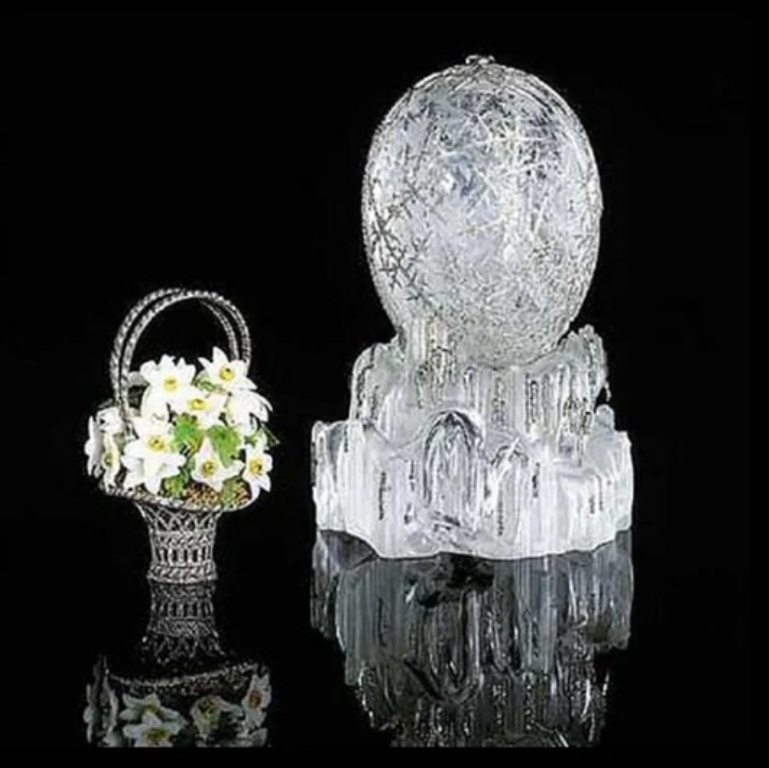
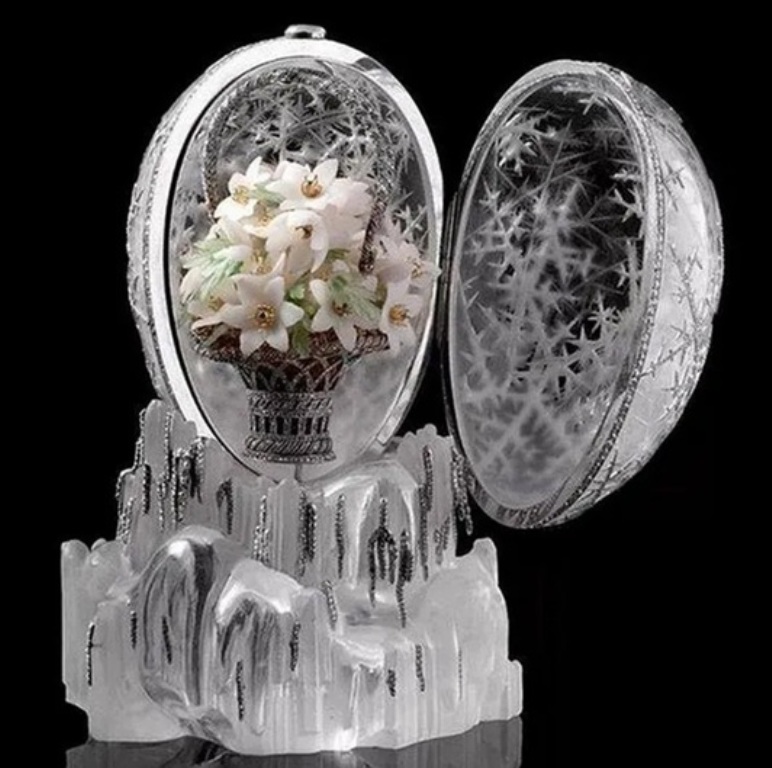
Fabergé’s Imperial Winter Egg sells for over $30 million USD

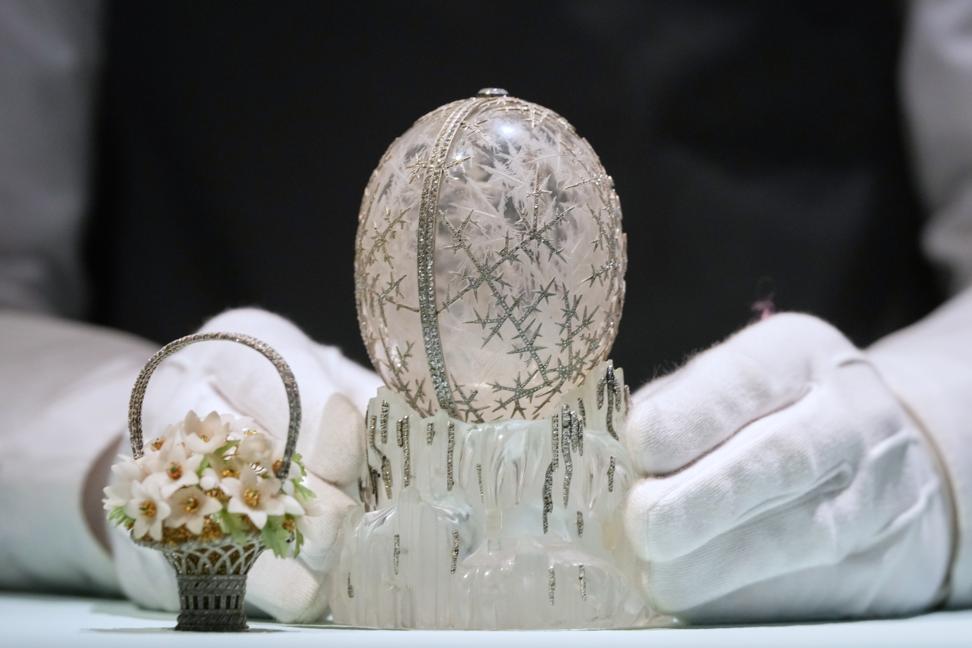
On 2nd December 2025, Carl Fabergé’s legendary Winter Egg sold at auction for more than $30.2 million USD to an anonymous buyer. For the third time in its history, the Winter Egg is now the most valuable Fabergé item ever sold.

The Winter Egg was first sold by Christie’s in 1994 for 7.3 million Swiss francs, setting what was then a world record for a Fabergé item. Eight years later, in 2002, the egg broke its own record when it fetched $9.6 million at a Christie’s auction in New York City.

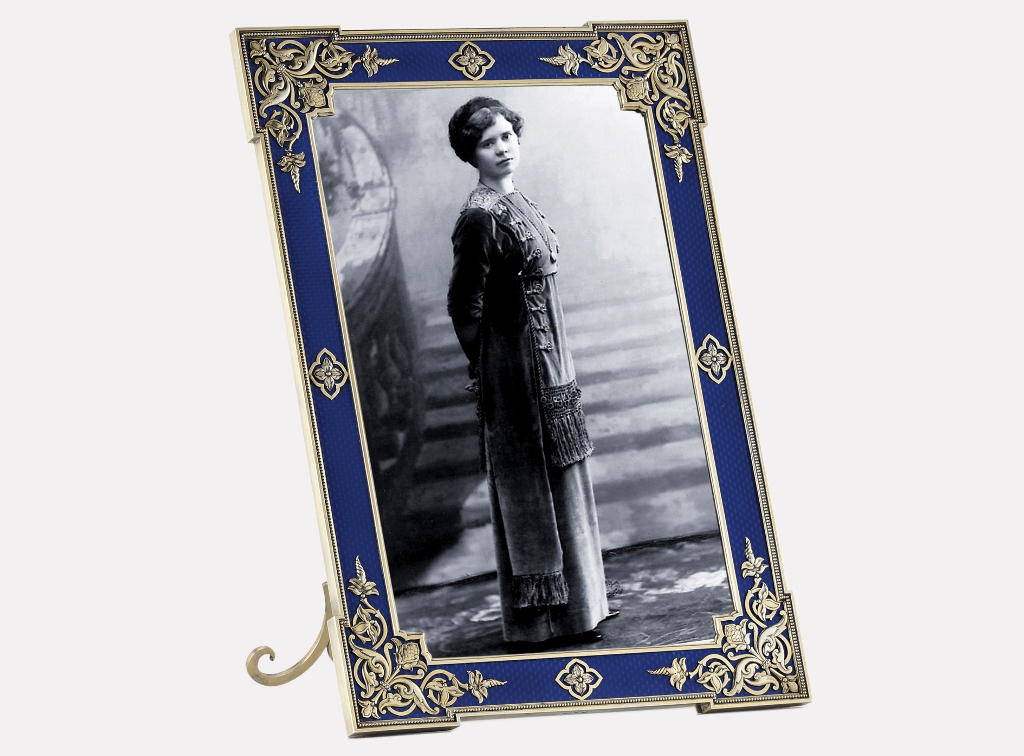
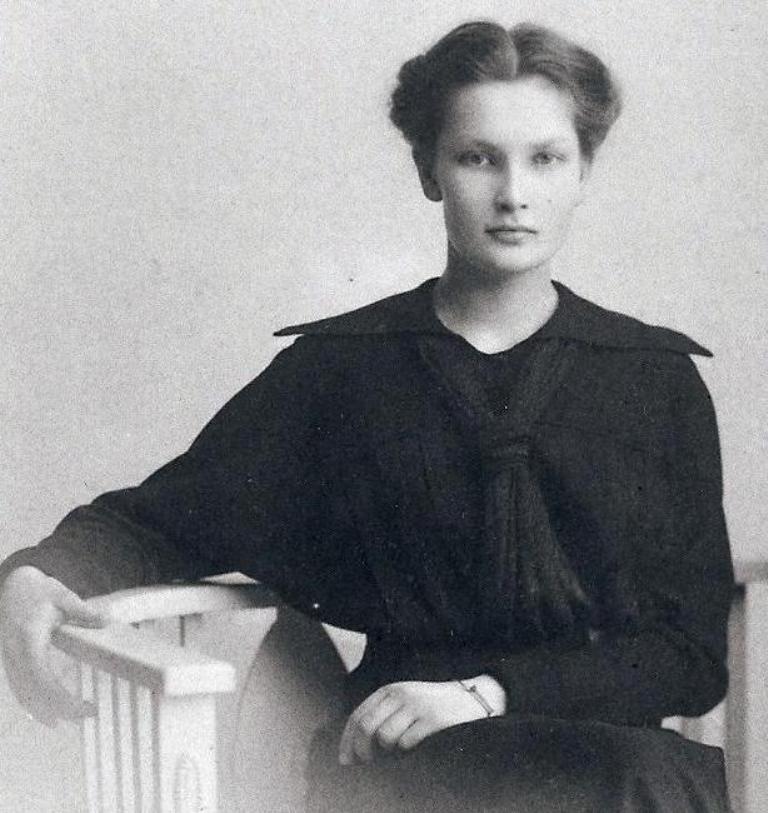
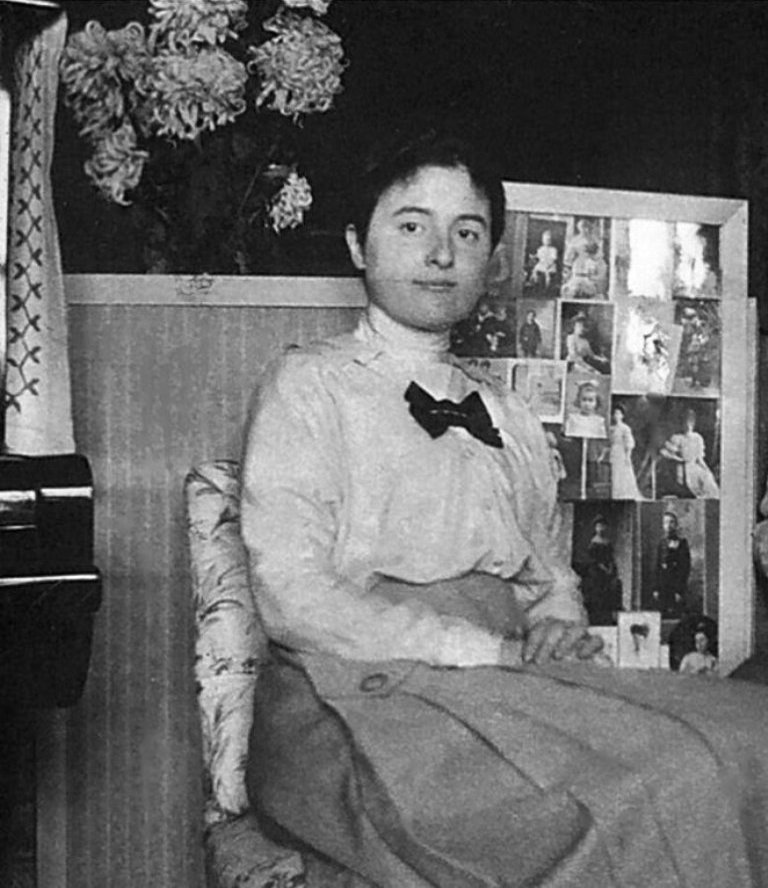
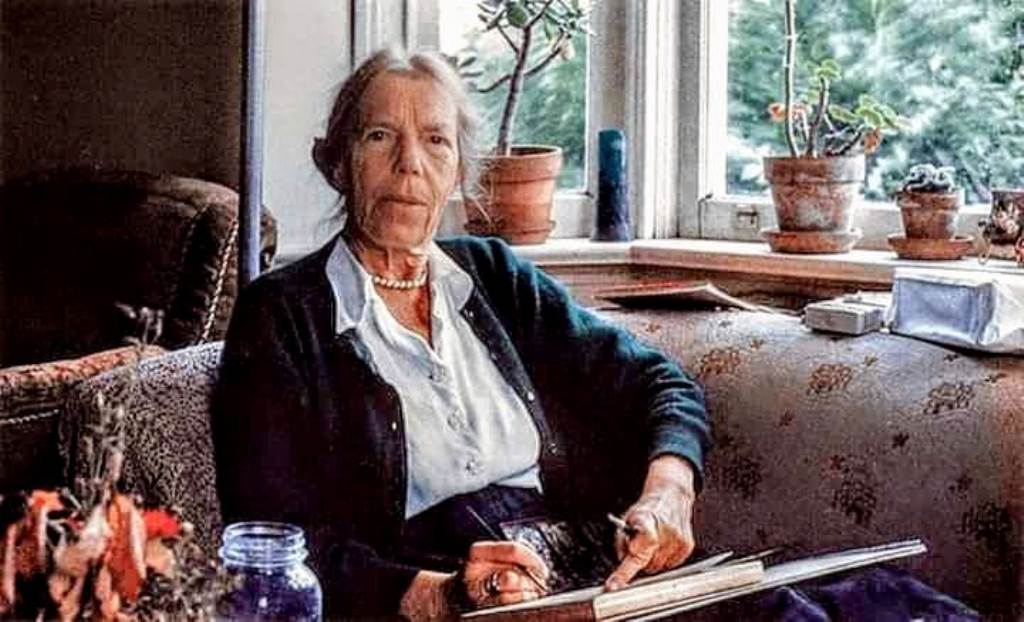
The Winter Egg was presented to the Dowager Empress Maria Feodorovna by her son, Emperor Nicholas II as an Easter gift in 1913. What makes this particular egg so rare, is that for the first time in the history of the Imperial Easter Eggs, the design was created by a woman: Alma Theresia Pihl-Klee (1888-1976), the niece of the master August Wilhelm Holmström (1829-1903), who brought this project to life.

PHOTO: Alma Theresia Pihl-Klee (1888-1976)

Margo Oganesian, Christie’s head of department for Fabergé and Russian works of art, said: “Christie’s is honoured to have been entrusted with the sale of the exquisite Winter Egg by Fabergé for the third time in our history.

“Today’s result sets a new world auction record for a work by Fabergé, reaffirming the enduring significance of this masterpiece and celebrating the rarity and brilliance of what is widely regarded as one of Fabergé’s finest creations, both technically and artistically.

“With only a handful of imperial Easter eggs remaining in private hands, this was an exceptional and historic opportunity for collectors to acquire a work of unparalleled importance.”

The author of this article believes that the Winter Egg should be returned to Russia, where it originated and where it belongs today. It would be a most kind and generous gesture on the part of the anonymous buyer to gift it to either the Fabergé Museum in St. Petersburg – which has 9 Fabergé Imperial Easter Eggs – or the Armoury of the Moscow Kremlin, which has 10 Fabergé Imperial Easter Eggs.

FURTHER READING:

The Imperial legacy of Carl Fabergé (1846-1920) + PHOTOS

Christie’s to auction Fabergé’s legendary “Winter Egg” – again!

© Paul Gilbert. 10 December 2025

Empress Alexandra Feodorovna’s photo album sells for 13 million rubles at auction

On 15th October 2025, I reported that a rare photo album belonging to Empress Alexandra Feodorovna (1872-1918) was being auctioned on 23rd October 2025, at the Literary Fund Auction House (Litfond) in St. Petersburg.

The opening bid for the album was 10 million rubles [$125,600 USD], but collectors bidding against one another, managed to drive the price even higher. The photo album sold for 13 million rubles [$163,000 USD], to an unknown Russian bidder.

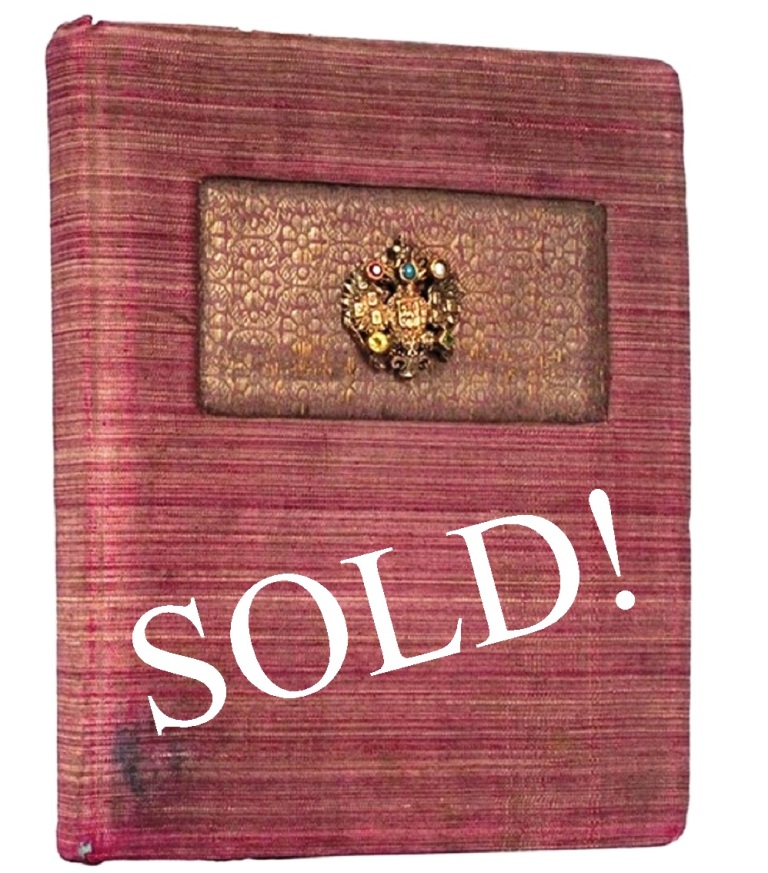
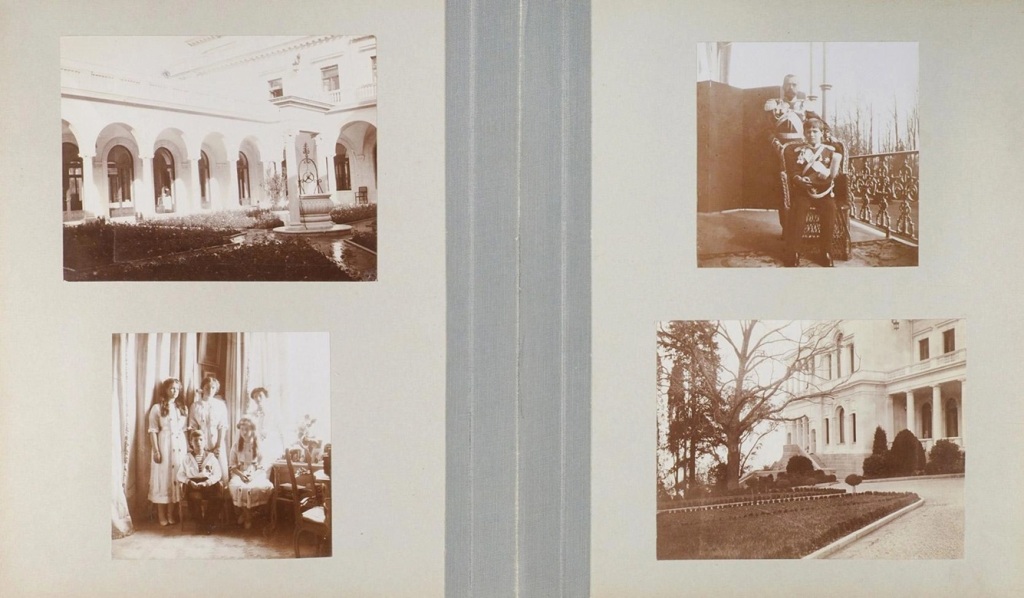
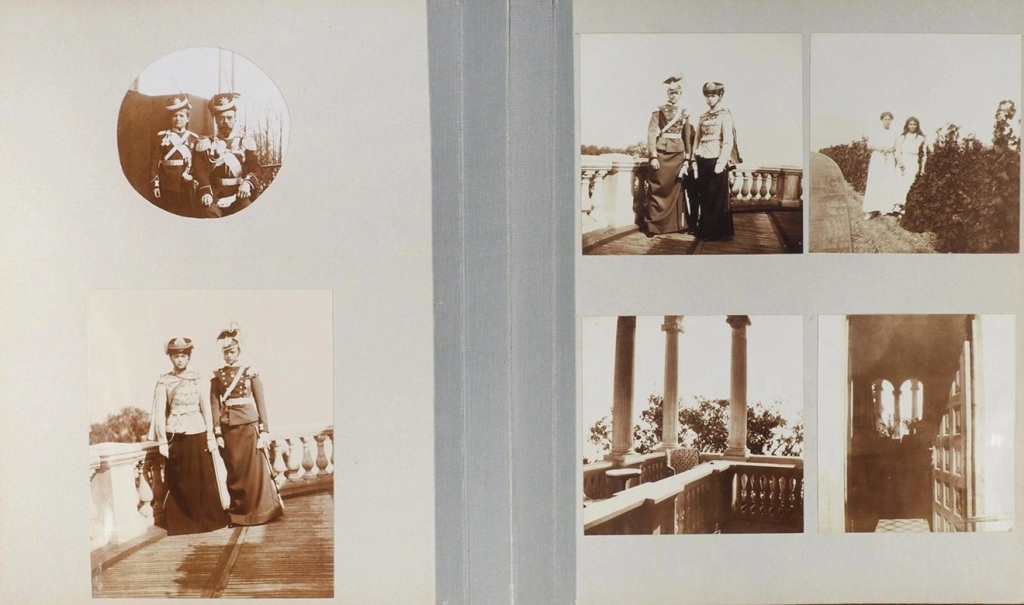
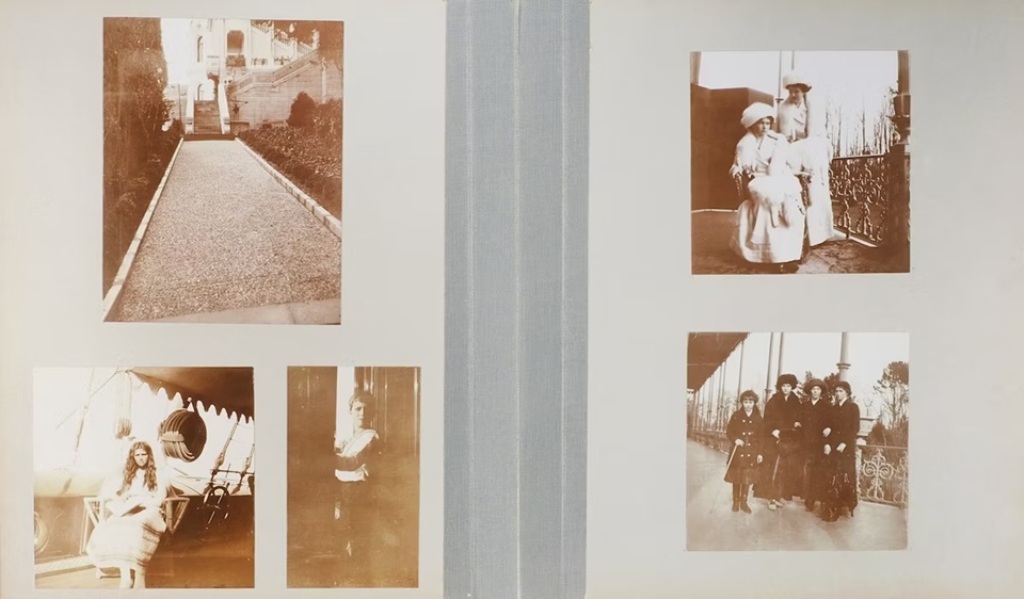
The lilac-coloured album includes 12 pages with 26 photographs of the Imperial Family taken by the Empress herself, using her Kodak Brownie Box camera. The photos were taken in 1913-1914 in the Crimea and Tsarskoye Selo.  The size of the album is 24.5×20 cm, the photographs are from 8.5×5.3 to 11.8×9.3 cm. All the photos were personally pasted into the album by Alexandra Feodorovna and Emperor Nicholas II.

This album is one of only two of the Imperial Family’s photo albums, known to the author of this article, that was not included in the state archival funds. The other photo album belonging to Emperor Nicholas II in the Museum of Local Lore in Zlatoust, which is situated 270 kilometers (168 mi) south of Ekaterinburg. 

On a personal note, I am happy that the photo album was purchased by a Russian buyer, rather than sold abroad to a foreign collector. Let us hope, that the album will be gifted to a museum – preferably the Alexander Palace, from where it was taken in August 1917, when the Imperial Family were sent into exile.

FURTHER READING:

Photo album belonging to Russia’s last Empress to be auctioned in St. Petersburg + PHOTOS

© Paul Gilbert. 29 October 2025

Photo album belonging to Russia’s last Empress to be auctioned in St. Petersburg

On 23rd October 2025, a unique photo album of the last Russian Empress Alexandra Feodorovna (1872-1918), the wife of Nicholas II, will be put up for auction at the Literary Fund Auction House (Litfond) in St. Petersburg. The starting bid is set at 10 million rubles [$127,000 USD], although it is expected to sell for much more.

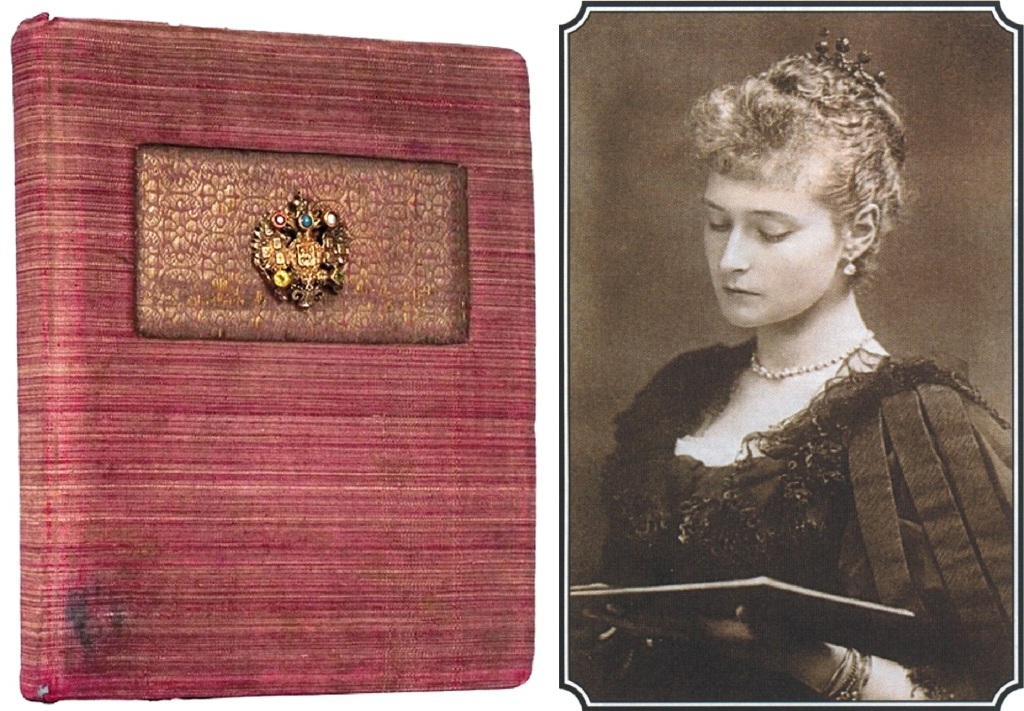
The album includes 12 pages with 26 photographs of the Imperial Family taken by the Empress herself, using her Kodak Brownie Box camera. The photos were taken in 1913-1914 in the Crimea and Tsarskoye Selo.  The size of the album is 24.5×20 cm, the photographs are from 8.5×5.3 to 11.8×9.3 cm. All the photos were personally pasted into the album by Alexandra Feodorovna and Emperor Nicholas II.

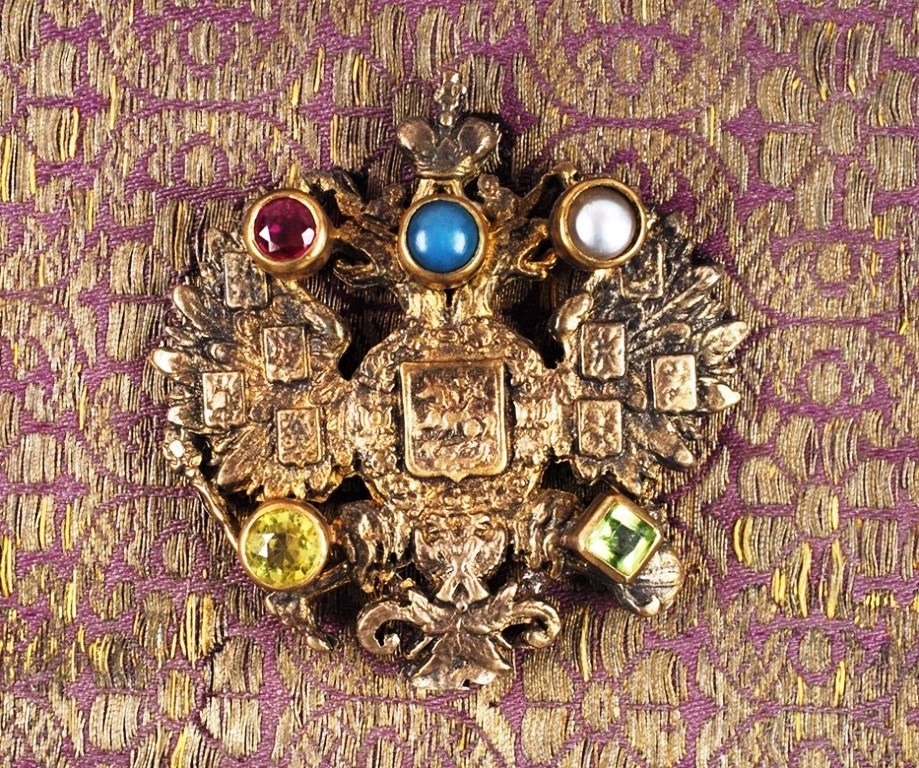
The lilac-coloured cover of the album is decorated with a metal coat of arms of the Russian Empire, inlaid with five precious stones – ruby, turquoise, pearls, demantoid and chrysolite, each of which symbolizes one of the five children of the August Couple.

The Empress purchased the album at a charity bazaar in Yalta in 1913, a record of which is recorded in her own handwritting has been preserved on the inside front cover. Until 1917, the album was in the Alexander Palace in Tsarskoye Selo, and then was taken by Alexandra Feodorovna into exile to Tobolsk.

In the autumn of 1917, Alexandra presented the album to the dentist of the Imperial Family, Sergei Sergeievich Kostritsky (1875-1944). After the 1917 Russian Revolution, Kostritsky found himself abroad, in Nice, France, where he befriended members of the His Majesties Life Guards Cavalry Regiment. In 2003, the photo album was returned to Russia by Nikita Tuchkov, and three years later it was acquired by a private collector.

This album is one of only two of the Imperial Family’s photo albums, known to the author of this article, that was not included in the state archival funds. The other photo album belonging to Emperor Nicholas II in the Museum of Local Lore in Zlatoust, which is situated 270 kilometers (168 mi) south of Ekaterinburg. 

Below, are six pages from the album, featuring just some of the 26 photos:

Sergey Burmistrov, who serves as General Director of Litfond, noted: “The starting price is high, but this album has probably generated the most interest in this auction, one of great historial significance. We have informed both the state archives and museums in St. Petersburg, Moscow and Crimea, and we do not rule out that they may be interested in bidding on this album.”

Let us all hope, that this photo album, which has such a close personal connection to Empress Alexandra Feodorovna, does not end up in another private collection, but instead, is purchased by or for one of the museums or palaces, where it will be put on display for visitors to see and researchers to study.

AUCTION RESULTS – 23rd October 2025

Empress Alexandra Feodorovna’s photo album sells for 13 million rubles at auction

© Paul Gilbert. 15 October 2025

***

While my research is dedicated to clearing the name of Russia’s much slandered Tsar, I am also actively looking for articles and news stories on the Romanovs, from Russian archival and media sources, which may be of interest to my readers.

In exchange for this 18-page booklet, please consider making a small $5 or $10 donation in aid of my research. These donations are of great assistance in helping me offset the cost of obtaining and translating documents from Russian archival sources, which are often paid for out of my own pocket. It is these documents which help present new facts and information on the life and reign of Nicholas II. In addition, my research continues to debunking many of the myths and lies which exist more than a century after his death and martyrdom.

Please note, that there is NO obligation, thank you for your consideration!

CLICK HERE TO MAKE A DONATION

Christie’s to auction Fabergé’s legendary “Winter Egg” – again!

PHOTO: Fabergé’s “Winter Egg (1913)

On 2nd December 2025, one of Carl Fabergé‘s Imperial Easter Eggs, will be auctioned – yet again – at Christie’s in London. The legendary Winter Egg, is expected to sell for more than £20 million [$27 million USD].

Recall that the Winter Egg was presented to the Dowager Empress Maria Feodorovna by her son, Emperor Nicholas II as an Easter gift in 1913, the same year which also marked the 300th anniversary of the Romanov Dynasty. This exquisite piece is considered one of the most elegant of the 50 Imperial Easter Eggs created by the Fabergé firm.

For the first time in the history of the Imperial Easter Eggs, the design for the Winter Egg was created by a woman: Alma Theresia Pihl-Klee (1888-1976), the niece of the master August Wilhelm Holmström (1829-1903), who brought this project to life.

The egg measured 142 x 102 x 82 mm and cost 24,600 rubles. Pihl-Klee’s design depicts a block of melting ice. It was carved from a single piece of rock crystal and consists of two transparent halves, decorated with the finest engraving on the inside, imitating frost on the window. The exterior of the egg is decorated with engraving and platinum patterns with diamonds in the form of snowflakes and “streams” of platinum and diamonds.

The top of the egg is crowned with a moonstone in the form of a cabochon, with the date “1913”. The bezel of each half is made of platinum and decorated with 1,308 small diamonds and 360 medium-sized diamonds.

PHOTO: Fabergé’s “Winter Egg (1913)

The surprise inside the Winter Egg is a platinum basket with snowdrops. The flowers rest on a bed of golden moss, each flower is carved from a single white quartz. The stems and stamens are made of gold, the leaves are made of jade, and the flower buds are made of pomegranate.

At the bottom of the basket, studded with 1,378 diamonds, there is an engraving of “Fabergé 1913”.

After the 1917 Revolution, the Winter Egg was confiscated along with all the other possessions of the Romanov Family, as well as those of the families of the Russian nobility. During the 1920s, a number of Fabergé’s Imperial Easter Eggs were sold by the Bolsheviks to foreign buyers.

During the past century, the Winter Egg has been sold numerous times . . .

In 1927 it was sold to the Wartski Gallery in London for £450. In 1934 it was resold to Lord Alington for £1,500. In 1948, the egg was purchased by British tycoon Bernard Eckstein, but he died shortly thereafter, and the Fabergé egg, along with his other possessions, was put up for auction at Sotheby’s in London. For £1,870, it was bought by Arthur Brian Ledbrook. After his death in 1975, the trace of the egg was lost.

In 1993, the Winter Egg was found in a shoebox under a bed in the suburbs of London. The following year, it was put up for auction at Christie’s in Geneva. An anonymous buyer from the United States paid 7.263 million Swiss francs [$5.587 million USD] for it by phone.

In 2002, the Winter Egg reappeared at a Christie’s auction in New York. It was purchased for $9.579 million by the Qatari prince, Saud bin Muhammed Al Thani (1966-2014). The Qatari prince served as the country’s Minister of Culture, Arts and Heritage. By the turn of the 21st century, he had established an international reputation as an avid art collector, both for his own collection as well as those of several state-owned museums he oversaw in Qatar. His descendants have made the decision to offer the Winter Egg for sale at Christie’s in London.

Margo Oganesian, Head of Christie’s Department, Fabergé and Russian Works of Art, said: “With only six other Imperial Easter Eggs remaining in private collections, this is an extraordinary opportunity for collectors to acquire what is arguably one of Fabergé’s finest creations, both technically and artistically.”

© Paul Gilbert. 2 October 2025

Auction: Tatiana Botkin Collection – 15 May 2025

VIEW CATALOGUE – 29 pages. 79 lots.

On 15th May 2025, the Coutau-Bégarie Auction House (Paris) will hold one of the most interesting Romanov auctions in recent memory: the Tatiana Botkin Collection (1898-1986). The auction will feature valuable historical memories of the Russian Imperial Family during their captivity in Tobolsk, preserved by the daughter of the Tsar’s private physician, Dr. Eugene Sergeyevich Botkin (1865-1918).

The auction offers 79 lots, including photographs of the Botkin family and the family of Emperor Nicholas II; correspondence of Tatiana Botkina; transcripts from Tatiana’s book of reminiscences of the Tsar’s family and their life before and after the Revolution; personal items of the Botkin family, including beautiful objets d’art; icons; Gleb Botkin’s watercolours and more!

The catalogue is published in French only, the Tatiana Botkin Collection consists of 29 pages. It can be viewed – as a PDF document only – by clicking on the link above.

***

Tatiana Evgenievna Botkina (1898-1986)

Tatiana Evgenievna Botkina was born in Vladivostock on 28th August 1898, she was the fourth child and only daughter of Dr. Eugene Sergeyevich Botkin and his wife Olga Vladimirovna Botkina (1872-1945). She had four brothers Sergei (1892-1893), Dmitri (1894-1914), Yuri (1895-1941), and Gleb (1900-1969). Her parents divorced in 1910 under the strain of her father’s devotion to the Imperial Family and the long hours he spent at court and her mother’s affair with a German tutor. Eugene Botkin retained custody of the children following the divorce. Tatiana’s older brother Dmitri was killed in action during World War I.

Tatiana and her brothers spent their early childhood in St. Petersburg. After their father’s appointment as a court physician, they moved to Tsarskoye Selo, first to the Catherine Palace and then to Sadovaya Street, very close to the Alexander Palace Park. She received a good education and spoke four languages fluently: English, French, German and Russian.

The Botkin children were sometimes received at the Alexander Palace, where they became playmates of the imperial children, of whom they were the same age.  They first met the imperial children in 1911 and, thereafter, sometimes played with them when they were on vacation in the Crimea. 

Following the outbreak of the First World War in August 1914, Tatiana’s father supervised the hospitals that the Empress had opened at Tsarskoye Selo to treat the seriously wounded. In addition, he transformed his house into a hospital for convalescents, where Tatiana served as a nurse. 

In August 1917, Dr. Botkin followed the Imperial Family into exile to Tobolsk in Siberia. Tatiana and her brother Gleb later joined their father, moving into the Kornilov House, situated opposite the Governor’s House where the Imperial Family where being held under house arrest. They were not allowed to visit the Imperial Family, so instead Tatiana wrote notes, which her father smuggled to the grand duchesses in his overcoat.

When the Imperial Family was transferred from Tobolsk to Ekaterinburg in April 1918, the Botkin children were not permitted to accompany their father. As a result, the Botkin children decided to remain behind in Tobolsk. Tatiana regretted this decision all her life.

On 17th July 1918, the Tsar and his family, along with Dr. Botkin and three other faithful retainers were murdered by members of the Ural Soviet in the basement of the Ipatiev House in Ekaterinburg. Several years later, when Tatiana heard the conclusion of the Sokolov Report, that the Tsar, his family and their servants had been killed, her sole consolation was the fact that her father had died trying to shield the Tsar.

The murder of her father and the Imperial Family caused her inconsolable pain. In 1941, her brother Yuri was imprisoned by the Nazis and then executed. Her mother died of malnutrition in Berlin in 1945.

In the fall of 1918, Tatiana married Konstantin Semenovitch Melnik (1893 – 1977), an officer of the 5th Siberian Rifle Regiment, who was wounded in battle and was treated in the Tsarskoye Selo infirmary, where he met the Botkins. The couple had three children: Elena (1921-2005), Konstantin (1927-2014) and Evgeny (year of birth and death unknown).

In 1919, during the retreat of the Eastern Front, Melnik took Tatyana and her brother Gleb to Vladivostok. From here, they escaped Russia, settling first in Dubrovnik, Yugoslavia. In 1920, they moved to France, where they settled in Rives, a town near Grenoble. Tatiana divorced her husband and moved to Nice, where she raised her children alone.

In later years, Tatiana, along with her brother Gleb, were staunch supporters of Anna Anderson’s claim that she was the surviving Grand Duchess Anastasia Nikolaevna, the youngest daughter of Tsar Nicholas II.

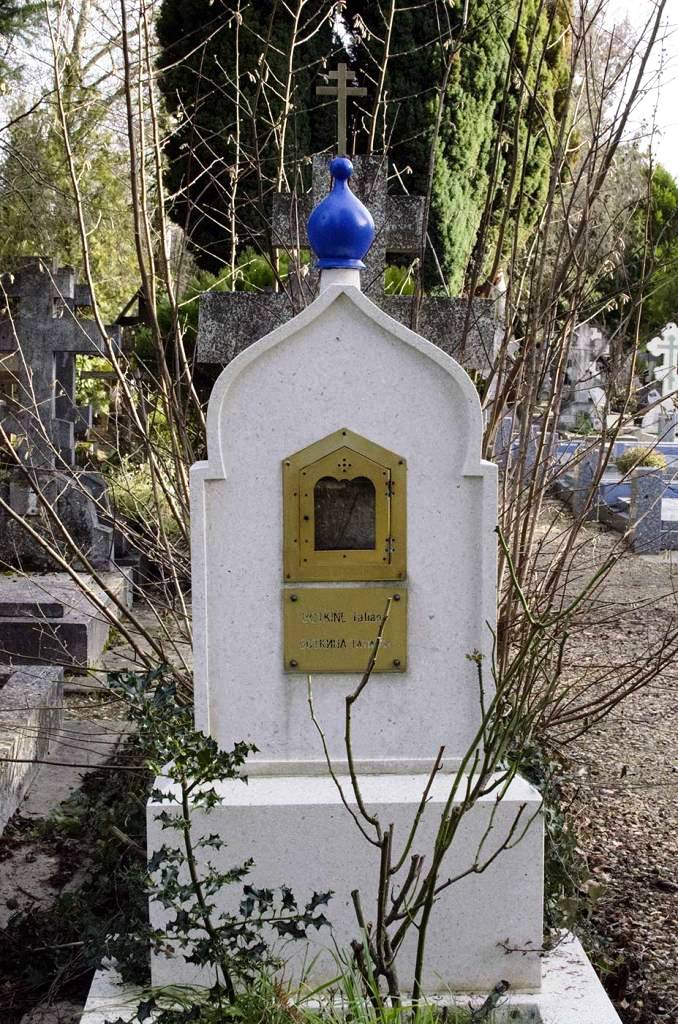
PHOTO: Tatiana Botkina’s grave in the Russian Orthodox cemetery, in Sainte-Geneviève-des-Bois

Tatiana eventually settled near Paris, where she lived the rest of her life. A few years before her death, with the help of her granddaughter Catherine Melnick-Duhamel, she wrote her memoirs entitled Au temps des Tsars (1980), followed by a second: Anastasie retrouvée (1985).

She died on 1st April 1986, at the age of 88. She was buried at the Russian Orthodox cemetery, in Sainte-Geneviève-des-Bois, situated in the southern suburbs of Paris, France.

© Paul Gilbert. 14 May 2025

***

CLICK TO VIEW CURRENT CATALOGUE
Handwritten note by Nicholas II to be auctioned in Moscow

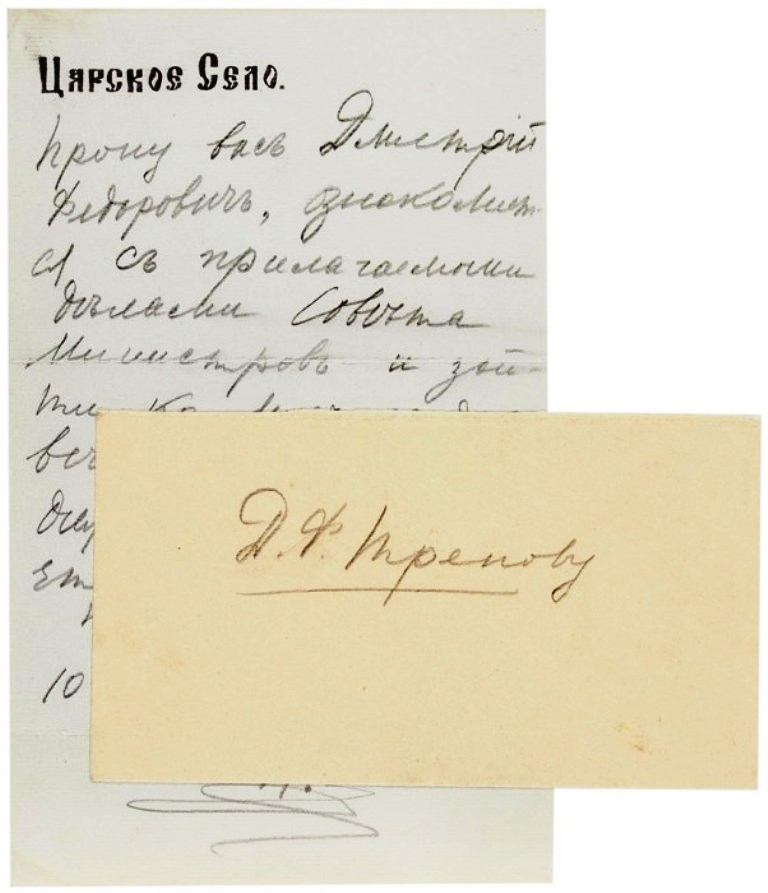
A handwritten note of Emperor Nicholas II, addressed to the Governor-General of St. Petersburg Dmitry Fedorovich Trepov in 1906 will go under the hammer next month at a Moscow auction. The auction will be held at the Litfond Auction House on 6th February, the list price is 75,000 Rubles [$760.00 USD].

Description: In a personalized envelope with a written signature “Nikolai”, the addressee is written in pencil on the envelope: “To D.F. Trepov”. The note is written on a sheet of 18×11.1 cm. writing paper with the stamp “Ца́рское Село́ / Tsarskoye Selo” in the upper lefthand corner.

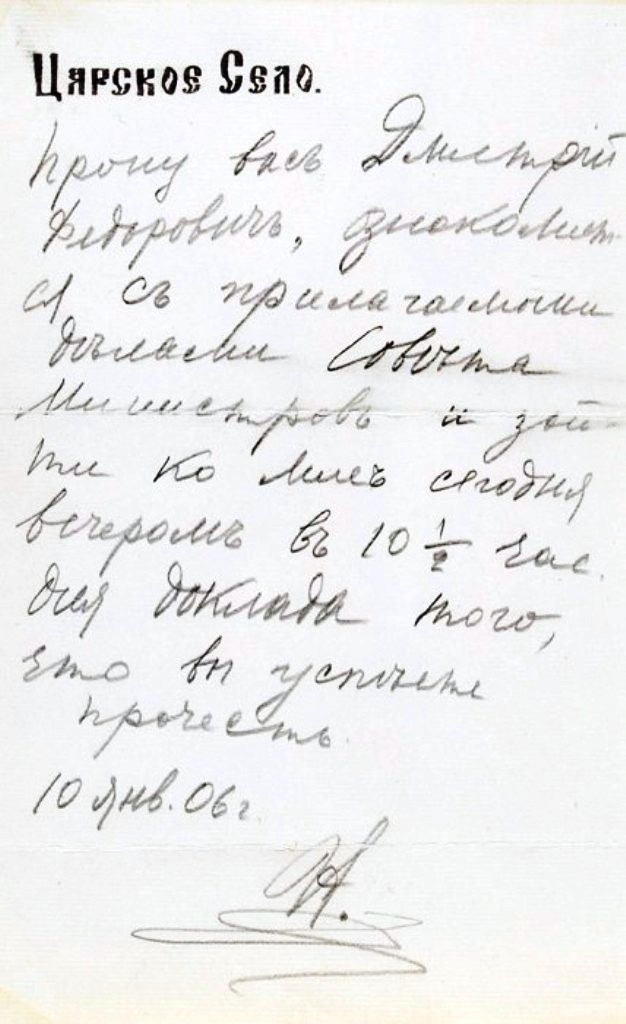
A rough translation of the Tsar’s note to Trepov reads:

“I ask you, Dmitry Fyodorovich, to familiarize yourself with the enclosed files of the Council of Ministers and come to see me tonight at 10 1/2 o’clock, to discuss what you have managed to read of the report. Jan. 10. 06 g. N”.

PHOTO: Dmitry Fedorovich Trepov (1855-1906)

Major-General Dmitry Fedorovich Trepov (1855-1906) enjoyed a short, but impressive career – he was only 50 when he died. He served as Head of the Moscow police (from 1896). Then, taking advantage of the favour of Emperor Nicholas II: was a Major General (1900), Major General of the Retinue (1903), Governor-General of St. Petersburg (from 1905), as well as Deputy Minister of Internal Affairs. By the personal order of the Emperor he was settled on the first floor of the Winter Palace in St. Petersburg. He strongly believed that autocracy was the only way for Russia.

© Paul Gilbert. 24 January 2025

Caucasian sword belonging to Nicholas II to be auctioned in London

Despite Western sanctions against Russia, which include the cancelation of all cultural exchanges [i.e. exhibitions, auctions, etc.], works of Imperial Russian art continue to break records at British, American and French auctions. Paintings by Aivazovsky, Vereshchagin and Repin, luxurious pieces of jewelry made by Fabergé, find their new buyers. Despite the political chaos, the antique market continues to thrive.

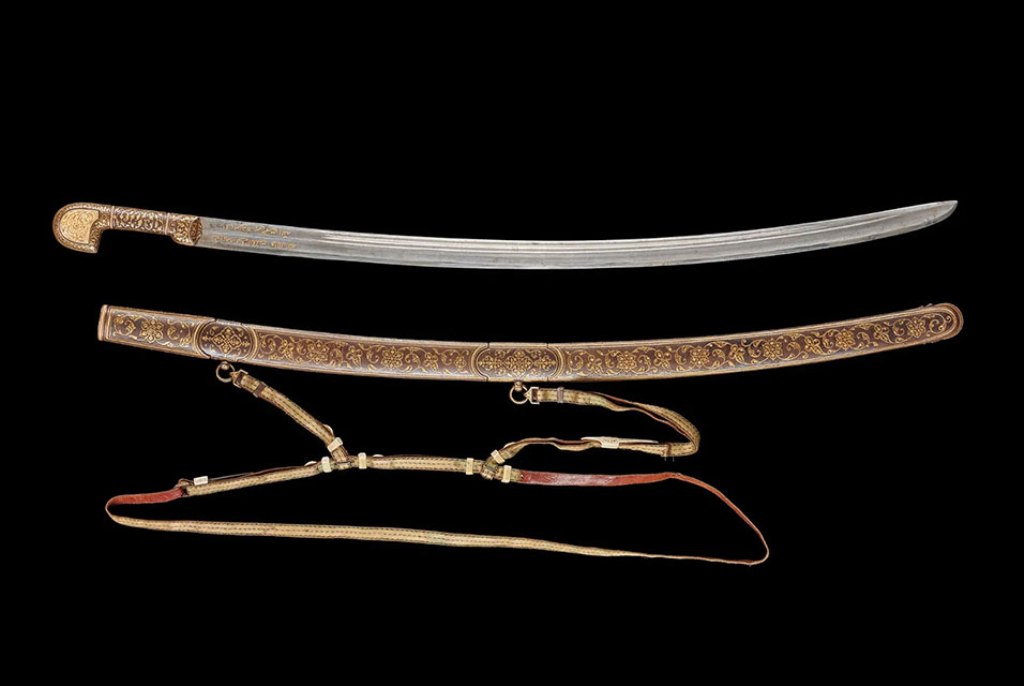
On 13th July 2024, a unique Caucasian shashka, which, according to researchers belonged to Emperor Nicholas II, will be sold at the Apollo Art Auctions in London,

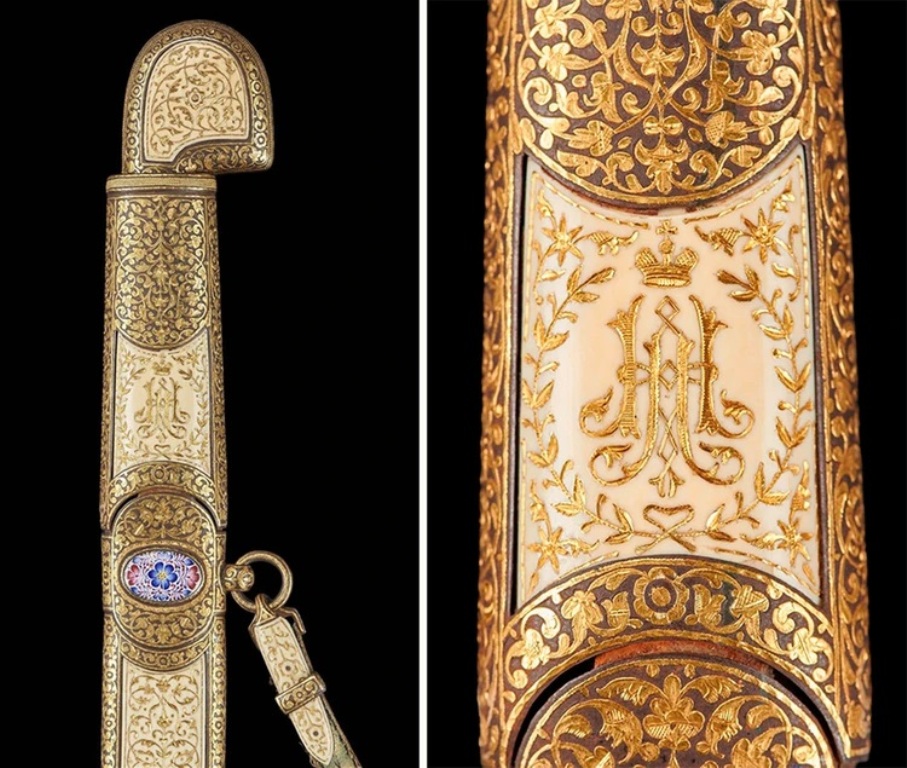
The extremely fine-quality Caucasian shashka given to Nicholas II, when he was Tsesarevich (heir apparent). Research suggests the saber was presented to Nicholas during a tour of the Caucasus with his father Emperor Alexander III, in 1888. An Arabic inscription in gold on the blade translates to: (M)ay the dominance of the owner of this sword grow, and his life, and his greatness, and may Allah bless his family, and he will achieve his goal.

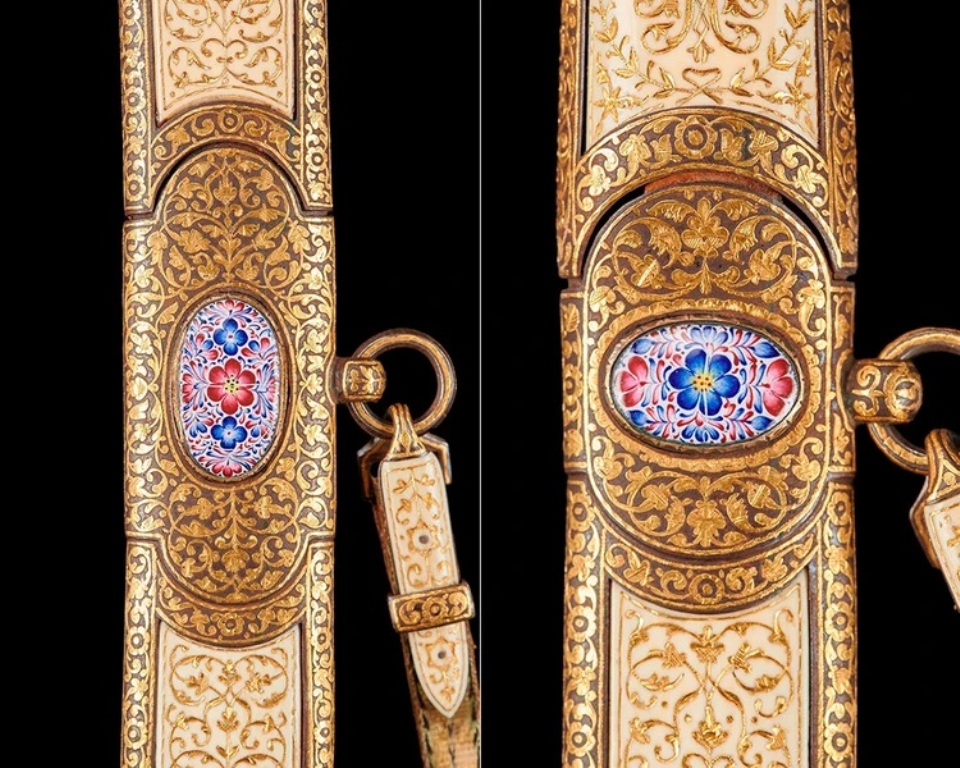
It is also monogrammed with the Cyrillic letters “HA” – “NA” in English – (for Nicholas Alexandrovich), surrounded by a golden laurel and surmounted by the Imperial Russian Crown. Its wonderfully-decorated scabbard bears a calligraphic Arabic inscription that would be the equivalent of a European maker’s mark. Translated, it says “Abdullah worked.”

Held in consecutive European private collections, including the Eugene Mollo collection (Switzerland), it is the first royal sword ever to be offered for public sale. It requires an opening bid of £1,200,000 ($1,516,300 USD).

Photos provided in this post are courtesy of the Apollo Art Auctions

© Paul Gilbert. 8 July 2024

The fate of an icon gifted by the last Russian empress to Anastasia Hendrikova in October 1917

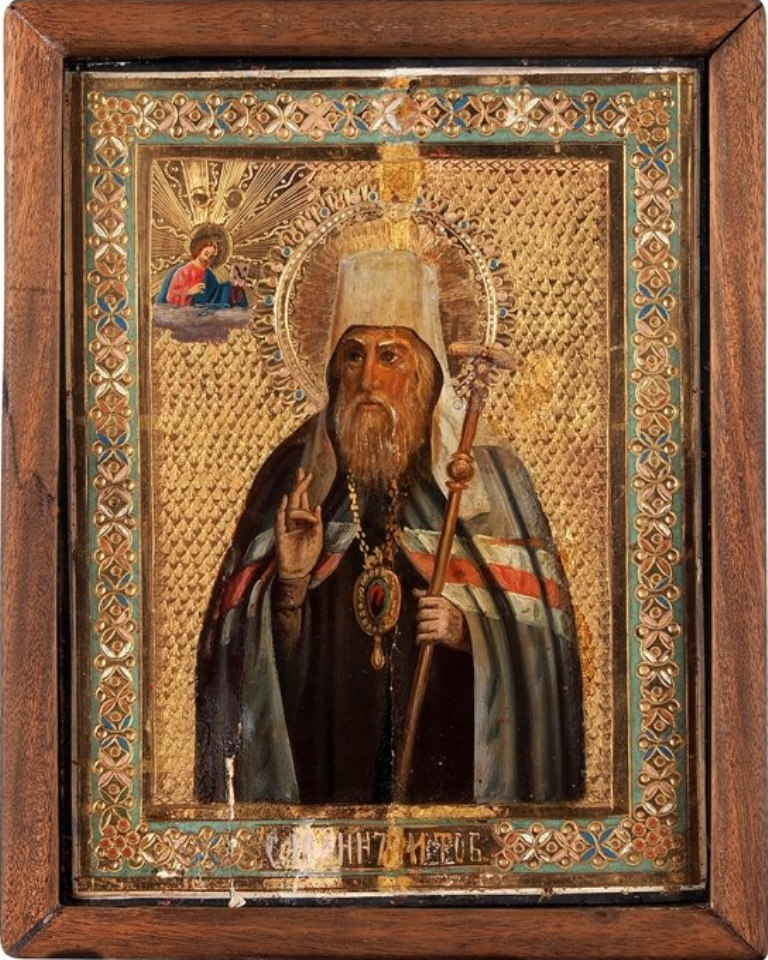
PHOTO: an icon depicting St. John of Tobolsk, gifted by Empress Alexandra Feodorovna to Anastasia Hendrikova in 1918, sold at a Paris auction to a private collector in 2021

The former lady in waiting to Empress Alexandra Feodorovna, Countess Anastasia Hendrikova (1888-1918) has been very much in the news of late. On 30th May 2024, the Perm Diocese announced that a forensic study confirmed the identity of Hendrikova’s remains, along with those of Ekaterina Schdeider, On 9th June 2024, a Funeral (Memorial) Litany was served in a Perm church. In recent days, yet another story about Hendrikova appeared in the Russian mdeia which deserves mention.

In August 1917, Anastasia Hendrikova voluntarily followed Emperor Nicholas II and his family into exile to Siberia, where they were held under house arrest for 8 months. During those difficult days, Hendrikova proved to be a great source of comfort to Empress Alexandra Feodorovna, to whom she was devoted. She helped the Empress endure the hardships of exile and imprisonment.

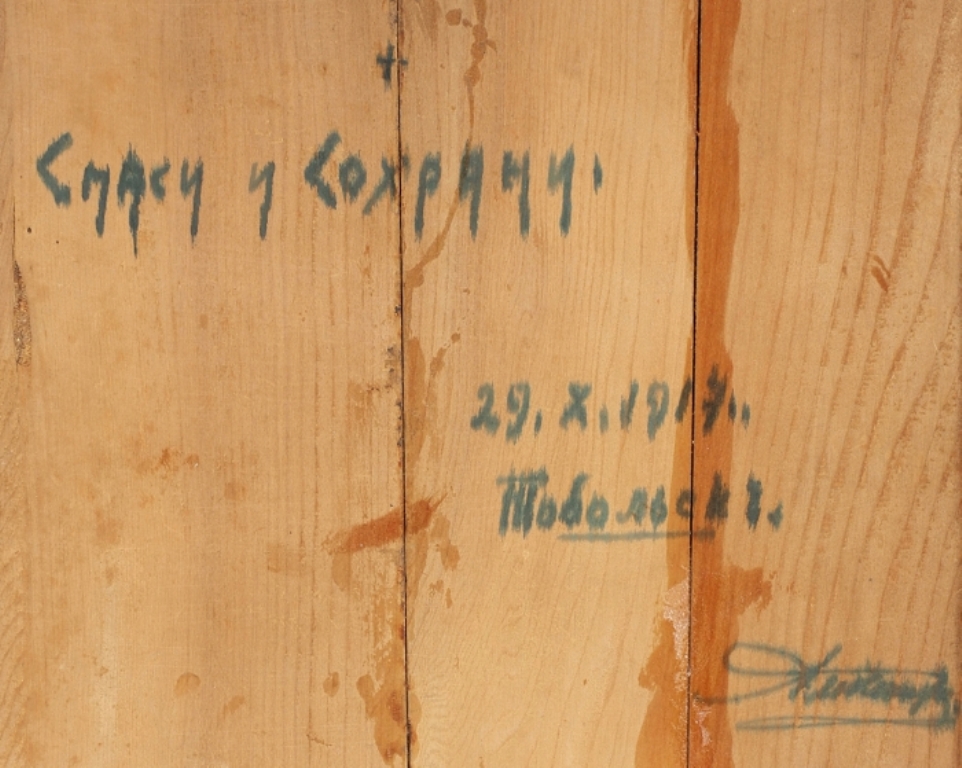
On 29th October 1917, the Empress presented her devoted maid of honour with an icon depicting the image of St. John (Maximovich) of Tobolsk[1]. On the back of the icon the Empress had written the inscription «Спаси и сохрани / 29.X.1917 / Тобольск / Александра» [“Save and Protect. 29.10.1917 / Tobolsk / Alexandra”]. The size of the icon measured 22.3×17.3 cm. In a wooden case — 25.3 × 20.3 cm. 

On the reverse of the icon case, there is a bronze engraved plate with the inscription “This icon was given by H.I.M. Alexandra Feodorovna, to maid of honour Countess Anastasia Vasilievna Hendrikova during the stay of the Imperial Family in Tobolsk.”

PHOTO: Countess Anastasia Hendrikova (1888-1918) 

On the part of the Empress, it was indeed a gift of great value and affection, a testimony of deep friendship in sharing the suffering of imprisonment. Countess Hendrikova was then 29 years old.

After her imprisonment in Perm and the murder of the Imperial Family, Countess Anastasia Hendrikova was taken from prison to the Cheka on 21st August 1918, where she was interrogated. One of the investigators asked her whether “she voluntarily followed the Romanovs to Tobolsk. She replied that she went voluntarily.

“Well,” he replied “since you are so devoted to them, tell us: if we were to let you go now, would you return to them again and continue to serve them?”

“Yes, until the last day of my life,” she replied. A few weeks later, Anastasia Hendrikova was shot by the Bolsheviks on the night of 3/4 September 1918 in Perm.

PHOTOS: (above) on the back of the icon Empress Alexandra wrote an inscription “Save and preserve / 29.X.1917”; (below) a bronze engraved plate with an inscription dedicated to Anastasia Hendrikova from the Empress.

After Hendrikova’s murder, the icon found it’s way into the hands of her brother Count Pyotr (Peter) Hendrikov[2]. For many years, he kept the icon as a family shrine and took it with him when he went to live in France. In his old age, he donated the icon to the orphanage church of the Russian Military Invalids situated near Paris.

But in 2001, the unexpected happened – the church and the orphanage were destroyed by fire. The ancient icon could have been lost forever, had it not for the priest Mikhail Gudkov, who found the precious relic among the burned out ruins of the church.

Father Mikhail cherished the historical value of the icon, and before his death he passed it on to his son.

In the autumn of 2021, the ancient icon, which has become a symbol of boundless love and loyalty, went under the hammer at a Moscow’s famous Litfond Auction House[3], as part of their “Relics of the House of Romanov” sale. The auction was held on 30th September 2021. The icon of St. John of Tobolsk was listed at 1.6 million rubles [$18,400 USD] and sold for 2.6 million rubles [$30,000 USD] to a private collector in Russia.

NOTES:

[1] In August 1915, Emperor Nicholas II sanctioned the canonization of St. John (Maximovich) of Tobolsk (1651-1715). The solemn glorification of John of Tobolsk took place the following year, on 10th June 1916. He was the last saint to be canonized during the reign of Russia’s last Tsar.

[2] Pyotr (Peter) Vasilyevich Hendrikov (1883-1942) died in Paris on 13th February 1942.

[3] The Litfond auction house is the undisputed leader among auction houses in Russia, occupying about 60% of the market. About 100 auctions are organized in Moscow and St. Petersburg each year.

© Paul Gilbert. 18 June 2024

Watercolours by Grand Duchess Olga Alexandrovna sell for 60 million rubles

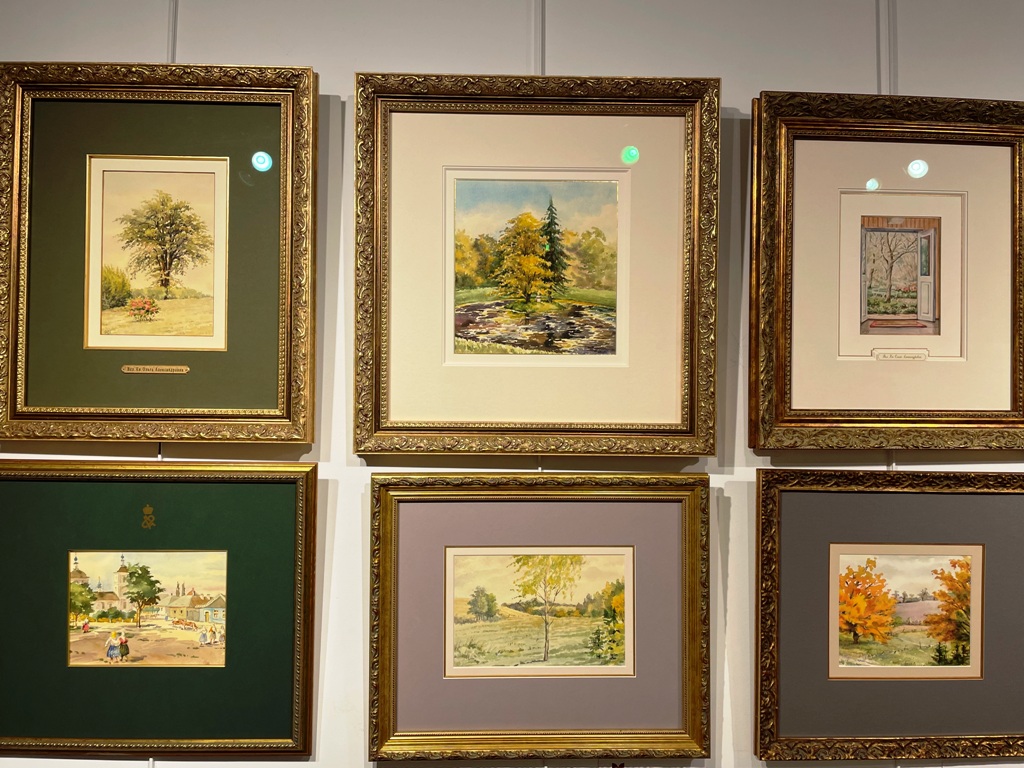
On 14th April 2024, a collection of 43 watercolors, painted by Grand Duchess Olga Alexandrovna, sold at a Moscow auction for 60 million rubles [$640.000 USD] – which is double their estimated value.

For the first time, a collection on this scale of the grand duchess’s works went under the hammer at the Moscow Auction House. The total value of the collection was estimated at 30 million rubles [$325,000 USD]. The authenticity of each work was confirmed by art historians and experts of the Tretyakov National Research Institute in Moscow.

It was hoped that the entire collection would be purchased by one of Russia’s wealthy oligarchs or a corporation and donated to a museum, however, most of the watercolours were snapped up by private collectors.

During the auction, several records were set for Olga Alexandrovna’s works. One of her watercolor’s “From the Service” of the 1920s and 1930s” sold for 7 million rubles [$74,500 USD], while a second watercolour “Landscape of a Provincial Town” sold for 3.1 million rubles [$33,000 USD].

Prices such as this will most certainly increase demand for Olga’s paintings, as well as increase their price, when they are offered to the art market, both in Russia and the West.

Grand Duchess Olga Alexandrovna (1882-1960) painted more than 2,000 watercolours during her lifetime. She was 78-years-old, when she died in in Toronto, Canada, she was the last Grand Duchess of Russia.

© Paul Gilbert. 15 April 2024

Grand Duchess Olga Alexandrovna’s watercolours to be auctioned in Moscow

PHOTO: Grand Duchess Olga Alexandrovna poses in front of some her watercolours at Gatchina, late 19th century.

On 14th April 2024, more than 40 watercolours painted by Grand Duchess Olga Alexandrovna (1882-1960), will go under the hammer at an auction in Moscow.

This is the second largest group of Grand Duchess Olga’s works in Russia, the first being the group of 180 watercolours recently gifted to the State Russian Museum in St. Petersbu.

Olga’s watercolours continue to generate interest among professional and amateur collectors, both in Russia and abroad. The demand for her works have helped drive up list prices when any of her paintings are presented at auction. This current group of watercolours is expected to break all previous records.

The auction catalogue [in Russian only] contains a total of 43 watercolors, including landscapes still life, flowers, etc. The total estimated value of this group is 30 million rubles [$325,000 USD]. Estimates of individual lots range from 500,000 [$5,400 USD] to 1.5 million [$16,200 USD] rubles.

A total of 104 items of the Grand Duchess’s legacy will be sold, including autographs of members of the Russian Imperial Family, commemorative medals, pieces of furniture, and sculptures.

This group of watercolours and other items belonged to Olga Nikolaevna Kulikovsky-Romanov (1926-2020), the third wife of Grand Duchess Olga’s eldest son, Tikhon Nicholaevich Kulikovsky (1917-1993). Upon the grand duchess’s death in 1960, the bulk of her estate was acquisitioned by Tikhon. When Tikhon died in 1993, the collection passed to his wife Olga Kulikovsky. During the 1990s, Olga Kulikovsky travelled to Russia, taking the watercolours and other items with her. She toured the country, hosting numerous exhibits of her mother-in-laws paintings to Russians for the first time.

The youngest child and daughter of Emperor Alexander III and the youngest sister of Emperor Nicholas II, Olga was a prolific painter, producing over 2,000 paintings in her lifetime. She studied painting from various Russian masters, including Vasily Makovsky. During her early years in Russia, Olga painted for pleasure, often gifting her watercolours to relatives and friends, signing the works with her first initials.

During her years in exile – in both Denmark and Canada – Olga signed her works with “Olga”. The sale of her paintings provided a source of income for her and her family during their years in exile. This photo comes from the album of her cousin Princess Victoria of Wales.

Let us hope that this current collection of 43 watercolours are purchased as a group, and added to the collection of the State Historical Museum in St. Petersburg – PG

© Paul Gilbert. 2 April 2024