Sir Thomas Preston recalls Ekaterinburg, 1918

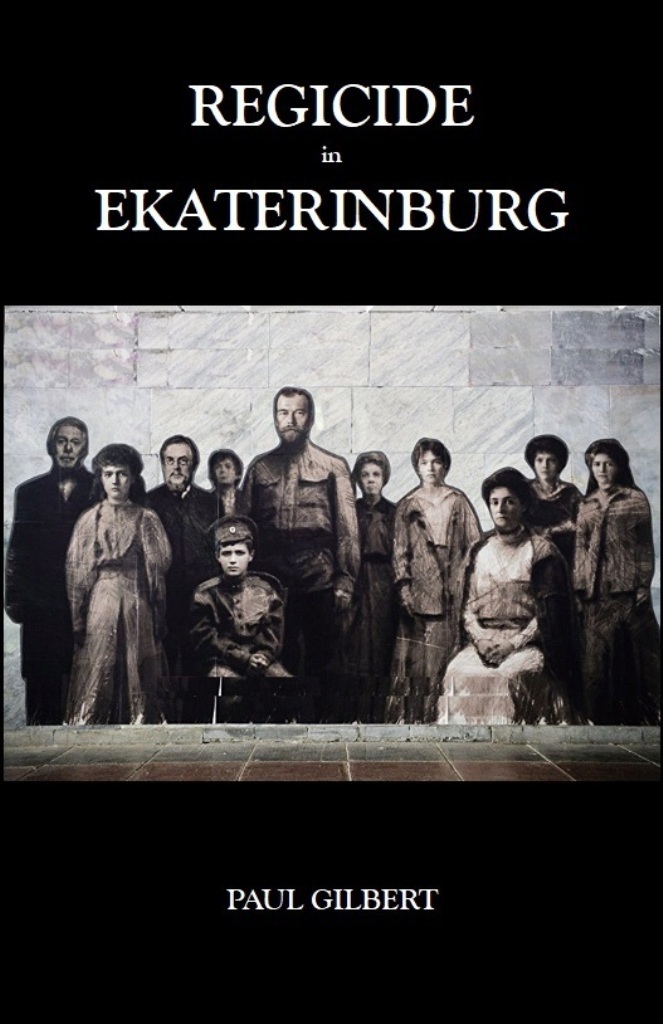
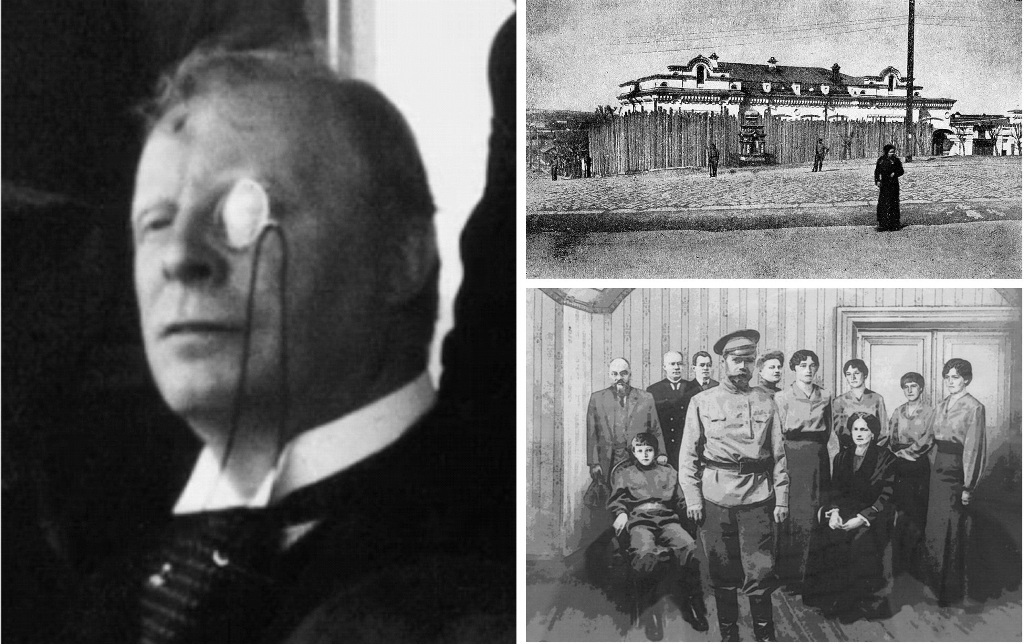
PHOTO: Sir Thomas Hildebrand Preston (1886-1976); the Ipatiev House;
Emperor Nicholas II, his family and four faithful retainers

Sir Thomas Hildebrand Preston, 6th Baronet (1886-1976), was a British diplomat who joined the United Kingdom Diplomatic Service around 1910. In 1916 he served as Consul in Perm. On 23rd May 1913, he was appointed British Vice-Consul in Ekaterinburg, and later British Consul in the Ural city.

Preston’s position in Ekaterinburg during 1917 and 1918 was extremely difficult. Operating during the final stages of World War I and the ensuing Russian Civil War, Preston faced immense difficulties. The local Bolshevik authorities in Ekaterinburg refused to recognize his diplomatic status, and his life was frequently threatened.

He was in Ekaterinburg in July 1918 at the time of the murder of Emperor Nicholas II and his family. He made efforts to make representations to the government regarding their situation, but his ability to act was severely limited by the chaos and the Bolsheviks’ hostility.  Preston was haunted later by the idea that he might have been able to save the Imperial Family.

At a telegraph office on 18th July, he attempted to send a message to the British Foreign Secretary Arthur Balfour in London, which read: “The Tsar Nicholas the Second was shot last night”. The telegram was intercepted by Bolshevik military commissar Philip Goloshchekin, who struck out Preston’s text, rewriting: “The hangman Tsar Nicholas was shot last night – a fate he richly deserved.”

***

Below is a letter written by Preston and published in the weekly British political and cultural news magazine The Spectator, on 11th Marc h 1972. It is a poignant account of his experiences during the Bolshevik coup d’état. He attended a soiree at Ekaterinburg just before the coup, where he witnessed the last bourgeois evening party in Russia. Preston was later awakened by his servant to the fact that the Bolsheviks had seized the town the following morning. He was accompanied by several Consular colleagues to make contact with the new government and learn what was happening. Preston’s recollection is a testament to his bravery and dedication to his role as a diplomat during a tumultuous period in Russian history.

Sir: I have read with great interest the report published in The Spectator on February 5, 1972, by Tibor Szamuely (page 193) dealing with the television programme The File on the Tsar, which was transmitted on BBC-1 on Sunday, January 23, 1972.

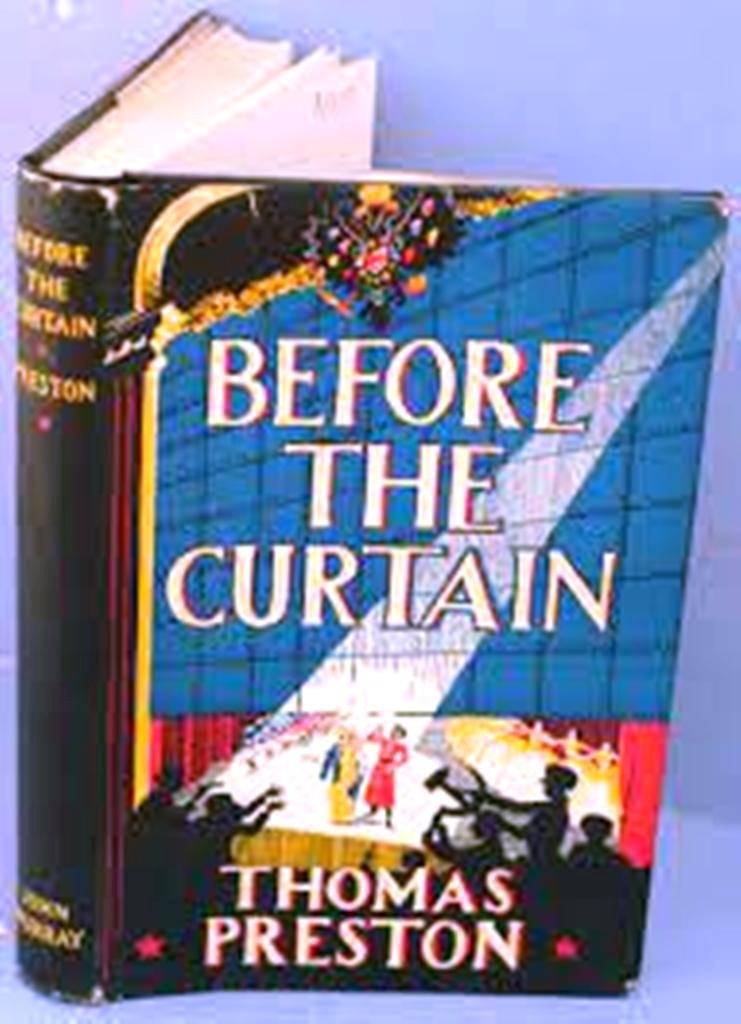
With reference to Mr Szamuely’s remarks about the role I played in this tragedy, I kept a diary of the development of events which was embodied in my book entitled Before the Curtain, published by John Murray, London.

In July, 1917, just before the Bolshevik coup d’etat, I attended a soiree, given at Ekaterinburg, by the representative a of the Provisional Government. It was a gathering not easily forgotten. It was, in fact, the last occasion in Russia that I was to see Russian officers in Tsarist uniform, officials in their civilian uniforms and all civilians in evening dress. Whilst the Governor’s guests were revelling in dancing, card playing, music and champagne, the railway workers at Ekaterinburg were preparing the coup d’6tat which was to take place the following morning. Pessimism, however, was the predominant feature of this last bourgeois evening party. Many of my Russian friends were strong in their condemnation of the behaviour of the Government officials at Petrograd, amongst whom bribery and corruption were rife, which was, to a large degree, responsible for the defeat of the armies in the field.

The following morning I was awakened by my servant who told me that the Bolsheviks had seized the town (Ekaterinburg) during the night and were actually holding a meeting at the railway station. After a scanty breakfast I proceeded, accompanied by several of my Consular colleagues, to the station in order to make contact with what was presumably to be our future Government as well as to learn what was happening. On arrival at the station we found a local Soviet in session in the stationmaster’s room. This was my first acquaintance with the Bolsheviks and a more awe-inspiring and cut-throat crowd it would be hard to imagine . . . The Soviet consisted mostly of youths of between nineteen and twenty-five, attired in leather jackets (the usual dress of the GPU). All were armed to the teeth. Hand-grenades were on the writing-table; in the corner of the room was a bundle of rifles to which people kept on coming in and helping themselves.

I informed the Soviet that we had come to present ourselves and requested information as to what had occurred. Comrade Tchoutskaeff, the leader of the Soviet, with whom I was to have frequent interviews during the eleven months I was under their regime, replied that the Bolshevik party was in power. On learning that I was the British Consul he added: your comrade Ambassador (Buchanan) has left Russia and you have no official status or protection. In fact we don’t know whether to treat with you or to shoot you. At any rate if you and your compatriots don’t behave yourselves you will find yourselves in gaol if not worse.”

In view of the rapid advance of the Czechs and the White Army, the Ural Soviet asked Yakov Sverdlov (Secretary of the Moscow Soviet) what they should do. The reply came “Act as you consider necessary “; whereupon the Ural Soviet passed a resolution to do away with the Tsar and his family.

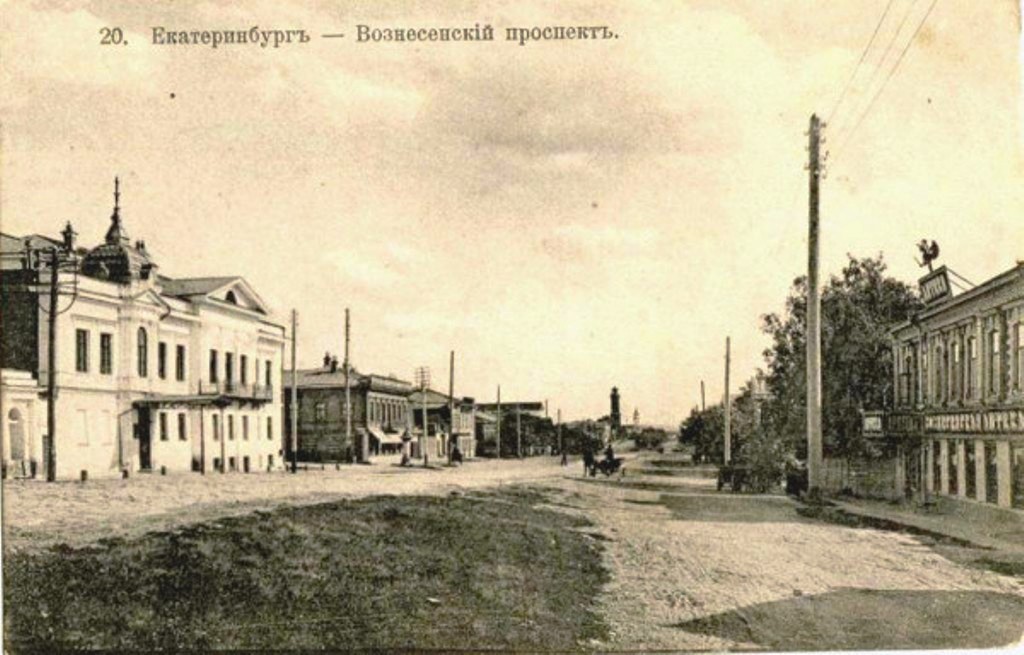
PHOTO: The British consulate (the building on the right) in Ekaterinburg in 1918 was located on Voznesensky Prospekt. © From the Private Postcard Collection of Paul Gilbert

From the window of my Consulate, I saw the Tsar being driven in a car from the station to the House Epatiev, which was the scene of the assassination. It was the boast of the Ural Soviet that they would exterminate the whole of the Romanov family, and twenty-four hours after the murder of the Royal Family at Ekaterinburg they murdered at Alapaevsk (some thirty miles from Ekaterinburg) by throwing them in a mining shaft and throwing rocks and boulders on top of them, Prince Igor, husband of the Crown Princess Helene of Serbia, the Grand Duke Serge Mihailovitch, the Grand Duchess Elizabeth, Prince John and Count Paley. The Ural Soviet also murdered the Grand Duke Michael (brother of the ex-Tsar) and his English Secretary, Mr Johnstone.

Ever since then I have been haunted by the idea that had I been able to argue with the Ural Soviet for a longer period I might have been able to save the Russian Royal Family.

Incidentally, I was told by Dr Fisher, the Swiss Consul, that I had been condemned to death by the Ural Soviet for my representations on behalf of the Russian Royal Family. Dr Fisher suggested that I should hide in the forest outside Ekaterinburg until the Czechs and the White Army came in. I decided, however, to stay at my house and wait. Sometime later a huge crowd gathered outside the house and said they were coming in to search it. I said that they could not do this as the Consulate enjoyed diplomatic immunity. They replied “come out yourself,” and this I did armed with several tins of Virginian cigarettes (which they had not seen for months) and engaged them in conversation—I hoped to carry on the conversation until the Czechs and the White Army came in. (I was in contact by messenger with the Czechs and the Siberian Army.) This conversation lasted for some time when one of the crowd said that the Czechs and Siberian Army were on the outskirts of the town and the crowd dispersed.

Actually, the Czechs and the Siberian Army only occupied the town on July 26, 1918. The Ural Soviet, many of whom were killed by the Czechs and the Siberian Army, left in panic, but before doing so they sent a telegram (a copy of which was found in the Ekaterinburg Telegraph Office) stating that “All the members of the Royal Family had suffered the same fate as the Tsar.” A copy of this telegram is to be found in the British Museum.

I have just received a letter from an old friend of mine, Trefor Evans, who was my colleague in Cairo and is now a Professor at the University College of Wales, and he quotes from his old chief’s (Lord Killearn) Diary as follows: “In the general talk which followed I discovered that Roberts (Brigadier) had been with the White Russians (General Denikin) when I was in Siberia in 1919. We exchanged notes regarding incidents at that time and he was particularly interested and I told him that it had fallen to my lot to bring out from Siberia all that was left of the mortal remains of the unfortunate Imperial Family!”

Incidentally, these remains reached Buckingham Palace. When I was received in audience by HM King George V in February, 1921, we discussed the matter and His Majesty said that the relics were in such a state that they had to be fumigated before they could be touched.

Thomas Preston
The Hall, Beeston St. Lawrence,
Neatishead, Norfolk.

***

Before the Curtain by Thomas Hildebrand Preston, 6th Baronet (1886-1976), was published by John Murray (London) in 1950. Hard cover, 313 pages.

Preston’s memoirs record the period in which Nicholas II and his family were held under house arrest between April-July 1918.

The book includes some interesting tidbits of information, for instance: ” . . . the Alexander Palace contained a life-sized portrait of Queen Victoria . . .”, I wonder what happened to it?

It has been out of print for many years now, with secondhand copies still being highly sought after by collectors.

© Paul Gilbert. 16 December 2025

Vintage train from Ekaterinburg, tells the story of Nicholas II’s last days

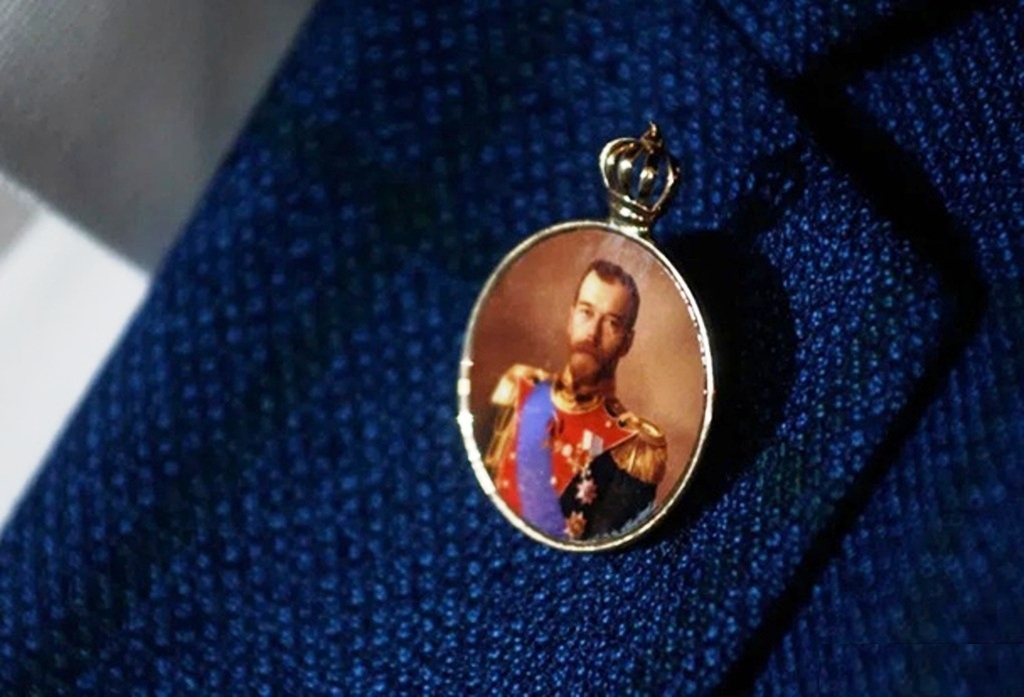
PHOTO: a pin – depicting the image of Nicholas II
– worn by conductors on the vintage train from Ekaterinburg.

In December 2022, a vintage train journey was initiated from Ekaterinburg, which tells passengers, the story of the last days of Nicholas II and his family in the Urals. The train runs from Ekaterinburg to the Shuvakish station and back, on Friday evenings, and also on Saturday and Sunday mornings.

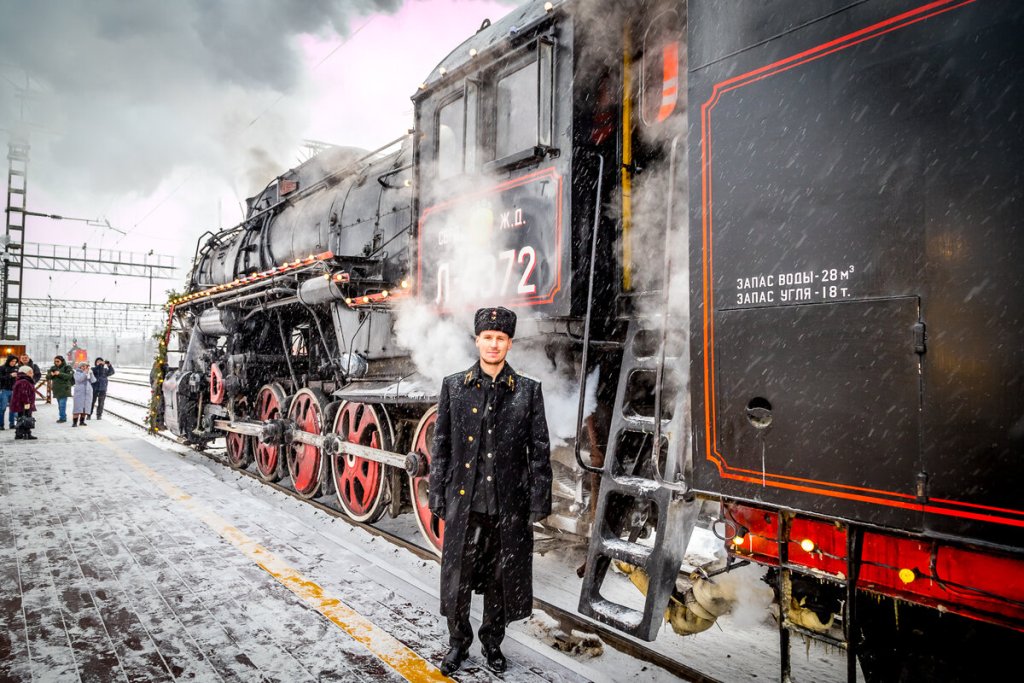
The locomotive (see photo below) is not from the Imperial times, but a 1963 steam engine, made in Czechoslovakia. The interiors, however, have been remodeled to resemble that of an early 20th century Russian train.

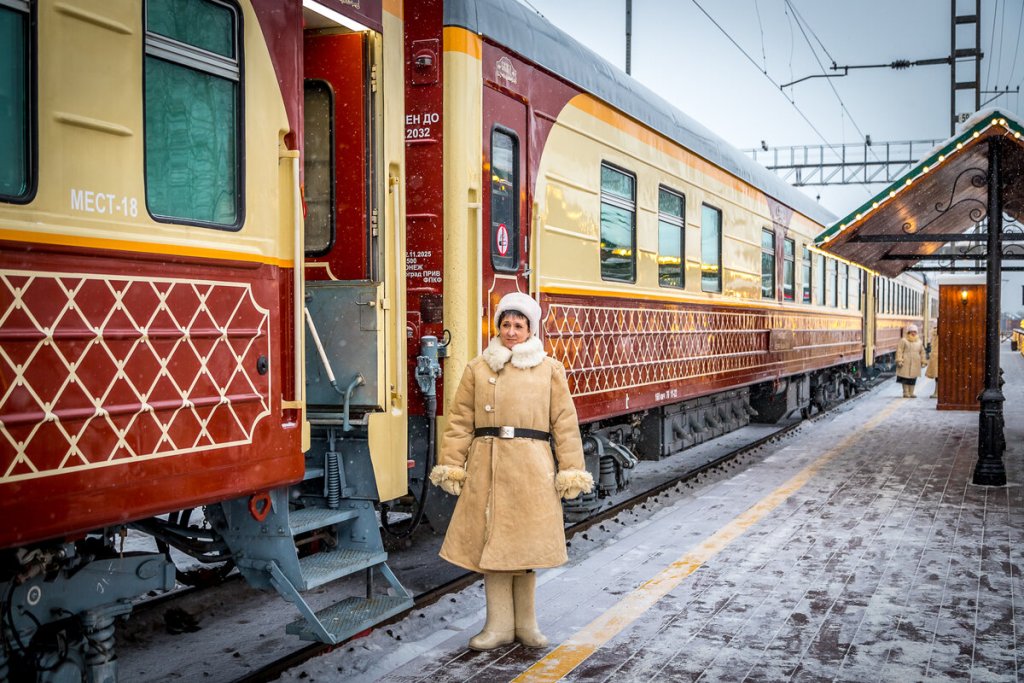
Passengers travelling on the vintage train are greeted on the platform by hospitable conductors wearing uniforms of early 20th century Imperial Russia-style, and white gloves (see photo below).

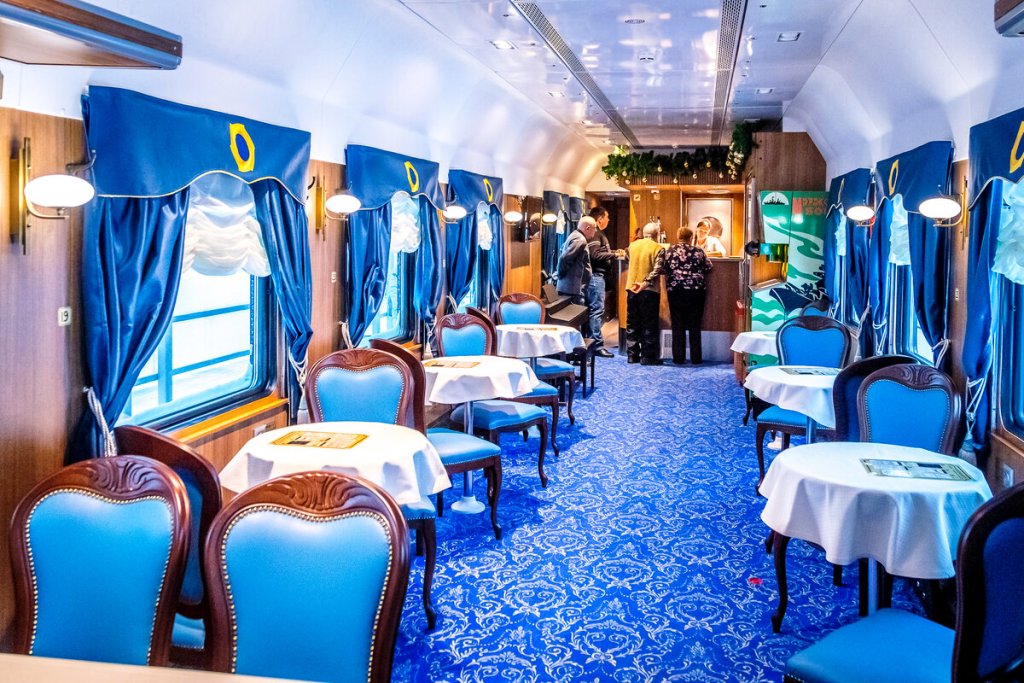
The train has four wagons: First Class, Economy Class, a dining car (see photo below) and a sightseeing car, which operates during the summer months. One compartment is decorated with framed photographs of the Imperial Family.

During the 3-hour train journey, passengers can sit back, relax and enjoy the view, while listening to an audio-guide, which tells the story of the last days of Russia’s last Tsar, his family and their four faithful retainers.

The audio begins with the Imperial Family’s train journey from Tsarskoye Selo to Tyumen, then by boat to Tobolsk, where they were held under house arrest in the former Governor’s House, from August 1917 to March 1918.

The story continues, with the transfer of the Imperial Family to Ekaterinburg, where they were held under house arrest in the Ipatiev House, from March to July 1918. The audio-guide further tells of their fate, their burial at what is today known as Ganina Yama, and the discovery of their remains, almost 100 years later on the Old Koptyaki Road.

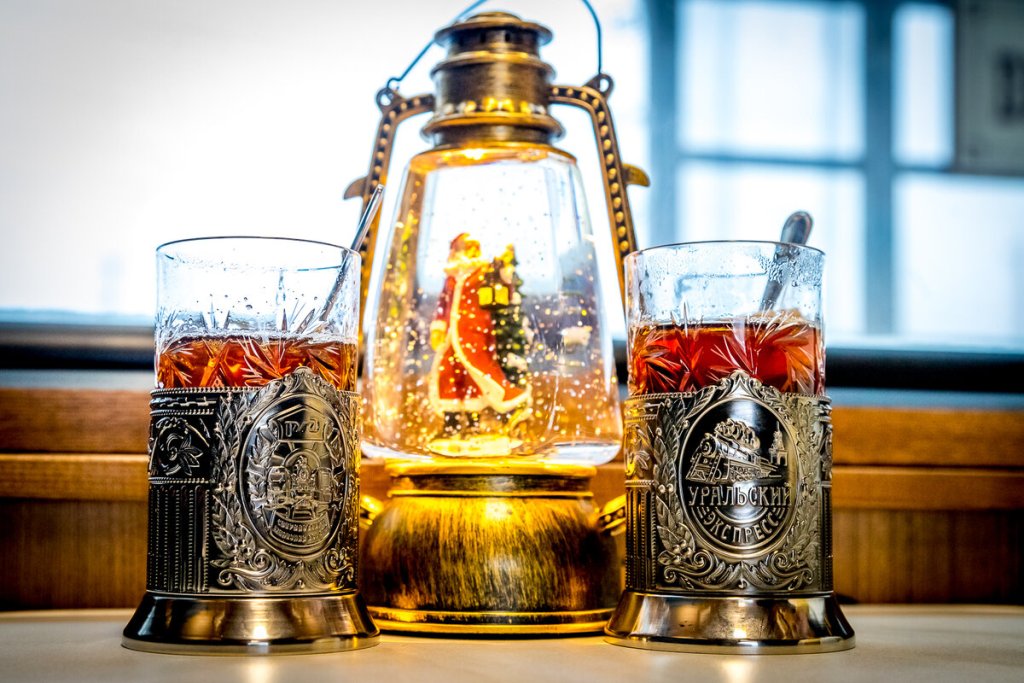
Tea is served to passengers from a traditional samovar. Conductors bring the tea in beautiful faceted glasses in iron cup holders, on which the Double-Headed Eagle of the Russian Empire is depicted.

The train stops at Shuvakish Station (Zheleznodorozhny district), where passengers are free to disembark the train to a wooden platform, decorated with benches, a bell and a manual semaphore signal. The stop lasts a little more than an hour.

Inside the wooden pavilion, passengers can enjoy music, which includes a variety of waltzes and melodies from the repertoire of Alexander Serov.

Passengers can also try on the uniforms of the White Guards, take photos, and enjoy a cup of hot tea, bagels and local berries.

PHOTO: tea is served at Shuvakish Station

***

*As I have noted in previous posts, I support any initiative – big or small – to help keep the memory of Nicholas II and his family alive in 21st century Russia – PG

© Paul Gilbert. 19 October 2025

Nicholas II monuments in and around Ekaterinburg

Since the fall of the Soviet Union in 1991, more than 100 monuments, busts and memorials have been installed in cities and towns across in Russia – six of which have been installed in Ekaterinburg. Recall that it was here, in the Ural capital, where the last Tsar and his family were held under house arrest and subsequently murdered.

Once a bastion of Bolshevism, Ekaterinburg has slowly shed its status as the “capital of atheism”. Since the fall of the Soviet Union in 1991, the Urals has experienced a revival of faith, with Ekaterinburg as the center of Orthodox Russia in the region.

It is important to add, that Ekaterinburg has done more to honour Russia’s last Tsar and his family than any other city in Russia. It is home to the Church on the Blood [built on the site of the Ipatiev House, where the Imperial Family were murdered]; the Monastery of the Holy Royal Martyrs at Ganina Yama; the Romanov Memorial at Porosenkov Log; three museums and no less than six monuments, dedicated to the Imperial Family.

Church on the Blood, Ekaterinburg

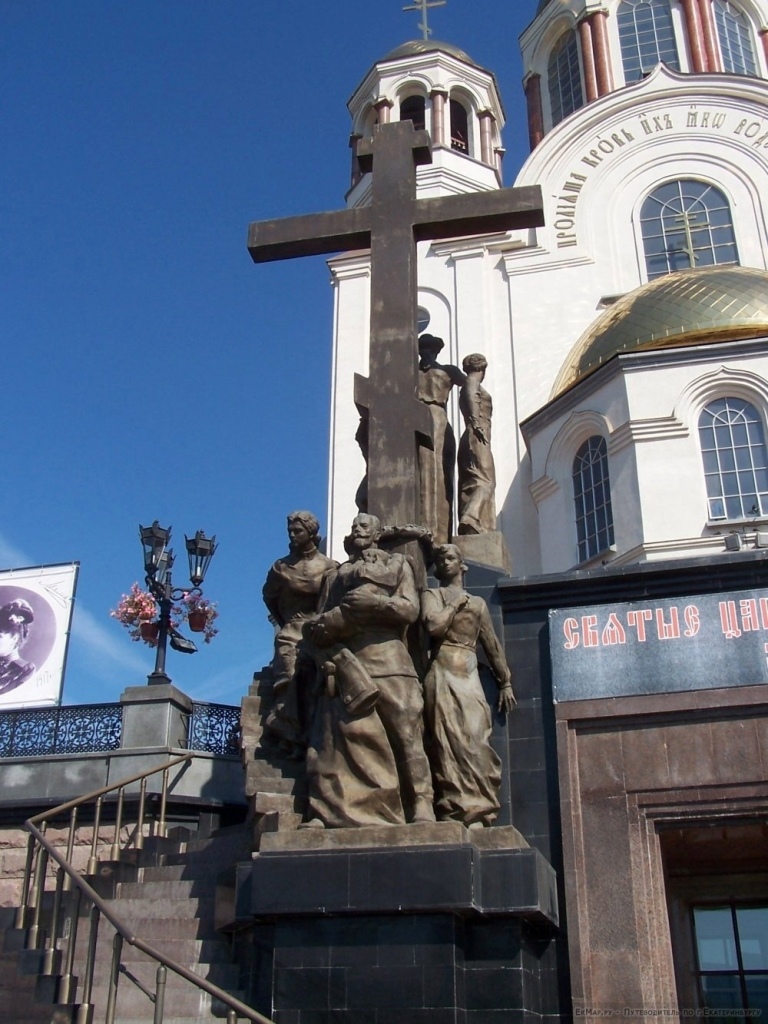
The Church on the Blood in Ekaterinburg, was built in 2000-2003m on the site of the Ipatiev House, where the Imperial family and their faithful retainers were all brutally murdered by members of the Ural Soviet on 17th July 1918.

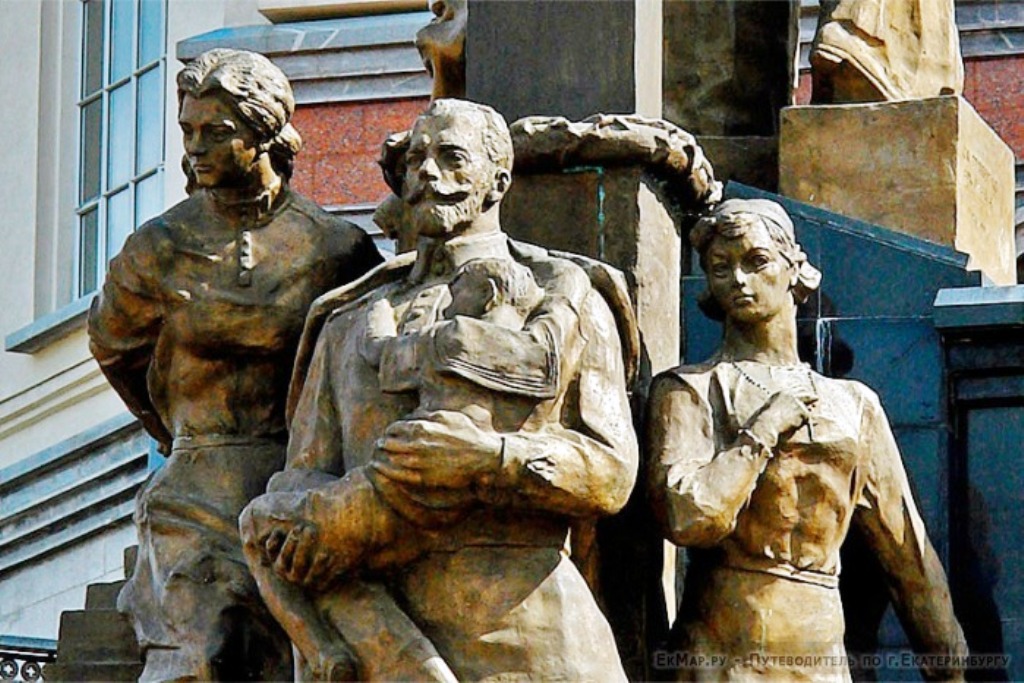
The monument to Emperor Nicholas II and his family, created by the sculptor Konstantin Vasilievich Grunberg was installed in 2003 on the grounds of the Church on the Blood in Ekaterinburg. The Tsar is depicted carrying the invalid Tsesarevich Alexei in his arms.

The staircase on the left represents the 23 steps the Imperial Family and their four faithful retainers descended to their death and martyrdom in the Ipatiev House in the early morning hours of 17th July 1918.
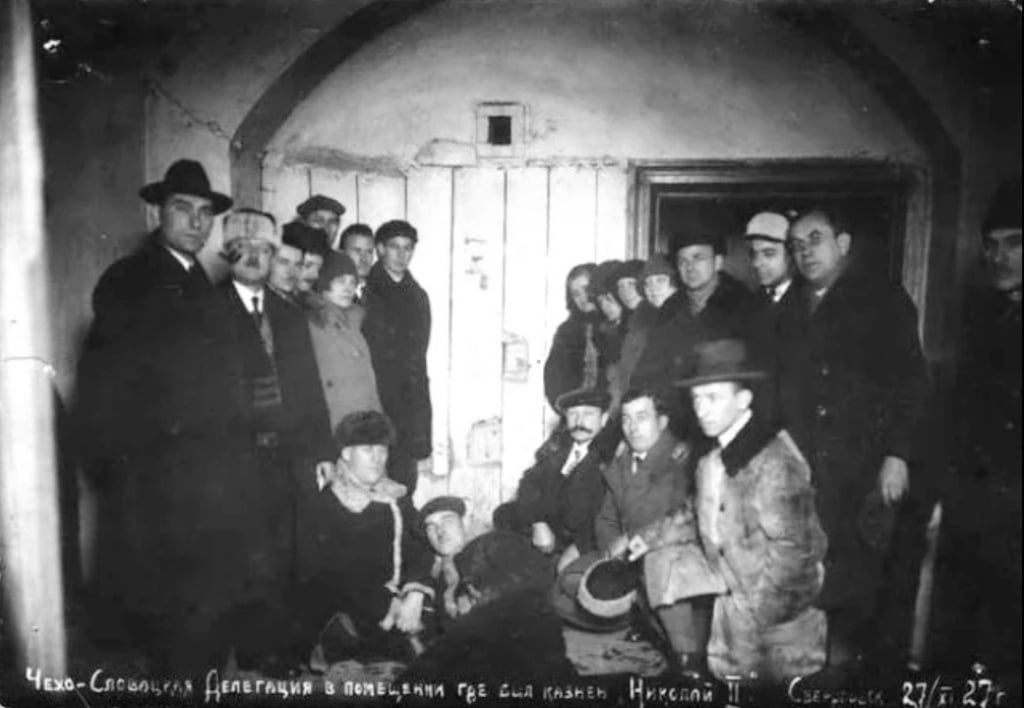
The door seen in the lower right is the entrance to the Lower Church, sanctified in honour of the Holy Royal Martyrs in the Church, where the Imperial Room – built on the site of the murder room.

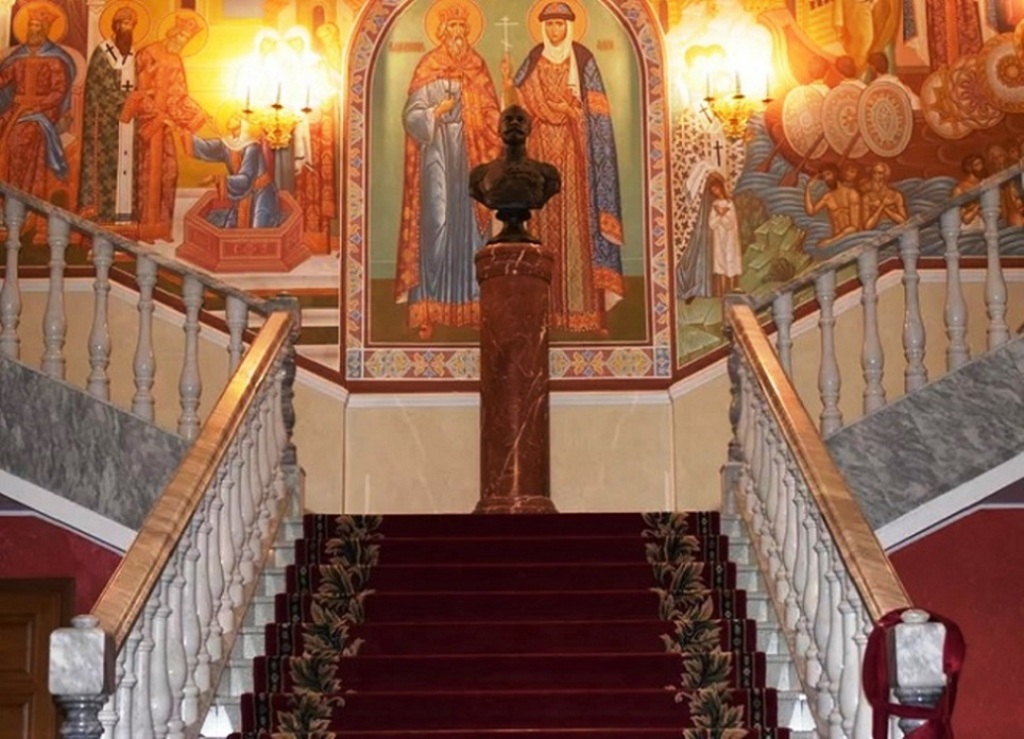
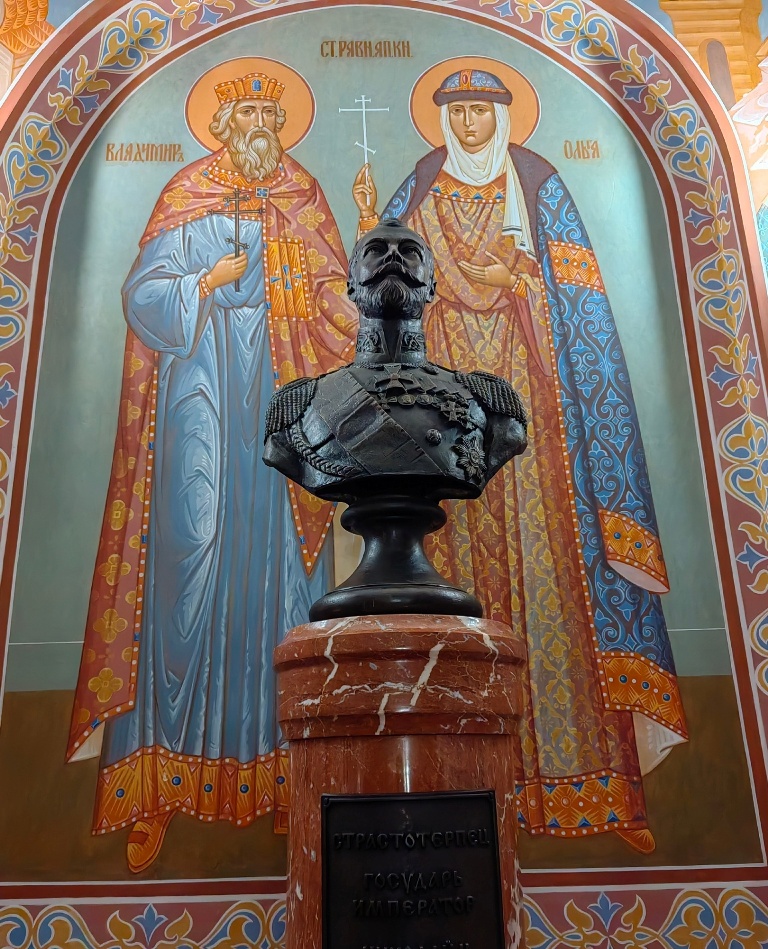
PHOTOS: two views (above and below) of the bust-monument to Emperor Nicholas II, in the Patriarchal Compound of the Church on the Blood

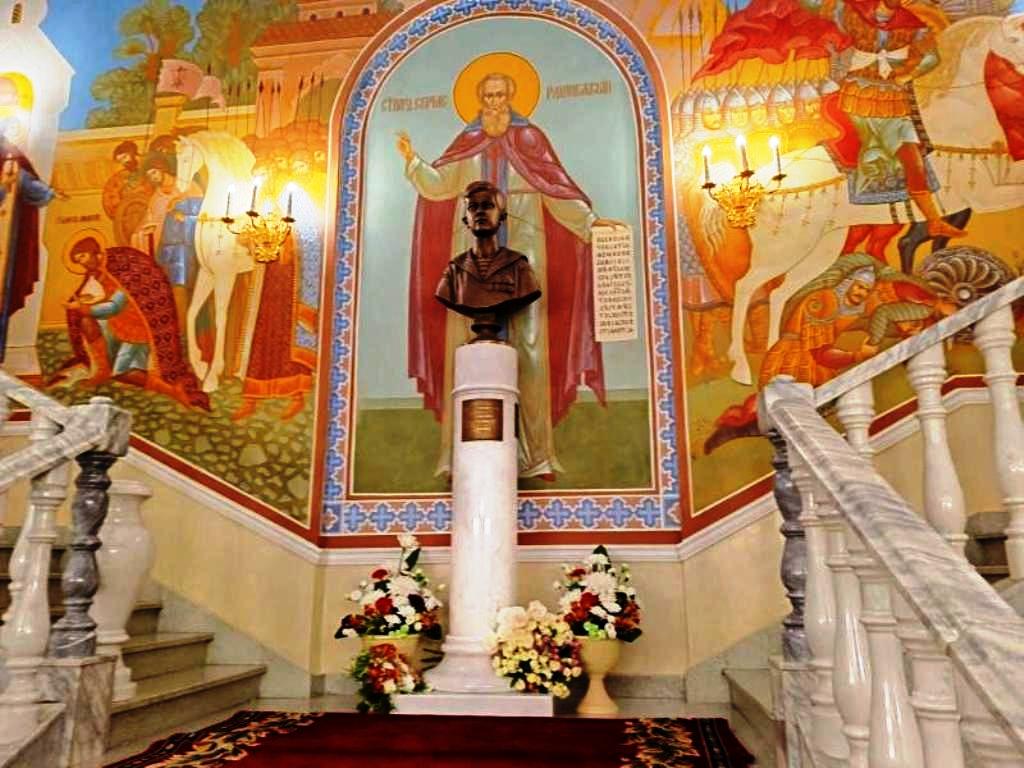
Several years back, a bronze bust on a marble pedestal of Emperor Nicholas II was installed at the top of the staircase leading to the Museum of the Holy Royal Family in the Tsarsky Cultural and Educational Center, situated in the Patriarchal Compound of the Church on the Blood.

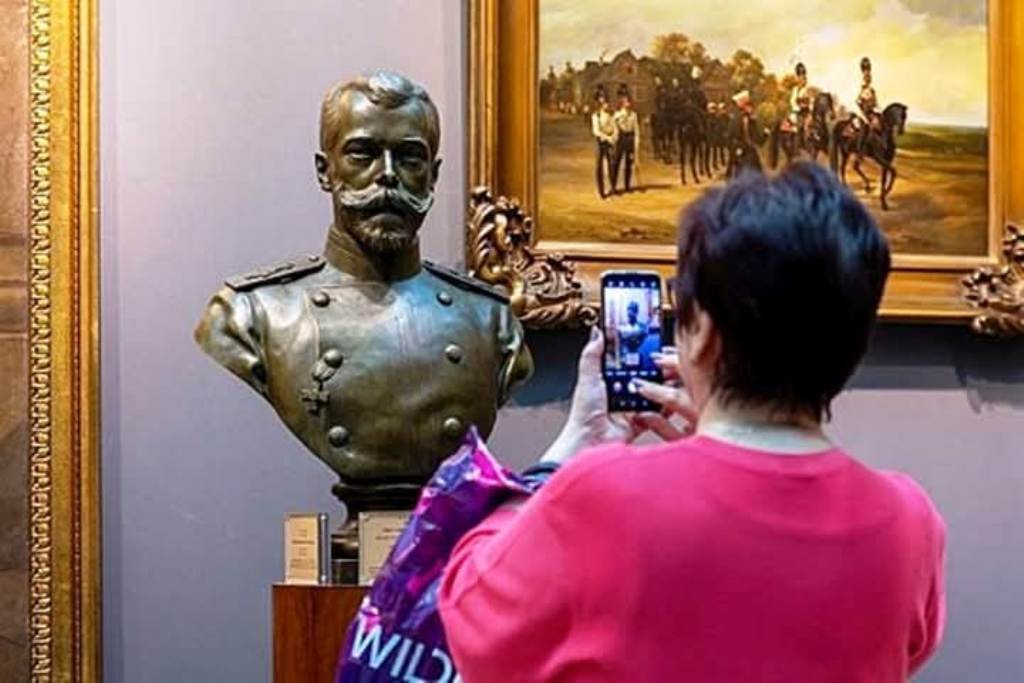
In July 2023, the bust was replaced with a similar bust of the Tsar’s son and heir Tsesarevich Alexei Nikolaevich. The bust of the Emperor was temporarily moved to the new permanent exhibition The Romanovs in the Urals, located at the Poklevsky-Kozell House Museum of the Sverdlovsk Regional Museum of Local Lore in Ekaterinburg.
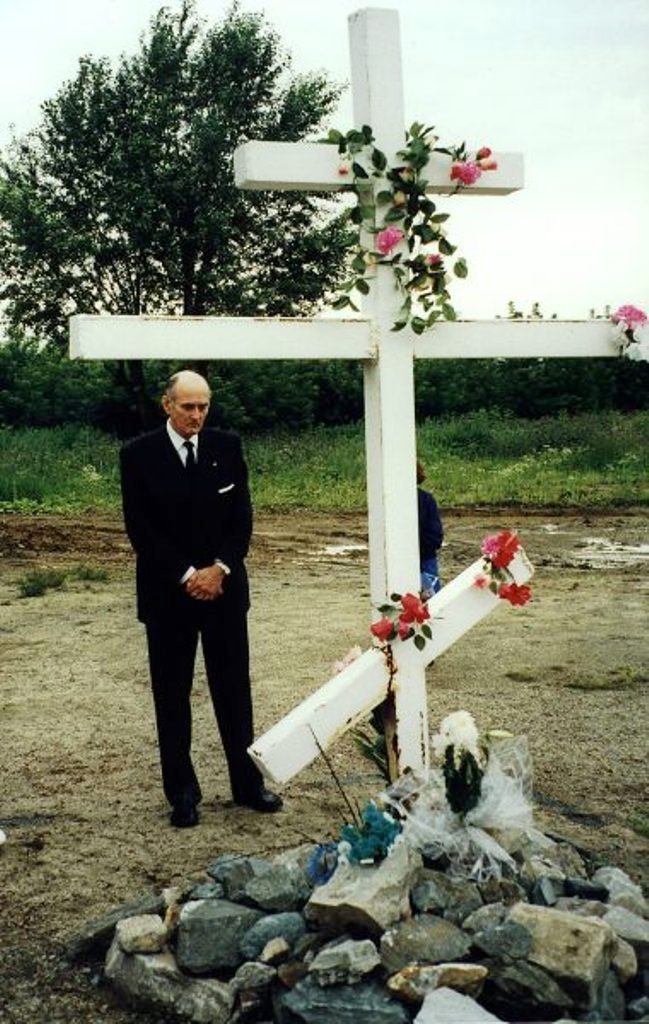
PHOTO: the bust-monument to Tsesarevich Alexei Nikolaevich, in the Patriarchal Compound of the Church on the Blood

Ekaterinburg museums

PHOTO: Bust of Emperor Nicholas II on display at the Hermitage-Ural Museum in Ekaterinburg – a branch of the State Hermitage (St. Petersburg)

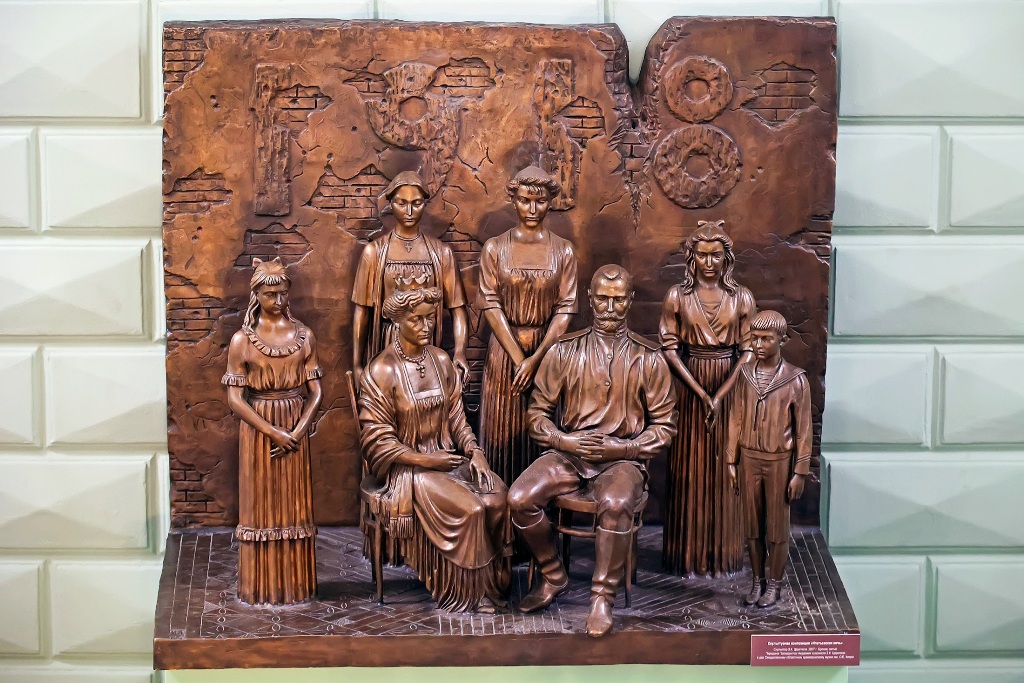
PHOTO: a copy of the “The Night at the Ipatiev House” sculptural composition by Russian sculptor Zurab Tsereteli (1934-2025), greets visitors to the permanent exhibition ‘The Romanovs in the Urals‘ located in the Poklevsky-Kozell House Museum in Ekaterinburg.

***

Monastery of the Holy Royal Martyrs, Ganina Yama

Ganina Yama is the site of the Four Brothers mine situated near the village of Koptyaki, 15 km north from Ekaterinburg. It was here that in the early morning hours of 17th July 1918 the bodies of Tsar Nicholas II, his family and four servants were secretly transported to Ganina Yama and thrown into a 9′ deep pit. The murderers returned the following day, exhumed the remains and reburied them in two unmarked graves at Porosenkov Log, which is situated 3.8 km away.

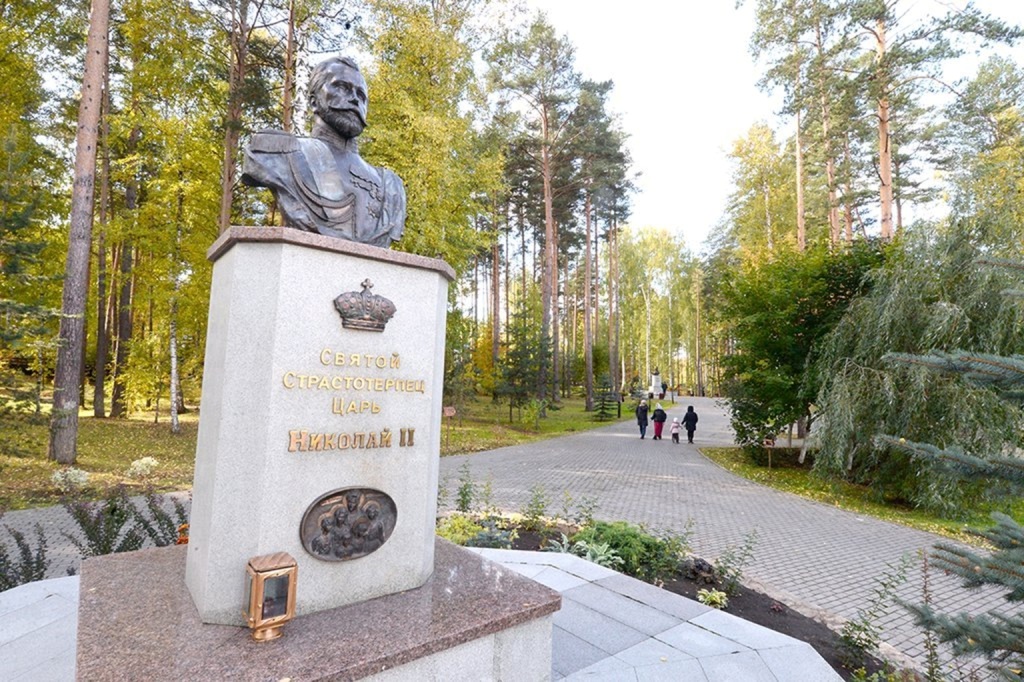
In 2001, the Russian Orthodox Church constructed the Monastery of the Holy Royal Martyrs at the site in 2001. Between 2008-2011, three monuments to the Holy Royal Martyrs were installed on the grounds of the monastery:

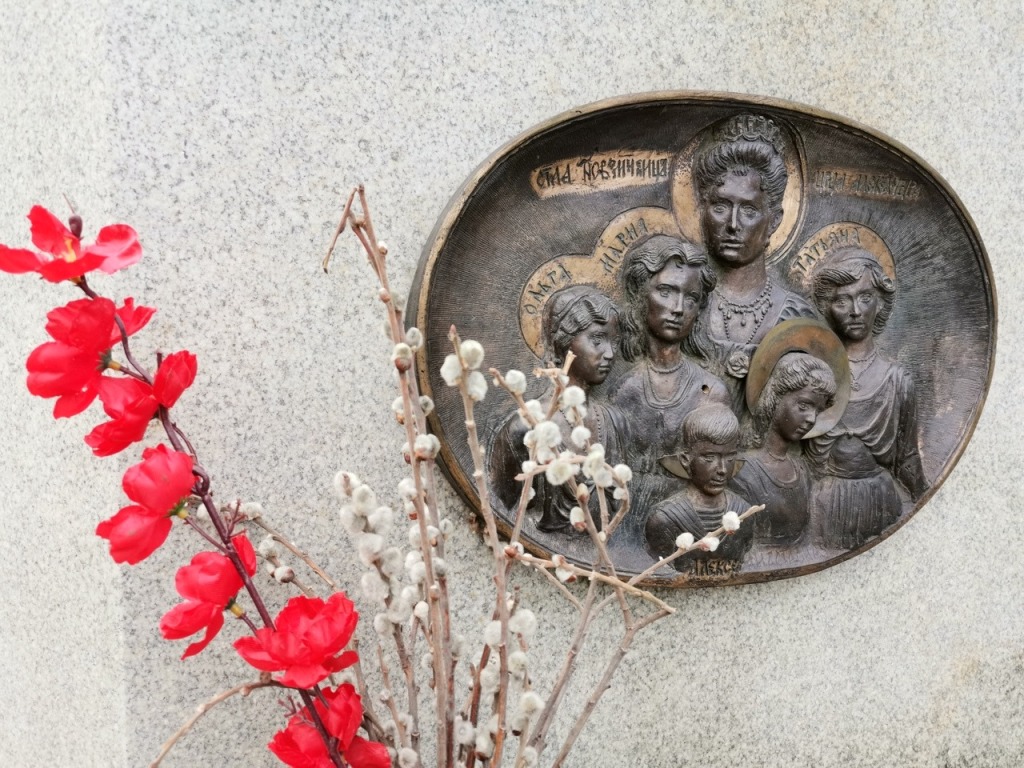
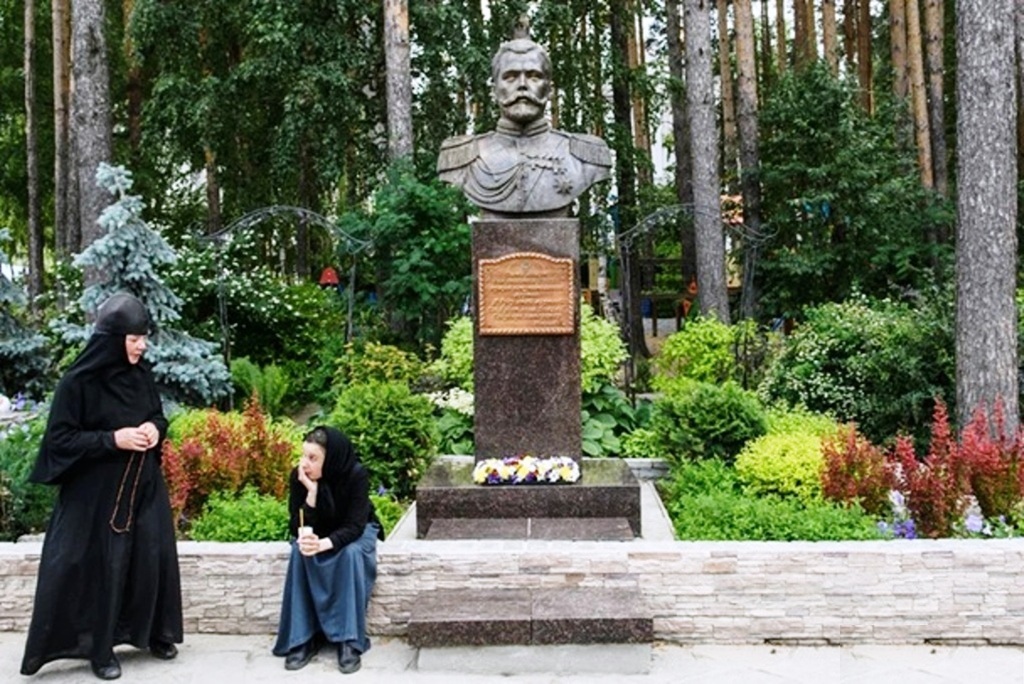
The bronze bust (above) of Emperor Nicholas II was installed and consecrated on 19th (O.S. 6th) May 2008, the day marking the sovereign’s 90th birthday. A bas-relief (below) depicting Empress Alexandra Feodorovna and her five children, is located on the lower section of the monument to Emperor Nicholas II

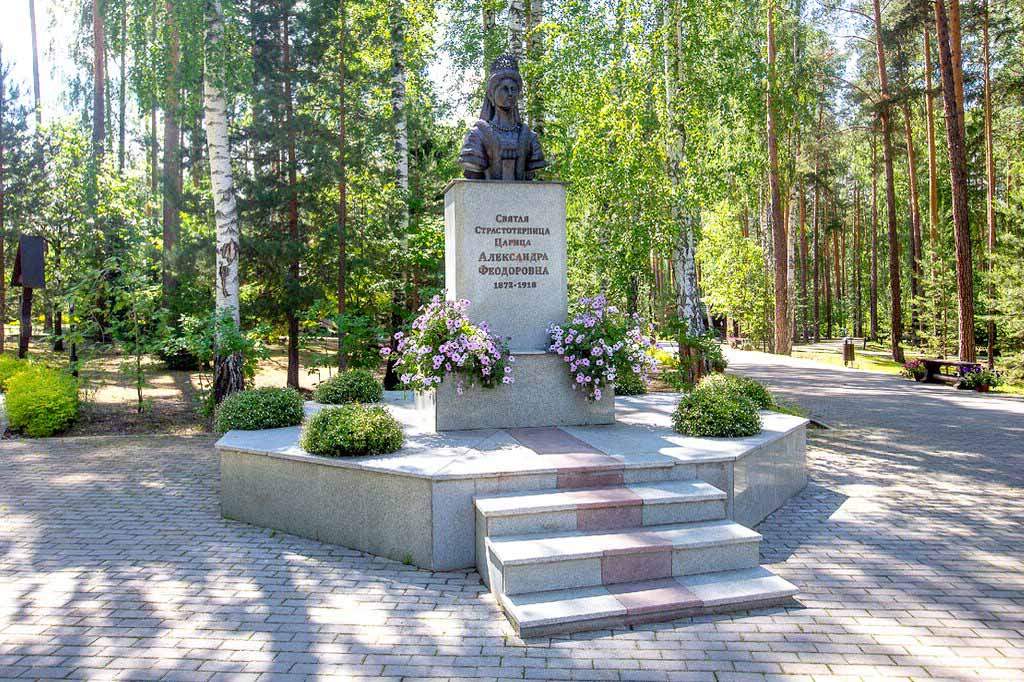
The bronze monument (above) to Empress Alexandra Feodorovna was installed and consecrated in 2011.

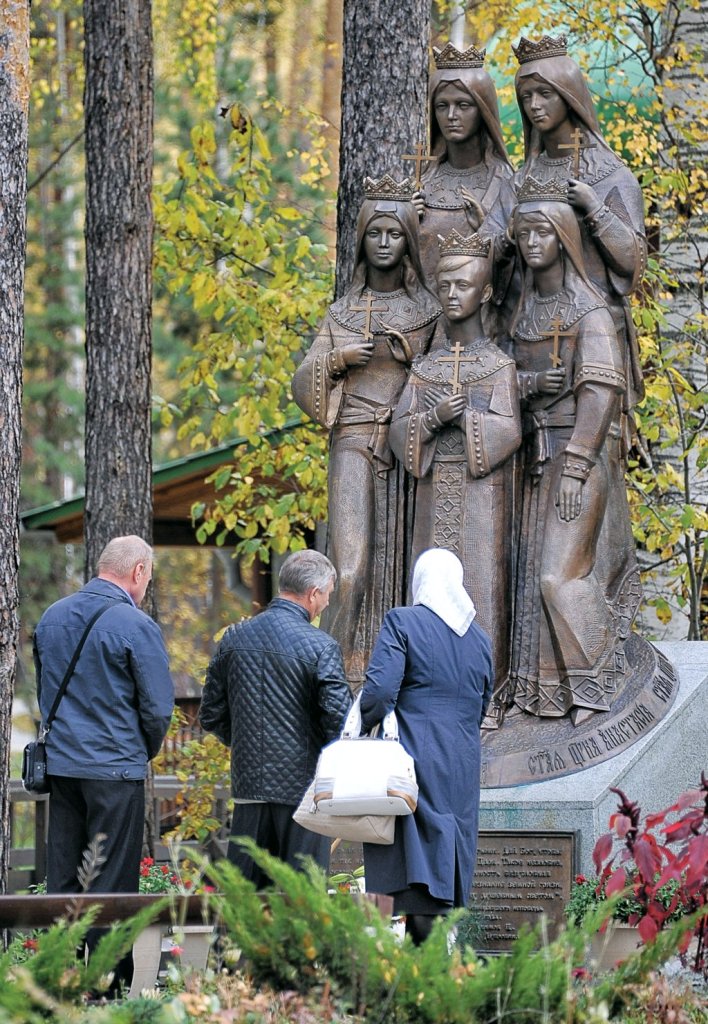
The bronze monument (above) of Grand Duchesses Olga, Tatiana, Maria, Anastasia and Tsesarevich Alexei, was installed and consecrated on the grounds of the Monastery of the Holy Royal Martyrs at Ganina Yama in 2011.

Sredneuralsk, Sverdlovsk Oblast

The Sredneuralsky Convent in Honour of the Icon of the Mother of God “The Conqueror of Bread”, is an Orthodox convent located on the outskirts of the city of Sredneuralsk, 15 km northwest of Ekaterinburg.

In 2014, the Trinity Church was consecrated in the monastery, which was built based on the ancient Russian architecture of the era of the formation of the Moscow kingdom. It is dedicated to the family of the last Russian Tsar Nicholas II. The basement of the Ipatiev House – where the Imperial Family were shot – was recreated in the lower part of the church. A large Poklonny cross dedicated to the Imperial Family, and a bust of Tsar Nicholas II were installed on the grounds of the monastery.

© Paul Gilbert. 13 October 2025

Pakistani delegation honour the memory of Nicholas II and his family

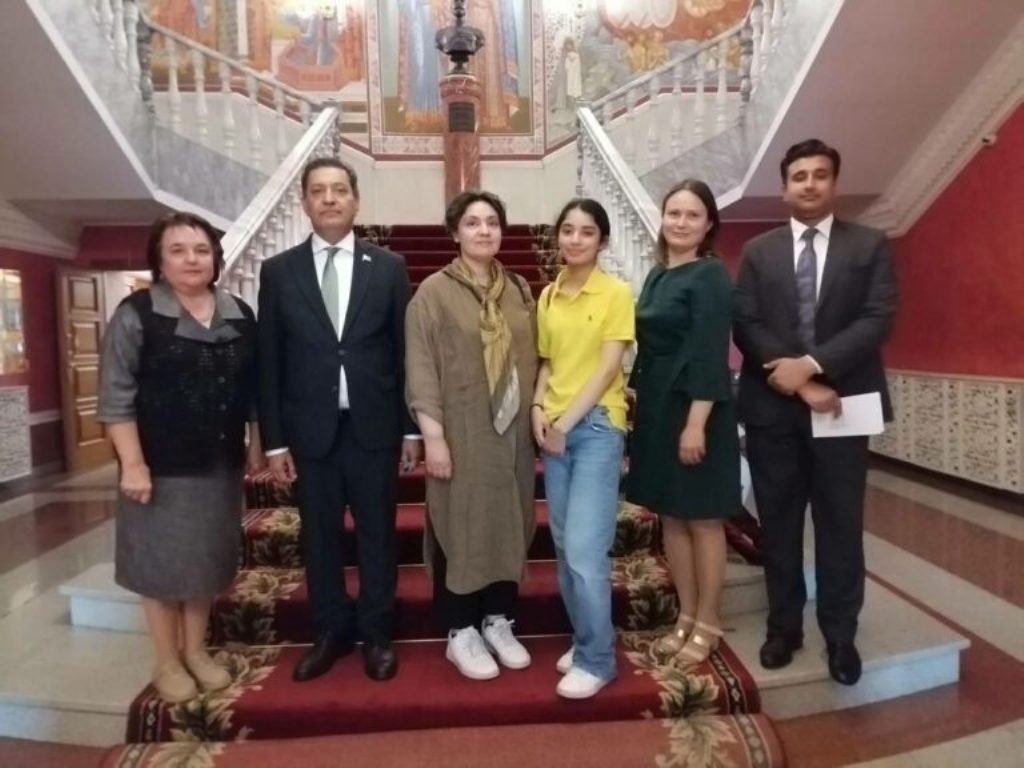
PHOTO: Pakistani Ambassador Muhammad Khalid Jamali and members of his delegation, in the Patriarchal Compound of the Church on the Blood. Note the bust of Nicholas II on a pedestal at the top of the stairs

On 31st July 2025, a delegation headed by the Ambassador of the Islamic Republic of Pakistan to the Russian Federation Muhammad Khalid Jamali visited the Church on the Blood and the Museum of the Holy Royal Family in Ekaterinburg.

Representatives of the delegation were given a tour of the museum, which is situated in the Patriarchal Compound of the Church on the Blood. While being shown exhibits, they were told about the life and work of Emperor Nicholas II, Empress Alexandra Feodorovna, Tsesarevich Alexei Nikolaevich and the Grand Duchesses Olga, Tatiana, Maria and Anastasia.

“Particular attention was paid to the last period of their lives, during which the Imperial Family were being held under house arrest in Tsarskoye Selo, Tobolsk and Ekaterinburg, where they subsequently met their death and martyrdom in the Ipatiev House, on 17th July 1918.” said the head of the Museum of the Holy Royal Family, Victoria Mikhailovna Kalmykova.

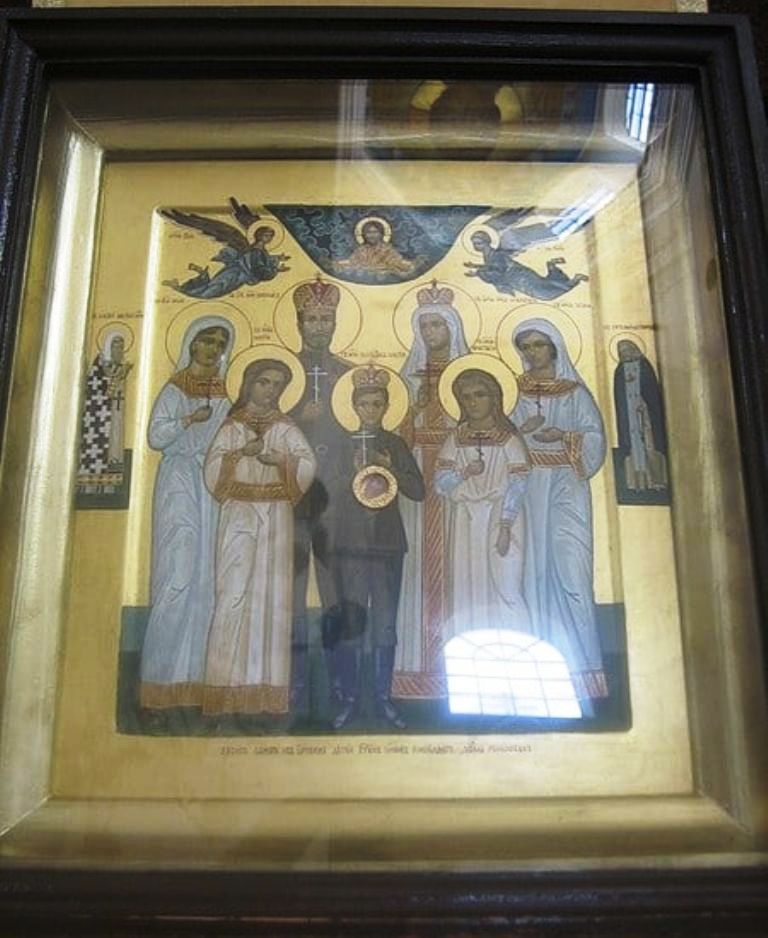
PHOTO: the icon of the Holy Royal Passion-Bearers. A capsule on the Heir’s chest contains a baby tooth of Tsesarevich Alexei Nikolaevich, preserved by his Swiss tutor Pierre Gilliard

According to the head of the museum, the members of the delegation reacted with great respect to the shrines of the Church-on-the-Blood – the icon of the Mother of God “Three-handed”, which belonged to the Imperial Family and was with them in the Ipatiev House, the icon of the Holy Royal Passion-Bearers containing a tooth of Tsesarevich Alexei, to the reliquary containing the relics of St. Seraphim of Sarov, glorified during the reign of His Majesty Emperor Nicholas II, were previously kept.

The members of the delegation were very interested in the personal items belonging to members of the Imperial Family: a fragment of a children’s blanket made by the Grand Duchesses for the birth of Tsesarevich Alexei Nikolaevich in 1904; a children’s summer openwork glove that belonged to the Grand Duchess Tatiana Nikolaevna; a dinner napkin of Emperor Nicholas II, among other items belonging to His Majesty of that time.

At the end of the visit, the members of the delegation expressed gratitude for getting acquainted with the shrines of the Church on the Blood, and for the memorable and interesting tour of the museum.

© Paul Gilbert. 1 August 2025

Myrrh streams from icon of Nicholas II in Ekaterinburg

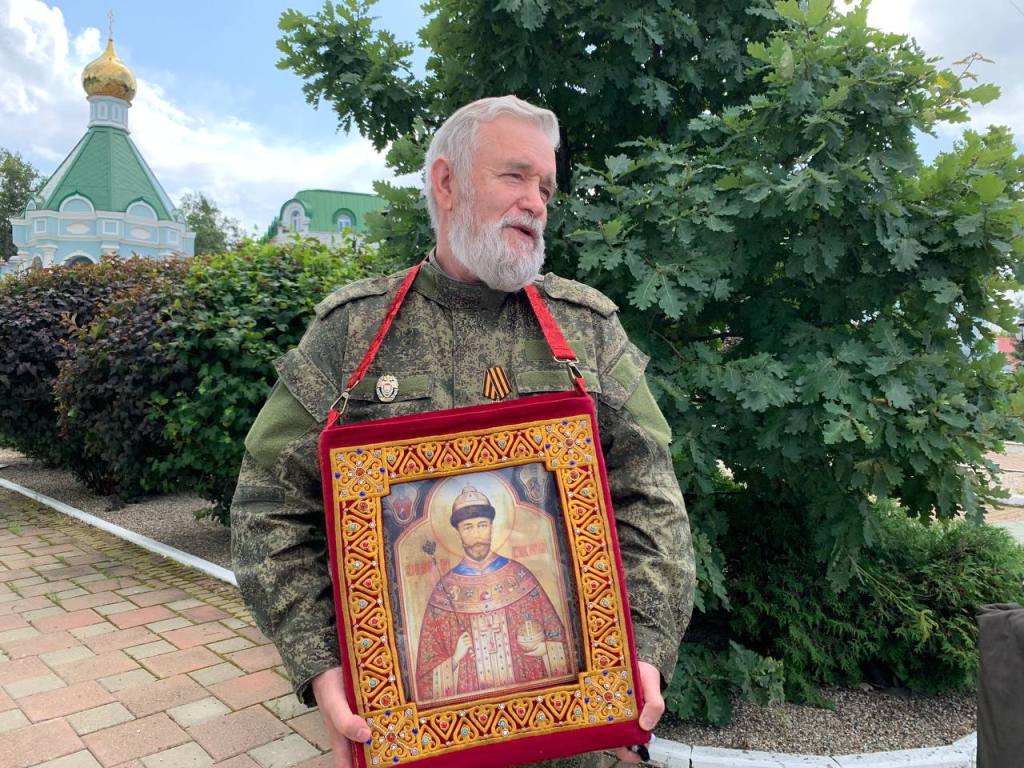
PHOTO: Alexander Feodorovich Chernavsky holding the
myrrh-streaming icon of the Tsar-Martyr Nicholas II

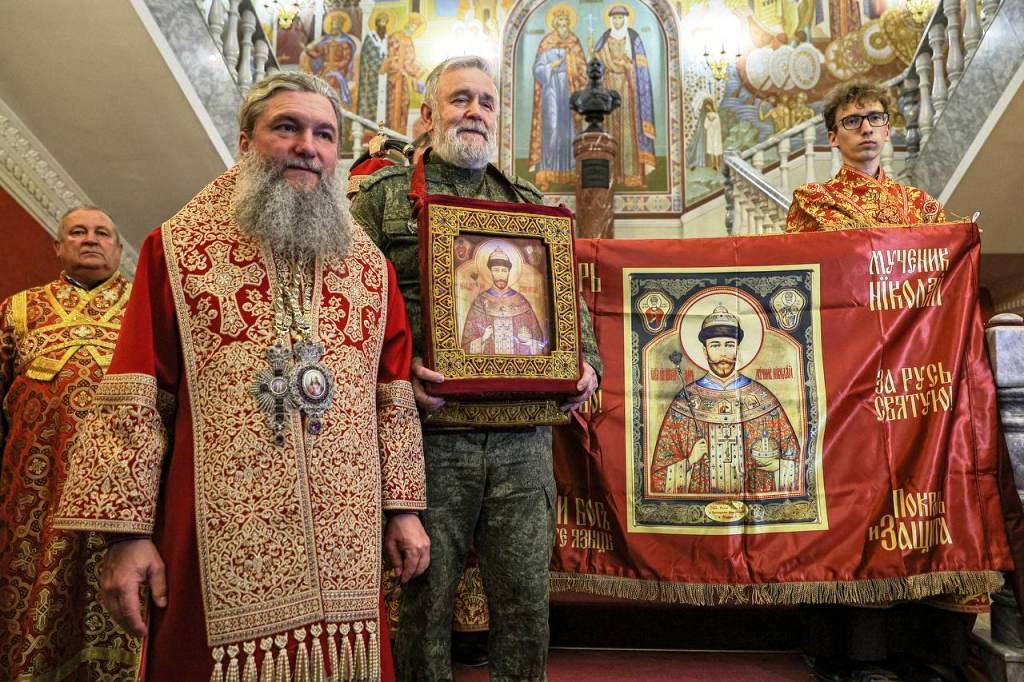
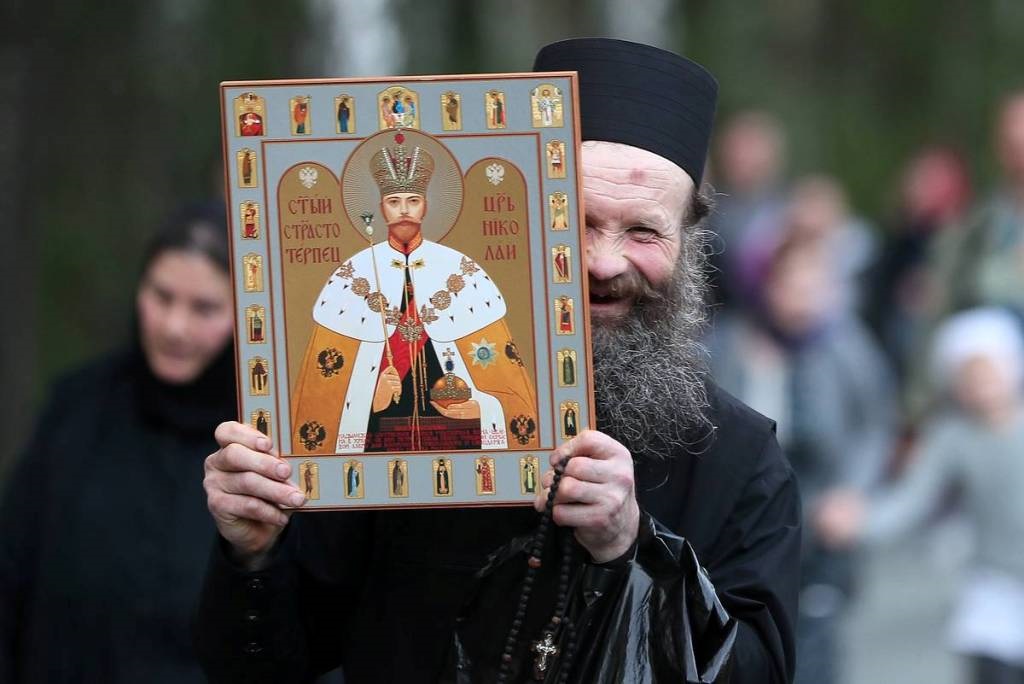
On 13th July 2025, the myrrh-streaming icon of the Tsar-Martyr Nicholas II arrived at the Church on the Blood in Ekaterinburg. The icon was brought from Moscow, by the head of the Orthodox Military Mission, Alexander Feodorovich Chernavsky.

According to Chernavsky, the icon has been streaming myrrh since 1998, and again, during this year’s Tsar’s Days in the Ural capital, drops of myrrh appeared in the shape of “diamonds” on the icon itself and on the frame.

It smells fragrant, it streams myrrh and inspires faithful Orthodox Christians with the fact that the Tsar is alive, he sees all our labours, hears our prayers, reacts to the impulses of our hearts, to our feelings, he believes in the future of Russia. The Imperial Family and other New Martyrs pray for us.”

Chernavsky brings the icon to the Ural city every year for events marking Tsar’s Days, namely the Divine Liturgy held on the night of 16/17 July, followed by a Cross Procession to the Monastery of the Holy Royal Martyrs in Ganina Yama.

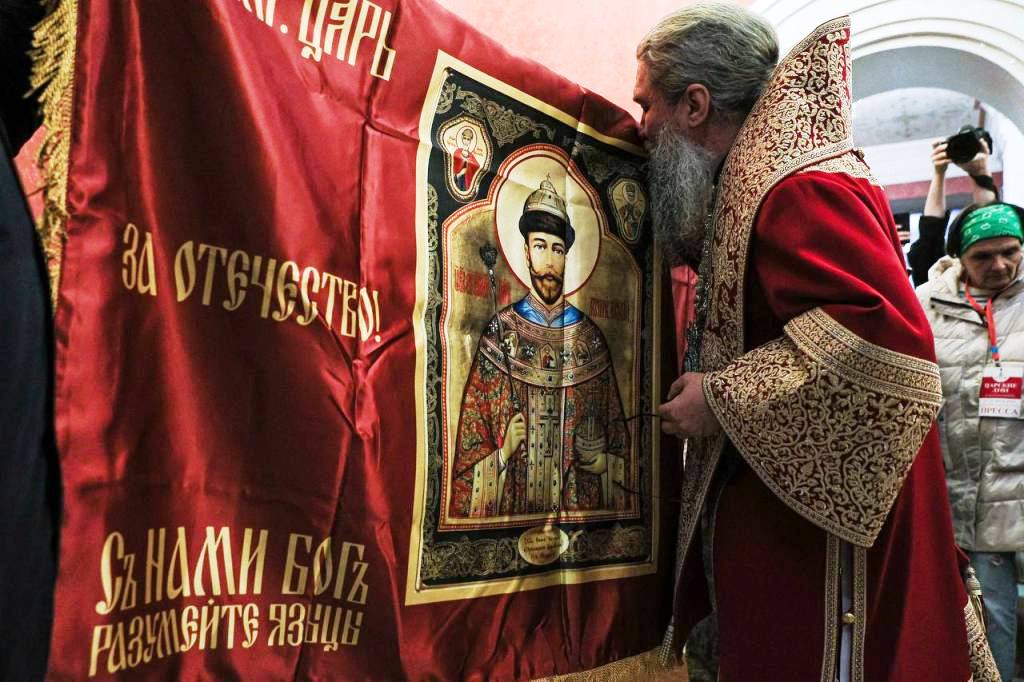
PHOTO: detail of the banner depicting the image of Tsar-Martyr Nicholas II

On 16th July 2025, Chernavsky presented Metropolitan Evgeny of Yekaterinburg and Verkhoturye with a banner depicting the image of Tsar Nicholas II. Such banners bearing the face of the Holy Royal Passion-Bearers are sent to Russian soldiers to inspire them by the feat of the Emperor, to embrace the Orthodox faith and become churchgoers.

In the early morning hours of 17th July, Chernavsky – carrying the icon of the Tsar-Martyr Nicholas II – joined tens of thousands of pilgrims, clergy and believers in the annual Cross Procession from the Church on the Blood to the Monastery of the Holy Royal Martyrs at Ganina Yama – a journey of 21-km (13 mile) on foot.

Chernavsky noted that during this year’s Cross Procession, he noticed many young people with banners and flags, which he believes “speaks of the affirmation of the Orthodox faith and the unity of the Russian people.”

PHOTO: Metropolitan Evgeny of Ekaterinburg and Verkhotursky (left) with Alexander Chernavsky holding the myrrh-streaming icon of the Tsar-Martyr Nicholas II, in the Patriarchal Compound of the Church on the Blood. At the top of the stairs behind, you can see a bust-monument to Nicholas II

Recall that the icon of the Tsar-Martyr Nicholas II was painted in the United States even before the glorification of the Tsar by the Moscow Patriarchate of the Russian Orthodox Church on 20th August 2000, after the Russian émigré Iya Dmitrievna Schmit[1], had a dream in which she saw an icon depicting the Tsar Martyr Nicholas II in 17th century grand ducal attire. She asked the iconographer Pavel Nikolaevich Tikhomirov, who lives in California, to paint the icon she had dreamt about.

At the end of 1997, colour lithographs of this icon were brought to Russia. In the St. Nicholas almshouse in the city of Ryazan, where the Church of the Tsar-Martyr Nicholas II is being built, a colour copy was made and placed in an icon case under glass.

On 7th November 1998, the icon began to stream myrrh. Since then, the icon has been traveling around Russia and around the world. But most importantly, the icons streams myrrh on the anniversary of the Tsar’s death and martyrdom, among other days associated with the memory of Russia’s much slandered Tsar.

NOTES:

[1] In 2000, Ija Schmit (1936-2018) gifted a copy of this icon to the author of this article.

© Paul Gilbert. 23 July 2025

Tsar’s Days in Ekaterinburg – 16/17 July 2025

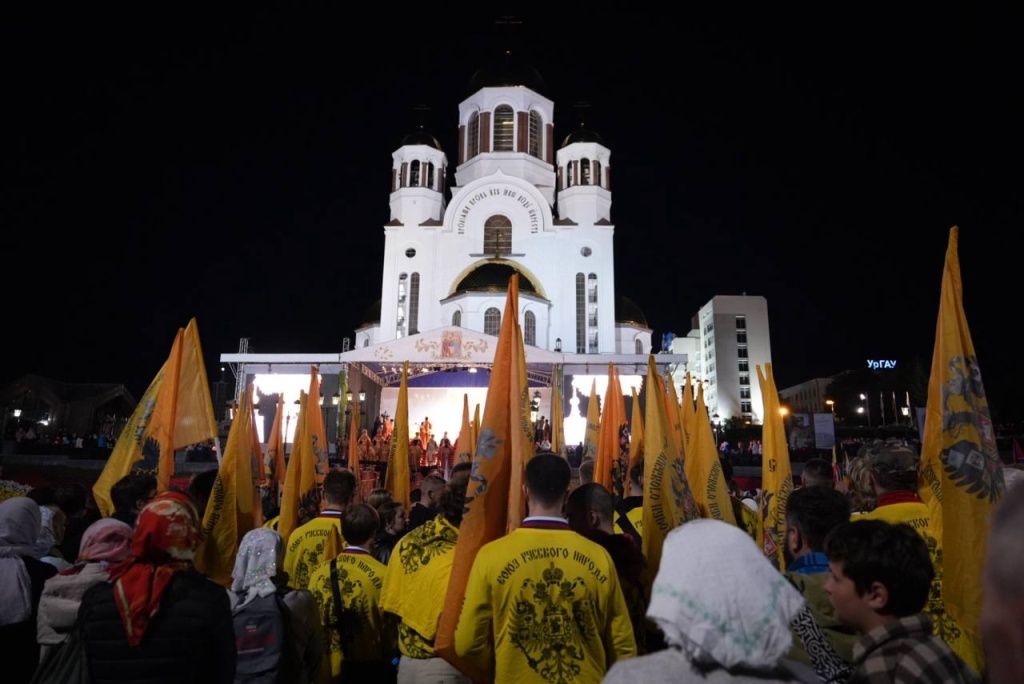
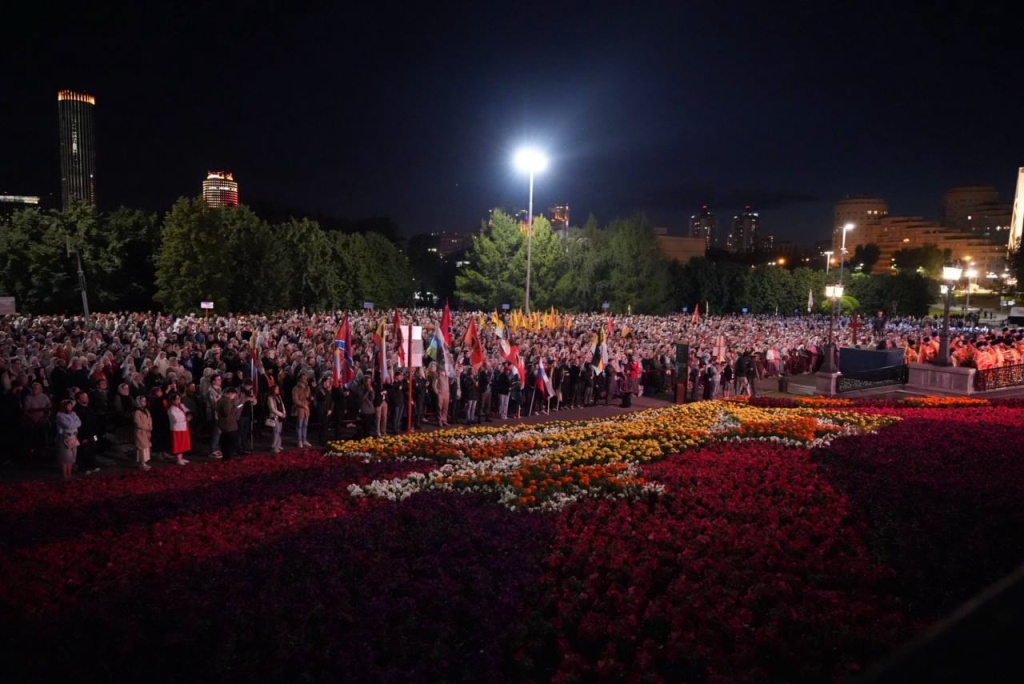
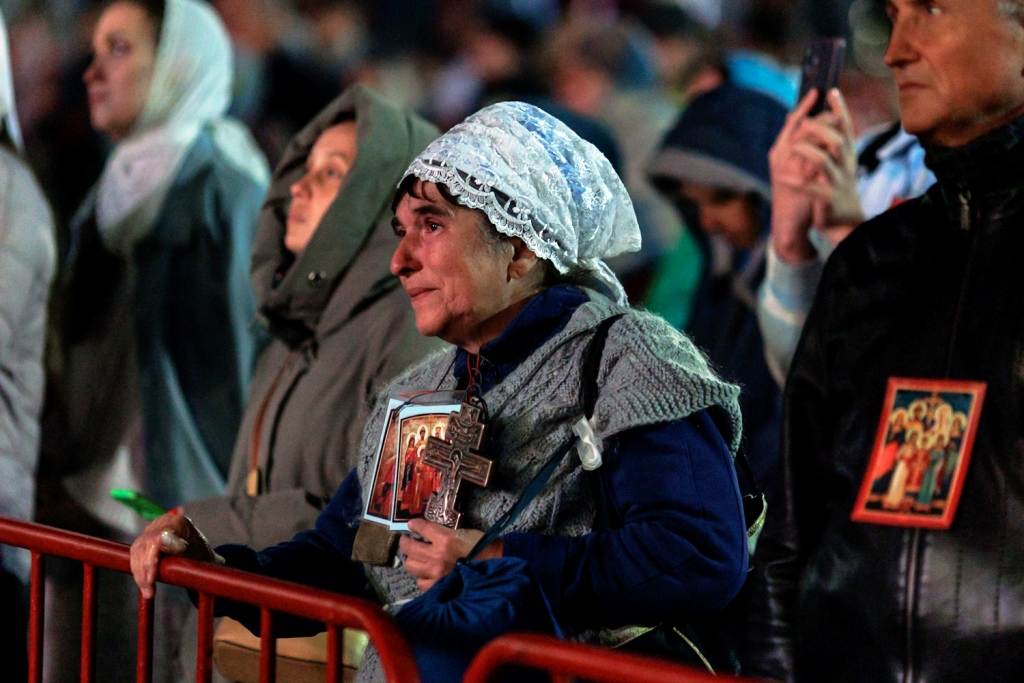
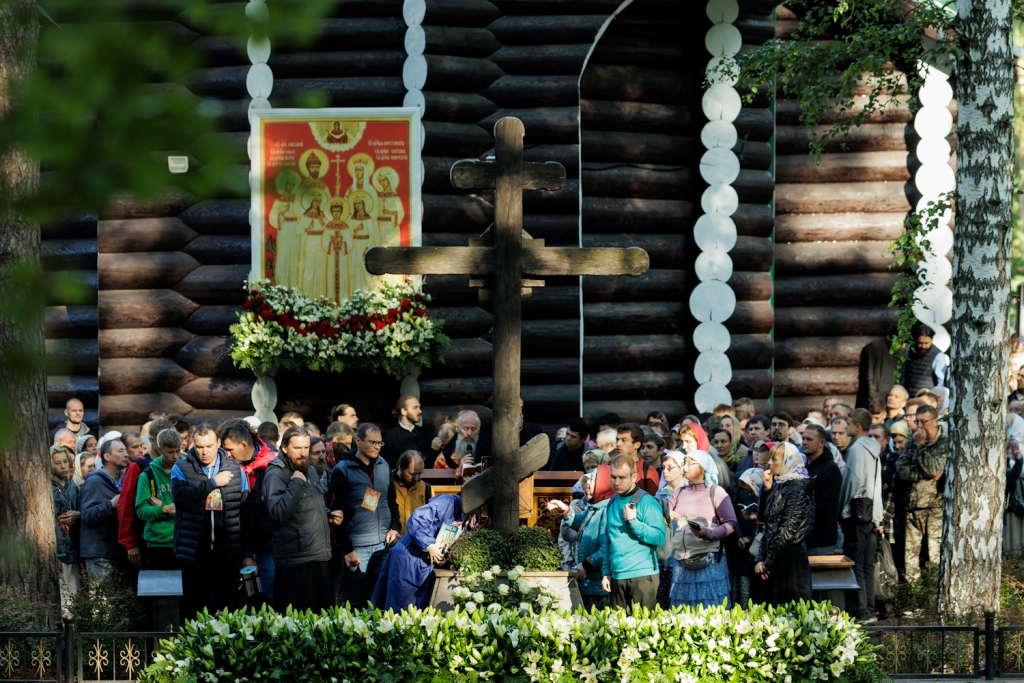
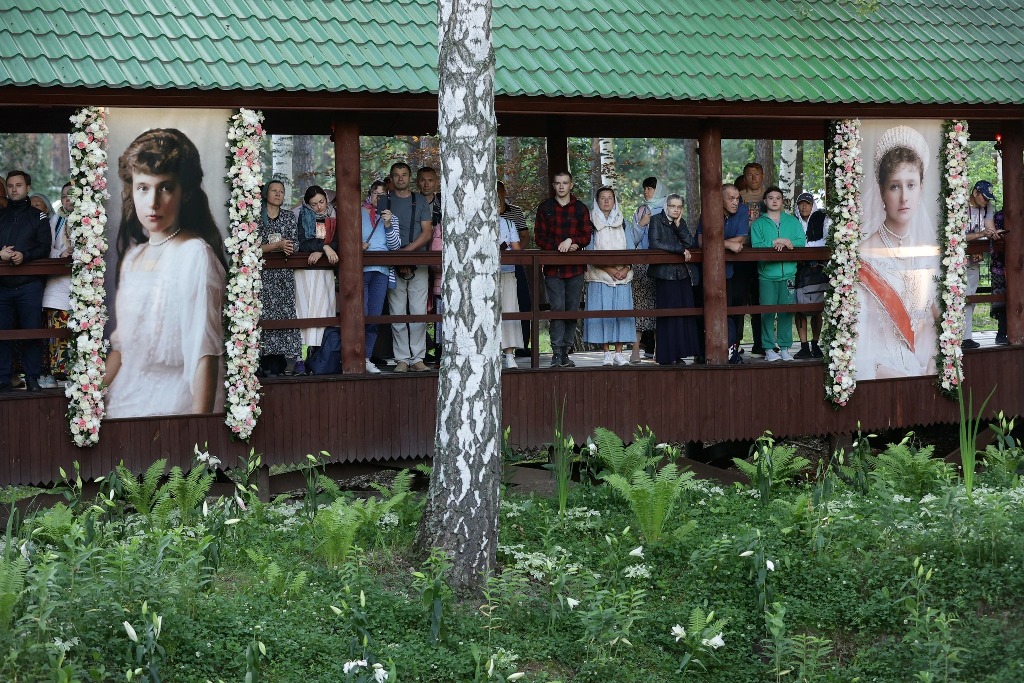
On the night of 16/17 July 2025, tens of thousands of pilgrims, clergy and believers from across the Russian Federation and abroad, took part in the Divine Liturgy on the square in front of the Church on the Blood in Honour of All Saints Resplendent in the Russian Land in Ekaterinburg.

This year marks the 107th anniversary of the death and martyrdom of Emperor Nicholas II, his wife, their five children, and four faithful retainers, who were all brutally murdered in the Ipatiev House in the early morning hours of 17th July 1918.

According to the press service of the Ekaterinburg Diocese, this year’s Tsar’s Days was attended by residents of Ekaterinburg and the Sverdlovsk region, but also residents of different regions of Russia. In addition, were pilgrims from the Czech Republic, Uzbekistan, Serbia, Italy and other countries.

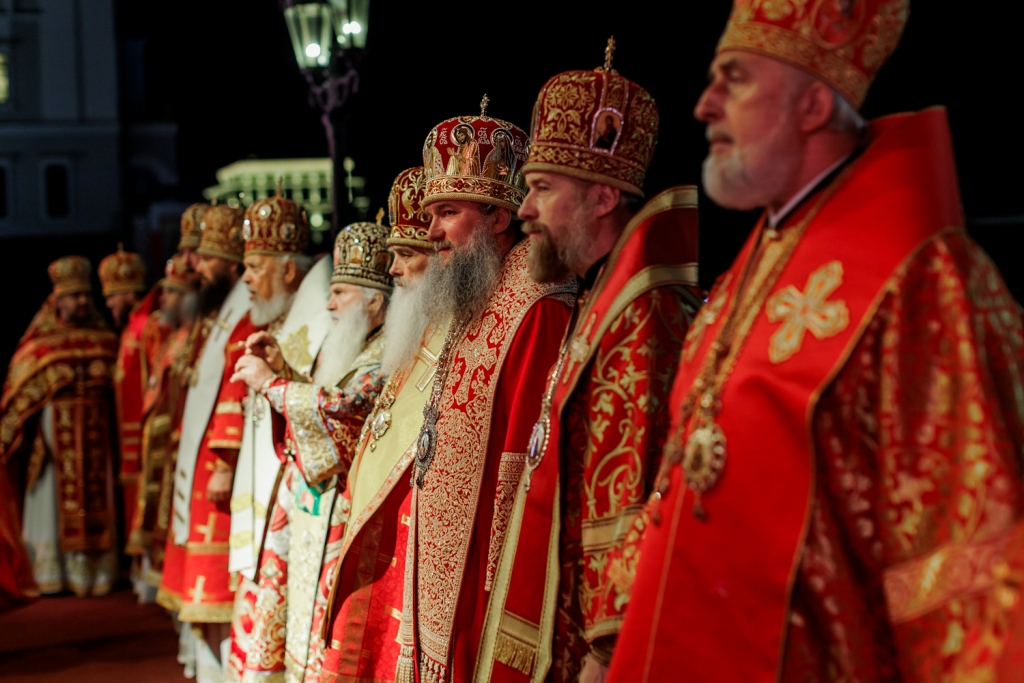
This year’s Divine Liturgy was led by 12 bishops of the Russian Orthodox Church, headed by Metropolitan Evgeny of Ekaterinburg and Verkhotursky. Communion of the Holy Mysteries of Christ was performed from 100 Chalices. The service was broadcast live by the First Orthodox TV channel “Soyuz” on YouTube, and Rutube-channels. 

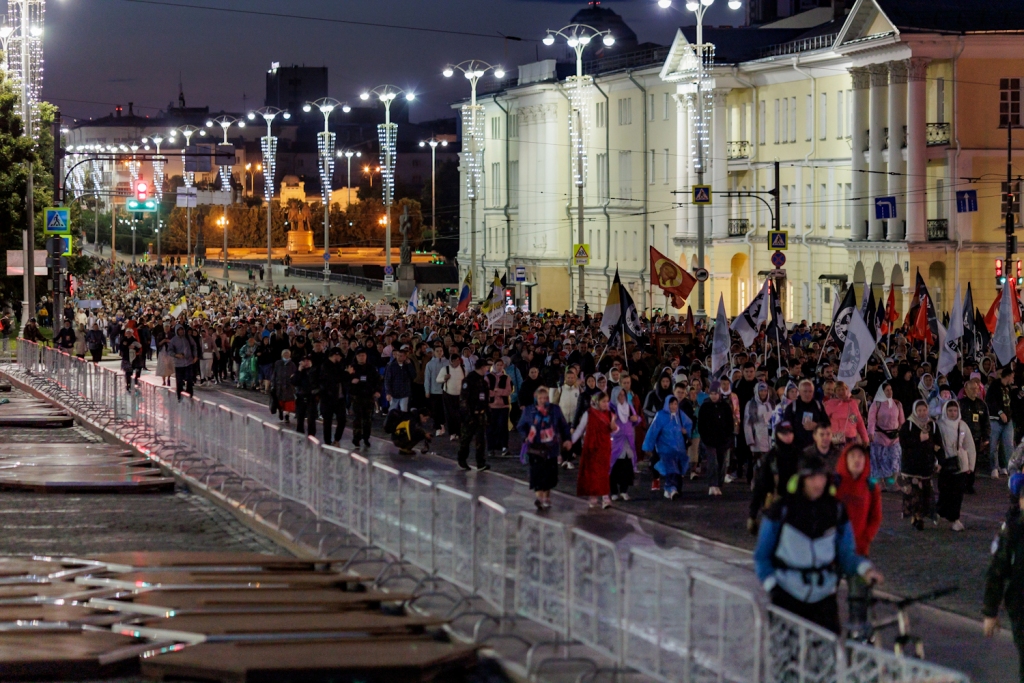
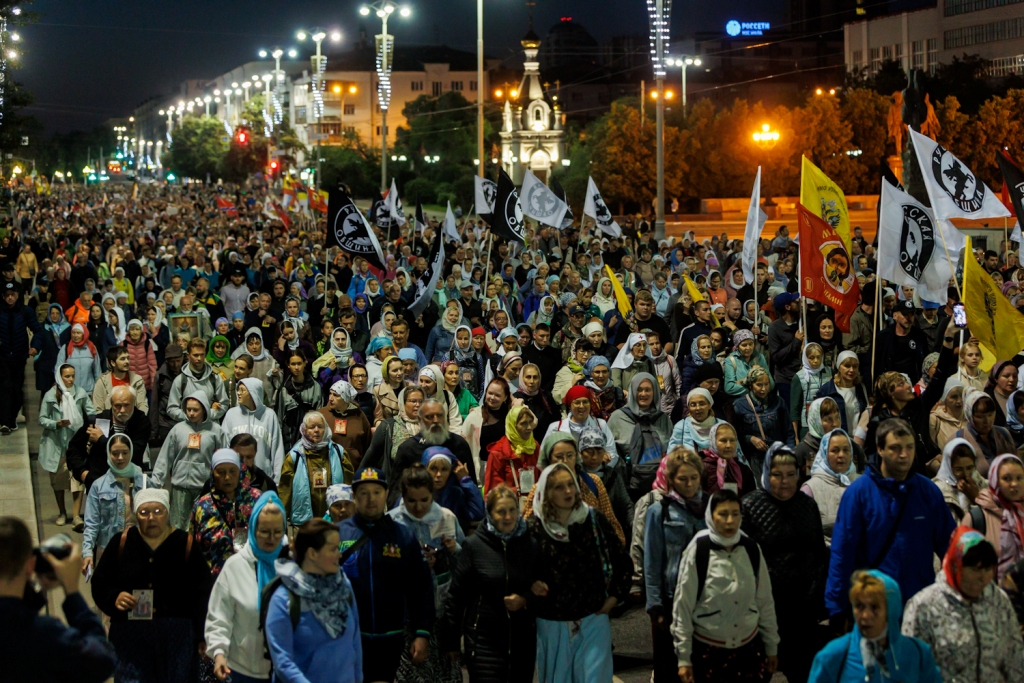
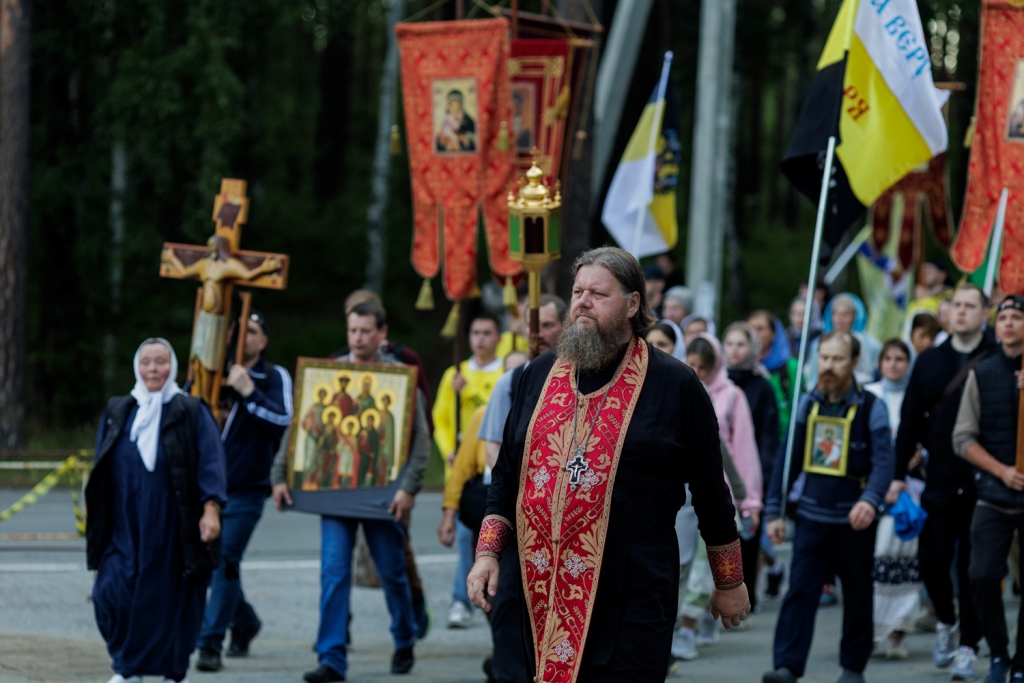
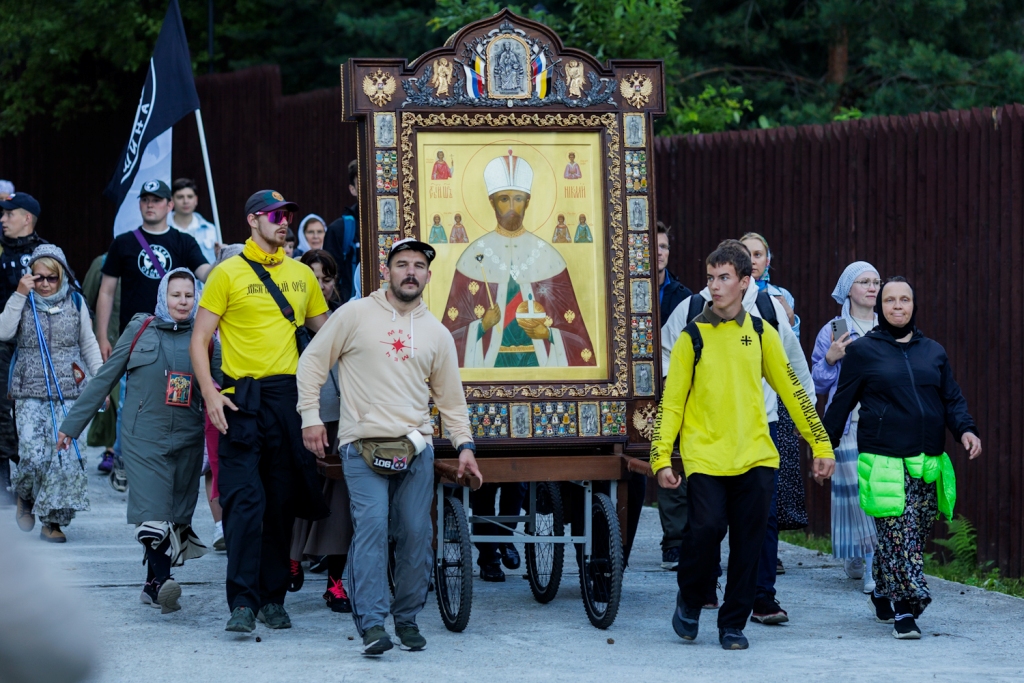
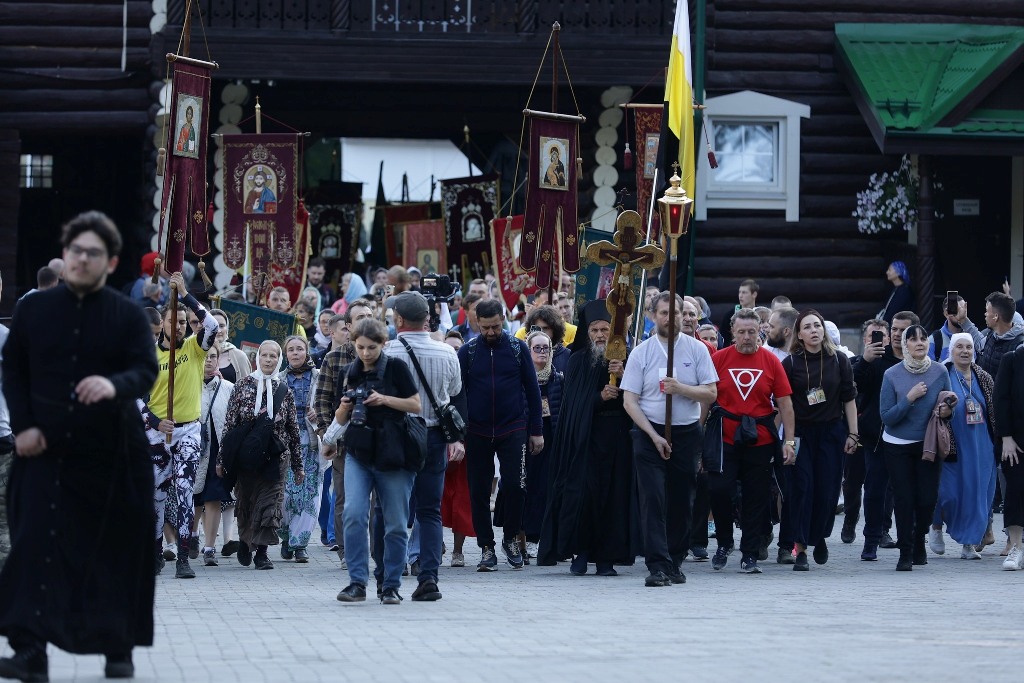
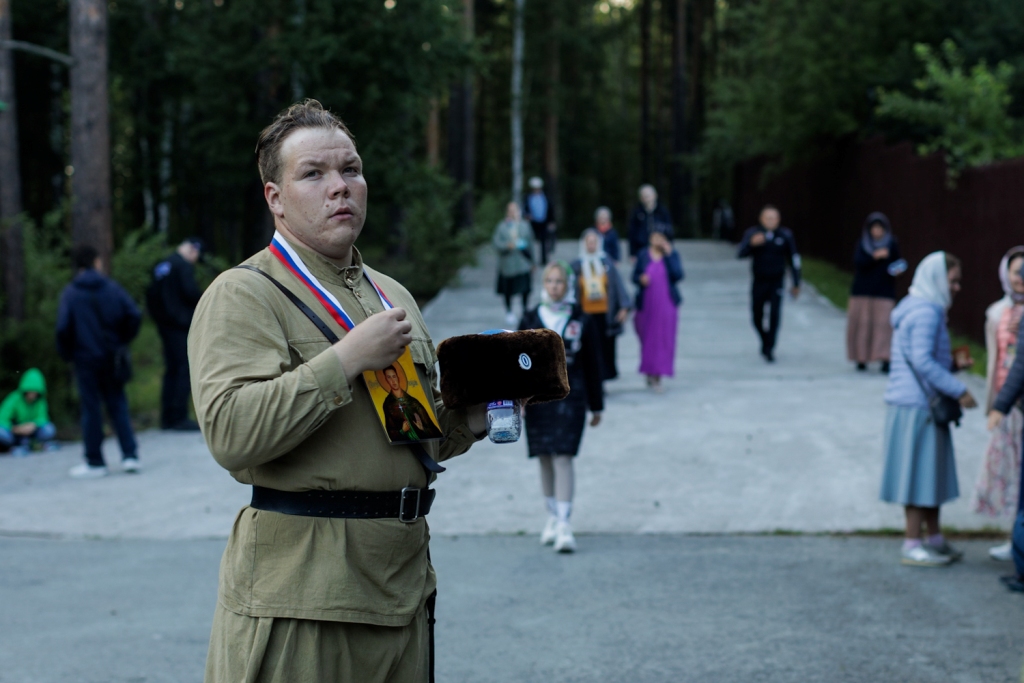
This was followed by a 21-km (13 mile) Cross Procession from the Church on the Blood to the Monastery of the Holy Royal Martyrs at Ganina Yama, in which 40,000 people took part. The procession, which began in the early morning hours of 17th July, took about 4 hours to complete on foot.

“There is no such religious procession, peaceful Christian movement in either Russia, or any where else in the world,” proclaimed Doctor of Historical Sciences Pyotr Multatuli, a noted historian and author, who is considered Russia’s foremost authority on the life and reign of Nicholas II.

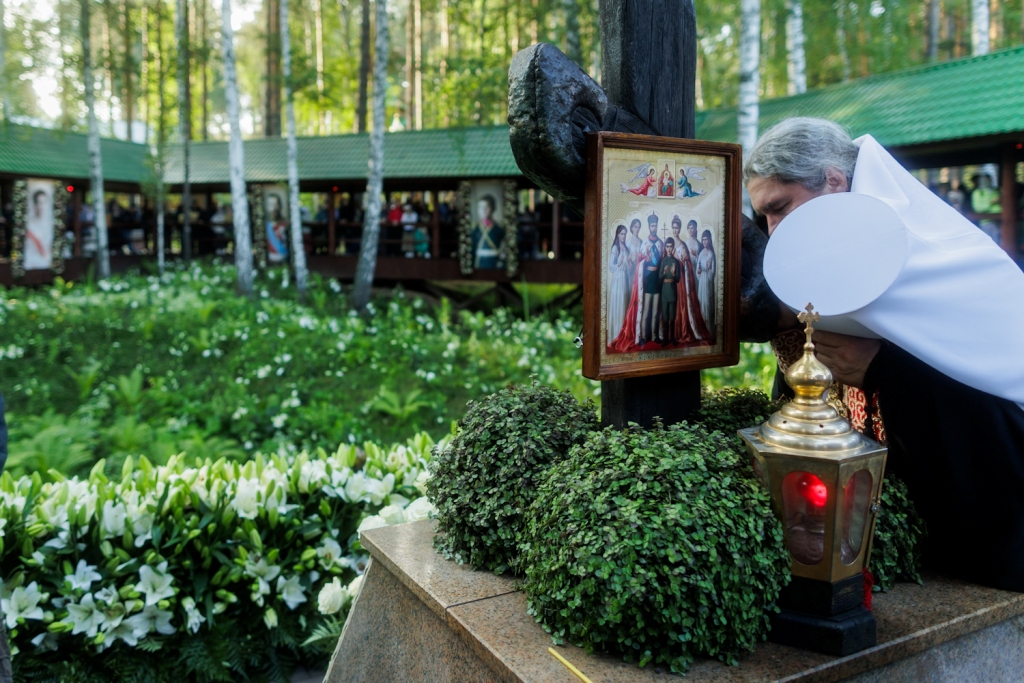
The Cross Procession concluded with a moleben [a liturgical service of supplication or thanksgiving] to the Holy Royal Passion-Bearers at Mine No. 7, which is now sacred ground of the Monastery of the Holy Royal Passion-bearers at Ganina Yama.

Tsar’s Days are traditionally held with the support of the Sverdlovsk regional government, the Ekaterinburg city administration and the St. Catherine’s Foundation, which helps in organizing the celebration and supporting pilgrims with water, food, and transport.

Divine Liturgy – Church on the Blood, Ekaterinburg

21-km (13 mile) Cross Procession to Ganina Yama

Monastery of the Holy Royal Passion-Bearers, Ganina Yama

Tsar’s Days

Recall that the first Cross Procession in memory of the Holy Royal Martyrs, headed by Metropolitan of Ekaterinburg and Verkhoturye Kirill, took place in 2002, in which more than 2 thousand pilgrims and about 100 clerics participated. It has been held annually in the Ural capital ever since.

In 2018, the year marking the 100th anniversary of the death and martyrdom of the Imperial Family, more than 100, 000 people from across Russia and around the world attended the historic event, including the author of this article, who travelled from Canada to take part.

© Paul Gilbert. 20 July 2025

Unique icons associated with the Romanovs to be exhibited in Ekaterinburg

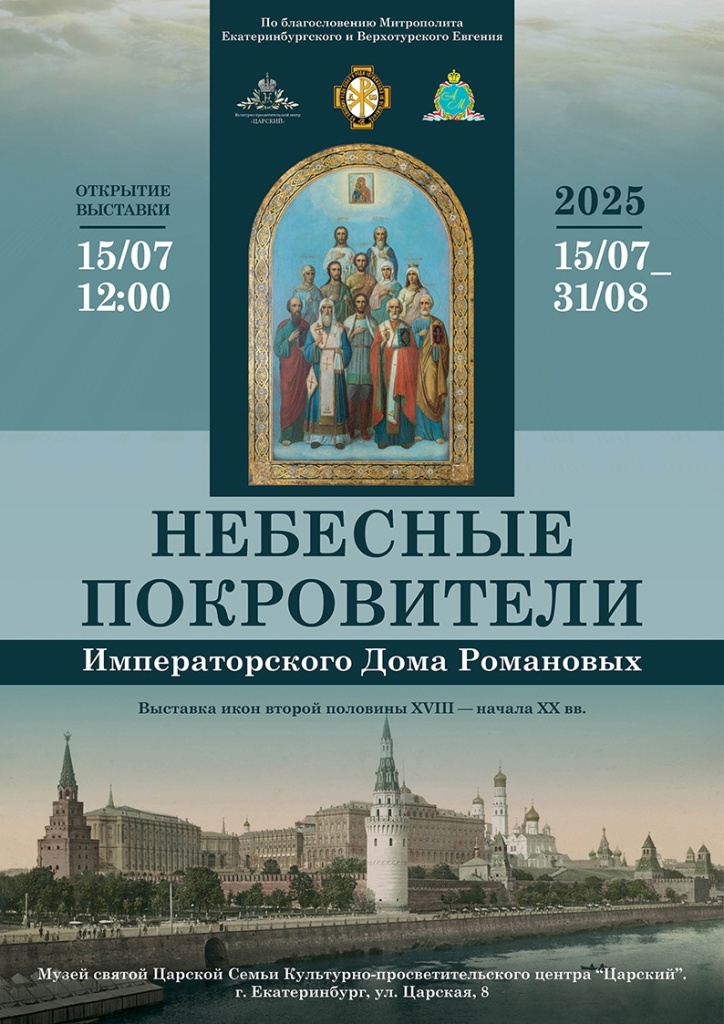
Emperor Nicholas II is well known for his piety and devotion to the Russian Orthodox Church. As part of the Tsar’s Days-2025, a collection of rare icons of the 17th to early 20th centuries, which are stored in church and private collections, will be brought to Ekaterinburg. The exhibition presents icons of the patron saints of the Romanov dynasty, which were commissioned by the Russian emperors.

The icons will be on display at the exhibition “Heavenly Patrons of the House of Romanov” which opens on 15th July 2025, to the Museum of the Holy Tsar’s Family, situated on the second floor of the Patriarchal Compound of the Church on the Blood.

This event was organized by the Altai Diocese together with the Ekaterinburg and Altai branches of the Imperial Orthodox Palestine Society and the Russian Academy of Arts. This is the first time that the Ural capital has hosted such an exhibition.

The organizers of the exhibition shared the history of the exposition:

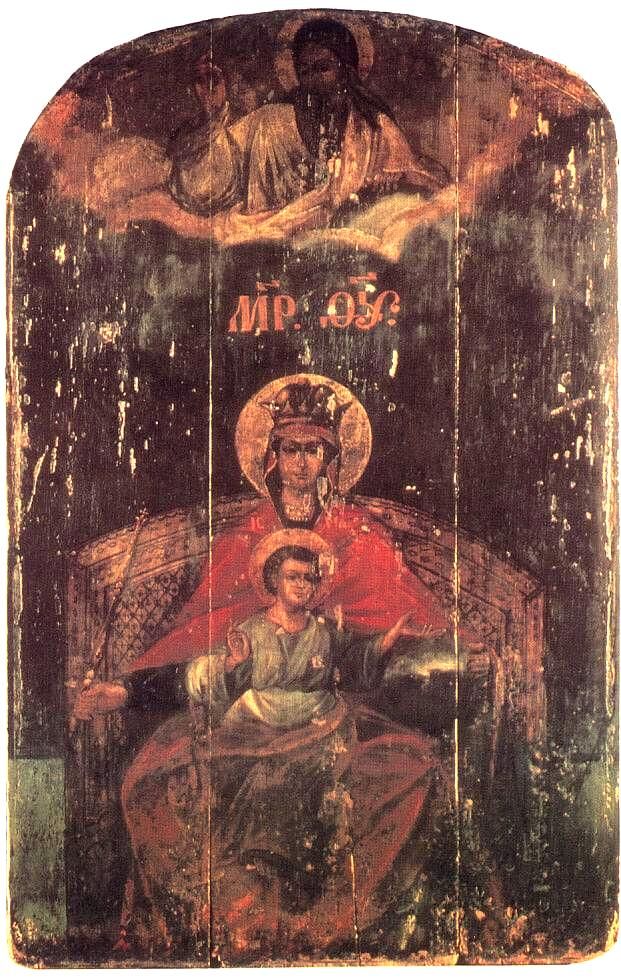
For more than three hundred years, Russia was under the rule of the Romanov dynasty. The Romanovs’ coming to power is associated with a prayer at the Miraculous Icon of the Mother of God “Feodorovskaya” and was marked by the overcoming of the Time of Troubles. Under the Romanovs, the country acquired the status of an Empire, profound political transformations were carried out, feudalism was replaced by capitalist relations, the peasantry gained freedom, economic and social reforms were implemented, and the population increased. The reign of the Romanovs ended with another time of troubles, in 1917. On 15th (O.S. 2nd) March 1917, the day of the abdication of Nicholas II , the Reigning Icon of the Mother of God was revealed to a peasant woman in Kolomenskoye. Many believe the reappearance of the icon was an indication that the Virgin Mary was displeased with Russia for dethroning Tsar Nicholas II during the February 1917 Revolution.

PHOTO: The original Reigning Icon of the Mother of God in the
Church of Our Lady of Kazan, Kolomenskoye (near Moscow)

According to Byzantine origins, the life of the Imperial Family in Russia was largely determined by Orthodox traditions. The Russian monarchs, following the Byzantine ones, were called God’s anointed. There was a corresponding rite of enthronement, which was performed in the main Assumption Cathedral of the Moscow Kremlin. Solemn events, anniversaries and other holidays of the Emperor’s family were interwoven into the church rites. In churches, Diving Liturgies, public prayers and bell ringing were performed. For these occasions, special icons were ordered, on which the patron saints of representatives of the Imperial Family were painted. Such icons were made for the birth of grand dukes, for the wedding of heirs to the throne, enthronement and anniversaries. If an assassination attempt or accident occurred, and the respective member(s) of the Imperial Family were spared, then praise was given to God throughout the country, thanksgiving prayers were served, chapels and churches were built, or appropriate icons with selected saints were ordered. Moreover, for most people, the tsar was God’s anointed, and therefore, there was a prayer for the well-being of the tsar and his family members. And what is prayer without an icon? This is how new images were born.

After 1917, the Church and the monarchy became the main enemies of the new Bolshevik and later Soviet governments. The heritage of Russia was destroyed with special zeal, and it is not surprising that today such icons have become a rarity, which makes the exhibition a unique event for the spiritual life of the Sverdlovsk region – once a bastion of Bolshevism – and for Russia. The exhibition encourages a new look at the pages of the history of the ruling House of Romanov, which has so significantly influenced the history and modernity of Russia.

In addition, visitors will see the icons of the Most Holy Trinity of the late 19th and early 20th centuries, selected saints, the Intercession of the Most Holy Theotokos, the image of Prince Vladimir Equal-to-the-Apostles of 1888, the version of which was painted specifically for the 900th anniversary of the Baptism of Rus. Particular attention should be paid to the long-suffering Job – he could have been a personal icon of the last Russian Tsar Nicholas II.

The exhibition “Heavenly Patrons of the Imperial House of Romanov” runs from 15th July to 31st August 2025, at the the Tsarsky Cultural and Educational Center, situated in the Patriarchal Compound of the Church on the Blood.

© Paul Gilbert. 11 July 2025

Ekaterinburg prepares for Tsar’s Days 2025

The Ekaterinburg Metropolis are currently preparing for Tsar’s Days – 2025, which will be held in the Ural capital and in Alapaevsk from 11th to 21st July. This year marks the 107th anniversary of the death and martyrdom of Emperor Nicholas II, his family and their four faithful retainers on 17th July 1918. It also marks the 107th anniversary of the death and martyrdom of Grand Duchess Eliabeth Feodorovna and other Romanov family members in Alapaevsk on 18th July 1918.

Metropolitan Evgeny of Yekaterinburg and Verkhoturye noted the importance of the upcoming memorial events, which traditionally bring together tens of thousands of faithful from across Russia and abroad.

The central event of Tsar’s Days is the Divine Liturgy held on the night of 16/17 July, followed by a 21-km [13 miles] Cross Procession, from the Church on the Blood in central Ekaterinburg to the Monastery of the Holy Royal Passion-Bearers at Ganina Yama. for which “the whole of Russia gathers” in the Ural capital.

This years’ Tsar’s Days is part of the 24th International Festival of Orthodox Culture, which will be held over a 10-day period from 11-21 July. Aside from divine services and religious processions, the festival will feature many events in honour of the Holy Royal Martyrs, including bell ringing, concerts and musical evenings, as well as exhibitions and conferences hosted by well-known historians, theologians and authors.

Preparations for the Tsar’s Days are being carried out by the Ekaterinburg Metropolia with the support of the regional and city authorities.

Once again, Porosenkov Log will not included in this year’s Cross Procession. Porosenkov Log is where the remains of the Imperial Family were exhumed in two separate graves in 1991 and 2007 respectively. Due to the fact that the Moscow Patriachate does not yet recognize the Ekaterinburg Remains as those of the Imperial Family. Their official recognition rests with the Bishops’ Council of the Russian Orthodox Church.

The veneration of Nicholas II

The veneration of Nicholas II and his family actually began just days after their murder in July 1918. During the Soviet years, such activity would most certainly have been suppressed, forcing the faithful to honour the Holy Royal Passion-Beaers in secret.

After the fall of the Soviet Union in 1991, everything changed, when in 2000, some 300 faithful gathered at the sight of the Ipatiev House in Sverdlovsk [Ekaterinburg]. In 2002, the first Cross Procession in memory of the Holy Royal Martyrs was held in the Ural capitlal, attracting 3,000 faithful. The procession has been held every year since, the most important being in 2018, the year marking the 100th anniversary of the death and martyrdom of the Imperial Family.

FURTHER READING:

What is Tsar’s Days? + PHOTOS and VIDEO

© Paul Gilbert. 25 June 2025

Russian court rules on the fate of Tsar’s family grave near Ekaterinburg

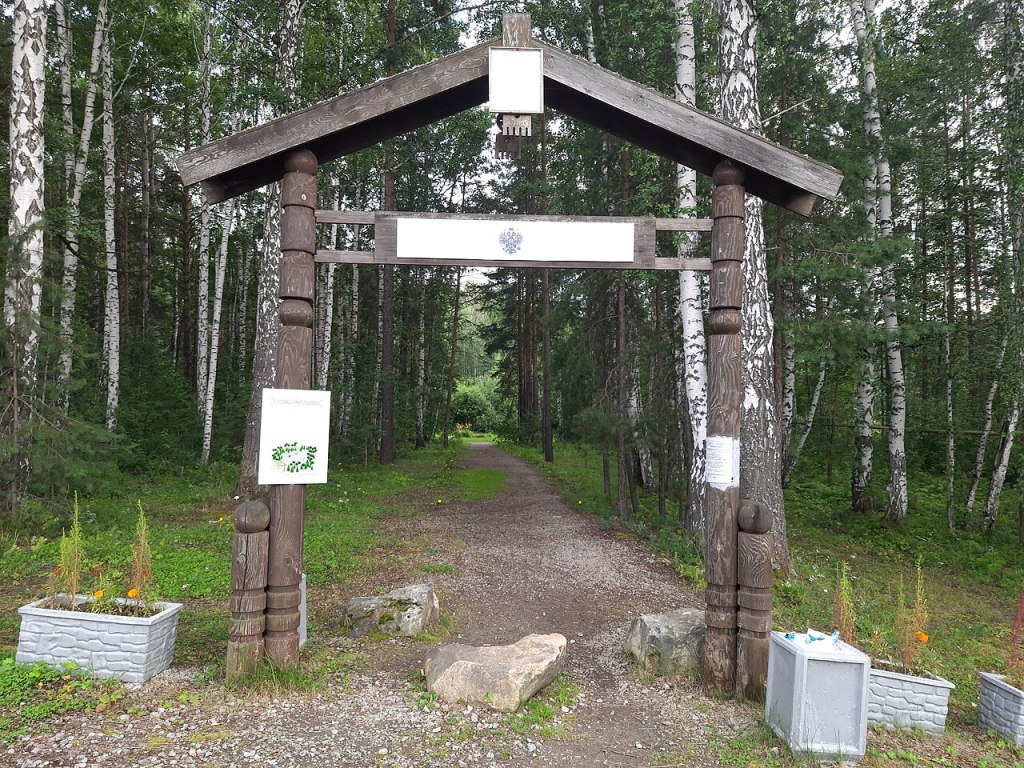
PHOTO: the entrance to the Romanov Memorial at Porosenkov Log

On Monday, 2nd June 2025, the Sverdlovsk Regional Court ruled on the fate of Porosenkov Log, situated on the old Koptyaki Road near Ekaterinburg. The Court’s ruling ensures that the place where the remains of Russia’s last Tsar, his family and their four faithful retainers were found is protected from developers.

Recall that in 2014, the Department of State Protection of Cultural Heritage Sites of the Sverdlovsk Region (UGOOKN) included the Romanov Memorial at Porosenkov Log on the list of protected monuments. However, 10 years later, in September 2024, the state security department removed the memorial’s protective status.

After the decree was issued, workers came to the memorial in Porosenkov Log and removed the information steles. In addition, workers began to remove part of the soil layer around the main grave, without even carrying out any digs to ensure that there were no remaining fragments of the bodies of members of the Imperial Family that have not yet been found. At the same time, no one coordinated the work with the Romanov Memorial Charitable Foundation and it’s founder Ilya Korovin, who has preserved the memorial since July 1999.

To avoid any further destruction of the Romanov Memorial, Korovin was forced to file a lawsuit in the Regional Court. In the lawsuit, Korovin noted that the removal of the protected status jeopardizes the damage or destruction of religious objects. He requested that the Court cancel the order.

The judge of the Sverdlovsk Regional Court, Maxim Rudakov, sided with the charitable foundation and declared the disputed order invalid. The department has a month to appeal. Despite the Court’s ruling, however, Ilya Korovin believes that it is too early to celebrate, since the department can appeal the court’s decision.

Since 2021, the Romanov Memorial Foundation has been fighting against development which threaten Porosenkov Log. Korovin claims that the Russian Orthodox Church wants to build a monastery in Porosenkov Log similar to that in Ganina Yama – the Monastery of the Holy Royal Martyrs.

© Paul Gilbert. 15 June 2025

Obituary: Maria Dmitrievna Ivanova-Tatishcheva (1930-2025)

Maria Dmitrievna Ivanova-Tatishcheva (1930-2025)

On 27th May 2025, Maria Dmitrievna Ivanova [born Countess Tatishcheva], died in Paris, at the age of 96.

Born in Nice on 26th February 1930, Maria is a direct descendant of the founder of Ekaterinburg, the sixth generation great-granddaughter of Vasily Nikitich Tatishchev (1686-1750), and niece of Adjutant General Vasily Nikitich Tatishchev (1859-1918), a devoted and loyal subject of Emperor Nicholas II.

Maria recalled in her memories: “My father, Count Dmitry Sergeevich Tatishchev (1898-1972), graduated from the Corps of Pages, whereupon he was promoted as an ensign in the Preobrazhensky Life Guards Regiment, in which almost all the Tatishchevs served. He was 18 years old, and after a month of training in St. Petersburg, he was sent to the Front, where he was awarded the Order of St. Anna’s 4th Class for Bravery. But after 4 months the commander of the Preobrazhensky, General Kutepov, disbanded the regiment. . . . Following the Tsar’s abdication and the October Revolution, he joined the North-Western Army of General Yudenich, which fought against the Bolsheviks.”
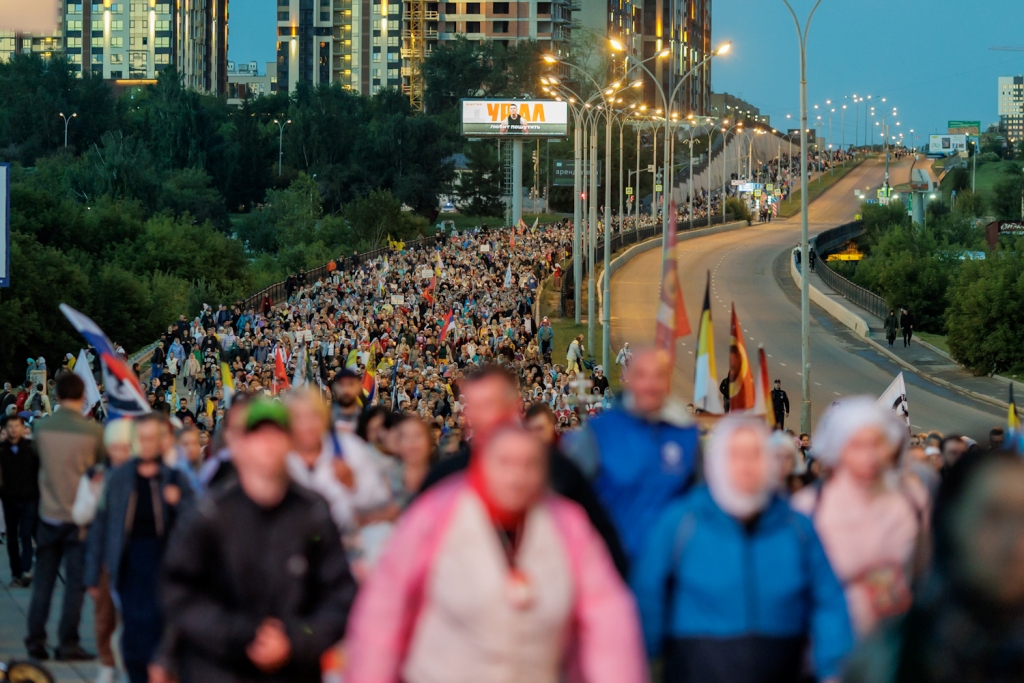
In 1920, Maria’s father fled Bolshevik Russia. From 1921 he lived in Marseille, then in Nice, before finally setting in Paris. In exile, he dedicated his life to perpetuating the memory of the last Russian emperor. Dmitry Tatishchev served as vice-chairman of the Union of Adherents for the Memory of Emperor Nicholas II [ Союз ревнителей памяти Императора Николая II] an independent, voluntary educational and charitable association of White Russian emigrants and their descendants, who venerated the memory of Emperor Nicholas II and his Family. Dmitry also worked on a Russian-language documentary about Nicholas II. 
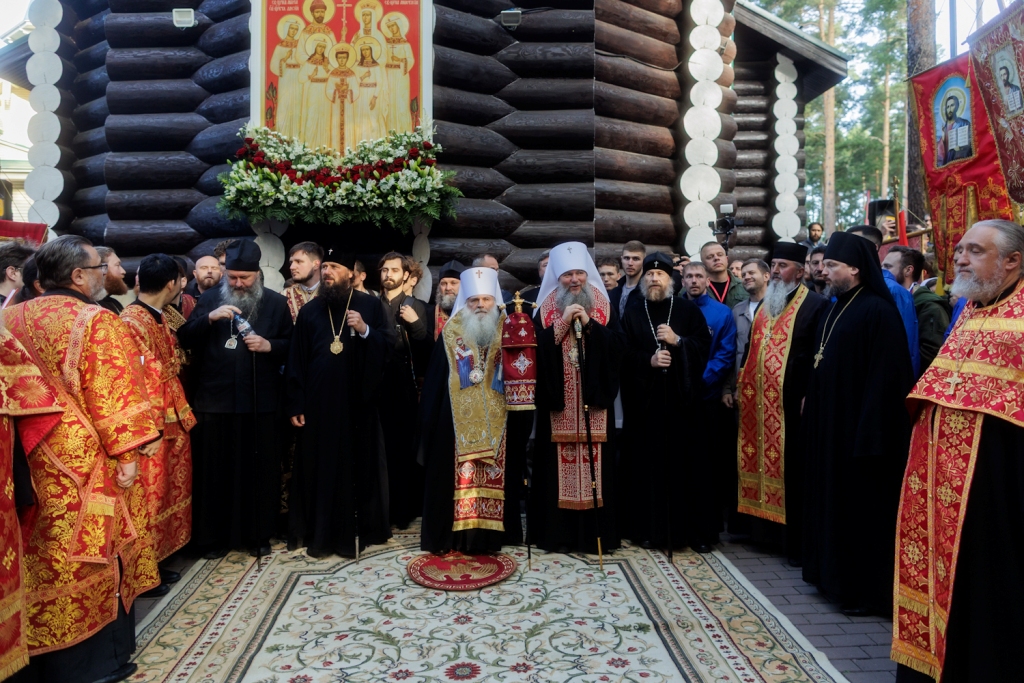
In 1929, Tatishchev married Countess Emilia Alekseevna Kapnist (1908-1996), the couple had one child, Maria Dmitrievna Tatishcheva.

PHOTO: Maria Dmitrievna Ivanova [Born Countess Tatishcheva], at her home in Paris

Maria Dmitrievna Tatishcheva lived in Paris, where she devoted her entire life helping Russians who fled Bolshevik Russia after the Revolution, and emigrated to France. In 1948, she began working at the Help Center for Russian Emigrants. The center helped émigrés to find employment, housing, obtain documents and organized children’s shelters.

In 1949, Maria married Yuri Alexandrovich Ivanov (1923-1987). The couple had one son Sergei Yuryevich.

From 1964, Maria headed the Russian parish school at the Cathedral of St. Alexander Nevsky Church in Paris, for children, grandchildren and great-grandchildren of Russian emigrants living in France.

From 1987 to 2000, she was in charge of the Tolstoy Foundation, which helped Russian refugees who emigrated from the USSR.

Maria first went to Russia in 2003, visiting Ekaterinburg, when the city celebrated its 280th anniversary, as a descendant of the founder of the city. It was during this visit to the Ural capital that the head of the Yekaterinburg Metropolia informed Maria that the diocesan Commission for the Canonization of Saints was currently preparing documents for the canonization of her uncle Vasily Nikitich Tatishchev (1859-1918).

Maria Dmitrievna Ivanova-Tatishcheva died in Paris on 27th May 2025. A memorial service was held on Friday, 30th May in the Cathedral of Saint Alexander Nevsky in Paris. She was buried in the Sainte-Genevieve-des-Bois Russian Cemetery, situated 25 km south from Paris.

Memory Eternal! Вечная Память!

***

234b

PHOTO: Vasily Nikitich Tatishchev (left) and Ilya Leonidovich Tatishchev (right)

At the invitation of Nicholas II, the devoted Adjutant General Vasily Nikitich Tatishchev followed the Tsar’s family into exile to Tobolsk, where, he played an important role, caring for the august family and offering spiritual support. When Nicholas II and the Empress Alexandra Feodorovna and her daughter Maria left Tobolsk for Ekaterinburg, Tatishchev remained with the Tsar’s children. On 23rd May 1918, upon arrival in Ekaterinburg with Tsesarevich Alexi and the Grand Duchesses Olga, Tatyana, Anastasia, the Adjutant General was separated from the Tsar’s family and imprisoned in Ekaterinburg.

On 10th June 1918 Ilya Leonidovich Tatishchev was shot by the Bolsheviks. According to church historians, he was buried in the cemetery of the Novo-Tikhvin Convent. [Note: Tatishchev’s grace was lost during the Soviet years – PG] 

The head of the Ekaterinburg Metropolis informed Maria Dmitrievna that the diocesan commission for the canonization of saints is currently preparing documents for the canonization of her uncle. [Note: Ilya Leonidovich Tatishchev was canonized by the Russian Orthodox Church Outside Russia (ROCOR) in 1981 – PG]

“It is known that not only did he know the gospel by heart, but lived the life a devout Orthodox Christian.

© Paul Gilbert. 1 June 2025