Christie’s to auction Fabergé’s legendary “Winter Egg” – again!
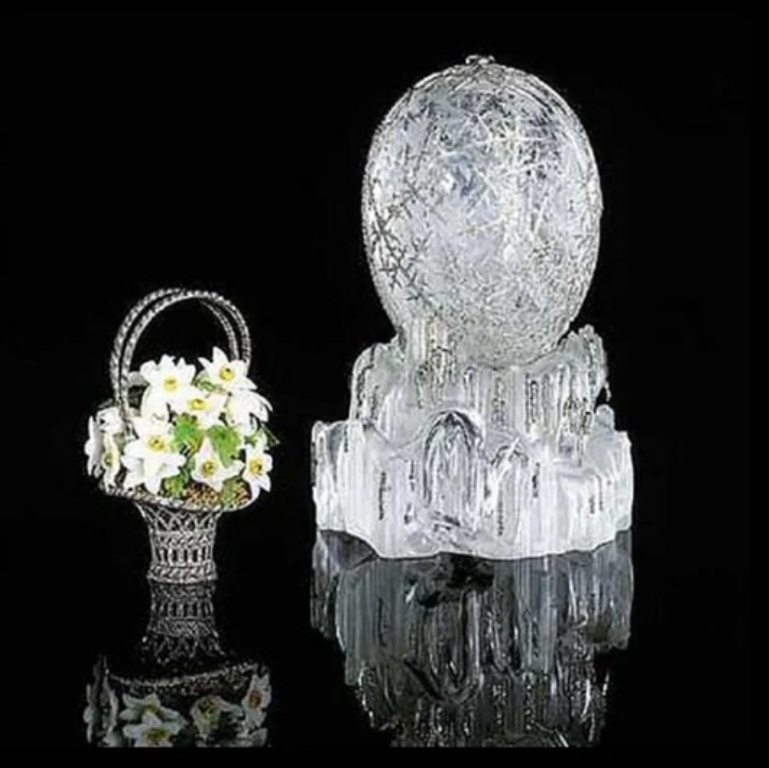
PHOTO: Fabergé’s “Winter Egg (1913)
On 2nd December 2025, one of Carl Fabergé‘s Imperial Easter Eggs, will be auctioned – yet again – at Christie’s in London. The legendary Winter Egg, is expected to sell for more than £20 million [$27 million USD].
Recall that the Winter Egg was presented to the Dowager Empress Maria Feodorovna by her son, Emperor Nicholas II as an Easter gift in 1913, the same year which also marked the 300th anniversary of the Romanov Dynasty. This exquisite piece is considered one of the most elegant of the 50 Imperial Easter Eggs created by the Fabergé firm.
For the first time in the history of the Imperial Easter Eggs, the design for the Winter Egg was created by a woman: Alma Theresia Pihl-Klee (1888-1976), the niece of the master August Wilhelm Holmström (1829-1903), who brought this project to life.
The egg measured 142 x 102 x 82 mm and cost 24,600 rubles. Pihl-Klee’s design depicts a block of melting ice. It was carved from a single piece of rock crystal and consists of two transparent halves, decorated with the finest engraving on the inside, imitating frost on the window. The exterior of the egg is decorated with engraving and platinum patterns with diamonds in the form of snowflakes and “streams” of platinum and diamonds.
The top of the egg is crowned with a moonstone in the form of a cabochon, with the date “1913”. The bezel of each half is made of platinum and decorated with 1,308 small diamonds and 360 medium-sized diamonds.
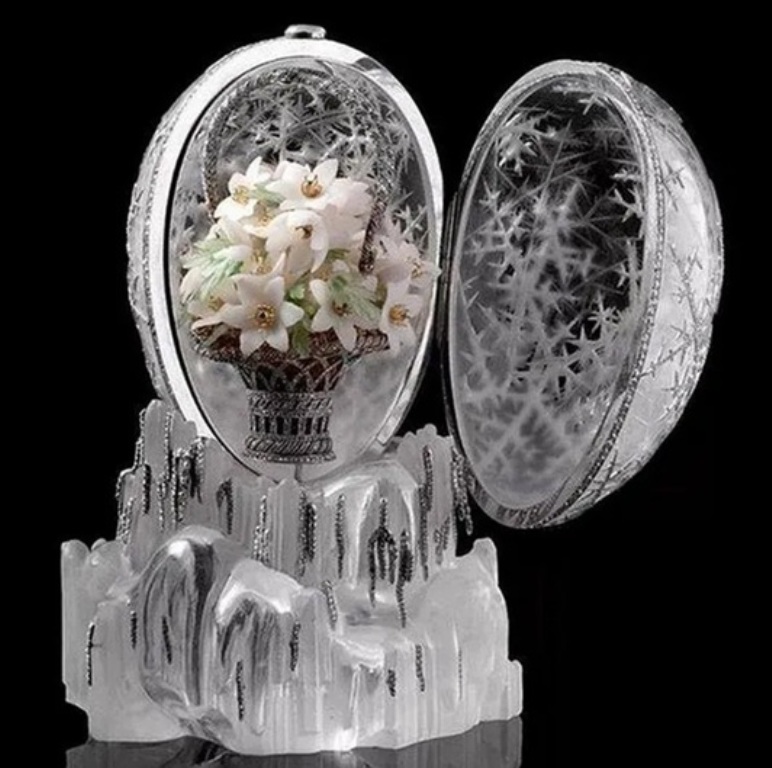
PHOTO: Fabergé’s “Winter Egg (1913)
The surprise inside the Winter Egg is a platinum basket with snowdrops. The flowers rest on a bed of golden moss, each flower is carved from a single white quartz. The stems and stamens are made of gold, the leaves are made of jade, and the flower buds are made of pomegranate.
At the bottom of the basket, studded with 1,378 diamonds, there is an engraving of “Fabergé 1913”.
After the 1917 Revolution, the Winter Egg was confiscated along with all the other possessions of the Romanov Family, as well as those of the families of the Russian nobility. During the 1920s, a number of Fabergé’s Imperial Easter Eggs were sold by the Bolsheviks to foreign buyers.
During the past century, the Winter Egg has been sold numerous times . . .
In 1927 it was sold to the Wartski Gallery in London for £450. In 1934 it was resold to Lord Alington for £1,500. In 1948, the egg was purchased by British tycoon Bernard Eckstein, but he died shortly thereafter, and the Fabergé egg, along with his other possessions, was put up for auction at Sotheby’s in London. For £1,870, it was bought by Arthur Brian Ledbrook. After his death in 1975, the trace of the egg was lost.
In 1993, the Winter Egg was found in a shoebox under a bed in the suburbs of London. The following year, it was put up for auction at Christie’s in Geneva. An anonymous buyer from the United States paid 7.263 million Swiss francs [$5.587 million USD] for it by phone.
In 2002, the Winter Egg reappeared at a Christie’s auction in New York. It was purchased for $9.579 million by the Qatari prince, Saud bin Muhammed Al Thani (1966-2014). The Qatari prince served as the country’s Minister of Culture, Arts and Heritage. By the turn of the 21st century, he had established an international reputation as an avid art collector, both for his own collection as well as those of several state-owned museums he oversaw in Qatar. His descendants have made the decision to offer the Winter Egg for sale at Christie’s in London.
Margo Oganesian, Head of Christie’s Department, Fabergé and Russian Works of Art, said: “With only six other Imperial Easter Eggs remaining in private collections, this is an extraordinary opportunity for collectors to acquire what is arguably one of Fabergé’s finest creations, both technically and artistically.”
© Paul Gilbert. 2 October 2025
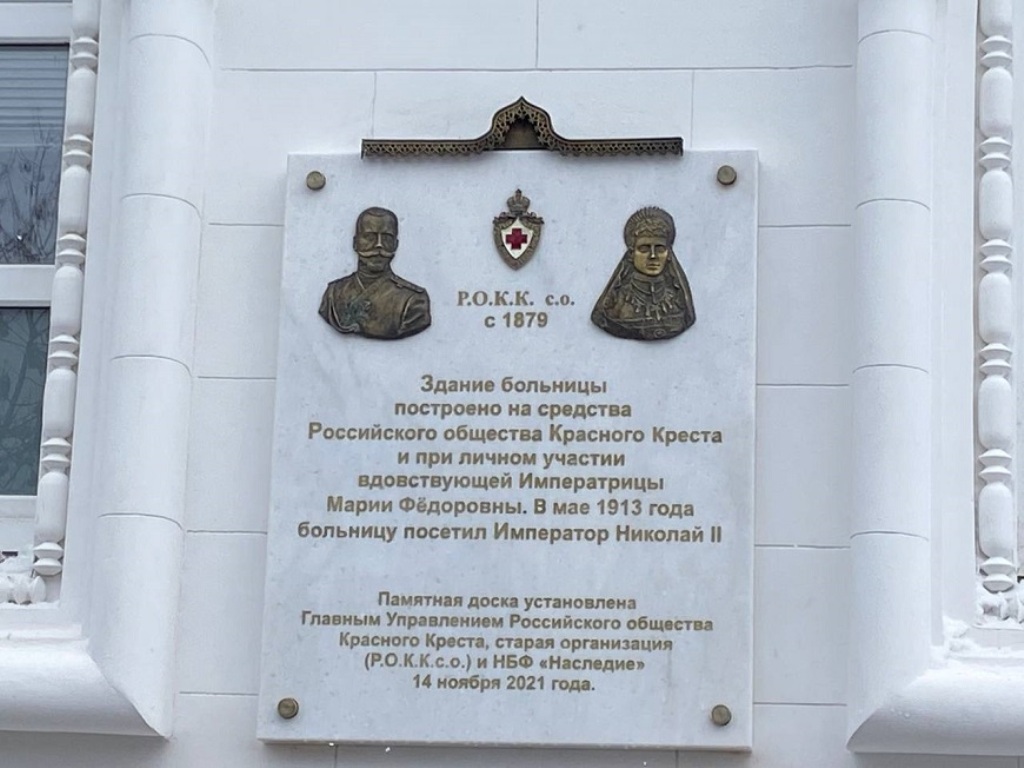
 Nicholas II
You must be logged in to post a comment.