Photo-exhibition dedicated to the Imperial Family open’s in the Volokolamsk Kremlin

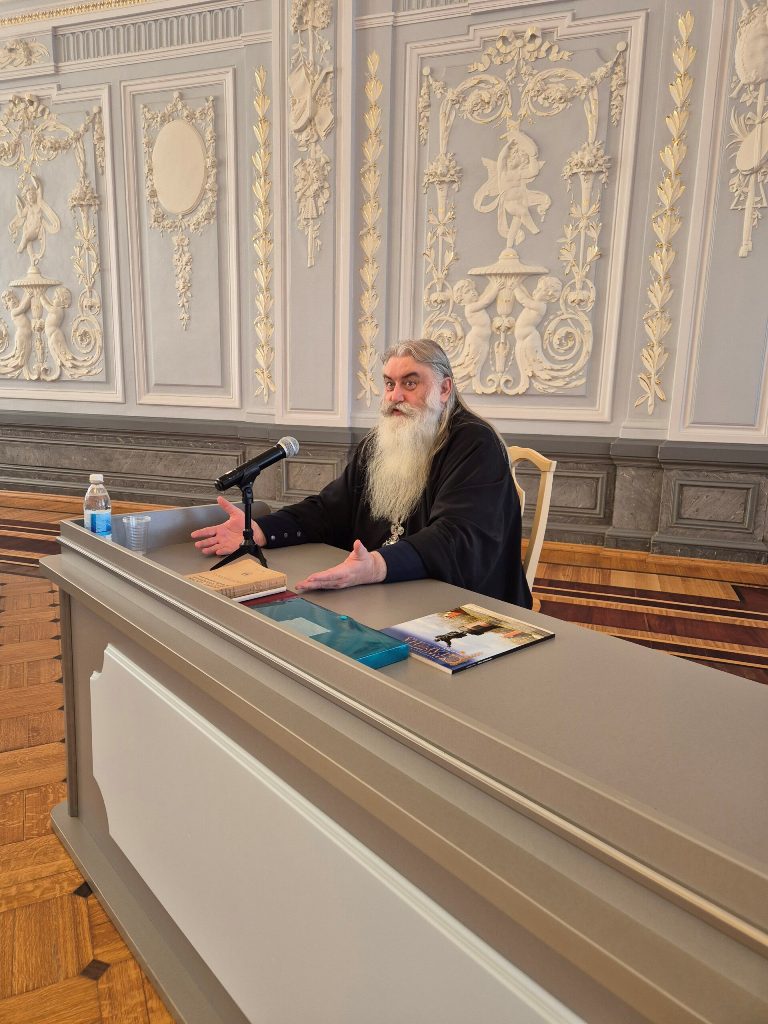
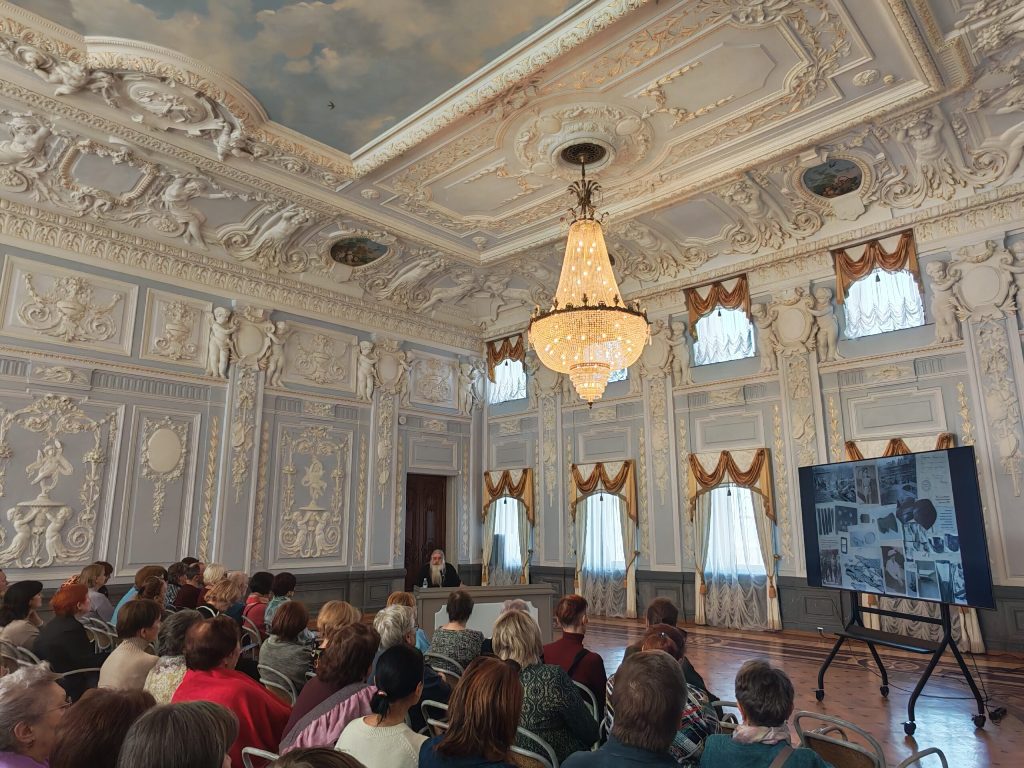
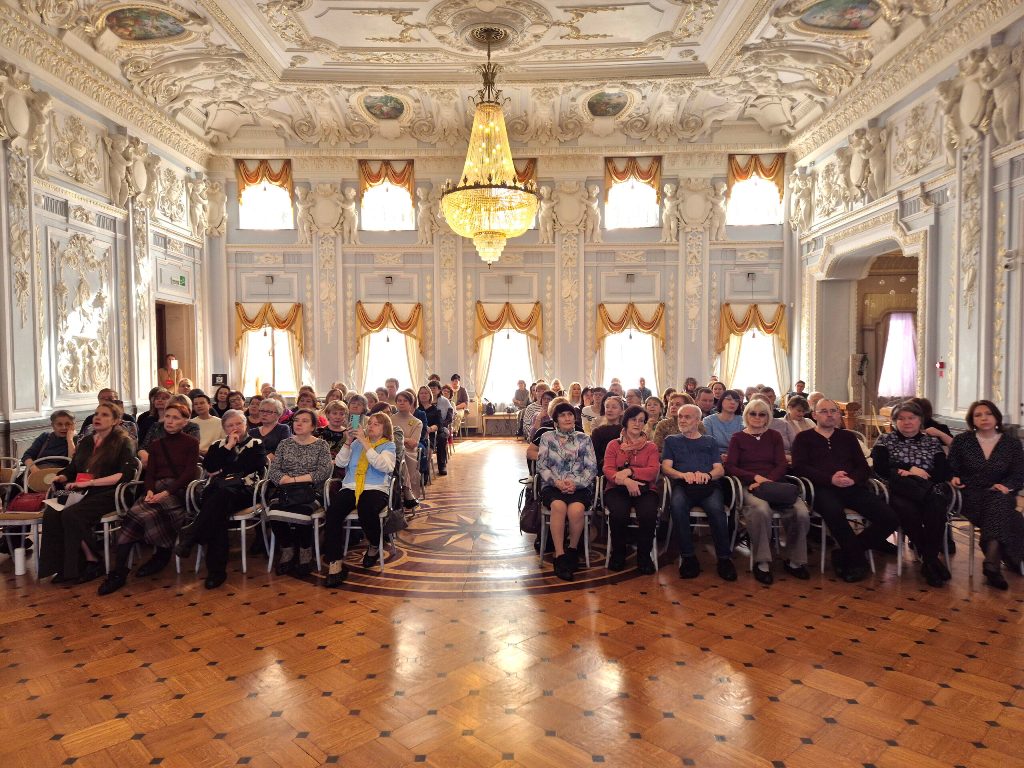
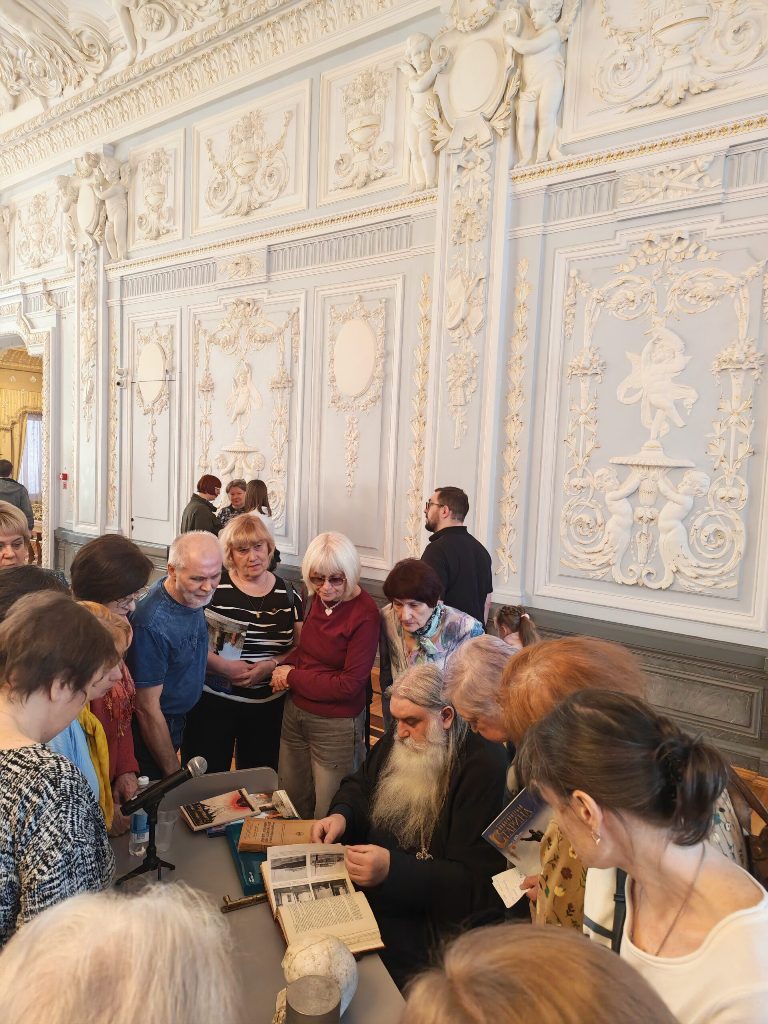
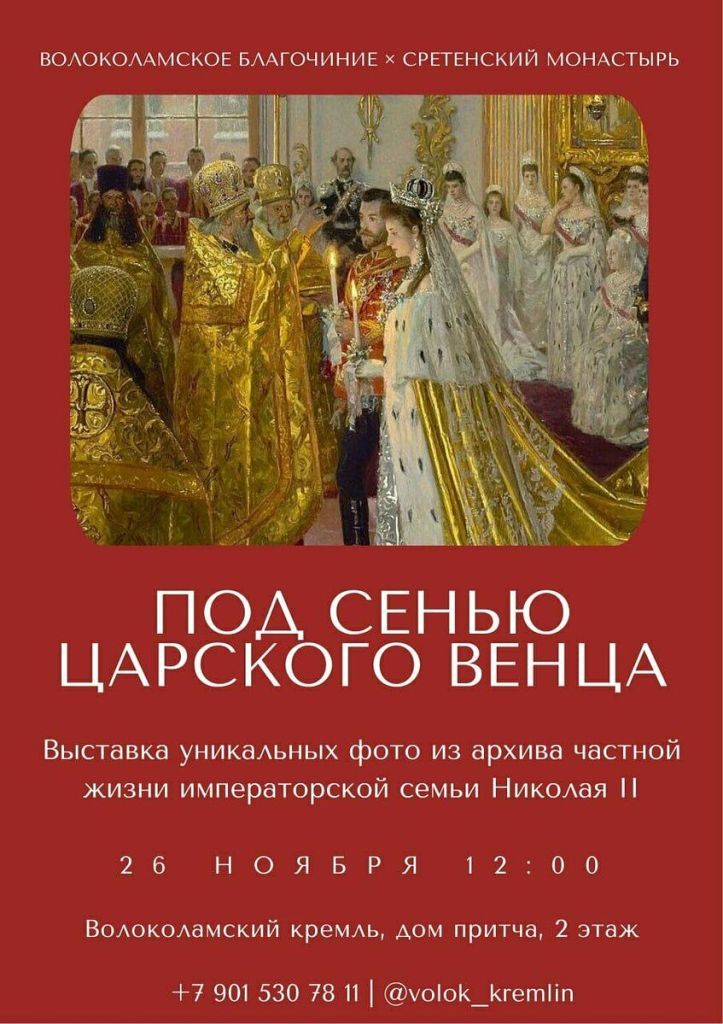
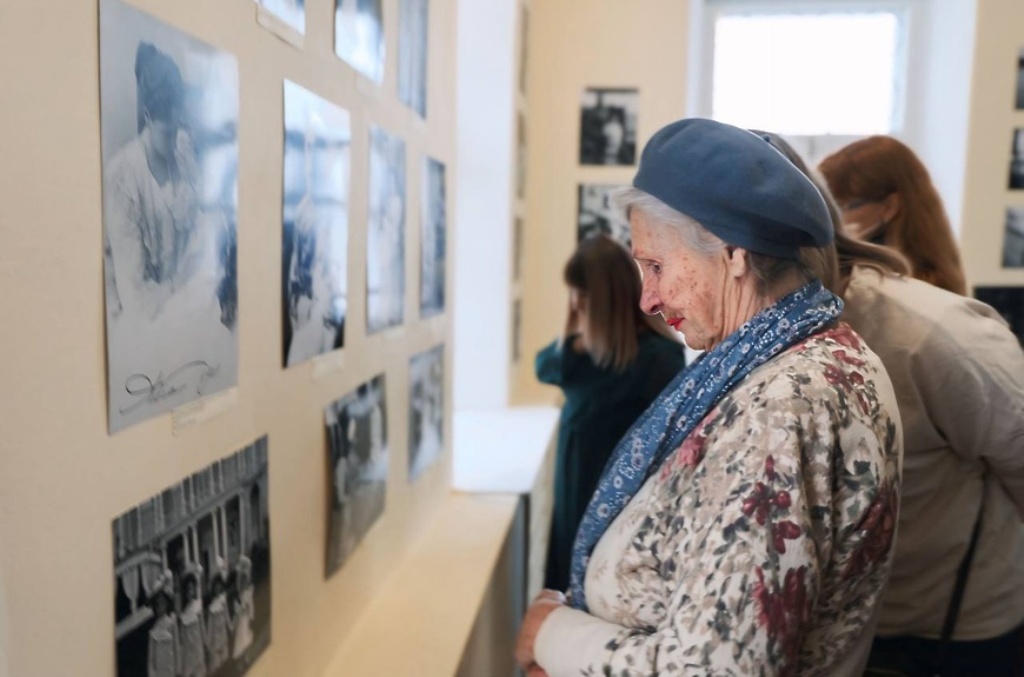
On 26th November 2025, a photo-exhibition dedicated to Russia’s last Tsar and his family opened in the building of the Clergy House, located in the heart of the Volokolamsk Kremlin, situated 129 kilometers (80 mi) northwest of Moscow. The exhibition presents more than 100 photographs from the private albums of the Imperial Family.

The photo-exhibition Under the Shadow of the Tsar’s Crown is a joint project of the Volokolamsk Kremlin, the Moscow Sretensky Monastery and the Volokolamsk Deanery of the Odintsovo Diocese.

The exhibition is divided into three thematic parts:  family life, service to the Fatherland and mercy. The family of Nicholas II, is an example of a true Christian family, which is very important today, when the whole world is experiencing a crisis of family values.

The first part of the exhibit is dedicated to family relationships. Here are photographs depicting private home life, the attention of Nicholas and Alexandra towards their children and the close relationships shared with each other.

The second part reflects service to the Fatherland. The photos show Nicholas II’s participation in military reviews and his visits to Russian troops at the Front, during the First World War.

The third, the largest part of the exposition, is dedicated to the mercy and charity of the Imperial Family. A special place is dedicated to photographs in which the Empress and her daughters are depicted working in hospitals, assisting doctors during operations and providing care to soldiers, who were recovering at the hospital in Tsarskoye Selo, where the Empress and her daughters worked as Red Cross nurses.

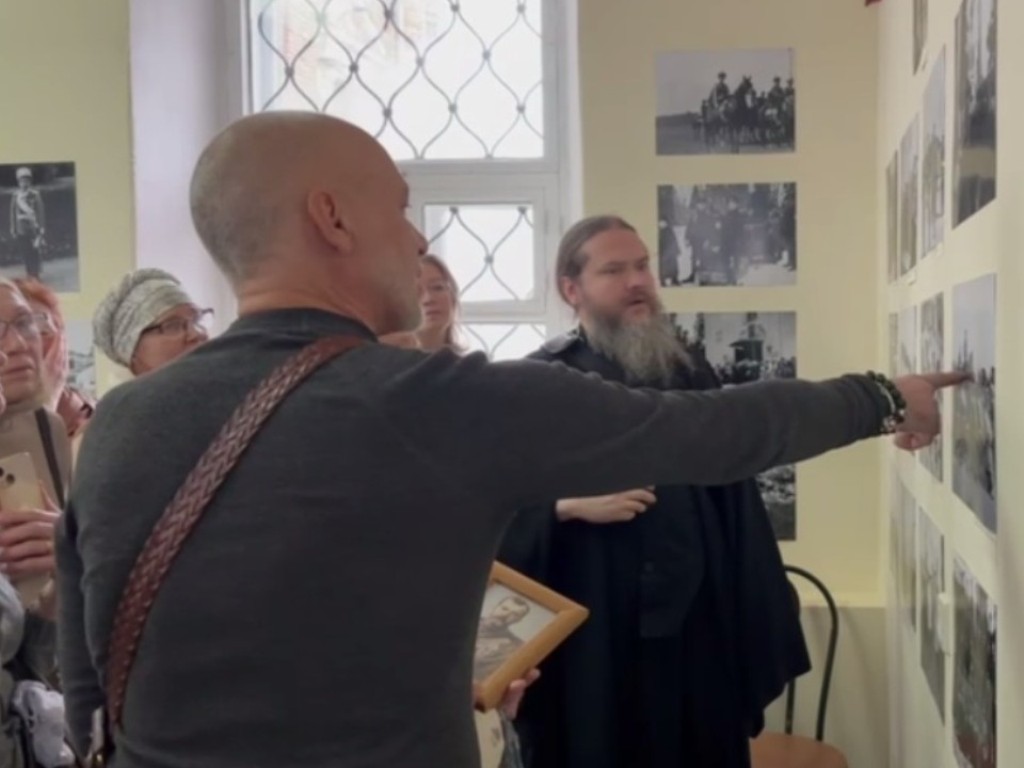
The curator of the exhibition, Hieromonk Ignaty (Shestakov), noted the importance of the photographs presented:

“Among all the photographs, I would single out the picture where the Emperor visits wounded soldiers in a hospital during the First World War. We obtained this original image from our archive when preparing the exhibition . It turned out that this photo had not been published anywhere before. We were one of the first to present it publicly.”

The photo-exhibition Under the Shadow of the Tsar’s Crown runs until the end of February 2026, in the building of the Clergy House, located in the heart of the Volokolamsk Kremlin. The exhibit is open to visitors every Saturday and Sunday from 12:00 to 18:00 and on public holidays. Admission is FREE!

The exhibition Under the Shadow of the Tsar’s Crown has been held (although under different names) in various formats and in many Russian cities: Moscow, Voronezh, Kursk, Ryazan, Penza, Krasnodar, Belgorod, Velikiye Luki, Yalta, Livadia, Sevastopol, Novosibirsk, Lesosibirsk, Perm, Sayansk, Severomorsk, Pskov, Pavlovsk, Livadia, etc.

The photo project Under the Shadow of the Tsar’s Crown was created in 2016 by the Sretensky Monastery in Moscow. The travelling exhibition has already been presented in Serbia, Germany, Italy, Canada, Argentina, New Zealand, South Africa, Romania, Croatia, Montenegro, Bosnia and Herzegovina, Macedonia, and the Czech Republic.

***

*As I have noted in previous posts, I support any initiative – big or small – to help keep the memory of Nicholas II and his family alive in 21st century Russia – PG

© Paul Gilbert. 27 November 2025

Interactive exhibition dedicated to the Romanov Dynasty opens in Tver

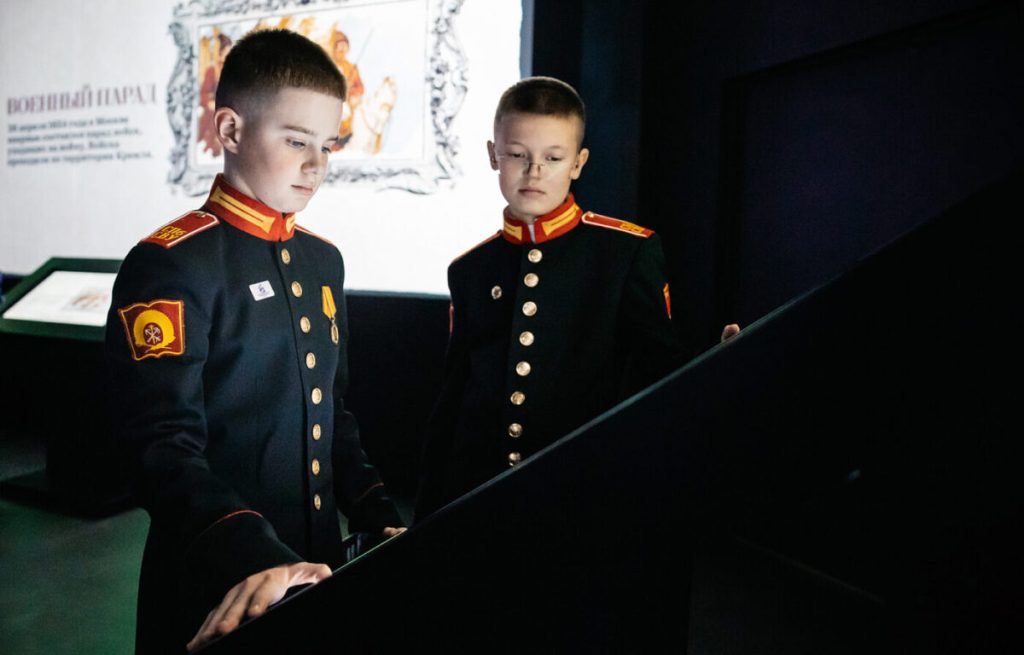
A new interactive exhibition dedicated to the Romanov dynasty has opened in the multimedia historical venue Russia – My History, in the Russian city of Tver.

The exhibition tells about the reign of the first tsars of the Romanov dynasty: Mikhail Fyodorovich (1613–1645), Alexei Mikhailovich (1645–1676), Fyodor Alekseevich (1676–1682), and Peter I the Great (1689–1725).

The exhibition also includes sections dedicated to the era of Empress Catherine II the Great (1762–1796), Emperors Alexander I the Blessed (1801–1825), Nicholas II (1894–1917), and the revolutionary events of 1917 that ended the Romanov dynasty.

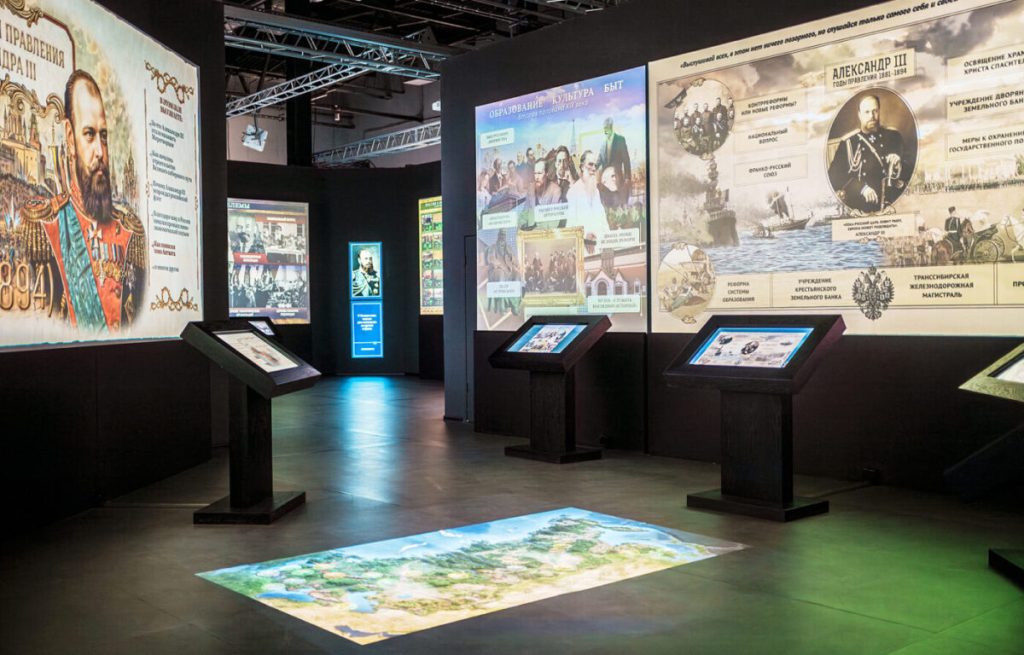
The exhibition is presented in 15 halls with multimedia screens, touch tables, lightboxes and tablets. The updated exhibition has become more interactive, thanks to which visitors can test their knowledge in educational quizzes, watch chronological tapes, get acquainted with information using CGI graphics and modern technology.

Visitors also have the option of a guided tour of the exhibition, with experienced guides who discuss the pages of the history of the Romanov Dynasty and the great transformations of the country.

The exhibition Russia – My History is open on a permanent basis.

The multimedia historical Russia – My History sites now stretches across Russia and includes 26 cities: Vladivostok, Pyatigorsk, Volgograd, Yekaterinburg, Kazan, Krasnodar, Makhachkala, Moscow, Nizhny Novgorod, Novosibirsk, Omsk, Perm, Rostov-on-Don, Samara, St. Petersburg, Saratov, Stavropol, Tyumen, Ufa, Yuzhno-Sakhalinsk, Yakutsk, Chelyabinsk, Surgut, Tver, Lugansk, Melitopol.

***

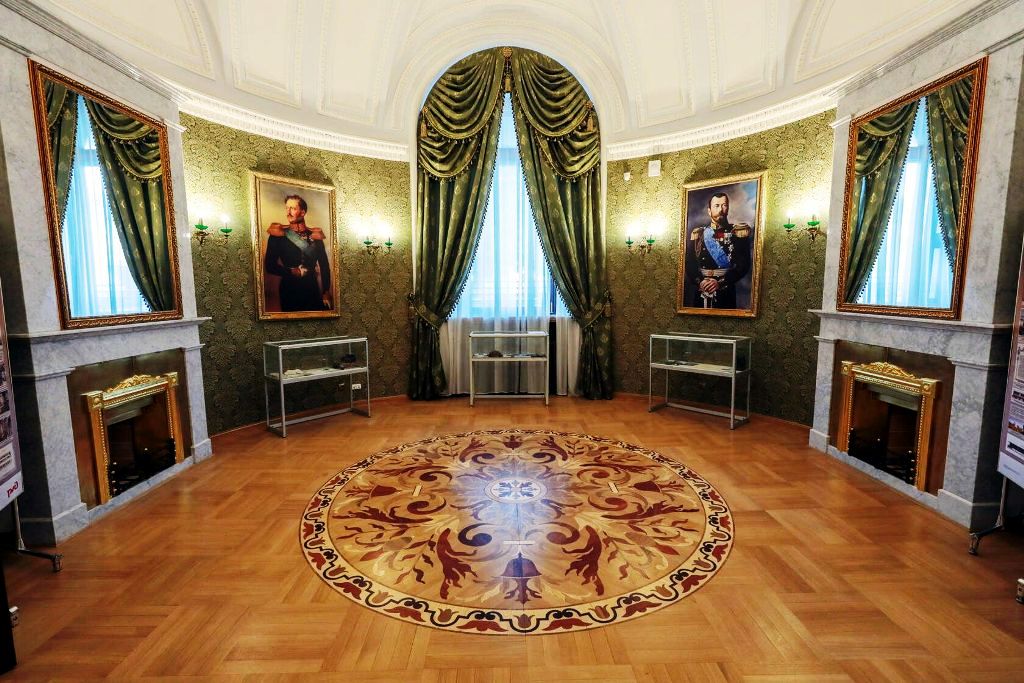
Also in Tver . . . . On 20th Mary 2020, after an extensive restoration, the historic Imperial Chambers in the Tver railway station opened its doors to visitors.

It is now possible to see the former Imperial Chambers, where Emperors Nicholas I, Alexander III and Nicholas II stopped during their respective train journeys between the two capitals.

The interiors which reflects the early 1900s, are based on archival documents, sketches, drawings and surviving photographs. They are as close as possible to the lost original, right down to the green wallpaper with gilded pattern on the walls and figured oak flooring.

Note the portraits of Emperor Nicholas I (left) and Emperor Nicholas II (right).

Recall that in 1851, traffic began on the Nikolayevskaya railway, which connected Tver with St. Petersburg and Moscow. It became a popular stop for the Imperial Train, where members of the Imperial Family would rest in the Imperial Chambers before continuing their respective journeys. See less

© Paul Gilbert. 13 November 2025

Imperial Family photo-exhibition opens in Vyselki

NOTE: click on the above image to enlarge and see in greater detail

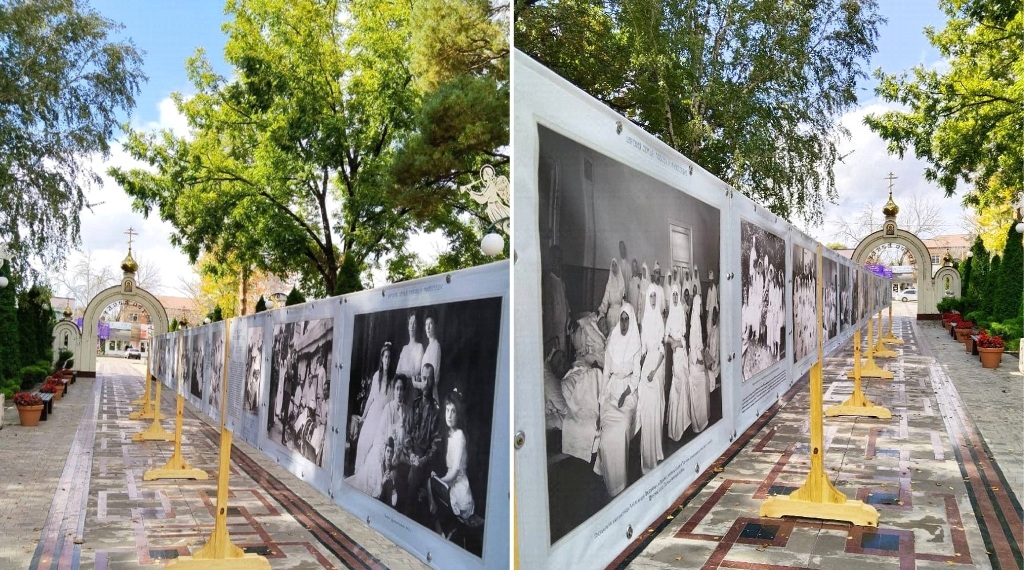
On 22nd October 2025, the photo-exhibition ‘The Tsar’s Family. Love and Mercy‘, opened in the Church of St. Nicholas the Wonderworker in the village of Vyselki, Krasnodar Territory.

The exhibition is showcased in the central alley of the Church, where large photographs of Emperor Nicholas II and his family are displayed on the walls. The exhibition is FREE to all.

The exhibit tells the story of the Nicholas II’s family, who unselfishly served others during the First World War and the traditions of nursing in Russia at the turn of the 19th – early 20th centuries.

Recall that when World War I broke out, Empress Alexandra Feodorovna and her two eldest daughters Grand Duchesses Olga and Tatiana became Red Cross nurses. Together, from 1914 to 1917, they cared for wounded soldiers in a private hospital on the grounds of Tsarskoye Selo, until the family were placed under house arrest, following the Tsar’s abdication 15th March (O.S. 2nd March) 1917.

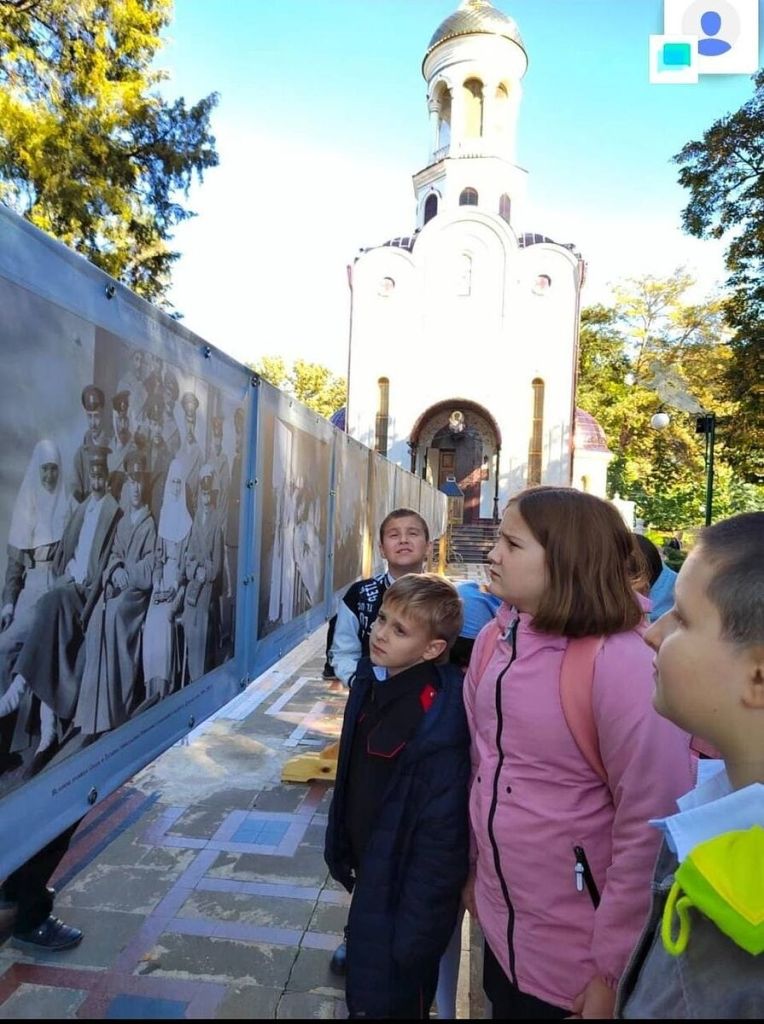
PHOTO: 3rd grade students of school No. 2 in Vyselki together with their teacher visit the photo-exhibition ‘The Tsar’s Family. Love and Mercy’

The exhibition has already been visited by 3rd grade students of school No. 2 in Vyselki together with their teacher Irina Fostenko.

The children listened with interest to the story told by Father Alexander about the service of the Imperial Family to the Fatherland, and about Nicholas II’s family, helping soldiers, the poor and the sick during the war years.

The photo project The Tsar’s Family: Love and Mercy was created in 2016 by the Sretensky Monastery in Moscow. The travelling exhibition has already been presented in Serbia, Germany, Italy, Canada, Argentina, New Zealand, South Africa, Romania, Croatia, Montenegro, Bosnia and Herzegovina, Macedonia, and the Czech Republic.

***

*As I have noted in previous posts, I support any initiative – big or small – to help keep the memory of Nicholas II and his family alive in 21st century Russia – PG

© Paul Gilbert. 30 October 2025

Vintage train from Ekaterinburg, tells the story of Nicholas II’s last days

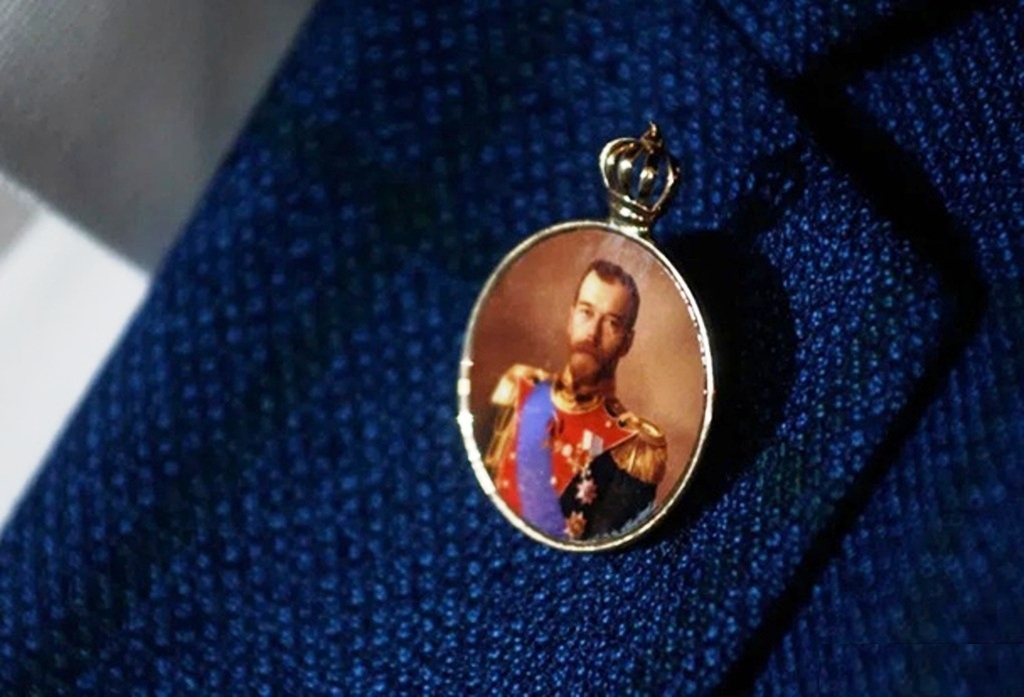
PHOTO: a pin – depicting the image of Nicholas II
– worn by conductors on the vintage train from Ekaterinburg.

In December 2022, a vintage train journey was initiated from Ekaterinburg, which tells passengers, the story of the last days of Nicholas II and his family in the Urals. The train runs from Ekaterinburg to the Shuvakish station and back, on Friday evenings, and also on Saturday and Sunday mornings.

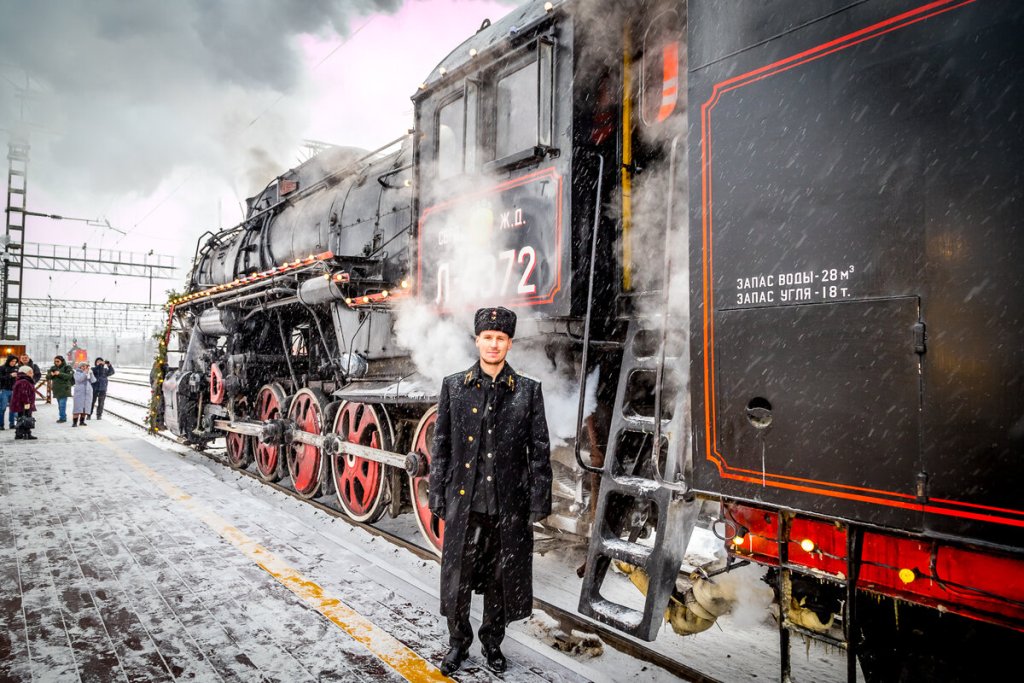
The locomotive (see photo below) is not from the Imperial times, but a 1963 steam engine, made in Czechoslovakia. The interiors, however, have been remodeled to resemble that of an early 20th century Russian train.

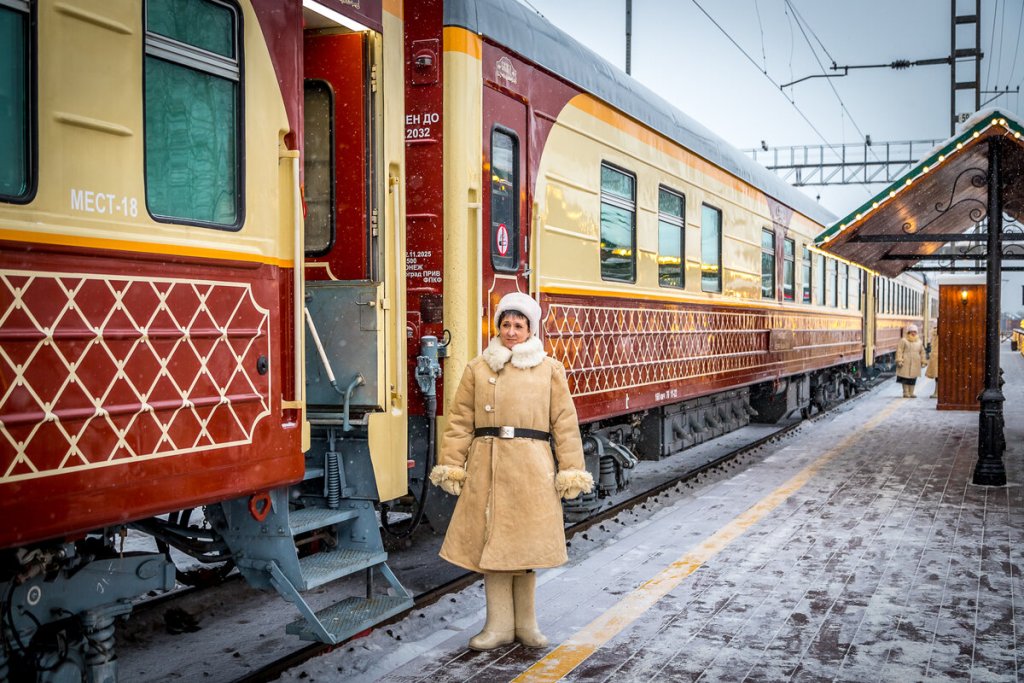
Passengers travelling on the vintage train are greeted on the platform by hospitable conductors wearing uniforms of early 20th century Imperial Russia-style, and white gloves (see photo below).

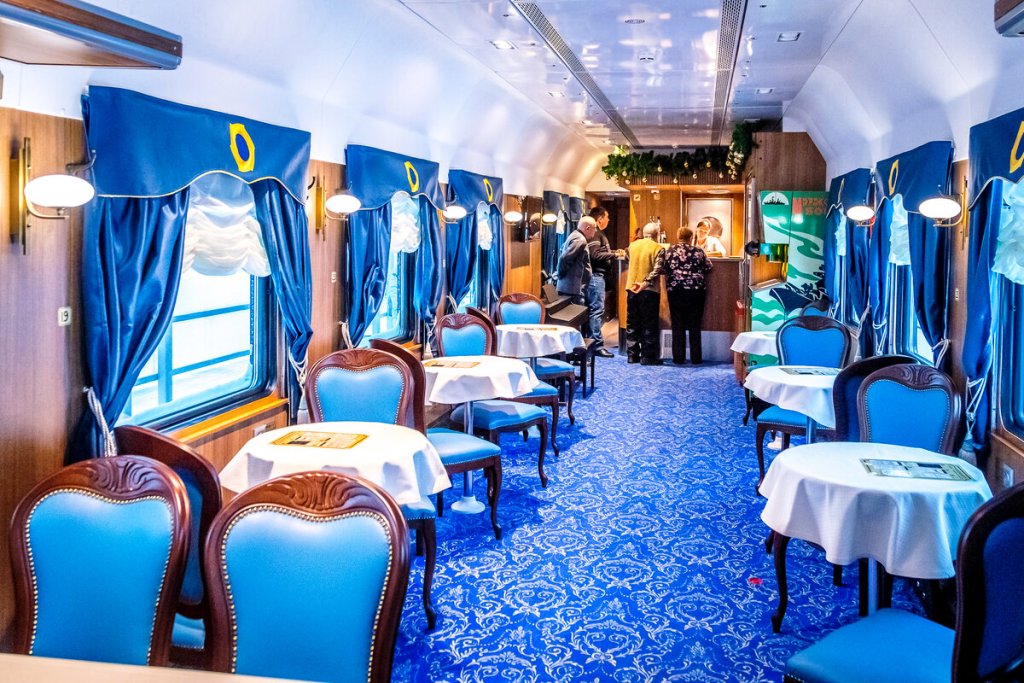
The train has four wagons: First Class, Economy Class, a dining car (see photo below) and a sightseeing car, which operates during the summer months. One compartment is decorated with framed photographs of the Imperial Family.

During the 3-hour train journey, passengers can sit back, relax and enjoy the view, while listening to an audio-guide, which tells the story of the last days of Russia’s last Tsar, his family and their four faithful retainers.

The audio begins with the Imperial Family’s train journey from Tsarskoye Selo to Tyumen, then by boat to Tobolsk, where they were held under house arrest in the former Governor’s House, from August 1917 to March 1918.

The story continues, with the transfer of the Imperial Family to Ekaterinburg, where they were held under house arrest in the Ipatiev House, from March to July 1918. The audio-guide further tells of their fate, their burial at what is today known as Ganina Yama, and the discovery of their remains, almost 100 years later on the Old Koptyaki Road.

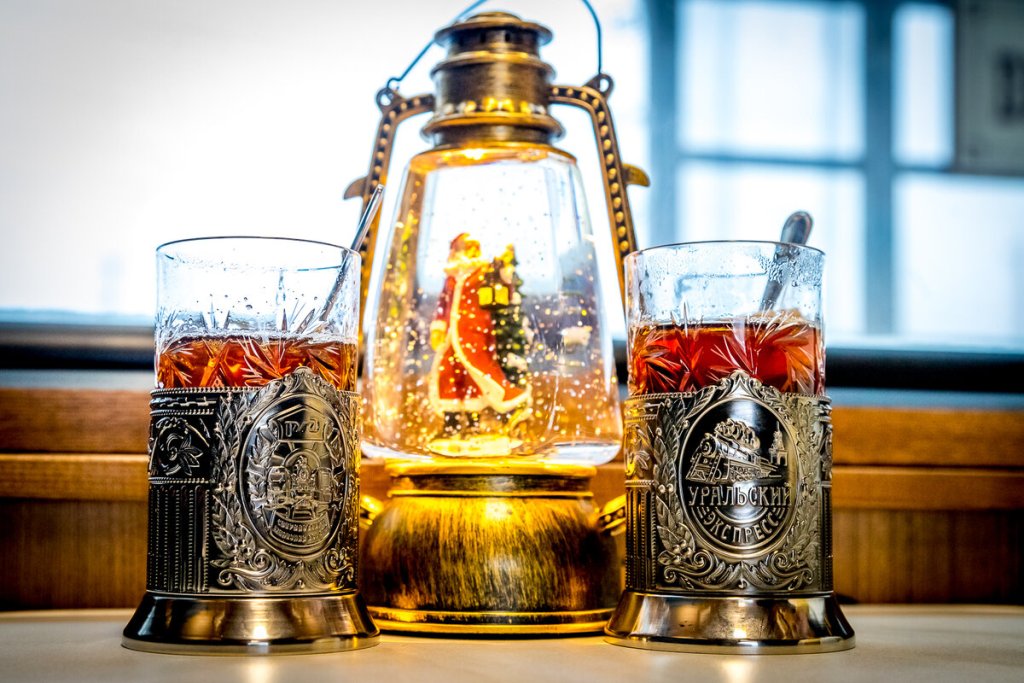
Tea is served to passengers from a traditional samovar. Conductors bring the tea in beautiful faceted glasses in iron cup holders, on which the Double-Headed Eagle of the Russian Empire is depicted.

The train stops at Shuvakish Station (Zheleznodorozhny district), where passengers are free to disembark the train to a wooden platform, decorated with benches, a bell and a manual semaphore signal. The stop lasts a little more than an hour.

Inside the wooden pavilion, passengers can enjoy music, which includes a variety of waltzes and melodies from the repertoire of Alexander Serov.

Passengers can also try on the uniforms of the White Guards, take photos, and enjoy a cup of hot tea, bagels and local berries.

PHOTO: tea is served at Shuvakish Station

***

*As I have noted in previous posts, I support any initiative – big or small – to help keep the memory of Nicholas II and his family alive in 21st century Russia – PG

© Paul Gilbert. 19 October 2025

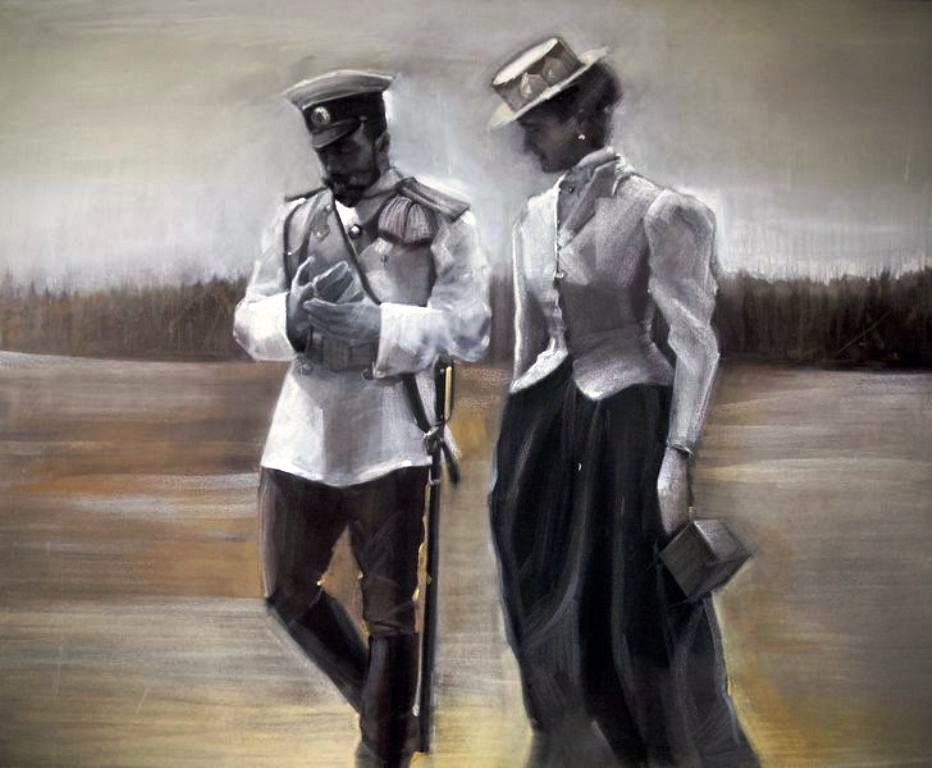
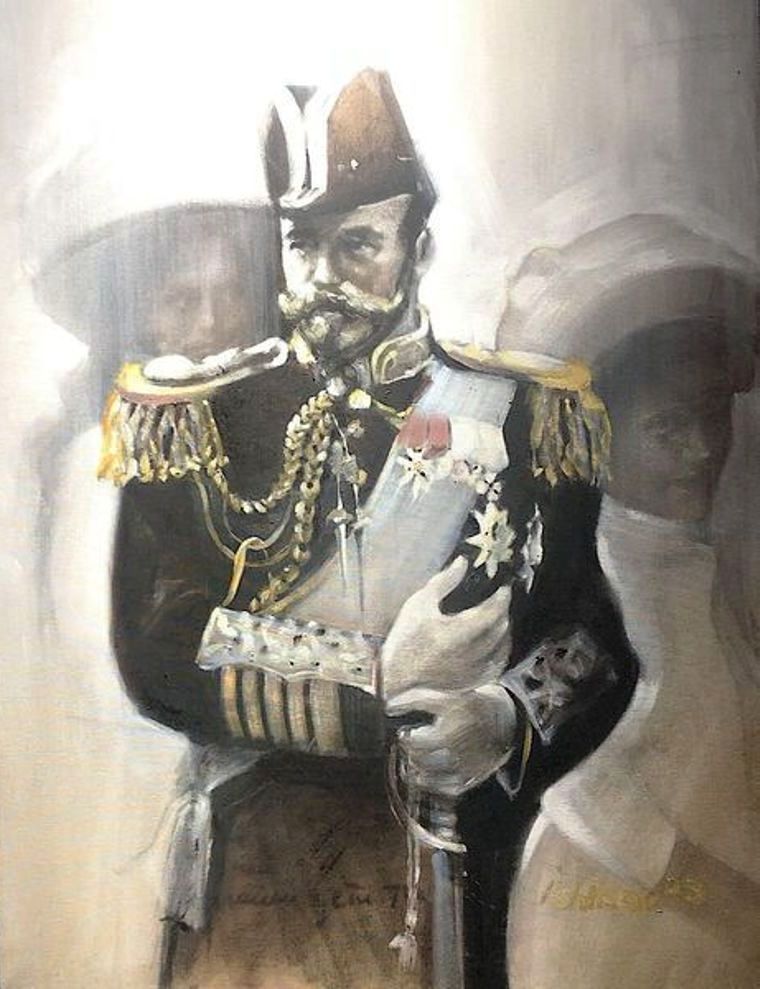
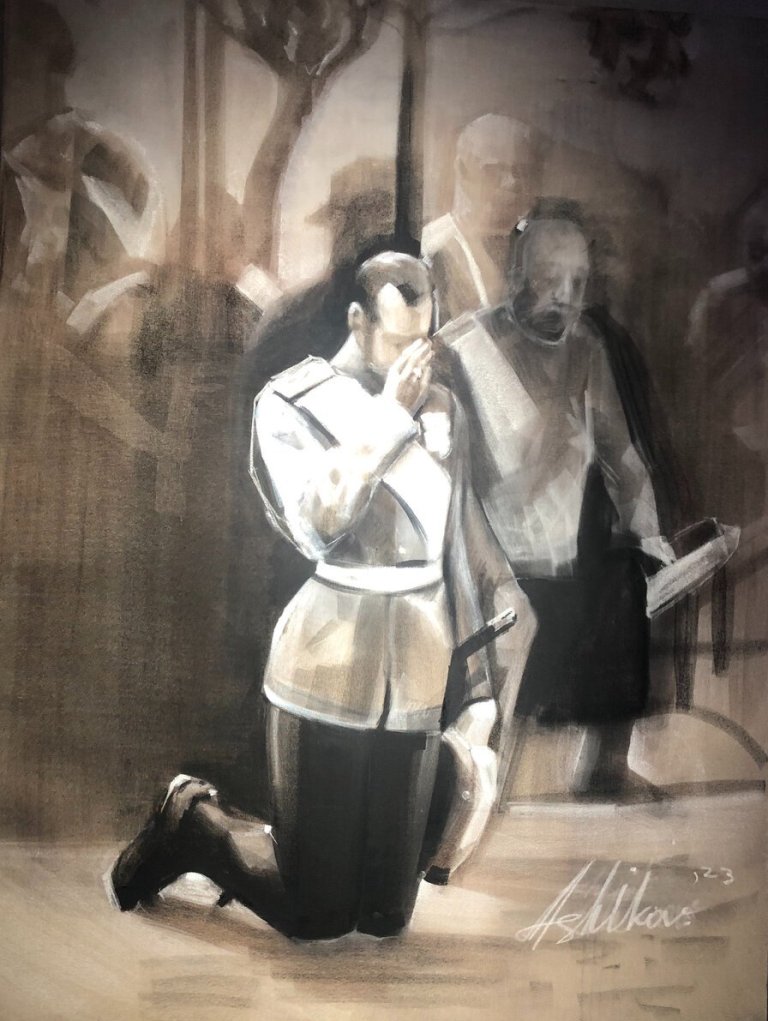
Portraits of Nicholas II by the contemporary Russian artist Yuri Ashikov

It is very rare for a new Romanov exhibition to escape my notice, however, I only just recently learned of a very interesting exhibition of a contemporary Russian artist’s portraits of Emperor Nicholas II, which was held in Moscow in the Spring of 2024.

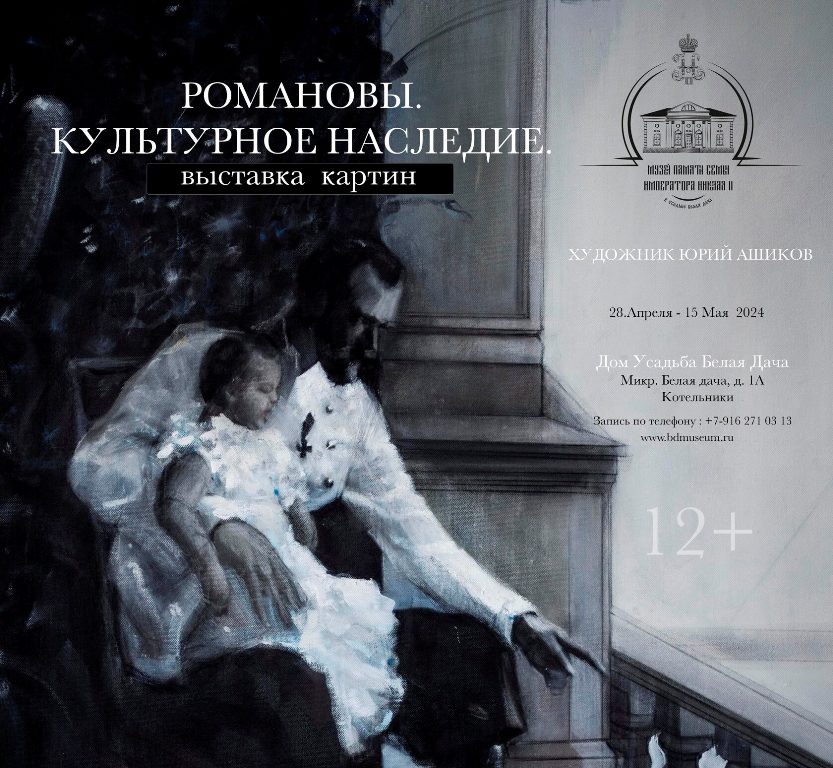
The Romanovs. Cultural Heritage exhibition showcased portraits of the last Tsar by Yuri Ashikov, a contemporary artist, who is virtually unknown of in the West. The exhibition was held from 28th April to 15th May 2024, in the Museum of Emperor Nicholas II in Moscow.

On display were the artist’s portraits of members of Emperor Nicholas II and his family, painted or drawn in the revived and almost lost, rare school of Russian realism in the portrait class, made popular during the late 19th and early 20th century by the famous Russian artist Valentin Alexandrovich Serov (1865-1911).

It is significant that Valentin Serov was the last artist to paint Emperor Nicholas II. In Yuri Ashikov’s paintings and drawings, you see the whole essence and beauty of the School of Russian Realism in a modern interpretation.

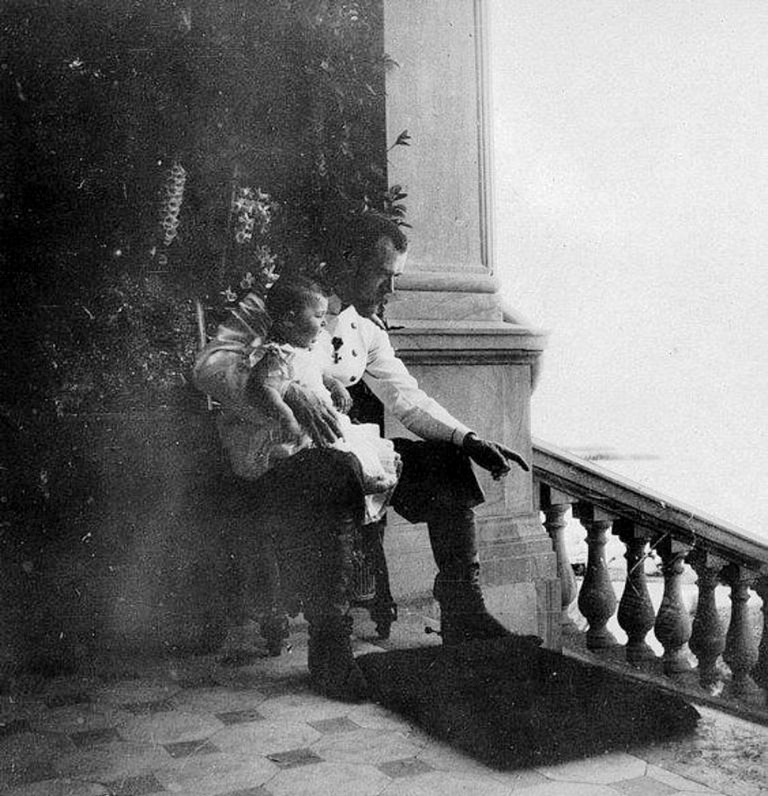
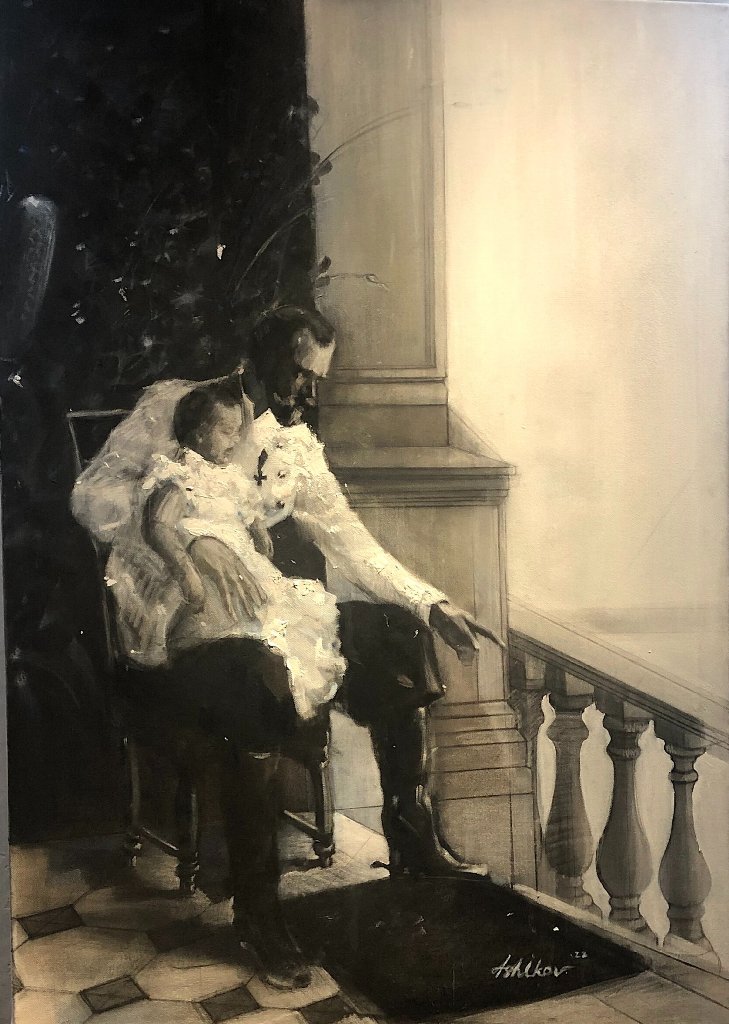
The culture of the late 19th century is directly and very closely related to the style in which the artist’s works are painted. Ashikov has managed to capture his August subject from iconic vintage photographs and paintings of the Tsar and his family. For instance, the portrait used for the exhibition poster (seen above) is based on a 1905 photograph of Nicholas II holding his infant son Alexei on his lap (see photo below) – it is truly beautiful beyond words!

I posted the above photo on my Facebook page several years ago, it was one of a series of four or five similar photos (though there are probably others?), but this one in particular, touched my heart.

This endearing image shows the Emperor Nicholas II seated on the porch of the Lower Dacha, Peterhof, while holding his infant son and heir Tsesarevich Alexei, c. 1905.

The Emperor is seen as a ‘proud papa’ pointing at something which has caught his eye in the garden, and he wants to share with Alexei.

Tsesarevich Alexei Nikolaevich was born in the Lower Dacha at Peterhof on 12th August (O.S. 30th July) 1904. He was named Alexei – in honour of St. Alexius of Moscow (1296–1378).

About the artist – Yuri Ashikov

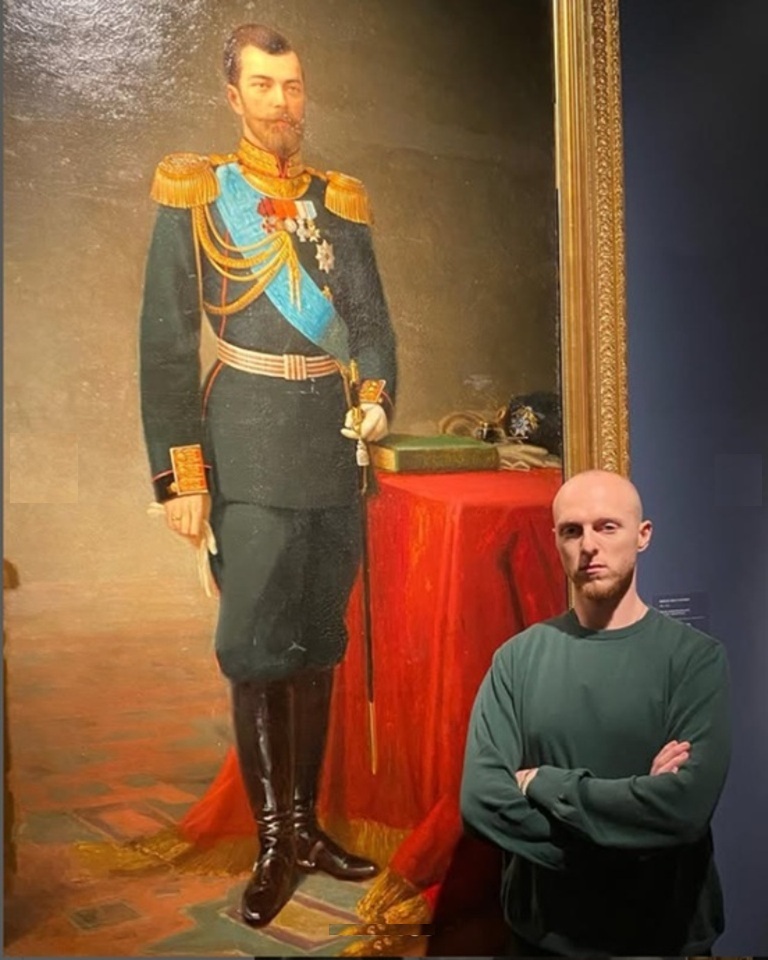
PHOTO: the contemporary Russian artist Yuri Ashikov visiting his “favourite museum”, while posing in front of a portrait of Emperor Nicholas II

Born in 1994, Yuri Ashikov is a contemporary Russian painter, photographer, sculptor, architect and art designer. He graduated, from the Stroganov School Faculty of Design in Moscow, trained in London and Japan, Latvia and Italy, studying not only drawing, but also design and architecture.

For three years, the artist worked on the “Romanov project”, creating a number of both paintings and charcoal drawings of the Tsar, his wife and children. Yuri wrote: “… I want the paintings to be alive, and each work to evoke emotions in the person… Each new project sets its own style, technique and materials. But most of my work I start in the traditional style – with charcoal.”

His exquisite paintings, which are recreated from iconic photographs and paintings of Russia’s last Tsar. They have been exhibited in cities across the Russian Federation, including Moscow and St. Petersburg.

Below, are some of Yuri Ashikov’s portraits of Emperor Nicholas II . . .

© Paul Gilbert. 11 September 2025

Photo exhibition “Romanovs: 23 Steps to Immortality” opens in Karabash

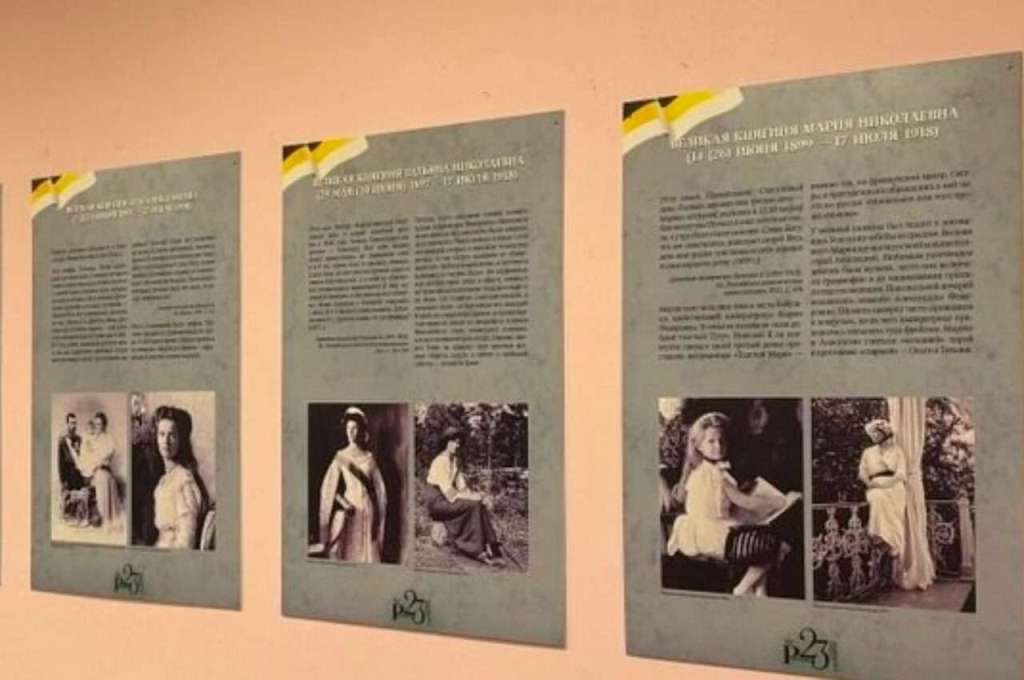
On 5th September 2025, a travelling photo exhibition The Romanovs: 23 Steps[1] to Immortality, opened at the Central City Library in the town of Karabash, situated in the south Urals. The collection of photographs of the Imperial Family was provided from the funds of the State Historical Museum of the South Urals. The exposition is timed to coincide with the 107th anniversary of the death and martyrdom of Russia’s last Tsar and his family.

On the night of 16/17 July 1918, Emperor Nicholas II, his wife Alexandra Feodorovna, Grand Duchesses Olga, Tatiana, Maria, Anastasia, Tsesarevich Alexei, as well as four servants were murdered in the basement of the Ipatiev House in Ekaterinburg.

The exhibition presents unique photographs of members of the Imperial Family, diary entries of Nicholas II, anecdotes from the memoirs of people who knew the Imperial Family intimately, as well as materials related to the abdication of the Emperor in March 1917, their private life in the Alexander Palace at Tsarskoye Selo, Tobolsk and Ekaterinburg. The exposition tells not only about the Romanov family, but also includes notes and memoirs of regicides, which allows visitors to look at the events from different angles.

The travelling exhibition The Romanovs: 23 Steps to Immortality was initially launched in 2018, the year marking the 100th anniversary of the death and martyrdom of Emperor Nicholas II and his family. It has since, toured towns and cities in the Urals, as well as other cities in the Russian Federation.

NOTES:

[1] Referring to the staircase – which consisted of 23 steps – in the Ipatiev House, in which, on the night of 16/17 July 1918, the Imperial Family and their four faithful retainers descended to their death and martyrdom in the Ipatiev House in Ekaterinburg.

There is a monument which depicts the Imperial Family descending 23 steps on the grounds of the Church on the Blood in Ekaterinburg.

***

*As I have noted in previous posts, I support any initiative – big or small – to help keep the memory of Nicholas II and his family alive in 21st century Russia – PG

© Paul Gilbert. 8 September 2025

Large-scale Cossack exhibition opens in Tsarskoye Selo

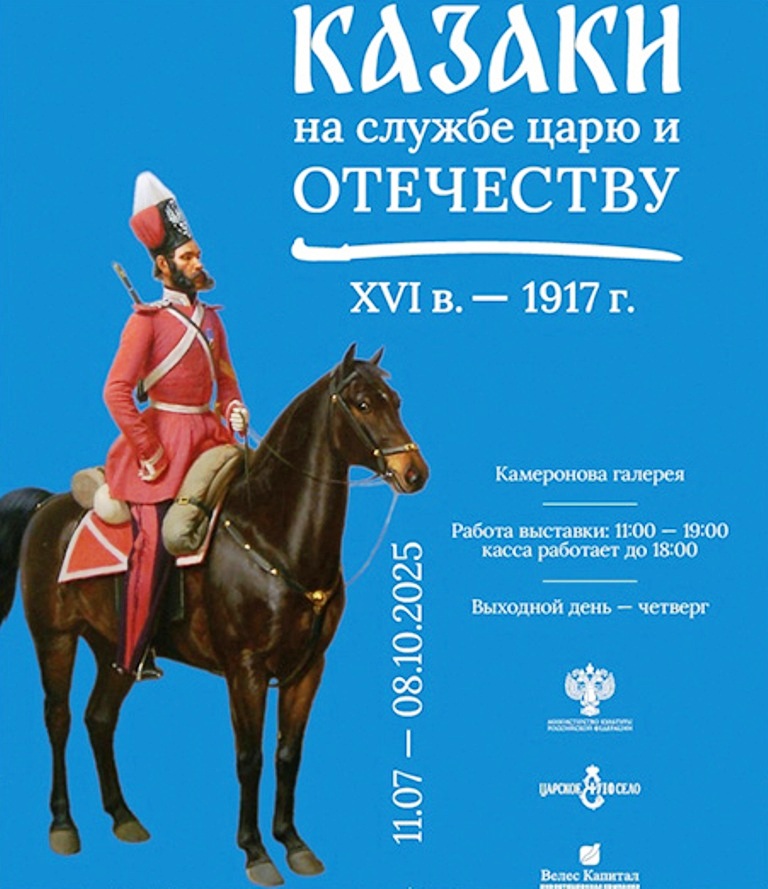
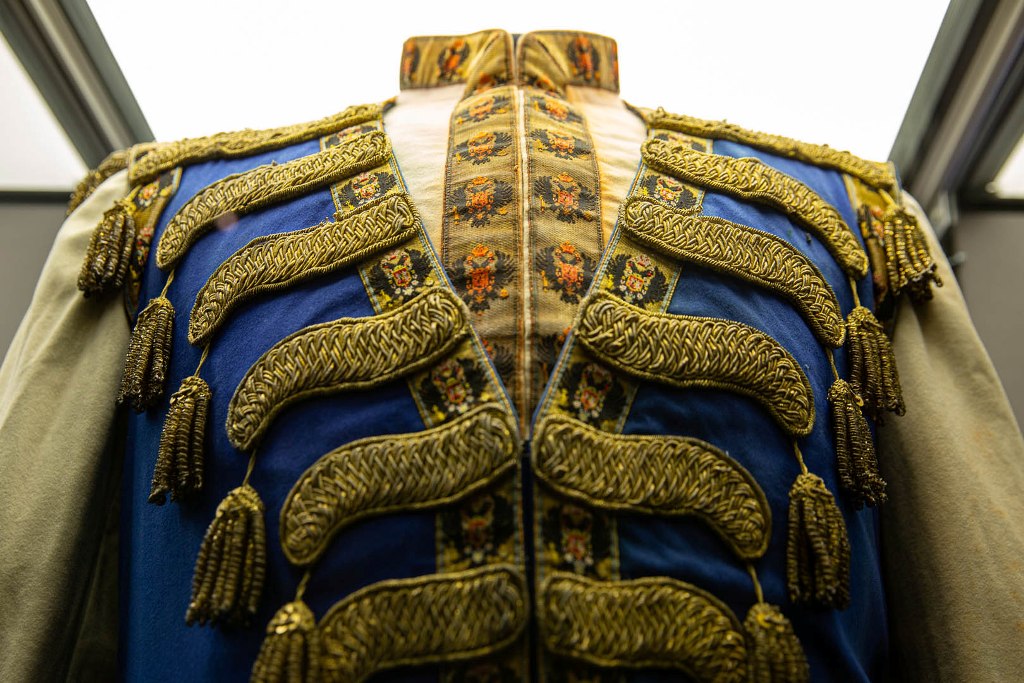
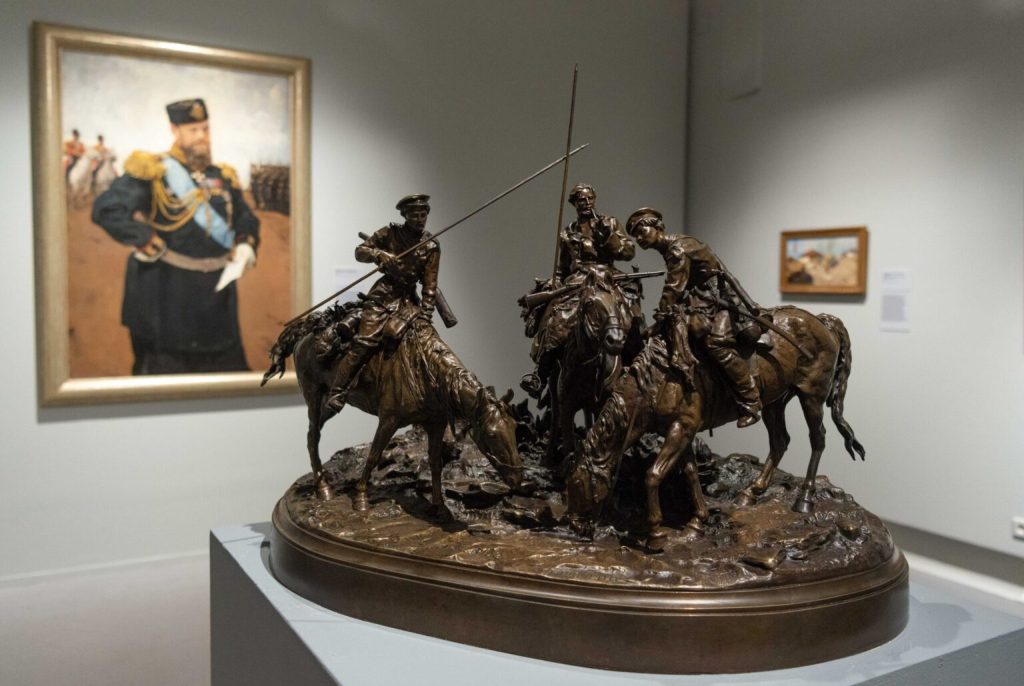
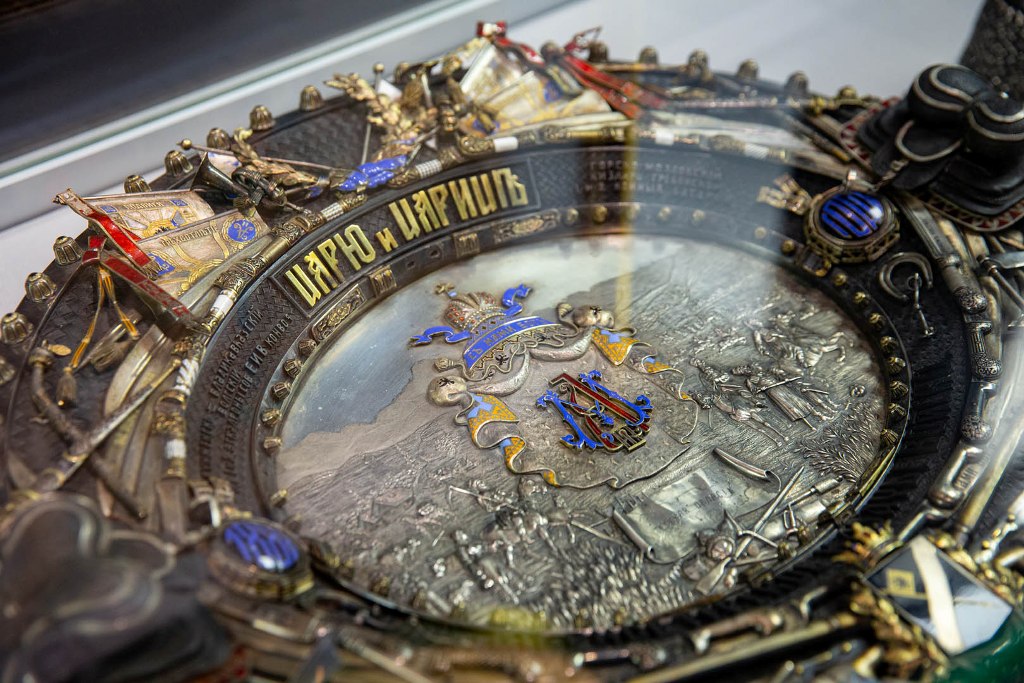
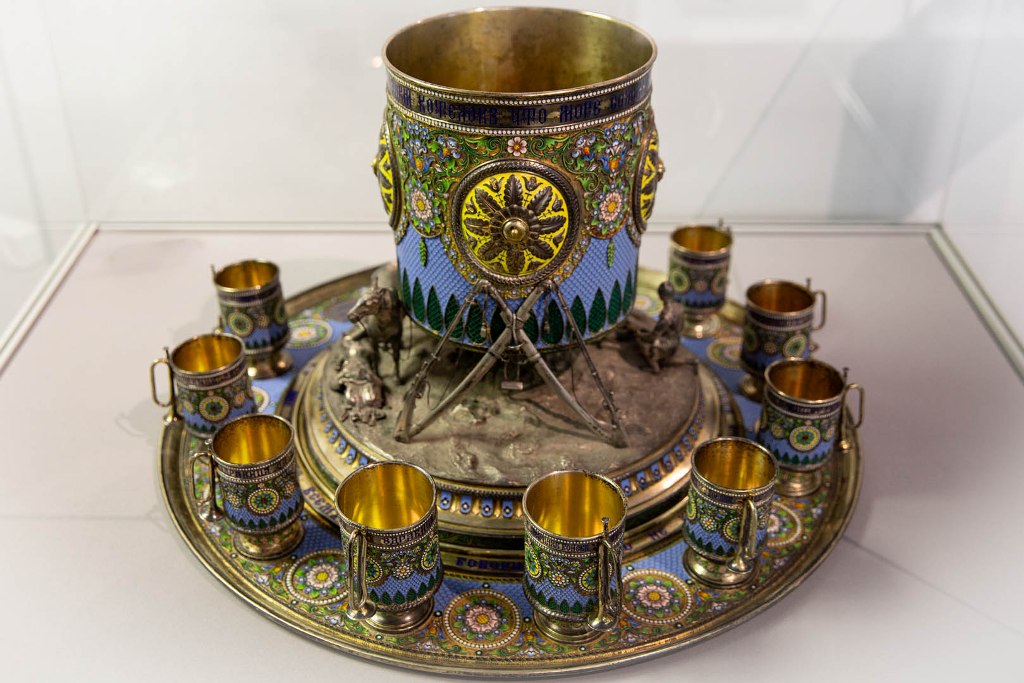
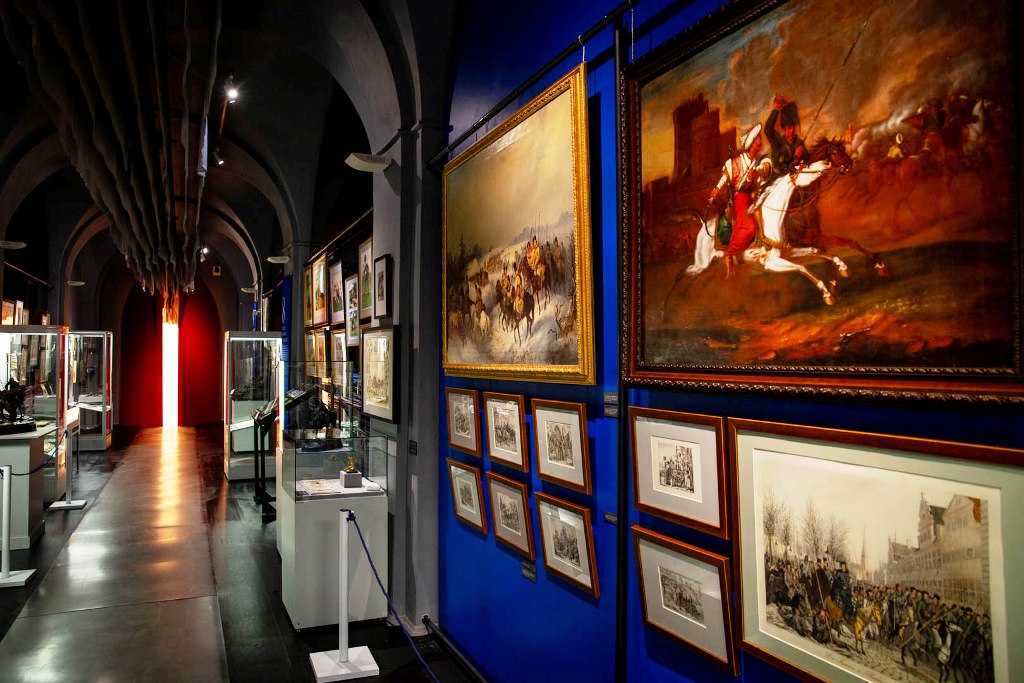
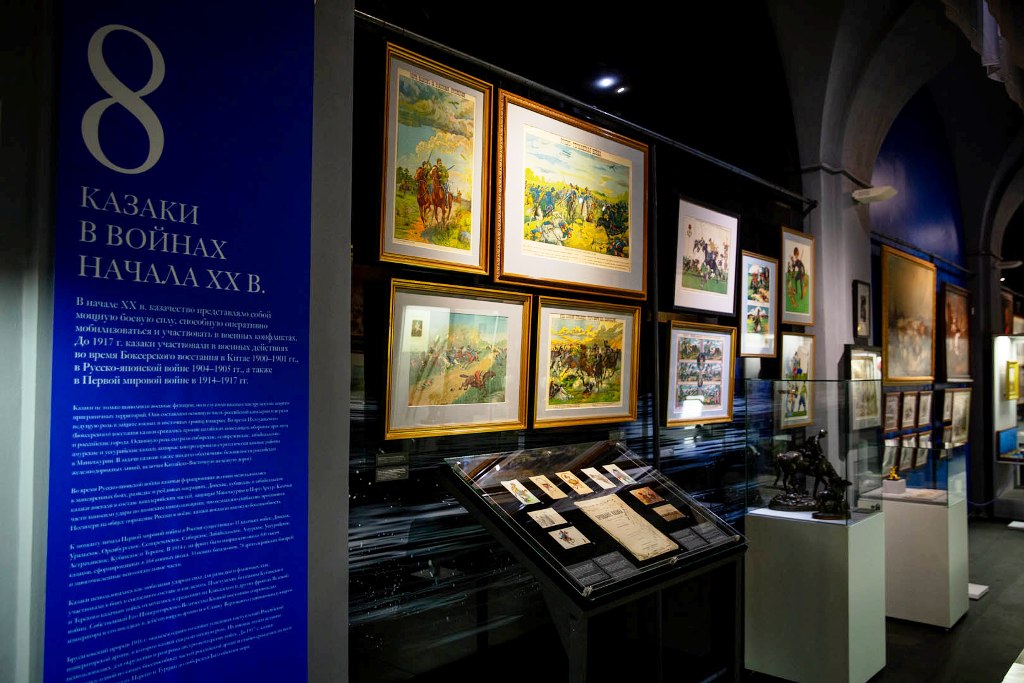
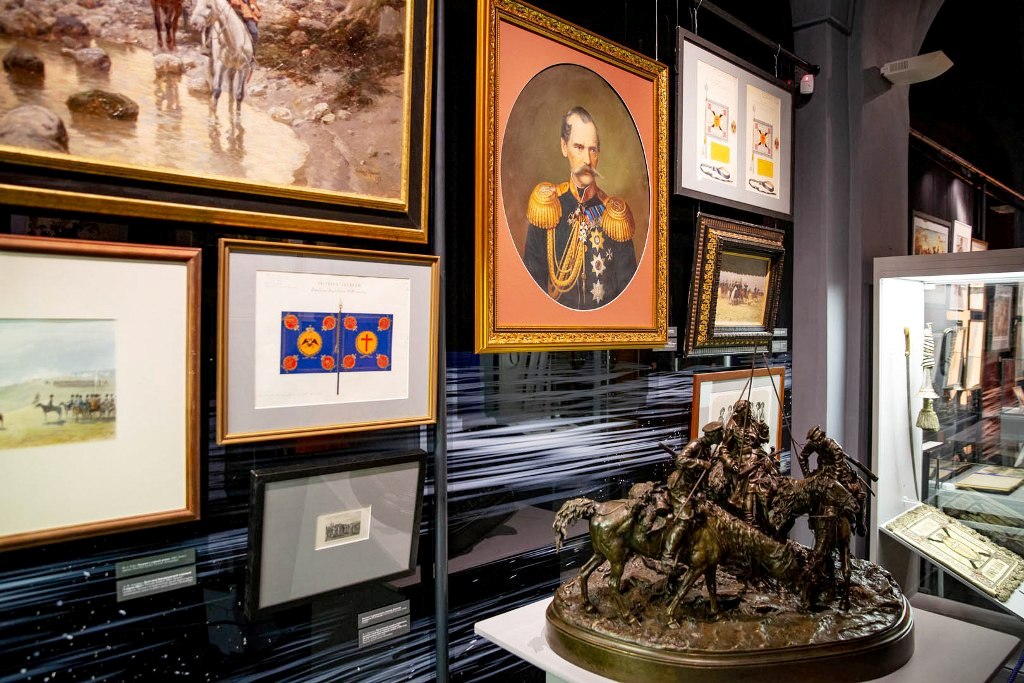
On 11th July 2025, the exhibition “Cossacks in the Service of the Tsar and the Fatherland. 16th Century – 1917” opened in the Cameron Gallery, which is adjacent to the Catherine Palace at Tsarskoye Selo.

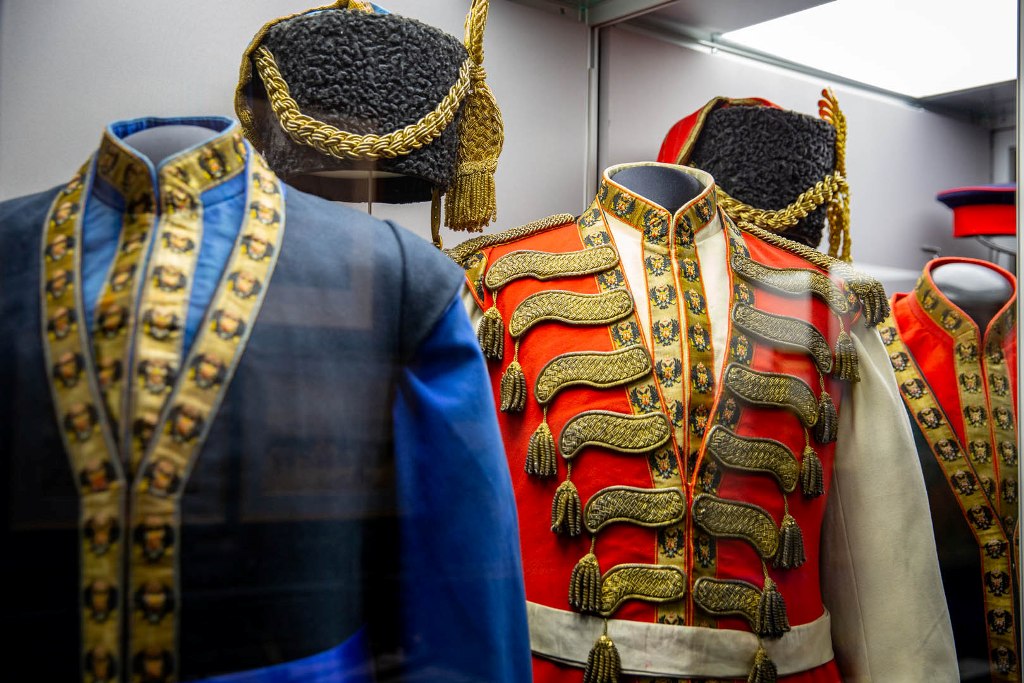
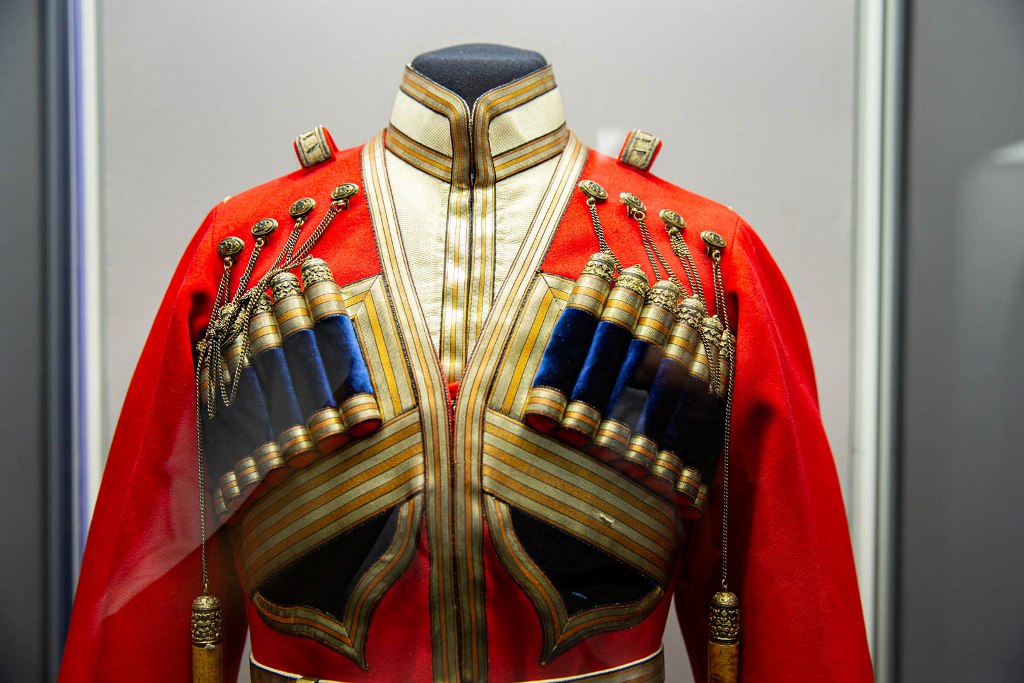
The large-scale exhibition brings together more than 800 items from the collections of 13 museums and archives, as well as six private collections. Their geography covers almost all of Russia: Moscow, St. Petersburg, Gatchina, Novocherkassk, Ekaterinburg, Orenburg, Khabarovsk. Cossack troops and their units were stationed here for hundreds of years. Many of the items featured are being exhibited for the very first time.

Photo © Tsarskoye Selo State Museum

Photo © Tsarskoye Selo State Museum

Photo © Tsarskoye Selo State Museum

Visitors will learn about the origin of the life of the Cossacks during peacetime, their uniforms, equipment, the weapons and regalia of the Cossack troops, the Cossack guards, the august atamans and military leaders, the Cossacks at the Imperial Court, as well as the participation of the Cossacks during the wars of the 18th – early 20th centuries.

“We have been preparing this exhibition for more than two years. It is symbolic that it opens in the year of the 250th anniversary of the formation of the Don and Chuguev court convoy Cossacks, who were stationed in Tsarskoye Selo, served the Empress Catherine II and became the basis for the creation of the Life Guards Cossack Regiment, which guarded the Imperial Family until 1917,” said Dmitry Klochkov, head of the military-historical department of the Tsarskoye Selo State Museum.

Photo © Tsarskoye Selo State Museum

Photo © Tsarskoye Selo State Museum

Photo © Tsarskoye Selo State Museum

“The history of the Cossacks is a separate, unique world, inextricably linked with the fate of Russia. The service of the Cossacks covers several centuries, and at all times they stood on the most dangerous borders of the country. We hope that the exhibition will become not only a cultural, but also an educational event that will awaken interest in the history and exploits of the defenders of the Fatherland,” said Alexei Gnedovsky, CEO of VELES Capital, philanthropist.

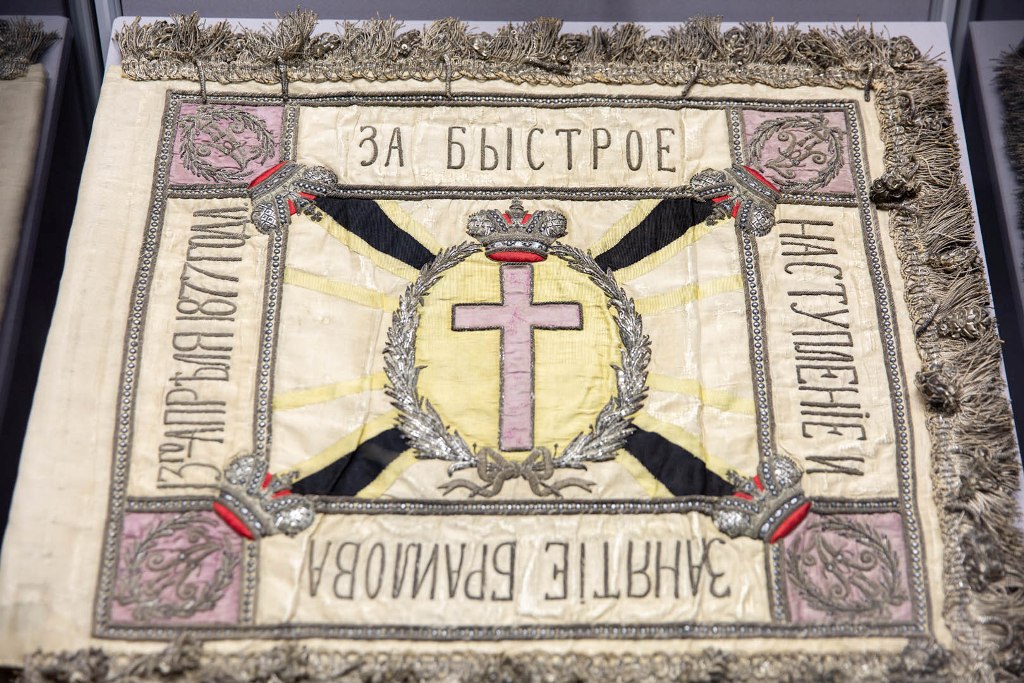
Among the exhibits are Cossack weapons (sabers, daggers, pikes and even cannons), exquisite uniforms, equipment, regalia (badges, banners, and maces, St. George trumpets, award weapons, bratins, prize cups), household items and costumes of Cossack wives, sculptures, paintings, drawings, engravings, lithographs, printed graphics, personal belongings and rare photographs. The events of the First World War on the Caucasian front are demonstrated by a large model-diorama “Plastuns in the Trebizond Operation in the Spring of 1916” specially created for the exhibition.

Photo © Tsarskoye Selo State Museum

Photo © Tsarskoye Selo State Museum

Photo © Tsarskoye Selo State Museum

The exhibition tells about the participation of the Cossacks in the annexation of Siberia. This subject is widely known thanks to Vasily Surikov’s 1895 painting “The Conquest of Siberia by Yermak” – sketches for the famous canvas from the collection of the State Russian Museum (St. Petersburg) are featured in the exhibition.

Among the rare exhibits are a rifle that belonged to the ataman of the Azov Cossack Army Osip (Yosip) Mikhailovich Gladky (c. 1789-1866) from the collection of the Military Historical Museum of Artillery, Engineers and Signal Corps (St. Petersburg); granted kovshs (ladles) of the 18th century for Cossack atamans and noble Cossacks, sabers granted from emperors and empresses from the collection of the State Historical Museum (Moscow); children’s Cossack toys from the collection of the Russian Museum of Ethnography (St. Petersburg); uniforms of the last ataman of all Cossack troops, Tsesarevich Alexei Nikolaevich, from the collection of the Tsarskoye Selo State Museum. One of the priceless relics is the jubilee banner with the Alexander ribbon of the 7th Orenburg Cossack Regiment from the collection of the State Hermitage Museum (St. Petersburg).

Photo © Tsarskoye Selo State Museum

Photo © Tsarskoye Selo State Museum

The exhibition “Cossacks in the Service of the Tsar and the Fatherland. 16th Century – 1917” runs until 8th October 2025 in the Cameron Gallery, which is adjacent to the Cather Palace at Tsarskoye Selo.

© Paul Gilbert. 10 July 2025

Unique icons associated with the Romanovs to be exhibited in Ekaterinburg

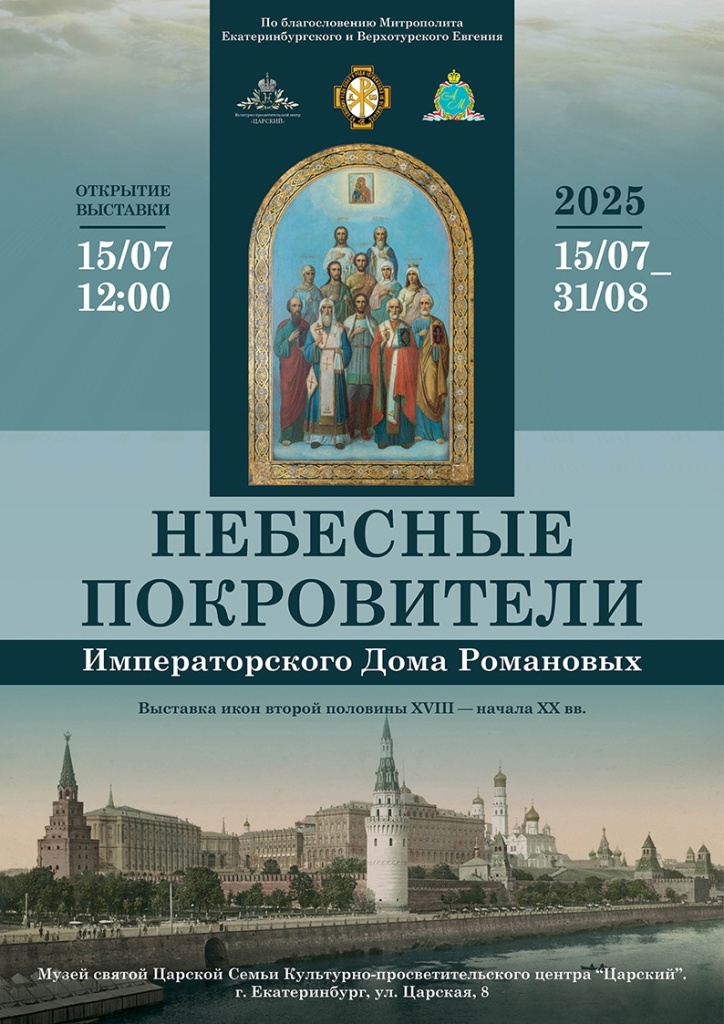
Emperor Nicholas II is well known for his piety and devotion to the Russian Orthodox Church. As part of the Tsar’s Days-2025, a collection of rare icons of the 17th to early 20th centuries, which are stored in church and private collections, will be brought to Ekaterinburg. The exhibition presents icons of the patron saints of the Romanov dynasty, which were commissioned by the Russian emperors.

The icons will be on display at the exhibition “Heavenly Patrons of the House of Romanov” which opens on 15th July 2025, to the Museum of the Holy Tsar’s Family, situated on the second floor of the Patriarchal Compound of the Church on the Blood.

This event was organized by the Altai Diocese together with the Ekaterinburg and Altai branches of the Imperial Orthodox Palestine Society and the Russian Academy of Arts. This is the first time that the Ural capital has hosted such an exhibition.

The organizers of the exhibition shared the history of the exposition:

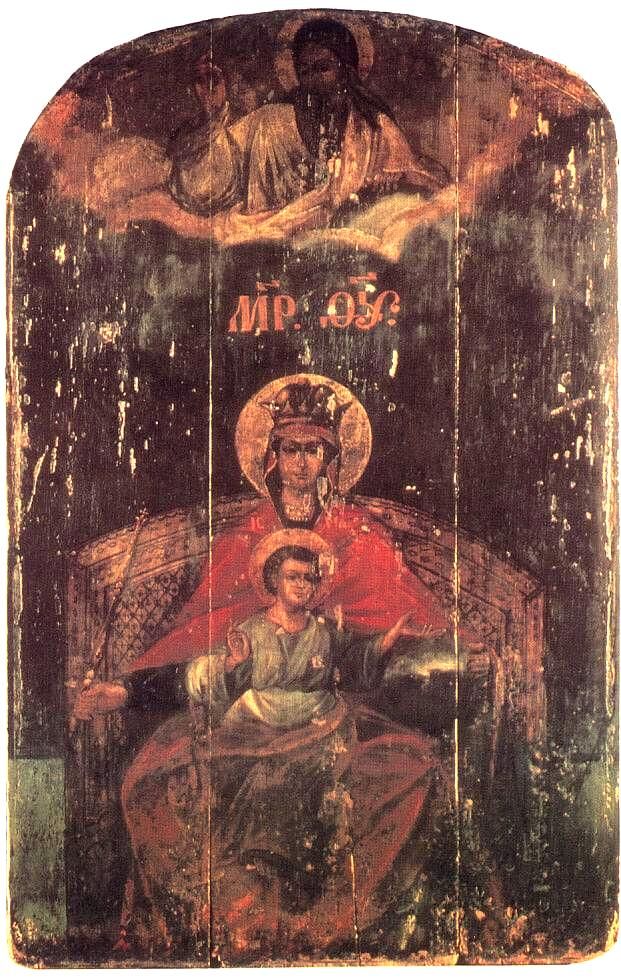
For more than three hundred years, Russia was under the rule of the Romanov dynasty. The Romanovs’ coming to power is associated with a prayer at the Miraculous Icon of the Mother of God “Feodorovskaya” and was marked by the overcoming of the Time of Troubles. Under the Romanovs, the country acquired the status of an Empire, profound political transformations were carried out, feudalism was replaced by capitalist relations, the peasantry gained freedom, economic and social reforms were implemented, and the population increased. The reign of the Romanovs ended with another time of troubles, in 1917. On 15th (O.S. 2nd) March 1917, the day of the abdication of Nicholas II , the Reigning Icon of the Mother of God was revealed to a peasant woman in Kolomenskoye. Many believe the reappearance of the icon was an indication that the Virgin Mary was displeased with Russia for dethroning Tsar Nicholas II during the February 1917 Revolution.

PHOTO: The original Reigning Icon of the Mother of God in the
Church of Our Lady of Kazan, Kolomenskoye (near Moscow)

According to Byzantine origins, the life of the Imperial Family in Russia was largely determined by Orthodox traditions. The Russian monarchs, following the Byzantine ones, were called God’s anointed. There was a corresponding rite of enthronement, which was performed in the main Assumption Cathedral of the Moscow Kremlin. Solemn events, anniversaries and other holidays of the Emperor’s family were interwoven into the church rites. In churches, Diving Liturgies, public prayers and bell ringing were performed. For these occasions, special icons were ordered, on which the patron saints of representatives of the Imperial Family were painted. Such icons were made for the birth of grand dukes, for the wedding of heirs to the throne, enthronement and anniversaries. If an assassination attempt or accident occurred, and the respective member(s) of the Imperial Family were spared, then praise was given to God throughout the country, thanksgiving prayers were served, chapels and churches were built, or appropriate icons with selected saints were ordered. Moreover, for most people, the tsar was God’s anointed, and therefore, there was a prayer for the well-being of the tsar and his family members. And what is prayer without an icon? This is how new images were born.

After 1917, the Church and the monarchy became the main enemies of the new Bolshevik and later Soviet governments. The heritage of Russia was destroyed with special zeal, and it is not surprising that today such icons have become a rarity, which makes the exhibition a unique event for the spiritual life of the Sverdlovsk region – once a bastion of Bolshevism – and for Russia. The exhibition encourages a new look at the pages of the history of the ruling House of Romanov, which has so significantly influenced the history and modernity of Russia.

In addition, visitors will see the icons of the Most Holy Trinity of the late 19th and early 20th centuries, selected saints, the Intercession of the Most Holy Theotokos, the image of Prince Vladimir Equal-to-the-Apostles of 1888, the version of which was painted specifically for the 900th anniversary of the Baptism of Rus. Particular attention should be paid to the long-suffering Job – he could have been a personal icon of the last Russian Tsar Nicholas II.

The exhibition “Heavenly Patrons of the Imperial House of Romanov” runs from 15th July to 31st August 2025, at the the Tsarsky Cultural and Educational Center, situated in the Patriarchal Compound of the Church on the Blood.

© Paul Gilbert. 11 July 2025

Emperor Nicholas II Foundation in Moscow prepares for Tsar’s Days

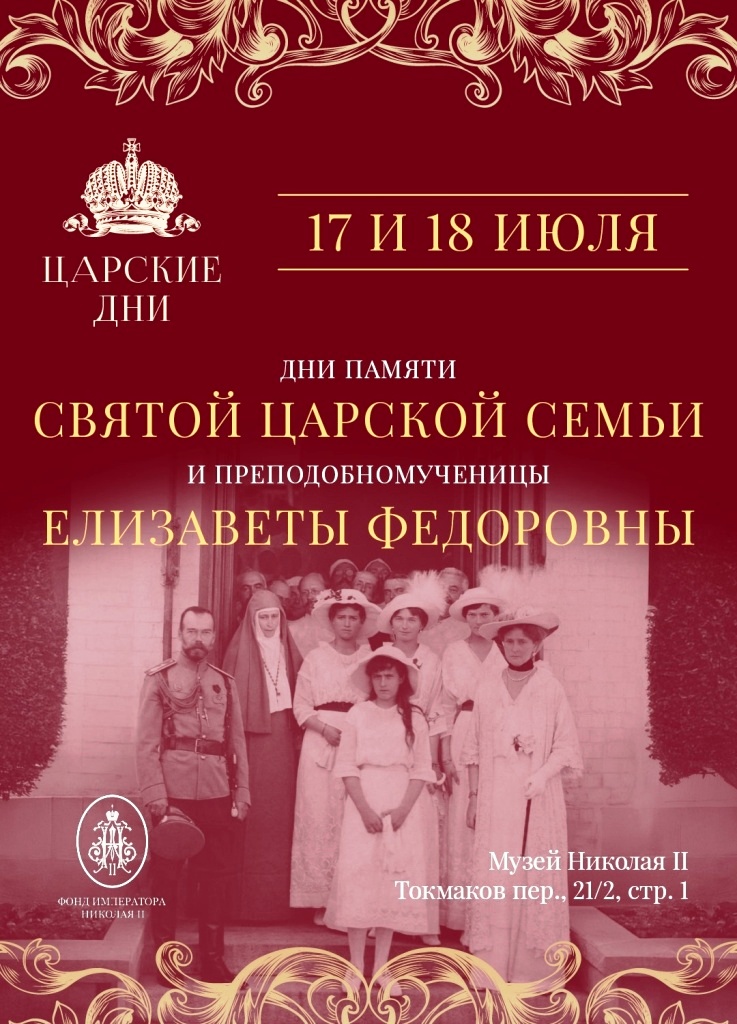
The Emperor Nicholas II Foundation in Moscow has prepared a program of events marking Tsar’s Days, 17th and 18th July 2025.

On 17th July – the day marking the death and martyrdom of the Imperial Family – at 08:00, a Divine Liturgy will be performed in the Church of the Ascension of the Lord on the Gorokhovoye Field, built in 1788-1793.

At 10:15 and 18:00 – a guided tour of the Museum of Emperor Nicholas II.

At 19:15 – a screening of the 2023 documentary film by historian and director K.G. Kapkov Великое паломничество императора Николая II 15-28 мая 1913 г / The Great Pilgrimage of Emperor Nicholas II.

Click HERE the above image to watch the documentary film “The Great Pilgrimage of Emperor Nicholas II“. Language: English. Duration: 1 hour

On 18th July – the day marking the death and martyrdom of Grand Duchess Elizabeth Feodorovna – at 08:00, a Divine Liturgy will be performed in the Church of the Ascension of the Lord on Gorokhovoye Field, built in 1788-1793.

At 18:00 – a guided tour of the Museum of Emperor Nicholas II.

At 19:30 – a screening of the 2016 documentary film directed by Elena Belova Белый ангел / White Angel – about the life and death of Grand Duchess Elizabeth Feodorovna.

FURTHER READING:

Emperor Nicholas II Foundation marks 4th anniversary + PHOTOS

Video tour of the Museum of Emperor Nicholas II in Moscow + VIDEO and PHOTOS

© Paul Gilbert. 9 July 2025

Exhibition dedicated to Grand Duke Sergei Alexandrovich opens in Moscow

On 3rd July 2025, a new exhibition August Master of Moscow, dedicated to the Grand Duke Sergei Alexandrovich, opened at the Museum of Moscow in the Russian capital. The exhibition is timed to the 120th anniversary of the assassination of the grand duke on 17th February (O.S. 4th February) 1905.

Grand Duke Sergei Alexandrovich (1857-1905) was a son of Emperor Alexander II and Empress Maria Alexandrovna, a younger brother of Emperor Alexander III, uncle of Emperor Nicholas II and husband of Grand Duchess Elizabeth Feodorovna. He is considered one of the most outstanding statesmen of the Russian Empire.

From 1891 to February 1905, he served as Governor-General of Moscow, and in 1896 he was appointed Commander of the Moscow Military District. It was during his years as Governor-General, that Moscow enjoyed one of the greatest periods of the city’s development, turning it from a dirty provincial city into a city that could rival any European capital.

As Governor General of Moscow, Grand Duke Sergei was in charge of overseeing the arrangements for the Holy Coronation of Emperor Nicholas II in May 1896. His reputation was initially tarnished, however, as he was partially blamed for the Khodynka Tragedy during the festivities following the coronation.

Yhe exhibition in three halls of the museum reveals all aspects of the Grand Duke’s activities. Not only his work as Governor-General of Moscow and Commander of the Moscow Military District, but also his piety and spiritual journey with his wife the Grand Duchess Elizabeth Feodorovna. Sergei was also a well-known philanthropist and patron of the arts.

The exposition features more than 500 items from 36 leading museums and archives of the Russian Federation, as well as from libraries and private collections. Among the exhibits are photographs, books from the library of the Grand Duke, personal items, awards of charitable institutions and societies, rare archival documents about his activities as Governor-General of Moscow and Commander of the Moscow Military District, correspondence with family members and statesmen, military uniforms, models of weapons and much more. 

One of the most interesting items on display is a miraculously preserved tablet from the tombstone of the Grand Duke. After the Bolsheviks destroyed the Chudov Monastery [where he was initially buried] in 1928, it was believed that the grave of Sergei Alexandrovich was lost. However, during excavations of the site in the 1990s, a number of historical artifacts were revealed, including the grand duke’s grave. Another item on display is the icon of St. Sergius of Radonezh, also found in the tomb of the Grand Duke in the Chudov Monastery of the Moscow Kremlin.

On display in the first hall, are letters from the earliest years of Grand Duke Sergei Alexandrovich to 1888. And they reflect his marriage, his service, his first trip to the Holy Land, his appointment as commander of the Preobrazhensky Regiment and so on.

The exposition is complemented by a unique documentary newsreel, a film about Grand Duke Sergei Alexandrovich and the history of the Chudov Monastery.

The exhibition was solemnly opened by the Mayor of Moscow Sergei Sobyanin [pictured above] and the Chairman of the Elisabeth-Sergius Educational Society Foundation (ESPO) Anna Gromova.

The grand opening of the exhibition was attended by the head of the Department of Culture of the city of Moscow Alexei Fursin, the Chairman of the Imperial Orthodox Palestine Society Sergey Stepashin, the director of the Museum of Moscow Anna Trapkova, the director of the State Historical Museum Alexei Levykin, the director of the State Archives of the Russian Federation Larisa Rogovaya and the scientific director of the Civil Archive of the Russian Federation Sergey Mironenko. Archpriest Dimitry Roshchin, Head of the Department for Work with Public Organizations of the Synodal Department for Church, Society and Mass Media Relations, representatives of the museums partner of the exhibition, historians, scientists and artists, and representatives of public organizations.

The exhibition August Master of Moscow runs until 21st September 2025 at the Museum of Moscow.

© Paul Gilbert. 4 July 2025