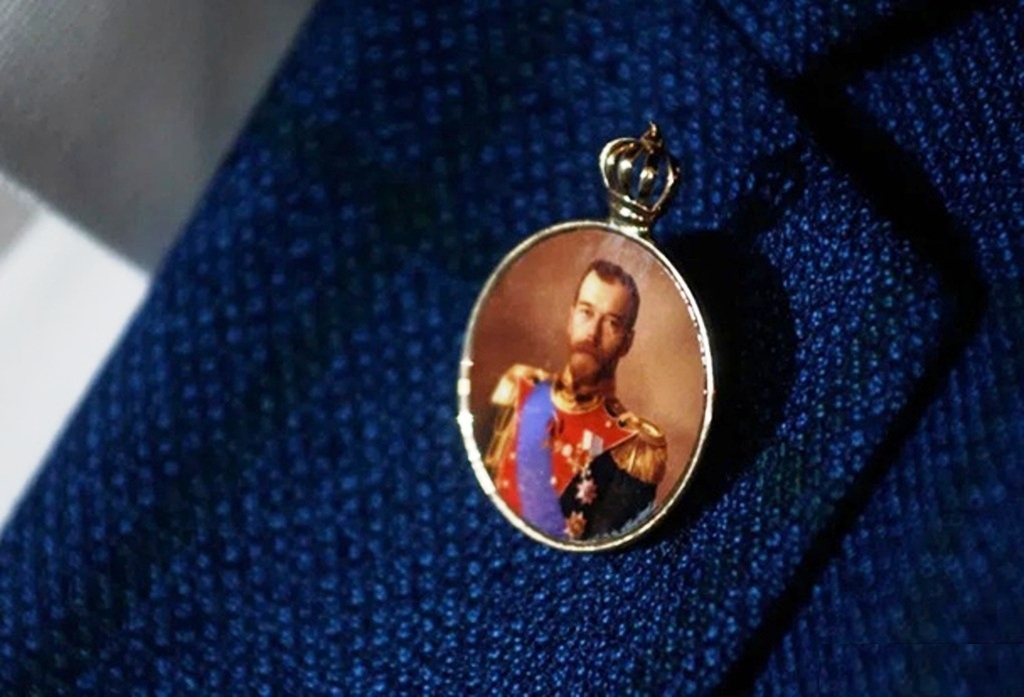
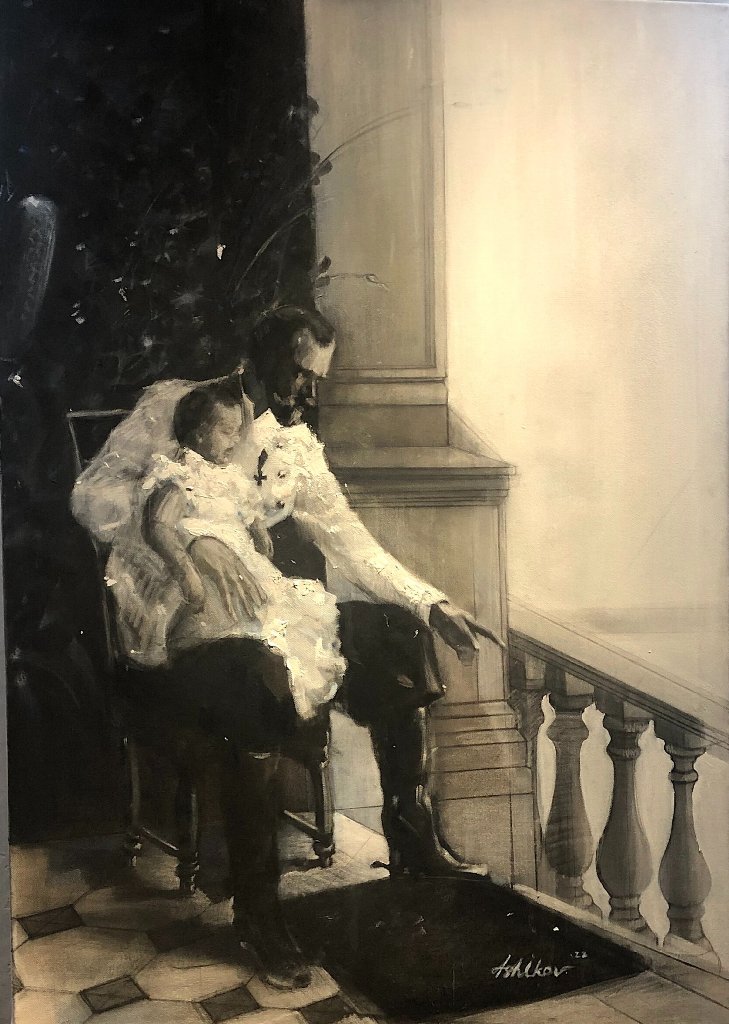
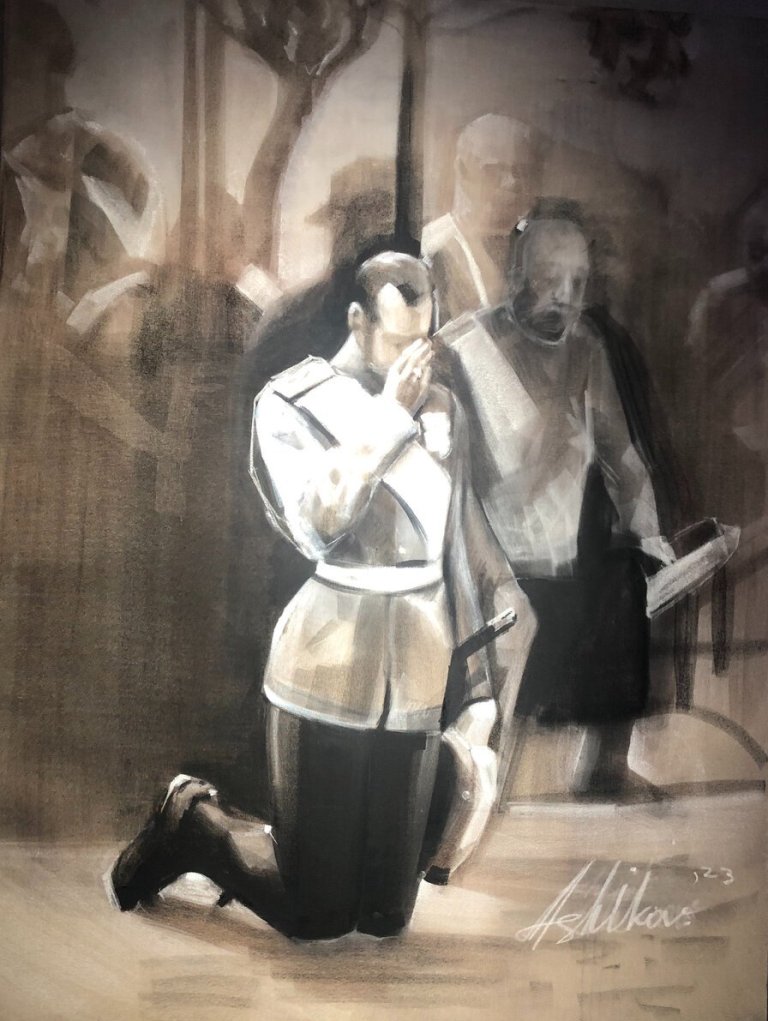
Portraits of Nicholas II by the contemporary Russian artist Yuri Ashikov

It is very rare for a new Romanov exhibition to escape my notice, however, I only just recently learned of a very interesting exhibition of a contemporary Russian artist’s portraits of Emperor Nicholas II, which was held in Moscow in the Spring of 2024.

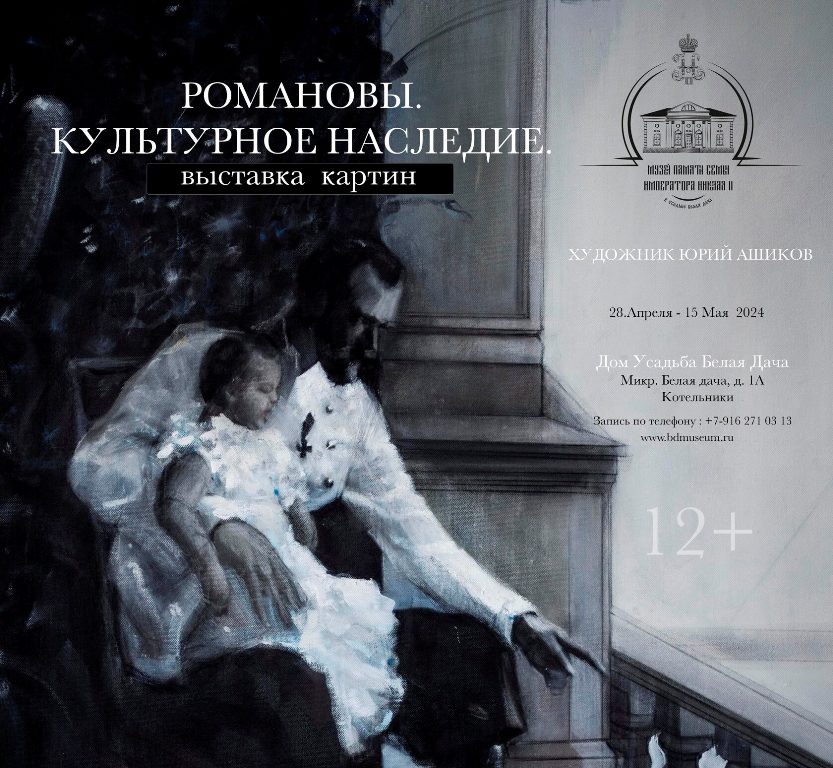
The Romanovs. Cultural Heritage exhibition showcased portraits of the last Tsar by Yuri Ashikov, a contemporary artist, who is virtually unknown of in the West. The exhibition was held from 28th April to 15th May 2024, in the Museum of Emperor Nicholas II in Moscow.

On display were the artist’s portraits of members of Emperor Nicholas II and his family, painted or drawn in the revived and almost lost, rare school of Russian realism in the portrait class, made popular during the late 19th and early 20th century by the famous Russian artist Valentin Alexandrovich Serov (1865-1911).

It is significant that Valentin Serov was the last artist to paint Emperor Nicholas II. In Yuri Ashikov’s paintings and drawings, you see the whole essence and beauty of the School of Russian Realism in a modern interpretation.

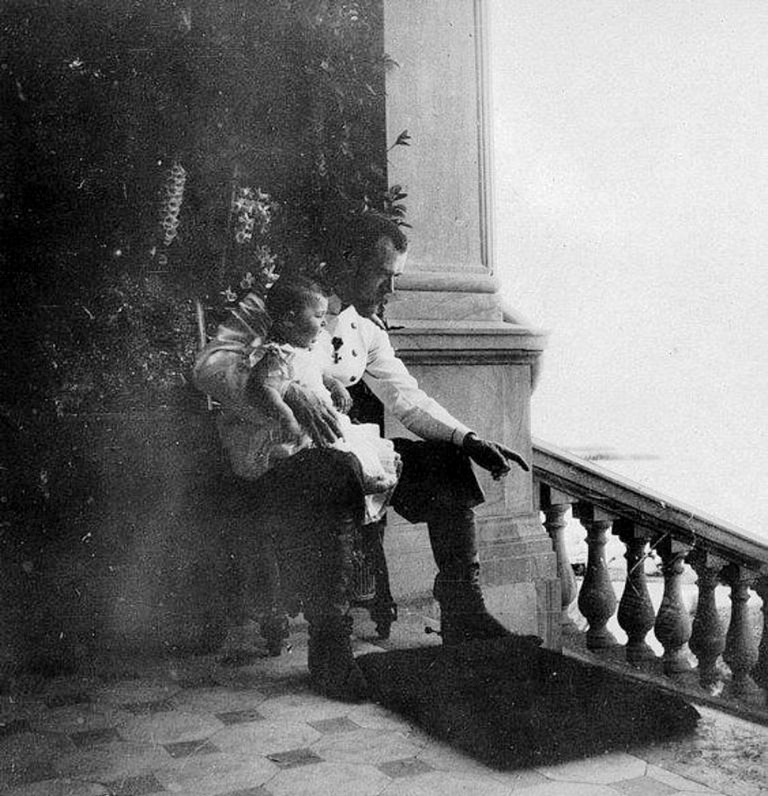
The culture of the late 19th century is directly and very closely related to the style in which the artist’s works are painted. Ashikov has managed to capture his August subject from iconic vintage photographs and paintings of the Tsar and his family. For instance, the portrait used for the exhibition poster (seen above) is based on a 1905 photograph of Nicholas II holding his infant son Alexei on his lap (see photo below) – it is truly beautiful beyond words!

I posted the above photo on my Facebook page several years ago, it was one of a series of four or five similar photos (though there are probably others?), but this one in particular, touched my heart.

This endearing image shows the Emperor Nicholas II seated on the porch of the Lower Dacha, Peterhof, while holding his infant son and heir Tsesarevich Alexei, c. 1905.

The Emperor is seen as a ‘proud papa’ pointing at something which has caught his eye in the garden, and he wants to share with Alexei.

Tsesarevich Alexei Nikolaevich was born in the Lower Dacha at Peterhof on 12th August (O.S. 30th July) 1904. He was named Alexei – in honour of St. Alexius of Moscow (1296–1378).

About the artist – Yuri Ashikov

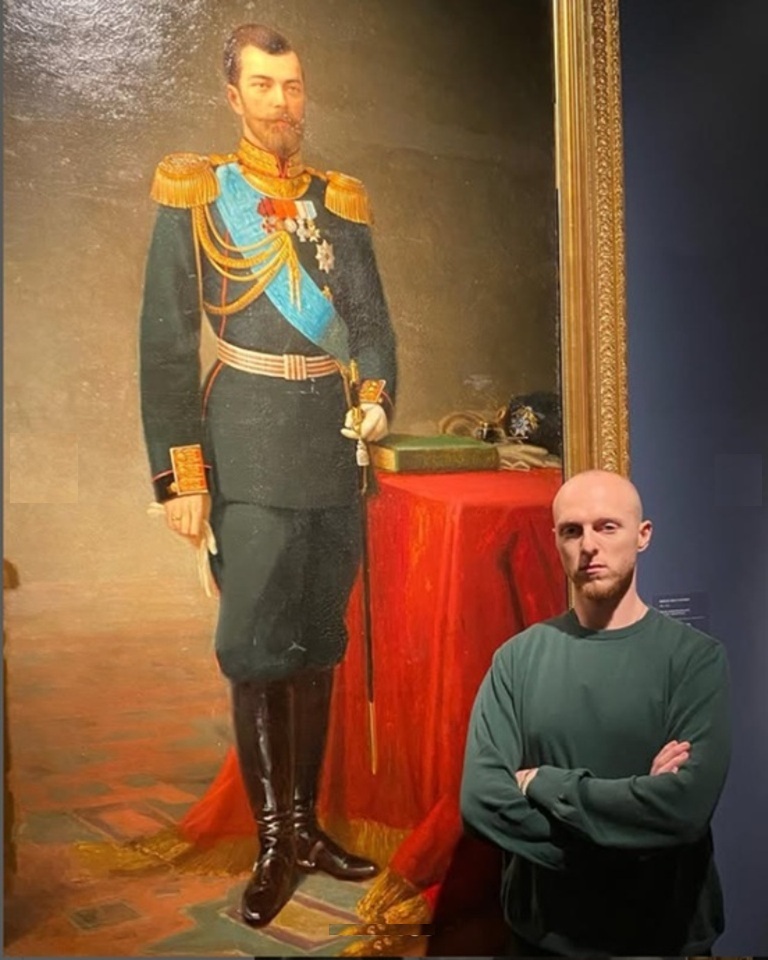
PHOTO: the contemporary Russian artist Yuri Ashikov visiting his “favourite museum”, while posing in front of a portrait of Emperor Nicholas II

Born in 1994, Yuri Ashikov is a contemporary Russian painter, photographer, sculptor, architect and art designer. He graduated, from the Stroganov School Faculty of Design in Moscow, trained in London and Japan, Latvia and Italy, studying not only drawing, but also design and architecture.

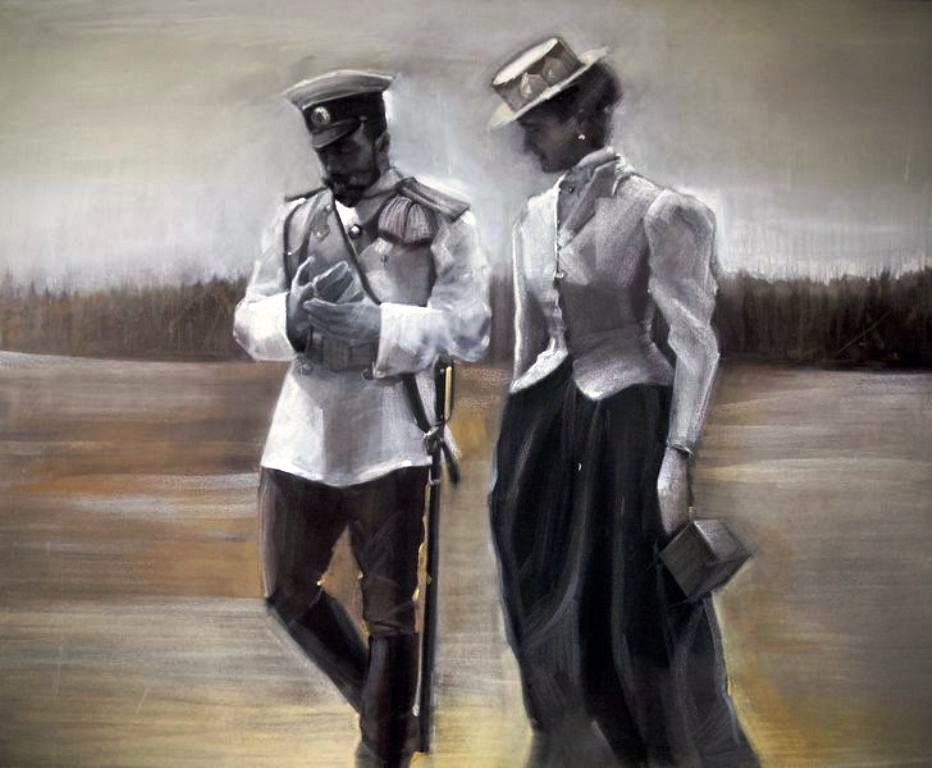
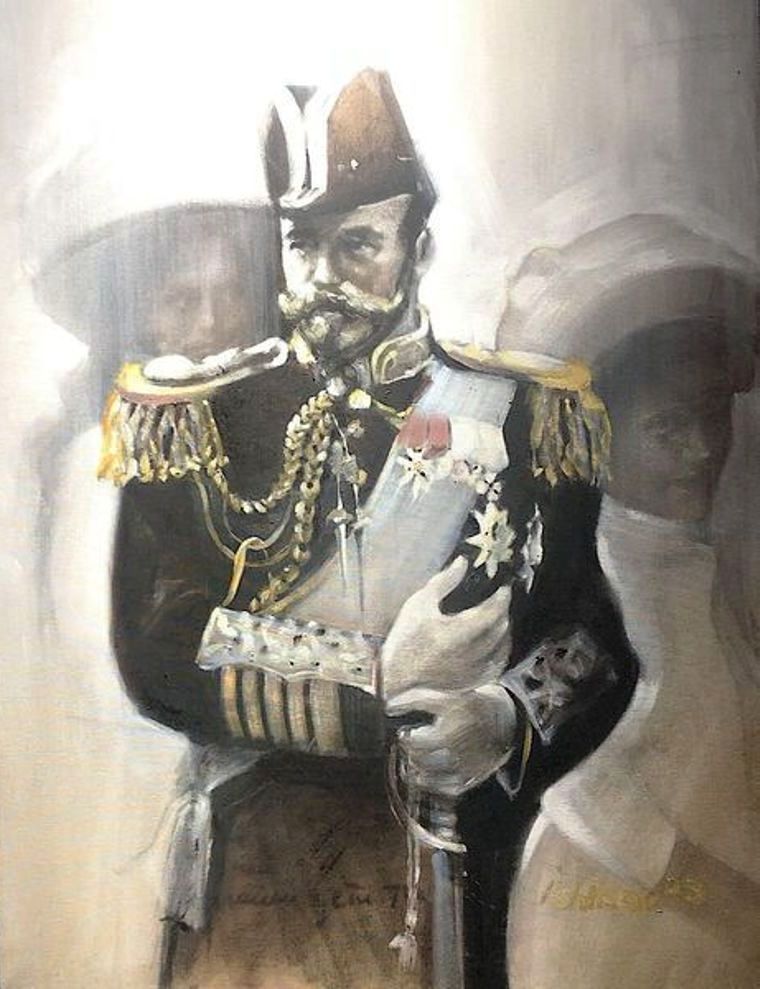
For three years, the artist worked on the “Romanov project”, creating a number of both paintings and charcoal drawings of the Tsar, his wife and children. Yuri wrote: “… I want the paintings to be alive, and each work to evoke emotions in the person… Each new project sets its own style, technique and materials. But most of my work I start in the traditional style – with charcoal.”

His exquisite paintings, which are recreated from iconic photographs and paintings of Russia’s last Tsar. They have been exhibited in cities across the Russian Federation, including Moscow and St. Petersburg.

Below, are some of Yuri Ashikov’s portraits of Emperor Nicholas II . . .

© Paul Gilbert. 11 September 2025

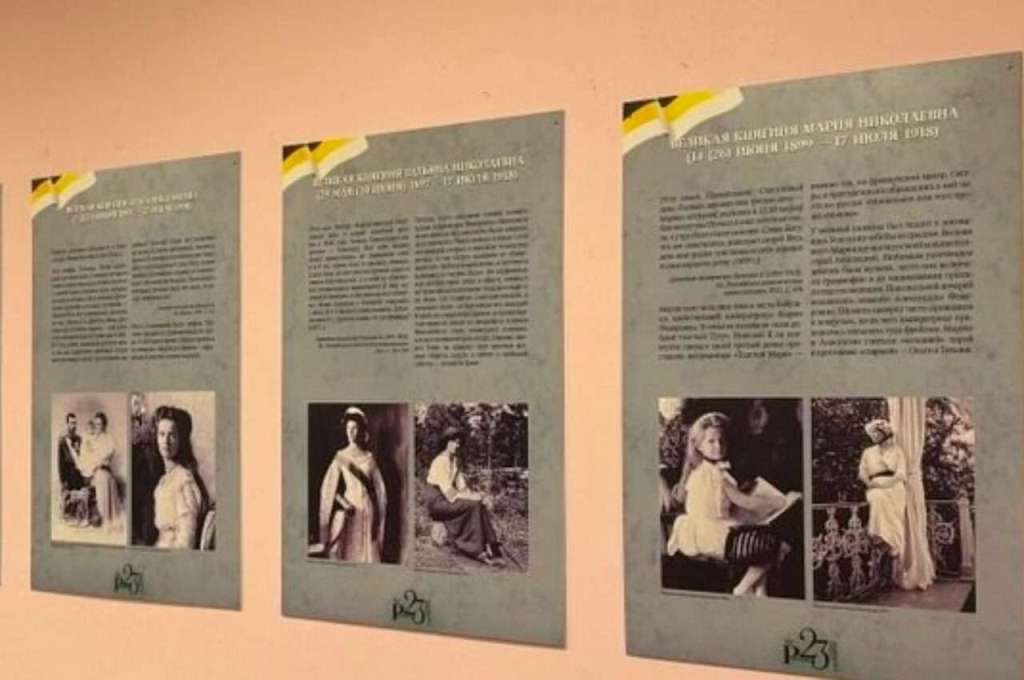
Photo exhibition “Romanovs: 23 Steps to Immortality” opens in Karabash

On 5th September 2025, a travelling photo exhibition The Romanovs: 23 Steps[1] to Immortality, opened at the Central City Library in the town of Karabash, situated in the south Urals. The collection of photographs of the Imperial Family was provided from the funds of the State Historical Museum of the South Urals. The exposition is timed to coincide with the 107th anniversary of the death and martyrdom of Russia’s last Tsar and his family.

On the night of 16/17 July 1918, Emperor Nicholas II, his wife Alexandra Feodorovna, Grand Duchesses Olga, Tatiana, Maria, Anastasia, Tsesarevich Alexei, as well as four servants were murdered in the basement of the Ipatiev House in Ekaterinburg.

The exhibition presents unique photographs of members of the Imperial Family, diary entries of Nicholas II, anecdotes from the memoirs of people who knew the Imperial Family intimately, as well as materials related to the abdication of the Emperor in March 1917, their private life in the Alexander Palace at Tsarskoye Selo, Tobolsk and Ekaterinburg. The exposition tells not only about the Romanov family, but also includes notes and memoirs of regicides, which allows visitors to look at the events from different angles.

The travelling exhibition The Romanovs: 23 Steps to Immortality was initially launched in 2018, the year marking the 100th anniversary of the death and martyrdom of Emperor Nicholas II and his family. It has since, toured towns and cities in the Urals, as well as other cities in the Russian Federation.

NOTES:

[1] Referring to the staircase – which consisted of 23 steps – in the Ipatiev House, in which, on the night of 16/17 July 1918, the Imperial Family and their four faithful retainers descended to their death and martyrdom in the Ipatiev House in Ekaterinburg.

There is a monument which depicts the Imperial Family descending 23 steps on the grounds of the Church on the Blood in Ekaterinburg.

***

*As I have noted in previous posts, I support any initiative – big or small – to help keep the memory of Nicholas II and his family alive in 21st century Russia – PG

© Paul Gilbert. 8 September 2025

Large-scale Cossack exhibition opens in Tsarskoye Selo

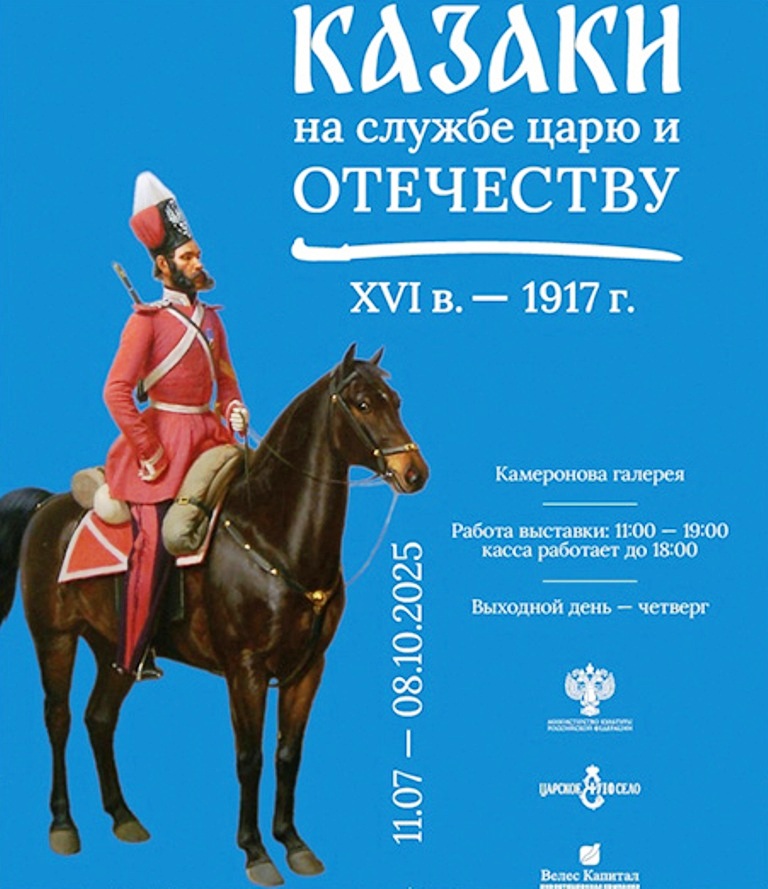
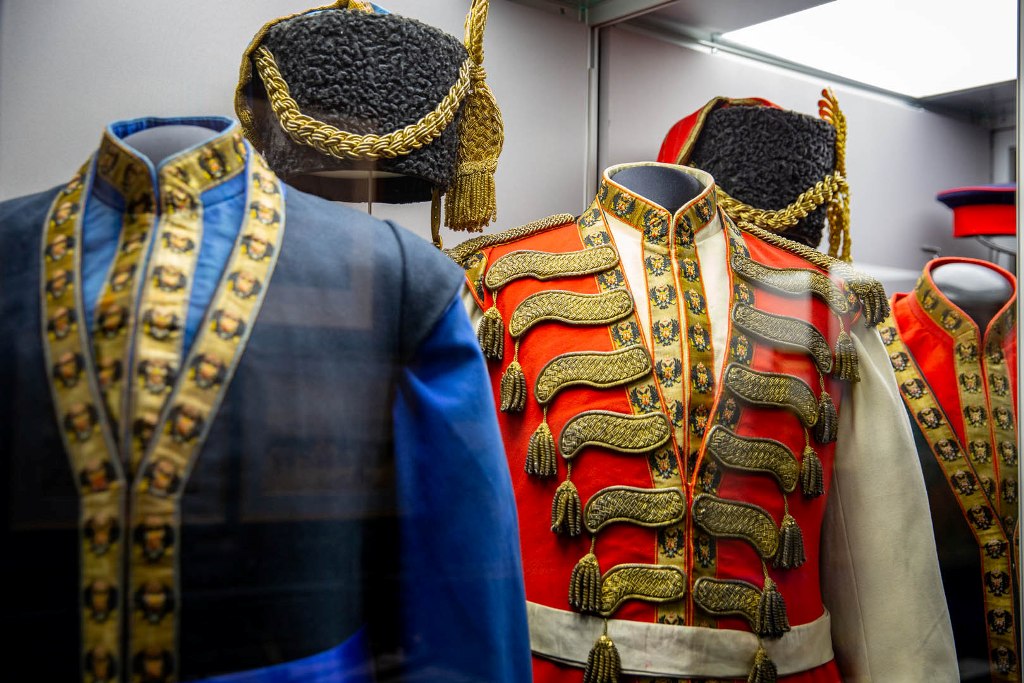
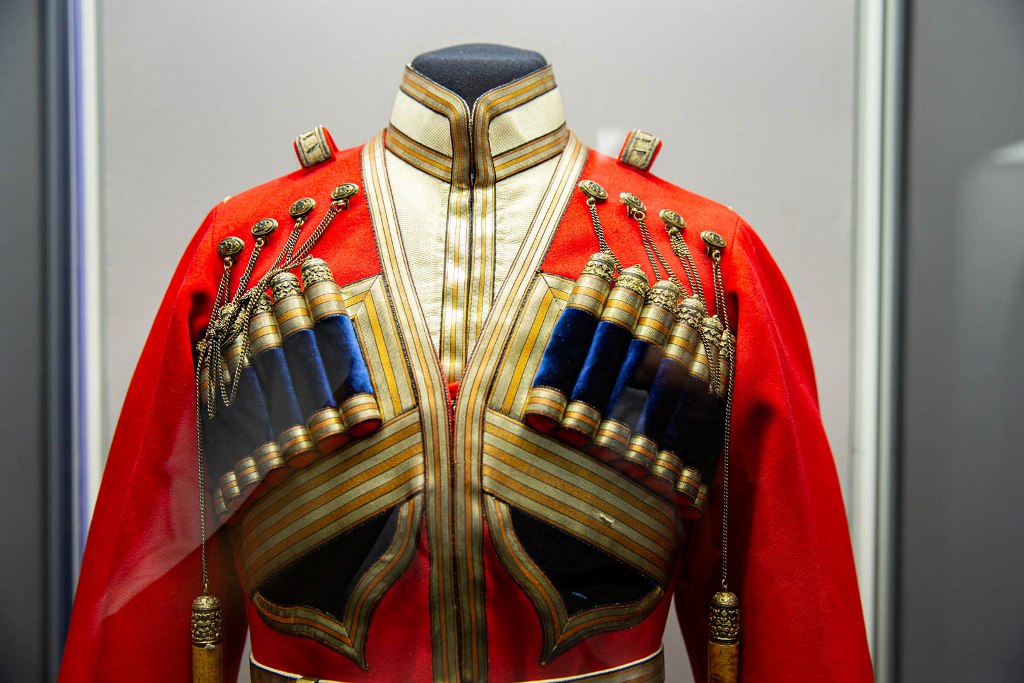
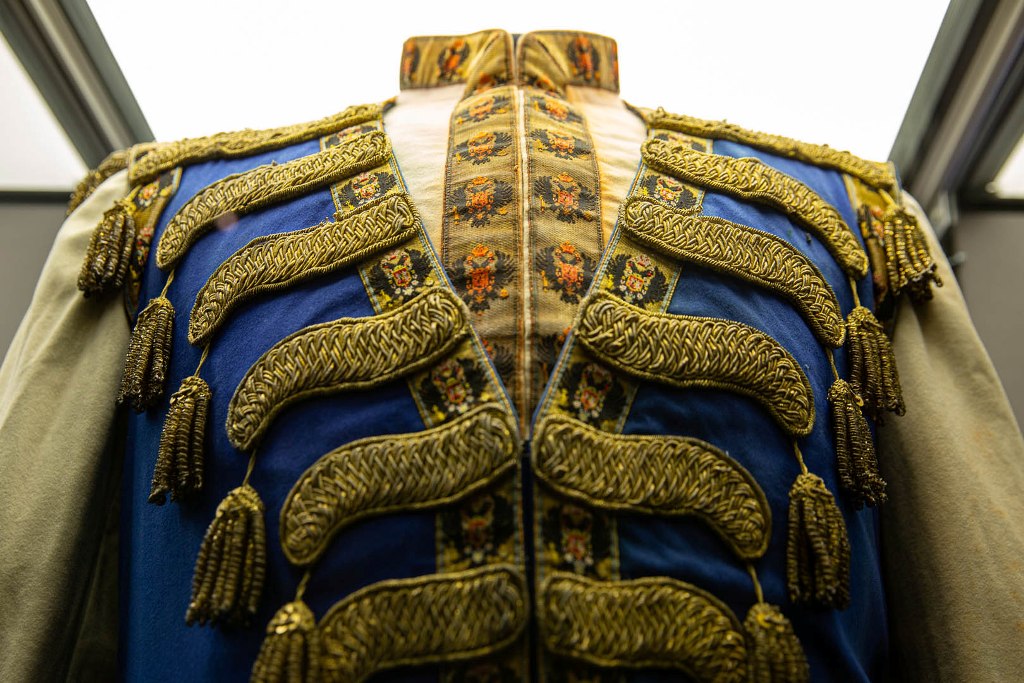
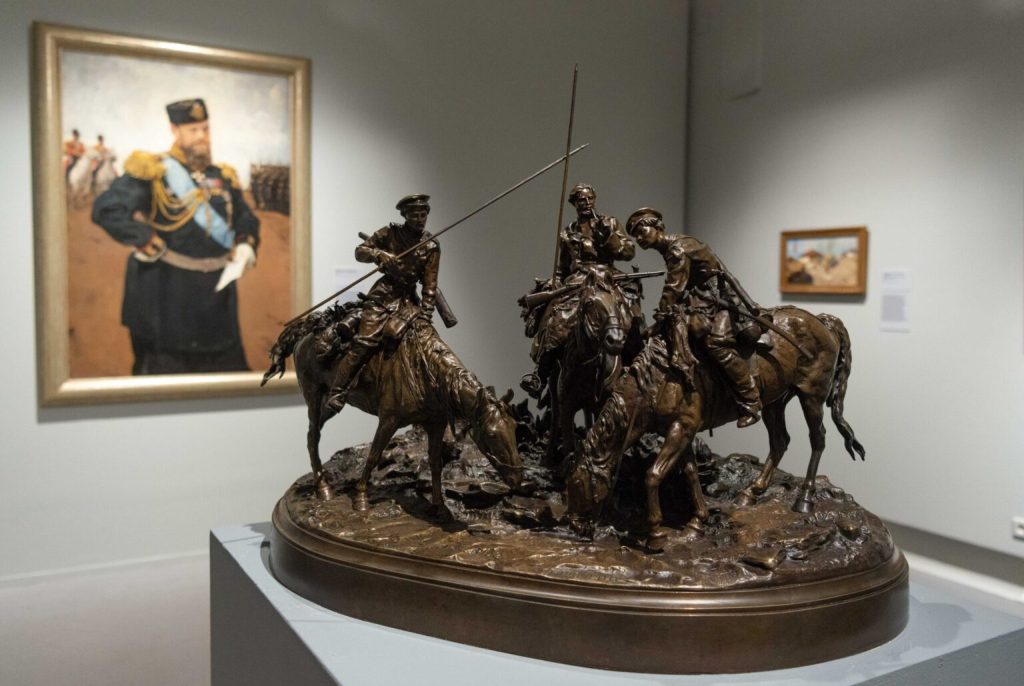
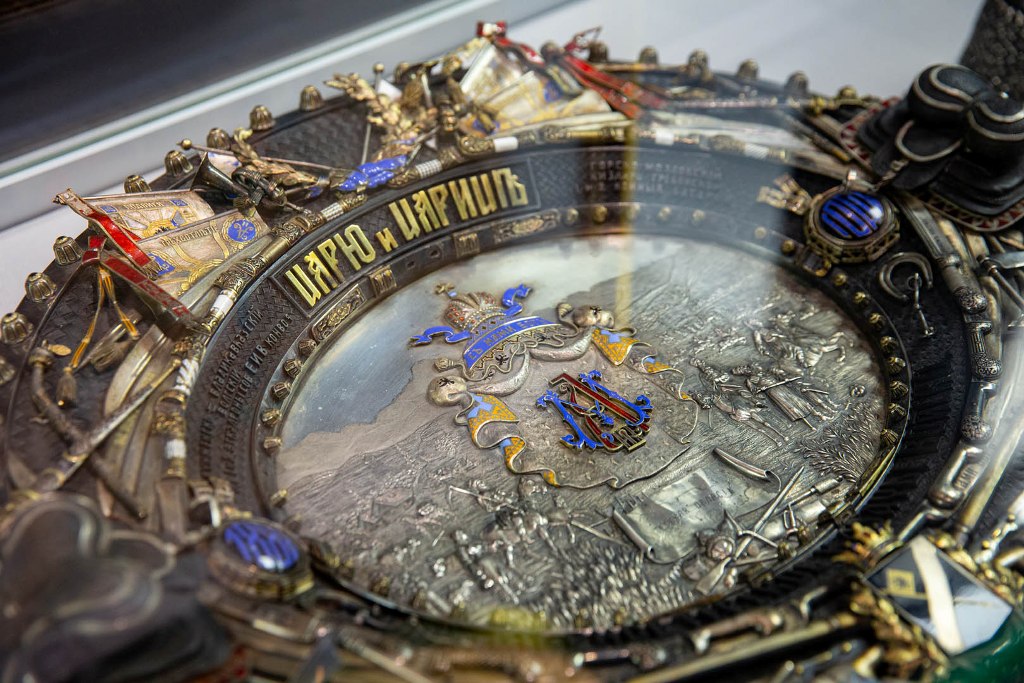
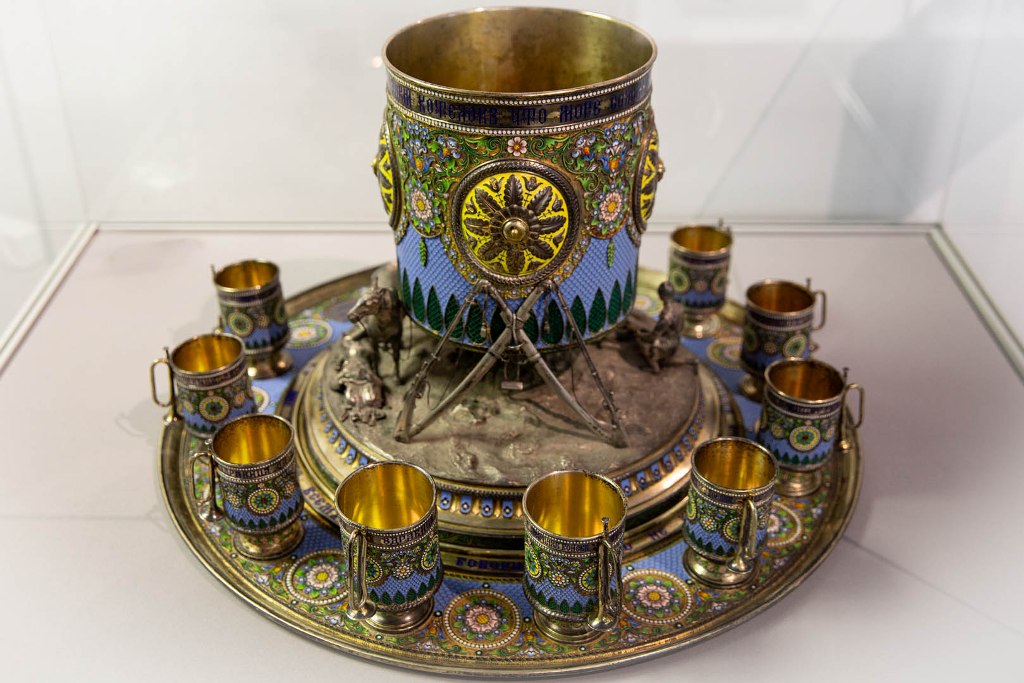
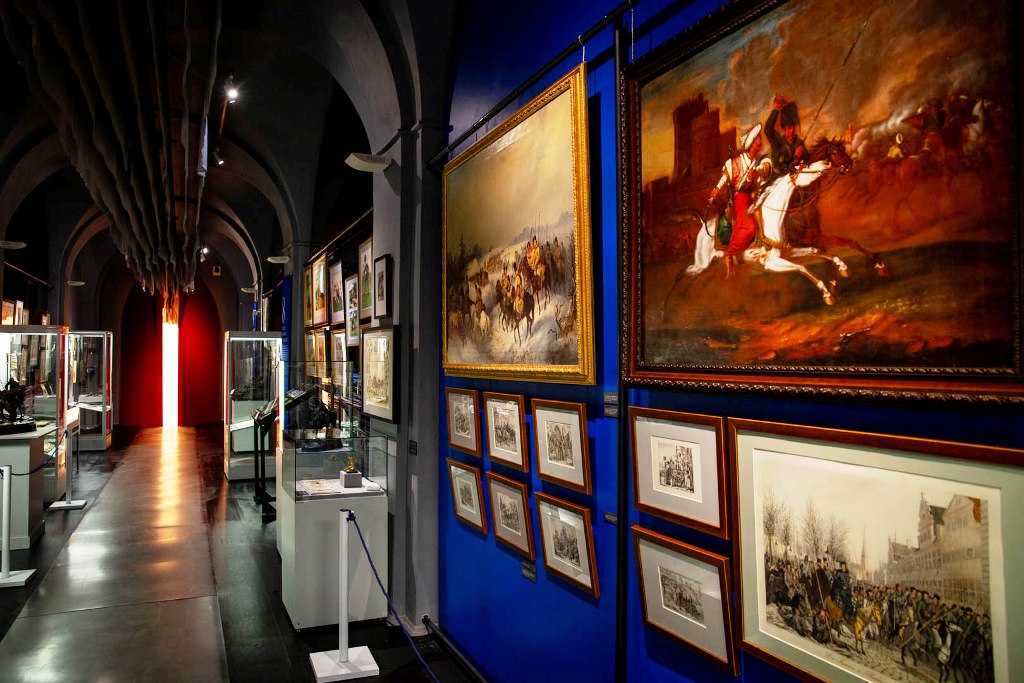
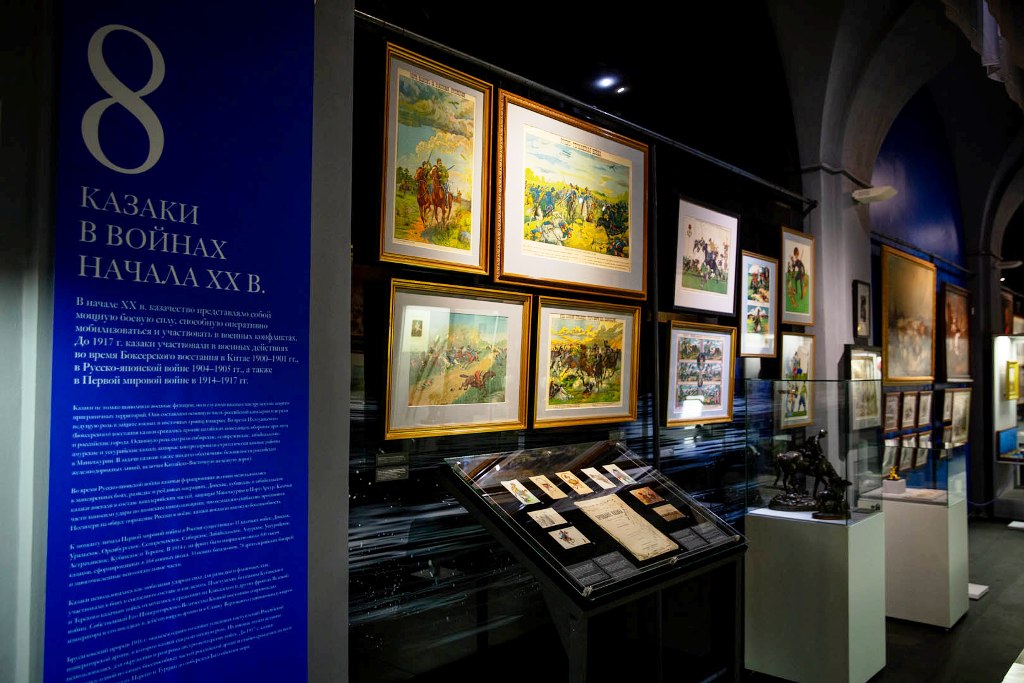
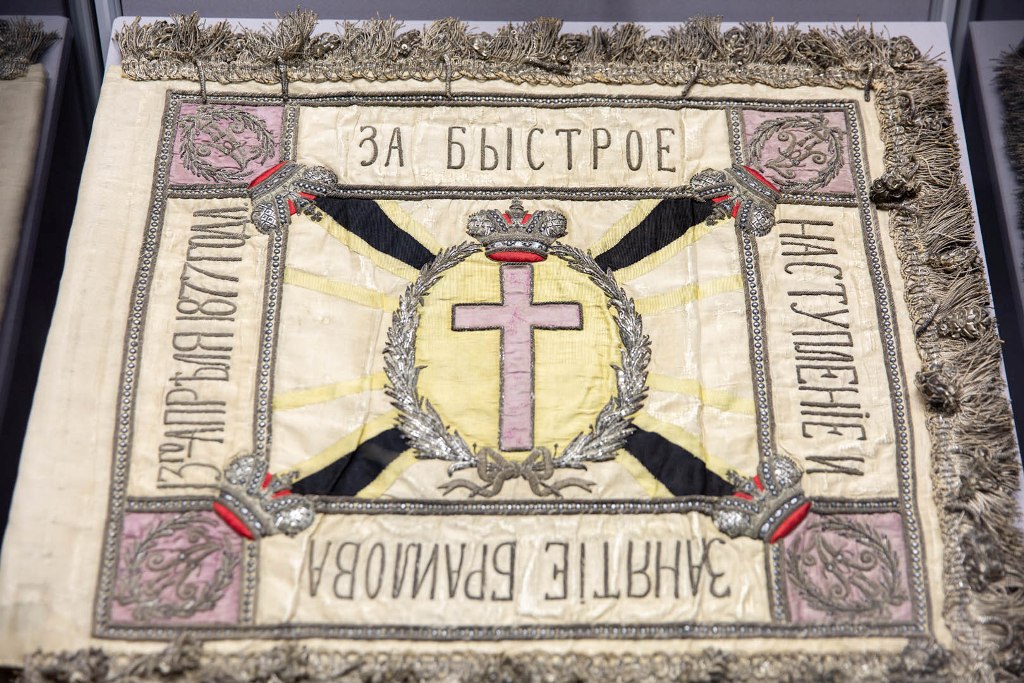
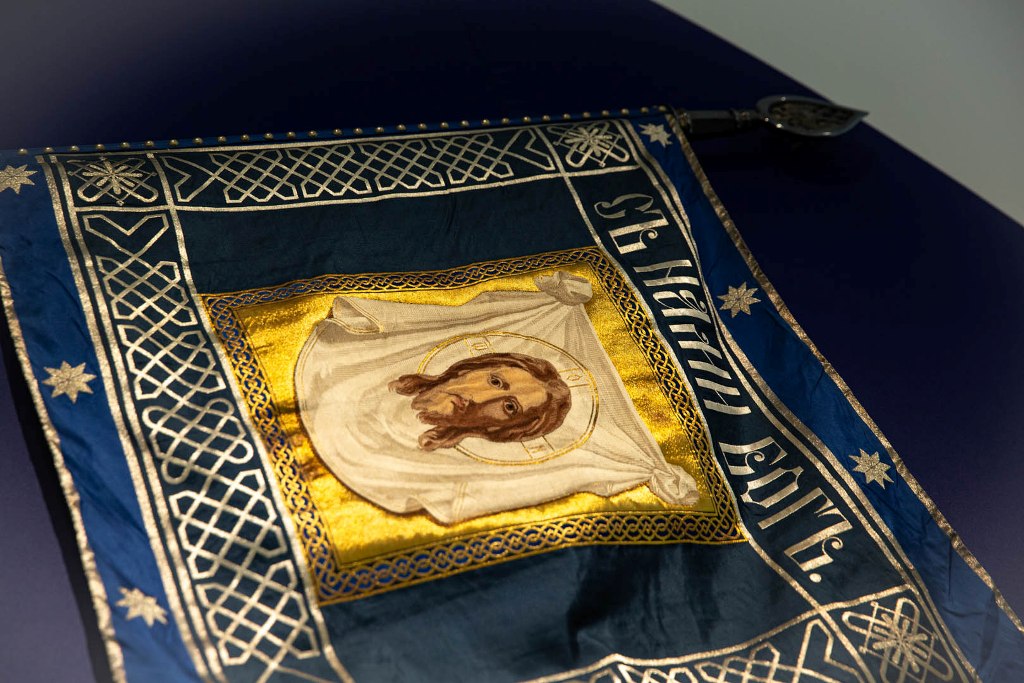
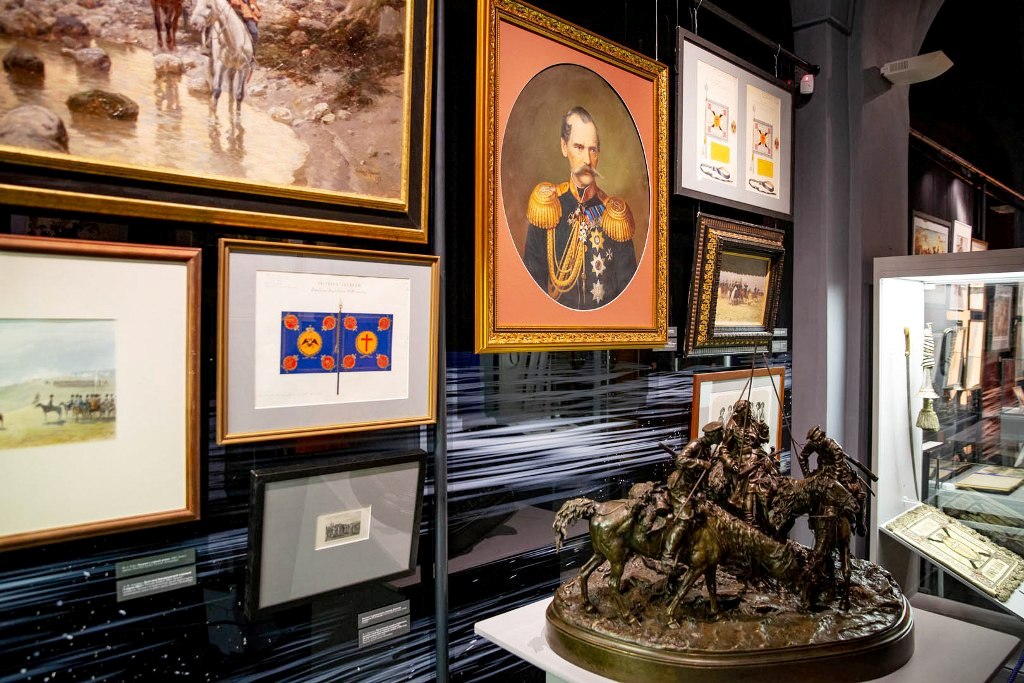
On 11th July 2025, the exhibition “Cossacks in the Service of the Tsar and the Fatherland. 16th Century – 1917” opened in the Cameron Gallery, which is adjacent to the Catherine Palace at Tsarskoye Selo.

The large-scale exhibition brings together more than 800 items from the collections of 13 museums and archives, as well as six private collections. Their geography covers almost all of Russia: Moscow, St. Petersburg, Gatchina, Novocherkassk, Ekaterinburg, Orenburg, Khabarovsk. Cossack troops and their units were stationed here for hundreds of years. Many of the items featured are being exhibited for the very first time.

Photo © Tsarskoye Selo State Museum

Photo © Tsarskoye Selo State Museum

Photo © Tsarskoye Selo State Museum

Visitors will learn about the origin of the life of the Cossacks during peacetime, their uniforms, equipment, the weapons and regalia of the Cossack troops, the Cossack guards, the august atamans and military leaders, the Cossacks at the Imperial Court, as well as the participation of the Cossacks during the wars of the 18th – early 20th centuries.

“We have been preparing this exhibition for more than two years. It is symbolic that it opens in the year of the 250th anniversary of the formation of the Don and Chuguev court convoy Cossacks, who were stationed in Tsarskoye Selo, served the Empress Catherine II and became the basis for the creation of the Life Guards Cossack Regiment, which guarded the Imperial Family until 1917,” said Dmitry Klochkov, head of the military-historical department of the Tsarskoye Selo State Museum.

Photo © Tsarskoye Selo State Museum

Photo © Tsarskoye Selo State Museum

Photo © Tsarskoye Selo State Museum

“The history of the Cossacks is a separate, unique world, inextricably linked with the fate of Russia. The service of the Cossacks covers several centuries, and at all times they stood on the most dangerous borders of the country. We hope that the exhibition will become not only a cultural, but also an educational event that will awaken interest in the history and exploits of the defenders of the Fatherland,” said Alexei Gnedovsky, CEO of VELES Capital, philanthropist.

Among the exhibits are Cossack weapons (sabers, daggers, pikes and even cannons), exquisite uniforms, equipment, regalia (badges, banners, and maces, St. George trumpets, award weapons, bratins, prize cups), household items and costumes of Cossack wives, sculptures, paintings, drawings, engravings, lithographs, printed graphics, personal belongings and rare photographs. The events of the First World War on the Caucasian front are demonstrated by a large model-diorama “Plastuns in the Trebizond Operation in the Spring of 1916” specially created for the exhibition.

Photo © Tsarskoye Selo State Museum

Photo © Tsarskoye Selo State Museum

Photo © Tsarskoye Selo State Museum

The exhibition tells about the participation of the Cossacks in the annexation of Siberia. This subject is widely known thanks to Vasily Surikov’s 1895 painting “The Conquest of Siberia by Yermak” – sketches for the famous canvas from the collection of the State Russian Museum (St. Petersburg) are featured in the exhibition.

Among the rare exhibits are a rifle that belonged to the ataman of the Azov Cossack Army Osip (Yosip) Mikhailovich Gladky (c. 1789-1866) from the collection of the Military Historical Museum of Artillery, Engineers and Signal Corps (St. Petersburg); granted kovshs (ladles) of the 18th century for Cossack atamans and noble Cossacks, sabers granted from emperors and empresses from the collection of the State Historical Museum (Moscow); children’s Cossack toys from the collection of the Russian Museum of Ethnography (St. Petersburg); uniforms of the last ataman of all Cossack troops, Tsesarevich Alexei Nikolaevich, from the collection of the Tsarskoye Selo State Museum. One of the priceless relics is the jubilee banner with the Alexander ribbon of the 7th Orenburg Cossack Regiment from the collection of the State Hermitage Museum (St. Petersburg).

Photo © Tsarskoye Selo State Museum

Photo © Tsarskoye Selo State Museum

The exhibition “Cossacks in the Service of the Tsar and the Fatherland. 16th Century – 1917” runs until 8th October 2025 in the Cameron Gallery, which is adjacent to the Cather Palace at Tsarskoye Selo.

© Paul Gilbert. 10 July 2025

Unique icons associated with the Romanovs to be exhibited in Ekaterinburg

Emperor Nicholas II is well known for his piety and devotion to the Russian Orthodox Church. As part of the Tsar’s Days-2025, a collection of rare icons of the 17th to early 20th centuries, which are stored in church and private collections, will be brought to Ekaterinburg. The exhibition presents icons of the patron saints of the Romanov dynasty, which were commissioned by the Russian emperors.

The icons will be on display at the exhibition “Heavenly Patrons of the House of Romanov” which opens on 15th July 2025, to the Museum of the Holy Tsar’s Family, situated on the second floor of the Patriarchal Compound of the Church on the Blood.

This event was organized by the Altai Diocese together with the Ekaterinburg and Altai branches of the Imperial Orthodox Palestine Society and the Russian Academy of Arts. This is the first time that the Ural capital has hosted such an exhibition.

The organizers of the exhibition shared the history of the exposition:

For more than three hundred years, Russia was under the rule of the Romanov dynasty. The Romanovs’ coming to power is associated with a prayer at the Miraculous Icon of the Mother of God “Feodorovskaya” and was marked by the overcoming of the Time of Troubles. Under the Romanovs, the country acquired the status of an Empire, profound political transformations were carried out, feudalism was replaced by capitalist relations, the peasantry gained freedom, economic and social reforms were implemented, and the population increased. The reign of the Romanovs ended with another time of troubles, in 1917. On 15th (O.S. 2nd) March 1917, the day of the abdication of Nicholas II , the Reigning Icon of the Mother of God was revealed to a peasant woman in Kolomenskoye. Many believe the reappearance of the icon was an indication that the Virgin Mary was displeased with Russia for dethroning Tsar Nicholas II during the February 1917 Revolution.

PHOTO: The original Reigning Icon of the Mother of God in the
Church of Our Lady of Kazan, Kolomenskoye (near Moscow)

According to Byzantine origins, the life of the Imperial Family in Russia was largely determined by Orthodox traditions. The Russian monarchs, following the Byzantine ones, were called God’s anointed. There was a corresponding rite of enthronement, which was performed in the main Assumption Cathedral of the Moscow Kremlin. Solemn events, anniversaries and other holidays of the Emperor’s family were interwoven into the church rites. In churches, Diving Liturgies, public prayers and bell ringing were performed. For these occasions, special icons were ordered, on which the patron saints of representatives of the Imperial Family were painted. Such icons were made for the birth of grand dukes, for the wedding of heirs to the throne, enthronement and anniversaries. If an assassination attempt or accident occurred, and the respective member(s) of the Imperial Family were spared, then praise was given to God throughout the country, thanksgiving prayers were served, chapels and churches were built, or appropriate icons with selected saints were ordered. Moreover, for most people, the tsar was God’s anointed, and therefore, there was a prayer for the well-being of the tsar and his family members. And what is prayer without an icon? This is how new images were born.

After 1917, the Church and the monarchy became the main enemies of the new Bolshevik and later Soviet governments. The heritage of Russia was destroyed with special zeal, and it is not surprising that today such icons have become a rarity, which makes the exhibition a unique event for the spiritual life of the Sverdlovsk region – once a bastion of Bolshevism – and for Russia. The exhibition encourages a new look at the pages of the history of the ruling House of Romanov, which has so significantly influenced the history and modernity of Russia.

In addition, visitors will see the icons of the Most Holy Trinity of the late 19th and early 20th centuries, selected saints, the Intercession of the Most Holy Theotokos, the image of Prince Vladimir Equal-to-the-Apostles of 1888, the version of which was painted specifically for the 900th anniversary of the Baptism of Rus. Particular attention should be paid to the long-suffering Job – he could have been a personal icon of the last Russian Tsar Nicholas II.

The exhibition “Heavenly Patrons of the Imperial House of Romanov” runs from 15th July to 31st August 2025, at the the Tsarsky Cultural and Educational Center, situated in the Patriarchal Compound of the Church on the Blood.

© Paul Gilbert. 11 July 2025

Emperor Nicholas II Foundation in Moscow prepares for Tsar’s Days

The Emperor Nicholas II Foundation in Moscow has prepared a program of events marking Tsar’s Days, 17th and 18th July 2025.

On 17th July – the day marking the death and martyrdom of the Imperial Family – at 08:00, a Divine Liturgy will be performed in the Church of the Ascension of the Lord on the Gorokhovoye Field, built in 1788-1793.

At 10:15 and 18:00 – a guided tour of the Museum of Emperor Nicholas II.

At 19:15 – a screening of the 2023 documentary film by historian and director K.G. Kapkov Великое паломничество императора Николая II 15-28 мая 1913 г / The Great Pilgrimage of Emperor Nicholas II.

Click HERE the above image to watch the documentary film “The Great Pilgrimage of Emperor Nicholas II“. Language: English. Duration: 1 hour

On 18th July – the day marking the death and martyrdom of Grand Duchess Elizabeth Feodorovna – at 08:00, a Divine Liturgy will be performed in the Church of the Ascension of the Lord on Gorokhovoye Field, built in 1788-1793.

At 18:00 – a guided tour of the Museum of Emperor Nicholas II.

At 19:30 – a screening of the 2016 documentary film directed by Elena Belova Белый ангел / White Angel – about the life and death of Grand Duchess Elizabeth Feodorovna.
FURTHER READING:

Emperor Nicholas II Foundation marks 4th anniversary + PHOTOS

Video tour of the Museum of Emperor Nicholas II in Moscow + VIDEO and PHOTOS

© Paul Gilbert. 9 July 2025

Exhibition dedicated to Grand Duke Sergei Alexandrovich opens in Moscow

On 3rd July 2025, a new exhibition August Master of Moscow, dedicated to the Grand Duke Sergei Alexandrovich, opened at the Museum of Moscow in the Russian capital. The exhibition is timed to the 120th anniversary of the assassination of the grand duke on 17th February (O.S. 4th February) 1905.

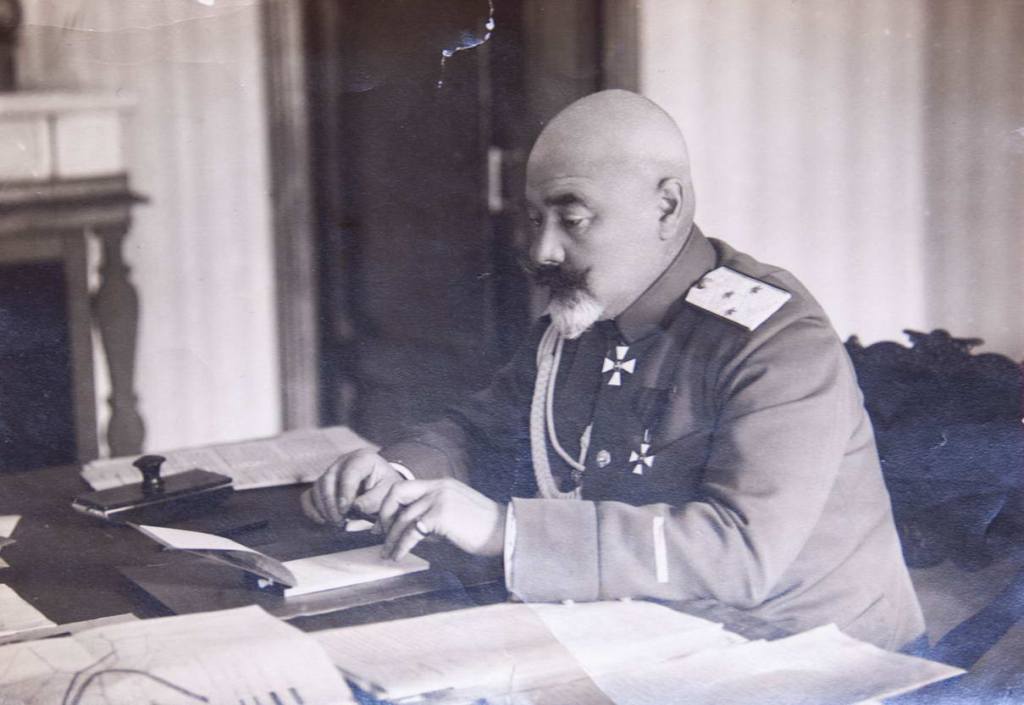
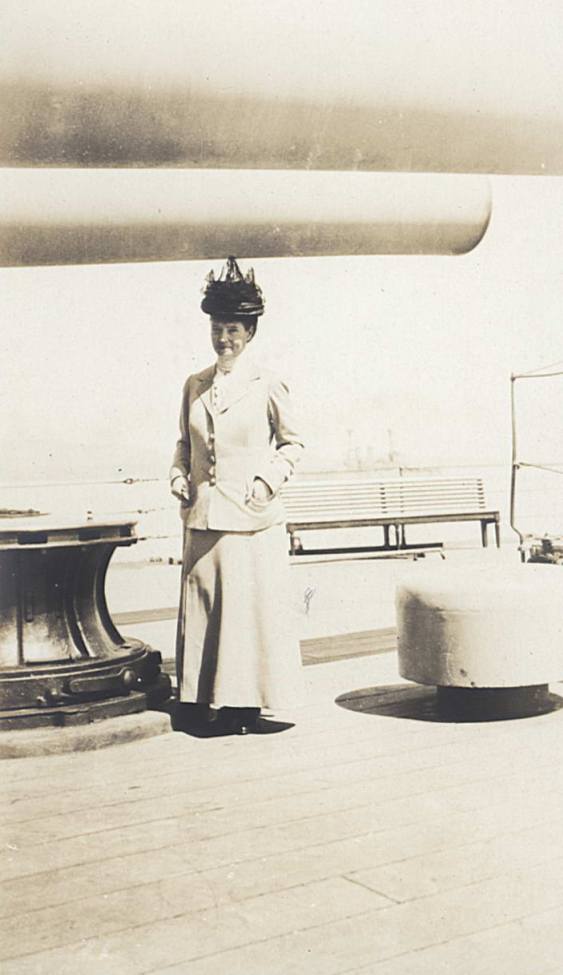
Grand Duke Sergei Alexandrovich (1857-1905) was a son of Emperor Alexander II and Empress Maria Alexandrovna, a younger brother of Emperor Alexander III, uncle of Emperor Nicholas II and husband of Grand Duchess Elizabeth Feodorovna. He is considered one of the most outstanding statesmen of the Russian Empire.

From 1891 to February 1905, he served as Governor-General of Moscow, and in 1896 he was appointed Commander of the Moscow Military District. It was during his years as Governor-General, that Moscow enjoyed one of the greatest periods of the city’s development, turning it from a dirty provincial city into a city that could rival any European capital.

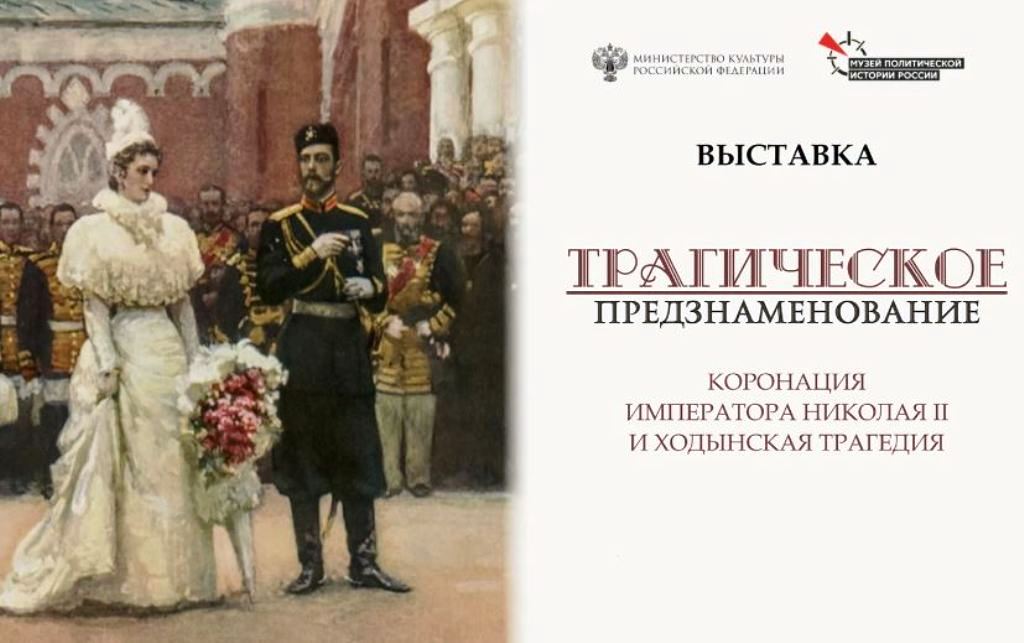
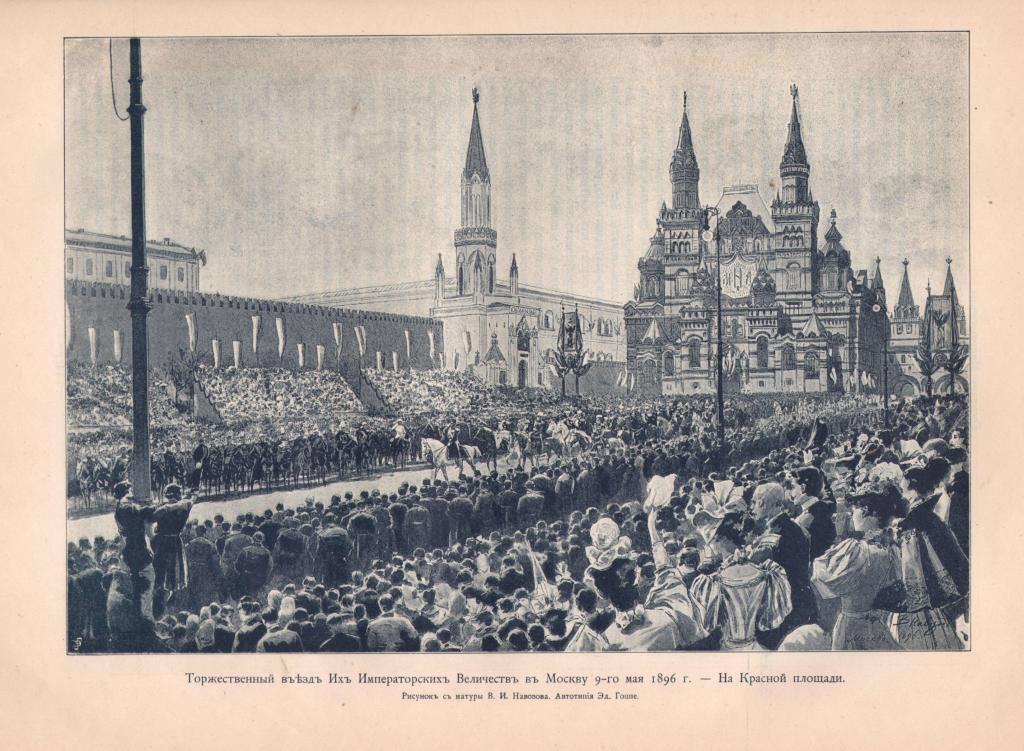
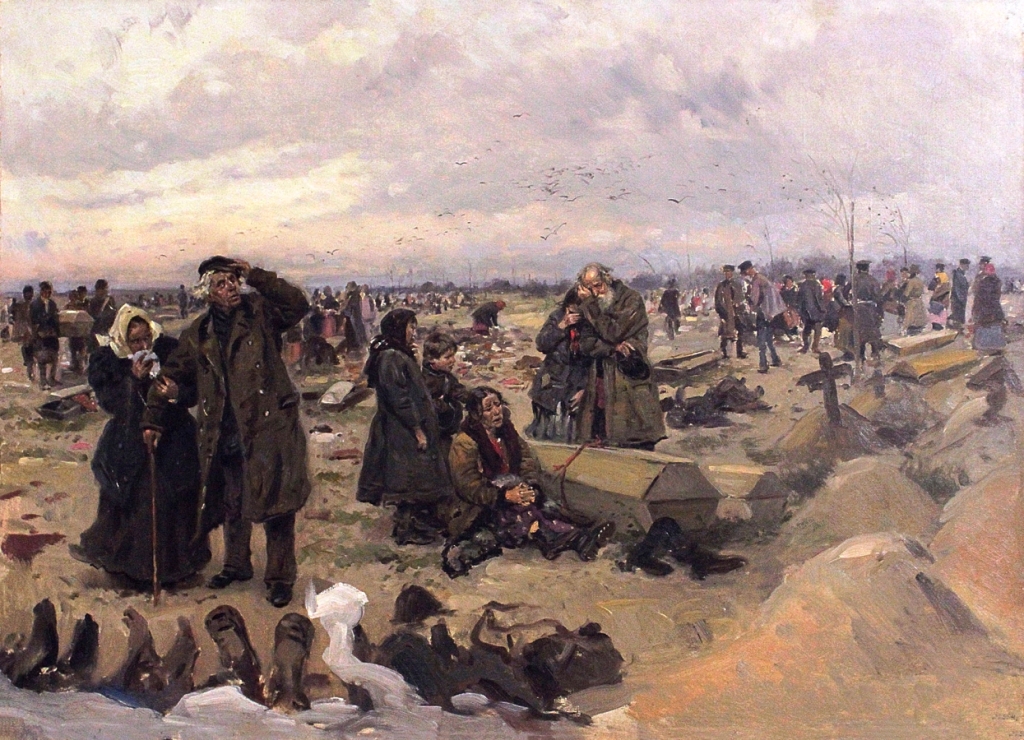
As Governor General of Moscow, Grand Duke Sergei was in charge of overseeing the arrangements for the Holy Coronation of Emperor Nicholas II in May 1896. His reputation was initially tarnished, however, as he was partially blamed for the Khodynka Tragedy during the festivities following the coronation.

Yhe exhibition in three halls of the museum reveals all aspects of the Grand Duke’s activities. Not only his work as Governor-General of Moscow and Commander of the Moscow Military District, but also his piety and spiritual journey with his wife the Grand Duchess Elizabeth Feodorovna. Sergei was also a well-known philanthropist and patron of the arts.

The exposition features more than 500 items from 36 leading museums and archives of the Russian Federation, as well as from libraries and private collections. Among the exhibits are photographs, books from the library of the Grand Duke, personal items, awards of charitable institutions and societies, rare archival documents about his activities as Governor-General of Moscow and Commander of the Moscow Military District, correspondence with family members and statesmen, military uniforms, models of weapons and much more. 

One of the most interesting items on display is a miraculously preserved tablet from the tombstone of the Grand Duke. After the Bolsheviks destroyed the Chudov Monastery [where he was initially buried] in 1928, it was believed that the grave of Sergei Alexandrovich was lost. However, during excavations of the site in the 1990s, a number of historical artifacts were revealed, including the grand duke’s grave. Another item on display is the icon of St. Sergius of Radonezh, also found in the tomb of the Grand Duke in the Chudov Monastery of the Moscow Kremlin.

On display in the first hall, are letters from the earliest years of Grand Duke Sergei Alexandrovich to 1888. And they reflect his marriage, his service, his first trip to the Holy Land, his appointment as commander of the Preobrazhensky Regiment and so on.

The exposition is complemented by a unique documentary newsreel, a film about Grand Duke Sergei Alexandrovich and the history of the Chudov Monastery.

The exhibition was solemnly opened by the Mayor of Moscow Sergei Sobyanin [pictured above] and the Chairman of the Elisabeth-Sergius Educational Society Foundation (ESPO) Anna Gromova.

The grand opening of the exhibition was attended by the head of the Department of Culture of the city of Moscow Alexei Fursin, the Chairman of the Imperial Orthodox Palestine Society Sergey Stepashin, the director of the Museum of Moscow Anna Trapkova, the director of the State Historical Museum Alexei Levykin, the director of the State Archives of the Russian Federation Larisa Rogovaya and the scientific director of the Civil Archive of the Russian Federation Sergey Mironenko. Archpriest Dimitry Roshchin, Head of the Department for Work with Public Organizations of the Synodal Department for Church, Society and Mass Media Relations, representatives of the museums partner of the exhibition, historians, scientists and artists, and representatives of public organizations.

The exhibition August Master of Moscow runs until 21st September 2025 at the Museum of Moscow.

© Paul Gilbert. 4 July 2025

‘The Mummy’ – a film about Lenin premieres in Moscow

PHOTO: “V.I. Lenin in a coffin” (1924)
Artist: Kuzma Sergeyevich Petrov-Vodkin (1878-1939)

On 26th June 2025, the premiere of the documentary-film МУМИИ / The Mummy took place at the Oktyabr Cinema[1], located on Novy Arbat in Moscow. The film touches on a painful and controversial topic for modern-day Russian society: the unburied corpse of Vladimir Ilyich Ulyanov (Lenin).

Even before the premiere, the film provoked fierce protests from communists of all stripes, who accused the filmmakers of slandering the Bolshevik leader. Many people believe that it was Lenin, who ordered the murder of Nicholas II and his family, but who committed the monstrous crime of crashing the world’s most powerful nation and killing several million people.

The all-Russian premiere of the film МУМИИ / The Mummy will take place in other Russian cities from 27th to 29th June, with the support of the regional branches of the World Russian People’s Council. These screenings will be supported by a large-scale hours-long telethon live on the SPAS TV channel on Sunday, 29th June, where live broadcasts from all over the country are planned.

The famous historian, writer and TV presenter Felix Razumovsky, who was present at the Moscow premiere, shared his impressions of the film in his Telegram Channel:

МУМИИ / The Mummy premiered yesterday in Moscow at the Oktyabr Cinema. It is an important documentary about the Russian misfortune that has existed for more than a century – about the pagan temple of the communist quasi-religion standing on Red Square, the main square of Russia, the mausoleum with the mummy of Lenin.

The film is relevant, important, and necessary… For many Russians, the problem is a painful one and action on the issue is long overdue, and should have been resolved thirty years ago. The anti-Christian cult of the “eternally living” Bolshevik leader should have been dealt with and removed following the collapse of the Soviet Union in the early 1990s.

Of course, better late than never. For the revival of the country is impossible without deciding the fate of Lenin’s mummy, these “Bolshevik relics” which desecrate the Orthodox Russian pantheon of the Moscow Kremlin!

But over the past thirty years, the situation has changed, and not for the better. Today, the creators of the film МУМИИ / The Mummy go against the tide. In recent years, an active political campaign of re-Sovietization has been launched in the country. The internet and social media is filled with endless justifications for the “Lenin cause” and the obsessive idealization of “Comrade Stalin”. A disturbing plan of “monumental propaganda” is being implemented…

We are talking about the disruption of Russian awareness, about the erosion of Russian consciousness, primarily the consciousness of the Orthodox. The trend is not just dangerous, but truly suicidal for the nation.

***

МУМИИ / The Mummy producer Joseph Prigozhin announced that he is willing to provide his own personal funds for the burial of Vladimir Lenin. He considers it necessary to bury the body of the Bolshevik leader and statesman, referring to Orthodox traditions and respect for the memory of the deceased.

“I am ready to provide funds for his burial,” Prigozhin said in a recent interview. During the past thirty years, the question of the possible burial of Lenin has been raised again and again. In 1998, acting Russian president Boris Yeltsin had plans to demolish Lenin’s mausoleum, however, he was persuaded otherwise.

Proponents of the idea believe that the body should be buried in accordance with religious and ethical standards. Opponents, on the contrary, see the preservation of the mausoleum as an important part of the country’s historical and cultural heritage, whereas, more radical elements of Russian society would like to see the monument and Lenin’s mummy destroyed.

Vladimir Lenin died on 21st January 1924. His body was embalmed and placed in a mausoleum on Red Square, which has become one of the symbols of the Soviet era. At the end of May 2025, the Ministry of Culture of the Russian Federation announced the restoration of the mausoleum building, for which 20 million rubles [$250,000 USD] will be allocated from the state budget.

NOTES:

[1] On 29th October 2024, the Oktyabr Cinema in Moscow, was also the venue for the premiere of the documentary-film «Верные» / The Faithful. This 70-minute Russian language documentary explores the lives and fates of the faithful retainers who followed the Imperial Family into exile.

© Paul Gilbert. 27 June 2025

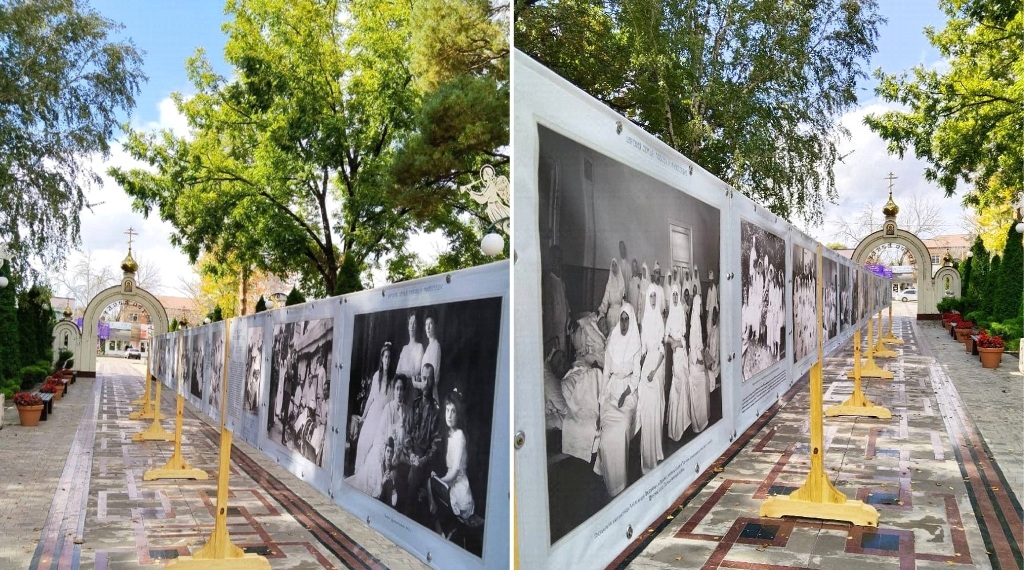
Exhibition dedicated to Nicholas II and his family opens in Istra

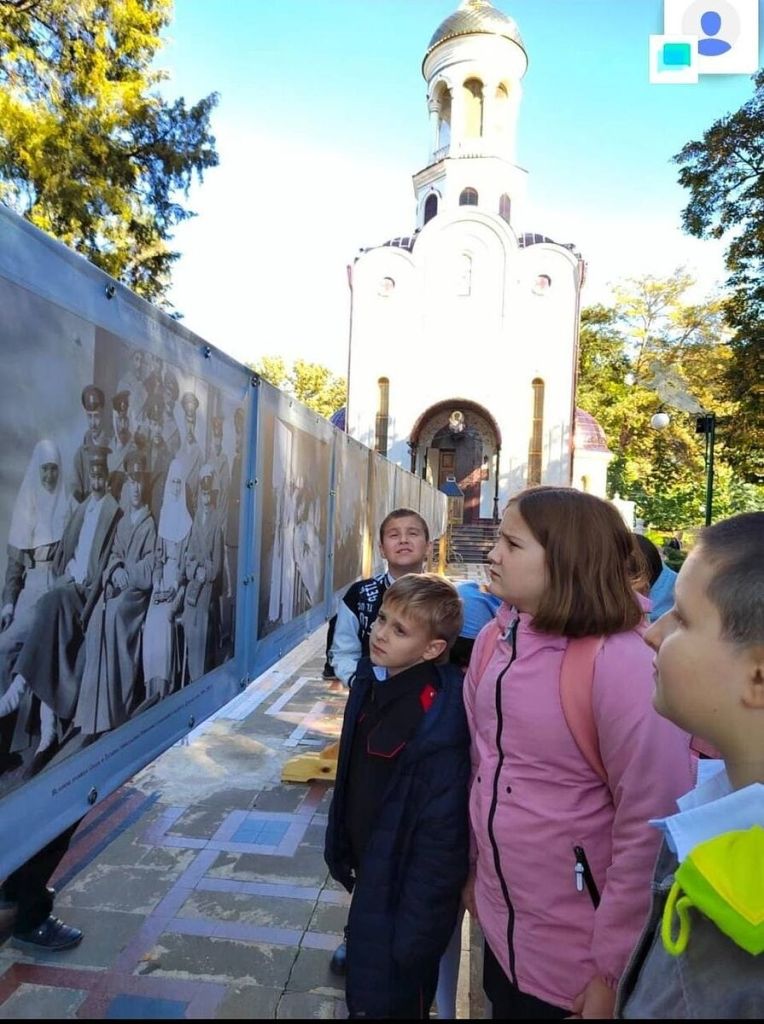
Earlier this month, a unique outdoor exhibit dedicated to Emperor Nicholas II and his family opened on the grounds of the Mironositsky Church [the Church of the Holy Myrrh-Bearing Women] in the Russian city of Istra [Moscow oblast].

The Tsar’s Crown, featured 8 posters, which provide visitors with a deeper understanding of the life of the Imperial Family during the late 19th and early 20th centuries, and their death and martyrdom.

The exhibition ran until June 15, and has now moved to the St. George Church in the city of Dedovsk.

***

*As I have noted in previous posts, I support any initiative – big or small – to help keep the memory of Nicholas II and his family alive in 21st century Russia – PG

© Paul Gilbert. 16 June 2025

The Tsesarevich’s Mentor. The Story of Charles Sydney Gibbes

On 29th May 2025, the premiere of a new Russian-language documentary-film entitled The Tsesarevich’s Mentor. The Story of Sydney Gibbes, will be shown in the Courtyard of the Sovereign Military Chamber, situated near the Alexander Palace at Tsarskoye Selo.

The film tells the story of Englishman Charles Sydney Gibbes (1876-1963), a Cambridge graduate who arrived in Russia in 1901. Gibbes lived and worked in St. Petersburg, and from 1908 he served as an English teacher for the children of Emperor Nicholas II – first for the Grand Duchesses, and later for Tsesarevich Alexei.

In August 1917, Gibbes voluntarily followed the Imperial Family into exile to Tobolsk. And after their tragic death in July 1918, he left Russia and returned to England, where he converted to Orthodoxy several years later. Gibbes was later ordained a priest, becoming Father Nikolai, and founded an Orthodox parish in Oxford, which still exists today.

PHOTO: Charles Sydney Gibbes and Tsesarevich Alexei Nikolaevich (circa 1914-16)

The documentary-film The Tsesarevich’s Mentor. The Story of Charles Sydney Gibbes was filmed by Studio First A with the support of the Ministry of Culture of the Russian Federation. Director-producer Anna Chernakova, animation director Alexander Brunkovsky, script by Alexander Adabashyan and Yuri Bryers, composer Yuri Bryers.

The film uses documentary materials from Russian and British archival sources, with additional film segments filmed in the UK.

On a personal note, a documentary about Charles Sydney Gibbes is long overdue, and while I commend and support this Russian-language documentary about his life and service to the Imperial Family, it also begs the question . . . WHY has there never been a British-made documentary about Gibbes? – PG

© Paul Gilbert. 23 May 2025

Emperor Nicholas II Foundation marks 4th anniversary

On 21st May 2025, the Emperor Nicholas II Foundation celebrated it’s 4th anniversary. The Foundation was created in 2021, to support the Museum of Emperor Nicholas II (Moscow), as well as other initiatives to help restore and disseminate the historical truth about Emperor Nicholas II and his era.

The Foundation is dedicated to the historical education of the Holy Sovereign Emperor Nicholas II and his family, and to the creation and prosperity of the Museum of Emperor Nicholas II Museum. During the last 4 years, the Foundation have hosted dozens of events, offered hundreds of museum tours, while expanding their collection with new acquisitions.

In addition, the Foundation has been involved in several Russian language publishing projects, such as Последний духовник Императора Николая II и его Семьи: тобольский протоиерей Владимир Хлынов / The last confessor of Emperor Nicholas II and his Family: Tobolsk Archpriest Vladimir Khlynov (2018).

PHOTO: bust of Emperor Nicholas II on display in the Museum of Nicholas II

The Museum of Emperor Nicholas II is based on the unique collection of the famous Russian art historian Alexander Vasilyevich Renzhin, which was formed over the course of 35 years and contains more than three thousand authentic objects dating from 1868 to 1918, including personal items which belonged to the last Russian Emperor and his family: icons, church utensils, rare books, ceremonial portraits of Emperors Alexander II, Alexander III, Nicholas II, more than 500 original photographs, autographs, state documents, porcelain, glass and bronze, a unique collection of gifts from the 1896 Coronation, memorial items of the Romanov dynasty, a full set of state awards established by Nicholas II, postcards, chromolithography, engravings and much more.

***

PHOTO: Alexander Vasilyevich Renzhin,
director of the Museum of Emperor Nicholas II in Moscow

The following is from an interview on 14th May 2024:

Russian art historian Alexander Vasilyevich Renzhin, and director of the Museum of Emperor Nicholas II, for many decades has been amassing a collection of personal items belonging to the last Russian Tsar and his family. Renzhin himself, could not have imagined that his collection of rare and unique items would form an exposition which reflect an important page in late 19th to early 20th century Russian history, one which would fill an entire museum.

— Alexander Vasilyevich, why did you start the museum.

“I had been living with the dream of opening a museum for many years. It so happened that I learned about the history of pre-revolutionary Russia, as they say, first-hand. Both of my grandfathers were simple peasants from the Vyatka province, they lived through the Great War, the 1917 Revolution, the Civil War, the Great Patriotic War and still, both lived to be 90 years old. And despite all the events which they experienced, they still retained the people’s love for the Sovereign, always referring to him in their memoirs as “Tsar-Father”. This absolutely respectful attitude towards the Tsar was deeply observed by the Russian people.

“Once a photograph of Emperor Nicholas II fell into my hands, which I remembered for the rest of my life. In it, the Emperor is depicted visiting a factory and talking to the workers. He does not look “official” or “superior”, but as if the workers are old acquaintances. So a completely new page in history began to open for me, which began with the memories that my two grandfathers shared with me. It was at this point in my life, that I started to collect books and objects related to the history of the Imperial Family.”

— Did you have like-minded people who helped open the museum?

“Yes, this would be Anna Vitalievna Gromova, a well-known public figure, historian and Chairman of the Elisabeth-Sergius Educational Society Foundation (ESPO). Thanks to her, we were able to acquire a building for our museum.”

— Are all the exhibits presented in the museum from your personal collection?

“Some things were given to us by people who kept them, often hidden away from even their closest friends and relatives. Our museum is direct evidence that not everything related to Nicholas II was destroyed, and that the Russian people did not forget the Tsar. During the 1920s and 30s, it was forbidden to be in possession of photographs or portraits depicting the Tsar. People who did so, risked losing everything, and even the risk of being shot. Nevertheless, people preserved these items to this day.

“They kept these items hidden in their chests and closets, hiding them from every one. One old woman who brought me a mug from the Tsar’s Coronation told me that her grandmother, when she invited them to visit her, opened a drawer, and showed this mug and said: “Look, this mug was held in the hands of the Tsar-Father.”

“She received it on the Khodynka Field from the hands of the Tsar himself (!). And now this rarity can be seen in our museum. Things related to the Tsar in one way or another were kept by these dear souls, who loved Russia, who loved their Tsar, as the most important treasure in life.

PHOTO: On 24th April 2018, the head of the Military Orthodox Mission Igor Evgenievich Smykov (left) visited the Museum of Emperor Nicholas II in Moscow. With the blessing of the First Hierarch of the Russian Orthodox Church Outside of Russia (ROCOR), Metropolitan Hilarion (1948-2022), he presented Alexander Renzhin (right) with a commemorative medal “In Memory of the Reign of St. Emperor Nicholas II Alexandrovich.”

– What kind of person, in your opinion, was Nicholas II?

“He was a creator. We see this in the fruits of his labours. He was very firm in his decision-making, that’s obvious. Each time he thought them over carefully, always trying to find an inner balance. Thanks to Nicholas II, 46,000 kilometers of railways were built during his twenty-two year reign.

“The plan for the electrification of the country was created in 1903 on his personal initiative, although the Bolsheviks later took credit for it. Some 118,000 educational institutions were opened. In 1894, only 24 percent of the population was literate, and in 1917 it was 67 percent. It was the Tsar who issued a decree on parochial schools. Even if a priest did not have the means to hire a teacher, he was obliged to teach himself. Primary education was offered at every church throughout the Russian Empire.

“Nicholas II was a man of very strong character, and no one ever saw him angry, always trying to remain calm, even during the many trials and tribulations of his reign. When in the company of officers, he could drink as much as the rest, but no one saw him drunk. His worst outburst of anger, as one of his retinue recalled, came during a conversation with an officer who had abandoned his soldiers on the front lines. The Tsar fell silent, turned his back to the officer, went to the windowsill and began to tap it with his fingers.

“Nicholas II was an exemplary father to his children and a father to his subjects. Suffice it to say that in the First General Census of the Population of the Russian Empire (1897), in the column “Occupation, position or trade” he wrote: “Master of the Russian land.”. That is, he felt like a master – an owner, responsible for everything and everyone.”

— What do you think visitors will learn during their visit to your museum?

“Judging by the reviews our visitors leave, for the majority, regardless of education or age, our museum is a discovery. Many people do not realize, that once Tsarist Russia was ruled by a just, honest man who loved our Fatherland with all his heart and gave not only his life for it, but also the lifves of his family, who, went with him to their death and martyrdom.

“Young people who come to our museum are very interested in history, their eyes shine while looking at the exhibits. This new generation is like a blank slate, and it is necessary to write on it, it is necessary to give them knowledge, genuine, real historical knowledge, on the basis of documents that have been preserved. When they see the fragments of the Russian Empire, they will understand what they should be striving for. They will understand what our ancestors cherished for a thousand years.”

© Paul Gilbert. 22 May 2025