The fate of four faithful retainers of the Imperial Family
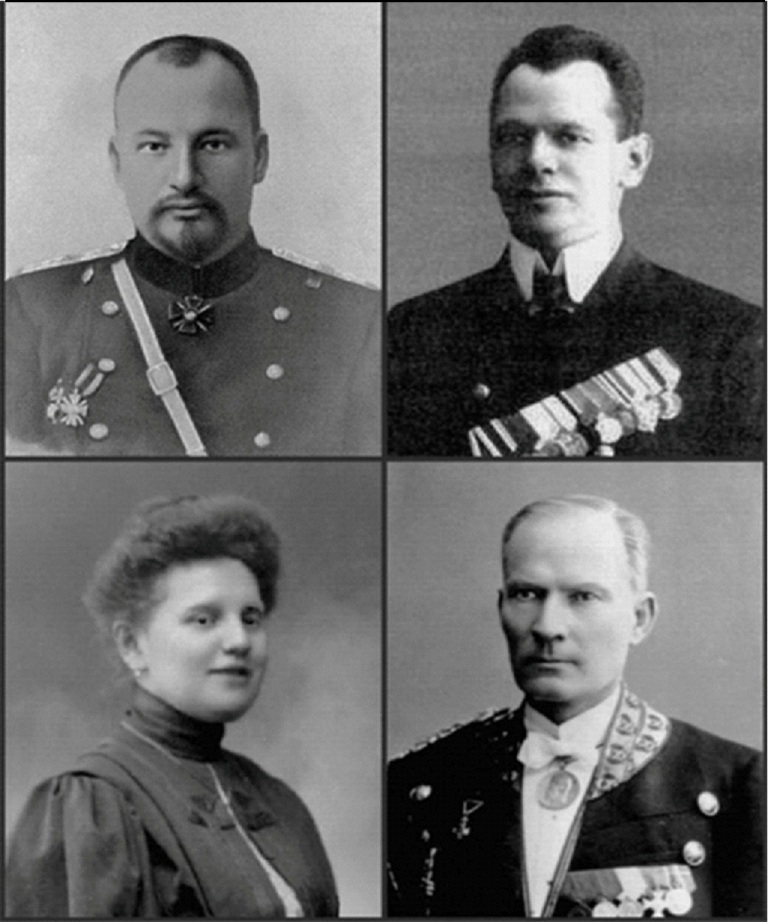
On the night of July 16/17, 1918, a tragic event took place in Ekaterinburg that marked the final fall of Russia into the hellish abyss of devastation and the ensuing Civil War. In the basement of the Ipatiev House, the last Russian Emperor Nicholas II, was shot dead by a gang of Bolshevik criminal thugs. His entire family and four faithful servants, who voluntarily followed the Imperial Family into exile and, later, shared the same fate.

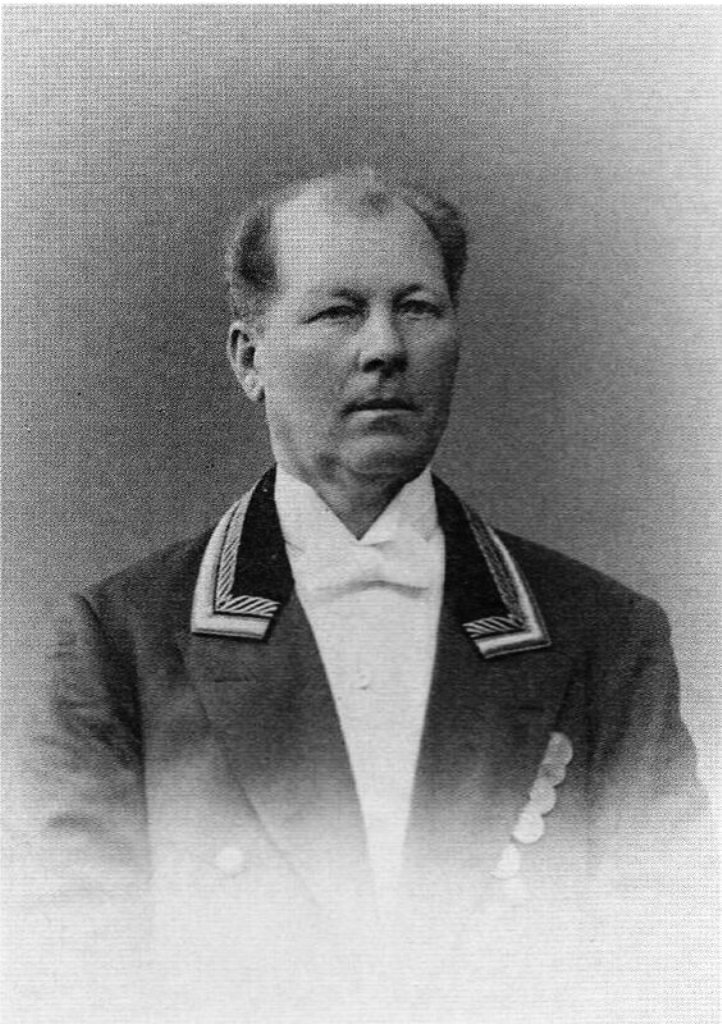
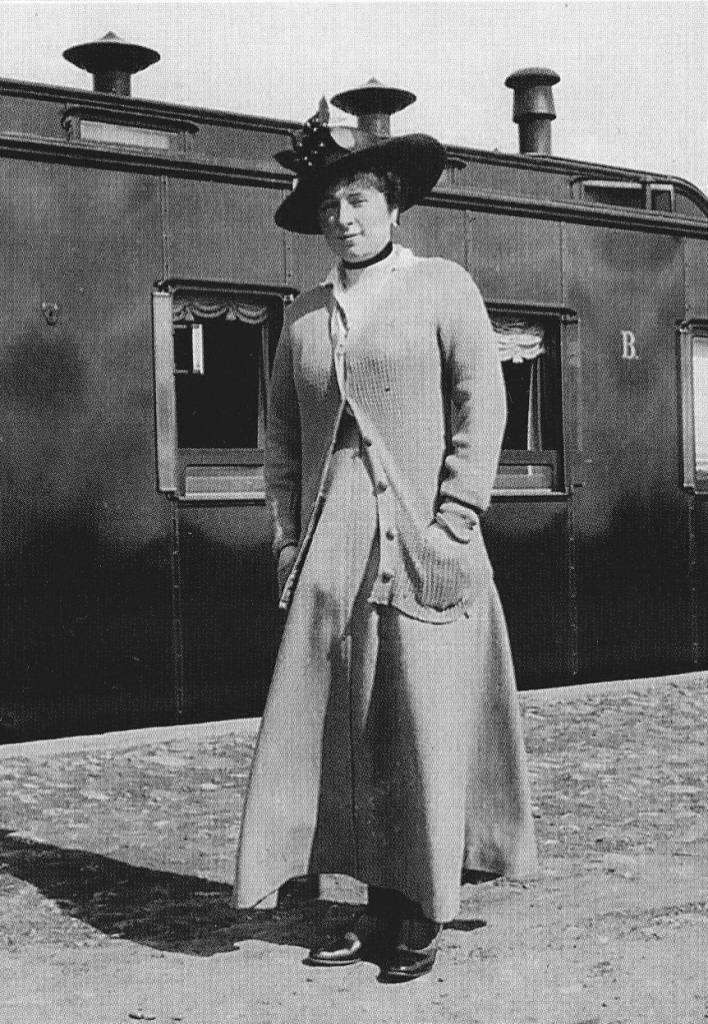
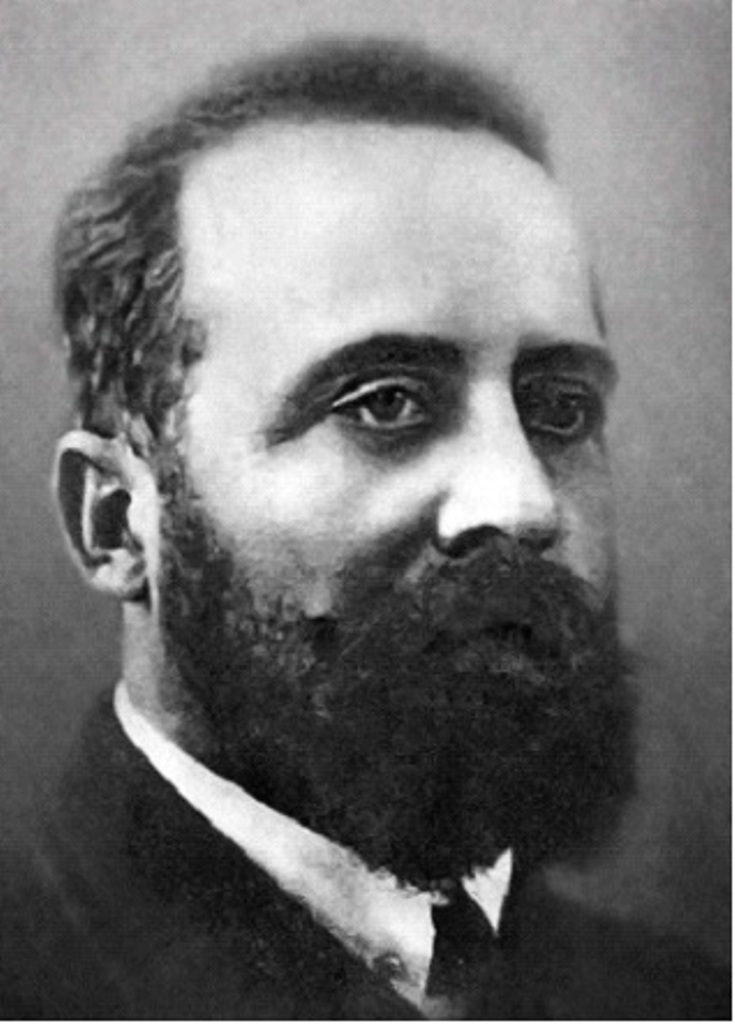
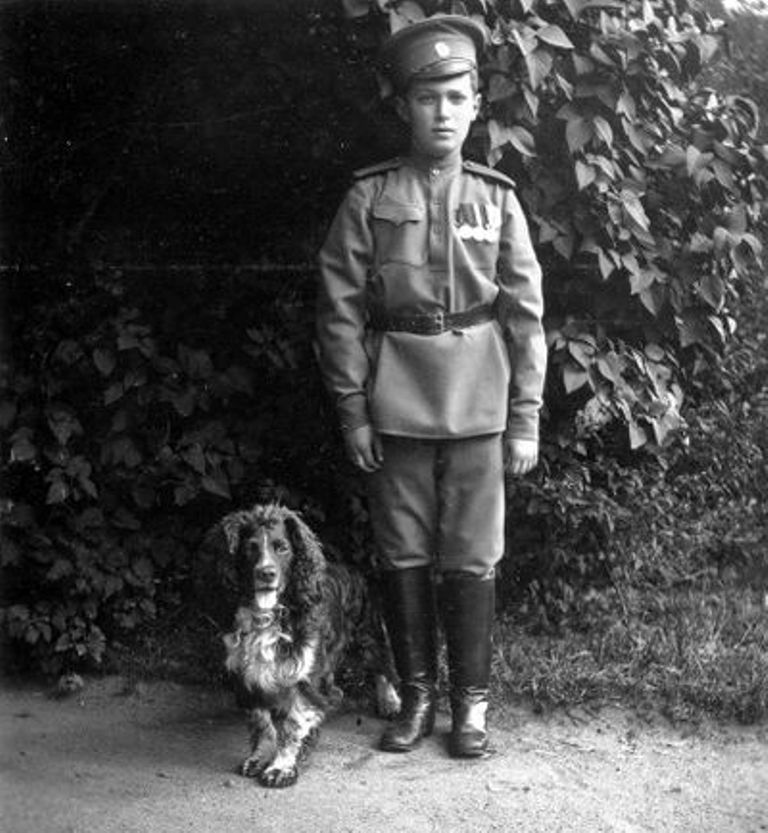
While the lives of Emperor Nicholas II, Empress Alexandra Feodorovna and their five children have been studied in detail, but that of the four faithful retainers remain in the shadows of history. This article provides brief bios of the lives of the Imperial Family’s physician Dr. Eugene Botkin (1865-1918); the maid Anna Demidova (1878-1918); the valet Aloise (Alexei) Trupp (1856-1918); and the cook Ivan Kharitonov (1872-1918).

In 1981, the four faithful retainers, along with the Imperial Family, were canonized as a New Martyr by the Russian Orthodox Church Outside of Russia (ROCOR). In 2016, the Bishop’s Council of the Russian Orthodox Church (Moscow Patriarchate) canonized Dr. Botkin as a righteous passion bearer. They did not canonize the other three servants.

The Canonization Commission, headed by Metropolitan Yuvenaly, considering the issue of the canonization of the the other three faithful servants, noted that:

“… it is not possible to make a final decision on the existence of grounds for the canonization of this group of laymen, who, in accordance with the duty of their Court service, accompanied the Imperial Family during the period of their imprisonment and accepted a violent death. … the most appropriate form of veneration for the Christian podvig[1] of the faithful servants of the Imperial Family, who shared their tragic fate, today can be the perpetuation of this feat in the lives of the Royal Martyrs.”

Святы Царственные мученики, молите Бога о нас!
Holy Royal Martyrs, pray to God for us!
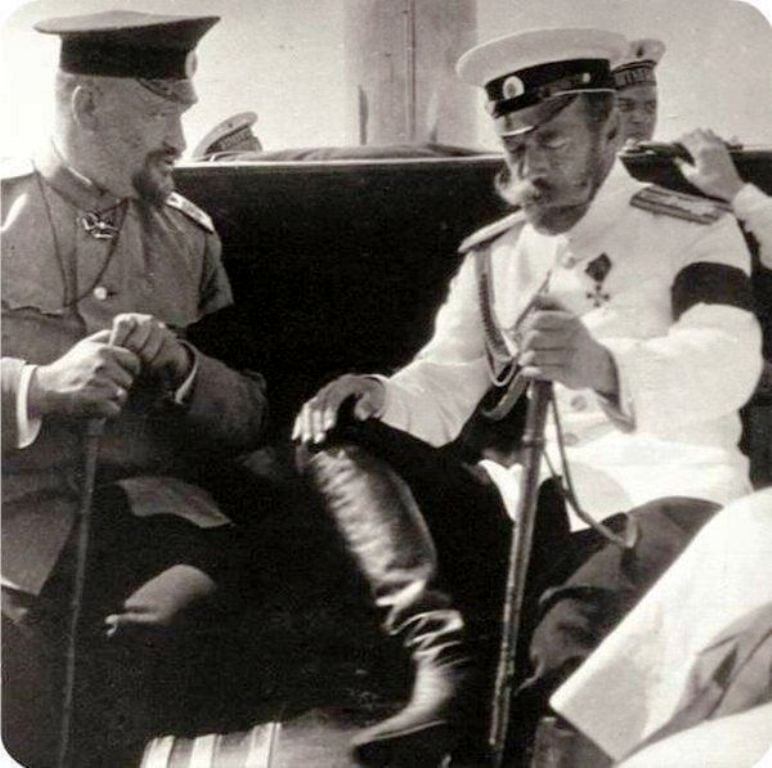
PHOTO: in happier times – Dr. Botkin with Emperor Nicholas II

Evgeny (Eugene) Botkin – Family Physician

Evgeny (Eugene) Sergeevich Botkin was the son of the famous physician Sergei Botkin (1832-1889), who served as one of the  the Court physicians for Emperors Alexander II and Alexander III. Since childhood, Evgeny followed in his father’s footsteps and pursued a career as a doctor. At the beginning of the 20th century, he worked in a hospital for the poor and at the same time lectured to students of the Imperial Military Medical Academy in St. Petersburg. Despite the fact that his dissertation was devoted to the narrow topic of blood composition, in his lectures he covered the very broad aspects of the medical profession, in particular, paying special attention to the psychological aspects of a doctor’s work, instructing future doctors that the patient should be treated with respect and dignity.

In 1904, when the Russo-Japanese War began, Botkin rushed to the Front to head the medical unit of the Russian Red Cross Society. Later he said that he could not remain indifferent to the misfortune that befell his country. Despite the fact that he went to the Front with “the most bloodthirsty feelings”, the war taught him to treat all people, even his enemies: he was equally willing to help both the Russian and Japanese wounded. Evgeny Sergeevich was a deeply religious person, his faith helped and sustained him during this period. He returned home with six military awards, and the impressions of what he saw on the fronts of the Russo-Japanese War formed the basis of a book on the subject.

It was this book that became, perhaps, the main reason that Empress Alexandra Feodorovna chose him as a personal physician for the Imperial Family. In the autumn of 1908, Botkin and his family moved to Tsarskoye Selo. The doctor’s younger children became friends with the Tsesarevich and the Grand Duchesses, and often assisted their father in his work, carrying out simple tasks.

In August 1917, when Botkin went into exile with the Imperial Family, his son Gleb and daughter Tatyana followed their father, but only reached Tobolsk – they were not allowed to go to Ekaterinburg (later both emigrated). In exile, Botkin became a kind of intermediary between the Imperial Family, the guards and the inhabitants of the city: he arranged a visit by a priest to the Governor’s House, arranged hour and a half walks for the Imperial Family, petitioned for a tutor for the Tsesarevich, taught the Russian language and biology to the Tsar’s children, while providing medical services to the residents of Ekaterinburg. Evgeny Sergeyevich never complained either about his health (which was not good) or about the conditions of detention – his letters reflect a positive or at least stoic attitude to all the trials and tribulations that fell to his lot. Only in the last letter, which was never sent, did Botkin admit that he had already “… died, but not yet buried, or buried alive.”

On the fateful night of July 16/17 1918, the guards woke up Botkin and ordered him to wake up all the inhabitants of the Ipatiev House, saying that they were allegedly being transported to another place, since the city was restless. Having gathered everyone in the basement, the executioner-commandant Yakov Yurovsky announced their execution, to which the bewildered Botkin managed to answer only with a question: “So they aren’t taking us anywhere?” The doctor’s body was burned along with the bodies of the Imperial Family. During the excavations, his artificial jaw, a broken pince-nez and a brush for his beard and mustache were found. 

Evgeny Sergeevich Botkin was the only person among the four faithful servants who was canonized by the Moscow Patriarchate of the Russian Orthodox Church. On 3rd February 2016, the Bishop’s Council of the Russian Orthodox Church canonized Botkin as Righteous Passion-Bearer Yevgeny the Physician.

On 16th October 2009, the Prosecutor General’s Office of the Russian Federation decided to rehabilitate 52 close associates of the Imperial Family who had been subjected to repression, including the four faithful servants who perished with the Imperial Family.

On 25th March 2016, on the grounds of the Moscow City Clinical Hospital No 57, Bishop Panteleimon of Orekhovo-Zuevo consecrated the first church in Russia in honor of Righteous Evgeny Botkin.

Anna Demidova – maid

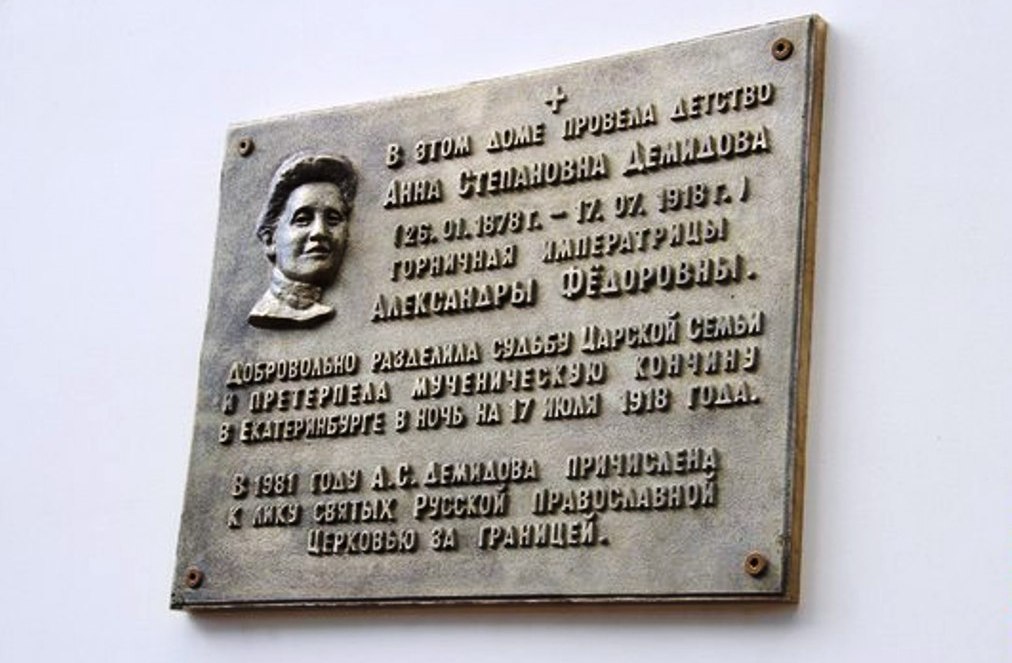
Anna Stepanovna Demidova was born into a bourgeois family in Cherepovets. She learned several foreign languages, played the piano well, was well educated and erudite, but her strong point was always embroidery. In fact, this talent helped her find the main work of her life: the Empress admired Demidova’s embroidery so much that she invited her to serve in the Imperial Family as a maid. Usually, the “room girls” were mainly engaged in helping the Empress with her wardrobe and help her get dressed, but Anna’s main duty was to teach the Tsar’s daughters needlework. Anna Demidova won over the grand duchesses so much so that she became something like another nanny for them. Anastasia loved her most of all, calling her “dear Nyuta” in her letters. Demidova never had her own family and children, as the “room girls” were not supposed to get married. Once she was proposed to hand and heart, but Demidova refused, deciding to stay with the Imperial Family.

In Tobolsk, and later in Ekaterinburg, Demidova took care of the household: she repaired clothes and bed linen, sewed new things, helped the Empress to always look and dress like a lady, as much as possible in such straitened circumstances. On the night of the shooting, Demidova went down to the basement, carrying several pillows with her – everyone thought that they would really be taken somewhere, so they took the necessary things with them. These pillows, however, only prolonged Demidova’s horrific death – during the shooting, the bullets got stuck in the dense down of the pillows. Thinking that it was all over, the maid shouted, “Thank God! God saved me!” Unfortunately, her execution was just beginning. Realizing that the maid was still alive and not even wounded, the executioner Yakov Yermakov stabbed her several times in the chest with a bayonet. Demidova was one of the last to die, her final memories being witness to the violent and bloody deaths of those whom she loved most.
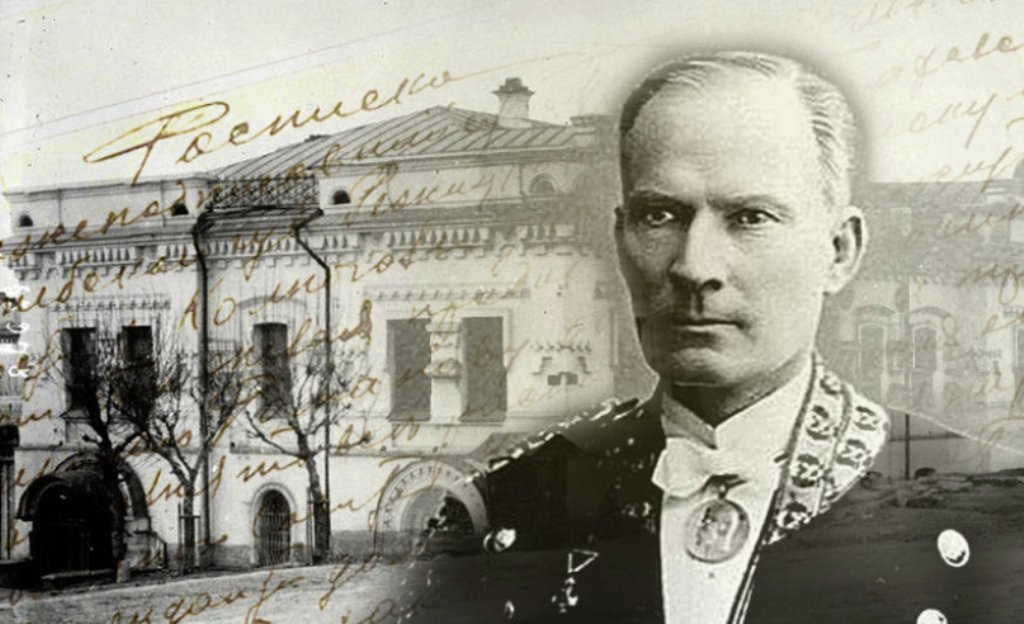
Aloise (Alexei) Trupp – valet

Aloise (Alexei) Trupp came from an ordinary Latvian peasant family. At the age of 18, young Aloise went to serve in the army, where the young handsome Latvian was enlisted in the Life Guards. There he rose to the rank of a non-commissioned officer and was retired on 23rd March 1883. It is believed that he was noticed by Empress Maria Feodorovna, who invited him into the service of the palace as a footman. Aloise enjoyed the trust of the Imperial Family, accompanied them on trips, and watched over the Emperor’s children as if they were his own (he never had children of his own). He also looked after the Emperor’s wardrobe and helped him get dressed. While in the service of Nicholas II, the Tsar had difficulty parting with old clothes, preferring darned to new, but he adored military uniforms – hundreds of different uniforms hung in his closets.

Trupp never forgot about his native land, always giving large sums to help the poor and those suffering from crop failures. He also donated money for the construction of a church in his homeland. While still imprisoned in Tsarskoye Selo, a drunken officer shouted to him and other servants: “You are our enemies. We are your enemies. You are all corrupt here.” In the last months of his life, the “corrupt” servant Trupp served the Emperor free of charge.

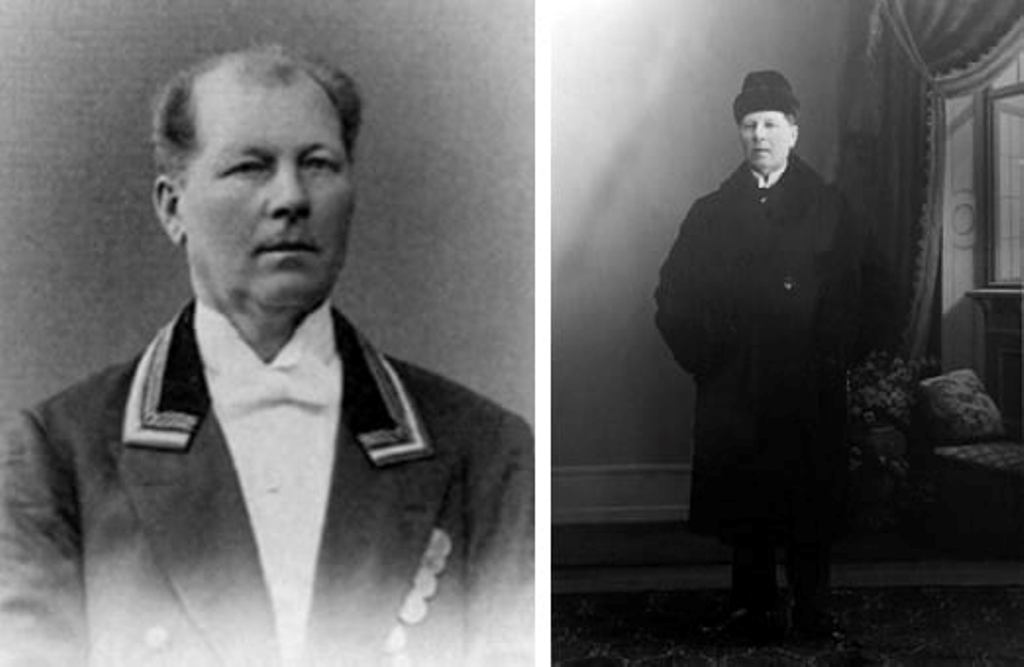
In the Ipatiev House, Trupp lived in the same room with the cook Ivan Kharitonov. Despite Trupp’s Catholic faith, he participated in Orthodox services: he sacrificialized[2], carried a candle, and lit and brought censers. One day, while among the guards of the “House of Special Purpose” was his nephew, with whom he spoke his native Latvian. Unlike some of his fellow Latvians, who took part in the execution of the Imperial Family, Trupp remained with the Master of the Russian Land until the very end. On the fateful night of 16/17 July, Trupp and Kharitonov were standing against the wall when the shooting began. “A woman’s squeals and moans… A footman leaning against the wall,” one of the killers would later say.
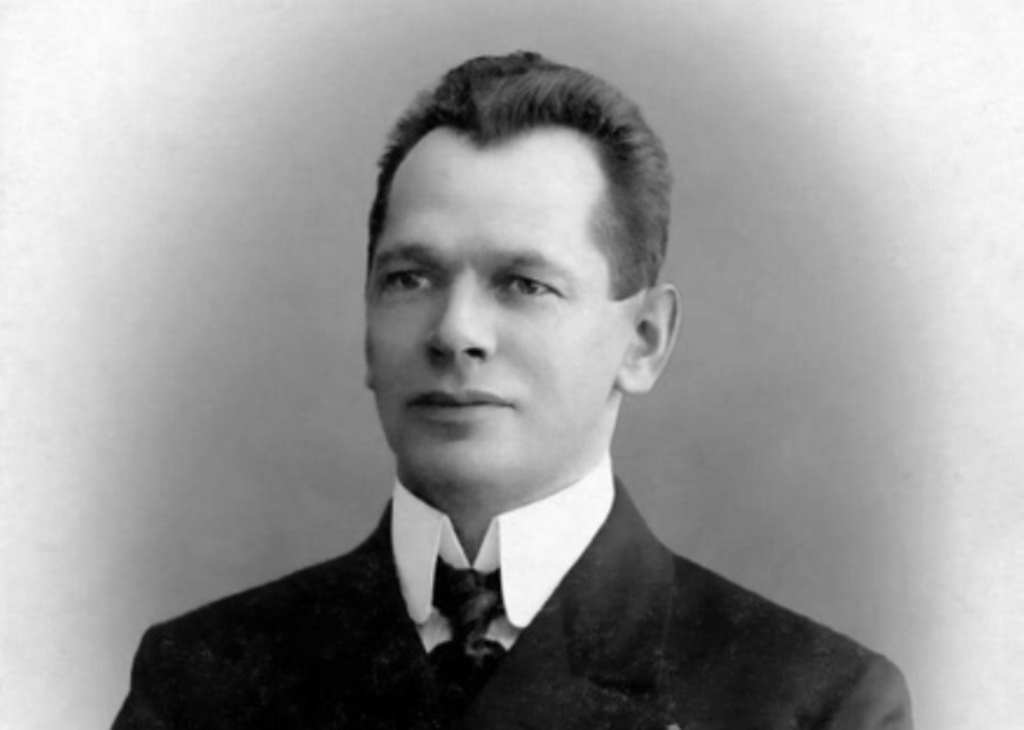
Ivan Kharitonov – cook

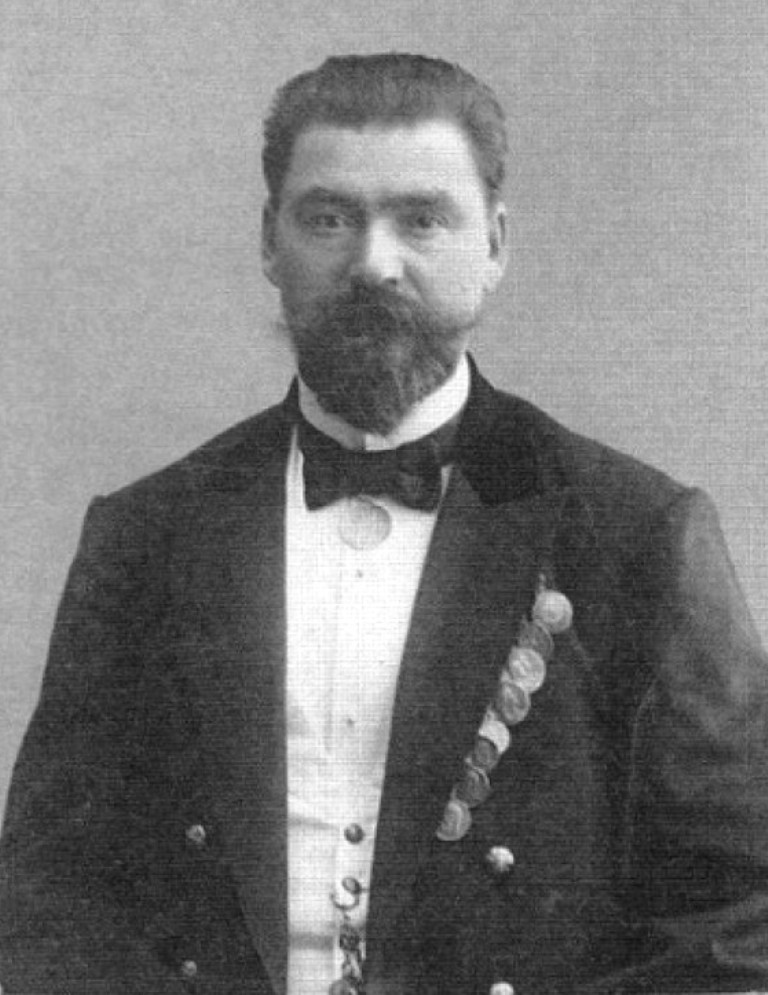
Ivan Mikhailovich Kharitonov was born on 14th June (O.S.) 1870 in St. Petersburg. In 1882, he was encouraged by his father to study cooking, and went to Paris in order to improve his skills, eventually becoming a soup specialist, he even invented a recipe for puree soup made from fresh cucumbers. Kharitonov knew the culinary traditions of different countries, understood Lenten cuisine, and came up with new recipes. In 1888, he was appointed to the Imperial Court as an apprentice cook, and then as a cook. In the period from 1891 to 1895, Kharitonov served in the Russian Imperial Navy. After his service ended, he returned to the Imperial Court, where he was appointed senior cook of the Imperial Kitchen. He had the title of Honourary Hereditary Citizen[3], a result of which he was awarded many orders and medals.

After the February 1917 Revolution, the head waiter Kuba left the service of the Imperial Family, he was replaced by Ivan Kharitonov. Previously, the Imperial Family loved picnics, Emperor Nicholas II would sometimes bake potatoes in ashes himself, but in exile they had to get used to simple food on a regular basis. Nevertheless, Ivan Kharitonov managed to cook exquisite dishes from affordable products, which were becoming more and more scarce. The commandant of the Ipatiev House, Yakov Yurovsky, suddenly “cut off” the supply of fresh food to the captives from sympathetic townspeople and the Ekaterinburg monasteries, saying that it was time for the Imperial Family to get used to eating like prisoners. Despite all the difficulties, Kharitonov managed to make delicious dishes from available products. Dishes such as rasstegai[4], pasta pie, potato dumplings, beetroot salad, and tangerine jelly were prepared, much “to the great joy of everyone”, as Nicholas II wrote in his diary. The last apprentice cooks for Kharitonov were the grand duchesses who helped him in the kitchen, and he taught them how to bake bread.

On the fateful night of 16/17 July, Kharitonov stood in the basement by the wall next to the valet Trupp. The cook was one of the first to die from the shots fired by the firing squad. Ivan Kharitonov was happily married and had 6 children. The family tried to follow their father into exile, but only reached Tobolsk, they were not allowed to join him in Ekaterinburg. This allowed them to survive during the Civil War and the establishment of Soviet power.

The great-grandson of Ivan Kharitonov, Candidate of Historical Sciences Pyotr Valentinovich Multatuli is recognized as one of Russia’s foremost authorities on the life and reign of Nicholas II. He has written numerous books on the subject and lectures in cities across the Russian Federation.

NOTES:

[1] Podvig is defined as an action taken not for one’s own sake, but for the sake of something greater, such as an idea or one’s homeland, often involving significant risks, including the potential for sacrifice. It is also described as a “spiritual struggle” within the context of Orthodoxy, serving as a means to draw closer to Christ on the path of salvation.

[2] In the Orthodox Christian tradition, the term “sacrificialized” refers to the concept of the Eucharist, which is often described as a “bloodless sacrifice.” This means that during the Eucharist, the bread and wine become the Body and Blood of Jesus Christ through the descent and operation of the Holy Spirit, rather than through the shedding of blood. The Eucharist is considered a propitiatory sacrifice offered on behalf of both the living and the dead, symbolizing Christ’s sacrifice for humanity. The Orthodox Church emphasizes that the Eucharist is a true sacrifice, not merely a symbol, and it represents the completion of all other sacraments and the source of all Church doctrines.

[3] The title of Honourary Hereditary Citizen in Russia was established by the Emperor Nicholas I in 1832. This title was granted to individuals who had made significant contributions to the state and society, such as merchants, professionals, and artists. The privileges associated with this title included exemption from corporal punishment, the ability to own gardens and country estates, and the right to ride in a carriage in pairs or quadruplets. The title was hereditary, and children of hereditary honoured citizens received the title from birth. The establishment of this title was part of the imperial state’s effort to create a middle class and stabilize the social structure of Russian towns.

[4] Rasstegai is a traditional Russian dish made from a pastry crust that is filled with a variety of ingredients, such as fish, meat, liver, rice, or mushrooms. The dish features a hole in the center, which is used to add broth to the filling. Rasstegai is known for its flaky pastry crust and has been a popular choice in Russian cuisine, especially during the Tsarist era.

© Paul Gilbert. 14 September 2025

***

I am committed to clearing the name of Russia’s much slandered Tsar. In exchange for this 18-page booklet, please consider making a small $5 or $10 donation in aid of my research. These donations are of great assistance in helping me offset the cost of obtaining and translating documents from Russian archival sources, which are often paid for out of my own pocket. It is these documents which help present new facts and information on the life and reign of Nicholas II. In addition, my research continues to debunking many of the myths and lies which exist more than a century after his death and martyrdom.

Please note, that there is NO obligation, thank you for your consideration!

CLICK HERE TO MAKE A DONATION

“They did not betray their oath” – the fate of the generals who remained loyal to Nicholas II

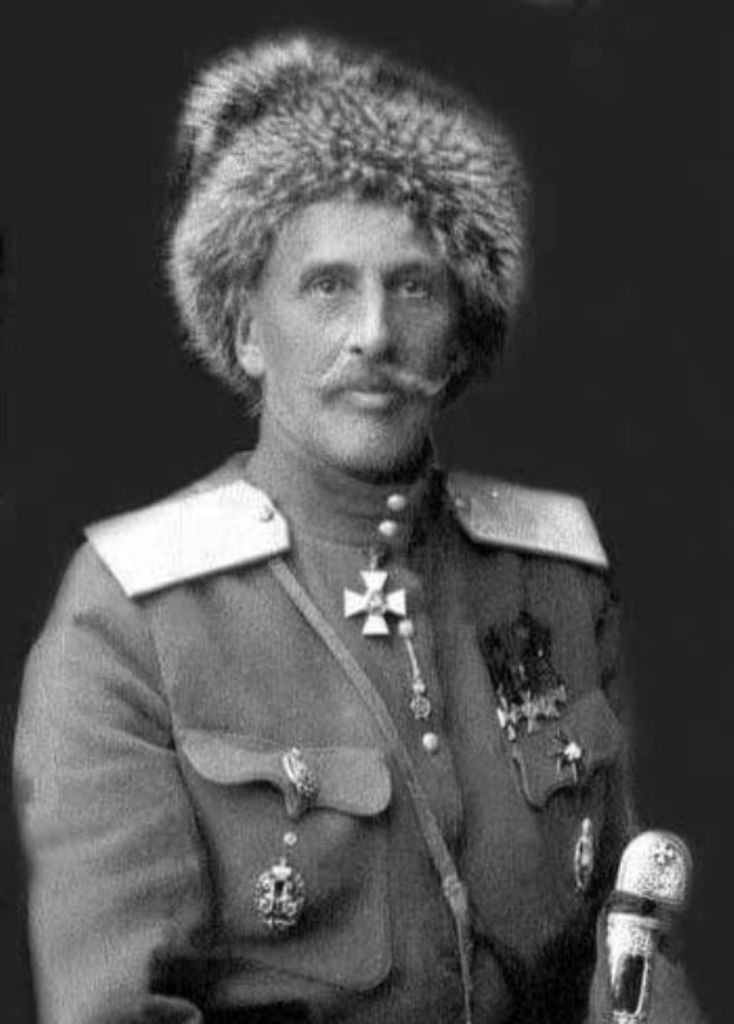
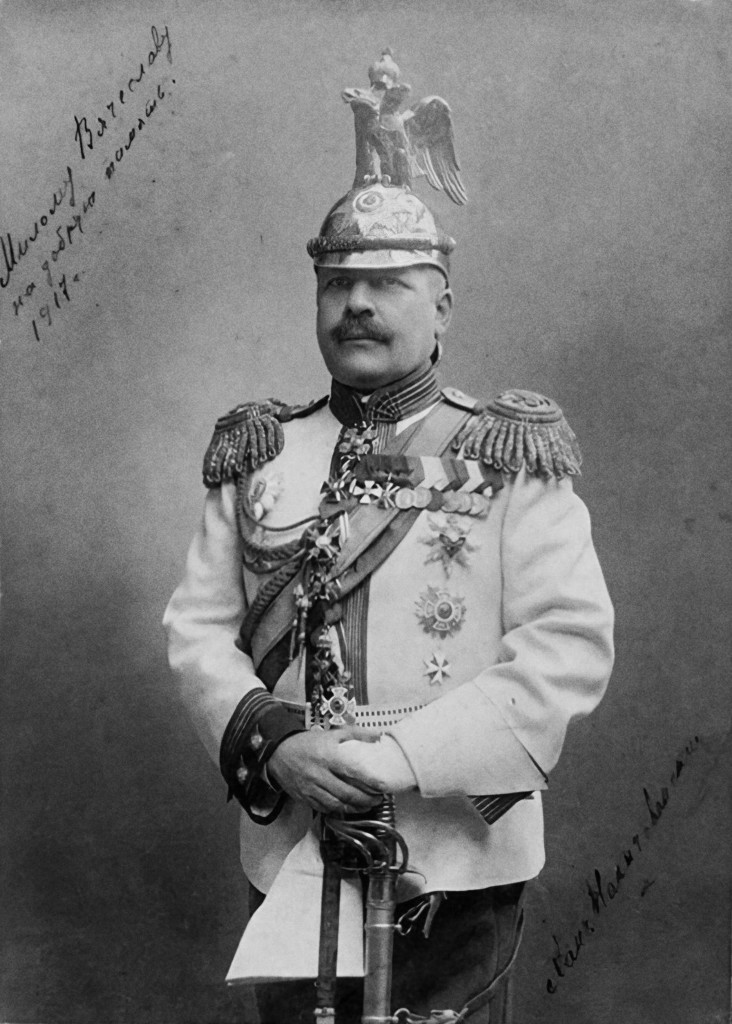
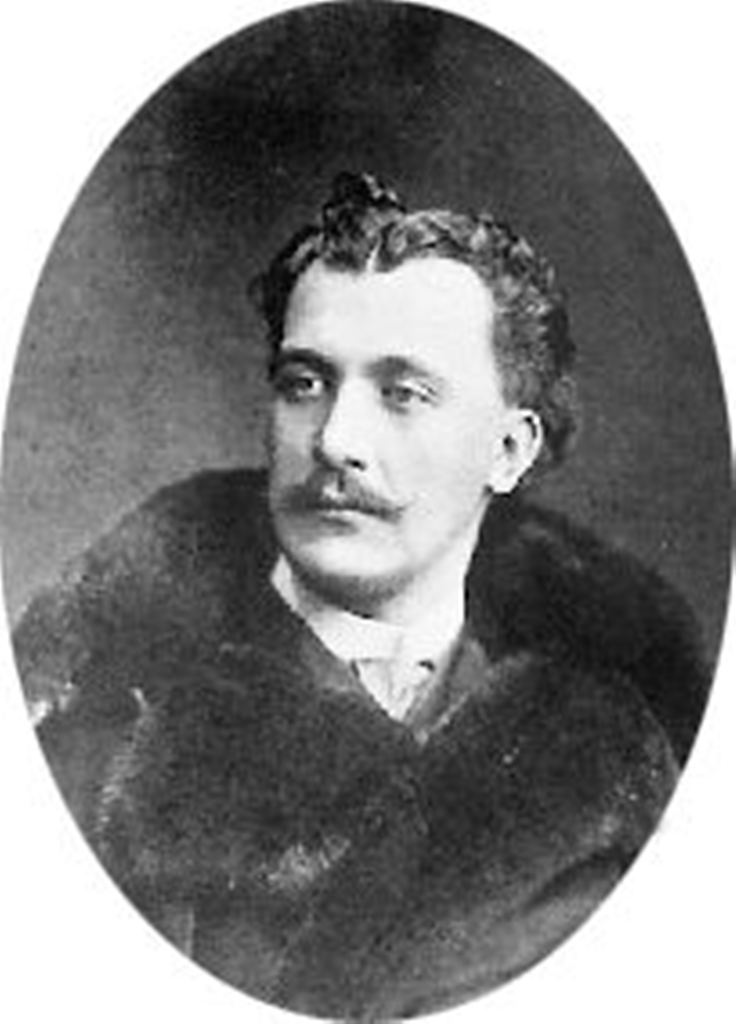
PHOTO: Generals Nikolai Ivanov, Fyodor Keller and Huseyn Khan Nakhchivanski

The abdication of Nicholas II, continues to be shrouded in controversy, myths and lies. Modern day academically lazy historians continue to spread the century old myth that the Tsar was betrayed by all of his generals in the days leading up to his abdication. This is not true!

During the February 1917 Revolution, while most all of Russia’s top military leaders agreed with the position of the chief of staff of the General Headquarters (Stavka) of the Russian Imperial Army, General Mikhail Alexeev, that Emperor Nicholas II must abdicate the throne. Among them, was the Tsar’s first cousin Grand Duke “Nikolasha” Nikolaevich (1856-1929).

A fact, which is often overlooked by today’s historians and authors, is that there were in fact three generals who remained loyal to their oath to the Emperor: Nikolai Iudovich Ivanov (1851-1919), Fyodor Arturovich Keller (1857-1918), and Huseyn Khan Nakhchivanski (1863-1919). All three generals had distinguished military careers and highly decorated with orders and medals for their service, duty and bravery.

It was during the February 1917 Revolution, that these generals offered the Tsar the services of their troops to suppress the revolution. And when the Tsar abdicated, and it was time to swear allegiance to the new Provisional Government, these same three generals defiantly refused.

Sadly, the lives of these generals ended tragically. None of them survived the Civil War, and yet they remained loyal to Emperor Nicholas II until the end of their days.

Memory Eternal! Вечная Память!

Nikolay Ivanov

The origin of Nikolai Iudovich Ivanov (1851-1919) origin remains a subject of debate, some sources say that he came from a noble family from the Kaluga Governorate, but other sources claim that he was the son of a cantonist[1]. Despite all of these sources, the origin of where Ivanov’s family came from, remains a mystery.

After graduating from the military gymnasium, Nikolai Ivanov continued his military education and became an artillery officer. He served in the 3rd Guards and Grenadier Artillery Brigade, he then participated in the Russo-Turkish War of 1877-1878. During the Russo-Japanese War of 1904-1905, he commanded a corps and repeatedly showed personal bravery, for which he was awarded the Order of St. George 3rd and 4th Class and a Gold Sword for Bravery. In 1908, Ivanov received the highest rank of general of the branch of the armed forces (artillery) at that time.

During the First World War, Ivanov commanded the troops of the South-Western Front. Later at the end of 1915, he conducted a failed operation by the 11th Army against the enemy’s forces. And in March 1916, he was replaced by General Aleksei Brusilov as the commander-in-chief of the Southwestern Front. Ivanov he was then appointed a member of the State Council, and adjutant to Emperor Nicholas II.

On 27th February 1917, the Emperor received disturbing reports about the civil and social unrest in Petrograd, and that the garrison of the capital refused to obey their superiors. Ivanov was appointed commander of the Petrograd Military District with extraordinary powers and subordination of all ministers to him. The Georgievsky Battalion (aka Knights of St. George), were reinforced by two machine-gun companies, which were placed at his disposal. In addition, Ivanov was to be sent two cavalry and infantry regiments from the Northern and Western Fronts.

The Emperor instructed Ivanov and ordered him to go to Tsarskoye Selo to ensure the safety of the Empress and her children. Military units loyal to the Tsar sent from the Fronts were also supposed to arrive there. Ivanov was to take command of them all at Tsarskoye Selo and from there to march on Petrograd to quell the unrest.

Now it is known that the chief of staff of the General Headquarters (Stavka) of the Russian Imperial Army at Mogilev, General Mikhail Alexeev (1857-1918), and the commanders of the Fronts sabotaged the Emperor’s order on the allocation of troops.

After Ivanov learned about the Tsar’s abdication, he went back to the Headquarters at Mogilev, but was arrested and taken to Petrograd. By order of the Minister of Justice of the new Provisional Government Alexander Kerensky (1881-1970), Ivanov was released. In 1918, General Pyotr Krasnov (1869-1947) of the White Army, appointed Ivanov commander of the Special Southern Army, consisting of the Voronezh, Astrakhan and Saratov corps.

On 29thJanuary 1919, after a short but serious illness (from typhus), the former commander-in-chief of the Southern Army, General of Artillery Nikolai Iudovich Ivanov died in Odessa. 

Fyodor Keller

Fyodor Arturovich Keller (1857-1918) came from a military family of Russified Germans, many members of which were generals. In 1877, he volunteered for the Russo-Turkish War and awarded the St. George’s Cross 1st and 2nd Class for bravery.

In 1906, Keller survived two attempts on his life by revolutionaries. In 1907, he was awarded the rank of Aide-de-Camp and in July of the same year, he was promoted to major general with enrollment in His Imperial Majesties Retinue.

In August 1914, while commanding the 10th Cavalry Division, he won a number of victories over the enemy, for which in 1916 Emperor Nicholas II awarded him a golden sword. In addition, for services in battle he was awarded the Order of St. George 3rd and 4th Classes.

The news of the abdication of the Emperor found Keller in the post of commander of the 3rd Cavalry Corps. On 6th March 1917, he sent a telegram to Nicholas II, in which he begged him not to leave the throne and offered his troops to suppress sedition. The telegram never reached the Emperor, having been intercepted by supporters of the Provisional Government.

Keller refused to take the oath of allegiance to the new Provisional Government, and was dismissed from his position on 15th March. He left for Kharkiv, where his family lived at that time.

Keller was not happy with the White movement, as it refused to put forward monarchist agenda. He moved to Kiev, where on 19th November 1918 he was appointed by the puppet pro-German “Hetman of Ukraine” Pavlo Skoropadskyi, to lead the armed forces formed from the Russian officers in Kiev, who were there to protect the city from Symon Petliura’s[2] followers.

Skoropadskyi needed the support of Russian monarchists, but Keller understood the appointment as the beginning of his own dictatorship. Keller instituted a five-member Council of the State Defense, composed entirely of the monarchist politicians, and stated that he served one Russian state. Skoropadskyi dismissed Keller on 26th November for “overstepping his authorities”.

Sadly, the events which unfolded in Kiev turned out to be fatal for Keller. When Petliura’s followers entered the city, Keller was in hiding in the St. Michael’s Golden-Domed Monastery. He had categorically rejected the Germans’ proposal to hide in their units, changing the Russian uniform for the German one.

Finally, on 21st (O.S. 8th) December 1918, Petliura’s followers captured and shot Keller along with two of his adjutants (December 21, 1918). His golden sword was presented to Petliura.

Keller’s body was buried under a false name in the Holy Intercession Monastery in Kiev. His grave has not been preserved, his body never found.

Huseyn Khan Nakhchivanski

Huseyn Khan of Nakhichevan (1863-1919) came from a family of hereditary khans of Nakhichevan, who took Russian citizenship in 1828. From this family came a number of Muslim generals, which was rare in the Russian Imperial Army. After graduating from the Corps of Pages with honours, Huseyn Khan regularly participated in the solemn receptions of foreign monarchs in St. Petersburg.

During the Russo-Japanese War, Huseyn Khan served as commander of the 2nd Dagestan Volunteer Cavalry Regiment. During the war the regiment distinguished itself, and Huseyn Khan himself received seven decorations. On 27th January 1907, he was decorated with the Order of St George 4th Class and the Golden Saint George Sword for launching a successful cavalry onslaught to save an encircled Russian infantry unit.

At the very beginning of the First World War, Huseyn Khan was appointed commander of the Combined Cavalry Corps and participated in the offensive against East Prussia. From 19th October 1914 he was commander of the 2nd cavalry corps and on 22nd October 1914, he was decorated with the Order of St George 3rd Class, which was presented to him personally by Emperor Nicholas II. In June 1915, he was appointed General-Adjutant of His Imperial Majesty and became the only Muslim to hold that position.

The news of the February 1917 Revolution found Huseyn Khan as the commander of the reserve Guards Cavalry Corps. On 3rd March 1917, he sent a telegram to General Alexeev at Mogilev, in which he expressed his readiness to die for the Tsar. His telegram, like Keller’s was not handed over by Alexeev to the Emperor.

Huseyn Khan refused to swear allegiance to the Provisional Government. As a result, Huseyn Khan was officially dismissed from the army on 16th April. His chief of staff, Major General Baron Alexander Wienen, shot himself.

Huseyn Khan returned to Petrograd, where he lived with his family. He was one of the few Azeri figures who did not support the newly formed Azerbaijan Democratic Republic, remaining a staunch Russian monarchist.

Following the October 1917 Revolution and the assassination of the head of Petrograd Cheka, Moisei Uritsky (1873-1918) in August 1918, Nakhchivanski together with some other prominent citizens of Petrograd was taken hostage by the Bolsheviks. He was held in the Shpalernaya Prison along with the Grand Dukes Paul Alexandrovich, Nicholas Mikhailovich, George Mikhailovich and Dmitry Konstantinovich. Also in the same prison was Prince Gabriel Constantinovich, who used to serve under the command of Huseyn Khan and who later managed to escape, and who mentioned in his memoir that he met Huseyn Khan during their walks in the prison yard.

The Grand Dukes were executed in the Peter and Paul Fortress on 29th January 1919. It is presumed by a number of Russian historians that Huseyn Khan was executed together with the Grand Dukes. However, the exact circumstances of his death and his burial place still remain unknown.

NOTES:

[1] A cantonist refers to Jewish boys conscripted into military service in the Russian Empire, particularly during the reign of Emperor Nicholas I (1825-1855). They were educated in special cantonist schools, where they were subjected to harsh conditions and pressure to adopt Christianity. The system began in 1827, and by 1857, it was abolished due to public and international criticism, highlighting the inhumane treatment of these young conscripts.

[2] Symon Vasyliovych Petliura (1879-1926) was a Ukrainian politician and journalist. He served as the Supreme Commander of the Ukrainian People’s Army (UNA) and led the Ukrainian People’s Republic during the Ukrainian War of Independence, a part of the wider Russian Civil War.

© Paul Gilbert. 22 August 2025

***

I am committed to clearing the name of Russia’s much slandered Tsar. In exchange for this 18-page booklet, please consider making a small $5 or $10 donation in aid of my research. These donations are of great assistance in helping me offset the cost of obtaining and translating documents from Russian archival sources, which are often paid for out of my own pocket. It is these documents which help present new facts and information on the life and reign of Nicholas II. In addition, my research continues to debunking many of the myths and lies which exist more than a century after his death and martyrdom.

Please note, that there is NO obligation, thank you for your consideration!
CLICK HERE TO MAKE A DONATION

Faithful to the End: Prince Vasily Alexandrovich Dolgorukov (1868-1918)

Prince Vasily Alexandrovich Dolgorukov (1868-1918)

Prince Vasily Alexandrovich Dolgorukov was born on 13th August 1868, in Karlsruhe, Baden-Württemberg. He was one of three children born to Prince Alexander Vasilyevich Dolgorukov (1839-1876) and Princess Maria Sergeevna, née von Benckendorff (1846-1936). Vasily had a sister Olga (1865-1961) and a brother Alexander (1866-1919). His mother outlived both of her sons.

Vasily’s mother served as a maid of honour at the Imperial Court. His father was known as “a bitter man and violent drunkard”, who was killed in a duel in 1876. On 29th September 1897, Maria entered into a second marriage to Count Paul Leopold Johann Stephan Graf von Benckendorff [later, the famous Pavel [Paul] Konstantinovich Benckendorff (1853-1921), who served as Chief Marshal of the Imperial Court, and member of the inner circle of Emperor Nicholas II. The couple had no children.

In 1880 Vasily graduated from the Corps de Pages. He then served as a cornet in the Life Guards Cavalry Regiment, and in March 1904, he was promoted to colonel and commanded a squadron.

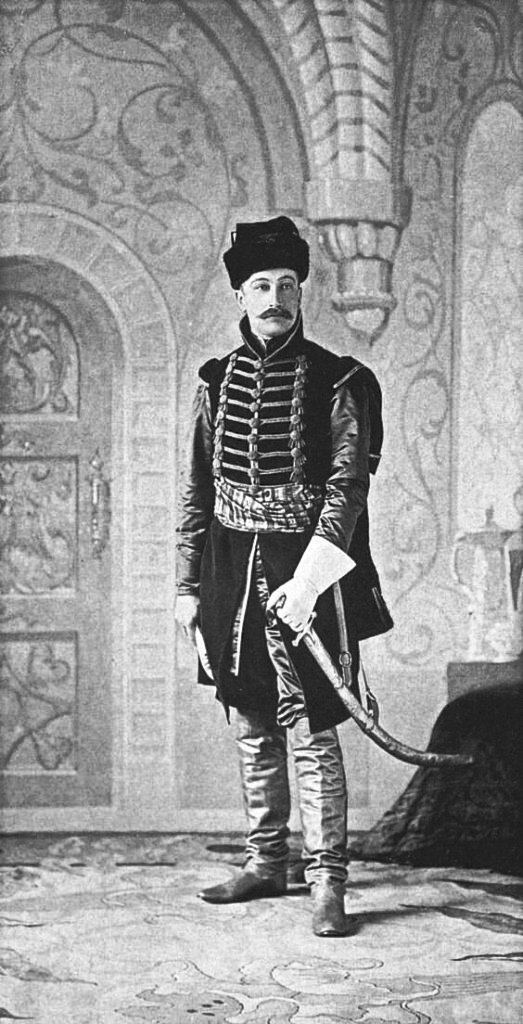
PHOTO: Dolgorukov dressed in 17th-century costume, for the
famous Costume Ball, held in the Winter Palace in February 1903

In 1896, he was appointed aide-de-camp to His Imperial Majesty Emperor Nicholas II.

From 16th March 1910 to 3rd March 1912, Vasily served as commander of the 3rd Novorossiysk Dragoon Regiment. In March 1912, he was promoted to the rank of Major General and enlisted in the retinue of His Imperial Majesty. He served as commander of the Life Guards Horse Grenadier Regiment from 3rd March, 1912 to 4th February 1914. From 3rd March 1912 to 4th February 1914). February 4, 1914 – July 23, 1914 – commander of the 1st Brigade of the 1st Guards Cavalry Division.

From 23rd July 1914 he was appointed Knight Marshal of the Court of His Imperial Majesty Emperor Nicholas II. During the First World War, Vasily was at the Headquarters of the Supreme Commander-in-Chief, first at Baranovichi, and from 8th August 1915 – in Mogilev.

During his lifetime, Vasily Dolgorukov was the recipient of 7 orders of the Russian Empire, and 17 orders from the various courts of Europe.

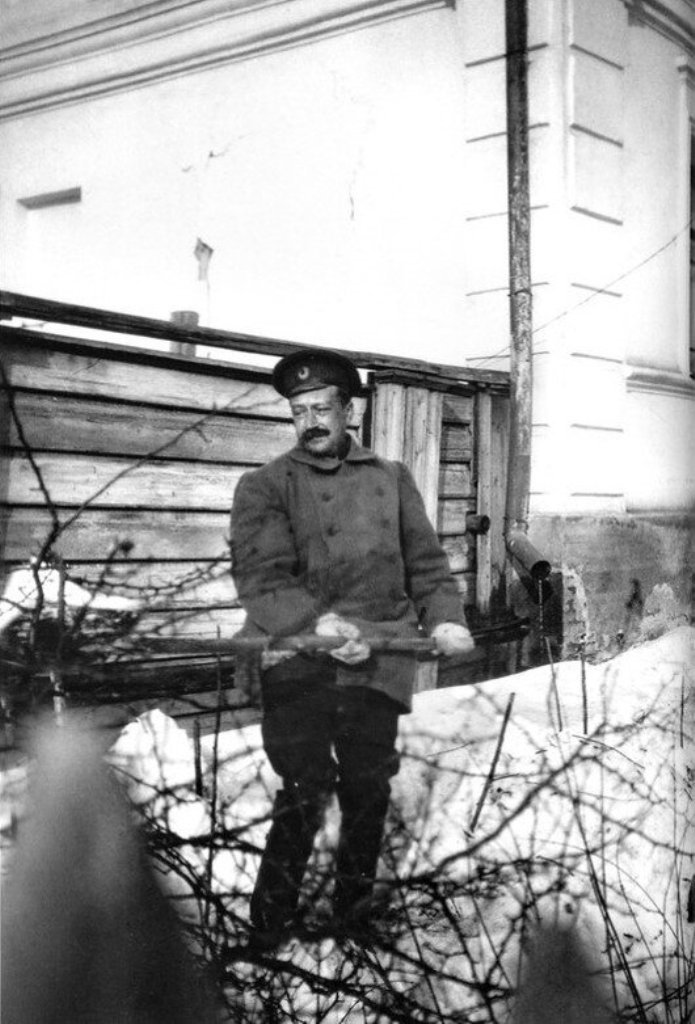
PHOTO: Dolgorukov shovelling snow in the garden of the Governor’s House, where the Imperial Family were being held under house arrest, in the winter of 1917-18

The Emperor and Empress were both very fond of Vasily, and nicknamed him Valya. Vasily Alexandrovich Dolgorukov selflessly served Emperor Nicholas II and remained faithful to his Tsar until his martyrdom.

Following the Tsar’s abdication on 15th March (O.S. 2nd March), he returned to Tsarskoye Selo. Upon his arrival at the station, he was met by Colonel Eugene Stepanovich Kobylinsky (1875-1927), who recalls: “The Tsar was accompanied by many members of his retinue. When the train arrived at the station, the members of the Tsar’s retinue spilled onto the platform and began to quickly scatter in different directions, like rats, looking around, apparently imbued with a sense of fear that they would be recognized. It was a very ugly scene to witness!”

The Tsar got out of the carriage, and quickly moved along the platform, without looking at anyone, and got into the motorcar waiting for him. Of all those who accompanied the Tsar on the train, only one faithful member of his retinue followed him: Prince Vasily Dolgorukov. With dignity, he took a seat in the motorcar next to the Emperor.

The Tsar and his family were placed under house arrest, the Alexander Palace had now become a prison. Dolgorukov often accompanied the Tsar during his walks in the Alexander Park. It was during these walks, that Vasily Alexandrovich tried to come between the Tsar and the guards, protecting the Tsar as much as possible from the rudeness of the unbridled soldiers. In the midst of general fear and betrayal, Vasily Alexandrovich retained courage and fortitude.

Alexander Aleksandrovich Bublikovm (1875-1941), a State Duma deputy and staunch anti-monarchist noted “from the Emperor’s retinue, only the Knight Marshal of the Imperial Court, Prince Dolgorukov, behaved with true dignity!”

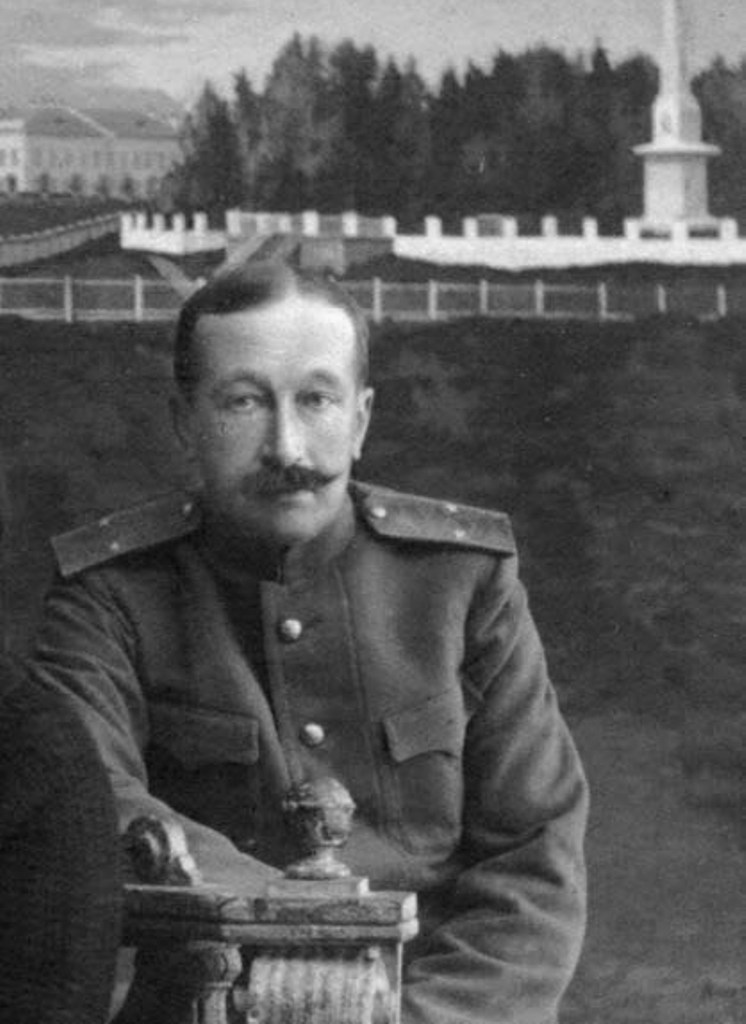
PHOTO: Prince Vasily Alexandrovich Dolgorukov. 1917.

On 14th (O.S. 1st) August 1917, he voluntarily followed the Emperor and his family into exile to Siberia, where they were held under house arrest in Tobolsk until April 1918. During imprisonment, Vasily worked alongside Nicholas in the large garden, sawing wood, clearing the snow, digging in the garden, etc.

The Tsar and Dolgorukov were separated only in Ekaterinburg, the latter, who upon his arrival in the Ural city was arrested on false charges “in order to protect public safety.” He was placed in the political block of the Ekaterinburg prison. The Chekists tried to accuse him of planning the escape of the Imperial Family, although historians call these accusations groundless.

On 10th June 1918, Prince Vasily Dolgorukov, along with General Ilya Leonidovich Tatishchev, were shot in a wooded area near the city’s Ivanovskoe Cemetery. Their bodies were later discovered by a unit of the White Army, and buried in the autumn of 1918 in the cemetery (lost during the Soviet years) of the Novo-Tikhvinsky Convent in Ekaterinburg.

In November 1981, Dolgorukov was canonized by the Russian Orthodox Church Outside of Russia (ROCOR). In October 2009, he was rehabilitated among 52 close associates of the Imperial Family, after a ruling made by the Prosecutor General of the Russian Federation.

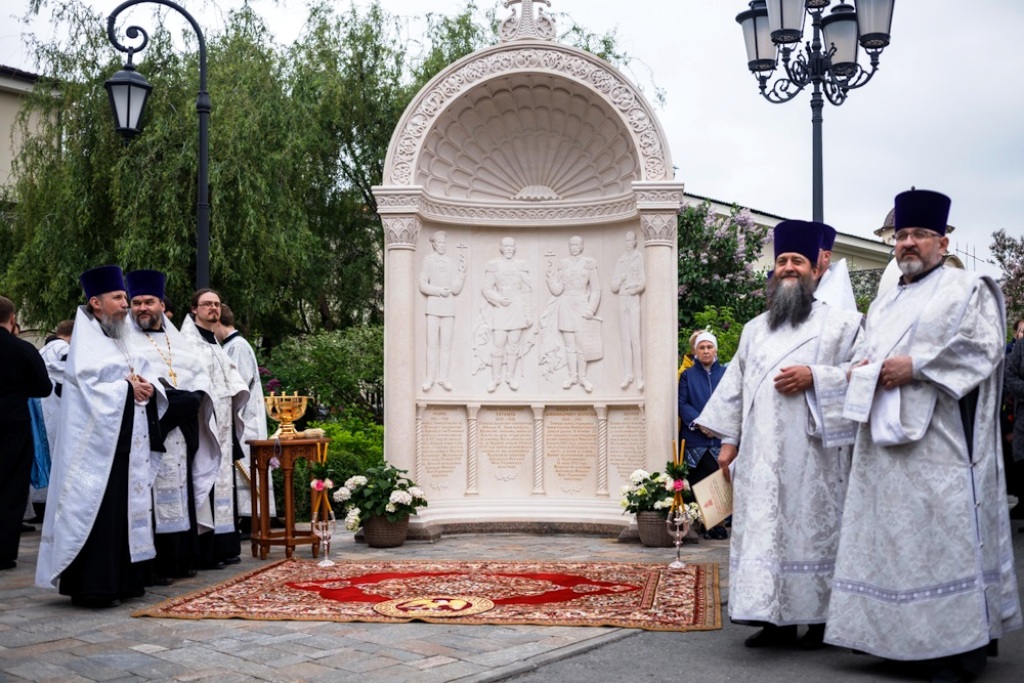
On 13th June, a new monument to four faithful servants of Emperor Nicholas II, was installed and consecrated on the grounds of Novo-Tikhvin Convent. The monument features four bas-reliefs, honouring Prince Vasili Alexandrovich Dolgorukov (1868-1918), Lieutenant General Ilya Tatishchev (1859-1918), Tsesarevich Alexei’s “nanny” sailor Klimenty Grigorievich Nagorny (1887-1918) and boatswain Ivan Dmitriyevich Sednev (1881-1918).

Memory Eternal! Вечная Память!

© Paul Gilbert. 21 June 2025

New documentary focuses on the Imperial Fanmily’s faithful retainers

Click HERE to view the film’s official web site

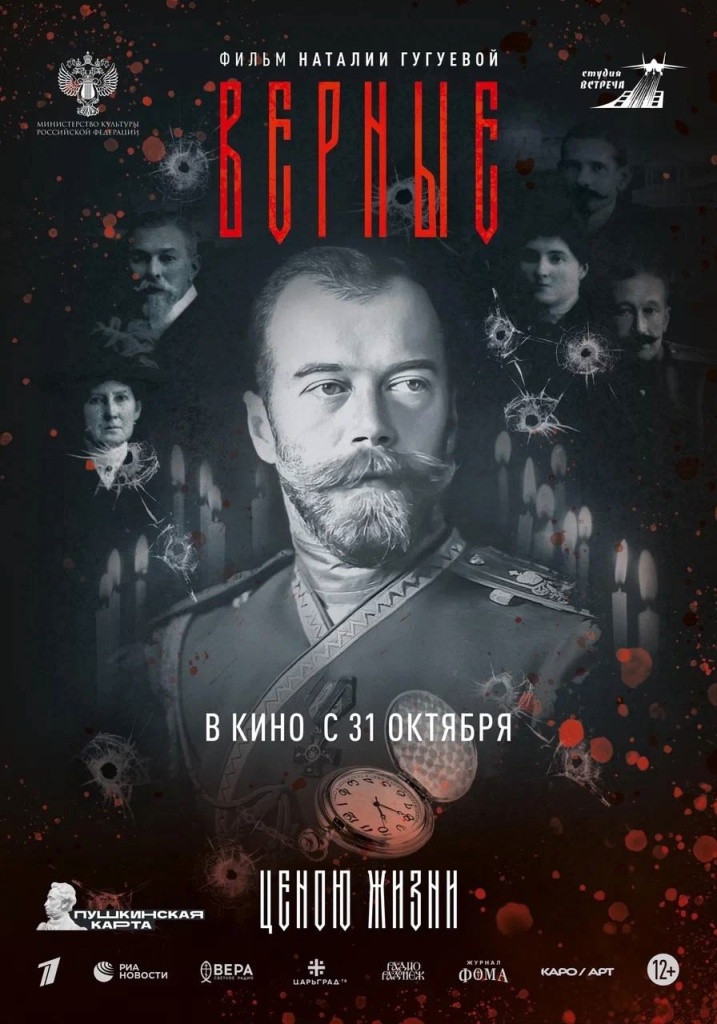
On 29th October 2024, the premiere of the documentary-film «Верные» / The Faithful will take place at the Oktyabr Cinema, located on Novy Arbat in Moscow. This fascinating new 70-minute Russian language documentary explores the lives and fates of the faithful retainers who followed the Imperial Family into exile.

The first part of the film, directed by Natalia Gugueva, presents a chronicle of the life of Emperor Nicholas II and his family, based on materials from the Russian State Archives and the personal photo archives of the descendants of the Imperial Family’s retainers. In addition, rare film footage taken outside the Ipatiev House in Ekaterinburg, will be seen for the first time.

Loyal to the Tsar, faithful to the oath, true to themselves

When Tsar Nicholas II abdicated in March 1917, 43 people voluntarily followed him into exile. Among them there was not a single relative of the Tsar and Tsarina.

All 43 loyal subjects were dissuaded, and more than once, from their stubborn decision to remain with the Tsar and his family, first in the Alexander Palace, then into exile to Tobolsk, and then Ekaterinburg. Not only did they share the trials and tribulations of the Imperial Family, many of them paid for their choice with their lives.

The fate of the retainers of Nicholas II is told by their descendants, as well as the descendants of the Bolshevik guards in the Ipatiev House, where the brutal murder of the Imperial Family and four of those loyal to them took place. Others were murdered in other locations in the Urals.

The documentary focuses on the faithful retainers of the Imperial Family, who voluntary followed them into exile: Dr. Eugene Botkin (1865-1918), the maid Anna Demidova (1878-1918), the cook Ivan Kharitonov (1872-1918), and the valet Aloysius Trupp (1856-1918), Klimenty Grigorievich Nagorny  (1887—1918), Ivan Dmitriyevich Sednev (1881—1918), Countess Anastasia Vasilievna Hendrikova (1888-1918), Ekaterina Adolfovna Schneider (1856-1918), Prince Vasily Alexandrovich Dolgorukov (1868 – 1918) and Ilya Leonidovich Tatishchev (1859 – 1918).

CLICK on the above image to watch the TRAILER
Duration: 1 minute. Language: Русский / Russian

The film «Верные» / The Faithful, was created by the Vstrecha Studio with the support of the Ministry of Culture of the Russian Federation and Channel One JSC and with the assistance of the Yekaterinburg Diocese.

The film has already received an award at the 35th Open Documentary Russian Film Festival. The documentary-film will be released in 200 cinemas in more than 40 cities across Russia on 31st October 2024.

NOTE: Sadly, the sanctions imposed by Western nations against Russia have also affected cultural exchanges, including exhibitions, films and documentaries, book rights, ballet and opera events, etc. As a result, it may be some time before an English language version of this documentary is made available. Perhaps, it will made available on YouTube, with English subtitles? It certainly looks like it will be an interesting documentary, one of immense historic importance – PG.

FURTHER READING:

Ekaterinburg: the Survivors

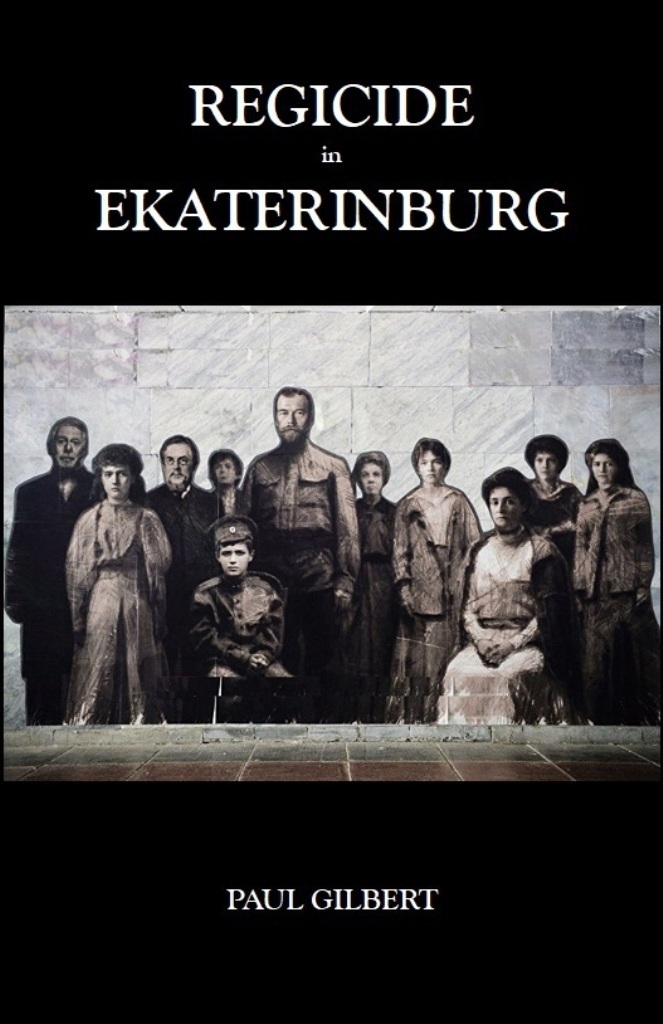
Regicide in Ekaterinburg

The Fate of the Kornilov House

Tobolsk: Nicholas II and His Family Under House Arrest in Siberia

© Paul Gilbert. 25 October 2024

Evgeny Mikhailovich Kazakevich – ‘devoted faithful servant to the throne’

PHOTO: Colonel E.M. Kazakevich in the ceremonial uniform of the Preobrazhensky Regiment. 1912-1914

On this day – 5th February 1931 – Evgeny Mikhailovich Kazakevich (1869-1931), a major general in the Imperial Russian Army and hero of World War I, was executed by the Soviets.

He was born on 8th May (O.S. 26th April) 1869, into a noble family in the St. Petersburg district. In 1889, he graducated from the Corps des Pages, and from there, was commissioned as a second lieutenant in the Preobrazhensky Life Guards Regiment.

Following the October 1917 Revolution Evgeny Kazakevich remained in Russia. In the summer of 1918, he became a member of an anti-Bolshevik organization in Petrograd. He was actively involved in raising funds for the Imperial Family, who were being held under house arrest in Ekaterinburg. He was arrested in the early 1920s, and spent several years in the notorious Butyrskaya Prison in Moscow. He was shot by a firing squad in 1931.

According to his cellmate K. N. Golitsyn”… Evgeny Mikhailovich possessed a kind soul, and as an officer of the Preobrazhensky Regiment he held firm views on his duty as a soldier, served faithfully and did not shy away from any military labour. He fought during the Russo-Japanese War in 1904-1905, and the First World War in 1914-1917.

“Evgeny Mikhailovich was a devoted monarchist, who held conservative beliefs, he was devoted to the old system with all his heart. He revered the memory of the last Russian autocrat Nicholas II and, speaking of him, referred to him only as “Sovereign.” In a word, he was a devoted faithful servant to the throne, who accepted the monarchical system without criticism and “for Faith, Tsar and Fatherland.”

“He was certainly a decent man, absolutely honest and loyal to duty, which he never shied from. His frankness and straightforwardness of his judgments apparently played a decisive role in his tragic fate. After his release from Butyrskaya Prison, I learned that he had been arrested again and shot.”

In 1931, officers of the Red Army launched “Operation Spring” the purging of former officers who had served previously in the Russian Imperial Army, former White officers, as well as civilians. More than 3,000 officers and civilians were executed, including Kazakevich who had served as an officer of the Preobrazhensky Life Guards Regiment.

On 5th February, he was sentenced by the Higher Military Command and executed on the same day by a Soviet firing squad.

Memory Eternal! Вечная Память!

© Paul Gilbert. 5 February 2024

Faithful to the End: Klimenty Nagorny and Ivan Sednev 

170a

Klimenty Grigorievich Nagorny (left). and Ivan Dmitriyevich Sednev (right)

On this day – 28th June 1918 – two faithful servants to Emperor Nicholas II and his family – Klimenty Grigorievich Nagorny and Ivan Dmitriyevich Sednev – were murdered by the Bolsheviks in Ekaterinburg. 

Klimenty Nagorny and Ivan Sednev selflessly served the Tsar’s children. Nagorny in particular, lay the great responsibility of protecting the Tsesarevich, even the slightest injury could put the heir to the Russian throne in danger, due to his hemophilia. Alexei was very fond of Nagorny, who in turn showed complete devotion to the Tsesarevich, faithfully sharing with him all the joys and sorrows.

170b

Nagorny and Tsesarevich Alexei in Tsarskoe Selo, 1907

Klimenty Nagorny and Ivan Sednev voluntarily stayed with the Tsar’s family during their house arrest in Tsarskoe Selo, and then followed them to Tobolsk, where Nagorny shared a room with the Tsesarevich, serving him day and night. Together with the Imperial family, Nagorny also attended all the divine services, and the only member of the family’s retinue who was a member of the choir organized by the Empress: he sang and read for the Imperial family during services held in the house church.

In the spring of 1918 Nagorny and Sednev once again, voluntarily followed the Imperial family to Ekaterinburg. They spent only a few days in the Ipatiev House, and then were separated from the Imperial prisoners. They were arrested and imprisoned, their sole crime had been their inability to hide their indignation on seeing the Bolshevik commissaries seize the little gold chain from which the holy images hung over the sick bed of the Tsesarevich.

On 28th June 1918, they were shot in the back by the Bolsheviks, in a small wooded area behind the Yekaterinburg-2 railway station (modern name – Shartash). Nagorny and Sednev were “killed for betraying the cause of the revolution” – as indicated in the resolution on their execution. The murderers left their bodies unburied.

When Ekaterinburg was occupied by the Whites, the the half-decayed bodies of Nagorny and Sednev, were found and solemnly buried near the Church of All the Afflicted (demolished). Witnesses at the funeral recall that the graves of the former sailors of the Imperial Yacht Standart were strewn with white flowers. Their graves were not preserved – they were destroyed when the Soviet authorities built a city park on the site of the cemetery.

Both Nagorny and Sednev were canonized by the Russian Orthodox Church Outside Russia (ROCOR) on 14 November 1981, and both rehabilitated by the Prosecutor General’s Office of the Russian Federation on 16 October 2009. They have yet to be canonized by the Moscow Patriarchate. 

Memory Eternal! Вечная Память!

170c

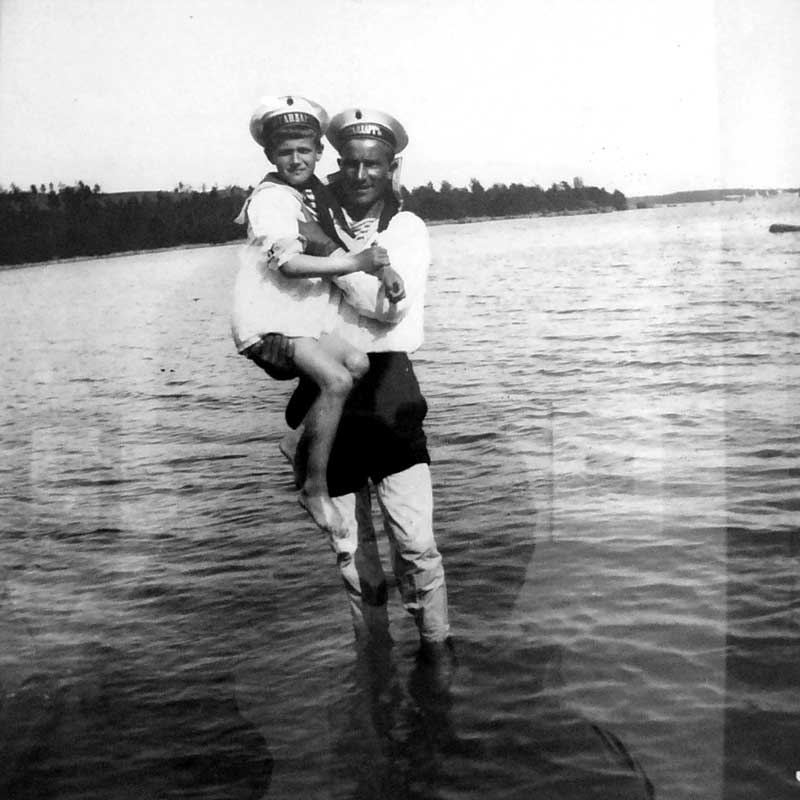
Sednev and Alexei Nikolaevich, in the Finnish skerries, 1914 

Nagorny, Klementy Grigorovich (1887—1918) – from 1909, he served on the Imperial yacht Standart and appointed as a footman to the imperial children. He received the Court title Garderobshik (wardrobe keeper) in 1909 and accompanied the Imperial family on every tour. In November 1913, he was appointed assistant dyadka to guard the Imperial children. He travelled with the Tsesarevich Alexei to Mogilev during 1914-16. After the Tsar’s abdication, he lived under detention with the Imperial family in Tsarskoe Selo, Tobolsk and Ekaterinburg.

Sednev, Ivan Dmitrievich (1881—1918) – was recruited into the Russian Imperial Navy in 1911, where he began as a machinist on the Imperial Yacht Polyarnaya Zvezda (Polar Star) then transferred onto the Imperial yacht Standart. By invitation he became a Lakei (liveried footman) to the Grand Duchesses, and subsequently to the Tsesarevich. Ivan lived under detention with the Imperial family in Tsarskoe Selo, Tobolsk and Ekaterinburg.

579-4

On 13th June 2022, a new monument (seen in above photo) to four faithful servants – including Nagorny and Sednev – of Emperor Nicholas II, was installed and consecrated on the grounds of Novo-Tikhvin Convent in Ekaterinburg.

© Paul Gilbert. 28 June 2023

Ekaterinburg: the Survivors

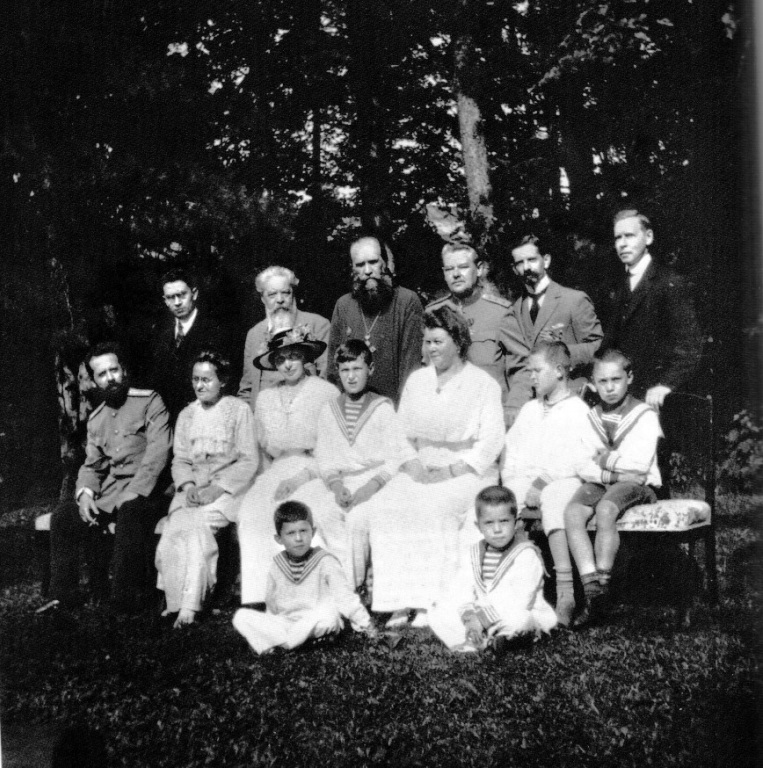
PHOTO: a number of those who survived the Ekaterinburg massacre are depicted in this photo taken at Tsarskoye Selo in 1916, including Terentiy Chemodurov (2nd from left, back row); Pierre Gilliard (2nd from right, back row: Charles Sydney Gibbes (far right, back row); and Alexandra Tegleva (3rd from left, front row and seated next to Tsesarevich Alexei Nikolaevich)

Following the transfer of the Imperial Family to Ekaterinburg in the Spring of 1918, the remaining servants and retainers living in the Kornilov House in Tobolsk were free to leave. A number of them, however, wanted to make the journey to Ekaterinburg with the hope of reuniting with the Tsar and his family. Their captives warned them that any one who went with the former Tsar and his family to Ekaterinburg would remain at liberty, at worse, they would not even be permitted to live in the same house with the Imperial Family but tossed in the local jail.

Despite the warning, a number of faithful retainers made the journey to the Ural capital, and, sure enough were imprisoned and later murdered by the Bolsheviks. Among them were Prince Vasily Dolgorukov, Ilya Tatishchev, Ekaterina Schneider, Anastasia Hendrikova, Klimenty Nagorny and Ivan Sednev

In addition, let us not forget the four faithful retainers, who remained with the Imperial family who followed the Imperial Family to their deaths in the Ipatiev House, on 17th July 1918: Dr. Eugene Botkin (1865-1918), the maid Anna Demidova (1878-1918), the cook Ivan Kharitonov (1872-1918), and the valet Aloysius Trupp (1856-1918).

As foreign nationals, the Swiss tutor Pierre Gilliard, along with his Russian born wife and nursemaid to the Tsar’s children Alexandra Tegleva and the English language tutor Sydney Gibbes were set free. So were a number of others with no explanation and amid rumours that they had abandoned the Imperial Family, sold a few secrets and begged for their lives.

The Empress’s Lady-in-Waiting Baroness Sophie Buxhoeveden attributed her unexpected release by the Bolsheviks to her “foreign” surname – it was Danish by origin – however, the even more foreign name of “Catherine Schneider” did not prevent the poor woman from being shot.

It was nothing short of a miracle that Nicholas II’s valet Terentiy Ivanovich Chemodurov; Assistant cook Leonid Ivanovich Sednev – not to be confused with his uncle with his uncle Ivan Dmitrievich Sednev – and the valet Alexei Andreyevich Volkov managed to escape from being shot by the Bolsheviks.

These men and women must never be forgotten for remaining faithful to Emperor Nicholas II and his family. Below, is a brief summary of each of them, and their respective fates following the regicide in Ekaterinburg:

Pierre Gilliard (1879-1962)

Pierre Gilliard was a Swiss academic who initially came to Russia in 1904 as a French tutor to the family of Duke George of Leuchtenberg, a cousin of the Romanov family. From 1905 to 1918 he served as the French language tutor to the children of Emperor Nicholas II.

He grew fond of the Tsar and family and followed them into exile to Tobolsk, Siberia, following the October 1917 Revolution. The Bolsheviks prevented Gilliard from joining his pupils when they were moved to the Ipatiev House in Ekaterinburg in May 1918.

Gilliard remained in Siberia after the murders of the family, for a time assisting White Movement investigator Nicholas Sokolov. In 1919, he married Alexandra Alexandrovna Tegleva, who had served as a nursemaid to the Tsar’s children.

Gilliard and Tegleva fled Bolshevik Russia in early November 1919, arriving in Vladivostok in early April 1920. They then travelled on an American ship to San Francisco, and from there travelled by ship along the Pacific coast, through the Panama Canal, across the Atlantic Ocean and the Mediterranean Sea to Trieste. From here, they travelled through Italy to Switzerland, and in August 1920 they reached his parents’ home in Fiez, which Gilliard had left 16 years before.

He became a French professor at the University of Lausanne and was awarded the French Legion of Honour. In 1921, he published a book entitled Thirteen Years at the Russian Court, which described the last days of the Tsar and his family, and the subsequent investigation into their deaths.

In 1958, Gilliard was severely injured in a car accident in Lausanne. He never fully recovered and died four years later on 30 May 1962.

Alexandra Alexandrovna Tegleva (1884-1955)

Alexandra Alexandrovna Tegleva was a Russian noblewoman who was educated at the Smolny Institute of Noble Maidens in St Petersburg. Tegleva served as a nursemaid and governess to Grand Duchesses Olga, Tatiana, Maria and Anastasia Nikolaevna, and Tsesarevich Alexei Nikolaevich. While many of the attendants in the service of the Empress spoke English, Tegleva was instructed to speak Russian with the children.

Following the Imperial Family’s house arrest in 1917, she lived with the family in the Alexander Palace at Tsarskoye Selo. In August of that year, she followed them into exile in Tobolsk, but was ultimately prevented from staying with them during their house arrest in Ekaterinburg. Tegleva was detained with Pierre Gilliard, Charles Sydney Gibbes, and Baroness Sophie Buxhoeveden in a separate residence from the imperial family in Yekaterinburg. She was almost killed by the Bolsheviks in Tyumen but was freed by the White Army.

In exile in Switzerland, Tegleva worked with her husband to investigate and debunk the claims made by Anna Anderson, a Romanov impostor who pretended to be Grand Duchess Anastasia Nikolaevna. Following two personal meetings with Anderson, Tegleva and her husband believed Anderson to be a fraud.

Alexandra Alexandrovna Tegleva died in Switzerland on 21 March 1955.

Charles Sydney Gibbes (1876-1963)

In 1901 Charles Sydney Gibbes travelled from England to St Petersburg, as tutor to the Shidlovsky family and then the Soukanoff family. By 1907 he was qualified as vice-president and committee member of the St Petersburg Guild of English Teachers. He came to the attention of Empress Alexandra Feodorovna and in 1908 was invited as a tutor to improve the English accents of the Grand Duchesses Olga and Tatiana; and subsequently Maria and Anastasia. In 1913 he became tutor to Tsesarevich Alexei.

Gibbes voluntarily followed the Imperial Family into exle, arriving in Tobolsk in October 1917, shortly before the Provisional Government fell to the Bolsheviks. In May 1918 the Imperial family was moved to the Ipatiev House in Ekaterinburg, and neither Gibbes, nor most other servants were allowed to enter. A number of servants stayed in the railway carriage which had brought them to the city.

After the fall of Ekaterinburg to the White Army on 25th July. Gibbes and Gilliard were early visitors to the scene of the regicide at the Ipatiev House and were both involved in the subsequent enquiries carried out by Ivan Alexandrovich Sergeiev and later by Nicholas Alexievich Sokolov.

In January 1919, he retreated eastwards as Siberia was captured by the Red Army. In Harbin, China on 25th April 1934 he was received into the Orthodox church by Archbishop Nestor (Anisimov) of Kamchatka and Petropavlovsk who was there in exile. Gibbes took the baptismal name of Alexei in honour of the former Tsesarevich. He was tonsured a monk on 15th December, ordained deacon on 19th December and priest on 23rd December, taking the name Nicholas in honour of the former Tsar. In March 1935 he became an Abbot. He again returned to England in 1937 and was established in a parish in London.

At the time of the Blitz he moved to Oxford where in 1941 he established an Orthodox chapel in Bartlemas. In 1949 he bought a house at 4 Marston Street, subsequently known as the Saint Nicholas House.

Gibbes died at St Pancras Hospital, London, on 24 March 1963. His open coffin was displayed in the cellar (or crypt) of Saint Nicholas House before his funeral. He is buried in Headington cemetery, Oxford, Oxfordshire, England.

Terenty Ivanovich Chemodurov (1849-1919)

From 1891 to 1908, Terenty Ivanovich Chemodurov served in the Guards Crew. On 14th (O.S. 1st) December 1908, he was appointed personal valet to Emperor Nicholas II. He resided in the Alexander Palace at Tsarskoye Selo, where he received an annual salary of 360 rubles, as well as room and board.

In August 1917 he voluntarily followed the Imperial Family into exile, first to Tobolsk and then to Ekaterinburg. He lived in the Ipatiev House until 24th May (O.S. 11th) 1918, from where he was removed due to illness and transferred to a prison hospital in Ekaterinburg. He was replaced by the footman Alexei Troupe. Nicholas II wrote in his diary that day: “I decided to let my old man Chemadurov go for a rest and take on Troupe during his absence.”

Despite the fact that the Tsar released Chemodurov from service, the local Soviet authorities arrested him. As it turned out, the person in the next cell turned out to be another servant – Alexei Andreevich Volkov – the valet of Empress Alexandra Feodorovna.

It is believed while that in prison he was forgotten by the Chekists and on 25th July 1918, he was released by the Czechoslovaks who occupied Ekaterinburg. In 1919, he was involved as a witness in the case of the murder of the Imperial Family.

Chemodurov himself explained his salvation from execution by a miracle – according to him, a list of persons to be shot was sent to the prison. The list was large and did not fit on one page, which is why Chemodurov’s surname was written on the back of the sheet. Due to the negligence of the prison authorities, who failed to check the additional inscriptions on the back of the page, Chemodurov was not summoned from his cell to be shot. He was subsequently rescued from prison by the Czechs, who liberated Ekaterinburg from the Red Army.

In exile, Chemodurov spoke of the Emperor in the following way: “During my almost 10-year service under the Sovereign, I had opportunity to study his habits and inclinations in his private life, and in good conscience I can say that the Tsar was an excellent family man.” With regard to the last days of the Imperial Family, Chemodurov said: “He [the Tsar] seemed to be petrified but did not betray his fears, the Empress, however, suffered and prayed fervently”.

Leonid Ivanovich Sednev (1903-1941)

Leonid Ivanovich Sednev was a chef’s assistant who, together with his uncle Ivan Dmitriyevich Sednev, served Emperor Nicholas II and his family during their exile in Tobolsk and Ekaterinburg from 1917 to 1918.

Six hours before the Imperial family and their four retainers were murdered in the cellar of the Ipatiev House on the night of 16/17 July 1918, Sednev was taken to a neighboring house, where he was held until 20th July. Officials from the Ural Regional Soviet then shipped him off to live with relatives in Kaluga.

In her final diary entry on 16th July 1918, Empress Alexandra Fedorovna noted: “… Suddenly Lenka [Leonid’s nackname] Sednev was fetched to go and see his uncle and flew off – wonder whether it’s true and we shall see the boy back again! …”

There are conflicting accounts of his ultimate fate; according to one report, he was shot in 1929 in Yaroslavl on charges of participating in a counter-revolutionary conspiracy, while other evidence suggests that he was killed during the Battle of Moscow in 1941; however, according to the obd-memorial.ru (CAMO) web site, he was executed on the verdict of the tribunal of the Bryansk Front for an unspecified crime on 17 July 1942, exactly 24 years to the day the Tsar and his family were murdered.

In 2004, author Robert Alexander wrote The Kitchen Boy, an historical novel which recreates the final days of the Tsar and his family as seen through the eyes of Leonid Sednev.

Alexei Andreyevich Volkov (1859-1929)

As a young man, Alexei Andreyevich Volkov entered the Russian Imperial Army and rose through the ranks. He was on guard and witnessed the assassination of Emperor Alexander II in 1881. Later he served as a military instructor to the future emperor Nicholas II. From 1886, he was in service to Grand Duke Paul Alexandrovich. In 1910 he was appointed valet at the court of Nicholas II. In addition, he was Empress Alexandra Feodorovna’s personal servant and often pushed her wheelchair.

In August 1917, Volkov followed the Tsar and his family into exile to Tobolsk, but was later separated from them at Ekaterinburg and imprisoned at Perm. There, he heard that the Emperor had been murdered by the Bolsheviks, though he was unaware that the Empress and their children had also been shot.

On 4th September 1918, he was taken from his prison cell in the middle of the night and led to the prison office, where he saw lady-in-waiting Anastasia Hendrikova and the elderly tutor Catherine Schneider. They were joined by eight other prisoners, and an escort of twenty-two guards.

Volkov asked a guard where they were being taken and was told they were being taken “to the house of arrest.” Hendrikova, who had been in the washroom, asked a guard the same question when she came out. She was told they were being taken “to the central prison.” Hendrikova asked him, “and from there?” The guard replied, “Well! to Moscow.” Hendrikova repeated this conversation to her fellow prisoners and made the sign of the cross with her fingers. Volkov took her gesture to mean “they will not shoot us.”

The prisoners were lined up in the street in rows of two, the men in front and the women in back. The group walked all the way to the edge of town and onto the Simbirsk road. Volkov asked another prisoner where the central prison was and was told they had long passed it. Volkov realized they were being taken into the woods to be shot. He broke from the group and ran for his life at the first opportunity. A bullet whizzed past his ear. Behind him he heard gunshots as the other prisoners in the group were shot and killed.

Volkov eventually joined other refugees at the White Army headquarters in Omsk and made his escape from Russia through Vladivostok and the Far East. In 1922, he settled in Estonia. He later lived in Denmark, where he was highly respected in the émigré community because of his lifelong loyalty to the Tsar and his family.

During his years in exile, he wrote his memoirs about his time at the Court of Nicholas II and his escape. These include his experience of events such as the Khodynka Tragedy.

Alexei Andreevich Volkov died on 27th February 1929, in Yuryev (Tartu), Estonia.

Baroness Sophie Buxhoeveden (1883-1956)

Sophie Freiin von Buxhoeveden, also known as Baroness Sophie Buxdoeveden, was the daughter of Baron Karlos Matthias Konstantin Ludwig Otto von Buxhoeveden (1856-1935), the Russian minister in Copenhagen, Denmark during World War I.

In her youth, Sophie was a part of the social life of St. Petersburg. In 1904, she was chosen as an honorary Lady in Waiting to Empress Alexandra Feodorovna, and became an official Lady in Waiting in 1913. She often accompanied the Empress and her four daughters to official duties.

She followed the Imperial Family into exile to Tobolsk. After being refused permission to join the Imperial family in the Ipatiev house, Sophie, along with the foreign tutors, tried to find a way to help the family.

Sophie spent many months on the run across Siberia, with other members of the Imperial household. She was only allowed safe passage out of Russia when she made it to Omsk, with the help of the British military, namely General Alfred Knox, who got her safe passage on a military train.

In exile, Buxhoeveden lived first in Copenhagen with her father, then at Hemmelmark in northern Germany, before finally settling in England, where she faithfully served as lady-in-waiting to Empress Alexandra Feodorovna’s older sister Victoria, Marchioness of Milford Haven.

During her years in exile, the Baroness wrote three books that are considered to give one of the best accounts of the Romanov family’s life and final days. They were Life and Tragedy of Alexandra Feodorovna (1928); Left Behind: Fourteen Months in Siberia During the Revolution (1929); and Before the Storm (1938).

Baroness Sophie Buxhoeveden died in England on 26 November 1956, in grace and favor rooms granted to her by th the Queen.

Dr. Vladimir Nikolaevich Derevenko (1879-1936)

Vladimir Derevenko was born on 28th (O.S. 15th) July 1879, into the family of the Russian nobleman Nikolai Dmitrievich Derevenko and his wife Varvara Ivanovna Badimo. After graduating from the 1st Chisinau Gymnasium in 1899, he entered the Imperial Military Medical Academy. In 1904, he completed his studies, earning a doctor’s diploma with honours.

In 1904-05 he was called up for active military service during the Russo-Japanese War, of which he served as junior doctor of the Kerch Fortress Artillery and head of the eye and venereological departments of the Kerch Infirmary. He also participated in hostilities at the Front, providing assistance to the wounded.

In October 1912, Derevenko was summoned to Spala to assist with Tsesarevich Alexei’s near fatal injury, as a result of his haemophilia. It was following the heir’s recovery that Dr. Derevenko was appointed Alexei’s personal physician. His son Kolya, became Alexei’s playmate.

During the First World War, Derevenko participated in the daily work of the infirmaries which had been founded by the Empress Alexandra Feodorovna in Tsarskoye Selo.

After the February 1917 Revolution, and the Tsar’s abdication, the Imperial Family were held under house arrest in the Alexander Palace at Tsarskoye Selo. The Provisional Government issued an order to the family’s servants and retinue to choose between staying with the prisoners or leaving them. Both physicians, V. N. Derevenko and E. S. Botkin, opted to stay with the Imperial Family.

Derevenko and his family followed the Imperial Family into exile to Tobolsk, where they settled in the Kornilov House, situated opposite the Governor’ House, where the Tsar and his family were held under house arrest. Derevenko was permitted access to the latter to administer any necessary medical treatment.

When the Bolsheviks came to power in October 1917, the situation for the captives changed. In April 1918, the Bolshevik commissar Yakovlev arrived in Tobolsk, and took charge. The Imperial Family and their faithful retainers were transported to Ekaterinburg in two groups. Dr. Derevenko remained with the second group in Tobolsk to attend to Alexei who was ill. Following the heir’s recovery in May 1918, they were sent Ekaterinburg to be reunited with the rest of the family.

During the Ekaterinburg period of Derevenko’s life, he was admitted to the Ipatiev House, but only to provide medical treatment to Alexei, whose health was deteriorating. During such visits, the doctor was forbidden to speak with any member of the Imperial Family.

Derevenko was fortunate to have survived the massacre in the Ipatiev House. In December 1918, the doctor and his family moved to Perm, which was occupied at the time by the Whites. It was here that he began to work in the surgical clinic of Perm University. When the Red Army units approached Perm in July 1919, together with some of the teachers, staff and students of Perm University, Derevenko was evacuated to Tomsk, where he worked as a surgeon in the Tomsk military hospital, where he continued working after the establishment of Soviet power in the region in December 1919.

In 1920, he returned to Perm and headed the Department of the Surgical Clinic of Perm University. In 1923, he was elected professor and head of the General Surgery Clinic of the Ekaterinoslav University.

Derevenko later moved to Dnepropetrovsk, where in January 1931, he was arrested on charges of attempting to overthrow the Soviet government by armed force and participating in the secret counter-revolutionary organization Union for the Liberation of Russia. He pleaded guilty, for which he was sentenced to 5 years of “restriction of liberty”, but was not subjected to imprisonment. After serving his sentence, he was exiled to Lugansk, where he worked as a doctor.

In 2003, shortly before his death, in his only interview, Derevenko’s son Nikolai said that his father died in the spring of 1936 in Dnepropetrovsk (now Ukraine) and was buried at the Sevastopol Cemetery.

JoyTsesarevich Alexei’s spaniel

The faithful canine companion to Tsesarevich Alexei Nikolaevich was the only member of the Imperial Family who survived the massacre which took place in the Ipatiev House on the night of 16/17 July 1918.

“The Czechs [Czechoslovak Corps in the Russian Army], seizing Ekaterinburg, found a poor little animal, half-starved, running around the yard of the Ipatiev House. The dog seemed to be looking for his master all the time and his absence made him so sad and depressed that he barely touched his food, even when he was affectionately cared for,” wrote Baroness Sophie Buxhoeveden in her memoirs.

Alexei’s beloved King Charles spaniel Joy was taken by General Mikhail Dieterikhs, head of the White Army investigation into the death of the Tsar and his family. Joy was eventually homed with Colonel Pavel (Paul) Rodzianko, who was serving with the British Expeditionary Force in Siberia.

The British were expelled from Russia by the Bolsheviks and Rodzianko had grown so fond of Joy that he took him back to England.

Joy died at Windsor, however not at the royal court, but at Colonel Rodzianko’s small estate of Sefton Lawn, whose park adjoined the royal park.

“Every time I walk past my garden at Windsor, I think of the little dog’s grave in the bushes with the ironic inscription ‘Here rests Joy’. For me, this little stone marks the end of the empire and way of life,” Pavel Rodzianko wrote in Tattered Banners.

Sadly, both the garden and Joy’s modest grave is now believed to have been concreted over as a car park. 

© Paul Gilbert. 14 June 2023

***

The following NEW title was compiled and edited by independent researchers and Romanov historian Paul Gilbert was published in August 2024. 

This fascinating new study features 14 chapters on this tragic event, which include the memoirs of a British intelligence officer and journalist, and two First-English translations. In addition, 11 chapters were written by Paul Gilbert, based on new documents sourced from Russian archival and media sources over the past decade.

Please refer to the link provided for further details about the content of this new title . . .

CLICK HERE TO READ MORE ABOUT THIS TITLE

Faithful to the End: Aleksei Andreyevich Volkov (1859-1929)

On this day – 27th February 1929 – Aleksei Andreyevich Volkov died in exile

Born in 1859, Volkov served as valet at the court of Emperor Nicholas II. He escaped a death march at Perm in September 1918 and survived.

As a young adult, Volkov entered the Russian Imperial Army and rose through the ranks. He was on guard and witnessed the assassination of Emperor Alexander II (1818-1881) in 1881. He later served as a military instructor to the future Emperor Nicholas II.
From 1886, he was in the service Grand Duke Paul Alexandrovich (1860-1919). In 1910, he became a valet at the court of Nicholas II. He served as the Empress Alexandra’s personal servant and often pushed her wheelchair.

In 1917, Volkov followed Nicholas II and his family into internal exile to Tobolsk, but was separated from them at Ekaterinburg and imprisoned at Perm. It was in Perm, that he learned that the Tsar had been murdered by the Bolsheviks, though he was unaware that the Tsarina and their children had also been shot.

On 4th September 1918, Volkov was taken from his prison cell in the middle of the night and led to the prison office, where he saw lady-in-waiting Anastasia Hendrikova (1887-1918) and the elderly tutor Catherine Schneider (1856-1918).

The group were walked all the way to the edge of town, when Volkov realized they were being taken into the woods to be shot. He broke from the group and ran for his life at the first opportunity. A bullet whizzed past his ear. Behind him he heard gunshots as the other prisoners in the group were shot and killed, including Henrikova and Schneider.

Volkov eventually joined other refugees at the White Army headquarters in Omsk and made his escape from Russia through Vladivostok and the Far East. In 1922, he settled in Estonia. He later lived in Denmark, where he was highly respected in the Russian émigré community because of his lifelong loyalty to the Imperial Family.

During his years in exile, he wrote his memoirs about his time at court and his escape. Volkov also discusses his eye-witness account of the Khodynka Tragedy in May 1896.

Alexey Andreevich Volkov died in Estonia on 27th February 1929, in Yuriev (Tartu). He was buried at the Assumption Cemetery.

Memory Eternal! Вечная Память!

FURTHER READING:

Ekaterinburg: the Survivors + PHOTOS

Regicide in Ekaterinburg

© Paul Gilbert. 27 February 2023

Faithful to the End: Anna Stepanovna Demidova (1878-1918)

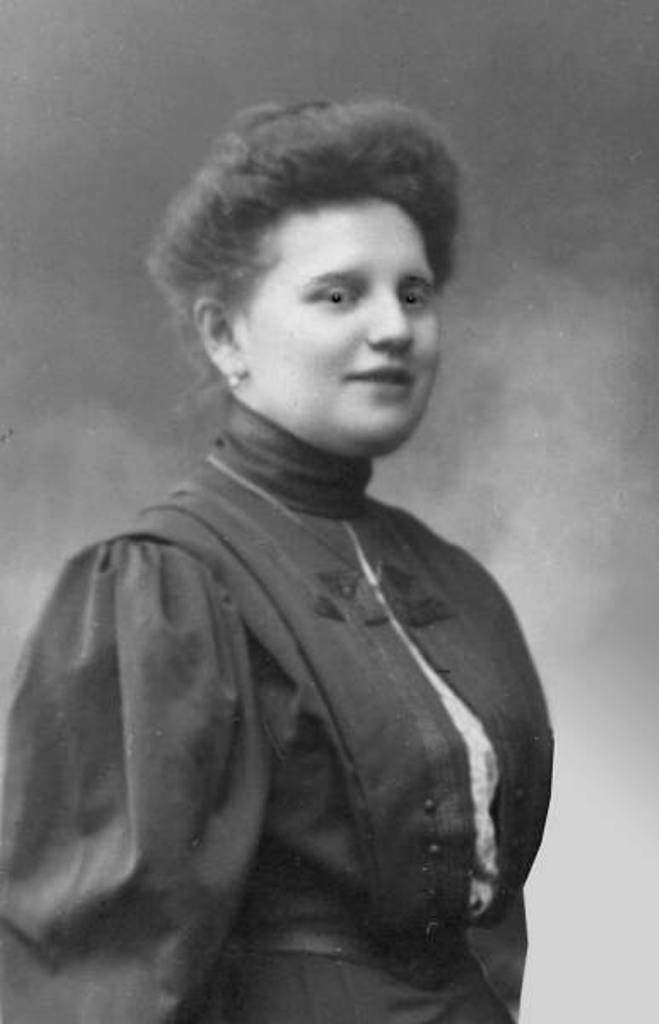
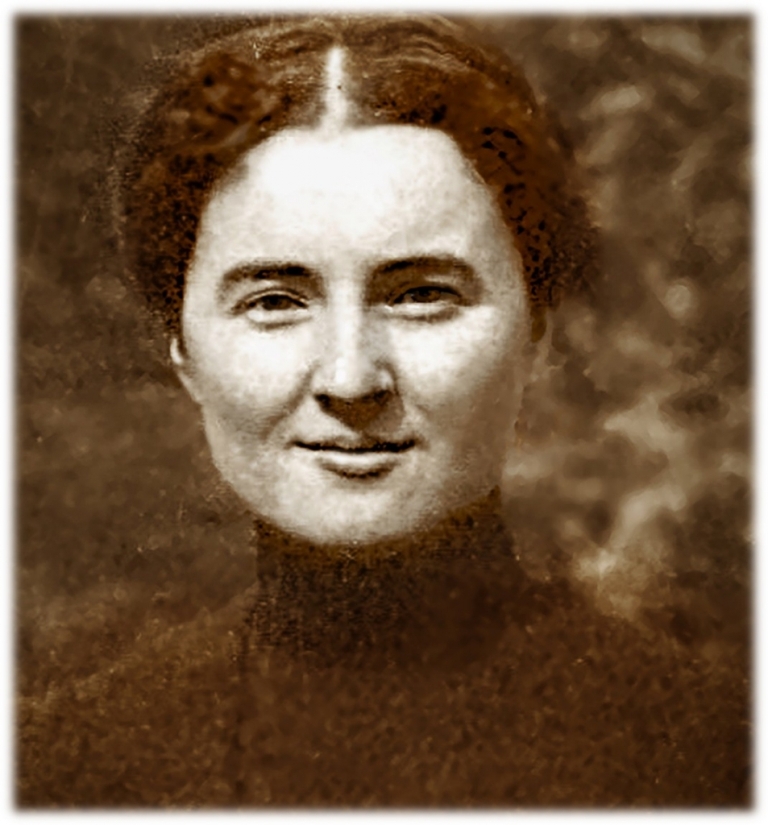
PHOTO: Anna Stepanovna Demidova (1878-1918)

On 27th (O.S. 14th) January 1878, Anna Stepanovna Demidova, a loyal subject of the Russian Imperial family was born into the bourgeois family of Stepan Aleksandrovich Demidov and Maria Efimovna Demidova in Cherepovets, situated in Vologda Oblast, Russia.

Her father was a well-off merchant in Cherepovets, where he also served on the Cherepovets City Duma. The Demidov family made a significant contribution to the development of Cherepovets, its improvement and prosperity.

Anna had four brothers Alexander, Nikolai, Stepan, Sergei and two sisters Apollinaria and Elizabeth, all of whom received an excellent education. For the first two years, Anna Demidova studied at the John the Baptist Leushinsky Monastery, founded by the famous Abbess Taisia, the spiritual daughter of St. Righteous John of Kronstadt.

After graduating from this preparatory school, Anna continued her education for the next six years at the Teachers’ School for Women, a higher educational institution at the same monastery. Abbess Taisia ​​prepared a curriculum for her pupils, which included such subjects as religion, Russian literature, foreign languages, arithmetic, history, natural science, and music. In addition, lessons were conducted in painting, needlework and icon writing [in the Orthodox Christian tradition, icons are said to be written, not painted].

The abbess paid great attention to instilling high moral qualities in her students: deep faith, diligence, striving for good, a sense of responsibility and duty. Her methods prepared Anna’s for her future. After graduating with honours in 1898, Anna Demidova received a certificate of home teacher.

PHOTO: record of the birth of Anna Demidova in the birth register of the Cathedral of the Resurrection in Cherepovets

It should also be mentioned, that it was at this school that Anna’s handicrafts earned her first prize at exhibitions. According to a family legend, Empress Alexandra Feodorovna became interested in Anna’s needlework during a visit to the exhibition of handicrafts at the Leushinsky Monastery in Yaroslavl. The Empress was completely delighted with Anna’s handicradts, since she herself was engaged in needlework. Wishing to meet her, the Empress, after a conversation with the Anna, offered her a place of chambermaid at her Court at Tsarskoye Selo. Officially, Anna Demidova was enrolled on 13th January 1898 and “… assigned to the rooms of H.I.M. Sovereign Empress Alexandra Feodorovna.”

In accordance with her program for the following day, the Empress herself made a list of things which she planned to wear the next day. The chambermaids carefully prepared her clothes. Anna’s duties as chambermaid included caring for the Empress’s wardrobe, which consisted of several dozen oak and ash wardrobes, filled with dresses and accessories. Anna even had an electric iron at her disposal – one of the technical wonders of the time!

In 1901, Anna received an offer to teach embroidery, knitting and other needlework to her four daughters: Grand Duchesses Olga, Tatiana, Maria and Anastasia.

The Empress selected Anna not only for her inherent skill, but also for her high moral qualities. She believed that “above all knowledge a person should have a clear conscience and live a righteous life.” Anna fully met these requirements. In addition, Anna was educated, elegant, knew several foreign languages, and played the piano.

Anna Demidova or “Nyuta,” as the Imperial Family called her, was described in adulthood as a “tall, statuesque blonde” and “of a singularly timid and shrinking disposition.” For her many years of devoted service to the Imperial Family, Anna Demidova was granted hereditary nobility.

Those employed at the Alexander Palace all received a rather decent salary. In addition, they could invite family and relatives to visit, who were accommodated in the Tsarskoye Selo Lyceum nearby. This allowed Anna’s sister Elizabeth – for whom she was especially close – to live near her for several years. Despite the many privileges enjoyed by the servants of the Imperial Court, there was one – an essential condition – that all chambermaids had to remain maidens [unmarried].

Thus, the Imperial Family became Anna’s family. “Nyuta” was devoted to all the Tsar’s children, but she had special, maternal feelings for the youngest, Grand Duchess Anastasia, and she reciprocated her. There is even a postcard with the image of the Mother of God that Anastasia sent her from Paris in 1906: “Dear Nyuta! I congratulate you on the holidays and wish you to spend as much fun as possible. Although I write a little late, it’s better late than never.”

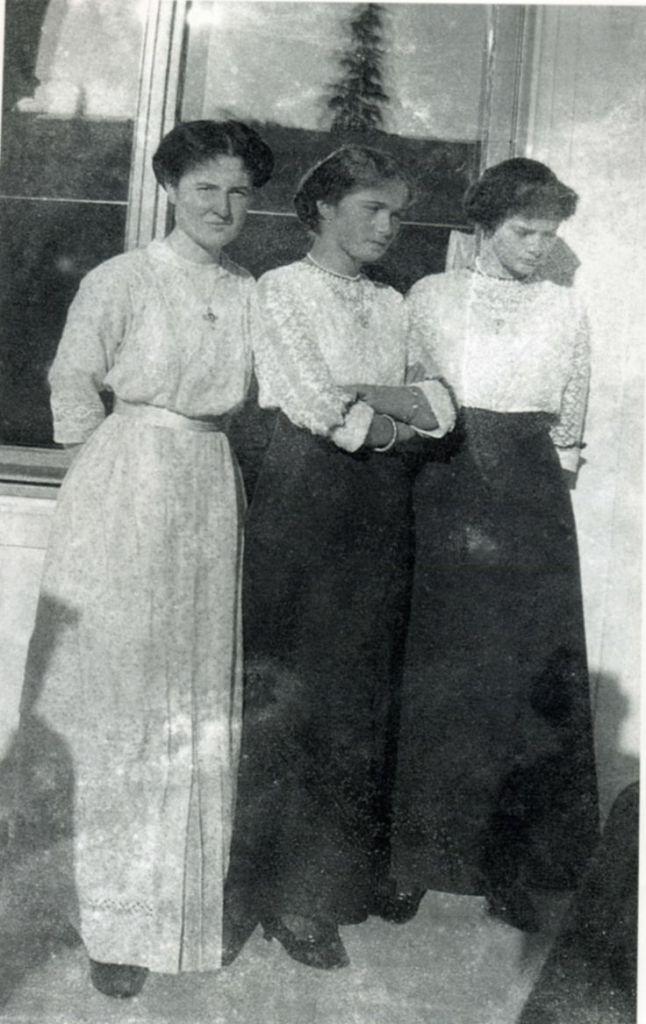
PHOTO: Anna Stepanovna Demidova (1878-1918)

Following the February revolutionary events of 1917, before going into exile with the Imperial Family, Anna sent some of her personal belongings to her sister Elizabeth in Cherepovets, which included albums with photographs that are to today kept in the personal archive of her grand-niece Nina Alekseevna Demidova.

In August 1917, Anna along with other faithful servants, followed the Tsar and his family into exile to Tobolsk, and then to Ekaterinburg. It was during this time, that the chambermaid began to keep a diary:

“Thursday, 3rd August. After a long while, I slept well for the first time. For the last two weeks, when I learned that they were going to send us “somewhere”, I lived nervously, slept little, worried about the unknown and where they would send us. It was a difficult time. Only on our way did we learn that we are “on our way to the far north”, and to think – “Tobolsk”, my heart aches. Today, at one of the stops (of course, we did not get off), someone at the station asked our carriage conductor: “Who is travelling?” The conductor replied gravely: “American Mission”, as the train read “American Red Cross Mission”. “And why is nobody getting off the train?” “Because everyone is very sick and barely alive.”

Anna was bitter to see what awaited them at their place of exile. “Oh God! The house is almost empty, no chairs, tables, washbasins, no bed, etc. The window frames have not been exposed since summer and are dirty, there is rubbish everywhere, the walls are filthy. In short, the house was not prepared at all. Now the cleaning is underway … “

In Ekaterinburg, “Nyuta” helped the Empress send letters to her family and friends and taught the grand duchesses needlework, which boiled down to darning and mending bed linen.

On 15th January 1918, Anna Demidova officially ceased to be listed in the service of the Imperial Family. She repeatedly had the opportunity to leave the Imperial Family, but each time, neglecting her well-being, Anna remained faithful to her human and Christian duty. However, she was not alien to the feeling of fear. Once she confessed to the English tutor Charles Sydney Gibbes: “I am so afraid of the Bolsheviks, Mr. Gibbes. I don’t know what they will do with us.”

The last months and days of Anna Demidova passed in an atmosphere of incessant humiliation and bullying. On the night of 16/17 July 1918, Anna Stepanovna Demidova was shot in the basement of the Ipatiev house in Ekaterinburg together with the Imperial Family and three other faithful servants. Anna’s death was cruel and violent: one of the killers counted the wounds on her body – there were 32 of them.

On the fateful night of 16th July 1918, Anna Stepanovna was awakened by Dr. Botkin and told her about the threat of an attack on the house. She, in turn, woke up the grand duchesses. Despite Yurovsky’s warning not to take any things with them, the prisoners nevertheless took various little things – in case of a “possible journey”. Anna Demidova carried two large pillows down to a room located in the basement of the Ipatiev House. She placed one behind the back of the sick Tsesarevich, who was seated on a chair. The second pillow [filled with precious family gems] remained clutched to her chest.

According to the memoirs of a participant in the regicide of Mikhail Aleksandrovich Medvedev (1891-1964): “The veil of smoke and dust was thinning. Yakov Mikhailovich [Yurovsky] invited [Pyotr Zakharovich] Ermakov and me, as representatives of the Cheka and the Red Army, to witness the death of each member of the Imperial Family. Suddenly, from the right corner of the room, a woman screamed: “Thank God! God saved me!”

“Staggering, the surviving chambermaid rises: she had shielded herself with a pillow, in the fluff of which bullets were stuck. The Latvians have already fired all their cartridges, then two of them with rifles charged at her and bayoneted the maid.”

Another participant in the regicide, Alexey Georgievich Kabanov (1890-1972), also describes the death of Anna Stepanovna with even more gruesome details: “The chambermaid was still alive on the floor. When I ran into the execution room, I shouted to stop firing immediately, and finish those still alive with bayonets. <…> One of my comrades began to thrust the bayonet of his American Winchester rifle into the chambermaid, but the blunt blade did not pierce her chest, and she grabbed the bayonet with both hands and began to scream … “

According to other testimonies, Anna Demidova “kept running back and forth across the room shielding herself with pillows,” . . . “rushing along the left wall,” which is why bullet marks are visible in different parts of this wall and even in the jamb of the front door.

PHOTO: on 17th July 2013, Archbishop Maximilian of Vologda and Veliky Ustyug consecrated a memorial plaque (below) installed on the house where Anna Demidova was born in Cherepovets

On 1st November 1981, Anna Stepanovna Demidova, was canonized by the Russian Orthodox Church Outside Russia (ROCOR), along with Nicholas II and his family, as well as the three other servants.

At the time of this writing, the Russian Orthodox Church of the Moscow Patriarchate, has not yet canonized Anna Demidova.

On 17th July 1998, Anna Demidova’s grand-niece, Natalia Demidova, attended the burial ceremony for the remains of the Imperial Family and their servants in the Peter and Paul Cathedral in St. Petersburg.

On 16th October 2009, the Prosecutor General’s Office of the Russian Federation made a decision on the rehabilitation of 52 close associates of the Imperial Family who had been subjected to repression, including Anna Demidova.

In March 2012, the Cherepovets newspaper «Речь» announced the planned perpetuation of the memory of Anna Demidova, by the installation of a memorial plaque on the house in which she spent her childhood and youth (Sovetsky Prospect, 31 – former Voskresensky Prospect).

The memorial plaque was installed on 17th July 2013, the text of the memorial [translated from Russian] reads:

Here Anna Stepanovna Demidova was born and spent her childhood. The maid of the last Russian Empress Alexandra Feodorovna remained faithful to her convictions, voluntarily stayed with the family of Nicholas II and suffered a martyr’s death along with them on July 17, 1918 in Yekaterinburg. Canonized by the Russian Orthodox Church Abroad in 1981“.

The rite of consecration was performed by Archbishop Maximilian of Vologda and Veliky Ustyug. In his speech, Vladyka spoke of the need to remain faithful to God, the Motherland, and duty in difficult times. “Faithful in small things, faithful in great things,” Vladyka quoted Abba Dorotheos and noted that there were many people who betrayed the Emperor. Anna Stepanovna Demidova was one of the few who exemplified loyalty.

On 14th September 2013, by the decree of Archbishop Maximilian of Vologda and Veliky Ustyug, the Sunday school of the Church of the Nativity of Christ was named in honour of Anna Stepanovna Demidova.

Holy Royal Martyrs, pray to God for us!
Святы Царственные мученики, молите Бога о нас!

© Paul Gilbert. 10 June 2021

Faithful to the End: Countess Anastasia Vasilyevna Hendrikova (1887-1918)

PHOTO: Countess Anastasia Vasilyevna Hendrikova (1887-1918)

A conference held last week in the Ural capital of Ekaterinburg, was attended by historians, ethnographers, researchers, archivists, tourism specialists, as well as representatives of public and church organizations. The conference was just one of a series of events marking the memory of members of the Russian Imperial House, who were martyred in the Urals in 1918-1919.

Among the participants was the abbess of the Alexander Nevsky Novo-Tikhvin Convent in Ekaterinburg, Abbess Domnika (Korobeinikova), who presented her paper on the life of Countess Anastasia Hendrikova, a loyal subject of Tsar Nicholas II and his family, who followed them into exile and shared their fate on 17th July 1918.

I am honoured to present Mother Domnika’s paper on Countess Anastasia Hendrikova [born 6th July (O.S. 23rd June) 1887]:

I would like to start with a precise description given to Countess Hendrikova by one of her contemporaries: “This gentle, fragile girl with a childish face, who seemed so weak, possessed the soul of a heroine.” Many believe that the only feat of Countess Hendrikova was the fact that she voluntarily followed the Imperial family into exile. But in reality her whole life was a feat. During her short life she tried to bring joy and comfort to those around her, despite the fact that she herself had to endure many sorrows. She wrote about it this way: “A thought shared with me by the [Empress] today touched my soul deeply: “that I may use the experience of suffering that the Lord has sent me for the joy and comfort of others.” Perhaps this is the purpose assigned to me by God?”

Countess Hendrikova began to perform this feat in childhood, when her mother, Sofya Petrovna, after a complex operation, was left bedridden. Anastasia cared for her invalid mother for the next 20 years, selflessly devoting all her free time. Not only did she look after her, but constantly tried to raise her spirits, forgetting about her own needs. Countess Anastasia adhered to the words spoken to her by the Empress: “Be merry with [her] and give her all the warmth of your love. Bright face – despite the suffering of your poor soul.” At a time when many of Anastasia’s peers led the carefree life of aristocratic women in the capital, year after year she followed the narrow path of selfless service to her mother. The grief of many years gradually nurtured her faith, strengthened her prayers, and made her able to live for others. Although Anastasia belonged to high society, she led the simplest way of life, one that was distinguished by modesty. Raised under the strict rules of her mother, she maintained her purity. According to the memoirs of Sergei Smirnov, secretary of the Serbian princess Elena Petrovna, Countess Hendrikova often visited the church in the name of the Twelve Apostles, located not far from her home. Two zealous priests served in this church, first Archpriest Mikhail Gorchakov, then Archpriest Arkady Vinogradov, talented preachers and wise pastors. They spiritually nourished young Anastasia, provided her with good advice, helping her in her faith and patience to bear the ordeal in her home. 

In 1910 she became a maid of honour to the Empress Alexandra Feodorovna. All the members of the Imperial family fell in love with her openness of soul, kindness and sincere desire to bring joy to others. She became a beloved member of the family’s inner circle, everyone affectionately called her Nastenka. Captain Nikolai Sablin recalled how on one trip on the Imperial Yacht Standart the Empress was sad due to Alexei’s illness [haemophilia], and Countess Hendrikova did her best to console her. Anastasia Vasilievna herself only just recently had experienced her own grief: her father, Count Vasily Alexandrovich, died of a heart attack. But despite this, Countess Hendrikova, as Nikolai Sablin wrote, brought “a stream of liveliness and vigor into the life” of those around her. The Empress told her: “You are the sun for all your darlings.”

PHOTO: Hendrikova (left) with Grand Duchesses Olga and Tatiana Nikolaevna

In the tragic days following the February Revolution of 1917, Countess Hendrikova remained true to her vocation – to be a consolation for those around her, particularly the Imperial family. In March 1917, the Emperor and his family were placed under house arrest in the Alexander Palace at Tsarskoye Selo. While many courtiers were in a hurry to leave the Tsar’s family, Countess Hendrikova, on the contrary, hastened to return from Kislovodsk, where she had gone to visit her sister. Despite the fact that her beloved sister Alexandra was ill at that time, she immediately set off on the return journey, realizing that the Tsar’s family needed her more. Upon her returnt to the Alexander Palace, she too was placed under arrest, that evening, she wrote in her diary: “Thank God, I managed to arrive in time to be with them.”

Some believe that Countess Hendrikova did this only out of duty or from her sense of devotion to the Imperial family. But a close acquaintance of the family, helps us to understand the true reasons for her feat. “Countess Hendrikova was a person of deep, not superficial, faith. From early childhood before her eyes were living examples of piety. Faith was the basis of her life and that of her family. Anastasia followed the Imperial family quite consciously, for the sake of God’s commandments, realizing that suffering and death awaited her.” This is evidenced by the entry in her diary, made before leaving for Tobolsk: “I surrender myself entirely into the hands of God with trust and love and I know that [the Lord] will support me during trials and in the moment of death.”

Anastasia Vasilievna Hendrikova also grew up in an atmosphere of reverent reverence for Father John of Kronstadt. It is known that the Hendrikovs turned to him with a request for prayer. In response, the pastor wrote them a letter, which Anastasia carefully kept until the end of her days.

Raised by examples of living faith, Countess Hendrikova found her support in God throughout her life. Her faith and love for the Lord were manifested in the days of the trials that awaited her. In 1917, before leaving with the Tsar’s family to Tobolsk, she wrote in her diary: “I cannot leave here without thanking God for this wonderful world and the power that He sent me and supported me during these five months of house arrest. The harder and harder my life becomes, I feel a greater spiritual peace. I realize now that this is the best, the greatest happiness, and that everything can be endured, and I bless God. I have experienced for myself that as the sufferings of Christ manifests within us, Christ will strengthen our consolation.” It is truly remarkable that this was written by a woman who was preparing to go into exile, into complete obscurity! There is no fear in her words no despondency, but only peace and gratitude to God. At the same time, the Countess was well aware that she would be facing even greater trials. But she accepted them with trust in God and humility. She wrote: “If [God] sends me more trials and difficulties, then he will give me more strength accordingly. You just need to ask Him for the Holy Spirit and strength for the day ahead.”

Countess Hendrikova’s notes testify to the depth of her spiritual experience. Her diary is filled with reflections like the following: “I see your palace, my Savior, adorned”. I do not yet have clothes to enter into it; much has to be [changed] in myself in order to enlighten the garment of my soul. But may the Lord do this, and I will accept from Him, with gratitude, all the trials that He will send to me, firmly believing that they will enlighten the garment of my soul.” She realized that not by her own strength, but only by the grace of God, a person can perform virtues. And she constantly turned to God with faith and hope for His help. She wrote: “I know that I am nothing without the help of God: despondency, fear, cowardice take possession of me as soon as God’s grace leaves me, but I know that it must be so at times, that this is a necessary test, which you must try to humbly and patiently endure, and then again bright moments appear, and I wait for them and so I believe that they will come. I had so many of them that I know that this is only God’s mercy, not according to my merits.”

PHOTO: Hendrikova (right) under house arrest with the Tsar and his family in 1917

As can be seen from the countess’s diary, in Tobolsk she did not miss a single opportunity to go to church, prayed with the Tsar’s family and faithfully attended all services held in the Governor’s House. During the Great Lent of 1918, she received Communion twice: during the first week, together with the Imperial family, and on Great Thursday, after the departure of the Tsar and Empress to Ekaterinburg.

In May 1918, Countess Hendrikova travelled with the rest of the Tsar’s family Ekaterinburg, but she was not allowed into the Ipatiev House, instead she was imprisoned. In July, after the murder of the Tsar’s family, the Countess was transported to the Perm prison, located on the outskirts of the city. In prison, Anastasia still tried to comfort others: sometimes she even sang to support Princess Elena who was imprisoned in the same cell with her. Elena was the wife of Prince of the Imperial Blood Ioann Konstantinovich, who had been murdered in Alapaevsk along with Grand Duchess Elizabeth Feodorovna and other members of the Imperial family. Sergei Smirnov, the secretary of the princess, recalled: “Nastenka with her joyful smile supported the good state of mind of Elena Petrovna, a very nervous nature and experienced so many difficult hours. All the time I remember Anastasia’s charming smile, her friendliness.” 

Countess Hendrikova remained courageous until the final minutes of her life. On 4th September 1918, she was taken from prison, ostensibly to be transferred to another place. She realized that she was being led to her death, but remained calm and warmly said goodbye to Elena Petrovna. Like the Holy Royal Martyrs, she was not afraid of death, because the premonition of a future blissful eternity comforted her soul. In her diary she wrote the following prophetic words: “If death awaits me, I am not afraid. I have much more there than here. I will finally be at home, in eternal bliss and peace. [Earlier] the doors [to eternal life] were closed to me, they are terrible, but now I feel them closer, open, just as clearly as you see the Royal Doors in the church open on Holy [Easter] week.”

Countess Hendrikova was murdered outside the city. She died from blows to the head with a rifle butt, which severed her parietal and temporal bones, her body was thrown into a ditch, where it was later discovered by the Whites.

Anastasia Hendrikova was only 30 years of age when her life was cut brutally cut short by the Bolsheviks, but during this short time she managed to bring joy and consolation to many others, and for herself to find a crown in the Kingdom of Heaven, to which she always aspired. As General Dieterichs wrote: “Anastasia Vasilievna was not afraid of death and prepared herself for it. She confidently believed in a bright afterlife and in the Resurrection on the last day, and through this power of faith she drew vitality and peace of mind.”

Today we believe that now she, together with the Holy Royal Family, stands before God and prays for us.

Holy Royal Martyrs, pray to God for us!
Святы Царственные мученики, молите Бога о нас!

PHOTO: Countess Anastasia Vasilyevna Hendrikova (1887-1918)

FURTHER READING:

Remains of Anastasia Hendrikova and Ekaterina Schneider discovered near Perm – published on 30th May 2024

Memorial Litany and monument for Anastasia Hendrikova and Ekaterina Schneider in Perm – published 14th June 2024

The fate of an icon gifted by the last Russian Empress to Anastasia Hendrikova in October 1917 – published 18th June 2024

© Paul Gilbert. 15 October 2020