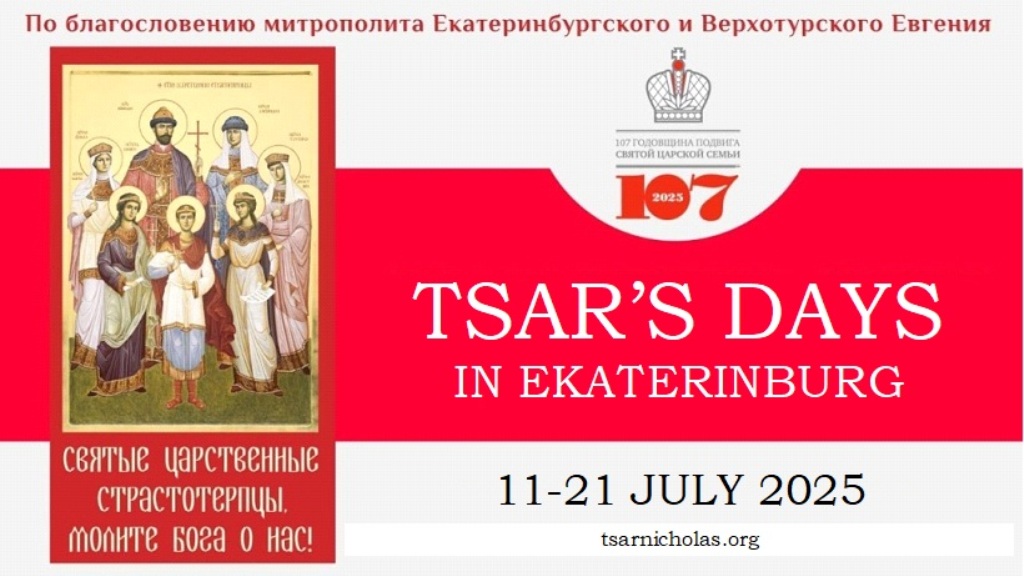
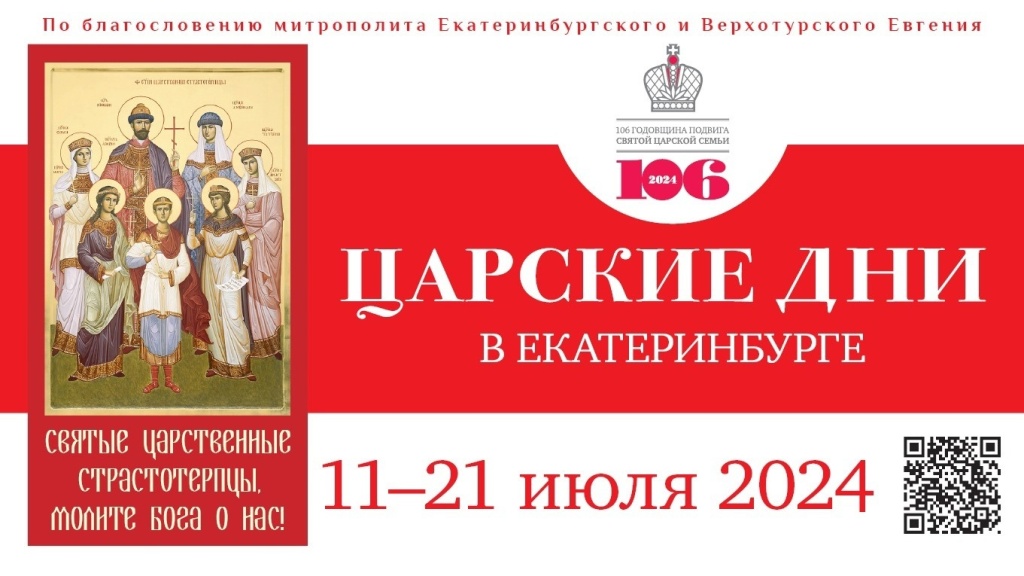
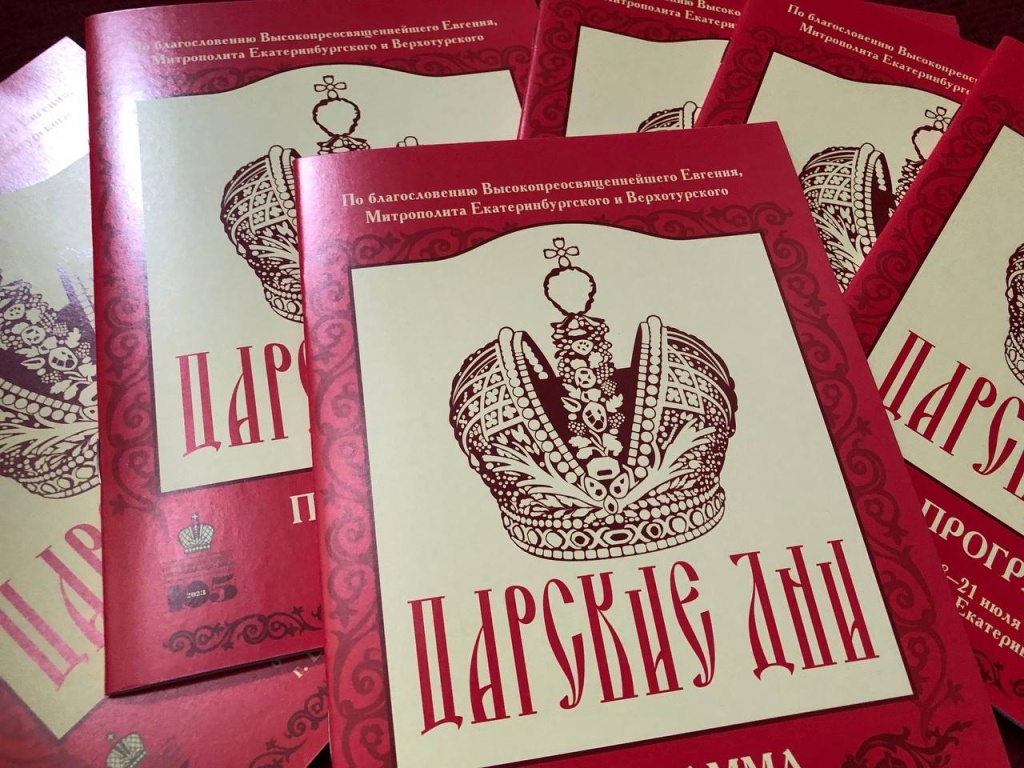
The Ekaterinburg Metropolis are currently preparing for Tsar’s Days – 2025, which will be held in the Ural capital and in Alapaevsk from 11th to 21st July. This year marks the 107th anniversary of the death and martyrdom of Emperor Nicholas II, his family and their four faithful retainers on 17th July 1918. It also marks the 107th anniversary of the death and martyrdom of Grand Duchess Eliabeth Feodorovna and other Romanov family members in Alapaevsk on 18th July 1918.
Metropolitan Evgeny of Yekaterinburg and Verkhoturye noted the importance of the upcoming memorial events, which traditionally bring together tens of thousands of faithful from across Russia and abroad.
The central event of Tsar’s Days is the Divine Liturgy held on the night of 16/17 July, followed by a 21-km [13 miles] Cross Procession, from the Church on the Blood in central Ekaterinburg to the Monastery of the Holy Royal Passion-Bearers at Ganina Yama. for which “the whole of Russia gathers” in the Ural capital.
This years’ Tsar’s Days is part of the 24th International Festival of Orthodox Culture, which will be held over a 10-day period from 11-21 July. Aside from divine services and religious processions, the festival will feature many events in honour of the Holy Royal Martyrs, including bell ringing, concerts and musical evenings, as well as exhibitions and conferences hosted by well-known historians, theologians and authors.
Preparations for the Tsar’s Days are being carried out by the Ekaterinburg Metropolia with the support of the regional and city authorities.
Once again, Porosenkov Log will not included in this year’s Cross Procession. Porosenkov Log is where the remains of the Imperial Family were exhumed in two separate graves in 1991 and 2007 respectively. Due to the fact that the Moscow Patriachate does not yet recognize the Ekaterinburg Remains as those of the Imperial Family. Their official recognition rests with the Bishops’ Council of the Russian Orthodox Church.
The veneration of Nicholas II
The veneration of Nicholas II and his family actually began just days after their murder in July 1918. During the Soviet years, such activity would most certainly have been suppressed, forcing the faithful to honour the Holy Royal Passion-Beaers in secret.
After the fall of the Soviet Union in 1991, everything changed, when in 2000, some 300 faithful gathered at the sight of the Ipatiev House in Sverdlovsk [Ekaterinburg]. In 2002, the first Cross Procession in memory of the Holy Royal Martyrs was held in the Ural capitlal, attracting 3,000 faithful. The procession has been held every year since, the most important being in 2018, the year marking the 100th anniversary of the death and martyrdom of the Imperial Family.
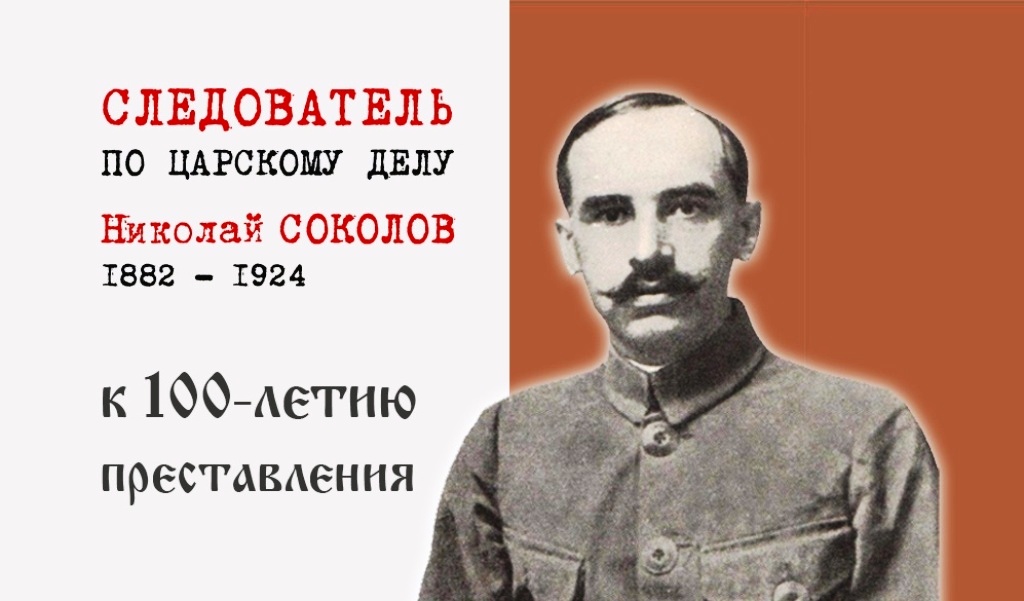
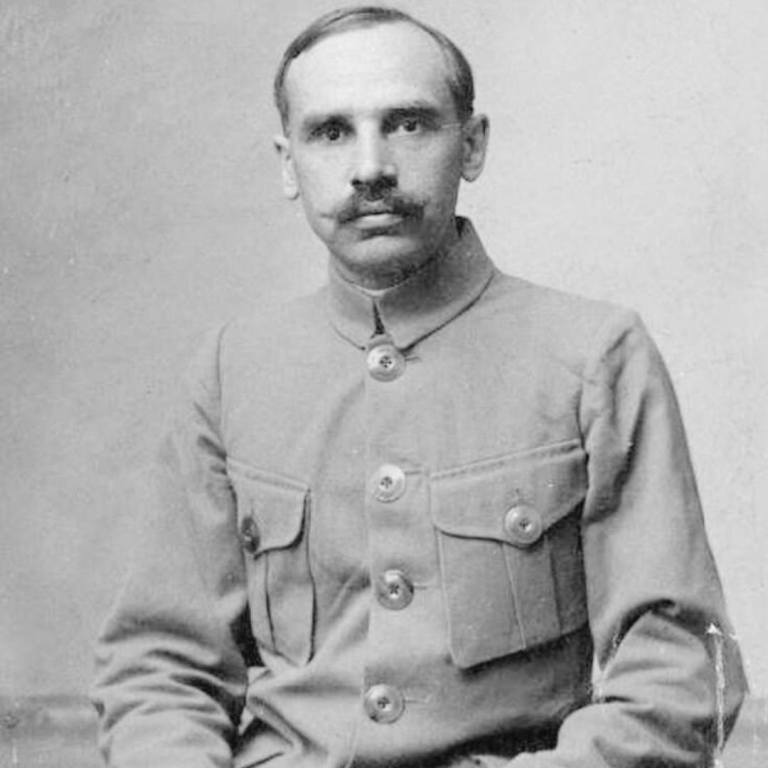
Today – 23rd November – marks the 100th anniversary of the death of Nikolai Alekseevich Sokolov (1882-1924).
Sokolov, a lawyer, and investigator for important cases of the Omsk District Court, was appointed by Admiral Alexander Kolchak (1874-1920) in February 1919, with the investigation into the murder of members of the Russian Imperial Family in Ekaterinburg and Alapaevsk.
As a staunch Orthodox monarchist, Sokolov accepted his appointment as investigator with a deep sense of reverence and responsibility. Within a short time, working without rest from morning until late at night, Sokolov managed to collect a vast amount of material evidence and interviewed hundreds of witnesses, which included several members of Nicholas II’s entourage, notably Pierre Gilliard, Alexandra Tegleva and Charles Sydney Gibbes.
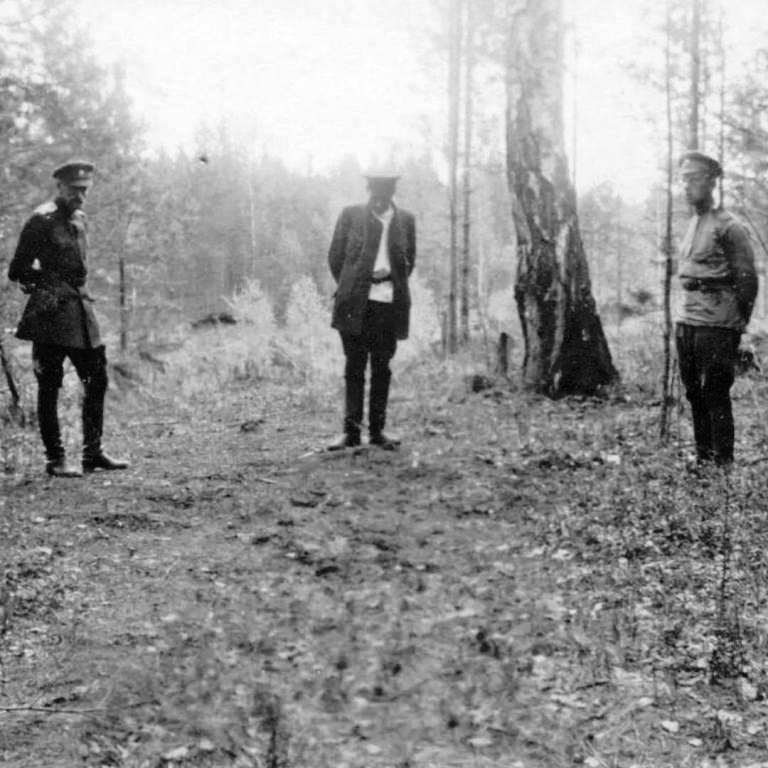
Sokolov discovered a large number of the Imperial Familys’ belongings and valuables that were overlooked by Yurovsky and his men in and around the mineshaft where the bodies were initially disposed of in the Four Brothers Mine.
The impending return of Bolshevik forces in July 1919, forced Sokolov to abandon his investigation, thus failing to find the concealed second burial site on the Koptyaki Road.
He evacuated Ekaterinburg, bringing with him the box containing the relics he recovered. Sokolov accumulated eight volumes of photographic and eyewitness accounts. Today, the box is stored in the Russian Orthodox Church of Saint Job in Brussels.
Sokolov fled from Russia to France, where he continued his investigation, questioning additional witnesses who had managed to escape Bolshevik Russia.
Sadly, Sokolov did not live to bring his investigation to an end – he was found dead in the garden of his house on 23rd November 1924, having suffered a heart attack at the age of 42. He died leaving a widow aged 23 and two young children, a daughter Nathalie (1920-2002) and a son Alexis (1923-1980). He is buried in the cemetery of Salbris, France.
“On Wednesday, November 26, he [Sokolov] was buried literally by the entire town of Salbris with the mayor at the head. It was not a crowd of curious spectators, but sympathetic Frenchmen who came dressed in mourning to pay their last respects to the deceased.
When, after the burial, the Russians thanked the mayor for the touching sympathies to their compatriot, the mayor replied that he, could not remember when the whole town turned out for a funeral for someone in Salbris, and that they, the French, had come to pay their last respects to the representative of the Russia that was their ally and friend.
Thus, in France, Russian émigrés, together with the French, saw off, the judicial investigator for especially important cases, Nikolai Alekseevich Sokolov, on his final journey, who died in a foreign land on 23rd November 1924.
Nikolai Alekseevich Sokolov (1882-1924). Memory Eternal! Вечная Память!
*NOTE: for English subtitles, adjust the translation settings to the language of your choice, and then click on the “CC” button – PG
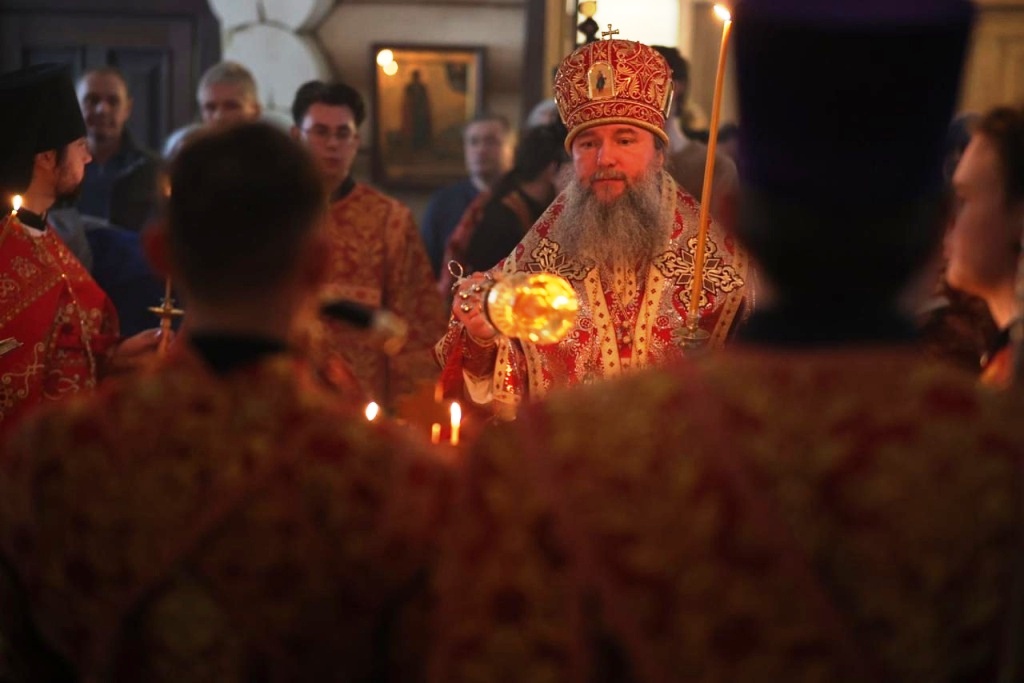
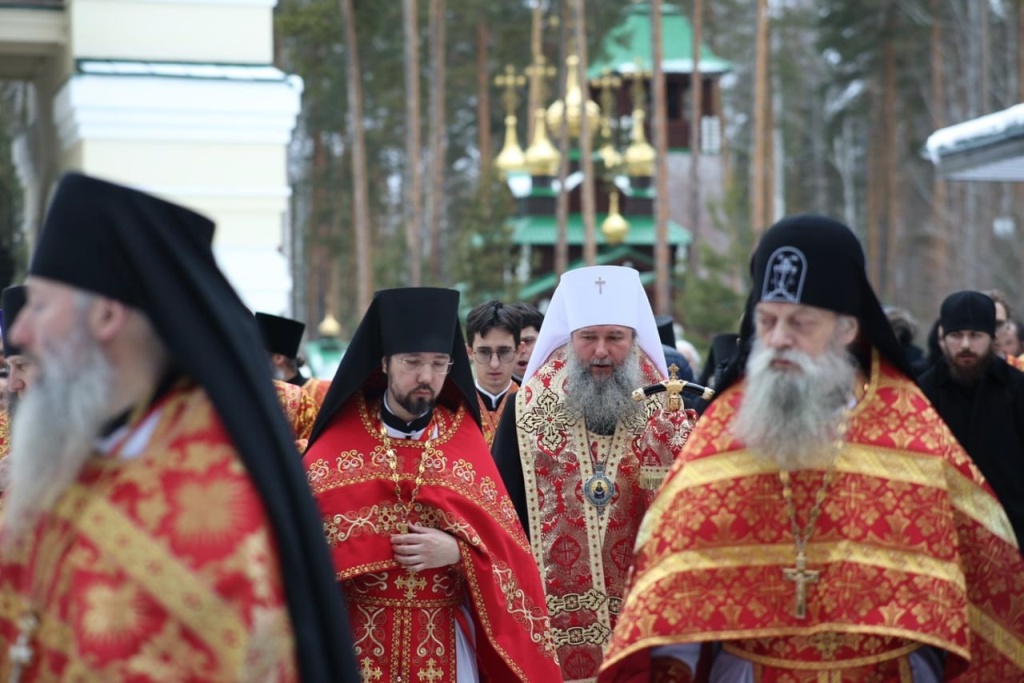
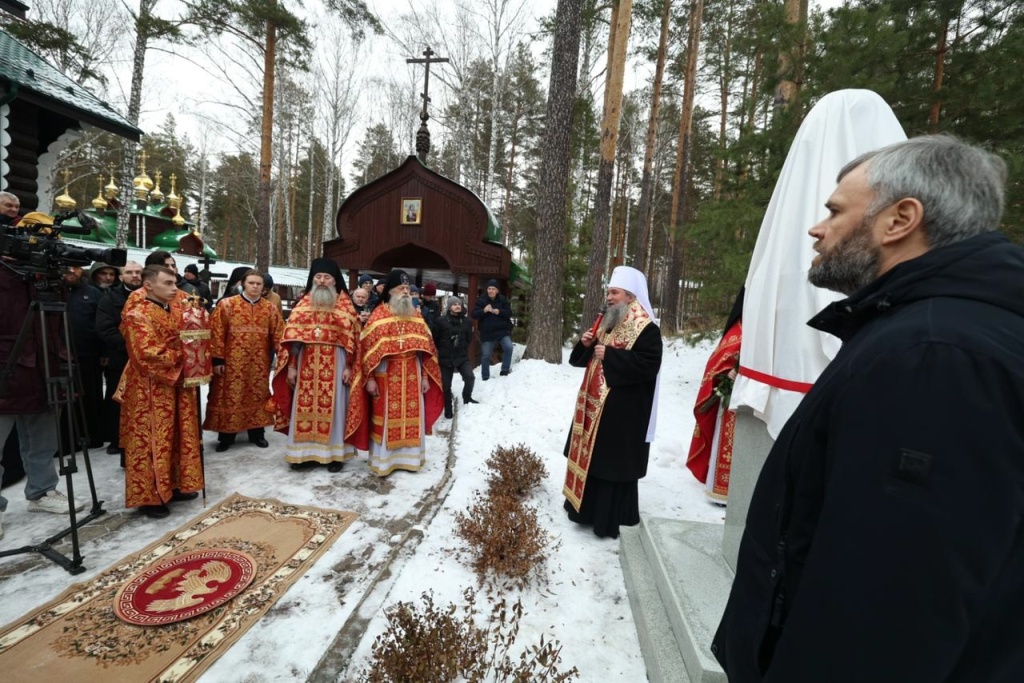
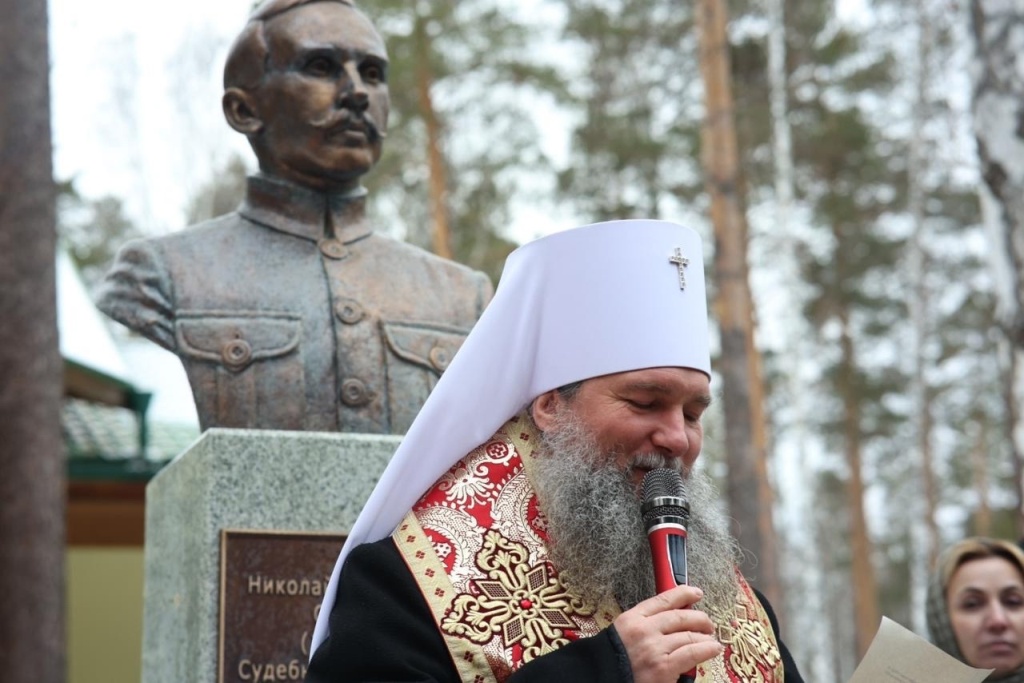
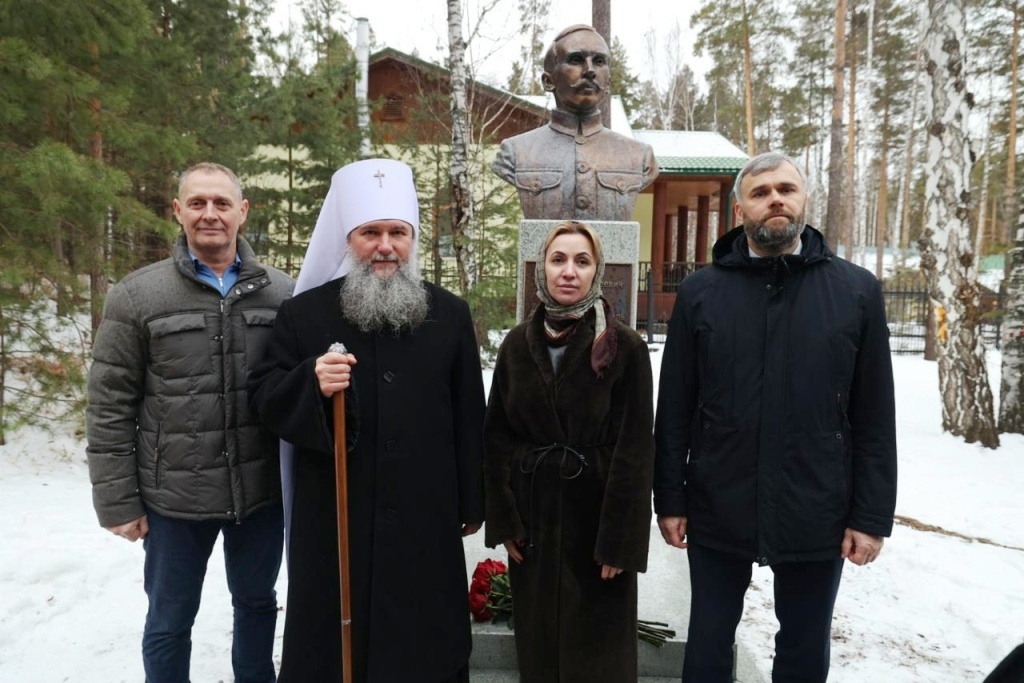
On the morning of 23rd November 2024, a Divine Liturgy was performed by Metroplitan Evgeny (Eurgene) of Ekaterinburg and Verkhotursky in the Church of the Holy Royal Passion-Bearers at the Monastery of the Holy Royal Passion-Bearers at Ganina Yama. At the end of the Divine Liturgy, Metropolitan Evgeny performed a pannikhida [Orthodox memorial service for the dead].
During the service, prayers were lifted up for the ever-memorable servant of God Nikolai Alekseevich Sokolov, investigator in the case of the murder of the Imperial Family.
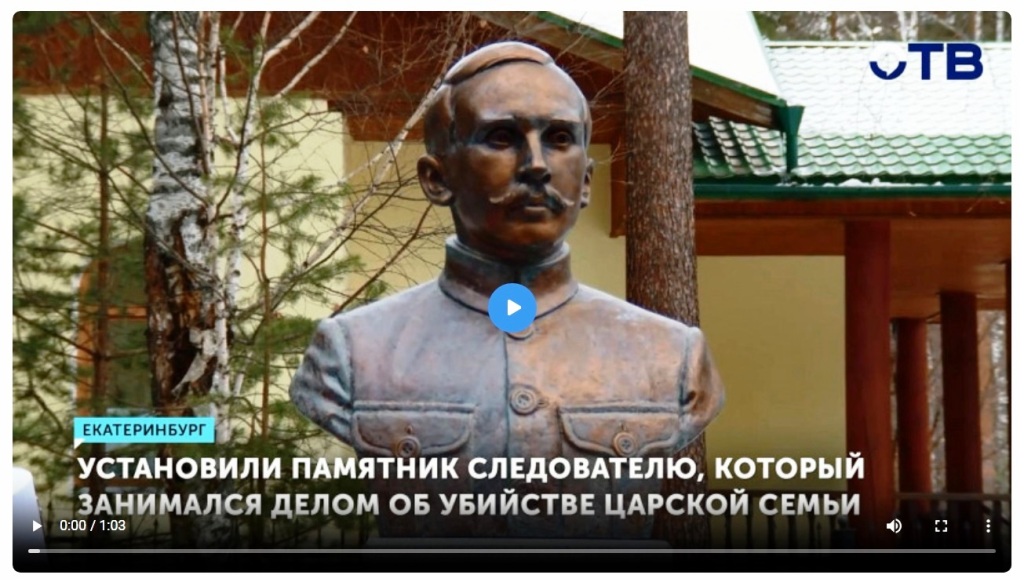
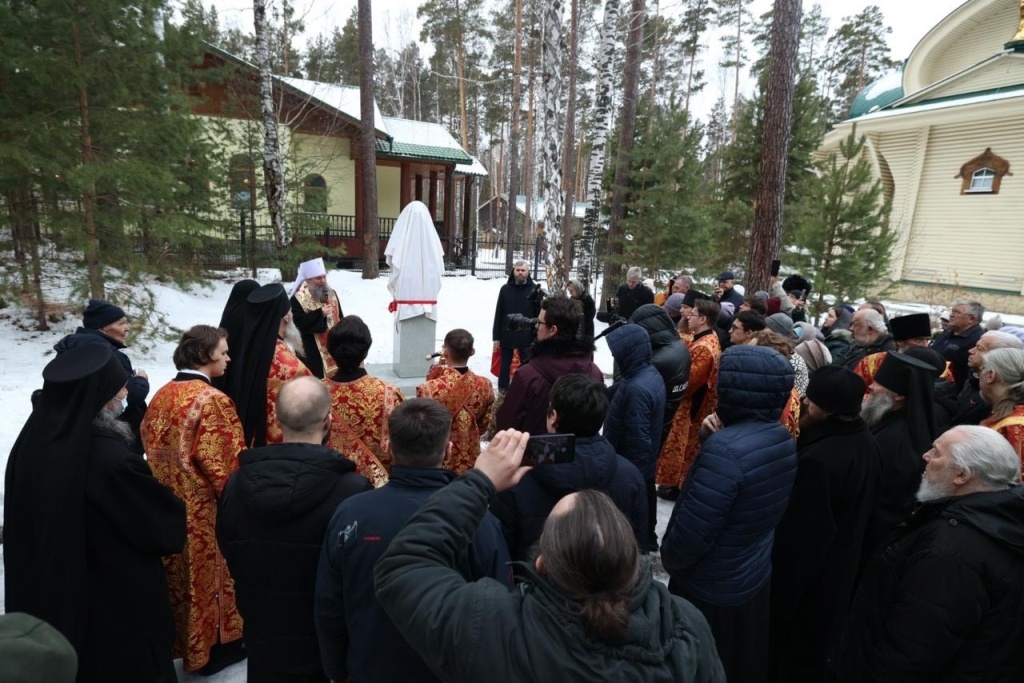
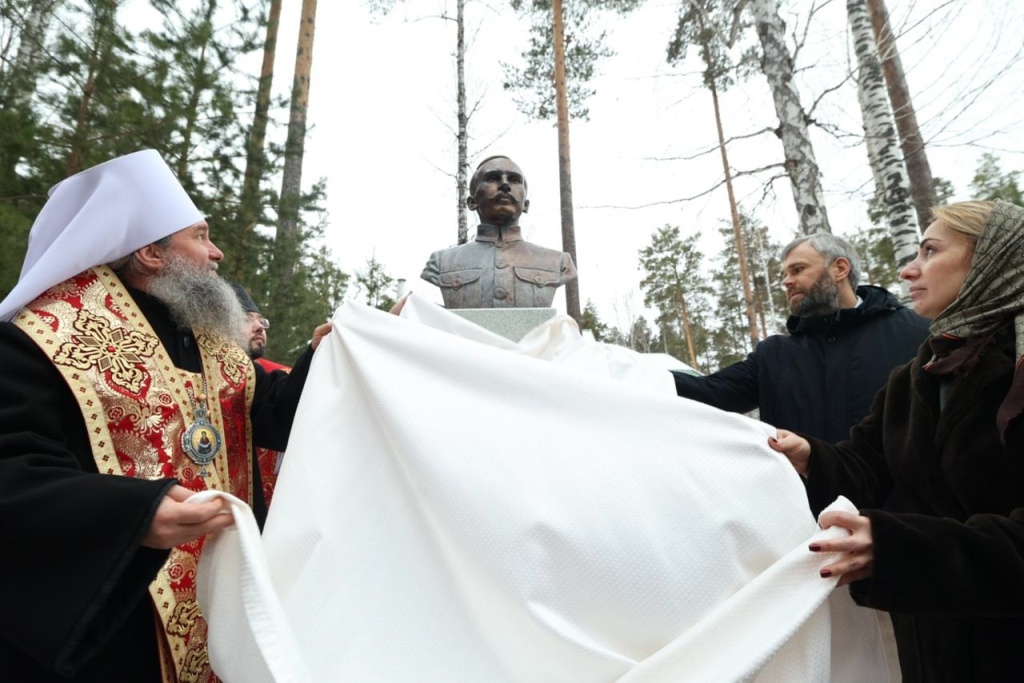
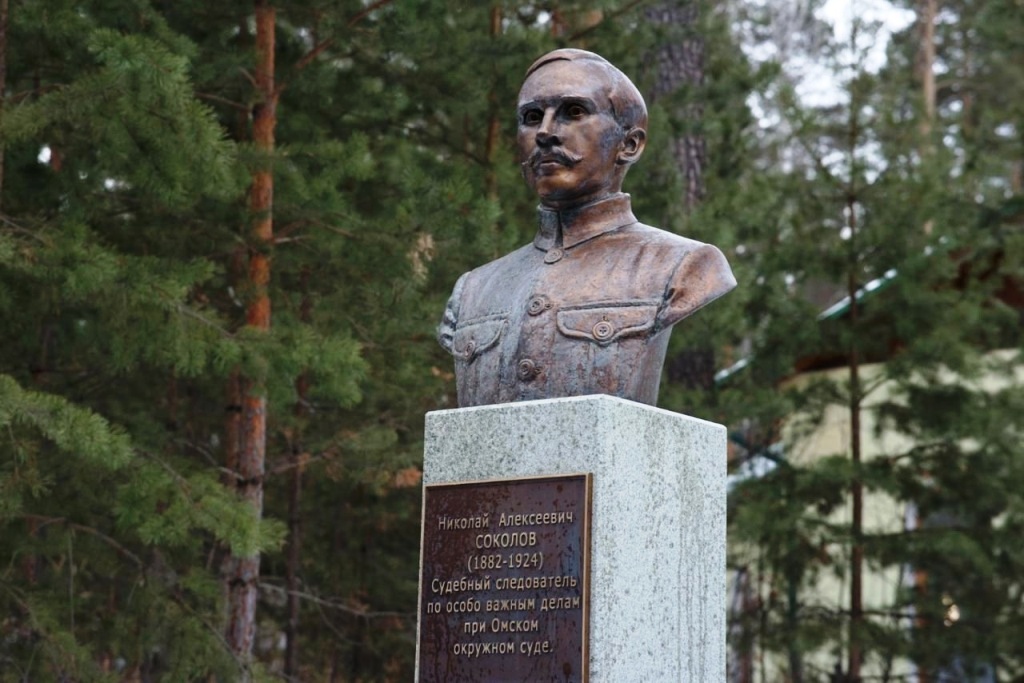
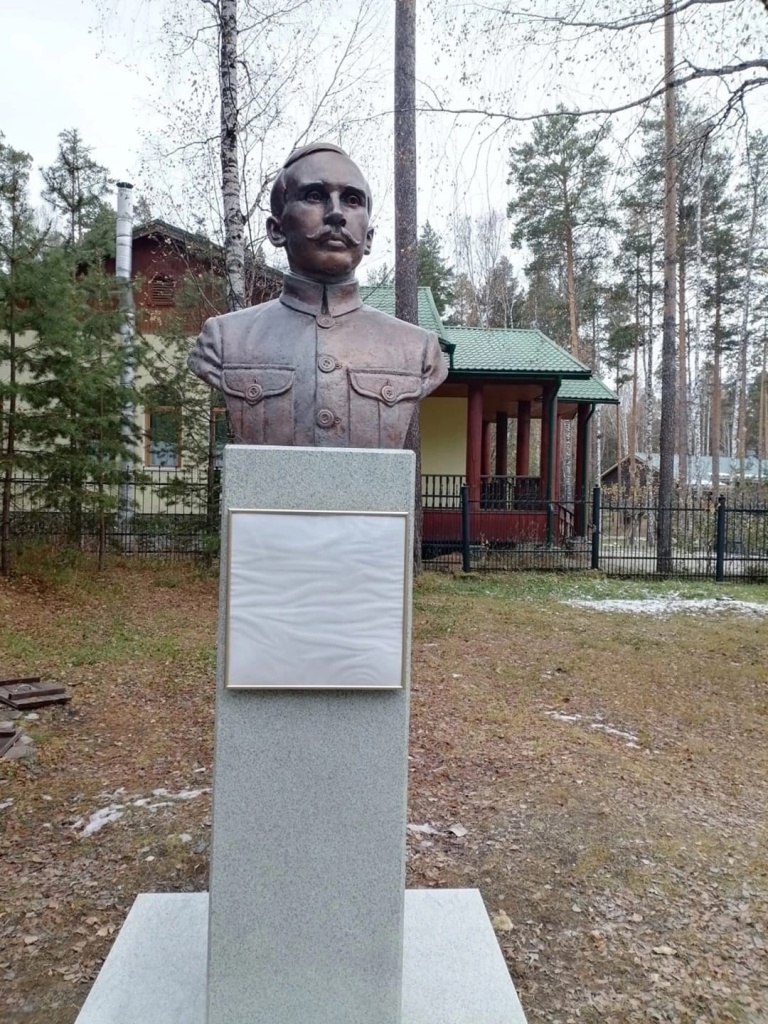
The bust-monument is located to the right of the RChurch of the Holy Royal Passion-Bearers, near the entrance to the gallery which encircles the Four Brothers mine (collapsed), where the regicides threw the bodies of the Imperial family and their four retainers into the mine.
PHOTO: Metroplitan Evgeny (Eurgene) of Ekaterinburg and Verkhotursky performs a pannikhida [Orthodox memorial service for the dead], on 23rd November 2024
PHOTO: Metroplitan Evgeny (Eurgene) of Ekaterinburg and Verkhotursky with the sculptor Vladimir Vladimirovich Syreyshchikov, the General Director of Iriston PFC Raisa Soslanovna Kokoeva, and Andrey Viktorovich Zhukov Director of the Orthodox Christian Good Deeds Public Movement.
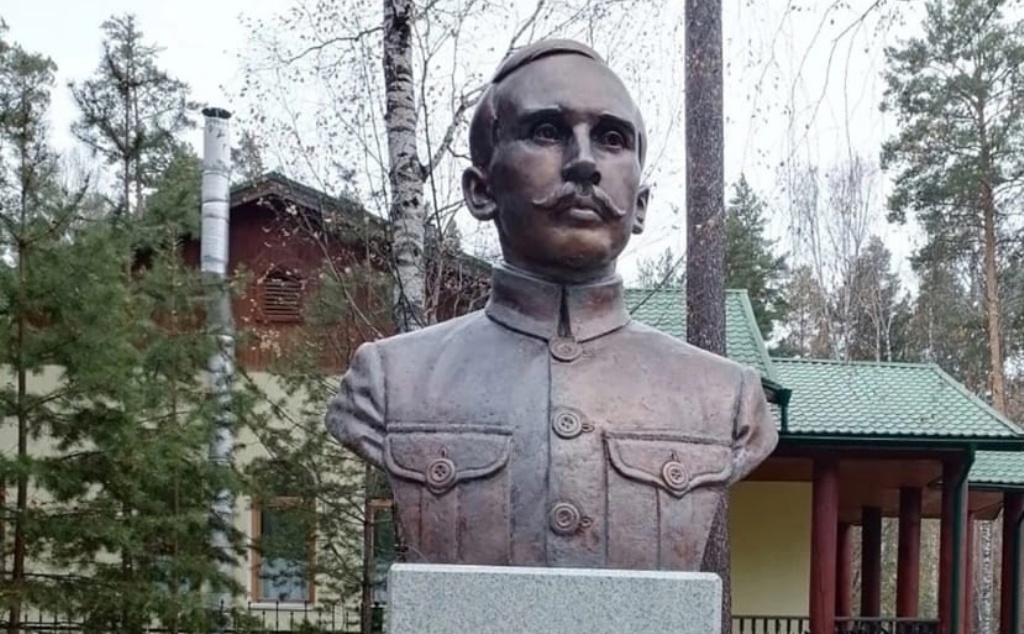
A bust of the investigator Nikolai Alekseevich Sokolov (1882-1924) was installed over the weekend, on the grounds of the Monastery of the Holy Royal Passion-Bearers at Ganina Yama, situated near Ekaterinburg.
As you can see from the photographs, the pedestal is not yet finished. This is because the *grand opening is scheduled for 23rd November 2024, the day marking the 100th anniversary of Sokolov’s death. *I will be posting details and photos of the ceremony next month – PG.
Before the 1917 Revolution, Sokolov served as a lawyer, and investigator for important cases of the Omsk District Court. In February 1919, the Supreme Ruler Admiral Alexander Kolchak (1874-1920), appointed Sokolov with the task of investigating the murder of members of the Russian Imperial Family in Ekaterinburg and Alapaevsk.
Sokolov loved Russia and would not accept the changes brought about by the Bolshevik Revolution in 1917. As a staunch Orthodox monarchist, he accepted his appointment with a deep sense of reverence and responsibility.
PHOTO: Nikolai Sokolov and General Mikhail Dieterichs searching for the remains of the Imperial Family near the Four Brothers Mine, near Ekaterinburg. 1919
In July 1919, Sokolov’s investigation was cut short after the return of Bolshevik forces, forcing him to evacuate Ekaterinburg to Harbin (China). He lived out the rest of his life in exile in France, where he died five years later. He is buried in the cemetery of Salbris, France.
***
In 2001, the Monastery of the Holy Royal Passion-Bearers was built around the Four Brothers Mine at Ganina Yama. It was here, in 1919, that Sokolov carried out his investigation, one in which he discovered evidence that the Tsar and his family had been murdered, and their killers efforts to hide their crime.
To this day, the Russian Orthodox Church still officially adheres to Sokolov’s theory that the bodies of the Imperial Family were completely destroyed at the Four Brothers Mine. A century later, we now know that this was not so.
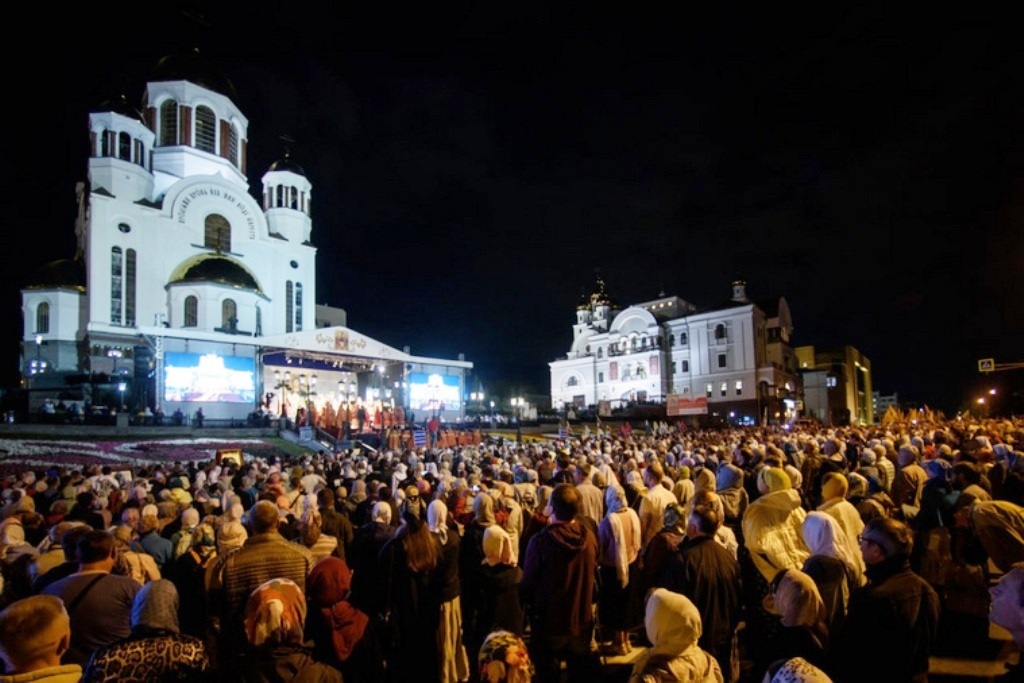
On the night of 16/17 July 2024, on the eve of the Feast Day of the Holy Royal Martyrs[1], the Hierarchal Divine Liturgy was celebrated at the Church on the Blood in Ekaterinburg. This year marks the 106th anniversary of the murder of Emperor Nicholas II, his wife, their five children, and four faithful retainers.
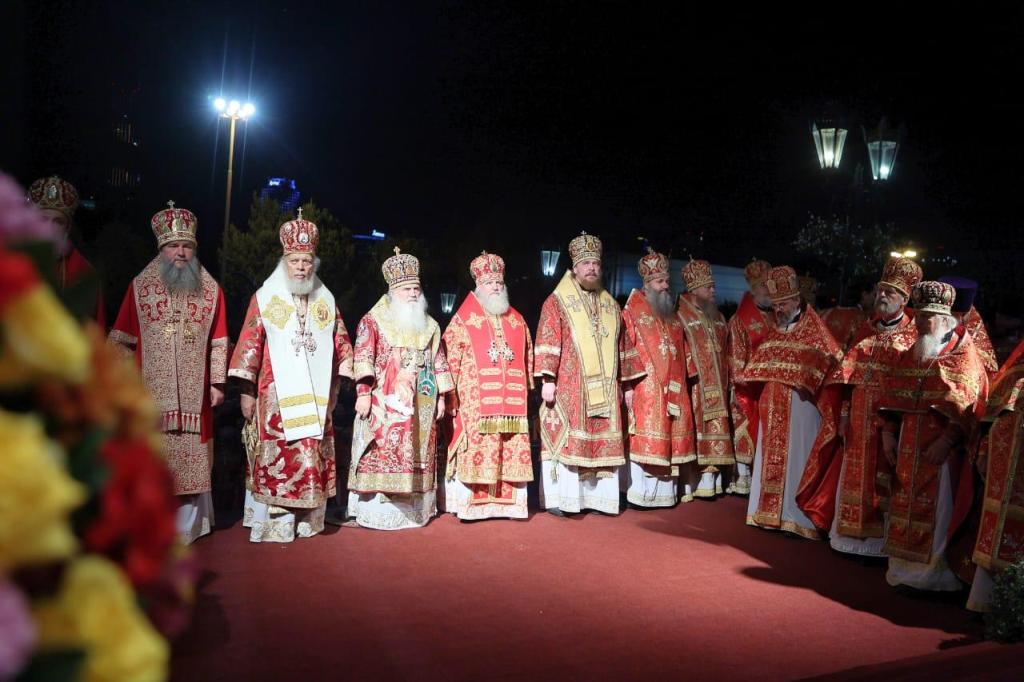
Divine services were held in the Imperial Room[2], were led by the bishops who had arrived in the Ural capitol for Tsar’s Days: Bishop Roman of Rubtsovsk and Aleysk, and Bishop Leonty of Syzran and Shigon.
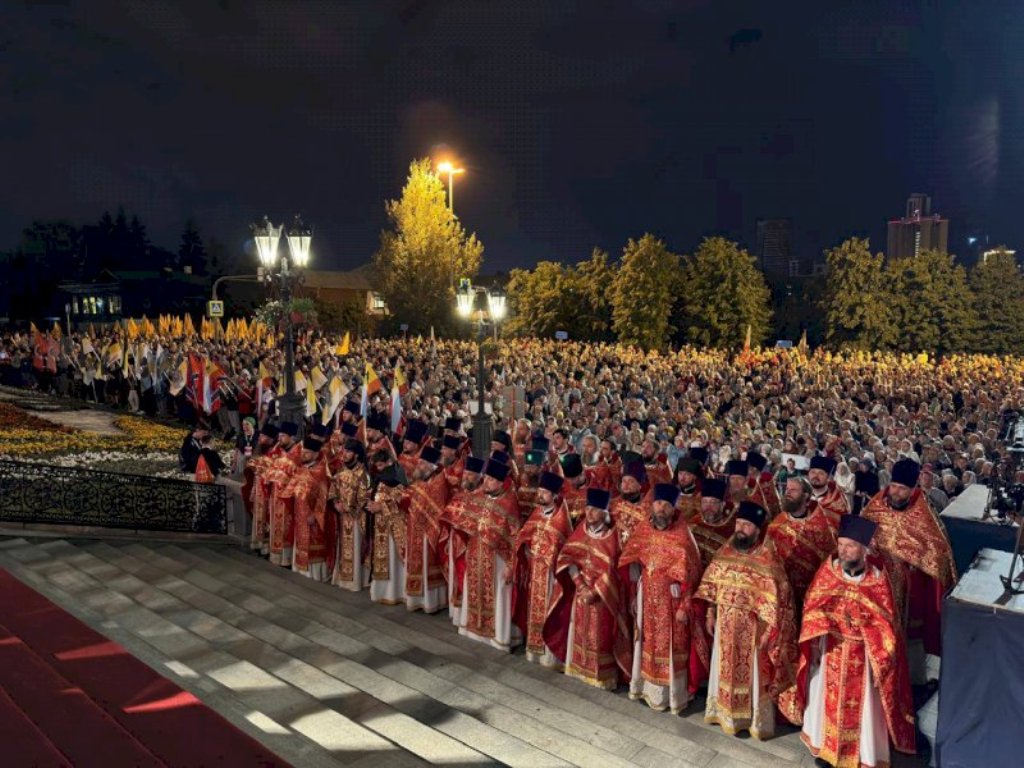
Concelebrating with the bishops were Archpriest Nikolai Tarantin, head of the protocol service of the Ekaterinburg Diocese, Archpriest Maxim Minyailo, chairman of the diocesan department for Church relations with society and the media, senior priest of the Church on the Blood, and Priest Daniel Ryabinin, head of the diocesan missionary department; Priest Pavel Starkov, head of the Youth Department, spiritual father of St. Simeon’s Orthodox Gymnasium (School); Rector of the Ekaterinburg Theological Seminary, Hieromonk Korniliy Zaitsev, Chief of Staff of the Synodal Diocese of the Ekaterinburg Diocese, Hieromonk Simeon (Seregin), and other clergymen of the Ekaterinburg Diocese.
Traditionally, the Divine Liturgy on the night of 16th July is celebrated with a large crowd of faithful – hundreds of believers prayed in the church.
The hymns of the service were sung by the choir of the Ekaterinburg Theological Seminary under the direction of Anastasia Mukhlynina, a graduate of the seminary’s choir director’s department.
Archpriest Sergiy Alexeev, a cleric of the Holy Trinity Cathedral in Ekaterinburg, addressed the faithful present with a sermon on the pre-communion verse.
Communion on this day was performed from five chalices – many pilgrims arrived in Ekaterinburg to pray at the main services of the Tsar’s Days and honour the memory of the Holy Royal Family.
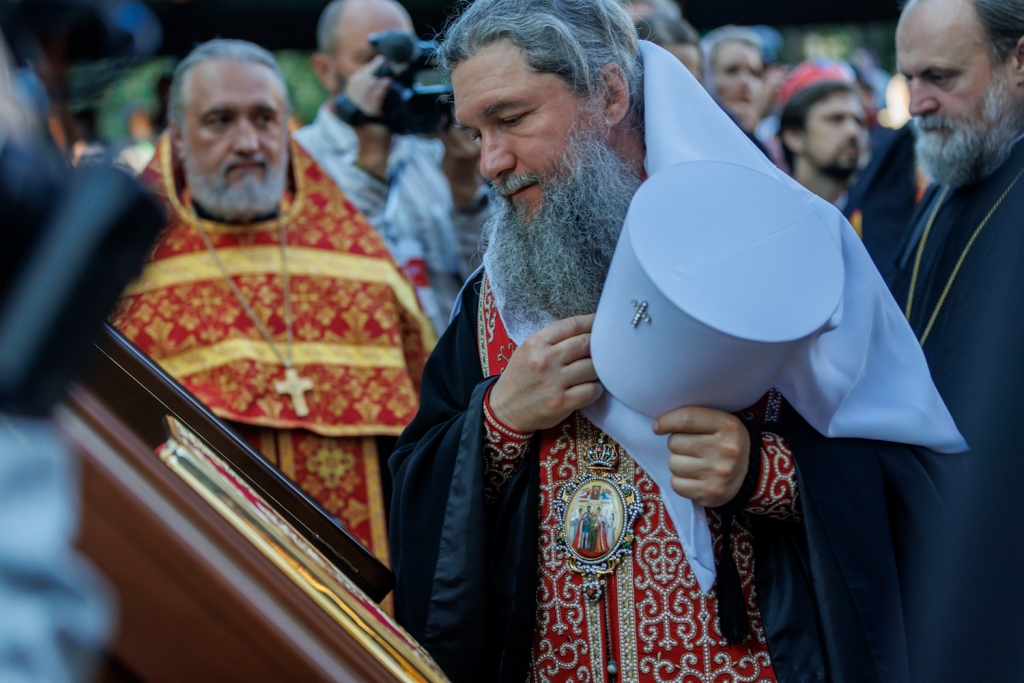
At the end of the service, Metropolitan Evgeny of Ekaterinburg and Verkhoturye greeted the bishops, clergy and pilgrims who had arrived from across Russia and other countries for the Tsar’s Days.
Metropolitan Evgeny asked everyone to preserve the memory of the Holy Royal Passion-Bearers and to imitate wisdom and strength in the love they showed. At 3:00 p.m., Little Vespers with an akathist to the Holy Royal Passion-Bearers was served in the Church-on-the-Blood, then at 4:30 p.m., the All-Night Vigil began on the square in front of the church, which was led by the Eminent Archpastors. The main service of the Tsar’s Days – the Divine Liturgy – began at midnight, followed by the Royal Cross Procession.
Procession of the Cross to Ganina Yama
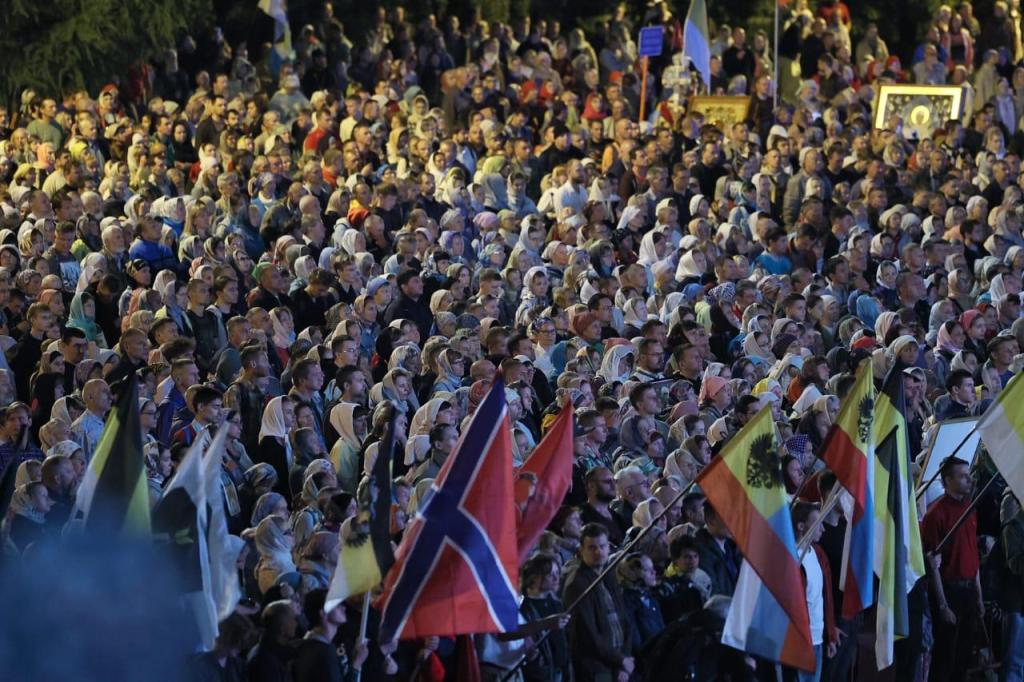
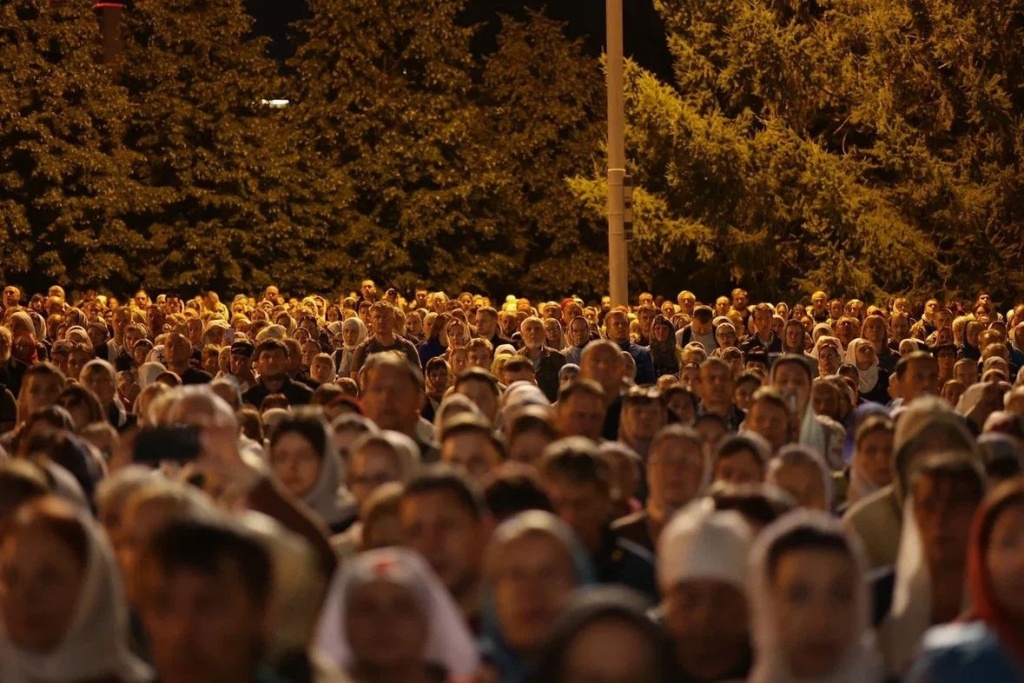
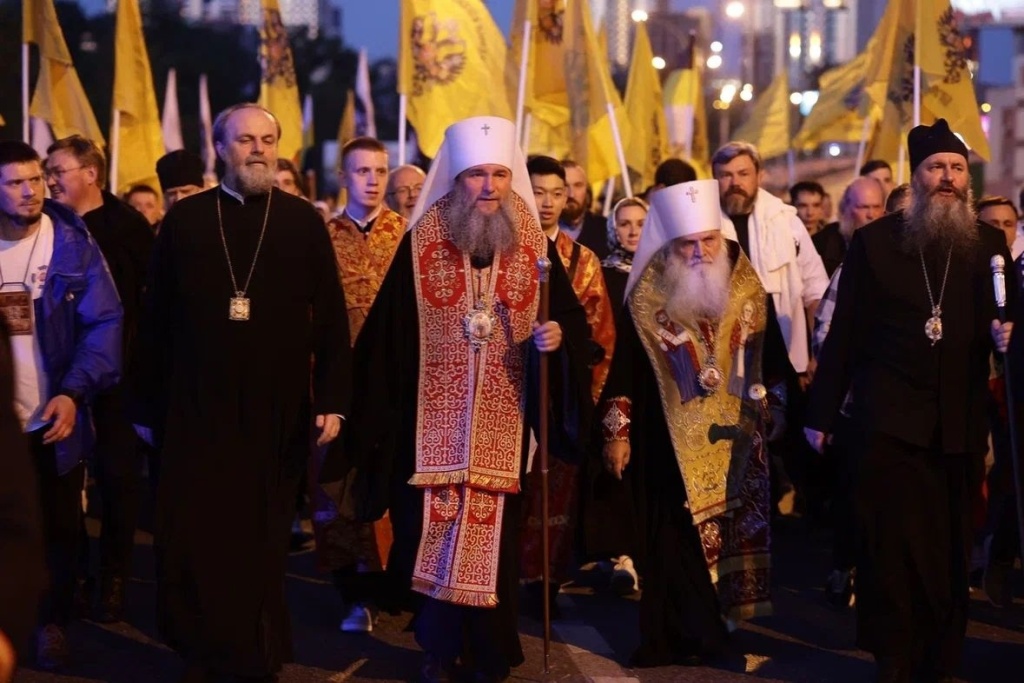
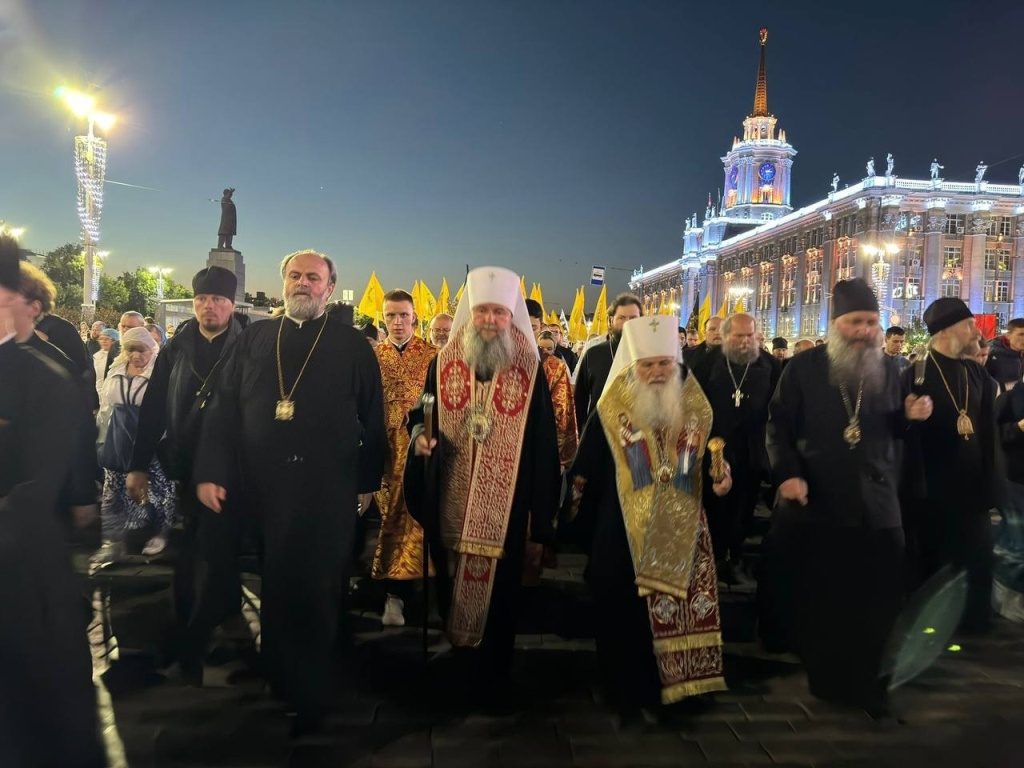
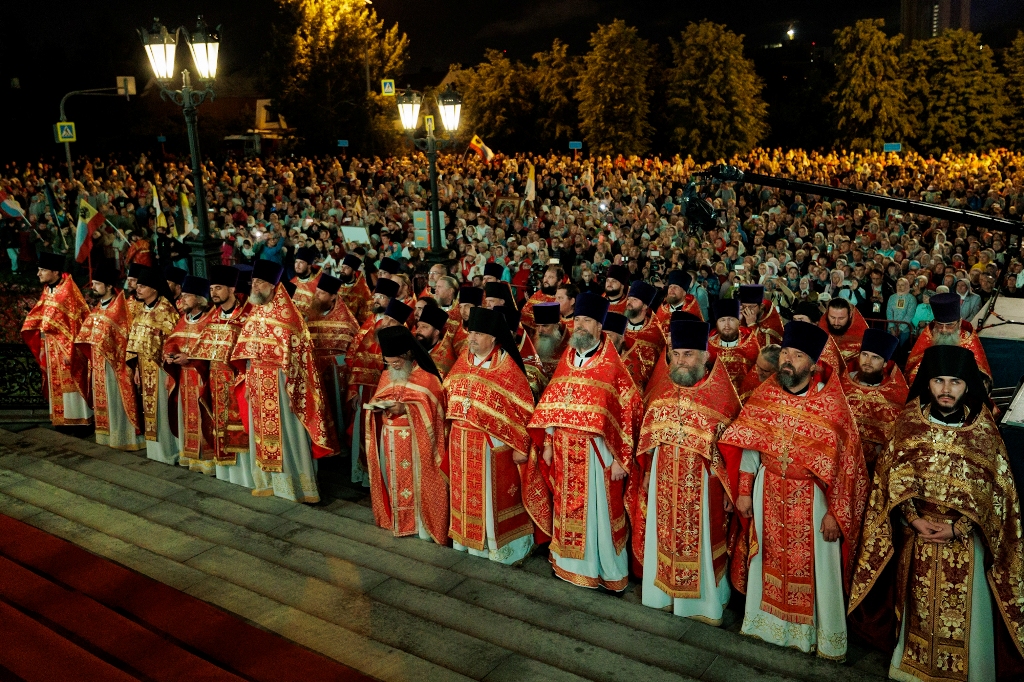
In the early morning hours of 17th July 2024, the traditional Royal Cross Procession was held from the Church on the Blood in Ekaterinburg to the Monastery of the Holy Royal Passion-Bearers at Ganina Yama – a 21 km. [13 miles] journey on foot[3]. The Cross Procession was preceded by a Divine Liturgy on the square in front of the church, which was headed by 13 bishops of the Russian Orthodox Church.
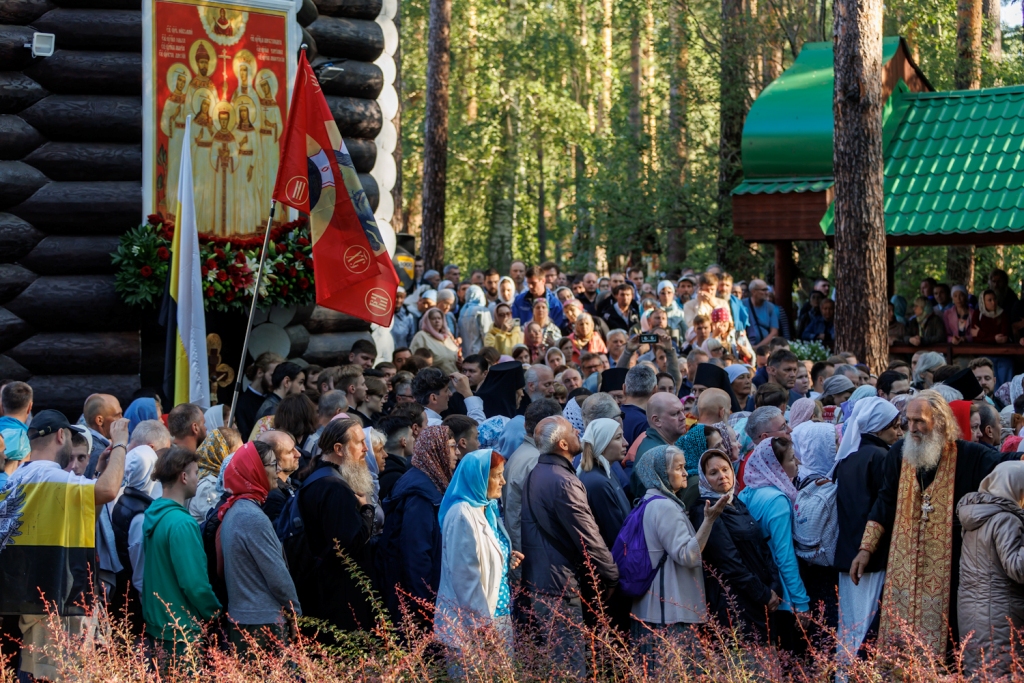
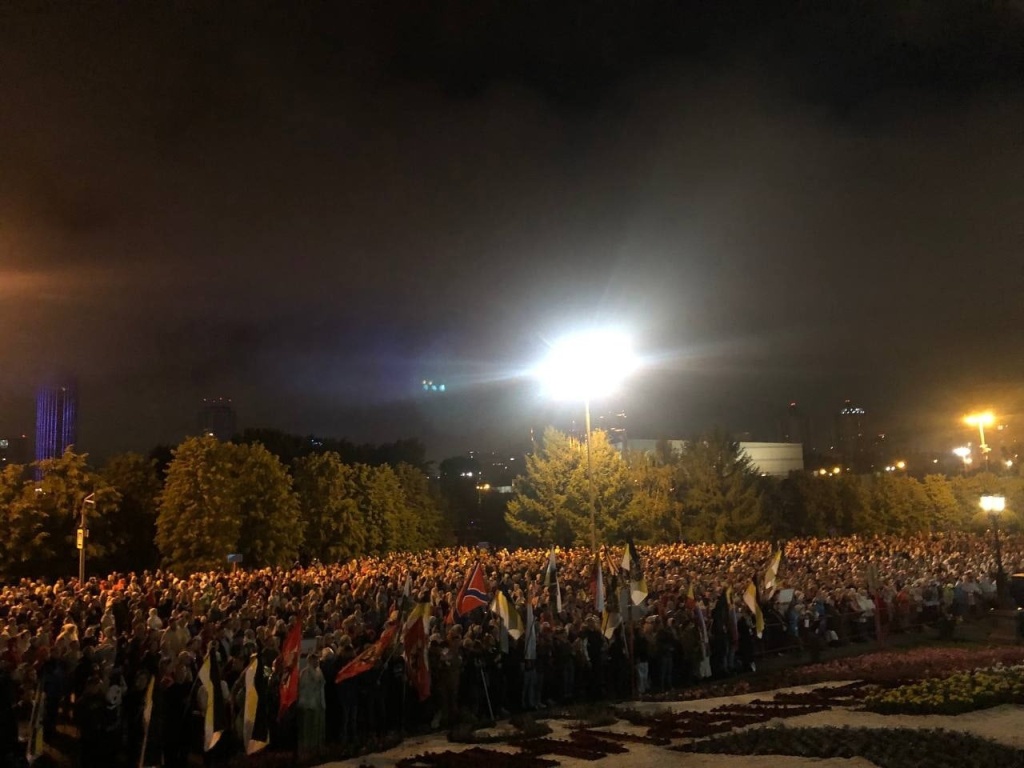
An estimated 45,000 faithful took part in this year’s Cross Procession, together with the head of the Ekaterinburg Metropolia, was led by Metropolitan Vikenty of Tashkent and Uzbekistan, head of the Central Asian Metropolitan District, and other archpastors.
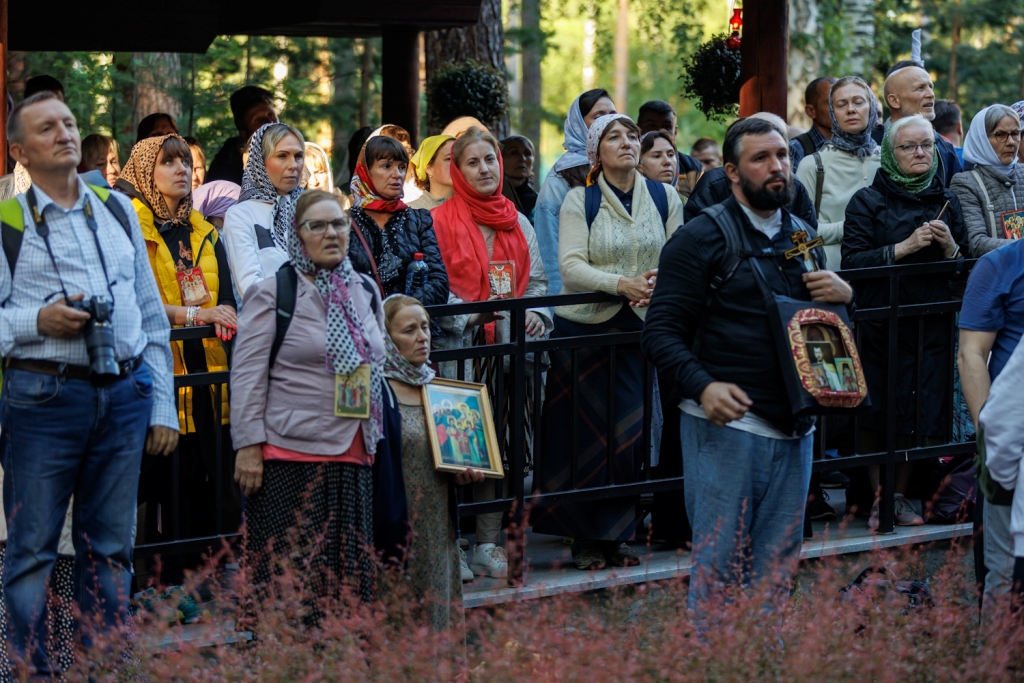
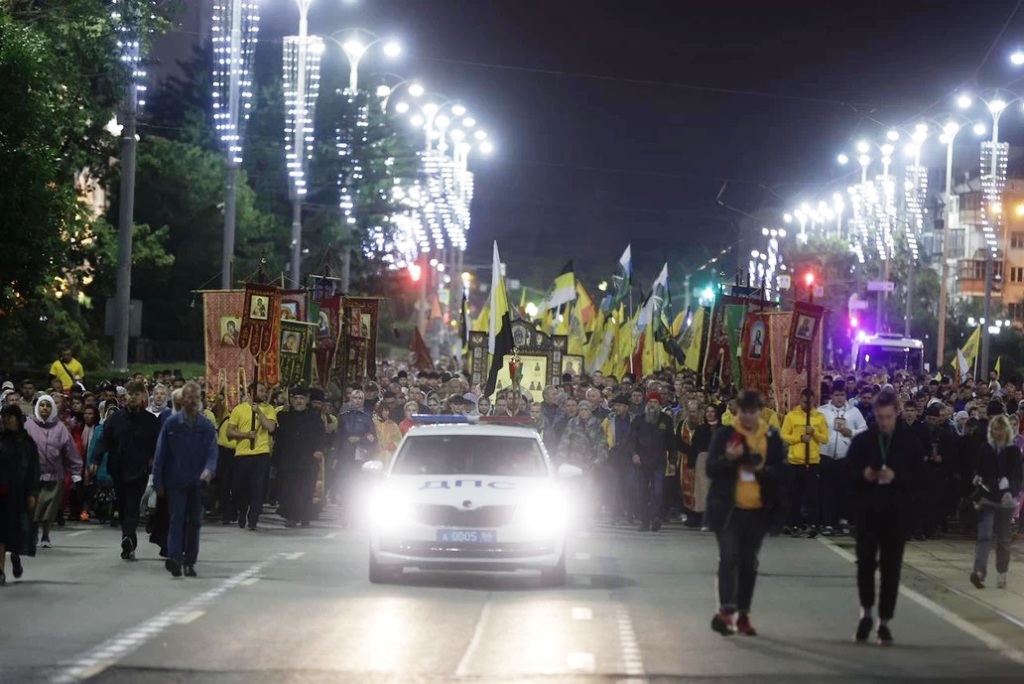
Under the repentant Jesus Prayer: “Lord, Jesus Christ, Son of God, have mercy on us!” – the multi-thousand column of believers, clergy and laity from across Russia – covered the distance in about four to five hours. Those who took part in the procession came from every corner of the Russian Federation – from Stavropol to Novosibirsk, from Astrakhan to Arkhangelsk, as well as abroad.
The procession was accompanied by 10 mobile aid groups of the Orthodox Mercy Service and volunteers of the Tsar’s Days.
In the Cross Procession, two Reliquaries were carried, the first Reliquary containing a part of the Belt of the Most Holy Theotokos, which was donated to the Ekaterinburg Diocese, the second Reliquary containing the relics of 14 saints of the Ekaterinburg Metropolia: the Venerable Martyr Grand Duchess Elizabeth Feodorovna, the Venerable Martyr nun Varvara (Barbara) Yakovleva, the Venerable Basilisk of Siberia, the Righteous Simeon of Verkhoturye, the Blessed Cosmas of Verkhoturye, the Venerable Elijah Chebotarev, the Hieromartyr Alexander Malinovsky, the Hieromartyr Arkady Gariaev, Hieromartyr Konstantin Bogoyavlensky, Hieromartyr Lev Ershov, Venerable Arefa Katargin, Hieromartyr Alexis Budrin, Venerable Confessor John (Chevroletin) and Hieromartyr Alexander Adrianov.
The Royal Cross Procession concluded with a moleben to the Holy Royal Passion-Bearers at the Monastery of the Holy Royal Martyrs at Ganina Yama.
The Most Reverend Archpastors, Bishop Evgeny and Bishop Vikenty, thanked the thousands of faithuful who took part in the Royal Cross Procession for their spiritual feat.
Divine Liturgies were celebrated in the seven churches of the monastery, the churches are dedicated to each of the seven members of the Imperial Family. As the day progresssed, more and more pilgrims arrived at the monastery for prayer and reflection.
Holy Royal Passion-Bearers, pray to God for us! Святые Царственные страстотерпцы, молите Бога о нас!
NOTES:
[1] On 1st November 1981, the Imperial Family were canonized as new martyrs by the Russian Orthodox Church Outside Russia (ROCOR).
On 20th August 2000, the the Imperial Family were canonized as passion-bearers by the Moscow Patriarchate.
Passion-bearers are people who face death with resignation, in a Christ-like manner, as distinguished from martyrs, the latter historically killed for their faith. Proponents cited the piety of the Tsar and his family and reports that the Tsarina and her eldest daughter Olga prayed and attempted to make the sign of the cross immediately before they died.
Despite their official designation as “passion-bearers” by the Moscow Patriarchate, they are nevertheless spoken of as “saints” in Orthodox publications, icons, and in popular veneration by the people.
[2] The Imperial Room is situated in the lower church sanctified in honor of the Holy Royal Martyrs. It was established on the site of the room located in the basement of the Ipatiev House, where Emperor Nicholas II, his family, and four retainers were all brutally murdered on the night of 16/17 July 1918.
[3] Once again, Porosenkov Log was not included in this year’s Cross Procession. Porosenkov Log is where the remains of the Imperial Family were exhumed in two separate graves in 1991 and 2007 respectively. Due to the fact that the Moscow Patriachate does not yet recognize the Ekaterinburg Remains as those of the Imperial Family. Their official recognition rests with the Bishops’ Council of the Russian Orthodox Church.
On the night of 16/17 July 2023 – the eve marking the 105th anniversary of the death and martyrdom of Emperor Nicholas II and his family – some 40,000 faithful attended a Divine Liturgy and Cross Procession in Ekaterinburg.
Defying Western sanctions, a number of foreigners also attended this years events, including the Italian opera singer and singing teacher Elvis Fanton, who said he felt compelled to come to Ekaterinburg after having a dream about Tsesarevich Alexei Nikolaevich. Fanton is a regular visitor to the Ural capital, where he has performed in concerts dedicated to the only son and heir of Russia’s last Tsar.
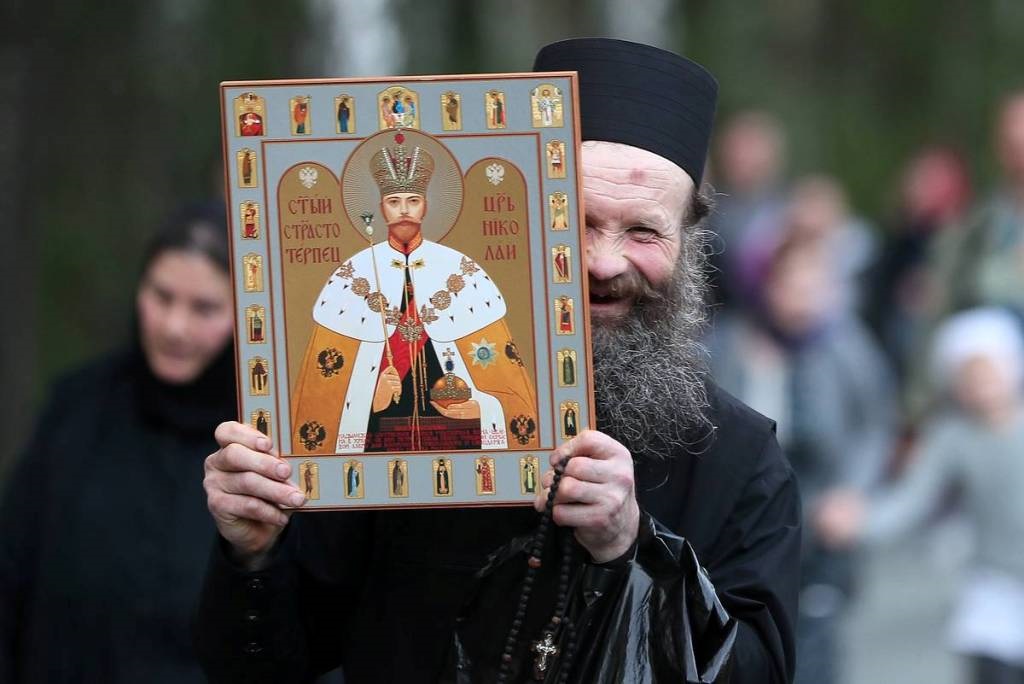
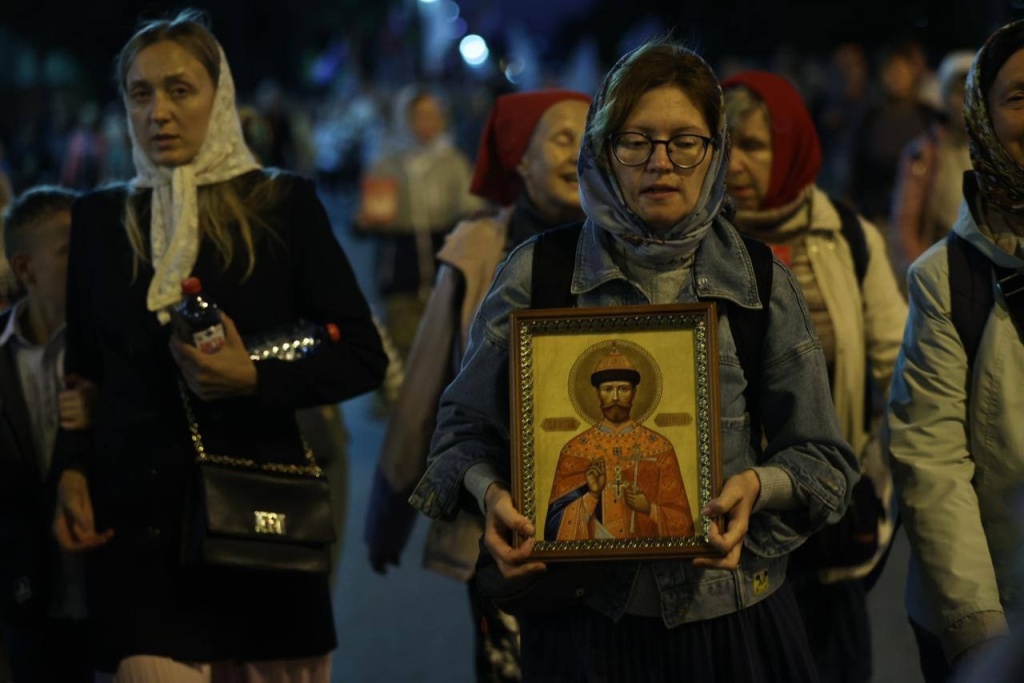
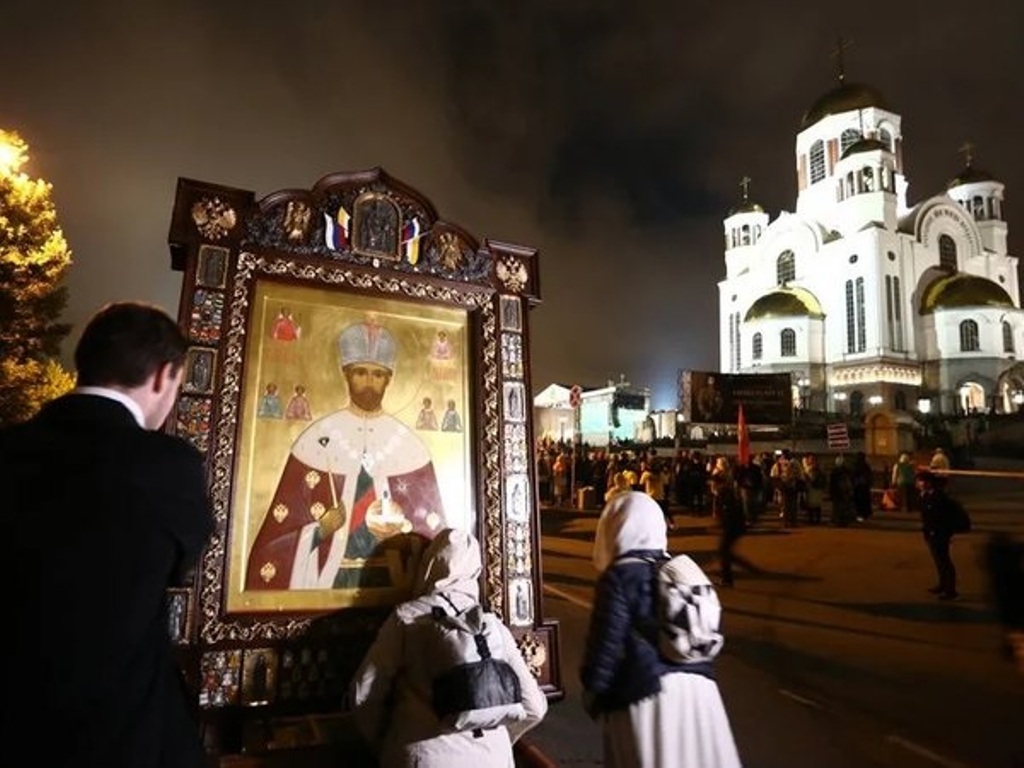
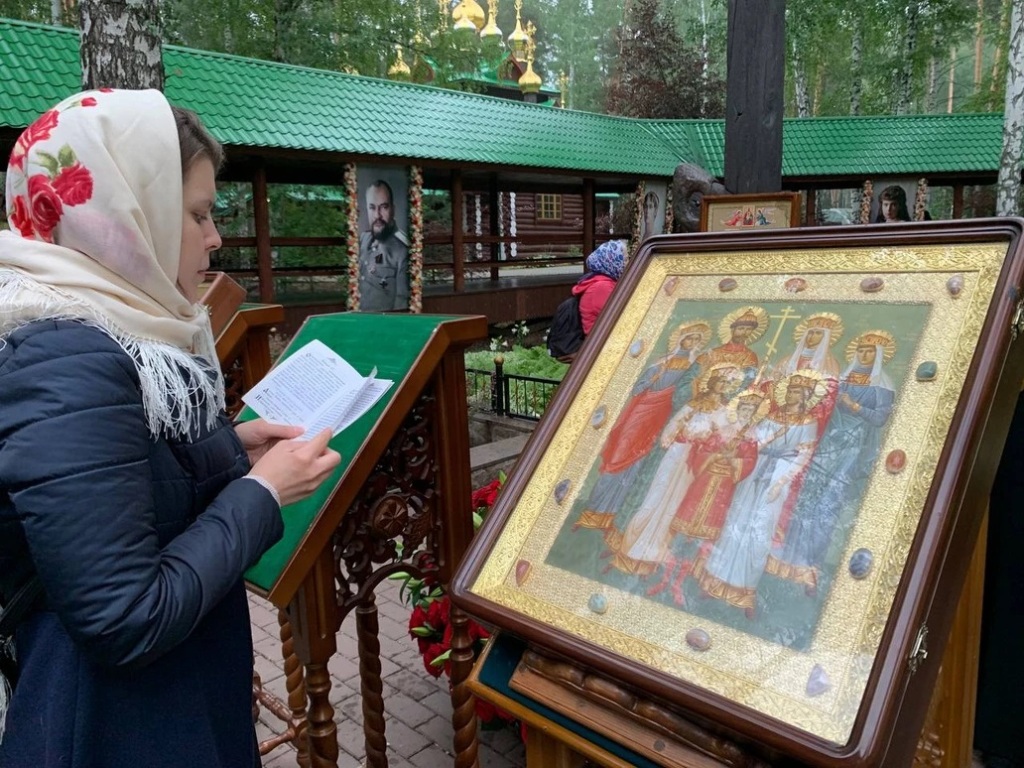
PHOTO: Orthodox Christians venerate an icon of the Holy Tsar Martyr Nicholas II on the square in front of the Church on the Blood in Ekaterinburg
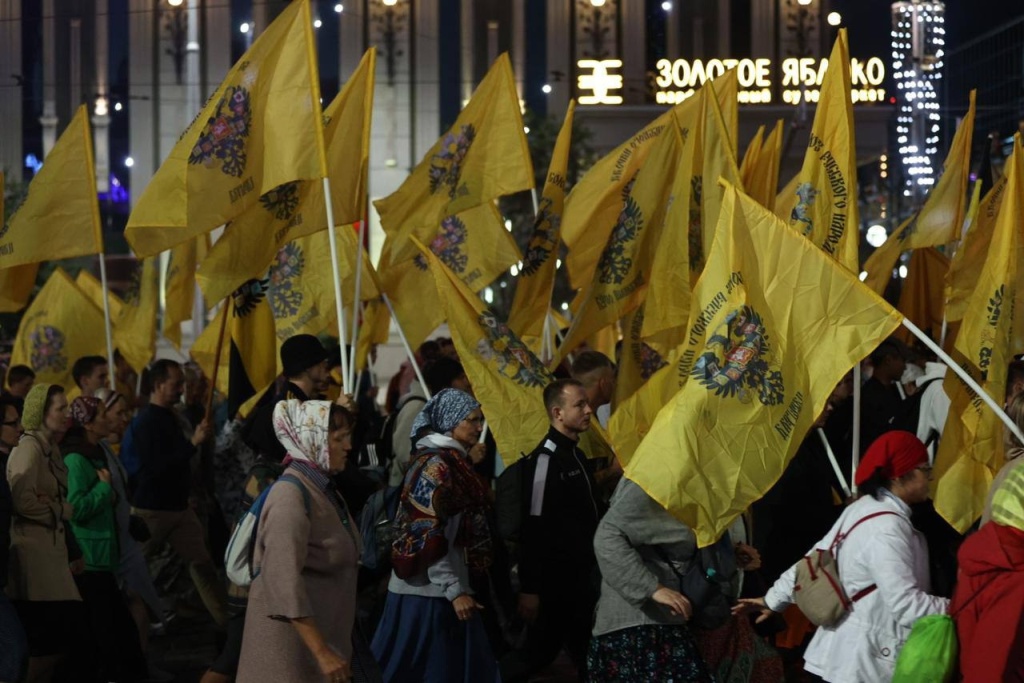
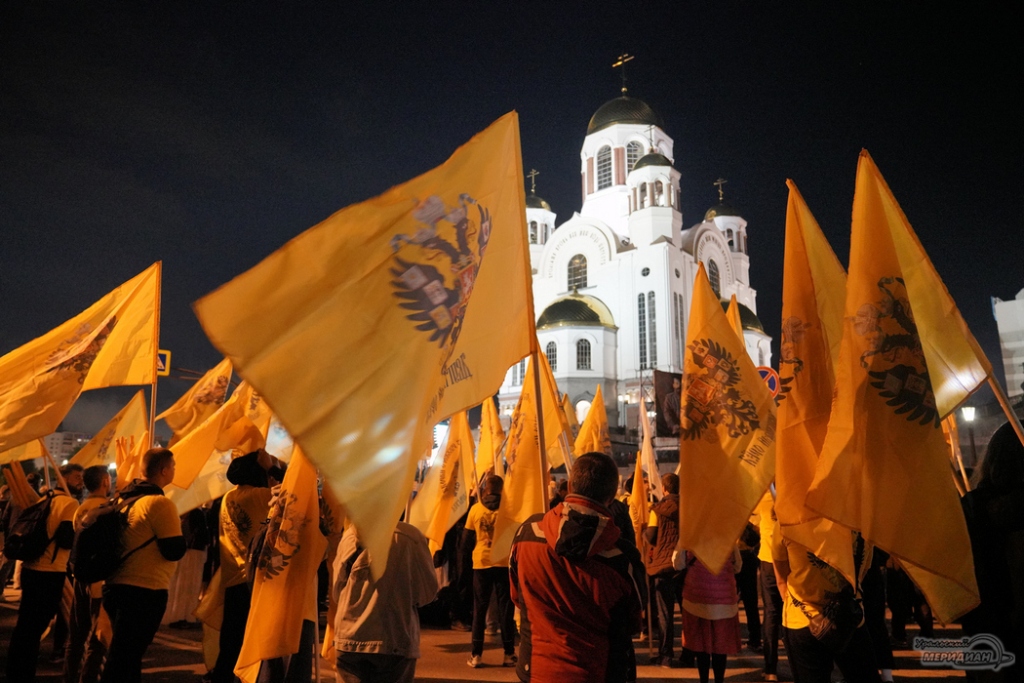
PHOTO: Orthodox Christians gather on the square outside the Church on the Blood holding yellow flags depicting the double-headed eagle of the Russian Empire
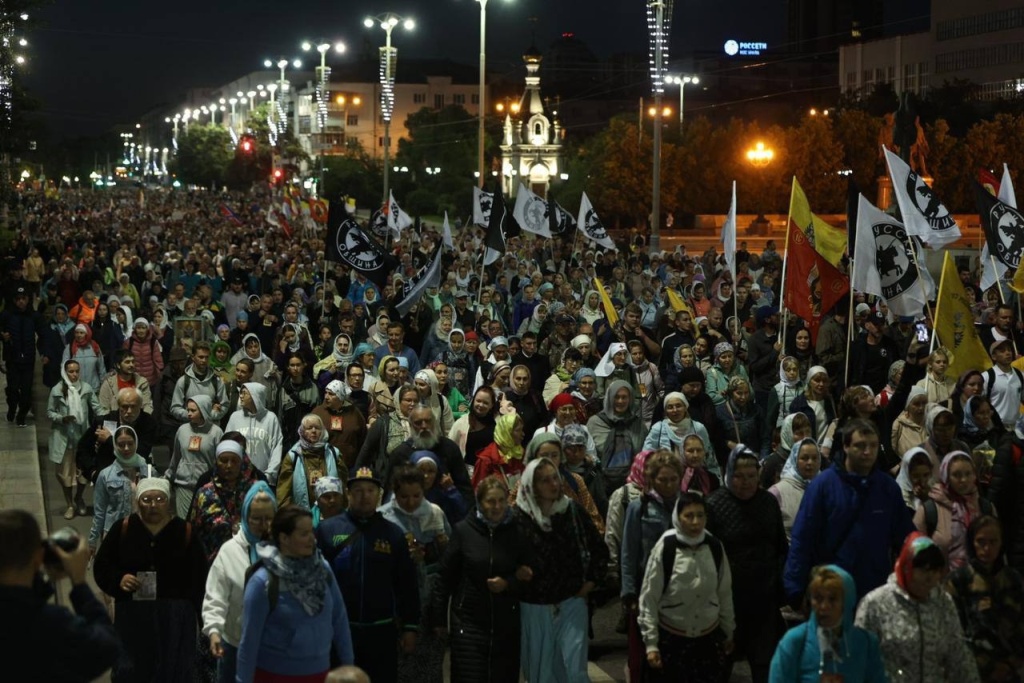
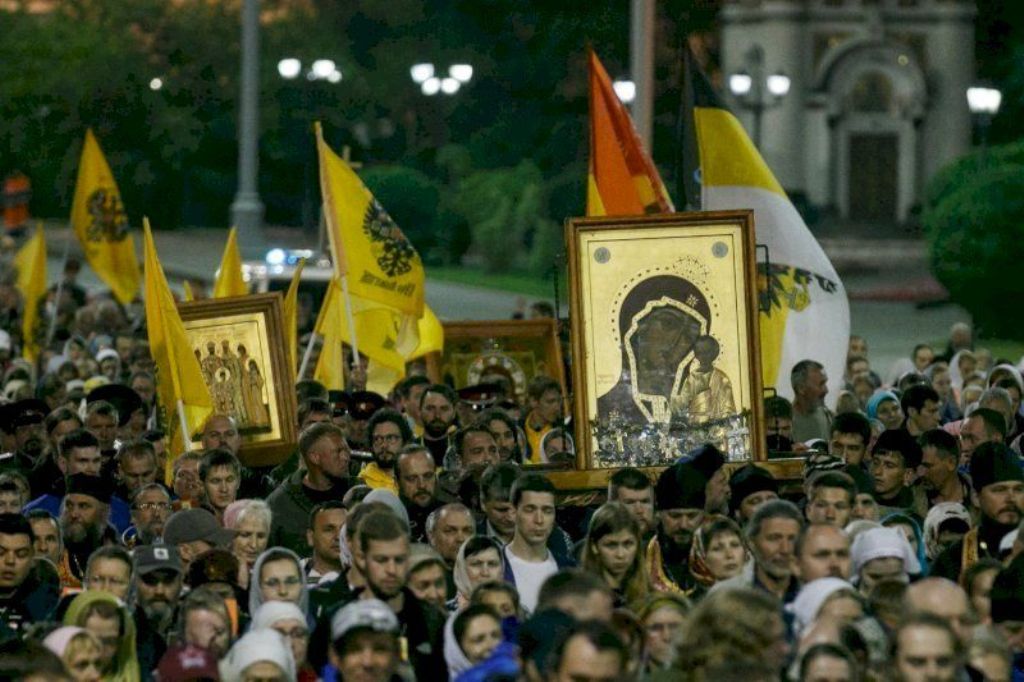
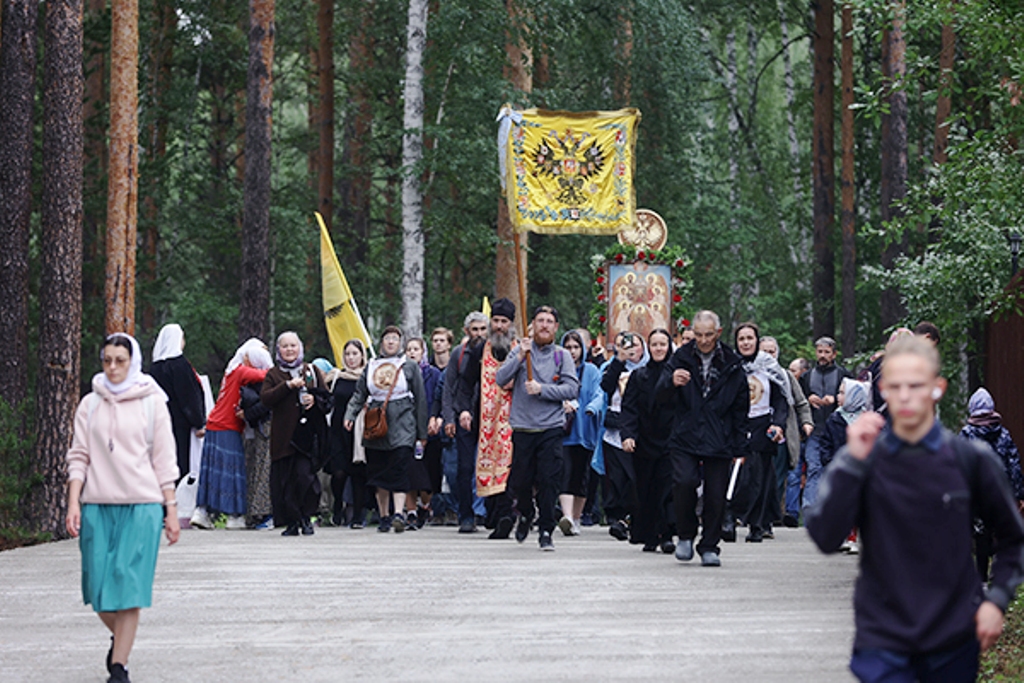
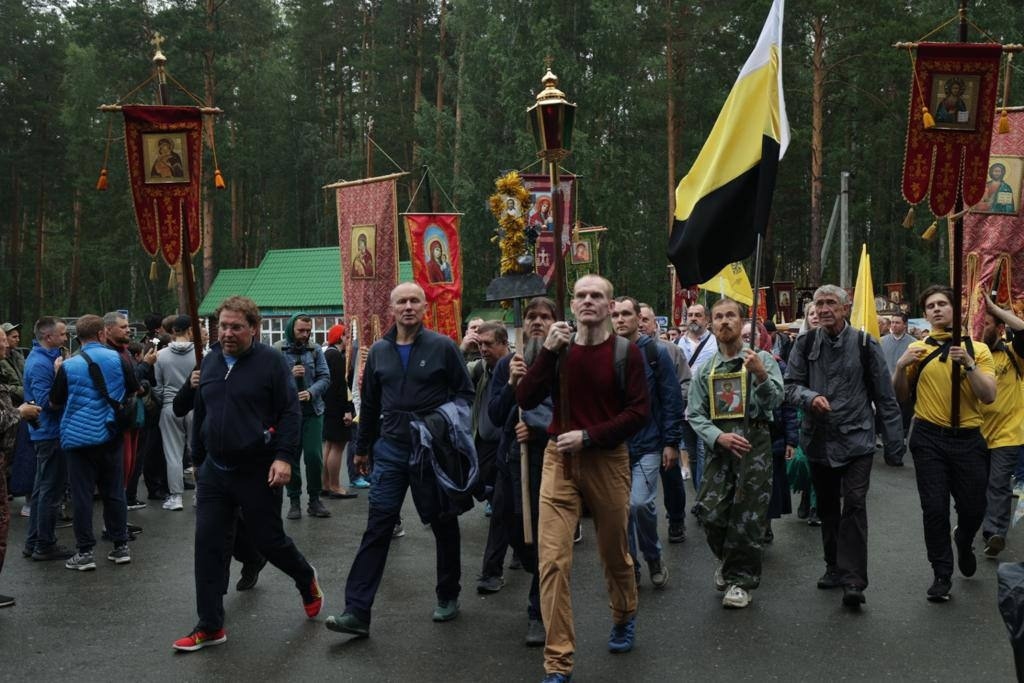
PHOTO: Orthodox Christians carrying icons, banners and flags
PHOTO: 40,000 faithful gathered for the Divine Liturgy on the square in front of the Church on the Blood for the Divine Liturgy in Ekaterinburg
PHOTO: this year’s outdoor Divine Liturgy was performed by 12 Orthodox bishops
Prior to the outdoor service, a Divine Liturgy in honour of Emperor Nicholas II and his family was performed in the Imperial Room,[1] situated in the Lower Church of the Church on Spilled Blood. Twelve bishops took part, including Metropolitan Vincent of Tashkent and Uzbekistan, Head of the Central Asian Metropolitan District, Representative of the Patriarch of Antioch and All the East to the Patriarch of Moscow and All Russia, Metropolitan Niphon of Philippopolis, Metropolitan Kirill of Kazan and Tatarstan, Metropolitan Eugene of Yekaterinburg and Verkhoturye, Metropolitan Alexy of Chelyabinsk and Miass, Bishop Anthony of Moravichi, Bishop Theodosius of Isilkul and Russo-Polyansky, Bishop Theodosius of Nizhny Tagil and Nevyansk, Bishop Methodius of Kamensk and Kamyshlov, Bishop Vladimir of Shadrinsky and Dalmatovsky, Bishop Vincent of Zlatoust and Satka, Bishop Leonid of Argentina and South America.
The outdoor Divine Liturgy began at 11:30 pm on the square in front of the Church on the Blood, also led by 12 bishops. In addition, representatives of the local Orthodox Churches — Antioch, Serbian, Czech, American — also prayed, some of the prayers were performed in several languages. Abbots and abbesses, monastics, who came to honour the memory of the Holy Royal Martyrs from various monasteries, prayed during the service.
It is sad to note that not a single descendant of the Romanov Dynasty attended this year’s Divine Liturgy, including Princess Maria Vladimirovna nor her son Prince George Mikhailovich-Hohenzollern, the latter of which lives in Moscow with his wife and son.
VIDEO: click on the above image to watch the Cross Procession from the Church on the Blood in Ekaterinburg to the Monastery of the Holy Royal Martyrs at Ganina Yama on 17th July 2023. Duration:
Cross Procession to Ganina Yama
At 3:00 am, tens of thousands of people—including clergy and laity from all over the Russian Federation and beyond began the 21km [13 miles] Cross Procession – headed by Metropolitan Yevgeny of Yekaterinburg and Verkhoturye and other archpastors – from the Church on the Blood to the Monastery of the Holy Royal Martyrs at Ganina Yama[2].
The column of faithful pilgrims covered the route on foot – part of which was in the rain in about 5 hours. Together in unison, they chanted the prayer, “Lord Jesus Christ, Son of God, have mercy on us!”. They were accompanied by ten mobile groups from the Orthodox Charity Service and Tsar’s Days volunteers.
Upon arrival at the monastery at Ganina Yama, a moleben was served at the “heart” of the monastery—the mineshaft where the Imperial family’s remains were thrown after they had been brutally murdered by the Bolsheviks.
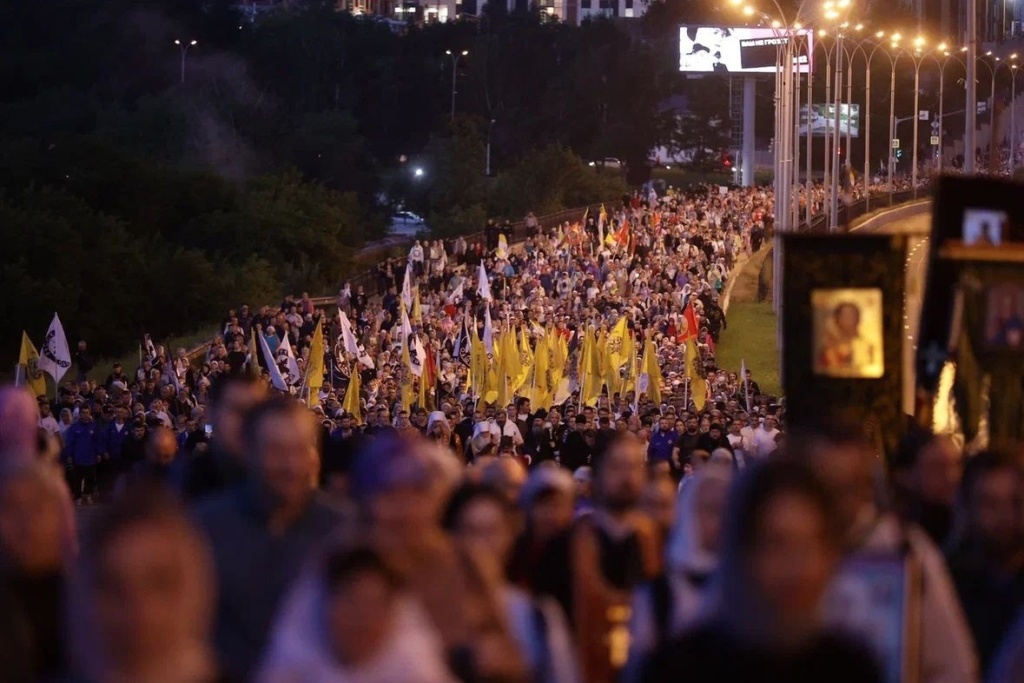
PHOTO: tens of thousands of people took part in the 21km Cross Procession from the Church on the Blood in Ekaterinburg to the Monastery of the Holy Royal Martyrs at Ganina Yama
PHOTO: the Cross Procession winded its way through the streets of the Ural capital in the early morning hours of 17th July
PHOTO: it took about 5 hours for the column of faithful to arrive at the Monastery of the Holy Royal Martyrs at Ganina Yama
PHOTO: Together in unison, they chanted the prayer, “Lord Jesus Christ, Son of God, have mercy on us!”
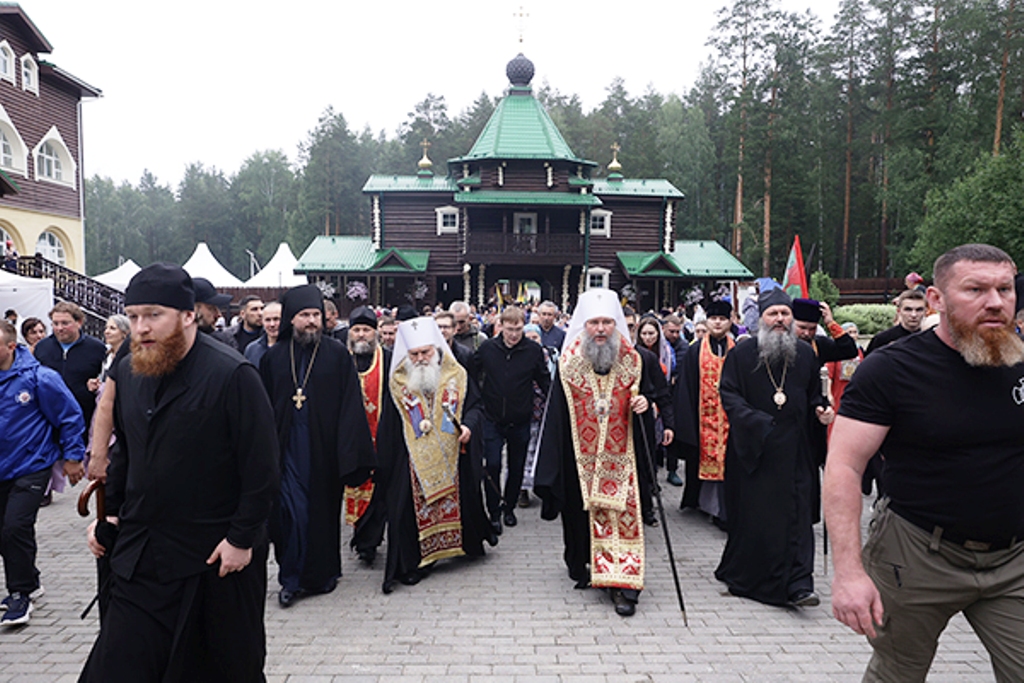
PHOTO: Metropolitan Yevgeny of Yekaterinburg and Verkhoturye (center) and other archpastors arrived at the Monastery of the Holy Royal Martyrs at Ganina Yama
His Eminence Evgeny[3] thanked all those who participated, and said a few words about the Imperial Family and their memory.:
“I wish that you would tell your close ones about this, so that in future years even more of you would come, and thus testify to our love for the Imperial family and our desire to receive their blessing upon our world, upon our unity, upon the sanctity of family life, and for peace and prosperity in our Russian land.”
“A lot of churches are dedicated to the Imperial Family. Over the past 30 years, hundreds of churches have been erected in Russia in the name of the Holy Royal Passion-Bearers[4]. And in every place where their temple stands, there are a lot of people. If we saw today all those who revere the Imperial family, then, it is possible, that their numbers would be more than the population of the whole of Ekaterinburg,” the metropolitan added.
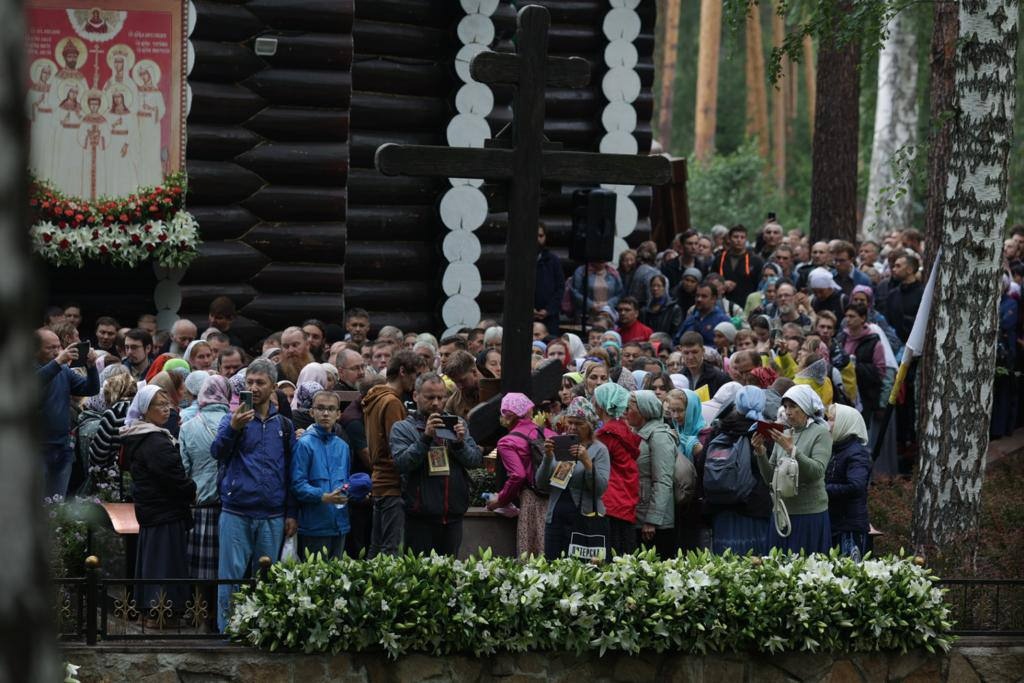
PHOTO: pilgrims gather around the “heart” of the monastery—the mineshaft where the Imperial family’s remains were thrown after they had been brutally murdered by the Bolsheviks
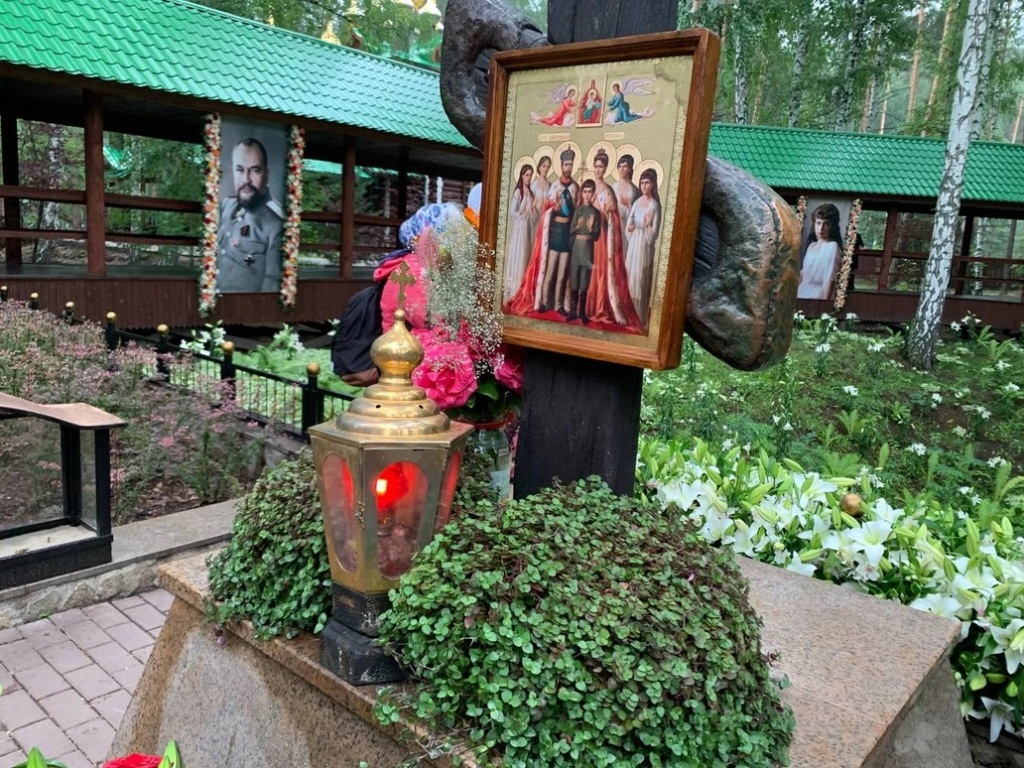
PHOTO: a large wooden Orthodox cross marks the location of the now collapsed mineshaft where the Imperial Family’s remains were first disposed of by the regicides
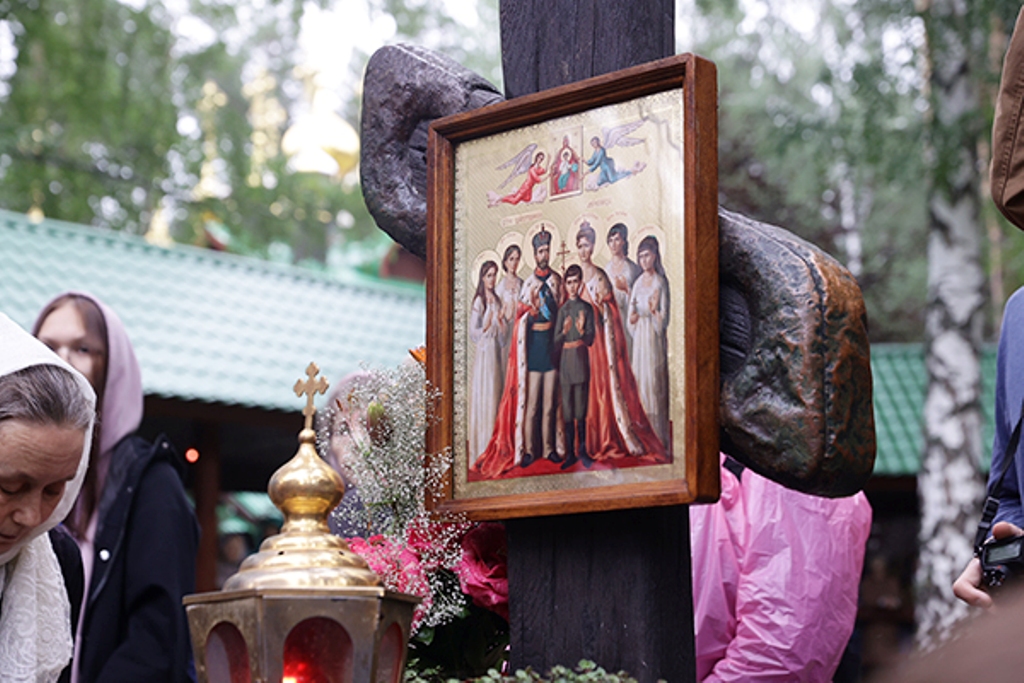
PHOTO: a simple icon depicting the Holy Royal Martyrs mounted on the large wooden cross
“Ekaterinburg is connected with the Imperial Family, because it was from here that they ascended to the Heavenly abodes, and therefore the people honour them. I think our city stands thanks to the prayers of a whole family of righteous saints, the holy Royal Family,” His Eminence Metropolitan Evgeny of Ekaterinburg said.
“Tsar’s Days are a special phenomenon in the history of our Church, our country, because Tsar’s Days are our repentance before the Holy Royal Family, before the Holy Tsar-Martyr,” added Dr. Peter Multatuli, who has been researching and writing about the life and reign of Russia’s last Tsar since the early 1990s.
“What is repentance? Repentance is a change, we must radically change our view, our attitude towards the Sovereign-Emperor and his family, who were murdered by the Bolsheviks. For me, the procession is my moral duty,” Multatuli said, adding that his great-grandfather Ivan Mikhailovich Kharitonov (1872-1918), the senior chef of the Imperial Family, was killed together with the Holy Royal Martyrs, “which, of course, makes these days also a family affair for me.”
Holy Royal Martyrs, pray to God for us! 🙏 Святы Царственные мученики, молите Бога о нас! 🙏 ☦️
NOTES:
[1] The altar of the Imperial Room is situated in the Lower Church sanctified in honour of the Holy Royal Martyrs. It was established on the site of the room located in the basement of the Ipatiev House, where Emperor Nicholas II, his family, and four retainers were all brutally murdered in the early morning hours of 17th July 1918.
There is some dispute about whether this sanctuary stands in the spot of the murder room. It is believed that it was not possible to build on the exact spot due to construction issues, and that the actual spot of the murder room lies outside the church along its wall.
As one of my Russian Orthodox friends correctly pointed out: “Whether it is in the exact spot or not to me is irrelevant as when you are in that room, you are spiritually in the exact place it happened”.
[2] Once again, Porosenkov Log was not included in this year’s Cross Procession.
Porosenkov Log is where the remains of the Imperial family were unearthed in two separate graves in 1991 and 2007 respectively. Due to the fact that the Moscow Patriachate does not yet recognize the Ekaterinburg Remains as those of the Imperial Family. Their official recognition rests with the Bishops’ Council of the Russian Orthodox Church.
[3] Metropolitan Yevgeny of Yekaterinburg and Verkhoturye (born Alexei Sergeyevich Kulberg; born 25th September 1972, Moscow). From 9th October 2017 to 15th October 2018, he served as abbot of the Monastery of the Holy Royal Martyrs at Ganina Yama. On 8th December 2020, by the decision of the Holy Synod, he was elected Bishop of Yekaterinburg and Verkhoturye. On December 25, 2020, Patriarch Kirill of Moscow and All Russia elevated Bishop Eugene of Yekaterinburg and Verkhoturye to the rank of Metropolitan.
[4] On 1st November 1981, Emperor Nicholas II and his family were canonized as new martyrs by the Russian Orthodox Church Outside Russia (ROCOR). On 20th August 2000, after much debate, they were canonized as passion bearers by the Moscow Patriarchate
The Moscow Patriarchate canonized the family as passion bearers: people who face death with resignation, in a Christ-like manner, as distinguished from martyrs, the latter historically killed for their faith. Proponents cited the piety of the family and reports that the Tsarina and her eldest daughter Olga prayed and attempted to make the sign of the cross immediately before they died.
The term “passion-bearer” is used in relation to those Russian saints who, “imitating Christ, endured with patience physical, moral suffering and death at the hands of political opponents. In the history of the Russian Church, such passion-bearers were the holy noble princes Boris and Gleb (1015), Igor of Chernigov (+ 1147), Andrei Bogolyubsky (+ 1174), Mikhail of Tverskoy (+ 1318), Tsarevich Dimitri (+ 1591). All of them, by their feat of passion-bearers, showed a high example of Christian morality and patience.
Despite their official designation as “passion-bearers” by the August 2000 Council, Nicholas II and his family are referred to as “martyrs” in Church publications, icons, and in popular veneration by the people.
I have published more than 30 titles to date through AMAZON – featuring one of the largest selections of books on Nicholas II, the Romanov dynasty and the history of Imperial Russia.
The net proceeds from the sale of each book help fund my research in clearing the name of Russia’s much slandered Tsar.
Please CLICK on the BANNER or LINK above to review my current selection of titles in hardcover, paperback and ebook editions. Listings provide a full description for each title, pricing and a Look inside feature.
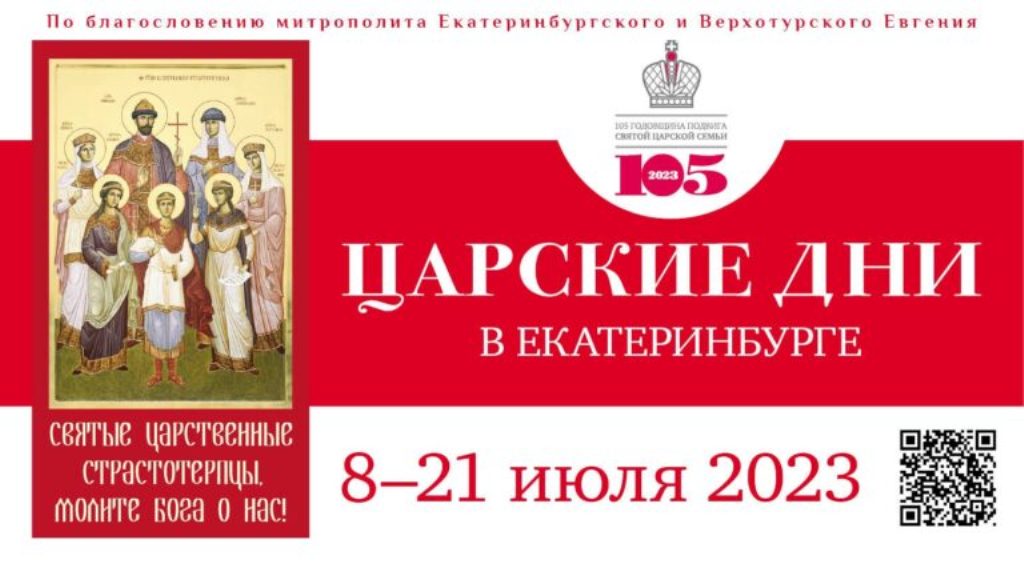
The 23rd annual Tsar’s Days will be held from 8th to 21st July 2023 in Ekaterinburg and Alapaevsk. The festival includes a series of solemn events [16th to 18th July] dedicated to Emperor Nicholas II and his family, who met their death and martyrdom in Ekaterinburg 104 years ago, on 17th July 1918.
The main events include the outdoor night Divine Liturgy, which will be performed n the square in front of the Church on the Blood, built on the site of the Ipatiev House, where members of the Imperial Family and their faithful subjects ended their earthly days, followed by the 21-km [13 miles] Cross Procession – led by Metropolitan Yevgeny of Yekaterinburg and Verkhoturye – to the Monastery of the Holy Royal Martyrs at Ganina Yama, on the site of which the regicides first disposed of the Imperial family’s remains, before returning the following day to exum thre remains and bury them in two separate graves at *Porosenkov Log.
On 18th July, similar events will be held in Alapaevsk, where 8 additonal members of the Romanov dynasty and their faithful servants [see below] met their death and martydom.
In addition, the XXII International Festival of Orthodox Culture will be held in Ekaterinburg from 12th-20th July. Aside from divine services and religious processions, the festival will feature many events in honour of the Holy Royal Martyrs, including concerts and musical evenings, attended by artists and musicians from various regions of Russia and neighboring countries. A number of conferences hosted by well-known historians, theologians and authors are also planned.
The extensive cultural and educational program includes exhibitions at the Museum of the Holy Royal Family [located in the Patriarchal Compund], the Museum of the Royal Monastery [Ganina Yama], the multimedia park “Russia My History”, the regional museum of local lore; and the XIX International Orthodox Exhibition and Forum “From Repentance to the Resurrection of Russia”.
As part of the Tsar’s Days, the Festival of Bell Ringing “Evangelize, the Ural Land!” will be held, as well as the V Children’s Sailing Regatta named after Crown Prince Alexy, in which more than 200 young yachtsmen of the Ural Federal District will take part; VI tournament “Russian Silometer” and other events.
The Ekaterinburg Martyrs– 11 victims
Emperor Nicholas II, Empress Alexandra Feodorovna, Grand Duchesses Olga, Tatiana, Maria, Anastasia, Tsesarevich Alexei Nikolaevich, and their four faithful retainers Dr. Eugene Botkin (court physician), Alexei Trupp (footman), Ivan Kharitonov (cook), and Anna Demidova (Alexandra’s maid).
The Alapaevsk Martyrs– 8 victims
Grand Duchess Elizabeth Feodorovna, Grand Duke Sergei Mikhailovich, Princes of the Imperial Blood Ioann, Konstantin and Igor Konstantinovich, Prince Vladimir Paley (son of Grand Duke Paul Alexandrovich), and two faithful servants: sister of the Marfo-Mariinsky Convent Varvara Alekseevna (Yakovleva), and Fyodor Semyonovich (Mikhailovich) Remez, secretary of the Grand Duke Sergei Mikhailovich.
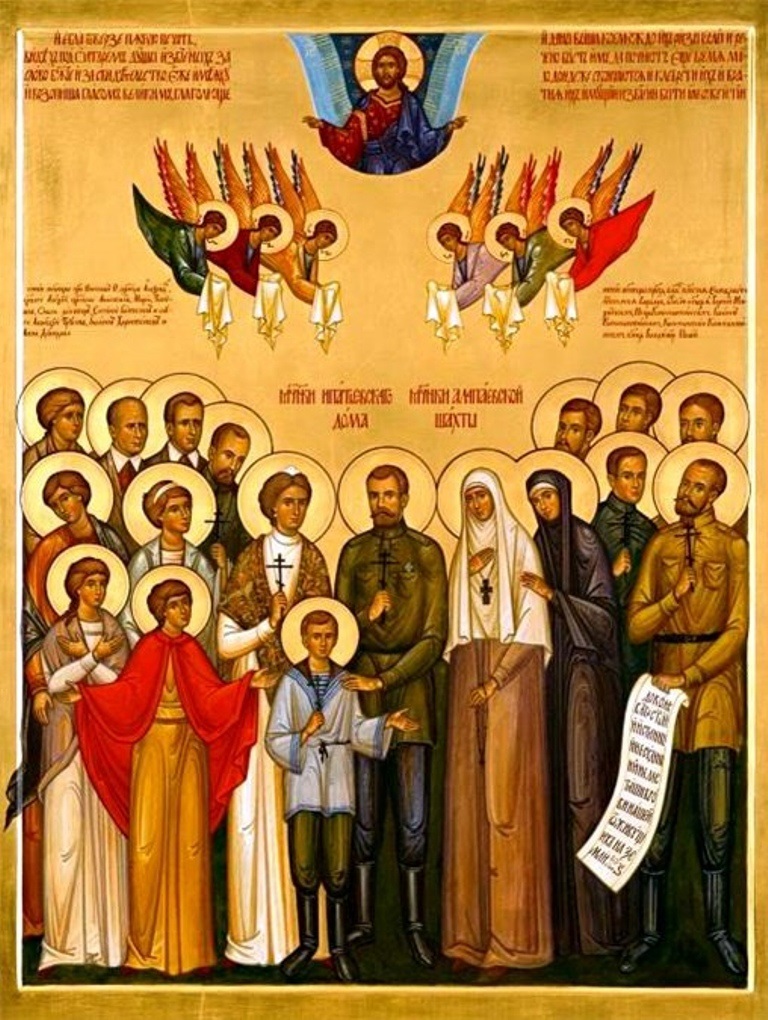
PHOTO: icon depicting the Ekaterinburg and Alapaevsk Martyrs
SERVICE CALENDAR
Sunday 16th July
09:00 – Divine Liturgy at the altar of the Holy Royal Martyrs, situated in the Lower Church of the Church on the Blood in Ekaterinburg.
13:00 — Cross procession along the route in which the Holy Royal Martyrs travelled upon arriving in Ekaterinburg [from Tobolsk] on 30th April 1918, from the Shartash Train Station [Kuibysheva street, 149-a] to the Church on the Blood. Route: [Tsarskaya street, 10] along the route: railway station Shartash – Kuibyshev street – Vostochnaya street – Chelyuskintsev street – Sverdlov street – K. Liebknecht street).
15:00 – Small Vespers with Akathist to the Holy Royal Martyrs. Confession. In the Lower Church of the Church on the Blood.
16:30-20:00 – All-night vigil, on the square in front of the Church on the Blood.
17:00-20:00 – All-night vigil, at the Monastery of the Holy Royal Martyrs at Ganina Yama.
23:30-02:00 – Divine Liturgy, on the square in front of the Church on the Blood.
Monday 17th July
~ 02:30 – Traditional 21-km [13 miles] Cross Procession from the Church on the Blood to the Monastery of the Holy Royal Martyrs at Ganina Yama Route: Tsarskaya street, 10 – st. Tolmacheva – Lenin Ave. – V. Isetsky Boulevard – st. Kirov – st. Bebel – st. Technical – st. Reshetskaya – Railway forest park – pos. Shuvakish – Ganina Yama.
Upon the arrival of the procession, a Liturgy to the Holy Royal Martyrs will be performed at the Field kitchen.
06:00 – Divine Liturgy (early). Church on the Blood. In the Lower Church, altar at the site of the martyrdom of the Holy Royal Martyrs aka the Imperial Room [built on the site of the murder room, located in the basement of the Ipatiev House].
09:00 – Divine Liturgy (late). Church on the Blood, Upper Church
09:00 – Divine Liturgy. Monastery of the Holy Royal Martyrs at Ganina Yama.
17.00 – All-night vigil. Church of St. Sergius of Radonezh, at Ganina Yama.
02:30 – Procession from the Holy Trinity Cathedral to the Monastery in the Name of the Holy New Martyrs and Confessors of the Russian Church, Alapaevsk.
06.00 Arrival of the procession to the Monastery in the Name of the Holy New Martyrs and Confessors of the Russian Church, Alapaevsk. Diving Liturgy at the mine.
09:00 – Divine Liturgy with the Episcopal Rite. Monastery in the Name of the Holy New Martyrs and Confessors of the Russian Church, Alapaevsk.
Tsar’s Days in the 21st century
The first procession in memory of the Holy Royal Martyrs, headed by Metropolitan of Ekaterinburg and Verkhoturye Kirill, took place in 2002, in which more than 2 thousand pilgrims and about 100 clerics participated. In 2012, for the first time since the construction of the Church on the Blood in Ekaterinburg, an all-night vigil and Divine Liturgy were performed in the open air.
In 2017 an estimated 60,000 people took part; in 2019, 60 thousand participated; in 2020, 10 thousand people [due to COVID], and in 2021, 3 thousand people [once again, due to COVID]. In addition, up to 2 thousand people gathered an alternative religious procession of the schismatic and tsarist monk Sergius (Romanov) in the Sredneuralsk Convent in Honour of the Icon of the Blessed Virgin Mary.
In 2018, more than 100,000 Orthodox Christians, monarchists, among others from across Russia and around the world took part in the Patriarchal Liturgy and procession of the cross from the Church on the Blood to the Ganina Yama.
*NOTE: due to the fact the Moscow Patriachate does not yet recognize the Ekaterinburg Remains as authentic, the Cross Procession does not stop at Porosenkov Log, where the remains of the Imperial family were unearthed in two separate graves in the late 1970s and 2007.
The Holy Synod of the Russian Orthodox Church (ROC) have confirmed that the Bishops’ Council, will meet in Moscow at at a future date, during which they will review the findings of the Investigative Commission and deliver their verdict on the authenticity of the Ekaterinburg Remains.
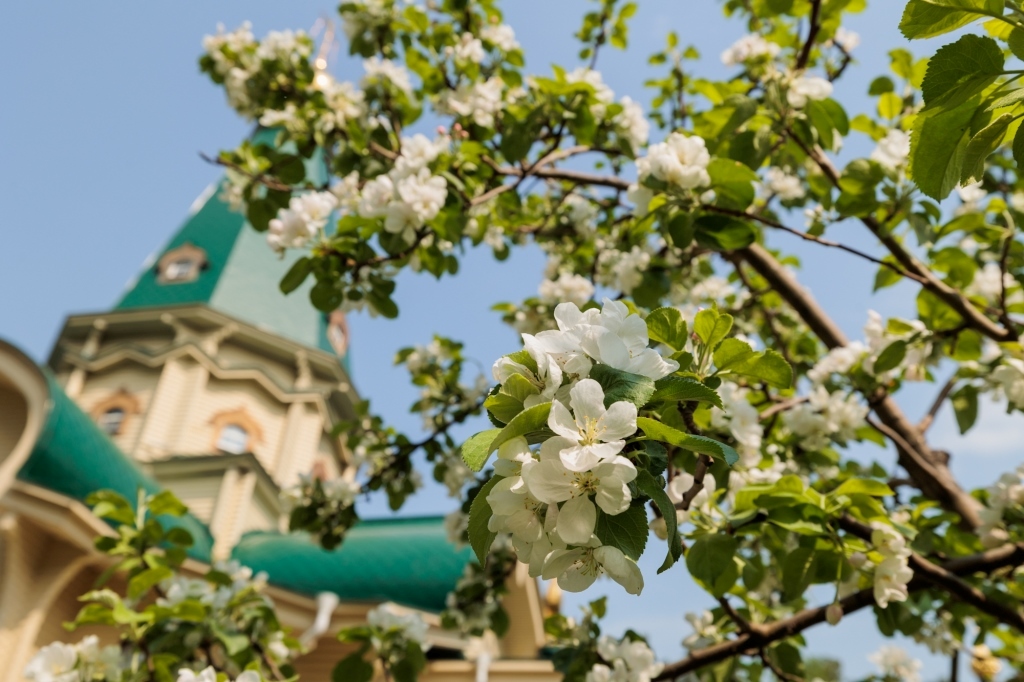
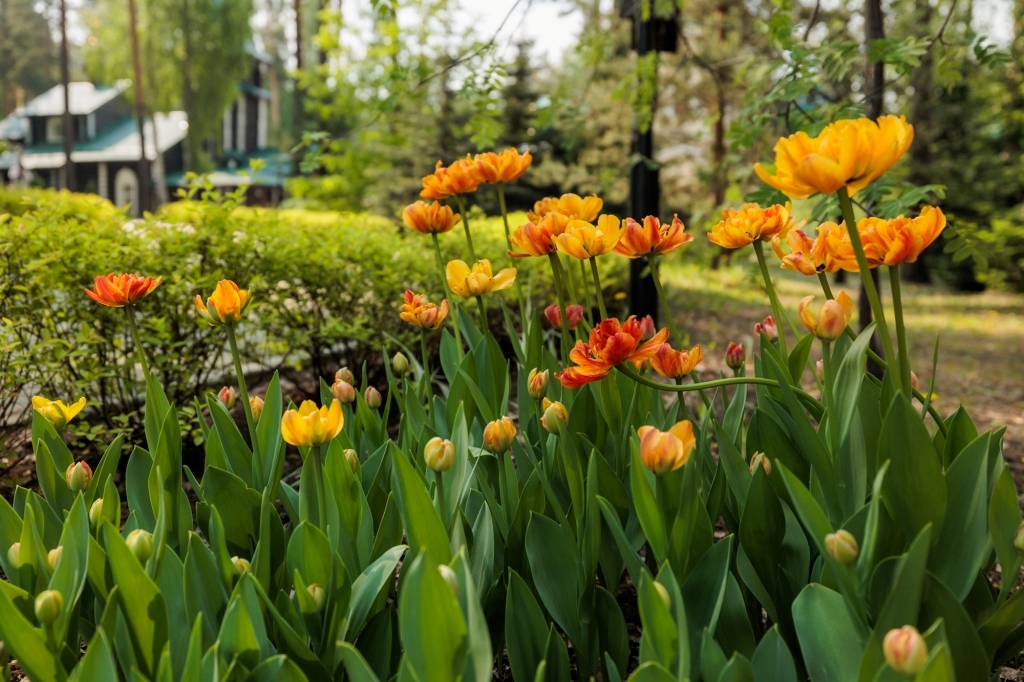
During the month of May, thousands of flowers, apple blossoms and the lilac alley named after Empress Alexandra Feodorovna[1], began to bloom on the grounds of the Monastery of the Holy Royal Martyrs at Ganina Yama [situated 15 km/10 miles northeast of Ekaterinburg].
On 7th June 2022, the laying of an The Lilac Valley named in honour of Empress Alexandra Feodorovna took place at the monastery. Following a Divine Liturgy, 30 lilac bushes were planted next to the church in Honour of the Icon of the Mother of God. The event was one of many held across Russia marking the 150th anniversary of her birth on 6th June 1872 at the New Palace in Darmstadt.
Today, the following varieties beloved by the Empress and her family are presented here – “Madame Lemoine” (1890), “Memories of Ludwig Späth (1883), Alfos Laval (1887) and Charles Joly (1898).” The monastery noted that all the bushes survived the winter safely, took root and are now gaining colour.
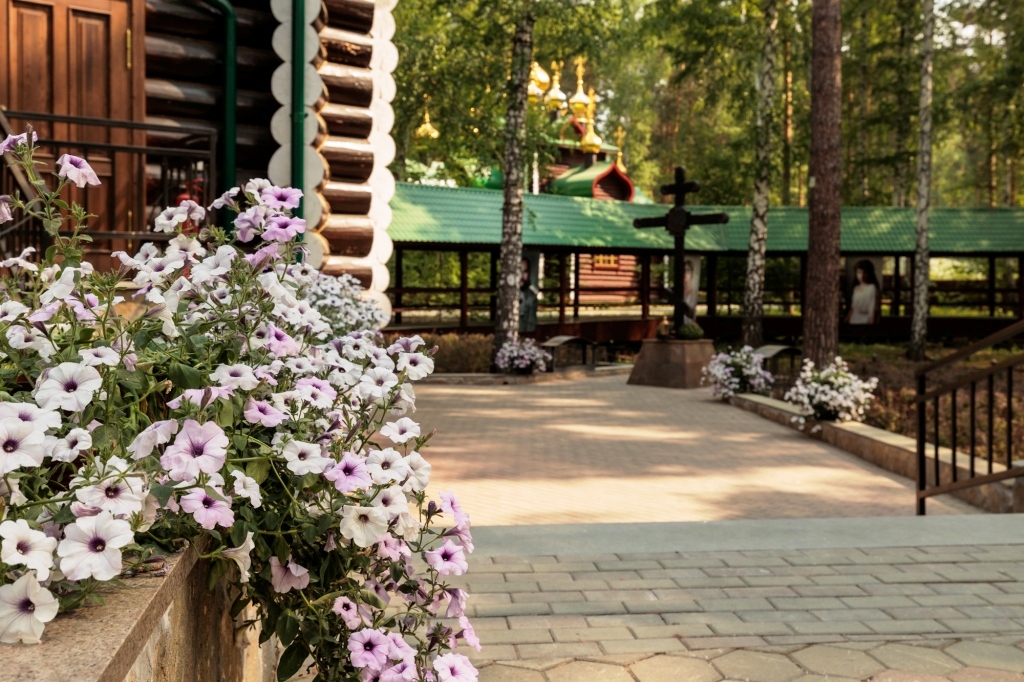
Visitors to the monastery will be delighted by the variety of blooms, including numerous varieties of daffodils, tulips, fragrant peonies, lilies, and more than 50 varieties of roses. In addition, are the apple trees that were planted next to the refectory, bursting with the abundance of snow-white inflorescences, and delicate aromas.
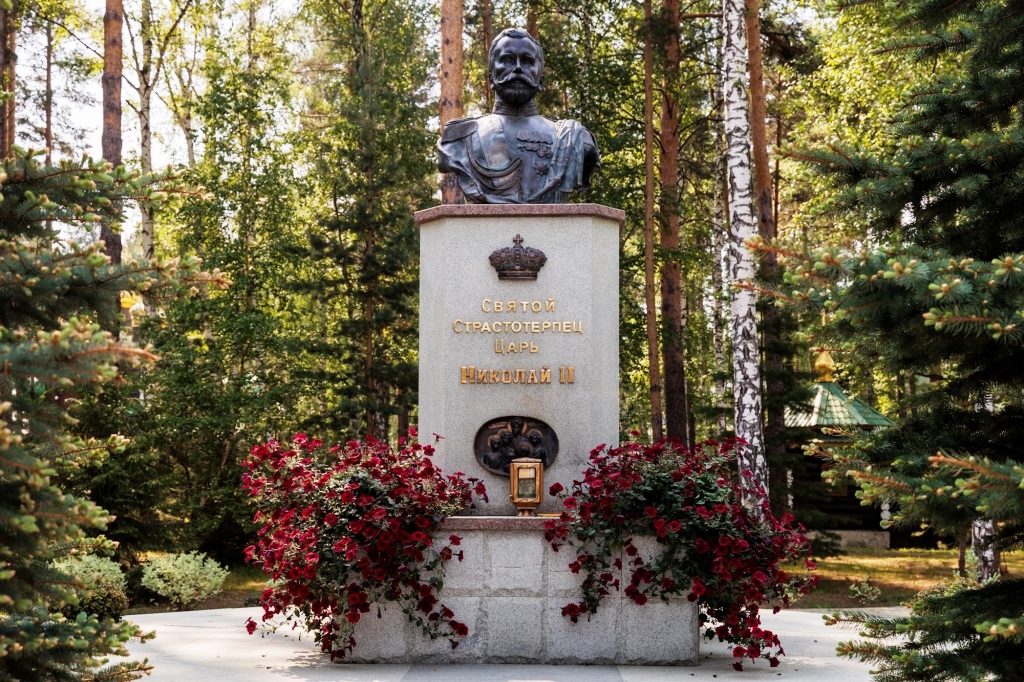
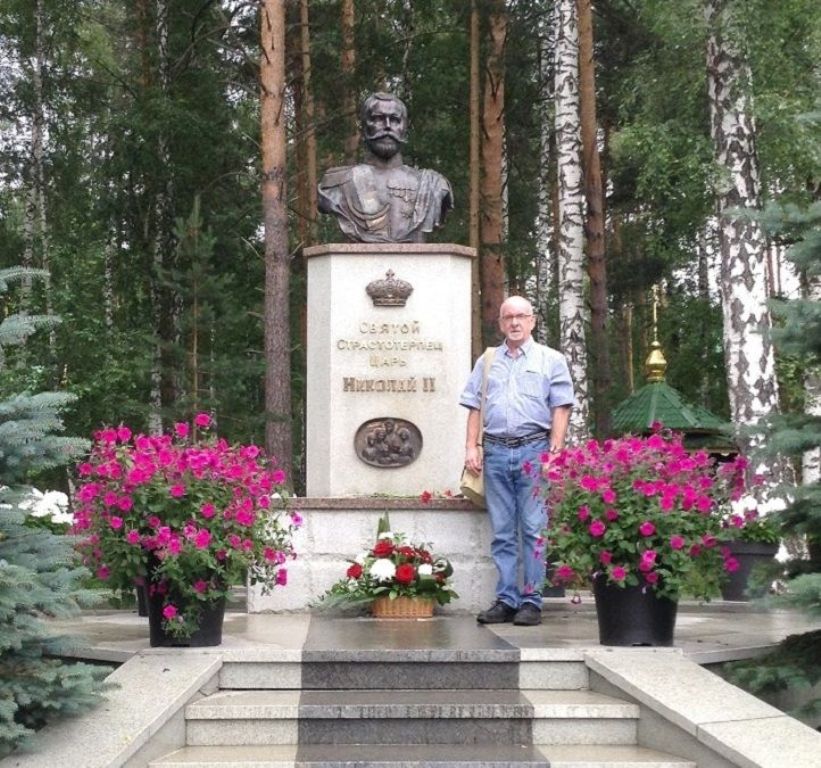
PHOTO: The monument to Emperor Nicholas II was installed on 19th May 2008, the day marking the Sovereign’s birthday.
The floral development and landscaping of the grounds of the monastery at Ganina Yama, which preserves the memory of the Holy Royal Martyrs, is being improved from year to year.
This year, the number of flowers has increased significantly. Moreover, they are selected in such a way as to delight pilgrims and visitors with their variable flowering and delicate aromas throughout the summer months.
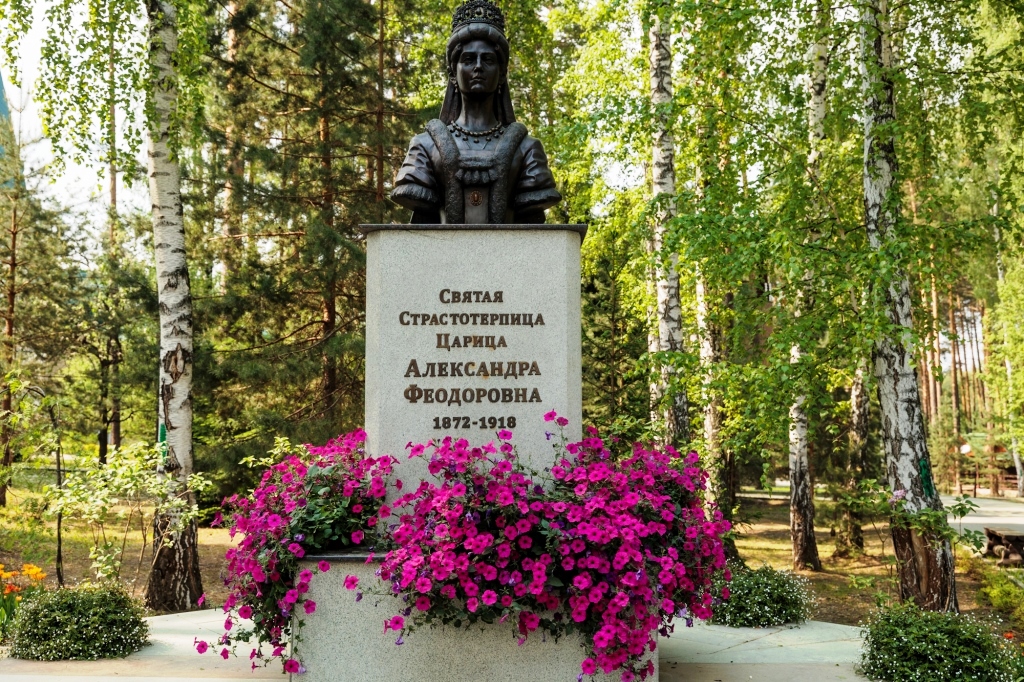
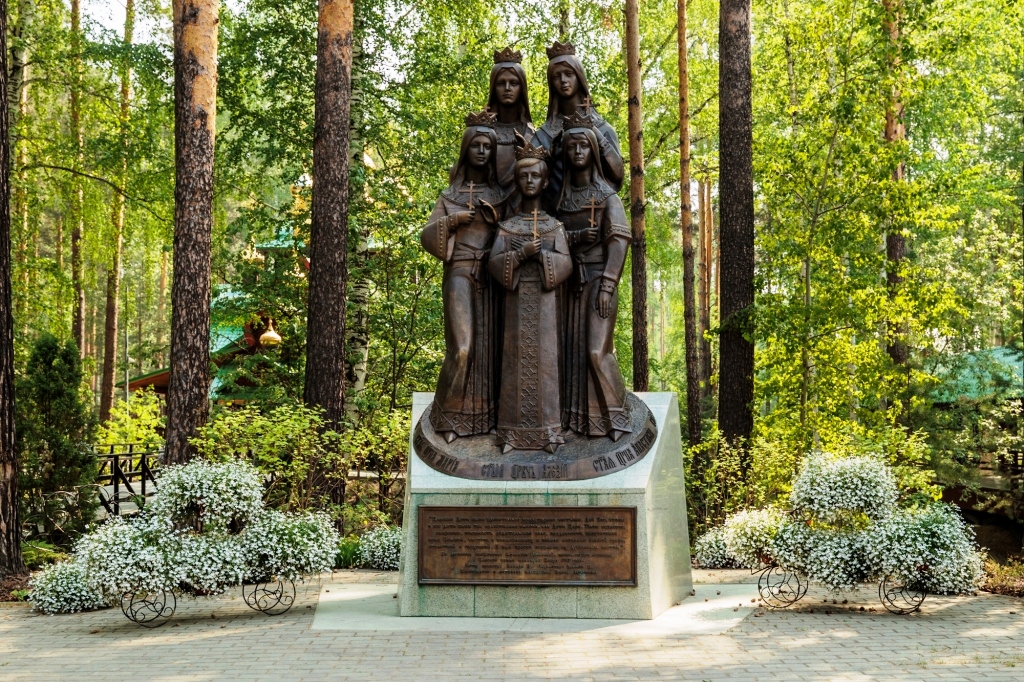
At the beginning of May, several hundred tulips bloomed. After the tulips, daffodils bloomed, followed by fragrant peonies. In addition, pilgrims and tourists will be able to admire the colourful irises, petunias and other floral arrangements that adorn the grounds of the monastery in abundance, including the pedestals of each of each of the three monuments dedicated to members of the Holy Royal Martyrs [see below].
PHOTO: The monument to Empress Alexandra Feodorovna was installed in 2011.
“There are noticeably more flowers in the monastery this year,” said one pilgrim – “it’s as if you have found yourself in a kind of Garden of Eden. For me, this is Tchaikovsky’s “Waltz of the Flowers” come to life! I like to come on a weekday when it’s not so crowded. You can walk for hours along these paths, enjoy the beauty of God’s creation in peace and solitude, and pray to the Holy Royal Martyrs, praise the Lord” – she added.
By the time that this year’s Tsar’s Days begins, in mid-July, the buds of more than a thousand snow-white lilies – 300 varieties from all over the world – will be in full bloom.
The dean of the monastery, Hieromonk John (Nevryuev), noted that every year on 17th July – the day of remembrance of the Holy Royal Martyrs, Mine No. 7 is decorated with hundreds of flowers. This is the place where the regicides tried to hide all traces of their crime – the murder of the Tsar, his wife, their five children and four faithful retainers. It is this place, in which the blood of the Holy Royal Martyrs was spilled, that is the heart of the monastery.
PHOTO: Monument to Grand Duchesses Olga, Tatiana, Maria, Anastasia and Tsesarevich Alexei was also installed in 2011.
NOTES:
[1] Empress Alexandra Feodorovna was very fond of lilacs, decorating the rooms of the Alexander Palace at Tsarskoye Selo with blooms of various colours: white, mauve, purple and pink, from the gardens and greenhouses at Tsarskoye Selo – even during the cold winter months.
“The lilac is coming out and its fragrance in the evening is marvelous” – letter from Emperor Nicholas II to his mother the Dowager Empress Maria Feodorovna, written at Tsarskoye Selo, 10th May 1895
In January 2022, the Tsarskoye Selo State Museum revived the tradition of placing lilacs in the Mauve (Lilac) Boudoir and the Maple Drawing Room of the Alexander Palace. The white lilacs bloomed over the past winter.
For the first time in more than a hundred years, the fragrant scent of lilacs once again fill the interiors of the Alexander Palace during the cold winter months.
From 12th to 20th July, the 22nd annual Tsar’s Days will be held in the Urals [Ekaterinburg and Alapaevsk], which includes a series of solemn events [16th to 18th July] dedicated to Emperor Nicholas II and his family, who met their death and martyrdom in Ekaterinburg 104 years ago, on 17th July 1918.
The main events are the night Divine Liturgy, which is performed on the square in front of the Church on the Blood, built on the site of the Ipatiev House, where members of the Imperial Family and their faithful subjects ended their earthly days, and the 21-km [13 miles] Cross Procession to the Monastery of the Holy Royal Martyrs at Ganina Yama, on the site of which the regicides first disposed of the Imperial family’s remains, before returning the following day to exum thre remains and bury them in two separate graves at *Porosenkov Log.
On 18th July, similar events will be held in Alapaevsk, where 8 additonal members of the Romanov dynasty and their faithful servants [see below] met their death and martydom.
The Ekaterinburg Martyrs– 11 victims
Emperor Nicholas II, Empress Alexandra Feodorovna, Grand Duchesses Olga, Tatiana, Maria, Anastasia, Tsesarevich Alexei Nikolaevich, and their four faithful retainers Dr. Eugene Botkin (court physician), Alexei Trupp (footman), Ivan Kharitonov (cook), and Anna Demidova (Alexandra’s maid).
The Alapaevsk Martyrs– 8 victims
Grand Duchess Elizabeth Feodorovna, Grand Duke Sergei Mikhailovich, Princes of the Imperial Blood Ioann, Konstantin and Igor Konstantinovich, Prince Vladimir Paley (son of Grand Duke Paul Alexandrovich), and two faithful servants: sister of the Marfo-Mariinsky Convent Varvara Alekseevna (Yakovleva), and Fyodor Semyonovich (Mikhailovich) Remez, secretary of the Grand Duke Sergei Mikhailovich.
In addition, the XXI International Festival of Orthodox Culture will be held in Ekaterinburg from 12th-20th July. The festival features many events in honour of the Holy Royal Martyrs, including divine services, religious processions, exhibitions, concerts, conferences and other events.
PHOTO: icon depicting the Ekaterinburg and Alapaevsk Martyrs
SERVICE CALENDAR
July 16, Saturday
09:00 – Divine Liturgy at the altar of the Holy Royal Martyrs, situated in the Lower Church of the Church on the Blood in Ekaterinburg.
13:00 — Cross procession along the route in which the Holy Royal Martyrs travelled upon arriving in Ekaterinburg [from Tobolsk] on 30th April 1918, from the Shartash Train Station [Kuibysheva street, 149-a] to the Church on the Blood. Route: [Tsarskaya street, 10] along the route: railway station Shartash – Kuibyshev street – Vostochnaya street – Chelyuskintsev street – Sverdlov street – K. Liebknecht street).
15:00 – Small Vespers with Akathist to the Holy Royal Martyrs. Confession. In the Lower Church of the Church on the Blood.
16:30-20:00 – All-night vigil, on the square in front of the Church on the Blood.
17:00-20:00 – All-night vigil, at the Monastery of the Holy Royal Martyrs at Ganina Yama.
23:30-02:00 – Divine Liturgy, on the square in front of the Church on the Blood.
July 17, Sunday
~ 02:30 – Traditional 21-km [13 miles] Cross Procession from the Church on the Blood to the Monastery of the Holy Royal Martyrs at Ganina Yama Route: Tsarskaya street, 10 – st. Tolmacheva – Lenin Ave. – V. Isetsky Boulevard – st. Kirov – st. Bebel – st. Technical – st. Reshetskaya – Railway forest park – pos. Shuvakish – Ganina Yama.
Upon the arrival of the procession, a Liturgy to the Holy Royal Martyrs will be performed at the Field kitchen.
06:00 – Divine Liturgy (early). Church on the Blood. In the Lower Church, altar at the site of the martyrdom of the Holy Royal Martyrs aka the Imperial Room [built on the site of the murder room, located in the basement of the Ipatiev House].
09:00 – Divine Liturgy (late). Church on the Blood, Upper Church
09:00 – Divine Liturgy. Monastery of the Holy Royal Martyrs at Ganina Yama.
17.00 – All-night vigil. Church of St. Sergius of Radonezh, at Ganina Yama.
17.00 – All-night vigil. Monastery in the Name of the Holy New Martyrs and Confessors of the Russian Church, Alapaevsk.
02:30 – Small Vespers with Akathist to the Holy Royal Martyrs Grand Duchess Elizabeth Feodorovna and nun Varvara. Holy Trinity Archbishop’s Compound, Alapaevsk.
03:30 – Procession from the Holy Trinity Bishops’ Metochion to the Napolnaya School [where Grand Duchess Elizabeth along with other members of the Imperial family and their servants were held under arrest] and further to the Monastery in the Name of the Holy New Martyrs and Confessors of the Russian Church, Alapaevsk.
05:30 – Divine Liturgy (early). Monastery in the Name of the Holy New Martyrs and Confessors of the Russian Church, Alapaevsk.
09:00 – Divine Liturgy (late). Monastery in the Name of the Holy New Martyrs and Confessors of the Russian Church, Alapaevsk.
Tsar’s Days in the 21st century
The first procession in memory of the Holy Royal Martyrs, headed by Metropolitan of Ekaterinburg and Verkhoturye Kirill, took place in 2002, in which more than 2 thousand pilgrims and about 100 clerics participated. In 2012, for the first time since the construction of the Church on the Blood in Ekaterinburg, an all-night vigil and Divine Liturgy were performed in the open air.
In 2017 an estimated 60,000 people took part; in 2019, 60 thousand participated; in 2020, 10 thousand people [due to COVID], and in 2021, 3 thousand people [once again, due to COVID]. In addition, up to 2 thousand people gathered an alternative religious procession of the schismatic and tsarist monk Sergius (Romanov) in the Sredneuralsk Convent in Honour of the Icon of the Blessed Virgin Mary.
In 2018, more than 100,000 Orthodox Christians, monarchists, among others from across Russia and around the world took part in the Patriarchal Liturgy and procession of the cross from the Church on the Blood to the Ganina Yama.
*NOTE: due to the fact the Moscow Patriachate does not yet recognize the Ekaterinburg Remains as authentic, the Cross Procession does not stop at Porosenkov Log, where the remains of the Imperial family were unearthed in two separate graves in the late 1970s and 2007.
The Holy Synod of the Russian Orthodox Church (ROC) have confirmed that the Bishops’ Council, will meet in Moscow at the end of 2022, during which they will review the findings of the Investigative Commission and deliver their verdict on the authenticity of the Ekaterinburg Remains.
If you enjoy my articles, news stories and translations, then please help support my research by making a donation in US dollars to my project The Truth About Nicholas II – please note that donations can be made by PayPal or credit card. Thank you for your consideration – PG
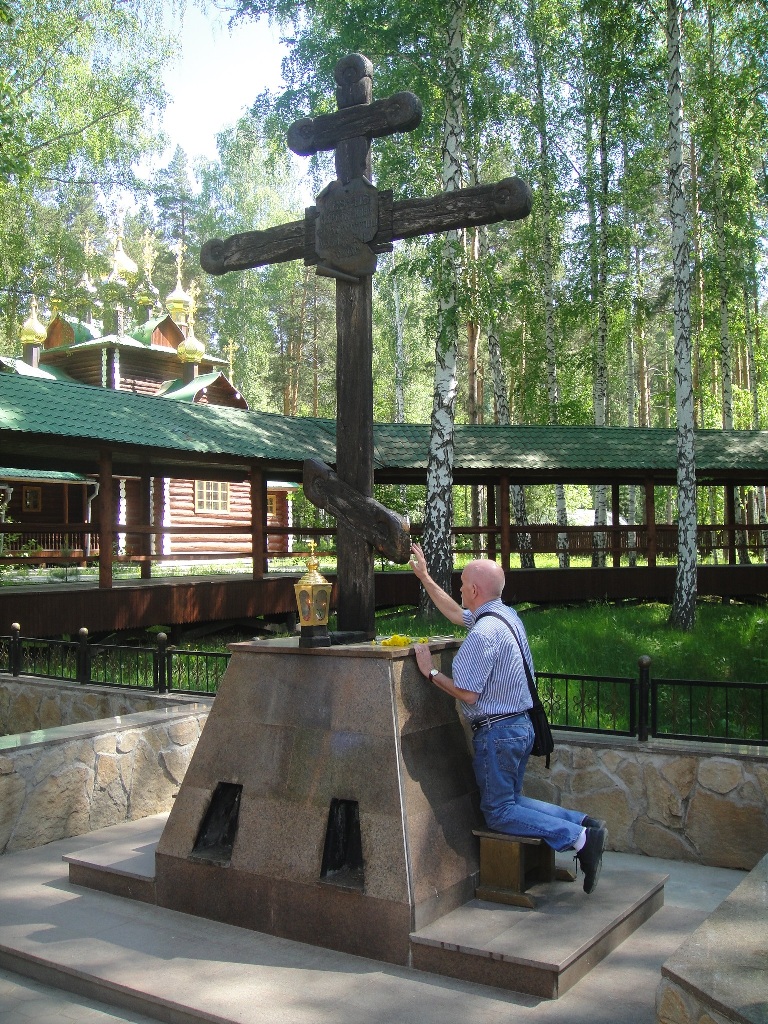
PHOTO: the author [Paul Gilbert] of this article praying at Ganina Yama. A wooden causeway has been built around the edge of the mine shaft, a tall Orthodox cross marks the edge of the mine shaft – visible as a depression in the ground – where the remains of Nicholas II and his family were first discarded by the regicides.
In the pre-dawn hours of 17th July 1918, a crime of the most heinous kind was committed in the basement of the Ipatiev House in the Ural city of Ekaterinburg. It was here that members of the Ural Soviet [Bolsheviks] murdered Russia’s last Tsar, his wife and their five children, as well as the family’s four faithful retainers. The regicide remains one of the darkest pages in 20th Russian history.
Following the murders, the regicides secretly transported their bodies to the abandoned Isetsky mine, located near the Four Brothers tract, situated four kilometres southeast of the village of Koptyaki, and some 15 km (10 miles) north of the Ural city, where their remains were subsequently thrown into a 9 ft. deep pit. The site is today known as Ganina Yama.
Fearing that the burial site was no longer a secret, the regicides returned to the site the night after the first burial, retrieved the bodies from the mine and transported them to a second burial site known as Porosyenkov Log, situated 3.5 km from the original site.
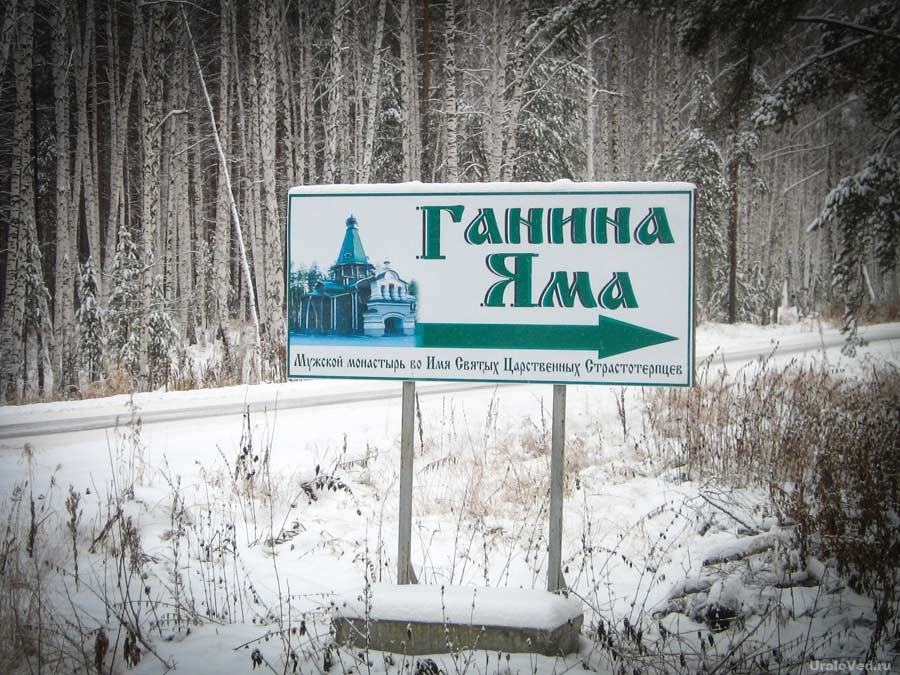
On 20th August 2000, Emperor Nicholas II and his family were glorified as passion bearers[1] by the Council of Bishops of the Russian Orthodox Church[2]. On 23rd September 2000, during his visit to the Urals, Patriarch Alexei II (1929-2000) visited the Ganina Yama tract and, having blessed the establishment of the monastic monastery, put his signature on the master plan of the monastery[3]. The first stone of the monastery was laid on 1st October 2000. On 27th December, the Holy Synod officially “blessed the opening of a monastery in the name of the Holy Royal Martyrs in the Ganina Yama tract”. On 28th December, the all-male Monastery of the Holy Royal Martyrs was established here.
PHOTO: the author [Paul Gilbert]standing next to the monument to Emperor Nicholas II, installed on the grounds of Monastery of the Holy Royal Martyrs on 19th May 2008, the Sovereign’s birthday
Following their canonization, the Russian Orthodox Church declared the Ganina Yama site holy ground. The grounds were therefore dedicated to honour the family’s humility during their house arrest and their status as political martyrs. With financial assistance from the Ural Mining and Metallurgical Company, the Church constructed the Monastery of the Holy Royal Martyrs at the site in 2001. A tall cross marks the edge of the mine shaft, visible as a depression in the ground.[3]
Seven wooden chapels were later constructed at the site, one for each member of the Imperial Family. Each chapel is dedicated to a particular saint or relic. The katholikon [the main church of the monastery] is dedicated to the Theotokos Derzhavnaya [Reigning Icon of the Mother of God], an icon particularly revered by the monarchists.
Since the opening of the monastery, Ganina Yama has become not only a place of spiritual pilgrimage, but also a historical and educational center. Up to 10 thousand pilgrims visit Ganina Yama each month. They come mostly from the Ural region, however, increasing numbers from across Russia, and foreign countries as far away as the United States and Australia make the journey to honour the memory of the Holy Royal Martyrs. Most of the pilgrims are Orthodox Christians and monarchists, but Ganina Yama also welcomes the “curious” visitor, those who seek to learn about Russia’s last Tsar and his family. In July of each year, the number of pilgrims swells by the tens of thousands for the events marking Tsar’s Days.
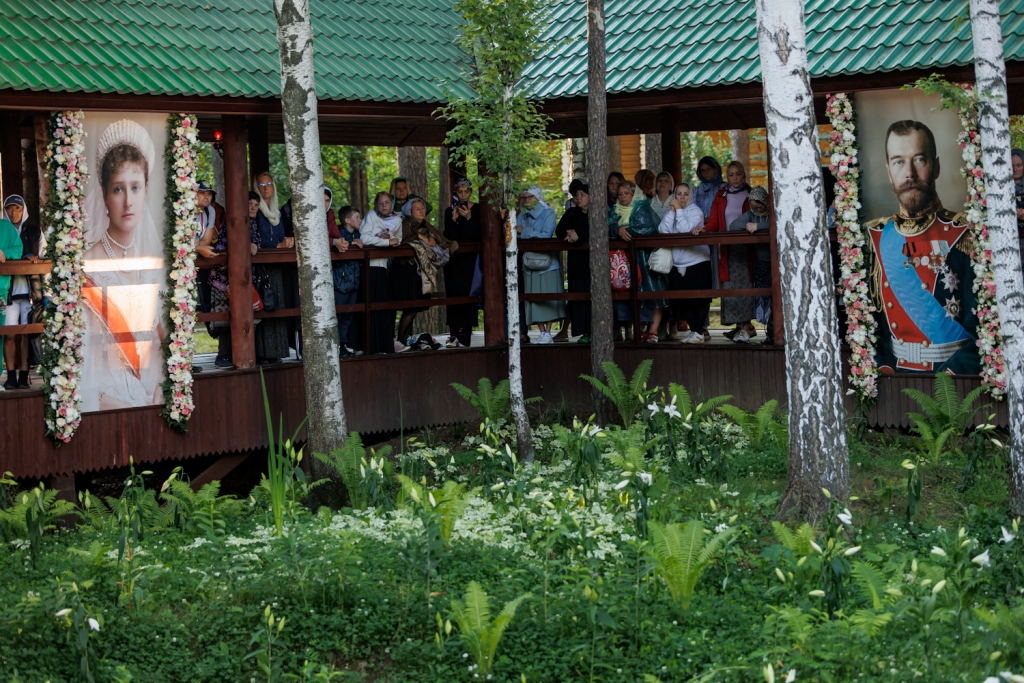
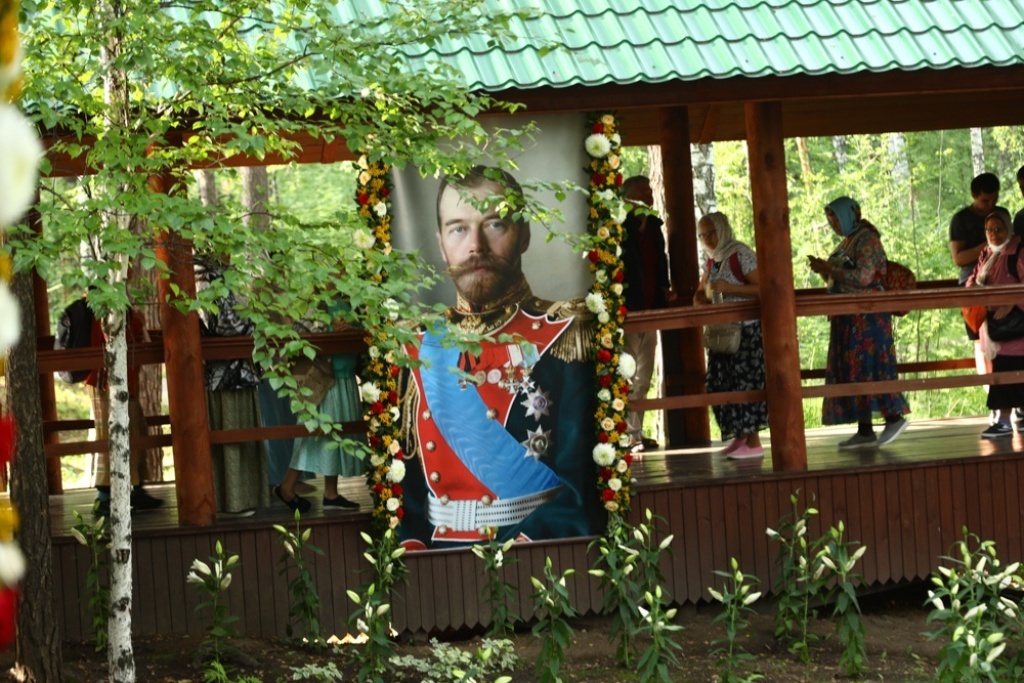
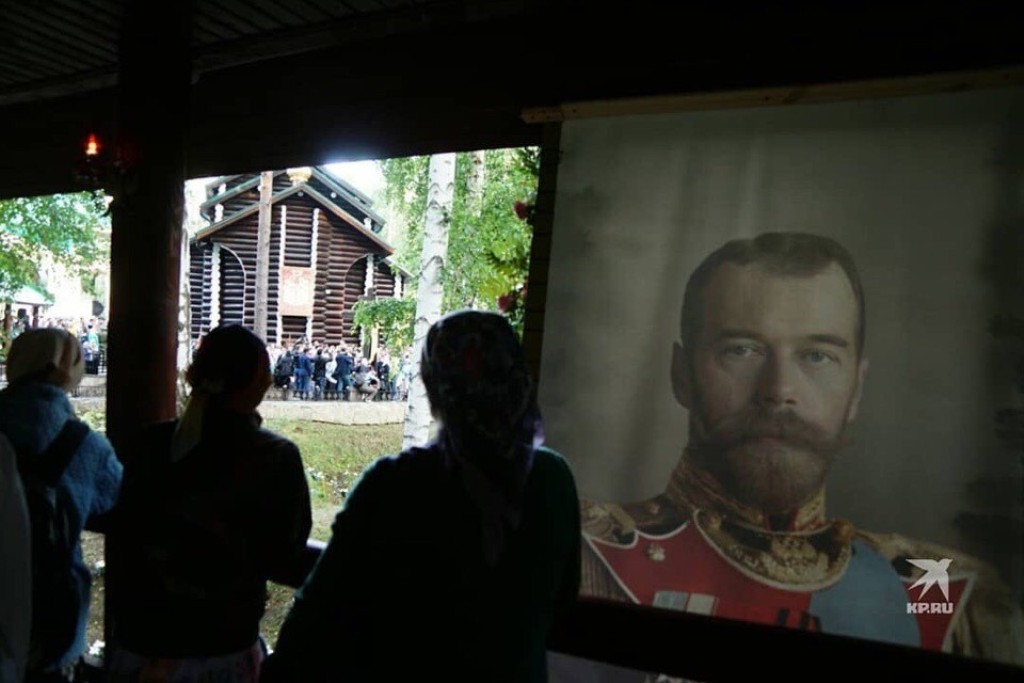
A wooden causeway surrounds the abandoned mine shaft – visible as a depression in the ground – where the remains of Nicholas II and his family were first discarded after their brutal murder. The area is filled with fragrant white lilies[4]. In 2018, seven portraits [colourized by Olga Shirnina aka KLIMBIM] of Nicholas II and his family were installed around the causeway.
On the night of 16/17 July, a night-long service is held at the Church on the Blood in Ekaterinburg ]built on the site of the Ipatiev House]. At daybreak, tens of thousands of pilgrims take part in a 21 km [13 miles] Cross procession [a four hour journey on foot] from the Church on the Blood in Ekaterinburg to the Monastery of the Holy Royal Martyrs in Ganina Yama, where a Divine Liturgy is performed at the edge of the abandoned pit. In 2018, an estimated 100,000 people from across Russia and around the world took part.
Once a bastion of Bolshevism, Ekaterinburg has slowly shed its status as the “capital of atheism”. Since the fall of the Soviet Union in 1991, the Urals has experienced a revival of faith, with Ekaterinburg at the into the center of Orthodox Russia in the Urals. Ekaterinburg has done more to honour Nicholas II and his family than any other city in Russia.
For those who wish to honour the memory of Russia’s last Emperor and his family, a pilgrimage “for reflection and prayer” to the Urals is a once in a lifetime experience. If you are planning to visit Ekaterinburg during Tsar’s Days, I highly recommend visits to the places which memorialize the last days of Emperor Nicholas II and his family – in particular the Church on the Blood, Ganina Yama and Porosenkov Log.
Holy Royal Martyrs, pray to God for us! Святы Царственные мученики, молите Бога о нас!
Visiting Information
The Monastery of the Holy Royal Martyrs at Ganina Yama is open daily from 09:00 to 18:00. Admission is FREE, although a donation box is located in the welcome center, near the entrance.
Visitors should allow approximately 3-4 hours for their visit. The monastery also has a museum and exhibition center – located on the ground floor of the Church of the Reigning Mother of God – which hosts numerous temporary exhibitions throughout the year.
In addition, the monastery offers a small cafe with refreshments and snacks; a gift shop, which offers books, icons and souvenirs, all the proceeds of which help with the maintenance and upkeep of the monastery.
On the weekends believers can attend the evening service on Saturdays, and the Divine Liturgy on Sundays. When visiting the monastery and churches, visitors are required to adhere to the Orthodox dress code: for instance, women must cover their heads – scarves and long aprons are available for tourists at the entrance to the monastery.
In addition, the monastery offers accomodation at the Diocesan Pilgrimage Center, providing pilgrims with a place to pray, rest and eat. The hotel has standard rooms, a conference room, a children’s room and a prayer room, Wi-Fi access and parking.
NOTES:
[1] Despite their official designation as “passion-bearers” in 2000, by the Council of Bishops of the Russian Orthodox Church, Emperor Nicholas II and his family are referred to as “martyrs” in Church publications, icons, and in popular veneration by the people.
[2] Emperor Nicholas II and his family were canonized as martyrs by the Russian Orthodox Church Outside of Russia (ROCOR) in 1981, however, it was not until 2000, that they were canonized by the Moscow Patriachate.
[3] It has come to this author’s attention, that the Monastery of the Holy Royal Martyrs at Ganina Yama is sometimes referred to by some Westerners as “Romanovland“, a disrespectful comparison to an amusement park.
[4] White lilies are considered to be a representation of Christ’s purity and divinity, also symbolizing resurrection.
Hardcover and Paperback editions. 152 pages + Richly illustrated with nearly 200 COLOUR PHOTOS, 65 of which were taken by the author
***
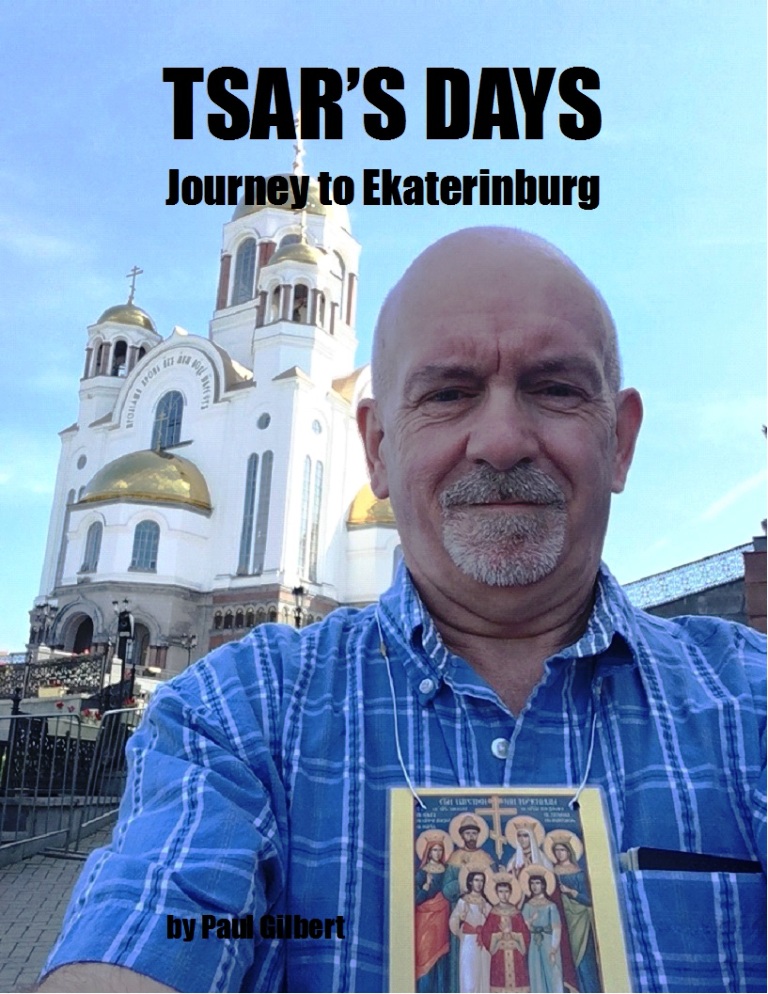
On 17th July 1998, independent researcher and writer Paul Gilbert travelled to St. Petersburg, for the interment of Emperor Nicholas II and his family. Twenty years later to the day, he journeyed to Ekaterinburg, to take part in Tsar’s Days and the events marking the 100th anniversary of the Tsar’s death and martyrdom.
In his own words and photographs, he shares his own personal experiences and impressions of the places associated with the last days of Emperor Nicholas II and his family, including the Church on the Blood, Ganina Yama, and Porosenkov Log. In addition, he writes about his visits to no less than three museums dedicated to the Holy Royal Martyrs, exhibitions, and the Patriarchal Liturgy performed on the night of 16/17 July by His Holiness Patriarch Kirill of Moscow and All Russia.
This book is complemented with 24 illustrated news articles about events leading up to Tsar’s Days in the Urals, from 1st to 31st July 2018.
Gilbert’s solemn journey to the Urals allowed him to experience history in the making, and to honour the memory of the Holy Royal Martyrs, a century after their death and martyrdom.
It may be years before most of us can visit Russia again, in the meantime, you can visit Ekaterinburg through the pages of this book from the comfort of your favourite chair.



 Nicholas II
You must be logged in to post a comment.