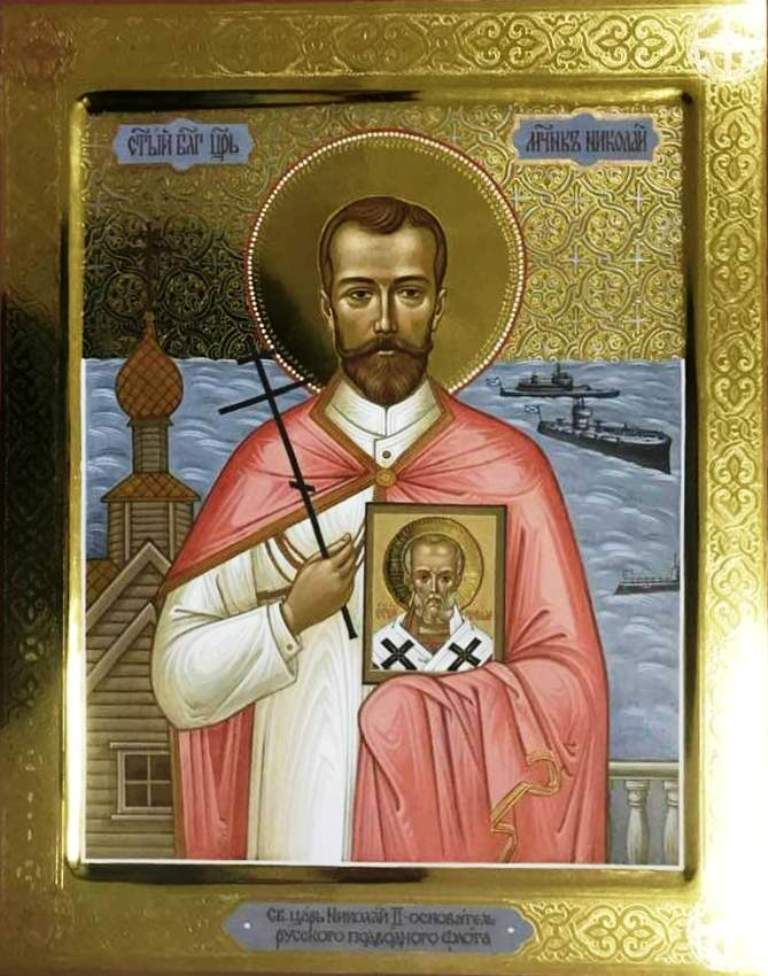
Icon of Nicholas II consecrated in the Spassky Cathedra in Penza
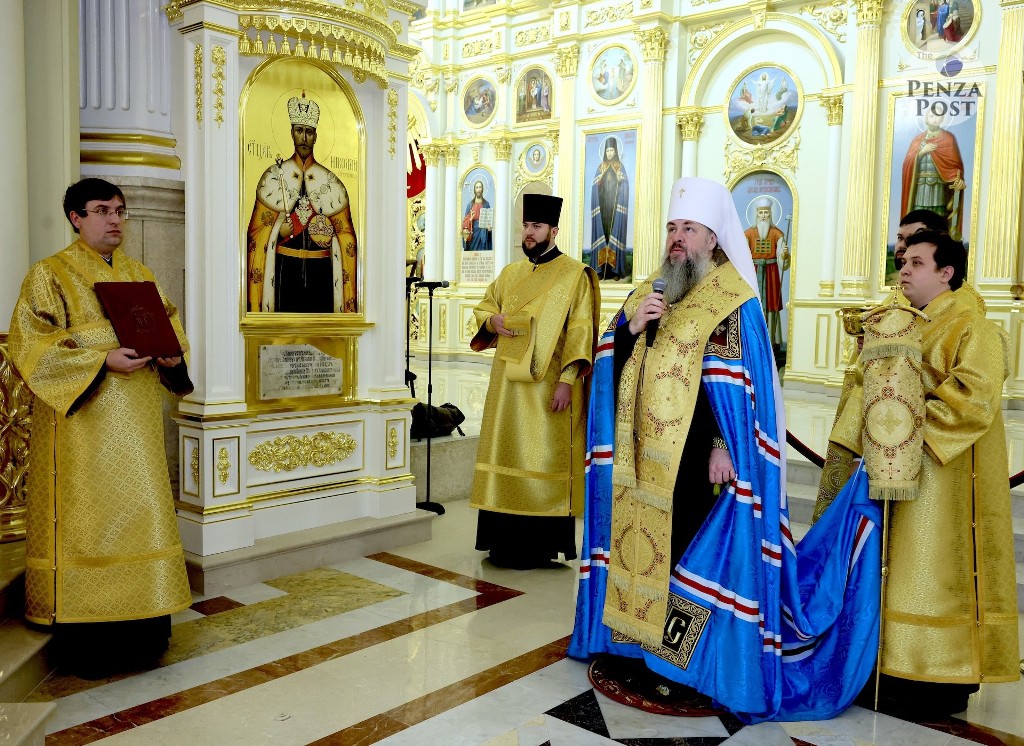
PHOTO: Metropolitan Seraphim of Penza and Nizhnelomovsk, the icon
of the Holy Royal Passion-Bearer Nicholas II, Spassky Cathedral, Penza

On the evening of 29th November 2025, Metropolitan Seraphim of Penza and Nizhnelomovsk, performed the rite of consecration of the icon of the Holy Royal Passion-Bearer Nicholas II, at the Spassky Cathedral, located in the city of Penza.

At the base of this icon is a memorial plaque, with a very interesting provenance from the early 20th century, and it’s connection to Emperor Nicholas II’s visit to the city in 1904.
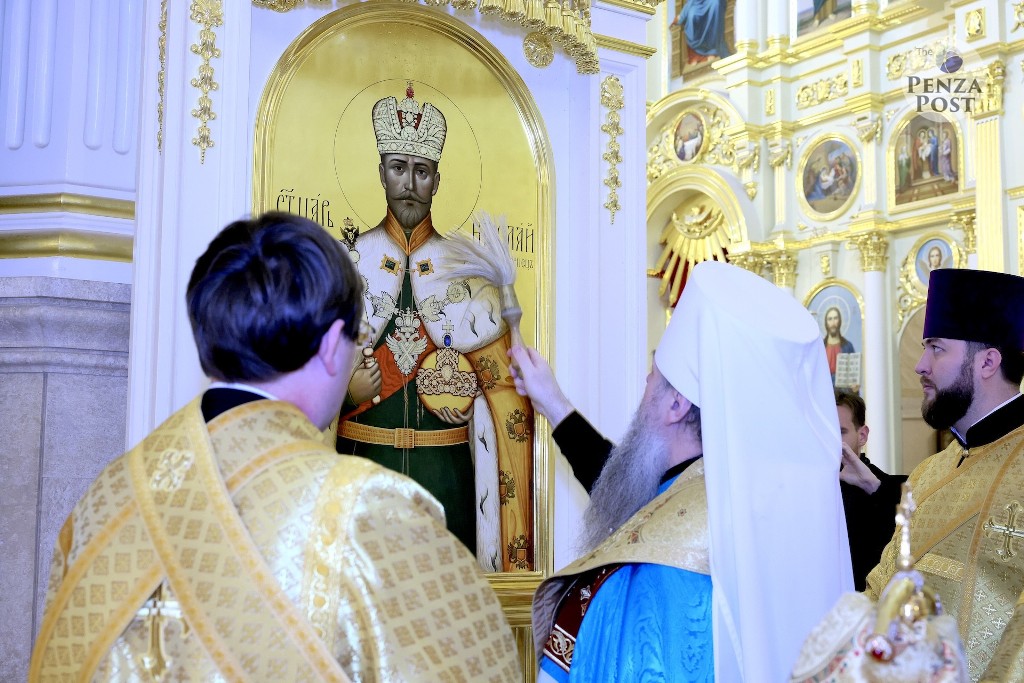
PHOTO: Metropolitan Seraphim of Penza and Nizhnelomovsk
performs the rite of consecration

After the consecration of the icon, Metropolitan Seraphim told the parishioners the story of how the memorial plaque ended up in its place:

On 19th June 2022, a memorial plaque that was installed at the beginning of the twentieth century on one of the columns of the Spassky Cathedral in memory of Emperor Nicholas II’s visit to Penza in 1904, was donated to the Penza Diocese. During his visit, the Tsar reviewed the troops going to the Russo-Japanese War, and attended the Divine Liturgy in the Penza Spassky Cathedral.
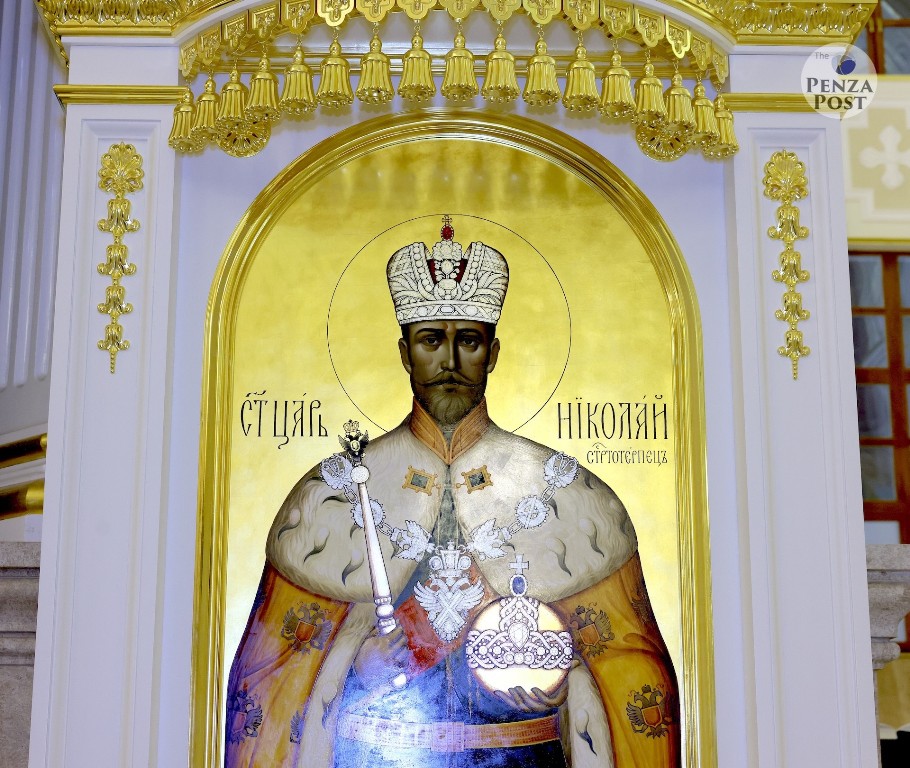
PHOTOS icon of the Holy Royal Passion-Bearer Nicholas II (above),
and the memorial plaque (below)
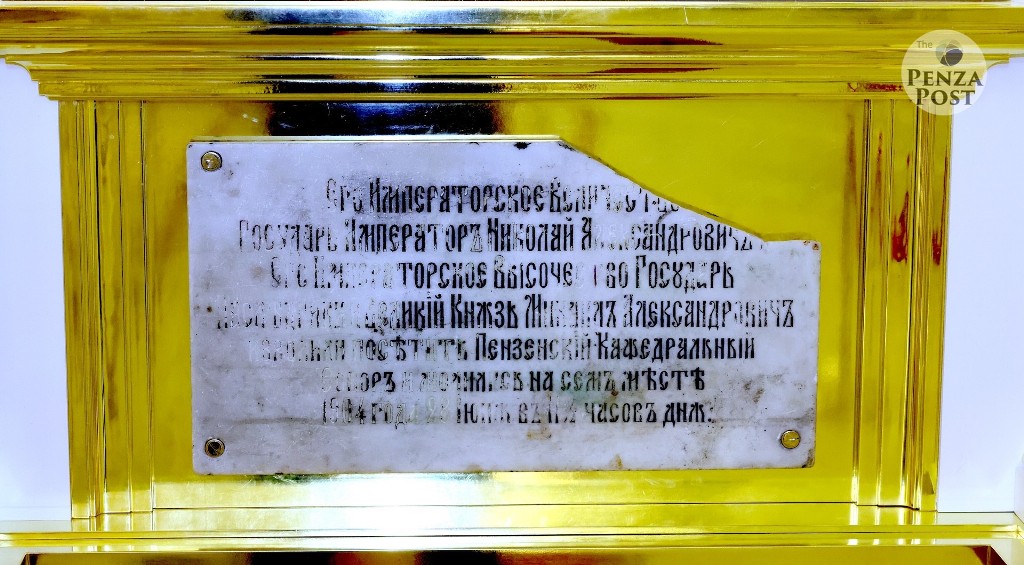
This memorial plaque, installed by the Penza City Duma, became the first memorial plaque in the Penza region. The inscription on it reads: “His Imperial Majesty Emperor Nicholas Alexandrovich and His Imperial Highness the Grand Duke Mikhail Alexandrovich deigned to visit the Penza Cathedral and prayed at this place in 1904, on June 28 at 11 o’clock in the afternoon.”

The text on the memorial plaque turned out to be prophetic: the Tsar prayed “in this place.” The cathedral, which the emperor visited, was destroyed by the Soviets in 1934, but the First church to be recreated in the city in 2011-16″.
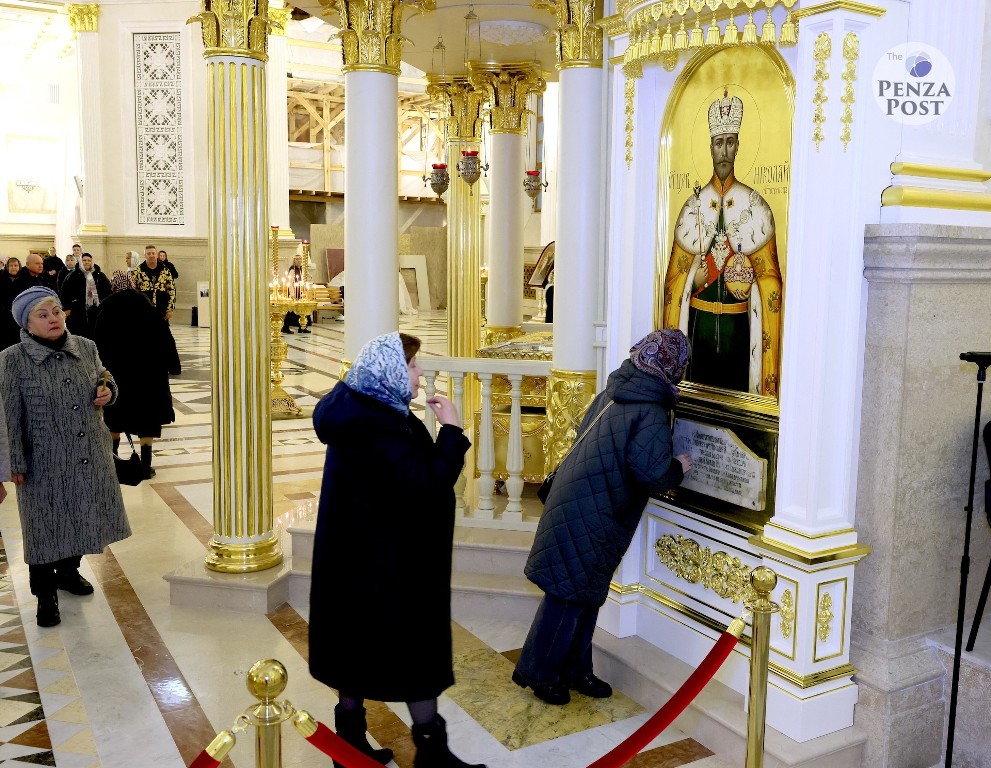
PHOTO: Orthodox Believers venerate the icon
of the Holy Royal Passion-Bearer Nicholas II

For a long time it was believed that the memorial plaque was lost. The residents of Penza remembered that in February 1918 armed men (Bolsheviks) who came to the cathedral smashed the plaque with their rifle butts. But, as it it turned out, the plaque miraculously survived, only a corner broke off. The parishioners hid it from the Bolsheviks, burying it in the ground near the church.

About twenty years ago, information began to circulate, that the memorial plaque was intact. Local historians conducted a lengthy search, as a result of which the relic ended up in the hands of the famous Penza collector Igor Sergeevich Shishkin, who returned it to the Spassky Cathedral.

The transfer of the memorial plaque took place before the great consecration of the Spassky Cathedral, which was performed on 19th June 2022, by Patriarch Kirill of Moscow and All Russia during his primatial visit to the Penza Metropolia.”
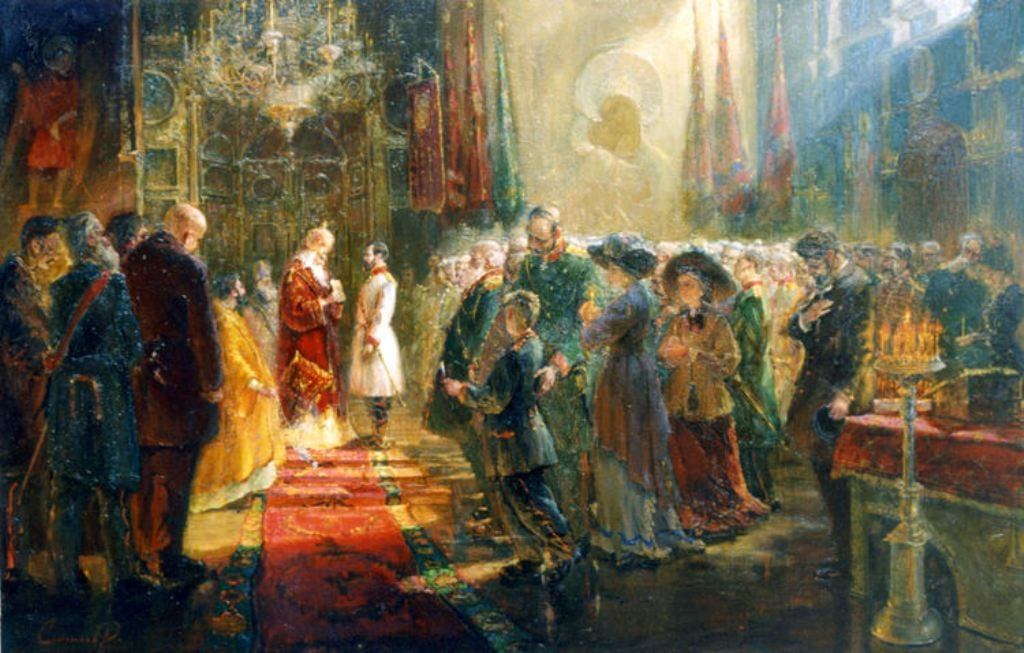
PHOTO: ‘Nicholas II in Penza 1904’
by the contemporary Russian artist Denis Santalov.

In his painting, Santalov has captured the arrival of the Russian emperor who visited Penza on 28th June 1904. He is depicted in the Spassky Cathedral (blown up in 1934), where he is blessed by the Bishop of Penza and Saransk Hieromartyr Tikhon (Nikanorov). On that memorable day, the sovereign visited conducted a review of his troops, who were on their way to the Russo-Japanese War. From the collection of the Penza Regional Art Gallery
© Paul Gilbert. 30 November 2025

Is the myrrh-streaming icon of Nicholas II predicting a terrible omen for Russia?

Whether you are a believer or not, the following is just one of many miracles reported since the regicide in Ekaterinburg in July 1918 . . .

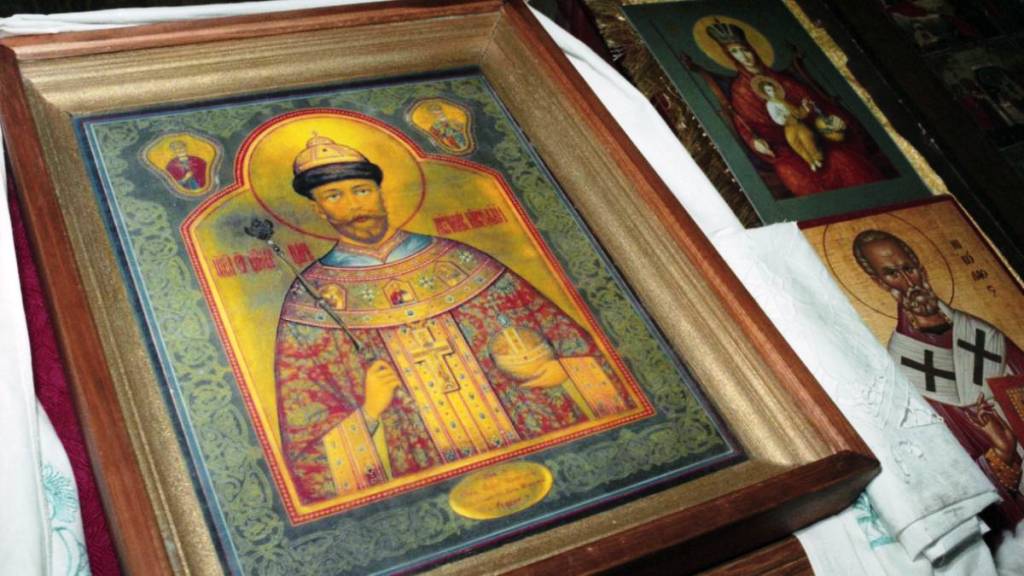
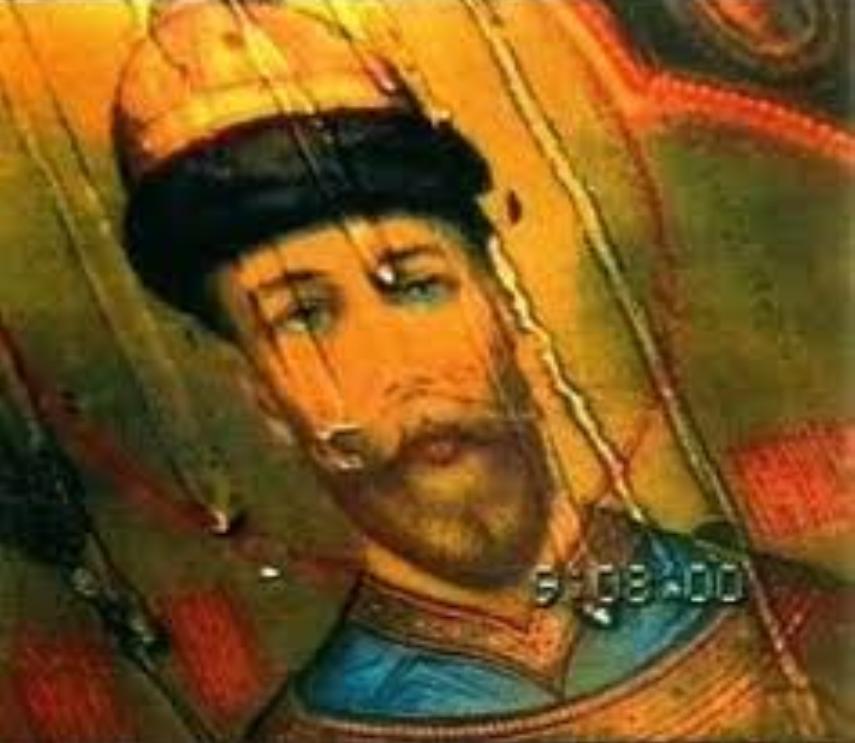
Last week, a case of myrrh streaming[1] from the icon of the Tsar-Passion-Bearer Nicholas II was recorded in the Church of the Nine Martyrs of Kizichesky in Moscow. The Orthodox community is now discussing the event which many believers and clergy interpret as an alarming omen.

Archpriest Anthony Serov commented on the event, “fragrant oil, myrrh, appeared on the surface of the icon, which is in a special, hermetically sealed case.” According to him, the design of the kiot[2] completely excludes any possibility of external influence or forgery. The myrrh-streaming of the icon has been confirmed by Life.ru[3].

“The icon is placed in a protected case, which excludes any outside interference,” Archpriest Anthony Serov emphasized. “Nevertheless, we have witnessed myrrh streaming from the icon. This, in my opinion, is of great spiritual importance.”

In the Orthodox tradition, the streaming of myrrh from icons is considered a miracle and a special sign of grace. However, myrhh streaming from the face of the saint [Nicholas II] which is enclosed in a protective case, is another matter.

Archpriest Serov regards the incident as a warning addressed not only to Orthodox believers, but to Russian society as a whole. He drew parallels with historical events when such phenomena preceded significant changes and upheavals, such as the 1917 Revolution and the First World War.

“The history of our country [Russia] has experienced examples of the streaming of myrrh from icons became a harbinger of revolutionary events, military conflicts and other difficult trials and tribulations,” the rector of the church explained. “It is necessary to comprehend what happened and learn from them.”

Over the centuries, such cases have been repeatedly recorded in Orthodox monasteries and churches in Russia. As a rule, believers see this as a call to repentance and prayer, especially when the images of the Royal Passion-Bearers “weep”.

Earlier, journalists turned to religious scholar Konstantin Mikhailov for comment of the recent myrrh-streaming incident near Moscow. The confessor said that such events are not uncommon and in most cases have a natural explanation. According to the expert, scientists have always found logical reasons for the appearance of moisture on icons.

In the meantime, parishioners and believers from all over Moscow are coming to the Church of the Nine Martyrs of Kizichesky to personally see the myrrh-streaming icon and pray.

NOTES:

[1] In the Orthodox tradition, myrrh-streaming is one of the most mysterious and controversial phenomena. On the one hand, the Church recognizes the fact of the outflow of fragrant myrrh from icons, relics and crosses as one of the manifestations of God’s grace. On the other hand, each such case is carefully checked by church commissions in order to exclude any possibility of forgery or natural causes.

[2] A kiot is a decorated case or frame used in Orthodox Christianity to protect and display religious icons. It serves to safeguard the icon from environmental factors such as temperature fluctuations, dust, and humidity, ensuring the icon’s preservation over time.

[3] A prominent Russian information portal and news agency.

FURTHER READING:

Myrrh-streaming icon of Tsar Nicholas II brought to Ekaterinburg for Tsar’s Days’ + PHOTOS and VIDEO

My [Paul Gilbert’s] cancer journey and prayers for the intercession of Tsar-Martyr Nicholas II

© Paul Gilbert. 23 November 2025

Myrrh streams from icon of Nicholas II in Ekaterinburg

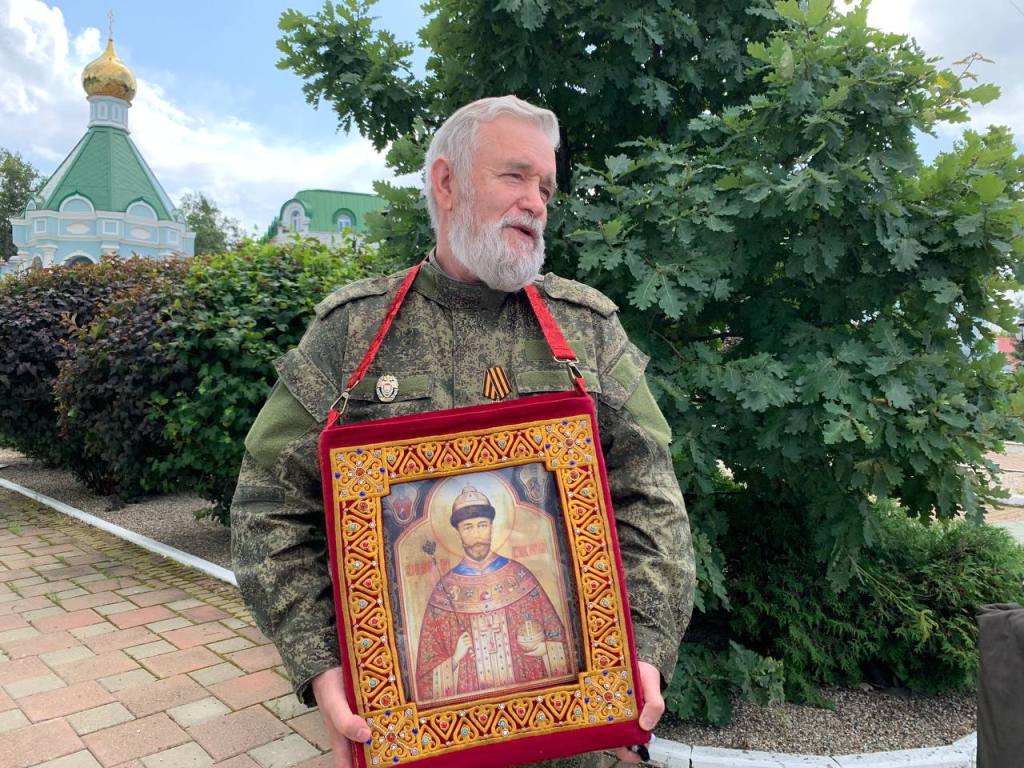
PHOTO: Alexander Feodorovich Chernavsky holding the
myrrh-streaming icon of the Tsar-Martyr Nicholas II

On 13th July 2025, the myrrh-streaming icon of the Tsar-Martyr Nicholas II arrived at the Church on the Blood in Ekaterinburg. The icon was brought from Moscow, by the head of the Orthodox Military Mission, Alexander Feodorovich Chernavsky.

According to Chernavsky, the icon has been streaming myrrh since 1998, and again, during this year’s Tsar’s Days in the Ural capital, drops of myrrh appeared in the shape of “diamonds” on the icon itself and on the frame.

It smells fragrant, it streams myrrh and inspires faithful Orthodox Christians with the fact that the Tsar is alive, he sees all our labours, hears our prayers, reacts to the impulses of our hearts, to our feelings, he believes in the future of Russia. The Imperial Family and other New Martyrs pray for us.”

Chernavsky brings the icon to the Ural city every year for events marking Tsar’s Days, namely the Divine Liturgy held on the night of 16/17 July, followed by a Cross Procession to the Monastery of the Holy Royal Martyrs in Ganina Yama.

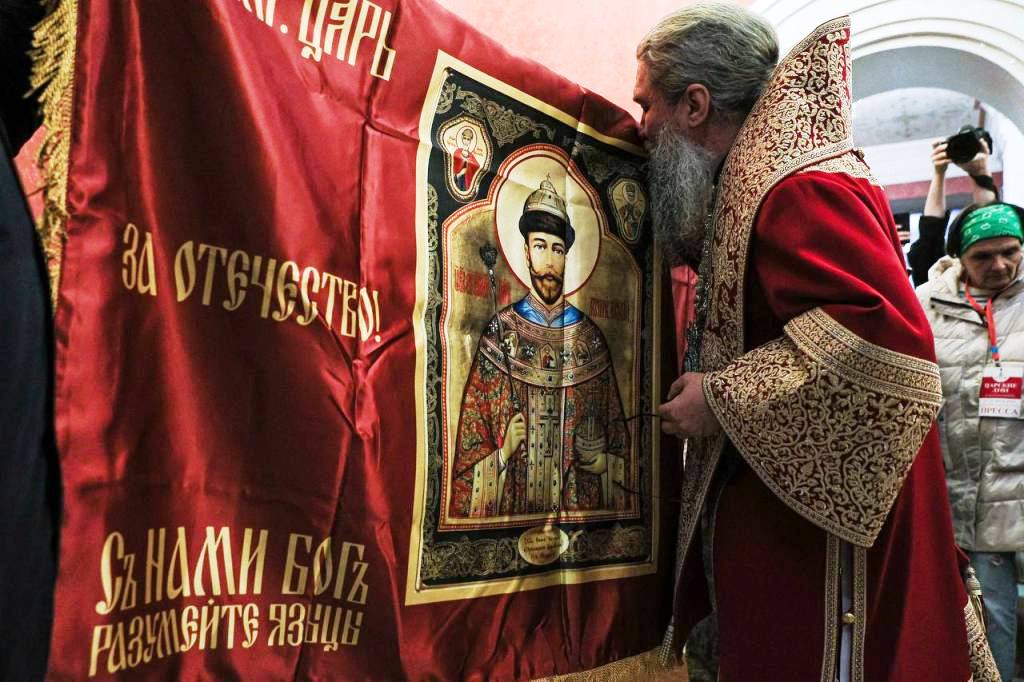
PHOTO: detail of the banner depicting the image of Tsar-Martyr Nicholas II

On 16th July 2025, Chernavsky presented Metropolitan Evgeny of Yekaterinburg and Verkhoturye with a banner depicting the image of Tsar Nicholas II. Such banners bearing the face of the Holy Royal Passion-Bearers are sent to Russian soldiers to inspire them by the feat of the Emperor, to embrace the Orthodox faith and become churchgoers.

In the early morning hours of 17th July, Chernavsky – carrying the icon of the Tsar-Martyr Nicholas II – joined tens of thousands of pilgrims, clergy and believers in the annual Cross Procession from the Church on the Blood to the Monastery of the Holy Royal Martyrs at Ganina Yama – a journey of 21-km (13 mile) on foot.

Chernavsky noted that during this year’s Cross Procession, he noticed many young people with banners and flags, which he believes “speaks of the affirmation of the Orthodox faith and the unity of the Russian people.”

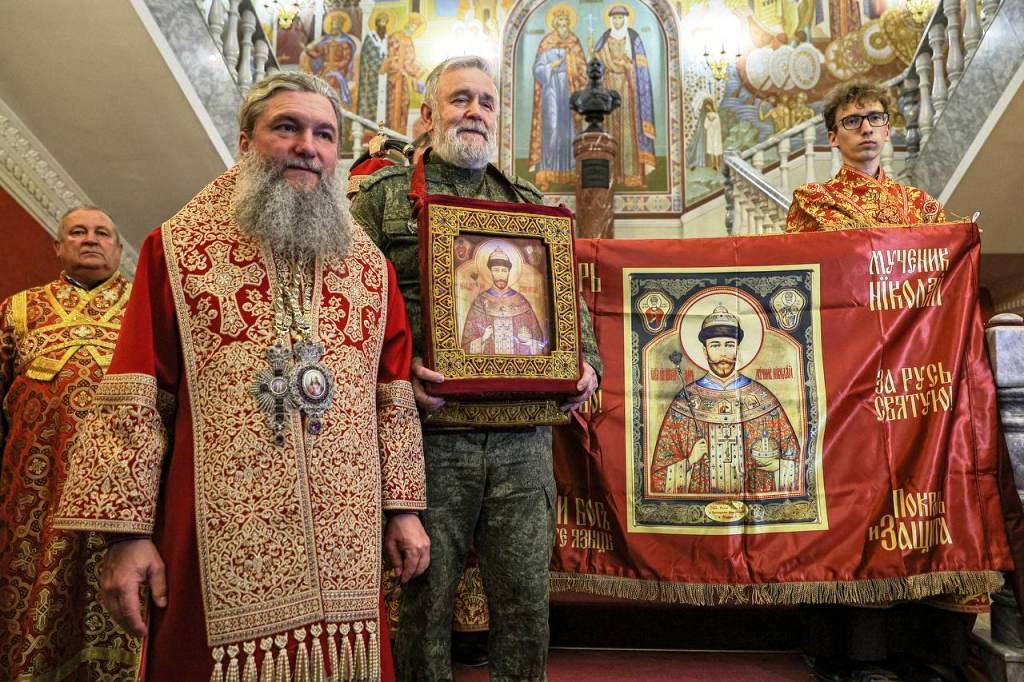
PHOTO: Metropolitan Evgeny of Ekaterinburg and Verkhotursky (left) with Alexander Chernavsky holding the myrrh-streaming icon of the Tsar-Martyr Nicholas II, in the Patriarchal Compound of the Church on the Blood. At the top of the stairs behind, you can see a bust-monument to Nicholas II

Recall that the icon of the Tsar-Martyr Nicholas II was painted in the United States even before the glorification of the Tsar by the Moscow Patriarchate of the Russian Orthodox Church on 20th August 2000, after the Russian émigré Iya Dmitrievna Schmit[1], had a dream in which she saw an icon depicting the Tsar Martyr Nicholas II in 17th century grand ducal attire. She asked the iconographer Pavel Nikolaevich Tikhomirov, who lives in California, to paint the icon she had dreamt about.

At the end of 1997, colour lithographs of this icon were brought to Russia. In the St. Nicholas almshouse in the city of Ryazan, where the Church of the Tsar-Martyr Nicholas II is being built, a colour copy was made and placed in an icon case under glass.

On 7th November 1998, the icon began to stream myrrh. Since then, the icon has been traveling around Russia and around the world. But most importantly, the icons streams myrrh on the anniversary of the Tsar’s death and martyrdom, among other days associated with the memory of Russia’s much slandered Tsar.

NOTES:

[1] In 2000, Ija Schmit (1936-2018) gifted a copy of this icon to the author of this article.

© Paul Gilbert. 23 July 2025

Unique icons associated with the Romanovs to be exhibited in Ekaterinburg

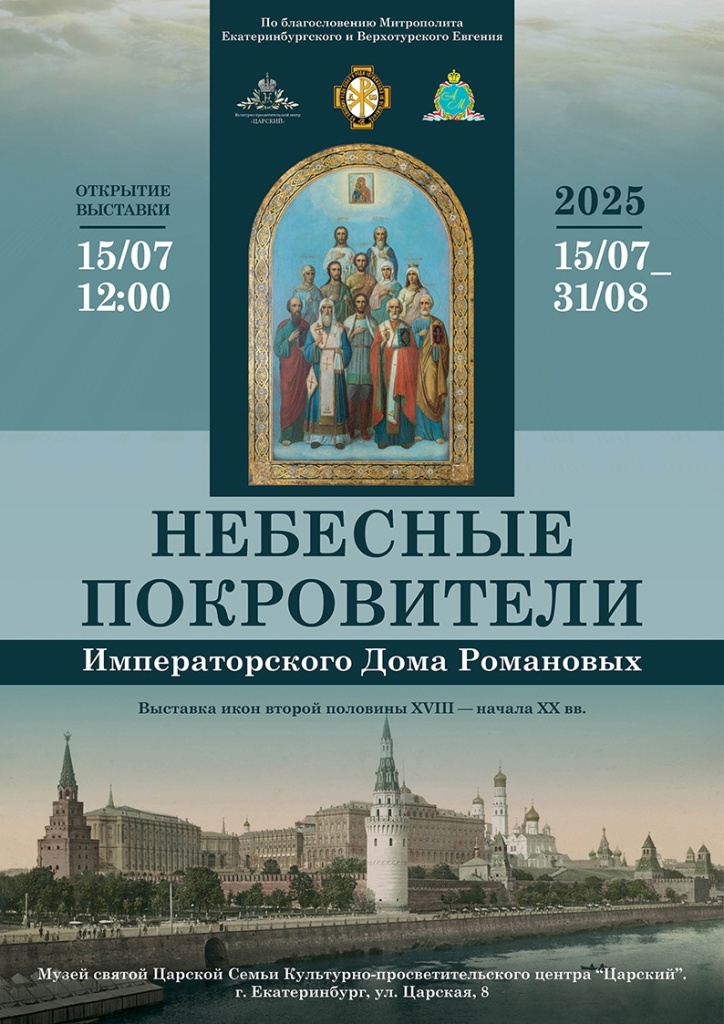
Emperor Nicholas II is well known for his piety and devotion to the Russian Orthodox Church. As part of the Tsar’s Days-2025, a collection of rare icons of the 17th to early 20th centuries, which are stored in church and private collections, will be brought to Ekaterinburg. The exhibition presents icons of the patron saints of the Romanov dynasty, which were commissioned by the Russian emperors.

The icons will be on display at the exhibition “Heavenly Patrons of the House of Romanov” which opens on 15th July 2025, to the Museum of the Holy Tsar’s Family, situated on the second floor of the Patriarchal Compound of the Church on the Blood.

This event was organized by the Altai Diocese together with the Ekaterinburg and Altai branches of the Imperial Orthodox Palestine Society and the Russian Academy of Arts. This is the first time that the Ural capital has hosted such an exhibition.

The organizers of the exhibition shared the history of the exposition:

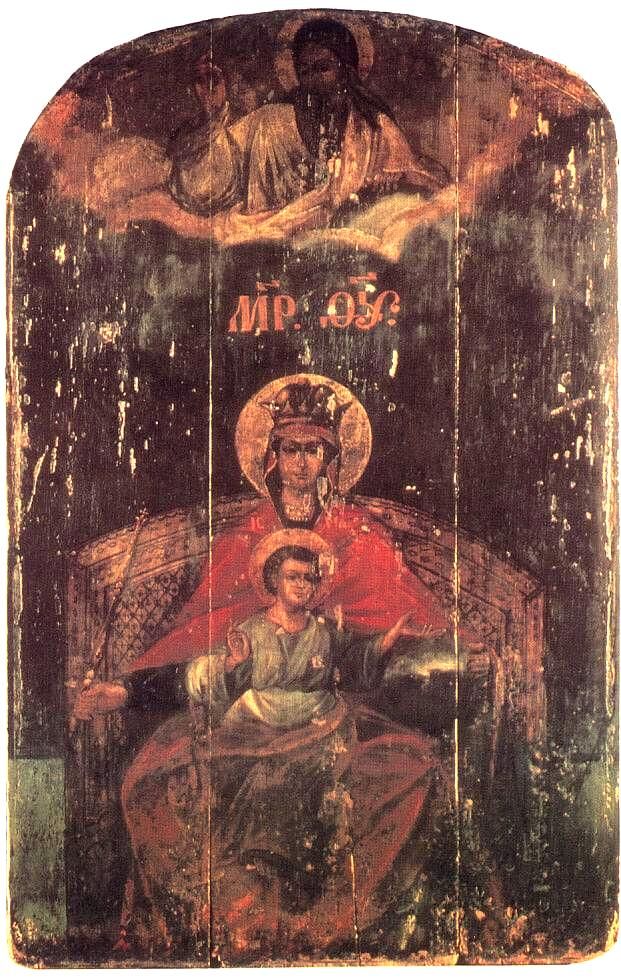
For more than three hundred years, Russia was under the rule of the Romanov dynasty. The Romanovs’ coming to power is associated with a prayer at the Miraculous Icon of the Mother of God “Feodorovskaya” and was marked by the overcoming of the Time of Troubles. Under the Romanovs, the country acquired the status of an Empire, profound political transformations were carried out, feudalism was replaced by capitalist relations, the peasantry gained freedom, economic and social reforms were implemented, and the population increased. The reign of the Romanovs ended with another time of troubles, in 1917. On 15th (O.S. 2nd) March 1917, the day of the abdication of Nicholas II , the Reigning Icon of the Mother of God was revealed to a peasant woman in Kolomenskoye. Many believe the reappearance of the icon was an indication that the Virgin Mary was displeased with Russia for dethroning Tsar Nicholas II during the February 1917 Revolution.

PHOTO: The original Reigning Icon of the Mother of God in the
Church of Our Lady of Kazan, Kolomenskoye (near Moscow)

According to Byzantine origins, the life of the Imperial Family in Russia was largely determined by Orthodox traditions. The Russian monarchs, following the Byzantine ones, were called God’s anointed. There was a corresponding rite of enthronement, which was performed in the main Assumption Cathedral of the Moscow Kremlin. Solemn events, anniversaries and other holidays of the Emperor’s family were interwoven into the church rites. In churches, Diving Liturgies, public prayers and bell ringing were performed. For these occasions, special icons were ordered, on which the patron saints of representatives of the Imperial Family were painted. Such icons were made for the birth of grand dukes, for the wedding of heirs to the throne, enthronement and anniversaries. If an assassination attempt or accident occurred, and the respective member(s) of the Imperial Family were spared, then praise was given to God throughout the country, thanksgiving prayers were served, chapels and churches were built, or appropriate icons with selected saints were ordered. Moreover, for most people, the tsar was God’s anointed, and therefore, there was a prayer for the well-being of the tsar and his family members. And what is prayer without an icon? This is how new images were born.

After 1917, the Church and the monarchy became the main enemies of the new Bolshevik and later Soviet governments. The heritage of Russia was destroyed with special zeal, and it is not surprising that today such icons have become a rarity, which makes the exhibition a unique event for the spiritual life of the Sverdlovsk region – once a bastion of Bolshevism – and for Russia. The exhibition encourages a new look at the pages of the history of the ruling House of Romanov, which has so significantly influenced the history and modernity of Russia.

In addition, visitors will see the icons of the Most Holy Trinity of the late 19th and early 20th centuries, selected saints, the Intercession of the Most Holy Theotokos, the image of Prince Vladimir Equal-to-the-Apostles of 1888, the version of which was painted specifically for the 900th anniversary of the Baptism of Rus. Particular attention should be paid to the long-suffering Job – he could have been a personal icon of the last Russian Tsar Nicholas II.

The exhibition “Heavenly Patrons of the Imperial House of Romanov” runs from 15th July to 31st August 2025, at the the Tsarsky Cultural and Educational Center, situated in the Patriarchal Compound of the Church on the Blood.

© Paul Gilbert. 11 July 2025

Icon that belonged to Nicholas II donated to the Louvre

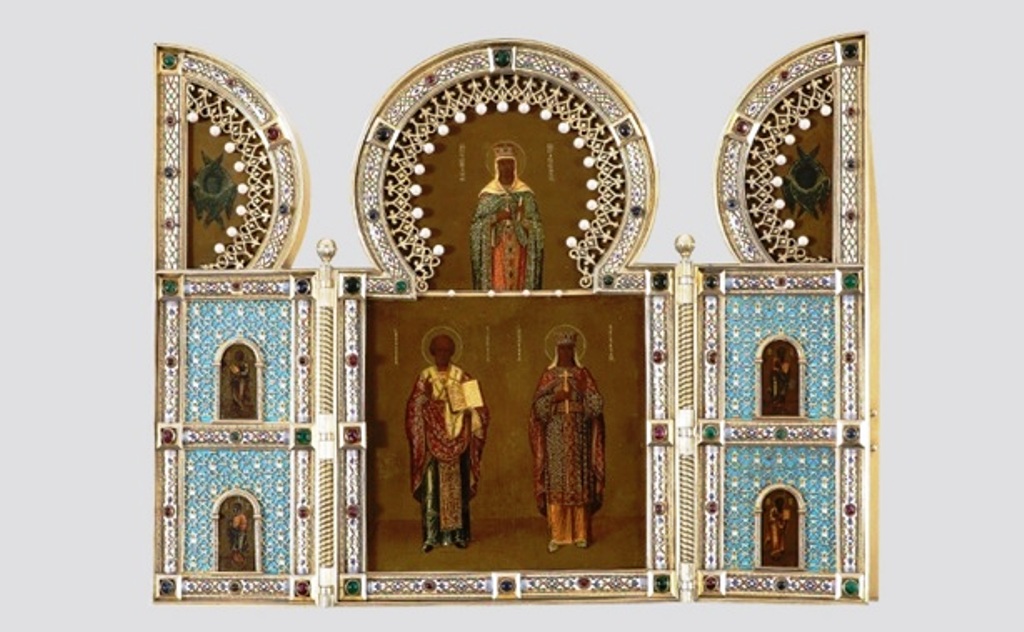
On Thursday, 10th April 2025, the Société des amis du Louvre [Society of Friends of the Louvre] in Paris announced that it had acquired and donated to the Louvre Museum, a triptych icon that belonged to Russia’s last Tsar.

Created in 1895 by Mikhail Evlampievich Perkhin (1860-1903), a leading workmaster of the House of Fabergé, the icon and adorned with precious stones was presented by members of the Russian aristocracy to Emperor Nicholas II and Empress Alexandra Feodorovna on the occasion of the birth of their daughter and first child Grand Duchess Olga Nikolaevna [16th (O.S. 3rd) November 1895].

The 30 cm [12 in.] triptych icon was purchased for 2.2 million euros [$2.5 million USD]. It is made of various materials: Karelian birch, oil painting, gilded silver, gold with enamel, pearls, emerald, ruby and sapphires.

During the interwar period, the icon became part of the historical collection of the gallery A La Vieille Russie, based in Paris and then in New York, which had acquired it at the time of the sale of the Romanovs’ jewels and other precious objects by the Bolsheviks in the 1920s.

It has been exhibited only once, at the Victoria and Albert Museum in London in 1977, after which it was stored in the collection of the art dealer Leon Greenberg.

The Society of Friends of the Louvre decided to acquire and donate the icon to the museum “as part of a wider €4 million sponsorship programme aimed at supporting the museum’s major projects, including the creation of a new Department of Byzantine and Christian Oriental Arts”, which is scheduled to open in 2027.

“It will be one of the major works of the new department of the museum, because of its history and its creation by one of the most prestigious goldsmiths of the House of Fabergé, famous for his decorative eggs that marked the end of the Romanov reign,” said a spokesperson for the Louvre Museum

Based in Paris, France the Société des amis du Louvre is a voluntary association created in 1897 whose purpose is to purchase objects of artistic, archaeological or historical value for the museum. It is the largest private patron of the Louvre: today the Society has 67,000 members, , mostly in France, whose contributions and donations allow it to have an annual budget for the acquisition of works of art in the amount of about 3 million euros.

© Paul Gilbert. 11 April 2025

Nicholas II memorial plaque unveiled in Sestroretsk

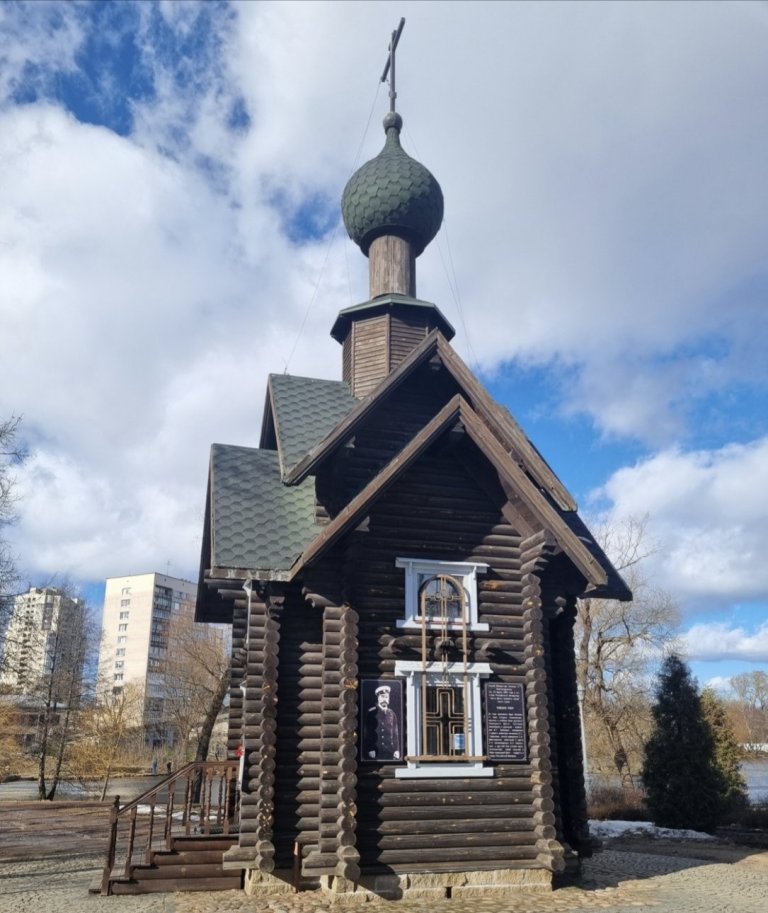
PHOTO: memorial plaque installed on the wall of the Chapel of St. Nicholas the Wonderworker in Sestroretsk, dedicated to Nicholas II, founder of the Russian submarine fleet

On 19th March 2025, on the day marking ‘The Day of the Submariner’ in the Russian Federation, two memorial plaques were installed on the walls of the Chapel of St. Nicholas the Wonderworker in Sestroretsk. The first IS a portrait depicting the Holy Emperor Nicholas II, the founder of the Russian submarine fleet.

The second features a text about the event of 19th March (O.S. 6th March) 1906, when by decree of Emperor Nicholas II, a new class of warship was created in the Imperial Russian Navy – a submarine fleet, which consisted of 10 submarines.

The chapel is located on the grounds of the Church of the Holy Apostles Peter and Paul. Situated on the shore of Lake Razliv, near St. Petersburg it is the birthplace of the submarine in Imperial Russia. It was here, in the presence of Emperor Peter I, that the first test of the “secret vessel” of the inventor of Russia’s first submarine Efim Prokopyevich Nikonov took place. Since 2001, it has been recognized as the spiritual and historical ensemble in honour of the Russian submarine fleet.

PHOTO: the Chapel of St. Nicholas the Wonderworker in Sestroretsk

The dean of the Kurortny District, the rector of the church, Archpriest Mikhail Petropavlovsky, served a Divine Liturgy in honour of all generations of submariners. Bells rang in memory of the Russian sailors who died while serving on submarines. A panikhida [prayer for the dead] was then served at the wall of memory inscribed with the names of all the sunken submarines and the names of the submarine heroes.

“As long as the Lord grants us life, we must lift up prayers of thanksgiving for the living and pray for those who died at sea – many of them have no graves, no relatives are alive, some are completely forgotten, but with God everyone is alive,” said Father Michael.

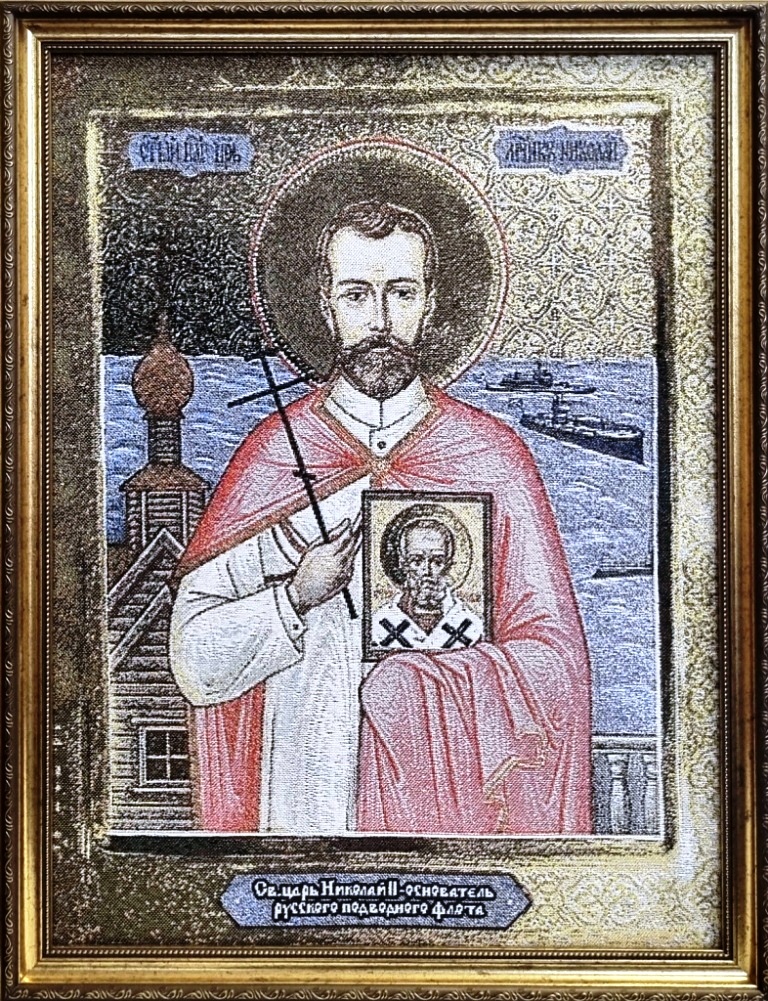
PHOTO: modern-day icon painted in St. Petersburg, by order of modern day submariners of the Russian Federation

The plaque installed on the wall of the Chapel of St. Nicholas the Wonderworker in Sestroretsk is based on the icon depicted in the above photo. It was painted in St. Petersburg, by order of modern day submariners of the Russian Federation.

Up until the October Revolution of 1917, ‘The Day of the Submariner’ was celebrated in Russia as a professional holiday, but abolished during the Soviet years. The holiday was revived almost eight decades later, in 1996, by order of the Commander-in-Chief of the Navy, Admiral of the Fleet Felix Gromov. Since then ‘The Day of the Submariner’ is once again celebrated on 19th March, by military personnel, veterans and civilian personnel of the submarine forces of the Navy of the Russian Federation.

© Paul Gilbert. 23 March 2025

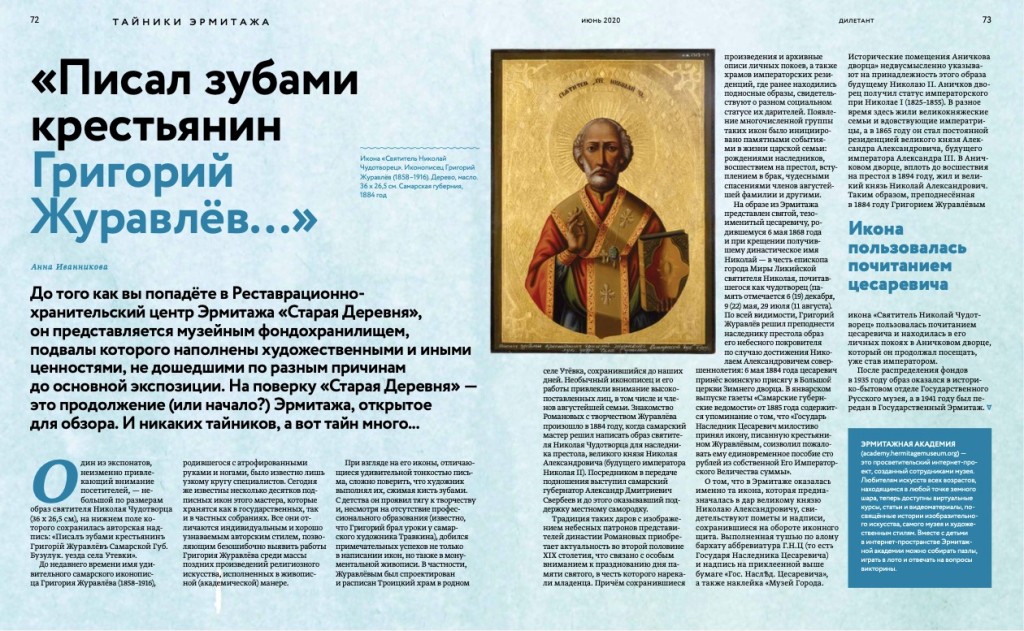
Icon belonging to Nicholas II discovered in the funds of State Hermitage Museum

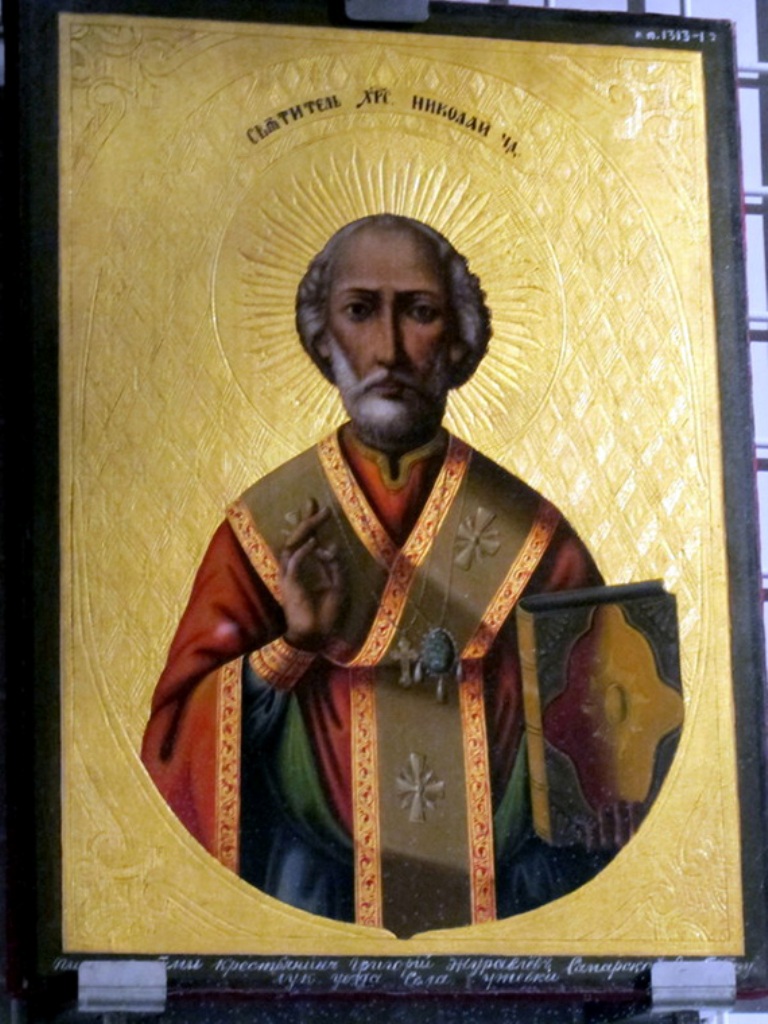
PHOTO: icon of St. Nicholas the Wonderworker by the iconographer Grigory Nikolayevich Zhuravlev (1860–1916). The icon was painted in 1884, specially for the future Emperor Nicholas II

In 1885, the heir to the Russian throne Tsesarevich and Grand Duke Nicholas Alexandrovich [the future Emperor Nicholas II], was presented with an unusual icon of his heavenly patron St. Nicholas the Wonderworker. It was unusual not in its execution, but in the way it was written [painted].

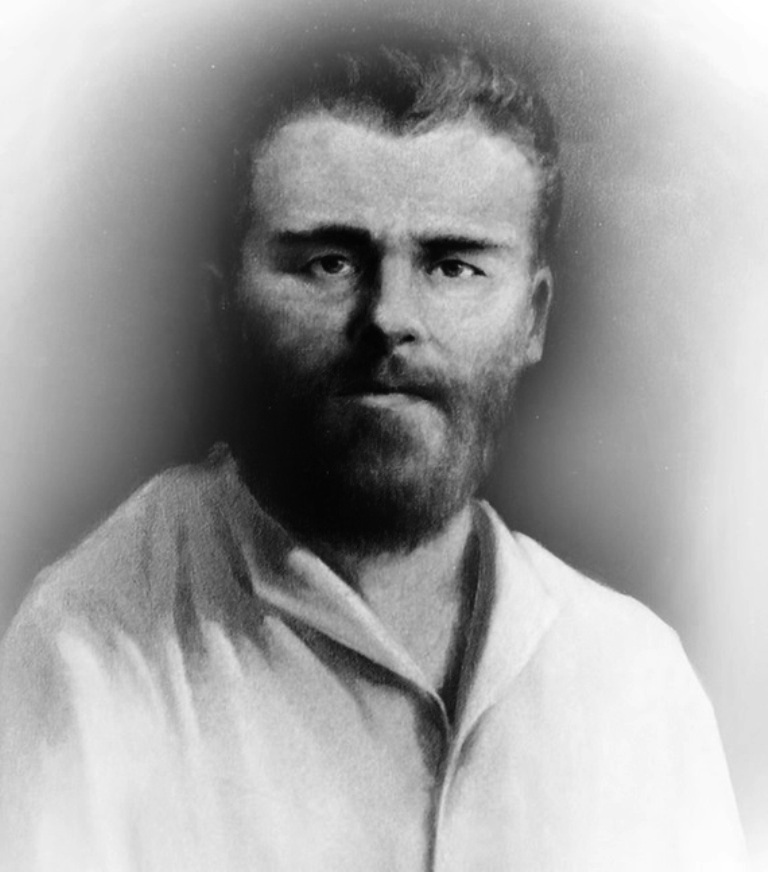
This icon was painted by Grigory Nikolayevich Zhuravlev (1860–1916), who used his teeth to paint the image of St. Nicholas. Zhuravlev was a bilateral amputee [a person who was missing both arms and both legs] a peasant from the village of Utyovka, Samara Province.

PHOTO: Grigory Nikolayevich Zhuravlev (1860–1916)

Grigory was born with arms up to his elbows and legs up to his knees. However, he was gifted with the ability to draw, which is revealed in his early youth in the painting of icons. Having learned the basics of icon painting from a Samara iconographer, Grigory began to create icons.

He did not receive any special education, he was self-taught. He painted icons for his fellow villagers. He received orders from prominent Samara residents, and was in regular correspondence with the Samara governor Alexander Sverbeev, who became the iconographer’s patron.

In 1884, Zhuravlev met with Sverbeev, and made a request to present Tsesarevich Nicholas Alexandrovich with an icon of St. Nicholas the Wonderworker – the future Tsar’s namesake. The governor heartily approved his request.

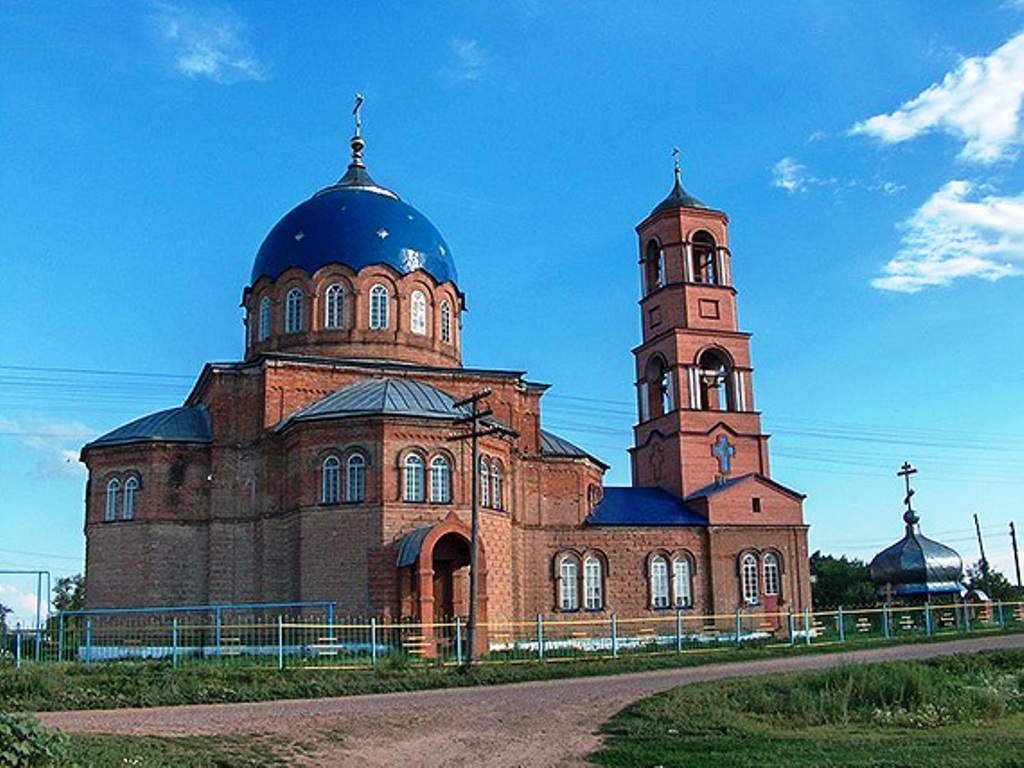
PHOTO: the Trinity Church in Zhuravlev’s native village of Utevka (near Samara)

Grigory Zhuravlev enclosed a letter with the icon:

“Your Imperial Highness! I most humbly ask you to allow this icon to come to Your Highest Name, because I have no hands and feet. And I painted this icon at the instruction of Almighty God, Who allowed me into the Light of God. And he gave me a gift. Using the movement of my mouth God I direct my skill to create this icon.”

The Tsesarevich graciously accepted the icon painted by the peasant Zhuravlev and deigned to grant him a one-time allowance of one hundred rubles from His Imperial Majesty’s own sum, a very generous sum.

Interestingly, the artist without arms and legs was invited to paint icons in the Trinity Church in his native village of Utevka (near Samara). The iconographer was tied to a cradle and lifted to the appropriate height, where he painted holy images, holding the brush in his teeth.

PHOTO: in 2020, an article by Anna Ivannikova, about the icon of St. Nicholas the Wonderworker, was published in an issue of the Russian magazine Дилетант [Diletant]

When Nicholas Alexandrovich returned to St. Petersburg, he kept the icon in his private rooms in the Anitchkov Palace. After the distribution of possessions of the Romanov’s in 1935, the icon ended up in the the State Russian Museum in Leningrad, and in 1941 it was transferred to the State Hermitage Museum, where it was placed into storage, as museum staff believed it had no historic significance.

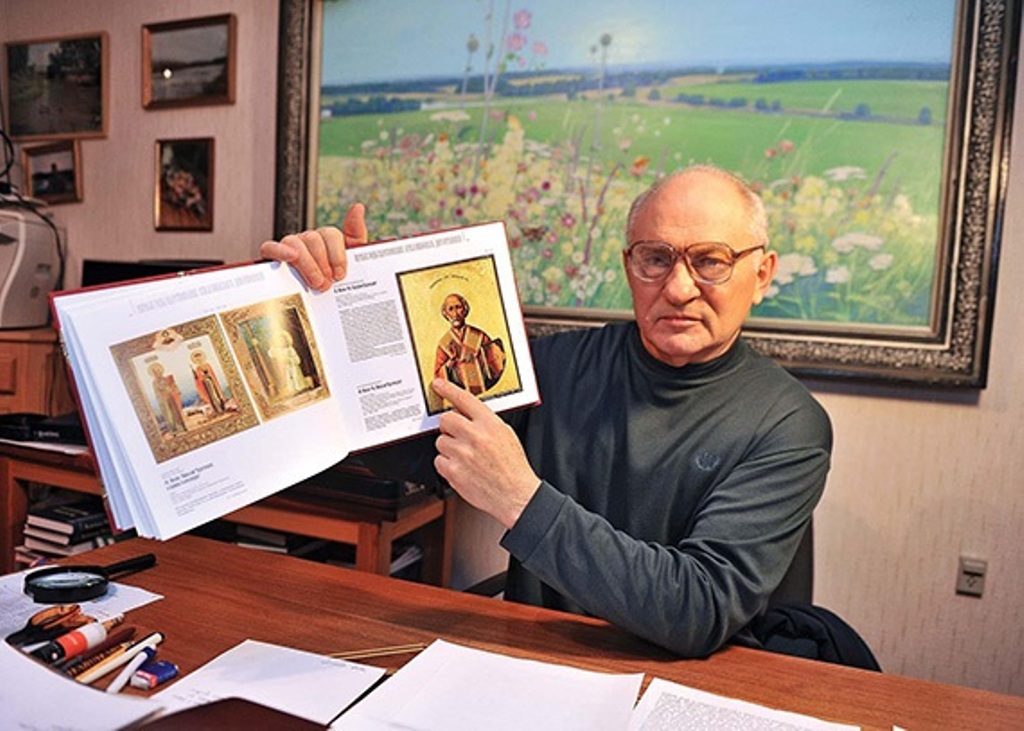
Several years ago, a unique icon was discovered in the funds of the Staraya Derevnya Restoration and Storage Center of the State Hermitage Museum. Researchers knew nothing of the icon’s provenance. That is, until Alexander Malinovskiy, a local historian, writer and Doctor of Technical Sciences, a researcher of the life and work of Grigory Zhuravlev, provided the Hermitage with information which solved the mystery of the icon and it’s famous iconographer.

PHOTO: Alexander Malinovskiy

Malinovsky cited two letters, which provided evidence. In one of them, Zhuravlev writes that he and his father are sending an icon commissioned by the governor. In the same archive, he found another letter from Zhuravlev to Tsesarevich Nicholas Alexandrovich dated 1884 with a request to accept an icon of St. Nicholas the Wonderworker, specially painted for him.

On the back of the icon there is an inscription: “From the archive of the Tsesarevich”.

Zhuraviev’s icon of St. Nicholas the Wonderworker, gifted to the future Emperor Nicholas II, has been preserved to this day, in the Collection of the State Hermitage Museum in St. Petersburg.

© Paul Gilbert. 30 December 2023

Unique icons belonging to the imperial family on display in Moscow for the first time

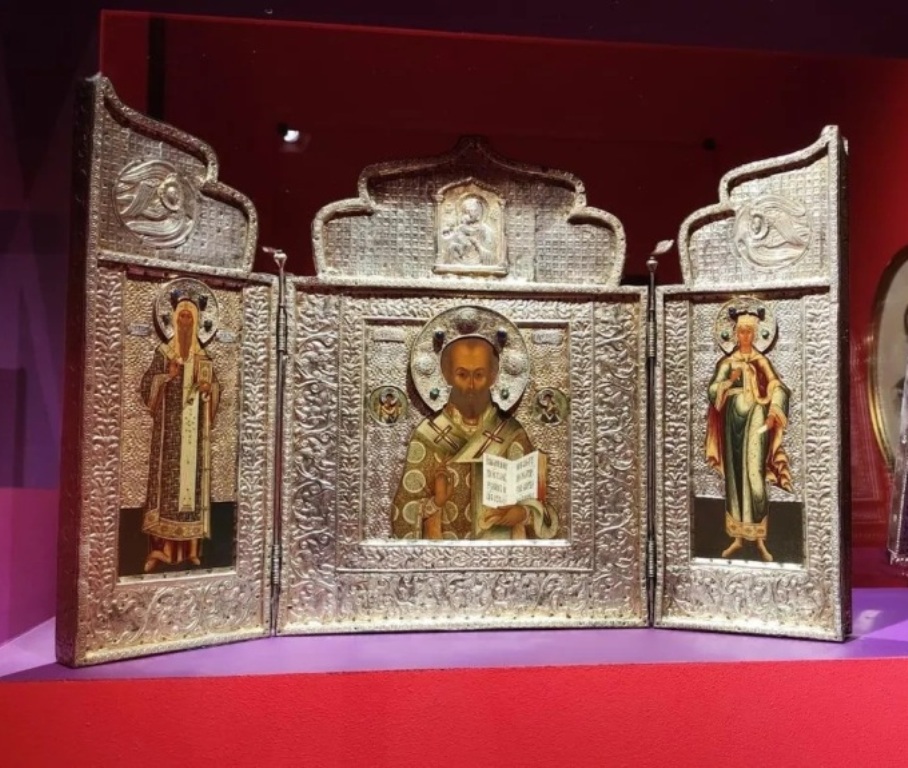
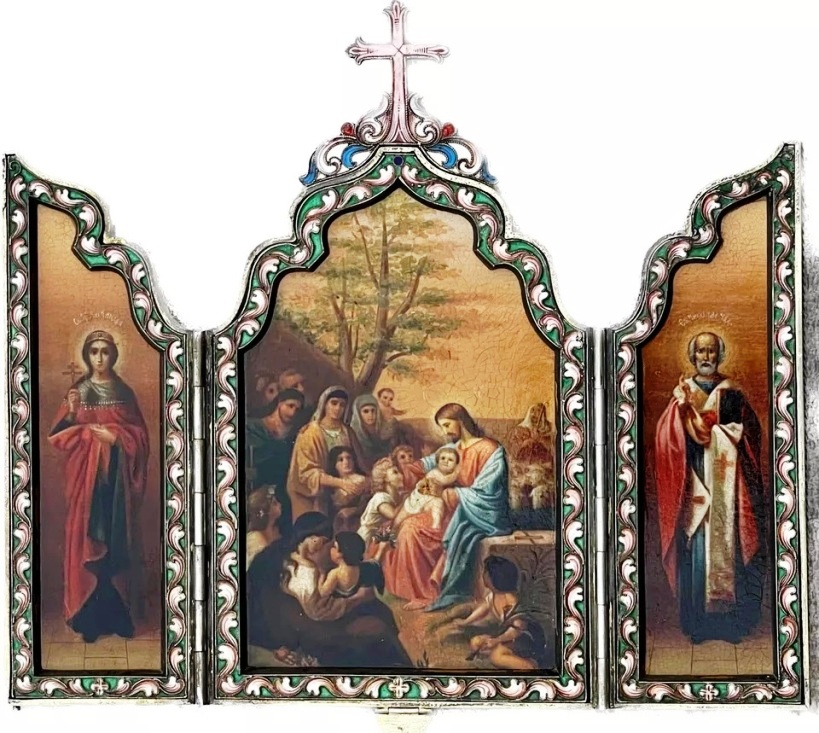
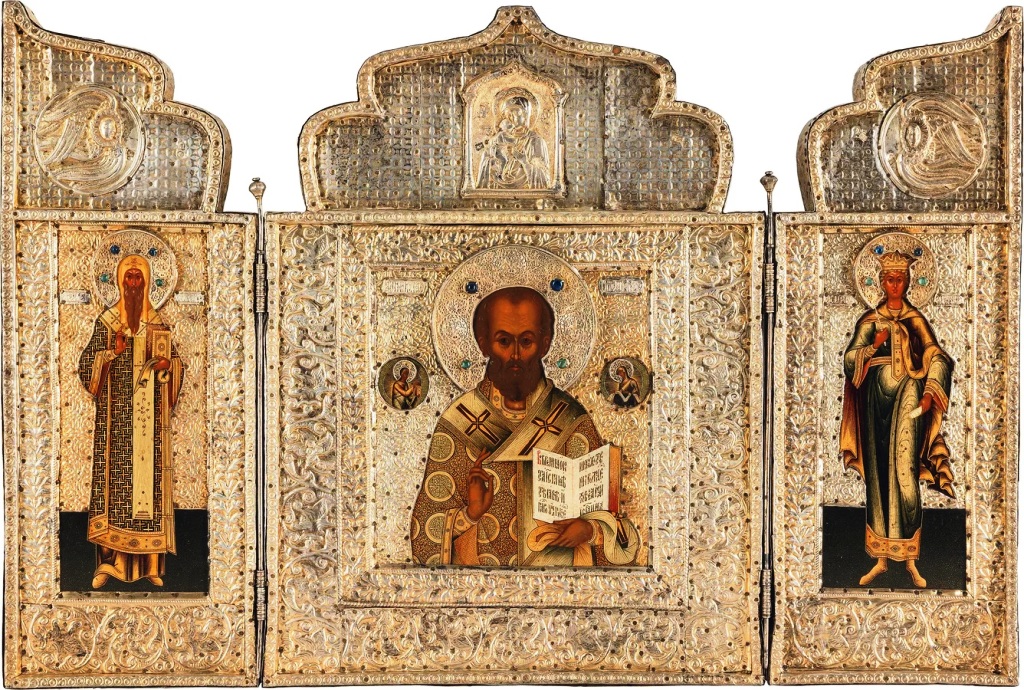
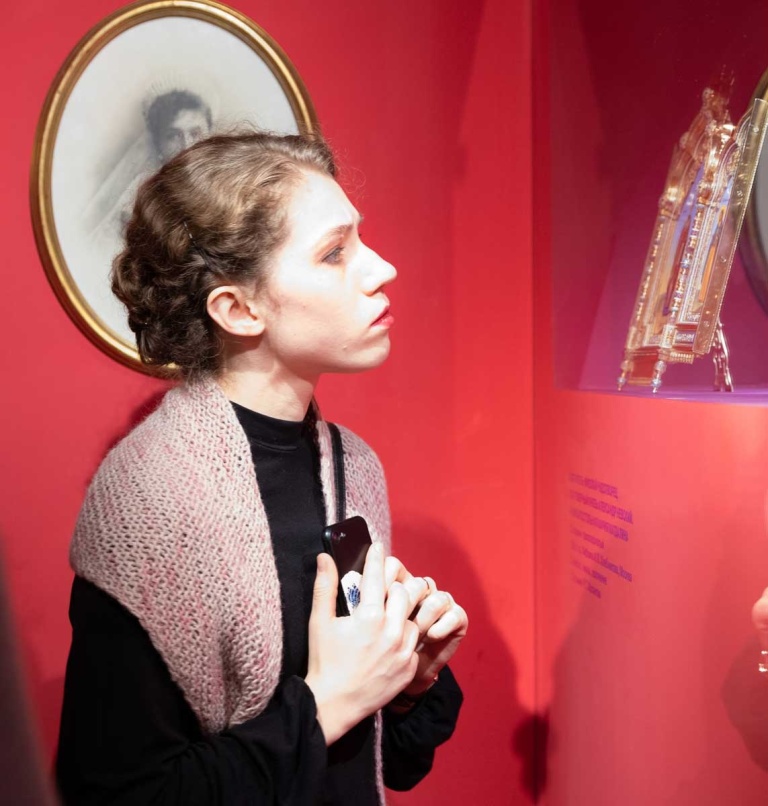
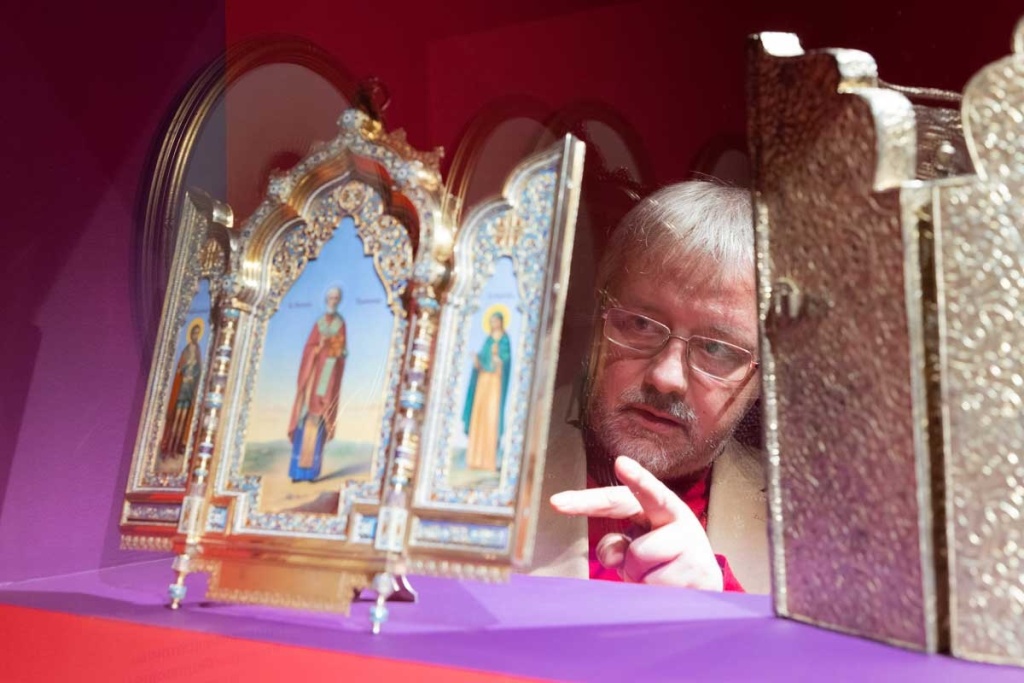
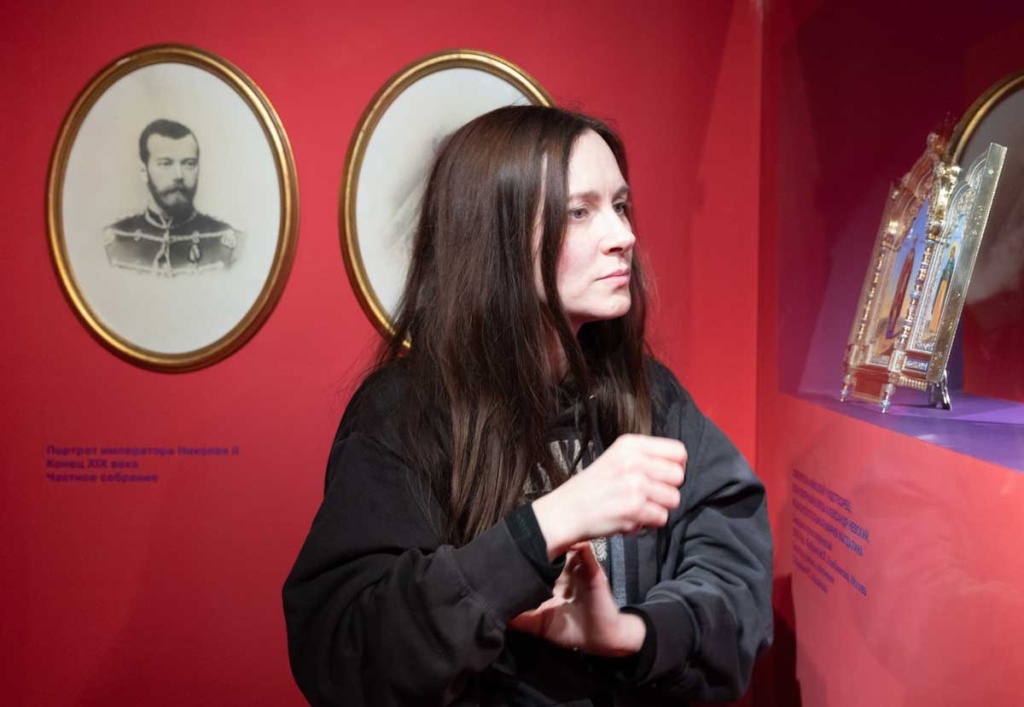
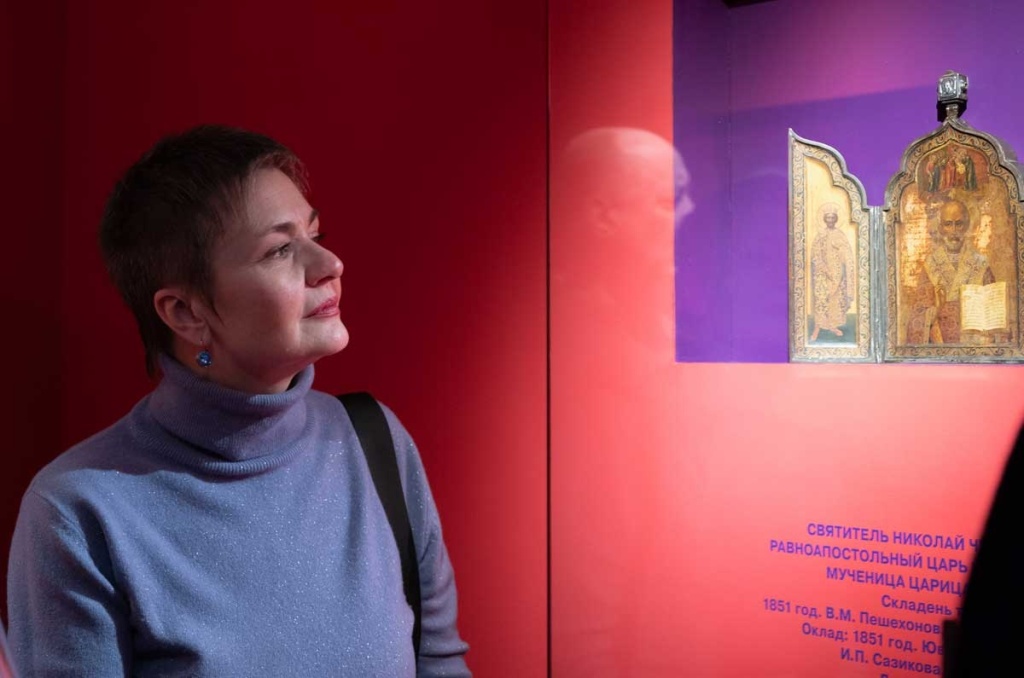
On 21st December 2023, a unique exhibit featuring four folding icons presented to members of the Family of Emperor Nicholas II, went on display at the Andrei Rublev Museum in Moscow.

According to Zhanna Belik, curator of the exhibition, “the icons, all of which are now in private collections, are being shown for the first time at the exhibition”.

“Each of the four folding icons is unique in its own way. They were personal gifts to members of the Imperial Family from organizations and donors from different walks of life. Gifts were given to the Imperial Family on special occasions throughout the year. For instance, on the occasion of the birth of children, their coming of age, the 300th anniversary of the House of Romanov, birthdays and namedays, etc.. To do this, it was necessary to submit a petition in advance, which was considered personally by the person to whom the gift was addressed,” Belik said.

CLICK on each IMAGE below to enlarge

According to Belik, the birth of Tsesarevich Alexei Nikolaevich in 1904 is associated with the folding icon gifted to Emperor Nicholas II and his wife Alexandra Fedorovna, by the abbot and brethren of the Trinity-Sergius Lavra [in the town of Sergiyev Posad, near Moscow]. The artists and jewelers who created it were outstanding craftsmen of their time.

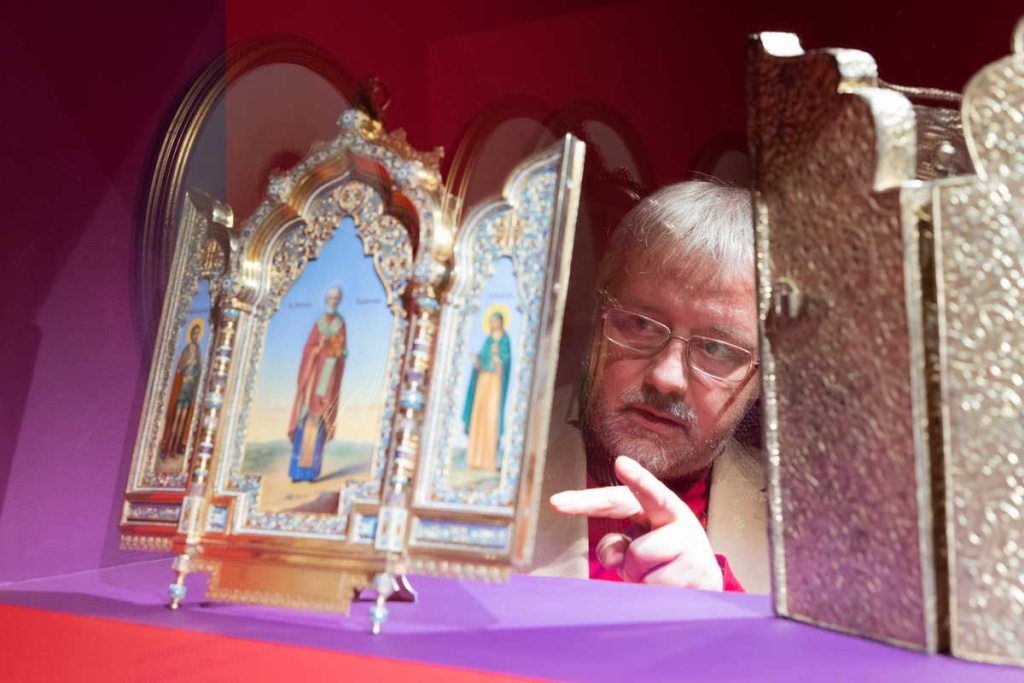
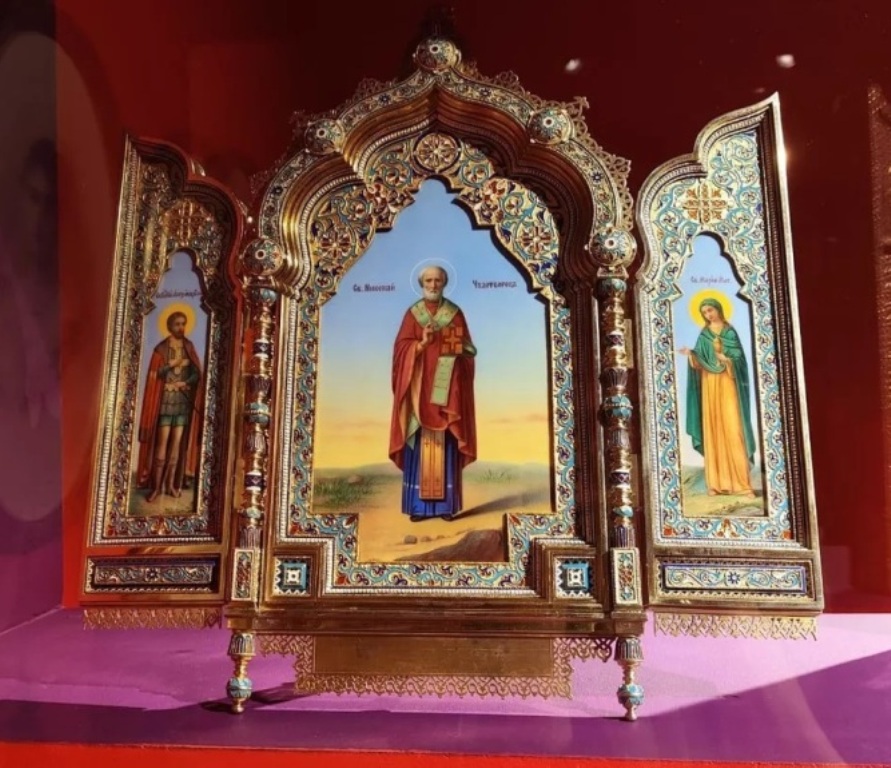
“The exhibition also presents a folding icon with images of saints St. Nicholas the Wonderworker, Prince Alexander Nevsky and Mary Magdalene. The icon was presented to Tsesarevich Nicholas Alexandrovich [future Emperor Nicholas II] on his 18th birthday, by the guard of the Moscow Philistine Society. The folding icon was made in the workshop of Ivan Khlebnikov, a Supplier to the Imperial Court,” the curator said.

CLICK on each IMAGE below to enlarge

The curator noted that each of the four folding icons have the icon writer’s name on the back of each icon, the frames were made by jewelers – Suppliers of the Imperial Court. “At this time, jewelry art reached its apogee in Russian art, the work of jewelers of the second half of the 19th century and the beginning of the 20th century are world-class works,” Belik said.

The exhibition also features a sewn icon from the collection of the Andrei Rublev Museum, also created on the occasion of the birth of the long-awaited heir, and presented to Nicholas and Alexandra.

The exhibition runs from 21st December 2023 to 11th February 2024.

© Paul Gilbert. 28 December 2023

Icon depicting St. Nicholas and Tsar Nicholas II unveiled in Australia

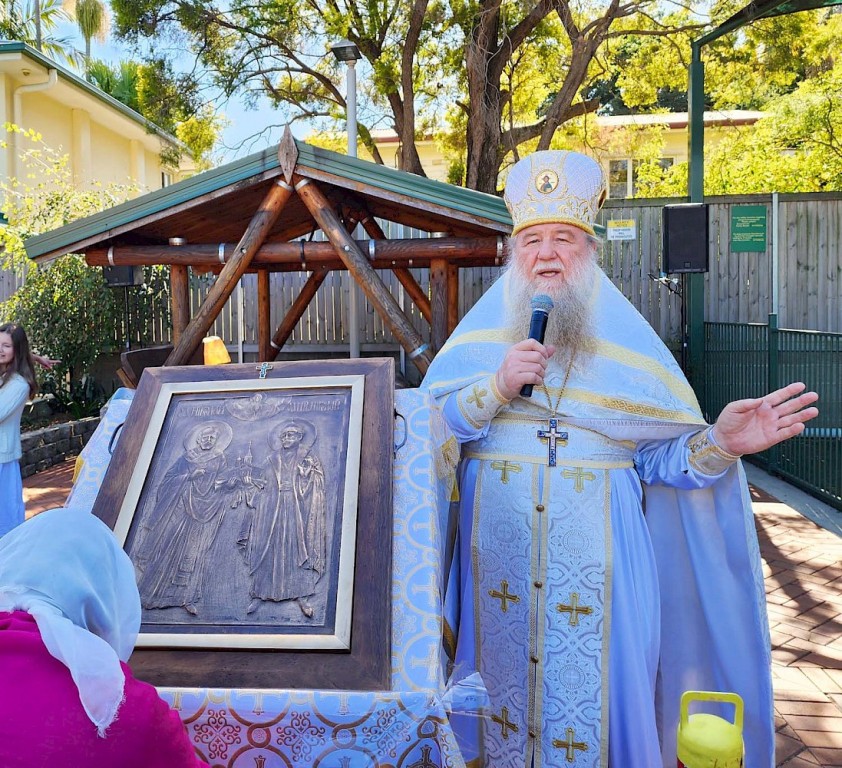
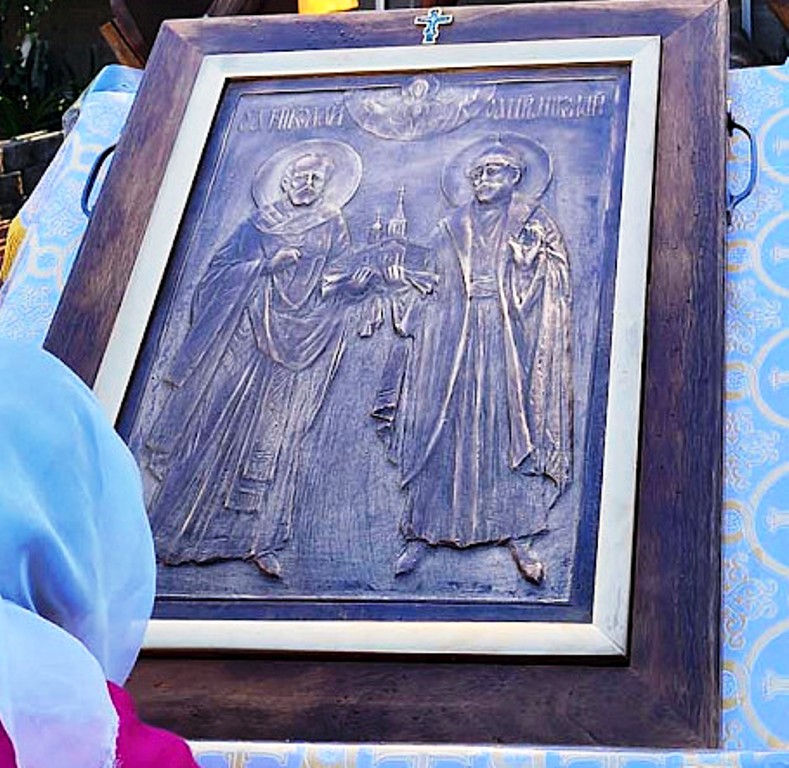
On Sunday, 28th May 2023, the first Russian Orthodox church in Australia celebrated its 100th anniversary with a Hierarchical Divine Liturgy and concert. Following the Divine Liturgy, a unique bas-relief icon depicting St. Nicholas the Wonderworker and Tsar-Martyr Nicholas II was installed and consecrated in the courtyard of St. Nicholas Cathedral in Brisbane.

The Russian Orthodox Cathedral of St. Nicholas the Wonderworker in Kangaroo Point – a suburb of Brisbane – Queensland was founded in 1923 by Protopresbyter Alexander Shabashev (1881-1956). It was here that he purchased a plot with a house, and with the support of local Anglican clergymen, established a parish dedicated to St Nicholas of Myra, making it he first Russian Orthodox church in Australia.

In 1933, parishioners began raising funds for the construction of a new, larger church building. In 1935, the construction of the cathedral began on the site of the former church, which was completed in 1936. The old building was moved and later housed a library and a school. Divine services in the cathedral are performed in Church Slavonic and English.

At the time of the founding of the church, the parishioners wanted to build a memorial church in the name of the murdered Tsar Nicholas II, but at that time he had not yet been canonized. The church was consecrated in the name of St. Nicholas the Wonderworker – the patron saint of the Tsar. When the last Russian Tsar was glorified as a saint by the Russian Orthodox Church Outside Russia (ROCOR) in 1981, the parish considered how to emphasize his connection with Australia’s Russian Orthodox community.

In 2016, St. Petersburg iconographers – at the request of parishioners – commissioned the Moscow medal artist Gennady Provotorov, to create a bronze bas-relief icon depicting St. Nicholas of Myra and Tsar-Martyr Nicholas II, holding the St. Nicholas Cathedral in their hands.

© Paul Gilbert. 7 June 2023

Artists assemble mosaic icon of the Holy Royal Martyrs for the Alexander Nevsky Lavra

Photo © Igor Akimov

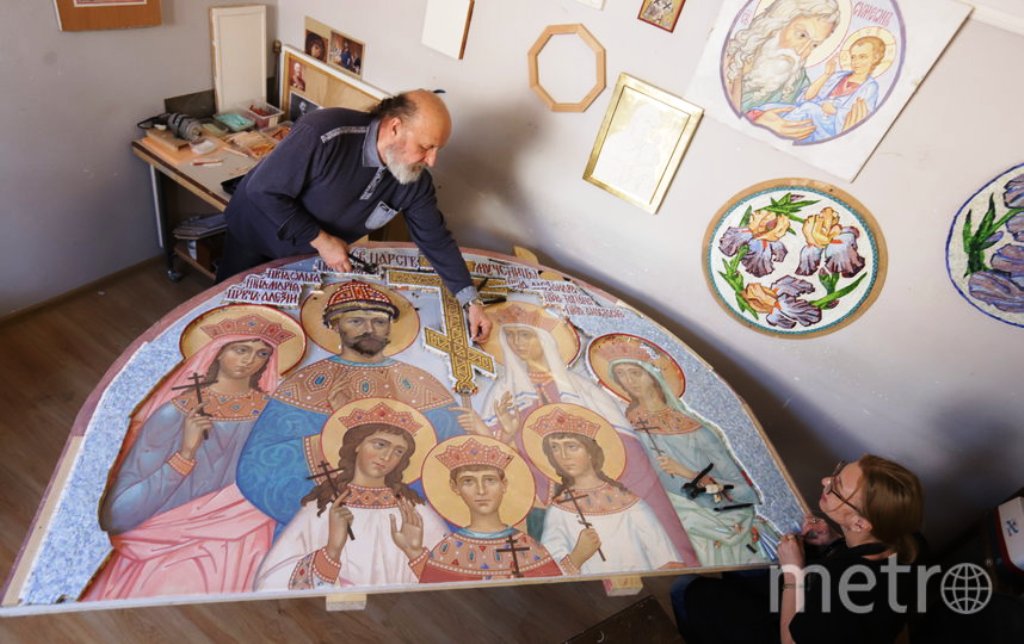
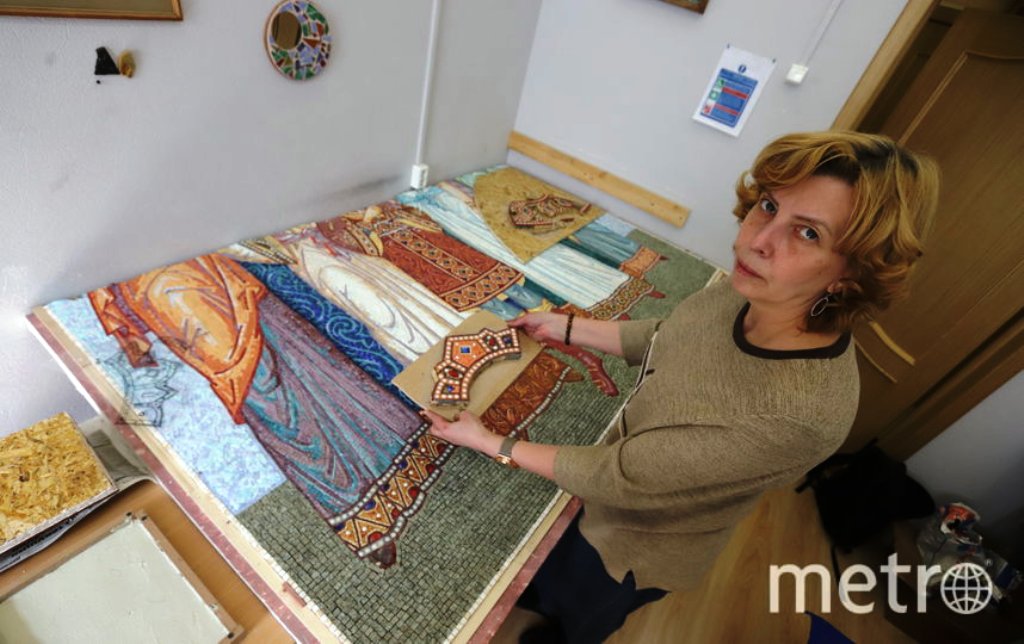
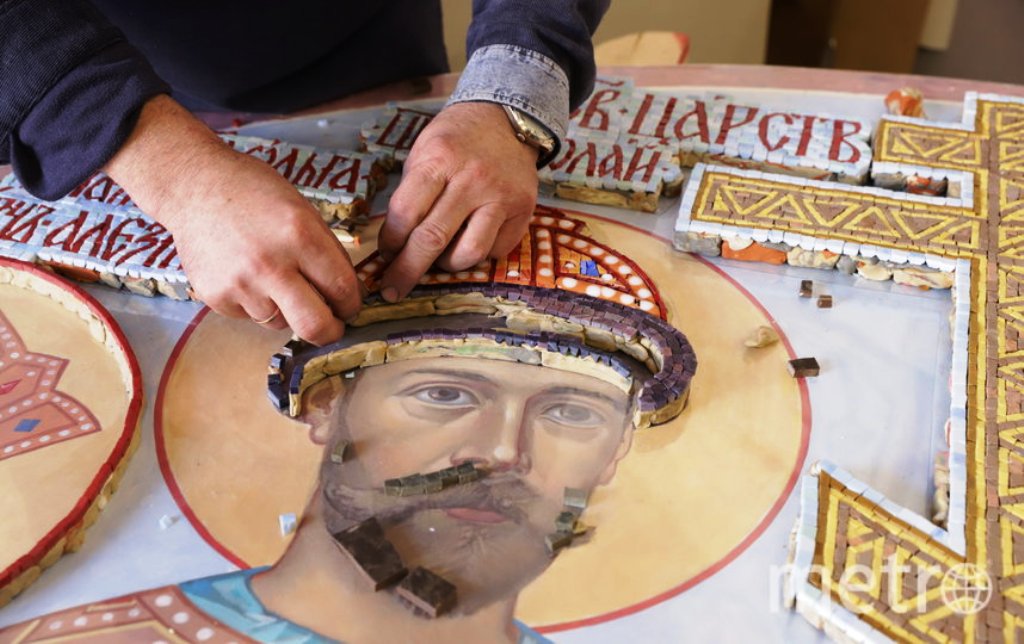
A three-meter mosaic icon depicting the Holy Royal Martyrs Tsar Nicholas II and his family is being assembled by a team of artists for the Alexander Nevsky Lavra in St. Petersburg. According to one of the artists: “each of the coloured smalt[1] mosaic tiles is so tiny, that the assembly is similar to creating a jigsaw puzzle.”

Alexandra Serditova, executive director of the Kedr Charitable Foundation added: “as the icon is so large, we divided it into two parts. The top half has already been completed – the lower part is almost finished. The most difficult thing has been the faces.”

Photo © Igor Akimov

The beautiful icon depicts the seven faces of the Holy Royal Martyrs: Emperor Nicholas II, his wife Alexandra Feodorovna, and their five children: Tsesarevich Alexei Nikolaevich and Grand Duchesses Olga, Tatiana, Maria and Anastasia Nikolaevna.

It is the work of a small group of artists and experts from the Monastyrskaya Sloboda Center, who have alreadly completed other mosaic icons of saints: Alexander Nevsky and his older brother Theodore of Novgorod, Ksenia of Petersburg, John of Kronstadt, and Seraphim of Vyritsky. These four icons now adorn the Alexander Nevsky Lavra[2] in St. Petersburg. The mosaic depicting the Emperor and his family became their most ambitious project, one which utilized all the reserves of the workshop.

“It’s a great team effort! We hope that we will not experience any special challenges in its completion. But there is a possibility that the process may be delayed, so we are not even talking about deadlines at this stage, as we do not want to rush ourselves,” says Alexandra Serditova.

Photo © Igor Akimov

What is so unique about the mosaic icons is that they have been created by artists with disabilities. These include people with hearing impairments, others suffering from mental and cardiovascular diseases, and those confined to wheelchair. These dedicated souls have been making icons since 2019, for them it is not just a hobby, but a job – each of them receiving a monthly monetary reward for their gifted talent.

NOTES:

[1] a deep blue pigment consisting of a powdered glass that contains oxide of cobalt

[2] Saint Alexander Nevsky Lavra or Saint Alexander Nevsky Monastery was founded by Peter I of Russia in 1710 at the eastern end of the Nevsky Prospekt in Saint Petersburg.

© Paul Gilbert. 7 May 2023