PHOTO: memorial plaque installed on the wall of the Chapel of St. Nicholas the Wonderworker in Sestroretsk, dedicated to Nicholas II, founder of the Russian submarine fleet
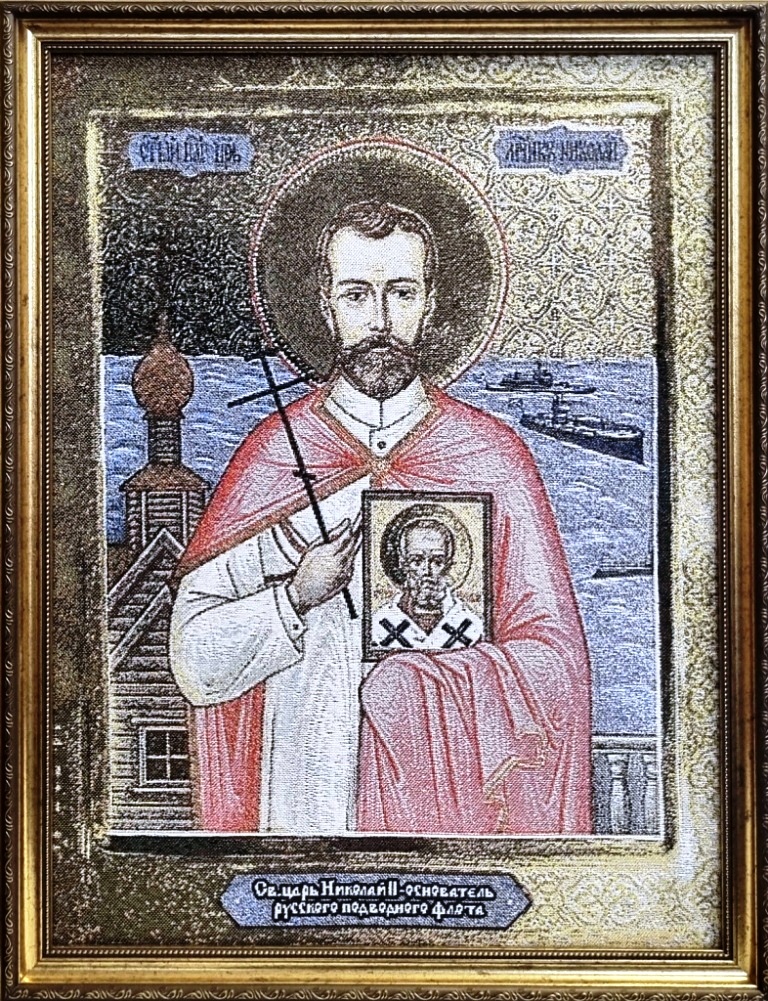
On 19th March 2025, on the day marking ‘The Day of the Submariner’ in the Russian Federation, two memorial plaques were installed on the walls of the Chapel of St. Nicholas the Wonderworker in Sestroretsk. The first IS a portrait depicting the Holy Emperor Nicholas II, the founder of the Russian submarine fleet.
The second features a text about the event of 19th March (O.S. 6th March) 1906, when by decree of Emperor Nicholas II, a new class of warship was created in the Imperial Russian Navy – a submarine fleet, which consisted of 10 submarines.
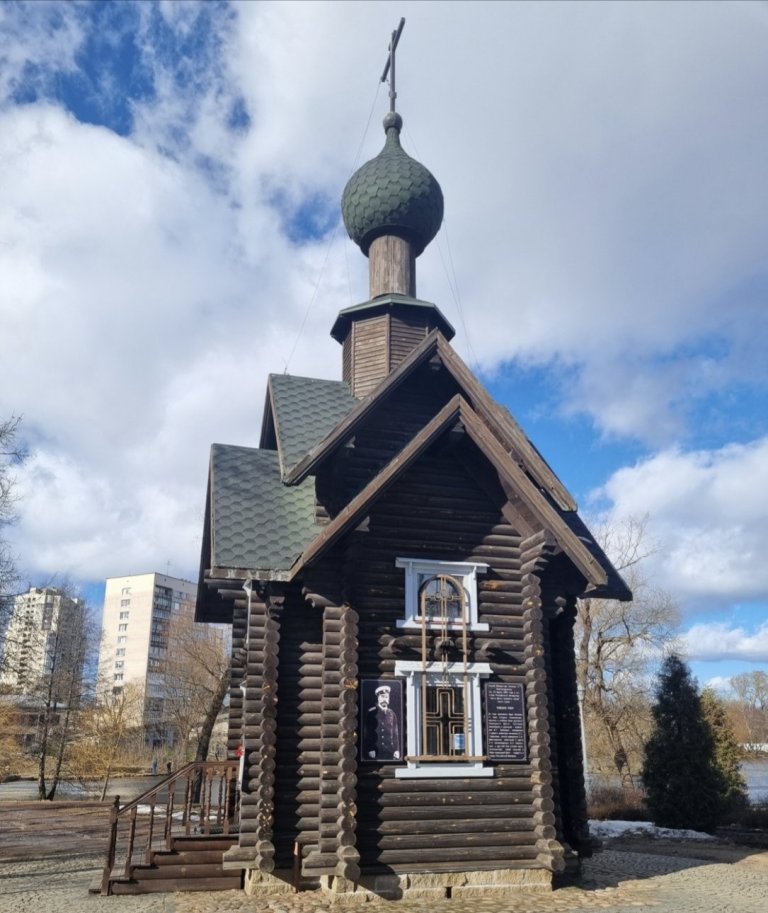
The chapel is located on the grounds of the Church of the Holy Apostles Peter and Paul. Situated on the shore of Lake Razliv, near St. Petersburg it is the birthplace of the submarine in Imperial Russia. It was here, in the presence of Emperor Peter I, that the first test of the “secret vessel” of the inventor of Russia’s first submarine Efim Prokopyevich Nikonov took place. Since 2001, it has been recognized as the spiritual and historical ensemble in honour of the Russian submarine fleet.
PHOTO: the Chapel of St. Nicholas the Wonderworker in Sestroretsk
The dean of the Kurortny District, the rector of the church, Archpriest Mikhail Petropavlovsky, served a Divine Liturgy in honour of all generations of submariners. Bells rang in memory of the Russian sailors who died while serving on submarines. A panikhida[prayer for the dead] was then served at the wall of memory inscribed with the names of all the sunken submarines and the names of the submarine heroes.
“As long as the Lord grants us life, we must lift up prayers of thanksgiving for the living and pray for those who died at sea – many of them have no graves, no relatives are alive, some are completely forgotten, but with God everyone is alive,” said Father Michael.
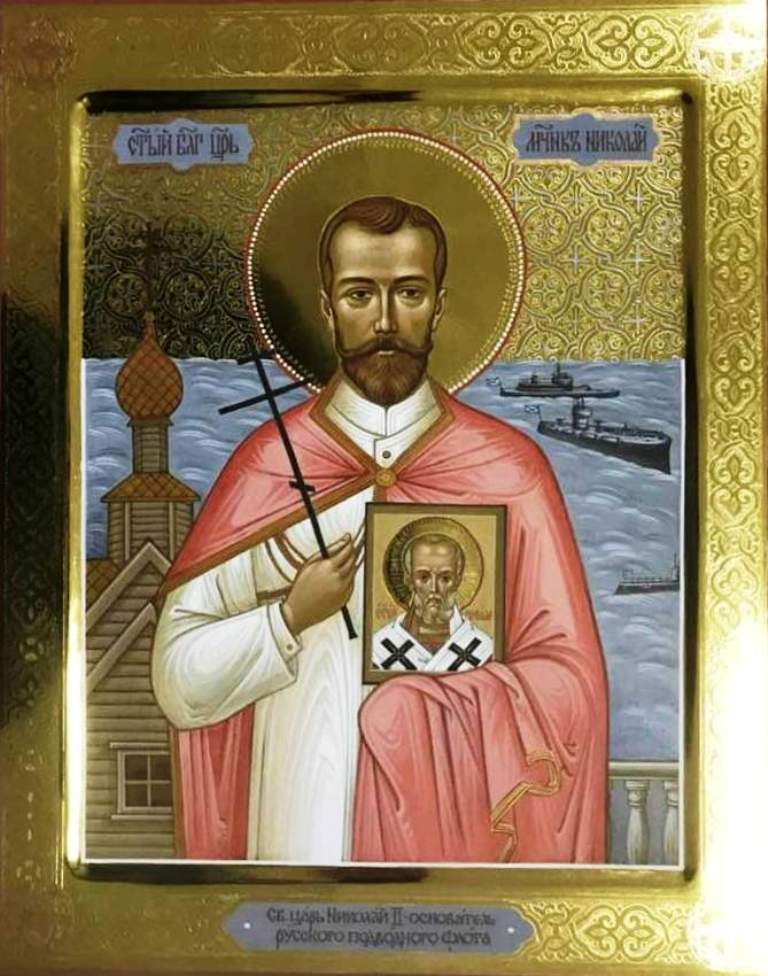
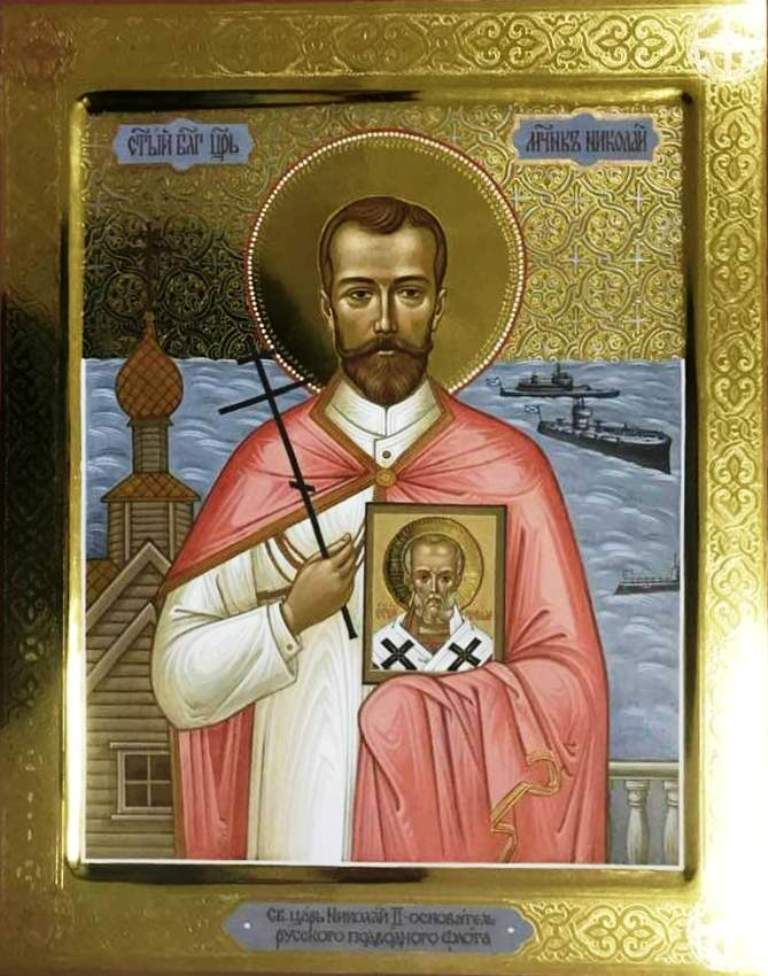
PHOTO: modern-day icon painted in St. Petersburg, by order of modern day submariners of the Russian Federation
The plaque installed on the wall of the Chapel of St. Nicholas the Wonderworker in Sestroretsk is based on the icon depicted in the above photo. It was painted in St. Petersburg, by order of modern day submariners of the Russian Federation.
Up until the October Revolution of 1917, ‘The Day of the Submariner’ was celebrated in Russia as a professional holiday, but abolished during the Soviet years. The holiday was revived almost eight decades later, in 1996, by order of the Commander-in-Chief of the Navy, Admiral of the Fleet Felix Gromov. Since then ‘The Day of the Submariner’ is once again celebrated on 19th March, by military personnel, veterans and civilian personnel of the submarine forces of the Navy of the Russian Federation.
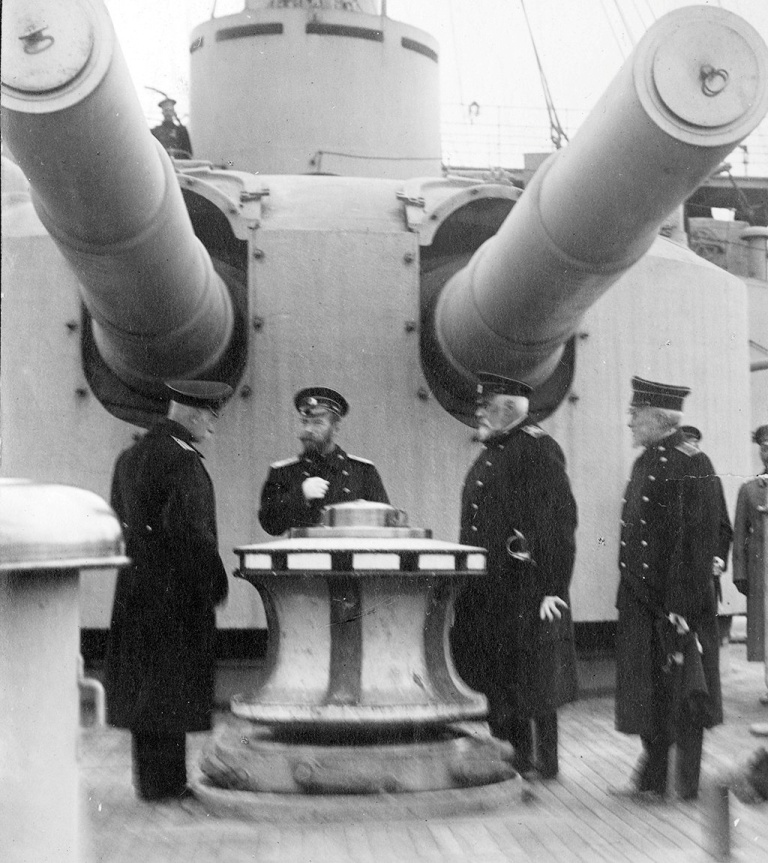
PHOTO: Emperor Nicholas II on the deck of the Imperial Russian Navy cruiser “Россия / Russia“. 15th Jamuary 1915. Standing to the Emperor’s right is the commander of the Baltic Fleet, Nikolai Ottovich von Essen (1860-1915).
The Chief of Staff of the Guards Troops and Petersburg Military District Lieutenant General Baron A.P. von den Brinken (1859 – 1917) wrote about Nicholas II’s affection for the navy and sailors: “The Tsar, always so kind and gentle, at anyone’s attempt to say something negative against the navy becomes literally furious, thumps his fist on the table, and stops listening”.
Formally established in 1696 under Emperor Peter I (1672-1725), the Imperial Russian Navy served as the navy of the Russian Empire until 1917. It was expanded in the second half of the 18th century and by the early part of the 19th century, it reached its peak strength, behind only the British and French fleets in terms of size.
The navy then went into a period of decline in the first half of the 19th century, due to Russia’s slow technical and economic development. It had a revival in the latter part of the century during the reign of Emperor Nicholas II (1894-1917), but lost most of its Pacific Fleet along with the Baltic Fleet, both of which were sent to the Far East and subsequently destroyed in the disastrous conflict of 1904. The second phase of Nicholas II’s military life was marked by his participation in the reorganization of the navy after the catastrophic Russo-Japanese War.
The Imperial Russian Navy had mixed experiences during the First World War, with Germany generally gaining the upper hand in the Baltic Sea, while Russia established its absolute dominance on the Black Sea. The February Revolution of 1917 marked the end of the Imperial Russian Navy; its officers had mostly aligned with the Tsar, and the sailors split to fight on either side. The surviving ships were taken over by the Soviet Navy when it was established in 1918.
***
VIDEO: vintage newsreels of Nicholas II and the Imperial Russian Navy Duration: 12 minutes with music
The above video presents a collection of vintage newsreels from the Russian State Documentary Film & Photo Archive at Krasnogorsk (RGAKFD), which show Emperor Nicholas II with the Imperial Russian Navy as he reviews the squadrons, talks to the Russian sailors, officers and admirals, and participates in the other naval events.
During the reign of Emperor Nicholas II the Imperial Russian Navy continued to expand in the later part of the 19th century, regaining its position as the third largest fleet in the world after Britain and France. The expansion was notably accelerated under Nicholas II who had been influenced by the American naval theoretician Alfred Thayer Mahan. Russian industry, although growing in capacity, was not able to meet the demands of the burgeoning Imperial Navy and some ships were ordered from Britain, France, Germany, USA, and Denmark. French naval architects in particular had a considerable influence on Russian designs.
At the end of the Russo-Japanese War in 1905, Russia had fallen from being the third greatest naval power to sixth place. It was then that the focus of Russian naval activities shifted back from the Far East to the Baltic. The task of the Baltic Fleet was to defend the Baltic Sea and St Petersburg from Imperial Germany.
On 19th March 1906, by decree of Emperor Nicholas II, the Maritime General Staff was organized with the Main Naval Staff, which assumed the functions of the operational body of the Imperial Navy. At first, attention was directed to the creation of mine-laying and a submarine fleet. In the same year, a new program for naval shipbuilding, the Russian Armed Forces Development and Reform Program, known as the “Small Shipbuilding Program”, which was approved by Emperor Nicholas II on 6th June 1907, began to be developed and actively discussed, but later the amount of appropriations was reduced, and the program itself was renamed the “Distribution of Allocations for Shipbuilding” (before 1911 it was planned to finish the ships already started for the Baltic Fleet – 4 battleships and 3 submarines, as well as a new naval base, and for the Black Sea Fleet – 14 destroyers and 3 submarines) and was partially approved by the State Duma in the spring of 1908.
VIDEO: ships of the Russian Imperial Fleet 1894-1917 Duration: 3 minutes with music
The Bosnian Crisis in 1909 again raised the issue of the expansion of the fleet and new battleships , cruisers, and destroyers were ordered for the Baltic Fleet. It is worth noting that, on the personal orders of Emperor Nicholas II, new battleships were laid, which had previously rejected by the State Duma.
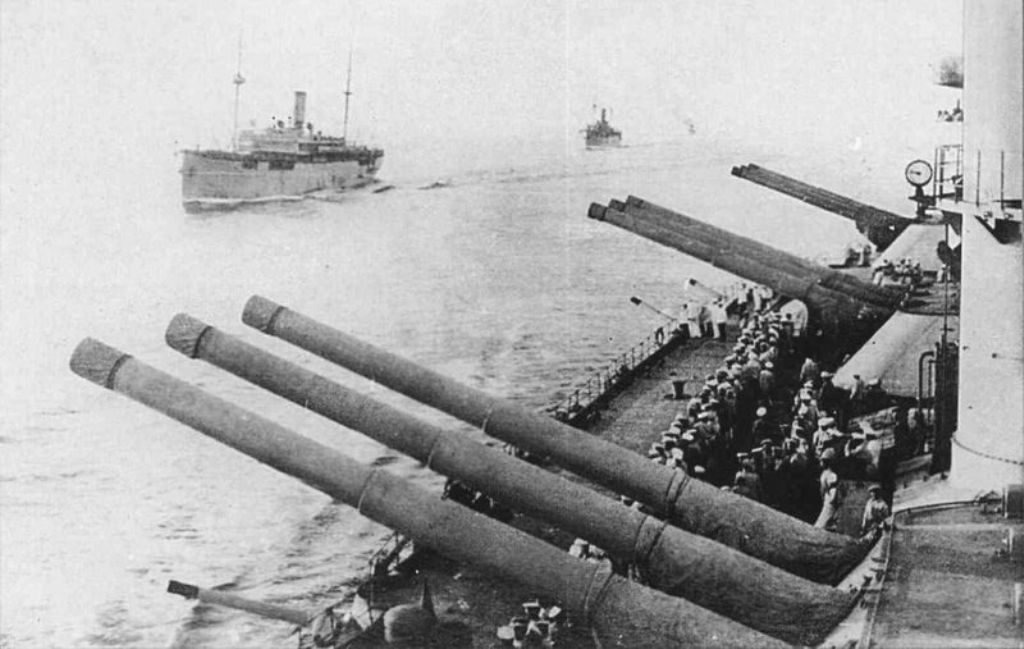
A worsening of relations with Turkey meant that new ships including the Imperatritsa Mariya-class battleships were also ordered for the Black Sea Fleet. The total Russian naval expenditure from 1906-1913 was $519 million, in fifth place behind Britain, Germany, the United States and France.
From 1909, active preparation and discussion of a new shipbuilding program took place. The “Ten Year Shipbuilding Program (1910-1920)” – the so-called “Great Shipbuilding Program”, which in its final version envisaged the construction for the Baltic Fleet: 8 battleships, 4-linear cruisers, 18 destroyers and 12 submarines; for the Black Sea Fleet – 9 Novik type destroyers and 6 submarines; ships for the Pacific Fleet, as well as the rearmament and modernization of several battleships – Tri Sviatitelia, Dvenadsat Apostolov, and Georgii Pobedonosets. The program was approved on 25th March 1910, by Emperor Nicholas II, but was not reviewed by the State Duma until 1911.
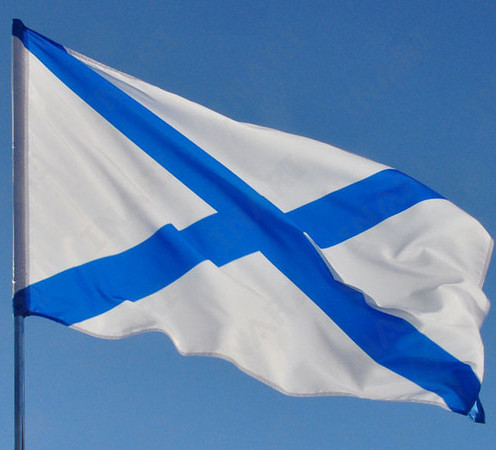
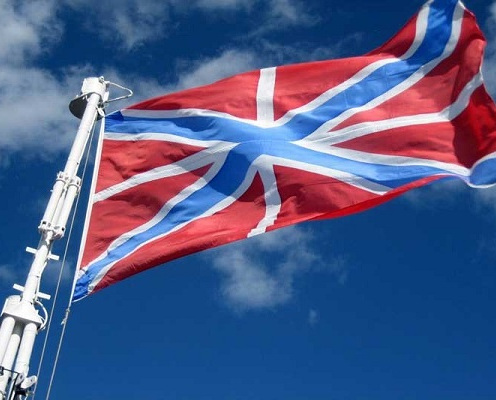
PHOTO: the white and blue ensign or Andreyevsky flag, and the red, blue and white naval jack of the Imperial Russian Navy
The re-armament program included a significant element of foreign participation with several ships (including the cruiser Rurik) and machinery ordered from foreign firms. After the outbreak of World War I, ships and equipment being built in Germany were confiscated. Equipment from Britain was slow in reaching Russia or was diverted to the Western Allies’ own war effort.
By March 1918, the Russian Revolution and the Treaty of Brest-Litovsk made the Germans masters of the Baltic Sea and German fleets transferred troops to support newly independent Finland and to occupy much of Russia, halting only when defeated in the West. The Russians evacuated the Baltic Fleet from Helsinki and Reval to Kronstadt during the Ice Campaign of the Baltic Fleet in March 1918.
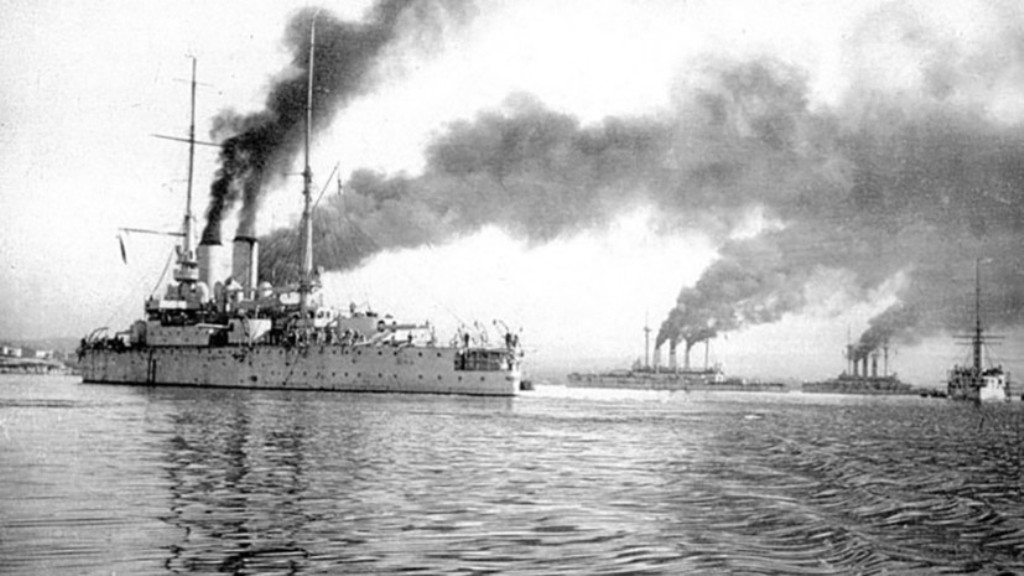
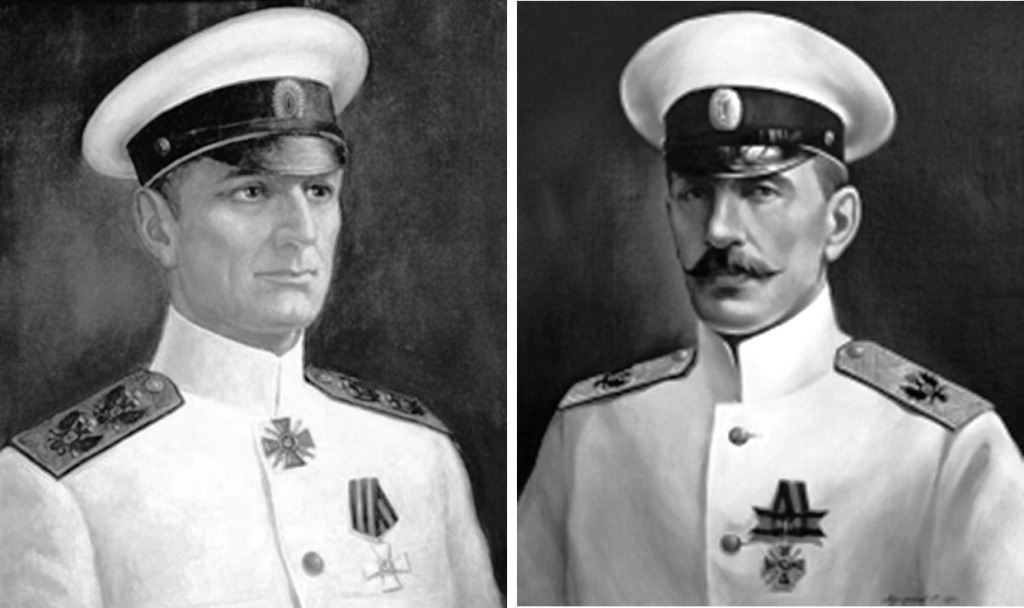
The Black Sea was the domain of the Russians and the Ottoman Empire but it was here that the Imperial Russian Navy established its absolute dominance. It possessed a large fleet based in Sevastopol and it was led by two skilled commanders: Admiral Eberhart (1856-1919) and Admiral Kolchak (1874-1920) (who took over in 1916).
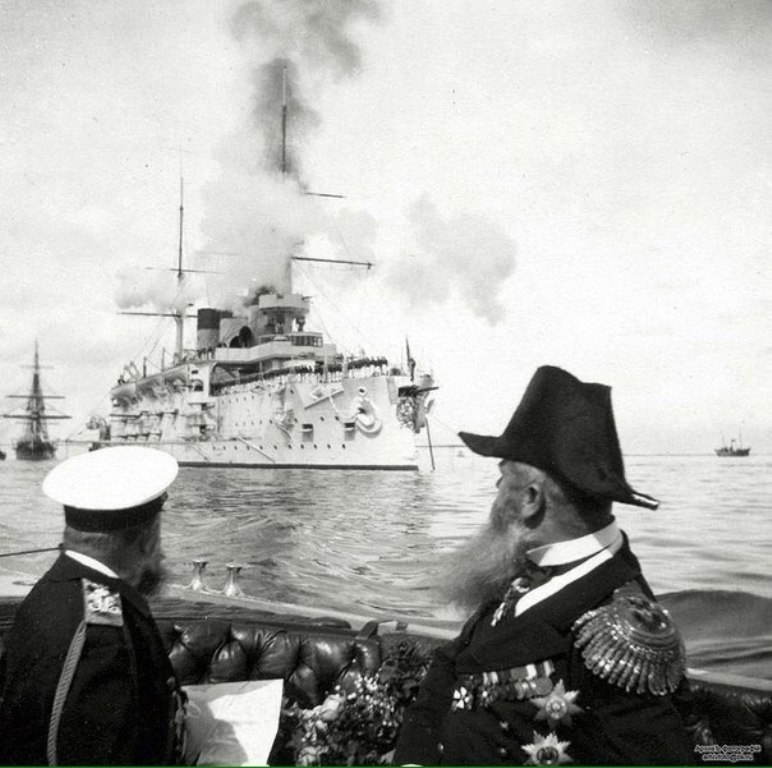
PHOTO: Grand Duke Alexei Alexandrovich and Admiral S.O. Makarov watch the newly constructed battleship Oslyabya, during maneuvers on the Baltic Sea, 1899
After Admiral Kolchak took command (August 1916), the Imperial Russian fleet mined the exit from the Bosporus, preventing nearly all Ottoman ships from entering the Black Sea. Later that year, the naval approaches to Varna were also mined. The greatest loss suffered by the Russian Black Sea fleet was the destruction of the modern dreadnought Imperatritsa Mariya, which blew up in port on 7th October 1916, just one year after it was commissioned. The sinking of the Imperatritsa Mariya was never fully explained; it could have been sabotage or a terrible accident.
The Revolution and subsequent Civil War devastated the Russian Navy. Only the Baltic fleet based at Petrograd remained largely intact, although it was attacked by the British Royal Navy in 1919. Foreign Interventionists occupied the Pacific, Black Sea and Arctic coasts. Most of the surviving Black Sea Fleet warships, with crews loyal to the White Russian movement, became part of Wrangel’s fleet under the control of commander Pyotr Nikolayevich Wrangel (1878-1928) and after evacuating White forces and civilians from the Crimea were eventually interned in Bizerta, Tunisia. Russian sailors fought on both sides in this bloody conflict. The sailors of the Baltic fleet rebelled against harsh treatment by the Soviet authorities in the Kronstadt Rebellion of 1921.
The surviving ships formed the core of the Soviet Navy on its 1918 establishment, though the remnants of Wrangel’s fleet never returned to Russia.
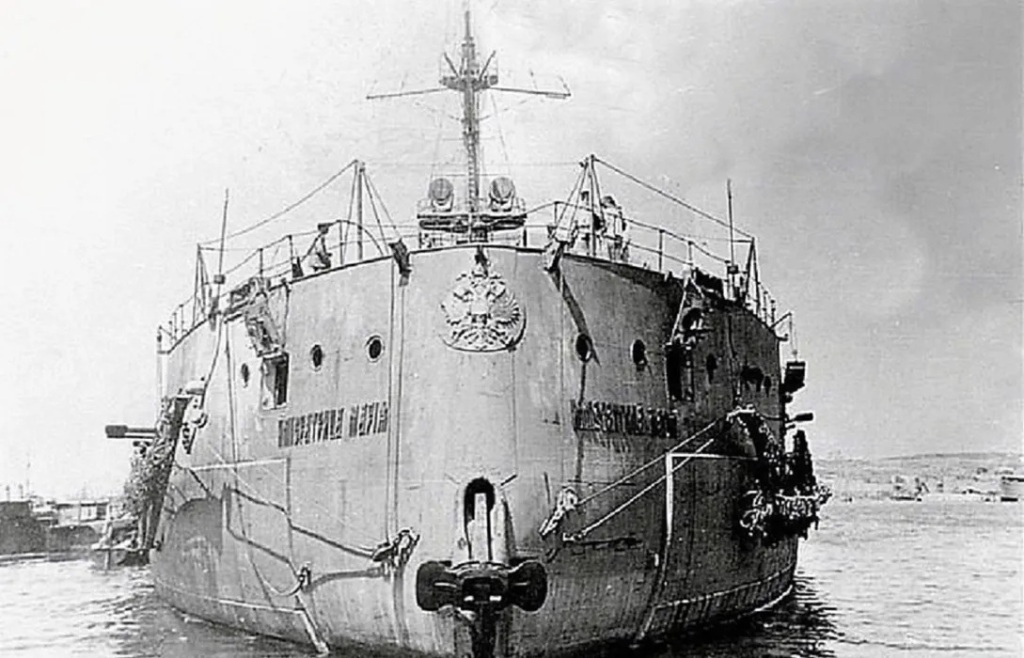
PHOTO: View of the “Боярин / Boyarin” a second-rank protected cruiser built for the Imperial Russian Navy by Burmeister & Wain in Copenhagen, Denmark. Laundced in 1901, the hull featured a magnificent double-headed eagle bearing the monogram of Emperor Nicholas II. She served in the Russian Pacific Fleet and was sunk by a Russian naval mine near the entrance to Port Arthur, Manchuria, just after the start of the Russo-Japanese War.
***
FURTHER READING
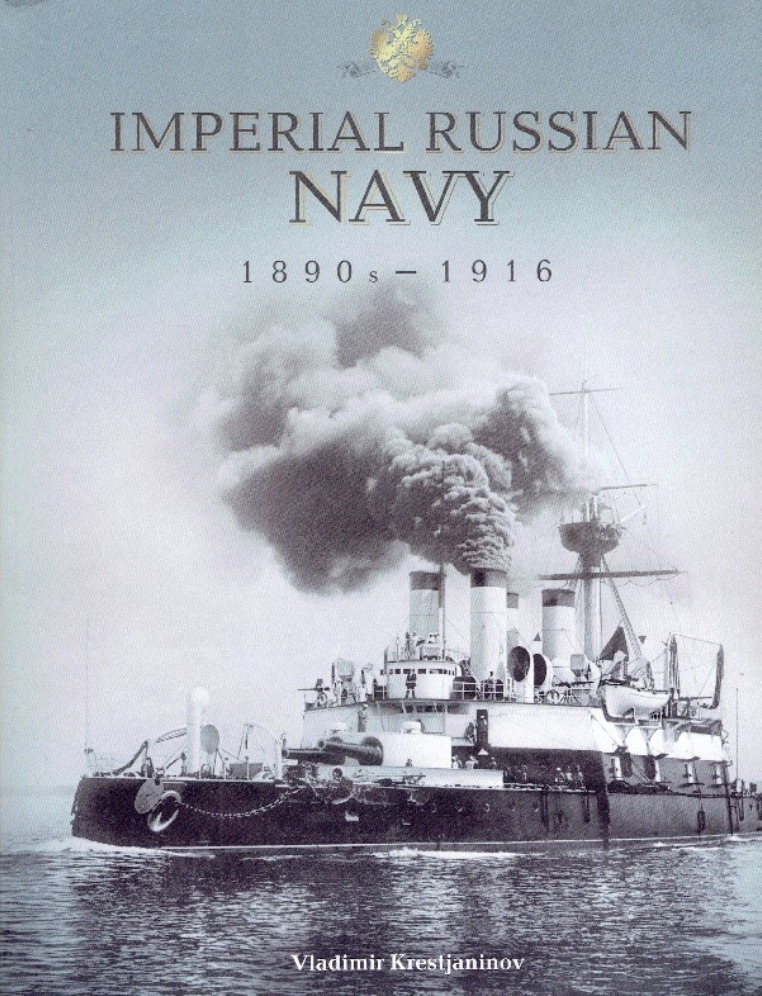
One of my many interests is the Russian Imperial Navy, during the reign of Nicholas II. In 2013, Uniform Press published an excellent book ‘The Imperial Russian Navy 1890s-1916’ by Vladimir Krestjaninov. I highly recommend this title to any one else who shares an interest in this subject.
“Russia has only two true allies,” said Emperor Alexander III, “its army and navy.”
This unique look at the Russian Imperial Navy in photographs from the late 19th and early 20th centuries, features 430 black and white images from archives, museums and private collections. It explores how the Russian Navy’s construction and activities were shaped largely by the interests, opinions and policies of Russia’s last tsar Nicholas II.
It includes a foreword by the author, and chapters such as ‘The Imperial Family and the Navy,’ and eleven other topics. It is interesting to note that the Imperial yachts were under the administration of the Naval Guards Corps.
Large soft cover format with 262 pages. Published by Uniform Press in 2013
*This title is available from AMAZON in the USA, UK, Canada, Australia, France, Germany, Spain, Italy, Netherlands, Poland, Sweden and Japan *Note: prices are quoted in local currencies
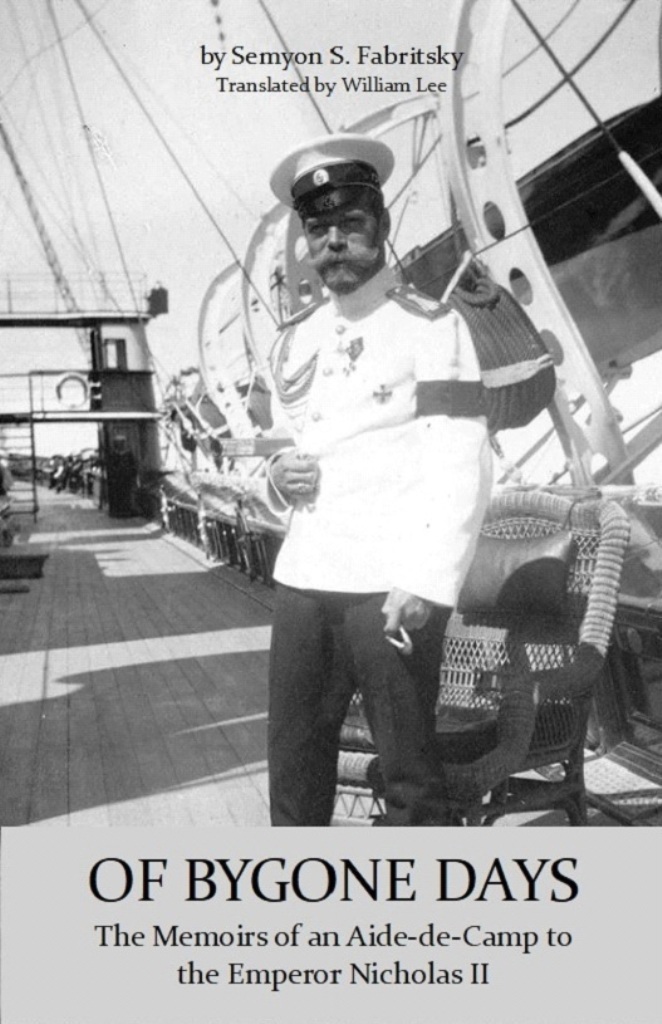
First English translation with introduction and notes by William Lee
NOTE: The first Russian-lanaguage edition of Fabritsky’s memories was published in Berlin in 1926. The first English-language edition of Fabritsky’s memoirs was published in Canada in 2016. This title has been out of print for many years, so I am delighted to offer this new edition.
“The time I spent with Their Majesties – over the course of many years and under varied circumstances – will always be the source of my most precious memories, and I am very happy to be able to share those memories now with a wide public. I hope at least to give an absolutely truthful account of what I saw and heard” – Semyon S. Fabritsky. 1926
Semyon Semyonovich Fabritsky (1874-1941) had a fascinating career during the twilight years of Imperial Russia. He began his naval career in the very first days of the reign of Emperor Nicholas II.
In 1909, Fabritsky was personally appointed Aide-de-Camp by the Emperor himself, a position he served with immense pride and devotion.
During his service to Nicholas II, Fabritsky earned both the trust and friendship of the Emperor. Through his often uninterrupted contact with Russia’s last sovereign and observing him at all hours and under a variety of conditions, Fabritsky was able to form a clear picture of Nicholas II and his family, through his own personal eye-witness observations.
He also served aboard the Imperial yachts, partaking in holidays with the Emperor and his family to the Crimea and the Finnish skerries. He shares interesting details and anecdotes about the Alexandria, Polar Star, and Standart.
This book will also be of great interest to any one with an interest to the Russian Imperial Yachts and the Russian Imperial Navy.
Fabritsky provides great insight to the treachery, cowardice, and deceit which prevailed every where. He acknowledges ministers and generals who were either unworthy of their posts or unfit for them. Sadly, it was these men who surrounded Nicholas II during his 22+ year reign, who contributed to the downfall of monarchy and the destruction of the Russian Empire in 1917.
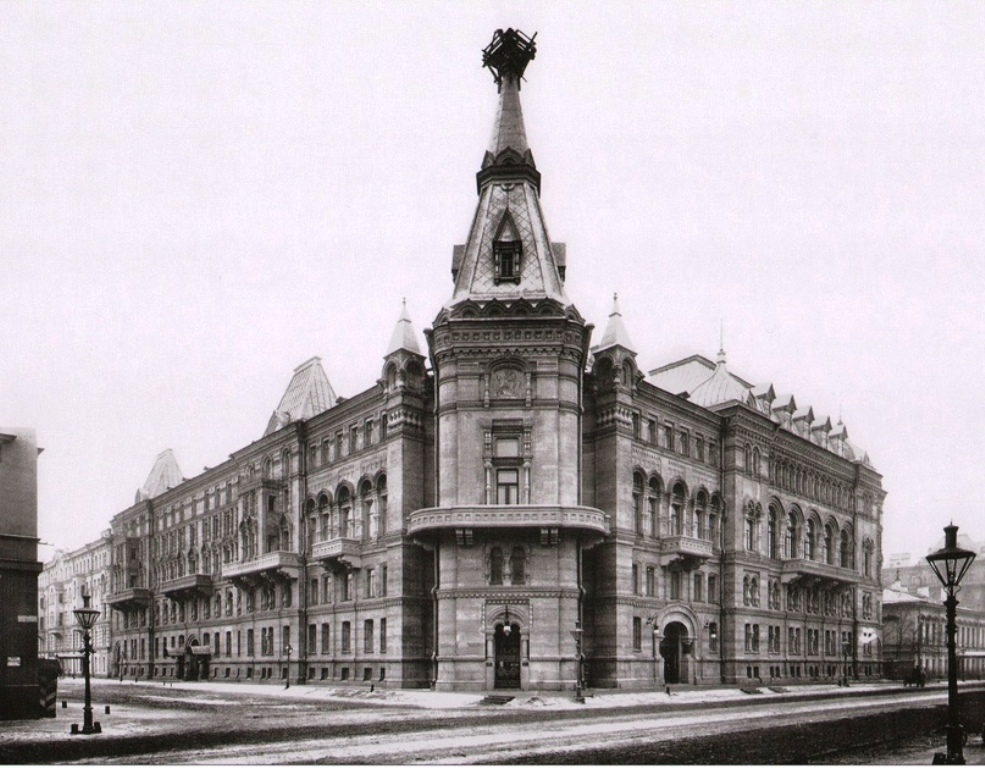
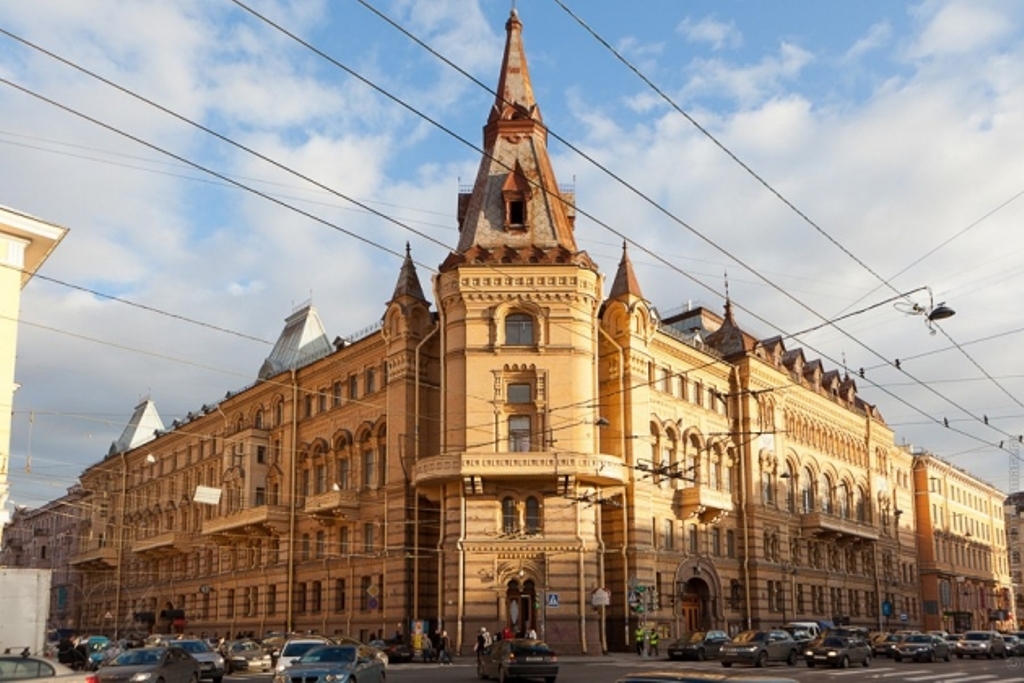
PHOTO: view of the Officers’ Assembly Building of the Russian Imperial Army and Navy, St. Petersburg, the military capital of the Russian Empire. 1898
Situated in the very heart of St. Petersburg, on the corner of Liteyny Prospekt and Kirochnaya Ulitsa, stands a majestic building with an elegant facade and an impressive high corner tower. It is the former Officers’ Assembly Building of the Russian Imperial Army and Navy, an architectural gem of Tsarist Russia and the reign of Emperor Nicholas II, which has survived to the present day.
“Russia has only two allies: the Army and the Navy.”
– Emperor Alexander III (1845-1894)
During his short 13-year reign, Emperor Alexander III (1881-1894), 114 new warships were built and launched, and the Russian Imperial Navy took third place in the world after England and France. The army and the military department were also put in order after their disorganization during the Russian-Turkish war of 1877-1878. A dream of the “Tsar-Peacemaker” was the unification of the officer corps of the Russian Empire and the construction of the first Officers’ Assembly Building of the Russian Imperial Army and Navy in St. Petersburg.
Sadly, the life of Alexander III was cut short when he became ill with terminal kidney disease (nephritis), he died on 20th October (2nd November) 1894.
It was now up to his son and heir to the throne, Nicholas II, who committed himself to carrying out his father’s plans. The young Tsar decreed that no expense should be spared for the building’s construction – the Officers’ Assembly should amaze visitors with its splendor and symbolize the power and strength of the Russian army. The young emperor immediately signed all the papers for the allocation from the treasury of the enormous amount of 1,345,000 rubles, while demanding weekly reports on the building’s progress.
Sketches of the building were prepared by a talented architect, teacher of the Stieglitz State Academy of Art and Design Alexander Ivanovich von Gauguin (1856-1914) and professor of the Nikolaev Academy of Engineering Viktor Mikhailovich Ivanov (1846-1919). The detailed development of the project was carried out by military engineers Wilhelm Karlovich Gauger and Alexander Donchenko, who were advised by two great architects, both members of the Academy of Arts Leonty Nikolaevich Benois (1856-1928) and Antony Osipovich Tomishko (1851-1900).
The land at the corner of Liteiny Prospekt and Kirochnaya Street – which belonged to the military department – was chosen for the buildings’ construction. The old wooden carriage house was demolished, the site was cleared and prepared by an engineer-colonel, a graduate of the artillery academy in St. Petersburg and the military academy in Freiburg, Germany, Vladimir Smirnov.
In September 1895, the construction of the building of the Officers’ Assembly began. Here is an eyewitnesses account of this event:
“The day before, a large, beautiful tent was erected,in front of the construction site, in which there were tables laden with light snacks and drinks. The event was attended by Enperor Nicholas II and members of the Imperial Family, in addition to representatives from the military ministry, the guards and the St. Petersburg military district, members of the clergy, and the city’s nobility. When the Emperor arrived, he was given a tour around the construction site. He was then presented with a silver tray bearing a brick and a silver trowel.
“Having accepted the tray, the Emperor proceeded to the erected foundation of the building and laid the first brick for the new Officers’ Assembly. According to an old Russian legend, silver and copper coins were laid in the foundation “for the happiness and prosperity of the Officers’ Assembly.”
A grand dinner was held that day to mark the occasion, attended by Nicholas II, who was accompanied by his wife Empress Alexandra Feodorovna, his mother Dowager Empress Maria Feodorovna, and his uncle Grand Duke Vladimir Alexandrovich.
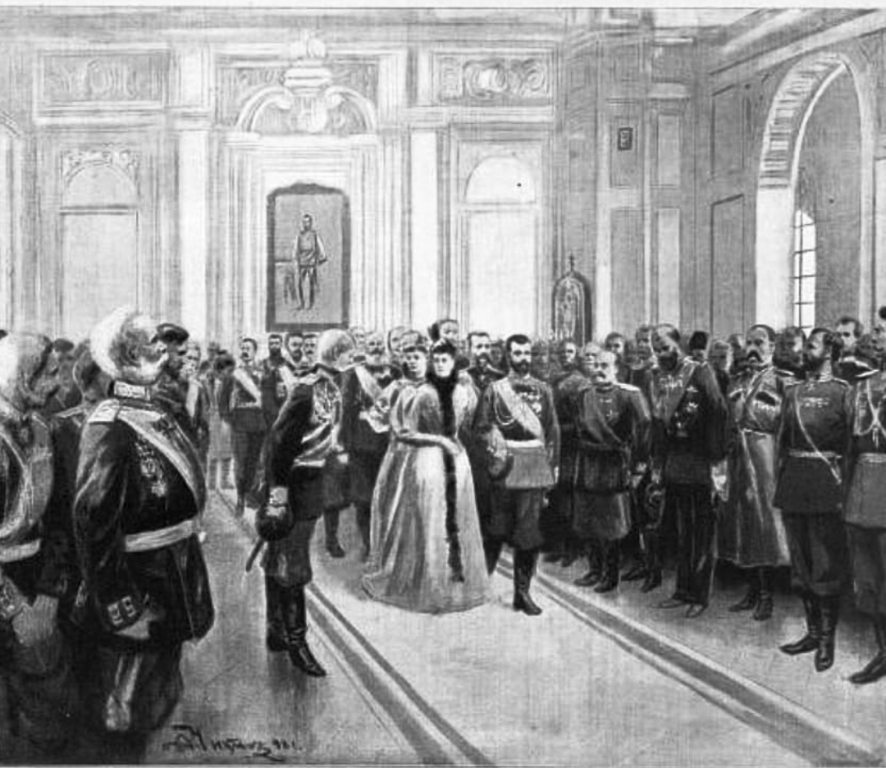
PHOTO: Emperor Nicholas II and Empresses Maria Feodorovna and Alexandra Feodorovna arrive for the gala opening of the building of the Officers’ Assembly Building of the Russian Imperial Army and Navy, 1898
On the morning of 22nd March 1898, the building of the Officers’ Assembly of the Russian Imperial Army and Navy was decorated with numerous flags. At one o’clock in the afternoon, the naval presbyter performed a conciliar illumination of all the rooms. At two o’clock, Emperor Nicholas II arrived, where he was greeted at the entrance by members of the committee who oversaw the construction and decoration of the building. The Emperor toured the halls and rooms and later compiled the Imperial Rescript, which stated:
“Having examined in detail the premises of the new Officers’ Assembly today, I am completely satisfied with the buildings’ external appearance, the convenience of its interior furnishings and the general landscaping given to this institution. From the bottom of my heart I wish that the new Officers’ Assembly develop in the spirit of its aspirations and, contributing to the establishment of comradely communication between officers, serve for the benefit of the army and naval officer family, which is so dear to my heart.”
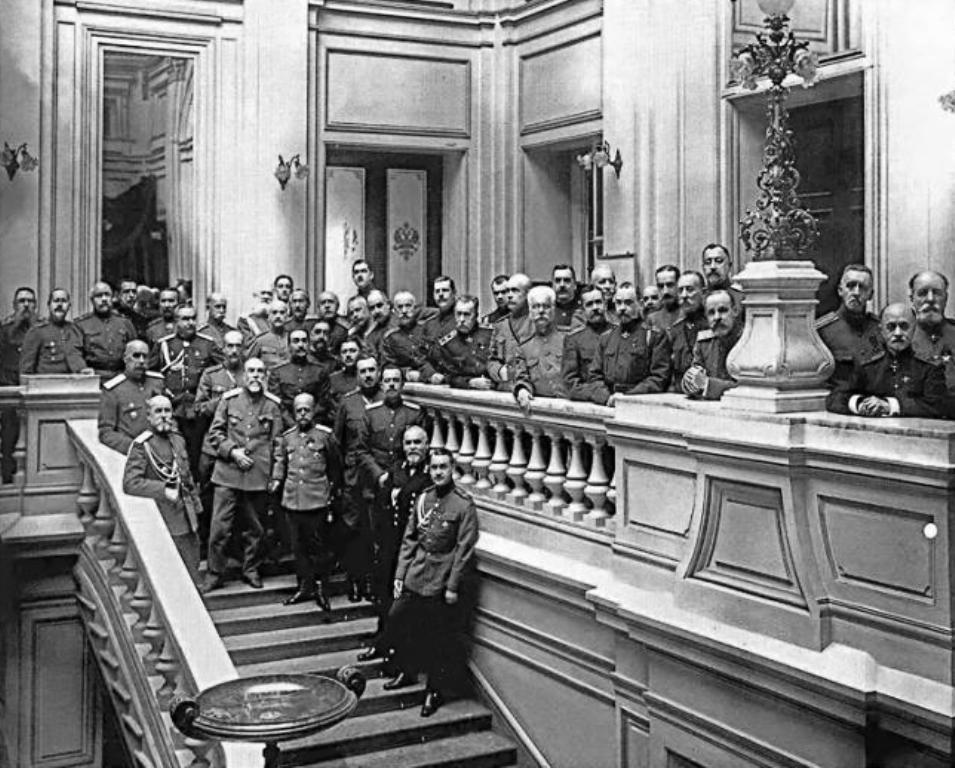
PHOTO: a group of officers pose at the top of the grand staircase of the Officers’ Assembly Building of the Russian Imperial Army and Navy
The Bolshoi [Large] Hall initially served as a luxurious concert hall with choir stalls. A large portrait of Emperor Nicholas II in a stucco frame topped with an Imperial crown hung at the far end of the hall. Musicians and a choir played and sang in the upper galleries, which surrounded the entire perimeter of the hall. The width of the galleries measured about four and a half meters and were supported by columns. The entrance to the galleries was from the top floor, and the hall itself occupied the space of three floors in height. Five large windows overlooked Liteiny Prospekt and the courtyard, and 24 smaller windows were placed above the choir stalls. A large summer balcony also overlooked Liteiny Prospekt.
In addition to concerts and balls, large meetings and conferences were held in the building, their organizers arranged chairs both in the hall itself and in the upper galleries. This made it possible to accomodate more participants: 560 in the hall, another 70 in the upper galleries. The walls and ceiling of the Bolshoi [Large] Concert Hall were decorated with rich stucco decoration of a military theme. Gilded electric chandeliers with crystal shades descended from the ceiling. The large central chandelier consisted 90 bulbs, while the side chandeliers consisted of 30 bulbs each.
Near the hall were men’s and ladies’ restrooms, in which the ladies and their gentlemen could refresh themselves, which was especially important during balls. Ladies could fuss over their hair, clothes, jewelry, apply makeup and perfume. The men sweating after dancing could take off their cloth uniforms, catch their breath, change their undershirts, and spray themselves with cologne. The men’s room had its own smoking room, the ladies’ room was a cozy corner, furnished with bent wood furniture and upholstered in tripe (a fine woolen fabric).
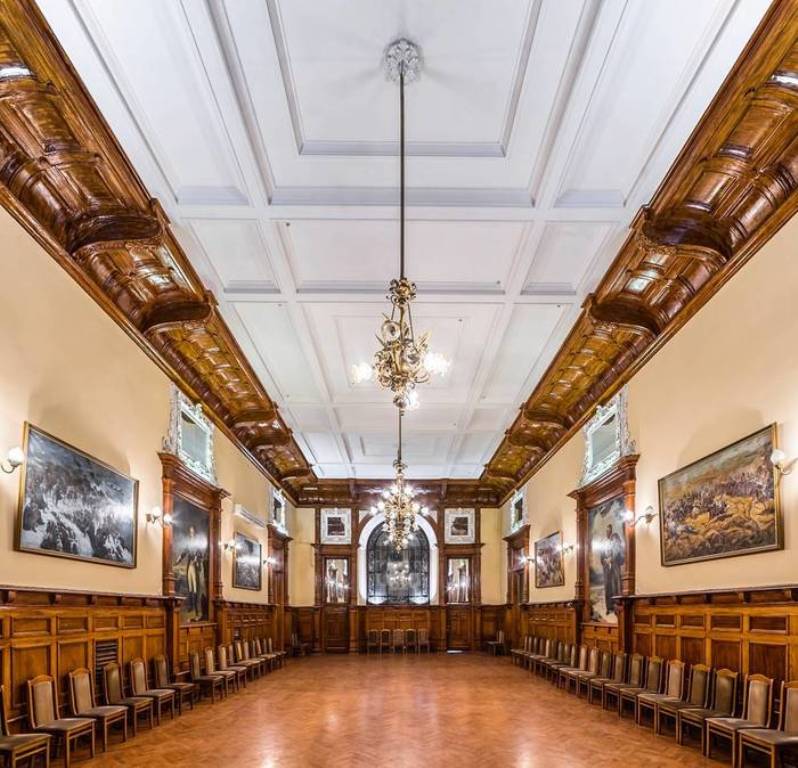
The Bolshoi [Large] Concert Hall is one of the many interiors of the building which has survived to this day. In 1934, a stage appeared in the newly refurbished 700-seat hall, the choir stalls were dismantled, and a film booth to show films was installed on the wall opposite the stage. The Emperor’s portrait and the large central chandelier, both disappeared without a trace.
PHOTO: view of the former Officers’ Assembly Building of the Russian Imperial Army and Navy, as it looks today.
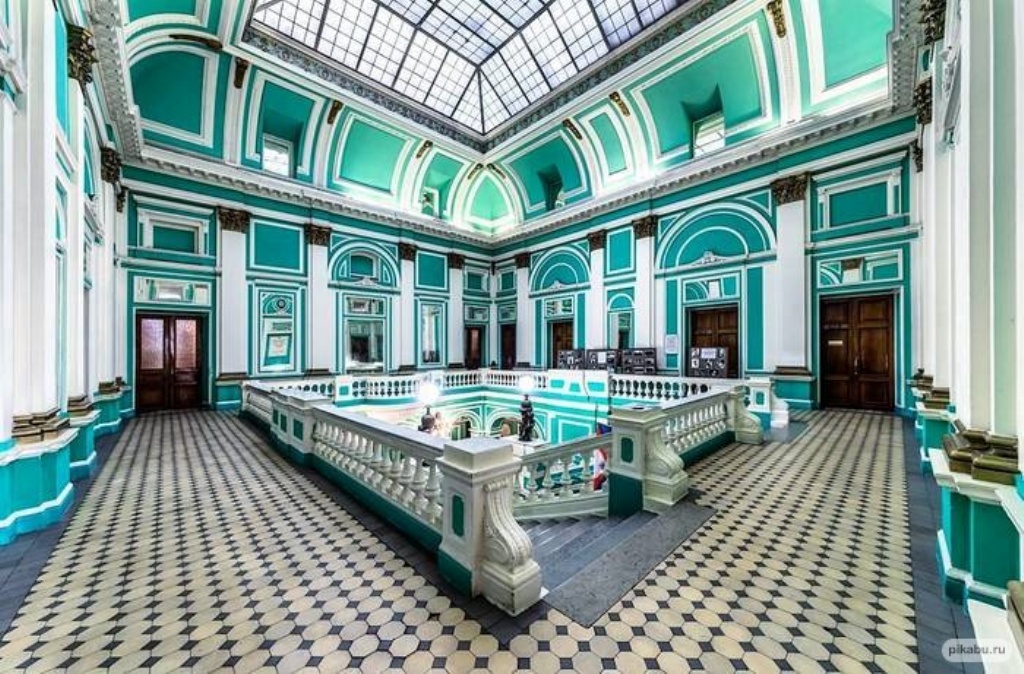
Today, the former Officers’ Assembly Building is home to the House of Officers of the Western Military District, a library, and the Road of Life United Veterans Council. Many of the buildings’ original interiors and elements have been preserved to the present day.
PHOTO: Many of the buildings’ original interiors and elements have been preserved to the present day.
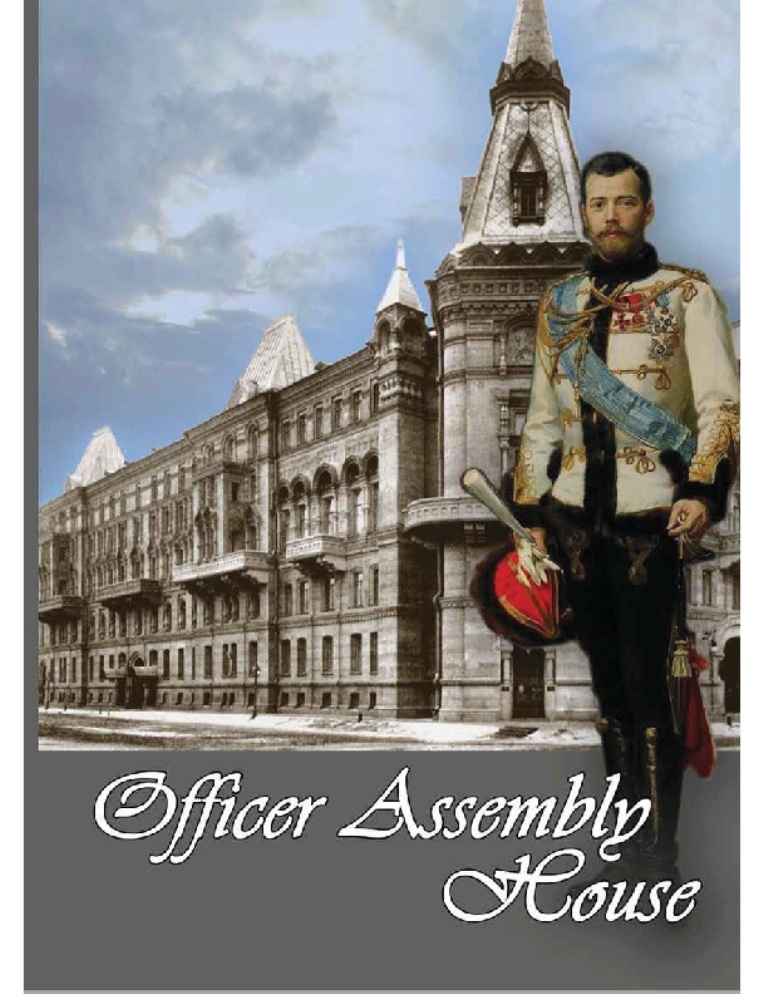
The author has compiled a history of this magnificent building, and richly illustrated with vintage black and white photos, complimented with full colour photos of the building and its interiors, as they look today.
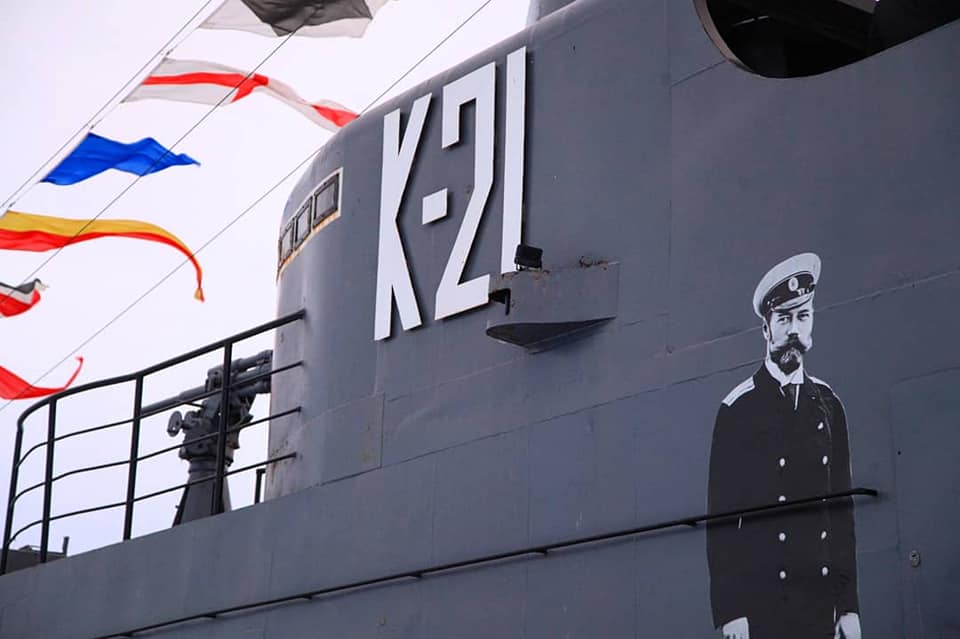
PHOTO: the image of Emperor Nicholas II, the founder of the Russian submarine fleet, depicted on on the Soviet submarine K-21
Russia marks the ‘Day of the Submariner’ on 19th March. The date was not chosen by chance – it was on this day in 1906 that Emperor Nicholas II issued a decree, on the classification of a new category of ships for the Russian Imperial Navy – submarines. .
In 2019, the Double-Headed Eagle Society honoured the memory of the founder of Russia’s first submarine fleet, by depicting his image on the Soviet submarine K-21.
Launched in 1939, the Soviet submarine K-21 was a K-class submarine of the Soviet Navy during World War II. In the spring of 1981, she was moved to the city of Polyarny, Murmansk Oblast to be converted into a museum ship. After renovations, she was eventually moved to Severomorsk, Russia. The museum was opened in 1983. In the late 1990s, the boat underwent some general repairs. From 2008 to 2009, the museum was further renovated.
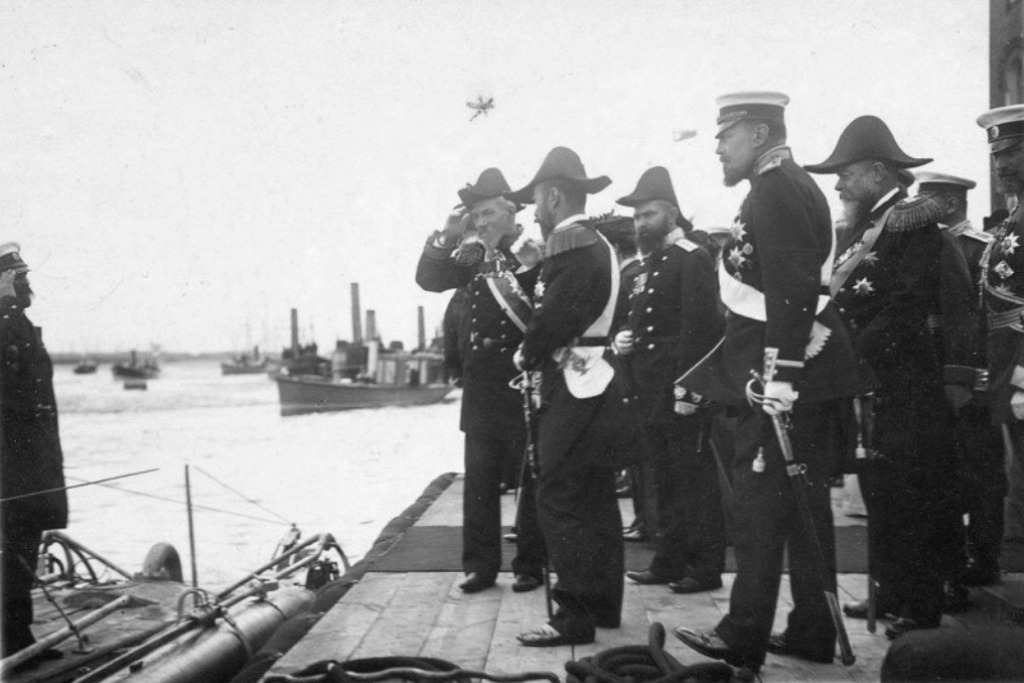
PHOTO: Submarine and battleship of the Imperial Russian Navy
During the reign of Emperor Nicholas II the Imperial Russian Navy continued to expand in the later part of the century, regaining its position as the third largest fleet in the world after Britain and France. It had a revival in the latter part of the century, but lost most of its Pacific Fleet along with the Baltic Fleet, both of which were sent to the Far East and subsequently destroyed in the disastrous Russo-Japanese of 1904. The second phase of Nicholas II’s military life was marked by his participation in the reorganization of the navy after the catastrophic Russo-Japanese War.
Today, a century after his death, post-Soviet Russia recognizes the contribution of the last Russian Emperor to the development of the country’s underwater fleet.
On 19th (O.S. 6th) March 1906, by decree of Emperor Nicholas II, the Maritime General Staff was organized with the Main Naval Staff, which assumed the functions of the operational body of the Imperial Navy. At first, attention was directed to the creation of mine-laying and a submarine fleet.
Unfortunately, the name of the last emperor in this area of Russia’s military history is unjustly forgotten, thanks to Soviet dogma. From 1903 to 1917, Nicholas II ordered the construction of a total of 78 submarines – including the purchase of 11 foreign made submarines.
PHOTO: this icon painted in St. Petersburg, by order of modern day submariners of the Russian Federation is dedicated to the founder of the Russian submarine fleet, the Holy Sovereign Emperor Nicholas II.
You must be logged in to post a comment.