Imperial yachts ‘Standart’ and ‘Polar Star’ – how to tell them apart
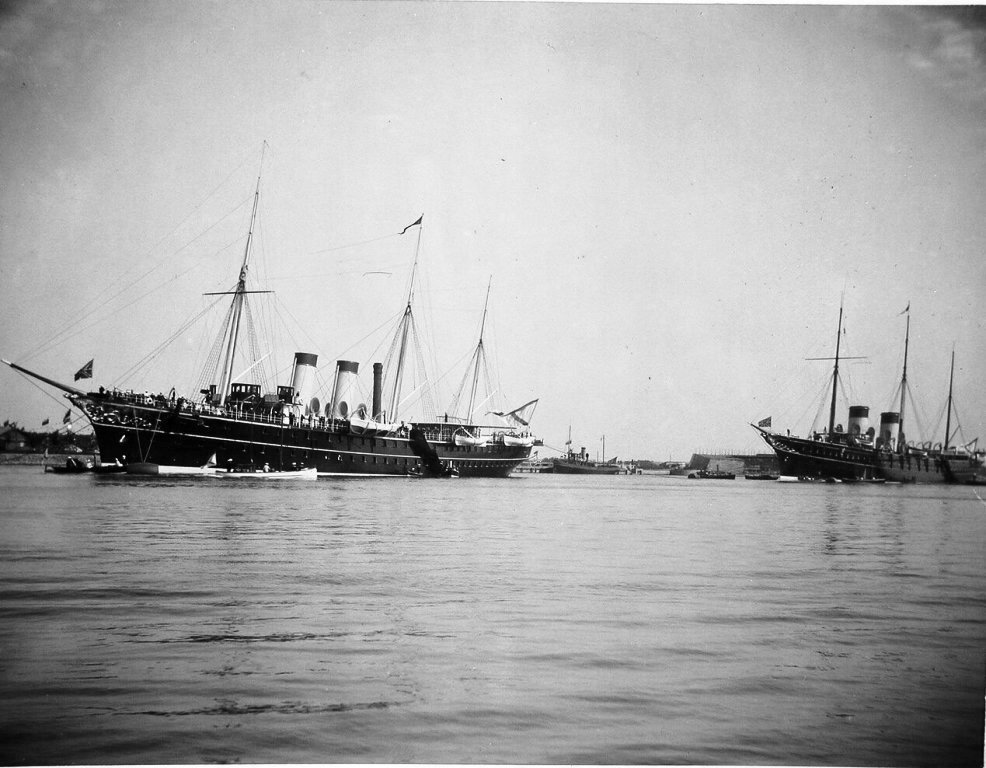
PHOTO: a rare view of the Imperial Yachts ‘Polar Star‘ (left) and ‘Standart‘ (right), docked at Libau (renamed Liepāja in 1920), located in Latvia on the Baltic Sea. August 1903.

The ‘Polar Star / Полярная звезда’ and ‘Standart / Штандарт’ are easily distinguished by two different features: their funnels and the double-headed eagle figurehead, located on the bow of each vessel.

The two funnels of the ‘Polar Star / Полярная звезда’ are closer together, whereas those of the ‘Standart / Штандарт’ are placed wider apart.

The magnificent carved double-headed figurehead of the ‘Standart / Штандарт’ is much more elaborate than that of the ‘Polar Star / Полярная звезда’.

Imperial Yacht ‘Polar Star/ Полярная звезд

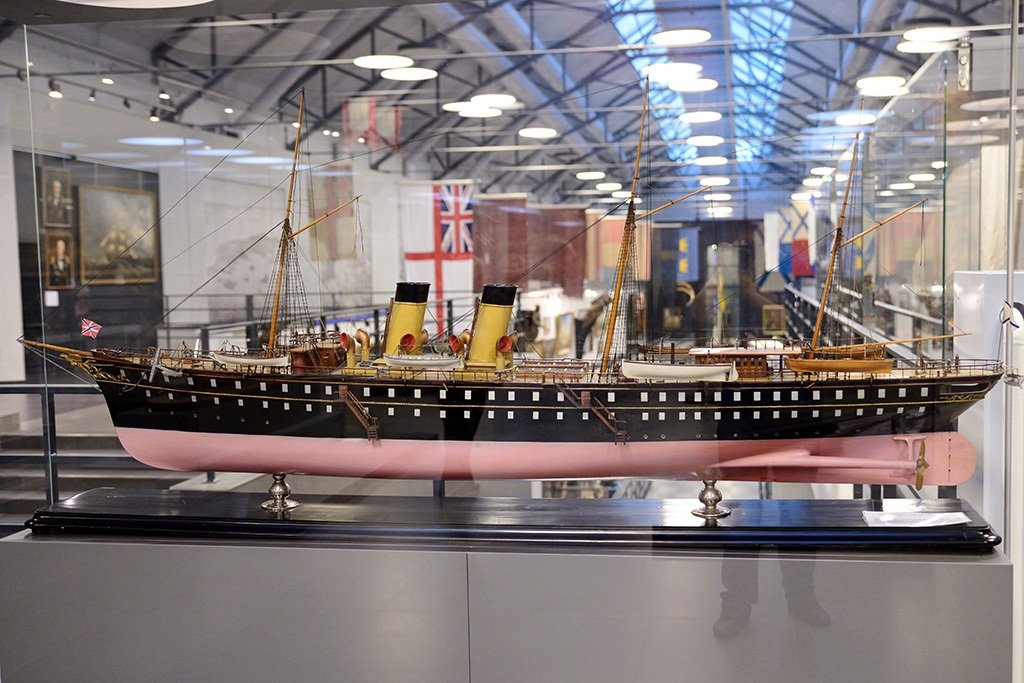
PHOTO: Scale models of the Russian Imperial Yacht Polar Star / Полярная звезда
from the Collection of the Central Naval Museum in St. Petersburg

The Imperial Yacht ‘Polar Star / Полярная звезда was built by order of Emperor Alexander III at the Baltic Shipyard on 20th May 1888. She was launched on 19th May 19 1890, and came into service in March 1891. It later served the Dowager Empress Maria Feodorovna, who used it annually to sail to Denmark and England.

During the First World War, the yacht was docked in Petrograd, and in early June 1917 moved to Helsingfors. In 1920, the ‘Polar Star’ was mothballed.

In the early 1930s, the former Imperial Yacht was converted to a floating submarine base for the Soviet Navy. Numerous changes were made to the yacht’s exterior, but the interior decoration of many rooms were preserved. On 20th August 1936, the naval flag of the USSR was hoisted on the former Imperial yacht.

In 1954 the Polar Star was converted back into a floating ship, in 1961 as a target ship for testing anti-ship missiles. In November 1961, the ‘Polar Star’ was sunk in the Gulf of Riga, after being hit during a naval exercise. The final fate of the former Imperial Yacht remains unknown, although according to some reports, it was scrapped in the early 1970s.

Further reading: The fates of the Russian Imperial Yachts ‘Standart’ and ‘Polar Star’

Imperial Yacht ‘Standart/ Штандарт

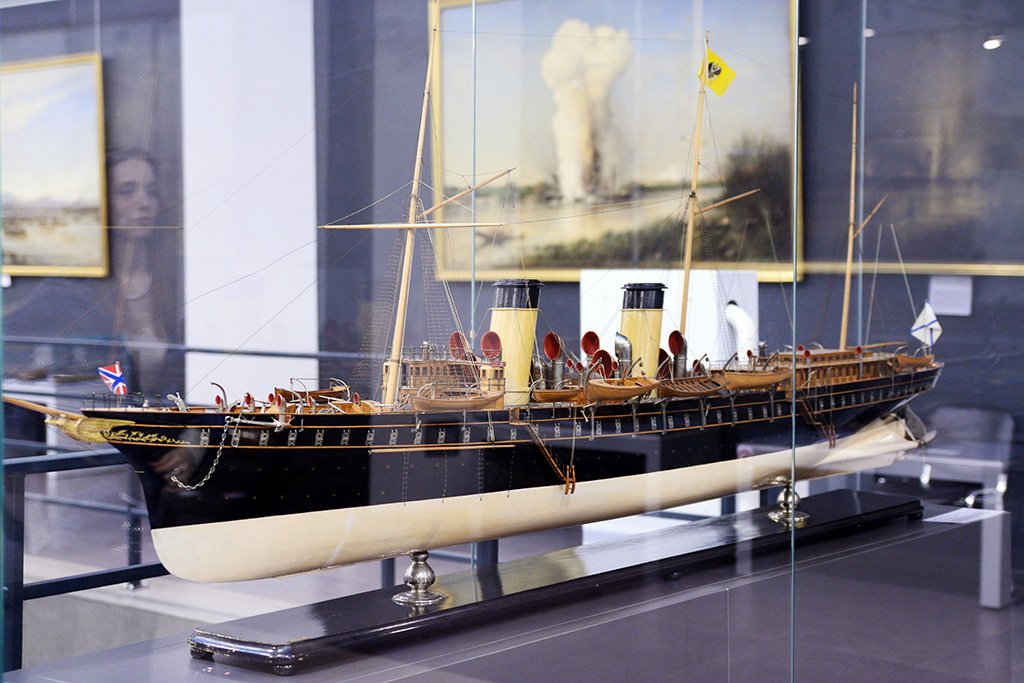
PHOTO: Scale model of the Russian Imperial Yachts Standart / Штандарт
, from the Collection of the Central Naval Museum in St. Petersburg

The Imperial Yacht ‘Standart / Штандарт [pronounced “Shtandart”] was built by order of Emperor Alexander III, and constructed at the Danish shipyard of Burmeister & Wain, beginning in 1893. She was launched on 21st March 1895 and came into service early September 1896. It later served Emperor Nicholas II and his family.

In 1917, the ‘Standart’ was seized by Revolutionary sailors, and took part first in the February and then in the October Revolution.

The ‘Standart’ was then stripped down and pressed into naval service. It was renamed three times: ‘18 Marta’ (‘18 March,’ from 1918-1936), and later ‘Marti’ (in honour of André Marty, from 1936-1948), and ‘Oka’ (from 1948-1963). She was scrapped at Tallinn, Estonia, in 1963.

Further reading: The fates of the Russian Imperial Yachts ‘Standart’ and ‘Polar Star’
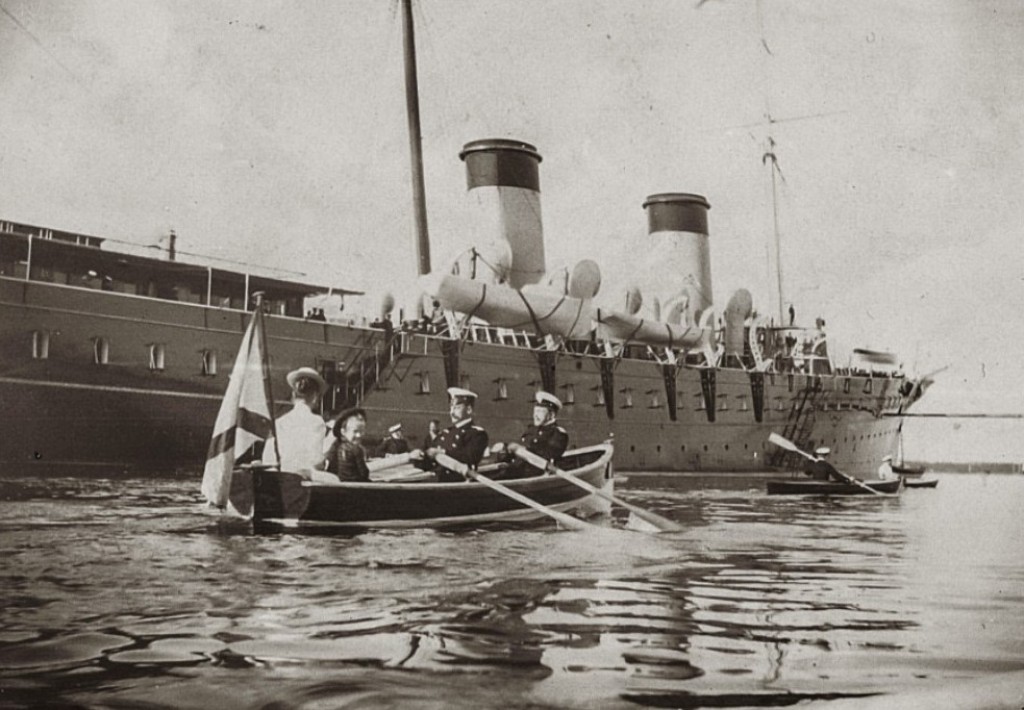
PHOTO: Officers take Empress Alexandra Feodorovna and her daughter Grand Duchess Anastasia to the Imperial Yacht ‘Standart‘. September 1907 or 1908
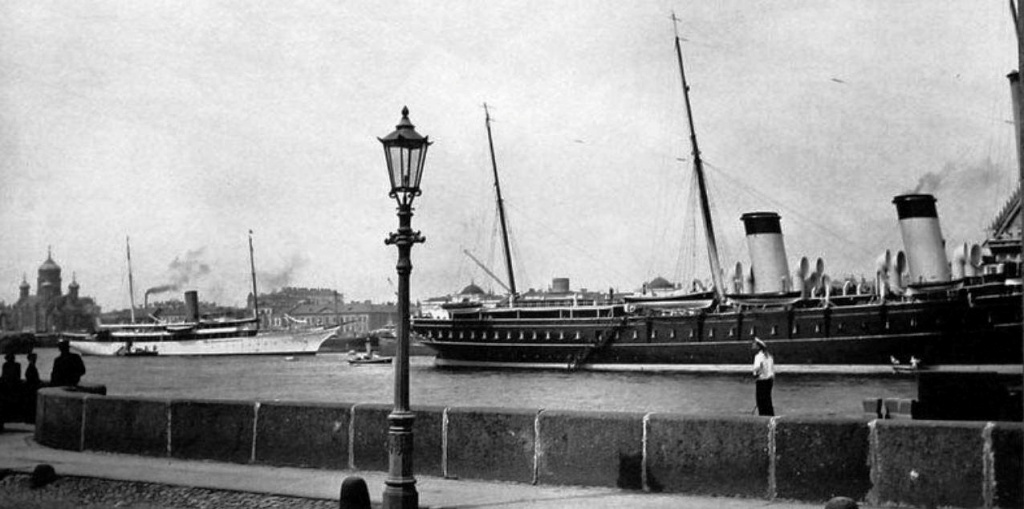
PHOTO: A rare early 20th century photo of the Imperial Yacht ‘Standart‘ moored along the embankment on the Neva in St. Petersburg.

© Paul Gilbert. 23 October 2024
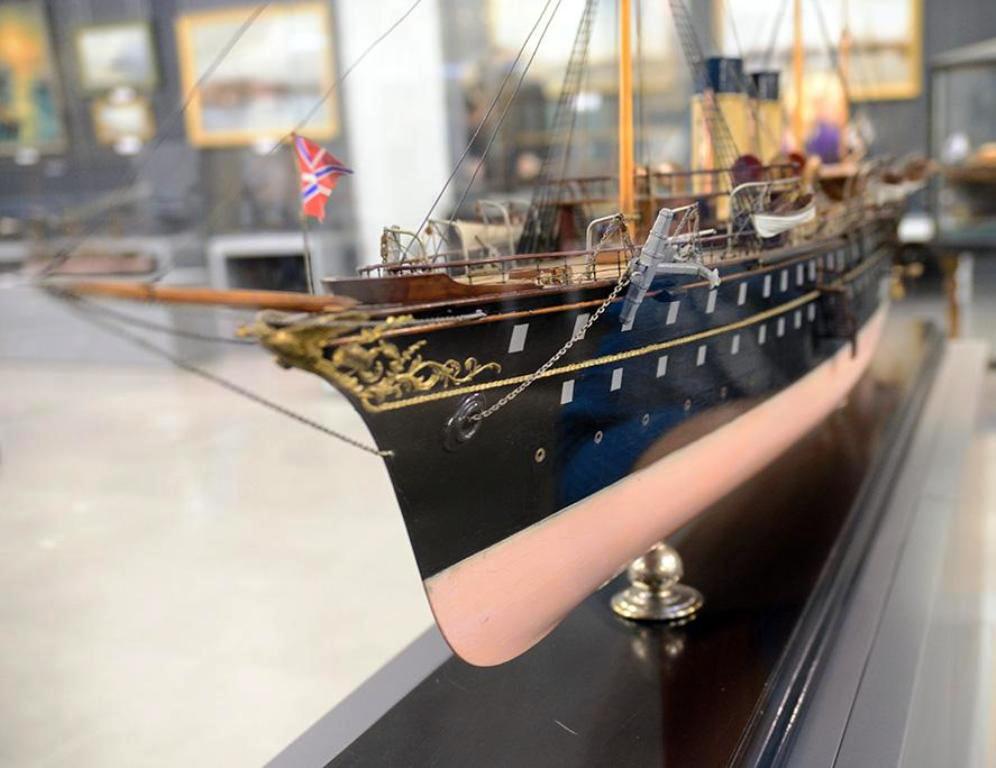
Furniture from the Imperial Yacht ‘Polar Star’ gifted to State Hermitage Museum

PHOTO: Model of the Imperial Yachts Polar Star «Полярная звезда»
From the Collection of the Central Naval Museum, St. Petersburg

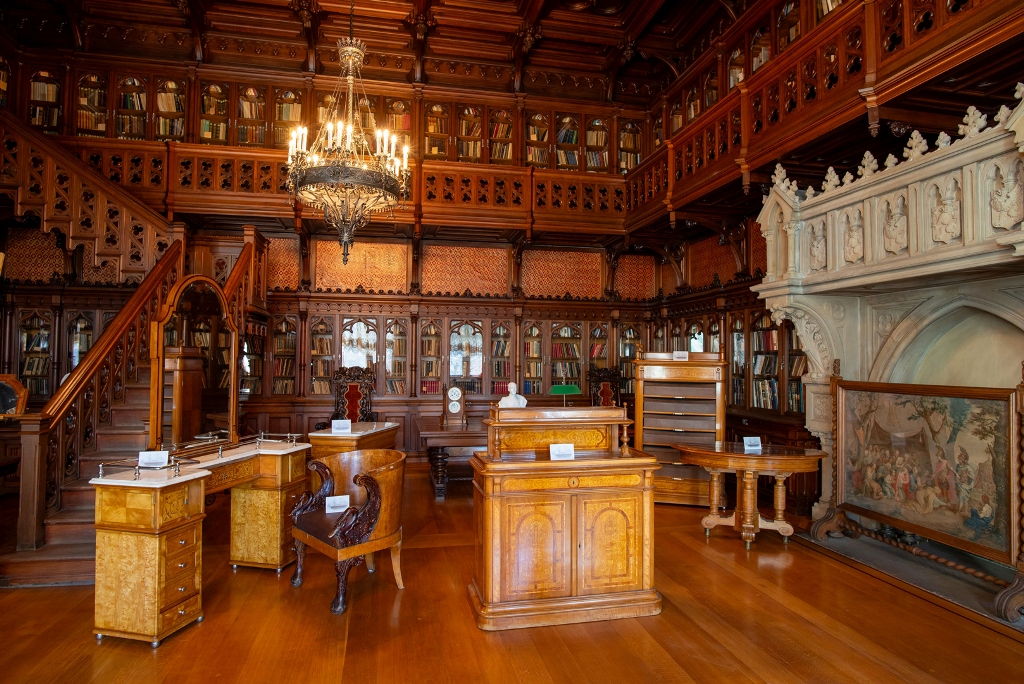
On 29th June 2024, an exhibition of furniture from Emperor Alexander III’s yacht Polar Star «Полярная звезда» opened in the Gothic Library of Emperor Nicholas II situated in the Winter Palace (State Hermitage Museum) in St. Petersburg. The pieces have been donated to the Hermitage by Mikhail Yuryevich Karisalov, a Russian industrialist, art patron and hereditary collector.

The set is made up of ten items: two tables, an armchair, two low cupboards, a dressing mirror, a cartonniere (filing cabinet), two doors and a mirror from a cupboard. They were all made at Nikolai Feodorovich Svirsky’s (1851-after 1915) factory to designs by the architect Nikolai Vasilyevich Nabokov (1838-after 1907) -who also designed the furniture for the Gothic Library.

Svirsky’s factory specialized in producing pieces decorated with marquetry using “our own method”. The distinctive feature of the craftsmen’s signature was extremely intricate, literally jeweller-like, detail work in the inlaid designs, making it possible to convey the subtlest nuances of colour.

In 1889 Svirsky put his creations on show at the 1889 Paris Exposition, where he was awarded the Grand Prix and a gold medal. In 1894 the Svirsky Factory was granted the honorary title of Supplier to the Imperial Court, and two years later his products were awarded a gold medal at the All-Russian exhibition in Nizhny Novgorod.

The manufacture of the furnishings for all the cabins aboard the Imperial Yacht Polar Star that was built for the Imperial amily’s long-distant voyages would be one of Svirsky’s most significant commissions. The correspondent of the Pravitelstvenny Vestnik (Government Messenger] newspaper wrote: “Regarding the interior finishing of the yacht, it must be said that this is something wholly exceptional and perfect in its elegance; there is not gaudy, eye-catching splendour here, but there is artistic splendour… On the right, from the Imperial Dining-Room, a door leads into Her Majesty the Empress’s [Maria Feodorovna] boudoir; there the walls and furniture are upholstered with English waxed cretonne; the cupboard, toilet table, writing desk and doors are covered with superb inlay work…”

PHOTO: 10 pieces of furniture from the Imperial Yacht Polar Star, on display in the Gothic Library of Emperor Nicholas II in the State Hermitage Museum, St. Petersburg

The exhibition includes two items that the journalist mentioned – the Empress’s “toilet table” and a low cupboard inlaid with Maria Feodorovna’s monogram МФ (MF).

Emperor Alexander III and Empress Maria Feodorovna are known to have sailed all around Europe on the Polar Star. On arrival in different countries, they would happily show off the exquisite interiors of their floating home. Following the death of A;exander III in 1894, the Polar Star became the personal yacht of the Dowager Empress, which she used for her visits to Denmark and Great Britain.

After the October Revolution, the yacht became the headquarters of the Bolsheviks’ Central Committee of the Baltic Fleet (Tsentrobalt), then in the 1930s it was refitted to serve as a floating base for submarines. Later, a cable was run from the yacht, which was moored on the Neva River in front of the Hermitage, to provide electricity to the museum halls. Click HERE to learn about the fate of the Imperial Yacht Polar Star.

For the Hermitage, the items of furniture from the Polar Star are of especial value – from artistic, historical and memorial points of view. After the temporary exhibition in the Gothic Library, the set will find a place within the display devoted to the Art Nouveau era in the General Staff Building, where a separate room showcasing Svirsky’s works will be go on permanent display.

The exhibition curator is Natalia Yuryevna Guseva, Candidate of Art Studies, Deputy Head of the State Hermitage’s Department of the History of Russian Culture, keeper of the Russian furniture collection.

© State Hermitage Museum / Paul Gilbert. 15 July 2024