Update on the proposed Nicholas II museum complex in Mogliev
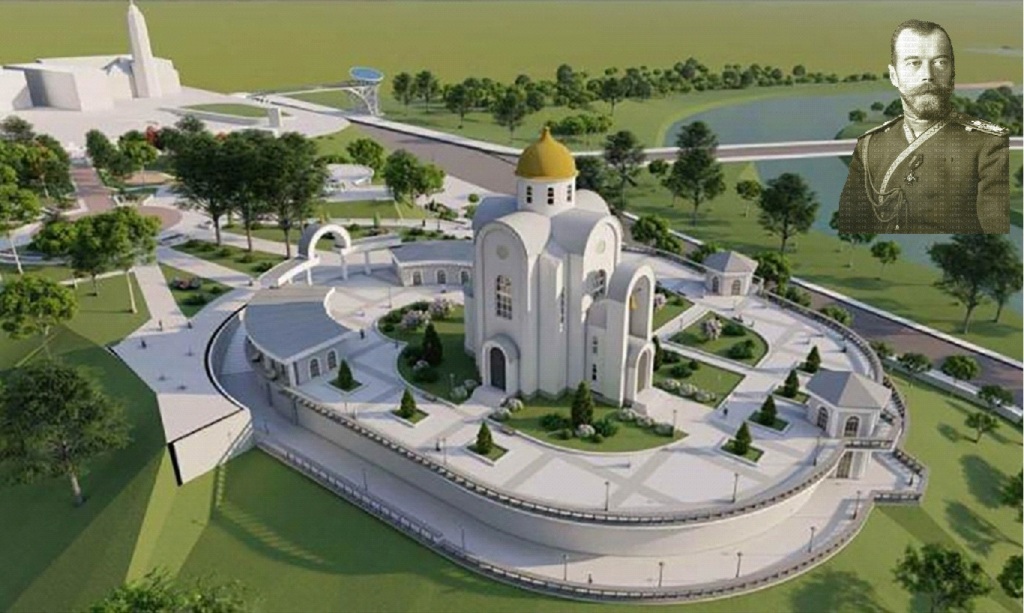
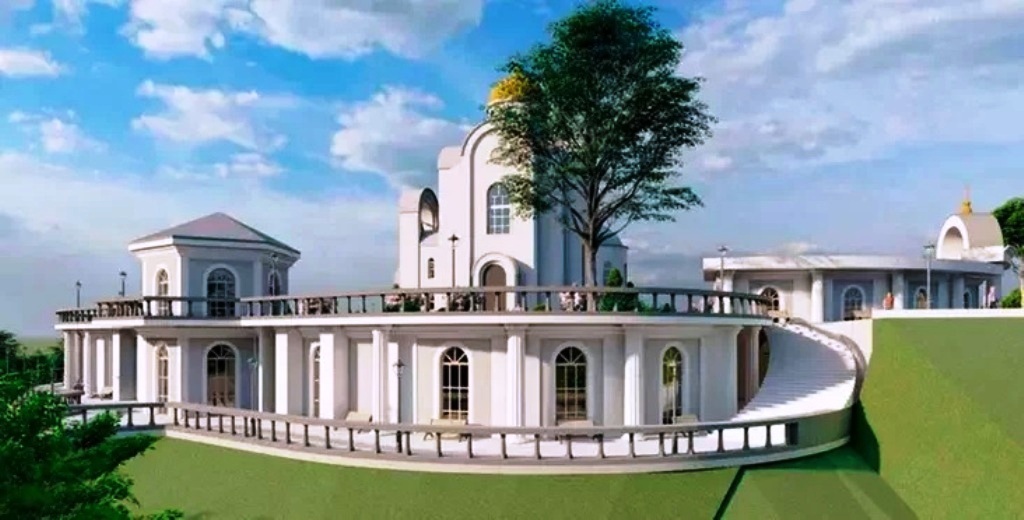
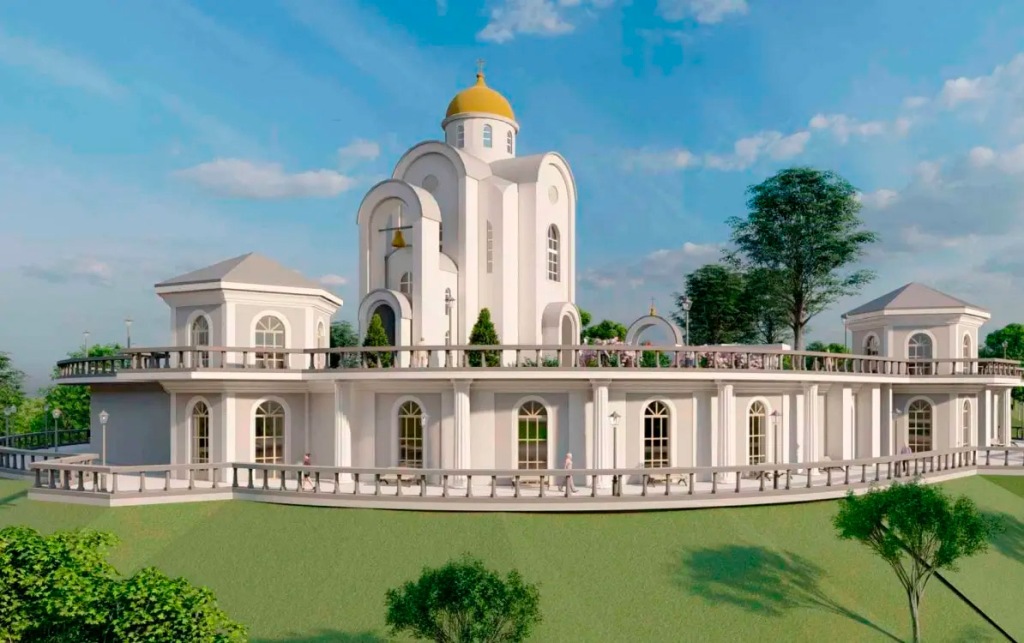
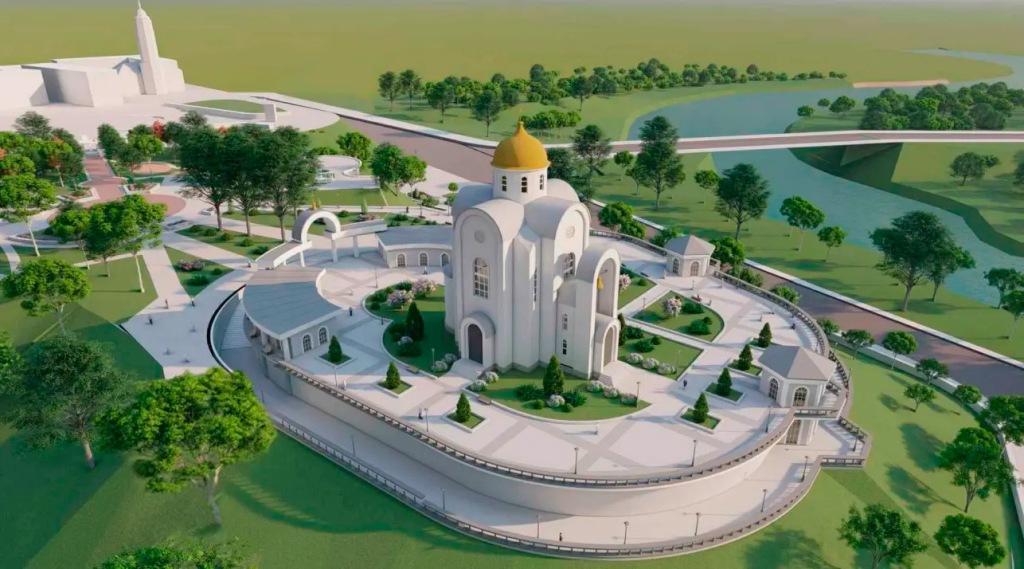
PHOTO: artist’s concept for the Emperor Nicholas II
museum complex proposed for Mogliev

On 3rd July 2024, I reported that a new museum complex dedicated to Emperor Nicholas II was being planned for Mogliev in Belarus. The complex was to be constructed on a hill in Gorky Park, next to the Church of the Holy Royal Passion-Bearers. Unfortunately, the proposal was met with protests from locals, who were opposed to the demolition of a 16th-century castle to make way for the new museum complex.

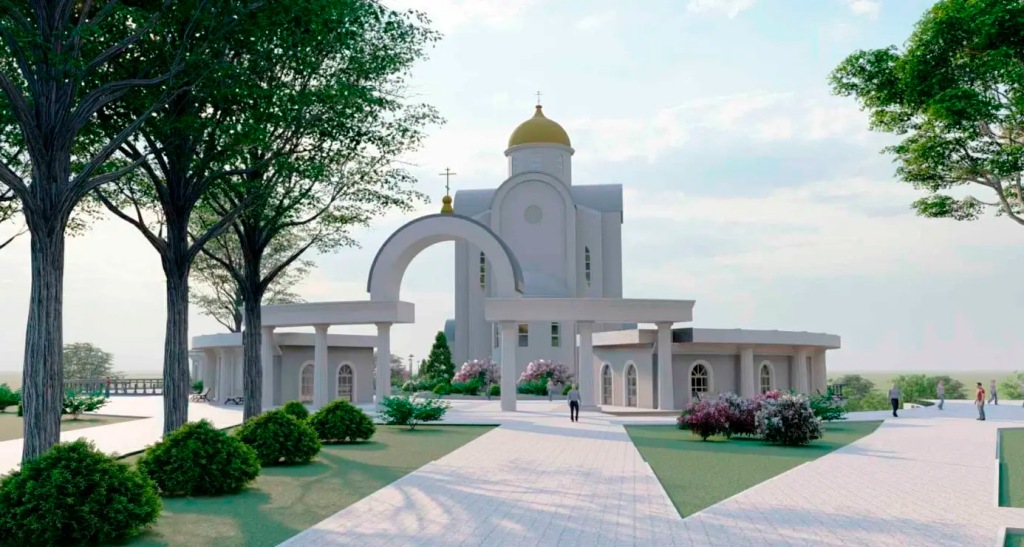
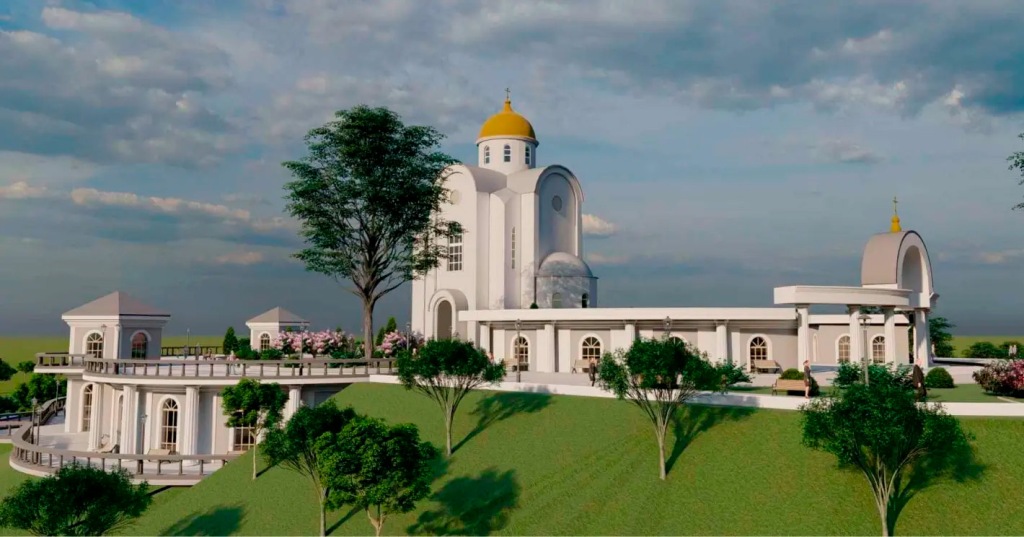
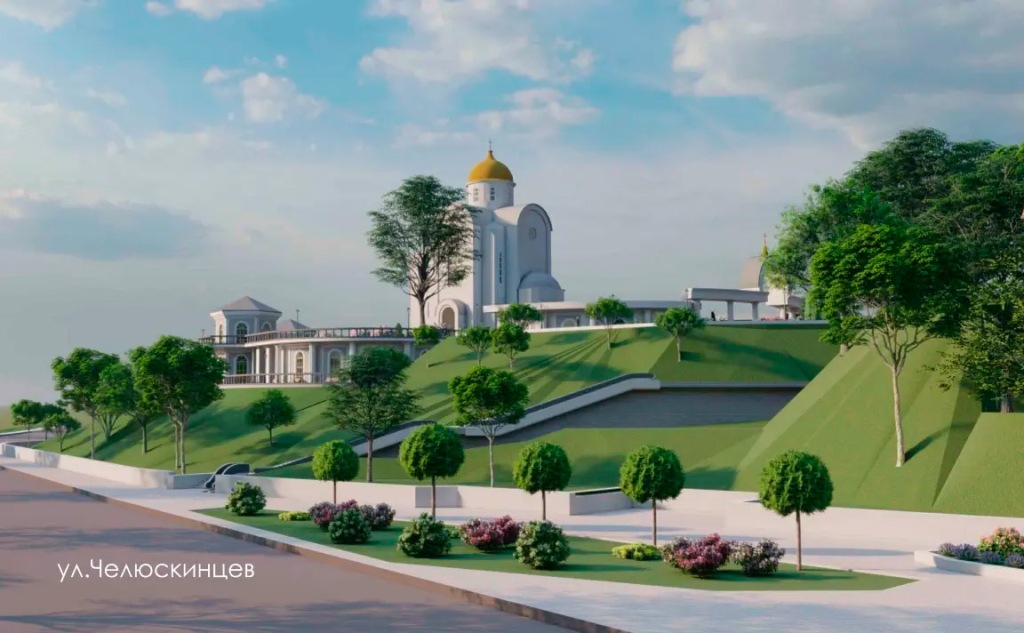
A new place for the museum complex was chosen in the historical heart of Mogliev. As specified in the OJSC “Institute “Mogilevgrazhdanproekt”, the museum complex will be located on the Square of Glory[1], on the site of the former building of the General Headquarters of Emperor Nicholas II, situated in the southwestern part of the adjacent Gorky Park. The museum complex will form a single architectural ensemble within the framework of the Church of the Holy Royal Passion-Bearers.
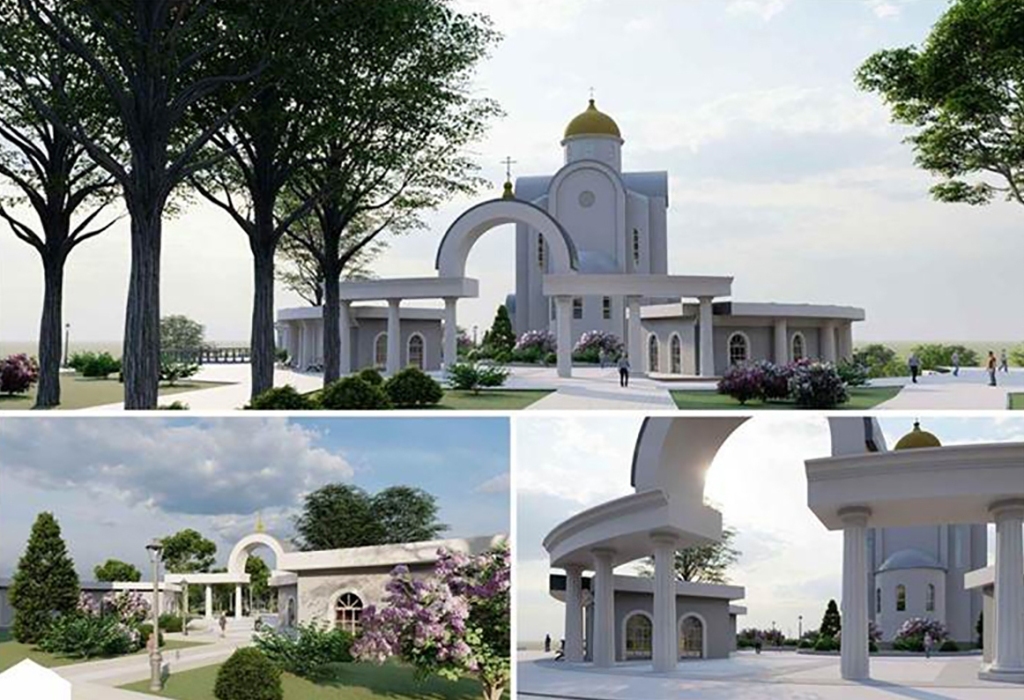
PHOTO: artists concept for the proposed Emperor Nicholas II museum complex in Mogliev (above), and map showing it’s location in the in the southwestern part of the adjacent Gorky Park
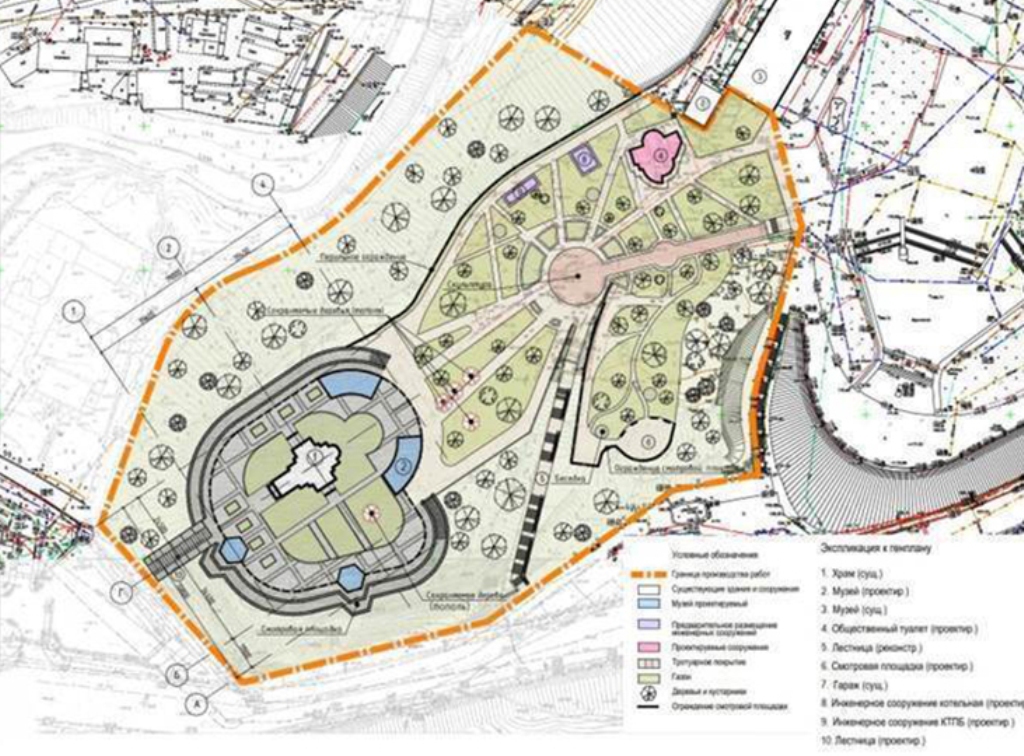
The new museum will be dedicated to the events of the early 20th century: the First World War, the Headquarters of the Supreme Commander-in-Chief of the Russian Imperial Army, the stay of of Emperor Nicholas II in Mogliev, the Knights of St. George, and the February Revolution of 1917.

Walking paths will stretch throughout the park, observation decks, sculptural compositions, small architectural follies, and beautifully landscaped flower beds. The concept of the project provides for the improvement of Gorky Park from the central entrance group of the museum complex to the existing Regional Museum of Local Lore.

The realization of the proposed Nicholas II museum complex is of course is pending approval. Town hall meetings will be held in Mogliev, in which citizens will have an opportunity to have their say.

***
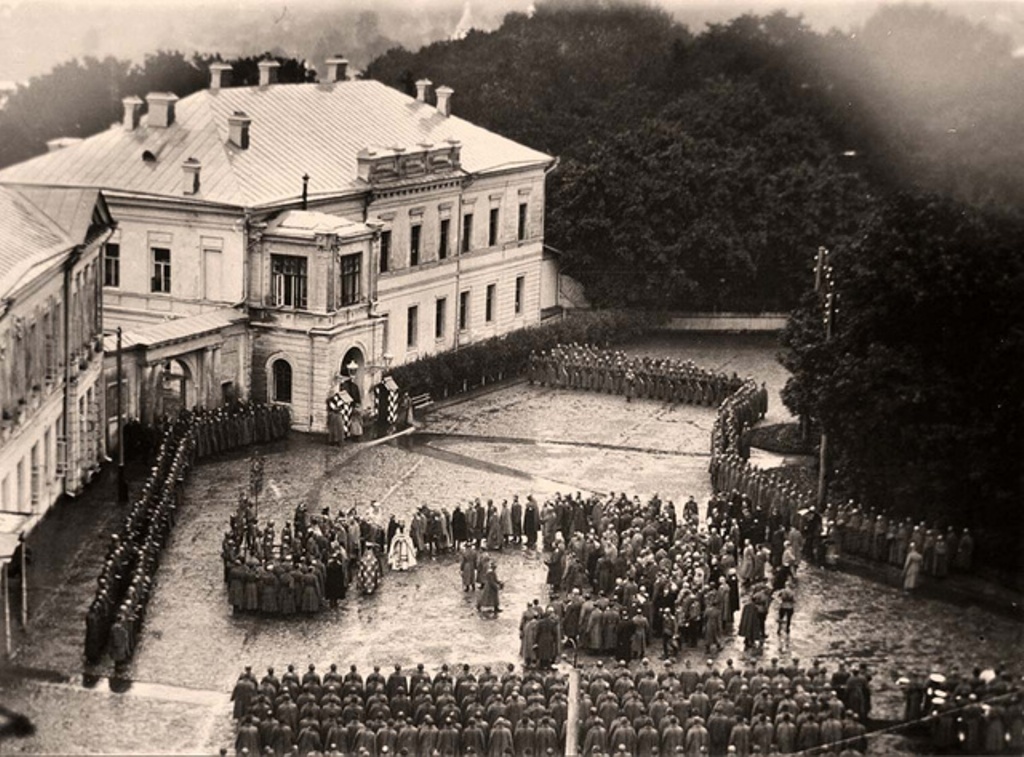
PHOTO: the former Governor’s House and
later General Headquarters in Mogilev. 1915

On 8th August 1915, the Headquarters (Stavka)  of the Supreme Commander-in-Chief of the Armed Forces of the Russian Empire was transferred from Baranovichi to Mogilev. From August 1915 to March 1917, Emperor Nicholas II, served as Commander-in-Chief[2], and the city assumed the role of Military Capital of the Russian Empire.

The Tsar travelled back and forth on the Imperial Train, from Tsarskoye Selo to Mogilev, where he settled in the Governor’s House, situated on Governor’s Square. He was often accompanied by his son and heir Tsesarevich Alexei Nikolaevich.  

The official historiographer in the retinue of Nicholas II, Dmitry Dubensky, describes the Emperor’s quarters as follows:

“The Emperor’s rooms were located on the 2nd floor of the Governor’s House. His Majesty’s office had two windows overlooking the square. It was decorated modestly furnished with simple provincial furniture, a sofa and a small desk, which the Tsar kept some of his papers. Adjacent to this room was the bedroom of His Majesty and Heir with iron camp beds, a washbasin, a dressing table, and several chairs. On the walls over the beds, there were many Orthodox crosses, many of which were gifts from family members.

“From the hall to the left is a dining room, quite large, decorated with simple ordinary furniture. There are two additional rooms for the Minister of the Imperial Court Count Vladimir Borisovich Frederiks (1838-1927) and one for Major-GeneralVladimir Nikolaevich Voeikov (1868-1947).

“In addition, there were small rooms for five or six servants, the Tsar’s valet, cooks, and others.”

Sadly, the former Governor’s House, which housed the General Headquarters was destroyed during the Nazi invasion of 1941-45. In the years following the Great Patriotic War, the Soviets showed no interest in reconstructing the historic building. The only building which survived to the present is the former District Court House, which today houses the Mogilev Regional Museum of Local Lore, which features permanent exhibition rooms dedicated to the stay of Nicholas II in Mogilev, from 1915 to 1917.

NOTES:

[1]  The 16th century square, originally named as Torgovaya Square, was situated on a high hill at the confluence of the Dubrovenka and Dnieper rivers. After the annexation of Mogilev to Russia in 1772, Torgovaya Square was named Governor’s Square. In 1919, the square was named Sovetskaya, and in 2014, the year marking the 70th anniversary of the liberation of Belarus from the Nazi invaders, it was renamed Square of Glory.

[2] On 5th September (O.S. 23rd August) 1915, Emperor Nicholas II assumed personal command of the Russian Imperial Army, after dismissing his cousin, Grand Duke Nicholas Nikolaevich (1856-1929) from the post.

© Paul Gilbert. 14 September 2025
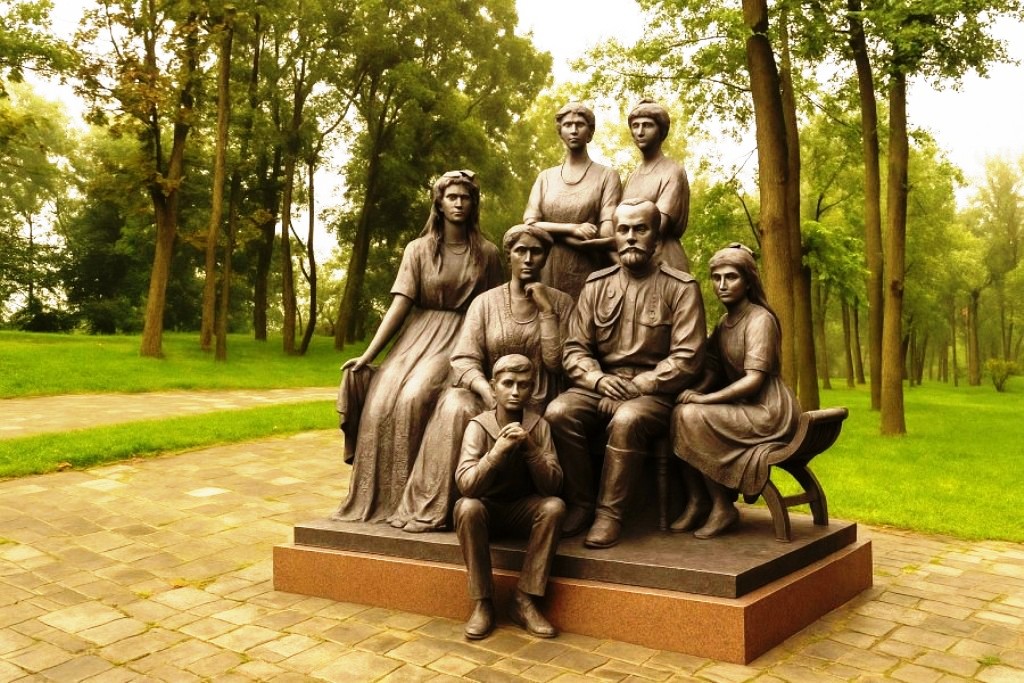
Monument to Nicholas II and his family to be installed in Mogilev

PHOTO: artist’s concept of the proposed monument, to be installed in Mogilev

A monument to Emperor Nicholas II and his family is to be installed in Mogilev, Belarus. The sculptural composition – seen in the above photo – will be installed in Gorky Park [not to be confused with the famous Gorky Park in Moscow], situated next to the Square of Glory.

Nicholas II in Mogilev

Recall that from August 1915 to March 1917, Mogilev served as the military capital of the Russian Empire. It served as the headquarters of Emperor Nicholas II, who assumed the position of the Supreme Commander-in-Chief of the Russian Armed Forces, from 5th September (O.S. 23rd August) 1915. He settled in the Governor’s House, situated on Gubernatorskaya Square [now Square of Glory].

The headquarters were located in the buildings that stood in a semicircle on Gubernatorskaya Square. The Tsar occupied several rooms of the Governor’s House, and was often accompanied by his son and heir, Tsesarevich Alexei Nikolaevich. The headquarters was located in the building of the Provincial Government, while the building of the district court, was placed at the disposal of the General on duty of the Headquarters.

Empress Alexandra Feodorovna and her four daughters often came to Mogilev to visit Nicholas and Alexei. The Empress and the grand duchesses lived onboard the Imperial Train during their stays.

To this day, the old-timers of Podnikolye retell the stories of their grandfathers, of when they saw the Tsar and his family riding on a boat along the Dnieper, walking in Gubernskaya Square (now Glory Square) and stopping to chat with ordinary citizens.

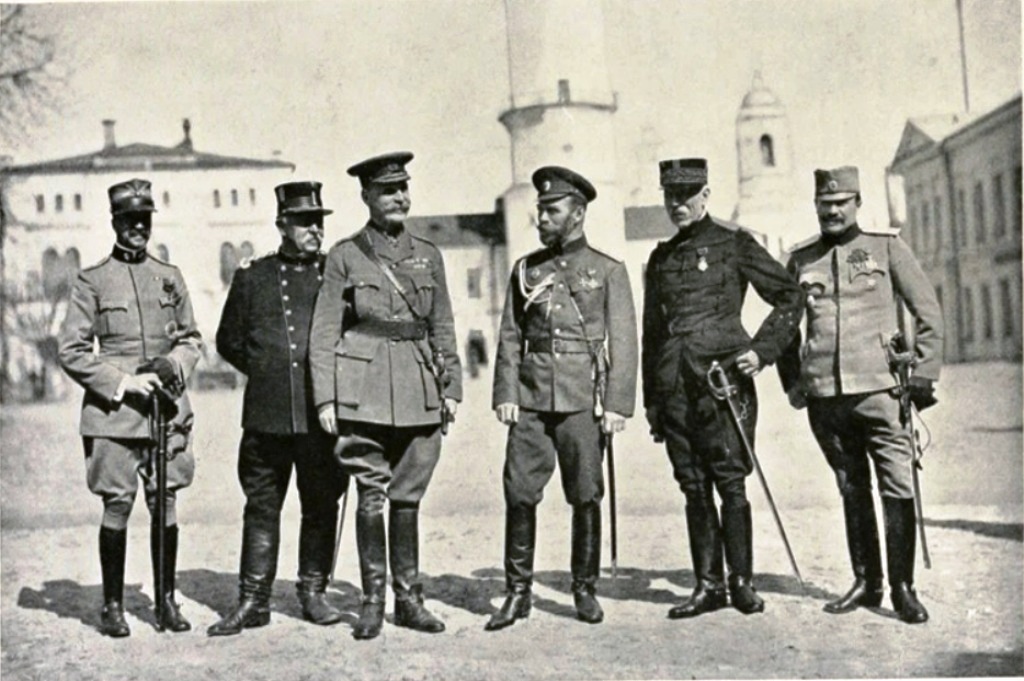
PHOTO: the Emperor (third from left) with Chiefs of Allied
Military Missions on Gubernatorskaya Square, Mogilev. 1916

Both the Governor’s House, where Nicholas II lived with his son, and the building of the Provincial Government, were demolished in Soviet times. As a result, nothing has survived to the present day of the Tsar’s stay in Mogilev.

The building of the District Court, today houses the Mogilev Regional Museum of Local Lore. It was in this building, that Emperor Nicholas II said goodbye to the ranks of the headquarters and departments in March 1917. There is a display marking the farewell in one of the rooms located on the second floor of the museum.

Why Gorky Park?

In 1872, a city garden was laid in Mogilev, called Dembovetsky’s Garden. The initiative to lay the foundation belonged to the famous Mogilev governor Alexander Dembovetsky (1840-1920). During the reign of Russia’s last Tsar, it was renamed the Nikolaevsky Garden-Park.

Nicholas often walked here with Alexei and members of his retinue. The paths, which were lined with trees, converged in the central square, dominated with a beautiful fountain. The garden-park featured three observation gazebos, a wooden theater, elegant benches and round flower beds.

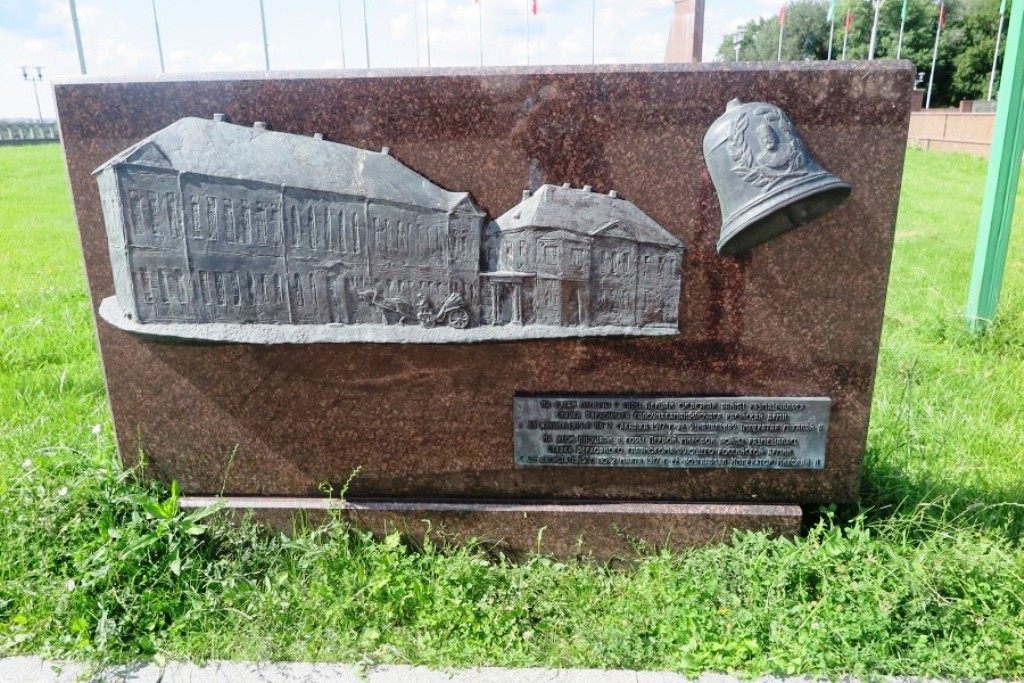
PHOTO: a marble plaque is today, the only reminder that this was where the headquarters of Emperor Nicholas II, stood from August 1915 to March 1917

Many years later, in 2014, the Church of the Holy Royal Martyrs was erected in Gorky Park in memory of the Imperial Family.

The monument to Emperor Nicholas II and his family will be installed near the church, although no time frame has yet been established for the completion of the project.

FURTHER READING

New museum dedicated to Nicholas II to be built in Mogilev + PHOTOS

Nicholas II’s motorcars and the Imperial Garage in Mogilev, 1915-17 + PHOTOS

© Paul Gilbert. 5 August 2025

New museum dedicated to Nicholas II to be built in Mogilev

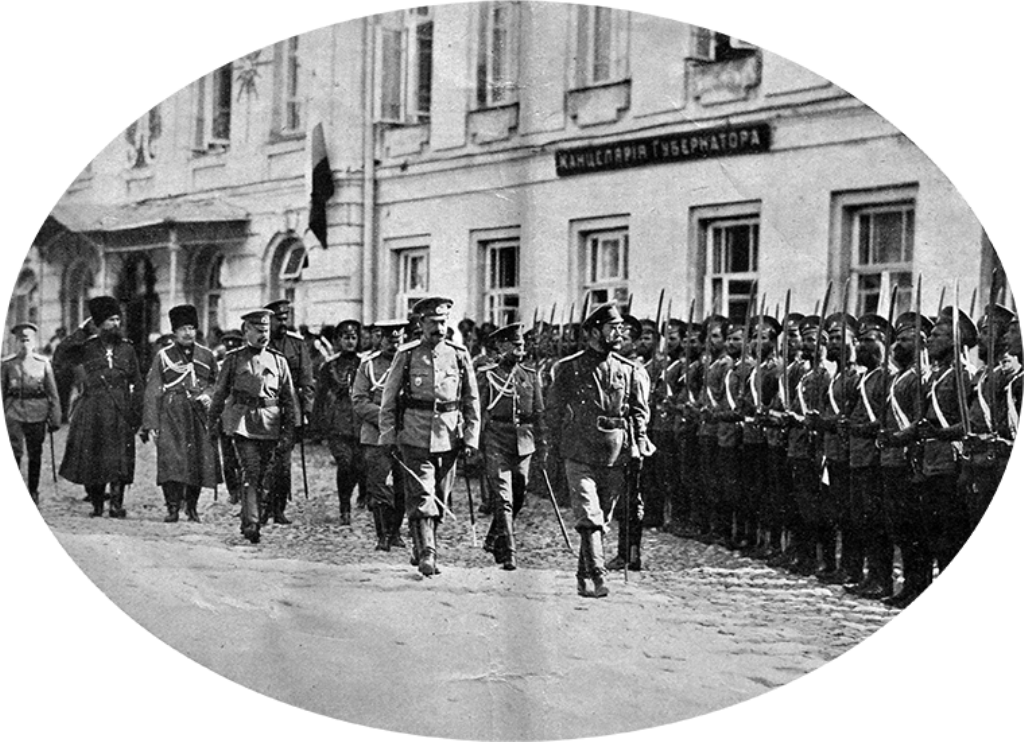
PHOTO: Emperor Nicholas II reviews his troops on the square in front
of General Headquarters in Mogliev during the First World War

A new museum complex is to be constructed in Mogliev, situated in eastern Belarus, about 76 kilometres (47 miles) from the Russian border. The complex will be built on a hill in Gorky Park, next to the Church of the Holy Royal Passion-Bearers – the family of the last Russian Emperor Nicholas II, who were canonized as saints in 1981 by the Russian Orthodox Church Outside Russia (ROCOR), and in 2000 as passion-bearers by the Moscow Patriachate.

On 8th August 1915, the Headquarters (Stavka)  of the Supreme Commander-in-Chief of the Armed Forces of the Russian Empire was transferred from Baranovichi to Mogilev. From August 1915 to March 1917, Emperor Nicholas II, served as Commander-in-Chief[1].

The Tsar travelled back and forth on the Imperial Train, from Tsarskoye Selo to Mogilev, where he settled in the Governor’s House, situated on Gubernatorskaya Square. He was often accompanied by his son and heir Tsesarevich Alexei Nikolaevich.  

The new museum will be dedicated to the events of the early 20th century: the First World War, the Headquarters of the Supreme Commander-in-Chief of the Russian Army, the stay of of Emperor Nicholas II in Mogliev, the Knights of St. George, and the February Revolution of 1917.

The timing of the project has yet to be announced, however, the following architectural drawings gives us a first glimpse of the museum complex. As you can see, the building complements that of the adjoining Church of the Holy Royal Passion-Bearers:

NOTES:

[1] On 5th September (O.S. 23rd August) 1915, Emperor Nicholas II assumed personal command of the Russian Imperial Army, after dismissing his cousin, Grand Duke Nicholas Nikolaevich (1856-1929) from the post.

© Paul Gilbert. 3 July 2024

Nicholas II’s motorcars and the Imperial Garage in Mogilev, 1915-17

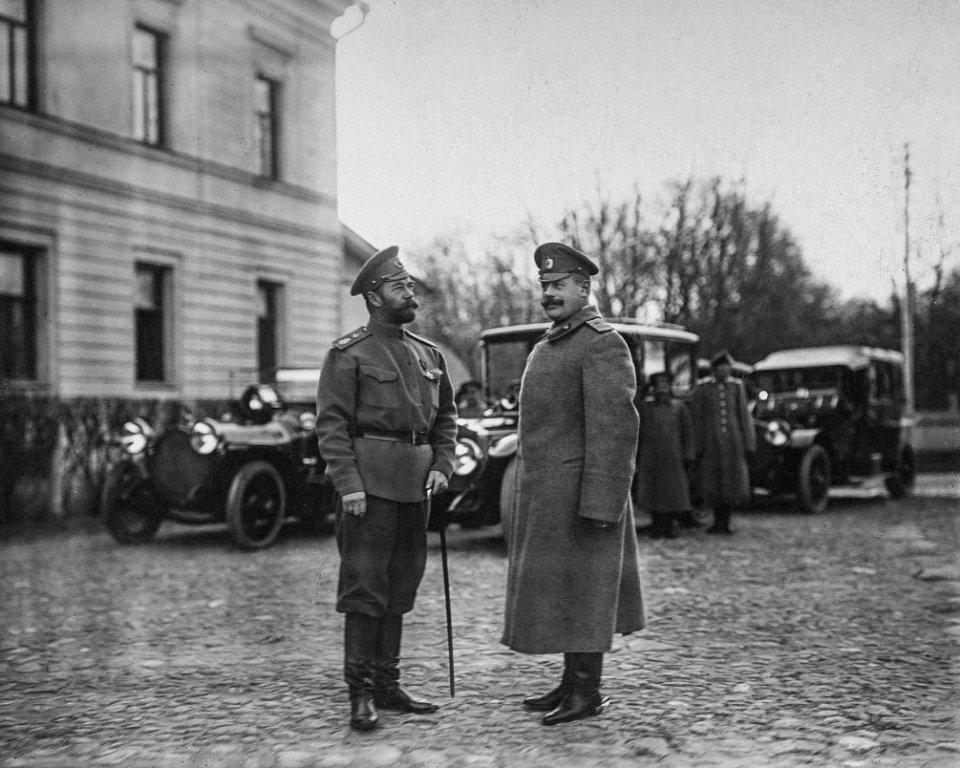
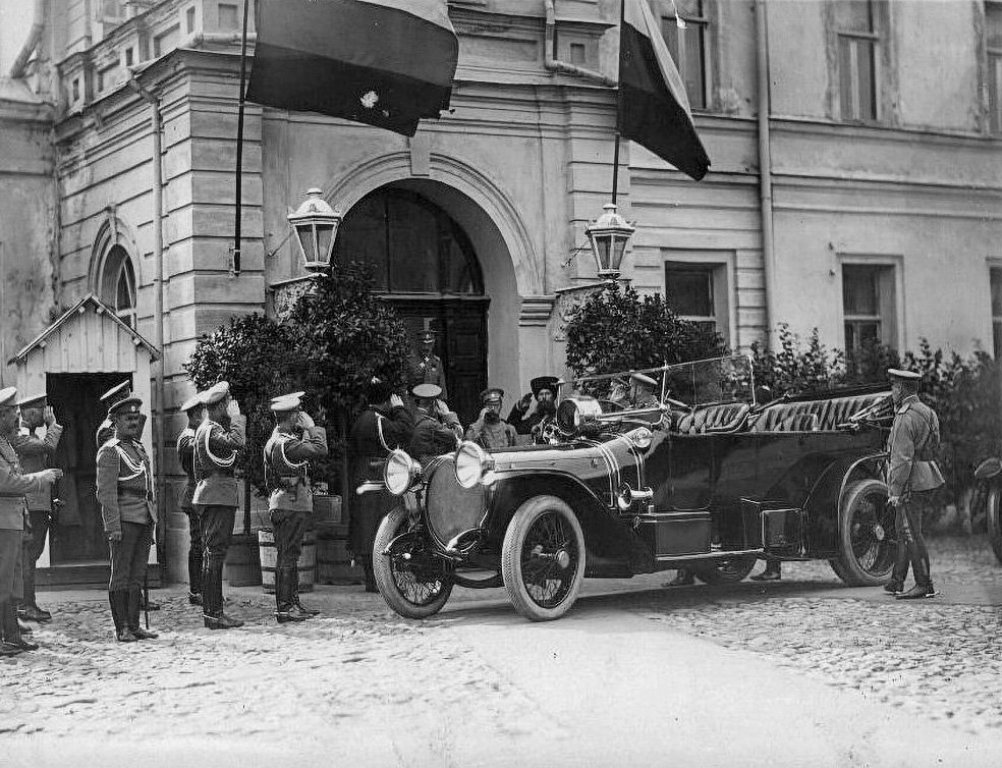
PHOTO: Emperor Nicholas II and Major-General V. Voeikov at the General Headquarters in Mogilev. 1915-1916. Several of the motorcars from the Imperial Garage can be seen in the background.

In the early 20th century, Emperor Nicholas II took a keen interest in the latest fad which was sweeping Europe: the motorcar. By the end of his reign in March 1917, he had amassed an impressive collection of 56 automobiles. None of the European monarchs could boast of such an impressive fleet of vehicles!

His Imperial Majesty’s Own Garage was created for the Emperor’s collection. Imperial Garages were built in Moscow, the Winter Palace (St. Petersburg), Tsarskoye Selo and Livadia. During the war years, an additional garage was built at Mogilev.

On 8th August 1915, the Headquarters of the Supreme Commander-in-Chief of the Armed Forces (Stavka) of the Russian Empire was transferred from Baranovichi to Mogilev. From August 1915 to March 1917, Emperor Nicholas II, served as Commander-in-Chief.

The Tsar travelled back and forth on the Imperial Train, from Tsarskoye Selo to Mogilev, where he settled in the Governor’s House, situated on Gubernatorskaya Square. He was often accompanied by his son Tsesarevich Alexei Nikolaevich.  

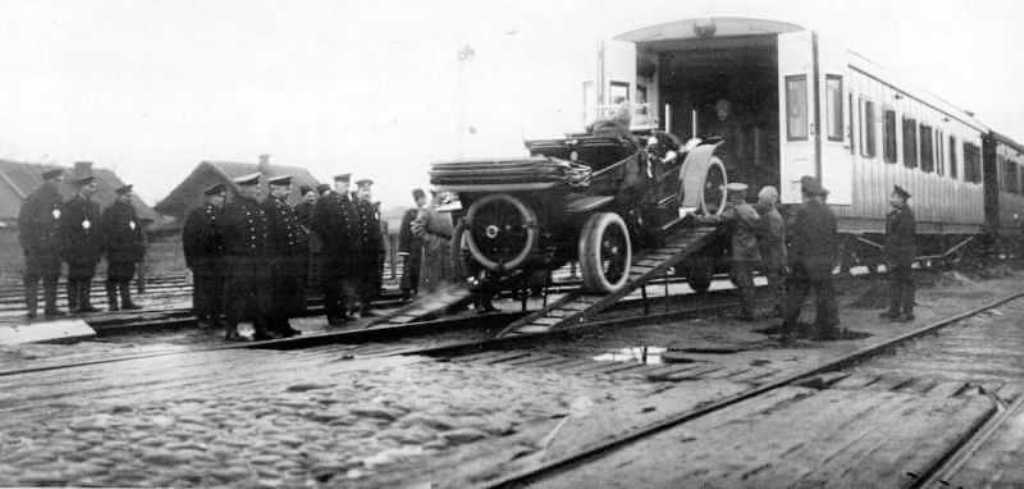
PHOTO: Nicholas II’s motorcars were transported to Mogilev by rail, a special carriage was hitched to the end of the Imperial Train, which featured a ramp to drive the cars on and off.

When Nicholas II moved to Mogilev, he brought with him some of his motorcars from the Imperial Garage in Tsarskoye Selo. According to Nicholas II’s personal security chief Major General Alexander Spiridovich, who often accompanied the Tsar on these trips, recalled:

“The last carriage of our train was the ingeniously invented by [Adolfe] Kegress. The garage car transported the imperial automobiles, and provided accommodation for the chauffeurs. The back wall of this carriage could fold up and down, the latter providing a gangway, along which the motorcars could drive on or off the carriaget. In appearance, this carriage was no different from the other carriagess of the Imperial Train.”

A special 20-meter-long Imperial Garage was installed near the Governor’s House, which could accommodate 4-5 vehicles, as well as a workshop, spare parts, gasoline and lubricants.

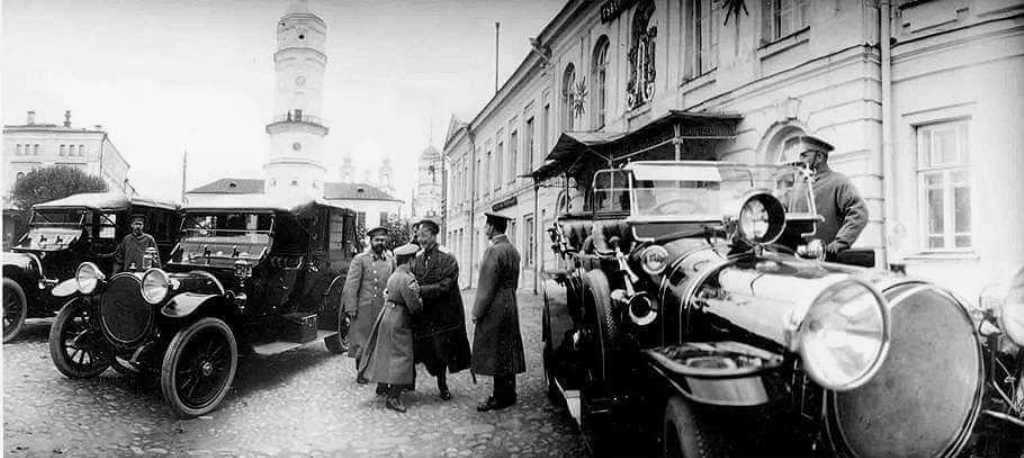
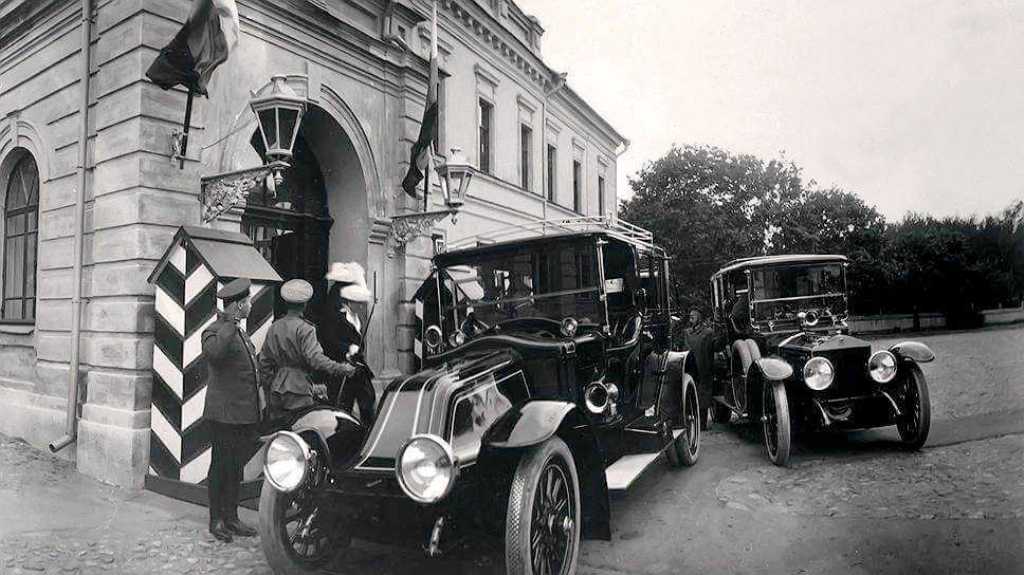
In addition to the triple phaeton, two Delaunay-Belleville 40/45 CV with a landole body and two limousines: a Roll-Royce 40/50 HP and a Renault 40 CV, were also parked in the garage. The latter vehicles were used by members of the Imperial Family and their retinue, when they visited Mogilev.

PHOTO: three of Nicholas II’s motorcars parked on Gubernatorskaya Square. On the right is Delaunay-Belleville triple-phaeton, on the left are two Delaunay-Belleville with a landole body.

PHOTO: Arrival of Empress Alexandra Feodorovna to the General Headquarters in Mogilev in the summer of 1916. The Tsarina preferred closed cars.In front is a Renault 40 CV limousine. Behind is a Rolls-Royce 40/50HP.

Nicholas II himself preferred to drive a Delaunay-Belleville 40/45 CV with a triple-phaeton body, a seven-seater car with three rows of seats, a convertible roof and a 45 horsepower engine. The engine provided speeds of up to 90 km per hour. In addition, unlike serial models, the imperial motorcars were equipped with double steering rods and a disc clutch instead of a conical one.

The horses in Mogilev were frightened by the noisey, speeding motorcars, so before each trip, agents of the security department and the police were posted along the entire route, and traffic along Dneprovsky Prospekt was temporarily halted.

For political reasons, Nicholas II preferred riding in open vehicles. The Tsar believed that he should be visible to the people, and although the guards repeatedly urged him to move around the city in a closed vehicle, Nicholas II, as a rule, drove in open ones.

In the city itself, the imperial motorcars had only one route: from Gubernatorskaya Square, to the military platform of the Mogilev railway station, where the Imperial Trains [there were 2] were parked. The main routes were along the Bobruisk and Orsha highways, on which, the Tsar often ordered the driver to stop, so that he could get out and go for a walk in the forest, which he so enjoyed. Nicholas II did not change this habit until his abdication, when he made his last motorcar ride on 27th February, 1917, which was when the first telegrams informing about the riots in Petrograd arrived at Stavka.

PHOTOl Emperor Nicholas II arrives at Mogilev

FURTHER READING:

Why did Nicholas II’s favourite motorcar sport a swastika?

The fate of Nicholas II’s favourite motorcar

Exhibition dedicated to the 115th anniversary of His Imperial Majesty’s Own Garage opens in Moscow

NEW 4-volume set of books celebrates Emperor Nicholas II’s motorcar collection

© Paul Gilbert. 14 March 2024

Nicholas II’s telephone sold at auction for $2 million USD

On Friday 10th March, a telephone belonging to Emperor Nicholas II was sold at a Sotheby’s auction. The Romanov Week auction featured more than 100 items belonging to members of the Russian Imperial Family.

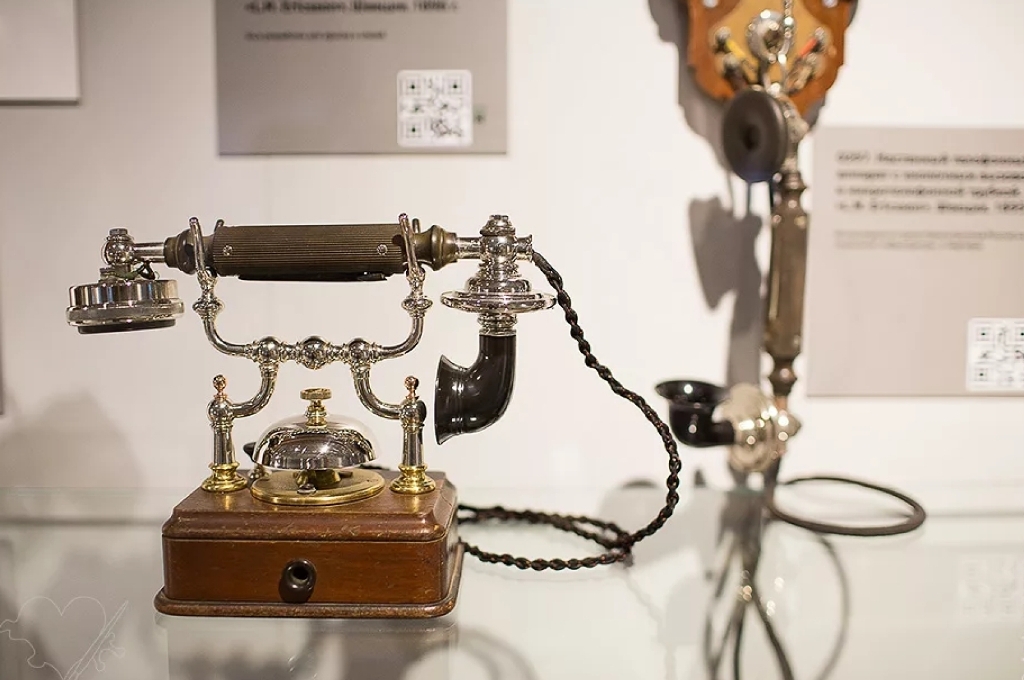
The most expensive lot was a telephone belonging to Emperor Nicholas II, which sold for a staggering 2 million US dollars, almost five times over the estimate.

“It’s a unique device made in 1915 at the Russian-Baltic Wagon factory in Petrograd. The telephone was presented it to the Tsar during the First World War, who used it for communicating with the Empress at Tsarskoye Selo during his trips to General Headquarters (Stavka) at Mogilev,” said Sotheby’s representative Robert Jefferson.

Following the February 1917 Revolution the telephone was confiscated on the order of the Provisional Government and transferred to the custody of the chief of the Petrograd garrison.

Following the riots that swept the capital in July 1917, the telephone was later stolen during the Russian Civil War and smuggled to Europe.

NOTE: In 1896, the Swedish manufacturer of telecommunications equipment Ericsson, installed the first telephone for Emperor Nicholas II in the Grand Kremlin Palace in Moscow.

© Paul Gilbert. 11 March 2023

Nicholas II’s Imperial Train at Mogilev

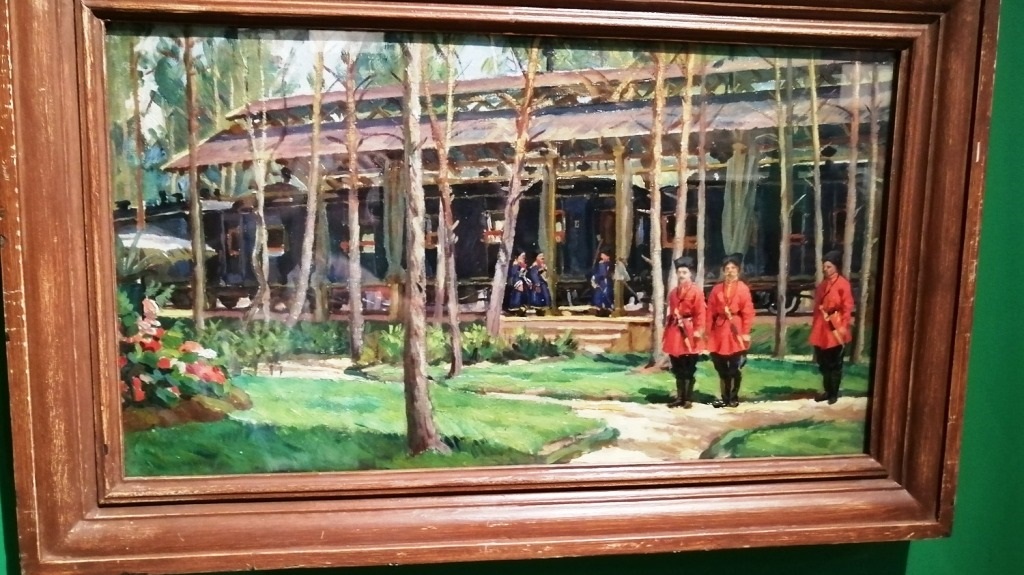
PHOTO: the Imperial Train at the specially built station at Mogilev. Artist unknown.
From the Collection of the Tsarskoye Selo State Museum

In August 1915, after the German advance, the Headquarters [Stavka] of the Supreme Commander-in-Chief, was re-located from Baranovichi to Mogilev. The following month, September 1915, Emperor Nicholas II assumed personal command of the Russian Imperial Army, after dismissing his cousin, Grand Duke Nicholas Nikolaevich from the post.

In the years 1915-1917, Nicholas II spent long periods at the Stavka in Mogilev. He would arrive on the Imperial Train, which made frequent journeys back and forth between Tsarskoye Selo and Stavka.

With the outbreak of World War I, the number of carriages of the Imperial Train was reduced to three. The Imperial Train became both a travelling residence for the Emperor, as well as a military field office, equipped with telephone and telegraph communications.

PHOTO: the Imperial Train set in a pine grove near the Stavka near Mogilev. Nicholas II often went for walks in the surrounding forest, with walking stick in one hand, a cigarette in the other.

As the Imperial Train approached Mogilev, it was diverted to a separate branch line and station, specially constructed for the Imperial Train. It was from this station, that the Emperor and his retinue traveled by motorcar to General Headquarters – where Nicholas II lived, often with his son Tsesarevich Alexei – in Mogilev and back.

The location of the branch was determined by the fact that the forest masked the train from German bombers. The entire area surrounding the station was heavily guarded by police agents and gendarmes.

Trees were felled, and a wooden platform and protective roof were constructed on a privately owned pine forest just north of Mogilev. Pathways and landscaped gardens were laid out, as well as the installation of electric lighting for the tracks, water supply, sewerage, telephone and telegraph wires.

As Prince Michael of Greece notes in his pictorial album ‘Nicholas and Alexandra: The Family Albums‘: “It creates a romantic picture to see these luxurious wagons appear between the vertical tree trunks”.

The special branch line and station for Nicholas II’s Imperial Train at Stavka were both destroyed during the Great Patriotic War (1941-45).

To learn more about the Imperial Train of Nicholas II, please read my article – with photos – The fate of Nicholas II’s Imperial Train, published on 12th January 2021

© Paul Gilbert. 3 September 2022

Nicholas II’s visit to the 1812 Memorial Chapel in Saltanovka, 1917

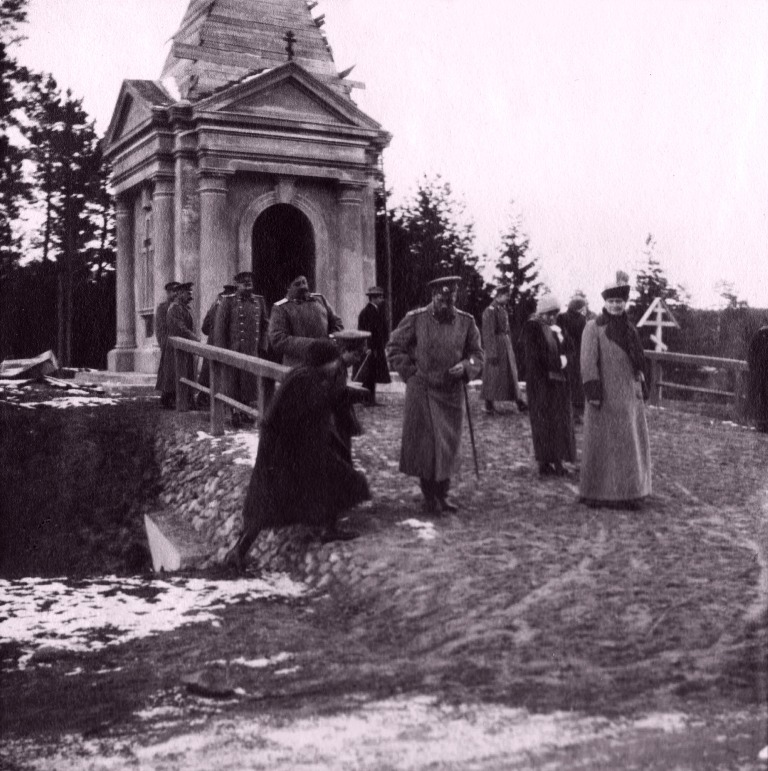
PHOTO: Emperor Nicholas II and his family visiting the Memorial Chapel, 1917. To the left of the Tsar is General Count Alexander Grabbe (1864-1947), who served as Major-General of His Imperial Majesty’s Own Convoy from 1914 to 1917, and Pierre Gilliard (1879-1962), can be seen between the two

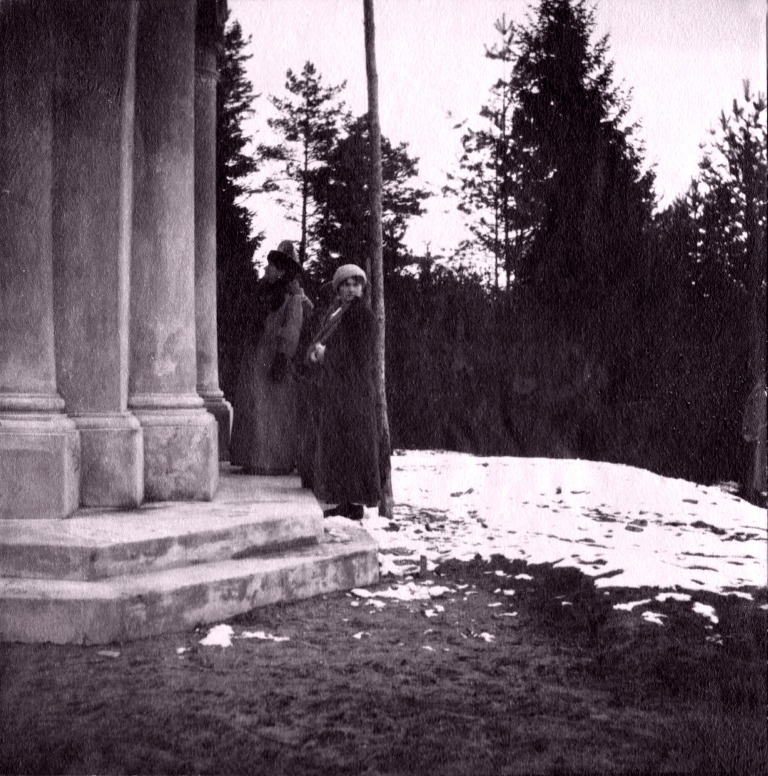
NOTE: The three vintage photographs presented in this post, depict Emperor Nicholas II and his family visiting the Memorial Chapel in the village of Saltanovka, on 1st January 1917, just weeks before the Tsar’s abdication on 16th (O.S. 3rd) March 1917.

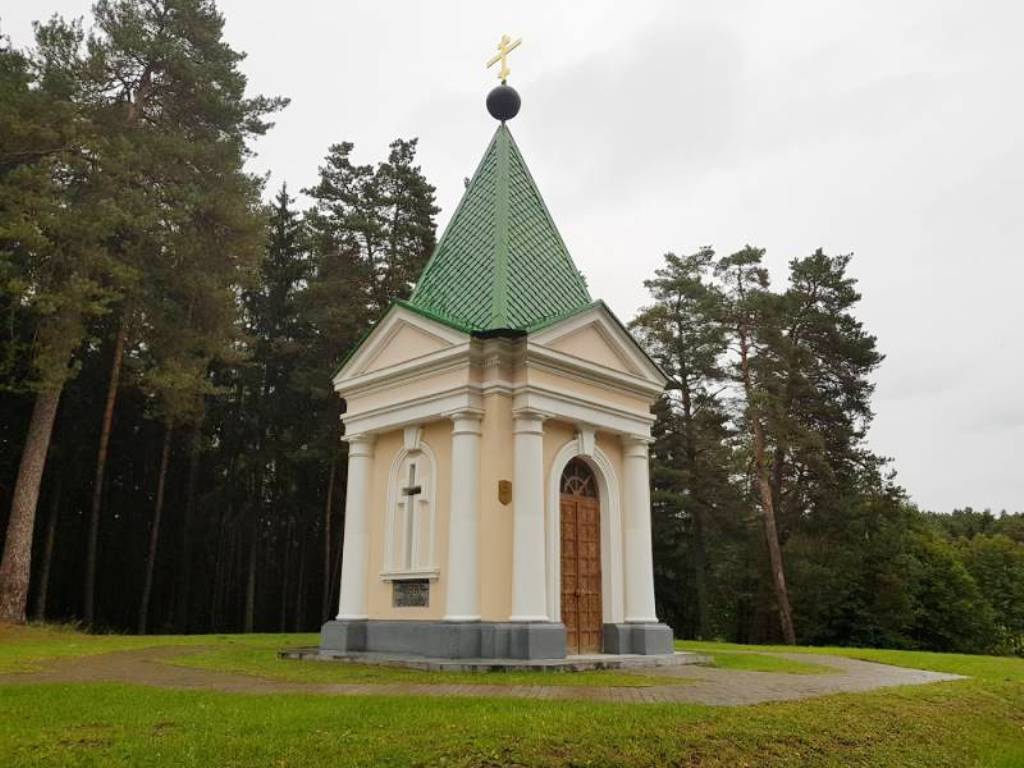
The Memorial Chapel was constructed in 1912, it is situated two kilometers north-west from the village of Saltanovka near Mogliev. It has survived to this day – see photo below.

The chapel was erected by the Tsarist government in 1912 to commemorate the 100th anniversary of the Battle of Saltanovka, during the Patriotic War of 1812. It was here, on 11th July 1812, that the battle took place between the Russian troops of Emperor Alexander I (1777-1825) the 7th corps under the command of Lieutenant General Nikolai Raevsky (1771-1829), and the French troops of Emperor Napoleon I (1769-1821) under the command of Marshal Luis-Nicolas Davout (1770-1823).

It was constructed in the Neoclassical style by the Russian architect Konstantin Alekseevich Mikhailov (1873-1927) and sculptor Pyotr Grigorievich Yatsyno, who carried out the artistic stucco decoration, memorial plaques and finishing works.

On the walls of the chapel are commemorative plaques listing the Russian regiments and divisions that took part in the battle. The ashes of Russian soldiers who died in the 1812 Battle of Saltanovka, lie within the walls of the chapel.

PHOTO: Empress Alexandra Feodorovna, Emperor Nicholas II, Grand Duchess Olga Nikolaevna and an unidentified officer

PHOTO: Empress Alexandra Feodorovna and Grand Duchess Olga Nikolaevna

***

PHOTO: The Memorial Chapel near the village of Saltanovka as it looks today

© Paul Gilbert. 15 June 2021

***

Dear Reader: If you enjoy my articles, news stories and translations, then please help support my research by making a donation in US or Canadian dollars to my project The Truth About Nicholas II – please note that donations can be made by GoFundMePayPal, credit cardpersonal check or money order. Thank you for your consideration – PG

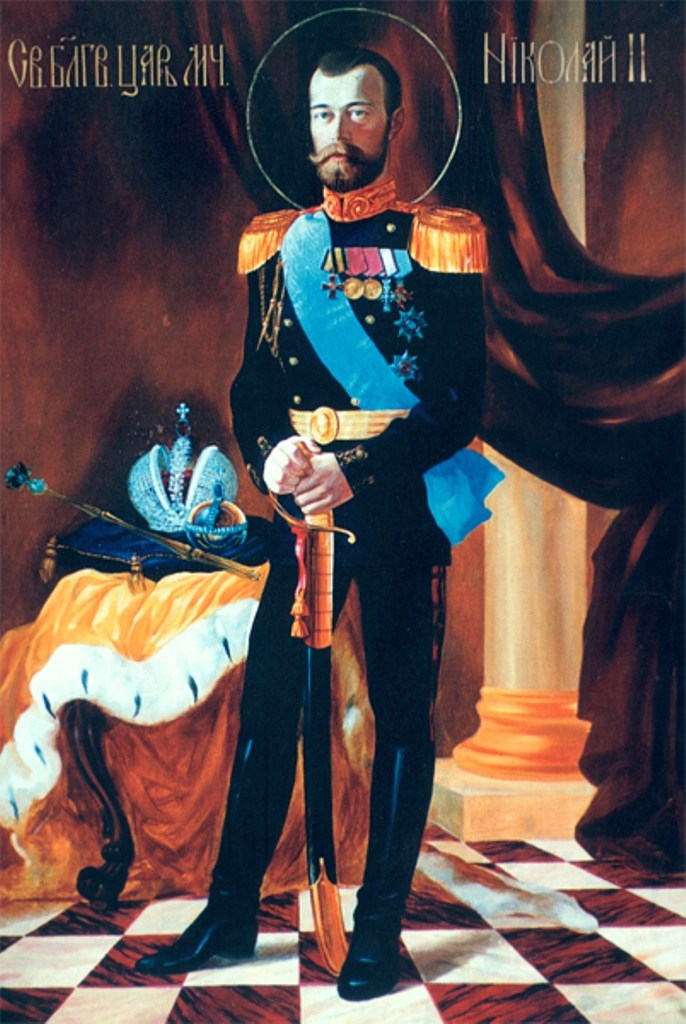
Ceremonial portrait of Nicholas II found in Mogilev, now a holy icon


PHOTO: Ceremonial portrait of Nicholas II. Artist and year unknown.

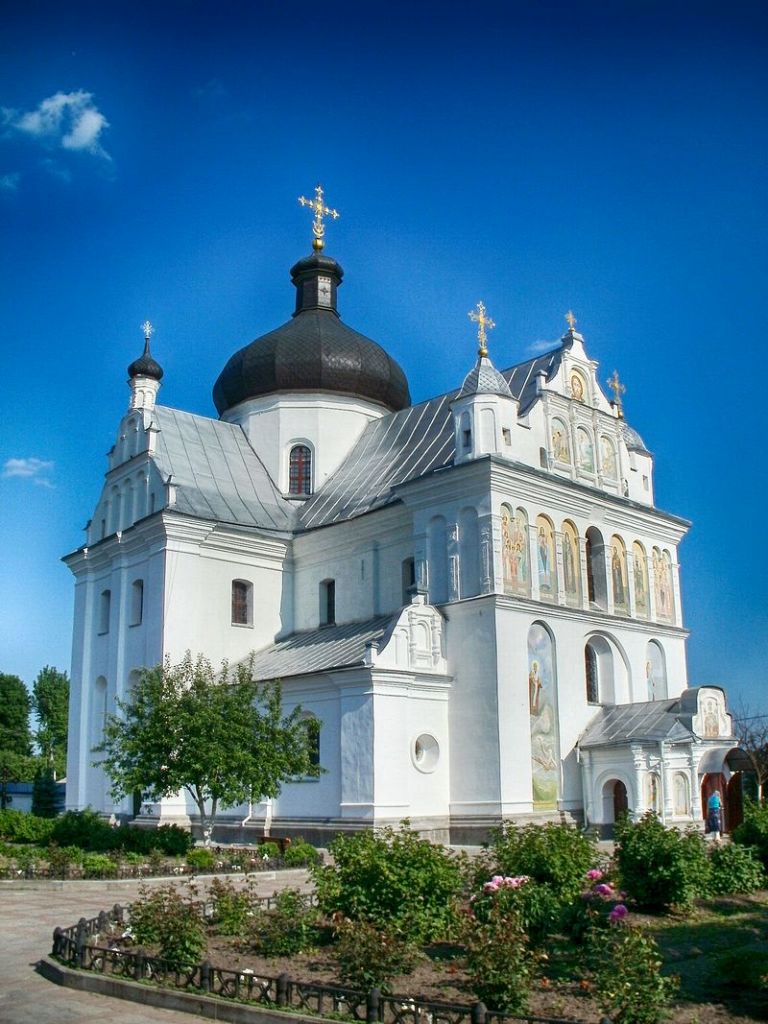
This year marks 30 years since the revival of the St. Nicholas Monastery in Mogilev. This Orthodox monastery is one of the oldest – the first mentions of the monastery appears in the annals of 1522 – and most famous spiritual centers in eastern Belarus, its history is closely connected with Emperor Nicholas II.

The pearl of the monastery is a unique wooden carved iconostasis, made in a special technique of Belarusian carving of the 17th century. Only three such iconostases have survived in the world: in the Novodevichy Convent in Moscow, in the Assumption Cathedral in Smolensk and in the St. Nicholas Monastery in Mogilev. The first abbess of the revived monastery, Abbess Evgenia Voloshchuk and her sisters worked hard during the restoration of the St. Nicholas Monastery.

Difficult fate

St. Nicholas Convent operated from 1637 to 1719, and then was transformed into a male monastery, which existed until 1754. Later, the St. Nicholas Cathedral became the parish church.

Like all Orthodox places of worship, the monastery shared a similar fate – during the years of persecution of the Russian Orthodox Church during the Soviet years, the church’s icons and other contents were confiscated, the iconostasis was destroyed. In 1934, with the death of the priest Mikhail Pleshchinsky, St. Nicholas Cathedral was closed. In 1937, the Mogilev diocese ceased to exist.

In 1937, St. Nicholas Cathedral was used as a transit prison (closed in 1941). In 1991, during the restoration of the monastery, numerous human remains were discovered – most likely victims of Stalinist repressions.

It was not until 1989, that the Mogilev Diocese was restored. It was at this time, that the reigning archbishop of Mogilev and Mstislavsky Maxim (Krokha) began the revival of the St. Nicholas Monastery.

On 28th March 1991, the St. Onufrievsky Church was consecrated. On 18th June of the same year, the monastery was visited by His Holiness Patriarch Alexy II (1929-2008) of Moscow and All Russia.


PHOTO: St. Nicholas Cathedral, St. Nicholas Monastery in Mogilev

Monastery and the Romanov family

The history of the monastery is closely connected with the last Tsar and his family. Between 1915-1917, the headquarters of the Supreme Commander-in-Chief of the Russian Armed Forces was located in Mogilev. During that time, Nicholas II and his family often attended Divine Liturgies held in St. Nicholas Cathedral.

During the canonization by the Russian Orthodox Church of the New Martyrs and Confessors of Russia of the 20th century in the summer of 2000, a ceremonial portrait of the emperor was miraculously found in the niche of an old wall of one of the houses in Mogilev. Local Orthodox Christians, believing the discovery as a miracle and turned the portrait into an icon, transferring it to the St. Nicholas Cathedral.

The icon hangs today, on the left side-altar of the church consecrated in memory of the Holy Royal Martyrs. A five-ruble gold coin is also attached to the icon, which was once presented to the boy Simeon Khalipov by Emperor Nicholas II during a visit to the monastery.

© Paul Gilbert. 28 March 2021