Is the myrrh-streaming icon of Nicholas II predicting a terrible omen for Russia?
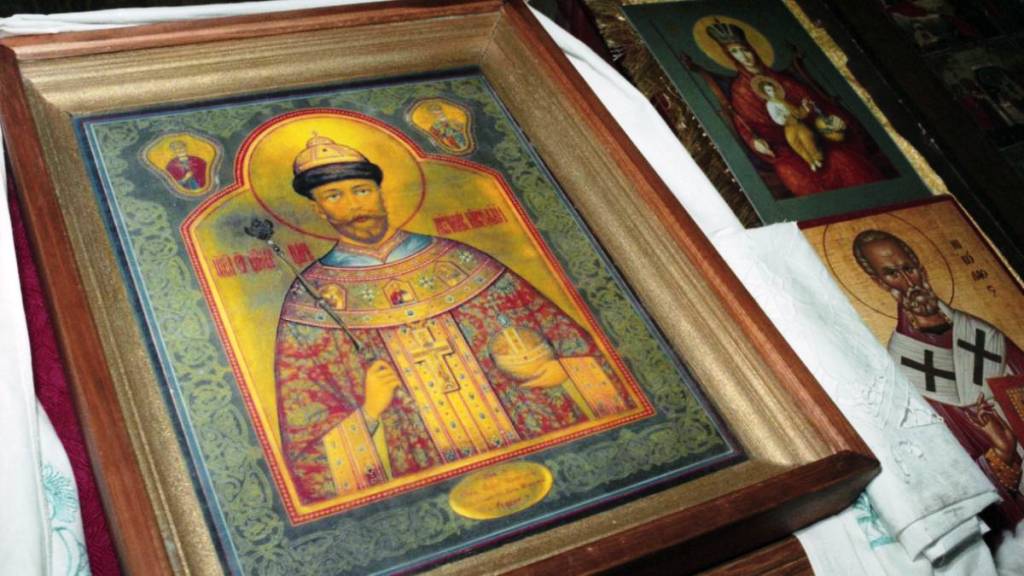
Whether you are a believer or not, the following is just one of many miracles reported since the regicide in Ekaterinburg in July 1918 . . .

Last week, a case of myrrh streaming[1] from the icon of the Tsar-Passion-Bearer Nicholas II was recorded in the Church of the Nine Martyrs of Kizichesky in Moscow. The Orthodox community is now discussing the event which many believers and clergy interpret as an alarming omen.

Archpriest Anthony Serov commented on the event, “fragrant oil, myrrh, appeared on the surface of the icon, which is in a special, hermetically sealed case.” According to him, the design of the kiot[2] completely excludes any possibility of external influence or forgery. The myrrh-streaming of the icon has been confirmed by Life.ru[3].

“The icon is placed in a protected case, which excludes any outside interference,” Archpriest Anthony Serov emphasized. “Nevertheless, we have witnessed myrrh streaming from the icon. This, in my opinion, is of great spiritual importance.”

In the Orthodox tradition, the streaming of myrrh from icons is considered a miracle and a special sign of grace. However, myrhh streaming from the face of the saint [Nicholas II] which is enclosed in a protective case, is another matter.
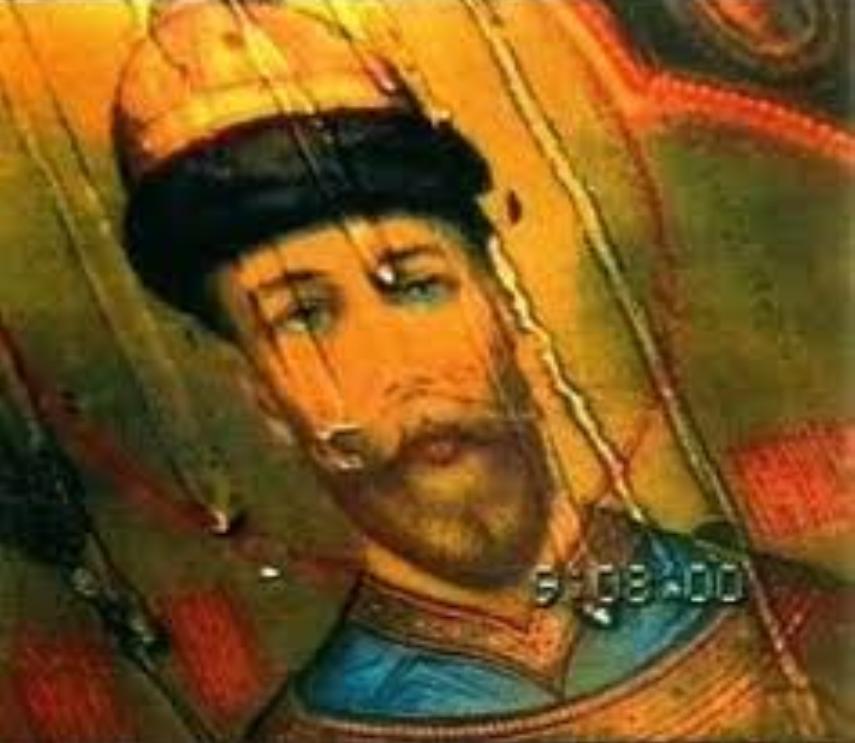
Archpriest Serov regards the incident as a warning addressed not only to Orthodox believers, but to Russian society as a whole. He drew parallels with historical events when such phenomena preceded significant changes and upheavals, such as the 1917 Revolution and the First World War.

“The history of our country [Russia] has experienced examples of the streaming of myrrh from icons became a harbinger of revolutionary events, military conflicts and other difficult trials and tribulations,” the rector of the church explained. “It is necessary to comprehend what happened and learn from them.”

Over the centuries, such cases have been repeatedly recorded in Orthodox monasteries and churches in Russia. As a rule, believers see this as a call to repentance and prayer, especially when the images of the Royal Passion-Bearers “weep”.

Earlier, journalists turned to religious scholar Konstantin Mikhailov for comment of the recent myrrh-streaming incident near Moscow. The confessor said that such events are not uncommon and in most cases have a natural explanation. According to the expert, scientists have always found logical reasons for the appearance of moisture on icons.

In the meantime, parishioners and believers from all over Moscow are coming to the Church of the Nine Martyrs of Kizichesky to personally see the myrrh-streaming icon and pray.

NOTES:

[1] In the Orthodox tradition, myrrh-streaming is one of the most mysterious and controversial phenomena. On the one hand, the Church recognizes the fact of the outflow of fragrant myrrh from icons, relics and crosses as one of the manifestations of God’s grace. On the other hand, each such case is carefully checked by church commissions in order to exclude any possibility of forgery or natural causes.

[2] A kiot is a decorated case or frame used in Orthodox Christianity to protect and display religious icons. It serves to safeguard the icon from environmental factors such as temperature fluctuations, dust, and humidity, ensuring the icon’s preservation over time.

[3] A prominent Russian information portal and news agency.

FURTHER READING:

Myrrh-streaming icon of Tsar Nicholas II brought to Ekaterinburg for Tsar’s Days’ + PHOTOS and VIDEO

My [Paul Gilbert’s] cancer journey and prayers for the intercession of Tsar-Martyr Nicholas II

© Paul Gilbert. 23 November 2025
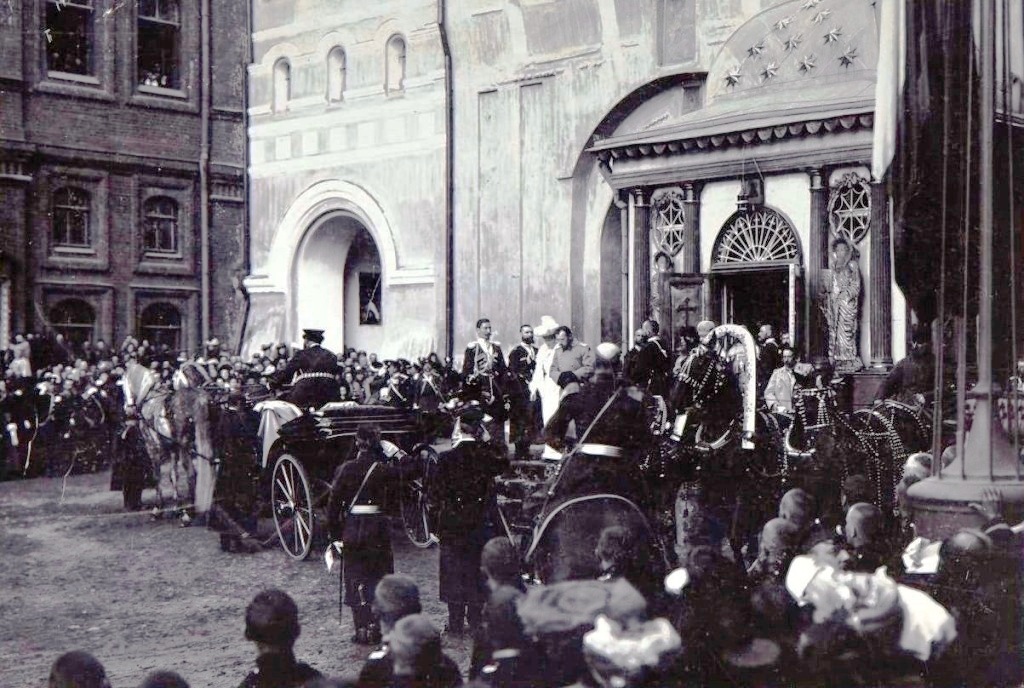
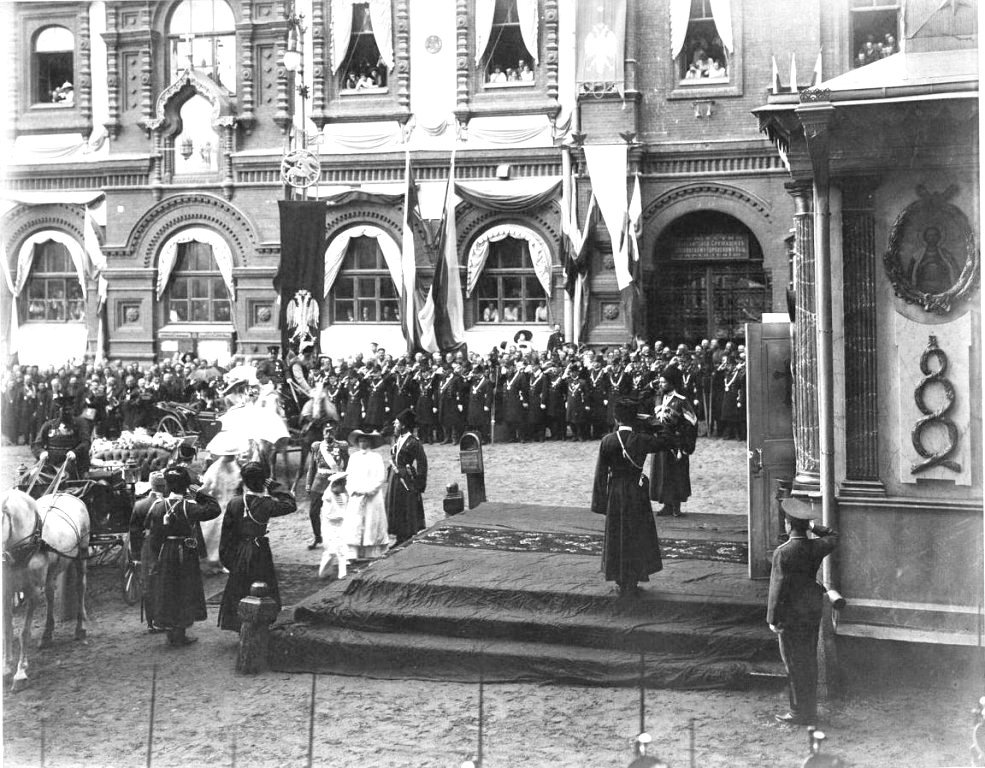
Nicholas II visits the Iverskaya Chapel in Moscow

VIDEO: Vintage newsreel of the Great Pilgrimage of Emperor Nicholas II to Moscow, on May 24-27, 1913. In this video you will hear a unique audio recording of Orthodox hymns for the Transfiguration of the Lord, performed by the Moscow Chudov Choir in 1908. Duration: 3 minutes, 5 seconds

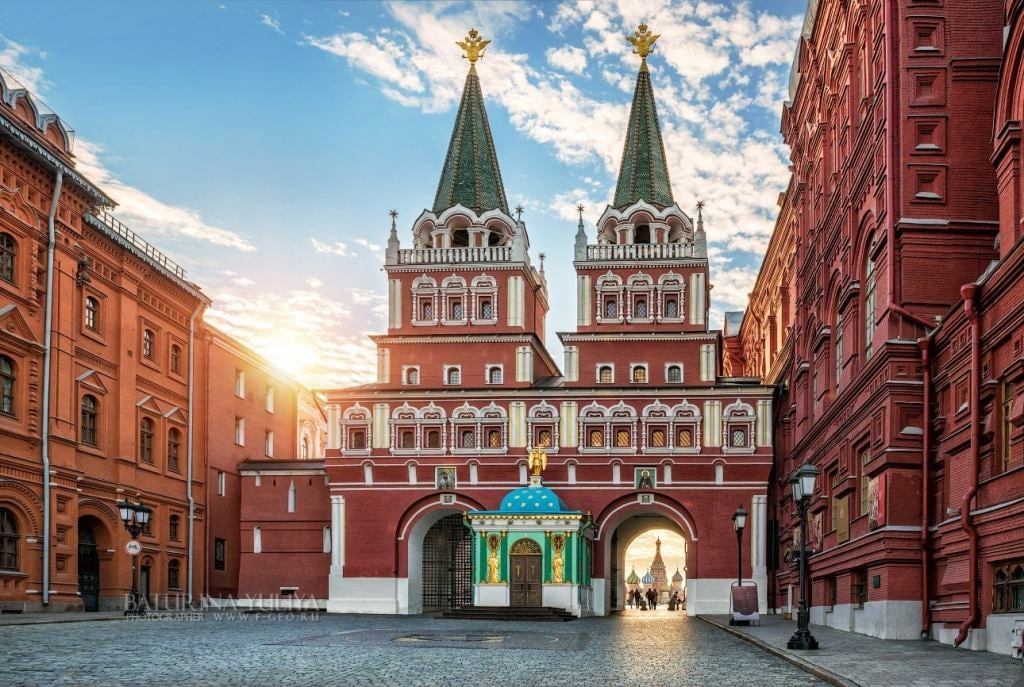
The Iberian or Resurrection Gate is the only remaining gate of the Kitai-gorod[1] in Moscow. It connects the north-western end of Red Square with Manege Square and gives its name to nearby Voskresenskaya Square [Resurrection Square, renamed Revolution Square in 1918].

The gate adjoins the ornate building of the old Moscow Duma [City Hall] to the east and the State Historical Museum to the west.

The first stone gate leading to Red Square was erected in 1535, when the Kitai-gorod wall was being reconstructed in brick. When the structure was rebuilt in 1680, the double passage was surmounted with two-storey chambers crowned by two octagonal hipped roofs similar to the Kremlin towers. An Icon of the Resurrection was placed on the gate facing towards Red Square, from which the gate derives its name.

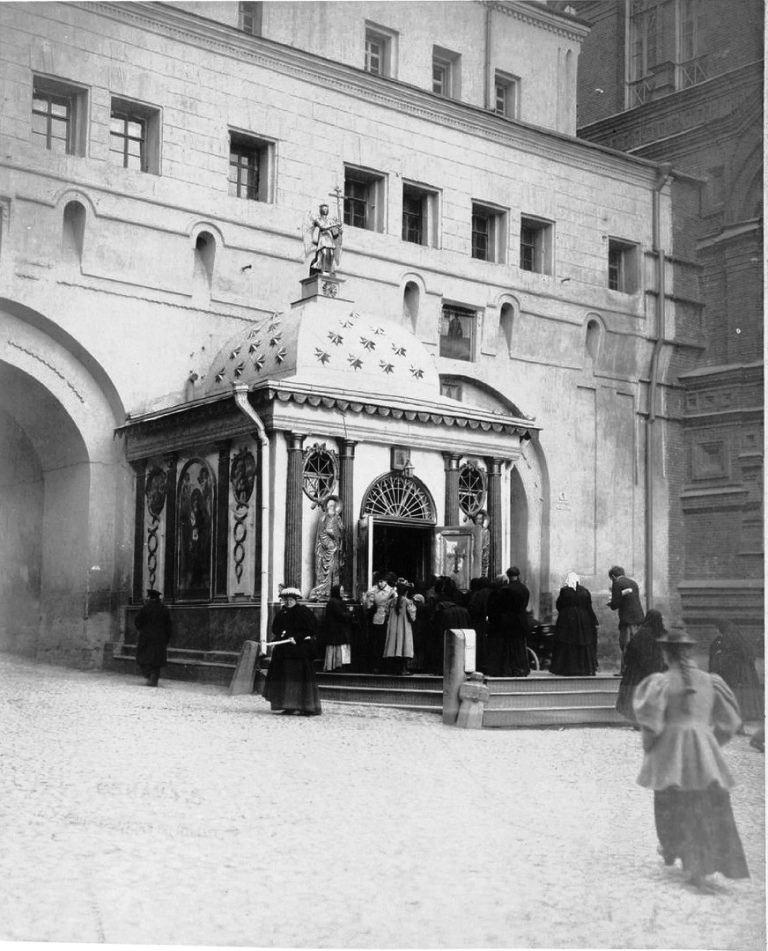
The Iverskaya Chapel

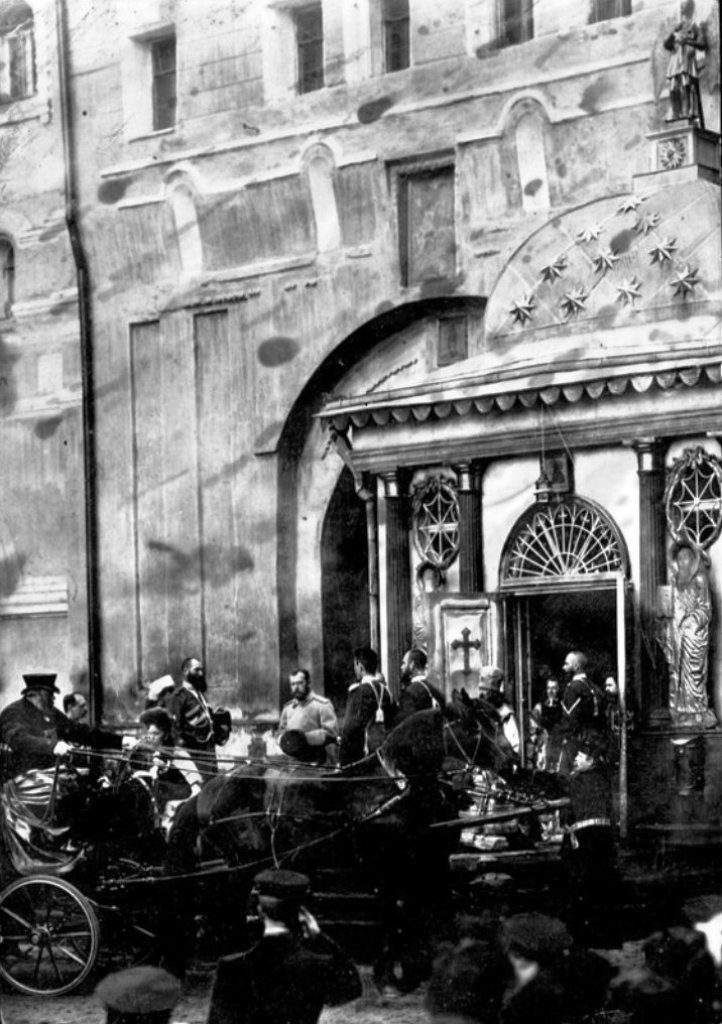
Since 1669, the wooden chapel in front of the gate (facing away from Red Square) has housed a replica of the miracle-working icon of Panaghia Portaitissa (“keeper of the gate”), the prototype of which is preserved in the Georgian Iveron Monastery on Mount Athos. Hence, the name Iversky (Iberian) that stuck both to the chapel and the gate. In 1781, the Nikolo-Perervinsky Monastery constructed a new brick chapel on the spot. The star-splattered cupola of the structure was topped with a statue of an angel bearing a cross.

According to a popular custom, everyone heading for Red Square or the Kremlin visited the chapel to pay homage at the shrine, before entering through the gate. Beggars and outlaws would pray there next to the highest persons, including the Tsar himself. It was here that the rebel Emelyan Pugachev asked the Russian people for forgiveness a few hours before his execution. The tiny ever-overcrowded chapel, with candles burning day and night, figures in works by Leo Tolstoy, Ivan Bunin, Marina Tsvetayeva, and H.G. Wells, to name only a few.

PHOTO: the Iverskaya Chapel. c. 1890s

Nicholas II, like his father preferred Moscow to St. Petersburg. According to French historian Marc Ferro: “Nicholas II preferred Moscow to St. Petersburg because the old city embodied the past, whereas St. Petersburg represented modernity, the Enlightenment and atheism.”

Three of the most notable visits to the Chapel were made on 26th (O.S. 14th) May 1896, on his way to his Coronation; on 25th-26th August 1912 during the celebrations dedicated to the 100th anniversary of the Battle of Borodino; and in May 1913 for celebrations marking the Romanov Tercentennary (1913).

On 5th April 1900, Nicholas wrote to his mother about reaching a landmark in his private spiritual life. A letter to his mother, reveals his strong religious feeling:

“What a joy it is to us, dear Mama, to prepare for Holy Communion here in the Kremlin, with all its various churches and chapels . . . This feeling is now much stronger than it was in 1896, which is only natural. I am so calm and happy now, and everything here makes for prayer and peace of spirit . . . “.

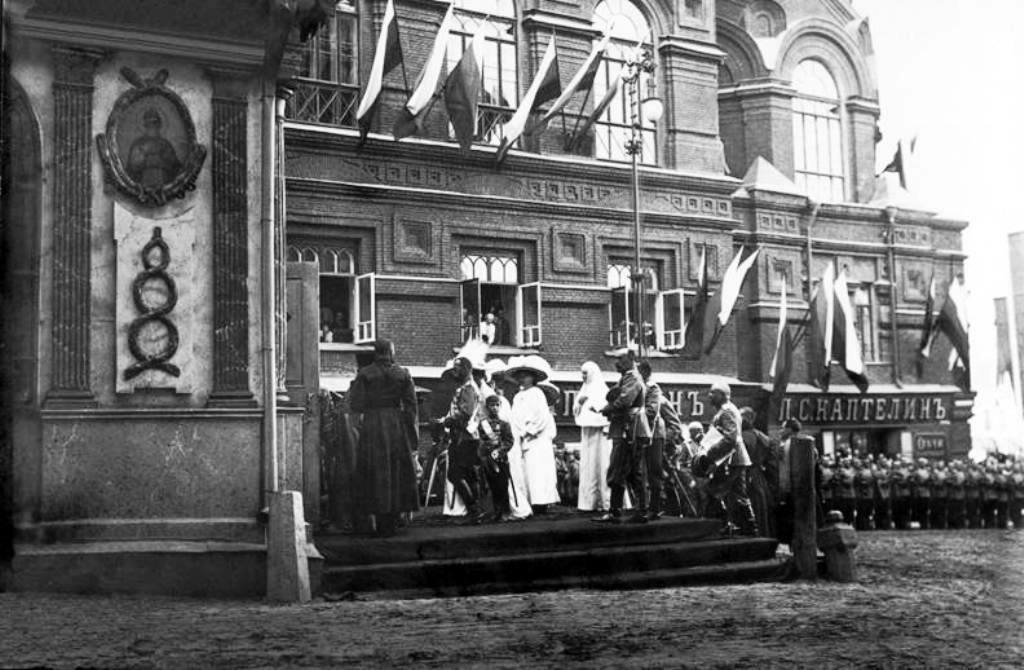
During his reign, Nicholas made numerous visits to the former Russian capital, where he always stopped to pray at the Iverskaya Chapel before crossing Red Square into the Kremlin, where he took up residence in the Grand Kremlin Palace. Moscow’s fervent greeting to their Tsar on each of his visits confirmed his feeling for the city.

Three of the most notable visits to the Iverskaya Chapel were made on 26th (O.S. 14th) May 1896, on his way to his Coronation; on 25th-26th August 1912 during the celebrations dedicated to the 100th anniversary of the Battle of Borodino; and in May 1913 for celebrations marking the Romanov Tercentennary (1913).

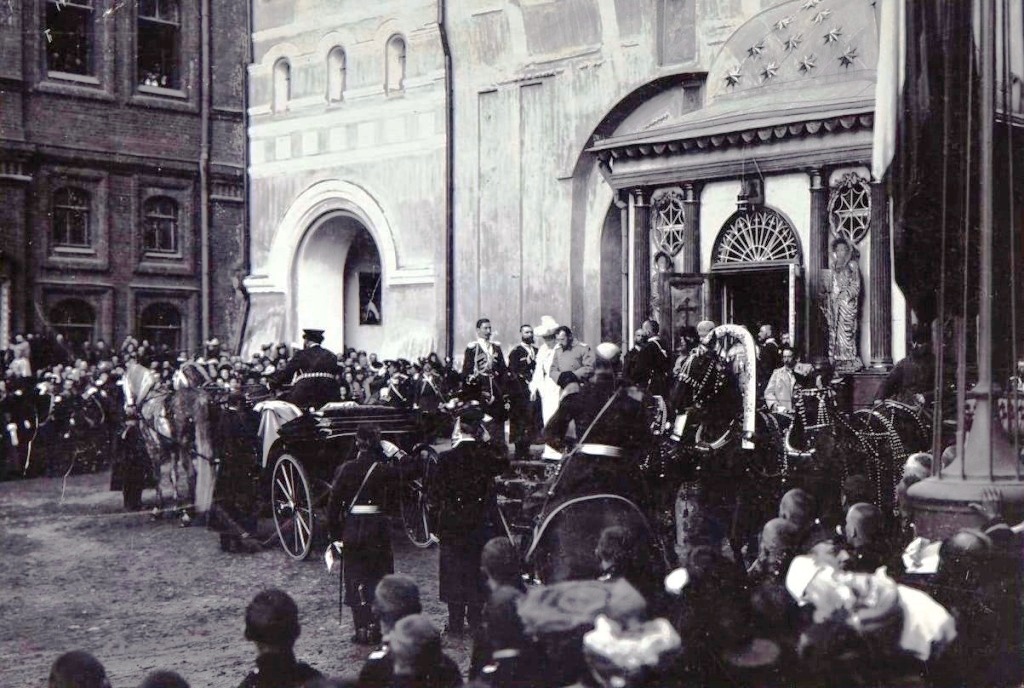
PHOTO: Emperor Nicholas II along with members of his family arrive at the Iverskaya Chapel in Moscow, 1912. Note the curious people watching from the windows of the State Historical Museum in the background. The Tsar is accompanied by his daughters the Grand Duchesses Olga, Tatiana, Maria, Anastasia (all wearing white hats), and his son Tsesarevich Alexei Nikolaevich, as well as the Grand Duchess Elizabeth Feodorovna (wearing a nuns’ habit).

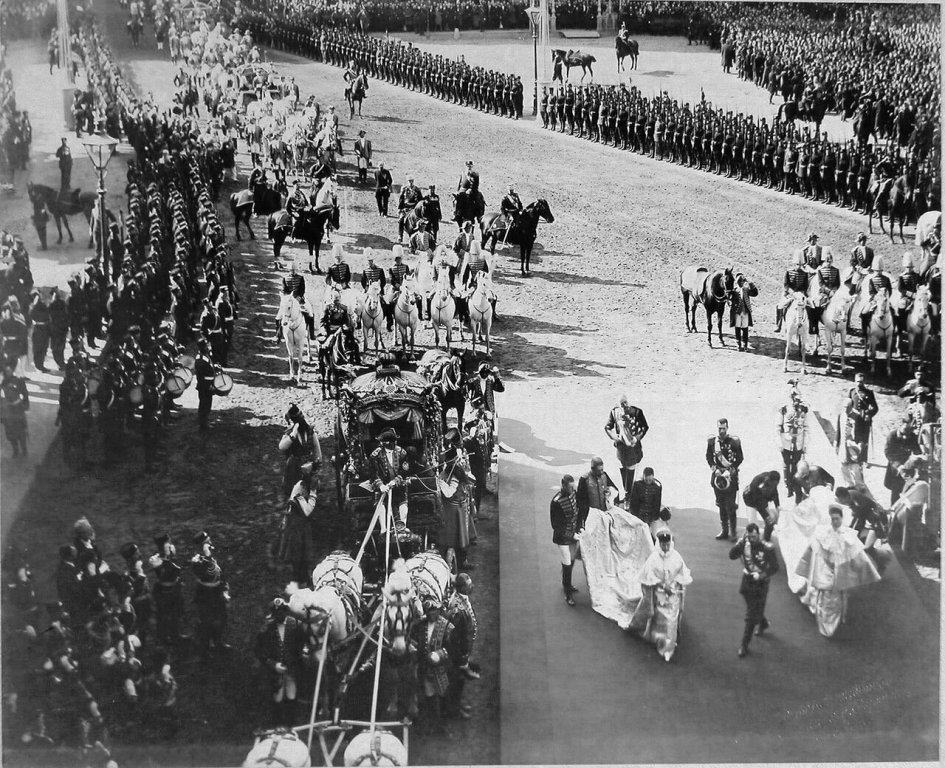
In the above photo, Emperor Nicholas II, Empresses Alexandra Feodorovna and Maria Feodorovna are walking towards the Iverskaya Chapel of the Iberian Mother of God before the crowning of Russia’s last Tsar in the Assumption (Dormition) Cathedral in the Kremlin on 26th (O.S. 14th) May 1896.

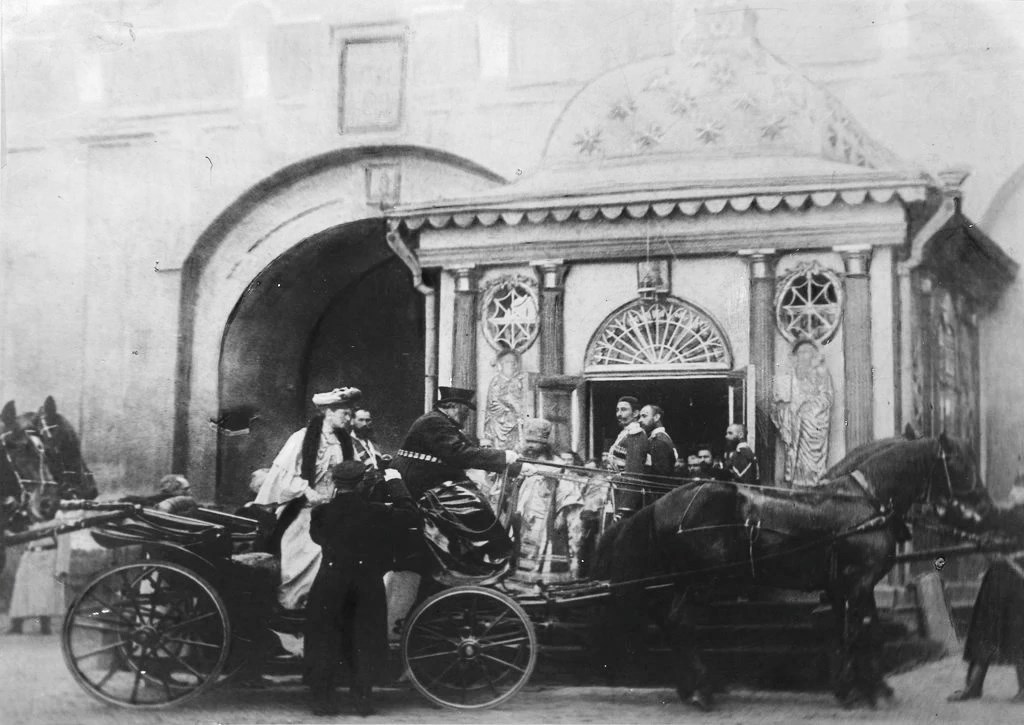
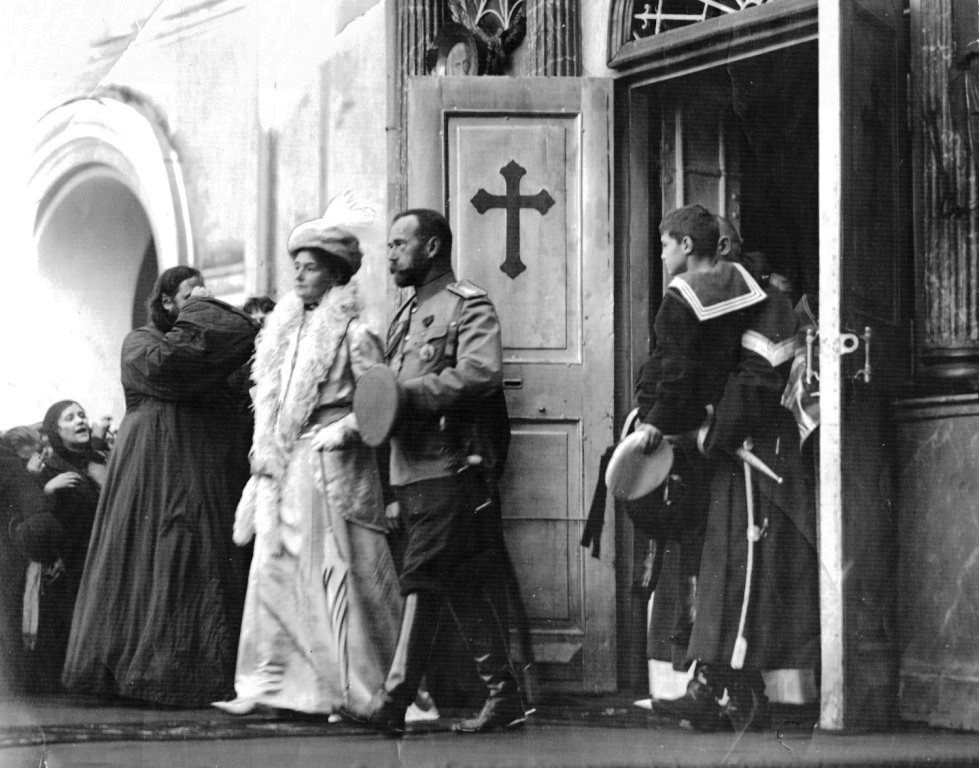
The photos below depict Emperor Nicholas II, Empress Alexandra Feodorovna and their children visiting the Iverskaya Chapel to pray in 1912 and 1913:

PHOTO: Nicholas II, Empress Alexandra Feodorovna and Tsesarevich Alexei Nikolaevich (being carried by the Cossack Alexei Petrovich Pilipenko (1887-1972) leaving the Iverskaya Chapel in Moscow

***

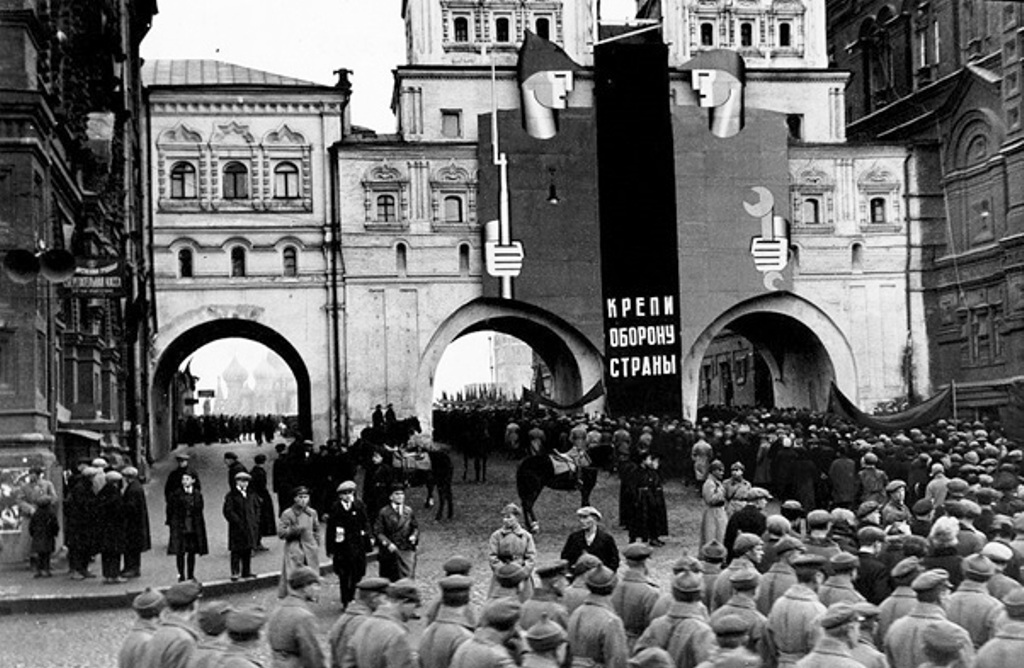
In 1929 the Iverskaya Chapel was demolished, and in 1931 the Resurrection Gate was demolished by order of Soviet leader Joseph Stalin in order to make room for heavy military vehicles driving through Red Square during military parades. Following the dissolution of the Soviet Union, both structures were rebuilt under Moscow mayor Yuri Luzhkov’s[2] leadership, on the site between 1994 and 1995. A new icon of the Iveron Theotokos was painted on Mount Athos to replace the original.

On 4th November 1994, Patriarch Alexi II (1929-2008) consecrated the foundation of both the Iverskaya Chapel and the Resurrection Gate. The Iverskaya Chapel reopened to worshippers on 25th October 1995. Every day, every two hours from eight o’clock in the morning to eight in the evening, prayers are performed in the chapel with the reading of the akathist to the Most Holy Theotokos. 

PHOTO: view of the Resurrection Gate in 1931, the Iverskaya Chapel was demolished in 1929

PHOTO: a stunning view of the Iverskaya Chapel and Resurrection Gate – the latter of which leads into Red Square, reconstructed between 1994-95.

NOTES:

[1] The Kitay-gorod was a cultural and historical area, built during the 16th and 17th centuries within the central part of Moscow. During the 1920s and 1930s Stalin ordered Kitay-gorod to be demolished. This wanton act of destruction included 10 chapels, the Cathedral of the Nikolo-Greek Monastery, and two monastery bell towers. The last pre-war victim of Kitay-gorod was the *Cathedral of Our Lady of Kazan, demolished in 1936, which stood on the corner of Nikolskaya Street and the Red Square. *Reconstructed between 1990-1993.

[2] Yuri Mikhailovich Luzhkov (1936-2019) was a Russian politician who served as the Mayor of Moscow from 1992 to 2010. Under Luzhkov’s leadership, the Cathedral of Christ the Saviour, the Cathedral of Our Lady of Kazan, the Resurrection Gate and Iverskaya Chapel were all rebuilt, as well as the construction of Catherine II’s unfinished palace in Tsaritsyno and the reconstruction of the Kolomenskoye Palace of Tsar Alexis (demolished as early as the 18th century).

© Paul Gilbert. 13 August 2023

First Moscow church is being built in honour of the Tsar-Passion-Bearer Nicholas II

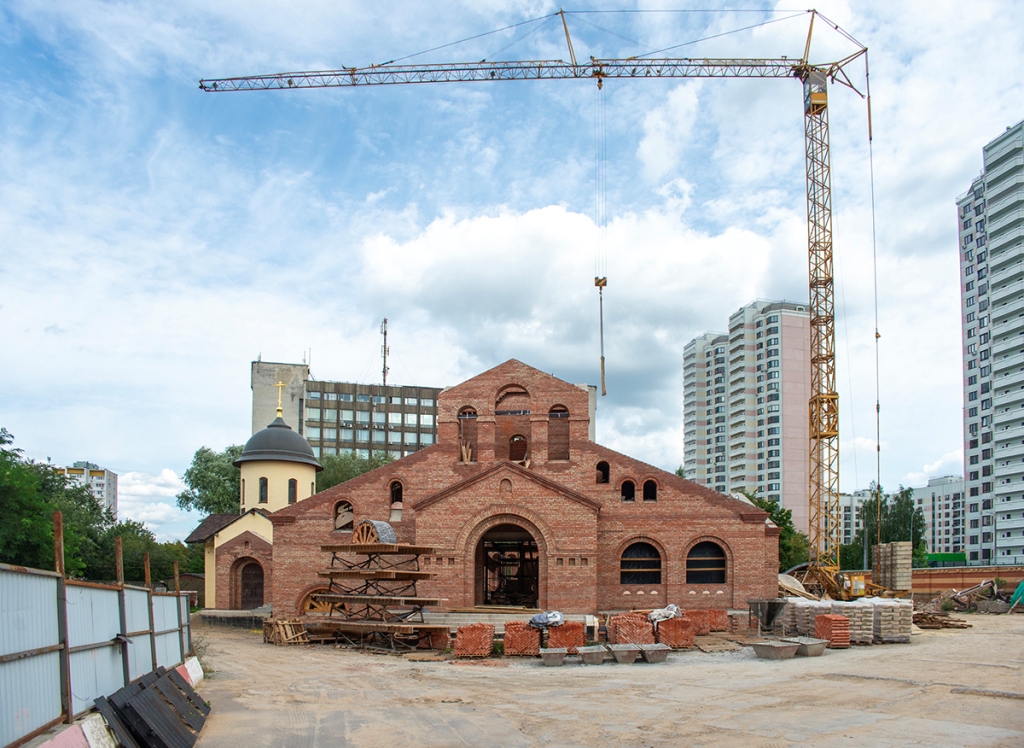
The first Moscow church in honour of the Tsar-Passion-Bearer Nicholas II is now being built in the capital’s Annino district, said Vladimir Resin, deputy of the State Duma of Russia, Patriarchal Adviser and curator of the Program for the Construction of New Churches in Moscow.

Vladimir Resin clarified that there are currently 22 churches and chapels in Russia, dedicated to the Tsar-Passion-Bearer, however, this will be the first such church to be constructed in Moscow. These do not include churches and chapels dedicated to the Holy Royal Passion-Bearers, which have been constructed across the Russian Federation, following the Imperial Family’s canonization by the Moscow Patriarchate in August 2000.

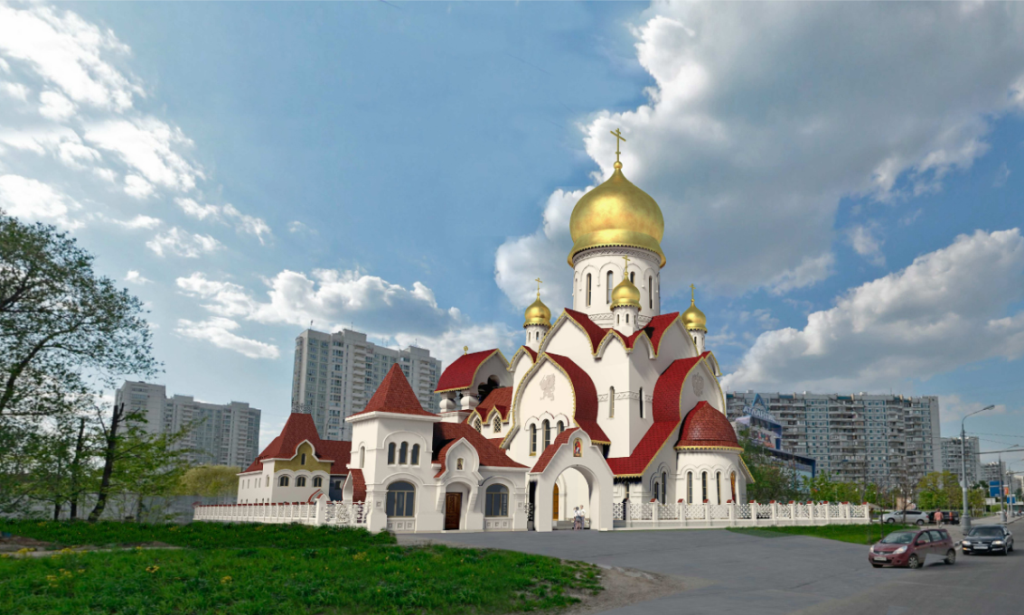
“Thanks to the support of His Holiness the Patriarch, donations from parishioners and a targeted patriarchal subsidy, we are confidently moving forward. I note that the project of this large church for 800 people was developed in the style of Russian Art Nouveau. The area of the prayer hall without an altar and a solea is over 400 square meters,” said the Patriarchal Adviser.

Artist concept of church in honour of the Tsar-Passion-Bearer Nicholas II, Moscow

The church complex is being built according to the project of the architect Fyodor Ivanovich Afuksenidi (b. 1961, Krasnaya Polyana), the author of more than 50 Orthodox churches and chapels, who died in 2019. For the creation of churches, he was awarded the Order of Sergius of Radonezh III Degree.

It is noted that thanks to the manufacturer, 20 tons of reinforcement bars were delivered to the construction site in June, and on June 7, the parish youth began to inscribe the names of the donors on the brick walls of the future church.

“By the end of the year, the builders intend to erect the frame of the building along with the installation of drums under the domes. The entire complex is expected to be complete in 2028,” added Vladimir Resin.

© Paul Gilbert. 19 August 2025

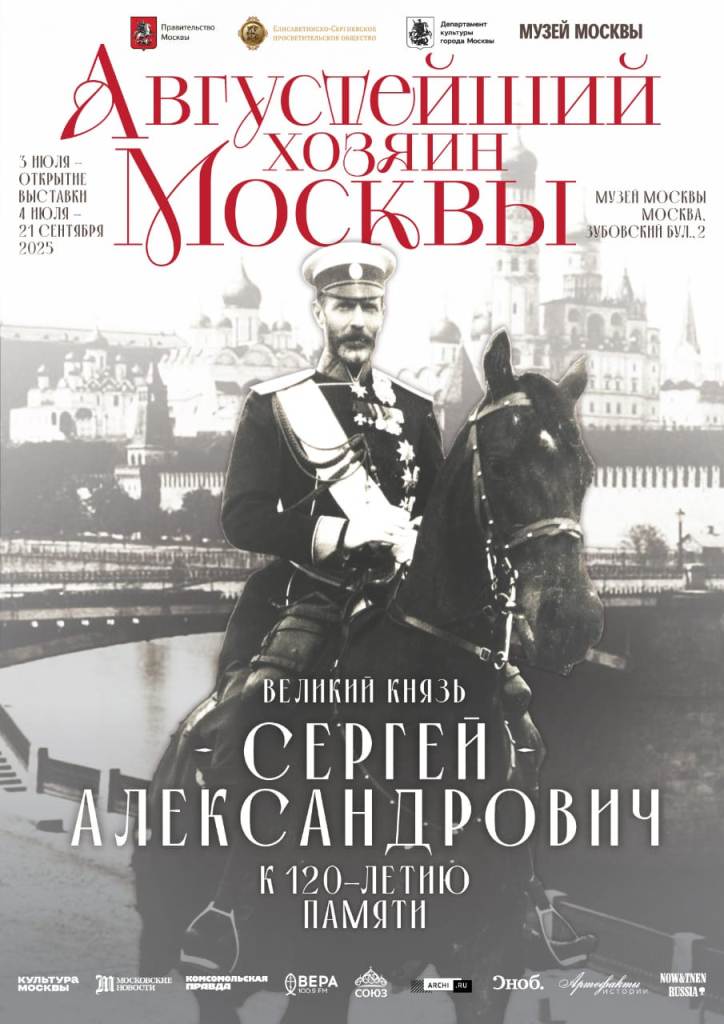
Exhibition dedicated to Grand Duke Sergei Alexandrovich opens in Moscow

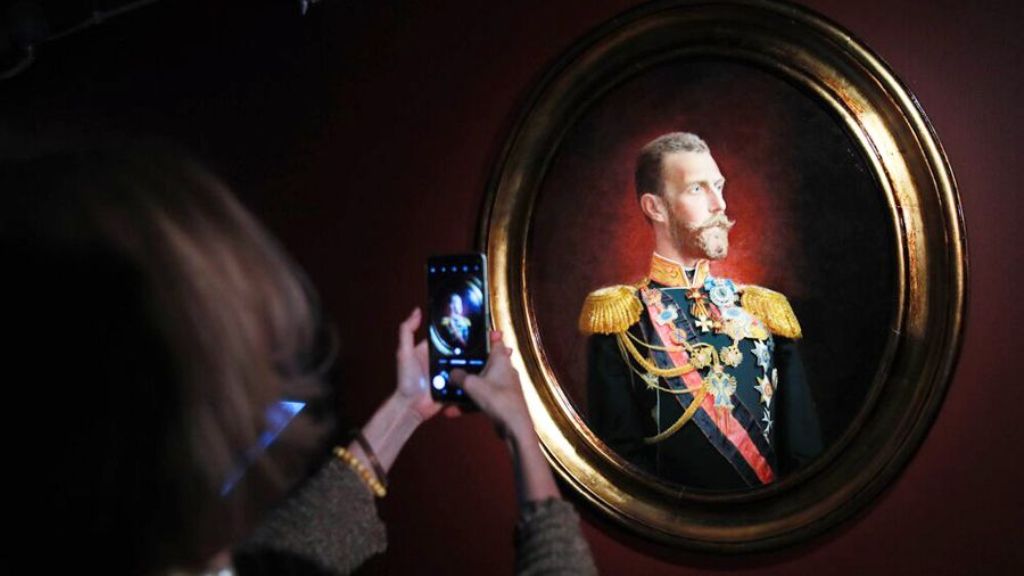
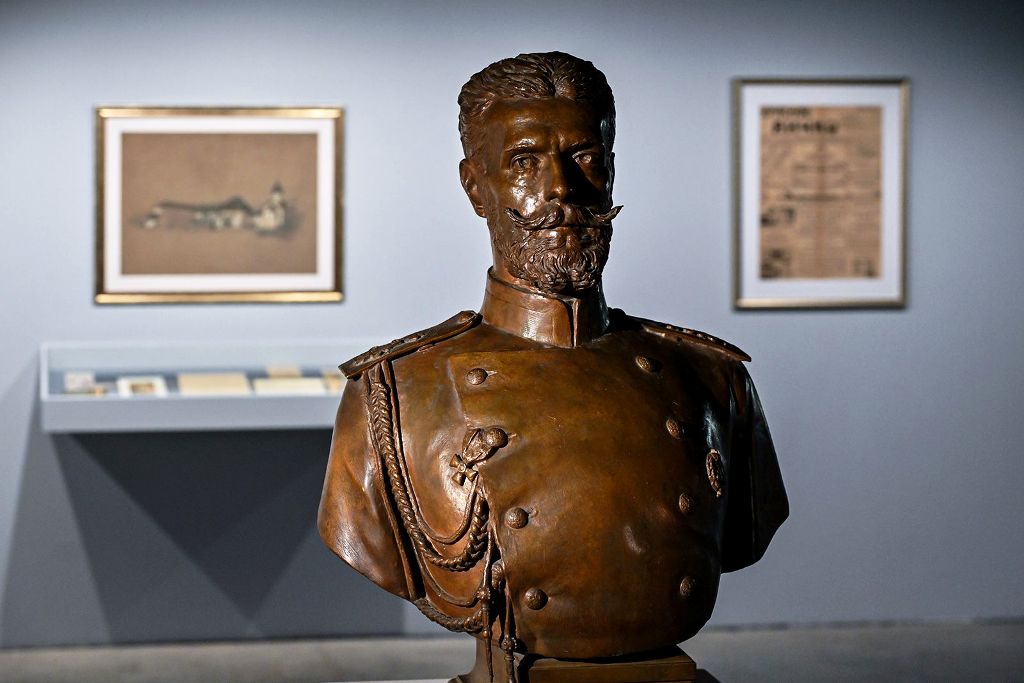
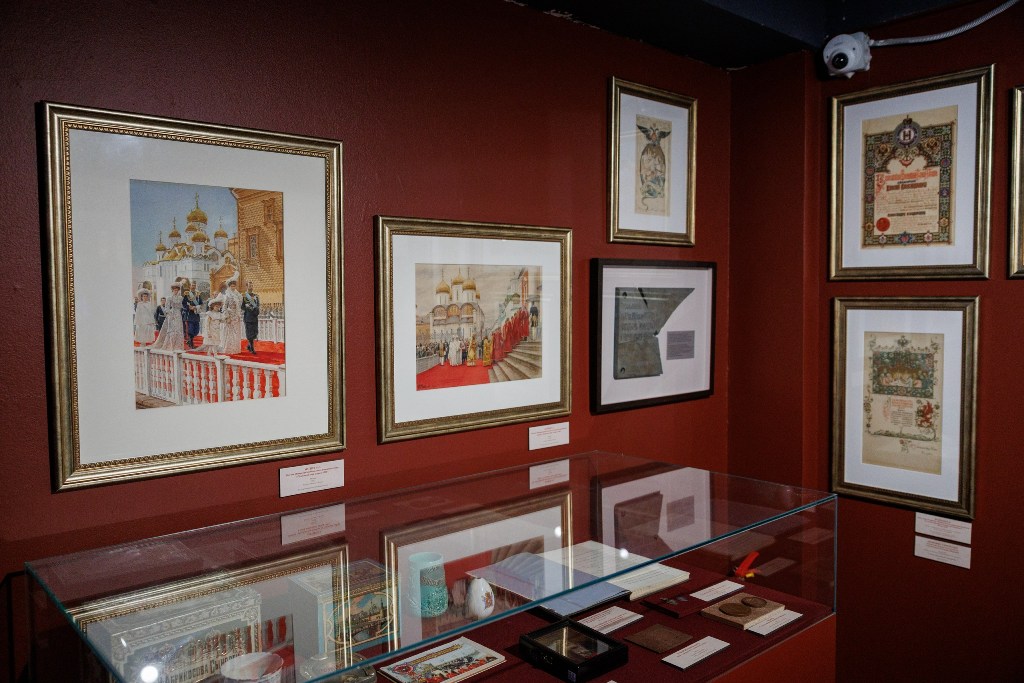
On 3rd July 2025, a new exhibition August Master of Moscow, dedicated to the Grand Duke Sergei Alexandrovich, opened at the Museum of Moscow in the Russian capital. The exhibition is timed to the 120th anniversary of the assassination of the grand duke on 17th February (O.S. 4th February) 1905.

Grand Duke Sergei Alexandrovich (1857-1905) was a son of Emperor Alexander II and Empress Maria Alexandrovna, a younger brother of Emperor Alexander III, uncle of Emperor Nicholas II and husband of Grand Duchess Elizabeth Feodorovna. He is considered one of the most outstanding statesmen of the Russian Empire.

From 1891 to February 1905, he served as Governor-General of Moscow, and in 1896 he was appointed Commander of the Moscow Military District. It was during his years as Governor-General, that Moscow enjoyed one of the greatest periods of the city’s development, turning it from a dirty provincial city into a city that could rival any European capital.

As Governor General of Moscow, Grand Duke Sergei was in charge of overseeing the arrangements for the Holy Coronation of Emperor Nicholas II in May 1896. His reputation was initially tarnished, however, as he was partially blamed for the Khodynka Tragedy during the festivities following the coronation.

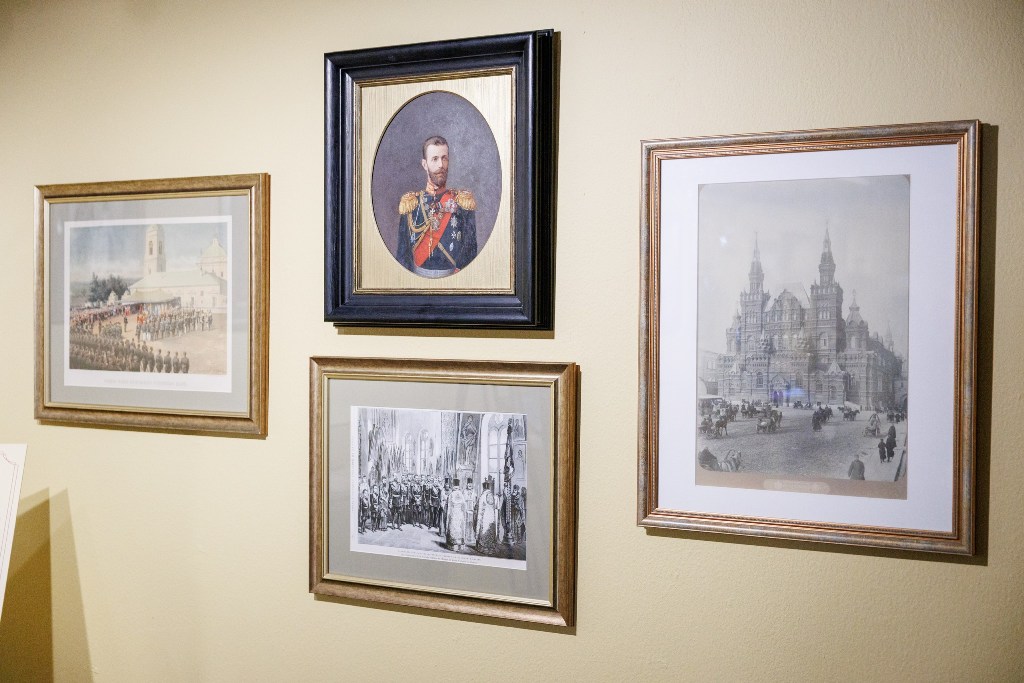
Yhe exhibition in three halls of the museum reveals all aspects of the Grand Duke’s activities. Not only his work as Governor-General of Moscow and Commander of the Moscow Military District, but also his piety and spiritual journey with his wife the Grand Duchess Elizabeth Feodorovna. Sergei was also a well-known philanthropist and patron of the arts.

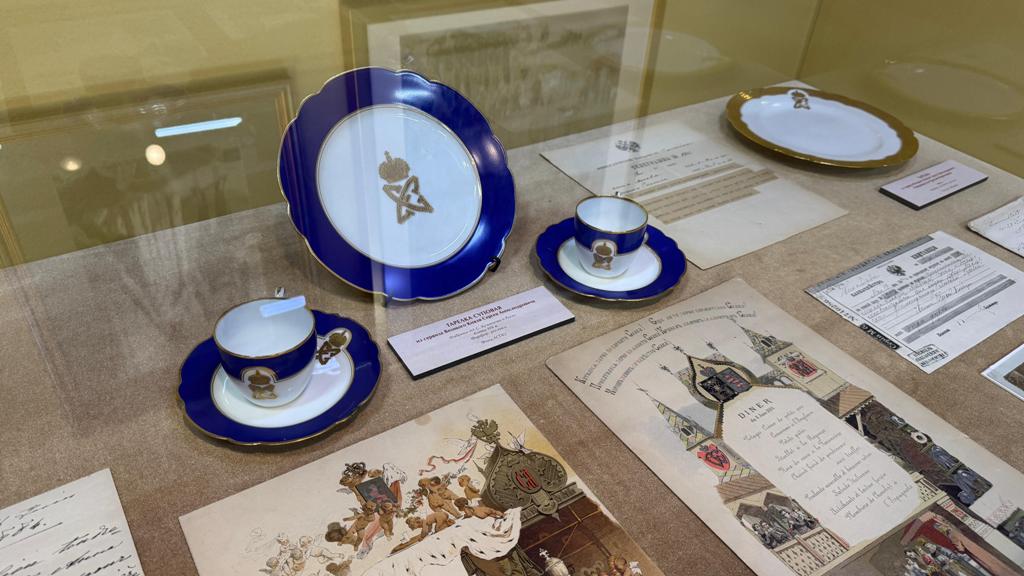
The exposition features more than 500 items from 36 leading museums and archives of the Russian Federation, as well as from libraries and private collections. Among the exhibits are photographs, books from the library of the Grand Duke, personal items, awards of charitable institutions and societies, rare archival documents about his activities as Governor-General of Moscow and Commander of the Moscow Military District, correspondence with family members and statesmen, military uniforms, models of weapons and much more. 

One of the most interesting items on display is a miraculously preserved tablet from the tombstone of the Grand Duke. After the Bolsheviks destroyed the Chudov Monastery [where he was initially buried] in 1928, it was believed that the grave of Sergei Alexandrovich was lost. However, during excavations of the site in the 1990s, a number of historical artifacts were revealed, including the grand duke’s grave. Another item on display is the icon of St. Sergius of Radonezh, also found in the tomb of the Grand Duke in the Chudov Monastery of the Moscow Kremlin.

On display in the first hall, are letters from the earliest years of Grand Duke Sergei Alexandrovich to 1888. And they reflect his marriage, his service, his first trip to the Holy Land, his appointment as commander of the Preobrazhensky Regiment and so on.

The exposition is complemented by a unique documentary newsreel, a film about Grand Duke Sergei Alexandrovich and the history of the Chudov Monastery.

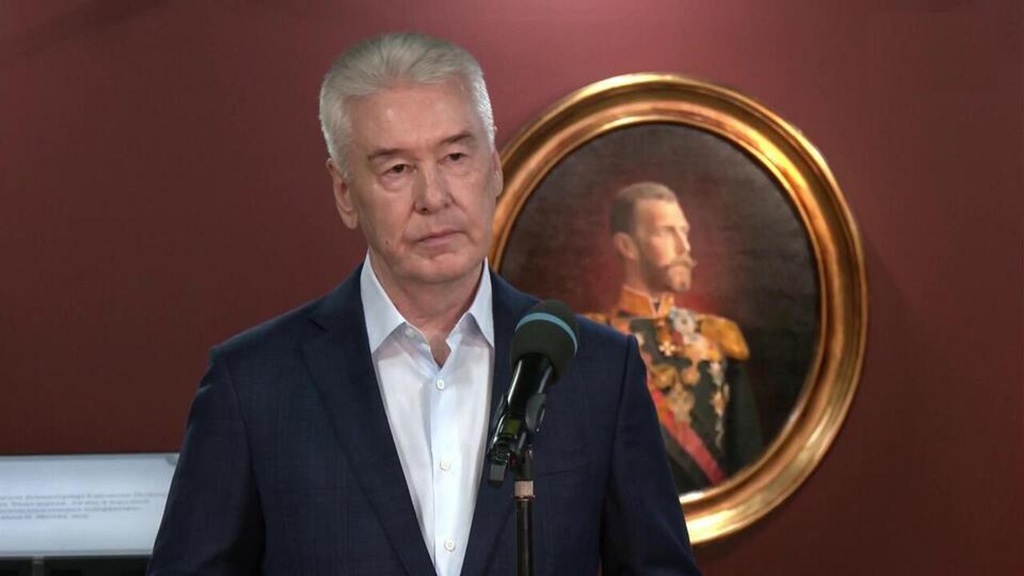
The exhibition was solemnly opened by the Mayor of Moscow Sergei Sobyanin [pictured above] and the Chairman of the Elisabeth-Sergius Educational Society Foundation (ESPO) Anna Gromova.

The grand opening of the exhibition was attended by the head of the Department of Culture of the city of Moscow Alexei Fursin, the Chairman of the Imperial Orthodox Palestine Society Sergey Stepashin, the director of the Museum of Moscow Anna Trapkova, the director of the State Historical Museum Alexei Levykin, the director of the State Archives of the Russian Federation Larisa Rogovaya and the scientific director of the Civil Archive of the Russian Federation Sergey Mironenko. Archpriest Dimitry Roshchin, Head of the Department for Work with Public Organizations of the Synodal Department for Church, Society and Mass Media Relations, representatives of the museums partner of the exhibition, historians, scientists and artists, and representatives of public organizations.

The exhibition August Master of Moscow runs until 21st September 2025 at the Museum of Moscow.

© Paul Gilbert. 4 July 2025
Bas-relief of Tsar-Martyr Nicholas II installed in Moscow

On 1st November 2024 – a monument to Grand Duke Sergei Alexandrovich (1857-1905) and Grand Duchess Elizabeth Feodorovna (1864–1918) was unveiled and consecrated on the square near the Tretyakovskaya metro station in Moscow.

The installation of the monument is timed to the 160th anniversary of the birth of Grand Duchess Elizabeth Feodorovna, born Princess Elisabeth of Hesse and by Rhine.

The sculptural composition was designed by the artist Georgy Frangulyan. The grand ducal couple are represented on the day of their wedding on 16th (O.S. 3rd) June 1884.

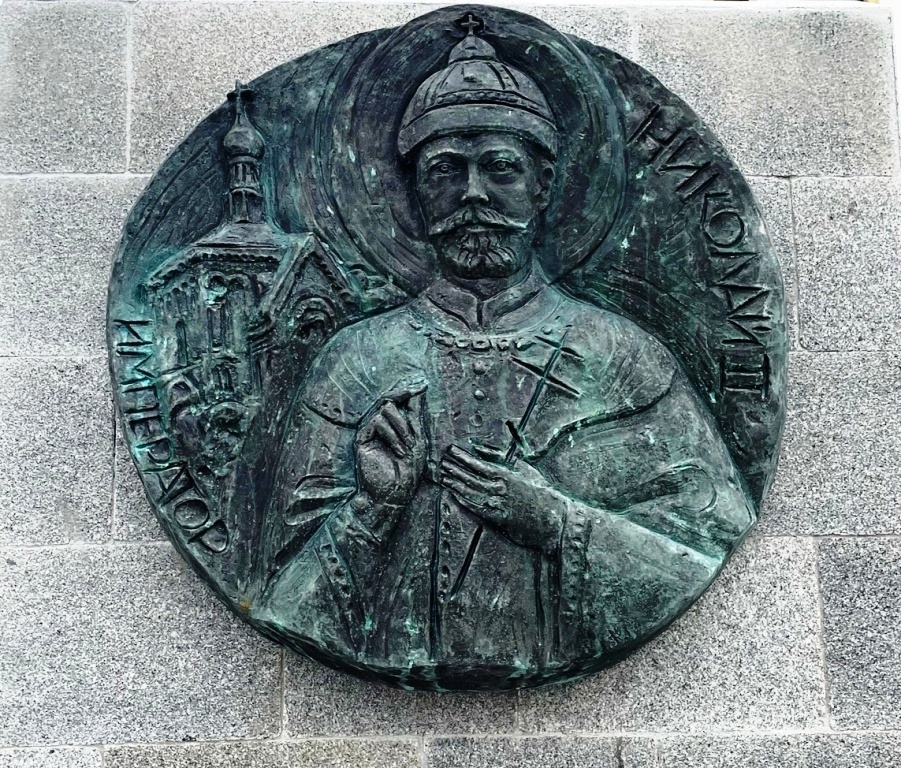
Behind the two bronze figures are four granite steles, one of which features a bas-relief depicting Emperor Nicholas II – seen in the photo above.

© Paul Gilbert. 16 November 2024

Russian Railways new train named after Nicholas II

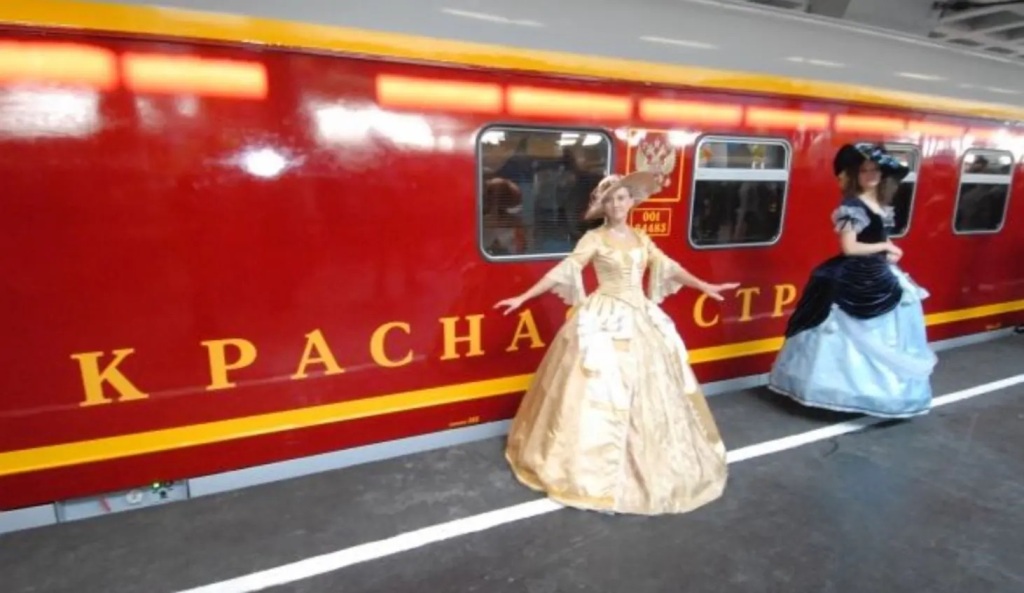
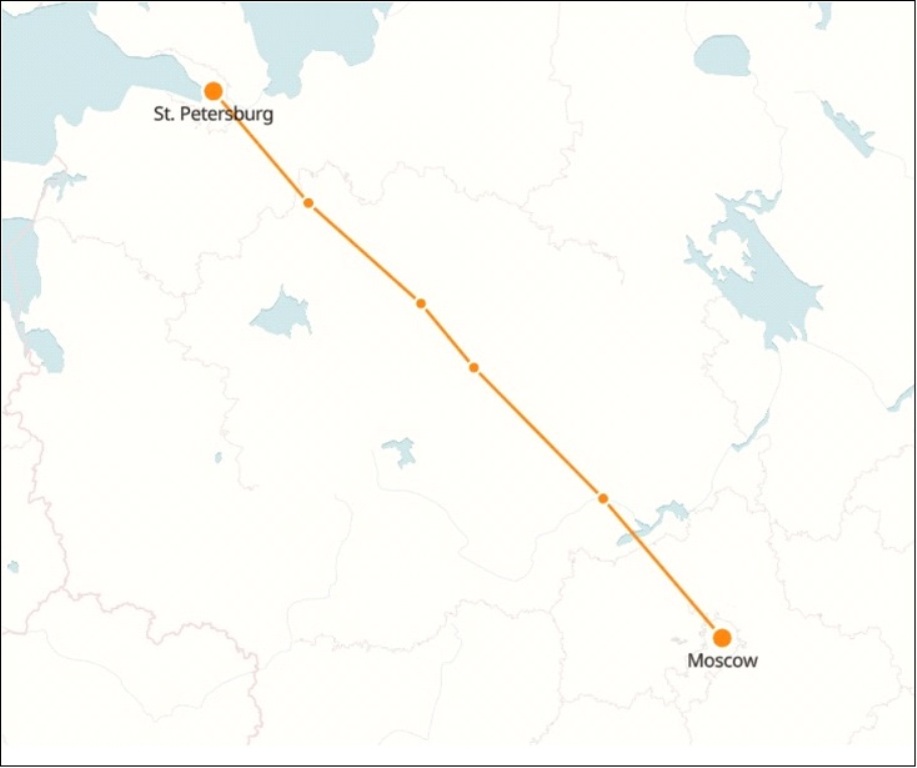
On 3rd November 2024, the presentation of the updated branded high-speed train No 001A/002A – Кра́сная стрела́ / Red Arrow, took place, at the Moskovsky (Moscow) Railway Station in St. Petersburg. The luxury overnight train has been running between the Moscow and St. Petersburg for more than 90 years.

At the initiative of Russian Railways employees, the train was named after the last Russian Emperor Nicholas II – the railway workers believe that the Red Arrow should become a symbol of the continuity of national history, combining the best pre-revolutionary and Soviet traditions with modern technologies.

“I would like to remind you that the Red Arrow is the first Soviet branded train, one of the symbols of the USSR. But we should not forget the glorious times of the Russian Empire – after all, it was under Nicholas II that the Trans-Siberian Railway was built,” said Fyodor Gerstner, deputy head of Russian Railways.

The Red Arrow train named after Nicholas II will begin service between Moscow and St. Petersburg from 7th November – the anniversary marking the October 1917 Revolution. The wagons of the train have been replaced, while upgrades include powerful new air conditioning and modern multimedia systems. The Red Arrow has a restaurant car, VIP carriages, as well as 1st and 2nd class carriages. Despite the modernization and rebranding, the cost of train tickets will remain the same until at least the beginning of 2025.

***

The distance between the two capitals is about 650 km, travel time is 8 hours

The Red Arrow luxury overnight train first chugged along the historic railway line between the two capitals of Russia in 1931, and has since been the pride of the Russian Railroad. This Moscow – St. Petersburg train has interiors that feel as if they come from a movie set and an exterior in such bright red that it’s really difficult to mistake, no matter if lit from the platform lights of the Moskovsky Station in St. Petersburg, or the Leningradsky Station in Moscow.

The history that emanates from the very walls of the carriages on the Red Arrow makes this a very popular train. As a result of its increasing popularity among trains from Moscow to St. Petersburg, the Red Arrow has spawned other luxury-oriented night trains, including the Express and the Megapolis. Even with all its retro charm, this one-of-a-kind luxury Russian train is as up-to-date and modern as any sleeper carriage found in just about any country. Passengers with Red Arrow train tickets enjoy high-comfort amenities while gliding through the night between Russia’s historical capital cities on an overnight train from Moscow and St. Petersburg.

Today’s journey by luxury trains meets the demands of most rail travelers, particularly those who seek special and unique train travel experiences from around the world. The Red Arrow’s vibrant red carriages almost glow against the greenery of the countryside, and is as much a part of Russian culture as borsch!

© Paul Gilbert. 4 November 2024

Nicholas II attends consecration of monument to his father in Moscow, 1912

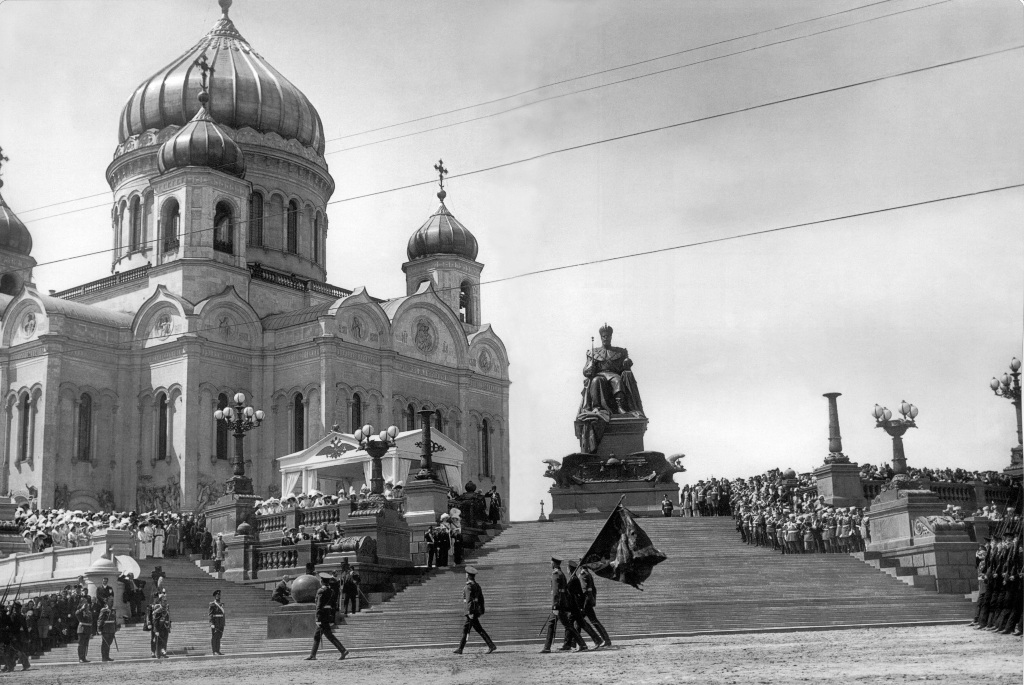
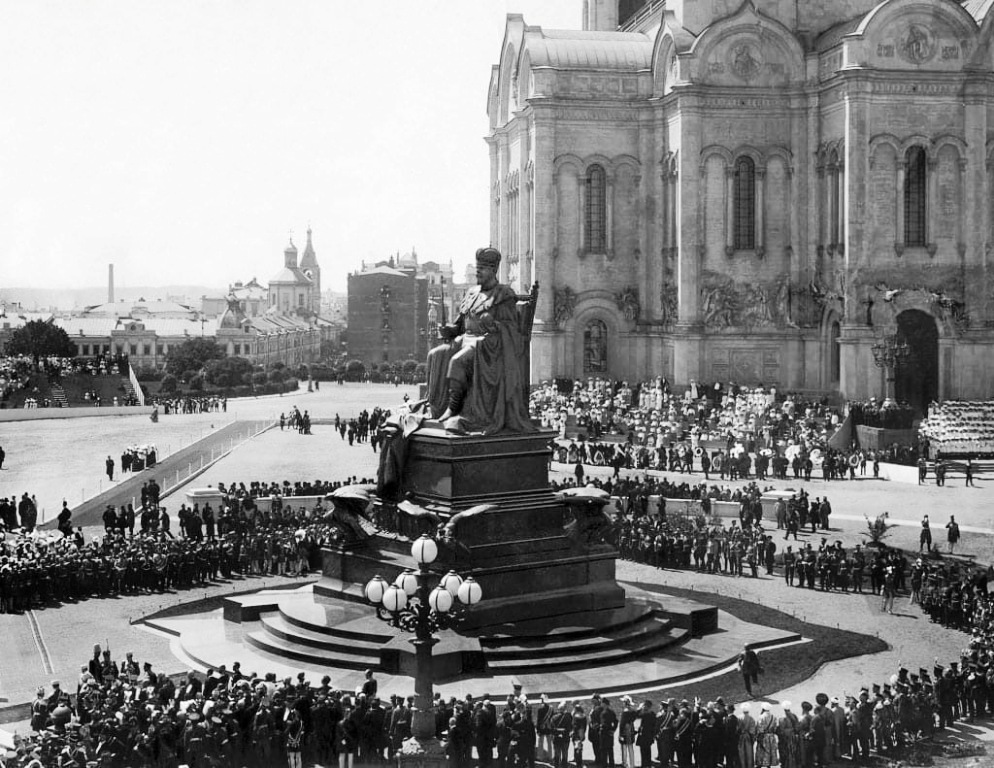
PHOTOS: ceremonies marking the unveiling of a monument to Emperor Alexander III, in Moscow (1912)

On 12th June (O.S. 30 May) 1912, Emperor Nicholas II atteded the unveiling and consecration of a magnificent monument of his father Emperor Alexander III (1845-1894), in Moscow.

The monument made by the architect Alexander Pomerantsev and sculptors Alexander Opekushin and Artemy Ober, was installed on the Prechistenskaya Embankment at the southeast corner of the Cathedral of Christ the Saviour.

In December 1894, Emperor Nicholas II appointed his uncle Grand Duke Sergei Alexandrovich to head a committee to oversee the planning and construction of the monument. More than 2.5 million rubles were donated for the monument’s construction, which lasted from 1900 to 1912.
Made in the style of monumental realism, the bronze statue stood on a stepped red granite pedestal facing the Moscow River. Alexander III is depicted sitting on a throne in a mantle with an imperial crown on his head. In the hands of the emperor were a scepter and orb. The inscription the pedestal read: “To the most pious autocratic Great Sovereign, our emperor Alexander Alexandrovich of All Russia. 1881-1894.” At its corners stood bronze double-headed eagles with outstretched wings. The monument featured a low granite balustrade, and a staircase which descended to the river.

The grand opening of the monument took place on 12th June (O.S. 30th May) 1912, in the presence of Emperor Nicholas II and members of the Imperial Family. At 8 o’clock in the morning, five cannon shots sounded from the Taynitskaya Tower. At 10 o’clock at the entrance to the Cathedral of Christ the Saviour, a procession began, led by Moscow Metropolitan Vladimir, Emperor Nicholas II, his mother the Dowager Empress Maria Feodorovna and Empress Alexandra Feodorovna.

After 360 rounds were fired and the Preobrazhensky Regiment march, the veil was removed from the sculpture, Metropolitan Vladimir sprinkled the monument with holy water. Some 86 wreaths were placed at the monument, and an inspection of the monument by the Emperor and members of the Imperial family. In the evening, the city and the sculpture were illuminated. A 24-hour guard of honour comprised of war veterans stood guard at the monument.

PHOTO (above): Emperor Nicholas II and his mother the Dowager Empress Maria Feodorovna can be seen in the foreground, Empress Alexandra Feodorovna and members of the Russian Imperial Family are following behind.

Sadly, the monument did not survive for long – a little more than 6 years! Following the October 1917 Revolution, a decree was issued for the demolition of all monuments of the Tsarist era. The decree dated 12th April 1918 ordered that monuments of members of the Roamov dynasty be replaced by those honouring revolutionaries. The monument of Emperor Alexander III was one of the first monuments destroyed during this campaign.

The dismantling of the monument began on 17th July 1918 – the very same day in which Nicholas II and his family were murdered in Ekaterinburg. A plan to establish a monument to Liberated Labour was never realised. The pedestal was demolished along with the Cathedral of Christ the Saviour in 1931.

© Paul Gilbert. 12 June 2024

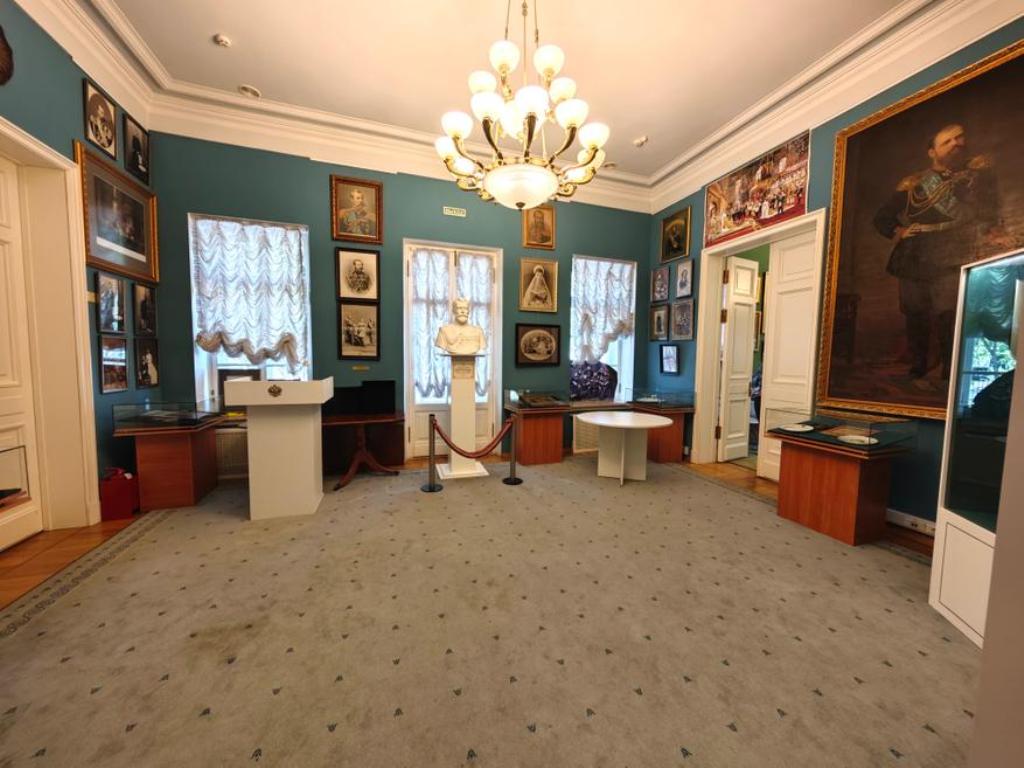
Video tour of the Museum of Emperor Nicholas II in Moscow

CLICK on the image above to watch the VIDEO

Duration: 2 minutes, 57 seconds. Language: Russian

For English subtitles: please click on the closed captioning button [cc] and then use translate [i.e. Google]

NOTEl: at the beginning of the video, please note the bust of Emperor Nicholas II on a pedestal, situated to the left of the museum.

***

Situated in a quiet side street in the Basmanny district, situated in northeastern Moscow, is a small museum dedicated to Russia’s last Tsar. The Museum of Emperor Nicholas II, which is part of the Nicholas II Cultural Foundation was established in April 2018.

The Foundation was created to support the Museum of Emperor Nicholas II and his family, as well as other initiatives to restore and disseminate the historical truth about the life and reign of Emperor Nicholas II.

Both the Foundation and the Museum were fojnded by the famous Russian art historian Alexander Vasilyevich Renzhin. It was during the 1990s that Renzhin began to collect, bit by bit, everything related to Emperor Nicholas II and his family. During that time, he managed to amass a collection of more than 3,000 authentic items which reflect on the private lives of the Imperial Family from 1868 to 1918.

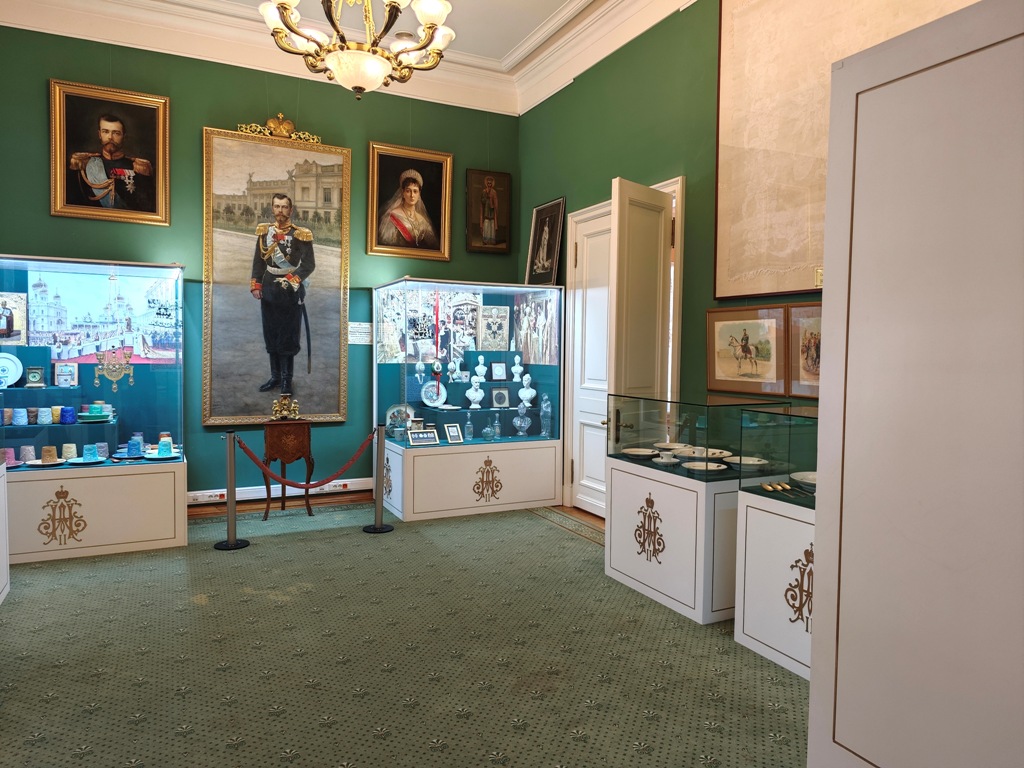
The museum’s collection includes sacred relics and unique icons that belonged to the Imperial Family: church utensils; rare books; ceremonial portraits of Emperors Alexander II, Alexander III, and Nicholas II; more than 500 original photographs; authentic autographs; state documents; porcelain and glassware; personal items of Nicholas II and Alexandra Feodorovna; memorial items of the Romanov dynasty; a complete set of state awards established by Nicholas II; postcards; chromolithographs; engravings and much more.

Of particular note is unique memorabilia from the Holy Coronation of Emperor Nicholas II in May 1896: earthenware glasses and plates decorated with the coats of arms and monograms H II [Nicholas II] and AF [Alexandra Feodorovna], miraculously preserved fine crystal glasses with engravings and paintings, cups, plates and saucers from the service with the new coat of arms introduced in 1856.

In the spring of 2008, Renzhin donated his collection as a gift to the Nikolo-Ugreshsky Monastery.

In February 2021, the Museum of Emperor Nicholas II was forced to close its doors, due to the COVID-19 pandemic, and the museum’s mounting debt of almost 9 million rubles (more than $13,000 USD) in arrears of rent.

A Russian oligarch Konstantin Malofeev, and founder of the Tsargrad TV channel, came to the rescue by providing Renzhin’s rare collection with a new venue in which to display his vast collection. The Museum of Emperor Nicholas II re-opened in the Museum of Russian Art, the former manor house of Nikolai Eremeevich Struisky (1749-1796) – situated in Moscow’s historical district – on 10th February 2021.

FURTHER READING:

The Great Pilgrimage of Emperor Nicholas II in 1913 + VIDEO

Museum of Emperor Nicholas II in Moscow + VIDEO

Museum of Emperor Nicholas II re-opens in Moscow + PHOTOS

© Paul Gilbert. 7 May 2024

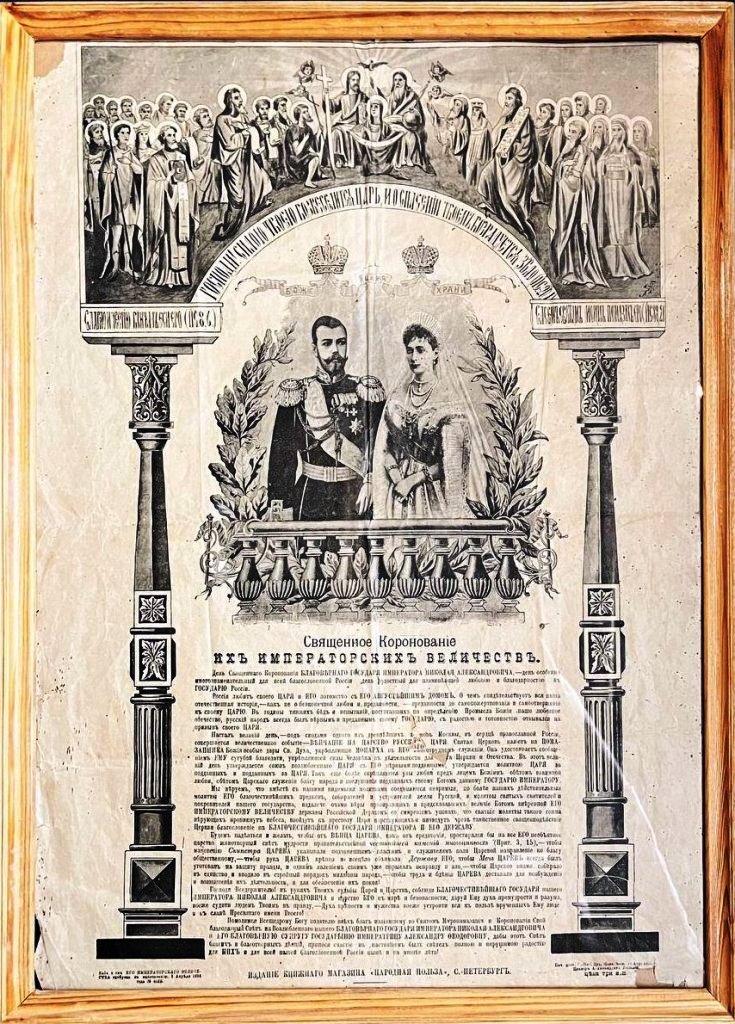
Unique historical poster documents 1896 Coronation of Nicholas II

PHOTO: poster announcing the Holy Coronation of Nicholas II, 1896

An interesting historical document – a poster announcing the Holy Coronation of Nicholas II – is currently on display in the Holy Places for Russian Culture exhibition at the Izborsk State Historical Architectural Museum in the Pskov region.

The poster was printed by the thousands and posted in cities, towns and villages in all provinces throughout the Russian Empire. The poster on display in the exhibition was discovered in the 1960s, and donated to the museum’s collection.

Emperor Nicholas II and his wife Empress Alexandra Feodorovna were solemnly crowned on 27th (O.S. 14th) May 1896, in the Assumption Cathedral [aka the Cathedral of the Dormition or Uspensky Sobor] of the Moscow Kremlin.

The coronation was preceded by a number of events. On 14th (O.S. 1st) January 1896, a manifesto “On the Forthcoming Holy Coronation of Their Imperial Majesties” was issued, according to which the ceremony was to take place in Moscow in May of the same year.

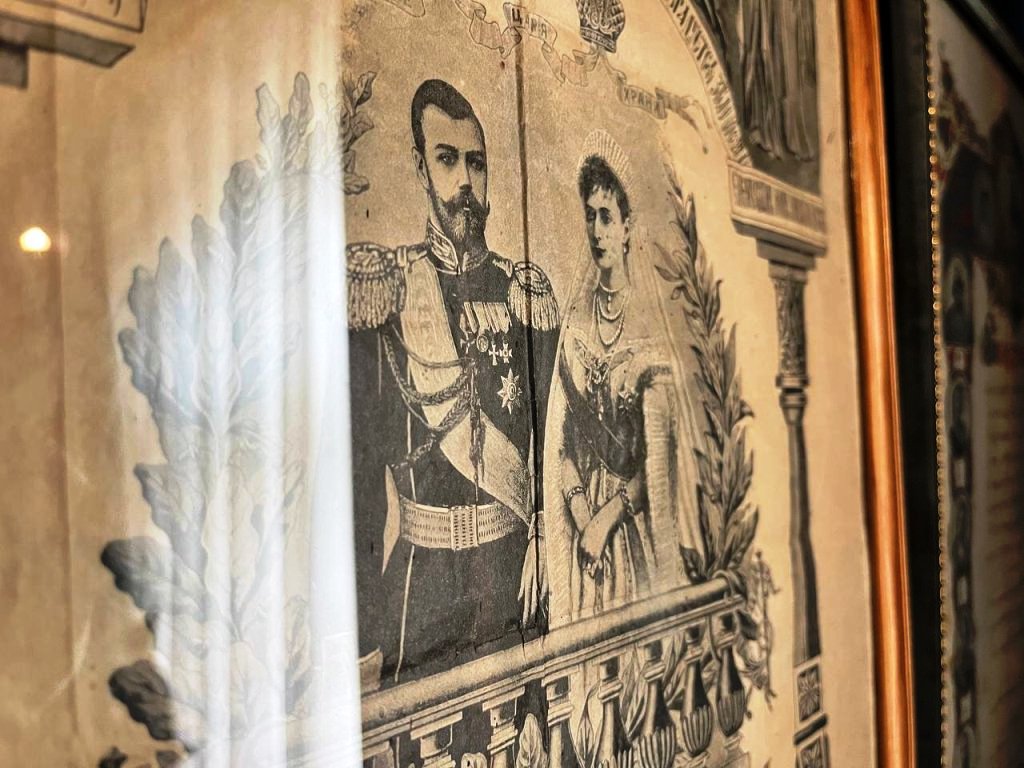
PHOTO: detial of the poster announcing the Holy Coronation of Nicholas II, 1896

The dates 7th May to 27th May 1896, were declared the coronation period. Orders for preparations for the celebrations were entrusted to the Minister of the Imperial Court, Count Illarion Ivanovich Vorontsov-Dashkov (1837-1916). A special coronation detachment consisting of 82 battalions, 36 squadrons, and 28 batteries was formed under the command of Nicholas II’s uncle Grand Duke Vladimir Alexandrovich (1847-1909).

A special telegraph station with 150 lines was set up in the Kremlin, linking all the foreign embassies.

The coronation itself, as noted by contemporaries who attended the event, surpassed all previous coronations in terms of magnificence. On the day of the coronation in St. Petersburg, Divine Liturgies and thanksgiving molebens were served in every church.

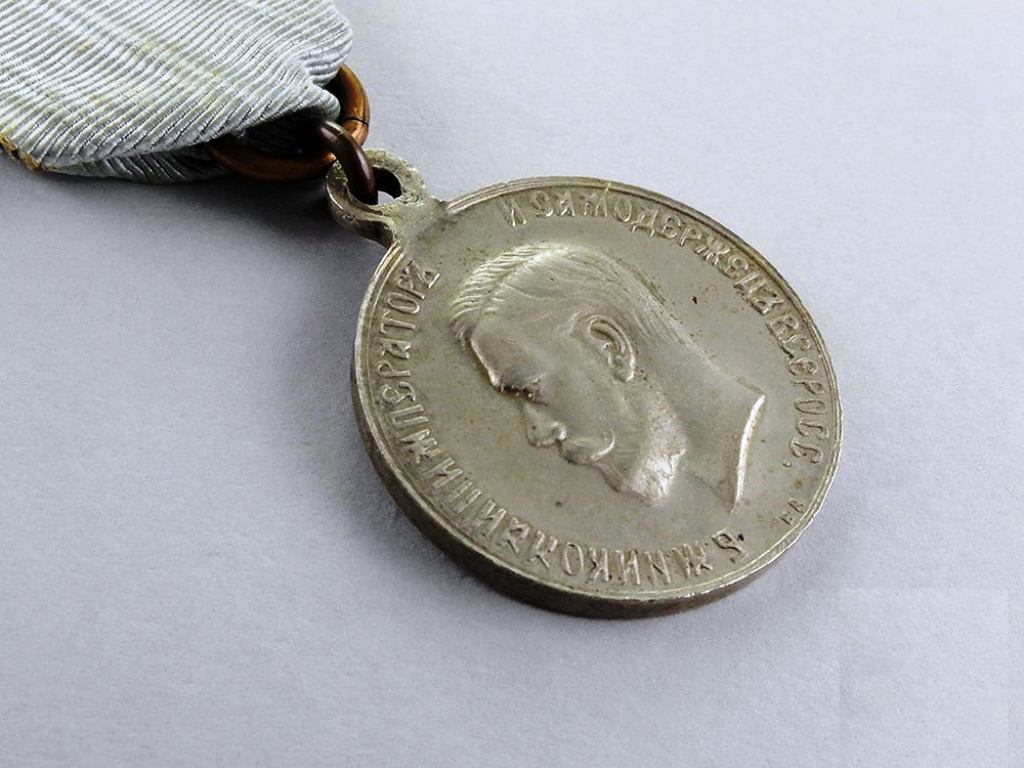
PHOTO: silver commemorative medal
“In Memory of the Coronation of Emperor Nicholas II”

A commemorative medal “In Memory of the Coronation of Emperor Nicholas II” was minted. It was awarded to all civil servants, military personnel and individuals who took active part in the preparation of the ceremonies of the coronation. At a later date, the award was also bestowed upon women who had actively assisted in the preparation of the ceremony.

FURTHER READING

COLOUR photos of the Coronation of Nicholas II + PHOTOS

Filming the Coronation of Emperor Nicholas II in 1896 + PHOTOS and VIDEO

1896 Coronation uniform of Emperor Nicholas II + PHOTOS

Russia’s only church built in honour of Nicholas II’s Coronation + PHOTOS

The myth of Nicholas II’s indifference to the Khodynka tragedy + PHOTOS

© Paul Gilbert. 5 April 2024

Unique icons belonging to the imperial family on display in Moscow for the first time

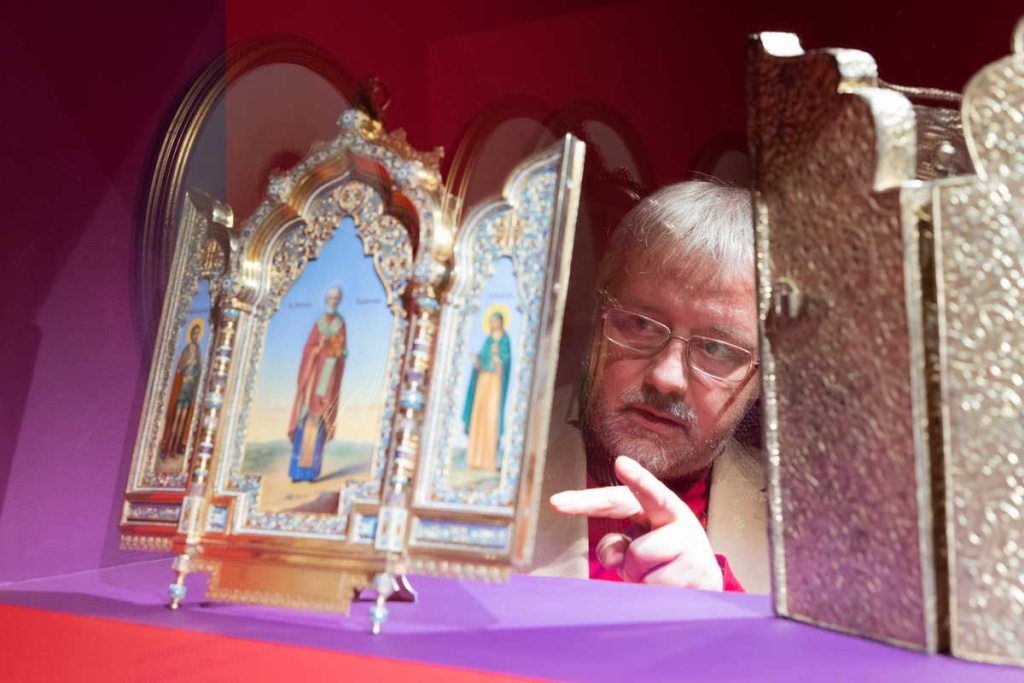
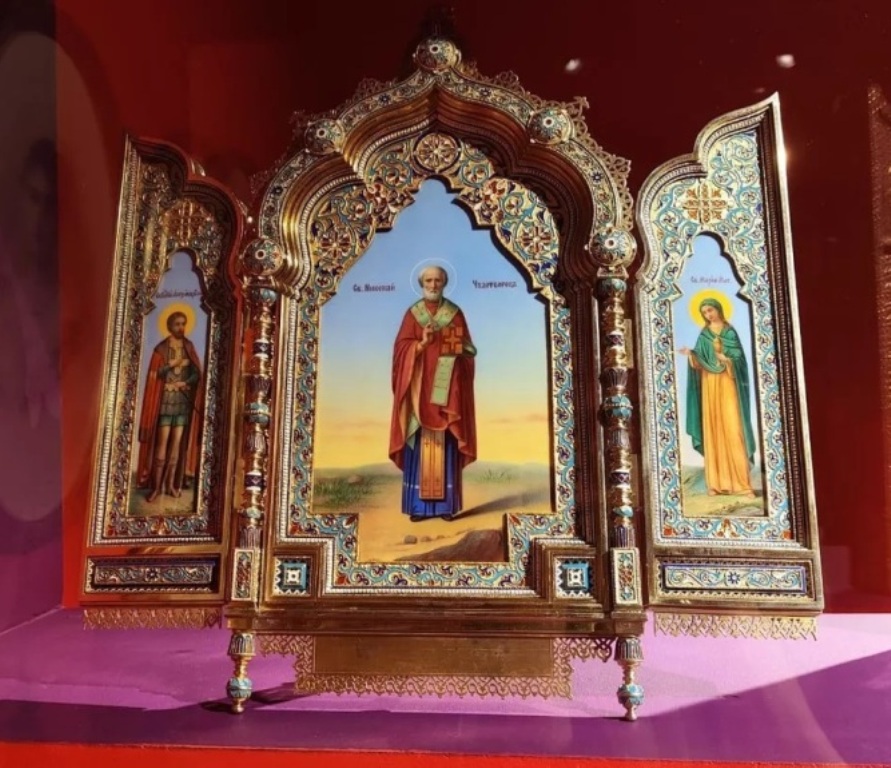
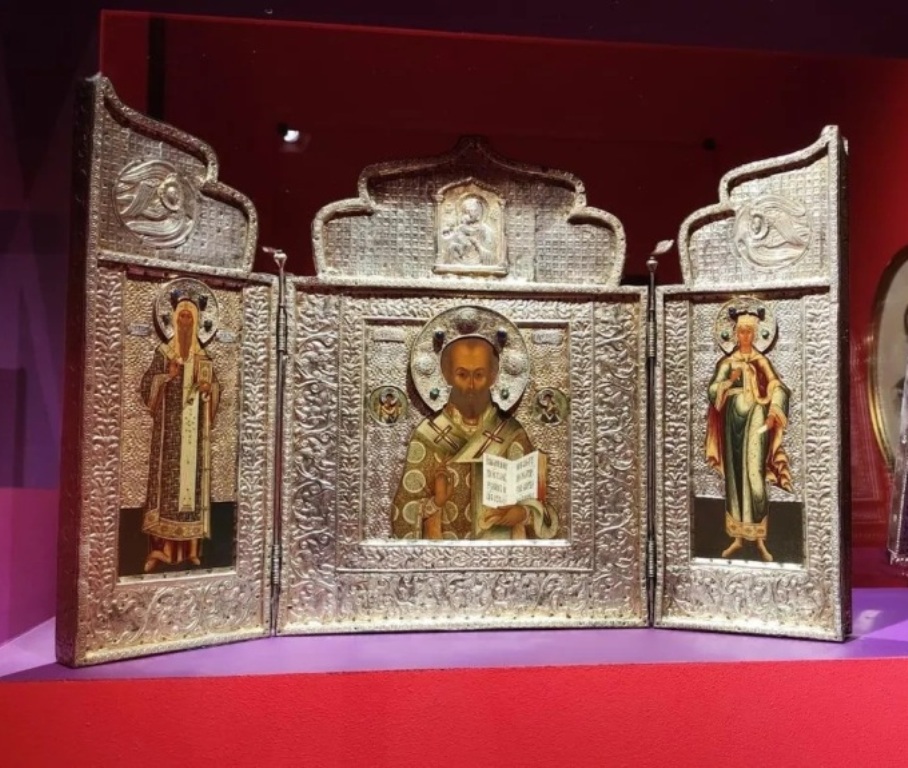
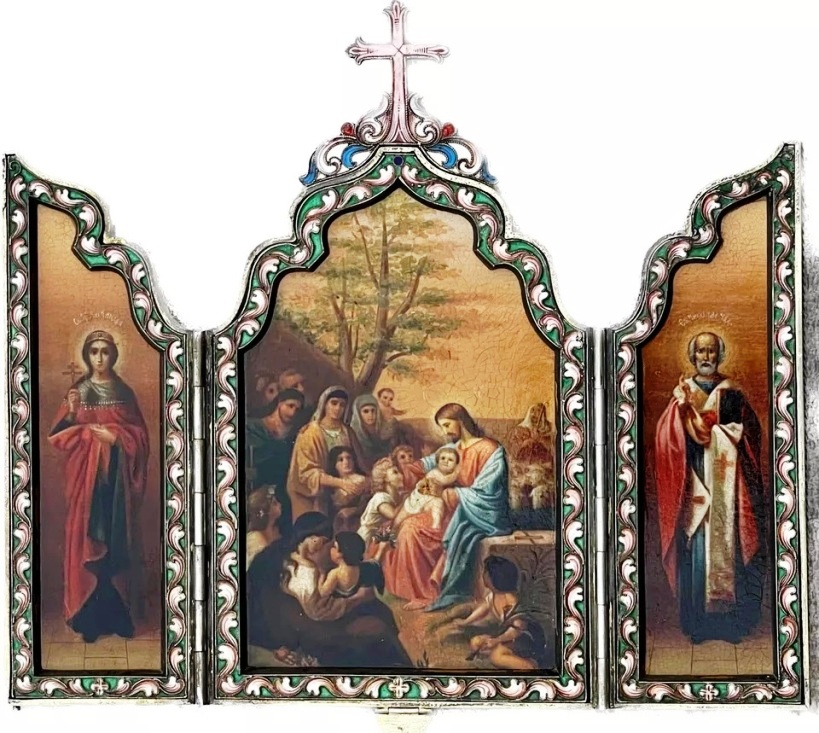
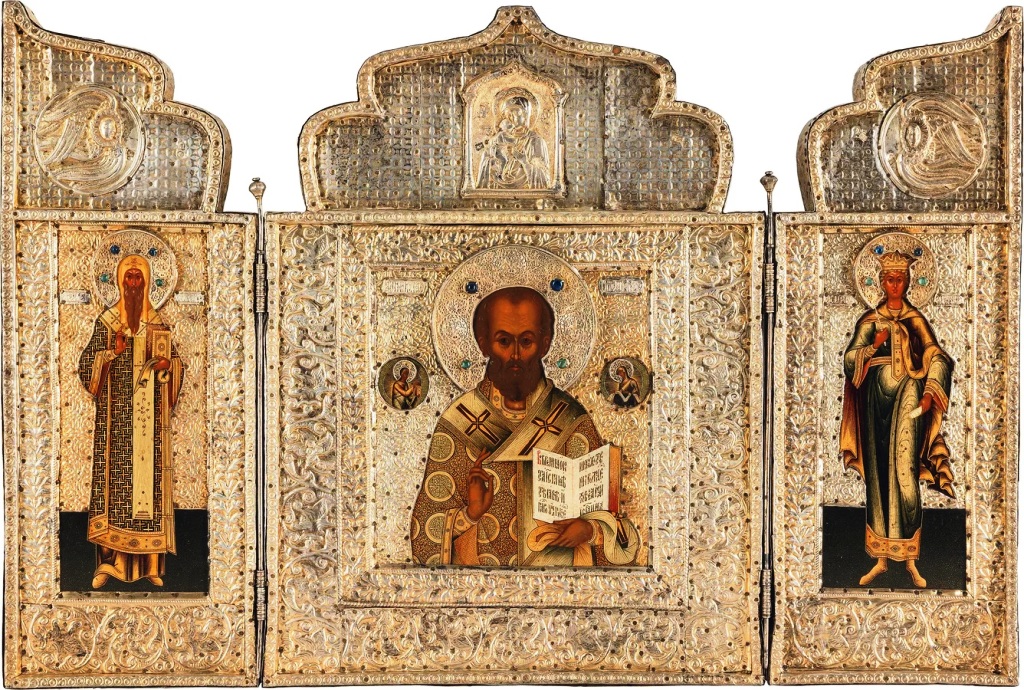
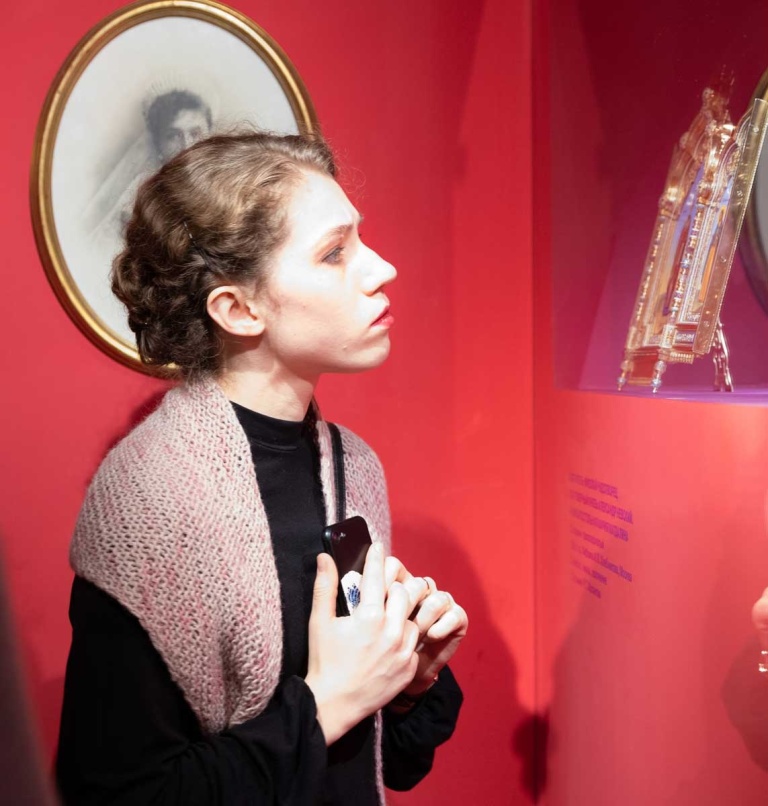
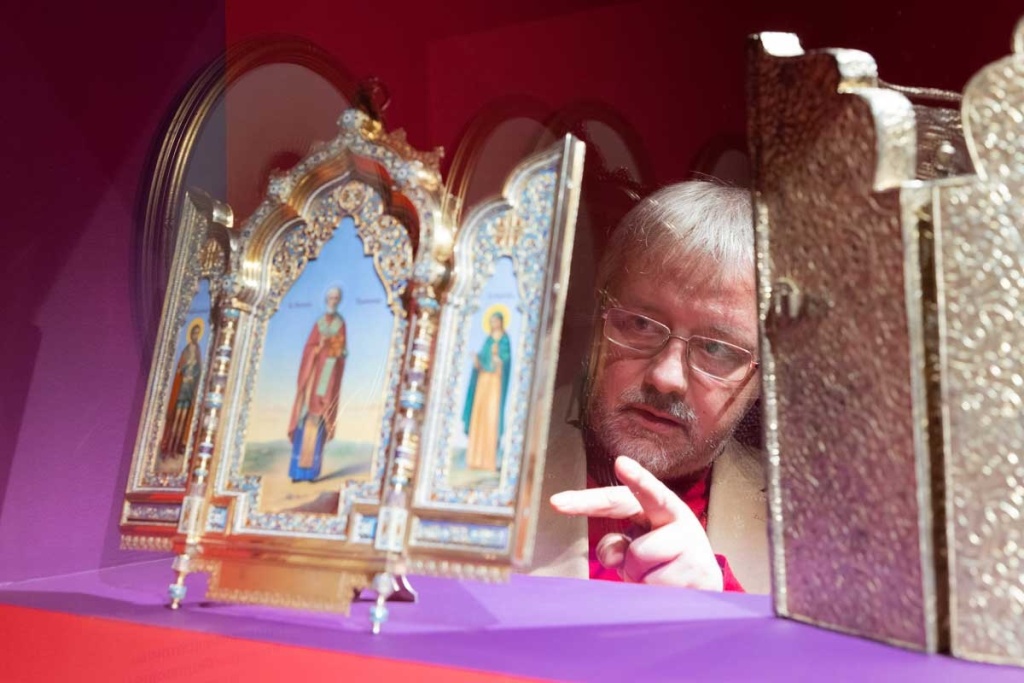
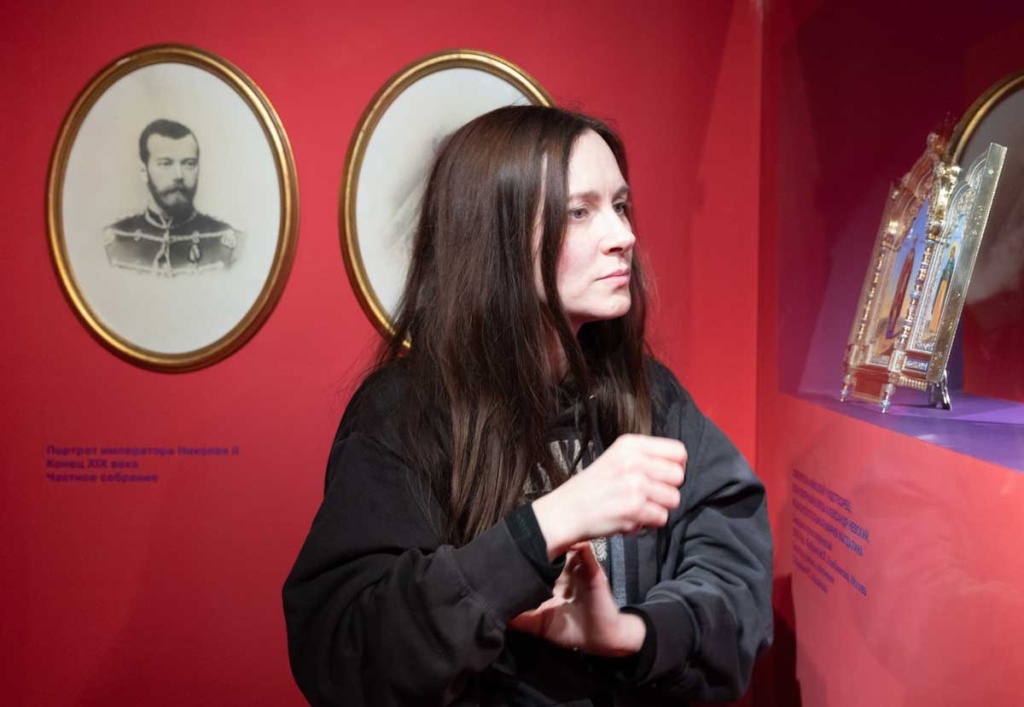
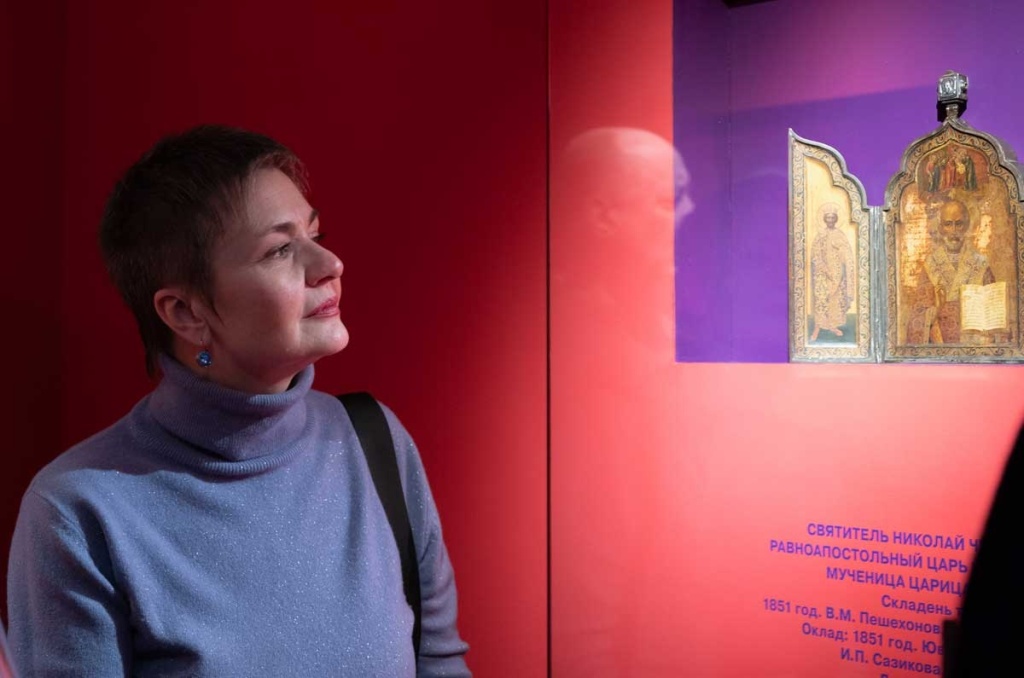
On 21st December 2023, a unique exhibit featuring four folding icons presented to members of the Family of Emperor Nicholas II, went on display at the Andrei Rublev Museum in Moscow.

According to Zhanna Belik, curator of the exhibition, “the icons, all of which are now in private collections, are being shown for the first time at the exhibition”.

“Each of the four folding icons is unique in its own way. They were personal gifts to members of the Imperial Family from organizations and donors from different walks of life. Gifts were given to the Imperial Family on special occasions throughout the year. For instance, on the occasion of the birth of children, their coming of age, the 300th anniversary of the House of Romanov, birthdays and namedays, etc.. To do this, it was necessary to submit a petition in advance, which was considered personally by the person to whom the gift was addressed,” Belik said.

CLICK on each IMAGE below to enlarge

According to Belik, the birth of Tsesarevich Alexei Nikolaevich in 1904 is associated with the folding icon gifted to Emperor Nicholas II and his wife Alexandra Fedorovna, by the abbot and brethren of the Trinity-Sergius Lavra [in the town of Sergiyev Posad, near Moscow]. The artists and jewelers who created it were outstanding craftsmen of their time.

“The exhibition also presents a folding icon with images of saints St. Nicholas the Wonderworker, Prince Alexander Nevsky and Mary Magdalene. The icon was presented to Tsesarevich Nicholas Alexandrovich [future Emperor Nicholas II] on his 18th birthday, by the guard of the Moscow Philistine Society. The folding icon was made in the workshop of Ivan Khlebnikov, a Supplier to the Imperial Court,” the curator said.

CLICK on each IMAGE below to enlarge

The curator noted that each of the four folding icons have the icon writer’s name on the back of each icon, the frames were made by jewelers – Suppliers of the Imperial Court. “At this time, jewelry art reached its apogee in Russian art, the work of jewelers of the second half of the 19th century and the beginning of the 20th century are world-class works,” Belik said.

The exhibition also features a sewn icon from the collection of the Andrei Rublev Museum, also created on the occasion of the birth of the long-awaited heir, and presented to Nicholas and Alexandra.

The exhibition runs from 21st December 2023 to 11th February 2024.

© Paul Gilbert. 28 December 2023