Nicholas II visits the Iverskaya Chapel in Moscow

VIDEO: Vintage newsreel of the Great Pilgrimage of Emperor Nicholas II to Moscow, on May 24-27, 1913. In this video you will hear a unique audio recording of Orthodox hymns for the Transfiguration of the Lord, performed by the Moscow Chudov Choir in 1908. Duration: 3 minutes, 5 seconds

The Iberian or Resurrection Gate is the only remaining gate of the Kitai-gorod[1] in Moscow. It connects the north-western end of Red Square with Manege Square and gives its name to nearby Voskresenskaya Square [Resurrection Square, renamed Revolution Square in 1918].

The gate adjoins the ornate building of the old Moscow Duma [City Hall] to the east and the State Historical Museum to the west.

The first stone gate leading to Red Square was erected in 1535, when the Kitai-gorod wall was being reconstructed in brick. When the structure was rebuilt in 1680, the double passage was surmounted with two-storey chambers crowned by two octagonal hipped roofs similar to the Kremlin towers. An Icon of the Resurrection was placed on the gate facing towards Red Square, from which the gate derives its name.

The Iverskaya Chapel

Since 1669, the wooden chapel in front of the gate (facing away from Red Square) has housed a replica of the miracle-working icon of Panaghia Portaitissa (“keeper of the gate”), the prototype of which is preserved in the Georgian Iveron Monastery on Mount Athos. Hence, the name Iversky (Iberian) that stuck both to the chapel and the gate. In 1781, the Nikolo-Perervinsky Monastery constructed a new brick chapel on the spot. The star-splattered cupola of the structure was topped with a statue of an angel bearing a cross.

According to a popular custom, everyone heading for Red Square or the Kremlin visited the chapel to pay homage at the shrine, before entering through the gate. Beggars and outlaws would pray there next to the highest persons, including the Tsar himself. It was here that the rebel Emelyan Pugachev asked the Russian people for forgiveness a few hours before his execution. The tiny ever-overcrowded chapel, with candles burning day and night, figures in works by Leo Tolstoy, Ivan Bunin, Marina Tsvetayeva, and H.G. Wells, to name only a few.

PHOTO: the Iverskaya Chapel. c. 1890s

Nicholas II, like his father preferred Moscow to St. Petersburg. According to French historian Marc Ferro: “Nicholas II preferred Moscow to St. Petersburg because the old city embodied the past, whereas St. Petersburg represented modernity, the Enlightenment and atheism.”

Three of the most notable visits to the Chapel were made on 26th (O.S. 14th) May 1896, on his way to his Coronation; on 25th-26th August 1912 during the celebrations dedicated to the 100th anniversary of the Battle of Borodino; and in May 1913 for celebrations marking the Romanov Tercentennary (1913).

On 5th April 1900, Nicholas wrote to his mother about reaching a landmark in his private spiritual life. A letter to his mother, reveals his strong religious feeling:

“What a joy it is to us, dear Mama, to prepare for Holy Communion here in the Kremlin, with all its various churches and chapels . . . This feeling is now much stronger than it was in 1896, which is only natural. I am so calm and happy now, and everything here makes for prayer and peace of spirit . . . “.

During his reign, Nicholas made numerous visits to the former Russian capital, where he always stopped to pray at the Iverskaya Chapel before crossing Red Square into the Kremlin, where he took up residence in the Grand Kremlin Palace. Moscow’s fervent greeting to their Tsar on each of his visits confirmed his feeling for the city.

Three of the most notable visits to the Iverskaya Chapel were made on 26th (O.S. 14th) May 1896, on his way to his Coronation; on 25th-26th August 1912 during the celebrations dedicated to the 100th anniversary of the Battle of Borodino; and in May 1913 for celebrations marking the Romanov Tercentennary (1913).

PHOTO: Emperor Nicholas II along with members of his family arrive at the Iverskaya Chapel in Moscow, 1912. Note the curious people watching from the windows of the State Historical Museum in the background. The Tsar is accompanied by his daughters the Grand Duchesses Olga, Tatiana, Maria, Anastasia (all wearing white hats), and his son Tsesarevich Alexei Nikolaevich, as well as the Grand Duchess Elizabeth Feodorovna (wearing a nuns’ habit).

In the above photo, Emperor Nicholas II, Empresses Alexandra Feodorovna and Maria Feodorovna are walking towards the Iverskaya Chapel of the Iberian Mother of God before the crowning of Russia’s last Tsar in the Assumption (Dormition) Cathedral in the Kremlin on 26th (O.S. 14th) May 1896.

The photos below depict Emperor Nicholas II, Empress Alexandra Feodorovna and their children visiting the Iverskaya Chapel to pray in 1912 and 1913:

PHOTO: Nicholas II, Empress Alexandra Feodorovna and Tsesarevich Alexei Nikolaevich (being carried by the Cossack Alexei Petrovich Pilipenko (1887-1972) leaving the Iverskaya Chapel in Moscow

***

In 1929 the Iverskaya Chapel was demolished, and in 1931 the Resurrection Gate was demolished by order of Soviet leader Joseph Stalin in order to make room for heavy military vehicles driving through Red Square during military parades. Following the dissolution of the Soviet Union, both structures were rebuilt under Moscow mayor Yuri Luzhkov’s[2] leadership, on the site between 1994 and 1995. A new icon of the Iveron Theotokos was painted on Mount Athos to replace the original.

On 4th November 1994, Patriarch Alexi II (1929-2008) consecrated the foundation of both the Iverskaya Chapel and the Resurrection Gate. The Iverskaya Chapel reopened to worshippers on 25th October 1995. Every day, every two hours from eight o’clock in the morning to eight in the evening, prayers are performed in the chapel with the reading of the akathist to the Most Holy Theotokos. 

PHOTO: view of the Resurrection Gate in 1931, the Iverskaya Chapel was demolished in 1929

PHOTO: a stunning view of the Iverskaya Chapel and Resurrection Gate – the latter of which leads into Red Square, reconstructed between 1994-95.

NOTES:

[1] The Kitay-gorod was a cultural and historical area, built during the 16th and 17th centuries within the central part of Moscow. During the 1920s and 1930s Stalin ordered Kitay-gorod to be demolished. This wanton act of destruction included 10 chapels, the Cathedral of the Nikolo-Greek Monastery, and two monastery bell towers. The last pre-war victim of Kitay-gorod was the *Cathedral of Our Lady of Kazan, demolished in 1936, which stood on the corner of Nikolskaya Street and the Red Square. *Reconstructed between 1990-1993.

[2] Yuri Mikhailovich Luzhkov (1936-2019) was a Russian politician who served as the Mayor of Moscow from 1992 to 2010. Under Luzhkov’s leadership, the Cathedral of Christ the Saviour, the Cathedral of Our Lady of Kazan, the Resurrection Gate and Iverskaya Chapel were all rebuilt, as well as the construction of Catherine II’s unfinished palace in Tsaritsyno and the reconstruction of the Kolomenskoye Palace of Tsar Alexis (demolished as early as the 18th century).

© Paul Gilbert. 13 August 2023

25th anniversary of the canonization of Nicholas II by the Moscow Patriarchate

On this day – 20th August 2000 – after eight years of debate, and at times threatening to split the Russian Orthodox Church, the Council of Bishops unanimously approved the canonization of Emperor Nicholas II and his family as passion-bearers[1]. The rite of canonization took place in Moscow’s newly reconstructed Cathedral of Christ the Saviour.

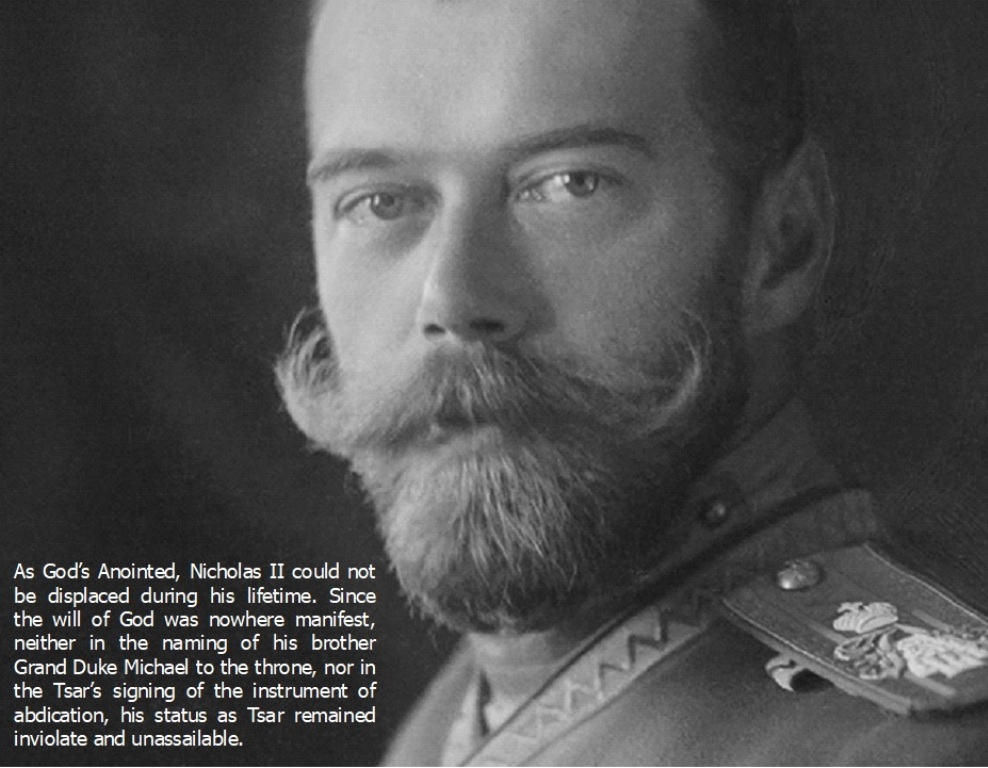
Patriarch Alexei II of Moscow and All Russia (1929-2008), and nearly 150 bishops debated, once and for all, the issue of the Tsar’s spiritual life and qualifications for sainthood. Supporters of this action had long insisted that Nicholas II was anointed by God[2] and was incapable of stopping the communist takeover of Russia. Those who opposed the Tsar’s canonization insisted that he was weak, indulged in excesses and had little concern for the suffering of his people.

“In the last Orthodox monarch of Russia and in the members of his Family we see people who sincerely sought to live by the commandments of the Gospel. In the suffering endured in captivity by the Imperial Family with humbleness, patience and meekness, in their martyrs’ death during the night of 17th (O.S. 4th) July 1918, the evil-defeating light of the faith of Christ was revealed,” the Bishop’s Council concluded.

The Moscow Patriarchate canonized the family as passion-bearers: people who face death with resignation, in a Christ-like manner, as distinguished from martyrs, the latter historically killed for their faith. Proponents cited the piety of the family and reports that the Tsarina and her eldest daughter Olga prayed and attempted to make the sign of the cross immediately before they died.

The term “passion-bearer” is used in relation to those Russian saints who, “imitating Christ, endured with patience physical, moral suffering and death at the hands of political opponents. In the history of the Russian Church, such passion-bearers were the holy noble princes Boris and Gleb (1015), Igor of Chernigov (+ 1147), Andrei Bogolyubsky (+ 1174), Mikhail of Tverskoy (+ 1318), Tsarevich Dimitri (+ 1591). All of them, by their feat of passion-bearers, showed a high example of Christian morality and patience.

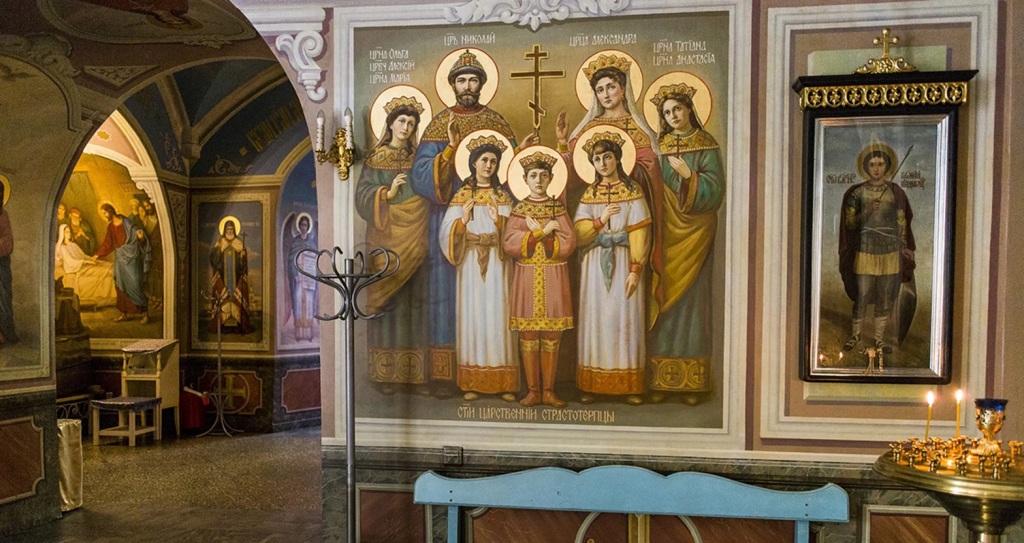
Despite their official designation as “passion-bearers” by the August 2000 Council, Nicholas II and his family are referred to as “martyrs” in Church publications, icons, and in popular veneration by the people.

The four faithful retainers who had been killed along with the Imperial family were also canonized as new martyrs by the ROCOR in 1981 The canonized servants were Dr. Eugene Botkin, court physician; Alexei Trupp, footman; Ivan Kharitonov, cook; and Anna Demidova, Alexandra’s maid. Also canonized were two servants killed in September 1918, lady in waiting Anastasia Hendrikova and tutor Catherine Adolphovna Schneider. All were canonized as victims of oppression by the Bolsheviks.

On 3rd February 2016, the Bishop’s Council of the Russian Orthodox Church (Moscow Patriarchate) canonized Dr. Botkin as a righteous passion bearer. They did not canonize the servants, two of whom were not Russian Orthodox: Trupp was Roman Catholic, and Schneider was Lutheran.

Since the late 20th century, believers have attributed healing from illnesses or conversion to the Orthodox Church to their prayers to Maria and Alexei, as well as to the rest of the family.

On 20th August 2025 – the day marking the 25th anniversary of the canonization of the Holy Tsar’s Family, a moleben[3] was performed at the Church on the Blood (Ekaterinburg), built on the site of the Ipatiev House, where Nicholas II and his family were murdered on 17th July 1918.

NOTES:

[1] Emperor Nicholas II and his family were canonized as “new martyrs” by the Russian Orthodox Church Outside of Russia (ROCOR) in 1981. The term “new martyrs” refers to those who were killed for their faith in the 20th century, especially during the persecution of Christians in the Soviet era. 

[2] “As God’s Anointed, Nicholas II could not be displaced during his lifetime. Since the will of God was nowhere manifest, neither in the naming of his brother Grand Duke Michael to the throne, nor in the Tsar’s signing of the instrument of abdication, his status as Tsar remained inviolate and unassailable.”

by Evgeni Vernigora. ‘A Personal Reflection on the Abdication of the Tsar-Martyr Nicholas II
Published in ‘Orthodox Life,’ 13th June 2018

[3] a liturgical service of supplication or thanksgiving

FURTHER READING:

The Canonization of Nicholas II + 12 PHOTOS

ROC Report on the Canonization of Nicholas II and his family

Obituary: His Holiness Patriarch Alexei II of Moscow and All Russia (1929-2008)

© Paul Gilbert. 20 August 2025

***

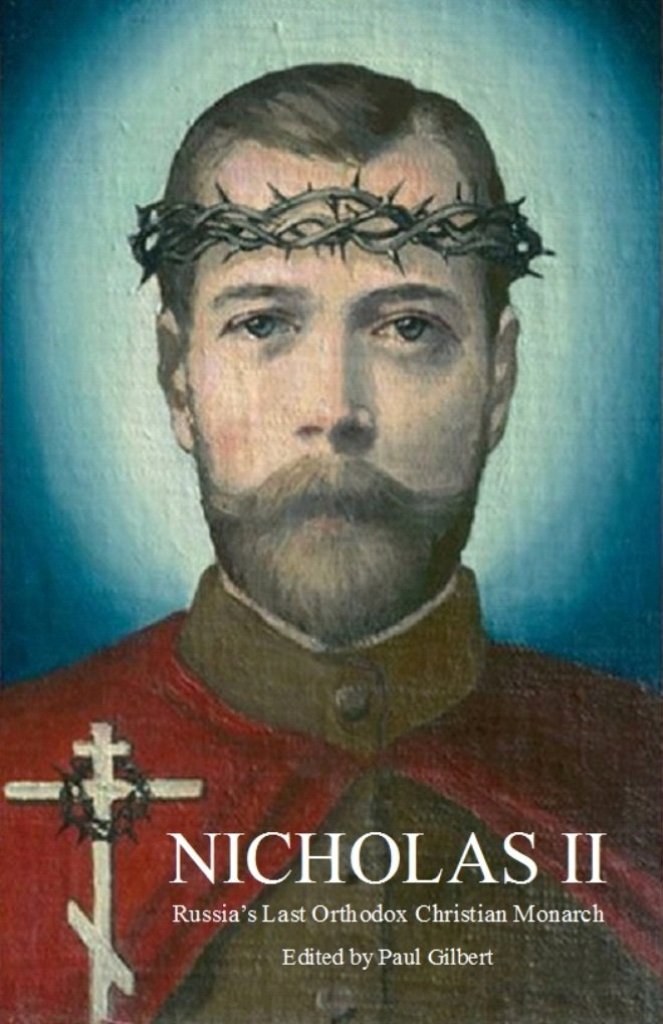
NICHOLAS II: RUSSIA’S LAST ORTHODOX CHRISTIAN MONARCH

CLICK ON THE LINK BELOW TO ORDER FROM AMAZON

PAPERBACK EDITION – PRICE $10.99

E-BOOK EDITION – PRICE $9.99

BOOK DESCRIPTION

This book is not only for Orthodox and non-Orthodox persons, but for any one who shares an interest in the life, death, and martyrdom of the Holy Tsar-Martyr Nicholas II.

An illustrated Introduction by independent researcher Paul Gilbert explores the piety of Nicholas II, and his devotion to the Russian Orthodox Church, which reached its fullest development and power, during his 22-year reign.

This book further examines the trials and tribulations the Tsar endured, which later led to his canonization by the Russian Orthodox Church.
Paperback edition, with 134 pages + 23 black & white photographs


BONES OF CONTENTION:
The Russian Orthodox Church & the Ekaterinburg Remains

by Paul Gilbert

CLICK ON THE LINK BELOW TO ORDER FROM AMAZON

PAPERBACK EDITION – PRICE $13.99

BOOK DESCRIPTION

Originally published in 2020, this NEW REVISED & EXPANDED EDITION features an additional 40 pages, new chapters and 90 black and white photos.

In May 2022, the Bishops’ Council of the Russian Orthodox Church, will convene in Moscow during which they will review the findings of the Investigative Commission and deliver their verdict on the authenticity of the Ekaterinburg Remains.

This is the first English language title to explore the position the highly contentious issue of the Russian Orthodox Church’s position on the Ekaterinburg remains. The author’s research for this book is based exclusively on documents from the office of the Moscow Patriarchate, as well as Russian media and archival sources.

Paperback edition. 206 pages. + 90 black & white photographs


MOST PIOUS TSAR
Icons, Frescoes and Holy Images of Tsar-Martyr Nicholas II

CLICK HERE TO ORDER THE HARD COVER @ $50.00 USD

CLICK HERE TO ORDER THE PAPERBACK EDITION @ $40.00 USD

In 1938, Russia’s last tsar Nicholas II was canonized by the Serbian Orthodox Church. On 1st November 1981, he was canonized as a new martyr by the Russian Orthodox Church Outside Russia (ROCOR). On 20th August 2000, after 8 years of study, he was canonized as a passion bearer by the Moscow Patriarchate, although the people had already been venerating him as a saint for a long time, and this canonization was simply a confirmation of a fact that already existed by itself.

Since these historic dates, icons of Russia’s last Tsar have been installed in Orthodox churches across Russia and around the world. In addition home icons have been mass produced and sold for veneration by Orthodox Christians.

This book will not only appeal to Orthodox and non-Orthodox persons, but for any one who shares an interest in icons and iconography. This book also includes a Prayer and Akathist to the Holy Martyred Tsar. The highlight of this book, however, are the 130+ colour photographs of icons, frescoes and holy images depicting the Holy Royal Martyr Nicholas II.

English. Large 7″ x 10″ format. 162 pages with 132 photos in FULL COLOUR!

First Moscow church is being built in honour of the Tsar-Passion-Bearer Nicholas II

The first Moscow church in honour of the Tsar-Passion-Bearer Nicholas II is now being built in the capital’s Annino district, said Vladimir Resin, deputy of the State Duma of Russia, Patriarchal Adviser and curator of the Program for the Construction of New Churches in Moscow.

Vladimir Resin clarified that there are currently 22 churches and chapels in Russia, dedicated to the Tsar-Passion-Bearer, however, this will be the first such church to be constructed in Moscow. These do not include churches and chapels dedicated to the Holy Royal Passion-Bearers, which have been constructed across the Russian Federation, following the Imperial Family’s canonization by the Moscow Patriarchate in August 2000.

“Thanks to the support of His Holiness the Patriarch, donations from parishioners and a targeted patriarchal subsidy, we are confidently moving forward. I note that the project of this large church for 800 people was developed in the style of Russian Art Nouveau. The area of the prayer hall without an altar and a solea is over 400 square meters,” said the Patriarchal Adviser.

Artist concept of church in honour of the Tsar-Passion-Bearer Nicholas II, Moscow

The church complex is being built according to the project of the architect Fyodor Ivanovich Afuksenidi (b. 1961, Krasnaya Polyana), the author of more than 50 Orthodox churches and chapels, who died in 2019. For the creation of churches, he was awarded the Order of Sergius of Radonezh III Degree.

It is noted that thanks to the manufacturer, 20 tons of reinforcement bars were delivered to the construction site in June, and on June 7, the parish youth began to inscribe the names of the donors on the brick walls of the future church.

“By the end of the year, the builders intend to erect the frame of the building along with the installation of drums under the domes. The entire complex is expected to be complete in 2028,” added Vladimir Resin.

© Paul Gilbert. 19 August 2025

The Tsar’s Pier Museum in Tyumen

PHOTO: the Tsar’s Pier Museum in Tyumen

On this day – 17th August (O.S. 4th) August 1917 – the Imperial Family arrived in Tyumen, following a three day journey by train, their final destination was Tobolsk. Tyumen is situated just east of the Ural mountains.

Two trains carrying Nicholas II, his family, and servants arrived in the evening at Tyumen, following a three-day journey from Tsarskoye Selo. The following day, they sailed up the rivers Tur, Tobol and Irtysh on the steamer ‘Rus’, to Tobolsk.

Nicholas wrote in his diary: “We advanced unbelievably slowly, in order to reach Tyumen late at night. There the train went right up to the jetty, so that we were able to get straight onto the steamer.

“Ours is called ‘Rus’! They started loading our things, which took all night. God only knows when poor Alexei got to bed again? The bustle and noise went on all through the night and prevented me from getting to sleep. We left Tyumen at about 6 o’clock.”

Upon arrival in Tobolsk, the Imperial Family were moved into the former Governors House, where they would be held under house arrest until April 1918, at which time they were transferred to Ekaterinburg, and subsequently murdered on the morning of 17th July 1918.

Today, there is a small museum dedicated to the Imperial Family in a building, formerly owned by a shipping magnate in Tyumen. While their stay was brief, their presence in Tyumen is of no less importance to the story of their lives in exile.

PHOTO: the steamer ‘Rus

History of the Tsar’s Pier

Before the 1917 Revolution, the board of the West Siberian Shipping Company was located in the building on the embankment in Tyumen. It was founded by a merchant and entrepreneur, an honourary citizen of Tyumen, the philanthropist Ivan Ivanovich Ignatov (1833-1914). Skillfully attracting private investors, Ignatov turned the enterprise into a major center of shipbuilding and river transportation.

In addition, he built the first local power plant in the city, illuminating the streets and embankment of the city. He laid a railway track along the Tura to the pier opposite the building of the shipping company.

More than a century later, the house was bought by another highly respected Tyumen resident V. Savchenko. With the help of city residents, the Tsar’s Pier is today a museum dedicated to the memory of Nicholas II and his family.

Why the Tsar’s Pier?

Local historians studied a lot of historical and archival documents and discovered that in August 1917, on the embankment opposite the building of the shipping company, the family and retinue of Emperor Nicholas II. Nicholas II spent the last night in Tyumen in the building of the shipping company.

In honour of this historic event, a memorial was laid. The pier was named ‘Tsarskaya Pier / Царская пристань’.

The exposition dedicated to the Imperial Family is located on the second floor. The exhibition presents: portraits, photographs, books, as well as household and interior items of the time. This room was named in honour of Olga Kulikovsky-Romanov (1926-2020), the widow of Tikhon Kulikovsky (1917-1993), the eldest son of Grand Duchess Olga Alexandrovna (1882-1960) – youngest sister of Nicholas II.

River Tyumen

Pre-revolutionary Tyumen and its environs were an important center of shipbuilding and a transshipment point, where food, building supplies, and agricultural goods were loaded and unloaded around the clock.

The permanent exhibition of the Tsar’s Pier Museum also features exhibits dedicated to these industries.

Visitors can familiarize themselves with the statutory document of the West Siberian Shipping Company Partnership, signed by Emperor Nicholas II. Archival photographs of pre-revolutionary Tyumen and its citizens, models of ships, shipping maps and much more are presented.

PHOTO: the chapel, located in the building of the Tsar’s Pier Museum

Some of the museum exhibits are located in the courtyard of the museum and on the embankment. These include ancient massive anchors raised from the bottom of the Tura.

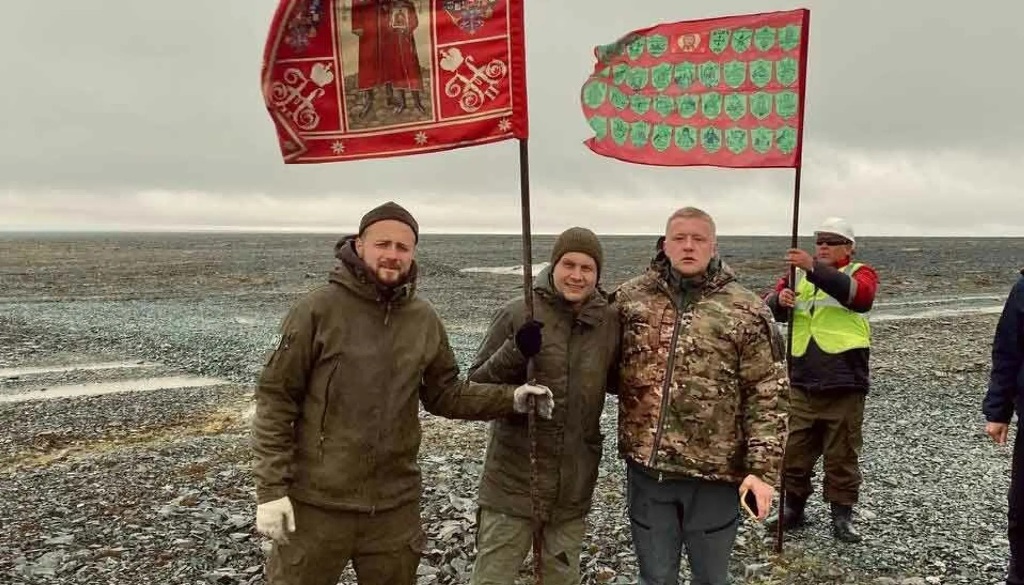
In addition, are two memorial crosses dedicated to Russia’s last Tsar and his family, including one installed by the Cossacks – see photo located at the end of this post.

***

*As I have noted in previous posts, I support any initiative – big or small – to help keep the memory of Nicholas II and his family alive in 21st century Russia – PG

© Paul Gilbert. 17 August 2025

Directors of Museum of Nicholas II and Livadia Palace meet in Crimea

PHOTO: Larissa Kovalchuk and Anna Sadrieva at Livadia Palace

On 11th August 2025, Livadia Palace hosted a meeting between the new Director of the Livadia Palace Larissa Kovalchuk and the President of the Nicholas II Foundation, who also serves as the Director of the Museum of Emperor Nicholas II in Moscow, Anna Alexandrovna Sadrieva. Together, the two parties agreed on mutual cooperation and discussed plans for future joint exhibitions.

The Emperor Nicholas II Foundation was created on 21st May 2021, to support the Museum of Emperor Nicholas II (Moscow), as well as other initiatives to help restore and disseminate the historical truth about Russia’s much slandered Tsar. During the last 4 years, the Foundation have hosted dozens of events, offered hundreds of museum tours, while expanding their collection with new acquisitions.

The Museum of Emperor Nicholas II (includes VIDEO) is based on the unique collection of the famous Russian art historian Alexander Vasilyevich Renzhin, which was formed over the course of 35 years and contains more than 3.000 authentic objects dating from 1868 to 1918, including personal items which belonged to Emperor Nicholas II and members of his family.

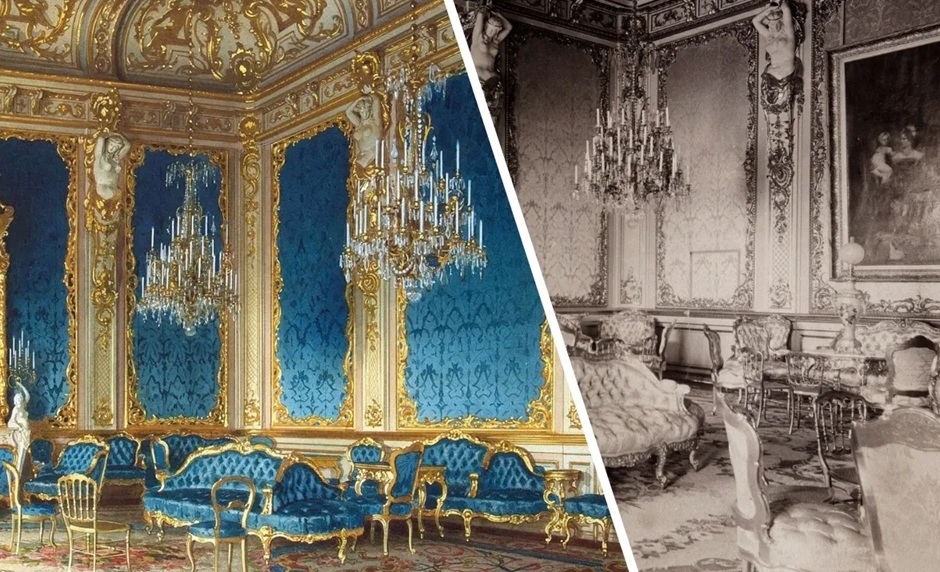
Livadia was a favorite vacation spot for the Imperial Family, overlooking the Black Sea on the southern coast of Crimea. Here, among the dense greenery of the centuries-old park, in addition to other buildings of the former estate, the New Grand Imperial Palace, made under the direction of the architect Nikolai Petrovich Krasnov (1864-1939) for the last Russian Tsar, stands out.

Emperor Nicholas II spent about 4 million gold rubles on the palace. The palace contains 116 rooms, with interiors furnished in different styles. In November 1911 Grand Duchess Olga Nikolaevna celebrated her 16th birthday at Livadia. The Imperial family visited Livadia in the fall of 1911 and 1913 and in the spring of 1912 and 1914, often spending months at a time.

In 1922, the former Imperial Residence was opened to the public as a museum, however, it closed 5 years later due to a lack of visitors. On 30th April, 1918, German troops entered Livadia and immediately began to plunder the palace. After the end of World War II, Franklin Delano Roosevelt (1882-1945), the 32nd President of the United States, expressed an interest in buying Livadia Palace. In July 2022, Livadia Palace marked its 100th anniversary as a museum. Sadly, nearly all of the palace’s former furnishings were lost.

The beginning of discussions and cooperation between the two large museums dedicated to the life and reign of Emperor Nicholas II, and the everyday life of his family, is a step towards joint educational projects and exhibitions that will help immerse visitors in Imperial Russian history during the late 19th to early 20 centuries.

© Paul Gilbert. 12 August 2025

Moscow artist breathes new life into Russia’s last tsar

Nicholas II | Николай II

Nicholas II of Russia in the uniform of the Life-Guards 4th The Imperial Family’s Rifle Regiment, 1912
Photo © Olga Shirnina

With an artist’s eye and a surgeon’s precision, Olga Shirnina — who works under the name Color By Klimbim — uses Photoshop to breathe new life into black-and-white photos from Russian history.

101a

Olga Shirnina — who works under the name Color By Klimbim

Olga Shirnina was born in Schwerin (former DDR). She studied at Moscow State Pedagogic Institute of Foreign Languages, where she received a Ph.D. in Germanisctic. Following her studies, she has worked as a professor of German at Moscow State Pedagogic Institute of Foreign Languages and that of Alma-Ata.

Having a special love for arts, she started working as a picture colourist, producing her first work in 2011. Continuing, she published a website and a Facebook page with her colourings, which led her in receiving some significant commissions.

She colorizes photos purely “for pleasure.” The most thrilling part of the coloring process, says Shirnina, is “when suddenly the person looks back at you as if he’s alive.”

Emperor Nicholas II, on the deck of the Imperial Yacht ‘Standart‘ | Photo © Olga Shirnina

Emperor Nicholas II, 1908 | Photo © Olga Shirnina

Emperor Nicholas II seated at his desk in his study. Livadia, Crimea| Photo © Olga Shirnina

Shirnina says it takes her around one full day to colorize a photo, though she’ll usually wait another day before publishing in order to see things with “a fresh eye.”

Olga is fascinated by Russian history, which she finds full of dramatic, cataclysmic events, which not only had an impact on the history of the country, but also on the rest of the world. According to her, “Sometimes a picture can say more than many words are able to, and it gives me great pleasure to add to people’s knowledge and learning about Russia, through my work in colourings”. She also finds it interesting to work with colours, achieving different effects or copying the manner of great painters of the past.

​Olga has contributed to the The Romanov Royal Martyrs Project by undertaking the colourization of all the pictures of the project. In addition to her artwork, she has been able to locate most of the Russian archival material used for the project and has undertaken the transcription work of many handwritten manuscripts.

Emperor Nicholas II at the opening ceremony of the First Duma, held in St. George’s Hall
of the Winter Palace in St. Petersburg. 10 May (O.S. 27) April 1906. | Photo © Olga Shirnina

CLICK ON THE IMAGE ABOVE TO WATCH MY INTERVIEW

Olga Shirnina’s colourized photos are also featured in my interview The Conspiracy Against Nicholas II, which aired on YouTube in August 2018. My seven-minute interview was one of a special six-part video series commemorating the Romanovs Martyrdom Centennial in 2018, prepared by the Monastery of St John the Forerunner Mesa Potamos in Cyprus.

To date she has colourized dozens of black-and-white photos of members of the last Russian Imperial Family, all of which are exceptional in their own right. It is Shirnina’s collection of colourized photographs of Emperor Nicholas II, which are my personal favourites:

Nicholas II | Николай II

Nicholas II on the Imperial Train, 1916| Photo © Olga Shirnina

Nicholas II of Russia

Nicholas II | Photo © Olga Shirnina

[Click on the images to enlarge and view caption and copyright]

The arrival of Emperor Nicholas II arriving on the Imperial train at Dvinsk,
near the Northwestern Front. 30th January 1916..| Photo © Olga Shirnina

Emperor Nicholas II blessing his troops who were leaving for the front of the
Russo-Japanese War, Peterhof in 1905 | Photo © Olga Shirnina

Nicholas II | Николай II

Nicholas II under House Arrest, Tsarskoye Selo 1917 | Photo © Olga Shirnina

Nicholas II under house arrest at Tsarskoye Selo. Summer 1917 | Photo © Olga Shirnina

Portrait of Emperor Nicholas II on display at the Monastery of the
Holy Royal Passion-Bearers, Ganina Yama. July 2018 | Photo © Olga Shirnina

Click HERE to view Olga’s collection of colourized photographs The Romanovs. An Imperial Family

© Paul Gilbert. 4 September 2019 – Updated 6 August 2025

Monument to Nicholas II and his family to be installed in Mogilev

PHOTO: artist’s concept of the proposed monument, to be installed in Mogilev

A monument to Emperor Nicholas II and his family is to be installed in Mogilev, Belarus. The sculptural composition – seen in the above photo – will be installed in Gorky Park [not to be confused with the famous Gorky Park in Moscow], situated next to the Square of Glory.

Nicholas II in Mogilev

Recall that from August 1915 to March 1917, Mogilev served as the military capital of the Russian Empire. It served as the headquarters of Emperor Nicholas II, who assumed the position of the Supreme Commander-in-Chief of the Russian Armed Forces, from 5th September (O.S. 23rd August) 1915. He settled in the Governor’s House, situated on Gubernatorskaya Square [now Square of Glory].

The headquarters were located in the buildings that stood in a semicircle on Gubernatorskaya Square. The Tsar occupied several rooms of the Governor’s House, and was often accompanied by his son and heir, Tsesarevich Alexei Nikolaevich. The headquarters was located in the building of the Provincial Government, while the building of the district court, was placed at the disposal of the General on duty of the Headquarters.

Empress Alexandra Feodorovna and her four daughters often came to Mogilev to visit Nicholas and Alexei. The Empress and the grand duchesses lived onboard the Imperial Train during their stays.

To this day, the old-timers of Podnikolye retell the stories of their grandfathers, of when they saw the Tsar and his family riding on a boat along the Dnieper, walking in Gubernskaya Square (now Glory Square) and stopping to chat with ordinary citizens.

PHOTO: the Emperor (third from left) with Chiefs of Allied
Military Missions on Gubernatorskaya Square, Mogilev. 1916

Both the Governor’s House, where Nicholas II lived with his son, and the building of the Provincial Government, were demolished in Soviet times. As a result, nothing has survived to the present day of the Tsar’s stay in Mogilev.

The building of the District Court, today houses the Mogilev Regional Museum of Local Lore. It was in this building, that Emperor Nicholas II said goodbye to the ranks of the headquarters and departments in March 1917. There is a display marking the farewell in one of the rooms located on the second floor of the museum.

Why Gorky Park?

In 1872, a city garden was laid in Mogilev, called Dembovetsky’s Garden. The initiative to lay the foundation belonged to the famous Mogilev governor Alexander Dembovetsky (1840-1920). During the reign of Russia’s last Tsar, it was renamed the Nikolaevsky Garden-Park.

Nicholas often walked here with Alexei and members of his retinue. The paths, which were lined with trees, converged in the central square, dominated with a beautiful fountain. The garden-park featured three observation gazebos, a wooden theater, elegant benches and round flower beds.

PHOTO: a marble plaque is today, the only reminder that this was where the headquarters of Emperor Nicholas II, stood from August 1915 to March 1917

Many years later, in 2014, the Church of the Holy Royal Martyrs was erected in Gorky Park in memory of the Imperial Family.

The monument to Emperor Nicholas II and his family will be installed near the church, although no time frame has yet been established for the completion of the project.

FURTHER READING

New museum dedicated to Nicholas II to be built in Mogilev + PHOTOS

Nicholas II’s motorcars and the Imperial Garage in Mogilev, 1915-17 + PHOTOS

© Paul Gilbert. 5 August 2025

The truth about Russia’s much slandered Tsar

This year marks the 157th anniversary of the birth of Emperor Nicholas II on 19th May [O.S. 6th May] 1868 and the107th anniversary of his death and martyrdom on 17th July 1918.

In recognition of these historic dates, I am reaching out to friends and supporters for donations to help support my research on the life and reign of Nicholas II, and in aid of my personal mission to clear the name of Russia’s much slandered Tsar.

There are many web sites, blogs and Facebook pages dedicated to the Romanovs, however, I work very hard searching Russian archival and media sources to bring something new to the table every day, including articles and news stories – from Russian archival and media sources – on Nicholas II and his family, the Romanov dynasty, their palaces, exhibitions + photos, videos and more.

Every dollar collected goes toward the acquisition and translation of documents, letters and diaries from Russian archival sources. In addition are the first English translations of articles researched by a new generation of Russian historians, which challenge the popular negative assessment of Nicholas II, which prevails to this day.

Your donation also helps offset the cost of maintenance of my blog: Nicholas II. Emperor. Tsar. Saint, and the organization and promotion of Romanov themed events, such as the 2nd International Nicholas II Conference and other events.

If you enjoy all the articles, news, photos, and videos, please help support my work in the coming year ahead by making a donation.

CLICK HERE TO MAKE A DONATION IN US DOLLARS

CREDIT CARDS and PAYPAL ACCEPTED
Donations as little as $5 are much appreciated, and there is NO obligation!

Thank you for your consideration

© Paul Gilbert. 31 July 2025

Divine Liturgy for the Imperial Family performed in the Great Church of the Winter Palace

On 17th July 2025, Archpriest Nikita Zverev, the dean of the palace churches, performed the Divine Liturgy in the Church of the Saviour of the Image Not Made by Hands [aka the Great Church of the Winter Palace], situated in the State Hermitage Museum in St. Petersburg.

The service marked the 107th anniversary of the death and martyrdom of Russia’s much slandered Tsar, his family, and their four faithful retainers, all of whom were brutally murdered in Ekaterinburg by members of the Ural Soviet in July 1918.

Archpriest Nikita was co-served by Rector Hieromonk Mark (Svyatogorov), Hieromonk Tikhon (Voronov), Archpriest Maxim Kvasov, Priest Artemy Naumov, and Hierodeacon Ilya (Vasiliev). They were joined by the combined choir of singers of the St. Petersburg diocese.

Among the worshippers were the Director of the State Hermitage Museum in St. Petersburg, Mikhail Borisovich Piotrovsky, and museum staff.

“Passing by the Winter Palace, it is a great happiness to see the dome of this church and to know that prayers are heard here again,” said Father Nikita. – “The history of Russia’s last Tsar and his family began with this church. Everyone who comes here sees on the right a picture depicting the wedding of Nicholas II and Alexandra Feodorovna [see below]. The sacraments were performed in this very church, . . . and now, many years later, we can stand and pray where they once prayed. This temple is of great historic importance, one which is associated with the fate of the Fatherland. I thank the museum staff who have preserved all this to this day. If we do not know our history, remember the tragedy that happened, there can be no happy future for Russia. Let us appreciate what we have, both sorrows and joys, and remember that the Lord will never leave us.”

Recall that the last Russian Emperor, Nicholas II, and his family were shot on the night of 16/17 July 1918, in the basement of the Ipatiev House in Ekaterinburg. On 1st November 1981, they were canonized as new martyrs by the Russian Orthodox Church Outside Russia (ROCOR), and on 20th August 2000, as passion bearers by the Moscow Patriarchate of the Russian Orthodox Church.
And let us not forget the four faithful retainers, who remained with the Imperial family during their house arrest in Tobolsk and Ekaterinburg, and who followed them to their deaths in the Ipatiev House, on 17th July 1918: the valet Aloysius Trupp (1856-1918); the maid Anna Demidova (1878-1918); the cook Ivan Kharitonov (1872-1918); and Dr. Eugene Botkin (1865-1918), canonized in 2016.

PHOTO: Wedding of Nicholas II and Alexandra Feodorovna
Painted in 1895 by the Danish artist Laurits Tuxen (1853-1927)
From the collection of the State Hermitage Museum, St. Petersburg

The Great Church of the Winter Palace was consecrated on 25th July 1763 by Archbishop Gabriel in the name of the image of the Saviour (painted by Theodot Ukhtomsky, 1693), which was located in the prayer room at the altar. After the 1839 renovation, it was consecrated again by Metropolitan Philaret. The Maltese shrines presented to Emperor Paul I were kept here, and every year they were transferred to the Pavlovsk Cathedral [the Cathedral of the Holy Apostle Paul] in Gatchina for a month.

In October 1917, the church was damaged during the storming of the Winter Palace by the Bolsheviks and was closed in 1918. On 9th December 2014, the Great Church of the Winter Palace was opened to visitors after restoration, and on 25th December of the same year, the first Divine Liturgy in 96 years was served.

© Paul Gilbert. 28 July 2025

Bust of Nicholas II (temporarily) installed in Uryupinsk

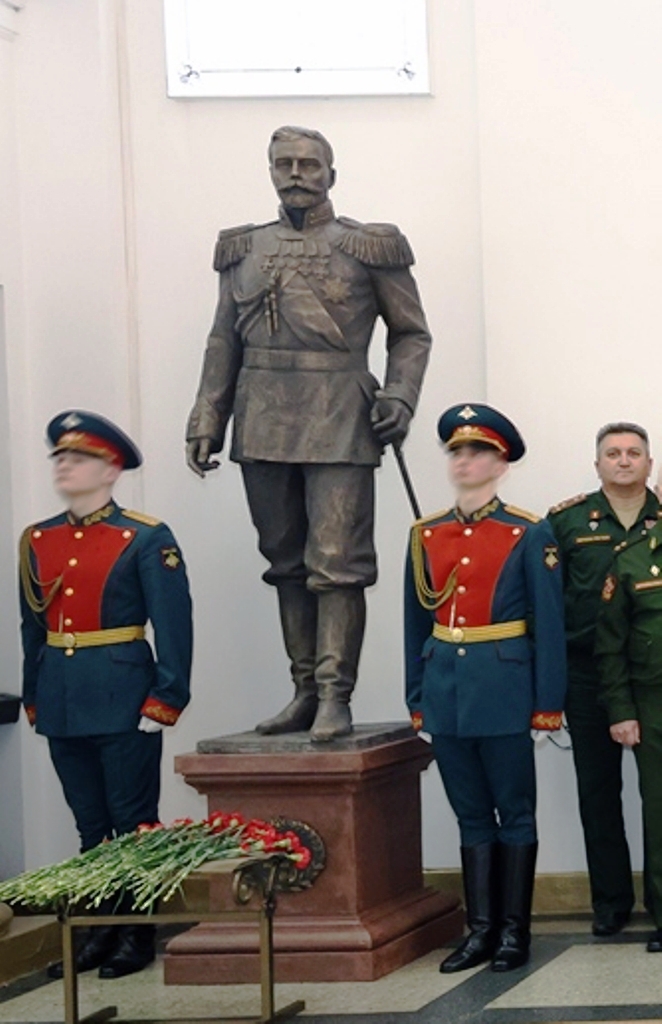
On 17th July 2025, busts of Emperor Nicholas II and Tsesarevich Alexei Nikolaevich (sorry, no photo available) were temporarily installed in the Russian town of Uryupinsk (Volgograd region), during a commemorative event marking the 107th anniversary of the death and martyrdom of Russia’s last Tsar and his family.

Plaster busts on pedestals were installed on the Square of the Fallen Heroes by members of the Union of Cossacks of Russia. Representatives of several Cossack organizations and the clergy of the local diocese held a prayer service and laid flowers.

After the ceremony, the busts were dismantled. According to the ataman of the local Cossack society in Uryupinsk, Dmitry Popolitov, a search is currently underway for a permanent place to install bronze busts of Nicholas II and Alexei Nikolaevich.

The event was organized by the Union of Cossacks of Russia, members of the 4th Don Cossack Regiment named after Count Platov, with the support of the Khoper Cossack District and the Uryupinsk Diocese.

It is interesting to note, that the plaster busts and pedestals were placed on the exact spot, where a monument to Soviet dictator Joseph Stalin stood during the Soviet period.

Recall that the monument to Joseph Stalin was erected in the Uryupinsk square of the Komsomol in 1948. Later, the square was renamed after Stalin. With the coming to power of Nikita Khrushchev in 1953, the monument to Stalin disappeared without a trace and was considered lost.

In 2000, a local resident, who wished to remain anonymous, told the authorities where the monument was buried. The monument of Joseph Stalin was found covered with earth on the territory of the former Khoper district prison. It was excavated and placed in the Uryupinsk Museum of Local Lore in an exposition dedicated to the defeat of Nazi troops near Stalingrad.

According to the Union of Cossacks of Russia, events such as this are important for preserving historical memory and preventing the recurrence of tragic events of the past.

© Paul Gilbert. 24 July 2025