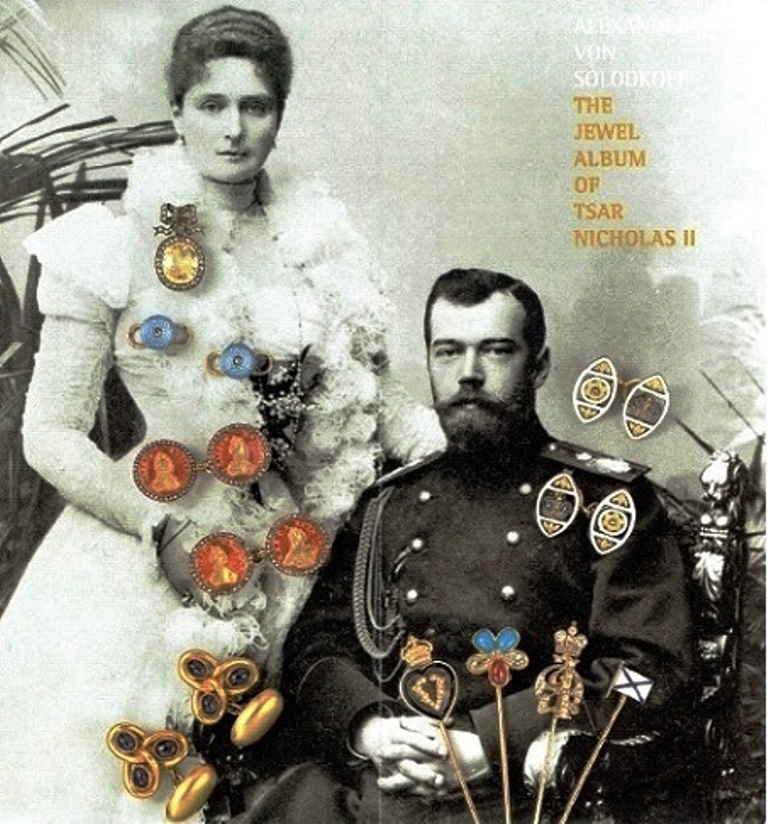
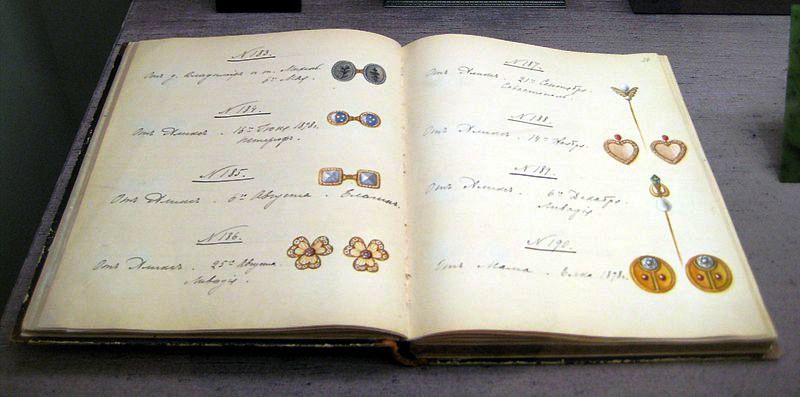
Between 1889 and 1913 Nicholas II, Grand Duke, Tsesarevich and Emperor of Russia, painted his jewellery in a small album as a private record of his collection. His watercolours of more than 300 items – some of which were created by jewellers such as Fabergé and Cartier – give a realistic picture of what the tsar was wearing as jewellery. His handwritten notes also comprise dates and names of those who presented him with each item, a record of the small circle of those who were near to him.
The drawings of his personal jewellery were made by him not to record valuables such as precious stones or gold but as a personal record of family souvenirs with memorable dates. The album is an encyclopedia of men’s fashion ornaments of the turn of the century full of crowned monograms and symbols as well as surprisingly modern jewellery designs.
The jewel album of Tsar Nicholas II was re-discovered in the 1990s in the archives of the Moscow Kremlin Museum. It consisted of 82 pages and a total of 305 watercolour drawings of his personal collection of men’s jewellery. The date of receipt of gifts from loved ones connected with holidays and memorable events were noted by Nicholas II in his own handwriting: his birthday, name day, days of engagement and wedding, the day of the coronation, birth, christening, and on major Christian holidays, such as Easter and Christmas.
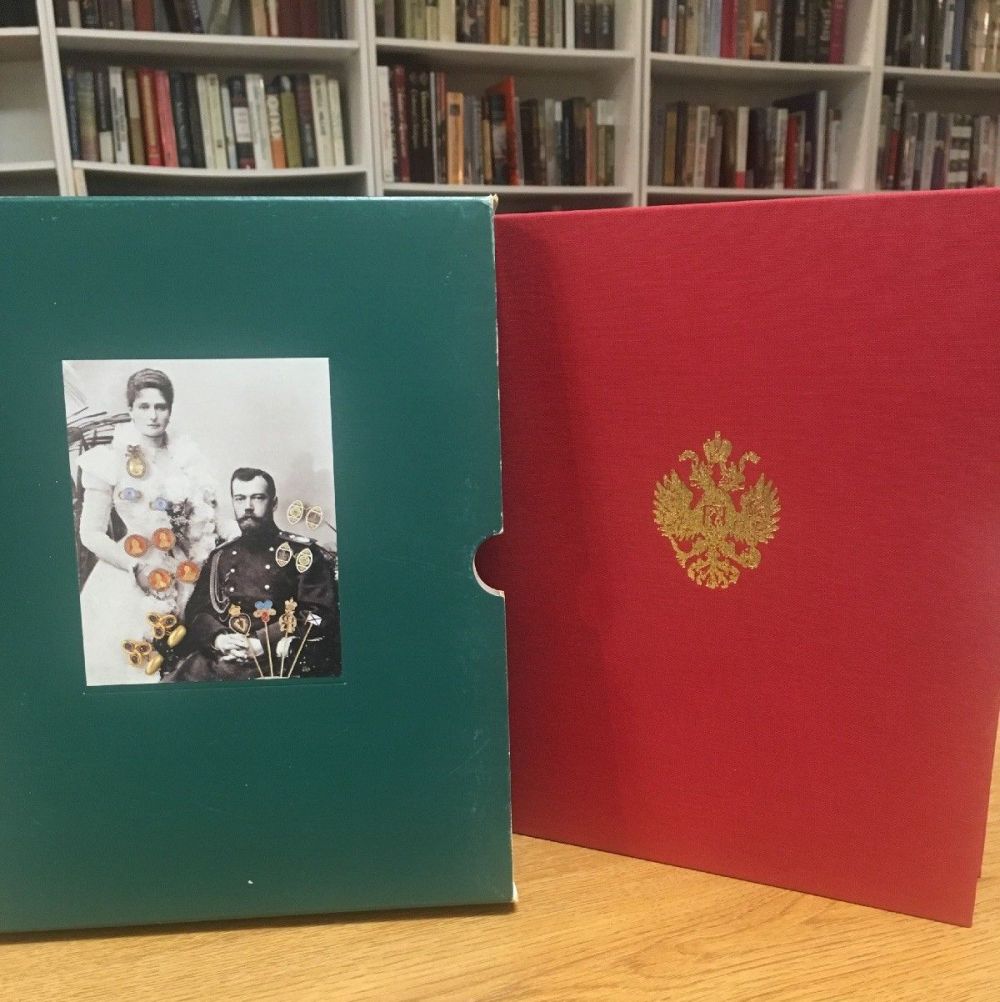
In 1997, the publishing firm Ermitage issued a facsimile of the album, entitled The Jewel Album of Nicholas II and a Collection Private Photographs of the Russian Imperial Family. It was published in a high quality cloth-bound edition with 216 pages, enclosed in a handsome green-board slipcase. The accompanying text on the jewellery was written by Alexander von Solodkoff, an authority on Russian and Fabergé art. It is supplemented with an article on the history of the album by Irina A. Bogatskaya, curator of the Moscow Kremlin Museum Archives.
In addition to the more than 300 watercolours of Nicholas II’s jewellery, the book also includes 95 illustrations from the original, unpublished private photographs of the Russian Imperial Family. This rare collection offers an authentic glimpse of their private life with evocative scenes of private visits, fashion and interiors of the time. The material was discovered by von Solodkoff in the archive of Hemmelmark, formerly the home of Princess Irene of Prussia, sister of Empress Alexandra Feodorovna.
Alexander von Solodkoff has studied the history and art of Russia specializing in goldsmith work and jewellery. Among his publications are books such as Russian Gold and Silver (1981), Fabergé (1988) and numerous articles in exhibition catalogues and art historical publications. He served as director of Ermitage Ltd. London.
The facsimile edition (pictured above) was distributed through Christie’s of London in the late 1990s, and sold out very quickly. This beautiful book is now long out of print, however, second-hand copies which sell for hundreds of dollars, continue to be highly sought after by Romanov enthusiasts and lovers of Imperial Russian history.
NOTE: All of the articles pertaining to Nicholas II and his family which were originally published in my Royal Russia News blog, have been moved to this Nicholas II blog. This article was originally published on 13 April 2019 in my Royal Russia News blog – PG
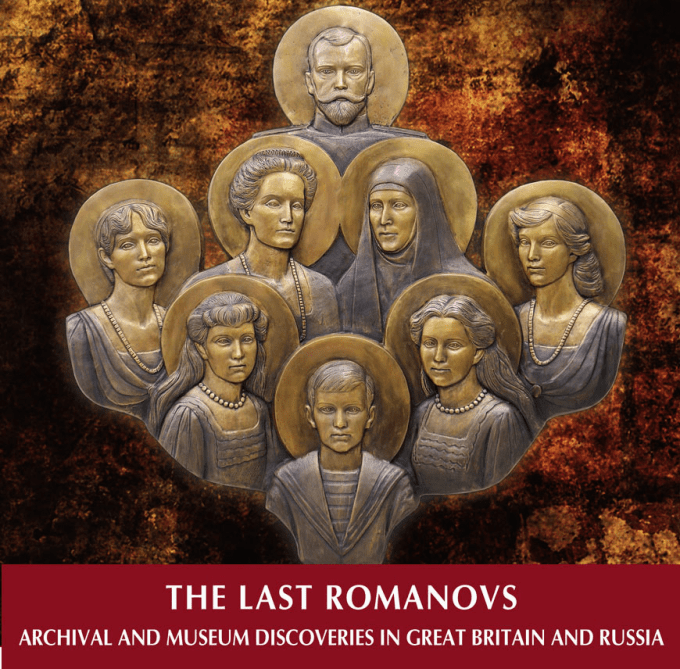
The Grand Duchess Elizabeth Romanov Society (UK) have published a high quality book The Last Romanovs – Archival and Museum Discoveries in Great Britain and Russia.
This English language publication is an illustrated collection of contributions to the British-Russian Symposium, held in Windsor in June 2017 and organised by the Grand Duchess Elizabeth Romanov Society. The articles cover various aspects of the lives of the last members of the Imperial House of Romanov and also present new information about documents and exhibits from various collections in Russia and the United Kingdom.
The book (edited by Dr Maria Harwood) was released by the prestigious British publishing house PINDAR PRESS. The Foreword has been written by the President of the Romanov Family Association Princess Olga Andreevna, and Introduction by the Chairman of the Grand Duchess Elizabeth Romanov Society (UK) Dr. Maria Harwood.
Below, is a list of the articles and their respective authors:
PART I – CORONATIONS
The Decoration of the Kremlin as a Sacred Space for the Last Coronation in 1896: Tradition and Innovation by Dr. Inessa Slyunkova
Rare Photographs of the Romanovs’ Russia During the Time of the Coronation, 1856 by Stephen Patterson
PART II – THE ROMANOVS AND THE BRITISH ROYAL FAMILY
The Romanovs at Osbourne by Michael Hunter
The Rescue of the Dowager Empress Marie Feodorovna from the Crimea by Coryne Hall
The Letters of Grand Duchess Maria Alexandrovna of Russia, Duchess of Edinburgh and of Saxe-Coburg-Gotha, in the National Archives of Romania in Bucharest by Charlotte Zeepvat
PART III – BIOGRAPHICAL RESEARCH
The Art Collection of Grand Duke Sergei Alexandrovich and Grand Duchess Elizabeth Feodorovna: New Discoveries by Dmitry Grishin
New Documents for the Biography of Grand Duchess Elizabeth: Police Reports 1909-1917 by Olga Kopylova
The Question of Giving the Title of Deaconess to the Sisters of Saints Martha and Mary Convent: Discoveries in St. Petersburg’s Archives by Priest Andrei Posternak and Elena Kozlovseva
Journey to the East of Grand Duke Sergei Alexandrovich and Grand Duchess Elizabeth Feodorovna (Letters to Princess S.N. Golitsyna, 1888) by Olga Trofimova
The Collection of the ‘Tsar Nicholas II Museum’ in Belgrade Within the State Historical Museum, Moscow by Nikolai Misko and Marina Falaleeva
Father Nicholas Gibbes: Teacher to the Royal Children and Orthodox Monk. The Romanov Collection and the Issue of Creating a Romanov Museum in Oxford by Archpriest Stephen Platt
During the past three years, the work of the Grand Duchess Elizabeth Romanov Society has included pilgrimages to Russia by Orthodox Christians, holding historical exhibitions and educational events in the UK – including the Nicholas II Conference held in Colchester, England on 27th October 2018 – as well as the unveiling of the memorial Cross to the Holy Royal Passion-bearers and Grand Duchess Elizabeth Feodorovna, on the Isle of Wight near the Palace of Queen Victoria.
This English language title is a large soft-cover (9½” x 12″), with 120 pages, richly illustrated with more than 140 colour and black & white photographs and illustrations. Price: £25 + postage.
For information on how to order your copy, please contact Mr David Gilchrist at the following email djgilx@btinternet.com
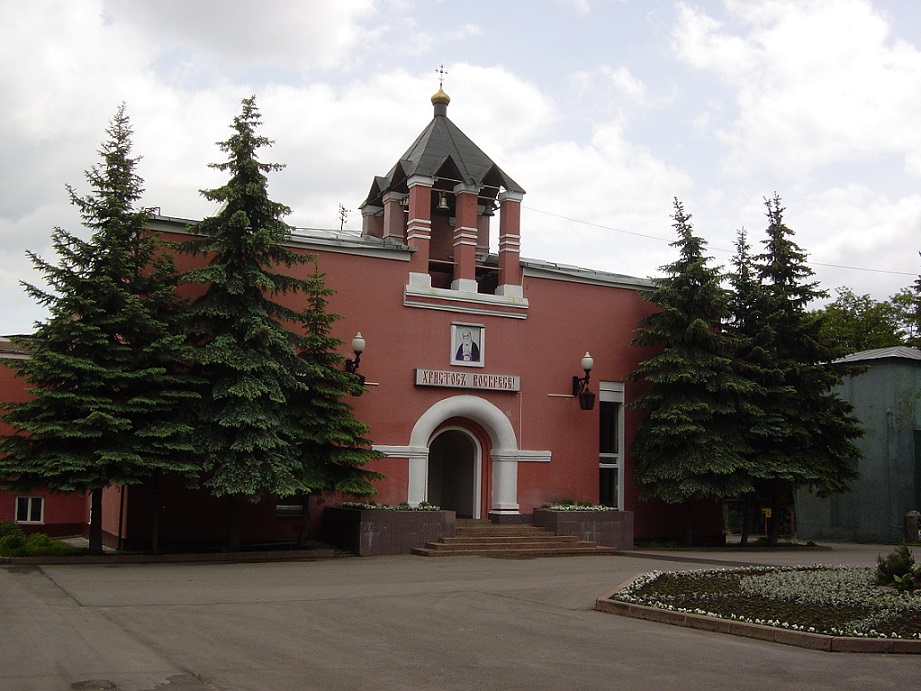
Situated on the grounds of the New Donskoy Cemetery in Moscow is a small church, above the entrance is the inscription ‘Christ is Risen’. In 1927, it was a crematorium and columbarium, the latter of which remains intact to this day.
Parishioners attending liturgies performed in the Orthodox Church, are unaware that behind the false walls are the ashes of Russia’s most notorious murderer: Yakov Mikhailovich Yurovsky (1878-1938).
Yakov Mikhailovich (real name Yangel Khaimovich) Yurovsky was born on 19th (O.S. 7th) June 1878 in Kainsk of the Tomsk province into a large Jewish working family, the eighth of ten children. He was best known as the chief executioner of Emperor Nicholas II, his family, and four retainers on the night of 16/17 July 1918.
The regicide who died on 2nd August 1938, of perforation of a duodenal ulcer was cremated in the Don Crematorium in Moscow. His ashes were placed in an urn and placed behind a wall, in one of the cells of the columbarium. An urn containing the ashes of Yurovsky’s wife Maria Yakovlevna Yurovskaya were later placed next to those of her husband. Today, it is impossible to guess that the two urns contain their remains, as all the inscriptions and identification marks are draped with fabric.
PHOTO: Restored church at the New Donskoy Cemetery in Moscow
The Don Crematorium was the first crematorium built in Moscow and until 1947 the only mass crematorium operating in the USSR. It was constructed in 1926 in the unfinished church of St. Seraphim of Sarov in the New Donskoy Cemetery. Opened in 1927, more than 150 old Bolsheviks were cremated here. The crematorium was closed in 1992, whereupon it was transferred to the Russian Orthodox Church (ROC).
In 1998, Divine Liturgies resumed after the reconstruction of the building. In autumn 2011, the Russian Orthodox Church decided to regain the territory of the columbarium of the Don Crematorium and reconstruct it.
A baptismal font now stands in place of the crematorium oven. Everywhere there are icons, children’s drawings of the Workshop of Father Seraphim, a Christmas nativity scene. God’s grace! The church staff are ashamed of being under the same roof with the columbarium, and shudder when people come to inquire of the whereabouts of the niche containing Yurovsky’s urn.
You reap what you sow . . .
According to local Moscow journalist Felix Grozdanov, “workers in a private conversation admitted that they are strictly forbidden to show this place. It is not for nothing that it was stored in a special columbarium – entrance there for a long time was allowed by passes only to family relatives or important persons. It is forbidden to show this place during excursions which are regularly held here.”
The shroud of secrecy intensified after a number of acts of vandalism were carried out by monarchists seeking revenge for Yurovsky’s role in the murder of Russia’s last tsar and his family. “They came and spat on the glass of Yurovsky’s cell, where his urn was placed. They even tried to smash the glass,” one cemetery worked noted.
CLICK on the ticket for a virtual tour of the Museum of the Family of Emperor Nicholas II
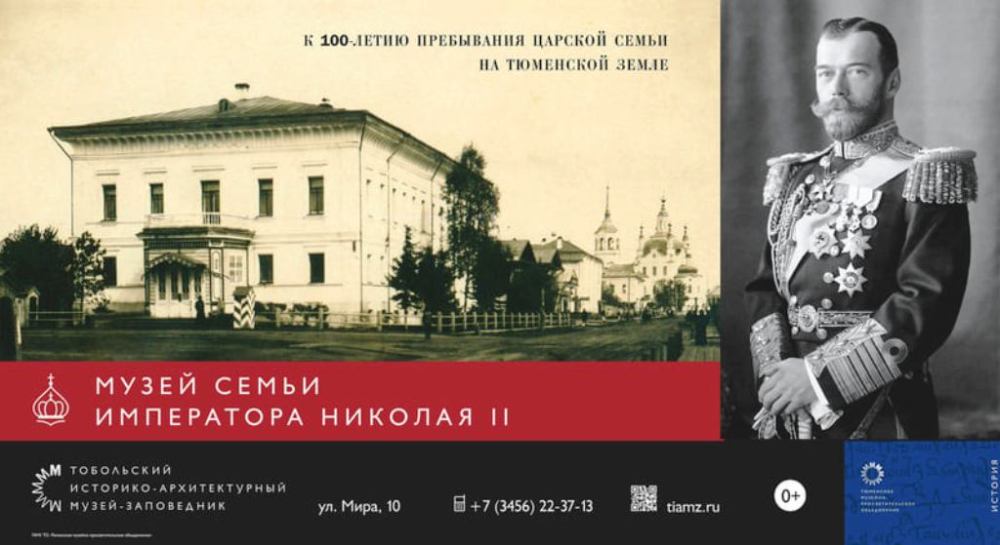
The Museum of the Family of Emperor Nicholas II opened on 26th April 2018 in the Siberian city of Tobolsk.
The museum is the first museum in Russia, dedicated entirely to the family of Emperor Nicholas II. The museum is housed in the former governor’s house, where the Imperial family lived from 6th August, 1917 to 13th April, 1918. The mansion became a prison for the Imperial family before the Bolsheviks sent everyone to them all to their deaths in Ekaterinburg.
CLICK on the ticket above to take a virtual tour of the Museum of the Family of Emperor Nicholas II in Tobolsk
NOTE: it may take a few minutes to download. Simply follow the arrows into the former Governor’s Mansion, and tour the rooms and their contents. As you enter the house, make a left to follow the arrow up the stairs to the upper floor, where the exhibition rooms are located – ENJOY!
My personal choice for Romanov Book of the Year! – Paul Gilbert
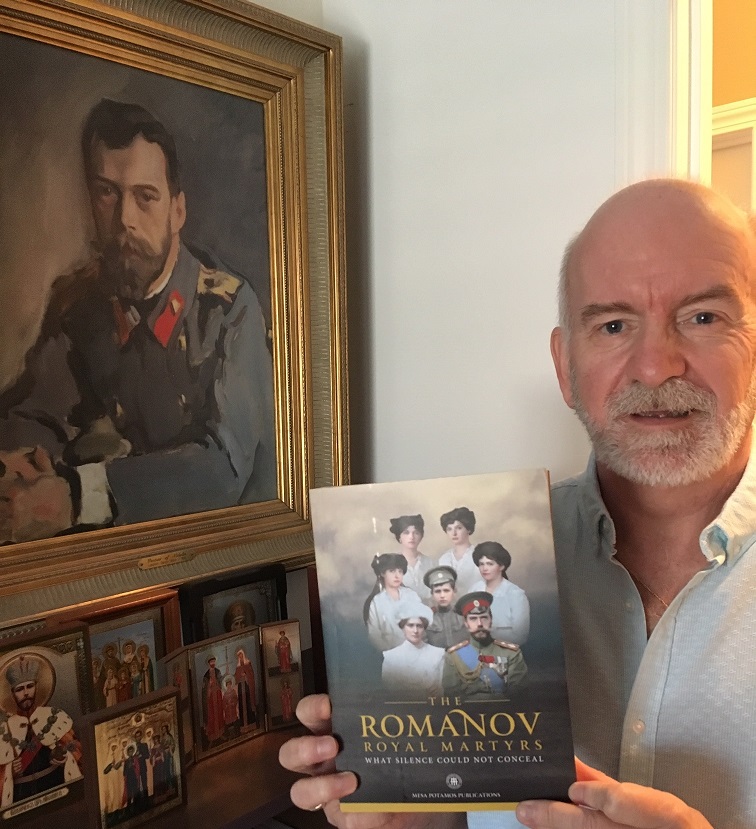
Based on its comprehensive research and new information, The Romanov Royal Martyrs: What Silence Could Not Conceal is my personal choice for the Romanov Book of the Year for 2019. If you read just ONE book on Nicholas II and his family, make sure it is this one! – Paul Gilbert
NOTE: The book is set to arrive in North America at the end of November, and distributed to readers throughout the United States and Canada. As a result, I have had to exercise great care in writing this review. As a courtesy to those who have not yet read the book, I did not want to give anything away, or publish any spoilers, therefore, I have used material from the publishers web page and added my own additional comments and notes to this review- PG
* * *
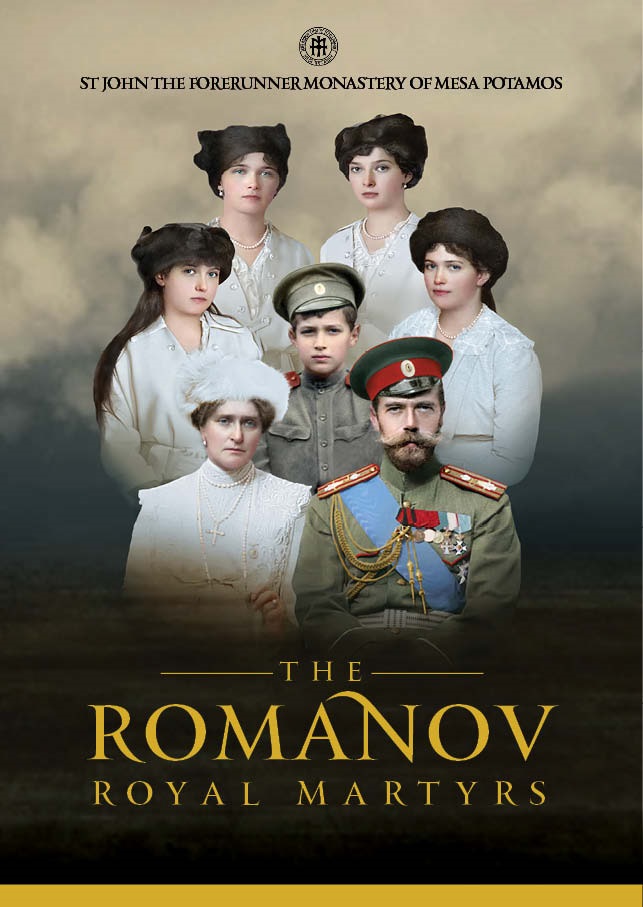
The publication of the English edition of The Romanov Royal Martyrs: What Silence Could Not Conceal is the crowning glory of a unique and comprehensive project of the Holy Monastery of St. John the Forerunner of Mesa Potamos in Cyprus. Originally published in Greek in February 2018, the long awaited English edition was published in September of this year.
The book draws on letters, testimonies, diaries, memoirs, and other materials never before published in English to present an honest and unique new study of Nicholas II and his family.
The work aims to present Nicholas II and his family through the prism of their spiritual grandeur and the purity of their souls. A lively portrait of the Imperial family emerges from their own personal writings and in the writings of those who lived very close to them. The result is a psychographic biography which explores the essential character of the Imperial family in a deeper and inspiring way.
Furthermore, the work brings to light a multitude of unknown and unrevealed facts, aspects and elements of history, which evince that many truths in regard to the life and martyrdom of the Imperial family remain silenced or distorted to this day. The book presents unvarnished factually sourced events, deriving all its material stringently from primary sources, which allow no grounds for questioning their legitimacy, gravity, and validity.
Thus, many major historical events, such as the 1905 revolution and Bloody Sunday, Russia’s involvement in World War I, the myth of the “Bread Revolution”, the February coup d’état of 1917, the plots and conspiracies to overthrow Nicholas II from his throne. the treachery, cowardice and deceit of the tsar’s ministers, generals and even members of his own family, the events relating to Nicholas’ II abdication, among others are set in their true proportions and presented through a proper perspective.
Since the publication of Robert K. Massie’s classic Nicholas and Alexandra in 1967, other Western historians have published their own assessments of Nicholas II, some of whom arrogantly arguing that their work is the “final word” – they were WRONG! Sadly, many people have blindly accepted these often negative assessments of Russia’s last tsar as the truth. With the publication of The Romanov Royal Martyrs, readers may be surprised by the facts surrounding the historical events noted above, because as noted, up to now these events have been presented in an inaccurate light.
In addition, this book presents the most accurate account of the murder of the Romanovs ever presented in a book. No fictional additions. The information used in The Chapter of Blooddraws exclusively from the memoirs and depositions of the murderers and the guards, as well as from the official forensic investigations and studies of the remains. The chapter also includes unpublished material relating to the family’s imprisonment in Ekaterinburg. Of particular note are excerpts from the testimonies of the nuns of the Novo-Tikhvinsky Convent in Ekaterinburg, who were taking provisions to the Imperial Family at the Ipatiev house, and from the testimonies of Ipatiev guards.
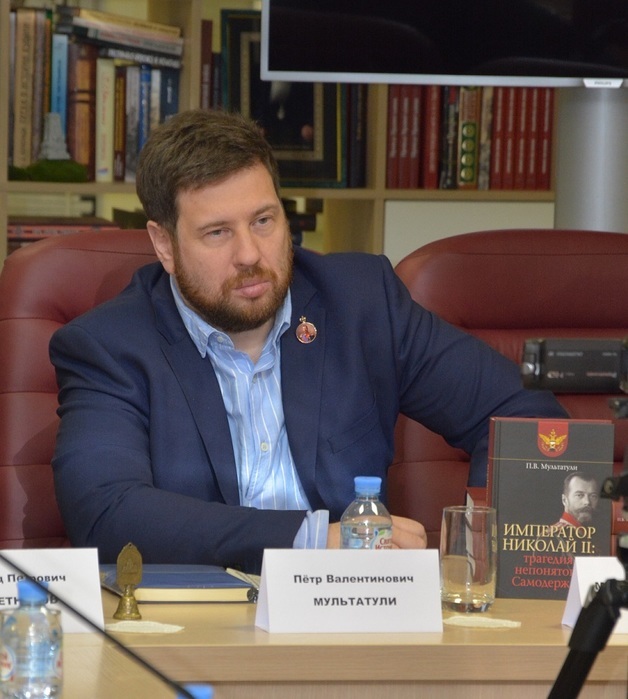
Dr. Pytor Multatuli, Russia’s foremost expert on Nicholas II
Among the historians who worked in the research team together with the fathers of the Mesa Potamos Monastery are Nicholas B.A. Nicholson, Helen Azar, Helen Rappaport, Sophie Law, and George Hawkins, all noted specialists in Romanov history.
A very significant member of the project team is Dr. Pytor Multatuli, and one whose contribution adds credibility to this publishing project. Multatuli is a renowned Russian author, journalist, historian, and Professor at the Moscow State Institute for Culture and Arts. He is recognized as Russia’s foremost authority on the life and reign of Nicholas II. His works on these subjects are unparalleled, yet sadly overlooked or ignored by his Western counterparts.
I was delighted to read numerous quotes from the memoirs of General Alexander Spiridovitch (2 Vols.) and Semyon S. Fabritsky are included in this book. I am very proud to note that the first English translations of both were published by the publishing division of Royal Russia during the last decade. Both Spiridovitch and Fabritsky knew Nicholas II personally, their memoirs reflect their honest, eye-witness assessments of the last tsar and his family.
The Romanov Royal Martyrs is an impressive 508-page book is in three parts: Part I:In the Path of Love (4 chapters); Part II:In the Path of Blood (2 chapters); and Part III:In the Words of the Saints.
It includes nearly 200 black and white photographs, and also features a 56-page photo insert, of more than 80 high-quality images of the tsar and his family, all of which have been colourised by the acclaimed Russian artist Olga Shirnina (aka Klimbim), and appear here in print for the first time.
The only criticism I have of the book are a number of errors which I found in the book. Many readers may not even recognize them, however, those who are familiar (particularly the purists) with Nicholas II and his family are sure to note. Perhaps some of the meanings were simply lost in translation?
For instance, the use of some of the titles throughout the book, such as “crown prince” or “tsarevich”[1] when referring to Nicholas Alexandrovich and Alexei Nikolaevich, instead of the correct “tsesarevich”[1] * Please see my notes at the bottom of this review – PG
The widowed wife of Alexander III is referred to as the “widowed Queen Mother” instead of the correct “Dowager Empress.” Maria Feodorovna was never “Queen” of Russia, she was Empress!
Even referring to Nicholas II and his family as “royal,” instead of “imperial” is incorrect. I have to confess that I am also guilty of using “Royal Family” instead of the correct “Imperial Family”, and have been criticized over the past 25 years for naming my web site “Royal Russia” instead of “Imperial Russia”.
On page 78, the translation of “Tsarskoye Selo” is incorrect. “Tsarskoye Selo was essentially a village, as it’s very name implied, which means “Royal Village.” The correct translation of the Russian spelling Ца́рское Село́ is in fact “Tsar’s Village”. The Russian word “Ца́рское” is quite often mistranslated and misused by Westerners as “royal”.
Another word that I would like to point out is on pg. 64: ” . . . Nicholas and Alexandra, under an imperial canopy . . .” The proper term for this “canopy” is baldachin. [2] * Please see my notes at the bottom of this review – PG
On page 136, I was distressed to read “Nicholas named his son in honor of his beloved ancestor, Tsar Alexis.” Sadly, this is an error often noted by many Western historians.
It was Robert K. Massie (among others), who have led us to believe that the only son of Emperor Nicholas II and Empress Alexandra Feodorovna, was named after Tsar Alexei Mikhailovich (1629-1676) . . . this is incorrect.
The long-awaited son and heir to the Russian throne was named Alexei, in honour of St. Alexei of Moscow.
Saint Alexius (1296–1378) was Metropolitan of Kiev and all Russia (from 1354). He was canonized by the Russian Orthodox Church in 1448 and is revered as one of the patron saints of Moscow.
Also on page 136, “From Nicholas’ diary six weeks after the birth of Alexis . . . Alix and I were very concerned about the bleeding of little Alexei from his umbilical cord . . .”. It has generally been accepted that Alexei began bleeding from his navel at the age of six weeks . . . this is also incorrect.
Two noted Romanov historians Margarita Nelipa and Helen Rappaport both tell us otherwise, that Alexei’s bleeding was noted the day following his birth. Their claim is based on two separate, yet reliable sources.[3] * Please see my notes at the bottom of this review – PG
On page 151, Rasputin is referred to as a muzhik (a Russian peasant), when in fact he was a Strannik (a holy wanderer, or pilgrim).
On page 279, ” . . . they set out by boat from the village of Pokrovskoye . . .” this is also incorrect. The Imperial family arrived by train from St. Petersburg in Tyumen, where they continued their journey to Tobolsk by boat, passing Pokrovskoye. [4] * Please see my notes at the bottom of this review – PG
Despite my criticisms above, this should not in any way deter any one from reading this book, nor should they in any way diminish the extensive research that went into it, which at long last presents the TRUTH!
I personally applaud the monumental efforts that went into this book. It presents much new material which dispels the many myths and lies about Nicholas II. Finally, the reader learns the truth about the tragedies which befell the tsar during his 22+ year reign, and the evil gossip which flowed freely in the salons of the capital, not to mention the vitriol distributed by the revolutionaries, whose propaganda turned the Russian people against their sovereign.
I am often asked to recommend a book, which tells the true story of Nicholas II, Alexandra Feodorovna and their five children. My answer was always the same, “It has yet to be written” – up until now!
‘The Romanov Royal Martyrs: What Nature Could Not Conceal‘ can now be considered the definitive work on the Imperial Family. It puts to rest so many of the negative myths, held for more than a century, and rehashed over and over again in the last 50 years by so many so-called Western experts. At long last the truth has been told! If you read just ONE book on Nicholas II and his family, make sure it is this one!
I think so highly of this book, that it will be placed on a special shelf of books in my home library, books which inspire and guide me, and include the Holy BibleKing James Version, The Orthodox Study Bible, Russian Golgotha and Last Tsar. Nicholas II, His Reign & His Russia.
Based on its comprehensive research and new information, I do not hesitate in naming The Romanov Royal Martyrs: What Silence Could Not Conceal as my personal choice for the Romanov Book of the Year for 2019!
I pray that this review will inspire many others to buy this book, read it, and keep it’s words close to their heart. Click HEREto order your copy.
Click HERE to review the Holy Royal Martyrs web site, which includes excerpts from the book, photos, videos, articles and more
[1] English sources often confused the terms Tsarevich and Tsesarevich, both distinct words with different meanings. Tsarevich (Russian: Царевич) is a Slavic title given to tsars’ sons. Under the 1797 Pauline house law, the title was discontinued and replaced with Tsesarevich (Russian: Цесаревич) for the heir apparent alone.
[2] “The procession of Emperor Nicholas II from the Assumption Cathedral on 26 May (Old Style 14 May, 1896), “was rich and imposing beyond the reach of exaggeration. The baldachin under which the Emperor walked was richly covered with velvet and cloth of gold, surmounted by plumes of ostrich feathers in three colours—–black, white, and yellow. This was supported at intervals by lances of ebony and mother of pearl, and held firmly by golden cords. The baldachin and cords were carried and held respectively by sixteen aides-de-camp generals of the highest rank in the imperial service.”
Source: Gilbert, Paul (Editor). The Coronation of Tsar Nicholas II. Published by Gilbert’s Books. 2012 (see page 36)
[3] “One day after Alexei’s birth, Grand Duke Peter Nikolaevich (1854-1931) came to congratulate the sovereign and stayed for lunch. Upon his departure, the sovereign mentioned the presence of “blood on the diapers”. Returning to his Znamenka estate (in Alexandria), he repeated this detail to his wife who telephoned Nikolai II (before visiting Alix later that evening). During their conversation, he said that the doctors had confirmed that the atypical bleeding was indeed due to haemophilia.”
Source: ‘Alexei. Russia’s Last Imperial Heir: A Chronicle of Tragedy’ by Margarita Nelipa. Published by Gilbert’s Books in 2015
[3] Grand Duke Peter Nikolaevich and his wife Grand Duchess Militza Nikolaevna (1866-1951) had driven over to the Lower Dacha the day Alexei was born . . . as their son Prince Roman Petrovich (1896-1978) later recalled in his memoirs [published in Danish].
‘When they returned in the evening to Znamenka, my father remembered that . . . the Tsar had told him . . . That the doctors were concerned about the frequent splatters of blood in his swaddling clothes. . . .”
Grand Duke Peter telephoned the palace, “When the Tsar answered that they had hoped that the bleeding would soon stop, my mother took the receiver and asked if the doctors could explain the cause of the bleeding. When the Tsar could not give her a clear answer, she asked him with the calmest of voices she could manage: ‘I beg you, ask them if there is any sign of haemophilia’ . . . The Tsar fell silent on the phone for a long time and then started to question my mother and ended by quietly repeating the word that had staggered him: haemophilia.”
Source: ‘Four Sisters. The Lost Lives of the Romanov Grand Duchesses’ by Helen Rappaport. Published in 2014
[4] From the diary of Nicholas II, 4th August 1917. We got over the Ural Mountains and felt the cold air. The train passed Yekaterinburg in the small hours of morning. It dragged on and on incredibly slowly, so that we arrived in Tyumen only at 11:30 pm.
The train pulled in almost to the quay and the only thing we had to do was to board a ship.
Then the reloading of cargo began and it went on all through the early morning. We departed from Tyumen by the river at around 6 am.
Pierre Gilliard noted in his memoirs: “We passed the native village of Rasputin, and the family, gathered on the deck, were able to observe the house of the staretz . . . “
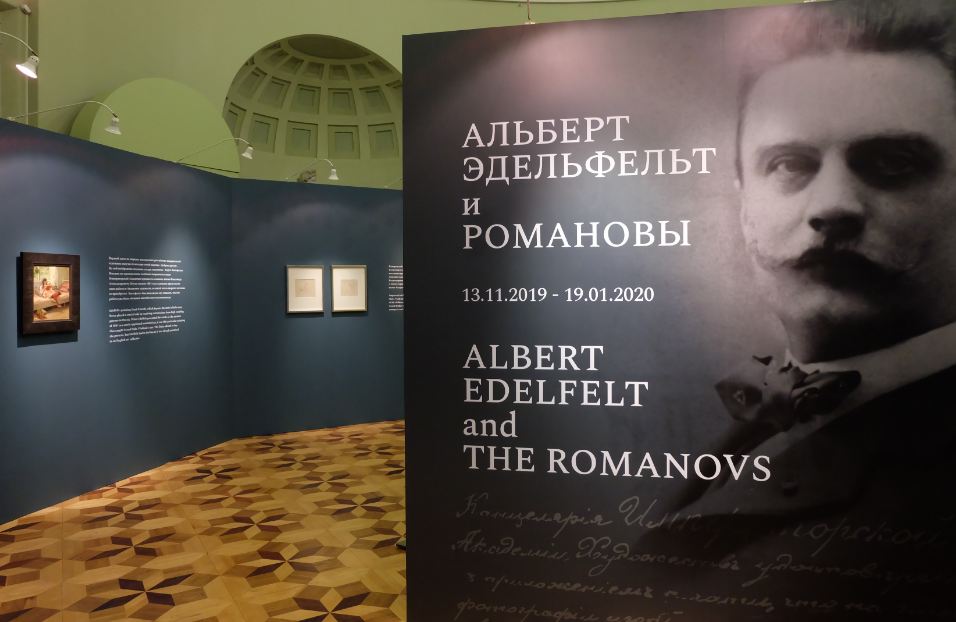
The exhibition ‘Albert Edelfelt and Romanovs’ is now on display in the Imperial Academy of Arts in St. Petersburg, and runs until 19th January 2020
On 14th November 2019, the director of the Institute of Finland in St. Petersburg Sani Kontula-Webb and the Consul General of Finland in St. Petersburg Anne Lammila opened the exhibition ‘Albert Edelfelt and Romanovs’ in the Imperial Academy of Arts in St. Petersburg.
The Institute of Finland in St. Petersburg, together with the Russian Academy of Arts, with the support of the Consulate General of Finland in St. Petersburg, organized the exhibition that will present Edelfelt’s work commissioned by the Russian Imperial Court. His works will be shown for the first time in the former Imperial capital in more than 130 years, including paintings that were previously considered lost.
Albert Gustaf Aristides Edelfelt (21 July 1854 – 18 August 1905) was a Finnish painter noted for his naturalistic style and Realist approach to art. He traveled to Italy, France, England (1878), Spain (1881), Sweden, Denmark and Russia. In 1877, the St. Petersburg Academy of Arts recognized him as an honorary associate, and in 1886 gave him the title of academician for his painting he Funeral of a Child’. He was recognized as a full member of the Imperial Academy of Arts in 1895.
Portrait of the sons of Grand Duke Vladimir Alexandrovich – Cyril and Boris Vladimirovich, 1881. Rybinsk Museum-Reserve. Artist: A. Edelfelt (1854-1905)
Portrait of Grand Duke Andrei Vladimirovich in childhood, 1881. Artist: A. Edelfelt (1854-1905)
He is known to have had good relations in Russia with the Imperial Family, serving as Court Painter for a period of 15 years. Grand Duke Vladimir Alexandrovich ordered the artist to paint a portrait of his sons Cyril and Boris, followed by a portrait of his youngest son Andrei. At that time, there was a tradition of dressing boys under 7 in dresses. It was believed that children at this age were pure and sinless, like angels and thus gender free. From the age of seven, children were dressed, accordingly in male or female clothes.
It is interesting to note, that in 2017, Edelfelt’s painting, depicting the sons of Grand Duke Vladimir Alexandrovich, was found in the Rybinsk City Museum in Russia. In Finland it was widely believed that the painting had been lost.
Grand Duke Vladimir Alexandrovich, brother of Emperor Alexander III, and his wife Grand Duchess Maria Pavlovna were very pleased with the artists’ work. So was the Empress Maria Feodorovna, who ordered Edelfelt to paint a double portrait of two of her children, 6-year-old Grand Duchess Xenia and 3-year-old Grand Duke Michael.
Portrait of the Grand Duke Michael Alexandrovich and Grand Duchess Xenia Alexandrovna, 1882. Artist: A. Edelfelt (1854-1905)
Edelfelt was officially introduced to Empress Maria Feodorovna in December 1881. The empress invited the artist to live in Gatchina, where he began work on the portrait of her children in early January 1882.
Alexander III commissioned Edelfelt to paint a number of paintings which would decorate Gatchina Palace, and Anichkov Palace in St. Petersburg.
In 1895, the painter was invited to St. Petersburg for 2 weeks by the now widowed Dowager Empress Maria Feodorovna. The following year, Edelfelt received orders for portraits of the new emperor Nicholas II. Typically, such portraits were painted from photographs, but the artist really hoped that the emperor would personally agree to pose for him.
His wish came true. On 13th March 1896, he wrote to his mother: “Despite the fact that today is Friday the thirteenth, my day was happy because I completed the sketch and was able to visit the palace on time. I have already forgotten how luxurious and representative the Russian Court is. I was met by Grand Duke Alexander Mikhailovich, the husband of Grand Duchess Xenia, who said that the tsar would be arriving soon. I laid out my sketches in the billiard room and soon arrived the tsar, who was very natural and agreed to pose in the place I requested him to. He sat for an hour and, upon leaving, promised several sessions the following week.”
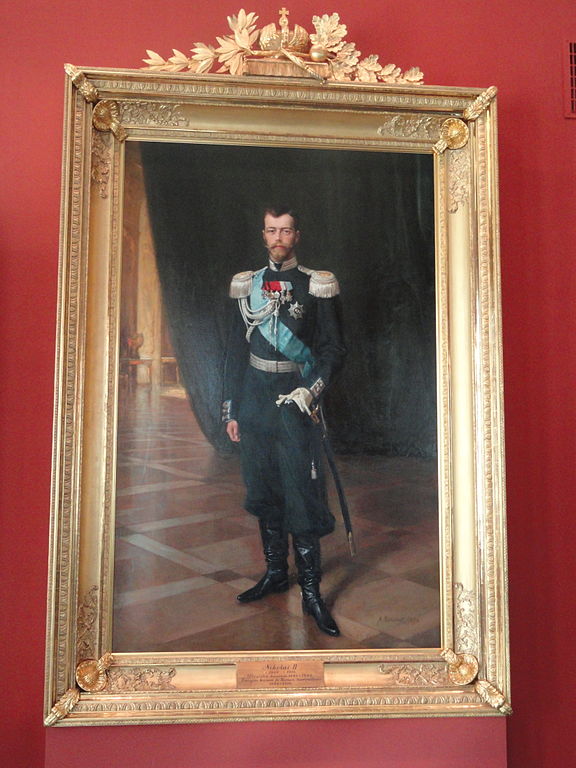
Portrait of Emperor Nicholas II. 1896. Arppeanum, Helsinki. Artist: A. Edelfelt (1854-1905)
Albert Edelfelt was to paint the official portrait of the emperor in Peterhof, for the Imperial Library in Helsinki. The artist said that from their very first meeting, he was impressed by the natural friendliness of the young tsar. “He seems very European. He has his mother’s eyes, which I noted to him. He well remembers Gatchina and the way I painted there, all of my paintings belong to his parents . . .
“The tsar gave me a task (of course, regarding painting), which is the highest honour for me, but His Majesty asked me to keep it a secret. So, I won’t say a word about this. I can’t understand how this young and well-educated officer, who was sitting with me together in the billiard room, talking and smoking, could be the monarch of more than eighty million Russian people and the Grand Duke of Finland, etc. That he is the greatest monarch in the world.”
Edelfelt nevertheless revealed the secret in the next letter (March 28, 1896). “The fact is that the second portrait, which I am working on now, was ordered by the tsar himself. He only asks me not to tell who will receive it, so I won’t say yet. He really likes the portrait, and he enjoys looking at it.”
The whereabouts of this portrait remains unknown to this day, its description: “The portrait of Nicholas II (1896, approximately 75 × 55 cm), the emperor is depicted in a gray knee-length caftan, in the background there is a tapestry, which was made according to the drawings of Walter Crane. The emperor is depicted waist-high, in full size. The painting was presented as a gift to Empress Alexandra Feodorovna, who hung it in one of her rooms in the Alexander Palace in Tsarskoye Selo.”
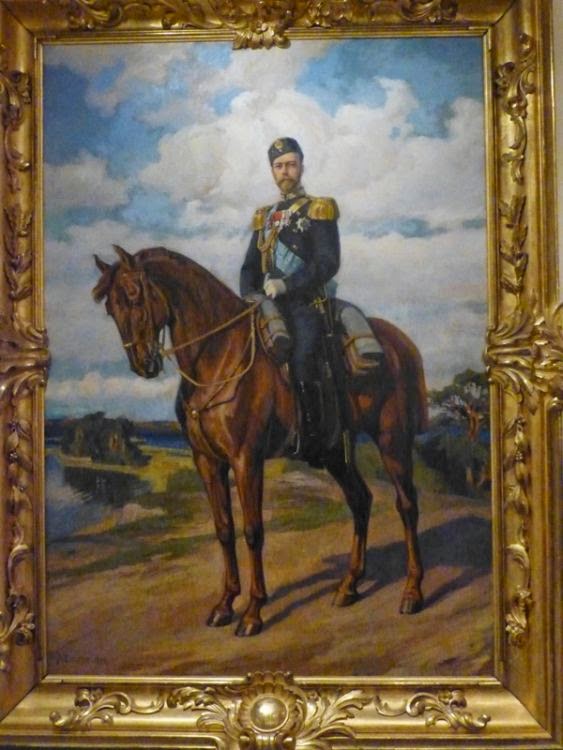
Equestrian portrait of Emperor Nicholas II. 1896. National Museum of Finland in Helsinki. Artist: A. Edelfelt (1854-1905)
Nicholas II liked Edelfelt’s sketch for a portrait intended for the University of Helsinki, and he invited the artist to come to Tsarskoye Selo to capture the interior. The emperor also invited Edelfelt to visit the Imperial stables to select a horse for a portrait of the tsar on horseback (for the Senate of Finland) in the uniform of a dragoon regiment.
This portrait, practically unknown in Russia, today hangs in the National Museum of Finland in Helsinki.
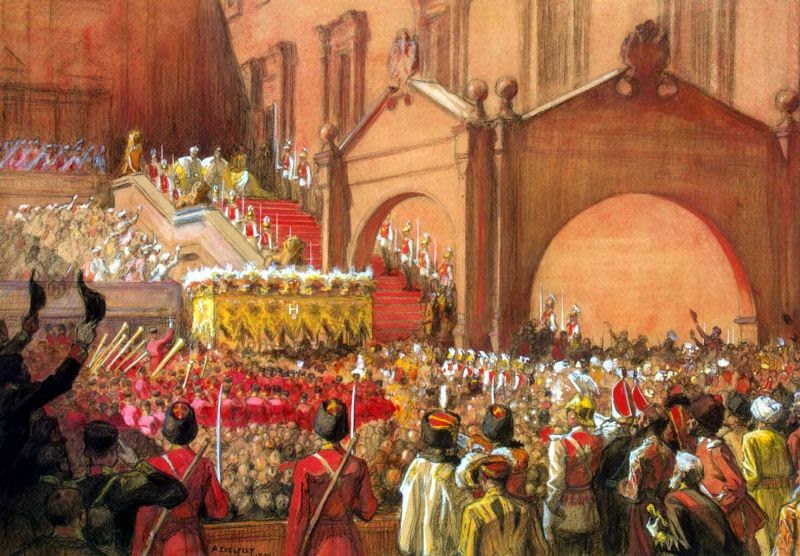
Solemn procession of Emperor Nicholas II on the Red Porch. Coronation in Moscow, 14 May 1896. Artist: A. Edelfelt (1854-1905)
In March 1896, Edelfelt received an invitation from the vice-president of the Academy of Arts, Count I. Tolstoy, to join the delegation of representatives of the Academy at the coronation of Nicholas II in Moscow on 14th May. Russian and foreign artists were invited to the ceremony, and various places in the Kremlin were allocated for them, from where they captured the historic event. Albert Edelfelt was outside the Cathedral and wrote the following coronation procession:
“When the tsar came close enough so that I could depict him (about 20-30 steps away from me), I must say that I felt some sympathy for him – the crown looked so big, so heavy: it was made of sparkling stones! The long mantle supported by the chamberlains also looked huge.
“The emperor himself looked a little pale and determined. Then I first understood what they mean when they talk about the weight of the crown. I was awakened by sympathy for him as a person, and at that moment I felt sorry for the young ruler, who now bore the whole great state on his shoulders. Gustav Mannerheim walked in front of the imperial canopy with a brilliant sabre and looked very noble and elegant – an excellent view! ”
Albert Gustaf Aristides Edelfelt died on 18th August 1905 in Borgo, Grand Duchy of Finland.
The exhibition ‘Albert Edelfelt and Romanovs’ is now on display in the Imperial Academy of Arts in St. Petersburg, and runs until 19th January 2020
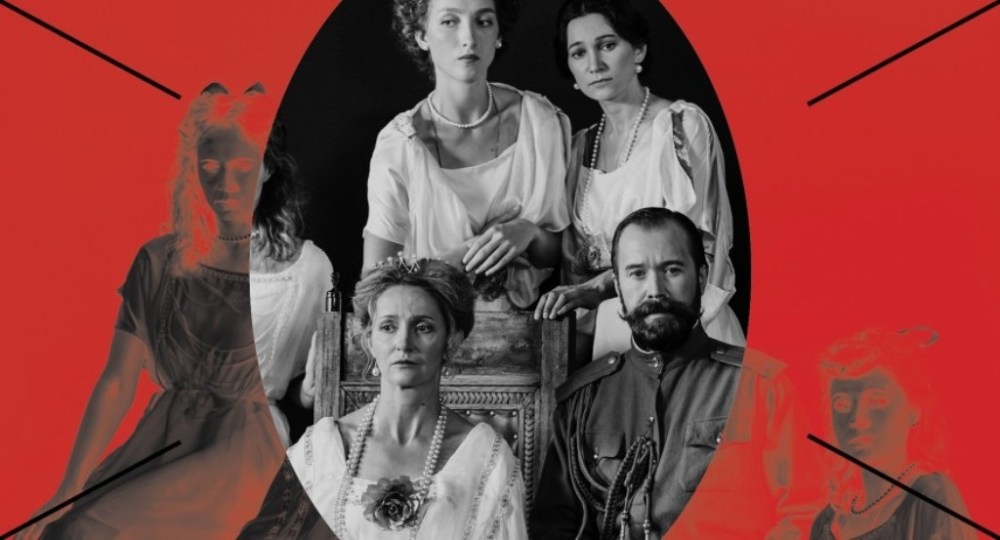
The multimedia play ‘I Killed the Tsar’, premieres on 25th November, at the Theater of Nations (театре Наций) in Moscow. The role of Nicholas II will be performed by People’s Artist of the Russian Federation Yevgeny Mironov, the role of Empress Alexandra Fedorovna by Alexandrvosky Theater actress Olga Belinskaya, and the role of Tsesarevich Alexei will be performed by 13-year-old actor Ivan Shchenin. In total, the production of ‘I Killed the Tsar’ involves 35 actors.
Using VR-technology, the play is an attempt to recount the events associated with the murder of Nicholas II and his family in Ekaterinburg in July 1918, based on irrefutable facts. The play is based on thousands of historical documents collected from the largest archives and museums in Russia. Materials for the play were provided by the State Archive of the Russian Federation, the Russian State Archive of Phonographic Documents, the Russian State Military Historical Archive, the St. Petersburg Branch of the Archive of the Russian Academy of Sciences, the State Central Museum of Contemporary History of Russia and the Museum of the History of Ekaterinburg.
Theater press secretary Maxim Andriyanov, noted that the creators of the play tell the story of the execution of the Imperial family not only from the victims of that terrible night, but also from those who executed the decision of the Ural Regional Council of workers, peasants and soldiers’ deputies. A significant part of the virtual performance is built on the biographies and testimonies of members of the firing squad.
According to the production’s director Mikhail Patlasov, every detail and every fact used in the performance is confirmed by archival documents. Due to the fact that there are so many documents, it is possible to focus not only on the Imperial family, but also on all participants in the execution, and to trace their fate, he noted.
“It is known that the family of Nicholas II was fond of photography, thousands of images have been preserved that allowed us to create a special optical scheme, a format to which vintage pictures can be turned into videos. With the help of VR glasses, viewers will get inside these photos, inside the story, where the “Tsesarevich Alexei will become the protagonist. It is his questions to the killers 100 years after the execution that will become the core on which the whole plot of the performance is strung,” Patlasov said.
The multimedia component is implemented with the use of virtual reality glasses and headphones.
After the premiere shows in Moscow, which will last until 8th December, the multimedia play ‘I Killed the Tsar’ will go on tour to Ekaterinburg, where it will be presented at the Yeltsin Center, and then the tour will continue on to Tobolsk.
Although the Russians began World War I by losing terribly to the Germans, their battles against the Turks went much better. After several serious defeats, it seemed that Russia was on the cusp of freeing the Armenian people from the Turkish yoke. However, that’s not what happened. Seeing how badly they were losing, the Turks vented their frustration on the Armenian population. The genocide began.
Because of the failures on the Western Front, many troops were siphoned off from the war with Turkey. Despite this reduction, the Russians continued to advance on the Turks through 1914 and 1915. However, the reduced number of soldiers made it impossible for the Russians to prevent the genocide. It began on 24th April 1915.
As soon as the killings began, Emperor Nicholas II ordered his army to do everything possible to save the remaining Armenians. Of the roughly 1.65 million Armenians living in Turkey, 375,000 escaped into Russia. That’s almost 25% percent of the entire population.
According to G. Ter-Markarian’s seminal work on the Armenian Genocide, this is how Nicholas II managed to rescue so many Armenians:
‘In the beginning of the disaster of 1915, the Russian-Turkish border was opened by order of the Russian Tsar. Massive crowds of refugees entered the Russian Empire. I heard eye-witness accounts of the extreme joy and tears of gratitude of the sufferers. They fell on Russian soil and kissed it. I heard that the stern, bearded Russian soldiers had to hide their own tears. They shared their food with Armenian children. Armenian mothers kissed the boots of Russian Cossacks who took two, sometimes three Armenian boys on their own saddles. Armenian priests blessed the Russian soldiers with crosses in their hands.
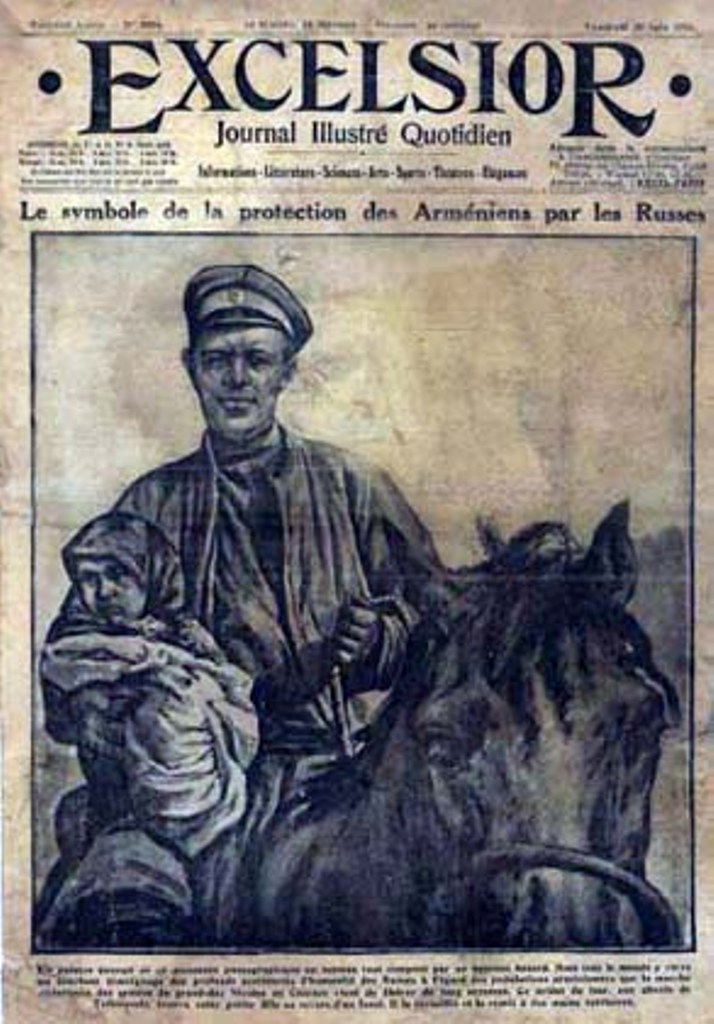
PHOTO: Cover of the June 30, 2016 issue of ‘Excelsior’ carried an illustration of a Russian soldier on horseback with a refugee child in his arms. The picture was captioned, ‘The Symbol of Protection of the Armenians by Russians.’
‘At the border, many tables were set up. Russian government workers accepted the Armenians without any papers. They gave each member of a family a single ruble and a special document that allowed them to travel anywhere in the entire Russian Empire for a year. The document even gave them free public transportation! Soup kitchens were set up nearby as well.
‘Russian doctors and nurses handed out free medicine. They were present to offer emergency services to the sick, wounded, and pregnant.’
A number of committees and organizations were engaged in the Armenian refugee relief effort, among them the Committee of Her Highness Grand Duchess Tatiana Nikolaevna. The Tatiana Committee, established on Sept. 14, 1914, was a major initiative. Among the committee’s main responsibilities were providing one-time financial support for refugees; assisting in repatriation or resettlement, as well as refugee registration; responding to inquiries from relatives; and arranging employment and housing assistance.
The state treasury supported the activities of the Tatiana Committee, and donations from various institutions, committees, and individual donors offered significant sums. The committee also deployed the power of the press and placed appeals in newspapers to raise money. As a result, by April 20, 1915, it had raised 299,792 rubles and 57 kopeks (about $150,000). Acknowledging the potential of artistic events in promoting fundraising, the Tatiana Committee hosted charity concerts, auctions, performances, and exhibitions. A.I. Goremykina, the wife of the prime minister, organized an arts night in Marinskii Palace on March 29, 1915, which was a great financial success. An auction of paintings by famous Russian artists brought the Tatiana Committee 25,000 rubles from that one event alone.
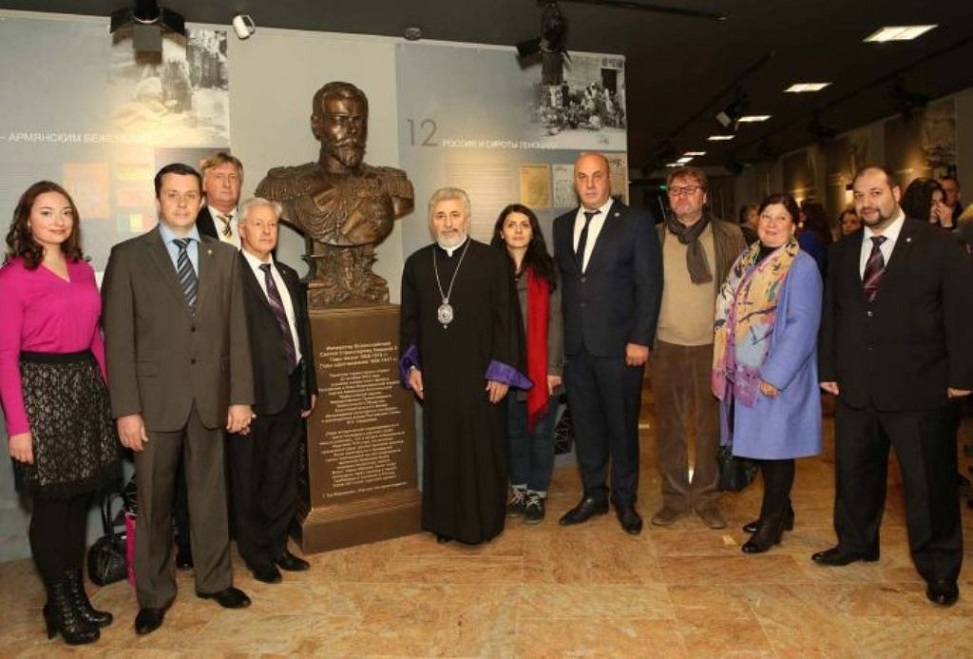
PHOTO: On 24th October 2015, a bust-monument to Emperor Nicholas II was unveiled in the Armenian Museum in Moscow
As a result of the 375 thousand Armenians saved, that is, the Russian Sovereign Emperor Nicholas II saved 23% of the entire Armenian population of Turkey. As historian Paul Paganutstsi wrote: “For one thing it is his [Nicholas II’s] salvation for which he can be counted among the saints.”
At the insistence of Nicholas II, a declaration of allied countries was adopted on 24th May 1915, in which the genocide of the Armenian population was recognized as a crime against humanity.
On 24th October 2015, a bust-monument to Emperor Nicholas II was unveiled in the Armenian Museum in Moscow. It is regrettable, however, that in Armenia itself there is still no monument to Emperor Nicholas II, and in Armenian publishers books of falsifiers and Russophobes are coming out, which are trying to slander the great emancipating mission of the Russian Empire. But the memory of the Armenian nation Russia will always be a liberator.
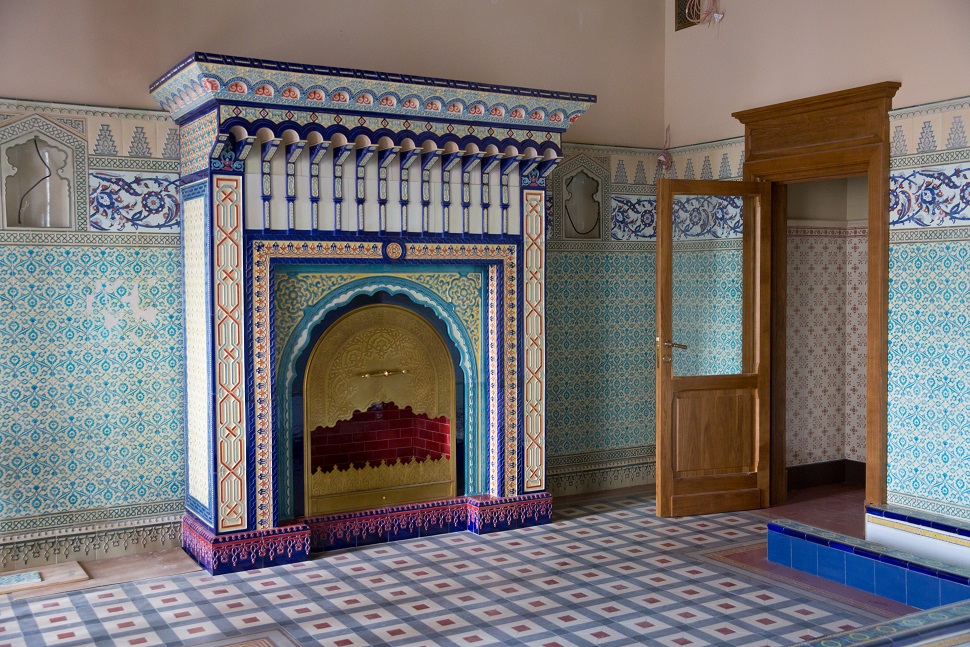
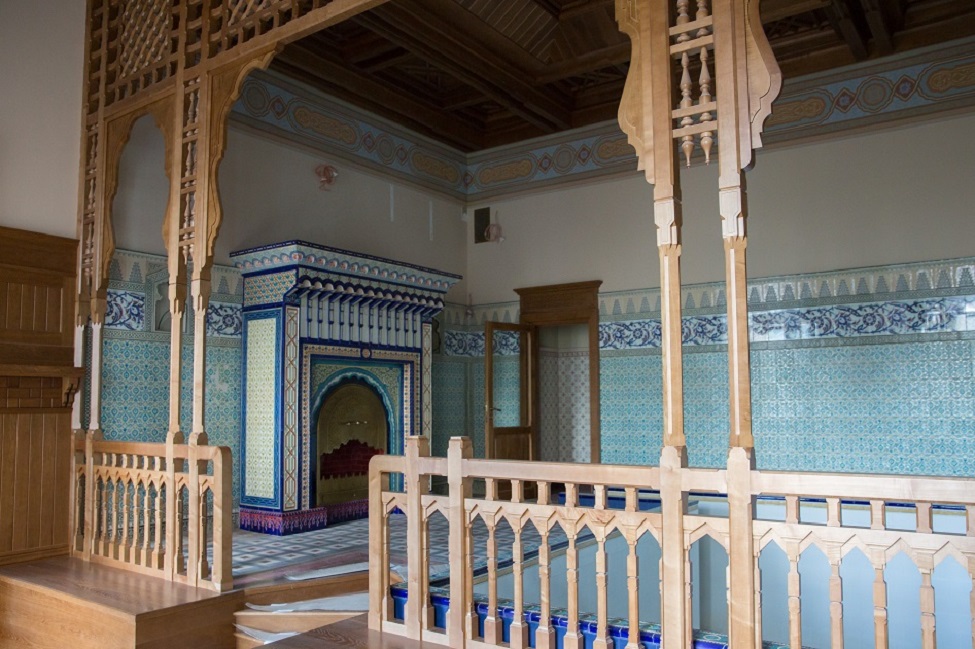
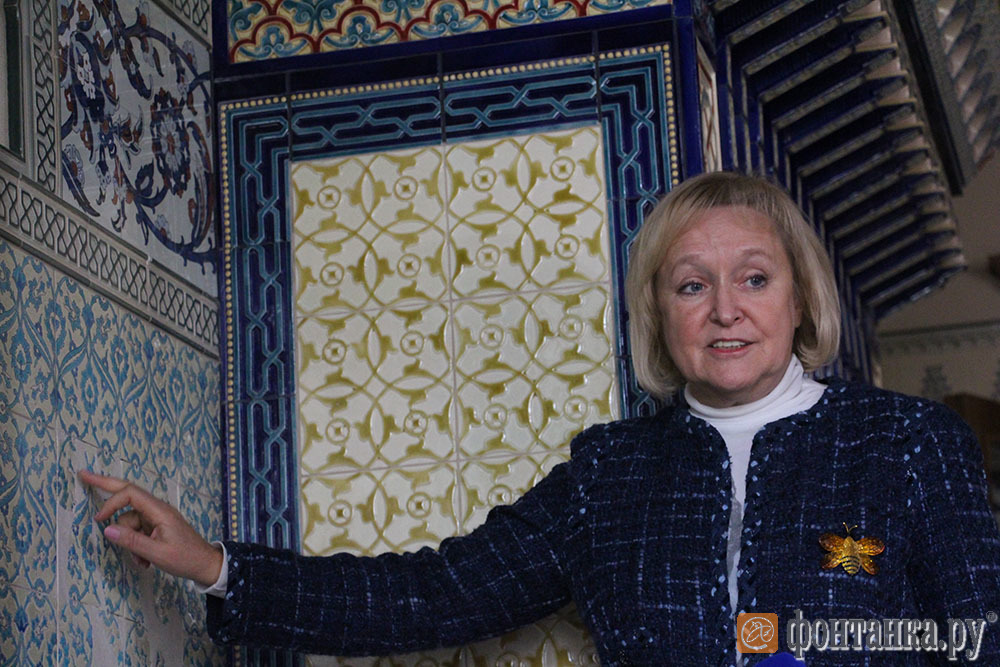
Members of the media get their first look at the Moorish Bathroom of Nicholas II
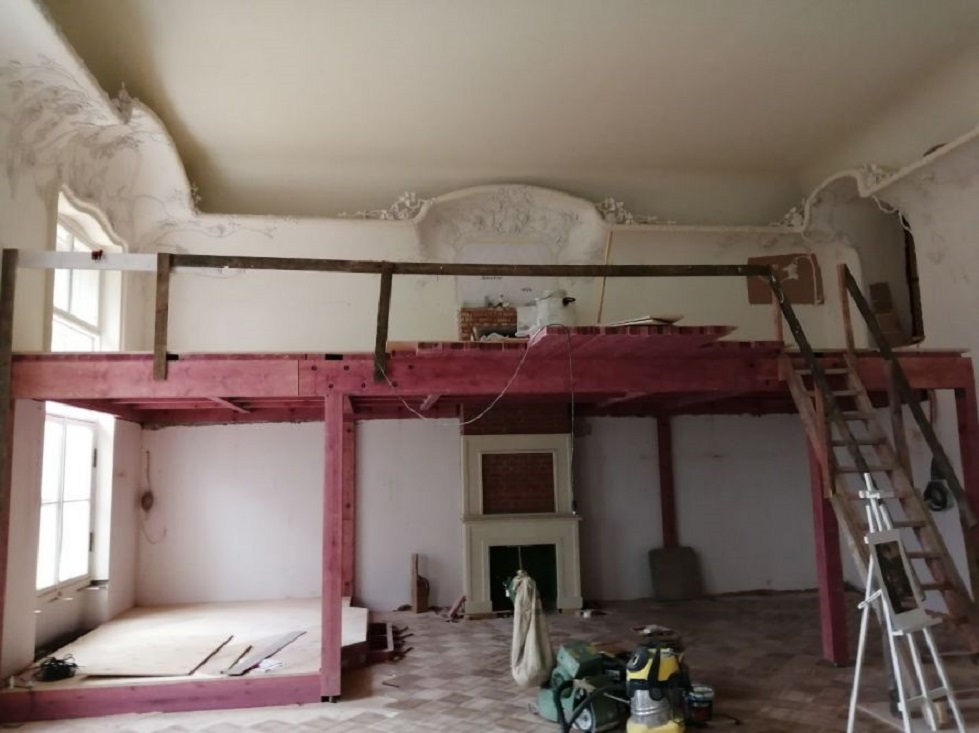
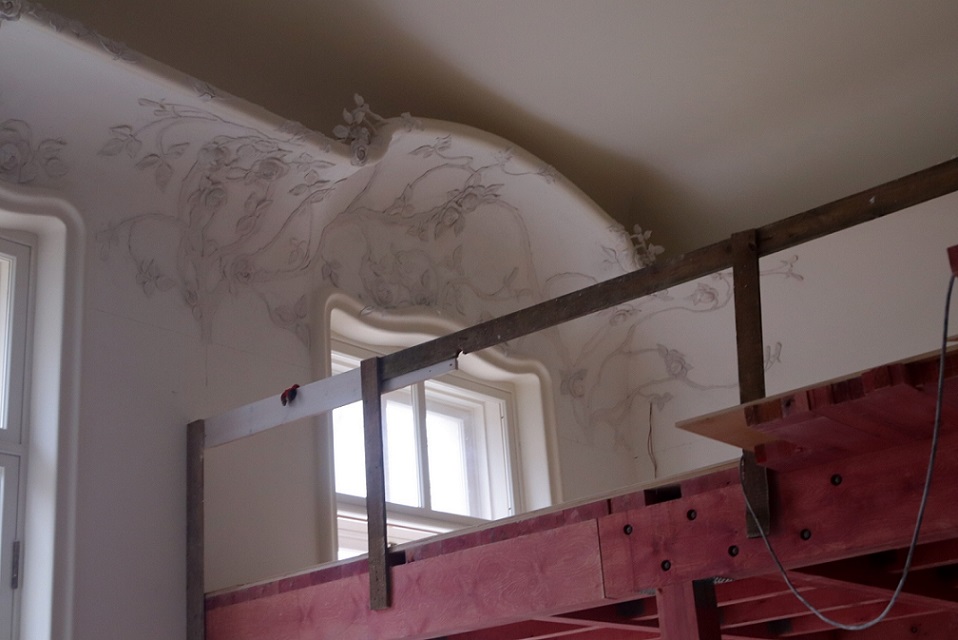
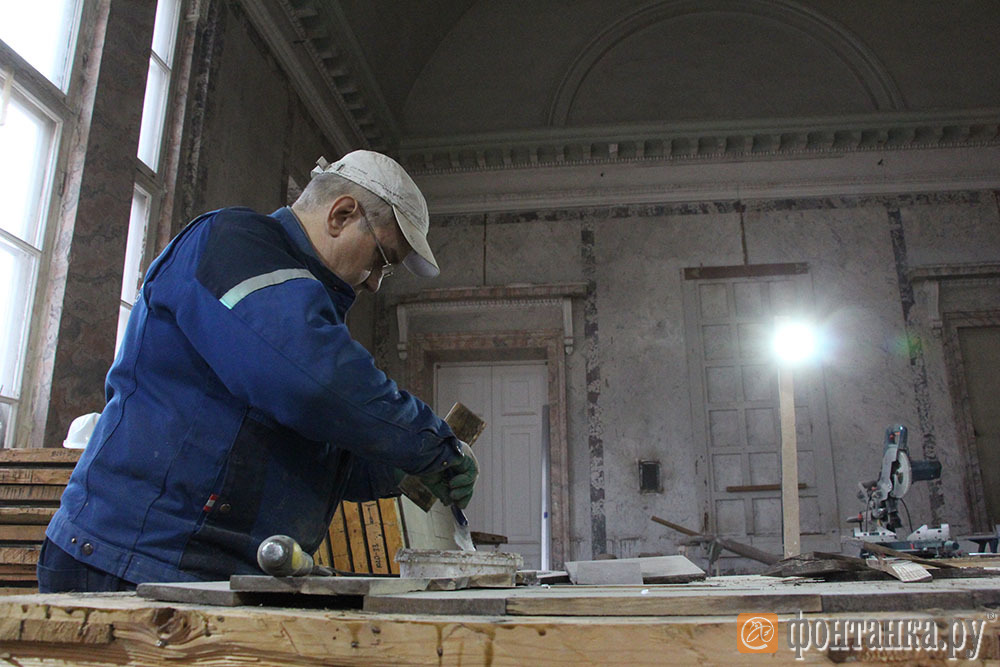
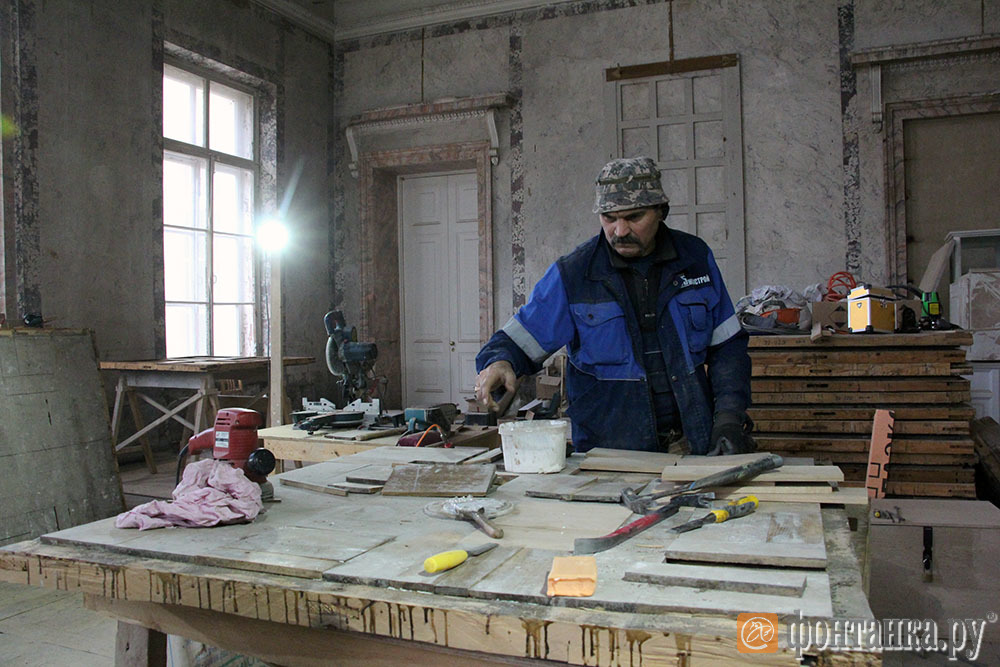
At long last, the Tsarskoye Selo State Museum Reserve have broken their long silence on the re-opening of the Alexander Palace. On 24th October 2019, a press tour of the Alexander Palace was held, in which members of the media were given a first-hand look at the progress of the restoration of the former Imperial residence.
The Alexander Palace was closed to visitors in August 2015. Since that time, an army of craftsmen, artists, and other experts have been working diigently to recreate the historic interiors of the private apartments of Emperor Nicholas II and Empress Alexandra Feodorovna, who made the palace their permanent residence from 1905
After numerous delays, the first eight interiors located on the first floor in the eastern wing of the palace, are now expected to open by the summer of 2020. The renovations have so far cost some 2 billion roubles ($42.7 million).
In 2011, specialists from the Studio 44 architectural studio, led by Nikita Yavein, developed a project for the reconstruction, restoration, technical re-equipment and adaptation of the Alexander Palace for museum use. According to the project, the palace will become a multi-functional museum complex, which will include: permanent exhibition halls, halls for temporary exhibitions, halls for scientific research and conferences, a library, a children’s center, and premises for administration. On the ground floor (basement) there will be a cafe, lobbies with ticket offices, a cloak room, a tour desk, a museum store, as well as technical and auxiliary rooms.
Work on the reconstruction, installation and restoration work was carried out in the basement of the building (basement deepening, reinforcement and waterproofing of foundations), most of the general construction work was performed in the above ground part of the building, as well as work on the installation of external and internal engineering networks, equipment and automation systems. Strengthening the supporting structure of the building. These works were carried out between 2012-2016.
The first visitors to discover the new historic interiors, in which the bulk of the work has already been completed, include the Reception, Working Study, Valet ‘s Room, and the Moorish Bathroom of Nicholas II, as well as the Suite, the Pallisandar (Rosewood) Room, the Mauve (Lilac) Boudoir, and the Imperial Bedroom of Alexandra Feodorovna.
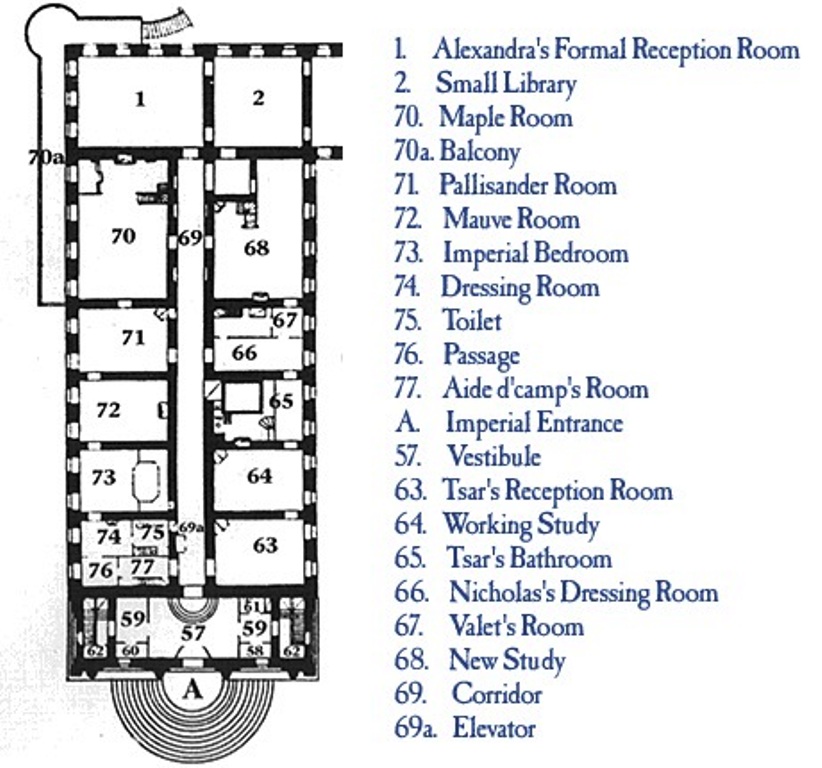
Map of the eastern wing of the Alexander Palace
In an effort to recreate the historic interiors, restorers have relied on amateur photographs of the rooms taken by members of the Imperial family, from the Russian state archives, and the 1917 auto-chromes, which provide them with the original colours of the interior elements and decoration. In addition, fabrics have been recreated for the decoration of the rooms, from original samples stored in the Tsarskoye Selo and Pavlovsk State Museum-Reserves. These include chintz (waxed cotton fabric with printed patterns) in the Imperial Bedroom, silk in the Mauve (Lilac) Boudoir, rep weaves (cotton and silk fabric) in the Pallisander (Rosewood) Living Room.
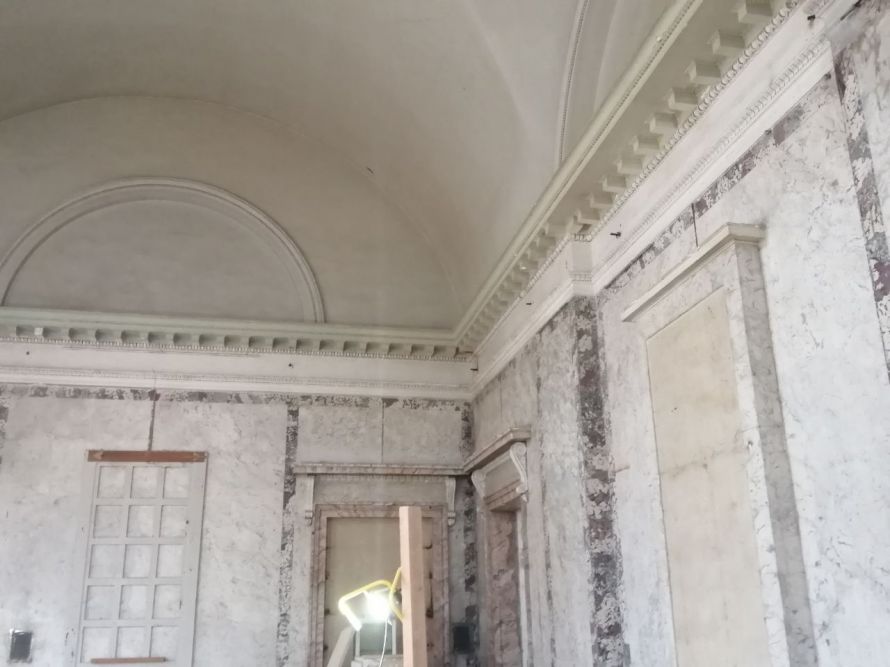
During the restoration, original elements of the historical decoration of the interiors were preserved, including oak wall panels, coffered wooden plafonds, and ceramic tiles.
Work is being carried out at the expense of funds allocated by the Ministry of Culture of the Russian Federation; the museum’s own funds, as well as charitable donations (the Transsoyuz Charitable Fund allocated 17 million rubles for the restoration of the Marble (Mountain) Hall with a slide). Funds from the federal budget were allocated for general construction work between 2012-2017. Since 2016, the museum has been additionally investing money that it has earned from admission ticket sales to the nearby Catherine Palace. The final completion of work on the Alexander Palace is planned no earlier than 2022.
With the opening of the eight historic interiors, visitors will also have the opportunity to visit the Emperor’s New Study, as well as the rooms of the Library, Empress Alexandra’s Formal Reception Room, and the Maple Drawing Room, the latter of which will be recreated with a historical spatial solution (after the Great Patriotic War, this hall was divided into two), the mezzanine and plaster molding, built-in furniture have been recreated.
The personal apartments for Emperor Nicholas II (then Tsesarevich and Grand Duke Nicholas Alexandrovich) and his wife Alexandra Fedorovna were placed in the former “retinue” half of the Alexander Palace. Alterations began in 1894 under the leadership of Alexander Vidov and Alexander Bach. Then, after the death of Vidov, they were briefly led by Silvio Danini, who, in turn, was replaced by Roman Meltzer.
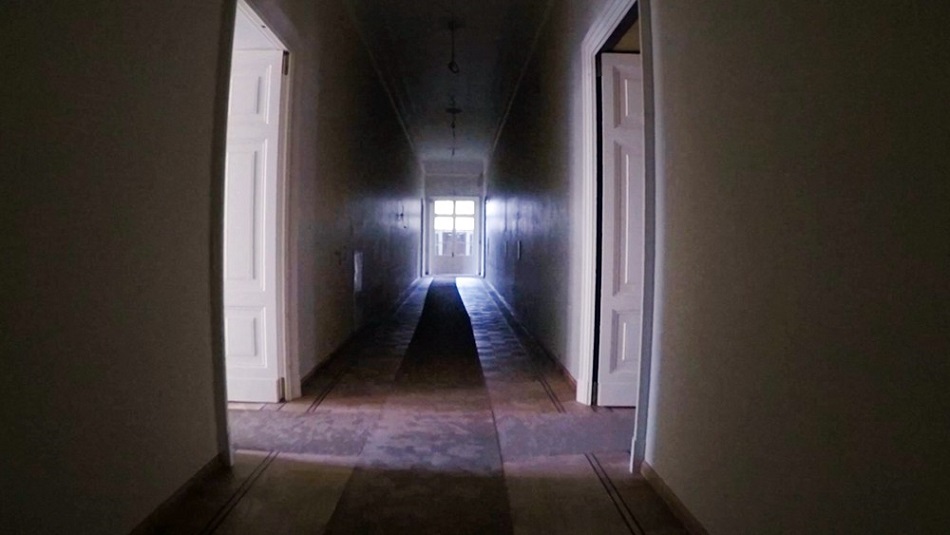
The main corridor in the eastern wing of the Alexander Palace
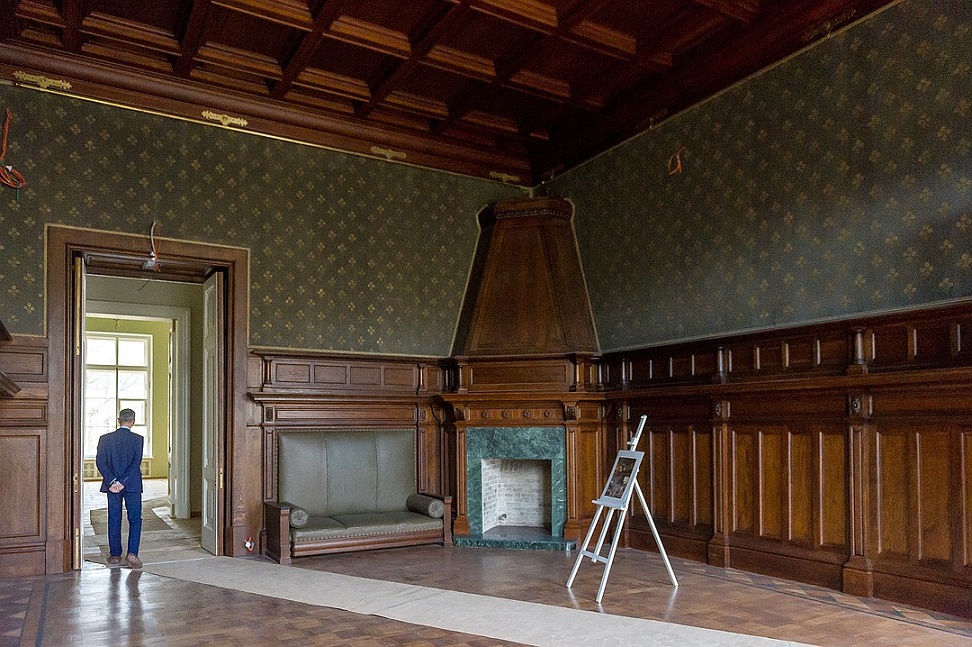
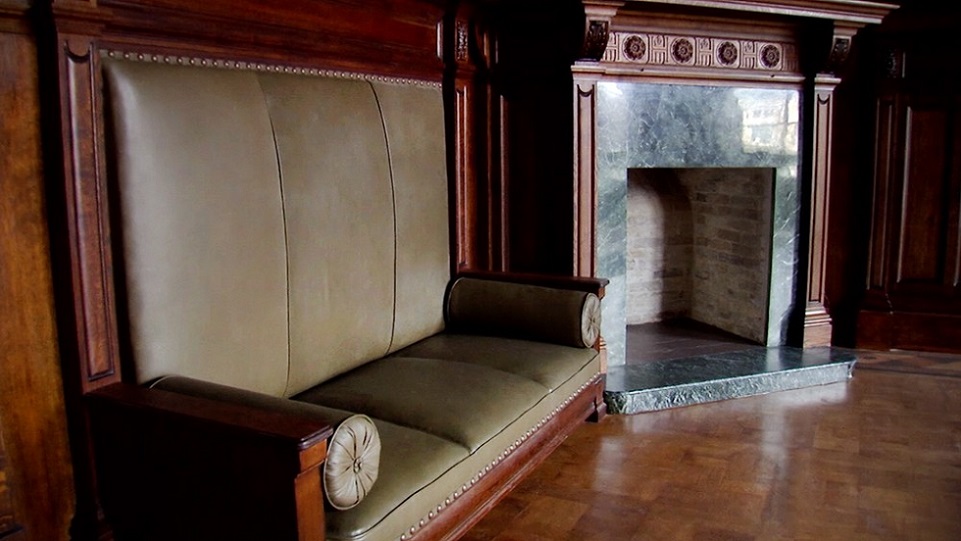
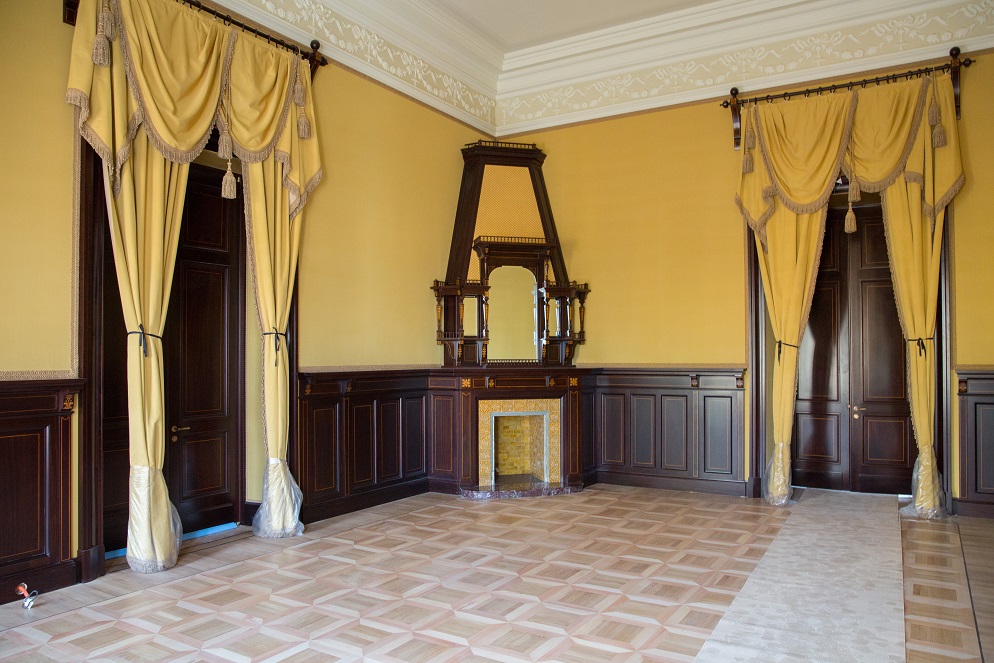
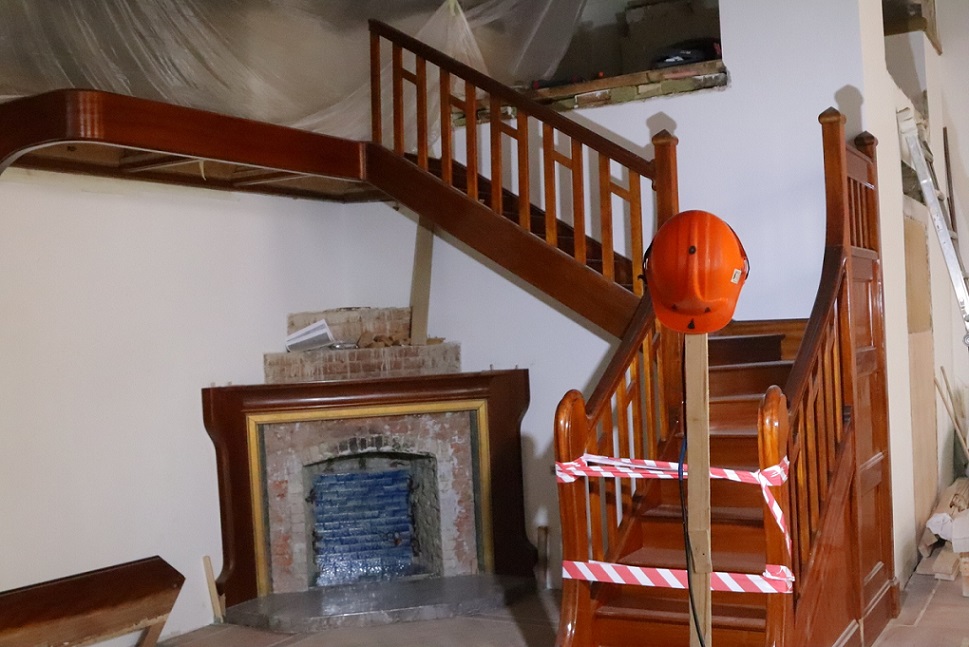
From 1905, the Alexander Palace became the main imperial residence, and therefore the epicenter of the state, and the layout of the working premises strictly followed the court ceremonial. Officials who arrived for an audience with the tsar, arrived in the Reception Hall, where the adjutants were constantly on duty. The room was decorated by the company of the Meltzer brothers in 1899. The walls are surrounded by high massive oak panels with shelves; an oak coffered ceiling and a fireplace of dark green marble in an oak casing with a pyramidal finish in the corner of the interior complete its decoration. The reception has largely been preserved, the finish of which was completed after the German occupation of 1941-1944.
Work in the Reception Room of Nicholas II : restoration of oak panels, parquet, fireplace, ceiling and fabric, manufacturing of a built-in sofa.
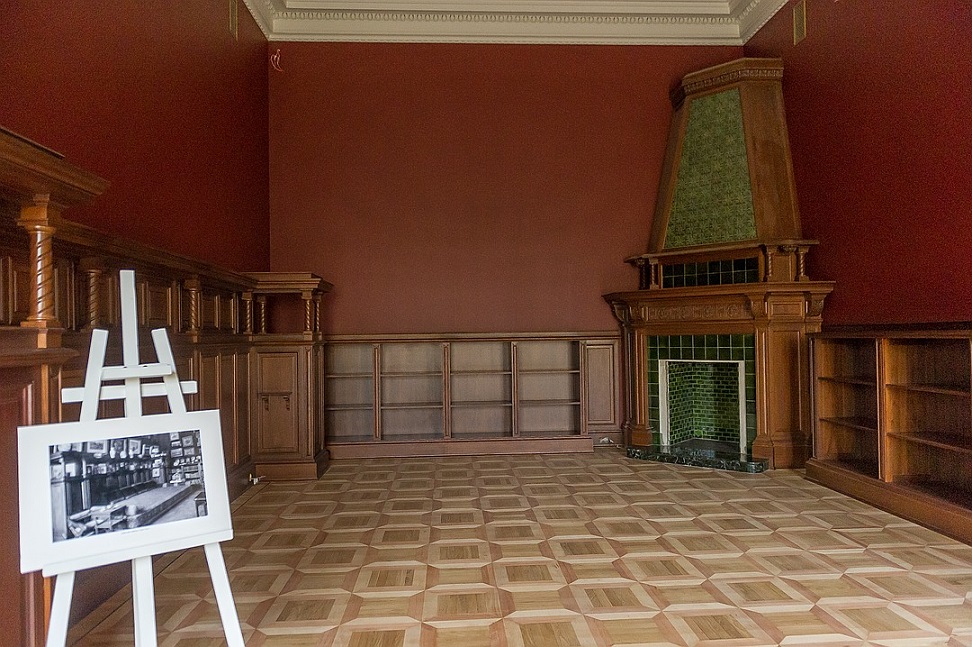
Decorated in the years 1896-1897, it was here that the emperor received his ministers daily, listened to reports, and reviewed documents. The decoration and furniture of the Study – panels, built-in wardrobes, as well as a desk and chairs – were made of walnut wood. Here was the personal library of Nicholas II , which totaled about 700 volumes of military, historical literature, books on state affairs, fiction and periodicals. The interior was destroyed during the Nazi occupation.
Work in the office of Nicholas II : recreation of curtains, fireplace, panels, walnut furniture, carpet.
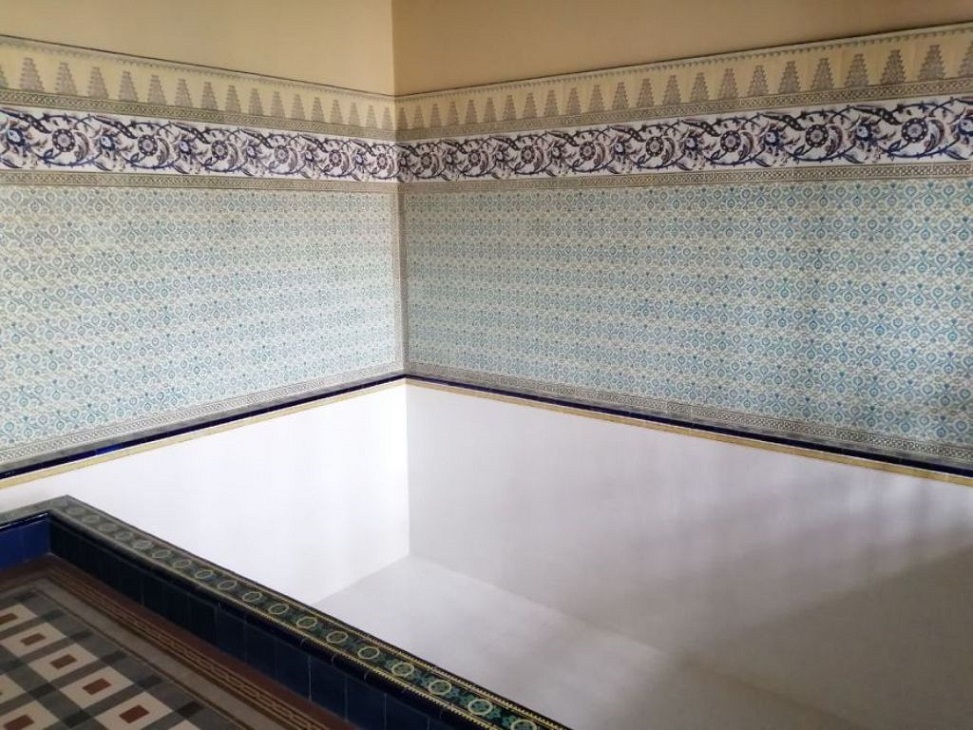
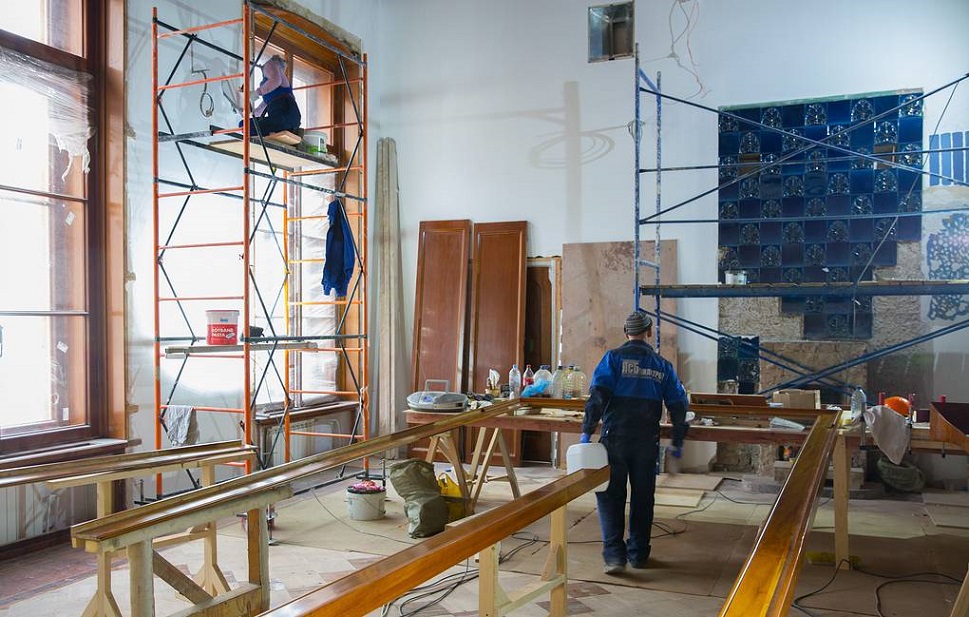
Decorated in the Moorish style, the emperor’s bathroom was designed with a swimming pool with a capacity of more than a thousand buckets of water. The pool was filled with water of the right temperature in a few minutes. From the corridor, the pool was separated by an openwork partition made of maple, from which a ceiling was also made. On the site in front of the pool was a fireplace, tiled with oriental ornaments. The pool and the design of the bathroom were carried out according to the project and under the guidance of the architect and engineer Rochefort. In the apartments of Nicholas II, the Moorish was the only room for relaxation. The interior was lost during the Great Patriotic War.
Works in the Moorish restroom: during the cleaning of the room under the floor, fragments of the original ceramics were discovered, which allowed restorers to more fully and accurately recreate the pattern and determine the color of the tiles. Recreated: fireplace, pool, partition, fabrics, carpet.
This interior was designed by Roman Meltzer in 1896-1897. The architect chose rosewood as the main finishing material – an expensive wood, which was imported from abroad. High wall panels with a shelf, framing of a fireplace installed in a corner and furniture were made of rosewood. In the first years of their life in the palace, Nicholas II and Alexandra Fedorovna often spent time in this room, which also became a favourite place for breakfast and dinner of the Imperial family.
Works in the Rosewood living room : fabric patterns of walls, drapes, panels and a rosewood fireplace decorated with fabric inserts and facets with special facets were recreated according to historical samples .
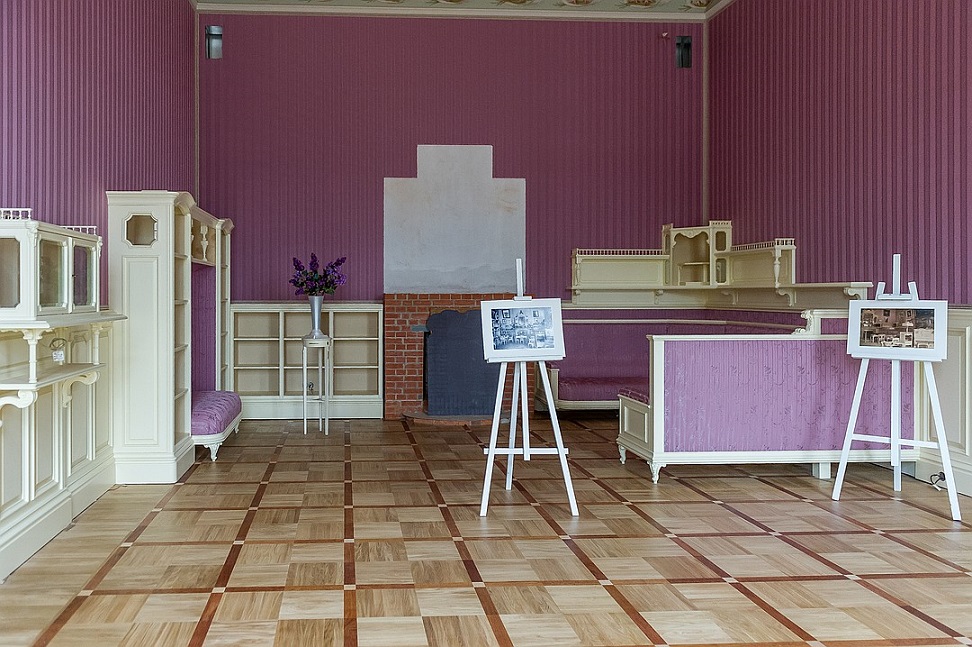
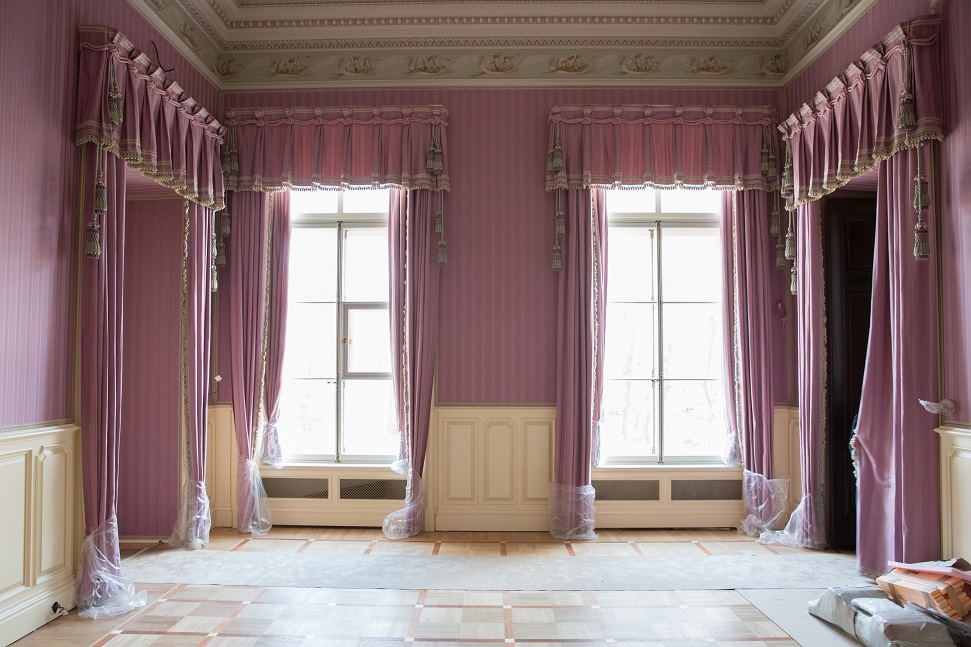
Over the two decades of Alexandra Fedorovna’s life in Russia, the Mauve or Lilac Boudoir – her favorite room in the Alexander Palace, created by Roman Meltzer – has never been redesigned, despite the change in artistic fashion at the turn of the century. To decorate the interior, silk – mauve with a pattern of interwoven vertical threads – was ordered from the Parisian company Charles Bourget. The wood panels at the bottom of the walls and the furniture designed by Meltzer in imitation of the Rococo style were painted in two colors resembling ivory. Many furnishings, a corner sofa, half cabinets are built-in and connected with wall panels. Here the emperor and the empress with their children often drank coffee after breakfast, gathered for evening tea, and it was in this room where Alexandra Feodorovna spent many hours working and reading.
Works in the Mauve (Lilac) Boudoir: according to historical patterns, fabric upholstery of walls, curtains, built-in furniture, carpet, wood panels, fireplace, picturesque frieze were recreated.
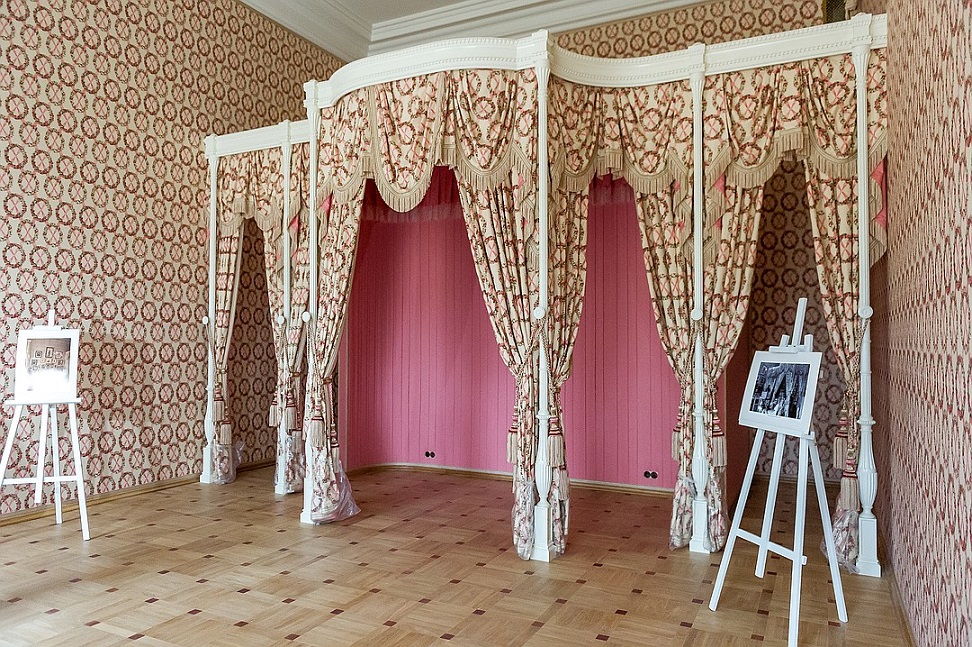
In 1873, mother of Alexandra Fedorovna, Princess Alice stayed here, who travelled to Russia for the wedding of her brother, the Duke of Edinburgh, and Grand Duchess Maria Alexandrovna. The bedroom was arranged in this room without significant alterations. The architect tightened the walls and the partition with the English chinet ( Charles Hindley ) chosen by Alexandra Fedorovna .
Work in the Bedroom : recreated alcove, fabric upholstery, curtains, carpet.
Other rooms which are also being restored include the New Study of Nicholas II, in which the balcony connecting it to the Maple Room will be reconstructed, the Marble or Mountain, which once housed a great slide, taking up half of the room, as well as the Small and Large Libraries.
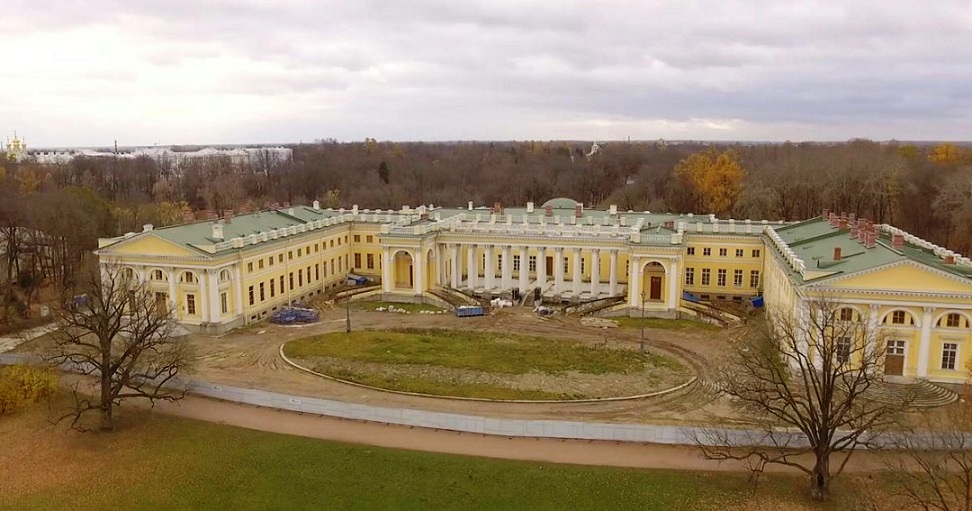
The Alexander Palace was constructed in 1792 by order of the Empress Catherine II, for her beloved grandson, Grand Duke Alexander Pavlovich (future Emperor Alexander I ) and Grand Duchess Elizabeth Alekseevna. The creator of the project is the Italian architect Giacomo Quarenghi. From 1905, the palace became the permanent residence of Emperor Nicholas II, who was born here in 1868. The last 12 years of the reign of the Russian emperor and his family were spent here, It was from here that the Imperial family were sent into exile to Tobolsk on 1st August 1917.
In 1918, the Alexander Palace was opened to visitors as a state museum. Later, the NKVD (People’s Commissariat for Internal Affairs) used the west wing as a rest home, and the orphanage was located on the second floor of the east wing, in the former rooms of the children of Nicholas II .
During the fascist occupation of the city of Pushkin, the German headquarters and the Gestapo were located here, in the cellars there was a prison. The square in front of the palace was turned into a cemetery for SS soldiers.
After the war, the palace was mothballed and in 1946 transferred to the USSR Academy of Sciences to store the collections of the Institute of Russian Literature. The building was being prepared for a large-scale exhibition dedicated to the 150th anniversary of A.S. Pushkin. In this regard, in 1947-1951, restoration work began in the building, during which it was planned to restore the preserved interiors of Quarenghi and surviving fragments of decoration. During the work, many elements of the Maple and Rosewood living rooms, as well as the Moorish restroom, were destroyed. In 1951, the Alexander Palace was transferred to the Naval Department, and the palace collection, which was part of the evacuated items in the Central repository of museum funds of suburban palaces-museums, was received at the Pavlovsk Palace Museum.
The palace was transferred to the jurisdiction of the Tsarskoye Selo Museum-Reserve in October 2009, and in June 2010, during the celebration of the 300th anniversary of Tsarskoye Selo, three State Halls were opened after restoration.
The Alexander Palace remains surrounded by a fence
Source: Tsarskoye Selo State Museum Reserve. Translated from Russian by Paul Gilbert







 Nicholas II
You must be logged in to post a comment.