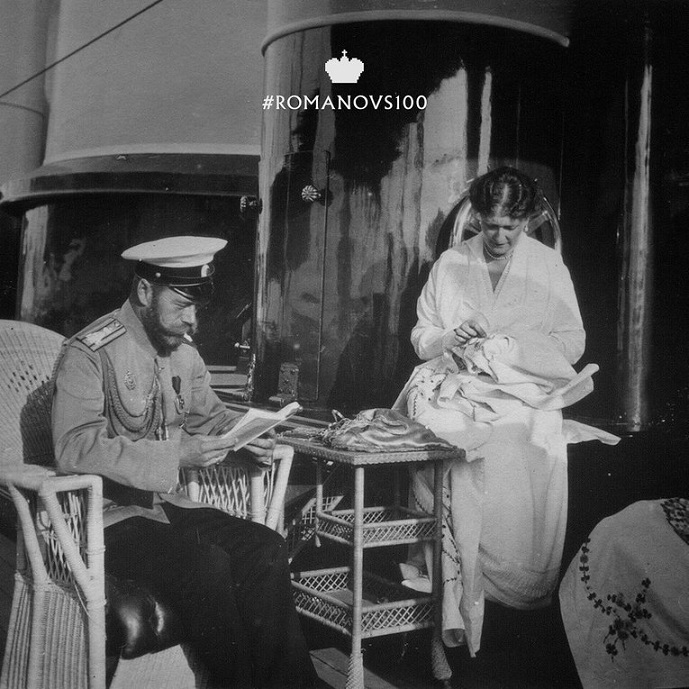
Exhibition: The Romanovs. Family Archive

177a

NOTE: All of the articles pertaining to Nicholas II and his family which were originally published in my Royal Russia News blog, have been moved to this Nicholas II blog. This article was originally posted on 5 June 2018 in my Royal Russia News blog – PG

The following exhibition ran from 24th May to 30th December 2018

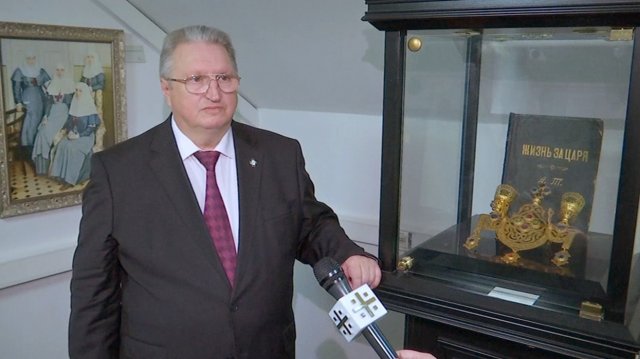
On 24th May 2018, the exhibition The Romanovs. Family Archive, opened in the Catherine Palace at Tsarskoye Selo. The exhibit presents the largest collection of documents and photographs associated with the Imperial family, acquired in the hundred-year history of the museum. The collection of personal documents and photos of the families of Emperors Alexander III and Nicholas II, was acquired at an auction in London in 2017 thanks to the financial support of Sberbank of Russia.

The exhibit is dedicated to the 150th anniversary of the birth of Nicholas II, whose life was closely connected with Tsarskoye Selo: on 18 May (O.S. 6 May) 1868, Nicholas Alexandrovich was born in the Alexander Palace. From his birth, Russia’s last tsar held Tsarskoye Selo close to his heart, and from 1905, made the Alexander Palace his permanent residence, in which he spent the last 12 years of his reign. It was in the Alexander Palace, in which the Emperor was held under house arrest during the first months of his abdication on 15 March (O.S. 2 March) 1917. It was from here on 14 August (O.S. 1 August) 1917, that he and his family were sent into exile to Tobolsk in Siberia.

The archive which spans from 1866 to the 1920s, includes 200 items from the museum collection. Among them – telegrams with warm messages to their children from Emperor Alexander III and his wife Maria Feodorovna. These laconic, but warm parental messages testify to how the August couple cherished family values. In separation, the loving father always found the time to write letters to his children, sharing with them his successes in hunting, fishing, his health, and about how he misses them when they are apart.

The exhibition also presents the letters of Grand Duchess Xenia Alexandrovna to her younger brother Mikhail, with whom she was in correspondence from a young age. Hardly having learned to write, the little brother and sister shared impressions of new discoveries, and humourous anecdotes from their still carefree life. Later, after marrying the Grand Duke Alexander Mikhailovich, Xenia never forgot her “dear Mishkin.” The young couple often wrote to the Grand Duke from their estates “Ai-Todor” in Crimea, and “Abas-Tuman” in the Caucasus. In letters from the French city of Biarritz, Alexander Mikhailovich also shared his interest and passion of motor-driving, his hobbies, hunting, fishing, archaeological excavations, playing tennis, golf and maps.

Of particular importance for the museum was the acquisition of several autographs of Emperor Nicholas II and his wife Alexandra Feodorovna. A letter written by the empress at Easter to her sister-in-law Xenia, included one of her handmade watercolour drawings with a congratulatory signature.

The tragic events of 1917-1918 are described in the letters of Grand Duke Nikolai Mikhailovich to Prince Georgi Shervashidze – the Ober-Hofmeister, who served the Dowager Empress Maria Feodorovna. The grand duke’s letters, which reflect his diary entries record his vision and understanding of the fate which awaits Russia in the future.

From revolutionary Petrograd, Nikolai Mikhailovich writes to his friend in the Crimea: “It’s hard to tell what’s going on here, not only here, but all over Russia. If the Bolshevik regime comes to an end, then little good can be expected from their successors – socialist-revolutionaries or anarchists. . . ”

With the growing nationalization of property, which took place in Russia, the Grand Duke noted in February 1918: “Yesterday I was forced to leave my palace, to leave my rooms and personal things to the mercy of fate and move to another house, an apartment of one of the employees … I now live in one room on the 4th floor … My palace is now the headquarters of the new Red Army … “. As if in anticipation of his tragic fate, the Grand Duke finishes the letter with a hopeless line: “I do not know if we are destined to meet again on this earth, but in the next world my feelings for you will remain invariably friendly. All your NM. ”

The meeting was not destined to take place. Georgi Dmitrievich Shervashidze died in the Crimea on 26 March 1918, and Grand Duke Nikolai Mikhailovich was shot the following year on 9 January 1919 in the Peter and Paul Fortress in St Petersburg.

The collection also includes several letters from the widowed British Queen Alexandra, the sister of Empress Maria Feodorovna, to Grand Duchess Xenia Alexandrovna during her life in exile.

177b

The exhibition The Romanovs. Family Archive runs until 30 December 2018 in the Catherine Palace at Tsarskoye Selo.

© Paul Gilbert. 9 December 2019
Memorial Plaque Marks Tsar’s Brief 1918 Stay in the Omsk Region

176a

NOTE: All of the articles pertaining to Nicholas II and his family which were originally published in my Royal Russia News blog, have been moved to this Nicholas II blog. This article was originally posted on 5 June 2018 in my Royal Russia News blog – PG

On 28th April, a bronze plaque was unveiled at the Lubinskaya railway station (situated on the Omsk-Ishim-Tyumen Line in Siberia), marking the brief stay of Emperor Nicholas II and members of his family and entourage on the same date a century before.

In the spring of 1918, the Bolsheviks had ordered that the Imperial Family be taken from Tobolsk. Due to the illness of the children, the move was made in two stages. The first included Emperor Nicholas II, along with members of his family and entourage, who made their way from Tobolsk to Tyumen, where they boarded a train originally headed towards Ekaterinburg. Accompanying them was the Commissar of the Central Executive Committee Vasily Yakovlev. It was during the journey, however, that Yakovlev unexpectedly changed the route and quickly ordered the train in the opposite direction to Omsk. Why he changed the route is still a mystery, one which historians continue to debate to this day.

The Tsar’s train almost reached Omsk, stopping at Lubinskaya station. Laying ahead was Kulomzinskaya station, from which it was impossible to turn to the railway line leading to Chelyabinsk, bypassing Ekaterinburg. Kulomzinskaya was blocked by a special revolutionary detachment. The train could not go any further, so Yakovlev went to negotiate with the Omsk Revolutionary Committee.

176b

Meanwhile, Nicholas II and members of his family and entourage spent the next several hours in the train at Lubinskaya Station. At Omsk, Yakovlev received an order from Yakov Sverdlov in Moscow ordering him to proceed to Ekaterinburg. The last hope of salvation had disappeared.

On the bronze memorial is written: “On April 28, 1918, Lubinskaya Station for a few hours became a modest haven for the Holy Royal prisoners: Emperor Nicholas II, Empress Alexandra Feodorovna, Grand Duchess Maria and their faithful servants: the physician Evgeny Botkin, Hofmarshal Prince Vasili Alexandrovich Dolgorukov , non-commissioned officer Ivan Dmitrievich Sednev and maid Anna Demidova.”

The solemn ceremony was part of the city’s Imperial Days in Omsk. The memorial plaque was consecrated by His Eminence Theodosius, Bishop of Isilkul and Russko-Polyansky.

© Paul Gilbert. 9 December 2019
Exhibition: ‘The Tragedy of the Family … The Tragedy of the Motherland’ in Ekaterinburg

175a

NOTE: All of the articles pertaining to Nicholas II and his family which were originally published in my Royal Russia News blog, have been moved to this Nicholas II blog. This article was originally posted on 6 June 2018 in my Royal Russia News blog – PG

The following exhibition ran from 5th June to 23rd September 2018

The exhibition project The Tragedy of the Family … The Tragedy of the Motherland, dedicated to the Romanov family, opened on 5th June 2018 in the Ural city of Ekaterinburg.

The venue for the exhibition is the Poklevsky-Kozell House – a branch of the Sverdlovsk Regional Museum. The exhibit is a joint historical and art project with the Pavlovsk State Museum-Reserve, and the Elisavetinsky-Sergievskoe Enlightenment Society.

175f

175i

Visitors to the exhibition can acquaint themselves with the private life of members of the Imperial family in the palaces of St. Petersburg, Tsarskoye Selo, Peterhof and Pavlovsk. The exhibition presents more than 150 unique items, including examples of fine and applied art, watercolours and amateur photographs, lovely trinkets from private collections and priceless gifts to the emperor, the Empress and their children.

For the first time in the Urals, numerous well-executed original photographs taken by court photographers are exhibited: a portrait of a young Tsesarevich Alexei, ordered by the Empress herself. The photograph in an elegant frame, accompanied Alexandra Feodorovna from Tsarskoye Selo first to Tobolsk, then to Ekaterinburg, and now stored in the collection of the Pavlovsk State Museum-Reserve. Also among the exhibits are the beautifully preserved children’s shoes of Grand Duchess Olga Nikolaevna and a house dress of the last empress, in which only the closest people saw her; two silver cigarette case of Nicholas II, one of which he had with him during his internment in the Ipatiev House. Also on display – for the first time – is a unique, rare banner with the Romanov emblem, made for the 200 year anniversary celebrations of 1913.

175p

The exhibition The Tragedy of the Family … The Tragedy of the Motherland ran from 5th June to 23rd September 2018, in the Poklevsky-Kozell House in Ekaterinburg.

© Paul Gilbert. 9 December 2019
Nicholas II, Stalin and Lenin top popularity rating of Russian historical figures

171a

Recent poll shows Nicholas II as the most popular figure in the 20th century Russian history

NOTE: All of the articles pertaining to Nicholas II and his family which were originally published in my Royal Russia News blog, have been moved to this Nicholas II blog. This article was originally posted on 26 June 2018 in my Royal Russia News blog – PG

Public attitudes towards Nicholas II have undergone several shifts since the collapse of the Soviet Union in the early 1990s, with the most recent studies carried out during the last few years showing an increase in appreciation of the monarch. This is partially due to the the efforts of the Russian Orthodox Church, and research by post Soviet Russian historians. Both have worked diligently by challenging the negative assessments of the life and reign of Russia’s last emperor and tsar, disproving the lies and myths which continue to be popular to this day, particularly by Western historians and biographers.

According to the most recent poll, Emperor Nicholas II, Soviet dictator Joseph Stalin, and Bolshevik leader Vladimir Lenin are the most popular figures among Russians from the 20th century.

Research conducted by the Russian state-run public opinion center VTSIOM showed that the last Russian emperor is now the most popular of all historical figures throughout the volatile 20th century – 54 percent of respondents said that they sympathize with the monarch. Joseph Stalin was second with 51 percent and the head of the Bolshevik party and the mastermind behind the 1917 revolution, Vladimir Lenin, was on the third place with 49 percent. Leader of the White Movement during the Russian Civil War, Alexander Kolchak was in fourth place with 36 percent, while general of the White Movement during the Russian Civil War Anton Denikin came in fifth place with 30 percent.

The share of respondents who told researchers that the feeling they had towards these people was strongly negative was 23 for Nicholas II, 28 for Stalin and 29 for Lenin. Most of the other prominent figures of the period, both among the revolutionaries and on the Tsarist sides, cause neither good nor bad emotions in the Russian public, research revealed.

171b

Results of the poll show Nicholas II more popular among Russian than both Stalin and Lenin

The least liked figures were the leader of the Ukrainian anarchists Nestor Makhno, and the founder of the Red Army Leon Trotsky. 58 and 46 percent of Russians described their attitude to them as negative and only 12 and 20 percent confessed to sympathizing with them.

In the same poll researchers asked the Russian public what sources they used to get information about the October Revolution and the Civil War. 79 percent of respondents named schools and universities, 48 percent said they got information from books and 30 percent mentioned films and television series.

A different poll conducted by VTSIOM in late 2017, in connection with the 100th anniversary of the Russian Revolution, revealed that 92 percent of Russians wanted similar events prevented at any cost, up from 78 percent five years ago. Only 5 percent of respondents told researchers that they considered a new revolution necessary (13 percent in 2012). 3 percent of respondents said that they had no opinion on the issue.

Still, 46 percent of the public agreed with the statement that the 1917 revolution was in the interests of the majority of Russians. 13 percent hold that the revolution benefited a minority and 33 percent said that only a small group of people managed to gain anything from the events of 1917.

38 percent of Russians currently think that the 1917 Revolution was a major stimulus for the social and economic development of the country. 23 percent agreed that the revolution “had opened a new era in Russia’s history.” At the same time, 14 percent of the poll participants said that the revolution had seriously impeded the development of Russia and 13 percent called the events a total disaster. 12 percent remained undecided over the role that the revolution had played in the Russian history.

© Russia Today and Paul Gilbert. 8 December 2019
Léon Bakst Portrait of Nicholas II to be Displayed in Moscow

169a

Photo © Государственный исторический музей

NOTE: All of the articles pertaining to Nicholas II and his family which were originally published in my Royal Russia News blog, have been moved to this Nicholas II blog. This article was originally posted on 6 July 2018 in my Royal Russia News blog – PG

The State Historical Museum in Moscow have announced that the portrait of Emperor Nicholas II by Léon Bakst, has been returned from their restoration workshop.

After the 1917 Revolution, the portrait was hidden in the museum funds. In September, the portrait will be presented for the first time at an exhibition dedicated to Nicholas II and his family, the first time it has been displayed in more than a century.

Léon (Lev) Nikolaevich Bakst – born as Leyb-Khaim Izrailevich (later Samoylovich) Rosenberg, (1866-1924) was a Russian painter and scene and costume designer. He was a member of the Sergei Diaghilev circle and the Ballets Russes, for which he designed exotic, richly coloured sets and costumes.

During his years in St Petersburg, he taught painting to the children of Grand Duke Vladimir Alexandrovich. In 1902, Nicholas II commissioned Bakst to paint The Meeting of Russian Sailors. In 1914, Bakst was elected a member of the Imperial Academy of Arts.

© Paul Gilbert. 8 December 2019
Poll reveals nearly 60% of Russians believe murder of Tsar’s family as an atrocity

167

NOTE: All of the articles pertaining to Nicholas II and his family which were originally published in my Royal Russia News blog, have been moved to this Nicholas II blog. This article was originally posted on 26 July 2018 in my Royal Russia News blog – PG

Most Russians believe the murder of the last Russian tsar, Nicholas II, and his family members in 1918 had no justification, describing it as a monstrous crime rather than an act of retribution, a poll conducted by the Russian Public Opinion Research Center ahead of the centenary of the murders of the Imperial family showed earlier this month.

“Most Russians (57%) believe that the murders of the Imperial family is a heinous unjustified crime (this number is bigger among people aged 35+ than among the younger generation aged between 18 and 34). Another 29% said the last Russian emperor paid too high a price for his mistakes. Nevertheless, young people believe that he had to be punished for them, with 46% among those aged between 18 and 24 more often expressing this point of view. Just 3% of those polled were certain that the Imperial family’s execution was the public’s just retribution for the emperor’s blunders,” the pollster said.

That said, Russians generally see Nicholas II in a positive light (43%). This viewpoint was expressed most often by people aged 45 (45-46%).

On the other hand, 22% tend to think of him negatively. Young people aged between 18 and 24 often said they disliked the last Russian emperor. However, 7% of the respondents stressed they were indifferent to Nicholas II, while 4% said they felt empathy for him.

“By now, the Soviet narrative, which claimed the murders of the Tsar’s family by their Bolshevik captors near Ekaterinburg during [Russia’s] Civil War was a necessary and fair act of revenge for the blunders and crimes committed by the Romanov family, has finally exhausted its credibility. Regardless of their political views and relations towards the tragic events that occurred a century ago, Russians consider that a crime, which has no justification whatsoever. Amid this sentiment, the last tsar, whatever his accomplishments or failures, is seen by today’s public as a nice person who deserves compassion, at the very least,” the pollster’s Director General Valery Fyodorov noted.

The survey was conducted by the Russian Public Opinion Research Center on July 11, 2018, with 1,600 people aged 18 and above interviewed over the phone. The margin of error does not exceed 2.5% with a probability of 95%.

© TASS News Agency / Paul Gilbert. 7 December 2019
‘Point of No Return’ – Ekaterinburg Street Art in Memory of the Russian Imperial Family

166a

NOTE: All of the articles pertaining to Nicholas II and his family which were originally published in my Royal Russia News blog, have been moved to this Nicholas II blog. This article was originally posted on 26 July 2018 in my Royal Russia News blog – PG

Unique street art in memory of the Russian Imperial Family has been created in an underground passage in the center of Ekaterinburg. The work entitled “Point of no return” depicts two groups of people on opposite walls of the passage.

On one side are depicted: Emperor Nicholas II, his wife Empress Alexandra Feodorovna, their five children, and four faithful retainers – all of whom were murdered on the night of 16/17 July 1918 in the basement of the Ipatiev House in Ekaterinburg.

166b

On the other side the murderers: the Ural Chekists and the guard of the “House of Special Purpose”, the participants in the murders of the Romanovs. Between the two images on the floor is a red circle – Точка невозврата (Point of no return), standing on which, one gets a sense of being in the line of fire.

The appearance of the street art is timed to the 100th anniversary of the deaths of the Imperial Family in Ekaterinburg. The underground passage is located in close proximity to the Church on the Blood, built on the site of the Ipatiev House.

166c

The executor of the work was the GREAT Advertising Group (St. Petersburg), and the ZNAK Information Agency.

“The idea belongs to the GREAT Advertising Group. We liked it, and immediately accepted it. This work is a desire to recall the tragedy of the shooting in the basement of the Ipatiev House, which included the murder of innocent children and servants. It became a symbol of the tragedy of all Russia, a great tragedy of the twentieth century. This shooting really became a ‘point of no return’ for Russia. We believe it is important that a person can feel this point, literally stand on it, even for a moment,” said Dmitry Kolezev, deputy editor-in-chief of Znak.com.

“We wanted to create something without any gadgets and technologies, something with simple and affordable means, which would allow people to get a sense of what it must have felt to face the murderers. To try to literally immerse yourself in a tragic moment, to become a part of it, to stand between the defenseless Imperial family and their murderers with revolvers,” said the creators from the GREAT Advertising Group.

166d

Sadly, the work was only temporary for the 100th anniversary marking the regicide – the artwork was not done with paint, but with a film, making it easy to remove, and leaving the transition walls clean.

© Paul Gilbert. 7 December 2019

Serbs celebrate Royal Martyrs with Liturgy and procession in Belgrade

NOTE: All of the articles pertaining to Nicholas II and his family which were originally published in my Royal Russia News blog, have been moved to this Nicholas II blog. This article was originally posted on 29 July 2018 in my Royal Russia News blog – PG

Tsar Nicholas II was “one of the greatest rulers and tsars of Russia in his moral and spiritual qualities,” the Serbian patriarch said.

While 100,000 Orthodox faithful gathered in Ekaterinburg on the night of 16/17 July 2018 to honor the 100th anniversary of the Royal Martyrs, they were honored with another Divine Liturgy and procession in Belgrade the following morning.

During the events, His Holiness Patriarch Irinej of Serbia praised Tsar Nicholas as one of the greatest Russian rulers, of high moral and spiritual character.

The day began with the Hierarchical Divine Liturgy in the courtyard of the Russian Church of the Holy Trinity in Belgrade, after which a festive procession passed through the capital city’s central streets.

The procession was announced in all Belgrade churches last Sunday, and according to police estimates, the procession gathered about 10,000 faithful, including clergy, representatives of Russian-Serbian friendship organizations, and citizens of Serbia and Russia participated in the march. As the procession moved past the Serbian Parliament building, the choir sang “God Save the Tsar.”

165a

Serbs gather in Belgrade to honour Nicholas II

The procession came to an end at Belgrade’s monument to the slain Russian Tsar, where Pat. Irinej celebrated a festive moleben and addressed the gathered faithful, in which he referred to the Tsar-Martyr’s Orthodox character.

“All his life, he was accompanied by distrust, slander, and underestimation of his personality. And this happened, if we look at the time when tsarist Russia had numerous enemies, as it does now,” the Serbian primate said. In his words, the entire Romanov family behaved in a “deeply Christian manner” to the very end.

“No one knows what would have happened with Serbia and the Serbian people if he had not entered into the First World War,” the patriarch also added.

Then wreaths were laid at the monument to Tsar Nicholas II, with the participation of representations from the Russian embassy, Serbian politicians, priests, and public figures.

165b

Monument to Emperor Nicholas II in Belgrade

The monument to Tsar Nicholas was unveiled in November 2014 by His Holiness Patriarch Kirill and former President Tomislav Nikolic. On the pedestal is quoted in Russian and Serbian Tsar Nicholas’ telegram to King Alexander of Serbia, saying, “All my efforts will be directed towards maintaining the dignity of Serbia… In any case, Russia will not remain indifferent to Serbia’s fate.”

© Paul Gilbert. 7 December 2019

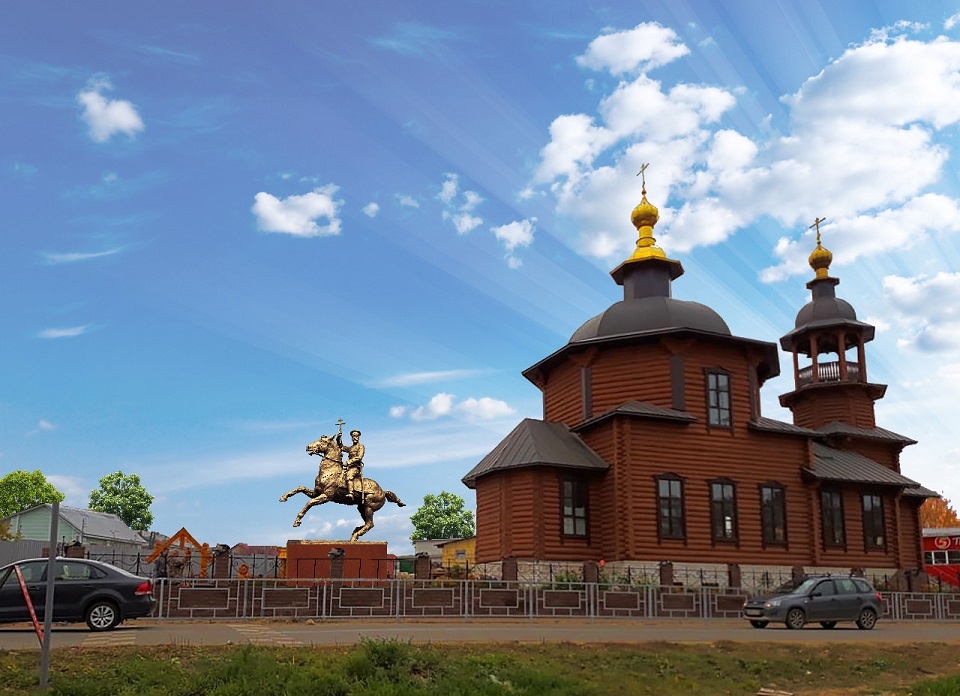
Monument to Nicholas II in Archedinskaya

164

NOTE: All of the articles pertaining to Nicholas II and his family which were originally published in my Royal Russia News blog, have been moved to this Nicholas II blog. This article was originally posted on 2 August 2018 in my Royal Russia News blog – PG

On 17th July 17 2018, on the day marking the 100th anniversary of the murder of the Imperial Family, a bust of Emperor Nicholas II was was established on the grounds of the Church of the Assumption of the Most-Holy Mother of God in the Russian village of Archedinskaya, situated in the Volgorad region. The bronze bust is a copy of an original work by the famous Russian sculptor Vyacheslav Mikhailovich Klykov (1939-2006).

A capsule containing earth from the mines at Ganina Yama and Alapaevsk – where the Bolsheviks attempted to dispose of the bodies of the murdered members of the Imperial family – was placed inside the bust of the Emperor. The bottle of Holy water for consecration was brought from the Church on the Blood of Ekaterinburg. A honourary guard made up of members of the Don Cossacks participated in the event.

After the Divine Liturgy, the consecration of the monument was performed by the Bishop of Uryupinsk and Novoanninsky Elisha.

The bust of the Emperor was made according to a project of the Russian sculptor Vyacheslav Mikhailovich Klykov, who died in 2006. Copies of his sculptures of Nicholas II have been are installed in Mytishchi, Vladivostok, Simferopol, Russia, and Melbourne, Australia.

© Paul Gilbert. 7 December 2019

‘The Conspiracy Against Nicholas II’, with Paul Gilbert

CLICK ON THE IMAGE ABOVE TO WATCH VIDEO

The Conspiracy Against Nicholas II is a short seven minute interview with researcher Paul Gilbert, produced by the Monastery of St John the Forerunner Mesa Potamos in Cyprus.

Paul speaks about the Emperor’s abdication on 15th March [O.S. 2nd March] 1917, and the ‘treachery, cowardice and deceit’ which surrounded him.

He further discusses the main plots which aimed to overthrow Nicholas II from his throne, by his ministers, and even members of his own family. He then discusses some of the myths regarding Nicholas’ II alleged weakness as a ruler, and allegations that his death was met with indifference by the Russian people.

The video includes coloured pictures of the Romanovs and other historical figures, by acclaimed Russian colourist Olga Shirnina, from the forthcoming book The Romanov Royal Martyrs: What Silence Could Not Conceal, published in 2019.

The Conspiracy Against Nicholas II is the fifth of a special multi-episode tribute featuring exclusive interviews with Mesa Potamos Monastery research colleagues: Helen Azar, Helen Rappaport, Nicholas B.A. Nicholson and Paul Gilbert. Click HERE to view ALL six episodes.

memorial

PHOTO: Paul Gilbert at the Romanov Memorial, Porosenkov Log. July 2018.

Paul Gilbert is an independent researcher specializing in the life, reign and era of Emperor Nicholas II, and who is dedicated to clearing the name of Russia’s much slandered Tsar through his news blog Nicholas II. Emperor. Tsar. Saint., his semi-annual journal Sovereign, and Conferences. The 1st International Nicholas II Conference was held on 27th October 2018, in St. John of Shanghai Church in Colchester, England.

© Paul Gilbert. 6 December 2019