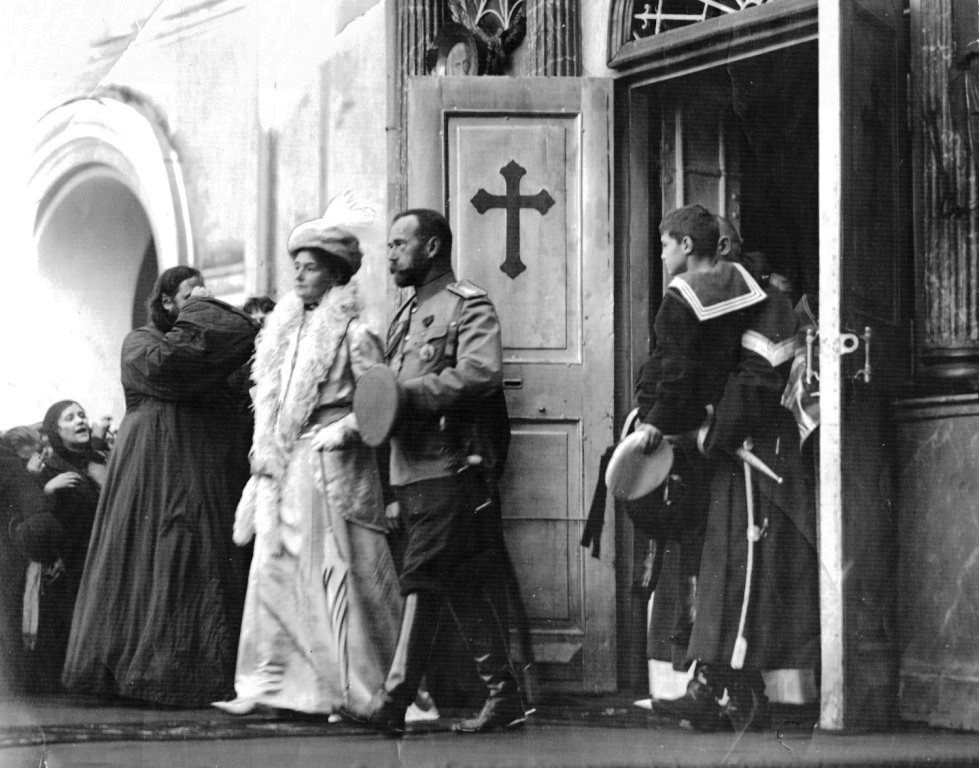
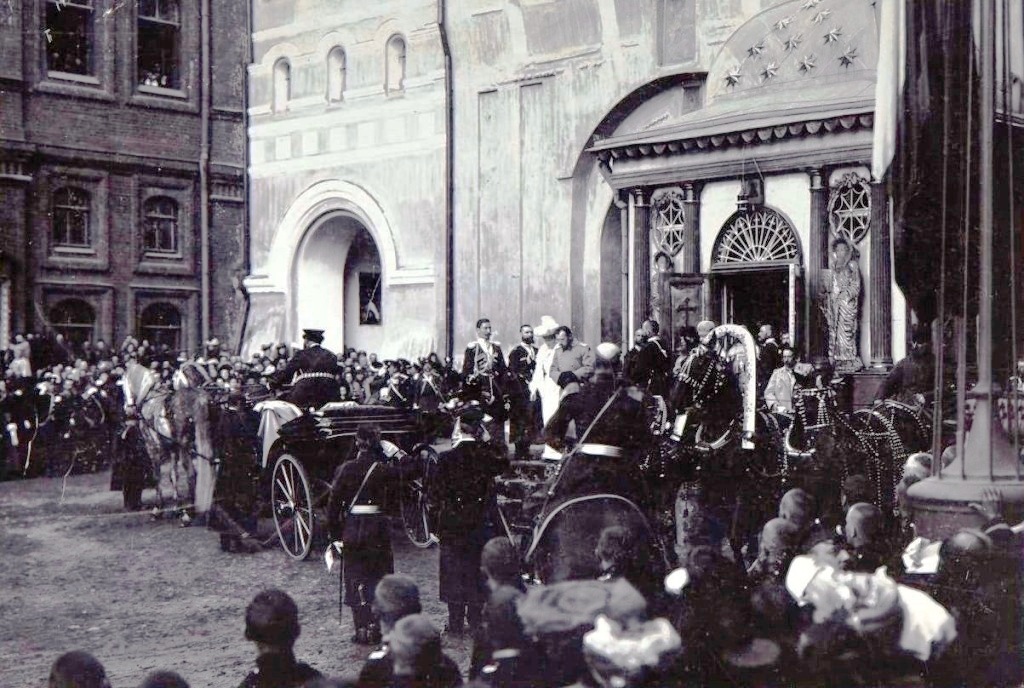
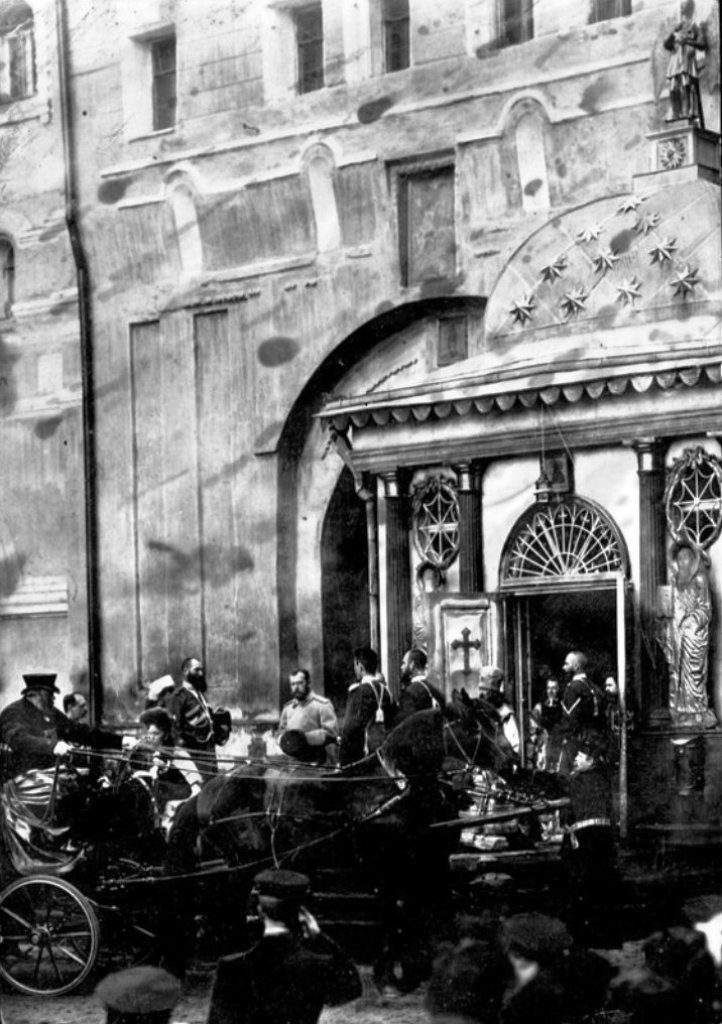
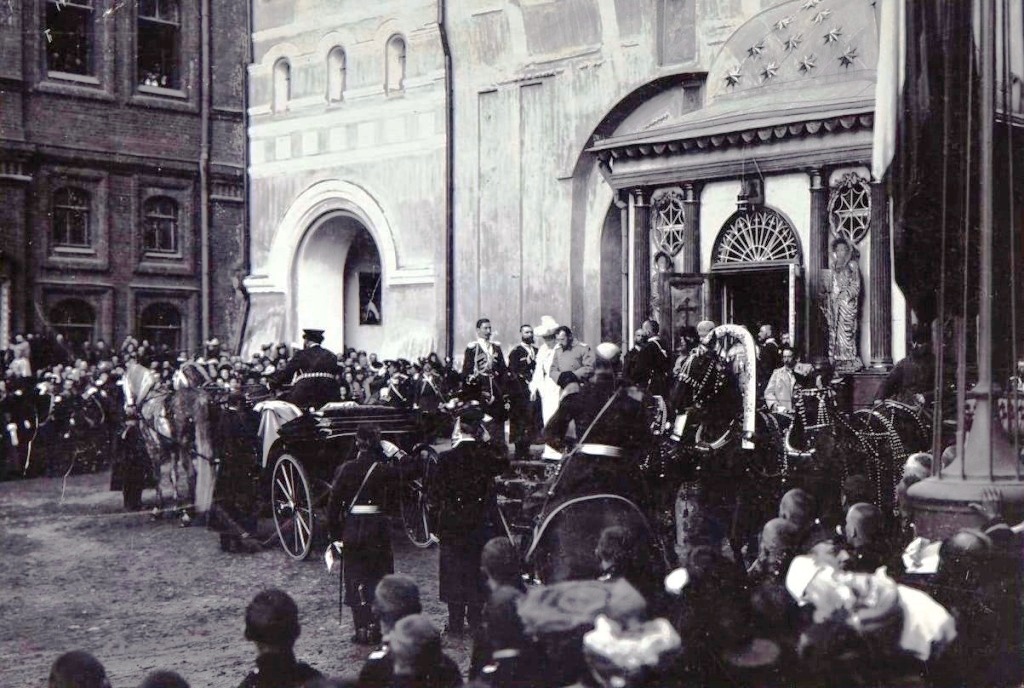
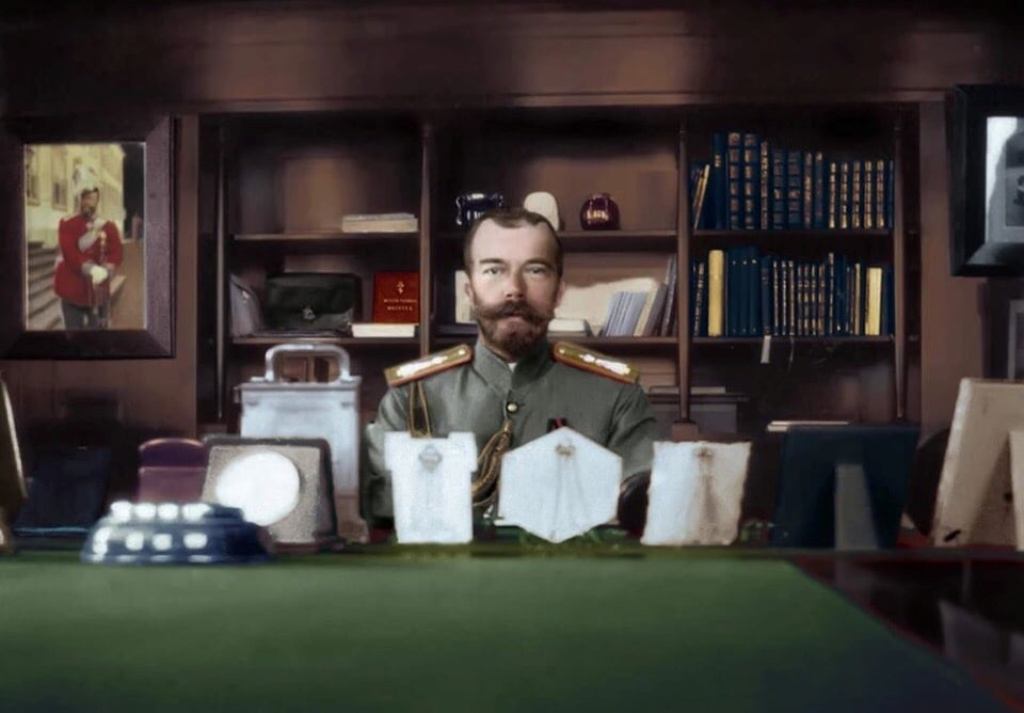
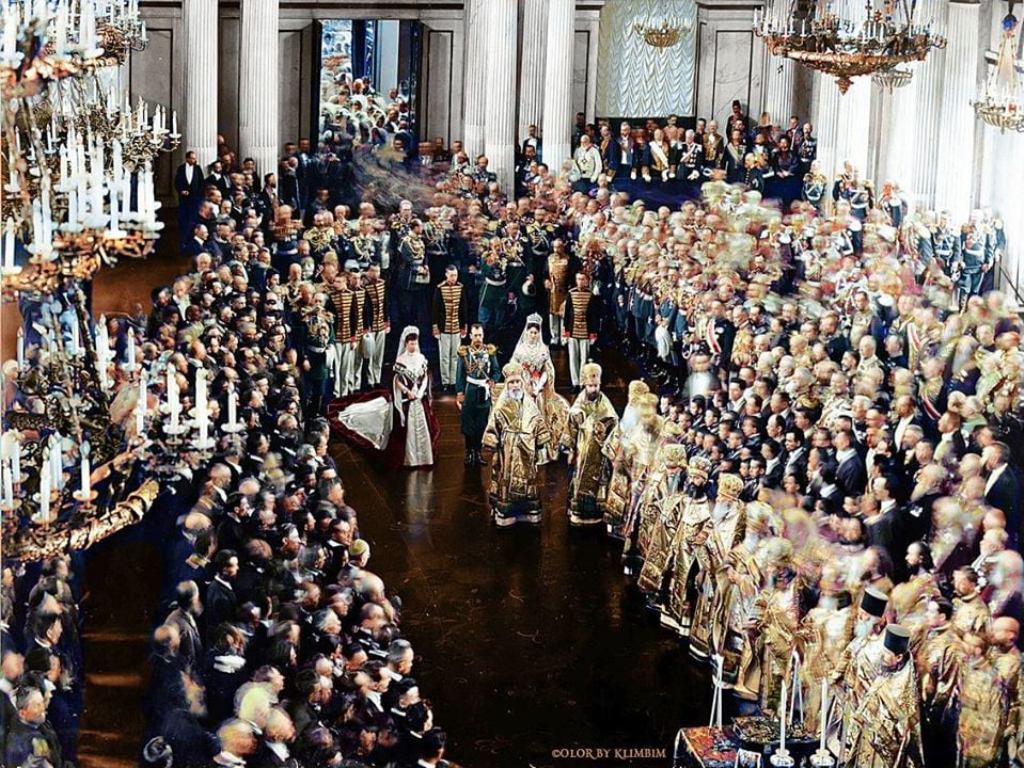
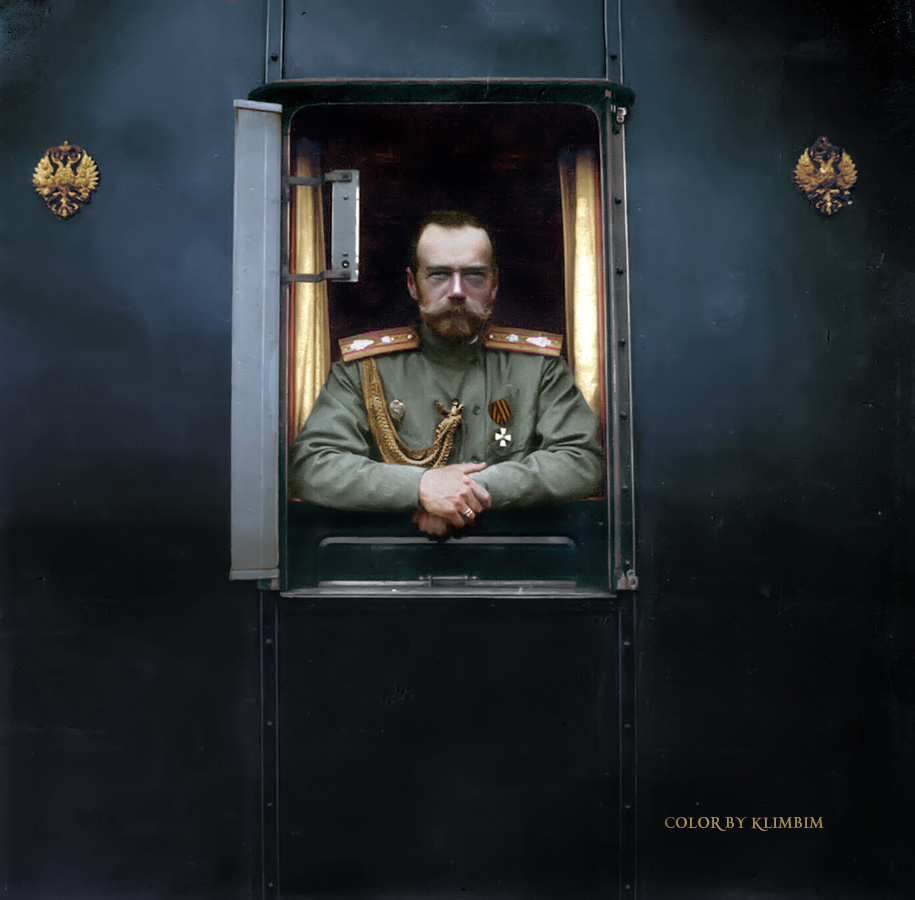
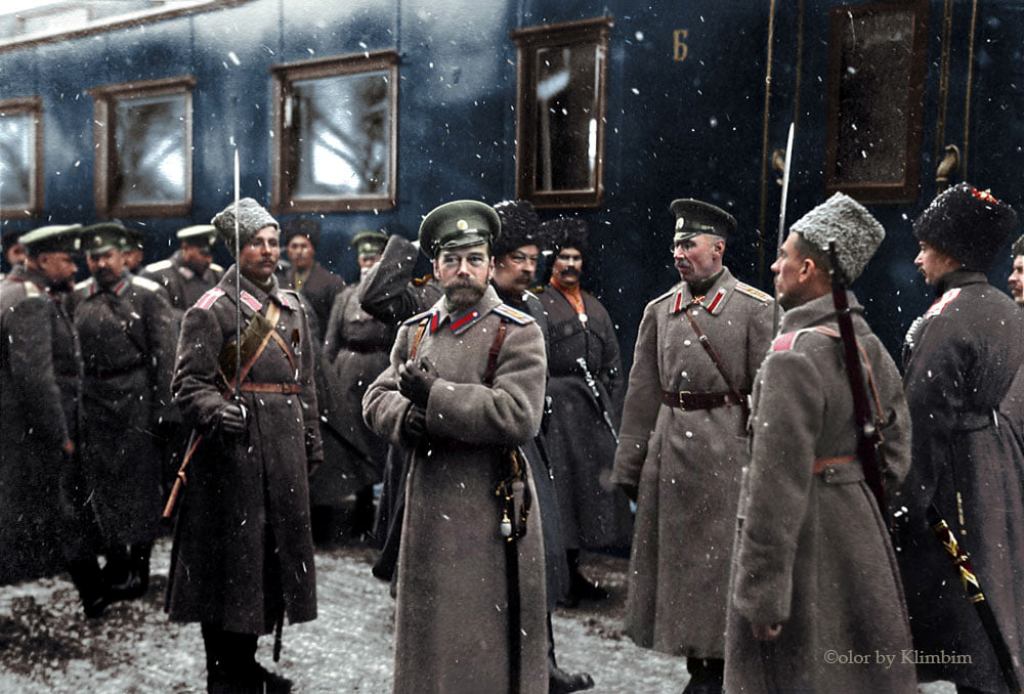
Nicholas II: the amateur photographer

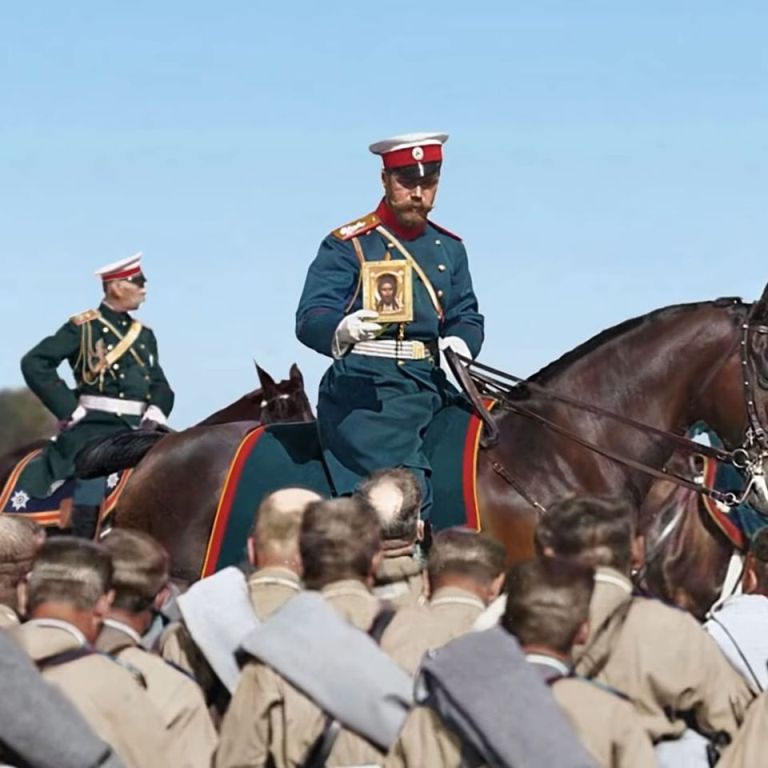
Shortly after his Coronation at Moscow in May 1896, Emperor Nicholas II acquired a new camera, for which he began photographing himself and his family. It was also at this time that he began placing his snapshots of family members in his diaries and compiled his first photo album.

Among the many albums of Romanov family photographs held in the Russian archives, at least two of them were Emperor Nicholas II’s personal photo albums, in which he personally selected and pasted the photos.

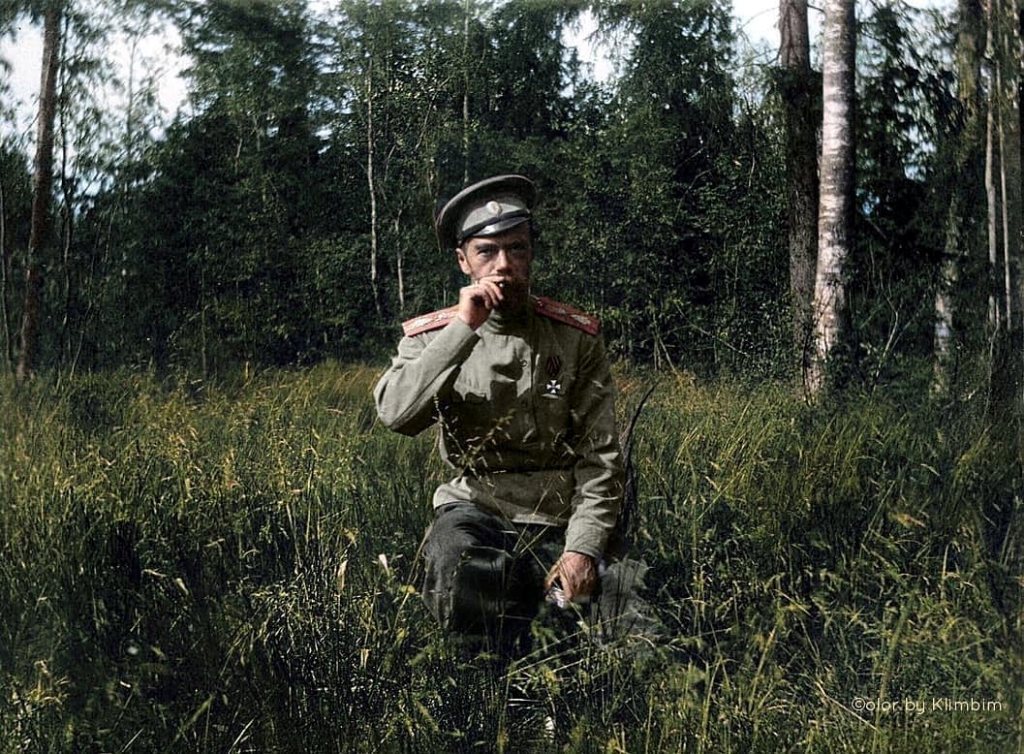
Nicholas II was a keen amateur photographer. It is widely known that his wife and children all shared his passion, but it is thanks to him that we can enjoy such a vast collection of photographs taken by the Emperor himself and by members of his family, in addition to those taken by official photographers. These photographs not only give us an official portrait of Russia’s last Emperor and Tsar, but also a pictorial record of his private life and reign.

Nicholas II took pictures throughout his life, leaving to posterity a collection of photographs astonishing in their breadth and variety. It is a collection which allows us to study him in all his guises: Emperor, husband and father. As GARF managing director and researcher Alia Iskhakovna Barkovets notes: “Everyone who looks at these photographs will see the last Tsar of Russia in their own way. One feeling, however, unites us: these photographs attract us because in them we see a human life. And regardless of the time and tragedy that separates us from that life, we can comprehend it and identify with it.”

In 1925, the enormous archive of documents and photographs of Nicholas II and his family were transferred to the New Romanov Archive, which formed the basis of the Archive of the October Revolution, and was renamed The Department of the Fall of the Old Regime. It was Joseph Stalin who ordered the Romanov archives closed and sealed. They were even off limits to historians, unless for propaganda purposes. Up until the fall of the Soviet Union in 1991, these private documents and photographs lay effectively untouched.

While it is known that Nicholas II started to take amateur photographs, it is not known where and when the Emperor acquired his first camera, but his personal accounts for November 1896 contain an entry about a payment to the firm ‘London Stereoscopic & Photographic Co,’ for photographic accessories amounting to £9 British pound sterling. In December of the same year an invoice from the owner of a warehouse for photographic and optical accessories in St. Petersburg was paid for 25 roubles to cover photographic work, two boxes of film and a camera cover.

PHOTO: a page from the diary of Nicholas II, dated 31st December 1913, featuring two photos of his eldest daughters Olga and Tatiana, wearing their respective regimental uniforms. 

That Nicholas himself glued photographs into albums is shown by a diary entry 29th October 1896: “Fussed with some photographs, singling them out for gluing into the big album”. It is apparent that he among the members of his family was mostly concerned with their presentation, also ensuring that each photograph was captioned with date and place, all handwritten by the Emperor himself.. This favourite pastime “calmed him and brought him into a state of mental equilibrium,” says Barkovets. 

Beginning in 1896, small amateur photographs began to appear in the pages of his diary alongside the entries. In almost every diary after this year the Emperor illustrated various entries with his own photographs.

Nicholas II’s private album for 1900-1901 is particularly interesting as it highlights the growing confidence of his skills as a photographer. Nicholas had obtained a special camera which allowed panoramic pictures to be taken. The Emperor’s passion for taking panoramic photographs included those of ships, his beloved Standart, and above all, the Crimean countryside and the architecture of Livadia Palace. Although the artistic merit of these photographs is questionable, their historic significance is undeniable.

In August 1917, when the Imperial Family was exiled from Tsarskoye Selo to Tobolsk and later Ekaterinburg, they took with them a camera of the ‘panorama company Kodak from the Karpov shop . . . along with instructions, and two boxes containing 33 negatives’.  These items were found after the murder of the Imperial Family in Ekaterinburg at the apartment of Mikhail Letemin, the guard for the Ipatiev House, during a search by the investigator Alexei Nametkin on 6th August 1918. As well as the items found at the Ipatiev House, three reels of Kodak film were recovered from the stoves and rubbish at the Popov house, where the guards of the Imperial Family were accommodated. So, what were these photos? Who took them? Why were they destroyed? Perhaps they contained the last photographic images of the final days of the Imperial Family, or were they destroyed to conceal evidence which the murderers did not want to fall into the hands of monarchists, the Whites or the Western press? Sadly, we will never know!

In conclusion, Alia Barkovets adds: “the photographs from the Tobolsk period of the family’s house arrest are missing from the State Archive, but a few pictures survive in private collections. There are no known photographs of the Imperial Family during their house arrest in Ekaterinburg. If we believe the evidence of of the guard Mikhail Letemin, Nicholas’s camera was stolen by him from the Ipatiev House after the murder of the Imperial Family. Whether or not it contained film we can only surmise.”

***

Nicholas II was among a handful of famous Russians, who took “selfies”.

The first ‘selfie’ in history was taken by American photographer Robert Cornelius – he took a photo of the reflection of himself in a storefront. That happened in 1839, but the process of taking photos then was very different from the modern one.

A polished silver plate, treated with iodine vapors, was put into a camera obscura and then developed over hot mercury and dipped into a solution of salts – not the easiest of processes.

The tides turned with the emergence of Kodak cameras, designed to be used by non-professionals. Photography didn’t require serious training anymore and gradually turned into a mass hobby. The amount of ‘selfies’ rose dramatically. Russians were also involved.

In this photo, we see the Tsar posing for a “selfie” with his Kodak camera, much to the amusement of his mother Dowager Empress Maria Feodorovna seen seated behind him in this [sadly] grainy image. Year and location unknown.

© Paul Gilbert. 19 August 2022 [Updated 24 June 2025]

Nicholas II monument planned for Lugansk

A new monument to Emperor Nicholas II, will be installed in Lugansk, a city with a population of nearly 400,000 people, situated in the Donbass region.

A local Lugansk sculptor, the author of many works, is currently preparing a model of the life-sized sculpture in his studio. The completed monument will stand more than 2 meters [more than 6 ft., including the base] in height.

The monument to the Holy Passion-Bearer Nicholas II is the sole initiative of Lugansk believers. Of the required 2 million rubles [$25,000 USD], they have already collected 330 thousand [more than $4,000 USD].

According to Russian social media, a meeting was recently held with the sculptor, to discuss the correct recreation of the uniform and awards. A decision on the exact location of the monument is expected to be announced shortly, although it is believed that it will be installed on the grounds of a local Orthodox Church in Lugansk.

The Lugansk monument will now make a total of three new monuments to Nicholas II – which are known to this author – that will be installed in various Russian cities within the next year, the others include, one in the Ural city of Verkhneuralsk, the other in St. Petersburg.

© Paul Gilbert. 13 June 2025

NEW BOOK – Sovereign No. 15 (Summer 2025)

*You can order this title from most AMAZON outlets, including
the United States, United Kingdom, Canada, Australia,
France, Germany, Spain, Italy, Netherlands, Poland, Sweden and Japan
*Note: prices are quoted in local currencies

CLICK HERE TO ORDER THE PAPERBACK EDITION @ $20.00 USD

English. Large format 8-1/2″ x 11-1/2″. 130 pages. 131 Black & White photos

The No. 15 Summer 2025 issue of SOVEREIGN features more than 20 articles about Russia’s last Tsar, his family, the Romanov dynasty and the history of Imperial Russia. These articles have been researched and written by independent historian and author Paul Gilbert. His works are based on new research from Russian archival and media sources.

In an effort to preserve his 30+ years of research, the author has reproduced a selection of the nearly 900 articles he has written for his blog. They are made available in a printed format for the first time. The author has updated many of the articles in this issue with additional information and photos. In addition, this issue features one new First English translation.

The No. 15 issue features the following 23 articles:

[1] Film Review: Nicholas and Alexandra

[2] Smoking: the Tsar’s bad habit

[3] St. Catherine’s Chapel. The Final Resting Place of Nicholas II

[4] What were Lenin’s plans on Nicholas II’s fate?

[5] The “Imperial Palace” of Emperor Nicholas II in Paris – October 1896

[6] The hidden wealth of the Bolshevik devil Yakov Sverdlov

[7] In 1897 Nicholas II approved the Winter Palace to be painted red

[8] Romanov archives of Charles Sydney Gibbes

[9] The Tsar’s Railway Pavilion in Nizhny Novgorod

[10] Ministers of Foreign Affairs During the Reign of Nicholas II

[11] Nicholas II’s little known third brother: Alexander (1869-1870)

[12] Nicholas II’s Diaries 1894-1918

[13] God, Save the Tsar! Боже, Царя храни!

[14] Emperor Nicholas II Foundation Marks 4th Anniversary

[15] Serov Portrait of Nicholas II to be exhibited in London

[16] Faithful to the Tsar and His Family: Pierre Gilliard (1879-1962)

[17] Portrait of Nicholas II returned to Russia from America

[18] What is Nicholas II’s correct date of birth?

[19] New museum dedicated to Nicholas II and his family opens in Pskov region

[20] Reconstruction of the Imperial Train Pavilion at Tsarskoye Selo

[21] The human side of the Tsar

[22] Father Vasiliev: Confessor to the Imperial Family

[23] Obituary: Zurab Konstantinovich Tsereteli (1934-2025)

***

Back issues of SOVEREIGN

No. 14 Winter 2025

No. 13 Summer 2024

No. 12 Winter 2024

NOTE: back issues of Nos. 1 to 12 are now out of print.
Second-hand copies are available on AMAZAON eBay
.

© Paul Gilbert. 1 June 2025

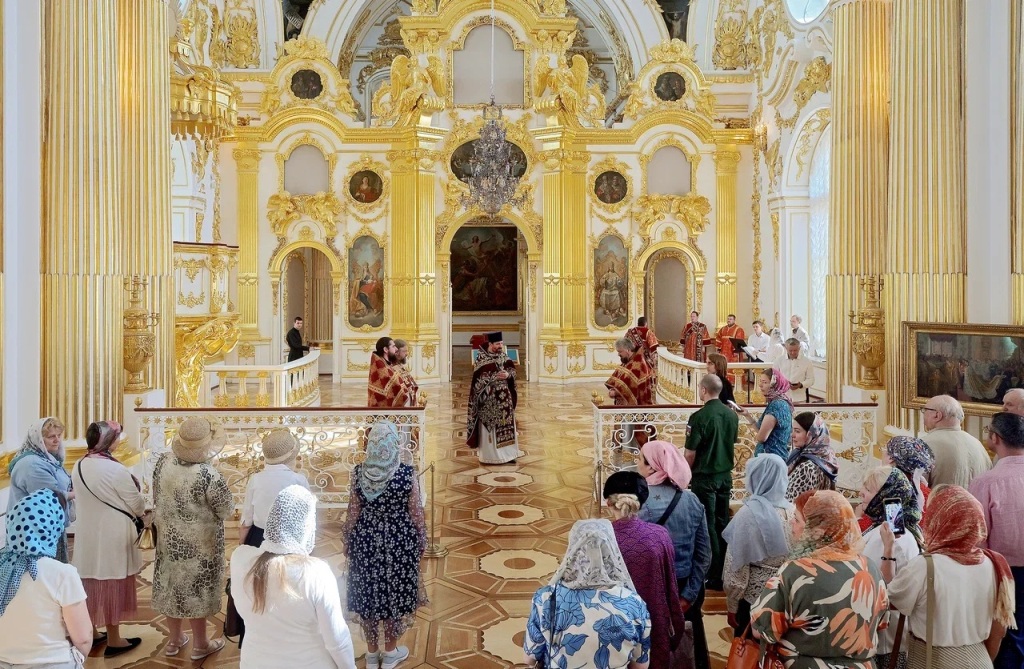
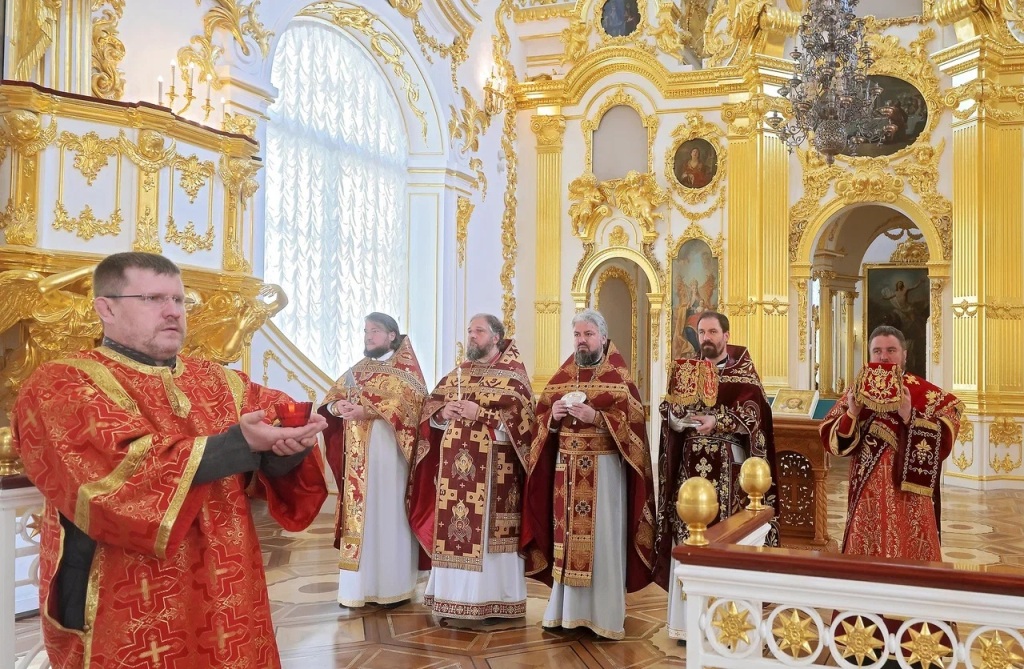
Divine Liturgies celebrated on the anniversary of the birth of the Holy Emperor Nicholas II

On 19th May 2025, the Russian Orthodox Church marked the anniversary of the birth of Tsesarevich and Grand Duke Nicholas Alexandrovich – the future Emperor Nicholas II – who was born on 19th (O.S. 6th) May 1868 – the day when St. Job of the Long Suffering was born..

In connection with this historic date, Orthodox churches throughout Russia and abroad performed Divine Liturgies in memory of Russia’s much slandered Tsar.

From the very beginning of his reign, Nicholas II treated the duties as Emperor and Tsar of the Russian Empire as a sacred duty. As God’s Anointed, he strongly believed that for the hundred million Russian people the Tsar’s power was and remained sacred.

The family of Emperor Nicholas II was imbued with the spirit of the Orthodox faith. They lived in accordance with the traditions of Orthodox piety. Obligatory attendance at divine services on Sundays and feast days, observing fasts were an integral part of their lives. The August couple not only visited churches and monasteries during their numerous trips, venerated miraculous icons and relics of saints, but also made pilgrimages, as was the case in 1903 during the glorification of St. Seraphim of Sarov.

The Emperor paid great attention to the needs of the Orthodox Church throughout his reign. Like all Russian emperors, Nicholas II generously donated from his own funds for the construction of new churches, including those outside Russia. During the 22+ years of his reign, the number of parish churches in Russia increased by more than 10 thousand, and more than 250 new monasteries were opened. The Emperor himself participated in the laying of new churches and other church celebrations.

The personal piety of the Tsar was also manifested in the fact that during the years of his reign more saints were canonized than in the two previous centuries, when only 5 saints were glorified. During Nicholas II’s reign, the following saints were glorified: St. Theodosius of Chernigov (1896), St. Seraphim of Sarov (1903), St. Joasaph of Belgorod (1911), St. Ermogen of Moscow (1913), St. Pitirim of Tambov (1914), St. John of Tobolsk (1916) were canonized, and the veneration of St. Princess Anna of Kashin was renewed (1909).

The Holy Emperor Nicholas II said: “If you see me calm, it is because I have the firm, the absolute conviction that the fate of Russia, my own fate, and that of my family is in the hands of God, Who has placed me where I am. Whatever happens, I will bow to His will, conscious of never having had a thought other than that of serving the country that He confided to me.”

VIDEO: Nicholas II: The Last Orthodox Tsar of Russia
with Paul Gilbert (in English)

In 2020, the Holy Monastery of St. John the Forerunner of Mesa Potamos in Cyprus invited me to research, write and narrate this 20-minute English-language VIDEO, within the framework of the project for the book “The Romanov Royal Martyrs: What Silence Could Not Conceal“, of which I was a project colleague. The VIDEO has been watched by more than 134,000 people to date!

CLICK on the LINK to watch the VIDEO: Nicholas II: The Last Orthodox Tsar of Russia

VIDEO: Piety of His Imperial Majesty Sovereign Emperor Nicholas II
Duration: 11 minutes, 24 seconds

A wonderful collection of vintage newsreels from the Russian State Documentary Film & Photo Archive at Krasnogorsk (RGAKFD).

This newsreel has preserved for posterity those moments when Emperor Nicholas II together with his Family attend the divine services, kisses reverently the cross and the icons, blesses his troops, makes the sign of the cross, participates in the sacred processions and converses with the religious leaders.

Soundtrack: 1) Song «Tsar Nicholas» (written and composed by Gennady Ponomarev; sung by the famous Russian singer Zhanna Bichevskaya in 1999); 2) Fragment of the national anthem of the Russian Empire «God Save the Tsar» (another name: «The Prayer of Russians»; written by Vasily Zhukovsky in 1814, sung by Zhanna Bichevskaya).

CLICK on the LINK to watch the VIDEO: Piety of His Imperial Majesty Sovereign Emperor Nicholas II

© Paul Gilbert. 21 May 2025

***

NICHOLAS II: RUSSIA’S LAST ORTHODOX CHRISTIAN MONARCH

CLICK ON THE LINK BELOW TO ORDER FROM AMAZON

PAPERBACK EDITION – PRICE $10.99

E-BOOK EDITION – PRICE $9.99

BOOK DESCRIPTION

This book is not only for Orthodox and non-Orthodox persons, but for any one who shares an interest in the life, death, and martyrdom of the Holy Tsar-Martyr Nicholas II.

An illustrated Introduction by independent researcher Paul Gilbert explores the piety of Nicholas II, and his devotion to the Russian Orthodox Church, which reached its fullest development and power, during his 22-year reign.

This book further examines the trials and tribulations the Tsar endured, which later led to his canonization by the Russian Orthodox Church.

Paperback edition, with 134 pages + 23 black & white photographs

Faithful to the Tsar and his family: Pierre Gilliard (1879-1962)

PHOTO: Pierre Gilliard (1879-1962)

Pierre Gilliard was born near Lausanne, Switzerland on 16th May 1879. He was one eight children born to the landowner-winemaker Edmond André David Gilliard and Marie Gilliard-Malherbe (1848-1911). In total, there were six sons and two daughters, but it was Pierre who is most famous for entering the inner circle of the Russian Imperial Family, and sharing many happy years as tutor to the August children of Emperor Nicholas II and Empress Alexandra Feodorovna.

After graduating from the University of Lausanne in 1904, he was invited to Russia to teach French to the children of Prince Sergei Georgievich Romanowsky, 8th Duke of Leuchtenberg (1890-1974). The young teacher had established himself, not only as an excellent tutor, but also as a modest, decent and noble person.

In September 1905, he was invited to teach French to Grand Duchesses Olga and Tatiana Nikolaevna – the eldest daughters of the Russian tsar. The two elder sisters were later joined by the two younger daughters: Maria and Anastasia, and Tsesarevich Alexei. This is how Pierre Gilliard, who was affectionately called “Zhilik” in the family, described his students:

PHOTO: Pierre Gilliard with Tsesarevich Alexei Nikolaevich, on the deck of the Imperial Yacht ‘Standart‘. 1914

“Alexei Nikolayevich was the centre of this united family, the focus of all its hopes and affections. His sisters worshipped him and he was his parents’ pride and joy. When he was well the palace was, as it were, transformed. Everyone and everything seemed bathed in sunshine. Endowed with a naturally happy disposition, he would have developed quite regularly and successfully had he not been kept back by his infirmity.. <… >

” He was rather tall for his age. He had a long, finely chiselled face, delicate features, auburn hair with a coppery glint in it, and large blue-grey eyes like his mother’s. He thoroughly enjoyed life – when it let him – and was a happy, romping boy. Very simple in his tastes, he extracted no false satisfaction from the fact that he was the Heir – there was nothing he thought about less <… >

“The Grand-Duchesses were charming – the picture of freshness and health. It would have been difficult to find four sisters with characters more dissimilar and yet so perfectly blended in an affection which did not exclude personal independence, and, in spite of contrasting temperaments, kept them a most united family. With the initials of their Christian names they had formed a composite Christian name, Otma, and under this common signature they frequently gave their presents or sent letters written by one of them on behalf of all.

“In short, the whole charm, difficult though it was to define, of these four sisters was their extreme simplicity, candour, freshness, and instinctive kindness of heart.”

PHOTO: (above) Pierre Gilliard with Grand Duchesses Olga (left) and Tatiana (right) Nikolaevna, on the balcony of the Livadia Palace, Crimea. 1911; (below) Gilliard with Grand Duchesses Anastasia (left) and Maria (right) Nikolaevna, on the balcony of the Livadia Palace, Crimea. 1912.

From 1905 to 1918, Pierre Gilliard served not just as a tutor for the August Children, but also as a friend and mentor. He became a part of the Imperial Family’s inner circle, and was invited to join them on their journeys onboard the Imperial Yacht ‘Standart‘ to Crimea, where they stayed at their white limestone palace of Livadia. Gilliard shares his impressions of Crimea:

“In the spring of 1914 the Imperial Family went to the Crimea, as in preceding years. We arrived at Livadia on April 13th, a bright, sunny day. In fact, we were almost dazzled by the sunshine, which bathed the high, steep cliffs, the little Tartar villages half buried in the bare sides of the mountains, and the staring white mosques which stood out sharply against the old cypresses in the cemeteries. The contrast with the landscapes we had just left was so striking that, although this new country was familiar, it seemed quite fairylike and unreal in its wondrous beauty under this halo of sunshine.

“These spring days in the Crimea were a delicious relief after the interminable St. Petersburg winter, and we looked forward to them months before they came.”

In the autumn of 1914, the First World War broke out, which resulted in the death of millions of people, revolutions and the overthrow of monarchies in Germany, Austria-Hungary and Russia. After the February Revolution of 1917, Emperor Nicholas II was forced to abdicate.

PHOTO: Pierre Gilliard and Nicholas II saw wood during their house arrest in Tobolsk. Winter 1917-18

During the fiery whirlwind of historical events which unfolded, Pierre Gilliard did not abandon the Imperial Family. To the best of his ability, trying to preserve the same daily routine, he continued to teach French to the August Children. In August 1917, he voluntarily went into exile with the Imperial Family to Tobolsk, where they were held under house arrest from August 1917 to April 1918. Gilliard endured the same hardships as those of the Tsar and his family, he supported the prisoners, still continuing with his lessons.

Gilliard was prevented from living in the Ipatiev House and was forbidden to visit the Imperial Family. He left Ekaterinburg some time later for Tyumen, where he was arrested on his arrival, but was released shortly afterwards.

It was only his foreign citizenship which saved him from sharing the same horrible death in the basement of the Ipatiev House in Ekaterinburg on the morning of 17th July 1918.

On 20th July 1918, the Czechs captured Tyumen. Gilliard then came out of hiding and discovered an official communiqué plastered on the walls around the city: “The death sentence against the ex-Emperor Nicholas Romanov was carried out on the night of 16/17 July, the Empress and the children were evacuated and transferred to a safe place.” Gilliard hurried to Ekaterinburg to find the Imperial Children whom everyone at the time believed to still be alive. His efforts were in vain.

On his arrival in Ekaterinburg in August 1918 – where he offered his assistance to the investigator Nikolai Sokolov – Gilliard visited the Ipatiev House, and recalls his impressions:

“I entered the room in which perhaps–I was still in doubt–they had met their death. Its appearance was sinister beyond expression. The only light filtered through a barred window at the height of a man’s head. The walls and floor showed numerous traces of bullets and bayonet scars. The first glance showed that an odious crime had been perpetrated there and that several people had been done to death. But who? How?

“I became convinced that the Tsar had perished and, granting that, I could not believe that the Tsarina had survived him. At Tobolsk, when Commissary Yakovlev had come to take away the Tsar, I had seen her throw herself in where the danger seemed to her greatest. I had seen her, broken-hearted after hours of mental torture, torn desperately between her feelings as a wife and a mother, abandon her sick boy to follow the husband whose life seemed in danger. Yes, it was possible they might have died together, the victims of these brutes. But the children? They too massacred? I could not believe it. My whole being revolted at the idea.” <… >

PHOTO: Pierre Gilliard and Alexandra Tegleva. Switzerland, 1922

In 1919, Gilliard married Alexandra Tegleva and in November of the same year, along with thousands of other people, including ministers and government officials of the old regime, they fled Siberia and headed east on the Trans-Siberian Railway. In April 1920, after a six-month journey, they arrived in Vladivostok. They then sailed on an American ship to San Francisco, and from there traveled by boat along the Pacific coast, through the Panama Canal, across the Atlantic Ocean and the Mediterranean Sea to Trieste. In August 1920, they returned to his parents’ home in Switzerland, which he had left some sixteen years earlier

Upon his return to his native Switzerland, Pierre Gilliard resumed his studies, which he had interrupted in 1904. In 1925, he obtained a degree in literature in Lausanne and from 1926, he taught French at the School of Modern French of the Faculty of Arts of the University of Lausanne, which he then became it’s director until 1949, and finally honourary professor in 1950.

PHOTO: Pierre Gilliard. taken shortly before his death in 1962

In 1921, Gilliard published in Paris, Le tragique destin de Nicolas II et de sa famille, and in 1929 his second work, La Fausse Anastasie, histoire d’une alleged Grand-Duchesse de Russie. He was made a Knight of the Legion of Honour and winner of the Marcelin-Guérin Prize for his book on Nicholas II.

His book Thirteen Years at the Russian Court: A Personal Record of the Last Years and Death of the Czar Nicholas II and his Family was first published in English i 1921. It was initially published by Hutchinson & Co in London. The book was translated by F.A. Holt. 

Alexandra Alexandrovna Tegleva died in Switzerland on 21st March 1955. In 1958, Pierre Gilliard was severely injured in a car accident in Lausanne. He never fully recovered and died four years later on 30th May 1962, at the age of 83. His remains were cremated in the privacy of his family at the Bois-de-Vaux Cemetery in Lausanne. According to the burial service of the city of Lausanne there is no grave or burial in his name. His ashes were probably scattered elsewhere.‎

Gilliard was a keen photographer and he took hundreds of images while in Russia, including many informal photographs of the Imperial Family. These are now held by the Musée de l’Élysée, a photography museum in Lausanne. In 2005 Daniel Girardin, an art historian who worked at the Musee de l’Elysee as a curator until 2017, published a pictorial biography of Gilliard’s time in Russia based on his works in the museum’s collection. It is titled Précepteur des Romanov – Le destin russe de Pierre Gilliard [Tutor of the Romanovs: The Russian Destiny of Pierre Gilliard].

He lived a long life, was eyewitness to events which changed Russia dramatically and violently, and his name will forever remain inscribed in the pages of history next to the names of the Imperial Family, for whose sake he put his life in danger and whom he loved so much.

FURTHER READING:

Ekaterinburg: the Survivors

St. Petersburg hosts one-day exhibit of Pierre Gilliard’s photographs of the Tsar’s family

Documentary: the Return of Pierre Gilliard

© Paul Gilbert. 16 May 2025

“I do not shake the hands of murderers” – General Zhukov to Yermakov

On 9th May 2025, Russia marked the 80th anniversary of the defeat of Nazi Germany. In recognition of this solemn day, I would like to draw attention to one of Russia’s most celebrated war heroes: Georgy Konstantinovich Zhukov (1896-1974).

Zhukov is among the many famous Soviet marshals and generals who impressed the world with their victories and heroism during the Great Patriotic War (1941-45). What many do not realize, is that they were once officers of the Russian Imperial Army – which from August 1915 to March 1917, was under the command of Emperor Nicholas II. Zhukov was awarded the St. George Cross twice for military merit, and promoted to the rank of non-commissioned officer for his bravery in battle. Following the war, Zhukov commanded the Ural Military District [the district headquarters was located in Sverdlovsk (Ekaterinburg]. 

According to his friends living in the Ural capital, Zhukov was fascinated by the history of Sverdlovsk [Ekaterinburg]. In particular, he took a great interest in the final days and subsequent execution of Russia’s last Tsar and his family. Zhukov’s friends claim that he was sympathetic to Nicholas II, and believed that the lives of the monarch and his family should have been spared.

Zhukov’s position was quite simple: he considered the regicide as “nothing short of a disgrace”. He was disgusted by the fact that local men had become executioners. After all, the Tsar posed no threat to the Bolsheviks, nor did he resist. As for the Ipatiev House, where the murders took place, Marshal Zhukov “despised it”.

According to Zhukov’s daughter, Margarita Georgievna Zhukova (1929-2010):

“Being the commander of the Ural Military District in Sverdlovsk, my father visited the “Ipatiev House”.

“This is how my elder sister Ella (1937-2009) recalls it . . . I remember the notorious Ipatiev House, where we were taken with special permission. The topic of the execution of the Imperial Family was forbidden in those years, and it was only during this visit that I learned about this tragedy for the first time. In the house at the entrance there was a small exposition with copies of some documents, red slogans and portraits of leaders hung on the walls. It was disgusting for my father to be there, surrounded by posters of Soviet propaganda whitewashing the murderers. Below, was the dreaded basement, where I did not want to go down. The atmosphere in the house was oppressive… I did not talk to my father about this.”

Source: M. G. Zhukova, “Маршал Жуков – мой отец / Marshal Zhukov – My Father“, Sretensky Monastery, 1999

PHOTO: in the 1920s, the murderer Pyotr Yermakov returned to Porosenkov Log.
On the reverse of this photo, he wrote: “I am standing on the grave of the Tsar”.

“SHAME ON THE REGICIDE!”

It was also during Zhukov’s years as Commander of the Ural Military District, that he would come face to face with one of the regicides: Pyotr Zakharovich Yermakov (1884-1952).

Zhukov had heard about Yermakov from the newspapers, and he looked at all these honours with disgust. He did not understand how a murderer could be so exalted. But at that time, Yermakov seemed to many to be a hero, a liberator. He regularly met with groups of workers and bragged about how he had taken part in the murders, and how he pulled the trigger of the gun, which killed the Tsar.

According to Zhukov’s daughter, Margarita Georgievna Zhukova (1929-2010), the meeting took place on 1st May 1951, when the May Day parade was being held in Sverdlovsk [Ekaterinburg].

“What was really going on in my father’s soul can be understood from an episode that occurred later. I was told about it during my trip to the Urals by old-timers. It was at a solemn reception, where the entire local party elite had gathered. Yermakov, as before, spoke about his “heroic feats”, and decided to approach my father to shake hands as equals. Introducing himself, he announced that he was the same Yermakov who participated in the execution of the Imperial Family, and stretched out his hand. He expected surprise, questions, delight, but Yermakov was surprised by my father’s response, who disgusted and gritting his teeth, said firmly: “I do not shake the hands with the murderers!”.

Source: M. G. Zhukova, “Маршал Жуков – мой отец / Marshal Zhukov – My Father“, Sretensky Monastery, 1999

Yermakov shrugged his shoulders and walked away. That was the end of the conversation. Zhukov was sure that he had said everything he wanted. Moreover, he wanted to believe that Yermakov had at least learned something from this meeting.

Yermakov died in Sverdlovsk on 22nd May 1952 from cancer at the age of 67, he was buried in Ivanovo Cemetery in Ekaterinburg. In the 1960s, a street was named after Yermakov in Sverdlovsk [Ekaterinburg], however, during the 1990s, the street was renamed Ulitsa Klyuchevskaya.

Every year, since the 1990s, Yermakov’s grave has been vandalized by local monarchists, who douse his gravestone with red paint, symbolizing the blood which this evil man spilled, and his involvement in the murder of the Holy Tsar Nicholas II and his family in 1918.

FURTHER READING:

The fate of the regicides who murdered Nicholas II and his family

NEW BOOK – Regicide in Ekaterinburg by Paul Gilbert

Russian sculptor proposes removal of monuments to Bolsheviks in Ekaterinburg

© Paul Gilbert. 13 May 2025

New monument to Nicholas II to be installed in the Urals

PHOTO: the Cathedral of St. Nicholas the Wonderworker in Verkhneuralsk

A new equestrian monument to Emperor Nicholas II will be installed and consecrated later this year, in the Ural city of Verkhneuralsk. The city is located on the left bank of the Ural River, 230 km south of Chelyabinsk and 450 km south of Ekaterinburg.

The monument will be installed in front of the Cathedral of St. Nicholas the Wonderworker – the only Orthodox church in Verkhneuralsk which survived the years of Soviet power. The grounds around the church are currently being developed. The monument will be installed and consecrated here upon completion of the landscaping and gardens.

PHOTO: a plaque marks the visit of Tsesarevich and Grand Duke Nicholas Alexandrovich [future Emperor Nicholas II] to the Cathedral of St. Nicholas the Wonderworker in Verkhneuralsk, on 4th August (O.S. 23rd July) 1891.

The monument is in memory of Nicholas II’s visit to Verkhneuralsk on 4th August (O.S. 23rd July) 1891, during a trip across the Russian Empire following his Eastern Journey. The Eastern Journey (1890-1891) of Tsesearvich Nicholas Alexandrovich took him to Egypt, India, Ceylon, Siam, China, and Japan – where an assassination attempt was made on his life. The total length of the journey exceeded 51,000 kilometres, including 15,000 km of railway and 22,000 km of sea routes.

The Cathedral of St. Nicholas the Wonderworker was built in the Russian-Byzantine Style in 1870, and consecrated on 5th May 1875. The money for it’s construction was allocated by a local merchant Nikolai Petrovich Rytov (1818-1879), cost 6100 rubles. The church was erected according to the project of the famous Russian architect Konstantin Ton (1794-1881), who challenged classicism and established the Russian Style, which included outstanding palace and church architecture.

PHOTO: the grounds around the Cathedral of St. Nicholas the Wonderworker are currently being developed. The monument to Nicholas II, will be installed and consecrated here upon completion of the landscaping and gardens.

The northern altar of this cathedral – in the name of the Intercession of the Most Holy Theotokos – was built on benevolent donations in memory of the salvation of Tsesarevich Nicholas Alexandrovich, following an assassination attempt on his life in Otsu, Japan. The altar was consecrated on 18th November 1897.

In the 1930s, the church was closed and used as a grain warehouse, reopened in 1942. In the early 20th century, there were 7 Orthodox churches in Verkhneuralsk, however the Cathedral of St. Nicholas the Wonderworker, is the only one to have survived the years of Soviet power, the rest were destroyed.

It is interesting to note that in 1904, Emperor Nicholas II visited a number of Ural cities including Verkhneuralsk. He was accompanied by his brother Grand Duke Mikhail Alexandrovich.

© Paul Gilbert. 7 May 2025

The Upper Nikolaev Baths, named after Nicholas II in Yessentuki

With the opening of the Mineralnye Vody-Kislovodsk railway line in May 1894, the flow of vacationers to the region in search of balneological treatments[1] increased significantly. In 1896, construction of the Upper Nikolaev [Nicholas] Baths, named after Emperor Nicholas II in Yessentuki [2] began.

The construction of the building began in October 1895 after the decree of the Administration of the Caucasian Mineral Waters, when the demand for mineral and mud baths greatly increased. The building was constructed according to the project of architect Nikolai Vsevolodovich Dmitriev (1856-1936)  and engineer B.K. Pravzdik.

The one-story building – made of local light yellow brick – was constructed in late Russian Classicism Style with elements of Baroque. It is a square structure [see photo at the end of this post], with a ring-shaped pavilion in the courtyard, connected to the main building by four corridors.

PHOTO: early 20th century view of the Upper Nikolaev [Nicholas] Baths, Yessentuki

The entire square part of the building is divided into two parts: the right side is reserved for women, the left side is for men. Each of the halves has a separate entrance from the main façade, in the center of which there is a waiting room for procedures.

The baths catered to the wealthy aristocracy, so they met the highest standards. The interior decoration of the waiting and recreation halls were admired by their magnificence. The bathing tubs in the cabins were made of solid pieces of light gray Carrera marble, specially brought from Italy.

The courtyards were decorated with ancient Greek sculptures and beautiful flower beds, providing the perfect ambiance for rest and relaxation.

In the summer of 1898, the Upper Nikolaev Baths welcomed its first visitors.

PHOTO: the Bath building of Nicholas II (Upper Baths) as it looks today
Above the entrance is written ‘Императора Николая II / Emperor Nicholas II’

The project provided for nineteen rooms allocated for balneological treatments [1], and fifteen (located in the circular part of the building) for mud bath treatments.

In terms of technical equipment, the Nikolaev Baths were in no way inferior to the most popular European spas, and the miraculous properties of local springs and mud made them unsurpassed.

Emperor Nicholas II was no stranger to the Caucasus region. In 1903, he had a hunting lodge built in the village of Krasnaya Polyana. It was during his visits to the region – particularly during World War One – that the Emperor and his entourage could enjoy the bath’s healing waters.

PHOTO: aerial view of the mineral springs at Yessentuki, the circular Bath building of Nicholas II (Upper Baths)

Today, the Upper Nikolaev Baths have retained much of it’s historical elements, and is recognized as an architectural monument of federal significance. It is part of the invaluable historical and cultural heritage of the Yessentuki resort, which dispense over 2000 treatments per day.

NOTES:

[1] Balneotherapy is a natural therapy that involves bathing in mineral-rich waters to treat various health conditions, improve circulation, and promote overall well-being. It is often used for pain relief, stress reduction, and the management of chronic skin and joint disorders.

[2] part of the resort region of the North Caucasus region.

© Paul Gilbert. 6 May 2025

On this day – Nicholas II is handed over to the Ural Soviet in Ekaterinburg

прибытие святой царской семьи в екатеринбуре. 30 април 1918 год. великий вторник старстной седмицы. 78 дней до убиения святых царственных страстотерпцев.

Arrival of the Holy Royal Family in Yekaterinburg. April 30, 1918. Great Tuesday of Holy Week. 78 days before the murder of the Holy Royal Passion-Bearers.

Today marks a very sad anniversary . . . it was on this day – 30th April (O.S. 17th April) 1918, Emperor Nicholas II, Empress Alexandra Feodorovna and Grand Duchess Maria were handed over to the Ural Soviets in Ekaterinburg

Nicholas II wrote the following in his diary:

“At 8.40 we arrived in Ekaterinburg. We stood for three hours in one station. There was a heated dispute between the local commissars and our own. In the end, the first prevailed and the train was moved to another goods terminal. After standing there for an hour and a half, we got off the train. Yakovlev handed us over to the local regional commissar, with whom we drove by motor through empty streets to the accommodation which has been prepared for us—the Ipatiev house. Slowly our people and our things began to arrive, but they would not let Valia through.

“The home is pleasant and clean. We have been given four large rooms. We were not able to unpack our things for a long time, as the commissar, the commandant and the guards captain had not had time to inspect our trunks. Then the inspection was like a customs search, just as strict, right down to the last capsule in Alix’s travelling medicine kit. This annoyed me so much that I expressed my opinion sharply to the commissar. By 9 o’clock we had at last settled in.

“This is how we installed ourselves: Alix, Maria and I together in the bedroom, sharing the dressing room, Demidova in the dining room, Botkin, Chemodurov and Sednev in the hall. The duty officer’s room is by the entrance. In order to go to the bathroom of W.C., it was necessary to go past the sentry at the door of the duty office. There is a very high wooden pallisade built all around the house, about two sajens from the windows, all along there was a line of sentries, in the little garden also.”

PHOTO: “Transfer of the Romanov family to the Ural Soviet” (1927)
Artist: Vladimir Nikolayevich Pchelin (1869-1941)

© Paul Gilbert. 30 April 2025 

On this day – Nicholas II embarks on his final journey

PHOTO: Emperor Nicholas II, Empress Alexandra Feodorovna
and their daughter Grand Duchess Maria Nikolaevna

On this day – 26th (O.S. 13th) April 1918 – Emperor Nicholas II along with members of his family were transferred from Tobolsk to Ekaterinburg. It was on this day, that they embarked on their final journey to Golgotha.

Emperor Nicholas II, Empress Alexandra Feodorovna, along with their daughter Grand Duchess Maria Nikolaevna departed Tobolsk for Ekaterinburg. They were accompanied by several members of their retinue: Prince Vasily Aleksandrovich Dolgorukov (1868-1918), Dr. Eugene Botkin (1865-1918), Anna Demidova (1878-1918), Terenty Chemodurov (1849-1919), and Ivan Sednev (1881-1918). All but one of their faithful retainers would survive the dreadful fate which awaited them.

In the early morning hours of 26th (O.S. 13th) April 1918 they departed Tobolsk under the escort of Vasily Yakovlev’s detachment, which comprised of a convoy of nineteen tarantasses (four-wheeled carriages). Yakovlev was acting on order from the Bolshevik leadership to “deliver Nicholas II to the red capital of the Urals” – Ekaterinburg.

PHOTO: A very sad photo . . . the tarantasses which transported Emperor Nicholas II, Empress Alexandra Feodorovna and Grand Duchess Maria Nikolaevna from Tobolsk to Tyumen, and then by train to Ekaterinburg. This photo was hastily shot by Charles Sydney Gibbes from the window of the Governor’s Mansion on the morning of 26th (O.S. 13th) April 1918.

As Tsesarevich Alexei Nikolaevich was very ill, he remained in Tobolsk, with his three sisters Grand Duchesses Olga, Tatiana and Anastasia, as well as Pierre Gilliard, Charles Sydney Gibbes and other members of the family’s retinue. They reunited with their parents and sister in Ekaterinburg the following month.

Nicholas II wrote the following entry in his diary that day: “At 4 o’clock in the morning we said goodbye to our dear children and climbed into the tarantases. The weather was cold, with an unpleasant wind, the road was very rough with terrible jolts from a seized-up wheel.” 

FURTHER READING:

Regicide in Ekaterinburg

© Paul Gilbert. 26 April 2024 [updated on 26 April 2025]