65th anniversary of the death of Grand Duchess Olga Alexandrovna

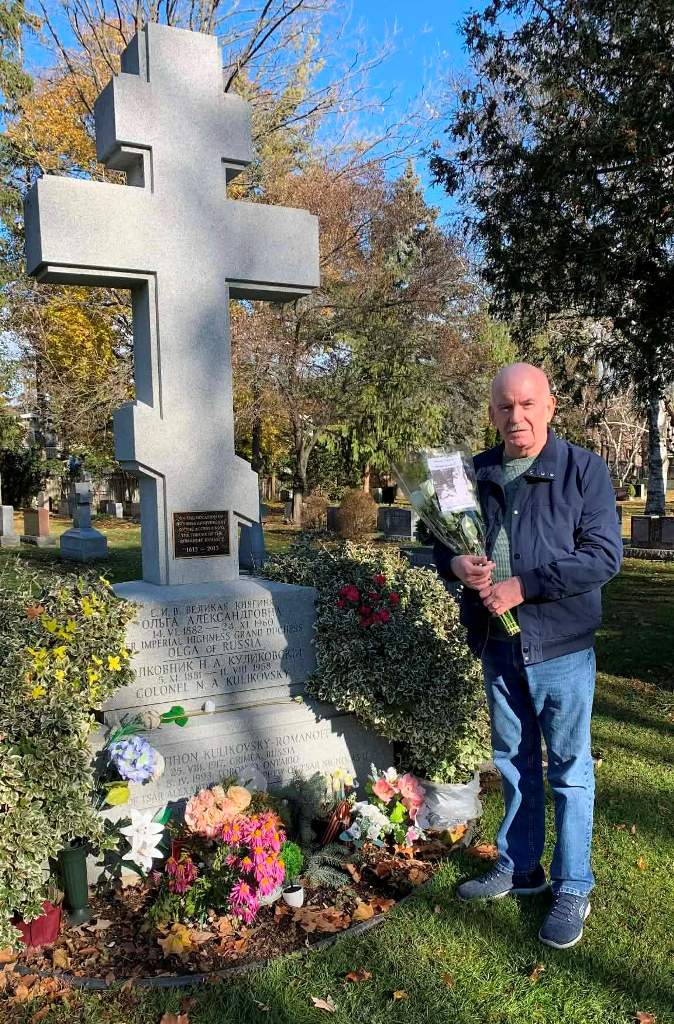
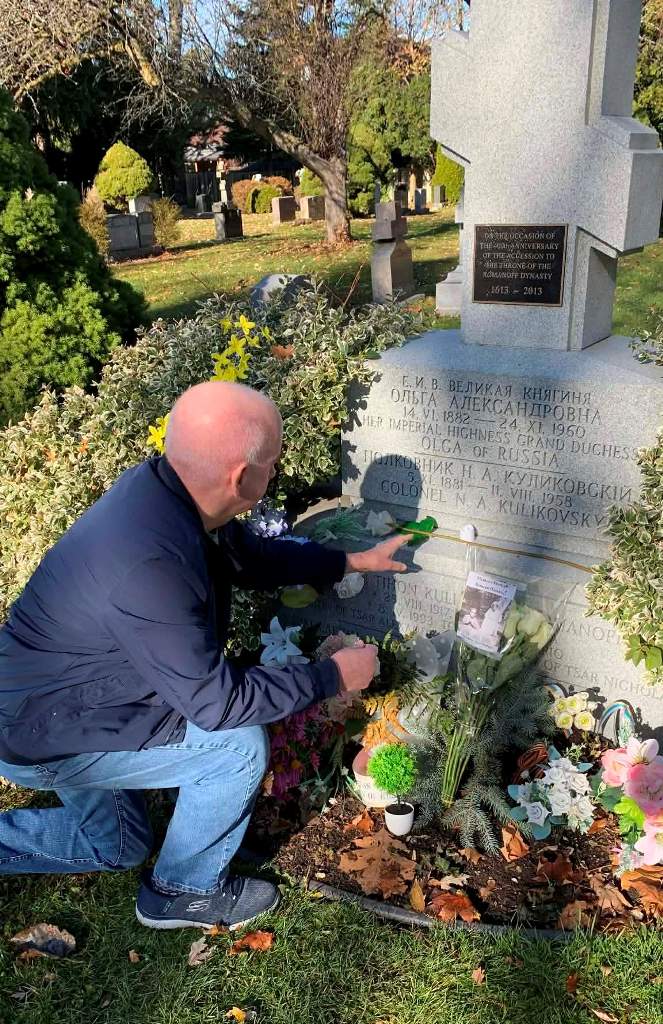
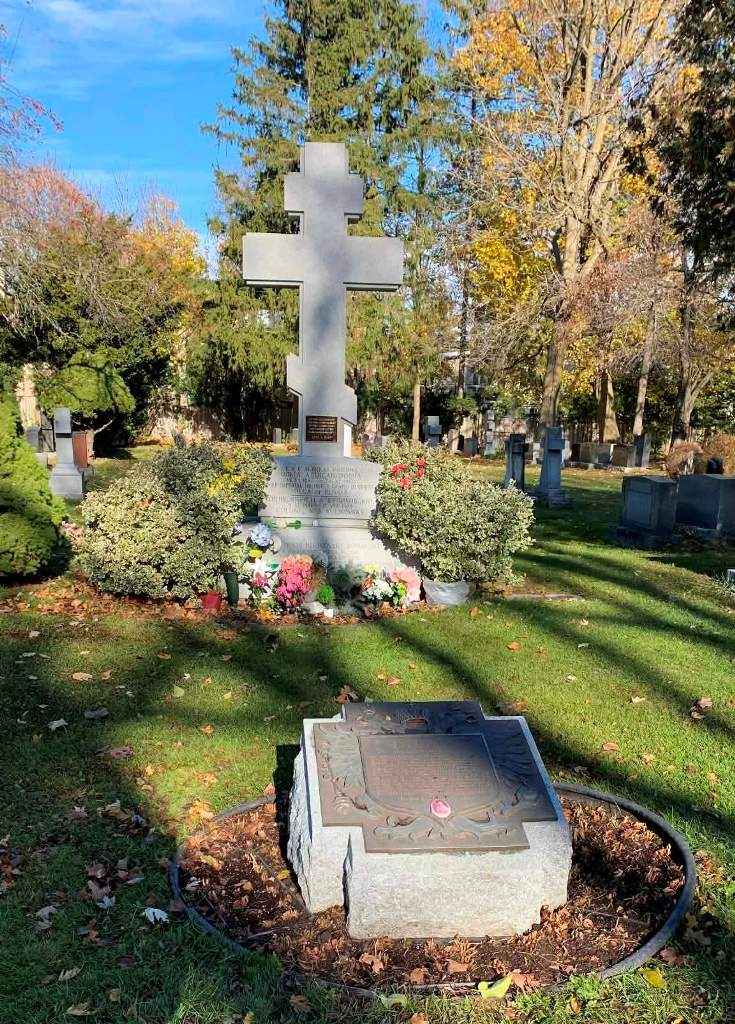
PHOTO: Paul Gilbert, author of this post and administrator of this blog, at the grave of Grand Duchess Olga Alexandrovna in York Cemetery, on 24th November 2025, the day marking the 65th anniversary of her death. Paul Gilbert © 2025

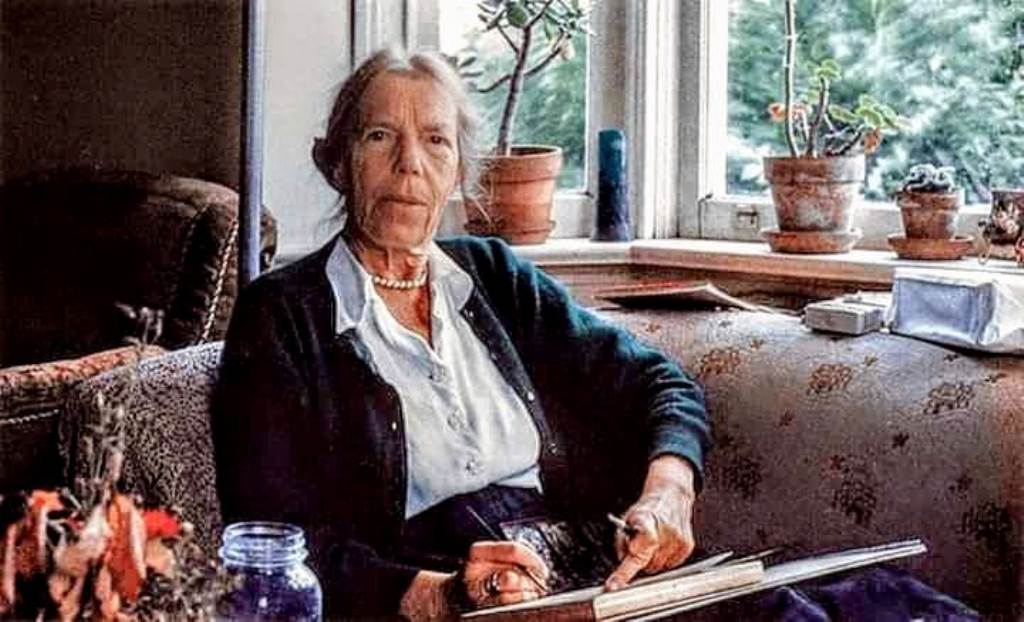
Today, 24th November 2025, marks the 65th anniversary of the death of Grand Dycgess Olga Alexandrovna, the youngest child of Emperor Alexander III and Empress Maria Feodorovna, and youngest sister of Emperor Nicholas II.

Today, I travelled into Toronto, where I visited York Cemetery located in the North York area of of the city. It was a beautiful morning, the sun was shining, a slight breeze, but overall, a perfect autumn day.

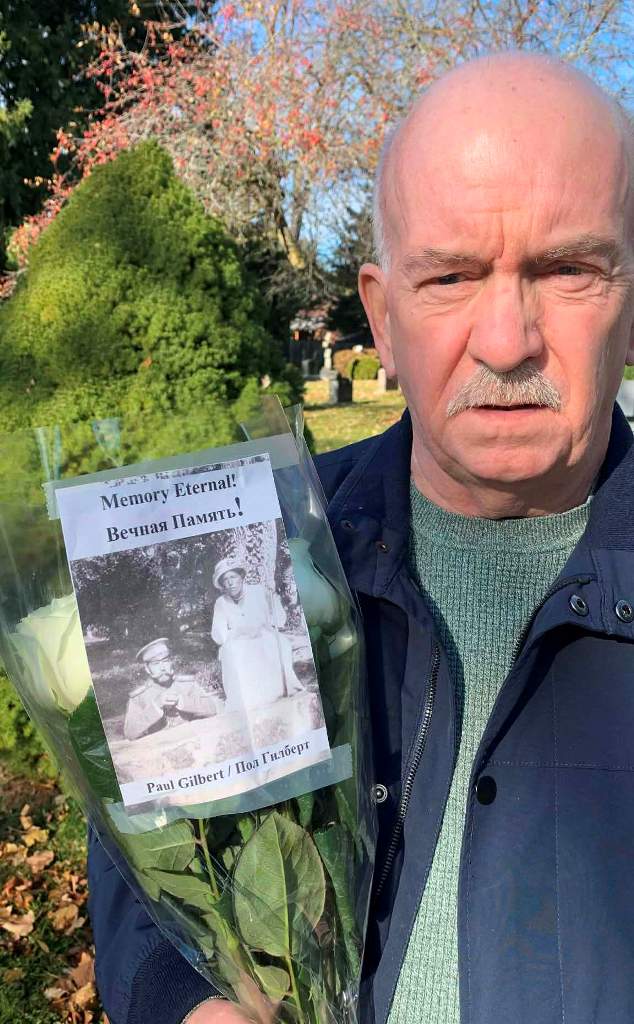
I laid a bouquet of a dozen white roses on the grave of Russia’s last grand duchess, and offered prayers. I was both surprised and somewhat saddened that no one else was at the grave, nor was there much in the way of fresh flowers left at her gravesite.

I attached a small photo (see below) the outside of the bouquet, depicting Olga in happier times, with her brother Emperor Nicholas II, taken in the lower Massandra Park, Crimea in the Autumn of 1913.

Paul Gilbert © 2025

Paul Gilbert © 2025

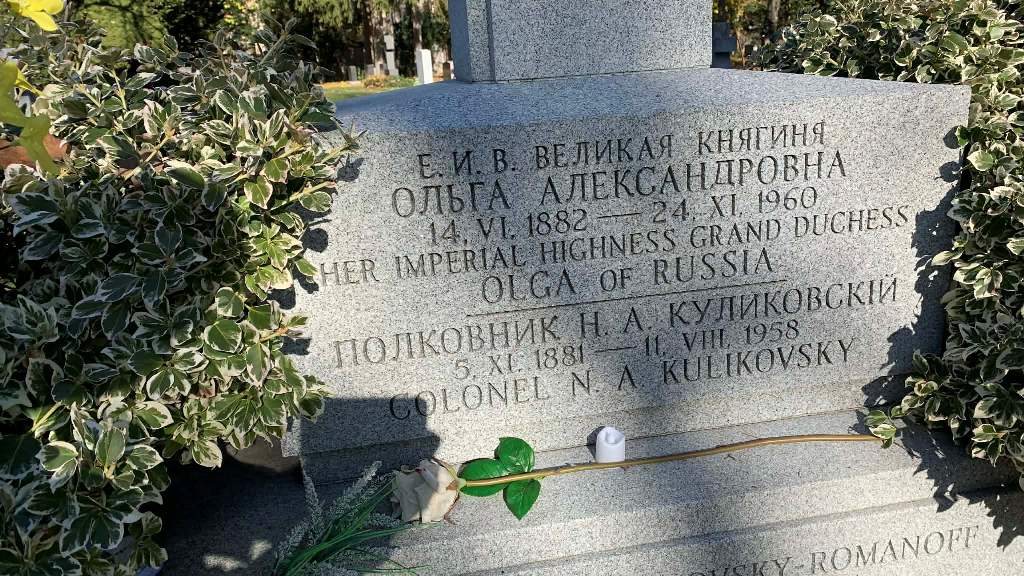
Grand Duchess Olga is interred in the Russian Orthodox section of the cemetery, Section 15. Her grave is marked by a large white marble cross with Cyrillic script and is a site of historical interest, with memorial services occasionally held there by Russian Orthodox clergy, attended by members of Toronto’s Russian Orthodox community and Russian diplomats

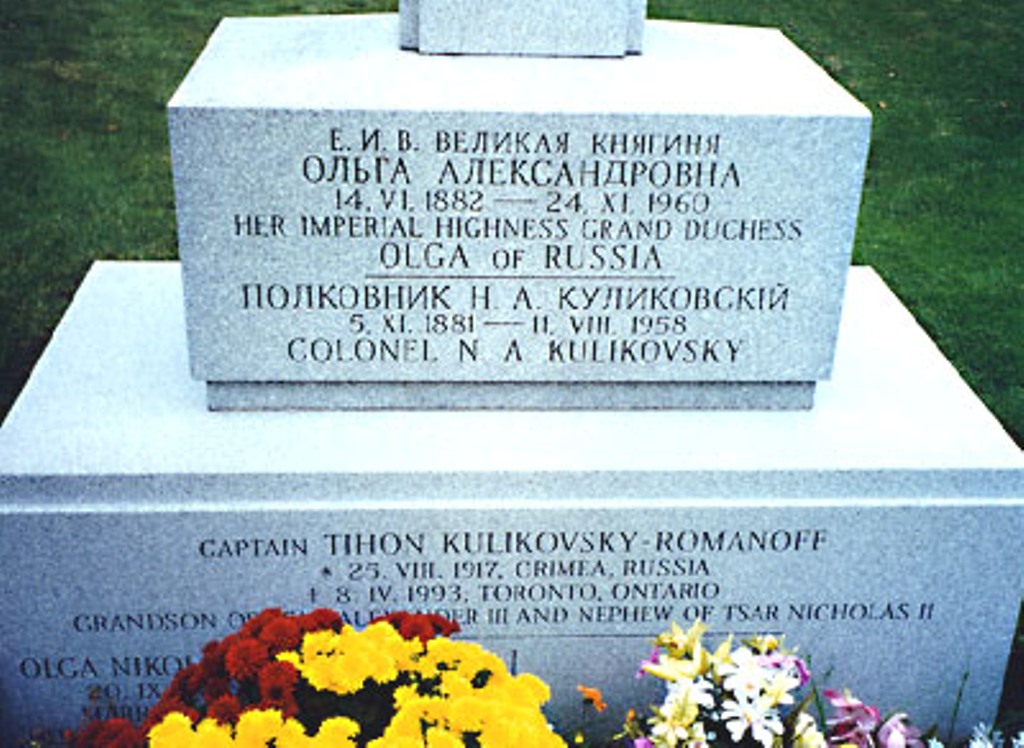
There are four persons buried in the grave: Grand Duchess Olga Alexandrovna, her husband Captain Nikolai Kulikovsky, their eldest son Tikhon Kulikovsky and his wife Olga Kulikovsky.

Paul Gilbert © 2025

I was 4 years old when Olga died. I was just a young child, so I had no idea of who she was, but ironically, the apartment in which she died on Gerard Street in Toronto, was just blocks away from where I grew up as a child at Gerard and Parliament Streets.

Little did I realize then, that the family and extended family of Russia’s last Tsar, would play such an important part in my life. For more than 35 years, I have dedicated my life to the study and writing of the Romanov’s, in particular, clearing the name of Russia’s much slandered Tsar. My many years of research have resulted in books, magazines, a conference, lectures and 29 journeys to Russia, visiting palaces, museums and archives associated with Nicholas II and his family.

All this combined, is my reason for laying flowers at Olga’s grave today. Memory eternal.

***

The death of Grand Duchess Olga Alexandrovna

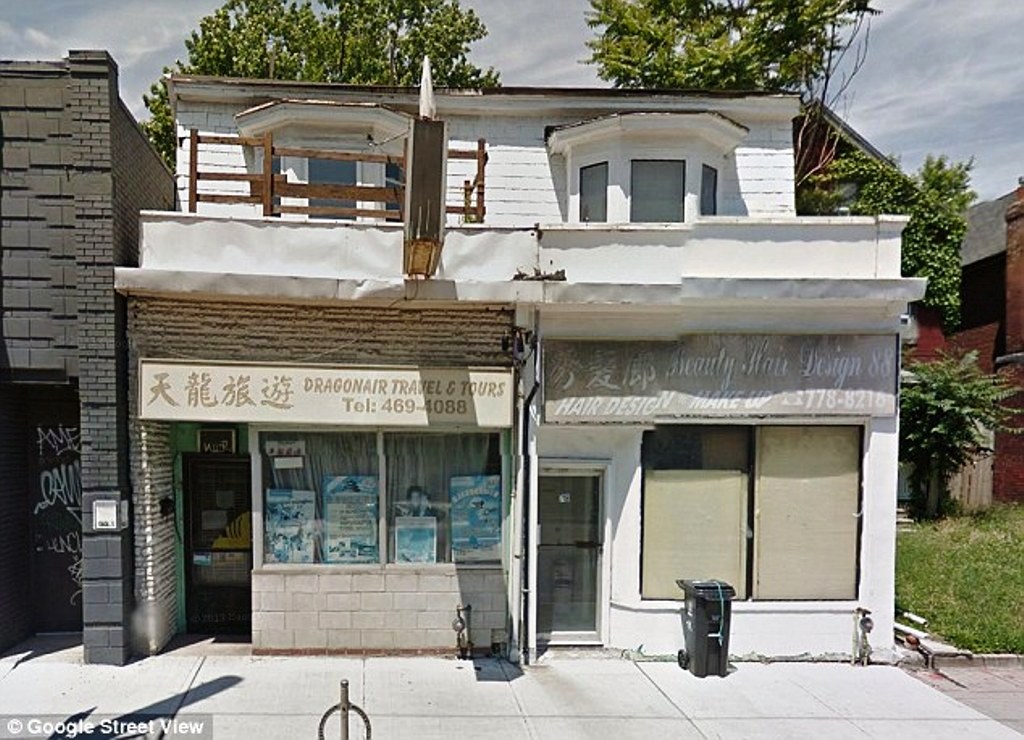
PHOTO: The house (left) at 716 Gerrard Street, where Grand Duchess Olga Alexandrovna died in Toronto, Canada on 24th November 1960. The property, which is now dilapidated and in need of repair, has served as a beauty salon, a travel agency and a religious building, as well as an “imperial” residence.
Following her husband Nikolai Kulikovskys’ death in 1958, Olga became increasingly infirm. In April 1960, she was hospitalized at Toronto General Hospital, located on University Avenue in downtown Toronto. It was here, that Olga was diagnosed with cancer.

Olga was not informed (or she was not aware) that her elder sister, Grand Duchess Xenia Alexandrovna [b. 1875], had died in London during that month [20th April 1960] at the age of 85.

Unable to care for herself, Olga went to stay with Russian émigré friends, Konstantin and Zinaida Martemianoff, in their second-floor apartment above a beauty salon at 716 Gerrard Street East, Toronto. The main reason that she chose Konstantin and his wife was that Konstantin had been a member of the Akhtyrsky Hussar Regiment, of which Olga served as the honorary Commander-in-Chief in Russia.

On 21st November, 1960, Olga slipped into a coma, and died on 24th November at the age of 78.

It is interesting to note, that although she lived simply, bought cheap clothes, and did her own shopping and gardening, her estate was valued at more than 200,000 Canadian dollars (about $1.5 million as of 2013) and was mostly held as stock and bonds.

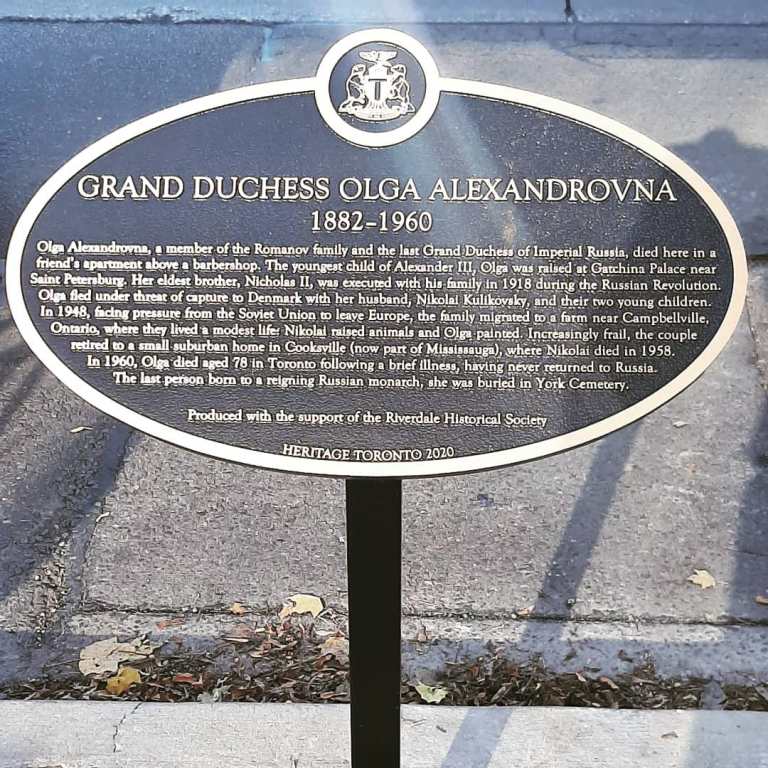
On 13th November 2020, a memorial plaque in honour of Grand Duchess Olga Alexandrovna, was unveiled outside 716 Gerrard Street, where she died in Toronto, Canada on 24th November 1960.

The plaque is a joint project of Heritage Toronto and the Riverdale Historical Society.

***

The funeral of Grand Duchess Olga Alexandrovna

VIDEO: VIDEO (click on image above to play – duration: 42 seconds)

On 30th November 1960 – the funeral for Grand Duchess Olga Alexandrovna was held in Toronto, Canada. Grand Duchess Olga’s body lay in state in Christ the Saviour Cathedral in Toronto. The Union Jack and Russian imperial standard hung from each corner of the platform where the coffin sat. Officers of the Akhtyrsky Hussars and the Blue Cuirassiers stood guard in the church.

The service was performed by the Mitred Archpriest John Diachina (1904-1976). Parishoners filled Christ the Saviour Cathedral to capacity – more than 500 mourners attended. In fact, the church could not contain all those who attended the services.

Wreaths were sent by King Frederik IX and Queen Ingrid of Denmark, King Olav V of Norway and Queen Elizabeth II of Great Britain; imperial guardsmen from the 12th Hussars Ahtyrsky Regiment were the pallbearers.

Olga was buried next to her husband Nikolai Alexandrovich Kulikovsky (1881-1958) , in the Russian Section of York Cemetery. The Grand Duchess’ friend, Bishop John of San Francisco, sprinkled Russian earth on her grave.

Grand Duchess Olga Alexandrovna was the soul and the heart of the Toronto parish, and her death in 1960 created a void within the Russian community, leaving none of the parishioners untouched, many regarding her passing as a personal tragedy.

Legacy

Born on 13th June [O.S. 1st June] 1882, Olga endured much loss during her life, outliving her entire family, including her beloved father Emperor Alexander III (1894); her brother George (1899); her brother Michael (1918); her brother Emperor Nicholas II and his entire family (1918); her mother Dowager Empress Maria Feodorovna (1928); her sister Xenia (April 1960); and was forced to flee Russia with her husband and two sons in 1919. She lived in Denmark until 1948, when she emigrated to Canada.

In addition, following the 1917 Revolution, Olga and her family were forced to flee the Bolsheviks, and then in 1948, feeling threatened by Stalin, she and her family were forced to flee Denmark for Canada.

Of course, the main characteristic of Olga Alexandrovna was her attitude towards the people around her. Her non-exclusive kindness towards everyone, her openness and her welcoming heart left a deep imprint in the memory of those who knew her.

To this day, Grand Duchess Olga Alexandrovna remains one of the most beloved members of the Russian Imperial family. Her memoirs ‘The Last Grand Duchess’ were written by Ian Vorres in 1964.

PHOTO: Grand Duchess Olga Alexandrovna’s grave in York Cemetery, North York.
Paul Gilbert © 2025

Memory Eternal! Вечная Память! ☦️

***

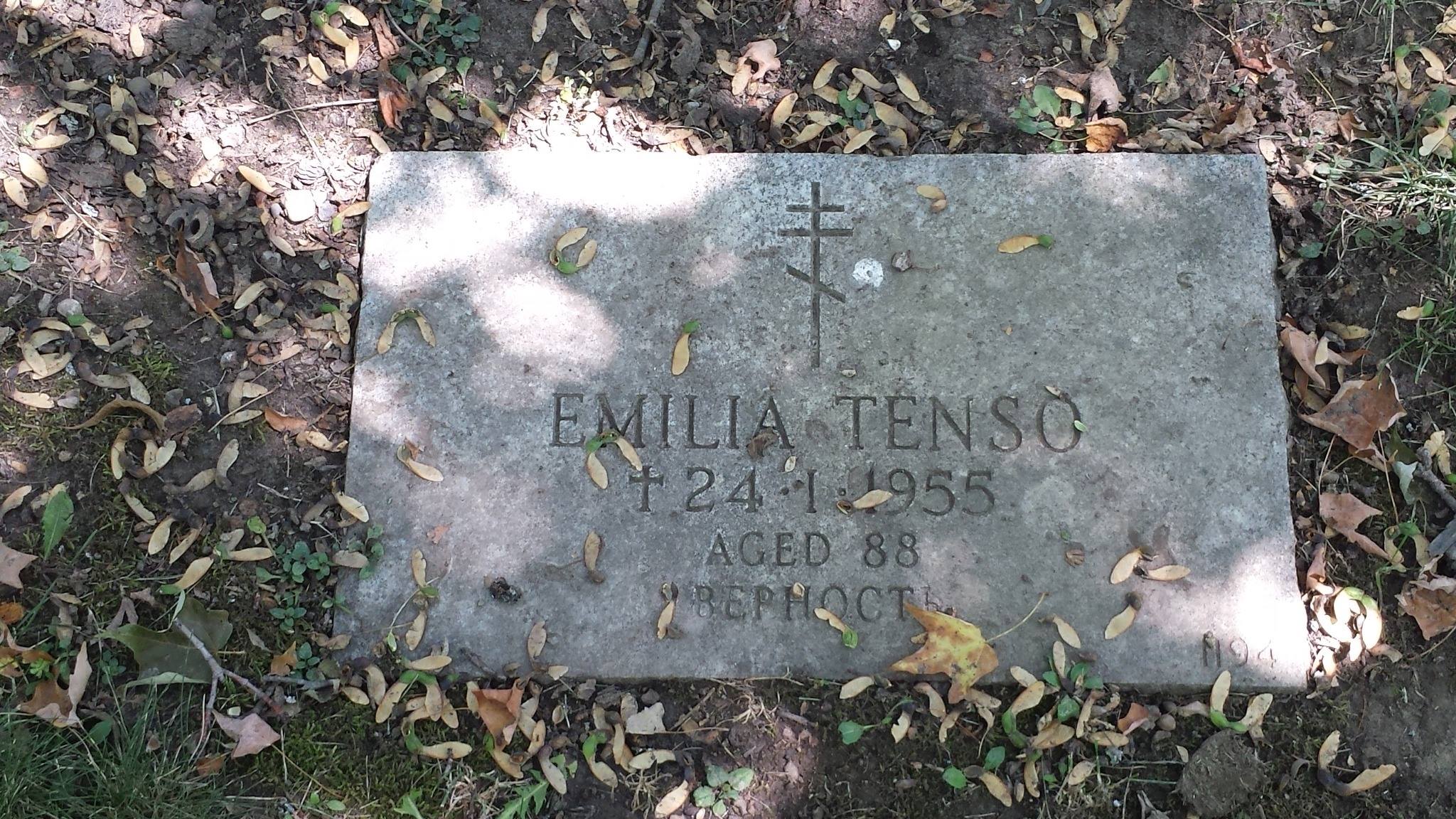
Grand Duchess Olga’s devoted companion and former maid Emilia Tenso (“Mimka”) is buried near the grand duchess’s grave in York Cemetery, Toronto.

Ian Vorres notes in his book ‘The Last Grand Duchess’ that she died in 1954, however, the date on her gravestone shows 24th January 1955.

FURTHER READING:

Olga: Nicholas II’s younger sister + PHOTOS

Russia’s Ambassador to Canada attends memorial service for Grand Duchess Olga Alexandrovna + PHOTOS

Queen Elizabeth II receives Grand Duchess Olga Alexandrovna in 1959 + PHOTOS

© Paul Gilbert. 24 November 2025

Buy / Sell paintings by Grand Duchess Olga Alexandrovna

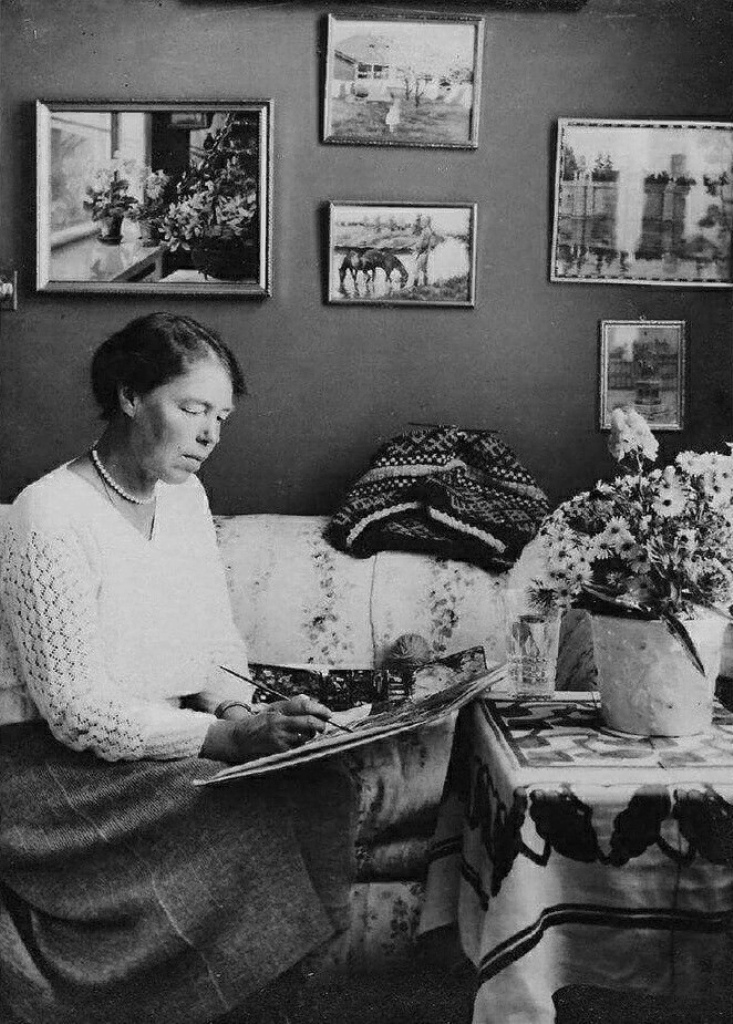
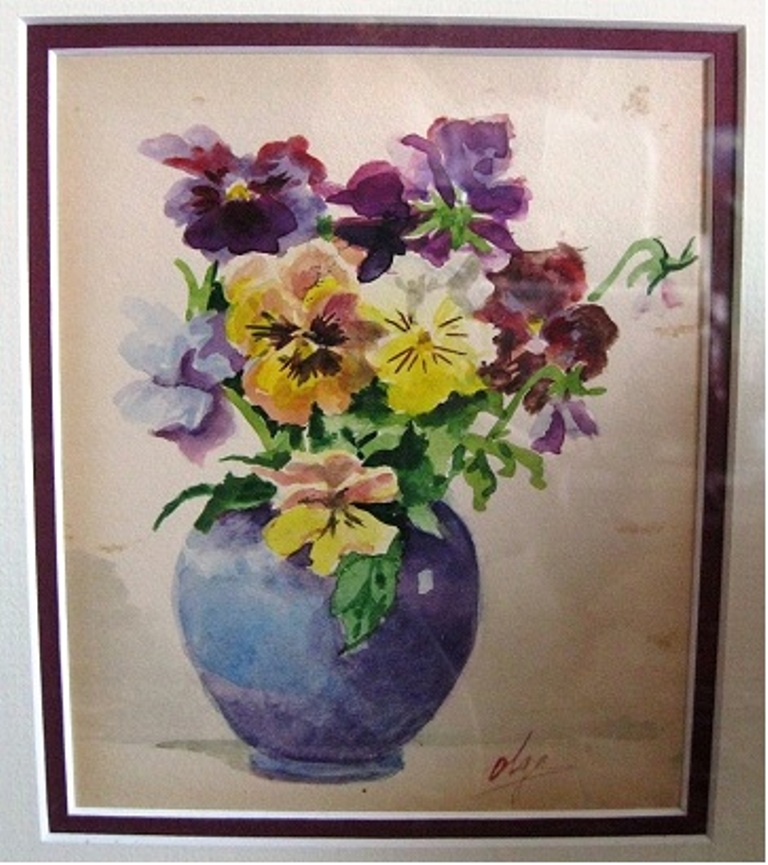
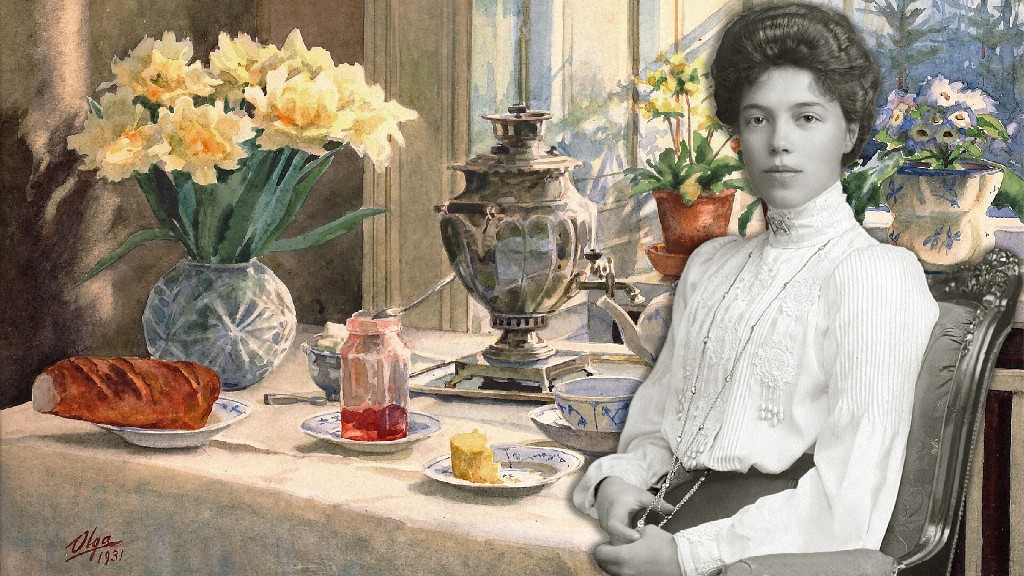
Grand Duchess Olga Alexandrovna (1882-1960) is famous for her lovely still life and landscapes in water-colours. During her lifetime, she produced over 2,000 paintings. The sale of these paintings provided a source of income for her and her family during their years in exile, in Denmark and later Canada.

Her works are now in the private collections of HM Queen Elizabeth II, HRH the Duke of Edinburgh, HM King Harald of Norway, the Ballerup Museum, Denmark, as well as private collections in the United States, Canada, and Europe. Today, her paintings are highly sought after by private collectors, each one fetching a handsome sum at auction – averaging any where from $3,000 to $5,000 USD and more.

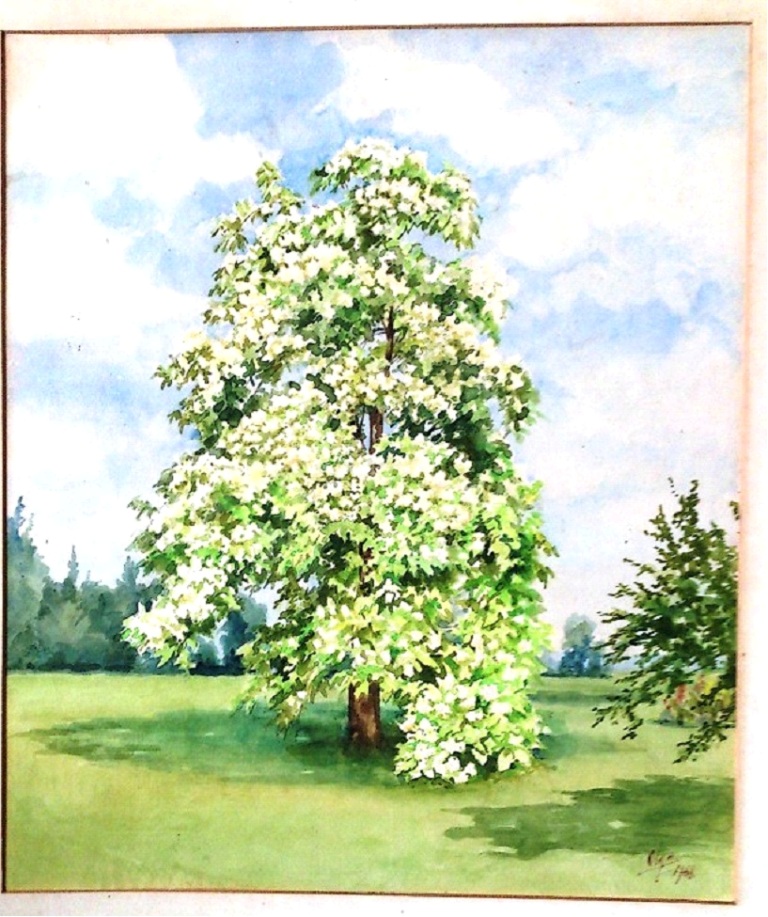
PHOTOS: These are just two examples of Grand Duchess Olga’s
paintings, which I have found buyers in recent years

Over the years, I have been approached on numerous occasions by people, who owned one of Olga’s paintings – each one with an interesting provenance – that they were interested in selling. I was able to find these sellers a buyer, through the thousands of people who have followed and supported my research all these many years.

I currently have buyers who are actively seeking Grand Duchess Olga’s paintings. All sales are private, all seller/buyer information is confidential + there are no outrageous commissions paid out to dealers – some of whom charge 20 to 35% or more!

Please note that if you have a painting to sell, I do charge a finders fee, paid by the seller. Payment for the painting is processed between the buyer and seller. The seller is responsible for packing and shipping the painting on each painting. The buyer is responsible for shipping charges, insurance, as well as any taxes, customs duties, and tariffs.

If you own a painting by Grand Duchess Olga, and are seeking a buyer, please contact me at the following e-mail address with details and photos of the painting:

PAUL GILBERT – royalrussia@yahoo.com

© Paul Gilbert. 2 November 2025

Memorial service for Grand Duchess Olga Alexandrovna held in Toronto

Photo © Embassy of the Russian Federation, Ottawa, Canada

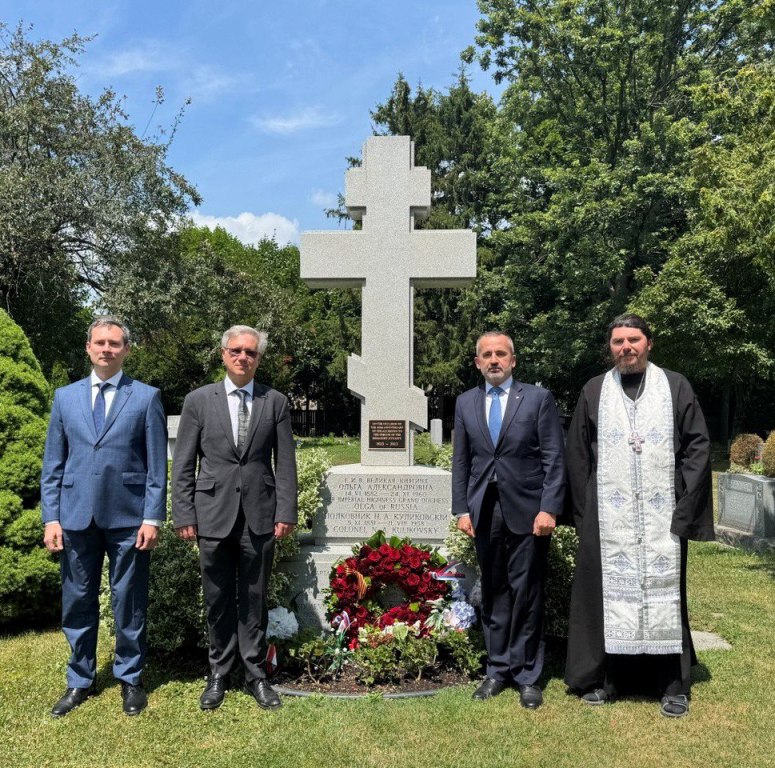
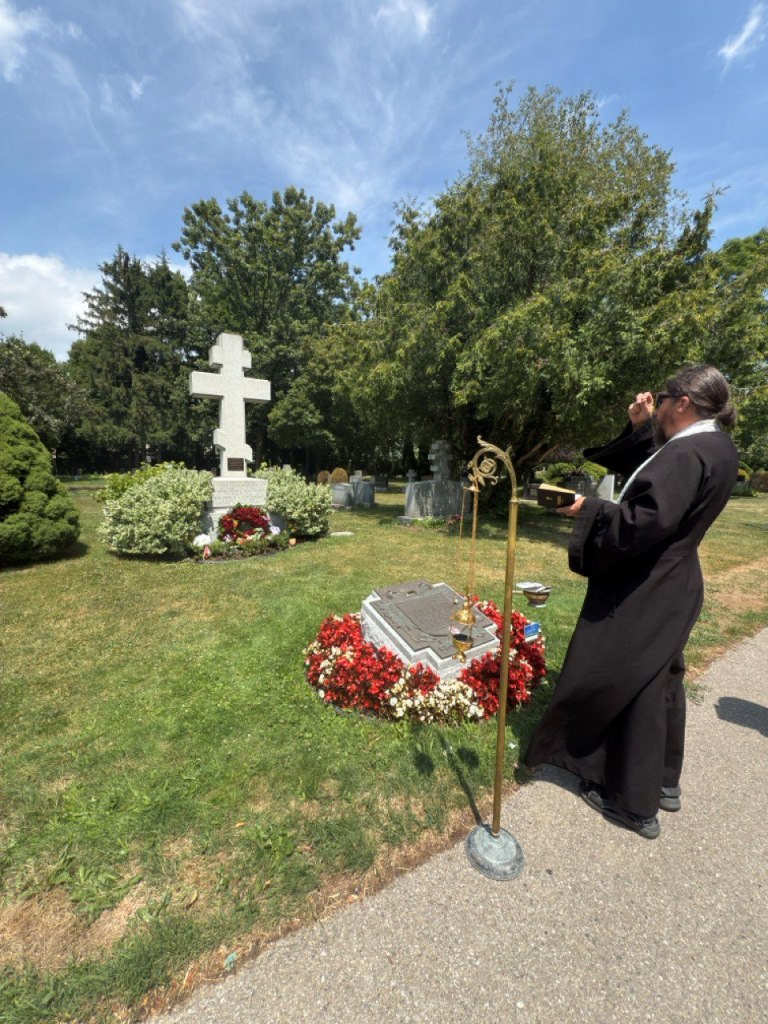
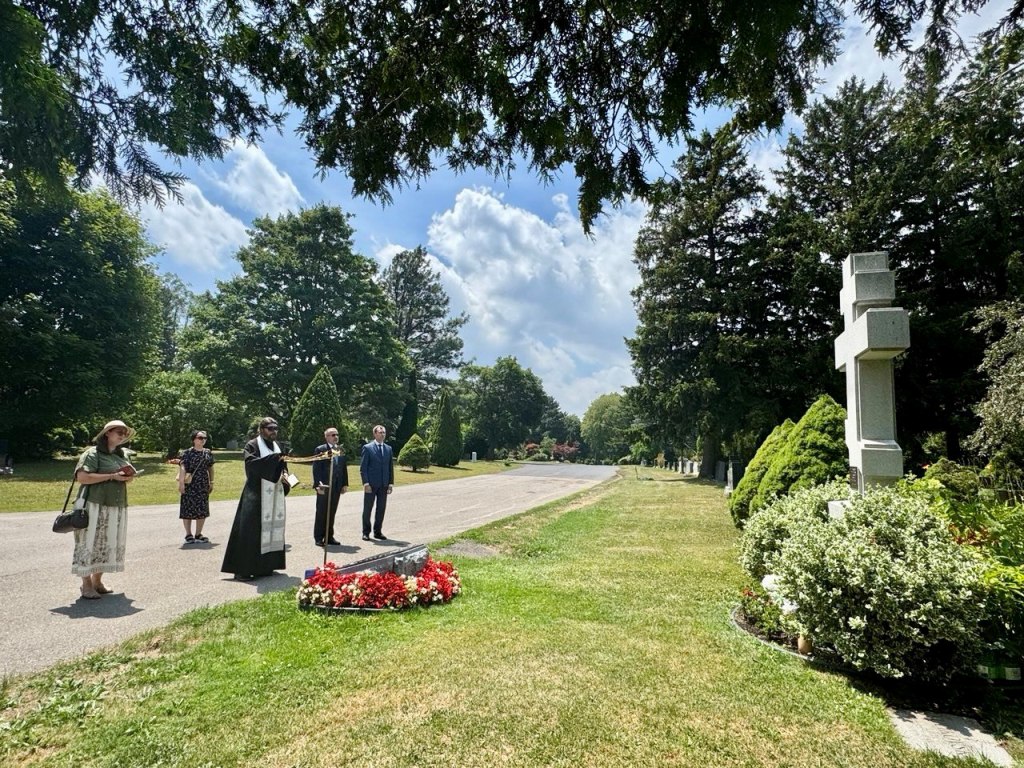
On 24th July 2025, a pannikhida was conducted at York Cemetery in Toronto for Grand Duchess Olga Alexandrovna, with the participation of Russian Ambassador to Canada Oleg Stepanov. The pannikhida took place on on the feast day of the Holy Equal-to-the-Apostles Princess Olga.

The liturgical solemn service for the repose of the departed was performed by the rector of the Church of the Smolensk Icon of the Mother of God, Father Maxim (Abroskin). The church is located in Jackson Point, Ontario, which is 86 km north of Toronto.

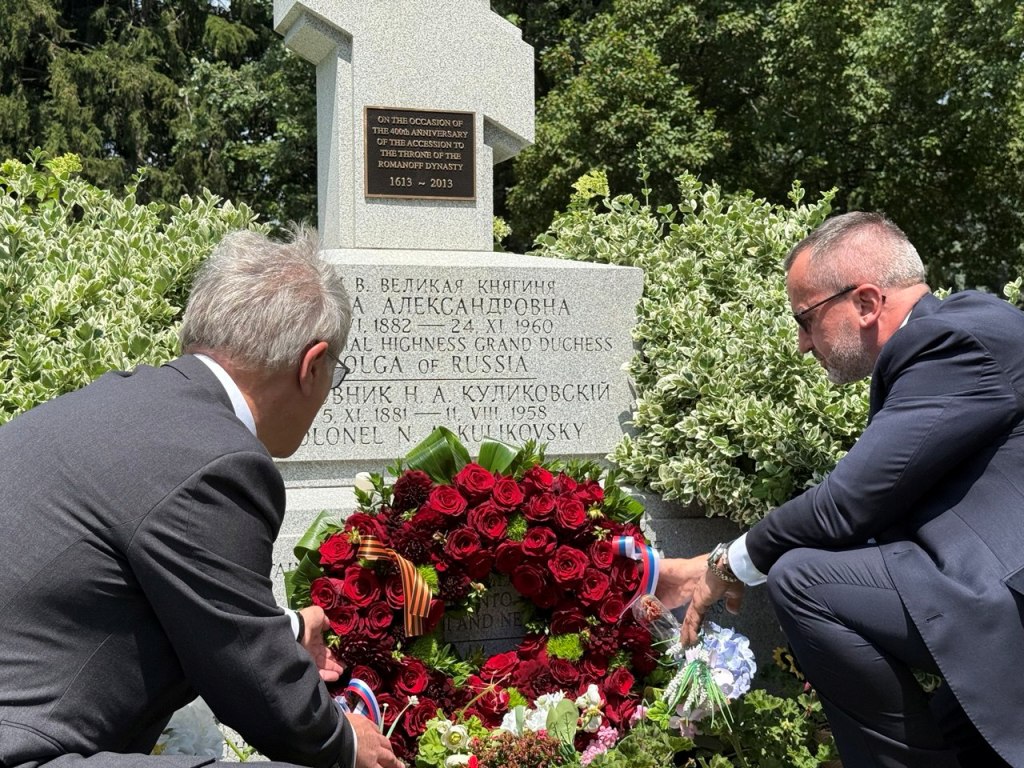
The memorial service was also attended by the Consul General of Russia in Toronto, Vladlen Epifanov, and other employees of the Russian diplomatic mission in Canada. Flowers were laid at the grave of Grand Duchess Olga Alexandrovna (1882-1960), the younger sister of Emperor Nicholas II, who is buried in York Cemetery.

Photo © Embassy of the Russian Federation, Ottawa, Canada

Photo © Embassy of the Russian Federation, Ottawa, Canada

Photo © Embassy of the Russian Federation, Ottawa, Canada

“On the name day of Olga Alexandrovna, we pay tribute to the memory and respect of the daughter of Emperor Alexander III, who is very much revered in our country,” Stepanov said during an interview. “Despite her forced emigration and life in a foreign land, Olga Alexandrovna loved her homeland, and she remained Russian until her last day. Today and always, our common duty is to preserve the connection of times, to maintain the unity of the Russian world and Orthodoxy,” the ambassador stressed.

The younger sister of Nicholas II was one of the last members of the Imperial Family to leave Russia. In 1920, she and her family fled from Crimea first to Yugoslavia, and then moved to Denmark to live with her mother, the Dowager Empress Maria Feodorovna. In 1948, Olga and her family emigrated to Canada, where she lived out the last 12 years of her life. She died in Toronto on 24th November 1960.

Memory Eternal! Вечная Память!

© Paul Gilbert. 25 July 2025

Virtual exhibition of watercolours by Grand Duchess Olga Alexandrovna

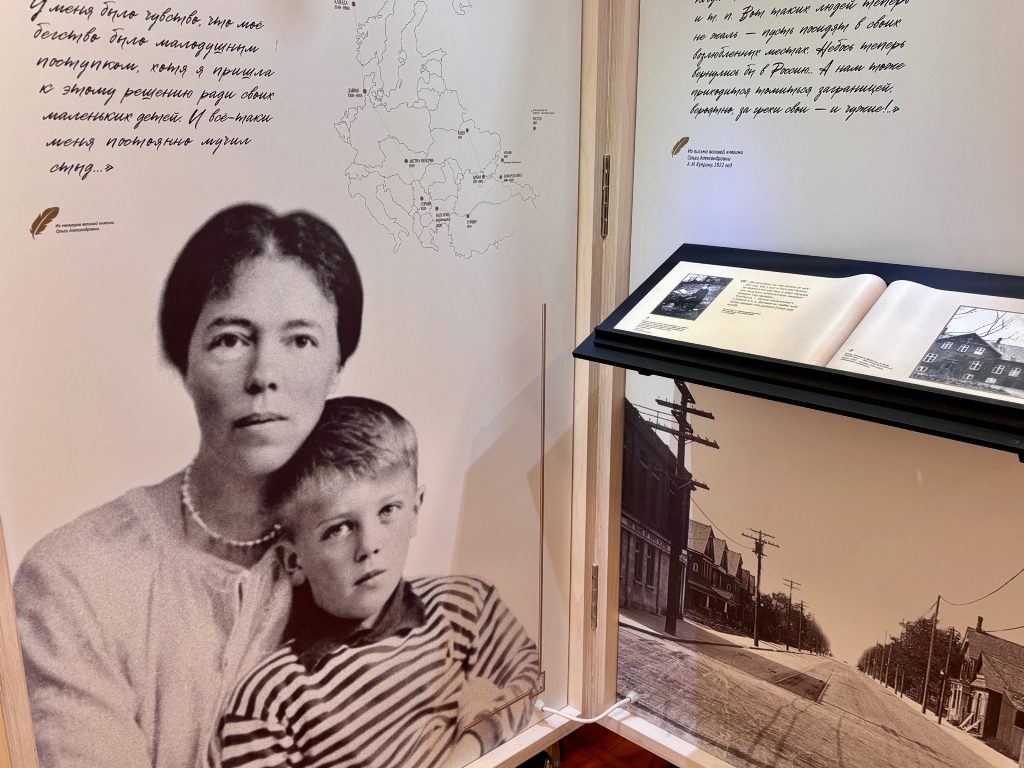
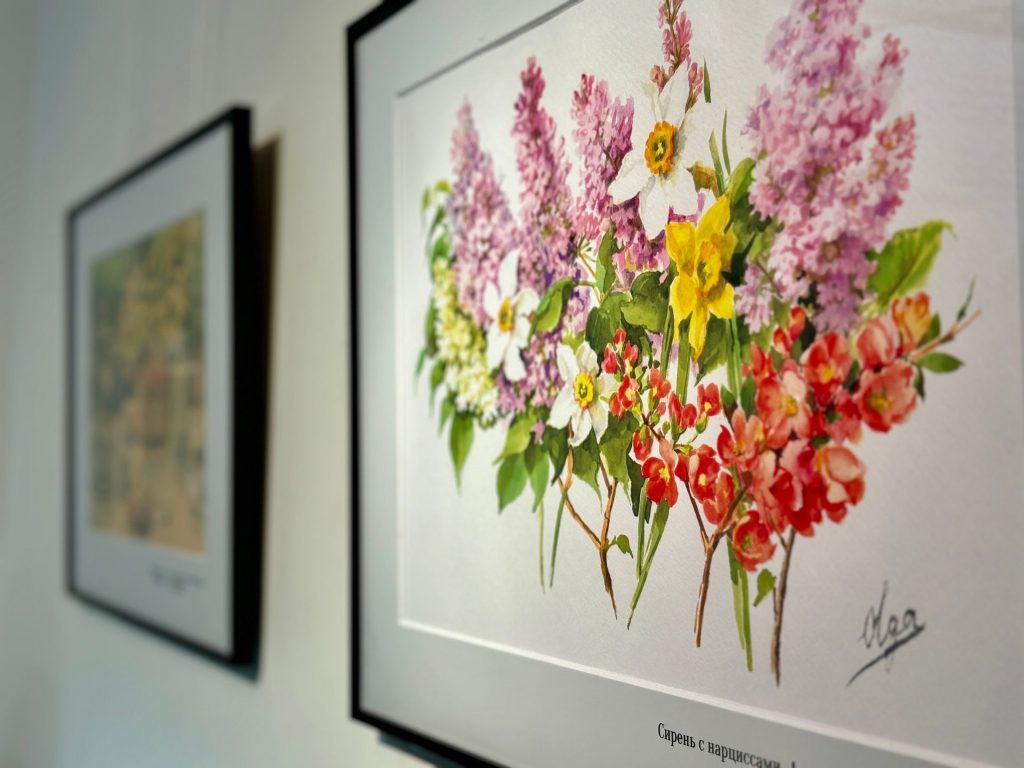
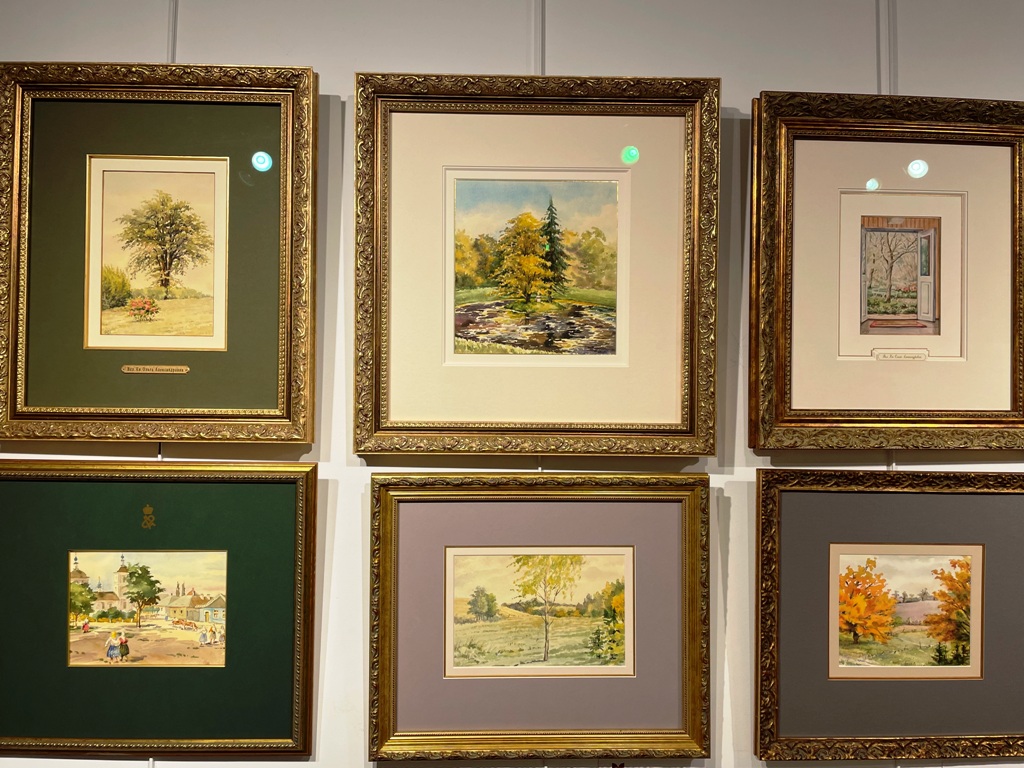
Last autumn, a one-day exhibition of watercolours by Grand Duchess Olga Alexandrovna (1882-1960) and personal items that belonged to the family of Emperor Alexander III, was held at the Beloselsky-Belozersky Palace[1] in St. Petersburg. A virtual tour of the exhibition is now available – see link below.

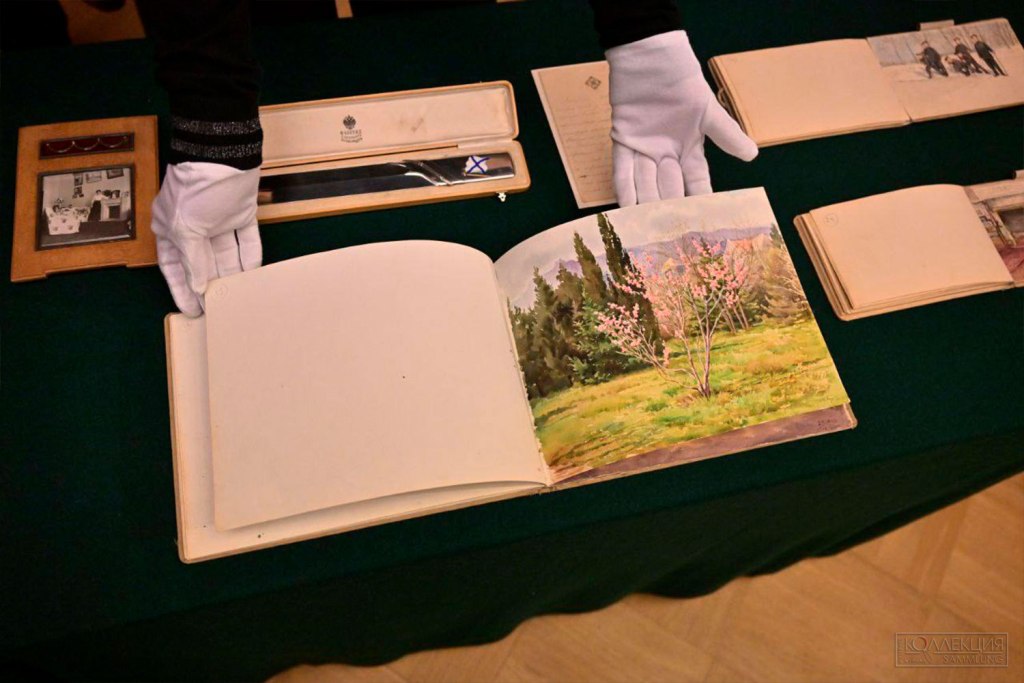
The exhibition includes 45 works of art and 16 memorial items from the collection, which was donated to the State Russian Museum by the St. Catherine’s Foundation with the assistance of the ESPO Foundation in 2023.

The exhibition is a joint project of the Ministry of Culture of the Russian Federation, the State Russian Museum, and the Elisabeth-Sergius Educational Society Foundation (ESPO).

In April 2023, the Russian Museum received 180 watercolours painted by the Grand Duchess in different years, and 44 memorial items from the family of Emperor Alexander III, which included Fabergé and other interesting items. The collection was formerly in the possession of Olga Nikolaevna Kulikovsky-Romanov (1926-2020), the third wife of Grand Duchess Olga’s eldest son, Tikhon Nicholaevich Kulikovsky (1917-1993)

All the children of the imperial family knew how to draw, but among the children of Emperor Alexander III and Empress Maria Feodorovna, their youngest daughter Olga stood out. From a very early age, Olga proved herself as an artist. The Grand Duchess recalled: “Even during geography and arithmetic lessons, I was allowed to sit with a pencil in my hand, because I listened better when I drew corn or wild flowers.”

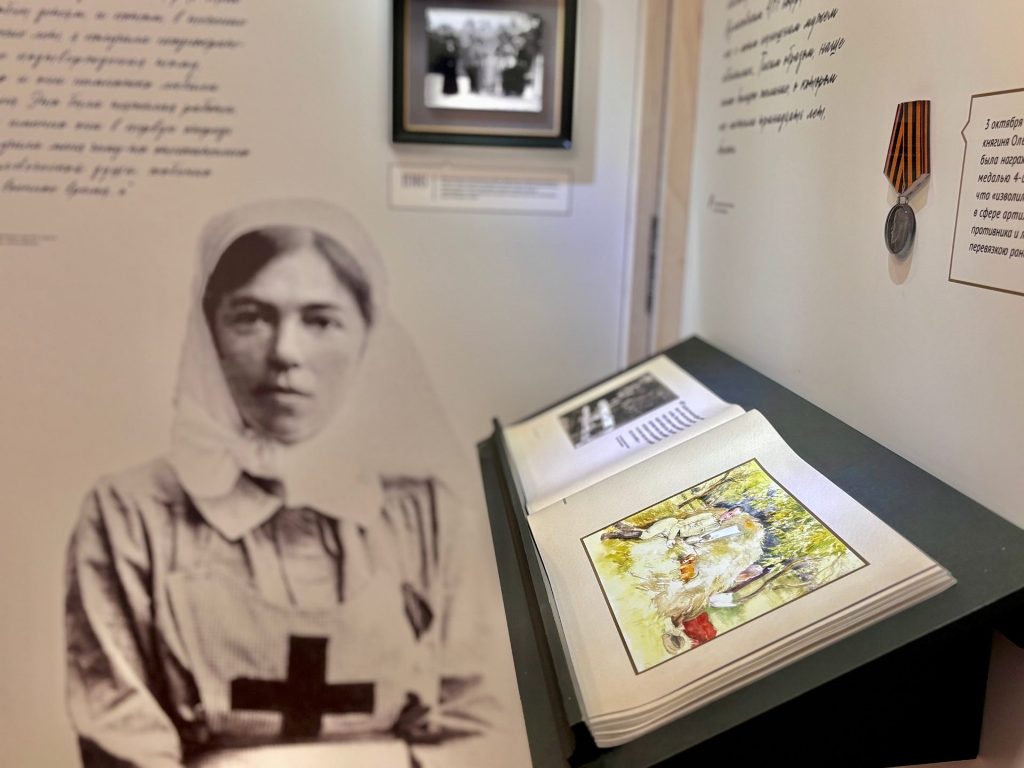
Grand Duchess Olga Alexandrovna was the patroness of many charitable societies and artistic associations of the Russian Empire, the chief of the 12th Hussar Akhtyrka Regiment. During the First World War she worked as a nurse, equipping a hospital in Kiev at her own expense.

The 3D tour is complemented by audio accompaniment dedicated to the life and work of the Grand Duchess, who during her lifetime painted more than 2,000 watercolours.

CLICK HERE TO VIEW THE VIRTUAL EXHIBITION

NOTES:

[1] Before the 1917 Revolution the palace was named the Sergei Palace, a Neo-Baroque palace at the intersection of the Fontanka River and Nevsky Prospekt in the capital. The palace served as the residence of Grand Duke Sergei Alexandrovich and Grand Duchess Elizabeth Feodorovna. Following Sergei’s assassination in February 1905, the palace then became the property of his widow who became a nun in 1909. She went to live at the Marfo-Mariinsky Convent in Moscow and willed the palace to her ward Grand Duke Dmitri Pavlovich.

© Paul Gilbert. 31 January 2025

Grand Duchess Olga Alexandrovna exhibition opens in Ryazan

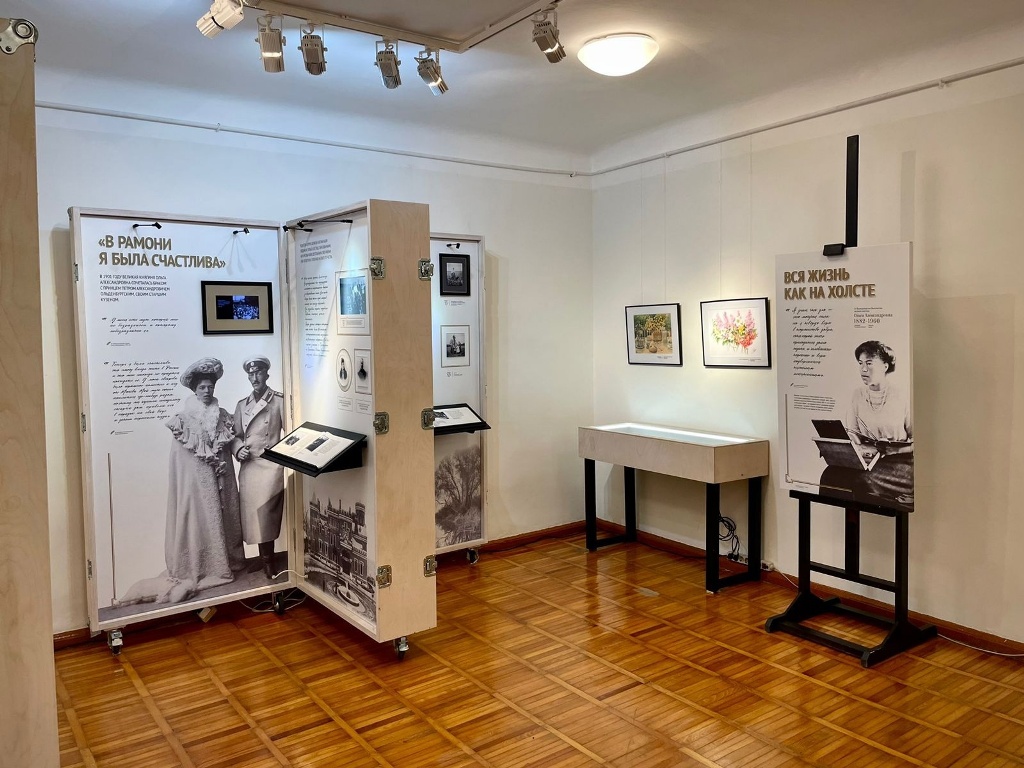
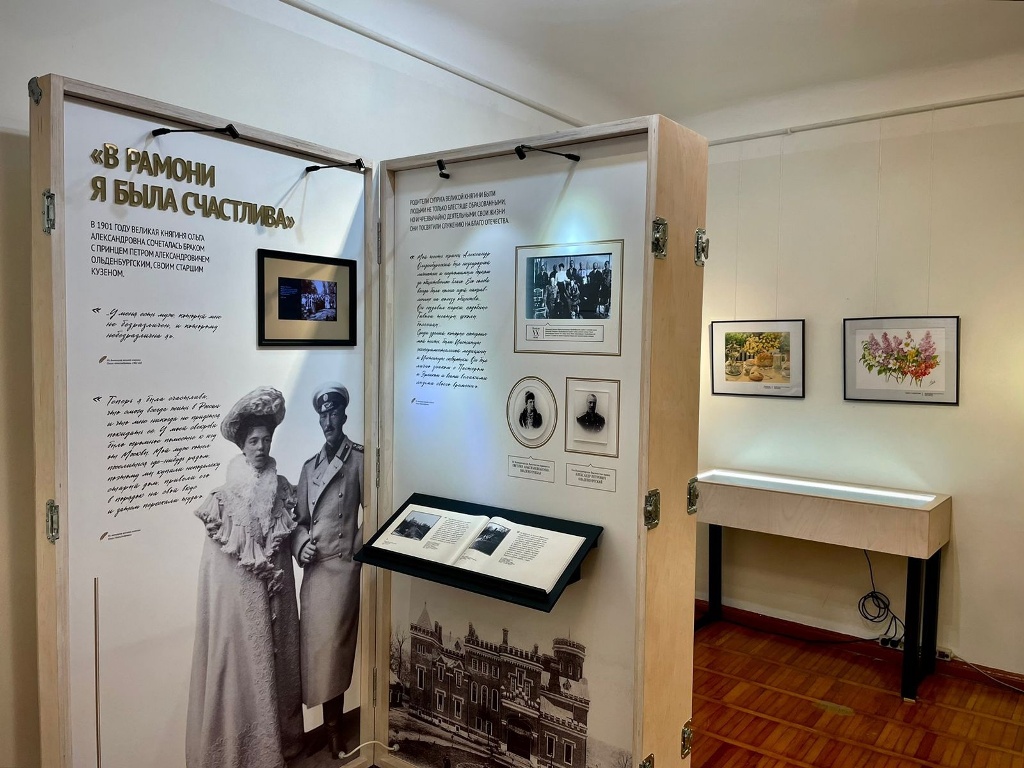
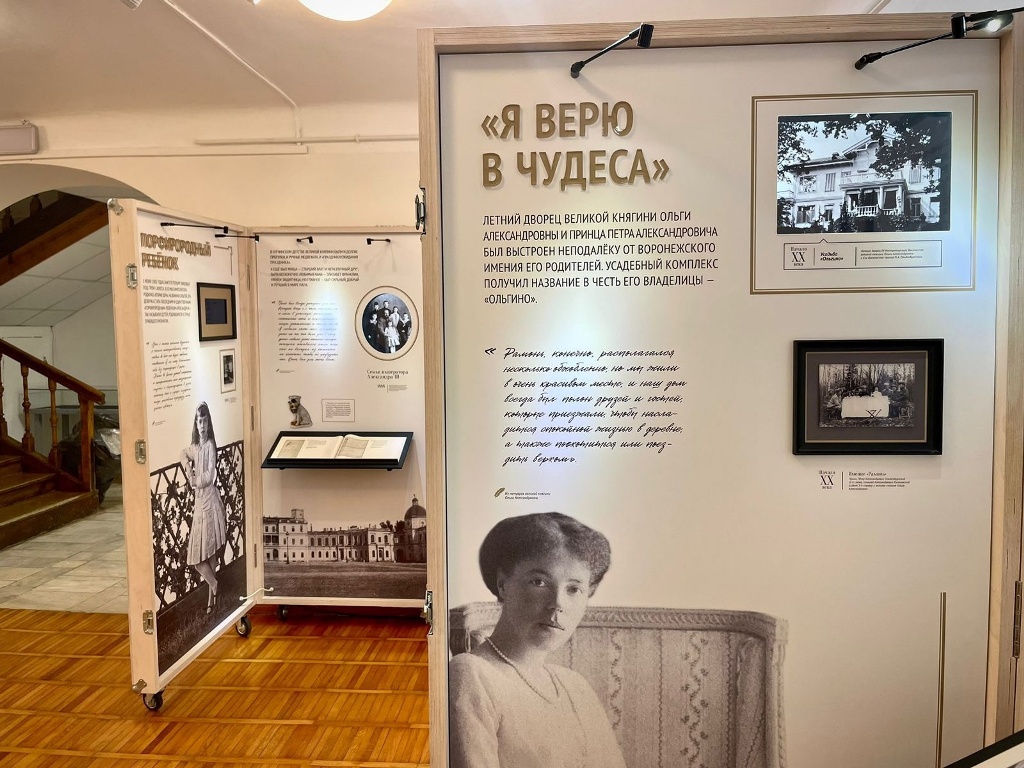
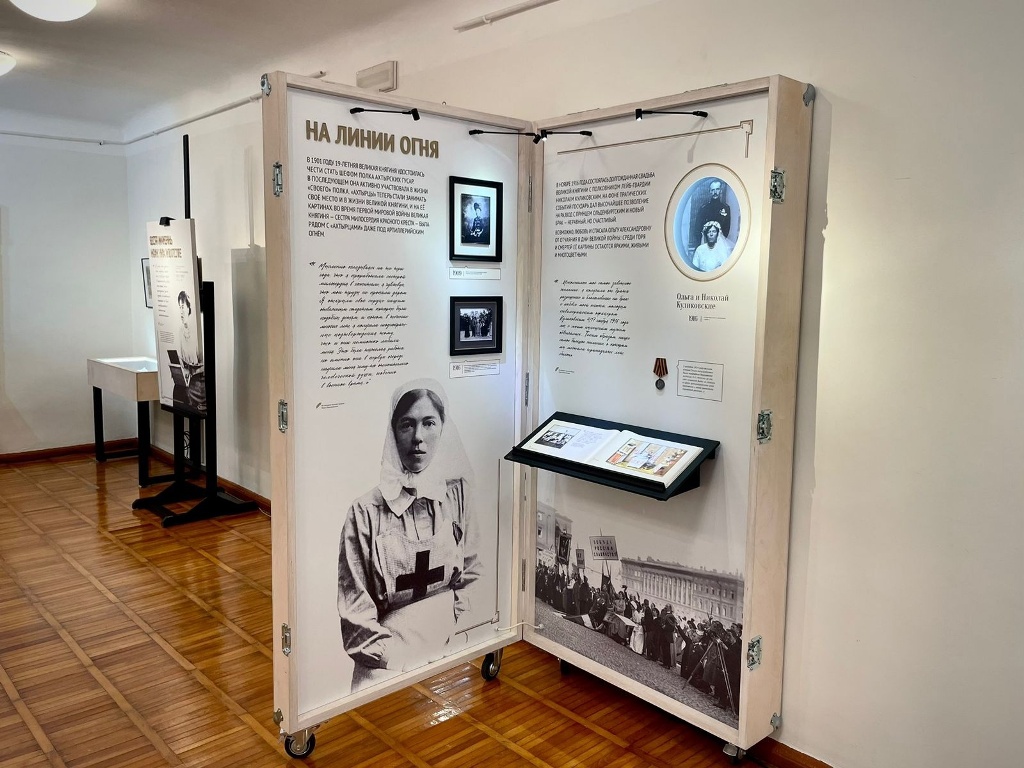
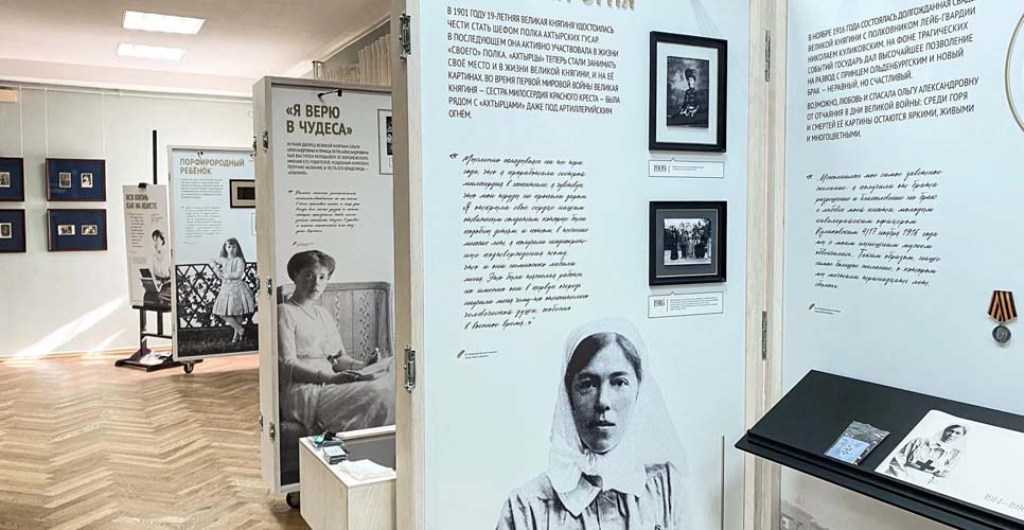
On 24th October 2024, a travelling exhibition dedicated to Grand Duchess Olga Alexandrovna, opened at the Pozhalostin Art Museum in Ryazan[1]. The exhibition is timed to the 140th anniversary of the birth of the last grand duchess of Russia, who was born on 13th June (O.S. 1st June) 1882, in the Cottage Palace, situated in the Alexandria Park at Peterhof.

The youngest daughter of Emperor Alexander III and Empress Maria Feodorovna, Grand Duchess Olga Alexandrovna was a philanthropist of numerous schools and hospitals, during the First World War she went to the front as a nurse. In addition, she was a gifted artist. Throughout her life, she painted more than 2000 watercolours.

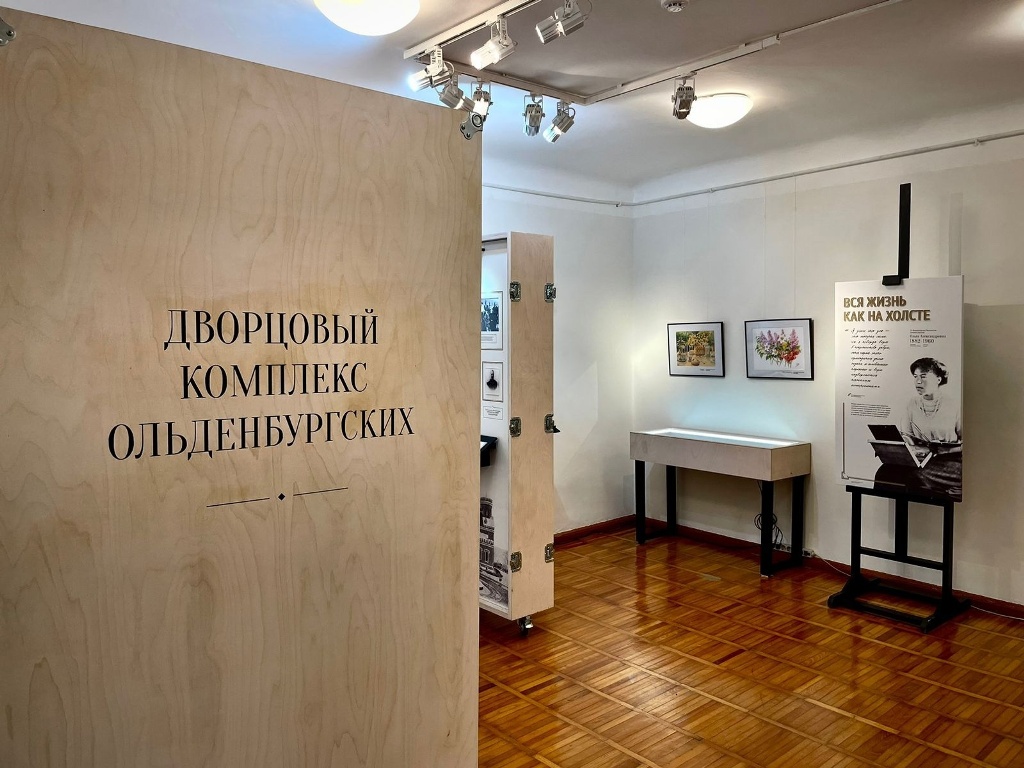
Some of the grand duchess’s watercolours are on display at the exhibition, painted in different years of her life. These are complemented by photographs, letters, diary entries and memoirs from the family’s personal archive. Among her letters on display, are those written to her brothers: Grand Duke Mikhail Alexandrovich and Emperor Nicholas II. The exhibits are from the funds of the Historical and Cultural Center of the Oldenburg Palace Complex, located in the village of Ramon[1], Voronezh Region.

The traveling exhibition has already visited the cities that were dear to the heart of the grand duchess. Among them are Gatchina (where Olga spent her childhood), Borovichi (a place close to the estate of her first husband Peter Alexandrovich[2]), Livadia in the Crimea (where Olga lived with her mother after the February 1917 Revolution), as well as the Mirsky Castle in Belarus (the Imperial Family was in close contact with the family of princes Svyatopolk-Mirsky).

The exhibition runs at the Pozhalostin Art Museum in Ryazan until 1st December 2024.

NOTES:

[1] Grand Duchess Olga Alexandrovna has a close connection with Ryazan and Ramon. It was here, near the Oldenburg Estate, “Ramon” (in the Voronezh region), that she had her own villa, called “Olgino” after the local town. She subsidised the village school out of her own pocket, and established a hospital. Sadly, the villa has not survived to the present day.

[2] On 27th July 1901, Grand Duchess Olga Alexandrovna (1882-1960) married her first husband Duke Peter Alexandrovich of Oldenburg (1868-1924), in the family church in Gatchina Palace. In 1915, the couple separated; Olga had no children from this marriage. On 27th August 1916, Emperor Nicholas II approved the definition of the Holy Synod, which recognized her marriage to Prince of Oldenburg dissolved.

© Paul Gilbert. 28 October 2024

Watercolours by Grand Duchess Olga Alexandrovna sell for 60 million rubles

On 14th April 2024, a collection of 43 watercolors, painted by Grand Duchess Olga Alexandrovna, sold at a Moscow auction for 60 million rubles [$640.000 USD] – which is double their estimated value.

For the first time, a collection on this scale of the grand duchess’s works went under the hammer at the Moscow Auction House. The total value of the collection was estimated at 30 million rubles [$325,000 USD]. The authenticity of each work was confirmed by art historians and experts of the Tretyakov National Research Institute in Moscow.

It was hoped that the entire collection would be purchased by one of Russia’s wealthy oligarchs or a corporation and donated to a museum, however, most of the watercolours were snapped up by private collectors.

During the auction, several records were set for Olga Alexandrovna’s works. One of her watercolor’s “From the Service” of the 1920s and 1930s” sold for 7 million rubles [$74,500 USD], while a second watercolour “Landscape of a Provincial Town” sold for 3.1 million rubles [$33,000 USD].

Prices such as this will most certainly increase demand for Olga’s paintings, as well as increase their price, when they are offered to the art market, both in Russia and the West.

Grand Duchess Olga Alexandrovna (1882-1960) painted more than 2,000 watercolours during her lifetime. She was 78-years-old, when she died in in Toronto, Canada, she was the last Grand Duchess of Russia.

© Paul Gilbert. 15 April 2024

State Russian Musuem receives collection of 180 watercolours by Grand Duchess Olga Alexandrovna

PHOTO: Grand Duchess Olga Alexandrovna, self portrait. 1920
from the Collection of the State Russian Museum, St. Petersburg

On 2nd April 2024, the State Russian Museum[1] in St. Petersburg, added 180 watercolours, painted by Grand Duchess Olga Alexandrovna (1882-1960) to their funds. The collection was handed over to the museum, by the Ministry of Culture of the Russian Federation, during a press conference, held at the Mikhailovsky Palace[1].

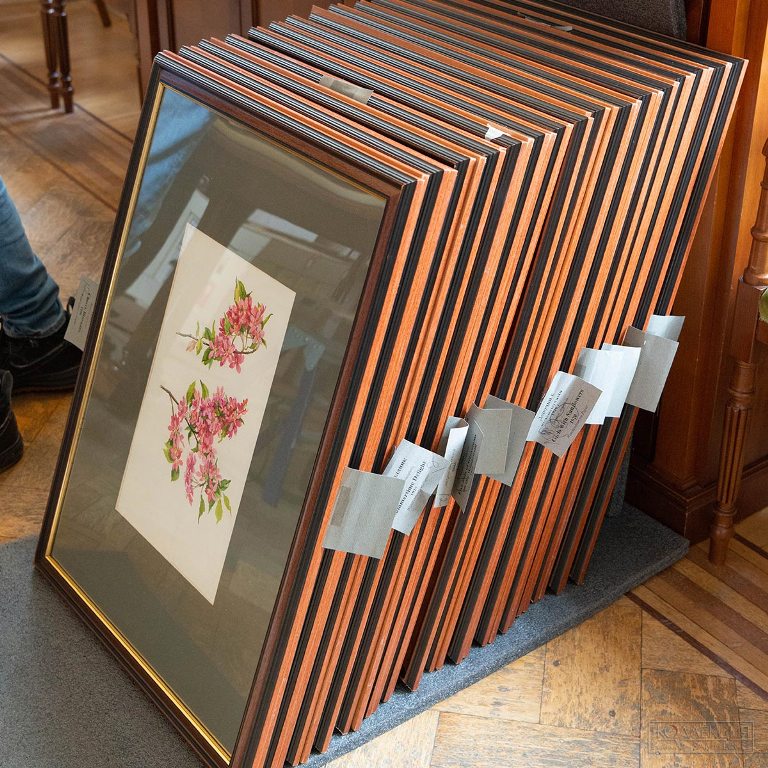
The paintings were donated to the museum in November of last year. The generous donation included an additional 46 items from the family of Emperor Alexander III, including drawings, icons, photographs, personal items and jewelry, all of which will be carefully studied by professional art historians of the State Russian Museum.

The collection was in the possession of Olga Nikolaevna Kulikovsky-Romanov (1926-2020), the third wife of Grand Duchess Olga’s eldest son, Tikhon Nicholaevich Kulikovsky (1917-1993). The donation to the museum was made possible thanks to the St. Catherine’s Charitable Foundation and the Ministry of Culture of the Russian Federation.

The priceless collection by the youngest daughter of Emperor Alexander III and Empress Maria Feodorovna, and the younger sister of Emperor Nicholas II, included watercolours created in different years of the Grand Duchess’s life: Russian landscapes, family sketches, everyday scenes, bright still lifes and views of the places in which Olga Alexandrovna lived. Her works are represented on both canvas, as well as watercolour sketches in albums.

During her years in Russia, the Grand Duchess patronized the Imperial Society of Russian Watercolorists. Her watercolours were represented in exhibitions organized by the Kuindzhi Society of Artists, who helped to organize exhibitions of the works of young Russian artists.

During the First World War, Olga Alexandrovna opened the First Evgenievsky Hospital at her own expense, which was under the auspices of the Russian Red Cross. It was here, where she worked as a nurse, bandaging wounds, and cared for the wounded soldiers. Even at the front, the Grand Duchess devoted her free time to painting – her watercolors depict scenes in the hospital and portraits of officers. Selected sketches from this period are also included in the collection.

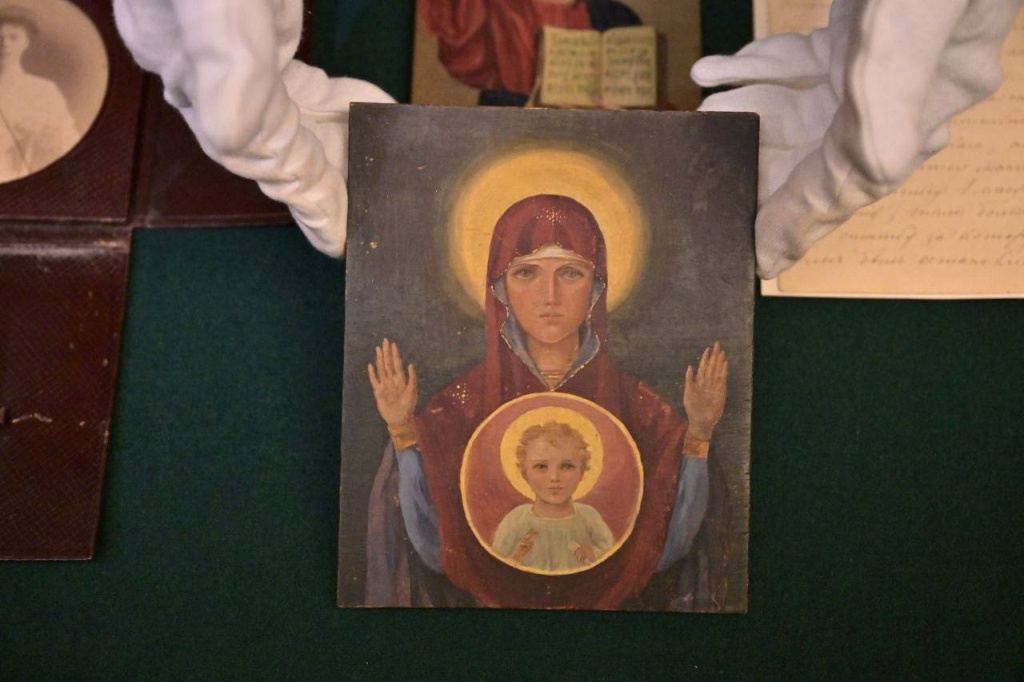
The art collection also includes photo albums of the Romanov family, personal objects and icons. Two of the icons were painted by the Grand Duchess for her son Tikhon, who later created the Foundation of Her Imperial Highness Grand Duchess Olga Alexandrovna, which provided humanitarian aid to Russia. His portrait by the Grand Duchess is also included in the collection.

For the first time in the history of the museum, the collection will be kept entirely in the custody of one specialist, rather than divided into specialized departments. The indivisibility of the collection is necessary for the study of the objects and their connection to in the Russian Imperial Family.

The State Russian Museum are already making plans to host an exhibition showcasing the collection of 180 watercolour by Grand Duchess Olga Alexandrovna, plus the additional 46 items from the family of Emperor Alexander III. A date for the exhibition has yet to be announced.

NOTES”

[1] The State Russian Museum was officially opened on 19th [O.S. 7th] March 1898, as the Russian Museum of His Imperial Majesty Alexander III, who was a connoisseur of Russian art. The museum was established in the Mikhailovsky Palace, a splendid Neoclassical residence of Grand Duke Michael Pavlovich (1798-1849).

The museum was established on 13th April 1895, by order of Emperor Nicholas II to commemorate his father, Alexander III. Its original collection was composed of artworks taken from the Hermitage Museum, the Alexander Palace, and the Imperial Academy of Arts.

After the Russian Revolution of 1917, the museum and its collection were nationalized and renamed the State Russian Museum. Today, the museum is the world’s largest depository of Russian art with more than 400,000 items.

© Paul Gilbert. 9 April 2024

Tikhon Nikolaevich Kulikovsky-Romanov (1917-1993)

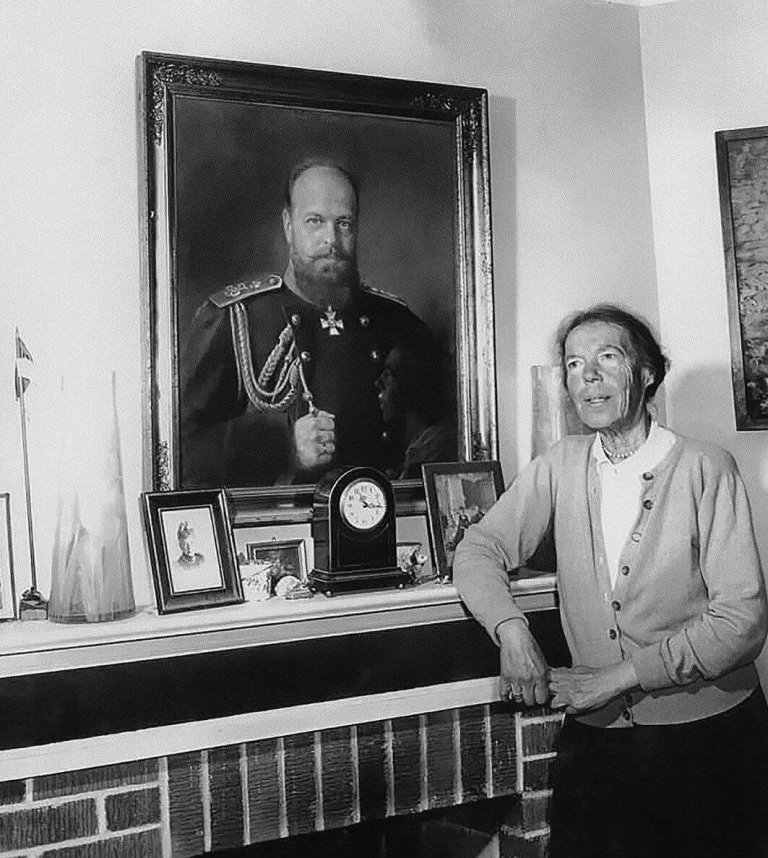
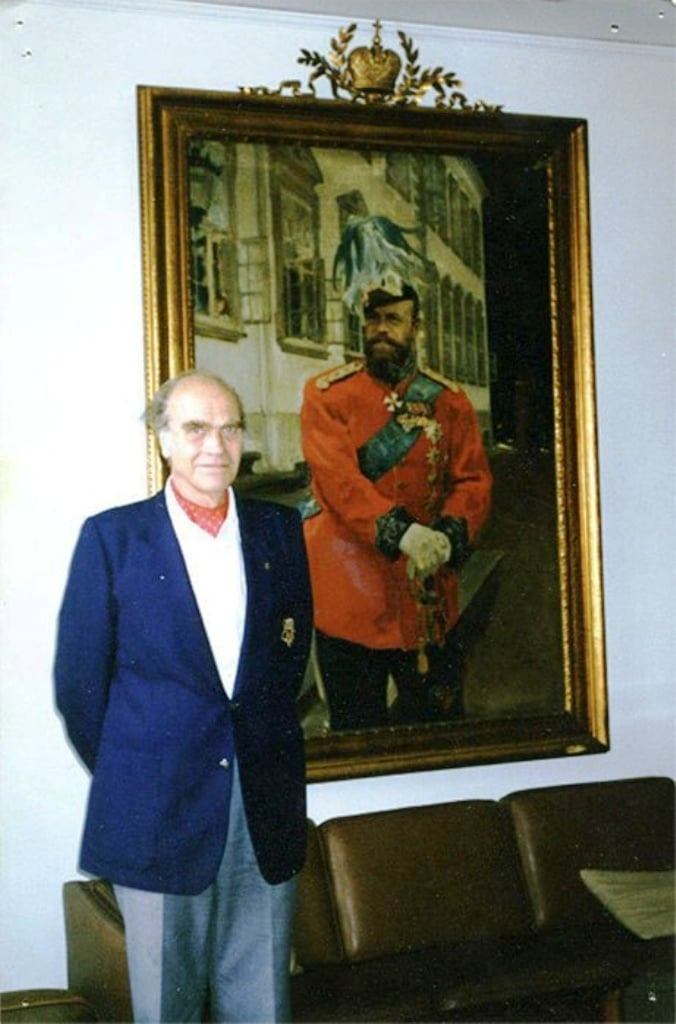
PHOTO: Tikhon posing in front of a portrait of his grandfather Emperor Alexander III in the Uniform of the Danish Royal Regiment of Life Guards (1899). Artist: Valentin Serov (1865-1911)

On this day – 8th April 1993 – Tikhon Nikolaevich Kulikovsky-Romanov died in Toronto, Canada.

Tikhon was the eldest son of Grand Duchess Olga Alexandrovna (1882-1960) and Colonel Nikolai Alexandrovich Kulikovsky (1881-1958), grandson of Emperor Alexander III and Empress Maria Feodorovna, nephew of Emperor Nicholas II.

Born in Ai-Todor in Crimea on 25 August (O.S. 12 August) 1917, where Olga Alexandrovna’s family had moved with the Empress Maria Feodorovna in March 1917 after the February Revolution . Maria Feodorovna wrote in a letter to to Grand Duchess Olga Konstantinovna:

“Just last evening, when I felt completely lost, my dear Olga gave birth to Baby, a little son who brought such unexpected joy to my broken heart … I am very glad that Baby appeared just at that moment when from grief and despair I suffered terribly.”

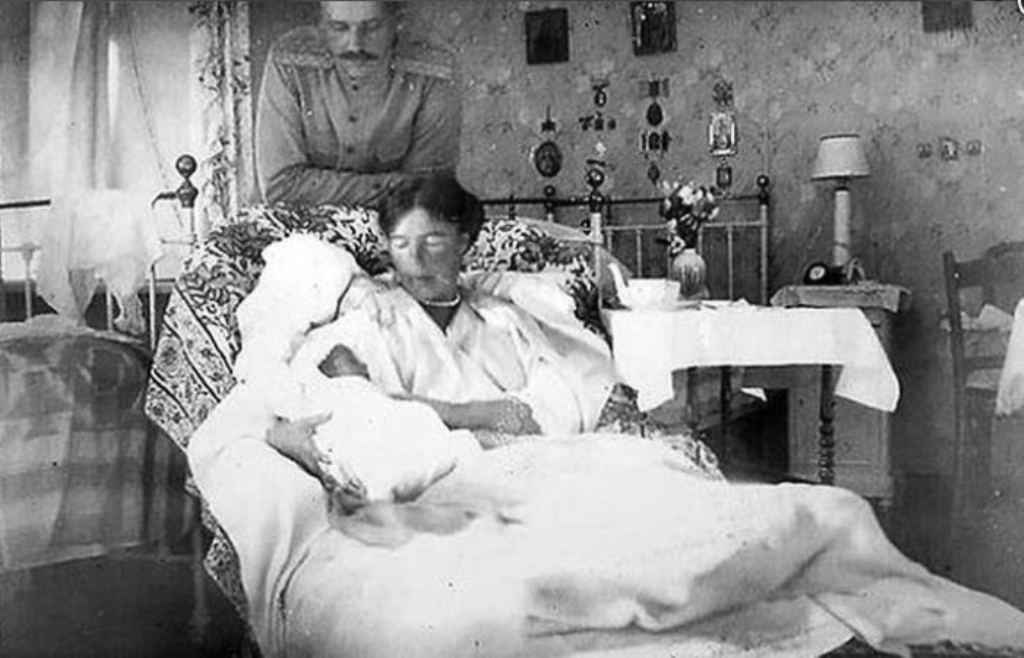
PHOTO: Nikolai Kulikovsky and Grand Duchess Olga with their newborn son Tikhon on 25 August (O.S. 12 August) 1917

in 1920, when the Red Army was approaching, together with his parents and brother Tikhon Nikolaevich left Russia and emigrated to Denmark, where his grandmother, the Dowager Empress Maria Feodorovna had already arrived.

Tikhon was brought up in the Russian spirit, spoke excellent Russian and was closely and directly connected with refugees from Russia, as his parents’ house gradually became the center of the Russian colony in Denmark.

He was educated in the Russian gymnasiums (schools) in Berlin and Paris, then studied at the Danish military school and served in the Danish Royal Guard, during the Second World War. After the occupation of Denmark, the Wehrmacht and the Danish army were imprisoned in special camps, where he spent several months in prison.

PHOTO: Tokhon with his mother Grand Duchess Olga Alexandrovna. 1950s

In 1948, together with his parents and brother Guri Nikolaevich (1919–1984), they left Denmark for Canada.

Tikhon married three times, his last marriage to Olga Nikolaevna Pupynina (1926-2020). He had one child, a daughter Olga Tikhonovna (born 9 January 1964) from his second marriage. He had no children from his first or third marriages.

On 6 April 1993, Tikhon Nikolaevich was hospitalized at Women’s College Hospital in Toronto, it was found that he suffered a myocardial infarction. On 8 April after a second heart operation, Tikhon Nikolaevich died. The funeral service took place on 15 April at the Holy Trinity Church in Toronto. The burial took place on the same day at York Cemetery in the north of Toronto, where he was buried next to his parents, Grand Duchess Olga Alexandrovna and Colonel N. A. Kulikovsky.

Tikhon never recognized the dynastic rights of the descendants of Grand Duke Kirill Vladimirovich (1876-1938). Although he did not make any claim to the throne, his candidacy was supported by a number of monarchist organizations that believed that the tsar should be elected by the All-Russian Zemsky Sobor.

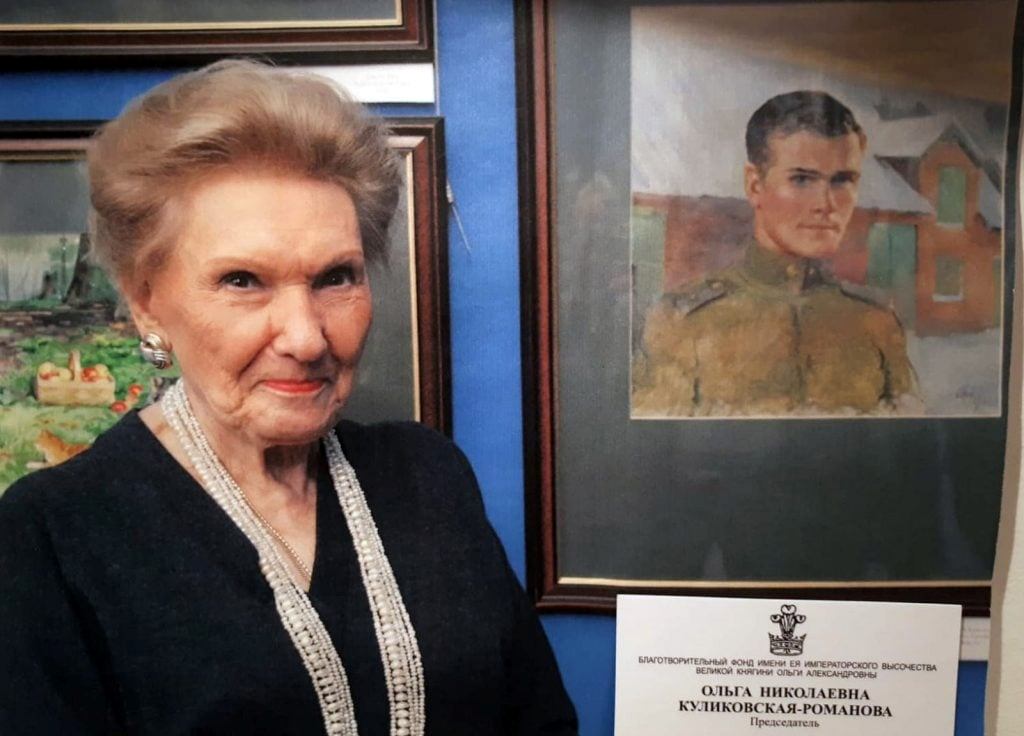
PHOTO: Tikhon’s third wife Olga Nikolaevna Pupynina (1926-2020), posing in front of a portrait of her husband, painted in 1940, by Grand Dichess Olga Nikolaevna

He was an honorary member of the Romanov Family Association, and served as an arbiter of the Supreme Monarchical Council. In 1991, Tikhon organized a Charity Fund named in memory of his mother. Tikhon Nikolaevich was also a trustee of the “Orthodox Brotherhood in the Name of the Tsar-Martyr Nicholas II.” In the midst of perestroika, Tikhon Nikolaevich addressed a number of appeals to the Russians. One of them was devoted to the need to rename the city of Sverdlovsk to Yekaterinburg.

In the early 1990s, Tikhon Kulikovsky-Romanov was the closest surviving relative of Emperor Nicholas II, therefore, his genetic material should have been a strong argument in identifying the remains of the imperial family. During his lifetime, however, he refused to provide his blood to experts, believing that the investigation was not conducted at the proper level, by incompetent people and organizations. However, samples of his blood taken during the operation had been stored and transferred for examination to Russian expert E.I. Rogaev. Rogayev’s studies showed a one hundred percent match between T. N. Kulikovsky-Romanov and Nicholas II.

In 2007, Tikhon Kulikovsky’s genetic material also helped identify the remains of the two remaining children of the last tsar Tsesearevich Alexei and Grand Duchess Maria.

PHOTO: Tikhon was buried with his parents in York Cemetery in Toronto, Canada

Memory Eternal! Вечная Память! 

© Paul Gilbert. 8 April 2024

Grand Duchess Olga Alexandrovna exhibit opens in Belarus

On 21st March 2024, the Grand Duchess Olga Alexandrovna. Life on a Canvas exhibition, opened in Mir Castle, situated in the village of Ramon[1], near Voronezh, Belarus.

According to the Oldenburg Palace Museum, the venue for the exhibition was chosen due to the close family ties between members of the Imperial Family and the Svyatopolk-Mirsky family, the last owners of Mir Castle. For example, the great-niece of Prince Nikolai Svyatopolk-Mirsky, was Princess Sofia Ivanovna Orbeliani (1874-1915), who served as a lady-in-waiting and close friend of Empress Alexandra Feodorovna.

The exhibit presents the Russian years of Grand Duchess Olga Alexandrovna through letters to her brother Emperor Nicholas II, and her nieces: Grand Duchesses Olga, Tatiana, Maria and Anastasia Nikolaevna.

The exhibition is supplemented with items from the funds of the the personal archive of Her Imperial Highness, stored in the Oldenburg Palace: photographs from Olga’s albums, drawings and paintings created in subsequent years, entries from her private diaries, and watercolours.

These exhibits which reflect the heritage of the Grand Duchess before the 1917 Revolution, afford visitors with an opportunity to acquaint themselves with the events of her long and often difficult life.

The life of Olga Alexandrovna, the last Russian Grand Duchess, was filled with trials that rarely fall to the lot of man. But with her kindness, modesty, and courage, she managed to overcome the horrors prepared for her by the 20th century. She was a benefactor of numerous schools, hospitals, almshouses, societies, and during the First World War she became a simple Red Cross nurse.

Interested in painting from her early childhood, Olga Alexandrovna never stopped painting throughout her life. Her works are real and lively, reflecting the happy moments of happy times with family, and the beauty of landscapes, nature, and the elegance of floral compositions.

Never discouraged, Olga was able to see beauty in everything, she was grateful for every new day, simple, humble and bright – this is how she is reflected in her works. In emigration, Olga Alexandrovna’s house became a center for all those who shared the bitter fate of exile. The Grand Duchess continued her charitable activities: her watercolours were exhibited in several European capitals, and the proceeds from the sale went to help Russian emigrants who found themselves in difficult financial situations.

The more one learns about Grand Duchess Olga Alexandrovna, her kindness, her charitably work, her piety, etc., one can truly understand why she remains one of the most beloved and respected members of the Russian Imperial Family and the Romanov Dynasty.

The Grand Duchess Olga Alexandrovna. Life on a Canvas exhibition runs at the Mir Castle until 2nd May 2024.

NOTES:

[1] On 27th July 1901, Grand Duchess Olga married Duke Peter Alexandrovich of Oldenburg (1868-1924). In 1906, the couple settled into ‘Olgino’, their home situated on the Oldenburg estate, in the village of Ramon, near, Voronezh.

In 1915, the couple separated; Olga had no children from her first marriage. On 27th August 1916, Emperor Nicholas II approved the definition of the Holy Synod, which recognized her marriage to Prince of Oldenburg dissolved

© Paul Gilbert. 3 April 2024

Grand Duchess Olga Alexandrovna’s watercolours to be auctioned in Moscow

PHOTO: Grand Duchess Olga Alexandrovna poses in front of some her watercolours at Gatchina, late 19th century.

On 14th April 2024, more than 40 watercolours painted by Grand Duchess Olga Alexandrovna (1882-1960), will go under the hammer at an auction in Moscow.

This is the second largest group of Grand Duchess Olga’s works in Russia, the first being the group of 180 watercolours recently gifted to the State Russian Museum in St. Petersbu.

Olga’s watercolours continue to generate interest among professional and amateur collectors, both in Russia and abroad. The demand for her works have helped drive up list prices when any of her paintings are presented at auction. This current group of watercolours is expected to break all previous records.

The auction catalogue [in Russian only] contains a total of 43 watercolors, including landscapes still life, flowers, etc. The total estimated value of this group is 30 million rubles [$325,000 USD]. Estimates of individual lots range from 500,000 [$5,400 USD] to 1.5 million [$16,200 USD] rubles.

A total of 104 items of the Grand Duchess’s legacy will be sold, including autographs of members of the Russian Imperial Family, commemorative medals, pieces of furniture, and sculptures.

This group of watercolours and other items belonged to Olga Nikolaevna Kulikovsky-Romanov (1926-2020), the third wife of Grand Duchess Olga’s eldest son, Tikhon Nicholaevich Kulikovsky (1917-1993). Upon the grand duchess’s death in 1960, the bulk of her estate was acquisitioned by Tikhon. When Tikhon died in 1993, the collection passed to his wife Olga Kulikovsky. During the 1990s, Olga Kulikovsky travelled to Russia, taking the watercolours and other items with her. She toured the country, hosting numerous exhibits of her mother-in-laws paintings to Russians for the first time.

The youngest child and daughter of Emperor Alexander III and the youngest sister of Emperor Nicholas II, Olga was a prolific painter, producing over 2,000 paintings in her lifetime. She studied painting from various Russian masters, including Vasily Makovsky. During her early years in Russia, Olga painted for pleasure, often gifting her watercolours to relatives and friends, signing the works with her first initials.

During her years in exile – in both Denmark and Canada – Olga signed her works with “Olga”. The sale of her paintings provided a source of income for her and her family during their years in exile. This photo comes from the album of her cousin Princess Victoria of Wales.

Let us hope that this current collection of 43 watercolours are purchased as a group, and added to the collection of the State Historical Museum in St. Petersburg – PG

© Paul Gilbert. 2 April 2024