Russian court rules on the fate of Tsar’s family grave near Ekaterinburg

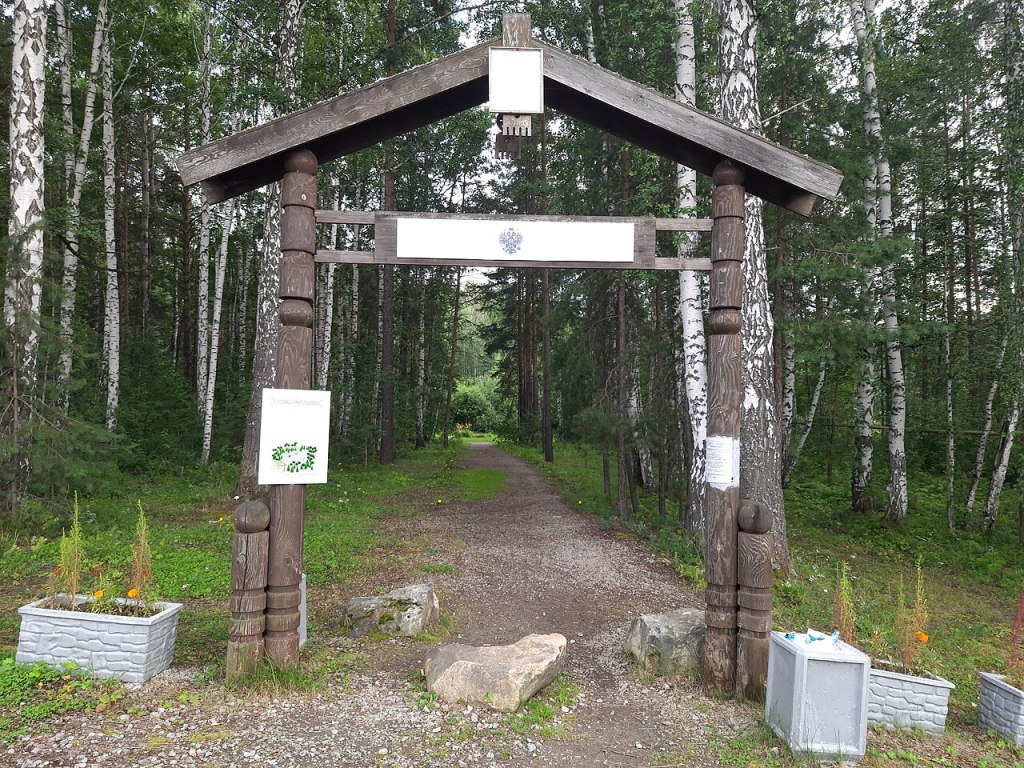
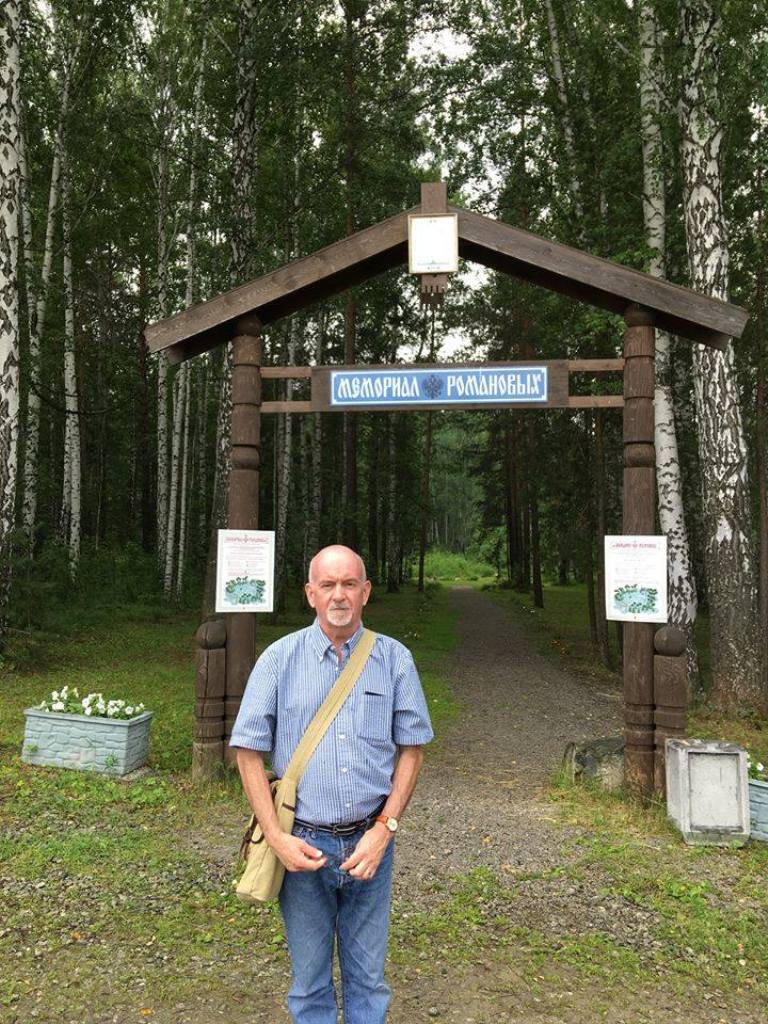
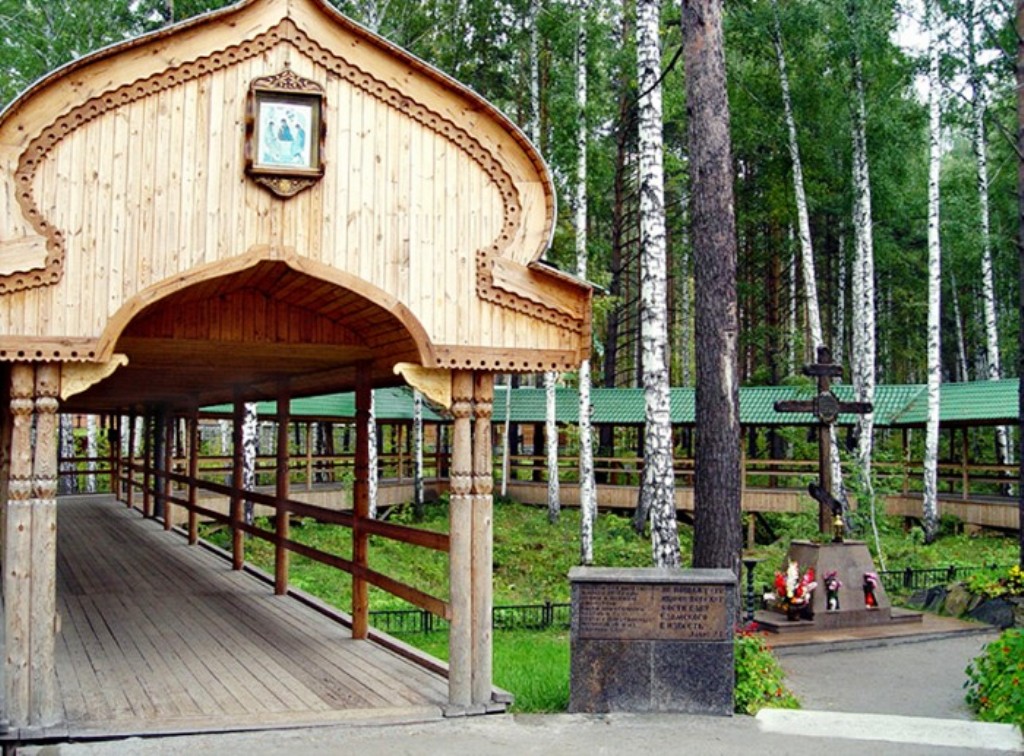
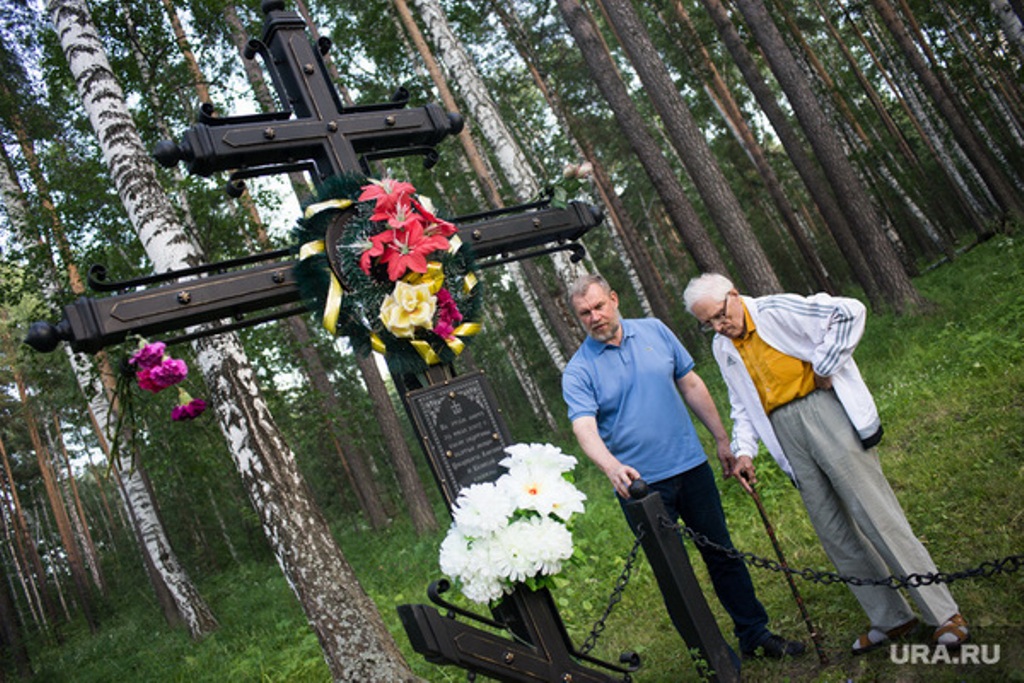
PHOTO: the entrance to the Romanov Memorial at Porosenkov Log

On Monday, 2nd June 2025, the Sverdlovsk Regional Court ruled on the fate of Porosenkov Log, situated on the old Koptyaki Road near Ekaterinburg. The Court’s ruling ensures that the place where the remains of Russia’s last Tsar, his family and their four faithful retainers were found is protected from developers.

Recall that in 2014, the Department of State Protection of Cultural Heritage Sites of the Sverdlovsk Region (UGOOKN) included the Romanov Memorial at Porosenkov Log on the list of protected monuments. However, 10 years later, in September 2024, the state security department removed the memorial’s protective status.

After the decree was issued, workers came to the memorial in Porosenkov Log and removed the information steles. In addition, workers began to remove part of the soil layer around the main grave, without even carrying out any digs to ensure that there were no remaining fragments of the bodies of members of the Imperial Family that have not yet been found. At the same time, no one coordinated the work with the Romanov Memorial Charitable Foundation and it’s founder Ilya Korovin, who has preserved the memorial since July 1999.

To avoid any further destruction of the Romanov Memorial, Korovin was forced to file a lawsuit in the Regional Court. In the lawsuit, Korovin noted that the removal of the protected status jeopardizes the damage or destruction of religious objects. He requested that the Court cancel the order.

The judge of the Sverdlovsk Regional Court, Maxim Rudakov, sided with the charitable foundation and declared the disputed order invalid. The department has a month to appeal. Despite the Court’s ruling, however, Ilya Korovin believes that it is too early to celebrate, since the department can appeal the court’s decision.

Since 2021, the Romanov Memorial Foundation has been fighting against development which threaten Porosenkov Log. Korovin claims that the Russian Orthodox Church wants to build a monastery in Porosenkov Log similar to that in Ganina Yama – the Monastery of the Holy Royal Martyrs.

© Paul Gilbert. 15 June 2025

Nicholas II’s grave near Ekaterinburg under threat

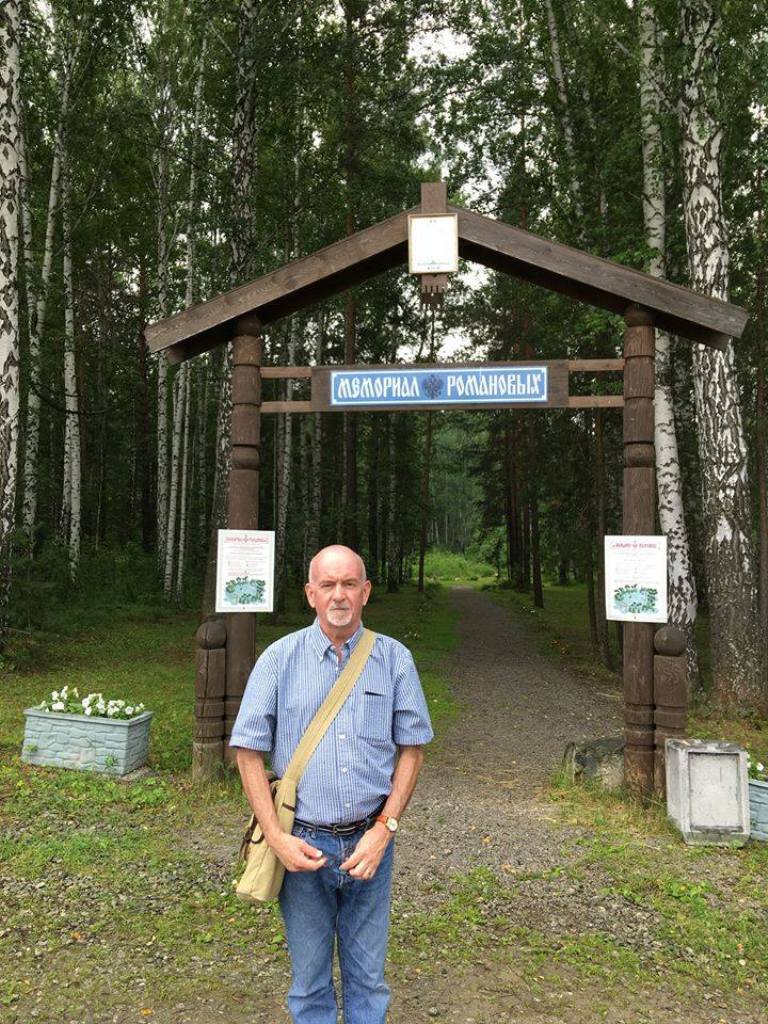
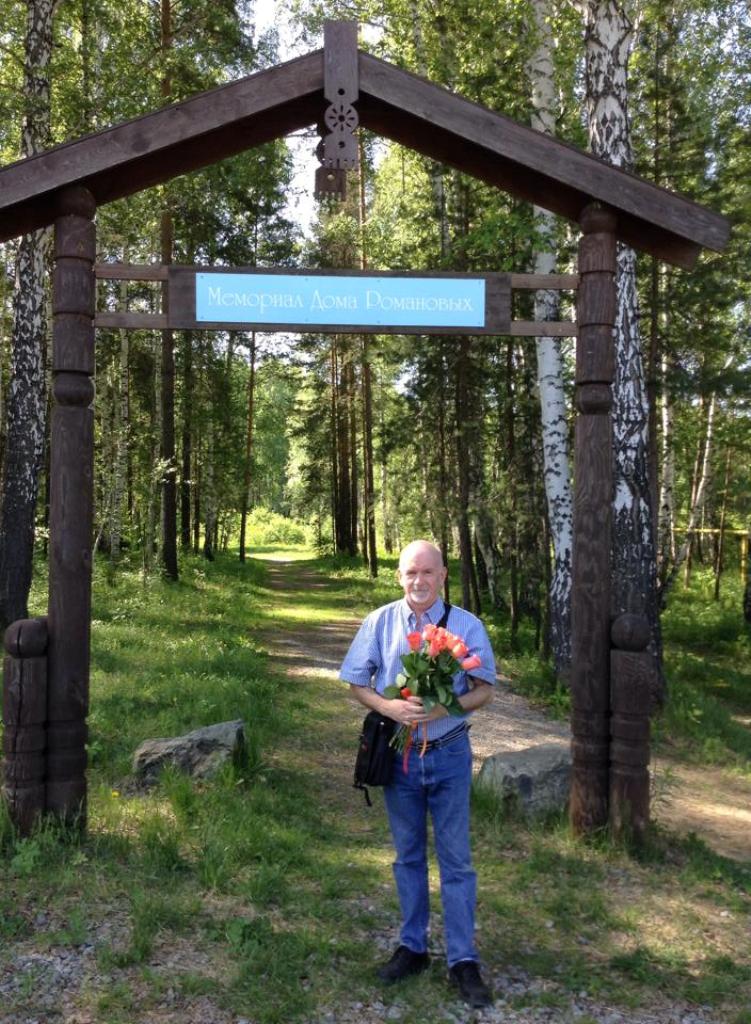
PHOTO: Paul Gilbert standing at the entrance to the Romanov Memorial in July 2018

On 10th March 2025, the head of the Ekaterinburg based Romanov Memorial Charitable Foundation Ilya Korovin, issued a press release expressing concern that the grave of Nicholas II, his family and four faithful retainers at Porosenkov Log is now under threat of development by the Russian Orthodox Church (ROC).

According to Kovovin, the Russian Orthodox Church will soon recognize the Ekaterinburg remains as those of the Imperial Family, and that such an announcement may very well threaten the Romanov Memorial at Porosenkov Log.

“If the Bishop’s Council of the ROC agree with the authenticity of the remains, then a serious question will arise about the fate of the Romanov Memorial,” said Kovovin. “This area has been preserved in its original form since 1918. It is the only place associated with Russia’s last Tsar in Ekaterinburg, which has survived to this day unchanged,” he added.

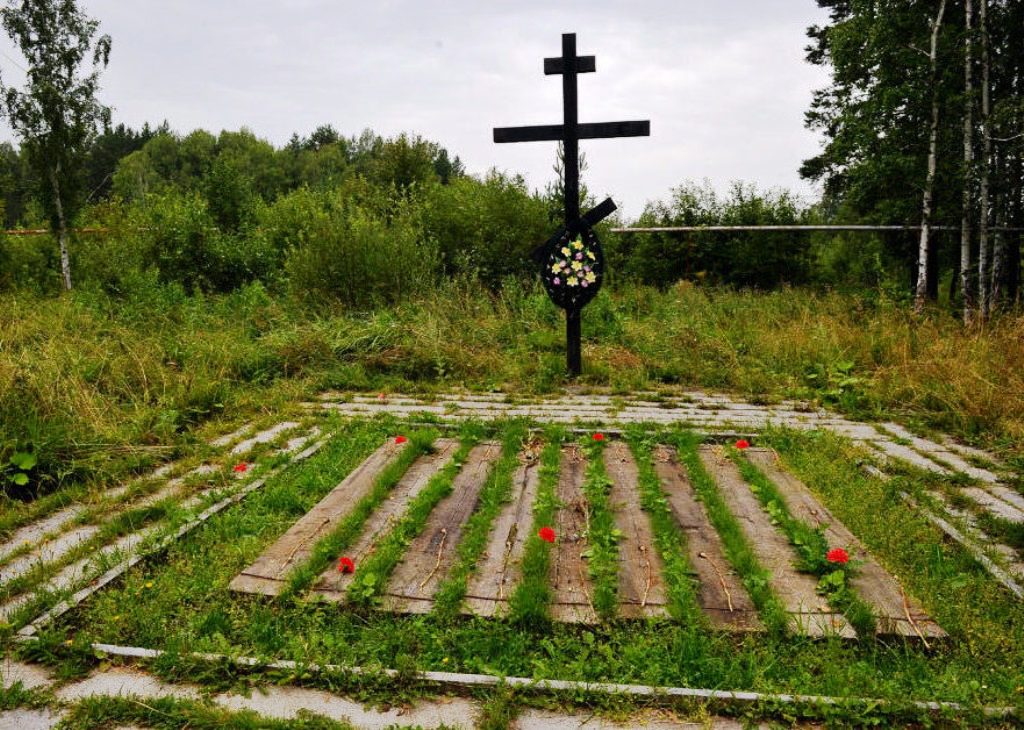
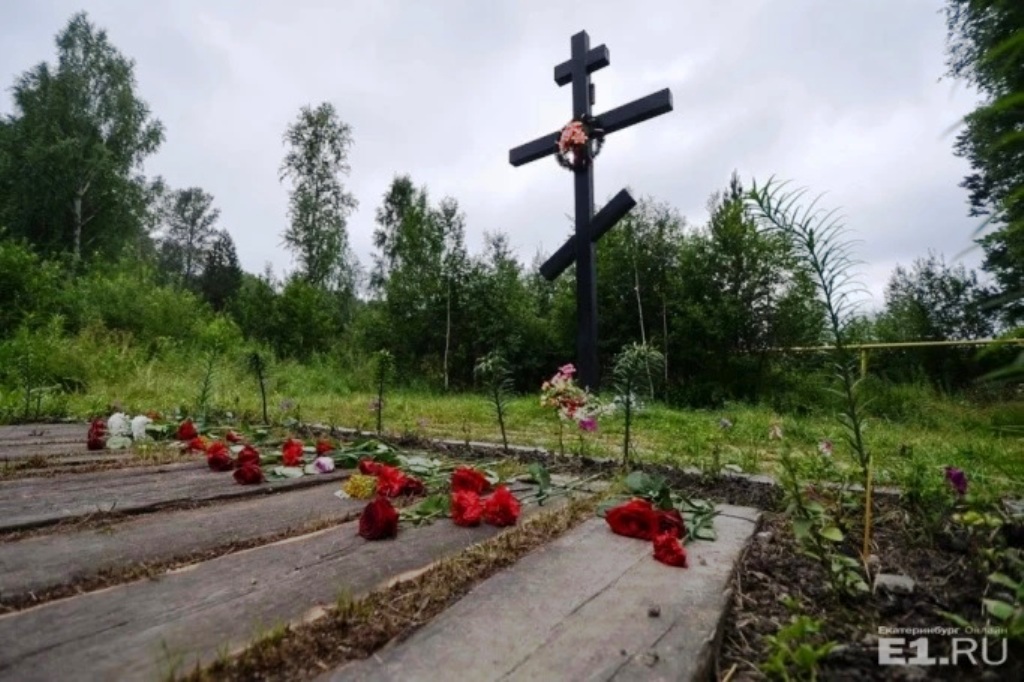
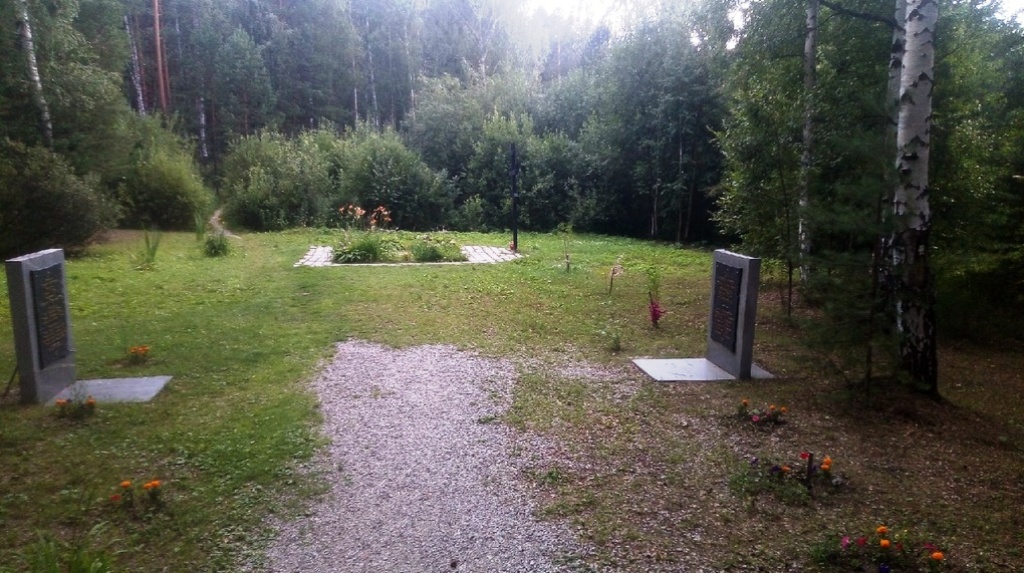
PHOTO: an Orthodox cross marks the place where Nicholas II, Alexandra Feodorovna, three of their children: Olga, Tatiana, Anastasia and their four faithful retainers were reburied by the regicides in July 1918. The remains of Alexei and Maria were buried in a second grave nearby.

Recall that it was at Porosenkov Log that the regicides buried the remains of the Imperial Family the day after they attempted to destroy their bodies at the Four Brothers Mine at Ganina Yama, situated 3.8 km [2.4 miles] down the road. The remains were initially discovered in June 1979 by Geliy Trofimovich Ryabov (1932-2015) and Alexander Nikolaevich Avdonin (born 1932). On 16th July 1999, the Romanov Memorial was opened on the site of the graves.

The land in and around the Romanov Memorial has been the subject of debate between Korovin and the ROC since 2021, after the Ekaterinburg Diocese requested the transfer of the land by the Sverdlovsk Region. The illegal drilling of wells was subsequently carried out, despite the fact that Porosenkov Log was recognized as an object of cultural heritage in 2014. 

In September 2024, the Department of State Protection of Cultural Heritage Sites (UGOOKN) excluded the Romanov Memorial from the list of protected monuments, which raises concerns for Torovin, who is now challenging the decision in court.

It is no longer a question of “if” but “when” the ROC recognizes the Ekaterinburg remains as those of the Imperial Family [the decision rests with the Bishops Council of the Russian Orthodox Church]. The church’s interest in the land in and around the Romanov Memorial may confirm their plans to construct another monastery – similar to that at Ganina Yama – or memorial church to glorify the Holy Royal Martyrs at Porosenkov Log. The Ekaterinburg Diocese has refused to comment on any possible development.

***

FURTHER READING:

ROC preparing to build memorial church at Porosenkov Log by Paul Gilbert 4th March 2023

The fate of Porosenkov Log and Ganina Yama by Paul Gilbert, 14th February 2022

104 years on, Orthodox Church still split over murdered tsar’s remains by Paul Gilbert 6th April 2021

Will the Bishops Council’s decision on the Ekaterinburg Remains cause a schism within the ROC? by Paul Gilbert, 20th September 2021

30th anniversary of the exhumation of the remains of Nicholas II and his family by Paul Gilbert, 7th July 2021

Bones of Contention: The Russian Orthodox Church and the Ekaterinburg Remains by Paul Gilbert, 23rd November 2021

© Paul Gilbert. 14 March 2025

June 1st marks 45th anniversary of discovery of the “Ekaterinburg remains”

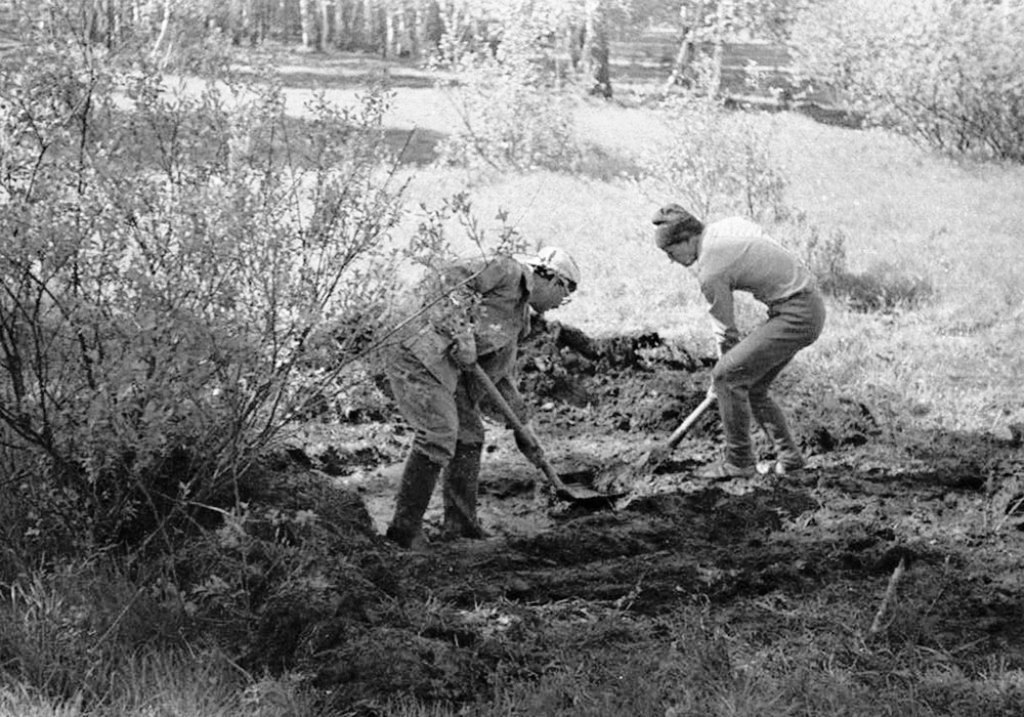
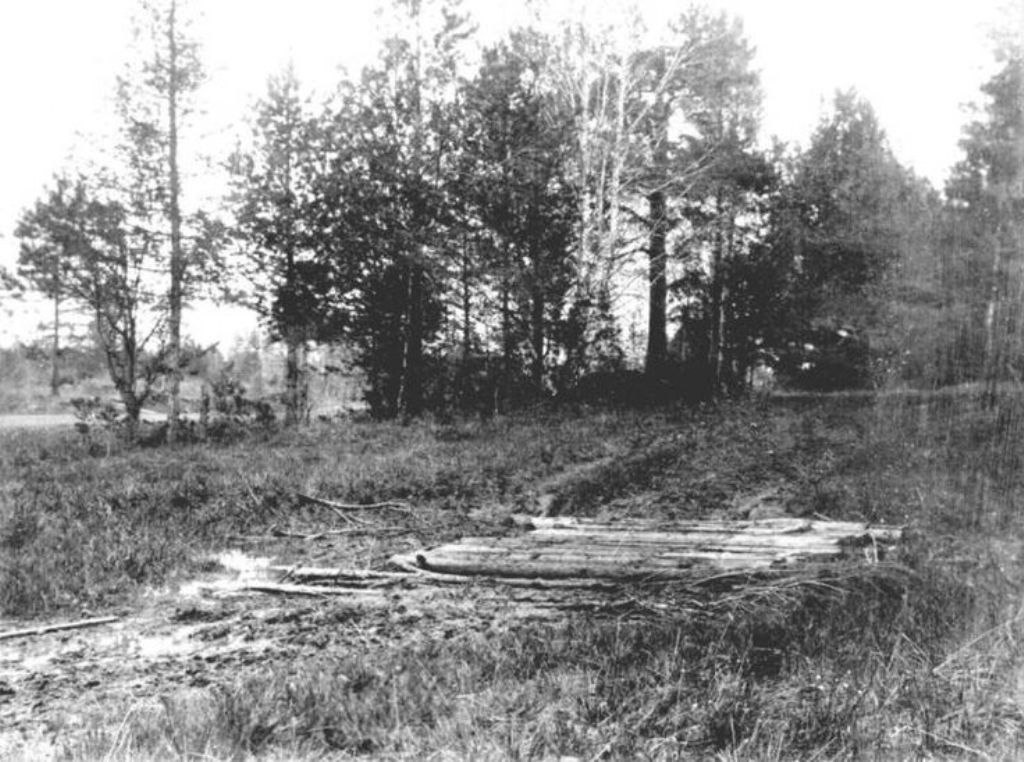
PHOTO: Geliy Ryabov (left) and Gennady Vasiliev (right) remove the wooden sleepers from the unmarked grave. 1st June 1979

NOTE: I have provided links (below) to other interesting articles + photos – PG

June 1st marked the 45th anniversary of the discovery of what would come to be known as the “Ekaterinburg remains”. It was on this day, that Geliy Trofimovich Ryabov (1932-2015) and Alexander Nikolaevich Avdonin (born 1932), discovered a shallow grave marked with railway ties on the Old Koptaki Road, situated about 22 km [13.7 m.] northeast of Sverdlovsk [Ekaterinburg], and 3.8 km from Ganina Yama.

Avdonin and Ryabov who were accompanied by their wives and colleagues V.A. Pesotsky and G.P. Vasiliev, found the second burial site containing the remains of Emperor Nicholas II, members of his family and their four faithful servants, all of whom were all murdered in the basement of the Ipatiev House in the Ural capitl in the early morning hours of 17th July 1918. This was preceded by many years of work in various archives and libraries, as well as the study of the area of Ganina Yama and Porosyonkov Log.

Further reading: Nicholas II’s grave was an “open secret” in Soviet Russia during the 1920s

Due to the political climate of the time, they were forced to close the grave until after the fall of the Soviet Union. It was not until July 1991, that Avdonin and a team of experts returned to the Old Koptyaki Road, where they exumed the remains of nine bodies. The remains were sent for forensic tests which identified the remains as those of Emperor Nicholas II, his wife Empress Alexandra Feodorovna, three of their daughters Grand Duchesses Olga, Tatiana, Anastasia Nikolaevna, as well as those of their four retainers. It was not until 2007, that the remains of Tsesarevich Alexei Nikolaevich and Grand Duchess Maria Nikolaevna were discovered in a separate grave, situated just meters from the main grave.

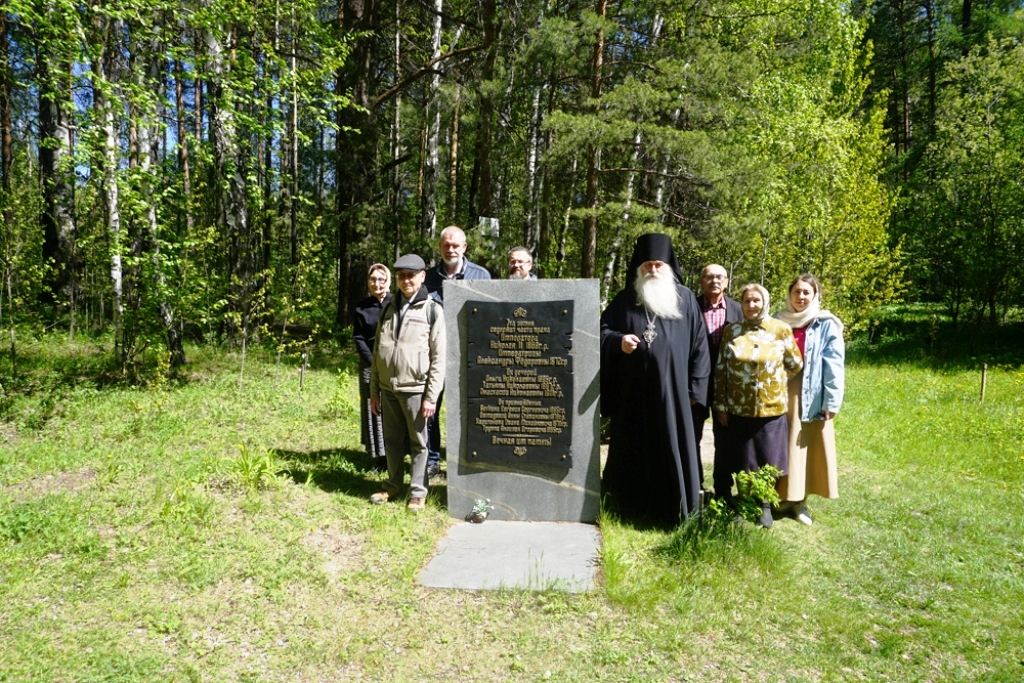
On 16th July 1999, the Romanov Memorial was opened on the site of the graves. The main grave is modestly decorated with wooden railway ties – a large metal Orthodox cross was erected above it. There is also a memorial stone (see last photo on this post) on which is written: “Here the remains of the Tsar’s Family and persons loyal to Them, murdered on 17th July 1918 in Ekaterinburg, were hidden.” A metal Orthodox cross was also erected at the second grave, where the remains of Alexei and Maria were found The Romanov Memorial is maintained at the expense of the Romanov Memorial in Porosenkov Log Charitable Foundation.

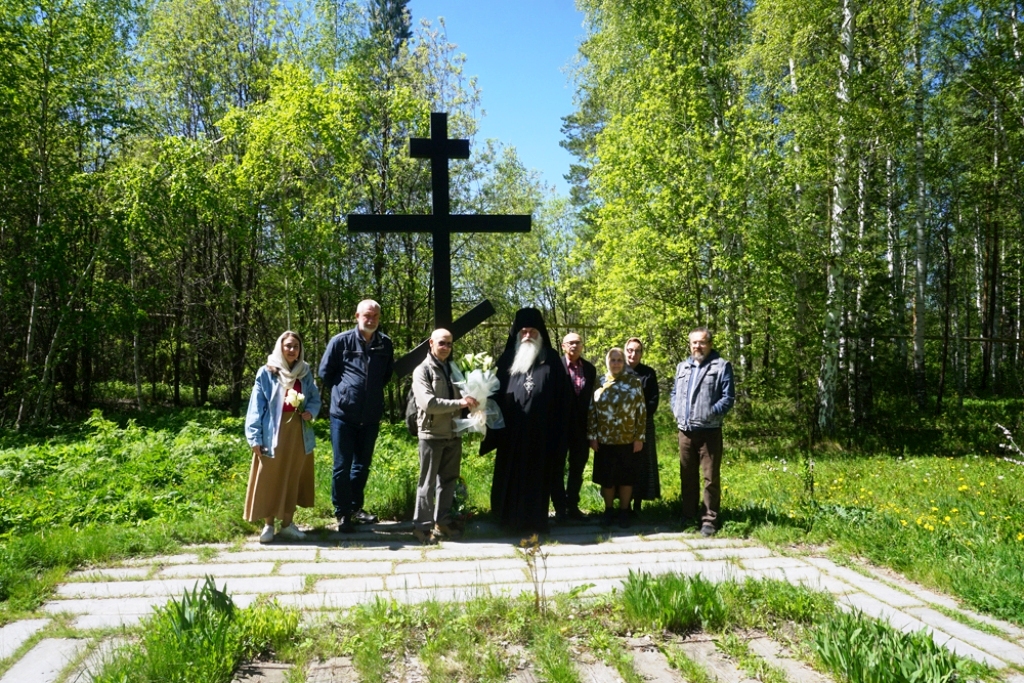
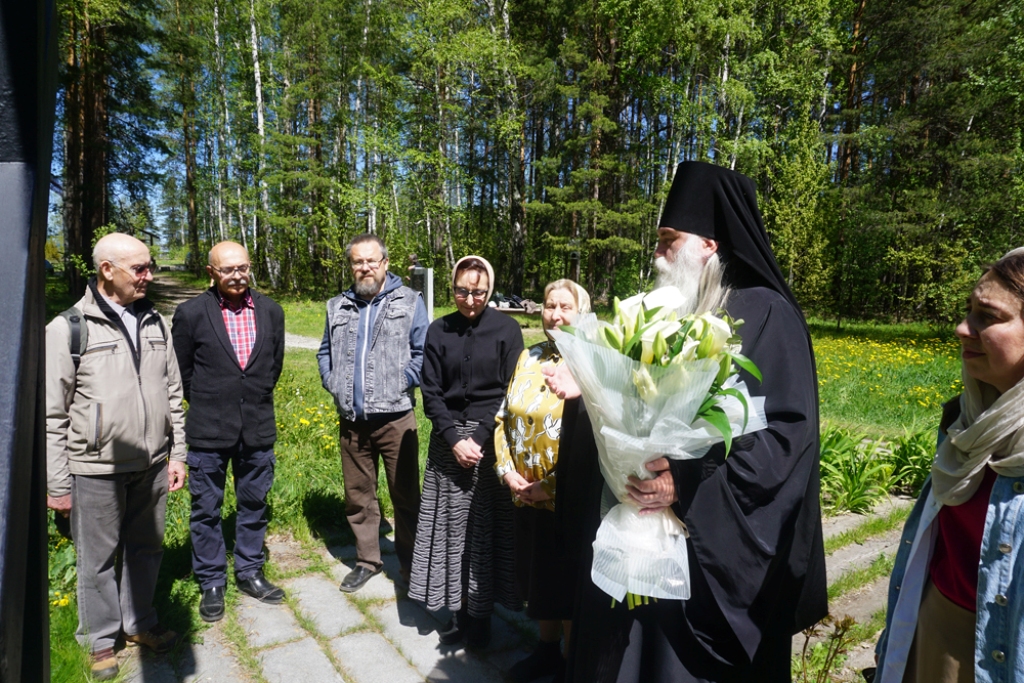
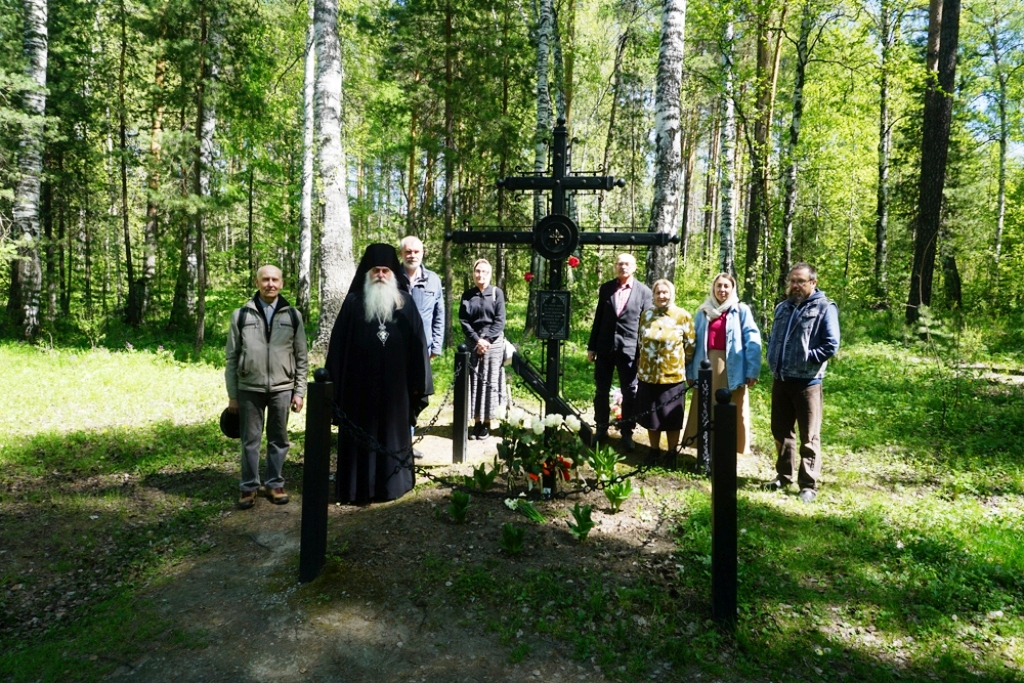
PHOTO: Archimandrite Tikhon (Zatekin) and participants standing at the main grave at Porosenkov Log:

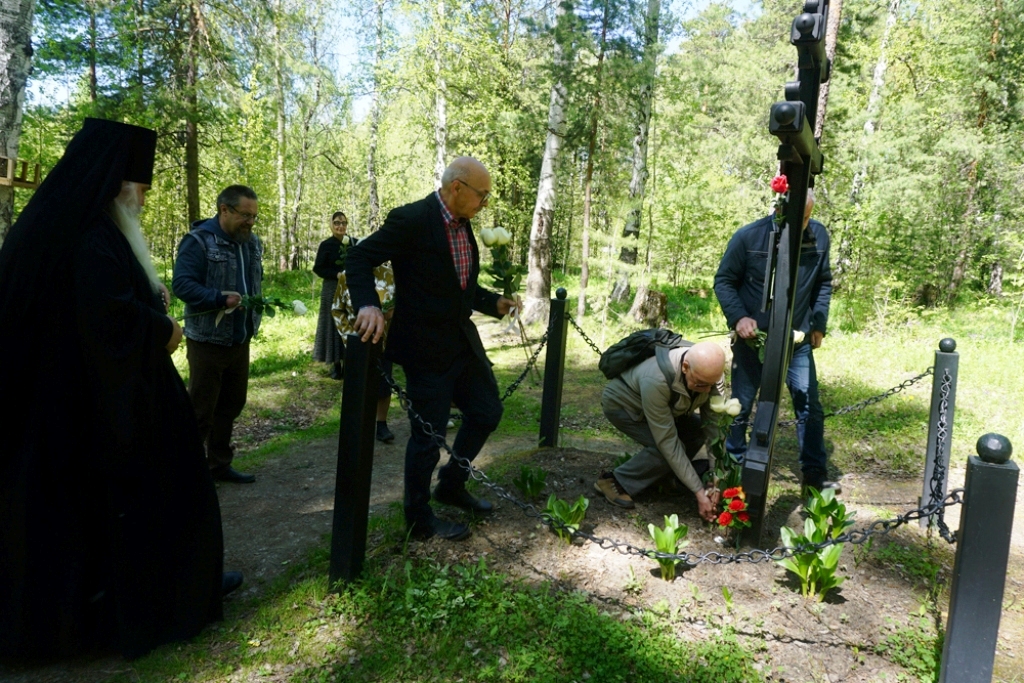
On 1st June 2024, a small group of Orthodox Christians and adherents to the memory of the Holy Royal Martyrs, gathered on the Old Koptyaki Road, where the Romanov Memorial is now located, at Porosenkov Log. Among those present, were participants who took part in the search for the remains of the Imperial Family and their servants – geophysicist G.P. Vasiliev, as well as participants in the search in 2007 for the remains of Tsesarevich Alexei and Grand Duchess Maria: L.G. Vokhmyakov, S.M. Vokhmyakova, N.B. Neuymin, A. Bobrov among others.

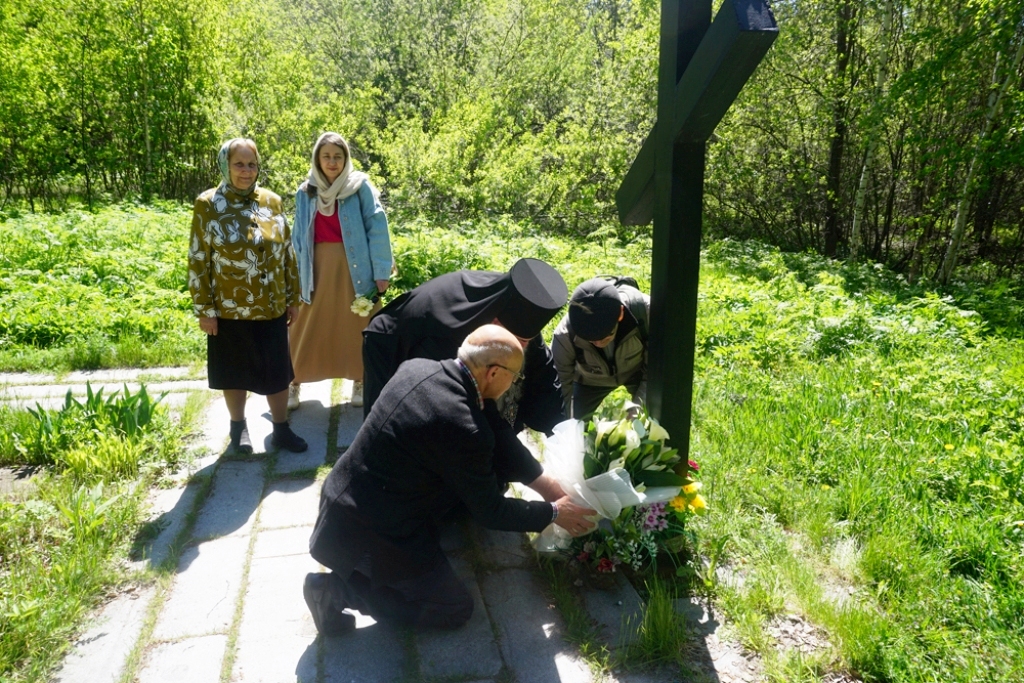
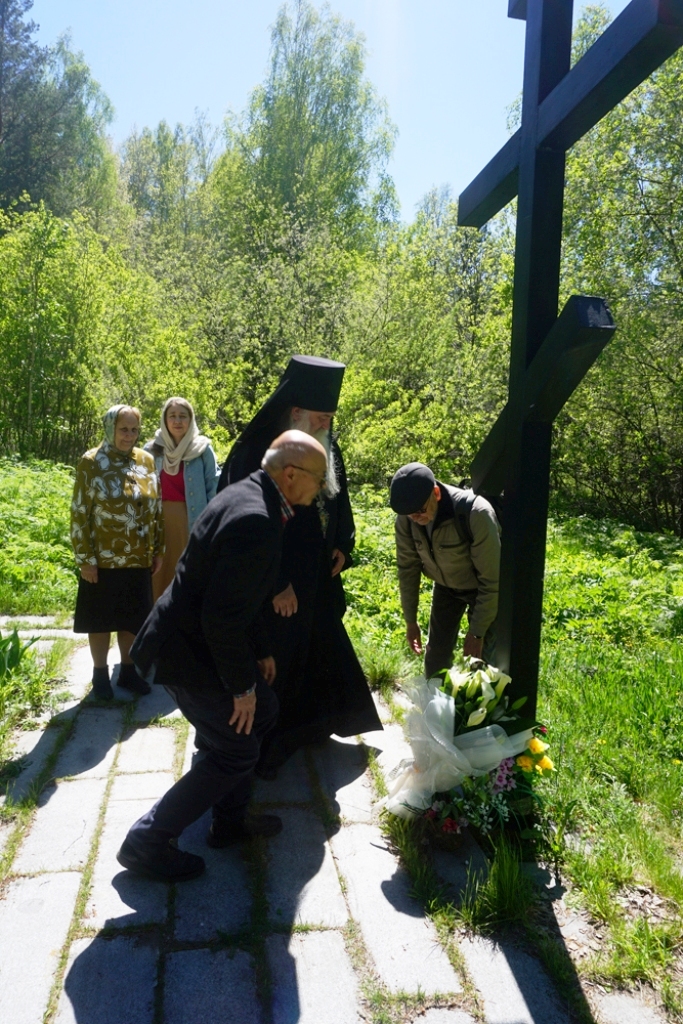
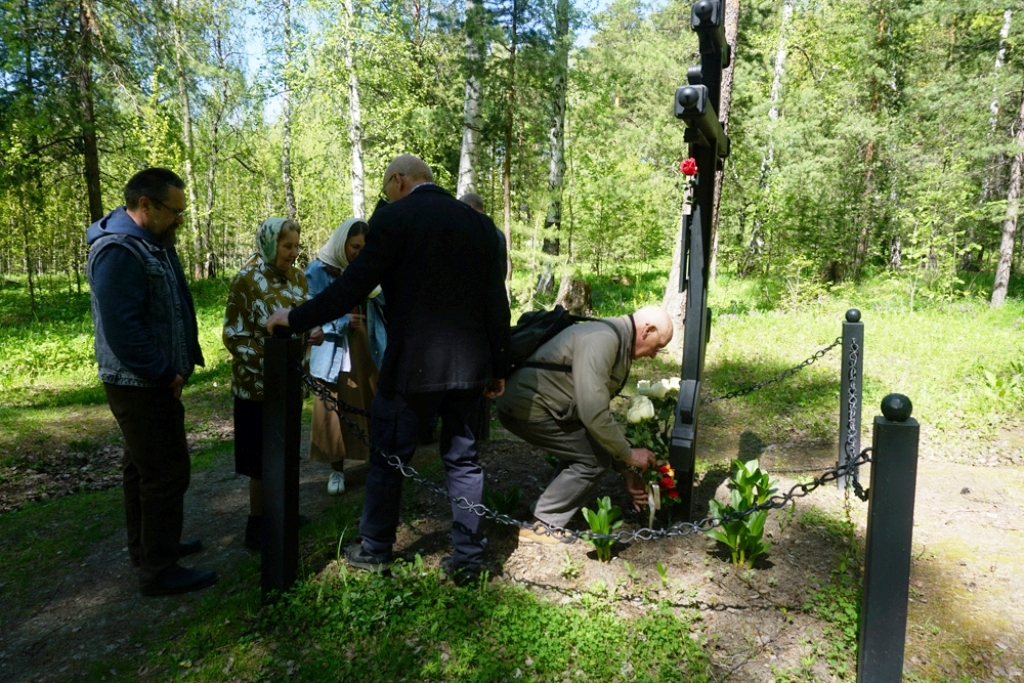
Archimandrite Tikhon (Zatekin), G.P. Vasiliev and L.G. Vokhmyakov laid a bouquet of white lilies[1] at the cross erected at the site where the Tsar’s remains were discovered in 1979, after which roses were laid at the cross, where the remains of Tsarevich Alexei and Grand Duchess Maria were found in 2007.

NOTE: The Moscow Patriachate of the Russian Orthodox Church believes that the Ekaterinburg remains found at Porosenkov Log are false relics, and that the bodies of the Imperial Family were completely destroyed at Ganina Yama by the regicides in 1918. The Church has not yet made a final decision on the question of whether these Ekaterinburg remains are genuine or not. The final decision rests with the Council of Bishops of the Russian Orthodox Church, who have been forced to postpone their convening to discuss the matter “indefinitely”, citing the current situation with Ukraine.

The members of the Romanov Family Association (which includes most of the living descendants) have all recognized the Ekaterinburg remains as those of Emperor Nicholas II, his family and their four retainers. The ONLY descendants who do NOT recognize the authenticiy of the Ekaterinburg are Princess Maria Vladimirovna and her son George.

PHOTOS (below) depict Archimandrite Tikhon (Zatekin) laying a bouquet of white lilies at the main grave at Porosenkov Log:

PHOTOS (below) depict L.G. Vokhmyakov laying a bouquet of roses at the second grave at Porosenkov Log:

PHOTOS (below) depict Archimandrite Tikhon (Zatekin) at the memorial stone at Porosenkov Log:

NOTES:

[1] The white lilies symbolize the unfading flower of virginity and purity of the Mother of God, to whom the Church sings: “You are the root of virginity and the Unfading Flower of purity.”

© Paul Gilbert. 6 June 2024

ROC preparing to build memorial church at Porosenkov Log

PHOTO: entrance to the Romanov Memorial at Porosenkov Log

According to Ilya Korovin, the director of the Ekaterinburg based Romanov Memorial Charitable Foundation the Russian Orthodox Church (ROC) is preparing the construction of an Orthodox church at Porosenkov Log, the site where the remains of Emperor Nicholas II and his family were discovered in two separate graves in 1991 and 2007 respectively.

If there is any truth to this disclosure, then it proves that the ROC have already unofficially[1] recognized the Ekaterinburg Remains as those of the Russian Imperial Family and their four retainers, however, the final decision on the official recognition of the Ekaterinburg Remains by the ROC will be made by the Bishops Council Bishops Council meet this summer.

Korovin claims that plans for the construction of the church is evidenced by a document in which Vasily Boyko-Veliky, the president of the St. Basil the Great Russian Educational Foundation, concluded an agreement in 2021 with the director of Geoincart Alexander Sokovnin to drill 40 wells on the territory of the Romanov Memorial. The illegal drilling was carried out, despite the fact that Porosenkov Log was recognized as an object of cultural heritage in 2014. “The terms of reference for the production of engineering and geological surveys indicate “new construction of a memorial church” on the territory of the Romanov Memorial,” said Korovin, who was successful in halting any further drilling and development.

According to Korovin, the Department of State Protection of Cultural Heritage Sites (UGOOKN) of the Sverdlovsk Region is preparing changes which will provide additional protection to the cultural heritage site on the Old Koptyakov Road near Ekaterinburg.

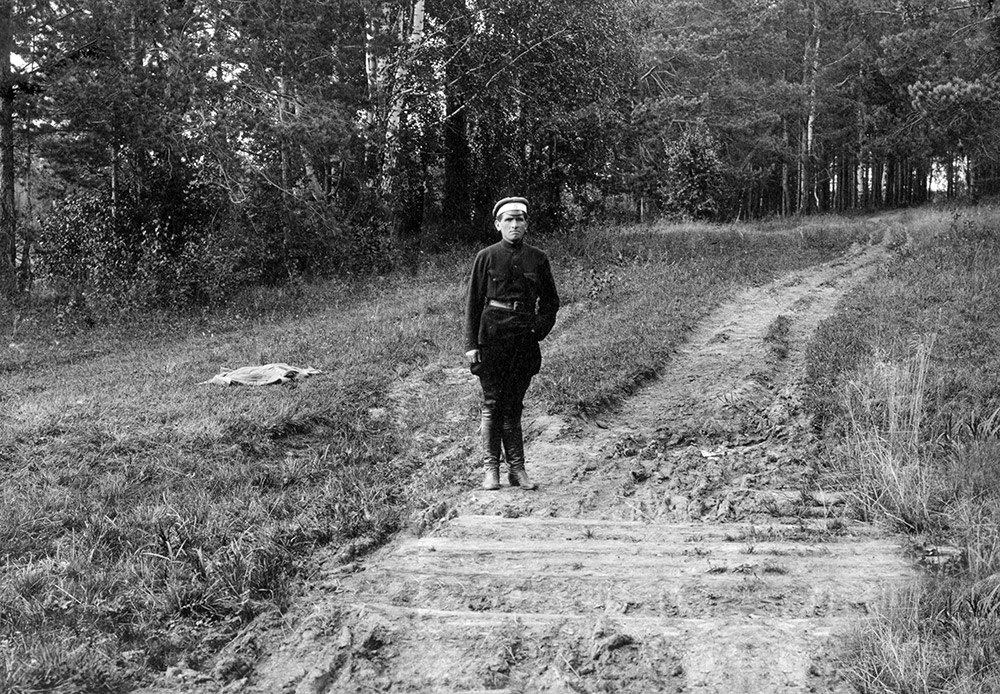
PHOTO: in the 1920s, the murderer Pyotr Zakharovich Yermakov returned to Porosenkov Log. On the reverse of this photo, he wrote: “I am standing on the grave of the Tsar”.

Alexey Shamratov, head of the department of legal and organizational work of the Regional State Educational Institution, however, claims that he was not aware of any preparation of changes to the subject of protection of the cultural heritage site. It is interesting to note that the press service of the Ekaterinburg Diocese declined comment on the matter.

A criminal case was initiated against Vasyl Boyko-Velikiy on suspicion of embezzlement of funds of the Credit Express Bank. In 2021, the Moscow City Court transferred him from jail to house arrest. In January 2023, Vasily Boyko-Velikiy declared bankruptcy.

Emperor Nicholas II and his family, together with four servants, were all shot by the Bolsheviks in the Ipatiev House Ekaterinburg on 17th July 1918. The regicides first tried to destroy the bodies at the Four Brothers Mine [Ganina Yama], then reburied them 3.8 km away at Porosenkov Log, where they were officially discovered in 1989. The remains of Tsesarevich Alexei and Grand Duchess Maria were found in 2007. The Romanov Memorial Foundation was established in 2021 with the aim of preserving the historic site.

The Moscow Patriarchate canonized Nicholas II and his family members in 2000. However, since the discovery of the remains, the ROC has not recognized their authenticity due to what they consider “a lack of evidence”. Despite this, in 2009, the Russian Orthodox Church received a land plot of 15 hectares in the area of Porosenkov Log from the Sverdlovsk regional government. There were plans to build a church complex – similar to the one at Ganina Yama – which included an Orthodox cemetery. However, in 2010, the charter court of the Sverdlovsk region ruled the decision on the allocation of the land illegal.

PHOTO: Paul Gilbert standing at the entrance to the Romanov Memorial in July 2018

NOTES:

[1] Ever since the discovery of the Ekaterinburg Remains, the Russian Orthodox Church refuses to accept DNA tests confirming their authenticity. The ROC maintains that the Bolsheviks put the burnt bodies of their 11 victims in a pit in a forest in the Urals region, where the ROC has built a large monastery complex: the Monastery of the Holy Royal Martyrs at Ganina Yama.

FURTHER READING:

104 years on, Orthodox Church still split over murdered tsar’s remains by Paul Gilbert 6th April 2021

The fate of Porosenkov Log and Ganina Yama by Paul Gilbert, 14th February 2022

Will the Bishops Council’s decision on the Ekaterinburg Remains cause a schism within the ROC? by Paul Gilbert, 20th September 2021

30th anniversary of the exhumation of the remains of Nicholas II and his family by Paul Gilbert, 7th July 2021
Bones of Contention: The Russian Orthodox Church and the Ekaterinburg Remains by Paul Gilbert, 23rd November 2021

© Paul Gilbert. 4 March 2023

Arson suspected near the Romanov Memorial

PHOTO: a large Orthodox cross marks the spot – covered with rail ties – where the remains of Nicholas II, his wife, three of their children, and four servants were exhumed in 1991

On the evening of Tuesday 3rd May, a fire broke out in the Porosenkov Log near Ekaterinburg, almost reaching the Romanov Memorial. According to Ilya Korovin, Director of the Romanov Memorial Charitable Foundation, the fire came within 50 to 70 meters of the main grave site, where the remains of Emperor Nicholas II, Empress Alexandra Feodorovna, three of their children and four servants were exhumed in 1991.

Two emergency vehicles were dispatched to the scene at around 6:30 in the evening. Firefighters were able to extinguish the fire before coming within 10 meters of a gas pipeline, which runs in behind the memorial site. Firefighters struggled with the fire for about two hours, bringing the fire under control shortly after eight in the evening. Had the fire not been contained, a massive explosion would most certainly have occurred if the flames had reached the pipeline. According to the emergency crews, “it was definitely arson”.

The area of the fire spread to about 4 thousand square meters, mostly forest. The fire did not cause any damage to the territory in or around the Romanov Memorial. “From the gas pipeline to the road, everything burned out—an area of about 100 square meters,” added Ilya Korovin – “Where there was once a swamp, is now nothing more than a large black sport, and an unpleasant smell.”

© Paul Gilbert. 4 May 2022

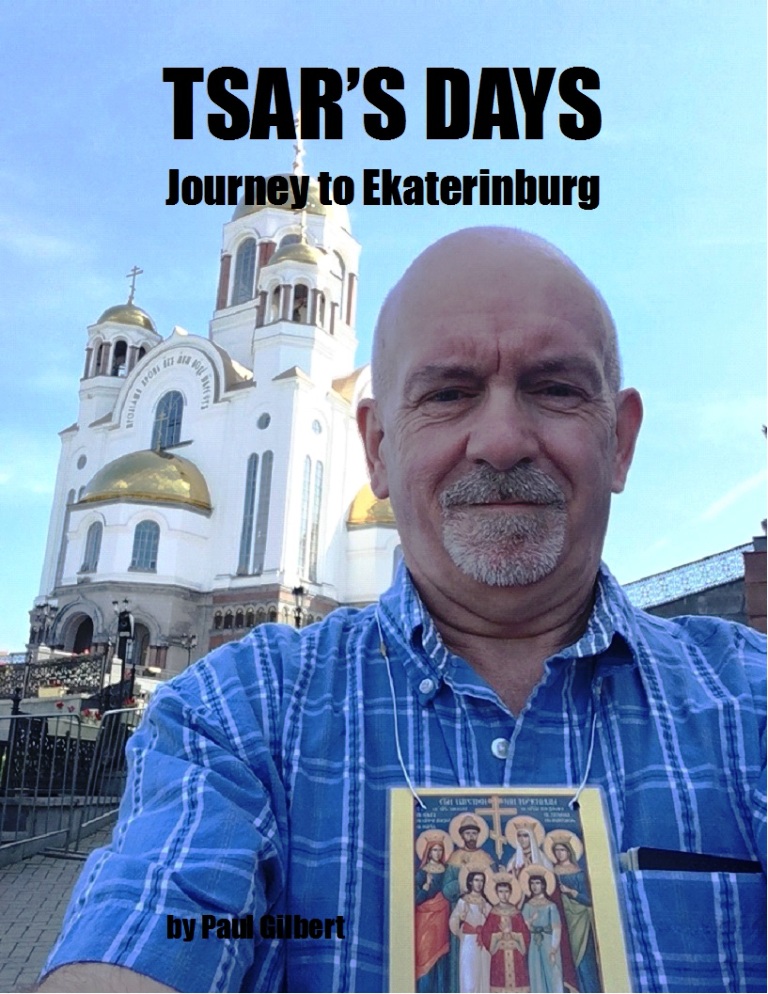
Tsar’s Days: Journey to Ekaterinburg

*This title is available from AMAZON in the USA, UK, Canada,
Australia, France, Germany, Spain, Italy, Netherlands and Japan

CLICK ON THE LINK BELOW TO ORDER FROM AMAZON

HARD COVER EDITION @ $40 USD

PAPERBACK EDITION @ $25 USD

BOOK DESCRIPTION

Hardcover and Paperback editions. 152 pages + Richly illustrated with nearly
200 COLOUR PHOTOS, 65 of which were taken by the author

***

On 17th July 1998, independent researcher and writer Paul Gilbert travelled to St. Petersburg, for the interment of Emperor Nicholas II and his family. Twenty years later to the day, he journeyed to Ekaterinburg, to take part in Tsar’s Days and the events marking the 100th anniversary of the Tsar’s death and martyrdom.

In his own words and photographs, he shares his own personal experiences and impressions of the places associated with the last days of Emperor Nicholas II and his family, including the Church on the Blood, Ganina Yama, and Porosenkov Log. In addition, he writes about his visits to no less than three museums dedicated to the Holy Royal Martyrs, exhibitions, and the Patriarchal Liturgy performed on the night of 16/17 July by His Holiness Patriarch Kirill of Moscow and All Russia.

This book is complemented with 24 illustrated news articles about events leading up to Tsar’s Days in the Urals, from 1st to 31st July 2018.

Gilbert’s solemn journey to the Urals allowed him to experience history in the making, and to honour the memory of the Holy Royal Martyrs, a century after their death and martyrdom.

It may be years before most of us can visit Russia again, in the meantime, you can visit Ekaterinburg through the pages of this book from the comfort of your favourite chair.

© Paul Gilbert. 26 February 2022

The fate of Porosenkov Log and Ganina Yama

CLICK on the image above to watch a 2-minute video tour of the Romanov Memorial at Porosenkov Log

In May, the Council of Bishops of the Russian Orthodox Church (ROC) will convene in Moscow, to discuss the results of examinations carried out between 2015-2018, by the Investigate Committee of the Russian Federation. It is widely believed that the Council will recognize the authenticity of the remains of the Imperial Family. So, what effect will this have on both Porosenkov Log and Ganina Yama?

Representatives of the Romanov Memorial Charitable Foundation in Ekaterinburg, now fear that the diocese could destroy the original appearance of Porosenkov Log, the spot were the remains of Emperor Nicholas II, his wife, three children and four retainers were discovered in 1991. The remains of Tsesarevich Alexei and his sister Maria were discovered in a nearby separate grave in 2007.

According to Ilya Korovin, Director of the Romanov Memorial Charitable Foundation , Porosenkov Log is the only place in Ekaterinburg connected with the Imperial Family’s final days, which has survived to this day unchanged. “In Ganina Yama, unlike the Porosenkov Log, visitors cannot see the territory as it looked in 1918. Of course, with the recognition of the remains, the question of the future fate of the memorial will arise,” he said during a recent press conference.

As an argument, representatives of the fund cite the fact that in March 2016 the Ekaterinburg Diocese asked for a plot of land at Porosenkov Log, made a request to the Ministry of Culture of the Sverdlovsk Region for the transfer of the territory in and around Porosyonkov Log (added to the cultural heritage list in 2014), transferred to the ROC, to be designated as sacred land and where a memorial and monastery, similar to that at Ganina Yama would be constructed.

The Governor of Sveredlovsk Yevgeny Kuyvashev suspended the process of allocating land for an indefinite period. “Knowing the methods of preserving and developing memorial sites by the Russian Orthodox Church, one can come to the disappointing conclusion that Porosenkov Log will undergo catastrophic changes,” Korovin said. Korovin also noted that the territory of the Railway Forest Park, where the Romanov Memorial is located, is also subject to future development.

Representatives of the Romanov Memorial also added that, previously in 2007-2010 the Russian Orthodox Church planned to seize the territory in the area of ​​the Old Koptyakovskaya Road, partially cut down the forest, in order to build a cemetery and an Orthodox church. Again, the Sverdlovsk authorities were forced to intervene in order to end the conflict.

Sergei Chapnin, a member and expert of the Romanov Memorial Charitable Foundation, believes that Porosenkov Log is a civil memorial and this section of the old Koptyakovskaya Road must be kept intact.

Local Ekaterinburg historian Nikolai Neuimin notes, “if the Bishops Council recognizes that the remains of the Nicholas II and his family are authentic, then it turns out that the Monastery of the Holy Royal Martyrs should not have been built at Ganina Yama, the place where the regicides tried to bury the bodies for the first time. The bones lay there for only a day and a half, while the remains were reburied 3.5 km away in two separate graves in what is today known as Porosenkov Log. As Ganina Yama is the main place of pilgrimage for Orthodox Christians, no one will demolish or move the seven churches, even if it turns out that the remains in the Porosenkov Log are indeed genuine,” he added.

Chapnin, among others, believe that the recognition by the ROC of the Ekaterinburg will most certainly create a schism within the church. The ROC will be forced to acknowledge that for more than 100 years, they were wrong. This in itself may be perceived by many as a great embarrassment and humiliation to the church.

“Not every one in the church is ready to recognize the authenticity of the remains. Accepting the new reality will be quite difficult,” he added.

© Paul Gilbert. 14 February 2022

What awaits Ganina Yama, after the ROC recognizes the Ekaterinburg Remains?

PHOTO: The Monastery of the Holy Royal Martyrs at Ganina Yama. A wooden causeway surrounds the abandoned mine shaft – visible as a depression in the ground – where the remains of Nicholas II and his family were first discarded after their brutal murder at the Ipatiev House in Ekaterinburg

Thirty years after the discovery of the burial site of the Imperial Family in Porosenkov Log, the Russian Orthodox Church (ROC) is apparently now ready to accept the findings of numerous genetic examinations and admit that the remains of the bodies found there really belong to Emperor Nicholas II and his family.

It is not yet clear whether a new monastery will be built on the site, in memory of the Holy Royal Martyrs, but the church has already requested that Porosenkov Log be transferred to the Ekaterinburg Diocese “for the purpose of carrying out religious activities.” And, will most likely, receive it.

It is speculated, that next month, the Bishops’ Council of the Russian Orthodox Church (ROC) will formally recognize the results of examinations which prove the authenticity of the remains of the Imperial Family, exhumed in the summer of 1991 in the area of ​​Porosenkov Log on the Old Koptyakovskaya Road.

“The examinations that have been carried out convincingly show that the remains found near Ekaterinburg are indeed the remains of the Imperial Family. But for the church to recognize this, it is necessary that all bishops study the results of these examinations. I think as soon as this happens – probably at the bishops’ council in November – the authenticity of the “Ekaterinburg remains” will be recognized by the church,” said Metropolitan Hilarion of Volokolamsk (Alfeyev), chairman of the Department for External Church Relations of the Moscow Patriarchate in September 2021.

PHOTO: Porosenkov Log, situated 3.8 km from Ganina Yama. The main grave is seen in the center of the photo, a small path (seen in the upper left) leads to the second grave, where the remains of Tsesarevich Alexei and his sister Grand Duchess Maria were discovered in 2007

The discovery of the remains of the Imperial Family in Porosenkov Log

The family of Nicholas II were shot in the Ipatiev House in Ekaterinburg on the night of 16/17 July 1918. The bodies were then taken out of the city to an area of ​​old mines in the Ganina Yama tract, where their killers attempted to destroy the remains using fire and acid.

For many years the Russian Orthodox Church insisted that the bodies of members of the Imperial Family had been destroyed. According to the inhabitants of the Monastery of the Holy Royal Martyrs at Ganina Yama, the monastery stands on the ground, where the ashes from the burnt remains were scattered.

However, historians believe that Ganina Yama is the site of the first attempt of burying the remains, however, the killers returned the following day, exhumed the remains and transported them 3.8 km, and reburied them near the Old Koptyakovskaya Road, which led from Ekaterinburg to Lake Isetskoye.

The remains of the Imperial Family were originally found in 1978 by a group of enthusiasts led by the Ural geologist Alexander Avdonin, who worked under the patronage of film director Geliy Ryabov. Due to the political situation in the Soviet Union at the time, no exhumation of the remains was carried out. It was not until 1991, after the victory of Boris Yeltsin in the presidential elections of the RSFSR, that Avdonin decided that it was time to make the discovery public.

Meanwhile, the search for the remains of Tsesarevich Alexei and Grand Duchess Maria continued, and discovered in 2007 at Porosenkov Log, in a second grave [only 44 pieces of their bones had been discovered at the site] just meters from the main burial site.

Since that time, the authenticity of the bones of Nicholas II and his family has been confirmed three times. In January 1998, the Commission of the Republican Center for Forensic Medicine of the Ministry of Health of Russia concluded: “The remains found in Ekaterinburg are the remains of Nicholas II, members of his family and his retainers.” In 2008, the authenticity of the remains was also confirmed by a genetic analysis carried out by experts from Russia and the United States. In the summer of 2018, the official representative of the Investigative Committee of Russia (TFR) Svetlana Petrenko said that repeated commissions of molecular genetic examinations confirmed the authenticity of the remains of Emperor Nicholas II and his family.

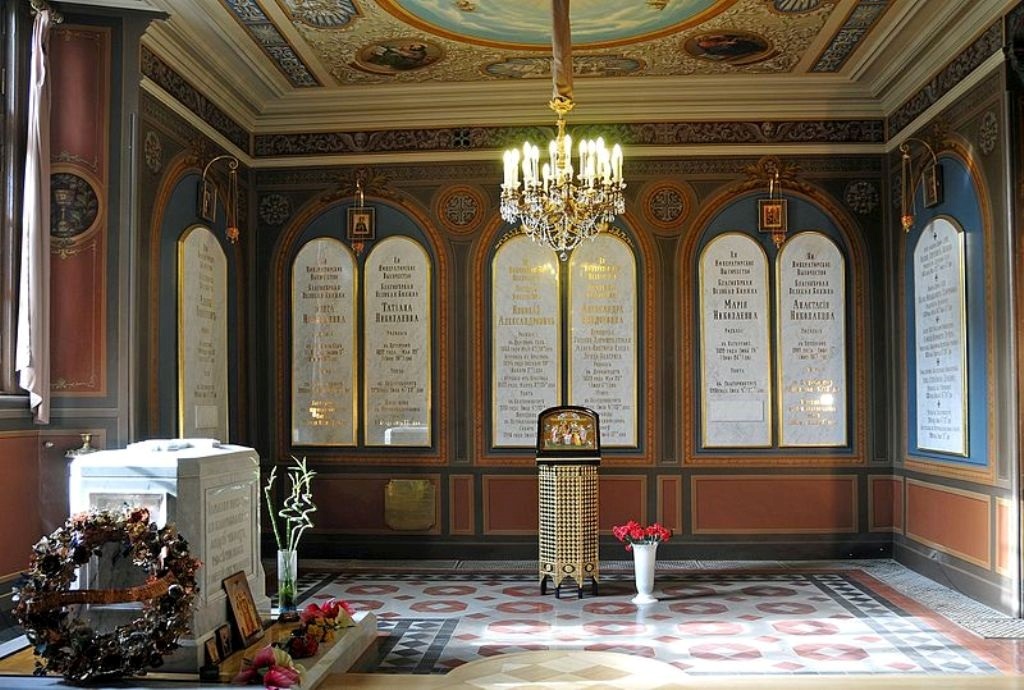
PHOTO: The tomb of the Imperial Family in the St. Catherine Chapel of the SS Peter and Paul Cathedral, St. Petersburg

Why has the Russian Orthodox Church not recognized the authenticity of the remains for 30 years?

Despite these numerous extensive scientific studies and examinations, the Russian Orthodox Church has still not officially recognized the remains discovered at Porosenkov Log. There are several reasons for this:

First, the recognition somewhat discredits the Monastery of the Holy Royal Martyrs at Ganina Yama. If the remains of the Imperial Family are nevertheless recognized as genuine, it will turn out that the monastery has to be rebuilt in another place. At the same time, Ganina Yama is the main place of pilgrimage for Orthodox Christians, where traditionally all religious processions in memory of the Holy Royal Martyrs end.

Secondly, as the historian and local historian Nikolai Neuymin explains, there will be confusion in the minds of believers, since “there will be several graves: at Ganina Yama, Porosenkov Log and the Peter and Paul Fortress [St. Petersburg].”

Thirdly, the recognition of the remains threatens a split among Orthodox Believers, some of whom will not believe the results of the genetic examination.

Fourth, the Russian Orthodox Church will be forced to publicly admit that for more than 100 years, they were wrong.

Click HERE to read my article The Fate of the Ekaterinburg Remains, published on 18th June 2021

PHOTO: Independent researcher Paul Gilbert, standing at the entrance to the Romanov Memorial at Porosenkov Log. 2nd June 2016

What will happen to Porosenkov Log and Ganina Yama?

If the Russian Orthodox Church does recognize the remains, then, most likely, it will most likely construct a new monastery, church or just a chapel for pilgrims. It is difficult, however, to say at this time.

In March 2016, the Ministry of Culture of the Sverdlovsk Region reported that if the ROC requests the transfer of the territory in and around Porosyonkov Log (added to the cultural heritage list in 2014), would be designated as sacred land and transferred to the ROC, where a memorial and monastery, similar to that at Ganina Yama would be constructed. This in itself suggests that perhaps the ROC has already come to a decision on the authenticity of the remains, and were making preparations?

Porosenkov Log is currently under the administration of the Sverdlovsk Museum of Local Lore, who have plans to build a museum complex on this territory. As a result, Governor Evgeny Kuyvashev suspended the process of land allocation for an indefinite period.

It should also be added, that if the ROC recognize the remains of the Imperial Family as Holy Relics, they cannot be returned to their tomb in St. Catherine’s Chapel [SS Peter and Paul Cathedral in St. Petersburg], as relics cannot be returned to the earth. They must be placed in reliquaries above ground which allows the faithful to venerate them. This would be one very important reason why their remains would be interred in a new cathedral named in their honour.

Even if a new monastery is constructed at Porosenkov Log, it will not take away the significance and historic importance of the Monastery of the Holy Royal Martyrs at Ganina Yama, because the burial of the Imperial Family took place at each in the summer of 1918.

In conclusion, perhaps, after the recognition of the remains by the church, the annual Cross Procession in memory of the Holy Royal Martyrs, will end not end at Ganina Yama, but at that of Porosenkov Log.

© Paul Gilbert. 3 October 2021

30th anniversary of the exhumation of the remains of Nicholas II and his family

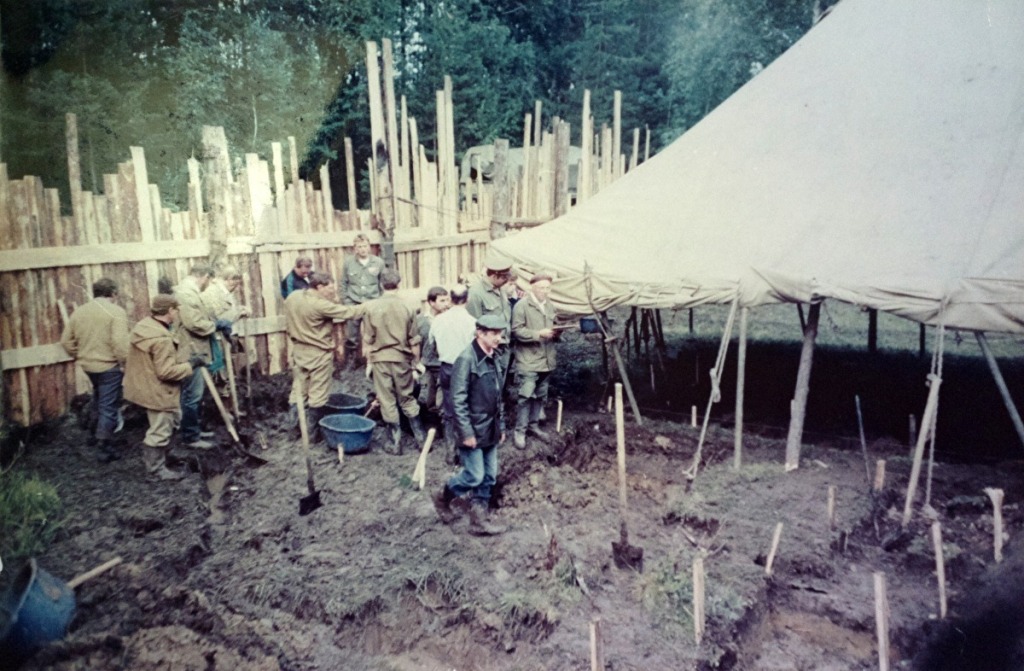
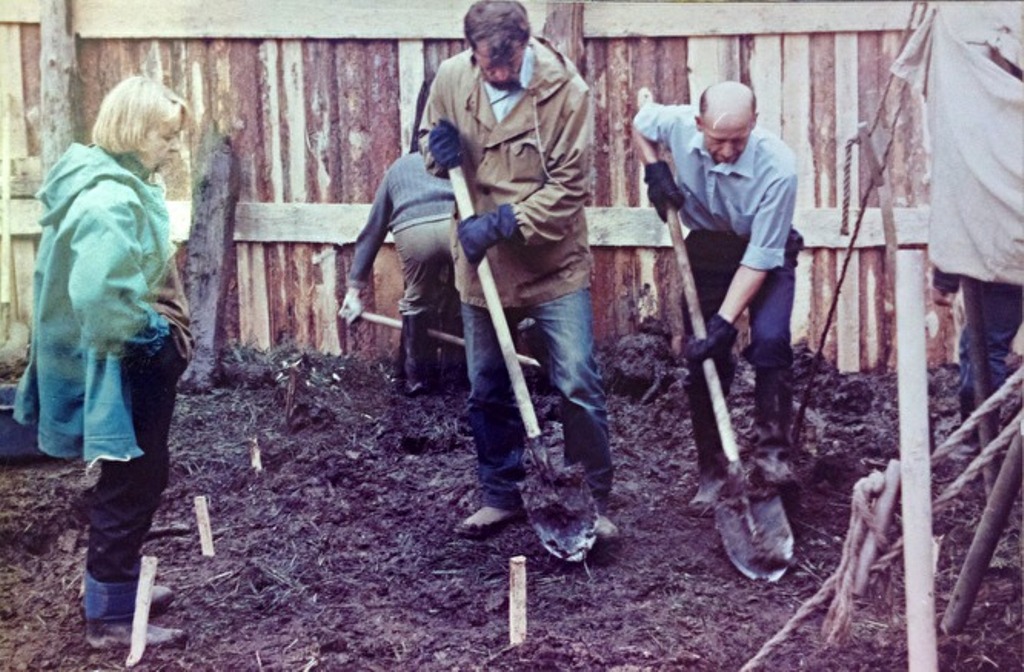
PHOTO: Avdonin and his team excavate the burial site at Porosenkov Log in 1991

WARNING: please be aware that this post includes graphic images which some readers may find disturbing.

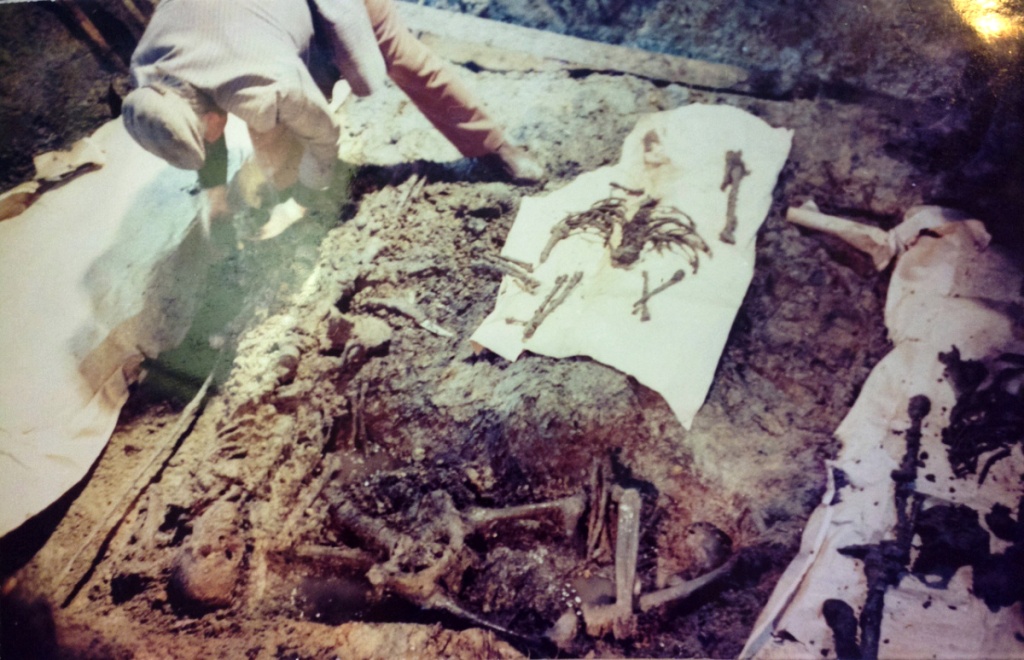
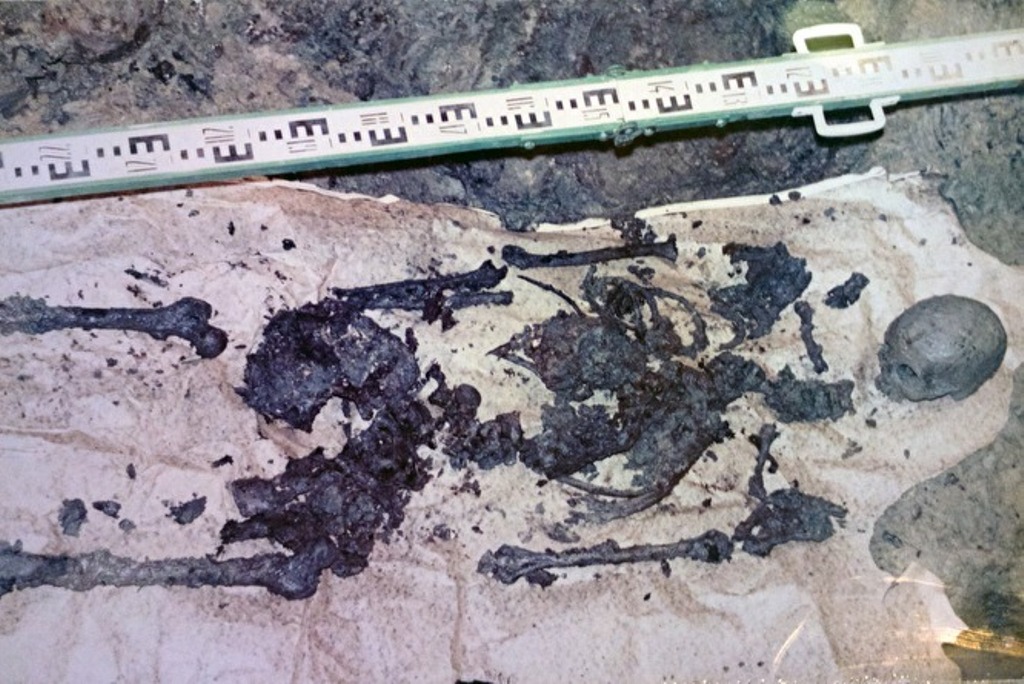
This month marks the 30th anniversary of the exhumation of the remains of Emperor Nicholas II and members of his family, discovered at Porosenkov Log in 1979. The Sverdlovsk Regional Museum of Local Lore in Ekaterinburg have published archival photos of the excavations, which were not carried out until 1991.

The photos show the excavations, which were initiated in the Porosenkov Log area on the Old Koptyaki Road on 11th July 1991. Geologist Alexander Nikolaevich Avdonin and curator from the Institute of History and Archaeology of the Ural Branch of the Russian Academy of Sciences, Lyudmila Koryakova and their team experts, all participated in the exhumation of the skeletons, which, were later established as the remains of Emperor Nicholas II, Empress Alexandra Feodorovna, their three daughters Grand Duchesses Olga, Tatiana, Anastasia and their four faithful retainers.

PHOTO: Avdonin and his team excavate the burial site at Porosenkov Log in 1991

According to the museum “1991 was a turning point for Russia” and “the country’s political future was uncertain.” On 12th June 1991, the presidential elections of the Russian Soviet Federative Socialist Republic (RSFSR) were held, which was won by Boris Yeltsin – Russia’s first president. It was at this point that “more than 70 years of the Communist Party of the Soviet Union was coming to an end.” This is what prompted Avdonin to initiate excavations.

It was in 1979, that Avdonin and Gely Trofimovich Ryabov (1932-2015) discovered the unmarked grave containing the skeletons of the Romanovs in the north-western outskirts of Sverdlovsk. At first Avdonin believed that the time was not yet right to announce their discovery, however, Yeltsin’s victory convinced him that it was high time. On 10th July 1991, he turned to Governor Eduard Rossel and said that he knew where the remains of the Imperial Family were buried.

PHOTO: remains of the Imperial Family exhumed from the burial site at Porosenkov Log in 1991

Despite the fact that the political situation in Russia seemed extremely unstable, Rossel decided to exhume the remains. On 11th July 1991, Avdonin and Rossel assembled a team of local archaeologists, who began the excavation of the grave at Porosenkov Log. Upon the discovery of the remains, the Prosecutor General’s Office of the Russian Federation opened a criminal case. The outcome of the investigation divided many Russian Orthodox Christians – some of whom recognized the authenticity of the remains, while many others did not. The investigations and examinations are still ongoing, however a final decision on the authenticity of the Ekaterinburg remains will be made by the Bishops’ Council of the Russian Orthodox Church (ROC), which will take place in November of this year.

PHOTO: Alexander Avdonin (right) with Nikolai Borisovich Neuymin, director of the Romanov Memorial Hall in Ekaterinburg, standing at the burial site at Porosenkov Log

Emperor Nicholas II and his family were all shot in the Ipatiev House in Ekaterinburg on the night of 16/17 July 1918. The bodies were taken out of the city, where their murderers attempted to destroy the remains with fire and acid in the area of ​​old mines in the Ganina Yama tract. Their horrific mission failed, after which the remains were transported 3.8 km and buried near the Old Koptyaki Road [Porosenkov Log]. The grave remained a secret until 1979, when the remains were found by a team of enthusiasts led by the Ural geologist Alexander Avdonin, who worked under the patronage of Geliy Ryabov, at that time assistant to the head of the USSR Ministry of Internal Affairs.

It was not possible to extract and study the remains at that time. Avdonin’s team, together with archaeologists, did this in 1991, only to discover that two skeletons were missing. It was not until 2007, that the remains of Tsesarevich Alexei and Grand Duchess Maria, were discovered in a second grave just meters from the main burial site.

© Paul Gilbert. 7 July 2021

Nicholas II’s grave was an “open secret” in Soviet Russia during the 1920s

PHOTO: the remains of Nicholas II, his wife, three of their children and their four faithful retainers were buried under the “sleepers bridge” at Porosenkov Log by their murderers in 1918

We hid them so well that the world will never find them,” boasted Commissar for Supply in the Ural Region Soviet Pyotr Lazarevich Voykov (1888-1927), on the location of the murdered remains of Emperor Nicholas II and his family.

While the burial site of the Imperial Family at Porosenkov Log remained a secret to the world for more than 60 years, it was in fact an “open secret”[1] to a select few in the Soviet Union in the 1920s.

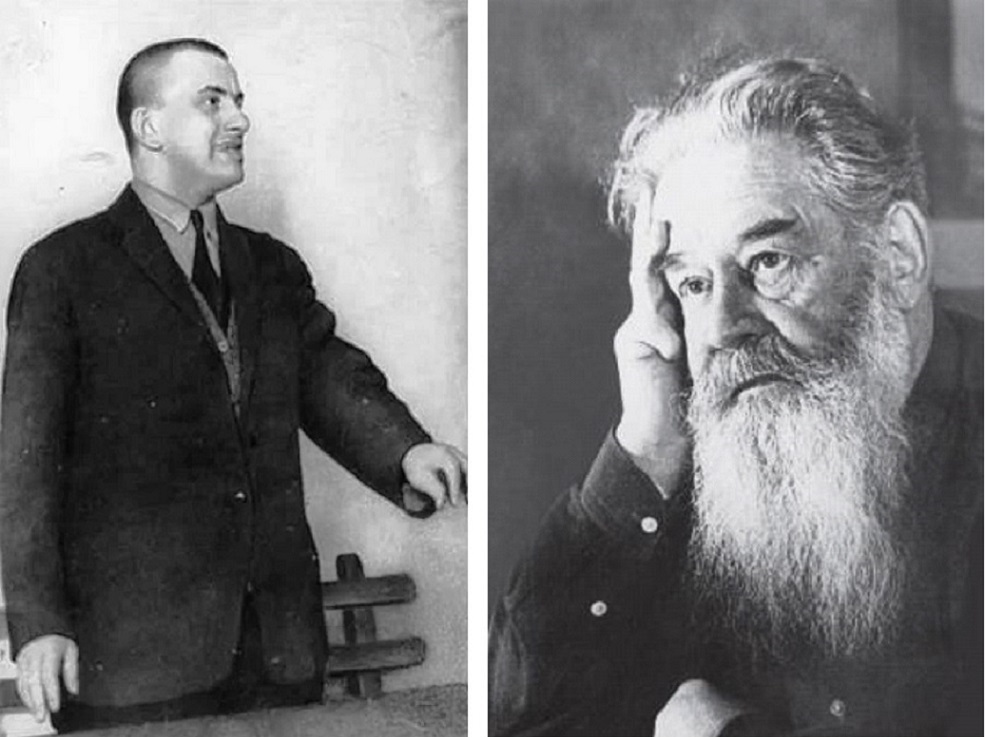
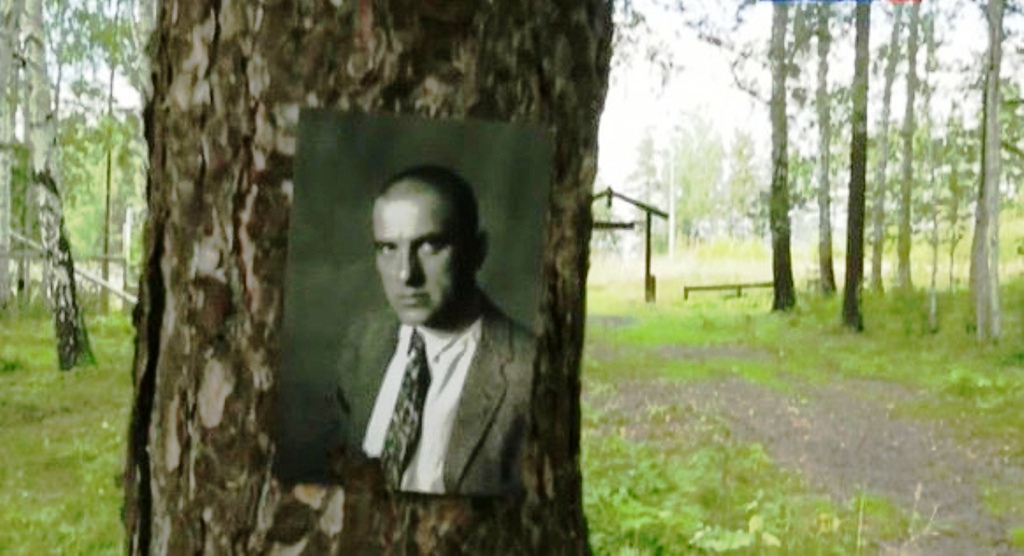
In January 1928 – ten years after the murders of Emperor Nicholas II, his family and four faithful retainers – the famous Soviet poet Vladimir Vladimirovich Mayakovsky (1893-1930) visited Sverdlovsk. It was at the city’s Business Club that he met the Chairman of the Ekaterinburg City Executive Committee Anatoly Ivanovich Paramonov (1891-1970), making enquiries about the city and the last days of the Imperial Family.

Paramonov took Mayakovsky to the Ipatiev House, and then in minus 30-degree frost, along the Old Koptyaki Road to the place where the remains of the Imperial Family had been buried by their murderers – members of the Ural Soviet on 17th July 1918.

“Of course, it was nothing special – to see the grave of the tsar. In fact, nothing is visible there. It is very difficult to find as there are no signs or marks, this secret place is familiar only to a certain group of people,” Mayakovsky wrote in his diary.

PHOTO: Vladimir Mayakovsky and Anatoly Paramonov

Three months after his trip to the Urals, Mayakovsky wrote the mockingly pathetic poem The Emperor, which indicated the place of burial with absolute toponymic accuracy. In his poem, Mayakovsky reveals clues: “Beyond the Iset [river], where the wind howled, the executive committee coachman fell silent and stood at the ninth verst.”[2] “Beyond Iset at the ninth verst” is a key clue that indicated where to look for the tsar’s grave on the Old Koptyaki Road. The poem further notes: “Here the cedar was torn with an ax, notches under the root of the bark, at the root, under the cedar, there is a road, and in it the emperor is buried.”

The Emperor was published in the Soviet literary magazine Krasnaya Nov on 4th April 1928. Mayakovsky’s poem made a terrible impression on the Russian/Soviet poet Marina Ivanovna Tsvetaeva (1892-1941). She deplored Mayakovsky’s justification of the terrible massacre, as a kind of verdict of history. She insisted that the poet should be on the side of the victims, not the executioners, and if the story is cruel and unfair, he must speak against it. In 1929, in response, she began working on a poem about the Tsar’s Family entitled Heart and Stone.

Mayakovsky’s poem, as well as other evidence such as the “Yurovsky note”, helped Soviet and Russian geologist Alexander Nikolayevich Avdonin and Soviet writer and filmmaker Geliy Trofimovich Ryabov (1932-2015) locate the remains of the Imperial Family in 1979[3].

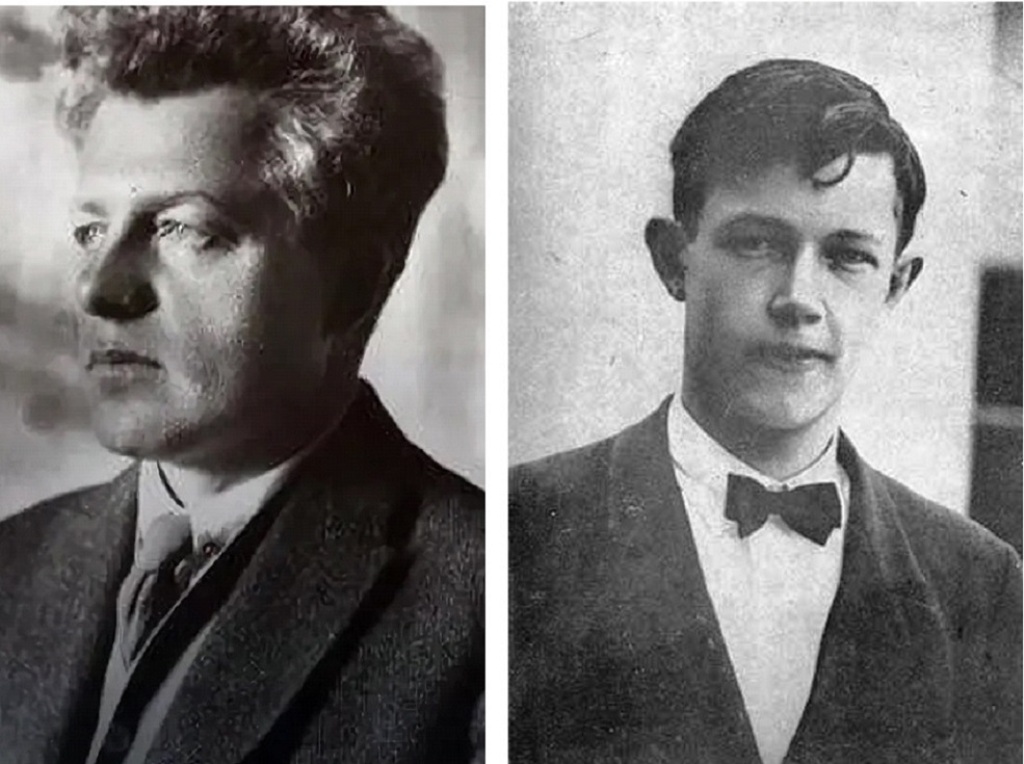
PHOTO: Pyotr Voykov and Boris Kowerda

In 1926, Mayakovsky visited Voykov in Warsaw, where the latter served as Soviet Ambassador to Poland. It was during this visit that Voykov told Mayakovsky about the regicide which took place in Ekaterinburg. Voykov was assassinated in Warsaw on 7th June 1927, by Boris Sofronovich Kowerda (1907-1987) a White émigré and monarchist. Kowerda planned to kill Voykov in order to “Avenge Russia, and the deaths of millions of people”, as well for Voykov’s participation in the decision to execute Nicholas II and his family.

Declassified photographs taken by members of the firing squad, as well as those who did not participate in the regicide, but who knew of the location of burial site, aided Paramonov and Mayakovsky to locate the “sleepers bridge” (see photo below).

The murderer Pyotr Zakharovich Ermakov (1884-1952) used a Mauser pistol[4], during the liquidation of the Imperial Family in the basement of the Ipatiev House. He brought it with him to the place where the bodies lay so that he could be photographed (see photo below).

“In the first half of the 1960s, one of the sons of the murderers applied to the Central Committee of the Communist Party with a letter addressed to the First Secretary of the Communist Party of the Soviet Union Nikita Sergeevich Khrushchev (1894-1971), boasting that his father had participated in the murder of the Imperial Family. He presented Khrushchev with two pistols that he had preserved: one for the Soviet leader, the other – to be handed over to Cuban revolutionary Fidel Castro (1926-2016) as the leader of the world revolution. At that time, documents in all the archives were still sealed, yet two of the executioners were still alive. And for history, the Radio Committee recorded their memories, which had been preserved and “coincided with those of Yakov Mikhailovich Yurovsky” (1878-1938), said Sergei Mironenko, Director of the State Archives of the Russian Federation [GARF} in Moscow.

Yurovsky served as commandant of the “House of Special Purpose” [Ipatiev House], and the chief executioner of the Tsar and his family. But his memories raised a lot of questions – some historians believe that the typewritten text may have been specially falsified by the GPU-NKVD-KGB, in order to send future search efforts on the wrong track, or a story written by a third party, such as the Soviet historian Mikhail Nikolayevich Pokrovsky[5].

PHOTO: in the 1920s, the murderer Pyotr Zakharovich Yermakov returned to Porosenkov Log. On the reverse of this photo, he wrote: “I am standing on the grave of the Tsar”.

According to Vladimir Nikolaevich Solovyov, senior investigator and forensic expert at the Main Department of Criminalistics (Forensic Center) of the Investigative Committee of the Russian Federation, who from 1991 to 2015 led the investigation into the death of the imperial family, “the real breakthrough was made quite recently”.

Shortly after the completion of the work of the government commission, a safe was discovered in another archive, not in the State Archive, but in the former Central Party Archive, which had not been opened for many decades. It contained a manuscript of the famous Soviet historian Mikhail Nikolayevich Pokrovsky (1868-1932), a typewritten copy of which is kept in the State Archive. The discovery immediately confirmed that this is Yurovsky’s recollection, recorded by Pokrovsky. According to Sergei Mironenko, the bottom of the last page of the manuscript had been torn off. Apparently, it contained the name of the place where the bodies were hidden. So there is no evidence? There is! As shown by the graphological examination, handwritten by Pokrovsky and Yurovsky, the name was entered into the typewritten version, the authenticity of which is considered beyond any doubt.

“Interestingly, at the end of the classic text of Yurovsky’s note, there is an addition, made in pencil, which precisely indicates the place where the bodies were found,” said Solovyov.

PHOTO: Pyotr Zakharovich Yermakov (far right) posing with a group of prominent Ural Bolsheviks on the Tsar’s grave[6], his Mauser pistol can be seen in the foreground in front of P.M. Bykov, author of The Last Days of Tsardom (1934)

There has always been a mystique behind this story. A 1991 diagram clearly shows the location of the bodies. Their remains were not laid, but simply dumped by their murderers. For example, Olga’s skull is under the skeleton of her father. But even in the photo of the burial site, opened in 1991, a telephone cable is clearly visible. When laying it, the cutter even cut off the arm of one of the skeletons. But how could the Soviet telephone technicians know where they were laying the cable, because even if they had read Mayakovsky’s poem, the instructions were too obscure for them to link it to the burial site.

One more detail – small but important. According to Mayakovsky’s poem, he wrote about “the cedar was torn with an axe”. During a comprehensive survey of the area, a fallen stump, clearly cut long ago with an axe was found.

PHOTO: Mayakovsky’s photo pinned to a tree at Porosenkov Log

NOTES

[1] An “open secret” is a concept or idea that is “officially” secret or restricted in knowledge, but in practice (de facto) may be widely known; or it refers to something that is widely known to be true but which none of the people most intimately concerned are willing to categorically acknowledge in public.

[2] A verst is a Russian measure of length, about 0.66 mile (1.1 km).

[3] The remains of the Imperial Family were first discarded at the Four Brothers Mine, which is today the site of the Monastery of the Holy Royal Martyrs at Ganina Yama. Avdonin and Ryabov discovered the second grave 3.8 km down the highway at Porosenkov Log.

[4] Yermakov’s revolver can be seen on display in the Romanov Memorial Hall, located on the top floor of the Museum of History and Archaeology of the Urals, in Ekaterinburg

[5] Pokrovsky was a Russian Marxist historian, Bolshevik revolutionary and a public and political figure. One of the earliest professionally trained historians to join the Russian revolutionary movement, Pokrovsky is regarded as the most influential Soviet historian of the 1920s.

His attitude to the tsar, the nobility, generals, statesmen and church leaders and diplomats of the Tsarist period appear in the Pokrovsky’s works in a completely different light – as selfish, cruel, limited, ignorant individuals. To achieve greater impact on the reader, representatives of the ruling classes and leaders were denounced with the help of satire, irony and grotesque. Thus, Pokrovsky’s negative assessment of the reign of Nicholas II was accepted as the standard in the Soviet Union, where he was vilified.

[6] Group of prominent Ural Bolsheviks, photographed at the “grave of the Romanovs”, 1924. This photo is on display in the Romanov Memorial Hall, located on the top floor of the Museum of History and Archaeology of the Urals, in Ekaterinburg

(from left to right): back row – A.I. Paramonov (chairman of the board of Uralselkhozbank and editor of Krestyanskaya Gazeta, *NN, M.M. Kharitonov (first secretary of the Ural regional committee of the RCP (b)), B.V. Didkovsky (deputy chairman of Uralplan), I.P. Rumyantsev (head of propaganda department), *NN, A.L. Borchaninov (chairman of the Tyumen regional executive committee); front row – D.E.Sulimov (chairman of the Ural regional executive committee), G.S. Moroz (head of the Yekaterinburg department of the GPU), M.V. Vasiliev (employee of Uralselkhozbank), P.M.Bykov (editor of the newspaper “Uralskaya Nov”), A.G. Kabanov, P.Z.Ermakov (employee of the Cheka)

*NN denotes “unknown identity”

© Paul Gilbert. 6 July 2021