Portraits of Nicholas II by the contemporary Russian artist Yuri Ashikov

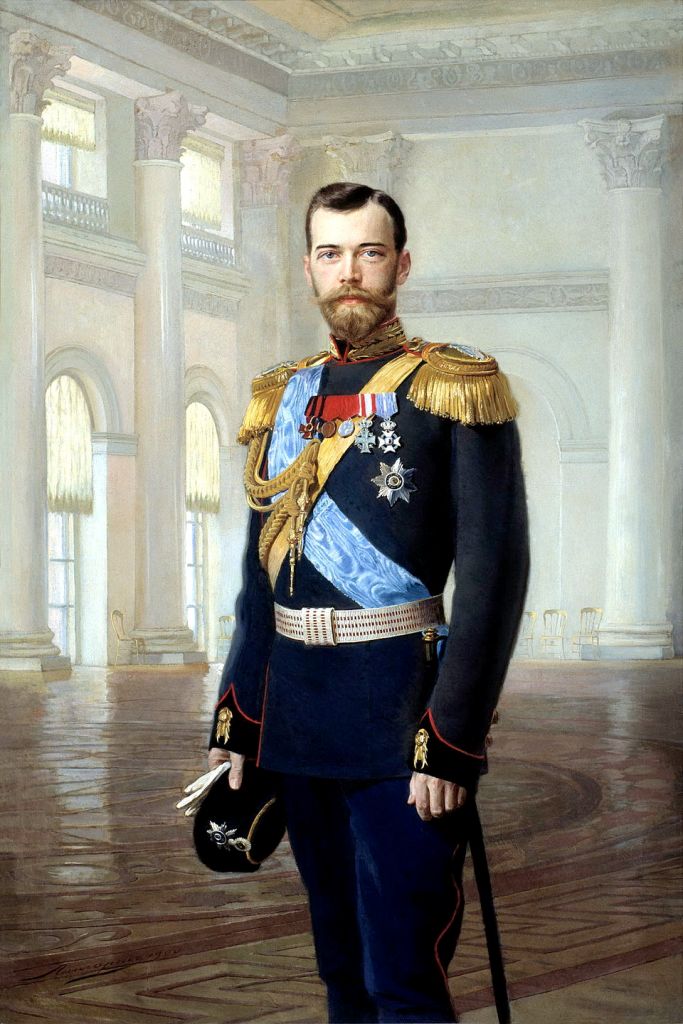
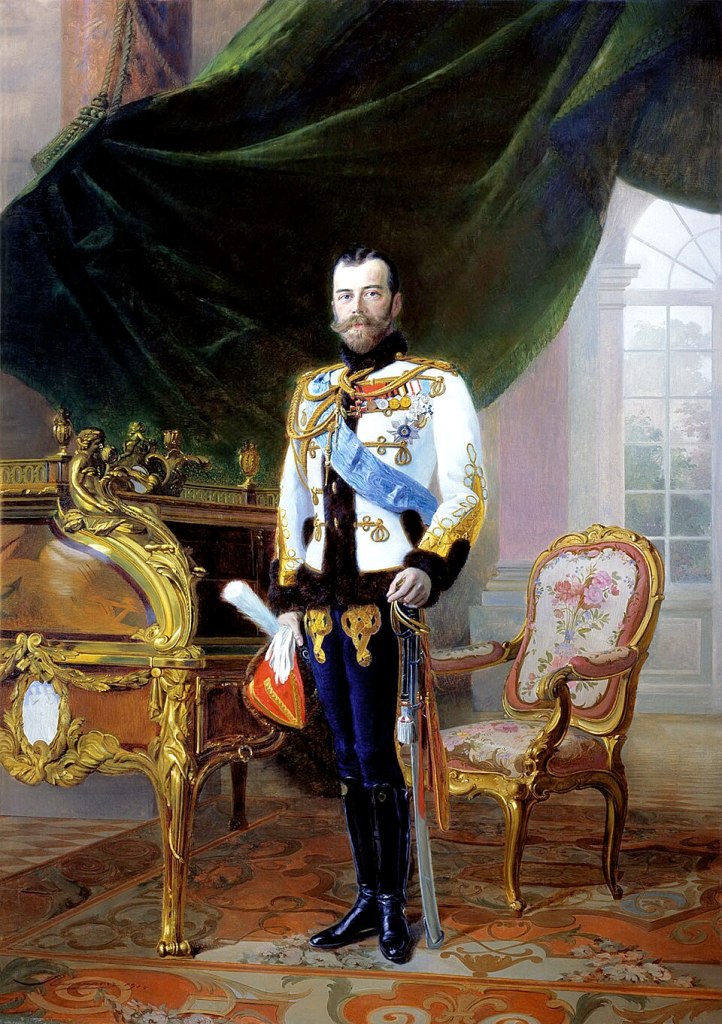
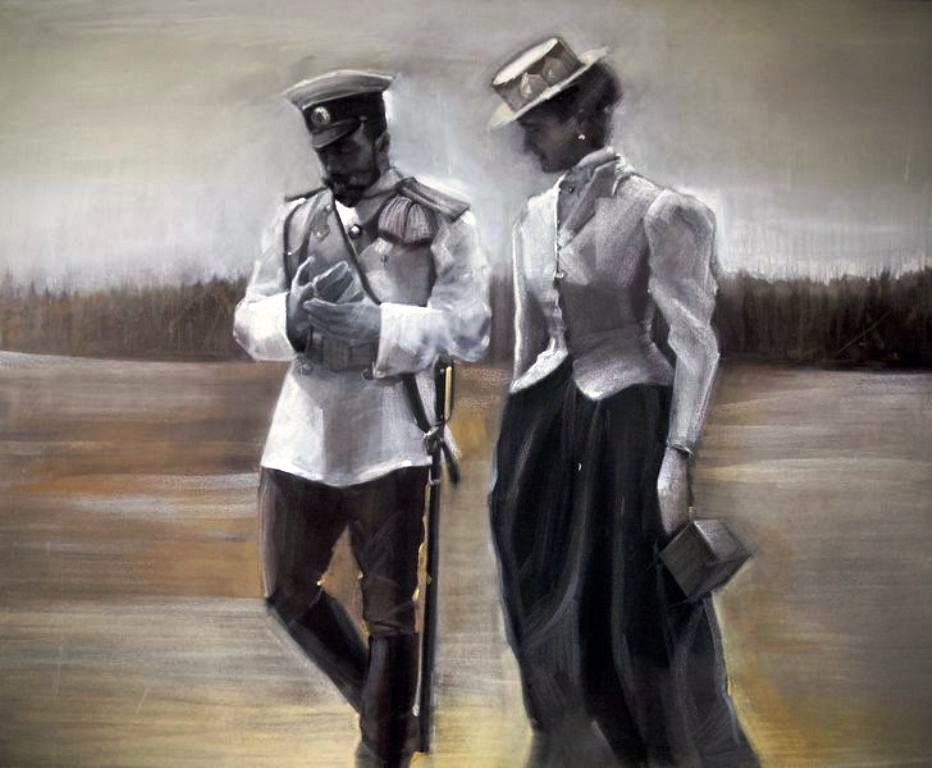
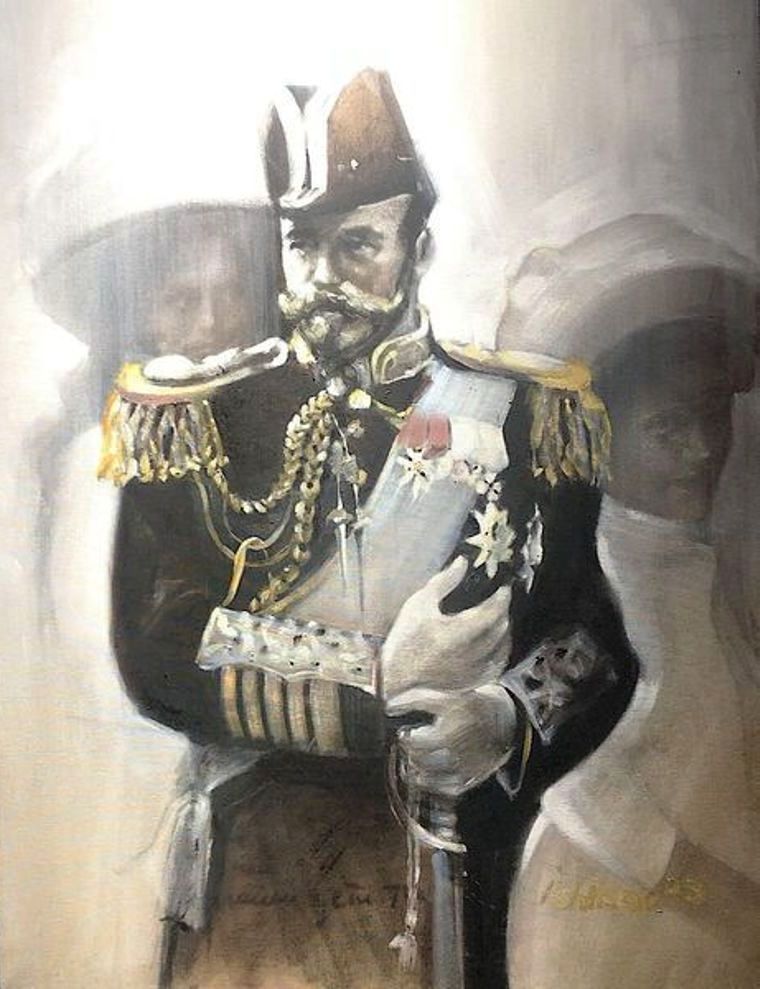
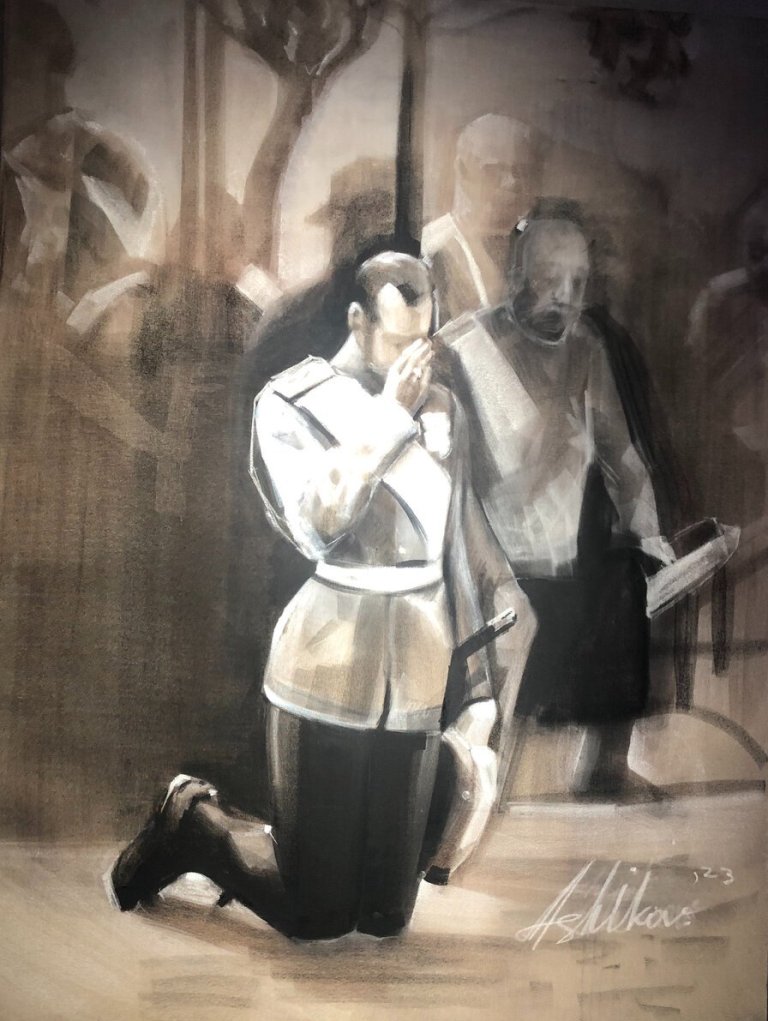
It is very rare for a new Romanov exhibition to escape my notice, however, I only just recently learned of a very interesting exhibition of a contemporary Russian artist’s portraits of Emperor Nicholas II, which was held in Moscow in the Spring of 2024.

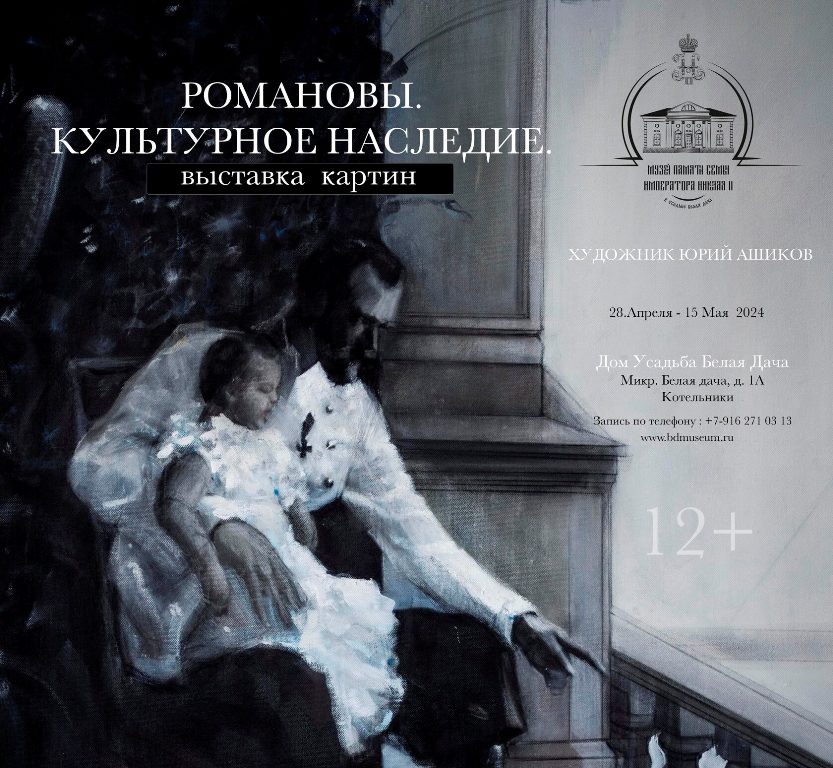
The Romanovs. Cultural Heritage exhibition showcased portraits of the last Tsar by Yuri Ashikov, a contemporary artist, who is virtually unknown of in the West. The exhibition was held from 28th April to 15th May 2024, in the Museum of Emperor Nicholas II in Moscow.

On display were the artist’s portraits of members of Emperor Nicholas II and his family, painted or drawn in the revived and almost lost, rare school of Russian realism in the portrait class, made popular during the late 19th and early 20th century by the famous Russian artist Valentin Alexandrovich Serov (1865-1911).

It is significant that Valentin Serov was the last artist to paint Emperor Nicholas II. In Yuri Ashikov’s paintings and drawings, you see the whole essence and beauty of the School of Russian Realism in a modern interpretation.

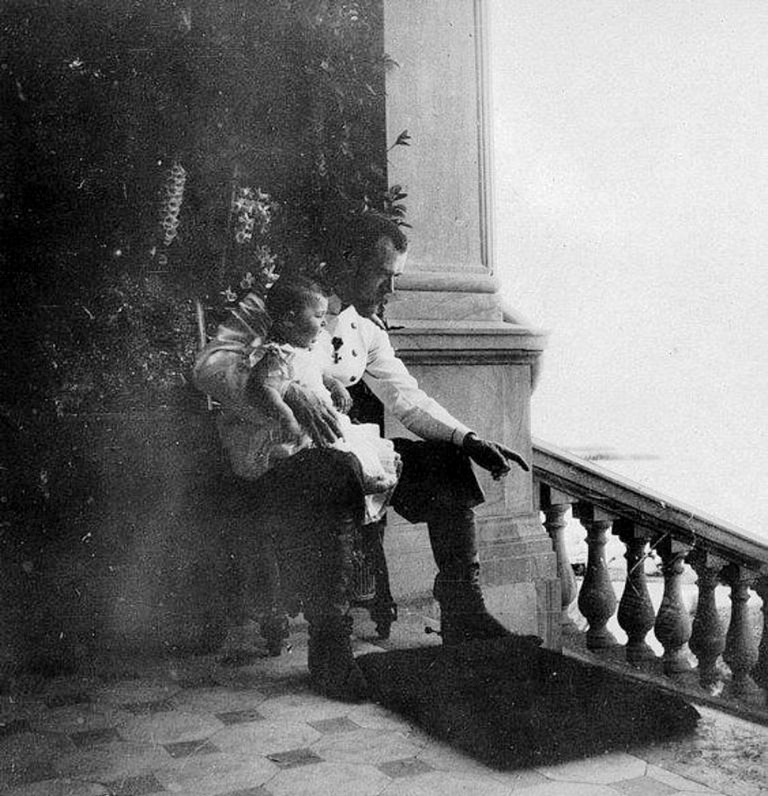
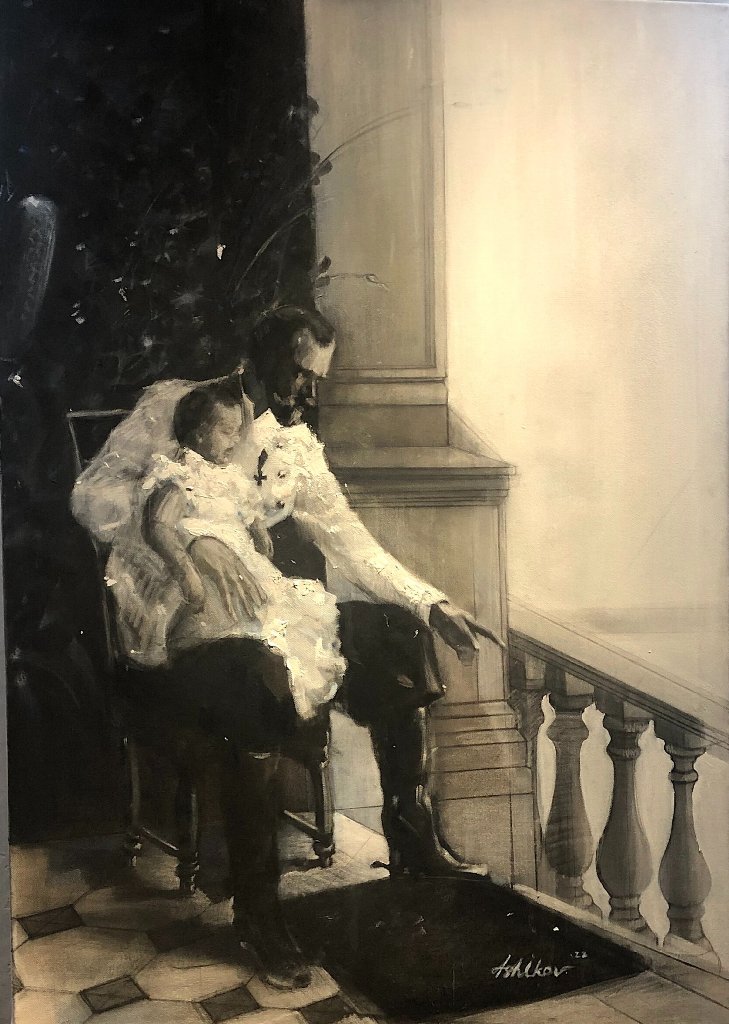
The culture of the late 19th century is directly and very closely related to the style in which the artist’s works are painted. Ashikov has managed to capture his August subject from iconic vintage photographs and paintings of the Tsar and his family. For instance, the portrait used for the exhibition poster (seen above) is based on a 1905 photograph of Nicholas II holding his infant son Alexei on his lap (see photo below) – it is truly beautiful beyond words!

I posted the above photo on my Facebook page several years ago, it was one of a series of four or five similar photos (though there are probably others?), but this one in particular, touched my heart.

This endearing image shows the Emperor Nicholas II seated on the porch of the Lower Dacha, Peterhof, while holding his infant son and heir Tsesarevich Alexei, c. 1905.

The Emperor is seen as a ‘proud papa’ pointing at something which has caught his eye in the garden, and he wants to share with Alexei.

Tsesarevich Alexei Nikolaevich was born in the Lower Dacha at Peterhof on 12th August (O.S. 30th July) 1904. He was named Alexei – in honour of St. Alexius of Moscow (1296–1378).

About the artist – Yuri Ashikov

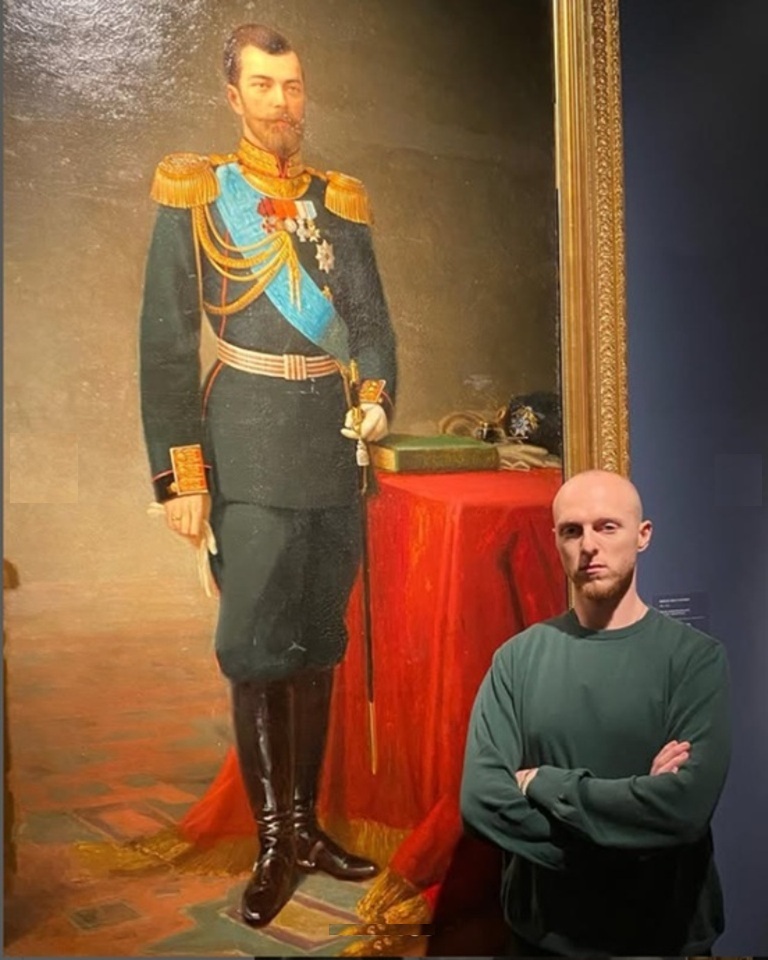
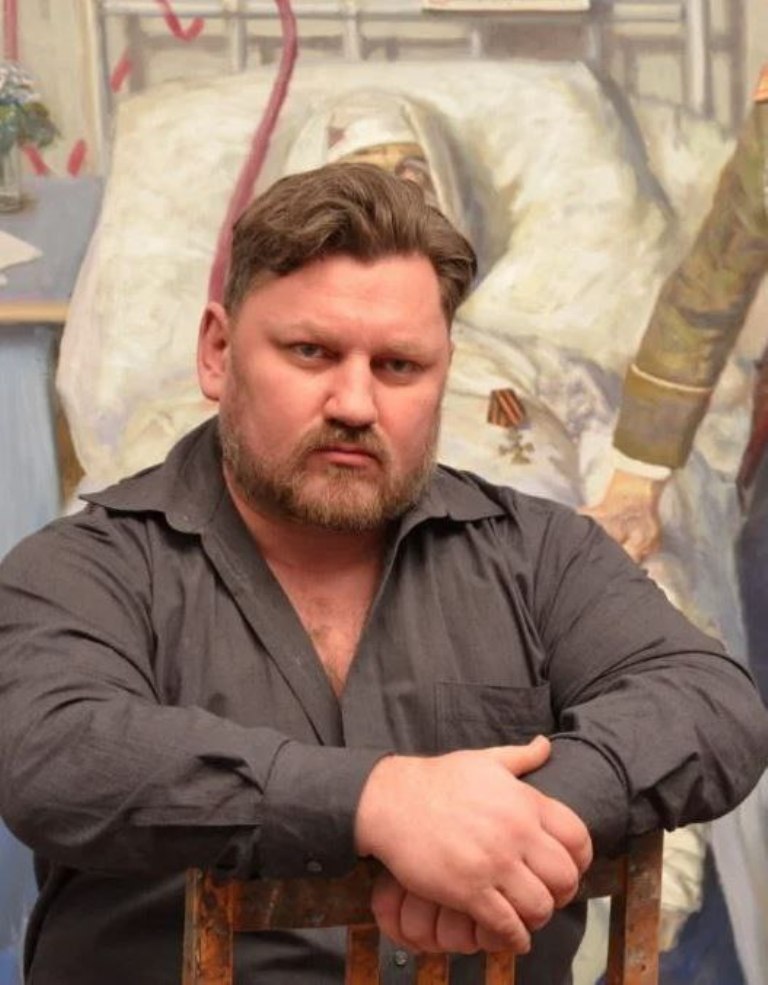
PHOTO: the contemporary Russian artist Yuri Ashikov visiting his “favourite museum”, while posing in front of a portrait of Emperor Nicholas II

Born in 1994, Yuri Ashikov is a contemporary Russian painter, photographer, sculptor, architect and art designer. He graduated, from the Stroganov School Faculty of Design in Moscow, trained in London and Japan, Latvia and Italy, studying not only drawing, but also design and architecture.

For three years, the artist worked on the “Romanov project”, creating a number of both paintings and charcoal drawings of the Tsar, his wife and children. Yuri wrote: “… I want the paintings to be alive, and each work to evoke emotions in the person… Each new project sets its own style, technique and materials. But most of my work I start in the traditional style – with charcoal.”

His exquisite paintings, which are recreated from iconic photographs and paintings of Russia’s last Tsar. They have been exhibited in cities across the Russian Federation, including Moscow and St. Petersburg.

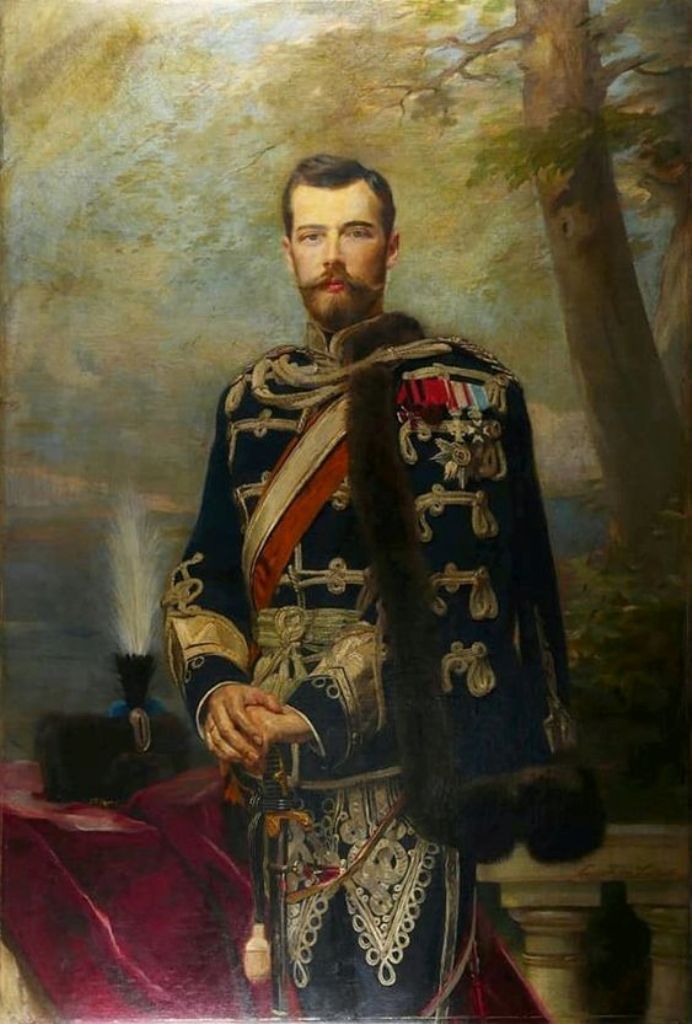
Below, are some of Yuri Ashikov’s portraits of Emperor Nicholas II . . .

© Paul Gilbert. 11 September 2025

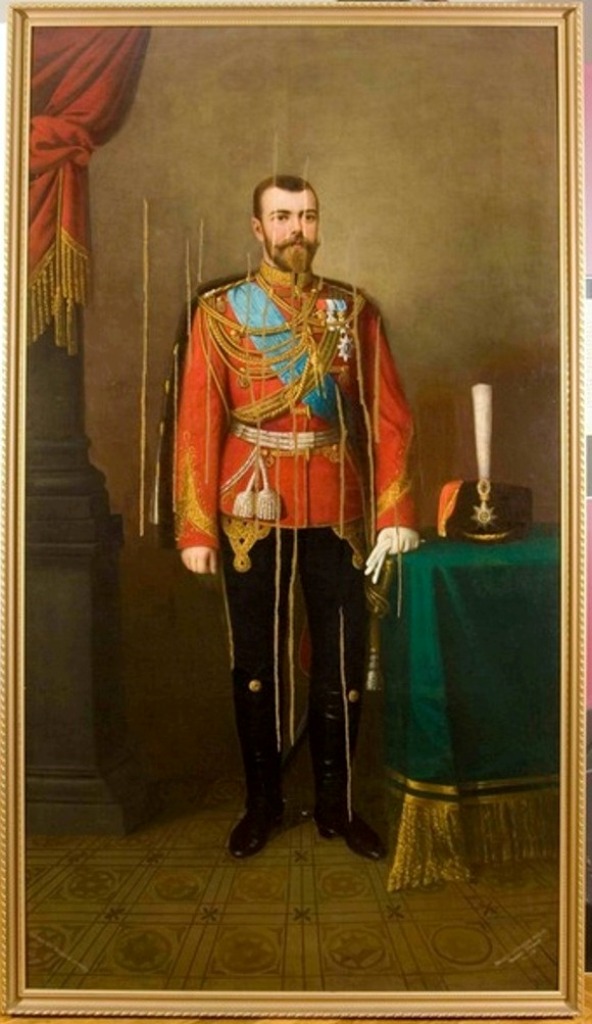
Portrait of Nicholas II returned to Russia from America

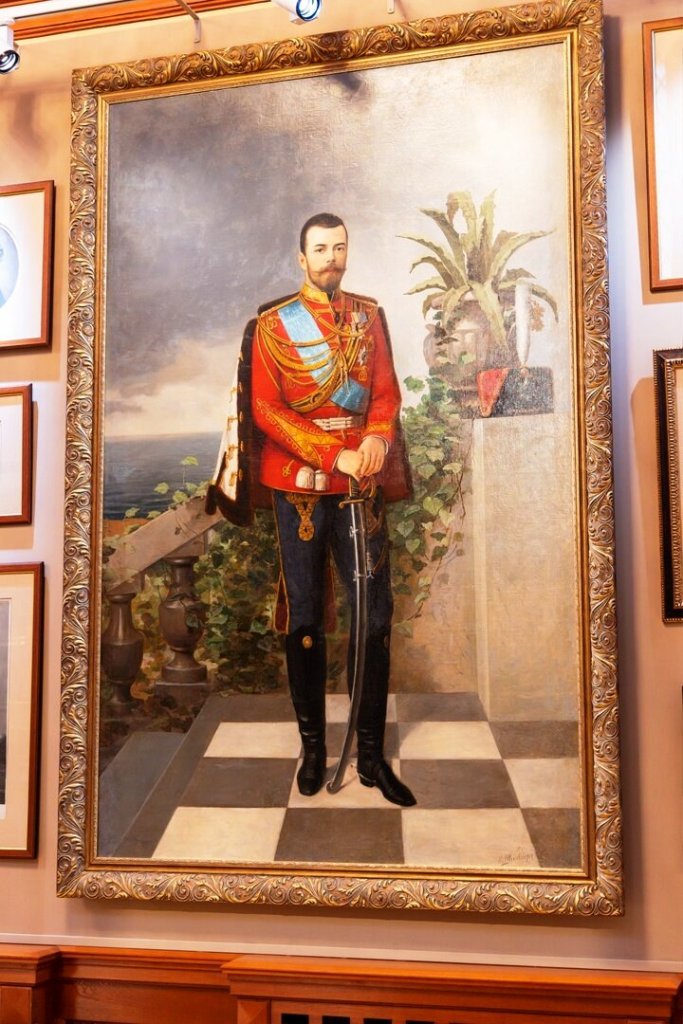
Portrait of Emperor Nicholas II, late 19th century.
Artist: Nikolai Schilder (1828 – 1898)
From the Collection of the Russian Cultural Foundation

After the Bolsheviks came to power in October 1917, Russia experienced a massive outflow of art objects from the collections of members of the nobility who were lucky enough to escape. Objects of historical heritage, paintings by outstanding artists, folios and entire archives were sent abroad. Priceless exhibits found their way into private collections, and replenished the museums of European countries or simply disappeared.

To save the cultural heritage that ended up outside Russia after 1917, White Russian officers founded the American Cultural and Educational Society ‘Rodina’ in Lakewood, New York, which existed until the 1980s. Among the carefully preserved items were paintings, books, letters, and awards. Hundreds of rare exhibits, became the basis of the collection of the largest museum in the entire Russian diaspora.

One of the founders of the Rodina Society, Vsevolod Pavlovich Stelletsky (1904-1982), recalled that the guest of honour at the opening of the Historical Museum of the Society was the last of the Romanov family, Her Highness Princess of the Imperial Blood Vera Konstantinovna (1906-2001), who left Russia at the age of 12. Examining the halls, the princess went to the department dedicated to the House of Romanov, with portraits of monarchs and their families, and stopped in front of a full-length portrait of Emperor Nicholas II and looked at it for a long time.

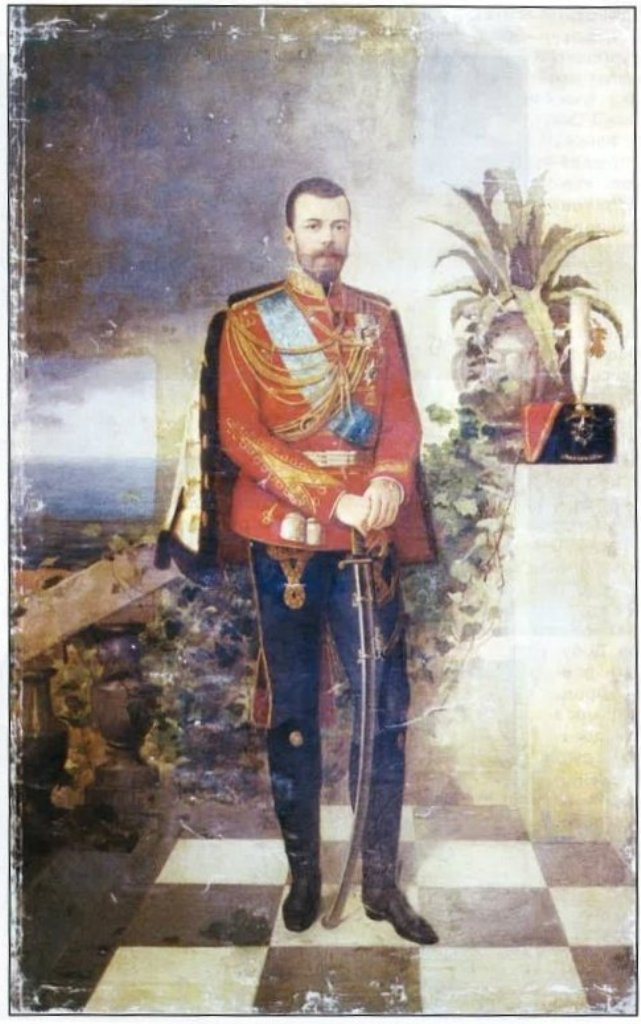
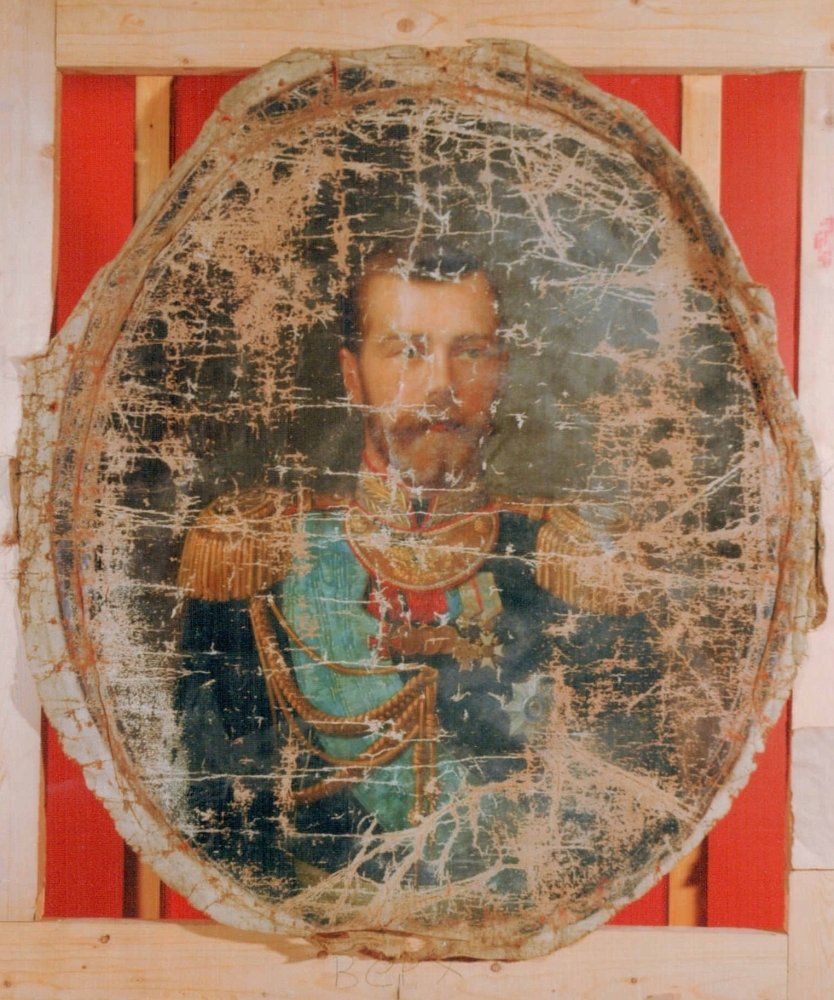
Schilder’s portrait of Emperor Nicholas II, before restoration.
From the Collection of the Russian Cultural Foundation

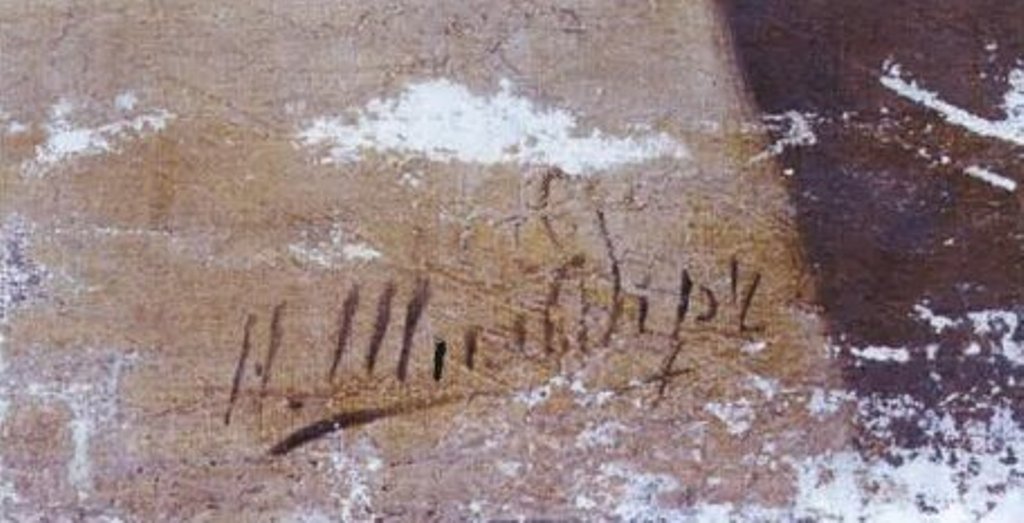
The artist’s signature N.G. Schilder, revealed in the process of restoration.
From the Collection of the Russian Cultural Foundation

“Where did you get this portrait from?” The princess said to Stelletsky, who accompanied her.

“This portrait,” he answered, “once hung in the Russian Consulate in New York, Your Highness, and it was given to us by an honourary member of the society, a donor, Prince Beloselsky-Belozersky.

“What a wonderful portrait. God willing, someday it will hang not in a museum, but in the St. George Hall in the Grand Kremlin Palace.

The princess continued to go around the halls dedicated to the Russian Imperial Army and Navy of the museum. When there was no one left in the museum, she once again turned to Stelletsky.

“I want to look at the portrait of the Emperor again,” the princess said decisively.

Approaching the portrait of Nicholas II, she gazed intently at the image of the Tsar in the uniform of His Majesty’s Life Guards Hussar Regiment, moving very close, she said convincingly:

“I wasn’t sure, but now I can definitely see that there is anguish in the Emperor’s gaze.

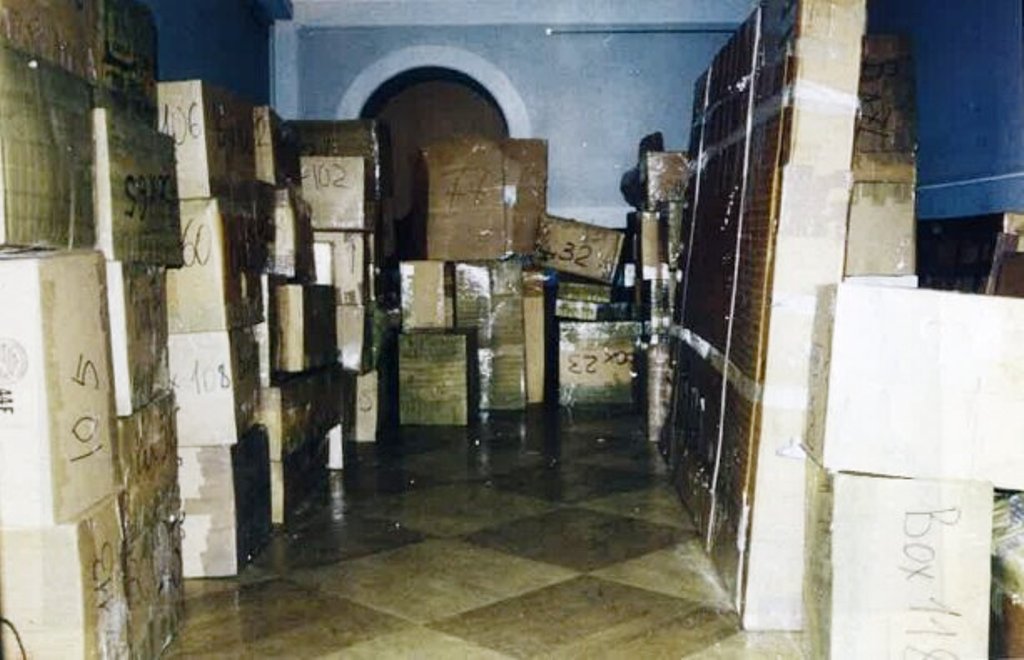
Boxes containing the precious cargo arrive in Russia from America, 1990s.
From the Collection of the Russian Cultural Foundation

In the 1990s, the collection began to return to Russia. This was the wish of all those who once preserved these unique items wanted. The exhibits of the museum were carefully packed and sent to Russia in several containers.

Between the autumn of 1994 to the Spring of 1995, about 40 thousand items were transferred to Moscow, which were received at two addresses: objects of military history – to the Central Museum of the Armed Forces, and objects of artistic value – to the Russian Cultural Foundation.

The portrait of Emperor Nicholas II now hangs in the Tapestry Hall of the Russian Cultural Foundation.

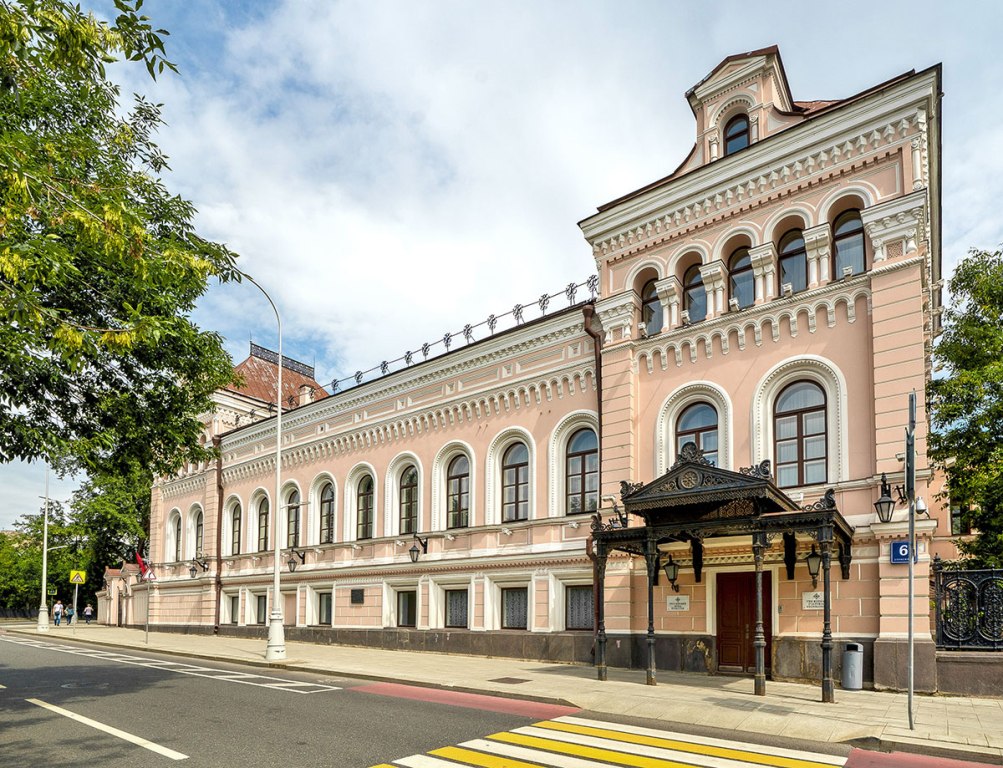
The Russian Cultural Foundation is located near the Kropotkinskaya Metro Station, on Gogolevsky Boulevard in Moscow. The Foundation and museum is housed in a Neo-Russian Style mansion – the former house of the Zamyatin-Tretyakov Estate – seen in the photo above.

© Paul Gilbert. 12 April 2025

Nicholas II depicted in new painting dedicated to Kuzma Minin

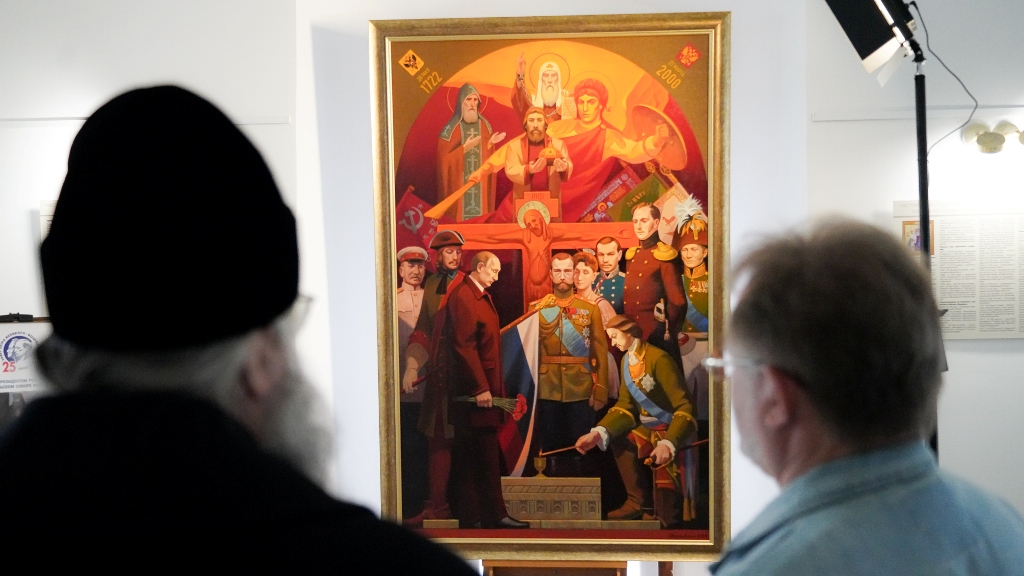
PHOTO: “The Testament of Peter the Great. Revival” by Sergei Malinovsky

On 1st April 2025, Metropolitan Georgy of Nizhny Novgorod and Arzamas attended the official unveiling cermony of the painting “The Testament of Peter the Great. Revival”, in the restored bell tower of the Transfiguration Cathedral situated of the Nizhny Novgorod Kremlin.

The head of the Nizhny Novgorod Metropolia was accompanied by the artist Sergei Viktorovich Malinovsky [b. 1959], who is a member of the Union of Artists of Russia.

The ceremony was dedicated to the 25th anniversary of the revival of the historical tradition established by Emperor Peter the Great of honouring the memory of Kuzma Minin (1570s-1615), a nobleman, who in 1612 headed the militia which liberated Moscow from foreign invaders.

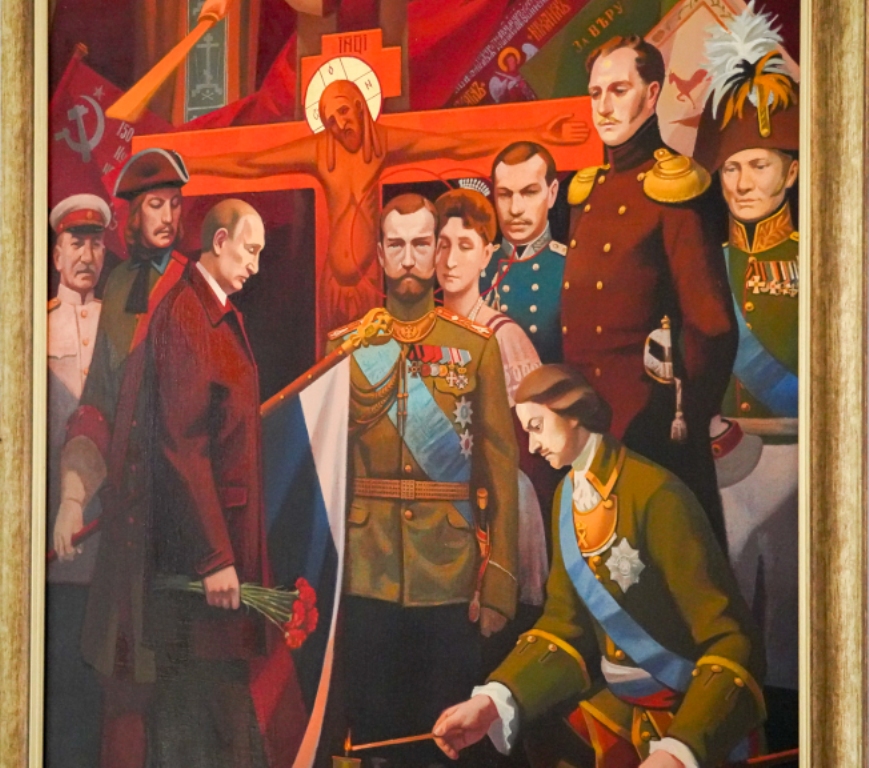
PHOTO: detail of “The Testament of Peter the Great. Revival” which depicts President Vladimir Putin, Emperor Nicholas II and Peter the Great, among others.

Sergei Malinovsky conducted a study of the activities of Peter the Great, bringing together the patriotic deeds of other Russian rulers, who honoured the memory of Kuzma Minin, the Russian national hero, who united the people and the government in the defense of the country and its historical memory.

The painting “The Testament of Peter the Great. Revival” was painted in oil on canvas, measuring 160 x 100 centimeters [5.3 ft. x 3.3 ft.].

In the foreground are Russian President Vladimir Putin and Emperor Peter the Great, who, kneeling, lights a candle on the tombstone of Kuzma Minin’s grave. Numerous other Russian historical leaders are also depicted.

In life, Emperor Nicholas I, Emperor Alexander III, Emperor Nicholas II and Empress Alexandra Feodorovna, all honored the memory of Kuzma Minin.

PHOTO: Metropolitan Georgy of Nizhny Novgorod and Arzamas (left) attends the unveiling ceremony of “The Testament of Peter the Great. Revival” by Sergei Malinovsky in the Nizhny Novgorod Kremlin

The canvas also contains the banners of the militia of 1612, 1812, 1855 and the Victory Banner of 1945. Above the crucifixion which includes a piece of the Cross of the Lord, donated by Prince Dmitry Pozharsky to the Transfiguration Monastery in the village of Pureh, the following are depicted in the golden heavenly light: Kuzma Minin, holding the cap of Monomakh, as a symbol of the people who did not allow the fall of Russian statehood; St. Sergius of Radonezh, who appeared three times in visions to Minin, calling him to podvig; the “initial man” of the Muscovite state of that time, representing the spiritual power, the Hieromartyr Patriarch Germogen, according to whose charters the first (Lyapunov-Ryazan) and second (Minin-Nizhny Novgorod) people’s militias were raised; Archangel Michael, the heavenly patron of Nizhny Novgorod.

© Paul Gilbert. 7 April 2025

Famous Serov portrait ot Nicholas II to be exhibited in London

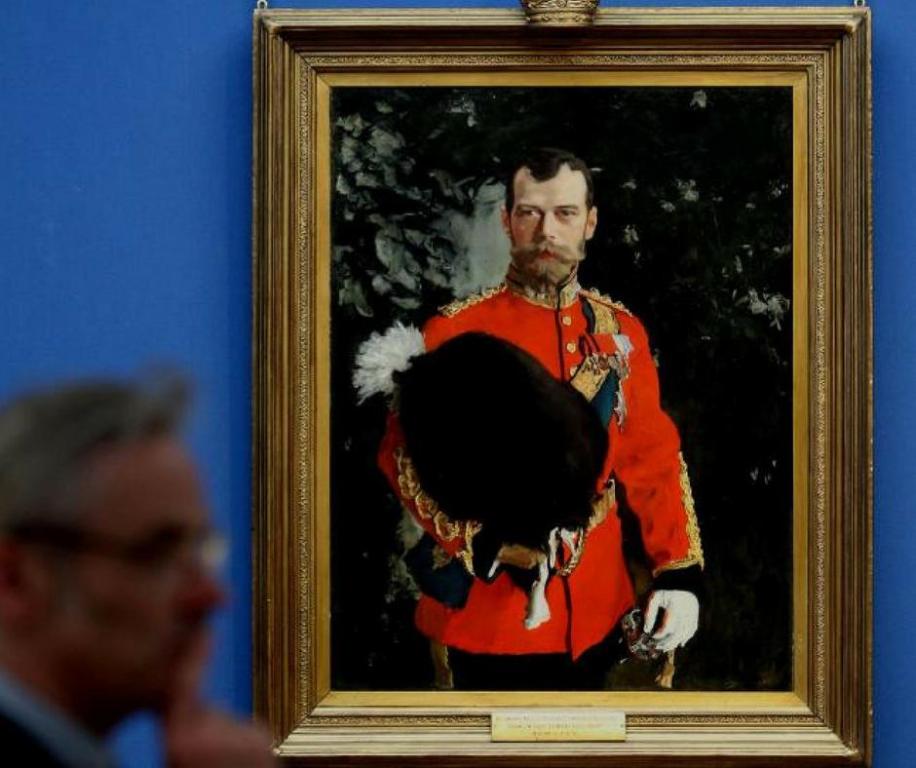
PHOTO: Portrait of Emperor Nicholas II in the uniform of Colonel-in-Chief of the Royal Scots Greys (1902). Artist: Valentin Alexandrovich Serov (1865-1911)

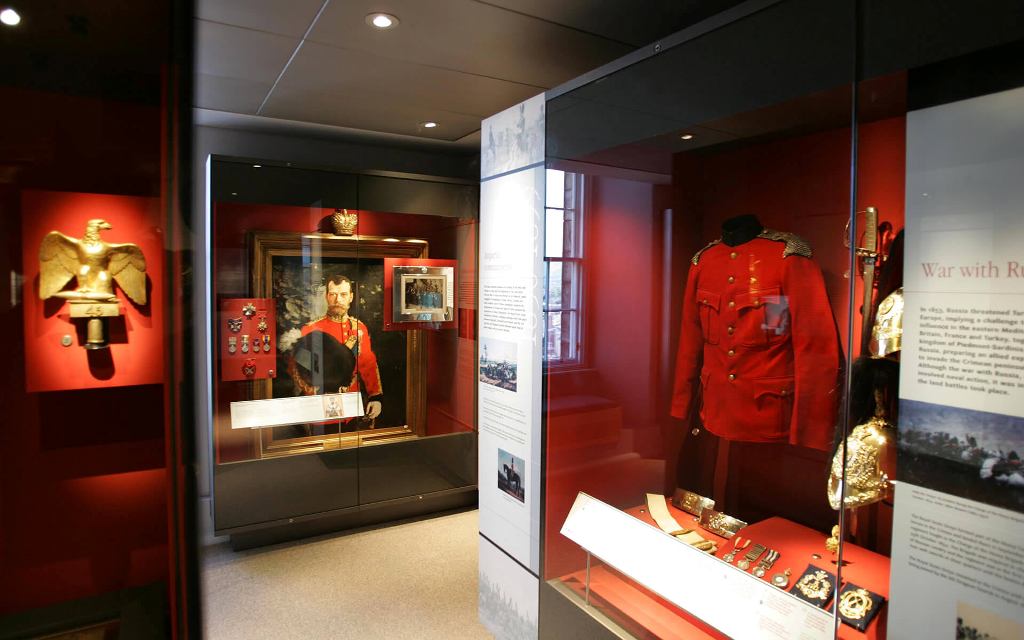
In 2025, a portrait of Emperor Nicholas II, painted in 1902 by the Russian artist Valentin Alexandrovich Serov (1865-1911) will be shown at the National Army Museum in London at an exhibition dedicated to the art of battle during the era of Queen Victoria (1837-1901).

The National Army Museum in London will host a major exhibition Myth and Reality: Military Art in the Age of Queen Victoria, which runs from 1st July to 1st November 2026.

The exhibition will showcase over 140 works of art from the museum’s collection, including works on loan from other museums and private collections. Among these is Serov’s portrait of Nicholas II, on loan from the Royal Scots Dragoon Guards Museum in Edinburgh.

In Serov’s portrait, painted in 1902 in a lively impressionist manner, Russia’s most famous portrait artist, was able to convey the remarkable resemblance of the two Royal cousins: Nicholas II (1868-1918) and his elder cousin, the British King George V (1865-1936).

In Serov’s portrait, the young Russian Emperor is dressed in the uniform of Colonel-in-Chief of the Royal Scots Greys. This title was granted to him in 1894 by Queen Victoria on the occasion of the wedding of her granddaughter Princess Alix of Hesse and by Rhine to the future Emperor of Russia.

In 1902, the Emperor commissioned a portrait from Valentin Serov and, upon completion, presented the work to his Scottish Regiment. The portrait was taken to Edinburgh, to the castle where the headquarters of the Royal Scots Greys were located.

PHOTO: Serov’s portrait can be seen in the Royal Scots Dragoon Guards Museum,
located in the New Barracks at Edinburgh Castle in Scotland.
PHOTO © The Royal Scots Dragoon Guards Regimental Trust

In 1971, the Royal Scots Greys was reformed and changed its name to the Royal Scots Dragoon Guards. But the portrait of the honorary commander of the regiment remained in its place in the living room of the regimental castle.

In the 2010s, the Board of Trustees of the regimental fund of the Royal Scots Dragoon Guards Regiment summoned an expert in Russian painting to Edinburgh. The insurance valuation of Serov’s work was valued at £15 million ($18 million USD).

Serov’s portrait of Emperor Nicholas II (1902) is on permanent display in the Royal Scots Dragoon Guards Museum, located in the New Barracks at Edinburgh, Scotland.

In April 2017, a delegation of the Royal Scots Dragoon Guards travelled to Russia, where they presented a uniform of Colonel-in-Chief to the Tsarskoye Selo State Museum, and now on display in the Sovereign Martial Chamber’s World War I Museum.

The Myth and Reality: Military Art in the Age of Queen Victoria exhibition, runs from 1st July 2025 to 1st November 2026 at the National Army Museum in London.
© Paul Gilbert. 13 January 2025

Repin’s painting of Nicholas II and the State Council installed in the Mariinsky Palace

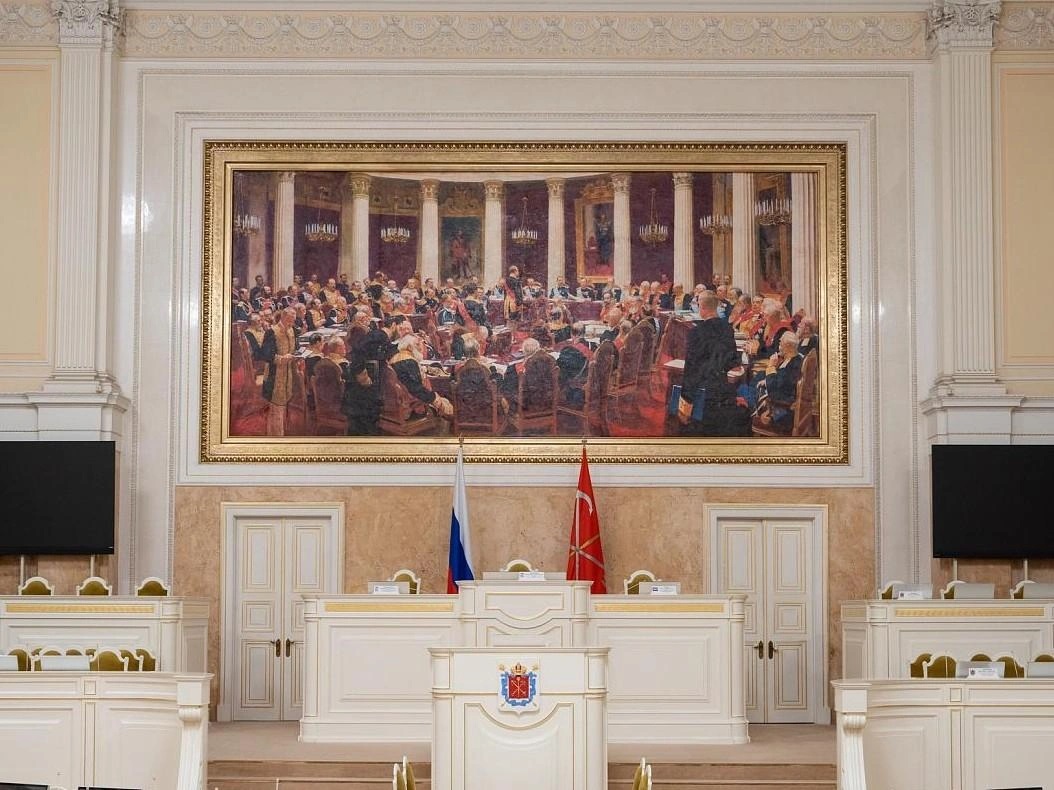
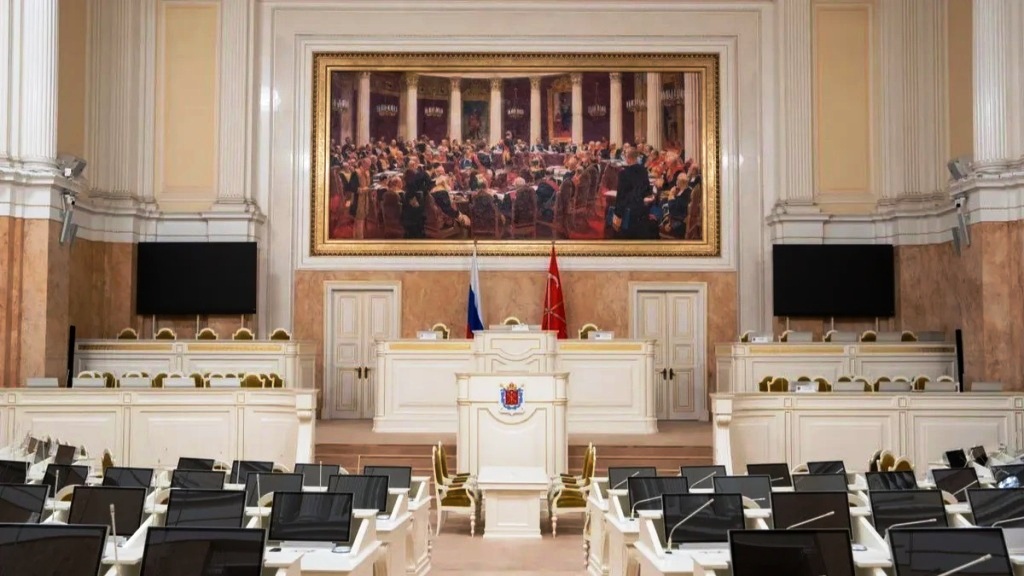
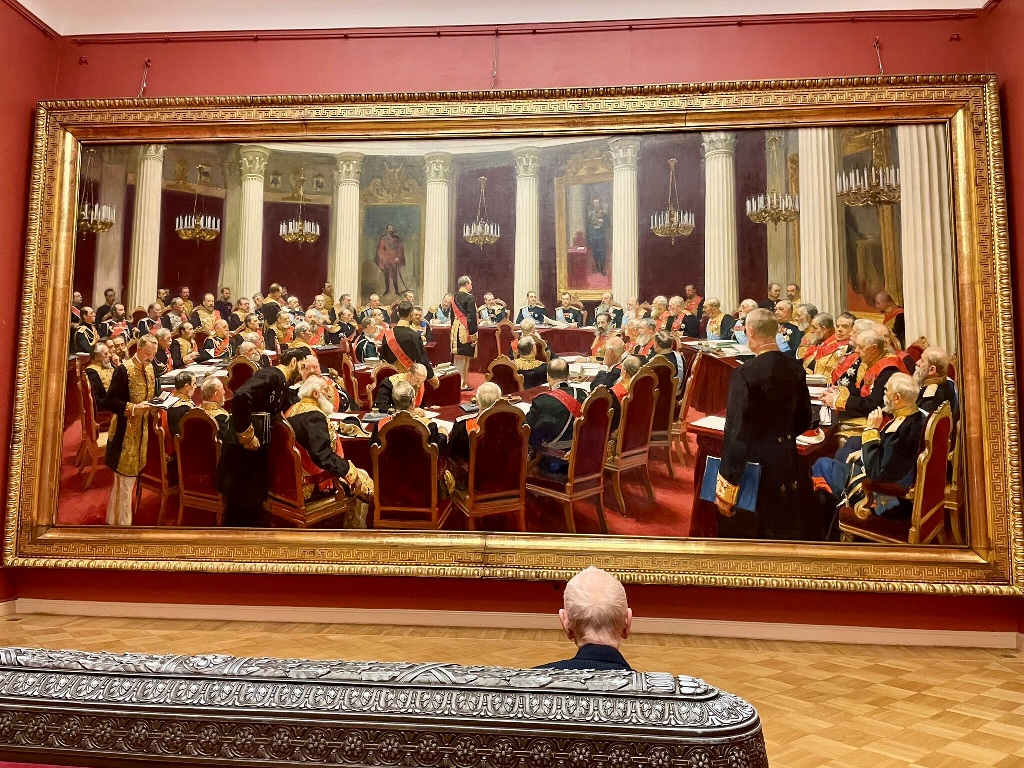
PHOTOS: in December 2024, a copy of “The Ceremonial Meeting Of The State Council 7 May 1901” by Ilya Repin, was installed in the Great Hall of the Mariinsky Palace in St. Petersburg

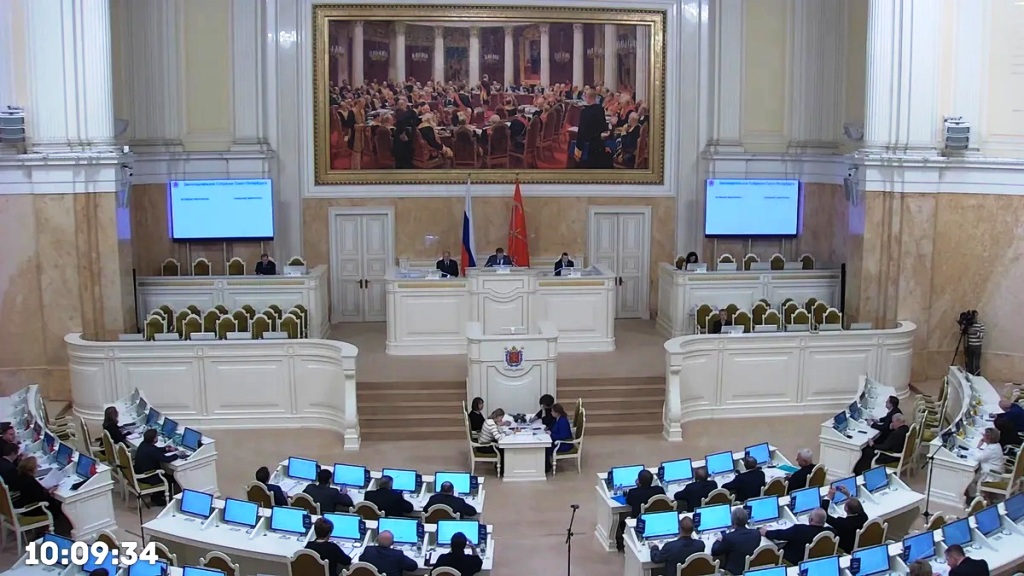
One of the most iconic paintings which reflects the splendour of the Russian Empire has to be “The Ceremonial Meeting Of The State Council 7 May 1901”, by Ilya Yefimovich Repin (1844-1930). A copy of the great Russian artist’s masterpiece was recently installed in the Great Hall of the Mariinsky Palace in St. Petersburg. The palace has been the site of the Legislative Assembly of Saint Petersburg since 1994.

An exact copy of Repin’s painting was a gift from the St. Petersburg artist Oleg Lukyanov for the 30th anniversary of the city parliament. “We thank Oleg Lukyanov, and the director of the State Russian Museum Alla Manilova for this wonderful gift,” said Speaker Alexander Belsky at the opening of the legislature on 4th December 2024.

The chairman of the Legislative Assembly also noted that specialists worked on the painting for more than two months, while the final touches took an additional six days. An exact copy of the canvas is made in the technique of “urban fresco”, which makes it possible to achieve full compliance with the original painting.

Ilya Repin’s masterpiece was first presented to the public in St. Petersburg on 4th January 1904. The painting depicts Emperor Nicholas II and members of the State Council after the emperor read out a charter in honour of the centenary of the establishment of the Indispensable Council (the predecessor of the State Council).

PHOTOS: two views of copy of “The Ceremonial Meeting Of The State Council 7 May 1901” by Ilya Repin, was installed in the Great Hall of the Mariinsky Palace, in St. Petersburg

***

A brief history of Repin’s masterpiece

PHOTO: the original “The Ceremonial Meeting Of The State Council 7 May 1901” by Ilya Repin, today hangs in the State Russian Museum in St. Petersburg. The canvas is so large, that it takes up an entire wall, in a hall dedicated to Repin’s masterpiece.

The original “The Ceremonial Meeting Of The State Council 7 May 1901” by Ilya Repin, has been in the collection of the State Russian Museum since 1938. The canvas is so large, that it takes up an entire wall, in a hall dedicated to Repin’s masterpiece.

It is among the most significant and largest paintings from the collection of the State Russian Museum: the large-format canvas measuring 4 by 8 meters [ 13 ft. by 26 ft.].
Painted under a state order, the painting truly conveys the splendor of the Russian Empire. More than a century ago, the political and bureaucratic elite in uniforms attend a solemn meeting in the Round Hall of the Mariinsky Palace. Secretaries are carrying anniversary medals, the future Minister of Internal Affairs Vyacheslav Plehve is standing in front of Tsar Nicholas II, who has finished reading a charter on the occasion of his 100th anniversary. The canvas was created specifically for the Mariinsky Palace, where meetings of the State Council were held.

The Ceremonial Meeting Of The State Council 7 May 1901” is a collective portrait featuring no less than 81 figures. It was painted one hundred and twenty one years ago (1903), in which Repin was paid a large fee. The customer of the canvas, Emperor Nicholas II, was pleased with the result.

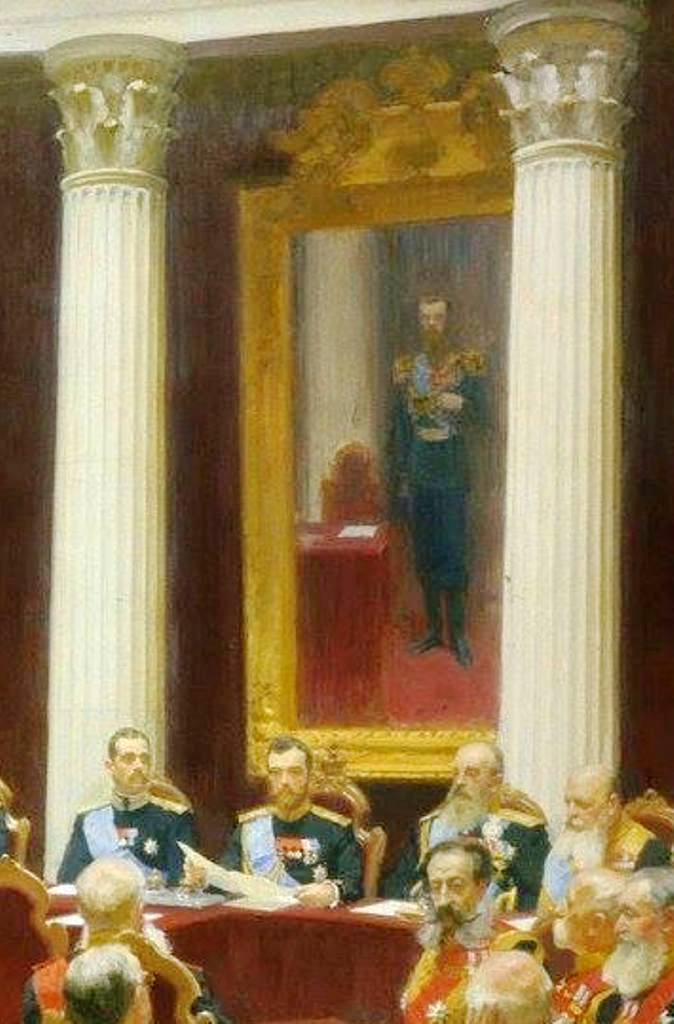
PHOTO: detail from Repin’s painting, which shows Emperor Nicholas II seated between two pillars, under a ceremonial portrait of himself – also by Ilya Repin – painted in 1895. His brother Grand Duke Mikhail Alexandrovich is seated to his right, and Grand Duke Mikhail Nikolayevich (1832-1909), who served as Chairman of the State Council, from 1881 to 1905, is seated to his left.

Founded in 1801 by Emperor Alexander I (1777-1825), the State Council celebrated its centenary with a ceremonial sitting in the Round Hall of the Mariinsky Palace in St. Petersburg on 7th May 1901. All the members of the State Council and the State Chancellery attended in full-dress uniform. Emperor Nicholas II and senior members of the Imperial Family are flanked by their ministers. Repin painted the scene from behind the chairs on the right (next to the columns.

He rapidly sketched the original modello on a canvas on which the perspective of the hall had already been marked out, working from a previously selected point. The artist later turned this study into a large picture with the help of two students from the Imperial Academy of Arts: Boris Kustodiev (1878-1927) and Ivan Kulikov (1875-1941). Every member of the State Council is depicted in natural and diverse poses, with strong physical resemblances.

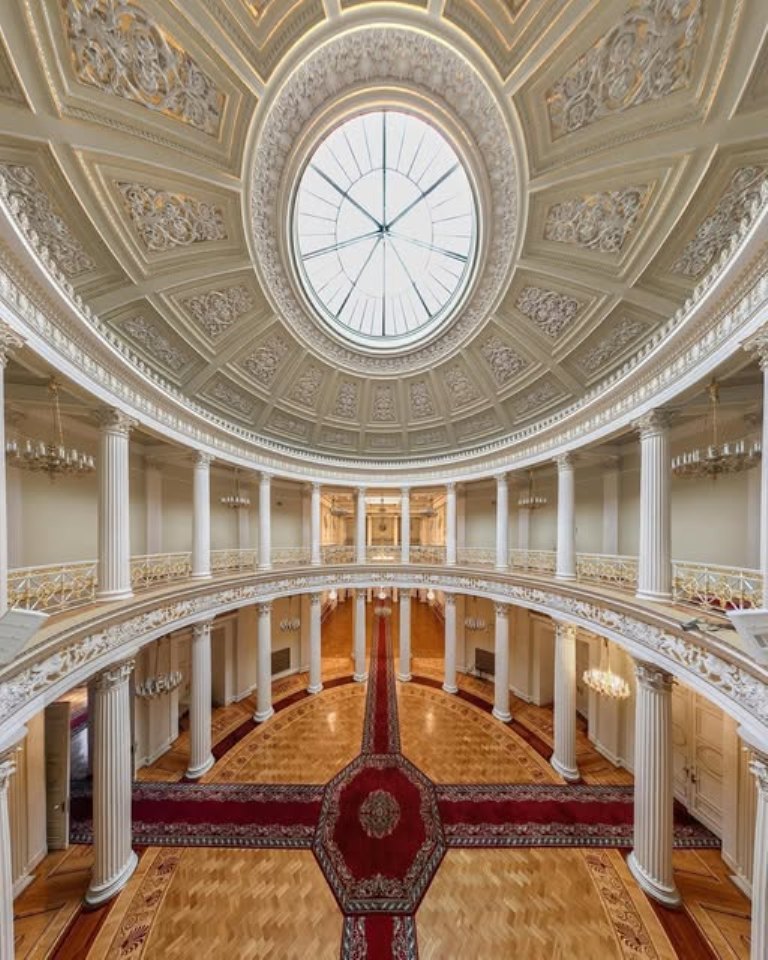
PHOTO: the Round Hall in the Mariinsky Palace, as it looks today

***

Ilya Yefimovich Repin (1844-1930)

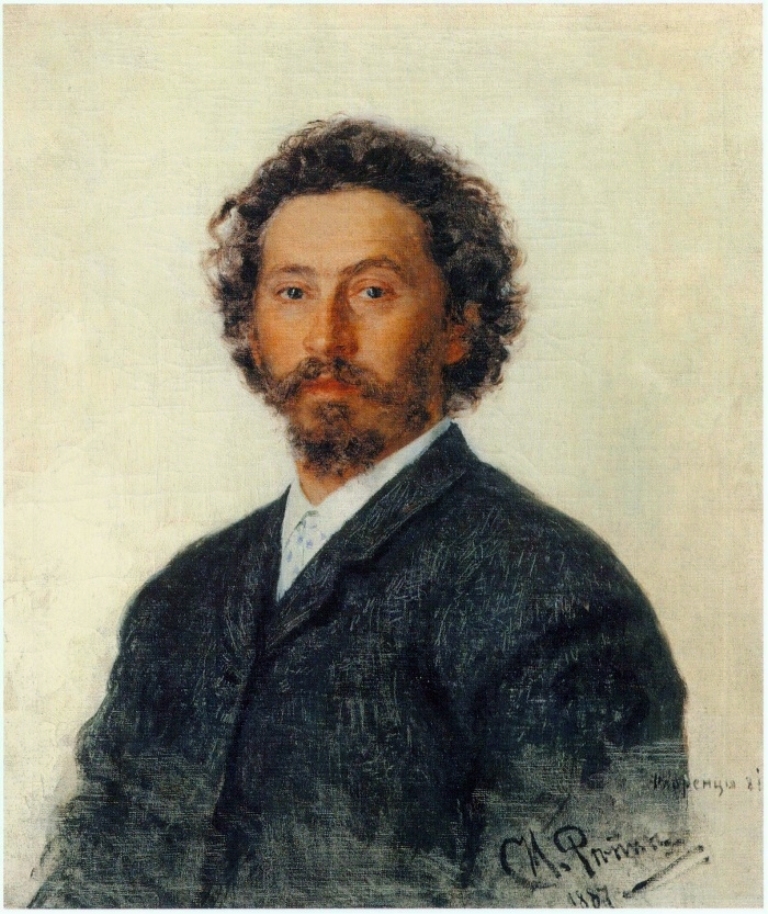
Self-portrait (1887
From the Collection of the State Tretyakov Gallery (Moscow)

Ilya Yefimovich Repin (1844-1930) was a Ukrainian-born Russian painter. He became one of the most renowned artists in Russia in the late 19th to early 20th centuries. His works can be seen today in some of Russia’s most famous museums, including the Tretayakov Gallery in Moscow, the State Russian Museum in St. Petersburg, and the artist’s country estate of Penates, near St. Petersburg, among many others.

Following the ascension of Nicholas II to the throne in 1894, Repin painted a number of ceremonial portraits of the new Emperor. One of these, painted especially for the State Duma in 1905, was lost (among many others) following the February and October 1917 Revolutions.

It is interesting to note that Repin, who was an anti-monarchist, didn’t seem to mind being paid handsomely for the numerous ceremonial portraits and other commissioned paintings by Emperor Nicholas II. One of his most famous works, is The Wedding of Nicholas II and Alexandra Feodorovna (1894), which today hangs in the State Hermitage Museum in St. Petersburg.

Repin warmly welcomed the February 1917 Revolution, which overthrew the autocratic monarchy and proclaimed a republic, an event for which he was very happy. Shortly after the October Revolution of 1917, Repin would regret his support of the overthrow of the monarchy. After Lenin and the Bolsheviks launched the first Red Terror, Repin abruptly changed the bias of his work from anti-monarchist to anti-Bolshevik.

Repin died on 29th September 1930, at the age of 86, and was buried at his country estate Penates, in Kuokkala, now Repino, St Petersburg. His home is now a museum and a UNESCO World Heritage Site.

© Paul Gilbert. 8 December 2024

Portrait of Nicholas II still bears the cuts made by Bolshevik bayonets in 1917

PHOTO: the portrait of Emperor Nicholas II, painted by Nun Emeliana (Batalov), still bears the cuts made by Bolshevik bayonets in 1917

During his reign, Emperor Nicholas II never visited the Novo-Tikhvinsky Convent in Ekaterinburg, however, when a request was made by one of the nuns to paint his portrait came, the Emperor granted this favour. It was Nun Emeliana (Batalov), who painted the portrait of the Emperor wearing the uniform of the Life-Guards Hussar Regiment. The portrait – a gift marking the 1896 coronation – was sent to Moscow, where it was presented to the new Emperor at a reception held in the Grand Kremlin Palace. Nicholas was so pleased with the portrait, that he ordered that it be sent to St Petersburg, where it was to be hung in one of the rooms of his private apartments in the Winter Palace.
In October 1917, during the assault on the Winter Palace, the portrait was cut by the bayonets of Bolshevik thugs. For the next 12 years, the portrait sat gathering dust in the attic of the Winter Palace, until it was transferred to Museum of the October Revolution in Leningrad. During the Soviet years, the portrait hung in the museum or more than 70 years. After the fall of the Soviet Union in 1991, the portrait was restored, leaving, however, the cuts made by the bayonets as a poignant reminder of the dark days of the Bolshevik Revolution which swept Russia and the monarchy into an abyss.

Today, the portrait hangs in the Museum of Political History of Russia (located in the former mansion of Mathilde Kschessinska) in St. Petersburg.

© Paul Gilbert. 29 November 2022

Pavel Viktorovich Ryzhenko 1970-2014

PHOTO: Pavel Viktorovich Ryzhenko (1970-2014)

On this day – 16th July 2014 – the great Orthodox artist Pavel Viktorovich Ryzhenko died in Moscow, at the age of only 44.

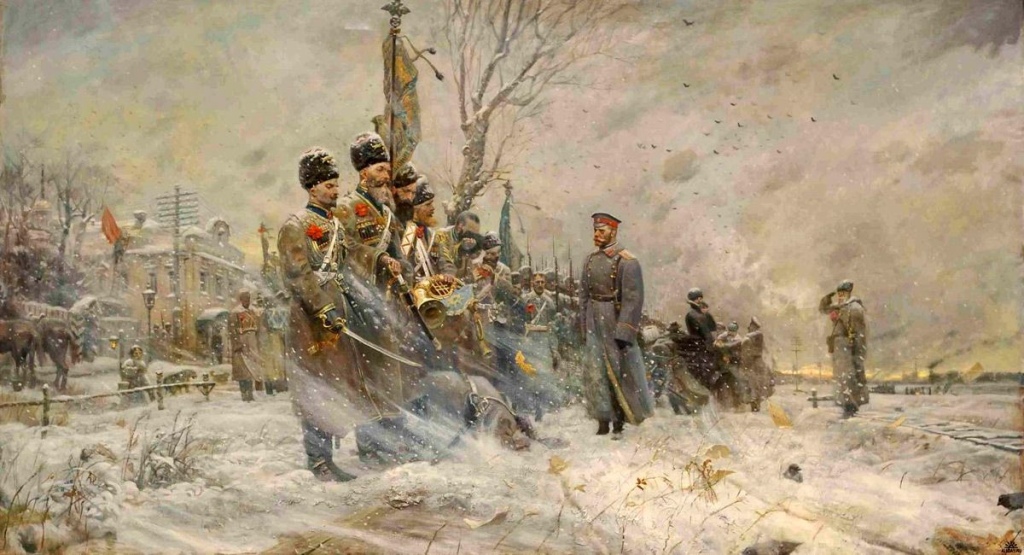
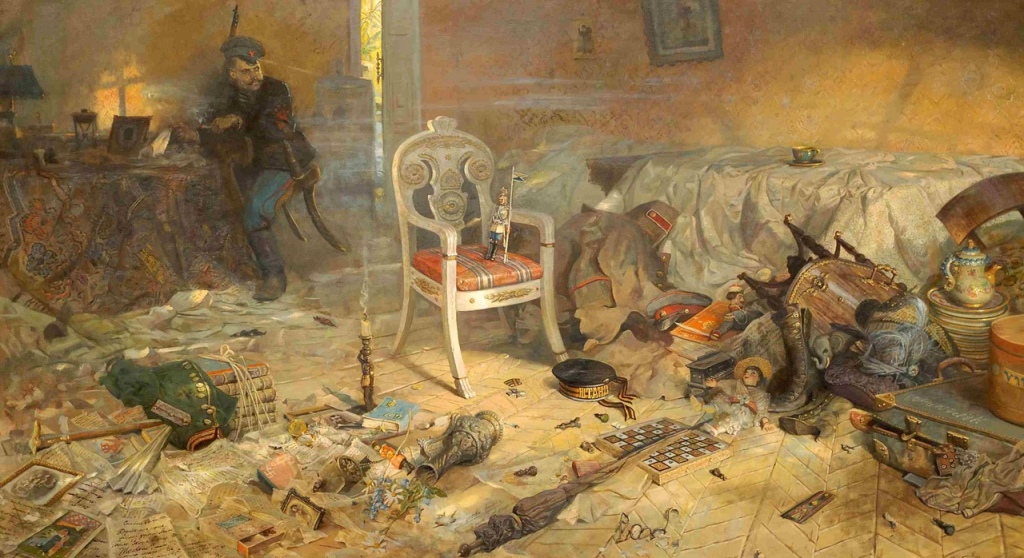
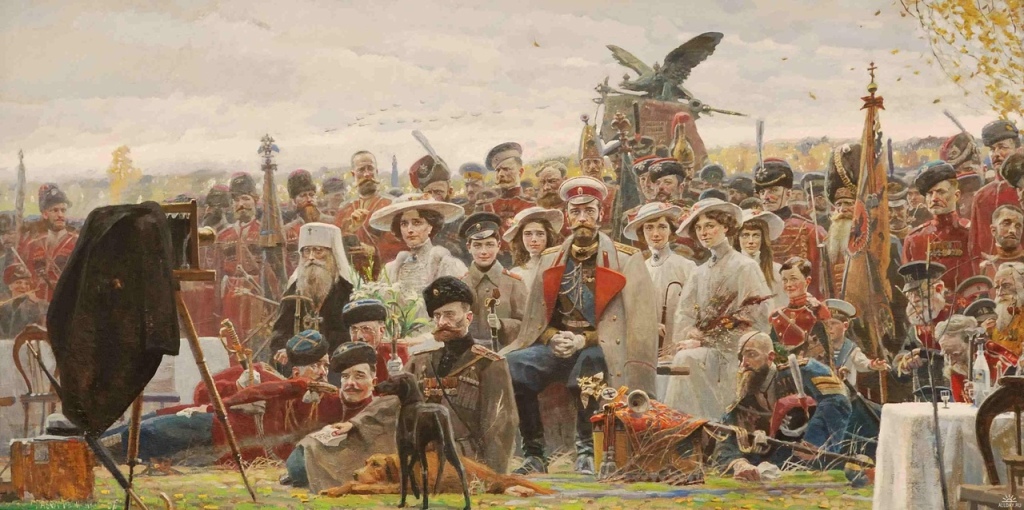
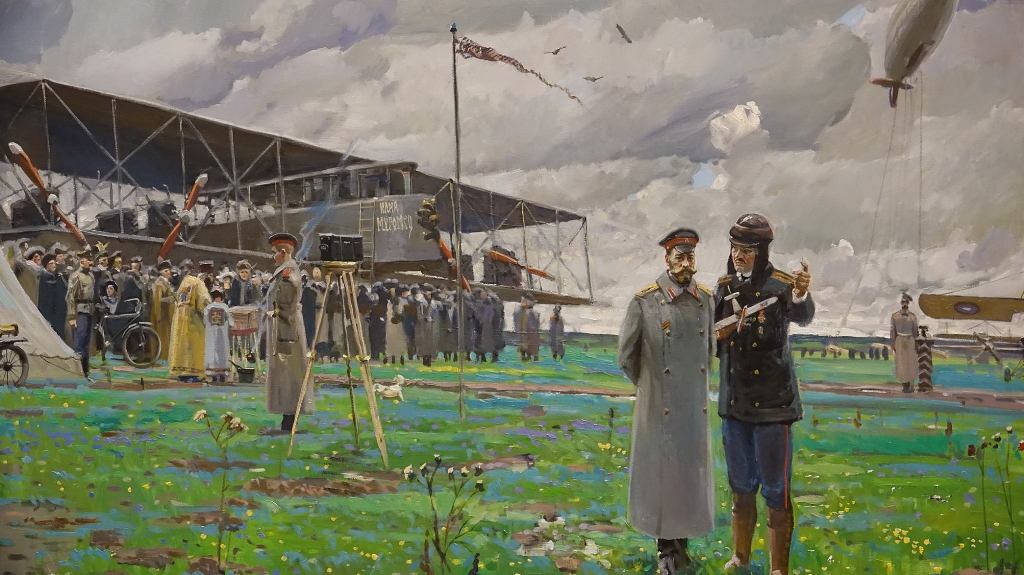
Russia’s hugely popular Christian, patriotic, monarchist painter Pavel Viktorovich Ryzhenko created more than 60 paintings depicting scenes from Imperial Russian history, particularly from the era of the Holy Royal Martyr Nicholas II. Large-scale exhibits of his works have been held in Moscow, St. Petersburg, Ekaterinburg, Kostroma among other Russian cities.

Pavel Ryzhenko was born at Kaluga, Russia on 11 June 1970. In 1982 he entered the Moscow Art School at the Surikov Institute. In 1990 he entered the Russian Academy of Painting, Sculpture and Architecture, where he studied in the historical and religious workshop of Professor Ilya Glazunov. From 1999, he taught at the Russian Academy of Painting, Sculpture and Architecture. In 2007, Pavel began working at the Ryzhenko Military Artists Studio, where he became one of the leading masters of diorama-panoramic art (during his life, he painted six large-scale dioramas). In 2012 Ryzhenko was awarded the title “Honored Artist of the Russian Federation.”

Sadly, Ryzhenko died on 16 July 2014. The famed Orthodox artist died, on the eve of the day of remembrance of the death and martyrdom of the Holy Royal Martyrs, and just 5 days before his 44th birthday, the cause of death was a stroke.

Pavel Ryzhenko’s early death was a tremendous loss to Russia’s artistic and spiritual communities.

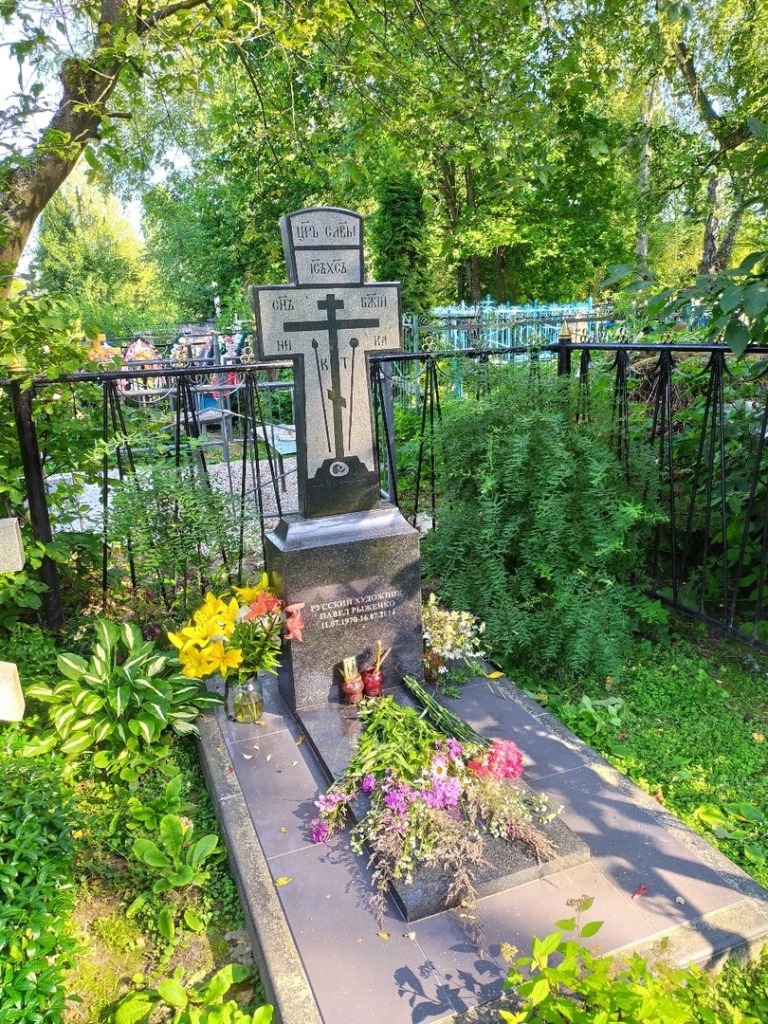
PHOTO: Pavel Ryzhenko’s grave in Zhdamirovskom Cemetery, Zhdamirovo

A memorial service for Pavel Ryzhenko was held on Sunday 22 July 2014 in the Church of All Saints in the village of Krasnoselsky District, Moscow. The funeral was held on the same day in Kaluga, followed by his burial at the Zhdamirovskom Cemetery, in the village of Zhdamirovo.

I had the great honour of attending an exhibition of his works during my first visit to Ekaterinburg in 2012. The exhibition was held in the Patriarchal Compound, which is situated across from the Church on the Blood.

Memory Eternal! Вечная Память!

Below, are six of Ryzhenko’s canvases, in which the Holy Royal Martyr Nicholas II is depicted:

The Farewell of the Tsar to His Troops: From the Triptych “Imperial Golgotha”. 2004

Wounded, the last Tsar on an inspection of a military hospital near the front in World War I

Imprisoned at Tsarkoye Selo: From the Triptych “Imperial Golgotha”. 2004

The Ipatiev House. The Morning After: From the Triptych “Imperial Golgotha”. 2004

A Photograph in Remembrance: From the Triptych “A Russian Century”. 2007

The Birth of Russian Aviation. 2007

To view Ryzhenko’s complete works of historical realism, please click HERE to visit his official web site.

© Paul Gilbert. 16 July 2021

Rare portrait of Nicholas II on display at Bavaria exhibit

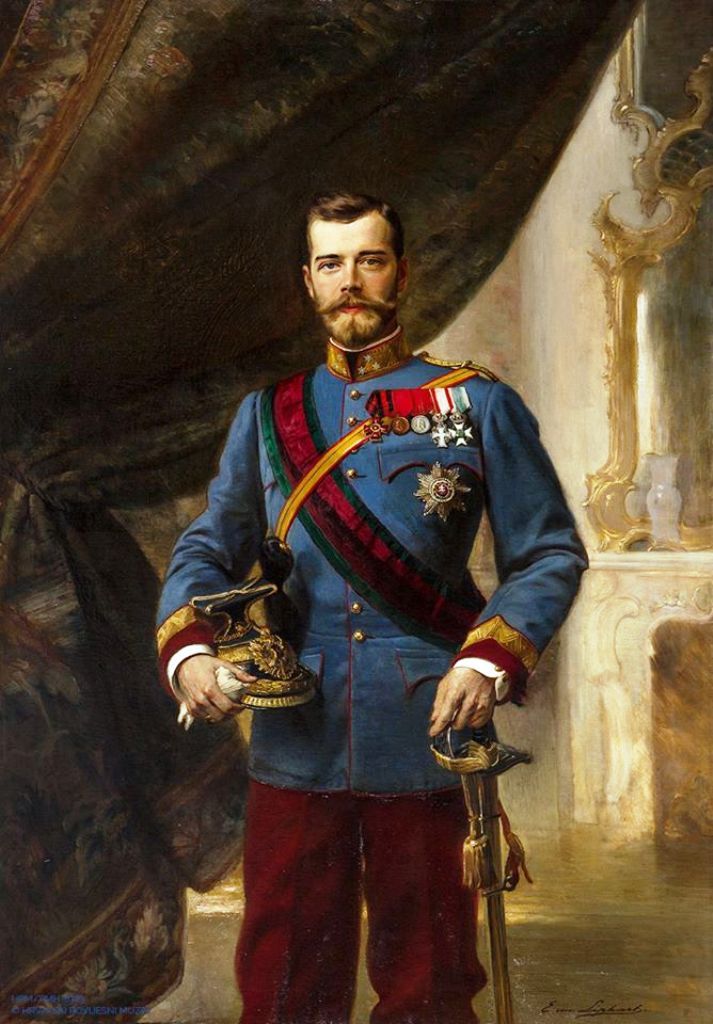
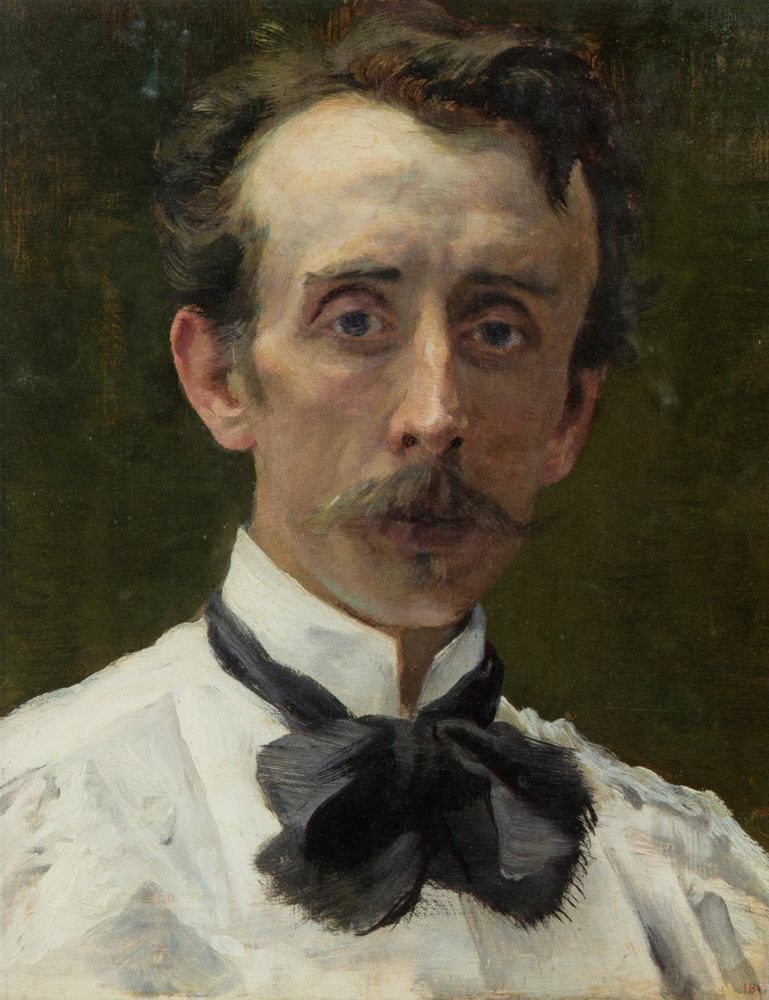
Portrait of Tsarevich and Grand Duke Nicholas Alexandrovich (1889), the future Emperor Nicholas II, by the artist Baron Ernst Friedrich von Liphart (1847-1932), Russified as Ernst Karlovich Lipgart. Lipgart painted at least six portraits of Russia’s last monarch, including several ceremonial portraits.

This magnificent portrait is currently on display in the Twilight of the Gods II – Last Monarchs in the House of History of Bavaria exhibition, at the Museum of the House of Bavarian History in Regensburg, Bavaria until 16th January 2022.

The Emperor is depicted in the uniform of the Prussian 8th Hussar Regiment, of which he was appointed an Honourary Chief in 1889, his cape is decorated with the Royal Prussian Order of the Black Eagle.

The painting hung from 1890 to 1995 in the former dining room of Neuhaus Castle, directly opposite the portrait of Elector Clemens August of Bavaria. The officers of the 8th Hussar Regiment established a club for their meetings here and in the adjacent premises. The Prussian regiment was stationed at Neuhaus and Paderborn castle from 1851 to 1919. Following the end of World War I, the regiment was disbanded.

After the exhibition ends in January of next year, the portrait will be returned to the Residenz Museum in Neuhaus Castle.

PHOTO: Ernst Karlovich Lipgart (1847-1932). Self-portrait, 1881.
From the Collection of the State Russian Museum, St. Petersburg

Ernst Karlovich Lipgart (1847-1932) was a Russian portraitist and decorator. He was born in Tartu, and after living for a time in Florence, where he studied at the Academy of Arts, he moved to France and then to Russia.

He arrived in St. Petersburg in 1886, where he painted portraits of members of the Imperial family, including a whole gallery of portraits of Nicholas II. He also decorated palaces and theatres in the capital, including the curtain in the Hermitage Theatre.

Lipgart also took on more unusual requests, including the menu for the Tsar’s coronation in 1896 and then painting 100 figures on a piano, telling the story of Orpheus. The piano was a present from the Tsar to Empress Alexandra Feodorovna.

Between 1906-1929 he served as the Main Curator of the Hermitage Art Gallery. His role in the acquisition of the Madonna with a Flower by Leonardo da Vinci, which belonged to the Benois family, became a sensation in 1914.

In 1921 he was evicted from his house and his daughter was executed for harbouring a White Army officer.

© Paul Gilbert. 24 October 2021

***

COLOUR Hard cover edition of ‘Nicholas II. Portraits’ now available!

This image has an empty alt attribute; its file name is 519-1.jpg

CLICK ON THE LINK BELOW TO ORDER FROM AMAZON

*HARD COVER EDITION @ $50 USD

PAPERBACK EDITION @ $40 USD

BOOK DESCRIPTION

Large format 8-1/2″ x 11″ hard cover and paperback editions, with 178 pages + 200 Colour and black & white photographs

SECOND EDITION, FEATURING 185 FULL COLOUR PHOTOS!

I am pleased to announce the publication of my latest book Nicholas II. Portraits, in both hard cover and paperback editions. This is my first hard cover book and my first book featuring full colour photographs.

Originally published in 2019, with 140 pages with 175 black and white photos, this new expanded edition features more pages and more photographs: 180 pages + more than 200 photos, including 185 FULL COLOUR and 30 black & white!

Nicholas II. Portraits explores a century of portraits of Russia’s last emperor and tsar, through the eyes of pre-revolutionary and contemporary Russian, and foreign artists.

This unique title – the first book of its kind ever published on the subject – features an introduction, as well as a series of short articles, and richly illustrated, including many full-page, with detailed and informative captions.

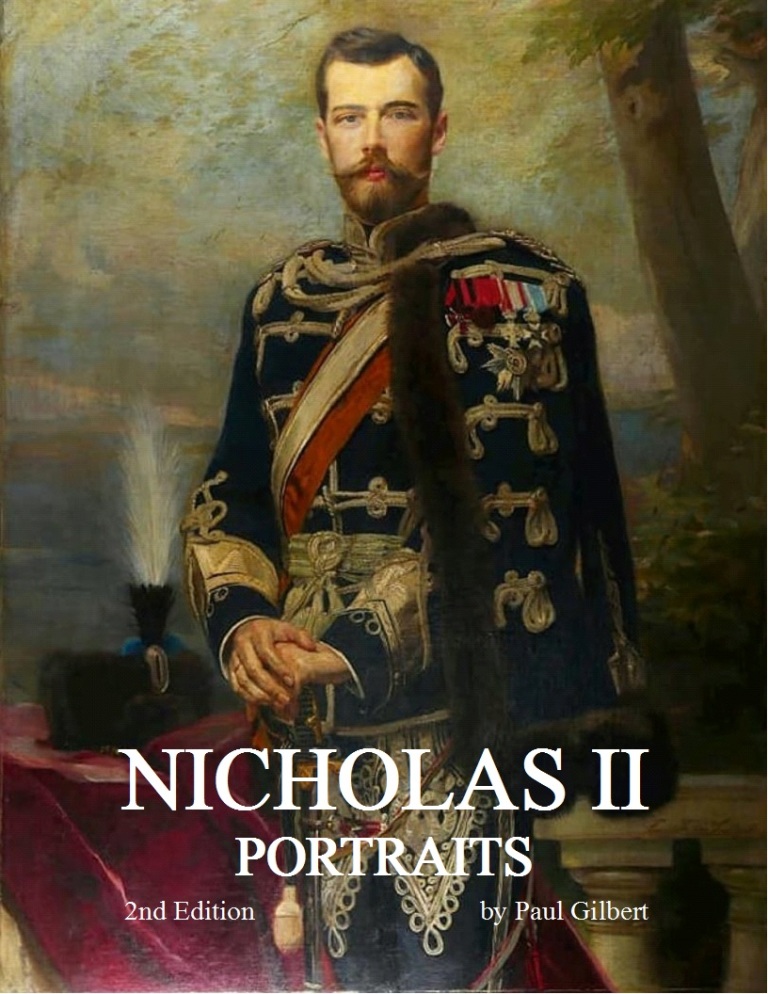
The cover features a portrait of Tsesarevich and Grand Duke Nicholas Alexandrovich (1889), the future Emperor Nicholas II, by the artist Baron Ernst Friedrich von *Lipgart (1847-1932).

* Lipgart painted a whole gallery of portraits of Nicholas II, my book features 10 of them – all in COLOUR!

The Emperor is depicted in the uniform of the Prussian 8th Hussar Regiment, of which he was appointed an Honourary Chief in 1889, his cape is decorated with the Royal Prussian Order of the Black Eagle.

The painting hung from 1890 to 1995 in the former dining room of Neuhaus Castle, directly opposite the portrait of Elector Clemens August of Bavaria. The officers of the 8th Hussar Regiment established a club for their meetings here and in the adjacent premises. The Prussian regiment was stationed at Neuhaus and Paderborn castle from 1851 to 1919. Following the end of World War I, the regiment was disbanded.

From the Collection of the Museum of the House of Bavarian History in Regensburg, Bavaria.

The articles include: Serov’s Unfinished 1900 Portrait of Nicholas II; A Nun’s Gift to Russia’s New Tsar. The Fate of a Portrait; Galkin’s Ceremonial Portrait of Nicholas II Discovered; among others!

Famous portraits and their respective artists are all represented, including Serov, Repin, Lipgart, Tuxen, Bakmanson, Becker, Bogdanov-Belsky, Kustodiev, and many others.

The last section of the book is dedicated to the works of contemporary Russian artists, who have painted outstanding portraits of Nicholas II since the fall of the Soviet Union in 1991.

AVAILABLE EXCLUSIVELY FROM AMAZON WORLDWIDE!

© Paul Gilbert. 10 December 2021

State Hermitage Museum restores rare portrait of Nicholas II

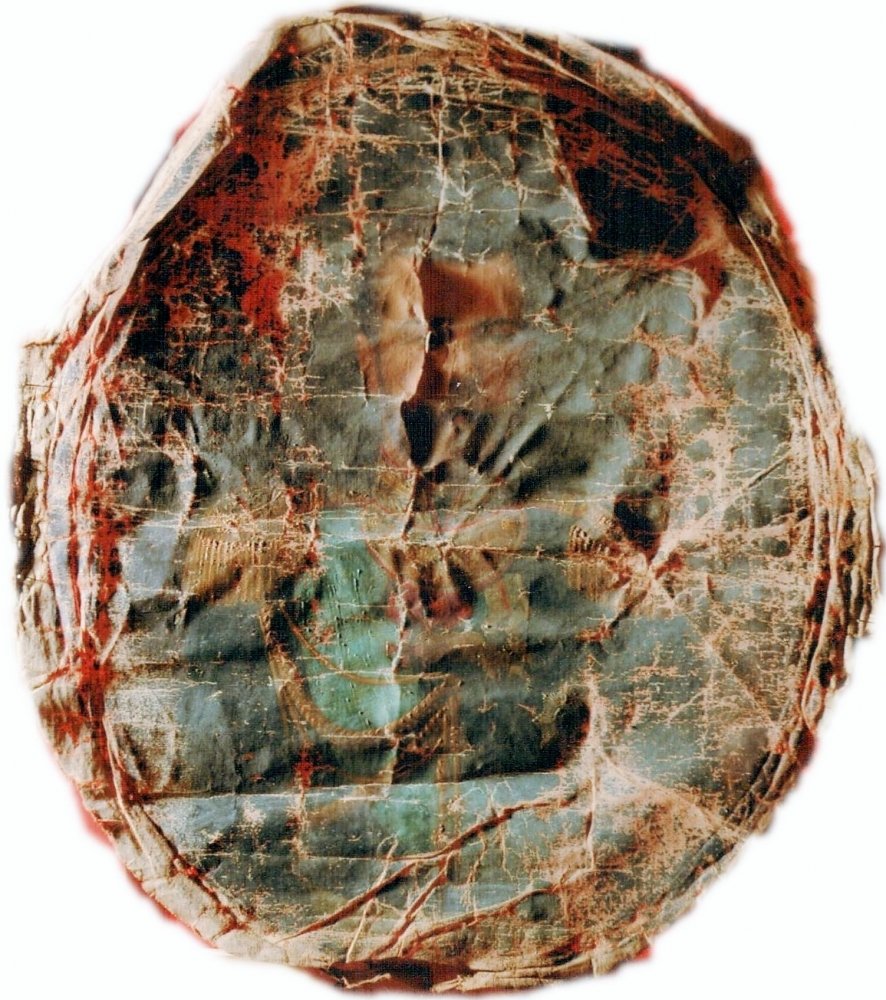
PHOTO: “as if in a misty haze, one could discern the face of Emperor Nicholas II”

In 2018, the State Hermitage Museum in St. Petersburg in cooperation with the Russian-American Cultural and Educational Society ‘Rodina’, embarked on a joint project headed by Candidate of Cultural Studies Viktor Faibisovich, on the restoration of a little-known portrait of Russia’s last tsar.

In 2004, a Moscow collector brought the portrait from the United States to the State Hermitage Museum, after discovering it in the Russian-American Cultural and Educational Society Museum.

The Rodina Society was founded in 1954 by Russian émigrés in Lakewood, New York. The head of Rodina, O.M. Krumins, noted that the portrait was brought from Paris in the late 1950s among other rarities of the Life Guards of the Semyonovsky, Izmailovsky and Pavlovsky regiments, the Nikolaevsky cavalry and the Konstantinovsky artillery schools.

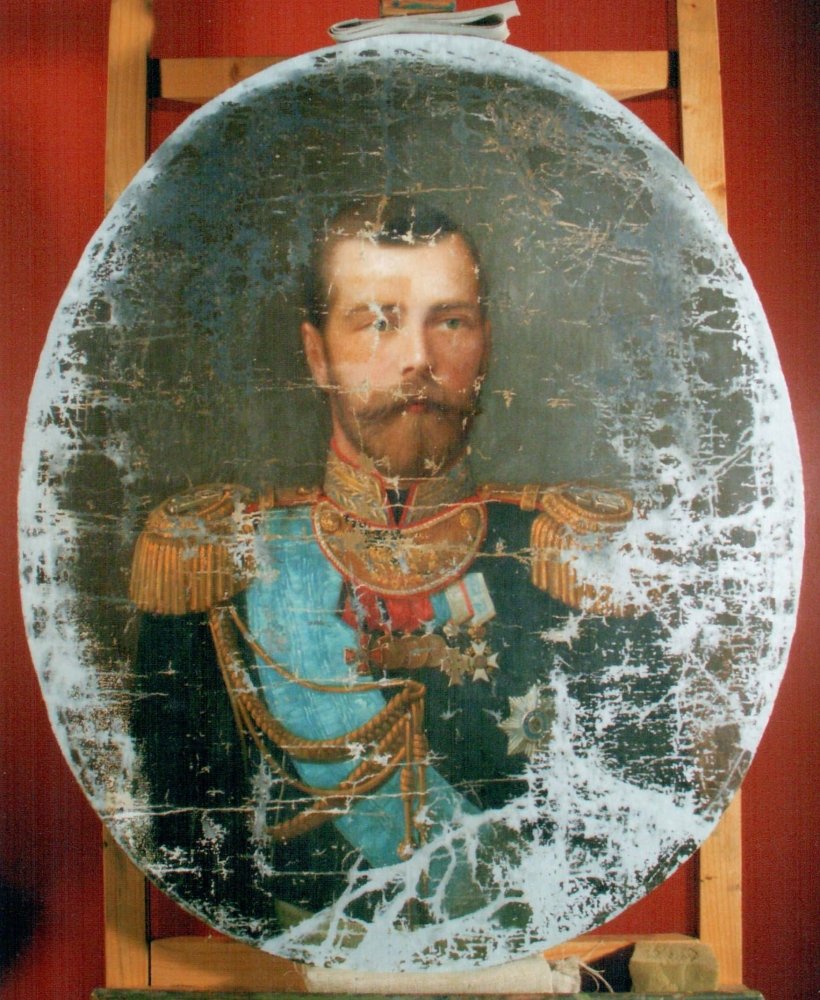
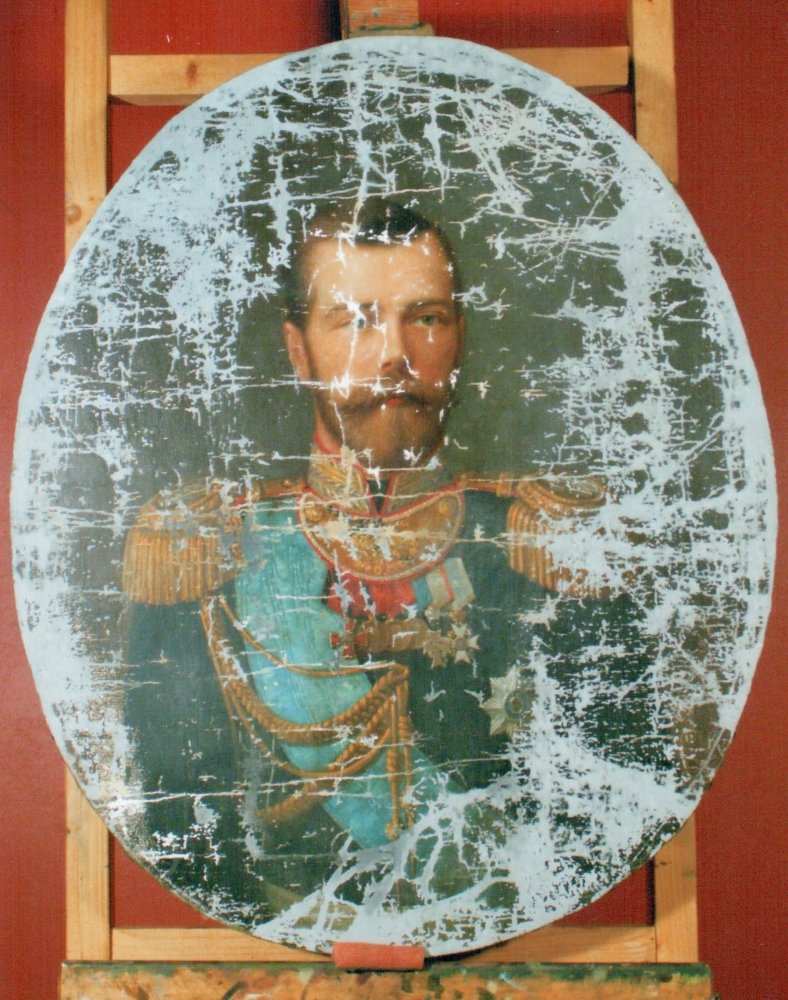
The portrait was in a terrible state, nearly destroyed after years of neglect. Within the remnants of the layer of paint, covered with numerous craquelures [a network of fine cracks in the paint or varnish of a painting], as if in a misty haze, one could discern the face of Emperor Nicholas II, distorted by a deep vertical fracture. But the portrait was in such a terrible state as the canvas had remained rolled up for almost half a century.

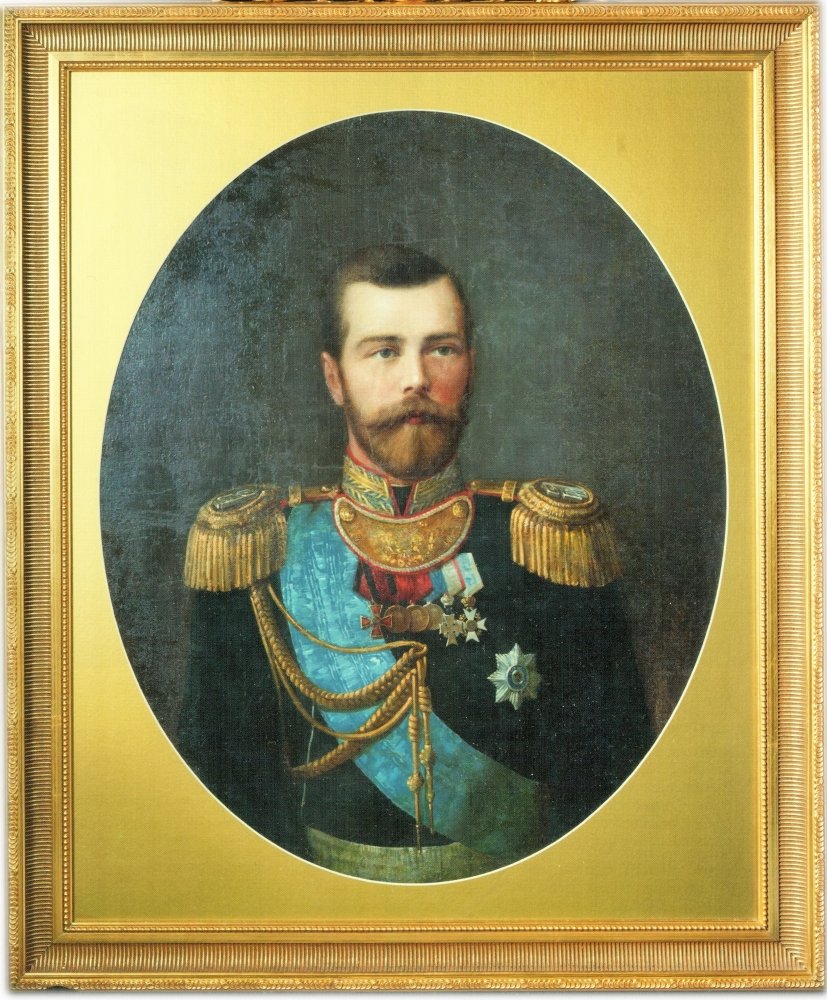
The restoration was entrusted to the masters of the Russian Academy of Painting, Sculpture and Architecture in St. Petersburg . It was established that Nicholas II was depicted in the ceremonial uniform of the Semenovsky Life Guards Regiment. The emperor was appointed chief of this regiment in 1894. Scrupulous attribution made it possible to establish that the portrait was made no earlier than 1896.

But how did it end up in Paris in the middle of the 20th century?

The photos show the various stages of restoration of the portrait

Semenovsky order

The portrait was commissioned by the officers of the Semyonovsky Life Guards Regiment, and hung in the dining room of the officers’ Assembly Hall. A certificate to confirm this was left by an officer of the regiment Yu.V. Makarov: “This dining room, the largest room in the Assembly, was so large that it could accommodate 130-150 diners. On the wall opposite from the entrance, right in the middle, hung a large half-length portrait of the sovereign founder of the regiment, Emperor Peter the Great, in dark oak In a quadrangular frame, the emperor was depicted in a green caftan, with a blue Semyonov collar. Two smaller portraits of Emperor Nicholas II in our uniform and Empress Alexandra Feodorovna in oval gold frames were positioned on either side of Peter’s portrait.”

The officers’ Assembly Hall was the center of regimental life. It was from here that in August 1914 the Semyonovsky Life Guards Regiment set out for battle. During the First World War, the regiment lost 48 officer. Then, in March 1917, the regiment lost its sovereign chief Nicholas II. In April, Colonel Alexander Vladimirovich Popov (1880-1963) was appointed the last Commander of the Semenovsky Life Guards Regiment.

It is to him that we owe the preservation of the portrait of Nicholas II.

PHOTO: Colonel Alexander Vladimirovich Popov (1880-1963)
Last Commander of the Semenovsky Life Guards Regiment

In December 1917, the Semyonovsky Life Guards regiment was disbanded. All military ranks, in accordance with the Decree of the Soviets of Workers ‘and Soldiers’ Deputies on the destruction of estates and civilian ranks, were ordered to remove their shoulder straps and hold elections for commanding officers in the new Semyonovsky Guards Regiment. Popov refused to participate in the elections, and transferred the interim duties of commander to Colonel N.K. von Essen (1885-1945). On 10th December 1917 left for Petrograd, taking with him the portrait of Emperor Nicholas II.

The photos show the various stages of restoration of the portrait

Preserved memory

Popov was one of the initiators of the formation of guards units in the White movement. The revived Semyonovsky Life Guards Regiment fought in the South of Russia. Alexander Vladimirovich carried the portrait of the last sovereign chief through the entire Civil War.

In 1919 he emigrated to France and lived in Paris, where he headed the Association of the Semyonovsky Life Guards Regiment in France, was a member of the Union of Zealots in memory of Emperor Nicholas II, the Society of Lovers of Russian Military Antiquity, the Union of Russian Cadet Corps, and an honorary member of the Union of Transfiguration. Popov also served as director of the regimental museum, in which he sacredly kept the portrait of Nicholas II. In the late 1950s, when it became more and more difficult to preserve museum exhibits, they were transferred to the United States.

A few years later, 82-year-old Colonel Popov passed away. In the magazine Sentinel under the heading “Unforgotten graves” was placed a modest mention: “On March 28, 1963, the chairman of the Association of the Semenovsky Life Guards Regiment, the last commander of the regiment, Colonel Alexander Vladimirovich Popov, died in Paris.”

He was buried in the Sainte-Genevieve-des-Bois Cemetery in Paris.

PHOTO: the portrait of Nicholas II, after restoration

After the death of the collector who brought the portrait of Nicholas II to Moscow, the portrait was donated to the Museum of the Russian Guard in the General Staff Building [across from the State Hermitage Museum] in St. Petersburg.

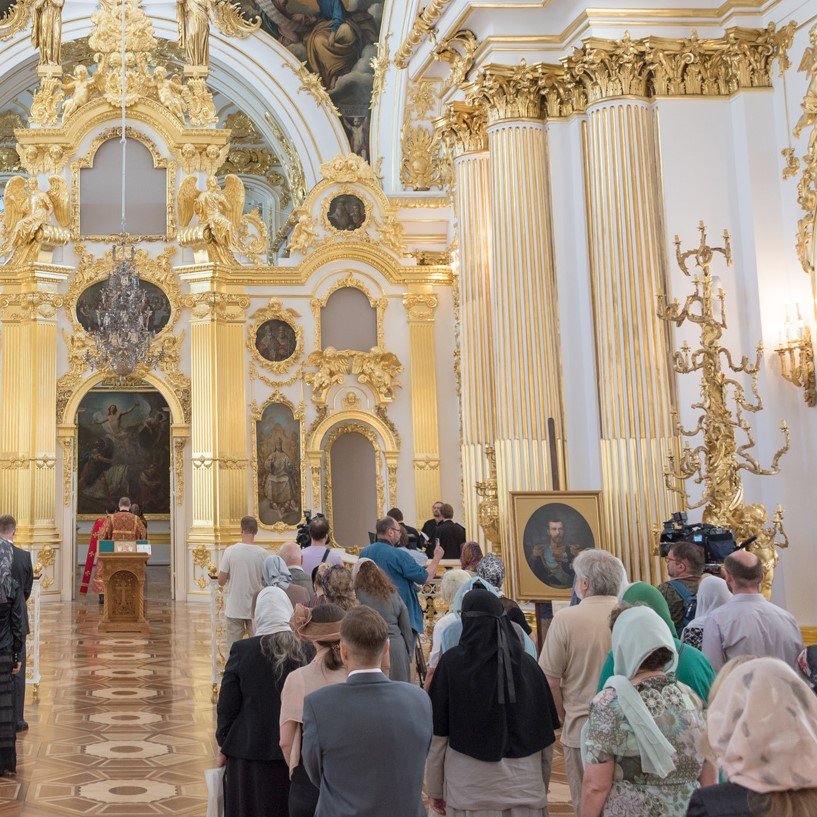
PHOTO: the restored portrait of Nicholas II displayed in the Winter Palace in 2018

On 17th July 2018, the day marking the 100th anniversary of the death and martyrdom of Russia’s last emperor and tsar, a Divine Liturgy was performed in the Church of the Savior Not Made by Hands [the home church of the Imperial Family] in the Winter Palace, led by the rector of the Prince Vladimir Cathedral, Archpriest Vladimir Sorokin. The restored portrait of Nicholas II by an unknown artist of the late 19th-early 20th centuries was displayed in the cathedral. Popov would have been pleased.

© Paul Gilbert. 1 September 2021

The fate of the Tsar’s portrait in the Duma

PHOTO: Ceremonial portrait of Nicholas II (1905) in the State Duma. Artist: Ilya Repin

NOTE: this article was updated on 20th May 2021 – PG

When in 1905 the Winter Garden in the Tauride Palace in St. Petersburg was converted into the State Duma Hall, it was decided to decorate it with a huge portrait of Nicholas II. The great Russian portrait artist Ilya Yefimovich Repin (1844-1930) was commissioned for the job. The artist quickly coped with the task, and the treasury paid him a fabulous sum of three thousand rubles. The portrait was installed behind the podium and seats for the leadership of the Duma.

Repin’s portrait depicts the Tsar standing on a balcony [possibly the Lower Dacha at Peterhof?]. Information on this portrait is scant, which is surprising, given that the artist was considered the most renowned Russian artist of the 19th century, and had painted a number of ceremonial portraits of the Emperor.

In 1916 Repin worked on his book of reminiscences, Far and Near, in which he acknowledges that he welcomed the Russian Revolution of February 1917. This is very disappointing to learn, given that he did not seem to mind accepting the enormous sums he was paid for the numerous portraits he did of Nicholas II after he ascended the throne in 1894.

So little is known about this wonderful portrait, however, my efforts to learn more about its fate, left me with practically nothing. I could not find any reference to the portrait in any of the online sites dedicated to Repin’s works. The only reference I could find was an article on the State Duma found on the web site of the Boris Yeltsin Presidential Library in St. Petersburg. Only a handful of photographs exist of the portrait.

In 2019, a large-scale exhibition of Repin’s works was presented at the State Tretyakov Gallery in Moscow. The exhibition, located on 3 floors in the largest exhibition halls, featured more than 180 paintings and more than 130 graphic works. Repin’s ceremonial portrait was absent, nor was there any reference made to it.

In May 1918, the Bolsheviks used the Tauride Palace to hold their 7th Congress, where they first named themselves the Russian Communist Party (Bolsheviks). It is most likely that Nicholas II’s portrait had been removed by the Provisional Government following the February 1917 Revolution. If not, it would most certainly have been destroyed by the Bolsheviks.

After an appeal to readers for information on the fate of the portrait, Mr. Robert Strom reached out to me, providing me with an eyewitness account of the fate of Repin’s ceremonial portrait which hung in the Duma.

The diarist Nikolai Nikolaevich Sukhanov (1882-1940) a Russian Menshevik Internationalist and chronicler of the Russian Revolution was a witness to the fate of the portrait. Sukhanov, who was napping in the gallery of the White Hall of the Tauride Palace was awaken by an unforgettable scene on the dais below:

“I was aroused by strange noises. I realized at once where I was, but could not explain these sounds to myself. I got up and saw two soldiers, their bayonets hooked into the canvas of Repin’s portrait of Nicholas II, rhythmically tugging it down from both sides. A minute later, over the chairman’s seat in the White Hall of the Duma there was an empty frame, which for many months continued to yawn in this revolutionary hall. …Strange ! It never came into my head to worry about the fate of this portrait –to this day I don’t know what happened to it. I was more interested in other things.

“A number of soldiers were standing on the upper levels of the chamber, at the height of my gallery. Leaning on their rifles they watched what their comrades were doing and quietly made their own comments. I went over to them and listened eagerly. …Twenty-four hours before, these rank-and-file soldiers had been the dumb slaves of the despot who was now thrown down, and at this moment the outcome of the revolution depended on them. What had taken place in their heads during those twenty-four hours ? What would they say to the shameful treatment of the portrait of the ‘adored monarch’ of yesterday ? It evidently made no strong impression –there was neither surprise, nor any sign of intense intellectual activity, nor a shadow of that enthusiasm from which even I myself was ready to catch fire. They were making remarks in a tranquil and matter-of-fact way, so down-to-earth they can’t be repeated. The break had been accomplished with a sort of fabulous ease. No better sign was needed of the definitive rottenness of Tsarism and its irremediable ruin. The hands of the large clock over the entrance doors of the hall pointed to 7.30. It was time to begin the ‘Second Day of the Revolution’.”

PHOTO: the ‘gaping yawn of chaos’

I am indebted to Mr. Robert Strom for his much valued assistance with this piece of Russian history.

© Paul Gilbert. 16 May 2021