The Romanovs in the Urals exhibit opens in Ekaterinburg
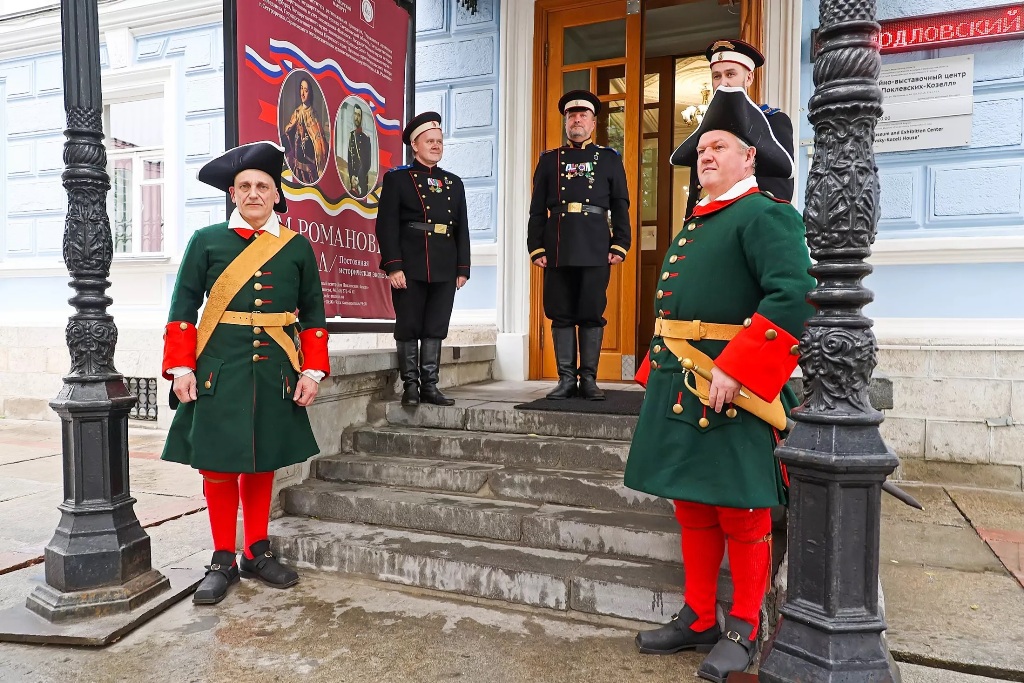
PHOTO: museum staff dressed in period costume were on hand to greet visitors to the grand opening of ‘The Romanovs in the Urals’ at the Poklevsky-Kozell House Museum
On 14th July 2023 a new permanent exhibition The Romanovs in the Urals opened at the Poklevsky-Kozell House Museum of the Sverdlovsk Regional Museum of Local Lore in Ekaterinburg.
The exhibition is timed to the 105th anniversary of the death and martyrdom of Emperor Nicholas II and his family in the Ural city on 17th July 1918, and the events marking the 300th anniversary of the founding of Ekaterinburg in 1723.
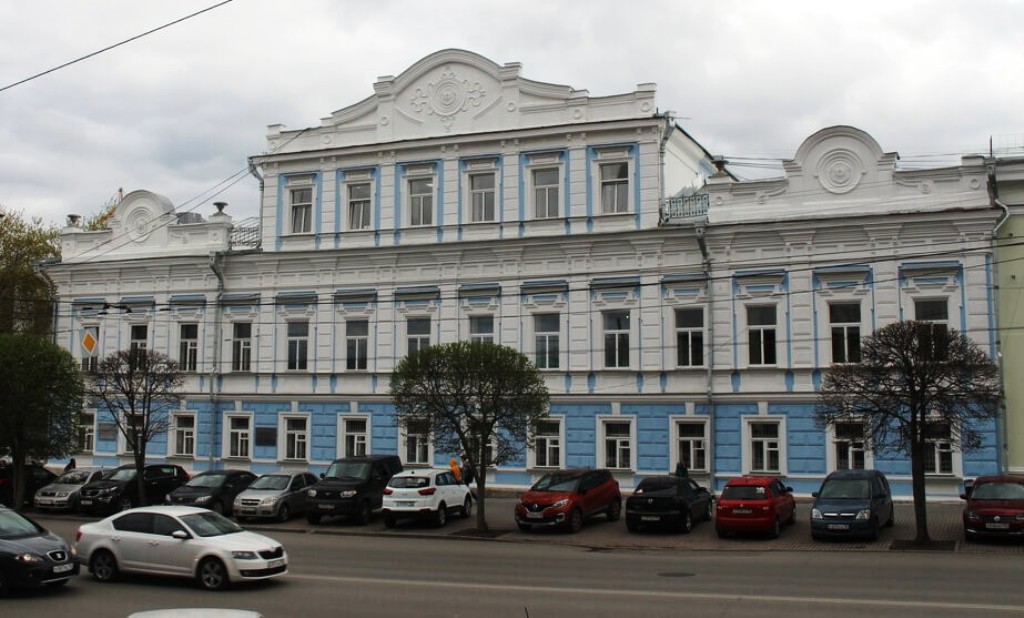
The exhibit was recently transferred from the Romanov Memorial Hall of the Museum of History and Archaeology of the Urals, and now occupies five newly renovated halls of the Poklevsky-Kozell House Museum, which is situated at Ulitsa Malysheva, 46. The museum previously hosted the exhibition The Tragedy of the Family … The Tragedy of the Motherland, which ran from 5th June to 23rd September 2018.
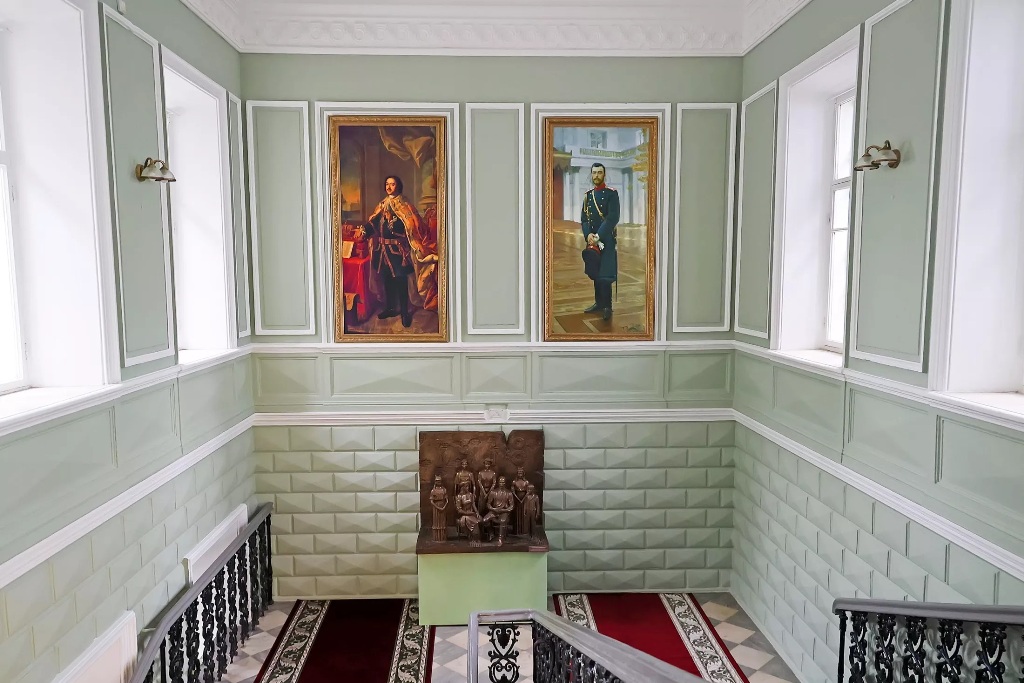
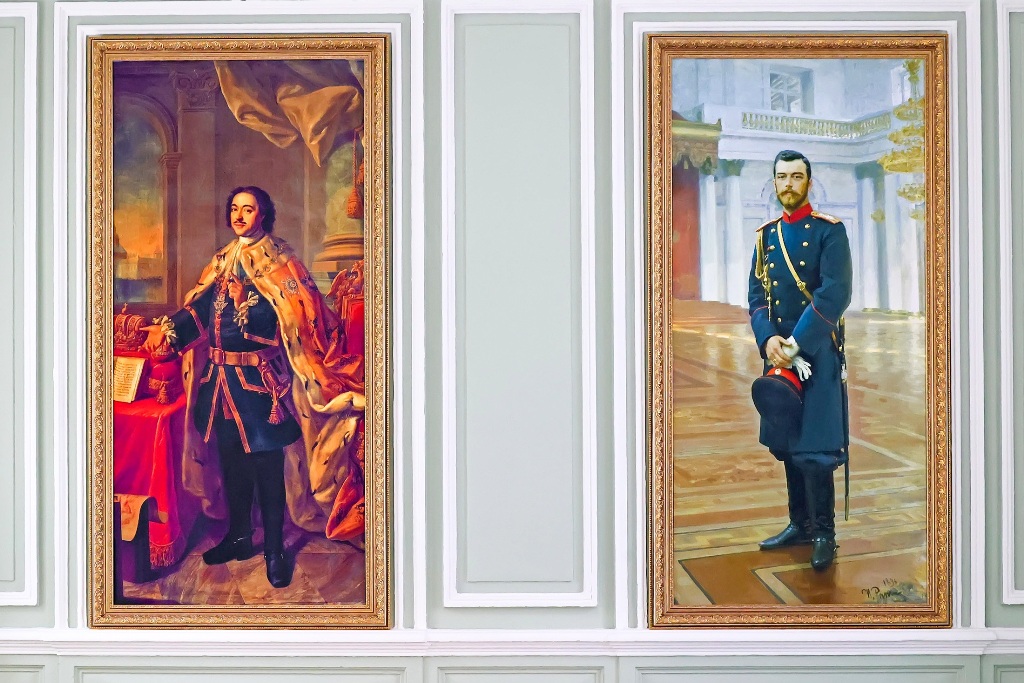
PHOTO: portraits of Peter the Great and Nicholas II are the centerpiece of the staircase leading to the exhibition
Finishing touches on the new exhibition space were carried out right up until the day before the grand opening. The newly renovated halls smelled of fresh paint, specialists fine tuned the multimedia equipment, caretakers brought shine to the display cases and windows, while researchers installed the last of the exhibits. Their activity aroused the curiosity of both museum workers and visitors, who peeked through the partially open door with the hope of get a glimpse of the Ural city’s latest exhibit.
Scientists, researchers, museum workers from across Russia, including Moscow, St. Petersburg, Perm, Tyumen, Tobolsk, Vologda, Voronezh, Ekaterinburg, and Alapaevsk gathered to discuss and help set up the exhibit which features hundreds of items.
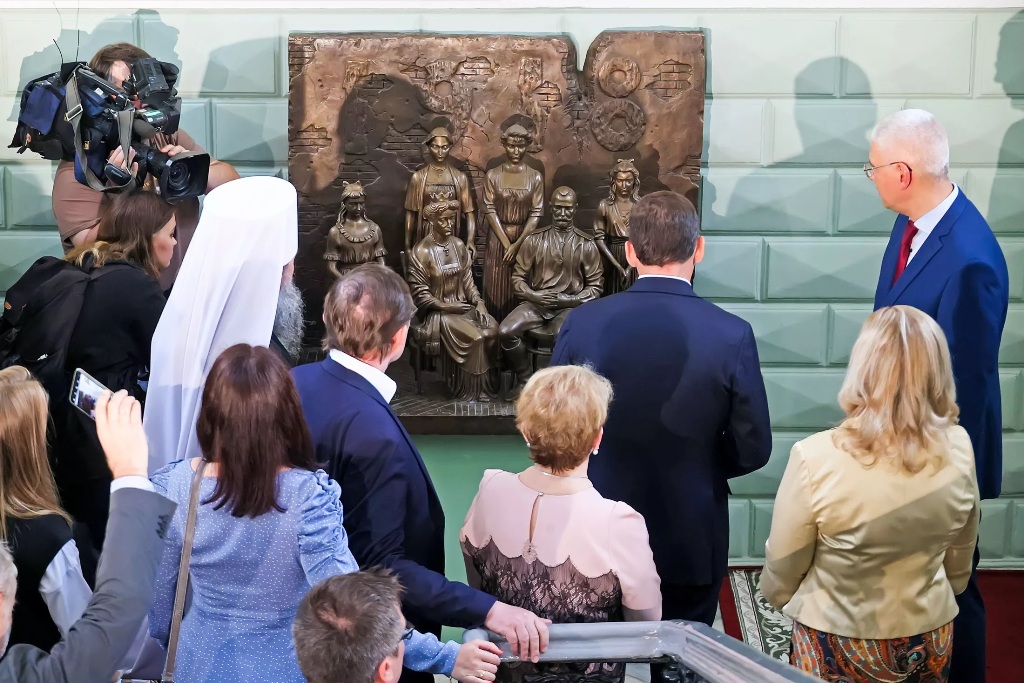
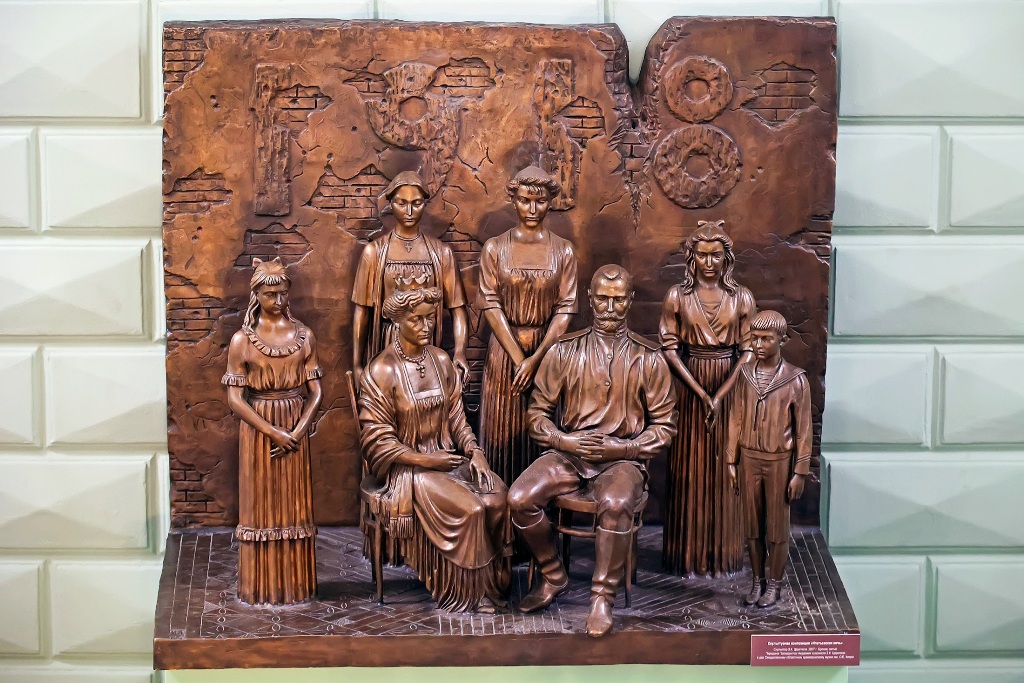
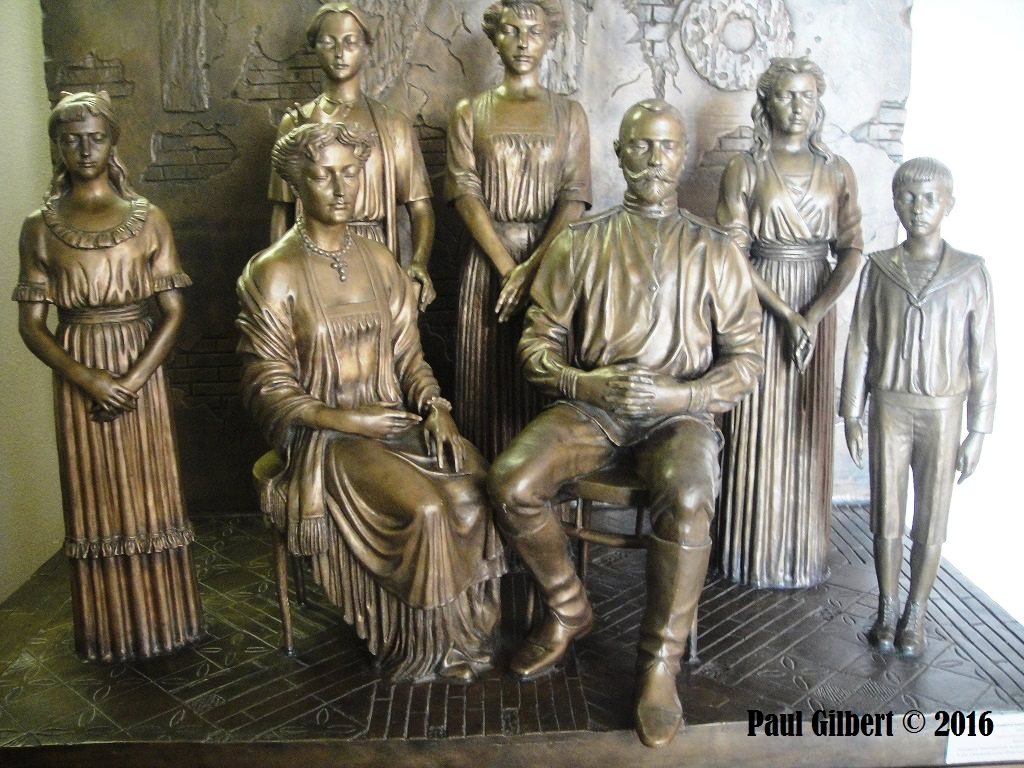
PHOTO: VIP guests stop to admire a miniature copy of Zurab Tsereteli’s sculpture, “Night at the Ipatiev House”, located in the staircase leading to the exhibit
The idea to move the Romanov Memorial Hall was proposed by the Chairman of the Elisabeth-Sergius Educational Society Foundation (ESPO) Anna Vitalievna Gromova, who is a Candidate of Historical Sciences, and Senior Researcher at the Institute of World History of the Russian Academy of Sciences.
Anna Gromova is recognized as one of the Russia’s most prominent adherents to keeping the memories of Emperor Nicholas II, his family, Grand Duchess Elizabeth Feodorovna, and other members of the Russian Imperial Family who were murdered by the Bolsheviks in 1918 and 1919. She is responsible for the founding and development of museums, exhibitions and conferences and is the mastermind behind the The Imperial Route.
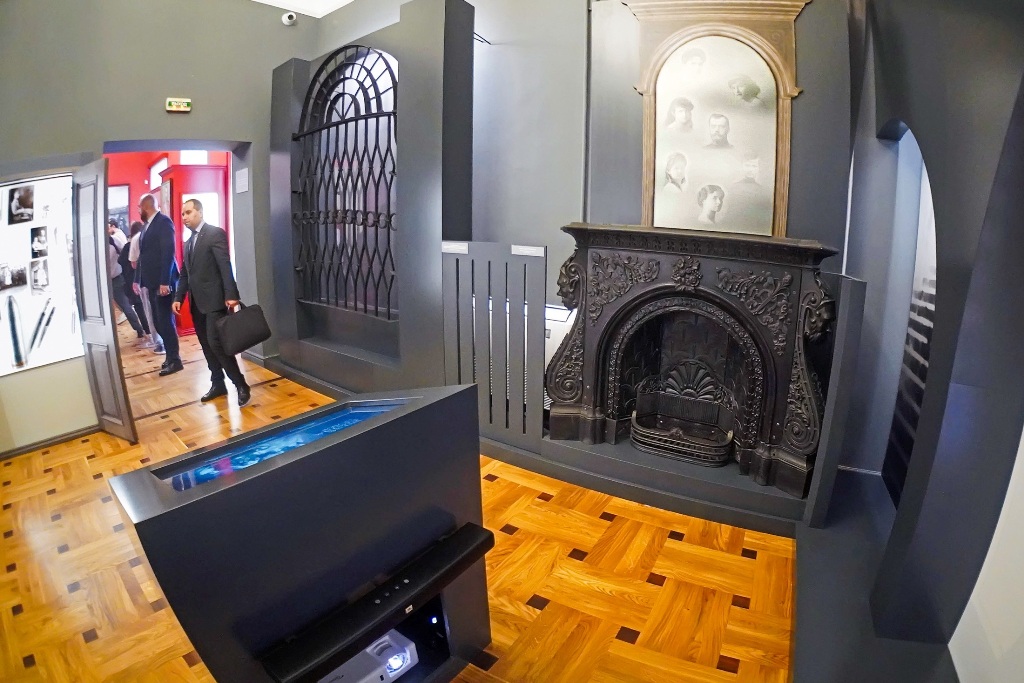
PHOTO: the original cast iron fireplace, salvaged from the dining room of the Ipatiev House before its demolition in September 1977
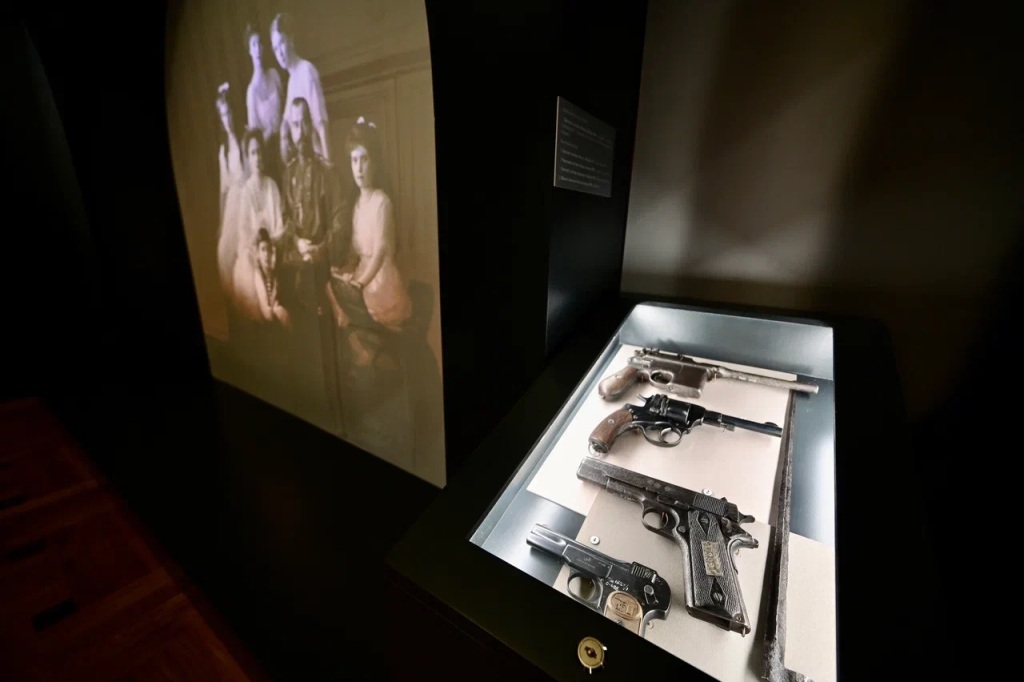
PHOTO: revolvers used by the regicides – including Peter Ermakov’s – to murder the Imperial Family in the Ipatiev House on 17th July 1918
Upon entering the Poklevsky-Kozell House Museum, visitors ascend a newly renovated grand staircase, where they are greeted at the top by portraits of Peter the Great and Emperor Nicholas II. Recall that Ekaterinburg was founded on 18th November 1723 and named after Peter the Great’s wife, who after his death became Empress Catherine I, Yekaterina being the Russian form of her name. Underneath the portraits is a miniature copy of Zurab Tsereteli’s sculpture, “Night at the Ipatiev House” – the original is on display at the Zurab Tsereteli Museum in Moscow.
The five halls are decorated in the colours of the flag of the Imperial House of Romanov – black, gold, white. Each hall is decorated with unique exhibits and multimedia technologies, which together help to tell the story of the history of the dynasty in the Urals.
In the Golden Hall, are portraits from the era of the chairman of the State Council of the Russian Empire Grand Duke Mikhail Nikolaevich (1832-1909). The highly respected grand duke also served as the Honourary President of the Siberian-Ural Scientific and Industrial Exhibition in 1887, organized on the initiative of the Ural Society of Natural History Lovers (UOLE). When the members of the UOLE created a museum (from which the regional local history traces its history), his son Grand Duke Nikolai Mikhailovich (1859-1909), a famous Russian historian, became its patron. At the turn of the 20th century, six additional members of Russian Imperial House were made honourary members of the UOLE.
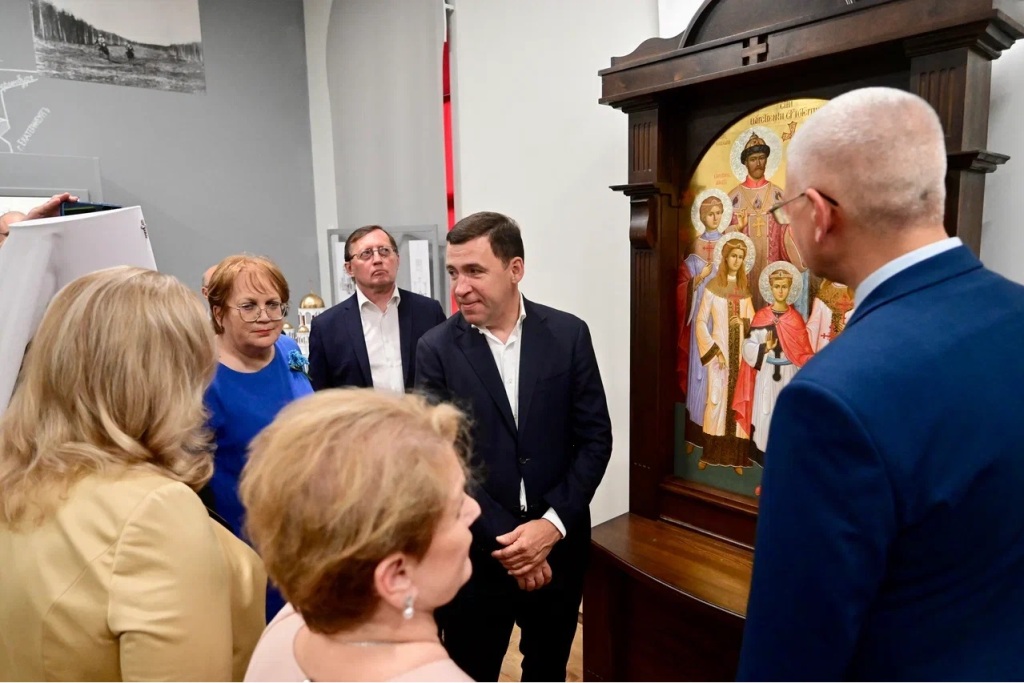
PHOTO: VIP guests stop to admire an icon of the Holy Royal Martyrs, painted by the nuns of the Novo-Tikhvin Convent in Ekaterinburg
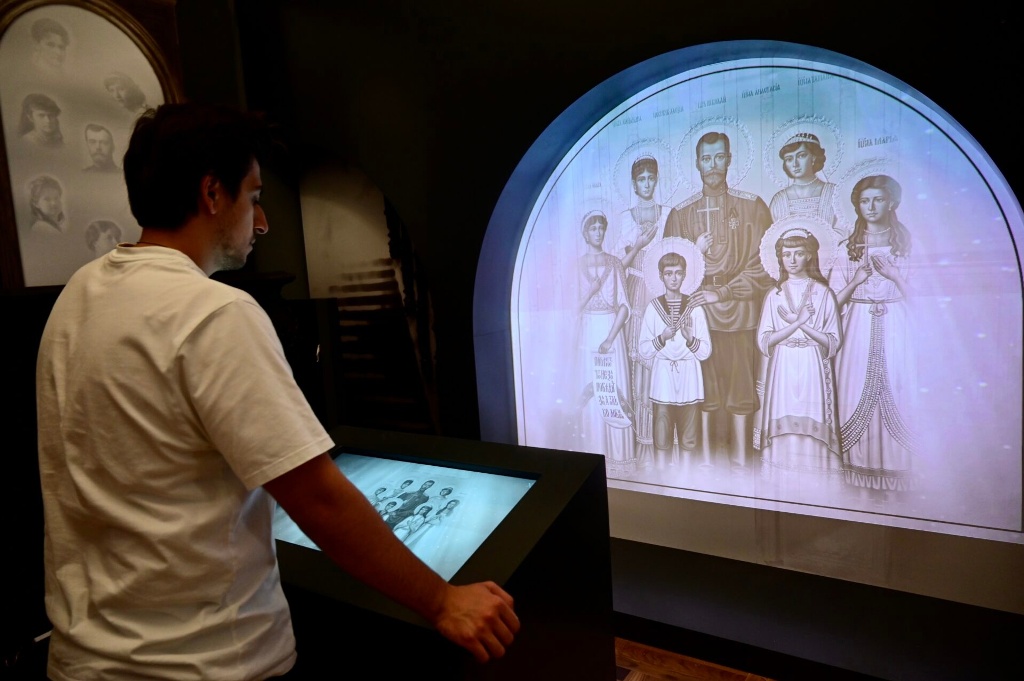
PHOTO: multimedia display which depicts the Holy Royal Martyrs, in whch they are depicted as saints, Nicholas II is holding a cross
The “black” halls of the exhibit take on a more sombre ambiance, with displays telling visitors about the house arrest and subsequent murders of Grand Duke Mikhail Alexandrovich and Nicholas Johnson at Perm on 13th June 1918; Emperor Nicholas II, his family and four faithful retainers at Ekaterinburg on 17th July 1918; and Grand Duchess Elizabeth Feodorovna along with and other members of the Russian Imperial Family and their faithful retainers at Alapaevsk on 18th July 1918.
Some of the more interesting items on display include the ribbon of the Order of St. Andrew the First-Called, which belonged to Tsesarevich Alexei Nikolaevich and left behind in the Governor’s Mansion in Tobolsk, when the four children joined their parents and sister in Ekaterinburg in May 1918.
A number of pistols and revolvers are also on display, including the Mauser of the regicide Pyotr [Peter] Ermakov, who, according to him, shot and killed Nicholas II.
The sombre ambiance of this hall is offset by the bright and soothing icon of the Holy Royal Martyrs, painted by the nuns of the Novo-Tikhvin Convent in Ekaterinburg.
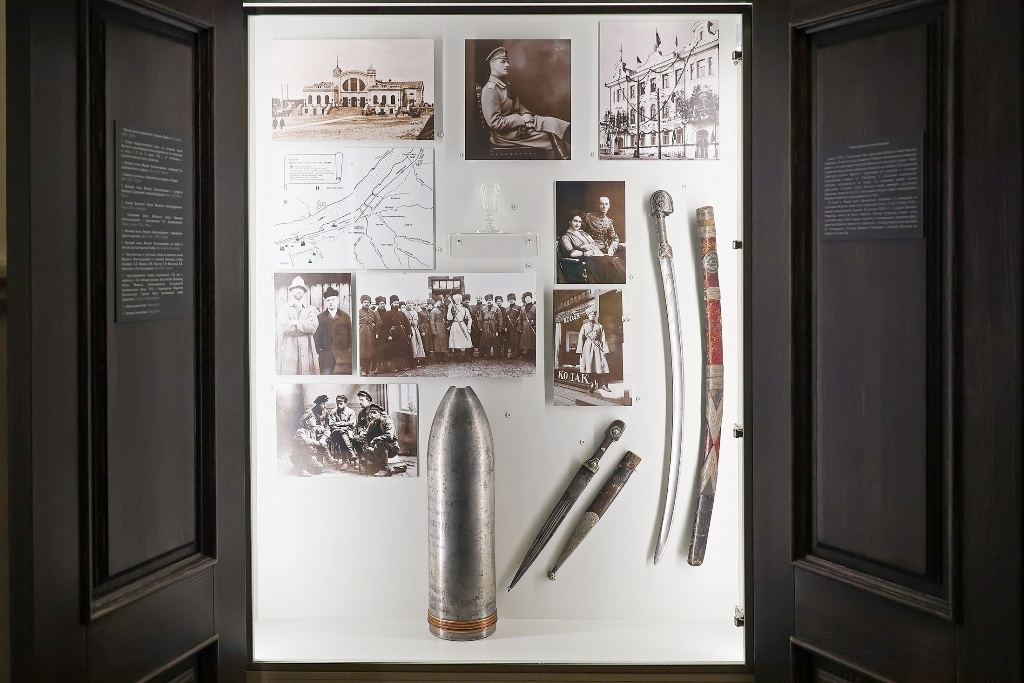
PHOTO: display about the murders of Grand Duke Mikhail Alexandrovich and Nicholas Johnson at Perm on 13th June 1918
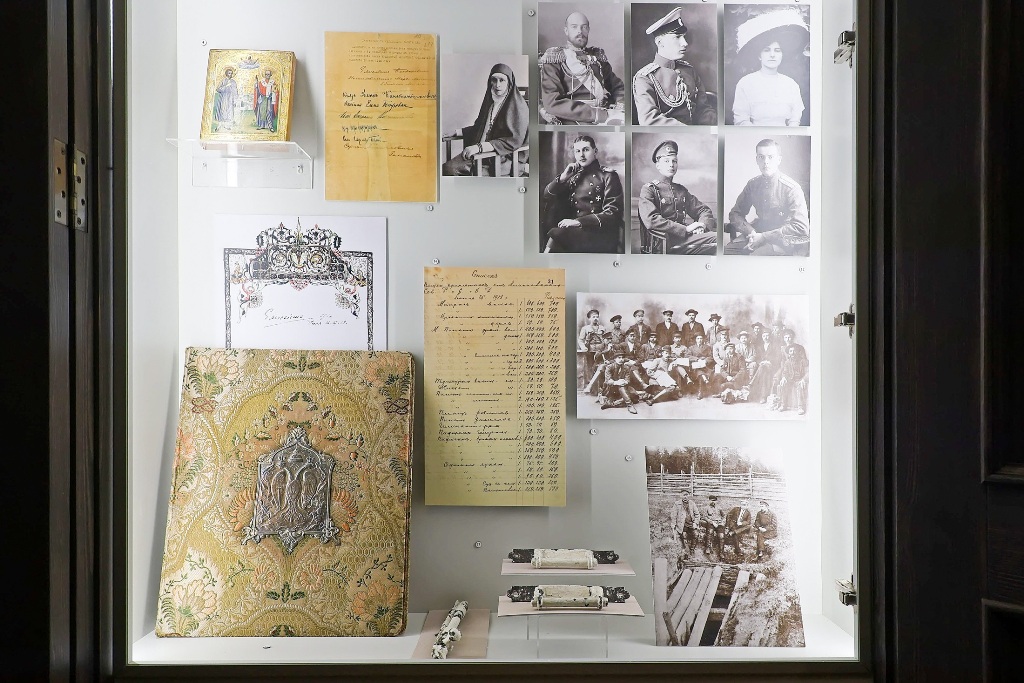
PHOTO: display about the members of the Imperial Family – including Grand Duchess Elizabeth Feodorovna – at Alapaevsk on 18th July 1918
The Romanovs in the Urals also contains many elements of décor, decoration and fittings salvaged from the Ipatiev House before its demolition in September 1977, notably the cast iron fireplace from the dining room, and the iron grille from the window of the murder room.
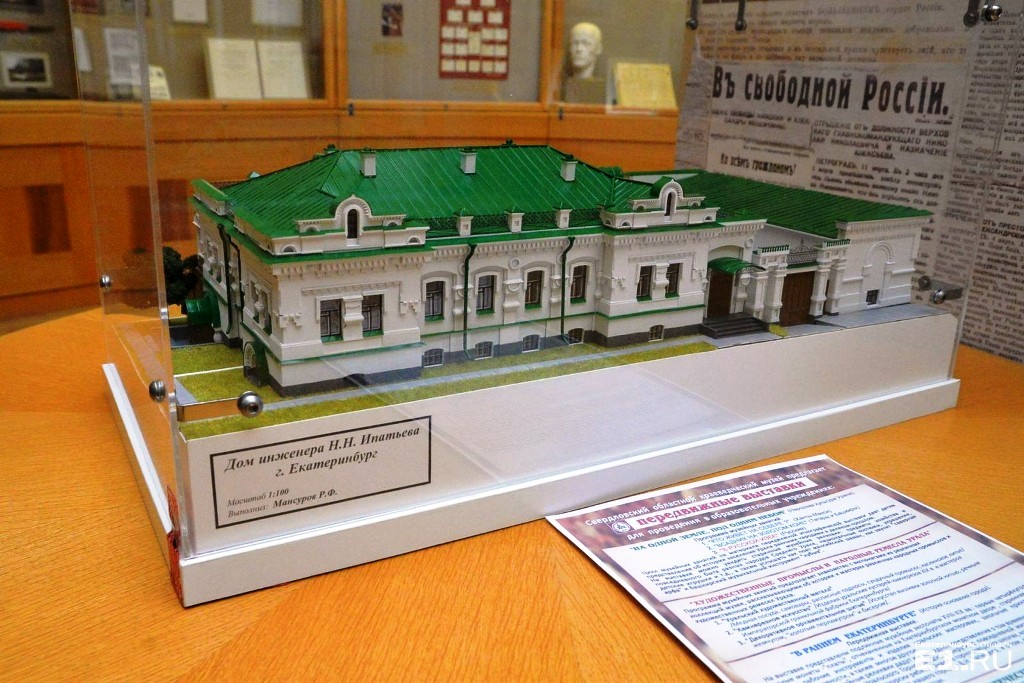
Aside from the items from the Ipatiev House, are many additional exhibits of interest, including a scale model of the Ipatiev House; the reconstructed model of Nicholas II’s head by Russian forensic expert Dr. Sergei Nikitin.
The exposition further explores the history of the investigation of the murder case of the last of the Romanovs in the Urals, which lasted more than 100 years.
© Paul Gilbert. 16 July 2023
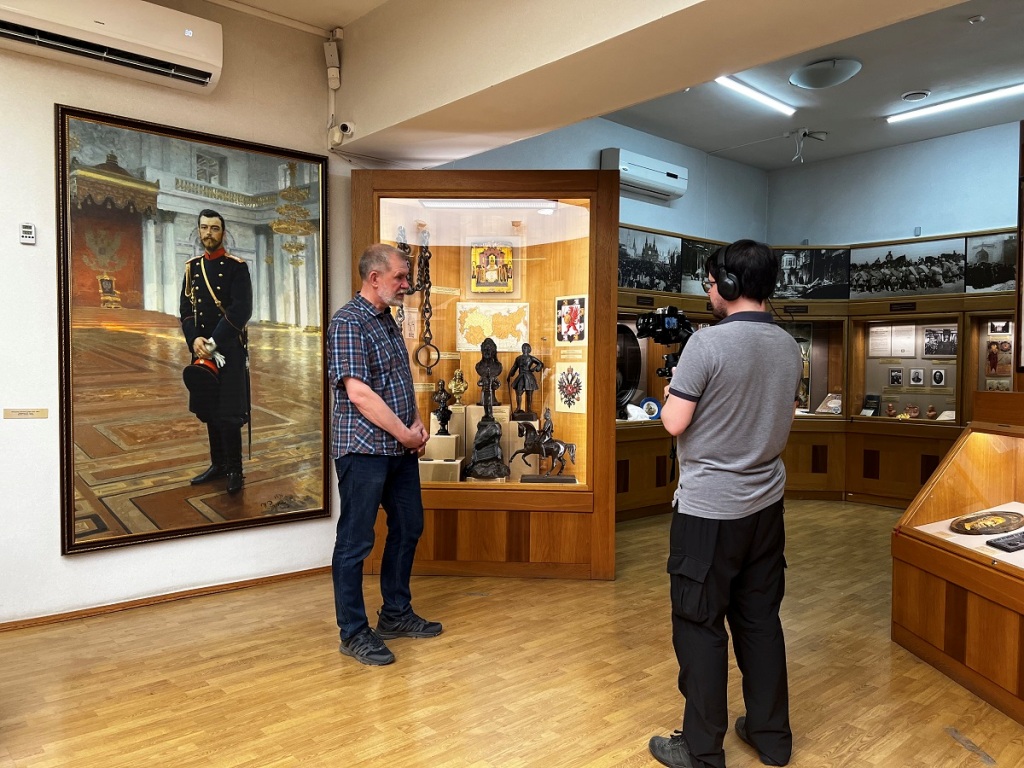
 Nicholas II
You must be logged in to post a comment.