American Tsarism – A Sermon for the Feast of the Royal Martyrs of Russia

This article was originally published on 17th July 2021, on the web site of the Holy Cross Monastery, a monastic community of the Russian Orthodox Church Outside Russia (ROCOR), situated in Wayne, West Virginia, USA. Click HERE to make a donation to the Holy Cross Monastery.

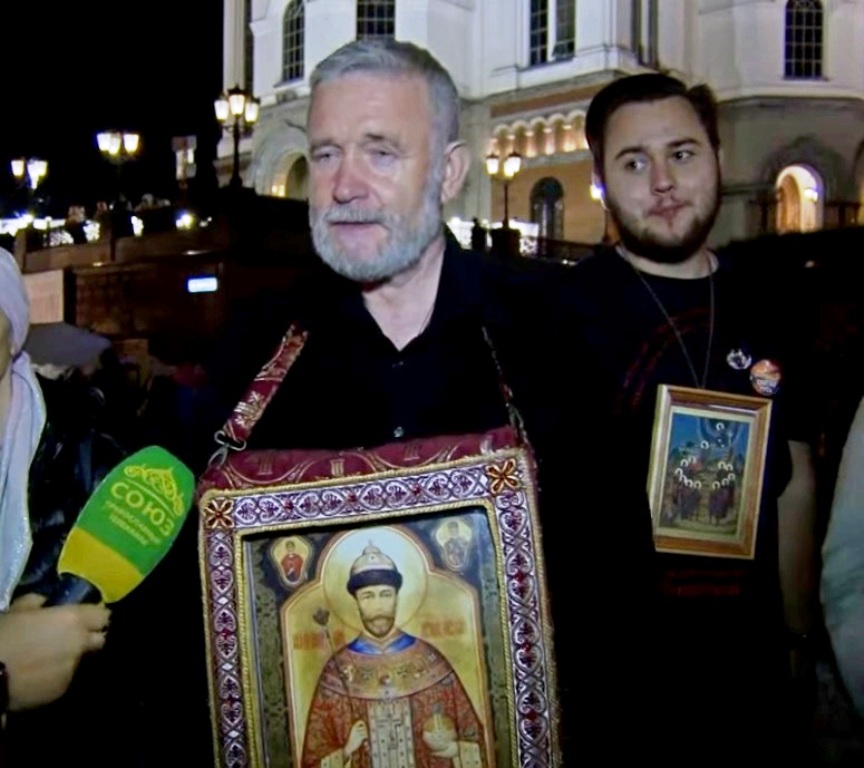
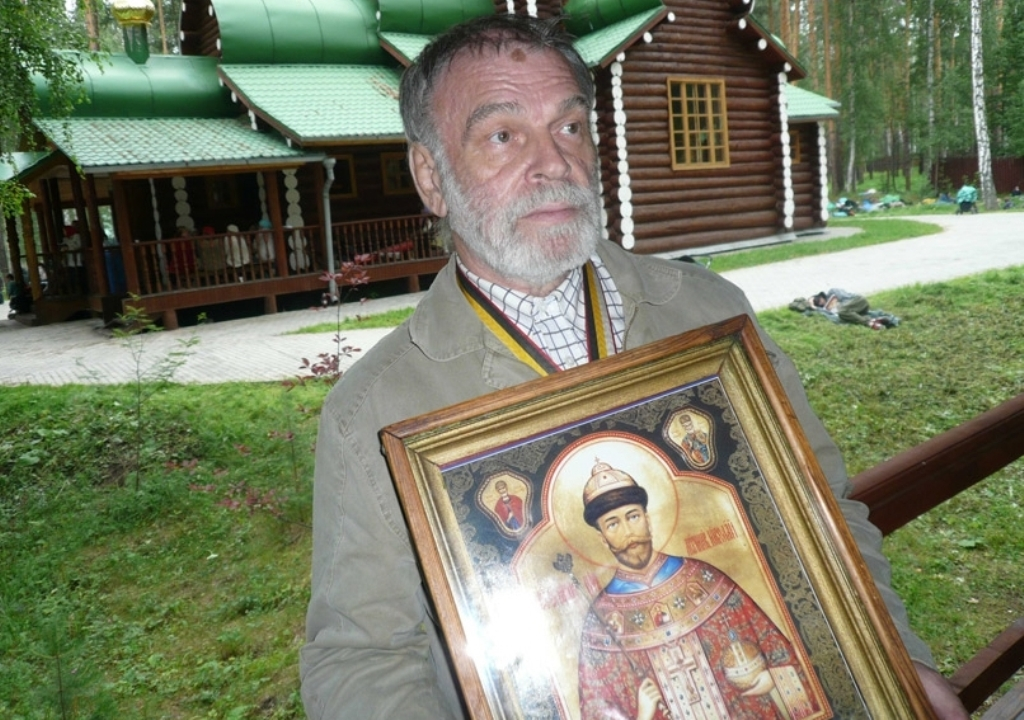
I remember the first time I saw a portrait of Tsar Nicholas II in a church. As a recent American convert to Orthodoxy, it seemed strange to me, and something within me bristled. Not surprisingly, most Americans are uneasy with the concept of monarchy. Our nation was born in casting off the rule of a monarch and the founding a democratic republic. We have always defined ourselves in opposition to the antiquated ways and entrenched hierarchies of the Old World. And now, the Church sets before us the last living representatives of that order for our pious admiration and veneration.

What are we to make of this as Americans? For us, the words “czar” and “autocrat” have the negative connotations of someone who wields power in an arbitrary or oppressive manner. They are practically synonymous with “tyrant” and “despot”. The voice of the inner cynic suggests that the canonization of the last Tsar and his family is just an expression of Russian chauvinism and reactionary nostalgia for a time when the Orthodox Church enjoyed the patronage of the State. Why should a repressive Russian tyrant command the affection and devotion of an American heart reared on the ideals of liberty and democracy? Perhaps your inner cynic has never had such thoughts, but mine has, and others like them—Were the Royal Martyrs really deserving of sainthood? They did not perform any miracles in their lifetime. Were they even truly martyrs? For unlike the martyrs of the early Church, they were not killed by state-sanctioned persecutors simply for confessing Christ; rather, they were killed precisely because they represented and embodied the very conjunction of State power and the Christian faith.

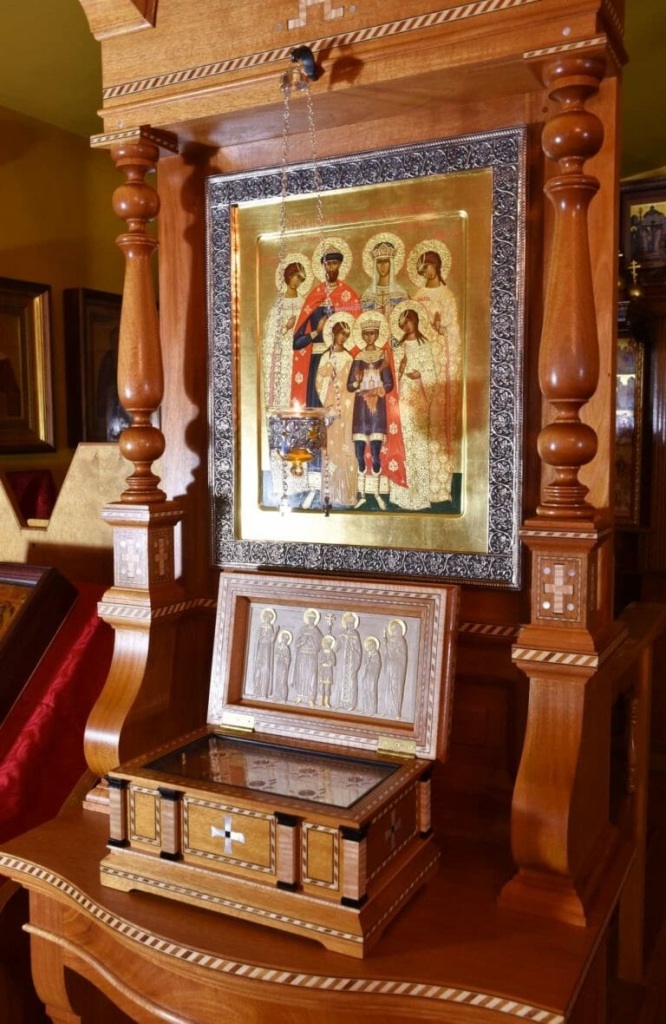
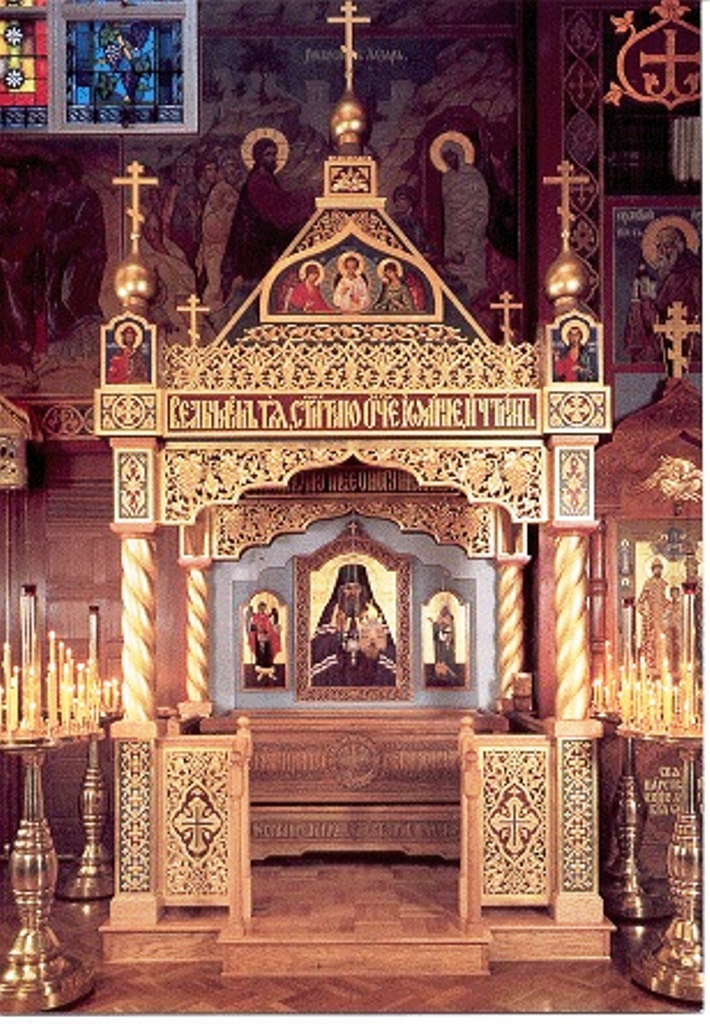
The presence of their relics here in our little chapel tells us that the last Royal Family of Russia is not meant for Russia alone, but for Christians of all peoples and nations. First, though, we may have to set aside the objections of the cynic, the distortions of history, and our American political prejudices, and simply encounter this holy family as fellow human beings and fellow Christians. If we are willing to do so, then no sensitive heart can fail to be moved by their lives, to be drawn by the beauty of their virtues, to be struck by the horror of their slaughter, and to be in awe of their ultimate sacrifice.

On this human level, there is indeed much to admire about Tsar Nicholas II. He was a deeply and sincerely pious man, a patriot in the truest sense of the word, a devoted husband, and a loving father. Born on the feast-day of Righteous Job the much-suffering, he had a clear sense of the historic tragedy that was his providential lot to live through. He understood his role as Tsar to be a charge from God, and he accepted it self-sacrificially, ready to bear any suffering in order to fulfill his sacred calling.

Secular historians often judge him to be a weak and ineffective ruler. Instead, it is the modernizing and Westernizing rulers Peter I and Catherine II whom they remember as “the Great”. And from the point of view of their earthly accomplishments, they were indeed great. But things appear differently from the Church’s point of view. During the reign of “the Greats” the Moscow Patriarchate was abolished, and the Russian Church was reorganized as a department of state, on the model of certain Protestant Churches in Western Europe; monasteries were closed, their lands taken; obstacles were created to prevent young men and women from entering monastic life; the eremitical life was outlawed.

The pious Tsar Nicholas had a much different attitude to the Church. During his reign the first steps were taken to restore the Patriarchate, culminating in the All-Russian Council of 1917-18. The Tsar also had a great devotion to the saints. It was thanks to his encouragement and insistence that St. Seraphim of Sarov was officially canonized, and he took part personally in the solemnities of his glorification. He was a great patron of church building, and had an exquisite taste for traditional Russian church art and architecture. Even today, you can go to Russia and see with your own eyes the concrete legacy of the Tsar in all of the magnificent churches he commissioned and funded. In these places of sacred beauty—monuments of craftsmanship, artistry, and imagination that surpass anything to be found in the New World—it becomes tangibly clear just what it meant for there to be an Orthodox Tsar in Russia, to protect, defend, nurture and support the life of the Church. The imposing majesty and celestial beauty of these temples needs no explanation or apology; it is its own justification for an Orthodox regime and a Christian civilization.

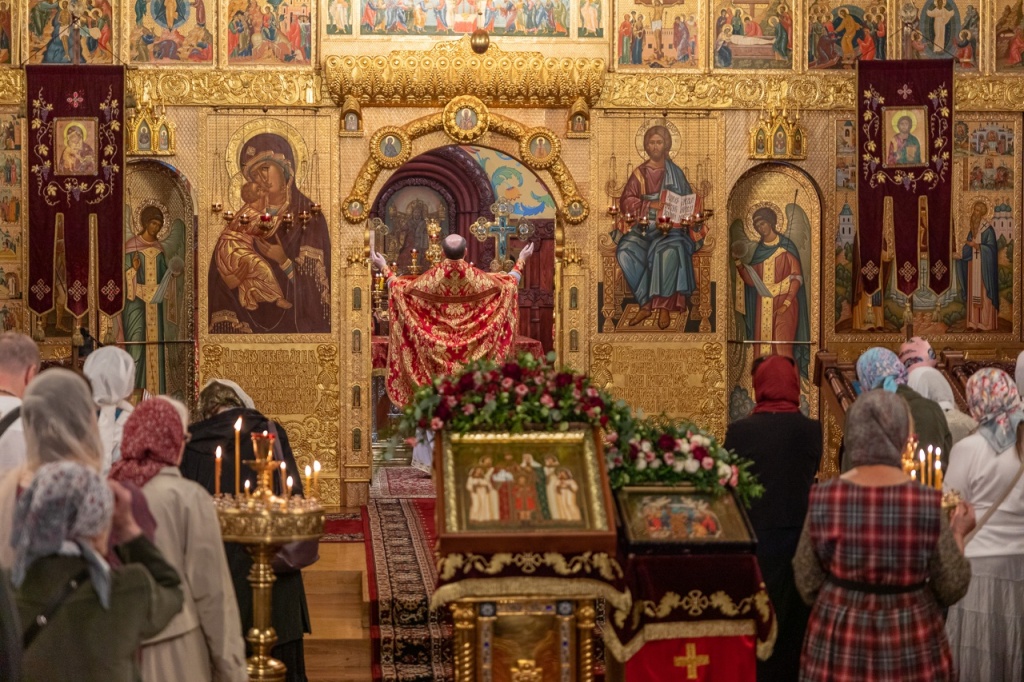
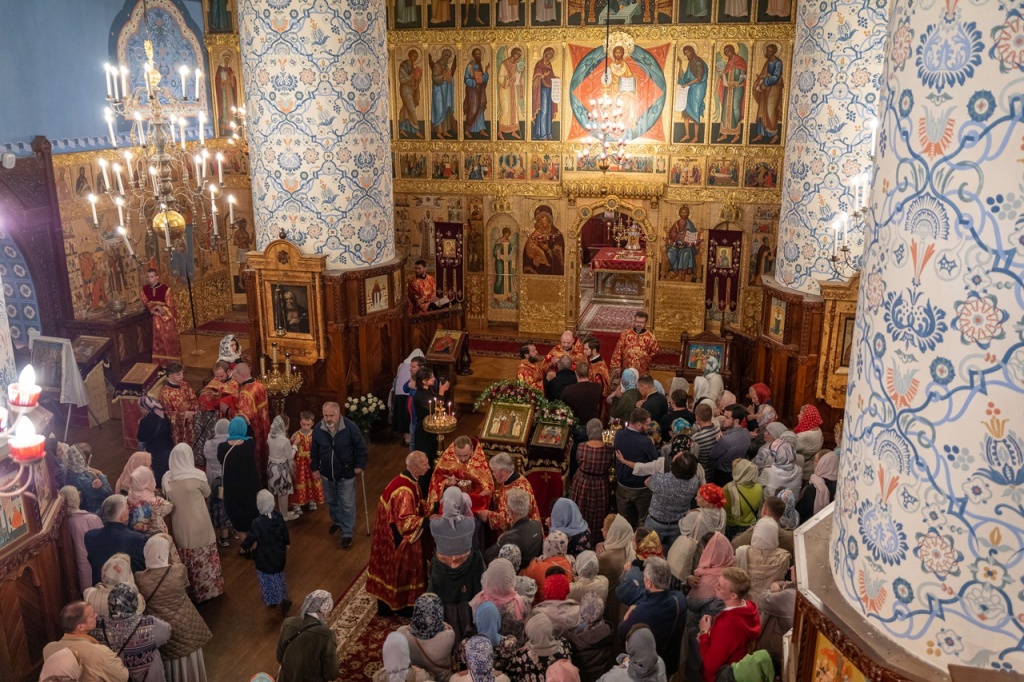
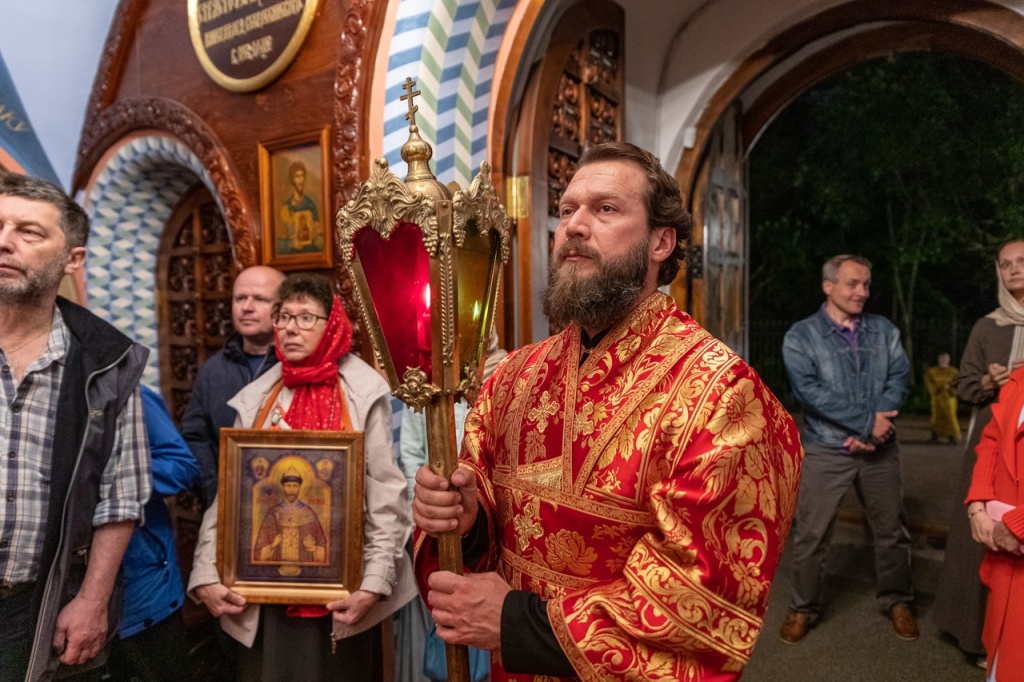
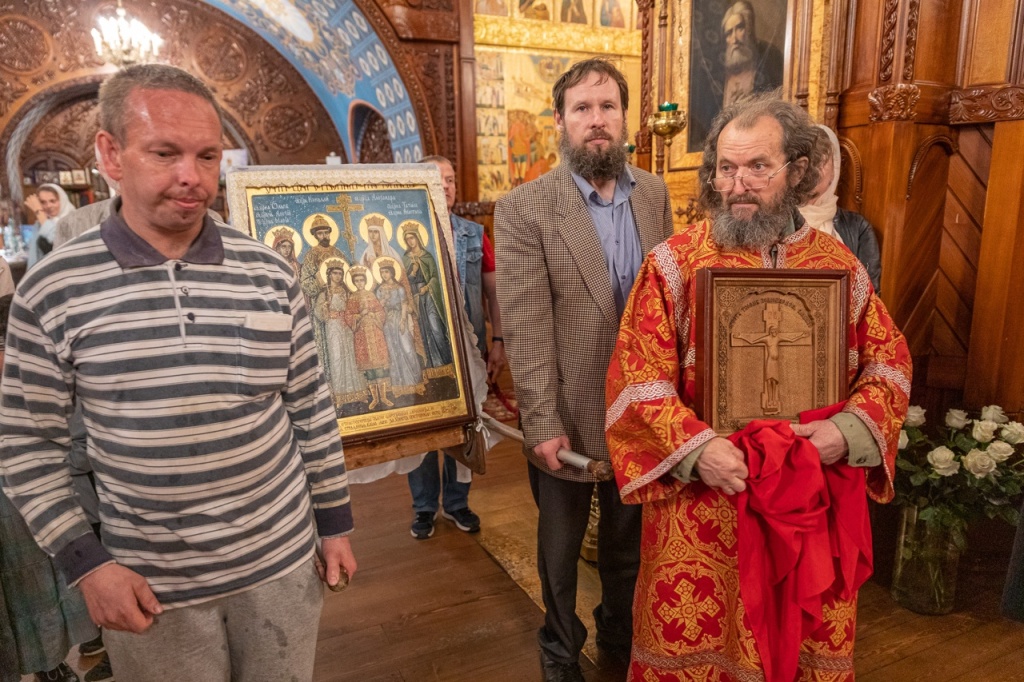
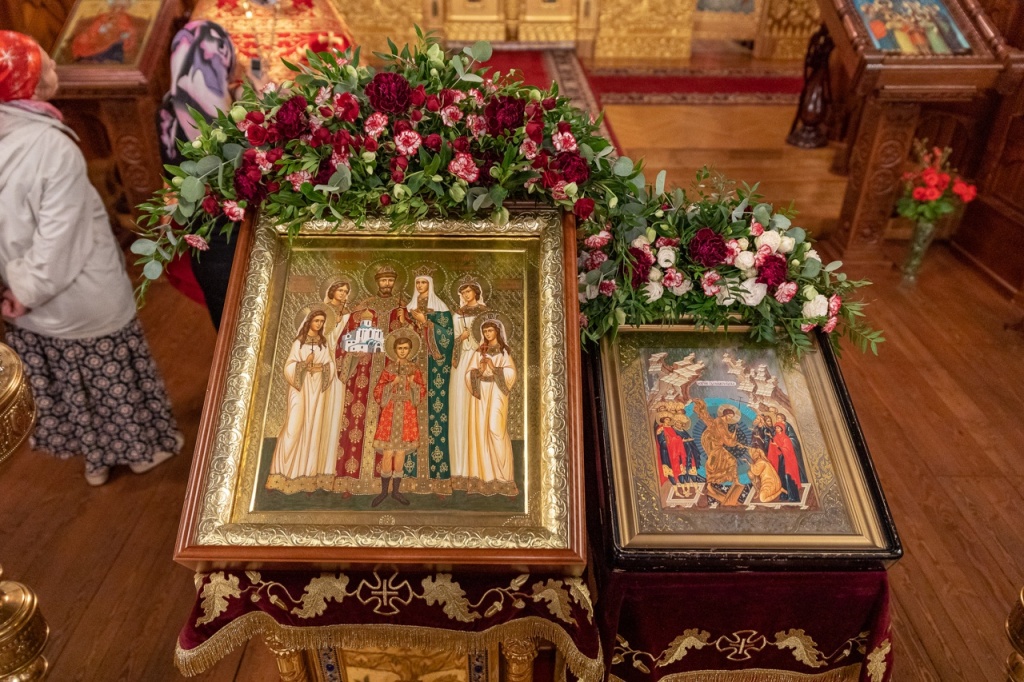
PHOTO: Shrine and reliquary for the Holy Royal Martyrs, in the Hermitage of the Holy Cross, a Russian Orthodox monastery in Wayne, West Virginia, USA. It was installed on July 17th, 2018, to mark the centenary of the tragic murder of Tsar Nicholas II and his family.

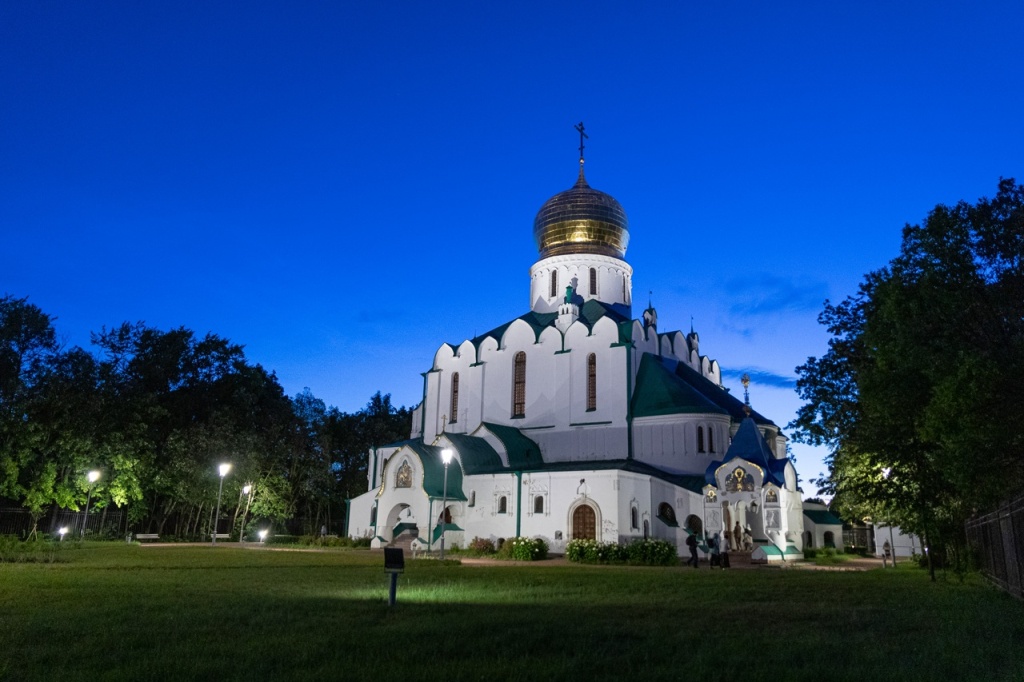
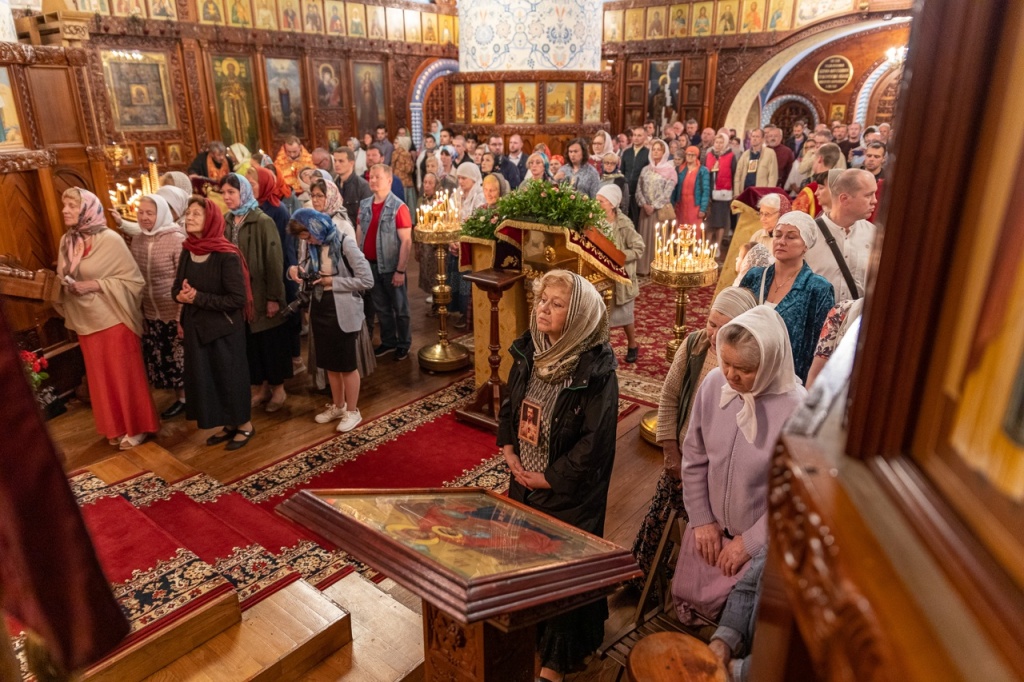
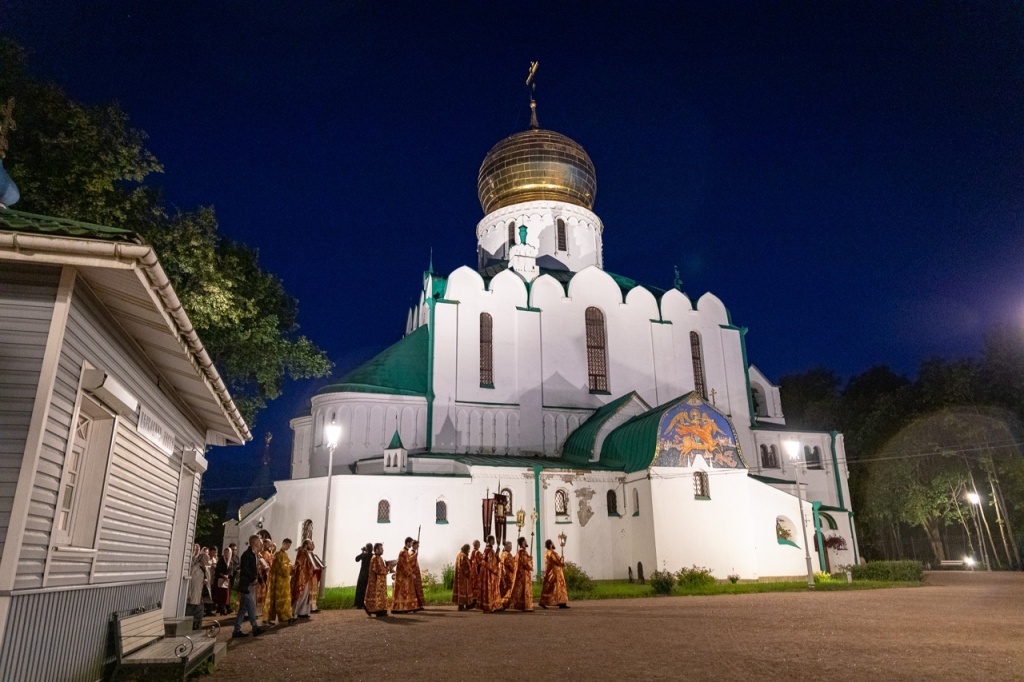
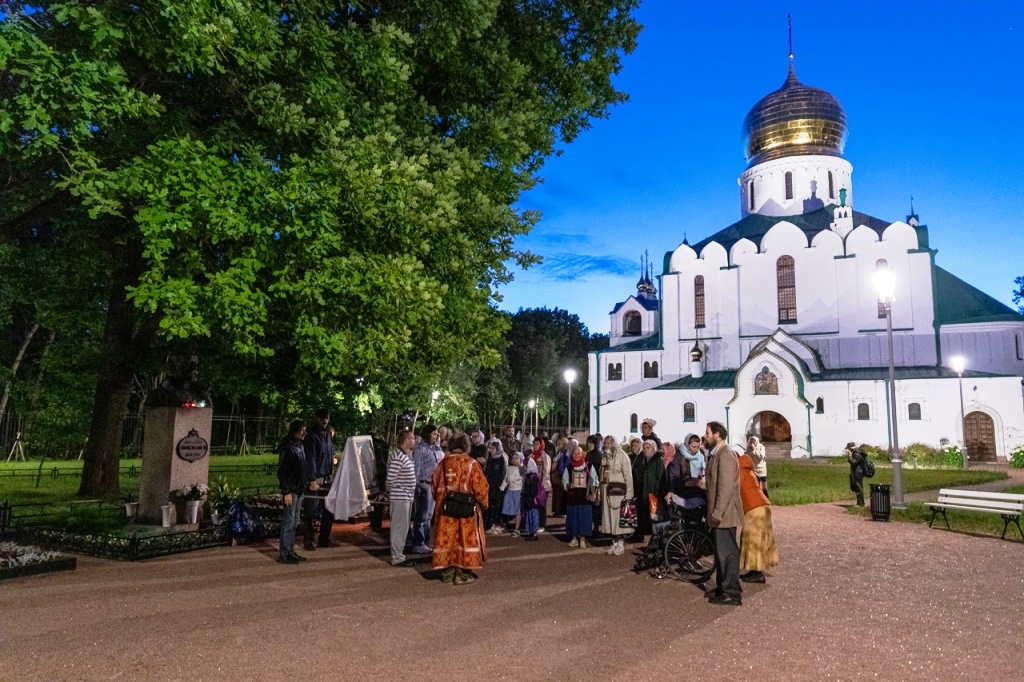
On my pilgrimage to Russia with Fr. David and Nicholas two years ago, we visited a number of these churches associated with Tsar Nicholas II. The one that had the deepest stamp of his personality was the Fyodorovskiy Cathedral in Tsarkoe Selo. It was built for the Royal Family to worship together with the soldiers who were garrisoned the town, where the Tsar lived for much of the year. The first floor of the church was covered in darkly stained hardwood, which gave the spacious nave a sense of inviting warmth, a very down-to-earth quality. Standing there during the Divine Liturgy, halfway across the world, I had the uncanny sense of being of right at home—home in my parish where I first saw the Tsar’s portrait and found myself skeptical of the Royal Family’s veneration. Now it felt as though they were welcoming me here, and the grace of their presence was overwhelming. There was no more room for skepticism, only inexplicable tears of recognition and devotion.

After the Liturgy, we were given a tour of the basement church in the cathedral, which was dedicated to St. Seraphim and was the Royal Family’s private chapel, only open to others by their invitation. In that dark and low-ceilinged chapel, the Family worshipped together, knelt together, fasted and prayed together. I saw the plain wooden chair in which the Emperor sat during church; the narrow alcove looking in on the altar for the Empress to observe the services; the side-room built for the Emperor to address urgent state affairs; a pillow embroidered by the Empress’ own hands. Beneath the outward splendor, their life here was so unassuming, so disarmingly homely. It all pointed to something deeper about their character—to a goodness and spiritual nobility that inspired loyalty, fidelity, and love.

By all accounts, this is how they were in life, too. Nicholas and his family, and everything they stood for, were hated and reviled by certain segments of Russian society. The Russian press spread the most vile slanders about the Tsar and his family. They did not shrink from inventing and printing total fabrications in order to stir up public opinion against them, so intense was the animosity directed against them. During the days of their final imprisonment, their guards, having been fed on this propaganda, were often hostile to them at first. But the godly family would win them over eventually with patience, charity, and their noble simplicity. New guards, even more violent, crude, and full of revolutionary fervor, had to be found who would not deal with them so humanely. At last, after months of increasingly restrictive and deprived confinement, they and a handful of loyal servants were hauled into a basement cellar, and shot in cold blood by a band of committed revolutionaries. Their bodies were violated, disfigured and maimed, then disposed of like animals.

Yet after seventy long years, full of suffering for the Russian land, they were recovered; and even more improbably, fragments of them now have a permanent home in our holler. What does this mean for us as 21st century Americans? We don’t have to become avid Russophiles or staunch monarchists to appreciate the fact that their death represents the end of a world—that of Christendom. The era of Christian monarchs that began with Constantine the Great and lasted for 1600 years, came to an end with Tsar Nicholas. Some, of course, greet this as a welcome development, or at least an ambivalent one. After all, the Christian Gospel cannot be exclusively identified with one particular regime, or one particular people. But true as that may be, it is nonetheless possible for a regime or for a people to identify themselves with the Gospel. That is the meaning of Holy Rus’. The Royal Martyrs were the last representatives of this union of Church and State, and were killed because of it. But like their forebears Boris and Gleb, they died ultimately because of their personal fidelity to Christ. They could have fled Russia and lived, but they chose to remain and suffer together with the people whom God had entrusted to them, to undergo their sorrowful fate together with them. They died for the ideal of a Christian Russia, a holy Russia. And they modelled this holiness in their lives, as they walked the path to their own Golgotha with patience, with kindness to their persecutors, with grace and nobility, with total forgiveness for their enemies, and with pure Christian love. Their lives and deaths indeed bear witness to the truth of the Christian Faith. They are justly called saints and martyrs.

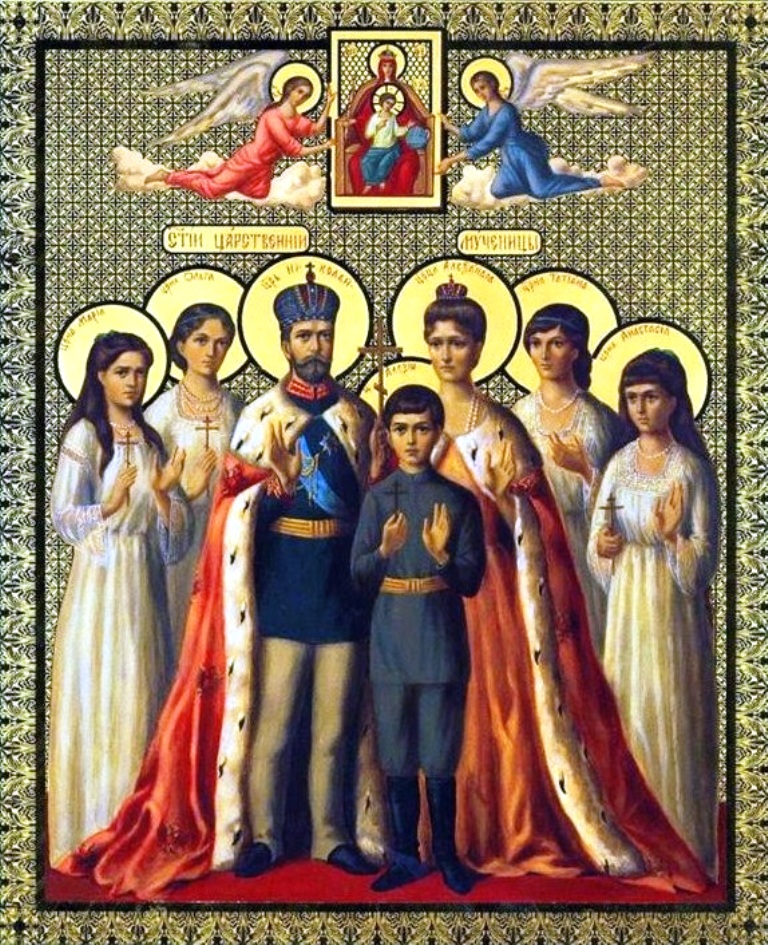
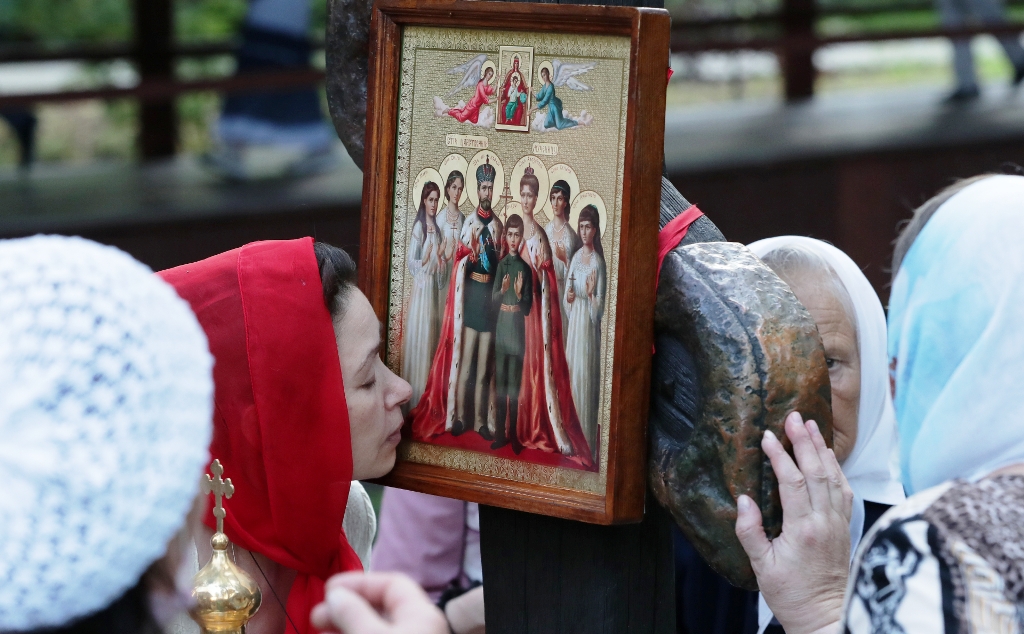
As we gaze upon their icon and venerate their relics, we can scarcely begin to fathom all that was lost in the fire and bloodshed of Revolution. Although we may have some inkling of the goodness that was irretrievably spoiled, and of the evil that took its place, we should not feel nostalgic for a lost past. There is no sense in us as Americans pining for the days of Holy Rus’ and the benevolent reign of a pious Tsar. We must live out our Christian struggle in the time and the place to which God has called us. And there is so much about the lives of the Royal Martyrs that can help us find our way through our own time in America, where more and more people are abandoning the Christian faith, where Christian morals are in retreat from the law and the public sphere. Their personal example shows us how to remain steadfast in even the most difficult circumstances. In our time, when most marriages end in divorce, the Royal Martyrs present us with a perfect icon of Christian marriage and family life. Now, when children are exposed to images of sex and violence at younger and younger ages, the Royal Martyrs show us an image of youthful innocence, chastity, and purity. In our time of indifference and cynicism, they show us that it is possible to live self-sacrificially in service to a lofty spiritual ideal. In short, they manifest the fulness of Christian life on the level of the individual and the family, as well as the nation. Whatever our age or whatever our calling, we can draw great strength in our struggle by prayerfully turning to them for support.

No matter how far our own country may turn from Christ, when we look upon the Royal Martyrs, we should be reminded that every triumph of evil in this world is only temporary. Their contemporaries and their historians have all made their judgments, but God’s judgment is the one that prevails in the end. And Christ has glorified them. So let us also glorify them, and turn to them in prayer, asking that we too might remain faithful to Christ amidst the darkness of this world. So may we find a place together with them in Christ’s heavenly kingdom. Amen.

© Holy Cross Monastery. 13 July 2022

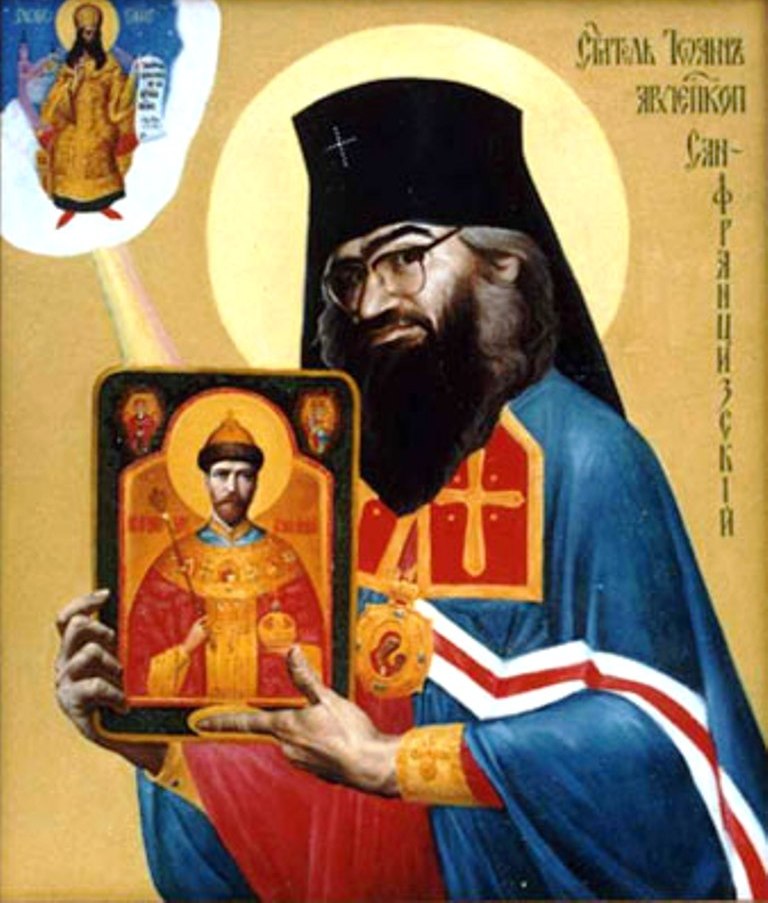
Saint John (Maximovich) of Shanghai and San Francisco, 1896-1966

On this day – 2nd July 1966 – St. John (Maximovich) of Shanghai and San Francisco died in the United States. During his life, he honoured the memory of the Holy Royal-Martyr Nicholas II and his family, believing that “the Russian people were entirely guilty for the death of the tsar.” On 2nd July 1994, St. John was solemnly canonized by the Russian Orthodox Church Outside of Russia (ROCOR).

Mikhail Borisovich Maximovitch (his secular name) was born on 17th (O.S. 4th) June 1896, in the village of Adamovka of the Izyumsky Uyezd of the Kharkov Governorate of the Russian Empire (in present-day eastern Ukraine).

Maximovitch was a patriot of his fatherland and was profoundly disappointed by what he saw as human weakness and impermanence during the tragic events of the 1917 Revolution. As a result he made the decision to dedicate his life to serving God. His family sought refuge in Yugoslavia and brought him to Belgrade in 1921, where in 1925 he graduated from Belgrade University with a degree in theology.

In 1926 he was tonsured a monk and ordained a hierodeacon by Russian Metropolitan Anthony (Khrapovitsky), who gave him the name of St. John after his saintly relative. Later that same year, he was ordained to the priesthood by Russian Bishop Gabriel (Chepur) of Chelyabinsk. Once ordained St. John would no longer sleep in a bed. He would nap in a chair or kneeling down in front of the icons, praying fervently and eating only once a day.

St.John earned the respect and devotion at the seminary where he taught. His reputation grew as he started visiting hospitals, caring for patients with prayer and communion. In 1934 he was ordained a bishop of the Russian Orthodox Church Outside Russia by Metropolitan Anthony and assigned to the diocese of Shanghai.

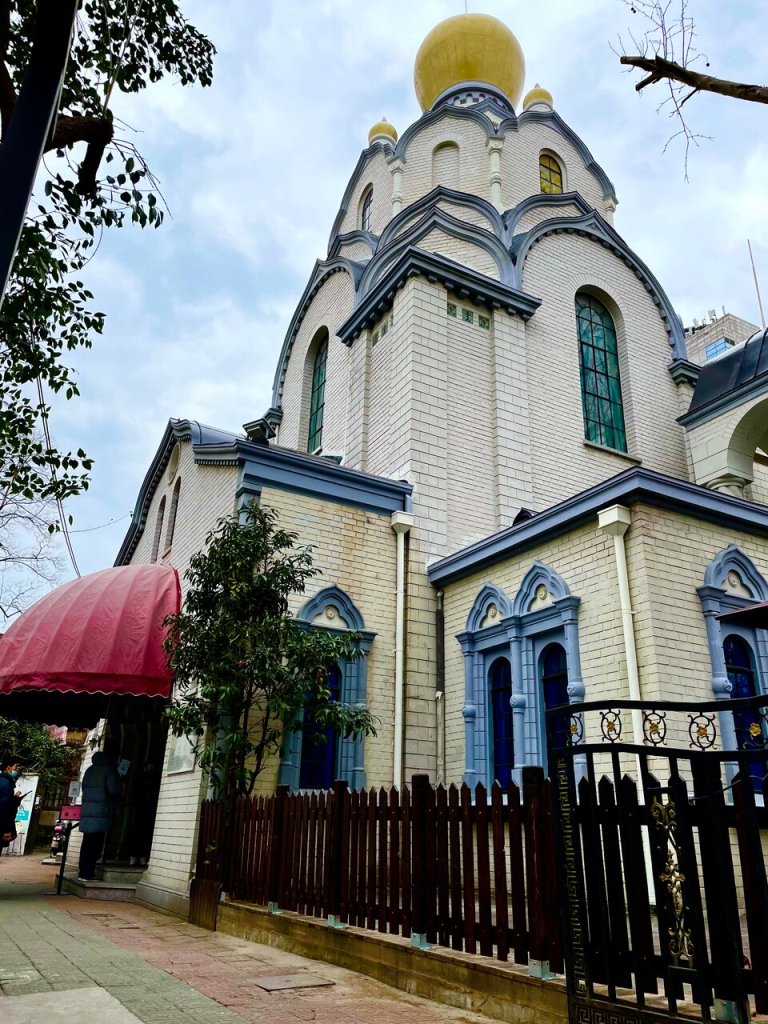
PHOTO: St. Nicholas Church in Shanghai, built in 1935, dedicated to Tsar-Martyr Nicholas II

Shanghai, China

In Shanghai, Holy Bishop St. John found an uncompleted cathedral and an Orthodox community deeply divided along ethnic lines. Making contact with all the various groups, he quickly involved himself in the existing charitable institutions and personally founded an orphanage and home for the children of indigents. Under Holy Bishop St. John, the construction of St. Nicholas Church (1935) was completed, a memorial church dedicated to Tsar-Martyr Nicholas II.

He also set about restoring church unity, establishing ties with local Orthodox Serbs, Greeks and Ukrainians. Here he first became known for miracles attributed to his prayer. As a public figure it was impossible for him to completely conceal his ascetic way of life. Despite his actions during the Japanese occupation, even when he routinely ignored the curfew in pursuit of his pastoral activities, the Japanese authorities never harassed him. As the only Russian hierarch in China who refused to submit to the authority of the Soviet-dominated Russian Orthodox Church, he was elevated to Archbishop of China by the Holy Synod of ROCOR in 1946.

When the Communists took power in China, the Russian colony was forced to flee, first to a refugee camp on the island of Tubabao in the Philippines and then mainly to the United States and Australia. Archbishop St. John personally traveled to Washington, D.C. to ensure that his people would be allowed to enter the country.

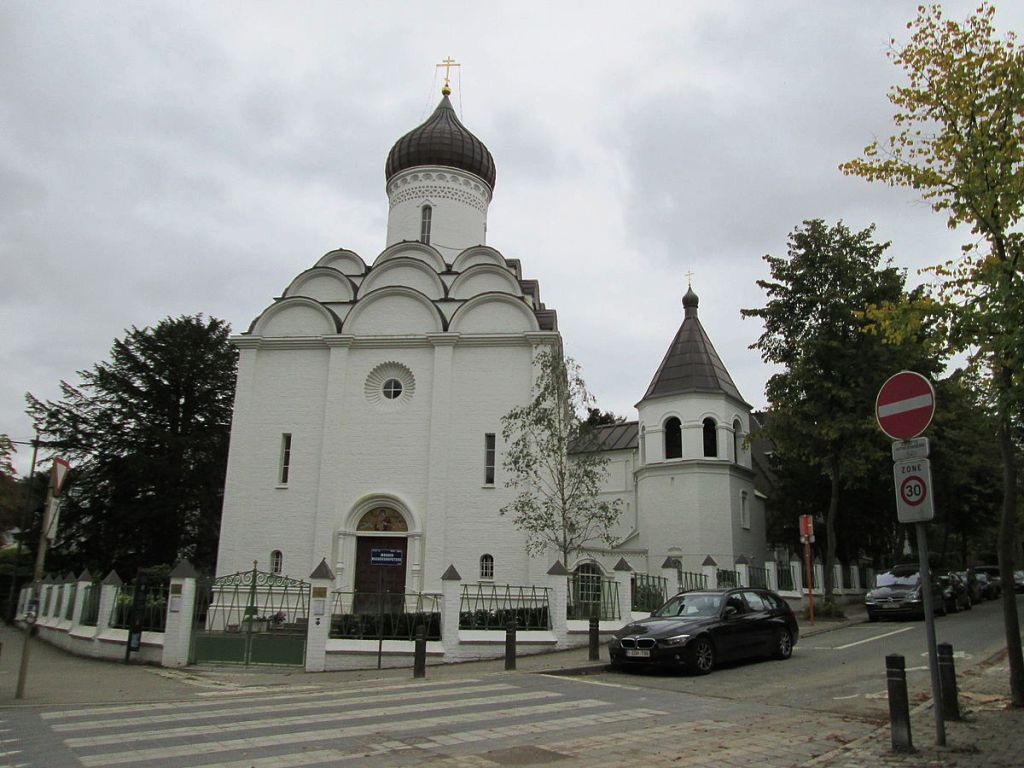
PHOTO: the Church of St. Job the Long Suffering in Brussels, consecrated in 1950, dedicated to Tsar-Martyr Nicholas II

Western Europe

In 1951, St. John was assigned to the archdiocese of Western Europe with his see first in Paris, then in Brussels, which was considered the official residence of Archbishop John of Brussels and Western Europe. The center of the vigorous activity of Archbishop John was the Church of St. Job the Long-suffering in Brussels, constructed between 1936-1950, as a memorial church dedicated to Tsar Nicholas II.

Thanks to his work in collecting lives of saints, a great many pre-Schism Western saints became known in Orthodoxy and continue to be venerated to this day. His charitable and pastoral work continued as it had in Shanghai, even among a much more widely scattered flock.

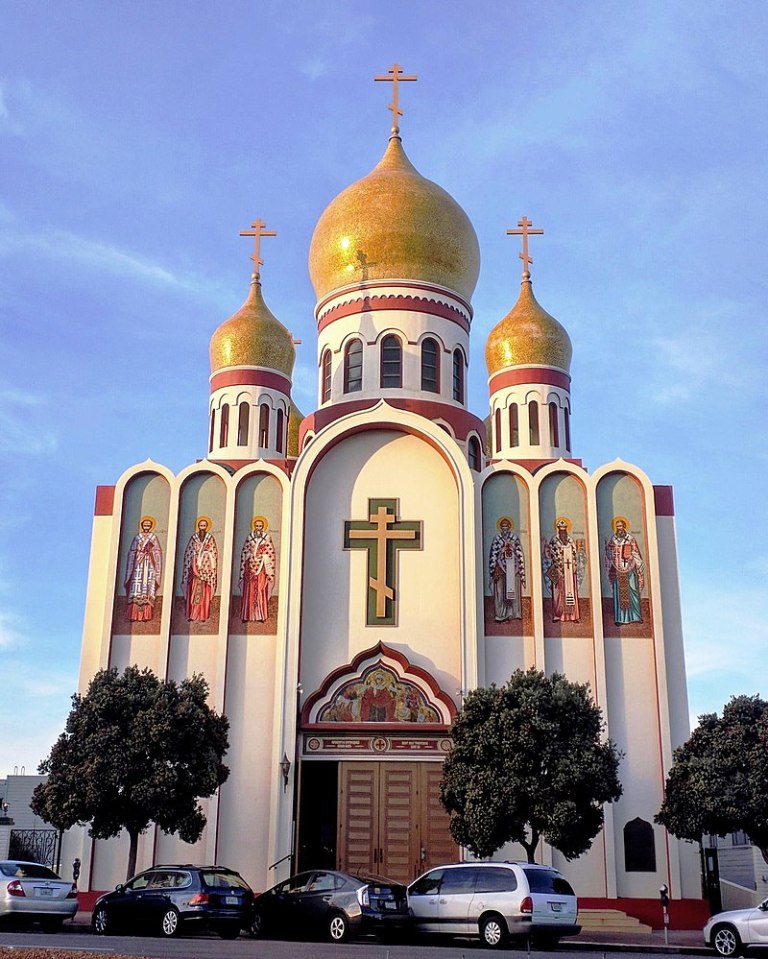
PHOTO: the Holy Virgin Cathedral, San Francisco, consecrated in1977

San Francisco, United States

In 1962 St. John was once again reassigned by the Holy Synod to the see of San Francisco. Here too, he found a divided community and a cathedral in an unfinished state. Although he completed the building of the Holy Virgin Cathedral and brought some measure of peace to the community he became the target of slander from those who became his political enemies, who went so far as to file a lawsuit against him for alleged mishandling of finances related to construction of the cathedral. He was exonerated, but this was a great cause of sorrow to him in his later life.

The current cathedral was founded by St. John of Shanghai and San Francisco. Groundbreaking took place on 25th June 1961, construction was completed in 1965, a year before the death of The cathedral was consecrated on 31st January 1977.

PHOTO: the sepulchre of St. John in the Holy Virgin Cathedral, San Francisco

Death and Veneration

On 2nd July 1966 (O.S. 19th June), St. John died while visiting Seattle at a time and place he was said to have foretold. He was entombed in a sepulchre beneath the altar of the Holy Virgin Cathedral he had built in San Francisco dedicated to the Theotokos, Joy of All Who Sorrow, on Geary Boulevard in the Richmond district.

On 2nd July 1994, St. John was solemnly canonized by the Russian Orthodox Church Outside of Russia (ROCOR), the day marking the 28th anniversary of his death. His unembalmed, incorrupt relics now occupy a shrine in the cathedral’s nave.

His feast day is celebrated each year on the Saturday nearest to 2nd July. He is beloved and celebrated worldwide, with portions of his relics located in Serbia, Russia, Mount Athos, Greece (Church of Saint Anna in Katerini), South Korea, Bulgaria, Romania, United States (St. John Maximovitch Church, Eugene, Oregon), Canada (Holy Trinity Serbian Orthodox Church, Kitchener), England (Dormition Cathedral of the Russian Orthodox Church, London) and other countries of the world.

Memory Eternal! Вечная Память!

On Tsar-Marytr Nicholas II

IN MEMORY OF THE ROYAL MARTYRS

Sermon given in 1934 by His Eminence John, Bishop of Shanghai,during the memorial service for Tsar Nicholas II and those slain with him

In the name of the Father and of the Son and of the Holy Spirit.

On July 17 (July 4 Old Style) the Holy Church praises Saint Andrew, the Bishop of Crete, the author of the Great Canon of Repentance, and at the same time we gather here to pray for the souls of the Tsar-Martyr and those assassinated with him. Likewise, people in Russia used to gather in churches on the day of the other Saint Andrew of Crete (Oct.17), not the writer of the Great Canon whose day is celebrated tomorrow, but the Martyr Andrew, martyred for confession of Christ and His Truth. On the day of Martyr Andrew, people in Russia thanked God for the miraculous delivery of Emperor Alexander III from the train wreck at Borki on Octo ber 17, 1888. In the terrible derailment which occurred during his journey, all the carriages of the train were wrecked, except the one carrying the Tsar and his Family.

On the day of the Martyr Andrew of Crete, martyred by enemies of Christ and His Church, the Heir to the throne and subsequent tsar, Nicholas Alexandrovich, was saved, and on the day of Saint Andrew of Crete the Canonist, who reposed in peace, the Tsar was assassinated by atheists and traitors. On the day of Martyr Andrew, Russia also celebrated the day of the Prophet Hosea, who foretold Christ’s Resurrection. Churches were built in honor of these saints wherever Russian people thanked God for the delivery of their Sovereign. Thirty years later, on the day of Saint Andrew the Canonist, who taught repentance, the Sovereign was assassinated before the eyes of the whole nation, that did nothing to save him. It is especially dreadful and incomprehensible since the Sovereign, Nicholas Alexandrovich, incarnated the best virtues of those Tsars whom the Russian people knew, loved, and esteemed.

Most of all the Tsar-Martyr resembled Tsar Alexis Michailovich Tishayshiy (the Most Meek, 1645-76) excelling in unshakable meekness. Russia knew Alexander II(1855-81) as Liberator, but Tsar Nicholas II liberated even more nations of the fraternal Slavic tribe. Russia knew Alexander III (1881-94) as Peacemaker but Sovereign Nicholas II did not limit himself to care for peace in his own days but made a significant step towards establishing peace in Europe and in all the world so that all nations should solve their controversies peacefully. To that purpose, by his dispassionate and noble initiative, the Hague Conferences were called. Russia admired Alexander I(1801-25) and called him the Blessed One because he liberated Europe from the alien rule of a tyrant, Napoleon. Sovereign Nicholas II under much more difficult circumstances rose against another ruler’s attempt, Kaiser Wilhelm II, to enslave Slavic nations, and in the defense of that nation showed a determination that was devoid of compromises. Russia knew the Great Reformer Peter I but if we recall all the reforms of Nicholas II, we would be uncertain whom to give preference and the latter’s reforms were conducted more carefully, more thoughtfully, and without abruptness. John Kalita (1328-40) and John III (1449 – 1505), Grand Princes of Moscow, were known for uniting the Russian people, but their cause was finally accomplished only by Sovereign Nicholas when in 1915 he returned to Russia all her sons, though only for a short time. Sovereign of All Russia, Nicholas II was the first Pan-Russian Tsar. His inner, spiritual, moral image was so beautiful that even the Bolsheviks in their desire to blacken him could blame him only for his piety.

It is known for certain that he always began and ended the day with prayer. He always received Communion on the days of the Church’s great holidays and often went to receive the Great Sacrament in a crowd of commoners, as for instance during the opening of the relics of Saint Seraphim of Sarov. He was an example of marital fidelity and the head of an exemplary Orthodox family, bringing up his children to be ready to serve the Russian people and strictly preparing them for the future labors and feats of that calling. He was deeply considerate towards his subjects’ needs and always wanted to ascertain clearly and acutely their labor and service. Everyone knows that he once marched alone many miles in soldier’s full equipment in order to better understand the conditions of a soldier’s service. He walked alone, which refutes the slanderers who say that he was afraid for his life. Peter I said: “know about Peter, that life is not precious for him, but may Russia live” and Sovereign Nicholas II indeed fulfilled his words. Some people say that he was credulous. But the great father of the Church, Saint Gregory the Great, says that the more pure the heart, the more credulous it is.

What did Russia render to her pure-hearted Sovereign, who loved her more than life? She returned love with slander. He was of great morality, but people began to talk about his viciousness. He loved Russia, but people began to talk about his treason. Even the people close to the Sovereign repeated the slander, passing on to each other rumors and gossip. Because of the ill intention of some and the lack of discipline of others, rumors spread and love for the Tsar began to grow cool. They started to talk of the danger to Russia and discuss means of avoiding that non-existent danger, they started to say that to save Russia it would be necessary to dismiss the Sovereign. Calculated evil did its work: it separated Russia from her Tsar and in the dread moment at Pskov he was alone; no one near to him. Those faithful to him were not admitted to his presence. The dreadful loneliness of the Tsar… But he did not abandon Russia, Russia abandoned him, the one who loved Russia more than life. Thus, in the hope that his self-belittling would still the raging passions of the people, the Sovereign abdicated. But passion never stills. Having achieved what it desires it only inflames more. There was an exultation among those who desired the fall of the Sovereign. The others were silent. They succeeded in arresting the Sovereign; succeeded, and further events were almost inevitable. If someone is left in a beast’s cage he will be torn to pieces sooner or later. The Sovereign was killed, and Russia remained silent. There was no indignation, no protest when that dread, evil deed happened, and this silence is the great sin of the Russian people, and it happened on the day of Saint Andrew, the writer of the Great Canon of Repentance, which is read in churches during Great Lent.

In the vaults of a basement in Ekaterinburg the Ruler of Russia was killed, deprived by the peoples’ insidiousness of the tsar’s crown, but not deprived of God’s Sacred Anointment. Hitherto, all the cases of regicide in the history of Russia were committed by cliques, not by the people. When Paul I was killed, people knew nothing about it and when it became known, for many years they brought to his grave compassion and prayers. The assassination of Alexander II produced in Russia a storm of indignation that healed the people’s morality and assisted the reign of Alexander III. The people remained innocent of the blood of the Tsar-Liberator, Alexander II. But in the case of Nicholas lI the entire nation is guilty of shedding the blood of its tsar. The assassins did the terrible deed, their masters approved the murder, sharing the same sin, the people did not prevent it. All are guilty and indeed we must say: “His blood is on us and on our children.” The garland with which the Russian people crowned their Tsar was made of treason, treachery, the breaking of the oath of allegiance to Tsar Michael Theodorovich, the first Tsar of the Romanov dynasty and his heirs, passivity, hardness of heart, and insensitivity.

Today is a day of sorrow and repentance. Why – we could ask – did the Lord save the Tsar [previously] on the day of Martyr Andrew and not save him on the day of the other Saint Andrew, the teacher of repentance? With deep grief we answer: the Lord could have saved him, but the Russian people did not deserve it.

The Sovereign received a martyr’s crown, but this neither justifies us, nor reduces our guilt, as the Resurrection of Christ does not justify, but condemns Judas, Pilate, and Caiphas and those who demanded from Pilate the murder of Christ.

It is a great sin to lift up a hand against the God-Anointed Sovereign. When the news of the murder of Saul was brought to King David, he ordered the execution of the messenger, although he knew that the messenger did not participate in the murder but only hurried to bring that news, and he ascribed the murder to him. Even the slightest participation in such a sin is not without retribution.

In sorrow we say, “his blood is on us and our children.”

Let us remember that this evil deed of the whole nation was committed on the day of Saint Andrew of Crete, who calls us to deep repentance. Let us remember also, that there is no sin which cannot be washed away by repentance. But our repentance has to be full, without self-justification, without reserve, condemning ourselves and the evil deed from the very beginning.

After the deliverance of the Royal Family at Borki the icon depicting the patron saints of the family was painted. Perhaps the day will come when not just the patrons but also the Royal Martyrs themselves will be depicted on icons in remembrance of the event we recollect today. But now let us pray for their souls and ask God for deep humble repentance and forgiveness for us and for all Russian people.

On 27th October 2018, I hosted the 1st International Nicholas II Conference at St. John of Shanghai Orthodox Church in Colchester, England, with the blessing of the church rector Andrew Phillips, Arch Priest of the Russian Orthodox Church (ROCOR).

© Paul Gilbert. 2 July 2022

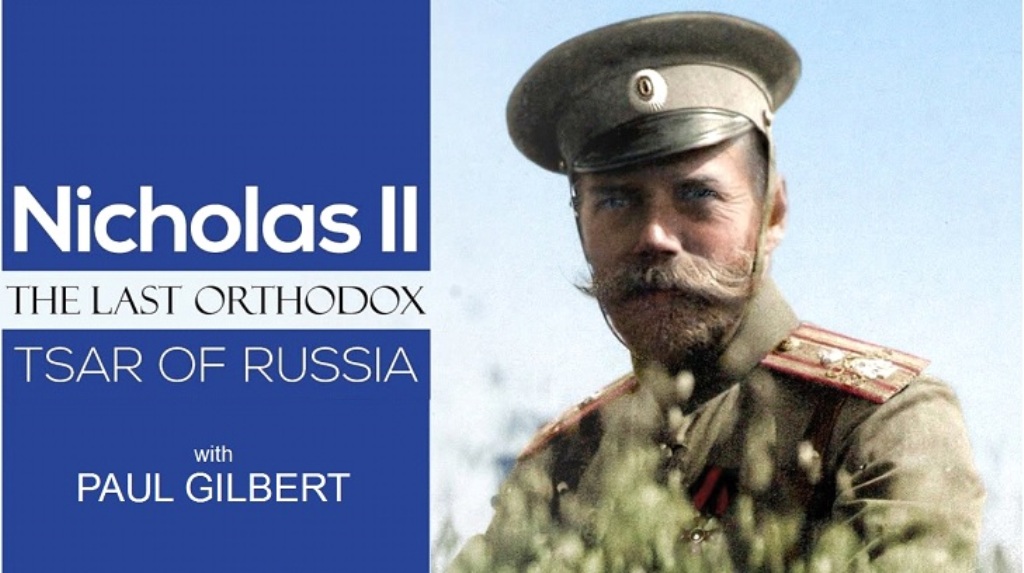
‘Nicholas II: The Last Orthodox Tsar of Russia’ with Paul Gilbert achieves 100,000 views!

CLICK HERE or ON THE IMAGE ABOVE TO WATCH VIDEO
Duration: 19 min., 40 sec. English with Closed Captioning

On 28th June 2022, the video ‘Nicholas II: The Last Orthodox Tsar of Russia’ surpassed more than 100,000 views on YouTube! The video was produced in July 2020, by the Holy Monastery of St. John the Forerunner of Mesa Potamos in Cyprus.

“This video production is based on the research of project colleague and independent researcher Paul Gilbert, who also presents this video.”

I am truly honoured to be a research colleague of this important publishing project. I am most grateful to Father Prodromos Nikolaou and the Holy Monastery of St. John the Forerunner of Mesa Potamos in Cyprus for giving me the opportunity to be a part of this new video which tells the story about Russia’s last Orthodox Christian monarch.

Emperor Nicholas II reigned for 22 years. With his murder, the last Orthodox Christian monarch, along with the thousand-year history of thrones and crowns in Russia, ended, ushering in an era of lawlessness, apostasy, and confusion, one which would sweep Holy Orthodox Russia into an abyss which would last more than 70 years.

The creators have done a remarkable job of incorporating a wonderful collection of photos – both vintage B&W and colourized by Olga Shirnina (aka KLIMBIM) – vintage newsreel film footage and music.

One viewer noted on my Facebook page: “Only 20 minutes long, this is the BEST portrayal of the last Tsar’s Orthodox faith I have ever seen. Very well-made, historical and moving.”

The crowning moment of the video is near the end, which shows film footage of the actual canonization ceremony performed on 20th August 2000 by Patriarch Alexei II (1929-2008) in the Christ the Saviour Cathedral in Moscow. You can hear His Holiness calling out each of the names of the Imperial Family. The footage is extremely moving to watch.

This 20-minute video is presented in the framework of the production of the book The Romanov Royal Martyrs: What Silence Could Not Conceal published by Mesa Potamos Publications in 2019.

***

READ THE BOOK . . .

*This title is available from AMAZON in the USA, UK, Canada,
Australia, France, Germany, Spain, Italy, Netherlands and Japan

CLICK HERE TO ORDER THE PAPERBACK EDITION @ $9.99 USD

BOOK DESCRIPTION

Paperback edition. 134 pages + 23 black & white photos

This book is not only for Orthodox and non-Orthodox persons, but for any one who shares an interest in the life, death, and martyrdom of the Holy Tsar-Martyr Nicholas II.

An illustrated Introduction by independent researcher Paul Gilbert explores the piety of Nicholas II, and his devotion to the Russian Orthodox Church, which reached its fullest development and power, during his 22-year reign.

This book further examines the trials and tribulations the Tsar endured, which later led to his canonization by the Russian Orthodox Church.

This unique collection of writings helps dispel many of the negative myths which persist to this very day, a must read for any one who seeks to learn the truth about Nicholas II.

Gilbert has compiled this collection of writings as part of his mission to clear the name of Russia’s much slandered Tsar, and my own personal journey to Orthodoxy.

Holy Tsar Martyr Nicholas II, Pray to God for Us! 🙏
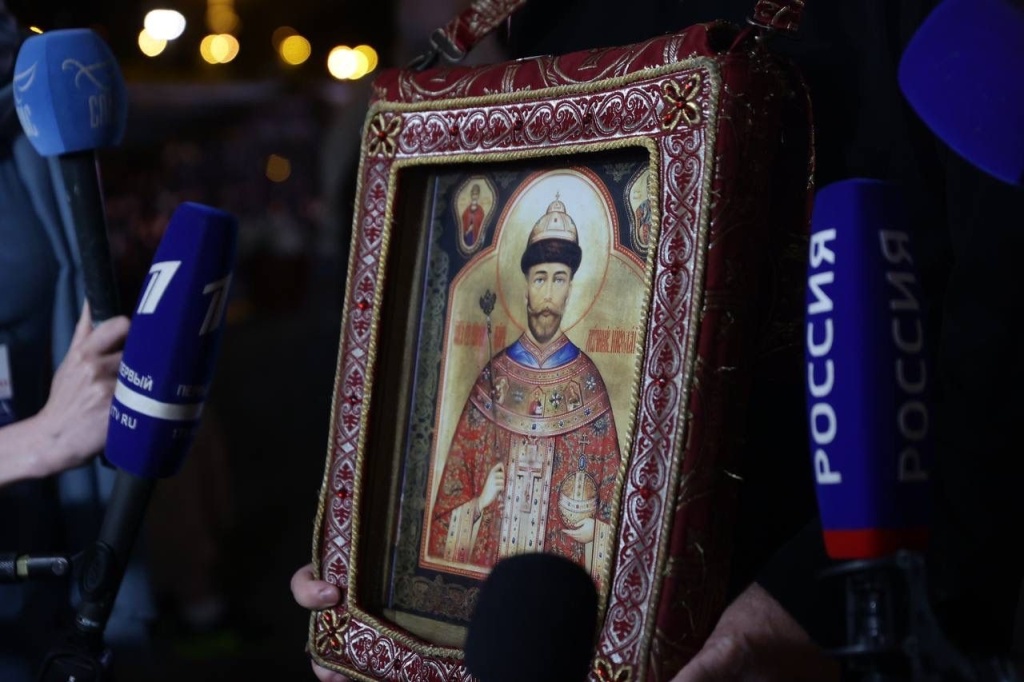
Святой Царь Мученик Николай, Моли Бога о Нас! 🙏

© Paul Gilbert. 28 June 2022

Moscow Patriarchate issues student calendar dedicated to Nicholas II and his family

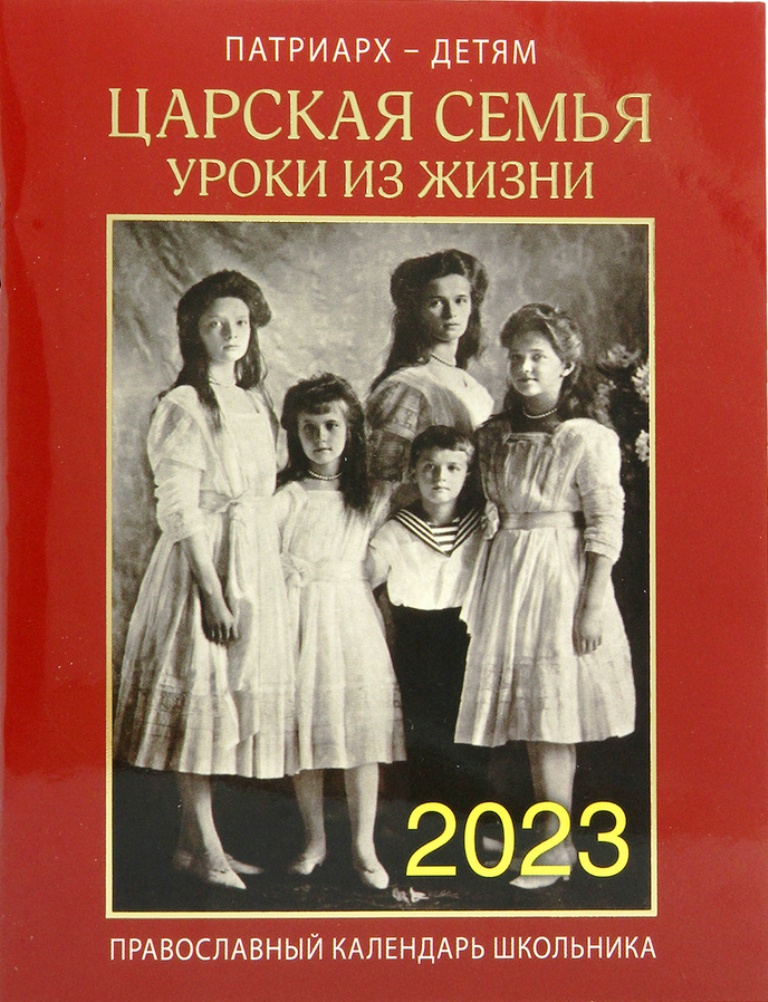
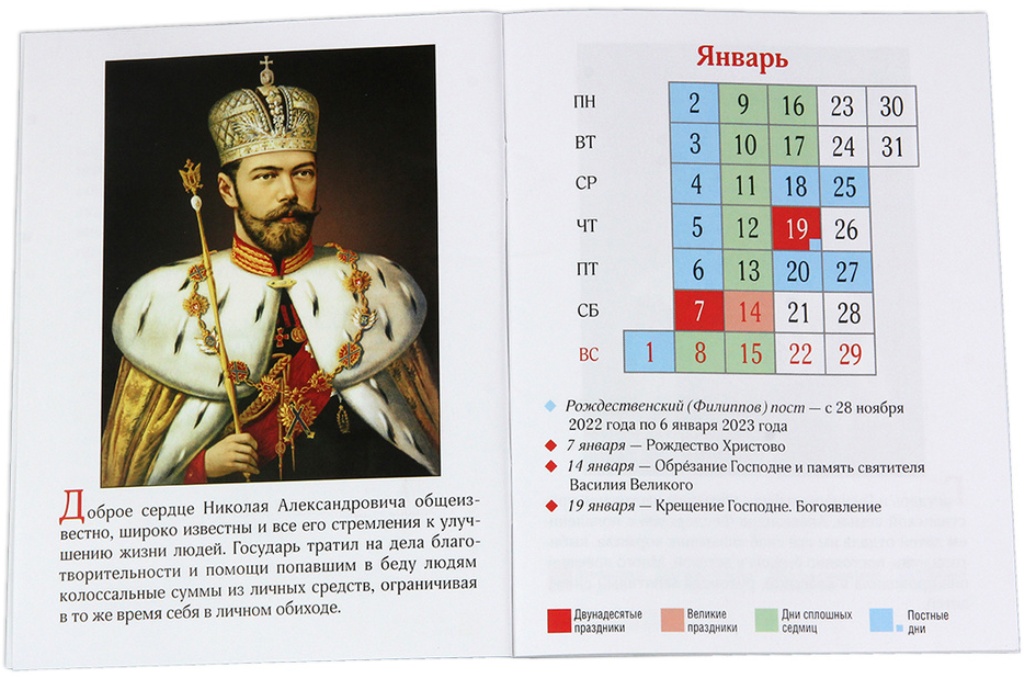
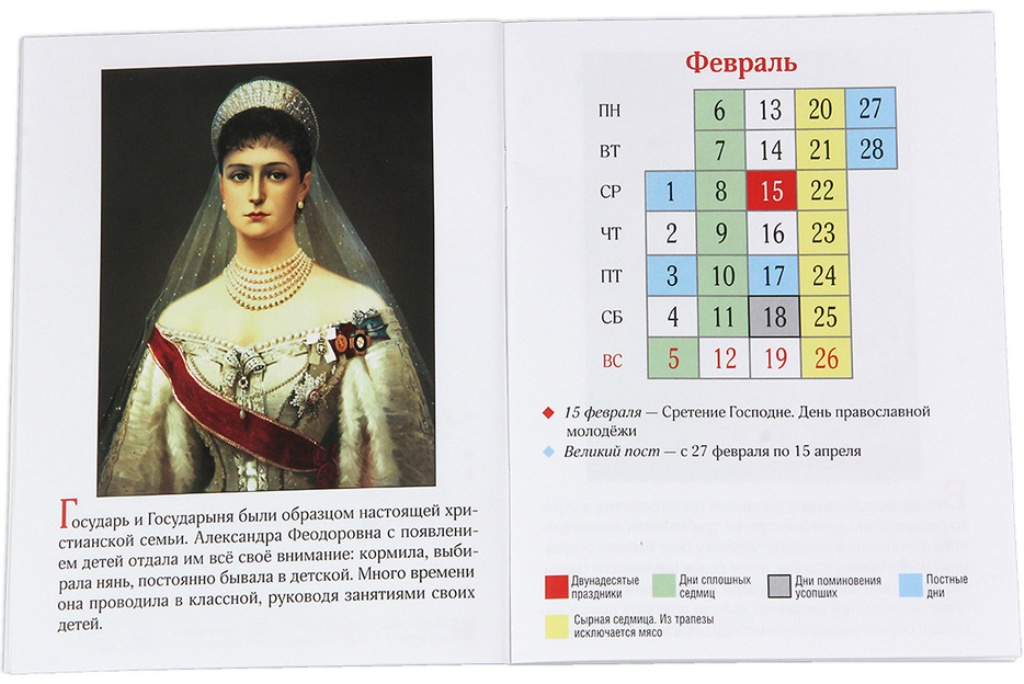
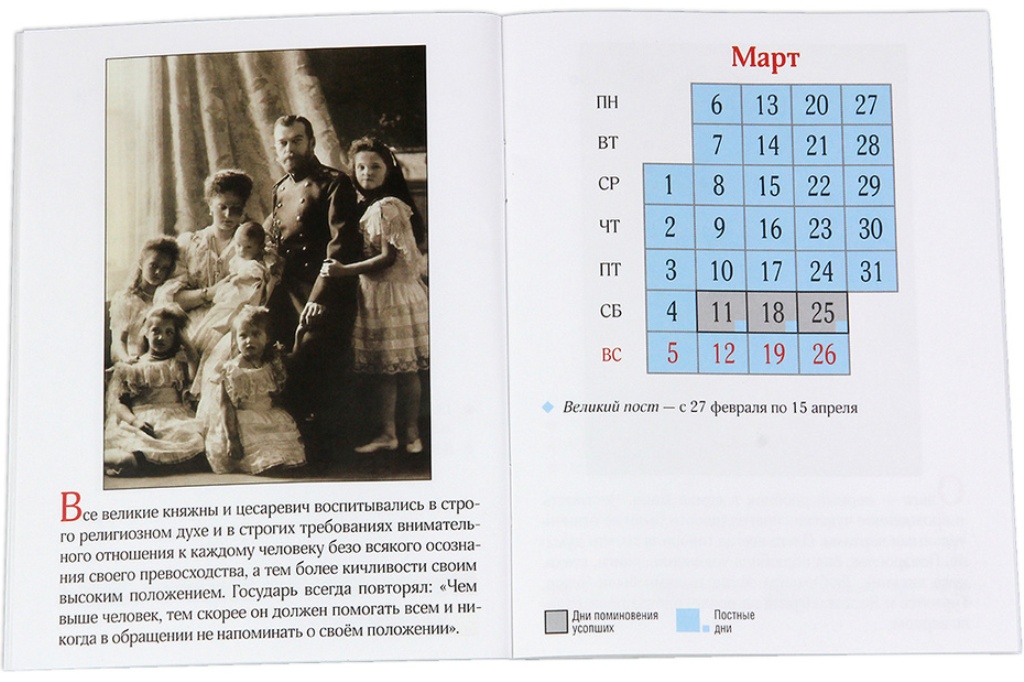
The Department of Children’s Literature of the Publishing House of the Moscow Patriarchate, have published a special Orthodox student’s 2023 calendar, dedicated to Emperor Nicholas II and Empress Alexandra Feodorovna and their children.

The calendar «Патриарх — детям. Царская семья. Уроки из жизни» [Patriarch to Children. Tsar’s family. Lessons from life] is designed to guide students and children on the holidays and fasts of the Russian Orthodox Church.

The 32-page calendar includes a preface, written by His Holiness Patriarch Kirill of Moscow and All Russia, a troparion and kontakion to the Holy Royal Martyrs, prayers for before and after lessons. The calendar also features blank pages, where students can record their schedule of additional lessons, as well as birthdays and name days of their family, relatives and friends.

The preface for the student calendar, written by His Holiness Patriarch Kirill of Moscow and All Russia, reads:

“Dear children! We perceive the family as a small Church, as a circle of the closest people, united by the paternal faith. It is no coincidence that the Gospel says: “Where two or three gather in My name, there I am with them (Matthew 18:20).” It is the dispensation of the family in the name of the Lord that makes it possible to build relationships between children and parents, relationships in which any act is accompanied by a willingness to serve one’s neighbour as oneself. A striking example of a Christian family is the family of the Royal Martyrs, Sovereign Emperor Nicholas II, his wife and children, who together carried out their public service. In joy and in sorrow, in prosperity and in persecution, the Holy Royal Passion-Bearers strengthened prayed with all their hearts for Russia, for the hardships and problems of the Fatherland. It is in such families that today our people can and must draw their strength.”

The 2023 students calendar is available from the Publishing house of the Moscow Patriarchate – price 65 rubles.

© Paul Gilbert. 22 June 2022

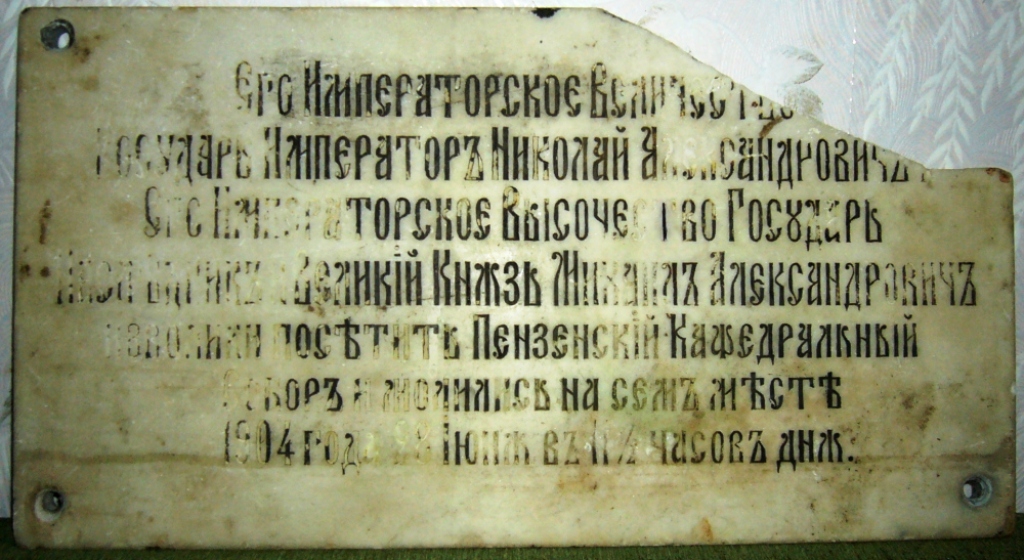
Memorial plaque in memory of Nicholas II’s 1904 visit to Penza returned

PHOTO: memorial plaque in memory of Emperor Nicholas II’s visit to Penza in 1904

On 19th June 2022, a memorial plaque installed at the beginning of the 20th century on one of the columns of the Cathedral of the Saviour [aka Spassky Cathedral] in memory of Emperor Nicholas II’s visit to Penza in 1904 was returned to the Penza Diocese. During his visit, the sovereign held a review of Russian troops who were being sent to the Russo-Japanese War, followed by a liturgy held in the Cathedral of the Saviour.

This memorial plaque, installed by the Penza City Duma, became the first memorial plaque in the Penza region. The inscription on it reads: “His Imperial Majesty the Sovereign Emperor Nikolai Alexandrovich and His Imperial Highness the Sovereign Heir Grand Duke Mikhail Alexandrovich deigned to visit the Penza Cathedral and prayed at this place on June 28, 1904 at 11 ½ o’clock in the afternoon.”

The words on the commemorative plaque turned out to be prophetic. The cathedral, located on the Cathedral Square of the city was blown up by the Bolsheviks in 1934. In 2010, reconstruction of the cathedral began, and took 12 years to complete.

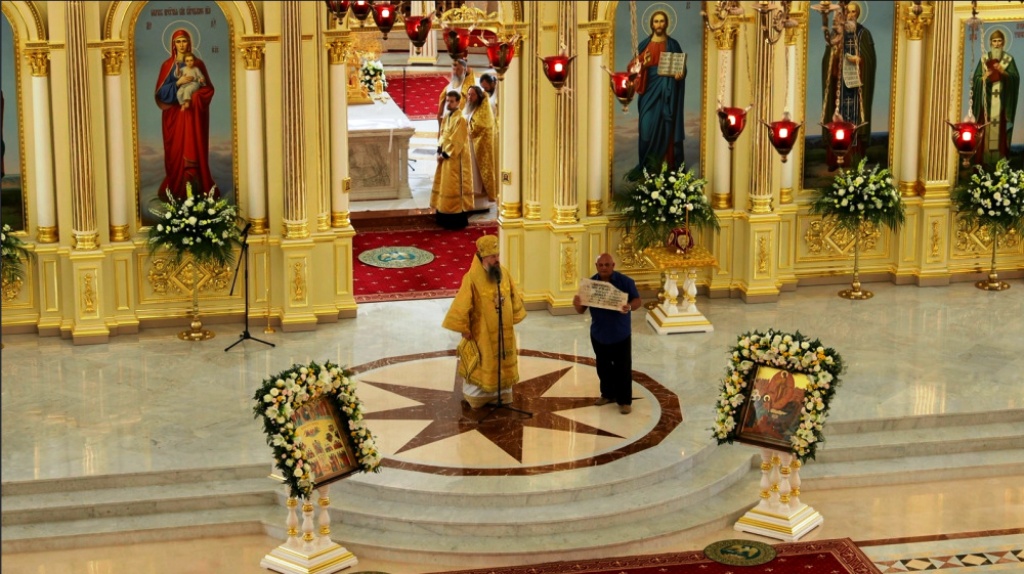
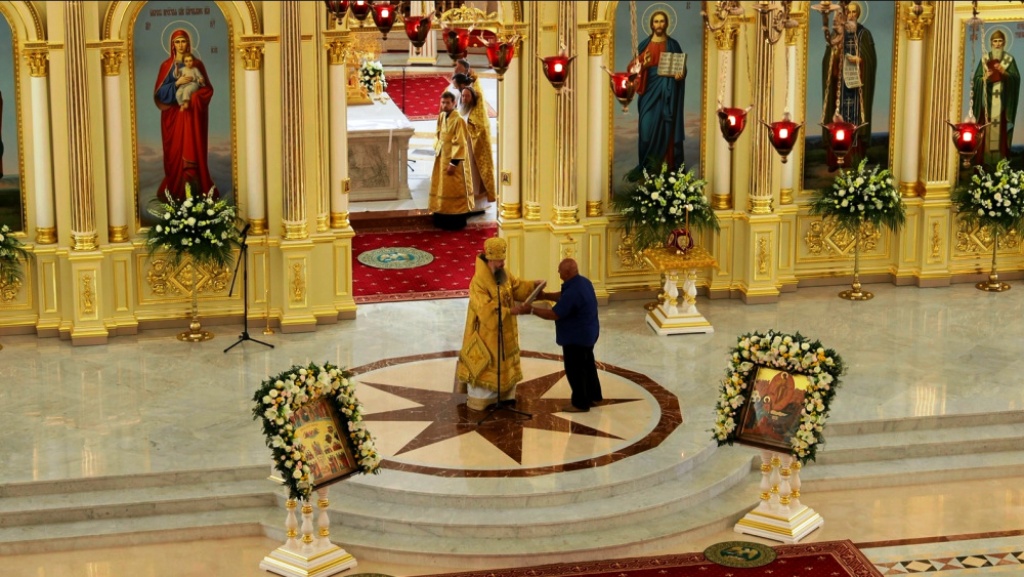
PHOTO: Igor Sergeevich Shishkin (right) holds the historic memorial plaque, during the handing over ceremony at the Cathedral of the Saviour, on 19th June 2022

On 19th June 2022, His Holiness Patriarch Kirill of Moscow and All Russia performed the rite of the Great Consecration of the Cathedral of the Saviour in Penza, concelebrated by the clergy of the Penza diocese, and read out a decree on conferring the status of a cathedral.

For decades it was believed that the memorial plaque had been lost or destroyed. This was based on the recollections of Penza residents, who recalled that in February 1918, armed Bolsheviks came to the cathedral and smashed the plaque with their rifle butt. But as it turned out, the plaque miraculously survived. The parishioners hid it by burying it in the ground not far from the cathedral.

About twenty years ago, rumours surfaced that the memorial plaque had survived and was mostly intact [only a corner was broken off]. Local historians carried out a search of the former grounds, as a result of which the plaque ended up in the hands of the famous Penza collector Igor Sergeevich Shishkin, who today returned the memorial plaque to its rightful place.

The handover ceremony of the memorial plaque took place before the great consecration of the Cathedral of the Saviour, which was performed by His Holiness Patriarch Kirill of Moscow and All Russia during his primatial visit to the Penza Diocese.

© Paul Gilbert. 20 June 2022

Russian Orthodox Church postpones recognition of Ekaterinburg remains . . . AGAIN!

Holy Royal Martyrs, pray to God for us! 🙏
Святы Царственные мученики, молите Бога о нас! 🙏

The Holy Synod of the Russian Orthodox Church (ROC) has announced that the Bishops’ Council, which was scheduled to meet in Moscow next month has been postponed until the end of 2022.

A key item on the agenda of the Bishops’ Council meeting is a definitive decision of the Church on the authenticity of the Ekaterinburg remains.

The Bishops’ Council was originally scheduled to meet in Moscow from 15th to 18th November 2021, however, this was delayed “due to the difficult COVID-19 situation.” The meeting was thus rescheduled for 26th to 29th May 2022.

The ROC are now citing Russia’s invasion of Ukraine as the reason for the latest delay: “due to the fact that the international situation makes it difficult for many members of the Bishops’ Council to arrive in Moscow, the meeting has been postponed until the autumn or winter period of 2022”.

According to the ROC, the exact dates for the next Bishops’ Council will be discussed by the Holy Synod when they meet this summer.

© Paul Gilbert. 18 April 2022

Nicholas II attends consecration of Naval Cathedral in Kronstadt in 1913

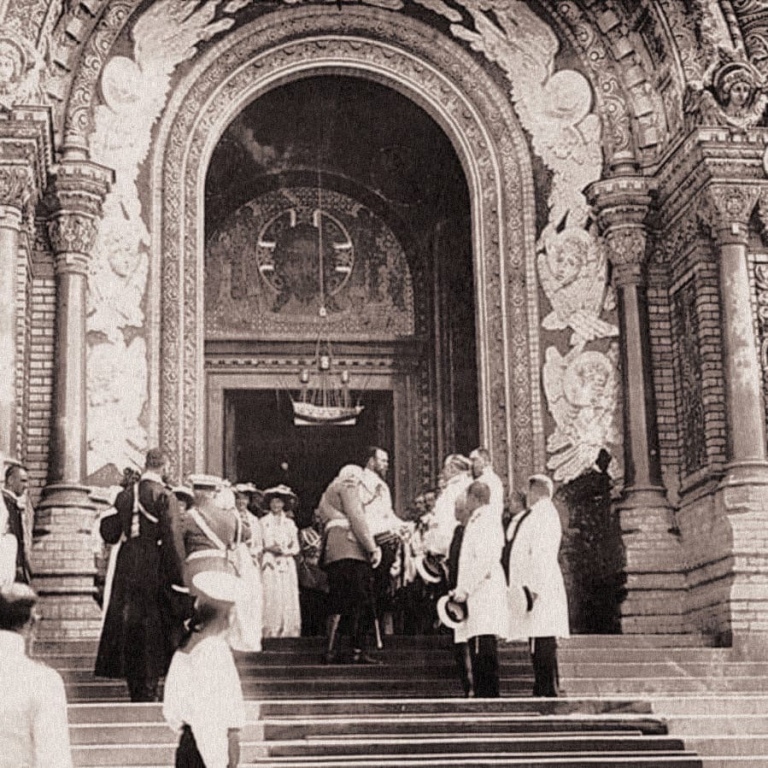
PHOTO: Emperor Nicholas II speaking with an officer in front of the Naval Cathedral

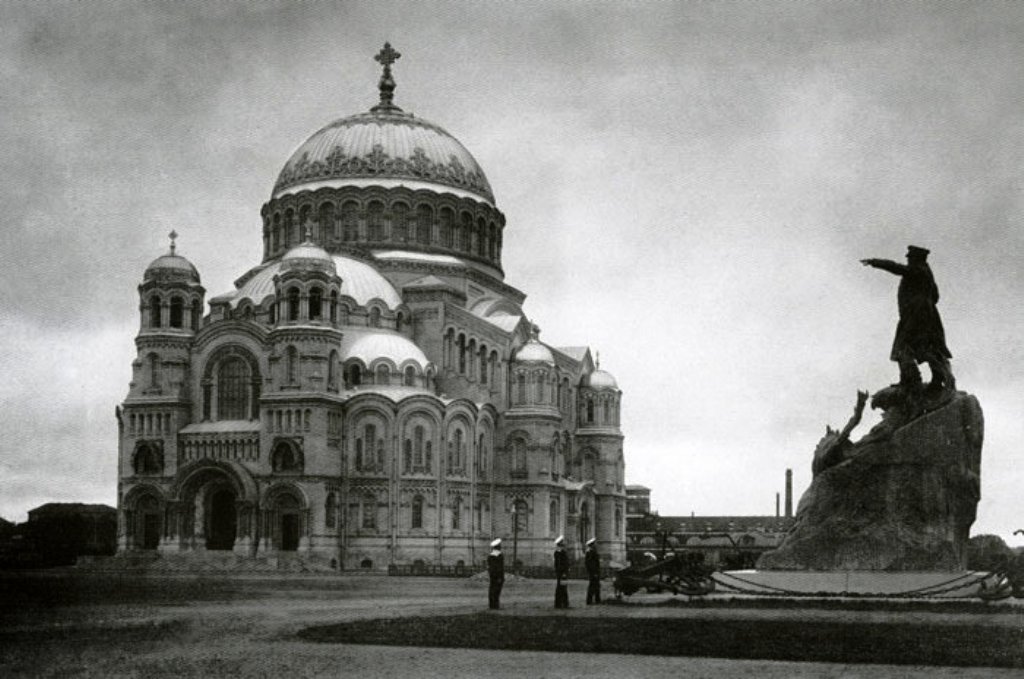
One of the most iconic cathedrals constructed during the Tsarist era, one which has survived to the present day has to be the magnificent 20th-century Byzantine-style Naval Cathedral of St. Nicholas the Wonderworker, situated on Anchor Square in Kronstadt, a town and naval base on Kotlin Island, just west of St. Petersburg.

Kronstadt has been a place of pilgrimage for Orthodox Christians for more than 100 years due to the memory of Saint John of Kronstadt (1829-1909), one of the most venerated Russian saints, served there as priest from 1855 to 1908.

The Naval Cathedral of Saint Nicholas the Wonderworker in Kronstadt is a Russian Orthodox cathedral built between 1903–1913 as the main church of the Russian Imperial Navy and dedicated to all fallen seamen.

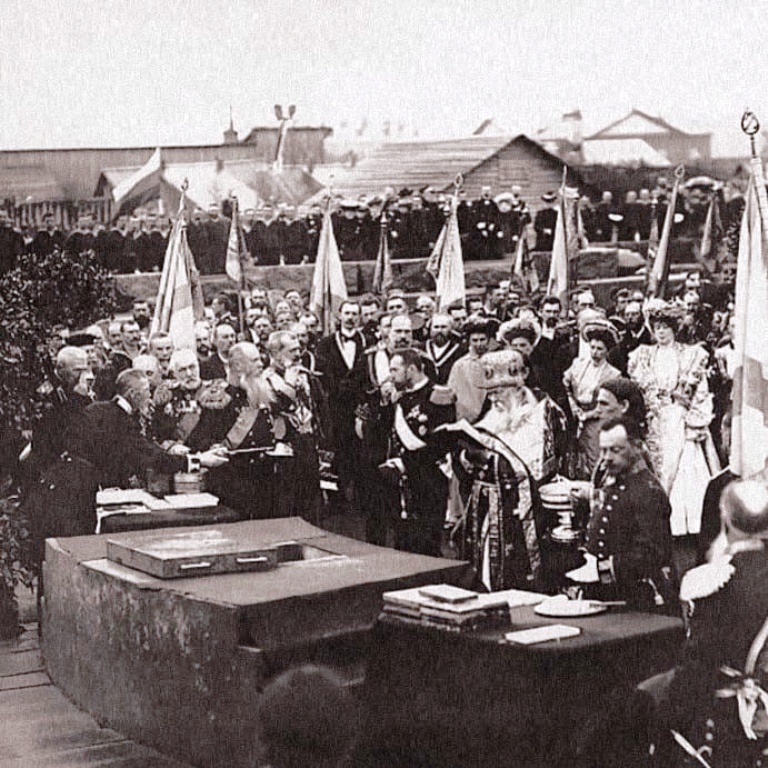
PHOTO: Emperor Nicholas II attends the ceremony for the laying of the foundation stone for the Naval Cathedral of St. Nicholas the Wonderworkder, Kronstadt, 21st (O.S. 8th) 1903

Father John of Kronstadt, who was then justly regarded the major figure in the ecclesiastical guidance of the Russian Imperial Navy, prayed for many years: “Let the house of God be created for naval ranks in Kronstadt, not hurriedly but steadily and befitting the glorious fleet. Let the blessing of the Almighty spread from it on the entire naval force.” In 1898 he urged: “You must hurry to build the Church, in the same way as you hurry to build ships. The Church is also the ship led by God Himself with the Father and the Holy Spirit, and it can protect not only the Navy, but the entire army and Russia as a whole, too.”

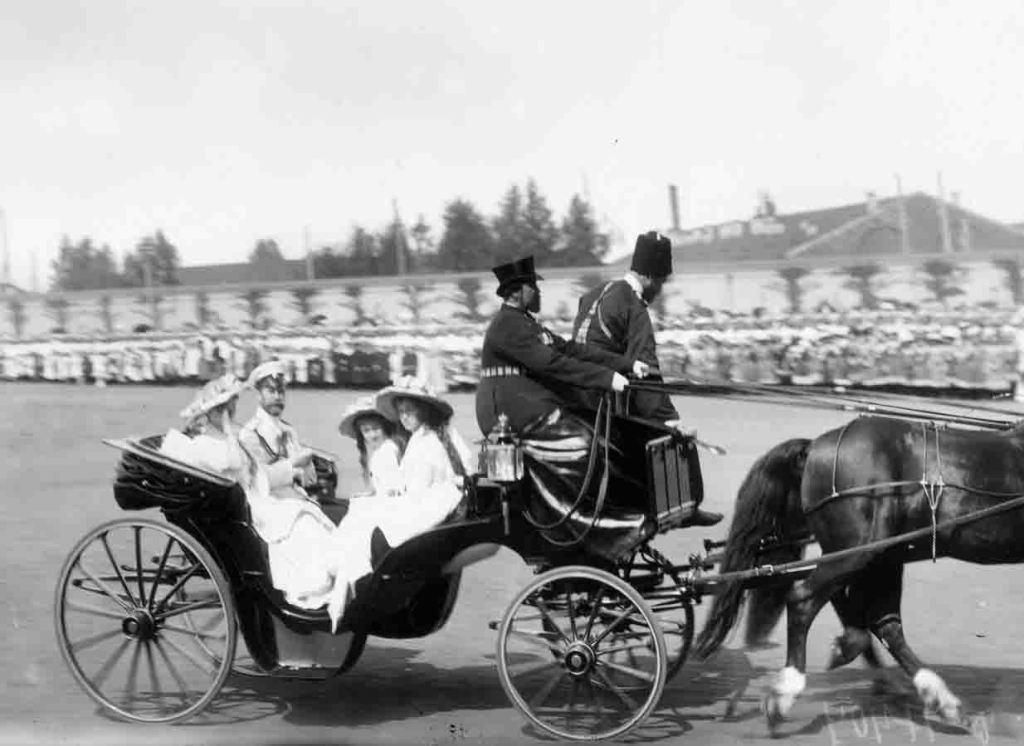
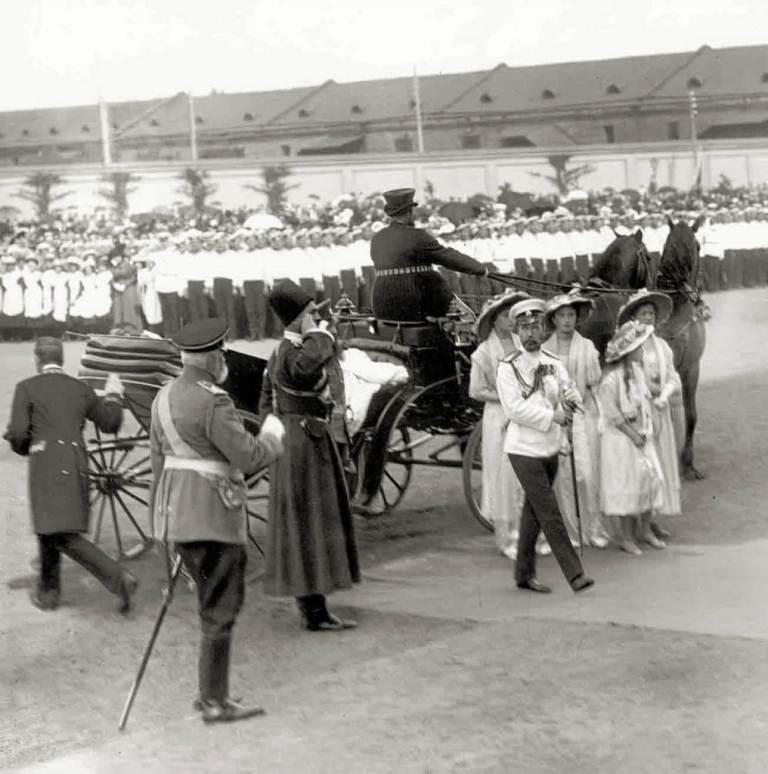
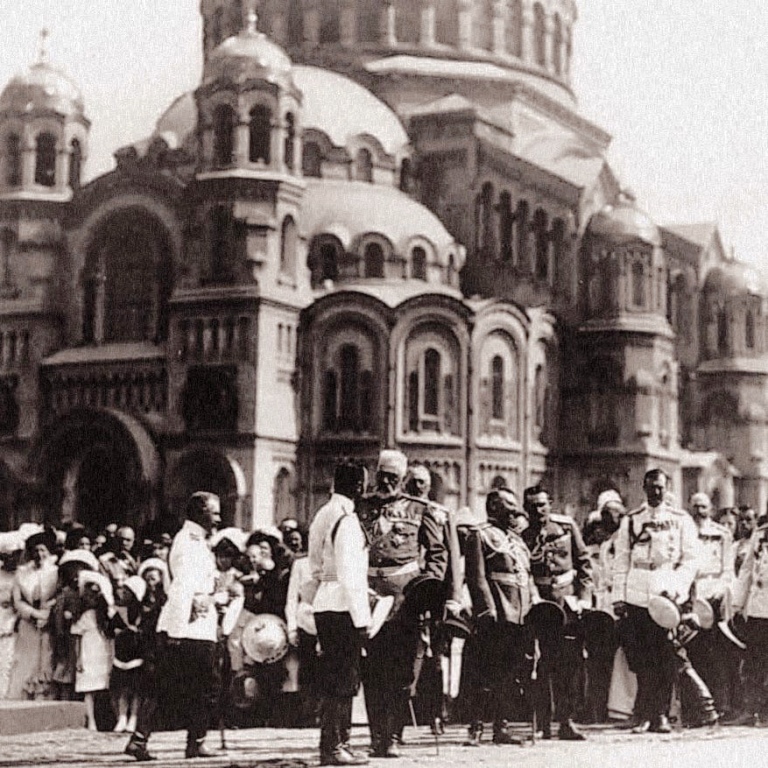
PHOTOS: the Imperial Family arriving at the Naval Cathedral of St. Nicholas the Wonderworker for the consecration ceremony, 23rd (O.S. 10th) June 1913

If Father John of Kronstadt regarded the Naval Cathedral as an implemented prayer, for Emperor Nicholas II, who energetically supported the idea of building the memorial naval cathedral, it became his dearest creation. On 7th March 1897 the Tsar opened a subscription for the construction of a stone cathedral in Kronstadt and allotted for its building a large sum of money together with the Imperial family. Moreover, Nicholas II ordered to provide timber, cannon bronze and copper kept in the Kronstadt Port for the construction of the new cathedral. In the same year the Committee for Collecting Donations was established, on behalf of which its chairman, Vice-Admiral Nikolay Kaznakov, appealed for a feasible financial help “to all classes of Russian society”. Father John of Kronstadt, who actively participated in the creation of the church, supported him – he was a member of the Council of Trustees responsible for the construction of the cathedral and donated a large sum of money for this purpose. Father John addressed his compatriots with the following words: “Beloved brothers-sailors and all Orthodox Russians! Living in Kronstadt for forty-two years and seeing all this time how small, poor and ramshackle it is, I’ve felt deep concern about it and a desire of a vast, durable and splendid church, and now I’ve made a donation of 700 roubles for the construction of such a church. And you, too, show good will that is within your powers to provide help for its construction.” A large contribution to this common cause was made by major commanders of the Kronstadt Port – Admirals Nikolay Kaznakov, Stepan Makarov, Alexey Birilov and Konstantin Nikonov, Minister of the Navy Ivan Grigorovich, and Admiral Robert Viren. All the ranks of the Navy took a decision to remit 0.25 per cent of their salaries without indemnity for the construction of the cathedral. Ship crews donated to the future church their articles of worship and icons without compensation. In total Russian sailors collected 280,000 roubles.

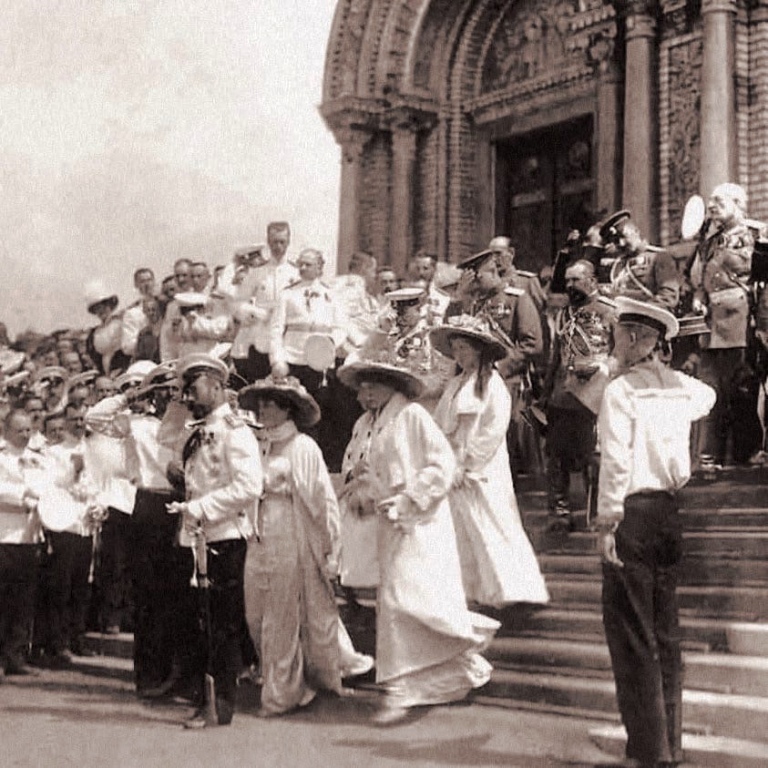
PHOTOS: the Imperial Family leaving the Naval Cathedral following the consecration

All Russia made voluntary contributions for the construction of the cathedral, but it was largely funded by the state – the general cost of the building at the time of its consecration was 1,995,000 roubles, of which 1,675,000 roubles were provided by the government.

Yakornaya (Anchor) Square in the centre of Kronstadt, between the old (Peter’s) and the new Admiralty, was chosen as a site for the construction of the cathedral. For many years it served as a warehouse of anchors, hence its name. The area was so vast that it became possible to arrange a park behind the cathedral and create a square for religious processions near the building. Besides it was decided to locate the cathedral building so that there would remain enough space for military parades.

After several competitions on 3rd June (O.S. 21st May) 1901 the project of the cathedral building designed by Vasily Kosiakov, Professor of the Institute of Civil Engineers, was approved by the Tsar. In March 1902 the Committee for the Collection of Donations was transformed into the Construction Committee supervised by Vice-Admiral Stepan Makarov. On 14th (O.S. 1st) September 1902, Archpriest St John of Kronstadt held a prayer service for the beginning of the work on cleaning the territory and preparing the foundation. On 21st May (O.S. 8th May) 1903, in the presence of the Emperor, Empresses Alexandra Feodorovna and Maria Feodorovna, Grand Duke Mikhail, son of Alexander III, and Grand Dukes Alexey and Vladimir, sons of Alexander II, a ceremony of the foundation of the cathedral’s brick walls was held. After the end of the service a 31-gun salute was made from the fortress and from ships on the Kronstadt roadway. On the same day Nicholas II and members of his suite planted 32 one-year-old oak trees in the garden around the cathedral. In 1907, the building’s construction was complete, and work on the interiors began.

PHOTO: early 20th century view of the Naval cathedral of Saint Nicholas the Wonderworker in Kronstadt

On 23rd (O.S. 10th) June 1913, which marked the 300th anniversary of the Romanov dynasty, there was a great festive event in Kronstadt – the consecration of the naval cathedral. Father Georgy Shavelsky, the Proto-Presbyter of the military and naval clergy, consecrated the cathedral in the presence of Emperor Nicholas II and members of the Imperial family, thousands of Orthodox Christians and members of the naval ranks. The service was concelebrated by the mitred Archpriest Alexey Starovsky, Senior Priest of the Cathedral of St Spyridon of Trimithoundos at the Main Admiralty, and the entire Kronstadt clergy. Father John of Kronstadt, who had prophesied that “when the Cathedral will be roofed”, he would be dead, but that moment had already left this transitory life in December 1908.

The cathedral was closed in 1929, first converted to a cinema, then a House of Officers (1939) and a museum of the Navy (1980).

The Russian Orthodox Church attempted to repossess the cathedral in the 1990s, however, it took many years for the transfer to take place.

In 2002, the Russian Orthodox Church reinstalled the cross on the main dome and (for the first time since 1929) served the Divine Liturgy in the cathedral in 2005. In 2013, Patriarch Kirill of Russia, with Prime Minister Dmitriy Medvedev and his spouse attending, conducted the ceremony of grand reconsecration in the now fully restored cathedral.

© Paul Gilbert. 14 April 2022

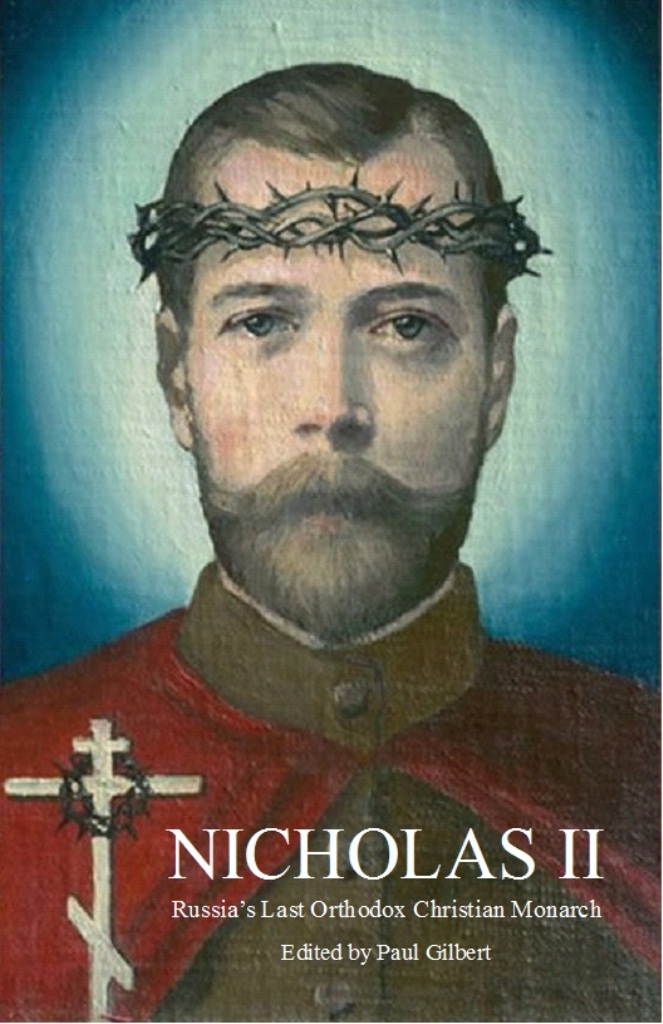
Nicholas II; Russia’s Last Orthodox Christian Monarch

*This title is available from AMAZON in the USA, UK,
Canada, Australia, France, Germany, Spain, Italy and Japan

CLICK HERE TO ORDER THE PAPERBACK EDITION @ $9.99 USD

BOOK DESCRIPTION

Paperback edition. 134 pages + 23 black & white photos

This book is not only for Orthodox and non-Orthodox persons, but for any one who shares an interest in the life, death, and martyrdom of the Holy Tsar-Martyr Nicholas II.

An illustrated Introduction by independent researcher Paul Gilbert explores the piety of Nicholas II, and his devotion to the Russian Orthodox Church, which reached its fullest development and power, during his 22-year reign.

This book further examines the trials and tribulations the Tsar endured, which later led to his canonization by the Russian Orthodox Church.

This unique collection of writings helps dispel many of the negative myths which persist to this very day, a must read for any one who seeks to learn the truth about Nicholas II.

Gilbert has compiled this collection of writings as part of his mission to clear the name of Russia’s much slandered Tsar, and my own personal journey to Orthodoxy.

Holy Tsar Martyr Nicholas II, Pray to God for Us! 🙏

Святой Царь Мученик Николай, Моли Бога о Нас! 🙏

© Paul Gilbert. 21 February 2022
The fate of Porosenkov Log and Ganina Yama

CLICK on the image above to watch a 2-minute video tour of the Romanov Memorial at Porosenkov Log

In May, the Council of Bishops of the Russian Orthodox Church (ROC) will convene in Moscow, to discuss the results of examinations carried out between 2015-2018, by the Investigate Committee of the Russian Federation. It is widely believed that the Council will recognize the authenticity of the remains of the Imperial Family. So, what effect will this have on both Porosenkov Log and Ganina Yama?

Representatives of the Romanov Memorial Charitable Foundation in Ekaterinburg, now fear that the diocese could destroy the original appearance of Porosenkov Log, the spot were the remains of Emperor Nicholas II, his wife, three children and four retainers were discovered in 1991. The remains of Tsesarevich Alexei and his sister Maria were discovered in a nearby separate grave in 2007.

According to Ilya Korovin, Director of the Romanov Memorial Charitable Foundation , Porosenkov Log is the only place in Ekaterinburg connected with the Imperial Family’s final days, which has survived to this day unchanged. “In Ganina Yama, unlike the Porosenkov Log, visitors cannot see the territory as it looked in 1918. Of course, with the recognition of the remains, the question of the future fate of the memorial will arise,” he said during a recent press conference.

As an argument, representatives of the fund cite the fact that in March 2016 the Ekaterinburg Diocese asked for a plot of land at Porosenkov Log, made a request to the Ministry of Culture of the Sverdlovsk Region for the transfer of the territory in and around Porosyonkov Log (added to the cultural heritage list in 2014), transferred to the ROC, to be designated as sacred land and where a memorial and monastery, similar to that at Ganina Yama would be constructed.

The Governor of Sveredlovsk Yevgeny Kuyvashev suspended the process of allocating land for an indefinite period. “Knowing the methods of preserving and developing memorial sites by the Russian Orthodox Church, one can come to the disappointing conclusion that Porosenkov Log will undergo catastrophic changes,” Korovin said. Korovin also noted that the territory of the Railway Forest Park, where the Romanov Memorial is located, is also subject to future development.

Representatives of the Romanov Memorial also added that, previously in 2007-2010 the Russian Orthodox Church planned to seize the territory in the area of ​​the Old Koptyakovskaya Road, partially cut down the forest, in order to build a cemetery and an Orthodox church. Again, the Sverdlovsk authorities were forced to intervene in order to end the conflict.

Sergei Chapnin, a member and expert of the Romanov Memorial Charitable Foundation, believes that Porosenkov Log is a civil memorial and this section of the old Koptyakovskaya Road must be kept intact.

Local Ekaterinburg historian Nikolai Neuimin notes, “if the Bishops Council recognizes that the remains of the Nicholas II and his family are authentic, then it turns out that the Monastery of the Holy Royal Martyrs should not have been built at Ganina Yama, the place where the regicides tried to bury the bodies for the first time. The bones lay there for only a day and a half, while the remains were reburied 3.5 km away in two separate graves in what is today known as Porosenkov Log. As Ganina Yama is the main place of pilgrimage for Orthodox Christians, no one will demolish or move the seven churches, even if it turns out that the remains in the Porosenkov Log are indeed genuine,” he added.

Chapnin, among others, believe that the recognition by the ROC of the Ekaterinburg will most certainly create a schism within the church. The ROC will be forced to acknowledge that for more than 100 years, they were wrong. This in itself may be perceived by many as a great embarrassment and humiliation to the church.

“Not every one in the church is ready to recognize the authenticity of the remains. Accepting the new reality will be quite difficult,” he added.

© Paul Gilbert. 14 February 2022
New exhibition explores Bolshevik campaign to confiscate church valuables in 1918

PHOTO: exhibition poster

On 6th February 2022, a new exhibition: Sacrilege: on the 100th Anniversary of the Beginning of the Campaign to Confiscate Church Valuables, opened in Ekaterinburg. The exhibition is timed to the 104th anniversary of the 1918 Decree on the Separation of Church and State in Bolshevik Russia.

The venue for the exhibition is the Museum of the Holy Royal Family, situated in the Patriarchal Compound, and runs until 6th February 2023.

The exhibition explores the Bolshevik campaign to confiscate church valuables in 1918. Resistance by the faithful was met with arrests, mock trials of the clergy, as a result of which many priests and nuns were shot.

The exhibition presents liturgical items damaged during the years of Soviet power, damaged icons, liturgical and religious literature, secretly hidden during the years of Soviet power between the covers of Soviet books, and other items related to the history of the Church in the atheistic years. A collection of photographs provide evidence of the churches and monasteries destroyed and desecrated during the Bolshevik and later Soviet years.

***

According to Nathaniel Davis’s A Long Walk to Church: A Contemporary History of Russian Orthodoxy, the ROC had only about 200-300 active parishes in the Soviet Union by 1939; before the revolution there had been roughly 50,000.

The Decree on the Separation of Church and State was an act adopted by the Council of People’s Commissars of the Russian Soviet Federative Socialist Republic on 3rd February [O.S. 20th January]. The edict was signed by Vladimir Lenin, and came into force four days later on 6th February [O.S. 23rd January] 1918.

The Decree declared all Church property to be the property of the state. Sanctioned by this licence, Bolshevik squads went around the country desecrating and looting churches and monasteries, mocking religion and religious people unmercifully, even murdering priests, monks and other believers by the thousands.

It installed the secular nature of the state power, proclaimed the freedom of conscience and religion; religious organizations were deprived of any property rights and the rights of a legal entity. It laid the foundation for the deployment of atheistic propaganda and atheistic education

The following images depict atheist Bolsheviks thugs desecrating and looting Russia’s churches:

© Paul Gilbert. 6 February 2022