Memorial Litarny and monument for Anastasia Hendrikova and Ekaterina Schneider in Perm

PHOTOl the coffins containing the relics of Sts. Anastasia Hendrikova and Ekaterina Schneider, lie in the Church of the Dormition of the Most Holy Theotokos in Perm

NOTE: this article was originally written under a different title and published on Sunday, 9th June 2024. It was partially revised on Friday, 14th June 2024, and updated with 12 new photographs – PG

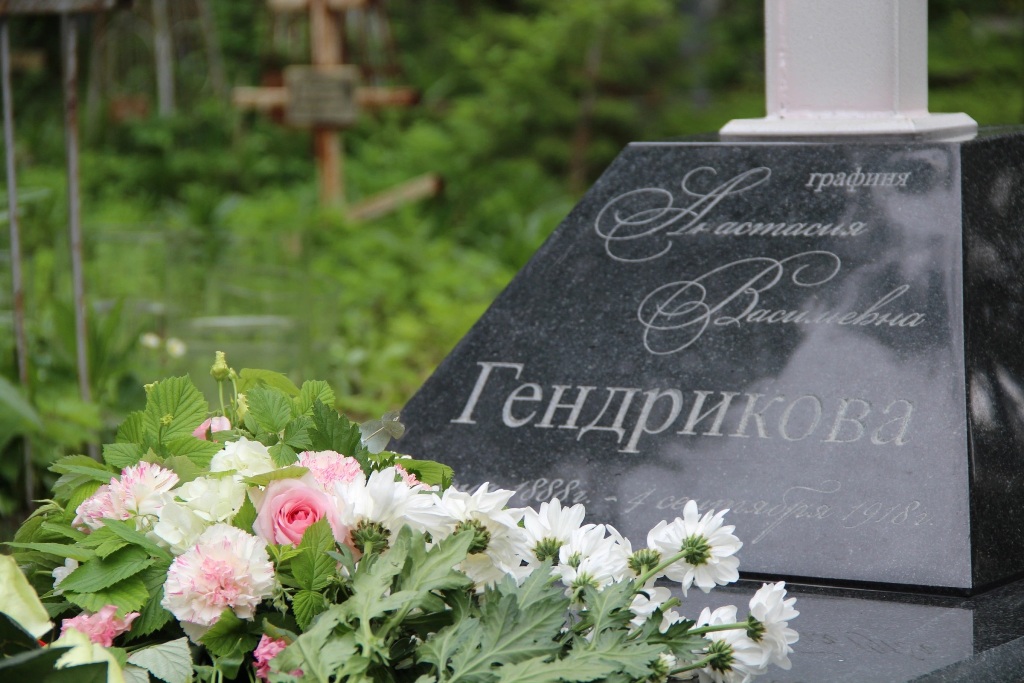
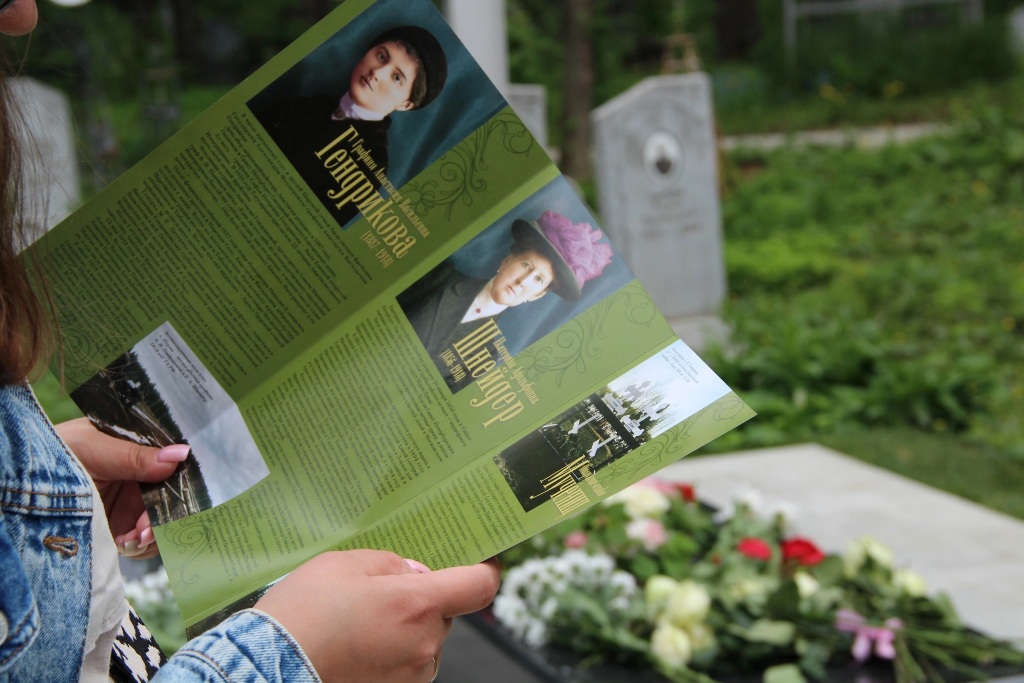
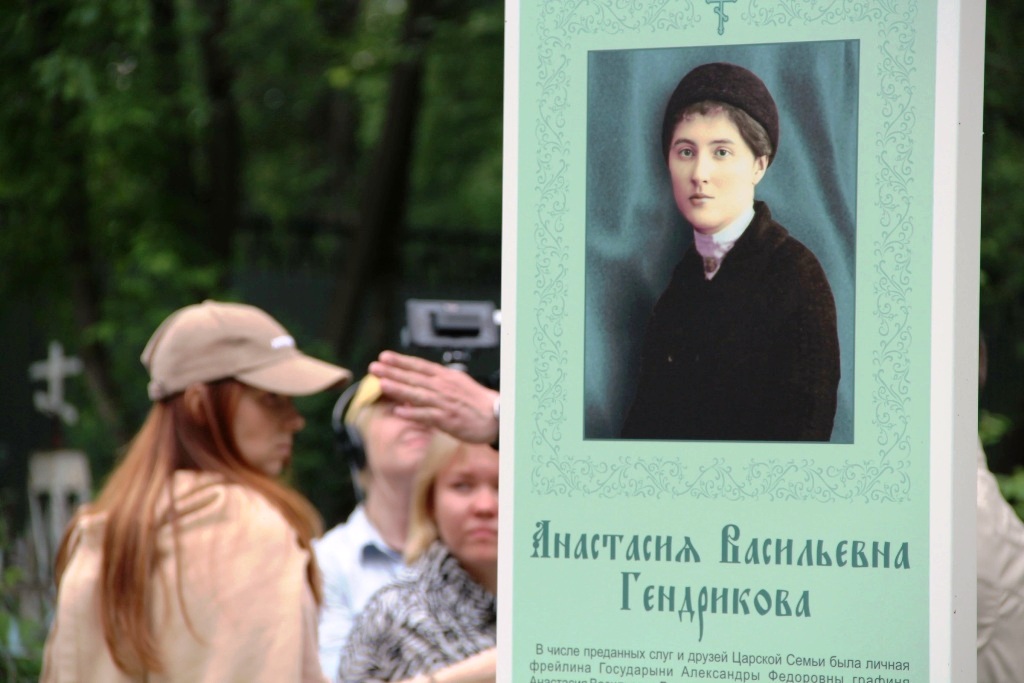
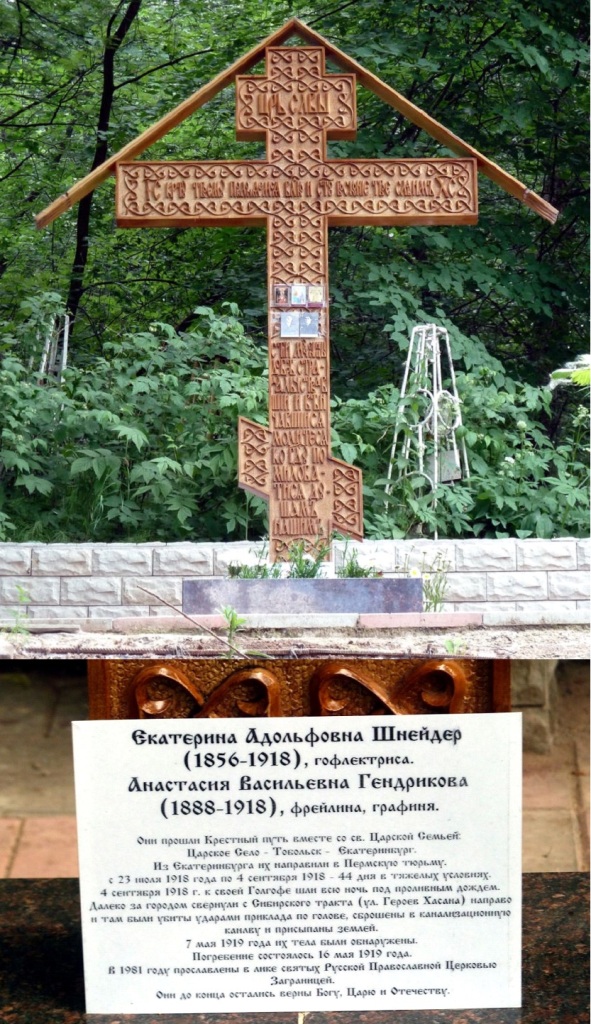
On Sunday, 9th June 2024, a memorial to two faithful servants of the Imperial Family, Anastasia Hendrikova and Ekaterine Schneider was installed near the Church of All Saints, situated at the site where they were buried in 1919, in the Old Yegoshikha Cemetery in Perm.

The service was attended by the Chairman of the Imperial Orthodox Palestinian Society (IOPS) Sergei Stepashin, Chairman of the Elisabeth-Sergius Educational Society Foundation (ESPO) Anna Vitalievna Gromova, clergy of the Perm diocese, local authorities, historians, academic, museum curators and parishioners.

The consecration ceremony was followed by a Funeral (Memorial) Litany, served at the coffins containing the relics of Sts. Anastasia Hendrikova and Ekaterina Schneider, by Metropolitan Methodius of Perm and Kungur in the Church of the Dormition of the Most Holy Theotokos.

At the end of the service, His Eminence Metropolitan Methodiy of Perm addressed the faithful with an archpastoral address, in which he noted the significance of the event for the Perm region, saying that by the grace of God, after the research and labours undertaken, the honest remains of faithful servants of the Imperial Family were discovered and identified.

Recall that on 30th May 2024, the head of the Publishing Department of the Perm Diocese Olga Troitskaya, announced that forensic tests confirmed the identity of the remains as those of Anastasia Hendrikova and Ekaterina Schneider, in Perm, where they were shot by the Bolsheviks in September 1918.

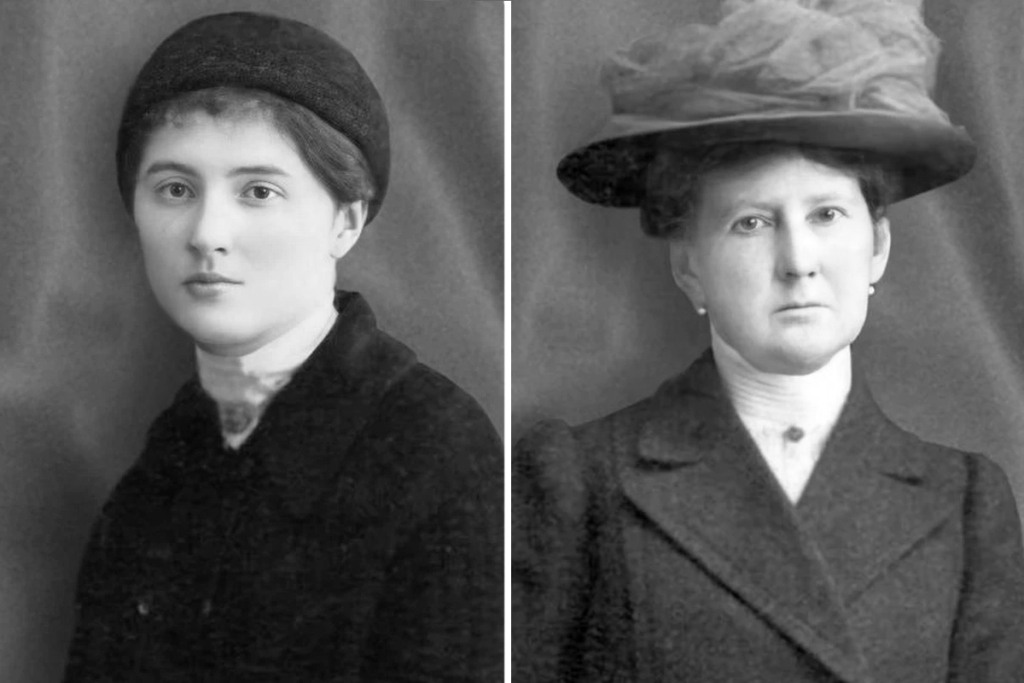
Countess Anastasia Vasilievna Hendrikova (1888-1918), served as a maid of honour to Empress Alexandra Feodorovna. Ekaterina Adolfovna Schneider (1856-1918) initially taught at the Moscow Nikolaev Orphan Institute. She also taught Russian to Grand Duchess Elizabeth Feodorovna. Later, Schneider became a devoted friend and confidant to Empress Alexandra Feodorovna.

***

In May 1918 Anastasia Hendrikova and Ekaterina Schneider arrived in Ekaterinburg from Tobolsk, however, they were not admitted to the Ipatiev House, but were instead, taken by train – along with 33 other prisoners – to Perm, where they were transferred to a local prison. They prayed fervently and tried to remain cheerful, although both were exhausted by the illnesses and burdens of imprisonment.

On the night of 3rd/4th September 1918, Hendrikova and Schneider were awakened and taken with 11 other prisoners outside the city to the irrigation fields situated on the 5th verst of the Siberian Highway, where they were all shot. According to the Whites investigation at the time, they were both shot at point blank range followed by a strong blow to the back of the head.

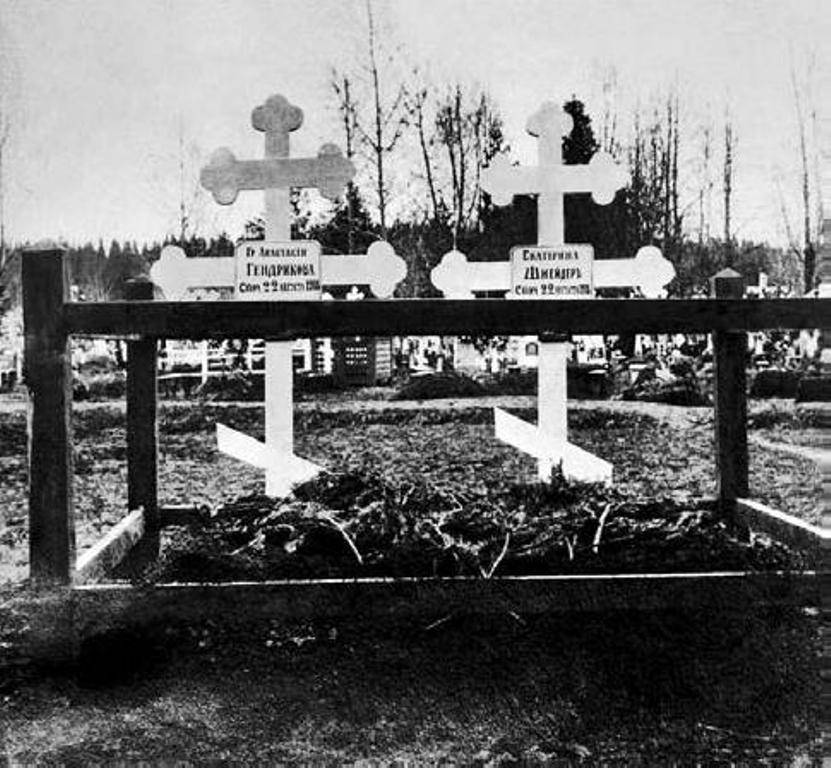
On 19th May 1919, the bodies of Hendrikova and Schneider were recovered by the Whites, who buried their remains in the Yegoshikha Cemetery in Perm. Their graves were marked with Orthodox crosses.

After the Bolsheviks had established power in the region, the graves of Hendrikova and Schneider were destroyed, and their location was lost. It was not until 2020, that the site where Hendrikova and Schneider’s remains were believed to be buried was established, thanks to a century-old photograph taken on the day of their burial – 16tj May 1919.

The remains of Hendrikova and Scehndier were exhumed on 8th September 2020, followed by a thorough forensic study, which lasted nearly four years. On 20th May 2024, an announcement was made, confirming that the remains were indeed those of Hendrikova and Schneider.

PHOTO: Sts. Anastasia Hendrikova (1888-1918) and Ekaterina Schneider (1856-1918)

On 1st November 1981, both Anastasia Hendrikova and Ekaterina Schneider were canonized by the Russian Orthodox Church Outside of Russia (ROCOR) as New Martyrs and Confessors of Russia. Schneider was canonized in spite of the fact she was a Lutheran, however, she has not been canonized by the Moscow Patriarchate due to her faith.

On 16th October 2009, the General Prosecutor’s Office of the Russian Federation decided to rehabilitate 52 persons of the Imperial family and their retainers who had been subjected to repression, including Hendrikova and Schneider.

The photographs posted with this article are courtesy of the Elisabeth-Sergius Educational Society Foundation (ESPO) and the Perm diocese.

© Paul Gilbert. 9 June 2024 – Revised 14 June 2024

Remains of 2 faithdul retainers to the Imperial Family discovered near Perm

PHOTO: Anastasia Hendrikova (left) and Ekaterina Schneider (right)

On 30th May 2024, the head of the Publishing Department of the Perm Diocese Olga Troitskaya, announced that the remains of Anastasia Hendrikova and Ekaterina Schneider, had been found and identified in Perm, where they were shot by the Bolsheviks in September 1918.

In August 1917, the maid of honour to Empress Alexandra Feodorovna, Countess Anastasia Vasilievna Hendrikova (1888-1918), and a teacher and later confidant to the Empress, Ekaterina Adolfovna Schneider (1856-1918), voluntarily followed the Imperial family into exile to Tobolsk and later Ekaterinburg.

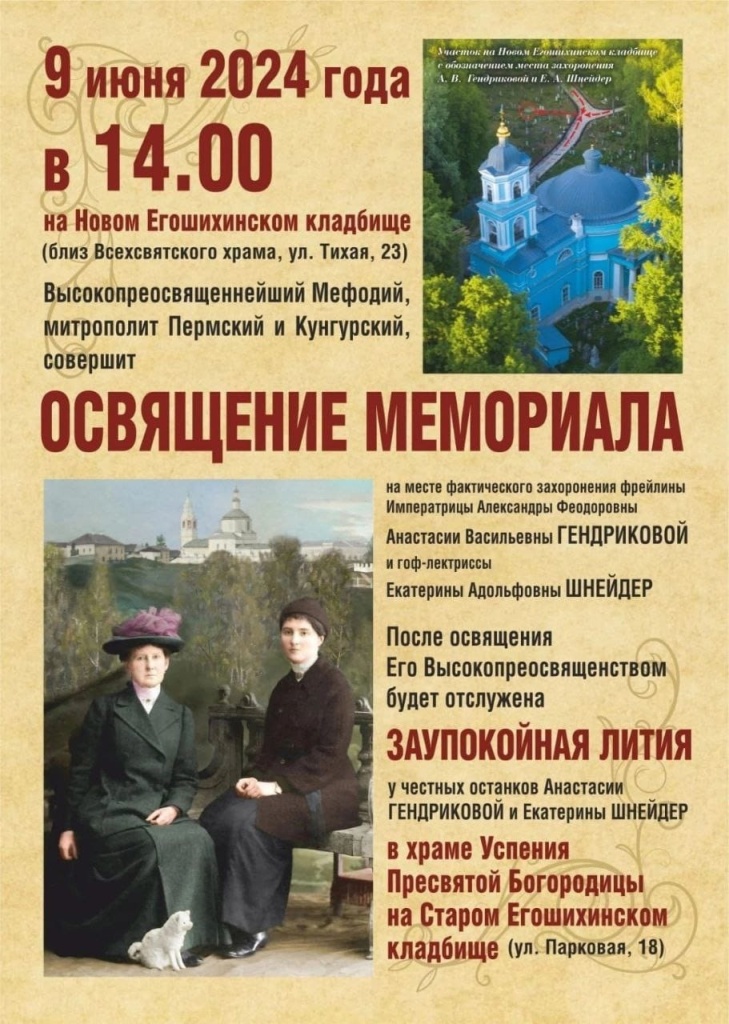
On 9th June 2024, a memorial litany will be performed by Bishop Methodius in the Church of the Dormition of the Most Holy Theotokos, situated at the Old Yegoshikha Cemetery.

Following the litany, Metropolitan Methodius of Perm and Kungur will consecrate a memorial at the site of the actual burial of Anastasia Hendrikova and Ekaterina Schneider, in the New Yegoshikha Cemetery in Perm,

According to the Perm journalist and researcher Vyacheslav Degtyarnikov, forensic medical examinations were carried out last month and confirmed the identity of the remains of Hendrikova and Schneider.

PHOTO: poster advising parishioners of the memorial litany to be held on 9th June 2024, at the Church of the Dormition of the Most Holy Theotokos, situated at the Old Yegoshikha Cemetery in Perm

***

Recall that In May 1918 Anastasia Hendrikova and Ekaterina Schneider arrived in Ekaterinburg from Tobolsk, however, they were not admitted to the Ipatiev House, but were instead transferred to a Perm prison. They, prayed fervently and tried to remain cheerful, although both were exhausted by the illnesses and burdens of imprisonment.

On the night of 3rd/4th September 1918, Hendrikova and Schneider were awakened and taken with a group of other prisoners outside the city to the irrigation fields situated on the 5th verst of the Siberian Highway, where they were all shot. According to the Whites investigation at the time, they were both shot at point blank range followed by a strong blow to the back of the head.

On 19th May 1919, the bodies of Hendrikova and Schneider were recovered by the Whites, who buried their remains in the Yegoshikha Cemetery in Perm. However, their graves were later destroyed when the Bolsheviks regained control of the city.

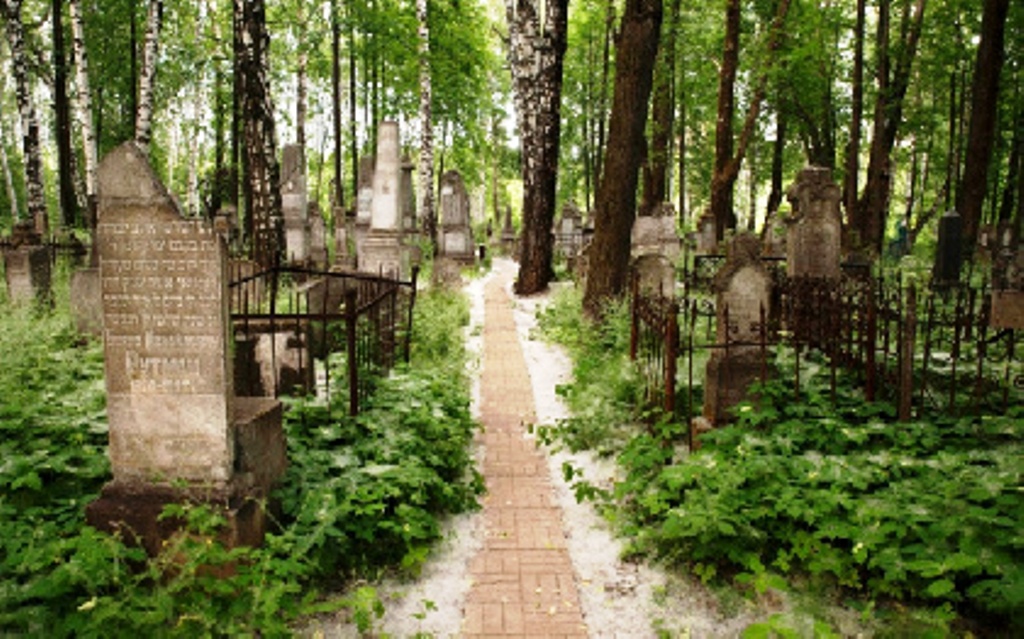
PHOTO: view of the New Yegoshikha Cemetery in Perm

The graves were believed lost, however, they were discovered in the 2010s, the identity of the remains, however, were unknown until the recent forensic tests confirmed they belonged to Hendrikova and Schneider.

On 1st November 1981, both Hendrikova and Schneider were canonized by the Russian Orthodox Church Outside of Russia (ROCOR) as New Martyrs and Confessors of Russia. Schneider was canonized in spite of the fact she was a Lutheran, however, she has not been canonized by the Moscow Patriarchate due to her faith.

On 16th October 2009, the General Prosecutor’s Office of the Russian Federation decided to rehabilitate 52 persons of the Imperial family and their retainers who had been subjected to repression, including Hendrikova and Scheider.

© Paul Gilbert. 30 May 2024

The fate of the royal servants Anastasia Hendrikova and Ekaterina Schneider

PHOTO: Ekaterina Schneider and Anastasia Hendrikova

On this day –  4th September (O.S. 22nd August) 1918 – two faithful retainers, who followed the Imperial family into exile, Countess Anastasia Vasilievna Hendrikova (1888-1918), maid of honour to the Empress Alexandra Feodorovna and Ekaterina Adolfovna Schneider (1856-1918), were both murdered by the Bolsheviks in Perm.

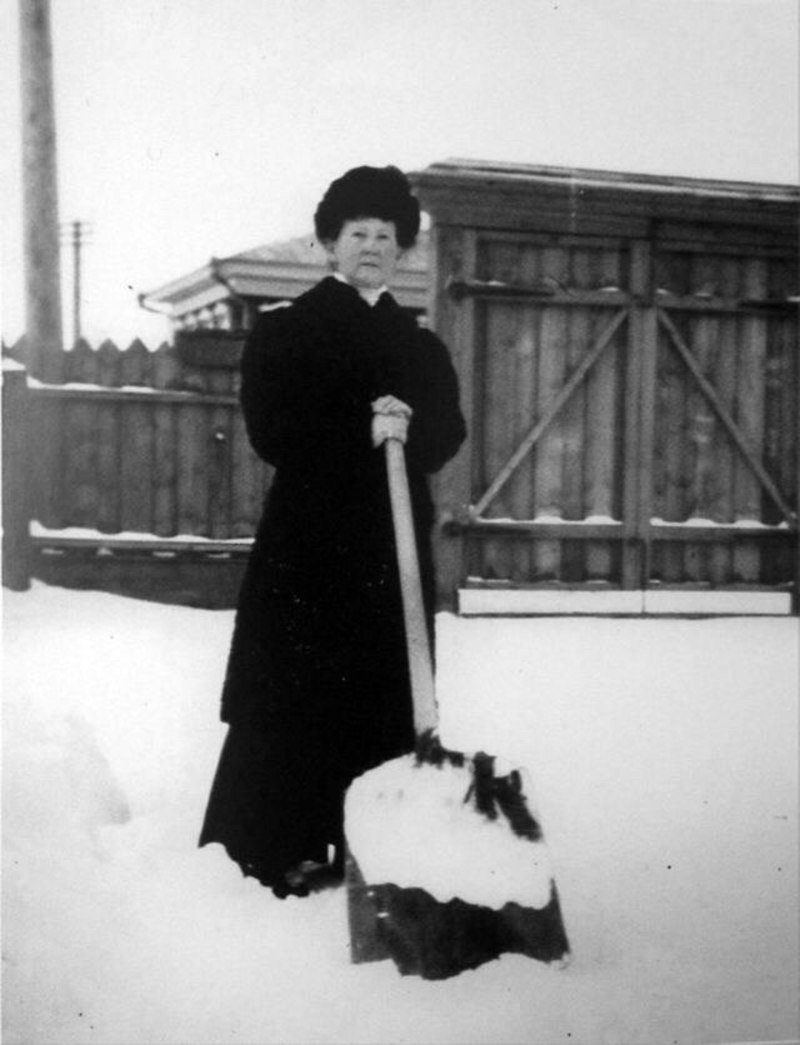
PHOTO: Anastasia Hendrikova under house arrest in Tobolsk 1917-18

Countess Anastasia Vasilievna Hendrikova (1888-1918)

Countess Anastasia Vasilievna Hendrikova was born on 6th July (O.S. 23rd June) 1888. Although she was born to the nobility, she was very simple in her way of life from early youth, she dressed very modestly, even old-fashioned and, unlike most noble girls, never participated in balls and entertainments. She was distinguished by her deep piety, nobility, selflessness and in the most difficult circumstances retained her faith in God.

In 1910, Countess Hendrikova became the personal maid of honour to Empress Alexandra Feodorovna. Nicknamed “Nastenka,” the Empress, the Grand Duchesses, and the courtiers loved her for her kindness, affability, meekness, simplicity and openness in communication.

In February 1917, Countess Hendrikova, at the insistence of the Empress, went to a seriously ill Sister of Mercy in Kislovodsk, but when she arrived there she learned that the Emperor had abdicated the throne. Anastasia Vasilyevna hurried back to Tsarskoye Selo. It is known that at that time the majority of courtiers and servants, under different pretexts, took leave of the Tsar’s family, basically everyone cared only about their own well-being. Anastasia Vasilyevna could have remained in Kislovodsk where she would have been safe, but she, unlike the other courtiers, overcame all obstacles and returned to the Imperial family. A few hours after she arrived at the Alexander Palace, the former Imperial residence became a prison for all who voluntarily wished to remain in it. That evening, she wrote in her diary: “Thank God, I managed to arrive on time to be with them.” Her presence was a great support for the royal prisoners. Always happy, meek, smiling, she cheered everyone up.

“Poor, Anastasia Vasilievna,” S.N. Smirnov wrote in his memoirs about Hendrikova, “I remember the sweet smile of this young girl, her friendliness, her funny walk …”

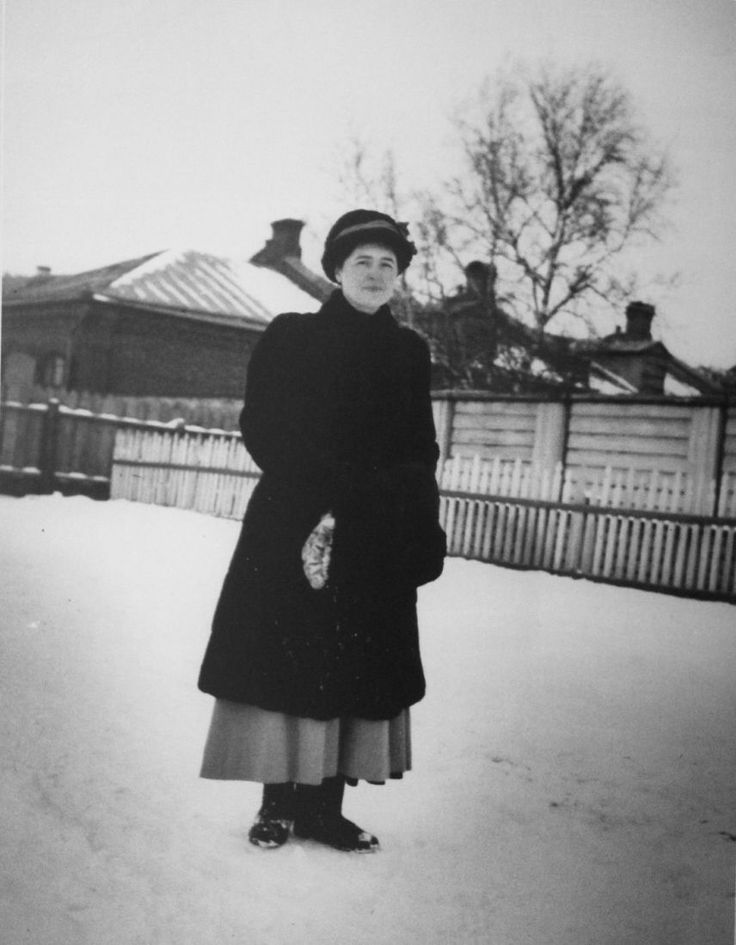
PHOTO: Ekaterina Schneider under house arrest in Tobolsk 1917-18

Ekaterina Adolfovna Schneider (1856-1918)

Ekaterina Adolfovna Schneider was born on 20 January 1856, in St Petersburg to a Baltic Germanfamily, she was also the niece of the former imperial physician Dr. Hirsch. From the day of her birth, she lived with her parents in an apartment on Liteiny Prospect in the Imperial capital.

Known as “Trina,” a courtier remembered her as “infinitely sweet tempered and good hearted.” Schneider was also primly Victorian. She once refused to permit the four grand duchesses to put on a play because it contained the word “stockings.”

In 1884, she was hired to teach the Russian language to the Grand Duchess Elizabeth Feodorovna, the wife of Grand Duke Sergei Alexandrovich. Apparently, Ms Schneider managed to find a common language with her student, earning herself a good reputation. After the engagement in 1894 of the heir-Tsesarevich Nicholas Alexandrovich to Princess Alix of Hesse-Darmstadt, Schneider was summoned to London to teach the Russian language to the bride. Alix’s studies with Schneider continued for several years. In a letter dated 4th February 1895 to her older sister Princess Victoria of Battenberg, Alexandra Feodorovna wrote that “Schneiderlein” (as she called her teacher) lived in the Winter Palace, and that “the other day she turned 38 or 39. She comes every morning, and we study hard. She also reads to me an hour before dinner.”

Schneider did her job well: most of the Empress’s contemporaries who regularly communicated with her often complemented the Empress on her command of the Russian language. In addition, Schneider was able to make friends with her student, and they were connected for life. Even after her services as teacher were no longer required, she became the Empress’s confidante and lived in the Alexander Palace at Tsarskoye Selo.

PHOTO: Graves of Anastasia Hendrikova and Ekaterina Schneider;
later destroyed by the Bolsheviks

Faithful to the End

On 1st August 1917, Anastasia Hendrikova and Ekaterina Schneider followed the Tsar’s family into exile to Tobolsk. Before leaving, Hendrikova wrote in her diary: “I can not leave here without thanking God for that wonderful peace and power that He sent me and supported me for all these almost five months of arrest. I close my eyes, give myself completely, without questions or murmurings into the hands of God with confidence and love. “

In May 1918 Anastasia Hendrikova and Ekaterina Schneider arrived in Ekaterinburg with four of the Tsar’s children, however, they were not admitted to the Ipatiev House, but were instead transferred to a Perm prison. They, prayed fervently and tried to remain cheerful, although both were exhausted by the illnesses and burdens of imprisonment.

On the night of 4th September 1918, Anastasia Hendrikova and Ekaterina Schneider were awakened and taken with a group of prisoners outside the city where they were killed. According to the Whites investigation at the time, they were both shot at point blank range followed by a strong blow to the back of the head. Only a few months later, after the arrival of the White Army, the bodies of the dead were discovered, and they were buried in the cemetery in Perm.

The bodies of Hendrikova and Schneider were recovered by the Whites in May 1919, and were reburied in the Yegoshikha Cemetery. However, their graves were later destroyed when the Bolsheviks regained control of the city.

PHOTO: Memorial cross to Countess Hendrikova and Ekaterina Schneider
in the Yegoshikha Cemetery, Perm

In October 2012, thanks to the efforts of a group of parishioners from churches in the city, and with the blessing of the Metropolitan of Perm and Solikamsky Methodius, a new cross was erected at the site where their remains were believed to have initially been buried.

A memorial service with prayer is performed for Hendrikova and Schneider, every year on 4th September, at the burial site in the Yegoshikha Cemetery, which is situated near the Church of the Assumption of the Blessed Virgin Mary in Perm.

PHOTO: Church of the Assumption of the Blessed Virgin Mary in Perm

Canonization

In October 1981, both Hendrikova and Schneider were canonized by the Russian Orthodox Church Outside of Russia (ROCOR). Schneider was canonized in spite of the fact she was a Lutheran, however, she has not been canonized by the Moscow Patriarchate due to her faith.

On 16th October 2009, the General Prosecutor’s Office of the Russian Federation decided to rehabilitate 52 persons of the Imperial family and their retainers who had been subjected to repression, including Hendrikova and Scheider.

***

CLICK on the LINKS below to read UPDATES on the identification and burial of Hendrikhova and Scheider’s remains near Perm in May/June 2024:

Remains of 2 faithdul retainers to the Imperial Family discovered near Perm
30th May 2024

Memorial Litarny and monument for Anastasia Hendrikova and Ekaterina Schneider in Perm
14th June 2024

© Paul Gilbert. 4 September 2020

The woman who photographed the Imperial Family in Tobolsk

232a

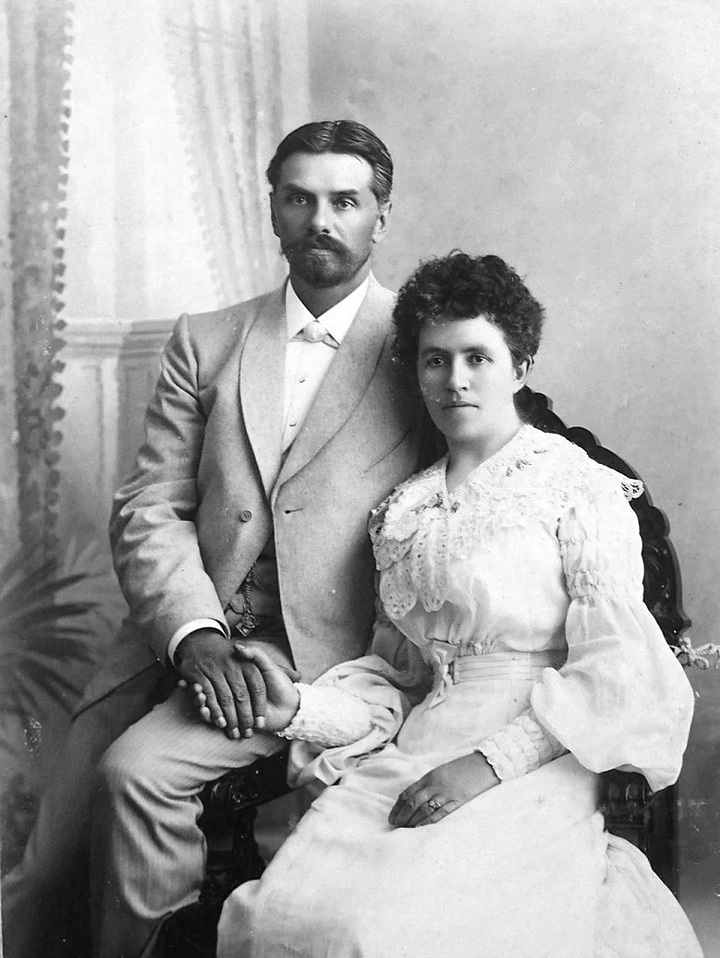
Maria Ussakovskaya, nee Petukhova with her husband Ivan Konstantinovich Ussakovsky

Few historians know about Maria Ussakovskaya the first woman photographer in Tobolsk. Through the lens of her camera, she photographed life in the provincial capital during one of the most dramatic periods of Russia’s history, leaving for posterity a noticeable mark in the biography of this Siberian city.

Incredible progress

Maria Mikhailovna Ussakovskaya, nee Petukhova, was born on 28th December 1871 (Old Style) in the family of a Tobolak native, state adviser M.M. Petukhov. She graduated from the Tobolsk girl’s school and, in 1893, married the official Ivan Konstantinovich Ussakovsky.

Ivan was also a great lover of photography – a hobby that was fashionable and modern in Russia at the time. On the basis of her husband’s home laboratory, as well as money received in a dowry from her father, Maria opened a photo salon, which quickly gained popularity among the townspeople. It should be noted that in 1897 in Tobolsk, with a population of 20 thousand people, there were no less than nine photo shops! 

Maria kept up with all the new developments in photography. She ordered expensive Bristol cardboard for passe-partout, used interchangeable backs with different scenes, offered costume shots, and even performed photo montages. This was incredible progress for Siberia at that time.

Photographs by Ussakovskaya were distinguished by their artistic taste and original composition. These were real photo portraits, which is especially significant, because photography at that time was essentially a step into eternity to become a memory for years to come.

Unlike other female owned photo salons, Ussakovskaya perfectly mastered the techniques of photography herself. Her photo salon also began to publish postcards, which were in great demand. It is known that the famous Russian chemist and inventor Dmitry Mendeleev (1834-1907), during his stay in Tobolsk in the summer of 1899, bought a collection of art postcards with views of his native city from Ussakovskaya’s salon.

Maria continued to work after the revolution, but the portraits of young ladies in silk dresses were replaced with photographing labor collectives, fur farms, bone carving masters and ordinary workers. At the same time, the house was formally confiscated by the local Soviet, leaving Maria to rent her own photo workshop from a local farm in Tobolsk. In 1929, Ussakovskaya was deprived of suffrage. The photo salon had to be closed. In 1938, the Ussakovskys left Tobolsk for Moscow for fear of reprisals. Maria Mikhailovna died in 1947 and is buried in the Don Cemetery.

232b

Photograph of Rasputin taken at Maria’s salon in Tobolsk

Witness of events

Maria was a witness to many historical events. Of particular interest in her biography are family traditions associated with the names of prominent people of that era and carefully preserved by subsequent generations of Ussakovsky. One of them is based on the visit by the famous strannik Grigori Rasputin.

The photograph of Grigory Rasputin made by Maria Ussakovskaya is today widely known. Moreover, the famous holy man, who was hunted by Russia’s finest photographers, presented himself at Maria’s salon. Maria’s great-grandson of Vadim Borisovich Khoziev, continues to tell the story of Rasputin’s visit to his great-grandmother’s salon in Tobolsk, as told to him by his grandmother Maria Ivanovna Ussakovskaya.

232e

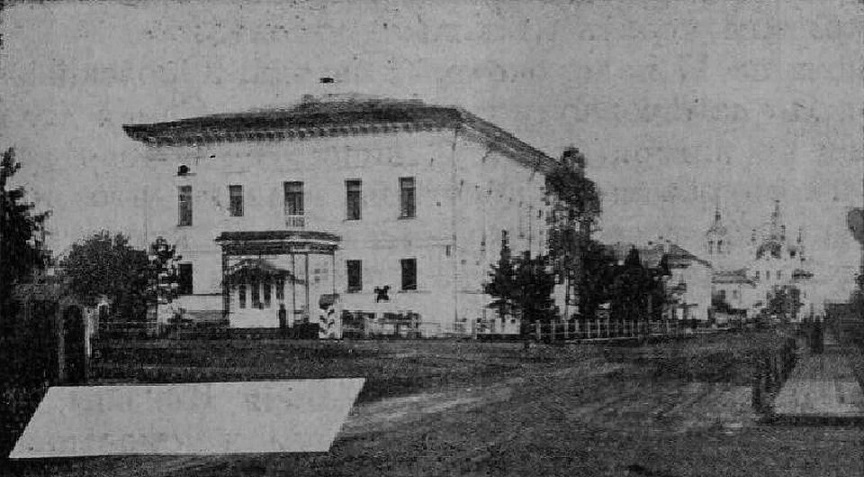
One of Maria’s photos of the Governors House, where the Imperial Family lived under house arrest

Photographer of the Romanov family?

It is also of great interest,  that according to the Ussakovsky family, Maria repeatedly photographed the family of Tsar Nicholas II during their house arrest in the former Governor’s Mansion in Tobolsk. Sadly, however, in 1938, her daughter Nina, fearing arrest, destroyed all the photographic plates. One can only speculate, as to what these lost plates depicted? How close did Maria get to the Imperial Family? What were they doing when she photographed them? How many photographs did she take, and later destroyed? Sadly, we will never know.

Only photos of the faithful servants of the Imperial Family have been preserved to this day. The original of this photo is now in the collection of the Tsarskoye Selo State Museum in Pushkin, a copy of which can be seen in the Museum of the Family of Emperor Nicholas II (opened in June 2018) in Tobolsk. It is interesting to add that members of their suite who enjoyed freedom to go about Tobolsk, made purchases of  postcards with views of Tobolsk, on behalf of the Imperial Family from Maria’s salon.

The fact that the Imperial Family used the services of the Ussakovskaya Salon was documented. In the financial report of Colonel Kobylinsky, security chief of the Romanovs, in addition to a few mentions of invoices for purchasing postcards, information is also provided on the account “for correcting negatives”. So Maria’s photos of the Imperial Family did in fact exist!.

The Imperial Family described their stay in Tobolsk in great detail in both their respective diaries and letters, however, there is no mention of an invitation of Maria Ussakovskaya nor the photographer in general. A visit by a female photographer would hardly go unnoticed. It is also not clear why the Romanovs would need to invite a photographer: they, as well as the tutor to Tsesarevich Alexei Pierre Gilliard, had their own cameras. Many photographs of the Imperial Family have been preserved, taken in Tobolsk by the Romanovs themselves or by members of their retinue.

Pierre Gilliard notes in his diary on 17th September 1917 that the Imperial Family were forced to have “ID cards with numbers, equipped with photographs.” Empress Alexandra Feodorovna made a similar note in her diary on 30th September 1917. Their respective entries may explain the photographer from the Ussakovskaya Salon, who was most likely Maria’s husband Ivan Konstantinovich Ussakovsky, who was invited for this compulsory photography for certificates. An invoice was issued by the salon.

Several passes to the “Freedom House” with photographs have been preserved, for example, the passes with a photograph of Dr. E. S. Botkin and maid A. S. Demidova. Their copies are also on display in the Museum of the Family of Emperor Nicholas II in Tobolsk.

232c

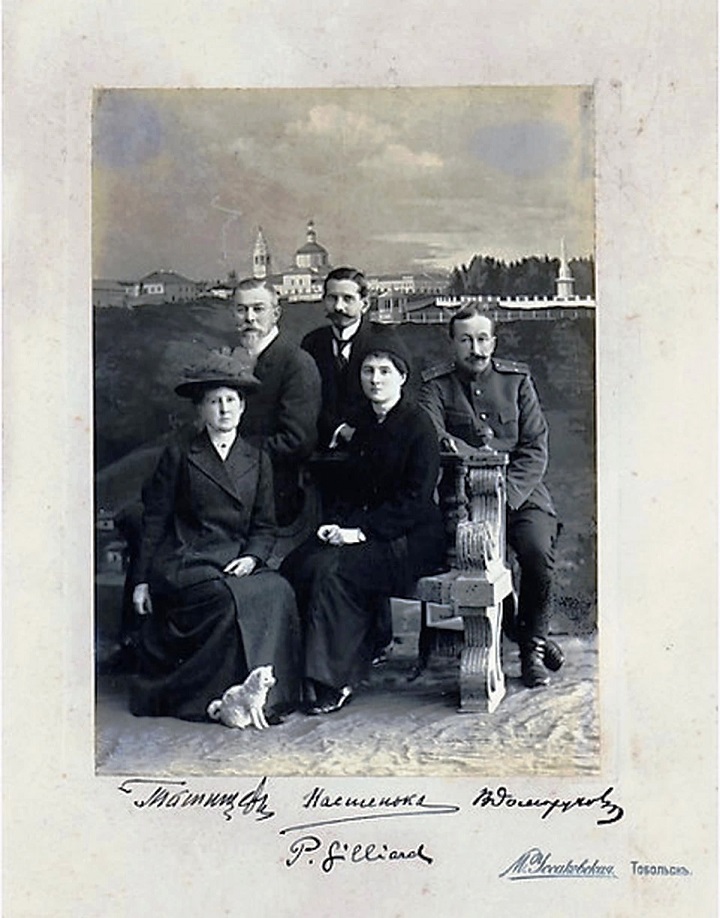
Photograph of the Imperial Family’s faithful servants taken at Maria’s salon in Tobolsk

“Faithful servants”

A wonderful photograph depicting *five faithful servants of the Imperial Family has been preserved to this day. The original of this photo is now in the collection of the Tsarskoye Selo State Museum in Pushkin, a copy of which can be seen in the Museum of the Family of Emperor Nicholas II (opened in June 2018) in Tobolsk.

The faithful servants of the Imperial Family, who had not lodged in the Governor’s House, but in the Kornilov House, located on the opposite side of the street and, obviously, enjoyed greater freedom of movement, could visit the Ussakovskaya Salon, which was located nearby. The famous photograph, called “Faithful Servants”, was clearly taken in the salon. Five members of the imperial retinue pose against a backdrop with a view of Tobolsk, printed or painted on canvas, This background can be seen in other photos from the Ussakovskaya Photo Salon.

*NOTE: the photo above depicts – the gentlemen: Count Ilya Tatishchev, Pierre Gilliard, Prince Vasily Dolgorukov; the ladies, Catherine Schneider, Anastasia Hendrikova. With the exception of Pierre Gilliard, the other four faithful retainers of the Imperial Family were murdered by the Bolsheviks in 1918.

232d

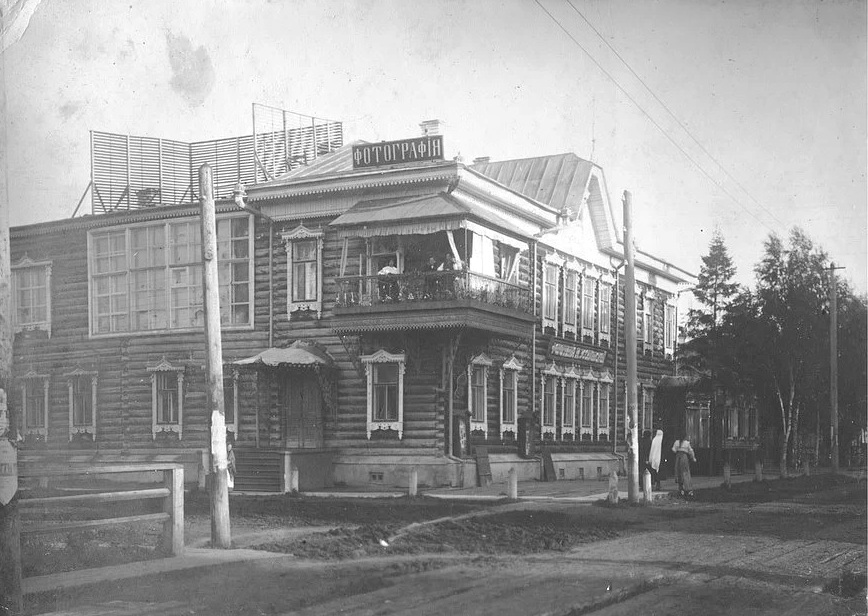
The home and salon of Maria Mikhailovna and Ivan Ussakovsky in Tobolsk

The home and salon of Maria Mikhailovna and Ivan Ussakovsky which was located at No. 19 Ulitsa Mira, was illegally demolished in 2006. Requests to local authorities by a group of local historians to restore the building has fallen on deaf ears in Tobolsk. 

© Paul Gilbert. 24 February 2020