Cossack witnesses miraculous vision on the site of Ipatiev House in Ekaterinburg in 1990
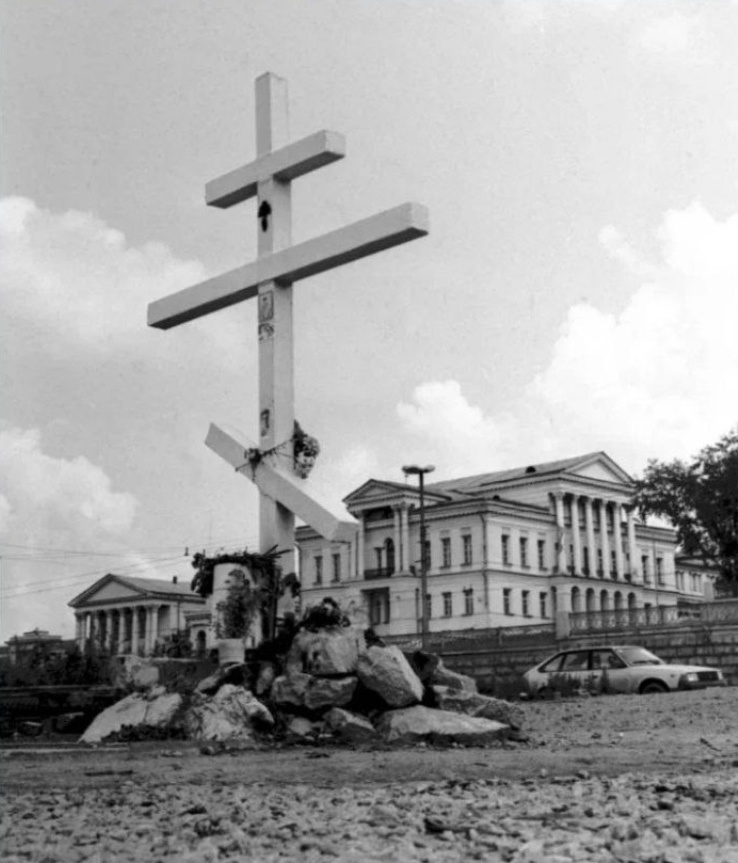
 

PHOTO: a large metal Orthodox cross was installed
on the site of the Ipatiev House in 1990

In the autumn of 1990, a Cossack by the name of Vladimir claims to have witnessed a miraculous vision, during the installation of a large metal Orthodox cross, on the site where the Ipatiev House once stood – demolished on 22-23 September 1977.

Whether you are a believer or not, this is just one of many miracles reported since the regicide in Ekaterinburg in July 1918.

Here is Vladimir’s testimony . . .

“I want to tell you about the appearance (sign) at the moment of the installation of the cross on the site of the Ipatiev house, where the Tsar and his family were murdered.

On 5th October 1990, at about 11-12 noon , a metal cross was brought by truck, a hole was dug in advance for its installation, and crushed stone was brought.

The weather was gloomy. The entire sky was completely covered with dark clouds and it was snowing sparsely.

The cross was removed from the truck and placed on the ground, then installed in the hole, and one of the people present, a man named Alexei, stepped forward to see how the cross was installed and whether there was any deviation.

And suddenly, Alexei ran up toward the others present and yelled: “Look up!”

We all raised our heads at first trembling, and then fear passed through our bodies: above us, that is, directly above the cross, the sky parted, and from there a ray of light fell on the cross. The sun was not visible, and the hole in the clouds rotated to the right, and on the ground, that is, around the cross within a radius of 50-100 meters there was, as it were, an illumination from heaven by this bright beam of light, and on the ground a bright circle of light; and the snow did not fall within it.

All this lasted about 30-40 minutes, the time it took to install the cross and secured with concrete, then the hole in the clouds closed. The light disappeared. At the same time, up to 30 people were present, many of whom were non-believers at that time.

When we later asked the priest about this apparition, he replied that it was obviously a sign. Those of us non-beleivers present believed in God after this miracle.”

From the memoirs of a Cossack from the village of Kamenskaya,
Vladimir.

FURTHER READING:

The face of the Tsar-Martyr Nicholas II seen July 1919

“He will help you!” Stories of miraculous help of Tsar Nicholas II

My [Paul Gilbert] cancer journey and prayers for the intercession of Tsar-Martyr Nicholas II

© Paul Gilbert. 11 September 2024
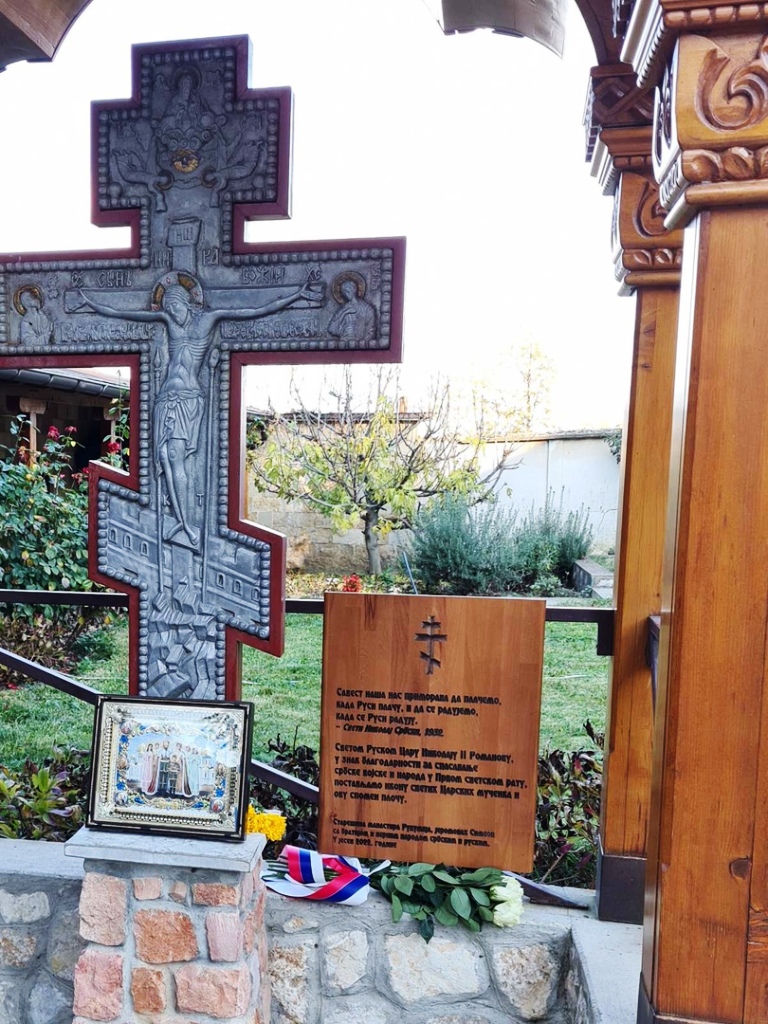
Serbian monastery installs memorial plaque to Nicholas II

PHOTO: plaque to Emperor Nicholas II and an icon of the Holy Royal Martyrs was unveiled and consecrated on the grounds of the Rukumija Monastery

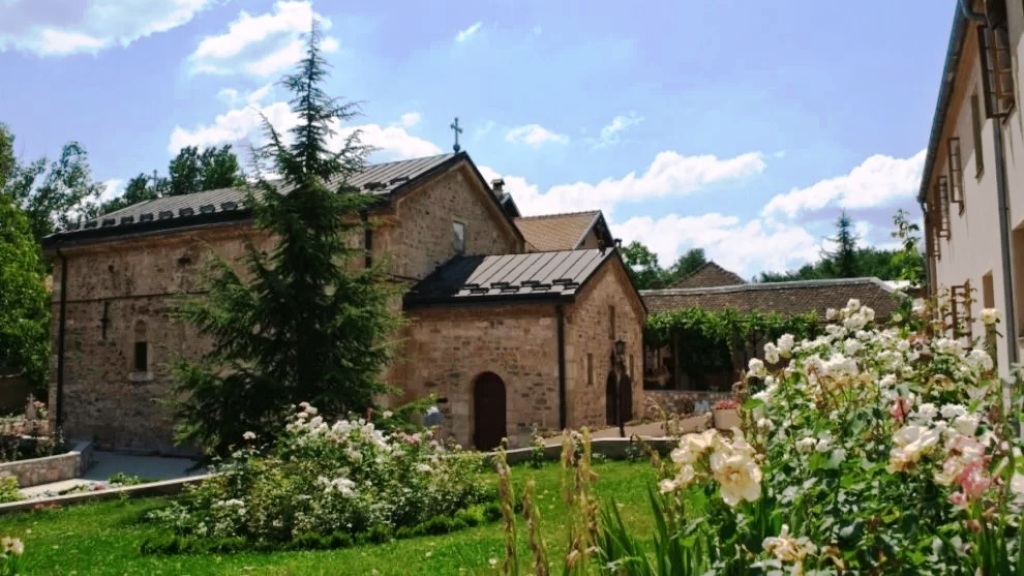
On 12th November, a simple wooden plaque to Emperor Nicholas II and an icon of the Holy Royal Martyrs was unveiled and consecrated on the grounds of the Rukumija Monastery, near the town of Pozharevac in Serbia. The installation of the plaque is in gratitude for the Russian Emperor’s efforts to come to the aid of Serbia during the First World War.

The ceremony began with the singing of the Russian and Serbian national anthems, then the choir performed the “Song to the Holy Tsar Nicholas“. This was followed by the consecration ceremony performed by the rector of the monastery Heiromonk Simeon, in the presence of parishioners and distinguished guests from the Russian Embassy in Belgrade (Vladlen Zelenin), the Russian House in Belgrade (Georgy Engelgart) and the Foundation for the Unity of Orthodox Peoples (Natalya Kotseva).

Zelenin thanked the Serbian people for honouring the memory of Tsar Nicholas II. In turn, Engelhardt noted that the gratitude and love of the Serbian people for the last Russian Tsar could serve as an example for the Russian people themselves.

PHOTO: the Rukumija Monastery, near the town of Pozharevac in Serbia

For Serbians, Emperor Nicholas II is revered both as a saint and as a statesman. For many Serbs, the image of the Russian Tsar is a symbol of loyalty, honesty and devotion to one’s word. The Serbian people remember that it was for the sake of saving Serbia that Nicholas II entered the First World War.

For more information on Serbia’s reverance for Emperor Nicholas II, please refer to the following articles, researched from Russian and Serbian sources by Paul Gilbert:

Nicholas II through Serbian eyes, published on 13th October 2020

“For us Serbs, Nicholas II will be the greatest and most revered of all saints”, published on 11th August 2022

“I consider Nicholas II a great reformer” – Serbian Ambassador to Russia, published on 13th May 2019

New outdoor portrait of Nicholas II appear’s in Serbia’s capital, published on 2nd January 2020

Icon of Tsar-Martyr Nicholas II from Serbia arrives in St. Petersburg, published on 14th May 2021

The Russian House of Emperor Nicholas II in Belgrade, Serbia, published on 12th October 2022

© 14 November 2022

New outdoor portrait of Nicholas II appears in Serbia’s capital

208a

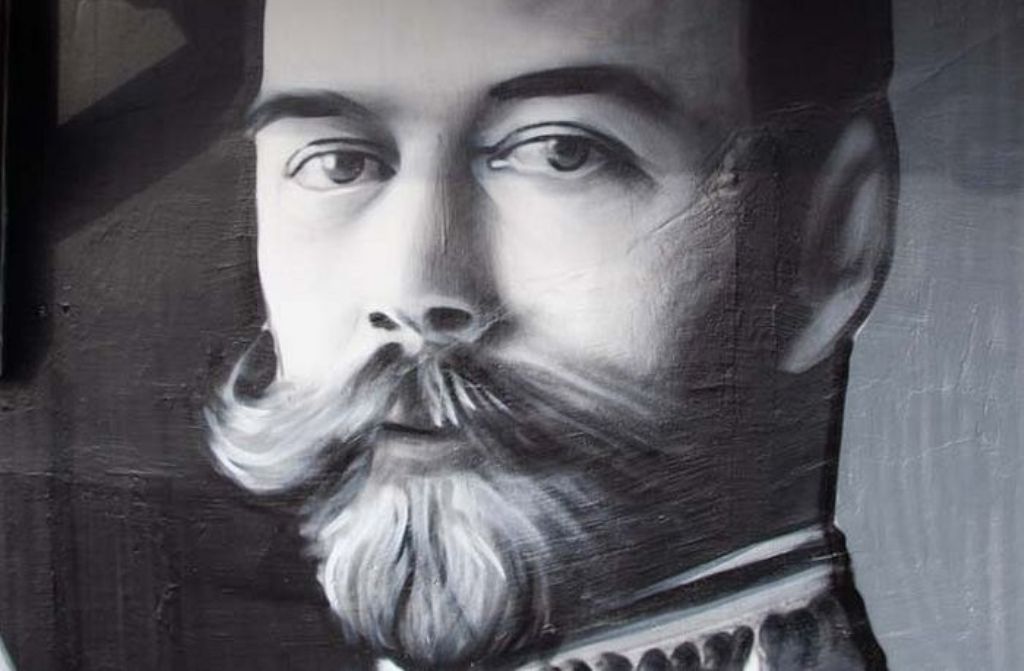
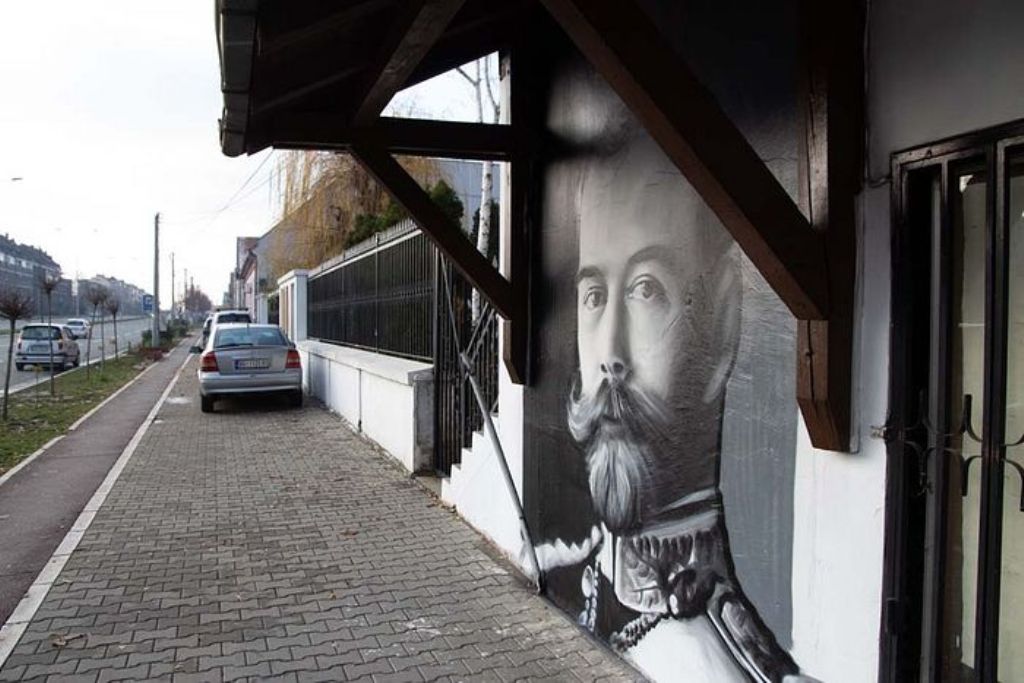
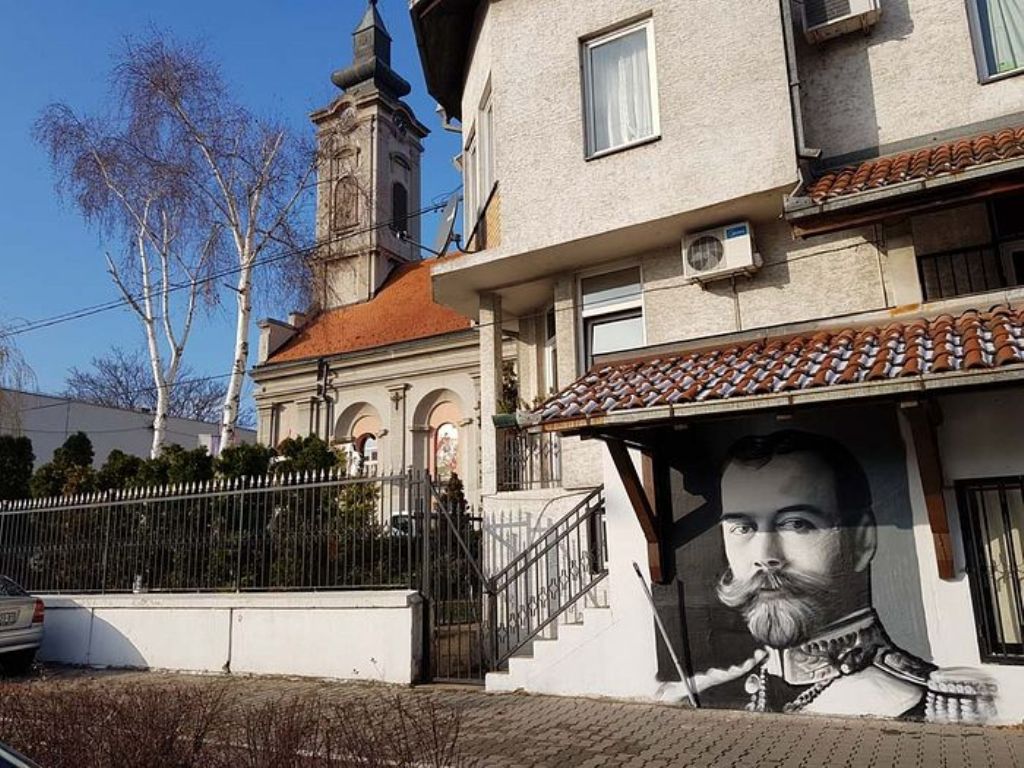
Another monumental portrait image of Tsar Nicholas II has appeared in the Serbian capital of Belgrade

With the blessing of Archpriest Vladimir Levichanin, the image of Nicholas II has been painted on the wall of the parish house of the Church of St. George the Great Martyr, located on Voyvodzhanskaya Street in New Belgrade.

208b

The tradition of historical murals and street art is popular in the Serbian capital, but this is the first such case that an image of such a high artistic style has appeared on a building belonging to the Serbian Orthodox Church.

208c

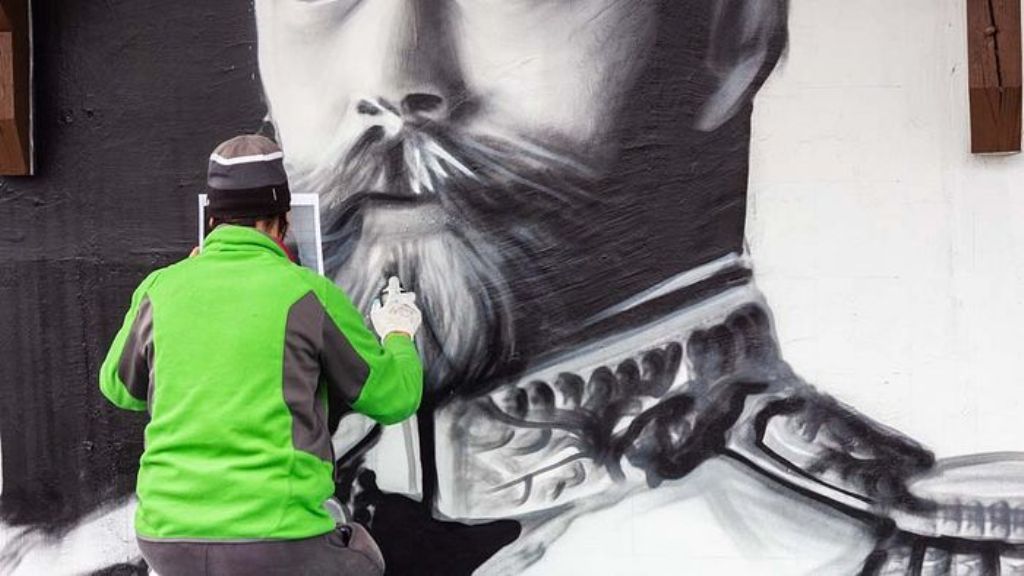
The creator of the portrait is the famous Belgrade artist Milan Milosavljevich, who wanted to donate his work to the church, in which he could portray Emperor Nicholas II, who is especially revered in Serbia. One of the initiators of the project is the Serbian book publisher Nikola Drobnyakovich.

208d

Currently, there is Tsar Nicholas II Street in Belgrade, and in the very center of the city there is a majestic monument to the last Russian emperor and patron of the Serbian people.

© Paul Gilbert. 2 January 2020

Church in Montenegro Marks Centenary of Romanovs’ Deaths

178a

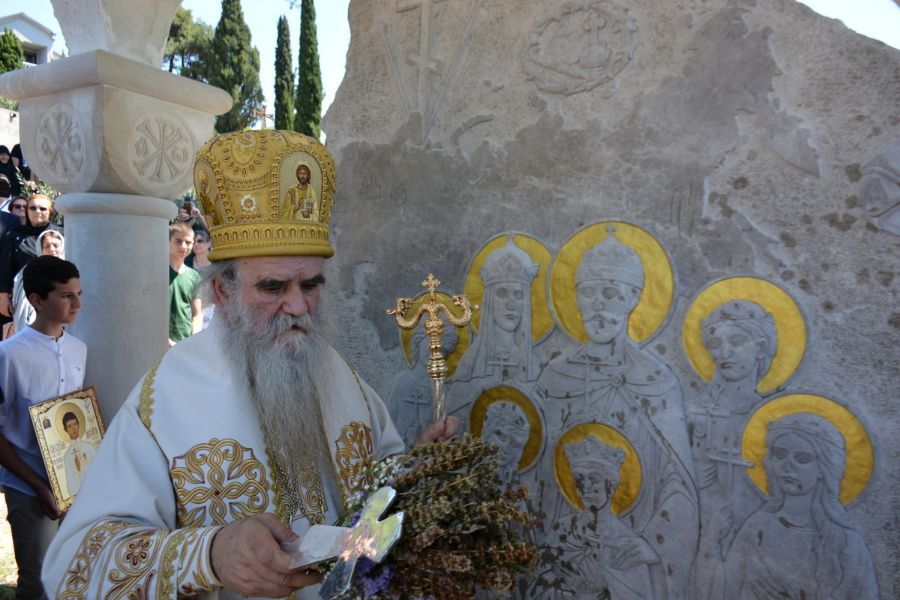
PHOTO: Memorial to the Holy Royal Martyrs in the Monastery of Dajbabe in Montenegro

The Serbian Orthodox Church in Montenegro and devotees of Romanov dynasty have marked the anniversary of the murder of Nicholas II and Russia’s imperial family.

The Serbian Orthodox Church in Montenegro has commemorated the centenary of the killing of the Russian imperial family at Ekaterinburg with numerous events held under the slogan “The Romanov Family – 100 years of Holiness”.

Ending on Wednesday, the church held four days of masses for the Romanov family across the country, organized roundtables, exhibitions and book promotions while hosting the Russian Church and state officials.

In the monastery of Dajbabe, near the capital, Podgorica, the Serbian Church also erected a memorial (see photo above) to the Russian imperial family who were murdered by the Bolsheviks one year after the revolution that ended 300 years of Romanov rule.

Russia’s last tsar and his family were shot on the night of 16/17 July 1918. Besides Nicholas II, they killed the Empress Alexandra and all their children, Alexei, Olga, Tatyana, Maria and Anastasia.

The Russian Church canonized the imperial family in 2000 and their remnants are now held in the Peter and Paul Cathedral in St. Petersburg. The Serbian Church also considers the martyred Romanovs as “saints“.

The Serbian Orthodox Church said on Wednesday that people in Montenegro should never forget their gratitude to the Tsars.

“Without the help of Russia, there would have been no liberation of our people from Ottoman slavery… We are aware of this, and with the great gratitude we remember the great love of the Russian people and the Russian tsar for Montenegro,” Joanikije, the Bishop of Budimlike-Niksic, said.

The masses and other events were attended by delegates of the Patriarch of Alexandria, Theodore, Moscow Patriarch Kiril, representatives of the Orthodox Palestinian Society, Russian scholars, academics and former state officials from Moscow.

The Serbian Orthodox Church’s senior bishop in Montenegro, Amfilohije, said that the murder of the imperial family had been a great crime.

“They killed the emperor and the empress, and even though the emperor had given up power to save his people, they killed their children … You can imagine what a crime that was,” Amfilohije said.

The Russian and Serbian Orthodox Church in Montenegro cherish close relations dating back to the 19th century, during the rule of the Montenegrin prince-bishop, Njegos.

© Paul Gilbert. 9 December 2019

Serbs celebrate Royal Martyrs with Liturgy and procession in Belgrade

NOTE: All of the articles pertaining to Nicholas II and his family which were originally published in my Royal Russia News blog, have been moved to this Nicholas II blog. This article was originally posted on 29 July 2018 in my Royal Russia News blog – PG

Tsar Nicholas II was “one of the greatest rulers and tsars of Russia in his moral and spiritual qualities,” the Serbian patriarch said.

While 100,000 Orthodox faithful gathered in Ekaterinburg on the night of 16/17 July 2018 to honor the 100th anniversary of the Royal Martyrs, they were honored with another Divine Liturgy and procession in Belgrade the following morning.

During the events, His Holiness Patriarch Irinej of Serbia praised Tsar Nicholas as one of the greatest Russian rulers, of high moral and spiritual character.

The day began with the Hierarchical Divine Liturgy in the courtyard of the Russian Church of the Holy Trinity in Belgrade, after which a festive procession passed through the capital city’s central streets.

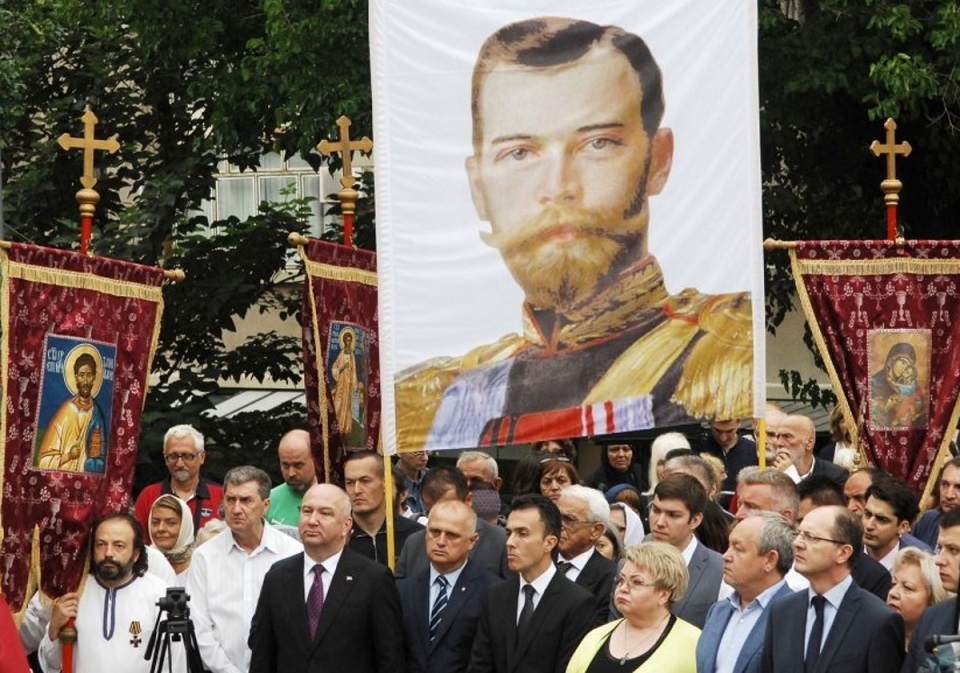
The procession was announced in all Belgrade churches last Sunday, and according to police estimates, the procession gathered about 10,000 faithful, including clergy, representatives of Russian-Serbian friendship organizations, and citizens of Serbia and Russia participated in the march. As the procession moved past the Serbian Parliament building, the choir sang “God Save the Tsar.”

165a

Serbs gather in Belgrade to honour Nicholas II

The procession came to an end at Belgrade’s monument to the slain Russian Tsar, where Pat. Irinej celebrated a festive moleben and addressed the gathered faithful, in which he referred to the Tsar-Martyr’s Orthodox character.

“All his life, he was accompanied by distrust, slander, and underestimation of his personality. And this happened, if we look at the time when tsarist Russia had numerous enemies, as it does now,” the Serbian primate said. In his words, the entire Romanov family behaved in a “deeply Christian manner” to the very end.

“No one knows what would have happened with Serbia and the Serbian people if he had not entered into the First World War,” the patriarch also added.

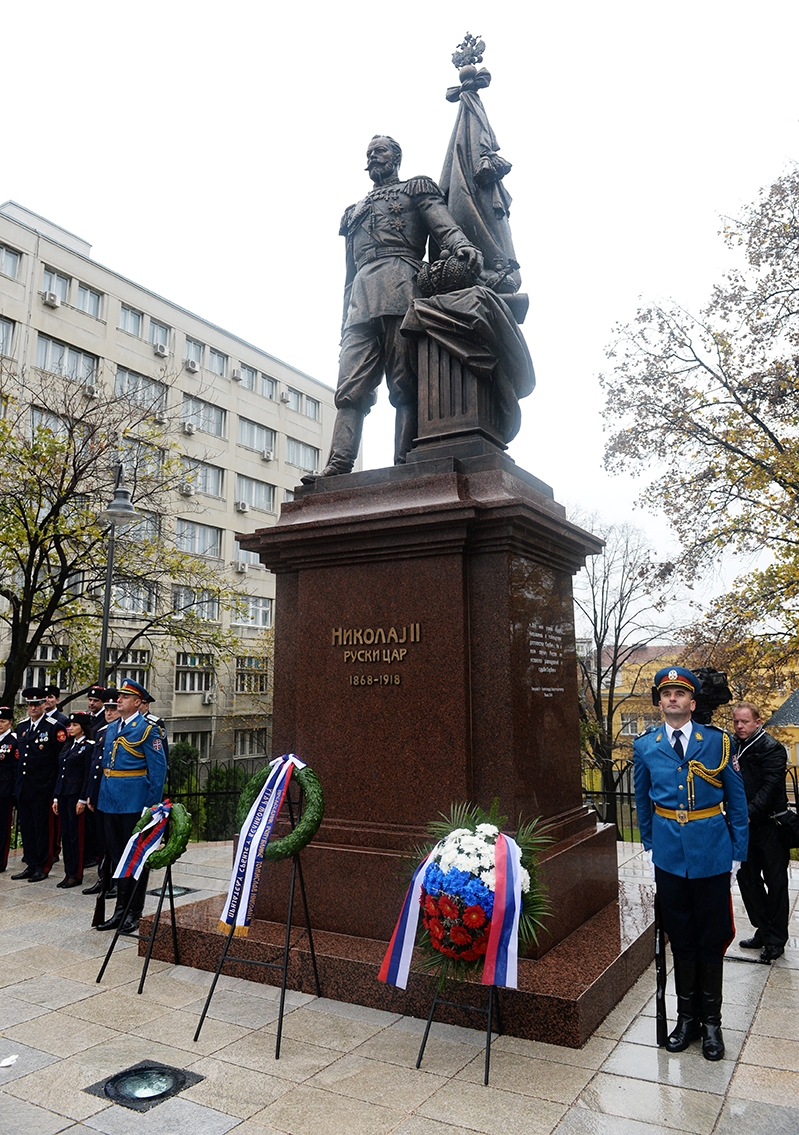
Then wreaths were laid at the monument to Tsar Nicholas II, with the participation of representations from the Russian embassy, Serbian politicians, priests, and public figures.

165b

Monument to Emperor Nicholas II in Belgrade

The monument to Tsar Nicholas was unveiled in November 2014 by His Holiness Patriarch Kirill and former President Tomislav Nikolic. On the pedestal is quoted in Russian and Serbian Tsar Nicholas’ telegram to King Alexander of Serbia, saying, “All my efforts will be directed towards maintaining the dignity of Serbia… In any case, Russia will not remain indifferent to Serbia’s fate.”

© Paul Gilbert. 7 December 2019