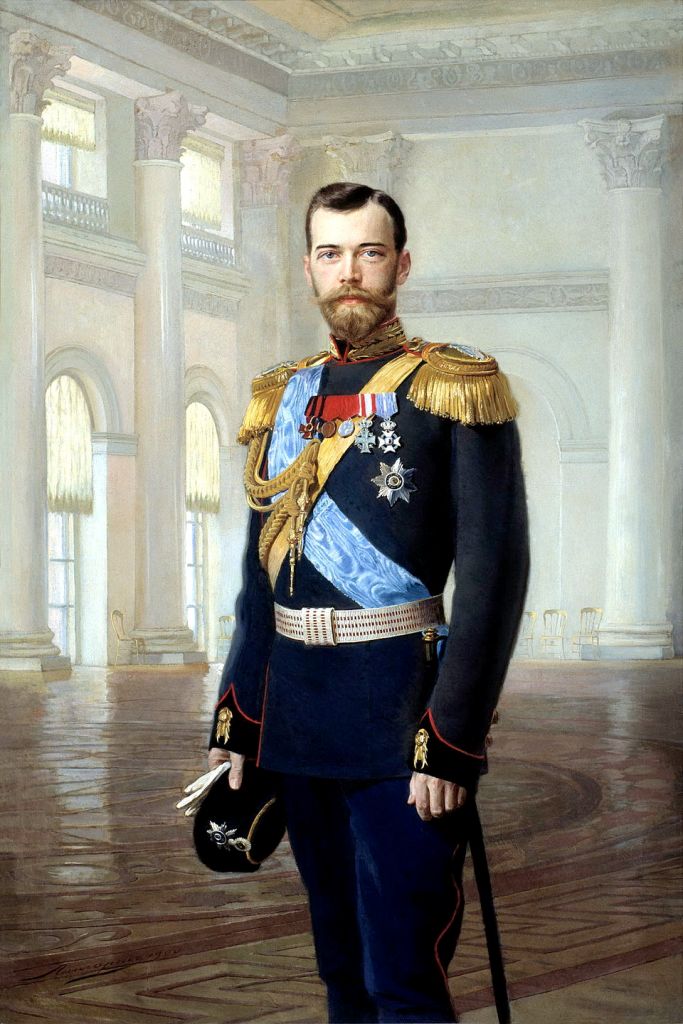
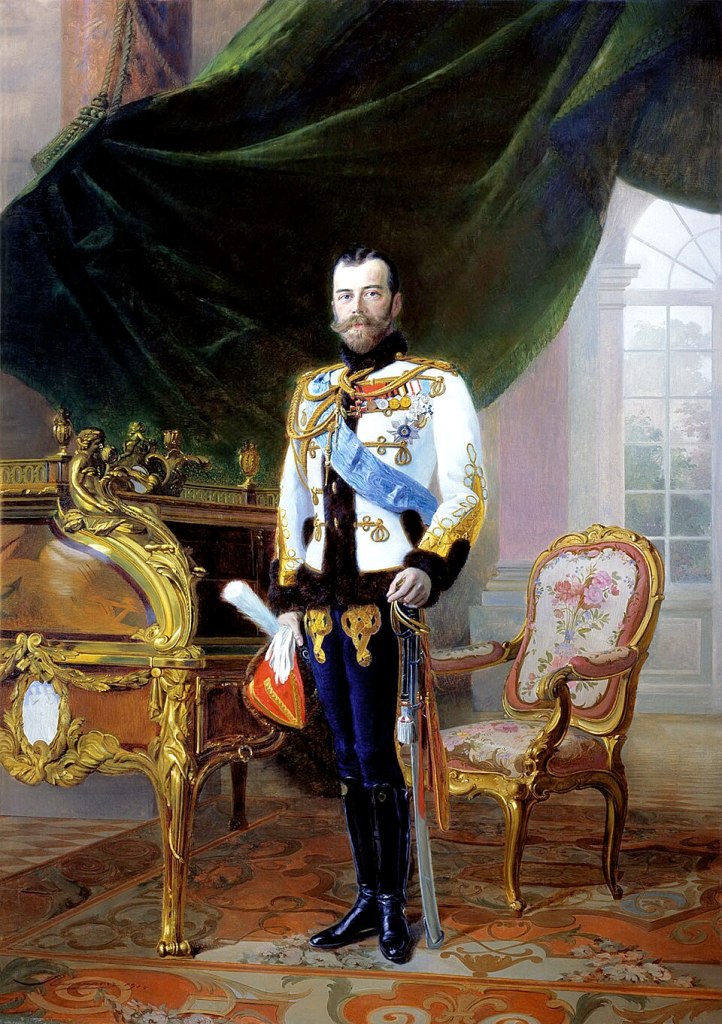
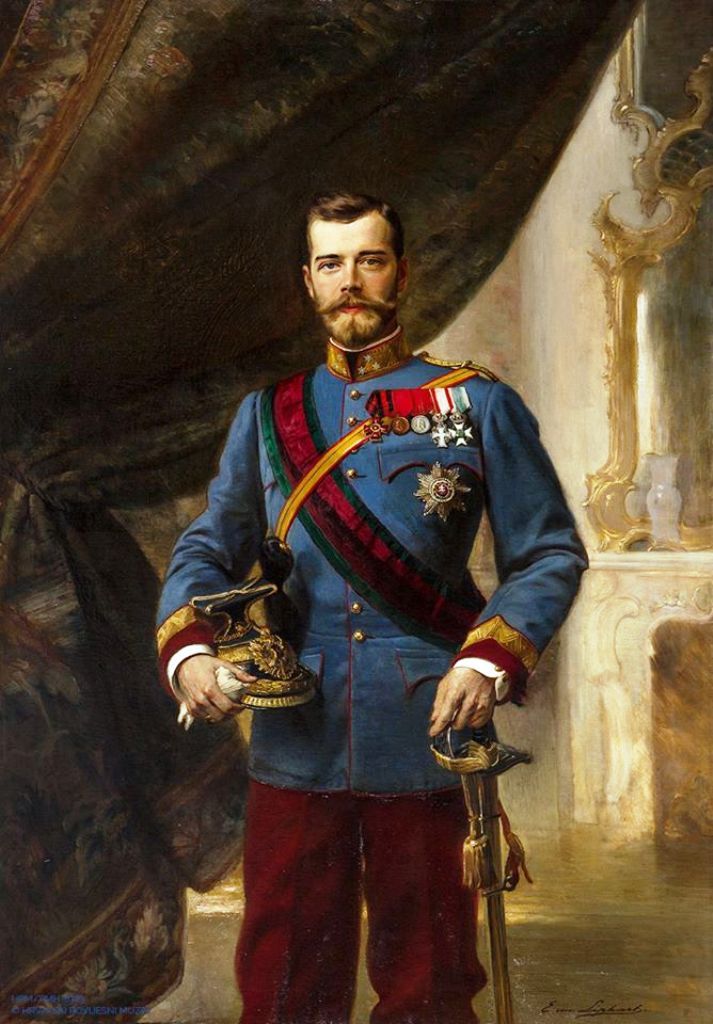
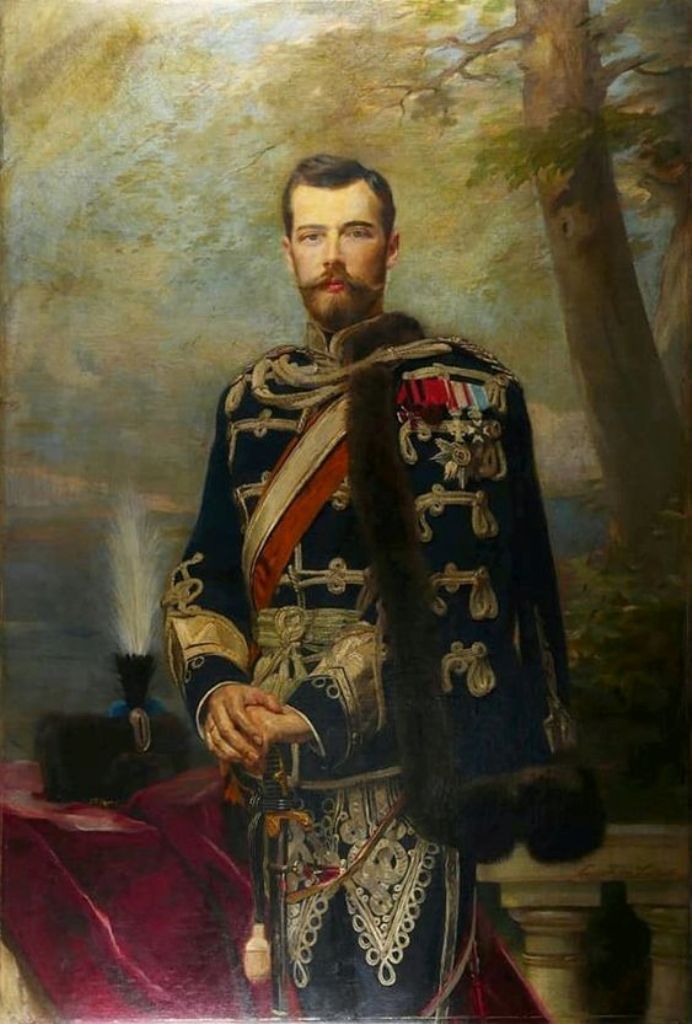
250th anniversary of the Life Guards of His Majesty’s Cossack Regiment

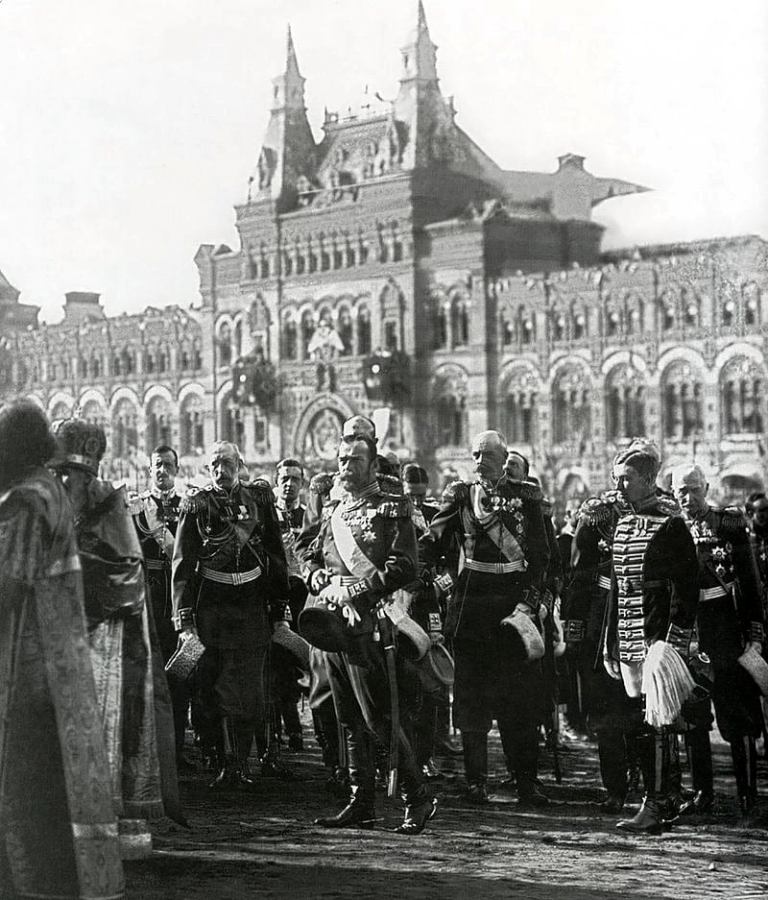
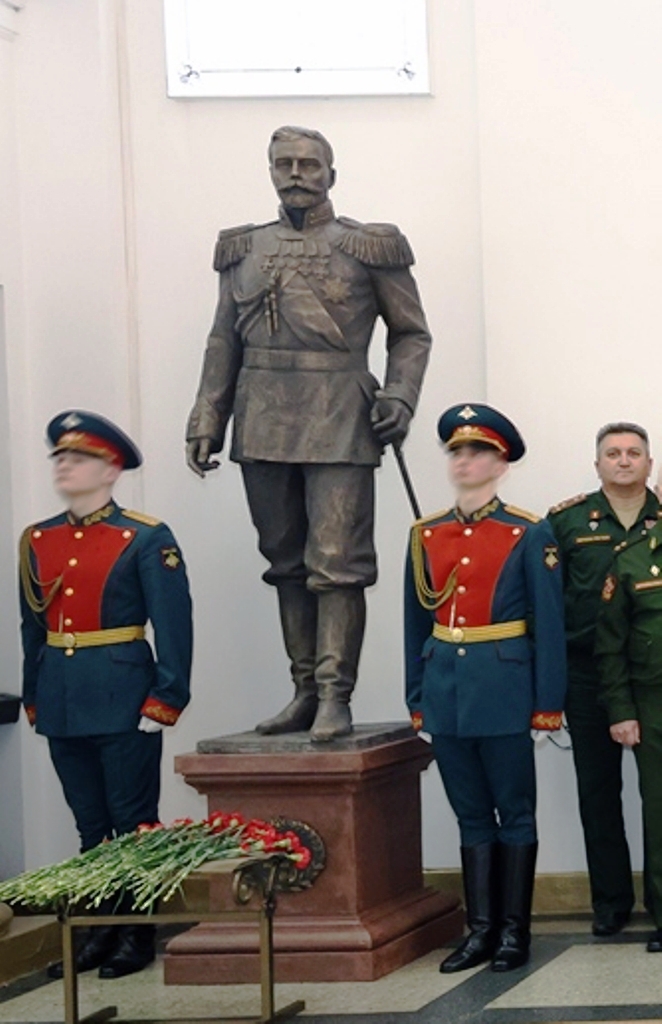
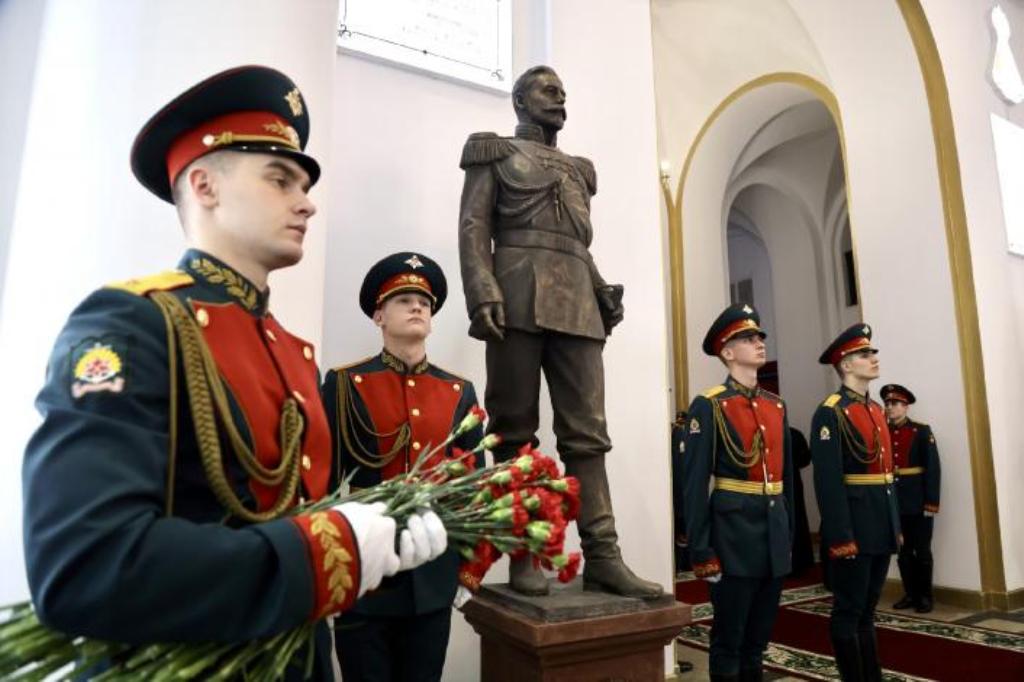
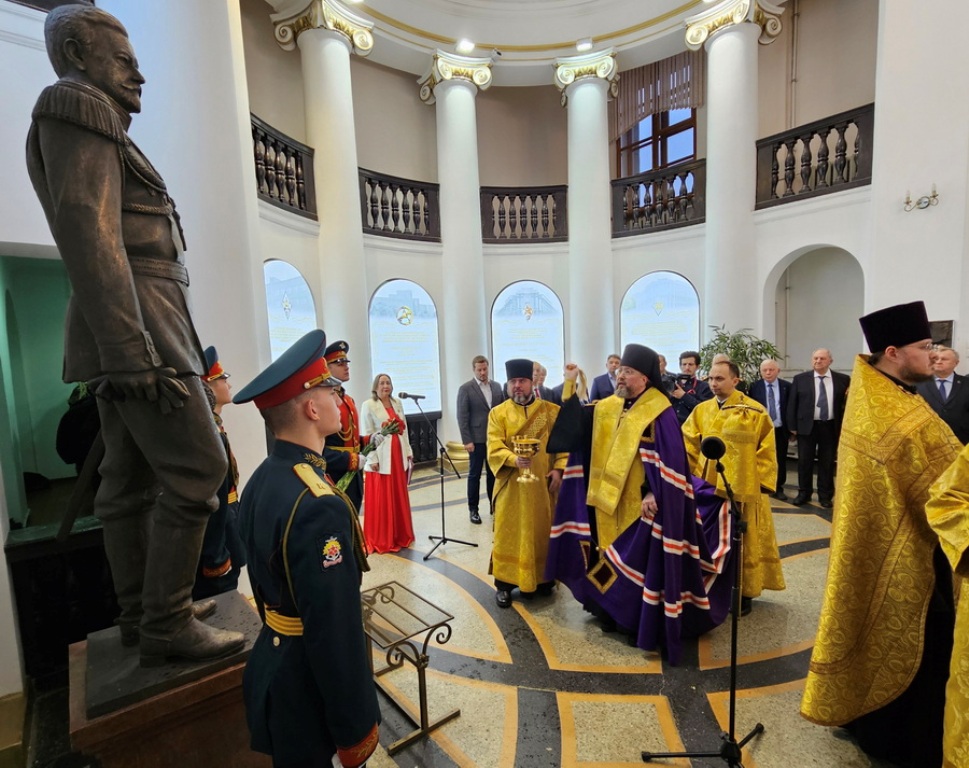
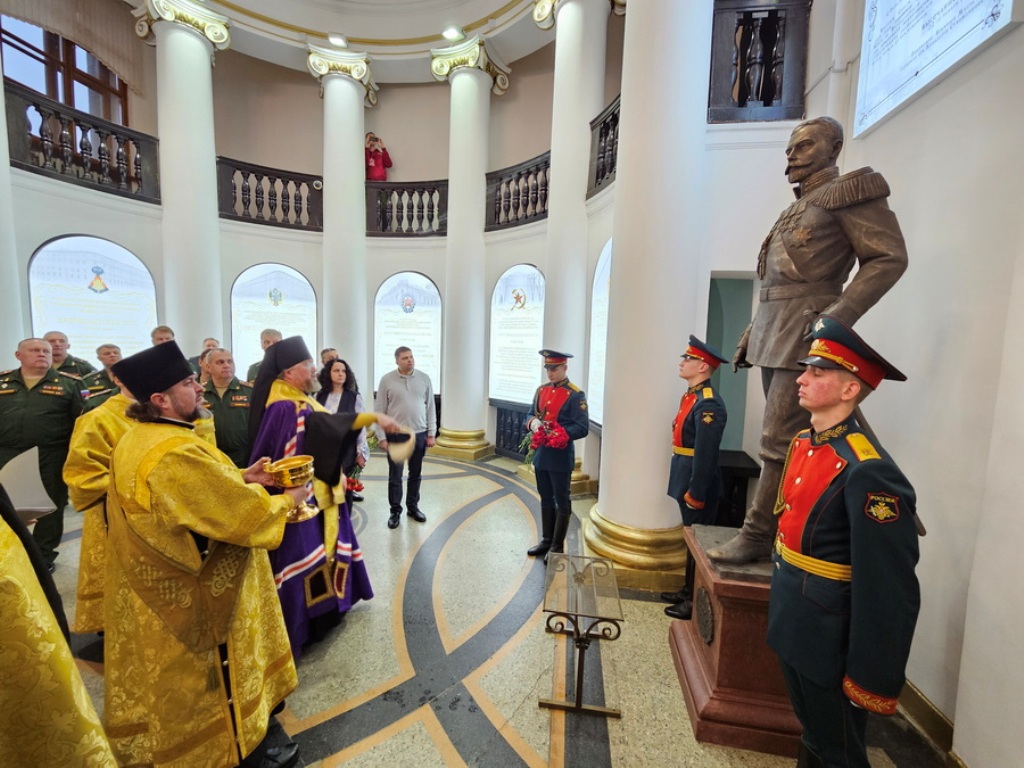
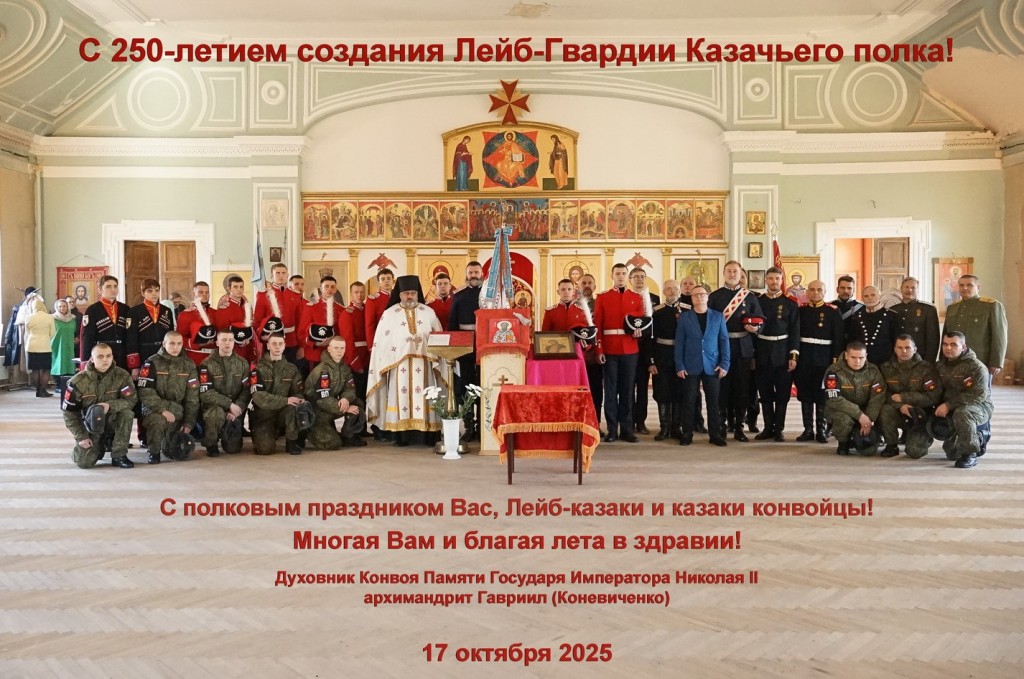
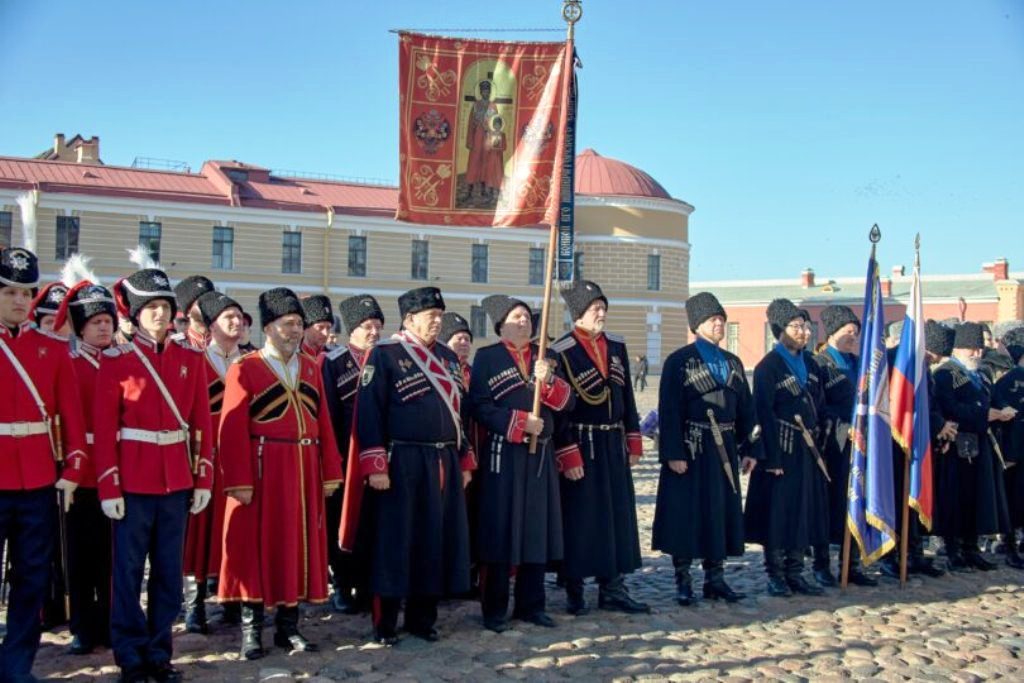
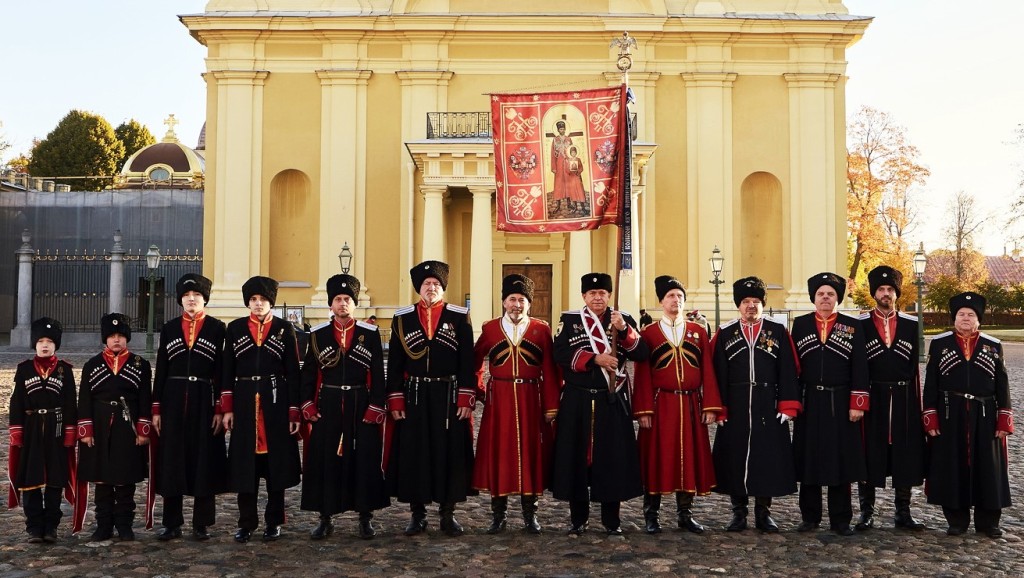
On 18th October 2025, solemn events dedicated to the 250th anniversary of the creation of the Life Guards of His Majesty’s Cossack Regiment were held in the Peter and Paul Fortress in St. Petersburg.

October 18th is the namesday of St. Tsesarevich Alexei Nikolaevich (1904-18), Sovereign Ataman[1] of All the Cossack Troops. His father, Emperor Nicholas II (1868-1918) served as Regimental-Colonel-in-Chief from 2nd November 1894 to 4th March 1917.

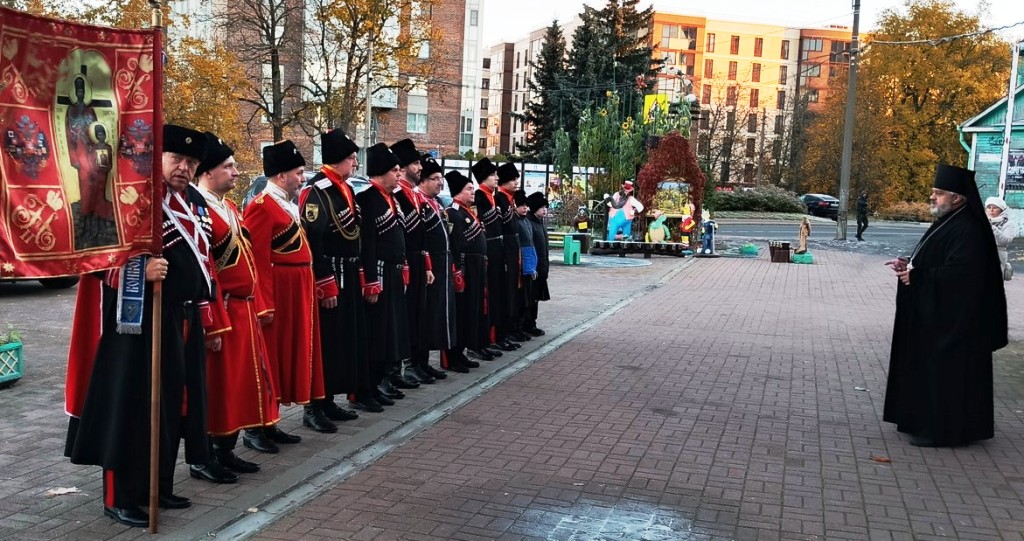
After a drill review on the square of the Spiritual and Educational Center at the Church of the Tikhvin Icon of the Mother of God in the city of Sestroretsk, the Cossacks of the Convoy in Memory of His Majesty Emperor Nicholas II went to St. Petersburg to the Peter and Paul Fortress to participate in the solemn events dedicated to the 250th anniversary of the creation of the Life Guards of His Majesty’s Cossack Regiment.

The commemorative ceremony brought together representatives of Cossack societies, the clergy of the Russian Orthodox Church, government officials and the military-historical community, from all across the Russian Federation.

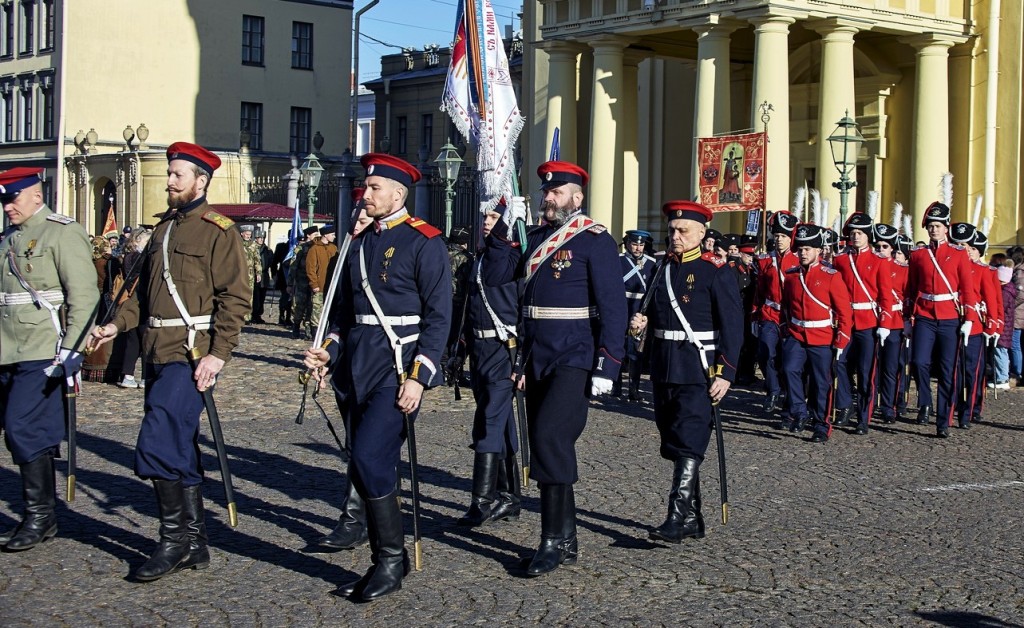
The participants were the Life Guards Cossack Division, the Platov Hundred of the Life Guards Cossack Regiment from Novocherkassk (NPI), the Convoy in Memory of Emperor Nicholas II, the Grebenskaya Embassy Stanitsa of the 1st Cadet Corps, the Cossacks of the St. Petersburg Cossack District, the Cadet Naval Brotherhood from the 245th School of the Admiralty District of St. Petersburg, the Military Historical Society in Memory of the Life Guards Ataman Regiment and a group of drummers of the Moscow Musical Cadet Corps.

The day began with a solemn prayer service in the SS Peter and Paul Cathedral, which was led by the rector of the Church of the Holy Martyr Hierotheos at the Life Guards Cossack Units, Priest Alexei Egorov. He was concelebrated by Priest Timofey Chaikin and the clergy of the cathedral. During the service, the jubilee standard of the St. Petersburg Life Guards Cossack Division was consecrated.

Flowers were laid by the Life Guards of the Cossack Division at the tomb of the founder of the Court Cossack regiments, Empress Catherine II, in the SS Peter and Paul Cathedral. This was followed by a solemn formation of the Cossack units on the Cathedral Square.

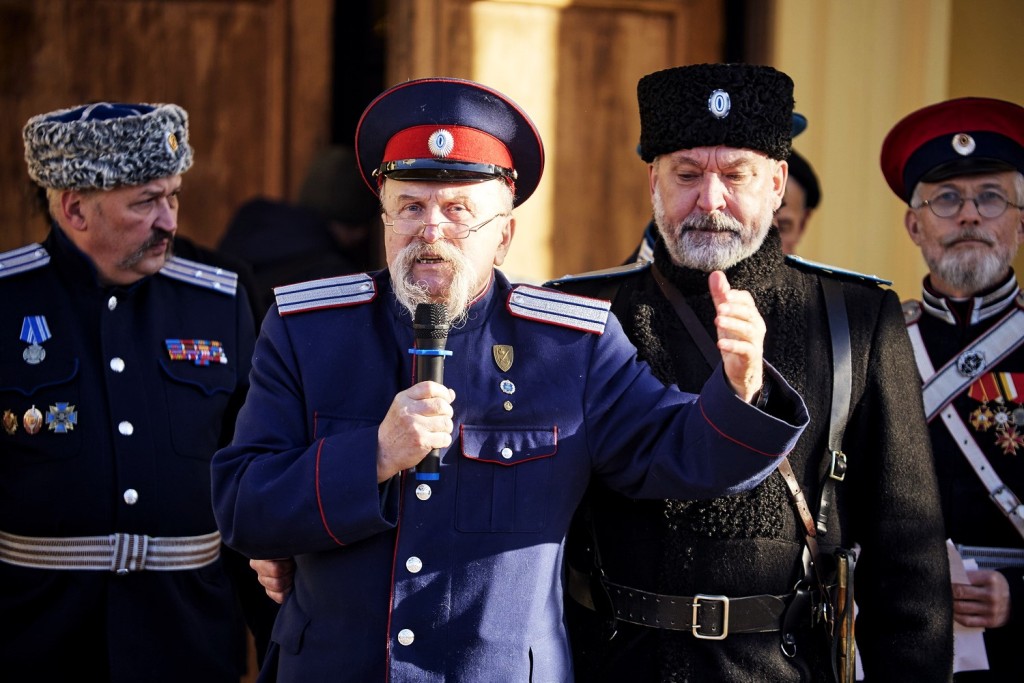
Representatives of the Government of St. Petersburg, clergy of the Russian Orthodox Church and atamans of Cossack organizations addressed those who attended the event.

On behalf of Oleg Kapitanov, Chairman of the Committee on Interethnic Relations and Implementation of Migration Policy in St. Petersburg, Sergey Domnin, Head of the Department of Interethnic Relations and Coordination of State Programs, read out a welcoming address to the participants of the ceremony.

Executive Secretary of the Synodal Committee for Cooperation with the Cossacks, Rector of the Church of St. Priest Timofey Chaikin read out a congratulatory address from the chairman of the Synodal Committee for Cooperation with the Cossacks, Metropolitan Kirill of Stavropol and Nevinnomyssk.

Welcoming speeches were made by: Vladimir Ivanov, Representative of the Governor of St. Petersburg for Cooperation with Religious Organizations; Prince Vladimir Trubetskoy, representative of the Imperial Guard Memory Association in Russia; Chairman of the Russian All-Military Union (ROVs) Igor Ivanov; the head of the choir of St. John of Damascus at the Church of the Vladimir Icon of the Mother of God, Irina Boldysheva; and the oldest ataman of the North-West, the ataman of the “Stanitsa Nikolskaya”, a Cossack of the Convoy in Memory of His Majesty Emperor Nicholas II Vyacheslav Polyakov, the great-grandson of the last Leib, the chamberlain of the Cossack of the Russian Empire Kirill Ivanovich Polyakov.

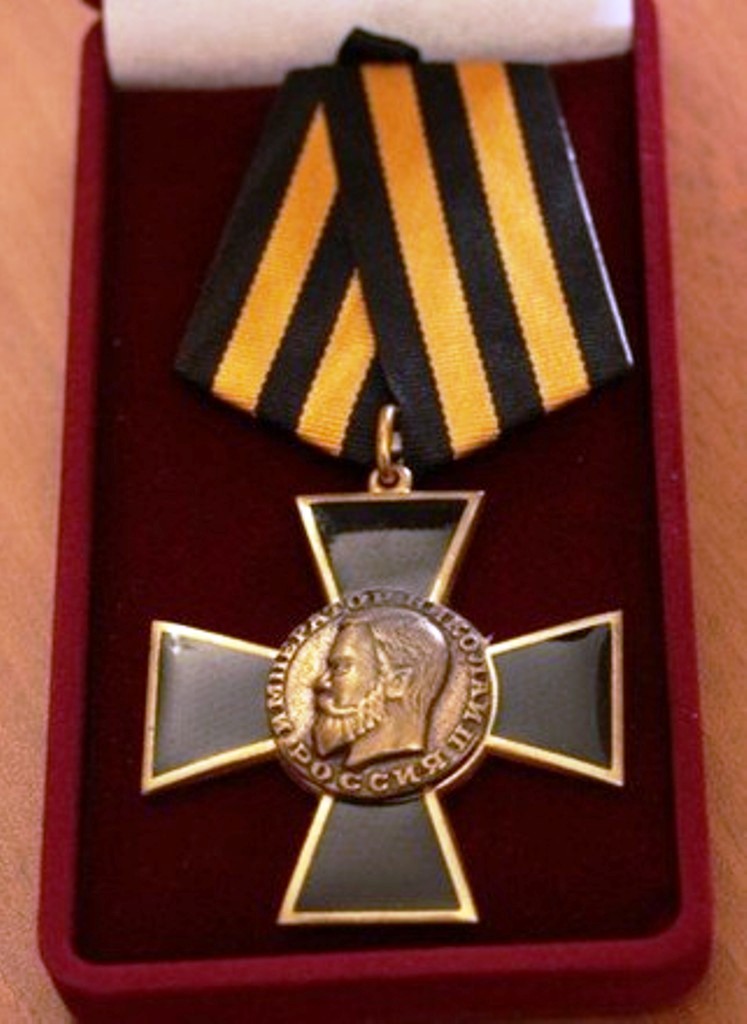
With the blessing of the rector of the Church of the Tikhvin Icon of the Mother of God in the city of Sestroretsk, the spiritual father of the Convoy in Memory of Emperor Nicholas II, Archimandrite Gabriel (Konevichenko), the commander of the St. Petersburg Life Guards Cossack Division, Cavalry Sergeant of the Convoy, Esaul Ilya Pivnik, presented the Order of the Emperor Nicholas II[2].

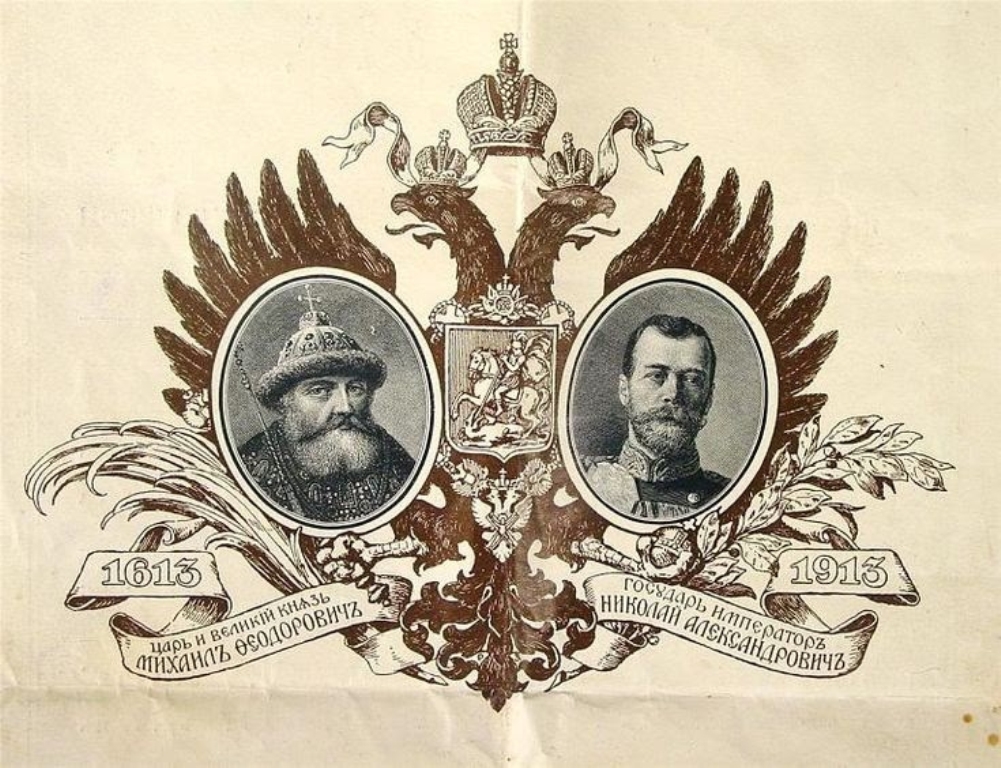
The Order of the Emperor Nicholas II – seen in above photo – was awarded to:

Ataman of the Grebenskaya stanitsa O. Zakharchenko, head of the Interregional Historical and Cultural Center “Healthy Life” M.O. Osadchenko, sergeant of the Platov hundred of the Life Guards Cossack regiment from Novocherkassk (NPI) A. Kovalev.

To the sounds of the historic regimental march of the Life Guards of the Cossack Regiment (Mendelssohn’s march), the column solemnly marched to the Naryshkin Bastion of the Peter and Paul Fortress. The procession was led by a platoon of the Guard of Honor of the Leningrad Military District, accompanied by a military orchestra.

This was followed by a performance of a group of drummers of the Moscow Musical Cadet Corps under the direction of Georgy Posnov took place.

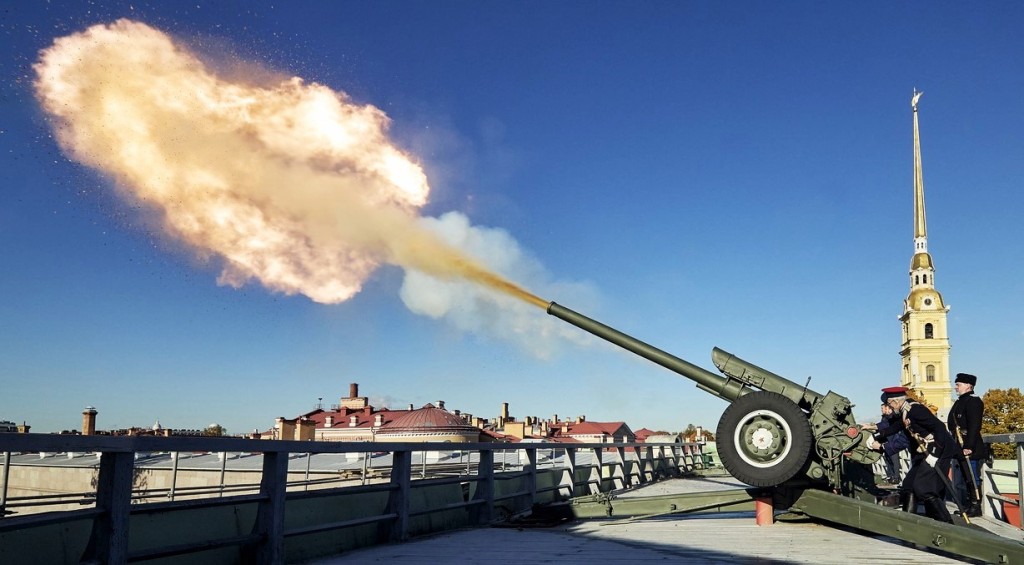
The culmination of the event was the traditional noon cannon shot, which was made by representatives of Cossack units.

At exactly 12:00 p.m., Colonel V.A. Polyakov and Esaul I.I. Pivnik fired a cannon shot from the Naryshkin Bastion of the Peter and Paul Fortress to the glory of the Life Guards of His Majesty’s Cossack Regiment.

Then there was a solemn separation of the company of the Guard of Honor of the Leningrad Military District.

NOTES:

[1] A Cossack leader.

[2] The Order of Emperor Nicholas II was made by order of the St. Petersburg public organization “Convoy in Memory of Emperor Nicholas II” for the following anniversaries:

  • 100th anniversary of the tragic death of the Russian Empire (2017)
  • -150th Anniversary of the Birth of Emperor Nicholas II Alexandrovich (2018)
  • 100th anniversary of the martyrdom of the Royal Family (2018))

It was on these dates that the “Convoy in Memory of His Majesty Emperor Nicholas II” established this award. The Order Badge “Emperor Nicholas II” is presented by co-workers and missionaries of the Spiritual and Educational Center of the city of Sestroretsk in St. Petersburg with the blessing of the spiritual father of the “Convoy in Memory of Emperor Nicholas II” Archimandrite Gabriel (Konevichenko) and signed by him for loyal feelings and love for the Tsar and His August Family.

© Paul Gilbert. 29 November 2025

Russian President honors the memory of the Emperors of All Russia

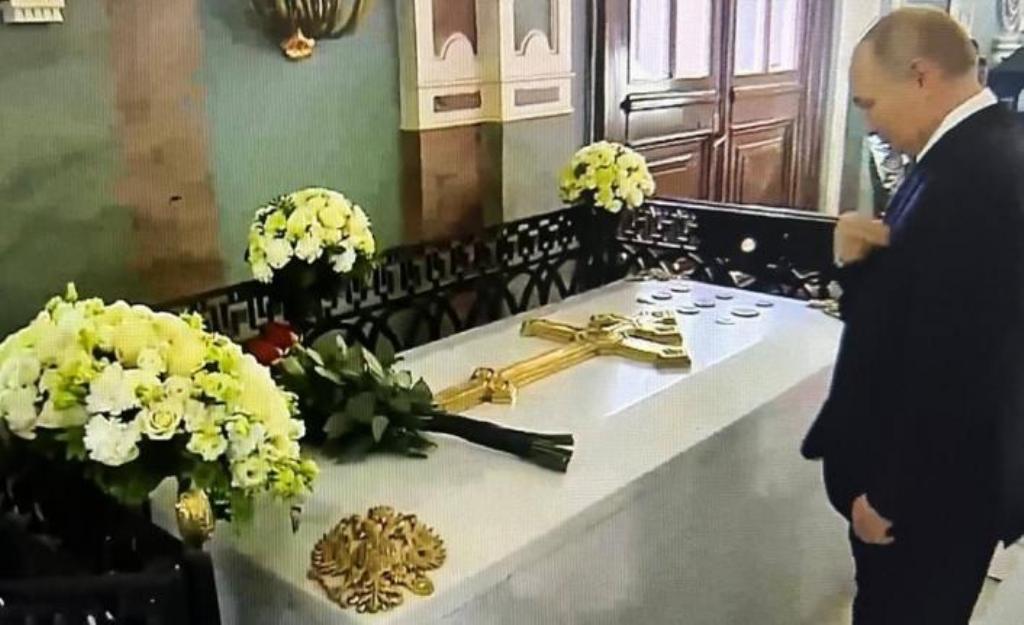
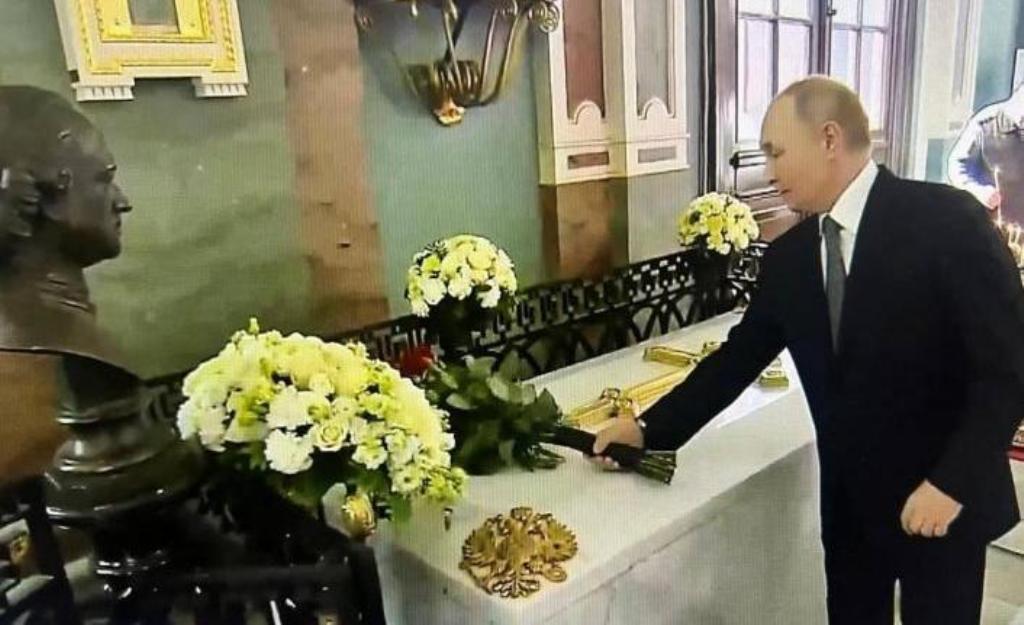
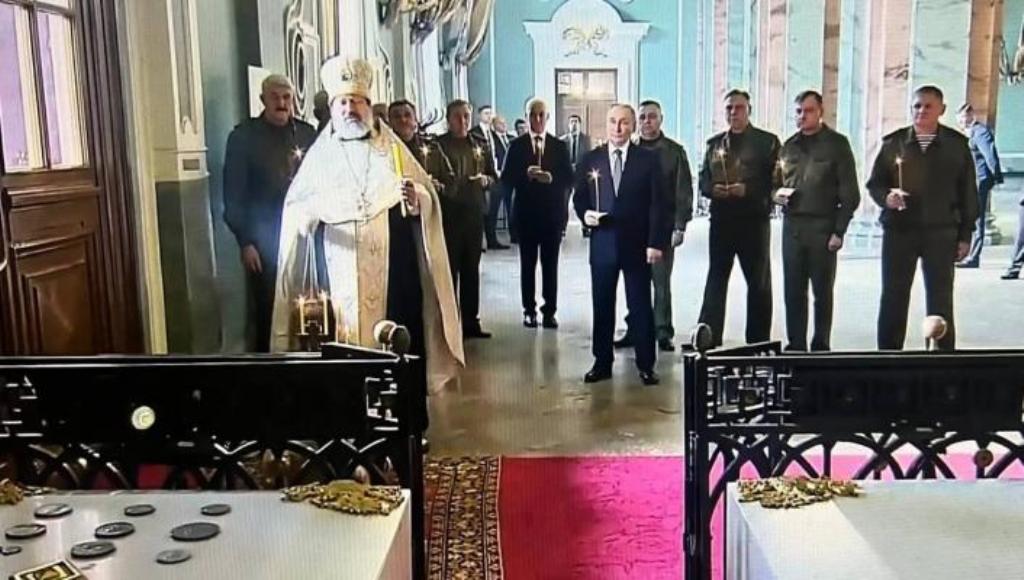
On 7th October 2025, the President of the Russian Federation, Vladimir Vladimirovich Putin, marked his 73rd birthday, with a visit to the SS Peter and Paul Cathedral in St. Petersburg, where he paid homage to the Emperors and Empresses of All Russia.

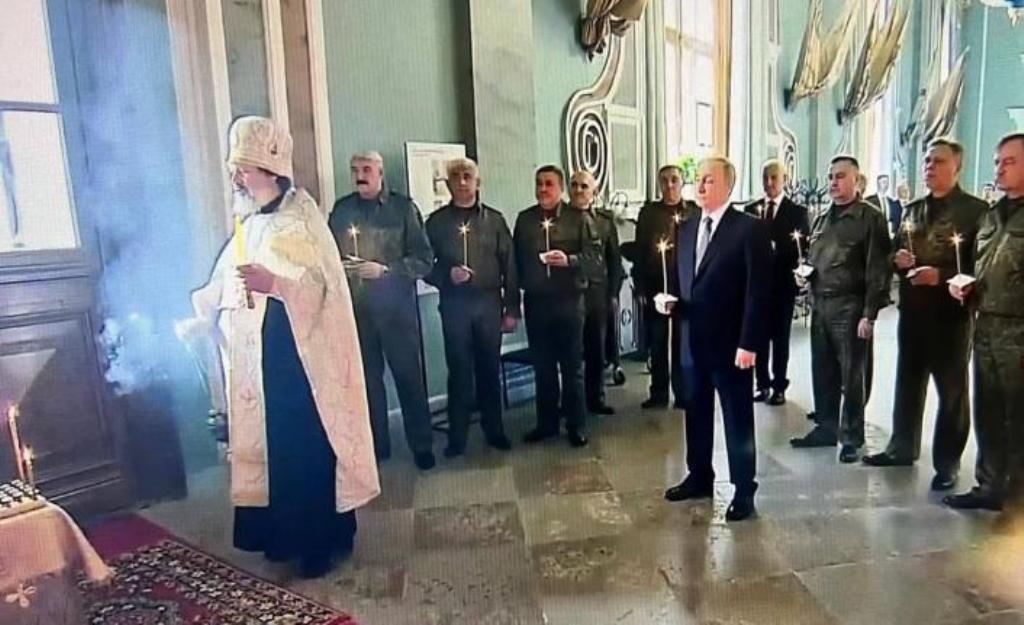
The President, who was on a working trip to the Northwestern Federal District, was accompanied by the Minister of Defense of the Russian Federation, Active State Counselor of the Russian Federation 1st Class A.R. Belousov, Chief of the General Staff of the Armed Forces of the Russian Federation, Army General V.V. Gerasimov, Director of the Federal Security Service of the Russian Federation, Army General A.V. Bortnikov and a number of other high-ranking military officials.

The rector of the cathedral, Archimandrite Alexander (Fedorov), served a moleben [a liturgical service of supplication or thanksgiving] at the tomb of the Most Pious Right-Believing Emperor Peter I Alexeevich (1672-1725).

President Putin laid a bouquet of red roses on the tombstone of Emperor Peter I the Great, whose death on 10th February (O.S. 28th January 2025, marked the 300th anniversary of his death. Note: Peter the Great was only 52 years of age, when he died of uremia or azotemia. An autopsy revealed his bladder to be infected with gangrene.

“I decided to begin this working visit to the region today from here, because this is the burial vault of those people who, in fact, made modern Russia,” said Putin.

Putin and the Romanovs

Vladimir Putin is the first Russian leader to honour the Romanov Emperors and Emperors. While his predecessor Boris Yeltsin attended the burial of Emperor Nicholas II on 17th July 1998, Yeltsin was also the one responsible for the demolition of the Ipatiev House in September 1977.

Since taking office, Putin has touched on the subject of the Romanovs, who ruled Russia for more than 300 years, on numerous occasions, during speaking engagements or honouring them during the installation of monuments.

On 25th January 2016, while speaking at an inter-regional forum of the All-Russia People’s Front, Vladimir Putin denounced Bolshevik leader Vladimir Lenin, for “brutally executing Russia’s last Tsar along with all his family and servants”. Putin further criticized Lenin, accusing him of placing a “time bomb” under the state, and sharply denouncing brutal repressions by the Bolshevik government, murdering thousands of priests and innocent civilians.

On 4th May 2017, the memorial cross marking the spot where Grand Duke Sergei Alexandrovich was assassinated in 1905, was restored in a ceremony that was attended by President Vladimir Putin. Recall that the original memorial cross was installed in 1908 by his wife Grand Duchess Elizabeth Feodorovna at the place were her husband was assassinated on 17th February (O.S. 4th February) 1905. T

On 18th November 2017, Putin unveiled a monument to Emperor Alexander III on the site of the Small (wooden) Palace at Livadia, Crimea.

On 5th June 2021, a new monument to Emperor Alexander III (1845-1894) was unveiled on Arsenal Square in front of Gatchina Palace. Russian President Vladimir Putin personally took part in the unveiling and dedication of the monument.

In May 2025, while this author was watching an interview, a framed portrait of Emperor Alexander III on the mantlepiece caught my eye. It is interesting to note that Alexander III is one of the few Russian Tsars in which he most admires.

Sadly, Putin holds a negative assessment of the 22+ year reign of Emperor Nicholas II, one which reflects that of the old Bolshevik and Soviet history books, which is based on propaganda and lies.

In addition, Putin has visited and toured the former Romanov palaces at Tsarskoye Selo, including the Alexander Palace. Not only has he supported the restoration of the Alexander Palace, he was instrumental in securing funding for the project.

FURTHER READING:

Putin, the Church and the last Tsar

Russia after Putin: would he restore the monarchy? + PHOTOS

The unholy alliance of Maria and Vlad

Putin’s Russia and the ghost of the Romanovs + VIDEO

© Paul Gilbert. 10 October 2025

The St. Petersburg Museum of Easter Eggs

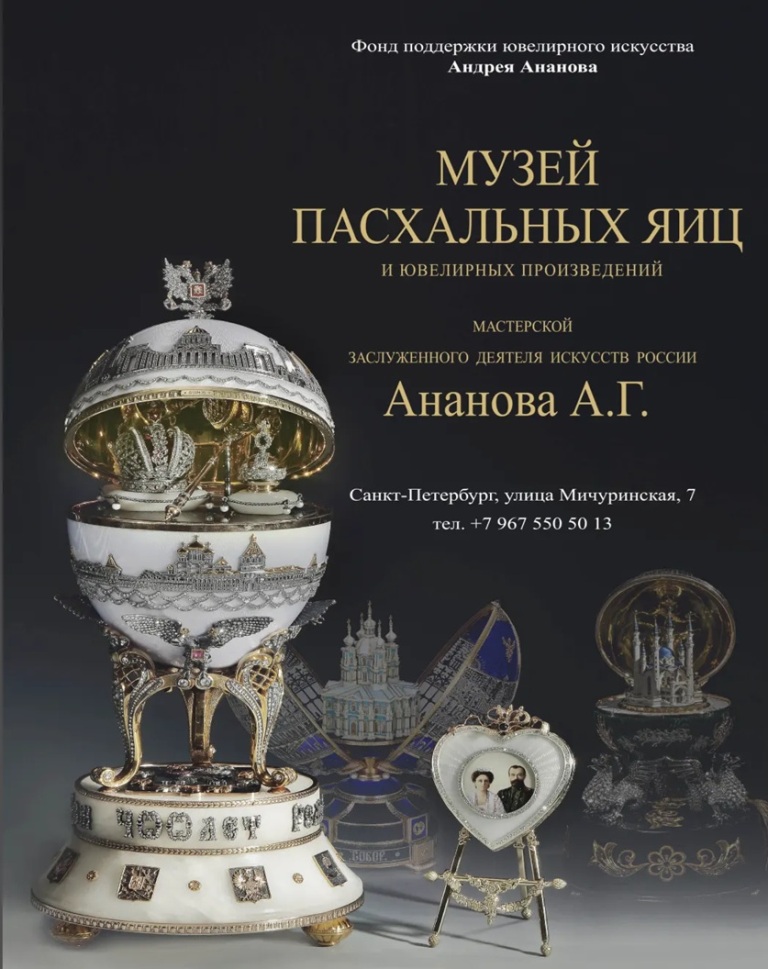
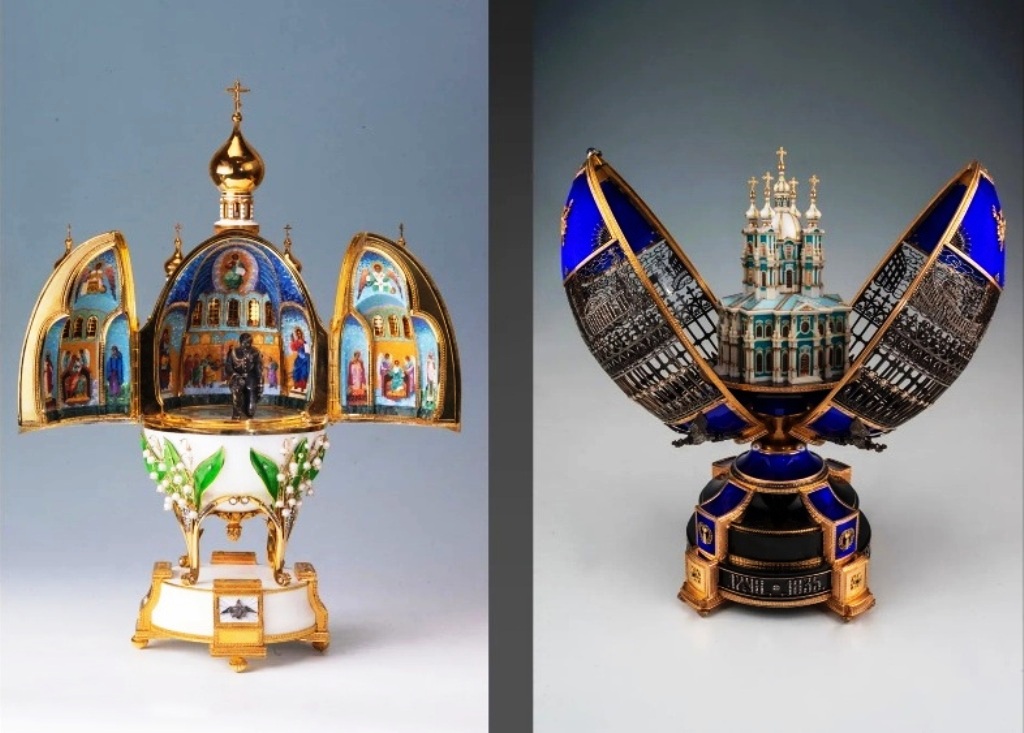
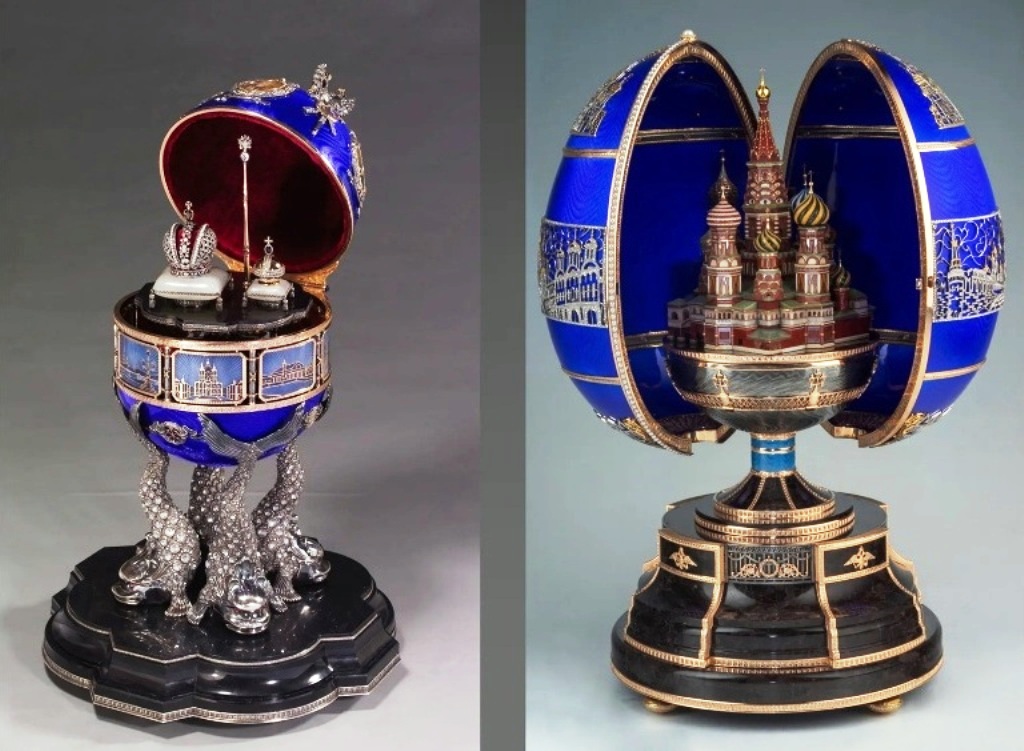
Yet another new museum has opened in St. Petersburg: the Museum of Easter Eggs – not to be confused with the Fabergé Museum. The Museum of Easter Eggs, which opened in 2024, showcases the work of Andrey Georgievich Ananov, the famous Soviet and Russian jeweller, and Honoured Artist of the Russian Federation.

As the photos of Ananov’s creations, the jeweller has clearly been inspired by the Imperial Easter Eggs created by by Carl Fabergé.

Ananov’s works have received international recognition, and showcased at prestigious exhibitions in both Russia and abroad. Today his products are in the collections of Russian Presidents Boris Yeltsin and Vladimir Putin, Queen Elizabeth II of Great Britain, Queen Sofia of Spain, Prince Albert of Monaco, and Queen Sirikit of Thailand, among others.

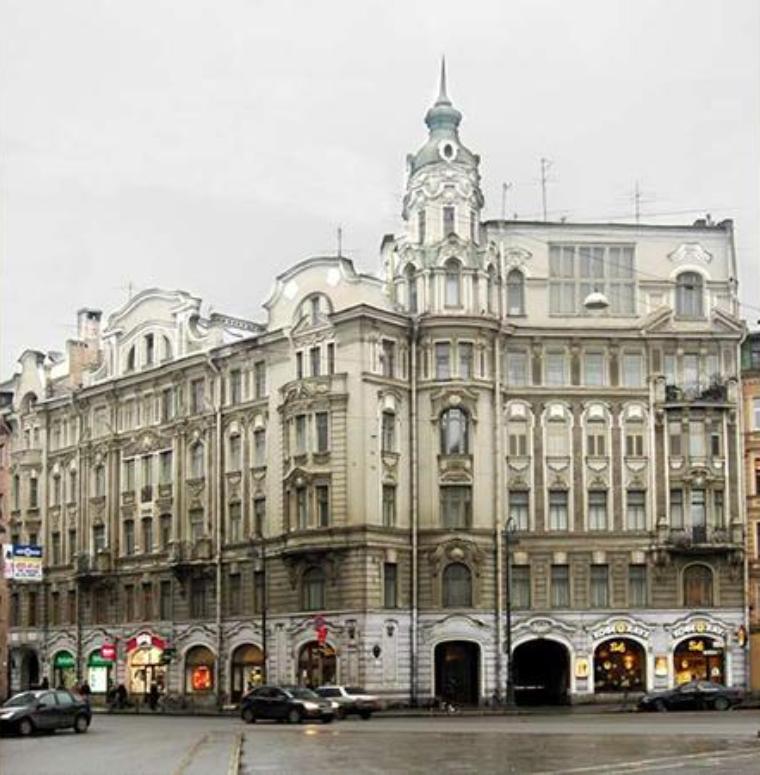
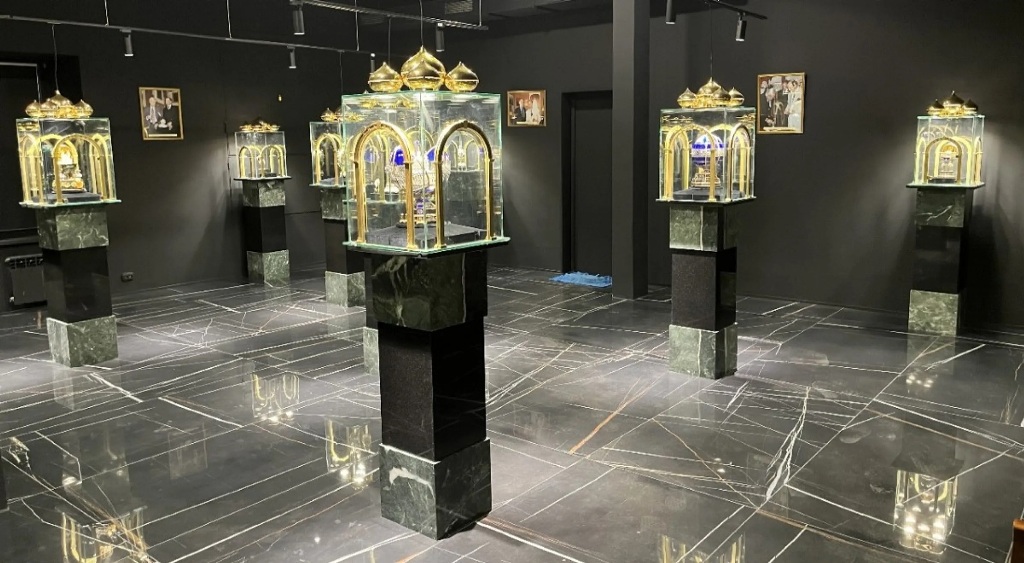
The museum, founded on the basis of the Ananov Jewellery Workshop, is a unique space where history, art and modern technology are combined. The Easter Egg Museum is housed in an Art Nouveau style building, which resembles a small castle. The exposition in two halls introduces guests to the exquisite Easter eggs and jewellery made in Ananov’s workshop in different years.

PHOTO: elaborate display cases showcase Ananov’s Easter eggs
© Andrey Georgievich Ananov

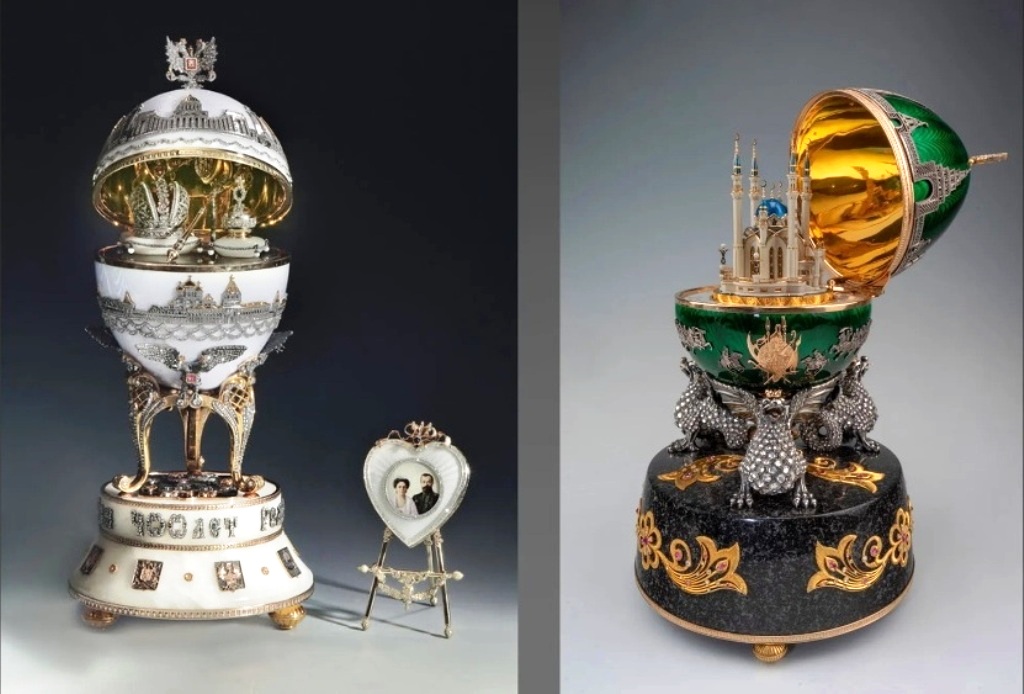
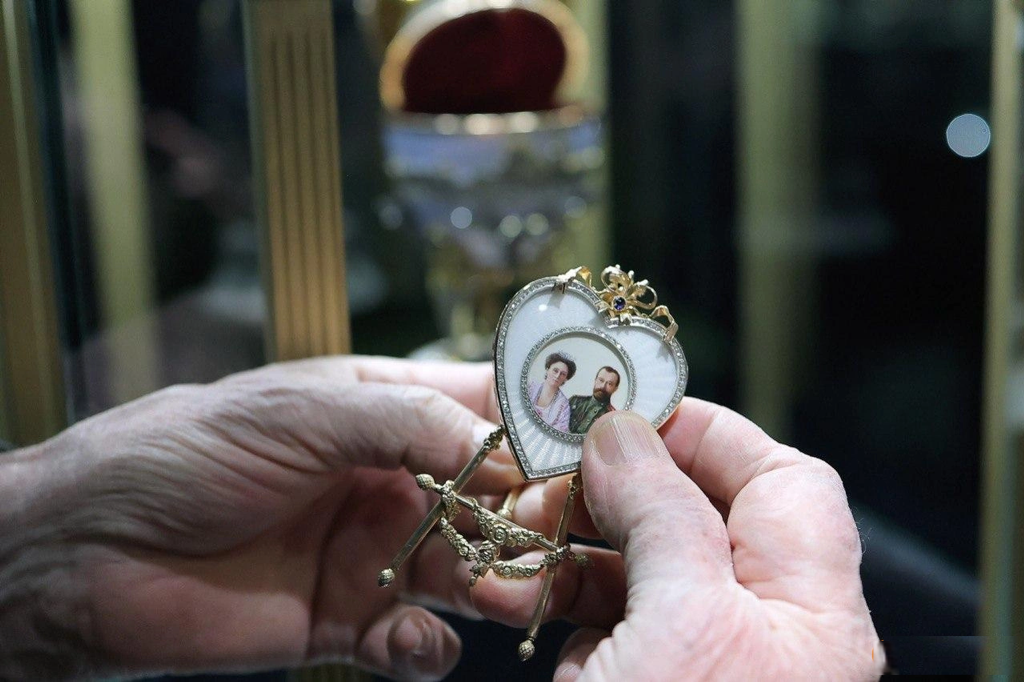
Like the famous Imperial Easter Eggs produced in the late 19th and 20th centuries by Carl Fabergé for Emperors Alexander III and Nicholas II, Ananov’s Easter eggs, each decorated with enamel, precious stones and mosaics, also contain a “surprise” inside. For example, one of them is dedicated to the 400th anniversary of the Romanov dynasty. Inside this egg, the master placed miniature photographs of Emperor Nicholas II and Empress Alexandra Feodorovna – see photo below.

PHOTO: © Andrey Georgievich Ananov

PHOTO: the 400th Anniversary of the Romanov Dynasty Easter Egg. Inside this egg, contains miniature photographs of Emperor Nicholas II and Empress Alexandra Feodorovna in a heart-shaped frame. © Andrey Georgievich Ananov

© Andrey Georgievich Ananov

© Andrey Georgievich Ananov

The Easter Egg Museum is located at No. 7 Michurinskaya, near the Peter and Paul Fortress in St. Petersburg. Individual visits are carried out during the following hours: 11:30, 13:30 and 15:30. Price of admission is 1500 rubles [$20.00 USD].

© Paul Gilbert. 2 July 2025

Fabergé Museum launches ‘Stories of St. Petersburg Jewellery Houses’ audio tour

The Fabergé Museum in St. Petersburg and a local tour operator Невские Сезоны / Nevsky Seasons have launched a new audio tour, which explores the heyday of Russian jewellery art and the outstanding masters of the “Fabergé era”.

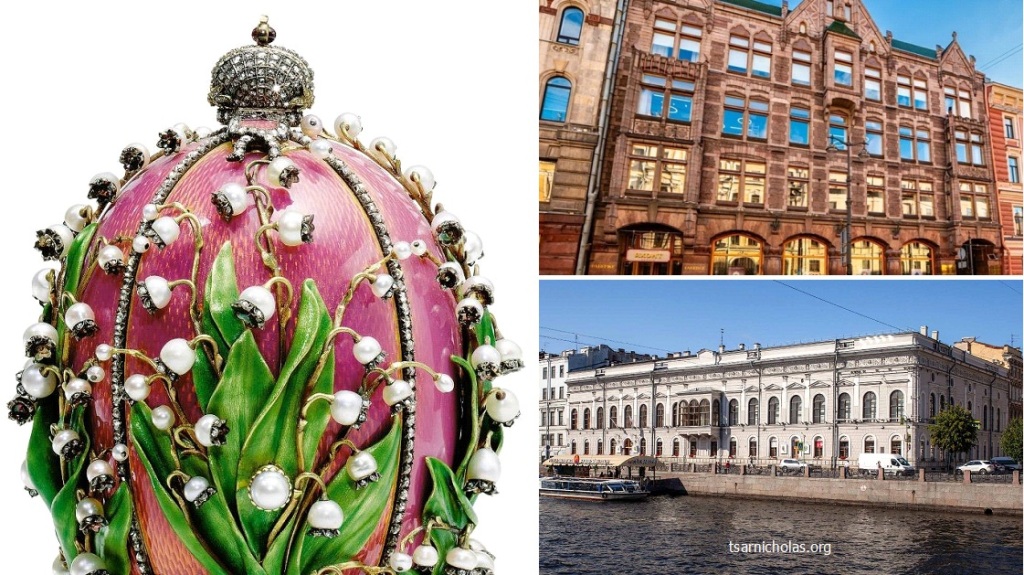
The audio tour dubbed Бриллиантовая улица / Diamond Street: Stories of St. Petersburg Jewellery Houses in the Late 19th and Early 20th Centuries explores key historical sites in the heart of the city, allowing visitors to immerse themselves in the splendour of pre-revolutionary St. Petersburg.

The tour begins on Ulitsa Bolshaya Morskaya (Street) – aka the “street of jewellers”. It was here that the most prestigious jewellery shops (more than 20 enterprises) were located, including the House of Carl Fabergé. Many of these jewellers were awarded the title of Supplier to the Court of His Imperial Majesty and created jewellery for members of the Imperial Family.

On Bolshaya Morskaya, visitors will learn about the history of the former premises of these shops, among other sites, including the Ovchinnikov Company at No. 35, which specialized in silver products; as well as the Imperial Society for the Encouragement of Artists at No. 42, where the great Russian landscape artist Ivan Shishkin (1832-1898) taught; the building of the Sazikov Company at No. 29, one of the oldest jewellery enterprises in Russia; the shop of the jeweller Friedrich-Daniel Butz; and, of course, the building where the House of Carl Fabergé, at No. 24, is located. The Fabergé building has survived to the present day, however. some visitors will be disappointed to learn, that it is no longer a Fabergé shop.

The tour culminates with a visit to the Fabergé Museum, located in the former Shuvalov Palace on the Fontanka River Embankment. Today, it is one of the most famous cultural sites in St. Petersburg, and one of the TOP-10 most visited museums in Russia. It showcases the world’s largest collection of Fabergé masterpieces in the world – more than 4,000 works (including the former collection of Malcolm Forbes ) of decorative applied and fine arts, including gold and silver items, paintings, porcelain and bronze. The highlight of the museum’s collection are the nine Imperial Easter Eggs created by Fabergé for the last two Russian Tsars Alexander III and Nicholas II. Fabergé’s Imperial Easter Eggs, are considered a symbol of the lost Russian Empire.

The audio tour was developed by the staff at the Fabergé Museum. Tours run twice a week: on Thursdays and Saturdays at 17:00. The starting point of the tour is the Astoria Hotel – the historic five-star luxury hotel, opened in 1912..

© Paul Gilbert. 25 June 2025

Russian Railways new train named after Nicholas II

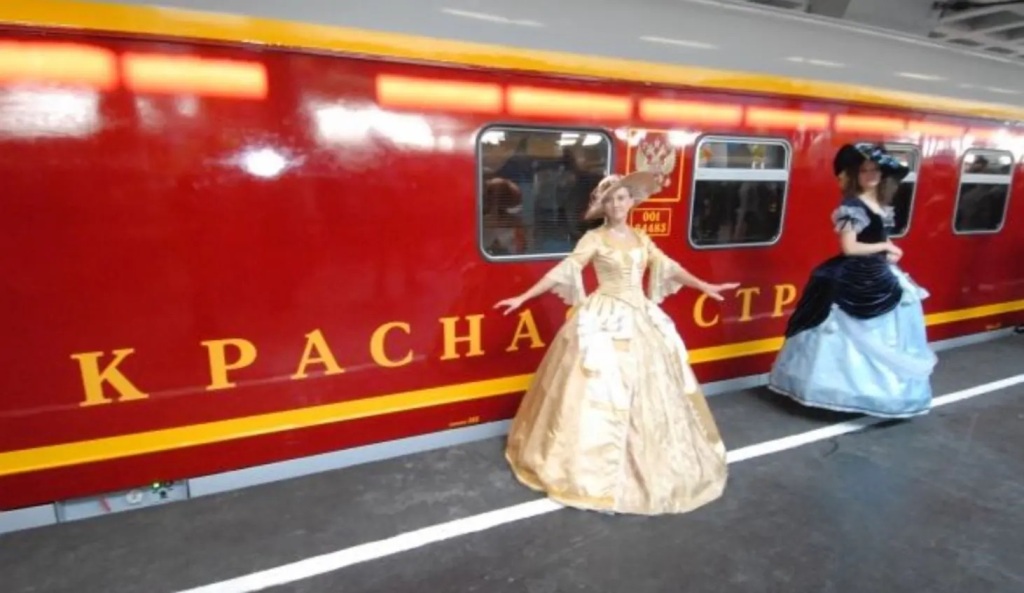
On 3rd November 2024, the presentation of the updated branded high-speed train No 001A/002A – Кра́сная стрела́ / Red Arrow, took place, at the Moskovsky (Moscow) Railway Station in St. Petersburg. The luxury overnight train has been running between the Moscow and St. Petersburg for more than 90 years.

At the initiative of Russian Railways employees, the train was named after the last Russian Emperor Nicholas II – the railway workers believe that the Red Arrow should become a symbol of the continuity of national history, combining the best pre-revolutionary and Soviet traditions with modern technologies.

“I would like to remind you that the Red Arrow is the first Soviet branded train, one of the symbols of the USSR. But we should not forget the glorious times of the Russian Empire – after all, it was under Nicholas II that the Trans-Siberian Railway was built,” said Fyodor Gerstner, deputy head of Russian Railways.

The Red Arrow train named after Nicholas II will begin service between Moscow and St. Petersburg from 7th November – the anniversary marking the October 1917 Revolution. The wagons of the train have been replaced, while upgrades include powerful new air conditioning and modern multimedia systems. The Red Arrow has a restaurant car, VIP carriages, as well as 1st and 2nd class carriages. Despite the modernization and rebranding, the cost of train tickets will remain the same until at least the beginning of 2025.

***

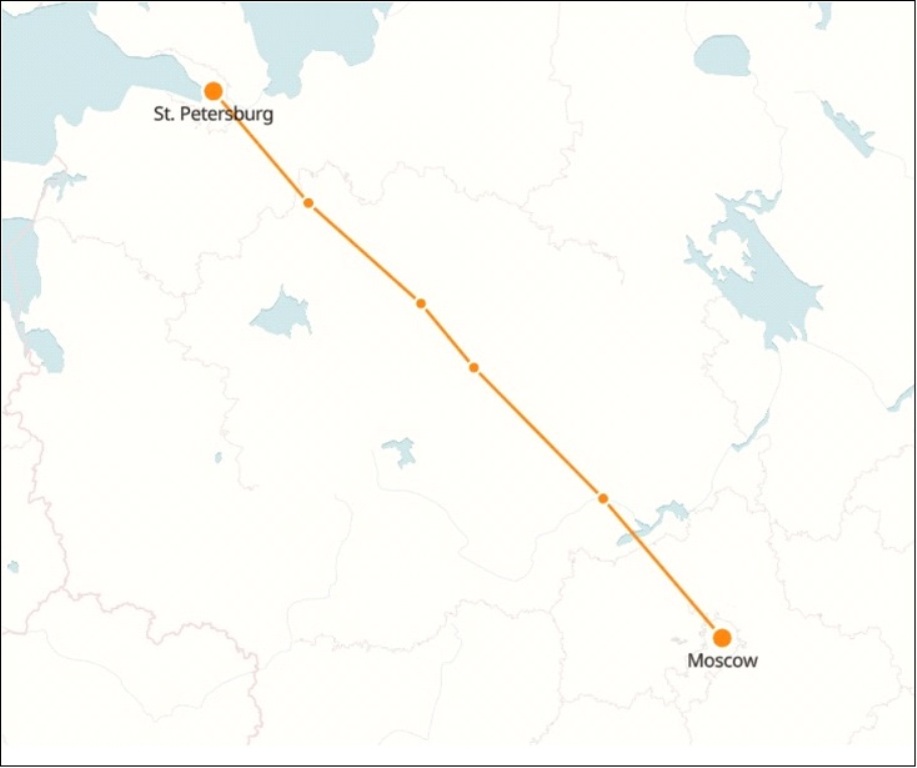
The distance between the two capitals is about 650 km, travel time is 8 hours

The Red Arrow luxury overnight train first chugged along the historic railway line between the two capitals of Russia in 1931, and has since been the pride of the Russian Railroad. This Moscow – St. Petersburg train has interiors that feel as if they come from a movie set and an exterior in such bright red that it’s really difficult to mistake, no matter if lit from the platform lights of the Moskovsky Station in St. Petersburg, or the Leningradsky Station in Moscow.

The history that emanates from the very walls of the carriages on the Red Arrow makes this a very popular train. As a result of its increasing popularity among trains from Moscow to St. Petersburg, the Red Arrow has spawned other luxury-oriented night trains, including the Express and the Megapolis. Even with all its retro charm, this one-of-a-kind luxury Russian train is as up-to-date and modern as any sleeper carriage found in just about any country. Passengers with Red Arrow train tickets enjoy high-comfort amenities while gliding through the night between Russia’s historical capital cities on an overnight train from Moscow and St. Petersburg.

Today’s journey by luxury trains meets the demands of most rail travelers, particularly those who seek special and unique train travel experiences from around the world. The Red Arrow’s vibrant red carriages almost glow against the greenery of the countryside, and is as much a part of Russian culture as borsch!

© Paul Gilbert. 4 November 2024

“We went to bed in St. Petersburg, and woke up in Petrograd!” 

On 31st (O.S. 18th) August 1914, St. Petersburg was renamed Petrograd, by decree of Emperor Nicholas II.

The following day, on 1st September 1914, the Highest Order of Emperor Nicholas II to the Governing Senate was published on renaming St. Petersburg to Petrograd. The decision on renaming the capital of the Russian Empire: Sankt Peterburg / St. Petersburg to Petrograd, meaning “Peter’s City”, was to remove the German sounding words “Sankt” and “Burg”. [ “Sankt-Peterburg,” was actually the Dutch-influenced name that Peter the Great gave the city in 1703].

The Emperor’s decree was just the beginning of a large-scale anti-German campaign that swept Russian society at the beginning of the First World War. Not without excesses: Russian nationalists vented their anger against German shops, restaurants and businesses, even the German embassy was not spared. Anti-German sentiment launched conspiracies, and many people were accused of being spies. The Empress Alexandra Feodorovna herself was even accused of being a German spy! The entire anti-German campaign that swept Russian society was of course further fuelled by the press.

It is believed that the initiator of the renaming of the city was the Minister of Land Management and Agriculture Alexander Vasilyevich Krivoshein (1857-1921). On 11th August 1914, he was received by Nicholas II and convinced the Emperor of the need to issue a decree renaming the capital.

The Russian poet Ivan Ivanovich Tkhorzhevsky (1878-1951), later wrote that Krivoshein himself told him: “Many attack him [the Sovereign] for renaming the city Petrograd. Rukhlov (Minister of Railways) allegedly said to him: ‘who are you, Your Majesty, to correct Peter the Great!,’ of which the Sovereign responded: ‘The Russian name is dearer to the Russian heart … “.

The Emperor received support of the renaming of the capital, from the head of the Ministry of Internal Affairs, Nikolai Alekseevich Maklakov (1871-1918), and the chief prosecutor of the Holy Synod, Vladimir Karlovich Sabler (1845-1929). It is interesting to note that with the outbreak of World War I, with Germany as Russia’s chief opponent, Vladimir Karlovich chose to replace his German sounding surname with his wife’s maiden name, Desyatovsky.

As the military historian Anton Antonovich Kersnovsky (1907-1944) noted, “yesterday’s cosmopolitans have suddenly turned into ardent nationalists. Fury against everything “German” became the dominant note. People who seemed to be quite reasonable, suddenly demanded that their surnames of German origin be changed into a Russian form.”

The very next day after Nicholas II’s decree, one St. Petersburg newspaper announced: “We went to bed in St. Petersburg, and woke up in Petrograd! .. The St. Petersburg period of our history with its German tinge has ended … Hooray, gentlemen! ..”

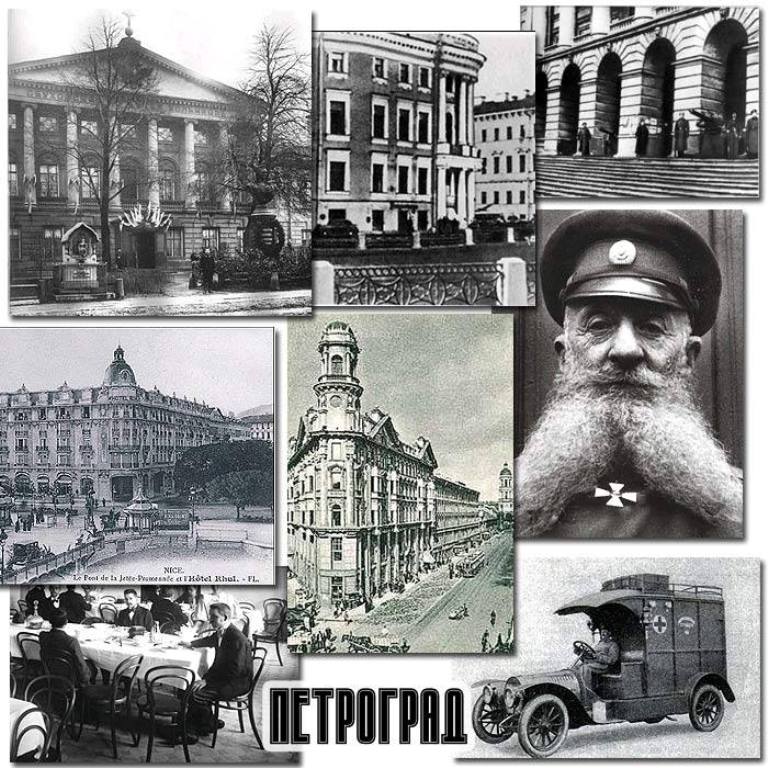
PHOTO: map of Petrograd. 1914

Their euphoria was echoed by Petrogradskie Vedomosti: “Somehow this name sounds much nicer to the Russian ear! In Petrograd … from now on a new era will shine, in which there will no longer be a place for German dominance which has affected St. Petersburg. Fortunately, it has outlived its time and place in our city’s history”.

It should be noted, that the idea of renaming of St. Petersburg was discussed back in the days of Empress Catherine II and Emperor Alexander I. Writers, in particular Gavril Derzhavin (1743-1816) and Alexander Pushkin (1799-1837), sometimes referred to St. Petersburg as “Petropole” in their works. In some decrees issued by Catherine II herself, the place of their publication was the “City of St. Peter”.

The Russkoye Slovo newspaper recalled that as early as the 1870s, Slavophiles began a movement in favor of renaming St. Petersburg to Petrograd: “Historical documents confirm that the Slavophiles tried to introduce the use of this name into all aspects of everyday life in the capital. For instance, in correspondence and in personal conversations, they completely avoided using the name Petersburg, and even on the envelopes of letters they wrote “Petrograd”, as a result of which misunderstandings often arose between the Slavophiles and representatives of the post office, who claimed that they could not guarantee the delivery of letters bearing the destination city as “Petrograd”. This movement, however, failed to have any real effect on changing the city’s name at the time.”

It was assumed that not only the capital would be renamed, but other Russian cities bearing German sounding names as well. They wanted to rename Ekaterinburg – Ekaterinograd, Orenburg – Orengrad. They also wanted to rename both Shlisselburg and Oranienbaum, among many others. These plans, however, did not materialize.

The renaming of St. Petersburg caused a mixed reaction in society. According to Tkhorzhevsky, “the city was renamed without consulting the city’s residents: it was as if St. Petersburg had been demoted.” Lawyer and writer Anatoly Fedorovich Koni (1844-1927) was also not happy: “The historical name associated with the founder of the city and borrowed from Holland, reminiscent of the “eternal worker on the throne [Peter the Great]”, was replaced under the influence of some patriotic whim by the meaningless name of Petrograd, in common with Elizavetgrad, Pavlograd and other similar,” he wrote . Even the mother of Nicholas II, the Dowager Empress Maria Feodorovna, sarcastically remarked on this occasion that, “Peterhof would soon be renamed Petrushkin Dvor”.

Kersnovsky even called the renaming of St. Petersburg as the “crown of stupidity”. He wrote: “the ignorance of our educated circles, from which the initiative came, was amazing. Tsar Peter I named the city “St. Petersburg”, which he founded in honor of his saint [St. Peter] – and on a Dutch, not a German model and, of course, did not think to name it after himself. St. Petersburg in Russian could be translated “Svyatopetrovsk”.

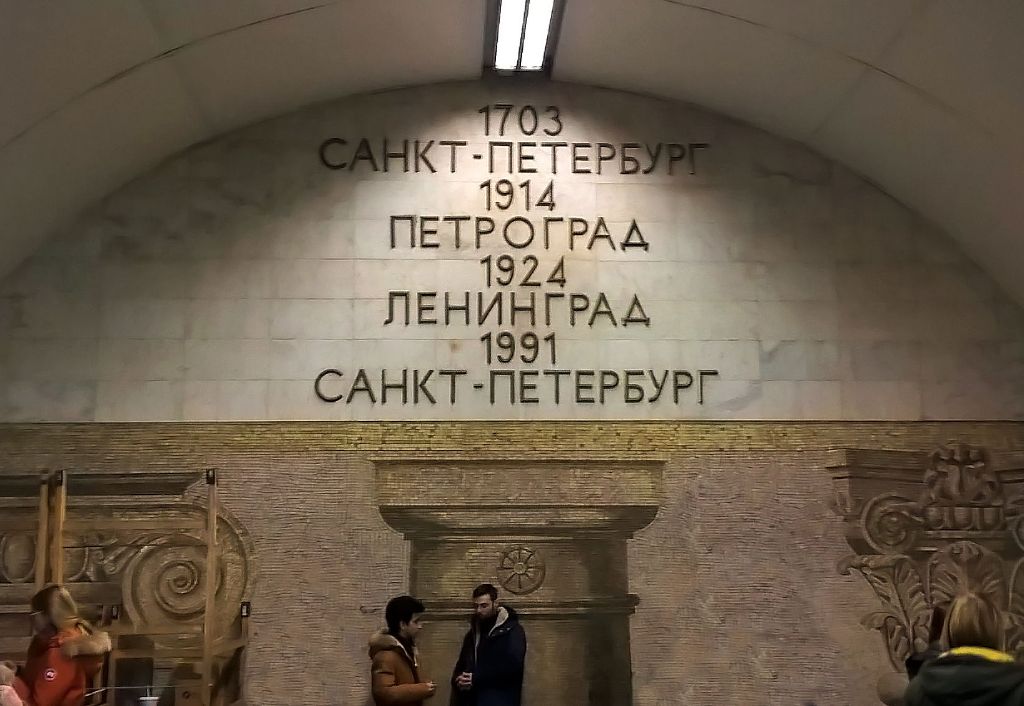
PHOTO: a Metro station in St. Petersburg reflects the city’s name changes

Petrograd was by no means to be the last change in the name of the great Russian city.

On 26th January 1924, five days after Bolshevik leader Vladimir Lenin’s death, Petrograd was renamed “Leningrad” – meaning “Lenin’s City – a name which the city retained for nearly 70 years.

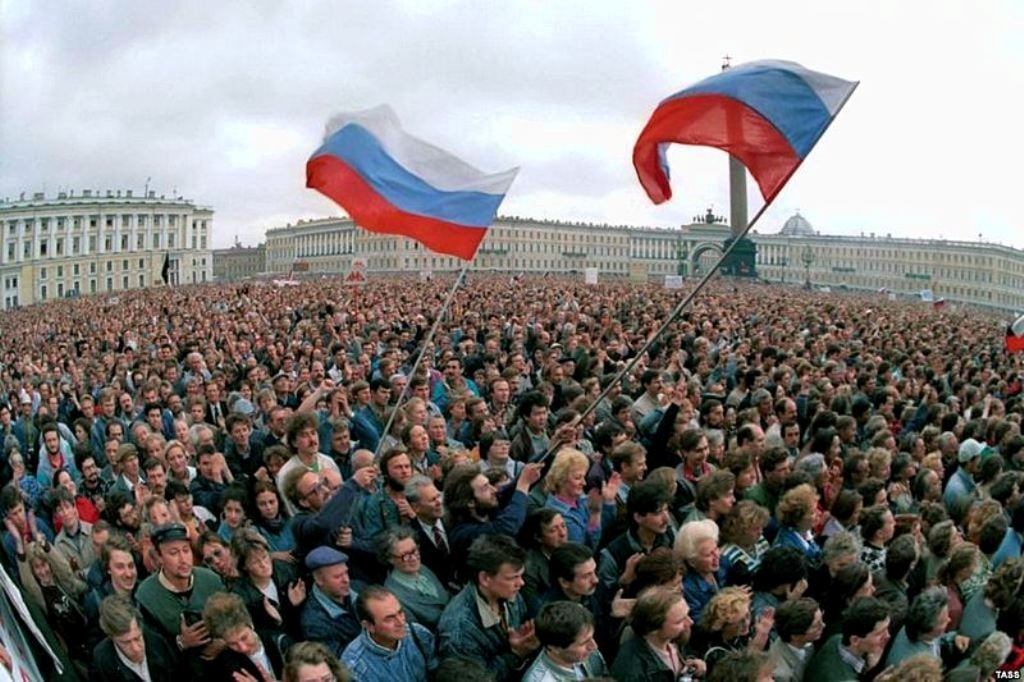
On 12th June 1991, only a few months before the dissolution of the USSR, voters supported restoring the city’s original appellation in a city-wide referendum, by a simple majority of votes (54%). Renaming the city Petrograd was not an option.

On 6th September 1991, the historic name, Saint Petersburg, was returned. Meanwhile, the oblast (district) whose administrative center is also in Saint Petersburg is still named Leningrad.

Since 1991 the Historic Centre of Saint Petersburg has been listed by UNESCO as a World Heritage Site. During that time, the historic centre of the city has undergone a monumental “facelift”, which included the restoration of hundreds of buildings dating from the 18th, 19th and early 20th centuries, transforming Saint Petersburg into one of the most beautiful cities in the world.

In June 2019, Russian politician and leader of the Liberal Democratic Party of Russia (LDPR) Vladimir Zhirinovsky (1946-2022), called for renaming St. Petersburg to its pre-revolutionary name “PETROGRAD”. Nothing, of course, ever came of his request.

***

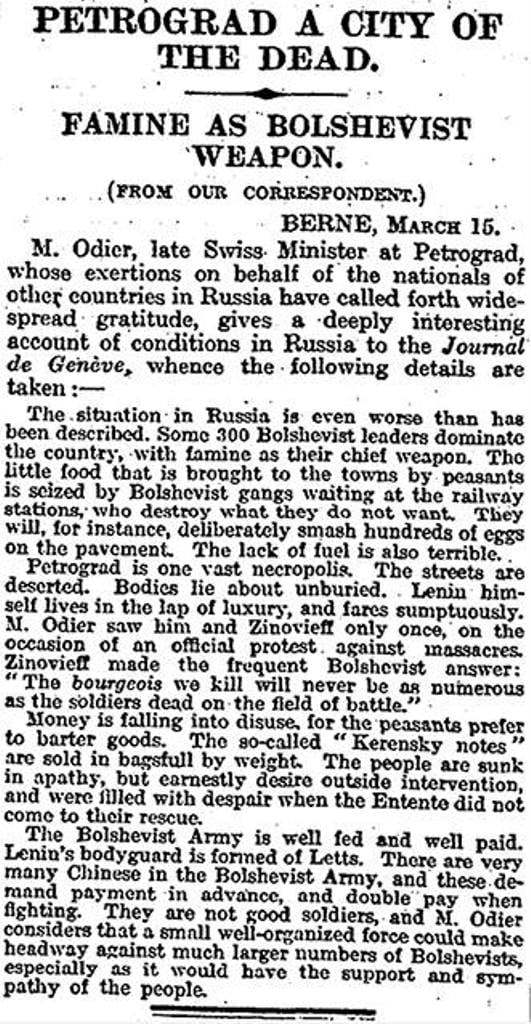
‘PETROGRAD A CITY OF THE DEAD. FAMINE AS BOLSHEVIST WEAPON’

Less than six months after the Bolsheviks seized power, a former Swiss diplomat reports on conditions in the Russian capital. On 17th March 1919, re wrote:

“The situation in Russia is even worse than has been described. Some 300 Bolshevist leaders dominate the country, with famine as their chief weapon.”

“Petrograd is one vast necropolis. Bodies lie about unburied, Lenin himself lives in the lap of luxury, and fares sumptuously.”

After reading this article, one can only speculate how many Russians then regretted supporting the overthrow of the Tsar, and embracing the revolution?

© Paul Gilbert. 1 September 2024

Serbian Crown Prince pays tribute to Nicholas II

PHOTO © Crown Prince Filip Karadjordjević of Serbia

On 16th August 2024, Crown Prince Filip Karadjordjević of Serbia visited the Saints Peter and Paul Cathedral in St. Petersburg, where he laid flowers at the base of the marble tombstone which marks the final resting place of Emperor Nicholas II, which is located in St. Catherine’s chapel, a side chapel of the cathedral.

“During my visit to St. Petersburg, one of the greatest cities in the world, I paid tribute to my courageous ancestor, His Imperial Majesty the Holy Emperor Nicholas II”, wrote the Crown Prince. “Holy Tsar Nicholas II, a devoted family man and staunch defender of Orthodox Christian values, was brutally murdered by the Bolsheviks along with his beloved family, marking a tragic and dark chapter in history. This was followed by a period of great suffering, when tens of millions of Christians were killed in the name of the vicious and destructive ideology of communism. The Russian Revolution should not be celebrated, but remembered as a grim reminder of extreme and misguided actions driven by a senseless system that defies our very nature. The love and devotion of the Holy Tsar Nicholas II to his family and to Orthodox Christianity stands in stark contrast to the tyranny and discord sown by those who set out to destroy them.”

PHOTO © Crown Prince Filip Karadjordjević of Serbia

PHOTO © Crown Prince Filip Karadjordjević of Serbia

PHOTO © Crown Prince Filip Karadjordjević of Serbia

***

For Serbians, Emperor Nicholas II is revered both as a saint and as a statesman, for his efforts in coming to Serbia’s aid during the First World War. Recall that it was Serbia – where thousands of White Russian emigrants were warmly received – and the veneration of Nicholas II as a saint was born. It was in Belgrade that the first museum of personal belongings of the Russian emperor appeared. The museum opened in the Russian House of Culture in the center of the Serbian capital in the 1930s. It was in Serbia, long before the emperor was glorified in the face of saints, his first images appeared in churches, and Belgrade is the only capital in the world where a street bears his name, something not found in either St. Petersburg or Moscow.

During the early 20th century, the October Revolution of 1917 and the subsequent Russian Civil War, each contributed to the mass resettlement of Russians in Serbia. In April 1919 and the early 1920s, the government of the Kingdom of Serbs, Croats and Slovenes, welcomed tens of thousands of anti-Bolshevik Russian refugees.

The defeat of the White Russian Army under General Pyotr Nikolayevich Wrangel (1878-1928) in Crimea, resulted in a third wave of emigration (November-December 1920), of another 20,000 emigrants.

The Kingdom extended its hospitality as gratitude to Russia for it’s intervention on the side of Serbia at the outbreak of World War I. Thus, the Kingdom of Serbs, Croats and Slovenes, became home for 40,000 exiles from the Russian Empire of Emperor Nicholas II. The mass exodus of refugees from war-torn Bolshevik Russia, prompted the founding of the State Commission for the Arrangement of Russian Refugees in Belgarde.

© Paul Gilbert. 17 August 2024

St. Petersburg honours memory of Nicholas II on 17th July

On 17th July 2023, a series of events marking the 105th anniversary of the murder of the Imperial Family and their faithful servants and the 25th anniversary of the burial of the remains of the Imperial Family, were held at the SS Peter and Paul Fortress in St. Petersburg.

The events were attended by Archimandrite Tikhon (Zatekin), the abbot of the Pechersky Ascension Monastery, and deputy head of the Nizhny Novgorod branch of the Imperial Orthodox Palestine Society (IOPS). It was during his visit to the SS Peter and Paul Cathedral, that Tikhon laid a bouquet of white roses at the tomb the Imperial Family and their faithful servants, which is located in St. Catherine’s Chapel, a side chapel of the cathedral.

At 12 o’clock, a cannon shot sounded on the Naryshkin Bastion of the Peter and Paul Fortress in memory of these two historic dates. The shot was fired by the Chairman of the Heraldic Council under the President of the Russian Federation – State Herald Master, Deputy Director General of the State Hermitage for Scientific Work G.V. Vilinbakhov.

At 14:00 p.m., a Divine Liturgy to the Holy Royal Martyrs was held in the SS Peter and Paul Cathedral, after which wreaths and flowers were laid near the tomb with the remains of the Imperial Family.

At 15:00 p.m., a round table was held in the conference hall of the St. John’s Ravelin, at which statesmen, historians, architects and journalists who directly participated in the burial ceremony of the Imperial Family in the Peter and Paul Cathedral in 1998 spoke. They presented the facts related to the history of the murder of Emperor Nicholas II and his family, the discovery and subsequent burial of their remains in the Catherine Chapel of the SS Peter and Paul Cathedral.

During the event, documentary newsreels of the burial ceremony in July 1998 were shown; recordings of interviews with participants of mourning events – including Romanov descendants, historians, authors, artists and cultural figures.

At the end of the round table, Archimandrite Tikhon (Zatyokin) made a brief summary of his book ‘Романовы: убийство, поиск, обретение’ [Romanovs: murder, search, acquisition].

FURTHER READING:

On this day – 17th July 1998 – Nicholas II was buried in St Petersburg+ PHOTOS and VIDEO

© Paul Gilbert. 24 July 2023

St Catherine’s Chapel: the final resting place of Nicholas II and his family

PHOTO: view of St. Catherine’s Chapel, the final resting place for Emperor Nicholas II and his family

The 18th century Chapel of the Holy Great Martyr Catherine (aka St. Catherine’s Chapel or Catherine Chapel) is situated in the southwestern part of the Saints Peter and Paul Cathedral in St. Petersburg. On 17th July 1998, it became the final burial place for Emperor Nicholas II, Empress Alexandra Feodorovna, three of their five children and four faithful retainers.

PHOTO: the iconostasis of St. Catherine’s Chapel in 1890

History

The Chapel of the Holy Great Martyr Catherine was arranged in the Saints Peter and Paul Cathedral at the end of the 18th century. During the restoration of the cathedral after the fire of 1756, an additional wall was erected inside the church hall, separating a small space in its western part. As a result, two new rooms were formed to the right and left of the main entrance. An iconostasis was installed, and on 24th November 1779, the altar was consecrated, in honour of the Holy Great Martyr Catherine – the patron saint of Empress Catherine II (1729-1796).

The chapel has a length of 8.1 meters (27 ft.), and a width of 6.3 meters (21 ft.), with one window and two doors facing directly into the cathedral. It was here in St. Catherine Chapel, that officials of the St. Petersburg Mint were sworn in. During Great Lent soldiers and officers of the garrison of the Peter and Paul Fortress and their families went for confession and took communion. On several occasions, funeral services were held here for the deceased minor grand-ducal children. The chapel operated as a church until the closure of the Saints Peter and Paul Cathedral by the Bolsheviks in 1919.

PHOTO: the eastern entrance to St. Catherine’s Chapel in 1890

The first burial in the chapel was that of Tsarina Marfa Matveevna (1664-1716), the widow of Tsar Feodor III Alekseevich (1661-1682). The funeral took place on 7th January 1716 in the presence of Tsar Peter I, the royal family, and members of the clergy. During the ceremony of transferring the body, a platform on the ice of the Neva was used for the first time. Since the funeral procession took place in the evening, torchbearers were placed on both sides of the path, adding solemnity to the mourning procession. A completely new element of the mourning ritual was the prohibition of mourners and ritual weeping, which had previously been an indispensable element in Russian funerary culture.

The burial of Marfa Matveevna was one of the first to be held in Saints Peter and Paul Cathedral. Her tomb is located at the western wall under the bell tower in the south-western part of the current St. Catherine Chapel. In 1732 the tombstone over her grave was removed and the grave was partially closed, to make room for the foundations of the furnaces which heated the Catherine Chapel.

In the 1860s a copper plaque with an epitaph was installed on the western wall above the grave, and restored in 1908. During the opening of the floor in the St. Catherine’s Chapel during the restoration in 1993, the crypt of Marfa Matveevna was discovered and examined by scientists, who confirmed that her grave had remained untouched.

PHOTO: the Head of the Russian Imperial House Prince Nicholas Romanovich (1922-2014) throws a handful of earth into the grave

Burial of the remains of Emperor Nicholas II and his family

On 17th July 1998, the remains, according to the conclusion of the state commission, belonging to Emperor Nicholas II, Empress Alexandra Feodorovna, Grand Duchesses Olga, Tatiana and Anastasia Nikolaevna were buried in St. Catherine’s Chapel. Together with them were buried the family-physician Dr. Eugene. Botkin, the footman Alouis Troup, the cook I. M. Kharitonov, and the maid Anna Demidova. These remains were not recognized by the Moscow Patriarchate.

  • Please refer to the ‘Exhumation of the remains’ section below for information on the remains of Tsesarevich Alexei Nikolaevich and Grand Duchess Maria Nikolaevna

Before the burial, a complete reconstruction of the chapel was carried out. In 1997, specialists from the Restorer and Olko firms carried out the work, which included painting the walls and plafond of the chapel. A two-tiered crypt (depth 1 m 66 cm, length 2 m 70 cm, width 1 m 70 cm) was built near the only window in the southern part of the chapel. The seal-tight crypt was waterproofed, thus providing ideal conditions for the preservation of the remains.

On the lower tier are the coffins of the family’s four faithful retainers, and on the upper tier are the coffins of the Emperor, Empress and their three daughters. An openwork lattice divides the crypt into two parts. The coffins were made of Caucasian oak, their surface is covered with a wax-turpentine mixture. Inside, the coffins are upholstered with copper sheet, and on top – a cover of white velour on silk white cords. On the lid of the coffin of Emperor Nicholas II there is a cypress cross (grown in the garden of the Livadia Palace in Crimea) and a model of a sword based on a 1909 model. The rest of the coffins of members of the Imperial Family have lids decorated with bronze, gilded, crosses. The coffins of the servants are decorated with silver-plated eight-point Orthodox crosses. As the valet Aloysius Trupp was a Catholic, a four-point cross decorates his coffin. The side decoration of the coffins consisted of: a brass board engraved (on which the names, title, place of birth and place of death (according to the Julian calendar) and the date of burial are embossed), as well as double-headed eagles for the seven coffins of members of the Imperial Family. Each coffin was secured with brass (non-oxidizing) screws. Lead plates were laid in the lid and in the coffin itself along the perimeter at the place of their connection, making them airtight after closing the coffin.

PHOTO: Russian president Boris Yeltsin (1931-2007) bows his head in front of the grave of the last Russian Emperor

The coffins were made in strict accordance with the historical traditions of the burial rites of Russian monarchs. After burial, the crypt was covered with reinforced concrete slabs, through the rings of which a steel chain closed on the lock was threaded. A temporary wooden tombstone was erected over the grave, and later replaced by a marble one. Memorial plaques with epitaphs were placed on the walls of the chapel. Later, the historical coating of the aisle, Mettlach tiles – was also restored.

At the present time, there are two crypts in the Catherine Chapel holding a total of 10 coffins:

  1. Tsaritsa Marfa Matveevna (buried on 7th January 1716)
  1. Emperor Nicholas II Alexandrovich (burial of remains on 17th July 1998)
  2. Empress Alexandra Feodorovna (burial of the remains on 17th July 1998)
  3. Grand Duchess Olga Nikolaevna (burial of the remains on 17th July 1998)
  4. Grand Duchess Tatiana Nikolaevna (burial of the remains on 17th July 1998)
  5. Grand Duchess Anastasia Nikolaevna (burial of the remains on 17th July 1998)
  6. family-physician Dr. Eugene Botkin (burial of remains on 17th July 1998)
  7. maid Anna Demidova (burial of remains on 17th July 1998)
  8. valet Aloysius Trupp (burial of remains on 17th July 1998)
  9. cook Ivan Kharitonov (burial of remains on 17th July 1998)

PHOTO: Members of the new ROC investigation inspect the Ekaterinburg remains

Exhumation of remains

In 2015 the Russian Orthodox Church announced that the investigation into the Ekaterinburg remains had been reopened. The investigation would include a new series of genetic studies, and a comprehensive review of the evidence accumulated since 1918 into the murders of the last Russian Imperial family. With the blessing of His Holiness Patriarch Kirill and at his request to the Investigative Committee a new team of experts was formed. A complex examination would be carried out for the first time – a historical, anthropological and genetic one – one in which the ROC would be involved in all aspects of the investigation.

As part of the resumption of the criminal case on the investigation of the death of the Imperial Family, the remains of Emperor Nicholas II and Empress Alexandra Feodorovna were exhumed on 23rd September 2015, in the Catherine Chapel at the request of the Russian Orthodox Church. About 20 people were present at the exhumation, which included representatives of the Investigative Committee, the Peter and Paul Fortress, the Russian Orthodox Church, and members of the government commission. Taking into account the position of the church, the investigative bodies allowed geneticists and anthropologists to work. After the removal of two concrete slabs from the crypt, the coffins of Emperor Nicholas II and Empress Alexandra Feodorovna were raised for prayer. During the procedure, samples were taken from their skulls and vertebrae. Upon completion, the remains were returned to their coffins, sealed and lowered back into the crypt.

PHOTO: arks containing the remains of Tsesarevich Alexei Nikolaevich and Grand Duchess Maria Nikolaevna are carried to the Lower Church of the Transfiguration Cathedral of the Novospassky Monastery in Moscow in December 2015

In February 2016, a second exhumation took place, but this time all the remains. After taking samples, the remains were returned to their coffins, sealed and lowered back into the crypt and re-covered with slabs.

According to media reports at the time, the investigation should have been completed by the summer of 2017, after which the remains of Tsesarevich Alexei Nikolaevich and Grand Duchess Maria Nikolaevna would be buried with the rest of their family in the Catherine Chapel.

For years, the boxes containing 44 bone fragments of Alexei and Maria remained on dusty shelves in the Russian State Archives. On 24th December 2015, their remains were transferred to the Lower Church of the Transfiguration Cathedral at the Novospassky Monastery in Moscow, where they remain to this day.

In 2021, one unconfirmed report claimed that the remains of the last Imperial Family were no longer entombed in the Catherine Chapel of the Saints Peter and Paul Cathedral. According to the report when their remains were exhumed for further testing by the new ROC commission in 2016, they were never returned to the crypt, however, there is no evidence to support this claim.

The question of when Alexei and Maria’s remains will be buried with that of their family currently rests with the Bishops’ Council of the Russian Orthodox Church. The Council were set to meet in 2021, and then 2022 to discuss the Ekaterinburg Remains, however, this was delayed . . . indefinitely.

“Since the international situation continues to make it difficult for many members of the Bishops’ Council to arrive in Moscow [from foreign countries], a decision has been made to postpone the meeting indefinitely . . . ” the Synod’s resolution stated (Journal No. 66) dated 25th August 2022.

PHOTO: Queen Sirikit of Thailand’s Wreath

Offerings in St. Catherine’s chapel

In 2005, an icon of the Holy Royal Passion-Bearers was presented to the Catherine Chapel, made by the nuns of the Novo-Tikhvin Monastery in Ekaterinburg. In 2007, Queen Sirikit of Thailand paid an official visit to Russia on the occasion of the 110th anniversary of the establishment of diplomatic relations between Russia and Thailand. The official offering was a wreath, which can be seen today in the Catherine Chapel. On the tombstone there is also a charoite box with earth taken from the grave of Anna Vyrubova, who buried in the Orthodox cemetery in Helsinki.

© Paul Gilbert. 6 March 2023

Bloody Sunday 1905: who is to blame?

On this day – 22nd (O.S. 9th) January 1905 – a peaceful procession of workers through the streets of St Petersburg would go down in history as Bloody Sunday.

“In 1905, workers marched to the Winter Palace with a peaceful petition demanding broader rights. Instead, they were met with gunfire, which completely destroyed Nicholas’s reputation and sent the Russian monarchy hurtling toward its eventual demise,” writes Oleg Yegorov in the July 15th 2019 edition of ‘Russia Beyond’

– Click HERE to read the article How Russia’s own Bloody Sunday turned Nicholas II into a public enemy. My personal comments are below – PG

***

There is no question, that “Bloody Sunday” was a tragic event, which sadly resulted in the deaths and injuries of innocent men, women and children. It is a tragedy which continues to haunt the legacy of Russia’s last tsar to this very day. Russian President Vladimir Putin has on more than one occasion, publicly referred to Nicholas II as “Nicholas the Bloody.” 

There are a couple of interesting facts which I would like to add to Oleg Yegorov’s article, on the events of Sunday, 22 January [O.S. 9 January] 1905, which are often overlooked or simply ignored by many academically lazy Western historians.

Despite the fact that the Winter Palace was the Tsar’s official residence, even during the early years of Nicholas II’s reign, the palace became little more than an administrative office block and a place of rare official entertaining. As Yegorov rightly points out, the Tsar was neither in residence nor was he present in St Petersburg on the day of the demonstration, which was organized by Father Georgy Gapon (see below).

Many modern-day historians and “experts” continue to falsely accuse Nicholas II of ordering his troops to open fire on the workers, however, there is no truth to support this theory.

This particular theory is the result of provocative rumours spread by the Bolsheviks and later the Soviets, who claimed that “Tsarist troops shot workers on the orders of Nicholas II” (which for obvious reasons later became the official point of view in Soviet historiography, and was never researched or even discussed by Soviet historians). Even more outrageous, was the claim that the Tsar “personally participated in the shootings, allegedly shooting at the demonstrators with a machine gun”.

In addition it is important to add, that upon finding out about the idea of ​​submitting the petition to the Tsar, members of three revolutionary party organizations: the Social Democrats (Mensheviks ), the Social Democrats ( Bolsheviks ), and the Social Revolutionaries, decided to swell the ranks of the “peaceful demonstrators,” on that fateful day. According to new documents discovered in the Russian Archives, it was these revolutionaries – who were both armed and dangerous – that agitated the situation by opening fire on the troops.

PHOTO: Commander-in-Chief of the Guards and the St. Petersburg Military District Grand Duke Vladimir Alexandrovich (center), talking with Grand Duke Dmitri Konstantinovich (left) and officers, before the parade of the Pavlovsky Life Guard Regiment, on the Field of Mars, St. Petersburg. 30th August 1904

It was St Petersburg Governor General Ivan Aleksandrovich Fullon (1844-1920), who provided comprehensive support to the “Assembly of Russian Factory Workers of St. Petersburg”, with the priest Georgy Gapon leading the way. 

However, it was Guards Commander Prince Sergei Illarionovych Vasilchikov (1849-1926) who developed a plan of action for the police and troops to prevent the procession from even taking place.

It is interesting to note that Prince Vasilchikov was under the command of the Tsar’s uncle Grand Duke Vladimir Alexandrovich (1847-1909), who served as Commander-in-Chief of the Guards and the St. Petersburg Military District. 

On the eve of of the procession 21st (O.S. 8th) January, Grand Duke Vladimir Alexandrovich ordered his subordinate to use military force to prevent the procession from taking place. Vasilchikov obeyed his superior, and the following day when a large group of workers reached Winter Palace Square, troops acting on direct orders from Vasilchikov opened fire upon the demonstrators. 

Although Grand Duke Vladimir claimed no direct responsibility for the tragedy, since he was also away from the city, his reputation was tarnished. General Fullon was discharged after the events of Bloody Sunday.

The number of victims is greatly exaggerated by many historians. According to the Tsar’s official records: 130 dead and 299 injured; while anti-government sources claimed any where from 1,000 to 4,000 dead.

That evening, the events in St. Petersburg were reported to Nicholas II. The emperor was distressed and wrote in his diary:

“A terrible day! There were serious disturbance in Petersburg as a result of the workers wishing to reach the Winter Palace. The troops were forced to open fire in several parts of the town, there were many killed and wounded. Lord, how painful and how sad!” 

Photos: Father Georgy Gapon (1870-1906) ; the house in Ozerki, where Gapon was killed

Father Georgy Gapon (1870-1906) – the organizer of the procession – was a charismatic speaker and effective organizer who took an interest in the working and lower classes of the Russian cities. However, Fr. Gapon also had a hidden dark side, which has been proven by post-Soviet scholars – the priest was a police informant. 

After Bloody Sunday, Gapon fled to Europe, but returned by the end of 1905, and resumed contact with the Okhrana. On 26 March 1906, Gapon arrived for a meeting at a rented cottage outside St. Petersburg. A month later, his body was found hanged. Gapon had been murdered by three members of the Socialist Revolutionary Party, after they had discovered that Gapon was a police informant.
* * *

FURTHER READING:

Click HERE to read Bloody Sunday 1905. What is the truth? [includes VIDEO in English] originally published on 21st October 2020

© Paul Gilbert. 22 January 2023