CLICK on the above image to watch the VIDEO Duration: 1 minute
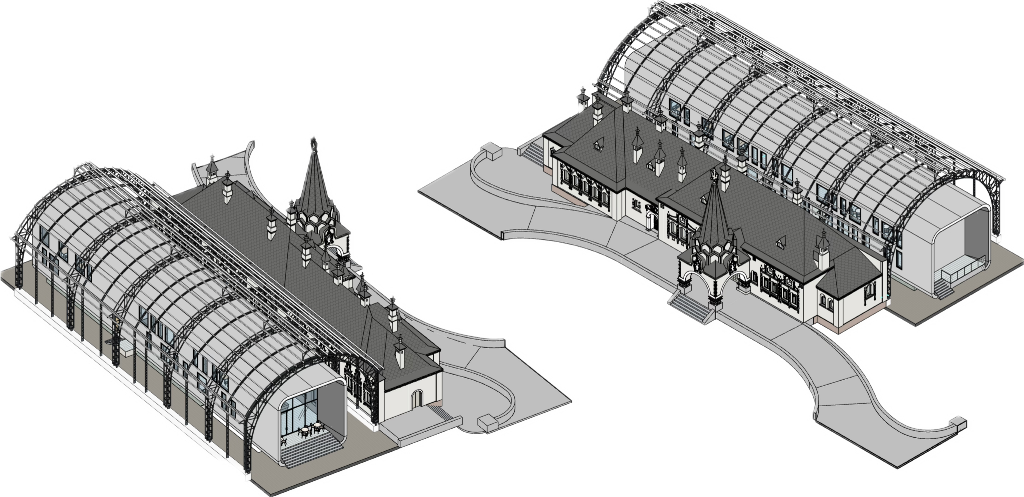
The Tsarskoye Selo Railway Station Charitable Foundation has released a stunning video which presents the Foundation’s concept for the restoration of the Imperial Railway Pavilion at Tsarskoye Selo [now part of the town of Pushkin], which began in the summer of 2023.
According to the concept being developed, it is planned to restore the Pavilion building with the restoration of its historical appearance based on the surviving photographs, documents and research by specialists. During the restoration of the facades, it is planned to restore the plaster layer and decorative elements. Inside the Pavilion, it is planned to restore wall and ceiling paintings to their original colours, floor coverings and stucco, and restore lost stoves.
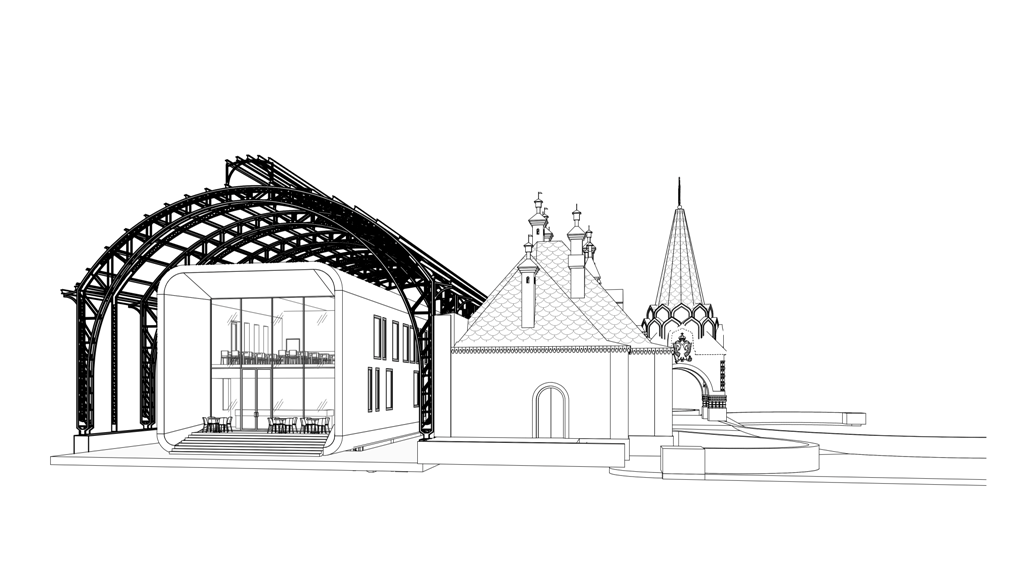
After the completion of the restoration, a museum space with access to the ceremonial rooms will be developed inside the station building. The reconstruction of the Tsar’s Station involves the construction of the lost metal frame of the landing stage (covered railway platform) – as seen in the artist’s drawings (below) and video.
Inside the openwork riveted trusses, it is planned to construct a building in the form of a railway passenger car. Work is also planned to develope the area surrounding the station building.
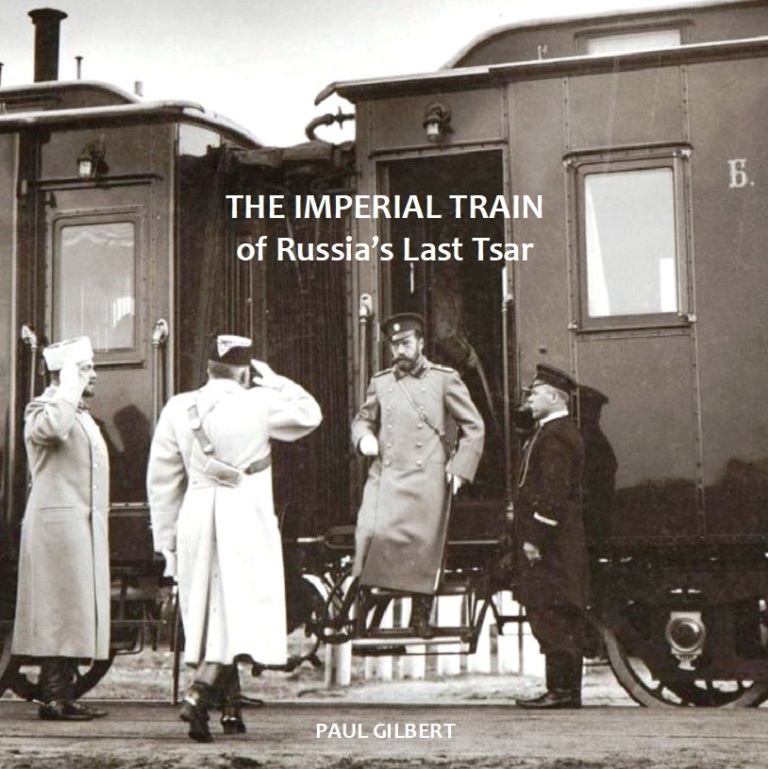
My book on the Imperial Train was scheduled to be published last year, however, I delayed it, and for good reason. Given that the Imperial Railway Station at Tsarskoye Selo was the main terminus for the Imperial Train, it only stood to reason, that I should devote a chapter to this historic building.
My forthcoming book is the first English language title to explore the history of the Tsar’s luxurious mode of transport on rails. It will include detailed descriptions – including vintage photos and floorplans – of the train’s interiors. My book also tells about the fate of the Imperial Train, the Imperial Railway Pavilions constructed solely for the use of the Imperial Train in Tsarskoye Selo, St. Petersburg and Moscow, and much more.
‘The Imperial Train of Emperor Nicholas II’ will be published in paperback edition, 150 pages, and richly illustrated throughout. It will be available on Amazon shortly after the completion of the restoration of the Imperial Railway Pavilion at Tsarskoye Selo has been completed – PG
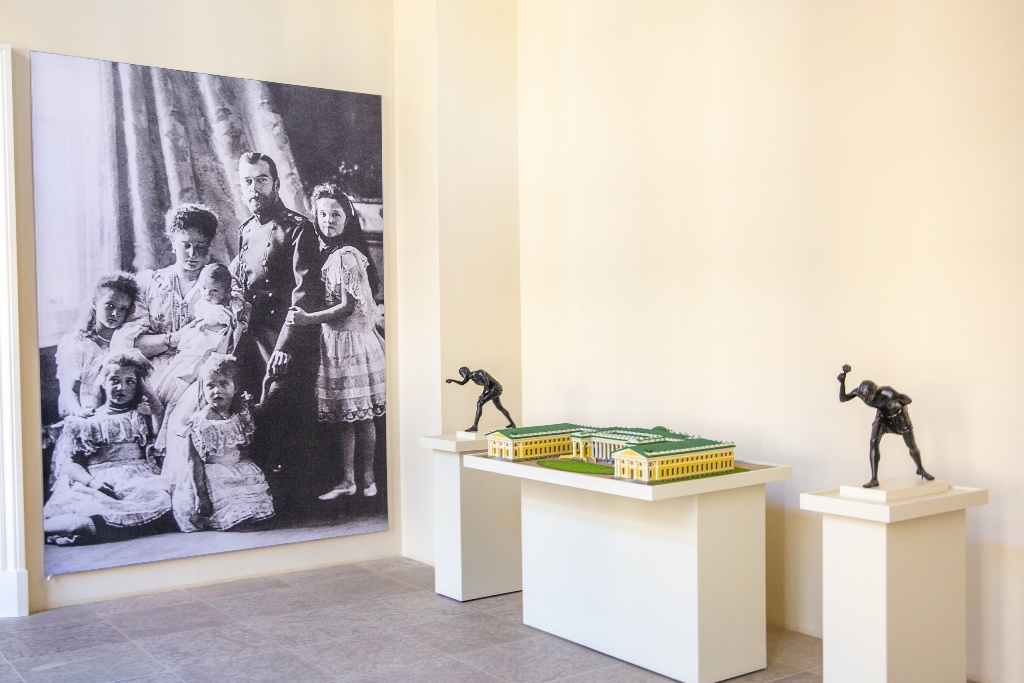
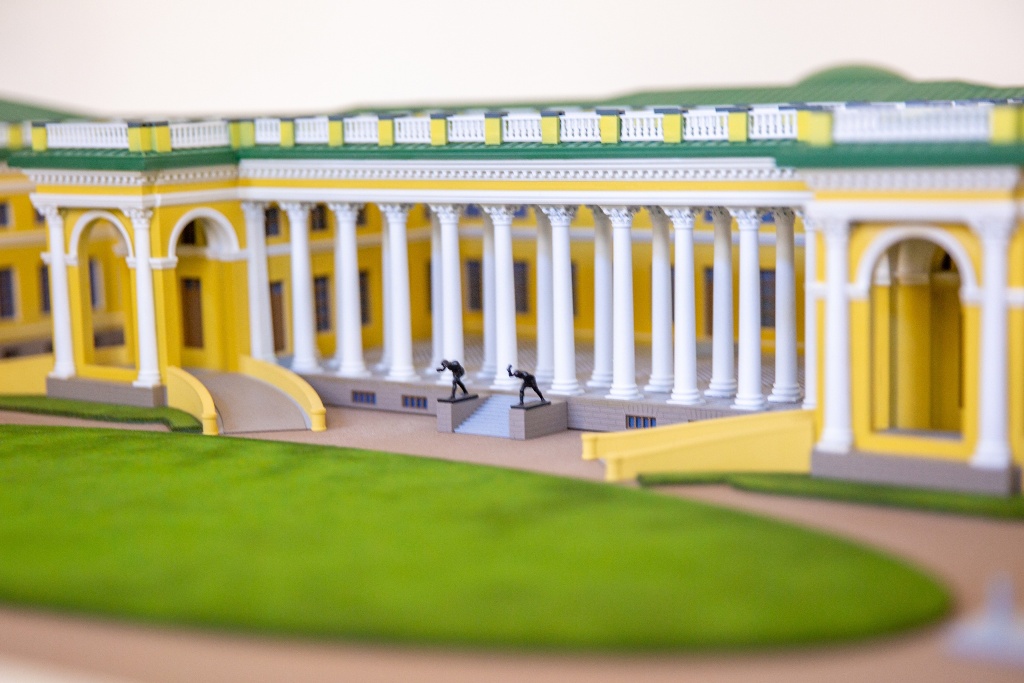
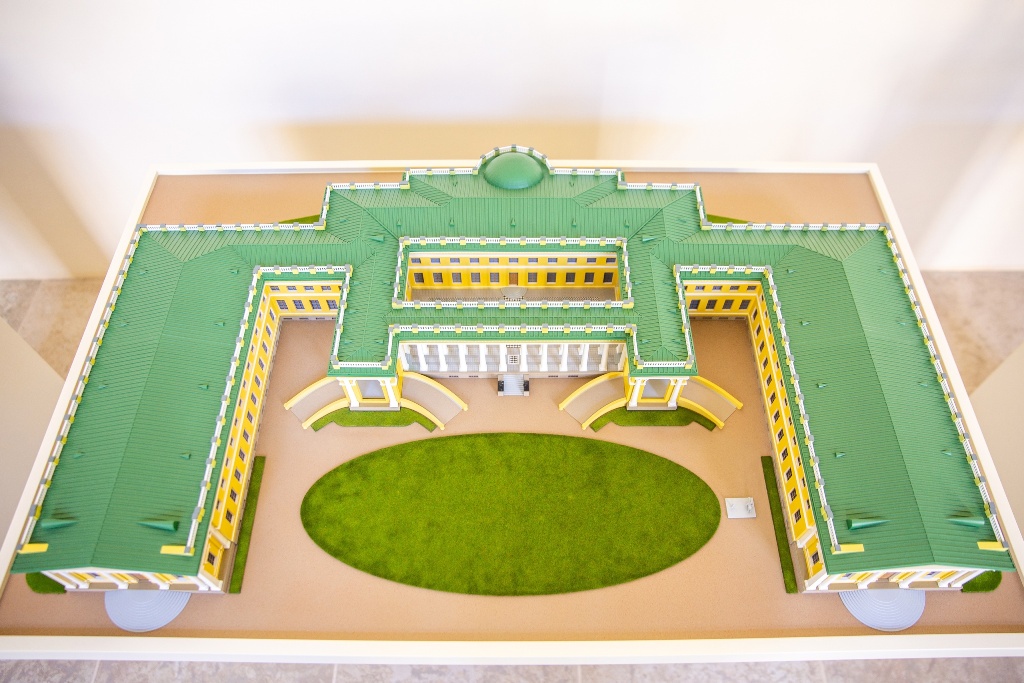
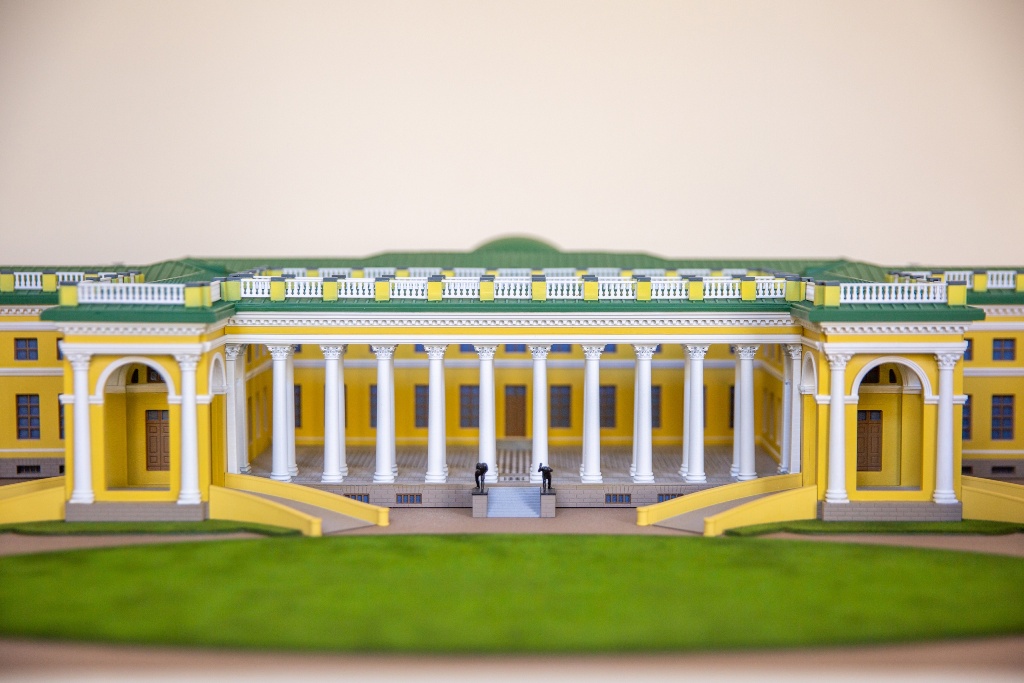
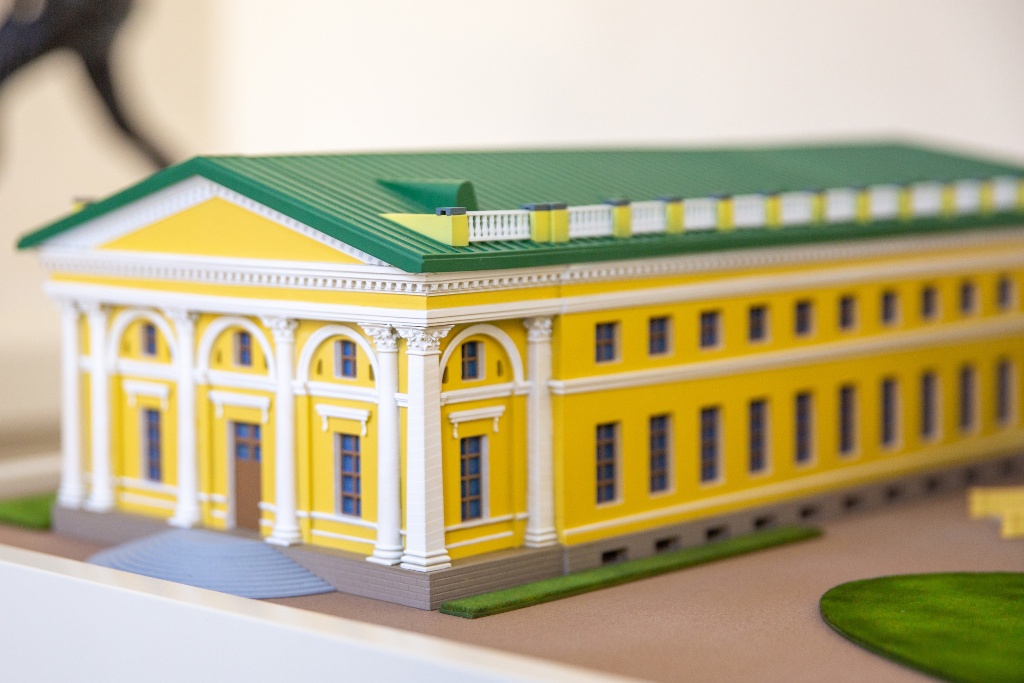
The Tsarskoye Selo State Museum has created a large 3-dimensional scale model of the Alexander Palace. Visitors can see the model, which is on display in the palace’s vestibule.
The 1:140 model of Giacomo Quarenghi’s 18th-century architectural masterpiece was painstakingly created by specialists of the Studio 22 Model Workshop in St. Petersburg. Each exterior detail has been recreated in miniature.
The model is reflects the favourite residence of Emperor Nicholas II and his family, with it’s elegant Neo-Classical Style yellow edifice and green roof. The majestic central colonnade, the protruding wings, the elegant sculpting of the columns. The model is flanked by copies of two sculptures flanking the palace colonnade, A Youth Playing Svaika by Alexander Loganovsky and A Youth Playing Knucklebones by Nikolay Pimenov. Everything is copied in detail and carefully conveyed in miniature.
The above photo depicts the Eastern wing of the Alexander Palace, where the private apartments of the Imperial Family are located. The rooms of Emperor Nicholas II and Empress Alexandra Feodorovna are located on the main or first floor, while the rooms of their five children were located on the second floor.
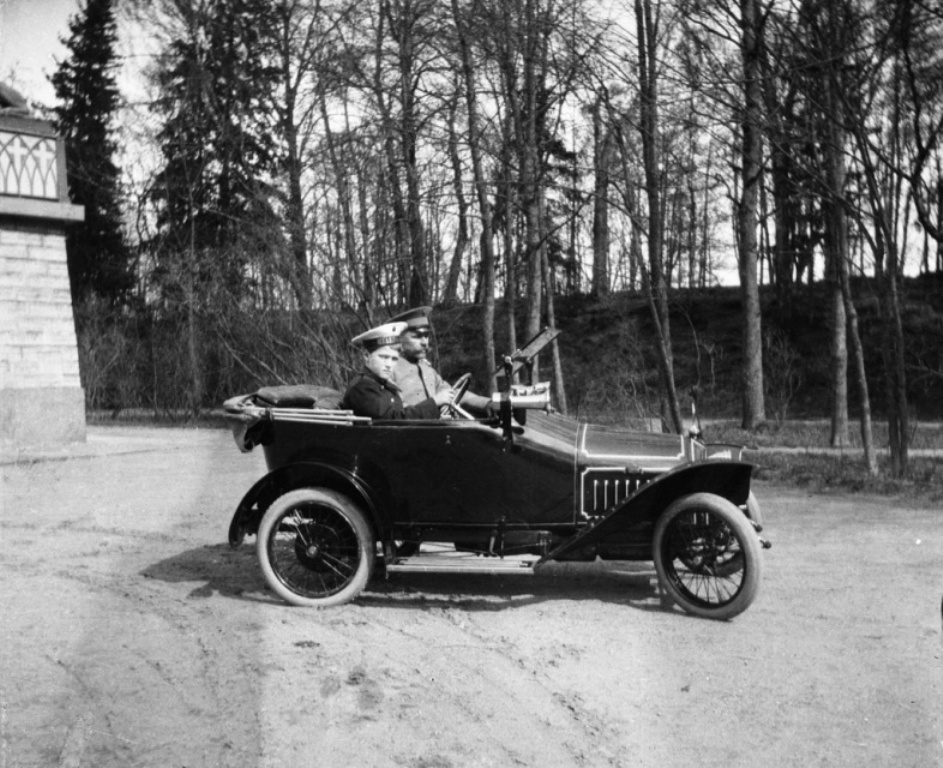
PHOTO: 10-year-old Tsesarevich Alexei Nikolaevich, driving his motorcar, a Peugeot BP1 Bebe, accompanied by driver Adolfe Kegresse in front of the White Tower, situated in the Alexander Park, near the Alexander Palace at Tsarskoye Selo in 1914
In 1912, the famous French automaker Peugeot released the Peugeot Bebe, designed by Ettore Bugatti, complete with a four-cylinder engine with a displacement of 855 cm3 and power of 10 hp. The model was first presented to the public at the Paris Motor Show in 1912.
The Peugeot Bébé came to Russia in May 1913 at the IV International Automobile Exhibition in St. Petersburg, an event that was attended by the Tsar. Its price was 4000 francs (with bodywork). In 1913 one franc was worth 0.37 kopecks, thus the pricetag for this motorcar worked out to 1900 rubles including taxes.
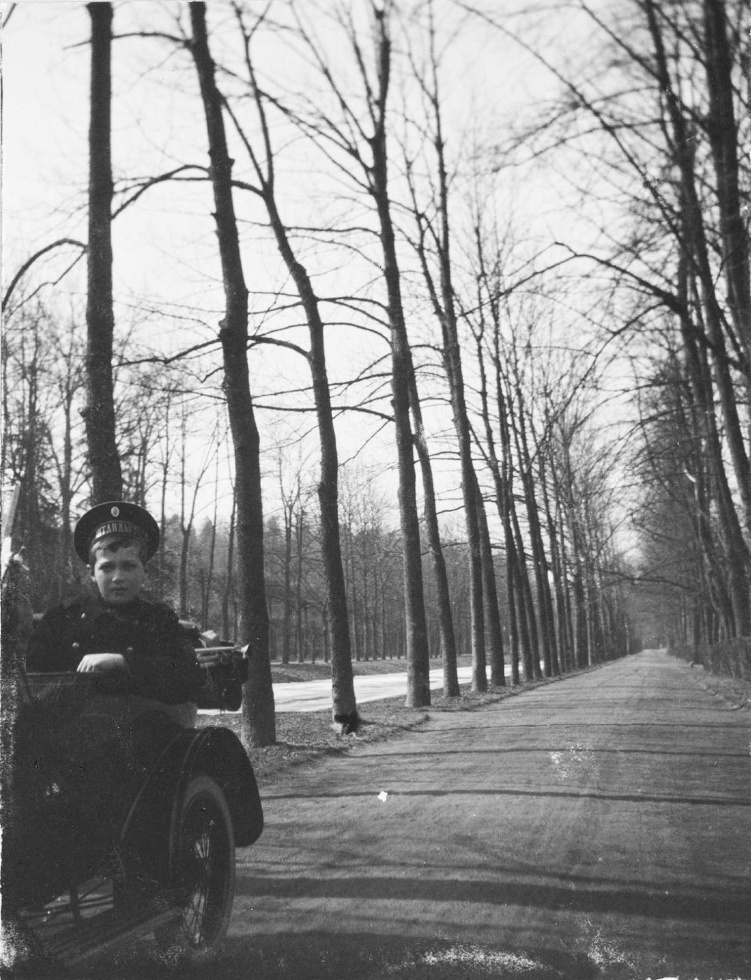
PHOTO: Tsesarevich Alexei riding along the pathways of the Alexander Park in the back seat of his Peugeot Bebe, 1914
Alexei’s paternal grandmother Dowager Empress Maria Feodorovna, bought a Peugeot BP1 Bebe motorcar for Tsesarevich Alexei on his nameday[1] – 18th October.
Alexei received the car on Sunday, 18th (O.S. 5th) October, 1914, and on Thursday, 22nd (O.S. 9th) October, Emperor Nicholas II wrote in his diary: “I took a brisk walk with Maria and Anastasia todat. We saw Alexei in the park, riding in a small motorcar presented to him on 5th October”.
PHOTO: 10-year-old Tsesarevich Alexei Nikolaevich, accompanied by driver Adolphe Kegresse in his Peugeot BP1 Bebe, near the White Tower in the Alexander Park. In the back seat is Grand Duchess Anastasia. Standing next to the motorcar is the French tutor Pierre Gilliard. 1914.
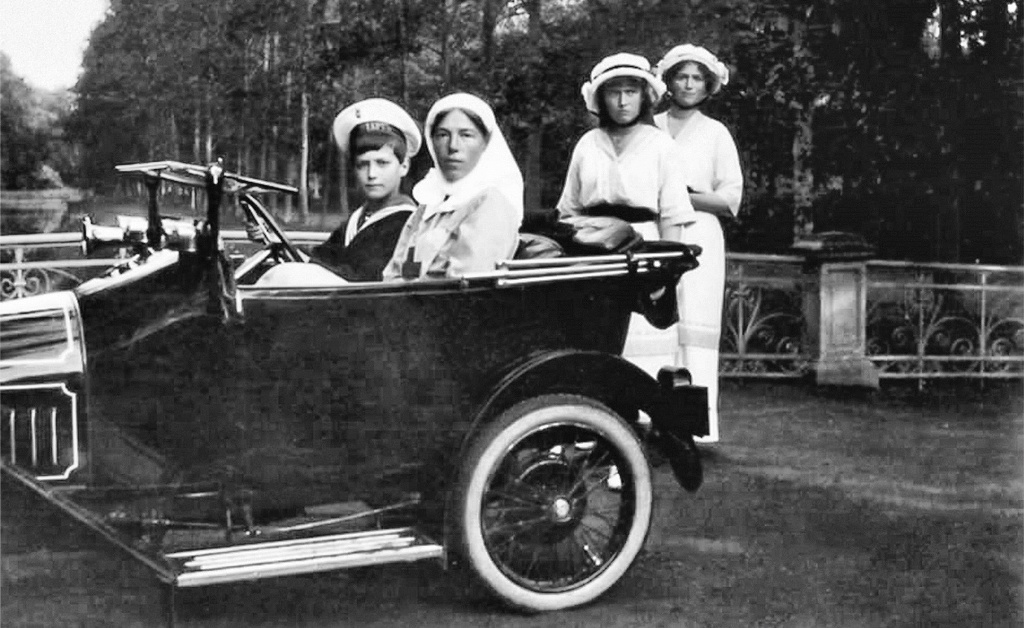
PHOTO: Tsesarevich Alexei taking his aunt Grand Duchess Olga Alexandrovna for a spin around the Alexander Park in his Peugeot BP1 Bebe. Standing in the background are Alexei’s sisters Grand Duchesses Anastasia and Maria Nikolaevna. 1914.
Since all members of the Imperial Family were avid amateur photographers, each of them had their own camera. Thousands of their personal photographs have survived to the present day, including several photographs in which Tsesarevich Alexei is photographed behind the wheel of his Peugeot Bebe.
Despite the fact that the motorcar was very light (350 kg) and had a length of about two and a half meters, the 10 hp engine allowed it to reach speeds of up to 60 km per hour.
Of course, Alexei did not “drive” his motorcar very often. His parents could not risk the safety of their hemophiliac son, since any injury received in an accident could be fatal for him. Therefore, they assigned the Tsar’s personal chauffeur Adolfe Kegresse (1879-1943) to accompany Alexei while he was out driving. His drives were restricted to the tree-lined alleys of the Alexander Park at Tsarskoye Selo, and he was only permitted to drive in first gear. According to witnesses, Alexei drove “quite confidently”. He often took his sisters and tutors on short drives.
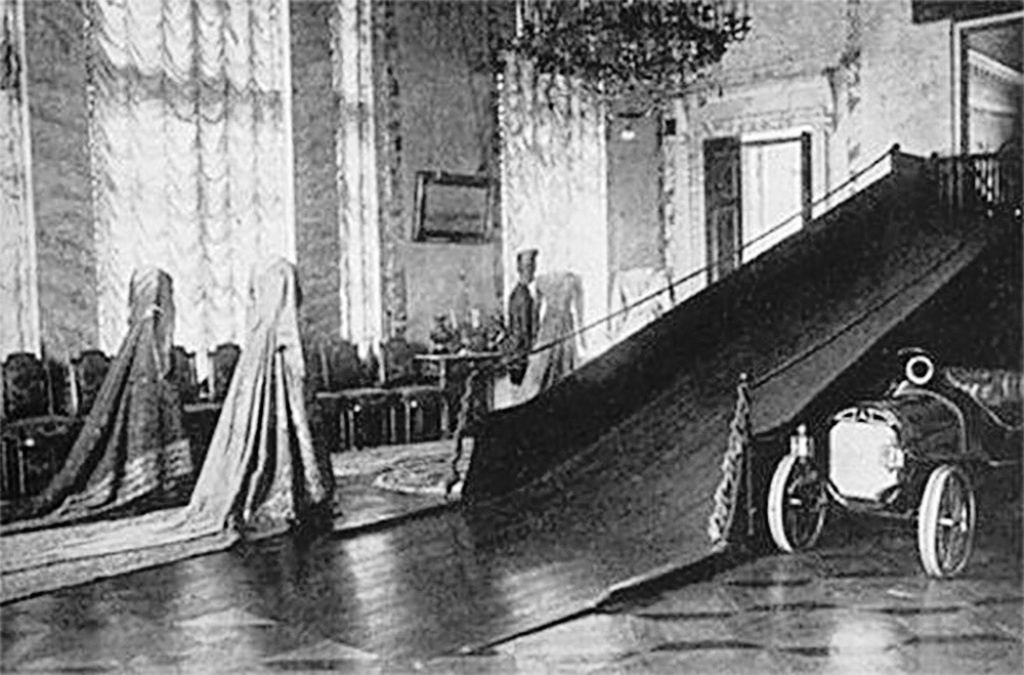
PHOTO: after the 1917 Revolution, the Alexander Palace became a museum. Tsesarevich Alexei’s Peugeot BP1 Bebe was put on display, bext the wooden slide in the Marble Hall [aka the Mountain Hall]
Following the February 1917 Revolution, Tsesarevich Alexei’s Peugeot Bébé stood ownerless for a very long time. After Emperor Nicholas II’s collection of more than 50 motorcars housed in the Imperial Garage’s at Tsarskoye Selo, St. Petersburg, Moscow, Livadia and Mogilev were “confiscated” by the Provisional Government, the Peugeot Bebe remained at Tsarskoye Selo, where it was placed on display in the Marble Hall [aka the Mountain Hall] of the Alexander Palace, and removed from the lists of the Provisional Government Motor Depot.
In photographs taken in the 1920s of the Marble Hall in the Alexander Palace, Alexei’s motorcar is clearly visible, sitting next to the wooden slide, constructed in 1833, at the behest of Emperor Nicholas I and his wife Empress Alexandra Feodorovna.
PHOTOS: after the 1917 Revolution, the Alexander Palace became a museum. Tsesarevich Alexei’s Peugeot BP1 Bebe was put on display, bext the wooden slide in the Marble Hall [aka the Mountain Hall]
There is no doubt that the Bolsheviks considered Tsesarevich Alexei’s Peugeot Bébé as nothing more than an extravagant “toy” and of no historical value. The motorcar stood in the Alexander Palace until 1929.
In 1930, Alexei’s Peugeot BP1 Bebe was transferred to the collection of the Leningrad Palace of Pioneers, also housed in the Alexander Palace. During the 1930s, pioneers who were members of the motoring club learned to drive in the Tsesarevich’s motorcar. In 1942 – during the Great Patriotic War – a bomb hit the Anichkov Palace [where the Peugeot Bébé jad been moved], and Tsesarevich Alexei’s motorcar was irretrievably lost.
NOTES:
[1] Russians celebrate name days separately from birthdays. Celebrations range from the gifting of cards and flowers to full-blown celebrations similar to birthday parties. Such a celebration begins with attendance at the divine services marking that day (in the Russian tradition, the All-Night Vigil and Divine Liturgy), and usually with a festive party thereafter. The Russian Imperial family followed a tradition of giving name-day gifts.
Before the October Revolution of 1917, Russians regarded name days as important as, or more important than, the celebration of birthdays, based on the rationale that one’s baptism is the event by which people become “born anew” in Christ.
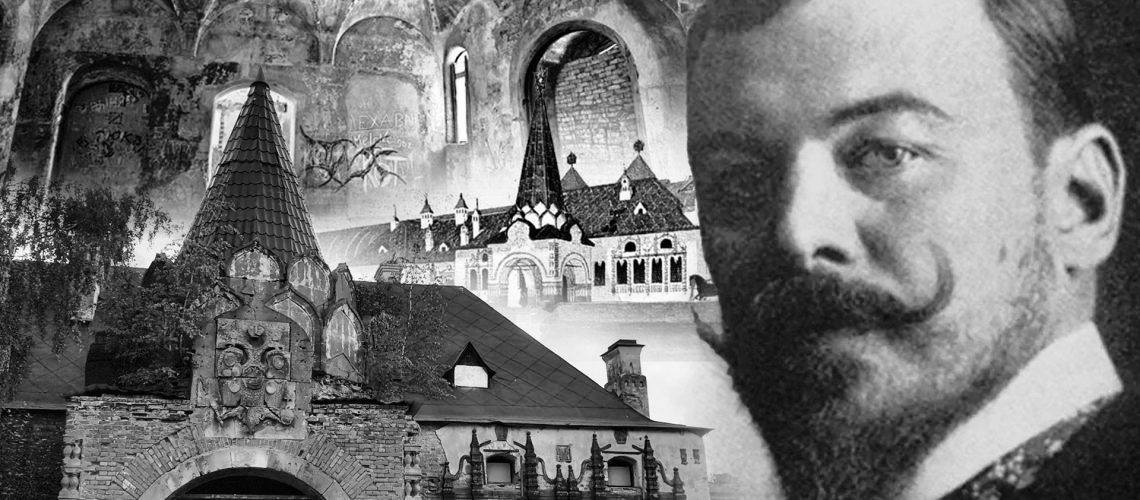
PHOTO: the Imperial Railway Pavilion [aka as the The Tsar’s Train Station] at Tsarskoye Selo and it’s architect Vladimir Aleksandrovich Pokrovsky (1871-1931)
NOTE: links to other interesting articles are highligted in red below – PG
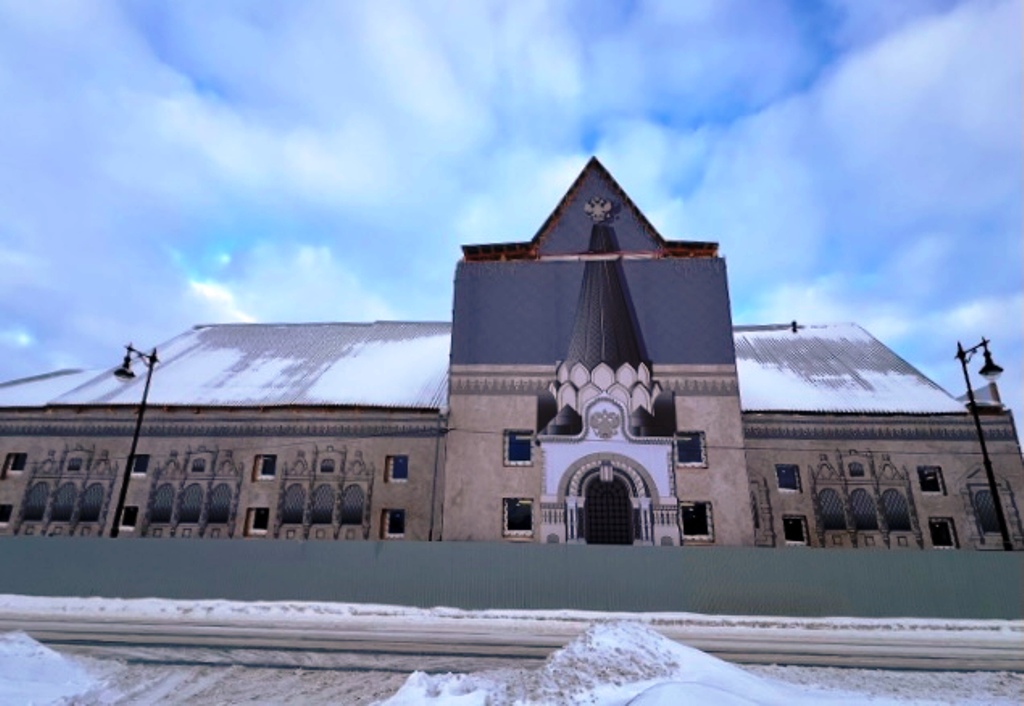
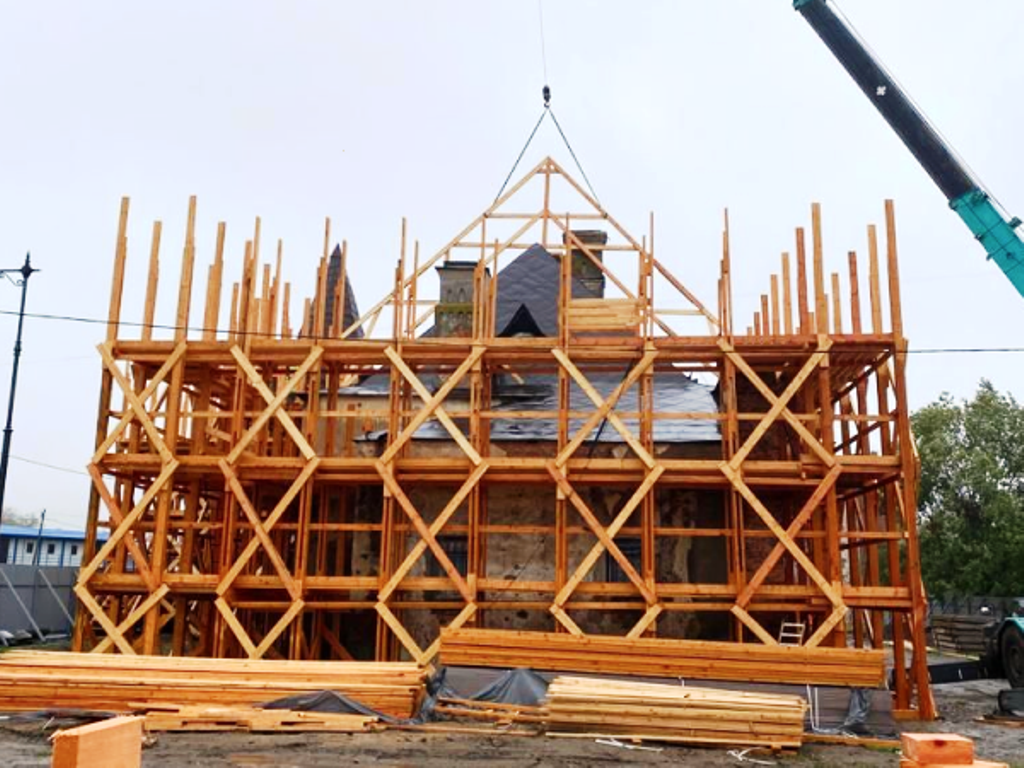
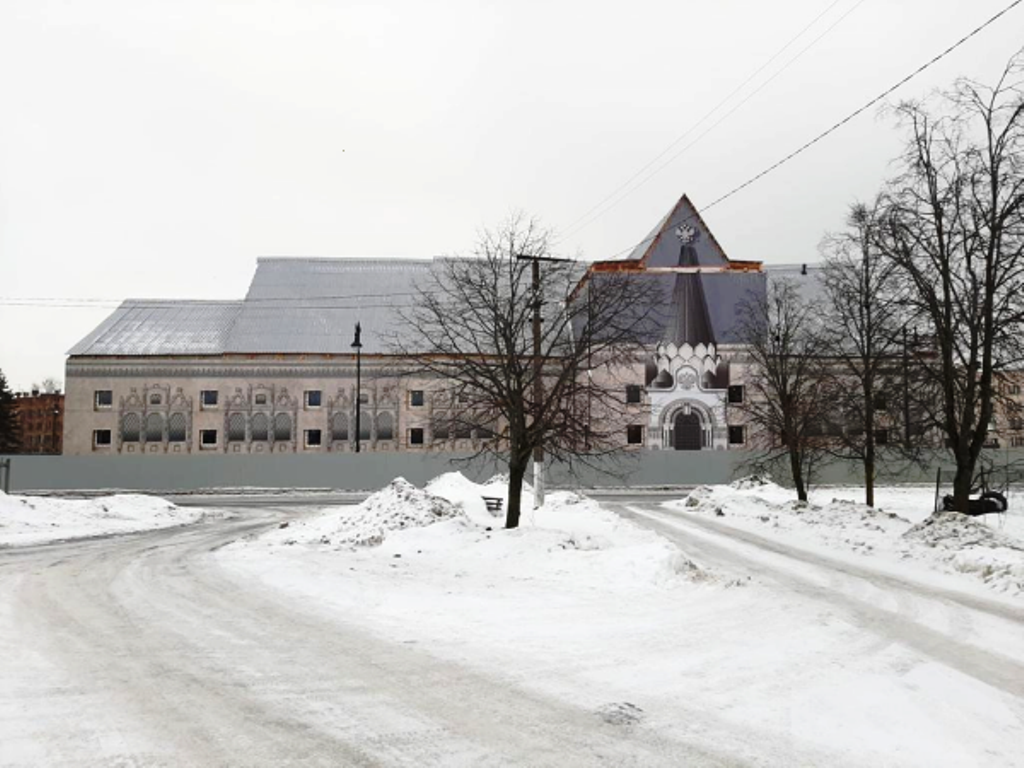
Further to my August 2023 announcement that the Imperial Railway Pavilion at Tsarskoye Selo would be restored, I am pleased to provide the following update, which includes photos [taken in March 2024] of the progress being made on this important historic project, one which is closely connected to Emperor Nicholas II.
The building is currently hidden under scaffolding and outdoor construction hoarding, as experts carry out the restoration of the facade, it’s historic elements and install a new roof. This work can be seen in the photos published in this article, all of which were taken a few weeks ago.
The Imperial Railway Pavilion [aka as the Tsar’s Train Station] is a registered cultural heritage site of federal significance, an act which saved the building from destruction. Despite the fact that the building has not been used since the 1930s, it has been preserved in fairly good condition. The unique building will be restored to its original. In addition to the building itself, the 200-meter passenger platform and canopy will be reconstructed and the unique paintings which once decorated the walls and ceilings of the interior, and which have been partially revealed by restorers, will be revived.
The next stage, after a detailed study, will be the design, and then the restoration. The concept of using the building as a museum after the completion of the work will also be worked out.
The restoration work on the Imperial Railway Pavilion is part of a comprehensive development proect which includes the nearby Feodorovsky Gorodok, and other buildings to their original pre-revolutionary look.
The original wooden Imperial Railway Pavilion and the covered platform were constructed in 1895. They were intended to receive Imperial Trains arriving at Tsarskoye Selo through the Aleksandrovskaya Station, which is situated north of the pavilion on the St. Petersburg-Warsaw railway line.
On 25th January 1911, the wooden station was destroyed by fire. It was decided to erect a new stone building on the same site by the architect Vladimir Aleksandrovich Pokrovsky (1871-1931) with the participation of a graduate of the Academy of Arts Mikhail Ivanovich Kurilko (1880-1969).
The new pavilion was designed in the Neo-Russian Style beloved by Nicholas II. The Fepdorovsky Gorodok, the Feodorovsky Sovereign Cathedral, the Sovereign’s Martial Chamber, and the barracks of His Majesty’s Own Convoy were all built in the same style. Together, they form an architectural ensemble in which motifs of ancient Russian architecture were used. In addition, the planning and design of the Imperial Railwat Pavilion was influenced by the Imperial Railway Station, which has survived to this day at the Vitebsky Railway Station in St. Petersburg.
The front part of the building consists of three halls. In the center there is a square lobby with a front porch, large enough to accomodate automobiles and carriages. The halls on the sides of the vestibule were intended for the Emperor and his retinue: on the south side was the Tsar’s Hall, on the north side – the Retinue Hall. A metal canopy was built above the platform and tracks, adjacent to the eastern façade of the station.
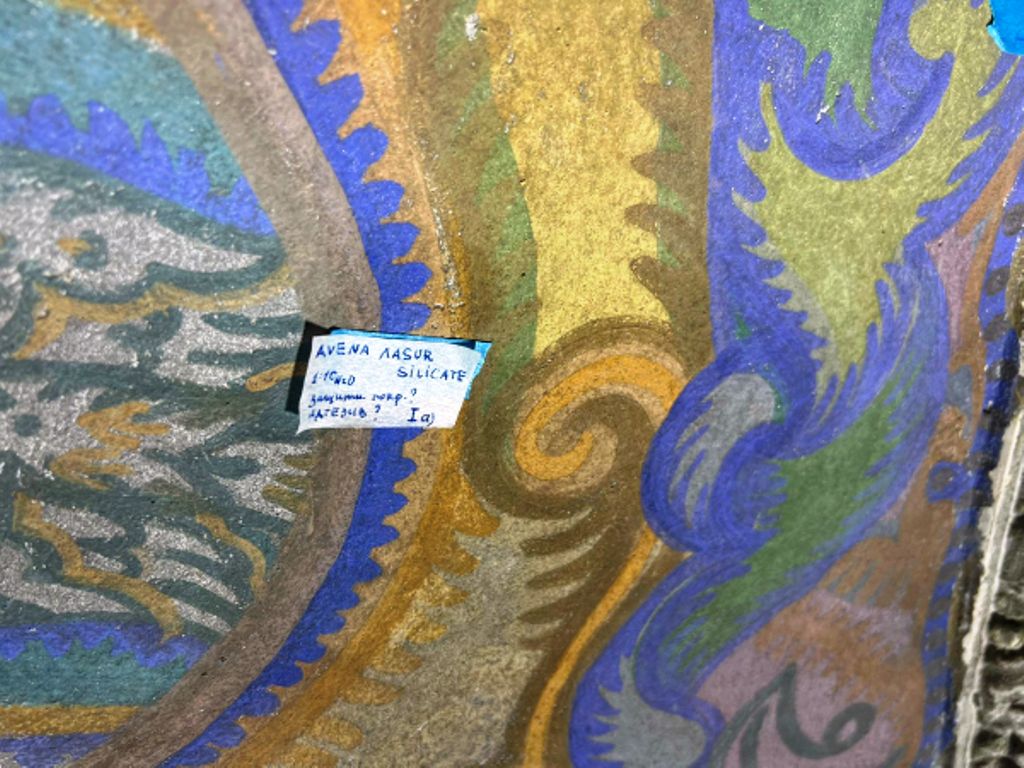
Paintings became an unusual decoration of the walls and ceilings of the building’s interior. They were made using a tempera-glue technique on plaster. A unique painting has been partially preserved [see photo below] to this day, which will allow experts to restore it in full to its original.
During the First World War of 1914-1917, the Imperial Railway Pavilion was used to receive wounded Russian soldiers, who were transferred to the hospital established by the Empress Alexandra Feodorovna in the Feodorovsky Gorodok. And after the Revolution of 1917, it was renamed the Uritsky Pavilion and was used as a dormitory for workers of the Track Repair of the Mechanical Plant.
The Tsarist emblems were removed from the building’s facade, and the ceremonial halls were divided by walls. The building began to lose its former grandeur and ceremonial appearance: the porch was adapted for the kitchen, furniture, lamps, objects of decorative and applied art were lost.
Now in the 21st century, a new life awaits the former Imperial Railway Pavilion. Following completion of the reconstruction of the building and restoration of the interiors, the Board of Trustees of the Tsarskoye Selo Station Foundation, will discuss proposals for the future use of the building.
PHOTO: view of the Western Wing of the Alexander Palace, Tsarskoye Selo
According to the TASS News Agency, the Western Wing of the Alexander Palace at Tsarskoye Selo is now scheduled to open to the public in 2025.
Recall that the Eastern Wing of the palace, which houses the private apartments of Emperor Nicholas II and Empress Alexandra Feodorona, reopened to the public in 2021, after an extensive restoration which began in the autumn of 2015.
The Soviet navy in the Western Wing
In 1951, by a government decree, the Alexander Palace was transferred to the Ministry of Defense of the USSR. The Naval Department used the building as a top-secret, submarine tracking research institute of the Baltic Fleet. As a result, the former palace would be strictly off-limits to visitors for the next 45 years.
When it appeared that the Soviet Navy intended to vacate the complex, the Alexander Palace was included in the 1996 World Monuments Watch by the World Monuments Fund (WMF).
In the summer of 1997, a permanent exhibition dedicated to the Nicholas II and his family was opened in the Eastern Wing of the palace. It was at this time that my annual Romanov Tour became the first group from the West to visit the interiors of the Alexander Palace.
The rest of the palace, including remained under the administration of the Naval Department, who continued to occupy the Western Wing. It is due to their occupancy of this section of the palace, that very few of the original interiors and their elements survived.
It was not until October 2009, according to the order of the Federal Property Management Agency, that the Alexander Palace was placed under the administration of the Tsarskoye Selo State Museum Reserve.
Current restoration of the Western Wing
During her recent press conference, the Director of the Tsarskoye Selo Museum-Reserve Olga Taratynova told the Russian news agency, that “restoration work continues in the Alexander Palace. A huge effort is now being made to complete work on the interiors of the Western Wing of the palace.” She further noted, that “the largest part of the work will be completed by the end of this year, and that the opening of the entire Alexander Palace will not take place until next year (2025).
Upon completion, the Alexander Palace will become a multifunctional museum complex. The Western Wing will include exhibition halls, halls for temporary exhibitions, halls for research work and conferences, as well as a library and a children’s center.
This latest development will be welcome news to those who have been following the progress of the restoration of the Alexander Palace, and anxiously awaiting it’s completion. It is my understanding, that future restoration projects include a restoration of the the Children’s House and Island, and the restoration of the Children’s Rooms, situated on the second floor of the Eastern Wing of the palace. No time frame has been given for these projects, therefore, we could be waiting years before their completion.
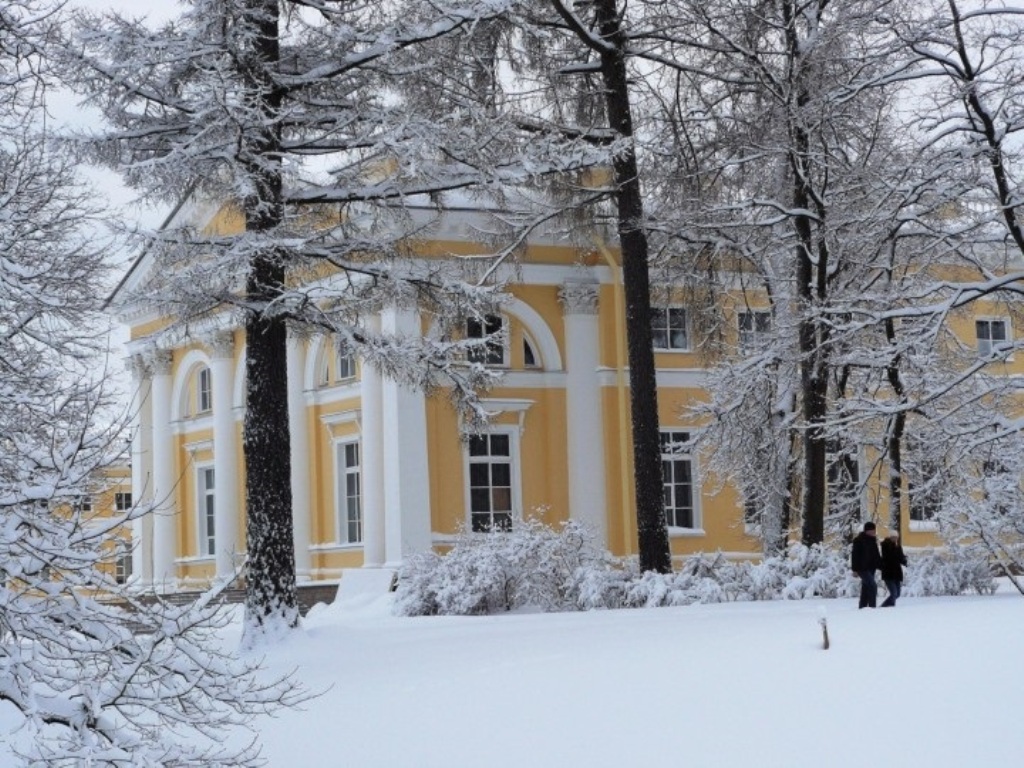
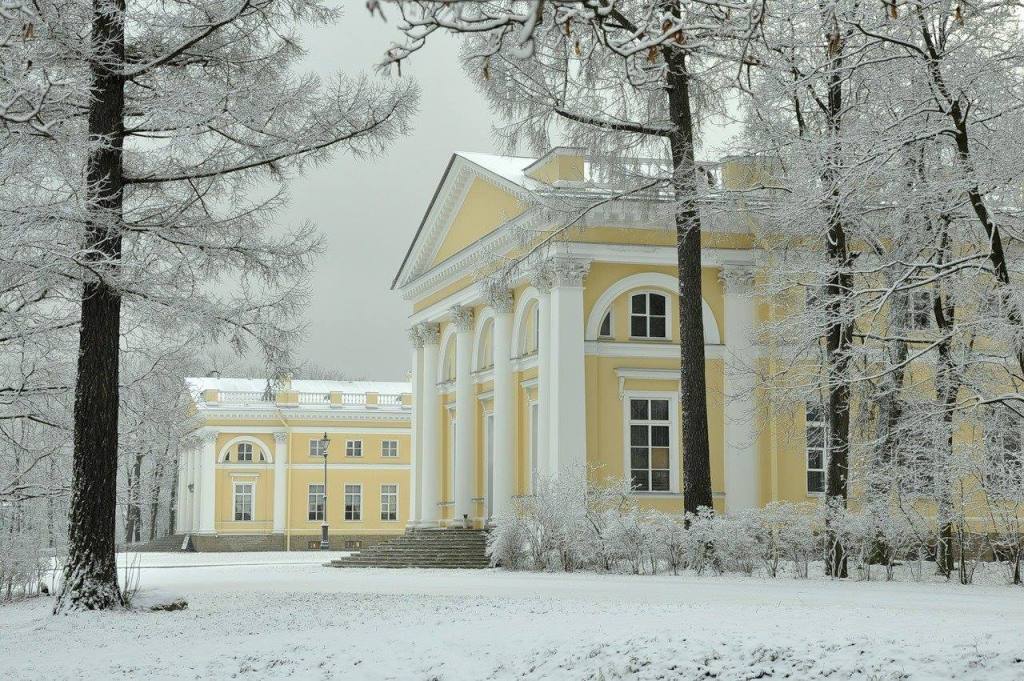
The former Imperial palaces of the Russian Imperial Family take on a whole new beauty in the winter months when they are covered and surrounded with a fresh blanket of snow. The favourite residence of Nicholas II and his family, the Alexander Palace at Tsarskoye Selo in particular. The elegant Neo-Classical edifice, painted a soft pastel yellow, blend perfectly with the surrounding winter landscape. A glorious sense of peace and tranquility are felt while walking around the palace and park at this time of year.
I have assembled the following collection of photos of the Alexander Palace and Park, all of which evoke a breathtaking Russian winter wonderland. After viewing these images, I am sure that you will agree that it is quite understandable why the Imperial Family so loved this place – PG
PHOTO: The main gate leading into the Alexander Palace at Tsarskoye Selo. The gate was installed in 1898, based on the design of the Russian architect (of Italian origin) Silvio Amvrosievich Danini (1867-1942). The view from the street has remained virtually unchanged since the early 20th century.
Following his abdication on 15 March (O.S. 2 March) 1917,”Colonel Romanov” passed through these gates to be reunited with his family. Together, they lived here under house arrest, until their exile to Tobolsk on 1st August of the same year.
PHOTO: A lovely panoramic view which shows the expanse of the Alexander Palace from the opposite side of the pond.
The Alexander Palace was constructed in the town of Tsarskoye Selo, 30 miles south of St. Petersburg. It was commissioned by Empress Catherine II, who reigned 1762–1796, for her favourite grandson, Grand Duke Alexander Pavlovich, the future Emperor Alexander, who reigned 1801–1825), on the occasion of his marriage to Grand Duchess Elizaveta Alexeievna (1779-1826), born Princess Luise Marie Augusta of Baden in 1793.
The edifice was constructed between 1792 and 1796, by the foremost and most prolific practitioner of Neoclassical architecture in Imperial Russia, Giacomo Quarenghi (1744-1817). It was agreed that the architect had excelled himself in creating a masterpiece. In 1821, a quarter of a century later, the architect’s son wrote:
“An elegant building which looks over the beautiful new garden in Tsarskoye Selo, was designed and built by my father at the request of Catherine II, who shaped it with greatest simplicity, combining both functionality with beauty. Its dignified façade, harmonic proportions, and moderate ornamentation are also manifested in its interiors without compromising comfort in striving for magnificence and elegance.”
Emperor Nicholas II and his wife Empress Alexandra Feodorovna always loved this palace. After the events of Bloody Sunday in 1905, the August Coupled decided to make it their permanent residence.
During the reign of Nicholas II, the palace underwent many modern upgrades: it was wired for electricity and equipped with a telephone system. In 1899, a hydraulic lift was installed connecting the Empress’ suite with the children’s rooms on the second floor. With the advent of motion pictures in the early 20th century, a screening booth was built in the Semicircular Hall where the family gathered to watch films.
PHOTO: The eastern wing (left) is where the former private apartments of Nicholas II and Alexandra Feodorovna are located. The wing was closed in autumn 2015 for an extensive restoration.
Fifteen interiors situated in the eastern wing of the palace, are now scheduled to open to visitors in 2021. Among the recreated interiors are the New Study of Nicholas II, Moorish Bathroom of Nicholas II, Working Study of Nicholas II, Reception Room of Nicholas II, Pallisander (Rosewood) Living Room, Mauve (Lilac) Boudoir, Alexandra’s Corner Reception Room, the Imperial Bedroom, among others. This wing of the palace will become known as the ‘Museum of the Russian Imperial Family’.
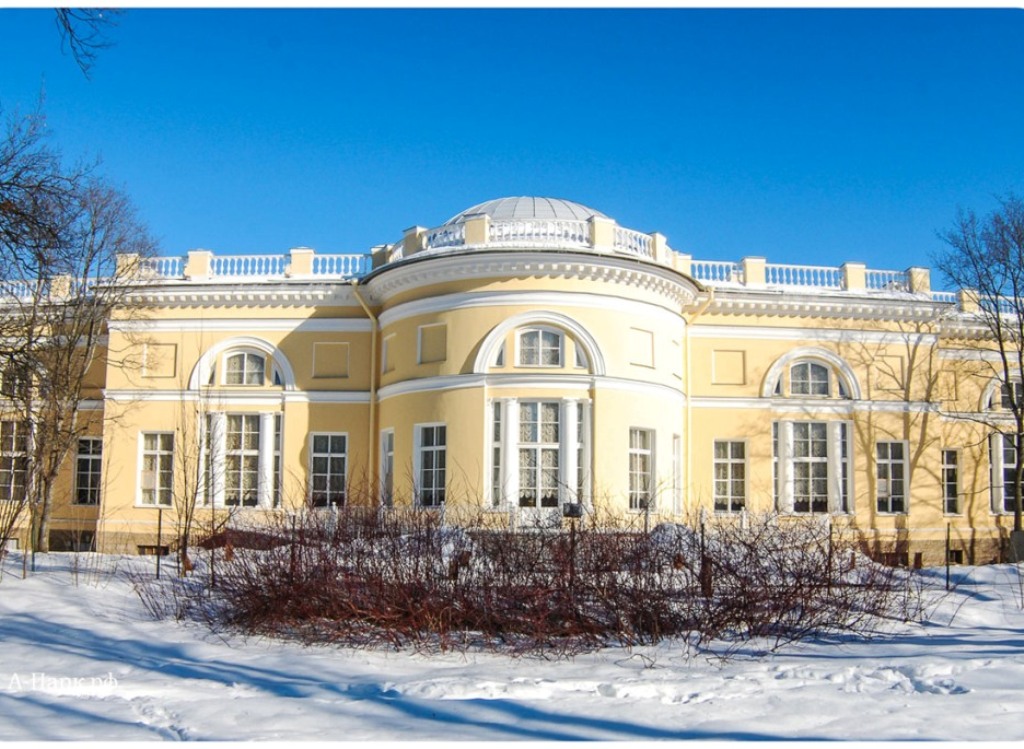
PHOTO: Situated facing the Alexander Park are the windows of the Semi-Circular Hall. It is through these doors on 1st August 1917, that the Imperial Family and their retinue departed the Alexander Palace for the last time. They were transported to the Alexandrovsky Station, where an awaiting train took them into exile to Tobolsk in Siberia. It was in Tobolsk that the Imperial Family were held under house arrest in the former Governor’s Mansion – renamed the “House of Freedom” until April 1918, when they were transferred to Ekaterinburg and subsequently murdered by the Bolsheviks on 17th July 1918.
PHOTO: The warm glow from a winter sun simply adds to the beauty of the Alexander Palace surrounded by snow. During the winter months, Nicholas II took time to enjoy outdoor activities with his family. Together, they build snow fortresses, went skating on the ice covered ponds, and partook of sleigh rides through the park, a pastime in which the Empress also participated. In his zest for physical activity, the Tsar was often seen shoveling snow from the paths, chopped ice for the cellar, cut dry branches or old trees, storing firewood for the long, dark and cold winter months.
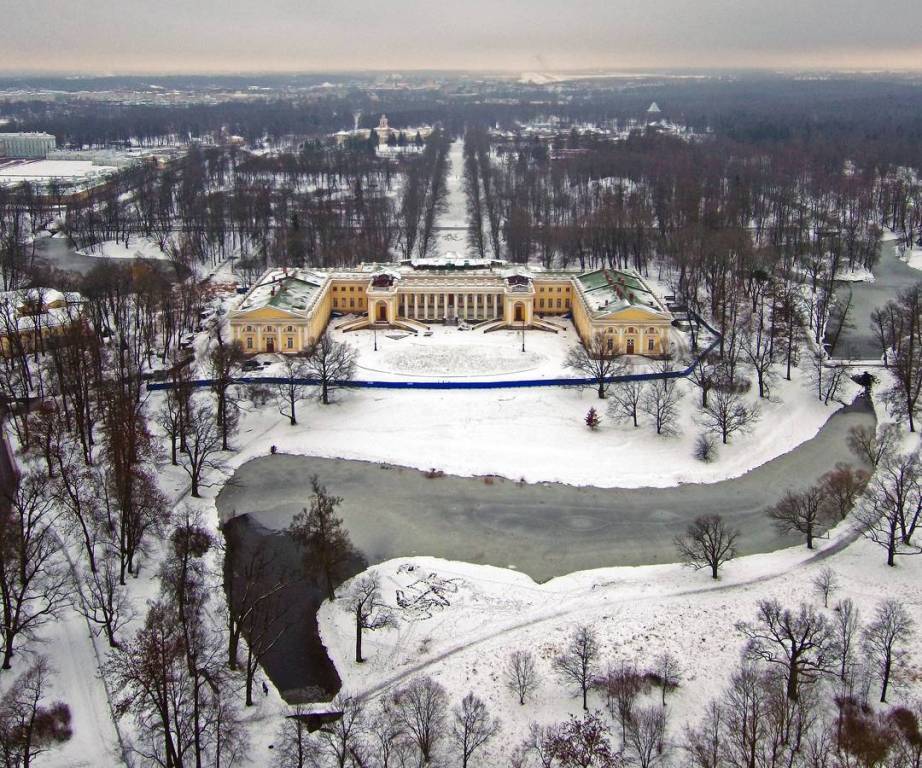
PHOTO: This aerial view of the Alexander Palace, taken by a drone, shows the size of the building. The photo was taken last year, during the ongoing restoration of the palace. The surrounding park offers pathways leading to the parks numerous pavilions, as well as ponds and canals, which were often used during the summer months by Nicholas II and his children for boating.
The Alexander Palace is within walking distance of the nearby Catherine Palace, which can be seen in the upper left hand corner of the photo above.
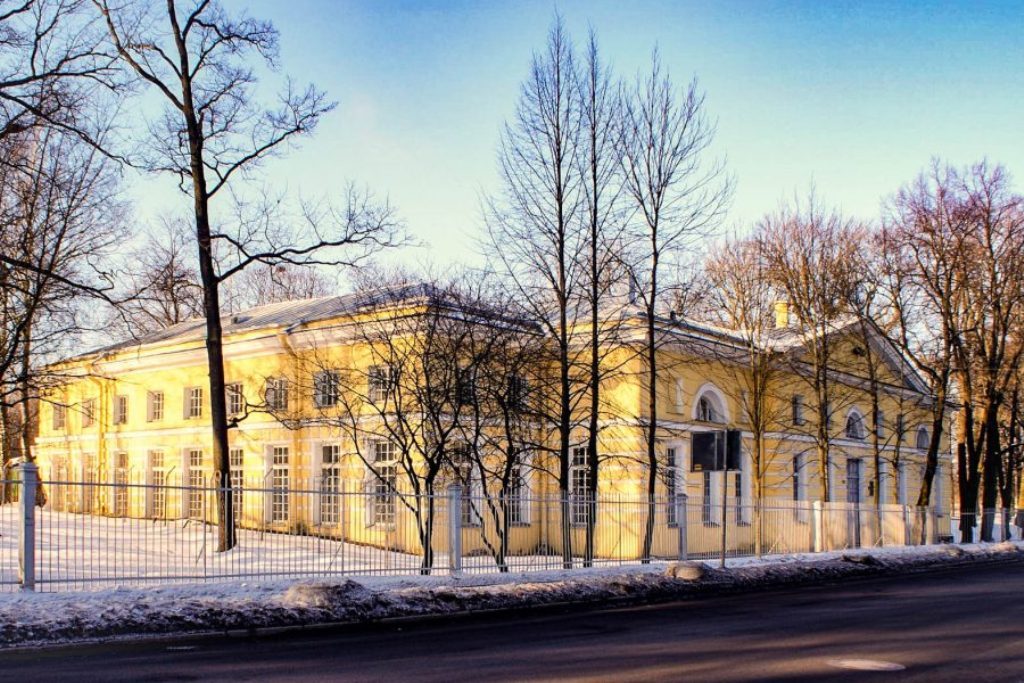
PHOTO: The Kitchen Building of the Alexander Palace at Tsarskoye Selo. Meals were prepared in this building, and taken to the palace through an underground tunnel.
When the restoration of the palace is completed in 2024, the former Kitchen Building will serve as the main entrance to the multi-museum Alexander Palace complex.
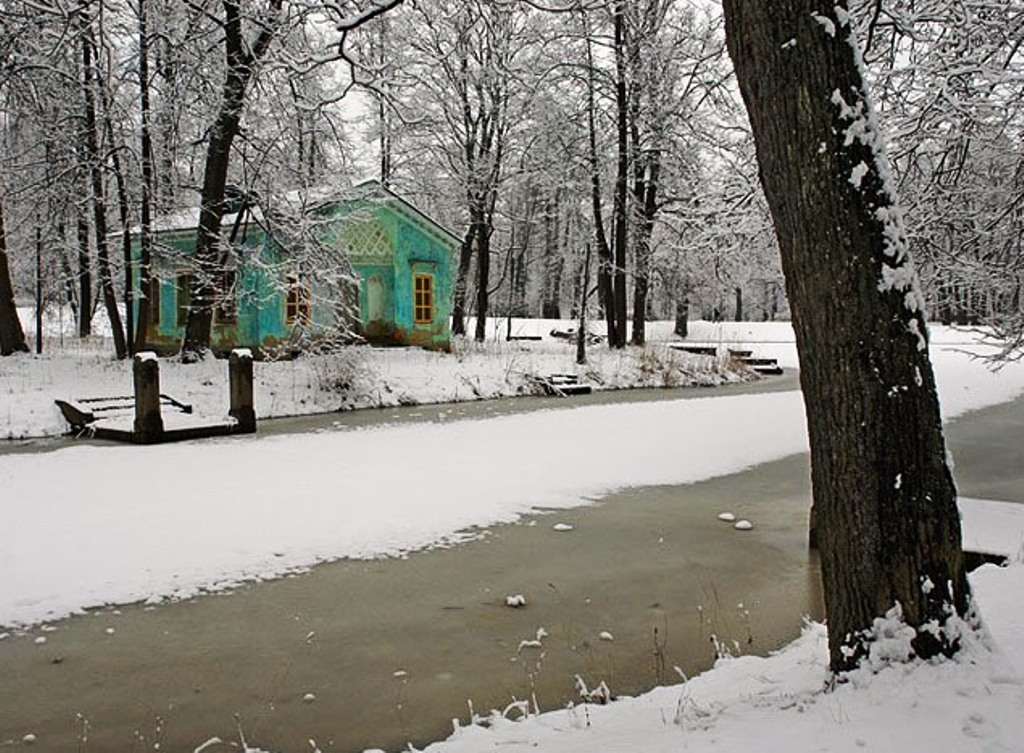
PHOTO: the Children’s Island, which features a tiny house built for the children of Emperor Nicholas I, and later enjoyed by the children of three successive monarchs: Alexander II, Alexander III and Nicholas II. To the left of the house is a small cemetery, where the Tsar buried his favourite dogs. The cemetery has survived to this day.
The island was reached by a pull-ferry, whereby sailors would pull ropes sending the ferry over to the island and back from the park’s shore.
According to the Tsarskoye Selo State Museum, there are plans to eventually restore the Children’s Island and Pavilion, once funding has been secured.
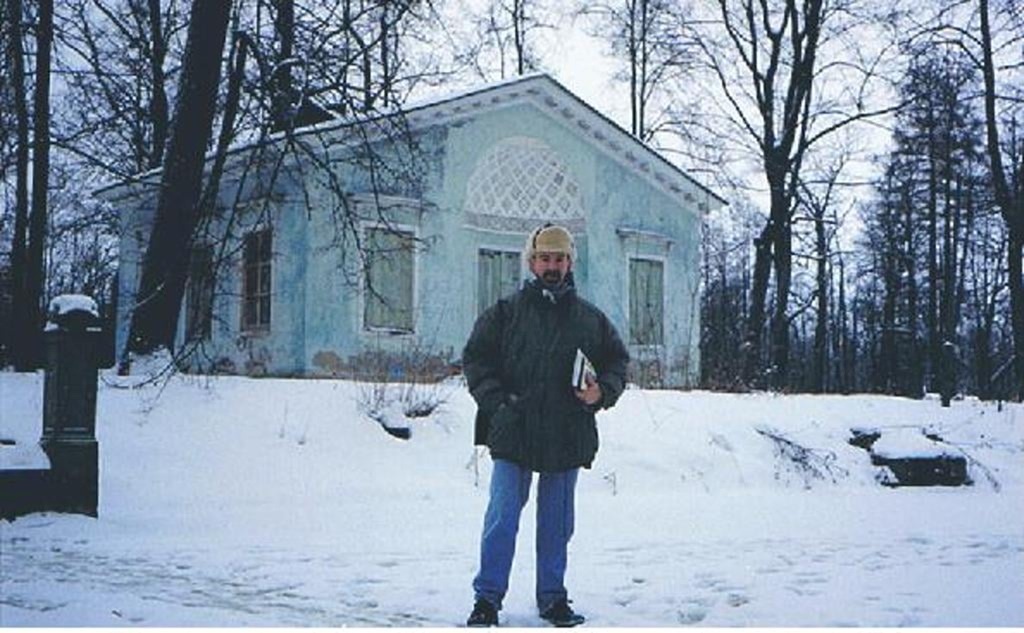
PHOTO: the author of this article Paul Gilbert standing on the frozen pond in front of the Children’s Island, near the Alexander Palace, was taken back in the 1990s during one of my visits to St. Petersburg.
On two separate winter visits to Tsarskoye Selo, I managed to walk across the frozen pond, walked around the Children’s House and the pet cemetery – the latter of which has survived intact. The former Children’s House is in a very sad state of neglect and disrepair, having been used and vandalized by local drug addicts in the 1990s. The doors and windows are now all boarded up.
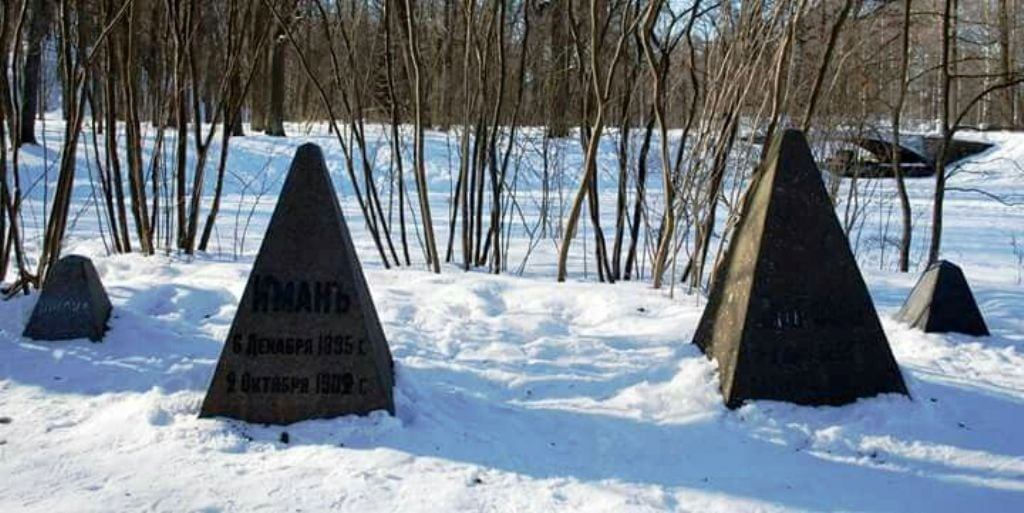
PHOTO: view of the pet cemetery on the Children’s Island, consisting of four graves is situated on the western side of the island.
In the late 19th century, the Imperial family built a cemetery on the western side of the island, where they buried their beloved canine companions. The gravestones have survived to this day.
The names and dates of each of the family dogs are still clearly visible:
Шилка Shilka 1894-1910 Иманъ Iman December 6, 1895 – October 2, 1902 Воронъ Voron December 1889 – September 1895 Эра Era 1894 – 1906
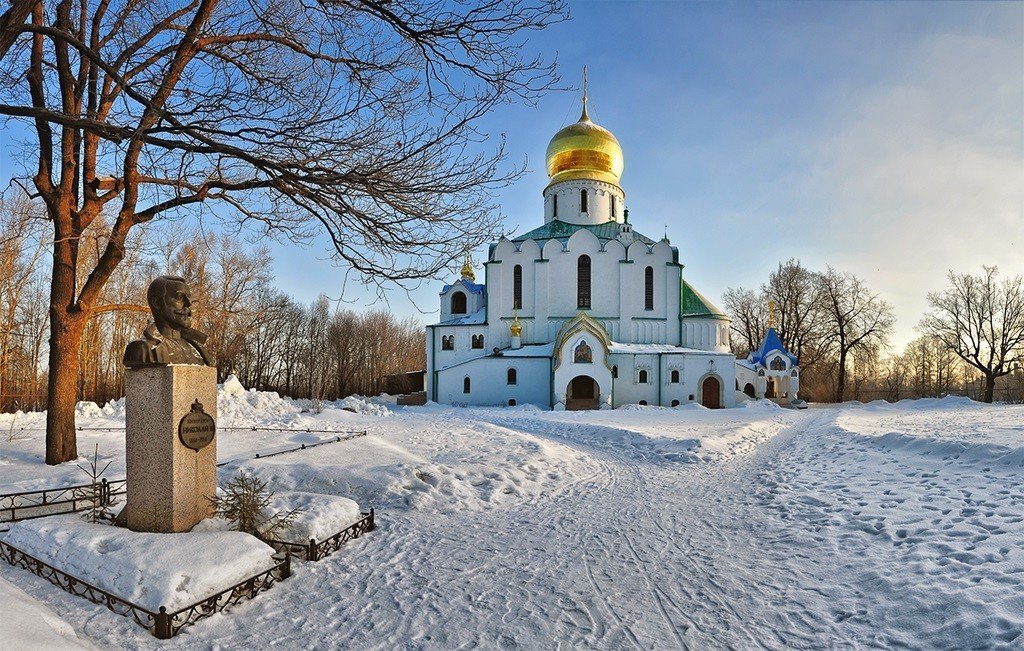
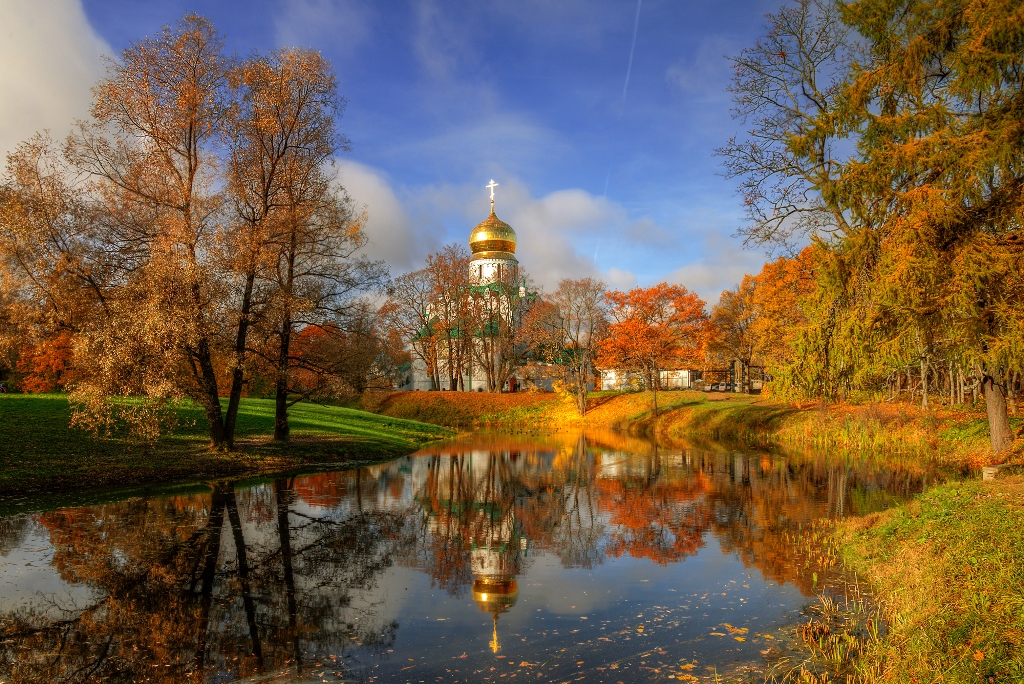
PHOTO: Just a short walk from the Alexander Palace is the Feodorovsky Sovereign Cathedral, with its beautiful Russian national-style edifice and magnificent interiors, including the Cave Church.
On 2 September (O.S. 20 August) 1909, Emperor Nicholas II laid the first foundation stone for the Feodorovsky Sovereign Cathedral, which later served as the household church of the Imperial Family.
After the 1917 Revolution, the cathedral was closed, it was badly damaged during the Great Patriotic War (1941-44). In 1991 the cathedral was transferred to the Russian Orthodox Church, restoration of the Cathedral lasted nearly 20 years..
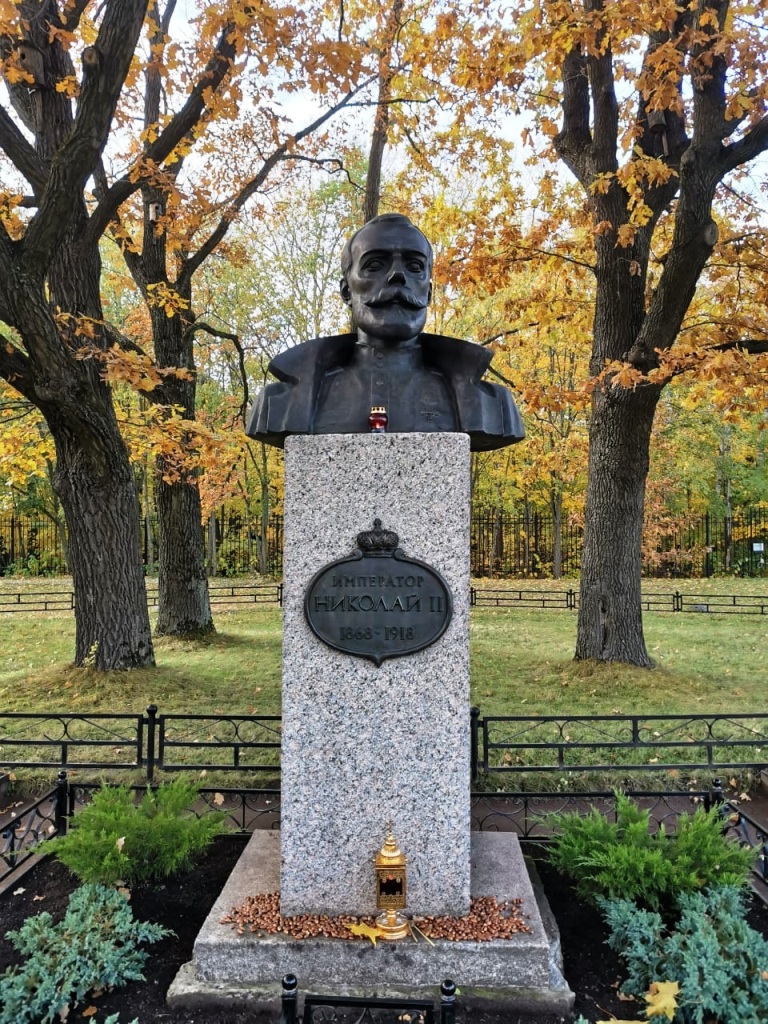
On 17th July 1993, hundreds of Orthodox Christians and monarchists gathered for the official opening and consecration of the first monument to Emperor Nicholas II (seen on the left in the photo) to be established in post-Soviet Russia.
The monument was consecrated on the day marking the 75th anniversary of the murder of Nicholas II, on the grounds of the Feodorovsky Sovereign Cathedral. The monument is the work of St. Petersburg sculptor Victor Vladimirovich Zaiko (born 1944).
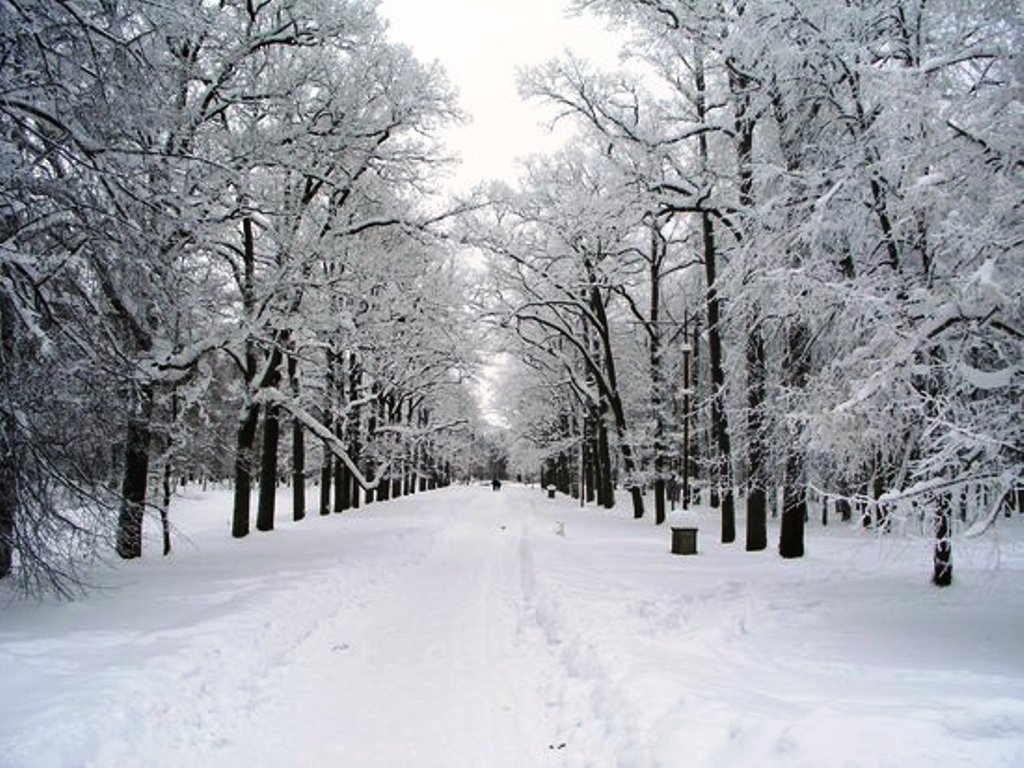
PHOTO: A walk through the snow covered Alexander Park at Tsarskoye Selo offers many surprises for visitors. Over the course of the past decade, numerous pavilions have been beautifully restored, including the Sovereign’s Martial Chamber, the Arsenal, the Chapelle, and the White Tower.
In addition, some people may want to visit the gravesite of Grigorii Rasputin (1869-1916). His body was buried on 2 January (O.S. 21 December) 1916, at a small church (has not survived) that Anna Vyrubova (1884-1964) had been building in the Alexander Park. His body was exhumed and burned by a detachment of soldiers shortly after the Tsar abdicated the throne in March 1917.
There are future plans to restore the Children’s Pavilion and Island, the Chinese Theater, the Pension Stable, the Farm as well as the reclamation of the Alexander Park. There are plans to charge for entry to the park, the funds of which will help restore these historic buildings and maintain the grounds, however, this additional cost has yet to be implemented.
PHOTO: western (foreground) and eastern (background) wings of the Alexander Palace
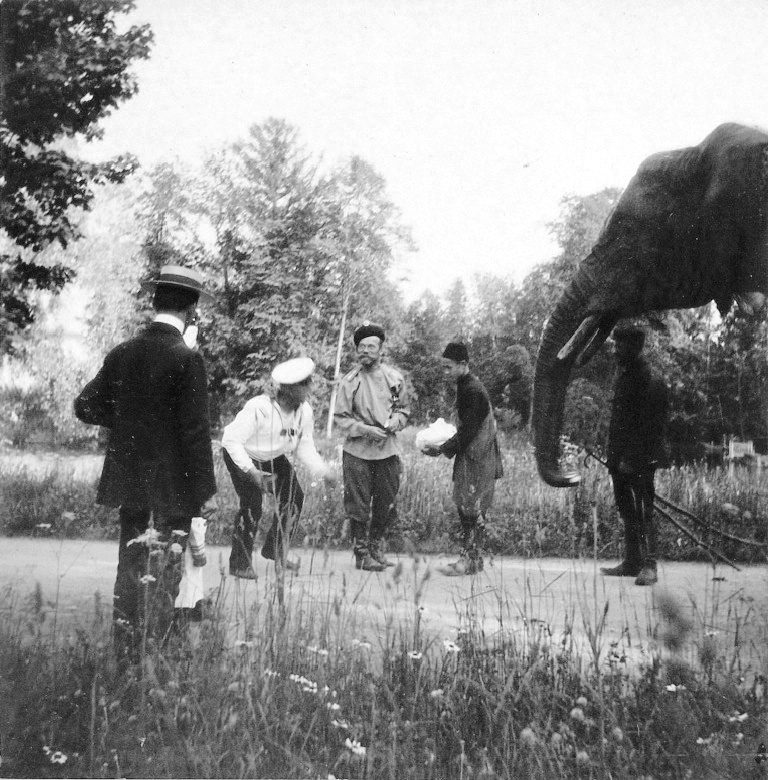
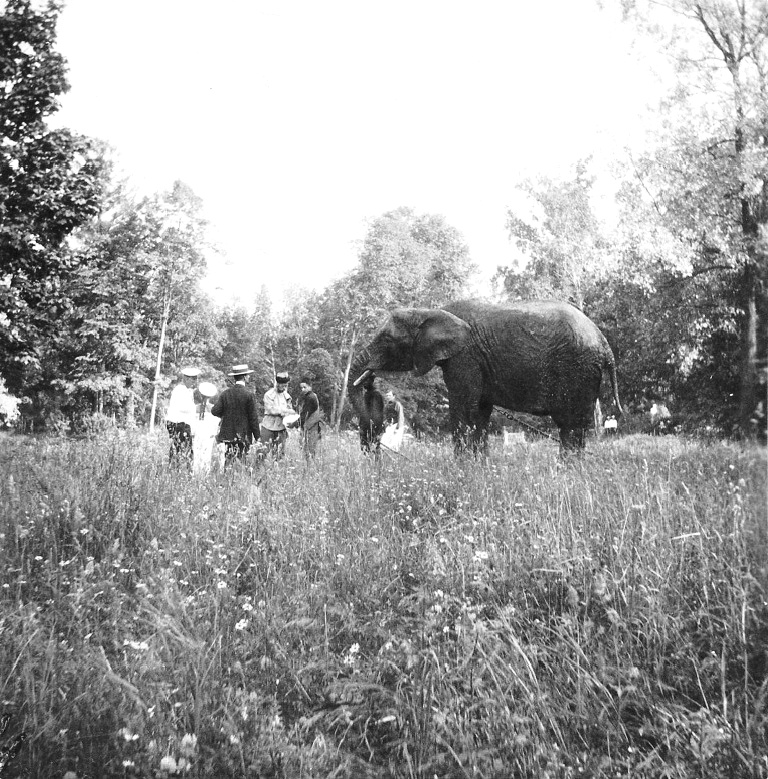
PHOTO: Emperor Nicholas II feeding his “pet” African elephant in the Alexander Park. 1914
One of the favourite pastimes of European monarchs and wealthy aristocrats were menageries, filled with exotic creatures from the four corners of the world. Among the most popular were rhinos, hippos and elephants.
Elephants in Russia during the 19th century
The first elephant was brought to Russia in 1832, and in 1839, the Emir of Bukhara presented Emperor Nicholas I (1796-1855) with another elephant and two camels, which walked from Bukhara to St. Petersburg – a journey which tookr almost a year.
The elephant was taken for a walk daily by an attendant, who noted that the elephant was a “kind and clever animal”. The Tsar’s children fed the elephant with apples and sugar, and together with the caretaker they walked him in the yard of the Elephant Pavilion.
The elephants became a favorite animal among the Tsar’s children. Visits to see the elephants was part of the educational program for the grand dukes. The children came to feed the old elephant, and the teachers asked them to examine the animal’s teeth and feet, as part of their studies. The grand dukes fed the elephant with apples and sugar cubes and, together with the caretaker, walked it around the courtyard.
The Elephant Pavilion
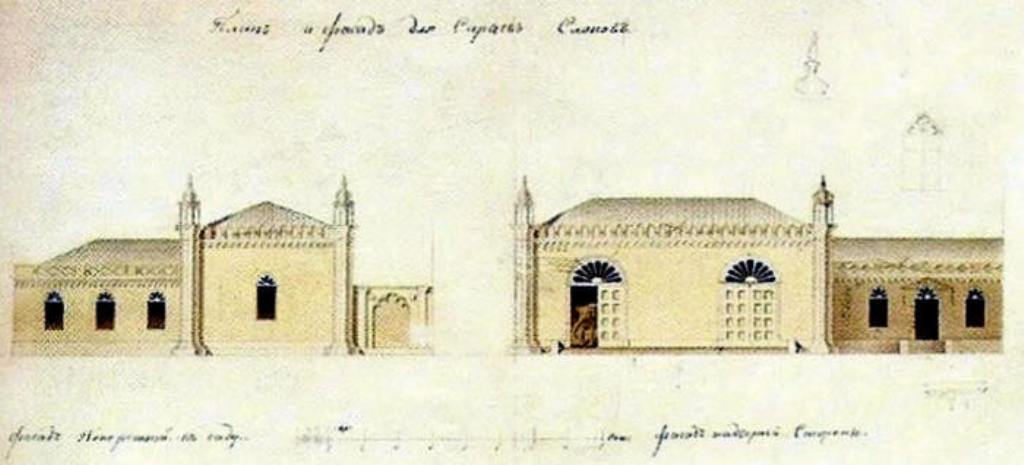
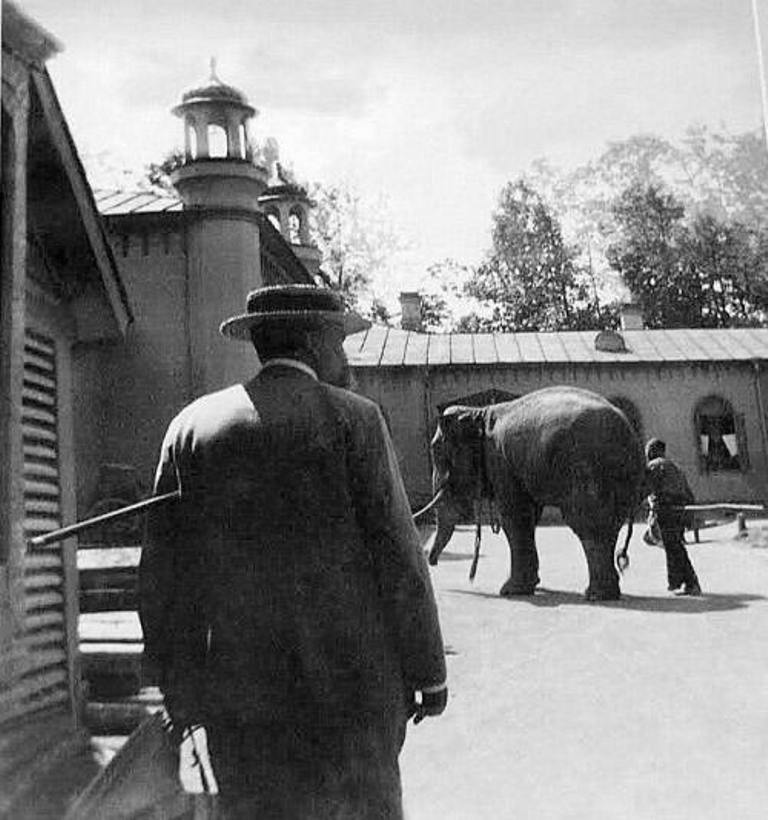
The elephants were housed in a specially made Elephant Pavilion, constructed during the reign of Emperor Nicholas I, in the far end of the Alexander Park at Tsarskoye Selo. The wooden pavilion was constructed in 1828 in the Indian style by the Scottish architect Adam Menelaws (1753-1831). The pavilion included small intricate turrets, a large quadrangular courtyard, surrounded by a metal fence, with service buildings and sheds.
According to the caretaker, the male elephants “eats 2 pounds of tortillas fried in butter, 6 pound of hay, sugar cubes and 2 tubs of water, per day.”
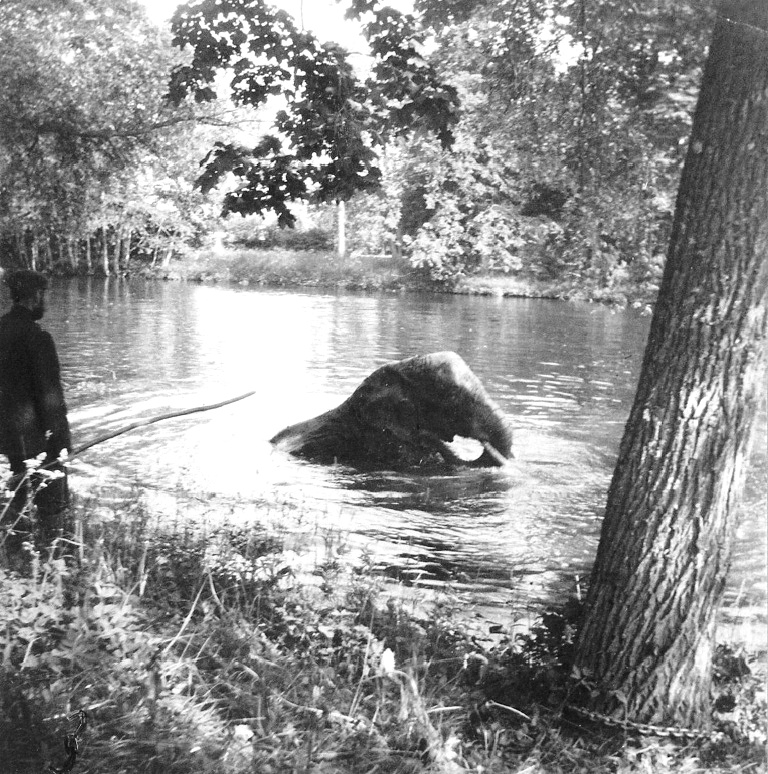
In winter, the building was heated, and covered with large felt blankets, so that the elephants lived in warmth during the cold Russian winters. In the summer, they walked in the park and bathed daily in the local pond.
From 1870 to 1872, another elephant from the Emir of Bukhara was brought to Tsarskoye Selo, however, it was transferred to the St. Petersburg Zoological Garden.
PHOTO: architect’s rendering of the facade of the Elephant Pavilion. 1828 (above; early 20th century view of the courtyard of the pavilion (below)
The last Russian tsar Nicholas II kept elephants
In his 1911 study of Tsarskoye Selo, Sergei Nikolaevich Vilchkovsky (1871-1928), notes that a young elephant lived in Tsarskoye Selo in July 1891.
During his journey to the Far East in 1891-92, Nicholas Alexandrovich, while still a grand duke and tsesarevich, returned to Russia with his first Indian elephant. Five years later – in August 1896 – another elephant arrived from Abyssinia (Ethiopia).
Sadly, the Indian elephant did not live long. The harsh Russian winters and lack of proper care led to the poor animals demise in 1902. The African elephant, faired much better, he lived until 1917.
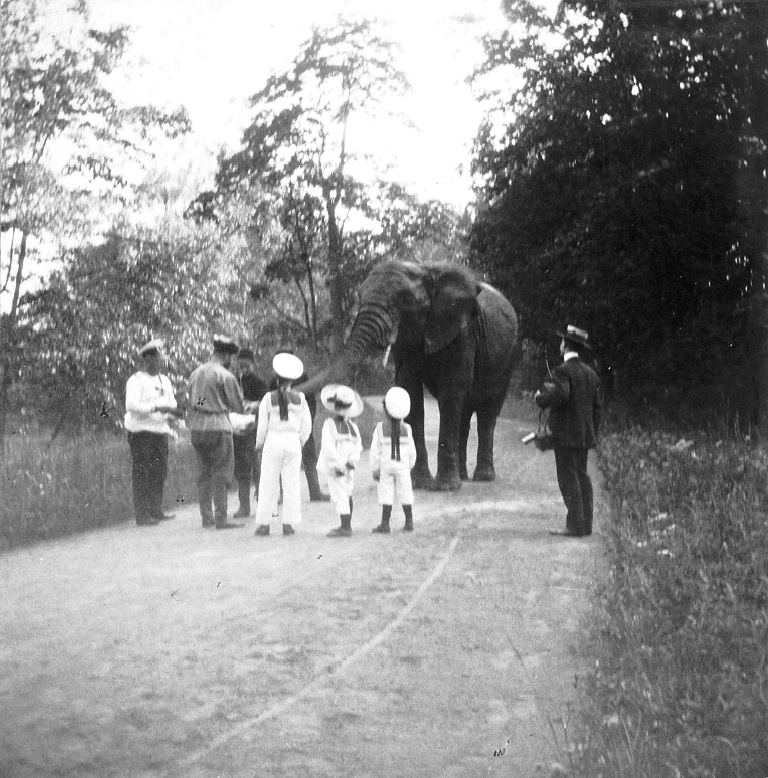
PHOTO: Tsesarevich Alexei (left) and his friends, watch as Tsar Nicholas II preparing to feed the elephant in the Alexander Park. Pierre Gilliard can be seen standing to the right.1914
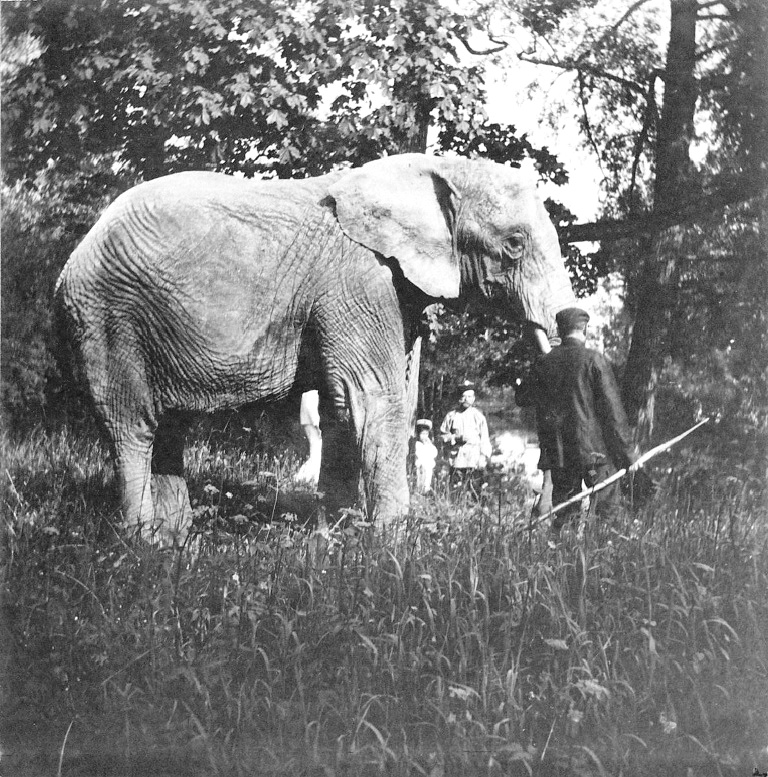
PHOTO: this photo allows us to appreciate the height of this magnificent animal. Nicholas II and his children can be seen standing in the background. 1914
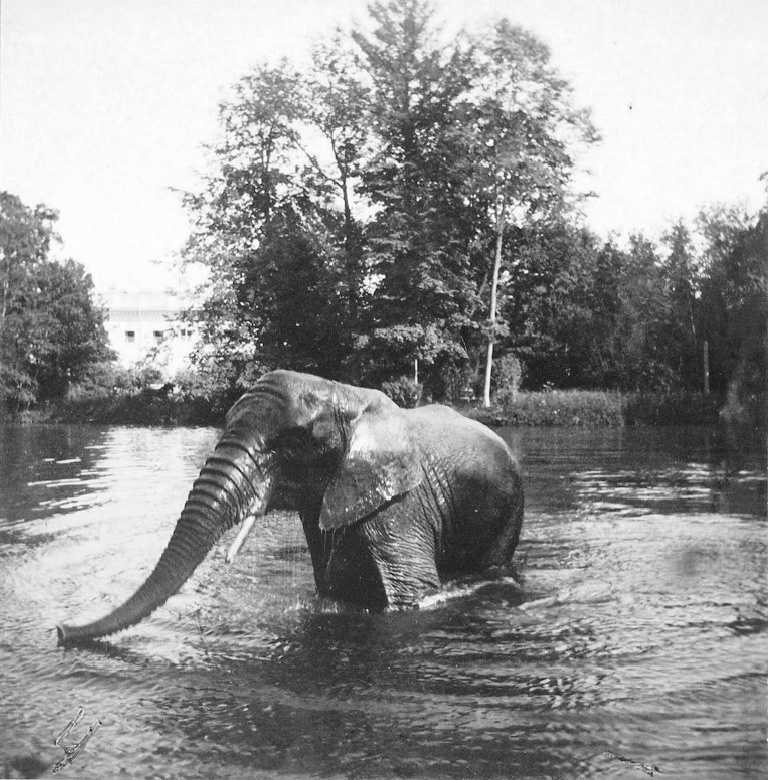
The African elephant was under the care of a Tartar – ironically called Alexei – who always wore a red fez, noted that the elephant was “good-natured and very obedient”. Every day during the summer, the Tatar walked the animal in the Alexander Park, where it was taken to a tiny lake, which was appropriately named “Elephant pond”. The elephant happily plunged into the water, taking water in his trunk, and dousing itself.
It is interesting to note that the animal was never given a name, it was simply called “Elephant”.
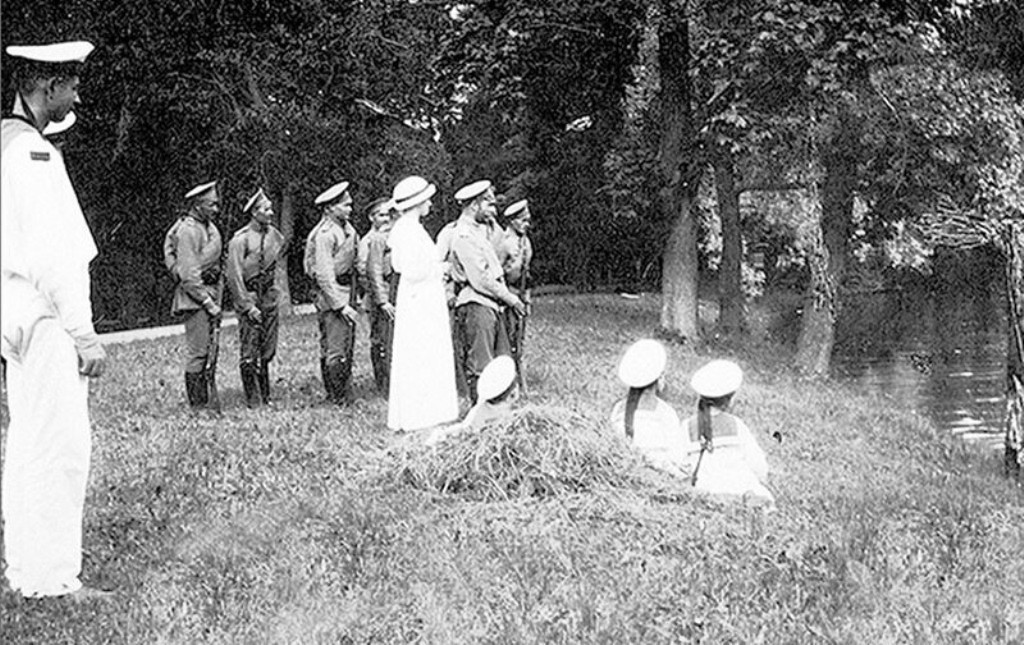
The Tsar and his family loved to spend time with the elephant, often bringing their friends and relatives. Nicholas II repeatedly made entries in his diary that he and his son and heir went to watch the elephant bathe. On 9th June 1914, Nicholas made the following entry in his diary: “Alexei and I brought an elephant to our pond and amused ourselves with its bathing.” Being fond of photography, the Tsar took several pictures of his elephant.
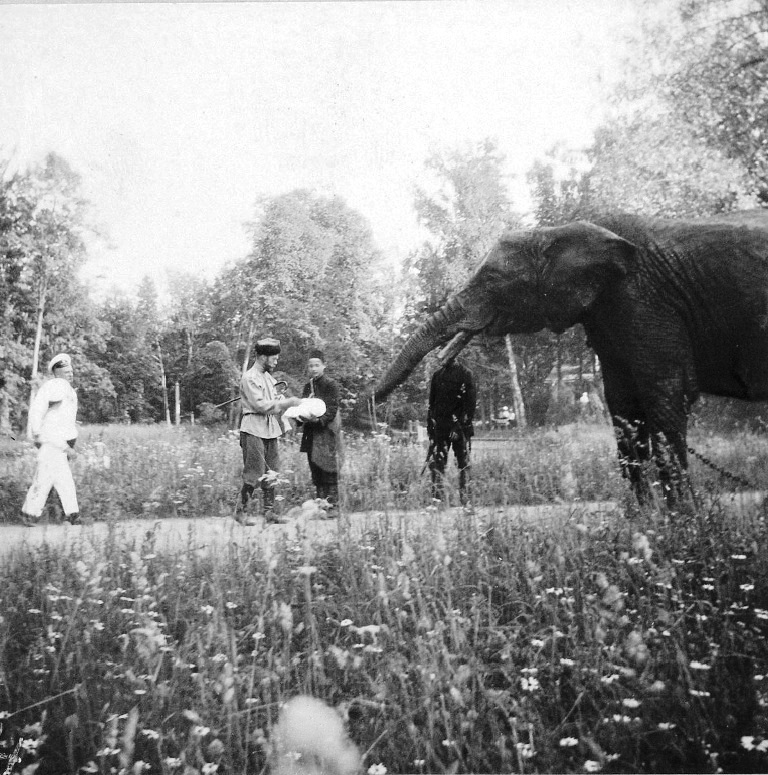
PHOTO: Emperor Nicholas II feeding his “pet” elephant in the Alexander Park. 1914
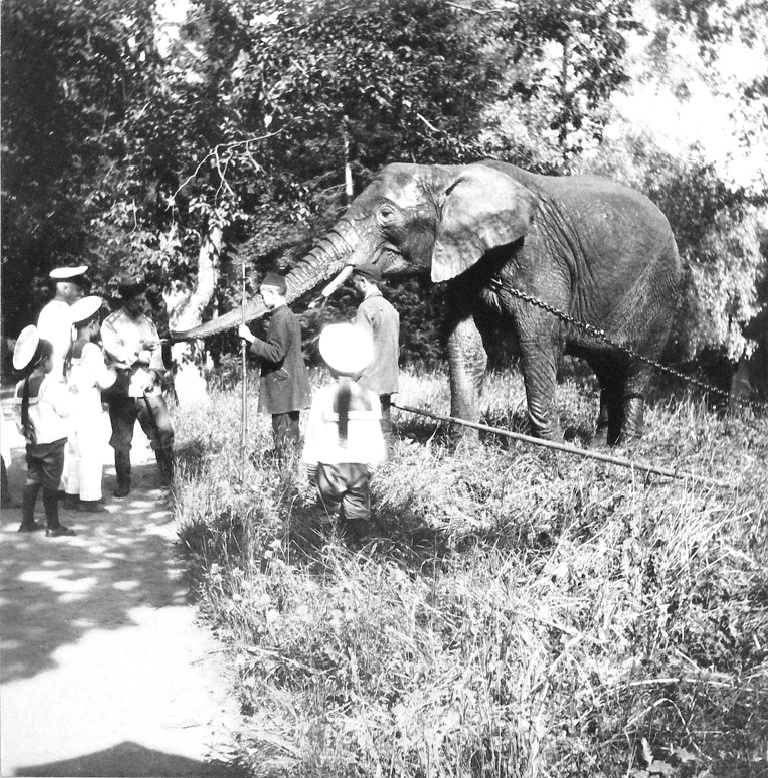
PHOTO: the Emperor distributes treats to his children, all of whom are anxious to feed the elephant. 1914
PHOTO: It is interesting to note that the animal was never given a name, it was simply called “Elephant”. 1914
When the Tatar saw the Tsar approach, he bowed low to him and hurried away to bring out the elephant with it’s long, sprawling ears, tiny eyes with long eye lashes, and always moving about. The Tsar was always accompanied by his children among other guests, anxious to watch the animal do tricks.
Alexei [the Tatar] spoke to the elephant in a foreign language, at which the animal obeyed. A number of tree stumps were scattered in the courtyard, and upon command, the elephant began to move them one by one. The elephant then stood on all fours, on the largest. He then lifted his trunk, making a loud trumpet sound, as if greeting us. After each performance, the Tatar gave the elephant a sugar cube, which the elephant put into its mouth. At the end of the visit, the Tatar brought out a large basket of French rolls and offered them to the guests, give to the elephant, who readily took each one with his trunk, and placing them in his mouth. The guests were always charmed by the animal’s gentleness.
When the Tatar tapped the elephant on its front leg, the elephant would lay on its side, at which Alexei [the Tatar] would get behind the animal’s ear and cover himself like a blanket. Then, the elephant stood up, took Alexei with his trunk and sat him on his neck. On Sundays, a saddle was placed on the elephant, which had side seats.
PHOTOS: on warm summer days, the elephant was taken to the “Elephant Pond”, which was located in the Alexander Park at Tsarskoye Selo
The elephant knelt down again, and the children and adults would climb into the side chairs of the saddle and take for a ride around the coutryard. After riding the elephant, the passengers got out, and others sat in their place. As a reward, the elephant received sweet buns, which he loved very much. When the animal went for a swim in the pond, an entire procession of guests was formed. Alexei [the Tatar] seated on the animal’s neck, led the procession of children and adults, who followed behind to the “Elephant Pond”
The care and maintenance of keeping such an exotic pet did not come cheap: 18 thousand rubles from the treasury were allocated each year. The elephant was fed mostly hay, supplemented with tortillas fried in butter, sugar cubes, apples and other treats.
PHOTO: the elephant never failed to charm the Tsar, his children and other visitors, as it swam and splashed about in the pond in the Alexander Park.
The fate of the Tsar’s elephant and the elephant pavilion
Following the 1917 Revolution, Nicholas II was forced to abdicate, whereupon he and his family were forced to live under house arrest in the Alexander Palace. So what happened to the elephant?
There is a widespread myth that during the revolution, that the elephant was shot by sailors. Allegedly, the revolutionaries perceived the elephant as a symbol of autocracy and the luxurious life led by the imperial family.
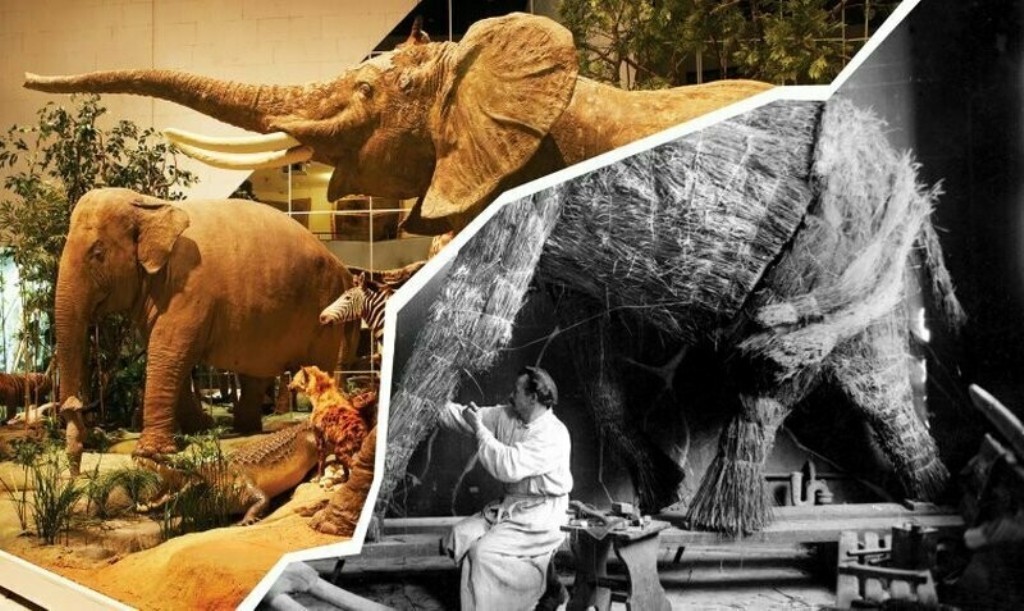
PHOTO: Nicholas II’s African elephant has been preserved to this day, in the Darwin Museum in Moscow
But in reality, they tried to transport the elephant to Moscow, where it would be placed in the city’s zoological gardens. Alas, the animal did not survive the long journey, got sick and died in 1917. However, the elephant was still taken to Moscow, where it was sent to a taxidermist, and into a museum exhibit. It took about ten years: the best taxidermists of the capital worked on the body. So the African pet of Nicholas II can still be seen in the Darwin Museum to this day.
During the Patriotic War of 1941-1944, the Elephant Pavilion in the Alexander Park was severely damaged during the Nazi occupation of Tsarskoye Selo. The only thing which was preserved were the chimneys – everything else was destroyed. There are no plans to reconstruct the Elephant Pavilion at the present time.
I have published nearly 50 titles to date through AMAZON – featuring one of the largest selections of books on Nicholas II, the Romanov dynasty and the history of Imperial Russia.
Please CLICK on the BANNER or LINK above to review my current selection of titles in hardcover, paperback and ebook editions. Listings provide a full description for each title, pricing and a Look inside feature.
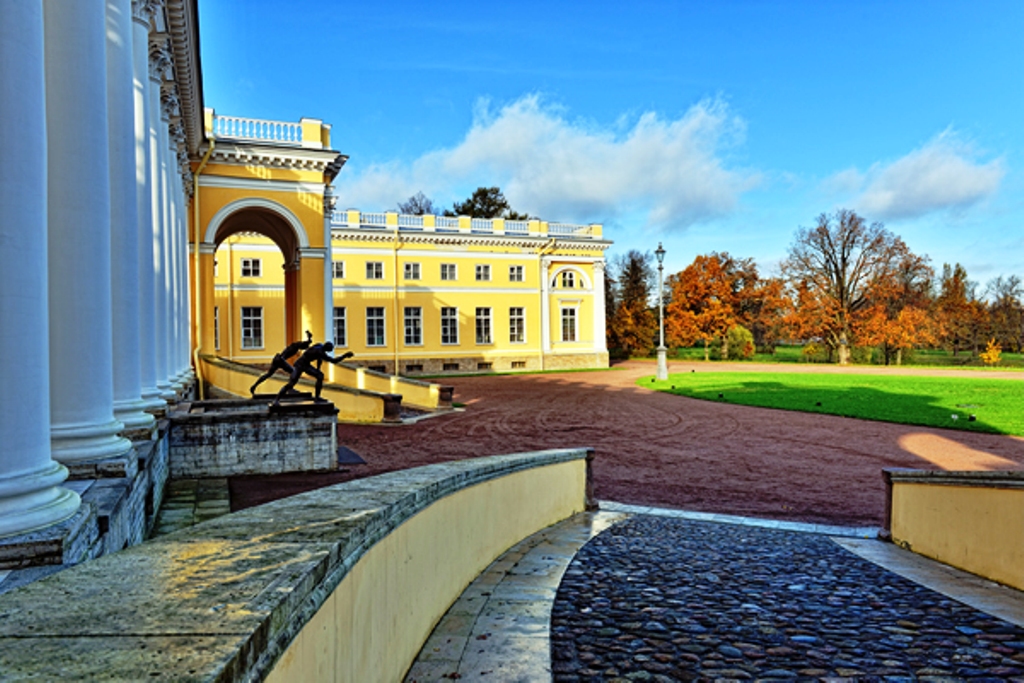
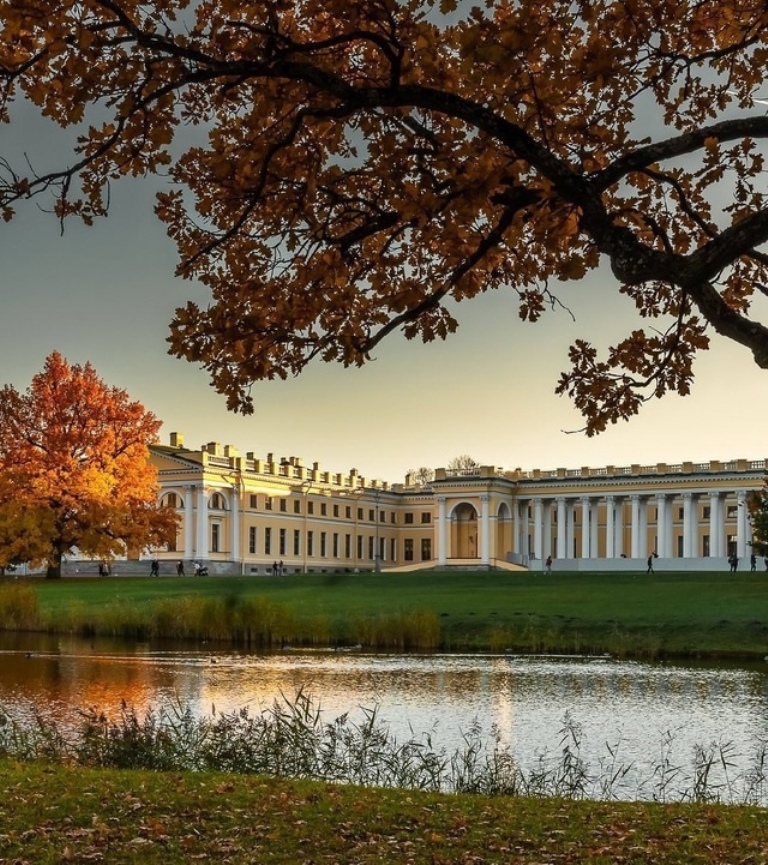
PHOTO: the Alexander Palace set against the backdrop of autumn colours
The first day of autumn officially arrives in Russia on 1st September. It seems only fitting that we celebrate one of the loveliest seasons of the year with these beautiful photos of the Alexander Palace and Park at Tsarskoye Selo.
Autumn is my favourite time of year to visit Russia. During a visit to St. Petersburg in October 2007, I decided to spend an entire week in Pushkin [Tsarskoye Selo].
Staying in Tsarskoye Selo was a refreshing change from the hustle and bustle of St. Petersburg. I stayed at the Hotel Natali which is situated in the city’s historical district, with nice rooms, and a hearty breakfast included. The main reason I chose this hotel was that the Alexander Palace is literally at the top of the street!
The hotel’s location was ideal for visiting the Alexander and Catherine Palaces, but also the Alexander Park daily on foot at my own leisure. One day, I actually walked to Pavlovsk Palace, a distance of 7.3 km. [4.5 miles]!
The Alexander Park offers pathways leading to the parks numerous pavilions, as well as ponds and canals, which were often used during the summer months by Nicholas II and his children for boating.
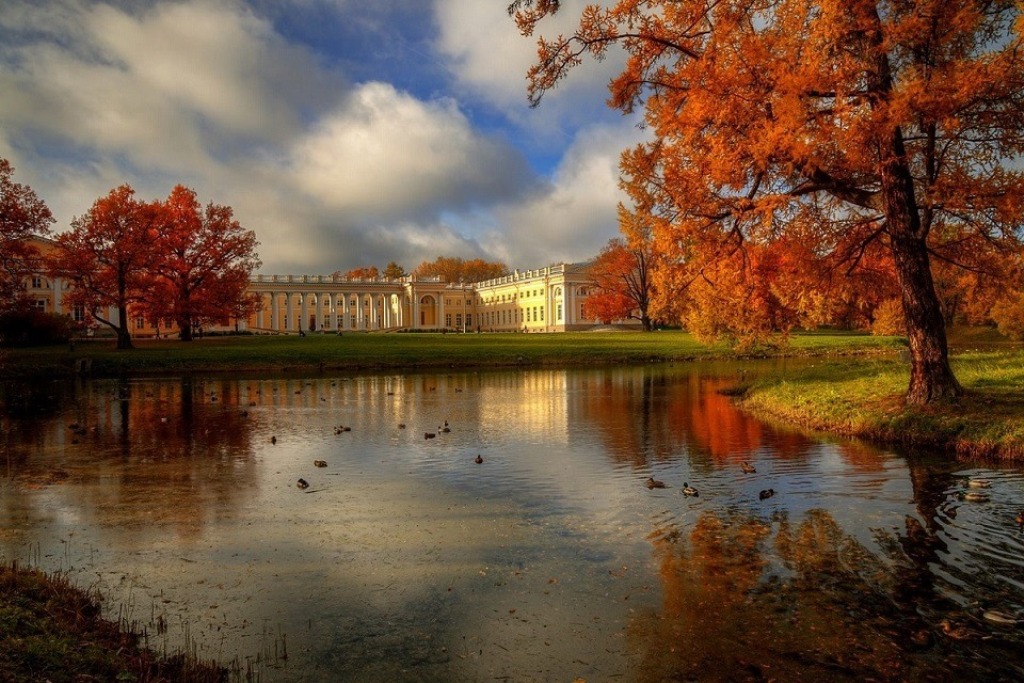
PHOTO: autumn view of the Alexander Palace from the pond
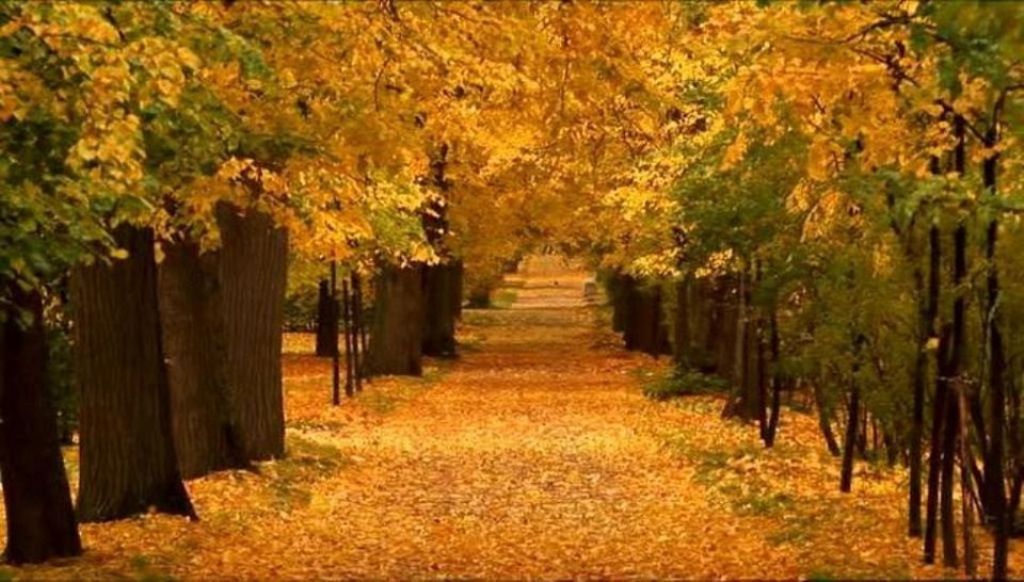
The paths throughout the Alexander Park are now blanketed in beautiful red, yellow, gold leaves that crunch under your footsteps. Cool autumn breeze gently flow through the trees spiriting loose leaves from their branches, allowing each one to dance in the air before falling gently to the ground, adding yet another element to the sprawling carpet of autumn colours. The setting is truly magical.
In addition, I had a wonderful opportunity to explore the town itself. While much of Pushkin was destroyed by the Nazis during the Great Patriotic War (1941-45), it still retains some beautiful architectural gems from the Tsarist period, including a number of palaces and churches – the Feodorovsky Sovereign Cathedral is a must!
Numerous restaurants and cafes are within walking distance of the hotel, as well as a burgeoning souvenir market, where you can buy beautiful hand painted lacquer boxes, lace, and other items made by locals.
For any one planning a future visit to St. Petersburg, I highly recommend Tsarskoye Selo as an alternative place to stay. My autumn 2007 visit remains one of my most memorable visits to Russia, and it was the the season itself which enhanced the beauty of the Alexander Palace and the surrounding park.
PHOTO: the Alexander Palace set against the backdrop of autumn colours
NOTE: the first 15 interiors of the private apartments of Emperor Nicholas II and Empress Alexandra Feodorovna, situated in the eastern wing of the Alexander Palace, opened to the public on 14th August 2021. During the first few weeks of opening, nearly 17,000 people visited the palace.
Over the course of the past decade, numerous pavilions have been beautifully restored, including the Sovereign’s Martial Chamber, the Arsenal, the Chapelle, and the White Tower. The next restoration project in the Alexander Park will that of the Chinese Theatre.
PHOTO: the Alexander Palace as it looked before the 2015-2021 restoration
PHOTO: view of the western wing of the Alexander Palace
PHOTO: one of the many paths in the Alexander Park carpeted with autumn leaves
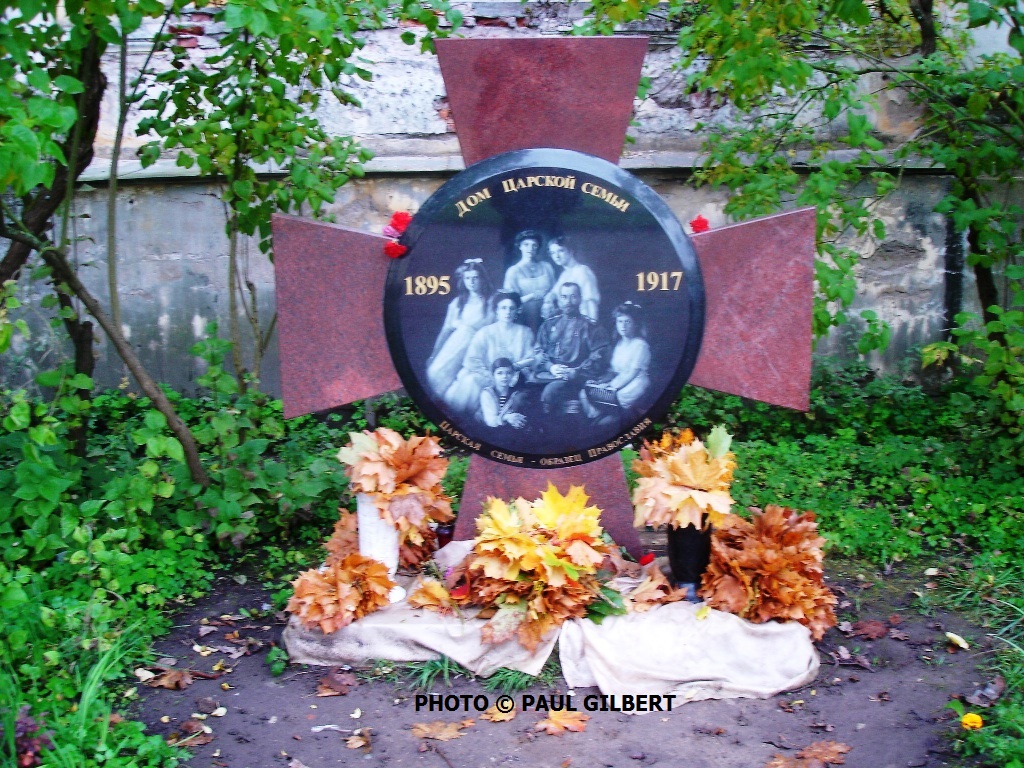
PHOTO: memorial to the Russian Imperial Family, erected in the Alexander Park in 2007
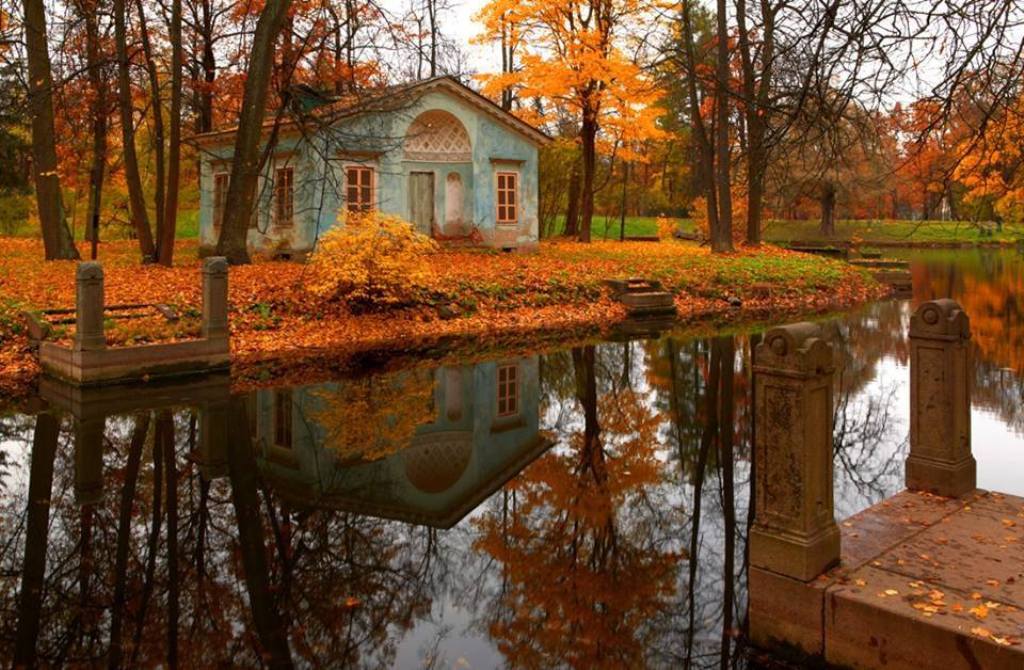
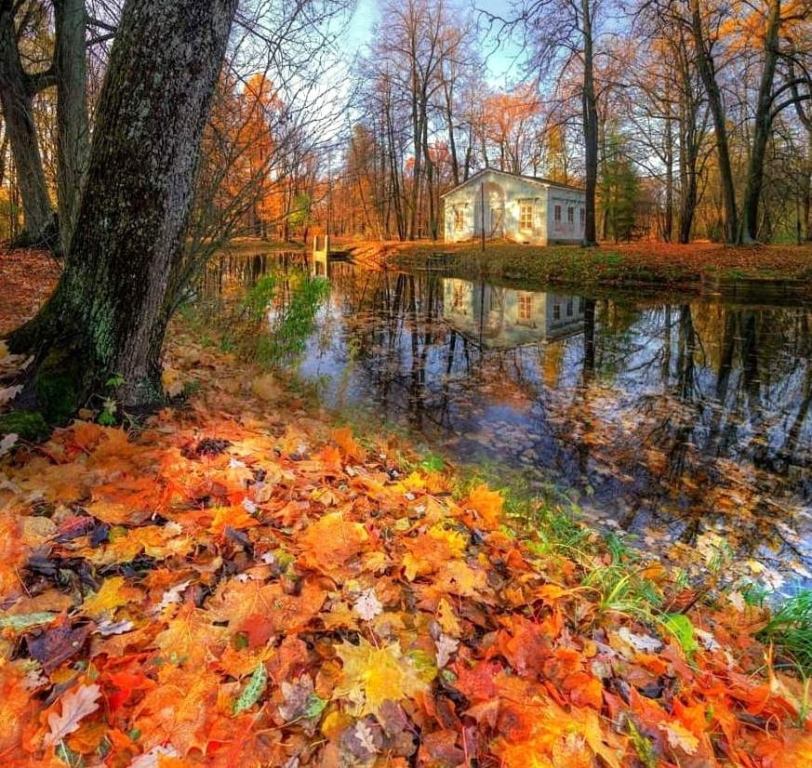
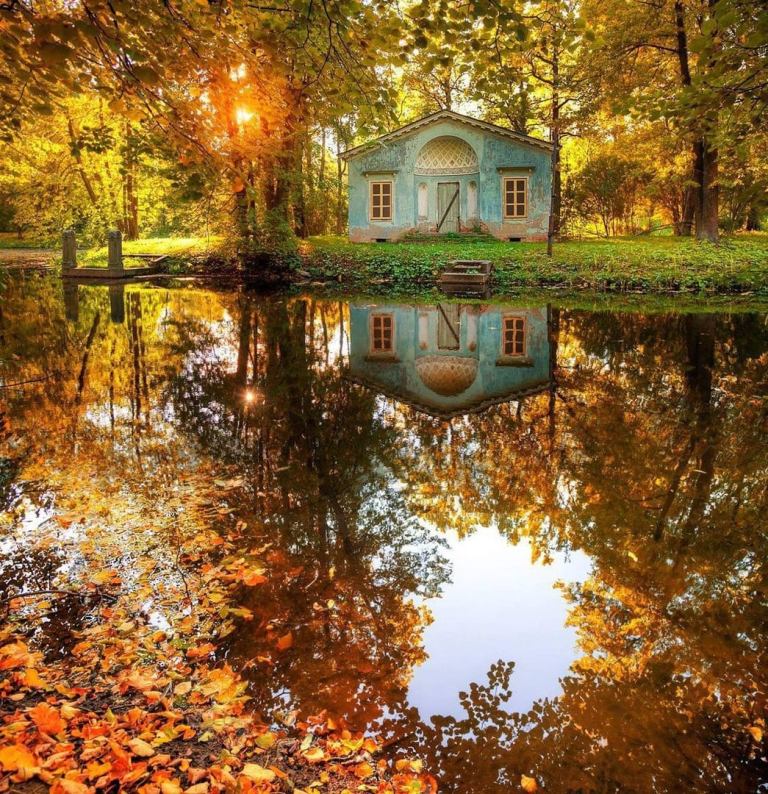
PHOTO: the Children’s Island and House situated in the park near the Alexander Palace
PHOTO: the Children’s Island and House situated in the park near the Alexander Palace
PHOTO: the Children’s Island and House situated in the park near the Alexander Palace
PHOTO: the Feodorovsky Sovereign Cathedral is a short walk through the Alexander Park
PHOTO: Russia’s first monument to Nicholas II was established in 1993, on the grounds of the Feodorovsky Sovereign Cathedral
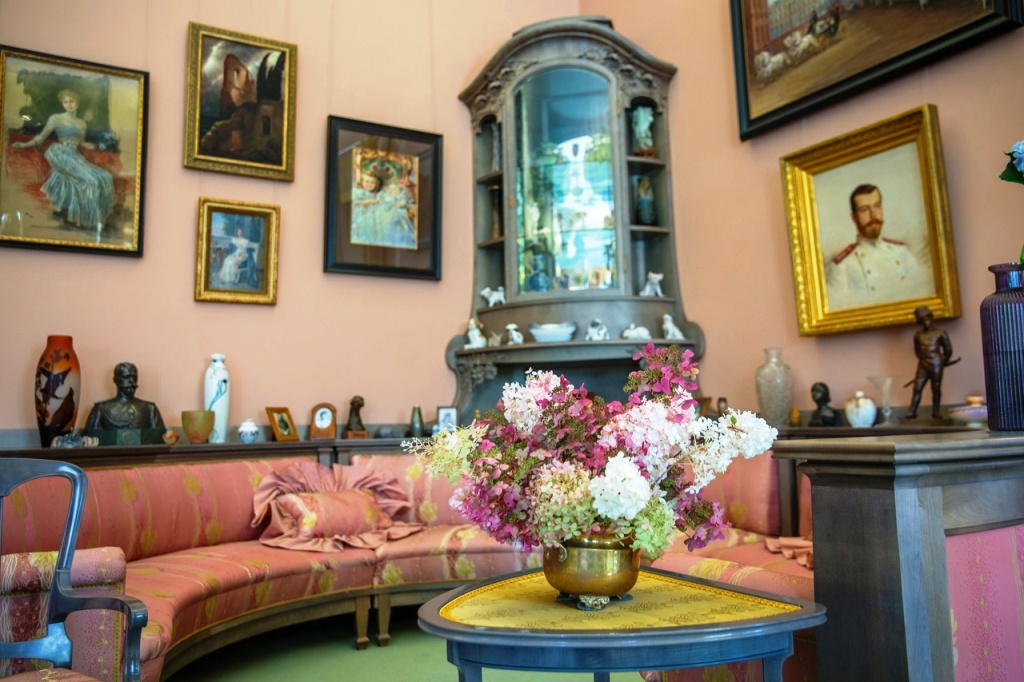
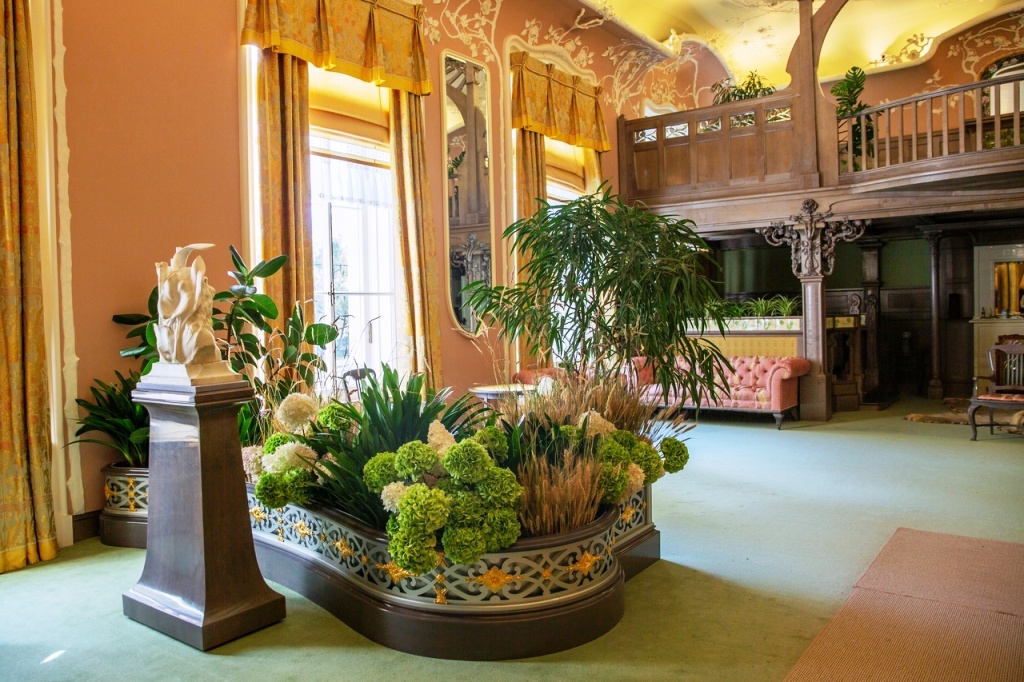
The Tsarskoye Selo State Museum has launched a very innovative new project: “Blooming Palace”, to be held in the Alexander Palace over the next 12 months. Once a month, flower arrangements created by modern designers and florists will be displayed in different interiors of the Alexander Palace, the favourite Imperial residence of Nicholas II and his family.
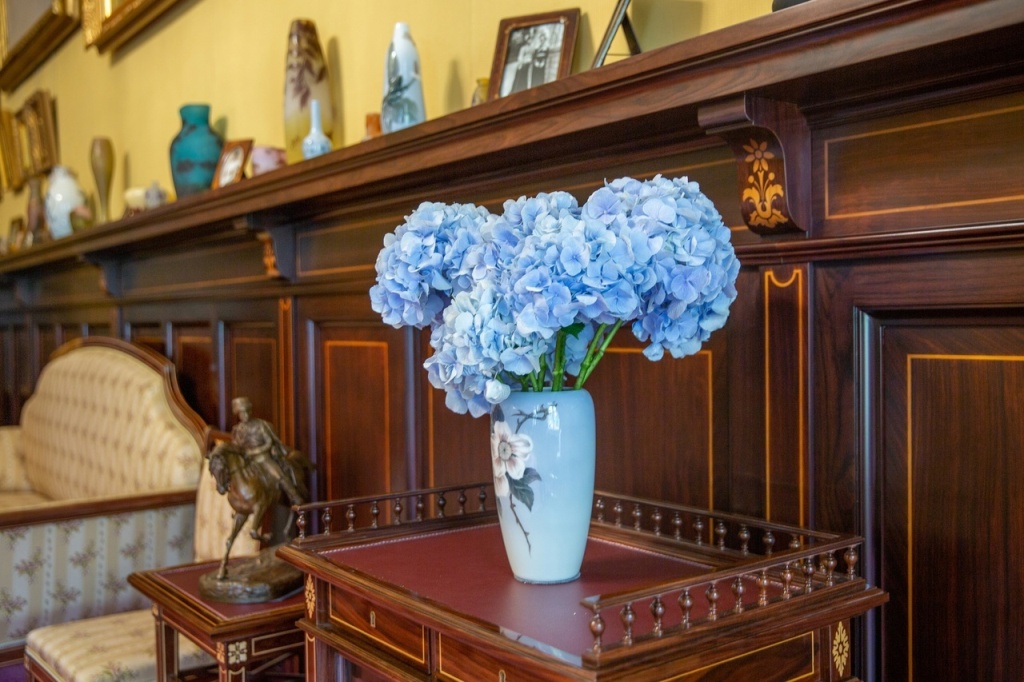
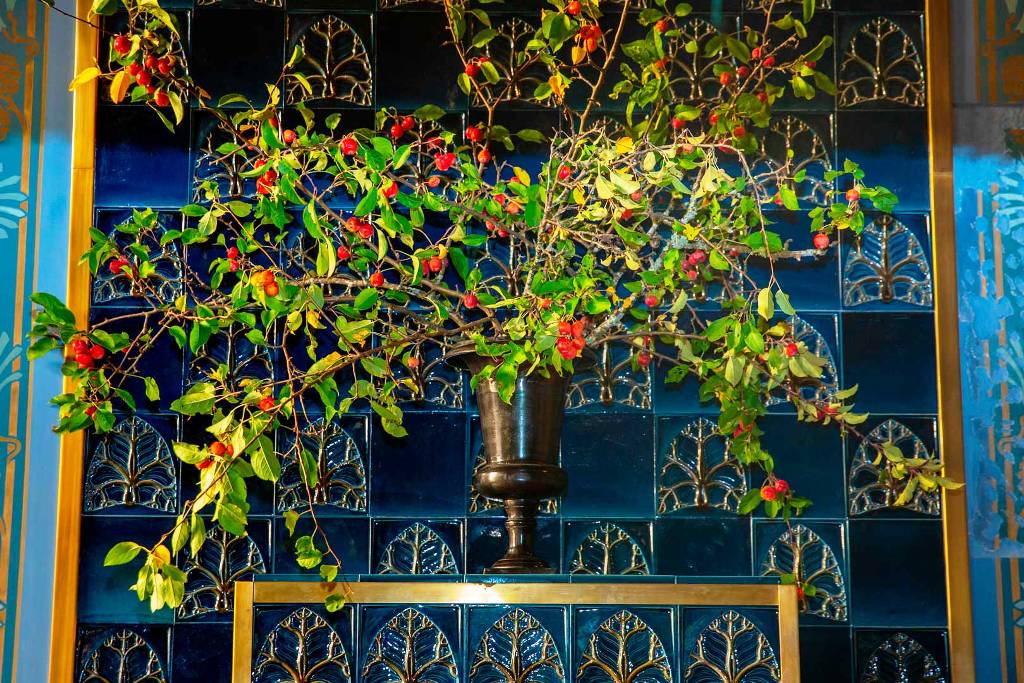
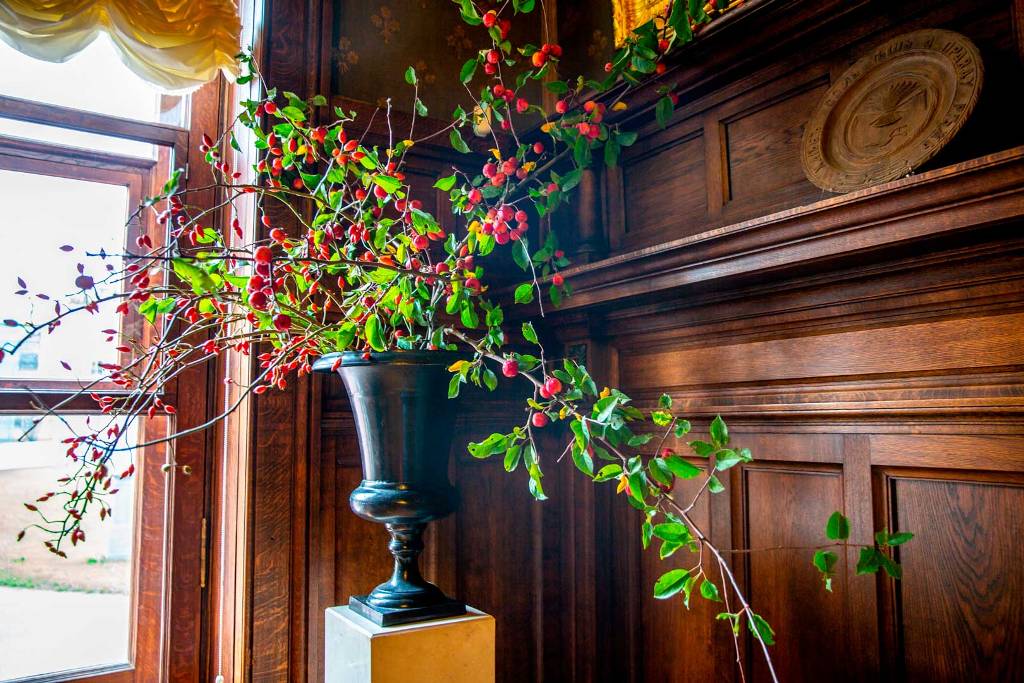
Arrangements will include hydrangea, chrysanthemum, forsythia, camellia, lilacs and other flowers and plants. The flower marathon will last a year, ending in August 2024. The museum is implementing this project in partnership with representatives of various creative industries in St. Petersburg.
“We set ourselves the most important task – to create an atmosphere of family warmth in the private rooms of Emperor Nicholas II and Empress Alexandra Feodorovna, said Olga Taratynova, director of the Tsarskoye Selo State Museum.
“At the beginning of the last century, there were fresh flowers all year round, the floral theme was also present in the upholstery of the walls, furniture, stucco reliefs on the walls and ceilings. We supplemented the recreated interiors with freshly cut flowers and decorative plants. In addition, more than a hundred years later, the Empress’s tradition of decorating her rooms with lilacs was revived – their fragrant aroma fills the interiors from late January to March, “she added.
The first compositions were created in September, for the Maple and Rosewood Drawing Rooms, located in Alexandra Feodorovna’s rooms. The main flower was hydrangea – in total, florists used more than 80 luxurious flowers of white, pink, blue and green blooms. The idea was initiated by a colour autochrome of the interior, taken in 1917 by Andrei Zeest. The photographer took this photo with hydrangea in a vase in the Rosewood Drawing Room just a few hours after the Imperial Family were sent into exile to Tobolsk on 1st August 1917. In addition to hydrangea, designers used autumn flowers and plants, including live branches with paradise apples, rose hips and various types of grain plants.
In total, the “Blooming Palace” project involves the creation of 12 compositions under the guidance of designer, florist, designer Maxim Languev. Each of them will be in one way or another be connected with the history of the Alexander Palace as an Imperial residence, and the personal tastes of the family of the last Russian emperor. Sources of inspiration includes – historical facts (i.e., the eastern journey of the heir, engagement, wedding, the stay of the Imperial Family in Livadia); floral motifs in the decoration of interiors (symbolism of lilies in the decoration of the palace); items of the museum collection (vases in the technique of cloisonné enamel, Venetian glass, incense burners); documentary evidence – photographs, autochromes, paintings.
The “Blooming Palace” project is a joint prohect with the Higher School of Economics, the museum will hold a creative competition among students to create souvenirs based on the Blooming Palace. Interest in the project and readiness to support it was expressed by the organizers of the federal competition “Young Design”.
The project “Blooming Palace” is the winner of the “Creative Museum” competition of the Vladimir Potanin Charitable Foundation. The information partner of the project is the magazine “Interior + Design”.
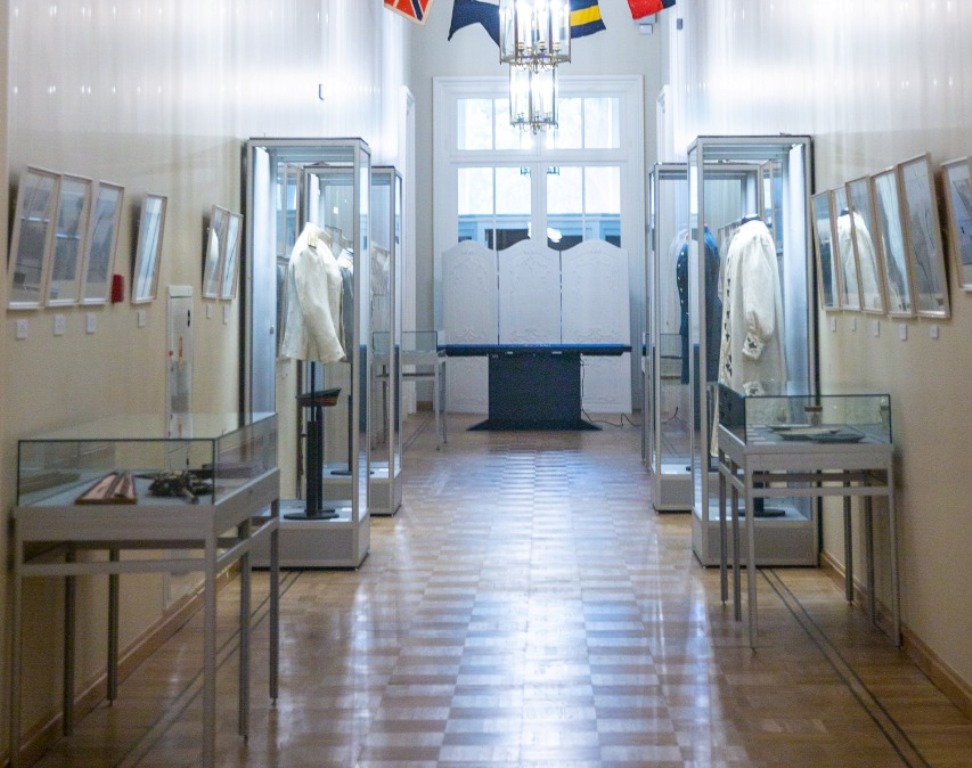
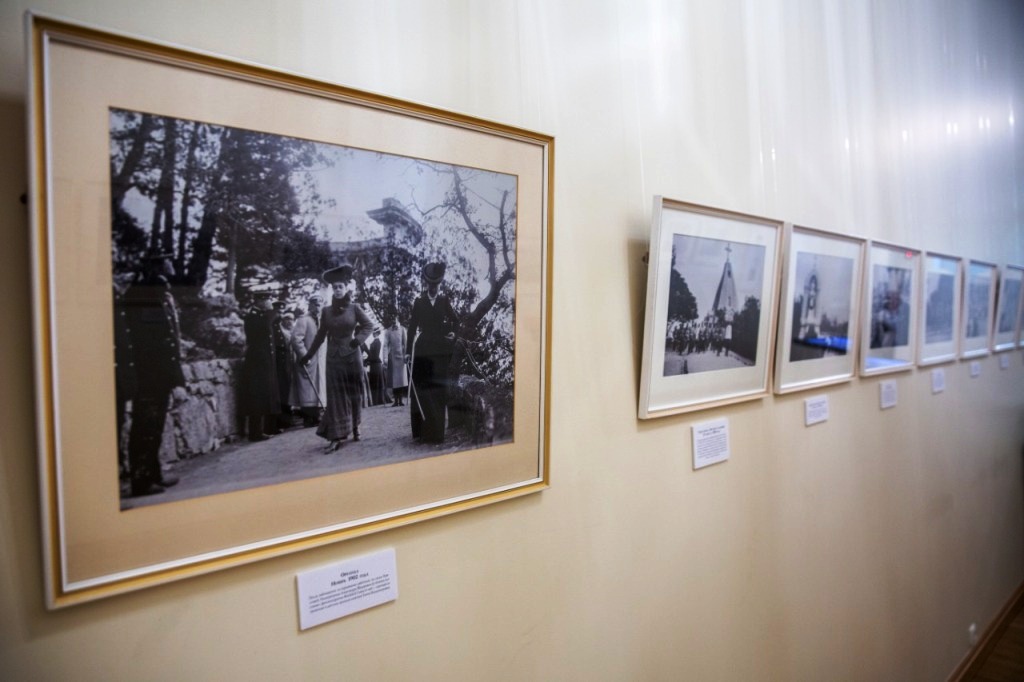
On 21st September 2023, a new exhibition ‘Imperial Visits to the Crimea: 1900, 1902, 1909‘ opened in the Alexander Palace at Tsarskoye Selo.
NOTE: during their visits to Crimea, Nicholas II and his family stayed in the Small (Maly) Palace, until 1911, when the iconic white stone palace was constructed on the site of the Large (Bolshoi) Palace, by the Russian architect Nikolai Krasnov (1864-1939).
The Small Palace survived until the Great Patriotic War (1941-45). While there is no exact information about the destruction of the palace, some say it was the work of the Nazis, while others cite evidence from local eyewitnesses that it was the Soviets who set fire to the historic wooden palace – PG
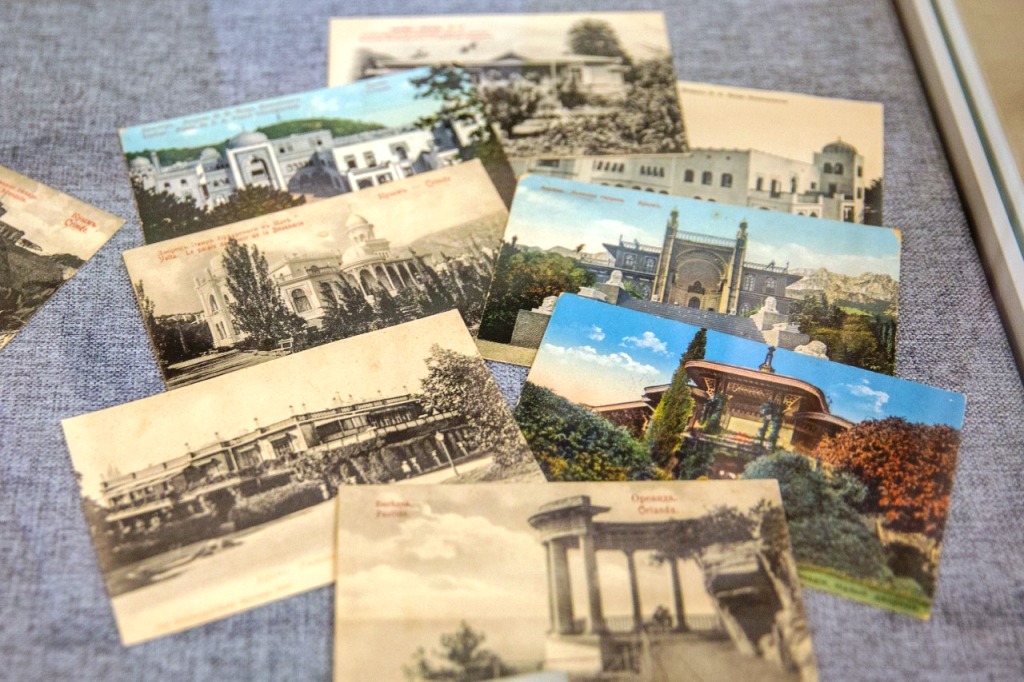
PHOTO: early 20th century postcards depicting palaces along the Black Sea coast, including the wooden palaces at Livadia – the Large (Bolshoi) and Small (Maly) Palaces are depicted above the photo of the Rotunda at Oreanda (bottom)
The exhibit is a joint project of the Tsarskoye Selo State Museum and the Alupka Palace Museum (Crimea), which showcases photographs from the private albums of Emperor Nicholas II and his family, as well as imperial memorabilia from the Tsarskoe Selo collection.
The albums with photographs capturing Emperor Nicholas II and his family during their visits to the Crimea in 1900-1909 were made for the Romanovs by K.E. von Gan & Co., a famous photography atelier in the town of Tsarskoye Selo, who were licensed to photograph the imperial family.
Their photographer and cinematographer Alexander Karlovich Yagelsky (1861-1916) used a then-innovative approach by printing still frames from film reels and thus getting more real, ‘live’ photos instead of stiff, staged shots.
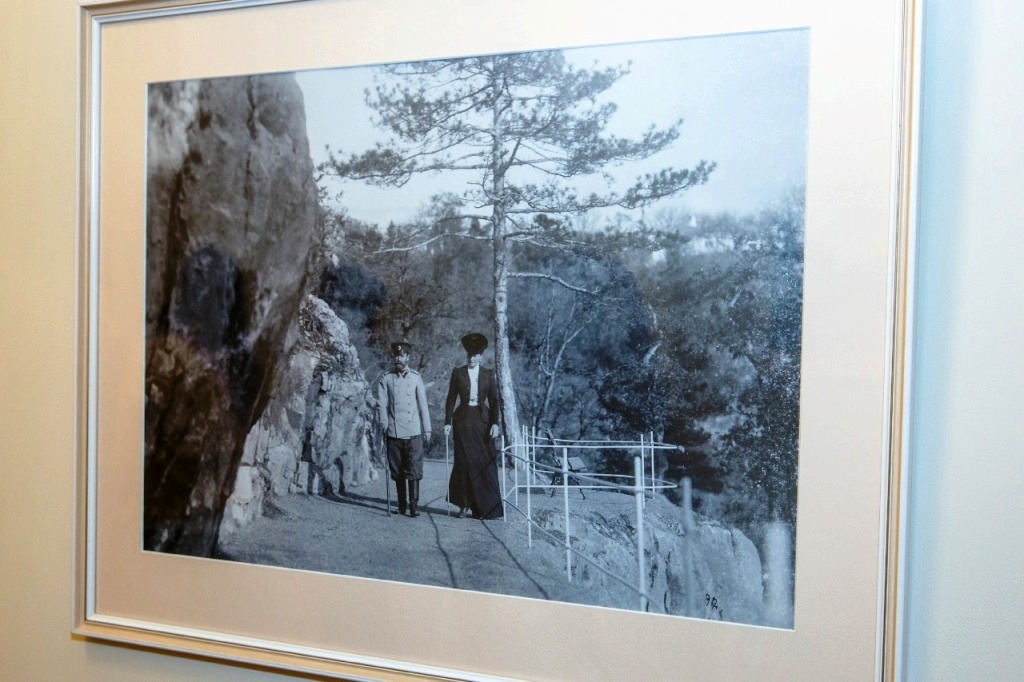
The photographs on display show the Imperial Family in Livadia, Yalta, Oreanda and Sebastopol, visiting infirmaries, regimental celebrations, the ship Rostislav and cruiser Pamiat’ Merkuria (Memory of Mercury), meeting with veterans and sisters of mercy of the Crimean War, as well as walking around or playing ball and lawn tennis.
“This is not just a series of photographs from beautifully designed albums with impeccable artistic taste. Before us are documents of the era that allow us to look into the past and see the people and events of the early 20th century through the eyes of the last Tsar and his family,” said Iraida Bott, Deputy Director for Research at the Tsarskoye Selo State Museum-Reserve.
An interactive touch table at the exhibition gives access to other over 130 digitized photos from the imperial albums.
Among the items of imperial memorabilia on display are Tsesarevich Alexei’s hat of a lower-rank officer from the imperial yacht Standart, Emperor Nicholas II’s jacket of a Naval Captain 1st rank, Empress Alexandra Fiodorovna’s dress, worn during their visits to Crimea in the early 20th century.
The exhibition runs until 20th November 2023.
***
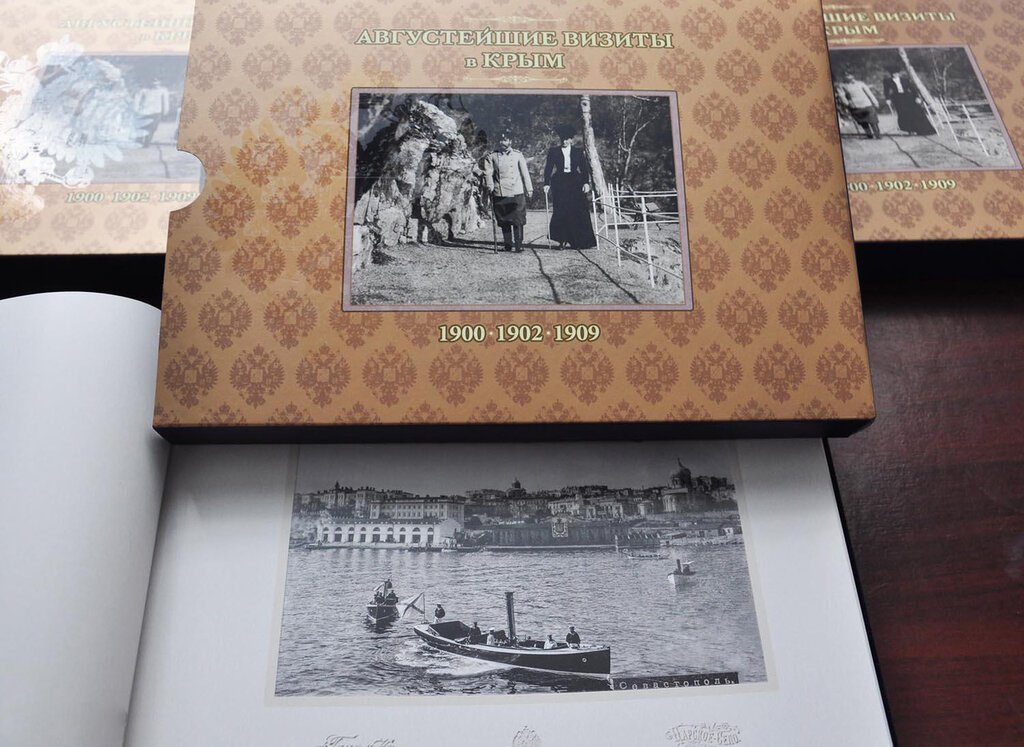
In 2013, the photographs from this exhibition were published in a large 240-page hardcover album – *Августейшие визиты в Крым. 1900, 1902, 1909 (Imperial Visits to Crimea.1900, 1902, 1909). Only 1000 copies were printed.
*I regret that I do not know how to obtain copies, or where copies can be obtained. Current financial sanctions imposed on Russia by the West, it is impossible to order from Russian booksellers in the Russian Federation – PG









 Nicholas II
You must be logged in to post a comment.