CLICK on the above image to watch the VIDEO Researched, written and narrated by Paul Gilbert Duration: 20 minutes. Language: English
Emperor Nicholas II reigned for 22+ years – from November 1894 to February 1917. With his murder, the last Orthodox Christian monarch, along with the thousand-year history of thrones and crowns in Russia, ended, ushering in an era of lawlessness, apostasy, and terror, one which would sweep Holy Orthodox Russia into an abyss which would last more than 70 years.
This new video production is based on the research of project colleague and independent researcher Paul Gilbert, who also narrates this video.
In the first 24 hours of it’s release on YouTube, some 3,000 people had watched the video! Since it’s release in July 2020, it has been viewed by more than 134.000 people.
The creators have done a remarkable job of incorporating a wonderful collection of photos – both vintage B&W and colourized by Olga Shirnina (aka KLIMBIM) – historical newsreel film footage and music.
Vintage B&W photo of Nicholas II colourized by Olga Shirnina (aka KLIMBIM)
One viewer noted on social media: “Only 20 minutes long, this is the BEST portrayal of the last Tsar’s Orthodox faith I have ever seen. Very well-made, historical and moving.”
The crowning moment of this video is near the end, which shows film footage of the actual canonization ceremony of Emperor Nicholas II and his family, performed on 20th August 2000 by Patriarch Alexei II (1929-2008) in the Christ the Saviour Cathedral in Moscow. You can hear His Holiness calling out each of the names of the Imperial Family. The footage is extremely moving to watch.
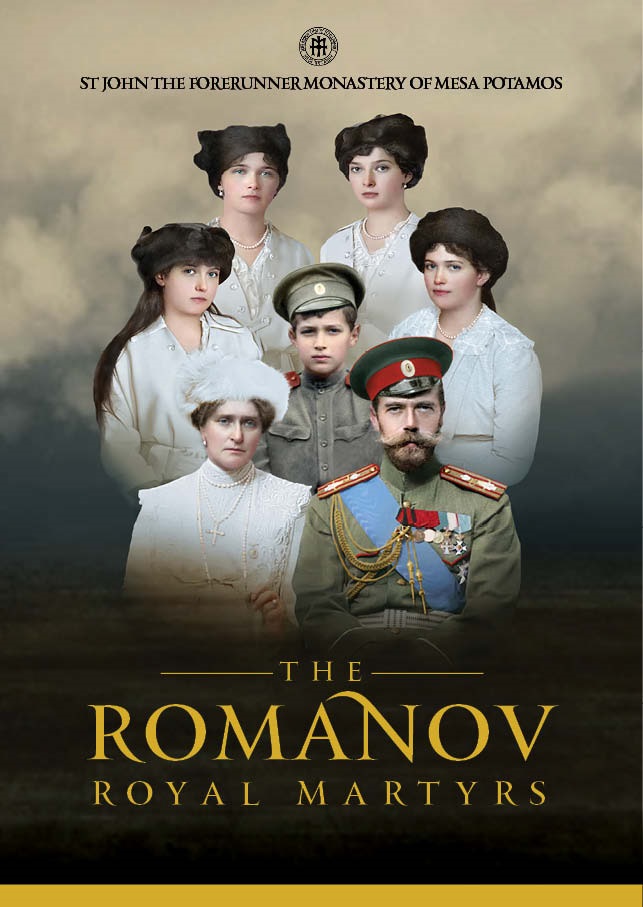
This 20-minute video is presented in the framework of the production of the book The Romanov Royal Martyrs: What Silence Could Not Conceal published by Mesa Potamos Publications in 2019.
The Romanov Royal Martyrs is an impressive 512-page book, featuring nearly 200 black & white photographs, and a 56-page photo insert of more than 80 high-quality images, colourized by the acclaimed Russian artist Olga Shirnina (Klimbim), and appearing here in print for the first time.
I am truly honoured to be a research colleague of this important publishing project. I am most grateful to Father Prodromos Nikolaou and the Holy Monastery of St. John the Forerunner of Mesa Potamos in Cyprus for giving me the opportunity to be a part of this new video which tells the story about Russia’s last Orthodox Christian monarch.
NOTE: my name is now inscribed as a project colleague in the 2nd edition of this book, which also includes several corrections, which I suggested to the publisher after reading the 1st edition – PG
Below, is my second video produced within the framework of the production of the book The Romanov Royal Martyrs: What Silence Could Not Conceal published by Mesa Potamos Publications in 2019. My first video The Conspiracy Against Nicholas II was released in 2018 with more than 32,000 views to date:
CLICK on the above image to watch the VIDEO Researched, written and narrated by Paul Gilbert Duration: 7 min. 36 sec. Language: English
A new video of the Museum of the Family of Emperor Nicholas II in Tobolsk was released last week, which gives those of us who cannot travel to Russia at the present time, a wonderful opportunity to see the interiors and exhibits featured in the former Governor’s House, where the Imperial Family were held under house arrest from August 1917 to April 1918.
The commentary is in Russian, however, this should not stop those who do not understand the language from viewing this interesting tour.
Below, I have provided notes on some of the more interesting exhibits and interior details featured in this video tour. The times noted below indicate the location of the detail in the video:
The video opens with host Andrei Smirnov walking through the historic area of Tobolsk – the former capital of Siberia.
At 0:31 – Andrei Smirnov turns and points to the Kremlin.
At 0:45 – Andrei enters through the entrance to the former Governor’s House. The wooden fence has recently been recreated around the property, which provides visitors with a more accurate historic recreation of what the Imperial Family saw when they were permitted outside for walks and exercise.
At 1:15 – Andrei enters the Governor’s House, which is today known as the Museum of the Family of Emperor Nicholas II. Inside he meets Andrei Ivanov, who serves as a guide for groups visiting the museum.
At 1:45 – a full view of a scale model of the Governor’s House and grounds.
At 2:05 – tiny figures of Nicholas II and his children, sitting outside the Governor’s House, while being photographed. At 2:30, you can also see the tiny figures of some of the Imperial Family’s retainers crossing over a wooden walkway leading from the Kornilov House to the Governor;s House.
At 2:07 – a view of the main entrance to the Governor’s House (right), the greenhouse (left) and a partial view of the garden that the Imperial Family used to walk and exercise. The garden was surrounded by a wooden fence.
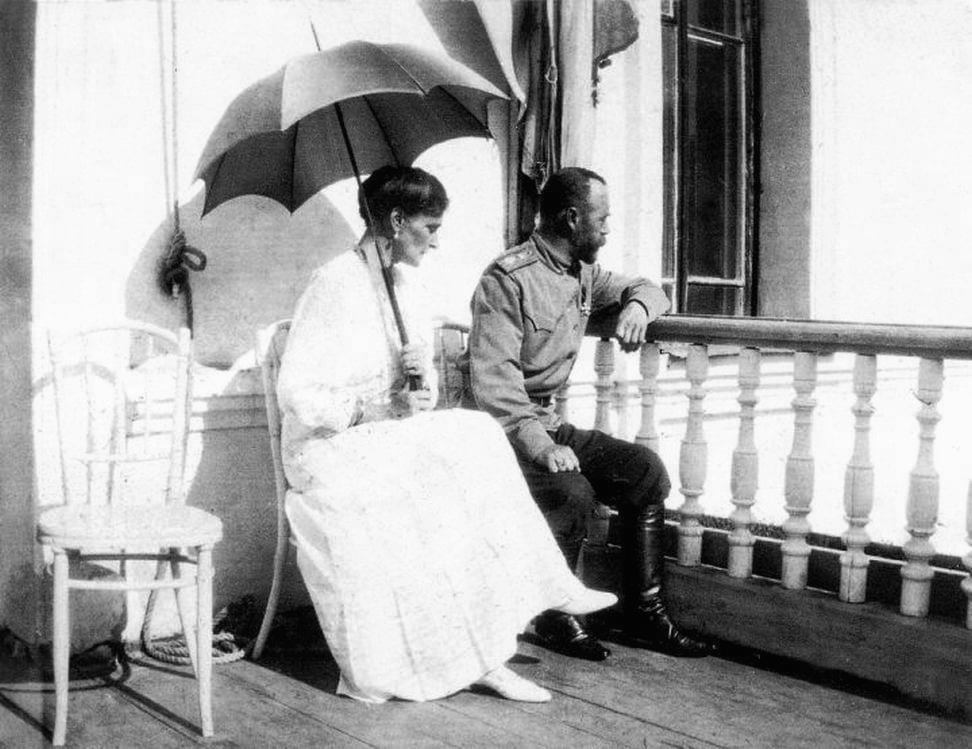
PHOTO: Emperor Nicholas II and Empress Alexandra Feodorovna seated on the balcony located above the entrance to the Governor’s House.
At 2:09 – the camera zooms in to the entrance and the balcony, situated on the upper floor. It was here that the Imperial Family would sit and watch the town’s residents pass by on a daily basis. Many of them would stop and make the sign of the cross and bowing towards the Imperial Family. It was on this balcony in what is believed to the last photograph (above) of Nicholas II and Alexandra Feodorovna was taken in early 1918.
At 2:11 – a scale model of the Kornilov House, situated across the street from the Governor’s House. It was here, that most of the Imperial Families servants and retirnue were housed.
At 2:27 – the garden appears much larger in the scale model than it does in vintage black and white photographs. The Emperor enjoyed all forms of physical exercise and activity. He spent much time in this garden, sawing and chopping wood, he even dug a small duck pond.
At 2:42 – the Dining Room, where the Imperial Family along with several of their faithful retainers dined together. A photograph shows where each of them sat during meals. The photographs on the table show who sat where.
At 3:00 – vintage photographs of the Imperial Family dining together in Tobolsk during their house arrest, as well as during happier times at Tsarskoye Selo, Livadia, even the Imperial Yacht ‘Standart‘. While at home, they did not dine surrounded by opulence and splendour, as did their ancestors, nor did they eat gourmet meals. Instead they enjoying more simple Russian and English fare. For instance, in happier times, afternoon tea usually consisted of nothing more than fresh bread with butter and a few biscuits.
At 3:43 – a beautiful tablecloth protected under glass, bearing the monogram of ‘Nikolai Alexandrovich’, made by the monks of a local monastery.
At 4:04 – account books and invoices which kept a record of the expenses for food and other essential items used by the Imperial Family. On display are receipts for “milk, cream, bread and Porcini mushrooms . . .”
At 4:25 – in recent years, a memorial plaque dedicated to the Imperial Family has been installed on the façade of of the Museum of the Family of Emperor Nicholas II in Tobolsk.
PHOTO: scale model of the Kornilov House, as seen in the video
At 4:27 – Andrei and the museum guide ascending the original staircase to the upper floor, where the Imperial Family slept.
At 4:50 – the staircase leads directly into the former Study of Emperor Nicholas II, who spent a lot of time here writing and reading.
At 5:09 – a piano which Empress Alexandra Feodorovna and the grand duchesses enjoyed playing in the evenings.
At 6:03 – Empress Alexandra Feodorovna’s room, where she spent much of her time doing embroidery and needlework, reading her books on religion, and resting. The original stucco ceiling has been preserved, it was cleaned and painted, however, one corner of the historic look can still be seen.
At 6:39 – iconic photographs which depict Nicholas II and Alexei sawing and chopping wood in the garden, which supplied the Imperial Family with firewood during the cold Siberian winter of 1917/1918.
At 7:06 – the grand duchesses bedroom, which is filled with photographs of how they lived at both Tsarskoye Selo and Tobolsk.
At 7:28 – vintage photos of how the grand duchesses room looked during their stay decorate the wall. A folding army cot similar to what the grand duchesses slept stands against the wall.
At 8:11 – the bell tower of a nearby church is seen from a window of the upper floor, however, this is not the Church of the Annunciation of the Blessed Virgin, where the Imperial Family were temporarily allowed to walk to and worship in. This church was demolished by the Soviets in 1956.
At 8:44 – contemporary view of the facade of the former Governor’s House, now the Museum of Nicholas II and His Family, and a partial view of the recently reconstructed wooden fence which surrounded the house and grounds, where the Imperial Family were held under house arrest fromAugust 1917 to April 1918.
*You can order this title from most AMAZON outlets, including the United States, United Kingdom, Canada, Australia, France, Germany, Spain, Italy, Netherlands, Poland, Sweden and Japan *Note: prices are quoted in local currencies
English. Paperback. 246 pages with more than 80 Black & White photos
In August 1917, Russia’s last Tsar, his family and their retinue of faithful servants and retainers were exiled to Tobolsk in Siberia, where they were held under house arrest until April 1918.
The seven chapters in this book explore the eight months that the Imperial Family spent in captivity in the former mansion of the regional governor.
This book features the first Enlgish translations of Eugene Kobylinsky’s interrogation and Vasily Pankratov’s recollections, which provide twp very different eye witness accounts of the Tsar and his family.
In addition are chapters on the woman who photographed the Imperial Family in Tobolsk, the fate of the church where they worshipped, and the fate of both the Kornilov and Governor’s Houses.
This is the first book dedicated entirely to the Imperial Family’s stay in Tobolsk to be published in English.
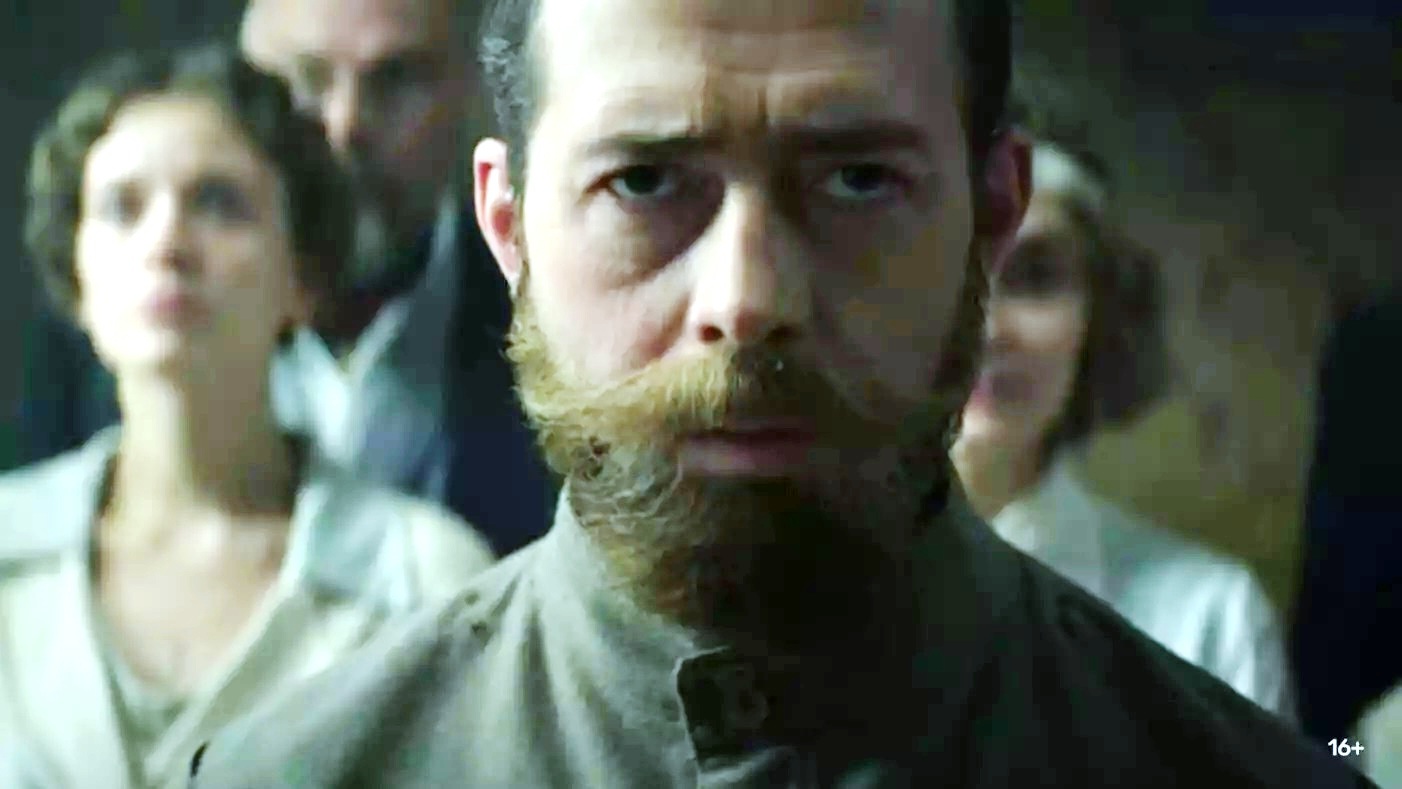
PHOTO: scenes from the final days of the Imperial Family in the Ipatiev House were recreated for the 5-part documentary‘The Romanovs. The Final Word’
The historical series ‘The Romanovs. The Final Word‘ has become one of the most popular documentary projects ever made for Russian online cinema. The 5-part series premiered on 4th November 2023, and in less than a month has been viewed more than 1 million times.
‘The Romanovs. The Last Word‘ is a detailed historical study of one of the most notorious crimes in 20th century Russian history – the murders of Emperor Nicholas II and his family, based on the memories of the klliers themselves. The series was created by journalist and historian Sergey Minaev together with producer Danila Sharapov.
In 1964, members of the firing squad Grigory Petrovich Nikulin (1894-1965) and Isai Radzinsky, on the orders of Nikita Khrushchev, recorded their memories of the execution of the Imperial Family in July 1918. These audio recordings were subsequently ordered sealed and stamped “SECRET” and placed in the archives. These important historical recordings are now made public for the first time in the documentary series ‘The Romanovs. The Last Word.’
The conversation between Nikulin and Radzinsky at the USSR Radiocomet was recreated specifically for this documentary project. In addition, the Ipatiev House, in which the Imperial Family were murdered, was reconstructed for the documentary, based on original plans, drawings, photographs and memoirs of eyewitnesses.
The actors for the roles of Nikulin and Radzinsky, members of the Imperial Family, and their faithful retainers, based on their likeness to the historical figures they were portraying in the documentary.
The best historical consultants, artists and restorers were involved in the project. Thanks to their participation, it was possible to recreate the events and circumstances of the final months of house arrest, and subsequent murders of the last Russian Tsar and his family, with accuracy through a previously unknown source, and an important historical record.
For the first time, this documentary series shows in detail the last days of the family of Emperor Nicholas II, their execution, as well as the circumstances of hiding the bodies by a team of executioners. The project was narrated by Sergey Minaev.
On 4th November 2023, ‘The Romanovs. The Final Word‘, a new Russian-language documentary series premiered on the Russian YouTube channel ‘Premier’, who have also released a trailer for the documentary – see below. .
The 5-part series – produced and narrated by Sergei Minaev – records the last months of the Imperial Family, while they were under house arrest at the Ipatiev House in Ekaterinburg.
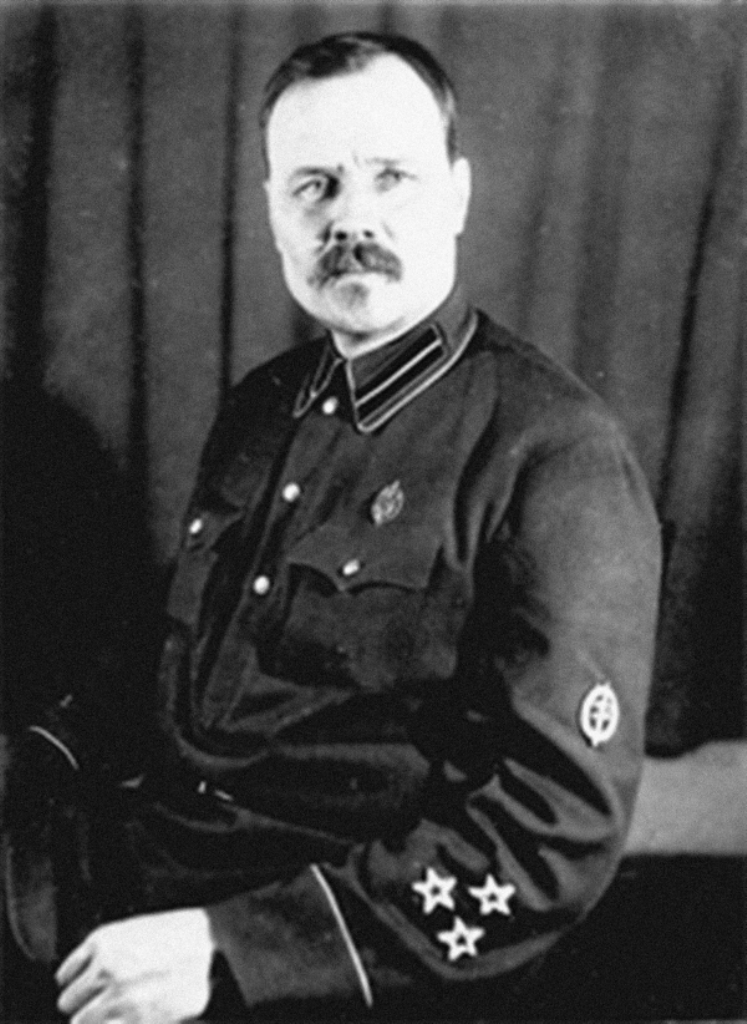
What is different about this documentary, is that the fate of Russia’s last Tsar, his family and four faithful retainers, is told by their killers, notably by Mikhail Aleksandrovich Medvedev (Kudrin) (1891-1964), a devout Bolshevik and one of the executioners of the Imperial Family.
Kudrin died on 13th January 1964, he was buried with military honours at the Novodevichy Cemetery in Moscow. In his will, he asked his son Mikhail to give Nikita Khrushchev (1894-1971) the Browning pistol with which he alleges he had killed the Tsar with. It was following his death, that Krushchev ordered Kusrin’s son Mikhail Mikhailovich Medvedev, to carry out an investigation to the Tsar’s murder.
Not only did Mikhail research his father’s diaries, letters, documents and photographs, he also searched for his father’s old friends to interview. Mikhail attempts to reconstruct the events of the murders of the Imperial Family, through the stories of witnesses and participants in the regicide at Ekaterinburg in 1918. Many testimonies and materials of the investigation are now being made public for the first time. The producers of the documentary series claim that the audio recordings of these interviews were kept secret for decades.
The documentary reconstructs the events of 1918, including the final months of the life of Nicholas II, his family and their retainers during their house arrest in Ekaterinburg, the details of the execution and attempts to hide the bodies. Some scenes were recreated – using actors – from the memories of eyewitnesses in order to show viewers the most reliable picture of the events.
NOTE: the 5-part series is available to view on a pay-per-view only. The current economic sanctions imposed by the West on Russia, make impossible to use a credit card for payment. Should the entire series be made available to view online for free at some point in the future, I will update this article – PG
***
WATCH THE TRAILER
CLICK on the PHOTO above to watch the trailer for ‘The Romanovs. The Final Word’ Language: Russian. Duration: 2 minutes
NOTE: the trailer above is in Russian, however, do not allow that to stop you from watching the trailer. You can still follow the gist of the audio in English, by doing the following:
[1] click on the red arrow in the YouTube image above
[2] turn on Google Translator, which will translate the text only
[3] click on the close captioning option [CC] option, located in the banner at the bottom of the video
[4] click START
The closed captioning will appear in English on the video, allowing you a better understanding of the people, places and events presented in the trailer.
NOTE: this page was updated on 9th November 2023, with an ENGLISH-language version – PG
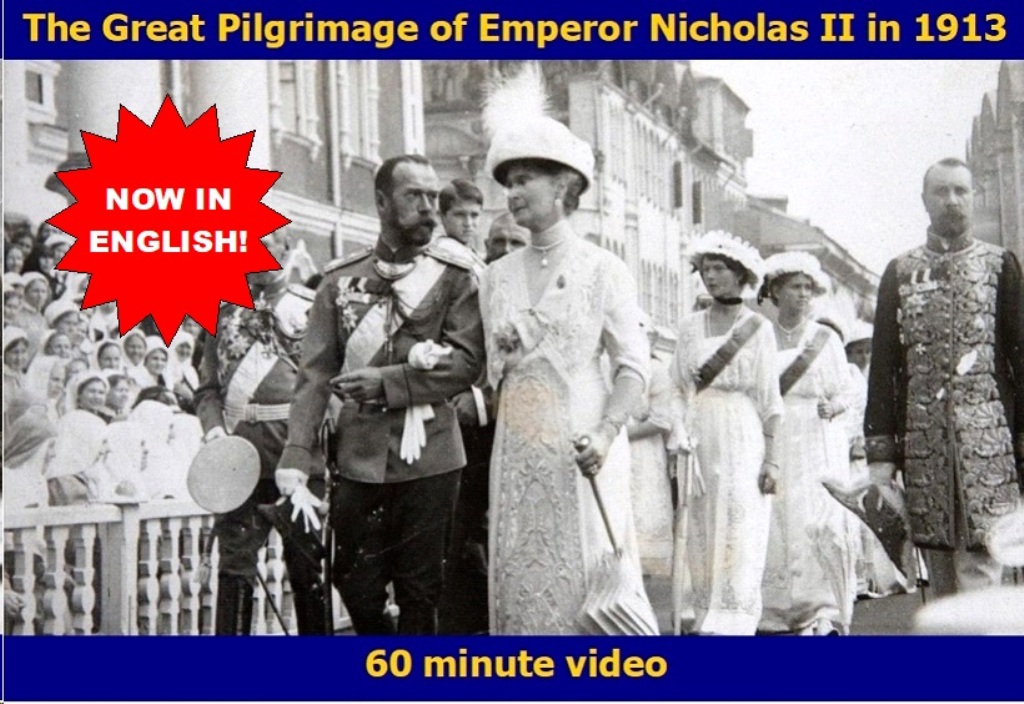
The Museum of Emperor Nicholas II in Moscow have produced a new documentary to mark the 110th anniversary of the pilgrimage ofEmperor Nicholas II to ancient Russian cities during the Romanov Tercentenary in 1913.
“The Great Pilgrimage of Emperor Nicholas II” is a one-hour documentary – featuring seven vintage newsreels filmed filmed between 15th to 28th May 1913, when Nicholas II and his family visited 12 ancient Russian cities, which included Vladimir – Suzdal – Bogolyubovo – Nizhny Novgorod – Kostroma – Yaroslavl – Rostov – Petrovsk – Troitskaya Sloboda – Pereslavl-Zalessky – Sergiev Posad – Moscow. * Watch the video located at the bottom of this post.CLICK on the [cc] for ENGLISH subtitles.
The film is based on the materials of the Russian State Archive of Film and Photo Documents (RGAKFD), the Russian State Historical Archive (RGIA), the State Archive of the Russian Federation (GARF) and the Library of Congress of the United States.
During the Soviet years, a significant part of the pre-revolutionary newsreels of the Imperial Family were destroyed, leaving only small fragments of most of the films. After the fall of the Soviet Union in 1991, the Russian State Archives of Film and Photo Documents carried out painstaking work to restore many of these. This was possible that some of newsreel fragments had been stored on different reels, making it possible to restore and edit many of these historic newsreels. In total, some 300 fragments were restored to their original.
The documentary is complemented by musical accompaniment recorded in in the early 20th century, including “God, Save the Tsar!”. The music for the documentary was taken from old gramophone records and wax rollers. They include segments of marches, hymns, waltzes, operas, folk songs, balalaika, bell ringing and church chants.
If you listen closely to the audio you will hear the voice of Nicholas II at [9:35]thanking the regiment as they march past him in Nizhny Novgorod.
Many detractors of Russia’s much slandered Tsar continue to spread the myth that Nicholas II was not popular with the Russian people. This nonsense is quickly debunked by the newsreel footage which shows thousands of people flocking to get a glimpse of the Tsar in each city visited. You can see them cheering and making the sign of the cross as the Tsar passes by.
CLICK on the image above to watch this video. Duration: 60 minutes. Language: English
***
Numerous scenes depicts the Sovereign being greeted with the traditional bread and salt, meeting local dignitaries, kissing icons, visiting churches and monasteries, reviewing his troops, and much more.
NOTE: the numbers in the brackets [ ] below, correspond to their exact location in the newsreels – PG
16 May: Vladimir, Suzdal and and Bogolyubovo [1:12] – in this newsreel, is a splendid view of the Imperial Train.
17 May: Nizhny Novgorod [6:34] – at [7;57] we see the Tsar and his family taking part in a religious procession – at [9:35] if you listen closely to the audio you will hear the voice of Nicholas II thanking the regiment as they march past him.
19 & 20 May: Kostroma [10:51] – in this newsreel, we see the Ipatiev Monastery – the birthplace of the Romanov Dynasty – at [12:10] the Imperial Family arrive in Kostroma on the steamship “Mezhen“, where they see the riverbank lined with people, all of whom have come to get a glimpse of their Batushka Tsar. Many can be seen bowing and making the sign of the cross, some of them even wading into the river – at [15:32] the Imperial Family take part in a religious procession at the Ipatiev Monastery – at [15:46] Emperor Nicholas II and Empress Alexandra Feodorovna descend the staircase of the Trinity Cathedral – at [17:13] the Tsar leaves the Romanov boyar palace – at [17:38] Tsesarevich Alexei is carried in the arms of the Cossack Alexei Petrovich Pilipenko (1887-1972) .
21 May: Yaroslavl [25:41] – at [26:51 the Imperial Family arrive by boat at a specially made pier and pavilion at Yaroslavl.
22 May. Rostov [32:01] – at [35:22] once again, we see Alexei being carried in the arms of the Cossack Alexei Petrovich Pilipenko. He helps the Tsesareich into the awaiting carriage, and you can clearly see that he has trouble walking, and instead hops on one leg to seat himself – the Tsar sits next to him.
23 & 24 May. Petrovsk – Pereslavl-Zalessky – Troitskaya Sloboda – Sergiev Posad [38:33] – at [42:28] Empress Alexandra Feodorovna, Emperor Nicholas II, Tsesarevich Alexei, and one of his sisters get into a waiting carriage at the Trinity Lavra of St. Sergius – the spiritual center of the Russian Orthodox Church – in Sergiev Posad – at [42:57] the other three grand duchesses are joined by their aunt Grand Duchess Elizabeth Feodorovna in the second carriage.
24 to 27 May. Moscow [43:12] – at [43:46] Nicholas II enters Moscow on horseback through the Triumphal Arch – the same gate he entered the city for his coronation in 1896 – at [45:01] “God, Save the Tsar!” is performed – at [47:48] the Tsar and his family stop to pray at the Iverskaya Chapel at the Resurrection Gate, which leads into Red Square. Again, we see Alexei being carried in the arms of the Cossack Alexei Petrovich Pilipenko – at [48:27] Emperor Nicholas II crosses Red Square on horseback – he is greeted by thousands of Muscovites – at [49:26] the Tsar walks past St. Basil’s Cathedral, and enters the Kremlin on foot – at [50:09] is the famous procession seen in many English-language documentaries, of the Imperial Family, their relatives and entourage walking towards the Assumption Cathedral, where Nicholas II was crowned in 1896 – at 51:28] the Imperial procession walks past the Chudov Monastery – at [53:01] the Imperial Family visit the Chambers of the Romanov Boyars – at [55:05] the Imperial Family arrive at the Novospassky Monastery, taking part in a religious procession at [56:25] – Grand Duchess Elizabeth Feodorovna and Grand Duke Kirill Vladimirovich can be seen at [56:45].
“A legacy that defied Bolshevik and Soviet attempts of erasure”
***
OBITUARY: the famous Soviet and Russian film director and screenwriter Gleb Anatolyevich Panfilov (1934–2023), died on 26th August 2023, at the age of 89. Memory Eternal! Вечная Память!
***
More than a century has passed since the murder of Emperor Nicholas II and his family brought an end to the Russian monarchy and the Russian Empire. The Soviet Union is no more. But the grandeur of pre-Soviet, Tsarist Russia continues to occupy the imagination of people across the world and the last Russian Imperial family has entered the annals of cinema in many a memorable work of moving images.
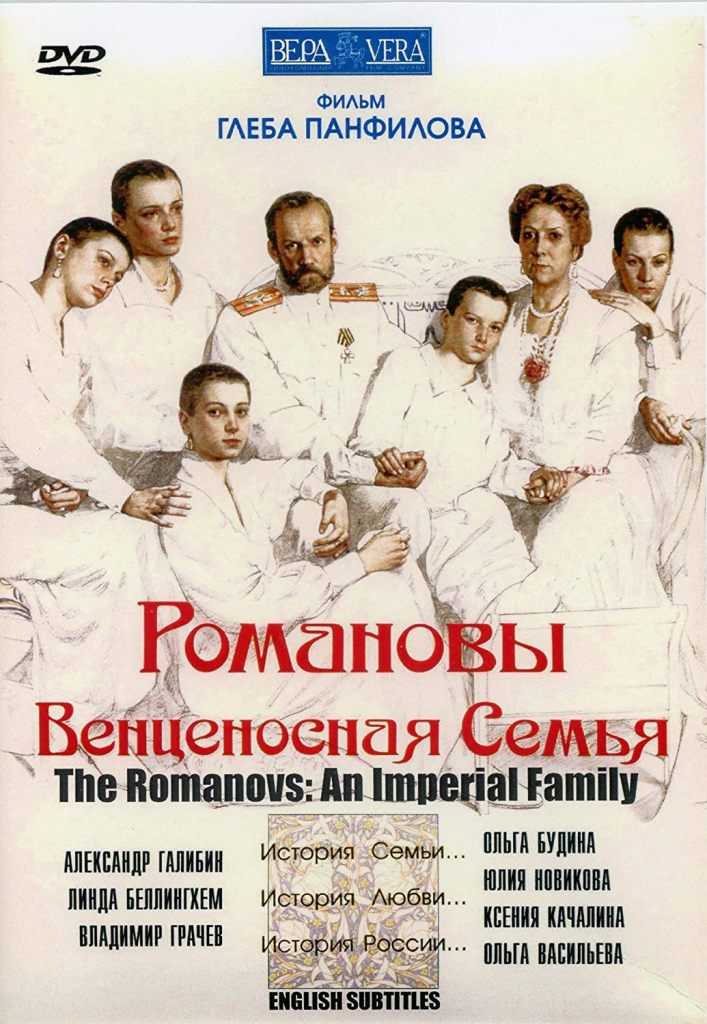
Among the cinematic works created around the Romanov family who were brutally murdered by the Ural Soviet on 17th July 1918, is the historical drama film ‘The Romanovs: An Imperial Family’. The Russian made which was released in 2000 having premiered at the 22nd Moscow Film Festival. This film is a must watch not only for ‘Romanovophiles’ but also for history buffs and movie lovers who enjoy the historical drama genre. Directed by internationally acclaimed Russian film director Gleb Anatolyevich Panfilov (1934-2023), it is a Russian language movie with Russian actor Aleksandr Galibin as Emperor Nicholas II and British actress Lynda Bellingham as Empress Alexandra Feodorovna.
The directorial craft of the movie brings to life the perceptions and perspectives of Nicholas II and his family during the last stage of their lives and shows how the imperial family perceived and responded to news of the turmoil in the country that was creating a tide of antipathy towards the monarchy. The narrative shows the humaneness of the Tsar and his family bringing to life their humanity which makes this an endearing film.
Contrary to what Soviet propaganda sought to perpetuate during the reign of communism in Russia, that the Imperial family were cold and uncaring towards the masses, Panfilov’s vision shows how the Romanovs were caring people with admirable humane qualities and talents which even their captors could not help but secretly appreciate.
The movie is quite compelling with a cast of good actors and a plot structure that drives forward the drama of events and action principally through the somewhat insular characters of the Imperial family. Galibin delivers a superb performance as His Imperial Majesty Tsar Nicholas. The character that is brought to life in Panfilov’s directorial vision is one who is much a human with his principal weakness being perhaps that he was torn between how to focus and devote himself and his efforts on being a good father while also being a good monarch and to win the love and respect of all.
The Tsar and Tsarina are shown as two loving humans who are solid in their spousal and parental love. The Imperial children are portrayed as children who feel emotions of sadness, fear, anger and love just like any other, and how they are made hapless victims of a political agenda that overawes all forms of governance and power that formed the old order of imperial Russia.
The revolution is not shown in prominence through extensive scenes of armed conflicts but as more a series of events brought to the knowledge of the Tsar and his family at various stages from February 1917 to the fated day of their massacre in Ekaterinburg on 17th July 1918. Their grasp of matters that near their unseen doom, as a gradual and coldly unnerving series of changes in their household brings to life the ‘psychological environment’ the Imperial family inhabited in their last days. The Tsar and his family are meant to endure suffering that is much more psychological than physical and thus the slow torment and torture of the Romanovs at the hands of the communist red army captors are brought to life.
The Ipatiev House, In what is called the ‘House of Special Purpose’ by the Bolsheviks, a residence located in Ekaterinburg in Western Siberia, the Imperial family is kept under guard, after the Tsar’s abdication and monarchical rule ends and the family finds themselves being political prisoners. However, the ‘House of Special Purpose’ becomes the slaughter house where the massacre of the imperial family and their remaining staff takes place past midnight on 17th July 1918. The murder carried out by the Bolsheviks brings the narrative of the Romanovs to an end. The scene which follows as the end of the film is documentary footage of the scene of canonization of the Romanov family in Russiain 2000.
The final scene is a strong message that one sees at the end of the film when reading it in context of post-Soviet Russia. The statues of Lenin who founded the Union of Soviet Socialist Republics (USSR) have been brought down with the end of the Soviet Union and his legacy now enjoys no glory among Russians. The Romanovs, however, have once again been reborn in their nation’s collective heart and soul, to remain adored in the Russian people’s memory.
‘The Romanovs: An Imperial Family’ is presented in this post in 13 x 10 minute videos, with ENGLISH subtitles.
This film presents the most historically accurate version of events available to an English audience to date. Unlike Massie’s ‘Nicholas and Alexandra’ (1971), Panfilov filmed entirely in Russia, with many scenes filmed inside the Alexander Palace at Tsarskoye Selo. Furniture was specially created for this film, which can be seen on display in the palace to this day. The recreation of the private apartments of the Imperial family in the Alexander Palace and the Tsar’s Imperial Train are truly remarkable.Overall, the film is visually stunning!
I invite you to make yourself a cup of tea or pour a glass of your favourite wine, sit back, relax and enjoy ‘The Romanovs: An Imperial Family’ – PG
NOTE: the 6th and final episode ‘Ceremonial and Service‘ was added to this post on 9th August 2023 – PG
The State Hermitage Museum has released 5 short videos about the children of Emperor Nicholas II and Empress Alexandra Feodorovna: Grand Duchesses Olga, Tatiana, Maria, Anastasia Nikolaevna and Tsesarevich Alexei Nikolaevich.
NOTE: all of the videos listed below are in Russian, however, do not allow that to stop you from watching this richly detailed series, featuring vintage newsreel footage and still photographs. You can still follow the gist of the audio in English, by doing the following:
[1] click on the YouTube link, located in the banner at the bottom of the video
[2] turn on Google Translator, which will translate the text only
[2] click on the close captioning option [CC] option, located in the banner at the bottom of the video
The closed captioning will appear in English on your screen, allowing you a better understanding of the people, places and events presented in the video.
Part 1 – Pages of life
Duration: 16 minutes, 46 seconds
Part 1 is based on the memoirs of contemporaries, historical photographs and newsreels, as well as modern video footage of places associated with the life of the family of Nicholas II and Empress Alexandra Feodorovna: the Winter Palace, the Alexander Palace in Tsarskoye Selo and their Crimean residence in Livadia. It presents “portraits” of the Grand Duchesses Olga, Tatiana, Maria, Anastasia and Tsesarevich Alexei, compiled from the memoirs of people who knew them closely. You will learn about the serene childhood and youth of the August children, their upbringing and education, about the family’s summer vacation in Yalta and about traveling on the Imperial Yacht “Shtandart“, as well as their participation in the official side of life: court ceremonies, military parades and Celebrations.
Part 2 – The upbringing and education of the Grand Duchesses
Duration: 8 minutes, 29 seconds
Part 2 focuses on the education of the daughters of Nicholas II – Grand Duchesses Olga, Tatiana, Maria and Anastasia, about their daily routine and what role their mother, Empress Alexandra Feodorovna, played in the upbringing of the girls. The film is based on the memoirs of contemporaries, historical photographs and newsreels, as well as modern video filming of places associated with the day-to-day life of the Imperial family.
Part 3 – In the circle of the family
Duration: 8 minutes, 38 seconds
Part 3 explores the private world of the Imperial family, about the joint leisure activities enjoyed by the Imperial children and their parents, they books they read, what sports they were engaged in, their passion for photography and much more. The film is based on the memoirs of contemporaries, historical photographs and newsreels, as well as modern video filming of places associated with the life of the Imperial family.
Part 4 – Travels on the Imperial Yacht “Shtandart“
Duration: 6 minutes, 56 seconds
In Part 4 we travel on the imperial Yacht “Shtandart” – one of the most favorite pastimes of the family of Nicholas II – including walks along the Finnish skerries, enjoying their summer holidays, their day-today life and activities while living onboard their famous yacht. The film is based on the memoirs of contemporaries, historical photographs and newsreels of the life of the Imperial family. The State Hermitage Museum thanks the State Archives of the Russian Federation for the images provided for the film.
Part 5 – Rest in Livadia
Duration: 9 minutes, 4 seconds
Part 5 explores the day-to-day life of Nicholas II and his family at their Crimean residence Livadia in between 1911-1914: how the Imperial Family traveled to the Crimea, the celebrations marking the 16th anniversary of Grand Duchess Olga and the name day of Tsesarevich Alexei, their participation in charity bazaars, including the “White Flower Day”, in which Empress and her children took part. The film is based on the memoirs of contemporaries, historical photographs and newsreels of the life of the Imperial family, as well as modern filming of the Livadia Palace.
Part 6 – Ceremonial and Service
Duration: 11 minutes, 46 seconds
In the 6th and final part we learn about the duties of the Grand Duchesses and the Tsesarevich, who were trained from childhood to serve Russia. These include their activities and responsibilities as regimental chiefs, their participation in the celebrations marking historical anniversaries and significant events, as well as how their service to the Fatherland changed after the outbreak of the First World War. This film is based on the memoirs of contemporaries, historical photographs and newsreels of the life of the Imperial Family, provided by the State Archives of the Russian Federation.
I have published more than 30 titles to date through AMAZON – featuring one of the largest selections of books on Nicholas II, the Romanov dynasty and the history of Imperial Russia.
The net proceeds from the sale of each book help fund my research in clearing the name of Russia’s much slandered Tsar.
Please CLICK on the BANNER or LINK above to review my current selection of titles in hardcover, paperback and ebook editions. Listings provide a full description for each title, pricing and a Look inside feature.
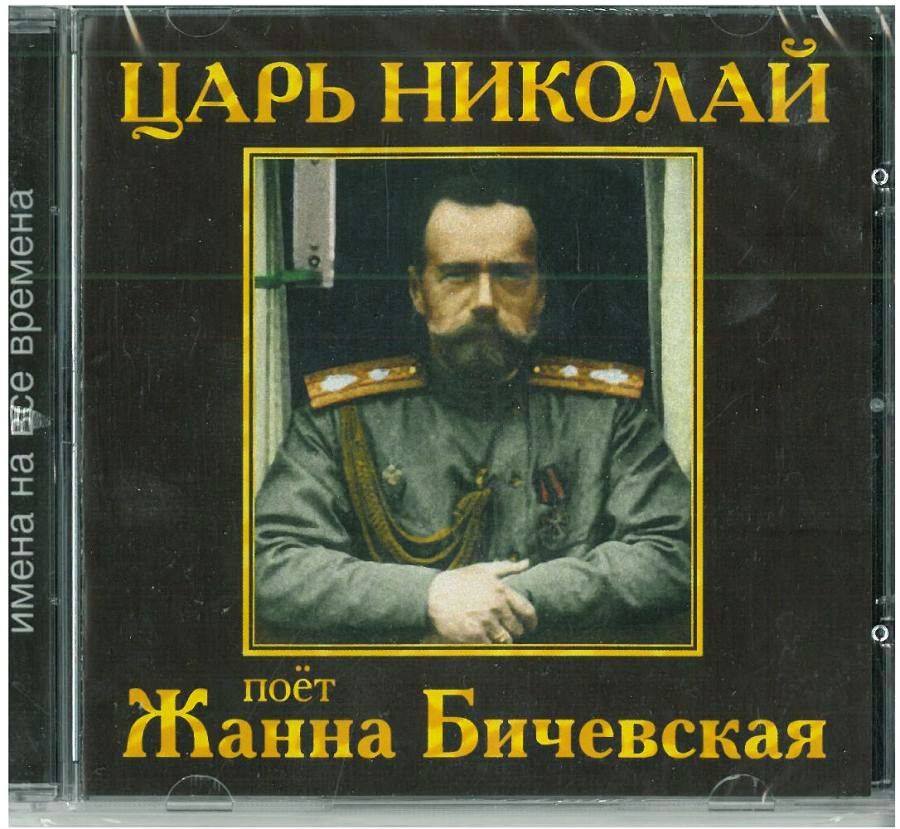
Cover of Zhanna Bichevskaya;s CD Царь Николай (Tsar Nikolai)
A very happy 81st birthday to Russian folk singer Zhanna Vladimirovna Bichevskaya, who was born in Moscow on 17th June 1944.
Известной певице Жанне Владимiровне Бичевской исполнилось 79 лет!!! Мы сердечно поздравляем её с Днём рождения!!!
Zhanna graduated as a classical guitarist from a Moscow music school. She was a teacher of music in Zagorsk (Sergiev Posad). In the 1970s, Zhanna started to perform Russian folk songs and romances.
Zhanna refers to her bard-style singing as “Russian country-folk”. Her repertoire includes several hundred works – songs of spiritual and social content, Russian folk songs, romances, as well as songs based on poems of Russian poets of the Silver Age. Her records have sold millions of copies in more than 40 countries around the world. She has performed to sell out crowds at the prestigious Olympia Hall in Paris, on eight occasions.
In the late 1980s and early 1990s, Zhanna Bichevskaya’s songs began to have more political, nationalist and spiritual themes, she is a staunch defender of the Holy Emperor Nicholas II and his family.
In 1999, Zhanna also became the host of her own show on Voice of Russia radio station. She was awarded People’s Artist of the RSFSR
CLICK on the links below to listen to two of her most haunting melodies:
[1] Царь Николай / Tsar Nikolai [Duration: 9 mins], which features vintage film footage of Russia’s last tsar:
[2] Святым Царственным мученикам / To the Holy Royal Martyrs [Duration: 7 mins., 34 sec.], which is much more a prayer than a song:
CLICK on the above image to watch this video. ENGLISH. Duration: 43 minutes
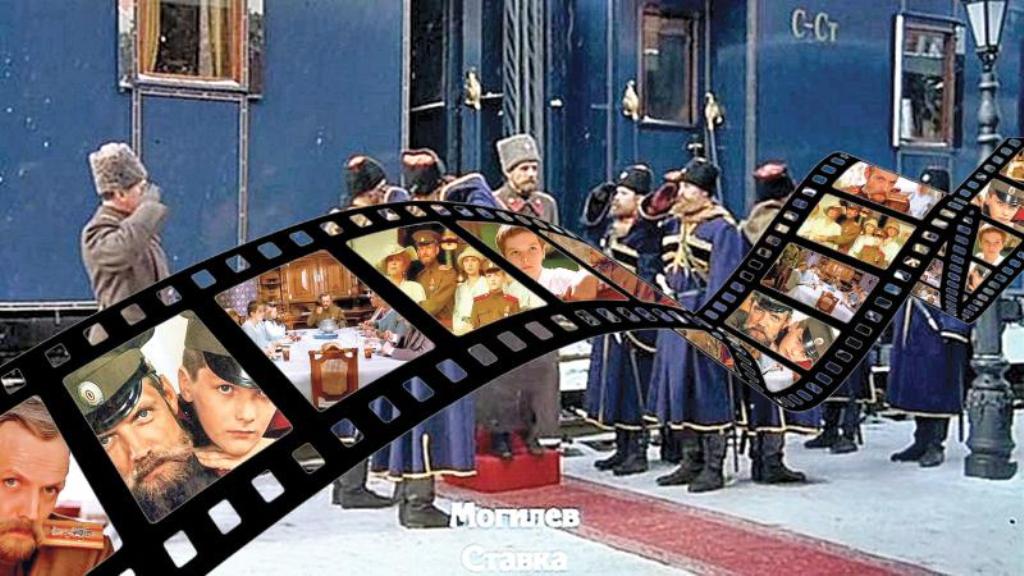
This documentary prepared by the Museum in Memory of Emperor Nicholas II’s Family features rare footage, made from 98 fragments of film from 1896-1916 shot in Moscow, Kiev, St. Petersburg, Tsarskoye Selo, Livadia, Chisinau, Yevpatoria, Kostroma, Odessa. Yalta, Nizhny Novgorod, Borodino, Diveyevo, Rostov the Great, Tallinn, Mogilev, Oreanda, and Sevastopol. The material used in the film is from the Russian State Film and Photo Archive, the Russian State Archive of Phonodocuments, and private collections. The music is comprised of fragments from the favorite works of Emperor Nicholas II.
While many people are familiar with photographs of Nicholas II participating in solemn and gala events in cities and towns throughout the Russian Empire, this documentary features some unique vintage footage of Russia’s last Emperor and Tsar.
03:51 – Nicholas II and the grand dukes carry the coffin with the relics of St. Serephim
06:40 – the foundation of the Feodorovsky Sovereign Cathedral in Tsarskoye Selo
07:40 – the Emperor and his family visiting the St. Petersburg Mosque
09:33 – the Emperor and his family taking part in a procession at the Pechersk Lavra Caves Monastery in Kiev
15:10 – Nicholas II and his family at the Chapel of the Iveron Icon of the Mother of God in Moscow
26:08 – the Imperial Children in matching outfits, playing on the deck of the Imperial Yacht Standart
33:15 – Tsesarevich Alexei playing with his dog Joy
33:55 – Nicholas II and his family embarking on a boat ride on the Dnieper River, near Mogilev, August 1916
41:50 – Nicholas II at the celebration of His Majesty’s Imperial Guard on 4th October 1916, the last film of the Imperial Family before the Tsar’s abdication the following year
· · ─── ·•· ─── · ·
VIDEO CHAPTERS and HIGHLIGHTS
· · ─── ·•· ─── · ·
00:00 Intro
00:27 Part 1: Spiritual Life
this part focusts on the piety of Emperor Nicholas II, it includes film footage of the Tsar and his family attending religious ceremonies in various parts of the Russian Empire, the laying of the foundations for new Orthodox churches, visits to monasteries and churches, attending molebens, and more.
19:34 Part 2: His Majesty’s Vacationing
includes film footage of Nicholas II kayaking in the Finnish skerries; playing tennis at Livadia including footage of Empress Alexandra Feodorovna taking part; hunting; motoring in the Tsar’s favourite Delauney-Belleville; sailing on the Imperial Yacht Standart; the Grand Duchesses taking part in games with junior officers; Tsesarevich Alexei playing with his friends, under the watchful eye of his boatswain Derevenko; among others.
35:39 Part 3: Emotional Characteristics
includes an interesting examination of the facial expressions, movements and nervous habits of Nicholas II, which include his constant stroking of his moustache; smooths and adjusts his uniform, touches his cap or crumples his gloves; Empress Alexandra Feodorovna is seen constantly bowing her head low with particular respect to those around her; the Grand Duchesses smiling often and sweetly; various scenes of the Tsar receiving the tradtional bread and salt.
This video is produced as part of the project for the book “The Romanov Royal Martyrs”, which is an impressive 512-page book, featuring nearly 200 black & white photographs, and a 56-page photo insert of more than 80 high-quality images, colorized by the acclaimed Russian artist Olga Shirnina (Klimbim) and appearing here in print for the first time.
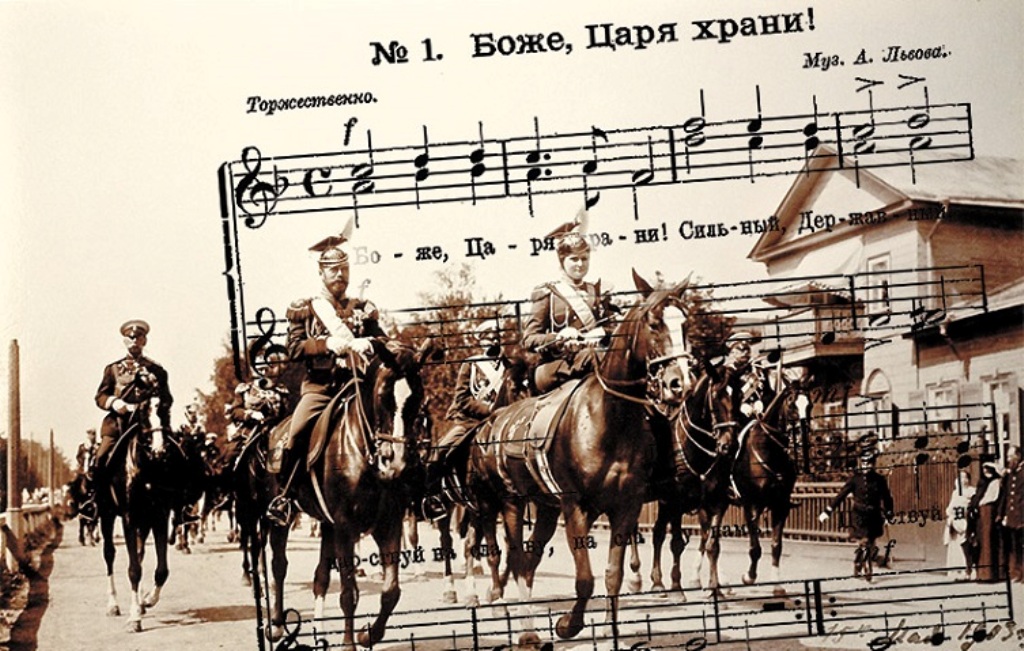
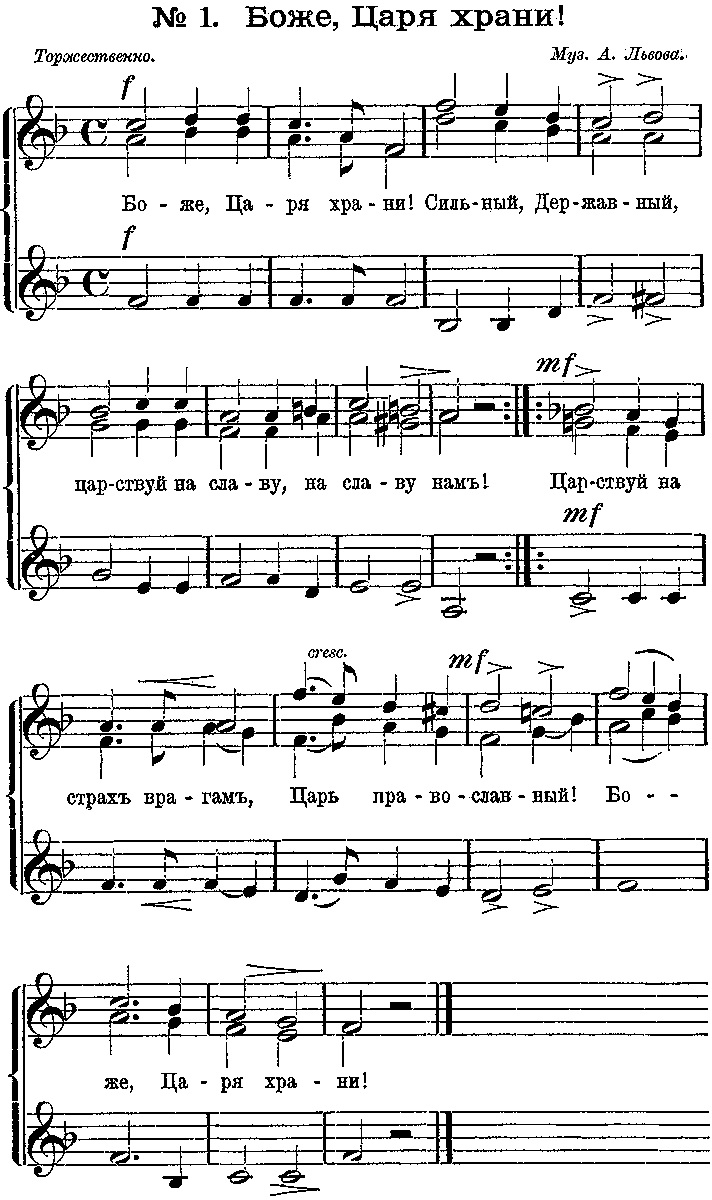
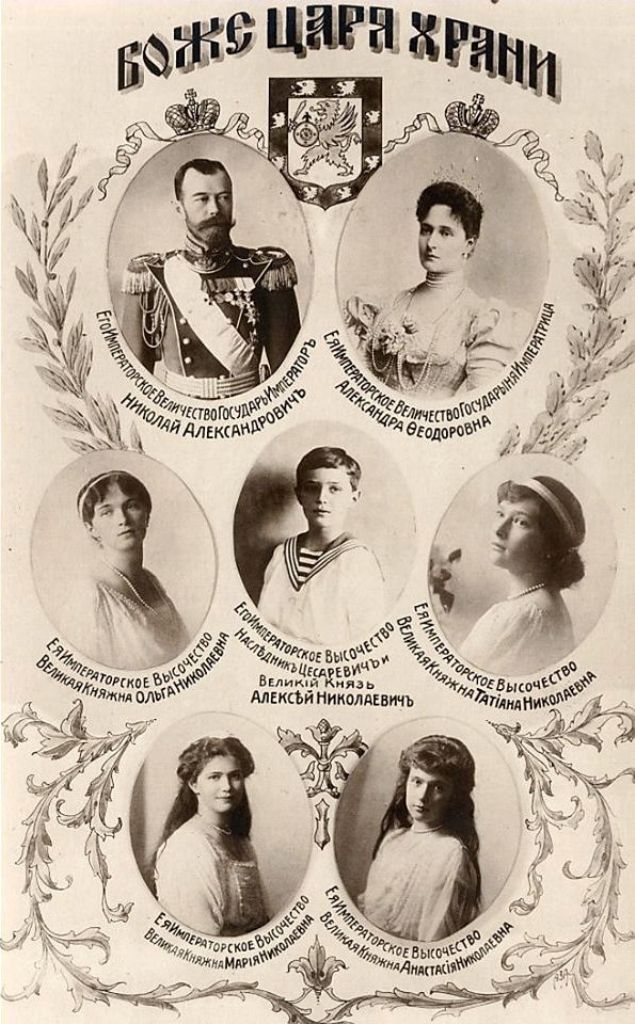
God, Save the Tsar! (Russian: Боже, Царя храни!; transliteration: Bozhe, Tsarya khrani!) was the national anthem of the former Russian Empire. The song was chosen from a competition held in 1833 and was first performed on 6th December (O.S. 23 November) 1833. The composer was violinist Alexei Lvov, and the lyrics were by the court poet Vasily Zhukovsky.
In 1833, Tsar Nicholas I (1796-1855) ordered Count Alexey Fyodorovich Lvov (1799-1870), the violinist and army general who was his court composer and aide-de-camp, to compose new music to replace the air that since 1816 had served as the music for the Russian Empire’s Anthem God Save the Tsar, namely Henry Hugh Carey’s God, Save the King. The lyrics of “God Save the Tsar” (Bozhe Tsarya Khranii) date from 1815 and came from Prayers of the Russian People by Vasily Andreyevich Zhukovsky (1783-1852), an officer and poet who served as tutor to the Tsesarevich Alexander Nikolayevich, the future Tsar-Liberator Alexander II.
After some initial creative difficulties, the melody that would serve as the anthem of the Russian Empire for the remainder of its existence came to Lvov in the course of a single night’s inspiration; he succeeded in creating a work of majesty and power that was suitable for the army, the church and the people – indeed, for the entire realm. None other than the great Alexander Pushkin himself reworked Zhukovsky’s verses to adapt them to Lvov’s new hymn. It was the first national anthem in Russian history to feature music and lyrics by Russian authors.
Upon hearing its beautiful strains for the first time, Nicholas I ordered the work repeated several times. At the close of the final rendition, the Tsar – a stern and military-minded ruler who was to be vilified by Karl Marx and Friedrich Engels as the “Gendarme of Europe” for his crushing of the forces of revolution wherever they appeared – clasped the composer’s hand with tears in his eyes and uttered the single word: “Splendid!”
The public premier of God, Save the Tsar took place on 6 December (O.S. 23rd November) 1833 at the Bolshoi Theater in Moscow, where it was performed by a choir of one hundred singers and two military bands. At Christmas that same year, by the Tsar’s personal order it was performed by military bands in every hall of the Winter Palace in Saint Petersburg. A week later, the Emperor issued a decree declaring the anthem a “civil prayer” to be performed at all parades and official ceremonies. As was the case with the Preobrazhensky March, the most widely-used arrangement for military band of God, Save the Tsar was created by Ferdinand Haase; it was the shortest anthem in the world at eight lines.
During the Coronation of Tsar Alexander II in 1855, Lvov led one thousand singers and two thousand musicians in a rendition of God Save the Tsar, the first performance of the anthem at a coronation. As Lvov directed the choir and orchestra, he, by means of galvanic batteries, set off forty-nine cannons, one by one, sometimes on the beat. At the conclusion, hundreds of Roman candles and rockets soared into the sky.
God, Save the Tsar! remained the Russian Empire’s national hymn until the February Revolution of 1917, after which the Worker’s Marseillaise was adopted as the new national anthem until the overthrow of the Russian Provisional Government in October of the same year.
Sources: Brandenburg Historica; Scenarios of Power (Wortman, Richard S.)
LYRICS
Русский
Боже, Царя храни! Сильный, державный, Царствуй на славу, на славу нам!
Царствуй на страх врагам, Царь православный! Боже, Царя храни!
English translation
God, save the Tsar! Strong, sovereign, Reign for glory, For our glory!
Reign to foes’ fear, Orthodox Tsar. God, save the Tsar!
Below, are a selection of videos which present a variety of renditions of God, Save the Tsar! Боже, Царя храни!, performed by Russian Orthodox and professional choir ensembles – courtesy of YouTube:
1. Beautiful rendition of God, Save the Tsar! with vintage newsreels of the Imperial family. Duration: 2 minutes, 38 seconds
2. Performed by the Kuban Cossack Choir. Duration: 1 minute, 38 seconds
3. Performed by the Mikhailovsky Theatre Orchestra and Choir. Duration: 1 minute, 46 seconds
4. Performed by Varya Strizhak. Duration: 3 minutes, 19 seconds
5. Performed by the Moscow Philharmonic Orchestra, and the State Academic Choir. Duration: 2 minutes, 33 seconds
6. Performed by the Orlic Children’s Church Choir (Serbia). Duration: 1 minute, 24 seconds
7. Performed by The Royal Scots Dragoon Guards.
Duration: 55 seconds
8. Performed by the Columbia Military Band in 1914. Duration: 3 minutes, 16 seconds






 Nicholas II
You must be logged in to post a comment.